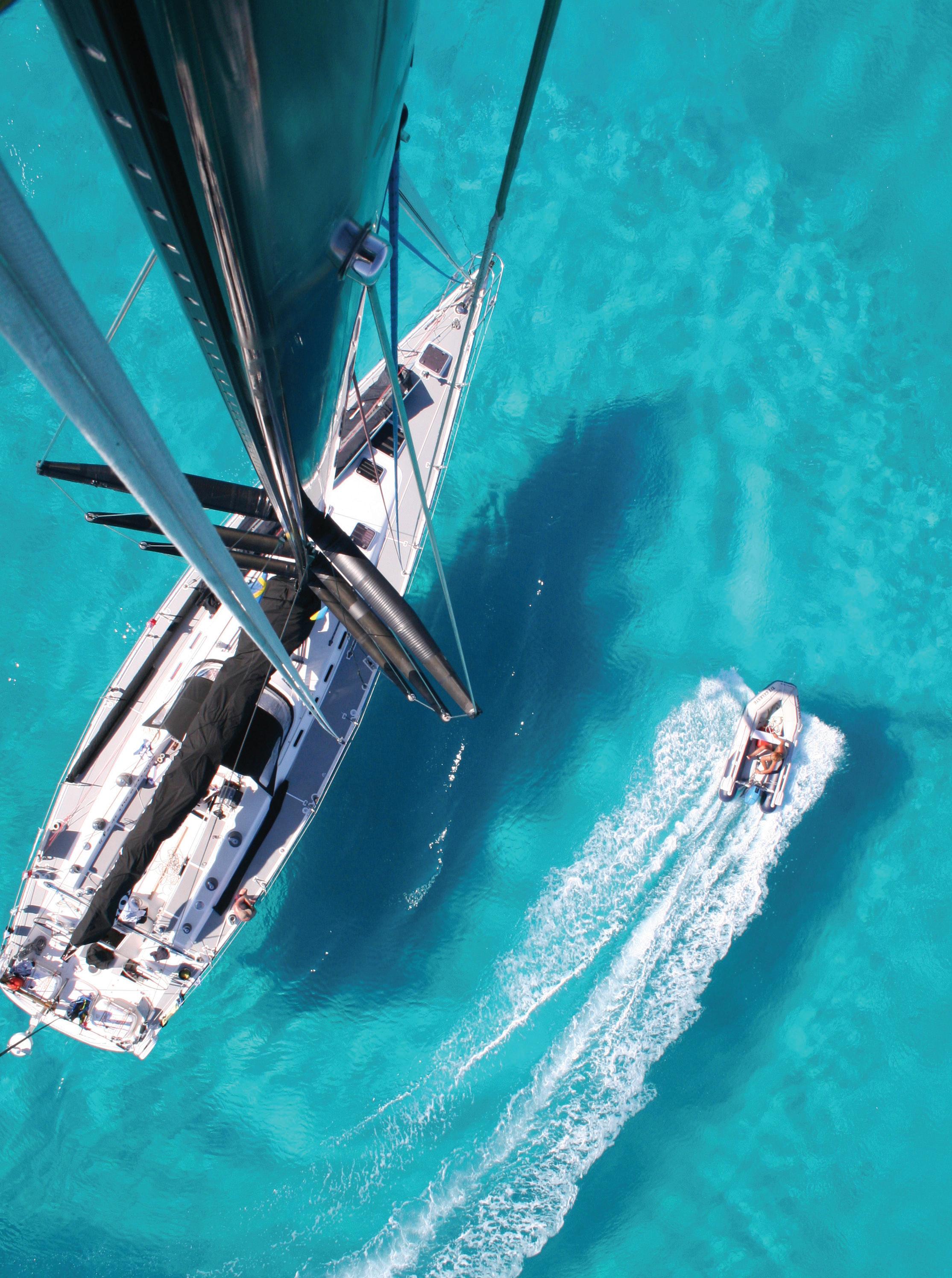

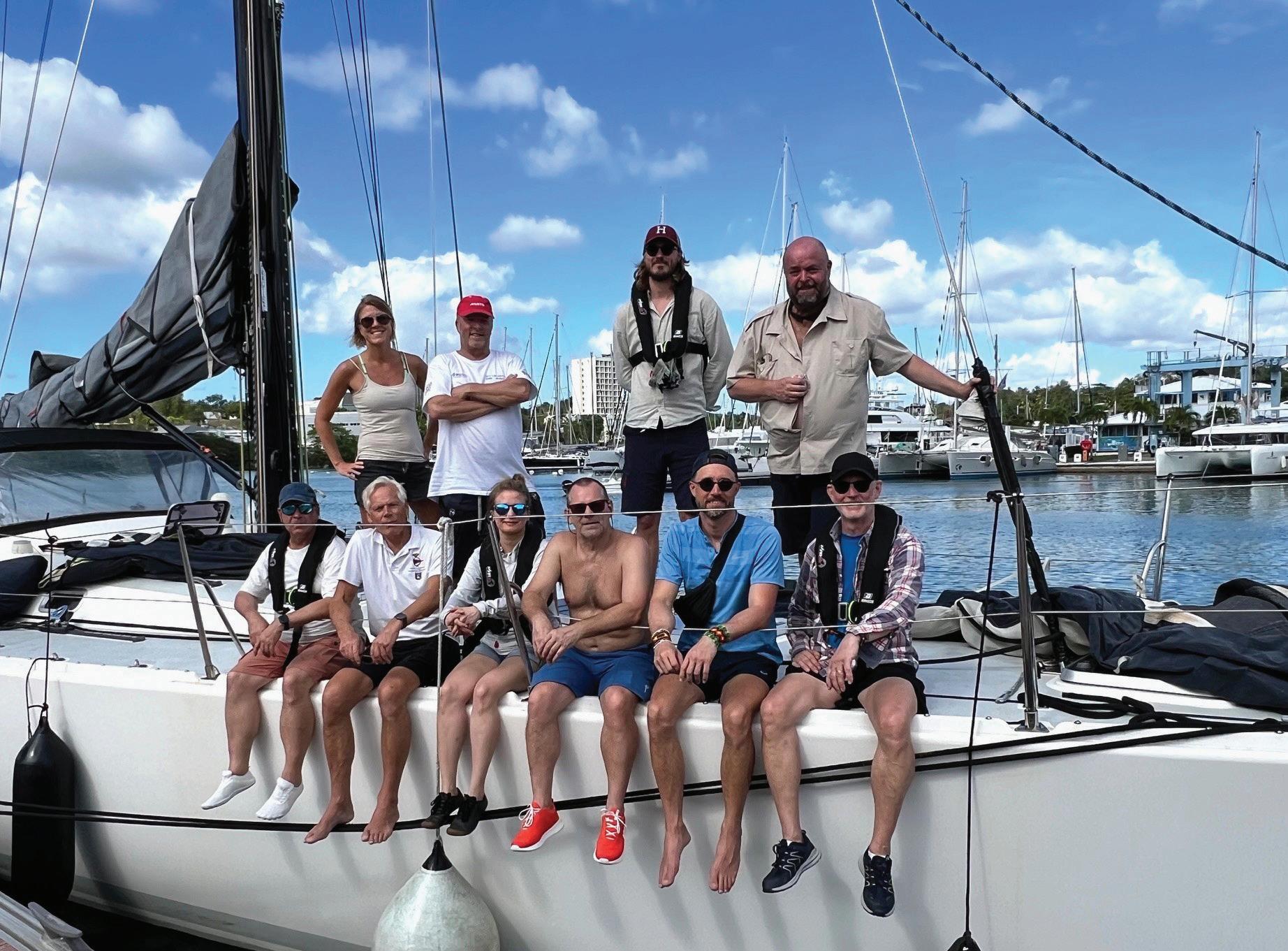
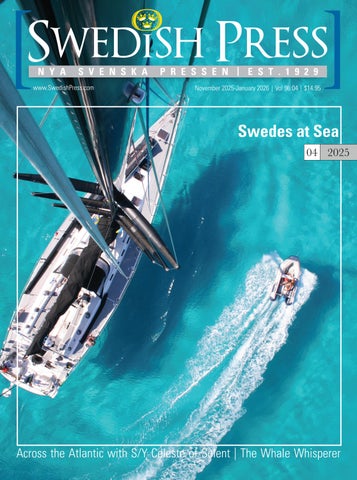
To sail across the Atlantic Ocean is a dream that many share. Aboard the Swedish 65-foot racer S/Y Celeste of Solent, that dream is attainable for sailors and landsmen alike.
By Kajsa Norman
Why is almost every robust healthy boy with a robust healthy soul in him, at some time or other crazy to go to sea?” asks Herman Melville at the start of Moby Dick. In other words, what is it about the ocean that attracts so many of us?
It’s the question that I’m hoping to answer as I prepare to sail from Guadeloupe in the French West Indies to the Portuguese archipelago of the Azores
with nine complete strangers.
In Moby Dick, Melville is quick to point out that far from all adventurers drawn to the ocean are sailors. In fact, many of them are what he calls “landsmen”, “of week days pent up in lath and plaster—tied to counters, nailed to benches, clinched to desks.”
As I arrive in Pointe-à-Pitre to meet the other crew members of the S/Y Celeste of Solent, I realize this is true for us as well. While there are
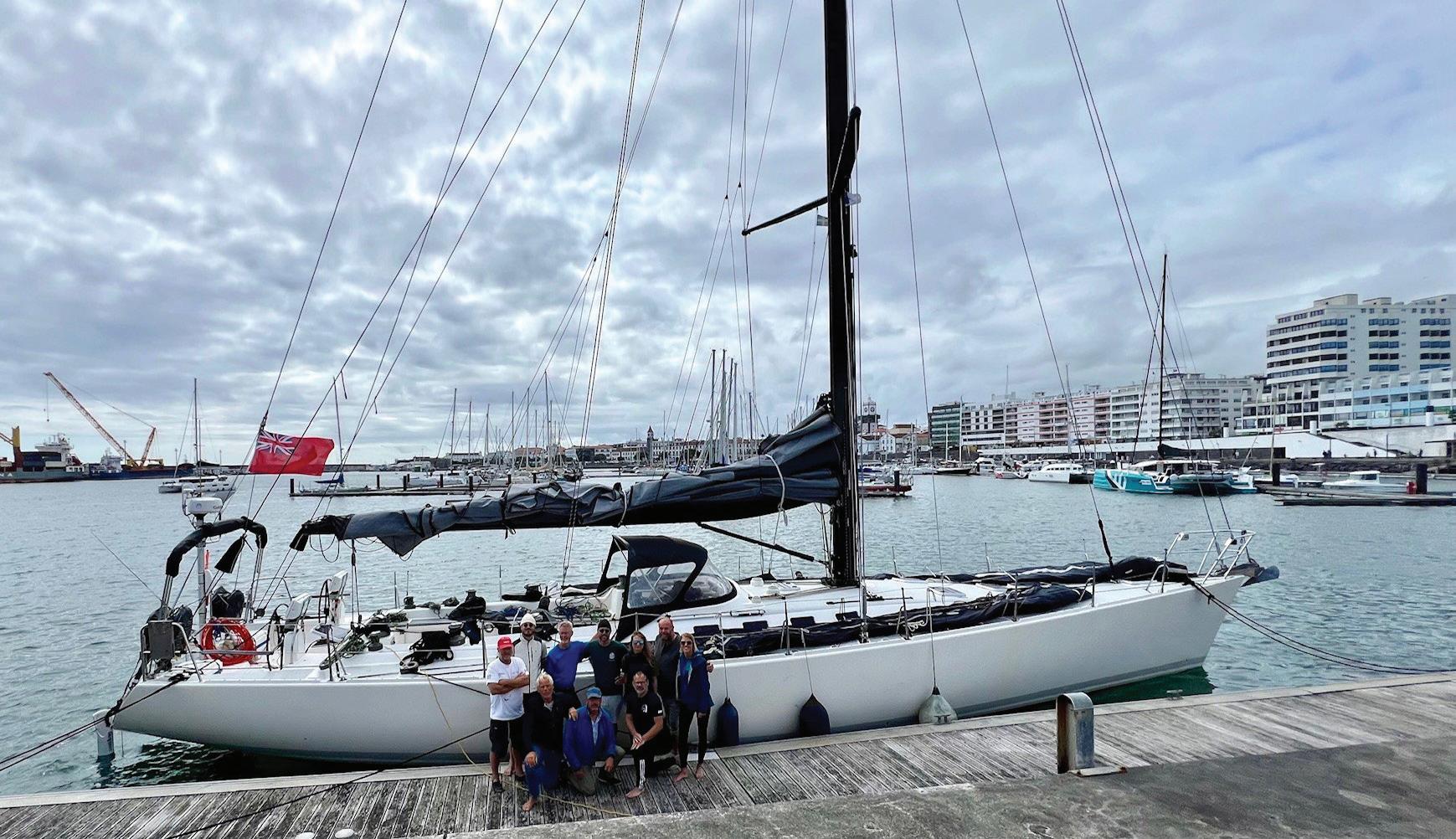
a few experienced sailors, many of us are white-collar workers longing to escape our cubicles and everyday routines. Representing all parts of Sweden, Finland and beyond, a couple sail for a living, most sail for recreation, and one or two are brand new, experiencing the open ocean for the first time. Aboard the Swedish 65-foot racer/cruiser Celeste of Solent, all are welcome and expected to contribute according to ability.
“On Celeste there are no passengers, everybody participates and when you reach the other side you’ve truly sailed across the Atlantic,” says 58-year-old skipper Svante Jacobsson from Gothenburg, who is one of Celeste’s 13 co-owners.
It’s a unique, non-hierarchical concept that is very Swedish. “There is no staff serving anybody else. It’s meant to feel like a group of friends taking a trip together with everybody doing their fair share,” Svante explains.
*
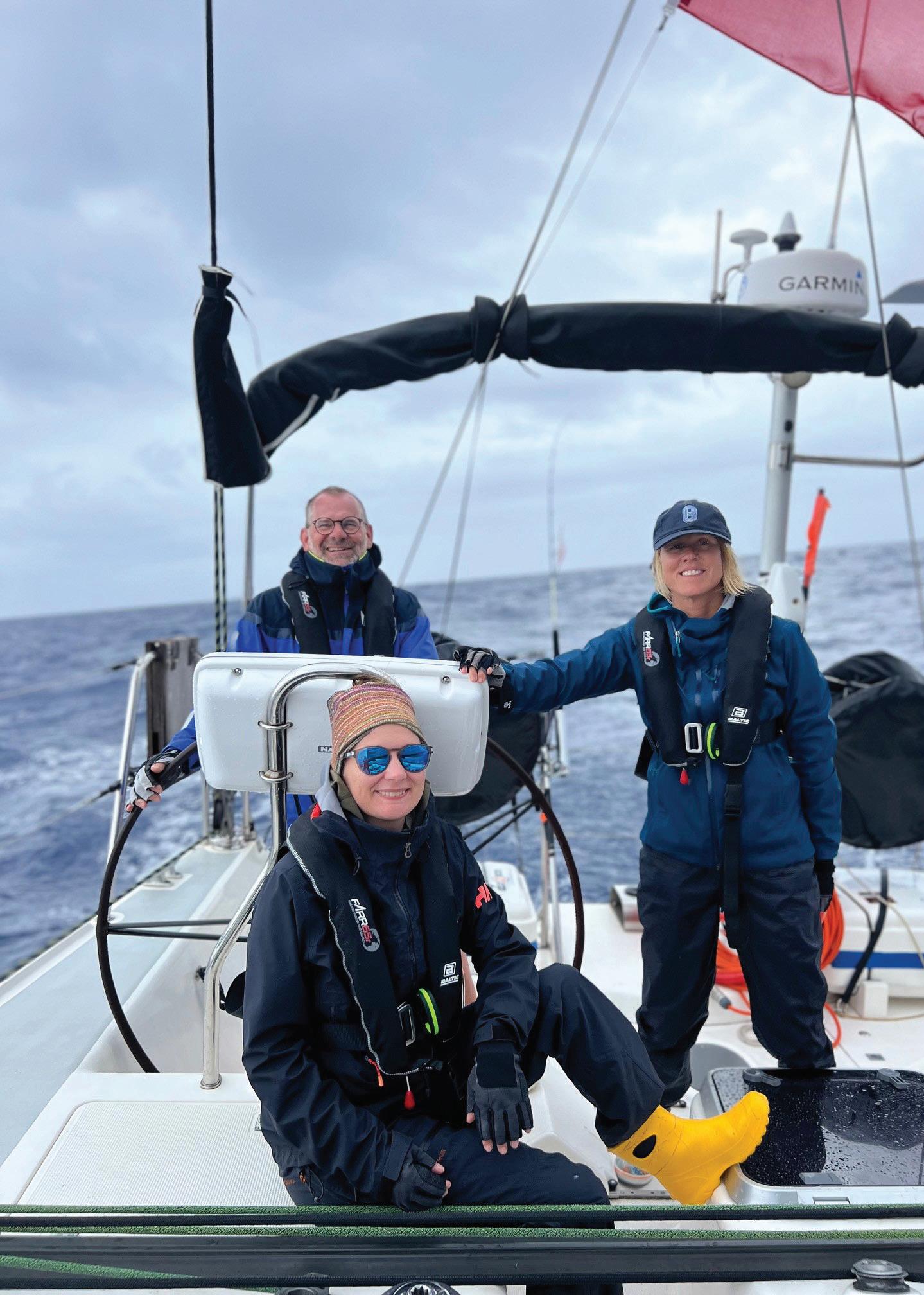
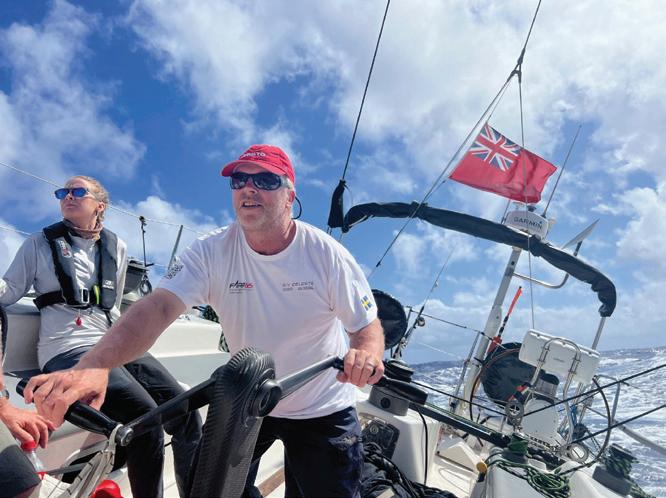
It’s late in the evening on April 8, when we cast off from Marina Bas-duFort in Pointe-à-Pitre, Guadeloupe and motor east into the dark Caribbean night. Once we’ve left the inner harbour and can hoist the sails, we begin working shifts in teams of three. Each team sails for three hours, then has six hours off, before sailing for another three hours. During our six hours off, we are meant to rest and enjoy, but also cook, do dishes, and keep the boat tidy.
My first shift is midnight to three a.m. I’m lucky in that the moon is nearly full, lighting up the otherwise pitch black Caribbean night.
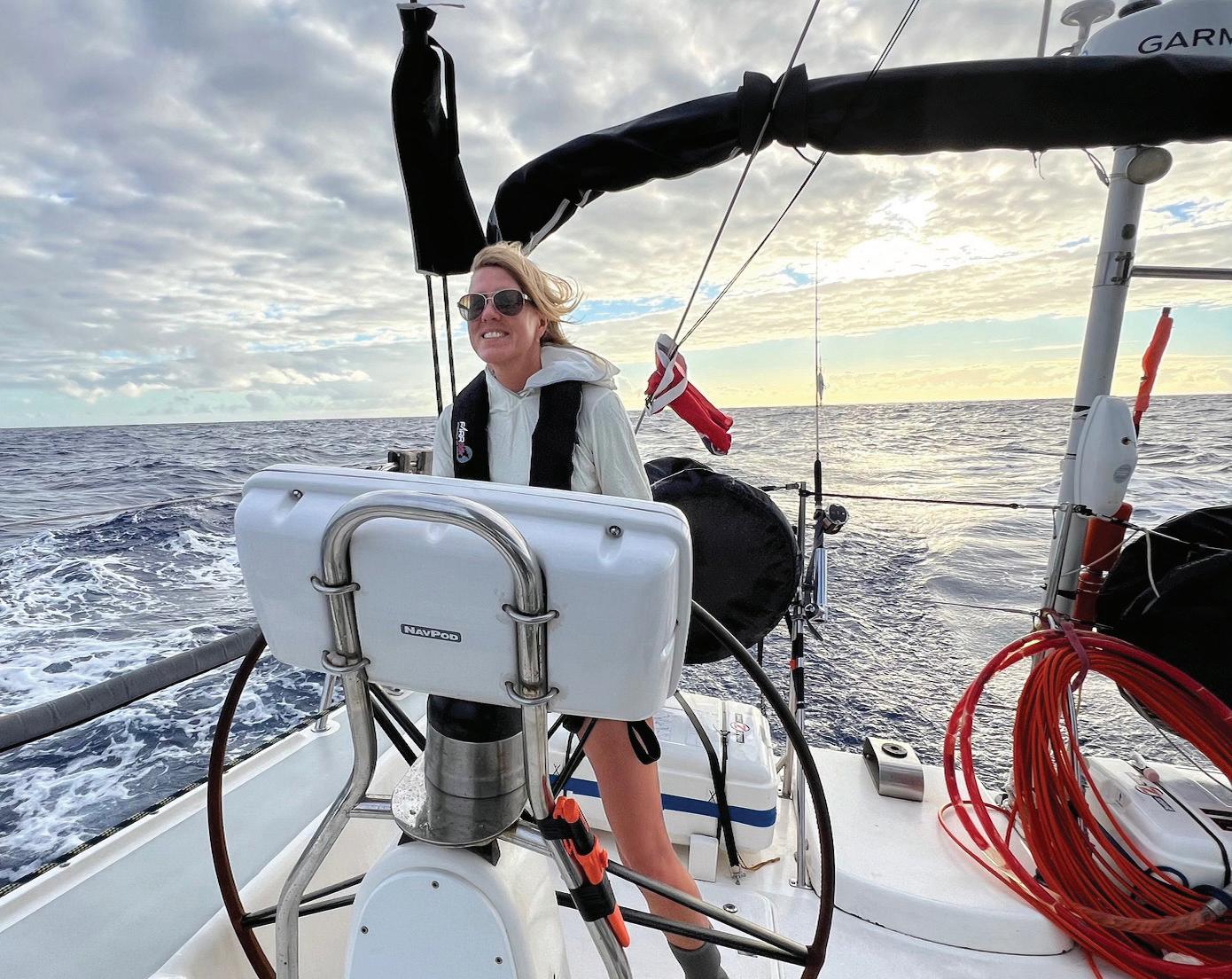
“Pick a cloud or a star and aim for it,” coaches my teammate Kalle, as I’m struggling to get used to being at the helm of the 28-ton sailboat.
Kalle Norrman is a 57-year-old project leader from Malmö. He started sailing at the age of five and has been sailing ever since. Like the rest of us, he is here in pursuit of a life-long dream of sailing across the Atlantic, with the added challenge of crossing it from west to east, which typically involves tougher conditions compared to the reverse where you sail through warmer weather with the trade winds
at your back.
For the first few days, most of us focus on gaining our sea legs and battling nausea as we slowly adapt to life aboard. The boat moves and tilts more than I had expected and at a 45 degree angle all tasks feel like a combination of a balancing act and a workout. It’s a challenge to go to the bathroom, retrieve anything from one’s bag, and get in and out of bed. I wish I had organized my belongings better before coming onboard as looking for things results in both nausea and bruises.
I wonder if this is similar to what astronauts feel, having to learn to do everyday things an entirely new way in a universe where the usual rules for gravity and balance don’t apply. Grabbing on to things to pull oneself from one point to the next below deck, learning to chop vegetables or boil pasta when the world is all skewed.
I sleep in an upper bunk; the angle of which can be adjusted with a rope depending on the tilt of the boat. I adjust it as best as I can, and hope that my knots will hold. I also put up the
protective side cloth and soon find myself lying more on it than on the actual bunk as the ship rolls with the waves.
“Crossing the Atlantic is a mental challenge even for experienced sailors,” says 34-year-old First Mate Oskar Ahlm. “Most people who join have sailed shorter distances close to shore. On the Atlantic there is no way to opt out. Once you’re onboard, you’re staying onboard. You’re committed. You have to deal with the choppy seas, the constant tilt, the sea sickness, the lack of communication with loved ones, and the degeneration of hygiene that happens after weeks at sea with no access to a shower. It’s a mental game.”
After a few days I begin to understand what he means. Most people can handle rough seas and a tilted world for a few hours, but for days and weeks on end with no clear idea of how long it will last is a different story. And to embark on a journey like this with nine strangers, knowing that there will be no personal space, nowhere to hide or go for a walk if you have a meltdown or someone gets on your nerves. So why do it? For the challenge of course, but also for the plethora of new experiences that await.
The first week we make great time, benefiting from a steady westerly wind. Once people have gained their sea legs and adjusted to the tight living quarters and the rhythm of the work shifts, more existential queries surface. Being on a digital detox, completely cut off from loved ones and the rest of the world causes stress in some and a sense of relief in others. So does the realization that we are entirely at the mercy of the wind and the elements around us.
“I struggle to relax and feel constantly wound up,” says Magnus Ahl,
a 62-year-old Business Controller from Visseltofta in Skåne. “Here it’s impossible to maintain control. When I’m not at the helm, I have zero control over what happens,” he says, and continues: “For me, this is a once in a lifetime experience which will stay with me for a long time, and which will take time to process. I know I will only be able to share this memory with people who have lived it themselves. It’s impossible to grasp if you haven’t been there. When we reach the other side, I will be incredibly proud of myself.”
In contrast, Pelle Edwall, a 69-year-old restaurant owner from Gothenburg, finds he can truly relax for the first time in a long time.
“The first few days I was a bit restless, but that’s over now. Now I’m enjoying each moment and I’m in no rush to arrive,” he says.
Pelle has sailed since he was 5 years old and started sailing competitively at the age of 12.
”When I was 25 years old, I bought a sailboat together with a friend. We spent a year fixing it up with the intent of crossing the Atlantic. When we were almost done, I asked my boss for leave and he said no. If I wanted to go, I would have to quit my job. I didn’t dare to, so I had to watch my friend leave without me,” he recalls. “I have waited 45 years for this.”
Crossing the Atlantic is not without its risks as you spend the bulk of the journey out of reach from any external assistance. One day, we spot a sailboat with a broken mast floating aimlessly on the horizon. It doesn’t respond to us over the radio so we approach to find it abandoned. It’s named “Blue Waters” and its from New Bern, North
Carolina. The lifeboat has not been launched and there is no sign of life. Could it be a lone sailor who has fallen overboard or run out of water? We report it to the Joint Rescue Coordination Centre (JRCC) and are relieved to learn that the captain of the abandoned vessel was rescued about a year ago. His boat has been floating aimlessly ever since. While the story had a happy ending, the eerie sight of the wrecked ship still dampens the mood as we’re reminded of our vulnerability. Around us, for days in any direction, there is nothing but sea. Below us, the depths – the vast majority of which is unchartered; a mysterious ecosystem of which we know less than we do of the moon. As I reflect on our situation, I’m grateful for having made safety a priority when choosing a vessel for the crossing. Celeste of Solent is commercially approved for ocean traffic with passengers and recommended by the World Cruising Club, organizers of World ARC.
“You won’t find a safer boat,” says Svante. “We have three watertight compartments in the bow and one in the aft. We could crash into a container and still not sink.”
I try not to think of the Titanic.
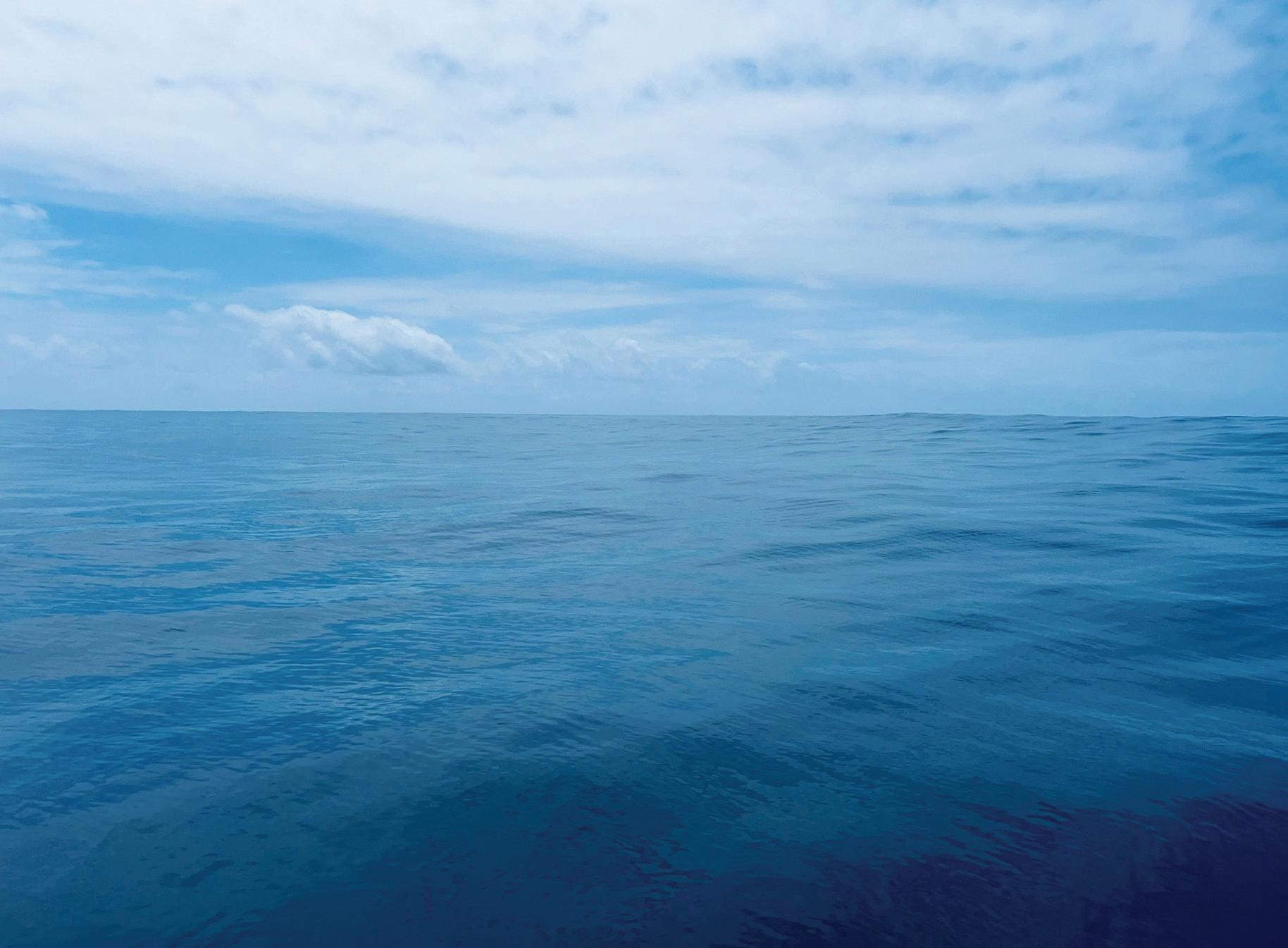
On our eighth day at sea, the wind dies completely and suddenly the world is flat again. According to our instruments, we’re about halfway across the Atlantic. The ocean is a shade of deep blue velvet I’ve never seen before. It is silent and nearly still. It’s an immense relief to be able to move without bracing or holding on to things, and as I feel my body relax, I realize how exhausting the past week has been.
Our ship is motionless like a tiny island and it’s finally possible to swim
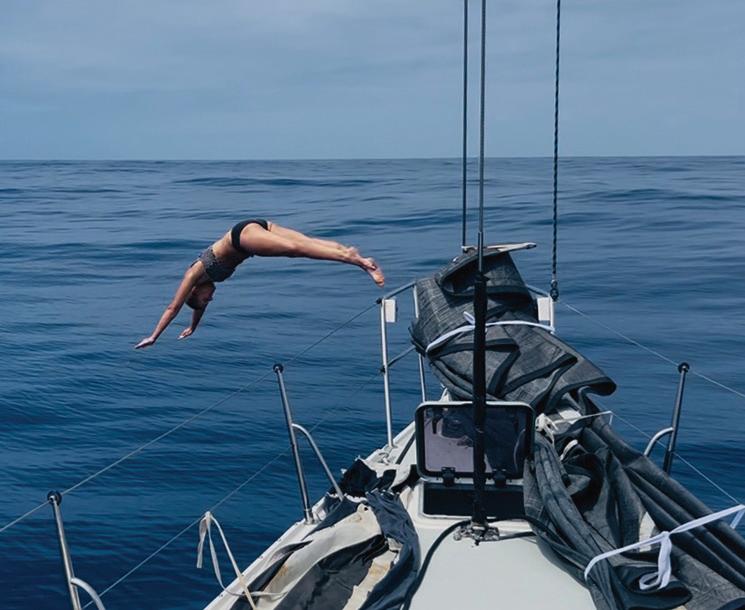
in the stunning azures we’ve admired from afar. The instrument panel shows a depth of 5,000 meters below us. I dive in and feel like a speck in the universe – floating through space, surrounded by infinity. Before climbing onboard again, I wash my hair for the first time since we departed. The salty sea makes everything soft and new. Then, lying perfectly still on deck, I allow the heat of the sun to dry me. I feel clean, refreshed, almost born again.
As I look out over the gently heaving, unfathomable mass of water, I’m overcome with the sensation that the sea itself is a creature – a living, breathing organism not just full of life, but in and of itself… alive. It’s impossi-
ble to see and feel her this way and not be awed. “Why did the old Persians hold the sea holy?” asks Melville in Moby Dick. “Why did the Greeks give it a separate deity…?” The image we see in the ocean “is the image of the ungraspable phantom of life”.
Suddenly the surface breaks some 40 ft from the ship as a majestic finback whale comes to check us out. Not long after, two humpback whales approach, gracefully gliding through the water.
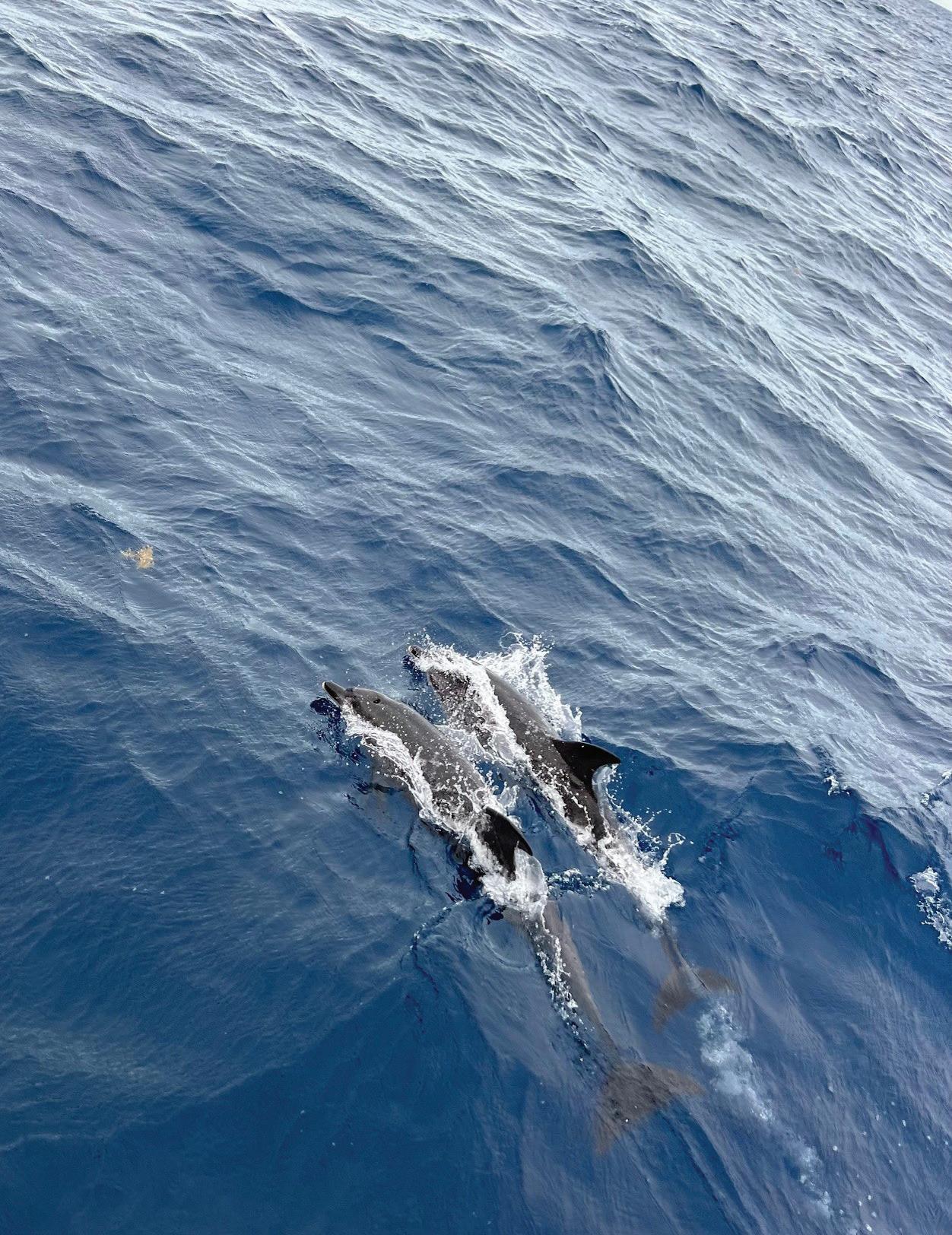
Soon after we start the engine, pods of Atlantic spotted dolphins come to play at our bow, racing the ship and jumping from side to side in perfect sync. All these sea creatures!
They must have been here all along, but with the wind and waves stirring the water, it’s hard to distinguish the distant blow of a whale from the countless whitecaps of waves. Without the wind, however, there are signs of life everywhere.
After sunset, a starry sky envelopes the boat, extending from horizon to horizon, reflecting perfectly in the still water. With stars not just above us, but beside us and reflected beneath us in the water, we stand in awe on the deck as we glide like astronauts through space. Suddenly, the Lyrid meteor shower streaks across the sky, leaving behind a trail of cosmic dust glowing brightly in the atmosphere. Caused by space debris from the comet C/1861 G1 Thatcher, the Lyrid meteor shower is the oldest meteor shower recorded continuously throughout history, dating back more than 2,700 years. It is visible every April and where better to watch it than from the middle of the Atlantic where one gets a horizon to horizon view unimpeded by even one bulb of light pollution.
*
The following day, there is still no wind. While it’s a relief to stand upright, what felt like a blessing yesterday soon becomes an increasing source of anxiety. The “doldrums” is a nautical term that refers to the belt around the Earth where sailing ships sometimes get stuck on windless waters. It is also an expression for a spell of listlessness or despondency, inactivity, stagnation, or slump. As we sit around and wait for wind, I begin to understand the root of the word. Being surrounded by seemingly infinite ocean and being unable to move is psychologically overwhelming. We don’t have enough diesel to travel by
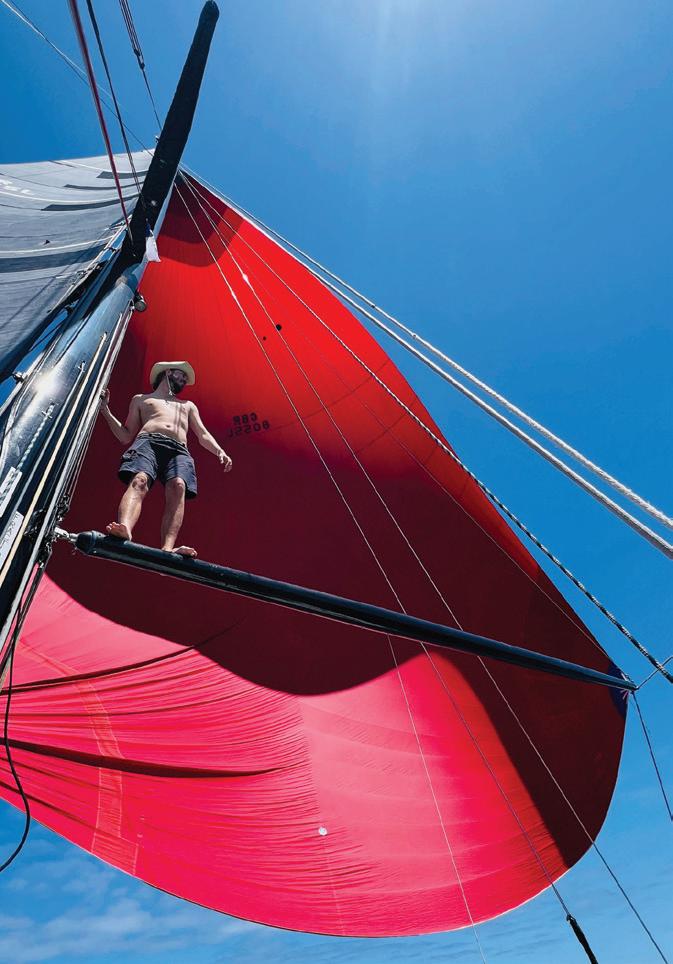
engine all the way to the Azores, and there is absolutely nothing we can do to affect how long the wait will be. It’s an exercise in patience and in accepting that which one cannot control. When the wind finally returns, we hoist the spinnaker in an attempt to outrun the high pressure zone that still surrounds us. It’s a bright red, ultra-light sail that is great for racing. Steering with it up is a bit trickier than the sails we’ve used before as the consequences of an unintentional jibe can be more severe. It’s nerve wracking at first, but exhilarating once one gets the hang of it.
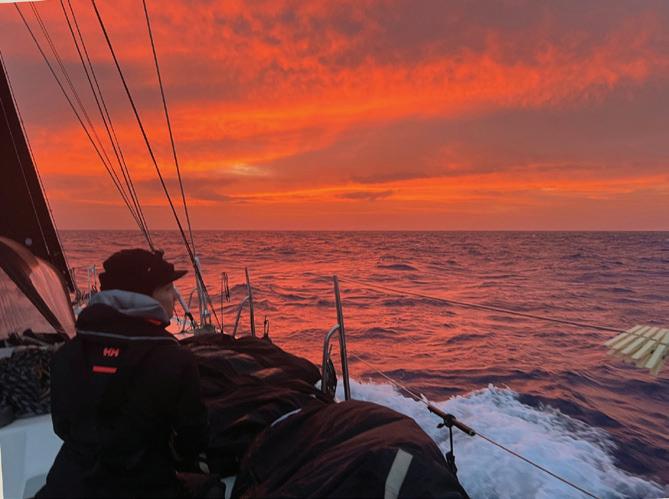
During the night shifts, we take turns steering and keeping lookout for ships and wildlife. One night, I’m sitting at the bow of the ship when suddenly glowing dolphins, lit up by the electric hue of bioluminescence, begin to swim next to the ship. Scientifically speaking, bioluminescence is the production and emission of light by living organisms. It is caused by blooms of the algae Lingulodinium Polyedra. Spiritually speaking, it is both mesmerizing and awe-inspiring. At night, when the phytoplankton are moved by waves or creatures in the water, the blooms begin to glow in vivid, neon hues. Dancing shadows of light beneath the surface, the dolphins look like ghosts of the ocean.
One morning, I wake up just before dawn. The air feels different somehow and there’s a faint smell of soil. First Mate Oskar has warned me that it’s not until you’ve spent a longer period of time away from land that you are able to notice the distinct smell of earth.
“It’s a unique smell that is hard to describe, but one senses land well
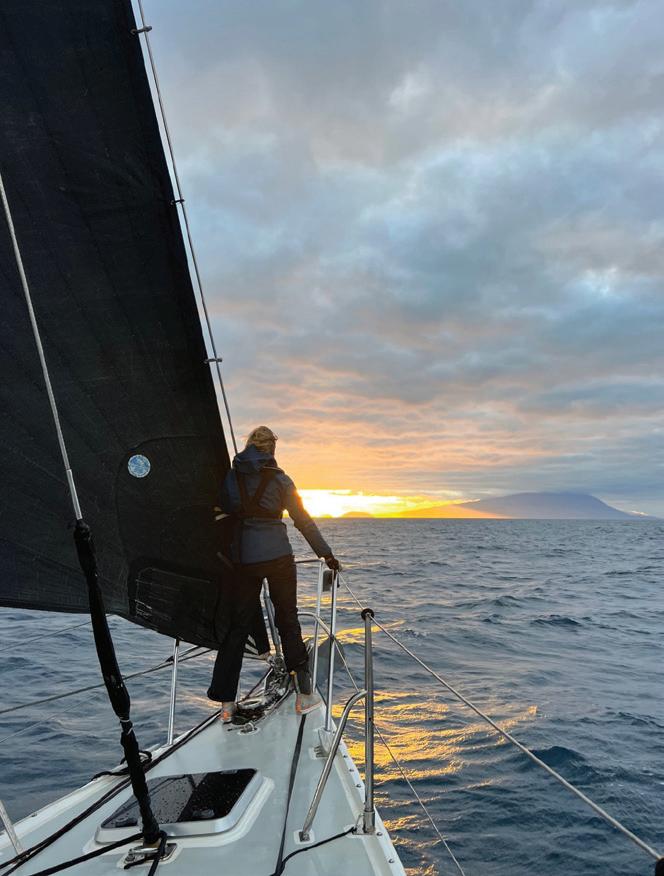
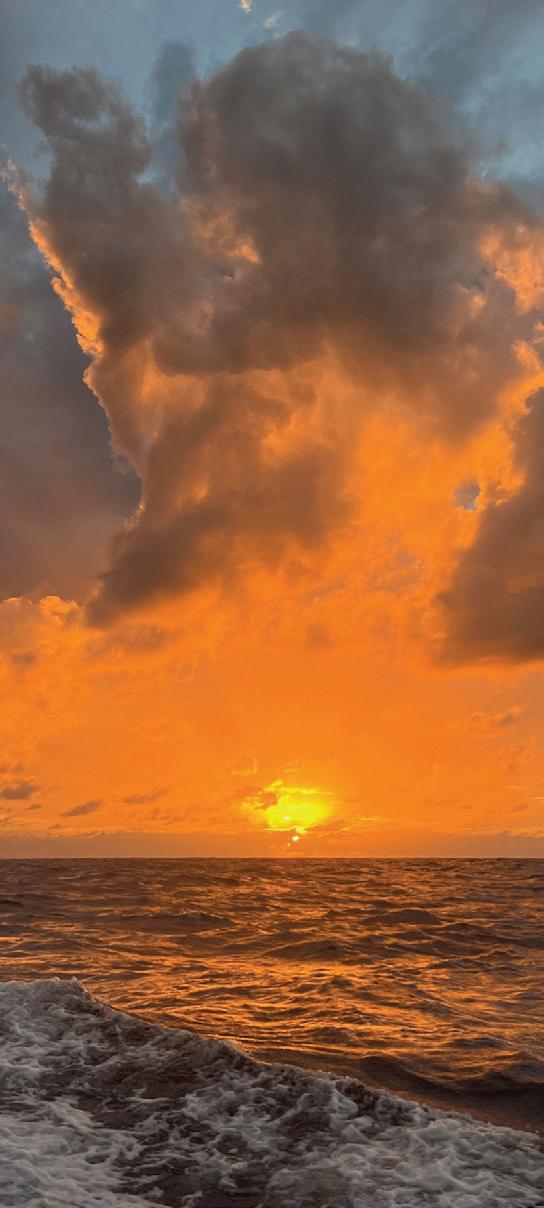
before seeing it,” he said before we set sail. Could this be it? I rush up on deck just as the light is returning. Soon, the rising sun begins to paint the horizon a glowing gold and I see the island of Faial in the distance. My cheeks are wet with tears I didn’t feel coming. We’ve made it.
I don’t know how or when it happened, but at some point, this voyage across the Atlantic became a spiritual journey, a pilgrimage of sorts. I think about Magnus’ regret at not being able to convey this experience to anyone who hasn’t lived it, and I realize that writing about it will be a challenge.
There isn’t any one day or any series of moments I can portray that do it justice. When added together, each nautical mile traveled, each hour at the helm, each moment of distress, and each moment of awe, add up to a spiritual journey of discovery and personal transformation that is bigger than the sum of its parts. As Melville put it, “there is, one knows not what sweet mystery about this sea, whose gently awful stirrings seem to speak of some hidden soul beneath...”
After thirteen days and ten hours at sea, I set foot on land again. We’ve sailed 2,320 nautical miles, and the waves will continue to roll within me for a long time. Besides a few cold beers and a burger at the famous sailor’s hub, Peter’s Café, we have no idea what awaits us in Horta harbor. And frankly, we don’t care. The ocean still moves in us, and I know now it will forever remain an integral part of me – as my place of worship, my sanctuary, my final destination.
Interested in sailing with S/Y Celeste of Solent? Visit: https://sailingroundtheworld.com/ to learn more.
Hope you enjoyed this sample of Swedish Press.
To read more, please click the link https://swedishpress.com/ subscription to subscribe.