
Meetings
Suquamish Tribal Council meets Dec. 8 & 15. Agenda and links sent via SUN Weekly Update & SUN text.
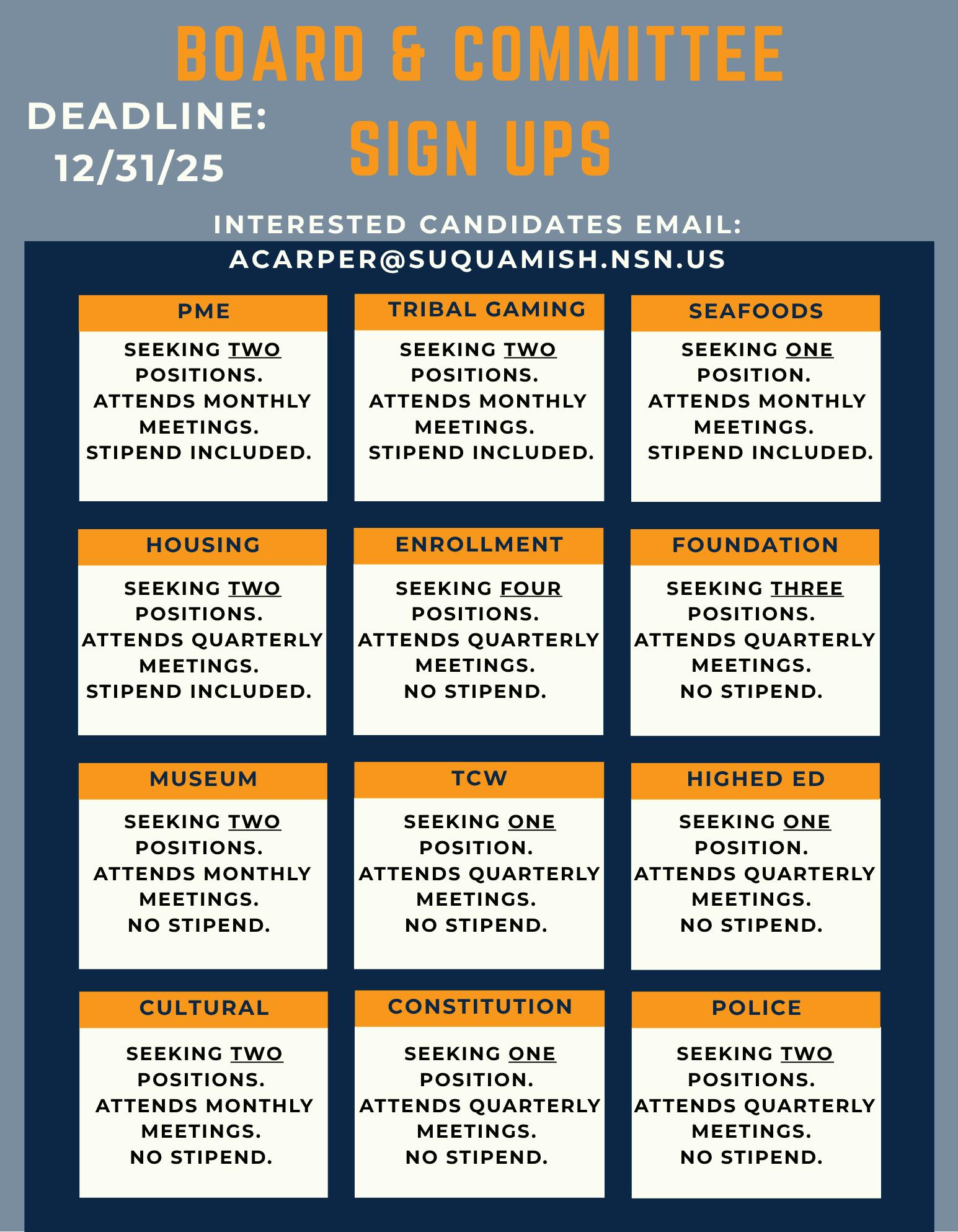
Suquamish Tribal Gaming Commission meets Dec. 2 & 16, 10am at the Gaming Commission Bldg. Call (360) 394-8652 for details.
Suquamish Warriors meets Dec. 2, at 5:30pm at the Warriors Vet Center.
Suquamish Seafoods Board next mtg. Dec. 16. Call Shanel Carlson at (360) 394-8512 for details. PME Board meets Dec. 17. Contact Emily Sato at emilysato@clearwatercasino.com for details.
Suquamish Museum Board meets Dec. 18, 10am-noon at Museum. For info call (360) 3948499.
Elders Council meets Dec. 16, 2-4pm at Elders Lodge. Call (360) 394-8417 for details.
Recovery Meetings. All are welcome to recovery meetings, Mon-Fri, 6pm at the Wellness Center.
Community Events
Holiday Bazaar
Nov. 29 & 30, Dec. 20 & 21. 9:30am-4pm at the House of Awakened Culture.
Suq uamish Museum Museum Events
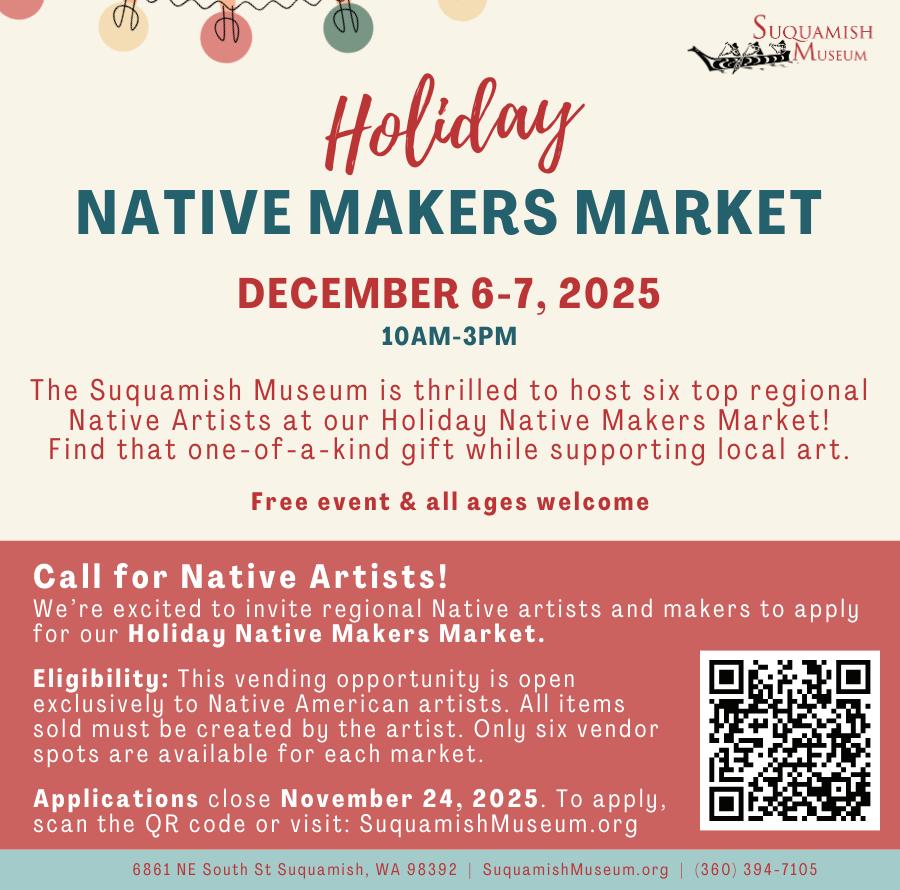
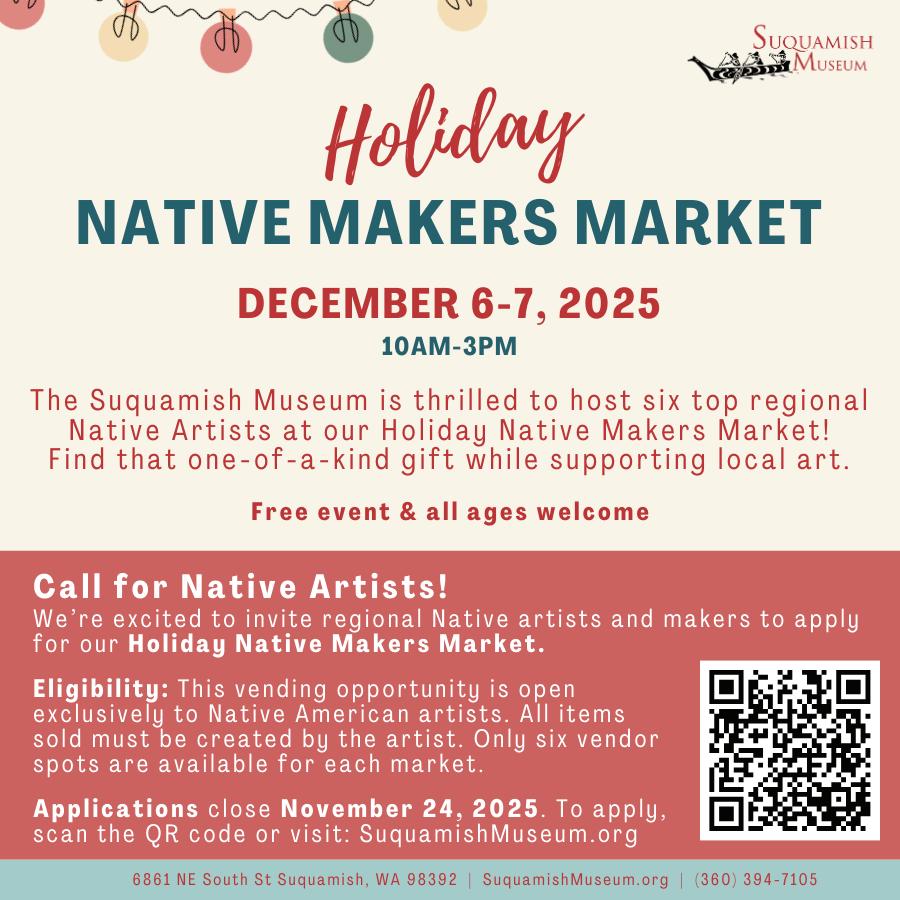
Dec. 6-7, Sat–Sun, 10am–3pm. FREE! Native Makers Market
Dec. 10–14, Wed–Sun, 9am–4pm. FREE! Letters to Santa Activity
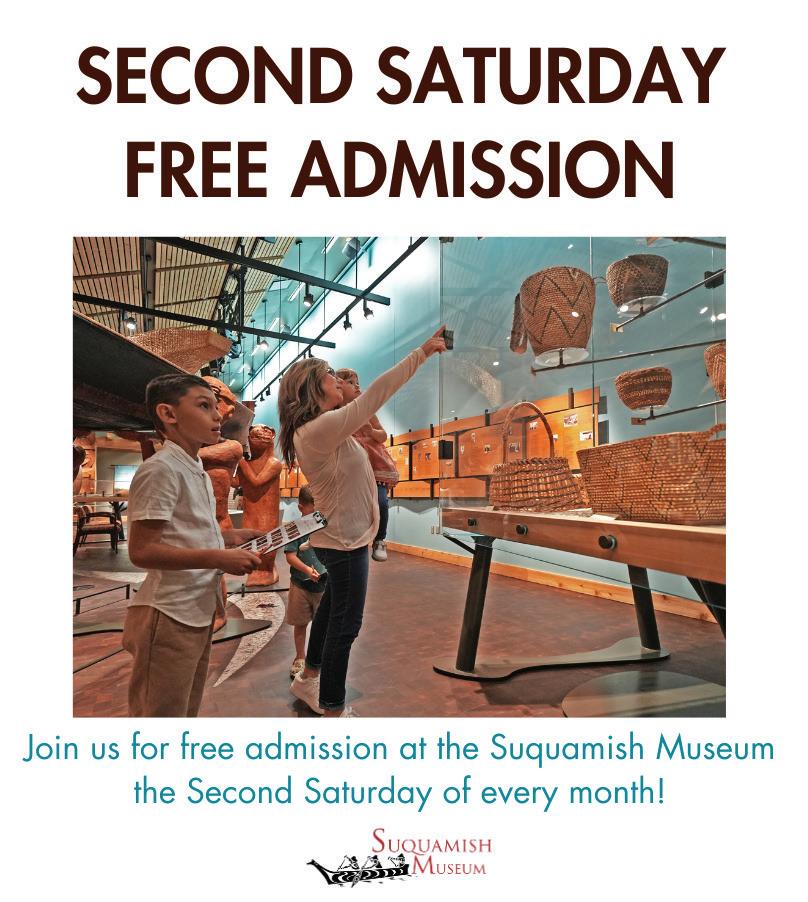
Dec. 13, Sat. FREE! Second Saturday Admission
Dec. 19–20, Fri–Sat, 9am–4pm. Holiday Store Sale – 15% off your entire purchase
Dec. 20, Sat, 9am-4pm. FREE! Holiday Photo Booth. Bring your camera.
Dec. 20, Sat, 12-2pm. FREE! Pics with Santa. Bring your camera.
More info: SuquamishMuseum.org
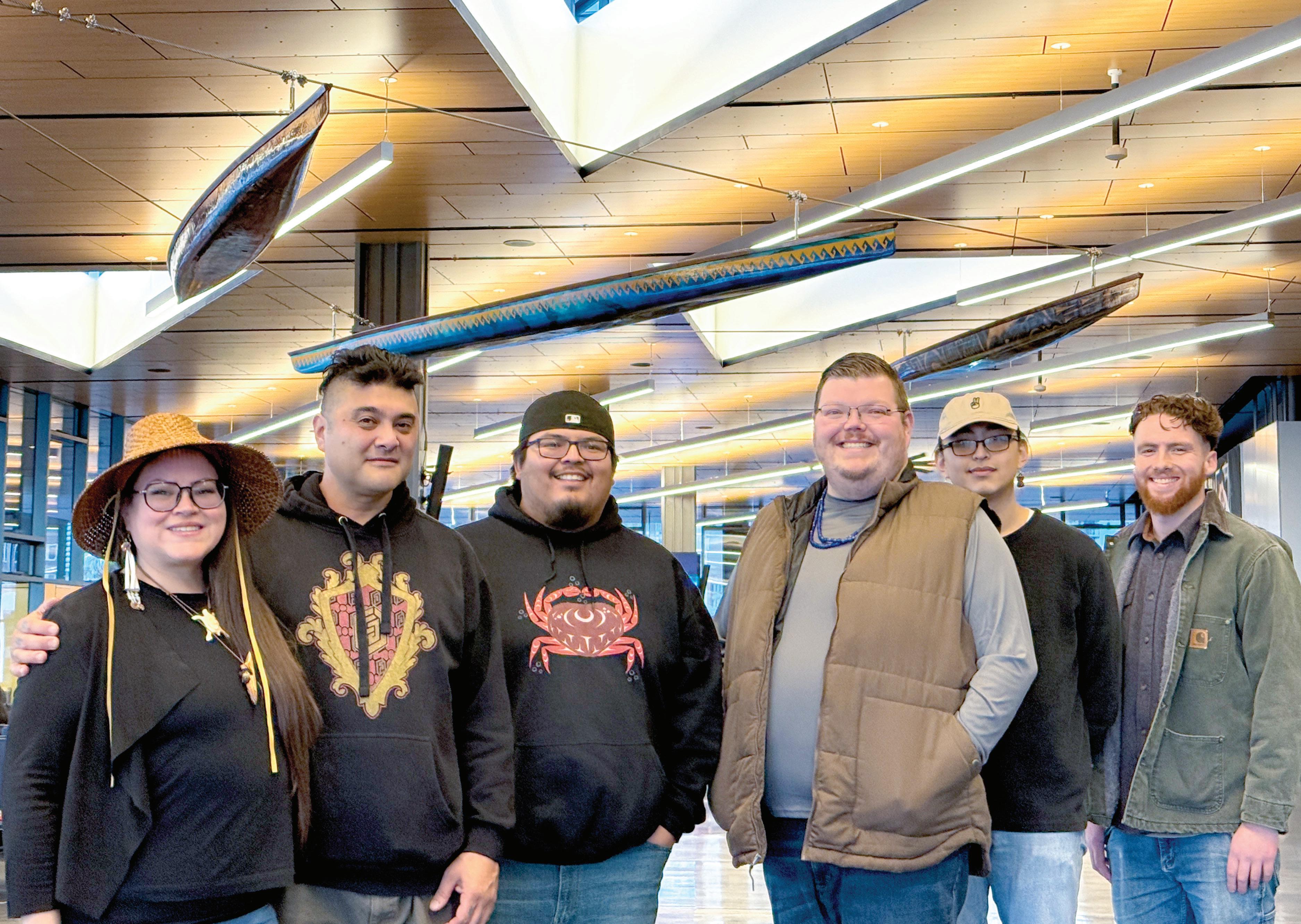
Pulling together to make it happen: Three new racing canoes, now on display in Seattle’s Colman Dock passenger terminal, were created by (from left to right) Kate Ahvakana, Toma Villa, Ryan Boure, Joey Holmes, Vincent Chargualaf, and Tyleander Purser.
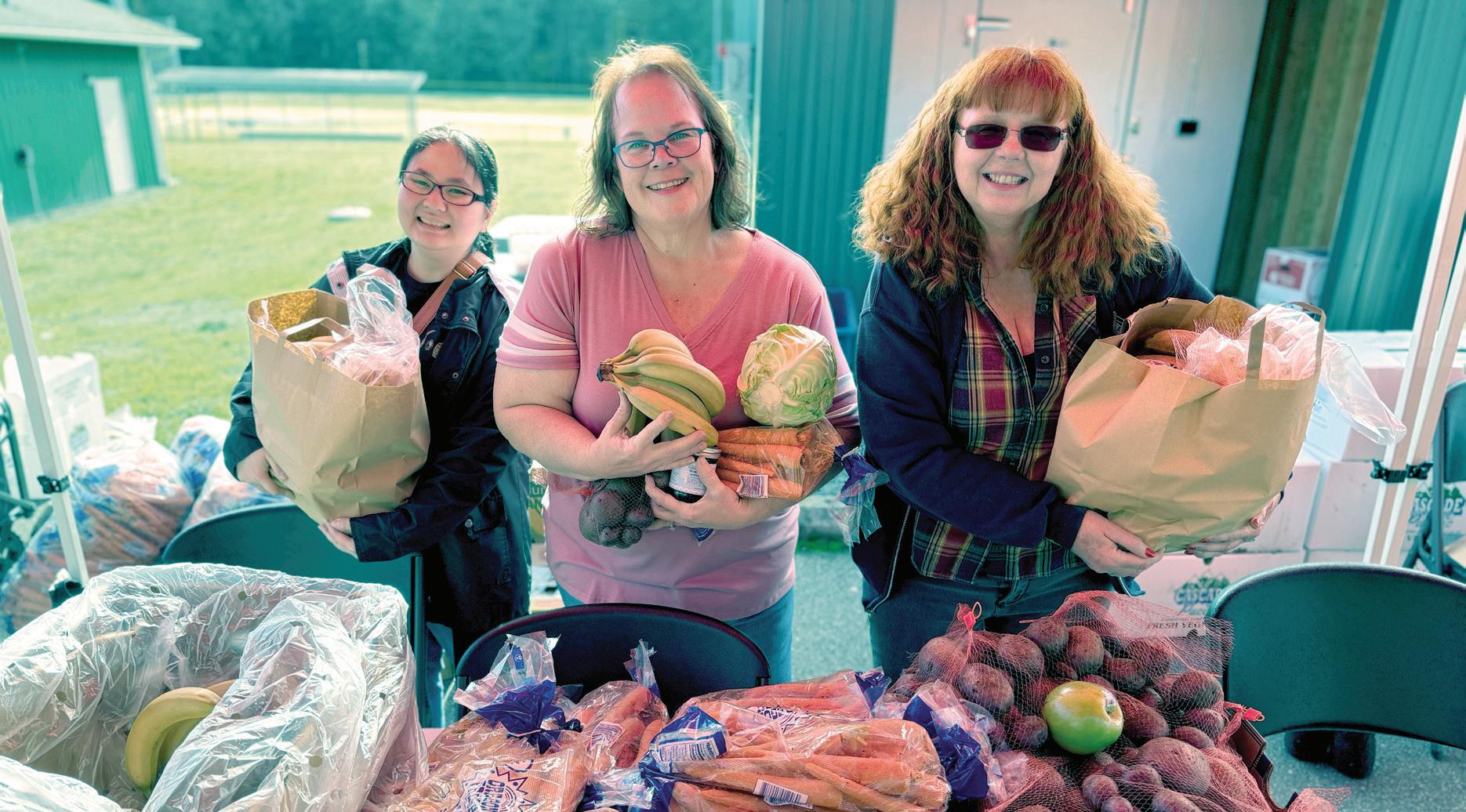
Suquamish Tribe gathered Nov. 8 to celebrate the bounty of the season at its annual Harvest Festival. Hosted by Azure Boure’s Traditional Food & Medicine Program — with help from the rest of the Cultural Resources Department, as well as Community Health, the Early Learning Center, and other Tribal Government volunteers — the event overflowed with good food, good company, and good medicine. Families enjoyed a hearty meal, craft activities, Native-centered book giveaways, and bags bursting with fresh fruits and vegetables shared with more than 100 households.


Please bring a new, unwrapped gift to distribute to kids before Christmas.
Through Dec. 10, donations can be dropped off M-F in the lobby of the Administration Building, and on Wednesdays at the Vet Center.
Organized by Suquamish Warriors and the Marine Corps Reserve.
Suquamish News is published monthly by the Suquamish Tribe. The publication is mailed to Suquamish tribal members. Copies are also available across the Port Madison Reservation, including tribal government lobbies and retail establishments. Current and back issues can also be found on the Suquamish Tribe website. Tribal community members are encouraged to suggest story ideas, photographs, and artwork to be considered for publication. Send your ideas to communications@suquamish.nsn.us or by mail to Suquamish News Editor, PO Box 498, Suquamish, WA 98392. The submission deadline is the 15th of each month.
Leonard Forsman Editor-in-Chief
Catherine Edwards Executive Editor
Erin Bischoff Communications Manager
Jon Anderson Managing Editor
JoAnn Joe Editorial Assistant
Georgia Browne Layout/Design
Leonard Forsman Chairman
Josh Bagley Vice-Chair
Irene Carper Secretary
Andrew George Treasurer
Azure Boure Member
Luther Mills, Jr. Member
Lorilee Morsette Member
Reproduction of the Suquamish News, in whole or in part, without written permission from Suquamish Tribe is strictly prohibited.
Copyright 2025
By Jon Anderson Suquamish News Staff Writer
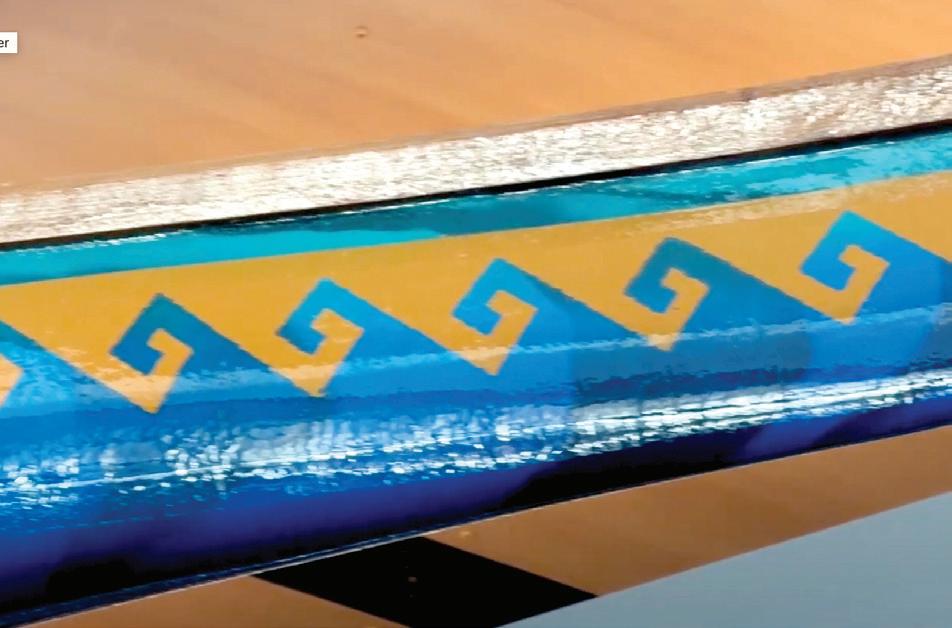
Three hand-built and hand-painted Suquamish race canoes now hang high above the passenger hall of Seattle’s newly renovated Colman Dock ferry terminal, greeting travelers with imagery that honors ancestral water travel and the living canoe traditions of the Salish Sea. The installation, titled Traveling on the Water, was created by a team led by Suquamish tribal member and artist Kate kyʔkablu Ahvakana.
Construction of the canoes was completed collaboratively by Suquamish tribal members Tyleander Purser, Ryan Boure, Vincent Chargualaf, as well as tribal artists Toma Villa (Yakama) and Joey Holmes (Grand Ronde). Once built, the final painting, design work, and finishing coats were completed by Ahvakana and Villa.
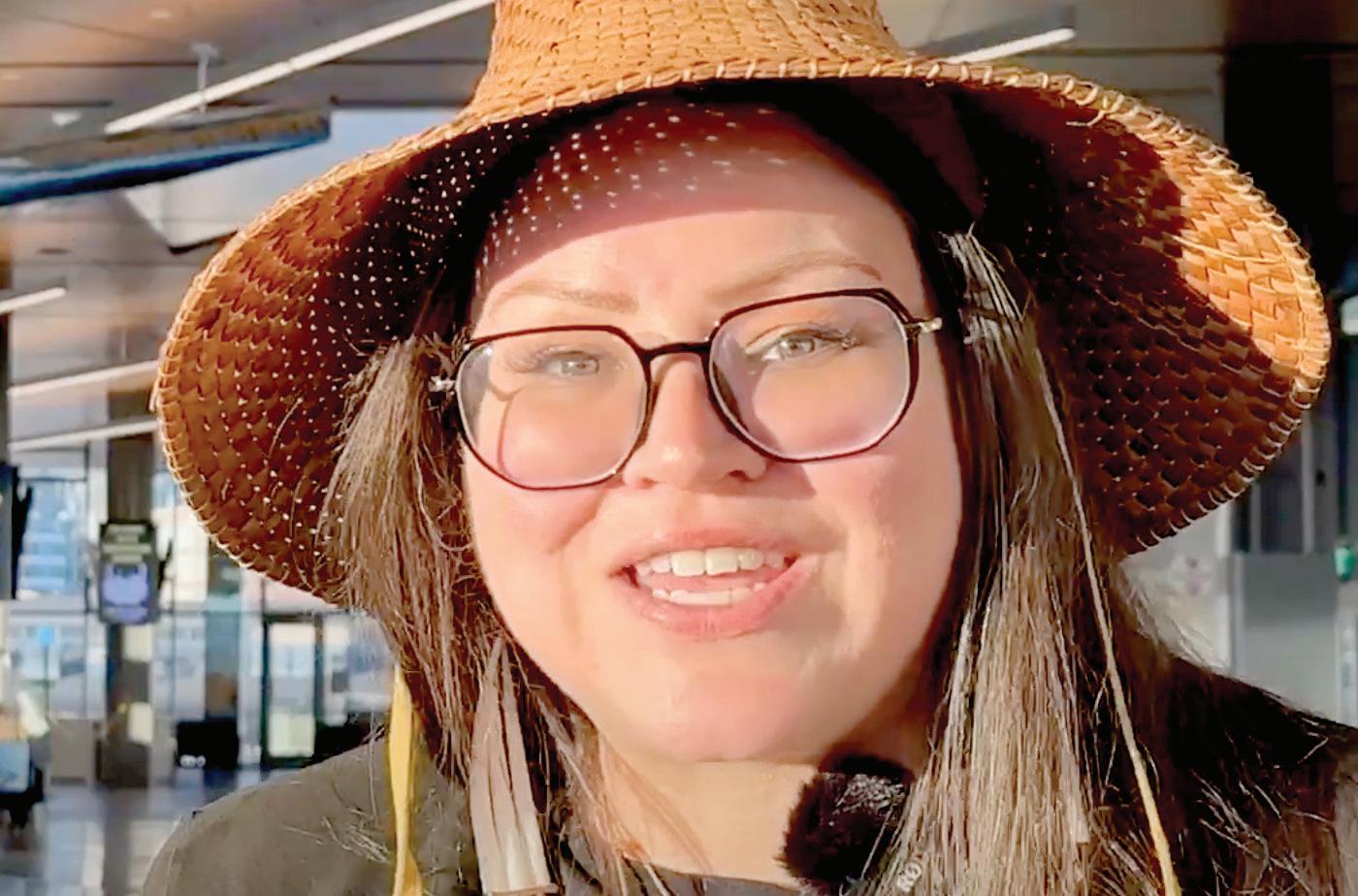
“These canoes represent how we traveled in the past and how we still travel today,” Ahvakana said, who also serves as the Suquamish Tribe’s Cultural Resources Director. “Canoe culture here in the Salish Sea is still alive and thriving.”
Colman Dock sits within the ancestral territory of Chief Seattle’s people where Suquamish villages and canoe travel routes existed long before the city was established.
“It feels great to have Suquamish artistic representation here in our own ancestral homeland in Seattle,” Purser said. “To have our work represented right here means a lot.”
Though the painted designs reflect ancient and contemporary Coast Salish styles, the vessels themselves are strip-built canoes — a modern method used when old-growth cedar suitable for dugouts is no longer accessible.
“Strip canoes are our modern solution,” Purser said. “Logs that could become dugouts are harder and harder to come by because of how few remain.”
The team built the canoes inside Ahvakana’s family longhouse workshop, where cold temperatures and humidity complicated the fiberglass curing process.
“There were times we had three heaters going just to get the resin to set,” Chargualaf said. “We even built a smaller room inside the longhouse just to hold enough heat.”
Setbacks required persistence. “Some fiberglass went hazy and we had to scrape it off and start again,” Villa said. “It wasn’t easy, but everyone stayed committed.”

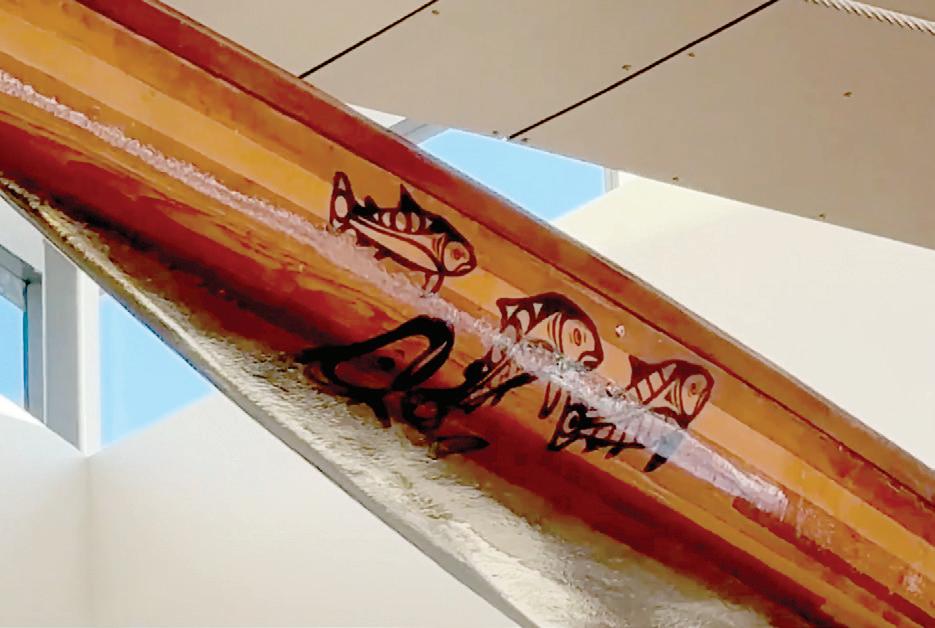
The installation includes two single canoes and one double — modeled after Coast Salish race and war canoes still used throughout the region.
Each canoe honors a different sphere of life:
• Water – The first single canoe features salmon that curve along the bottom of the canoe in a subtle shape of an S, for Suquamish.
• Air – The second single canoe features a thunderbird and blue herons.
• Human – The double canoe depicts two human figures.
“These canoes each have their own soul,” Ahvakana said. “They’re girls — they each have their own spirit, personality, and feeling.”
Painting took place both in the longhouse and in Ahvakana and Villa’s own living room, where the vessels temporarily replaced their dining table as the centerpiece of their household.
“Our kids will always remember that we ate dinner on a canoe while we finished it,” Villa said, laughing.
The installation not only honors the past — it en-
courages viewers to understand that canoe culture is ongoing, not symbolic.
Those wishing to see Coast Salish racing canoes in motion can do so in Suquamish.
“If you want to see these types of canoes being raced, come to Chief Seattle Days on the third weekend of August,” Ahvakana said. “You’ll see them on the water — how they move, how they’re paddled, and how much pride there is.”
For the artists, the most meaningful part was contributing work that future generations — including their own children — will see, recognize, and take pride in.
“It’s surreal,” Boure said. “This is my first major project, and to have it installed here feels amazing.” Ahvakana said the project honors both tradition and accountability.
“This is for our people, our community, and our kids,” she said. “It shows that we’re still here, still traveling on the water.”
Scan the QR code to watch a video on the installation.




By Jon Anderson Suquamish News Staff Writer
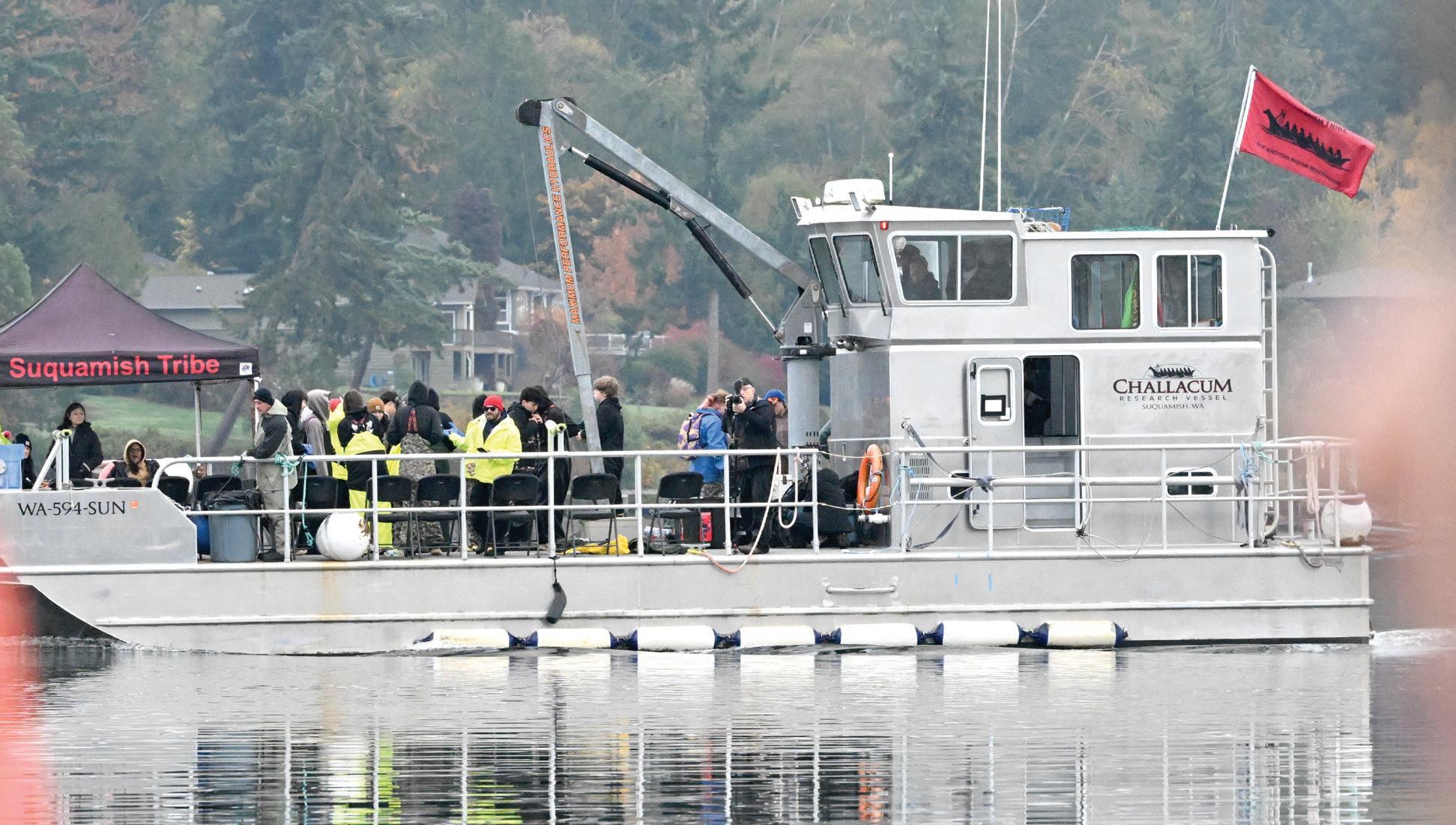
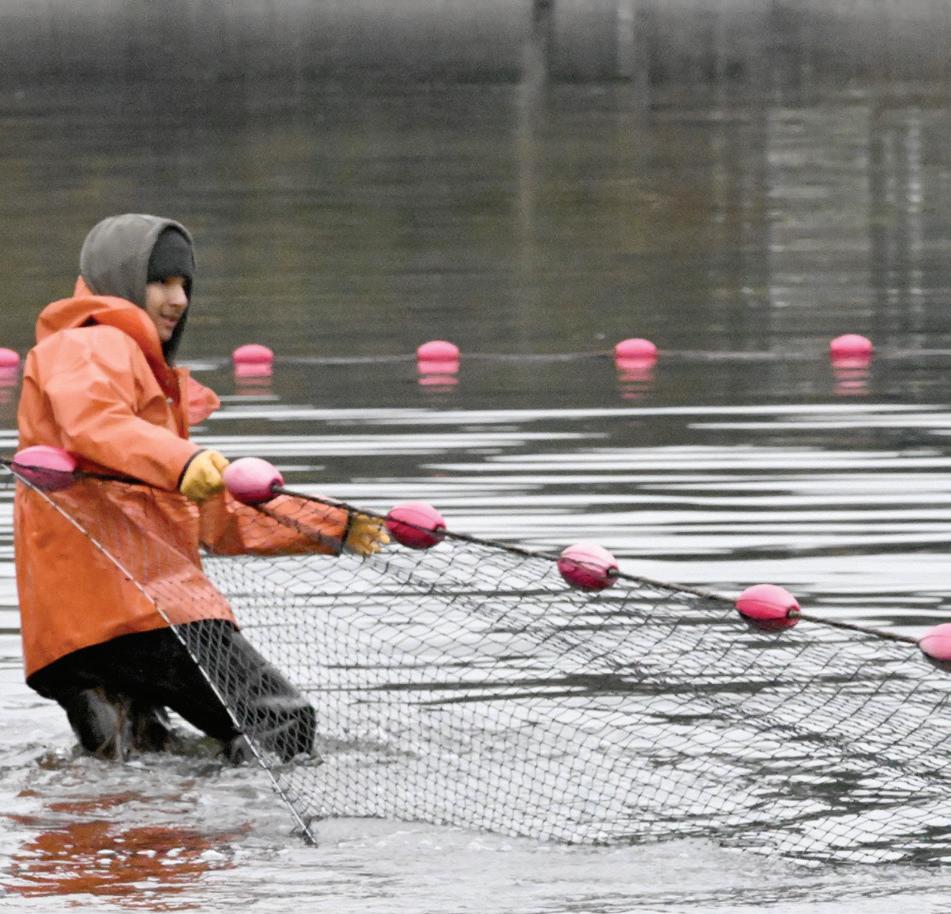
Amisty November chill hovered over Miller Bay as students split into two crews — one aboard the Suquamish Tribe’s support vessel Challacum, the other riding in a smaller aluminum skiff where Suquamish fisherwoman Shellene George mentored 11th-graders Luther Mills and Billy Jones on how to set and retrieve the long salmon net. From the deck of the Challacum, bundled students leaned over the railing, watching the sweep of the gear, listening for instructions carried over the water and then moving to the muddy shore to haul in the net.
After a few pulls, excitement rose when salmon finally appeared in the net — not many, but enough to learn from and celebrate. The small catch wasn’t enough to carry the class through every stage of processing and smoking, but rather than view it as a setback, it became a teaching moment: salmon work is governed by tides, seasons, luck, and patience, not controlled conditions or schedules.
That’s when tribal fishermen stepped in, supplementing the student catch with additional salmon — not simply to fill the freezers, but to reinforce a message that harvesting, sharing, and preparing food is a communal responsibility, one carried together so knowledge can continue.
“There’s no shame in a light catch,” George said. “That’s fishing. Some days you fill the net, some days you don’t. What mattered was that the kids were out there learning, trying, and working together — and then our community did what it always does and supported them.”
A multi-week cultural learning experience
Ocean to Table is not a field trip or a cooking demonstration — it is a multi-week fall learning experience at Chief Kitsap Academy designed to pass on intergenerational Coast Salish teachings about harvesting, honoring, and preserving salmon. Now in its ninth year, the program is guided by Suquamish culture bearers, fishermen, and food knowledge holders, alongside teachers who connect lessons to science, health, and land-based learning.
Students learn every step of traditional salmon preservation, from harvesting to canning. These are not demonstrations for students to watch — they are responsibilities for students to perform, with mentorship and guidance throughout.
This year, eighth-grade life science students and 10th-grade biology students participated. The project is intentionally tied to curriculum so that academic learning connects to real-world meaning. While most biology students learn about anatomy
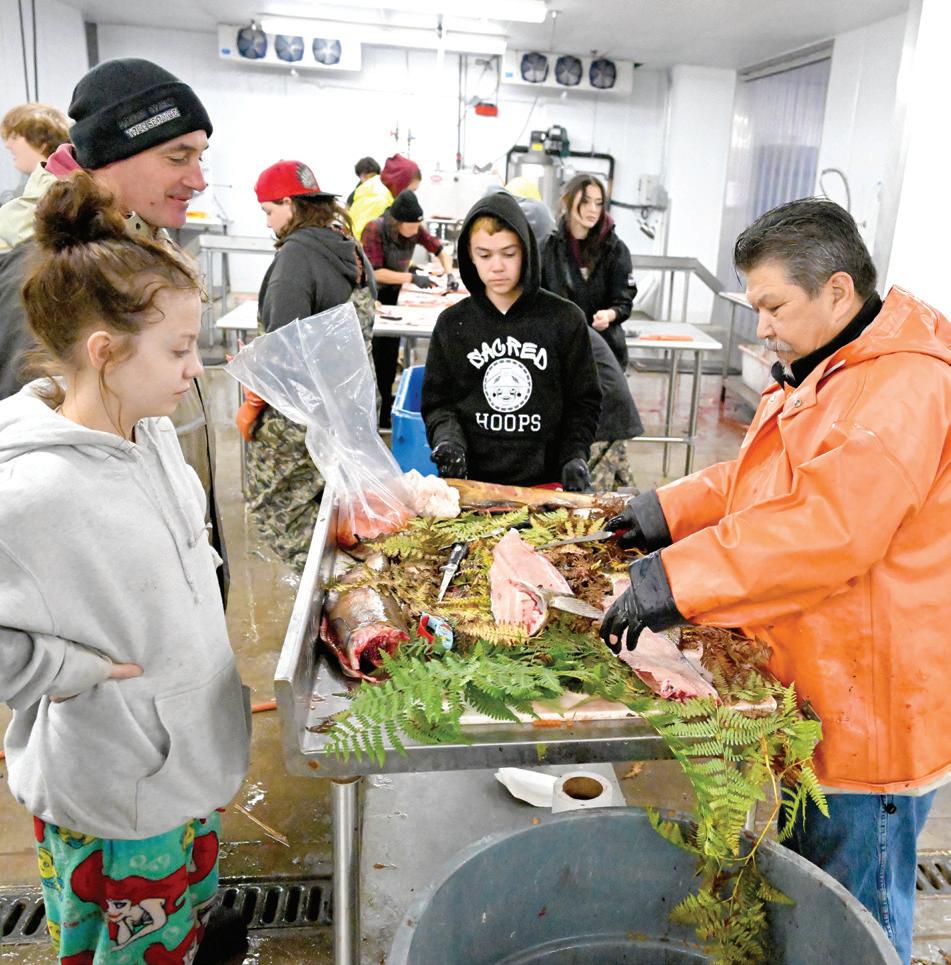
from a printed diagram, these students discuss how form and function relate while holding a salmon gill in their hand.
“My biology students were already in a threeweek salmon unit,” said CKA science teacher Scottie Von Rees. “So we talked about surface area and how gills bring in oxygen, then we were able to see it in real life. It’s so cool to make those connections.”
After returning from Miller Bay, students moved to the Suquamish Seafoods processing facility, where George works as acquisition manager, buying clams, crabs, salmon, and other seafood directly from Suquamish fishers before distributing it to markets and buyers.
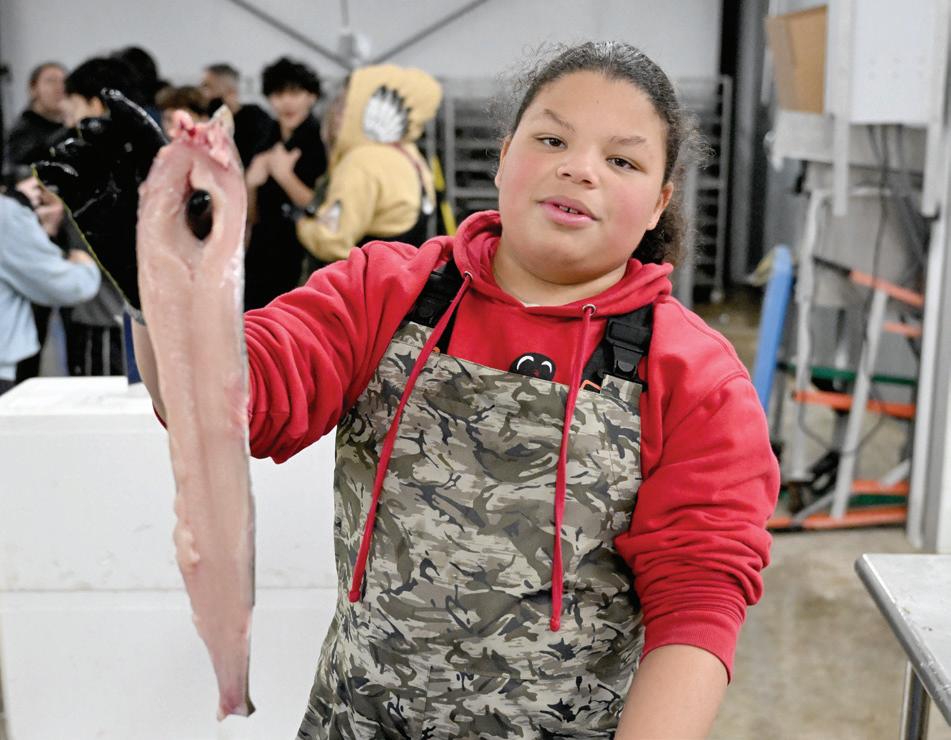
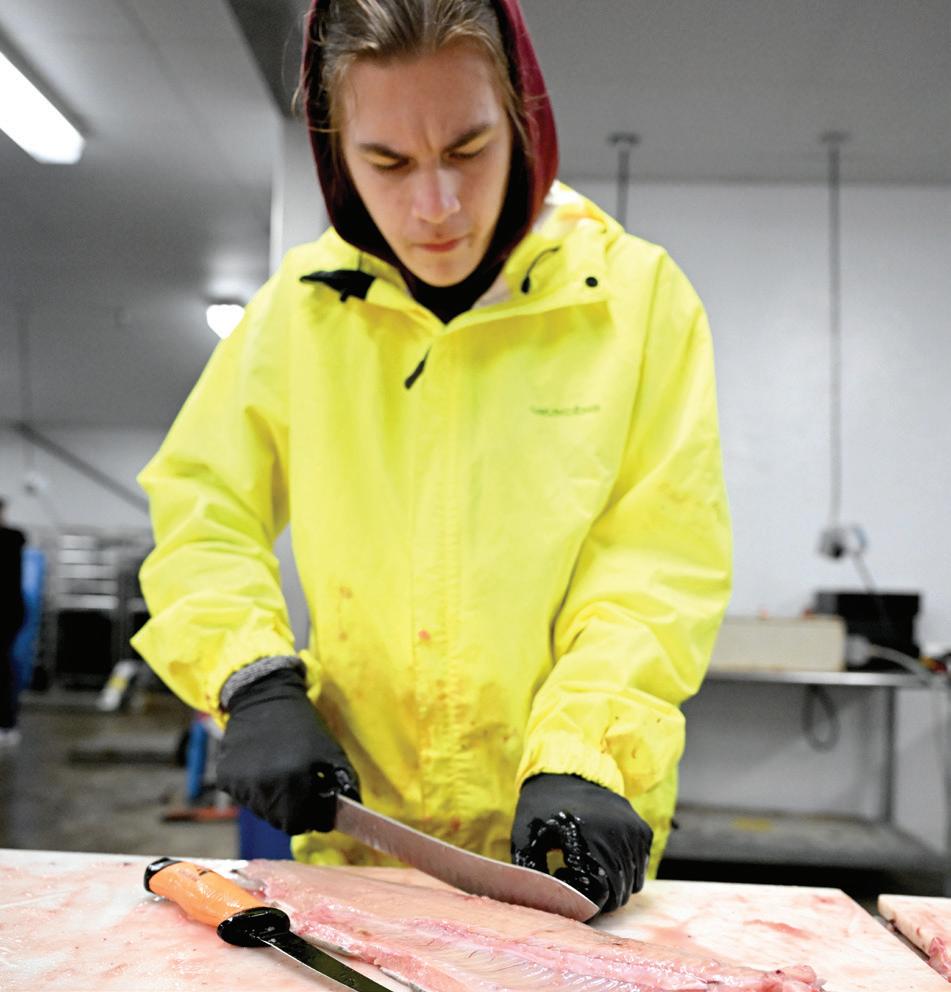
She taught students how to bleed, chill, and fillet salmon safely and respectfully, focusing on steady hands, sharp tools, clean cuts, and minimizing waste.
“They cut it, stripped it, handled icy fish, made mistakes, fixed them, and learned,” George said. “Those aren’t just skills — that’s character. That’s confidence.”
George, who fished commercially from Alaska to California before returning home to raise her family and exercise treaty-protected fishing rights locally, said the program passes down something much deeper than technique.
“What we’re teaching is survival knowledge,” she said. “If something catastrophic happened, these kids would know how to get food, prepare it, and
preserve it. That’s real education.”
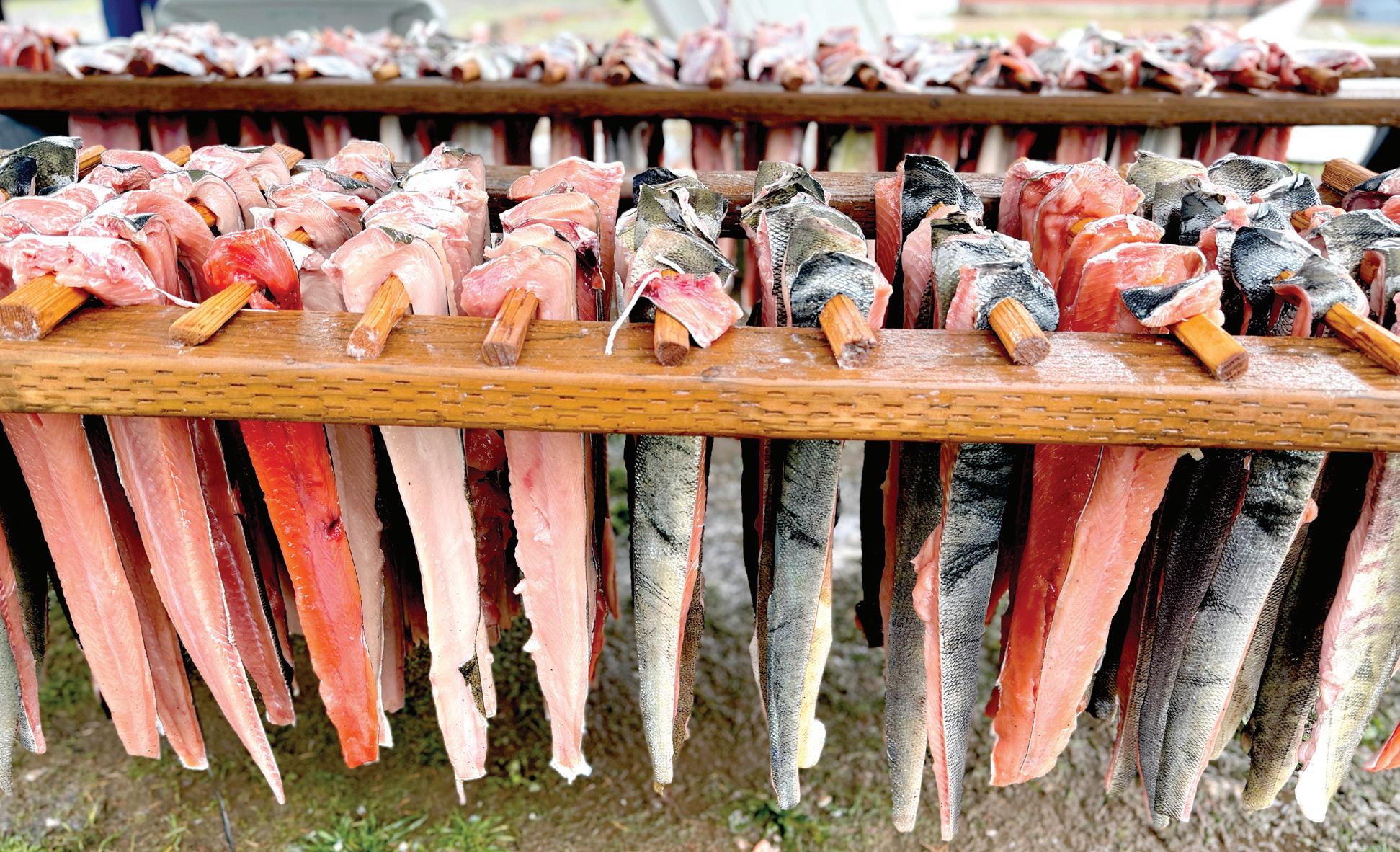
Students then moved to the new CKA smokehouse, where they rinsed brine from fillets, sorted cuts by thickness, and learned how to pierce each piece with precise “eye holes” so cedar sticks could be threaded through without tearing the meat. Timing and technique were essential — and different cuts required different smoke durations.
“You can’t mix the backs and the bellies,” said Jay Mills, Tribal Elder, Tribal Council member, and one of the community’s most trusted experts on salmon smoking and preservation. “Bellies can stay in for five to six days, the backs maybe only two or three. Once they’re hung, you don’t take them down and rearrange them.”
Mills said the entire program echoes teachings passed down directly through his family line.
“I learned these teachings from my great-greatgrandmother and my great uncle,” he said. “She lived to be 103, and she passed it down in our family. That’s what we’re doing here — making sure our young people get the same teachings our grandparents gave us.”
Both George and Mills emphasized that the most important product is not smoked salmon, but future leadership.
Older students serve as crew leads on the water
and in the smokehouse, arriving early, staying late, and modeling the work ethic required to complete the project from beginning to end.
“I could have taken over and done it myself,”
George said. “But that’s not the point. You give them responsibility so they can rise. And they did.”
George believes the experience opened a door that cannot be closed.
“I guarantee some of them are going to go try clam digging now,” she said. “Some will join fishing crews. Some will teach their own kids one day.”
Mills agreed. “We talk about seven generations,” he said. “We’re almost there. These teachings don’t live if we don’t use them. The kids showed they’re ready.”
Soon, the smoked salmon will be canned and shared, just as families have done for generations
Because at Ocean to Table, the goal isn’t just to make food — it’s to make knowledge live.
A new smokehouse now stands near the herb and vegetable garden at Chief Kitsap Academy, built to support hands-on learning for Ocean to Table students, among other traditional culinary classwork.
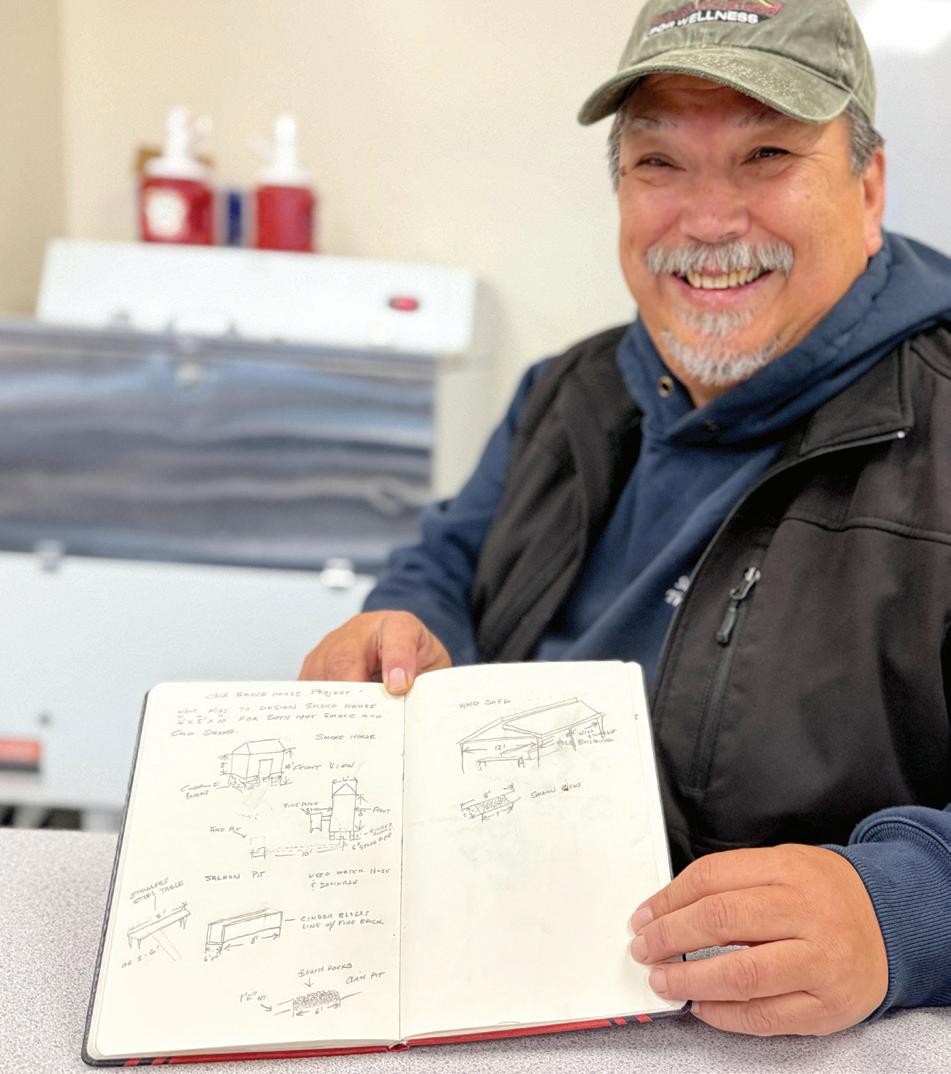
The design was developed by Suquamish Tribal Elder Jay Mills, who has spent decades building and tending smokehouses for his family, using earth-floor structures where the fire burns directly inside. His experience with traditional methods guided the layout and size, but this version includes new features adapted for school use.
The biggest innovation is the external wood-burning stove, which pushes smoke into the chamber rather than generating heat and smoke directly on the floor. Mills researched a variety of designs and cold-smoke systems, combining multiple ideas to find a model that was safer, cleaner, and easier for students to work around.
A second cold-smoke line, with a fire placed farther away to maintain lower temperatures, will also be connected to the smokehouse, giving students the option to explore different preservation methods.
After sketching his concept in a notebook, Mills worked with a friend who turned the drawings into buildable plans. The smokehouse was then constructed with a concrete foundation, cedar siding, and a vented roof system intended to draw smoke evenly. Mills expects adjustments as students learn how it behaves across seasons, weather, airflow, and fish loads.
“Our teachings are alive,” he said. “You build it, you learn from it, then you make it better.”
Natural resource protection and enhancement is central to our responsibility as members of the Suquamish Tribe. Our people have relied on salmon, shellfish and other foods to sustain us and our economies for thousands of years. As a treaty tribe we are entrusted to preserve our treaty fishing rights for future generations.
Here are just two ways that’s been demonstrated in recent weeks.
On Oct. 28, we honored one of our past leaders, Merle Hayes, in a ceremony officially renaming the hatchery at Grovers Creek in his honor. Co-workers, family and friends came together to honor his legacy of defending and exercising our treaty rights as a fisherman, tribal council member, and fisheries policy expert.
Meanwhile, the good fight continues. The Treaty Tribes of Washington have entered into mediation with the State of Washington to work out an agreement to address Olympia’s inability to meet the federal court ordered target of opening 90 percent of the habitat blocked by state culverts by 2030. We have joined the tribal coalition in mediation strategy meetings and direct talks with the State of Washington.
The Chief Kitsap Academy School Board, consisting of the Tribal Council, met with Superintendent Brenda Guerrero and CKA Principal Lucy Dafoe who gave us updates on the opportunities and challenges they face in providing a quality edu-
cation for our students.
A strong athletic program, career education, and incentives for good behavior are some of the priorities of the administrative staff and there has already been success in meeting these initiatives.
The University of Washington Board of Regents held their November meeting at the UW-Tacoma campus. This was my first meeting as Board Chair and I would like to thank Ed Stern of the Poulsbo City Council for attending and providing words of support at the meeting.
The UW faces challenges due to potential funding cuts in the federal budget, especially in research and medicine. The Athletic Department is doing its best to adjust to the rapidly evolving college sports landscape.
The Seattle Colleges – consisting North Seattle, South Seattle and Seattle Central colleges — is planning a tribal summit. I joined their administrative staff in setting a draft agenda and proposed protocol for working with tribal leaders for the upcoming event.
Our ancestral territory in Seattle
Ceremonial events continue to be held in and around our ancestral homeland in Seattle and here at Suquamish.
The Living Breath Collective and the University of Washington American Indian Studies Department hosted “Celebrating Indigenous Chefs” at the Daybreak Star in Seattle. Chefs Jason Vickers of Netoncks Metsu and Jeremy Thunderbird of
Native Soul Cuisine prepared a traditional meal and discussed their individual journeys to establishing their businesses during a post-dinner panel.
The Friends of Seattle Waterfront held an event at Victory Hall in Seattle. “Dinner with Friends” celebrated Waterfront Park’s grand opening and helped raise funding to support programming and other expenses. I was happy to see our Suquamish Canoe Family’s landing at the park’s opening as one of the images shared during the presentation.
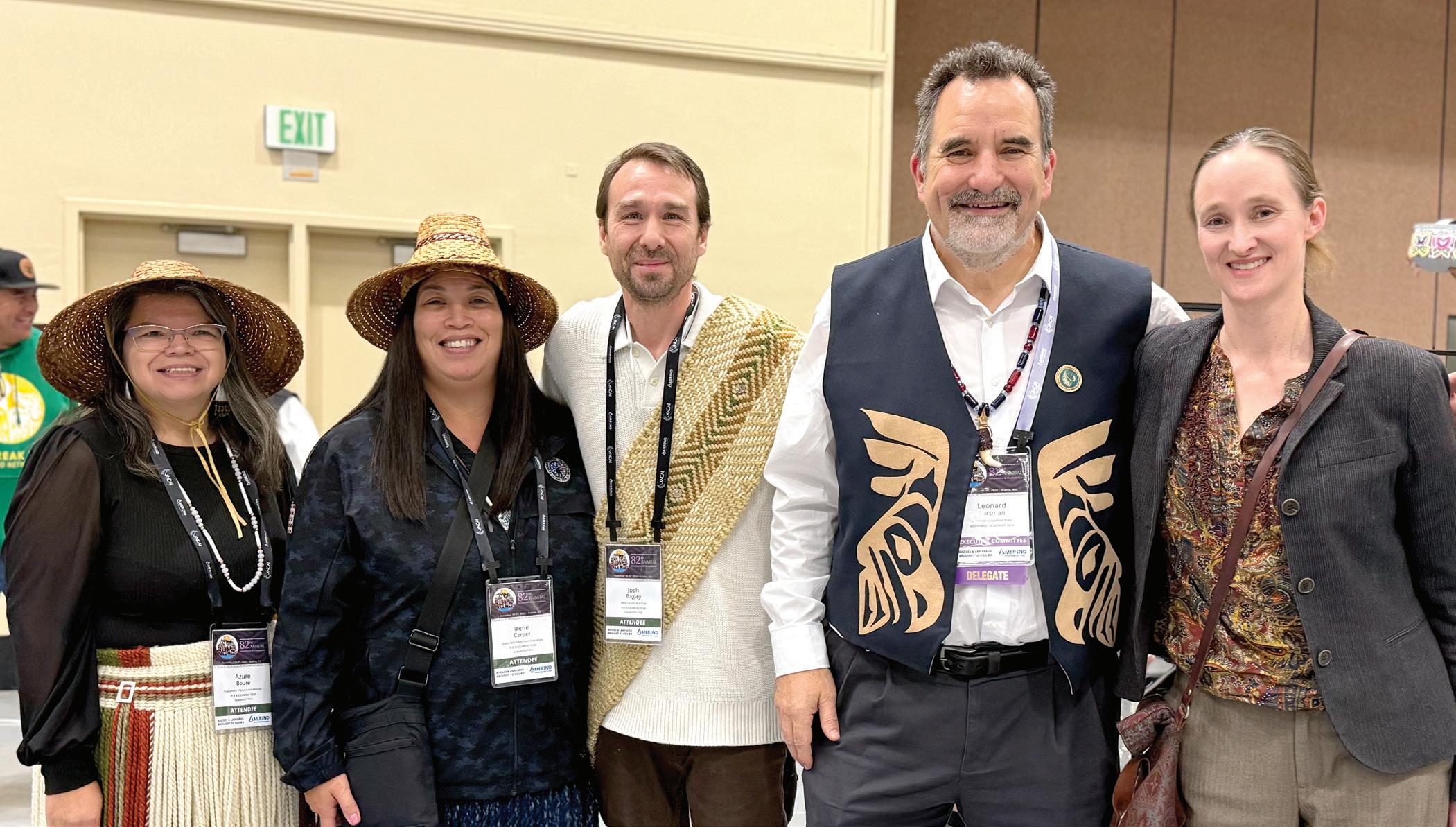
The National Congress of American Indians held their 82nd Annual Convention and Marketplace in Seattle in late November. The Affiliated Tribes of Northwest Indians, in conjunction with local tribes including Suquamish, Muckleshoot, Snoqualmie, Tulalip and other area tribes hosted the convention.
There was record attendance at the conference with over 3,000 attendees and 266 tribes present. The Suquamish Canoe Family provided a welcome at the opening general assembly and sang at the culture night celebration. Our Tribal Elder Bill Gemmell of the Suquamish Warriors carried in the Suquamish flag during the presentation of the colors.
The Port of Seattle, with the support of the Suquamish and Muckleshoot Tribes, hosted a luncheon for the NCAI Area Vice Presidents who represent tribes from around the nation.
Thanks to the Cultural Resources Department and Tribal Council for their support of our hosting. As ATNI President and Area Vice President for NCAI I was proud to see our people and the Northwest tribes extend their hospitality to our esteemed visitors from across Indian Country.
The Suquamish Tribe held an event at Kiana Lodge acknowledging our employee anniversaries. Congratulations and thank you to our longtime employees, including Cheryl Lawrence who is celebrating her 40-year anniversary.
The Suquamish Tribe’s Human Services Department hosted an honoring of our veterans on Veterans Day at Kiana Lodge. Thanks to our Suquamish Warriors for their service, and for supporting the event, as well as all their work for veterans throughout region all year.



Please bring a new, unwrapped gift to distribute to kids before Christmas. Through Dec. 10, donations can be dropped off M-F in the lobby of the Administration Building, and on Wednesdays at the Vet Center.
Organized by Suquamish Warriors and the Marine Corps Reserve.
We need your help! We need your help!
Is Suquamish News mailed to you? Let us know when you receive it!
We recently changed the mailing service used for Suquamish News and it is important for us to know the paper reaches you in a timely manner.
Please scan the QR code and share the date it arrived and your zip code.
Thank you! communications@suquamish.nsn.us



Nov 29-30 and Dec 20-21 9:30am-4pm House of Awakened Culture
Jon Anderson Suquamish News Staff Writer
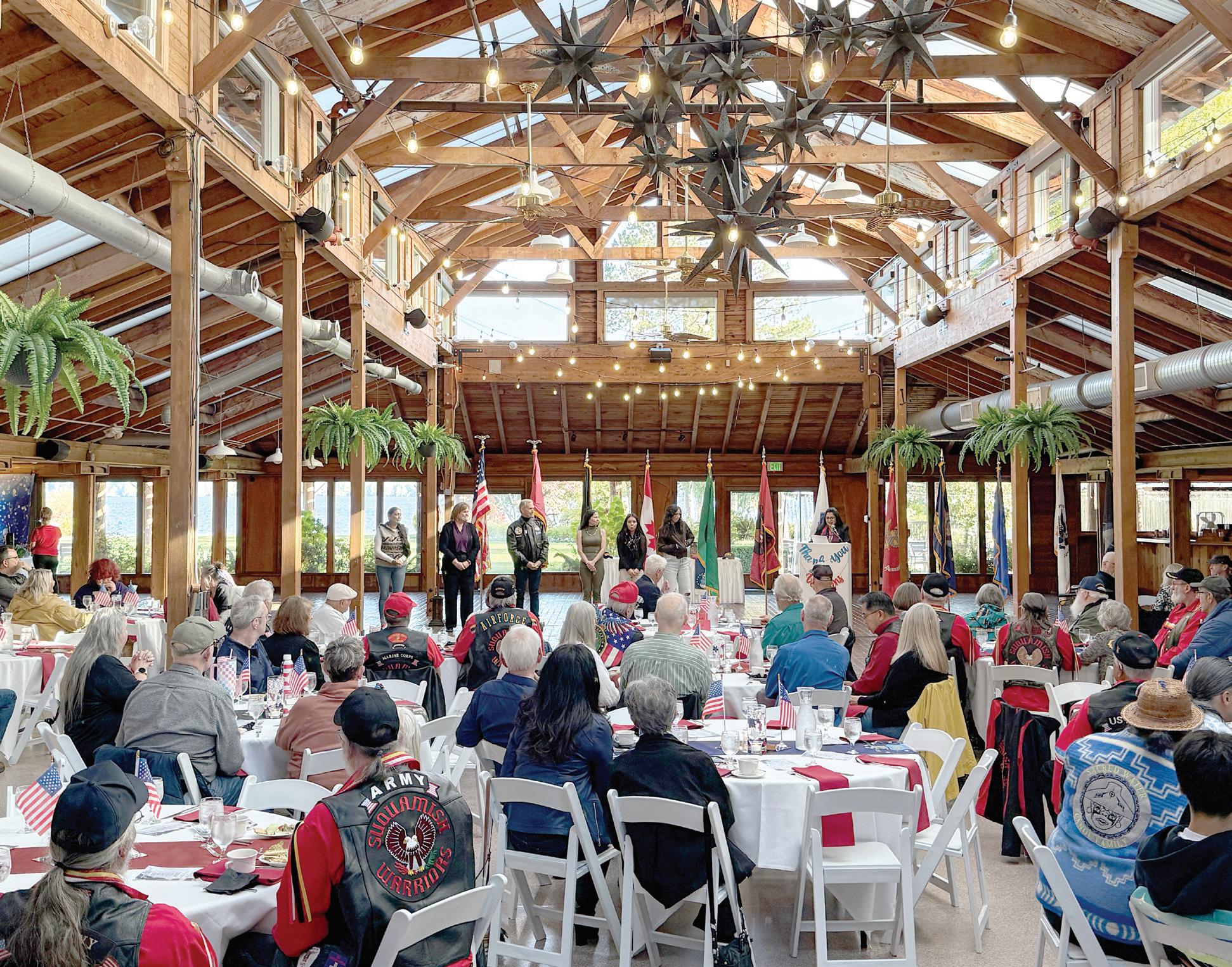
Morethan 150 veterans, family members, and community guests gathered at Kiana Lodge on Nov. 11 for the Suquamish Tribe’s annual Veterans Day honoring. Hosted by the Human Services Department, with event coordination by Social Work Supervisor Julie Mace and Tribal Veterans Representative Jon Thompson. The gathering featured a full program of cultural songs, reflections from tribal leaders, shared stories from Suquamish Warriors, prayer, raffle giveaways, and a seated lunch overlooking Agate Passage.
Human Services Director Nehreen Ayub opened by focusing on the character and quiet strength of the people in the room.
“You’ve given more than most can imagine and you’ve done it with grace, grit, and that quiet strength that never needs to announce itself,” Ayub said. “Service is not only about bravery, it is about endurance, teamwork, and heart. And whether you wore Army green, Navy blue, Air Force silver, Marine Corps crimson, Coast Guard white, or Space Force gray, you’ve all earned the deepest shades of respect from all of us gathered here to honor you today.”
Tribal Council
Chairman Leonard Forsman placed their service in the context of a much older Suquamish warrior tradition that predates the United States.
“We have a long history of warrior tradition, and many Suquamish people answered the call to serve in later wars,” Forsman said, noting that leaders such as Chief Seattle first emerged as protectors of their people before becoming diplomats and negotiators.
Vice Chairman Josh Bagley spoke to how military service threads through nearly every Suquamish family.
“Most of our families have somebody that has served,” Bagley said. “It’s an honor and a privilege to honor all of you veterans here today.”
Sacred Water Canoe Family offered songs at multiple points during the gathering, lifting the room with a power song to start the day and returning later for a cultural sharing.
Special guest speaker retired Navy Capt. Marc Helgeson delivered the keynote address. Helgeson, who spent a career at sea, spoke directly to the veterans in the room as a fellow sailor and thanked the tribe for the opportunity to join the honoring.
Suquamish Warriors Treasurer and historian Chuck Wagner brought a mix of humor and reflection that drew repeated nods and laughter. He described what it means to gather with others who understand the weight and pride of service.
“Being understood matters, and sometimes that happens best when we’re in the same room with people who’ve lived it,” Wagner said.
He talked about the role of the Suquamish Warriors as more than a color guard or social group, describing them as keepers of history and mutual support who show up for funerals, school events, and community gatherings.
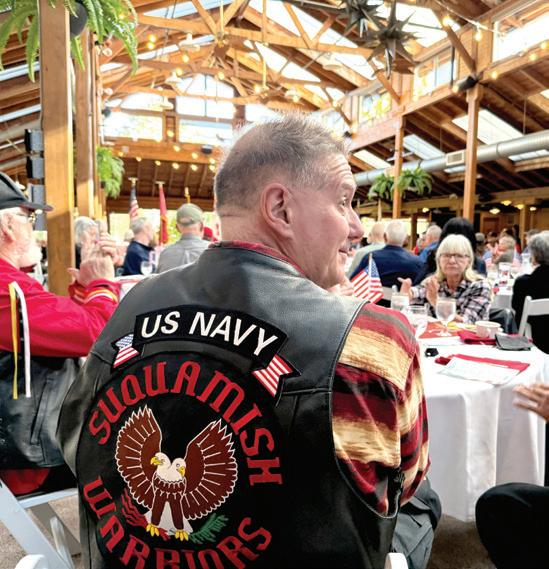
Throughout the afternoon, veterans in Suquamish Warriors jackets and service caps sat at round tables draped in red, white, and blue. Flags from each branch lined the front of the room. A steady
stream of raffle drawings sent cheers rippling through the crowd as names were called and prizes claimed.
Mace paused between drawings to offer her own thanks.
“Every year, our department is able to do this to give a little thanks for our veterans,” she said. “I wouldn’t have the opportunities I have today if it wasn’t for you.”
Lunch and dessert followed the program, with plates of roast dishes and salads making their way around the room and rows of berry-and-cream parfaits disappearing quickly from the dessert table. A photo booth in the corner turned into its own small celebration, with veterans, spouses, and friends stepping in front of the camera for portraits and a few quiet kisses.
As people lingered over coffee and conversation, the feeling at Kiana was less about a single ceremony and more about an ongoing commitment: veterans honoring one another, the tribe recognizing their service, and the community making space to remember together.
By Heather Purser Special Contributor
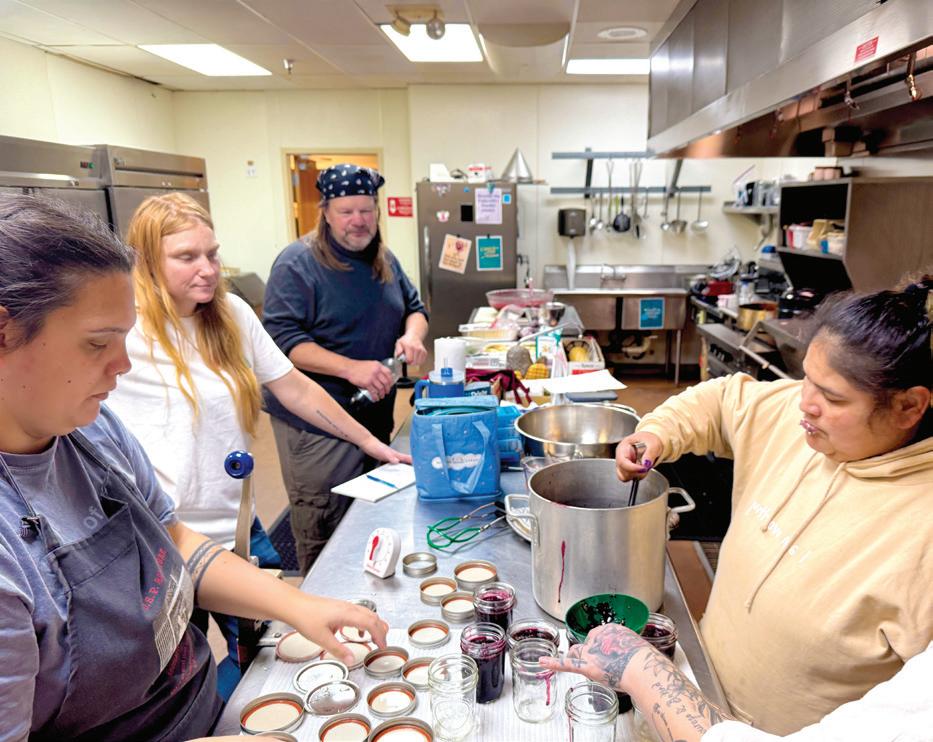
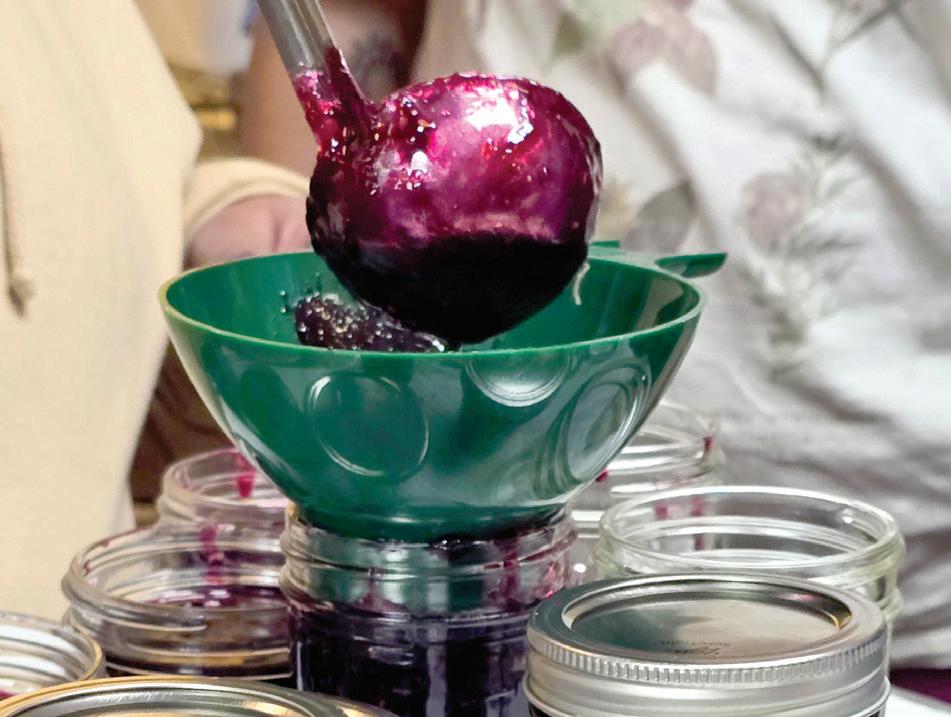
“You’ve got to whip while you stir,” Suquamish Tribal Member Brenda Anderson says, leaning over a bowl of berry paste. It’s the playful tone in her voice that makes the people gathered around her chuckle as they learn how to make jam. Outside, it’s cold and wet, but inside the Elders Kitchen, the room is warm, bright, and full of life for the weekly crafting group held every Thursday at 1 pm.
Hosted by Suquamish Tribal Member Bonnie Brown and Kylee Butler of the Makah Nation, a peer support specialist at Suquamish Wellness, the crafting group brings community members together to create, visit, and unwind. Today, the aroma of simmering jam blends with Bonnie’s freshly made fry-bread. Fall decorations give the room a soft glow, and on any given Thursday you can expect the tables to be covered in supplies that fit the theme of the day: beads, jars, fabric, paint, ribbon, or whatever the project calls for.
People drift in and out, settling at the tables, telling stories, teasing one another, and laughing easily. One man isn’t making jam at all, he’s happily sketching at the corner table, fully part of the circle in his own way. “Don’t be shy, get in here,” Bonnie grins, encouraging anyone interested to come take
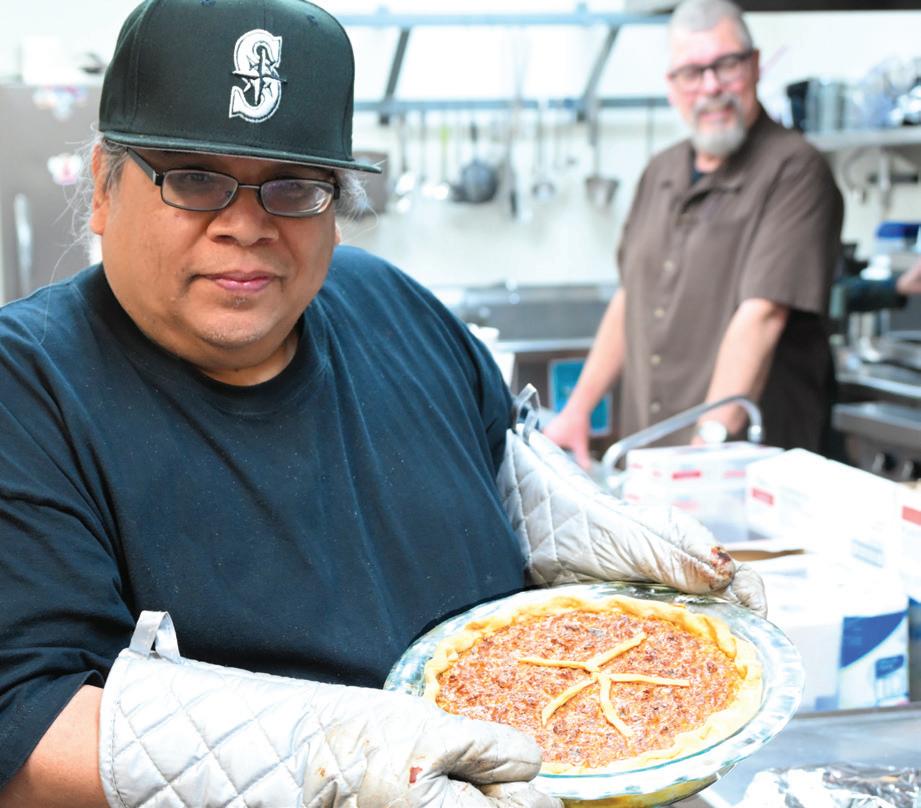
Get your holiday season started off in a yummy way with Tom Curley’s award-winning Maple-Walnut Pie! Tribal Elders enjoyed a baking gathering Nov. 19 with Tribal Government’s resident pie expert and took home this fabulous dessert.
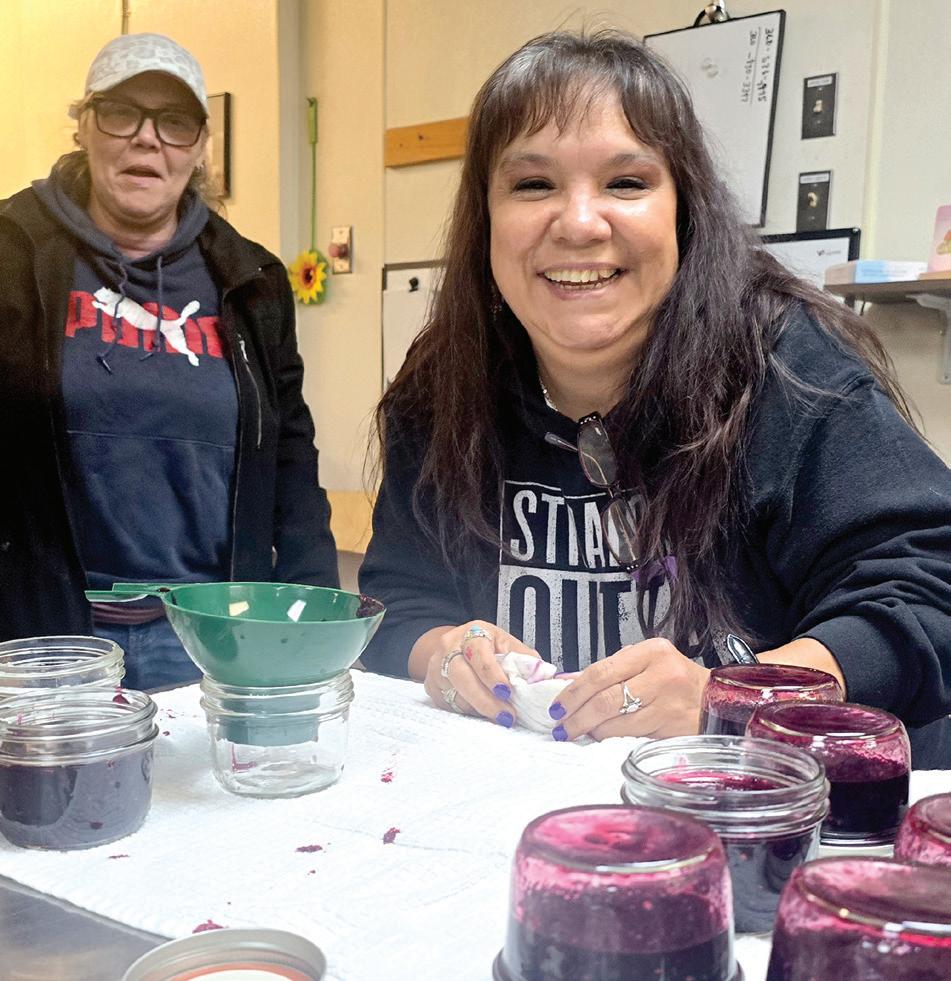
part in the gathering.
The crafting group restarted about two months ago after people said they missed having a space like this to connect. In the past, the group has made gifts for the community—graduation necklaces, ribbon skirts, Canoe Journey items, and more. Today, like every Thursday, the focus is simple: gather, create, and bring a little warmth to each other’s day.
Pie Filling Ingredients:
1 cup dark brown sugar
1 cup maple syrup
3 large eggs
1/2 stick melted butter (4 Tbsp, salted)
2 teaspoons vanilla extract
1 Tablespoon cornstarch
2 cups chopped walnuts
Pie Crust Ingredients:
4 cups unbleached flour
1 teaspoon salt
1 Tablespoon sugar
1 Tablespoon baking powder
(Argo or Rumford, non-aluminum type)
1-2/3 cup shortening (can combine with lard)
1 Tablespoon vinegar
1 cup water
Make the crust first, by whisking the dry ingredients together in a large bowl. Cut in the shortening/lard until well mixed, like peas.
Measure vinegar into a measuring cup, then add water to equal 1 cup. Pour over dry ingredients, and mix with your hands until it comes together into a well-blended, slightly sticky dough. Wrap in a produce bag or cling wrap and set aside.
Pre-heat oven to 425 degrees. Spread chopped walnuts on a cookie sheet and let them sweat in the warming oven - this will improve flavor. But watch them carefully - they can go from nicely toasted to burned surprisingly quickly.
Roll out pie crust to fit pie plate with about an inch extra, then fold that under and crimp.
In the same large bowl used for pie crust, whisk the eggs together, then whisk all the ingredients together, and fold in the walnuts. You should use a pie shield to protect the exposed rim of crust from getting too dark (or make your own from aluminum foil). Pour the mixture into the pie plate and set in the 425-degree oven for 15 minutes, then turn the oven down to 350-degrees for another 30-40 minutes until the center is set. Let cool completely before serving.
By Jon Anderson Suquamish News Staff Writer
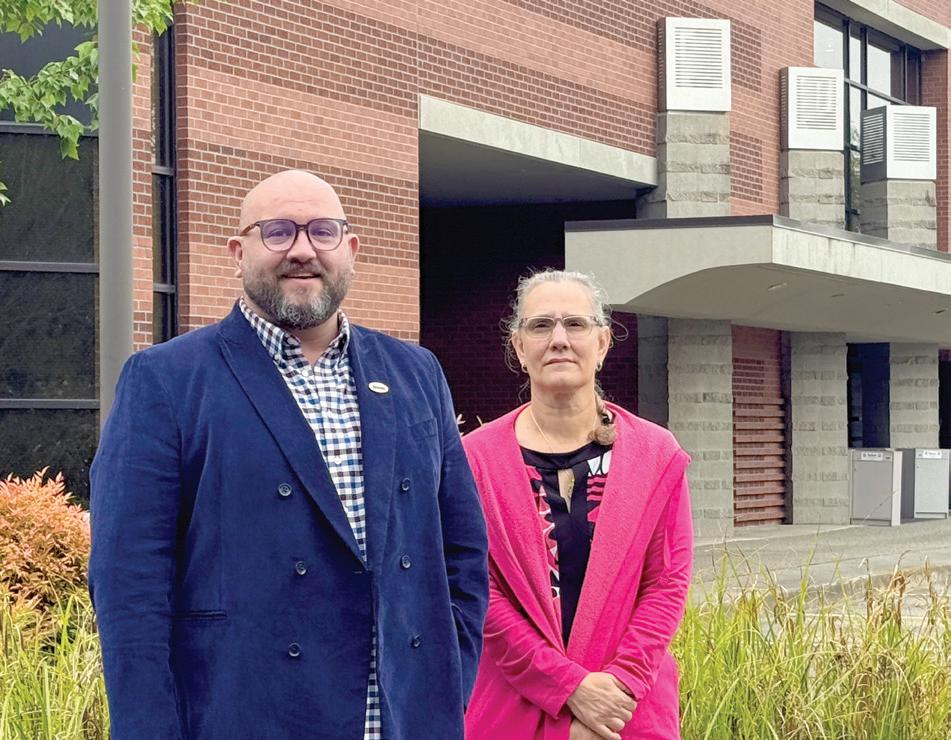
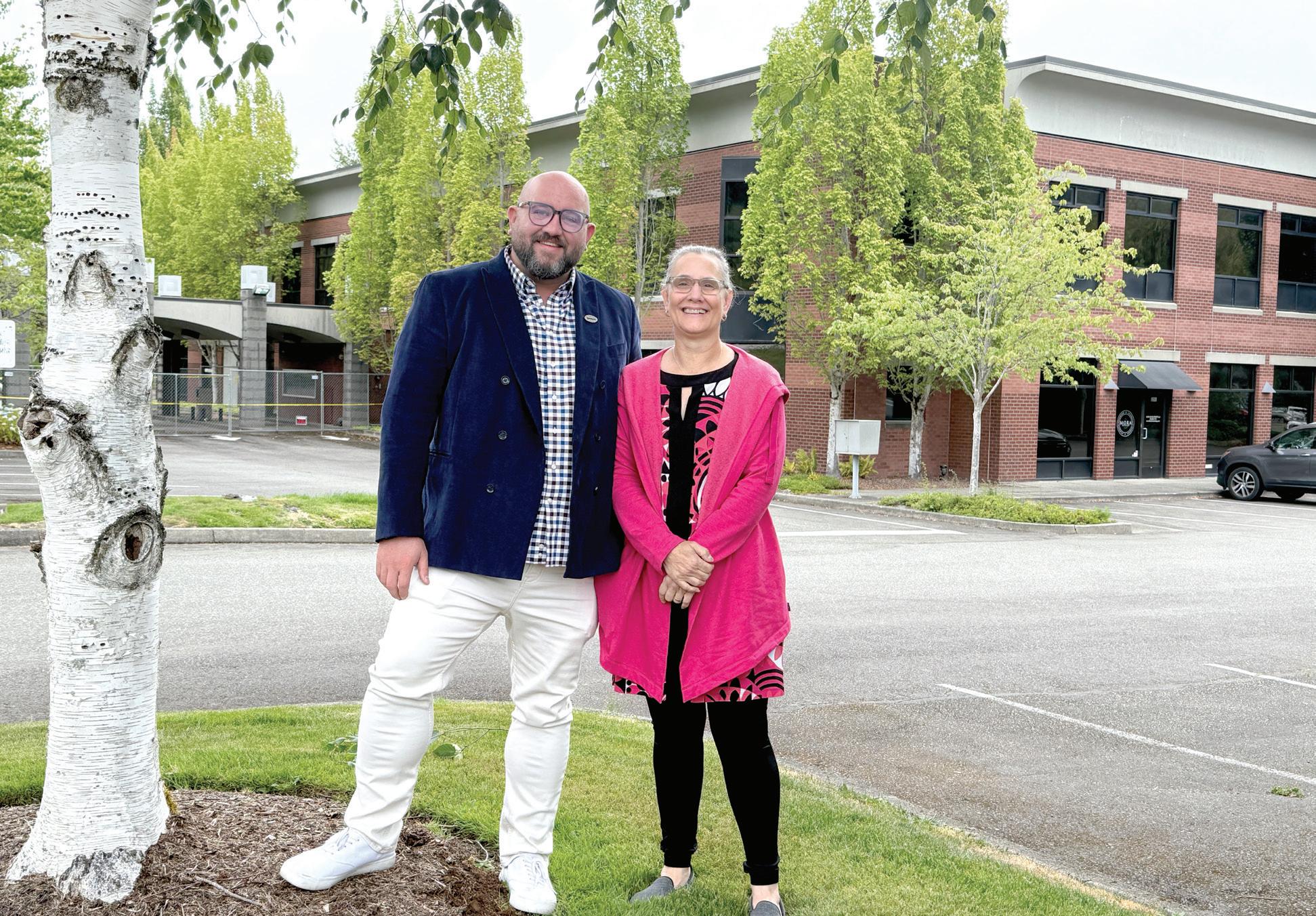
The Suquamish Tribe is laying the groundwork to open a new addiction healing and wellness center in Poulsbo — part of a strategy to expand access to holistic, culturally grounded care for those in recovery.
The center will be located in a former bank building, an acquisition made possible through $18.48 million in funding secured from the Washington State Legislature. The funds, from the state’s capital budget, will fully cover the cost of purchasing and remodeling the facility.
All that work will take time. Redesign and renovations to transform the two-story, 30,000-squarefoot bank into a health center are expected to take at least a year. And then will come equipping and staffing, with plans to open the facility in 2027.
The yearlong remodel is only one part of the effort. Behind it is a broader push to strengthen the tribe’s response to the opioid crisis — a case tribal health leaders recently laid out in Olympia.
“We built a case to the state legislature, with data showing that Indigenous-led opioid treatment programs have been the most effective in Washington, said Suquamish Community Health Manager Jeff Riggins, who also chairs the Suquamish Tribe’s opioid emergency steering committee “We showed that we wouldn’t reinvent the wheel—we’d model our clinic after what’s already working.”
That approach received strong backing in Olympia. Sen. Drew Hansen, Rep. Tarra Simmons, and Rep. Greg Nance worked closely with Suquamish Tribe leaders to move the funding request through the legislature.
It’s a win Nance credited to strong advocacy from Chairman Leonard Forsman and the rest of Council, Riggins — who helped draft the legislative package — as well as other tribal government experts who helped lobby in Olympia in recent months.
“We have a lot of neighbors dealing with mental health challenges, dealing with addiction challenges. Day in and day out, these folks can slip through the cracks, but not on Suquamish’s watch,” said Nance in a briefing earlier this year with Tribal Council. “Budget leaders kept saying there’s no money for this, there’s no money for this. But Chairman Forsman is a persuasive leader. And by the end of it we have an $18 million investment that will save
people’s lives right in our community.”
Modeled on centers of excellence
The treatment facility will serve both Suquamish tribal members and the broader Kitsap community and will be modeled on successful tribal centers of excellence such as those at Swinomish and Jamestown S’Klallam.
Planning focuses on offering wraparound services aimed at treating the whole person in a single, welcoming setting. The exact mix of services continues to be refined, but will include opioid treatment, primary medical care, and behavioral health and recovery support.
“Best practices in opioid treatment show that comprehensive care under one roof works best,” said Clinic Director Deborah McRae. “This facility will reduce barriers to care and support long-term wellness.”
McRae, who retired from the Navy after 20 years of service and has worked with major healthcare providers throughout Kitsap, was recently hired to help stand up the new center.
The Poulsbo location was chosen for its accessibility and potential. “This building is right on major bus lines and highways,” Riggins said. “We want to reduce as many barriers as possible for people seeking care.”
He added that placing the center off the reservation also helps protect privacy. “A lot of folks don’t feel comfortable walking into a wellness facility that’s right in the center of their community, especially when there’s stigma attached,” he said. “This is close to home, but with more discretion.”
There were no suitable buildings in Suquamish that could accommodate the facility’s needs, and new construction would have added significant cost and delay. Reusing an existing structure with features like secure vault spaces also opens the door to innovations such as on-site pharmacy services.
By Erin Bischoff Suquamish News Staff Writer

Suquamish Tribe and Kitsap OBGYN are joining forces early next year in a partnership that will allow the Poulsbo- and Silverdale-based health provider to continue offering the high-level of services that women in the region depend on for obstetric and gynecological care.
Kitsap OBGYN will become part of the Suquamish Tribe’s growing slate of healthcare services in the area. Key details include:
• Healthcare services provided by Kitsap OBGYN will be open to both tribal and non-tribal members of the community.
• Kitsap OBGYN locations in Poulsbo and Silverdale will remain open and will continue with deliveries and surgeries at St. Michael Medical Center as well as surgeries at Pacific Surgery Center.
Bremerton-based architecture firm Rice Fergus Miller was selected to design the building’s remodel, and Tacoma-based Korsmo Construction will turn the designs into reality. Both companies have experience creating aesthetically pleasing and patient-focused medical facilities. Early designs are in the works, and the permitting process will soon begin with the City of Poulsbo.
“We’re excited for the next steps of working with the city,” Riggins said. “They’re a key part of making this a reality.”
The facility will reflect the tribe’s commitment to culture-centered care — a model shown to improve outcomes for Native and non-Native patients alike.
In the coming months, tribal government staff hope to host community visioning sessions and listening circles about the new center.
“This will be a Suquamish place,” Riggins said. “And what we’ve seen is that when tribal communities lead this work, the whole community benefits.”
• Kitsap OBGYN staff will fall under the Suquamish Tribe’s umbrella, joining the 450+ staff members across tribal government.
“When the tribe opened our Healing House in 2023, we filled a void for both tribal and non-tribal members seeking primary care in North Kitsap,” said Suquamish Tribe Chairman Leonard Forsman.“Expanding our scope of services to include specialized care for women allows us to make progress toward our goal of improving the health of our tribal community, while also providing resources that will benefit the greater region.”
Plus, the name of the practice is already a good cultural fit as well, noted Forsman. Chief Kitsap was one of Suquamish Tribe’s storied ancestral leaders who’s descendants make up much of the tribe today.
Both organizations are working behind the scenes to ensure as smooth a transition as possible, which includes having the tribe credential with the same insurance providers currently accepted by Kitsap OBGYN.
Kitsap OBGYN physicians and staff say they’re excited to get the partnership underway.
“We will continue to offer compassionate and personalized medical care for women,” said Kitsap OBGYN Physician Amity Marriott. “The only difference will be that we will be offering this level of care with the support of the Suquamish Tribe. We are honored that the tribe recognizes the importance of our work and is helping us maintain our high standard of excellence.”
Kitsap County is often referred to as an ‘OBGYN desert’ with more demand than there are available providers, said Marriott. “I have seen estimates that one in four expectant mothers in Kitsap travel to King or Pierce counties for care. By becoming part of the Suquamish Tribe’s medical offerings, we are able to operate more efficiently and effectively, allowing us to focus on our patients.”



By Cherrie May Emergency Manager
The Suquamish Tribe has launched an exciting project to develop a vision for a new center on the Port Madison Reservation to support the Suquamish community’s resilience, safety, and well-being. Community resilience means many things and often includes social connectedness, communications and information sharing, public health and wellness, infrastructure, and resources. The new center should support our people in their everyday lives and help us prepare for times of crisis. Through this project, we will discover what community resilience means to us and let that vision guide the development of the new center.
Early ideas for the center include a food bank, spaces for community meetings, and a place to store emergency supplies and provisions. Tribal staff have identified needs related to emergency management that could be incorporated in the new center. For example, spaces for emergency response training and an emergency operation center would help both the Suquamish Tribe and neighboring jurisdictions respond to emergencies.
The tribe is currently developing a shared vision and assessing what location would be most suitable for the center. This planning work is supported by a grant from the Washington State Department of Commerce’s Planning and Predesign Capital Equity Program (PPCEP). This grant allows the tribe and its partners to study the site, assess risks, explore building concepts, and, most importantly,
hear from the community about what the center should include. The pre-planning phase will continue through December 2025, after which the Tribe will consider next steps and potential funding for construction. The project site currently being studied is at the northwest corner of NE Suquamish Way and Division Avenue NE. The center will be for the community, so it needs community input to shape the project.
• What does resilience mean to you? What community assets are needed to support that resilience?
• What types of services or programs should be included in a center for community resilience?
• What do community members need to be more prepared for natural disasters or emergencies?
• How can traditional knowledge and cultural values guide community resilience and emergency preparedness? How can the design and function of the buildings align with traditional knowledge and cultural values?
You can also share your thoughts and ideas on the tribe’s website and find project updates, upcoming community discussions, and other ways to contribute to the project.



In late October 2025, the County Commissioners met and approved the proposed sewer rates for residential customers. The fees are determined based upon the state law that requires rates to be set to produce revenues sufficient to cover the costs of maintenance and operations, bond obligations, repayment of loans, and other costs necessary to properly run the county’s sewer systems.
Suquamish Housing residents and tenants are subject to these increases as calculated in their
monthly payments if their unit is connected to county sewer.
Tenants are notified by mail and public notice of the annual sewer rate increase.
Questions can be directed to either Vicki Cole, (360) 394-8419 vcole@suquamish.nsn.us , or Lois Sullivan (360) 394-8416.
Below is the approved 5-year rate plan for 20262030.
We will be closed December 25-January 1st 2026. Please call 360-982-4527 for urgent issues. This voicemail will be monitored.
We are closed 12-2 PM the First Thursday every month for team training.
Contact Health Benefits for Assistance Office: (360) 394-8424 | PO Box 546, Suquamish, WA 98392
The Kitsap County Sewer Rates will increase to $109.72 per month, starting January 1, 2026.
Questions?
(360) 394 - 8423

By Mark Williams Chief of Police
Let’s talk about calling 911. The first rule is if you wonder if you should call 911, please call 911. Don’t text someone to ask their opinion, don’t send an email, don’t wait for someone to come into the office, don’t ask permission — call 911.
Times to call 911 include:
• Crimes in progress
• Motor vehicle collision
• Cars or trees blocking roadways
• Boats sinking or taking on water
• A medical or mental health crisis
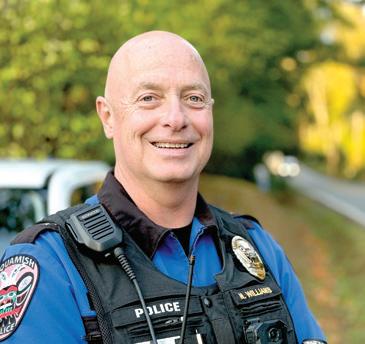
The most important thing to remember is do not hesitate to call. We would rather be en route to an emergency and have it called off, than be late because of hesitation. Remember the first rule — if you wonder, you should call.
Kitsap911, who serves as our contracted Public Safety Answering Point for emergency calls, can also receive 911 text message.
On another note, we are working diligently to select new officers to backfill openings in both the patrol and the marine divisions and look forward to sharing our selections of new officers to serve our community.



If you cannot walk away when you’ve reached your limit, or if you find yourself preoccupied with thoughts of gambling or in conflict with others because of your gambling activity, we can help.
the Suquamish Tribe Wellness Center at (360) 394-7139 or (360) 3948558. We are here for you.




Goulash (ground beef, tomatoes, green beans)
Tossed Salad
Wheat Roll
Birthday Cake & Ice Cream
Tomato Soup Ham & Cheese
Sandwich on Whole Wheat
Broccoli Salad
Fresh Fruit
Sweet and Sour Pork
Brown Rice
California Veggie Blend
Tossed Salad

Beef, Barley & Vegetable Soup
Tuna Sandwich
Cucumber Tomato Salad Fresh Fruit
BBQ Chicken
Brussels Sprouts
Biscuit
Cottage Cheese w/ Fruit
Pork Ribs Germany Blend Veggies
Sweet Potatoes
Apple, Celery & Pineapple Salad



Taco Salad
Bean Salad
Fresh Fruit
Fresh Fruit Frittata




Calico Bean Soup
Chef Salad w/ ham, cheese, sunflower seeds & dried cranberries
Pumpkin Cookie
w/
sauce Mashed Potatoes Veggie Blend Spinach Salad Wheat Roll Sugar




Diced Ham
Oven Roasted Potatoes
Oat Bran Muffin
Yogurt Parfait
Veggie Chowder
Tuna Fish Sandwich on Whole Wheat
Bread
Baby Carrots
Minted Pea Salad
Yogurt Parfait w/ Fruit





Geoduck Chowder w/ oyster crackers
Veggie Tray
Fresh Fruit


Salmon Patty
Oven Roasted
Potatoes
Mixed Vegetables
Pachado Bread
Pumpkin Cookie

By Della Crowell, Melissa Lund, & Antonia Ewing Elders Program
It’sDecember and winter is coming - are you ready?
Because winter doesn’t care about your feelings — or your unpreparedness. Do you have flashlights ready? Do you have batteries? Do you have different-size batteries, or are you going to discover (once again) that you only own 47 AAAs and nothing you actually need? Do you have cat litter or salt for your outside stairs and walkways?
Your driveway shouldn’t double as an ice rinkunless you charge admission. Did you disconnect your garden hoses, or are you planning to create the “Frozen Snake of Regret” again this year? Just asking…
We had the “littles” from Teacher Layah’s classroom at the ELC invade our Elders Lodge for a Halloween fun filled morning. It was adorable chaos in the best possible way. They kicked things off by placing tiny pumpkins all over our front lawn, like a very cute pumpkin garden. Each child then picked their own pumpkin to decorate with stickers and colored markers — basically turning our lodge into a pop-up preschool art studio.
A big thank you to our Elders who volunteered and helped us manage the joyful whirlwind. The littles were absolutely enchanted by Hode (Harold) Belmont’s magical singing and drumming. Patty Medina and Melissa Lund each read Halloween stories, and the littles were so well-behaved it was almost suspicious.
And the grand finale: Linda O’Connor, who is apparently part seamstress, part superhero, handsewed a tiny gift for each little — complete with a sucker. Adorable sugar-fueled happiness for everyone.
Geraldine Joe (great-grandma) and Kippie Joe (grandma) went full two-for-one mode - that’s right, TWO adorable grandbabies in one swoop! From Kippie Joe’s two sons. Meanwhile, Charles (Chuck) Dryden Sr. joined the grandparent club for the very first time — welcome to the fun, Chuck! Congrats to all — your little bundles of joy are healthy, beautiful, and already stealing hearts (and probably a few naps, too).
We send our caring thoughts and heartfelt wishes to our elders who are currently in the hospital residing in skilled nursing facilities or
who are recovering. You are in our hearts, and we hope for your comfort, healing, and peace.
This month’s word is CARING — let us, as Elders, continue to care for one another and our community, share kindness, and lift each other up.
Happy Trails to all until we meet again!
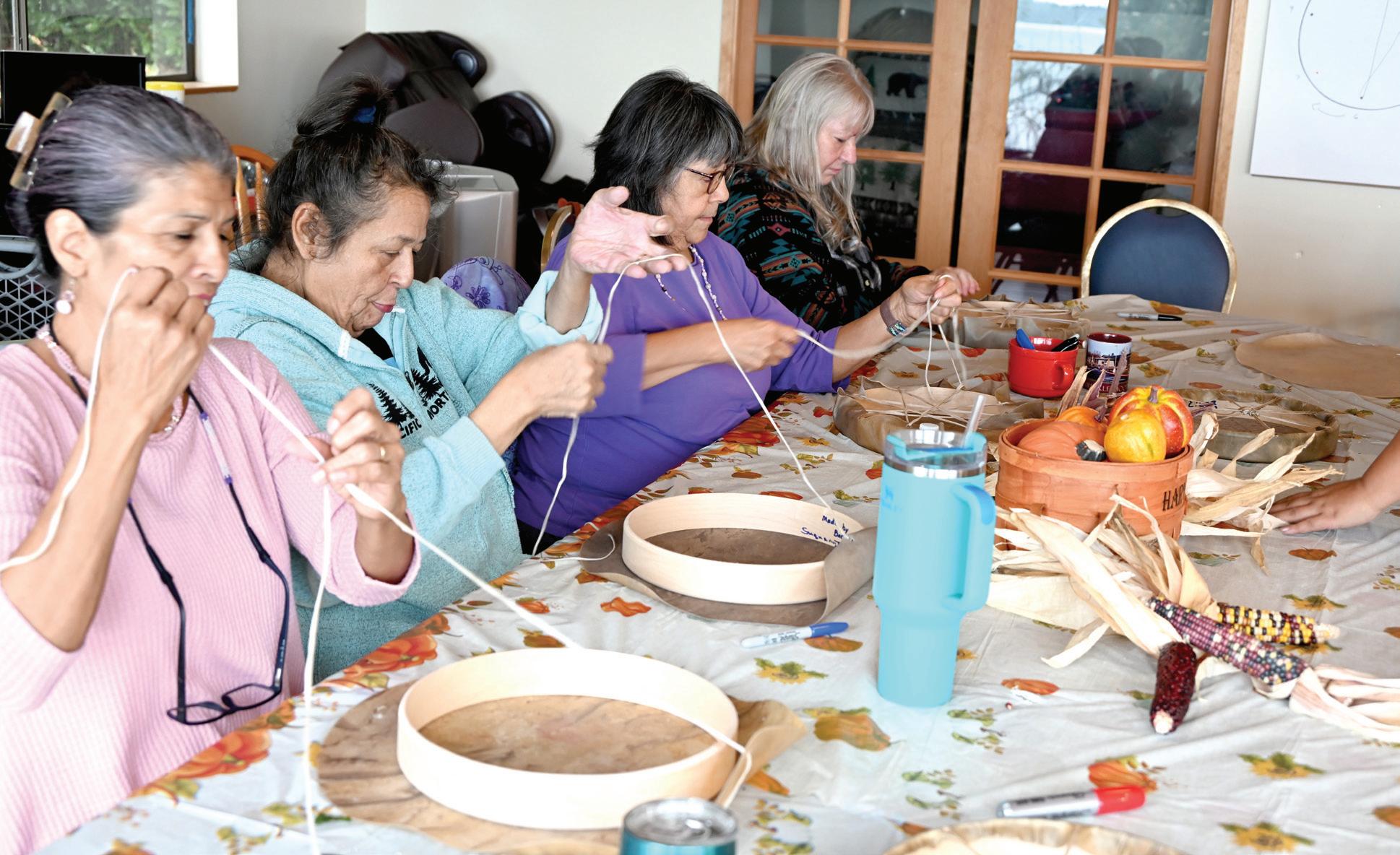
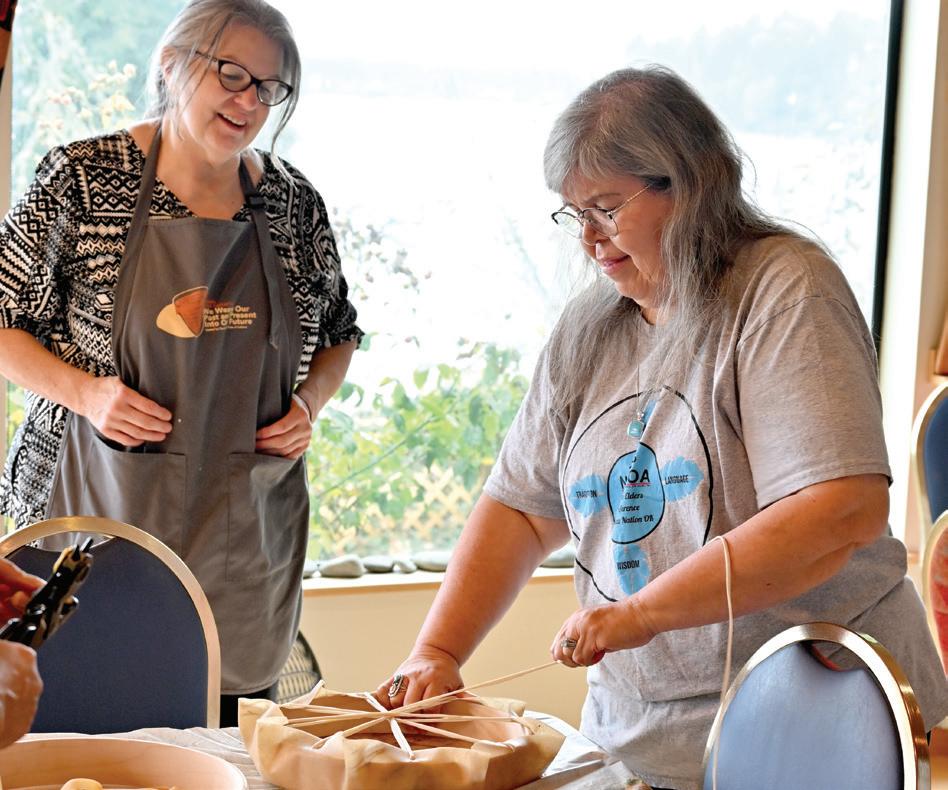
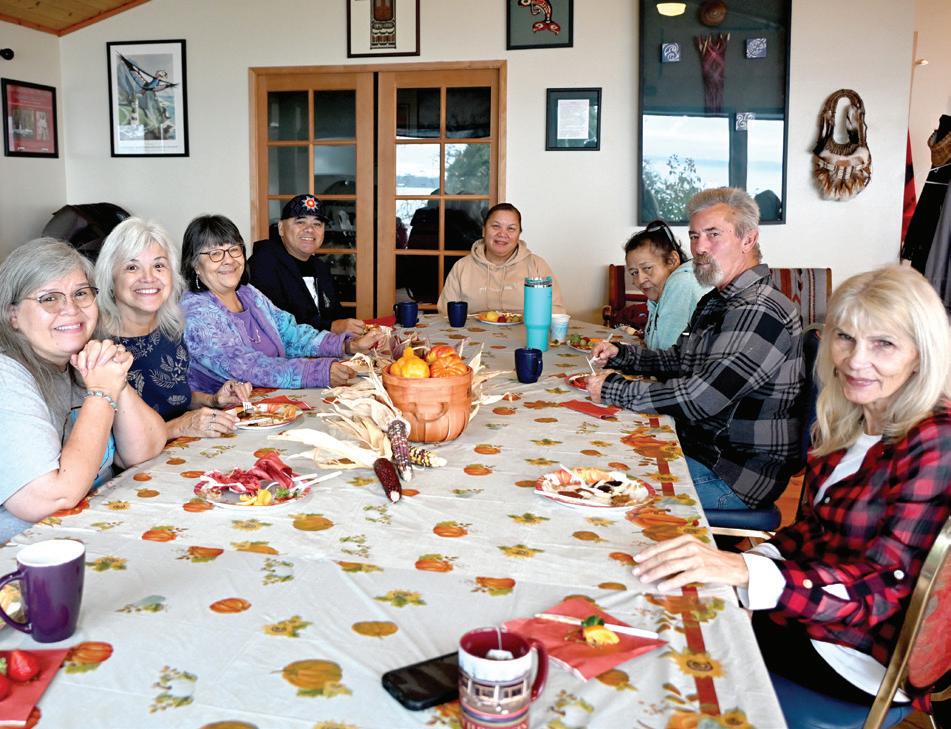
Elders had a great time making drums and enjoying a delicious pancake breakfast in November.
By Marilyn Jones Traditional Heritage Specialist
It’s the end of the year and we are closing out 2025. I have been cleaning my files and rearranging things to make room for new interviews and documents as the New Year comes in for us.
We have been busy with many reviews of documents from various institutions wanting to return cultural artifacts and other items that may belong to our tribe. We have written letters requesting photographs and as much information on everything as possible and are currently waiting for the responses. We are hoping to know more in the coming New Year. Please watch the Weekly Update for more information and requests for you help in identifying things and their uses when they are returned to us.
I am always very interested in doing interviews to preserve stories about the Suquamish Tribe’s culture, history, hunting, fishing, weaving, gathering and other events. Please contact me at mjones@suquamish.nsn.us or (360) 394 – 8526.
It’s been a season of big fun and action-packed exercise
By Magdalena Turrieta Sports & Rec Activities Coordinator
The Suquamish Fitness Center is hopping with energy, laughter, and plenty of good old-fashioned competition. Here’s a recap of what’s been happening in recent weeks!
Every Tuesday and Thursday, Elders participate in Elders Exercise. It’s a fun way to keep active both physically and socially!
Tuesday sessions begin with warm-up laps around the gym, followed by stretching. Fitness Center staff set up different stations, which provide the Elders with a variety of workouts during the hour-long session.
But by far, the favorite day of the week is Thursday when Elders hit the nets for Chair Volleyball! Before getting into the thick of the competition, there’s a warmup with laps around the gym, followed by stretching. Then it’s time to let the games begin! In the course of an hour they play three to four games, which consist of many laughs and many memories being made. The Elders team has also traveled to play against the Elders of the Port Gamble S’Klallam Tribe. The competition gets intense at times, but at the end, everyone has
a good time playing together. If you have time on Thursday mornings, come join in on the fun at 10:30am! Also, the Elders want to challenge all Tribal Government departments. So far, only the Suquamish Police Department and the Cultural Resources Department have been brave enough to face them.
The Suquamish adult softball team participated in the Bremerton City Fall Ball City League and not only took first in the league but also won the end-of-season tournament. The games were played Sunday evenings at Pendergast Park in Bremerton.
The Fitness Center wrapped up their fall basketball league with several teams competing in the Poulsbo Parks and Rec League. Five teams represented youth in grades 3rd through 8th. The teams played in gyms across Kitsap County. It was a pleasure to coach the youth and each team showed up to practice eager to learn and work. As the weeks went by, individual skills and teamwork grew and improved. We are proud of all the kids who participated this fall and look forward to a great winter season.
The Fitness Center hosted a youth basketball
tournament in October, with five divisions and 24 teams, six of which were from Suquamish. Forty-three games were played over the course of the weekend. The games were exciting, competitive, and filled with talented players! It was a joy watching our kids shining on the court, playing the game they love.
The weekend tournament is much more than just basketball — it’s a weekend of teams from all over the region coming together, where friendships are developed, and memories made. We loved hosting the tournament and look forward to the next one.
In October the fitness center hosted their annual adult basketball tournament with divisions for Men, Women and Men’s Legends (50 & over). Like the youth tournament, teams came from all over to compete. The talent is a sight to see, and this year had many close games that ended in overtime. It is especially fun to watch the players in the Men’s Legends Division. They keep it competitive and showcase moves that you don’t get to see very often in the new era of basketball.
In the near future, we hope to get our adult basketball league going again soon. And as a reminder, we do hold adult open gyms every Tuesday and Thursday at 6:30pm.
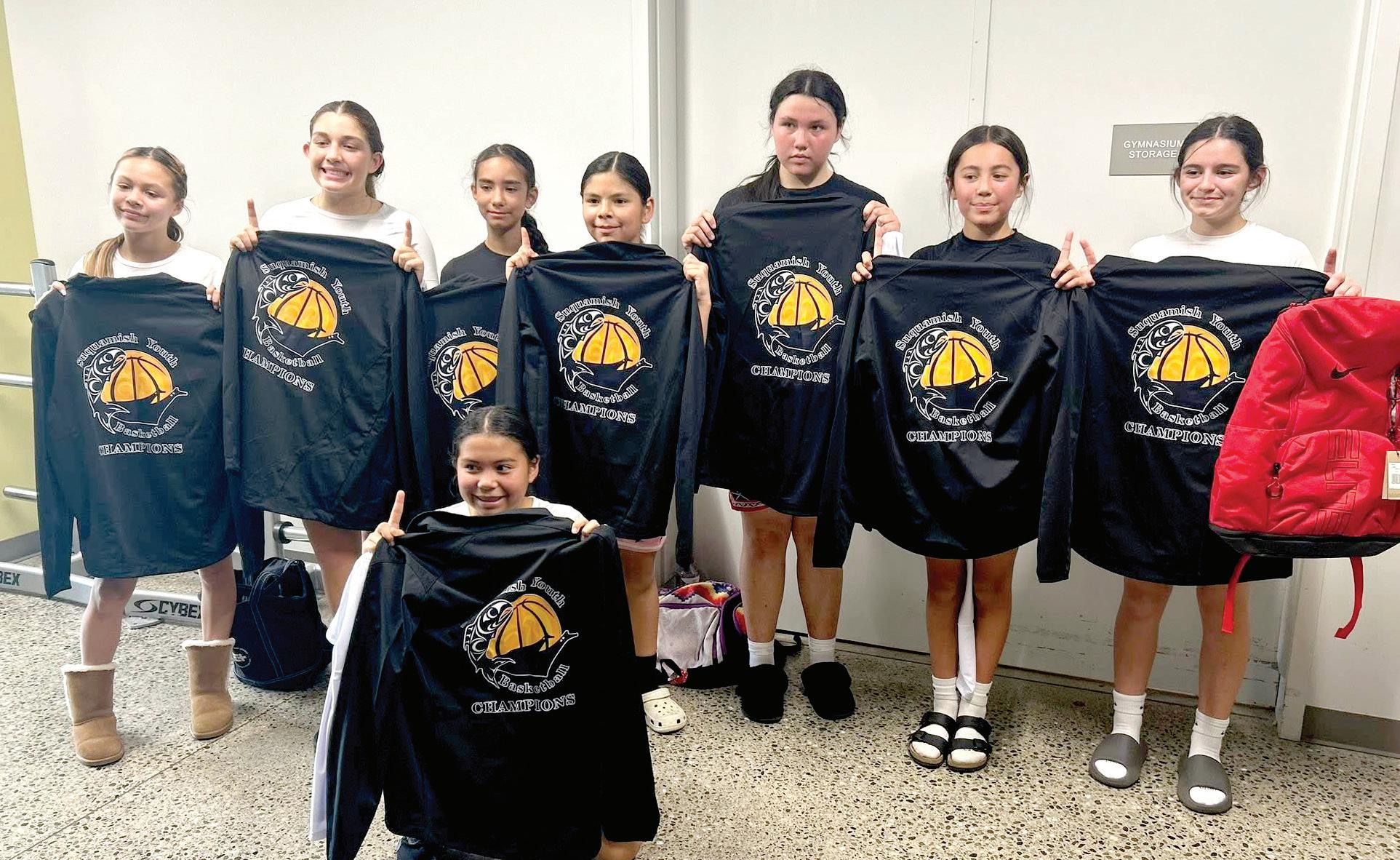
Above: Suquamish 13u girls were the champions of their division in the fall youth tournament.
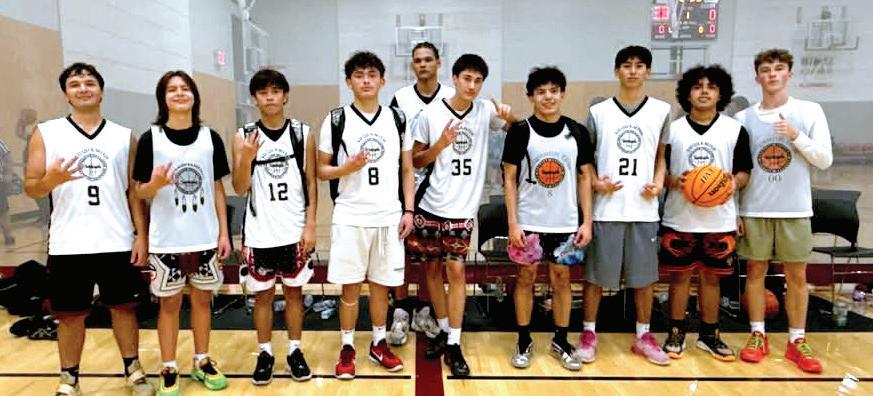
Lower left: Suquamish 17u boys took home 3rd place in the fall youth tournament.
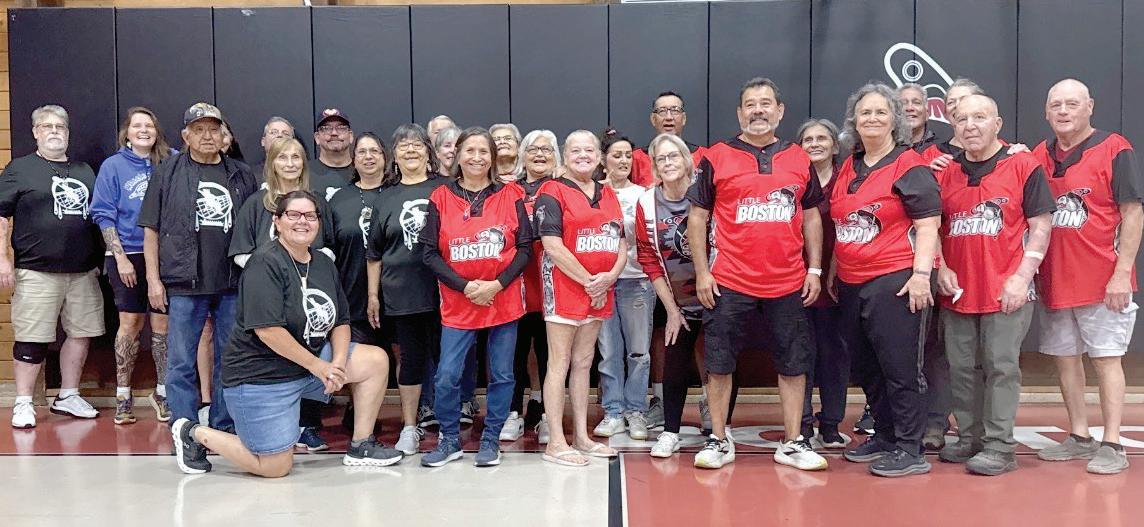
Upper left: Suquamish Tribal Elders (on the left) met up with Port Gamble S’Klallam Elders (on the right) for competitive Chair Volleyball.

Fireplaces can add warmth and comfort to your home, but they also require careful use and regular maintenance to ensure safety. The following guidelines from your friends at Community Development outline essential practices for proper ventilation, safe operation, and routine upkeep. to help keep your home and family protected throughout the cozy fire season.
Add a little bit of body text
• Ensure Proper Ventilation: Before lighting a fire, always confirm the damper or flue is fully open to allow smoke and gases to escape up the chimney. Keep the damper open until you are certain the fire and embers are completely extinguished, which can take several days. A slightly cracked window in the room can also help ensure proper airflow.
• Use Proper Fuel: Only burn dry, well-seasoned hardwoods like oak or maple, which burn cleaner and produce less creosote. Never use flammable liquids (gasoline, lighter fluid) to start a fire, nor burn trash, cardboard, wrapping paper, or Christmas tree branches, which can release toxic chemicals and create fire hazards.
• Start Fires Safely: Use small pieces of dry wood or a commercial firelighter to start the fire.
• Don’t Overload: Build modest fires on a sturdy iron grate. Overloading the firebox with too much wood can generate excessive heat and potentially damage the chimney or make the fire uncontrollable.
• Use Screens/Doors: Keep a metal mesh screen or glass doors (if designed to be closed during operation) in place to prevent embers and sparks from flying out onto flammable materials in the room. Note: for some openhearth fireplaces, glass doors should be kept
open to ensure proper airflow and complete combustion. Consult your manual.
• Get a Professional Inspection: Have a certified chimney sweep inspect and clean your chimney and fireplace at least once a year, especially before the start of the heating season. This helps remove highly flammable creosote buildup and detect any structural damage, cracks, or obstructions like animal nests.
• Install Detectors: Ensure you have working smoke alarms and carbon monoxide (CO) detectors on every level of your home and outside sleeping areas. Test them monthly and replace batteries regularly.
• Keep a Safe Distance: Maintain a safe zone of at least three feet around the fireplace, clear of all flammable items including furniture, curtains, rugs, and holiday decorations.
• Never Leave Unattended: Ensure the fire is completely extinguished before leaving the house or going to bed.
• Safe Ash Disposal: Allow ashes to cool completely for at least 24 hours (they can remain hot for several days) before disposal. Use a metal container with a tight-fitting lid, and store it outdoors, at least 10 feet away from any buildings or woodpiles, on a non-combustible surface.
• Protect Children and Pets: Use a safety gate to keep young children and pets a safe distance from the heat and flames. Educate children about the dangers of fire early on.
• Keep a Fire Extinguisher Handy: Keep a working fire extinguisher readily accessible and ensure all household members know how to use it.
• Proper Firewood Storage: Store firewood outdoors, at least 30 feet away from your home, raised off the ground to keep it dry and deter pests.
If you currently are in a unit maintained by Suquamish Housing, maintenance staff will schedule and perform fireplace annual maintenance. Homeowners are responsible for all maintenance of their fireplace. It’s okay to use MEPA for chimney cleaning and fireplace maintenance/ certification. Please contact Housing staff if you would like a recommendation for fireplace vendor (360)394-8423.

The Suquamish Tribe strives to communicate effectively with tribal members, staff, and the greater community.
In order to reach you, we need your correct contact information!
If your email address or telephone number has recently changed, please scan the QR code to submit your new contact details.
Questions? Email communications@suquamish.nsn.us







December 1
Cameron Lawrence
Cassady Hill
Jeffrey Carriere

Katelyn Carper
Landon George
Maverick George
Meadow Sigo-Carr
Mya Smith
Zane Peterson
December 2

December 8
Breezy Webster
Eliza Ward
Wahim Williams Jr.
Walter Vogel
December 9
Andria Golden
Kristina Simons
Mary Webster

Foster Jones
Gabriella Castaneda-Sigo
Heather West
Koebyn Purser
Troy Ayres
December 3
Ana Edelstein
Grace Alexander
Susan Parkhurst
December 4
Kenai Ledesma
Nicholas Hadley
December 5
Cheyenne Colomb
Haylie Mabe
John Villanueva
Lewis Bayne
Sammy Mabe
Victoria Smith
December 6

December 10
Deantre Rubeck
Naomi Edelstein
Samael Pastrana
Sienna Oswalt
December 11
Garnet Mabe
December 12
Adelyn Oswalt
Alicia Yates
Celeste Loneia
Colleen O’Brien
Gabriella Hayes
Jeremy Logue
December 13
Connor Valois
Jeddadiah Adams
Shaunie Cordero
December 14
Claudia Ortiz
Olivia Ferrara
Dasian Iaconis
Guadalupe O’Brien
Patricia Chargualaf
Robin Middleton
Tiana Lawrence
December 7
Carroll Crowell
Carter Rhodes
Dylan Amick
Sandra Power
Tamara Thomas
Trentin Moss
December 17
Isabella Kressman-Gemmell
Paisley Woods
Sean Crowell
Sierra Sorensen
December 18
Charles Midkiff-Quade
David Sigo Jr.
Felician Belmont
December 19
Ashley Boure-Jones
Chandra Nease
Kory Nokes
Logan Mabe
Pierre Perrot

Trey Kumpf
December 20

Donald Jones
Nicholas Alexander
December 21
Arthur Brown
Cedar Smith
December 22
CalieAnn Hodges
Delmont Ostenberg
James Mabe
Nancy Martinez
Richard Purser
We-Laka Chiquiti Jr.
December 23
Jonathan Forsman

December 25
Kyle Dozier
Nancy Sigo Toni Smith
December 27
Amiria Lawrence
Anissa Ostenberg
Brooks Baker
Dominick Hayes
Hadley Simons
Jackson Purser
Patricia Blomberg
Tyee Lawrence

December 28
Lincoln Lawrence
December 29
Amber Boure
Carsyn Maloney
Daniece Williams
December 30
Charissa Sigo
Jackson Orsen
Jacquelyn Cheek
Linda O’Connor
Shelly Marlow


December 15
Aulora Swift
Jennifer Leonard
Joshua Timmerman
Rebecca George
December 16
Brandi Junderson
Danielle Morsette
Jason McClurg-Santos
Martin Talmadge
Mellissa Pondelick

Julia Hommel
Kierian Crow
Tony Snorteland
December 24
Azeneth Solano-Sigo
Bryan Anthony
James Jones
James Suarez
Lisa Jackson
Payton Womack
December 31
Anaiya Torres
Asher Brubaker
Desean Santos
Jerry Porter
Randy George
Victoria Welch
Wayne George