Interview and Trial Days Preparation
Maximise your chances of securing the BEST jobs!
Sharing the views of candidates, school leaders and recruitment experts
Maximise your chances of securing the BEST jobs!
Sharing the views of candidates, school leaders and recruitment experts
• First impressions count and they begin from the moment you enter the school premises.
• Ensure you plan your journey and parking (or your route on public transport). You want to arrive on time, relaxed and ready to impress.
• Bring a copy of your CV as you will be asked about your prior experience.
• Make sure you are up-to-date with the latest developments in your specialist area.
• Review what has recently been on the news or in the latest issues of the TES.
• Take along examples of your work or a portfolio of your teaching. Offer this to the panel as evidence of what you have done in the past.
• Smile, shake hands, and look enthusiastic.
• Always ask if it is possible to have feedback on your interview after the school have made their decision.
Remember:
The majority of schools will offer you the job during your interview, so be sure to have your answer ready!

• Take time understanding the questions being asked – seek clarification on anything you don’t understand.
• Try not to answer questions with ‘yes’ or ‘no’ –expand and give examples to evidence your points and highlight skills.
• If you have visited a school prior to the interview make sure you can comment on what you thought about it and maybe select one thing that particularly impressed you.
• Talk rationally about yourself – a balanced critique is better than excessive self-praise.
• Have questions ready to ask towards the end of the interview and make sure you thank the panel at the end.
• Questions will be based on the person specification, job description and the school. Prepare answers to key points on the role and the school ethos.
• Ask something that shows you are looking ahead to being successful in the school and making good contributions.
• Show that you believe in yourself but are willing to learn.
• Prepare the lesson in full and bring a professionally presented lesson plan with you.
• Now is not the time to test out new techniques –stick with what you know in order to perform well.
• Be sure to be clear with your instructions and assist any pupils who need extra help.
• Be prepared to discuss how the lesson went and how you would assess the pupils work.
• Even if you do not get this job - the feedback could make the difference for the next one.
Useful advice to help you stand out on trial days!
• Ensure you understand the background of the school, including recent OFSTED reports. This will prove that you have spent time reviewing the environment you are joining and are excited about the journey ahead. It’ll also help you to identify how you can meet the school’s needs.
• Making sure you know the full arrangements of the day is crucial! Know the school location and how long it’ll take you to get there in reflection to the start time.
• Adhere to the dress code and know the school contact details. Don’t forget to introduce yourself upon arrival!
• Prepare, prepare, prepare! Know the classes you are teaching, the subject matter, SEN pupils and any other relevant aspects. Contact the school in advance if you require further information regarding equipment/resources available.
• Any preparation you have done, bring it with you, e.g., lesson plans and additional resources. The person observing your lesson may ask to see them to ascertain whether your methodology fits with the school’s approach.
• Take an up-to-date CV, your current DBS Disclosure and any other relevant supporting information such as testimonials and references.
• Try to find the Headteacher during the day if possible, to introduce yourself.
• Be prepared to stay late if asked for an informal chat by the school. Have some questions prepared just in case!

• “If you want to go that extra mile, consider taking a portfolio with you, which could display examples of assessments, samples of pupil’s work or photographs of displays and trips.”
• “The way you communicate in the interview will be taken as a reflection of how you perform in the classroom, so ensure you stay positive and eager.”
• “It’s important to be smiley and enthusiastic with the pupils but don’t fall into the trap of being overly friendly or seeming desperate to please –you might end up having to teach these pupils in the future!”
• “Get your key points clear in your mind! I always think that it’s good to prepare by identifying
• Three or four key points about yourself that you want to get over to the panel. They have to be about YOU, not key points that someone else has suggested because they have to want YOU, because it’s YOU that will have to do the job and fit in with the rest of the school.”
• “Keep bright and confident – it’s stressful and gruelling, and you may think you have sometimes ruined your chances, but if you keep focussed and remember what you do as a great teacher, you will be fine!”
• “Give answers based on your own experience using phrases such as ‘My role was…’ and ‘I organised…’”
• “Ensure you have planned realistically for the time the school has allocated. Be flexible and use your skills in observation/listening to know if you need them to have a little longer than planned or less time for group work. Make sure pupils know how long they have on an activity in advance of starting to ensure the pace is challenging but realistic.”
• “Be aware of the main aspects the interviewer will be taking note of when you’re teaching a lesson –how well you engage pupils in their learning and get them actively involved; how well you interact with pupils and foster positive relationships; how well you manage the learning and organise resources and pupils; how you manage any
unforeseen circumstances; how you communicate with pupils; how well you structure the lesson; how you do or intend to assess the learning that has taken place.”
• “What are your learning objectives? (NOT what you will be doing) State these at some point early on as these signpost to the pupils (and the observers) what you intend the learning the outcome to be and set a context for the lesson.”
• “Many lessons have been scuppered by ICT equipment not working properly/not accepting your memory stick, etc. You can deliver a lesson without using a PowerPoint series of slides –remember, the most valuable resource a teacher has is themselves and the pupils together!”
• “Prepare any resources before you arrive. Print off five lesson plans so that you can give them to anybody observing you and so you have one spare.”
• “Make the pupils feel like you value them as people. Be firm where necessary if someone isn’t paying attention, of course, but do this in a nonconfrontational way. Make it clear from the start that whenever any one person is speaking to the class, everyone is expected to listen.”
• “If you are only teaching part of the lesson (for example, just the starter), still plan the whole lesson to show what you would have done”
• “Think about how to include and provide for special needs pupils.”
• “Make sure you show how you will take pupils learning further. Many applicants fail because they are teaching the pupils things they already know and not stretching them enough.

• Confirm the details: Confirm the interview details in full with your consultant, including dates, school details, and contact information, as a minimum. Ask for the details to be emailed through.
• Prepare your journey: Make sure you have all the journey information for your interview or trial day ready at least one day before the interview or trial day. Run through the route, and call your local branch AND the school if you’re running late.
• Arriving on time: Prepare to be half an hour early! Is it hard to find? What landmarks should you look for? Is there parking? This can make you late if you need to find somewhere to park, which could include a 15-minute walk. It might be better to take public transport if this is the case.
• Get ready: You must be prepared! You need substantial information about the vacancy and the school to do this properly. Is the vacancy suitable for you? Are the pupils at the appropriate level of your skill set? Are there any SEN pupils? Who do you turn to if you are concerned about something?
• Format: Will it be an interview, a trial day or an observation? Will it be all of these? Do you need a lesson plan? If you think you are only meant to be there for a few hours and end up being there all day, make sure you aren’t rushing to leave. Try to keep other plans to a minimum, as you never know how long you might have to stay.
• Dress appropriately: First impressions can’t be taken back, so make sure you give a good one! Formal attire is usually required but check with your recruitment consultant if you are unsure. Don’t arrive in a suit if you will teach PE, but don’t arrive casually dressed.
• Go to the right site—The school you’re going to might have different sites. Make sure you go to the correct one.
• Understand the role: Do you know enough about the vacancy to ensure it suits you? Have you considered the journey, subject and school so you know you can say yes if offered the job.
• Have questions prepared – Make sure your questions are relevant, and you will gain something from what you ask. Also, remember not to ask things for the sake of asking.
• Be up to date with safeguarding obligations – “If a pupil told you something in confidence and trusted you not to tell anyone, what would you say?” – ensure you know what your obligations are about child protection.
• Experience does not always mean a done deal –You might have been teaching for ten years, but it might have been in one school. This means it’s been a very long time since you have done an interview. Or it may be that you have never worked in a school setting before and instead been a home tutor. Vice versa, you may have been for multiple interviews but struggled to be placed in a job. Speak to your recruitment consultant for interviewing tips to help you secure a job quickly!
• ASK FOR THE JOB! Even if you are unsure, tell them how much you would love to work there. The things you might be unsure of at first may be put at ease once you’ve spoken to your recruitment consultant, but if you seem disinterested in the first place, you won’t be offered the job. If offered any opportunity, for example: “Would you like to see another class?” Take it! It shows you’re keen.
• How would you plan the day if given a fairly free hand by the Headteacher?
• How do you see the literacy/numeracy strategy contributing to raising standards?
• Which reading/mathematics schemes have you used?
• How would you display a pupil’s work?
• What are your views on the balance between creativity and basic skills?
• Can you give us an example of a good teaching and learning session? Why was it good?
• What are your views on school organisation/ streaming/family grouping/team teaching/ integrated day/open plan schools?
• How would you go about managing pupils behaviour, especially that of a pupil with specific behaviour problems?
• What would you do if you had a persistently disruptive pupil in your class?
• What do you like about teaching your main subject?
• What other subjects could you teach and to what level?
• What examination syllabuses/text books are you used to?
• How would you motivate a group of year nine pupils who have lost interest in the subject?
• What part do you think your subject can play in the education of the less able pupil?
• What would you say to a pupil considering taking your subject at ‘A’ level?
• How important do you think it is to make links with other subjects?
• What are your views on streaming/sets/mixed ability teaching?
• Do you think pupils work better in single sex classes?
• How would you address the underachievement of pupils in your subject area?

• Describe a challenging behaviour that you have worked with and how you managed to best support that pupil(s)?
• Can you give examples of your experiences in working with pupils with SEN?
• How do you ensure that SENCO/Headteachers are kept informed about the progress of the pupils you are supporting?
• Have you had experience communicating with learners’ parents/carers? If so, talk me through that experience.
• What qualities do you possess that make you an effective teacher?
• What experience do you have with rewards and sanctions in schools and how successful were they implemented?
• What kind of challenges do you think you are likely to face in the special needs role?
• How would you engage a pupil not participating in the lesson and refusing to complete any work?

• What are the main qualities of a good teacher?
• Which of your lessons was the most successful and why?
• Describe the best lesson you have given - how did you know what the pupils had learnt?
• Describe a lesson that did not go so well - how would you approach it differently now?
• How would you ensure that you respond effectively to the differing needs and abilities of individual pupils?
• What assessment strategies do you use?
• Do you differentiate in relation to outcome or task?
• How would you ensure a pupil was making progress?
• How would you accommodate pupils with English as an additional language?
• What behaviour management policies have you experienced, and what do you consider as having been effective?
• Why did you choose to teach this particular age range?
• What is your understanding of high-quality teaching and learning?
• How do you use ICT in your teaching?
• What are the important things to consider when setting up a classroom?
• How much noise/moving around in the classroom do you permit?
• Why did you apply for this particular role?
• Why did you choose to teach this particular age range?
• What are your core strengths and how could you develop these further?
• What are your weaknesses and how are you overcoming them?
• What can you bring to the role that other candidates may not bring?
• Safeguarding pupils is an important part of our work. Can you give me same examples of how you would contribute to making the organisation a safer environment for pupils?
• What is your experience of liaising with parents of your pupils?
• How would you deal with an awkward or aggressive parent?
• How would you assess your ability to make relationships with pupils?
• How would you seek to promote the spiritual, moral, social and cultural development of the pupils in your care?
• What would you do if a pupil cut themselves?
• If you overheard a pupil in the corridor calling another pupil names what would you do?
• How would you ensure you are aware of a school’s policies.
• How will you develop yourself as a professional teacher?
• What are your plans for the future?
• How would you like to see your career develop?
• Are you prepared to go on courses?
• What courses/training have you undertaken to date?
• What makes a successful school?
• What importance do you attach to co-operation with colleagues, e.g. those teaching parallel classes?
• How would you cope with a lack of enthusiasm from colleagues?
• Would you take part in the religious life of the school?

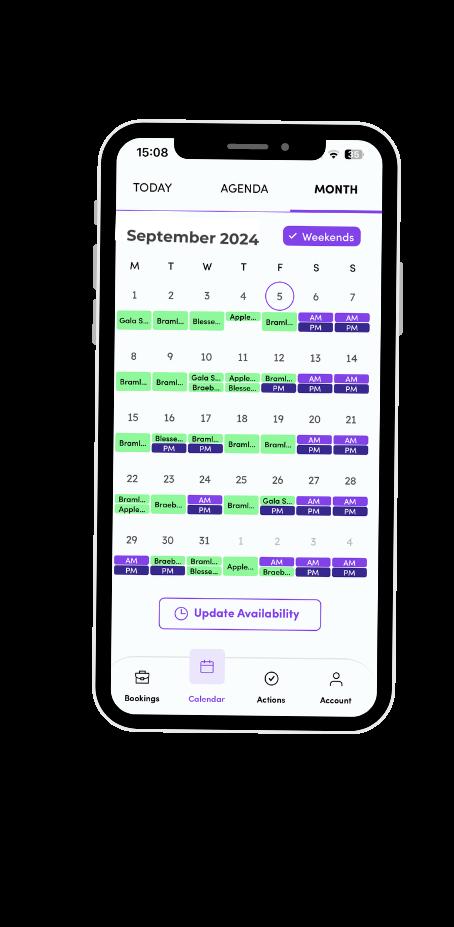
Make your teaching career more manageable with our myTP Work app
Become the first to know about new jobs, handle your bookings, manage your diary and stand out to employers. All in one app