







Tania Walters | Publisher
This issue brings together a few threads we have been watching for some time, and water sits right at the centre of that conversation.
Water is a useful starting point because it shows how much expectations are shifting, even in categories that once felt settled. Artisanal and premium waters are gaining attention not through loud claims, but through restraint. Source, mineral profile, mouthfeel and context now matter. In foodservice, these waters are being selected and served with intention. At retail, that thinking is starting to carry through, prompting shoppers to pause and look more closely at what is on offer.

















Packaging plays a significant role in how that story lands. For water in particular, the container has become part of the product. Material choices, weight, reusability and recyclability all signal whether a brand understands its place in the market. Shoppers are quick to sense when packaging supports the product, and just as quick to switch off when it feels excessive for something meant to be simple.
We also explore how generational behaviour is shaping what succeeds at shelf. Gen Z is often labelled as a generation that does not cook, but in practice, many are assembling rather than cooking. Meals and drinks are built from components that are easy to combine, customise and consume on the move. That mindset is influencing NPD, from pack size and portability to formats that fit comfortably into daily routines.
Water and beverages slot neatly into this assembled way of eating and drinking. Products that feel flexible, practical and well considered are more likely to earn repeat purchases. Convenience here is not about cutting corners; it is about creating flow.
Across the feature, the common theme is simplicity done well. Clear products, sensible packaging and thoughtful choices that match how people actually live. It is not about chasing the next trend, but about recognising where behaviour is already heading. We want to take this opportunity to thank our suppliers, clients, partners and, of course, our readers, and to wish you all a relaxed and rewarding Christmas holiday and a positive start to the New Year. n
The Food and Grocery Council is an industry association for grocery suppliers providing members networking, events, industry information and strong advocacy. Contact us for information on the benefits of membership: raewyn.bleakley@fgc.org.nz
• Networking • Industry Updates
• Conference and Events
• Education and Training
• Advocacy and Law Reform

PUBLISHER
EDITORIAL
EDITOR-IN-CHIEF


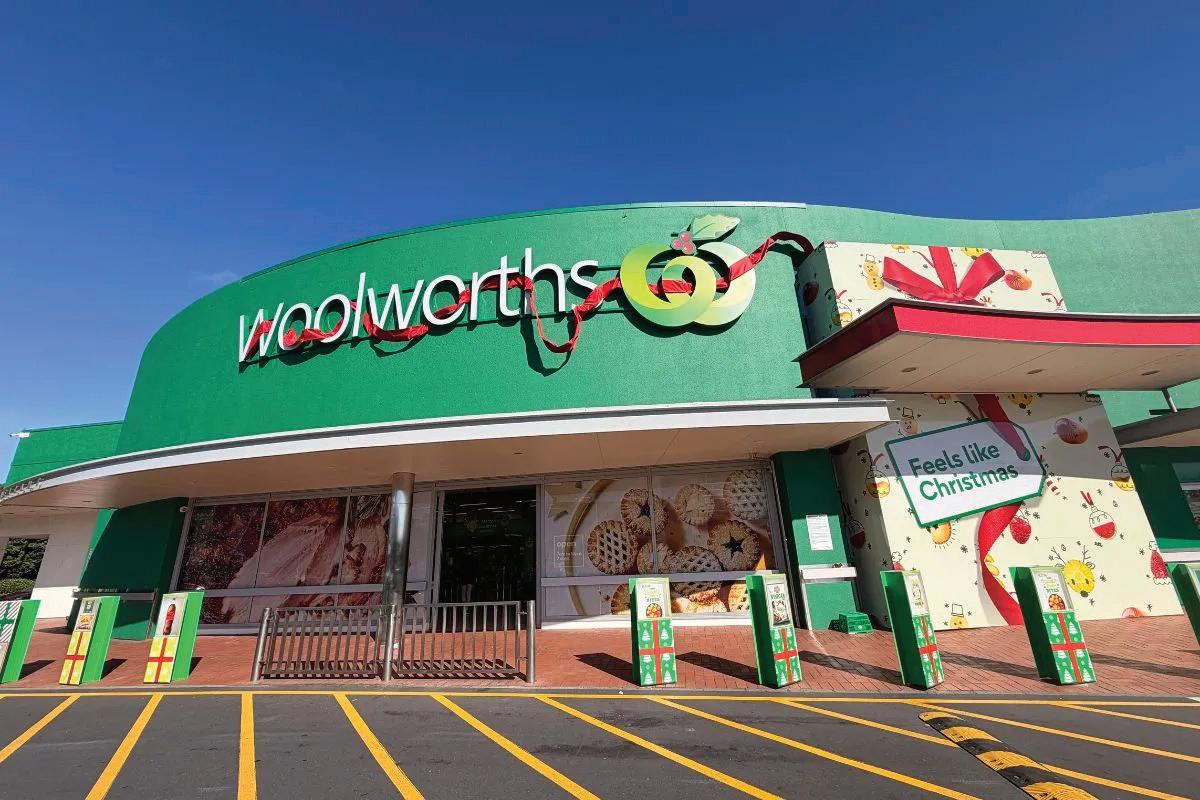
Woolworths NZ is giving Christmas a big Kiwi twist this year, quite literally, with a full festive wrap taking over its Greenlane store.

The Government has cleared the path for Kiwi exporters by reducing trade barriers so businesses can compete, grow, and create jobs.

The company name on the corner of Anglesea and Liverpool Streets in Hamilton may have changed over the years, but one thing has remained constant.

Foodstuffs North Island is supporting the launch of a dedicated pop-up social supermarket for families facing cost-of-living pressures




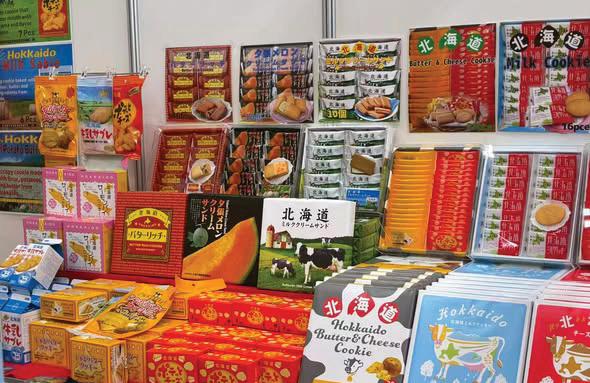

Organised by RX Japan, “JAPAN’S FOOD” EXPORT FAIR WINTER 2025 was held this month at Makuhari Messe.
The Hosted Buyer Opening Ceremony brought global buyers together with Japan’s leading food exporters, creating a key platform to showcase authentic products and share the latest export trends worldwide.
The three days of the show, from the 3rd to the 5th of December, were filled with great business, new connections, and inspiring discoveries across Japan’s food export industry.
Beyond its scale, the fair emphasised how Japanese exporters have leveraged their expertise in international markets to meet growing global demand, reinforcing the sector’s commitment to cross-border trade and export-driven partnerships.
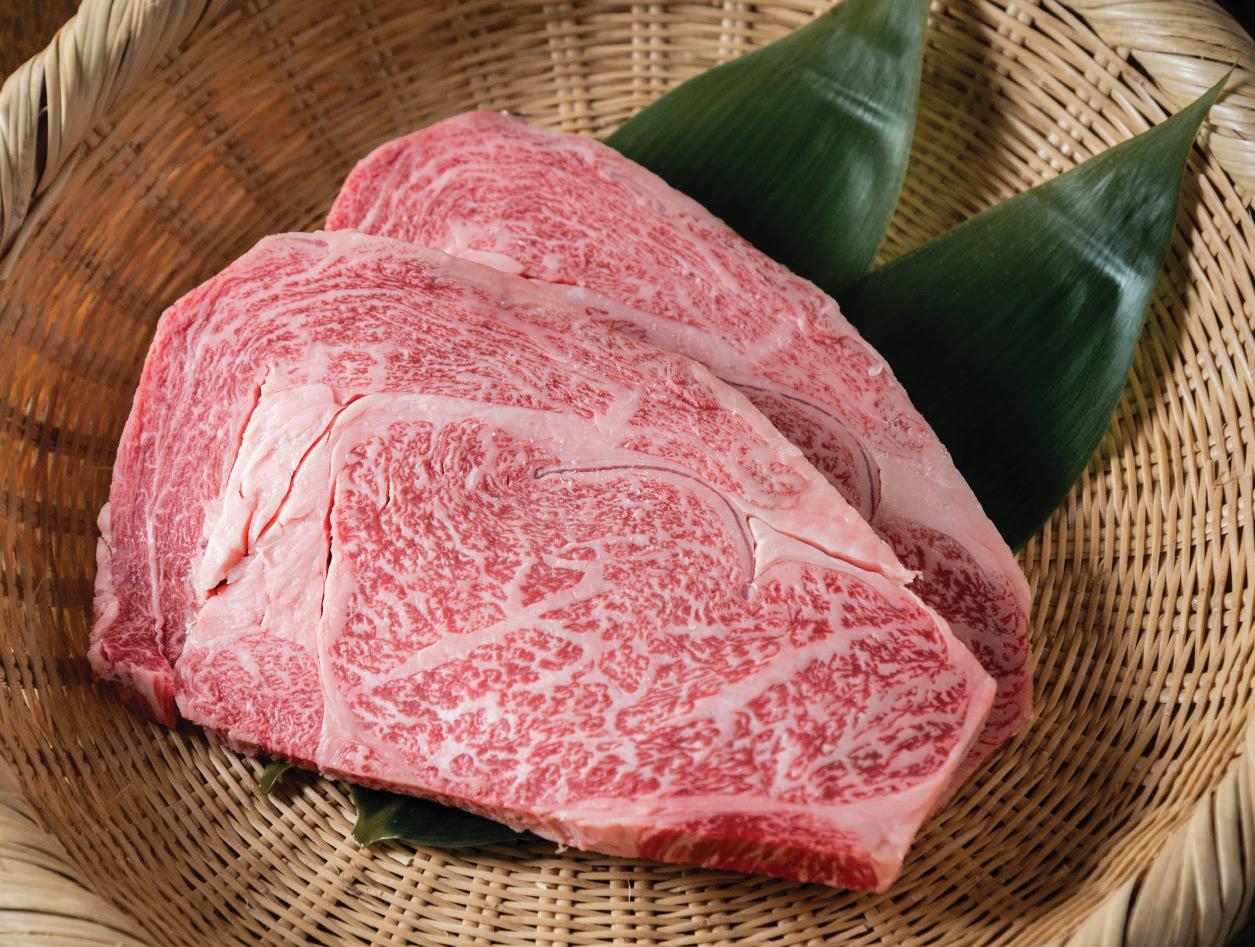
This year's fair focused on authenticity and heritage, presenting iconic Japanese products with proven export success. International buyers discovered a wide range of cultural F&B products, including sushi, matcha, artisanal snacks, seafood, and wagyu.
Aside from that, the trade fair also showcased how Japanese companies
integrated health-conscious and eco-friendly practices into traditional food production. This focus on innovation and sustainability showed how the industry has adapted to global market demands by delivering products that are both flavourful and responsibly produced.
The fair's international significance was underscored by the attendance of leading companies from the global food industry. Their participation reinforced the fair’s position as a key international sourcing and networking event.
Visitors got direct access to decisionmakers from major food industry players, opportunities to discover new product lines, and the chance to build partnerships that drive cross-border trade. With buyers and influencers from Asia, Europe, and beyond in attendance, the fair offered a unique
platform to connect with global markets and stay ahead of industry trends.
Co-located with JFEX WINTER and Food LogiX, "JAPAN'S FOOD" EXPORT FAIR WINTER 2025 brought together sourcing, export promotion, and logistics solutions in one unified event.
As global demand grows for distinctive cultural flavours and sustainable practices, Japan’s food exporters have responded with offerings that integrate tradition, health, and innovation, positioning the fair as a key destination for international buyers.


Gogyofuku Co., Ltd. offers premium “chinmi” delicacies, perfect for pairing with sake and other alcoholic drinks since 1955. Enjoy authentic Japanese flavours at home with its unique products.
Gogyofuku Co., Ltd. operates as a fabless company without

its own manufacturing facilities. Production is outsourced to approximately 200 partner factories nationwide, and all products are consolidated at the logistics centre before being shipped to customers across Japan.

Established in 1950, Hotei Foods is a leading Japanese manufacturer of canned and retort foods. With strict quality control and advanced production technology, it supplies both branded and OEM products domestically and globally.
Manufactures pickles and side dishes for commercial use using vegetables grown in Gunma Prefecture and Japan. In addition to standard products, they also accept OEM and ODM. Its frozen products are particularly popular both domestically and internationally, and are HACCP-certified and provide safe, secure products.

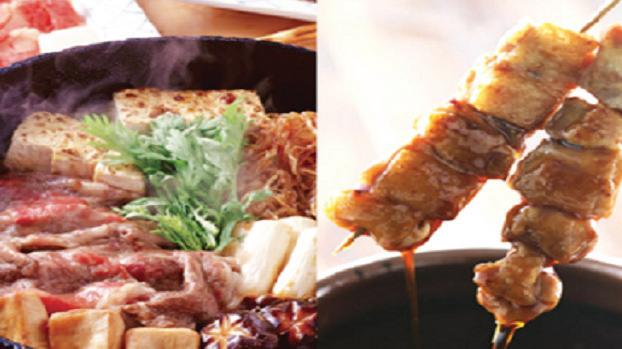
Suigyu Shokuhin offers products for general household use that go beyond the ordinary, including "sauces, curry, and a wide range of spices and seasonings." The deliciousness achieved through careful ingredient selection and dedication to the manufacturing process has received high praise. For commercial use, it is dedicated to the "research," "development," and "improvement" of highly reliable products in pursuit of "authentic deliciousness."
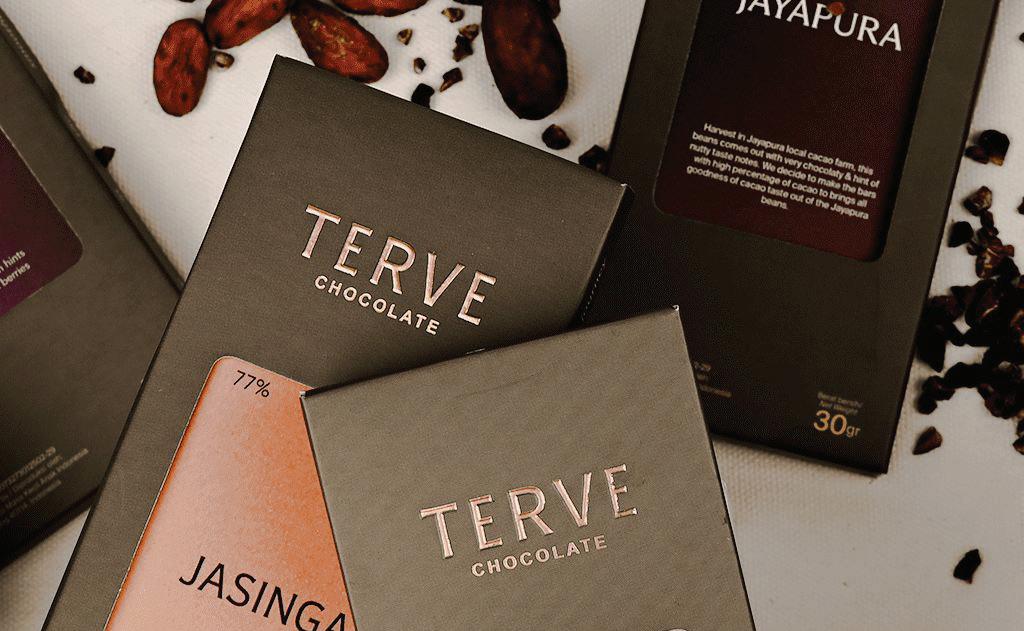
Taste Indonesia’s unique single-origin chocolate crafted directly from farmers. Discover smooth, authentic bean-to-bar flavours and learn what makes its chocolate truly special.
Terve Chocolate is a bean-to-bar company based in Bandung, crafting premium chocolate from sustainably sourced Indonesian cacao. It collaborates directly with farmers across multiple regions to create unique singleorigin and blend profiles.
With meticulous roasting, conching, and tempering, it produces smooth, high-quality chocolate that celebrates Indonesia’s diversity. Its range includes dark, milk, and white chocolates, truffles, bonbons, spreads, and more, made with transparency, innovation, and passion.

Kanetetsu Delica Foods, Inc. is a manufacturer of fish paste products, and this time is mainly showcasing its new plantbased products, along with some items not yet available on the market.
Founded in 1926, its headquarters and factory are located on Rokko Island in Kobe, Hyogo Prefecture. In 1990,

the business adopted a company-wide policy to eliminate synthetic preservatives from all its products.
Guided by its commitment to creating safe and trustworthy foods, the business will continue to develop unique offerings, from recreating seafood using fish paste to producing innovative plant-based seafood alternatives.
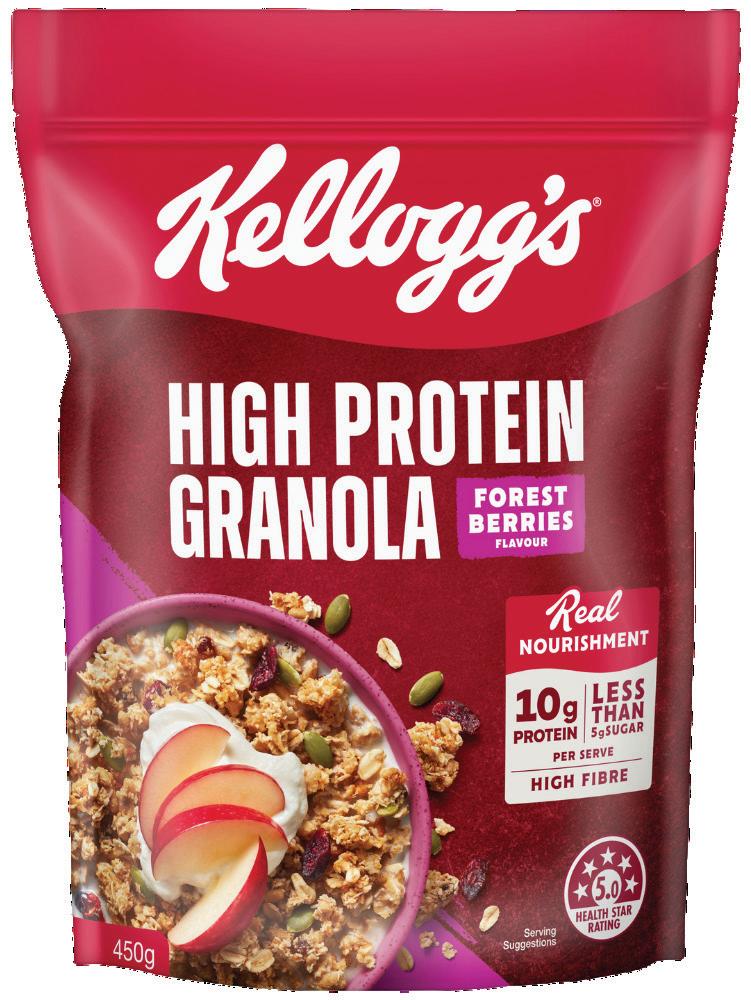
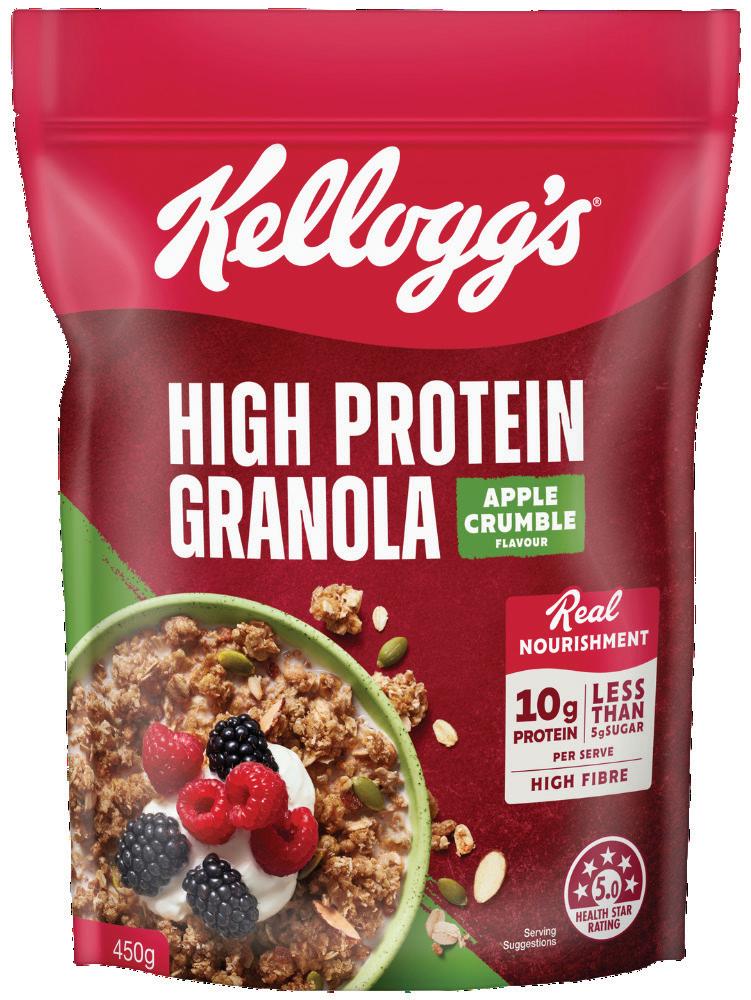
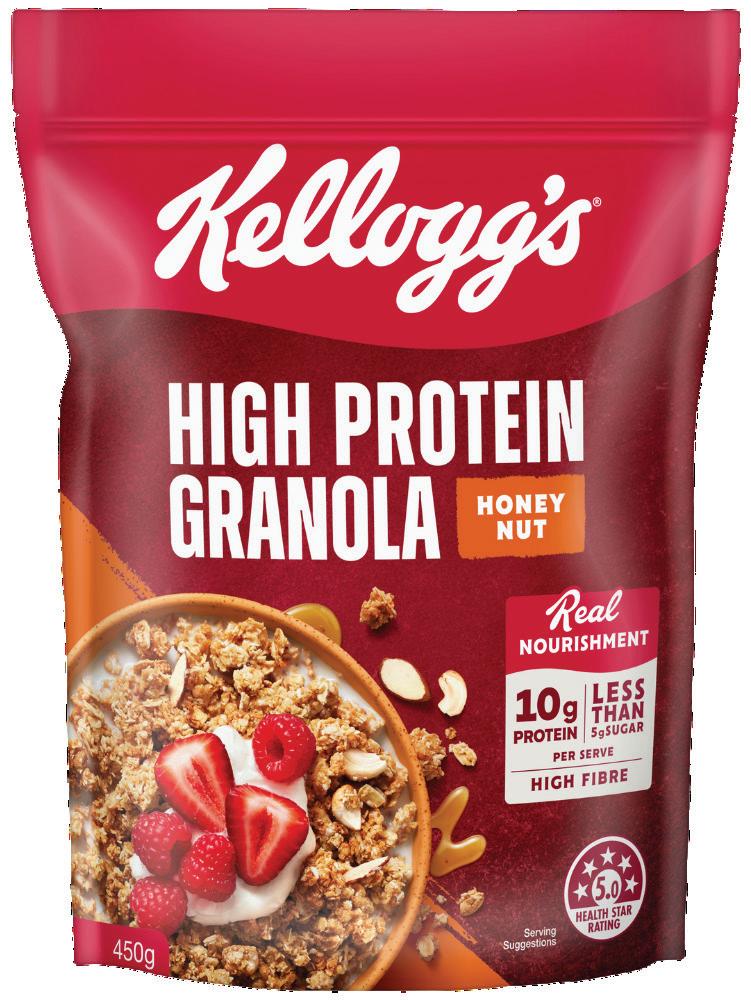
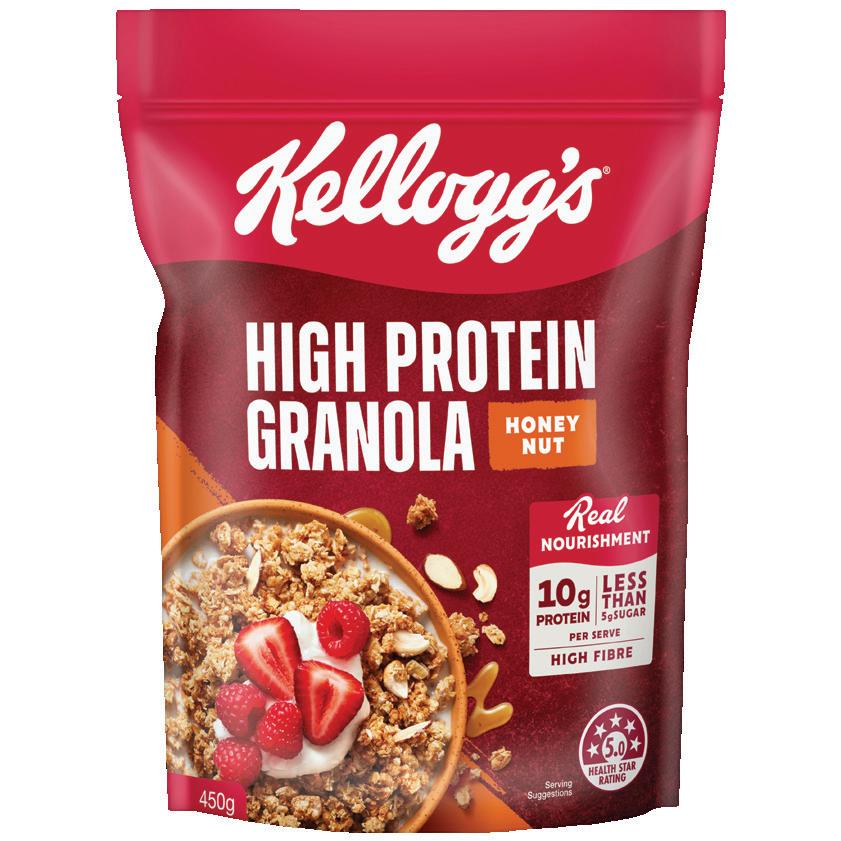
The granola category is evolving. Once dominated by taste and texture alone, today’s shoppers are increasingly seeking products that deliver health and dietary benefits.
Responding to this shift, Kellogg’s®, a trusted leader in breakfast innovation, is proud to unveil its first-ever High Protein Granola range – a wholesome, nourishing addition to its breakfast portfolio.
Developed for health-conscious consumers, Kellogg’s® High Protein Granola range delivers on taste, nutrition, and convenience - helping New Zealanders fuel their mornings with purpose.
Each serve is packed with protein, fibre, plus contains less than 5g of sugar and the whole range carries a 5 Health Star Rating. Delicious and versatile, it makes a nourishing breakfast or snack and is available in three tempting varieties - Forest Berries Flavour, Honey Nut, and Apple Crumble Flavour.
“We know today’s consumers, including busy professionals and on-the-go parents, are seeking nutritious, high-protein breakfast options that are both delicious and convenient,” said Robert Saunders, Kellogg Marketing Manager, New Zealand. “Kellogg’s High Protein Granola is our answer to that need, delivering a balanced, flavour-forward start to the day
in a format people love.”
Made with crunchy whole grain oat clusters, Kellogg’s® High Protein Granola is as versatile as it is nutritious - perfect with milk, sprinkled over yoghurt or topped with fresh fruit, nuts or seeds.
Key Product Benefits:
• 10g of protein per serve.
• 5 Health Star Rating.
• High in fibre.
• Less than 5g sugar per serve.
• Whole grain oat clusters for crunch and texture.
• Available in three flavours: Forest Berries Flavour, Honey Nut, and Apple Crumble Flavour.
Product Information:
• RRP: $10.00 per 450g packet.
• Availability: major supermarkets and select independent retailers across New Zealand.
For further information, visit https:// www.kelloggs.co.nz/en_NZ/brands/ kelloggs.html.
oat clusters that pair perfectly with yoghurt and your favourite toppings for a nourishing start.
A wonderfully nutritious granola that’s high in protein, high in fibre and contains less than 5g sugar per serve.
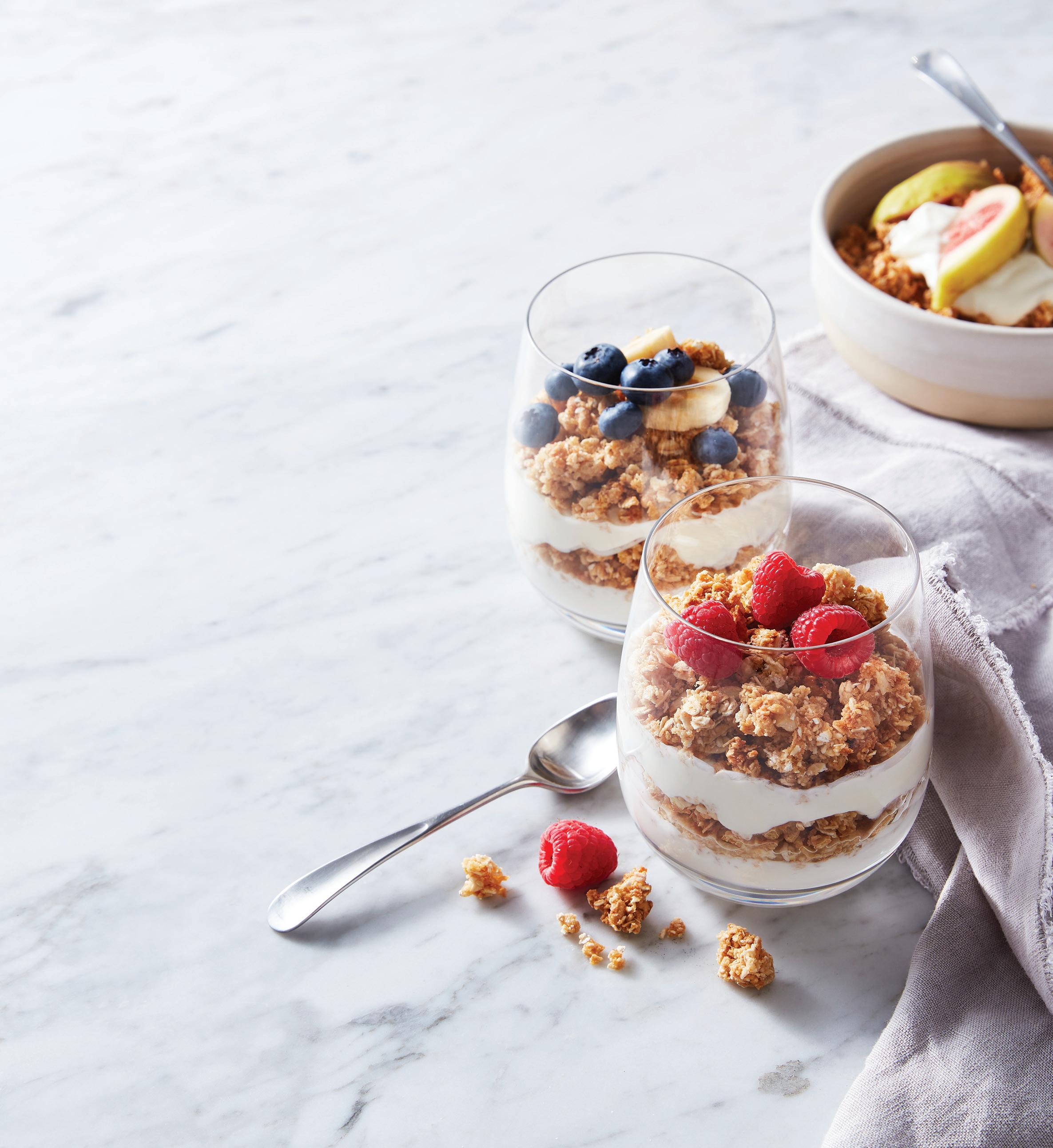



serving suggestion

Front of store space is some of the most valuable per square metre real estate in retail. Gates such as the SigmaGate are installed to guide customers safely into the store, create clear entry paths, and support loss prevention without disrupting the shopping experience.
Offering a compact alternative to swing-style gates, SigmaGate reduces the space needed at store entrances, contributes to stock loss reduction, and unlocks additional trading area.
New World Queenstown, already benefiting from space saving benefits of the SigmaGate, has now enhanced its entrance by integrating digital signage screens directly onto the existing SigmaGate units. The screens serve as an optimisation to the gates rather than adding an additional screen to the front end, adding communication capability while preserving the structure and function of the original system. This allows the store to communicate with customers without adding extra fixtures or consuming additional space.
New World Queenstown is the first store in the country to adopt this approach, following the successful introduction of the concept in Australia. Two screens were installed on the entry-facing sides of the gates, integrated directly into the gate structure they blend seamlessly into the store environment elevating the entrance without introducing clutter.
Raymond Casey, General Manager of Radford Retail, shared that the installation was completed quickly and without any disruption to staff or customers.
“SigmaGate’s design allows the gates to be opened and worked on safely, meaning customers and staff experienced no disturbance. Trading continued normally, and the screens went live immediately after installation,” said Casey.
Jonathan Gunnarsson, Technical Product Manager at Radford Retail, noted that the store needed a high impact messaging solution that did not compromise valuable space.
“The store needed a compact solution that

could combine loss prevention, customer flow, and digital signage without adding extra hardware or taking up space,” said Gunnarsson.
“SigmaGate already provided the ideal physical structure, and the addition of signage screens allowed the store to turn the entry point into a dual purpose engagement and security system.”
The gates continue to guide customers and reduce stock loss, while the screens add a digital layer that strengthens communication and customer engagement. Together they deliver a more complete front of store solution than either element could achieve alone. The screens also offer commercial potential through promotional content and supplier funded messaging, giving the store additional ways to increase value from the installation.
Retailers are increasingly seeking solutions that optimise existing systems and enable them to get more from their current
infrastructure, SigmaGate demonstrates the value of smart design and efficient use of space. Radford Retail continues to work with retailers to strengthen existing infrastructure by combining technology, store layout expertise, and digital communication into a single cohesive system. This also enables shared investment opportunities, where the cost of stock loss initiatives can be balanced by the marketing value created through integrated digital platforms, helping stores achieve more within the same budget and physical footprint.
For more information, contact rc@radfordretail.com or visit www.radfordretail.com







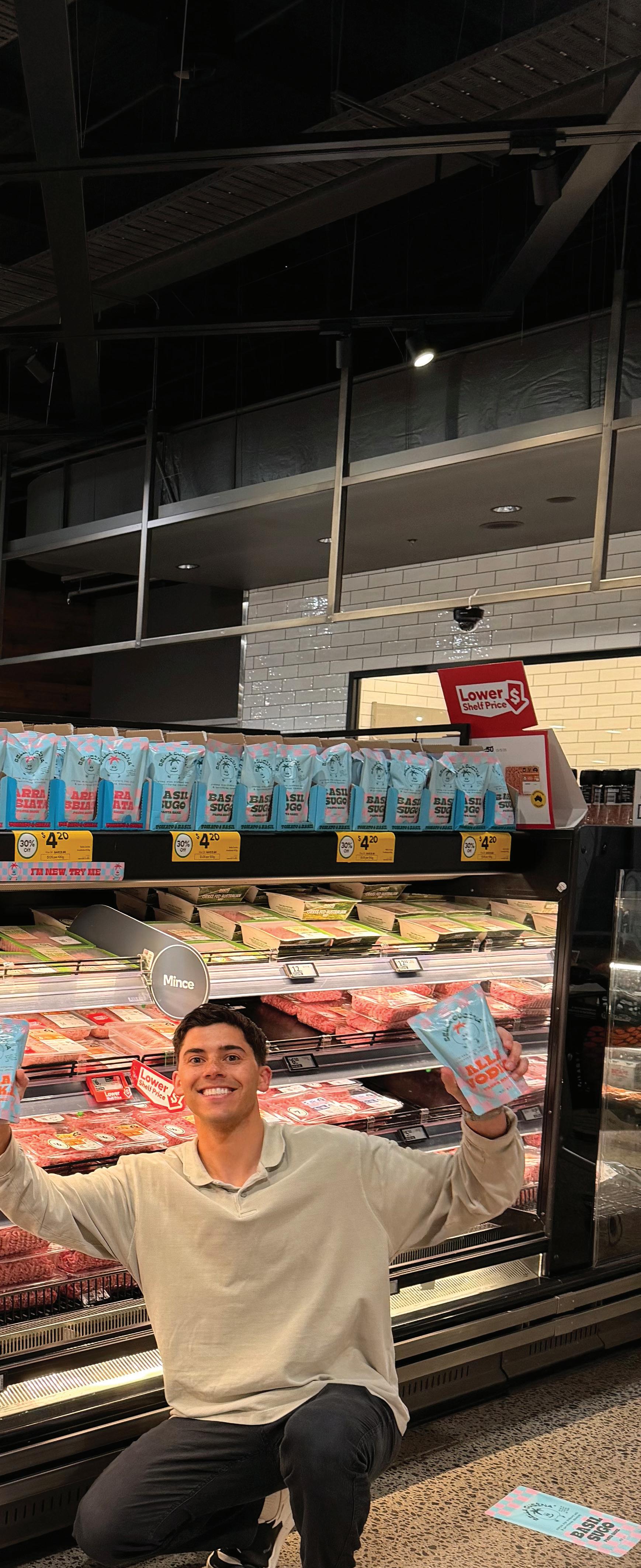
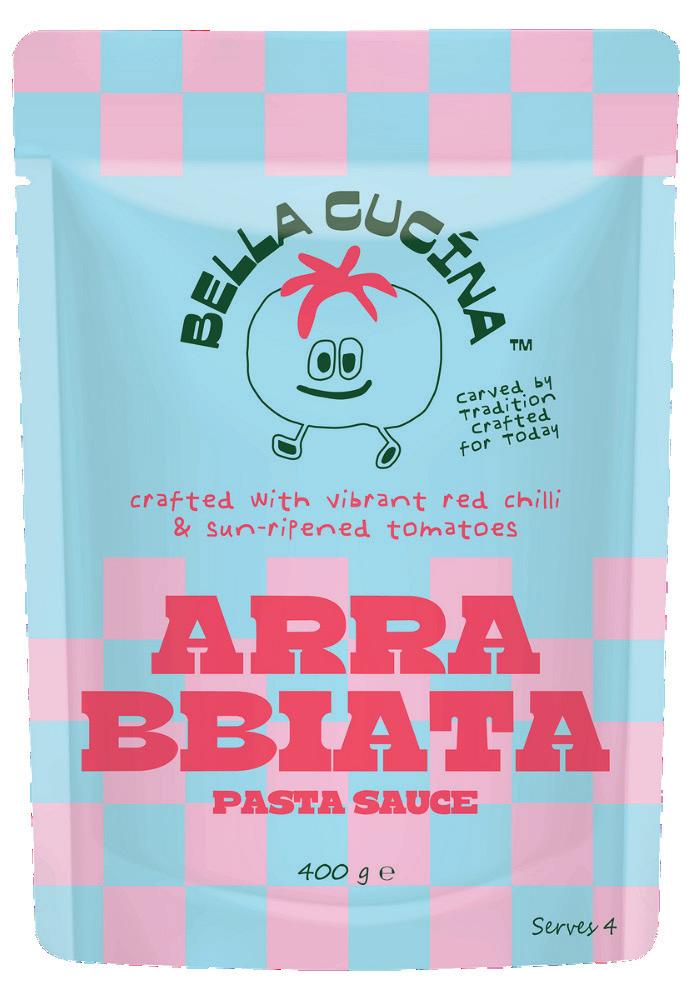
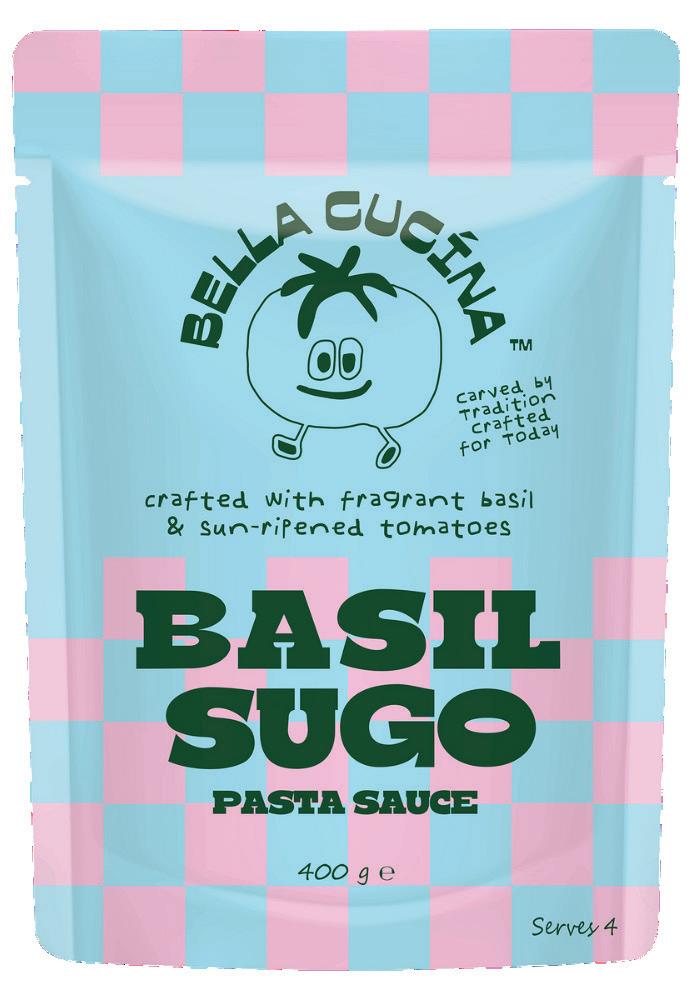

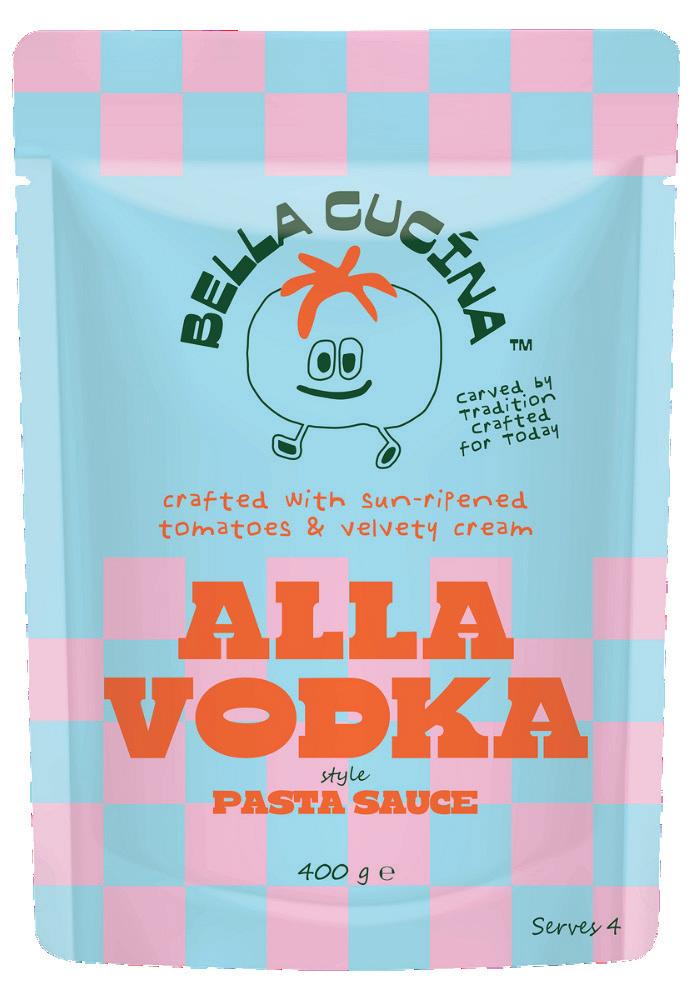
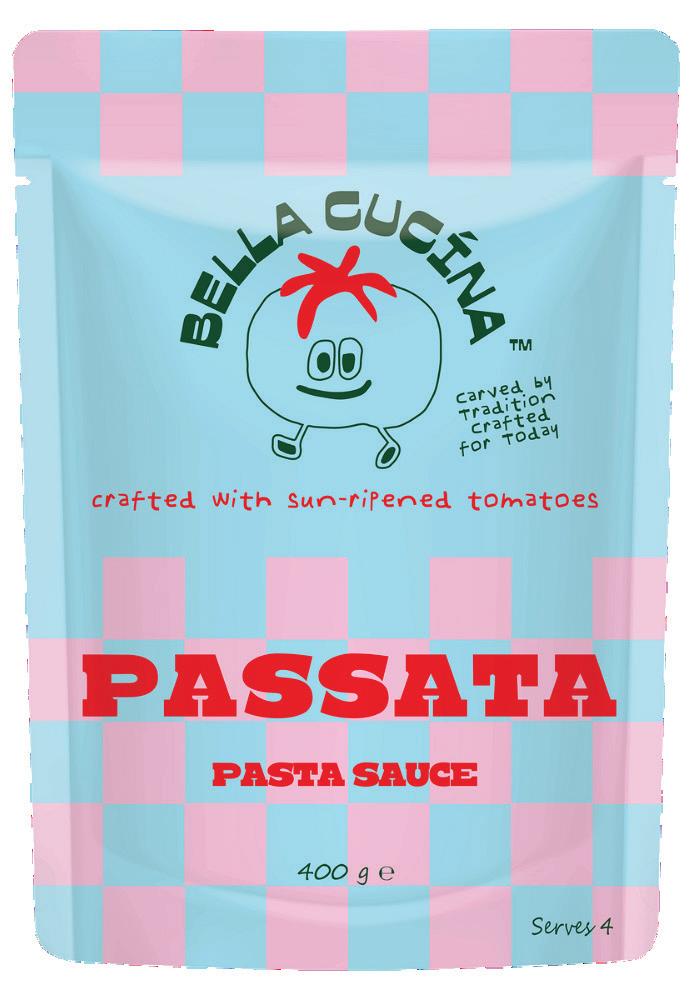
Bella Cucina has reimagined Italian flavour through a modern lens: confident, design-led, and founded by Alli Bailey and Kahn Vocale.
Bailey grew up in a household surrounded by FMCG innovation for more than 35 years.
transport, uses less material, and lowers the carbon footprint, which is better for the planet and better for shoppers.
minutes with
Conversations about packaging, flavour, and retail happened daily around the dinner table, and she saw firsthand how bold ideas and execution can transform categories, and wanted to bring that same energy to the pasta sauce aisle.
At the same time, Vocale has extensive experience in food manufacturing and operations, turning creative ideas into commercially successful products. Together, they’ve built a brand driven by innovation, collaboration, and the courage to do things differently.
“We wanted to do something that looked different, tasted different, and felt modern. The category had become predictable: Same jars, same stories,” said Vocale.
“Bella Cucina bridges authentic Italian cooking with a contemporary Australian mindset, delivering flavour, freshness, and a cleaner footprint. It’s about giving shoppers something genuinely exciting again.”
The Bella Cucina range includes Pomodoro, Arrabbiata, Basil Sugo, Passata, and Alla Vodka. Vocale said they started with the classics and core flavours people already loved, while showcasing what Bella Cucina stands for: quality ingredients, authentic taste, and versatility.
He added that the bold blue pouch was deliberately chosen to stop shoppers in their tracks, as it feels premium yet approachable. The packaging is lighter to
“We’re contrarian by nature and want to play where the consumer’s going, not where they’ve been. The pouch format simply makes more sense for the next generation of shoppers.”
Convenience has become a significant driver in the category as consumers want real food without the effort. Bella Cucina delivers authentic flavour, premium ingredients, and speed, all in one.
“It’s honest, simple, and made for the way people actually cook and eat today.”
Vocale mentioned that Bella Cucina’s partnership with Woolworths has been outstanding, as it’s not just about having a retailer; it’s about having a buying team that genuinely values innovation and wants to excite customers.
He said that a shared mindset has been critical to creating something new and relevant for today’s shopper.
Bella Cucina has already seen strong interest from Coles, independents, and other retail partners, with Vocale hinting that collaborations, meal bundles, and creative cross-category partnerships would be the next step.
“Our business is built on innovation, and with the support of our retail partners, we’re excited to keep bringing new ideas to market. The category and the consumer will both be excited by what’s coming next.” n


At the recent September Race Tekapo event in the South Island, Four Square Tekapo went above and beyond to support its local community.
Owner-operators Jason and Casey Jefferies worked with suppliers to set up a free mini mart experience for race participants, brought to life in collaboration with Happy Hire event specialists. They also helped with event logistics, from storage to driving the forklift around town to support event setup.
This Christmas, New World is shining a spotlight on everyday heroes, shift workers who keep things running while most of us celebrate with family. They’re hosting a special competition, where 10 shift workers working on Christmas Day can each win a NZD 2,000 New World gift card along with their special nomination shoutout appearing on a billboard near them on Christmas Day. They’ll also display a nationwide billboard thanking all shift workers.
• 24 Nov – 7 Dec is the nomination period, where customers can submit their shiftworker nominations.
• 25 – 26 Dec is when the winning shoutouts will go live across 10 billboards nationwide, featuring the 10 winners.
PAK GIVES BACK is PAK’nSAVE’s commitment to supporting communities, team members, and New Zealand as a whole. In 2025, they brought this promise to life by sharing a local story from across their network.
One standout example was found at PAK’nSAVE Tamatea, a store deeply connected to its community. This November, the banner visited Tamatea to capture its partnership with Nourished for Nil - a charity dedicated to rescuing surplus food and redistributing it to reduce waste and fight food insecurity.
Through this collaboration, PAK’nSAVE demonstrates that its mission goes beyond the checkout. By championing low prices with purpose, the brand helps families save while creating meaningful connections that resonate with locals and strengthen communities. n
If you run or lead an SME, chances are your to-do list never ends. You’re approving invoices, firefighting production issues, chasing customers, dealing with banks, and still expected to find time for strategy. Sound familiar?

Gerry Lynch Managing Director
The Real Leadership Company

The truth is, most leaders I coach aren’t short of energy or commitment—they’re short of focus. Somewhere along the way, being busy became a badge of honour. But being busy doesn’t mean you’re being effective. In fact, it often means the opposite.
Many business owners confuse activity with progress. They spend their day reacting rather than leading—answering every email, attending every meeting, and solving every small problem that crosses their desk. The result? The team learns to depend on them. Growth slows. And ironically, the more you try to do, the less strategic value you add.
A Harvard study found that senior executives spend over 70 percent of their time in meetings and less than 10 percent thinking about the long-term direction of their business. SMEs are often worse, because the leader is the system.
The shift from busy to effective starts with a mindset change: You don’t have to do everything. You have to make sure the right things get done.
Here are a few practical ways to make that happen:
• Create space for yourself. Block time each week for “thinking work.” No calls, no meetings. Just time to step back and look at the bigger picture.
• Set three priorities. Every Monday, write down the three most important outcomes that will move the business forward. Everything else is noise until those are done.
• Empower, don’t hoard. If someone can do a task 80 percent as well as you, delegate it. Perfectionism kills growth.
• Establish decision rules. Give your team clarity about when they can decide without you. It builds capability and frees your bandwidth.
Your job isn’t to look busy—it’s to stay clear. The best leaders I’ve worked with have learned to pause, prioritise, and protect their focus. They invest their energy where it matters most—on people, strategy, and the future.
If you feel stuck in the whirlwind of activity, start by slowing down. You’ll be amazed how much faster your business moves when you do.
If you need help in coaching or are interested in joining a group that will challenge you to work on your business rather than in it, give me a call.


The hospitality sector is reshaping the conversation around water. As more restaurants introduce curated water lists, highlight flavour differences and draw attention to the origins of still and sparkling varieties, a clear flow-on effect is emerging for FMCG.
When dining trends reframe a category, retail behaviour often shifts soon after. Bottled water is now approaching that moment.
Consumers already treat everyday items as markers of provenance and quality. Coffee, chocolate, olive oil and salt all carry stories of origin and process. Water is moving into the same territory. Diners are learning about geological sources, mineral composition and whether carbonation occurs naturally or is manufactured. Many sparkling waters on retail shelves rely on a simple production method: carbon dioxide gas is added under pressure to create bubbles. Naturally carbonated waters, shaped by geological conditions, offer a different mouthfeel and carry stronger provenance cues. Once consumers discover this distinction in
foodservice settings, they begin to reassess what they buy at retail.
Gen Z is one demographic accelerating this shift. Their alcohol consumption is lower than in other age groups, and as they explore non alcoholic alternatives, they gravitate towards products that align with their values. Sustainability, reduced plastic use, transparency and authentic origin stories all matter. Concerns about microplastics make plastic bottling less appealing, while glass, natural carbonation and identifiable spring sources sit comfortably with their preferences. Gen Z may not yet drive the bulk of bottled water sales, but their behaviour regularly signals where premium beverage categories are heading.
Foodservice exposure magnifies these trends. When diners experience volcanic, artesian or mineral waters presented with


tasting notes, it prompts closer scrutiny of retail choices. The familiar supermarket aisle begins to look different once consumers understand the variation behind what was once considered a commodity. Provenance moves from marketing language to a meaningful point of difference. This raises strategic questions for FMCG suppliers. Will bottled water continue to compete primarily on convenience and price, or will the baseline shift toward packaging integrity, natural processes and credible origin stories. If retailers see demand rising for premium options, planograms may begin to favour glassbottled waters, naturally carbonated varieties and brands willing to publish mineral profiles and sourcing details. The opportunity is significant. So is the challenge. As diners and younger consumers

push expectations higher, the market will reward brands that evolve with those signals. The category is no longer just about hydration; it is becoming a test case for how provenance, sustainability and process can redefine even the most everyday FMCG product. n
Technology in beverage manufacturing keeps moving, although not every part of the industry changes at the same pace. Shoppers see the final drink on the shelf, but most of the interesting developments happen well before that point. This raises a simple question: how might these behindthe-scenes changes shape the next generation of FMCG beverages?
Fermentation is a good place to start. Producers of kombucha, kefir and other fermented drinks are using systems that keep a closer eye on temperature and acidity. The goal is steady quality, but it also raises a worthwhile discussion. These drinks have always had a degree of natural variation, so how much control is helpful, and at what point does it start to change the character that consumers expect?
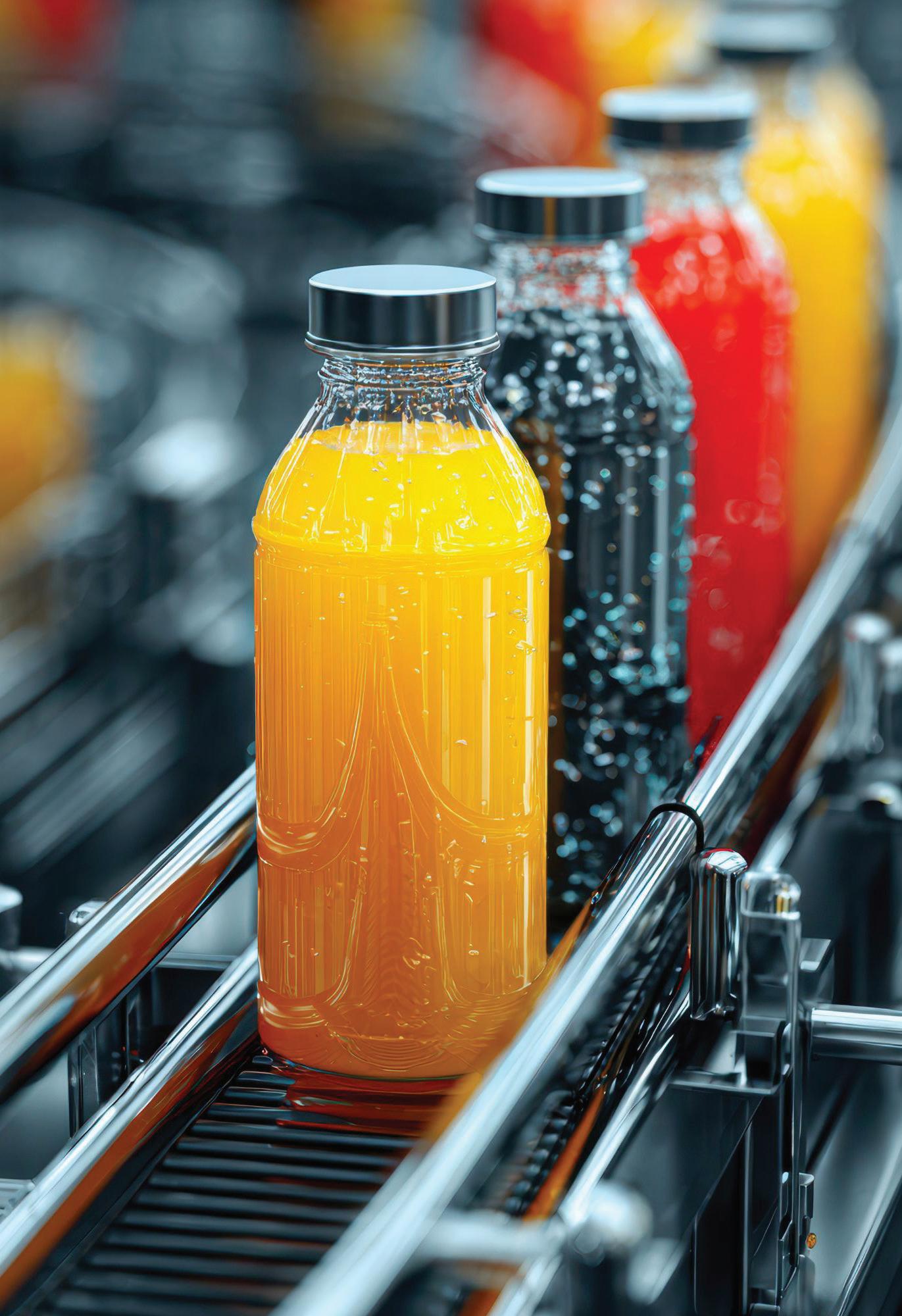
Filtration is another area evolving quietly. Techniques such as microfiltration and ultrafiltration are used to keep drinks clear and stable without relying too heavily on heat. The idea is to protect flavour while meeting commercial needs around shelf life. It prompts a practical question for producers: how do you keep the product tasting vibrant while still delivering the consistency retailers rely on? And how
much of this process should be shared with shoppers, who may not want or need the finer details.
Carbonation equipment has also improved. Newer systems allow producers to set CO₂ levels with more accuracy, helping maintain a similar drinking experience from batch to batch. Whether this level of precision is meaningful to consumers is still up for debate. As interest in naturally sparkling drinks grows, the question arises of how producers explain the difference between naturally occurring bubbles and CO₂ added during production. Though automation is on the rise, uptake varies. Some plants use sensors to automatically adjust flow and temperature, while others are trialling digital tools that help predict when equipment needs maintenance. These systems may improve efficiency, but they also invite reflection.
At what point does automation support quality, and when does it risk smoothing out the individuality that certain drinks rely on?
Modular processing units offer another path forward. These compact systems can be added to existing lines to help trial new products or boost capacity without significant investment. Will this flexibility spark more experimentation, or will day-today operational pressures keep innovation measured?
These developments expand the options available to producers. None are guaranteed to transform a product on their own, but together they signal a shift in new-beverage development. For suppliers, the focus now is deciding which tools genuinely support better products, and where the industry should keep things simple rather than complex. n

Foodservice is starting to influence how shoppers think about beverages, and this shift is becoming more visible across the FMCG space. Restaurants are giving drinks a bit more attention, whether through kitchen-style preparation or by highlighting the natural qualities of premium water.
When customers come across these ideas in hospitality, many bring that curiosity with them into the supermarket aisle.
One clear example is the growing interest in culinary-style non alcoholic drinks. Chefs are using simple techniques like infusing, steeping and gentle extraction to build flavours with more depth. These drinks are not complex; they just feel more considered. When people try something like this when dining out, they often begin looking for similar options on shelf: cleaner ingredient lists, interesting flavour pairings and drinks that feel intentionally crafted.
For FMCG suppliers, this opens new avenues for flavour development. Varietal citrus, herbs or even mild savoury notes can bring a drink to life without relying on sweetness. The challenge is figuring out how to take the idea behind these kitchen techniques and adapt it to large-
scale production. It is less about copying the method and more about capturing the intent in a way that works commercially.
Retailers are noticing the shift too. Premium mixers, lightly flavoured sparkling waters and ingredient-focused sodas are gaining more presence because they offer something different from traditional soft drinks. Clear flavour cues and simple, confident packaging make these products easy for shoppers to understand without feeling niche.
At the same time, a quieter change is happening in the water category. More restaurants are talking about water in terms of origin, mineral balance or landscape. This invites diners to notice differences they may not have thought about before. As a result, some shoppers are beginning to look more closely at the bottled water section, asking where the water comes from and what makes one option taste different from another.
Some retailers have widened their selections to reflect this interest, adding waters that highlight natural characteristics or regional ties. For suppliers, the focus is on communicating these points in a simple, helpful way. Straightforward labelling and easy-to-understand sourcing notes are often enough for shoppers who are exploring the category.
Together, these trends show a broader shift. Foodservice is helping consumers see beverages as part of a wider flavour and provenance story, not just something to quench thirst. Whether it is a crafted non alcoholic drink or a premium water, hospitality sets the idea in motion and retail carries it forward.
The opportunity for grocery lies in keeping things clear and welcoming. Shoppers respond well to interest and simplicity, and the brands that balance both will be in a strong position as the category takes its next steps. n
Packaging in the beverage aisle is shifting quietly, and shoppers are noticing it more than they used to. Conversations about materials, recycling and long-term impact are becoming part of how people choose drinks, even if they do not always speak about it directly.
This raises a useful question: what does packaging now signal to shoppers, and how might this influence the category's direction?
Plastic bottles still dominate because they are practical, light and familiar. Yet more shoppers are pausing to consider their choices, particularly as discussions about microplastics and long-term sustainability continue to surface. Some are beginning to explore alternatives such as glass or aluminium, while others simply want reassurance that the material they are buying fits with their expectations for quality and environmental care.
Glass conveys a sense of purity and is often viewed as a more premium choice, though it has a higher transport weight. Aluminium is gaining ground because it is durable, easy to chill and widely recycled. Each option has strengths, but each also brings its own set of questions. Will shoppers pay more for certain materials? How much does packaging influence their perception of what is inside? And how much information do they want from brands about why a particular format was chosen?
Retailers are watching these shifts as well. Some are giving more visibility to brands trialling new materials or reducing overall packaging. Others are adding clearer recycling signage or grouping products by material type to make choices easier. These small adjustments can shape how shoppers navigate the aisle and what they come to expect over time.
For suppliers, the challenge is finding the right balance. Packaging changes require investment, and it is not always clear how

quickly behaviours will shift at scale. There is also the question of communication. How much explanation do shoppers want about packaging? Do they prefer a simple reassurance that the brand is making a responsible choice, or are they looking for more detail about the material journey? What seems clear is that packaging is becoming part of the story rather than just the container. It helps shape first impressions, and increasingly, it forms part of how shoppers assess whether a brand
aligns with their values. But the category is still finding its footing, and expectations are evolving slowly rather than abruptly.
As suppliers look ahead, the focus may shift from chasing the newest material to understanding what packaging signals to shoppers. Is it durability, sustainability, quality, or simply convenience? The answers will likely vary by product and audience, but the conversation is underway and will continue to influence how the beverage aisle develops. n


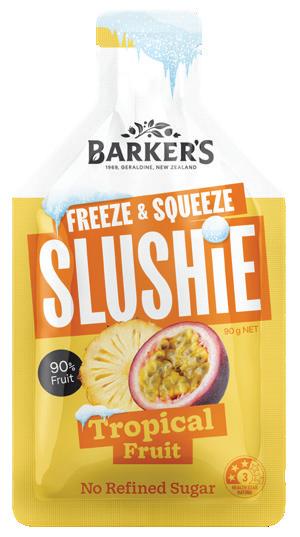

Barker's
Barker's Freeze & Squeeze Slushies are the ultimate refreshing summer snack. With two fruity flavours to choose from: Tropical Fruit or Raspberry Lemonade, they're made right here in New Zealand with 90 percent fruit and no refined sugar. They're super easy to use - just pop them in the freezer, and once frozen, thaw for five minutes, cut open, squeeze and enjoy.
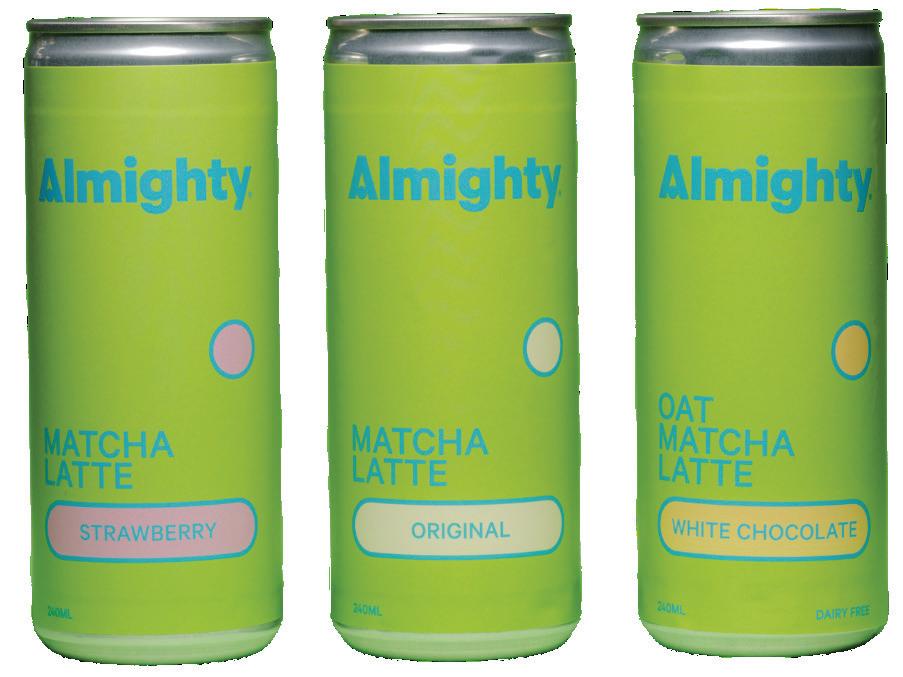
Almighty Almighty is proud to launch Almighty MATCHA, a premium ready-to-drink matcha beverage designed for modern lifestyles. Brewed to perfection and ready when you are, it brings a globally successful format to New Zealand chillers for the first time. No whisking, no mess, just smooth, creamy matcha in a can. It’s convenience without compromise. Available in Original, Strawberry, and plant-based White Chocolate, Almighty MATCHA is vibrant, flavour-forward, and a little indulgent. It’s designed to

Graham Norton x Invivo
Graham Norton’s wildly popular Italian Prosecco has already become a top seller across New Zealand. Just in time for summer, in a new format that’s as chic as it is convenient, the Graham Norton (GN) Prosecco D.O.C. Minis join their 750ml counterpart.

delight the senses while supporting balance in both body and mind.
It’s matcha for people on the move design-led, flavour-first, and made to feel almighty good. Whether powering through a busy day, unwinding after yoga, or finding a spark of creativity, this new range invites you to pause and take a moment for yourself.
For more information, contact Ben Lenart on ben@drinkalmighty. com, 021 587 894, Aaron Beck on aaron@cha.co.nz, 027 410 8389.
Sea People x Good Buzz NZ
The comeback that everyone has been waiting for, Pineapple Mango returns. Good Buzz NZ has collaborated with Sea People Ice Cream to create a juicy blend of pineapple, mango, coconut and lime, finished with a pour of Good Buzz Pineapple Mango kombucha. It's summer in full colour. Back for the season and available now.

Darrell Lea
When you bite into a deliciously creamy and crunchy Christmas milk chocolate ball you'll understand why this Darrell Lea treat is one of our most famous.
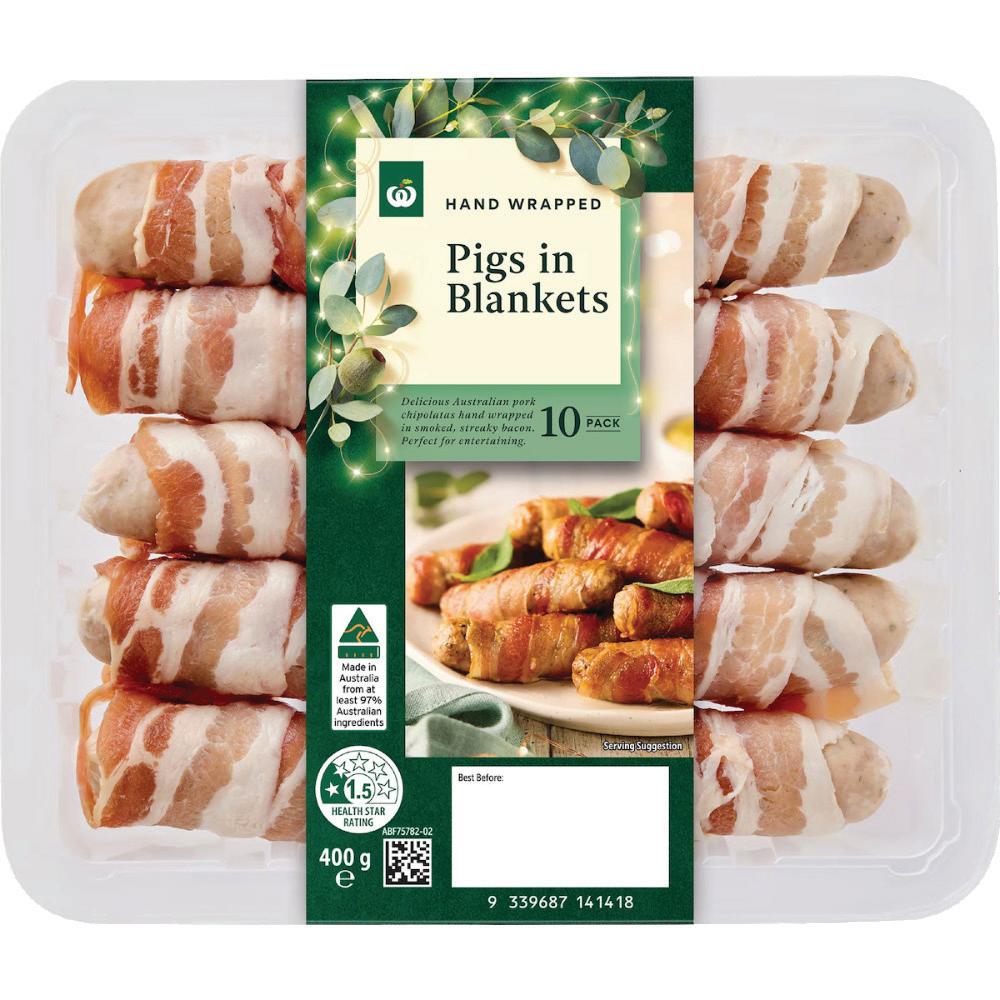
Woolworths
Delicious Australian pork chipolatas hand wrapped in smoked, streaky bacon. Perfect for festive entertaining.

Coles
Enjoy these buttery, sprinkle laden shortbread stars, the perfect festive treat for everyone this Christmas.

CUSTARD
Festive Selection
Indulge in festive delight with Christmas Pudding Cheesecake with spiced fruits and topped with creamy custard a rich and comforting treat to celebrate the season.
New World Temuka has served its loyal community for a long time. Having become an owner-operator of the store in July 2025, Ross Martin thought it essential to continue this legacy by delivering brilliant basics along with ‘the best and freshest foods’ in all of South Canterbury.
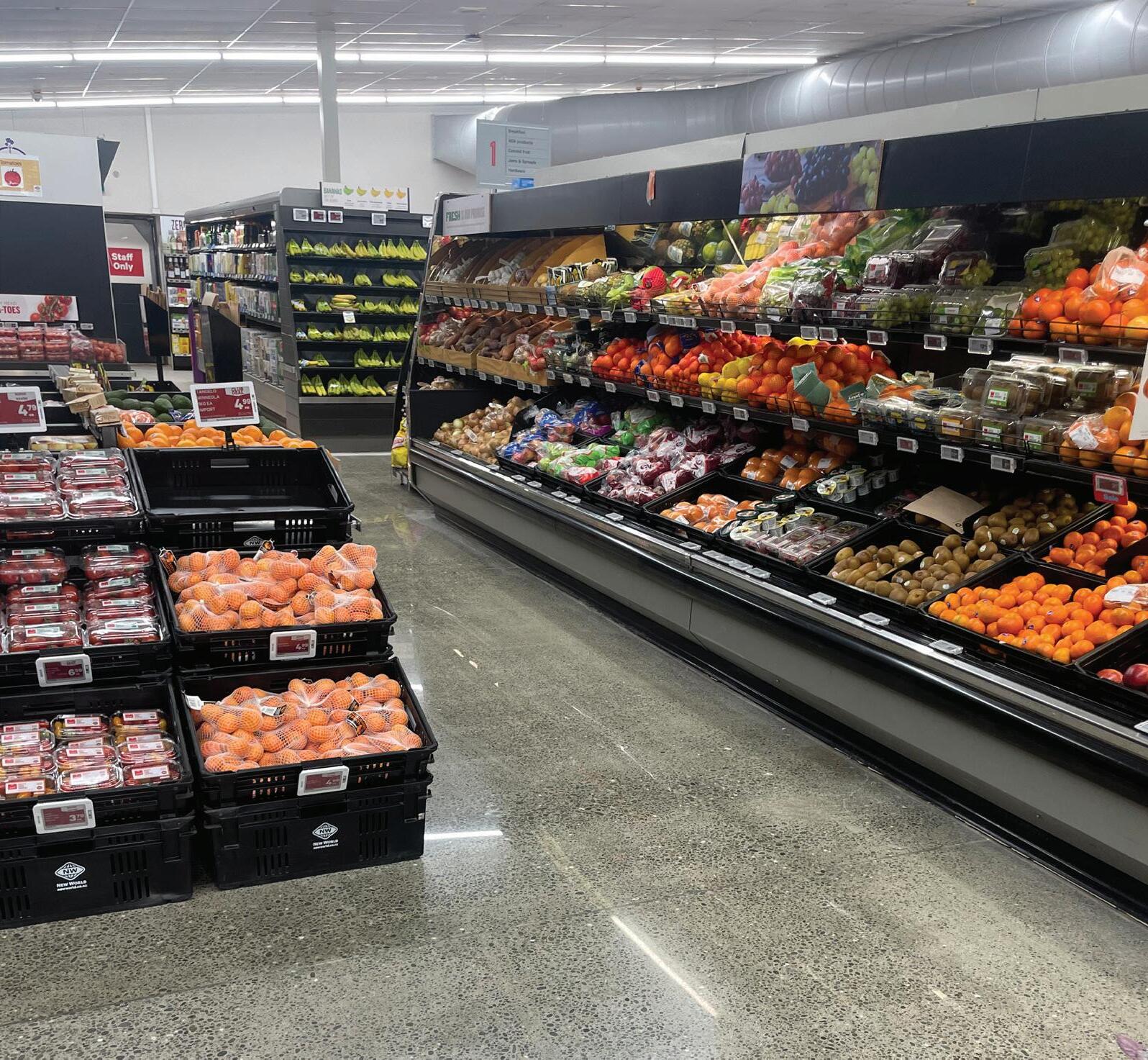
Whilst it may not be a largerformat store, it does have an offer well-suited to the needs of the local community. The Fresh departments all have a great range, with the butchery team crafting many instore-made products, including a delicious range of sausages.
Martin mentioned that the bakery team also produced some delicious food, and the Deli and Produce teams have seen fantastic growth through an increased range of readyto-go meals.
Additionally, South Canterbury has a host of excellent suppliers based in the region, including Barkers of Geraldine, located just a few minutes away, and Heartland Chips.
Just across the road from the supermarket is a vinegar producer making local brands like Taste Master, as well as mainstream brands like DYC. Talbot Forest is another fine cheese producer that Martin highlighted.
“New World Temuka has a very cool culture. The team here is very store proud and knows every customer by their first
name. They are very loyal to the area, and the store is very much the centre of the community,” said Martin.
“We want everyone to leave feeling better than when they walked in, and hopefully, we have brightened up their day with some genuine good service and friendly banter.”
Regarding supporting the community, Martin said he had already been in contact with local schools and was keen to continue the support organised by the previous owners. He has also been active in presenting to the local high school about the fantastic career opportunities in the supermarket industry.
The store was also recently part of the Boost Temuka Halloween Festivities and will support the local RSA with their upcoming Christmas Lunch.
Moving into 2026, Martin has planned a refurbishment during which all refrigeration will be replaced as part of a CO2 upgrade. At the same time, he will take the opportunity to make a few tweaks to the layout, including revamping offerings from fresh food and food-to-go to the liquor department and chilled aisle.
He said that this would likely take six to nine months. With most work happening off the shop floor, the floor impact will likely be two or three months.
“We have just completed the massive job of taking off old floor tiles and grinding the floors back to amazing polished concrete. The store looks fantastic as a result, and we are getting amazing feedback from the local community.” n

Foodservice kitchens are under pressure to deliver more with less. Labour is tight, margins are narrow, and operators are looking for ingredients that remove complexity without lowering the bar on flavour or presentation.

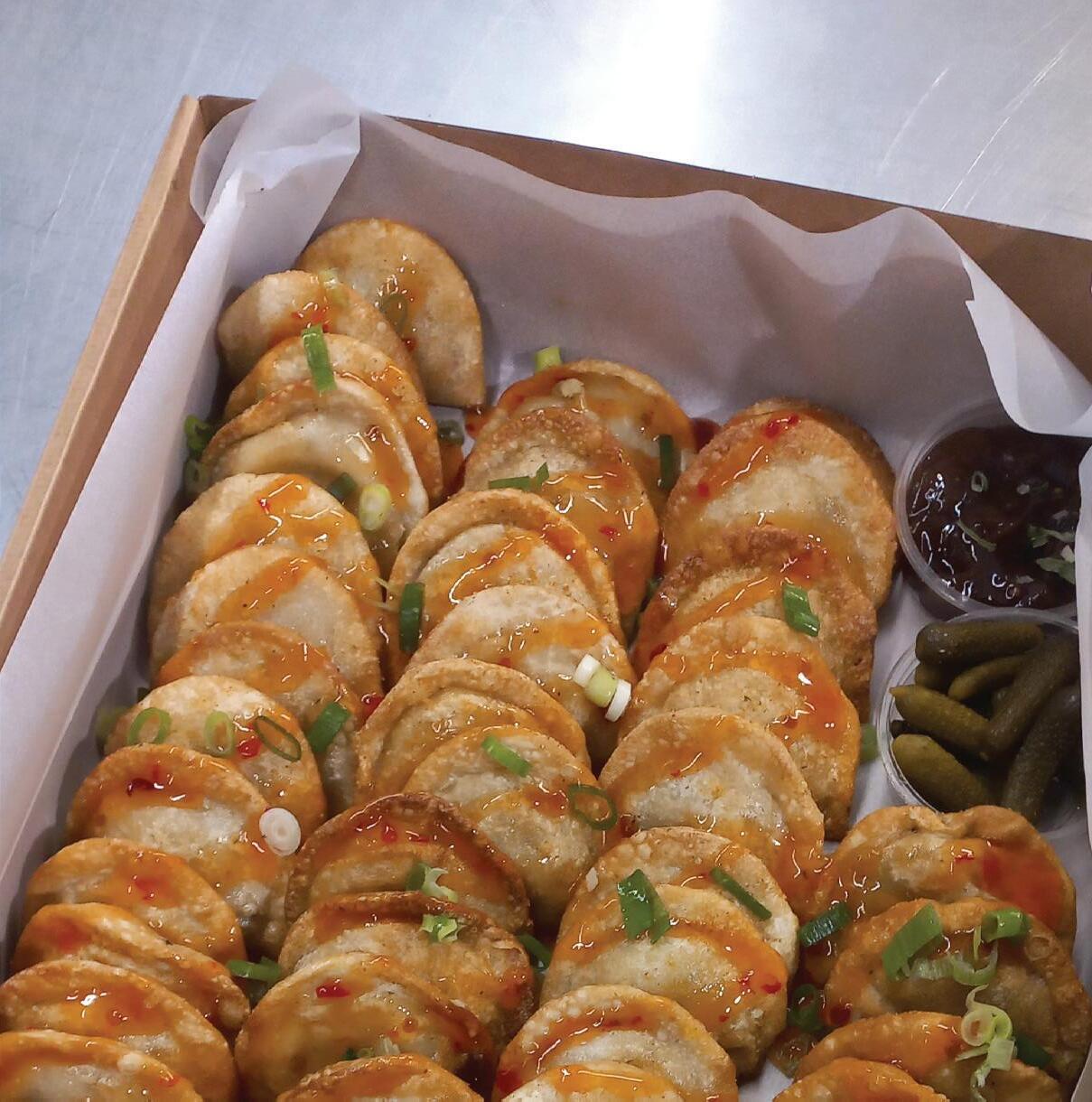
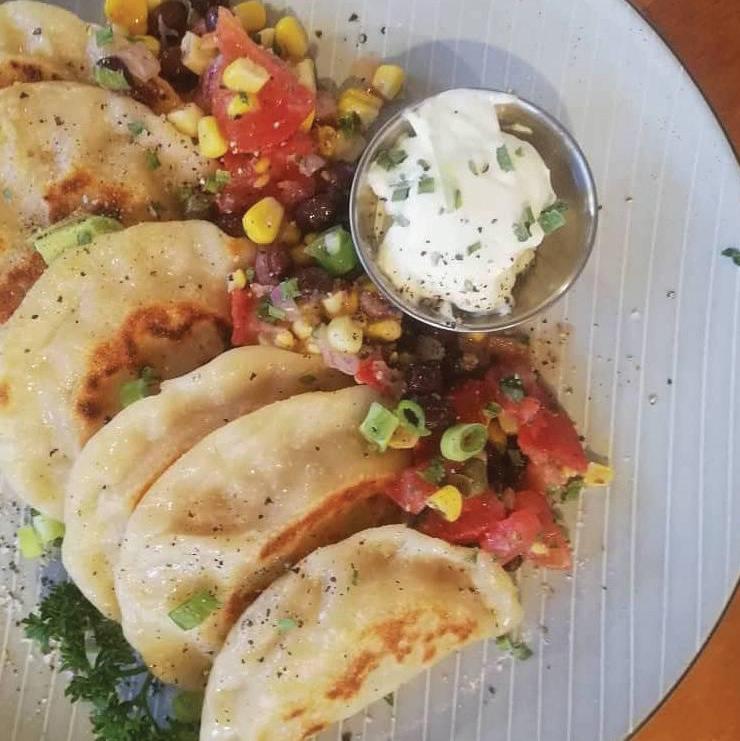
Artisan comfort food has matured into a wholesale product line designed for professional kitchens. The brand’s approach is simple: retain the handmade integrity, remove the labour burden and give chefs a product they can finish in minutes without compromising quality.
In this environment, the pierogi has quietly become a workhorse for chefs who want speed, consistency and a point of difference.
New Zealand’s own Pierogi Joint has played a meaningful role in this shift. What began as an artisan comfort food has matured into a wholesale product line designed for professional kitchens. The brand’s approach is simple: retain the handmade integrity, remove the labour burden and give chefs a product they can finish in minutes without compromising quality.
The production of a traditional pierogi is slow. Dough preparation, resting, rolling, filling and sealing take time that most kitchens no longer have. Pierogi Joint eliminates that entire workflow. Its wholesale range arrives frozen with a fully cooked filling and unboiled dough, meaning
the only real cooking step is a short boil to bring the wrapper to the right tenderness. From there, it is entirely about the finish. This is where the product becomes interesting for foodservice. A pierogi can go from freezer to plate in about 5 to 7 minutes. It can be served as an entrée, a bar snack, a shared plate, or a full meal, depending on how it is finished. For operators building menus around efficiency, the ability to achieve texture, colour and flavour contrast with very little time on the line is a commercial advantage.
The long frozen shelf life also matters. Pierogi Joint’s nine-month stability, paired with consistent nationwide frozen delivery, gives operators confidence to purchase in volume. With cartons containing four bags of thirty-six pieces, waste is minimal, and kitchens can scale usage up or down according to service patterns. It serves both the cost control mindset and the desire for reliable, premium components.

Speed is the foundation, but versatility is the real value. Chefs use the pierogi much like a blank canvas, applying techniques drawn from pasta, dumpling, snack and small-plate traditions.
Boiled and sauced, it behaves like a delicate filled pasta, absorbing butter, herbs or creambased reductions with ease. Pan-fried after boiling, it develops a crisp edge and a richer, nuttier profile that works across Europeanstyle menus or contemporary bistro dishes. Dried and deep-fried, it becomes a fast bar snack with strong visual appeal, ideal for high-volume service. Air-fried or baked, it fits the growing preference for lighter, lower-oil preparation while still offering texture.
This adaptability has seen pierogi move beyond their cultural origins and into mainstream foodservice. Operators are adding them to tasting menus, wedding catering, hotel buffets, and bar food lists because they fit comfortably across multiple menu environments. They also meet customer expectations around transparency and quality, with health star ratings of 3.5 or higher across the range.
For chefs, the product removes labour and unlocks creativity. For the operator, it reduces waste and strengthens margin control. For the customer, it delivers comfort with clarity and character. Pierogi Joint has effectively taken a heritage dish and reshaped it for the demands of modern foodservice, proving that small, well-made products can carry significant commercial weight when engineered for the realities of a professional kitchen. n

The holidays are a time to get together with family and friends, and there’s no better way to do that than over a glass of something.
It’s a time to try new drinks and new combinations, and can also be a fun time to treat yourself and others; be it that wine you’ve always wanted to try, or that bottle you were gifted that you need an excuse to open… *spoiler alert* when you open the bottle, that is the special occasion!
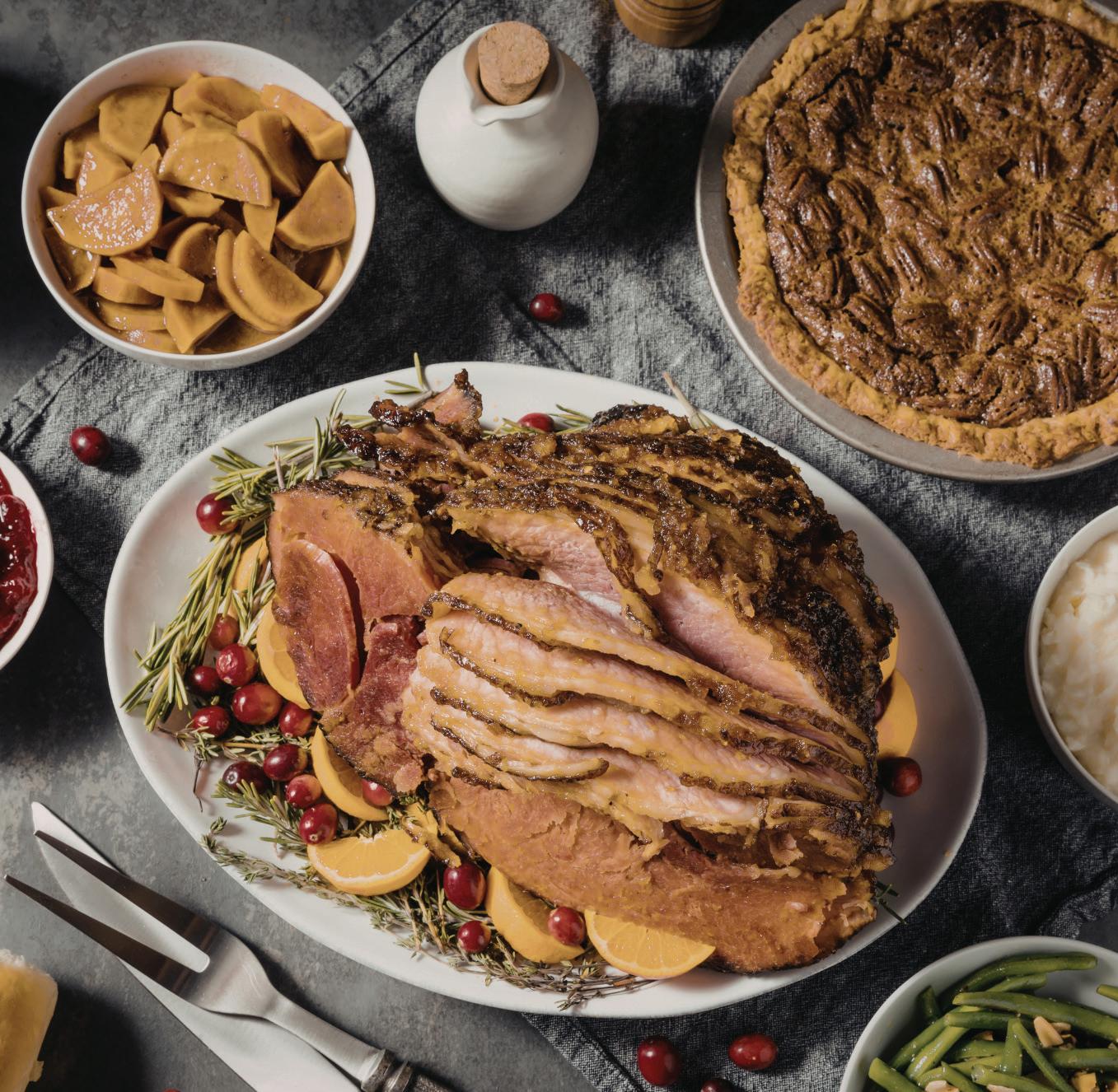
Christmas is also all about the food and entertaining: from ham to lamb, fish on the barbecue, mince pies, and, of course, the cheese. And there is a drink match to all these that will really elevate the experience. There are some general rules about taste worth bearing in mind, and, like good drinks themselves, it’s all about balance. Think about complementing and contrasting when pairing.
A complementary pairing goes together and matches to amplify the food; think creamy textured Chardonnay and creamy pasta.
Conversely, a contrasting pairing balances the dish; think Hawke's Bay Syrah with bold dark fruit flavours and acidity and tannin to cut through a roasted lamb leg.
The best advice for choosing your drinks over the festive period is not to overthink it! Drink what you want, when you want, follow ‘the rules’, or don’t. However, here are a couple of selections that the Woolworths team and I will be enjoying over the holidays that you might enjoy as well.
With the two most popular meats at Christmas in New Zealand being ham and lamb, let’s start there.
If you’re having the traditional ham, then look no further than a Riesling - and one that is off-dry. I often hear people say they don’t like off-dry wines, but whenever I serve them, they’re real crowd pleasers.
The great thing about Riesling is that it has the fruitiness to match the ham, and when it’s off-dry, it not only has more body and weight, but a hint of sweetness to go with the saltiness of ham.
Riesling has high acidity so it will cut through the sides, the gravy, and the roast potatoes.
The family-owned and operated Pegasus Bay (@pegasusbaywine) in Waipara makes legendary Rieslings that have incredible ageing potential, and we’re delighted to be able to sell their wines.

On the nose, you’ll get green apple and lime but also quince and kumquat - perfect for ham, and there’s that hint of sweetness - just delicious!


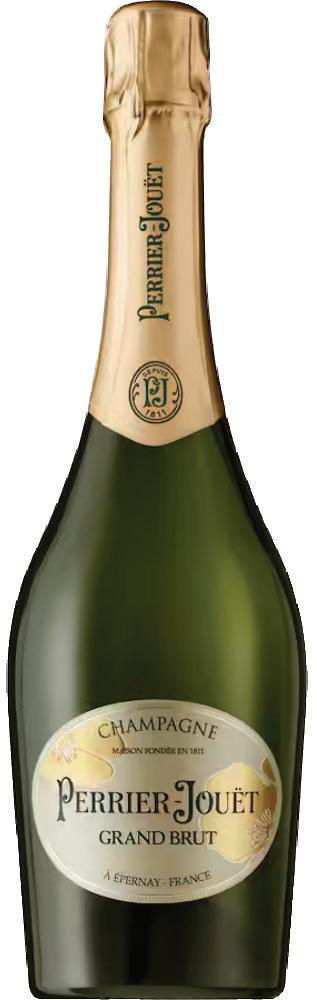
Finally, here are a couple of options for your cheeseboard. If you’re serving cheese before the meal, then it simply has to be sparkling wine. The acidity and bubbles will cut through the fat, refresh your palate, and complement the cheese without overpowering it. Red wine is all too often served with cheese when white is often a better match. For me, it has to be a classic Champagne, and I’m a big fan of Perrier Jouët (@ perrierjouet). It’s got all the brioche and toasty notes you’d expect - but it’s lifted with a really charming lemon aroma that’s bright and refreshing.
If you’re having lamb, then I would plump for a Hawkes Bay Syrah - I really think some of New Zealand’s finest wines come from the region and the famous Gimblett Gravels (a sub-region of Hawkes Bay, famous for its gravelly soils and vines that produce precise and intense flavour characteristics).
If you’re serving the lamb roasted, you need a robust red to be able to stand up to the flavour of the meat - especially if it’s being served with sauces and gravy, and Syrah will give you that.
The Craggy Range Gimblett Gravels Syrah is a benchmark red. It has classic fruit purityespecially boysenberry but also lifted floral notes of spring flowers and rose.
On the palate, it is plush and smooth with beautifully integrated tannins and a delicious savoury pepperiness. An absolute classic. @craggyrange.




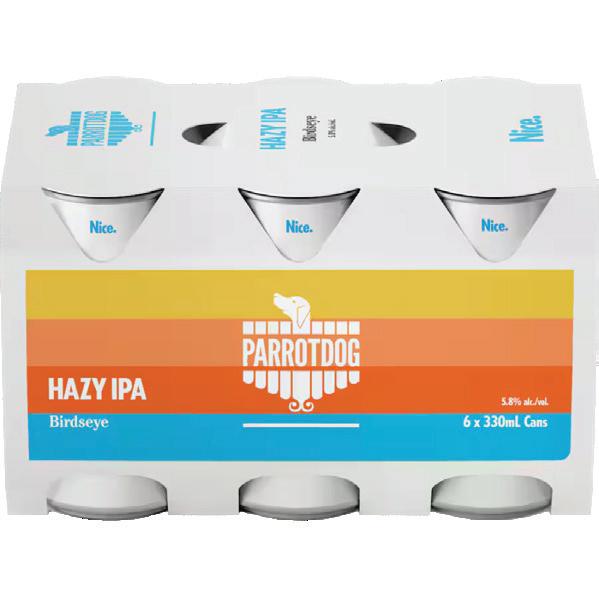
New Zealand also grows some of the world’s finest hops, and their aroma and slight bitterness can be a brilliant match for cheese. Parrotdog (@parrotdogbeer) Birdseye IPA is a great place to start if you’ve never tried a hazy before, and it is the perfect match for hard, sharp cheeses like Cheddar. Definitely a combination to try, even if you’re not usually a beer drinker.

In truth, Christmas doesn’t need alcohol at all. There are so many fantastic drinks out there, so please don’t feel pressured to drink alcohol. The alcohol-free category has come on leaps and bounds in the last few years, and the quality of the drinks is exceptional. There’s a fab mixed pack from AF (sobercurious_af) worth checking out.
From flavour to function, we’ve got your business covered. Premium seasonings, herbs, oils and spices. Food service packaging from reliable foils, films and papers to deli containers and takeaway boxes. Plus all the back-room essentials–chemical cleaners, wipes, brushes, bin bags and PPE. Everything you need, all in one place.




Gen Z is rewriting the rules of the kitchen. For this generation, “cooking” no longer means hours spent simmering sauces or mastering knife skills. Instead, it’s all about assembling meals, mixing, stacking and layering ready-to-eat or minimal-prep ingredients into something that feels homemade, without the heavy lifting.
The shift isn’t just about convenience. Gen Z has grown up in a world where food culture is shaped by TikTok tutorials, Instagram reels, and endless snackable inspiration. A two-minute video on “10 ways to style your wraps” resonates more than a cookbook ever could. Their kitchens are stocked with deli meats, dips, sauces, salad mixes and flatbreads, and the art lies in putting them together in a way that feels creative, personal and photogenic.
Appliances play a role in this new approach too, with the humble air fryer becoming the crown jewel of the Gen Z kitchen. It delivers instant gratification, crispy fries, reheated pizza, even quick protein without waiting for an oven to
preheat. It’s the tool that makes “cooking” as simple as pressing a button, and it perfectly fits the assemble-not-cook lifestyle.
This trend is influencing what supermarkets stock and what brands develop. Ready-to-use bases, meal kits, pre-marinated proteins, and snack-style components are thriving. Even traditional items like cheese, bread, and condiments are being reimagined for mix-and-match creativity.
Gen Z isn’t lazy, they’re redefining what cooking means. For them, a satisfying meal is less about technique and more about expression, less about time at the stove and more about making food their own. Dinner, for this generation, is not cooked. It’s curated. n


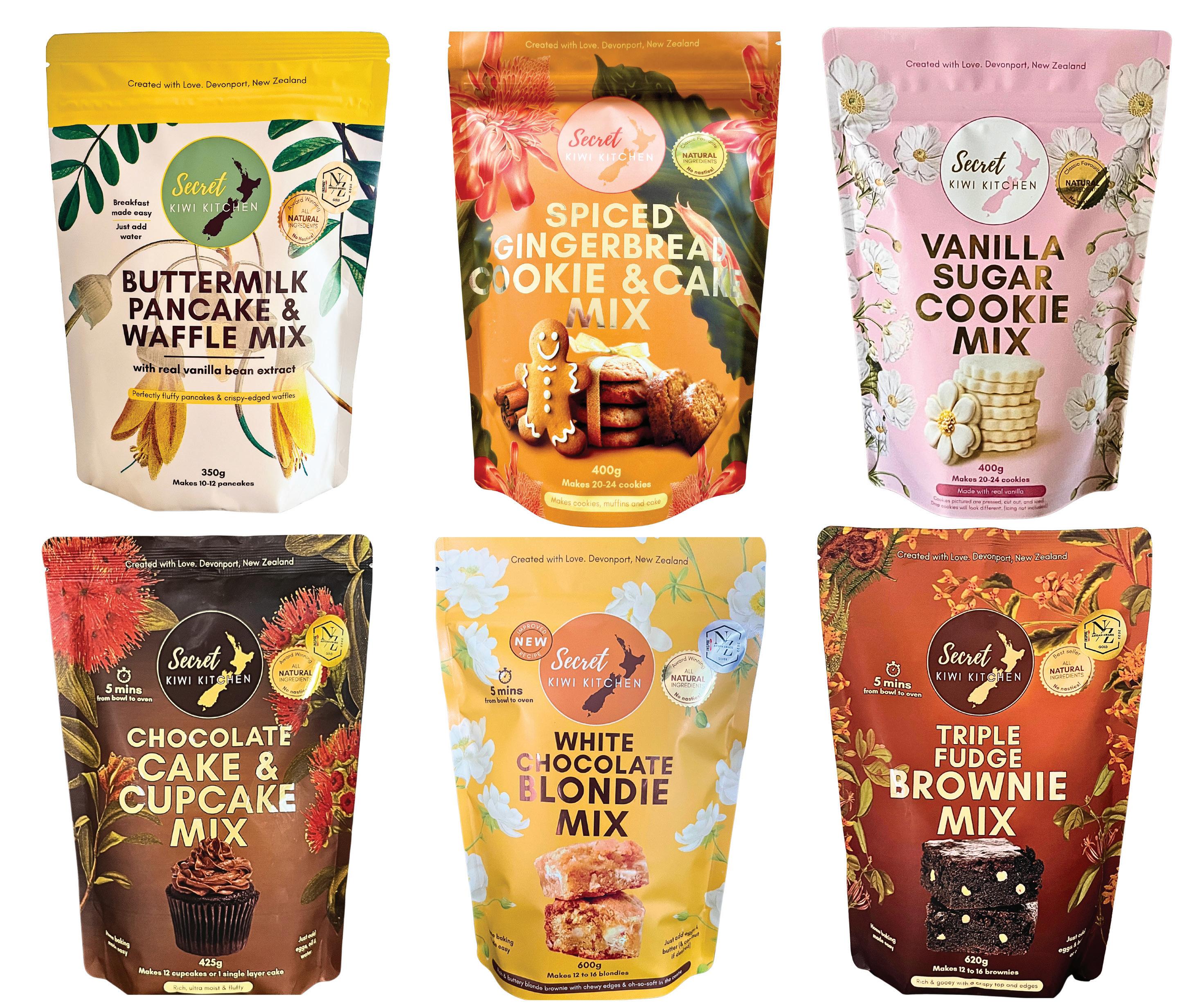
Secret Kiwi Kitchen is winning over Gen Z with baking mixes that are easy to use, made with clean ingredients, and full of flavour.
Gen Z may not always bake from scratch, but they care deeply about quality and brands that feel authentic. They appreciate artisan touches, beautiful packaging and real ingredients they can recognise. Their supermarket range includes Buttermilk Pancake & Waffle, Triple Fudge Brownie, White Chocolate Blondie, and Chocolate Cake Mixes, made with premium
ingredients including Dutch processed cocoa, real vanilla bean.
For the festive season, they are offering a Gingerbread Cake & Cookie Mix and Vanilla Sugar Cookie Mix, which bring back warm memories of baking with grandparents.
For Gen Z, it is about joy, creativity, and making something that feels good and tastes even better. For more information, visit www.secretkiwikitchen.com n

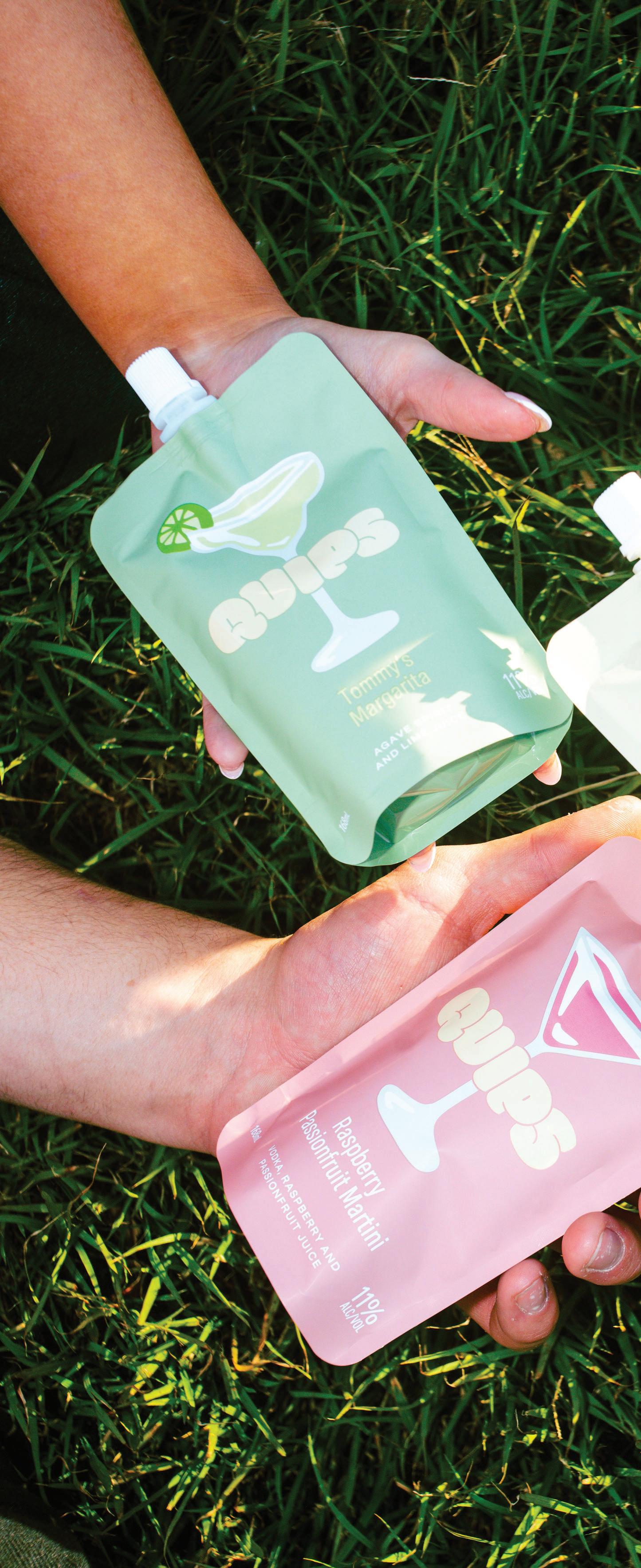
After three years in development, Quips launched in Australia a few months ago, founded by Calvin Koder, an ex-banker and his business partner Joe McGaffin, who runs a video production company.


Koder added that, as university students, they were always looking to save some money and loved going to music festivals, so they would always empty yoghurt pouches and fill them with vodka to sneak into them.
This was what introduced them to the pouch and its functional benefits, such as its resealability, portability, and extra safety due to no glass (safe for the dance floor).
“Combining the pouch with the juicebased cocktail that we were always making at parties was what shaped the initial idea of Quips.”
As high-strength, non-carbonated premium cocktails in pouches, Quips currently offers SKUs: Tommy’s Margarita, Mango Daiquiri, and Raspberry Passionfruit Martini, with another big flavour launching this summer.
The duo trialled an initial version of the product at a New Year’s Eve party in 2022, filling 300 pouches with vodka and orange juice and calling them “SLAMS”.
“As housemates, we were going out every weekend, as you do in your early twenties, and everyone, including us, was drinking seltzer; we were sick of it,” said Koder.
“Anytime we had a party, we would then just buy vodka with juice and mix it ourselves to avoid the bloating and fizz. These mixes would also be pretty strong, so we didn’t have to consume much.”
Having the luxury of being an independent brand, Koder said, allowed them just to make what they want with limited hurdles. They knew the flavours had to be strong enough to mask the 11 percent ABV and wanted to make three distinct flavour profiles and spirits so that everyone could find one they enjoyed.
At the same time, the biggest hurdle they faced was finding a production facility capable of producing alcoholic pouches.
All the manufacturers that had a liquor license but did not have a pouch-filling machine, so the duo started reaching out to yoghurt and baby food co-packers who
could potentially get their liquor license.
After months of struggles and negotiations, they ended up with the current co-packer on the Central Coast, making the process from concept to prototype take three years.
“The early taste tests were nothing like today’s drinks, and we are now delighted and grateful for how they have turned out with our current food scientist,” added Koder.
“We have faced countless other issues, from trademark denials, dodgy food scientists, production delays, and so much more. The biggest learning curve was that nothing is ever easy.”
The response to Quips has been overwhelmingly positive, and the brand has built a strong social media following in just a few months. At present, Koder highlighted that Quips’ core audience is 18- to 25-year-old women, who love the high-strength, fizz-free cocktail and the Insta-worthy pouch.
Looking ahead, Koder and McGaffin plan to gain national coverage in Australia next year, then expand to the US and the UK. Koder said the markets there are much bigger, with proven high demand for highABV RTD cocktails.
“We just need to move quickly and keep the momentum going.”
Quips is now stocked in over 80 independent bottle shops around NSW, VIC and QLD. n

Gen Z has reshaped the ice cream industry with its demand for variety, innovation and authenticity. Many Gen Z consumers base purchases on influencer recommendations, and social-led experiences are key to driving this engagement.
Magnum hit the sweet spot with Gen Z consumers by leveraging social media insights to understand what consumers want. From premium products to pop icons, the brand tapped into the zeitgeist to win new audiences.
Magnum's campaign launch at Cannes, featuring Charli XCX and over 250 other influencers, generated thousands of pieces of social content, with organic event coverage reaching 50 countries.
The ‘Nothing Cracks Like Magnum’ campaign became one of the brand’s besttested assets, and Magnum’s year-on-year social coverage at Cannes tripled.
“The difference now is Gen Z adults have been born into a world of abundance, options, copycats and different propositions,” said Tugce Aksoy, Global Brand Director of Magnum for The Magnum Ice Cream Company (the ice cream business that will separate from
Unilever by the end of 2025).
To keep their attention and share of wallet, engagement with brand fans on social channels and through experiences is key.
In Q1, Magnum leveraged trending nutand-fruit flavours with Double Hazelnut and Double Cherry ice cream sticks, which have already been enjoying mid-single-digit growth. Shareable pots of Magnum Bonbons also expanded into new markets, thanks to Gen Z’s interest in snack-size portions.
Social listening also led to the discovery that shaped Magnum’s new ‘Nothing Cracks Like Magnum’ global campaign, which leveraged the distinct sound of the ice cream’s cracking chocolate.
“That crack has been a core part of our campaigns since launch, but we were taking it for granted. Our fans refocused our attention on the connection.”
The team used AI to analyse grocery reviews to see if this social insight resonated at points of purchase.
“The cracking chocolate is a key reason people are adding Magnum ice cream to their baskets. We tested it further with some lo-fi social posts using ASMR. They got more than 150 million organic views. The crack was an indication of Magnum’s premium quality.”
An activation at Europe’s Primavera festival followed hot on the heels of Cannes, again with Charli XCX, where fans had the chance to try Brat Magnum ice cream sticks.
“These activations indicate our ambition to bring ice cream out of the freezer and into fashion and lifestyle. By taking the ice cream category premium, our goal is to position Magnum as a Power Brand which enjoys double-digit growth as the pinnacle of that.”
Along with brand-led experiences, more is more for Gen Z ice cream lovers, and the new Cornetto Max served up an extra helping of innovation and indulgence from its chocolatey disc top, sauce layers and duo
of ice creams to its iconic cone tip.
Cornetto Max was the latest premium innovation, designed to meet Gen Z’s love of maximalism and indulgence. Its launch across Europe and Turkiye exceeded expectations, with Cornetto Max Mango and Vanilla experiencing strong out-of-home sales.
“Cornetto is already one of Unilever’s most iconic ice cream brands. It’s a true heritage brand. But even icons need new news, especially to meet Gen Z’s evolving expectations,” said Cornetto’s Global Brand Lead Hazal Kantman.
“Indulgence is a core driver for one in five ice cream lovers globally. But for Gen Z, in particular, more is more, in lifestyle, fashion and food. Cornetto Max taps into that.”
For many of these young consumers, indulgence comes in the form of regular ‘little treats’ that spark joy and connection and make premium experiences affordable. However, they also feel brands aren’t delivering the excitement they’re looking for.
Creating that multi-layered experience was a significant feat of engineering, especially as the team took the product from idea to a production line in less than a year.
“It was a technical challenge to deliver a product with such defined layers. Combining two distinct ice creams with a sauce centre and chocolatey layer on top requires a high level of precision, not just in terms of R&D formulation and
specification but also in how it’s executed on the manufacturing line to ensure consistency in texture, flavour combination and visual appeal at scale,” she added.
“Engineers at Colworth’s Advanced Prototype Engineering Centre used AI to test and finesse new processes and 3D printers to make nozzles that create the new layers of ingredients in Cornetto Max’s new design. Even the factory teams in Caivano, who produced the original Cornetto ice cream, and Çorlu contributed to the development of the new production line that makes Cornetto Max today.”
In collaboration with Ray-Ban and Meta, Cornetto also provided content creators in Italy and Spain with their own set of AI glasses, ensuring they have a hands-free way to capture and share moments while still enjoying a Cornetto Max ice cream.
A few weeks ago, Hydro:ICE made its mark at the Amsterdam Dance Event (ADE). Designed to deliver a refreshing, functional boost in high-energy environments, Hydro: ICE brought the chill to every moment, day and night, keeping ADE partygoers refreshed and energised.
Hydro:ICE is the latest addition to The Magnum Ice Cream Company (TMICC) 's brand portfolio. With the launch of this functional, refreshing ice pop for adults, TMICC has expanded the ice cream category itself and created new consumption moments.

Hydro:ICE is developed for the emerging “Healthy Hedonist” demographic who pursue a lifestyle where pleasure and wellness seamlessly coexist. These are active, experience-driven individuals who want to feel good, look good, and live well.
Rather than traditional advertising, Hydro:ICE created buzz at the centre of the dance scene, through its partnerships with DJs, events, and music media, amplifying content to reach engaged digital audiences beyond physical attendance.
“Hydro:ICE is a unique, thirst-quenching innovation that reflects how modern consumers live, connect, and seek out experiences. But this is more than just a product launch, it’s a culture-driven innovation that embodies the spirit of The Magnum Ice Cream Company. With Hydro:ICE, we're showcasing our ability to innovate rapidly and scale with confidence,” said Julien Barraux, Chief Creative Officer at The Magnum Ice Cream Company.
“We’re moving beyond traditional ice cream, creating new demand through immersive experiences that resonate with today’s digitally connected, experiencedriven consumers. This momentum is setting the stage for multi-market expansion as we continue to identify more opportunities where Hydro:ICE can authentically integrate into nightlife and music culture.” n


One of Innova Market Insights' Top 10 Trends 2025 was Wildly Inventive Flavours, which recognised that consumers have been seeking extraordinary product features and innovation through surprising flavour mash-ups to excite and wow.


Younger generations, namely Gen Z and Millennials, have sought new flavour experiences and have become more willing to consume food and beverage products at different times of day, beyond their typical eating occasions. Brands can innovate and excite with cross-category product mash-ups that combine flavours from different categories, each associated with a different time of day. Innova is monitoring the blurring of lines for categories and meals, so cross-category mash-ups are on trend. Companies with brands spanning multiple food and beverage categories are well-positioned to create exciting flavour combinations.
Consumers globally have favourite brands and favourite flavours within those brands. Cross-brand collaboration helps brands attract each other’s consumers to new food and beverage products with unusual flavours. This creates a win-winwin situation for each partner and for the consumer. A twist on cross-brand collaboration is to bring back a retired flavour that has nostalgia vibes as a relaunch across several brands and formats.
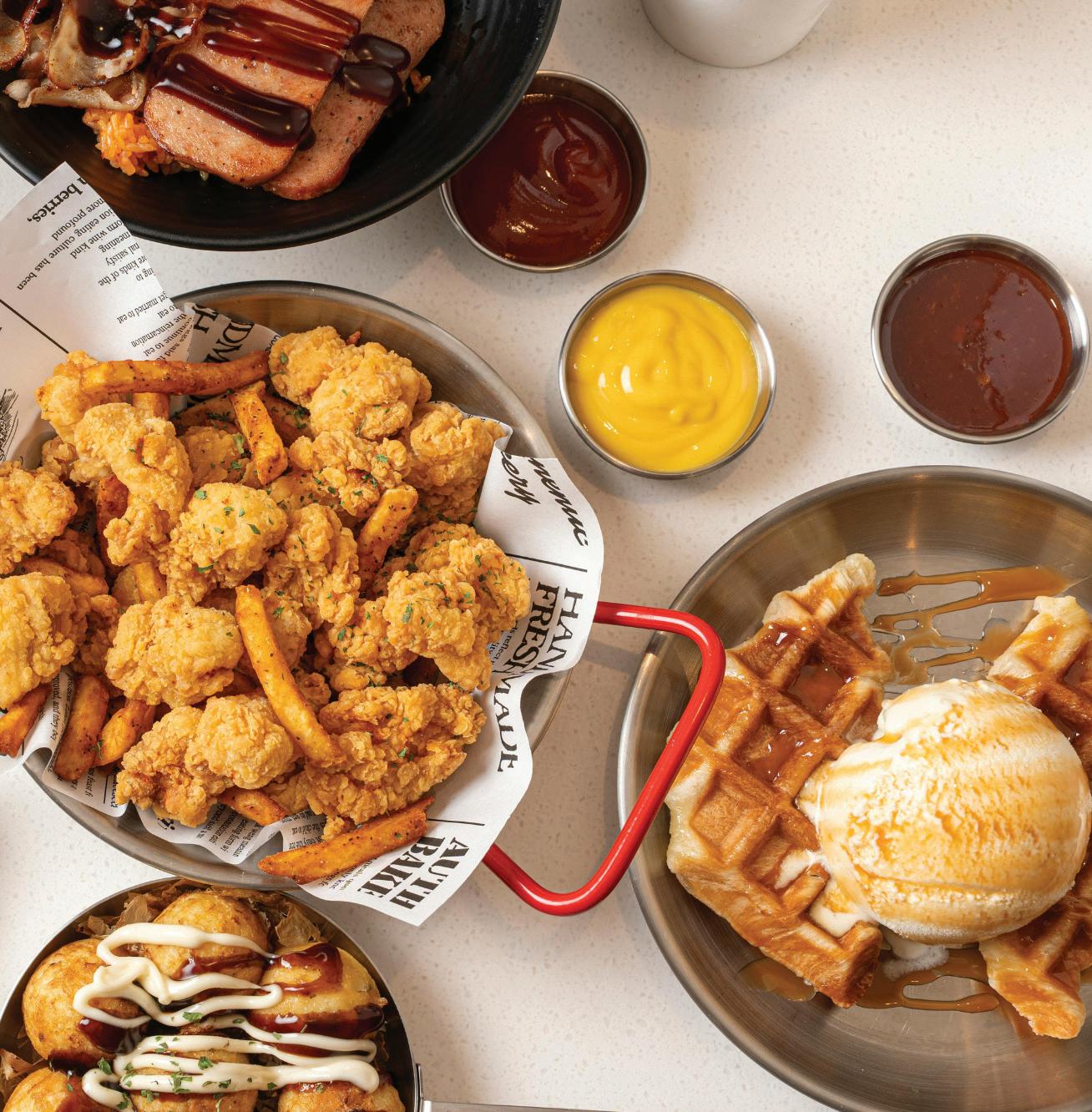
Flavour trends show that today’s consumers not only enjoy and are attracted to flavour fusions, but they also enjoy spiciness, especially when paired with a complementary taste like sweetness.
Flavour trends show that today’s consumers not only enjoy and are attracted to flavour fusions, but they also enjoy spiciness, especially when paired with a complementary taste like sweetness. Millennials in particular said that they will pay more for products offering new flavours. So, excitement is growing around spicy, spicier, flaming hot, and swicy, the combination of sweet and spicy. Consumers enjoy sensory stimulation from foods that are spicy, flaming hot, or spicy. Consumer trends research from Innova shows that consumers are most likely to look for and try new flavours, such as hot and spicy, in add-ons and accompaniments, such as seasonings, toppings, and sauces. In fact, swicy–sweet plus spicy is a
groundbreaking 2025 flavour. On the other hand, consumers are less likely to experiment with flavours in sweet bakery, desserts, and ice cream. The takeaway for manufacturers and brands is not to shy away from hot, hot, hot flavours and to look for new ways to deliver spicy.
More than any other generation, Gen Z are excited about discovering and trying new tastes and flavours. According to consumer research, discovering new flavours is part of their enjoyment and excitement. They are particularly enthusiastic about exploring new foods with Asian and African flavours. This generation also attends various social events and participates in virtual experiences. That is why flavour and texture
innovation are so essential for attracting the Gen Z consumer. Fresh flavours and spicy flavours are particularly relevant. Brands can also connect with Generation Z through online and offline social engagement and rewards that appeal to this generation’s attraction to fun and adventure in life and in flavours.
Speak to Millennials
Brands can use flavour fusions to capture Millennials' interest. In consumer trends research, Innova found that about half of consumers worldwide are interested in flavour fusions and combinations, and are willing to spend more to try them, reflecting current flavour trends. Companies can employ strategies for novel flavours, such as cross-brand flavour collaborations to create new sensory excitement and cross-category mash-ups combining favourite flavours to create imaginative new flavours.
Flavour trends show that crazy new flavours are attention grabbers. One way to keep up the flow of new flavours and showcase flavour innovation is through limited-edition and seasonal launches featuring unique flavours. These have been highly successful in limited-edition beer and spirits, as well as in seasonal launches in the confectionery category. Consumers want crazy flavours and flavour combinations, viewing them as a form of indulgence. To inspire future innovation, brands can monitor social media and consider ethnic street foods. Consumers are looking for unusual products and flavours.
What’s Next in Flavour Trends for Gen Z and Millennials?
Watch for these developments and consider these strategies to capture Generation Z and Millennials. Go beyond sweet and spicy to combine flavours like sweet and salty, spicy and fresh, and spicier flavours with other trending flavours.
Consider mealtime mash-ups of breakfast and dinner flavours, plus flavourful ingredients. Bring heritage flavours out of retirement and reintroduce them in new flavour combinations to capitalise on their standing as historic consumer favourites. Emphasise the relationship between flavour and indulgence.
Indulgence goes beyond flavour into live experiences such as concerts and festivals, activities like backpacking and hiking, and virtual events. Use of AI is expected to grow as a tool for creating flavours that are outside the norm. AI can help discover new flavours, combinations, mash-ups, and flavourful ingredients. n
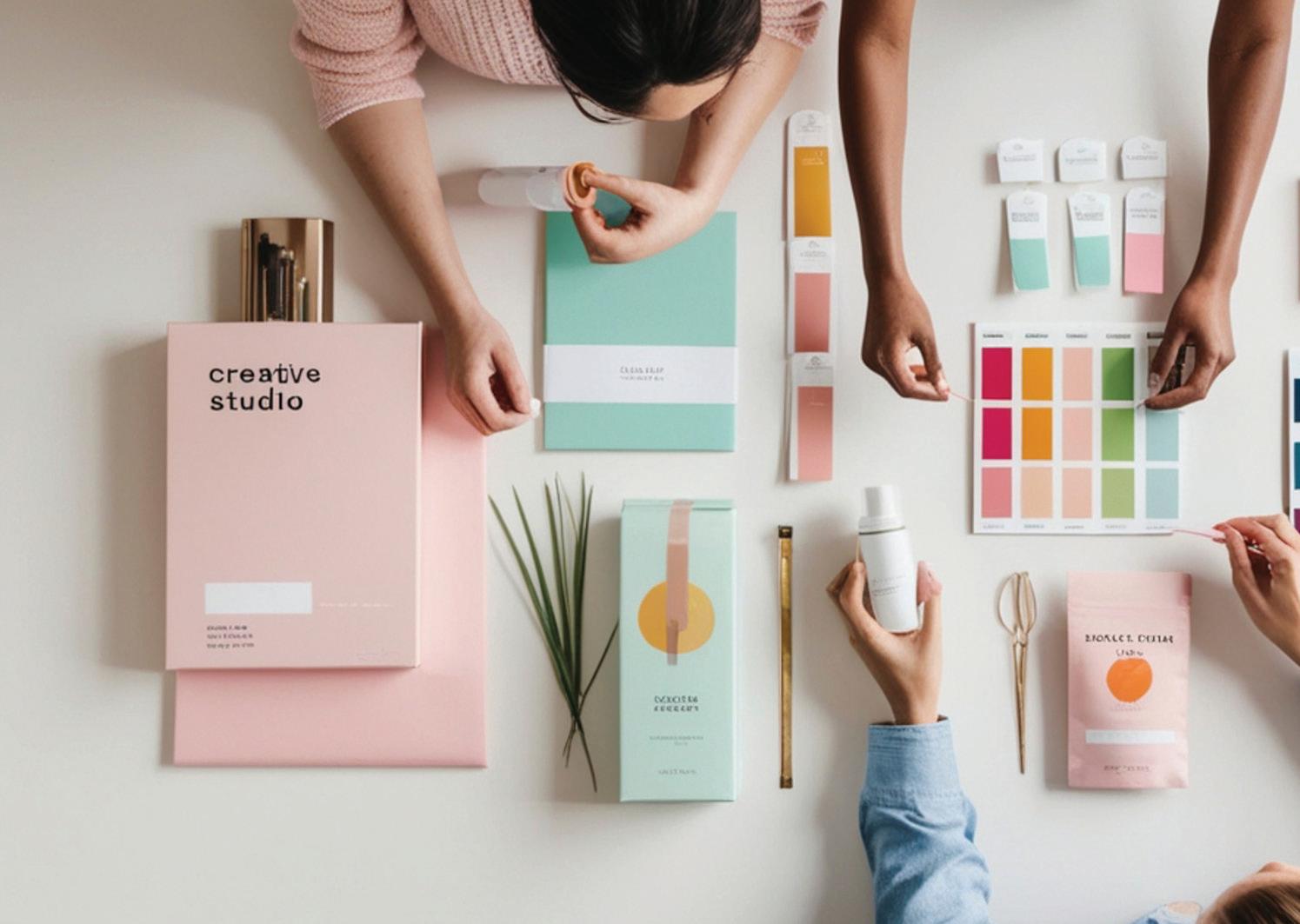
Innovation in packaging is often framed as the pursuit of the unprecedented, yet some of the most meaningful advances come from revisiting what has worked before.
The industry is beginning to recognise that progress does not always require dramatic reinvention.
At Packaging Innovations & Empack 2026, this shift toward thoughtful rediscovery is shaping a more deliberate and purposeful design culture, one that blends past insight with contemporary ambition.
Much of the knowledge needed for responsible innovation already exists. Timetested techniques, resourceful material choices, and problem-solving approaches developed under constraint continue to hold relevance.
Paul Botje, Museum Director at the
Museum of Brands, captured this continuity.
“All the innovations you see, extremely clever stuff, it’s all driven by the same urge to make things better, it’s happened throughout the ages and it’s still happening.”
His reminder is clear. Sustainability, efficiency, and usability have long been addressed in earlier eras, particularly when materials were scarce and waste was unacceptable.
“During the war, when raw materials just dropped off, you see things going back to different materials just to make sure you can make something rather than nothing.”
Looking back also helps us recognise that innovation is often evolutionary rather than


The entire packaging journey needs to be considered. Sustainability must be built in, but the product still has to do its job.
explosive. Brands refine, iterate, and adjust in small steps, but the cumulative effect can be transformative. Designers today face similar dynamics as they balance aesthetics, function, sustainability and the realities of manufacturing.
Michael Carroll, Senior Packaging Project Manager at Müller UK & Ireland, reinforced this.
“The entire packaging journey needs to be considered. Sustainability must be built in, but the product still has to do its job.” Innovation becomes less about novelty and more about intention.
This reflective mindset requires courage. It means questioning assumptions about scale,
materials, and consumer expectations.
As Chris Allinson of Diageo noted, “A lot of people are hesitant to step into that territory. Having a bit of bravery really matters.” Courage is paired with collaboration, as true progress emerges when sustainability experts, designers, engineers, and data specialists shape solutions together. Rethinking innovation is, ultimately, about continuity. Old ideas gain relevance when modern pressures demand smarter, leaner solutions. By grounding the future of packaging in the lessons of the past, the industry gains a clearer path forward: innovation that is balanced, responsible, and built to endure. n

Following the ban on fish-shaped soy sauce droppers in South Australia, sustainable design studio Heliograf has launched a plastic-free, compostable alternative.
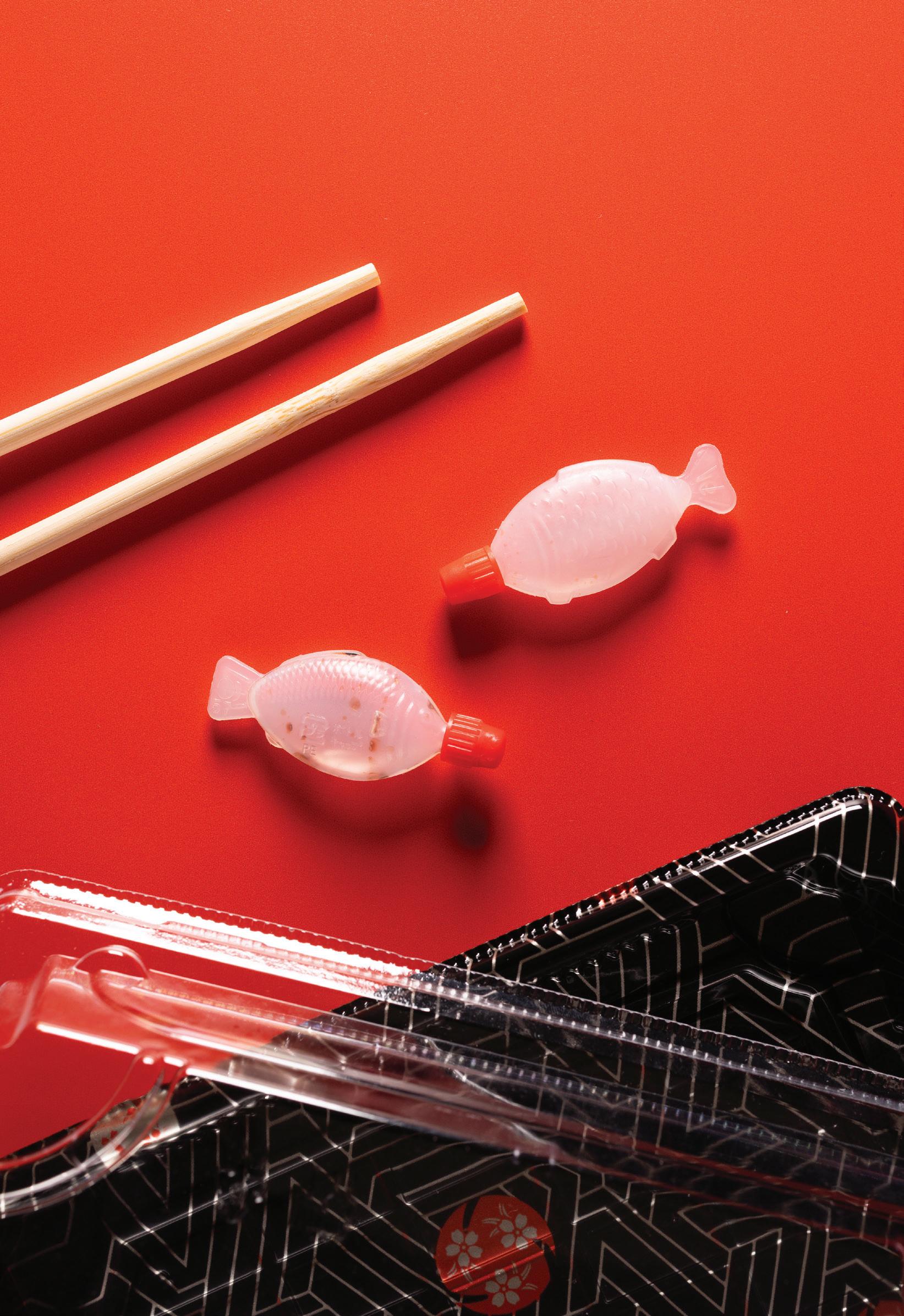
After five years of highlighting the problem of soy fish with their award-winning recycled lamps and searching for alternatives, Heliograf has delivered a solution.
The fish-shaped soy dropper is made from bagasse pulp, a natural, renewable plant material that is plastic-free, homecompostable, and compliant with plastic bans in all Australian states.
The small plastic fish, beloved for their convenience, serve their purpose for only a few minutes but persist for centuries. If they escape into the environment, they can harm marine life and degrade into microplastics that may end up in our food supply.
“It’s a small change, but we truly believe
every drop matters,” said Heliograf cofounder Angus Ware.
“We wanted to show that we can still create moments of joy when being sustainable.”
Collaborating with award-winning industrial designers Vert Design and leading sushi restaurants, Heliograf has created a practical, planet-friendly alternative that retains the familiar joy and function of the original soy fish, without leaving microplastics in its wake.
Instead of being filled in a factory far from the restaurant, Holy Carp! droppers are filled fresh in the store. Switching allowed Heliograf to select a more easily compostable material, and means the soy is

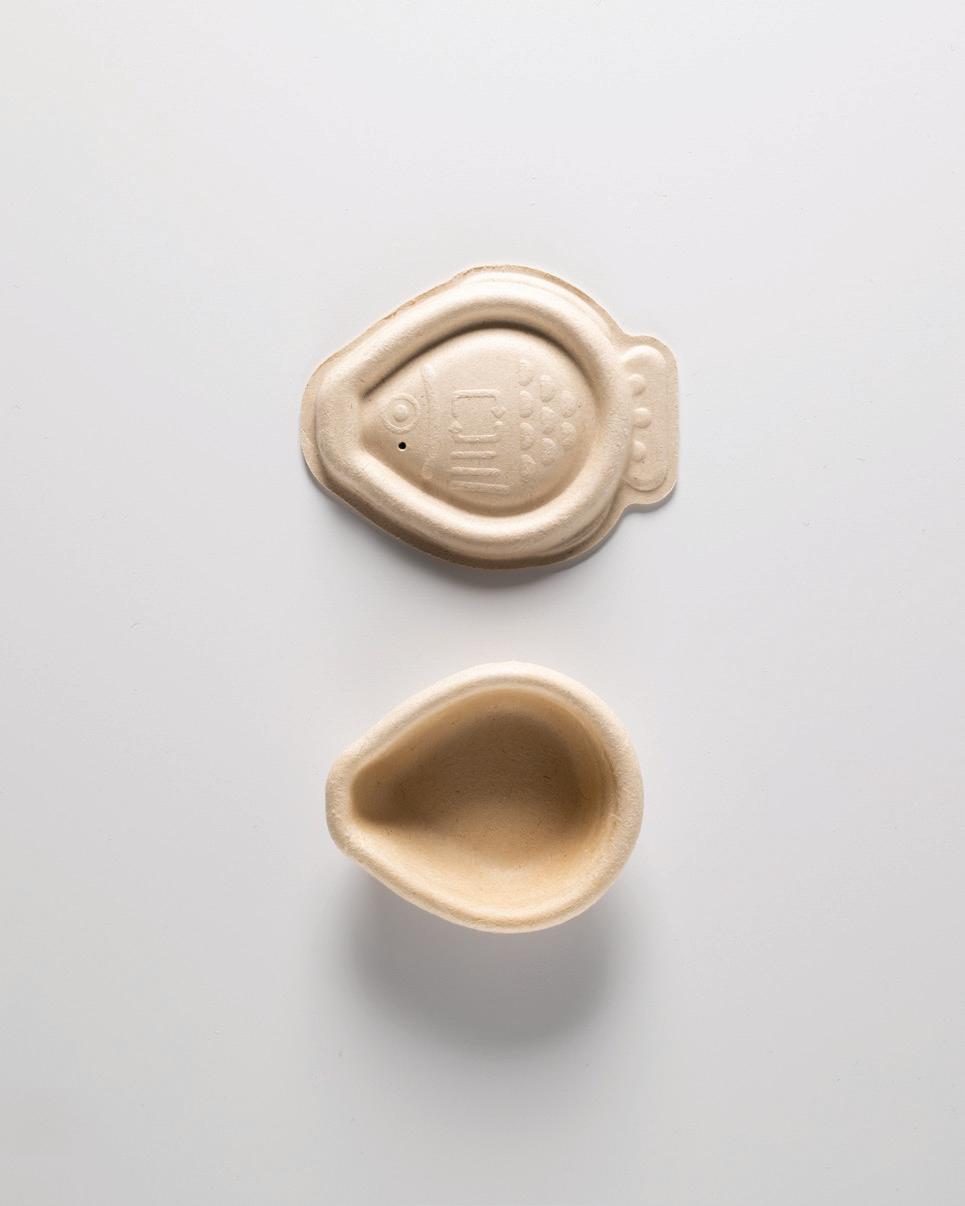
fresher. It also gives stores the flexibility to choose which sauce (or sauces) they offer.
Holy Carp! is also larger than a typical plastic soy fish. The designers observed that many customers grab a handful rather than just one, adding even more waste and plastic pollution.
The container has been carefully designed to resist spills and leaks and can be optionally sealed with a compostable sticker for trips on ‘stormier seas’. It safely holds soy for 48 hours.
Designed to comply with plastic bans and inspire others to voluntarily make the switch, Holy Carp! offers sushi lovers and restaurants an easy, sustainable swap with a feel-good message. n

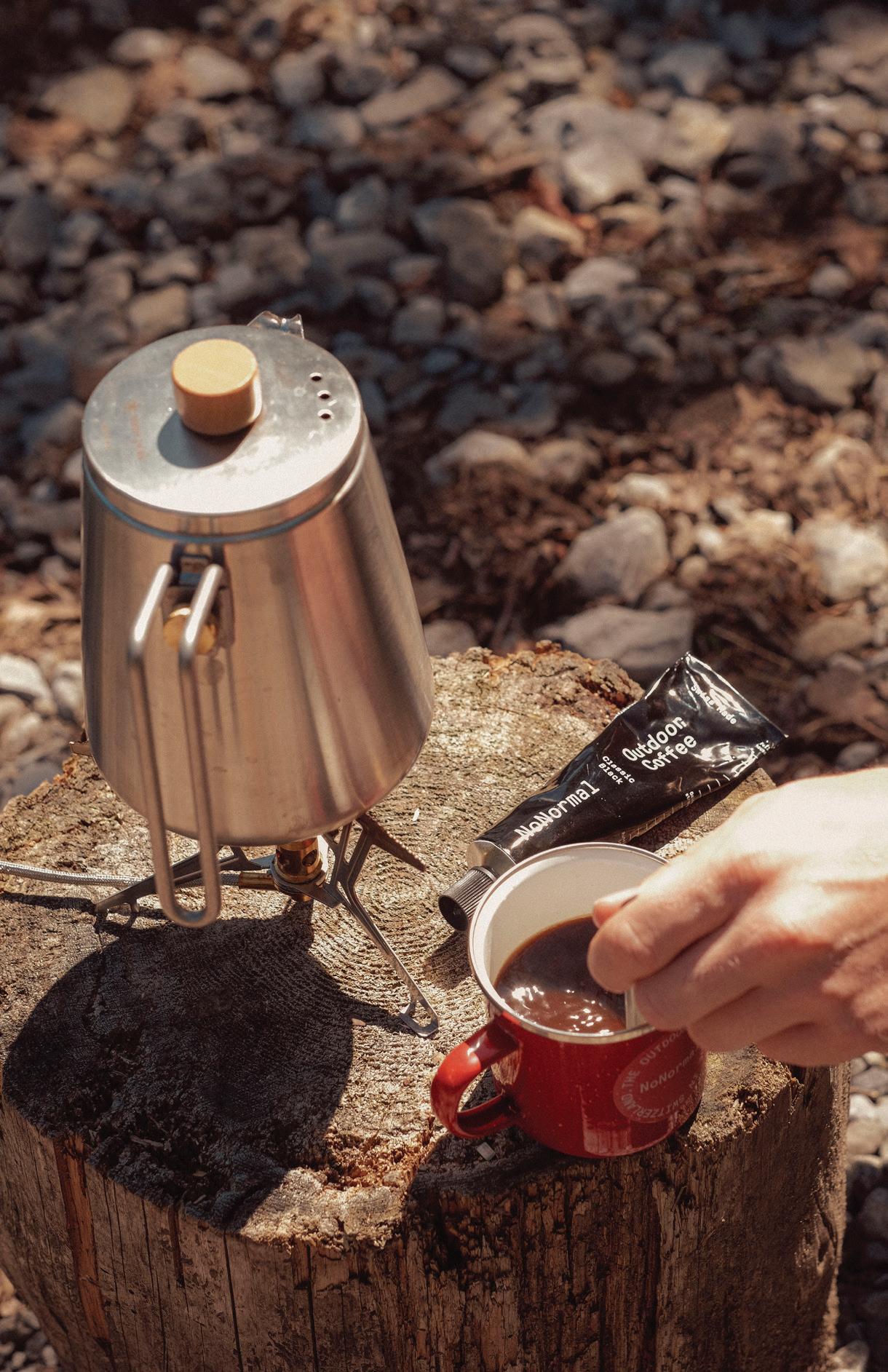
No Normal Coffee is on a mission to change how people experience coffee outdoors.
Founded by lifelong friends
Alexander Häberlin and Philippe Greinacher, the brand was born in Switzerland, inspired by the duo’s countless outdoor adventures where great coffee was hard to come by.
Determined to find a better way, they created a solution that was light, flexible, and uncompromising in quality: coffee in a tube. Designed for convenience, the tube packaging offers lightweight transport and high flexibility, making it ideally suited for any outdoor adventure.
Aluminium tubes are a sustainable, protective, and practical choice for coffee packaging. They safeguard against oxygen,
light, and moisture, keeping coffee fresh without preservatives.
Lightweight and easy to transport, they allow precise dosing and minimal waste. Their sleek, premium appearance also enhances brand appeal, reflecting the quality of the coffee inside.
Compared with traditional instant coffee, No Normal’s paste offers richer flavour, higher concentration, and smoother texture. Its brewing process preserves the natural aroma and complexity of coffee, avoiding the bitterness often associated with instant granules. The result is an elevated experience that merges convenience with craftsmanship.
From hot or iced coffees to creamy milk-based drinks, the paste adapts to every preference. It even doubles as a versatile ingredient and can be spread on toast, mixed into yoghurt, drizzled over desserts, or added to baked goods for a caffeine kick.
A teaspoon of paste equals the caffeine strength of an espresso shot, giving adventurers that essential boost on the go. The tube stays fresh for months without refrigeration, making it ideal for travel and outdoor life.
Each No Normal Coffee tube represents the future of coffee; it fits neatly in your backpack. n


Despite growing pressure from consumers and regulators, most businesses have no easy way to measure or manage their packaging impact.
Phantm was launched to solve this problem by providing businesses with the data they need to take real action to reduce costs, waste, and compliance risk.
Co-founder and CEO Elliot Costello, who previously led social impact ventures at ygap, built the Phantm platform to help companies place less product packaging on the market through innovative technology applications.
Today, Phantm works with leading brands including Amazon, David Jones, Danone, Unilever, and MECCA. In addition to FMCG brands, Phantm serves industries including packaging, food and beverage, and horticulture.
“While major brands with significant product portfolios are key clients, the platform doesn't exclusively cater to large companies; it has supported the needs of start-ups through to multinational organisations,” said Costello.
Businesses face rising non-compliance risks in both Australia and New Zealand, with penalties already being issued in Australia for failing to respond to packaging-specific EPA information requests.
Phantm has been currently working with several forward-thinking businesses in New Zealand who are focused on digitising their complex packaging portfolios. Costello added that this motivation goes beyond simply preparing for an uncertain regulatory future; they see it as an opportunity to get ahead, optimise packaging, and reduce both costs and impact.
With EPR set to come into effect in Australia and New Zealand, companies must start capturing packaging data now, simplify and reduce materials, and ensure their materials data links to sales data.
In the context of shifting regulations and lagging infrastructure, such as Australia’s underperforming recycling systems, Costello said it was clear why even well-intentioned companies struggle to develop and implement sustainable packaging initiatives.
Phantm AI helps companies by initiating
a fast start at mapping a product or portfolio’s complete packaging footprint, from global warming potential to recyclability to compliance risk.
Feedback on the Phantm AI indicates it helps make packaging data usable and fast. It simplifies and accelerates onboarding by turning scattered PDFs, images and spreadsheets into a single, queryable view.
This lowers the on-ramp for Phantm customers to build out a packaging data asset that can be continually used to identify opportunities to reduce packaging costs, reduce waste (items going to landfill), and minimise compliance risks.
According to several clients, the technology and advisory insights have been invaluable in making the case for change across procurement, operations, sustainability, and finance, as well as with senior decision-makers.
Leading social enterprise Thankyou Group emphasised that while they tried to build Phantm’s capabilities in-house, they recognised the need for partners who “live and breathe it 24/7” to assess and accelerate sustainability achievements.
“We rebuild scattered data into a single source of truth, and our materials experts help translate insights into practical, ongoing improvements,” added Costello.
“We help businesses see not just the environmental benefits, but the commercial case for change, showing that, in most cases, the most sustainable choice is also the most prudent one.”
Although still in the early days, generative AI is poised to fundamentally reshape the packaging industry in ways that mirror past technological revolutions.
For packaging specifically, Costello said innovation and R&D will be key drivers for growth, especially given the global focus on sustainability and transition to green materials.
Gen AI can boost R&D productivity by helping companies generate new ideas through intellectual property and

patent analytics, providing customer analysis, generating customisation options, accelerating the idea-to-visualisation process, and streamlining field-testing feedback.
At Phantm, the team has seen this transformation firsthand. Just as accounting software revolutionised business operations by making financial data usable and visible, AI has done the same for packaging data. It enables scaling packaging data capture and compiles it quickly, making it visible and meaningful across departments. This prompts conversations about efficiency and impact, as stakeholders can back up their assertions with data and clear metrics.
However, Costello mentioned that AI outputs are only as good as their input. Organisations need a solid foundation of packaging data to ensure accuracy, which is why human validation remains central to

our approach and will be for some time yet.

Elliot Costello Co-founder Phantm
As regulations strengthen and shift towards EPR, early movers who adopt digital packaging intelligence will benefit significantly before regulation drives wider adoption. Phantm wants to be the platform of record for packaging intelligence worldwide, with sustainability embedded in everyday business decisions, not bolted on as an afterthought.
The recent launch of Phantm AI’s imagebased technology that converts packaging visuals into structured data is a leap forward in connecting packaging, data and sustainability to help companies move beyond compliance toward proactive, costeffective impact reduction.
Costello said that the mission is to prevent thousands of tonnes of unnecessary packaging by shifting millions of units
from landfill-bound materials to circular alternatives. After servicing the AsiaPacific region, our primary focus is on deploying the technology in Europe and North America, particularly in regions with significant plastic consumption but limited recycling infrastructure.
With EPRs rolling out worldwide, Phantm is positioning itself to help businesses prepare for regulatory shifts and drive leadership-driven systems change toward a more innovative, more circular materials economy. n


Over the past two decades, New Zealand has emerged as one of the most advanced wine markets in the world in terms of closure technology. Today, around 90 percent of all wines produced in the country are sealed with aluminium screwcaps, a figure that reflects both technical maturity and widespread consumer acceptance.
This shift has been driven not only by the functional benefits of screwcaps but also by the country’s strong export orientation. In 2024, wine exports exceeded NZD 2 billion, confirming the sector’s role as a major contributor to the national economy and highlighting the importance of consistent quality, brand integrity and compliance with international standards.
While overall alcohol consumption per capita in New Zealand has been gradually declining in line with the global trend towards mindful drinking, the wine industry has responded by focusing further on premiumization and sustainability. Producers are investing in lighter bottles to reduce environmental impact, adopting sustainability certifications, and selecting packaging components that combine technical reliability with a reduced ecological footprint. In this context, aluminium closures have gained a reputation not only for their ability to preserve wine quality but also for their recyclability and absence of cork taint risks. Research from the Aluminium Closures Group suggests that consumers increasingly associate screwcaps with both quality and environmental responsibility, reinforcing their role in the premium wine segment.
Within this evolving landscape, Guala Closures has developed the Above Wine range, a portfolio of aluminium screwcaps
designed specifically for the needs of quality-driven wine producers. The range brings together technical precision, aesthetic versatility and environmental consideration. Each closure is engineered to deliver controlled oxygen transmission, ensuring that the wine’s aromatic profile and structural balance are maintained over time. The designs allow for a high degree of visual customisation, enabling producers to align packaging with brand identity without compromising performance. Sustainability is embedded in the manufacturing process through the use of recycled aluminium and formats that facilitate separation from the bottle for efficient recycling. At the same time, the closures are fully compatible with existing bottling lines, allowing wineries to adopt them without significant operational changes. For those seeking to integrate digital engagement or traceability, NFC and QR code technologies can be incorporated discreetly into the design.
The Above Wine range includes different formats, each with distinct characteristics. Divinum offers a versatile and elegant solution suitable for a wide variety of wine styles. Wak combines the familiar silhouette of a traditional wine bottle with the technical advantages of a screwcap, providing an uninterrupted surface that lends itself to extensive decoration. Savin Premium employs a patented invisible thread, creating a smooth, modern
appearance and a larger printable area, making it particularly suited to brands seeking a refined and contemporary presentation.
A notable example of the range’s application can be found in the collaboration between Guala Closures and Cloudy Bay Vineyards, one of New Zealand’s most recognised wine producers. For Cloudy Bay, the choice of closure was not solely a technical decision but also a strategic one, aimed at ensuring that the packaging reflected the same attention to detail as the wine itself, focusing on the quality and reliability of the closures, and on the closeness of Guala Closures to the market, also thanks to a local production plant in Auckland.
The experience of Cloudy Bay illustrates a broader shift in the industry: closures are no longer a purely functional component but an integral part of the overall product and brand strategy. In a market where quality, sustainability and brand differentiation are closely intertwined, the choice of closure can influence not only the preservation of the wine but also the perception of the brand in competitive export markets. Aluminium screwcaps and ranges such as Above Wine have established themselves as a credible and forward-looking solution, aligning with both the technical demands of winemaking and the evolving expectations of consumers. n

Running from the 26th to the 30th of January 2026, Gulfood enters a new era as the first and biggest sourcing and innovation event of the year.
With over 8,500 exhibitors, more than 1.5 million products, and participation from 195 countries, the 31st edition transforms Dubai into the global headquarters of food trade.
No other platform offers this level of access, influence and immediate sourcing power, making Gulfood 2026 the definitive marketplace for buyers looking to build a full year of product pipelines in just five days.
This year also marks a major milestone for New Zealand, with key exhibitors including Taylor Preston, Green Farm Group, Milkio Foods Limited, Open Country Dairy Ltd, and Springbank Honey. Their presence reinforces New Zealand’s global footprint and its strategic alignment with Dubai’s rapidly expanding sourcing landscape.
For the first time ever, Gulfood will span two mega venues: Dubai World Trade Centre and the legacy Dubai Exhibition Centre at Expo City Dubai. This monumental expansion delivers 100 percent more floor space, a seamless connection between venues, and an elevated visitor experience designed around comfort, efficiency, and discovery.
As global sourcing faces rising tariffs, shifting regulations, and tightening food security standards, Gulfood’s expanded scale offers the most future-proof platform for buyers seeking reliability, diversity, and speed to market.
Across both venues, visitors will explore 12 sector-focused halls and an expanded
universe of new verticals, including Fresh Produce, Startups, Logistics and Grocery Trade, each engineered to meet the urgent sourcing needs of retailers, importers, distributors and manufacturers worldwide.
From essential staples and pantry goods to next-generation packaging, cold-chain solutions and disruptive foodtech, Gulfood offers unparalleled visibility into what’s shaping global supply chains.
Expo City Dubai will host the Gulfood World Economy Summit, an exclusive convening of global CEOs, ministers and policymakers shaping the future of international food systems.
Meanwhile, the Future Food 500 at Dubai World Trade Centre will spotlight cutting-edge innovation from startups and digital pioneers redefining how the world produces, moves and consumes food.
The Gulfood NXT Stage and Startup Investor Lounge will power the industry’s next wave of unicorns by connecting entrepreneurs with investors, corporate leaders, and global talent.
For established F&B brands and newto-market disruptors, Gulfood provides unmatched access to a diversified global community of decision-makers ready to discover, negotiate and scale. n



Serving as the first major gathering on the global F&B calendar, Gulfood 2026 brings together the full breadth of the international food ecosystem, including manufacturers, suppliers, retailers, distributors, innovators, and policymakers from 195 countries.
The 2026 edition is the most ambitious in Gulfood’s history, expanding across two mega venues and featuring 8,500+ exhibitors and more than 1.5 million products.
This is a defining moment in the UAE–India trade relationship under the Comprehensive Economic Partnership Agreement (CEPA).
Since CEPA’s signing, food and agri-trade between the two nations has surged, laying the foundation for deeper collaboration and faster market access.
With India’s food market on track to reach USD 400 billion by 2027, powered by innovation, digital transformation and the rise of premium products, Gulfood stands at the very forefront of these global shifts, witnessing new trends emerge first-hand.
For industry buyers, distributors and manufacturers, this partnership opens a gateway to one of the fastest-growing
food economies in the world. India’s participation brings over 600 exhibiting companies across key sectors, including grains, pulses, dairy, beverages, meat, poultry, world foods and more.
Proudly supported by major government organisations such as APEDA, MPEDA, CEPCI, the Tea Board of India, and the Spices Board of India, this unified showcase will present India’s vast sourcing capabilities and its growing role as a global food supplier.
Visit Gulfood and discover the India Pavilion, which will be a focal point for sourcing, networking and investment, representing the scale, ambition and resilience driving UAE-India’s rise as a leader in global food trade.
Gulfood 2026 will be taking place from the 26th to the 30th of January 2026 across the Dubai World Trade Centre and the Dubai Exhibition Centre at Dubai Expo City. n
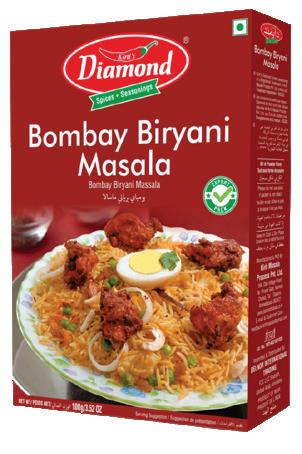


Kirti Masala Process Pvt. Ltd. is the manufacturer, supplier, and exporter of whole spices, blended spices, easy-to-cook masalas, seasonings and papad since 1986. The brand is expanding its wings in the international market and inviting businesses to collaborate as distributors or those interested in Private Label Manufacturing.
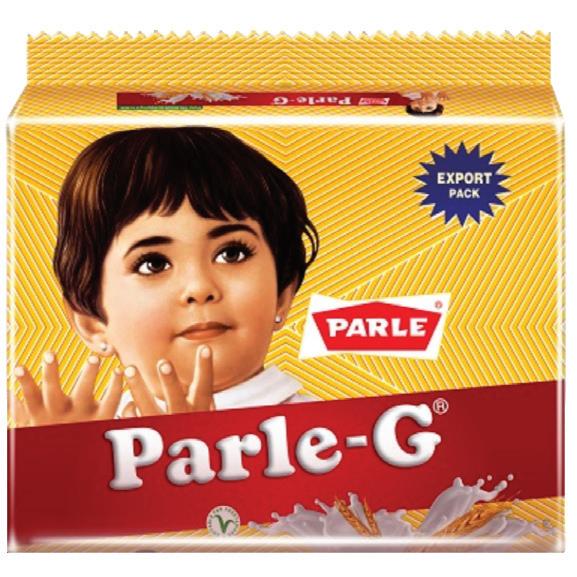
Parle, a company started in 1929 with a simple intent to spread cheer among people with its lip-smacking range of biscuits and confectionery, has now transformed into a two-billion-dollar company and boasts a 40 percent share in the Indian biscuits industry and 17 percent of the Indian confectionery industry.

Organic Tattva believes in sustainable agriculture, fairness to farmers, highest quality of foods and assurance of purity. Its products are 100 percent certified organic and tested for over 250 pesticide residues, and its products and factory are certified organic under the USDA, EU, and Indian organic standards.

Mother’s Recipe is a well-known Indian ethnic foods brand with a national presence in India and in more than 50 countries worldwide. Its Product basket includes Indian Pickles, Chutneys, Condiment Paste, Papadams, Cooking Pastes, Curry Powder, Ready-to-Eat, & offering both consumer and food Service packs.

"BIKAJI", the second-largest and fastest-growing ethnic snack company, is known for its authentic Indian taste and exports its products to more than 50 countries. It has a wide selection of delicious namkeens and snacks, as well as a vast array of frozen products like sweets, snacks, curries, breads, South Indian dishes, etc.


Established in 1892, Wagh Bakri Tea Group has cultivated over a century of extraordinary loyalty, becoming one of India's top three tea companies and the largest in the private sector. Its celebrated brands are household names across India and in more than 60 countries globally.
CavinKare is a leading Indian FMCG company with a growing global footprint across 40 countries. It offers a vibrant range of Dairy, Foods, & Beverages products under brands like Cavin’s, Maa, Ruchi, Garden, and Friva. Its product portfolio includes Milkshakes, Ghee, UHT Milk, Cooking/RTE Pastes, Pickles, and Ethnic snacks.

Sahyadri Farms is India’s largest fully integrated horticulture company, empowering over 26,500 farmers across 40,300 acres. With cutting-edge processing, digitalised farms, and a focus on sustainability, it leads in grape exports and in the processing of tomatoes, sweet corn, citrus, and pomegranate peel, delivering traceable, high-quality produce to global consumers.
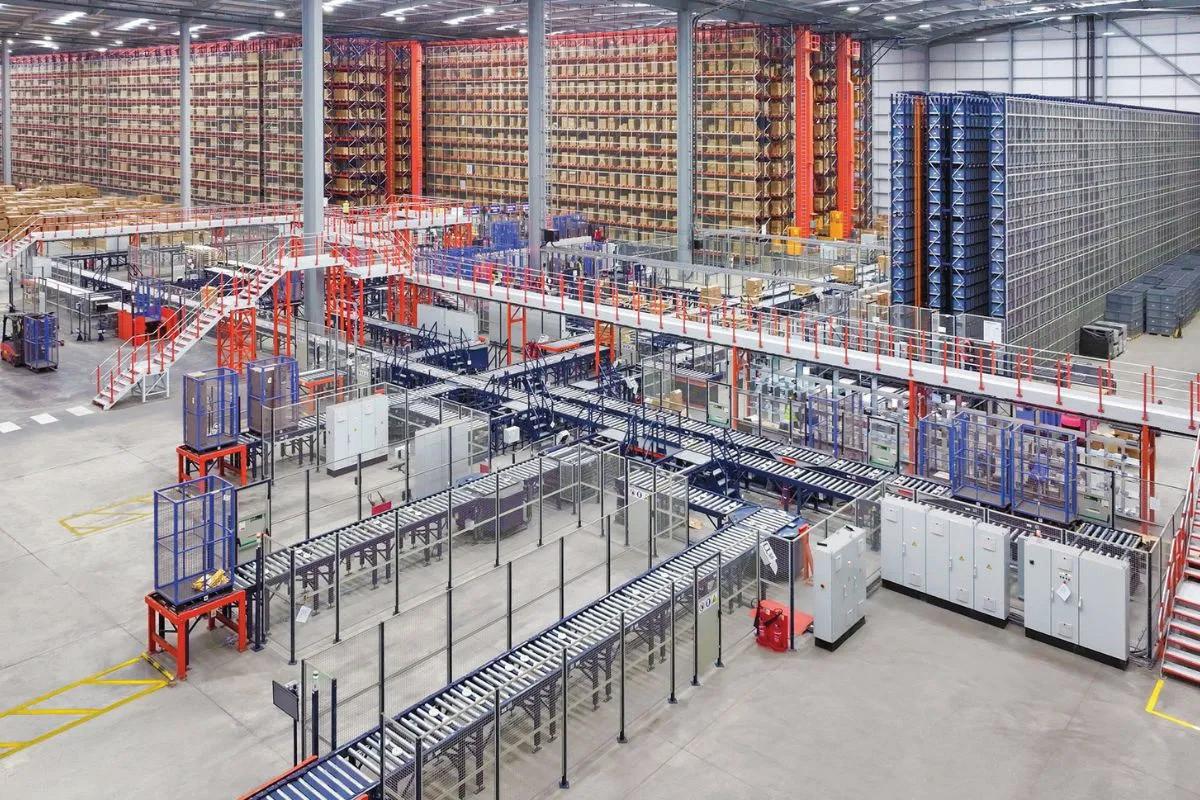
Mecalux and MIT’s Intelligent Logistics Systems Lab confirms what many in the sector suspected, but few had quantified.

Co-Chair Nic Cola said that under de Silva’s leadership, CHOICE has continued to make a strong impact for Australian consumers.


Woolworths has made its
M&S has launched a new list of 500 target locations it is considering for new and renewed

PepsiCo has announced a landmark global partnership with Mercedes-AMG PETRONAS F1 Team beginning in 2026.
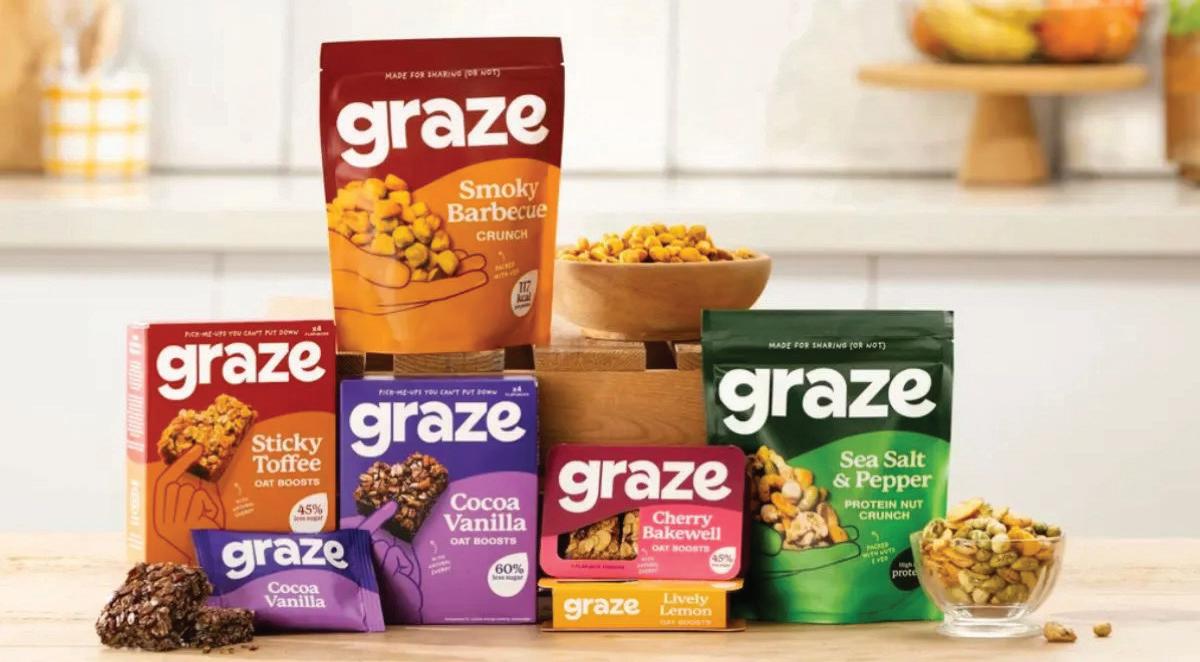
Unilever has announced that it has signed an agreement to sell the Graze business to Katjes International.

Attorney David Chiu announced a first-ofits-kind lawsuit against some of the largest manufacturers of ultra-processed foods.
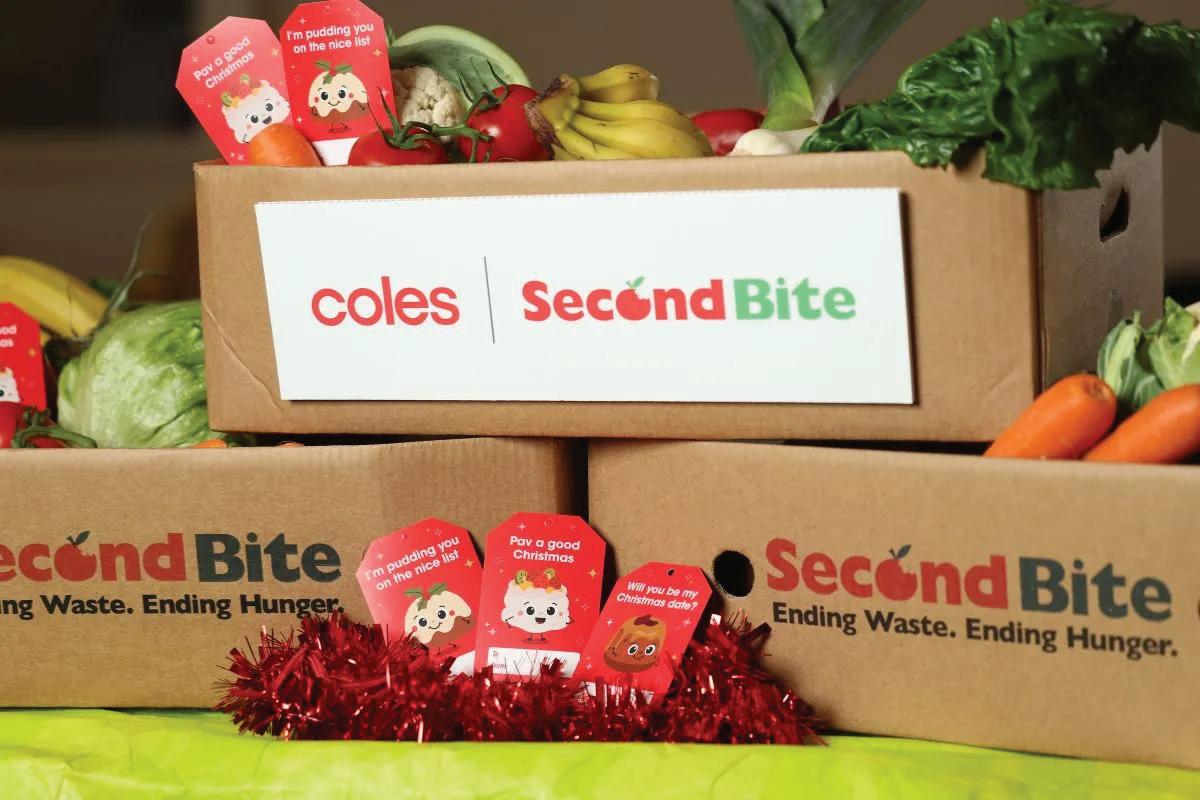
Coles’ annual Christmas Appeal for SecondBite kicked off as new research revealed the growing pressures on household budgets this holiday season.

KitKat
Crisp wafers coated in sweet peppermintflavored creme with crunchy red candy pieces for a delicious seasonal flavor.
Seasonal KIT KAT® flavors are a fan favorite, and this new addition to the holiday lineup brings a festive flavor to get people into the spirit of the season.
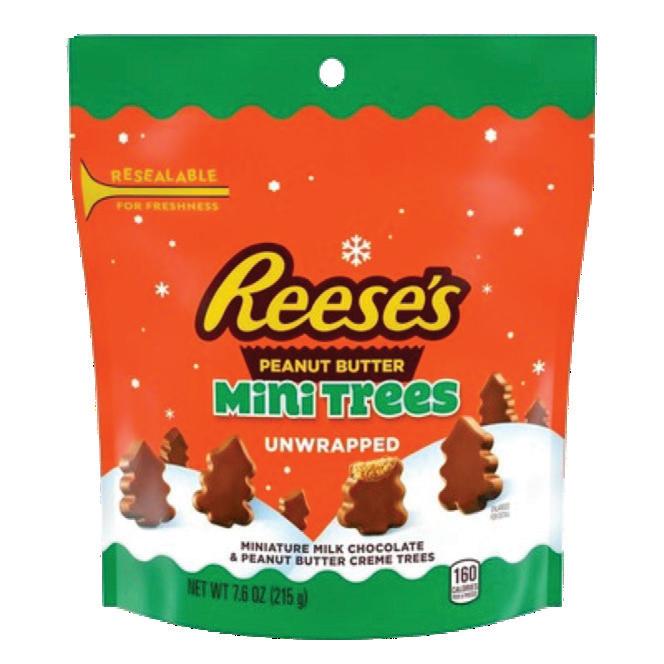
Reese's
Bite-sized, mini tree-shaped treats that combine smooth milk chocolate with classic Reese's peanut butter.
These fan-favorite miniatures are perfect for a poppable treat or a surprise stocking stuffer this holiday season!

Hershey's
The new take on the iconic Hershey's Kisses is Snickerdoodle flavored white creme with crunchy cookie pieces and wrapped in seasonal foils.
Hershey's Kisses Snickerdoodle Cookie Candy will elevate holiday baking and candy dishes with an unexpected mix of nostalgia and excitement.

Hershey's
Classic Hershey's milk chocolate, wrapped in three unique designs featuring the Grinch, Max the Dog, and Cindy-Lou Who.r.
Instills a bit of Who-ville whimsy to your holidays with three classic characters for extra festive fun this season.
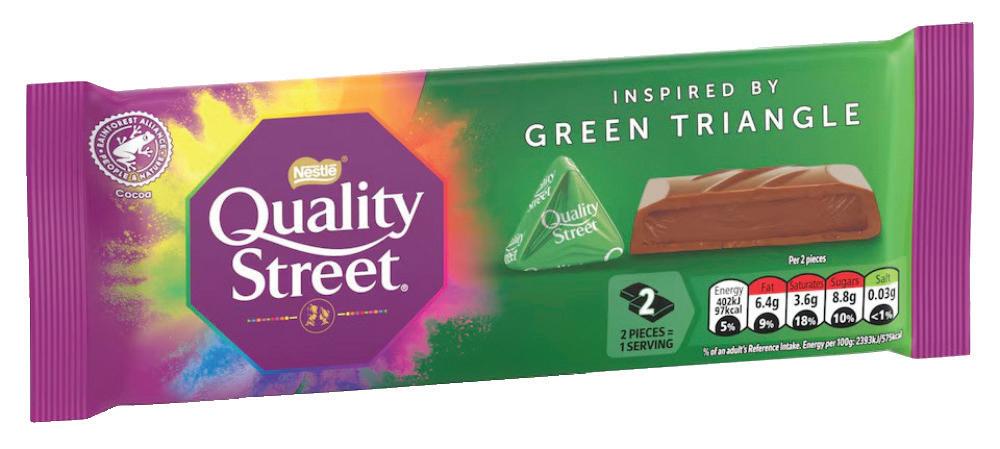
Quality Street
Quality Street will also launch a new Green Triangleinspired sharing bar, featuring a hazelnut flavour filling, as well as Quality Street’s first-of-its-kind paper tub, which returns to selected Tesco stores this Christmas. This is another step on Nestlé’s journey to reduce the use of virgin plastic. The paper tub, which comes in the signature Quality Street purple, features a luxurious design and feel, and is embellished with gold foil.

Morrisons
Morrisons has recently launched its 2025 Christmas sandwich range for those eager to dive into the festive spirit.
Once a casual meal of leftovers, the Christmas sandwich has now become one of the most hotly anticipated festive products of the season, and Morrisons' range won’t disappoint.
This year’s line-up features a merry mix of brand-new creations, improved favourites, and returning classics, making it easier than ever to enjoy a taste of Christmas on the go.

Mars
Mars is ringing in the holidays with a delicious collection of seasonal treats from M&M’S, TWIX, SNICKERS, SKITTLES and LIFE SAVERS.
From festive movie nights with family and friends to holiday baking with loved ones, these fan favourites have been crafted to bring joy to every holiday moment.

Aldi
Christmas has arrived early at Aldi with a range of mince pies available in stores this month.
The Christmas countdown has officially begun as supermarket Aldi has announced the first selection of its highly anticipated mince pie range will return to stores from 21st September for as little as 22p per pie.
To kickstart the festive season, and headlining the award-winning range, is a new Pistachio & Whisky flavour, perfect for those who have gone nuts for the flavour of the year.

Whole Foods Market opened a new 43,000-squarefoot store located in Parker, Colorado. The Parker store’s product assortment includes more than 700 locally sourced items from Colorado, each meeting Whole Foods Market’s rigorous quality standards.
“As a Parker resident myself, I’m thrilled to help open the first Whole Foods Market location in this wonderful community,” said Karen Breault, Store Team Leader at Whole Foods Market.
“This store brings together high-quality ingredients, trusted sourcing and a deep connection to local producers. We’re looking forward to becoming part of the everyday rhythm of the Parker community.”
Opening morning, customers enjoyed complimentary juice from Big B’s Fruit Company, herbal coffee alternatives from Rasa, and sweet bread bites from Outrageous Baking. The first 300 shoppers in line received a limited-edition tote bag and a Secret Saver coupon offering savings of up to USD 100. The store also hosted an afternoon roadshow featuring cake samples from The Sweet Petite.
Additionally, on opening morning, Whole Foods Market provided an all-electric
refrigerated van and donated food to Help & Hope Centre, which makes regular surplusfood pickups from local Whole Foods Market stores to help prevent food waste and serve the surrounding community.
Both donations are part of Whole Foods Market’s Nourishing Our Neighbourhoods program, which aims to enhance local food rescue organisations' ability to transport surplus food to areas facing the greatest need.
Features of the new Parker store include an array of certified organic, conventional and Sourced for Good Local options, including carving pumpkins from Hirakata Farms, hard squash from Golden West Farms and organic Honeycrisp apples from Rogers Mesa Fruit Co.
It also has a speciality department dedicated to celebrating cheesemakers and artisan producers. Local items include fresh pasta varieties from Pappardelle’s Pasta, dips from Blue Moose of Boulder and crackers from 34 Degrees. The cheese counter is
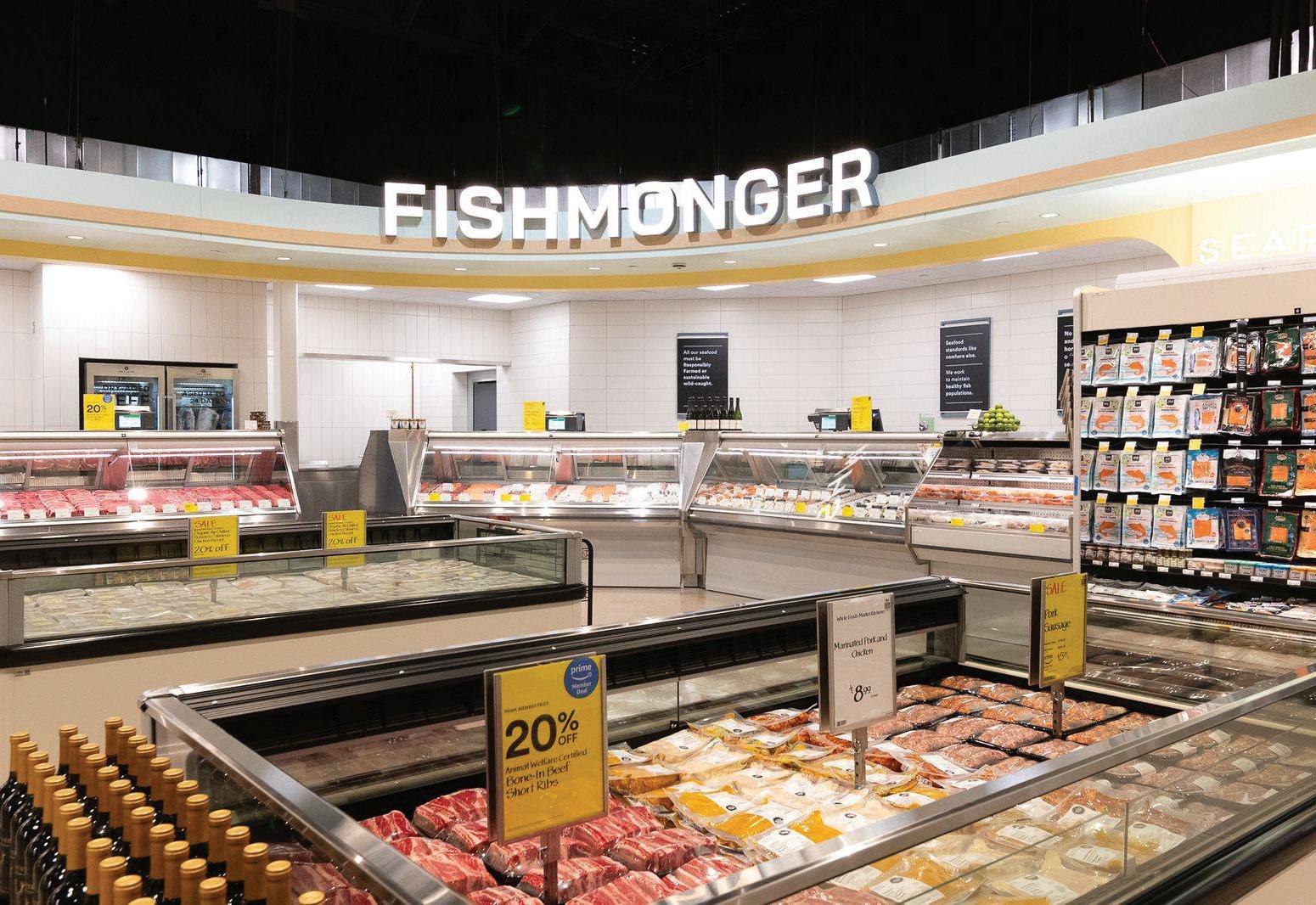

overseen by trained cheesemongers who can offer recommendations for any occasion and create custom boards.
The store offers an extensive selection of more than 250 craft beers and 630 wines. Local options include Perfect Drift Pilsner from 4 Noses Brewing Company, Juicy Bits IPA from WeldWerks Brewing Co., and In the Steep Hazy IPA from Outer Range Brewing Co.
The Prepared Foods department features a rotating hot bar, pizza, rotisserie chicken, local items from Overt and sushi from Kikka Sushi, while the bakery department offers fresh-baked bread as well as everyday favourites, such as Whole Foods Market’s Berry Chantilly Cake and brown butter cookies.
Whole Foods Market provided an all-electric refrigerated van and donated food to Help & Hope Centre, which makes regular surplusfood pickups from local Whole Foods Market stores to help prevent food waste and serve the surrounding community.
The curated grocery department is filled with exclusive brand favourites and local products, including Zucca pasta from Pastificio Boulder, hot sauce from Green Belly Foods and chai concentrate from Sherpa Chai.
There is also a full-service seafood counter featuring in-house-prepared, seasoned and marinated seafood and fresh oysters. Local options include cold-smoked salmon from Villa Tatra. All offerings are either sustainable wild-caught or Responsibly Farmed.
At the same time, the full-service meat counter has butchers available to cut steaks and poultry to order. Features include seasoned, marinated meat and in-house-made sausages. Local options include sugar-free pork bacon from Niman Ranch, grass-fed beef hotdogs from Teton Waters Ranch and ground bison from Great Range Bison.
The department also carries a wide variety of special diet items. Local offerings include gluten-free Berry Chantilly Cake from The Sweet Petite, whoopie pies from Cakeheads Bakery and gluten-free cheesecakes from Pie in the Sky.
The Wellness & Beauty section features more than 70 local products. Local products include bulk soap from the Spinster Sisters Co., hydration everyday drink mix from Skratch Labs and Relax gummy vitamins from SAM+LEO.
Whole Foods Market also awarded Denverbased supplier SAM+LEO a low-interest loan through the Whole Foods Market Lending Program to support its initial launch in 30+ Whole Foods Market locations.
Through the program, Whole Foods Market lends money to small-scale, local or emerging producers to help them grow their businesses. To date, the retailer has provided 430 loans, totalling roughly USD 39 million in capital to recipients. n
