









‘Greta’
‘Greta’
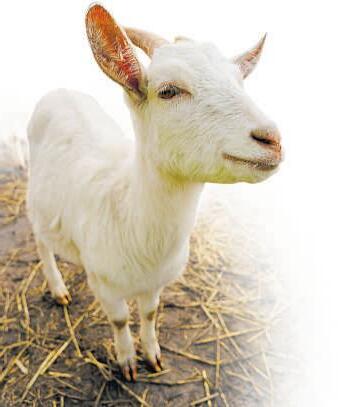
“Beautiful udders,” The Hat would tell Greta the goat – all the while stroking those long, floppy ears and gently pulling at her wispy nanny beard.
But this 14-year-old greenhorn from the suburbs couldn’t figure out anything “beautiful” about a goat ’ s udder They only reminded me of an upside-down set of bagpipes. Functional? Maybe. Beautiful? Not!
Besides, I could see Greta had just one udder, not a whole battery of udders as The Hat was suggesting So I questioned him: “I think the entire structure is just one udder So ‘beautiful udder,’ not udders –singular, not plural, perhaps?”
The Hat snickered – like Greta when he rubbed her ears. But hers was a joyful snicker The Hat’s was an irritated one. He refused to have his day messed up by some upstart city kid offering an anatomy lesson on goats and mammary glands.
beyond her near 360-degree vision.
“Well, I can only see one udder I can ’ t see an-udder one, ” I laughed The Hat didn’t. What couldn’t be argued was The Hat’s regard for this goat. He had chosen her above everyone and everything He would yell expletives and abuse at his dogs as they worked tirelessly to please him. But a goat, which sat about ruminating all day and contributing nothing, won his heart.
His sheep, cattle, and pigs would all be trucked off to the works to become sausages and chops They were just stock units But he purred over Greta Greta had status and would never end up a Rogan Josh
A goat, The Hat explained to me, is a wonderful companion—intelligent, social, and entertaining. But what was in it for the goat? For one, The Hat had chosen her a special paddock, one with a massive macrocarpa tree stump she could climb to satisfy her innate need to stand high and gaze over her small but secure world
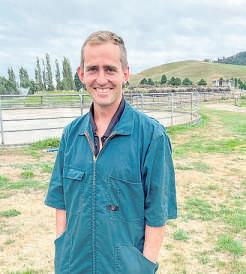
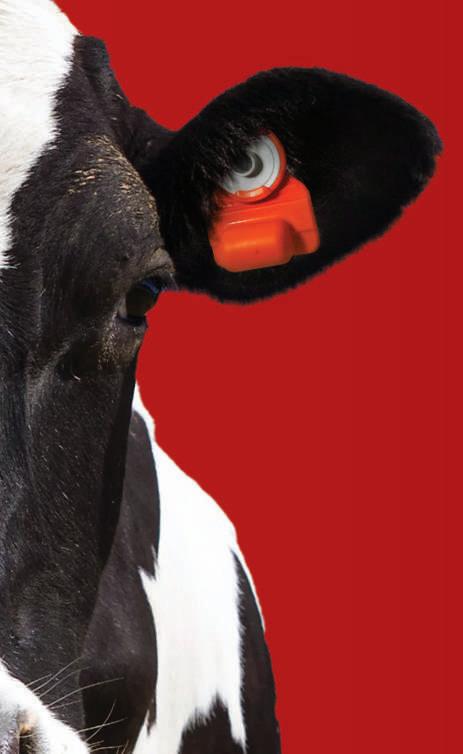
Daniel Bradbury runs a 600-cow dairy farm in e Awamutu and has been using the smaXtec system for two years The bolus sits in the cow’s reticulum and delivers precise insights from inside the animal without being affected by weather, mud, or external factors like traditional sensors It measures internal body temperature with unmatched accuracy (±0 01°C), tracks water intake and drinking cycles, monitors rumination based
“Boy,” he said knowingly, “it’s udders. Plural Because it’s two separate parts, two separate glands, h ith its own w! The Hat urely headd me with goat gem. I d trivia. eta just d there her dopey, t stare. She know or he had r even seen udder – or ers – which safely n and just
eac wit teat ” Wow had su butte that g like Gre stoo with vacan didn’t k care S neve her u udde were aster
Then one day, The Hat attached the bucket to his tractor and spent a couple of valuable farm hours building a mound – another viewing platform for Greta. Don’t know how that contributed to the bottom line or GDP
And he would pet, pat, and ply her with platitudes Never his wife and kids, though – just Greta. Was the family bitter about it? It deserved to be, because when The Hat swung by Greta’s paddock, she would come running and bleating. She returned the love.
I was disappointed to learn that goats eating anything, like tin cans, is a myth.
“Stupid boy,” said The Hat.
And when I made the profound zoological observation that Greta “chewed sideways” – she ground her food, unlike humans who bite up and down – The Hat nodded in disbelief, re-lit the stub of his cigarette, and wandered off to be anywhere rather than with, or near, me.
on reticulum contractions, and captures overall activity
This reliable, real-time data means Daniel can spot potential health issues long before anything is visible Alerts come straight through to his phone or computer, giving him the chance to step in early and keep his cows on track
Since introducing smaXtec, Daniel has seen major improvements in his transition cow management “The ability to track rumination post calving and receive temperature alerts for early signs of milk fever has been invaluable,” he explains With smaXtec, he can
now intervene before cows even go down. The calving alert has also proven its worth Thanks to the system, Daniel was able to save both a cow and her calf: “One of the standout features is the calving alert, which was also a great help when one of our cows calved a month early at grazing,” he says During the dry cow period, smaXtec has helped Daniel manage his herd even more effectively As he puts it: “Using the data over the dry cow period meant that we could better manage our feeding to really set the cows up for calving and for the season. Overall, the smaXtec bolus has been a game-changer for our
farm, offering peace of mind and enabling more proactive, efficient care.”
Keen to learn more?
Head to our website at www smaxtec com/en/new-zealand/ for more info, or get in touch with Nick Heffer, Sales Manager for the Upper North Island. You can reach him at nick.heffer@smaxtec com or give him a call on 021 741 022 he’s always happy to have a chat

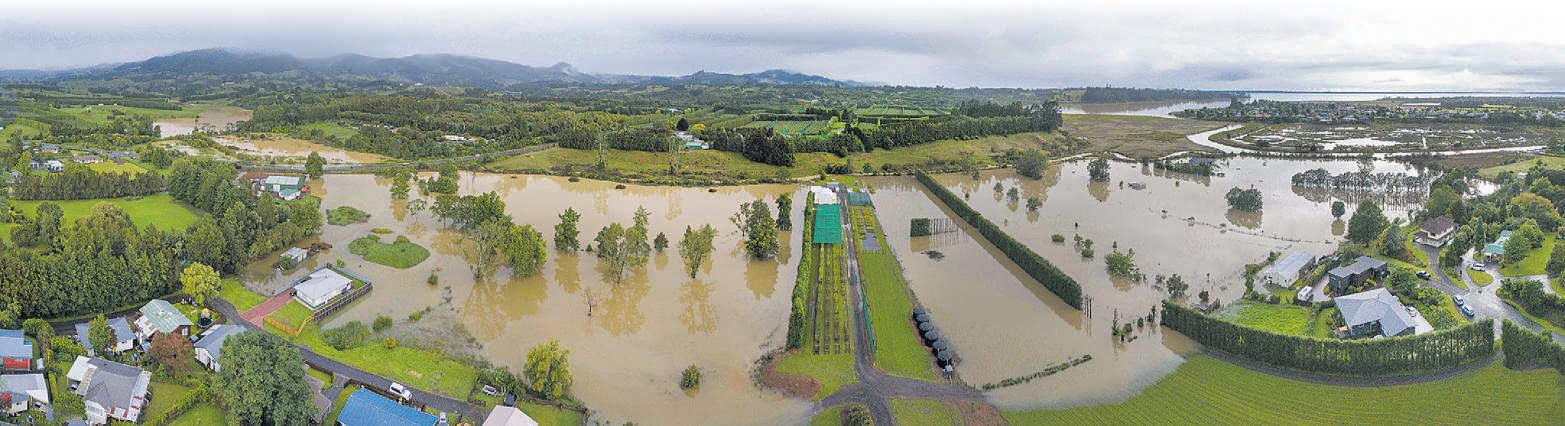
Financial assistance has been made available for farmers and growers hit by the recent storms, with an additional $200,000 for Rural Support Trusts to support recovery efforts
“Significant rainfall, flooding, slips, and hailstorms have caused damage to farms, crops, and rural infrastructure,” Agriculture Minister Todd McClay says.
“The Government will provide an additional $200,000 to Rural Support Trusts to further assist recovery efforts.”
At the time of the announcement on January 28, Todd said the full extent of the damage was still being assessed; but funding was being made available in Northland, Coromandel, Bay of Plenty, and Tairāwhiti.
He says Ministry for Primary Industries (MPI) staff have been on the ground working closely with sector groups and the Trusts to identify where support is most needed.
“The Trusts play an important role in supporting farmers and growers facing personal, financial, and weather-related challenges,” Rural Communities Minister Mark Patterson says Additional funding
This funding is in addition to the $2.5 million announced on January 27 by Prime Minister Christopher Luxon to support affected regions through Mayoral Relief Funds and to reimburse marae that provided welfare services in response to the event.
Farmers and growers needing assistance are encouraged to contact the Rural Support Trust on 0800 787 254.
Meanwhile, work continues to restore and strengthen transport links across the North Island following severe storms and flooding that caused widespread damage to state highways and local roads, Transport Minister Chris Bishop says. Transport infrastructure across the North Island was hit hard by intense rainfall and flooding which caused widespread damage, triggered slips and
forced the temporary closure of key state highways.
“In Northland and Waikato, all state highways are now open, with clean-up and traffic management continuing in some areas.
“The rail line that connects Hamilton to Tauranga and the Bay of Plenty (East Coast Main Trunk line) was initially closed due to slips and land underneath the tracks being washed away KiwiRail’s teams worked quickly to reopen the line to Tauranga’s port within a day, so that rail freight could keep moving ”
Chris says the line south of Tauranga reopened in the last week of January following the rebuild of a 50-metre section of track that had been washed away, meaning the main trunk line is now fully open again.
In the Bay of Plenty, work continues on SH2 through the Waioeka Gorge, where around 40 slips have occurred across the route.
Next steps in recovery
Chris says following the storm, crews have continued clearing slips, repairing damaged road surfaces, stabilising hillsides and closely monitoring sites that remain at risk as the ground dries out.








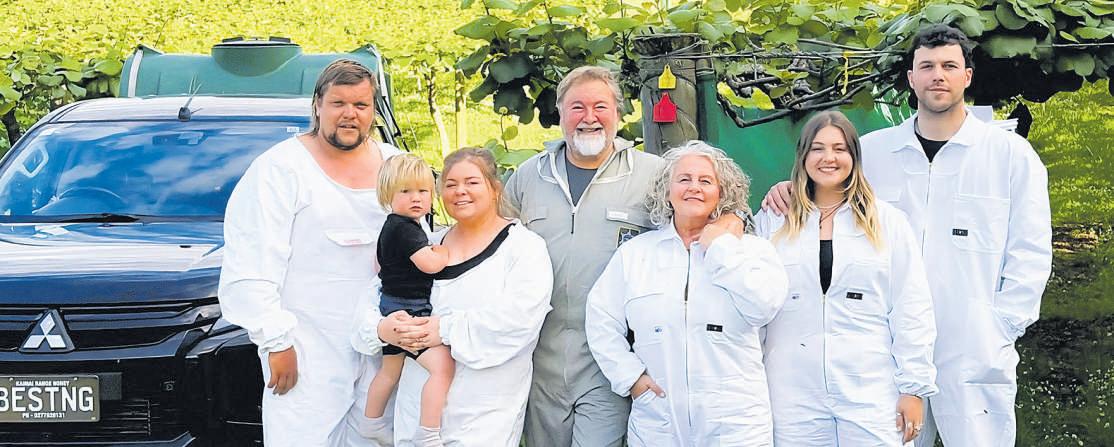
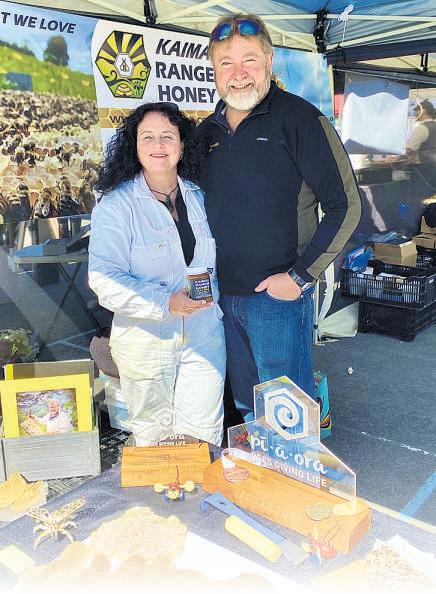
Following 29 years of beekeeping and consistently producing award winning honey, Jody and Ralph Mitchell of Kaimai Range Honey are slowly handing the day-to-day business of beekeeping to their daughters and partners so they can concentrate on “passion projects” within the New Zealand and global bee industry
Ralph Mitchell met his future wife in 1989 on the first day of his International Agricultural Exchange Association (IAEA) exchange to New Zealand, where she was supervising new students at his orientation seminar Jody Mitchell had previously done the IAEA exchange to Norway The dairy farming boy from Cornwall, UK and the sheep and beef farmer girl from Kaimai, New



Zealand went for an overseas adventure of their own after Ralph’s exchange finished in New Zealand
“We worked in Canada and travelled the USA before moving back to Cornwall to work on Ralph’s family farm We returned to New Zealand in 1994 as we knew this was the place we wanted to have and raise our children,” Jody says.
The couple went contract milking with a goal of working up the dairy farming ladder to farm ownership
“When our eldest daughter Tamara was five months old, Ralph was involved in a head-on collision with a truck on SH29. He had multiple horrific internal and external injuries and a stint on life




support, fortunately surviving a terrifying flatline incident.”
The young family moved back to Jody’s family land in the Kaimai Range for Ralph to recuperate over the next two years, before starting a new career as a beekeeper nearby, and welcoming another daughter, Zoe.
“By 2006, we realised if we were going to work this hard beekeeping for others, we may as well do it for ourselves. Our goal was just to replace Ralph’s basic wage and see more of him. We started on our own providing local pollination services, often with our girls curled up asleep in
the back of the ute as we worked into the night.”
Their first award was the 2009 Quintessential Honey of New Zealand and they have featured in the top three industry award winners every year they have entered, with tawari and rewarewa being their star honeys.
Jody trained in sensory analysis in Italy and New Zealand, becoming a judge of honey herself nationally and internationally
The couple built up from 300 hives to 2000 but decided to consolidate during Covid-19.

They keep 1000 hives now and the whole enterprise is managed within the family Their daughters’ partners, Dan Hammond and Tyler Thomas, work fulltime with the family bees Tamara and Zoe work part-time, and Jody jobshares between bees, paperwork and grandchild duties, with Ralph.
Phasing the kids into the business is important so Ralph and Jody plan to just run a few hundred extra peripheral hives on their own, then help as needed at crucial times.
“That’s our dream of semi-retirement,” Ralph says.
Jody says the kids have done a fabulous job through the spring and preparing the 1000 hives for kiwifruit pollination In 19 years of never failing a hive audit, they’re relieved they upheld this standard with a 10/10 audit score.
“After orchard pollination, the hives come back into the Kaimai Ranges [sic] for a boost of the bush honeys before we move them to our 1200-hectare spray-free property in Taranaki for five months. Four hundred hectares is native bush and rewarewa honey and 400 hectares for our mānuka honey,” Ralph says
“After harvesting summer honey, our bees build up their own honey stores, before we bring them home for winter.”
Giving back to the bee community
The couple believe it is crucial to protect the health of New Zealand bees and feel that American Foulbrood (AFB) could be eradicated if everyone took it seriously. Jody is now on the board of the not-for-profit organisation New Zealand Bee Health and Biosecurity (NZBB), a cause she is passionate about.
Apimondia is a global organisation established



to bring together beekeepers, apicultural scientists, apitherapy, pollination, innovation and development through biennially conferences.
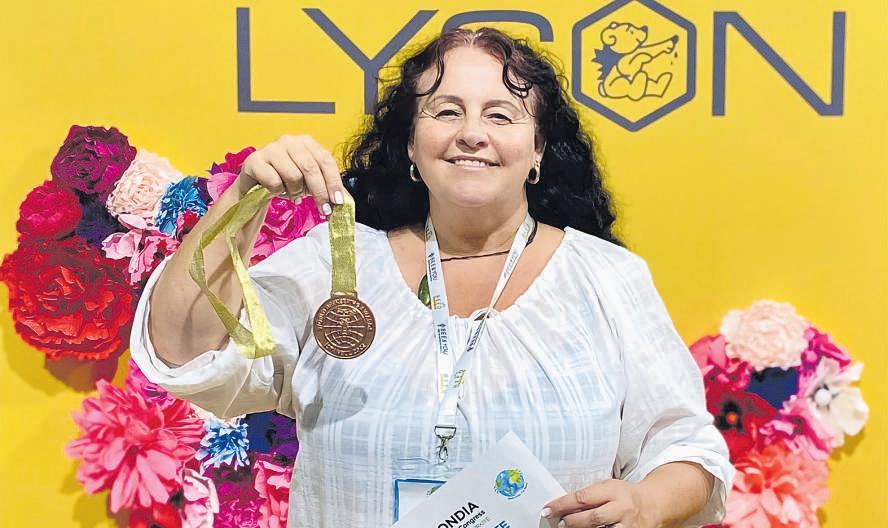
In 2022 in Istanbul, Jody and Ralph won New Zealand’s first-ever medal for honey
Then, 2023 saw Jody invited to Apimondia Chile as a World Beekeeping Awards judge and the delegate for New Zealand At the Apimondia 2025 conference in Denmark, they were recognised with one of two Beekeepers for the Planet Outstanding Achievement
Awards, presented for their Trees for Bees regeneration work on their 1200ha Taranaki property
Jody was also delighted to promote six different New Zealand specialty honeys on the Global Honey Bar and start working with major German labs and government representatives to set up a database of New Zealand’s native honeys to better understand their unique properties and honey specifications.
“I want to show that New Zealand honey is so much more than just mānuka.”
Catherine Fry






A courageous, determined, talented woman who smashed her goals, gave back to community and always cared for those around her is how Liz Ward will be remembered. But she was also a highly-respected figure of the Bay of Plenty and Waikato equestrian community


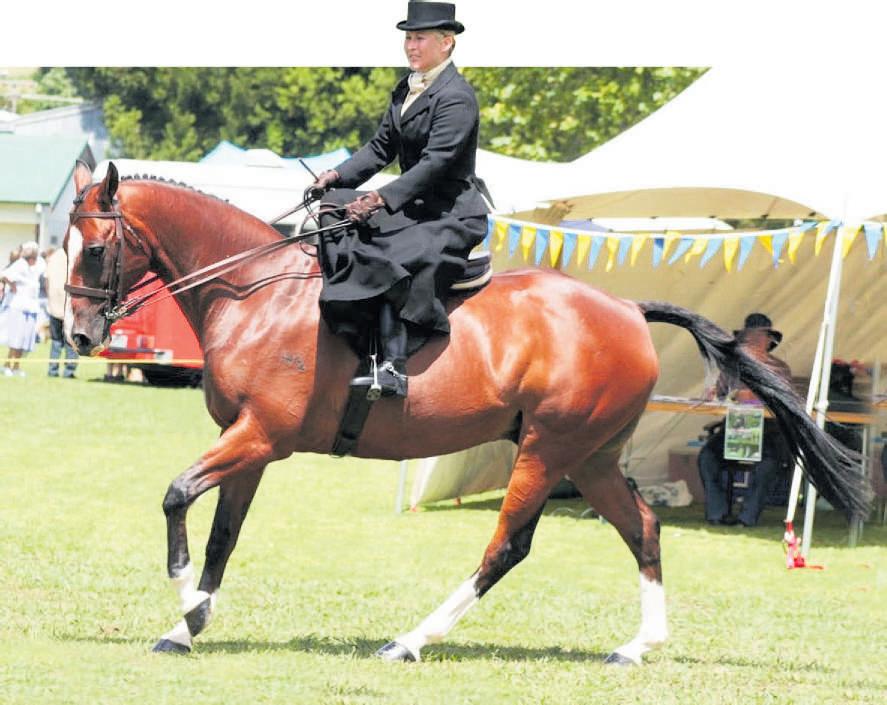
The 59-year-old Katikati resident died December 22, 2025, after being diagnosed with a brain tumour at the end of 2023.


of her life ”
Liz attended Katikati Primary School and Katikati College. She ran at the athletics club, went to Sunday School and fell in love with netball.











Liz was internationally-recognised for her 40-year career in hairdressing – winning New Zealand’s highest industry accolade – but her first love was horses, said her family, and that never waned.
Elizabeth Rosemary Davies was born June 28, 1966, at Tauranga Hospital to Louellen (nee O’Reilly) and John Davies.
A country kid
“She was a very active child; she was always busy and always gave 110%,” said Louellen.
“Even when she was little she was so determined. She’d make up her mind about something and do it – or she’d find a way to achieve it.”








“She was brought up on my parents ’ – the late Rose and Lou O’Reilly – Lund Rd farm She had a calf, a lamb, a pony – she was a country kid,” Louellen said.
“Growing up on the farm, horses were a big part
Liz’s first true passion was horses, she rode from a young age and was her family’s fourth generation to ride competitively
She competed at a young age to high success and later became an accomplished equestrian –with her hack won the DC dressage for the Bay of Plenty
She also was heavily involved with the equestrian competitions at Katikati’s A&P Show for many years. Liz’s two boys even had a go at horse riding, however motorbikes and rugby were much more interesting.
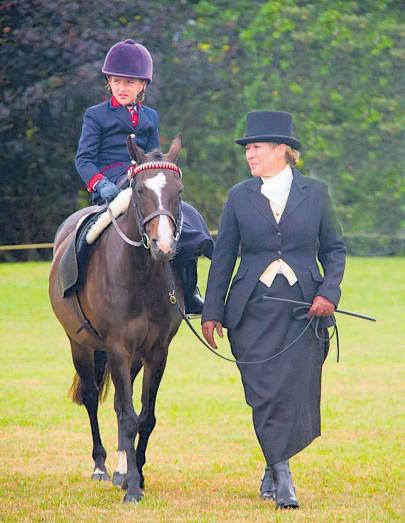
But when daughter Kate Downes began riding a pony from the age of four, it was all go The duo were off each weekend competing in the lead rein together They also competed and were pictured at Katikati A&P Show when Downes was a young rider
Kate said her best memories of her mum was her taking Kate to pony club with her horse ‘Bella’.
“I’d even get off the bus after-school and mum would be waiting with my horse to ride home.”
Louellen said Liz rode well but as life went on she had less time for it. But she never stopped owning, training and loving horses.
from a shed on the same site as her salon – Liz Ward Hairdressing –Carisbrooke St in Katikati
Bay Equestrian, which stocked equestrian gear including show supplies and attire, ran from February 2017 to July 2024 and sent packages to clients all over the place. She even planned to move the business into her Katikati home, much to the amusement of her partner of 22 years Scott Downes.
As her illness progressed in 2025, horses were still a mainstay for Liz, Louellen said.
In recent months she’d taught her horse ‘Rev’ to bring his feed bin to her from her wheelchair

Instead, in the last decade she’d channelled her love of horses and equestrian into a side business she named Bay Equestrian, which operated
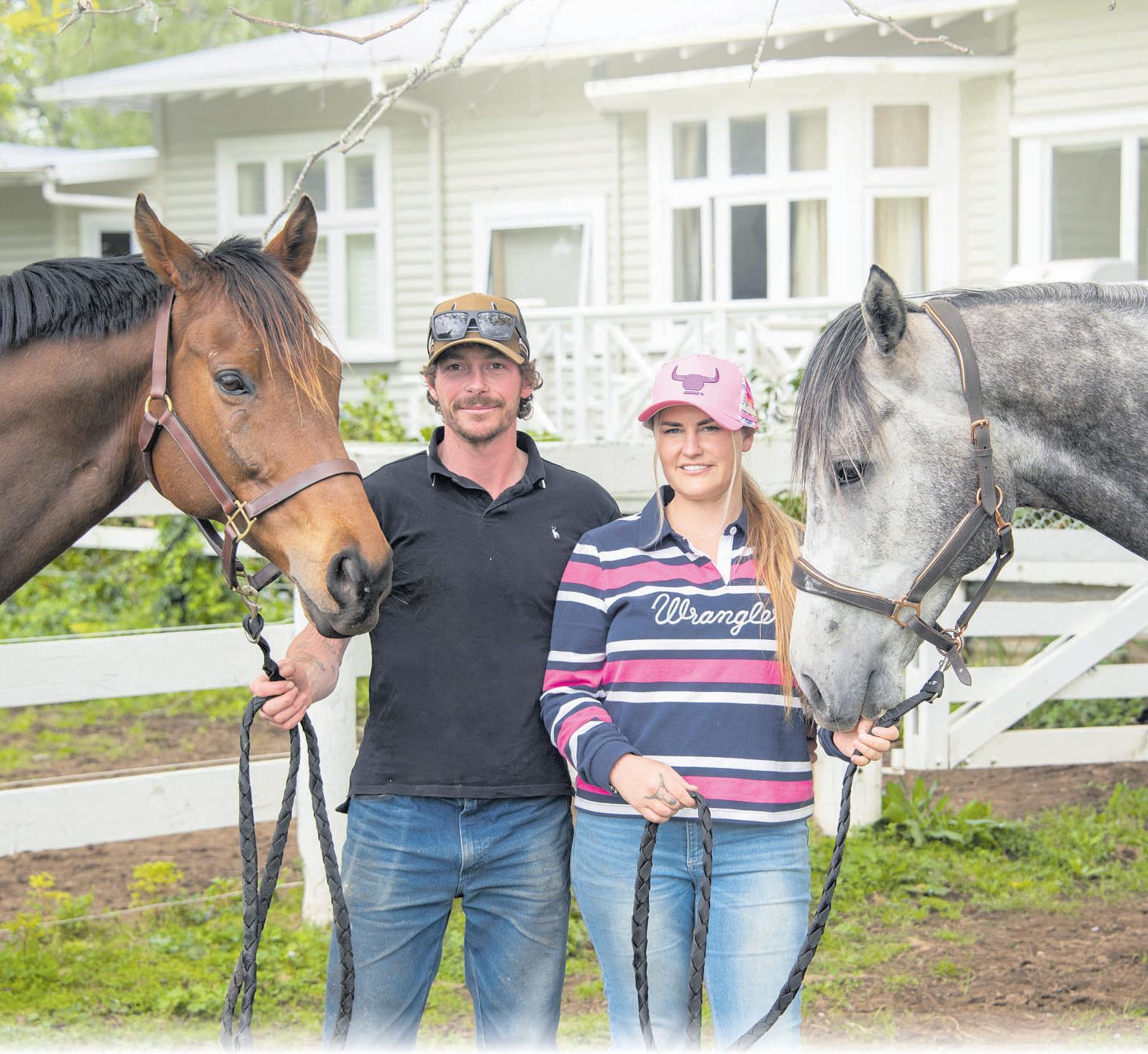
“She wouldn’t get rid of her horses so I’ve promised to take care of them,” said Louellen.
She said Liz loved her family – and her idea of bliss was being at home in the garden. “She was always cooking meals for her sons and their friends.”
Liz met Scott Downes, at indoor netball Scott had two boys, Lochie and Jackson; Liz had two boys, Taylor and Logan, and together they had Kate.

She was a mum to so many more than just her kids,” said Kate. “She made sure everyone was fed, safe and happy She treated everyone as her own. ”
Kate said everyone respected her mum “because she was consistent; she turned up for everyone all the time”. “She didn’t take any crap She was firm but fair”
Kate said Liz also gave people confidence just by being herself “Mum has given us all the skills in life to achieve anything we want. ” Liz’s funeral was held January 6 in Katikati.
‘Plan
Farmers on the East Coast are worried about how long it will take to reopen storm-damaged State Highway 2.
A large part of the Waioweka Gorge – which connects Gisborne/Tairāwhiti and Bay of Plenty – has been closed for just over a week, after heavy rain on January 16 caused about 40 slips.
NZTA said it was going to take several weeks to clear the road.
But farmers were concerned taking the long detour to avoid the Waioweka Gorge closure raised animal welfare issues and put extra costs on farmers.
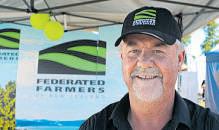
Federated Farmers’ Gisborne/Wairoa president Charlie Reynolds said it was no longer acceptable for the region not to have access through the gorge
“The East Coast needs a plan B,” he said.
“Long-term, NZTA really need to have a really, really serious look at their road managements and rebuilding programmes, because we can ’ t handle this every 18 months, 36 months.”
He said the area needed a resilient road network.




NEXT TIME YOU’RE IN LONDON, ONCE you’ve eyeballed Buckingham Palace and Trafalgar Square and Big Ben, you’ve gotta get out in the country. Why? Because there’s more to Ye Olde England than just the City of London …
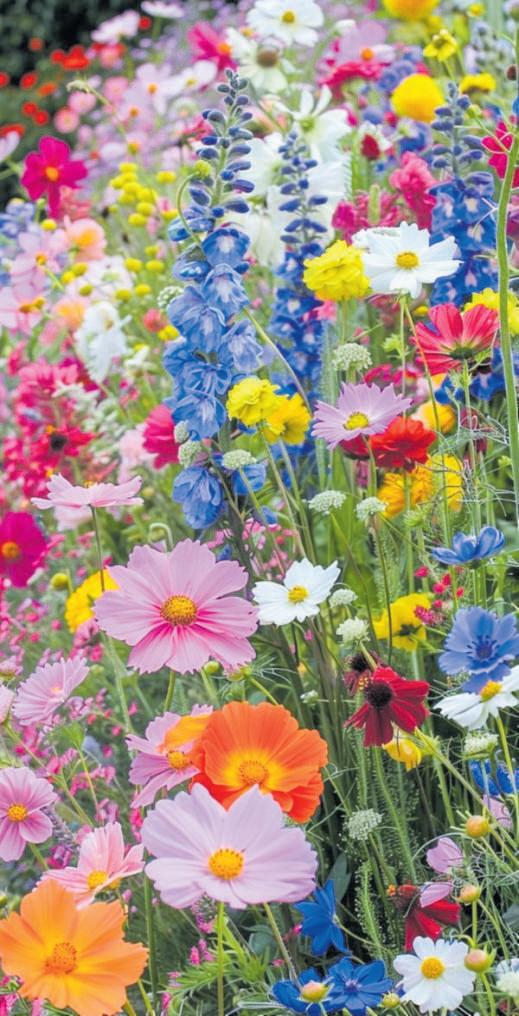
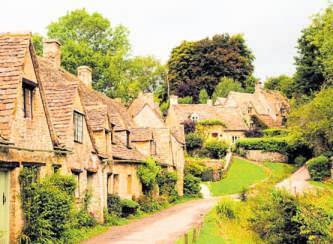
I mean, not far along the M4 are some of the sweetest, loveliest corners you can find in this “green and pleasant land” And when you wander off the beaten track (as we’re gonna do in June/July 2026) you’re soon oohing-and-aahing at fairytale villages, thatch-roofed cottages, flower-smothered gardens, leafy woodland lanes, pubs with weird names, cathedrals with pointy roofs, medieval castles and knights in shining armour.
We’ll fall in love with the honey-coloured village of Woodstock explore stunning Blenheim Palace feel the ‘Downton Abbey’ vibes in old Bampton town enjoy a walkabout in Hidcote Manor and Kiftsgate Court … discover magical Broadway and Bath.
We’ll meander through idyllic hamlets – like St Ives, Doc Martin’s Port Isaac, and Singleton (where ‘The Repair Shop’ is filmed)
We’ll soak up the seaside magic of Padstow And roam more bloomin’ gardens than you can shake
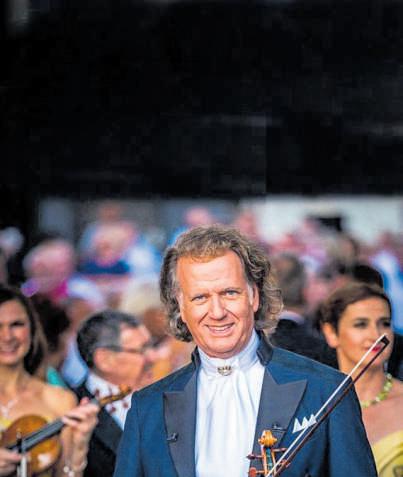

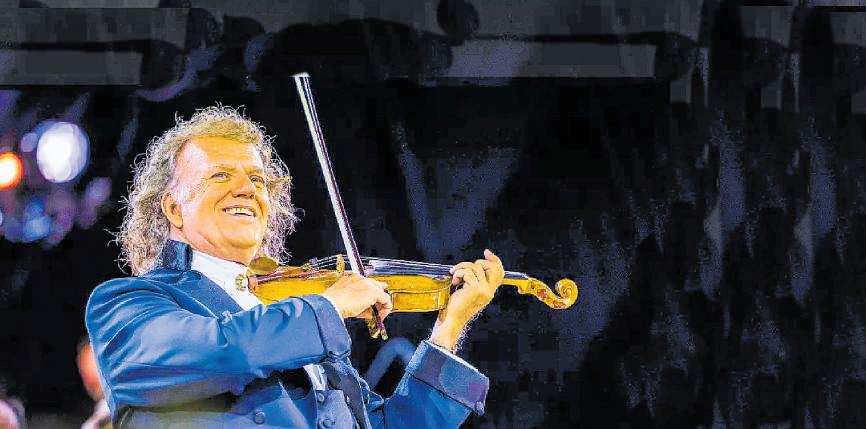
a gumboot at: like Sissinghurst, Trebah, Heligan & Great Dixter. We’ll finish with a Midlife Madness flourish, crossing the Channel for a spectacular live ANDRÉ RIEU concert, in his hometown Maastricht, Holland!
e quick! Phone us now on or go to our website: www.midlifemadness.tours










Recent changes to the Resource Management Act have extended the life of many resource consents.
However, water-related consents granted before the RMA came into force in 1991 are an important exception.
In the Bay of Plenty, more than 800 resource consents that have recently expired or are due to expire will be automatically extended to December 31, 2027 This extension is intended to provide certainty while replacement legislation for the RMA is progressed, and longer-term arrangements are established Bay of Plenty Regional Council is in the process of contacting all affected consent holders and, where a replacement consent application has already been lodged, the Regional Council will contact the consent holder directly to discuss the next steps
However, the extension does not apply to certain water-related consents, including consents for taking water, dams and other waterrelated structures, and discharges to water Under the RMA, these consents are subject to a maximum duration of 35 years As a result, pre-1991 waterrelated consents will still expire on October 1, 2026
To continue taking water above permitted activity limits beyond this date, a replacement resource consent is required To retain priority access to existing water allocation, applications must be lodged before April 1, 2026, u under section 124 of the RMA
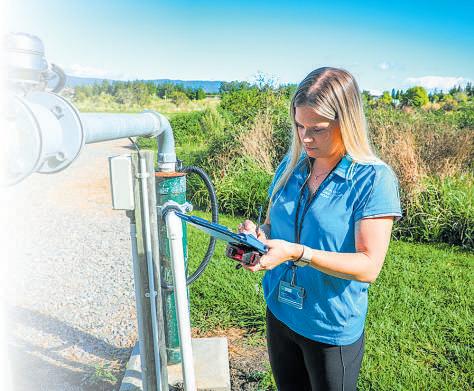
Consent holders may need to upgrade equipment as part of this process This may include installing or verifying water meters, setting up telemetry or adding backflow prevention devices where fertigation is used With high demand expected, early upgrades will help ensure a smooth process
The Regional Council has sent unique links to online replacement application forms to all groundwater consent holders with consents expiring in October 2026 The online form is designed to be quick, simple and allow consent holders to save the form and exit throughout the process
For those planning to start a new activity requiring a consent, the current planning and consenting framework continues to apply
While the government has announced further reforms to replace the RMA, new legislation has not yet been enacted Until new Bills are passed and come into force:
• existing regional plans remain operative
• current consent rules and processes continue to apply
• consent applications will be assessed under current law
This means applications can still be lodged and processed in the usual way
The government has signalled significant changes to resource management legislation, including how freshwater is managed in the future. However, until new laws are formally adopted, the current system r remains in place
For those holding water-related consents nearing expiry, now is a good time to review consent conditions and expiry dates, understand permitted activity allowances and seek advice early if a replacement consent may be needed Further information on the legislative changes and the replacement consent process is available on the Regional Council’s website: boprc govt nz/expiring-consents
If you ’ re unsure how these changes may apply to y contacting the consents team at your regional counc early can help clarify your options and next steps














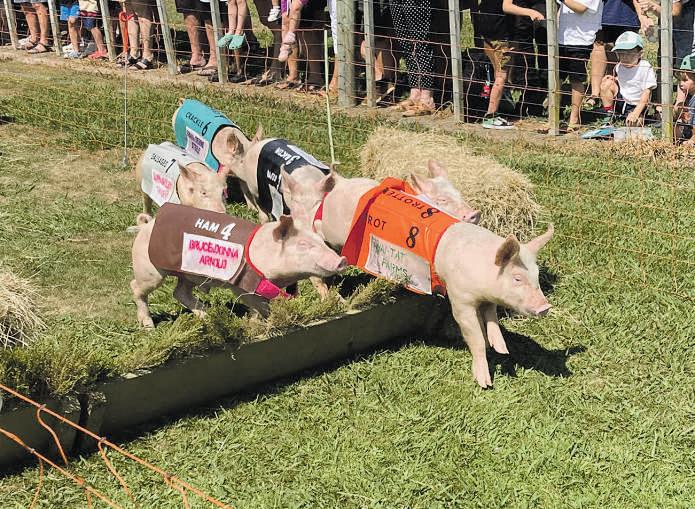
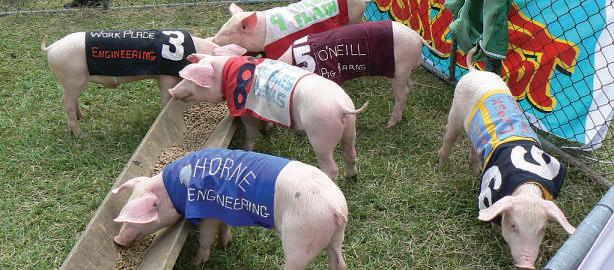
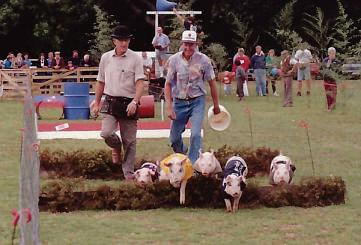
After a triumphant return last year, pig racing will headline the 2026 Morrinsville A&P Show on Saturday, March 7, at the recreation grounds
Morrinsville Agricultural and Pastoral Society president Bruce McRobbie says the popular porcine event took a break for several years but proved a winner at the 2025 show
More than $7000 was raised for the Child Cancer Foundation through bets
and a charity sale of the runners after the races.
Agriculture Minister Todd McClay attended the 2025 show and bought a couple of pigs. He later announced funding of $400,000 over four years for all A&P shows across the country
Bruce says cash and products exceeding $10,000 will be up for grabs in the dairy cattle section at this year ’ s
Morrinsville A&P Show
The show will host the Jersey New Zealand North Island championship final and the Blue Pacific Young
Handlers’ final.
Bruce says young handlers are those aged up to 21, with entrants taking accumulated points from Te Aroha and Rotorua A&P shows into the Morrinsville final.
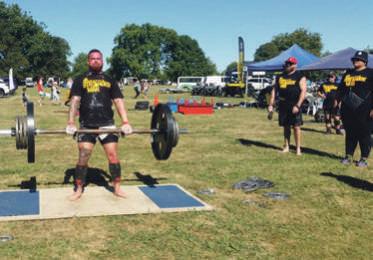
A special Clydesdale horse event is also on the Morrinsville A&P Show programme, along with a new sidesaddle section in the equestrian ring. Bruce says performing sheep are returning after an entertaining debut in 2024, while the strongman competition remains a firm favourite.
Tauranga is set to take centre stage in New Zealand’s growing biological movement as it hosts the inaugural New Zealand Biological Symposium on February 12 at the Tauranga Club Designed to unite growers, researchers, innovators, policymakers, and agribusinesses, the event signals a major step toward building a nationally connected agbiological community

A petting zoo will also be set up for youngsters, plus games and puzzles, Kiwanis’ train rides and a teddy bears’ picnic
Entertainment will be provided by Morrinsville Country Music Club and other local artistes
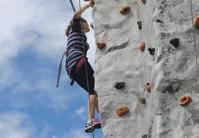
Bruce says the show will also feature a climbing wall, bouncy castle and sideshows which youngsters can enjoy for free.
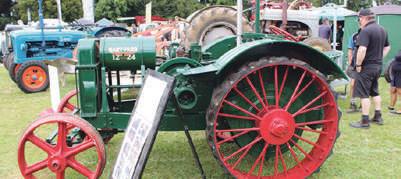
Trade stands will feature the latest in cars, tractors and motorcycles, contrasted by a display of vintage tractors and farm machinery
The symposium highlights New Zealand’s rising influence in the global shift toward biological and softerchemistry alternatives to traditional pesticides Reflecting this momentum, Taurangabased agrifoodtech consultancy Wharf42 and USbased Western Growers have announced the city as the global headquarters for Platform10 – a growerled initiative supporting farmers to develop new tools for managing pests and diseases.

Morrinsville emergency services –police, fire and ambulance – are setting up displays, while show patrons can visit a food court plus other market stalls. For more information, see Morrinsville A&P Show’s advert on this page.
Steve Edwards
A diverse and futurefocused programme awaits attendees. Presentations include the Bioeconomy Science Institute’s biological innovation pipeline, Zespri’s research supporting kiwifruit growers transitioning away from chemical sprays, and insights from A Lighter Touch, a major initiative helping producers adopt more sustainable crop protection practices. APHNZ will outline its vision for a balanced regulatory environment, while the University of Waikato’s Coastal Marine Field Station showcases cuttingedge marine research and Agrisea’s awardwinning seaweed applications. With international leaders such as Dennis Donohue joining the event, the symposium marks a pivotal moment– positioning Tauranga at the heart of New Zealand’s biological future.



A reconnection between two friends led to a new racehorse training facility in Cambridge
Josh King and Maija Vance had a trans-Tasman long distance relationship resulting in Josh moving to New Zealand to be with Maija in January 2024. The couple then followed their dreams and set up Josh King Maija Vance Racing.
Josh comes from a horse training family in Australia. His mum Norma King and step-dad Michael Hicks were racehorse trainers. He started trials as a jockey at the age of 14 and racing at 15.
“I struggled with my weight when I was 19 and worked in the mines for a while before returning to riding for a couple of years and finally giving up when I was 25,” Josh says
“I worked as a foreman for a trainer on a stud in Toowoomba and in 2022 one of our horses won the Caufield Cup, and another was placed second in the Melbourne Cup ”
Josh says he became a private trainer and had a few winners in Brisbane and other areas.
“I was getting known as a trainer over there,” he says In the blood
Maija’s dad Bob Vance was a leading jockey in New Zealand, and her mum Jenny Moller was a leading jockey in Sweden. The pair met in Macau and lived there until Maija was five-years-old when the family returned New Zealand to train race horses
“I decided I wanted to be a jockey when I was 14. My parents tried to stop me as it’s quite a brutal job for girls, it’s dangerous and the dieting is a huge issue,” Maija says.
“I flat raced for 13 years, doing well in Australia for five of them. I was struggling with my weight and came back to Cambridge and moved to hurdles as the weight allowances are higher”
On September 16, 2018, Maija’s ride misjudged the take off at a hurdle and somersaulted on landing, falling on Maija Her ride survived unscathed, but Maija had eight spinal fractures, 13 rib fractures, both lungs punctured and other serious injuries including a T8 spinal cord injury which left her paralysed and facing the rest of her life in a wheelchair
“It was three months before I could even sit comfortably in a wheelchair I spent hours in physio each day and doing extra exercises until one day I was able to move my toe. This gave me hope and I put my whole focus on moving.”
Maija feels fortunate that her brain is able to send messages to her lower body to move. This has allowed her to regain enough control to live independently and walk and ride again.
Before she was even out of the wheelchair, Maija was back in the saddle riding Panda, her quiet, gentle palomino paint horse. He was an important part of her recovery
Around the same time Maija started Tik Tok and Instagram accounts. Throughout Covid-19 and the lockdowns, she entertained the world with the antics of Panda and his brother Slim Shady, horse themed memes and comedy horse skits amassing 1.1 million followers across social media.
When Josh joined Maija in January 2024, he intended to take 12 months off to do some trackwork
“Then an owner who knew my past work asked me to train their horse. Maija and I leased paddocks and stables from Sally House in Cambridge, who Maija had ridden for previously,” says Josh.
Sally’s property was on the market, and Maija says it got to the stage when she and Josh had 10 horses and if the property had sold it would have been hard to move, so they decided to buy the property themselves
The hard-working and driven couple now own
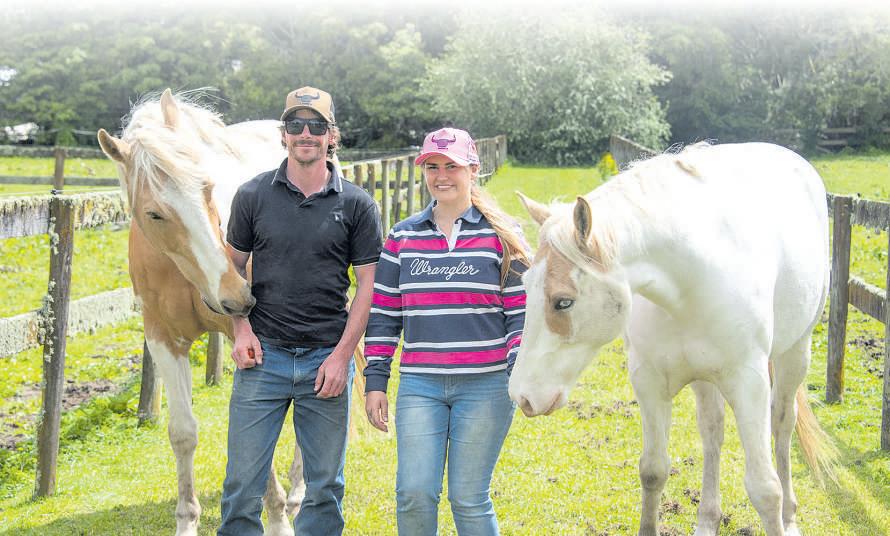


22 large paddocks, 32 stables and a four bedroom house on a flat, well-fenced 15 acre block.
“We manage 10 client horses and our own racehorse between us, including trackwork and race days,” says Maija
Other income streams include a flat mate, renting out stables and paddocks, Josh doing trackwork for trainer Stephen Marsh and Maija’s income from social media.
“Our future plans include a swimming pool for horses, a large arena and a new horse walker These e would all make the property more attractive to people to have their horses with us. ”
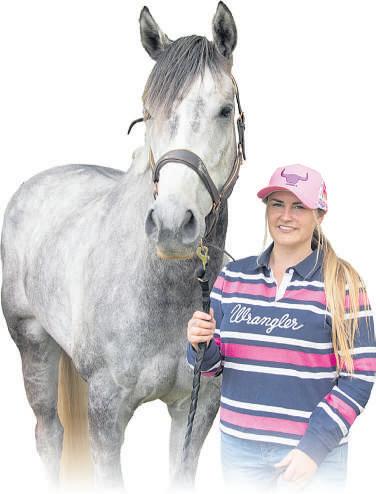
Social media plays a part in their joint venture and Josh says he’s embraced the concept The racehorse owners get to see footage from a helmet cam, their horses playing in the paddocks, snippets of their horse’s day to day life and behind the scenes videos
“We found the owners really enjoy following their horses on a daily basis,” says Maija. “Our horses are turned out in the paddocks all day”
Josh and Maija are very grateful to Kelvin and Michelle Daly who helped them with setting up the business side of their venture.


• Must meet all standard food production & safety law
• International third-party validation and principles.
• 80+ years since need identified
• Regulations based on biological/ natural systems.
• Regulations/ production standards always available.
• Practise based on carbon cycle via the living
• Diverse plants support broad eco-system
• No broadacre herbicide
• Natural, target specific biocides
• Established under-supplied markets
Pertaining to Carbon Through theLiving >>Biotic<< Integrity Through Transparency
• Validation of inputs if it didn’t go in>>>>>>




Conventional Ag
withChemicals
• Must meet al standard food production & safety law
• A range of marketing codes of with varying production practise
• Guidel nes based on biological systems with chemical management
• Guidel nes/product on standards not always available.
• Diverse plants (treated seeds) support eco-system, in part
• Pract se based on lowering carbon footprint
• Validation of residue levels - if we cannot detect it >>>>great!
• Broadacre herb c de s used
• A l biocides can be used
• A l Ag inputs can be used
• Deve oping markets with big partners… Syngenta, Bayer, & more
AppliedChemistry
• Must meet all standard food production & safety law
• Open methods adopted
• Can use chemical ripening/topping
• Treated seeds, wide range of inputs
• General knowledge of systems by market
• Great for bulk cheap food production.
• Marketing: increasingly rebranding, grass fed, NZFAP, animal welfare codes
• Urea, super-phosphate, high inputs
• All Ag inputs can be used
• All biocides can be used
Farmers - the most farmed animal in NZ
y p
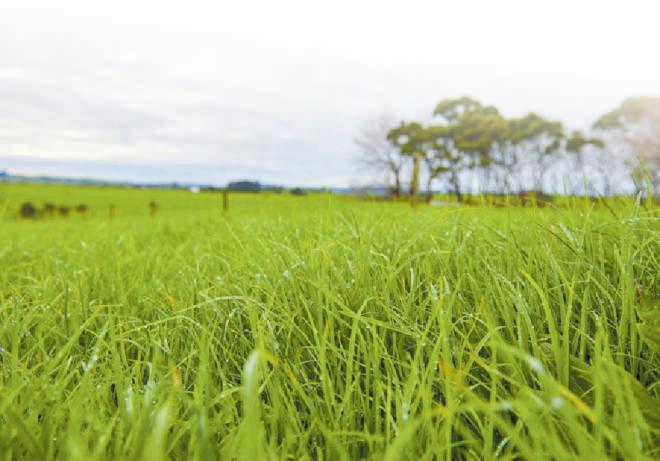
Dairy farmers need to look at their best paddocks to see what the poorest can produce once improved.
Industry-good body DairyNZ says maximising pasture growth, and harvesting it, is key to increasing a dairy farm’s profitability
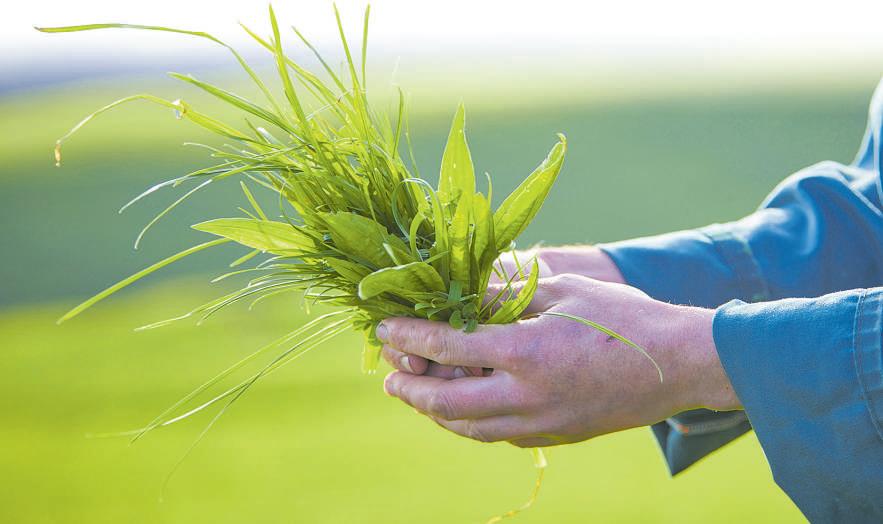
“To grow more grass, you need to identify the lowest producing paddocks and understand their potential by comparing them with the best ones. ”
Renewing the poorest performing paddocks offers the biggest chance for improvement.
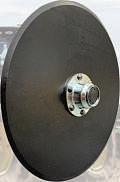
DairyNZ says renewing pasture is crucial for maintaining farm productivity and there are four primary methods to consider: cultivation, spray-drilling, undersowing, and oversowing Each method has its pros and cons,
with factors like cost, time, and specific pasture conditions influencing the choice of renewal approach
“Choose the method that aligns with your farm’s needs and conditions ”
DairyNZ says farmer should measure pasture performance using tools like grazing and yield records or the Pasture Condition Score Tool, which is found in DairyNZ’s Pasture Renewal Guide.
Factors such as soil fertility, drainage issues, and overgrazing can affect performance.
“For poor-performing pastures, it’s crucial to address the root cause, whether that’s soil health, drainage, or overgrazing.
“Analysis of your pasture growth data will help you plan the most profifitable renewal l programme.
“While you may instinctively know your best and worst paddocks, without measuring or assessing

pasture growth paddocks cannot be accurately ranked to identify worst performance.”
DairyNZ says the best paddock(s) to renew are the poorest producers as these have the potential for greatest improvement
Property potential
“The highest producing paddocks on a farm indicate the property ’ s overall potential,”
DairyNZ says “Under-producing paddocks highlight the opportunity for extra pasture growth.”
DairyNZ says farmers should use grazing and yield records to identify the best and worst paddocks
“The more measures and assessments you have to compare the better (and easier) the decision will be ”
These include weekly cover pasture information, and grazing and paddock records
DairyNZ says on many farms the worst paddock only produces half as much as the best paddock.
“The trick is to know which paddocks are the poorest producers ”
DairyNZ says introducing new plants will not increase production if you do not resolve the underlying causes of low pasture production - treat the cause and not the symptom
Aspects that need to be considered include soil fertility poor drainage, pugging, soil compaction,
is killed by herbicide
In undersowing, farmers should use a direct-drill to sow treated seed into existing pasture.
DairyNZ says this works very well in the narrow window of time when a pasture has thinned out but has not yet been overtaken by weed ingression.
Farmers should use this method after extended dry conditions where large areas need to be sown, or after winter pugging damage.
“Results are variable where it’s used in pastures too dense for the new seedlings to establish well ” In oversowing, treated seed is broadcasted on to the surface of the soil.
It is generally used to repair smaller areas (pugging damage) or to establish white clover in spring into pastures and where the land is too steep or stony for cultivation
It is not recommended for improvement of lowland pastures due to high seeding mortality
Sowing rates are generally higher, as establishment rates of seed placed on the ground surface are lower
DairyNZ says autumn pasture management in dairy farming involves focusing on average pasture cover and cow condition to prepare for spring.
“The focus in autumn is reaching average pasture cover and cow condition targets ready for spring.”
The Ravensdown team has all the tools you need to set up a year of growth Local agronomy advice, 70+ expert agri managers, top-quality nutrients, and the game-changing HawkEye Pro are just part of the package Together, we’ll help you farm smarter and make every dollar count.
Call 0800 100 123 or talk to your agri manager today.
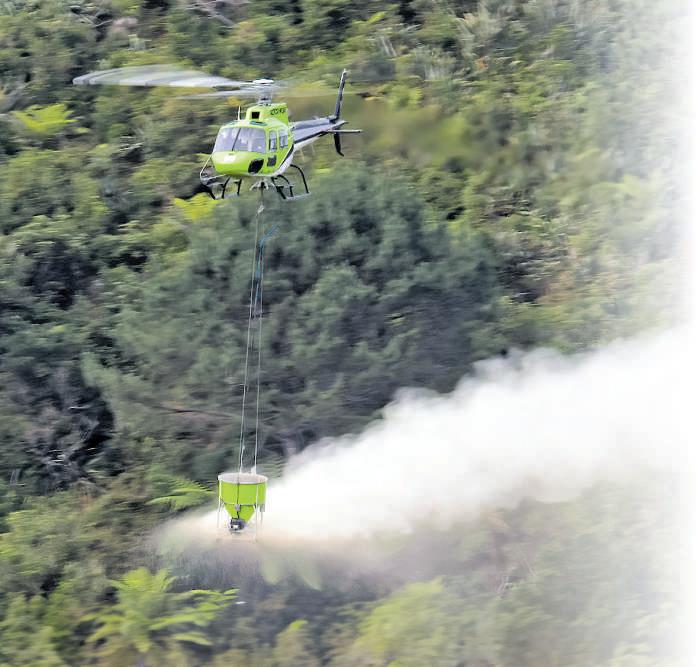


While fertiliser application by helicopter is traditionally thought of on hill country,
a Waikato business covers all land types
Kihikihi-based Rotor Work has eight helicopters on call, with sites also in Marton, Tokoroa, Kopakki and Whitianga
Chief executive Trent Dellow says the 45-year-old family business can apply fertiliser on flat and medium rolling country, as well as steep terrain
“You get it on quickly, which stimulates pasture growth right from the start ”
Trent says helicopters are a
great tool to concentrate farm fertiliser application and bring up production
Going into autumn, Trent says farmers should be looking at lime application – standard and granulated – to boost winter pasture growth.
Other options include DAP (a nitrogen/phosphate mix), super phosphate and nitrogen
Rotor Work services all types of farms and orchards including dairy, sheep, beef and deer
Trent says some farmers target a particular area of their property which has traditionally not been producing as good as it could
The use of helicopters also negates difficult on-ground
access, such as peat country, he says
“And there’s no gates to open ” Agricultural crops can be serviced by Rotor Work, from seeding to pest and weed control, to fertiliser application
Trent says the company can also help with solutions for spraying small sensitive areas through access to drones and light aircraft
With 30 staff, Rotor Work covers an area down the middle of the North Island, from Coromandel to Manawatu, to the left of the Ruahine Ranges For more information, see Rotor Work’s advert on this page
The Government is doubling down on its support of new on-farm tools to cut greenhouse gas emissions, following its decision not to price agricultural emissions
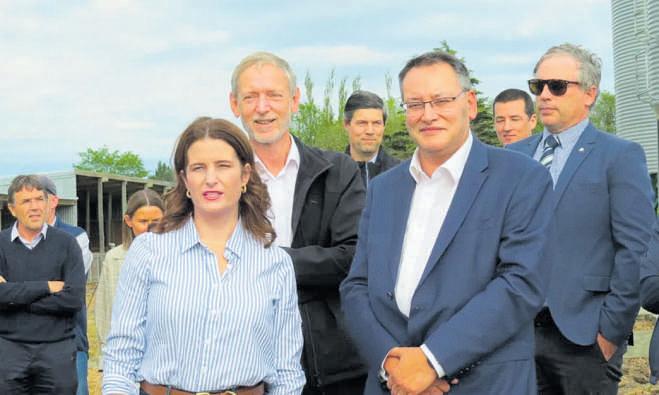
Finance Minister Nicola Willis and Science, Innovation and Technology Minister Dr Shane Reti were on-farm in North Canterbury’s Waikuku at the end of last year to announce the latest government co-investment in a new early-stage reduction tool.
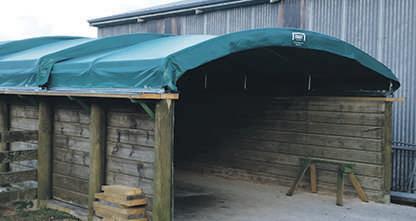
Start-up Āmua was developing a smart device worn by cattle that sought to transform the naturally-abundant resource of nitrogen from cow ’ s urine into an eco-friendly fertiliser It aimed to address freshwater nitrate leaching and nitrous oxide emissions at their source.
The start-up received $1.2 million from AgriZero, the government-industry partnership featuring the likes of Fonterra, Synlait and ANZCO, making it the 16th project to be funded by the joint venture.
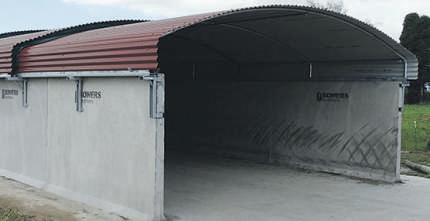

Āmua’s prototype device was developed with support from the Ministry for Primary Industries› Māori Agribusiness Innovation Fund, and was trialled on Ngāi Tahu Farming’s Te Whenua Hou dairy farms
Highly concentrated nitrogen patches from cow ’ s urine in paddocks leached into groundwater and entered the atmosphere as nitrous oxide, a potent greenhouse gas that
accounted for nearly 16% of the country ’ s agricultural emissions, according to the government ’ s Greenhouse Gas Inventory Report. Modelling by AgResearch in the Bioeconomy Science Institute indicated that by spreading the concentrated urine patches across the paddock, the patented device could reduce nitrous oxide emissions by up to 95% and nitrate leaching by up to 93%, while maintaining similar pasture growth to the application of synthetic nitrogen
A major goal of The International Fertiliser Association and its 500 global members is to improve nutrient efficiency, enabling farmers to increase their yields while simultaneously reducing fertiliser inputs.
The nutrients most under scrutiny are nitrogen and phosphates because they are needed in large quantities to optimise plant growth, although potash and sulphur are also at issue.
At Fertco, we ’ ve been promoting the use of efficient fertilisers for more than 25 years and are continually looking for innovative products that are aligned with the IFA’s goals.
One proven way to increase nutrient efficiency is to use fertilisers that are less soluble than their conventional counterparts. Such fertilisers are more efficient because the nutrients aren ’ t released into the soil all at once. Instead, they’re released gradually to feed the pasture or crop as it grows. So less of the nutrient that is applied is wasted
One excellent example is polymercoasted urea (PCU). The reduced solubility of PCU is due to a biodegradable polymer-coating on the urea granule This coating controls the rate at which moisture enters the granule, dissolves the urea inside, then releases it to the soil for plants to take up Because the process depends on the moisture levels in the soil, it can take up to several months to complete. So, the nutrients stay protected in the granule rather than being wasted to the environment. Another proven example is the use of dicalcic phosphate as an alternative to superphosphate. The reduced water-solubility of dicalcic phosphate means that the nutrients are released more slowly The nutrient-release occurs through microbial activity in the soil which increases when the
Founder and chief executive, Roger Johnson says it spent the past few years developing the new tool and testing it.
“We want to create resilience for farmers to be able to supply their own nitrogen off their own farm.”
AgriZero chief executive Wayne McNee says it will be the joint venture ’ s first equity investment in nitrous oxide mitigation, which would play an important role in lowering overall emissions
“Āmua is a brilliant example of Kiwi ingenuity to tackle a common challenge on-farm and potentially deliver a range of environmental and economic benefits,” said McNee.
“High-impact, scalable innovations like Āmua will be vital to meet global demand for emissions reduction and safeguard the export economy we all rely on. ”
same soil conditions become favourable to plant growth. The result is that more nutrients get used up by the pasture or crop rather than wasted
The new investment was part of a seed funding round for Āmua to support the next stage of development of pilot trials in 2026. More than $190m was committed by AgriZero over its first four years, split by government and industry


For both PCU and dicalcic phosphate, the reduced solubility has proven so successful that less nutrient need be applied to meet pasture and crop needs If less is needed, application costs are reduced
Another nutrient-efficient strategy the Fertiliser Industry is working towards is to manufacture fertilisers with a high nutrient content. Such products are often called ‘high analysis’ fertilisers
Fertiliser analysis
All mineral fertilisers are lab tested for their nutrient content. Each fertiliser product is then assigned an analysis as a list of the major nutrients it contains and the percentage of that nutrient in the product. The analyses are critical because they allow us to work out how much nutrient to apply to meet each customer ’ s crop and pasture growth requirements.
So, for example, Fertco’s dicalcic phosphate fertiliser ‘RePlenish’ has an analysis of of P-9, S-8.3, and Ca-24. This means that it contains 9% potassium, 8.3% sulphur, and 24% calcium.
According to definitions provided by the Food and Agriculture Organisation of the UN, all fertilisers guaranteed by the manufacturer to contain at least 25% plant-available nutrients can be categorised as ‘high analysis’
Therefore, Fertco’s Replenish, described above, is a ‘high analysis’ fertiliser as are most modern synthetic fertilisers.
High analysis fertilisers aren ’ t new
co-investment, to accelerate the development of reduction tools for farmers
Nicola says co-investment with the private sector saw the government dollar go further and ensured commercial buy-in in on-farm science.
“What felt like an impossible challenge, how do we reduce our greenhouse gas emissions in a way that doesn’t sacrifice farming as we know it, is actually an achievable change,” she says
“Because already AgriZero is invested in multiple new innovations not just because they’re clever science and they’re exciting, but because they can see they can have practical application on farm.”
Shane says innovation, technology and science are central to the government ’ s growth agenda.
“Research and development drive productivity and high-value jobs. Our goal is a system that empowers world-class scientists, universities, and research organisations to turn ideas into market-ready solutions,” he says
But what is new, is the technology to manufacture fertilisers with a higher nutrient content than those previously available
For example, Fertco’s newest dicalcic phosphate, being marketed as DCP-Max, has a P content of 17% This P content is significantly higher than other phosphate fertiliseers currently available and a more efficieent option when phosphates are needed
Benefits
ert
An obvious benefit of using fertilisers with a higher nutrient content is that less product neeeds to be applied to meet crop and pasture needs If less fertiliser is needed, application costs are e saved, and this is particularly beneficial where e aerial application is necessary
So, in NZ, whether we use fertilisers that are less soluble or those with a higher nutrient content, we ’ re well on the way to increasing nutrient efficiency and reaping the cost-saving g benefits ociated with that.





While this month’s NZ Dairy Expo in Matamata will have a variety of machinery, equipment and technology on show, farmers can also hear the latest industry news, plus training and support service options.
A full house of more than 160 exhibitors will pack Bedford Park for the two-day “dairy-only” event on February 18 and 19.



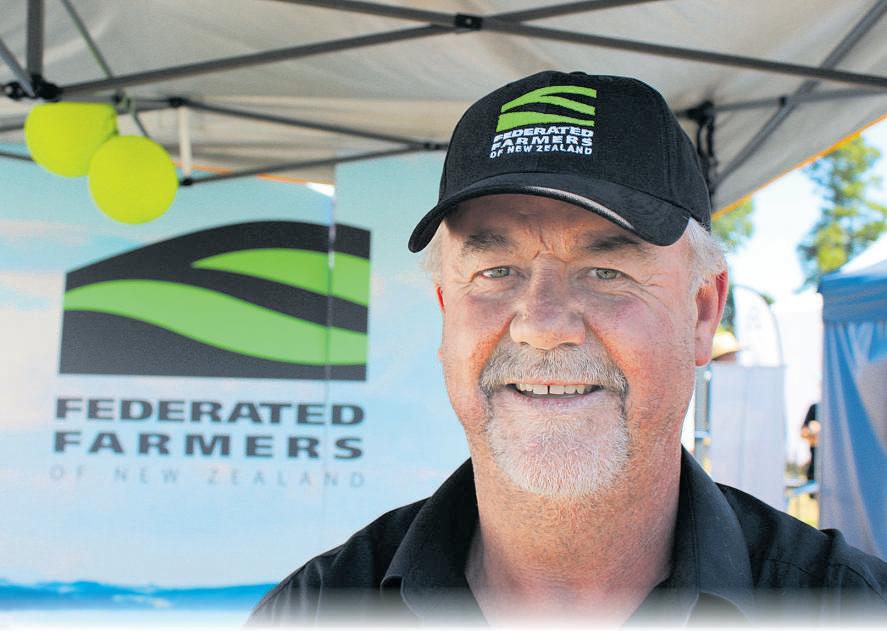
Waikato Federated Farmers believe there will be plenty to talk about on their stand at the expo
When this story was filed, details were still pending on Resource Management Act reforms and Waikato Regional Council’s proposed Plan Change 1 (PC1)
“These will be up for discussion whatever happens,” says Waikato Federated Farmers’ dairy chair Matthew Zonderop
The Government announced pre-Christmas that the RMA would be replaced by a Planning Bill to enable development and regulate land use, and a Natural Environment Bill to manage resource impacts and protect the environment.
Both bills are expected to be passed into law by the middle of this year
Government moves in this area would replace elected regional councillors with new Combined Territories Boards made up of mayors from the region’s city and district councils.


Matthew says this could affect PC1, which aims to improve water quality in the Waikato and Waipā catchments
A final decision was pending when this edition went to press as the regional council
had sought a two-to-three-month extension from the Environment Court to enable a new economic impact assessment to be prepared for its consideration
Also returning to the expo this year is Meet the Need, a farmer-led charity connecting rural generosity with Kiwi families facing food insecurity Manager Zellara Holden says farmers donate milk, livestock, or cash, and Meet the Need works with trusted community organisations already on the front lines to ensure that support reaches those who need it most.
Through partnerships with Fonterra and Miraka, donated milk is processed, packed and distributed nationwide.
Zellara says Silver Fern Farms plays an equally vital role, transforming donated livestock into premium-quality mince for foodbanks across the country
“While produce donations remain the backbone of the charity’s work, cash donations are increasingly important to meet growing demand and keep nutritious protein flowing to families


doing it tough.”
DairyNZ and its subsidiary Dairy Training Ltd will both have sites at the expo
“The DairyNZ stand will have a focus on environmental policy work and ecosystem health approaches to managing water quality,” says senior regional policy advisor Shaun Hazelton, who will be attending alongside colleagues from DairyNZ’s
Freshwater Policy and the Environment Team.
“We’ve attended several dairy expos, and the event is a great opportunity to engage with dairy farmers at a dairy farmfocused event and have more constructive conversations with those in the industry”
Shaun says the format allows them to have more in-depth and detailed discussions with farmers
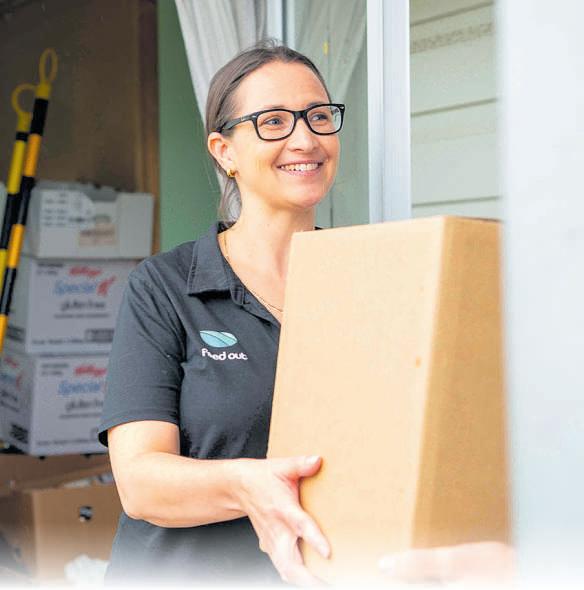
Meet the Need general
“Switching to Goodwood was the best decision we ever made”
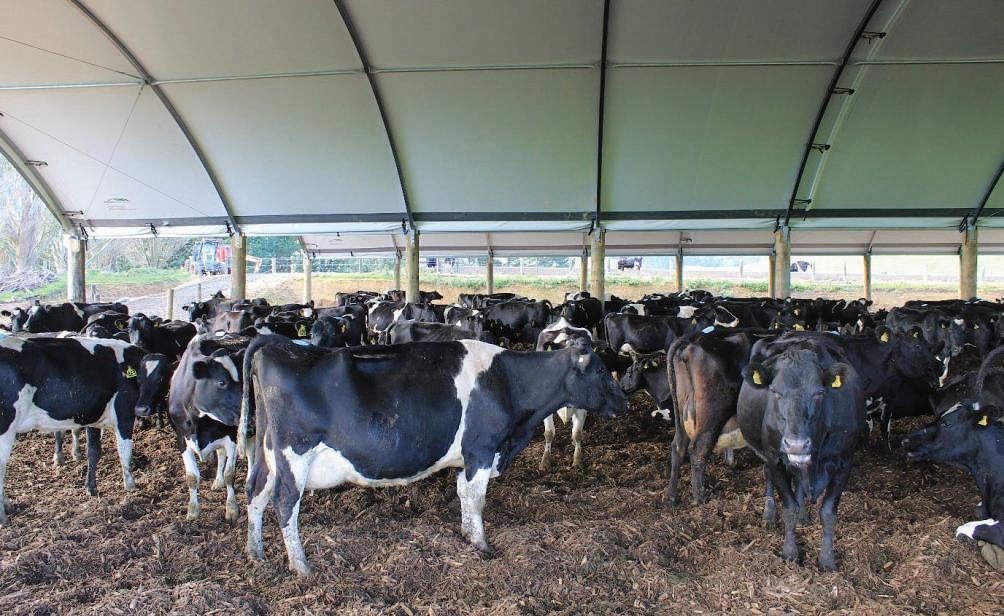
That’s the feedback from farmers right across the Waikato and Bay of Plenty and its exactly why Goodwood continues to be the local favourite for calf sheds and compost barns
With bases in the Bay of Plenty and Waikato, Goodwood offers a tailored range of bedding options from kiln-dried chip for calf sheds to specialised blends for compost barns Every load is clean, consistent, and proven to keep calves (and cows) dry, healthy, and comfortable through the busiest parts of the season
Farmers say it best:
“We’re really happy with both the product and the delivery We’ll definitely be recommending you to others!”
“Everything is perfect Like normal Thank you!!! Great product !!”
“Great service & product”
And the bonus? It’s not just good bedding it’s good for the planet
This year alone, choosing Goodwood helped divert over 10,000 tonnes of untreated wood from landfill, turning what would release harmful methane into bedding that keeps sheds warm, dry, and sustainable It’s a story farmers are proud to share, especially when reporting back to their dairy providers
Because Goodwood controls the full process recycling, screening, and manufacturing
He says they’re looking forward to having quality conversations with farmers on the issues farmers are facing and where DairyNZ can support them
“Farmers will be able to hear the latest policy insights, and chat with freshwater experts and local policy leads about the opportunities available to provide long-term certainty for their business while improving outcomes for their catchment ”
Dairy training
Dairy Training Limited will be on an adjacent stand, showcasing its suite of free short courses available for dairy farmers, including six new courses launching in 2026.
“Our programmes are designed and taught by experienced dairy farmers or rural professionals and provide practical skills to help farmers get ahead,” says Dairy Training Ltd head Hamish Hodgson “No matter what your role on farm is, we have a range of different courses to suit everyone, covering leadership, business management, the environment, on-farm operations, and animal health.
“Since 2002 we ’ ve been helping dairy farmers grow through quality training and with more
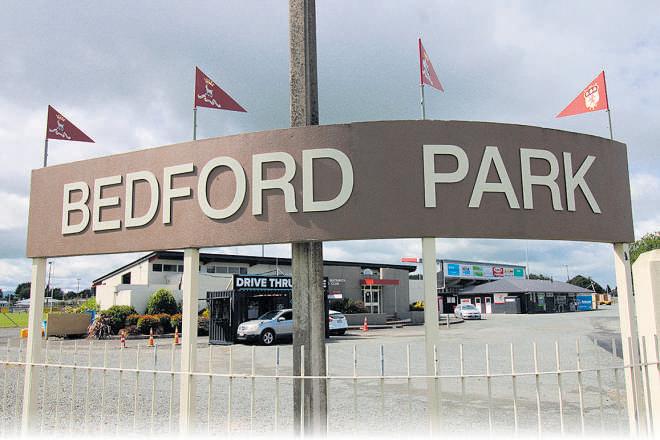
courses added each year we ’ re now helping more people gain the skills they need to thrive and find the most productive ways to work
Industry training provider Primary
ITO is back at the expo
Their local team will be on hand with a range of information about apprenticeships, certificates, and bite-sized microcredential training options
Dairy farming sector manager Marianne Awburn says the organisation made “good connections, which prompted conversations with industry about training” at the 2025 event, so they’re eager to return She says this year ’ s Primary ITO
stand will again be primarily focused on dairy, with information on training opportunities ranging from those new to the industry (level 2/3) through to farm management (level 5)
“We will cover the full spectrum of training available.”
The NZ Dairy Expo will again run on farmer-friendly time: 8.30am to 3pm.
Entry is free, but organisers want farmers to register to ensure the right facilities, services and resources are in place for everyone.
Register at: https://nzdairyexpo co.nz/farmer-registration/
Steve Edwards
on site every load arrives clean, reliable, and ready to go And the team? Local, straightup good people who make things easy: fast delivery, honest communication, and stock on hand when you need it
For farmers across the central North Island, it’s simple: healthier calves, drier barns, and a sustainable choice that actually performs.
See us at The Dairy Expo, visit goodwoodnz.co.nz, or call 0508 446 639.
Goodwood - your local bedding team for Waikato & BOP.





The most successful farming businesses aren ’ t built by standing still They’re built by people who are curious, reflective, and willing to challenge the way things have always been done

Across the dairy industry, a growth mindset one that prioritises learning, efficiency, and continuous improvement is proving to be a powerful driver of long-term success
At its core, this mindset is about balancing productivity with profitability, while protecting
animal welfare and future sustainability Farmers who adopt it are constantly asking the same question: How can we do this better? Whether it’s through reviewing systems, seeking outside feedback, or adopting new technology, progress starts with a willingness to evolve.
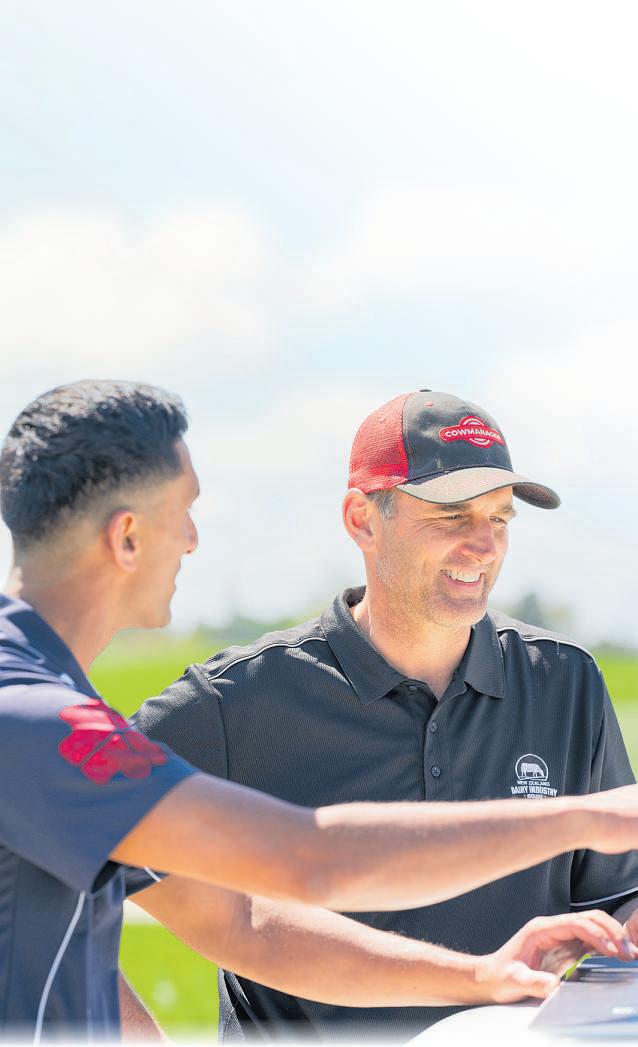
For Paul and Sarah Koopal, growth has always been a conscious choice. Third-generation farmers in the Central Plateau, they’ve long believed in challenging themselves and their team to think beyond day-to-day operations. That approach recently led them to take a closer look at their business and adopt new tools to support better decision-making
A pivotal part of their journey has been using CowManager, a technology that uses ear sensors to provide real-time insights into cow health, nutrition, and fertility The system has helped them spot early signs of illness, improve mating outcomes, and better manage transition periods, resulting in stronger performance and reduced stress across the herd
They recently sat down to discuss how they’re utilising CowManager in practice, the changes they’ve seen on farm, and the mindset shifts that come with integrating technology into traditional systems
As Sarah puts it: “Better information means better planning. We’ve got more control over mating, more confidence in our decisions, and more freedom to think about where we want to go next. ”
What sets progressive farmers apart is not a single tool or system, but how they use information to drive improvement Structured feedback whether through formal benchmarking, industry programmes, or independent reviews can help identify blind spots and highlight opportunities that are easy to miss

when you ’ re immersed in daily routines
At the same time, technology like CowManager is changing how farmers interact with their herds
Instead of relying solely on visual checks and instinct, farmers can now combine experience with data-driven insights. Early illness detection improved reproductive performance, and more efficient use of time and resources all contribute to stronger, more resilient businesses.
This shift isn’t about replacing stockmanship it’s about enhancing it.
Sustainable, profitable farming doesn’t happen by accident It’s the result of hundreds of small, informed decisions made over time. A growth mindset encourages farmers to reflect on their systems, seek out new ideas, and adopt tools that support smarter decision-making.
For those willing to step back, assess where they’re at, and embrace innovation, the rewards go far beyond short-term gains Greater confidence, improved work-life balance, and a clearer pathway for future opportunities are all part of the picture.
The future of dairy farming is increasingly data-driven but it’s the mindset behind the data that truly makes the difference With the right approach and the right tools, farmers can unlock new levels of performance, sustainability, and freedom in their businesses
If you’d like to learn more about how data-driven insights can support better decision-making on farm, come and visit the CowManager team at Dairy Expo Matamata on 18–19 February. We’ll be at Site B1, where you can see the technology up close, ask questions, and hear firsthand how farmers are using real-time data to build more efficient, resilient businesses.

As labour availability continues to challenge the industry, automated solutions provide farmers with greater flexibility, while maintaining herd performance and milk quality
The result is a more resilient farming operation, better equipped to meet the demands of today and adapt to the opportunities of tomorrow
That’s the vision driving Lely Center Waikato, where cuttingedge dairy automation meets practical, on-farm support tailored to New Zealand conditions
Backed by decades of global innovation and deep local industry experience, Lely Center Waikato has become a trusted partner for progressive dairy farmers looking to improve efficiency, flexibility, and sustainability
Founded in the Netherlands in 1948, Lely is a global agricultural technology company specialising in dairy farm automation and robotics For over 75 years, Lely has led the way in developing solutions that enhance cow welfare, improve labour efficiency, and support sustainable farming practices.
That global expertise is delivered locally through Lely Centre Waikato, with solutions designed specifically for pasture-based, hybrid, and barn dairy systems.
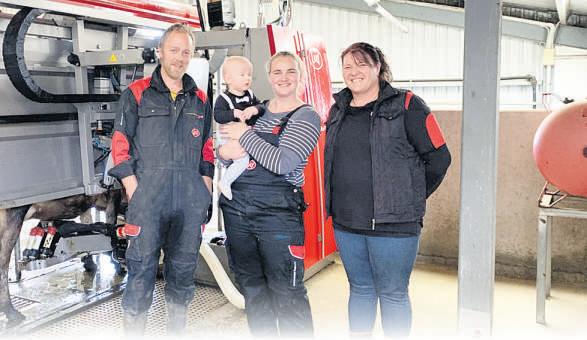
At the heart of Lely’s offering are its robotic milking systems, which allow cows to be milked voluntarily, improving cow comfort while delivering consistent, high-quality milk.
Complementing this are automated drafting, feeding, and manure collection solutions that reduce manual labour demands and help streamline daily farm operations.
All systems are connected through Lely Horizon, a smart farm management software platform that provides real-time insights into herd health, production, and performance, empowering farmers to make informed decisions with confidence
What truly sets Lely Center Waikato apart, however, is the strength of its local support
From initial consultation and system design through to installation, servicing, and longterm maintenance, farmers are backed by trained specialists who understand both the technology and the realities of New Zealand dairy farming.
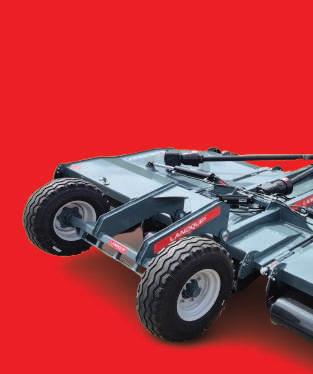


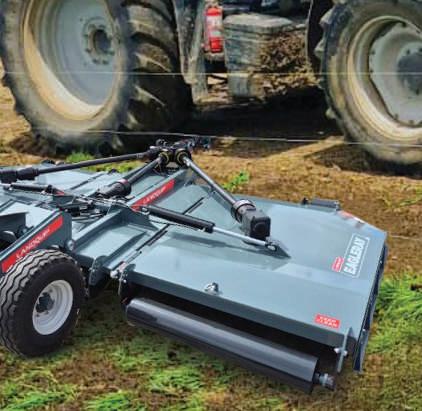
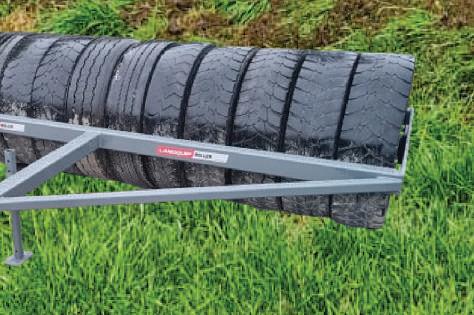
Grazing-basedroboticmlkng sbengadoptedbydairyfarmersaroundthe world fyoureseeknggreatereffciencyonyourfarm morequaltytimewith yourfamly andrelabelabourrelief mlkingrobotsofferacompe ingsolution

Content
Lely Center Waikato is proud to combine world-leading technology with reliable local service to support efficient, futurefocused dairy farming across the region. Farmers can learn more about Lely’s solutions and meet the team in person at the NZ Dairy Expo in Matamata, where Lely Center Waikato will be on site to showcase our technology, answer questions, and discuss how automation can work on individual farms. Innovation may be global, but at Lely Center Waikato, support is always local.
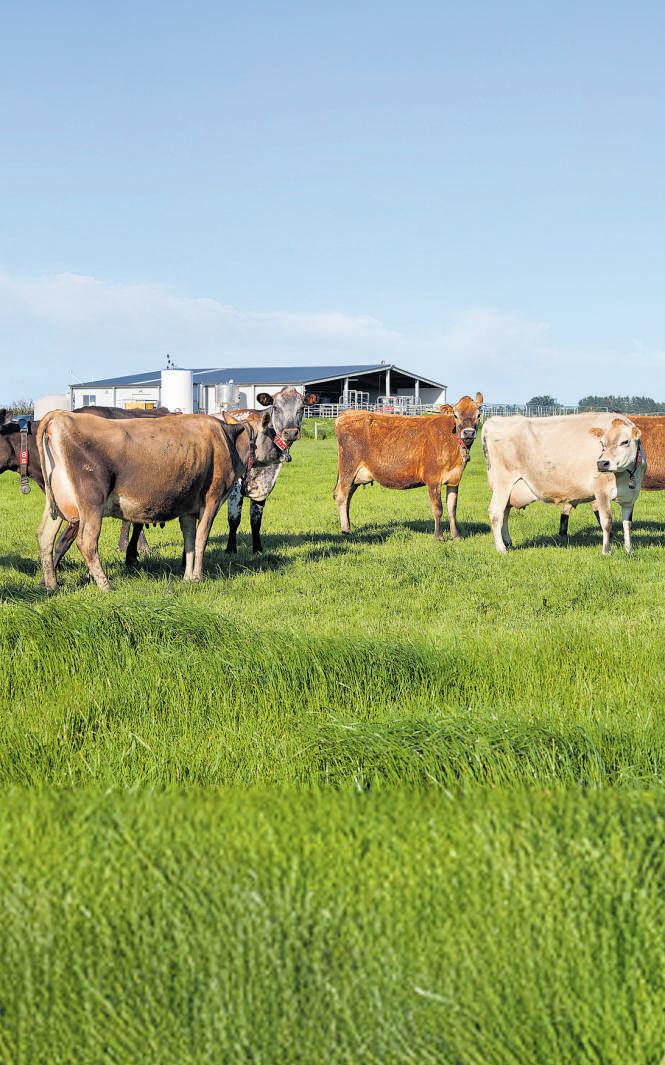
VisitusduringtheNZDaryExpoto earnmore
Brightfarmingisyoursbychoice
Findoutmoreonlely.com/nz/campaigns/grazing orscantheQR-codeabove

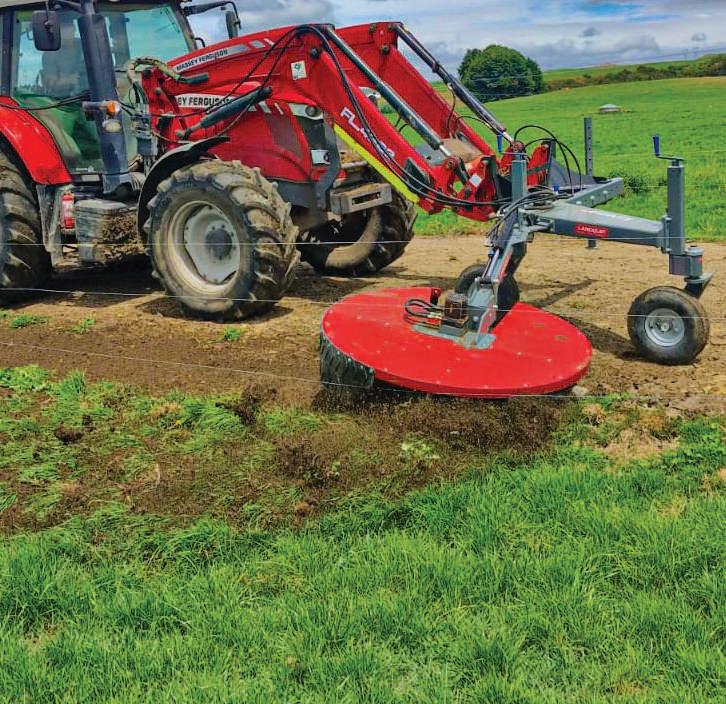

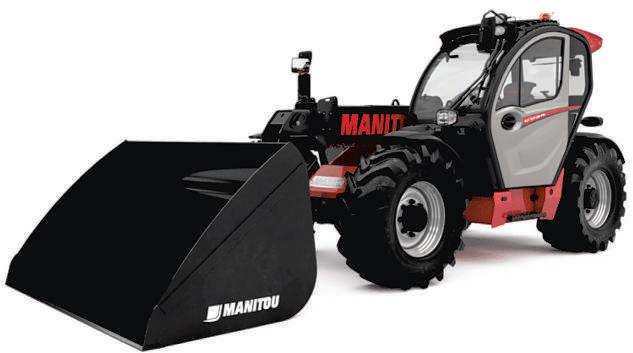
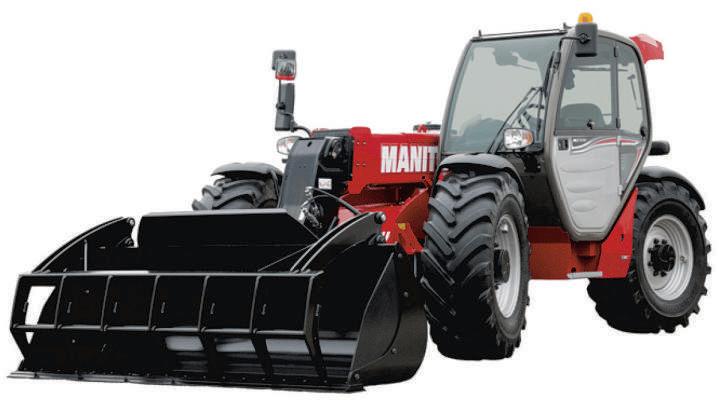
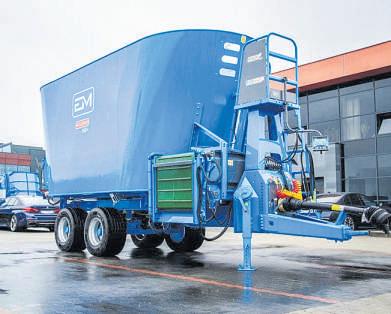
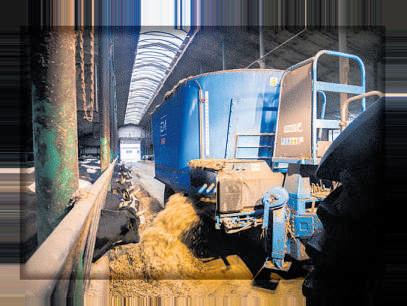
FarmChief Machinery’s 50-year milestone arrives at the same moment a new piece of kit rolls into the yard and starts turning heads.
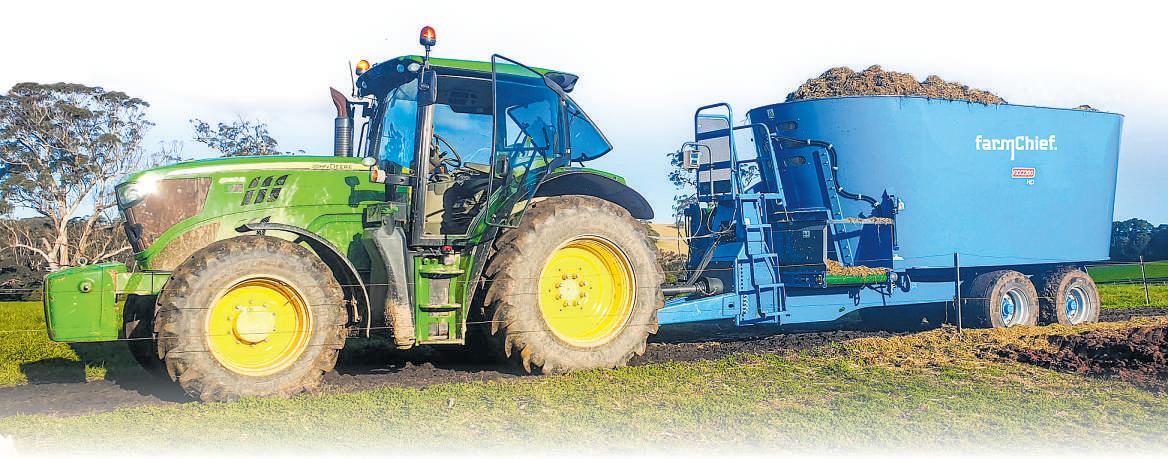
The Rhino Mixer Feeder Wagon has officially joined the FarmChief lineup, signalling a clear intent: to support New Zealand farmers with equipment that lifts efficiency, improves consistency, and stands up to the demands of busy dairy and livestock operations
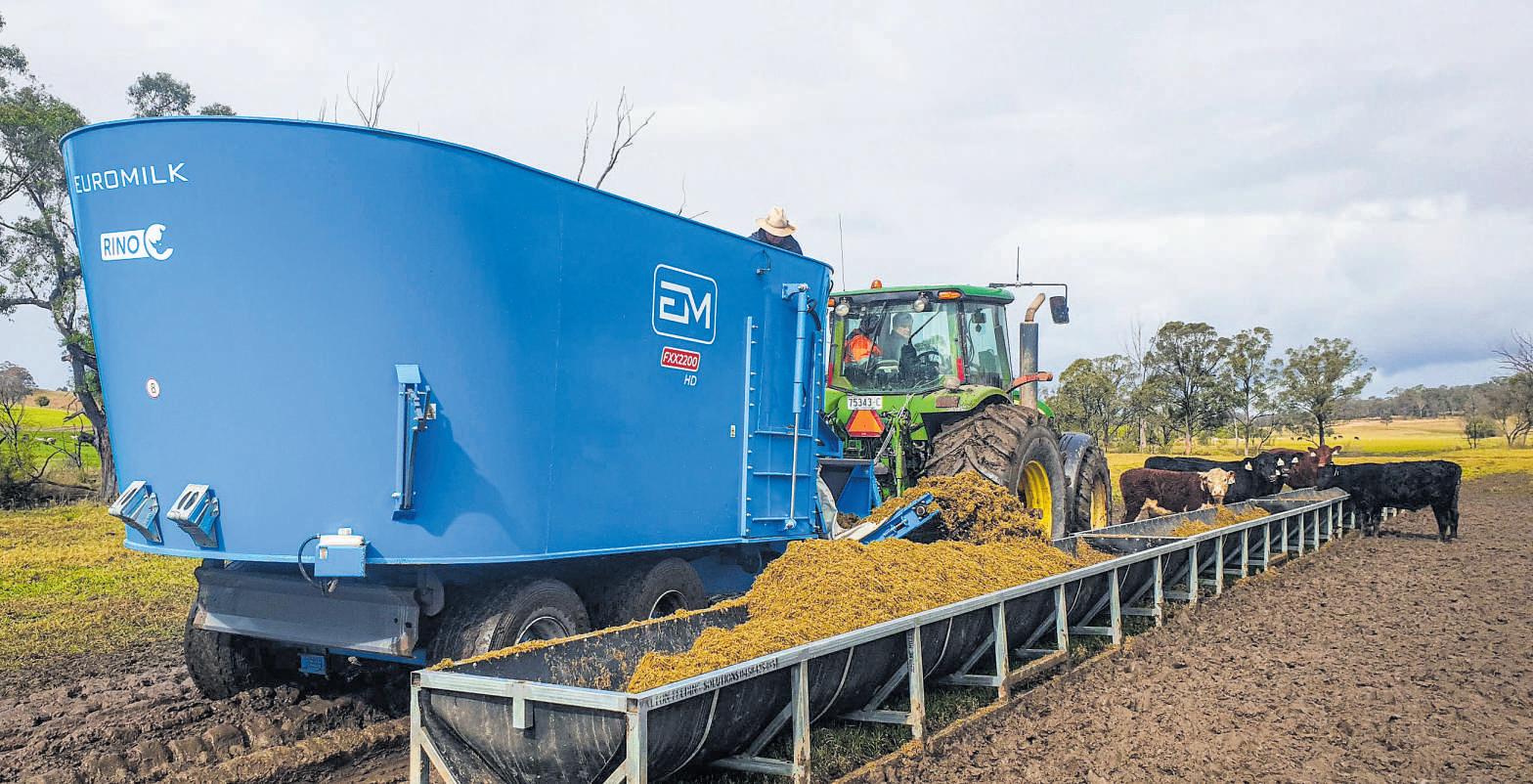
The Rhino is built for farms where feeding is a daily, high-pressure job that sets the tone for everything else. It’s designed to produce a uniform, reliable mix, batch after batch, without wasting time or diesel. Heavy-duty augers break down fibre cleanly The tub shape keeps material moving. The scales and control system give accurate readings so you know exactly what’s going in and what’s coming out. The result is consistent feed that keeps stock settled, productive, and performing as they should.
Owners of the Rhino point to one thing above all: mix quality When the fibre is even and the energy is balanced, cows eat better, waste less and hold condition more easily That steadiness flows through the whole farm. Milk production stays solid.


Animals remain calmer because every feed looks and smells the same as the last. Operators spend less time dealing with jammed bales or uneven blends. The Rhino removes the variability, which removes the stress.
Strength is another part of its appeal. This machine isn’t built for gentle treatment. The steel, the drive system and the gearboxes reflect a design that assumes long hours and tough use. Maintenance points are simple to access, and the layout avoids unnecessary complexity It’s made for real farming, not showroom photography Its introduction comes at a time when the Waikato branch is building momentum
More farmers want local support, straightforward advice and parts on hand when the unexpected happens The Rhino fits that picture neatly FarmChief backs the machine with technicians who understand feeding systems, know how to keep them tuned and can respond quickly during peak periods The expansion in the region means faster service, better parts availability and a team that works in step with local farming seasons
At the same time, the rest of the FarmChief range continues to grow in popularity, encompassing effluent solutions that capture nutrients and reduce waste, direct-drilling options built for New Zealand’s varied soils, seeding tools like the new Einbock PneumaticStar Tyne Airseeder that support pasture renovation and cover cropping and a deep cultivation lineup that includes rippers, power harrows, primary
d discs, s speed discs and rollers for every stage of ground preparation. And now, with the Rhino, the feeding side of the farm is covered too
The 50-year mark adds weight to this expansion FarmChief has spent decades earning trust by supplying gear that works and supporting it properly They don’t bring in new machines for show. They bring them in because farmers need them and because they’re confident they can back them
With the Rhino Mixer Feeder Wagon joining the stable, and with strong growth across drilling, seeding, effluent management and cultivation equipment, FarmChief is setting up the next chapter with purpose. Fifty years in, the focus remains the same: practical solutions, reliable machinery, and support that holds up under pressure.













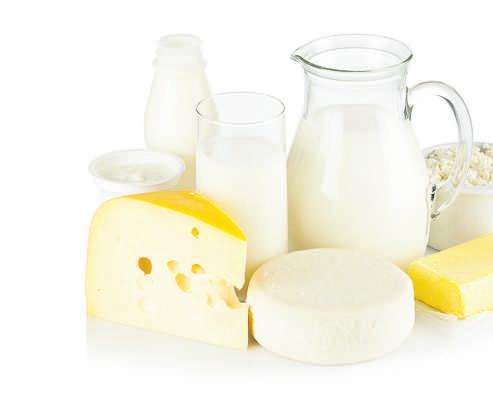
Dairy’s positive start to 2026 continues, with prices rising 1 5% across the board in the latest Global Dairy Trade auction
This follows a strong 6 3% jump in the first auction of the year two weeks ago
Most product movements were more modest this time compared to the sharp increases seen earlier in January
Whole milk powder – which has the biggest impact on Fonterra’s farmgate milk price – lifted 1%, to an average of US$3449/MT ($5900/MT), after a hefty 7 2% rise at the previous event
Skim milk p powder – Fonterra’s second-bigggest reference product – rose 2 2%, to an average of US$2615/MT ($4480/MT), following an impressive 5 4% increase two weeks ago
Butter was up 2 1% to an average of US$5314/ MT ($9,111/MT) – it gained 3 8% last time
Anhydrous milk fat rounded out the positive reference products – up 3% to an average
of US$6191/MT ($10,615/MT) – after leaping 7 4% at the previous event
Cheddar dipped 1 4%, to an average of US$4594/MT ($7878/MT) – up 0 6% previously – and lactose fell 1 8% to an average of US$1385/ MT ($2375/MT)
Lactose was not available at the last auction
Mozzarella recorded the largest fall, down 2 3% to an average of US$3340/MT ($5728/MT) This follows a 0.7% increase two weeks ago.
Butter milk powder was not available at this event
A total of 27,821MT of product was purchased by 114 successful bidders, down from 29,282MT at the p previous auction, with the number of winning bidders unchanged
per kgMS, with a m midpoint of $9.50 per kgMS o on November 25. The co-op ’ s opening g forecast on May 29 w was $10 per kgMS, with a wide range of $8-$11 1 per kgMS, but was narroowed to $9-$11 per kgMS, with a midpoint of $10 per kgMS, on Augsut 21 Fonterra paid $10 16 per kgMS for the 2024/2025 season
On December 18, Fonterra further narrowed its 2025/2026 farmgate milk price forecast to a range of $8 50-$9 50/kgMS, with a midpoint of $9 per kgMS
This follows Fonterra cutting its 2025/2026 farmgate milk price forecast to a range of $9-$10































After a busy 2025, Waikato Rural Support is kicking off the New Year at this month’s NZ Dairy Expo
Two representatives will be on-site at Bedford Park for the WRS, a charitable trust dedicated to the wellbeing of New Zealand’s primary sector
Chairman Neil Bateup says as challenges continue to ripple through farming and grower communities, the trust has stepped up with wrap-around support that goes far beyond one-off assistance, providing ongoing care for
the people who keep our country thriving
Throughout last year, he says the team responded to a wide range of issues, with relationship breakdowns and employment challenges emerging as common stress factors.




“They also stood alongside communities during local adversities, offering practical help and emotional support when it’s needed most. ”
Neil says much of this work happens under the radar out of respect for confidentiality, but it’s important for farmers and growers to know that help is only a phone call away.
“We’re here to listen, to support, and to walk alongside our farmers and growers through tough times,” he says Support hasn’t been limited to one-on-one assistance.
During the past 12 months, the Waikato Rural Support team has been involved in around 140 events, from field days
and workshops to community gatherings. Neil says these events have created vital opportunities for connection, learning and resilience-building
“Every interaction matters, ” he says “We’re here to listen, to walk alongside, and to make sure no one feels alone ” Collaboration has been key to success, says Neil
“Working closely with industry partners, local organisations, and community leaders has amplified the trust ’ s reach and strengthened its ability to respond quickly when rural families need support most. ”
Behind the scenes, a dedicated team is the driving force, he says

“Their passion and commitment have ensured that help is not only available but accessible and meaningful
“We’re incredibly proud of our people. They’ve gone above and beyond to make a difference.”
Waikato Rural Support acknowledges the resilience of rural communities and the strength of collaboration with partners Neil says.
“Together, they remain committed to ensuring that no one faces challenges alone.”
The Waikato Rural Support Trust was formed 20 years ago Co-ordinator Wanda Leadbeater says there was a need for an independent organisation to offer support to all primary producers an to help during adverse weather events
“It was set up by a group of like-minded farmers with a passion to help others,” she says.
Waikato Rural Support is one of 14 Rural Support Trusts across New Zealand, all working under a shared umbrella while responding to the unique needs of the respective communities
The WRS service area aligns with the Waikato Regional Council boundary and extends into South Auckland, reaching right up to the Harbour Bridge

Trust covers an area following the BOP Civil Defence boundary, which stretches from Cape Runaway to Waihī Beach, with Rangitāiki the most southern point Rural Support Trusts provide one-on-one, free and confidential peer support.
beekeepers among others.
It takes in landowners, contractors/selfemployed and employees
Issues covered
Wanda says it does not matter whether the issue that is causing stress is business or personal
“We offer support and a listening ear for farmers and growers when it’s needed most ”
The network can provide support for: health and wellbeing, employment matters, relationships, financial pressure, animal welfare, weather events, biosecurity incursions, and community connection and events
“From the lows to the highs, we ’ re here for t all,” says Wanda
“If you or someone you know needs upport, we are just a call away All calls are confidential and you’ll speak with a team member who understands the unique challenges of farming and rural life
“Together, we’ll create a plan that works for you – connecting you with the right people to support your next steps ”
Freephone 0800 787 254 or check out the rural-support.org.nz website.
You can join and support Waikato Rural Support at these upcoming local events:
A longstanding rural advocate has been recognised in the New Year 2026 Honours List
Former Rural Support Trust chairman Neil Bateup was made an officer of the New Zealand Order of Merit in 2018; now he has received a higher honour, becoming a companion of the order for his services to the rural sector
“I’m pretty honoured, but I’m receiving it on behalf of the Rural Support Trust organisation; it’s a recognition of the team, ” he told the Waikato Herald
Neil grew up on a dairy farm and has been a farmer all his life
“I can ’ t imagine doing anything else,” he says
“Farming is quite unique in how many different skills you need But you are also at the mercy of product prices and the weather
“There are many ways to do things there is not just one recipe [for success]
Within their region, the Waikato team work across the following council boundaries: Waikato, Waipa, Ōtorohanga, Waitomo, Matamata-Piako, South Waikato, Hauraki, Thames-Coromandel, Taupō and Auckland Unitary Authority Neighbouring Bay of Plenty Rural Support
Wanda Leadbeater says Rural Support is a non-profit organisation that’s here to help those working in the primary industries. The network supports all those who earn an income from the land, including farmers, commercial growers, contractors, thoroughbred breeders and
NZ Dairy Expo
• Site B3 at the New Zealand Dairy Expo
• Wednesday, February 18, & Thursday, February 19, 8 30am – 3pm
• Bedford Park, Matamata (United Matamata Sports Club)
Steve Edwards
We do dairy very well here in New Zealand and our products are revered internationally Collaboration is central to our sector’s success, with farmers working together to support a thriving dairy sector that is intergenerational, where our care for land, people, animals and community is world-class Through the Milksolids Levy, introduced in 2003, our farmers hav h d knowledge, the cost of f focused research and it on-farm benefits, and established the clear, united voice of dairy tha has generated more government support and practical policy
Over the next month, New Zealand dairy farmers can vote on the future of the Milksolids Levy It’s an important moment for our sector It’s when we come together to vote for the value of doing together none of us can achieve
We encourage every le to vote, every vote counts
DairyNZ’s levy-funded activities created a seven-fold return on investment for farmers based on the productivity gains and avoided costs
But there’s more work to be done There are a lot of opportunities, particularly in maximising pasture and grass-fed advantage, innovation and technology adoption, genetic i i ental solutions, development, and wide collaboration Milksolids Levy helps w Zealand farmers e competitive in this space
The Milksolids Levy is the primary source of funding for DairyNZ’s work As the industry organisation representing all New Zealand dairy farmers, we invest in practical on-farm tools, research, farmer support, extension, and advocacy to help farmers respond to change and seize opportunities
We’re focused on ensuring the Milksolids Levy is our farmers’ best investment An independent report in late 2025 found
Your Milksolids Levy is an investment in shared knowledge between farmers and industry experts – turning real-life experience and science-based dvice into everyday rovements, so good spread fast and pay s all enges will need fresh ideas, better tools, and the same spirit of working together that’s always set our sector apart Every vote in favour of the Milksolids Levy contributes to the shared knowledge, tools, and research that keep New Zealand dairy farms ahead Farmers have always worked best when we work together Now is your chance to continue making progress together by backing initiatives that strengthen every farm, today and tomorrow So, let’s vote – together
“I enjoy the challenges and you are forever learning There is always new research, new technology”
Neil is most known for being part of “ a small group ” that set up the first Rural Support Trust in New Zealand in Waikato-Hauraki/Coromandel in 2004



•
•
•
•
•
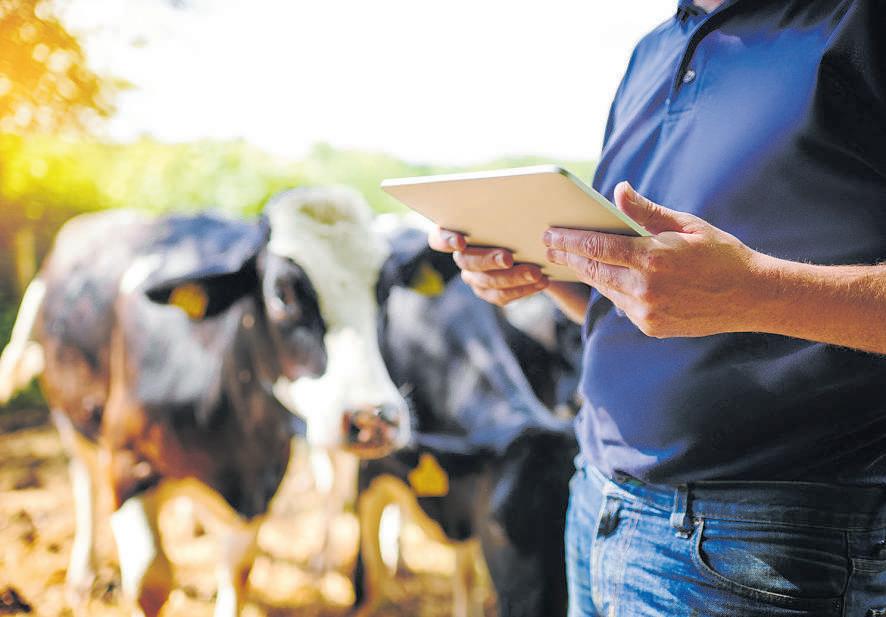
Farmers embracing modern technology is paving the way for a bright future for the dairy industry
This was highlighted at a panel discussion at an International Precision Dairy Farming Conference held in Christchurch at the end of last year
Facilitated by DairyNZ’s national key accounts manager Tony Finch, farmers from around New Zealand discussed how Kiwi farmers are succeeding at achieving more with fewer inputs by harnessing technology and modern farming practices
Waikato farmer Pete Morgan’s farm uses advanced systems to monitor various aspects of farm management, from cow health to pasture growth
He says AI and technology are useful tools to fine-tune operations, without taking control away from farmers
“Technology and AI are not there to do the work for us, they’re there to assist us, ” Pete says
“It’s useful to predict challenges such as feed shortages and animal health issues, which can help farmers proactively address problems before they escalate It’s about making our decisions better, not replacing our expertise ”
The conference heard there is a generational shift in farming, with younger farmers increasingly embracing technology, while older generations rely on hands-on experience
Southland farmer Sharn Roskam highlighted the need to bridge the gap between the two,
ensuring that younger farmers learn from the wealth of knowledge held by their more experienced counterparts
“We need to make sure that young farmers can use technology but still hold on to the core skills that come with hands-on experience,” she says
“We don’t want technology to take over too many decisions We need to keep the learning environment alive and maintain the joy of farming ”
The latest New Zealand Dairy Statistics 2024/2025, released by DairyNZ and Livestock Improvement Corporation (LIC), reveals total milksolids production rose 2 9% in 2024/2025 to 1 94 billion kilograms, despite a 0 5% fall in cow numbers to 4 68 million
The lift was driven by record-high productivity per cow, with the average cow producing 414 kilograms of milksolids, up 14kg from last season
DairyNZ chief executive Campbell Parker says the results reflect farmers’ strong focus on performance and adaptability despite a range of challenges over the past few years
“Farmers continue to focus on doing things smarter and driving productivity, including managing their herds more efficiently, improving feed use, and leveraging science and technology to lift production per cow, while also responding to higher milk prices last season
“The trend towards fewer, larger herds is continuing, but the focus on high-performing,

healthy animals remains strong, with fewer cows producing more milk,” Campbell says
“It’s a real credit to farmers’ skill, resilience, and ongoing investment in herd improvement and farm management
“That combination of efficiency and innovation keeps New Zealand dairy farming at the forefront internationally”
Campbell says herd improvement activity also strengthened notably in 2024/25, with farmers continuing to invest in data and genetics to support long-term gains
A total of 3 84 million cows were herd-tested, a five per cent increase from last season, with 82% of the national herd now tested in 2024/25
The proportion of cows mated to artificial breeding (AB) also increased slightly to 81 5% Strong commitment
LIC chief executive David Chin highlighted farmers’ strong commitment to genetic progress and herd performance, driven by their focus to lift productivity across their businesses
“Farmers now have access to the most accurate data and advanced genetic tools ever available, and they’re using these to make very smart, highly targeted breeding decisions
“The record milk production per cow is no coincidence,” David says.
“It’s the result of decades of genetic improvement and a relentless focus on cow efficiency
“Genomic evaluations, milk quality, and herd testing have all become integral as farmers identify
and breed from their top-performing
David says the long-term trend towards crossbreeding is another sign of farmers’ focus on breeding a balanced, fertile and highly efficient herd
“Holstein-Friesian/Jersey crossbreds now account for just over 61% of the national herd.
“This reflects farmers’ confidence in cows that combine strong production with high milksolids, good conformation and fertility – key traits for a resilient national herd,” he says
The average dairy co-operative payout (including dividends) was $10 75 per kilogram of milksolids, an increase from $8 90 in the previous season
When adjusted for inflation, the 2024/25 payout was $0 90 above the five-year inflation-adjusted average of $9 25 per kilogram of milksolids
Campbell says dairy farmers continue to play a large role in contributing to the New Zealand economy
“Looking ahead to the current 2025/26 season, we will likely see the impacts from the extreme wet weather experienced in some regions during spring flow through
“However, there are some positives, with strong production at the start of the season, accompanied by a stronger than average retro payment and reduced interest rates, which will likely improve the cash position of many farmers ”
Steve Edwards
The NZ Dairy Expo, on at Bedford Park in Matamata this month, is designed to fit between milkings (8 30am-3pm) It brings together 180 dairy focused businesses; each tied directly to dairy farming and on-farm productivity
Run by a couple of passionate organisers who also run their own rural business, the NZ Dairy Expo is an industry-good event that remains free for farmers and operates purely as a break-even, non-sponsored show
There are no naming rights or corporate strings attached; it’s simply a whole lot of mucking in and hard work
demands Instead, staying completely neutral within the sector allows the expo to focus on what matters: creating value for farmers and businesses, with no hidden agendas The team is committed to giving every exhibitor the same level of visibility, supporting businesses coming through the ranks and keeping all companies on an even keel
“We do this because the NZ dairy sector is our livelihood,” says organiser Amanda Hodgson “This expo is about creating value for both farmers and businesses


Organisers say they don’t believe sponsorship drives productivity, it can often create unnecessary pressure and
“If it didn’t deliver that, we’d just be another field days and there’s already enough of them and that’s not who we are or why we want to do this That would be a waste of time and energy ”








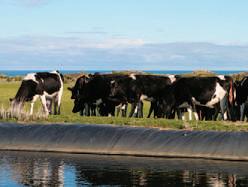

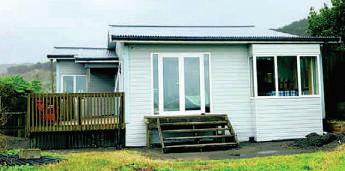

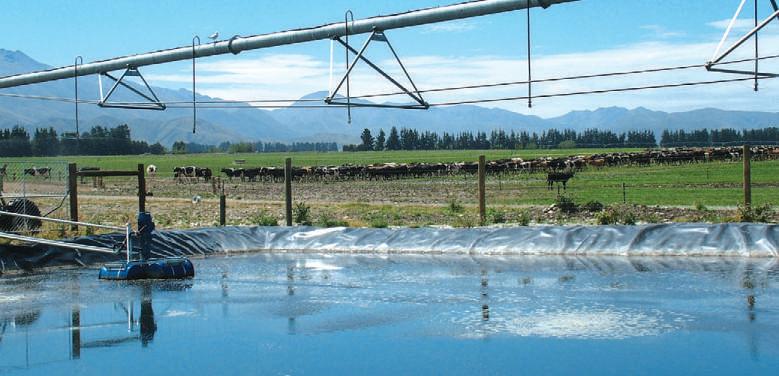



It is hard to recollect a time when future planning has been so uncertain.
Farmers have several variables to consider Prices received for milk, meat, wool, and horticultural products appear to be steadily lifting; however, volatility is also increasing.
Costs are on an upward escalator, particularly rates and those related to compliance. International crude oil prices are low by historical standards, yet local fuel prices do not seem to fully reflect this.
The cost of capital, as shown by interest rates, is close to longterm lows, and any upward movement adds significant extra pressure for those who are
heavily indebted.
Weather perhaps has the greatest influence, and accurate longterm projections largely depend on where you look and what you want to see.
Farming is not for the shortsighted or fainthearted; however, there are steps that can be taken to provide a degree of certainty and comfort.
Magnesium requirements on farms, particularly intensive dairy operations, increase each year Many soils are naturally magnesium deficient, while in others the deficiency is induced through excessive nitrogen and potassium inputs.




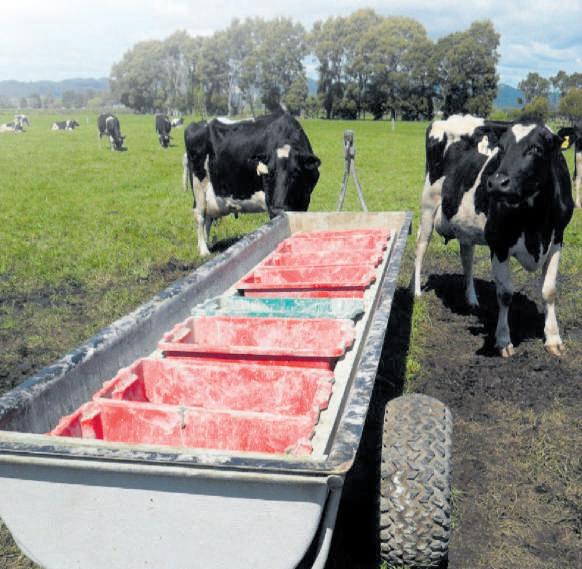
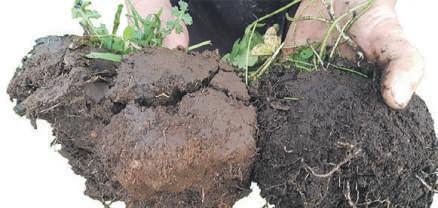
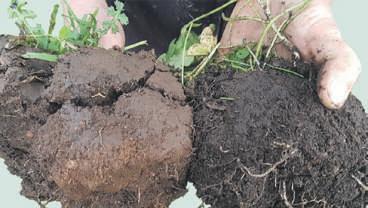
Soil compaction, with the resultant shallow rooting of plants, further compounds the problem, with magnesium supplementation being required throughout the milking season.
Magnesium chloride and sulphate added to the water supply can result in animals preferring to drink from puddles, thereby limiting production
An unlimited supply of fresh, clean drinking water increases milk production, improves weight gain, and strengthens immune systems
To ensure sufficient magnesium intake, a bin of dolomite made available next to a trough or in the race at the entrance to or exit from the milking shed allows each animal to access what it requires
The amount of magnesium in the water supply can then be steadily reduced over a period of several weeks




Magnesium and calcium requirements are closely related, and dolomite provides both,
containing 24% calcium and 11.5% magnesium.
A bin of lime flour will allow animals with higher calcium requirements to access the extra they need.
Salt Farmer clients often always have salt available, as animals lose sodium during the summer months and also mobilise it to fight infections
We recommend that these supplements are never mixed together or with other feed, as stock may ingest excess quantities, which can be just as detrimental as a deficiency
The basis of a sound magnesium supplementation programme is an annual application of dolomite, with the only source here being that from Golden Bay
An annual application of
DairyNZ is giving New Zealand farmers a unique opportunity to gain hands-on governance and leadership experience within the dairy sector
200–250 kg/ha is sufficient to replace losses, with a 30tonne truck and trailer load covering between 120 and 150 hectares.
Where this is not enough to cover the whole property, targeting calving areas and paddocks receiving cowshed effluent will still provide worthwhile benefits.
Fewer animals exhibit clinical magnesium deficiency symptoms during calving and early lactation Cows that do become unsteady are usually treatable and typically recover fully with minimal loss of production
Because dolomite remains fully effective for twelve months, it may be applied at any time, with autumn being ideal.
For a quote for product delivered to your property, call 0800 436 566 (0800 4 DOLOMITE).
a passion for dairy the chance to contribute to one of their industry-good bodies and participate in discussion and debate.









It has opened applications for its sought-after associate director role on DairyNZ’s board. The one-year position offers levy-paying farmers with





DairyNZ chair Tracy Brown says 15 dairy farmers have taken up the role since it was first introduced in 2013 and it has been a key stage in their governance development.
There is one associate director position open to current levy-paying dairy farmers who are demonstrating leadership within their community and/or the dairy sector
It is a non-voting role and is appointed for a one-year timeframe beginning June 1
A commitment of approximately 30 days per annum and the ability to travel are required

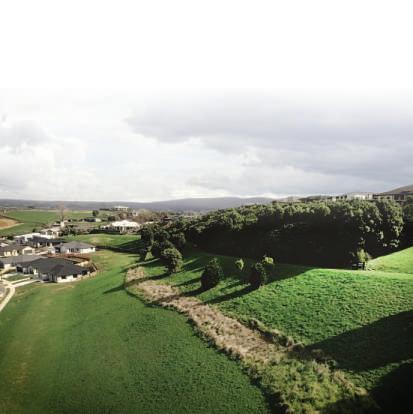
To apply, email your CV and cover letter to corporate secretary@ dairynz co nz Applications close at 12 noon on Friday 20 February 2025, with interviews to follow in March


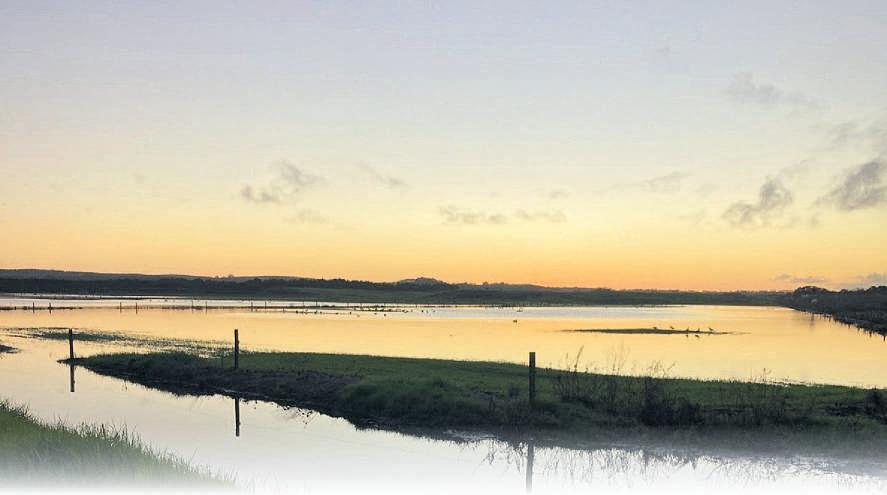


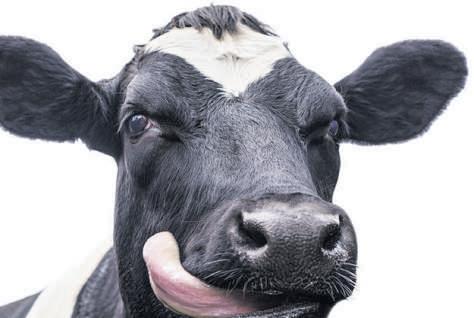

The saying “farming is all about surviving bad weather” has never felt more accurate for me personally.
One week in January here in the Bay of Plenty – like much of northern New Zealand – experienced devastating torrential rain. A total of 221mm fell during January 21-22, on top of around 100mm already received in the preceding weeks. This extreme weather triggered tragic landslides that claimed eight lives in the region. While nothing compares to the loss of life, the impact on farming has also been significant. We had more than 100 hectares of our own maize crops that were flooded and remained waterlogged for the best part of a week. While we are optimistic it won ’ t be a complete loss for the crops affected, we are also realistic about where things might end up Resilience is an essential trait for farmers – whether they are born with it or forced to develop it through experience.
Rain predictions
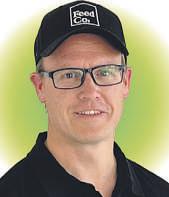

that ended in family conflict A family farm is far more than a business; it is a home, a way of life, often a multi-generational legacy, and a core part of personal identity These factors make succession planning particularly complex
Clear and early communication to me is the single most important factor in successful succession. Families that openly discuss intentions, expectations, and concerns well before a transition is required are far more likely to avoid disharmony later on and also allow but also maximise opportunities for the best outcomes for all given the extra time allowed Honest conversations should cover who wants to farm and who does not, retirement expectations, income needs, and what is fair versus what is financially viable for the business Avoiding these discussions only creates problems down the track.
Interestingly, long-range forecaster Ken Ring, often referred to as the ‘Moonman’, predicted heavy rain and flooding around January 19 in his forecast released on November 19, particularly for Northland. After seeing events unfold, it may be worth paying closer attention to his forecasts. Encouragingly, that same forecast suggested the next period of heavy rain may not arrive until March, with the potential for hotter, drier conditions in between. There is still hope that summer may yet make an appearance. During the brief periods of warm, dry weather at Christmas, many people would have reflected on the year ahead and perhaps set New Year’s resolutions. For an ageing farming population, this often includes thinking about farm succession. In my years working in rural banking, I have witnessed both successful transitions and others
Defined roles and a staged transition are also critical Gradually shifting management, ownership, and decision-making allows the next generation to build confidence while enabling the older generation to step back with purpose Clear boundaries help avoid the “still farming from the kitchen table” trap which happens all too frequently
Finally, professional advice and flexibility are essential. Accountants, lawyers, bankers, and rural advisors can help design practical, legally sound, and tax-efficient structures. Succession plans should be treated as living documents and reviewed as circumstances change.
From a feed perspective, given the frequent rainfall received through the summer, most have replenished what last years drought depleted However, there is still time to secure your straw or hay requirements direct from the paddock. We also have some maize silage still on offer, so give me a call if you have any needs.



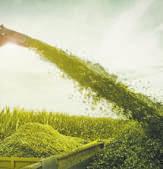


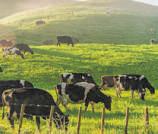











An award-winning scientist’s pioneering work in horticulture will be remembered long after his passing.
Dr David Steven, who died in Auckland recently, developed integrated pest management (IPM) systems for both the kiwifruit and avocado industries.
Armed with a BSc (Hons) and a PhD, David began his career at the Ministry of Agriculture and Fisheries Research Centre in Levin before moving to the entomology division of the DSIR at the Mount Albert Research Centre in 1975.
His development of the KiwiGreen IPM in 1991 came at a crucial time in the history of New Zealand
kiwifruit, with exports under threat –particularly in Europe – as traditional “calendar spraying” was leaving a relatively high load of pesticide on the fruit.
New Zealand kiwifruit growers had relied on cheap, persistent pesticides applied on a regular schedule, regardless of whether they were needed or not.
Before the European export situation came to a head, David and his team at the DSIR had already been working for several years on developing pest monitoring techniques for kiwifruit and learning how to control pests using softer pesticides
He had to devise monitoring techniques for key kiwifruit pests and then determine a critical level
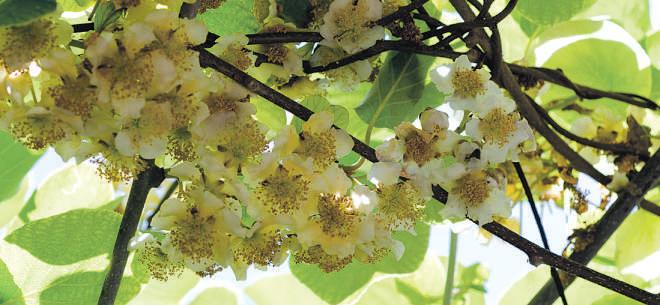

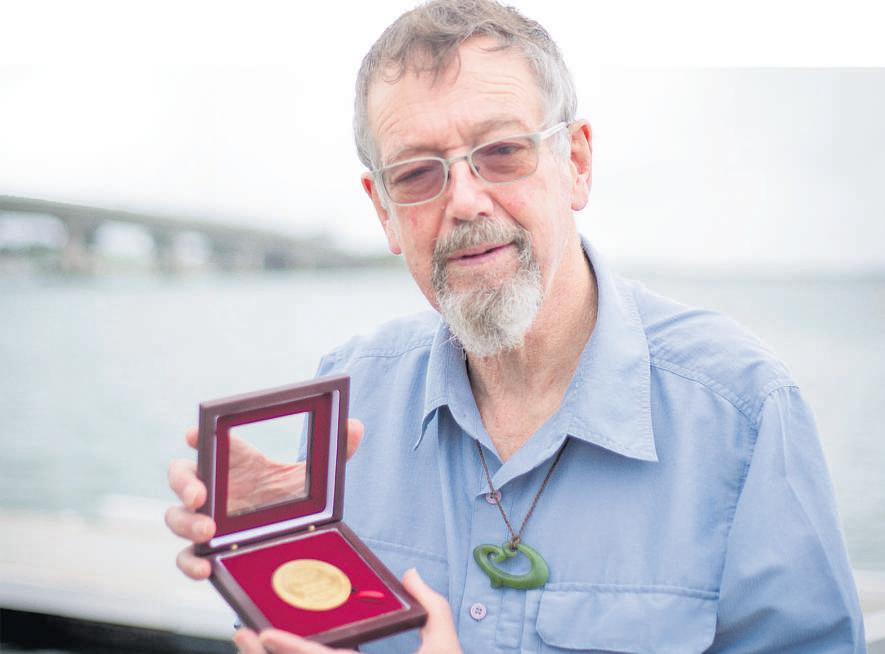
for each of these pests that, if exceeded, would justify the need for a spray
His greatest challenge would prove to be convincing growers who had spent years using the same spray programme that they actually did not need to spray if the pest numbers were below a critical threshold, and then getting them to switch to using softer chemicals that left fewer residues.
David and his team succeeded in pulling together the key elements of an IPM system –KiwiGreen - within two years.
Such was the faith of the industry in his approach, David was allowed to run field trials on an unheard-of scale, using entire orchards that accounted for a large percentage of kiwifruit industry production.
The success of his approach and the urgency of the problem was such that within four years of those initial trials, the entire kiwifruit industry was required to implement KiwiGreen pest monitoring
David left government employment in 1995 to set up his own research company IPM with his wife Jill.
He continued his work with the kiwifruit industry, refining KiwiGreen, as an independent researcher.
In 1997, he was awarded the
Royal Society of New Zealand Science and Technology Medal by the Governor-General in recognition of his work in developing the KiwiGreen programme.
He was made a Fellow of the New Zealand Institute of Horticultural Science in 2000, recognising his contributions to both the society and the field He turned his attention to the avocado industry in 2002, helping to design and oversee the implementation of the IPM system AvoGreen. David worked closely with the industry, providing mentoring and technical support until AvoGreen was eventually made mandatory for export avocado production in 2010.
New Zealand Avocado CEO Brad Siebert said: “David’s expertise was invaluable as the avocado industry developed its IPM programme, AvoGreen, and we remain indebted to the skills he brought to the sector. ”
David also collated research material for an IPM manual for the persimmon industry, where he was employed for several years as research manager
When Psa – a bacterium that can kill kiwifruit vines – hit the industry in 2010, David’s advice was sought on how IPM principles could be applied to the management of this
Dr David Steven pictured after winning the kiwifruit Industry Advisory Council (IAC) Hayward Medal in 2017.

devastating disease.
In 2017, the kiwifruit Industry Advisory Council awarded David its prestigious Hayward Medal for his enormous impact in a lifetime of service to the kiwifruit industry
When presenting the medal, IAC chairman and Zespri director Paul Jones said it recognised David’s work to fundamentally shift how the industry manages pests and diseases, improving environmental outcomes and underscoring confidence in Zespri kiwifruit
“KiwiGreen fundamentally shifted how the kiwifruit industry manages diseases and pests and changed the philosophy of agrichemical use forever”
NZKGI chief executive Colin Bond said David made an enormous contribution to the New Zealand kiwifruit industry by introducing a complete shift in dealing with pests and diseases
“David’s pest-management programme KiwiGreen revolutionised the industry by targeting specific pests and diseases with environmentally friendly chemicals.
“This not only saved money but importantly, protected the environment as well,” Colin says “Growers mourn the loss of this great pioneer.”















A second variety is joining the red commercial kiwifruit stable
Marketing company
Zespri recently approved the commercialisation of Red80 to extend the commercial selling season for its RubyRed kiwifruit.
CEO Jason Te Brake says Red80 has been naturally bred through Zespri’s joint breeding programme with Plant & Food Research (now part of the Bioeconomy Science Institute).
In 2021, Zespri and the Bioeconomy Science Institute established the Kiwifruit Breeding Centre, a joint venture to accelerate the delivery of new cultivars.
Jason says Zespri currently has 20 varieties of kiwifruit, kiwiberries, and males in precommercial trials, reflecting its commitment to deliver new varieties faster to meet new consumer needs, drive additional sales, and continue its growth trajectory after exceeding its ambition of reaching $4.5 billion in global sales by 2025.
He says 100 hectares of Red80 licence would be made available to growers in 2026, including through a cutover pool for those existing Red19 growers wishing to bid for licence.
“We’re looking forward to continuing to work with
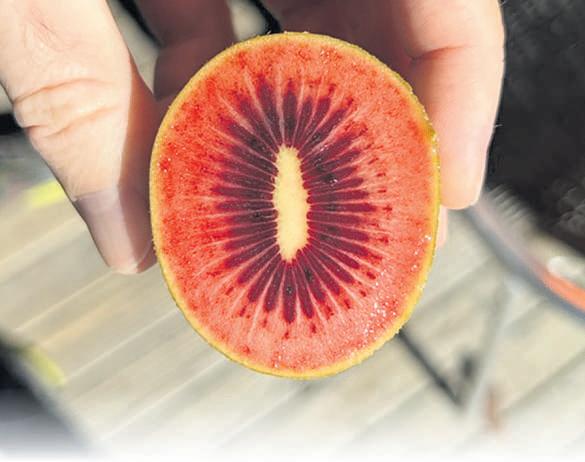
growers to provide our consumers with even more great tasting and high-quality red kiwifruit, with Red80 expected to reach commercial volumes in 2028, helping deliver strong value for all of our RubyRed Kiwifruit growers ”
The decision to commercialise Red80 follows the doubling of Zespri RubyRed kiwifruit volume in the 2025/26 season, with more than three million trays sold across key markets including New Zealand, Singapore, Japan, Mainland China, Taiwan, South Korea and the USA
Jason says the decision reflects Zespri’s commitment to

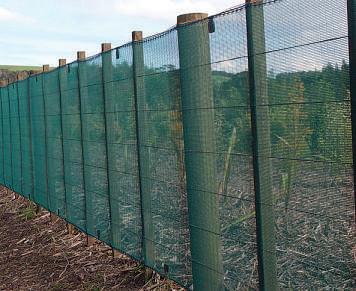





producing new cultivars that will help Zespri maintain its market position as leaders of the kiwifruit category and maximise value for New Zealand growers
“We have a proud history of innovation which has set us apart from our competitors and today’s decision is another example of the ongoing work our industry undertakes to meet the needs of our global consumers and deliver strong value to our growers
“The kiwifruit category is increasingly competitive, and our customers want a consistent supply of the full portfolio of our kiwifruit, whether that is Zespri Green, Zespri SunGold, or Zespri

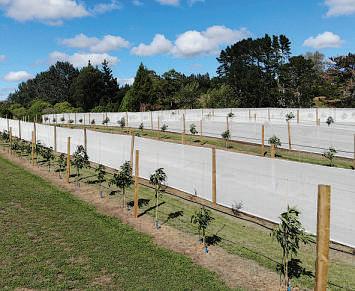

RubyRed, so the addition of a new red variety to extend our RubyRed sales season is something we ’ re really excited about,” says Jason “Red kiwifruit naturally tends to be shorter storing than green and gold kiwifruit, so we currently have a limited sales window of around eight weeks.
“Red80 harvests a bit later than our existing Red19 cultivar and stores for longer, with the two varieties working together to keep Zespri RubyRed in front of consumers for longer, building awareness,

encouraging habitual purchase, and lifting demand.”
Following the commercialisation of Red19 in 2019, commercial volumes of Zespri RubyRed kiwifruit were first sold in 2022, with the fruit extended to new markets each year to a current presence in 13 around the world
“Our research shows around 30% of people who purchase Zespri RubyRed are new to kiwifruit, so it brings more people into the category, Jason says.
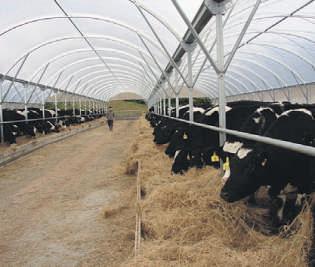

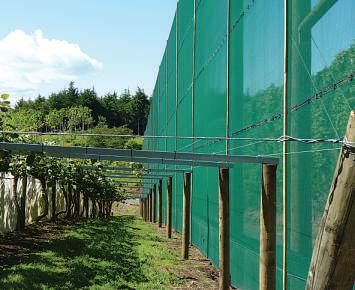

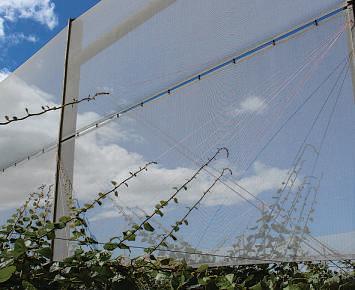








Tauranga A&P
Lifestyle Show will mark a major milestone in 2026, celebrating its 142nd show while continuing to adapt to a changing community and evolving interests
Organisers say the challenge has been balancing the heart of a traditional A & P show with the reality that fewer people are now involved in largescale farming and equestrian sports As a result, the 2026 event will showcase a broader range of animals and attractions while still honouring its agricultural roots
This year ’ s competitively judged animals will include Appaloosa horses, alpacas and alpaca fleece, dairy goats and striking Valais sheep, alongside more familiar equestrian events Popular traditional competitions will also return, with home industries, crafts
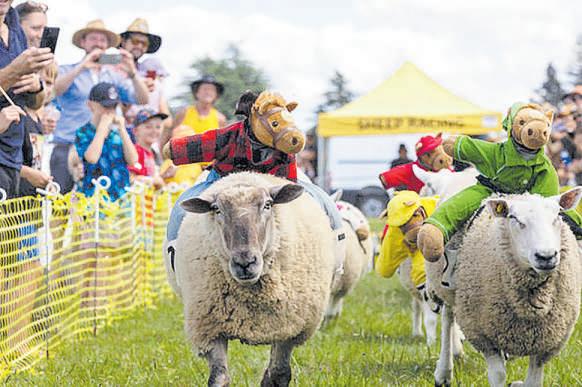
and produce sections, as well as the evercreative scarecrow competition
Beyond competition rings, visitors can enjoy food and trade stalls, live music, local dance groups, the Treble in Paradise choir, carnival attractions and an Animal Magic petting zoo Motor enthusiasts will be well catered for with a wide display of
classic and modern cars and motorcycles
Show organisers say strong community support has been vital to keeping the event thriving and are grateful for continued involvement from volunteers, exhibitors and sponsors
With growing public interest in knowing where food comes from, the show will

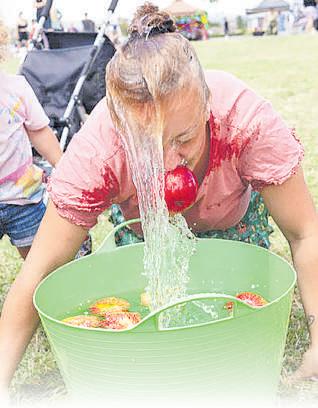
climate
ideal growing climate, featuring freerange hens, selfshedding sheep and miniature cattle
Popular public voting is back, with prizes for the Most Impressive Rooster, plus new categories for Most Impressive Hen, Best Car and Best Scarecrow, giving everyone a chance to have their say
Osteoarthritis (OA) is a degenerative joint disease characterised by the breakdown of cartilage, leading to pain, stiffness, and decreased mobility
Among the many supplements recommended for OA, chondroitin and glucosamine are the most widely used However, recent research and clinical guidelines suggest that chondroitin is more important than glucosamine for managing osteoarthritis
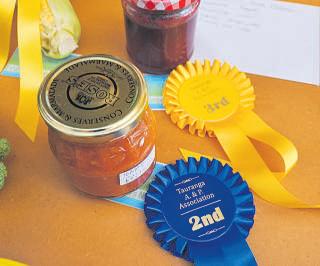
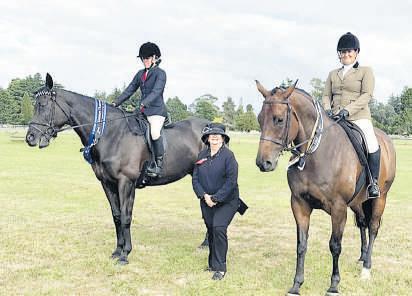




Chondroitin is a natural component of cartilage that helps retain water and maintain elasticity, which is essential for joint function Supplementation with chondroitin has been shown to slow cartilage breakdown, reduce joint pain, and improve mobility
Several large-scale studies have found that chondroitin can significantly improve joint function and comfort Glucosamine is also important but evidence for just glucosamine alone is inconsistent Many people contact me have used
high glucosamine supplements with little benefit Adding therapeutic amounts of chondroitin alongside glucosamine can make a significant difference Chondroitin’s ability to slow cartilage degradation and reduce inflammation makes it a more essential supplement for those managing osteoarthritis While both supplements are generally safe, chondroitin’s proven benefits make it a priority in OA treatment strategies I recently spoke to a client who contacted me 6 months ago with significant discomfort from OA in his knees, wrists and back As I expected, his knees started to respond within a few months I explained that hand/





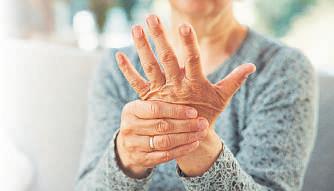
wrist joints take longer and that backs can give variable results However, he now has found his wrists are steadily improving and his back has become more comfortable
The key to such success is a personalised programme In my client’s case we started with double the dose of my joint supplement giving him 1600mg of high-grade chondroitin and glucosamine with 400mg of the latest Curcumin (from turmeric) extract John Arts (Adv.Dip.Nut.Med) is a nutritional medicine practitioner and founder of Abundant Health Ltd. For questions or advice contact John on 0800 423559 or email john@abundant.co.nz Join his newsletter at www.abundant.co.nz



































Walnut grower
Nick Nelson Parker

with a six-year-old specimen of the Legacy walnut tree he discovered
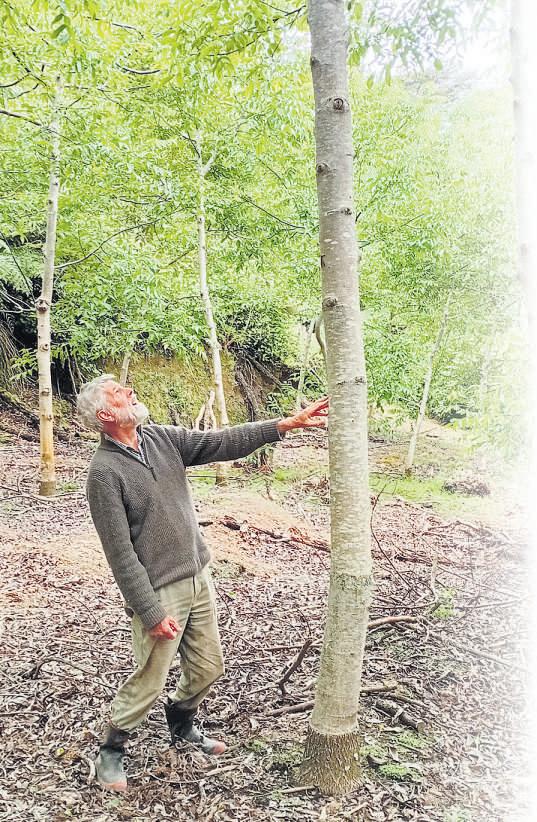
When Nick Nelson Parker was a 12 year old boy growing up in England, he watched a stranger offer his grandmother £2000 for the towering walnut tree in her garden – an eyewatering sum at the time
Th The offer lodged itself in his mind. One day, he decided, he would grow walnut trees for their timber, with the nuts as a pleasant extra
Sixtyfive years later, now settled in the Bay of Plenty, Nick has spent most of his life growing walnuts – doing the opposite of his childhood dream Instead of timber being the prize, it’s the nuts that have taken centre stage, with wood now little more than a final bonus at the end of a tree ’ s long rotation.
It was during rootstock trials with a friend that Nick discovered the walnut variety that would reshape his work. They were experimenting with the exceptionally vigorous Juglans sigillata, a species from Yunnan, China, when one hybrid tree stood out.
“I found one of the trees – a hybrid with a local tree crops variety – started producing lots of really good nuts with a high proportion of kernel to the total nut weight, known as the crackout,” Nick explains. “The crackout for my variety is 53%, compared to the South Island variety, Rex, at 39%.”
Armed with training in population genetics from Professor William Libby at the Forestry School, Nick set about rigorously trialling the new variety
He planted thousands of trees and recorded years of detailed data to evaluate performance
Walnut growers across New Zealand know the threat of bacterial blight, a major disease that can devastate orchards But Nick’s hybrid, with its lineage tied to the wet climate of Yunnan, has shown strong resilience in the Bay of Plenty’s humidity
Recognising the significance of his find, Nick named the hybrid Legacy – a nod to both its endurance and his own perspective at 77 years old
“I feel that my work will be finished by others, including the harvesting of the timber,” he says.
When driving south of Lichfield in South Waikato on State Highway 1, it is hard to miss a small stone building sitting incongruously across railway lines and paddocks on Pepperill Road
With its arched windows and striking red-painted door, the Stone Store – also known locally as “The Bank” – has been part of the Lichfield landscape since the early colonial settler days, writes Coast & Country News
journalist Catherine Fry
Survey plans from September 1, 1884, identify the site as Lot 474, purchased the following year by Alexander Heany, built a hotel on what was then Penkridge Street
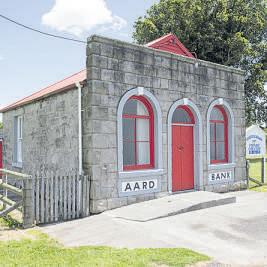
The Stone Store, constructed in the 1880s, features an Italianate-style façade built from local Putāruru stone and has inspired colourful stories about its origins, from stonemasons working off their board to less reputable tales involving unpaid bar tabs
Originally believed to have operated as a general store supplying settlers, the building later became a
billiard room and, after a fire destroyed the hotel, a temporary outlet selling beer to maintain the liquor licence Following Heany’s bankruptcy, it passed e Colonial Bank of New Zealand in e 1890s, with the licence later held by several hoteliers
During the late-1890s economic depression, the building is believed to have operated as a bank In the 1920s and 30s, the Stone Store served as a stop for the Aard Bus Company, before falling into disrepair and briefly housing nerant worker George Parks Writers
D Fairburn and R A K Mason stayed there during the 1927 harvest, later referencing the experience in their work Restored in 1946 and donated to the Lichfield Interdenominational Church, the building became home to the South Waikato Vintage Car Club in 1976 Now a Category 2 Historic Place, the Stone Store remains a cherished local landmark With thanks to the South Waikato Vintage Car Club for access to the building

Walnut wood remains one of the world’s most sought-after materials for highend furniture making For growers looking to begin their own walnut journey, Nick has one more contribution to offer.
“We have some grafted plants available to get people started, as walnuts are notoriously hard to graft,” he says. For more information, see Walnut Woodland’s advert on this page.
Suitable for Waikato/BOP
• Grafted Trees
• Heavy Regular Cropper
• Easy to Open, Well-filled Nut
• Cropping by 6 to 8 years
For more information contact Nick Nelson-Parker E: treees@xtra co nz (note three e’s)

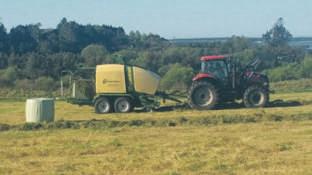
When homekill specialist Toby Barkla posted a clip on social media showing the inside of a cow ’ s udder, he didn’t expect much more than the usual interest
Instead, the video took off, racking up more than 6 2 million views and attracting a wave of curiosity, questions and commentary from right around the world
“It blew me away, ” Tony says, who owns Plains Butchery in Edgecumbe and is on the Federated Farmers rural butcher leadership team “People were genuinely fascinated by
how things work behind the scenes
“Even a lot of farmers commented that they’d never seen the inside of an udder”
That fascination speaks to something Barkla is seeing more and more of in his day-to-day work
“People really want to understand where their food comes from and be able to access it more directly,” he says in the latest Federated Farmers Podcast episode
It’s a big part of what’s driving his next move, establishing a regulated micro abattoir that will open the door for more Kiwis to buy top-quality, locally processed meat
Homekill has long played an
Varicose veins may be causing these symptoms
Call to book an assessment with Dr Anuya to see what can be done non-surgically for your varicose or spider veins


important role in rural New Zealand, but it comes with tight rules
Because the slaughter happens in an unregulated environment, the meat can only be returned to the animal’s owner, farm staff, or immediate family.
It can ’ t be sold, and it can ’ t enter the commercial food chain.
“There’s no official inspection process in homekill, so you can ’ t go out and sell meat to the public,” Toby explains.
“That’s for good reason too, because we need to protect food safety”
Those restrictions are what Barkla wants to work around by stepping fully into a regulated system.
His vision is a micro abattoir that operates on a small, local scale, but meets all the food safety and inspection requirements needed for meat to be legally sold
Toby, his slaughterman and his partner are nine weeks into a meat inspector course run by AsureQuality
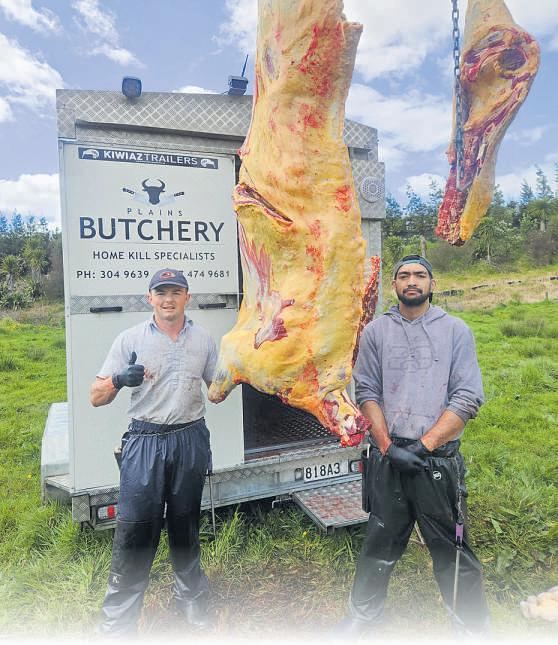
They’re currently learning the disease, defect and compliance requirements that underpin regulated processing.
“We’re actually already applying what we ’ re learning on the course when we ’ re out on the job,”
he says
“It’s been really good ”
Under the definition, a micro abattoir can process up to 20 animals a day, supplying only the domestic market.
“That scale is important,” Toby says “We’re not talking about massive numbers, but it’s big enough to make a real difference in the regions ”
Another driver behind the move is waste –something Toby says has frustrated homekill operators for years
“At the moment, we can ’ t utilise a lot of our byproducts at all, not even for pet food,” he says
Because homekill meat is unregulated, the hearts, livers, kidneys, fat and bones must be buried on farm or sent to rendering
Even hides, which once had value, are now frequently treated as waste
“It sucks seeing it go to waste, ” Toby says.
“If you ’ ve got a 300kg steer carcass, for example, a third of that is fat and bones as waste product
“There’s a lot of goodness there and that’s a huge part of why we want to set up a micro abattoir”
With inspection and traceability in place, Toby will be able to use the byproducts, dramatically reducing waste and opening up new income streams

For farmers, especially those in remote areas where small abattoirs have closed, Barkla believes the model could be a real win
“It’d be awesome for places like the East Coast,” he says “It’d mean a lot less travel time compared to sending meat to the big plants.”
There’s also a strong local angle, as micro abattoirs are designed to feed New Zealanders, not export markets.
“There’s a real feel-good factor,” Toby says
“It means New Zealand’s eating its best meat, rather than sending it overseas
“It would be neat to be able to pick out some of our prime beef – imagine a beautiful line of nice fat Angus heifers – and make that available to the local community”
While limited in scale, the model is big enough to support rural employment too.
Toby estimates a fully operational micro abattoir could employ 15 to 20 people, creating skilled jobs in provincial communities
“That’s definitely a win for farmers and for towns, ” he says
Toby’s social media videos may have captured overseas attention, but his next chapter is firmly grounded in the regions
“I’m really excited about finding smarter, more sustainable ways to get quality Kiwi meat onto Kiwi plates.
“Opening a micro abattoir will open up so many avenues for us to do that.”
-Federated Farmers



Two students with aspirations to work in scientific and environmental fields have been the friendly faces of DOC this summer, as ambassadors for nature and protected species across Coromandel
The six-week seasonal placements for Kylie Harris, 18, and Hayley Forlong, 19, have focussed on education and advocacy, and a “mountains to sea ” kaupapa sharing information about the district’s precious environments and vulnerable protected species Kylie has recently graduated from Paeroa College and is starting a Bachelor of Science majoring in Ecology and Biodiversity at Waikato University Hayley has just gained a Level 6 diploma in Environmental Management and this year will get her Bachelor of Applied Science in Biodiversity management at Toi Ohomai Polytechnic in Windemere, Tauranga Kylie and Hayley say the most rewarding part of their roles has
been engaging with more than 4000 members of the public who were out naturing, and sharing what they themselves have learned
They’ve been discussing topics ranging from the safe management of dogs in dotterel habitats to how visitors can limit the risk of spreading kauri disease by following advice on protecting the majestic taonga trees
“We had some great questions from the public including things like ‘do our dogs need to be on a lead if they have had kiwi avoidance training’ – and yes they do, to protect the kauri tree roots, keep the dogs safe and prevent harm to other wildlife living in in our forests such as native frogs and invertebrates,” says Kylie For Kylie, educating people about dotterels has been eye-opening
“People think ‘dotterels are stupid’ and to that we say ‘nuh uh’,” she says
“Some visitors to the DOC marquee came to us with this mentality, mostly because of how and where dotterels nest. Dotterels need to nest close

to the water ’ s edge as dotter chicks must feed themselve after they hatch
“Along with this, due to houses getting closer and cl to the beaches, it gives the dotterels less space to nest, they need 360 degrees of vi to spot any threats ”
Hayley and Kylie say they loved working alongside experienced and passionate DOC staff
“I’ve enjoyed working in the Hauraki office - everyone is amazing and has so much knowledge to share,” says Kylie
“I’ve always loved nature, so being able to work in this role where a majority of my time is outside of an office has been wonderful ”
Says Hayley: “I have always wanted to work for the Department of Conservation, so it’s been great to get a step in the door and get an idea of what it’s like working for DOC and the different job roles they have.”
Hayley and Kylie have a few more public event commitments as part of their summer ambassador role and they’ll return to their seasonal roles next summer
Compared to a year ago, superphosphate has gone up in price around $50/tonne, potassium chloride around $100/tonne, sulphur 90 around $200/tonne, and DAP $250/tonne; whereas triple super is similar to last year and RPR down around $40/tonne.
There are also some big differences between fertiliser company prices on some products, with several private importers being more competitively priced due to lower overheads.
As well as phosphorus, potassium and sulphur, plants need 13 other elements to grow, and also a good soil pH. Ryegrasses thrive at a pH of around 5.8, whereas clovers up to 6.3, but as the pH rises, some of the essential micronutrients such as copper, manganese and boron become less
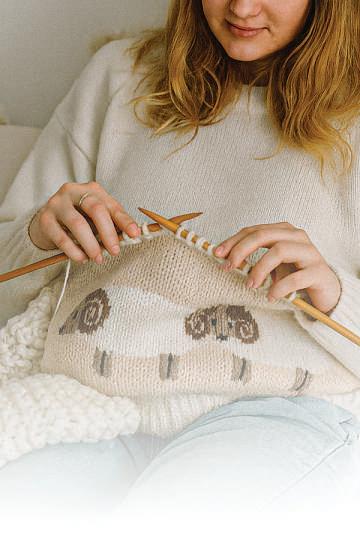
available. Another factor to consider is aluminium toxicity which is common on hill country pastures which have seen little lime over the years. At pH levels above 5.6, aluminium toxicity is rare, but I do find exceptions where aluminium toxicity exists at higher pH levels. Conversely on some low pH soils, aluminium toxicity is not a problem
Many fertiliser industry personnel only consider six element soil tests and ignore essential micronutrients and other factors such as aluminium toxicity and organic matter With increasing fortunes in pastoral farming, now is a good time to invest wisely in your soil to reap the potential it can provide by finding the key limitations to pasture and animal performance. For more information, See Agronomic Advisory’s advert on this page.


Hayley Forlong in the foreground, and Kylie Harris behind her, at a DOC kauri hygiene station
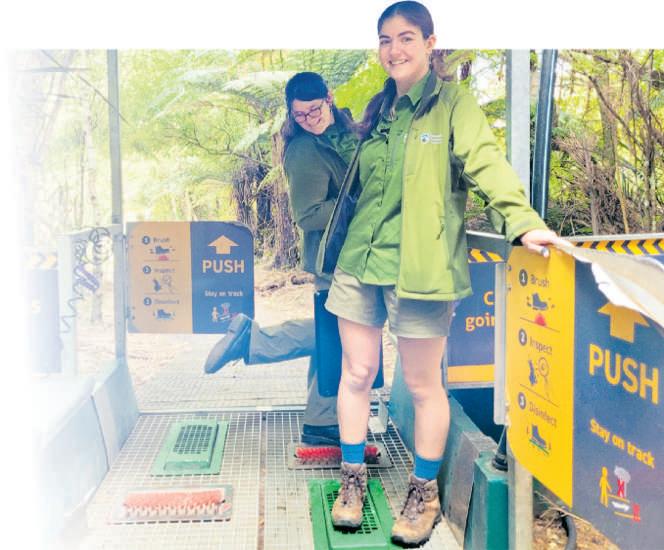
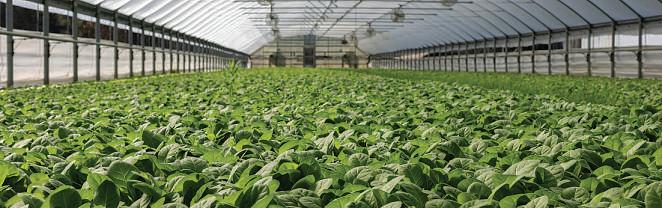



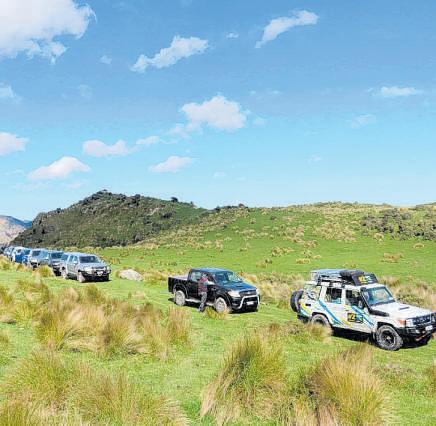

For
Tourism operators Robbie and Connie Crickett have confirmed dates for their 2027 4X4 tour season, with bookings opening for two of their most popular guided experiences – the High Country Heritage Tour and the West Coast Explorer Tour.
The High Country Heritage Tour remains a standout for travellers wanting to experience New Zealand’s remote back country and station life The tour covers a 1250km route down the spine of the South Island, passing through working sheep and cattle stations as well as conservation reserves.
The tour is offered as a sixday journey in November, February and April, and a sevenday option in March. Both start in Blenheim, travelling through the eastern side of Molesworth Station on day one before heading south with overnight stops including Hanmer Springs, Methven, Fairlie, Omarama, Cromwell, and finishing at the historic Cardrona Hotel.
The sevenday itinerary allows for shorter travel days and additional overnight stops in Geraldine and Twizel.
Providing a complete contrast, the West
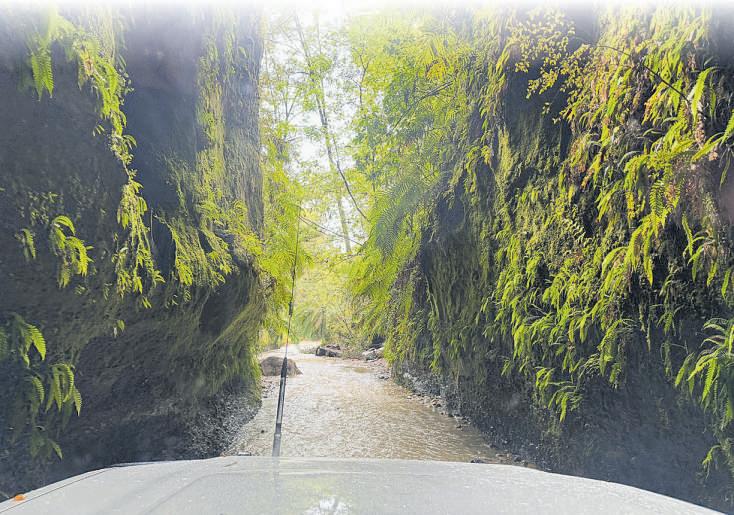
Coast Explorer Tour focuses on beech forests, rivers and valley floors Run twice yearly in April and November, the fiveday tour begins in Hanmer Springs, travelling through the western side of Molesworth Station and St James before heading west. The route includes two nights in Murchison, one in Westport, and two nights in Reefton.
All NZ Adventures tours require
vehicles to be fitted with allterrain tyres with at least 70% tread and lowrange transmission, with twoway radios supplied for commentary and communication. Accommodation is in motels, with meals at local restaurants and lunches either on station properties or picnicstyle.
For more information, see NZ Adventures’ advert on this page.


Or
Look


To make building your dream home become a reality, Highmark Homes has all the bases covered.
Managing director Ryan Hunt says Highmark Homes is a one-stop-shop for new

home builders
His father, Bob, started Hunt’s Homes in the Bay of Plenty in 1963, becoming Highmark Homes in the 1990s and over the years evolved and expanded into Highmark Homes’ group of qualified building professionals with Licensees in Auckland, Central North and Lower North Island and the South Island
Luxury homes ”
Highmark Homes has a large range of plan options available for consideration, which can be a good starting point
“We can then tailor them to suit the owner, or we can come up with something from scratch,” says Ryan
company can adjust product and material to suit the budget
Once a contract is signed, Highmark Homes handle everything from building consent through to handing over the keys
“We can also organise landscaping if required,” says Ryan





“With more than 60 years ’ experience building homes in New Zealand, we have a vast amount of experience which enables us to “really take care of our clients,” says Ryan
“If someone has a project in mind, Highmark Homes will initially visit them on-site.”
Ryan says this can be a rural property, vacant section, one that requires removing an existing building, or adding a second dwelling to the property
“We construct anything from small d
From there, he says a price for the new build is formulated and once this is understood the
For more information, see Highmark Homes’ advert on this page. Steve Edwards
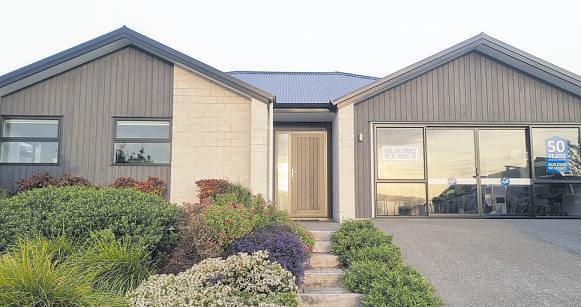
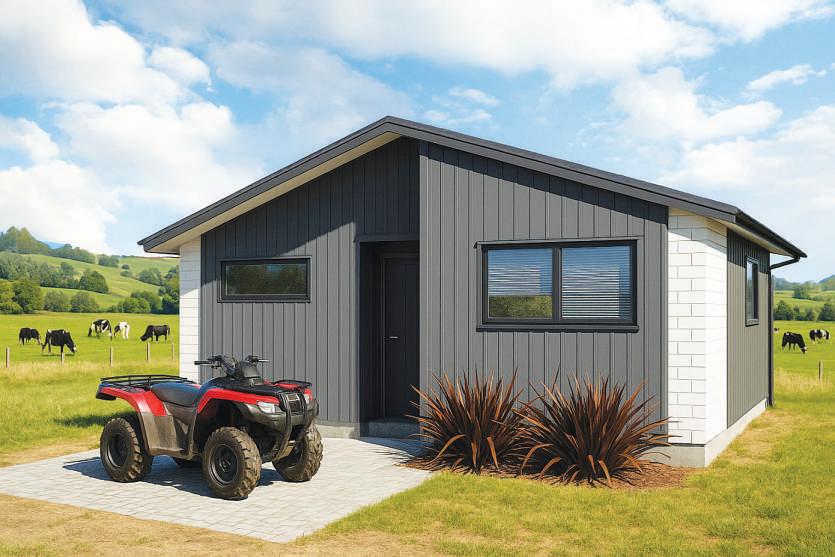

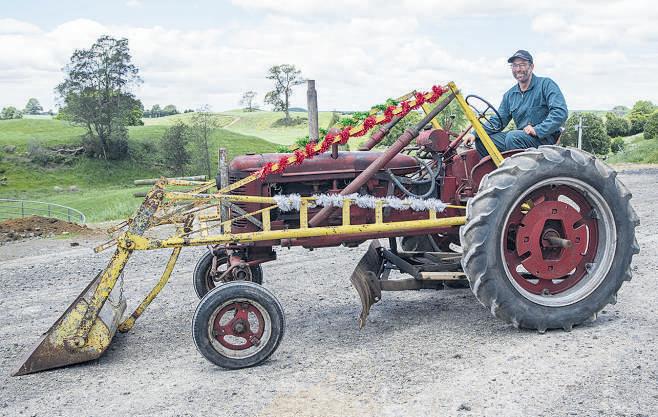
Red tractors have always held a special place in the heart of Putaruru’s Chris van Heuven.
They take him back to childhood days spent on dairy farms in Matamata, Waitoa and, from the age of eight, Tirau.
A builder by trade, Chris eventually found his way back to farming. Today he and his young family live on the 168hectare farm he contract milks for his parents, running 500 cows and sharing 50/50 ownership of the land
“I remember my Opa always wearing an International cap when I was a child, and Dad always had International tractors too I guess that’s where the interest began,” he says.
Chris’ first collector’s tractor was a Farmall FC. His most recent purchase – another Farmall FC –joined the shed in June 2025, an acquisition he freely admits was an impulse buy
The tractor, built in France in 1953, runs a twolitre fourcylinder petrol engine, with four forward gears, one reverse, and a modest 25 horsepower
What caught Chris’s eye, however, was its unusual configuration: a front-end loader paired with a grader blade mounted underneath.
Andrew Higgins, the previous owner, explains how the machine came to be.
“It was bought as two tractors in the 1990s –one with the loader, one with the grader –and then combined into one using the best parts from each,” he says. The rebuilt tractor was used on a small
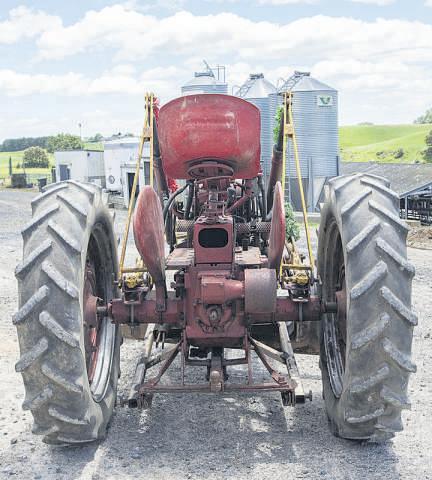
farm primarily for topdressing, shovelling manure into spreader tractors, and occasional grading work. Andrew notes that the loader was originally designed for loading aircraft before he modified it for farming.
“In the 1950s, this would have been a pretty advanced tractor – able to handle
a variety of jobs on farm,” Chris adds.
The grader can lift, lower and swivel to change its angle, allowing it to function much like a small road grader A third hydraulic linkage offers capacity for an additional attachment if needed.
Chris isn’t rushing into a restoration.


“It’s usable in its work clothes for now, ” he says “It’s pretty original except for the seat and some front lights. The starter motor has been upgraded to 12 volts because the old six volt batteries were just too expensive.”
The FC made its first public
appearance in the 2025 Putaruru Christmas Parade, proudly towing the St Mary’s Catholic School nativity float – an outing that delighted Chris and cemented the tractor ’ s place in the community as well as his collection.
Catherine Fry




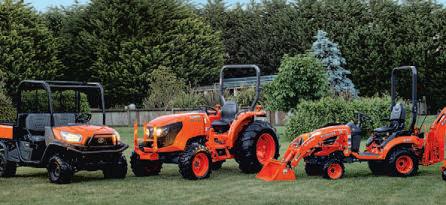



Legal controls on the movement of fruit and vegetables in Mt Roskill will end on February 21 if no more Queensland fruit flies are found in the suburb, says Biosecurity
New Zealand’s commissioner north, Mike Inglis
The controls have been in place since the discovery of a single male fruit fly in a surveillance trap in early January
“We’ve had fantastic support from locals and sector groups since our response began, and we ’ re asking for that to continue a little longer out of an abundance of caution.

“No other Queensland fruit flies have been found, which is really encouraging, but over the coming weeks, we’ll keep up our regular checking of fruit fly traps. ”
Mike says the extended timeframe helps them to be confident that they’re not dealing with a breeding population
He says it’s based on scientific advice about the life cycle of the Queensland
fruit fly
“We’re grateful for the actions people are taking to comply with the restrictions, which are vital to keeping fruit fly from establishing in New Zealand ”
There is no change to the current movement rules that are in place.
The A and B zone areas in Mt Roskill will remain the same. More detail on these zones is on our website: Queensland fruit fly – Mt Roskill
“The restrictions prohibit the movement of fruit and vegetables out of the specified controlled area around where the fruit fly was found This prevents possible spread of fruit fly or their larvae,” says Mike.
“There have been 14 previous fruit fly incursions in New Zealand which we have successfully eradicated, so we know what it takes to get the job done.”
To report suspected finds of fruit fly, call MPI’s pest and diseases hotline on 0800 80 99 66. -MPI
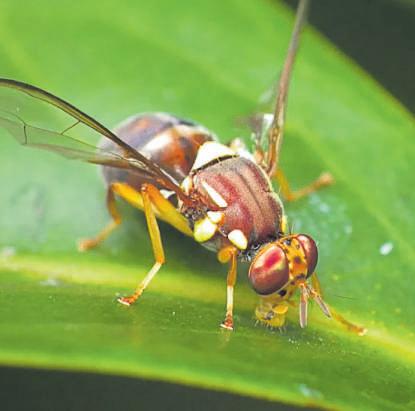




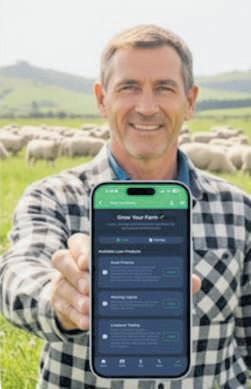

Arable growers worried that some weeds in their crops may have developed herbicide resistance can now get the suspected plants tested for free.
Foundation for Arable Research senior field research officer Matilda Gunnarsson says prior to harvesting, farmers should get weeds growing in their crops tested for herbicide resistance While some weeds will have emerged after the final herbicide application some may have survived treatment and have resistance
“To find out, get it tested,”
Matilda says
“Resistance is a numbers’ game The more weeds you have in a paddock, the more likely it is that there will be resistance ”
Typical weeds are grass weeds in cereal crops “It can be grasses or broadleaf weeds Whatever you suspect is resistant, get it tested ” To get the suspect plants tested, farmers need to cut off dry, m mature weed seed heads and put them in a paper or plastic zip lock bag Go to the FAR website, print out the herbicide resistance testing form and fill out the details including what
herbicides have been used. Send this to the FAR office Seed will be tested at AgResearch facilities (now part of the Bioeconomy Science Institute) Depending on the amount of seed available, samples will be tested over one to six herbicides at label rates to determine resistance This includes both pre and post emerge herbicides if applicable “MMake sure the weed seeds are viable to achieve a good germination rate at testing Keep the plants in separate bags, as this gives a better understanding of the resistance profile in the paddock,” Matilda says



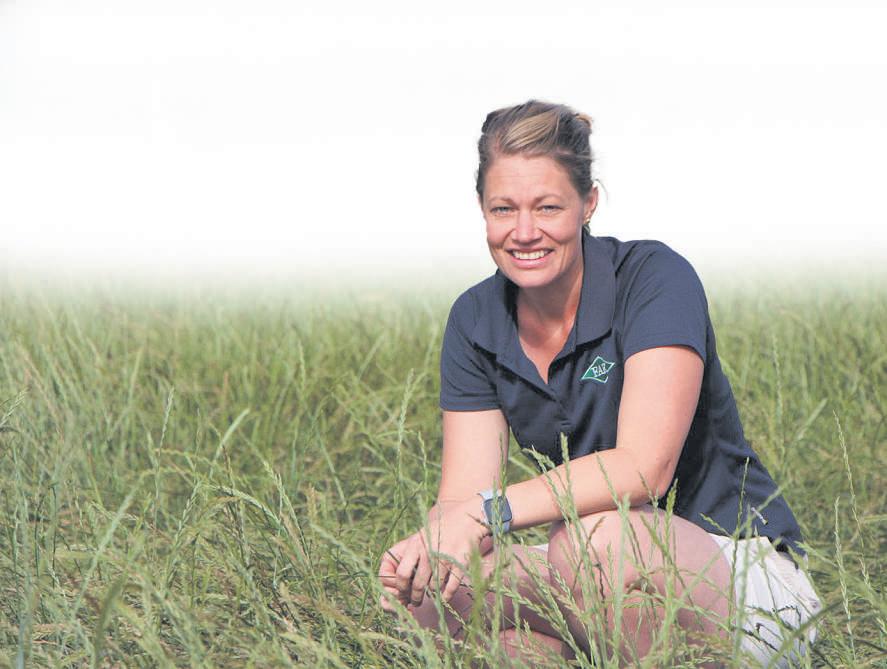
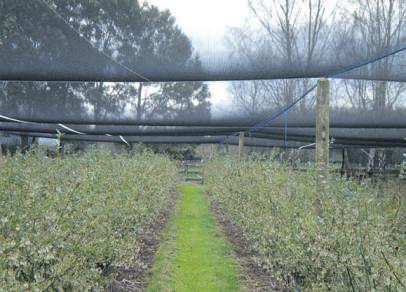

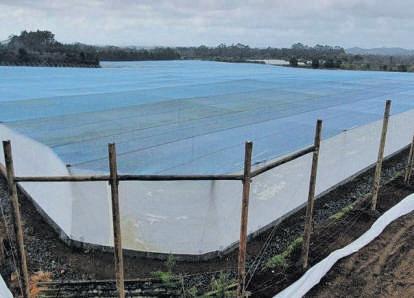
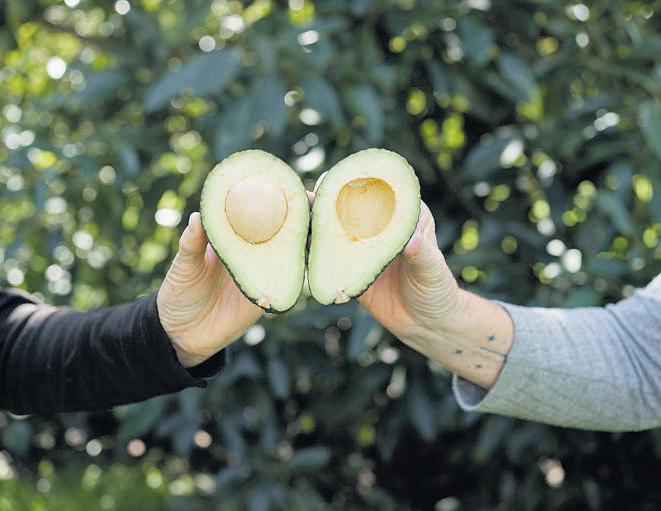
Few fresh produce items provoke as much hope, frustration and social media advice as the salacious avocado
Unlike apples or citrus, the exterior of an avocado offers little visual promise of what ripeness lies beneath its skin. Internally, they are complex and fickle. From the moment they are harvested, post-harvest teams are engaged in a delicate balancing act: slowing physiological processes enough to survive long-distance transport, then restarting them in a controlled way so the fruit reaches the consumer at just the right moment. The margin for error is slim, and when it fails, the consequences are felt in waste bins, customer dissatisfaction and eroded value. Historically, that final step in the supermarket has relied heavily on human judgement and guesswork. Squeezing, pressing, tapping, even smelling (?) are all common methods of determining ripeness, but these not only damage fruit, they accelerate spoilage. The situation is an ongoing paradox: avocados are perceived as high-value, yet consumers handle them in ways that reduce their value before they purchase. How many avocados have you squeezed before you find one that’s ripe enough? The result: bruised, spoiling avocados Pair this with an overabundance of
fruit in the market and perceived value drops further It’s a roller coaster for growers and not the good kind.
This is where ripeness-scanning technology represents more than a retail novelty—it marks a shift in how post-harvest intent is finally translated at the point of purchase.
Retailers, such as Denmark’s Salling Group and the UK’s Tesco, are now deploying in-store avocado scanners using infrared technology developed by Dutch company OneThird. These scanners assess internal ripeness in seconds and categorise fruit in simple, intuitive terms: overripe, ready to eat, or better in a few days. For the first time, the invisible work done in orchards, packhouses and beyond becomes visible and actionable for consumers.
From a post-harvest standpoint, we are watching these developments closely Trevelyan’s are experts in managing and handling fruit to achieve consistent quality and expected shelf-life; however, it takes everyone across the supply chain to have the same approach so that value is not eroded Perhaps scanners can shift the paradigm, allowing consumers to gain confidence in the ripeness they’re buying without literally having to take matters into their own hands.
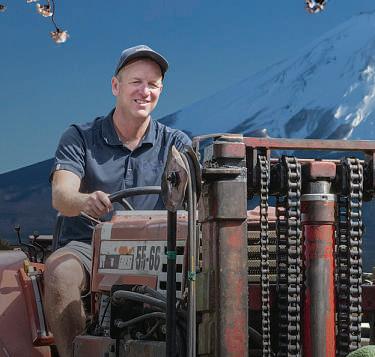
The benefits certainty ripple outward Better-informed purchasing means consumers buy what they actually need, when they need it cutting household food waste
Retailers gain clearer insight into stock condition, allowing smarter rotation and markdown strategies and reducing waste. And crucially, better quality fruit on display restores consumer confidence.
Alternative to buying at the store, BayFarms delivers avocados (and kiwifruit when in season) to consumers at home, shipping only the highestquality fruit The same applies
to the restaurants and supermarkets we supply
Based at the largest single-site kiwifruit and avocado postharvest facility in New Zealand, we have the advantage of packing our growers ’ fruit on-site, and have high visibility across the supply chain in areas we can control Simply put, the avocado is a fruit of timing, and for decades, postharvests have managed this complexity behind the scenes

and for the avocado, ripeness scanners could close the loop between orchard, packhouse, retailer and consumer
They transform the avocado from a gamble into a guarantee
The reality is, we are in a ‘technological revolution’,
In the meantime, as a postharvest facility, we will continue to work with the supply chain and provide the best quality avocados to New Zealanders and the world, but as a company of innovation we know that the future of fresh produce is not just about growing better quality fruit; it’s delivering that better quality fruit all the way to the kitchen





Kiwifruit and avocado growers are being urged to stay vigilant following the detection of yellowlegged hornets in Auckland.
The predatory hornet poses a serious threat to honeybees, which could disrupt pollination services relied upon by both industries. The number of yellow-legged hornet queens found in Auckland has risen to 45 - 32 of them with nests.
Biosecurity New Zealand says it had an excellent response from the public, with 10,270 notifications of suspected sightings.
Even though only a small number

of them were actually hornets, the organisation urged people to stay on the lookout.
It expects to find more this summer and there are dozens of traps around the city, mostly on the North Shore.
Biosecurity teams are also attaching tiny trackers onto worker hornets to try to lead them to nests.
The hornets had only been found in Auckland.
Biosecurity NZ believed it was unlikely they were outside of the city
The hornets are a risk to bee populations – they eat them but could also compete with them food if they became established. -RNZ








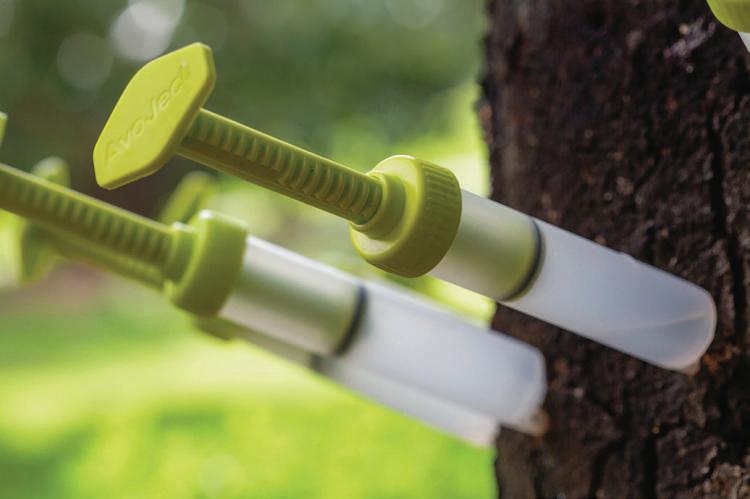






p
be a standout event for the local avocado industry, and community with the festival enjoying strong attendance, vibrant community engagement, great food, great weather and a successful partnership
As a key supporter of this year ’ s event, the main sponsorship played a pivotal role in thanking and bringing growers, industry partners, families, and the wider community together to celebrate one of the Bay of Plenty’s most important horticultural sectors From educational displays and grower conversations to food, entertainment, and hands-on activities, Avo Fest once again showcased the strength and diversity of New Zealand’s avocado industry
This year ’ s Avo Fest also came at a timely moment, as the avocado export season approached its conclusion. Helping celebrate what was achieved collectively in what was another challenging export season for stake holders. While the season has presented its share of challenges, it has also highlighted the resilience, adaptability, and collaboration that define the industry From orchard to export markets, the collective efforts of growers, packhouse, and


changing conditions and maintain New Zealand’s reputation for quality avocados. It reinforced a shared commitment to supporting growers not just through the export season, but year-round building relationships, sharing knowledge, and celebrating successes
DMS working with AVOCO, our exporter, a record number of trays were packed for most markets outside of Australia, including Korea, Canada and China In a tough market space, it was great to be able to pack as much fruit as possible to the highest returning markets as possible. Helping DMS and AVOCO growers get the best possible return for their avocados. Reflecting on the season ’ s achievements across AVOCOs wider export markets only helps, as we are looking ahead with confidence to the following export season.
DMS will continue to achieve the best return for their growers for the remainder of the avocado season as the local market steadily strengthens over the coming months.
Again, thank you to all involved in the avocado seasons to date here at DMS. We look forward to the remainder of the season as well as 2026/2027.














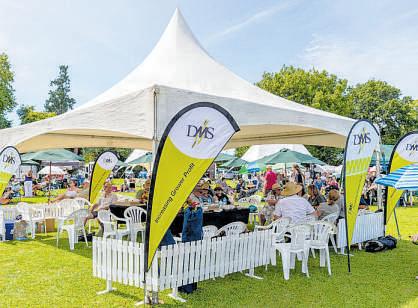





Mark comes from a long line of farmers dating back to the late 1800s in the Waikato district

Thanks to a specialist management service, Mark Riddell and Shana CarlanRiddell can relax while still enjoying the benefits of their Bay of Plenty avocado orchard, Roland Orchard.
For the past two years Avoworks has leased the 10ha in avocados on the couple’s 48ha property at Whakamarama
Led by orchard manager Ian Newmarch, Avoworks takes care of all aspects of the orchard operation, such as replacement planting, spraying, nutrition and irrigation management, and harvesting
The Avoworks’ connection continues, with packing and marketing undertaken by subsidiaries of parent company Darling Group
Shana says they can relax, knowing that “things are being done on time” with the required expertise involved that “keeps the orchard healthy and producing”
“We have time to travel and spend with our family,” says Shana The family now includes a two-year-old granddaughter
While Mark was previously a research scientist and Shana still currently a visual arts teacher, they have strong ties with the land

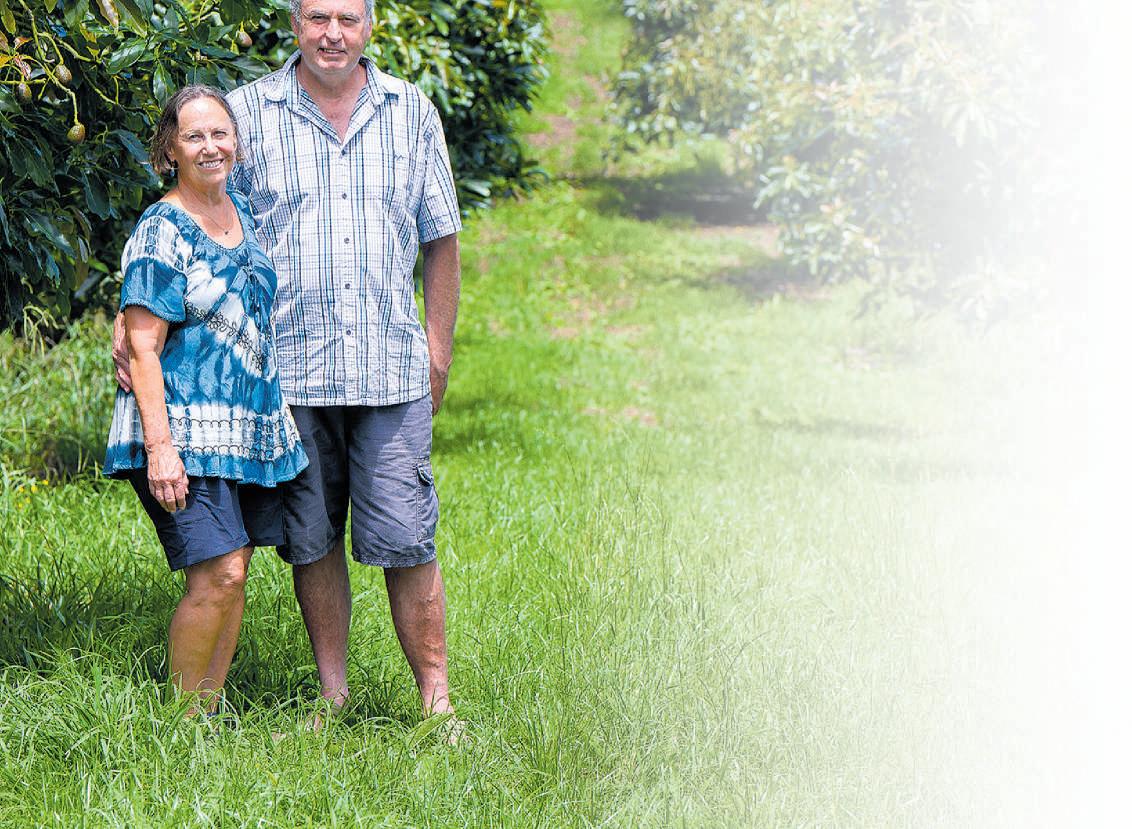


He was working in Australia when he first met Shana while she was backpacking around the South Pacific
After living in San Francisco for a year they went back to Australia to save money to buy a farm They moved to New Zealand in 1988 and started dry stock farming in the Bay of Plenty
Land conversion
After running and trading properties over the years, they bought the Whakamarama farm – between Tauranga and Katikati – in 2016
It had been running just dry stock, but Mark always had a dream of converting land to horticulture and adding avocados to the mix
“We planted the first lot as soon as we moved there,” he says Shana planted each of the trees herself and admits it was a steep learning curve
The initial 1200 trees has now grown to 1500 in a horseshoeshaped orchard around the perimeter of the farm
Mark manages the balance of the farm which is used for raising young dairy stock



Mark and Shana say they remain “emotionally invested” in the avocado orchard but are not tied to its day-to-day operation.
“We’ve been able to step back and find a happy balance in life.
“This has protected our investment
“We just wish we had found Avoworks when we first started ”
Roland orchard
Ian Newmarch says seven Avoworks’ staff are involved in Roland orchard, with 18 employed during the harvest season.
“Our team is there as and when required.”
He says the fully irrigated orchard “does very, very well” and will get better with age as the trees mature.
Avoworks general manager
Nathan Darling says lease and management arrangements can be tailored to suit the orchard owner ’ s individual requirements.
Along with leasing and managing orchards, he says Avoworks has expertise and equipment to cover one off services in every area of orchard development and maintenance such as pruning, mulching, crop spraying, injecting, harvesting, and transport of fruit to the packhouse.
For more information, see Avoworks’ advert on this page.
Steve Edwards
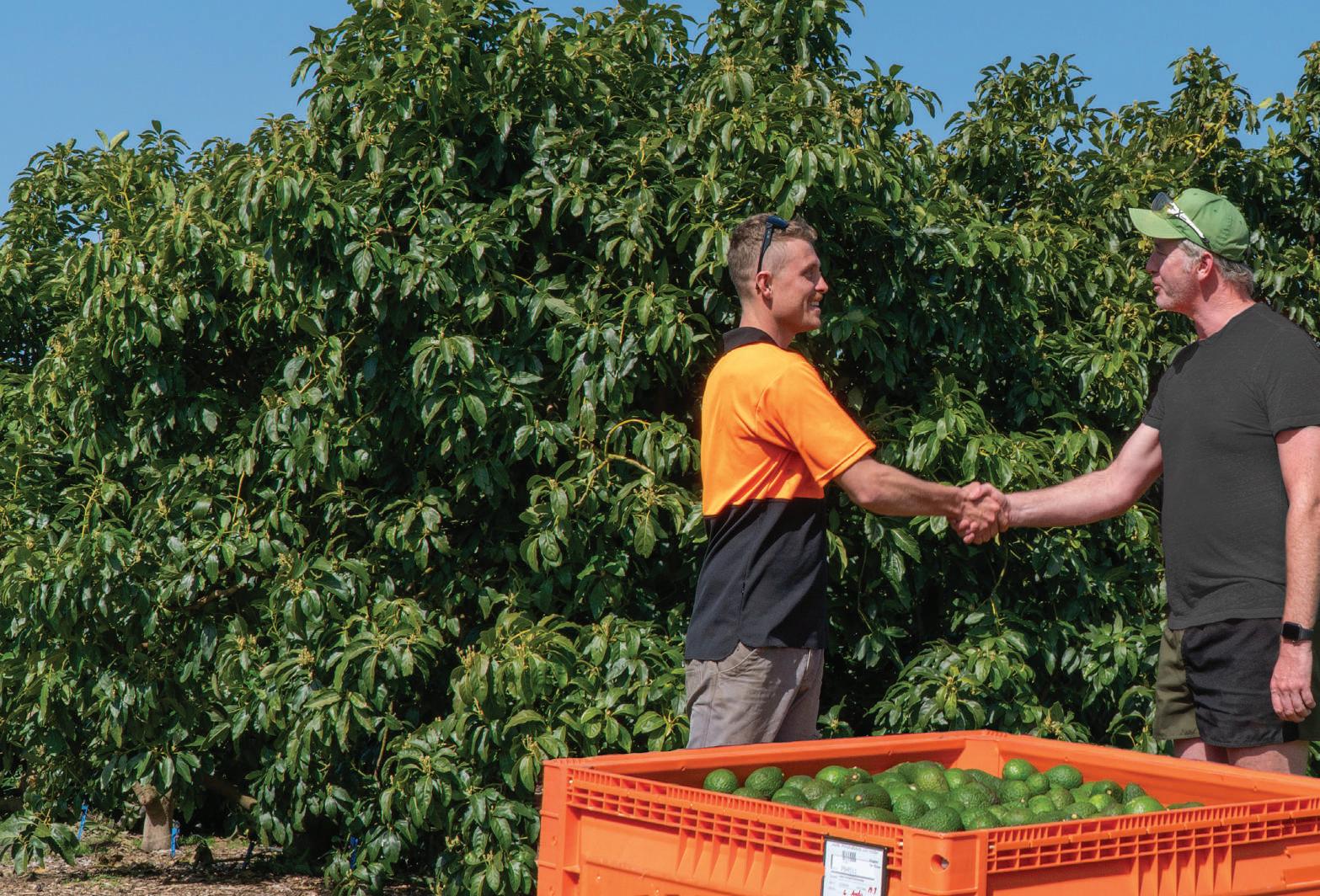



Bay of Plenty farmers are being urged to donate mince and milk from their herds to help meet growing demand from local foodbanks for nutritious protein, as BayTrust announces a $7500 grant to support the work of Meet the Need.
BayTrust’s funding will help cover local operational costs for the nationwide charity, which distributes donated protein to foodbanks and community organisations to support those facing food insecurity.
Last year, Meet the Need supplied around 80,000 portions of mince and milk powder to Bay of Plenty residents through 11 foodbanks and social service organisations These included Salvation Army branches in Tauranga, Rotorua and Whakatāne, Taupō Bellyful, and Tūrangi Foodbank, among others Meet the Need stakeholder liaison
Danielle Williams says demand continues to outstrip supply, with a number of Bay of Plenty organisations currently on a waitlist.
“Large-scale farming and land management trust, Trinity Lands, has recently come on board, which means we’ll soon be able to start supplying donated protein to The Hub in Te Puke and Good Neighbour in Tauranga as well,” Danielle says. “But there is still significant unmet need across the region.”
Danielle says the impact of donated protein is immediate and meaningful.
“Our protein supplies make a real difference One individual who had previously been making do with just noodles and tinned tuna has been able to make spaghetti bolognese – a meal that lasts three to four days and provides proper nutrition ”
Meet the Need partners with Silver Fern Farms and Fonterra, enabling sheep, beef and dairy farmers to donate mince and milk powder from their herds Public cash
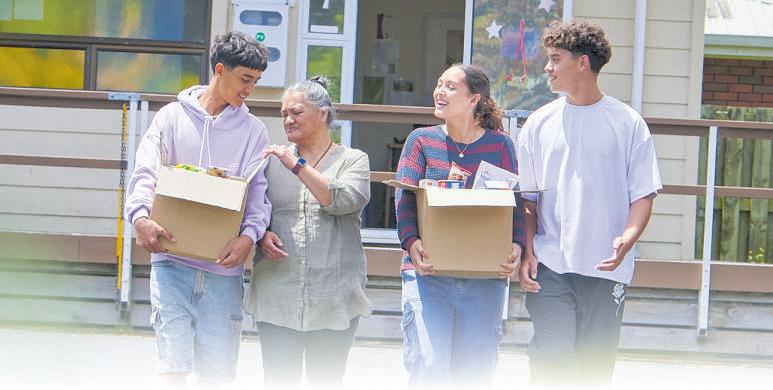
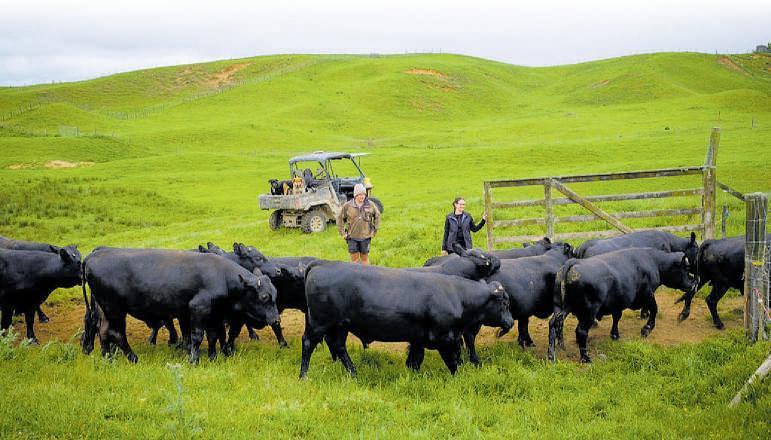
donations are also welcomed, with 100% going directly toward supplying protein to foodbanks
Operational costs, including staff wages, are funded separately through philanthropic support such as the BayTrust grant
“It’s been a tough economic environment, and despite having no physical premises and a very lean team, we are struggling to keep up with current supply, let alone support organisations on our waitlist,” Danielle says
“It means a lot to us to be supported by organisations that value the work we are doing in the community Every bit counts, and receiving this grant from BayTrust is a huge sense of relief.”
BayTrust CEO Alastair Rhodes says food insecurity is often misunderstood.
“There’s a misconception about who
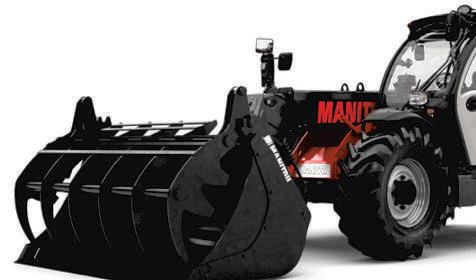

needs support from foodbanks Many families face food insecurity through no fault of their own When a car breaks down, a freezer fails, or a partner becomes unwell, people can quickly find themselves needing help ”
Meet the Need estimates the Bay of Plenty requires 235 cows and 14,500 litres of milk to be donated each year to fully meet demand from existing foodbanks and those currently on the waitlist
“Every cow or litre of milk donated translates into meals for families who would otherwise go without nutritious protein,” Alistair says
“This is a very worthwhile cause that BayTrust is proud to support, and we hope more local farmers are able to lend their support as well ”