7.
8.

DISRUPTION IN ARCHITECTURE ADVOCATES FOR THE NEW PARADIGMS OF LIFE
DESIGNING THE UNMEASURABLE
MANIFESTO SITE SELECTION
UN-OFFICE BRIEF
SITE ANALYSIS
SITE OBSERVATION
SITE UNLAYERING SITE INTERVENTION
DESIGN CHARETTE
5 URBAN VARIATIONS OF SITE SPATIAL ITERATION MASSES SPATIAL RELATIONSHIP
MIND MAP PRECEDENT STUDIES
URBAN RESPONSE
SCENE SETTING FOR ADVOCATION
RE-CONFIGURAYION OF DESIGN
DISPOSITION OF CONCEPT
ARCHITECTURAL APPROACH
CLIMATIC ANALYSIS
ARCHITECTURE AS A VERB APPENDIX
EVIDENCE OF ADVOCATION
ADVOCATION EVIDENCED THROUGH DRAWINGS
SITEPLAN GROUND PLAN
SECTION
RENDER
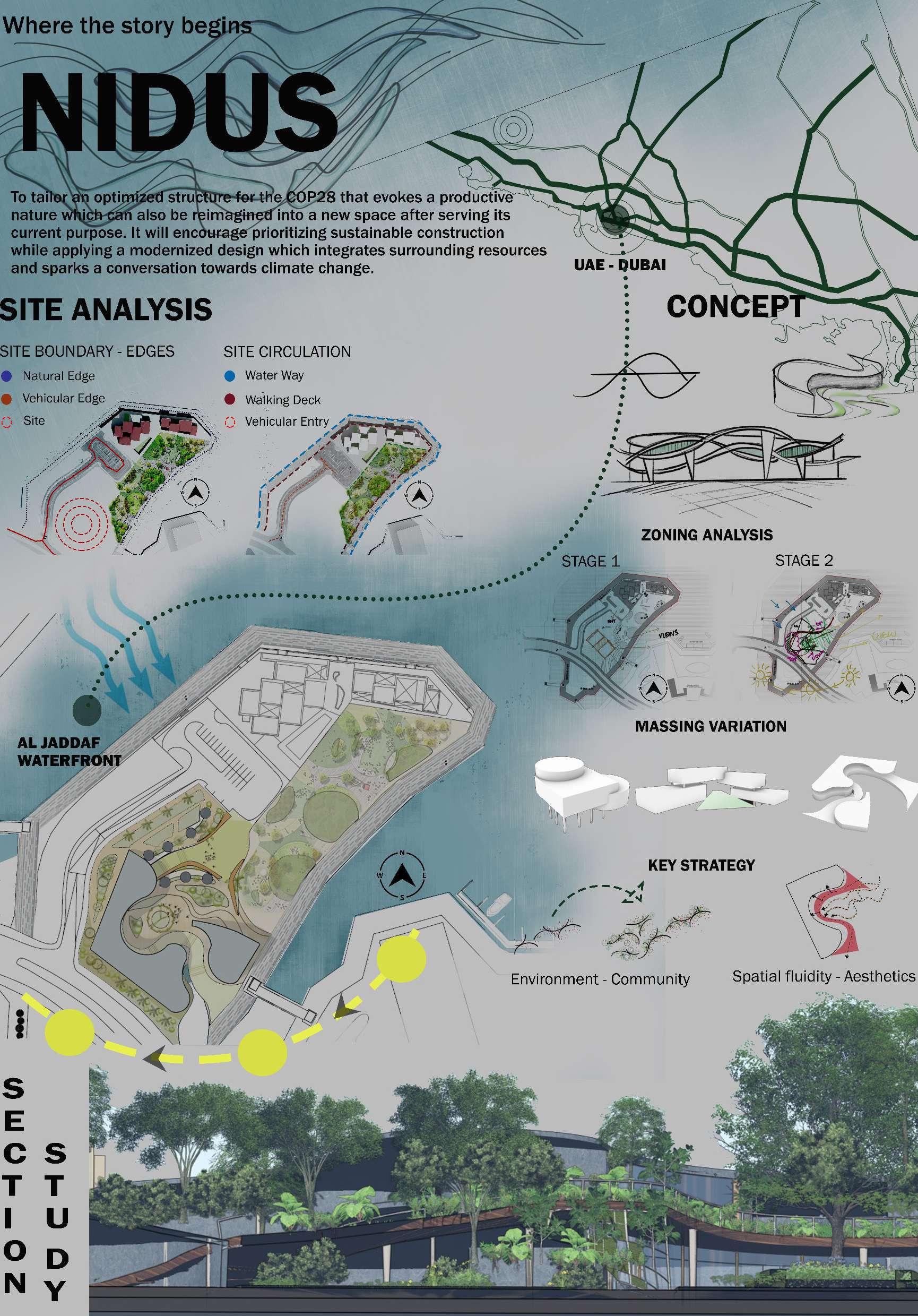
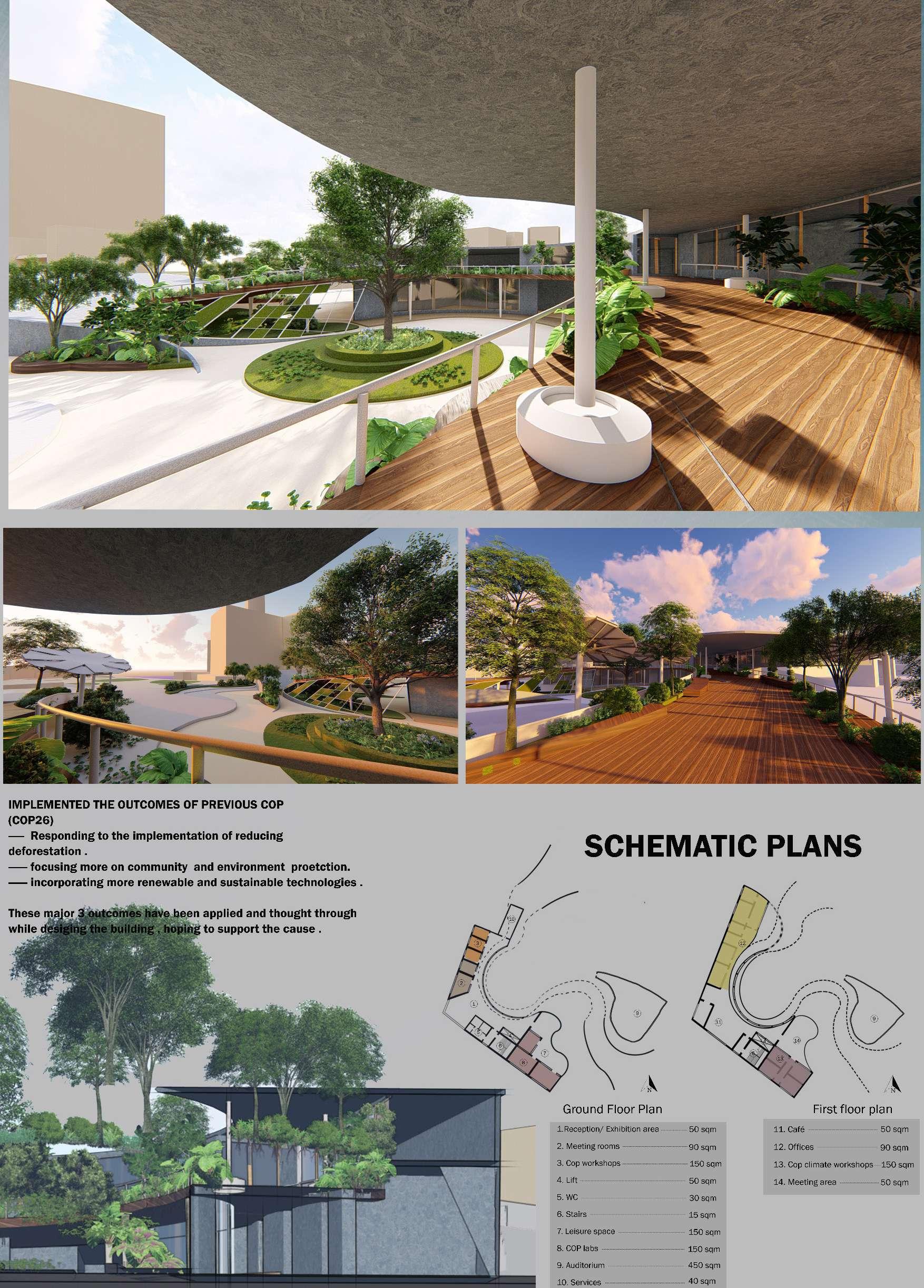
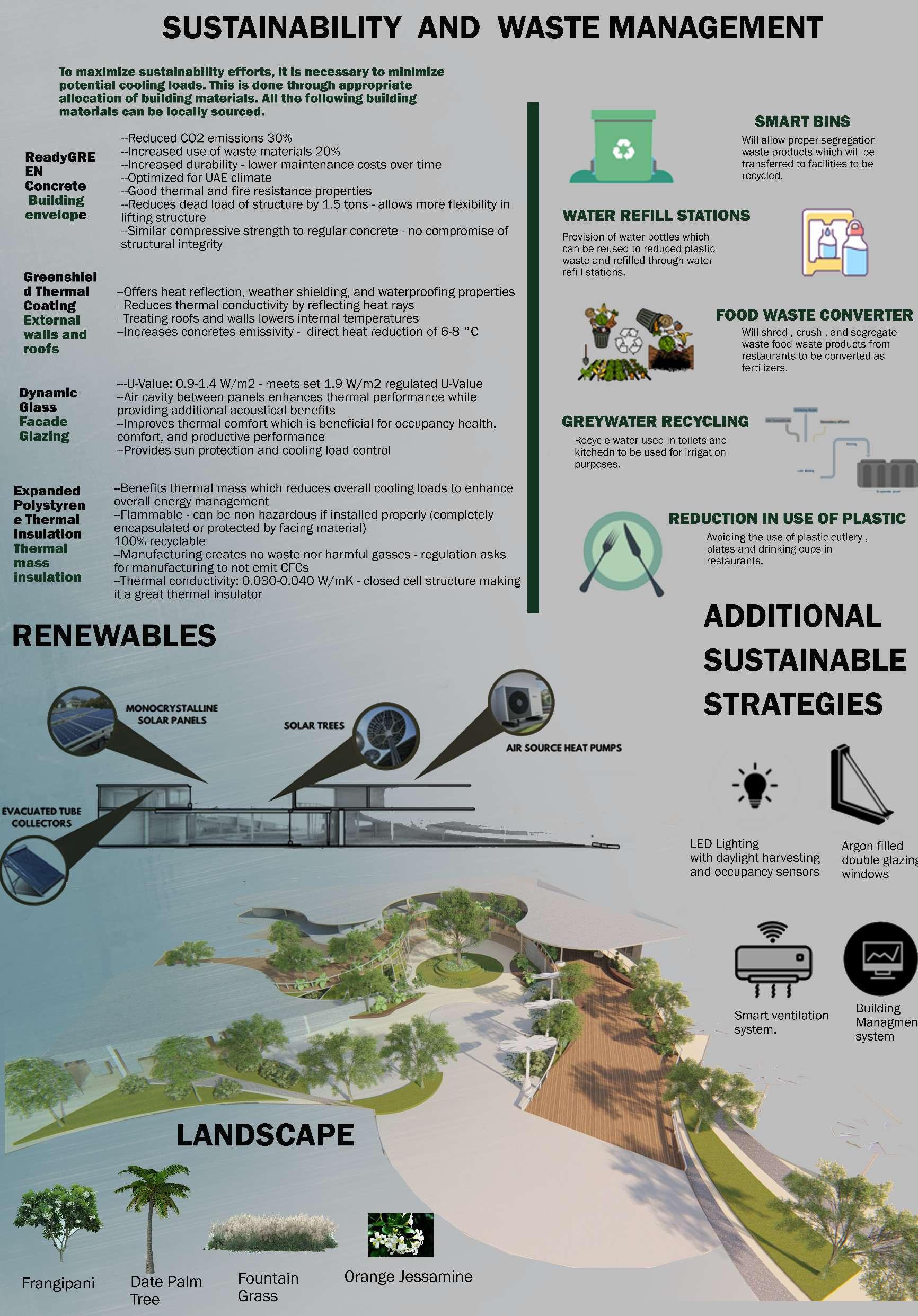
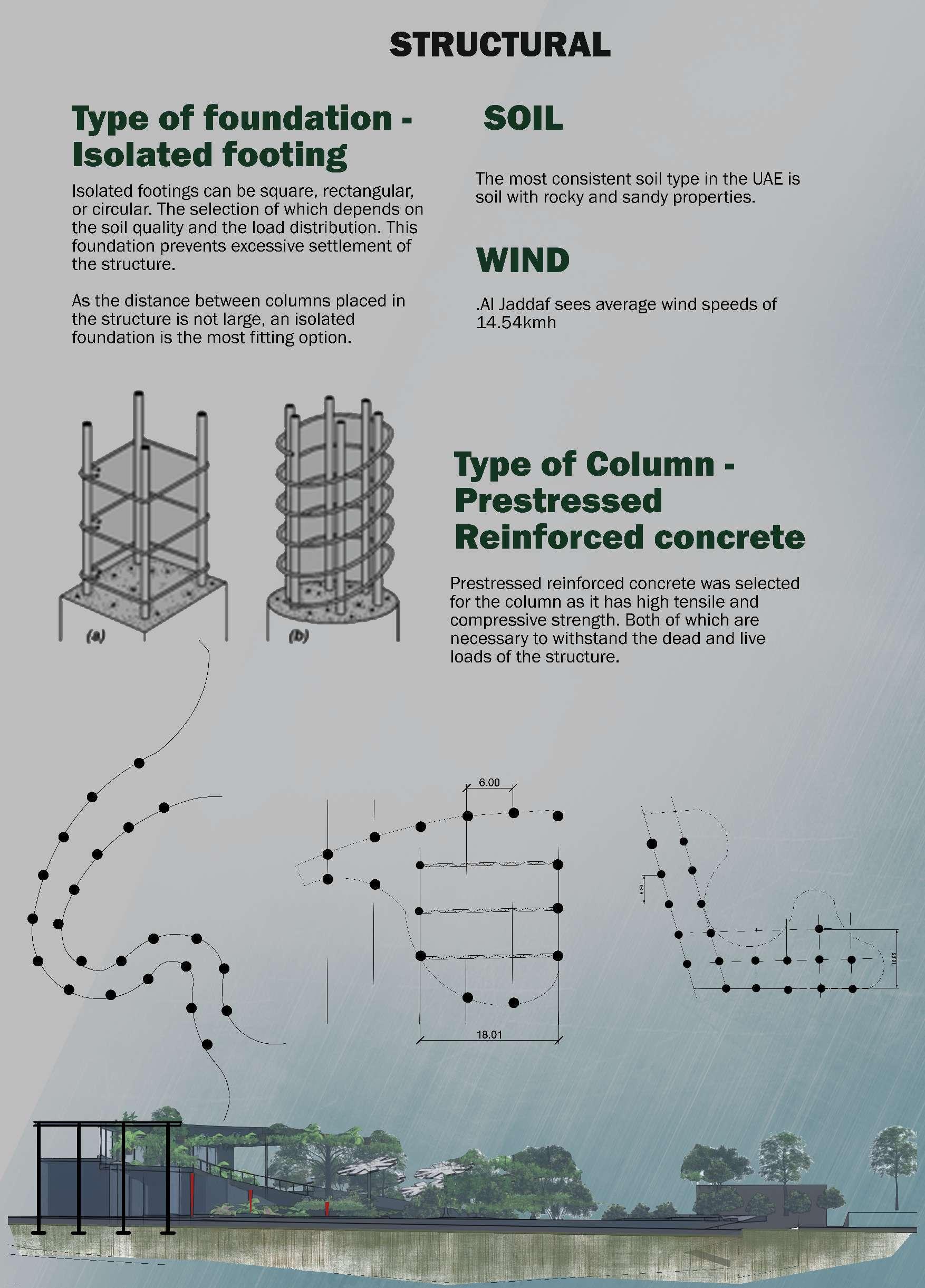
COLLABORATIVE PROJECTNIDUS
“WHERE THE STORY BEGINS”
TABLE OF CONTENTS
TO ADVOCATE
VERB - TO ADVOCATE SITE - AL SATWA NEAR DUBAI DRIVING CENTER
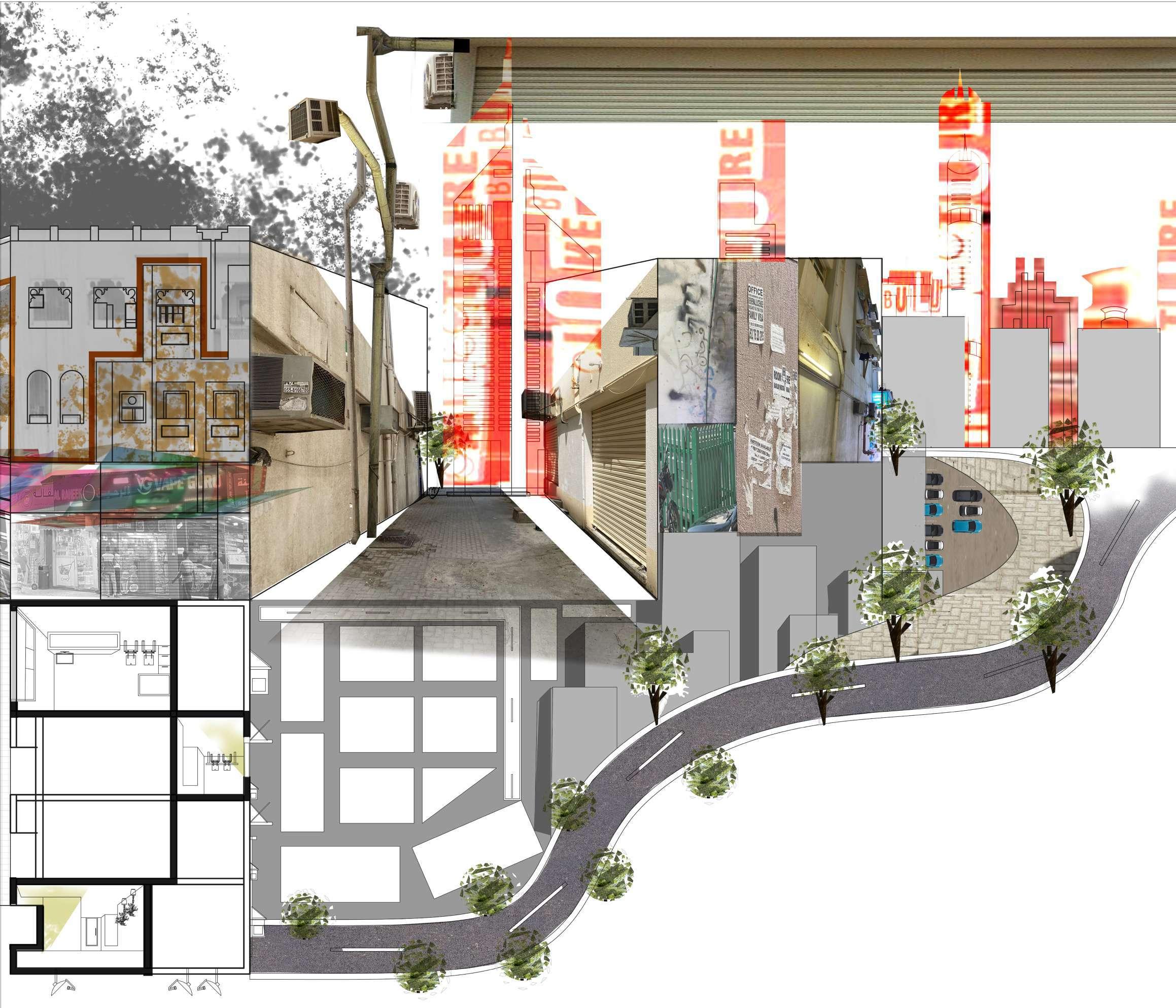
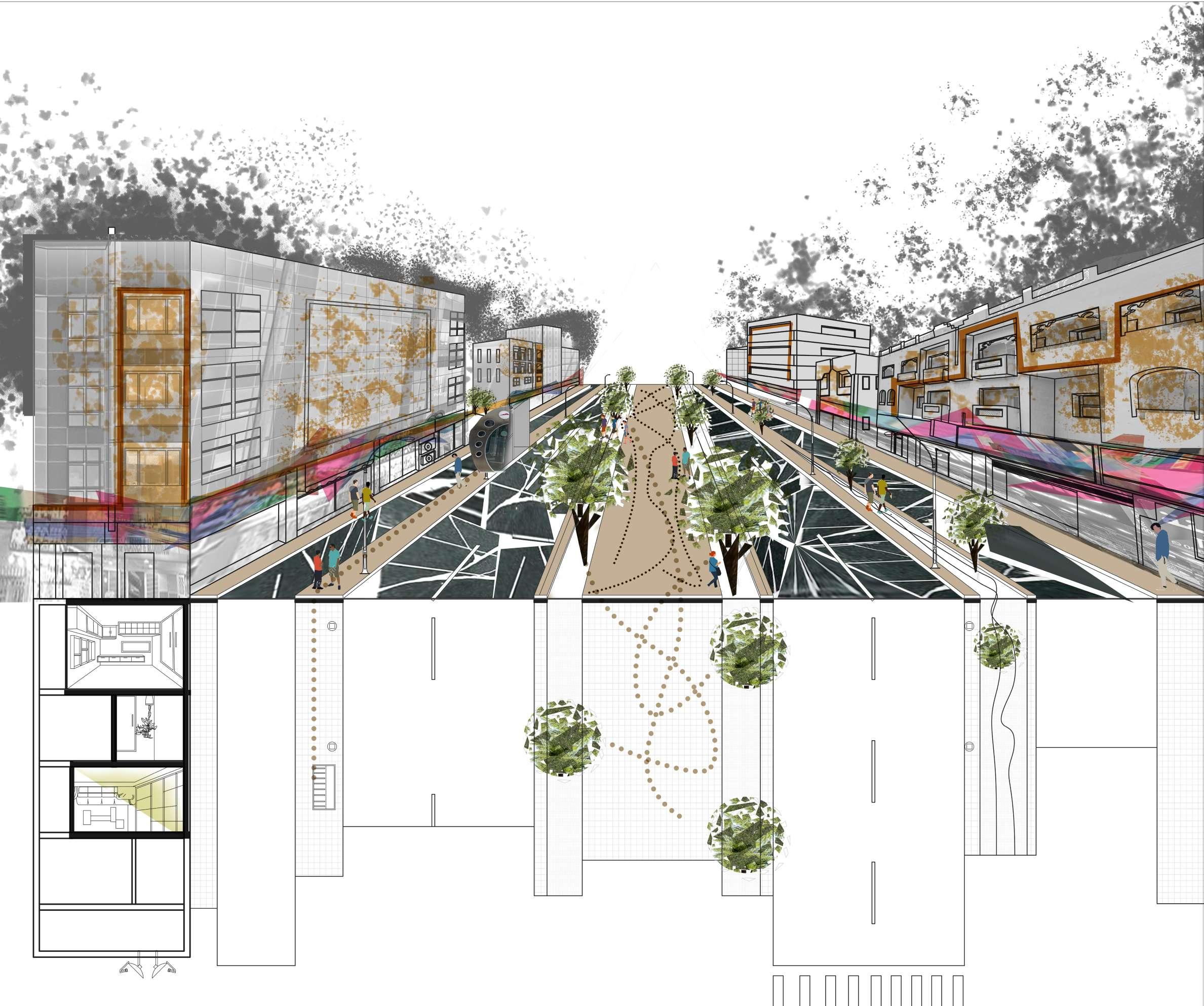
To advocate means....to support , to promote a certain interest , to arouse a feeling or messaging and many more along these lines. To understand and see the application of the verbbetter on site it is divided into 3 main categories being PEOPLE , PURPOSE , PLACE .
In terms of people....line advocates for the use of architecture , their lifesttle and their inward environment . Secondly in terms of purpose....the landscaping of the site advocates for the user experienece for the residents who take advantage of the shade and green environment while walking or cycling to places etc...
Finally in terms of place ....the towers of SZR advocates for its presence and the contrast in lifestyle through its scale , heights and lightings which is looked upon by the people.
The 2M illustration is represented on one side by showing the obvious use ie... how the site actually is through plans and sections and the experience it provides abd promotes while exploring the line through perpspectives and collages highlighting the above mentioned categories.
4 3 25 1 10 0 5 2 Scale 1:100
DESIGNING THE UN-MEASURABLE SCENE 1 - FORUM DISCUSSION OFFICE
DESIGN DEVELOPMENT - ITERATIONS
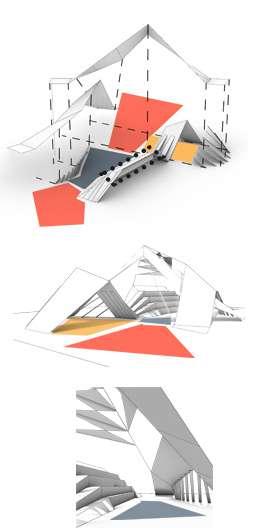
ITERATION 1 -
Testing the spaces and area for functions. application of the play of light and shade and the effects it creates in a space.
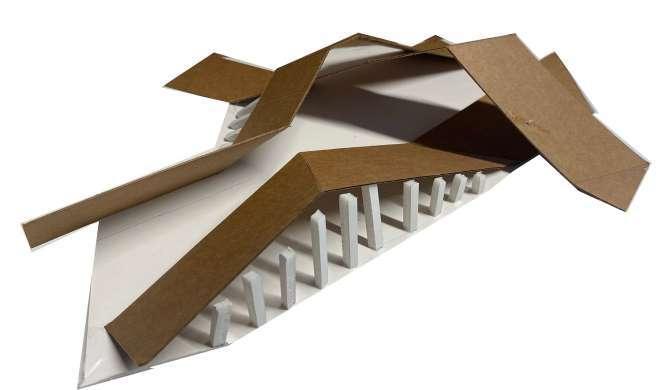
ITERATION 2 -
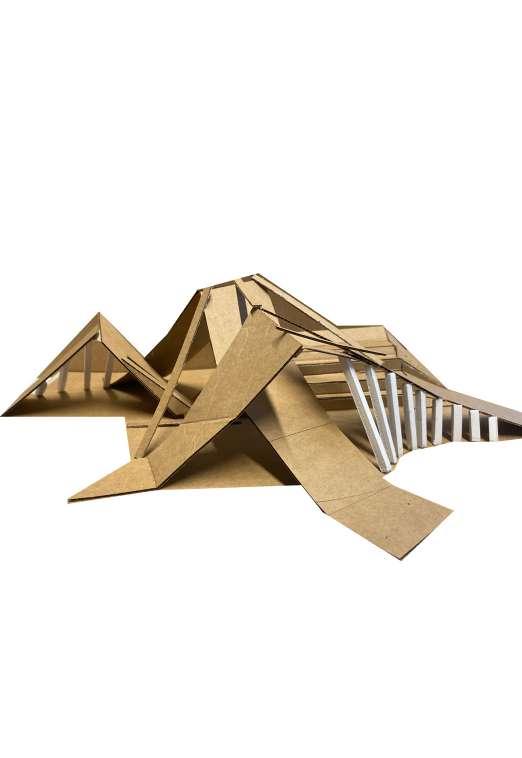
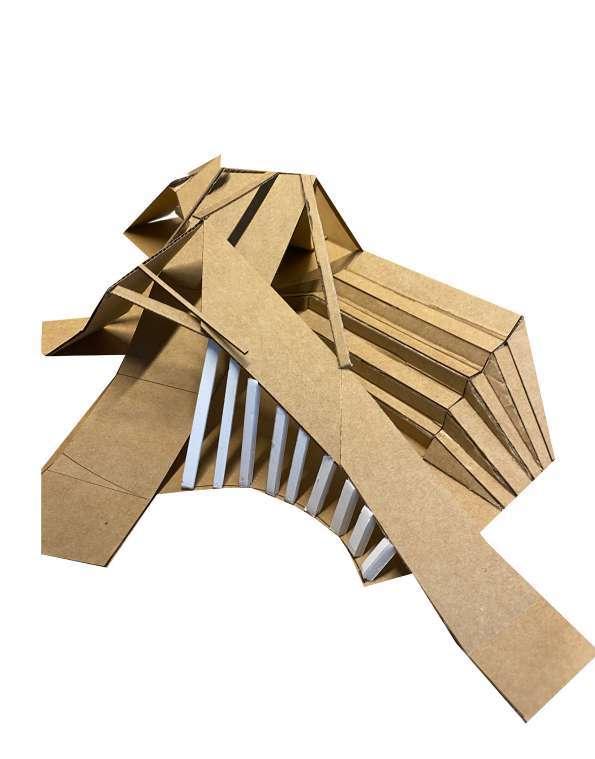
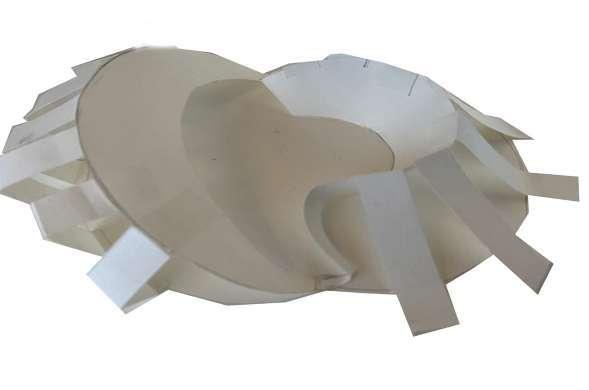
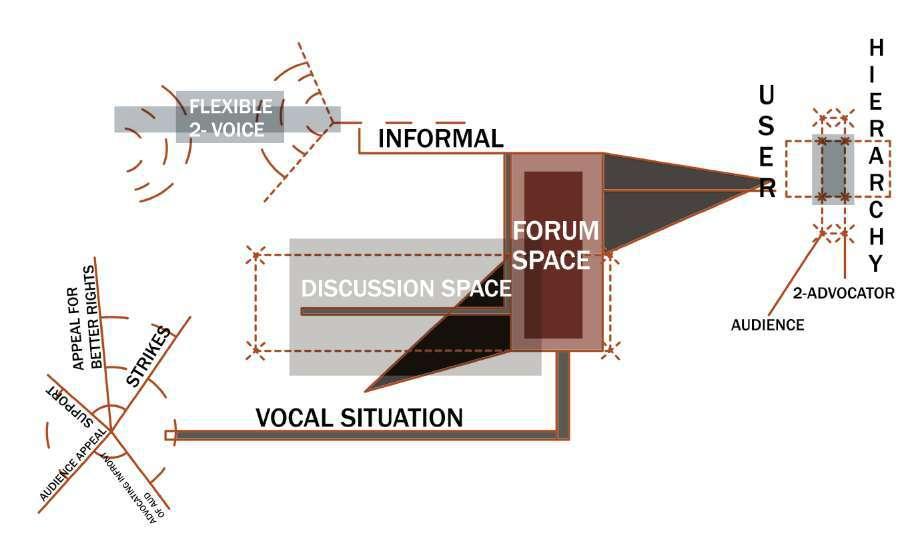
Testing planed surfaces as an architectural element , creating bold edges evoking the emotion of advocacy . using the concept of interwined planed surfaces extending out.
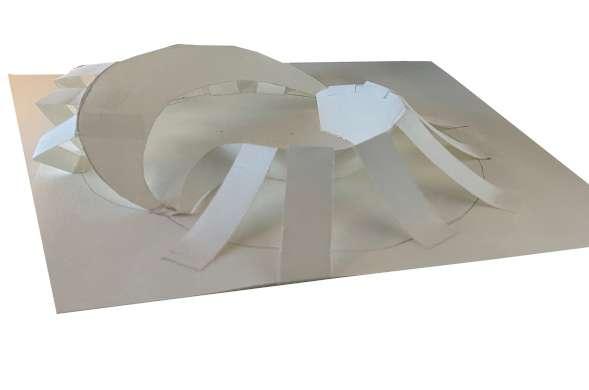
ITERATION 3 -
FINAL ITERATION
Adding a sense of functionality to the previous iterations. creating a harmony with the tested architectural elements . establishing the access routes and unmeasureable edges of the spaces.
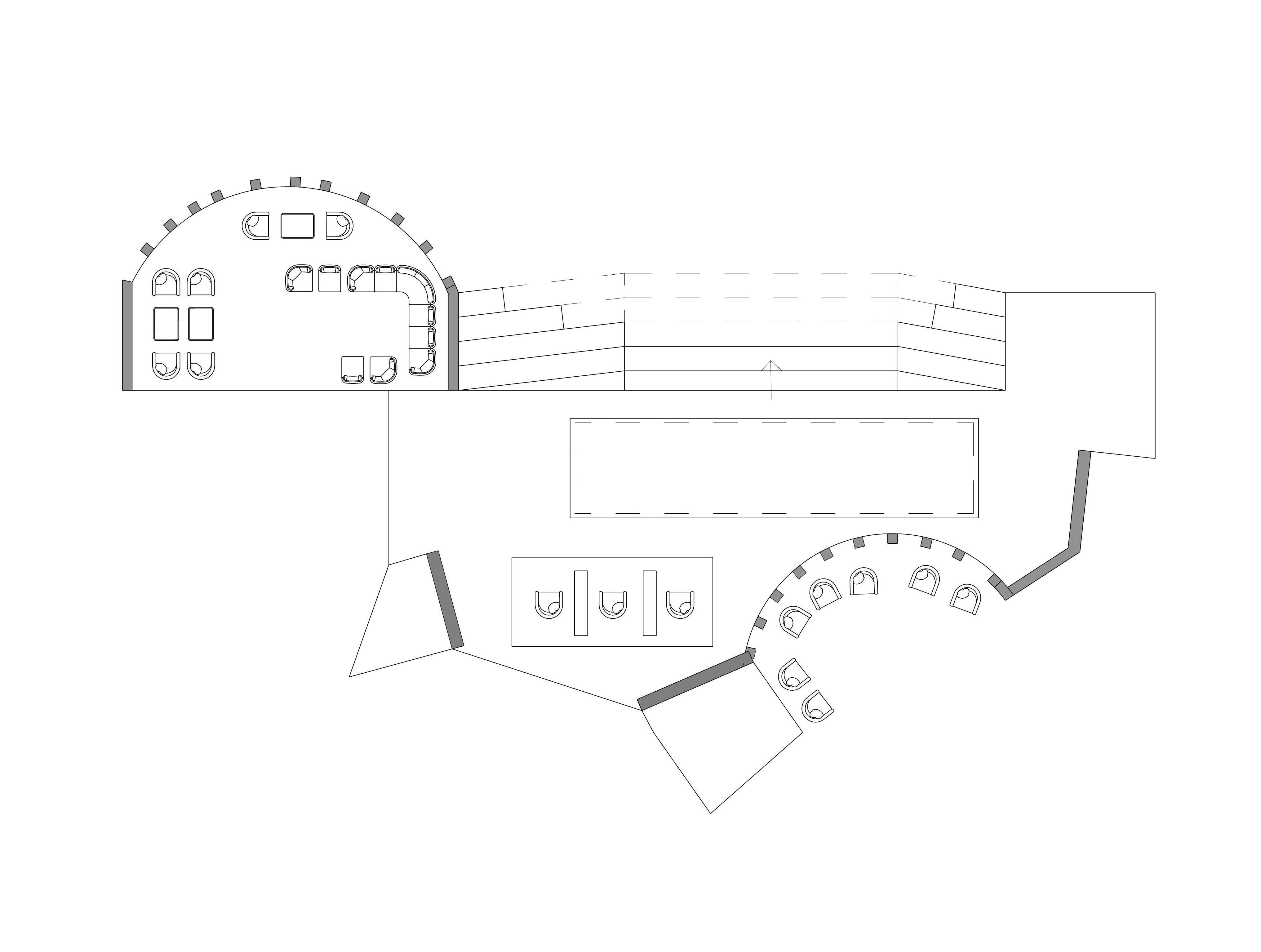
Advocating stage Access 1 Access 2 External Seating Audience Seating Access 1 External Seating Advocating stage Advocating stage Audience Seating
Audience seating area Private Discussion space Advocating stage Waiting space Outdoor Seating FUNCTIONALITY
SCENE
2 - DISPLAY ART STUDIO
DESIGN DEVELOPMENT - ITERATIONS
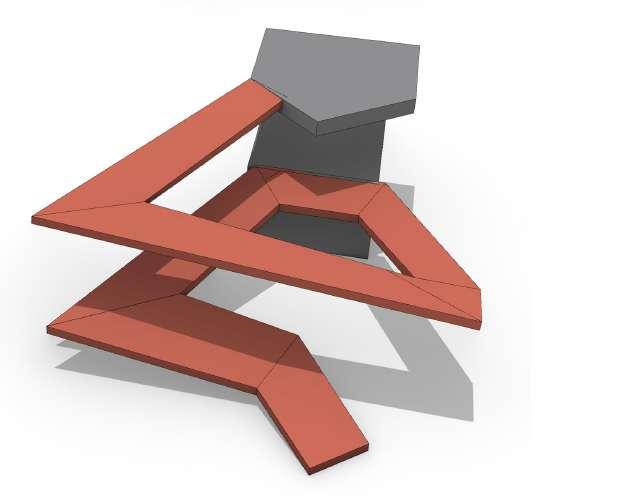
ITERATION 1
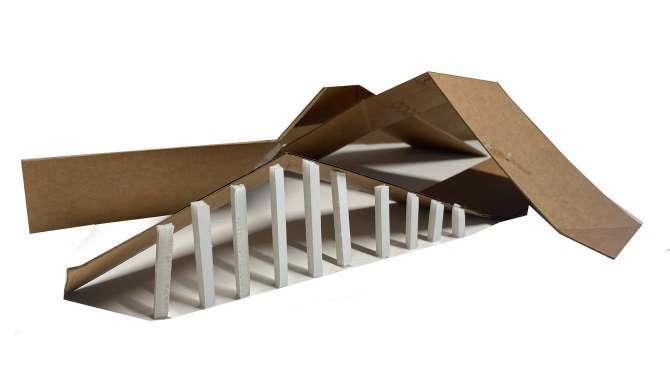
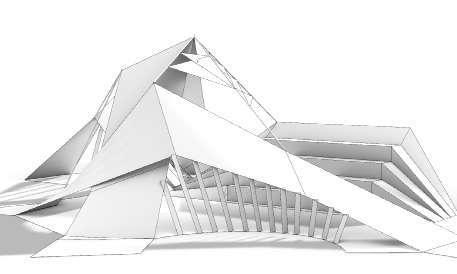
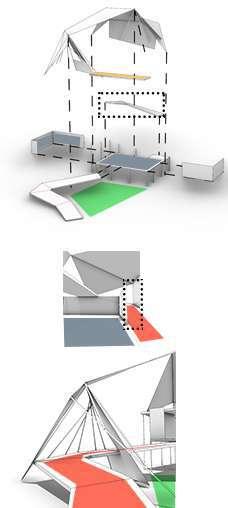
Playing with the concept of levels and the experience it offers in relation to the verb and office function. identifying the emotion and questions it rises through its journey . establishing a sense of advocation for the users , visually .
ITERATION 2
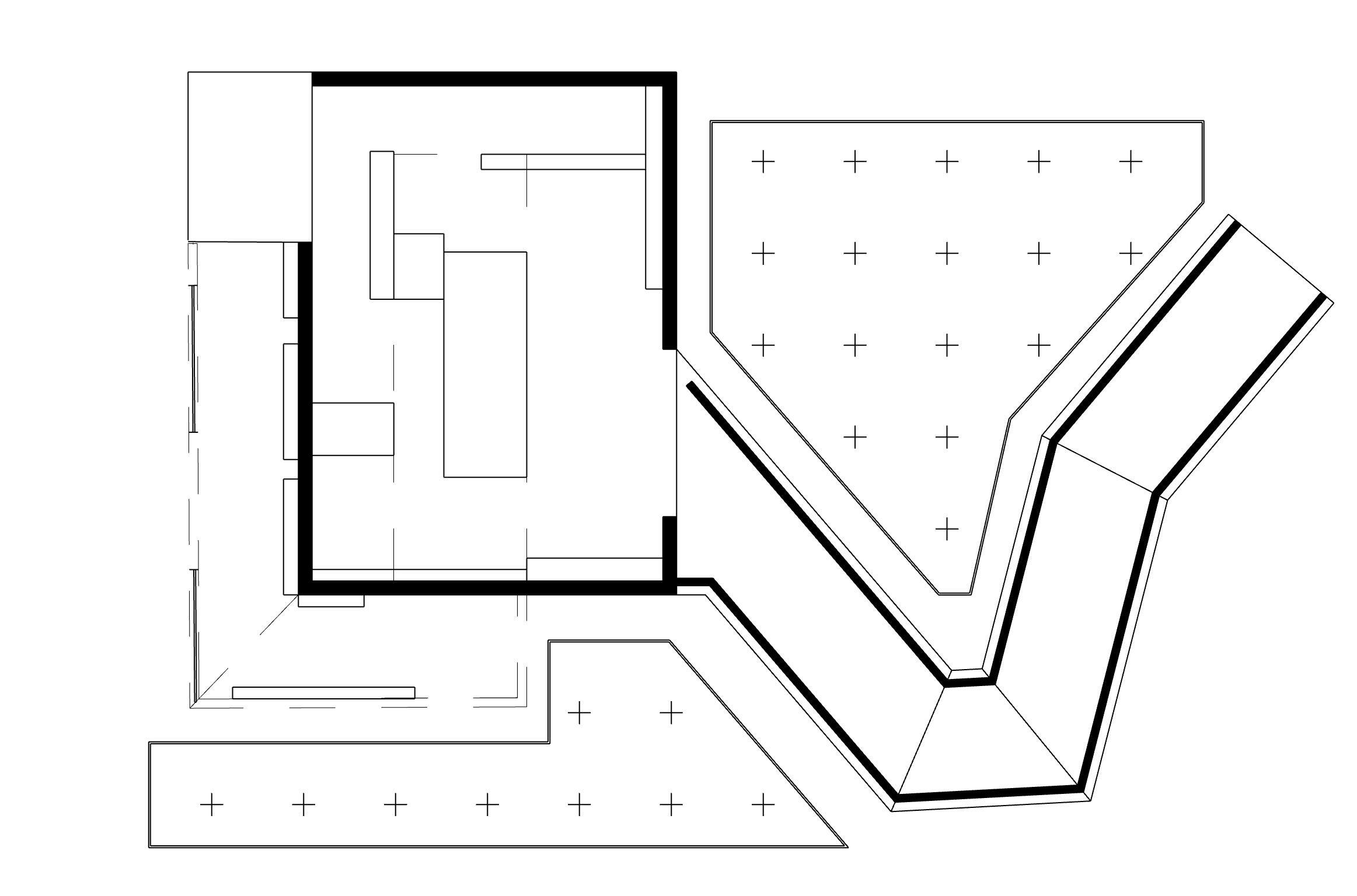
Following the rising loop system . using the architectural elements (planes) to guide the users into the visual experience .
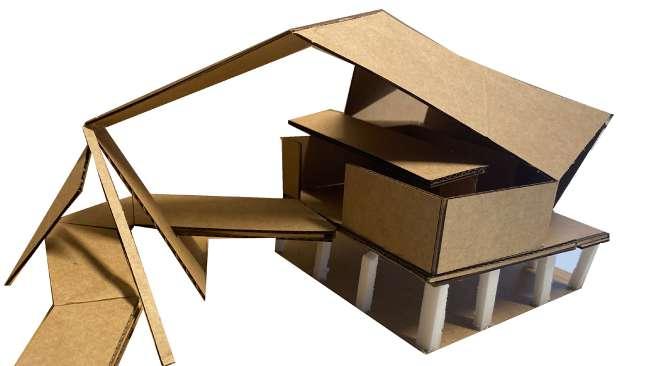
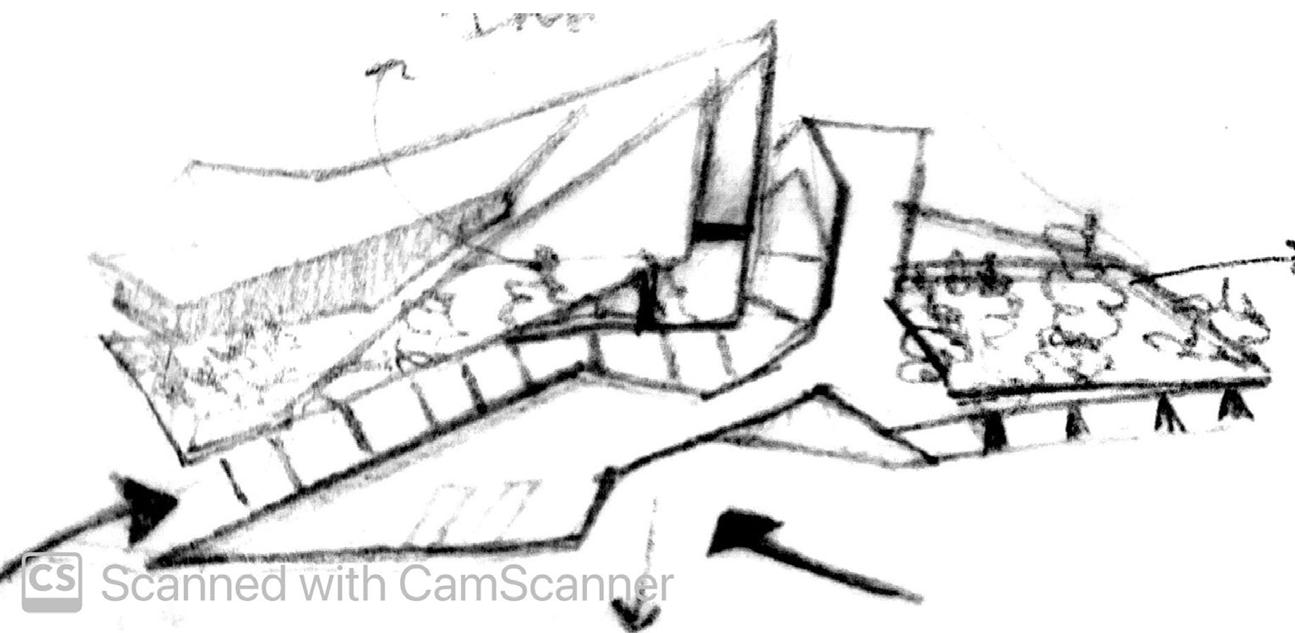
ITERATION 3
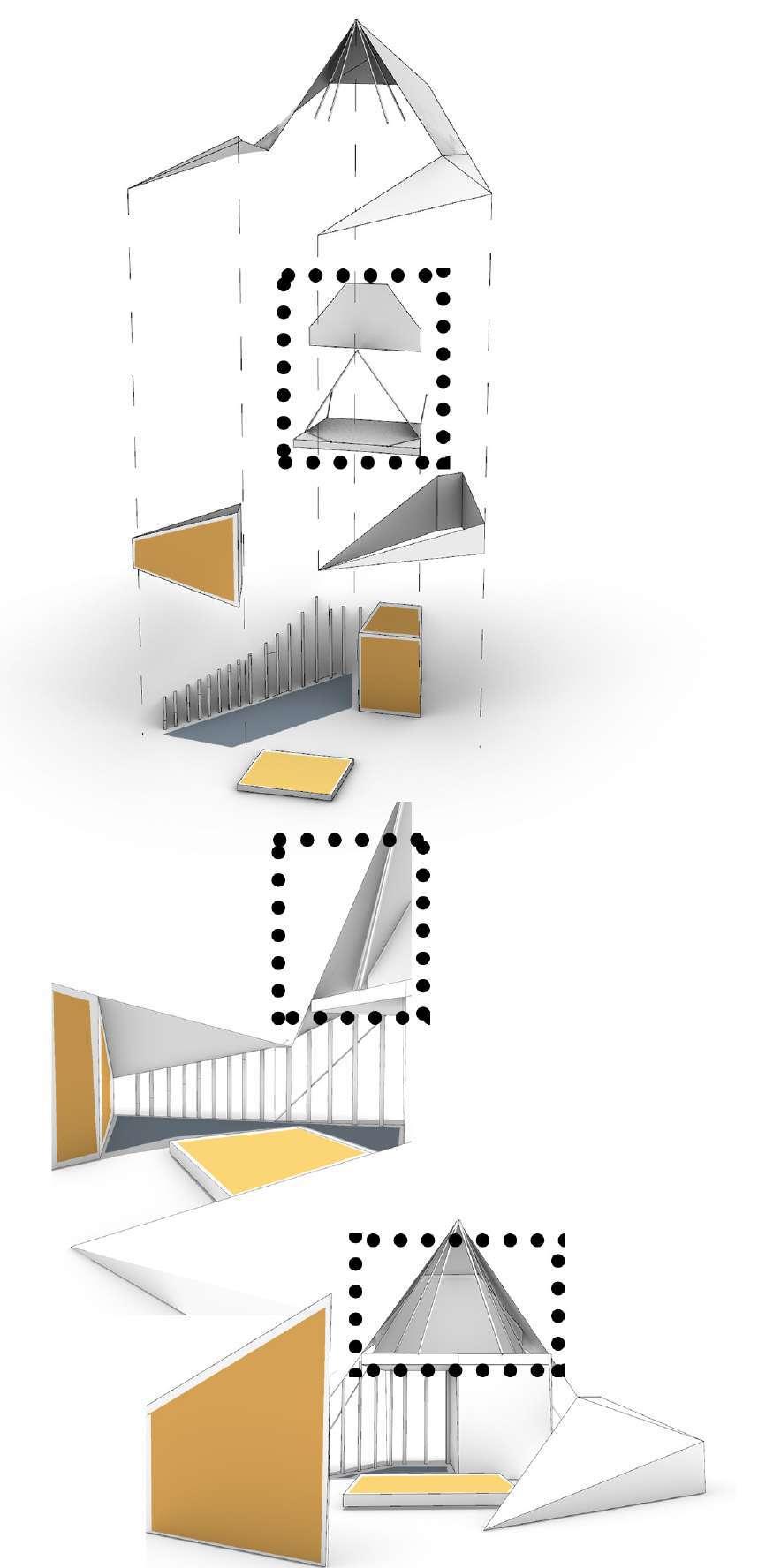
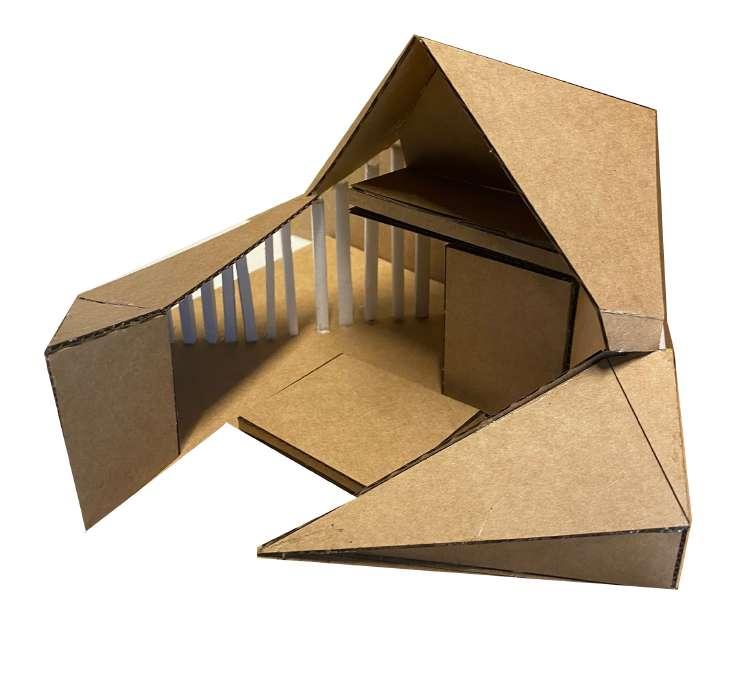
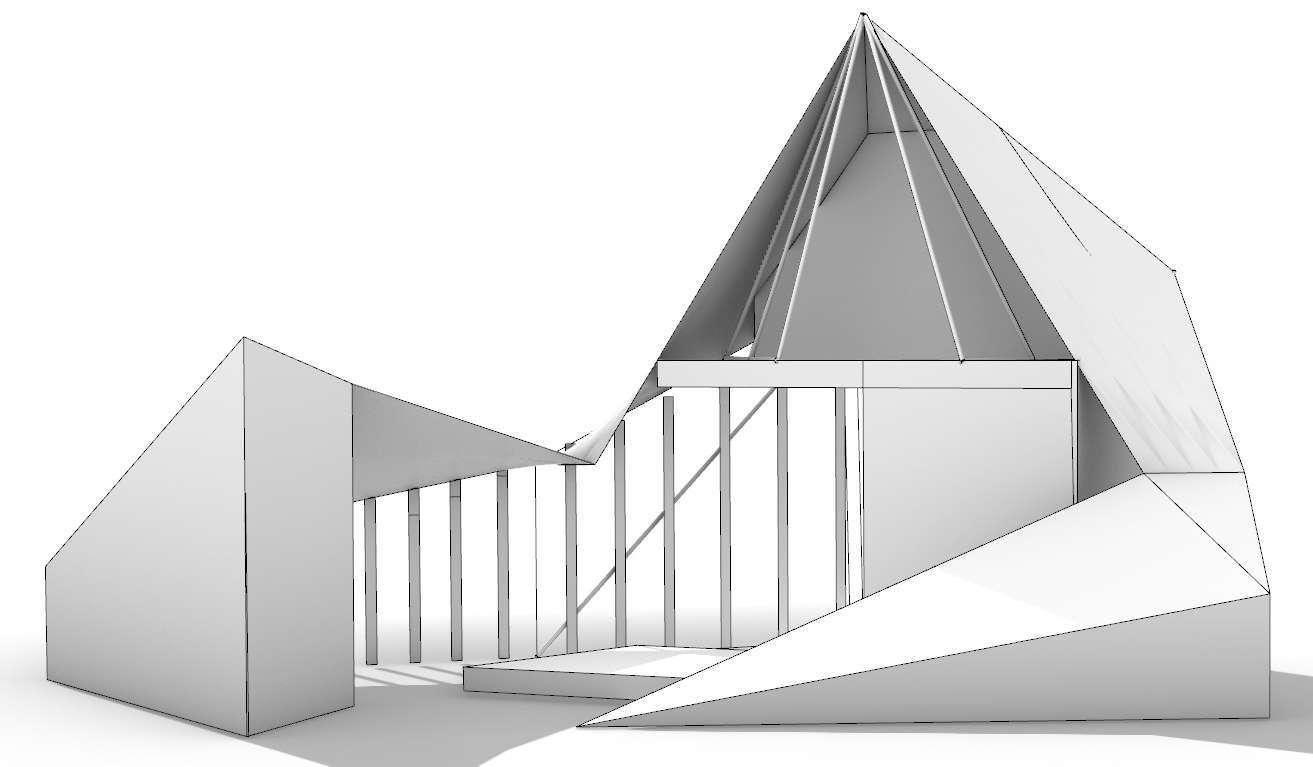
Concept fully based of user movement and user experiences . carrying forward the idea of ramps and folding planes to establish this experience . folding a single plane around the functional spaces allowing the people to go all around and finally reach the top for the ultimate experience.using the rising loop system while folding the planes.
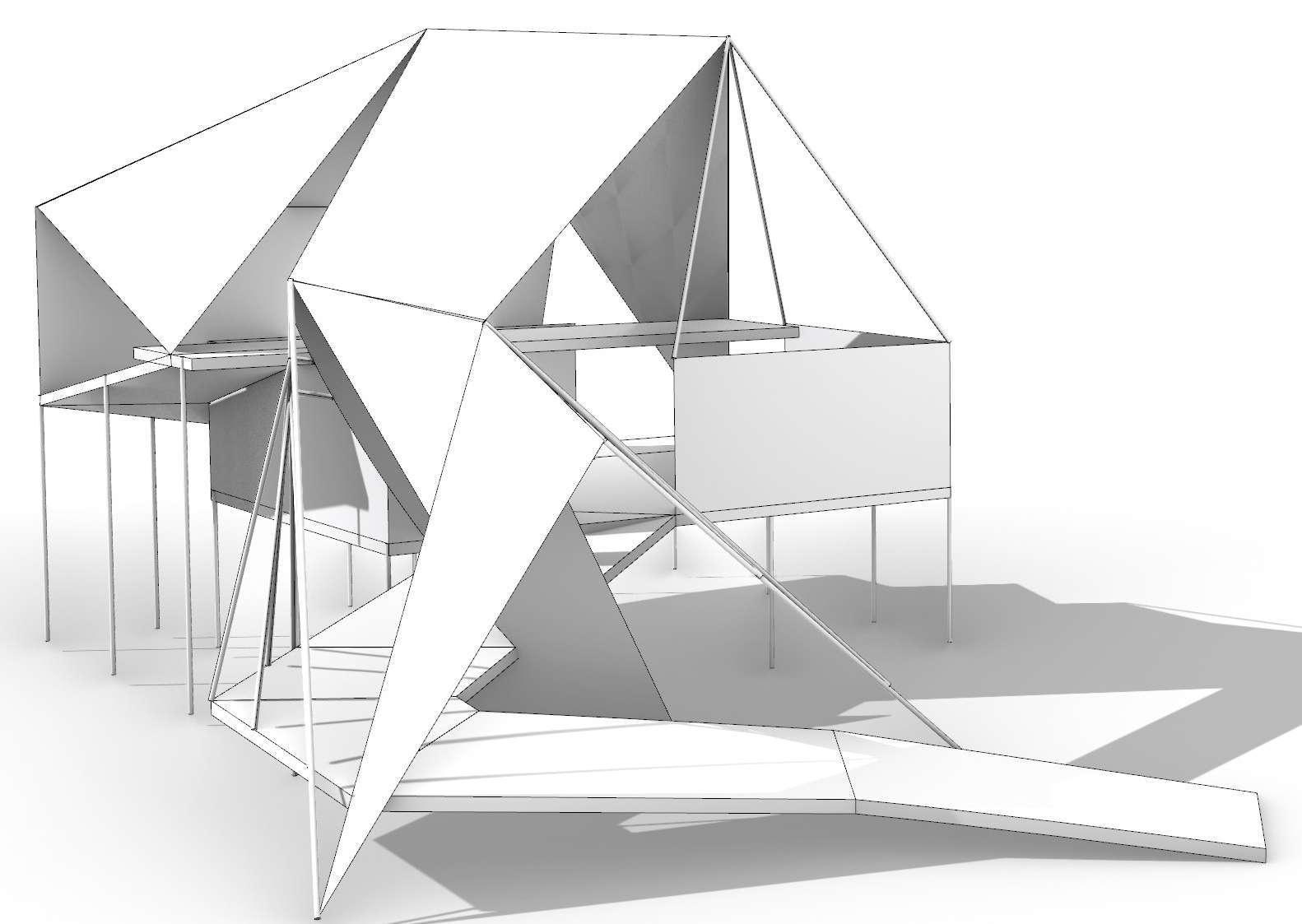
Display space Access Deck space Transitional Ramp landscaping landscaping Transitional Ramp Display space Access
Secondary Ramp Landscaping Access Ramp Showcase room Landscapes FUNCTIONALITY
CHAMBERS - LEGAL ADVOCACY
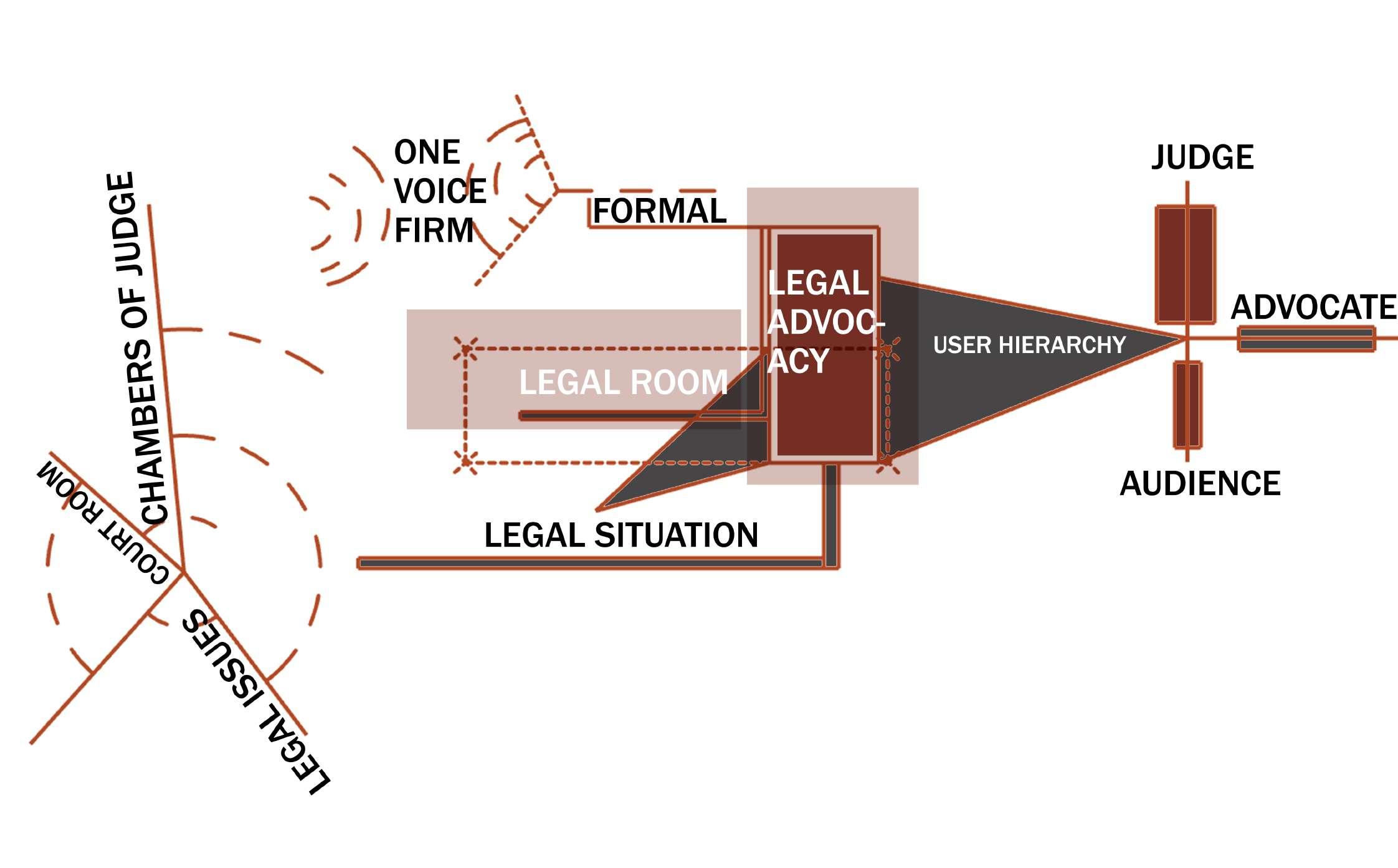
Functional space Advocators stand
Functional space Audience
Judge office
FUNCTIONALITY
DESIGN DEVELOPMENT - ITERATIONS
Advocators stand
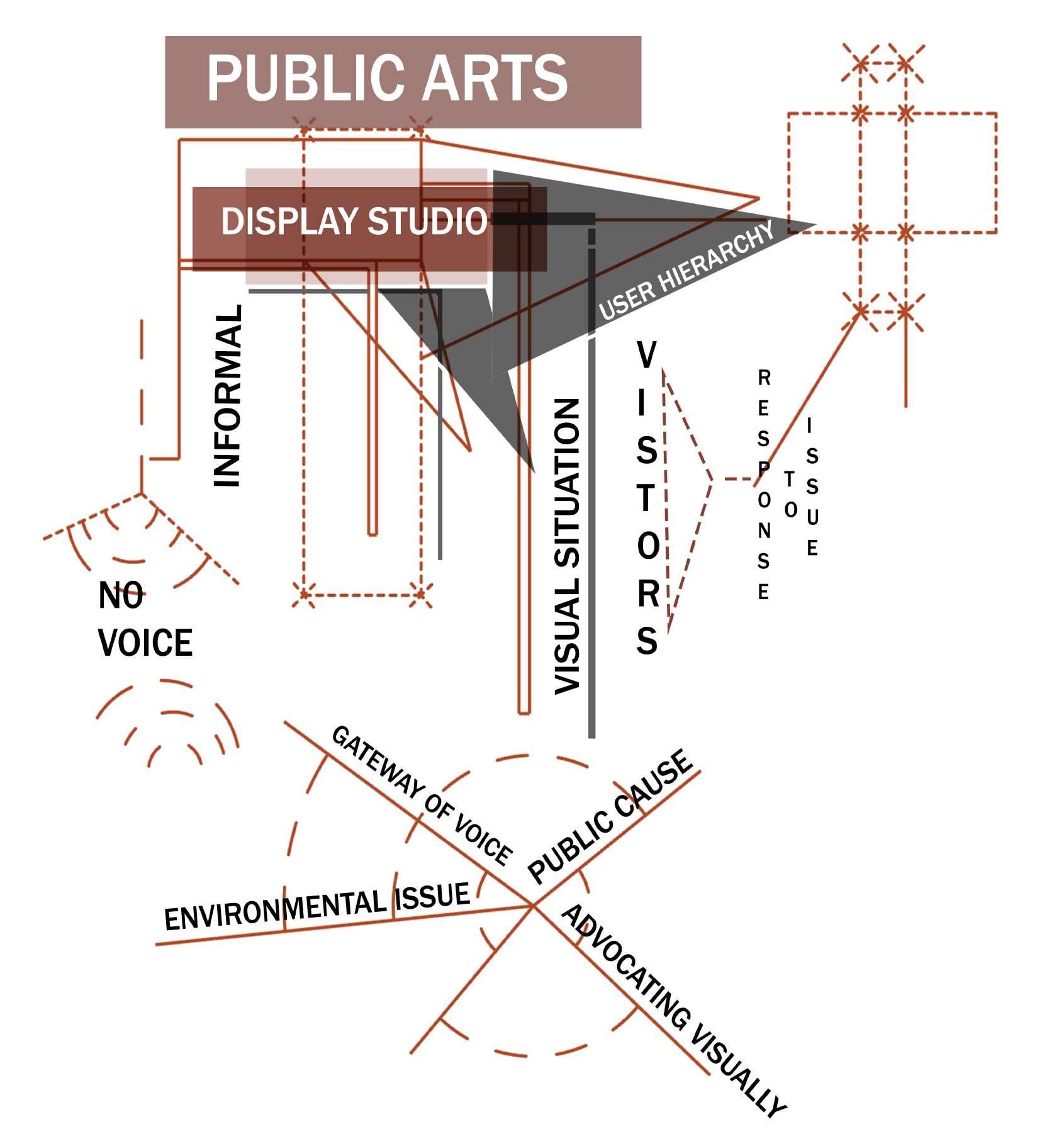
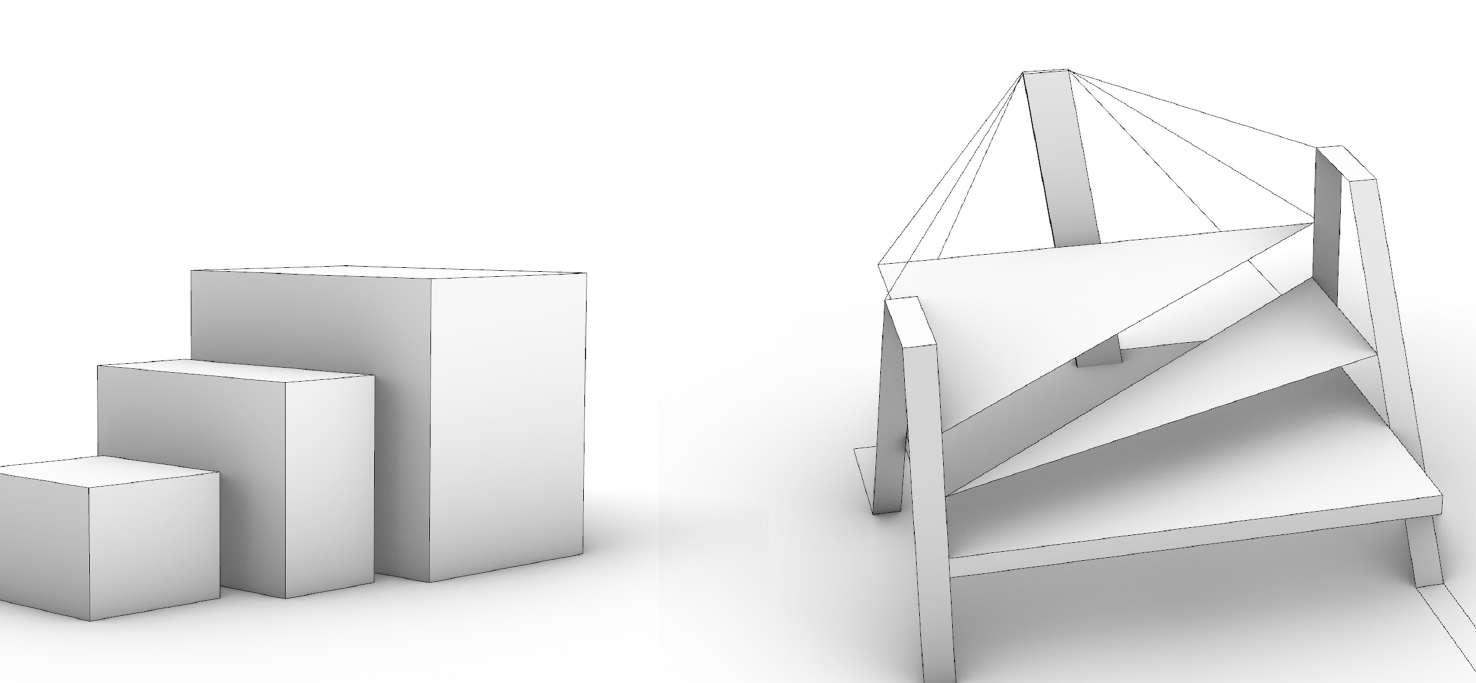
Using user hierarchy to lead the design development with the creation of buffer zones between the three, highlighting the one firm voice functionality.
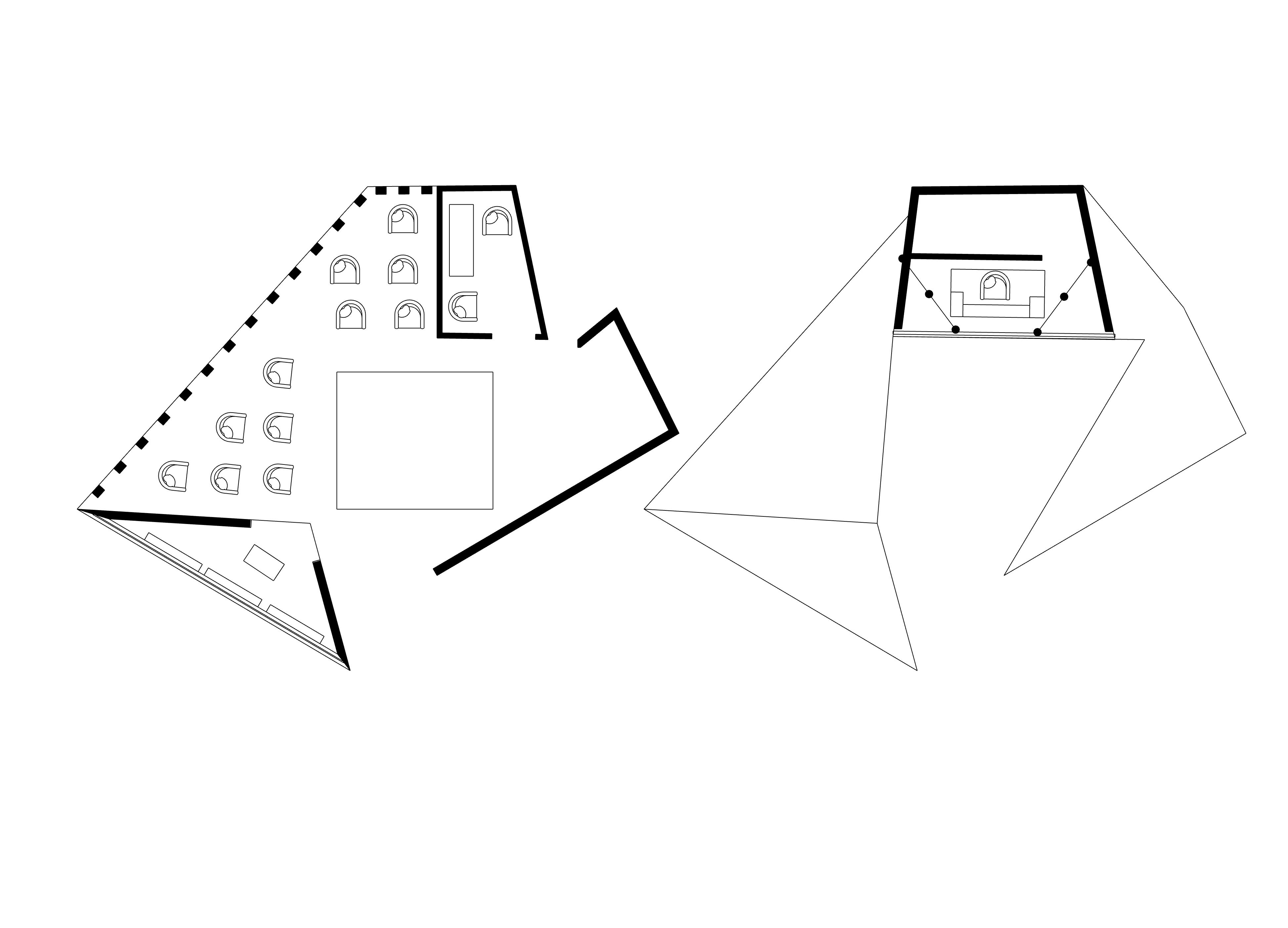
The creation of buffer zones and user hierarchy leads as the design driver of the final iteration . following an upward folding creating an upward advocacy and natural buffer zones further naturally transitioning into a functional judges chambers. Functional space
Judge office Advocators Doc. Storage
Judge office
Audience B Waiting Area
Audience A
Judges Office Judge Seat
SCENE 3 -
COURTS
Along with the buffer zones , using architectural elements to create a formal setting . advocating for the legal setting . ITERATION 1 ITERATION 2 ITERATION 3
DISRUPTION IN ARCHITECTURE ADVOCATES FOR THE NEW PARADIGMS OF LIFE
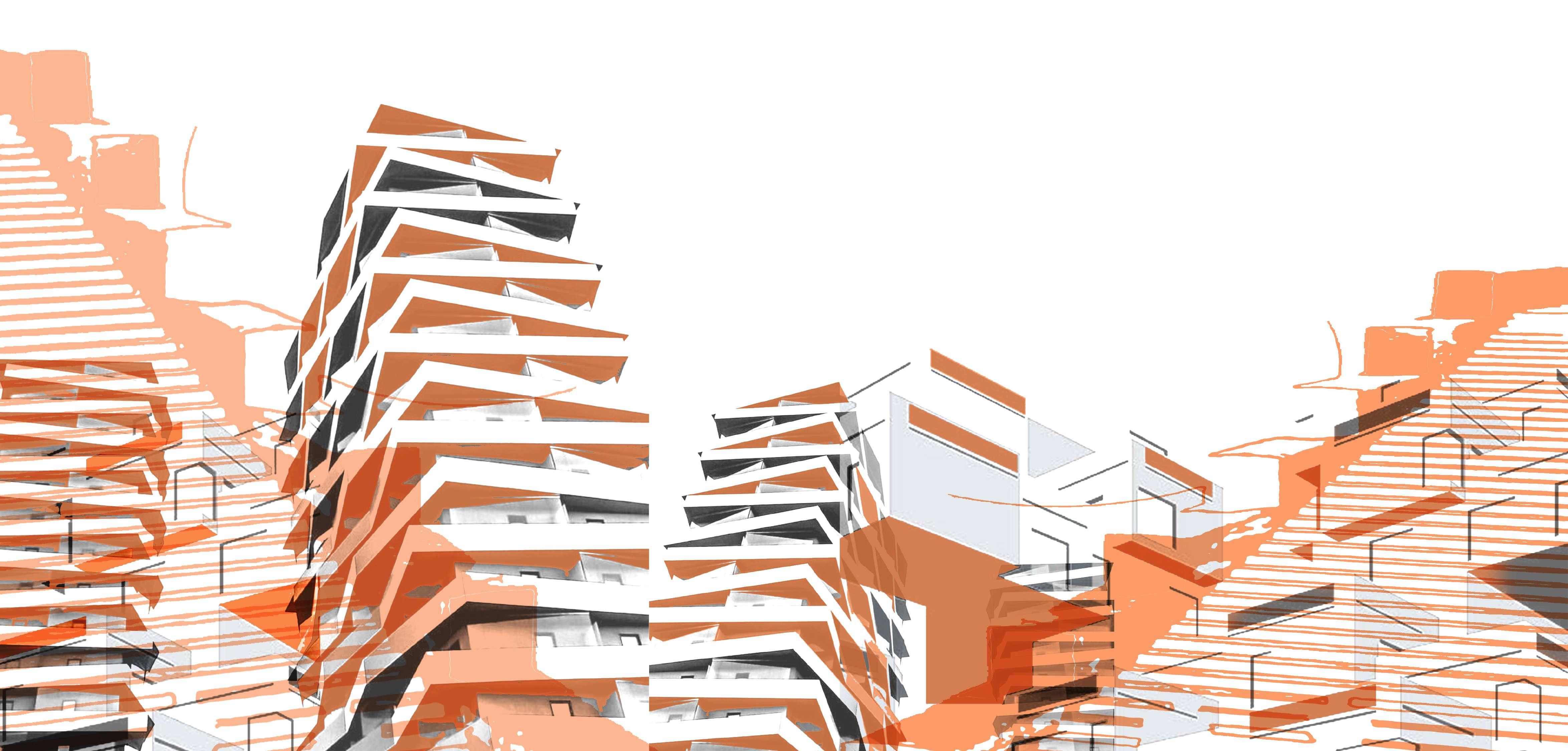
Architecture as we know has become the voice of architects and their clients only !!! for the spaces that have been designed over a given time. Presently within the upcoming cities we experience how almost every street, building or even the building elements (such as openings, ramps, transition of spaces etc. …) follow a set of ideology, thus settling in their comfort zone, established in the past. How is it believed that these set ideologies still answer us as communities in terms of space? Does it? NO.
The continuous idea of “creating within the box” that we as architects have encouraged has led to-
• Unresponsive community spaces for the users
• Designing of profit driven spaces, lacks spatial challenges
• Forced spaces and forced experiences
• Condemned to live in similar massed spaces
“In the streets of Satwa, FUNCTIONALLY they are designed in away that every space begins to mirror each other, along with being designed as a mediator or connector of two zones or casually flowing into large openings as it is believed to satisfy public needs in terms of open communicative spaces or even act as platform for entrances to buildings.
We need to identify the opportunities and varied experiences offered once the set function and experiences are agitated. The role of agitation is to identify the unknown users and response to a space (ignoring its set function), this is a process of dismantling the dogmas and infusing the measurable.
DISRUPTIVELY we see the citizens, manually create some form of disruption in the space to have it respond accordingly. which effects every passerby’s experience and response to the space. For example, when the users use the small narrow pathways as a space to share ideas by setting up seating’s randomly or space to share physical items setting up small souks or space that advocates for the lack of greenery rather than only responding to it as physical connector.”
“THINK BIG, THINK DISRUPTIVE.EXECUTE WITH FULL PASSION.”
SITE SELECTION
SITE 1 - CREEK
Waterfront – underdeveloped district
Site has barely any form of inclusive / disruptive elements to work with .
Lacks in variety in terms of users, volumes ,facades etc.
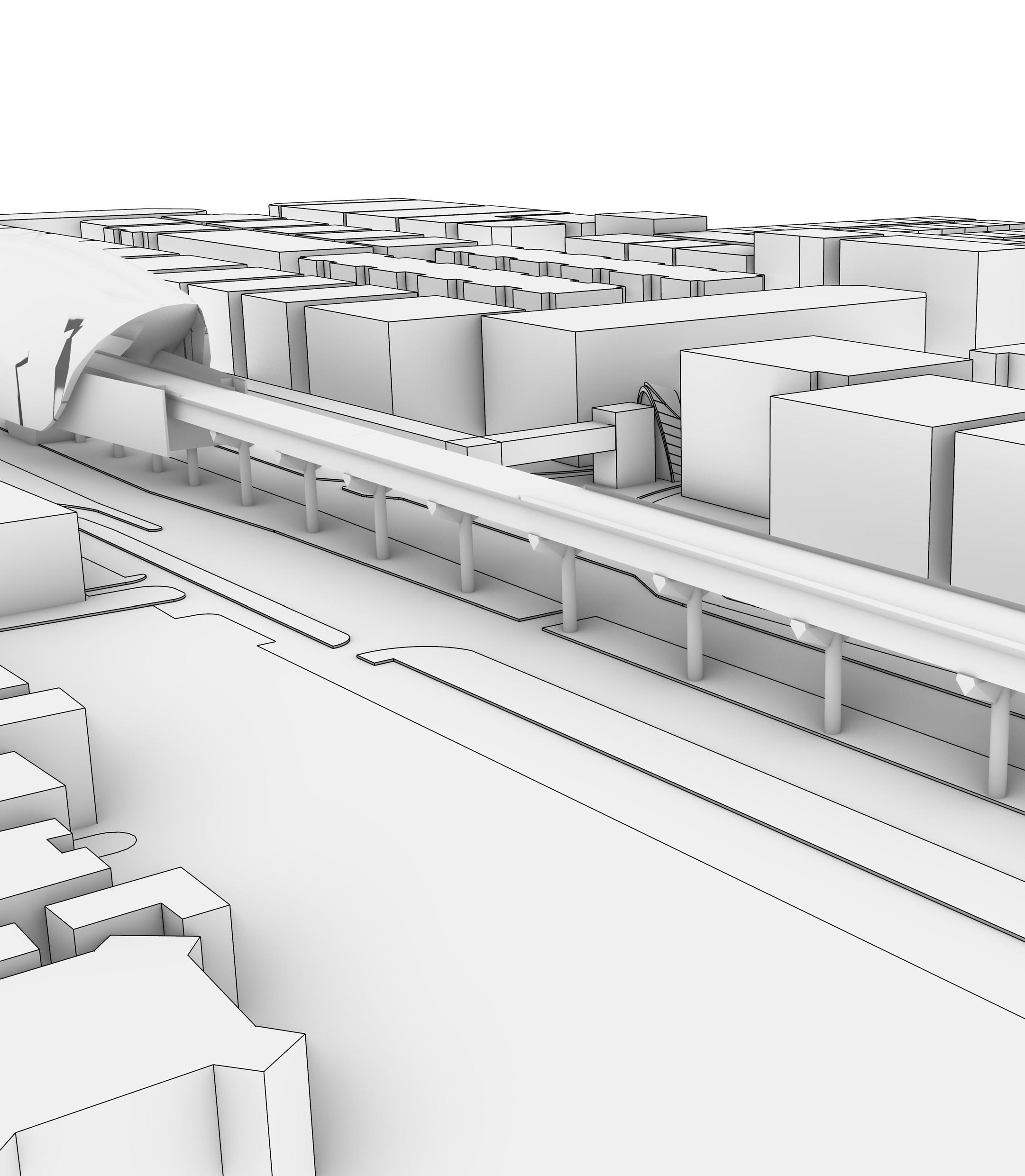
Feels like a huge a grey space.
SELECTED SITE - AREA OF INTERVENTION
SITE 2 - BANIYAS
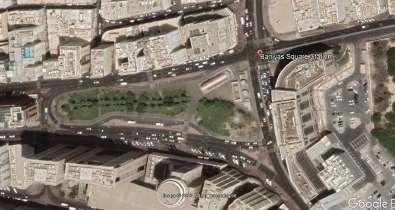
Dense context with dense population. lacks in terms of disruptive elements around the site. well functioning tied down together site. unable to fulfill the design devices and drivers of the given VERB .
SITE 3 - AL KARAMA
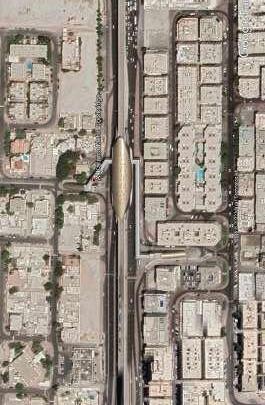
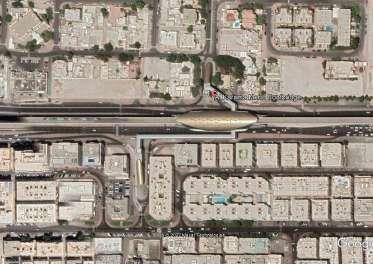
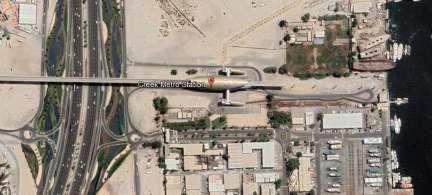
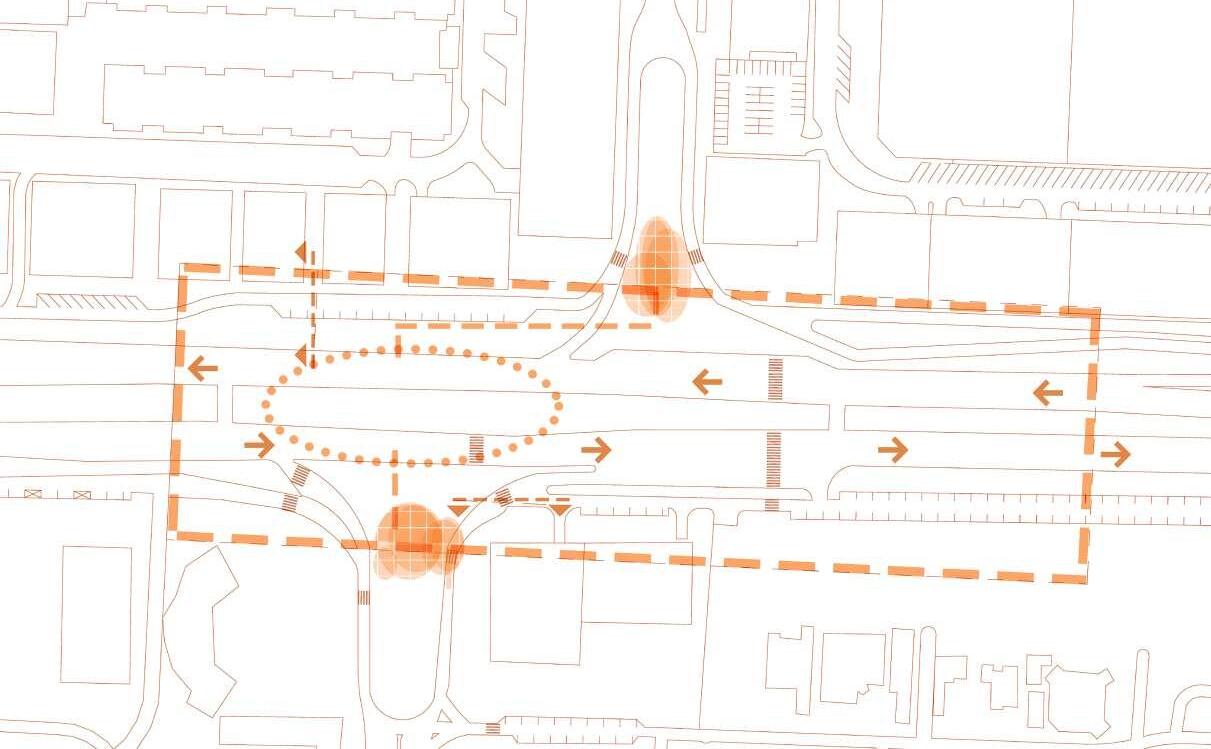
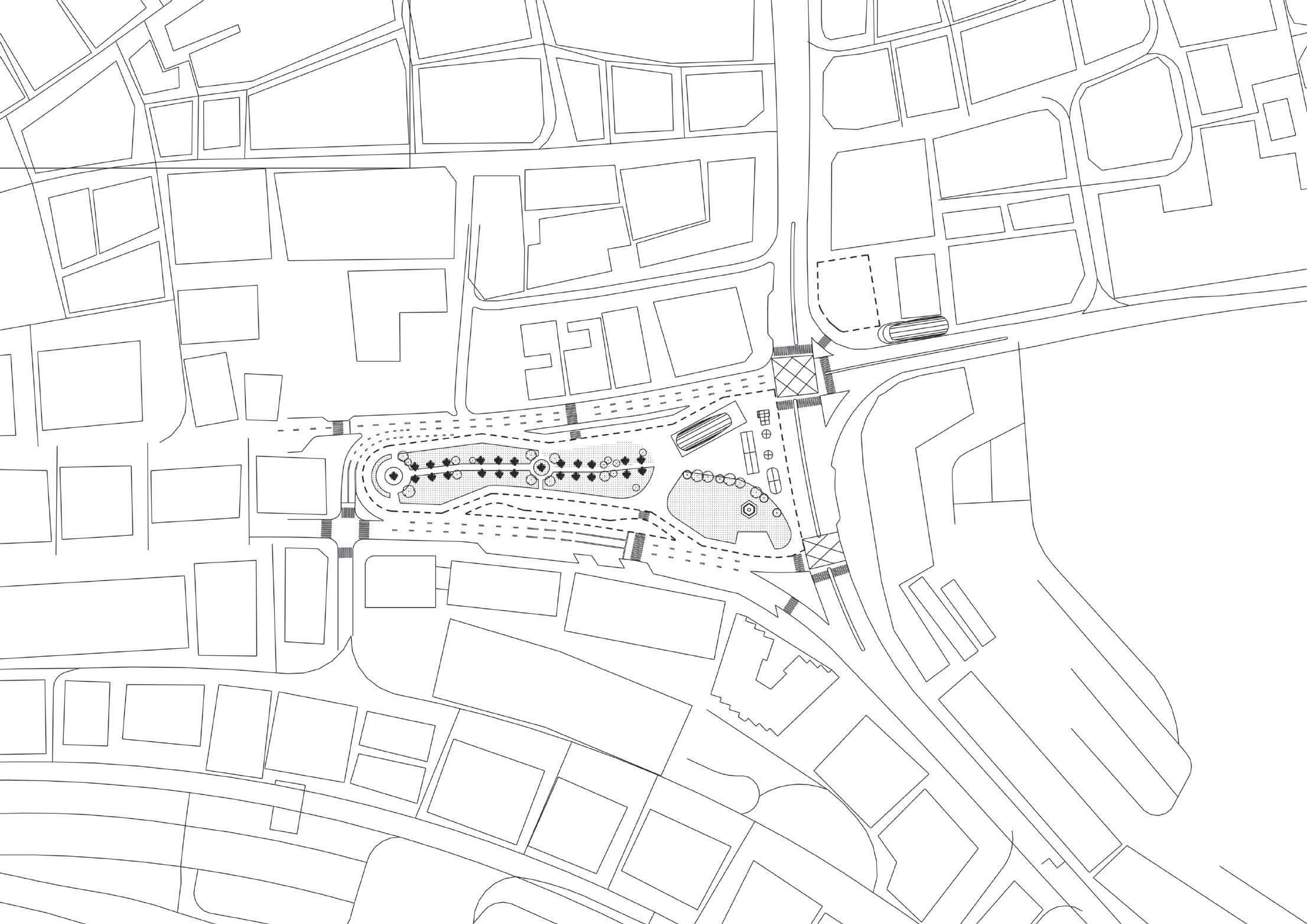
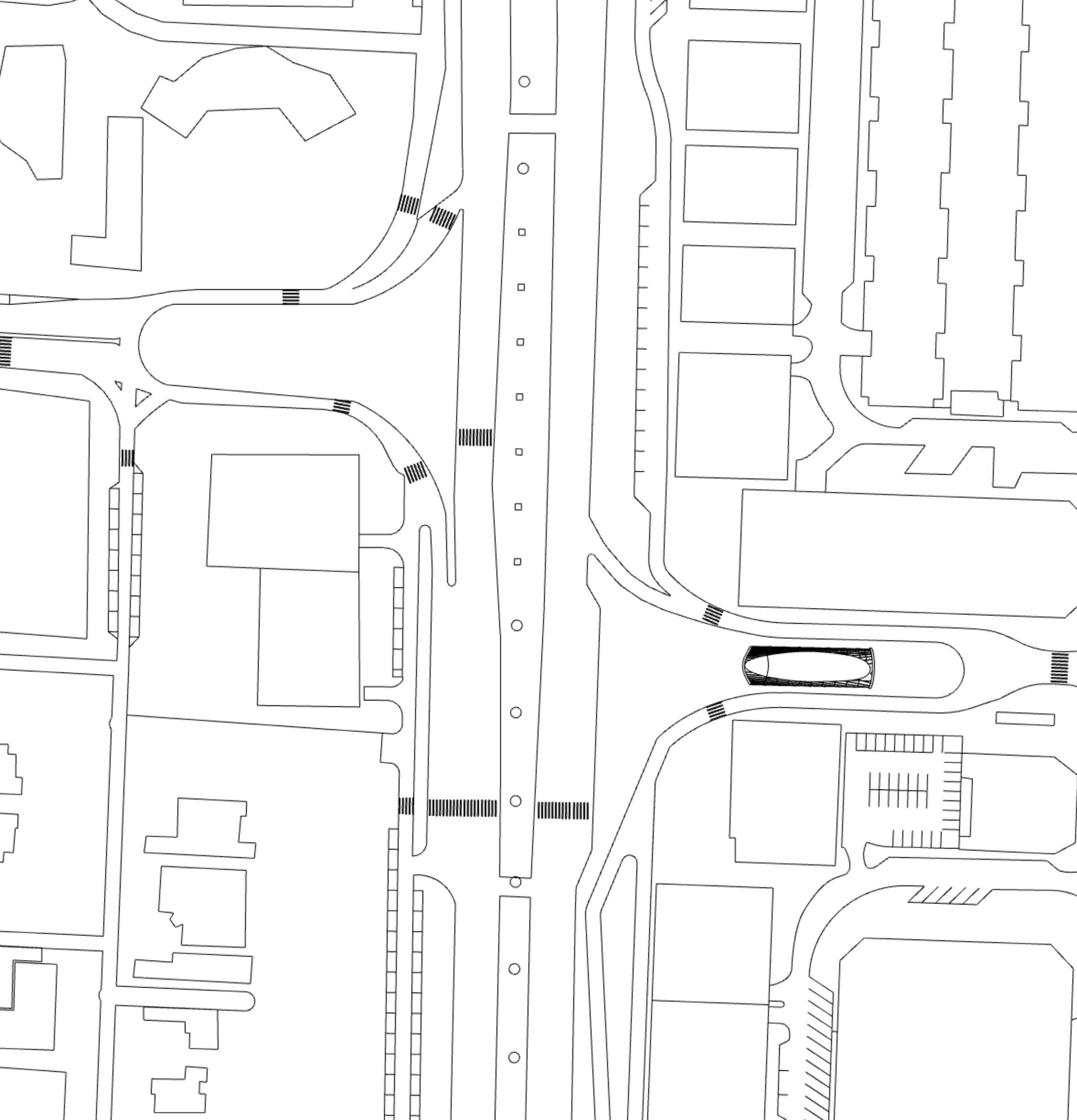
The Selected site is full of life and variety in the forms of interactions and connections , filled with a fusion of multiple elements. The following site covers the major access routes and the mixed use community living within the area. its a site functioning with multiple isolated elements providing an opportunity for a better sense of design.
A- LIST OF SITE PARAMETERS – bring out a sense of agitation
• Dense population
• Levels (vertical and horizontal)
• Busy context
• Accessibility
• Visual corridors
• Landscape
• Functionality
• Shadows / light
• Building Facades
• Volumes/ Negative spaces
B- SPECIFIC PARAMETERS FOR SITE ANALYSIS
• Site overview
• Disruptive elements
• Drivers of the verbs
• Overall Design devices
• Effects of shade and shadows
• People movement – dispersion analysis
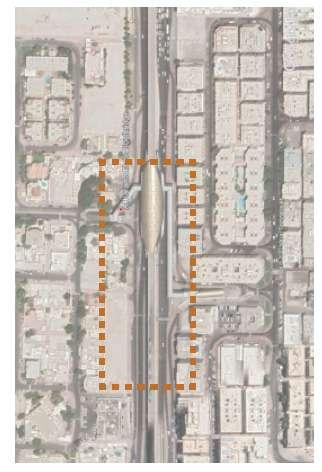
SELECTED SITE SITE 3 - AL KARAMA SITE INTERVENTION - 300m X 90m AREA OF INTERVENTION - 27000m sq
OFFICE OF HIGH REPRESENTATIVES FOR LEAST DEVELOPED COUNTRIES, LAND
LOCKED DEVELOPING COUNTRIES AND SMALL ISLAND DEVELOPING STATES

A. MANIFESTO INTENTIONS - DISRUPTION IN ARCHITECTURE ADVOCATES FOR THE NEW PARADIGMS OF LIFE
The site being a fusion of many elements and zones , naturally allows for multiple positive and negative disruptions around the area . Thus making each identified zone different and giving its ability to advocate for its lifestyle.
Each zone advocates for its own way and form functionality , using this as an opportunity to pull in the isolated areas tieing al karama by breaking the existing norms and using a good disruptive design as the host for a well improved community .
B. CLIENT OVERVIEW
i- UN-Offices
UN-office- office of high representatives for least developed countries, landlocked developing countries and small island developing states
ii- GOAL – achieve sustainable development and internationally agreed goals
-Support advocate in favor of the above 3 with well reformed pro grammes of action
-Raise awareness about the economic social environmental potentials of the 3 iii-UN-OHRLLS works with Member States, development partners, UN agencies as well as various stakeholders ranging from: civil society, private sector, academia and foundations.
-The Office aims at enhancing the mobilization and galvanization of international support for - and ensuring the effective coordination, monitoring and review ofthe implementation of the POA
-To provide coordinated support to the Economic and Social Council as well as the General Assembly in assessing progress and in conducting the annual review. -undertake appropriate advocacy work in favour of least developed countries, landlocked developing countries and small island developing States, in partnership with the relevant bodies of the United Nations as well as with civil society, the media, academia and foundations.
C. USER PROFILE
UN-OHRLLS was established in 2001 and today serves 91 vulnerable Member States of the United Nations. The 47 Least Developed Countries (LDCs), 32 Landlocked Developing Countries (LLDCs) and 38 Small Island Developing States (SIDS) are facing their own unique sets of challenges in achieving sustainable development and internationally agreed goals.

USER RELATIONSHIPS ----- MANIFESTO ----- VERB
The UN-OHRLLS is all about advocating and supporting the three mentioned categories with vulnerable countries listed under. Just like how the verb was translated , the brief is defined in a way that this as well is translated in 3 categories.
ADVOCATION - People
- Place - Purpose
Further using the idea of CREATING GOOD DISRUPTION as the host from the site to convey the relationship between them while allowing for spatial variations and relationship growth with the users
FUNCTIONS TOTAL AREA UNITS NO OF UNITS 1. OFFICE SPACES LDC/LLDC/SIDC CENTRIC • Document storage • Collaborative workspaces • Meeting rooms • Workshop spaces 300 240 600 150 450 100 80 200 50 150 3 3 3 3 3 UN OFFICE 2. RESEARCH STATIONS • LDC • LLDC • SIDS • Presentation meeting rooms • WorkshopTraining 150 150 150 450 250 150 150 150 150 250 1 1 1 3 1 3. NEWSROOMS • News stations • Computer abs • Paper storage 300 150 80 100 150 80 3 1 1 PUBLIC FUNCTIONAL SPACES 4. EXHIBITION SPACES • Permanent spaces • Temporary • Cultural hall 450 250 200 225 125 200 2 2 1 5. CAFÉ • ndoor • outdoor 150 150 150 150 1 1 6. LIBRARY • Reading area • Discussion forum 100 80 100 80 1 1 7. SERVICES-WALKWAYS 200 200 1 TOTAL AREA 5000
-

SCALE BAR- 1:500
CLIMATIC ANALYSIS
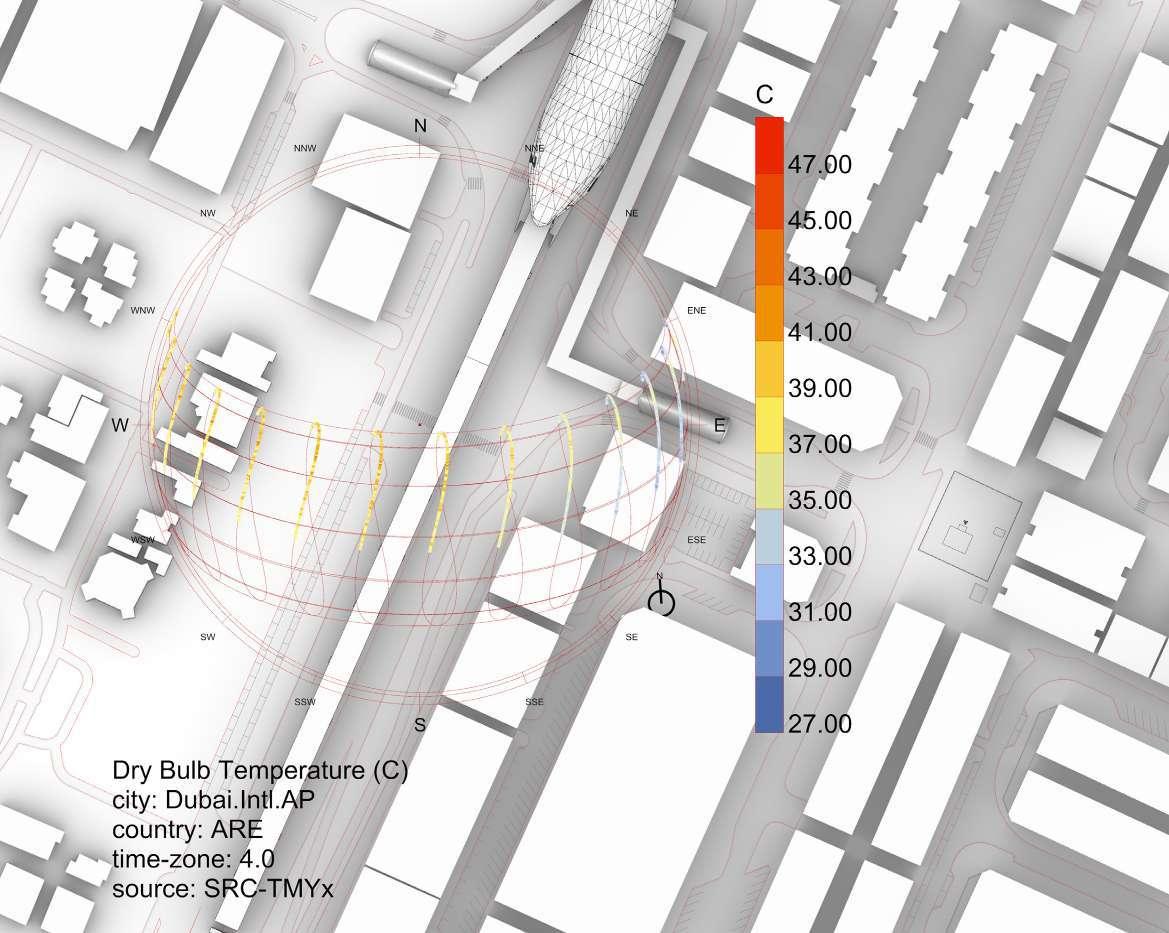
SUN PATH
The daylight experience in this area during the morning hours is extremely sunny with barely any form of shadding also due to certain reflective surfaces. During the afternoon and evening hours the light is less harsh with shading created between the buildings and under the columns along with some street furnitures.
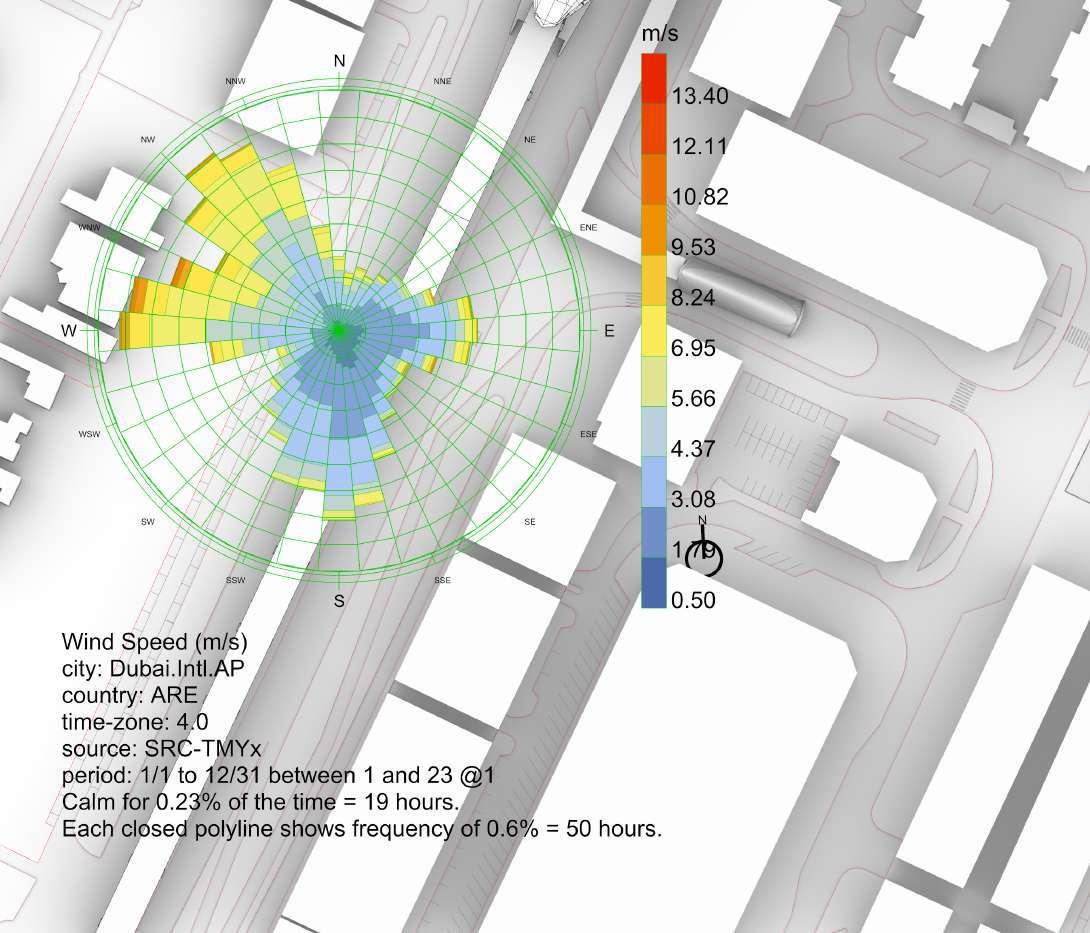
WINDROSE
The north-west prevailing winds keeps the site cool . the urban fabric of the site with its narrow-wide openings allows for easy circulation as well as cooling of unconventional spaces.
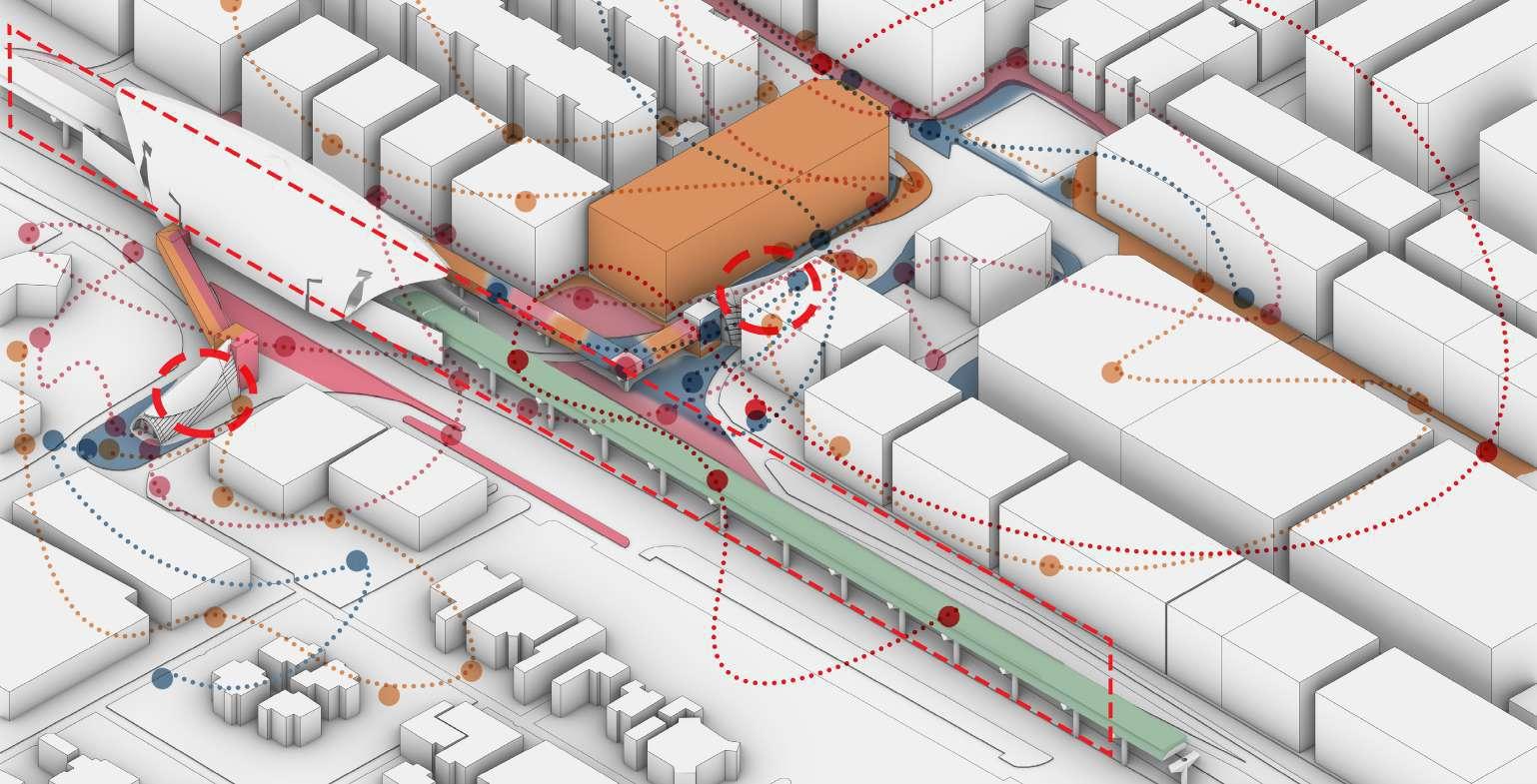
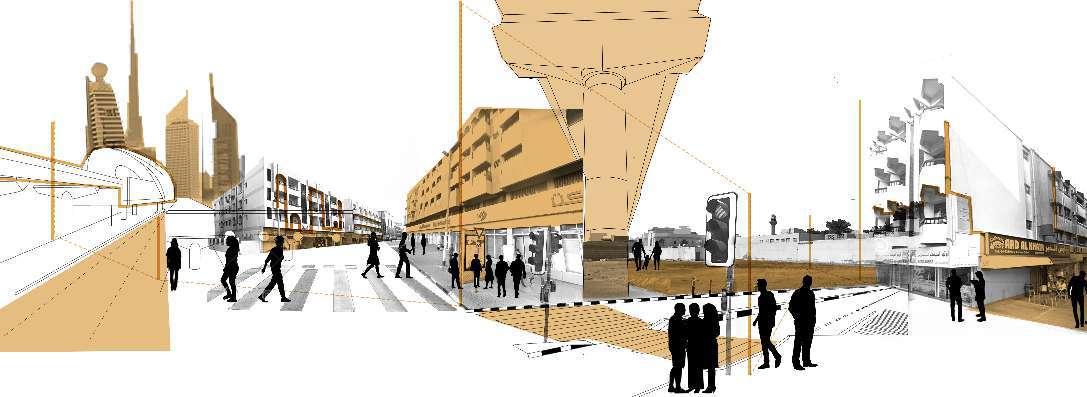
SITE OBSERVATION
SITE ANALYSIS
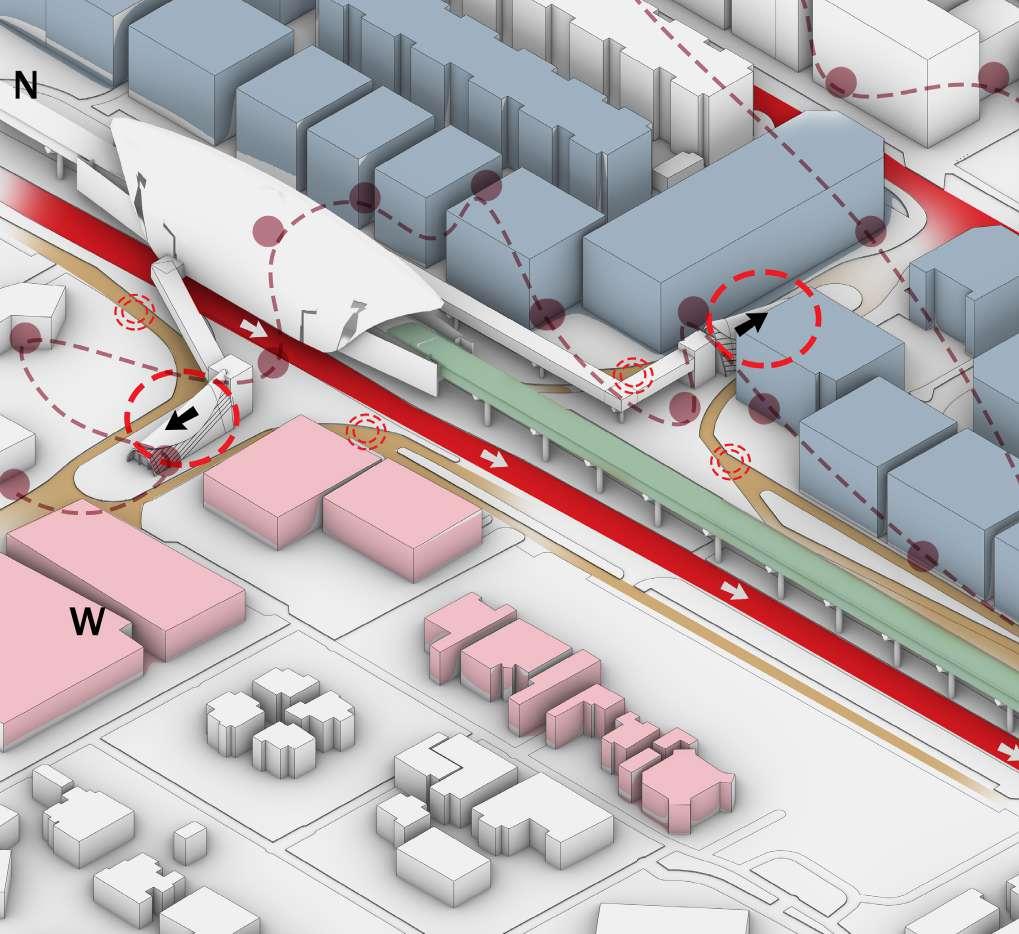
Al karama is a site full of opportunities in terms of urban interventions and architectural design . The urban fabric of the site a set of isolated elements put around together creating the working frame work. Using this as an opportunity to tie the site and its elements together through urban design offering variety and improved experiences to its vast set of users.
SITE ZONING
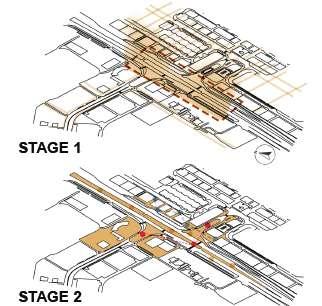
STAGE 1 - Intervention and Existing Grid patterns
Area of intervention
Existing Grid System
STAGE 2 - Social Attractions
Nodes and Attractions
Metro stations and Crossing
Alleyways - spatial relations
Grey spaces
STAGE 1
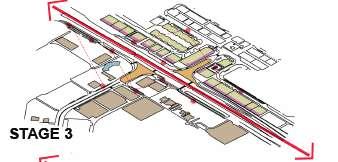
STAGE 3 - Functionality
ADCB Metro stations
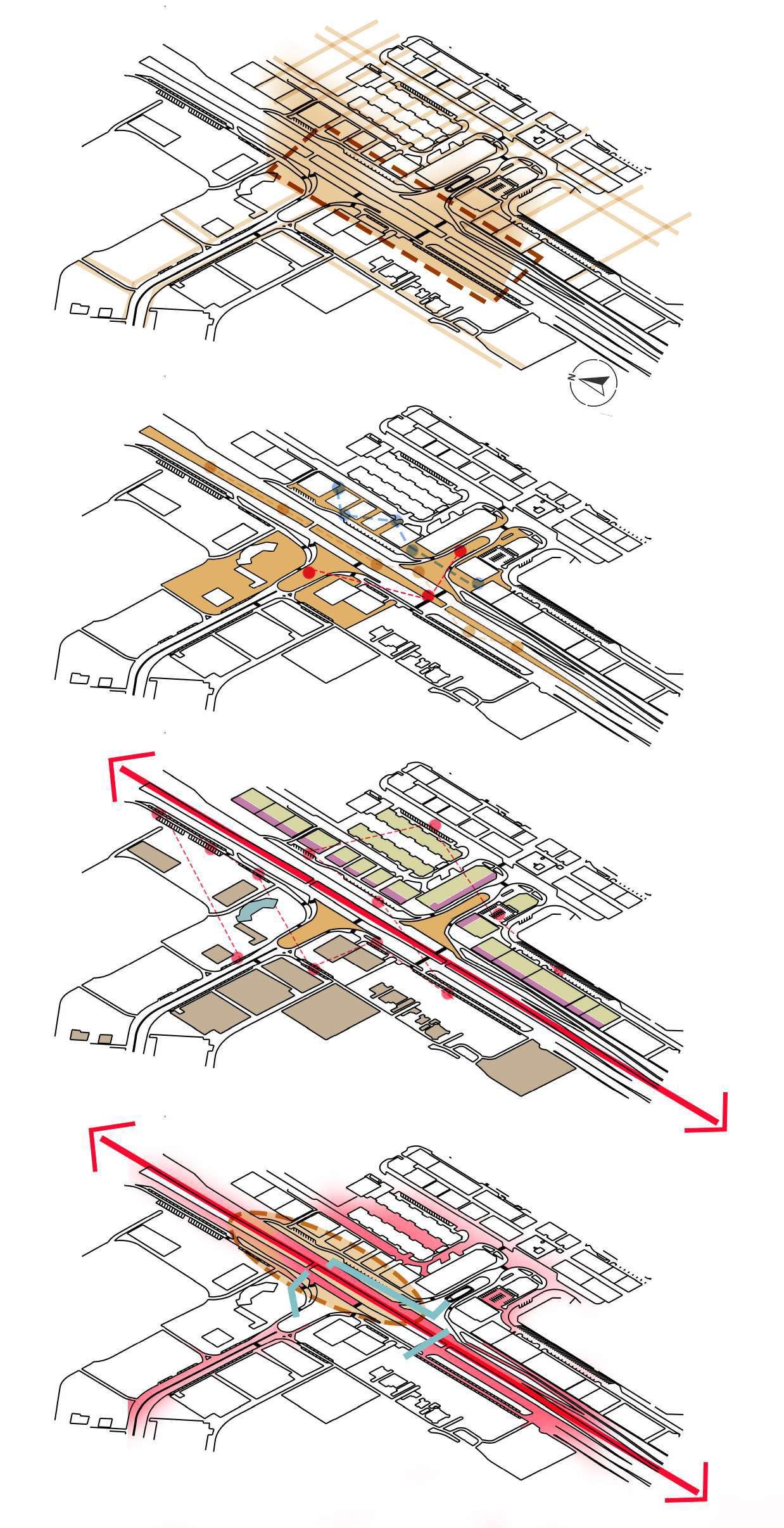
Parking spots
Pharmacy / clinics
Apartments
Residential Villas
Mixed use stores
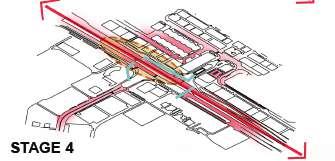
STAGE 4 - Access (vehicular and pedestrian)
STAGE 2
STAGE 3
STAGE
USER GROUP ANALYSIS
4
ENTRY PTS ENTRY PTS Tourist Family School Bachelors Street life Children Supermarket variations in the way the user approach the site in terms of their daily lifestyle. Metro Line Pick/Drop off MOVEMENT Main Roads Metro Line Service Roads Zone 1 Zone 2 Street Activators ZONE 1PRIVATE ZONE 2PUBLIC ZONE 3TRANSITION SITE SETTING
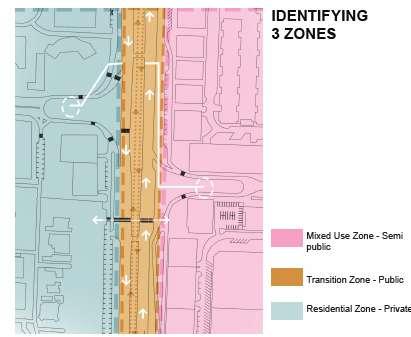
IDENTIFYING 3 ZONES
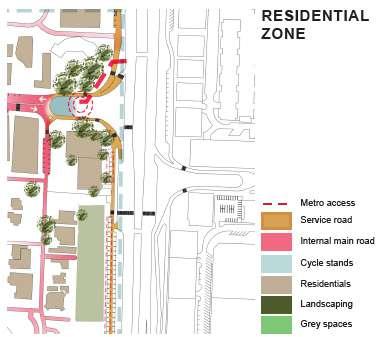
RESIDENTIAL ZONE
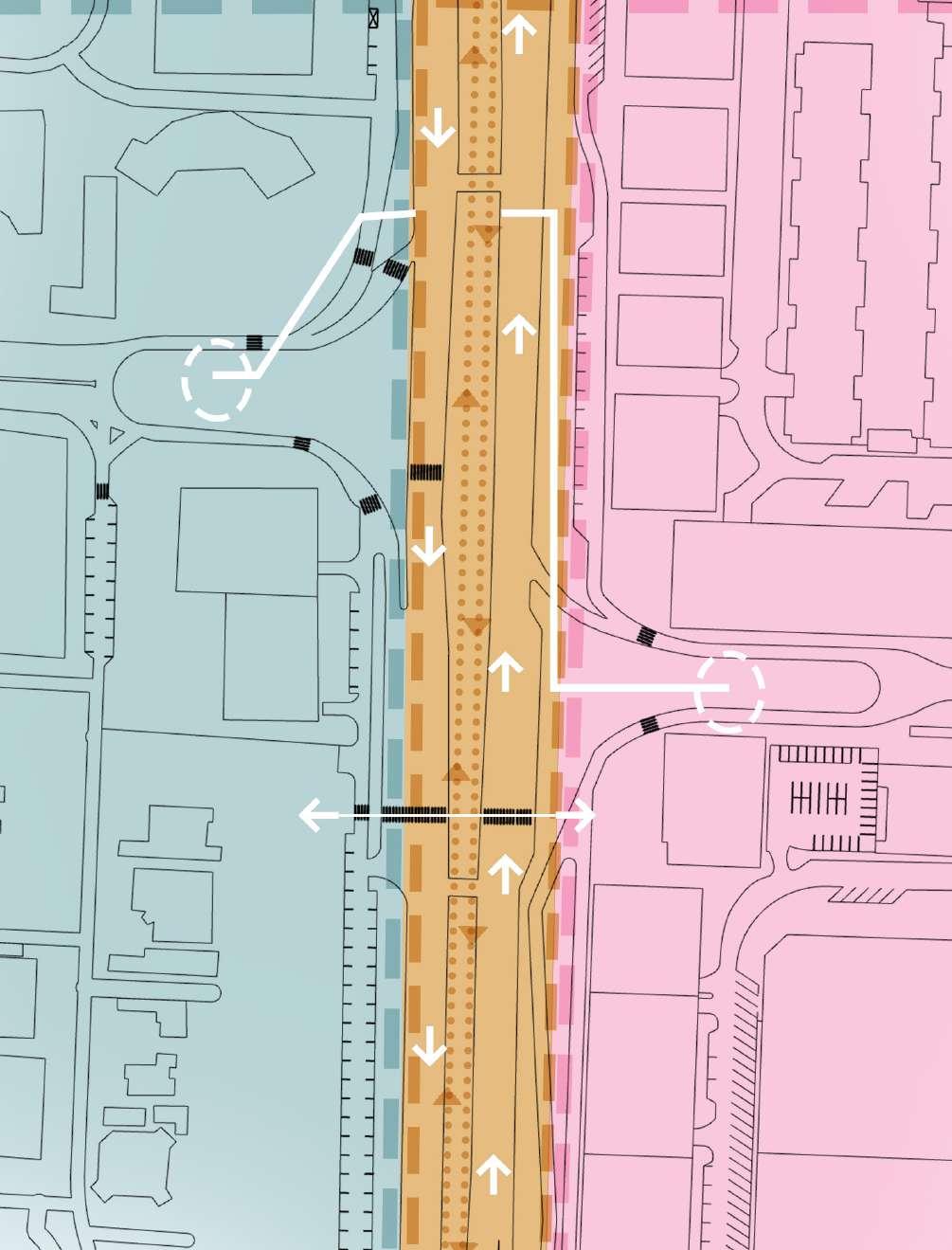
Highlights 3 major isolated zones put together in the karama district. Residential zones being the most inward and private community . Mostly consistent of families and some of working class. Transitional zone advocates for the linear movement of people , vertically or horizontally . consisting of both vehicular and pedestrian movement. Mixed use zone advocating for active spatial communities and opportunities.
VISUAL PERCEPTION OF 3 ZONES
Analysing how the combination of elements in terms of access , grey spaces , landscaping contribute to the functioning and activation of the zone.
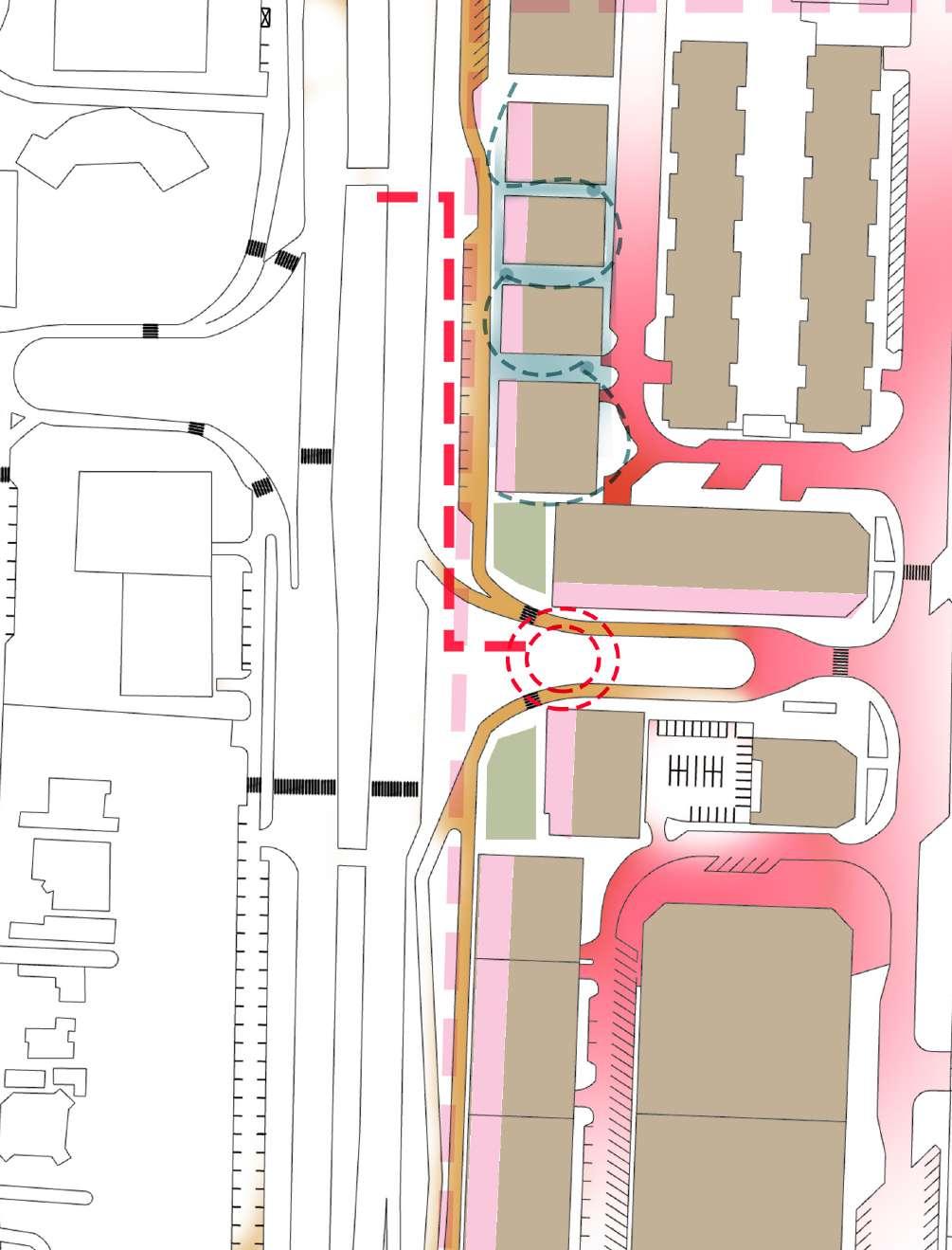
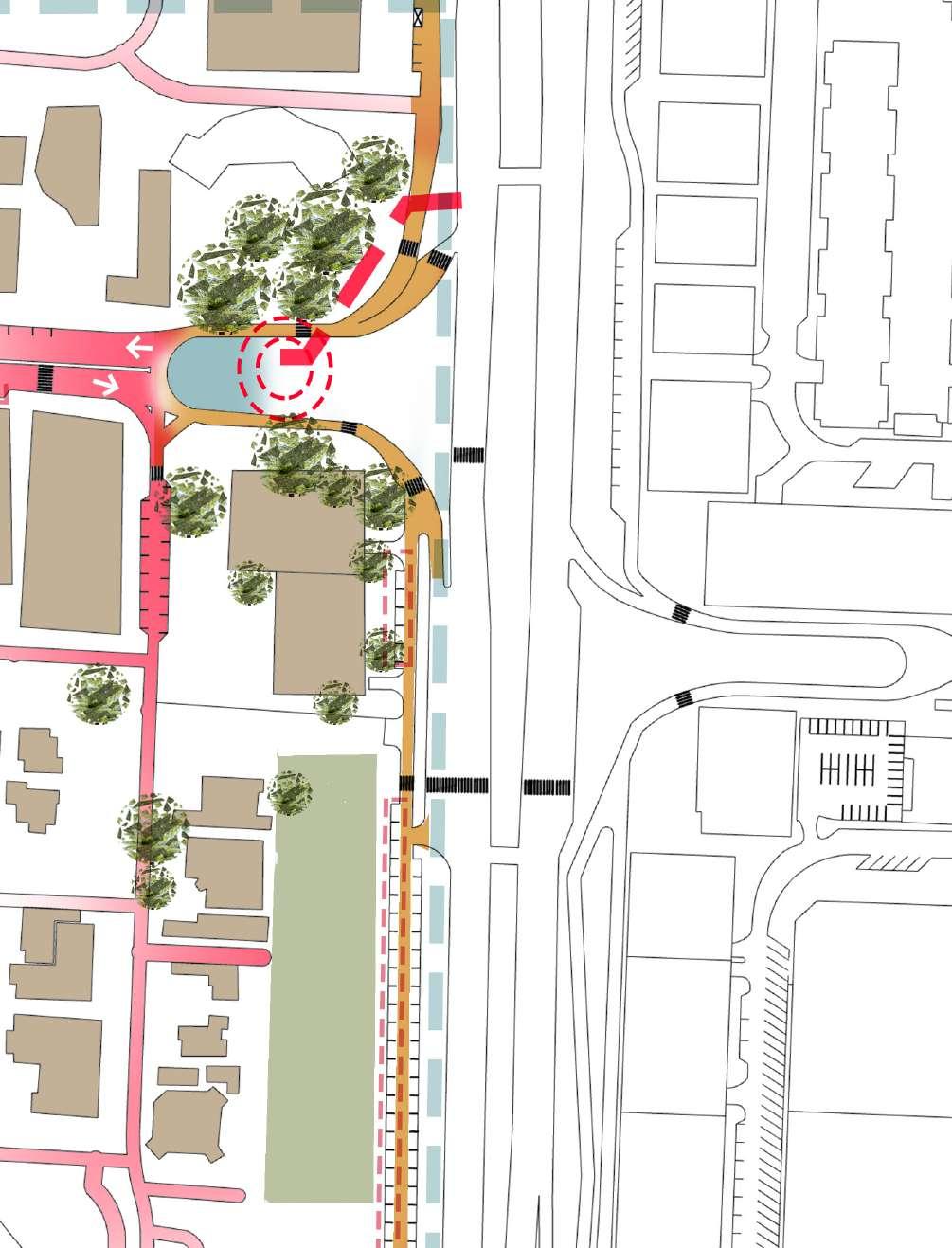
The isolated landscaping within the residential zone aims to bring in some from of user experience to the passer-bys. but due to the zone being privately owned villas most of the activation and experience is internal within boundaries.
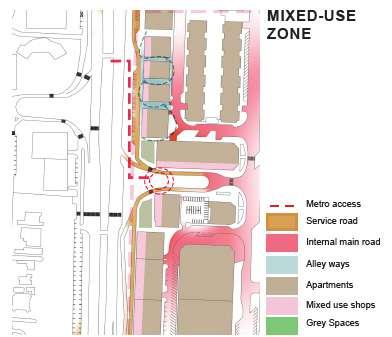
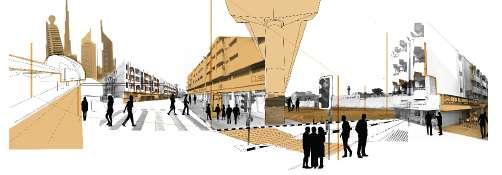
The mixed used zone is very well known for the street life which occurs between buildings , along the roads , within parks and large grey openings .
This zone is activated natural by its wide set of users and the urban system of the area having everything commercial in the ground level and wide spread isolated street furniture . Thus activated by an intense amount of isolated elements aiming for variation in experience.
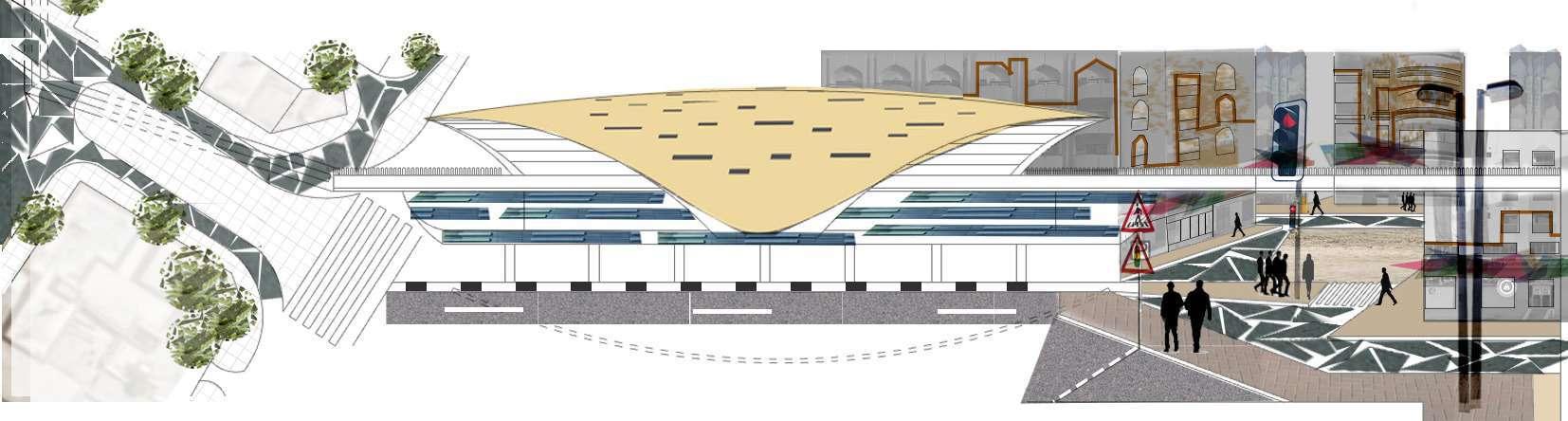
Mixed Use Zone - Semi public Transition Zone - Public Residential Zone - Private
Metro access Service road Internal main road Cycle stands Residentials Landscaping Grey spaces
ZONE Metro access Service road Internal main road Alley ways Apartments Mixed use shops Grey Spaces
MIXED-USE
SITE INTERVENTION
DESIGN DRIVERS
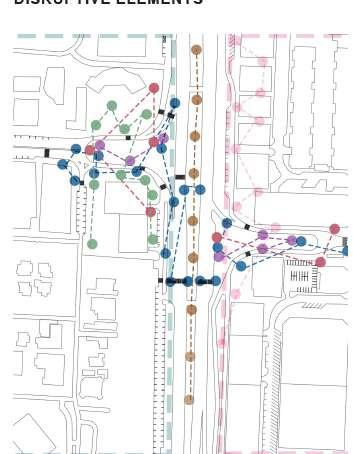
DISRUPTIVE ELEMENTS
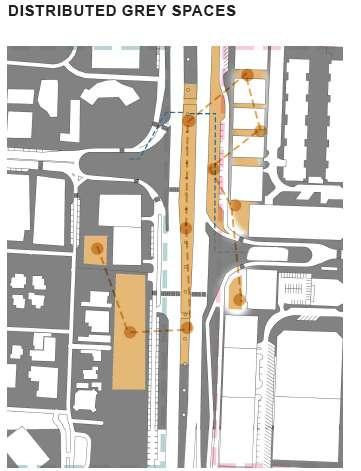
DISTRIBUTED GREY SPACES
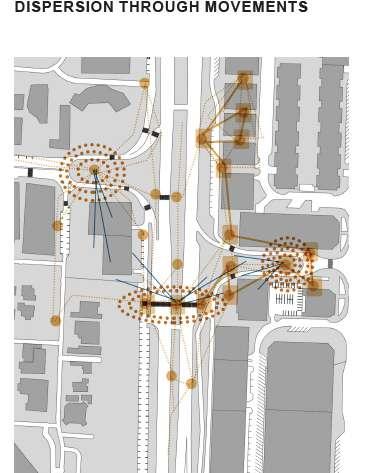
DISPERSION THROUGH MOVEMENTS
Common disruptive elements
Road Signages
Billboard/Baricade
Cycle stands
Residential zone
Landscaping
Transitional zone
Metro Columns
Mixed-use zone
Street furniture
Establishing the disruptive elements around the area of intervention affecting peoples experience and the functioning of the space. Each zone has an individual set of element which is highlighted and contributes to the experience and movement of people along site. landscaping aiming for some form of spatial experience for passer bys columns creating grey spaces which have muchmore potential of being functional
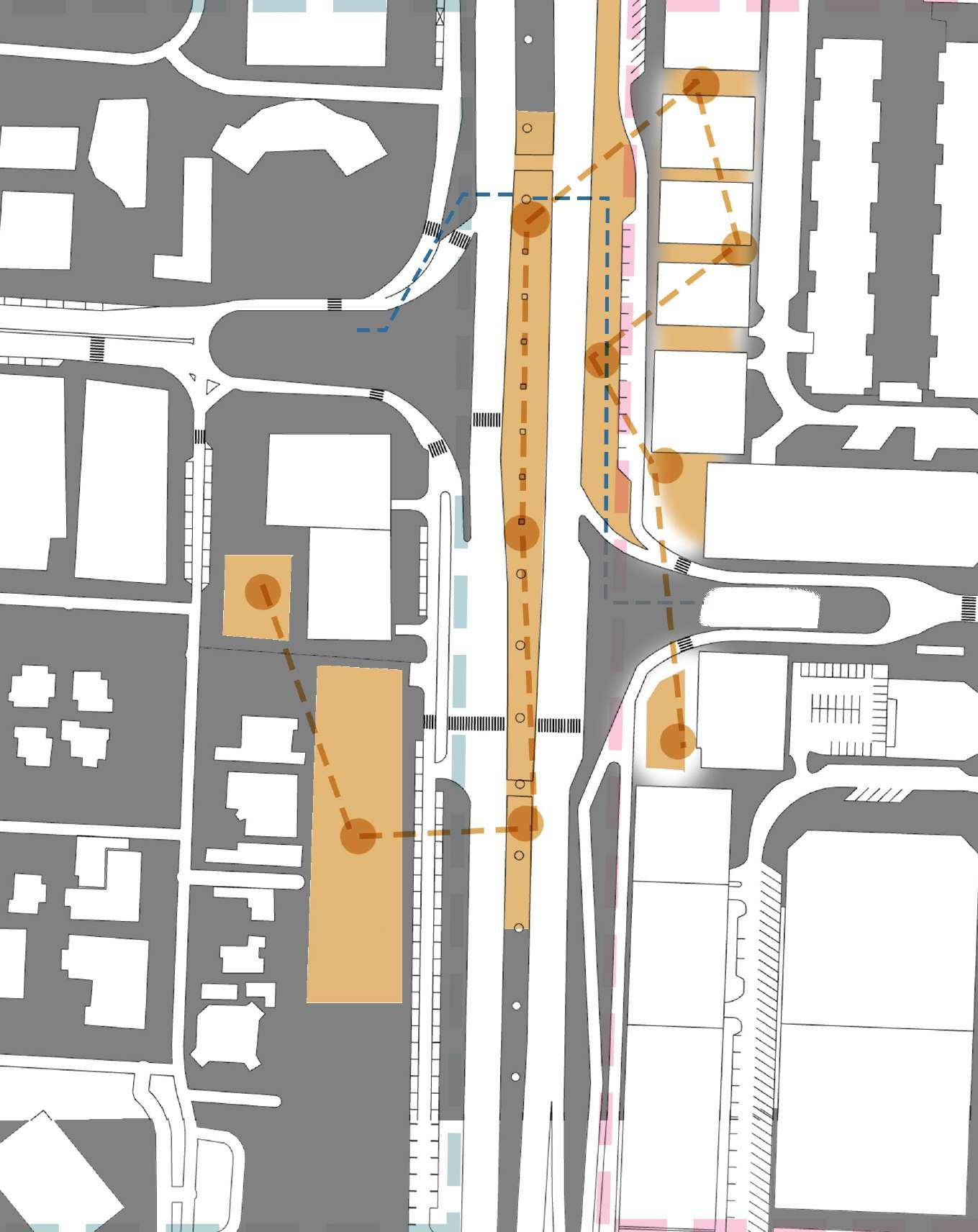
street furniture aiming for community experience.
Urban fabric
Grey spaces
Identifying the architecturally created grey spaces across the above mentioned 3zones.
analysing it and identifying it as an opportunity for the creation of better spatially designed areas.
mapping the grey spaces as the starter and identifying them as advocates for designing a ‘good disruptive design’.
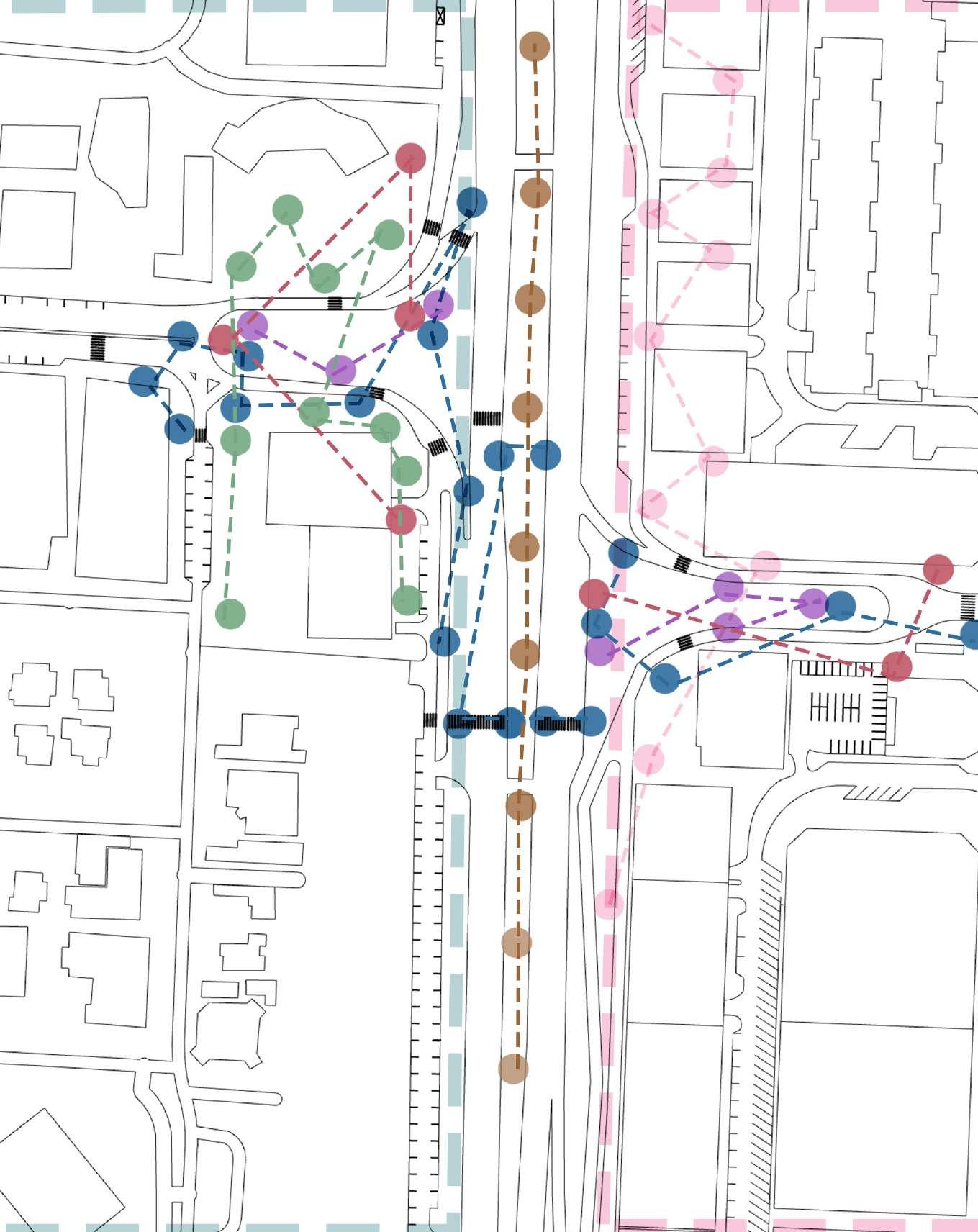
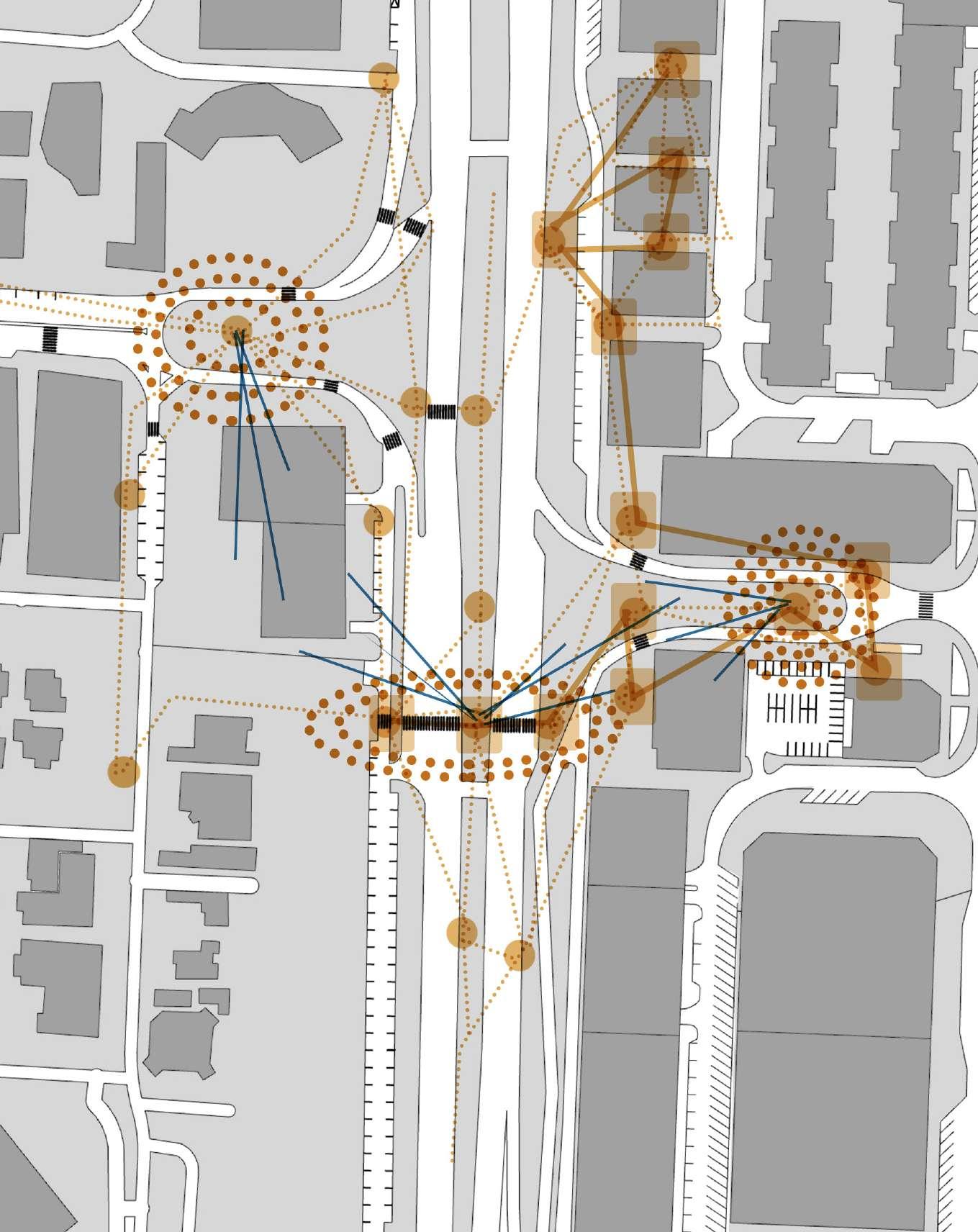
Dispersion Intensity
Low - Basic Human nodes
High - Spatial Human nodes
A - Low dispersion (EXIT 1)
B - Medium dispersion (Crossing )
C - High dispersion (EXIT 2)
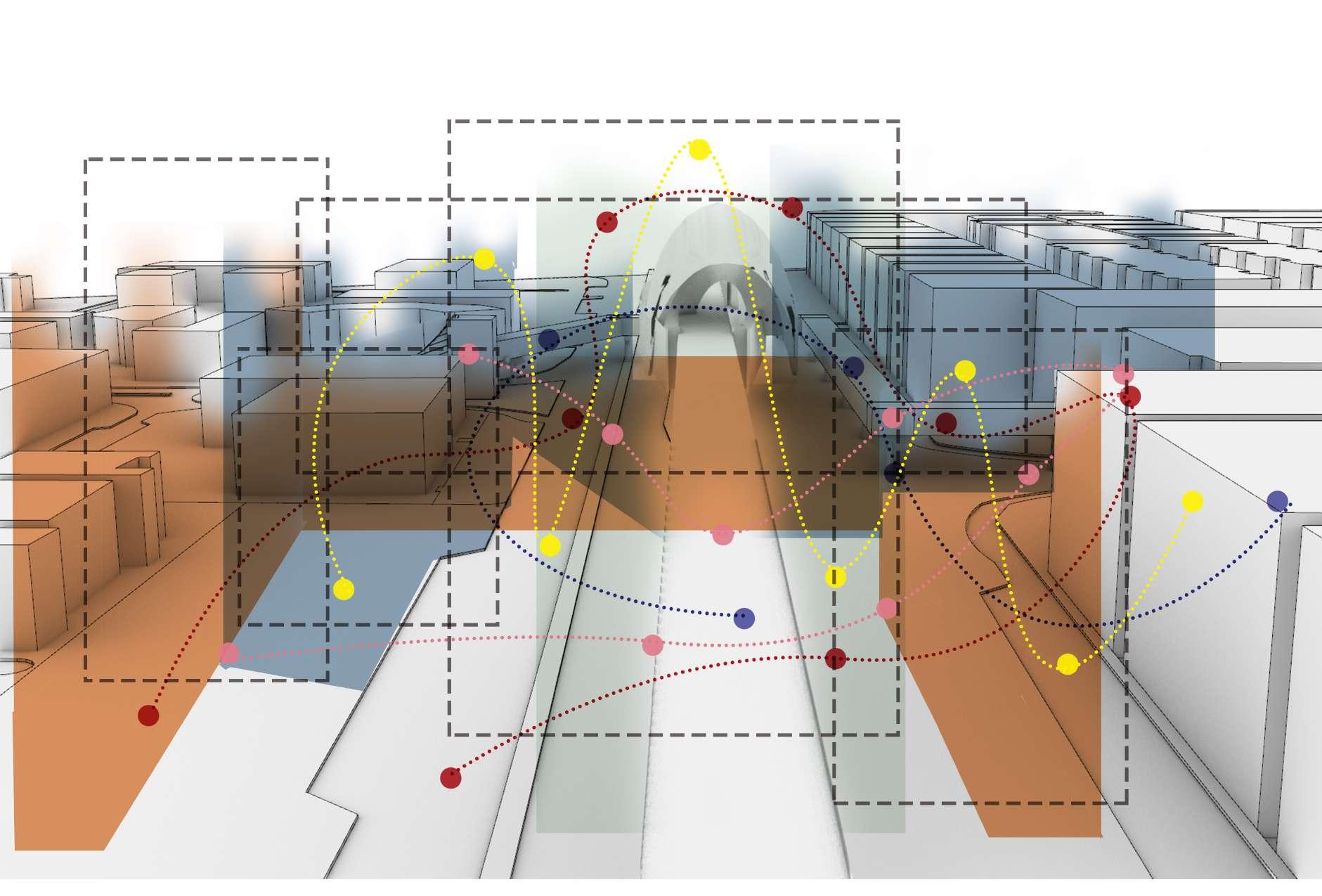
Metro exits on either sides being the main source of people movement. the dispersion of this moevement depends on the nodes and functional zones across either side.
Majority of dispersion is experienced towards the mixed-use side from its own metro exits as well as from the crossovers.
The residential zone is low in dispersion intensity depending on the user groups and fucntionality.
SECTIONAL ANALYSIS
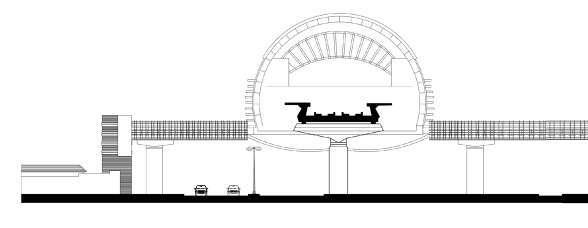
The sectional study of the 3 mentioned zones ..... visually evidences for the presence for the selective disruptive elements , creation of grey spaces and levels in attraction of human movement
Establishing the above design devices and categorizing them in the following ( as the drivers of the ‘the verb’)
ARCHITECTURE - People centric ROAD - Urban centric LANDSCAPING - Experience centric
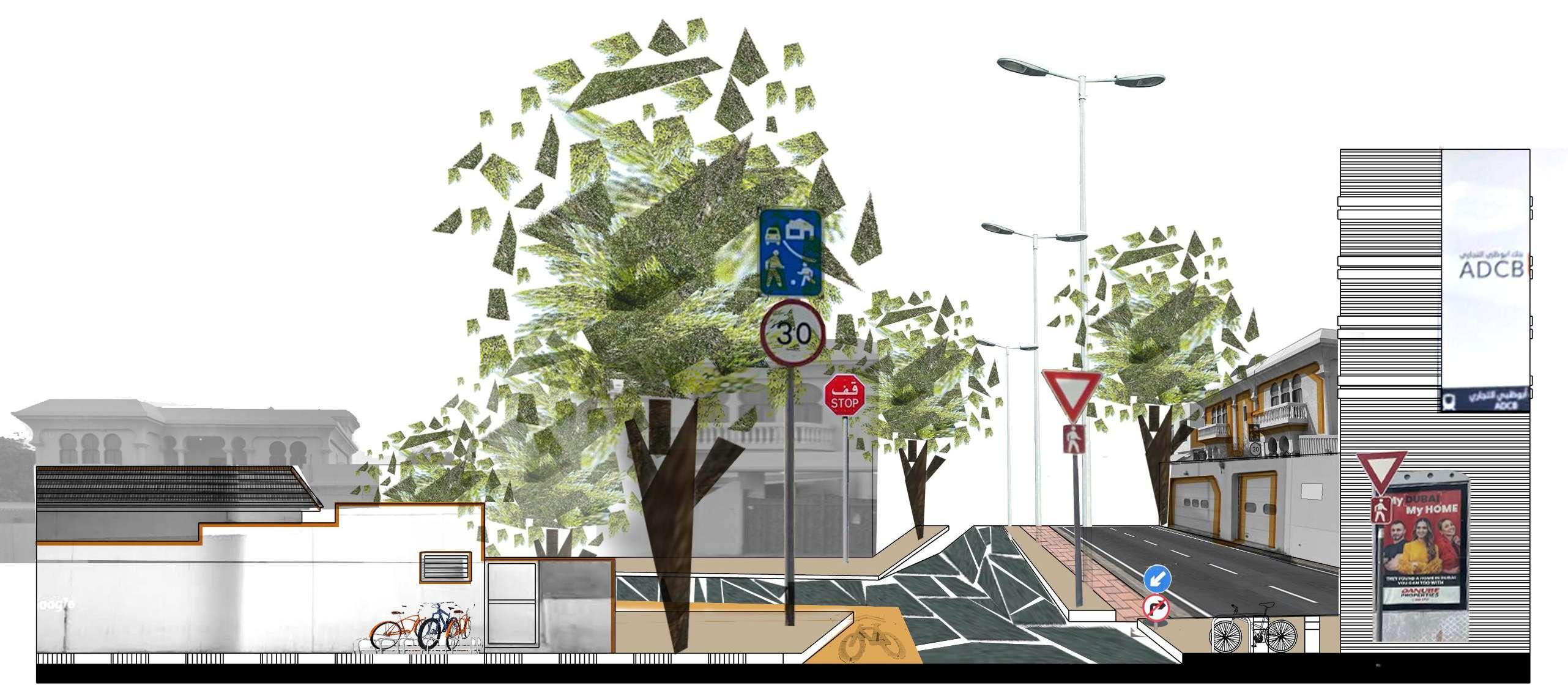
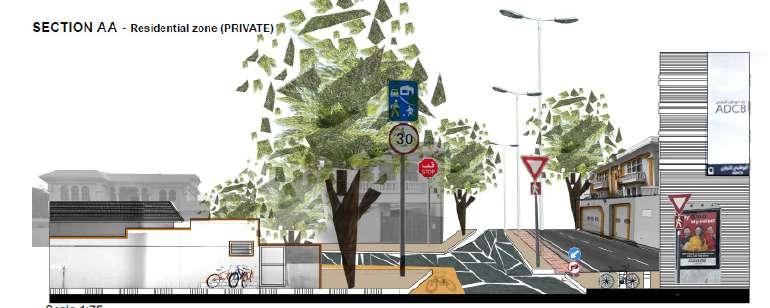
Section AAEvidences the isolated landscaping around the area along with the inward environment of the community . while highlighting the disruptive elements .all of this further controlling the dispersion of people
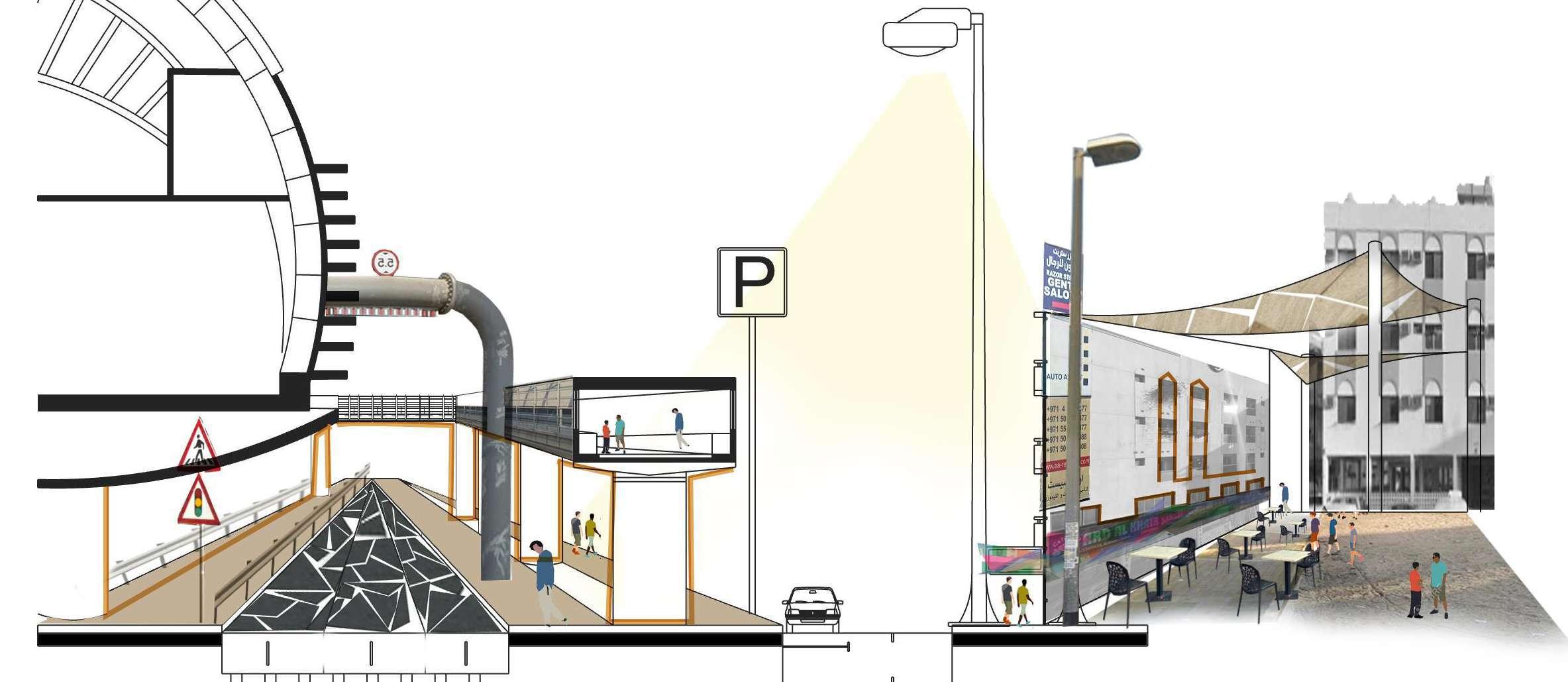
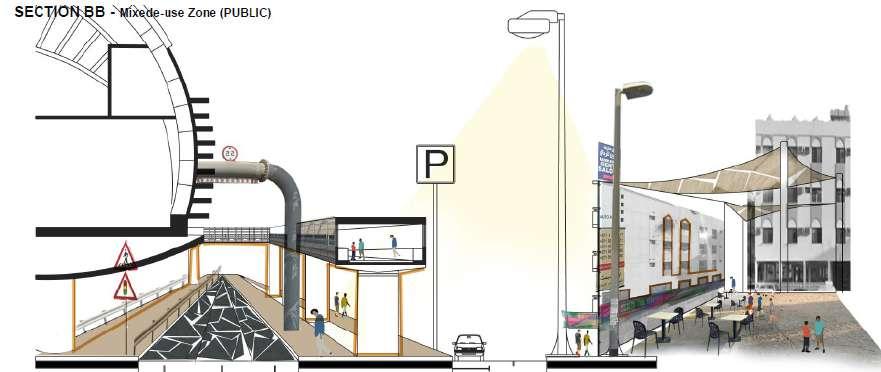
Section BBEvidences the narrow inbetween spaces of buildings along with spread around street furniture aiming to activate certain zones for community experience.
 SECTION AA - Residential zone (PRIVATE)
SECTION BB - Mixede-use Zone (PUBLIC)
SECTION AA - Residential zone (PRIVATE)
SECTION BB - Mixede-use Zone (PUBLIC)
25 2 1 5 10 4 3 6 0 4 3 25 1 10 0 5 2
Scale 1:75
Scale 1:100 A A B B
DESIGN DEVELOPMENT
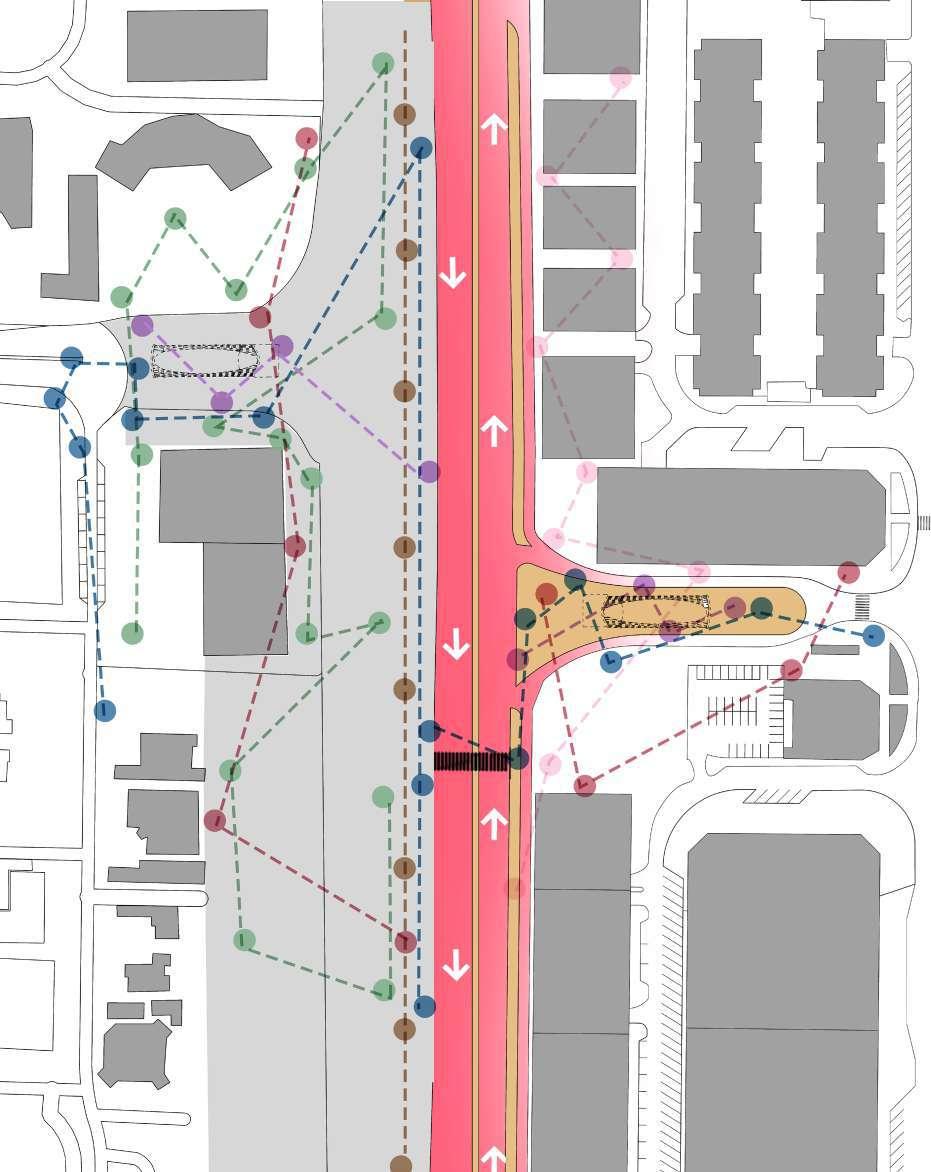
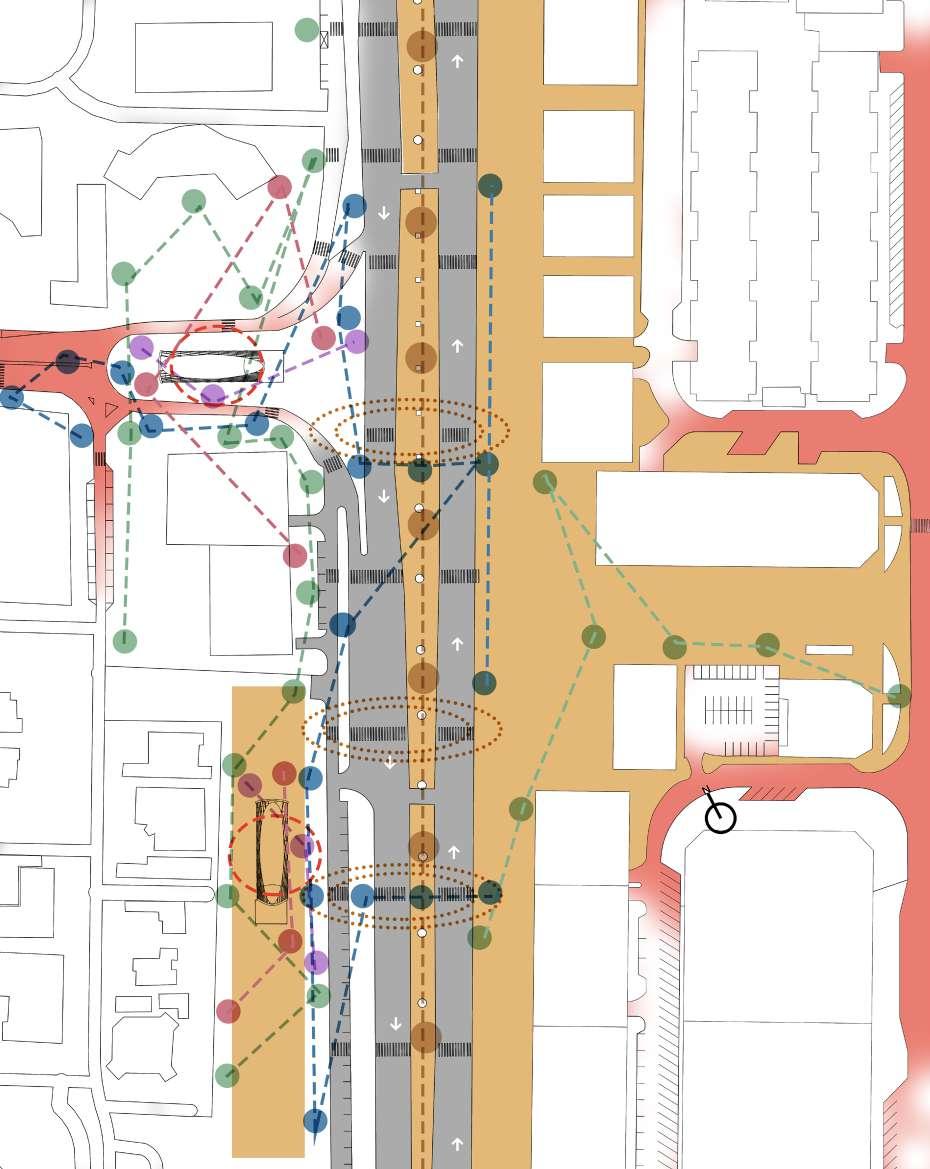
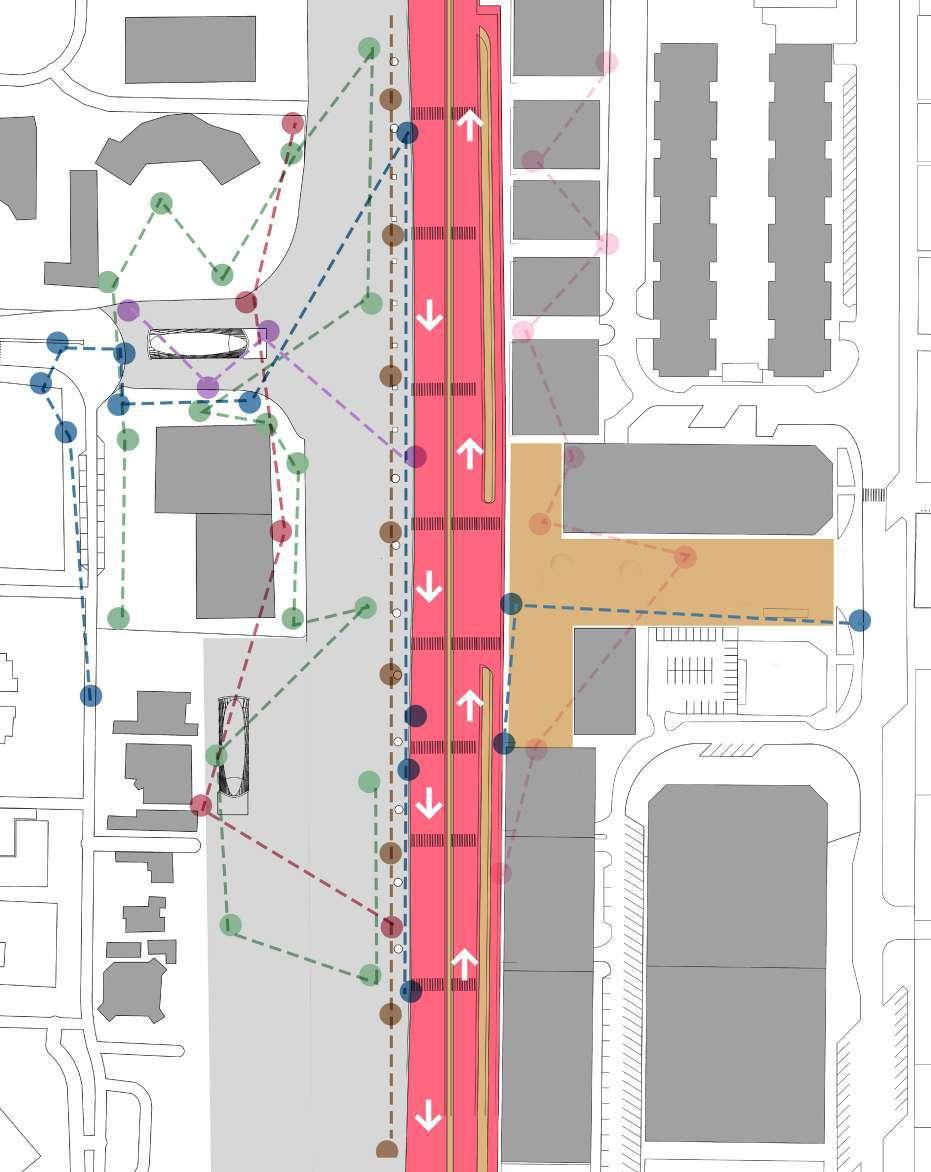
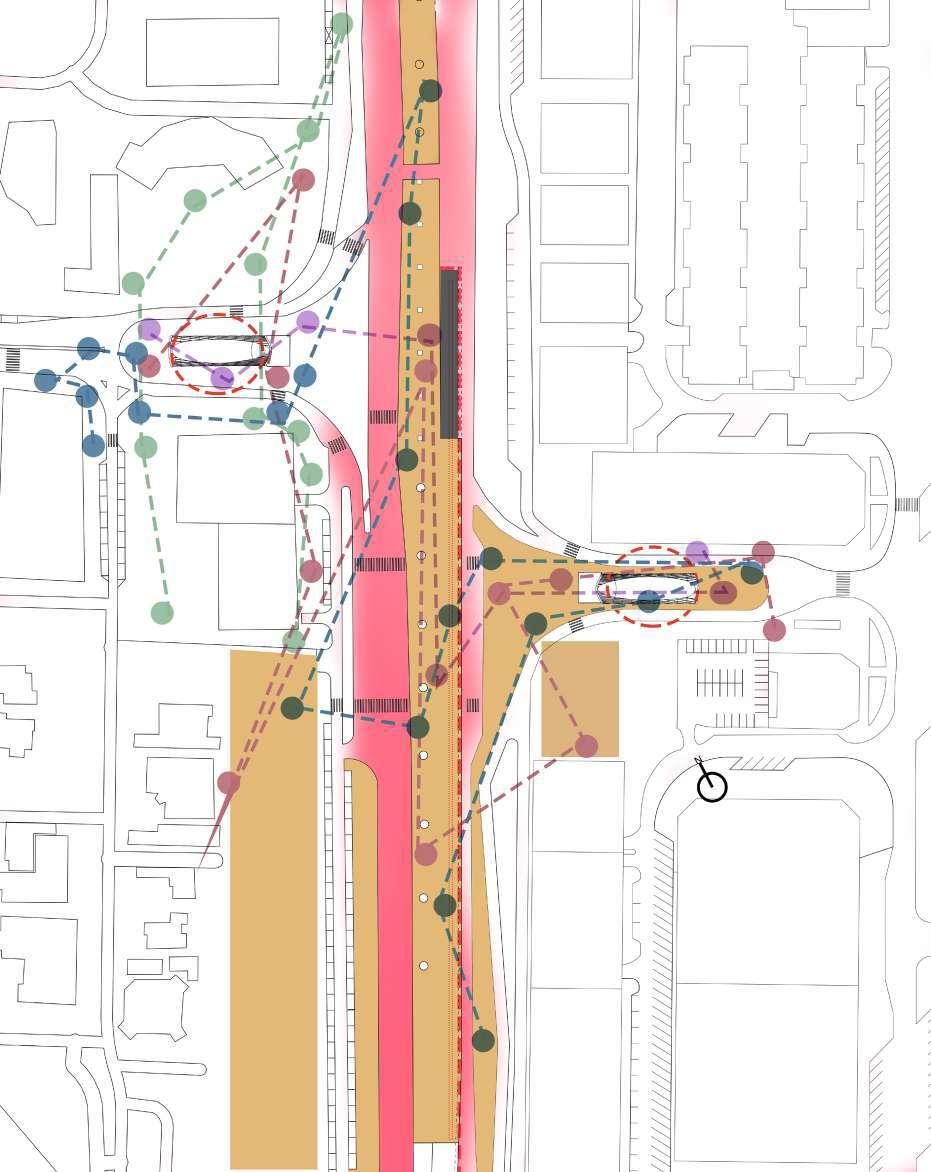
- ADVOCATING FOR 5 URBAN VARTIATION OF SITE
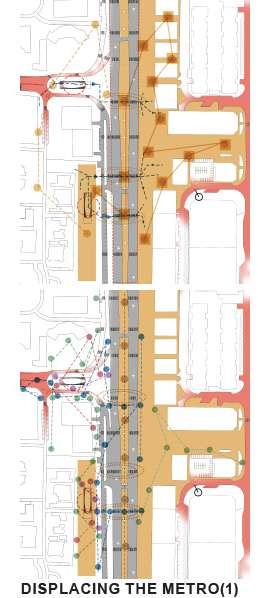
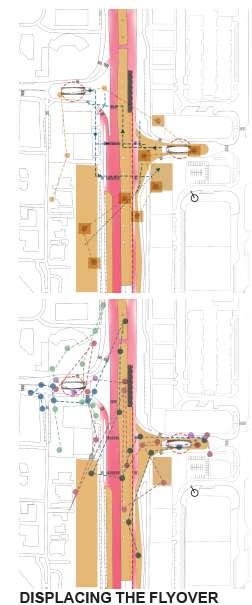
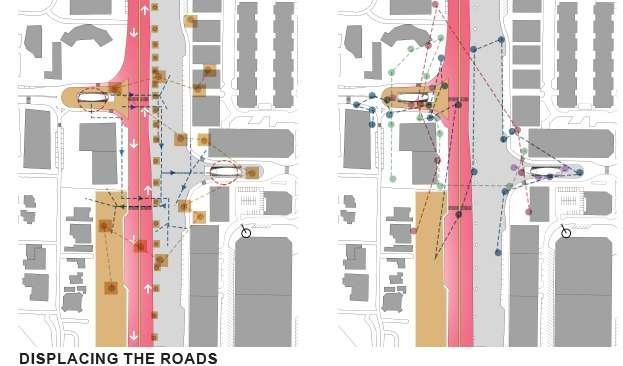
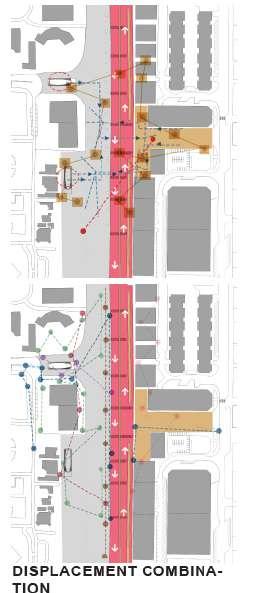
DISPLACING THE ROADS DISPLACING THE METRO(1) DISPLACEMENT COMBINATION
Displacing the road in the mankhool side towards karama .thus testing the flow in movement and additional changes or opportunities offered in terms of the design drivers.
High dispersion towards the al karama More area created in response to the
Displacing metro exit towards the residential zone.
In response the movement changes from karama to mankhool thus creating a boulevard situation leading to change in vehicular hierarchy. Opportunity space being created in that
Combining the first two scenarios and testing the above drivers. movement being balanced and spread around maintaining the boulevard scene. while the new spaces created allow for an orthogonal design opportunity across all 3
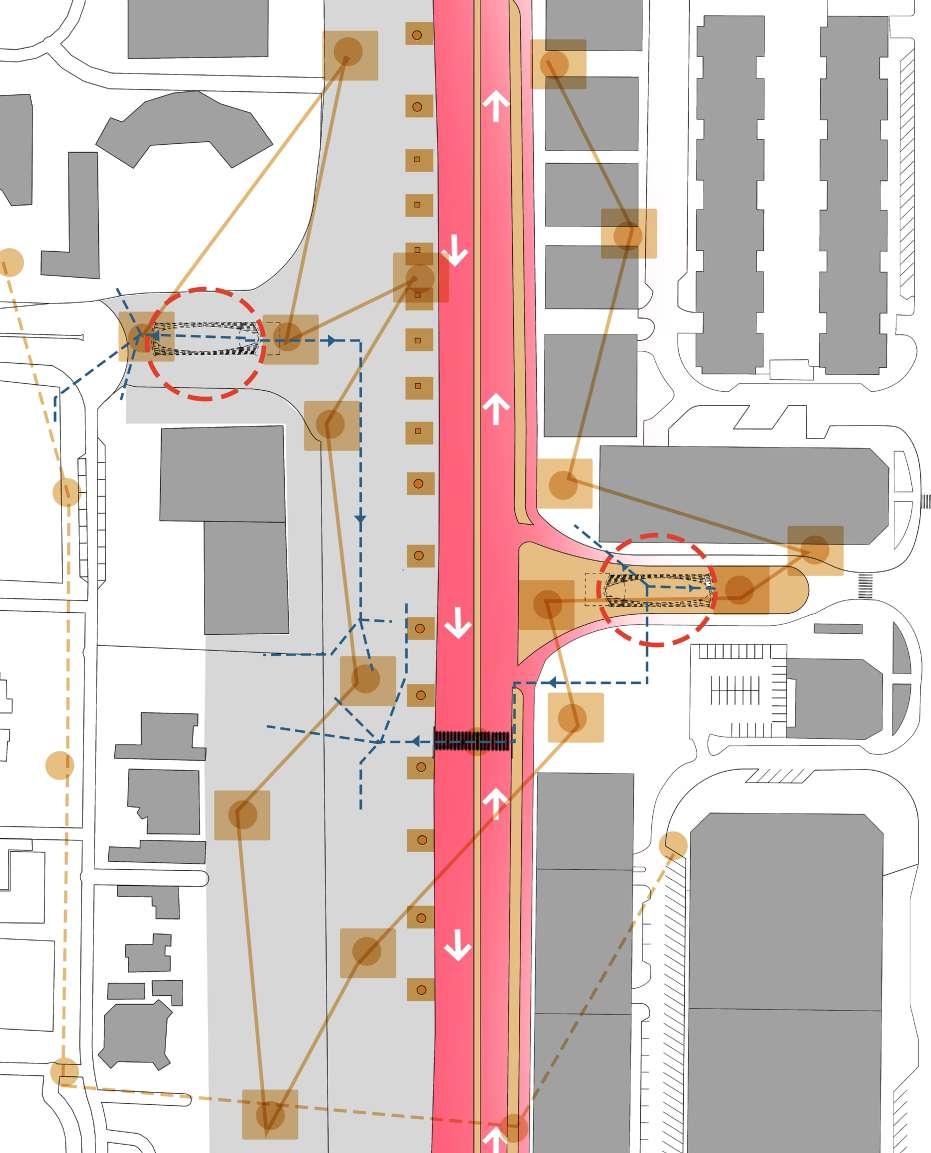
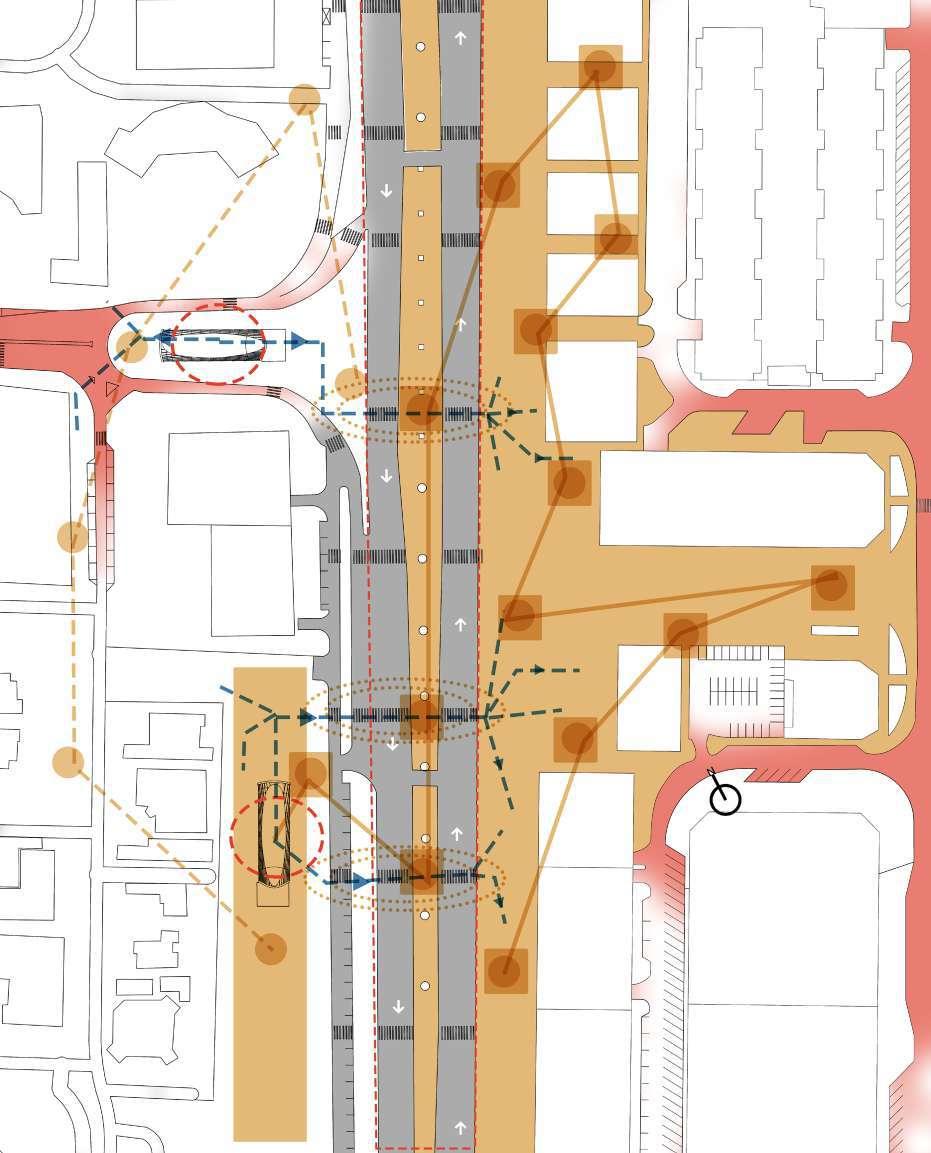
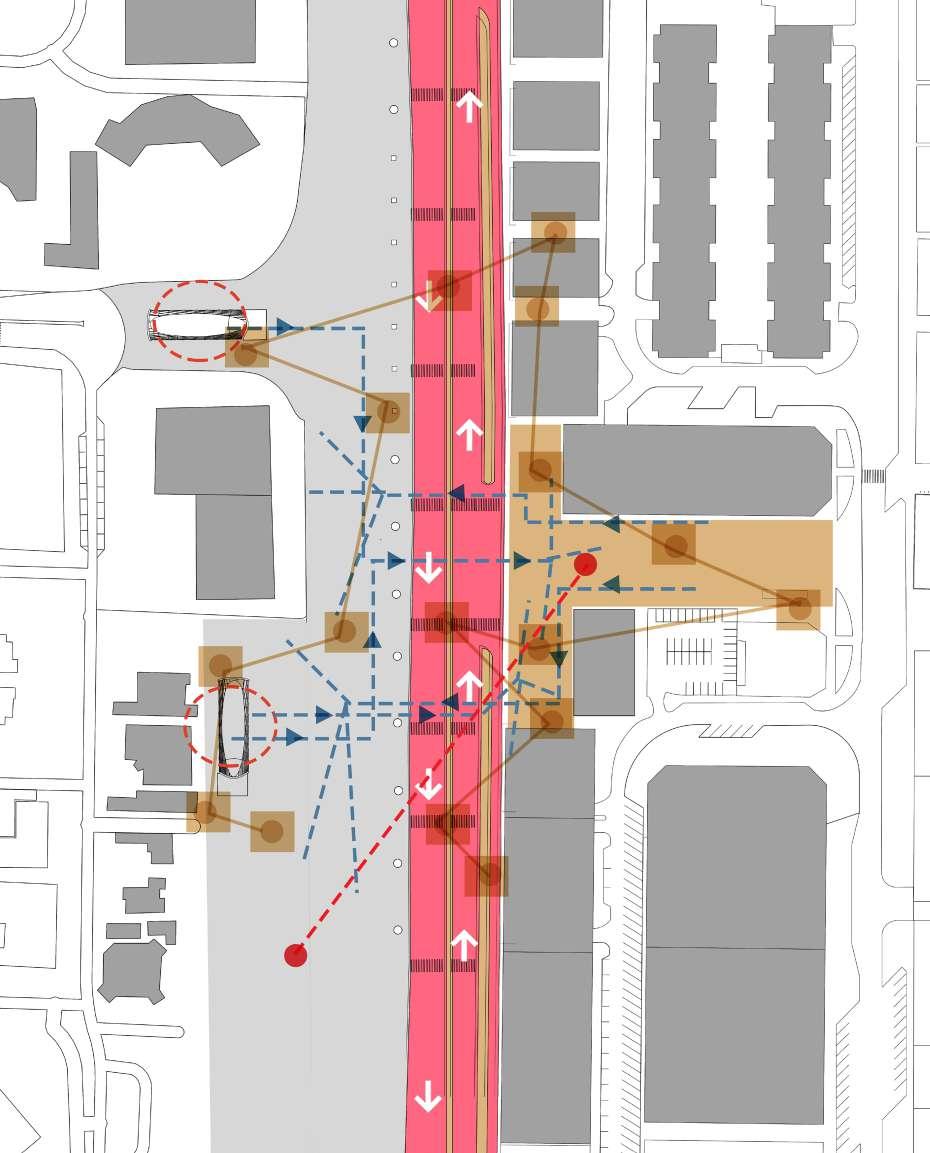
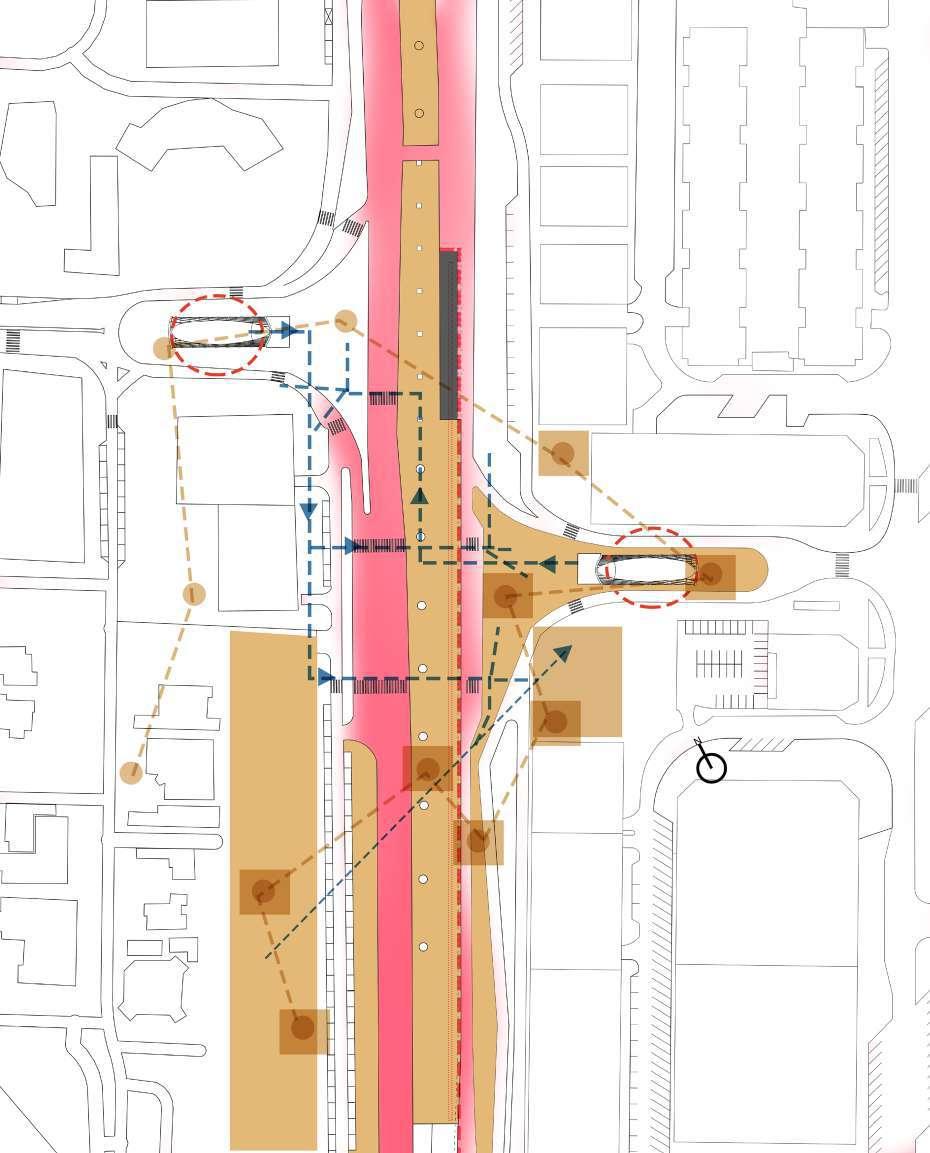
DISPLACING THE FLYOVER
In response the movement maintains its heavy flow within mixed use side .while due to the block created by the displacement , the crossings may be moved further ahead. aditional spaces is identified within the transition zone along with opportunity for
move
new zone.
under bridge design and activating the
SELECTED URBAN VARIATION - DISPLACING THE ROAD (2)
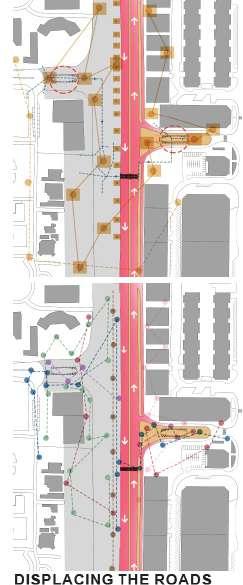
DISPLACING THE ROADS
Displacing the road in the Karama side towards mankhool .further testing the flow in movement and additional changes or opportunities offered in terms of the design drivers.
In terms of movement there is noticed a balance flow from both sides depending on the activation of the new identified areas .
This minor change allows for an orthogonal design which benefits in bringing together all the 3 zones with high amount of positive variation by using distruption in design and the untangible advocation . Further the disruptive elements can be seen evenly spread in both zones while allowing for mixing and including each individual element in all 3 zones .
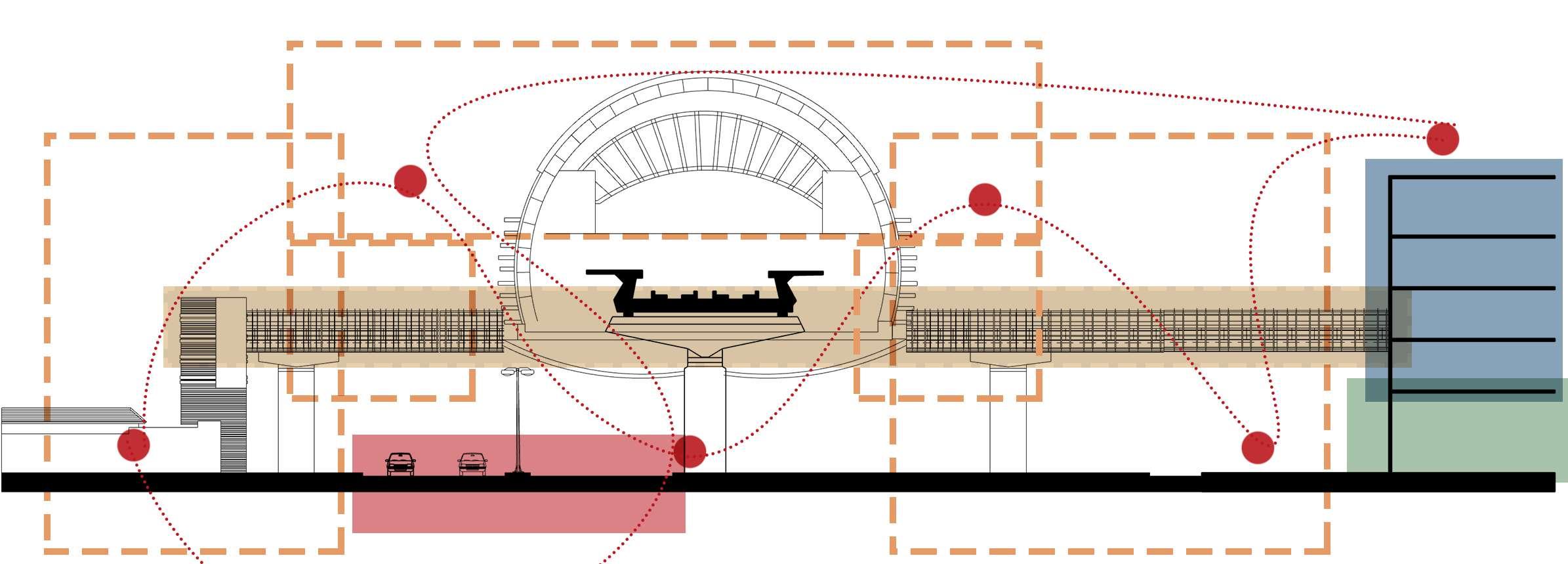
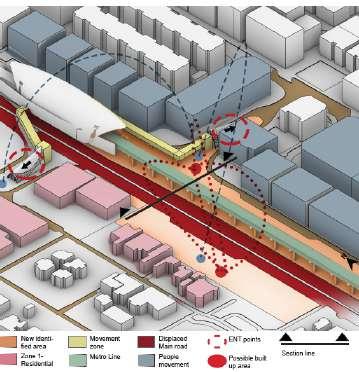
SECTION ANALYSIS
the new variation site section evidences the changes in the site due to the displacement of the roads.
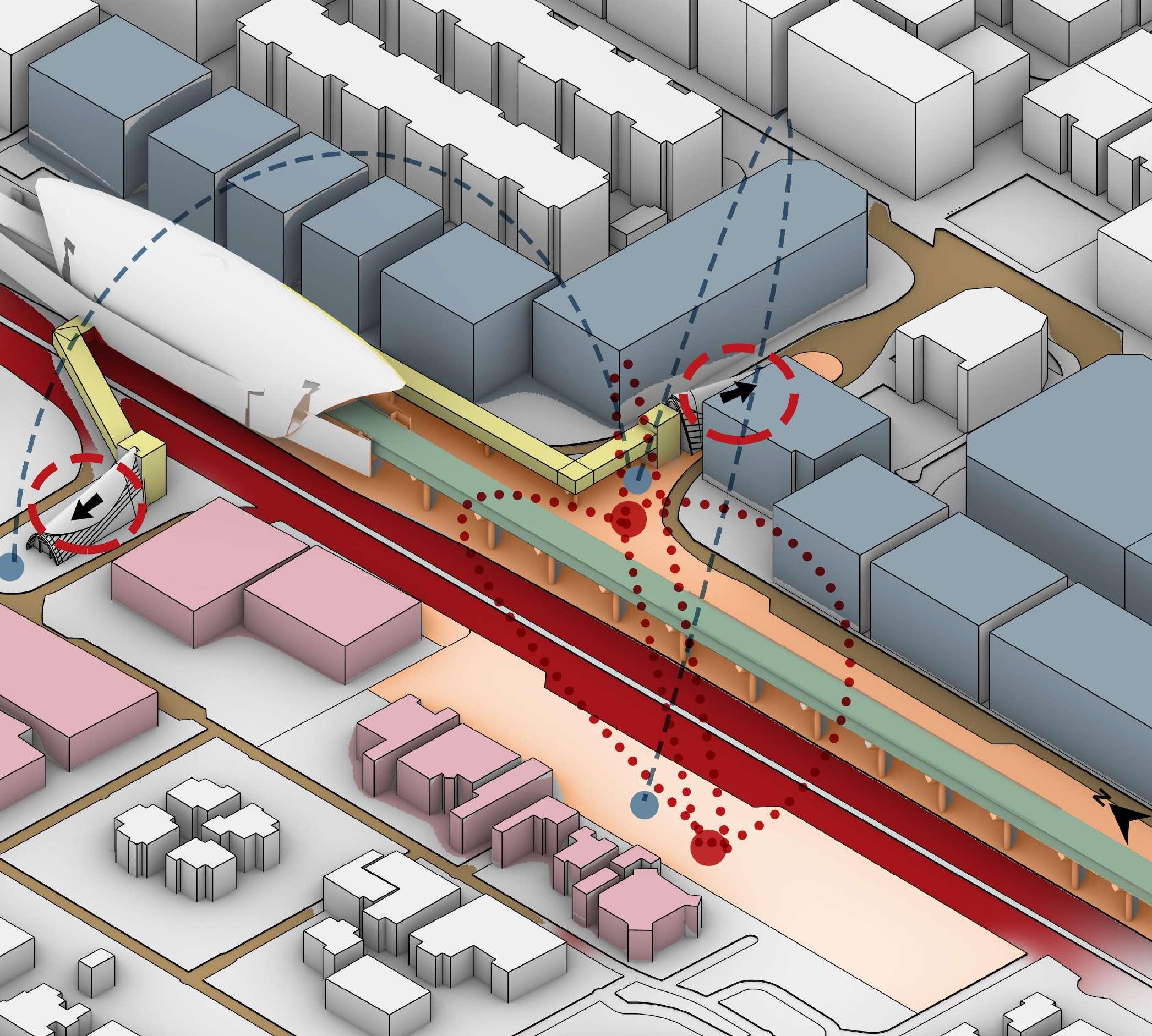
Highlighting the areas of interest for the built form being the grey spaces and levels around the metro
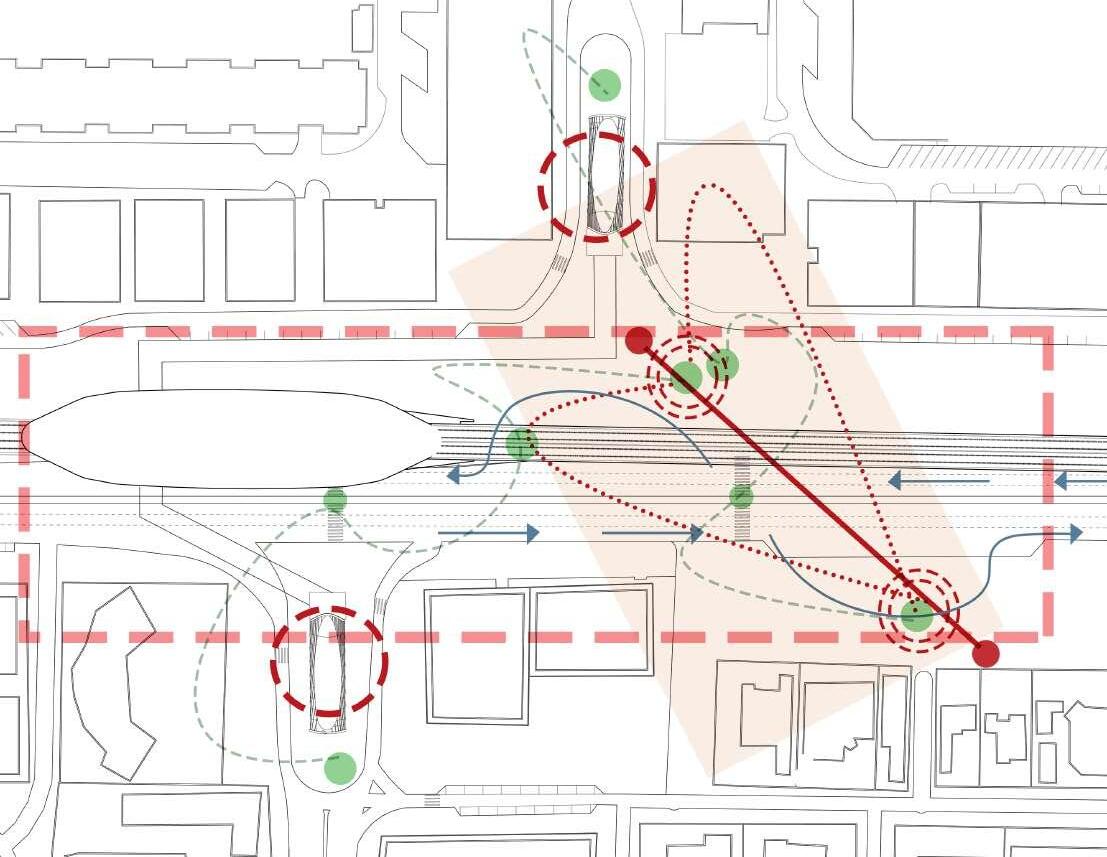
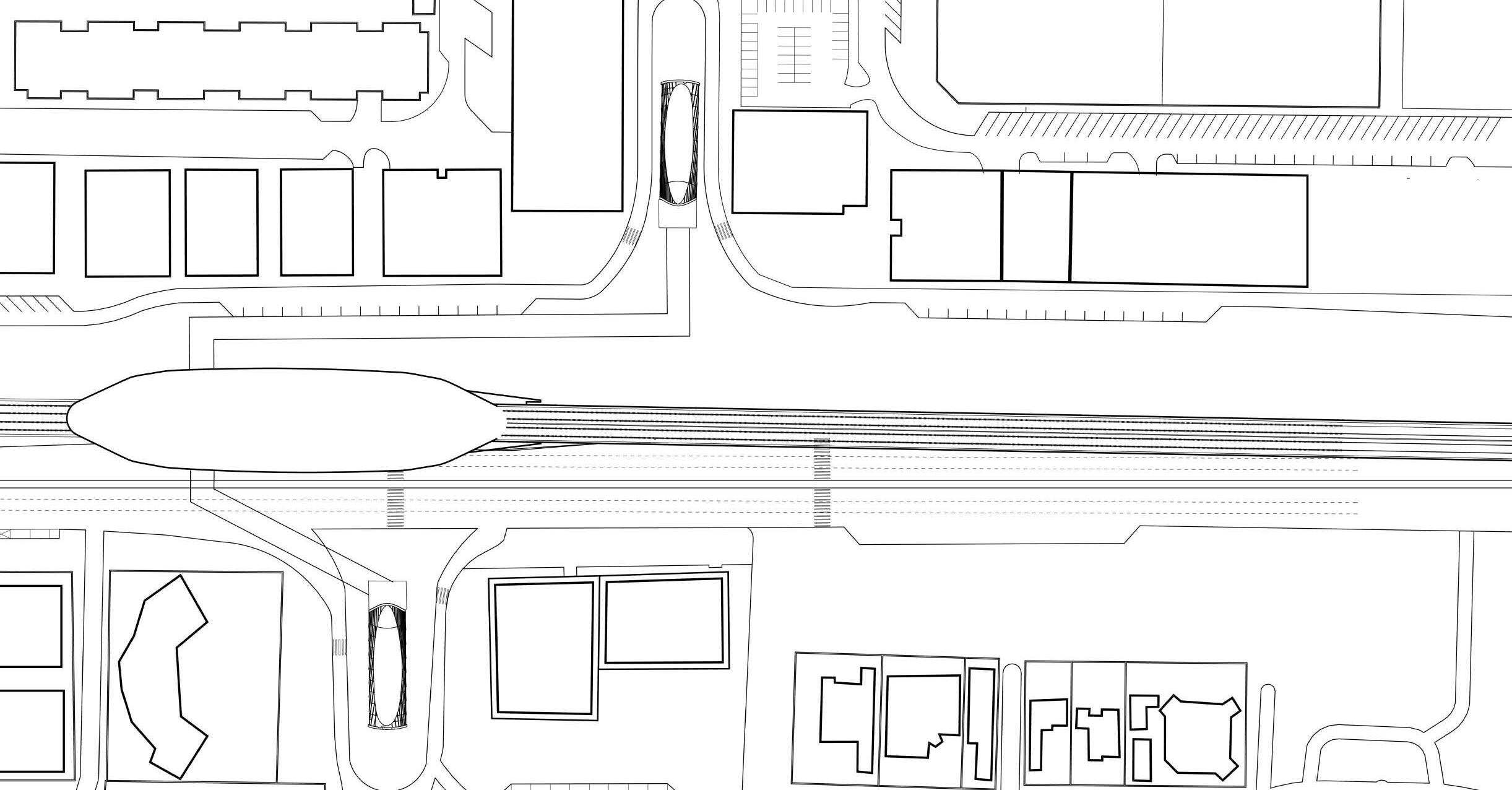
Identifying the built area within the site and area of intervention. based of activation zones and access by vehicular and pedestrian.
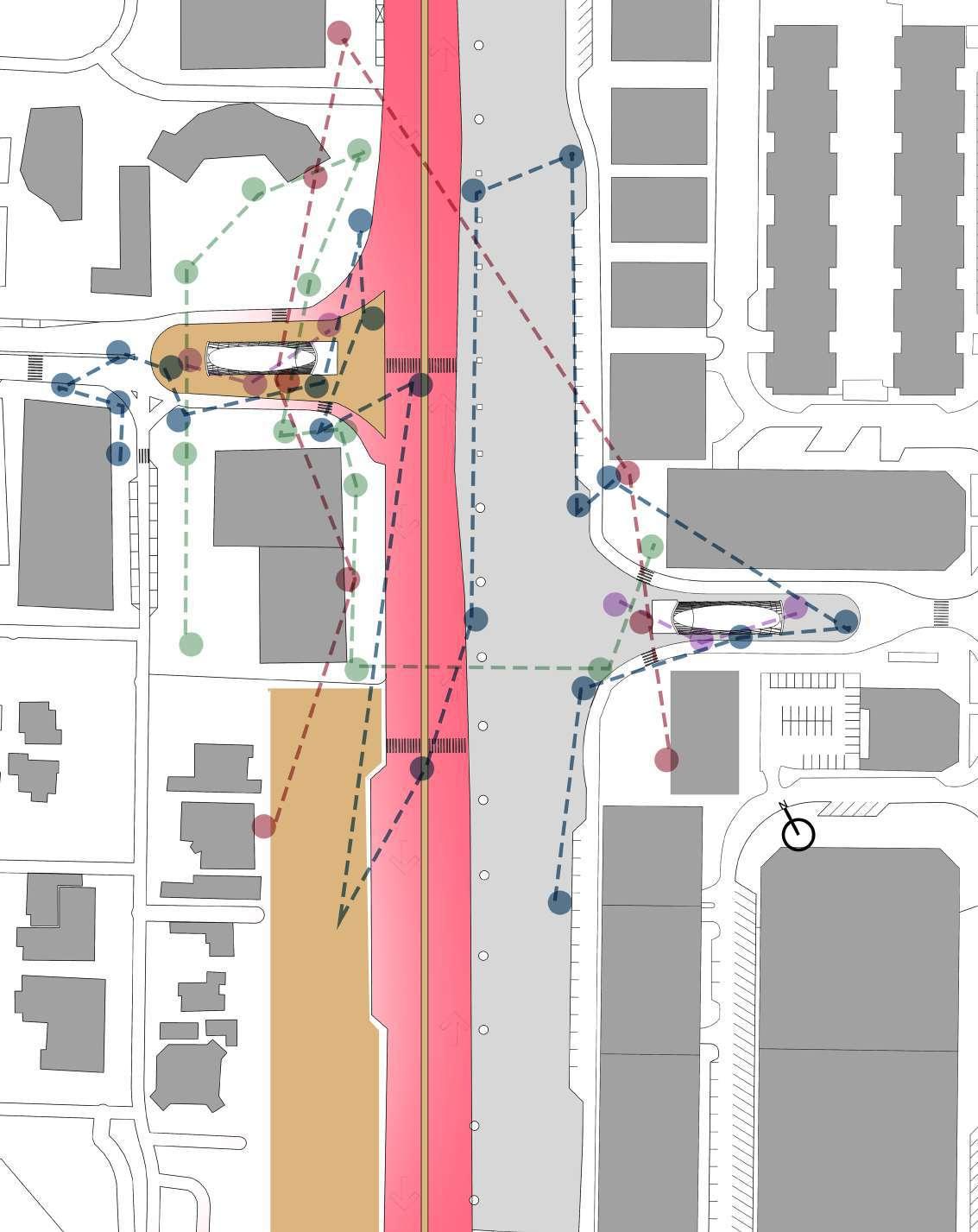
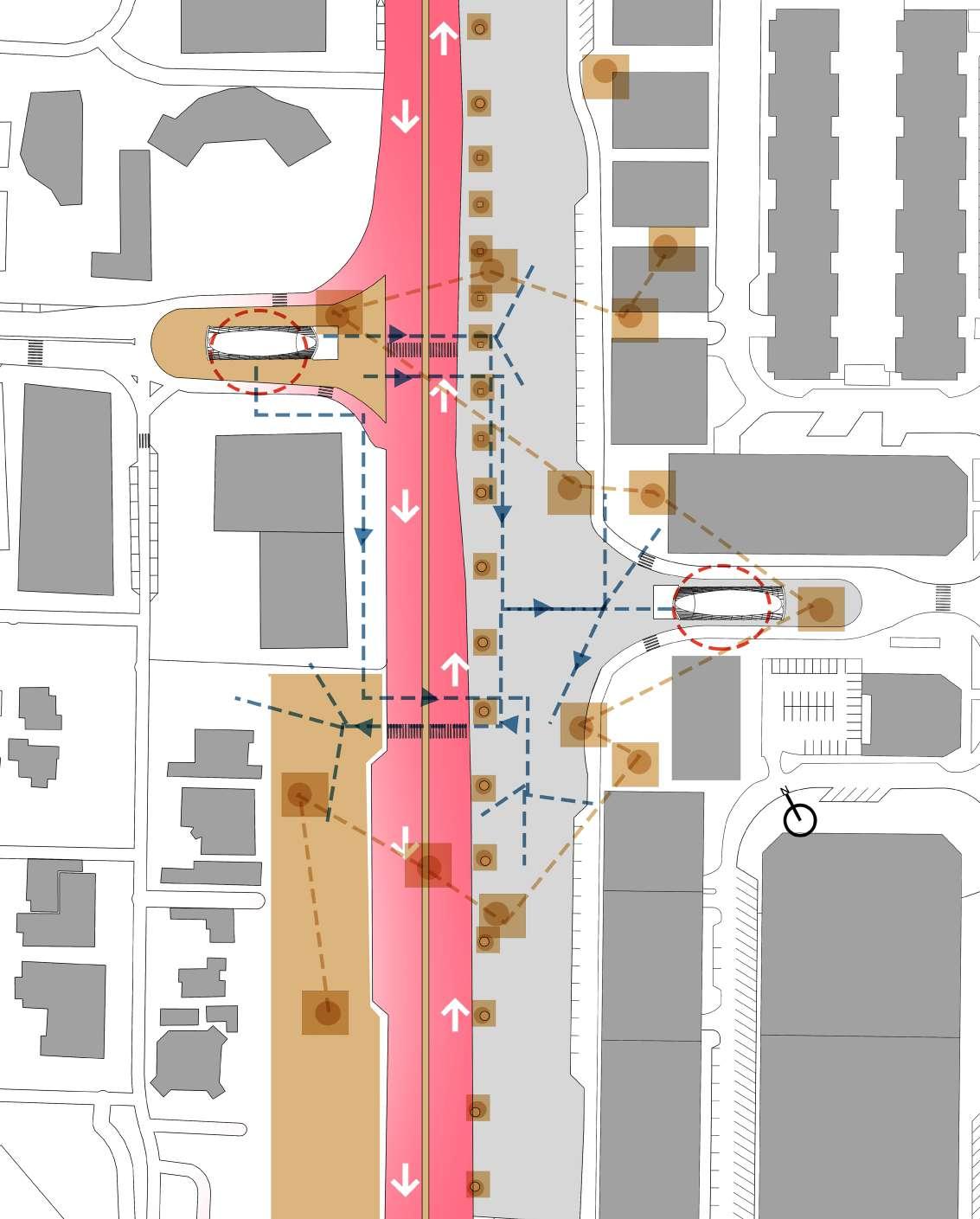
New identified area Zone 1Residential Residential Commercial zone Pedestrian link - metro Displaced main roads Area of interest to build
Movement zone Displaced Main road ENT points ENT points Built up area Metro Line Movementpeople People movement Possible built up area Orthogonal approach Section line 25 10 2 Scale 1:300
DESIGN CHARETTE - FORM FINDING IN RELATION TO MANIFESTO AND FUNCTION
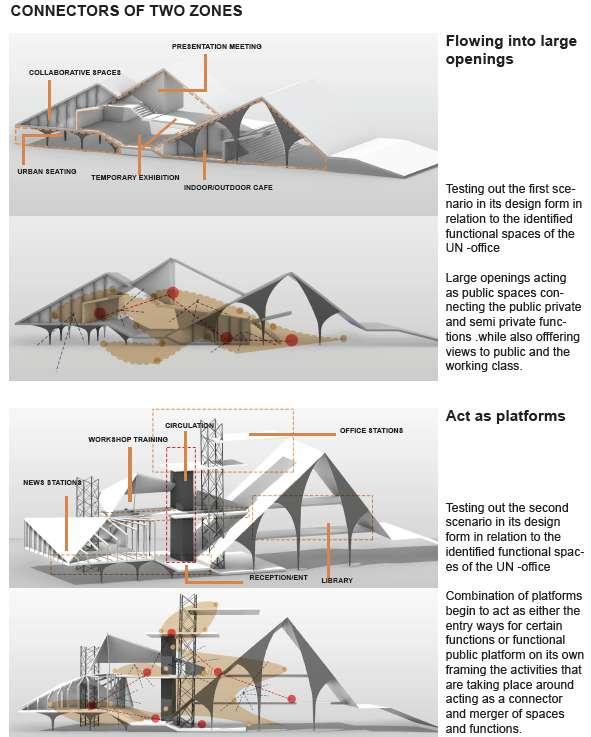
CONNECTORS OF TWO ZONES
Flowing into large openings
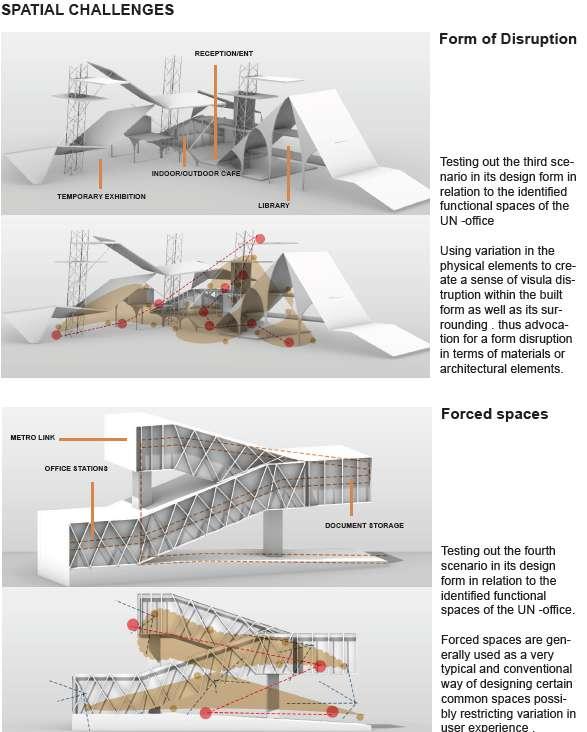
SPATIAL CHALLENGES
Testing out the first scenario in its design form in relation to the identified functional spaces of the UN -office
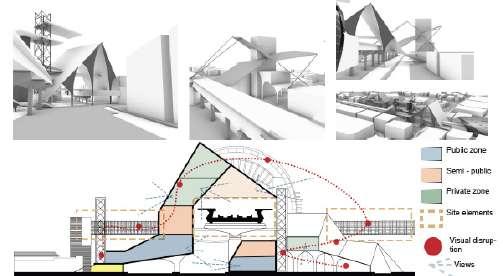
Large openings acting as public spaces connecting the public private and semi private functions .while also offfering views to public and the working class.
Testing out the second scenario in its design form in relation to the identified functional spaces of the UN -office
Combination of platforms begin to act as either the entry ways for certain functions or functional public platform on its own framing the activities that are taking place around acting as a connector and merger of spaces and functions.
Testing out the third scenario in its design form in relation to the identified functional spaces of the UN -office
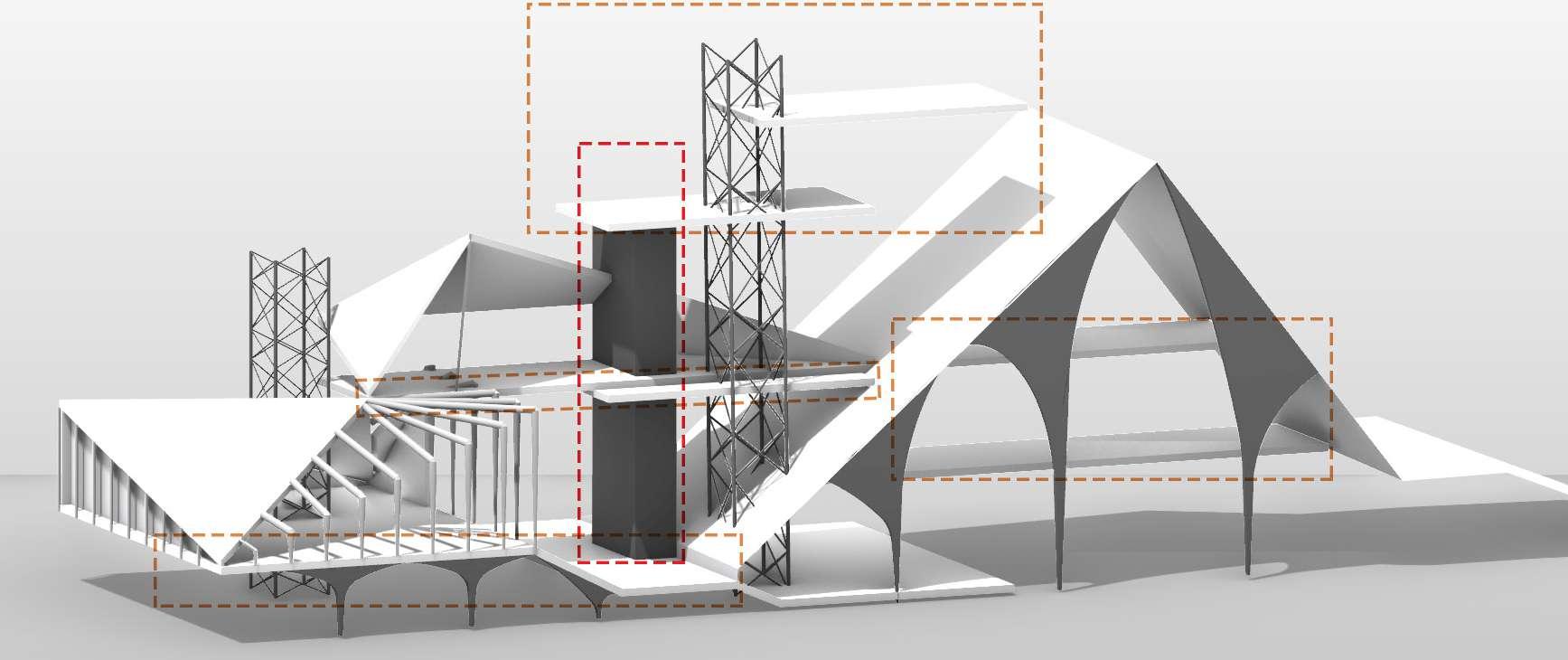
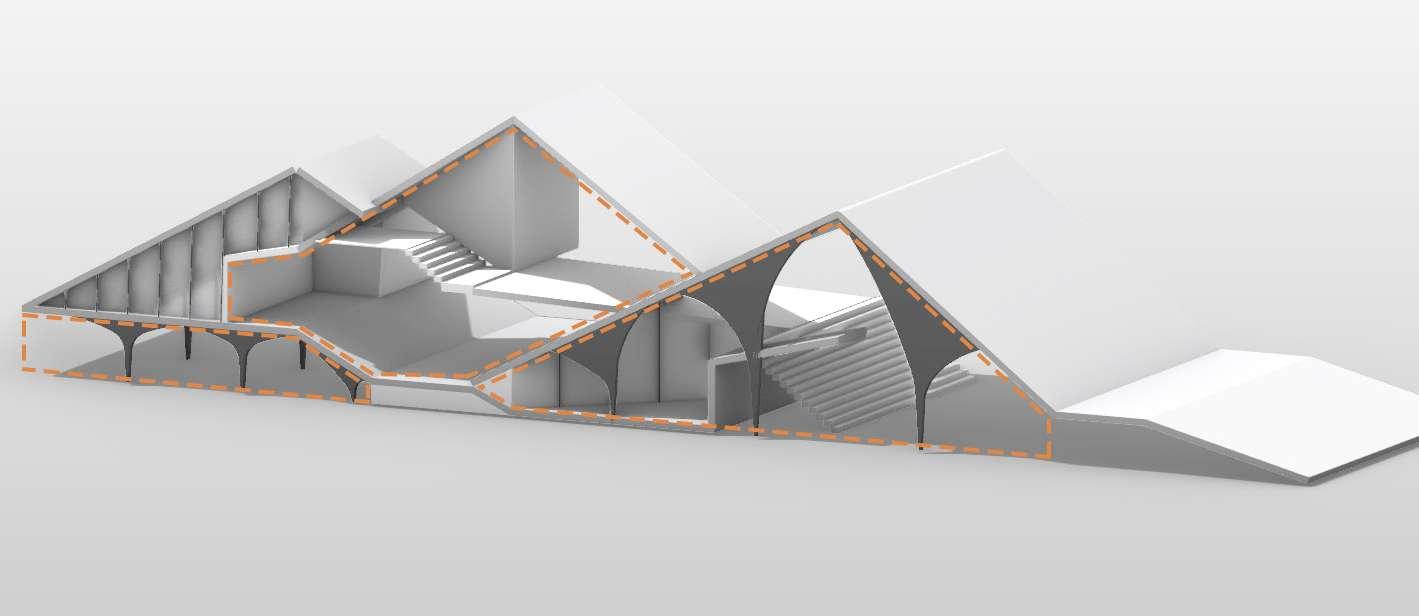
Using variation in the physical elements to create a sense of visula distruption within the built form as well as its surrounding . thus advocation for a form disruption in terms of materials or architectural elements.
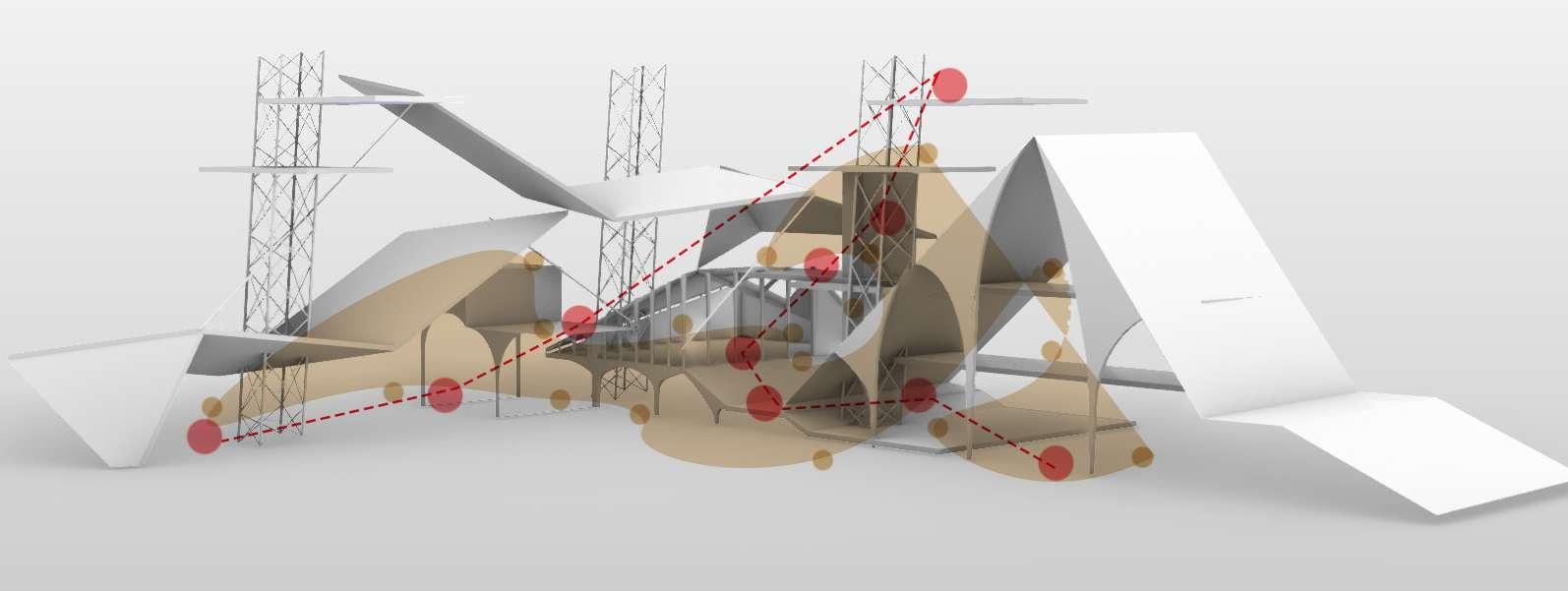
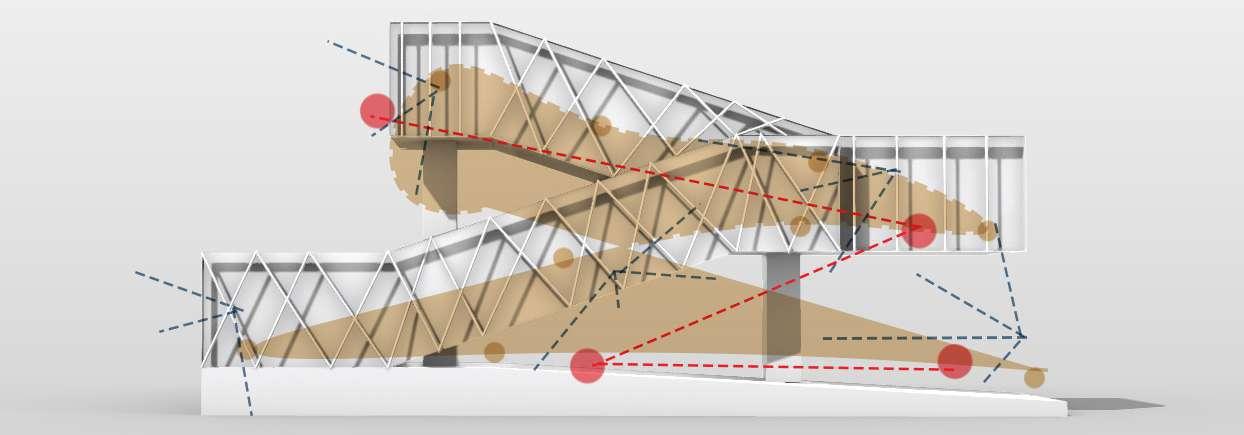
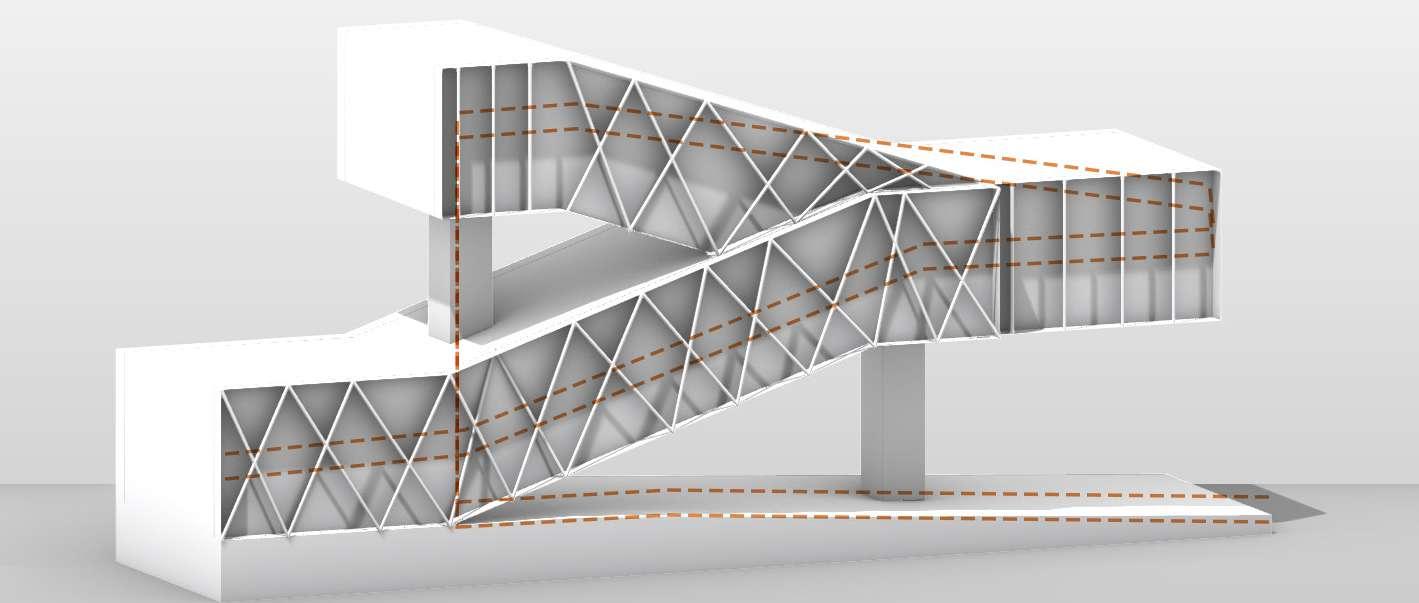
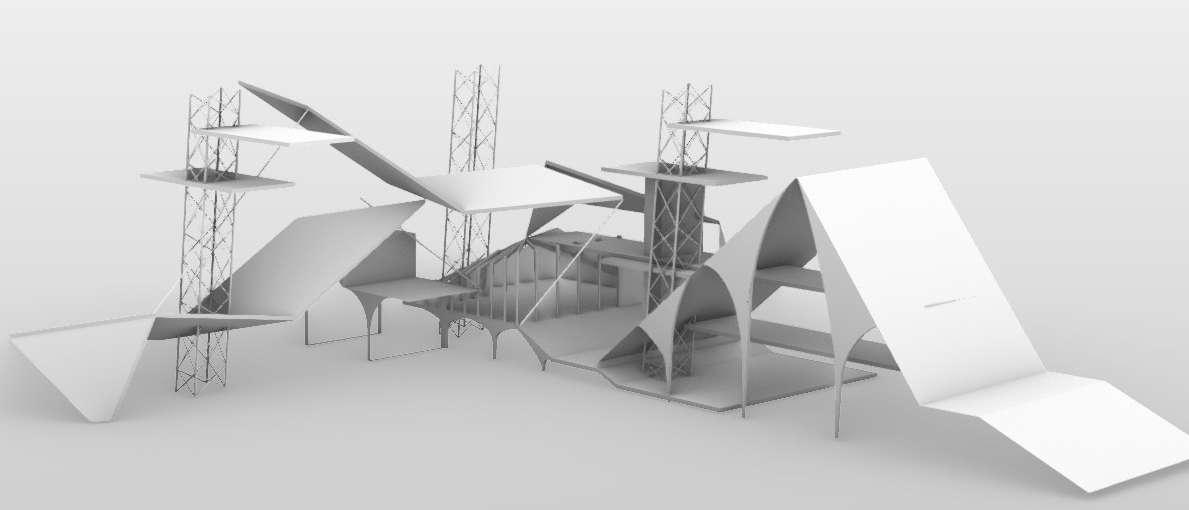
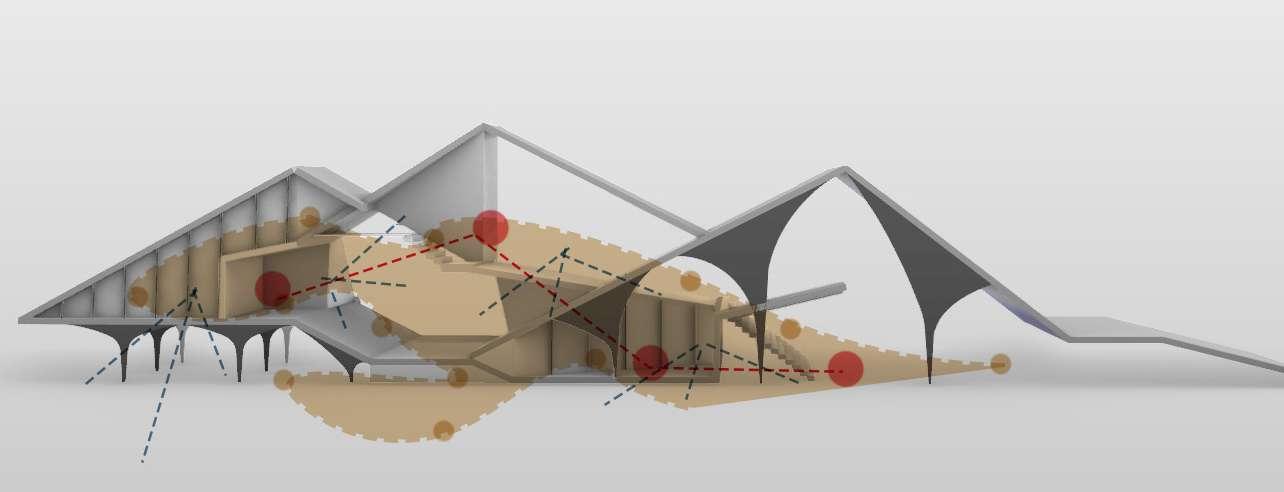
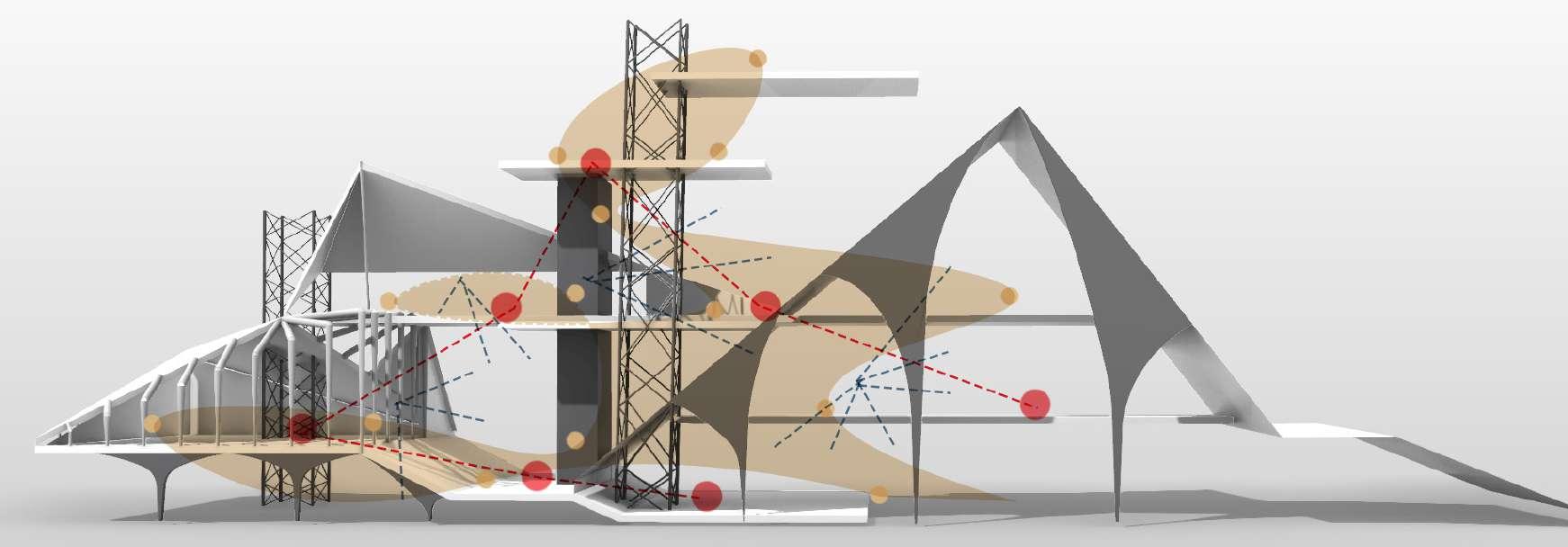
Testing out the fourth scenario in its design form in relation to the identified functional spaces of the UN -office.
Forced spaces are generally used as a very typical and conventional way of designing certain common spaces possibly restricting variation in user experience .
COLLABORATIVE SPACES PRESENTATION MEETING INDOOR/OUTDOOR CAFE TEMPORARY EXHIBITION URBAN SEATING NEWS STATIONS WORKSHOP TRAINING CIRCULATION RECEPTION/ENT LIBRARY OFFICE STATIONS
Forced spaces Form
Act as platforms
of Disruption
INDOOR/OUTDOOR CAFE TEMPORARY EXHIBITION RECEPTION/ENT LIBRARY OFFICE STATIONS METRO LINK DOCUMENT STORAGE
COMFORT ZONES
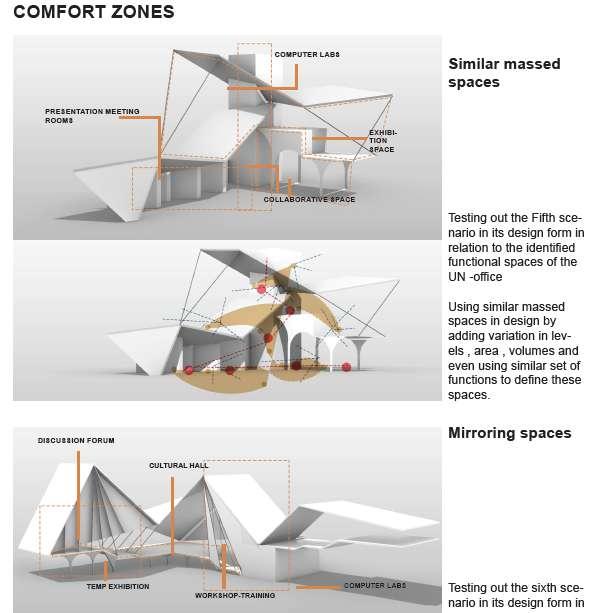
Similar massed spaces
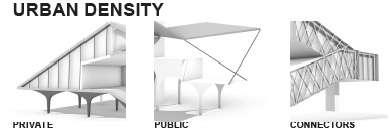
URBAN DENSITY
Identifying the major architectural elements in the following categories while designing spaces . acting as design guiders during the development stage and placement on site.
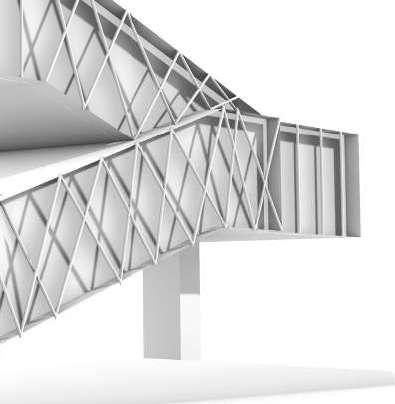
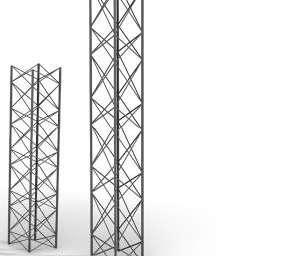

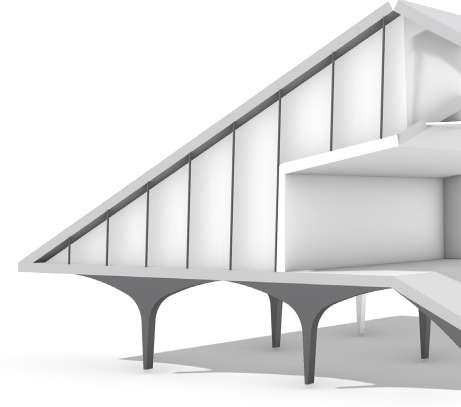
Testing out the Fifth scenario in its design form in relation to the identified functional spaces of the UN -office
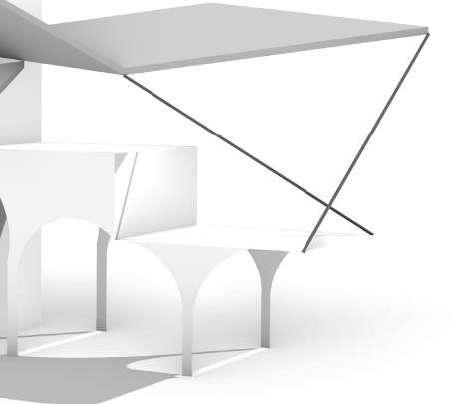
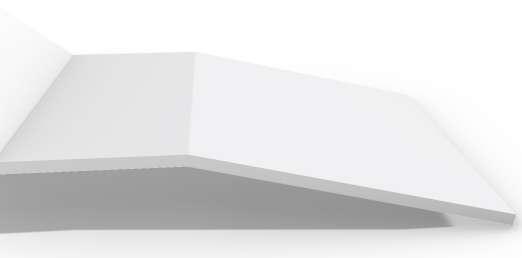
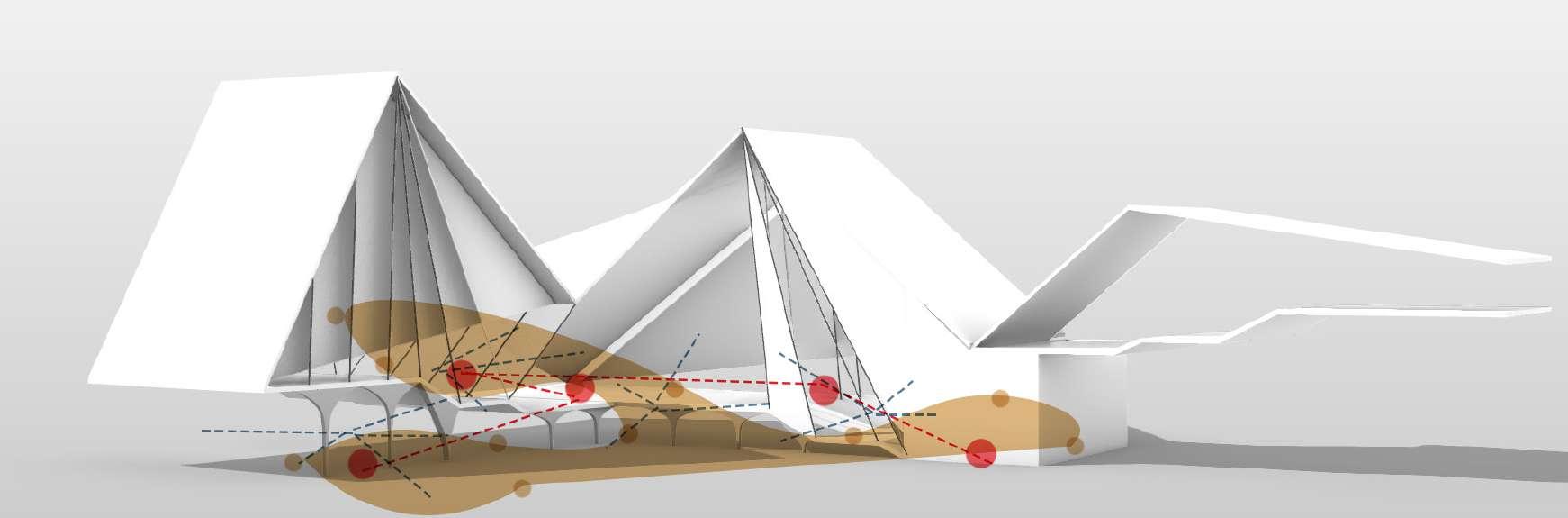
Using similar massed spaces in design by adding variation in levels , area , volumes and even using similar set of functions to define these spaces.
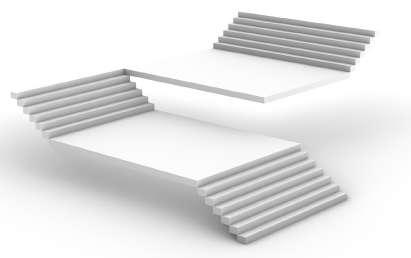
Mirroring spaces
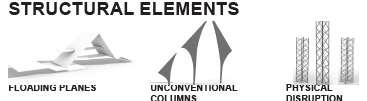
STRUCTURAL ELEMENTS CIRCULATION
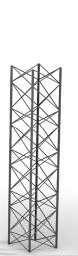
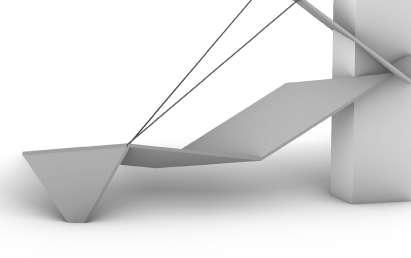

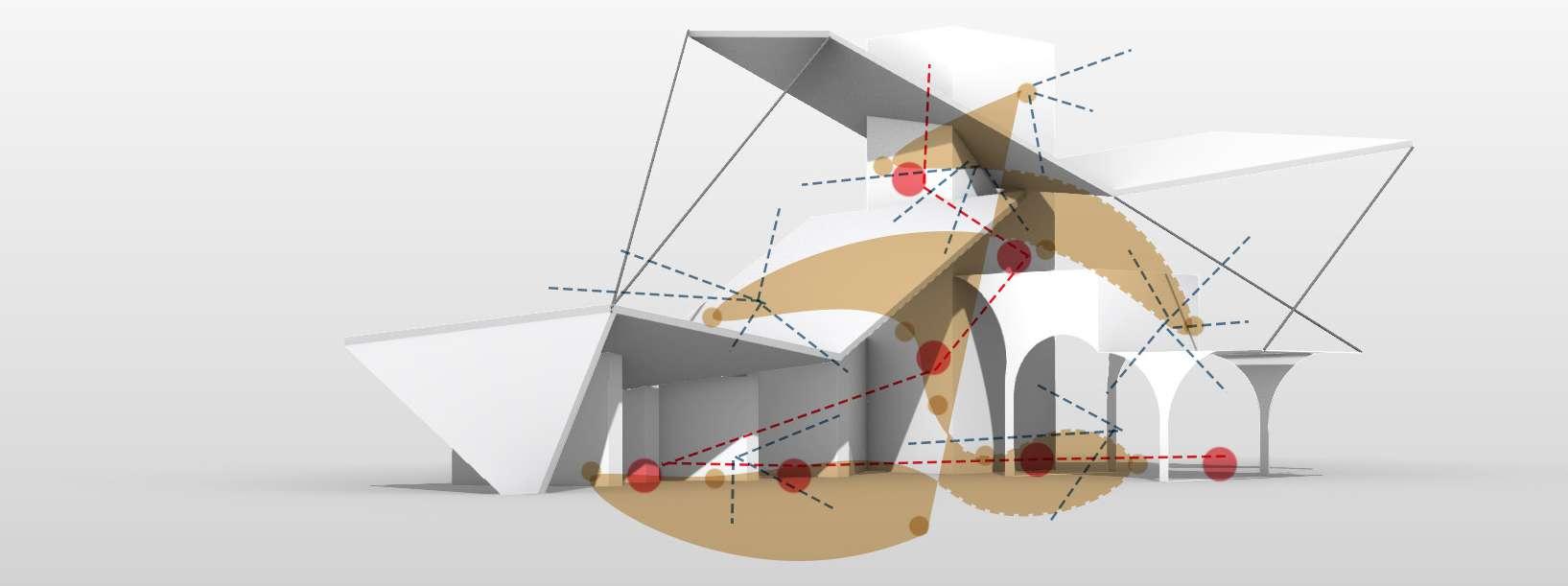
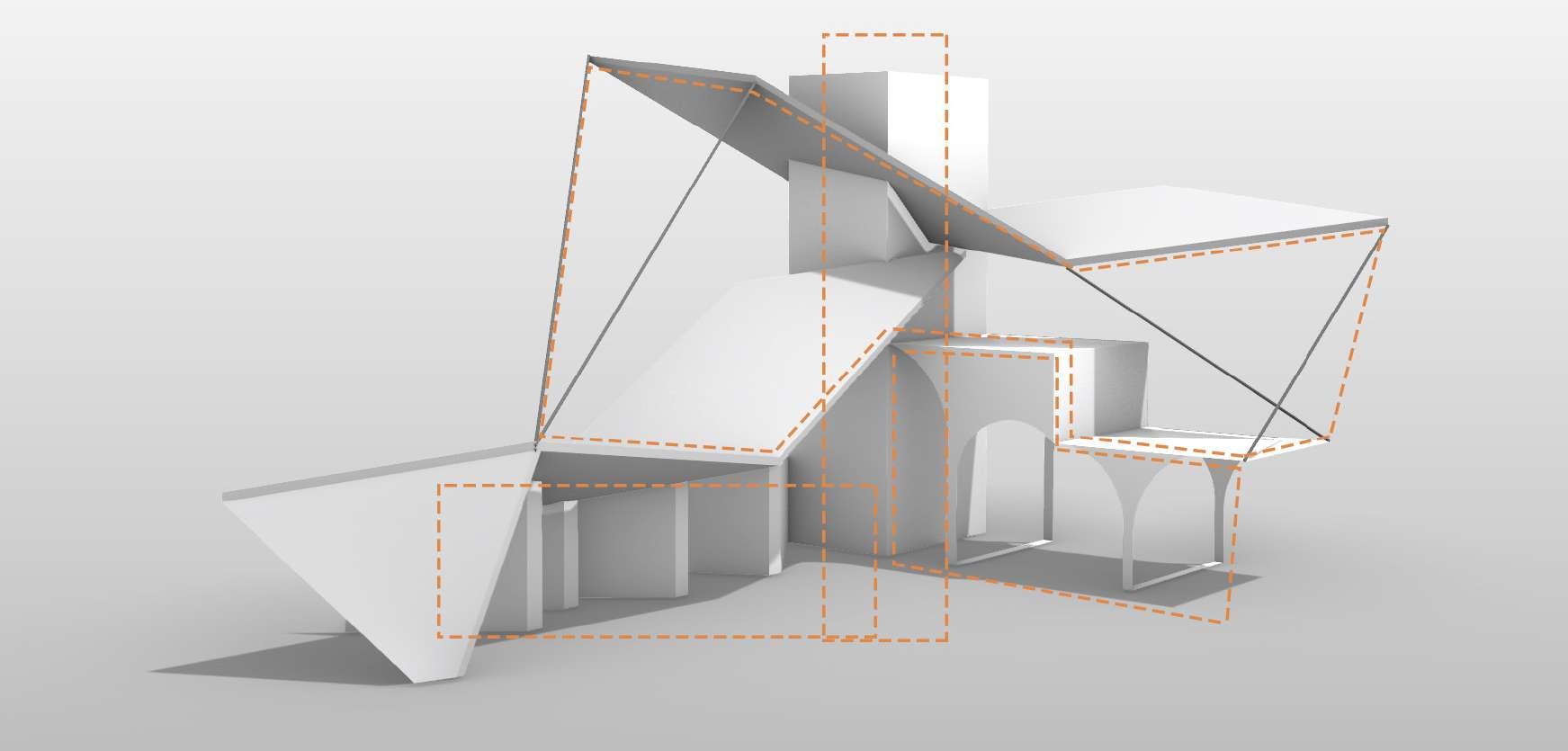
using these elements as hosts to create visual , vocal and physical disruption to passer-bys ( road , neighbouring buildings , metro , streets etc) as well as the users of the building itself. further creating the untangible sense of advocation for the presence of the building as well as its purpose
ON SITE MASSING - VARIATIONS
Testing out the sixth scenario in its design form in relation to the identified functional spaces of the UN -office.
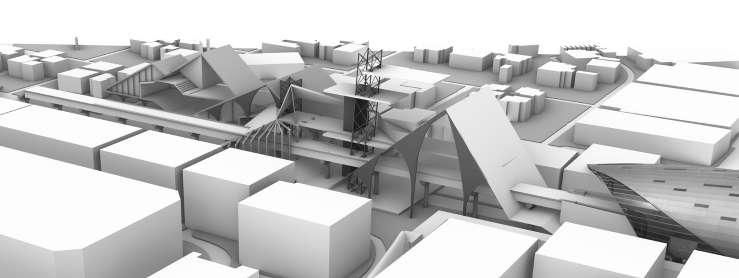
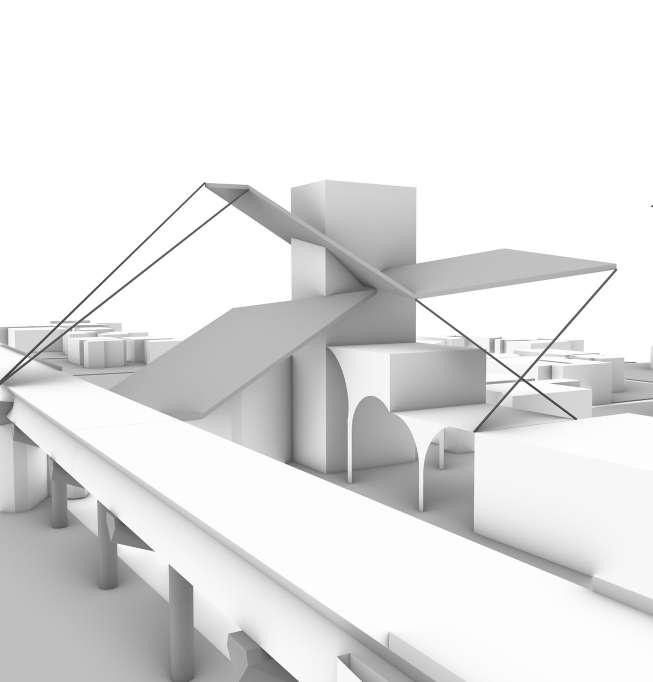
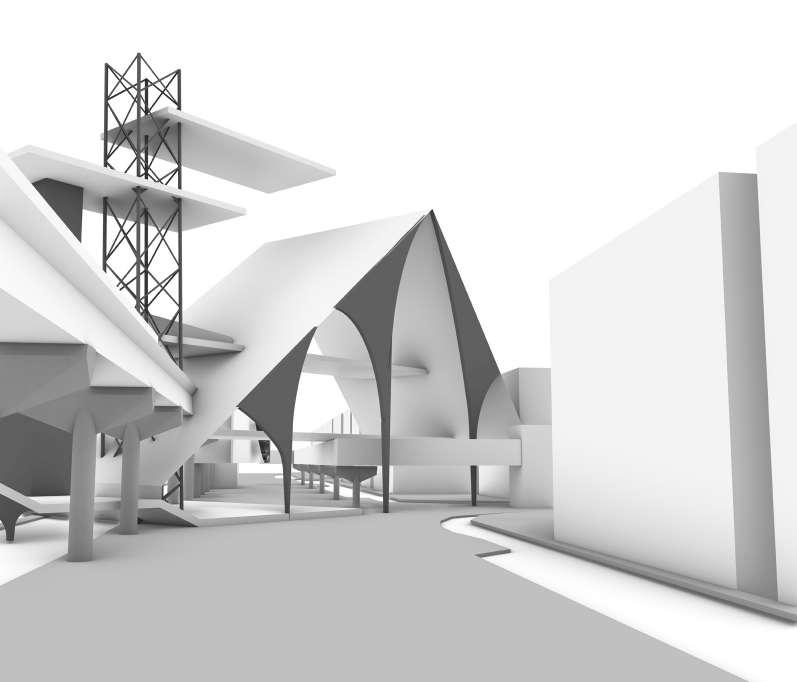
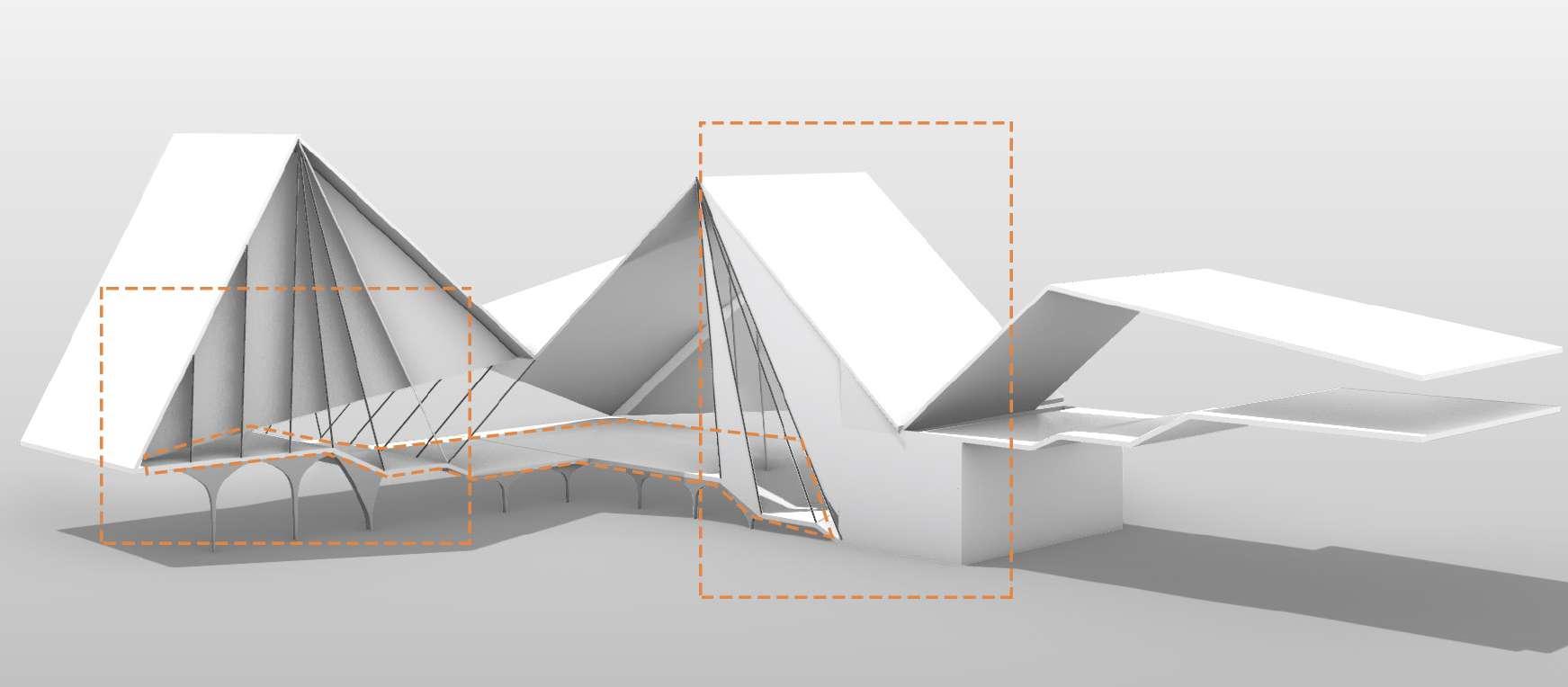
Mirroring spaces designed , showing functional variation between public and private spaces in terms of connection and accessibility .
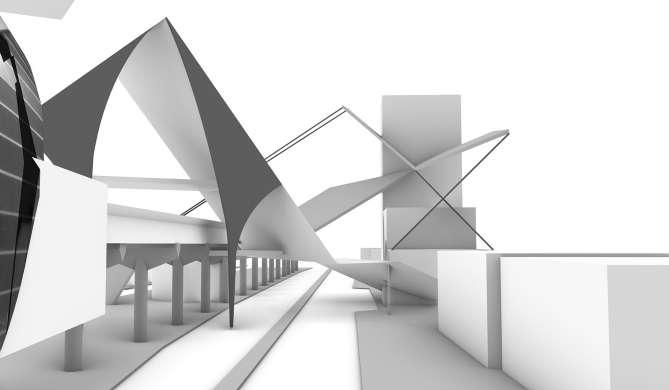
EXHIBITION SPACE
PRESENTATION MEETING ROOMS COMPUTER LABS COLLABORATIVE SPACE DISCUSSION FORUM WORKSHOP-TRAINING TEMP EXHIBITION CULTURAL HALL COMPUTER LABS
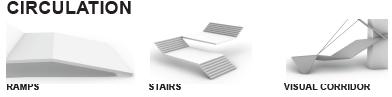
PRIVATE FLOADING PLANES RAMPS UNCONVENTIONAL COLUMNS STAIRS PHYSICAL DISRUPTION VISUAL CORRIDOR PUBLIC CONNECTORS
FUNCTION
DESIGN CHARETTE - FORM FINDING IN RELATION TO MANIFESTO AND
4 25 10 5 Scale 1:300 Public zone Semi - public Private zone Site elements Visual disruption Views
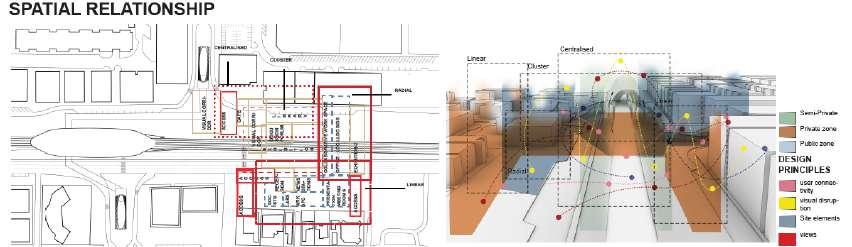
SPATIAL RELATIONSHIP
PRIVATE ZONE
DESIGN PRINCIPLES
SEMI- PRIVATE ZONE VIEWS
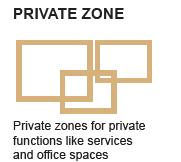
Private zones for private functions like services and office spaces
SPATIAL ORGANISATION
Semi private zones created between private and public. possibly the transition zones.
Private zone
Zones of public interest which activates certain areas and functions.
Public zone
VISUAL
Design catering towards internal external views . maintaining the in-out connections
Including the existing elements and influence of the urban fabric into design.
Centralised Linear Cluster
Semi-Private zone
Radial
SPATIAL RELATIONSHIP
Mixing and matching the spatial organisations with the 3 identified functional zones for spatial variations and opportunities.
Physical variation for some form hierarchy and visual disruption. Using the spatial relations and organisation to establish a flow and connectivity
ACCESS DOC. STG RECEPTION NEWS STATIONS OFFICE - LDC LLDC SIDS COLLABORATIVE WORK SPACE PRESENTATION MEETING ROOMS LABS WRK SPC ACCESS ACCESS CAFE DISCU SSION FORUM VISUAL CORRIDOR A C C E S S L I B R A R Y E X H B T O N
ACCESS DOC. STG RECEPTION NEWS STATIONS OFFICE - LDC LLDC SIDS COLLABORATIVE WORK SPACE PRESENTATION MEETING ROOMS LABS WRK SPC ACCESS ACCESS CAFE DISCU SSION FORUM VISUAL CORRIDOR A C C E S S L B R A R Y E X H I B I T I O N
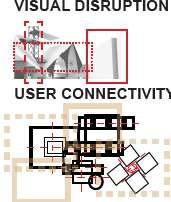
CONNECTIVITY Linear Linear Linear Radial Radial Radial Cluster Cluster Cluster Centralised Centralised visual disruption user connectivity Public zone Private zone Site elements views Semi-Private
ACCESS DOC. STG RECEPTION NEWS STA - TIONS OFFICELDC LLDC SIDS EXHIBITION-2 COLLABORATIVE WORK SPACE PRESENTATION MEETING ROOMS LABS WRK SPC ACCESS A C C E S S ACCESS CAFE DISCU SSION FORUM VISUAL CORRIDOR VISUAL CORRIDOR CENTRALISED CLUSTER RADIAL LINEAR L I B R A R Y E X H I B I T I O N
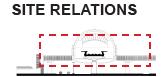
DISRUPTION SITE RELATIONS USER
DESIGN PRINCIPLES
PRECEDENT STUDIES
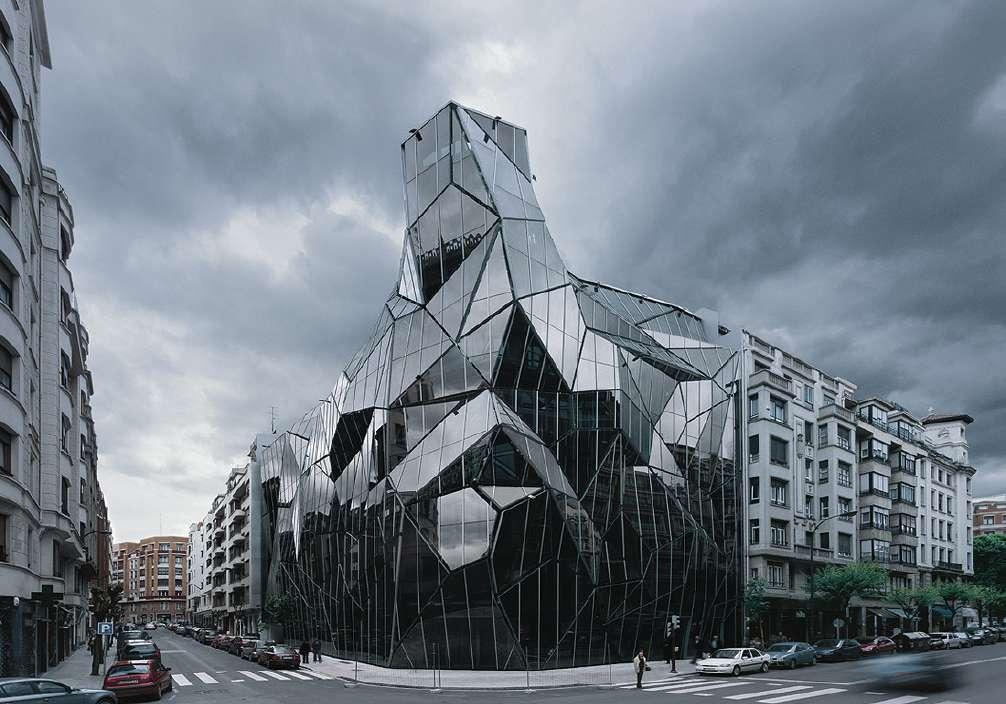
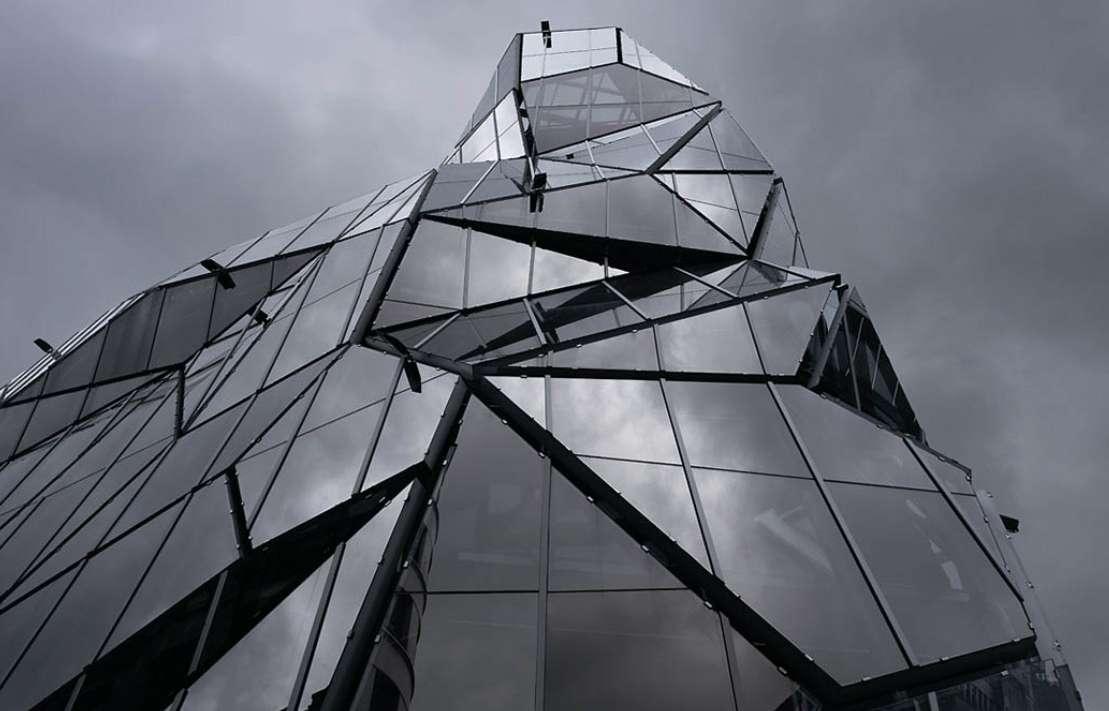
BILBAO HEALTH DEPARTMENT BL BANK HEADQUARTERS
LOCATION: BILBAO, SPAIN
ARCHITECTS:COLL-BARREU ARQUITECTOS
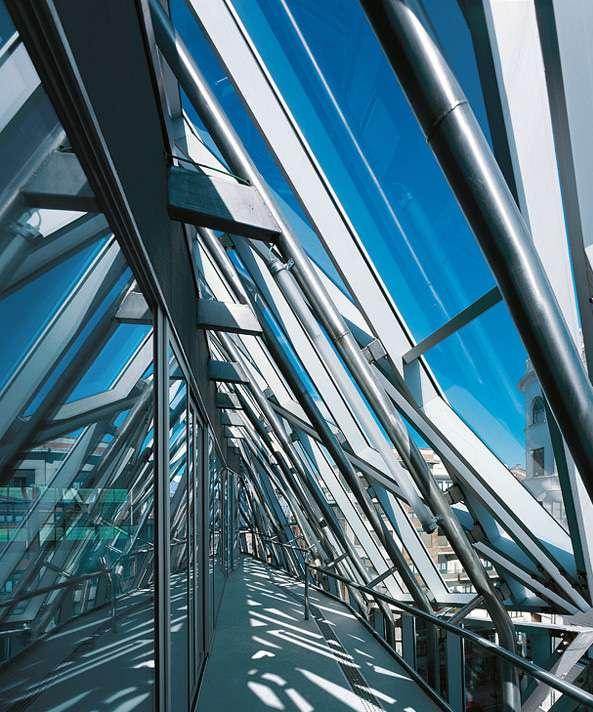
Using this case study as the façade and structural inspiration , incorporating the multiple layers in the structure and form .Mainly adapting its double glazed glass with metal frame and structural column supporting the folding language of the façade
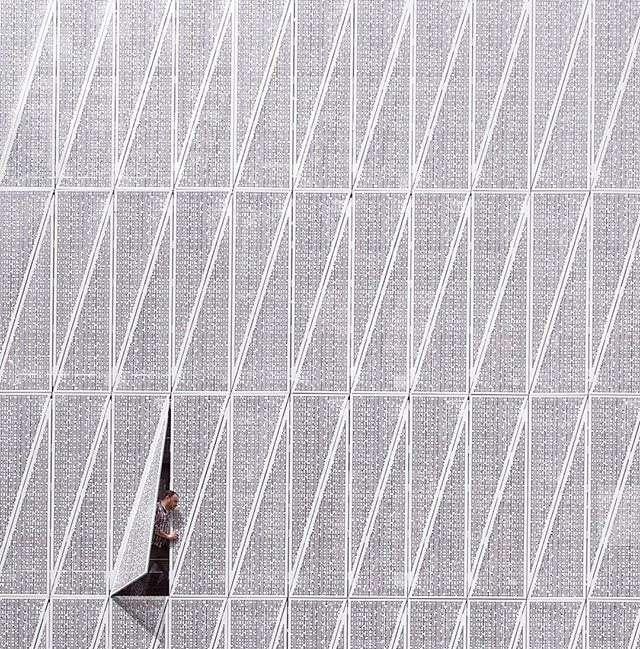
LOCATION: BEIRUT , LEBANON
ARCHITECTS: D8 METALS
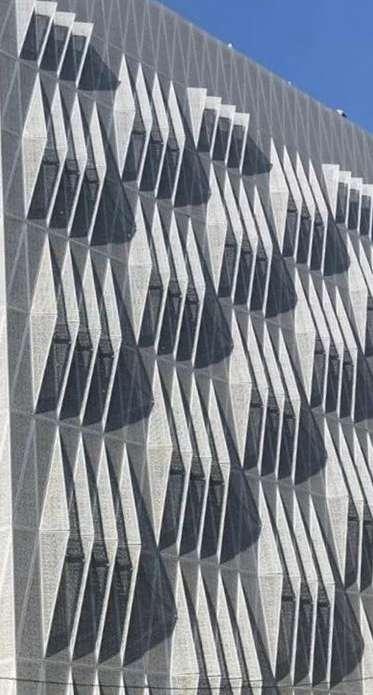
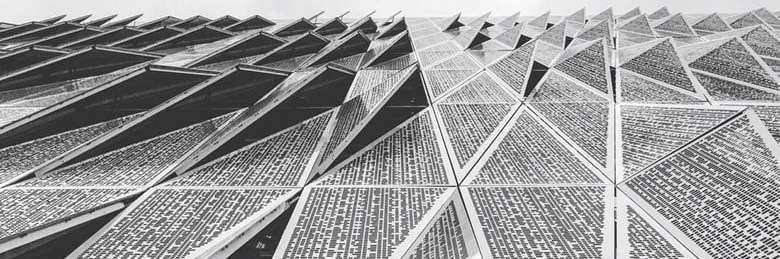
Keeping up with the idea of designing in conflict using solid forms of materials in terms of mesh surfaces as the façade for the conventional/private UN office spaces . Using this case study as an inspiration in Envelope facade with its unique window sets and mesh allowing for filteration and control in the amount of natural light entering the functional spaces.
Saieh, N. (2008) Basque health department headquarters in Bilbao / coll-barreu arquitectos, ArchDaily. ArchDaily. Available at: https://www. archdaily.com/7093/basque-health-department-headquarters-in-bilbao-coll-barreu-arquitectos (Accessed: April 17, 2023). ArchiloversCom (no date) Intercontinental Bank of Lebanon: Karim Bacha, Archilovers. Available at: https://www.archilovers.com/projects/237010/intercontinental-bank-of-lebanon.html (Accessed: April 17, 2023).
CLIMATIC ANALYSIS
SUN PATH
The daylight experience in this area during the morning hours is extremely sunny with barely any form of shadding also due to certain reflective surfaces. During the afternoon and evening hours the light is less harsh with shading created between the buildings and under the columns along with some street furnitures
SHADOW AND RADIATION
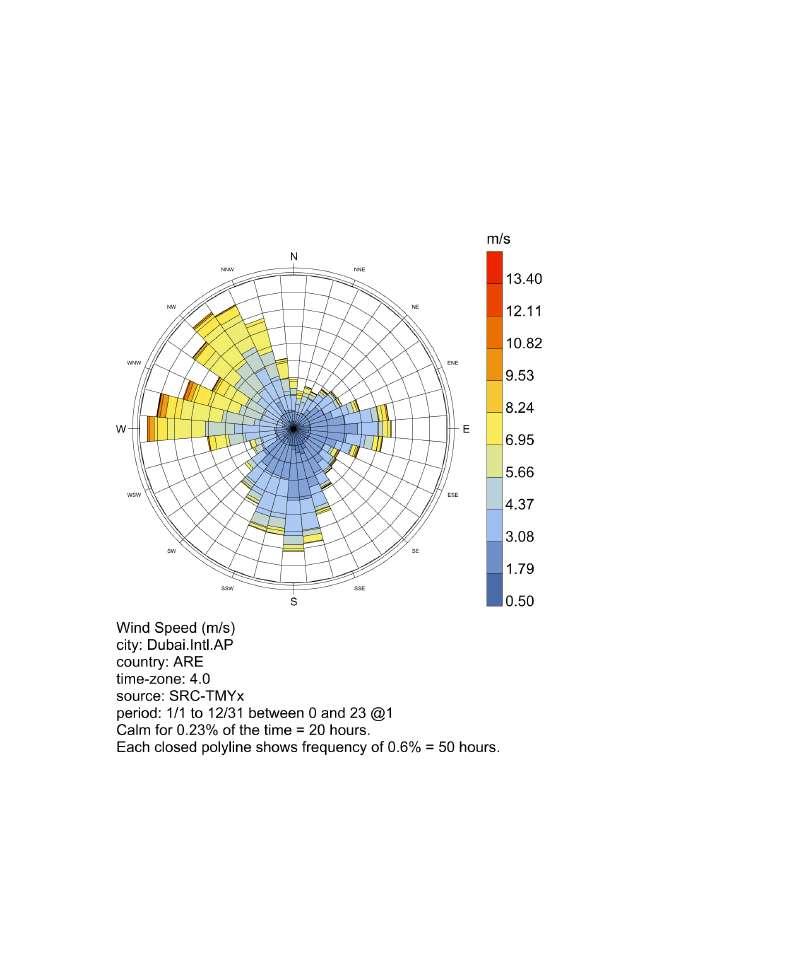
WIND PATH
The north-west prevailing winds keeps the site cool . the urban fabric of the site with its narrow-wide openings allows for easy circulation as well as cooling of unconventional spaces.
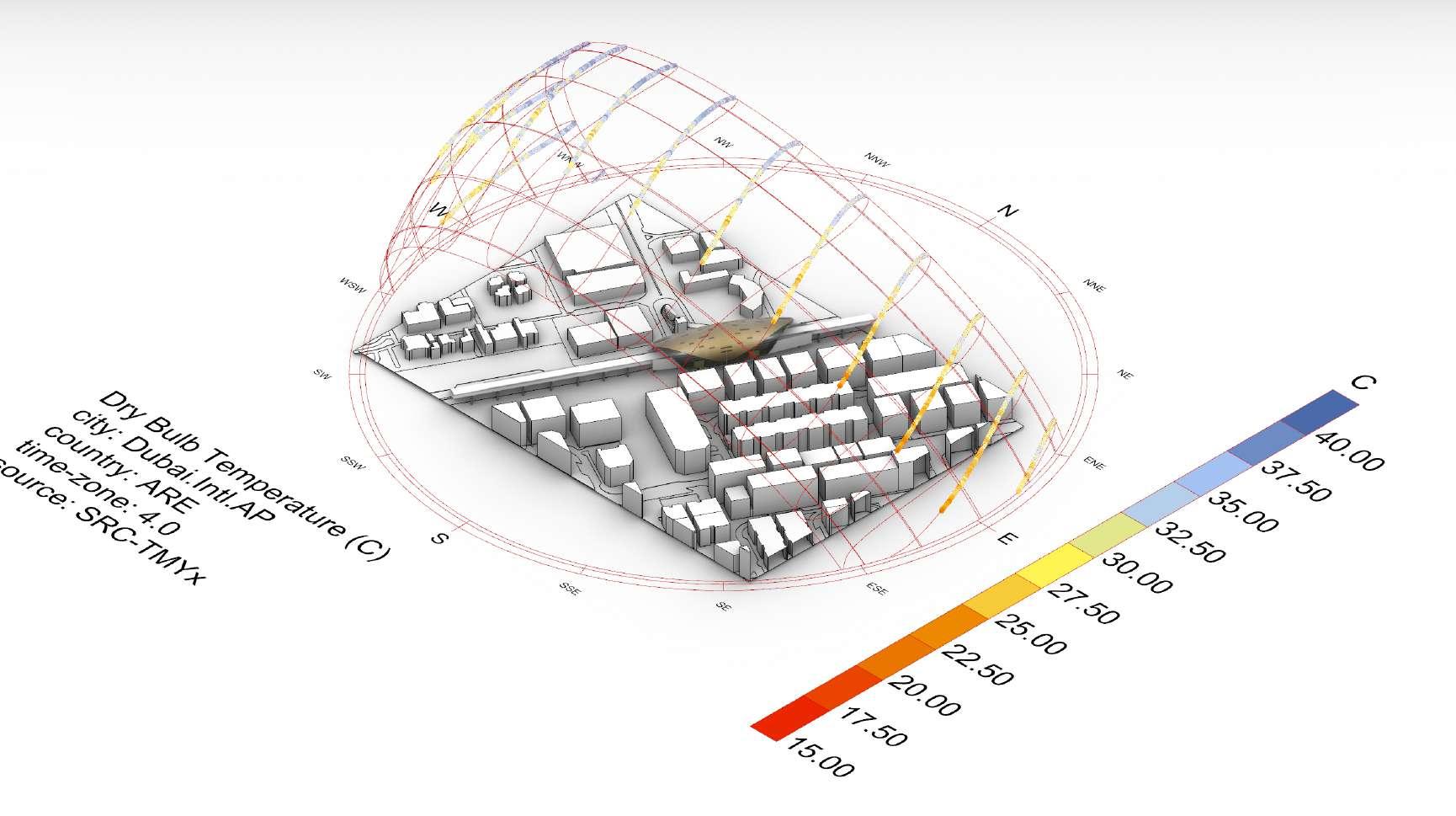
MORNING - (8 am - 21st june) EVENING -(5 pm - 21st june)
URBAN RESPONSE - PLOT /ACCESS
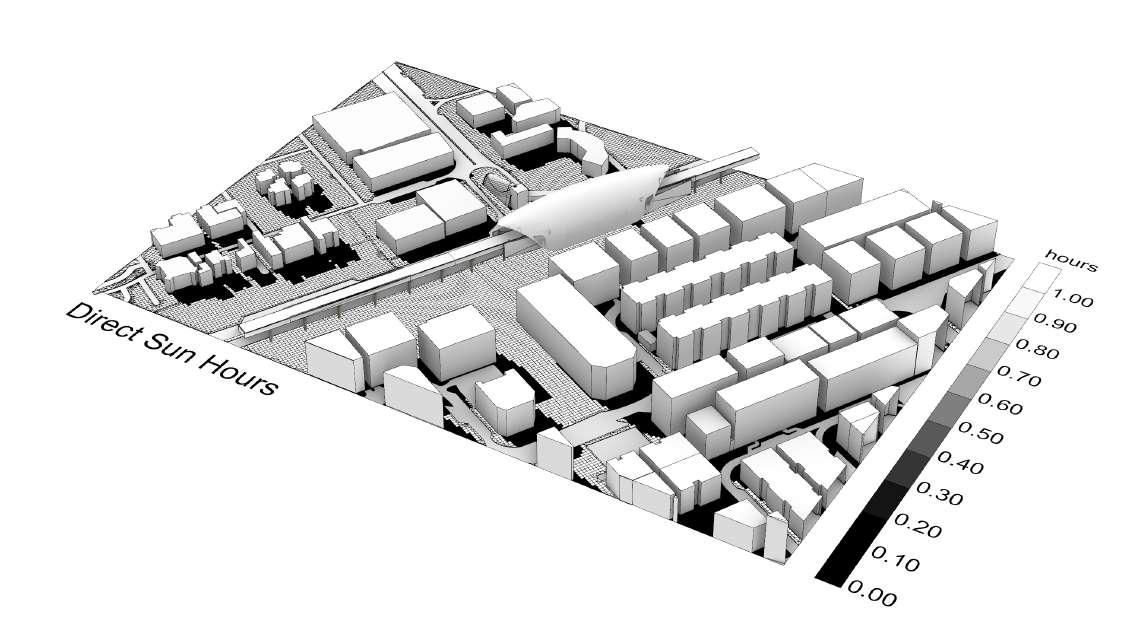
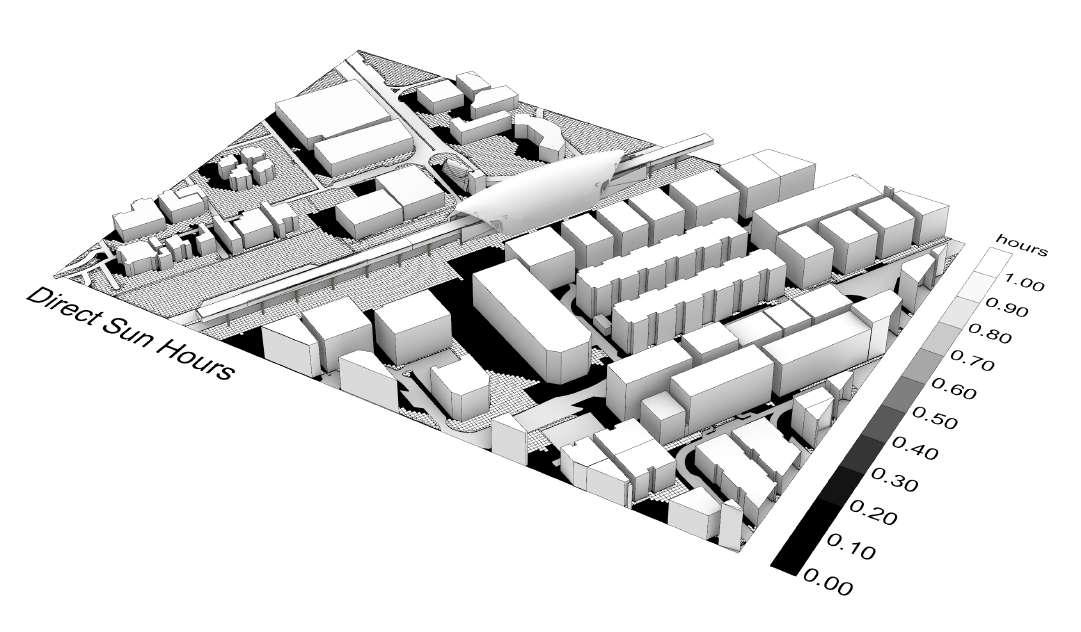
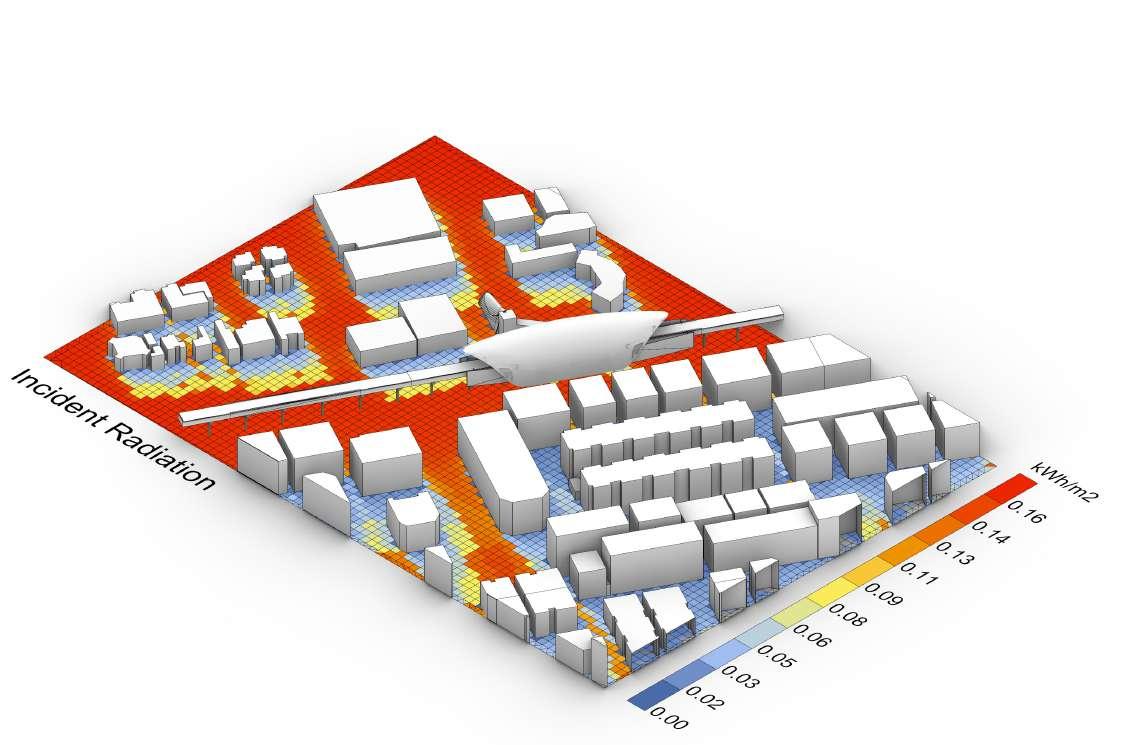
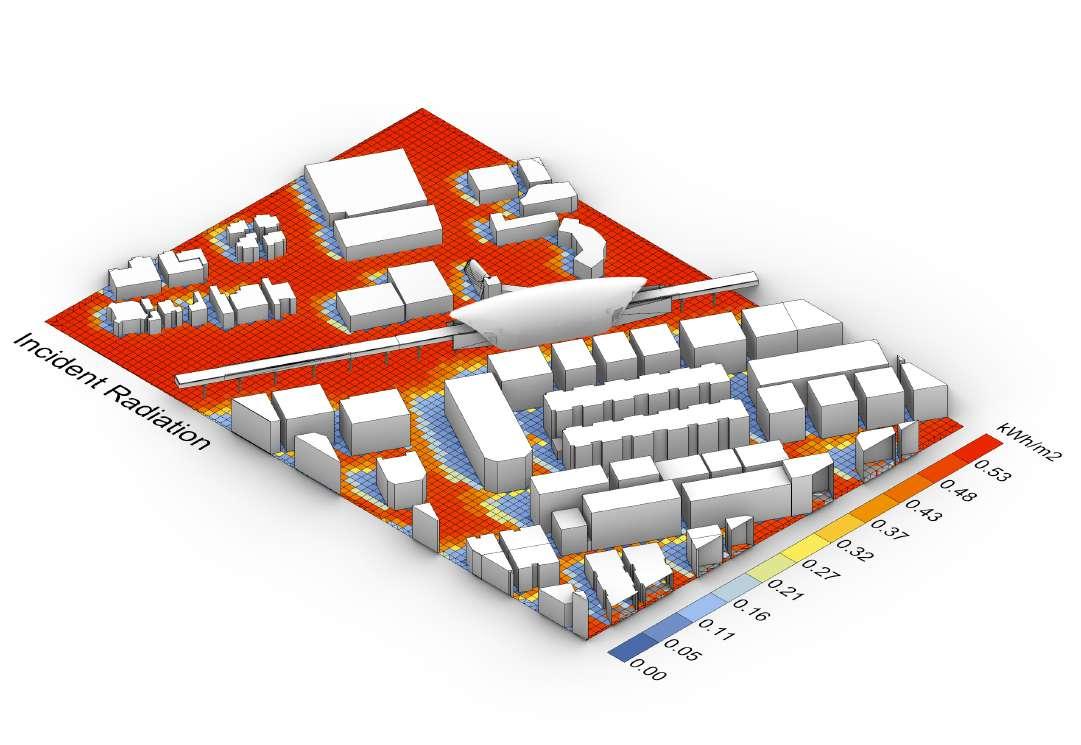
Testing the micro-climate around the area as a result of the urban response.
During the morning and evening hours we see the harsh sun light hitting all the open grey spaces while the narrow pathways and the new created plaza area mildly shaded due to the metro and nearby buildings. while on the other hand some areas get a decent amount of lighting due to the reflective surfaces of the nearby buildings.
Plot Boundary Area of Intervention Entry Pts
SCENE SETTING FOR ADVOCATION
Concept Development
Challenging existing hierarchy Design placement through movement edges
Design edge with disruptive points as anchor
Identifying the advocating edges
Movement
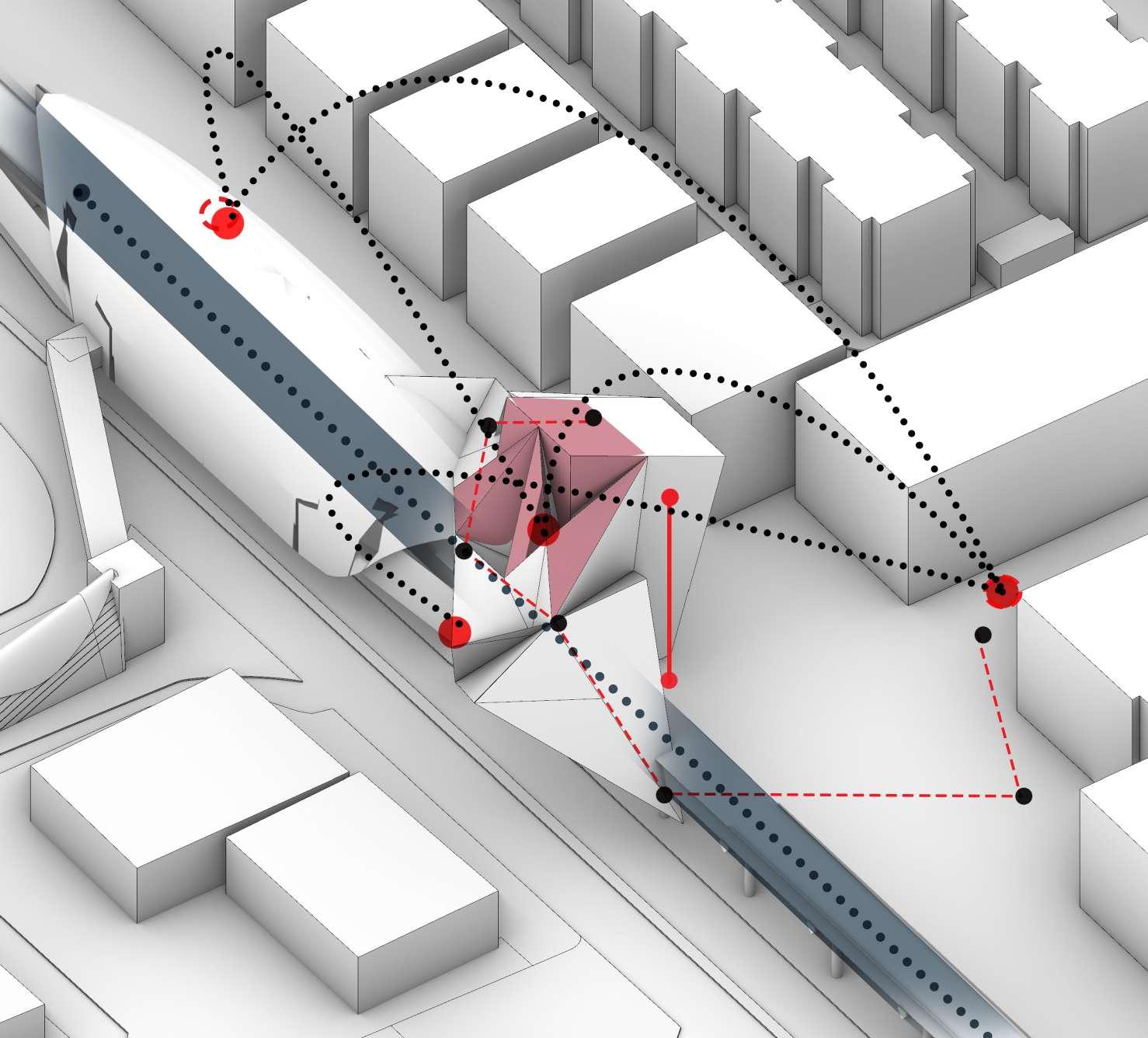
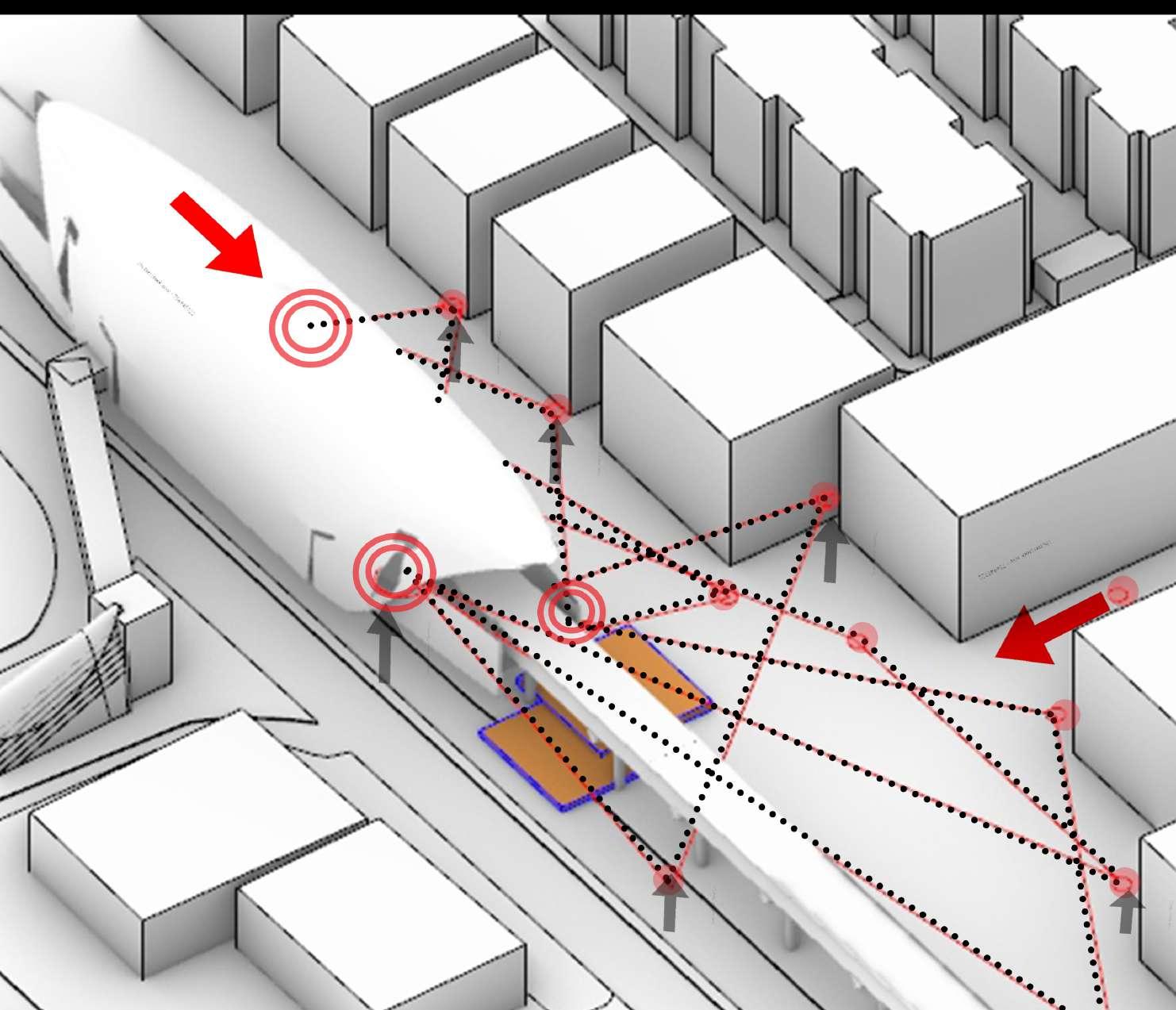
Changing the existing pattern within site from Function to Movement. Thus giving Movement more depth and power in design . while identifying the entrance points , dense movement and the overlayrd disruptive elements.
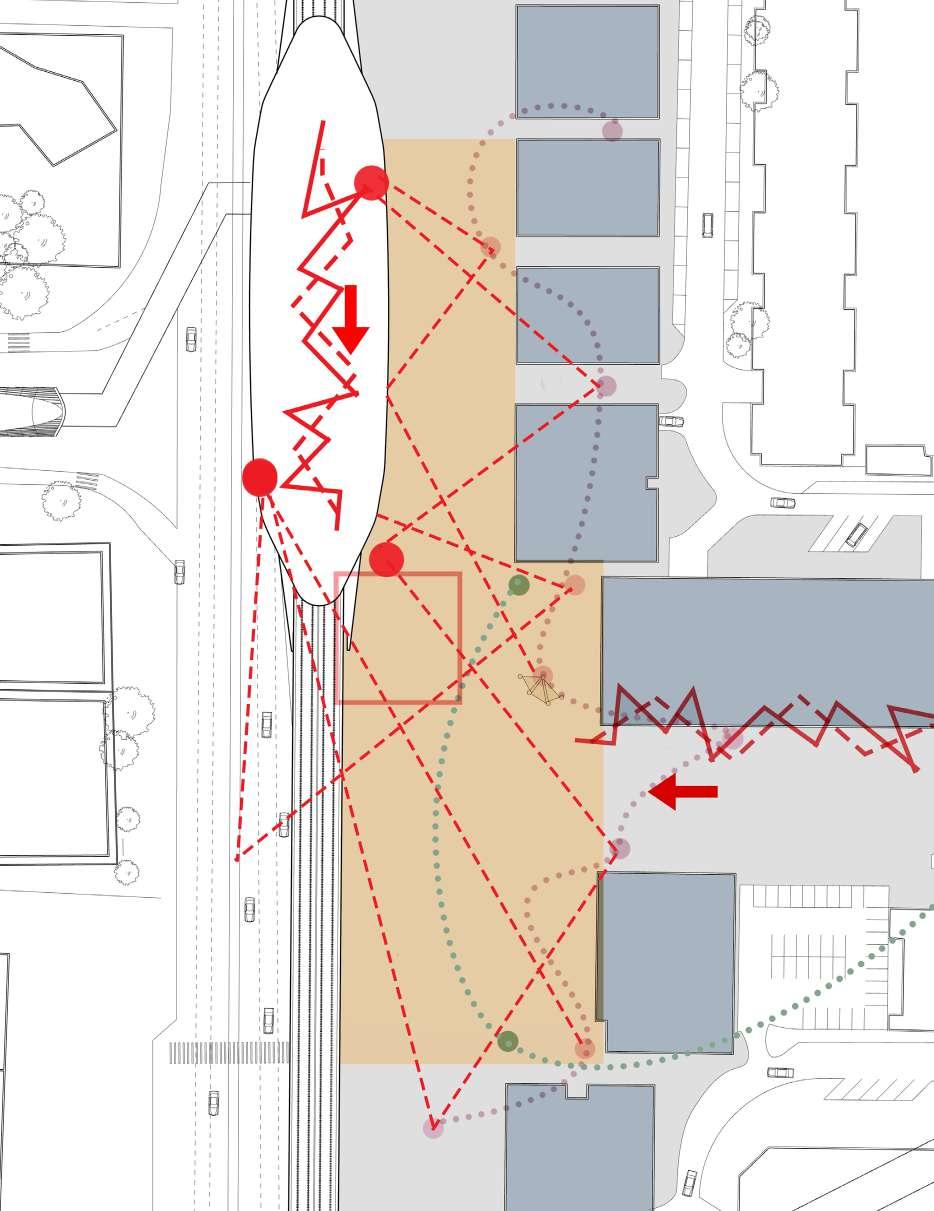
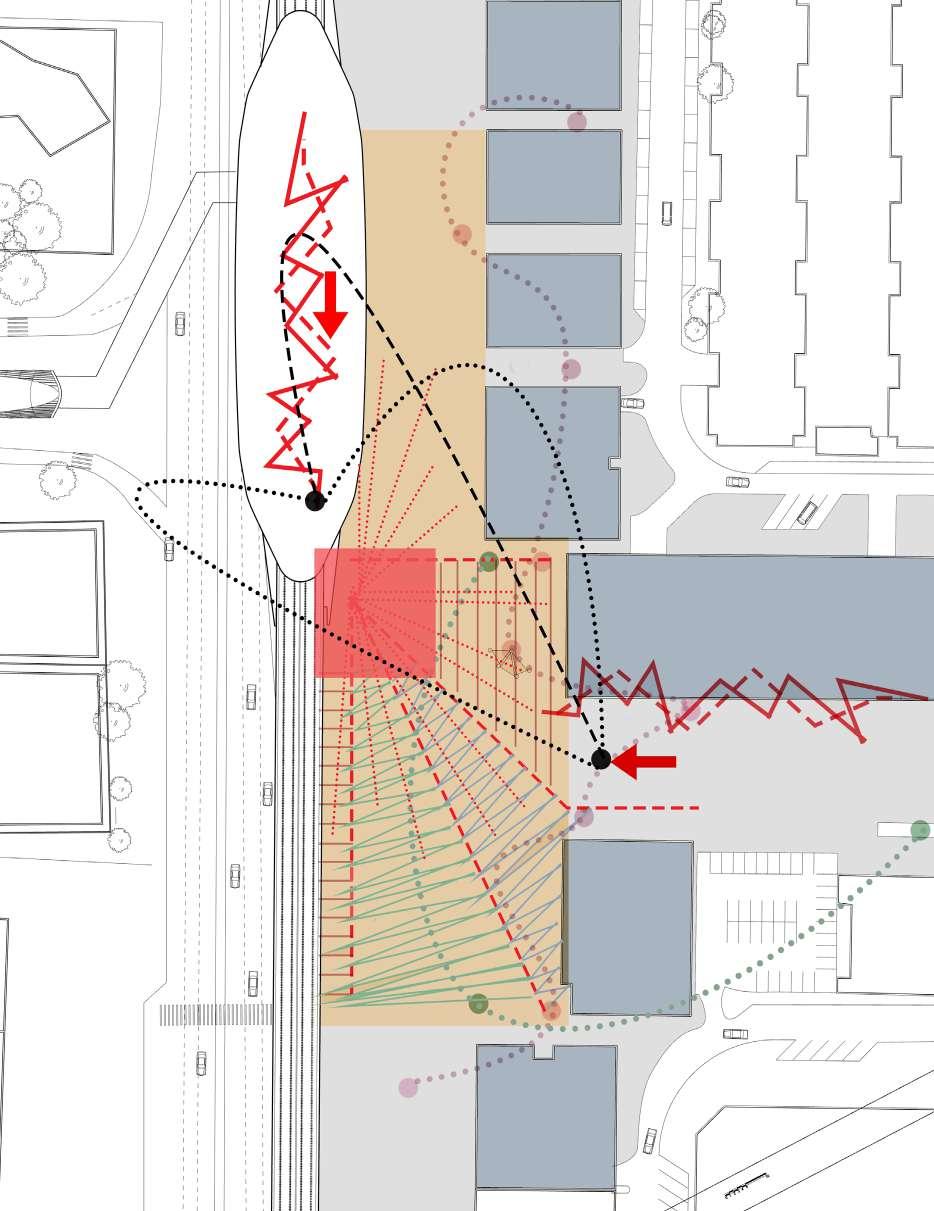
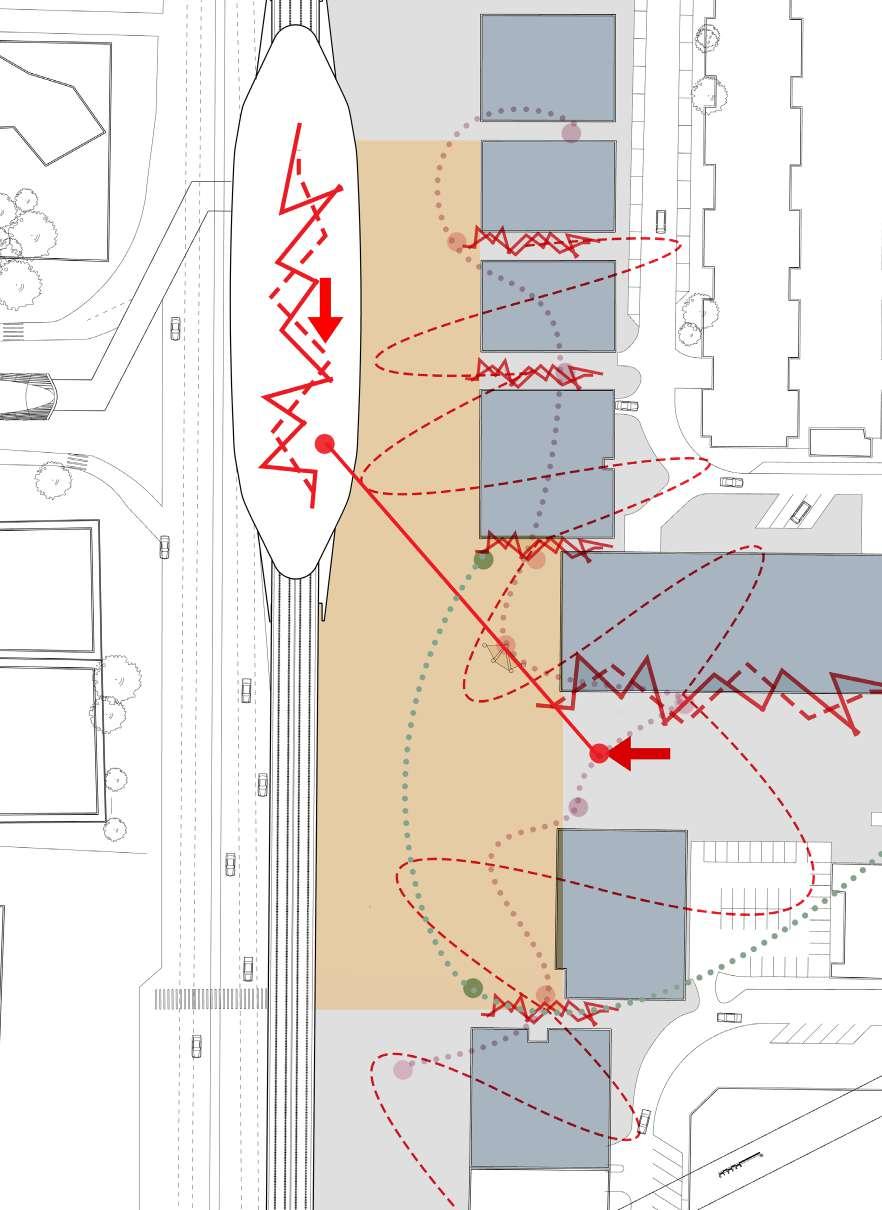
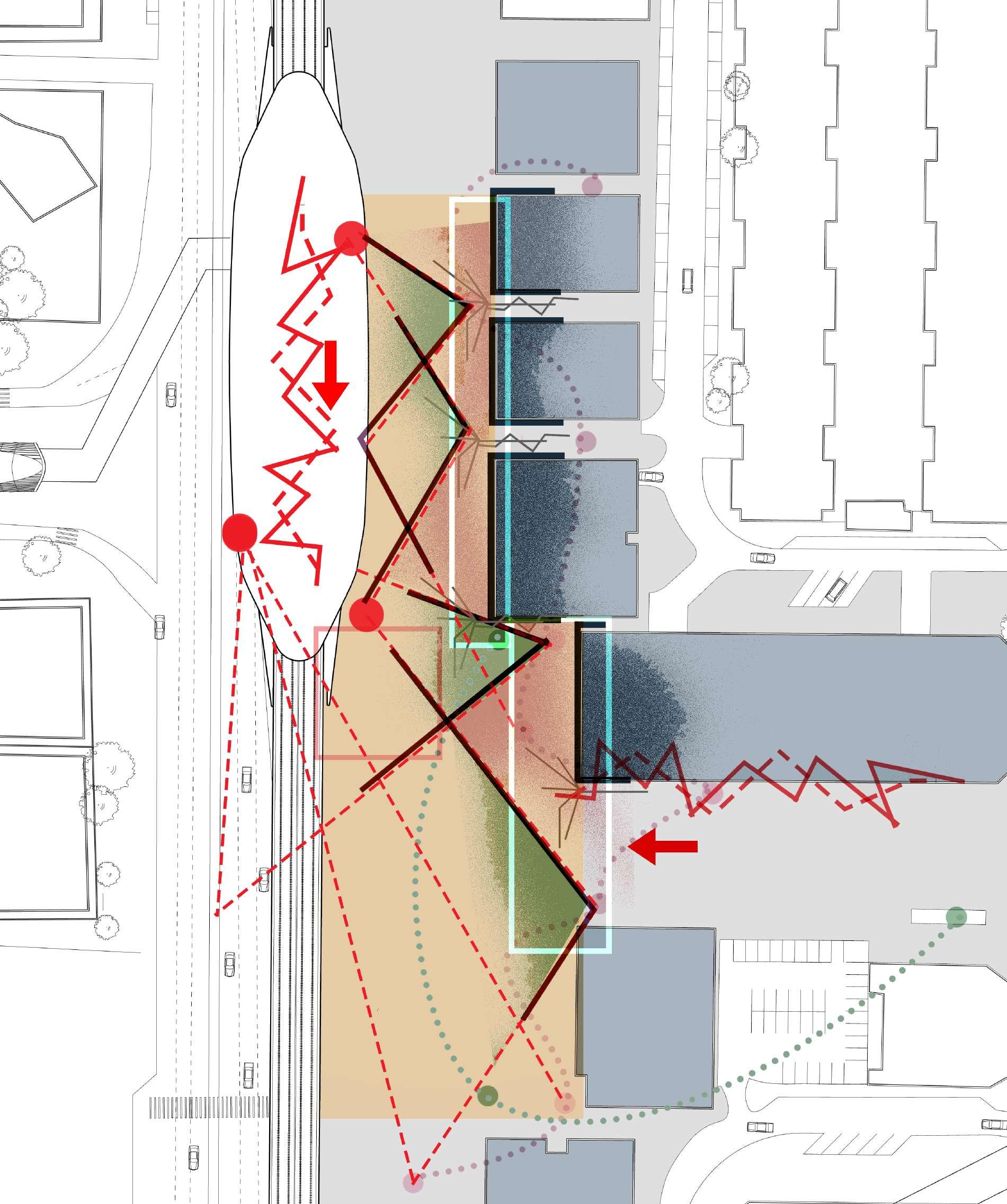
Establishing 4 movement destinations based of site analysis -
Urban web
Landscaping Exhibition Access
Plot Plot landscaping edge Design entry points Plot Landscaping Movement sequence Movement edges Movement edge Void Movement destinations Landscape pts Landscape pts Landscape pts Street furniture pts Street furniture pts Street furniture pts Access Access Access Movement Source Movement Source Movement Source Functional buildings Functional buildings Functional edge Functional buildings Brief Functions Design
Using the disruptive points as the anchor in creating the movement edges defining the plot. To show the advocation through movement and change in the hierarchy using design elements that trigger the different forms of movement. stais tamp lift etc.....
Identifying the major egdes advocating in the site and the area where this form of advocation is experienced . The push and pull of the design as a new approach against the hard edge of the existing site function with the void in between as the space to experience this clash along with movement flushing in and out.
Using the movement sources as the access points for these destinations towards a common point . VS Function
Disruptive points defining the design edges Establishing movement destinations
RE-CONFIGURATION OF DESIGN
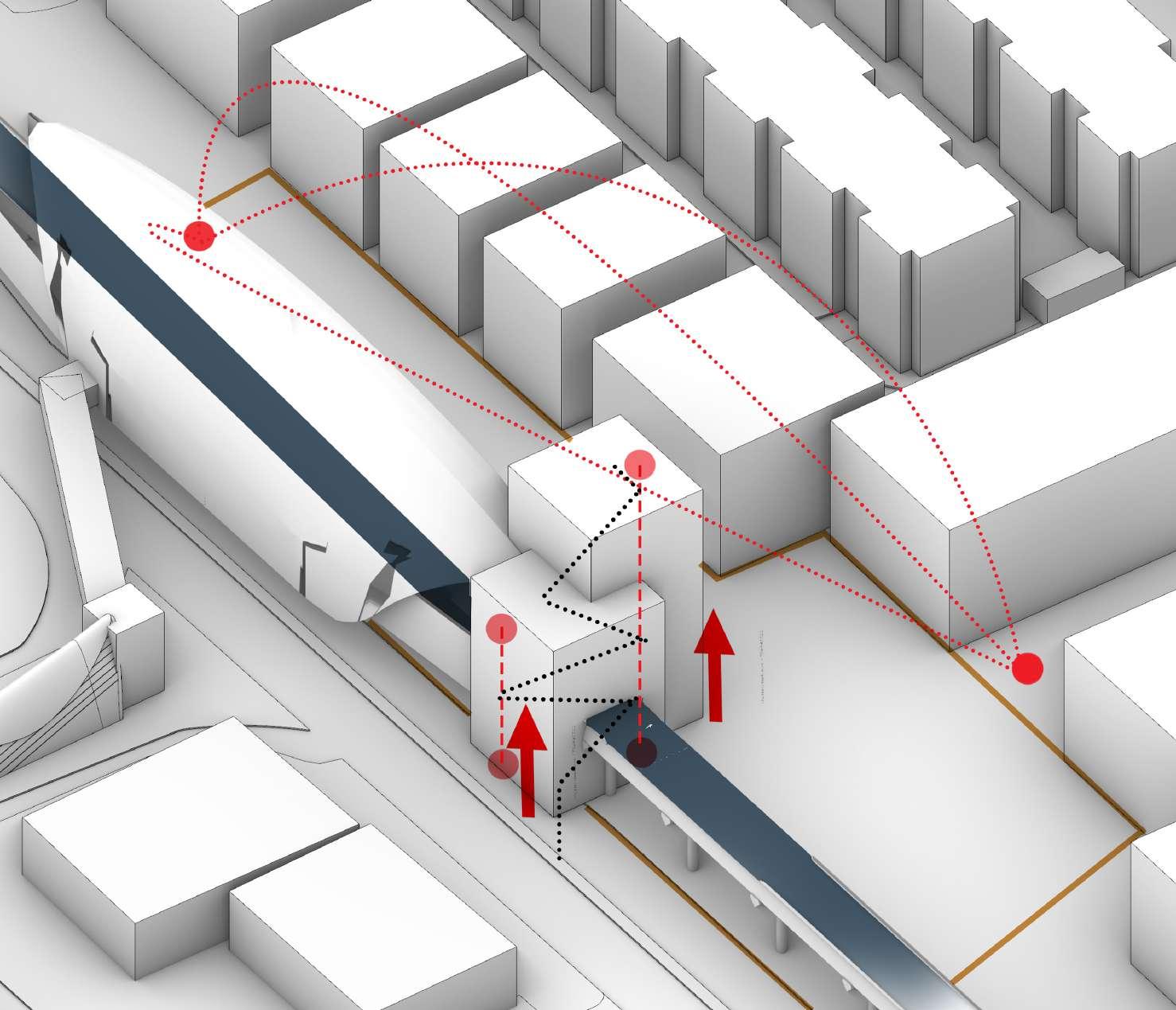
Using disruptive elements as an anchor
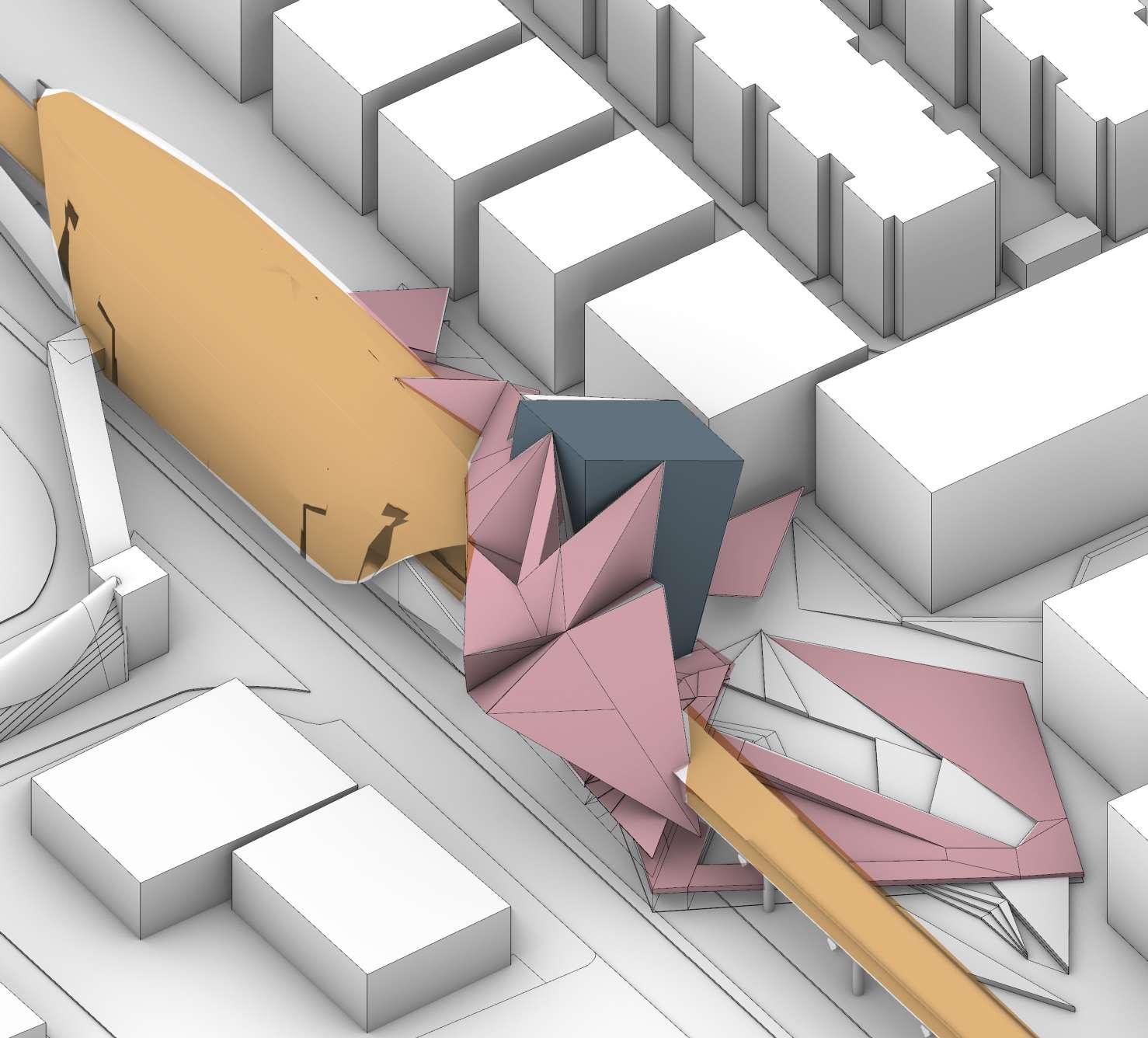
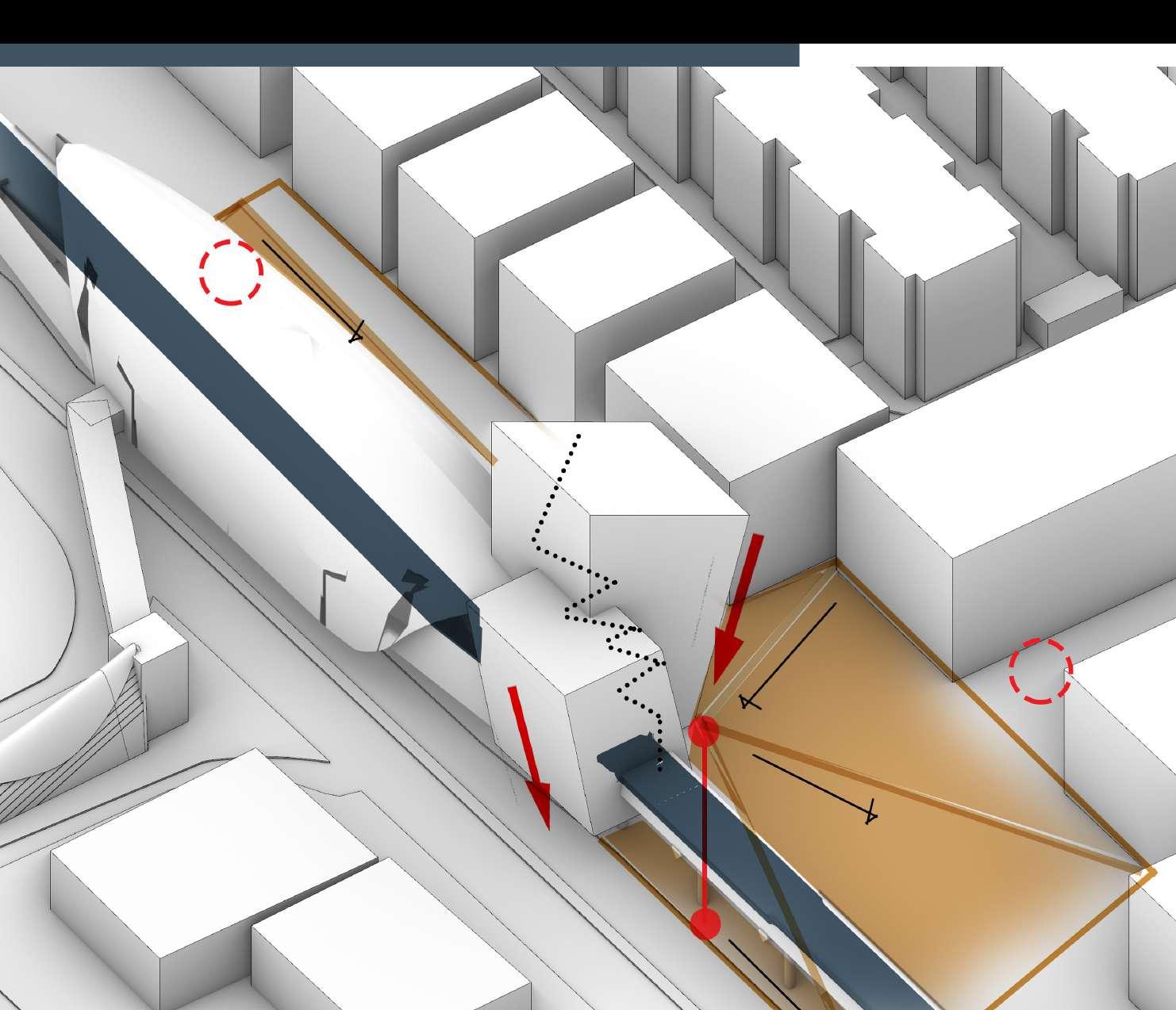
Concept of Merging high-rise
Refining the basic mass and creating a new ground level
Designing with Movement as the architectural hierarchy
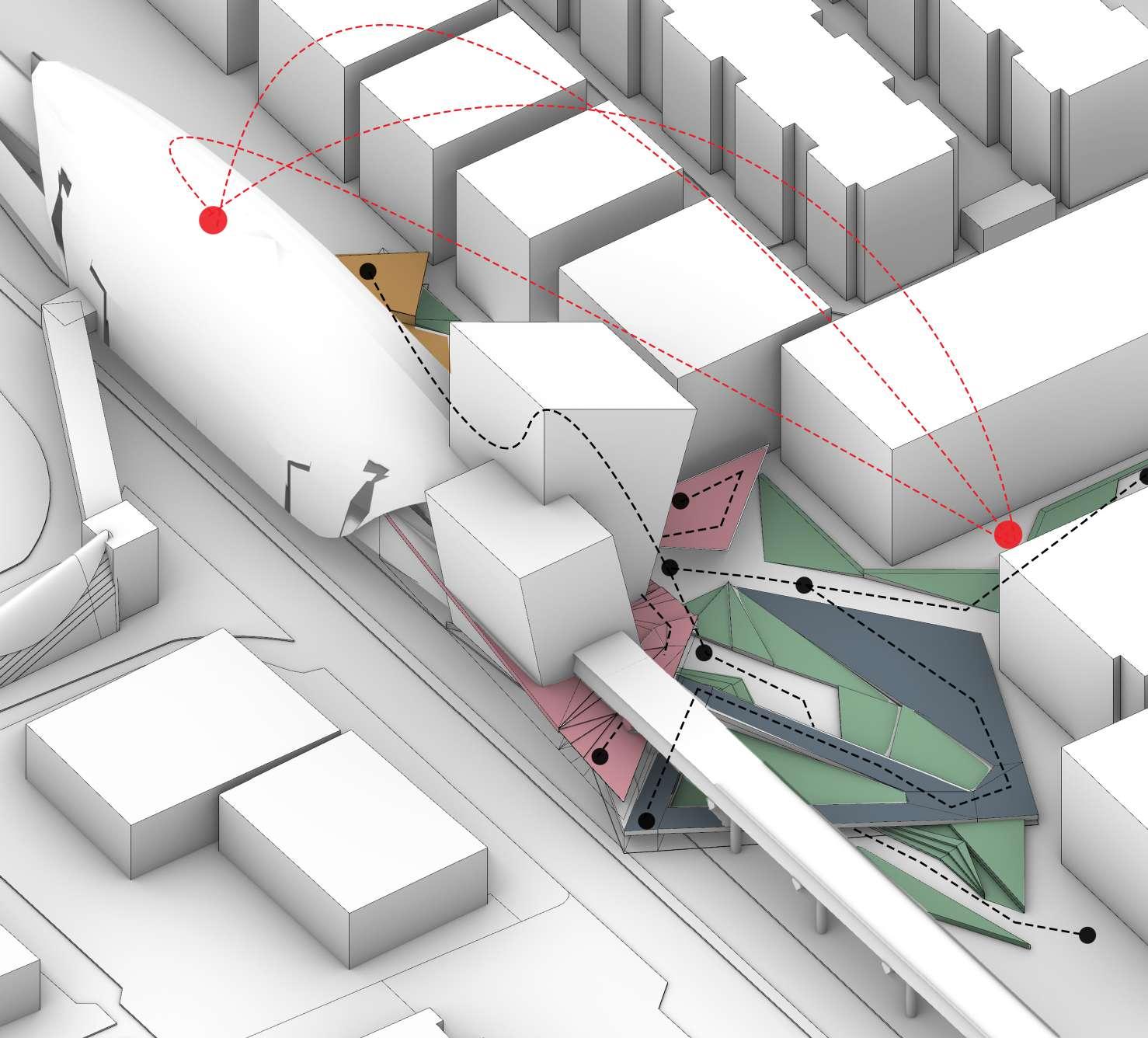
Establishing the Advocating Edges
Unconventional growing onto the conventional with movement pushing in
ARCHITECTURAL APPROACH DISPOSITION OF CONCEPT
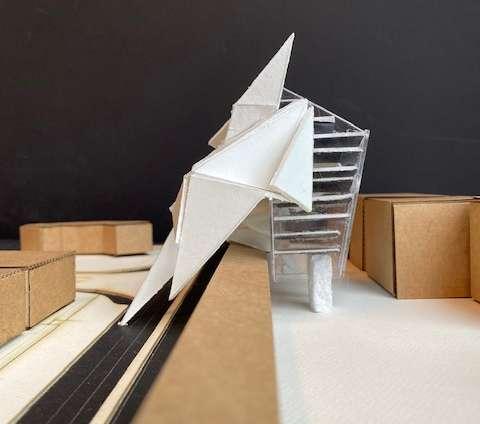
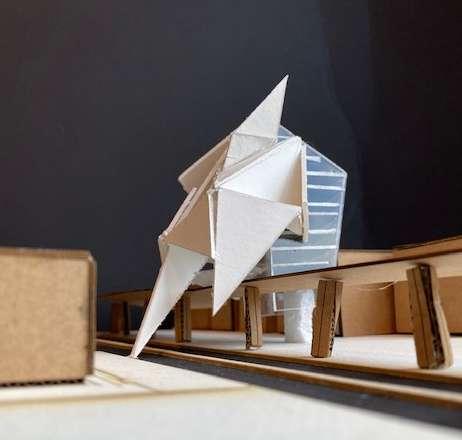
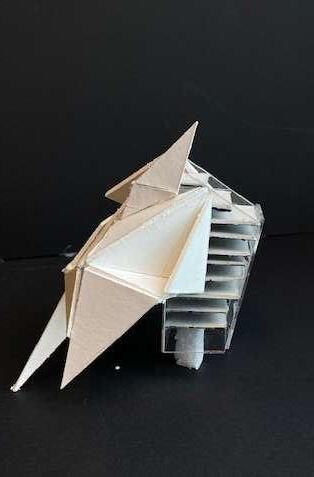
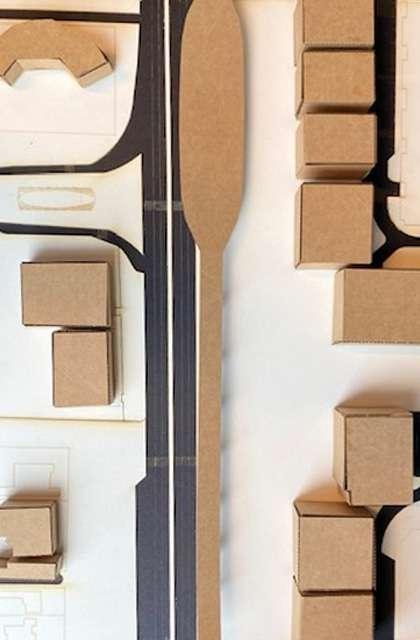
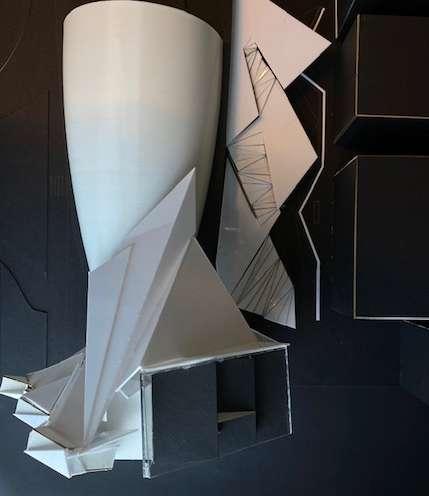
Through Physical testings of massing development
Taking an Architectural Approach towards the proposed design , testing the advocation of variation through conflicts between the 3 different edges in massing developments . While also testing its presence and contribution to multiple user experience on the new proposed site.
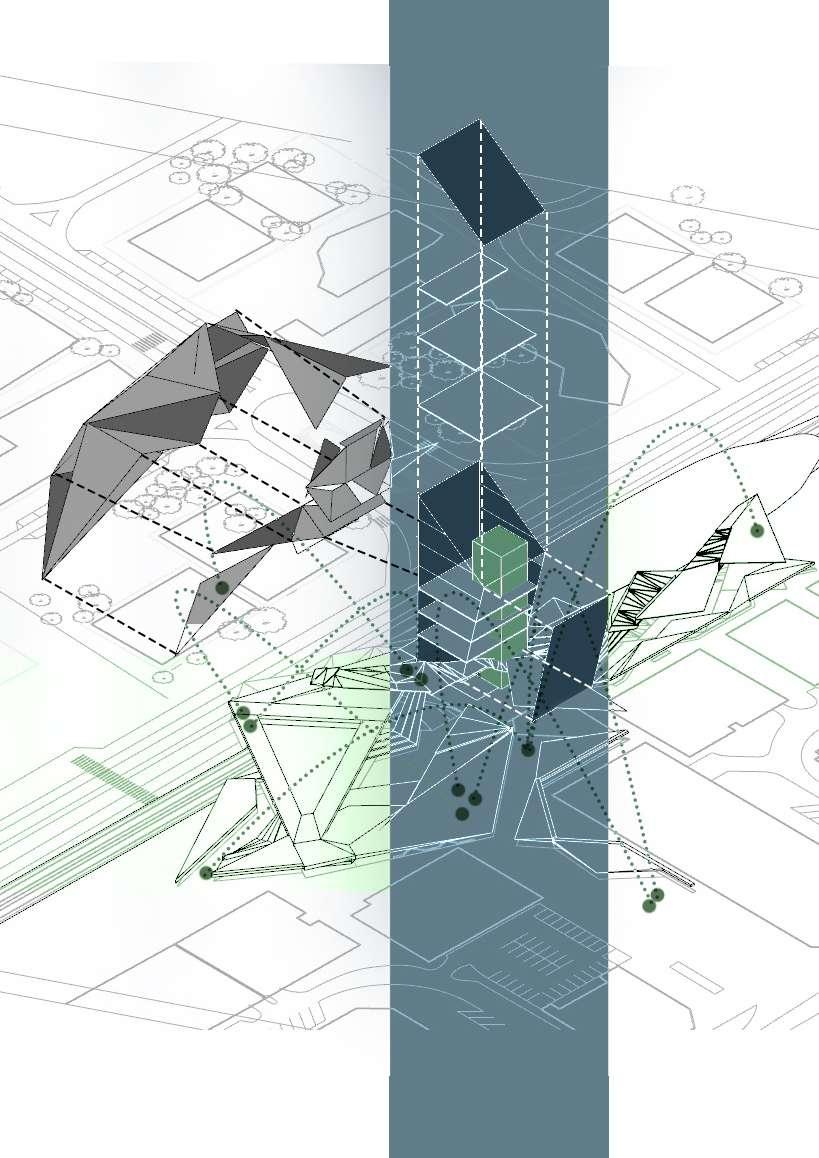
Developing further the concept of designing in conflict and advocating for variation through that . By incorporating the push and pull between the 3 edges of the design influencing from external to internal on the basis of proposed form , materiality as well as spatial functional placements.
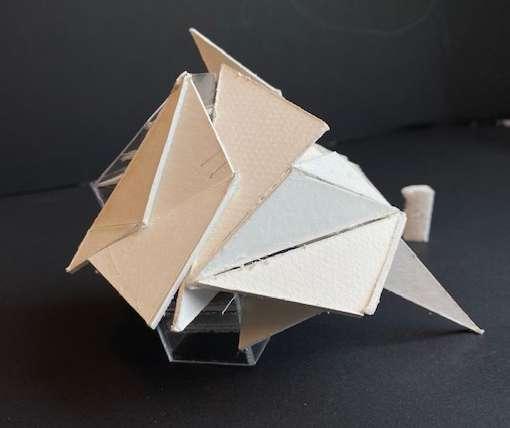
Implying the existing site fabric on one side of the design while proposing a conflicting public realm which gradually grows from the ground , engulfing the private UN office like a parasite.
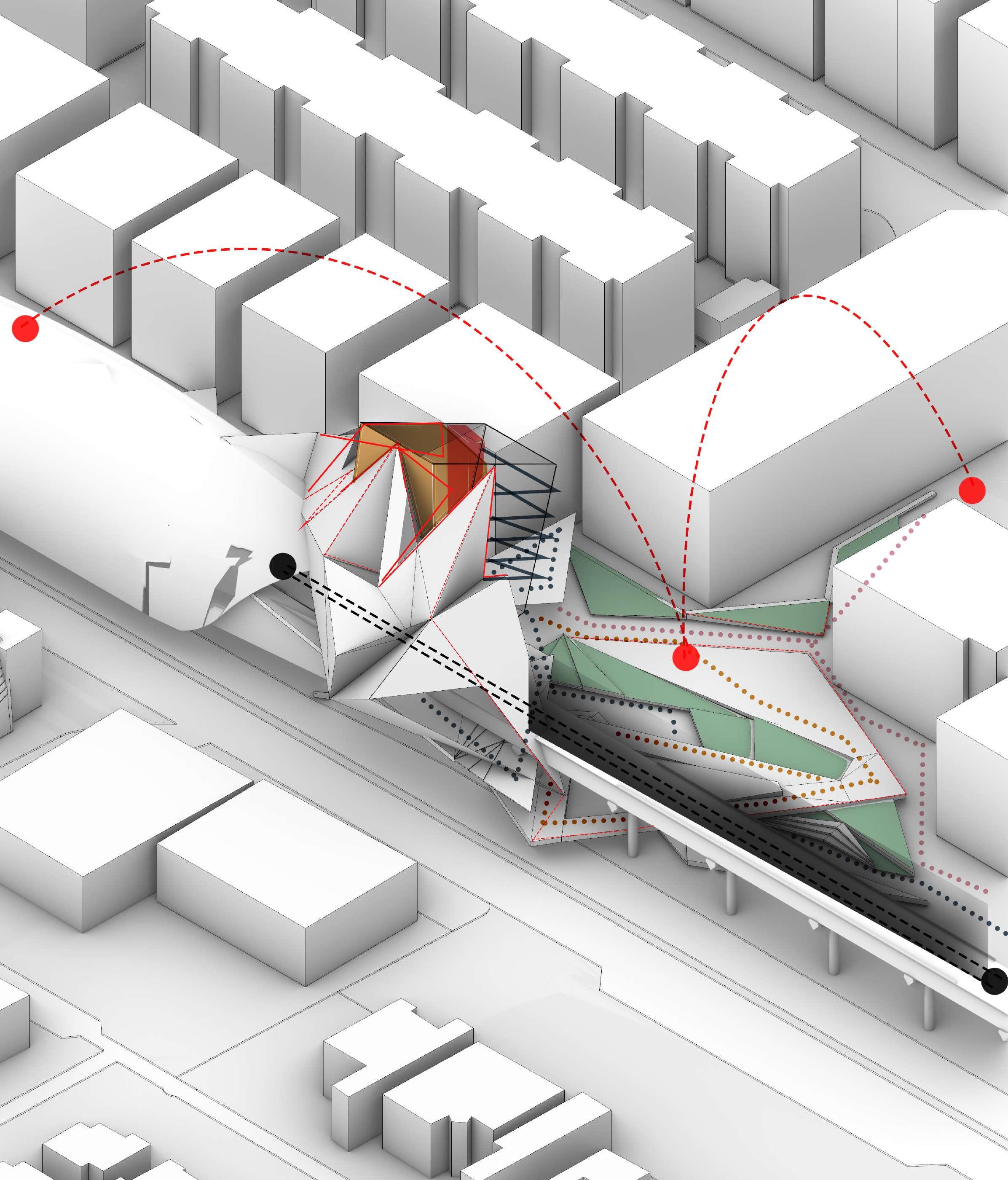
Unconventional Advocation
Massing Experience Ground Level on site
Massing Experience Metro Level
DESIGN PROPOSAL- CLIMATIC ANALYSIS
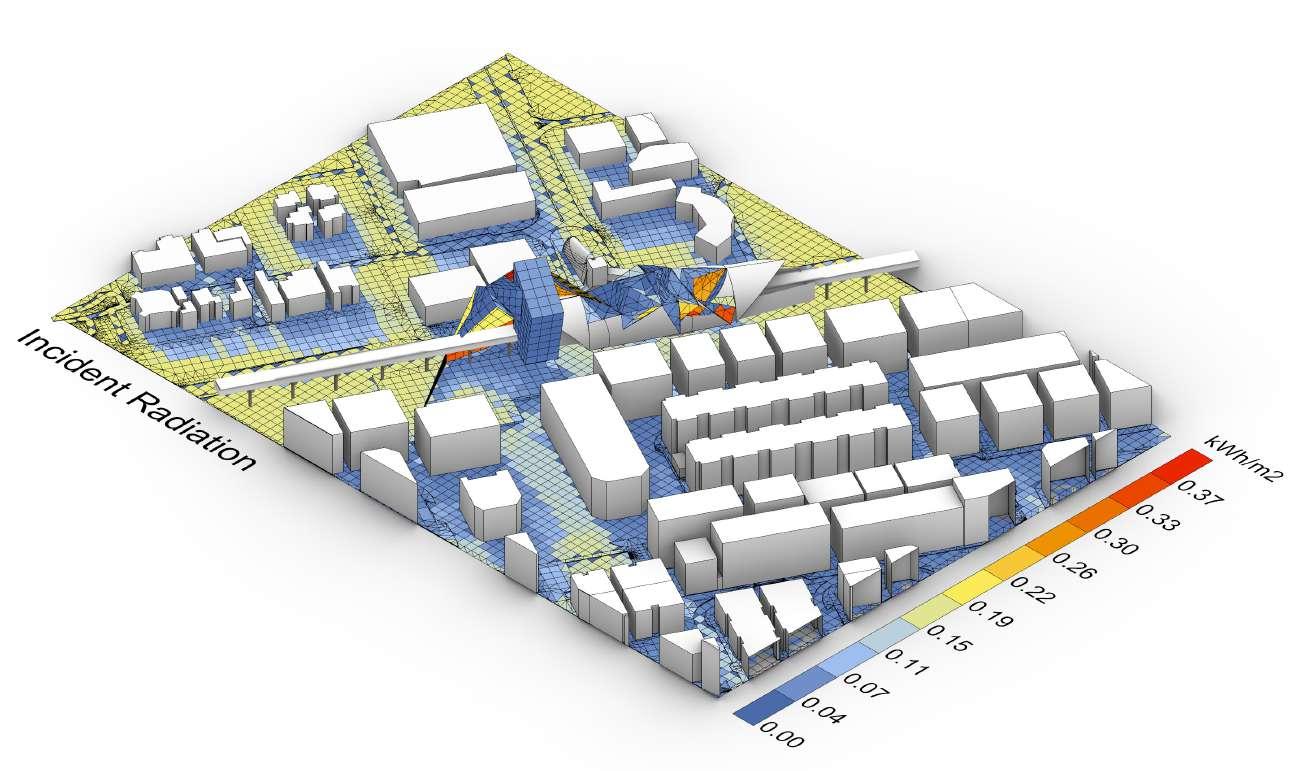
SHADOW AND RADIATION
MORNING HOURS (8 am - 21st june)
EVENING HOURS (8 am - 21st june)
RESPONSE
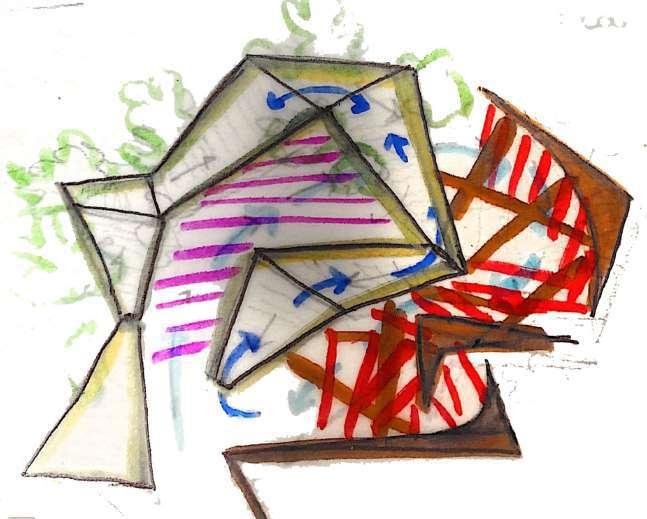
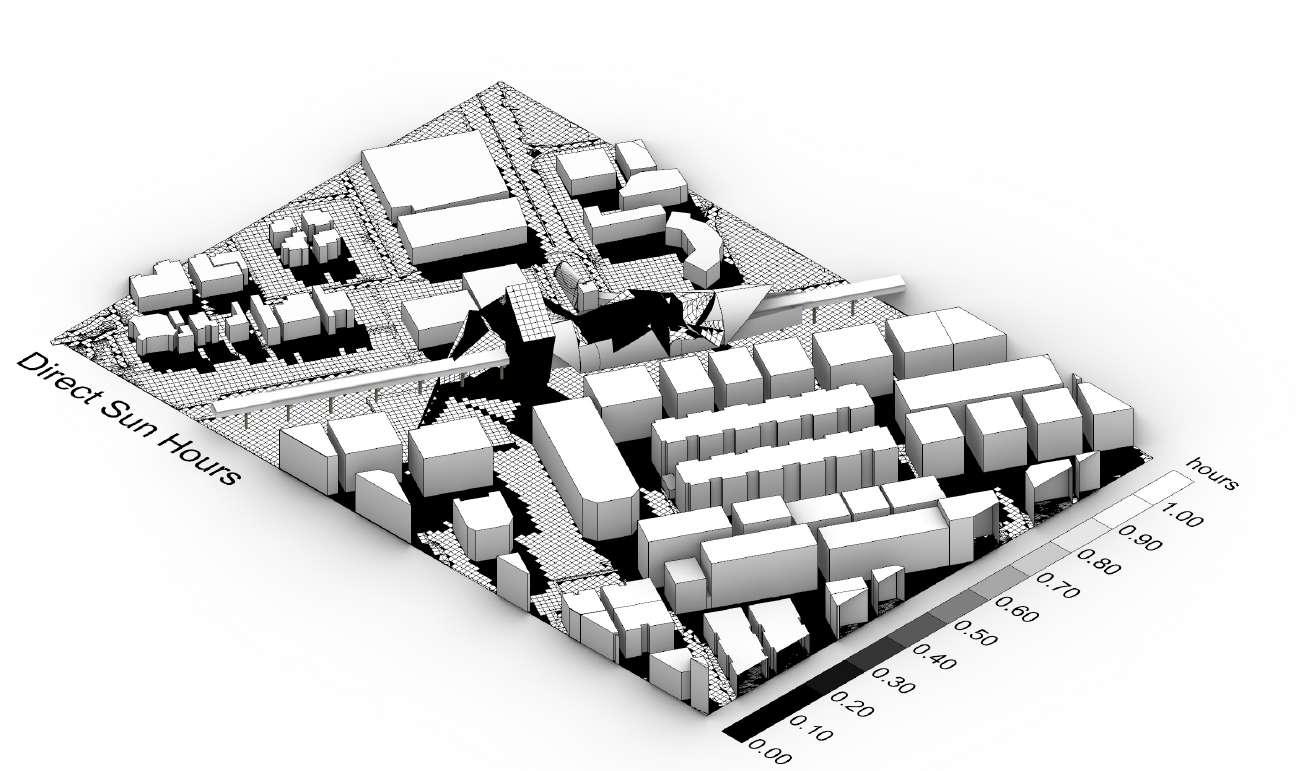
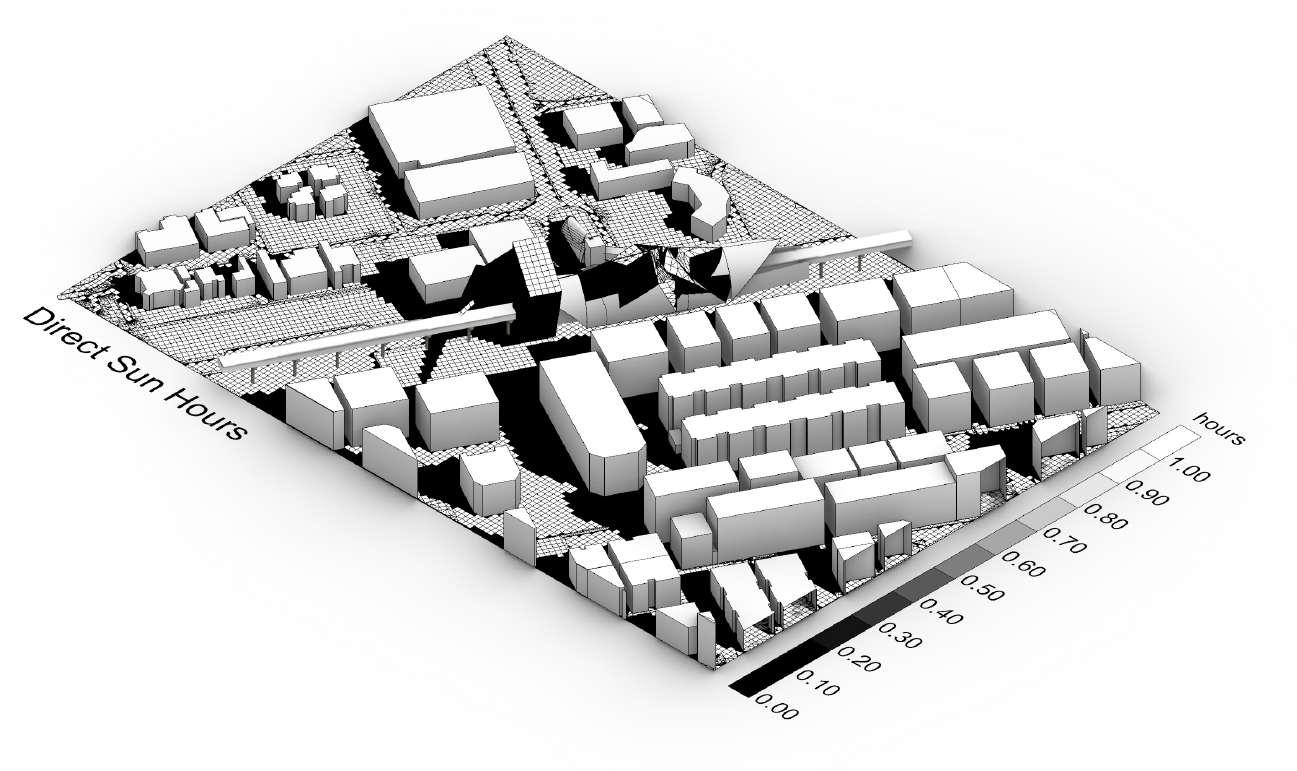
The variety in height and the folding planes that grow from the ground and engulf the shape increase the level of natural shade and the amount of natural light that enters the structure.
creating a communal plaza since it has a vast area and a controlled microclimate. using such areas with newly planted landscaping.
Combining overlapping shades and shadows with the idea of folding aircraft to further regulate the interior climate and amount of sunshine on various levels in accordance with the functional requirements
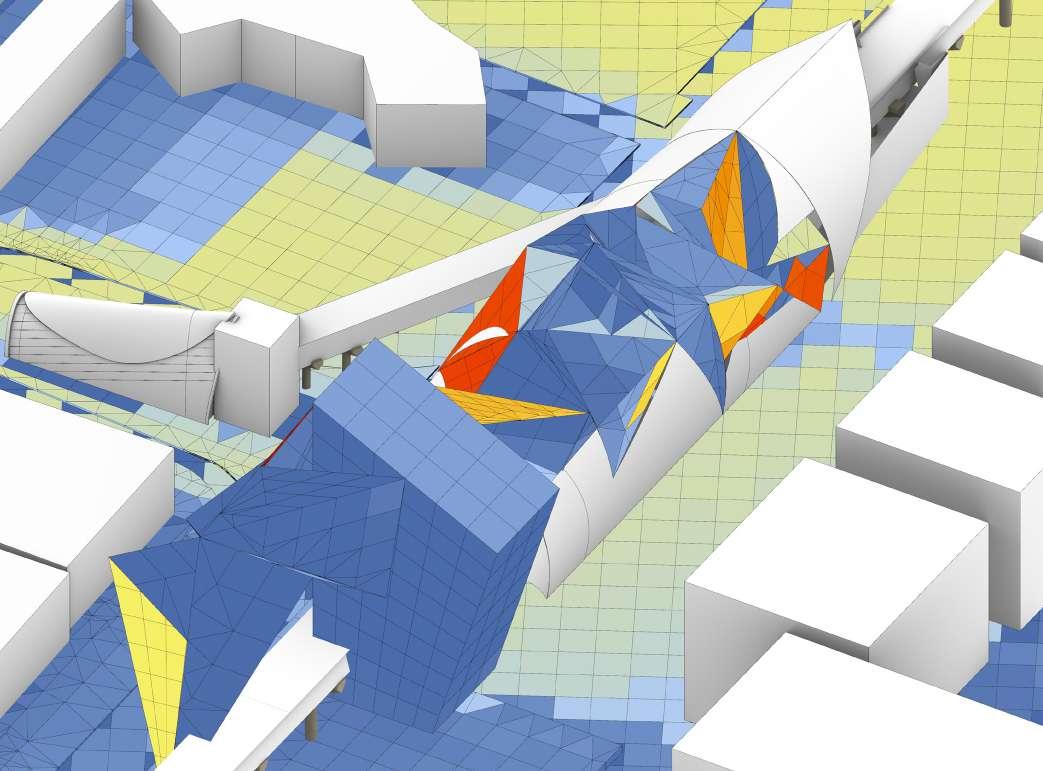
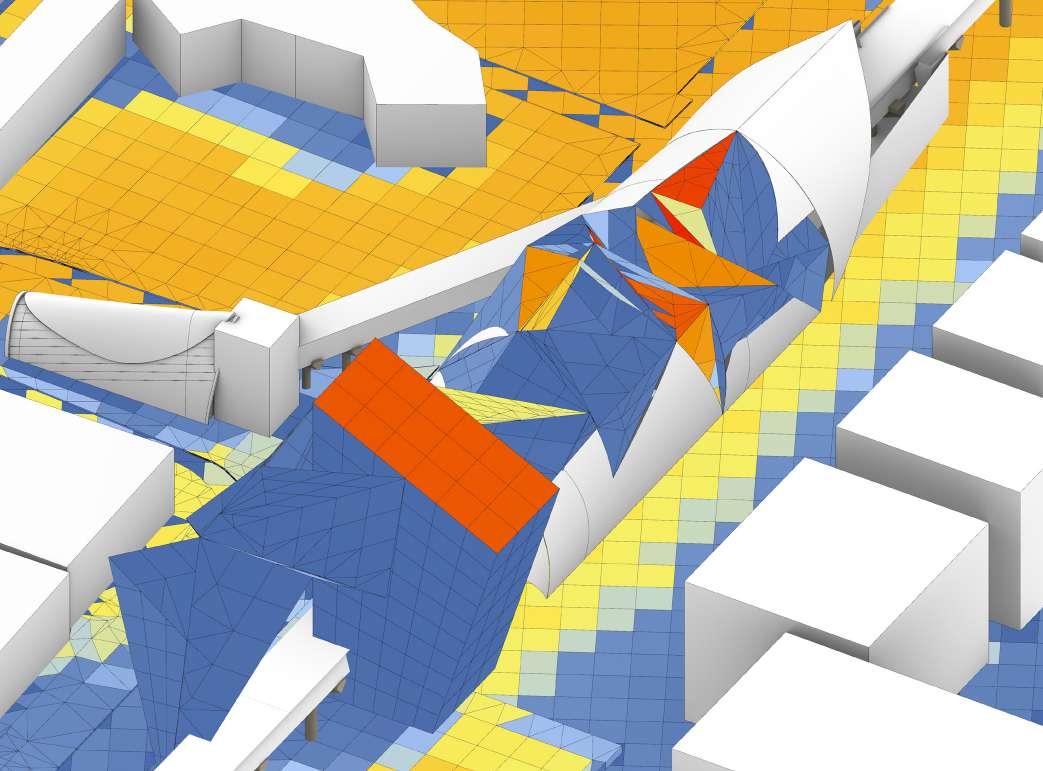
Further redeveloping the design using a combination of conventional tower like form with the unconventional folding planes acting like parasite growing from the ground on the building into the metro. redesigning while also keeping some elements of originality .
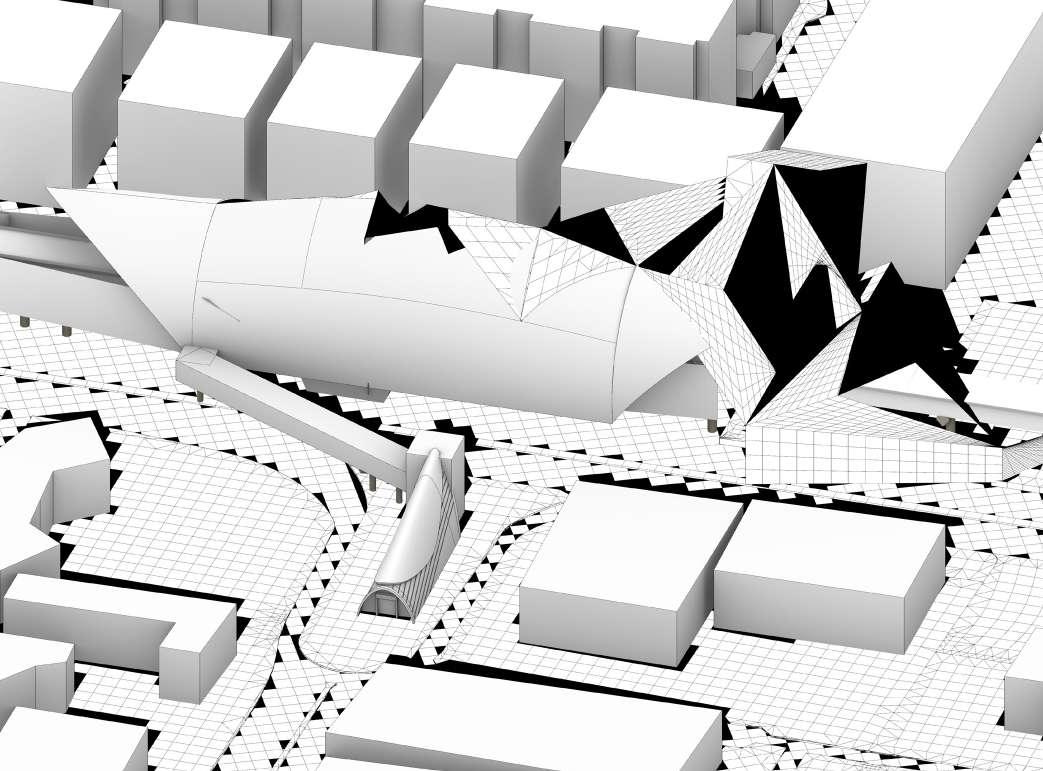
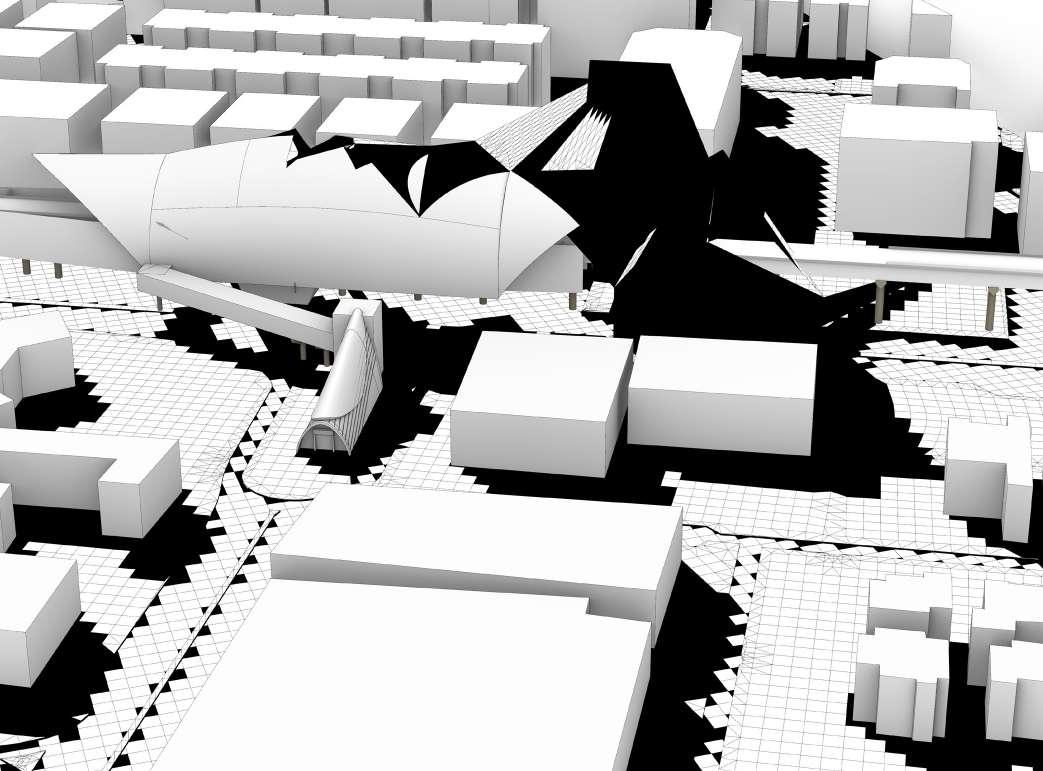
Shadow analysis indicating the variation in shades and shadows on almost every time of the day due to the variation in folding planes resulting in the internal and external play of light . while with the towers maintaining the Standard analysis.
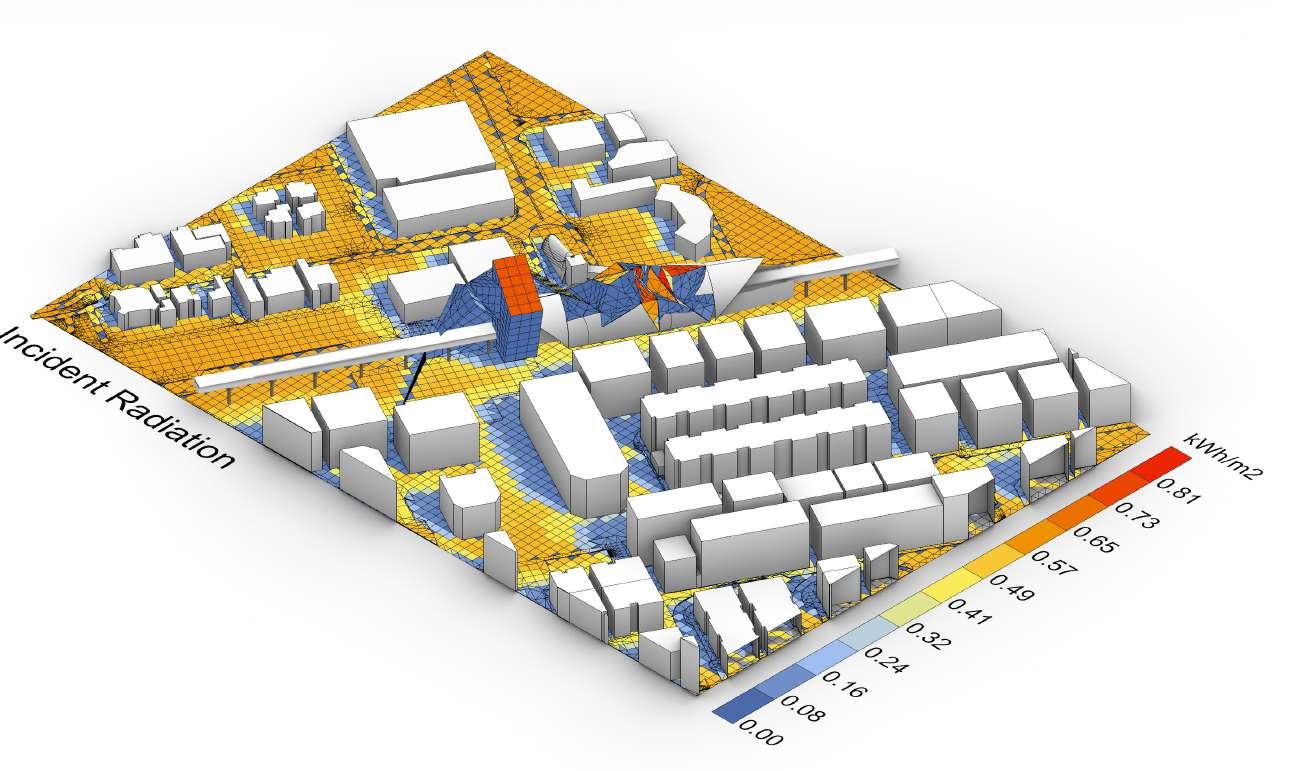
In terms of the radiation possibly using this as the base to the guide the folding of the planes based on the result to be obtained and the most satisfying result .
using these analysis overall to also help determine the placement of functions such as the landscaping web and certain public nodes that connect from the urban to the architecture.
EVIDENCE OF ADVOCATION
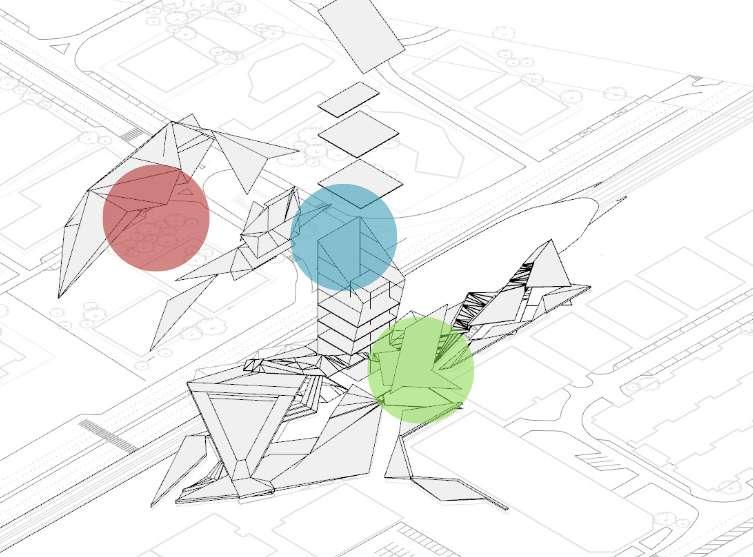
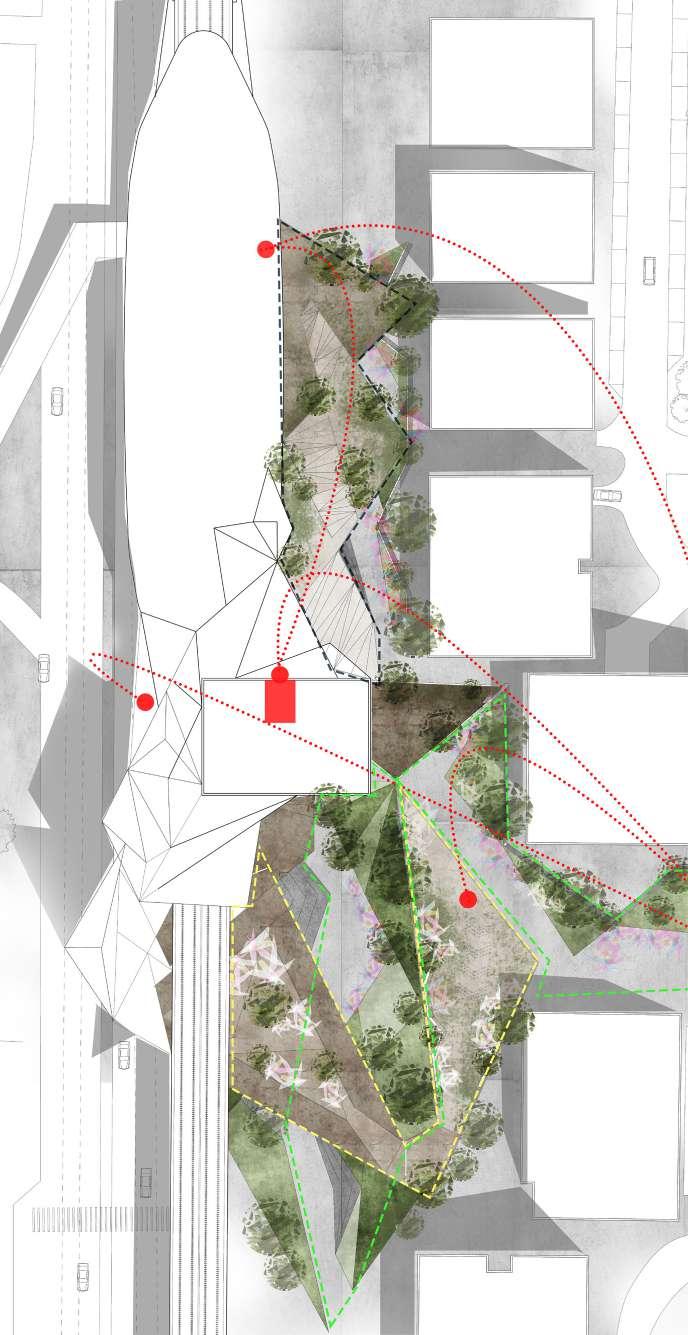
Push and pull between design and site Advocation through movement
Area of advocation arises between the unconventional approach and the conventional site function thus allowing the flushing of people in out the design .with an approach of connecting the isolated elements of the site and the design.
By changing the the ground level to 7m and designing 7m down and above mainly with the elements that trigger movement to govern the variation in user experience before experiencing the actual design. establishing the Access points and movement destinations within the design
Advocation through functions Advocation through hard edges
Using the movement destination as the anchors for the placement of functions within the design . starting from the ground to the highest point of design views exhibition landscaping urban web thus allowing for advocation through function

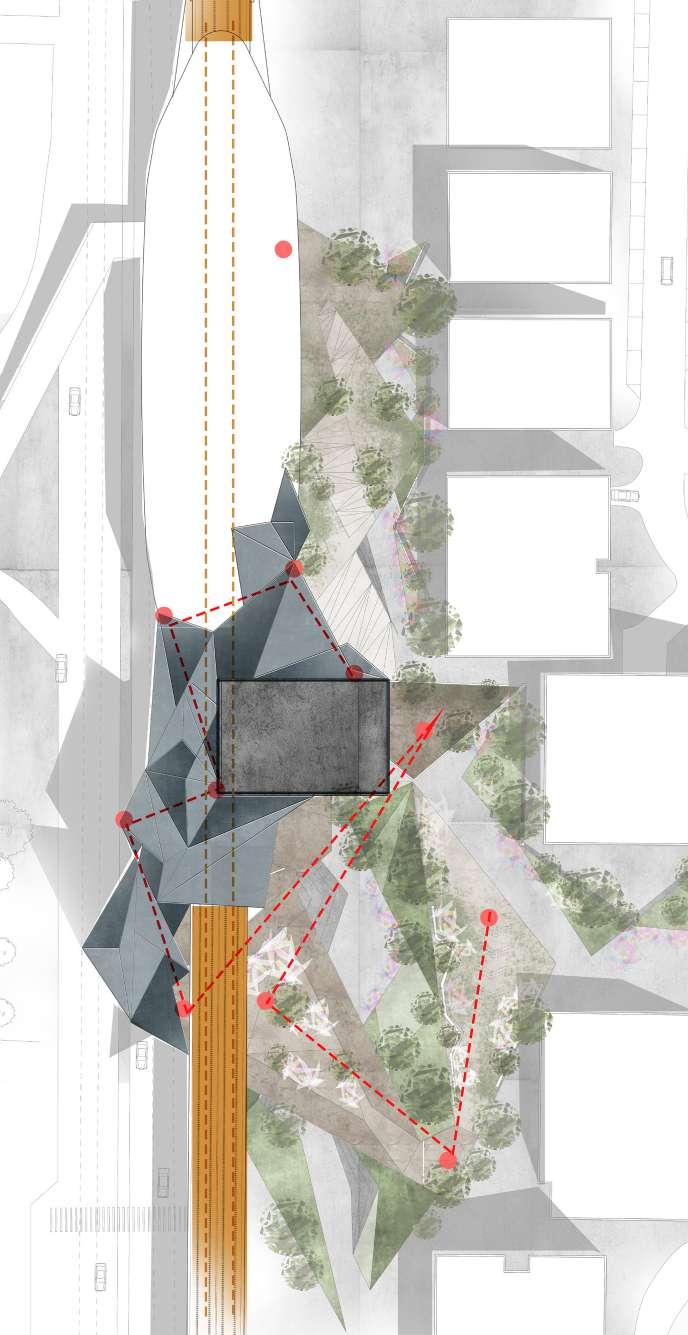
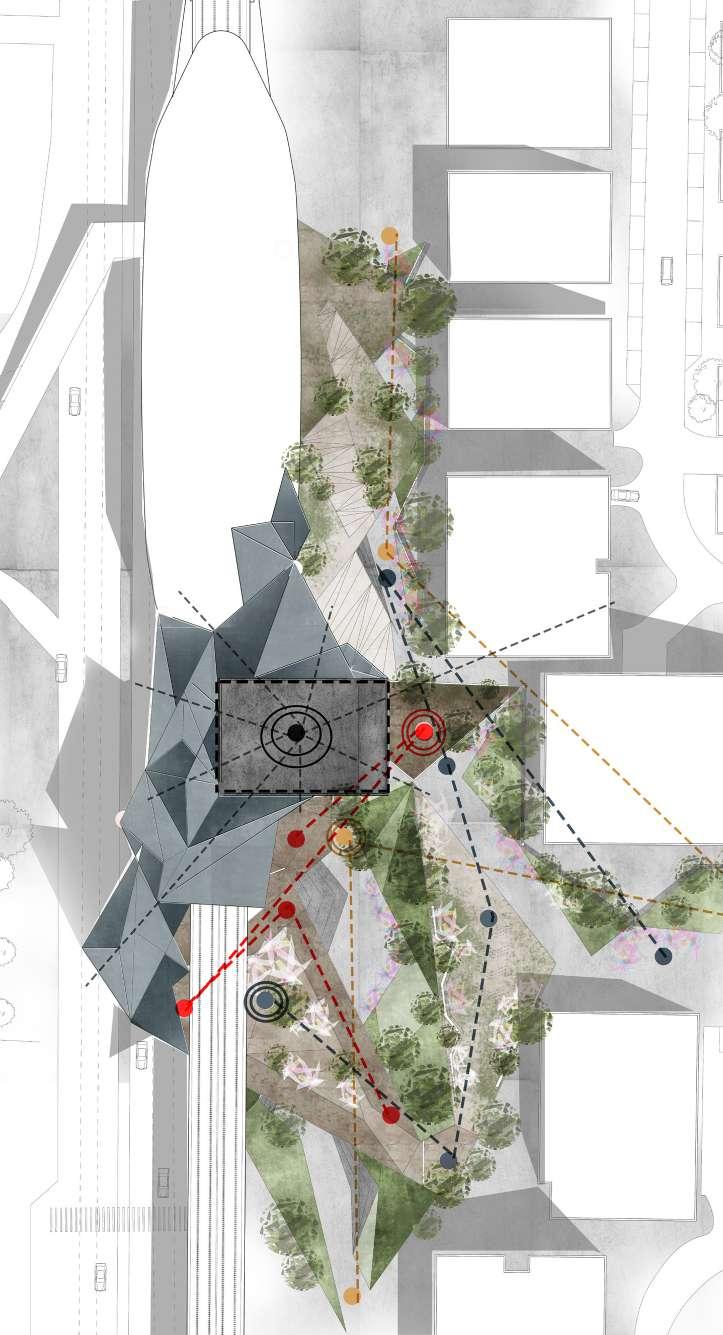
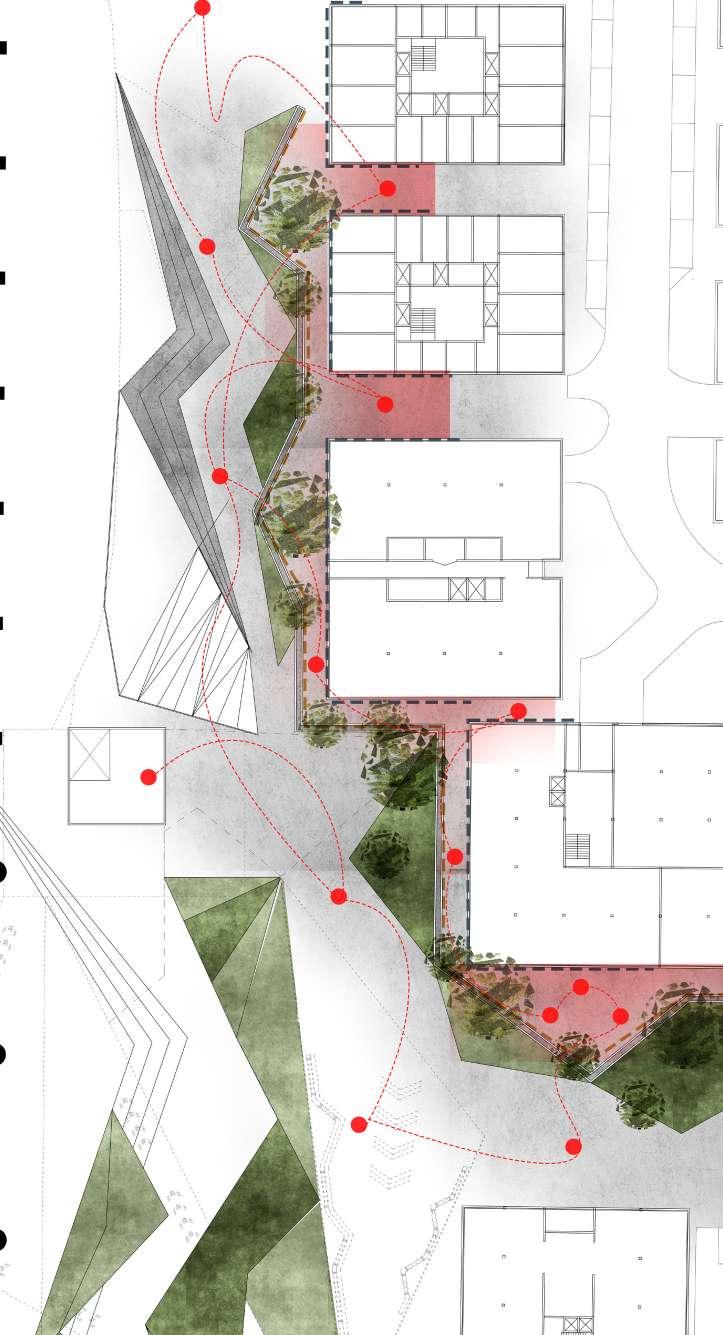
Thus applying the concept of hard edges from the site within the design as well . With the unconventional latching onto the conventional and the movement pushing through it.

ESTABLISHING ADVOCATING LANGUAGES WITHIN DESIGN
Identification of internal advocation through variation in conflict
Advocation through folding planes
Influence of internal disruptive pts
Advocation through existing building fabric
Unconventional Folding
Planes
User experience in the space of advocation of conflict through one of the mediums
Vertical Circulation Community Plaza Conventional Influence
User experience in the space of advocation for comfort and change in hierarchy through designed regenerative landscaping
ADVOCATING INTERPRETATION THROUGH DRAWINGS
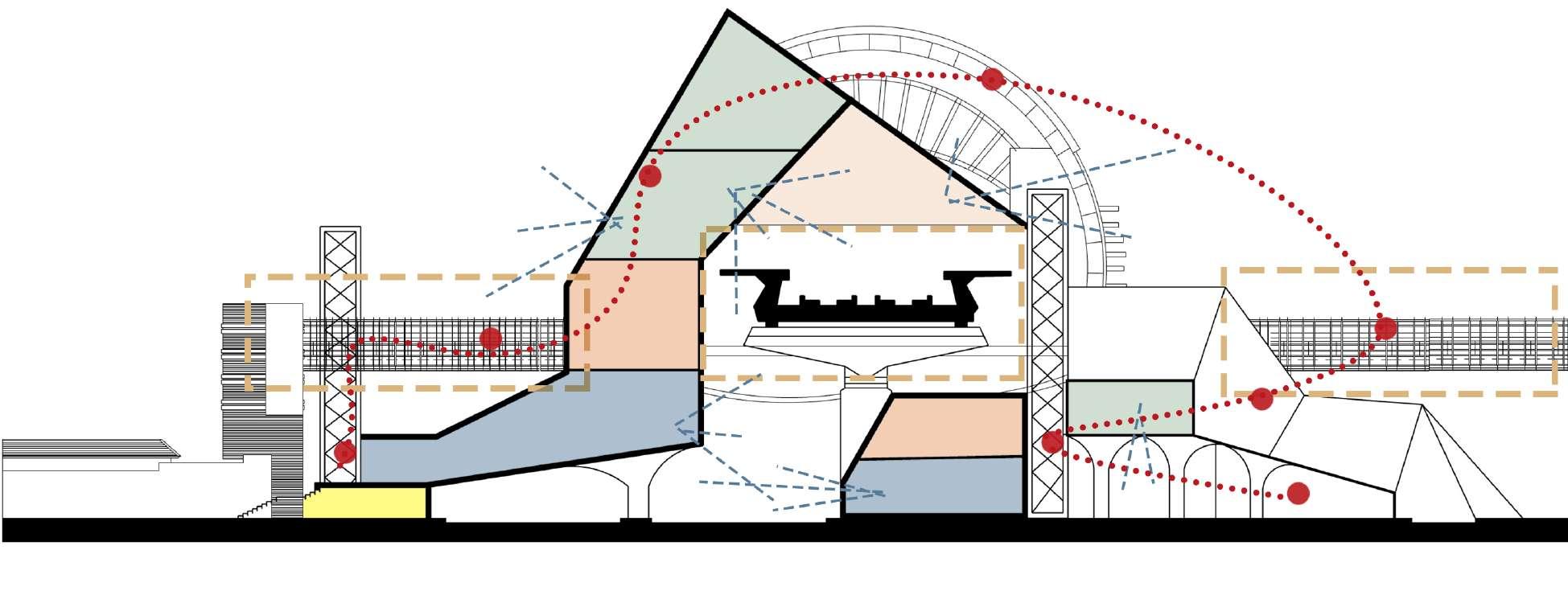
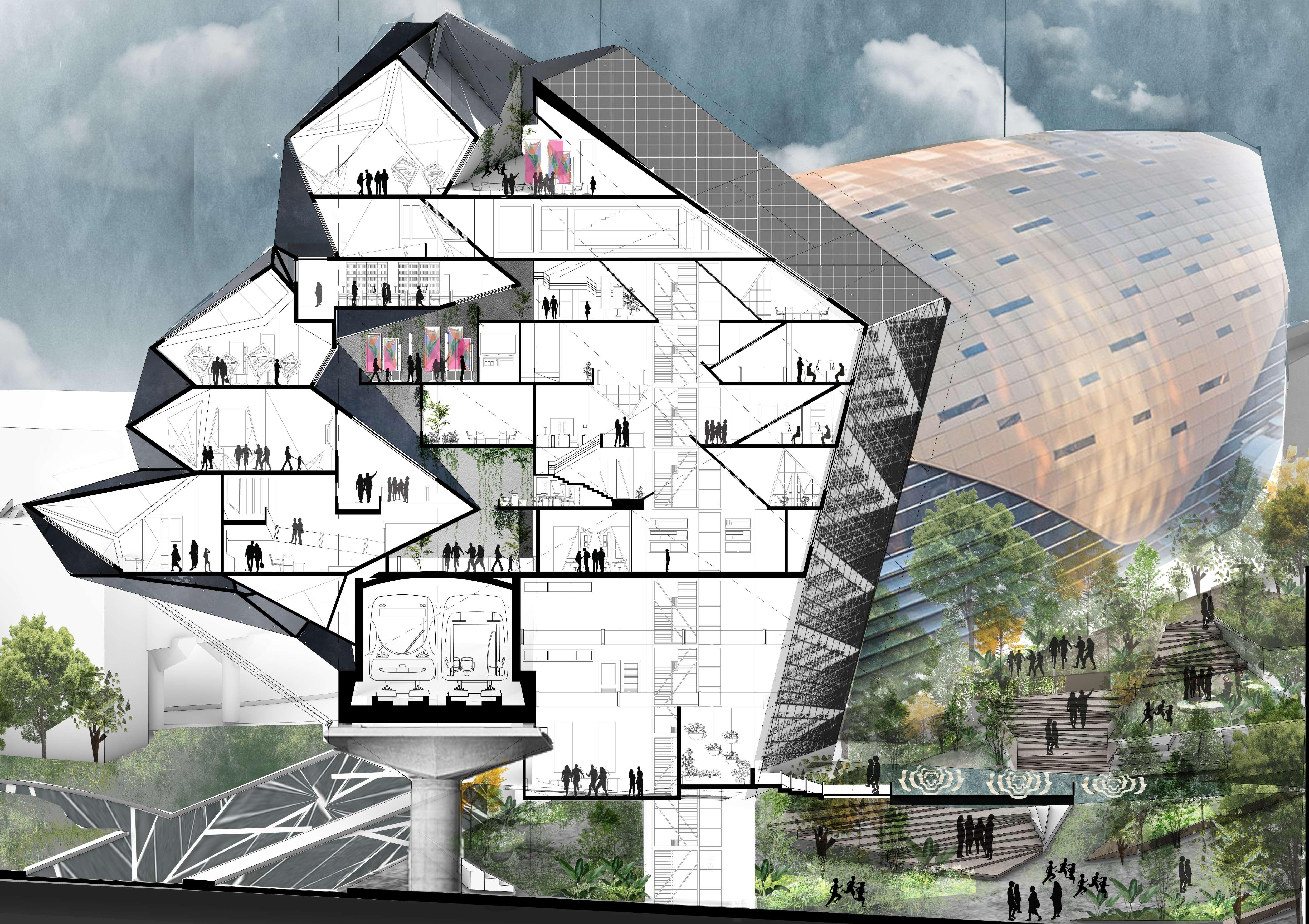

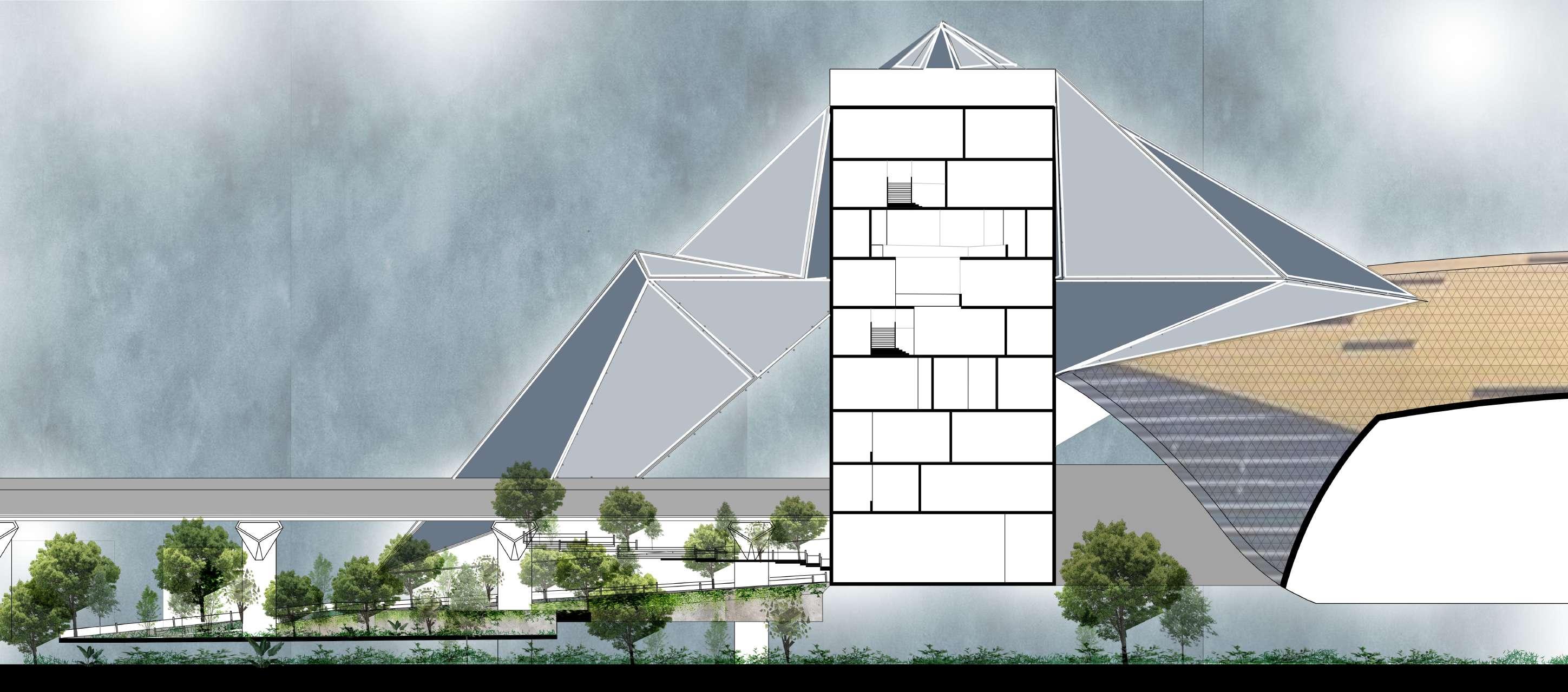
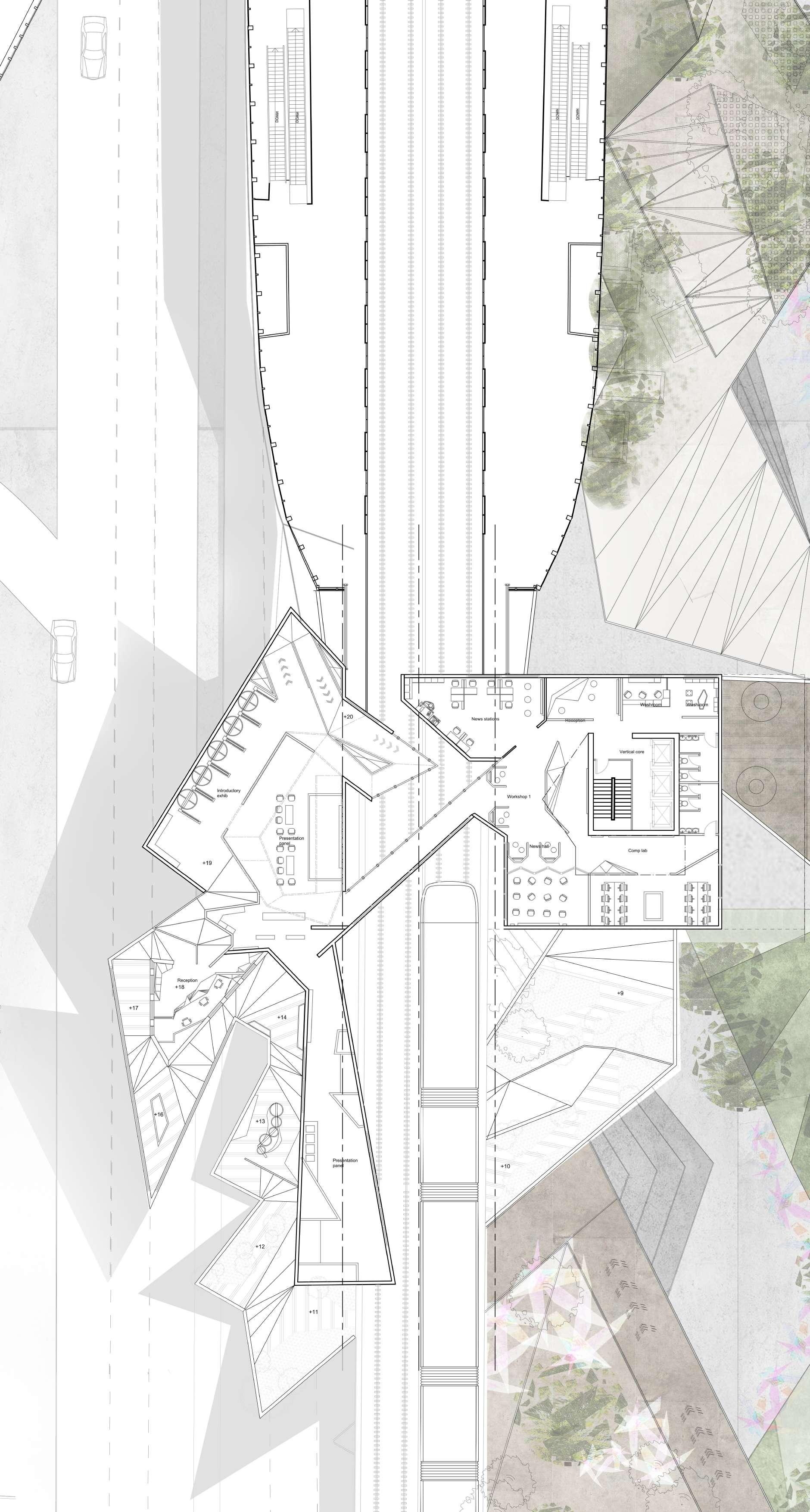
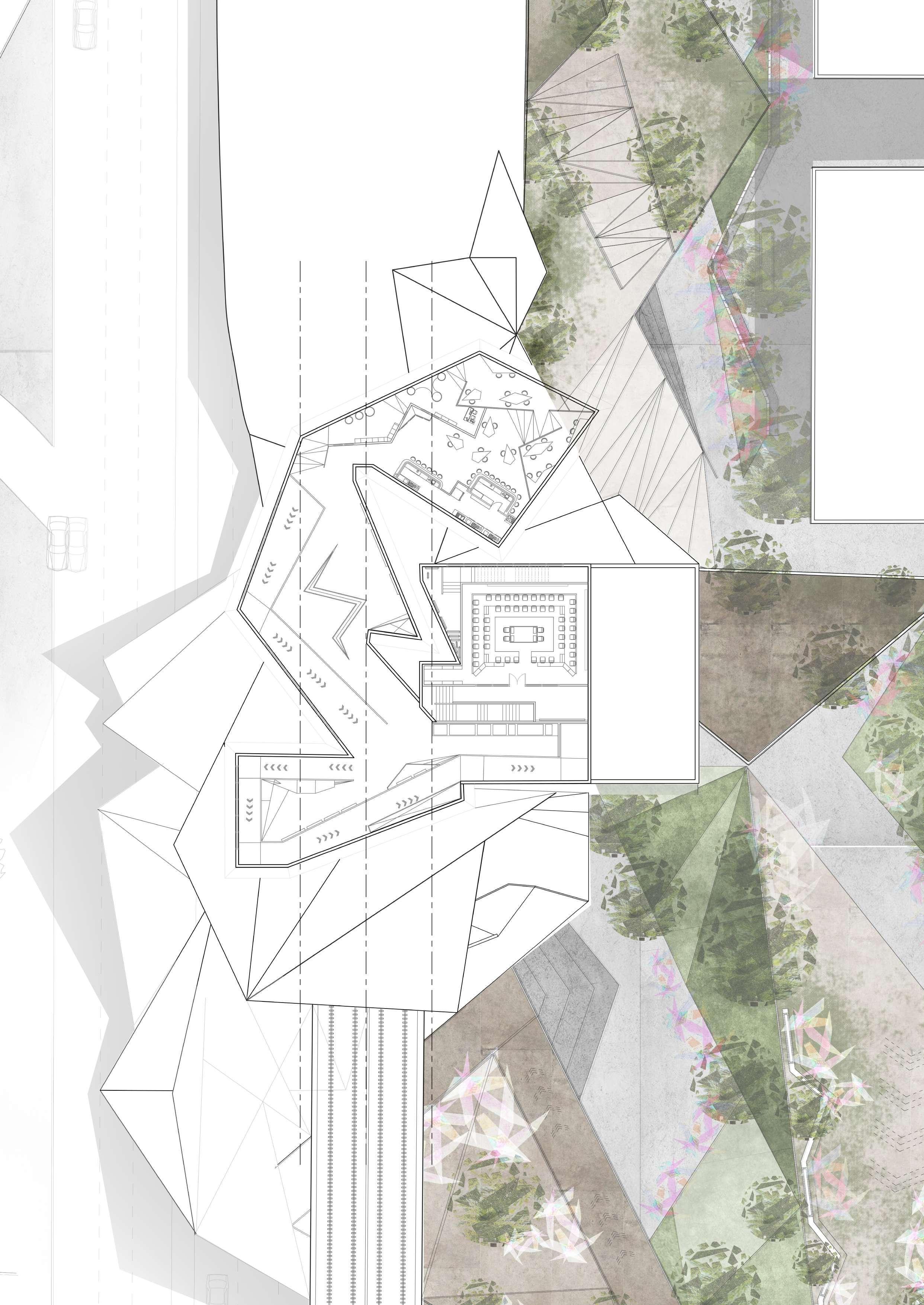
The above illustrative sections express the idea of designing in conflict and evidence the individual advocation experienced by the users within these space.
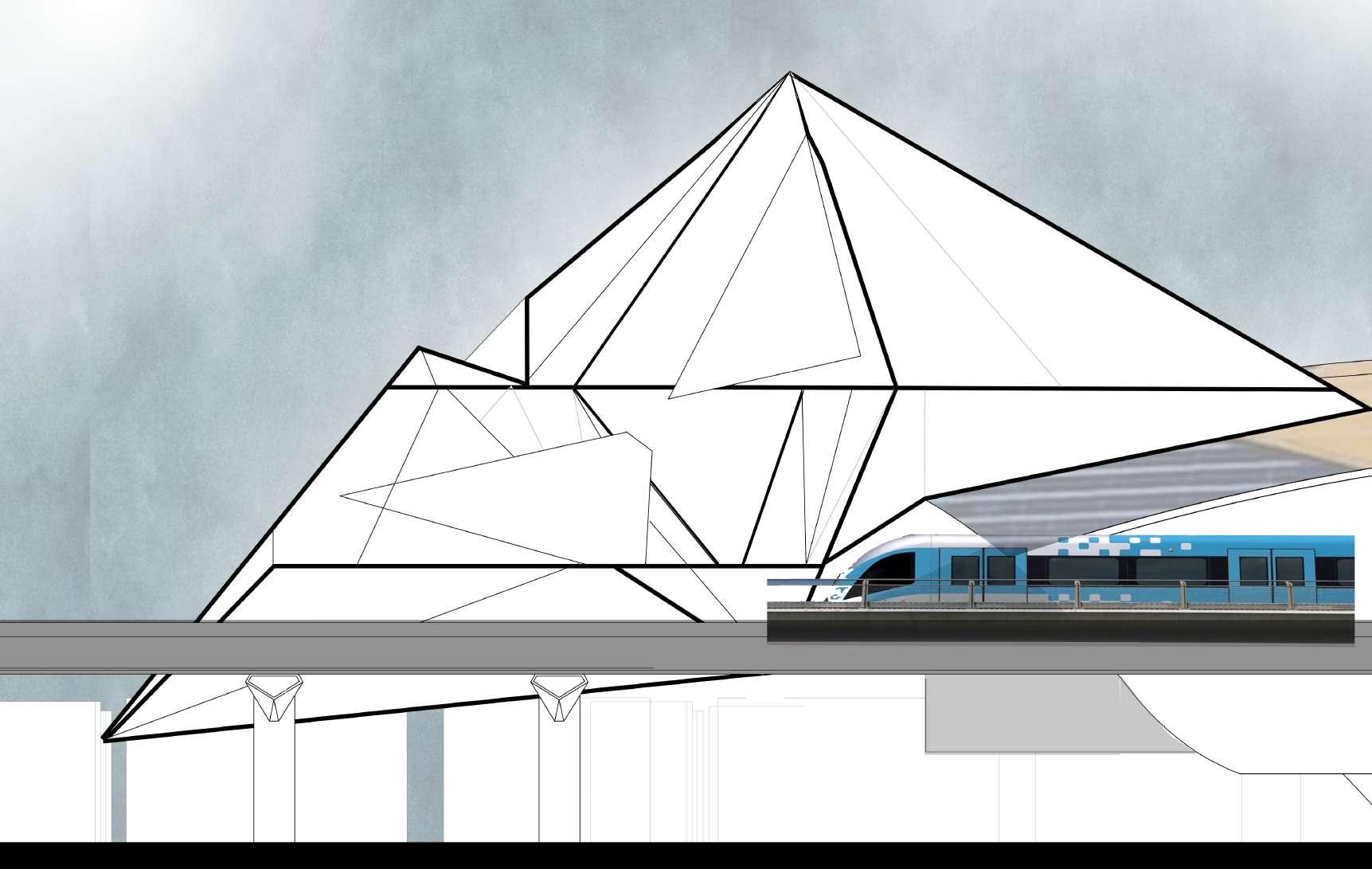
Each section shows its advocation in its own element. The conventional side is meant to follow the existing urban fabric with a influence on its internal space through distruptive axis extending from the unconventional form. While unconventional form is spatially designed through slanted walls , ramps for circulation pushing and pulling of edges. Until these 3 Edges meet at a common point fighting for their own presence.
TOTAL AREA (m2) AREA/UNIT (m2) NO.OF UNITS OFFICE SPACES I) LEAST DEVELOPED COUNTRIES PRIVATE Document storge 40 1 Collaborative workspaces 150 1 Meeting rooms 80 1 PUBLIC Training center income management) 50 1 1 II) LANDLOCKED DEVELOPING COUNTRIES PRIVATE Document storge 40 1 Collaborative workspaces 150 1 Meeting rooms 80 1 UN Offices 40%PUBLIC community market encouraging world market cpt) 400 1 1 III) SMALL ISLAND DEVELOPING COUNTRIES PRIVATE Document storge 40 1 Collaborative workspaces 150 1 Meeting rooms 80 1 PUBLIC Health/clean environment workshops 100 1 TOTAL 1360 RESEARCH STATIONS PRIVATE Conference hall 450 1 News stations 50 1 PUBLIC News hall 50 1 computer labs/workspace 100 1 TOTAL 650 20% EXHIBITON SPACES 1000 1 15% CAFE+LIBRARY 1000 1 TOTAL 2000 1 10% ACCESS 990 1 TOTAL 990
Floor +19m C C A A B B Section BB Section CC
Fourth
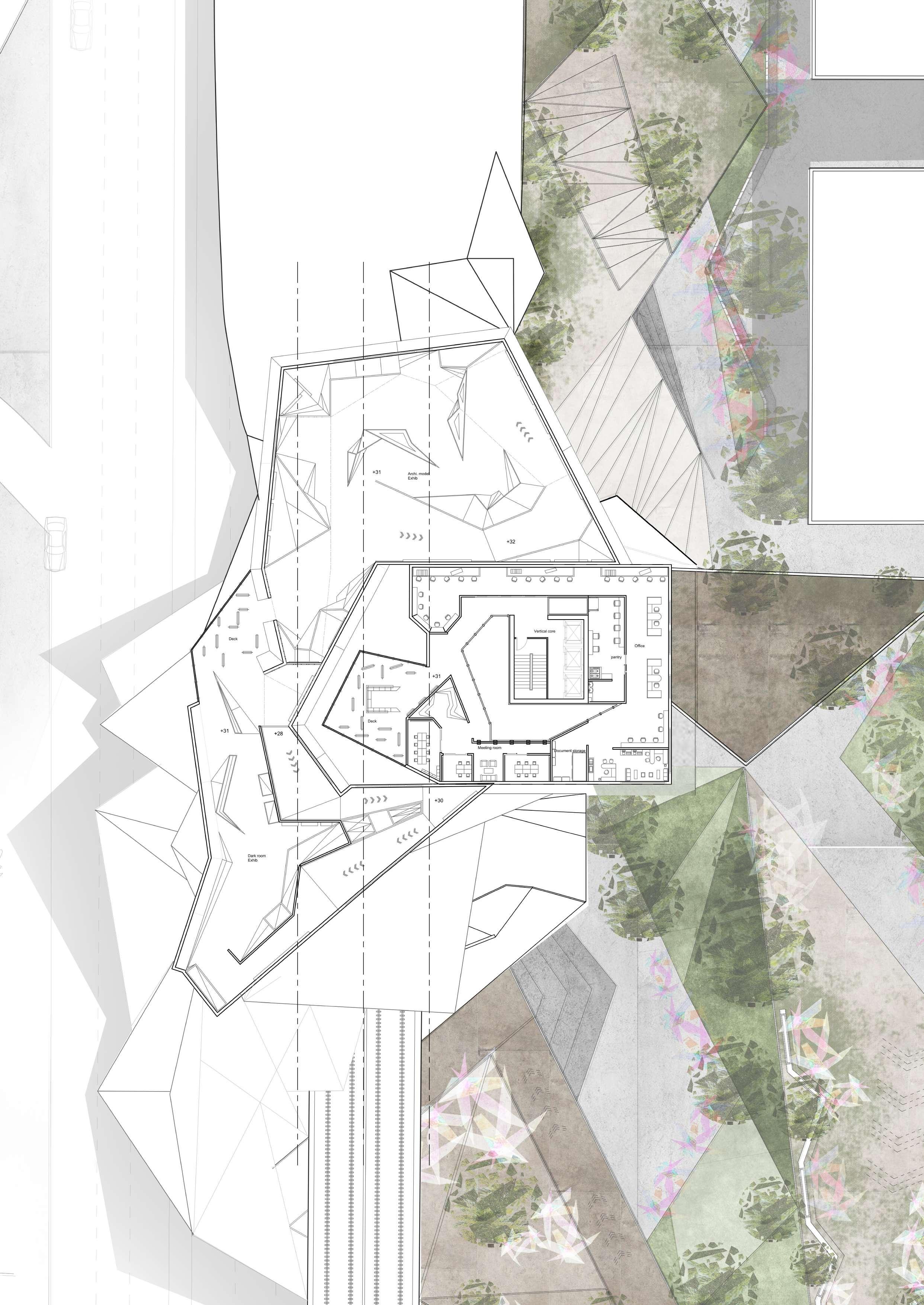
Seventh Floor +31m Ninth Floor +39m A A B B C C A A B B C C
INTANGIBLE vs TANGIBLE ADVOCATION DOCUMENTATION
Justifying advocation of the proposed through the design and highlighting all the areas of advocation along with influences each of the forms have on each other through design, through testing variation in materiality , variation in spatial and functional elements on each form.
The fight for advocation between the three edges is very evidently viewed visually as well as experientially by carrying forward the concept of achieveing the verb in the proposed by designing through disruption and enhancing the advocation for desiging by encouraging the role of agitation .
The three major forms coexisting in conflict with the aim of achieving the experiences and challenges expressed in the manifesto .
3 Major forms co-existing as follows:-
- Folding plans representing the Public realm in terms of functionality
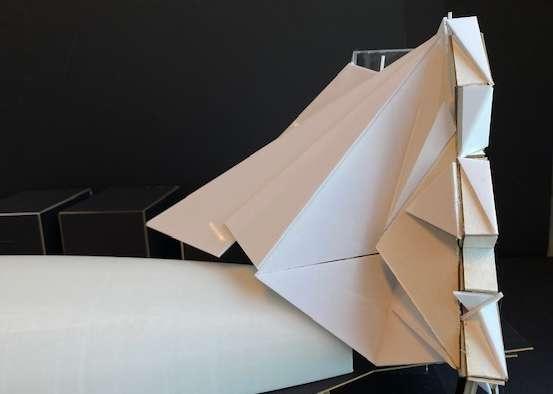
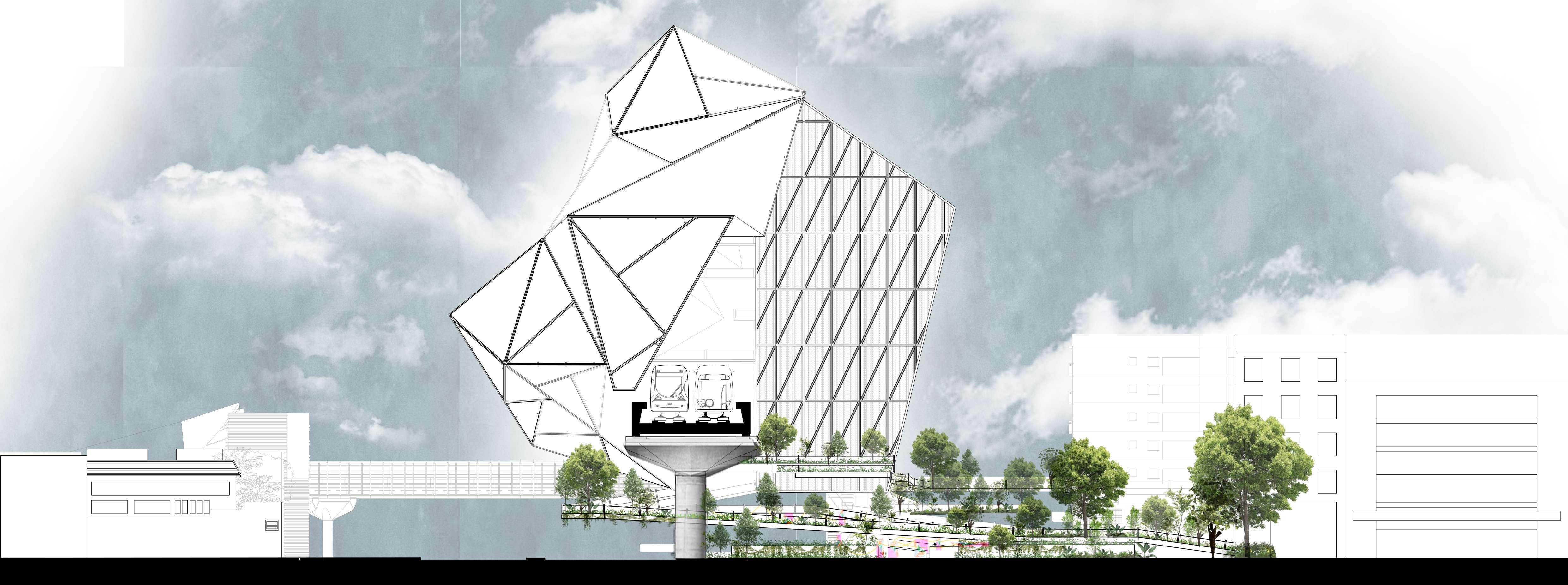
-Conventional Mid-rise representing the existing urban fabric for the Private UN office
- Movement given the hierarchy in design pushing through the other edges making its presence known while also using movement triggering architectural elements.
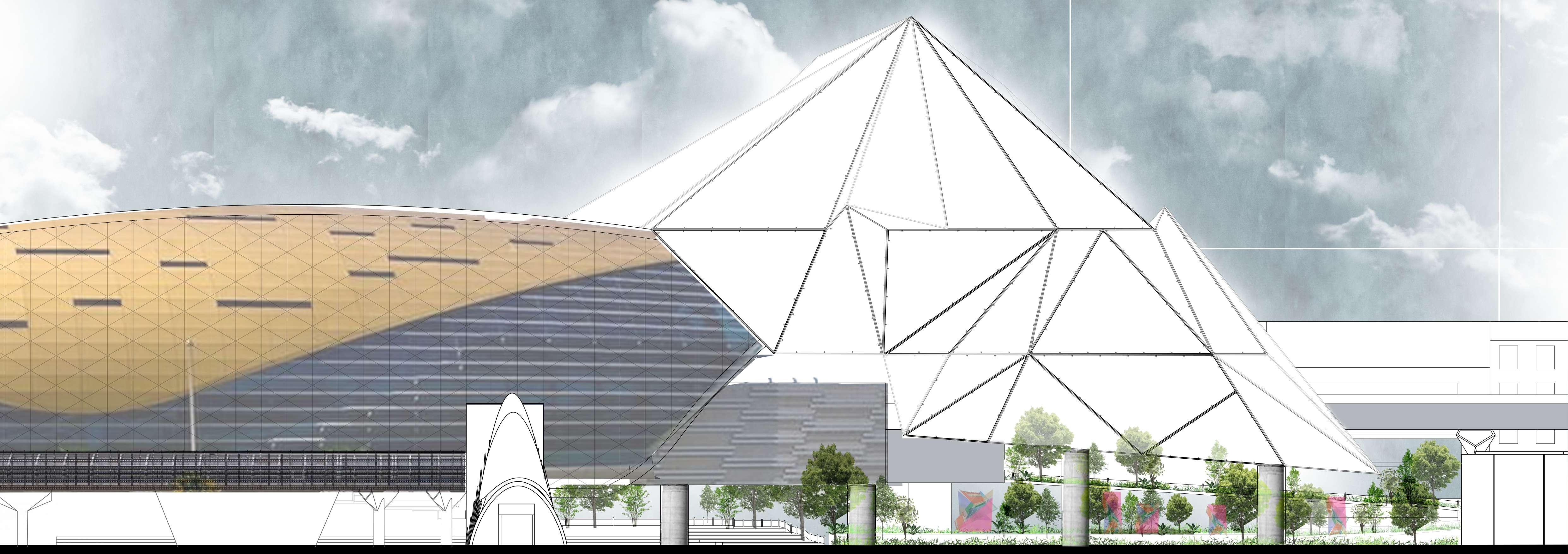
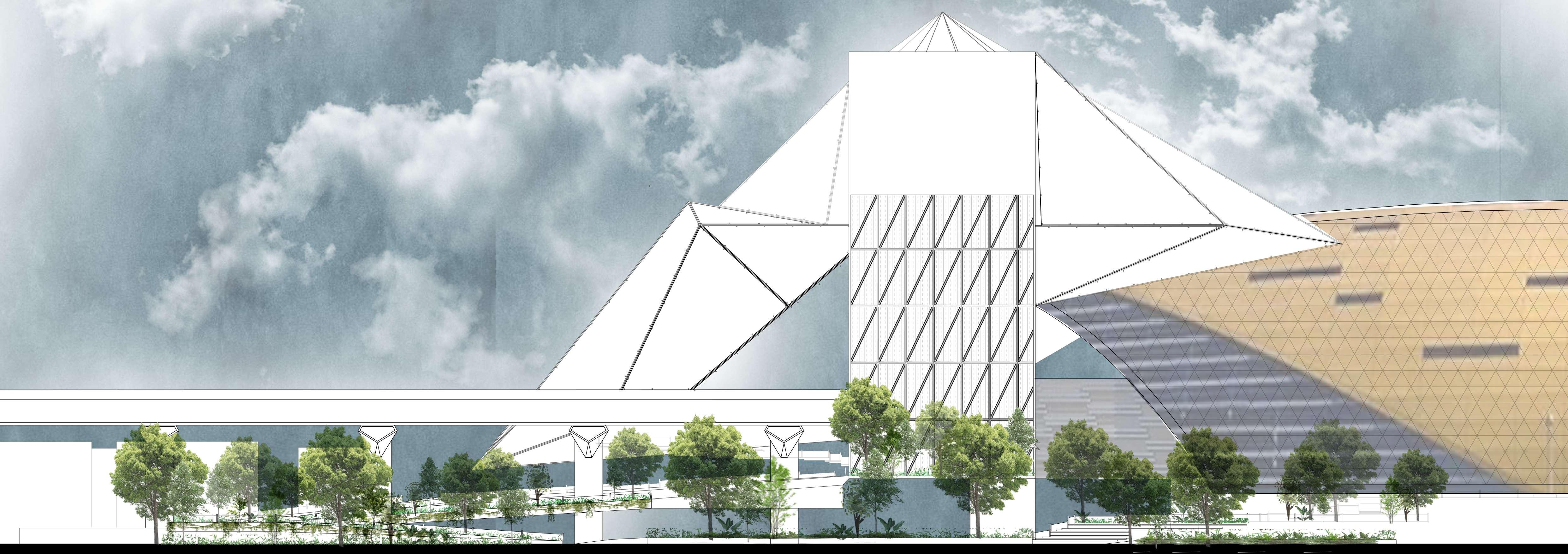
DISPOSITION OF CONCEPT
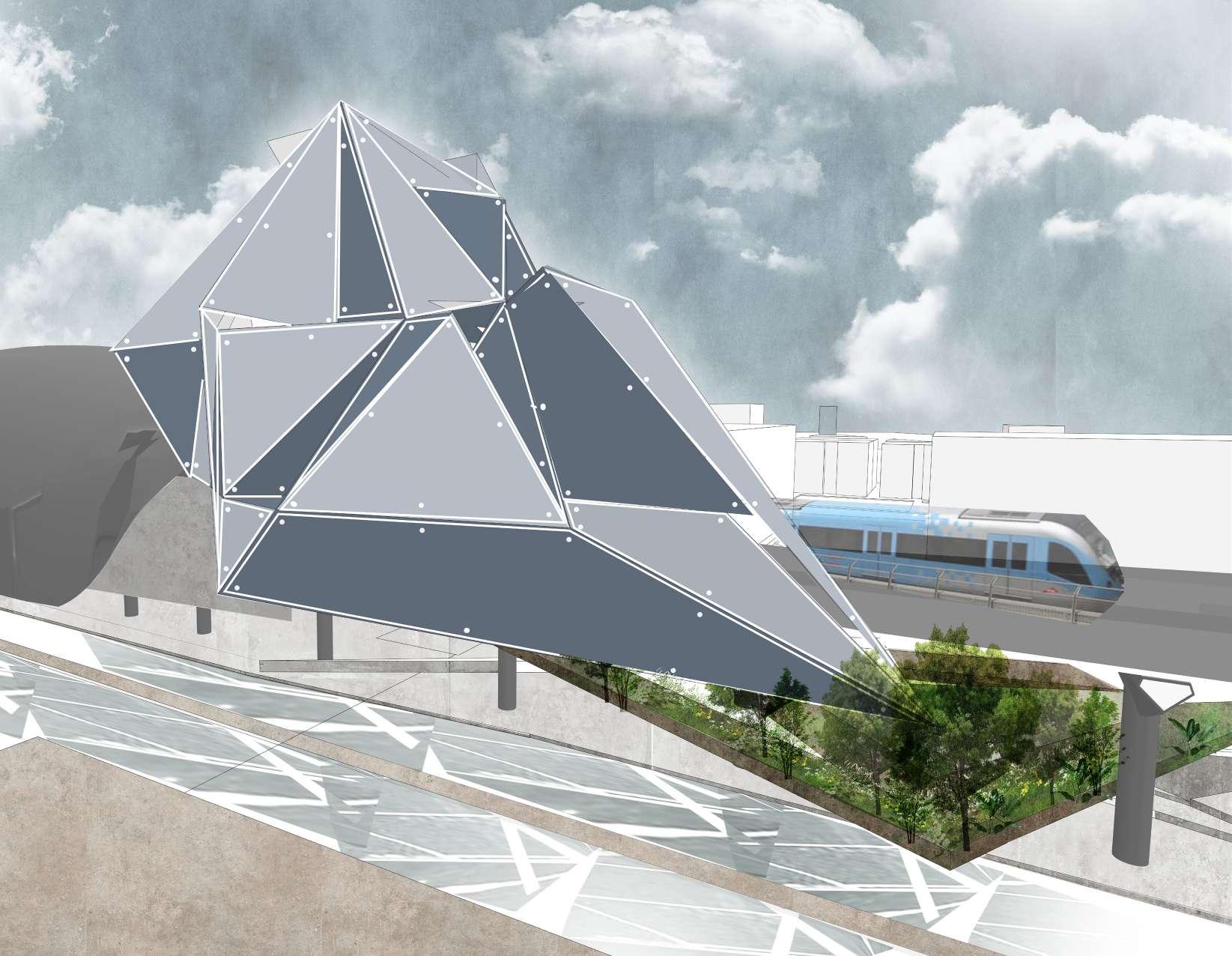
Disposition of the concept a architectural approach of designing in conflict , with the proposed engullfing the conventional representing the existing like a parasite. A proposal of testing and advocating for variation in the existing urban fabric by challenging the existing desigined environment along with testing the change in hierarchy from function to movement. Expressing the idea of designing in conflict through advocation in materiality of the 3 identified edges. with the use of Internal diagrid framed well glazed glass on the parametric side while using Mesh steel facade allowing for play in shadow and play in filtering the light into the functional spaces of the UN office on the other. Finally using various movement triggering architectural elements with regenerative landscaping to encourage community life in the functional plaza
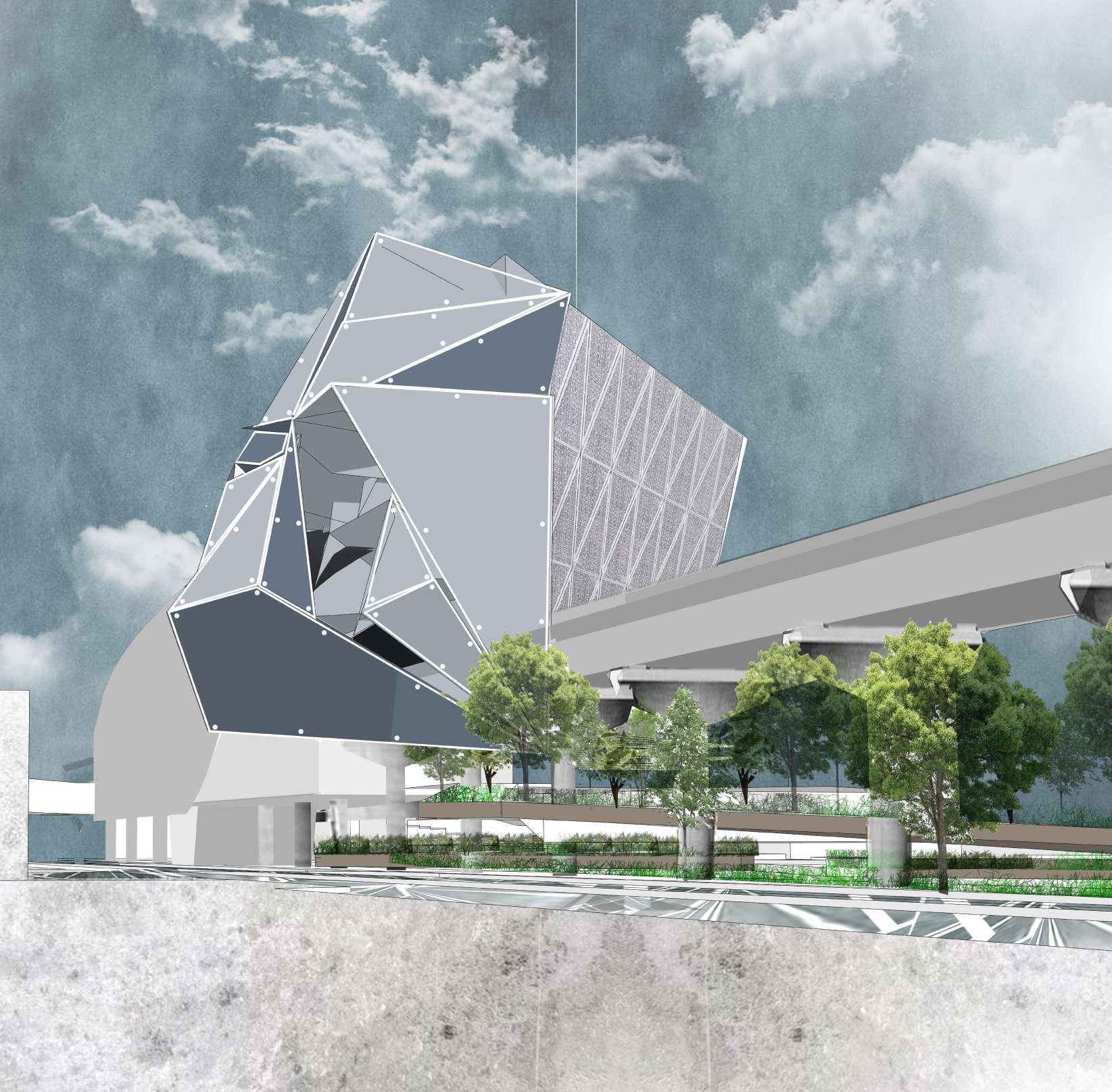
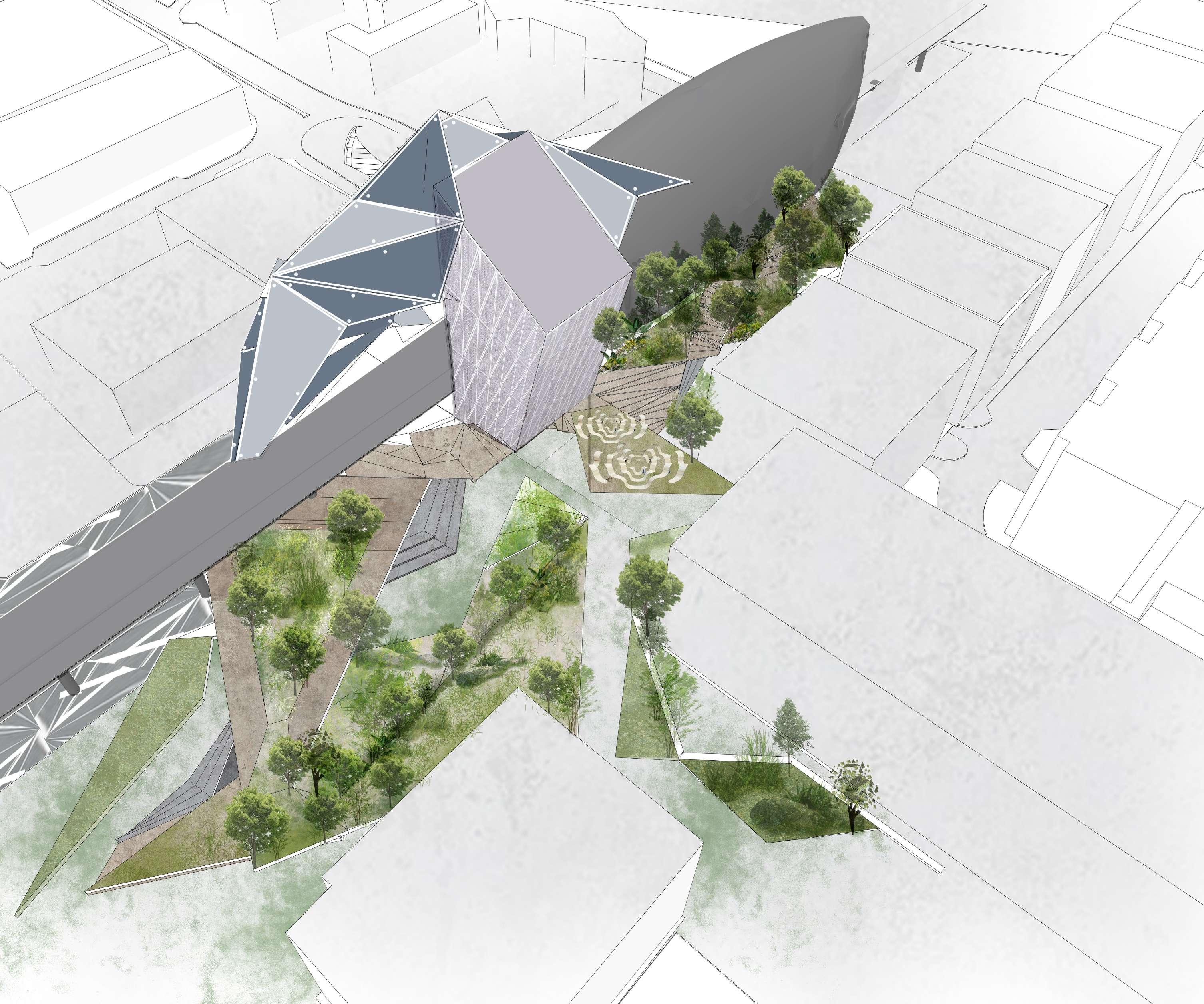
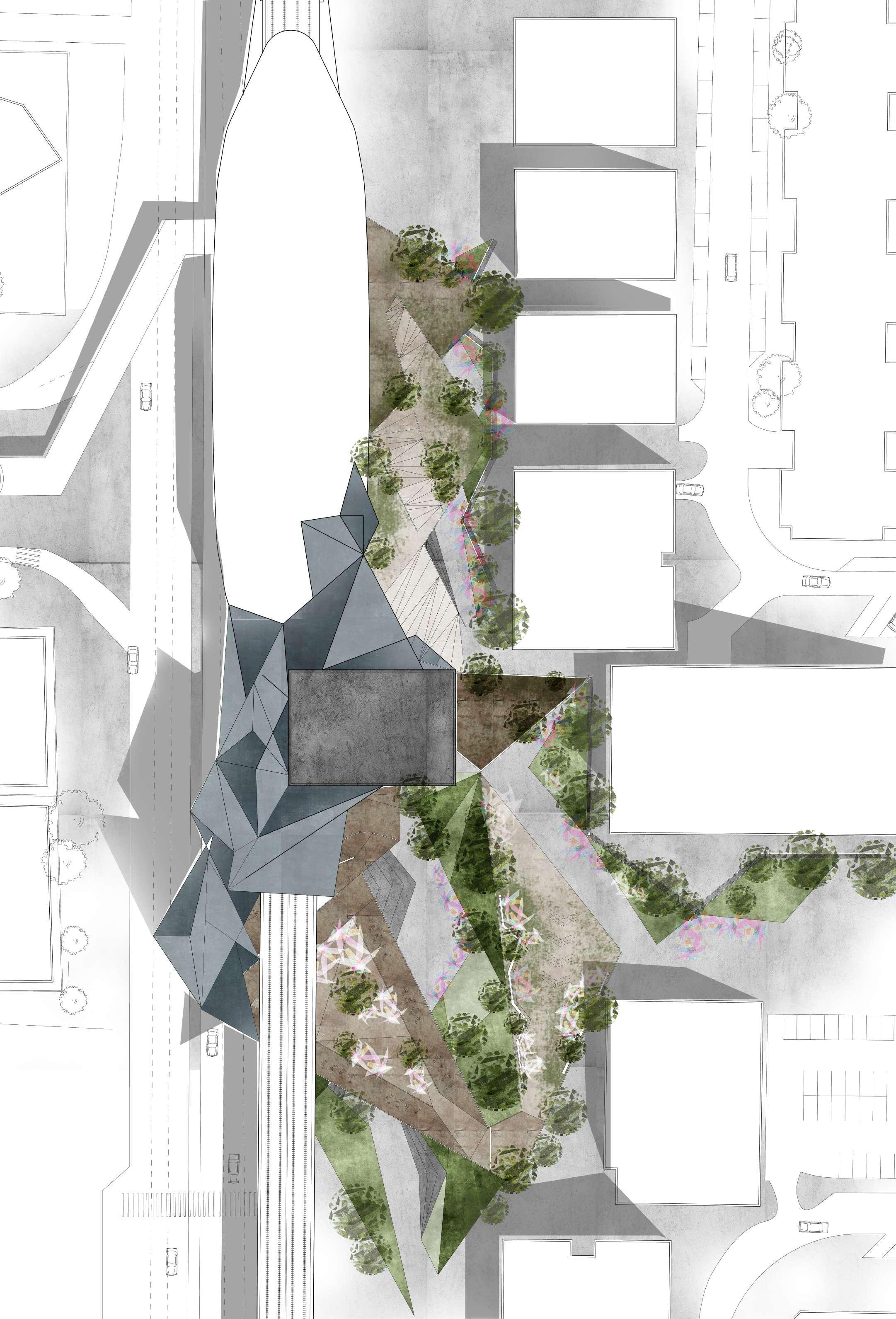
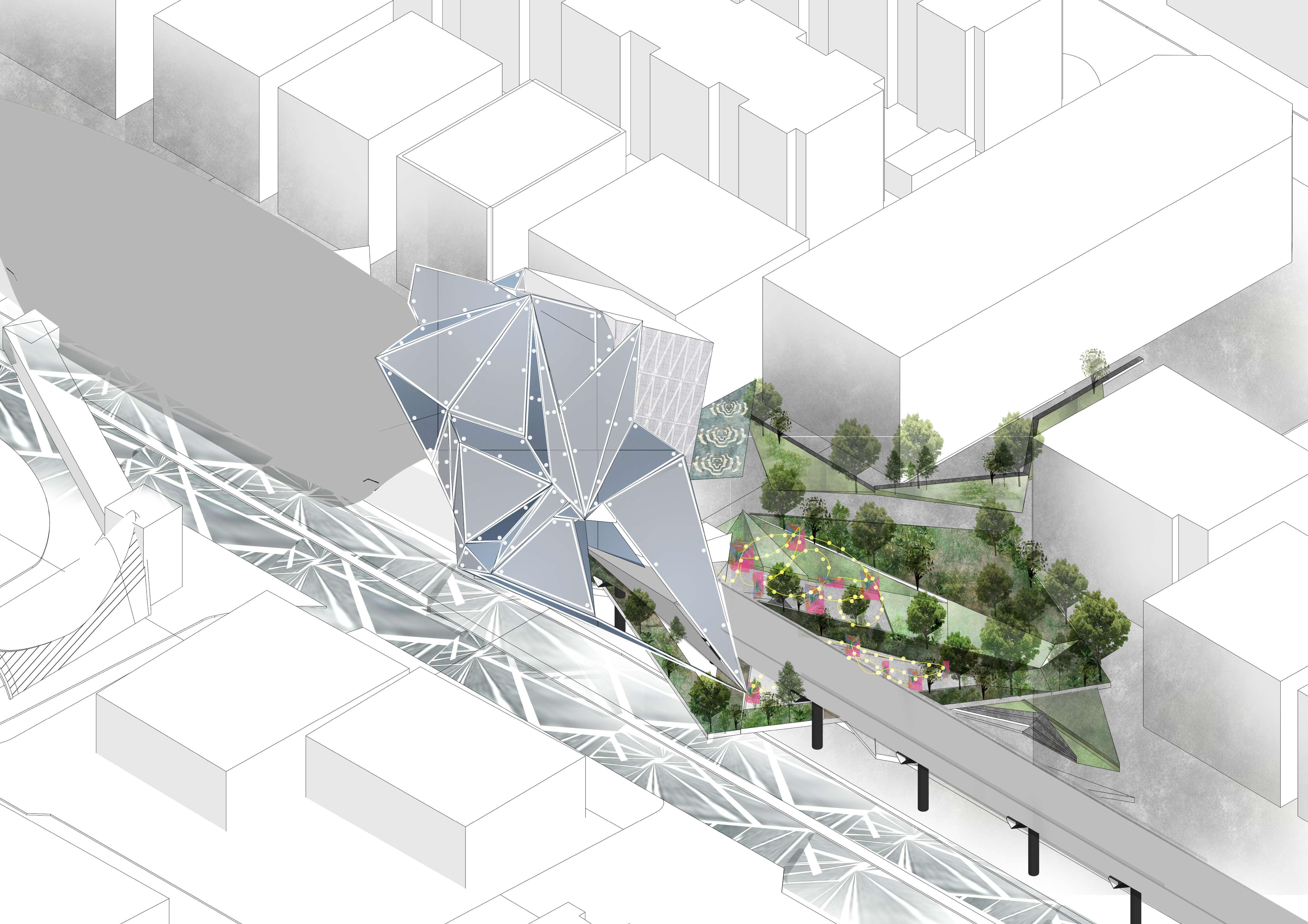
Visual and Physical representation of user experience of the elobrative illustrative plans . Moving in and out of the area of intervention in the ground level users experience the regenerative landscaping incorporting - encouraging community plaza function. While within the exhibition/public realm the advocation by the push and pull of the folding planes alter initial experience making the change known and in the UN office the mesh surface and conventional building styles gives a more comfortable and professional setting . while still feeling the influence and advocation from the unconventional form through the disruptive edges affecting the placement of functional elements such as slanted walls , stairs , attriums etc .
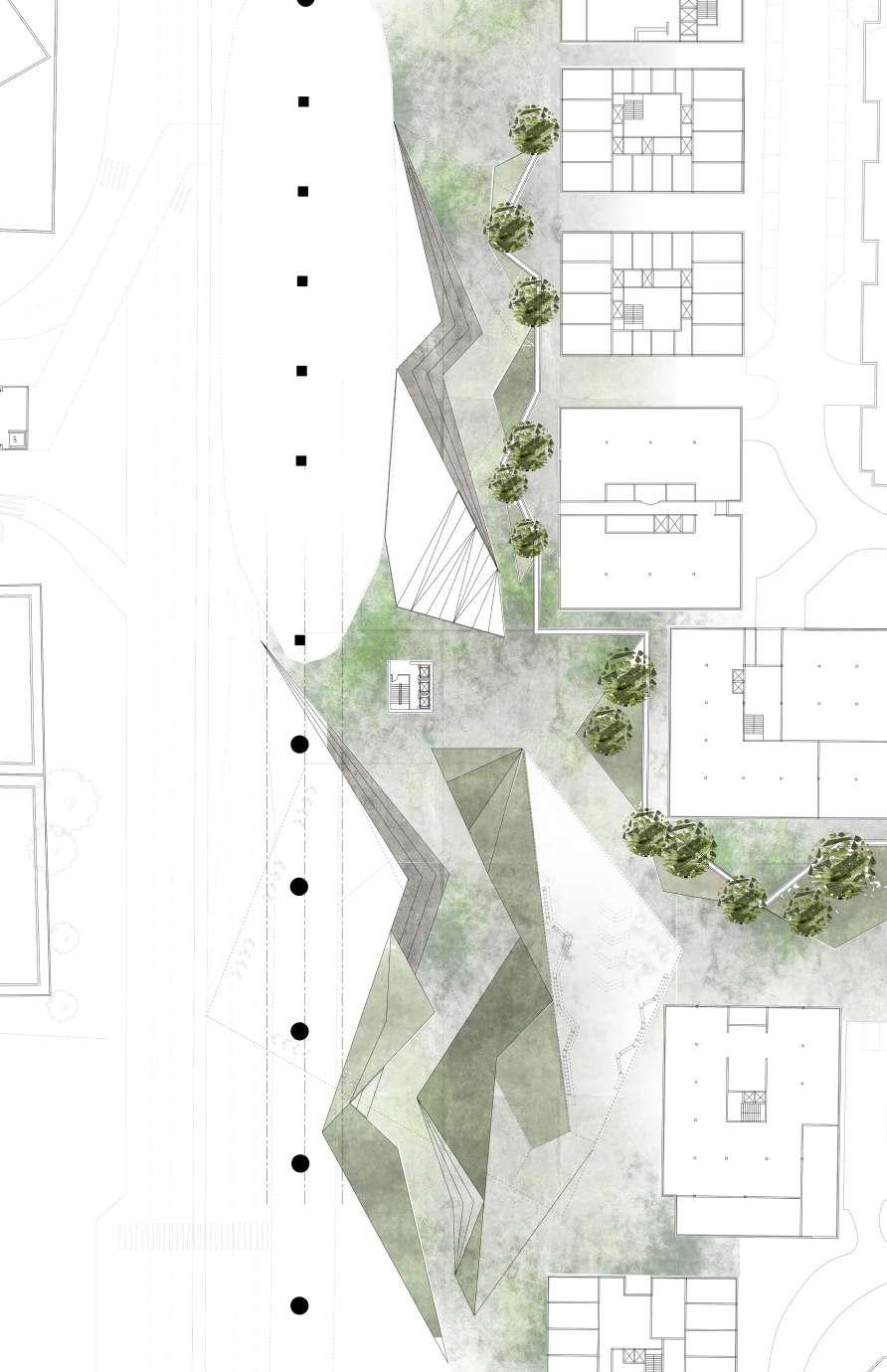
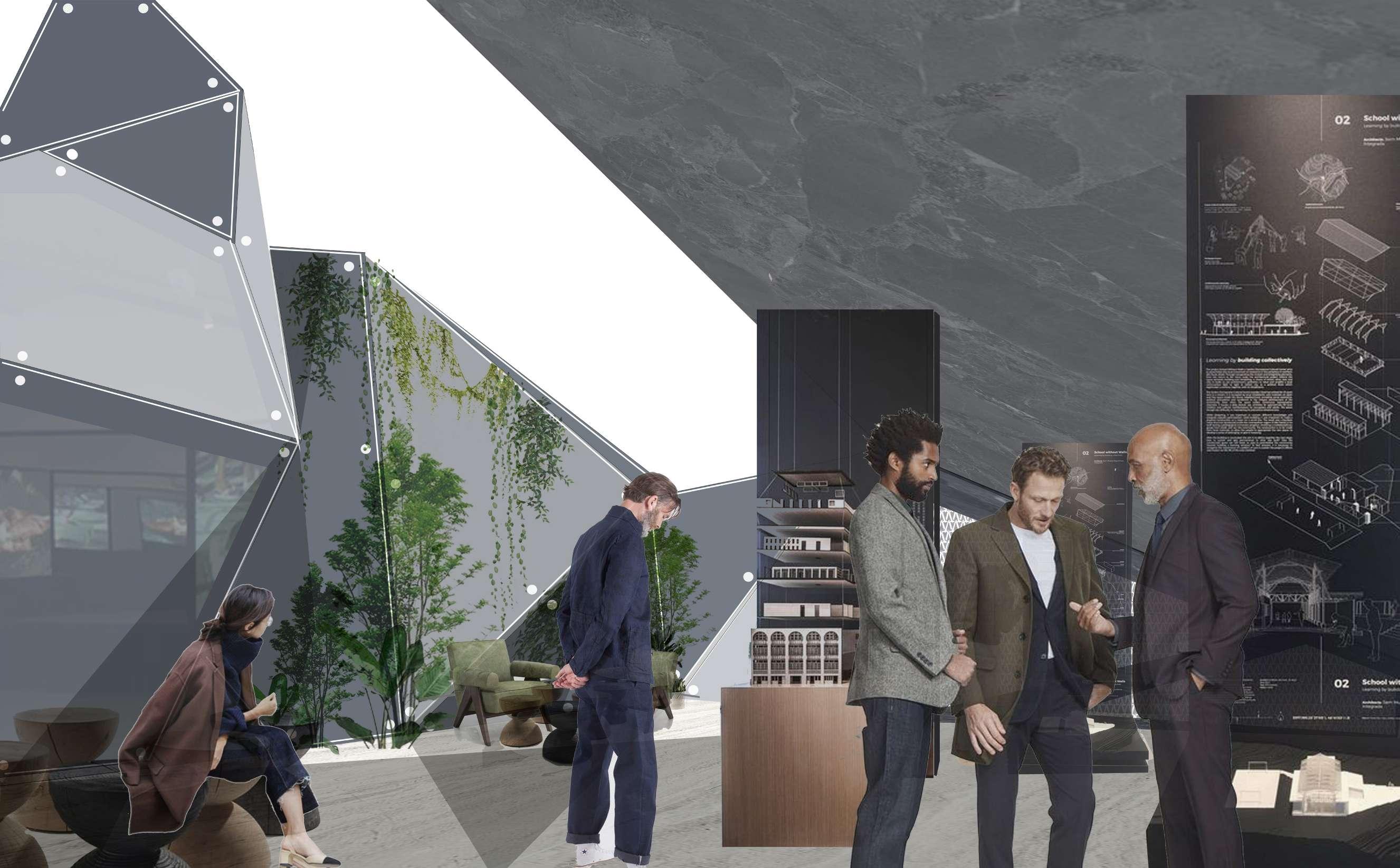
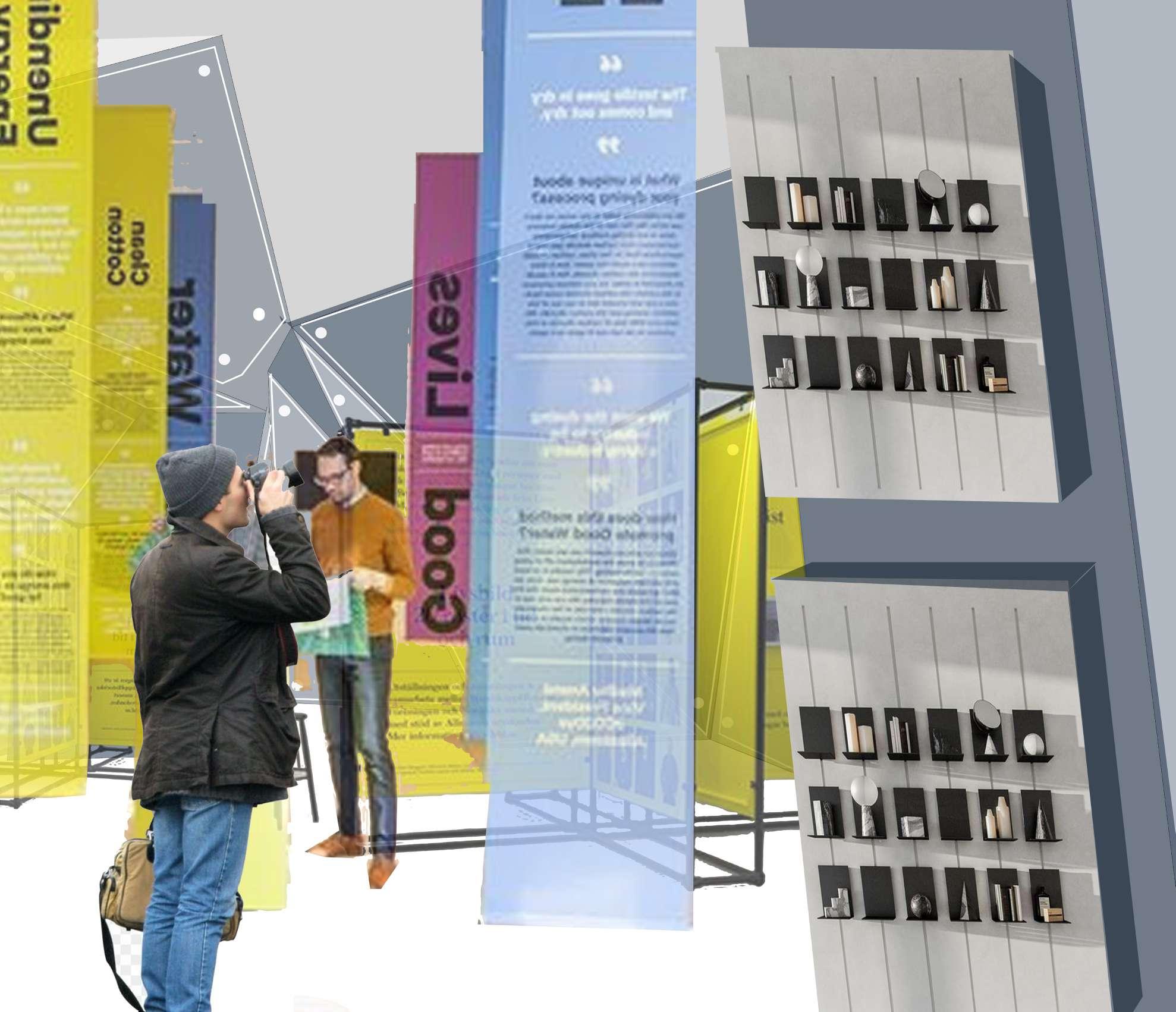
Along with experiencing individual advocation. The proposed also caters to the users experiencing the 3 edges when in co-existence with each other with the given variation in function .As well as allows the users to experience the space of conflict , space of fight for advocation between the 3 edges through multiple mediums
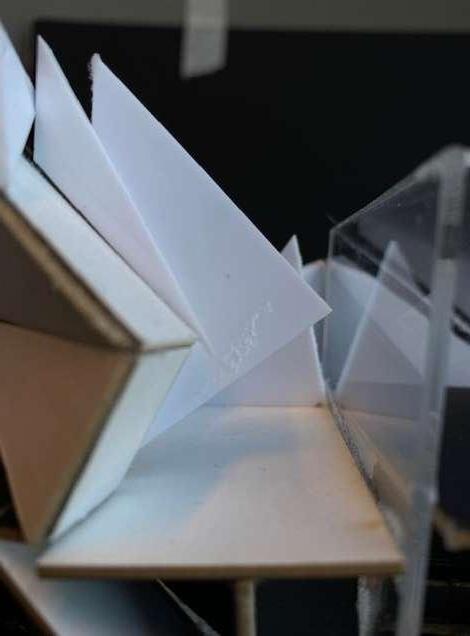
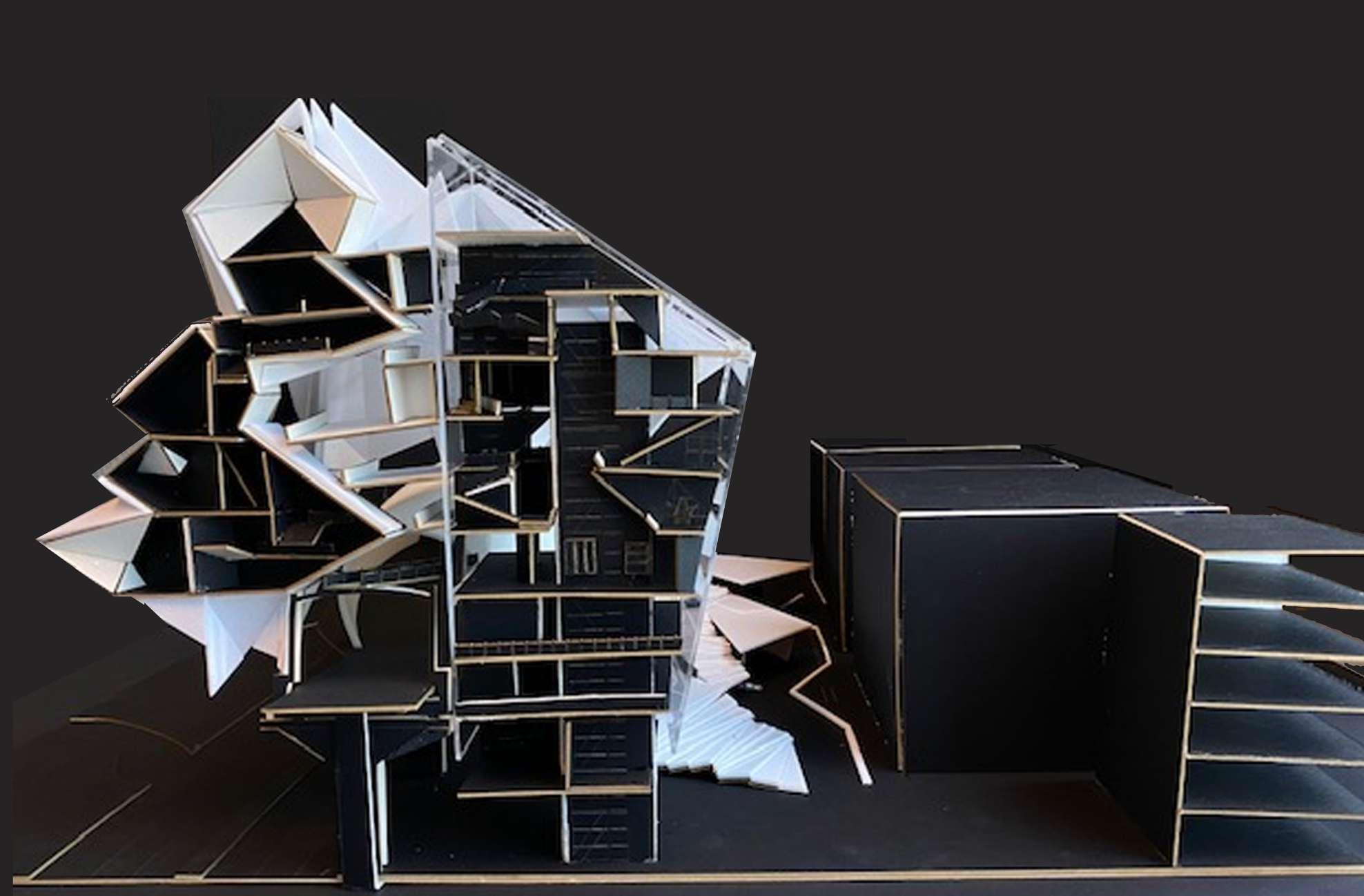 User experience in the space of co-existence of the 3 edges and the given functions
User experience in the space of advcoation through folding planes in the exhibition
User experience in the space of co-existence of the 3 edges and the given functions
User experience in the space of advcoation through folding planes in the exhibition
COLLABORTIVE PROJECT

NIDUS “WHERE THE STORY BEGINS”