MACHINE LEARNING
Joe Bramall on landing a job in agri-robotics p12


BEE FARMING
Making honey for a living, and more p14



Joe Bramall on landing a job in agri-robotics p12
Making honey for a living, and more p14
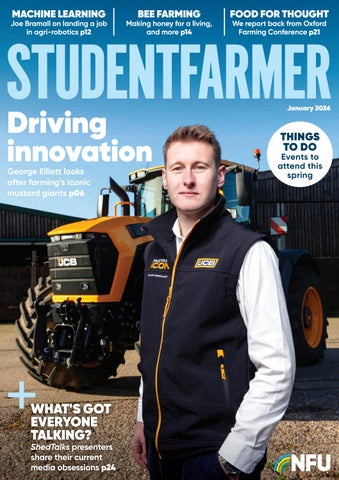
George Elliott looks after farming’s iconic mustard giants p06
WHAT'S GOT EVERYONE TALKING?

FOOD FOR THOUGHT
We report back from Oxford Farming Conference p21

January 2026


THINGS TO DO
Events to attend this spring
ShedTalks presenters share their current media obsessions p24





PUBLISHED BY:
NFU, Agriculture House, Stoneleigh Park, Stoneleigh, Warwickshire, CV8 2TZ
EDITOR: Joanna Thomson
joanna.thomson @nfu.org.uk
WORDS BY:
Alex Cotterill, Joe Bramall, Beth Moore, Caitlin Gallagher, Bizza Walters, Luke Cox, Hannah Grindey, Charlie Padfield, Joanna Thomson
DESIGNED
COVER
George Elliott on his route into agri-tech; Joe Bramall discusses life after
What do bees do in winter? Farmer Gru Rees answers our burning questions
What’s on near you this January - April
Jess Sharp, 17, on speaking to 30,000
How farming has been vital to one young woman's recovery from a stroke
Student vets Charlie Padfield & Hannah Grindey on getting into the sector
Everything you need to know about NFU Student & Young Farmer membership




There’s been loads to celebrate recently – and I’m not just talking about Christmas and New Year.
Substantial changes to the planned inheritance tax reforms certainly brought some cheer this festive season. After more than a year of tenacious campaigning by the NFU, farmers, growers, and even some MPs, common sense has prevailed. While the changes do not go far enough, they will greatly reduce the tax burden for many family farms and those working in the countryside. It is a significant win for farming amid an increasingly challenging climate, and shows what we can achieve when we work together. Here’s to more positivity and progress in 2026!
Setting the tone for the year ahead, your January edition of Student Farmer is filled with inspiring stories from the farmgate and beyond. Hear from JCB engineer George Elliott and former SYFAP ambassador, Joe Bramall, on their routes into agri-tech and robotics. Although they come from two very di erent backgrounds, George and Joe hold the same belief about farming’s future: it will be digital. Read more in our Automation & Robotics feature, which starts on p6.
Speaking of farming’s future, we sat down with two ambitious young women ready to shape the industry. At just 17 years old, Jess Sharp is fast becoming an influential advocate for British farming, speaking to crowds of thousands about the big issues. Likewise, Neive Burke, who faced a serious illness at 13, demonstrates the profound e ect farming can have on wellbeing, having found a path into the sector via animal physiotherapy.
As we begin a new year, it’s the perfect opportunity to be inspired – and so I hope this edition o ers the ideas you need to make a strong start.
A convoy of 70 tractors paraded through the streets, flling Warwickshire with noise and festive cheer as part of a Christmas tractor run organised by Warwickshire Federation of Young Farmers' Clubs (WFYFC).
Keep up with the latest developments in farming policy and campaigns at nfuonline.com
How artifcial intelligence (AI) can boost farming resilience is one of many topics up for discussion at this year's NFU Conference
The 2026 NFU Conference is back at Birmingham’s ICC in a two-day event across Tuesday 24 and Wednesday 25 February.
The event, which now alternates between London and Birmingham, will ask how food and farming’s resilience can be boosted through artifcial intelligence and data, the supply chain, trade, and from an international perspective.
Senior leaders of AI management and analytics frms will join Prof Jasmeet Kaler of the University of Nottingham, to talk about the technology’s role in farming.
Prof Tim Lang, Professor Emeritus of Food Policy at the University of London, will underline the importance of food resilience; Tesco’s UK CEO Ashwin Prasad will talk about the grocery supply chain; and Defra Secretary of State Emma
Reynolds will give the keynote political address, which will be followed by a Q&A session.
There will also be sessions with Rabobank’s Senior Food System Analyst, Harry Smit, looking at what that means at an international level; and Dmitry Grozoubinski, director of ExplainTrade, will discuss the efect of trade on farm resilience. An NFU member panel will share their experiences of resilience in action with conference.
There will be a gala dinner on Tuesday evening, which will include an after dinner speaker and the presentation of the regional Meurig Raymond awards.
At the end of conference, NFU ofceholder elections will be held.
Find out more, at NFUonline.com/hottopics/nfu-conference/
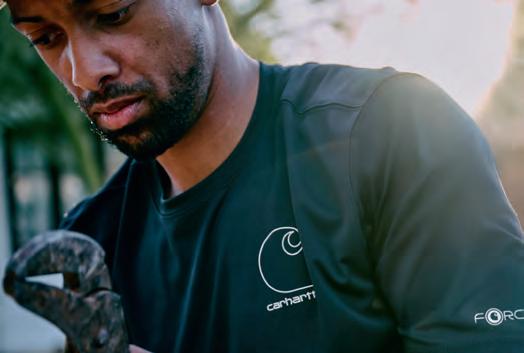
Carhartt competition winners revealed
Congratulations to Chloe Copeland (Warwickshire) and Joseph Jessop (Yorkshire), who won September’s competition. The pair will each receive a Carhartt jacket, T-shirt, cap and boots worth more than £250.
The WFYFC called the event “a huge success”, raising vital funds for Warwickshire Young Farmers and two other charities – Breast Cancer Now and The Thomas Page Foundation. The charities were chosen in memory of two much-loved individuals that passed away, former WFYFC member Sigourney Tibbatts and Tom Page of Shipston Young Farmers.
WFYWC said: “Choosing the charities for this year’s tractor run was an easy decision. We wanted to honour those we loved and lost, ensuring their memories live on within both the Young Farmers community and the wider public. We look forward to continuing this tradition in years to come, lighting up the streets of Warwickshire, bringing smiles to faces, and spreading joy throughout the community.”
Rural insurer NFU Mutual has launched its 2026 Centenary Award – with this year's scheme now open for applications. The annual award scheme provides bursaries to pay up to 75% of course fees for selected students who are undertaking a postgraduate course in agriculture (master’s or PhD) within the UK.
The 2026 award is open to individuals who have gained, or are expected to gain, a 2:1 or above in agriculture or a related degree, and have been accepted or provisionally accepted on a master’s or PhD course in agriculture in the UK commencing in the 2026/2027 academic year.
Full details on the 2026 award can be found at NFUonline.com/news/gethelp-with-post-graduate-funding/


Ayoung farmer from Lincolnshire is one of ten grower delegates selected for this year’s Sugar Industry Programme (SIP). Tom Rollinson, 26, grows crops including sugar beet on his family farm in Sleaford.
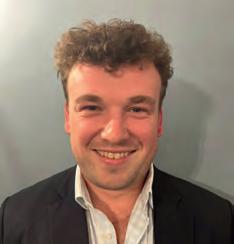
Jointly funded by NFU Sugar and British Sugar, the SIP is an opportunity for next-generation growers to learn more about the wider supply chain, build valuable lasting connections and develop their professional skills. Many SIP alumni have gone on to become infuential leaders across the industry, including representing growers on the NFU Sugar Board.
Speaking about his experience of the SIP so far, Tom says: “The programme from the get-go has been informative, interesting and engaging. However, I have to say, the people have made the programme so much more than I was expecting.
“Everyone has been willing to share ideas. They’ve been open-minded and patient, and more than anything, social. It has been so refreshing to get of the farm a couple of days a month to see them – and we have had such a giggle already.”
‘Insight into Agriculture’ course by Royal Agricultural College
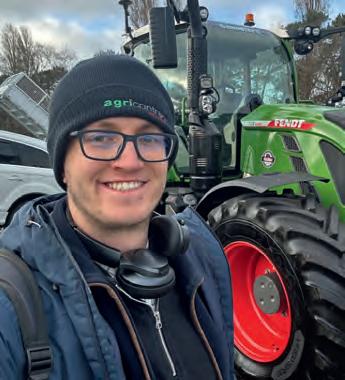
Although I’m not directly from a farming background, agriculture has always been in my blood thanks to my great grandfather, who ran a diversifed dairy and arable enterprise. So, when the opportunity arose to study an ‘Insight to Agriculture’ course, I jumped at it.
Considering the course was only two days long, the vast range of topics covered was staggering: agricultural law and legislation, land management, farm economics, a virtual farm tour and the principles behind livestock and arable farm management. One minute we were discussing the nitrogen p/ha application rate on a fctional feld of OSR, and the next we were rambling about the latest Claas Jaguar 1000 series forager. Riveting discussions if you’re into ag kit like me!
My personal highlights were the fnance and data-heavy modules
Let us know what you are getting up to on farm by emailing the editor at Joanna.Thomson@nfu.org.uk.

The New Entrant Grant Scheme, launched by Addington Fund, aims to support individuals who are entering the sector or who have been farming on their own for no more than fve years.
Addington Fund said it recognises the challenges that new entrants to the sector face, and that the new fund will enable them to have the best start in their farming career.
As part of the scheme, up to £3,000 is available for individuals aged 18 to 40, in England and Wales, who have started farming in the last fve years, or are about to start — whether renting land, securing a new tenancy, or starting a fresh farming venture.
Grants will focus on initiatives that deliver real beneft to a new farming business, including healthy livestock management, sustainable soil care, helping to encourage exceptional projects and innovative ideas. Addington Fund will consider applications for skills and equipment that will act as a cornerstone to a new farm business, and the grants may be used alongside the Farming Equipment and Technology Fund.
Find out more about the scheme by visiting addingtonfund. org.uk/new-entrant-scheme
– the ‘mathsy’ side of farming –weird I know! We tackled problems involving cattle/pigs liveweight versus deadweight, gross and net margins and variable versus fxed costs. (Despite a deadweight animal being half the weight, it in fact sells for double the price when compared to a standard liveweight asset. Fascinating stuf!)
I will admit it was slightly daunting initially, but once you got your head around it, it was strangely satisfying.
The precision required to locate solutions quickly reminded me of Cristiano Ronaldo’s free kick practice –pure perfectionism!
The course was led by Tom Overbury, who currently runs his own 150-hectare mixed beef and arable farm – and honestly, what a bloke! Tom was both professional, entertaining and had that rare ability to make you laugh while learning. Despite never losing the thread of the lessons, he had that brilliant Derek ‘Del Boy’ Trotter vibe to his humour.
Also, a big shoutout too to Scarlett Crew and Suzie Davies who handled the matters relating to the MS Teams and payment processes.
If I had to provide a suggestion for the course, it is that I wish it was a slightly longer, with more time to dive deeper into each module. Yet, overall, it was a fantastic experience –informative, funny and full of practical insight. Tom’s enthusiasm for agriculture and lecturing made those two days at RAU unforgettable.
Alex Cotterill, 23
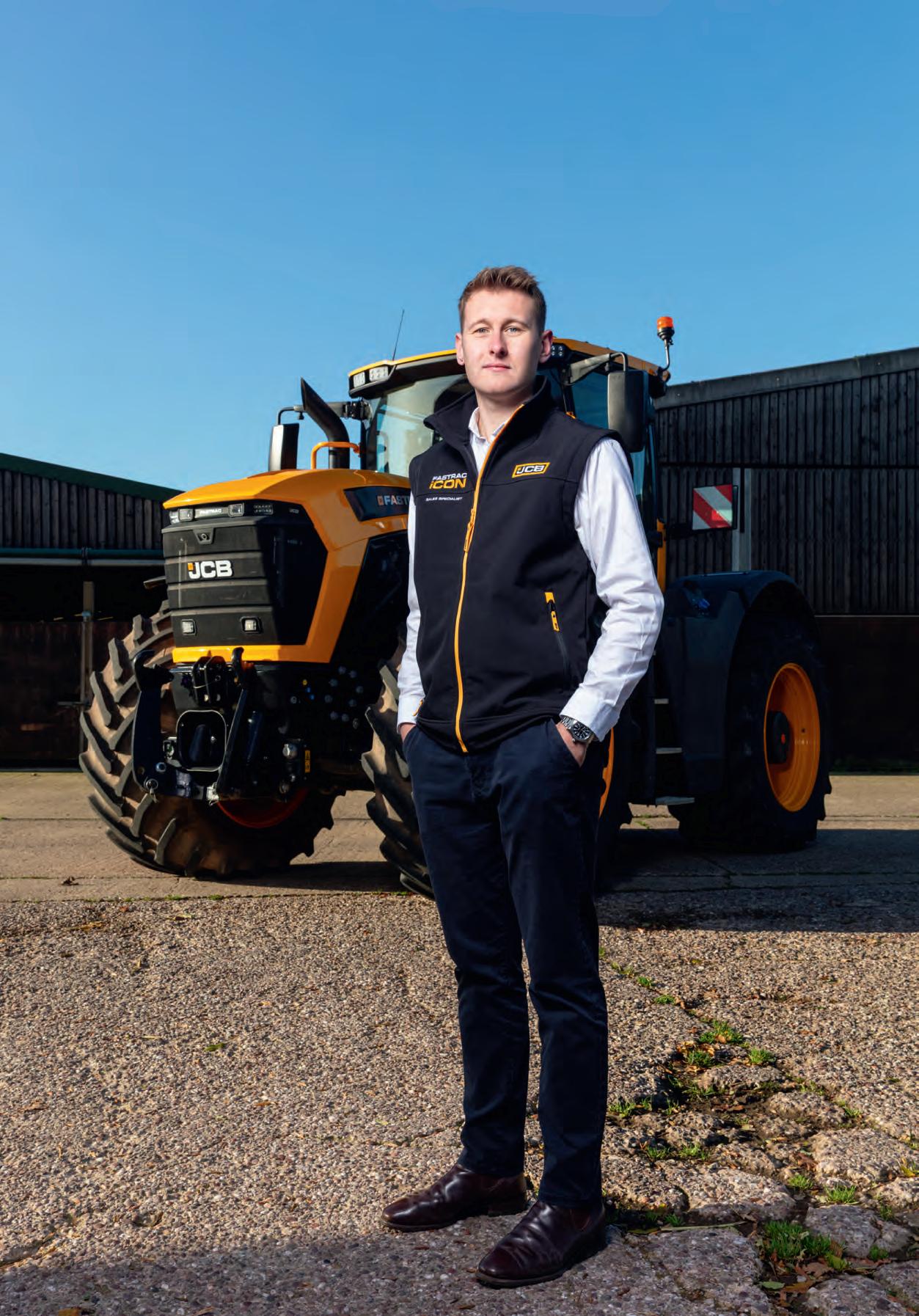
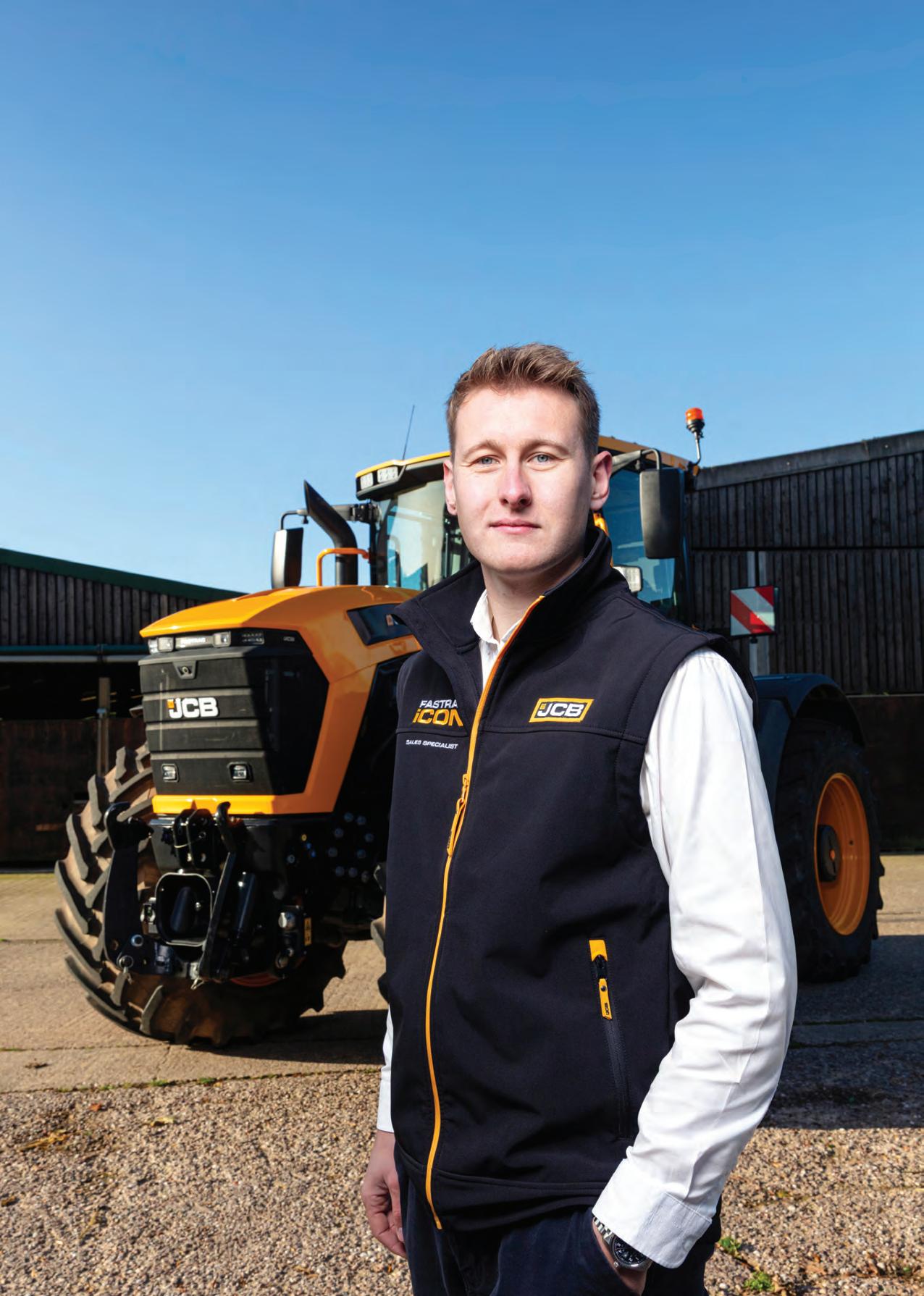
What’s it like looking after farming’s iconic mustard giants? Editor Joanna Thomson caught up with JCB sales engineer and recent agri-tech graduate George Elliott to fnd out.
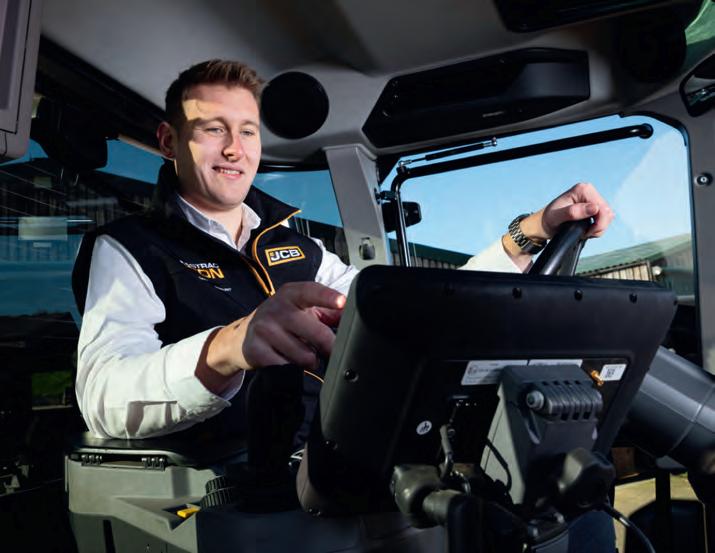
George Elliott is a very difcult guy to pin down. He’s very rarely sat behind a desk, choosing instead to spend his time behind a wheel. One day he’s rolling through Essex in a tractor, the next he’s in a pick-up truck at the tip of Scotland.
‘How did he get so lucky?’ I hear you ask. It’s because George is a sales engineer for one of the world’s biggest machinery brands, JCB, and his job is to travel around the country, demonstrating the latest innovations in agricultural equipment.
“When it came to fnding a placement, I didn't want to just go and work on a farm. I'd already done that. I wanted to get my foot in the door.”
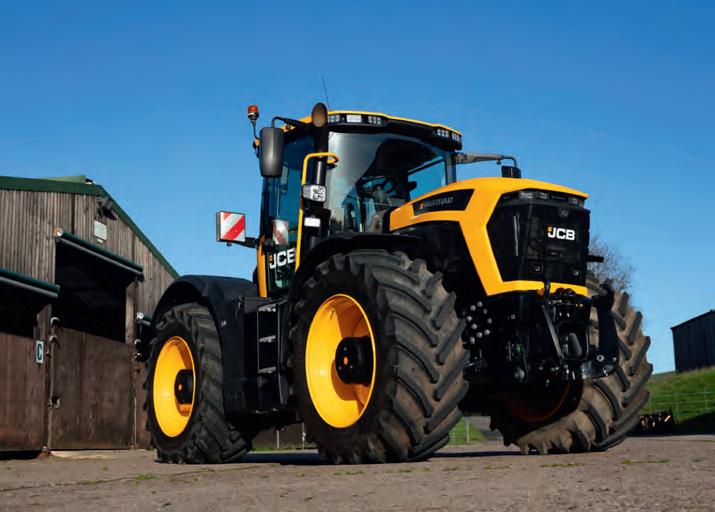
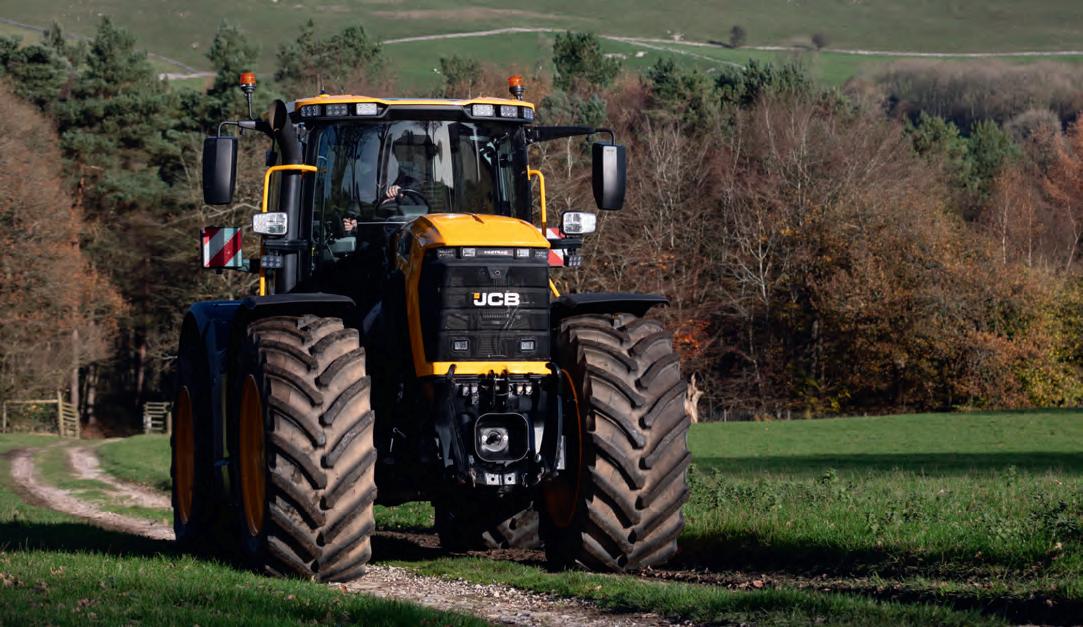
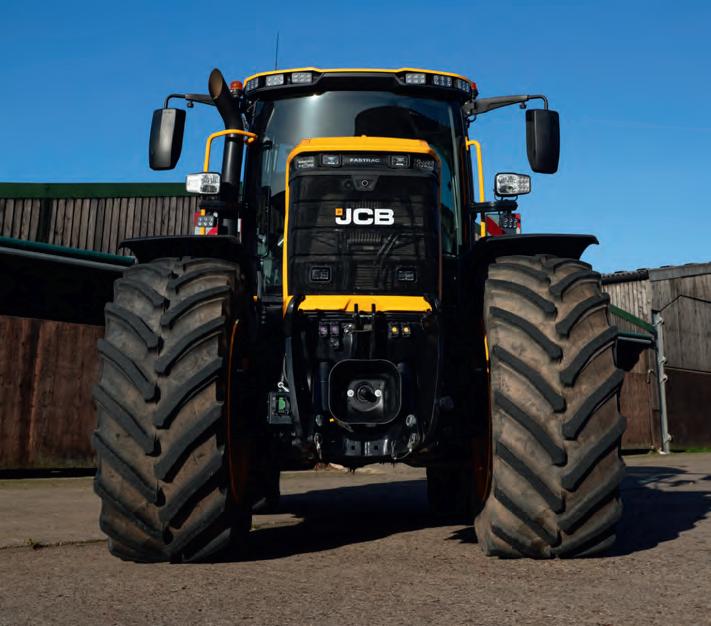
When I spoke to George, he’d just spent six weeks showing of the newest addition to the Fastrac line, the 6000 Series, which launched in October. Packed with new features and gadgets, this bit of kit is one of the most sought-after machines on the market – but more importantly to George, it’s one of the reasons why he is where he is today.
“JCB was developing this tractor when I was on placement with them, and it was so exciting. I wanted to start with them (as a graduate) before they launched the new model just to work with it, so I
think I timed it right,” he laughs.
His timing couldn’t be more perfect as in starting with JCB after graduation last year, he’s managed to land his dream job. He’s now a custodian of the Fastrac range of tractors – the iconic mustard-yellow giants – and it’s clear from the passion he has for his work that George understands the weight of the responsibility on his shoulders.
“It’s been quite intense,” he says. “There’s so much to do and a lot of people to get to know in such a short time, but it’s been a great way to get familiar with the industry.”
George tells me the job is more than just talking to customers and operating fancy machinery; there’s a bit of admin and loads of plate-spinning involved, which mixes
things up and keeps him on his toes.
While he’s still got lots to learn, George has certainly given himself a headstart. In his third year of university, he did a placement with JCB to learn as much as he could about the machinery sector.
“When it came to fnding a placement, I didn’t want to just go and work on a farm. I’d already done that. I wanted to get my foot in the door,” he explains.
“I’d always had in the back of my mind that I’d like to sell farm machinery or work in some kind of precision farming role, and JCB did a business scholarship, which I ended up getting.”
The placement ofered him a good variety of work to do – everything from analysing sales data on Excel, to getting out on farm to visit customers. The real highlight was meeting new people and attending the shows and events. A particular standout for George was a six-week sales training event, where he was able to test his product and company knowledge, having been asked to present to a room full of ag dealers from all over the world.
“I must have done this presentation on the braking system of the Fastrac tractor nearly 200 times, so I was ready for it,” he says. “I thought the whole event was absolutely brilliant. It was so engaging. I was able to talk to people about the interesting things they do with their machines on farm, and I remember thinking, ‘Yeah, this is really cool. This is what I want to do.’”
This wasn’t just a passing thought. George knew there was something to it, as he got the same buzz from doing his mechanisation modules at university.
“The more I went through university, the better it got, the more interesting the






modules got, the more I enjoyed it,” he explains. “The fnal year was my absolute highlight, writing my dissertation, and the modules were all really good.”
George studied Agriculture with Mechanisation at Harper Adams University in Shropshire, having taken a rather unconventional path to get there. Finished with his A-Levels, he worked for a local livestock and machinery auctioneers to understand how the business worked. He did that for a year before deciding
“I am, and have always been, obsessed with farm machinery”
to apply for university, only to defer for another two years as he felt the timing wasn’t quite right. Instead, he got a job on a large fresh produce farm in Lichfeld, harvesting carrots and parsnips, which was “one of the best jobs I’ve ever had”. It was when he turned 21 that he decided the time had come to give university a go.
“I remember thinking, ‘I don’t want to be a tractor driver’. My jobs up until that point had opened my eyes to the world of precision farming and large-scale arable growing. It got me excited to fnd out more,” he says. “So, I left and went to start my frst year at Harper – to my mum and dad’s relief! They always wanted me to go.”
As part of the course, George was able to specialise in what really excites him: digital technologies. Speaking to him now, his face lights up talking about data and how much he enjoyed a module entitled ‘Science, Technology and Information’. His lecturers would regularly invite someone from industry to come and speak to students about the very latest in precision farming, and it’s no exaggeration to say that George was mesmerised by these presentations.
“I couldn’t believe more people weren’t talking about what I’d heard,” George says. “I thought, there’s so much opportunity here. This is exactly what I want to do. Whether that’s a tractor or a cattle management system manufacturer, I want to work for a company in this area.”
A bit of determination and some serious graft later, George made that goal a reality. Not only has he secured himself a job in his dream industry, but the work
he’s done to get himself there has not gone unnoticed.
As I said, George Elliott is a very difcult guy to pin down. During the past few weeks, he’s been busy attending awards ceremonies, picking up prizes left, right and centre. George was named Farmers Weekly Agricultural Student of the Year 2025, as well as Farmers Guardian British Farming Agriculture Student of the Year, in what he describes as “a cracking way to end four years at Harper”.
Much to my confusion, he says that he didn’t think it was worth entering the awards because there wasn’t much of a chance he’d win. Why not? “I didn’t think I’d done enough compared to what other people had done,” George admits, “and I didn’t know whether I had much of an interesting story or what it took to be a winner, I guess. I’m not the most confdent person. I’ve always been happier to stand at the back, if you like, than be at centre stage.”
George doesn’t come from a traditional farming background, so that, he says, might have contributed to his hesitation. He didn’t have a farm to grow up on, but he had the next best thing – a grandad with a few old tractors. His grandad has 70 acres of land that he rents out to a neighbouring farm, and when he was a little boy, George spent a lot of time with him, sitting in the tractors and watching them in the felds.
“There is a big farm at the top of the hill from my grandad’s, and I remember when I was younger, when [the farmers] were
“There is a huge opportunity for the next generation of farmers. The jobs that are going to be available in the next 50 years don't even exist now, and that’s thanks to precision farming, artifcial intelligence and robotics. It’s an extremely exciting place to work.”
fnished silaging, I’d stand at the end of the lane and watch them drive past. I can remember doing that a lot,” he says.
“I’ve always wanted to work in agriculture. I am, and have always been, obsessed with farm machinery. I’ve always been a tractor man. That’s been a constant throughout my life. I haven’t wanted to do anything else really other than just work on a farm.
“If I won the lottery today, I’d buy a farm and I’d be a farmer – but you’ve got to be realistic,” he laughs. “What I do now is not second best, because that’s the wrong words for it… it’s everything I’ve ever wanted. I’m out on farms; I’m with machinery all day. It’s everything.”
The fact he doesn’t come from a farming family certainly hasn’t held him back from fnding his niche within the sector. Indeed, George argues that looking beyond the ‘traditional’ ways of doing things will be vital for the future of the industry.
“I think, perhaps, it has been widely understood that you’ve got to be from farming to be in farming. It’s what people used to believe, and I don’t think that is
the right approach now,” he says. “If we want to continue to be sustainable, in terms of being a country that produces food well and competes on the global market, then we need to invest in skills and technology.”
From his own experience, George believes that a lack of attention given to agriculture within the national curriculum is feeding confusion about what farming is and what it could be.
“There was nothing in my education at school that had any link to agriculture, which was disappointing looking back,” he explains. “I don’t think it’s seen as a profession that people my age and from outside of agriculture want to go into. It’s nowhere near hyped up enough, in my opinion.
“What you experience when you’re younger infuences what you do later on in life; and because there’s no talk of farming in schools, a lot of people aren’t seeing agriculture as I see it – a highly digitalised, technical innovative industry to be a part of. I would say, on the whole, the public is supportive of farmers, but they are not
aware of what farming today is actually like and where it’s going. They don’t know about the skills that are going be required to keep British farming alive. This is a really big thing.”
The British farming sector is an ageing industry, where the average age of a worker is around 60 years old. George argues that, as a result, there’s now “a massive gap in skills on farms” and prospective farmers will need to hone their digital skills as well as technical in order to grow their businesses.
“Farmers will need skills in things like data analysis and setting up precision farming equipment. In my opinion, farming is going to change more in the next 10 years than it has done since World War II,” he asserts.
“We have never, in recent memory, farmed in a world without subsidies, and we are now starting to enter that world. So, really, how are we going to do this? Wheat prices are high, and the cost of production has increased. We’re going to have to become better at what we do, and this is where, I think, data will help us.”
Sectors adjacent to agriculture are going to drive the sector forward, George says. “People ask me, what’s going to drive the change? Will farmers infuence companies like JCB to develop new ways of working? Obviously, farmers do have some infuence because they have an opinion on what they want to do – but I think, in the wider scheme of things, I don’t think they will. There’s a lot of innovation coming from companies that farmers aren’t aware of. Companies that analyse agricultural data or produce telematics systems to monitor dairy cow health, and things like that, are the ones that will do it. They’ll help push us forward, and there’s going to be loads of great jobs for people in these areas that want to work in agriculture.
“There’s a lot of doom and gloom in farming at the moment, and that’s because it’s not seen as a particularly prosperous environment; but in spite of this, I am so enthusiastic about the future of farming,” George says.
“There is a huge opportunity for the next generation of farmers. The jobs that are going to be available in the next 50 years don’t even exist now, and that’s thanks to precision farming, artifcial intelligence and robotics. It’s an extremely exciting place to work.”
It’s hard not to be convinced by George and his enthusiasm. As we say goodbye, I make a mental note to catch up with him in a few years’ time; I’m curious to see what he does next. If we do speak again, I suspect it will be via a phone call from the other side of the world – provided I can track him down frst.
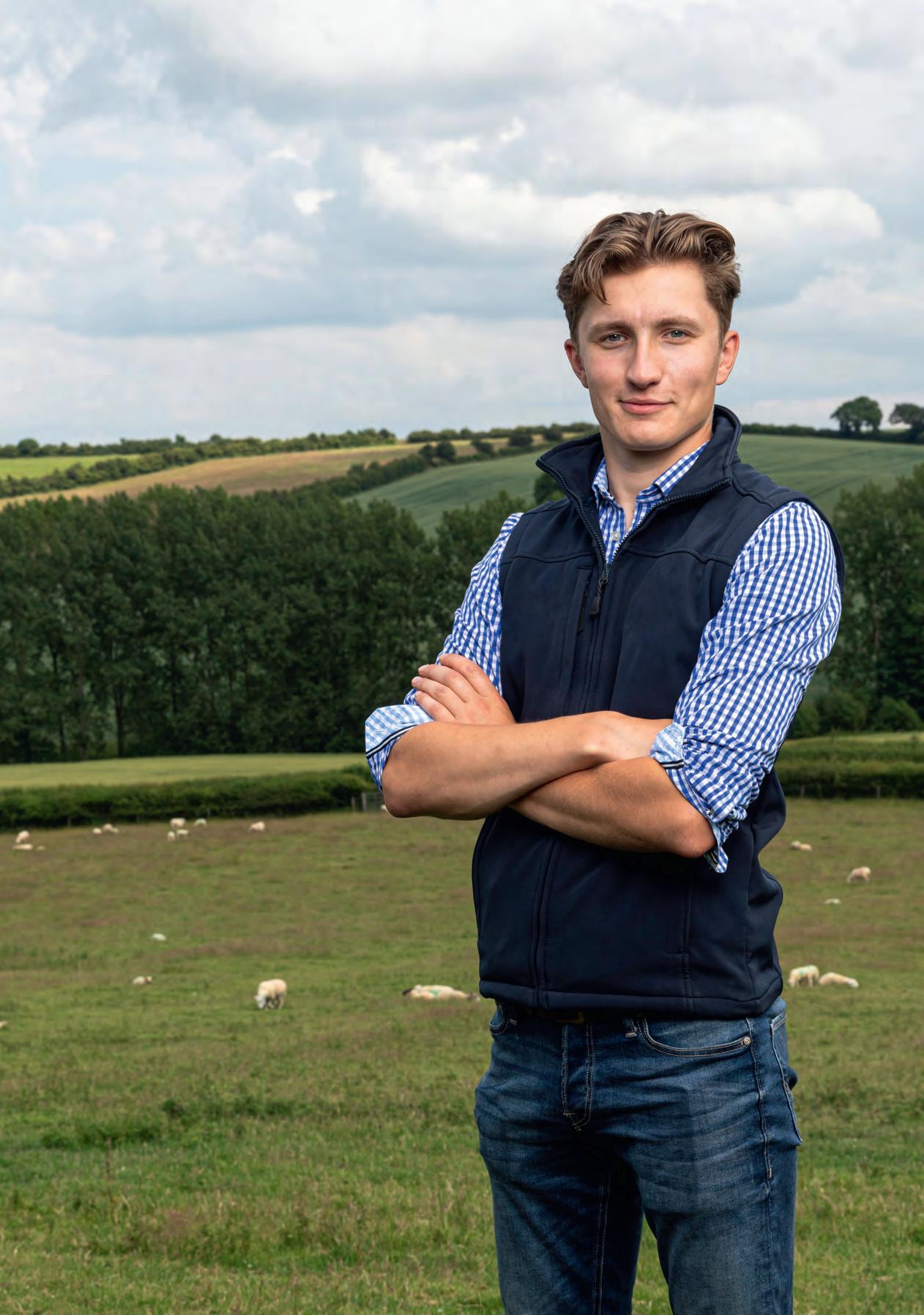
More than two years on from graduation, Joe Bramall refects on the ‘shock’ of starting his frst job after university, and what it’s like to work for a robotics manufacturer
Iused to love sacking of assignments and heading to the pub at three o’clock. It was what we did, it was tradition. The work would get done eventually... just not right away. Not being able to do that – to ‘get round to it later’ – was, honestly, one of the hardest adjustments I had to make after leaving student life behind.
Moving into a ‘real’ job was a huge shift. Suddenly there was structure, accountability, and a level of responsibility that felt worlds apart from what I’d experienced at university… and then there were the people.
After 15 years in education, I didn’t realise how much comfort I got from being around others at the same stage as myself. It’s strange to think about, but it’s true: after university, you go from being surrounded by people your own age to working alongside anyone and everyone – from someone’s dad to a lifelong expert who, let’s be honest, has forgotten more than you’ve ever learned.
It’s a bit of a shock to the system and it can be intimidating at frst, but it’s the kind of change that forces you to grow. When I frst joined the business, there was a certain person who intimidated me. They demanded detail, pace and results – and preferably all of it yesterday. Two years on, after consistently showing up, delivering and proving I could keep up, that same person is now one of my strongest working relationships. I’ve
The Harper Adams careers team was a big help for me with both my placement and graduate applications. The best advice I can give is to tailor your CV and cover letter to every job, and don’t be afraid to reach out to companies directly. I only got my role at Lely because I spoke to them at a careers fair and followed up after graduation. It shows interest, and sometimes that’s what makes the di erence.

learned a huge amount from them, and together we get serious work done.
The lesson? If you put in the effort, have the determination and show the right attitude, you can turn even the toughest critics into some of your biggest allies, and end up working alongside the best in the industry.
Don’t get me wrong, it wasn’t all a trial by fire. One thing that made the transition easier was my placement year. I spent 12 months working in the McDonald’s beef supply chain as part of its Progressive Young Farmer programme, where I got to visit so many farms and processing sites, hearing all about the latest innovations in animal welfare, sustainability and the future of farming. The experience was invaluable. It gave me a taste of the professional world that I’d never had up until that point, and most importantly, it meant I wasn’t walking blind into my first job after graduation.
Working for Lely is a real privilege. I grew up watching Lely’s YouTube videos on the farm and dreaming about working with robots one day, so when I joined as a graduate in 2023, it was quite a surreal experience.
Most people know Lely for its Astronaut milking robot, which has been on the
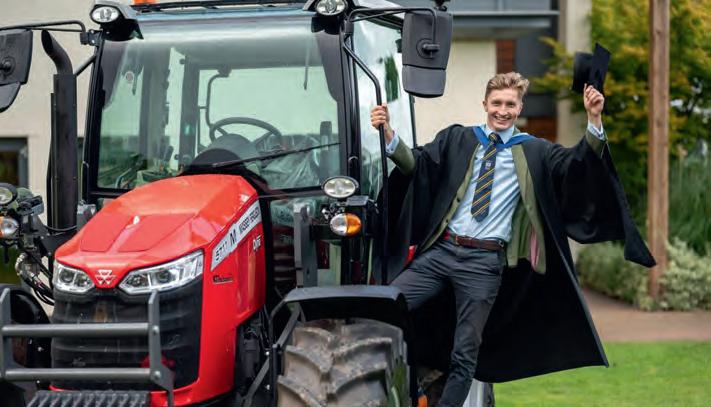
“I now live in an entirely di erent world to what student Joe was living in...”
market for more than 20 years, but there’s far more it has to offer. The Lely Collector (the ‘poo hoover’) keeps sheds clean, the Lely Vector automates feeding, and the Lely Exos cuts and fetches grass straight to the feed fence automatically. But the most exciting development, in my opinion, is the Lely Sphere, a system that cuts shed ammonia emissions by up to 70% by separating manure and urine at source, capturing the gases, and turning them into three types of fertiliser. It’s an incredible step towards circular, sustainable farming.
It’s why I love what I do. Robotics isn’t just about making the work easier for farmers; it’s about making the sector greener. Greater efficiency means less waste, which is an essential part of a circular farming model.
If we want the public to view farming as we do, as essential for the health of both people and the planet, then developing solutions that help tackle waste must be a priority for us as a sector.
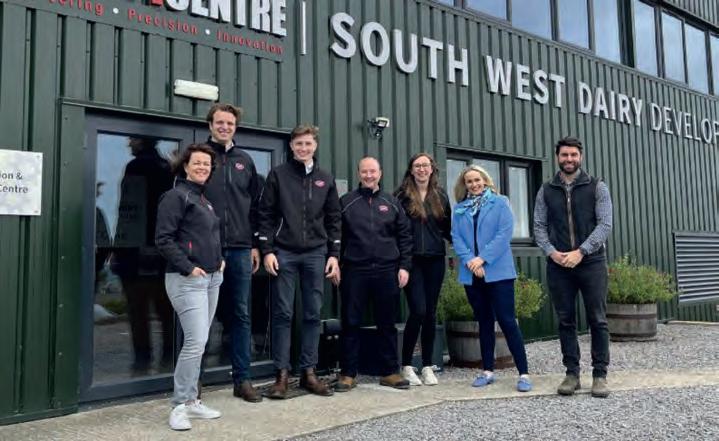
Working for a robotics manufacturer is seriously cool. It’s so exciting to be at the forefront of innovation. In January last year, I moved into my role in service management, and that’s given me further insight into what is possible – both for the dairy sector and for my career.
Since taking on my role, I’ve worked with nine dealers across the UK and Ireland, supporting the teams that help farmers every day, from technicians to franchise owners. I’ve also been involved in projects with our HQ team in the Netherlands, and I’ve even had the opportunity to get out there for myself. That trip was a real highlight. I was responsible for taking 25 farmers over to Lely HQ. As part of the visit, we toured three farms, visited the factory where Lely develops and builds its products, and walked through the Lely museum, which showcases decades of innovation.
The feedback we received was great, and after I got back home I felt a real sense of achievement. It made me think about everything I’ve learned during the past few years. I’ve learned so much about communication, working with people, and managing projects – all skills that I know will help me back on the farm too.
Yes, it’s a big change; moving from university to work. It’s a big leap to go from working on the farm to doing a more ‘corporate’ role, but the amount you grow and learn as a result is huge. It’s not something to fear, it’s something to look forward to.
I now live in an entirely different world to what student Joe was living in, but I’m glad I’m here. There may not be as many 3pm pints, but I have a job that I’m passionate about and that makes it easy to get the work done.
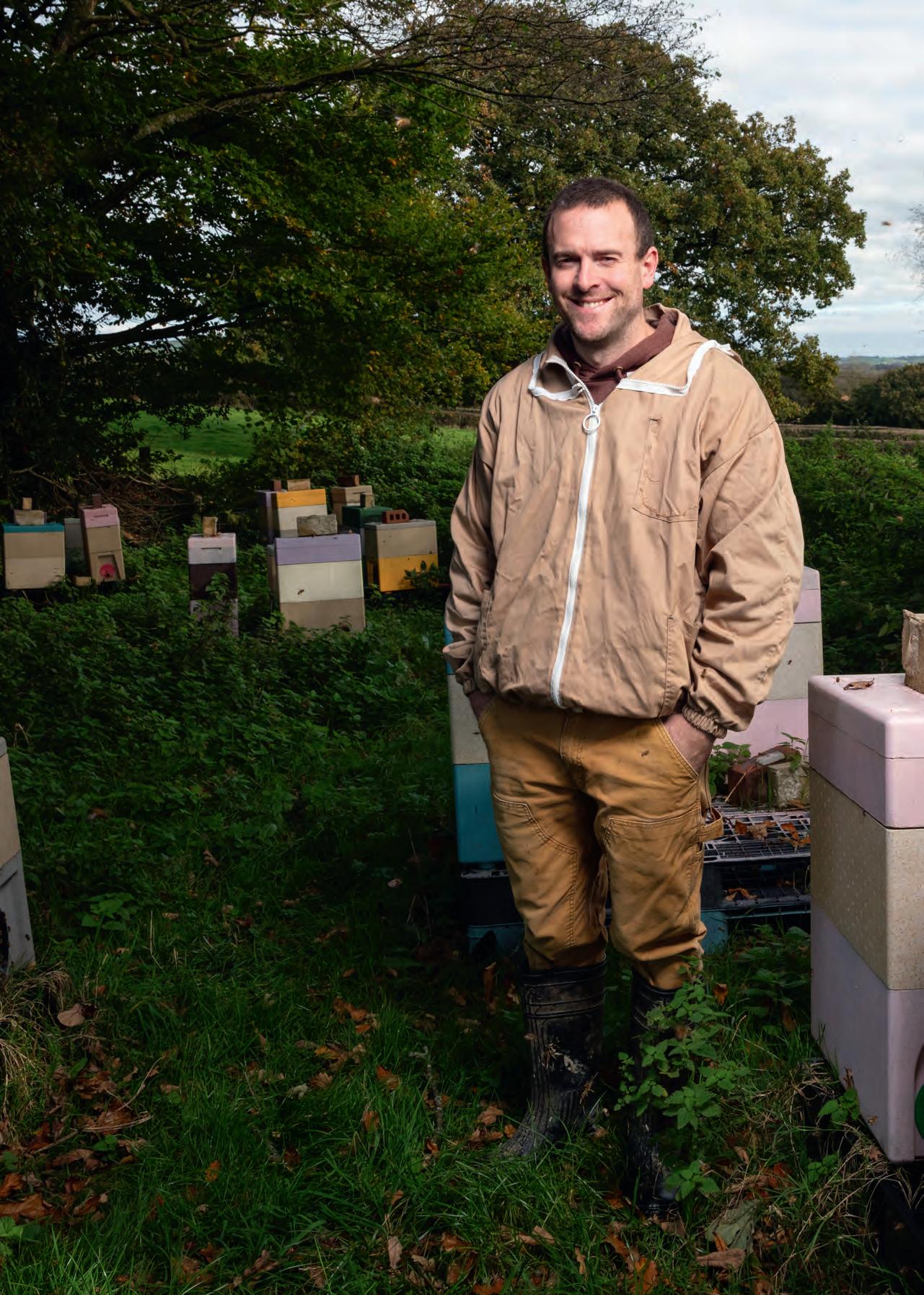
Bee farmer Gruf Rees answers our burning questions on making honey, getting into the trade, and more
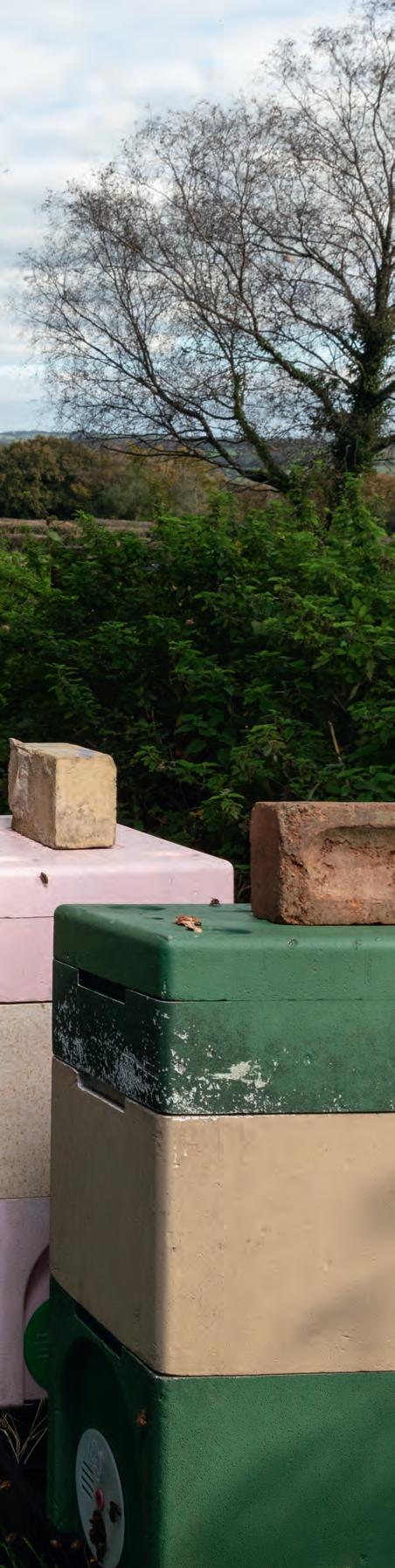
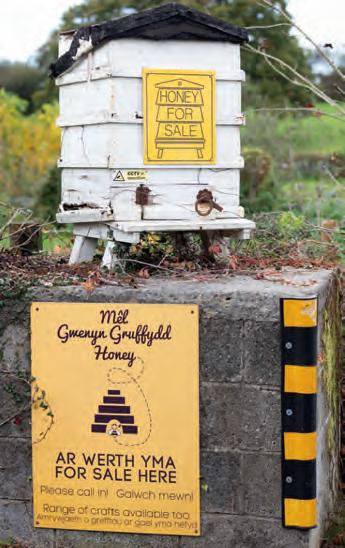
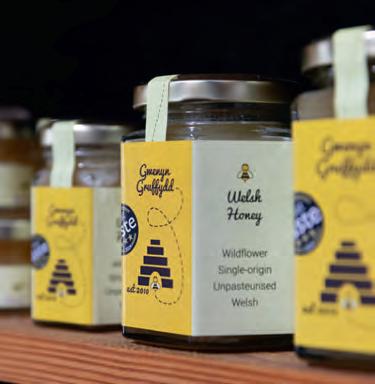
Most people start a business by registering it online or applying for fnance, but not Grufydd (Gruf) Rees of Dryslwyn, Carmarthenshire. Gwenyn Grufydd, Gruf’s honey farm that now spans three Welsh counties, began in the woods one night.
One day, years ago, Gruf was chatting to a farmer friend when the man mentioned he used to keep bees on his land. It was 20 years ago and they’d long stopped production, but the man believed some of the hives were still standing. Gruf, who was a countryside ranger at the time, had always wanted to be a farmer and despite having little practical knowledge of beekeeping, was seriously considering getting his frst hive. He’d mentioned the
idea to practically everyone he knew, so he thought it was time to take action.
What followed was something out of a fairytale. When Gruf asked about the hives, his friend, like a sage sending our hero on a quest, suggested that he should go into the woods and see what he could fnd – if there were any hives still intact, he could have them.
When Gruf went down to the woods that night, he was in for a big surprise. Every one of the hives he found had rotted away –apart from two. These two were protected by a sheet of corrugated iron, which had sheltered them from the worst of the decay. However, when Gruf went to pick them up, he realised the abandoned bee homes were in fact still occupied, and the tenants did not take kindly to being evicted.
After negotiating the hives and their residents into the back of his dad’s truck, Gruf dropped them of in his garden. Stung ‘to hell’, looking at what was left of the hives, this is when our hero began to question everything. Had he bitten of more than he could chew? Could he really become a bee farmer with two hives and next to no experience?
Just when Cinderella believed she couldn’t go to the ball, her fairy godmother came to the rescue. Dorian, a bee farmer from the next village over, having heard through the grapevine about Gruf’s enthusiasm, arrived, as if by magic, on his doorstep to ofer a helping hand. While he couldn’t turn pumpkins into carriages, Dorian did what any good fairy godmother would do – he ofered our hero advice on what to do next.
“So, you want to keep bees, do you?” he asked Gruf.
“Yeah, I’ve got these two hives, and I’ve
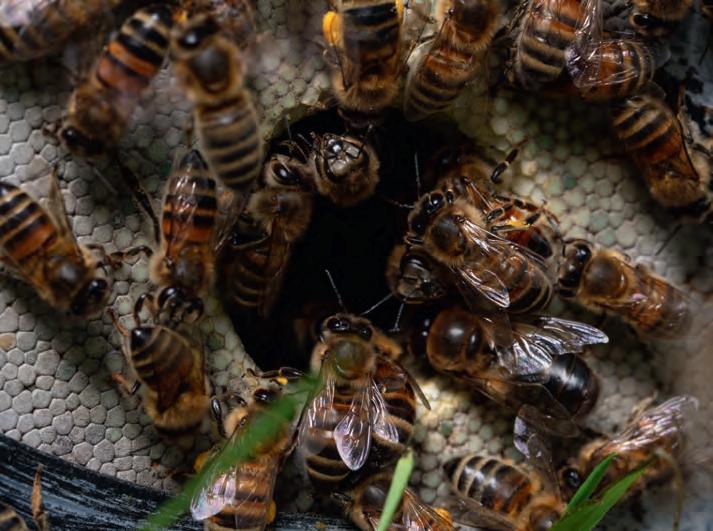
got no idea what I’m doing,” Gruf replied. If Dorian had a magic wand, this is when he would have waved it; for it was agreed there and then that Gruf would spend the summer with him learning all about the trade – and that’s exactly what happened. Gruf spent every weekend that summer at Dorian’s farm, getting handson experience of beekeeping and mending his two old hives in the process.
“If it’s the middle of summer, this year's wheat isn’t here yet, so you’re eating last year’s wheat in the slice of toast you had this morning. It’s the same thing with honey; you're always eating last year’s product.”
Looking back on the whole thing, Gruf believes fate had its part to play in the outcomes of this story. He believes in what many of us would call ‘manifesting’; in other words, focusing your thoughts and actions on what you want and letting the universe answer your call. While Gruf calls it ‘destiny’, some might say it was meant to ‘bee’.
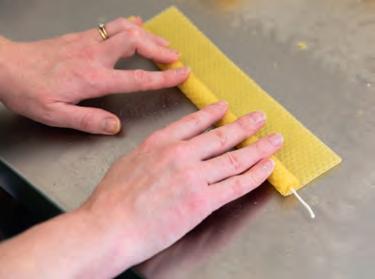
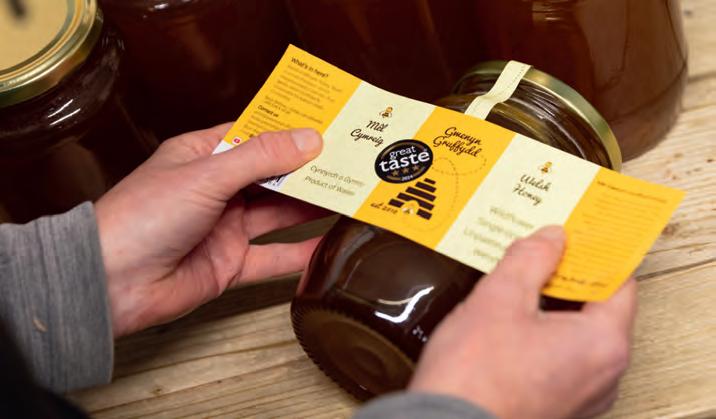
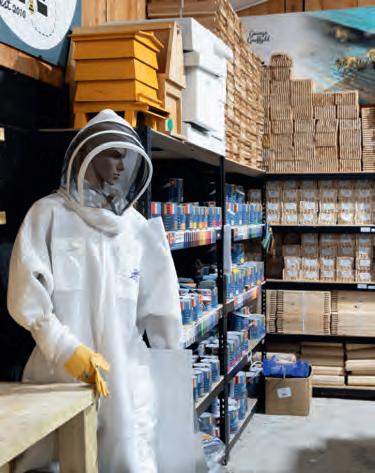
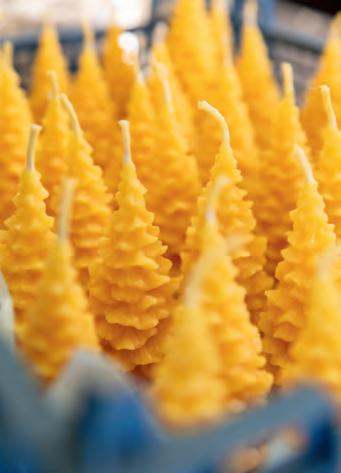
Gruf has come a long way since his two hives and now has around 400 across his ever-expanding enterprise. Not all are used for honey production; some are commercial hives that the business sells on to other farms and hobby beekeepers. As well as honey and hives, the business also sells beekeeping equipment and manufactures its own candles and beeswax wraps.
When we spoke to Gruf in October last year, he and assistant beekeeper Andy had just fnished harvesting their crop, where they take the honey boxes from the hives, and were preparing their bees for winter.
So, what does the winter look like for you, the team and the bees?
“What we’re doing at the moment is
getting the bees ready for a few months in the hives. We’ve got to treat them in a similar way to how you’d worm a cow when it comes into the shed for the winter. We kill all the mites of the bees, and then if they need feeding, we feed them. We feed them sugar syrup, so they’ve got enough reserves.
“This year has been pretty good to us. We haven’t needed to feed them that much. Last year was a terrible year. We had to feed them tonnes just to make sure they had enough feed to go into the winter.
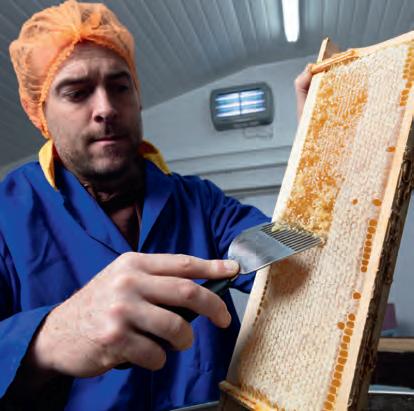
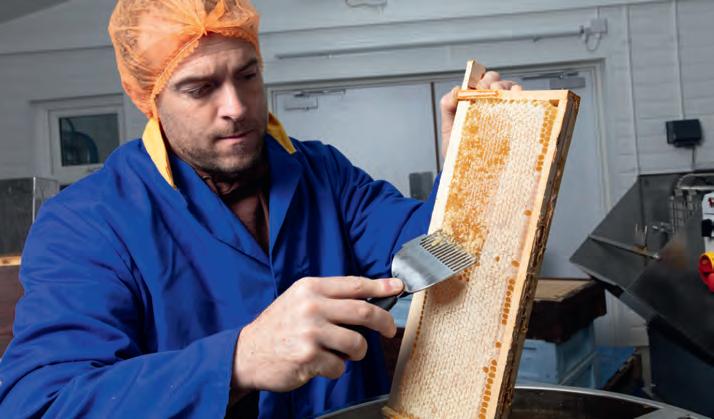
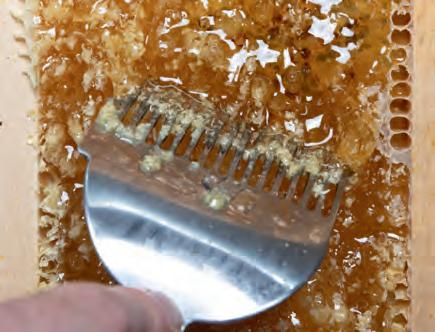
“Simultaneously, we’re now bringing the boxes into the honey house. We cut the wax of the frames to expose the honey. We spin that out using centrifugal force.
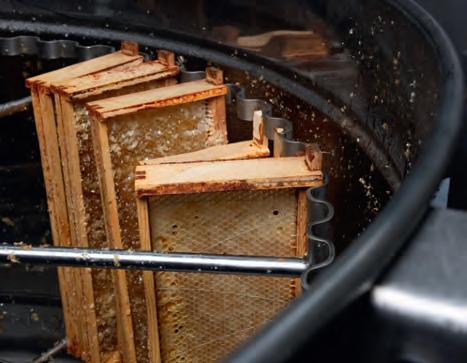
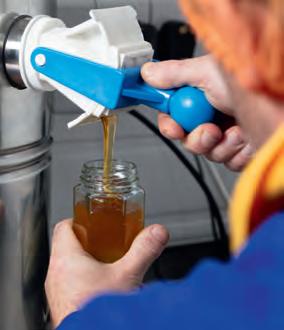
That honey goes down into a sump, the wax is fltered out of it, it gets pumped into a tank, and then we store it in buckets for next year.
“It’s like any other kind of farming, like arable. If it’s the middle of summer, this year’s wheat isn’t here yet, so you’re eating last year’s wheat in the slice of toast you had this morning. It’s the same thing with honey; you’re always eating last year’s product.”
That’s great to hear everything is going well. How do you feel the sector is holding up? Is there a strong demand for bees at the moment?
“The demand for bees from the hobby sector is pretty strong. Commercial bee farmers don’t buy any bees, not unless they’re cheap, because they’ll just make their own, so that’s where the hobby sector comes in.
“It’s estimated that there are 80,000 beekeepers in the UK, but only 400 of them are commercial. Most beekeepers are are at that scale. They don’t produce a lot of honey, but they certainly turn the wheel of beekeeping in the UK.”
Do you think David Beckham and people like him are making beekeeping more accessible?
“Yeah, I do. I think there’s been a big rise in beekeeping recently, and I think the internet has been a big factor in its development.
“We sell all our bees on the website. We ship our bees UK-wide, so you don’t actually have to come here to get them. That has made beekeeping way more accessible. If you were to go back when I started keeping bees, unless you knew a beekeeper, it was next to impossible to start beekeeping. Where would you go and buy bees? There wasn’t anywhere to go but to someone you knew personally.”
You are certainly proof of that; you had to fnd your hives in the woods.
“Exactly. If you were lucky enough to know a beekeeper, they’d have to be willing to sell you a hive. You know, it was next to impossible. The knowledge wasn’t there either. If you wanted to learn about beekeeping, you physically had to go to an association and learn in a club environment. A lot of people haven’t got the time, or they feel that it’s a bit awkward to do that when you’re a bit older. It wasn’t ideal.
“Whereas now you can learn beekeeping of videos. These are the type of videos we create, and there are other people doing those sorts of videos too. You’ve got all this free content out there now that just didn’t exist before.
“If you had a big enough garden, you could keep bees. That’s not possible with other sectors of farming. You physically have to own or rent a few acres to be a sheep or cow farmer. So, you know, there’s a big barrier to entry there; whereas with beekeeping, that’s not really there anymore.”
It sounds like you must have had a hard time fnding a suitable training course when you frst started out.
“Yeah, I did. I would say a lack of options was a bit of a barrier for me. Most of the courses out there are about beekeeping as a hobby. If you want to be a bee farmer, doing one of these courses is a bit like having 500 acres and going to a
smallholding association club, where they teach you how to farm one acre of land. It’s a diferent world altogether.
“Also, nobody in my area was operating on the scale that I am at now, so I didn’t have many points of reference. As I said, it’s part of the reason why I do what I do with my YouTube videos; I go around visiting big bee farms to show people what it’s like.
“I knew I needed to start somewhere so I went and did a course with the Beekeeping Association. It was six weeks total, two hours every Sunday. It was okay – not as good as the hands-on experience I had working with Dorian; and I do remember thinking, ‘well, this isn’t good enough for me’. I never wanted to be a hobby beekeeper. I wanted to be a bee farmer. That’s why getting practical experience was so useful.
“The best way to get into bee farming is, basically, by working at a commercial bee farm to learn the ropes. You’ll learn the way they do stuf, something the books don’t teach. The only issue is that the training opportunities in the sector are still pretty rare.
“We ran an apprenticeship scheme two years ago, and our apprentice is still with us now; and we’ve also got someone coming in soon to train as a beekeeper. We’re doing our bit.”
What advice would you give to anyone setting up a business in this sector?
“One of the biggest problems with farming is the risk you take. A friend of mine taught me this years ago: never have any one customer take more than 20% of your business. If 50% of your income is dependent upon one company or person – let’s say it’s a retailer – and something happens at that retailer, you’ve had it.
“That’s not the case with my business. If I lose a retailer, then it doesn’t matter. If you put your entire business in the hands of someone else, you might think you’re in control, but you’re not.
“You don’t have to be great to start, but you have to start to be great. That’s another of my mottos and it’s important to remember. I didn’t have much experience when I set up the business and look where we are now.”
Looking for something to do in early 2026? NFU Graduate Beth Moore shares her pick of the top events.
1 Jan-24 May
England Premier League Games Games scheduled across England
See website for more information premierleague.com
11 Jan-16 May
Barclays Women’s Super League Games scheduled across England
See website for more information wslfootball.com/fixtures/index
20-28 January
UEFA Champions League
London, Newcastle and Liverpool
See website for more information uefa.com/uefachampionsleague
4 February
Yorkshire Agricultural Machinery Show
York Auction Centre, York
Tickets: Free yams.uk.com
4 February
Dairy Tech 2026
Stoneleigh Park
Tickets from £20, free for under 16s dairy-tech.uk
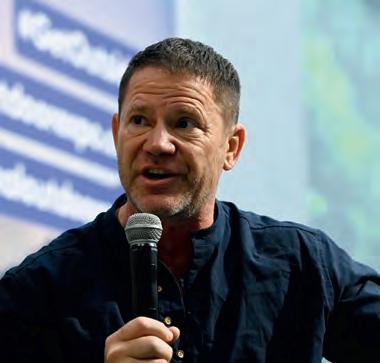
25 February NFU Conference
6 February-14 March
Guinness Men’s Six Nations Cardi , Edinburgh and London
See website for more information sixnationsrugby.com/en/m6n
10-19 February
UEFA Women’s Champions League (UWCL) – Play O s
See website for more information uefa.com/womenschampionsleague
11 February
West Country Farming & Machinery Show
Westpoint Arena, Exeter Tickets: Free westcountryfarmmachineryshow.co.uk
9-11 April
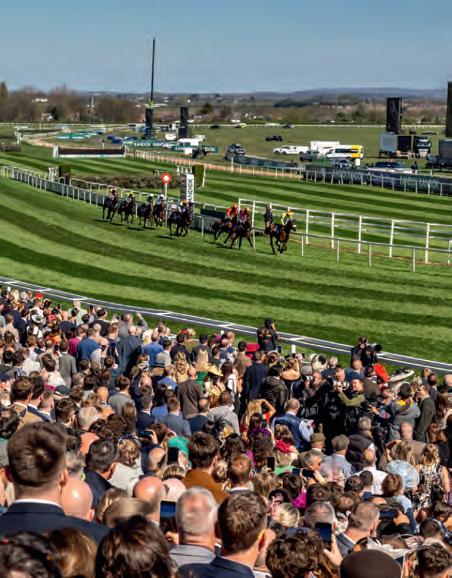
2026 Grand National
12 February
Lincolnshire Farming Conference
Lincolnshire Showground, Lincoln
Tickets free for members or from £16.13 Lincolnshireshowground.co.uk/ farming-conference
13-15 February
British Shooting Show
NEC Birmingham
Tickets from £25 shootingshow.co.uk
19-28 February
Bristol Light Festival
Events across Bristol Tickets: Free bristollightfestival.org



Held at the NEC, Birmingham, the National Outdoor Expo is a vibrant gathering of nature lovers, adventurers and outdoor enthusiasts. Across two days, visitors can hear from inspirational speakers who have dedicated their lives to exploring and conserving the natural world.
More than 200 leading brands will showcase the latest innovations in outdoor gear, clothing and technology designed to help you experience nature more responsibly. Sustainability is at the heart of the event, with many
exhibitors championing green materials and practices that reduce environmental impact.
Try your hand at paddle-boarding on the NEC lake, scale an indoor climbing wall, learn bushcraft and nature-survival skills, or pick up tips on campfire cooking at the Outdoor Kitchen. Every activity is designed to encourage confidence and connection with the natural world, whether you’re a seasoned hiker, a wildlife photographer in the making or someone who simply loves a mindful walk through the woods.
With speakers including Steve Backshall, Ben Fogle, Spencer Matthews, Molly Thompson-Smith and Russ Cook (aka The Hardest Geezer), the weekend promises a wealth of insight and inspiration.
Use code SFM when booking your tickets to get £5 o your tickets at nationaloutdoorexpo.com
21-22 February
Tractor World Show
Three Counties Showground, Malvern
Tickets from £15 tractorworldshow.co.uk
25 February
NFU Conference
The ICC, Birmingham
Tickets: Members NFUonline.com/hot-topics/nfuconference/
28 February-1 March
National Equine Show
NEC, Birmingham
Tickets from £10 nationalequineshow.com
1 March
Burghley 7 Road Race
Burghley Park, Burghley House
Tickets: £28
burghley.co.uk
4 March
Farm Expo 2026
Kent Showground, Maidstone
Tickets: Free kcas.org.uk/farm-expo
10-13 March
Cheltenham Festival
Cheltenham Racecourse, Cheltenham
Tickets from £42.30 thejockeyclub.co.uk/cheltenham
13-15 March
C2C: Country To Country
The 02, London
See website for more information c2c-countrytocountry.com
21-22 March
National Outdoor Expo
NEC Birmingham
Tickets from £15 nationaloutdoorexpo.com
21-23 March
Practical Classics Classic Car &
Restoration Show
NEC Birmingham
Tickets from £29.50 thenec.co.uk/whats-on/practicalclassics-car-and-restoration-show/
2 April
CountryTastic
Three Counties Showground, Malvern
Tickets from £11.85 countrytastic.co.uk
4 April
Oxford and Cambridge Boat Race
River Thames
Tickets: Free theboatrace.org
8-12 April
Blue Chip Championships
Addington Equestrian, Buckinghamshire
See website for more information bluechipchamps.co.uk
9-11 April
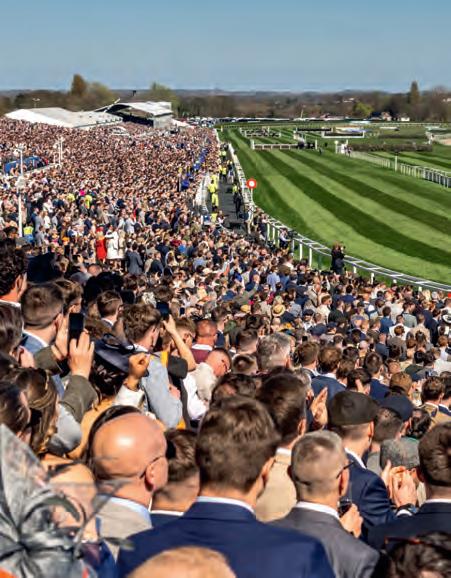
2026 Grand National
Aintree Racecourse
Tickets from £28.80 thejockeyclub.co.uk/aintree/eventstickets/grand-national
13-15 February British Shooting Show

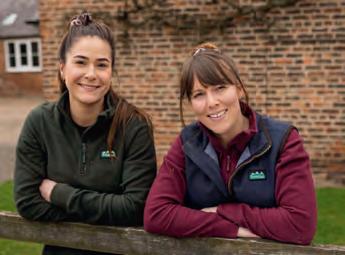
Engage directly with leading industry experts on the issues that matter most at Dairy Tech, held on 4 February at Stoneleigh Park, Warwickshire.
With Electronic Identifcation (EID) set to become mandatory for English cattle farmers in 2027, the event will feature a dedicated session explaining what the new rules mean, timelines for farmers across the devolved nations, and how EID technology can enhance on-farm practices. This is a mustattend for anyone wanting to stay ahead of regulatory changes.
Milk market trends will also be on the agenda at the Dairy Hub, where analyst Chris Walkland will provide forecasts for 2026 — a vital session for farmers navigating falling milk prices. Meanwhile, at the Innovation Hub, social media infuencers Rebecca Wilson and Charlotte Ashley from the Wilson & Ashley Podcast will host a live session exploring the very latest dairy technology.
Dairy Tech will also spotlight solutions to one of the industry’s most pressing challenges: labour shortages. Attendees will hear from real examples of how dairy farmers are recruiting workers from outside the industry, building skills, and creating strategies to retain staf efectively.
Chair of the Royal Association of British Dairy Farmers (who run the event) and Cumbrian dairy farmer, Robert Craig said: “Dairy Tech has become a must-attend event in dairy farmers’ calendars. It continues to be a really positive way to kick-of the year by bringing farmers together and connecting businesses, suppliers, buyers and the organisations that work for them.”
Register your interest for the show today at www.dairy-tech.uk

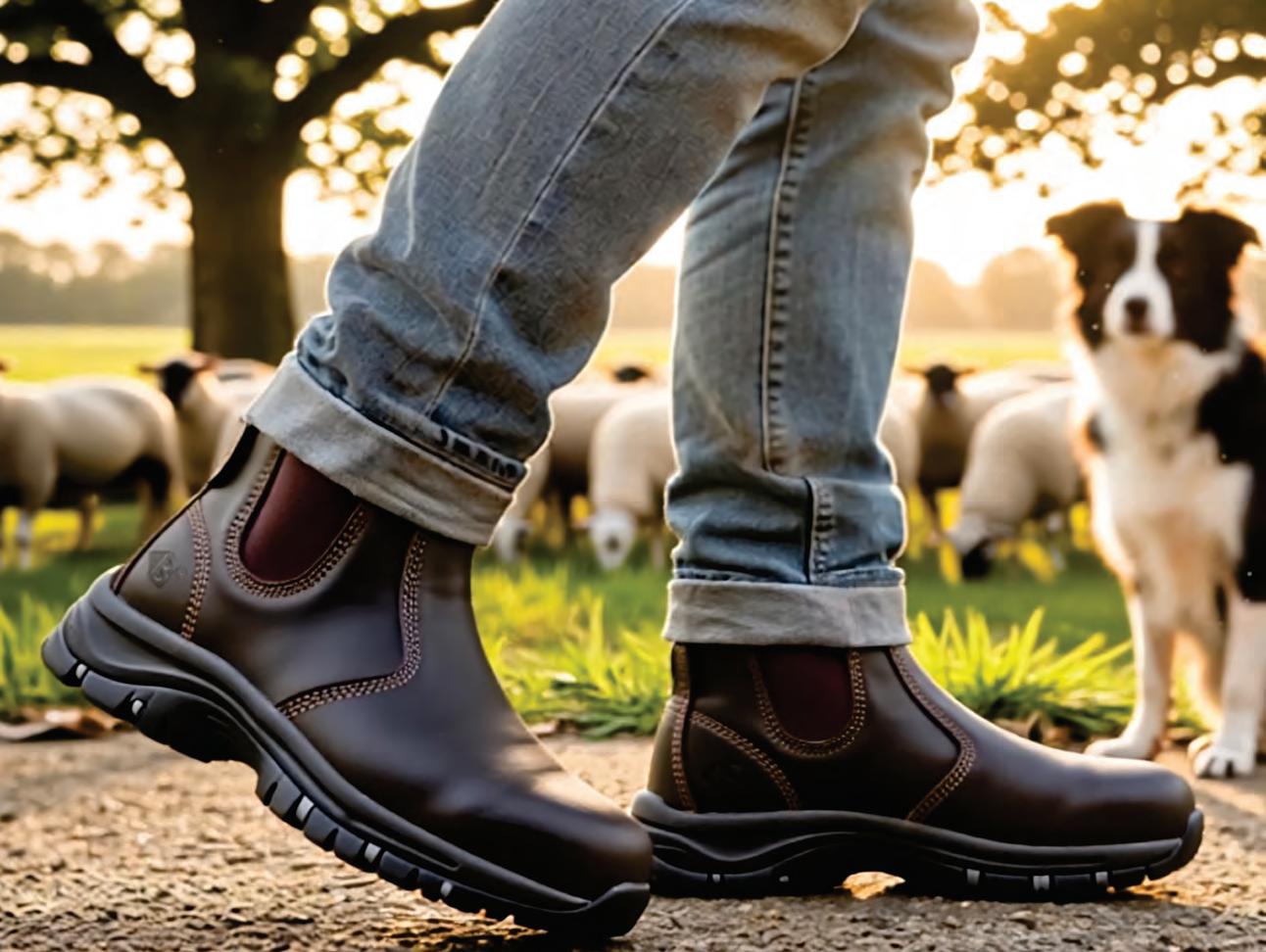
Acomprehensive UKCA /CEsafet y specifcation at anamazing price. WiththelookofOz you love combingstrengthwithlight weight that redefnes thenotion that cheaperequates to lesser
Arubberoutsole that ’s tough, durable yetlight weight with anti-penetration ‘NailS top’ protection alongwithantislip andoil andheatresistance.
Widerfttingwithbreathablewater resistantleather uppers andapremium comfor tinsole- thisis abootyou canwearall day, ever yday
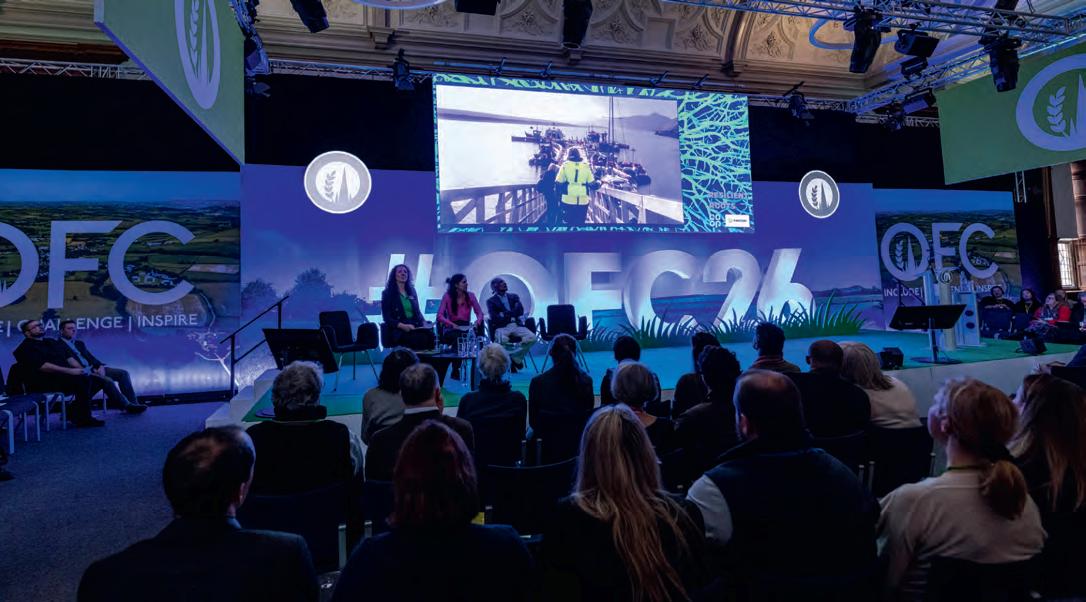
Tackling misinformation, the future of farming and a royal visit. Here’s what you missed from this year’s Oxford Farming Conference.
‘How do we defne resilience?’ This was one of many questions posed by HRH the Princess Royal to the audience of this year’s Oxford Farming Conference (OFC).
“Are we defning it slightly diferently now?” she asked, refecting on the conference’s 90-year history, and considering what farmers at the frst OFC, held in 1936, would have thought about the issues of today.
“Would they have recognised the theme? Would they have interpreted it slightly diferently? Or would they have all said, ‘well, that’s what we do – we are all resilient because we’re in agriculture’? Is it about who, or what is resilient?”
The questions asked at this year’s conference, she said, would help to tease out some of the answers; adding that it was ftting to consider the topic of resilience now given the ‘intense’ challenges felt by the farming and wider rural community. I’m sure many in the room agreed with Princess Anne on that last point.
The conference, held at the start of January, arrived only a few weeks after the government announced it would raise the threshold on planned inheritance tax
changes from £1 million to £2.5 million. While not a complete reversal of planned action, the changes will greatly reduce the tax burden for many family farms and represents a major win for the farming sector after 14 months of uncertainty, and determined campaigning by the NFU, industry representatives and farmers up and down the country. The work done to #stopthefamilyfarmtax is a prime example of staying resolute in the face of danger, making the OFC’s focus on resilience particularly pertinent.
It also meant that the political keynote, which was delivered this year by Defra Secretary of State Emma Reynolds MP, was readily awaited.
As part of her speech, Ms Reynolds outlined reforms to the Sustainable Farming Incentive, a funding scheme that helps farmers to adopt and maintain sustainable farming practices. The NFU welcomed this announcement. NFU Deputy President David Exwood said it was positive to hear the Defra Secretary talk about “much-needed plans to reform the SFI” and her commitment to work with the sector, “but there remains a huge lack of detail that farmers and growers urgently need and this uncertainty
continues to undermine farmers’ confdence, ability to invest and do the best for their business”.
The Defra secretary also announced a new £30m Farmer Collaboration Fund, to be invested across three years, which will support farmer groups in growing their businesses, building partnerships and sharing best practice. The NFU welcomed the fund’s focus on growing farming businesses.
Ms Reynolds added that the government’s vision is “to help farmers improve their productivity and proftability; and to collaborate on delivering positive environmental change together”.
Jumping on the point about collaboration, vice chancellor of Harper Adams University Ken Sloan asked the Secretary of State how she would help universities and training providers make sure that the current, ‘bleak’ narrative around the industry’s future is not getting in the way of inspiring the next generation of farmers.
Ms Reynolds said she hoped that, given the changes made in recent months, the industry would start to see changes to the existing narrative.
“We need new talent, new blood in any
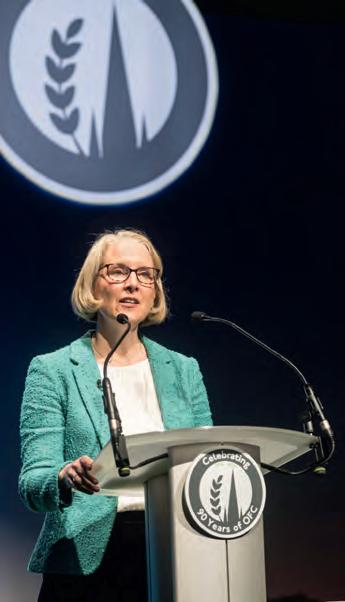
sector, but particularly in farming,” she explained.
“We want to encourage the next generation. It’s something that I think we need to work on together. We need the sector to embrace it. It’s something that Angela [Eagle] and I are very passionate about. We need to get the right skills to drive productivity and proftability.”
Throughout the programme, attendees heard a range of views on resilience, spanning the importance of mental strength when dealing with difcult problems, to potential trade opportunities and ways to ensure fnancial stability amid an increasingly unpredictable landscape. There were several talks on the future of farming, the challenges and potential for growth.
Jack Bobo, executive director at UCLA Rothman Family Institute for Food Studies, who delivered the conference’s opening keynote, spoke to the room about the stories circulating in current discourse on food and farming, and how creating a more positive narrative could help with public perception and driving the industry towards achieving its sustainability goals.
A young farmer in the audience asked an interesting question about how farmers in the ‘age of the internet’ can protect agriculture from the barrage of misinformation online and in the media. He asked Mr Bobo how farmers could put forward a positive and authentic case for agriculture today.
“There are a couple of ways to start this conversation,” Mr Bobo replied. “One is that if you don’t participate in the conversation, then you shouldn’t be upset
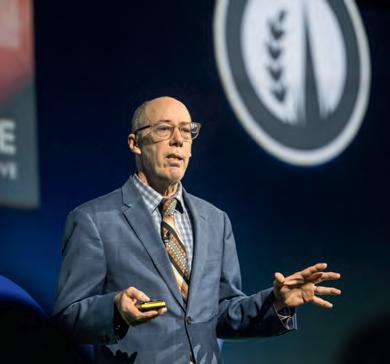
that it doesn’t have anything to do with your real interests.”
Mr Bobo explained that he believes too many people don’t participate in the public conversation; they don’t put forward their positive arguments about farming, and that there is an opportunity for voices in the UK to get involved in shaping the narrative.
He also paused a moment to highlight the fundamental issue with using the word ‘misinformation’ in these kinds of debates. “When we talk about the term misinformation, it assumes that the other information is wrong,” he explained. “If you’re trying to explain misinformation to people, well, that means you’re trying to convince them they’re wrong, as opposed to having a conversation about what the world could be.”
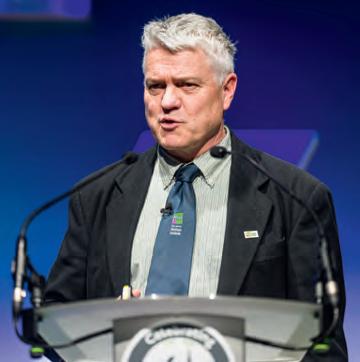
Mike Rivington, senior scientist at James Hutton Institute, added that a lack of critical thinking about negative narratives in the public arena is concerning.
“I think that is the biggest challenge for education across the world: how we get our young people to actually critically evaluate sources of information, and not just take things as fact,” he explained. “Science is about fact, or as close to fact as we can get, whereas unfortunately what we’re hearing a lot is just opinion.”
This naturally led to a discussion about farming’s place within education.
A question from the audience was: “Do you think the national curriculum plays a part in educating people on the positive impacts of farming?”
Jack Bobo frmly agreed. Referencing the work of data scientist Hannah Ritchie, he argued that the perception that ‘the world is doomed’ is a common misunderstanding of the idea that “things are getting better but just not fast enough”, adding that a change in mindset and narrative could play a signifcant role in helping people come together to solve the big problems.
Circling back to the theme of the day, speakers were asked whether it was possible to measure resilience.
Laura Lukasik, founder of regenerative agriculture services provider Numen Bio, suggested that there were various kinds of resilience that needed to be considered to accurately formulate a metric for such a thing. Researchers would need to look at soil health and natural resources, how farmers and individuals feel about the system, and lastly the strengths and weaknesses of the existing food system.
Mike Rivington took a similar view: “Can resilience be measured? Yes, because we can measure people’s behaviour. We can measure soil quality improvement. There’s a whole range of things that we can measure that gives us good indicators to see if we are progressing towards resilience.”
He added: “I’ve been thinking, what will OFC 2050 look like? It’s only 24 years away and I would like to think that perhaps the title might be ‘We Achieved Resilience’, because in terms of an agricultural and a land use context, yes, we can measure resilience and hopefully use [that metric] to tackle the challenges ahead of us.”
“Attending the Oxford Farming Conference as an OFC Scholar was a fantastic opportunity. It was great to catch up with familiar faces and meet new friends, as well as to listen to a variety of conversations and presentations on issues facing the industry. I'm excited to use my new ideas and connections in the day job and would strongly encourage anyone aged 18-30 to apply to be a scholar next year!”
Phoebe Traquair

DERBYSHIRELANDSKILLS (INCORPORATINGDERBYSHIRELAND-BASEDTRAININGAND ASSESSMENTCOMMITTEE &OCKBROOKTRAININGSERVICES) RegisteredCharityNo505745 NPTCCity &GuildsCentreNo741174
Telephoneor Text01623812641/07970415211
Emailjackie.twilley@btinternet.com Websitewww.ockbrooktraining.net &www.derbyshirelandskills.org.uk
PROVIDEROFQUALITYLANDBASEDTRAININGSINCE1975
CITY &GUILDSNPTCCERTIFICATESOFCOMPETENCE AND LANTRA AWARDS
SAFEUSEOFPESTICIDES SAFEUSEOFCHAINSAWS TRANSPORTOFANIMALS
TRACTORDRIVING,SHEEPDIPS,VETERINARYMEDICINES,FORKLIFTTRUCK& TELESCOPICHANDLER, ATV’S.BRUSHCUTTERS/TRIMMERS,BRUSHWOODCHIPPERS, MOWERS,MOLECONTROLANDMANYMORE
AGRICULTURAL &BUSINESSMANAGEMENT CONSERVATION LEGISLATIONANDTECHNICALSUBJECTS
EnterpriseGroupsforArableCropsand Vegetablesalsoavailable FORFURTHERINFORMATIONCONTACT JACKIETWILLEY
REGISTEREDWITHLANTRA,CITY &GUILDS,UKRURALSKILLS, andMEMBERSOFC.D.S.TRAINING










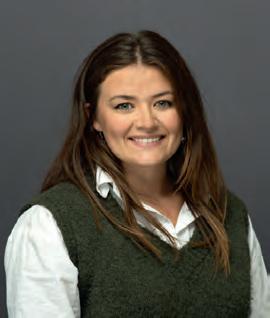

What’s got Shed Talks presenters Bizza Walters and Luke Cox talking? They share their current media obsessions.

Bizza: During the past year I’ve really embraced the world of country music. My 2025 Spotify Wrapped featured four country artists (top of the list was Morgan Wallen)… a change from my uni days! My good friend Molly is a country music guru, and it’s probably thanks to her I’m embracing the genre. The songs often celebrate rural life, hard work and agriculture, and there’s something comforting about hearing stories that reflect the rhythms of the land. The melodies and lyrics remind me of the simplicity and beauty of country living, and how lucky we are to experience it.

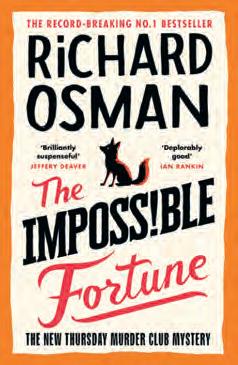

by Richard Osman

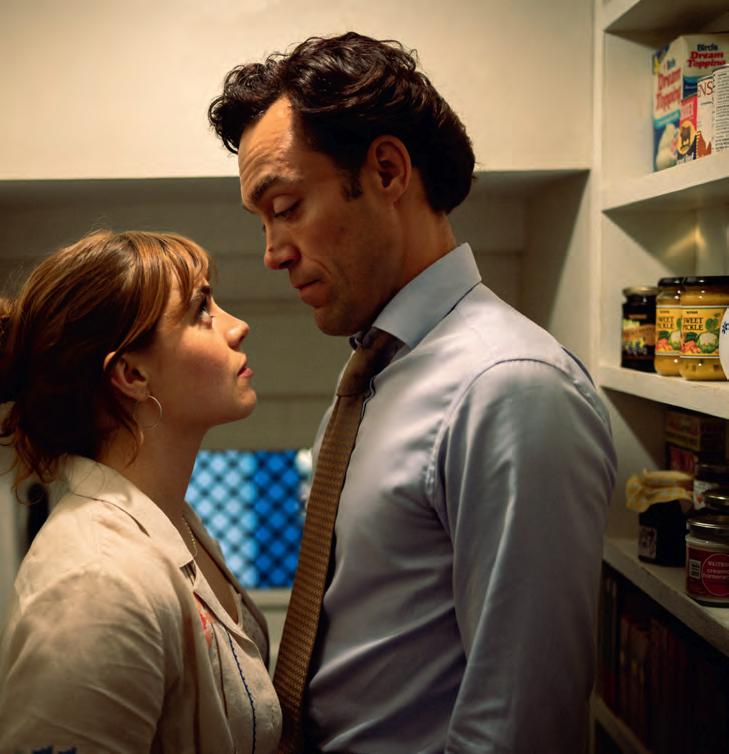
Luke: I'm really looking forward to the second series this year. I don't watch much TV and it took a lot of convincing to give the show a go, but I've completely bought into it. It helps that it is set where I live in the Cotswolds, with some of the filming at the site literally just across the road from our family farm. When Jilly Cooper created the character Rupert CampbellBlack she based him on three reallife individuals, and two of those people have strong connections to the local farming area.

Luke: I read a lot of heavy business books, constantly in pursuit of learning something new and improving how I work on behalf of combinable crops growers in England and Wales. No one wants to read about a business book recommendation though, so I've picked some of the easiest and most enjoyable reading that I intersperse within my non-fiction. Richard Osman has created a fascinating franchise of books, which are compelling and easy to read in equal measure.
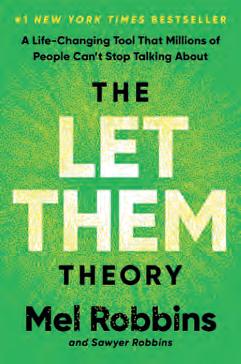
by Mel Robbins
Bizza: I often struggle to find time to sit and read, because there is always another job that needs doing. However, after a girly catch up with my friend Daisy, she said I must read this. It’s about learning to stop trying to control other people’s actions, opinions and emotions and instead focus on what you can control, freeing up your energy by letting others be themselves. I am very much a people pleaser and worry about making sure my actions and words please others, sometimes forgetting about my own. This book has totally changed my mindset.
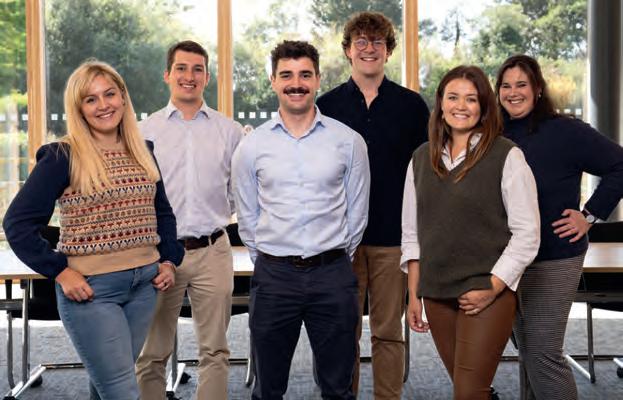
Join Luke, Bizza and the team as they take listeners behind the scenes of farming and growing in Britain. Each episode brings together farmers, growers and industry voices to share experiences, ideas and perspectives. Whether it is national lobbying wins, regional priorities or the everyday realities of life on farm, Shed Talks is about real people and real stories.


Listen now on the NFU App, Spotify, Apple Podcasts or wherever you get your podcasts.

Luke: When George Osbourne and Ed Balls announced they were launching a podcast in September 2023, I was immediately hooked. I find their discussions on the latest political issues insightful, relevant and thought provoking. The two former political enemies often disagree but very rarely argue, and it makes for a great listen during the early morning drive into NFU HQ. I haven't missed a single episode since the podcast launched – it's well worth a listen.






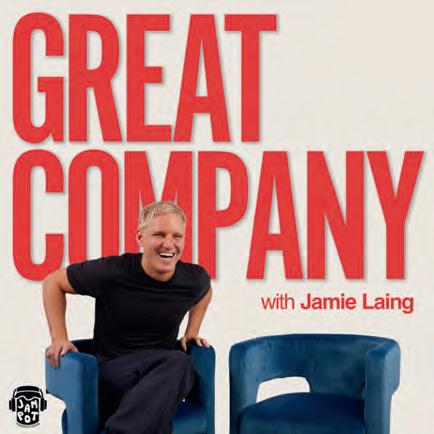
Bizza: I love hearing people’s stories, and Jamie has a real talent for getting his guests to open up and tell stories they’ve never shared before. I enjoy how naturally the conversations unfold into honest, funny and sometimes surprising moments. It feels like I’m listening in on the kind of stories you’d only hear when people feel truly comfortable, which makes every episode engaging and refreshing.
Six talented young farmers have been named as the NFU’s new Student and Young Farmer Ambassadors for 2026/7
It’s ofcial: the next group of student and young farmer ambassadors has been chosen. Jack Ancell, Jessica Madge, Lydia Gardner, Nat Watkins, William Evans and Nikita Fineran, will all play a vital role in telling the story of British farming to members of the public as part of a prestigious leadership and development scheme.
The Student and Young Farmer Ambassador Programme (SYFAP) ofers NFU members aged 18-30 the opportunity to infuence the future of the agricultural industry. Throughout the programme, ambassadors develop skills, gain national exposure and represent the NFU in advocacy, media and national events. The
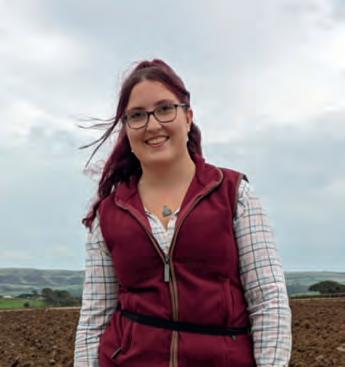
Nikita dreams about running her own farm and raising sheepdogs. She’s already made a start on her ambitions, with a puppy to train and her own fock of sheep to tend. As she works towards her goals, Nikita aims to help others starting out in agriculture, particularly those with limited access to training.
“I want to help others in any way I can and be a source of inspiration to other young farmers. I am ready to make the connections and gain the knowledge I need to help me achieve my goals.”
2026/27 group will be involved in multiple projects such as recording for the Shed Talks podcast and helping to shape events for young people within the farming sector. It was announced in September last year that the scheme, which previously ran for 12 months at a time, will run for two years to give the new cohort a chance to attend more events and build more meaningful networks.
Judges on the panel for this year’s programme report that the standard of applications was as high as ever, and that the selection process was particularly difcult. The successful candidates represent a diversity of backgrounds, regions and areas of interest.
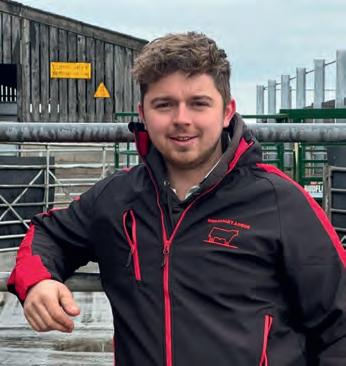
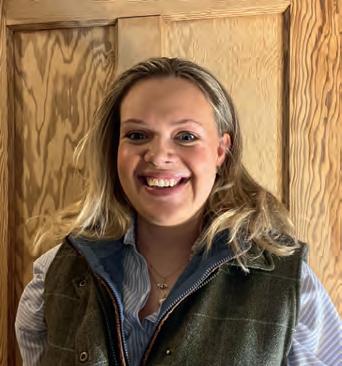
Despite not coming from a farming family, Jack started a small agricultural contracting business when he was 17 years old, having learned his trade working at a beef suckler farm in Cheshire. He believes there is a great opportunity for all farming businesses to demonstrate their positive impact upon the countryside and local communities.
“I would like to give back to the industry, by demonstrating the vast environmental and social benefts of our farming systems.”
Jessica’s love of farming inspired her to pursue a degree in agriculture, where she specialised in countryside education and the importance of bridging the gap between farming and the wider public. She believes that efective storytelling and clear advocacy are crucial for a progressive and inclusive farming future.
“I am eager to represent the next generation of farmers and contribute to shaping the future of our industry.”
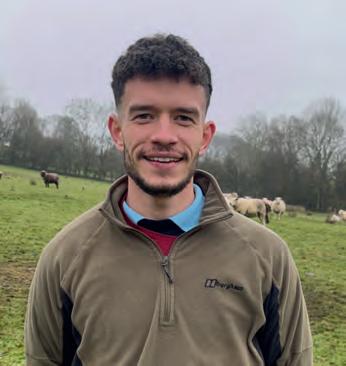
William, who comes from a long line of livestock farmers based in Montgomeryshire, is on a mission to ‘put his own stamp’ on farming. He wants to do this by helping support and elevate new voices within the industry, and in doing so, show the nation what fantastic work farmers up and down the country do every day.
“I am looking forward to meeting like-minded individuals from all sectors of the farming industry and learning more about the diferent systems and enterprises out there.”
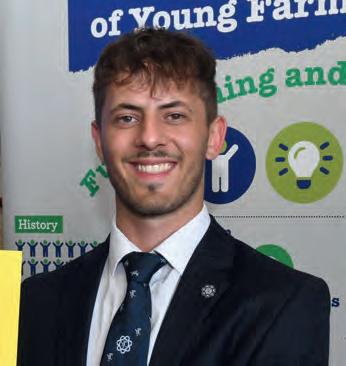
As well as studying for a degree and working on a 600-cow dairy unit, Nat is a vocal advocate for the farming sector, taking every opportunity to speak to the public about agriculture. During the past year he’s appeared across multiple news outlets, encouraging audiences to get into farming.
“Since I frst heard of the SYFAP, it has been a personal goal of mine to become an ambassador. I would like more than anything to boost the sector and bring in fresh talent, and so I am really excited to be involved this year’s programme.”
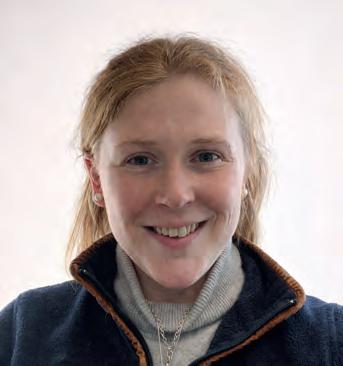
Having grown up with strong rural roots, Lydia currently works with a small Cotswold frm as a graduate valuer and consultant. She is proud to help individual farmers locally and is eager to broaden her impact – working on behalf of farmers across the UK to help secure a stronger, more sustainable future for the industry.
“I’m keen to explore new areas of the agricultural industry, further enhancing my ability to support farmers through the SYFAP ambassadorship.”
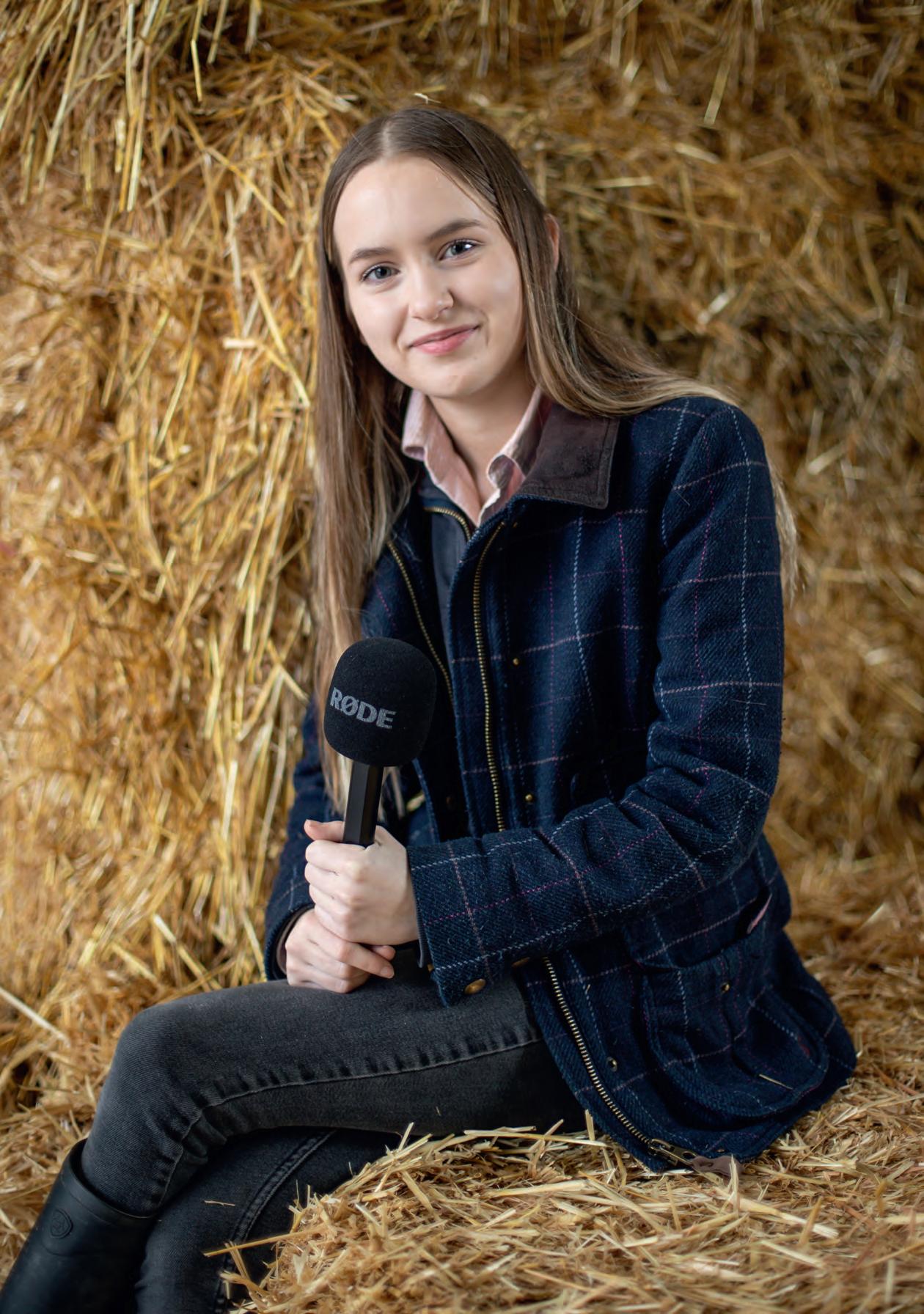
One young farmer is making sure rural voices are being heard by speaking about the big issues
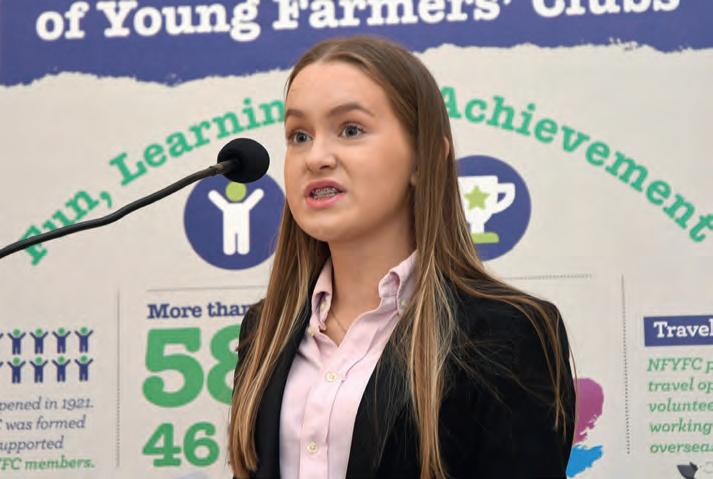
Jess Sharp was 10 years old when she entered her frst speaking competition. Since then, she’s competed at county level, won numerous awards and spoken at a rally in Westminster, which attracted more than 32,000 people – and she’s done all this before getting her driving licence.
I don’t know about you, but even the idea of public speaking makes me nauseous, so how does 17-year-old Jess do it?
“If you’re talking about something you’ve got a passion for, it makes the whole thing a lot easier,” she says assertively.
“It makes you seem confdent, even if you aren’t. I try and speak from the heart because I fnd that’s what resonates with people, they know you are genuine. I’m really happy to talk about British farming and share my own experience because I have a passion for it. Yes, I get nervous, but the feeling goes away when I start because I want to do well. I want to speak to people about something important.”
If you were one of the thousands of people who attended the Save British Farming rally in February, you would know that Jess doesn’t shy away from uncomfortable topics.
Speaking about the impact of the family farm tax, she called out the government’s short-sightedness in imposing the policy on future generations of farmers, claiming that ministers failed to recognise the “back-breaking work, the early mornings [and] the sleepless nights” that farmers endure to feed the nation. She added that inheritance tax measures were just one of myriad barriers – including (but not exclusive to) subsidy cuts, the terms of the new US trade deal, and substandard imports competing with British produce –that have been unnecessarily enforced on the sector and are hindering its growth.
What particularly resonated with the audience, as it was received with a hearty applause, was the positivity Jess had for the future of the industry despite the immense challenges ahead.
There are many opportunities for young people today, she said, to get involved in farming and “to make it something new,” adding eloquently that “there is still no better or more important job than the one rooted in the land.”
“At the moment, I fnd the most interesting topic to speak about is the inheritance tax. It is a big issue that will afect my future and, indeed, everyone’s future who’s involved in agriculture,” Jess explains.
“Being able to share my opinions, to share the impact it will have on young farmers, has been a great experience. There is support for the farming industry
out there, but showing people why they need to protect it is vital at the moment. I hope that by sharing my experience, I can raise awareness and make a diference.”
There is an old saying that you have ‘to be the change that you want to see in the world’, and going by her track record, Jess lives by this mantra. Since entering her frst debating competition at her local Young Farmers’ Club (YFC), Jess has gone on to achieve great things.
During the past two years, her debating team has won many competitions, with Jess picking up an award for best speaker. In April, she attended the YFC National
“There is support for the farming industry out there, but showing people why they need to protect it is vital at the moment”
Meeting of Clubs, where she spoke on two motions and was awarded a trophy for the most outstanding member contribution at the AGM.
As well as speaking at rallies and competing at competitions up and down the country, Jess flls her time creating inclusive spaces for young farmers as a county youth coordinator for Leicester’s YFC. She is currently Leicester YFC ‘Junior Member of the Year’ and was runner-up for the East Midlands title.
At home on her family’s beef and arable farm near Eaton, Jess is making a
diference wherever she can. She tells me she is “involved with most things”, from harvesting and cultivating to maintenance and stock management. She’s done farm safety training, taken her telehandler certifcate and is waiting to take her tractor test. She’s even helping out with one of the farm’s diversifcation projects, making important decisions on the renovation of their farm cottages; and she is doing all this while studying for her A-Levels.
I know what you’re thinking, ‘how is she managing to do all this?’ Well, according to Jess, she makes it work because she is enthusiastic about what she does.
“When I frst found out about the debating competitions, I was encouraged to give it a go, and I found it really interesting. That’s really it. I started doing something I enjoy, and I haven’t stopped doing it,” she explains.
Her positive mindset and strong work ethic will surely be assets when it comes to fnding her place within the industry. While she is not entirely set on what area of agriculture she wants to specialise in just yet, she knows that she wants to do something that helps and inspires others. A career in politics is not of the table; in fact, she’s already eyeing up Angela Eagle’s role at Defra.
In the meantime, Jess is focusing on developing her industry knowledge and leadership skills, with debating and speech writing taking centre stage in this plan.
She says: “Public speaking is a great way to share your thoughts across to others and I know it is going to be a lifelong skill and something that will help me in the future. I’m so glad I gave it a go, and I’d say to others who are thinking about it to ‘just go for it’ and give it your all. It is something I never imagined I would enjoy but it has helped me achieve so much.”
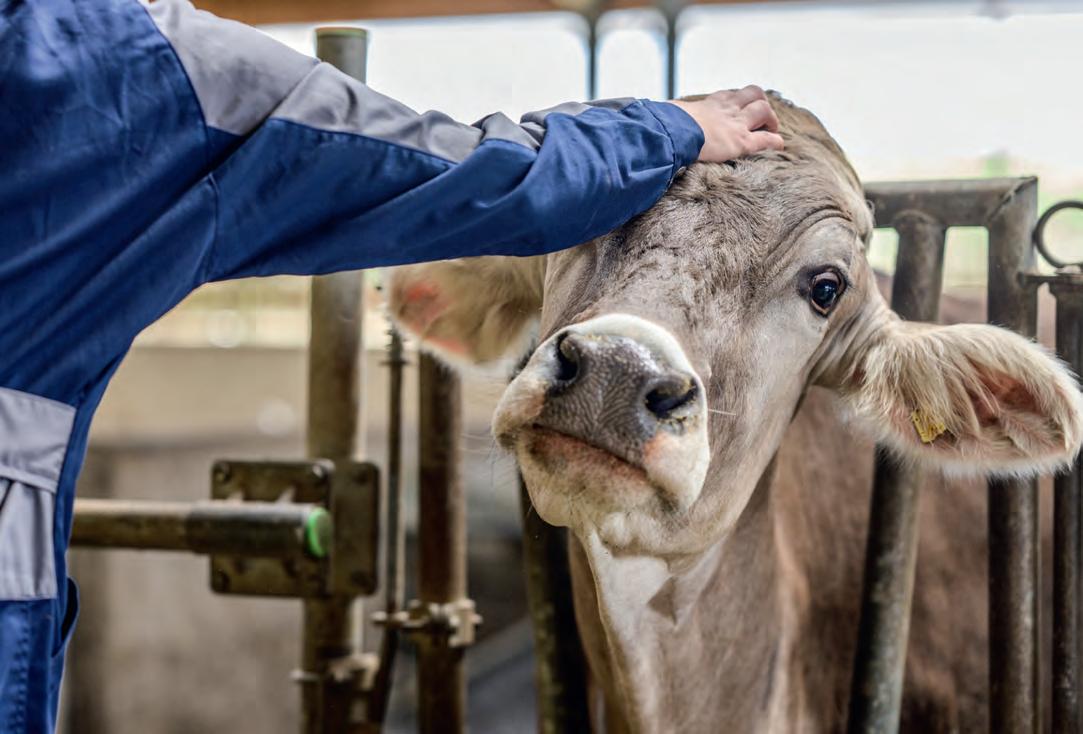
Farm animals have played a vital part in one woman’s recovery from a devastating illness
Neive Burke was in school when she sufered a severe stroke, and like many other survivors of the condition, was left with life-altering outcomes. At the age of just 13, Neive underwent what most of us would consider to be unimaginable: she had to relearn how to walk and speak. It was during her recovery that she discovered a natural ability for animal handling. As part of her physiotherapy programme, Neive was encouraged to look after horses, and it quickly became clear that being around animals was essential to her development. It brought a calmness, a sense of peace that she’d been robbed of. That’s why, when she left the hospital, she left with a renewed sense of purpose –she was going to pursue her passion and go work with animals. She was going to help care for the thing that helped her through
the worst experience of her life.
It’s a common misconception that stroke only afects older people. In fact, it can happen to anyone of any age. According to the Stroke Association, one in four strokes happen in people of working age; and the latest data from across England, Wales and Northern Ireland suggests the percentage of stroke patients under the age of 60 is around 16%.
It’s still not fully understood why it happens in younger people, but certain medical conditions, stress, lifestyle choices (including smoking and drinking too much alcohol), and even genetics have been shown to contribute to a person’s risk of stroke.
What is well documented are the efects the condition has on a person’s body. Around a third of people in the UK experience aphasia after a stroke, which
means they are unable to speak, write, or understand speech or writing because of damage to the brain, with many reporting muscle weakness, balance problems, vision issues and even seizures.
It’s the stuf of nightmares, but for Neive, at one point, it was her reality. It therefore cannot be overstated how far Neive has come to get to where she is today, studying agriculture at Barnsley College’s Wigfeld Farm campus.
“She didn't move for 10 minutes.
I got so stressed out about it...”
“I started out doing physiotherapy sessions that involved animals – that’s what inspired me. I realised I wanted to work with livestock and learn hands-on animal care skills. I also love working outdoors in all weather and being active, so agriculture was a natural choice for me,” Neive explains.
“I’m really enjoying college. I like the practical lessons — especially working with sheep and dairy cattle, because I enjoy working closely with animals every day, seeing them grow and improve with the care we give them.
“It’s also great to feel part of a team that looks after the land and its livestock, and nothing beats the satisfaction you get after a good day’s work.”
As part of her course, Neive has been learning about milking, feeding and cow care at a local dairy farm that her group visits every two weeks. The dairy sector is of particular interest to her because of the routine and responsibility it provides. She has also bonded with the farm’s two Jersey cows, Ginger and Biscuit. The pair, she says, can be a bit boisterous sometimes but part of her job at the moment is to train them, to get them used to being on a halter, so that hopefully they’ll be better behaved in future.
Neive should be up to the task as she is no stranger to unruly animals. Showing is another key component of Barnsley’s course, and the college hosts an annual Spring Show for its Level Two and Three students to showcase their skills in animal handling, public engagement and stockmanship. At this year’s event, Neive was tasked with handling Coconut the Kunekune pig, and things didn’t quite go to plan.
“Coconut is a very sweet pig, but she’s extremely stubborn,” she laughs. “She was fne while we were practising but on the day of the show she got stage fright. She didn’t move for 10 minutes. I got so stressed out about it, but I managed to persevere.
“It turned out to be a blessing in disguise.
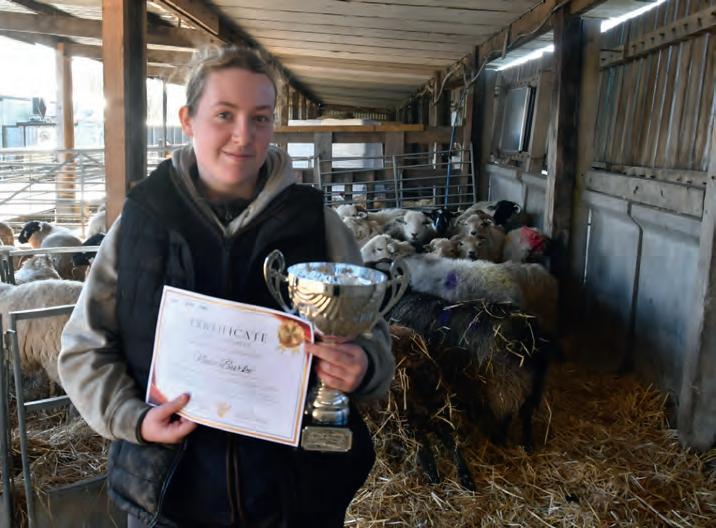
“After missing three years of school, I was worried I wouldn't be able to achieve it”
It meant that when I went to the Penistone Show in September, I knew I could deal with a difcult animal. I knew what to do and it wasn’t as scary this time around.”
So, what’s next for Neive? She certainly wants to do more showing, and studying for her Level Three qualifcation will allow her to do just that. This year she’ll be looking at
livestock health, nutrition, handling, estate skills and farm maintenance – and most important of all, tractor driving.
“I can’t wait to learn how to drive a tractor,” she says. “You can’t be a farmer without having driven a tractor. It’s basically the law. It’s part of my modules this year, and I couldn’t be more excited about it.”
Neive doesn’t have any plans for after graduation, but she would love to fnd work on a dairy farm and gain more experience. Ideally, if she had the money, she’d love her own farm. Her nine-yearold sister has promised her that when she’s famous, she’ll buy Neive some cows and her own tractor.
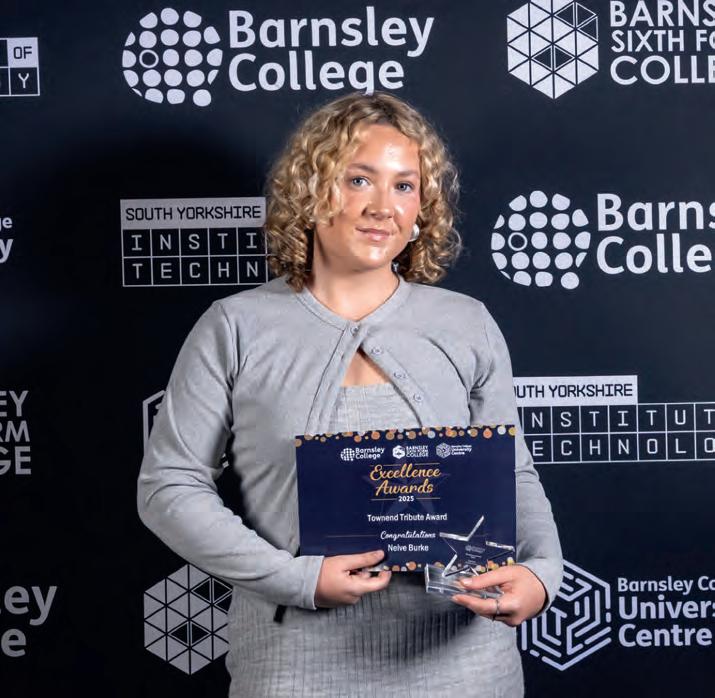
While owning a farm is still only an idea, what’s certain is that Neive will continue to inspire those around her and achieve greatness. Earlier this year, Neive was recognised at Barnsley College’s Student Excellence Awards, where she received the Townsend Tribute Award, an honour reserved for students who have overcome signifcant challenges to pursue their ambitions.
“It’s a dream come true to be studying something I love so much. After missing three years of school, I was so worried I wouldn’t be able to achieve it,” she says.
“I’m proud of what I’ve achieved since my stroke. Farming has helped me rebuild confdence and strength. It’s also been essential to fnding my own way of working and doing things. I want to show people that anyone can work in farming; you just need determination and the right support.”

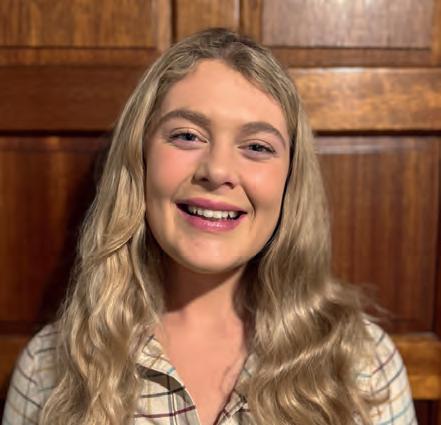
Student Hannah Grindey


‘Gbelieves there are certain qualities that
prospective vets should hone to prepare them for the challenges ahead
et stuck in!’ It is a cliché but it’s the best advice I can give to any new starters, whether you come from a farming background or not. There is a lot of graft involved in what we do as vets. It’s hard work and you can’t be afraid of a bit of mud. Growing up on a sheep farm, it didn’t take me long to understand the vital role of veterinary expertise. Early exposure to lambing, milking and rearing youngstock has given me a solid foundation and practical skills. Whether it’s learning to spot early signs of illness, medicate conditions appropriately, or recognise normal versus abnormal behaviour, having a farming background has made things easier – but it’s not been a substitute for commitment.




“Volunteering on farms is a must, with lambing and milking also greatly beneficial”
The early mornings, late nights and unpredictable challenges that come with livestock farming have been great for teaching resilience. You quickly learn that some things are out of your control, whether it’s the weather or a di cult lambing. That same resilience translates directly into veterinary work, where dedication, problemsolving and adaptability are essential.
Resilience was what got me through a very di cult lambing season. The flock I was working with was su ering multiple abortions, still births, and deformed or weak lambs. It took a lot of persistence to keep going and do my best for all the other animals, as no matter how many sheep you lamb, every one you lose still a ects you. It is important to stay resilient when dealing with di cult problems and do our best for the rest of the flock.
This is why aspiring vets should get as much experience as possible. Volunteering on farms is a must, with lambing and milking also greatly beneficial. What many trainees don’t realise is that veterinary medicine in agriculture isn’t just about treating sick animals, it’s about herd and flock health planning, sustainable food production, and supporting the wellbeing of both animals and clients. Getting out on farming and experiencing this for yourself is vital.
In doing so, you will develop skills essential to








completing your studies. You’ll understand that every farm runs di erently. You’ll learn the important balance between animal welfare, economics and practicality. You’ll gain an appreciation for the important working relationship between farmers and vets.
You’ll also develop animal-handling skills. I know working with cattle or sheep can seem daunting at first, but with time and training it will become second nature. Understanding behaviour, safe handling and routine husbandry allows you to approach largeanimal practicals with confidence. This will make it easier to focus on developing clinical skills.
Remember: farmers will happily share their knowledge if you show genuine interest and get involved. They hold decades of practical wisdom, so take every opportunity to learn.
Commitment, curiosity and compassion are qualities that anyone can bring to veterinary medicine. They are also key attributes you will need to be a resilient, knowledgeable and passionate farm vet.
Being a farmer has certainly shaped who I am as a vet-in-training. I take on as much work as I can as I see the opportunities to gain experience that it can present. I now farm my own pedigree flock of Hampshire Down sheep, enjoying showing success up and down the country, and I’m actively involved with the breed society. Balancing this with vet school isn’t always easy, but it constantly reminds me why I chose this career. Being a farm vet is an incredibly rewarding job for those willing to roll up their sleeves and get stuck in.




While it certainly has its advantages, having an agricultural background is not essential to becoming a farm vet, as student Charlie Padfield explains
“What’s an SFI?” a newly graduated vet muttered to me under her breath as we followed the farmer into the lambing shed. It was at this point that it occurred to me: not everyone spends their weekends discussing the latest government incentive schemes in farming with their dad.
It is one thing that I have undoubtedly taken advantage of. Coming from a farming background, I’d been learning the language of the land long before heading into the veterinary world. Whether it’s on GS4 or SAM2, soil types or cover crops, a five-minute conversation with Dad has equipped me for hours of general chit chat with the farmers
“Not everyone spends their weekends discussing the latest incentive schemes with their dad”
I’ve met on placement; and that chit chat is more important than it seems. Those vital conversations not only build trust, but they also allow for idea sharing and checking up on someone when times may be tough. They have allowed me to gain greater experience through placements as well as develop people skills. Plus, you are so much more likely to get o ered a co ee!
The relationship between vet and farmer is a really special one. It’s one that thrives on you (the vet) showing an interest in what people (the farmers) do. I think it’s truly fascinating going farm to farm, seeing how people have diversified their business; and while I have always had a bit of a leg up as a student coming from a farm, just showing a willingness to learn about that side of things is vital in getting farmers on side.
As I come to the end of my training, and as I look at the next cohort of trainee vets, it is great to see people with all backgrounds wanting to go into farm vetting. Coming from farming is not vital and does not always make you a better candidate – I learned that the hard way. A relaxed attitude towards shutting a side gate (and perhaps neglect of two decades worth of countryside code






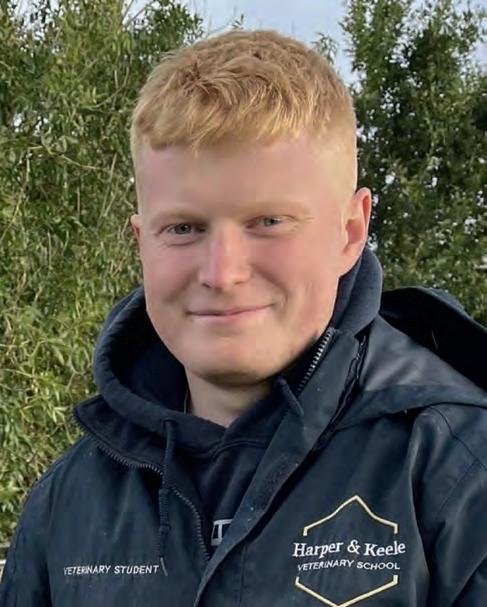

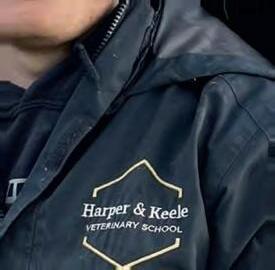

training) led me to failing my first cattle handling assessment, which was always going to be challenging news to relay home!
Engaging directly with the industry can open up opportunities. I remember looking at an advertisement from our farm animal veterinary society about a talk on dung beetles and the importance of working with them as a vet and a farmer, and I remember thinking, “Is this really how I want to spend my Thursday evening?” Yet, this talk alone has been a great conversation starter when I’m with other vets in the car on a way to a call. I would greatly advise getting involved with societies as a way of finding passion outside the curriculum for farming, it truly is the best part of your student experience.
The challenge of becoming a vet, or even breaking into the farming industry, may be tough and daunting, but I’m here to tell you that it is worth it and you can do it. As I near the end of vet school and set my sights on a farm vet role, I cannot be more grateful for taking a punt and getting this opportunity. It is a wonderful industry and one I am proud to be part of.
NFU Student & Young Farmer membership is free to students and young farmers. It allows you to have a say and to contribute towards the future of agriculture, and you will benefit from access to experts in food and farming policy, plus bonus perks.
Join the largest and most influential farming association and receive:
• Student Farmer magazine and British Farmer & Grower or Farming Wales magazine delivered to your door
• The latest news and briefings from our policy experts in NFU Bulletin and sector-specific and regional e-newsletters
• Be the first to find out about and register for our online NFU Live events
• Welfare of Animals in Transport test for £75 (+VAT)
• Save an exclusive 20% online with Sophie Allport
• Access Lantra’s agricultural health and safety e-learning for FREE
• Huge savings on Merlin Entertainment (Alton Towers, Thorpe Park and more)
• 25% o ATV helmets and safety clothing from Spada
• Free debt advice from PayPlan
• NEW! 15% discount on Ridgeline Clothing – access the discount code at nfuonline.com/ridgeline

















































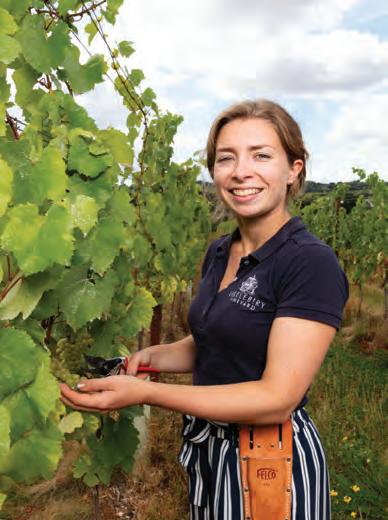


or visit NFUonline.com/student or call 0370 428 1401













WhyStudy atWCUC?
Strong Industry Connec tions
Industry-RelevantE xper ience
Moder nFacilities
Degree Coursesonoffer for2026-27:
• Animal Behaviour& Tr aining
• Canine Rehabilitation &H ydrotherapy
• Equine Perfor manceCoaching
• Equine Therapy& Rehabilitation
• Veterinary Nur sing
• Veterinary Physiotherapy



Career-Focused Pathways
Small, Suppor ti ve Cl asses



























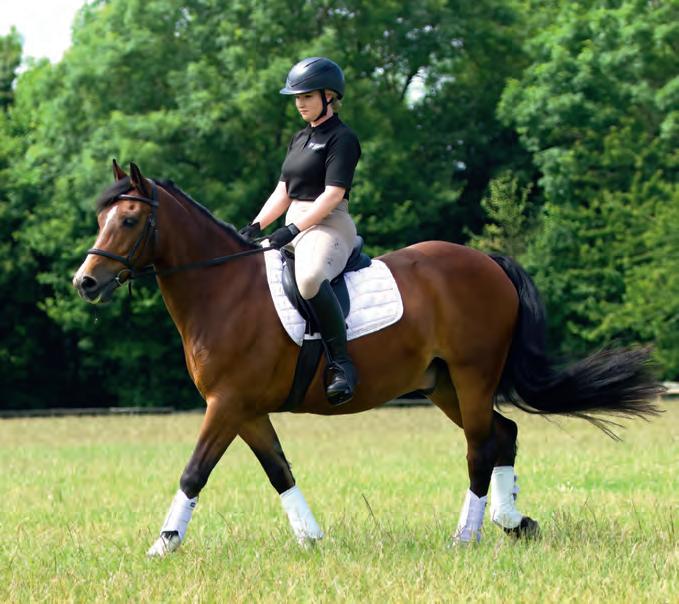
Sc an QR code to apply
Sc an theQRcodetoapply nowand star t in September2026–orapply viaUCA S wc uc .a c. uk