Any decisions made on a new AI policy must include student voice.
The Editorial Board
The unsigned editorial represents the consensus opinion of the Editorial Board, which consists of the student editorial staff in the masthead on this page.
Ever since ChatGPT was released to the public in 2022, it has changed the way we learn, think, and go about our everyday lives.
For many students, it seems AI makes our lives easier. And it does — at least for now.
AI can write an essay in the amount of time it would take us to come up with the title. AI can solve our math homework for us.
You might get caught, but if you don’t, you just freed up at least two hours of your day to do whatever else you want.
Right now, WSSD is developing a policy for AI through a faculty-led committee of ten teachers, as well other district administrators. This policy will not be complete or effective without additional student voice. While the surveys obtaining student input are a good start, it would be even better if students were able to see the impact of their answers.
Offering ownership and transparency will encourage students to take responsibility for their own choices.
It has been compared to the calculator; when the calculator came out, everyone began to question the legitimacy of learning math at all. What was the point if students could just do it on the calculator?
Nowadays, tests are split into calculator and non-calculator sections. Teachers assign homework questions that expect students to use their calculators.
AI will not have the same solutions. AI takes away more than the step-by-step required to solve a math problem; it steals our ability to think for ourselves. As the students who are of concern regarding this loss of our mental faculties, it so follows that those same students should have input on school and district policies about AI.
The responsibility of adjusting our current curriculum should not fall to teachers alone. Students can help give input on what will work best. For example, taking time to compare AI-written essays to non-AI-written essays in class, and talking about what makes the non-AIwritten essays distinguishable, can teach students what they lose by asking AI to write their essays.
Take Five:
How students are reacting to
AI art?
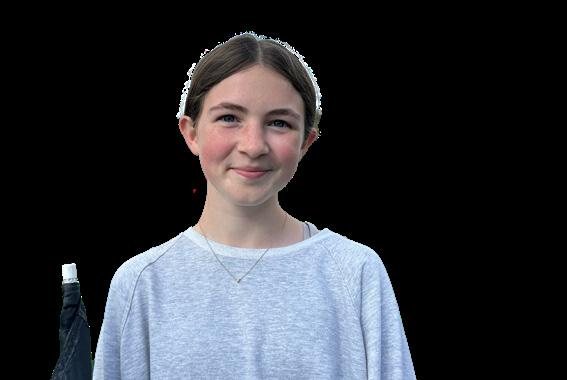
“I have a very strong dislike towards AIgenerated art. It’s being used to take artists’ jobs. I feel like it’s mainly been used against artists. I’ve seen people take artists’ art and feed it into AI to make AI-generated art of their own art style.”
It’s vital that we continue to update students on drafts of the policy.
Many students do not understand why AI shouldn’t be used at school. After all, AI will be accessible in the workplace. But the new policy should emphasize the fact that school is not the real world.
For the same reason that no-calculator sections remain on math tests, AI does not and cannot serve as a replacement for the core of standard education. The idea that only skills and tools that will be used in real life should be taught ignores some of the basic ideas of education. In humanities classes like English or social studies, the specter of AI has been particularly problematic for essays and writing assignments. Some students argue that essays will not be essential in the workplace, so why not offload that work to AI?
But there is more to being an adult than mindlessly hammering away at work. It is still important to develop strengths like critical thinking, empathy, communication, media literacy, and an understanding of the human condition. These are some of the most important parts of being human, and are often imparted through humanities classes — that is, if students engage in class beyond
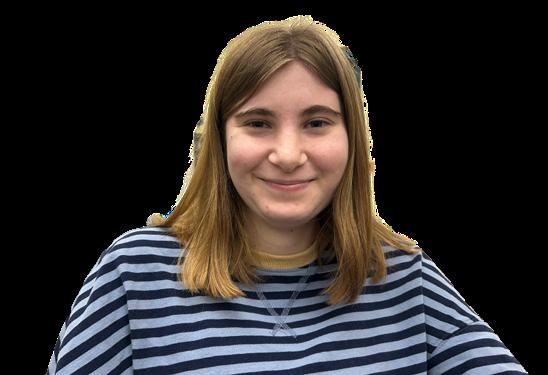
“It’s taking over every single thing, and I don’t think it’s a good idea. I think it’s ruining the art community’s careers.”
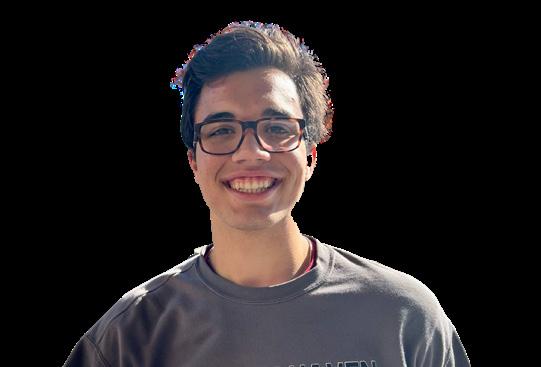
“I don’t think it’s authentic, and art feels like a human form of expression, not something that a machine should try to mimic. Sometimes, I think it could be helpful for reference purposes, but in the end, I feel like [art] should come from humans.”
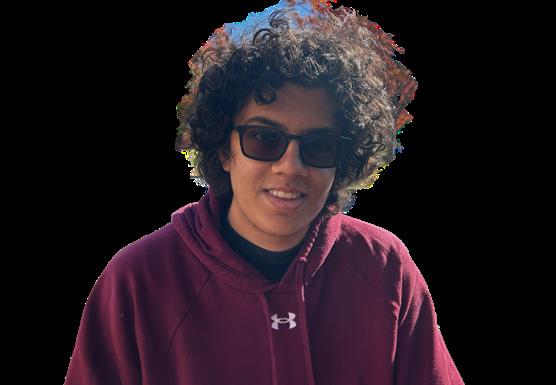
“I don’t really have an opinion on it. I think it’s fine, just sometimes it looks too weird, like fake. I don’t really see that much, and if I do, I can tell it’s AI.”
“I think sometimes AI steals [from] artists... AI does not respect the original author or the original artist, and the AI [does not] have mind [or] feelings. They are a robot, not a human being, just created by a machine or by the computer.”*
the tantalizing temptation of clicking “AI mode” in the Google search bar and succumbing to ctrl-c, ctrl-v. These are also skills of paramount importance for civic engagement, such as informed voting and community input.
It is logical, then, that the district should seek to prevent the AI-powered withering away of our humanity and civic engagement through giving us opportunities to exercise said skills and refurbish our humanity through human forums of input that can’t be filled out by robots.
If students are given a voice, they will be more inclined to follow the policy that they helped write. Offering ownership and transparency will encourage students to take responsibility for their own choices, whether that be through student committees or forums such as the one on October 24 for the phone policy.
High school is the start for students to have a hand in decision-making. It’s supposed to be where we learn maturity, and learn how to get to a level where we can use tools like AI for truly valid reasons. If student voice is not a consideration in the policy-making process, students will begin to believe that other people will always be around to regulate their own poor decisions. We’re supposed to learn that if we want to complain about an issue, we should at least attempt to do something about it first.
In the absence of self-regulation and accountability in decision-making, the uncritical use of AI will have successfully begun to strip back the humanity behind education.
School is one of the last safe places for critical thinking. It’s up to us to preserve our agency — using AI instead of letting it use us.*
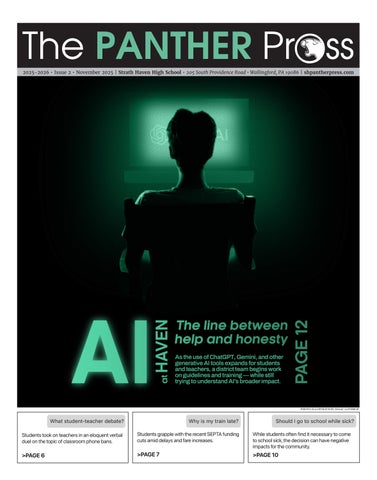
>AI AT HAVEN | PAGE 12
Report Card
B+
B
A+
COFFEE IN THE CAFETERIA
+ Costs three dollars
– Feeds our caffeine addictions
HALLOWEEN ON FRIDAY
- Bad for everyone who had to attend Friday night lights
+ Good for the rest of the student body; no school the next day!
FOUR-DAY SCHOOL WEEKS
+ Less school
+ Time to rest and relax
+ Time to catch up on sleep
D B C
LOW WATER QUALITY AT BOTTLE FILL STATIONS
– Half the time, water barely comes out
– Always terrifying to see orange or red marker on filter
NHS INDUCTION
– Everybody got the wrong certificate
– Candles refused to stand up
+ So many new members
+ Patrick Tolson profiting DAYLIGHT SAVINGS TIME
+ Extra hour of sleep
+ Not as dark in mornings
+ It gets dark SO early
+ Extra sleep wasted on a Sunday
Editors
About
The Panther Press is the student-run publication of Strath Haven High School in Wallingford, PA. The Panther Press publishes 500 copies bimonthly in print and is distributed to classrooms and students at Strath Haven High School. The publication is also online at www.shpantherpress.com.
The goals of The Panther Press are to inform, educate, and entertain the student body, faculty and staff, and community readers.
We strive to report and analyze issues that concern students in a manner that is fair, objective, responsible, and accurate.
Through the use of journalism, technology, and workplace skills, the students who lead and create the newspaper develop as critical thinkers and communicators.
All content published in the newspaper and on the Panther Press website is created by Strath Haven students for a primary audience of students, with the understanding that our publication also reaches a broader audience that includes teachers and staff, families, and community members.
The views represented in The Panther Press, as well as the selection and curation of content by the editors, do not represent the views of the entire Panther Press staff, the adviser, the school, or the administration.
Please consult the ABOUT page on our website for additional information.
Submissions
All Strath Haven students are welcome to learn the basics of journalism and become contributors to The Panther Press. Interested students should join the Schoology group to learn about upcoming meetings and training sessions.
Letters to the editor are encouraged. Any reader may submit a letter to the editor via email to strathhavenpantherpress@gmail.com. Anonymous letters will not be published. Editors reserve the right to contact letter writers or edit submissions for reasons of space or clarity.
Our staff also welcomes feedback in the comments section of The Panther Press online or via our social media. Each comment is subject to review by a student editor with support from the adviser. Online commenters on our website must have a verified email address, and comments are reviewed for defamation, profanity, obscenity, libel, and invasion of privacy. Not all comments are published.
Bylines
All contributors are listed in the bylines of stories that appear in print and online. Photography, graphics, art, illustrations, and other creative work will be given attribution. Unsigned editorials, when published, feature the byline of the Editorial Board
Social Media
The Panther Press maintains social media on Facebook (@shpantherpress) and Instagram (@ shpantherpress). The editors-in-chief and social media editor manage the social media accounts in consultation with the adviser. We encourage community members to follow us on social media for online posting and discussion of student news. Our staff members do their best to ensure that social media content is accurate and verified. Any inaccurate information will be corrected with corrections acknowledged.
Social media participants should remember that anything posted in response to The Panther Press social media is public and reflects on our publication, our school, and the poster. Replies and comments will be screened for defamation, profanity, or libel.
Addison Rogers ’28
Brielle Durnell ’27
Maya DeCamp ’27
Jingjing Su ’27
School community adjusts to new phone policy
The new phone policy is being fully enforced this year with caddies.
Kaitlyn Ho ’26, Izzy Boland ’29 Editor-in-Chief, Contributor
Not only did the new school year bring new faces and classes, it brought an official rule for phones during class.
The idea is simple; during class, students are expected to put their phones in their assigned caddies or their bags (depending on the teacher), but when class is over, students can use their phones between classes and at lunch.
The caddies prevent phones from becoming a distraction in class, while still allowing students to keep track of important information they access on their phones.
Sophomore Abbey Minton thinks the policy is effective.
“It stopped a lot of kids from being on their phones during class,” Minton said. “I remember in my math class last year, there would be countless students who would be playing Brawl Stars or something while the teacher was trying to give a lesson.”
Senior Hari Ghatpande also agrees with the phone policy. He thinks that students don’t feel that strongly about not having their phones, and instead are fine with being with their friends.
“It hasn't made that much of an impact on my experience, because I usually don't use my phone that much,” Ghatpande said. “People still will find fun things to do in class… If people don't want to be locked in [during] class, they're not going to be locked in [during] class.”
Similarly to Ghatpande, social studies teacher Mr. Jeffrey Kahn believes that nothing can be done to stop students from getting distracted, but taking away phones does improve concentration.
“They're paying more attention,” Kahn said. “When I look out at them, they're looking at me.”
English teacher Mr. Matthew Wood agrees that the new phone policy has had a positive effect.
“People are much more present in class than they were with that potential distraction, right? So with that out of
PHOTO ILLUSTRATION: IZZY BOLAND
the way, completely, I found a great improvement and focus with participation,” Wood said.
Minton initially found the policy frustrating, but was able to adapt.
“Though I initially had some complaints about it, I think it has helped a number of students in our school be able to stay more focused,” Minton said. “The thing I miss most is being able to listen to music while I work, but that is something that I will have to get used to.”
Freshman Veer Bhandar appreciates the caddies, which were given to all teachers at the start of the year.
“It encourages more people to put [their phone] in there and not use their phone,” Bhandar said. “And I'd also say that it also helps with just being more attentive in class. I feel like it's nice to have a pocket for your phone during
class and then [have] the ability to use it in between classes and during lunch. I think there's a good balance.”
In previous years, the caddies were not something that all teachers had or enforced. Last year, Haven focused on a ‘Screens Off, Minds On’ policy.
“I think last year definitely, there was literally no effect…It was just kind of something that people said,” Ghatpande said. “I think now it is definitely noticeable that people aren't having their phones. But I don't think not having your phones is making that big of an effect in the classroom.”
Some students argue that phones are important to communicate with their families. Kahn highlights the shared responsibility between teachers and families.
“I think [regulating phone use] is really hard, I know as a parent,” Kahn said. “But it's also a thing that we all have to work on, and I think parents do have responsibility for that too. In the building, though, if teachers keep it away, then parents just have to not be calling and make the kids go to their phone.”
Ghatpande feels that regulating phone use will not immediately solve broader issues, such as cyberbullying or screen addiction, since he believes that it won’t stop students from continuing those problems at home. Instead, he believes that school should be focusing on digital literacy and activities such as Wellness Wednesday to promote healthy habits.
“I think education is more of the focus of school,” Ghatpande said. “That's something that schools should do, instead of trying to just take control over how students feel when they're at school. I think educating students about the dangers of being online is going to have a more palpable impact in the students’ life than just not letting them have their phones on school campus.””
Wellness Wednesday offers fall activities, student engagement
The events, organized by social studies teacher Mrs. Alissa Harvey and a staff team, focused on promoting student mental health.
Emelia Kerr ’27
Contributor
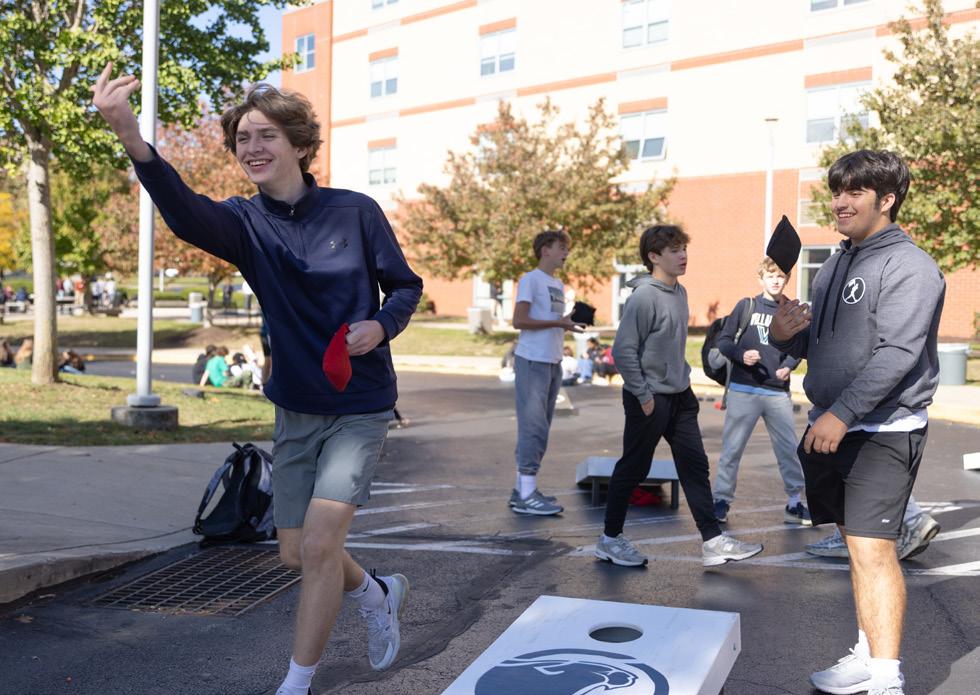
Music blasting, beanbags flying, and Haven students smiling.
The second Wellness Wednesday of the new school year took place on October 22 throughout all lunches. Both students and staff were seen painting pumpkins, playing corn hole, and competing in bingo. The goal of these activities was to keep students engaged and off their screens.
Outside in the brisk fall weather, students showed off their artistic abilities, coloring pumpkins of different colors and styles while Halloween music was heard playing in the background.
“Wellness Wednesday was really fun. I think it’s always a good opportunity to just kind of take some time and do a fun craft and hang out with your friends,” junior Kasey O’Sullivan said. “I really enjoy when the school does them. I feel like there’s always a good activity, and I’ve never really been disappointed.”
Students also had the opportunity to move around and let out some energy by playing cornhole.
If students preferred to be in an inside setting, they could choose the cafeteria and play bingo. Trivia questions were asked by assistant principal Mr. Tom McLaughlin and numbers were called
by superintendent Dr. Russell Johnston. Bingo was a phone-free zone, allowing students to fully participate and be engaged in the game. Prizes included hacky sacks, principal Mr. Andrew Benzing’s parking spot for a week, and many other rewards.
Social studies teacher Mrs. Alissa Harvey is the head organizer of Wellness Wednesdays.
“[The main focus is] to build positive connections; student to student, staff to students, and staff to staff,” Harvey said. “And also encouraging positive reinforcement to pro social behaviors and face-to-face behaviors.”
Wellness Wednesdays will continue to run throughout the school year, and students are encouraged to take advantage of the fun activities available in the future.
“It’s just really nice to see you guys out here and outside, and interacting with each other, [during] which is supposed to be one of your breaks [lunch] during the day,” Harvey said.”
CADDIES ABOUND • Teachers are enforcing the new phones policy by having phones go into the caddies or away into bags. This policy was decided on during the 2024-25 school year and is being strongly enforced this year.
WELLNESS WEDNESDAY • TOP LEFT: Cole Hurwitz (9) and Gavin Huffman (9) smile during a corn hole game.
TOP RIGHT: Superintendent Dr. Russell Johnston calls out numbers in a competitive game of bingo.
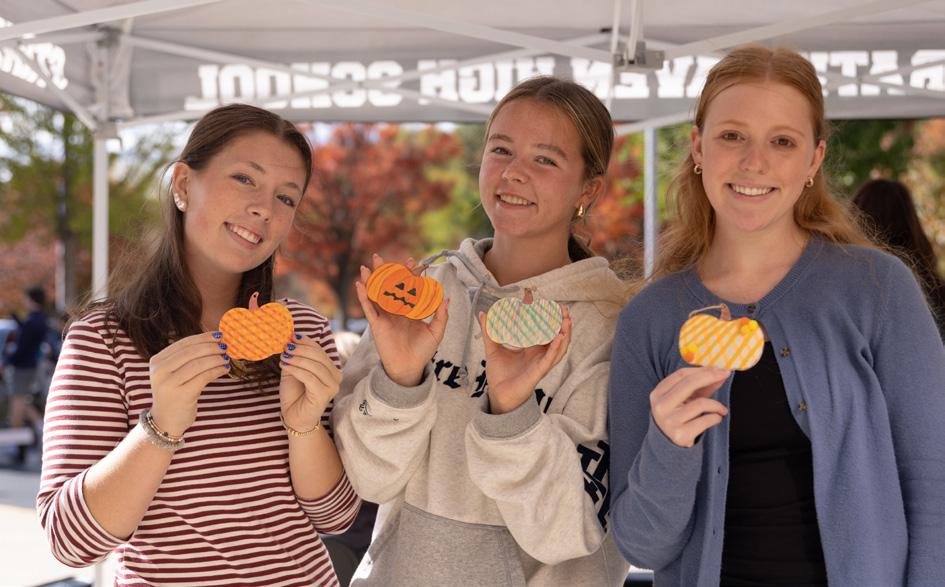
BOTTOM: Kasey O’Sullivan (11), Delaney O’Reilly (11), and Madeline Garson (11) show off their painted pumpkins.
PHOTOS: EMELIA KERR
MORE NEW STAFF
Continuing from our September issue, our contributors wanted to put stories to the faces of new staff members in the Haven community.
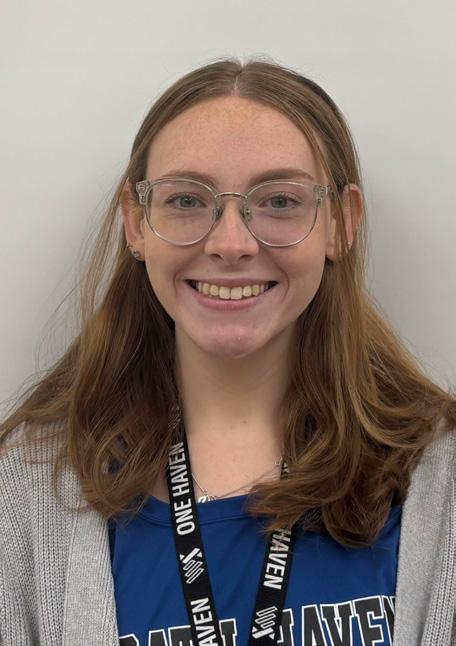
Ms. Jennifer O’Berg School Nurse
Gigi Detweiler ’28, Mia Taub ’28 Contributors
For new school nurse
Ms. Jennifer O’Berg, helping students feel safe and supported is the priority.
This is O’Berg’s first year working as a school nurse, yet she has already found joy in the simplicities of her job.
She finds that the biggest surprise when arriving at Haven was ultimately the size of the school.
“I do live in the area, and I was actually impressed with how much bigger I thought it looked inside than outside,” O’Berg said. “I’m still trying to find my way around.”
As a mother of two children, O’Berg understands the experience of being ill at school, and stresses how she finds comfort in connecting that role to her job.
“You’re away from your parents most of the day,” O’Berg said. “I like to be here and be here for the kids and be your parent, away from home.”
O’Berg also notices how working in a school affects her as both a mother and caretaker.
“I feel like being here kind of broadens your ability to take care of more kids,” O’Berg said. “I just really enjoy taking care of kids, and just being a mother away from home.”
O’Berg became interested in nursing through taking care of her sick grandmother as a child, showing how personal experiences can form an interest in pursuing certain careers.
“When I was little, my grandmother was always really sick, and she actually had a stroke, so then I had to reteach her how to speak. I was eight years old,” O’Berg said. “We took care of her for a couple of years until she passed, so she was with us a lot. That is what inspired me to continue to be a nurse.”*
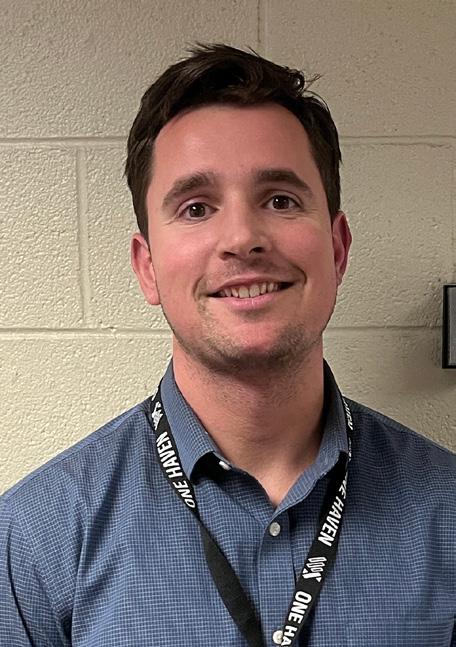
Mr. Christopher Bennett Psychologist
Jonah Livingstone ’28 Contributor
After working in elementary and middle schools, Mr. Christopher Bennett has joined Strath Haven High School as the new school psychologist. Bennett finds joy in his job based on past experiences.
“Even since I was in middle school, I was dealing with some challenging issues as a student, and I consulted with psychologists at the time who gave me a lot of helpful advice and pointers and just tips on life that really inspired me to want to help people and students or just really anyone in any capacity that I could,” Bennett said. “After I had those conversations, I decided that I wanted to change my major into school psychology.”
Bennett finds several differences in his role versus a school counselor’s.
“The biggest difference, I would say, in terms of our core responsibilities, [is that] I do testing,” Bennett said. “So a school psychologist does testing for special education, so I do initial evaluations to determine if students qualify for special education services and IEPs.”
He wants students to know the work is collaborative and that he is there to support students.
“We as staff here try our best to help students, and that, you know, we’re not perfect as well, and we’re also human,” Bennett said. “If we can come up with solutions together, that creates better outcomes for students.”
His advice is simple yet powerful: Bennet believes in persistence.
“Take everything day by day,” Bennett said. “Progress is not always a straight line, but it’s gradually always going up.”*
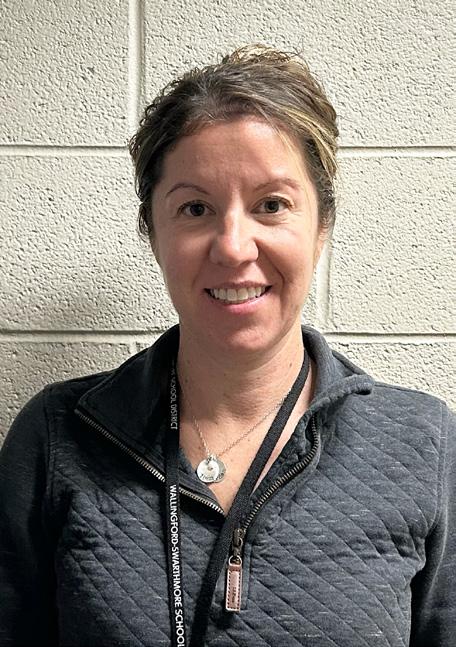
Ms. Jennifer Ford, Special Education
Matthew Ramirez ’26
Editor-in-Chief
Jennifer Ford joins Haven’s Special Education staff after 15 years in education.
Ford attended Cabrini University, where she got a journalism and English degree. She proceeded to pursue a master’s degree in elementary and special education from Drexel University.
Ford originally joined the classroom to break out of the office life and applied her teaching abilities to a career in education.
“Every time I did anything in life, I always ended up teaching somebody,” Ford said. “It just kind of made sense.”
After serving as a manager position at Walgreens and managing business operations at a communications company, she ventured into the world of education, working as a special educator at Chichester High School and assisting in the field hockey and track teams.
Ford also taught in the Philadelphia School District, as well as serving as a substitute teacher in Radnor and Lower
Merion School Districts. She came to Haven on a sudden impulse.
“I did it on whim,” Ford said. “I’m just gonna see if there’s any jobs out there, and I happen to find it.”
Ford notes her transition to Haven as trouble free and eccentric.
“It was like walking through a Hallmark movie,” Ford said. “It’s just a very different world here. Everybody here so far seems very happy.”
Ford hopes to make her students feel comfortable and to help understand the world in their perspective, which has influenced her teaching style and her goal of making students content.
“I figure out how they think,” Ford said. “Then I figure out how to teach them that might be different than what the main teacher does. If they still understand, they can keep up with everybody else in the room.”*
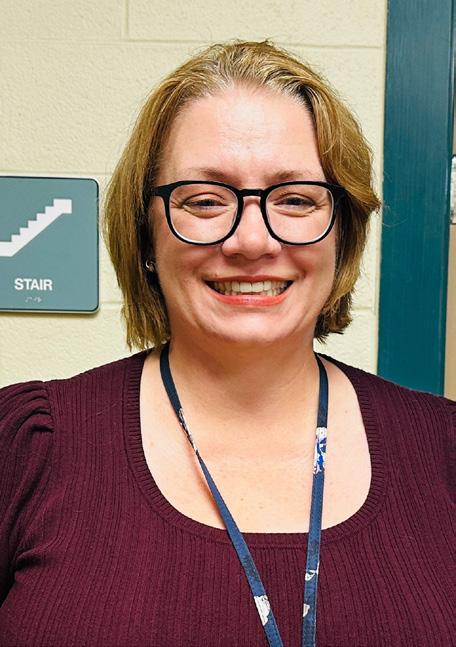
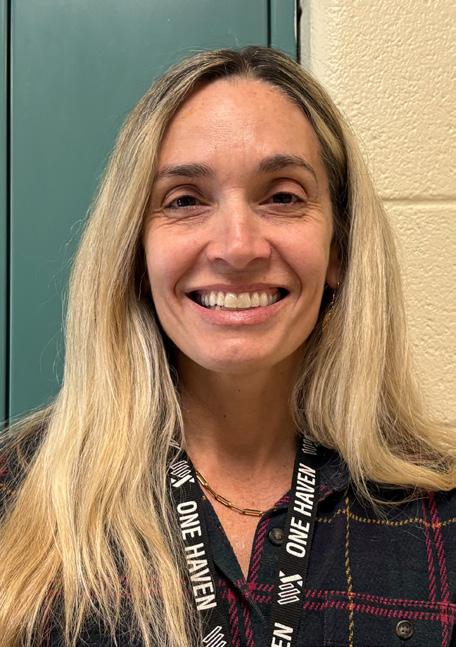
Ms. Amanda King Science
Jane Yau ’29
Contributor
West Chester University grad
Amanda King
has always had a passion for environmental science.
“My mom works for the Department of Environmental Protection, so I’ve always had kind of a love for the environment,” King said.
Although King began her career with a STEM related major, she decided to switch after realizing that she enjoyed working with kids.
“I started off as a math and natural science major and decided to switch to education,” King said. “I started working with kids and really enjoyed it.”
King feels accepted in her first two months at Haven, and is happy to work in an inclusive community.
“I always felt very welcome, very supported, so it’s very nice to come into that environment with such a supportive faculty, staff, and students,” King said.
King looks forward to meeting with students everyday and strives to make her classroom a welcoming place for everyone.
“My favorite part of the day is interacting with everybody and all the students,” King said. “Everybody has such unique characteristics, and it’s really nice to see how everybody is so different, but we all come together with our science classes and do all of our sciency stuff.”
King is hopeful for her future at Haven, and looks forward to the rest of the school year.
“I love it here, so I’m excited to see what the future holds and what different things I can accomplish when I’m here,” King said.*
Ms. Caroline Gilfoil, Spanish
Damini Mydur ’29, Siya Goindi ’29
Contributors
Ms. Caroline Gilfoil is no stranger to Haven students. After teaching Spanish at Strath Haven Middle School for 17 years, she has transitioned to teaching Spanish at the high school.
“Prior to that, I taught abroad. I taught in Cali, Columbia, and I taught in an American school for three years,” Gilfoil said. According to Gilfoil, her experience at the high school has been good so far. The block schedule has taken some adjustment.
here, and it was kind of scary, because the kids are running up to the board… it’s better with smaller kids, not the ones who are over six feet tall,” she said. Gilfoil’s transition from the middle to the high school was a little rocky in the beginning, as she can’t see her closest colleagues everyday now. At the middle school, all of the other Spanish teachers and their classrooms were right near each other, so seeing and talking to them everyday was easy.
“It’s so much longer, so that means that I have to plan more every day, because the course is going by so fast. Everything happens so fast with the block schedule, because you have to cover content in like half the time,” Gilfoil said. She has found that a few other adjustments were necessary — like changing a game she used to play at the middle school called ‘Steal the Bacon.’
“I played it with one of my classes
“I guess it’s gotten easier. Maybe it was a little difficult in the beginning, because I miss my friends,” Gilfoil said. “But other than that, it’s been pretty good.”*
MR. CHRISTOPHER BENNETT
MS. JENNIFER FORD
MS. CAROLINE GILFOIL
MS. JENNIFER O’BERG
MS. AMANDA KING
mRNA research funding freeze sparks concern in science community
As federal funding for mRNA research dwindles, educators warn that the cut could lead to a slowdown of innovation, and encourage a call to action.
Lavanya Dixit ’27, Siya Goindi ’29
Health
and Sciences Editor, Contributor
mRNA vaccines, which were praised during the COVID-19 pandemic as a breakthrough in biotechnology, are now facing a period of uncertainty as government agencies and pharmaceutical companies scale back funding.
mRNA vaccines are a type of vaccine that uses a synthetic piece of genetic code, mRNA, to instruct a cell in the body to produce a particular protein. The development of these vaccines accelerated during the COVID pandemic.
“Not enough money was put into the mRNA vaccines… but suddenly something happened, which flooded money into it, and that was COVID,” biotechnology teacher Mr. Timothy Styer said. “There was no vaccine, and we needed one… a blank check appeared.”
However, on August 5, 2025, the U.S. Department of Health and Human Services (HHS) declared that the Biomedical Advanced Research and Development Authority (BARDA) will begin its coordinated effort to wind down the funding for mRNA vaccine development.
a slight risk? Do you not drive because you may have an accident?”
Regardless of the risk being minute, the defunding effort began with the termination of 22 mRNA vaccine development investments, and nationally, many research programs have stopped or have been defunded or put on hold. The leverage of funding has other consequences as well.
“To cut [funding] is very frustrating...It’s only done because of misinformation.”
Mr. Tim Styer Science Teacher
“I want to go into drug development or maybe clinical trials... if we cut research, we’re not going to get better at creating vaccines quickly for times of crisis.”
Isabella Bittman ’29
A report arguing that the proteins generated by mRNA vaccines may potentially cause harm was cited as the reason for this defunding.
“Vaccines have caused issues in the past…we’ve recorded them to see how we can get around them,” Styer said. “Does that mean do away with vaccines because there’s
“By withholding all federal funding, which amounts to billions, you’re getting [institutions] to do what you want, which is coercion,” Styer said.
This regulation is not simply a policy shift, but a testament to how shortterm politics can reshape the ability to innovate in the long term.
“There's a direct correlation here. The amount of funding results in discoveries, in preventatives, in therapeutics, in medicines, and all of that,” Styer said. “You take away funding from the government, which means we're going to rely solely on private funding, and private can't do it. Private goes to other things, too.”
For the labor workforce, the defunding of the mRNA vaccines’ impact can be seen for those who aspire in drug development. There are concerns that defunding the mRNA vaccine research will hinder the US’ ability to respond to future outbreaks.
“I want to go into drug development or maybe clinical trials when I grow up… if we cut research, we're not
going to get better at creating vaccines quickly for times of crisis,” freshman Isabella Bittman said.
This wave of instability worries students, too, about what research and development may look like in the future.
“This does make me a little worried, because without these important funds for research, we're not gonna make improvements or find out new things about drug development,” Bittman said.
mRNA vaccines have had a variety of applications, including showcasing potential to improve cardiac function, suppress allergies, and even lead to a vaccine to fight against cancer, however, this lack of funding is a huge burden for researchers to continue exploring these issues.
“We know we can do these things, but it's going to take time to get there. It's going to take research funding to get there. To cut that is very frustrating…it's only done because of misinformation,” Styer said.
Regardless, this burden should be seen as a temporary pause, not a permanent one, and should act to inspire researchers to work harder towards the goal, and towards continuing research, discovery, innovation, and science.
“Is [the defunding] making you feel like ‘Why bother?’ or is it putting fuel in your fire?” Styer said. “I hope you feel empowered. I hope you feel angry. I hope you feel like it's time to step up and do something about it… not letting it affect what you want to do with your life or your major in college. Maybe it will be frustrating enough to encourage people to go in that direction and not be discouraged.”*
AP Art and Design students share experiences, prepare for next steps
Participants of the class agree that this is a year for creative expression and honing their skills.
Charlie Grueser ’28, Mat Mataac ’28
Contributors
For AP Art and Design student artists, October is a busy time. Fall brings important deadlines for senior students, and this means finishing portfolios and choosing themes for their sustained investigations.
Senior Pearl Tweedy plans to dive deeper into a topic they have explored in previous pieces for their sustained investigation.
“I'm thinking about doing one that's related to overconsumption in media,” Tweedy said. “I think that it's really interesting and it's a really big issue, especially right now. It also kind of stemmed from a mini sustained investigation I did last year.”
In AP Art and Design, students have freedom to draw from any inspiration they feel connected to for their sustained investigations, which involves producing a themed collection of selected works that they feel reflects their skills and interests.
“It's technically 15 to 20 pieces,” Tweedy said. “This is a year-long course, so we have plenty of time.”
Both Tweedy and classmate senior Fletcher Noto agree that the stress of completing their portfolios and picking a sustained investigation take a back seat to the enjoyable environment of the class, and the opportunities it gives them to create and improve.
“Do what you like,” Noto said. “I mean, do the assignments, but also just get better.”
Art teacher Mrs. Jennifer Rodgers organizes her class to be flexible and hands-off in a way that differs from other art classes.
“It allows students to work on their own individual ideas about art,” Rodgers said. “They get to work in whatever materials they want to work in, which is very different from Art 1, 2, and 3.”
The students appreciate this format, as it allows them to develop their own styles and identities as artists.
“We have a lot of access to materials that I might not have at home, like printing,” Tweedy said. “I can do that here, so I think that it’s pretty good for me as an artist. We’re like free-range chickens.”
This agency allows the students to mature as artists and as individuals, setting them up for success in future art
careers.
“[The class] prepares them for college or anything they might do after high school, in that it teaches them to be independent creators,” Rodgers said.
Taking place during fourth block, AP Art and Design gives students like Tweedy and Noto time to relax and focus on creative endeavors after more stressful academic subjects.
“It's definitely helping my overall happiness as a student,” Tweedy said. “It's just such a nice way to end my day.”
From a teacher’s perspective, Rodgers has enjoyed watching the students grow and mature into independent artists and young adults. She believes they are steadily improving in her class, and moving towards art careers beyond high school.
“They have spread their wings and they are flying,” Rodgers said. “They are done. They are ready. They're able to really hone in on what's important to them as an artist and person, and make art about those things. It’s really exciting to see.”*
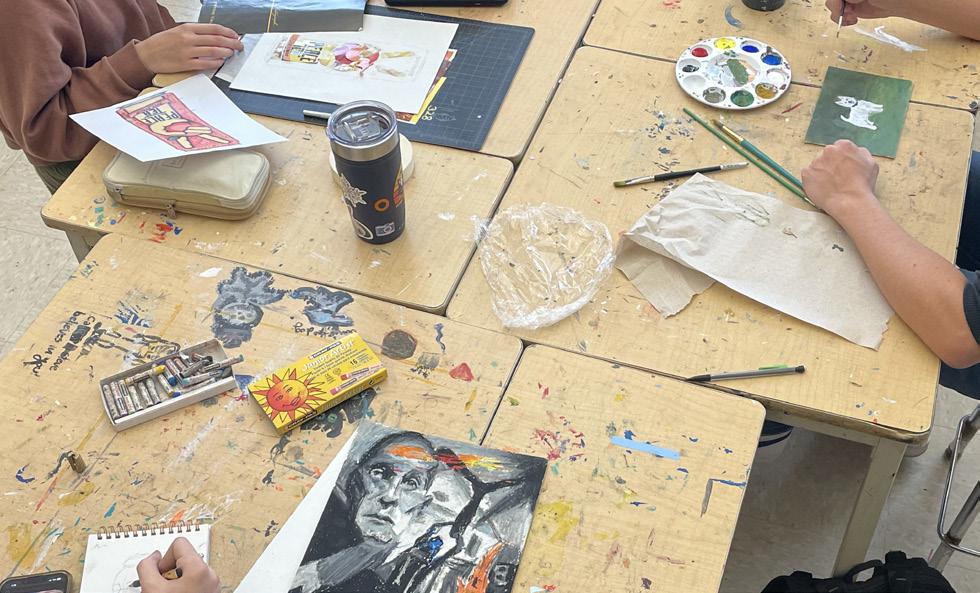
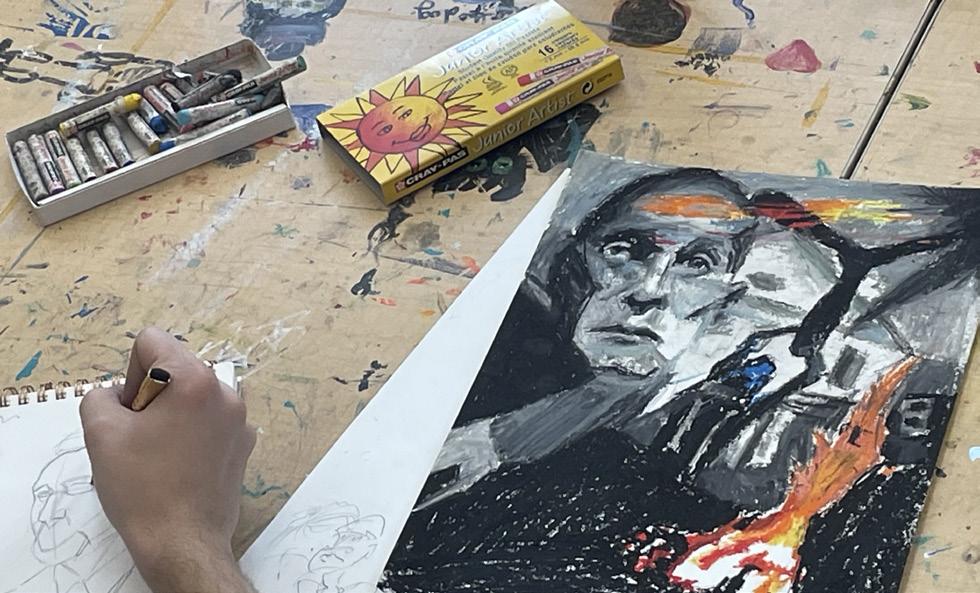
TOP RIGHT: Pearl Tweedy (12) makes adjustments to her self portrait for her portfolio during studio time in AP Art & Design 2D. The class allows Tweedy to relax and engage in a creative outlet at the end of the school day. “It’s such a nice way to end my day. First block or second block could be crap, but I know I’m gonna have art later,” Tweedy said.
BOTTOM: Fletcher Noto (12) works on several pieces scattered across his desk, in different mediums like oil pastel and pencil. “Most people have an idea of what they want to do, but I think it’s all pretty loose right now, because it’s a year-long course,” Noto said.
PHOTOS: MAT MATAAC
CREATIVE SPIRITS • TOP LEFT: AP Art and Design 2D students’ style and preferences are distinct, yet they come together during the class to branch out and improve.
HAVEN Arts
Teacher Creations: Ms. Reagan Lattari bakes famous treats
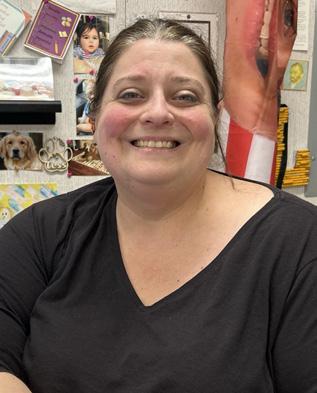
Through her love of baking, Ms. Reagan Lattari brings her classroom to life.
Josie Wieland ’26 Arts Editor
If you find yourself taking a class with English teacher Ms. Reagan Lattari, it is certain that you are in for a treat.
Lattari’s taste for baking has given her a special way to express herself and connect with her students, both inside and outside the classroom.
“I had a group of students that would hang out here after school, so I started making them snacks,” Lattari said. “It took over where I would try different things, and I started baking a lot.”
With fond memories of childhood sweets, Lattari bakes with inspiration from her grandmother’s recipes.
“One of the favorite things that I make for the kids are my crownies, which is a Christmas cookie recipe of hers,” Lattari said.
Before Lattari makes homemade treats for her classes, she puts into consideration the class size, schedule, and cost of ingredients.
“Last year, they were really fortunate because I had small classes,” Lattari said. “If I had one box of cupcake mix, I could feed a whole class. But when I have huge classes, I have to make so many, so it can fluctuate.”
Giving her classes baked goods on fun occasions brings Lattari just as much joy as it does her students.
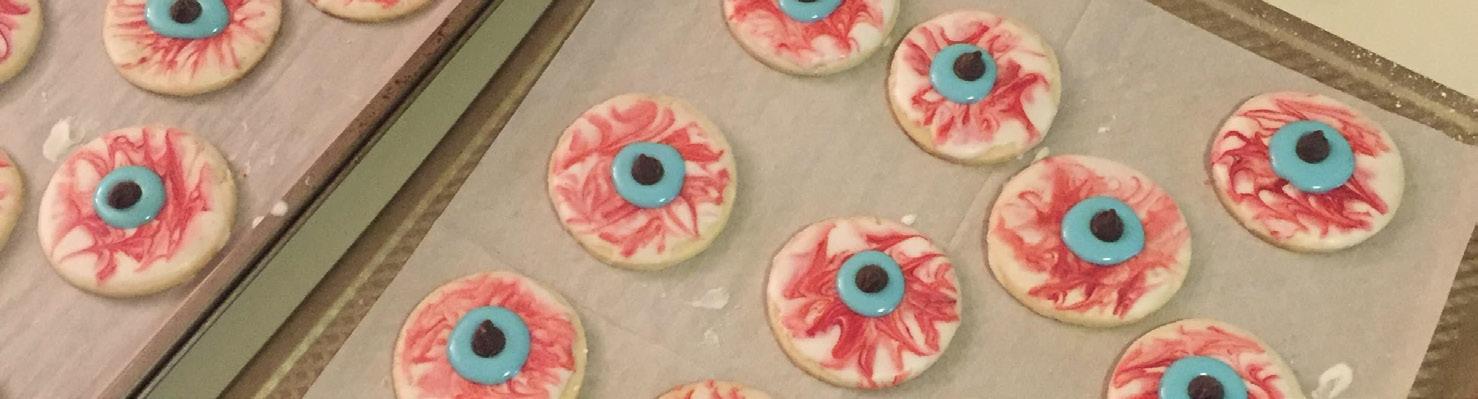
“For holidays, if I have enough time to make sugar cookies, I’ll use a candy corn or pumpkin cookie cutter,” Lattari said.
“I try to avoid grading papers, so I’ll just spend a day decorating cookies and I’ll give them a treat whenever I have the time.”
At Haven’s last ever faculty baking championship over 10 years ago, Lattari went head-to-head with Spanish teacher
Mr. Gino Miraglia for first place.
“I put my crownies in there, and I only got second place. Mr. Miraglia just had these cookie dough balls that didn’t even get baked, and I still think that I was robbed,” Lattari said.
Though he ended up taking the trophy, Miraglia showed his admiration for Lattari’s side.
“I voted for the crownies, and Ms. Lattari probably should have won,” Miraglia said. “I could throw up my pumpkin roll against her crownies and she probably would win.”
For Lattari’s students, her baked goods served as a memorable aspect of her classes.
“She took her time out of her day after school and baked us stuff for fun out of her own enjoyment,” senior Katie McGuffin, a previous student of Lattari’s, said. “It just brought a smile to all of our faces when she would come in with some baked goods.”
Lattari receives requests for her treats to be catered to certain events, showing the meaning her baking has to the people she shares it with.
“I’ve had a couple students’ parents ask me if I could make a certain thing that the kids loved for their graduation parties,” Lattari said. “If I had them as a freshman and they remembered, that’s so special four years later.”*
What is your favorite way to stay creative?
Artist Spotlight: Audrey Sill finds focus in faces
Senior Audrey Sill takes inspiration wherever she can get it –whether that’s through Italian masters or Tiktok. Josselyn Dixon ’29.
Contributor
For senior Audrey Sill, her creativity can be seen in each of her artistic ‘moods.’
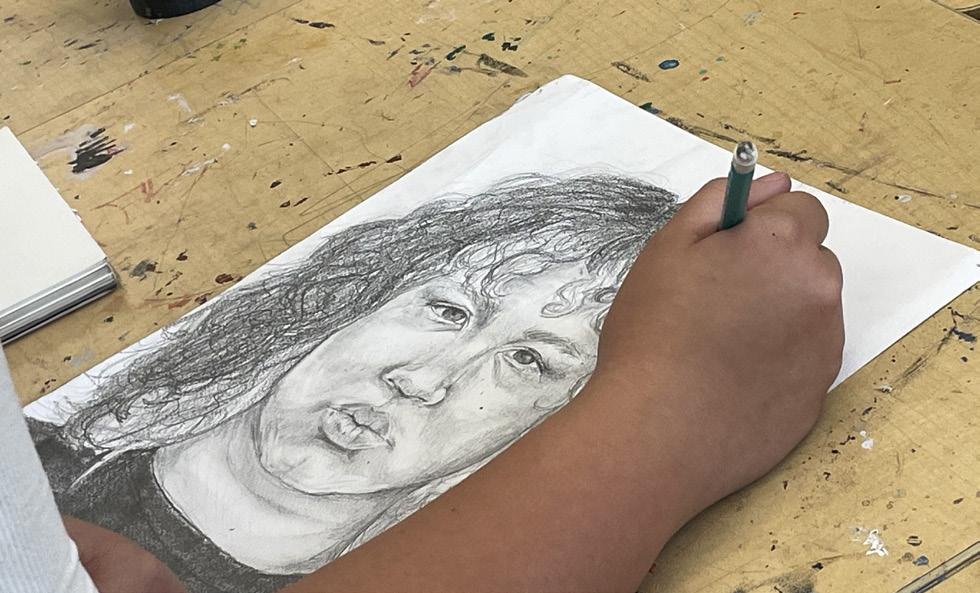
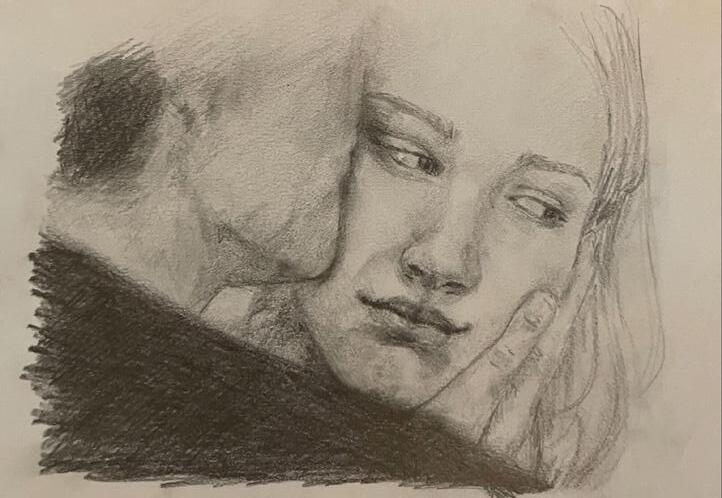
Through this spur-of-the-moment inspiration, she connects with her favorite medium of graphite, specifically when drawing faces.
“I find inspiration from pictures of people,” Sill said. “I like people who have more unique features, or when there’s a lot of expression on someone’s face.”
According to Sill’s friend and fellow art student senior Julia Smirnova, Sill’s sketches are where you can really see her style shine through.
“She’s really good at sketching faces and making it look like the person that she’s trying to sketch,” Smirnova said. “She’s good at shading and there’s a kind of style throughout all of her sketches.”
Sill first started learning how to draw faces with the help of art books, which would break down how to draw a face step by step. However, she started drawing long before that.
“We would have this time where we would draw a picture and then journal,” Sill recalled from her preschool days. “All of the girls would draw My Little Ponies, because we loved playing with them. I just remember spending an hour on the drawing part, and then on the journal part, I would spend five minutes.”
While at Haven, Sill has taken a handful of art classes, learning more about art techniques.
“I learned a lot more about color theory, which I really liked, because I wasn’t getting that when I was just drawing on my own,” Sill said. “I think it really pushed me to try more color, which I love.”
Art teacher Mrs. Jennifer Rodgers spoke to Sill’s strengths as an artist.
“She takes her time with everything. Everything is done with intention,” Rodgers said. “She has a clear intention of what she wants to make, and she works well with a lot of different materials.”
In Rodgers’ Art 3 class last year, Sill made a painting that really stood out to her.
“The project was to find a collection of objects, or an area of our house and capture it with just black and white,” Sill said. “So I did that. I [painted] my record player, because I really love music.”
Sill prefers to draw while listening to quiet music, bands like The Marias. She describes her style as being semi-realistic, and she enjoys seeing other artists’ work. “Every time I go to an art museum, I always feel really inspired,” Sill said. “Or sometimes I’m scrolling on Tiktok and I see someone drawing something. I feel like it’s really other art that inspires [me].”
The work of Carravaggio, a famous Italian painter from the 16th century, brings this inspiration to Sill.
“[Carravaggio] does those dark, dramatic paintings, and I think it’s so cool,” Sill said. “He plays with lighting. I really admire that, and I want to get better at it.”
Sill believes in improving skills through practice, especially as an artist.
“I feel like some people have this idea that you’re either born with talent as an artist, or you’re not, but I think all you really need to become a good artist is passion and love for it,” Sill said. “Everyone gets better with practice.”*
No matter what form it takes, creativity gives students the opportunity for self expression and a break from academic responsibilities.
Star. I also really like to draw, and I usually have to reference something when I’m creating these things, but that’s what I like to do as my creative hobby.”
“I really like doing ceramics or playing music. I take ceramics class, and I do marching band as a class, but also, if I have any downtime, I love to just try to find any way to fit it into my schedule.”
“I personally like writing screenplays and novels. I really like anything that involves creative writing.”
“Watching other people be creative gets me to be creative. I love watching drag races and seeing how people interpret the challenges, especially creative challenges where they have to show it themselves, like seeing what they do and then how I would go about that challenge myself.”
“I like to read about different things, things going on in the world right now and things that have happened in the past, looking at how that can affect the present. I like to listen to music, especially when I’m doing homework or studying.”*
Josie Wieland ’26 Arts Editor
MS. REAGAN LATTARI
A BATCH OF JOY • Eye cookies made by Ms. Reagan Lattari for her English class with inspiration from the cyclops chapter of the Oddyssey. PHOTO: MS. REAGAN LATTARI
SKETCHING AWAY • An illustration by senior Audrey Sill created using graphite pencils.