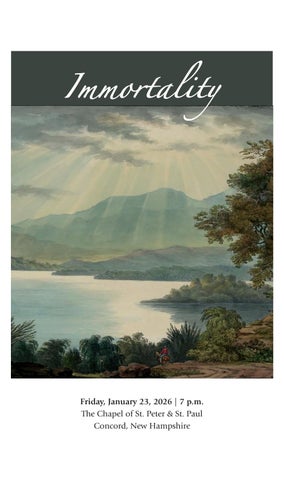
“But there’s a Tree, of many, one, A single field which I have looked upon, Both of them speak of something that is gone; The Pansy at my feet doth the same tale repeat: Whither is fled the visionary gleam? Where is it now, the glory and the dream?”
The prologue begins with a solo drummer ushering in the musicians and dancers with a repetitive rhythmic figure. The countertenor and tenor soloists sing from Richard Crashaw’s poem Adoro Te, and the treble chorus chant words of Thomas Aquinas to the Gregorian Chant of the same name. The dancers reflect the beauty of the “soft, self-wounding pelican” always mindful of the needs of its child as it shares its blood.
The first movement (There Was a Time) begins with a dreamlike section for the tenor soloist, leading into a calm passage of homophonic movement for the chorus. We then refer to the tenor solo material of the piece’s opening, after which the tenor ushers in a faster, joyful section (The cataracts blow their trumpets) and the chorus sings a highly rhythmic fanfare, interspersed with more solemn (No more shall grief) sections. This culminates in a spiky, unison paean of delight with the phrase Thou happy Shepherd boy, which leads into a vigorous toccata-like passage for the instrumental ensemble.
We then melt into a lyrical section for the the countertenor soloist (Ye blessed creatures) which is imbued with a bitter-sweet edge, especially as each final cadence is given (I feel it all) with deep homage paid to early Italian opera. The mesmerizing undulations of the accompaniment, with chromatic alterations in each ensuing measure, serve to drive along and underpin the freely moving soloist. We are then brought back to earth by the chorus (But there’s a Tree) singing in short, broken up phrases, with the instrumental accompaniment hinting at the musical material from the opening. Finally, the tenor soloist brings the first movement to a close with the poignant line, “Where is it now, the glory and the dream?”
The second movement (Endless Imitation) plays on the idea of musical imitation from the start, as a lengthy, slow-moving introduction sets the scene with multiple instruments stating a chant-like melody at various intervals and distances. The melody is, again, imitating the musical material from the opening of the whole piece, and this leads to a jaunty chorus (Our birth is but a sleep) which involves an imitative phrase (Heaven lies about us in our infancy!) that is passed from soloists, through instruments, to the chorus. This is followed immediately, and at the same tempo, by a solo for the tenor (Shades of the prisonhouse) in counterpoint with the cello, whilst the piano provides a deconstructed version of the famous C Major prelude from Bach’s Well-Tempered Clavier. This could, of course, be
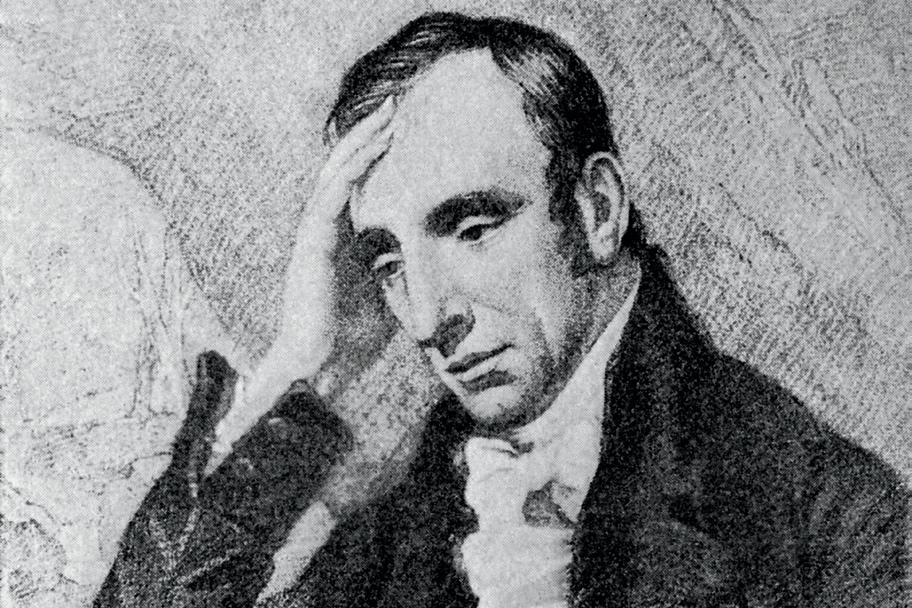
William Wordsworth (1770–1850)
considered the ultimate in imitation, and the musical idea is borrowed with the utmost reverence. For me, this is one of the most tender and intimate passages in the whole work, as the boy continues his journey in life. At the close of this, with the cello’s ascent to a high C, the chorus gives an unaccompanied rendition of the short, imitative phrase (Heaven lies about us) and we are propelled back into a repeat of the opening chorus of this movement. This is followed immediately by a repeat of the deconstructed Bach, this time for countertenor soloist (Earth fills her lap) cello and piano. Another unaccompanied rendition of Heaven lies about us, takes us into a new set of words (See at his feet) with the same jaunty chorus music.
Then, for the first change in tempo since the opening chorus, the countertenor slows the movement down with Then will he fit his tongue. This is imitated by the four sections of the chorus separately. The tenor soloist does similarly (And with new joy and pride) handing it off to the countertenor once more, and then to the chorus, with the crux of the issue (As if his whole vocation were endless imitation!) The instrumental accompaniment for this slower section is the same melancholy chant-like theme we first heard in the opening movement, and that which is utilized in the introduction to this movement.
We then relinquish the concept of imitation, with the tenor soloist stating a bold, spacious new theme (Thou, whose exterior semblance) with broad, declamatory statements and a cascading sixteenth note figure from the solo cello. This is put forth with uncompromising use of the whole-tone scale, leading to massive chordal sections (Mighty prophet! Seer blest!) which exploit the entire choral and instrumental forces with canonic sections – at the unison, the second, and the third – a mighty organ and percussion fanfare, sweeping arpeggio figures, and cross rhythms. Following this extended mayhem, the countertenor rounds off the second movement with complete contrast (Thou little Child) as a gentle chorus of heaven-born freedom brings it to a close.
The third movement (Too Deep for Tears) opens with a lively dance (O joy! That in our embers) introduced by the soloists and repeated by full chorus. Ruminative sections take us through large portions of text, punctuated by marked returns to O joy! That in our embers in between. A lilting duet for the soloists, accompanied by gently undulating instruments is a vehicle for the next stanza (But for those first affections) with the voices singing compatible melodies, almost in a recitative style. This freedom is immediately interrupted by the chorus (Hence in a season of calm weather) repeating the musical idea from the second movement (Thou, whose exterior semblance.) A final section of whole-tone imitation from the chorus (And hear the mighty waters) brings us to a grand pause.
The next section is a light and joyful arabesque in 11/8 time, with completely fresh musical material (Then sing, ye birds, sing, sing a joyous song!) where the choral and instrumental lines are interwoven in a delicate and playful manner. As the music continues, the sopranos lay a broader triplet phrase (To live beneath your more habitual sway) over the 11/8 rhythms, all of which creates a busy feel, with rising excitement. This comes to rest on a polytonal chord, resolving on to a direct repeat of the idea at the start of the whole piece, this time with the mezzo-soprano singing in place of the tenor (I love the brooks) and ending with a long, sustained melisma for the word lovely, before the tenor makes a final entrance. A short instrumental interlude, again with the chant-like theme, and a final gasp from the solo cello, heralds a closing hymn, started by the mezzo-soprano soloist (Thanks to the human heart by which we live) and echoed by the full chorus with a rich accompaniment in D flat major. The timpanist provides the heartbeat as the chorus enters on off-beats, bringing the whole piece to a gentle conclusion.
Nicholas White 2018/2026
PROLOGUE
“Hymn of the Pelican”
COUNTERTENOR
“O soft self-wounding Pelican! Whose brest weepes Balm for wounded man. Ah this way bend thy benign floud
To’a bleeding Heart that gaspes for blood: That blood, whose least drops soveraign be To wash my worlds of sins from me.
(from Adoro Te by Richard Crashaw (1612-1649)
CHORUS
Pie pellicane, Iesu Domine, me immundum munda tuo sanguine; cuius una stilla salvum facere totum mundum quit ab omni scelere.
Kindly pelican, Lord Jesus, cleanse me, the unclean one, in thy blood, of which one drop can save the entire world of all crime.
(from Adoro Te Devote by Thomas Aquinas (1225-1274)
TENOR
Come love! Come LORD! & that long day For which I languish, come away; When this dry soul those eyes shall see, And drink the unseal’d sourse of thee, When Glory’s sun faith’s shades shall chase, And for thy veil give me thy FACE.”
(from Adoro Te by Richard Crashaw (1612-1649)
PART ONE
“There was a Time”
TENOR
There was a time when meadow, grove, and stream, The earth, and every common sight, To me did seem Apparelled in celestial light, The glory and the freshness of a dream. It is not now as it hath been of yore; Turn wheresoe’er I may, By night or day. The things which I have seen I now can see no more.
CHORUS
The Rainbow comes and goes, And lovely is the Rose, The Moon doth with delight Look round her when the heavens are bare, Waters on a starry night Are beautiful and fair;
MEZZO-SOPRANO
The sunshine is a glorious birth; But yet I know, where’er I go, That there hath past away a glory from the earth.
CHORUS
Now, while the birds thus sing a joyous song, And while the young lambs bound As to the tabor’s sound, To me alone there came a thought of grief:
MEZZO-SOPRANO
A timely utterance gave that thought relief,
TENOR
And I again am strong:
CHORUS
The cataracts blow their trumpets from the steep; No more shall grief of mine the season wrong; I hear the Echoes through the mountains throng, The Winds come to me from the fields of sleep, And all the earth is gay; Land and sea Give themselves up to jollity, And with the heart of May Doth every Beast keep holiday; Thou Child of Joy, Shout round me, let me hear thy shouts, thou happy Shepherd-boy.
COUNTERTENOR
Ye blessèd creatures, I have heard the call Ye to each other make; I see The heavens laugh with you in your jubilee; My heart is at your festival, My head hath its coronal, The fulness of your bliss, I feel—I feel it all. Oh evil day! if I were sullen While Earth herself is adorning, This sweet May-morning, And the Children are culling On every side, In a thousand valleys far and wide, Fresh flowers; while the sun shines warm, And the Babe leaps up on his Mother’s arm: I hear, I hear, with joy I hear!
CHORUS
—But there’s a Tree, of many, one, A single field which I have looked upon, Both of them speak of something that is gone; The Pansy at my feet Doth the same tale repeat:
SOLOISTS
Whither is fled the visionary gleam? Where is it now, the glory and the dream?
PART TWO “Endless Imitation”
CHORUS
Our birth is but a sleep and a forgetting: The Soul that rises with us, our life’s Star, Hath had elsewhere its setting, And cometh from afar: Not in entire forgetfulness, And not in utter nakedness, But trailing clouds of glory do we come From God, who is our home: Heaven lies about us in our infancy!
TENOR
Shades of the prison-house begin to close Upon the growing Boy, But he beholds the light, and whence it flows, He sees it in his joy; The Youth, who daily farther from the east Must travel, still is Nature’s Priest, And by the vision splendid Is on his way attended; At length the Man perceives it die away, And fade into the light of common day.
CHORUS
Our birth is but a sleep and a forgetting: The Soul that rises with us, our life’s Star, Hath had elsewhere its setting, And cometh from afar: Not in entire forgetfulness, And not in utter nakedness, But trailing clouds of glory do we come From God, who is our home: Heaven lies about us in our infancy!
COUNTERTENOR
Earth fills her lap with pleasures of her own; Yearnings she hath in her own natural kind, And, even with something of a Mother’s mind, And no unworthy aim, The homely Nurse doth all she can To make her Foster-child, her Inmate Man, Forget the glories he hath known, And that imperial palace whence he came.
CHORUS AND SOLOISTS
Heaven lies about us in our infancy! See, at his feet, some little plan or chart, Some fragment from his dream of human life, Shaped by himself with newly-learned art
A wedding or a festival, A mourning or a funeral; And this hath now his heart, And unto this he frames his song:
CHORUS AND SOLOISTS
Then will he fit his tongue To dialogues of business, love, or strife; But it will not be long Ere this be thrown aside, And with new joy and pride The little Actor cons another part; Filling from time to time his “humorous stage” With all the Persons, down to palsied Age, That Life brings with her in her equipage; As if his whole vocation Were endless imitation.
Thou best Philosopher, who yet dost keep Thy heritage, thou Eye among the blind,
MEZZO-SOPRANO
That, deaf and silent, read’st the eternal deep, Haunted forever by the eternal mind,
CHORUS AND SOLOISTS
Mighty Prophet! Seer blest! On whom those truths do rest, Which we are toiling all our lives to find, In darkness lost, the darkness of the grave; Thou, over whom thy Immortality Broods like the Day, a Master o’er a Slave, A Presence which is not to be put by;
COUNTERTENOR AND CHORUS
Thou little Child, yet glorious in the might Of heaven-born freedom on thy being’s height, Why with such earnest pains dost thou provoke The years to bring the inevitable yoke, Thus blindly with thy blessedness at strife? Full soon thy Soul shall have her earthly freight, And custom lie upon thee with a weight, Heavy as frost, and deep almost as life!
PART THREE “Too Deep for Tears”
TENOR & MEZZO-SOPRANO
O joy! that in our embers Is something that doth live, That Nature yet remembers What was so fugitive!
SOLOISTS
The thought of our past years in me doth breed Perpetual benediction: not indeed For that which is most worthy to be blest; Delight and liberty, the simple creed Of Childhood, whether busy or at rest, With new-fledged hope still fluttering in his breast:
CHORUS
O joy! that in our embers Is something that doth live, That Nature yet remembers What was so fugitive!
SOLOISTS
Not for these I raise The song of thanks and praise But for those obstinate questionings Of sense and outward things, Fallings from us, vanishings; Blank misgivings of a Creature Moving about in worlds not realised, High instincts before which our mortal Nature Did tremble like a guilty thing surprised:
CHORUS
O joy! that in our embers Is something that doth live, That Nature yet remembers What was so fugitive!
SOLOISTS
But for those first affections, Those shadowy recollections, Which, be they what they may Are yet the fountain-light of all our day, Are yet a master-light of all our seeing; Uphold us, cherish, and have power to make Our noisy years seem moments in the being Of the eternal Silence: truths that wake, To perish never; Which neither listlessness, nor mad endeavour, Nor Man nor Boy, Nor all that is at enmity with joy, Can utterly abolish or destroy!
CHORUS AND SOLOISTS
Hence in a season of calm weather Though inland far we be, Our Souls have sight of that immortal sea Which brought us hither, Can in a moment travel thither, And see the Children sport upon the shore, And hear the mighty waters rolling evermore. Then sing, ye Birds, sing, sing a joyous song! And let the young Lambs bound As to the tabor’s sound! We in thought will join your throng, Ye that pipe and ye that play, Ye that through your hearts to-day Feel the gladness of the May! What though the radiance which was once so bright Be now for ever taken from my sight, Though nothing can bring back the hour Of splendour in the grass, of glory in the flower; We will grieve not, rather find Strength in what remains behind; In the primal sympathy Which having been must ever be; In the soothing thoughts that spring Out of human suffering; In the faith that looks through death, In years that bring the philosophic mind. And O, ye Fountains, Meadows, Hills, and Groves, Forebode not any severing of our loves! Yet in my heart of hearts I feel your might; I only have relinquished one delight To live beneath your more habitual sway.
COUNTERTENOR
I love the Brooks which down their channels fret, Even more than when I tripped lightly as they;
MEZZO-SOPRANO
The innocent brightness of a new-born Day Is lovely yet;
TENOR
The Clouds that gather round the setting sun Do take a sober colouring from an eye That hath kept watch o’er man’s mortality;
SOLOISTS
Another race hath been, and other palms are won.
SOLOISTS AND CHORUS
Thanks to the human heart by which we live, Thanks to its tenderness, its joys, and fears, To me the meanest flower that blows can give Thoughts that do often lie too deep for tears.
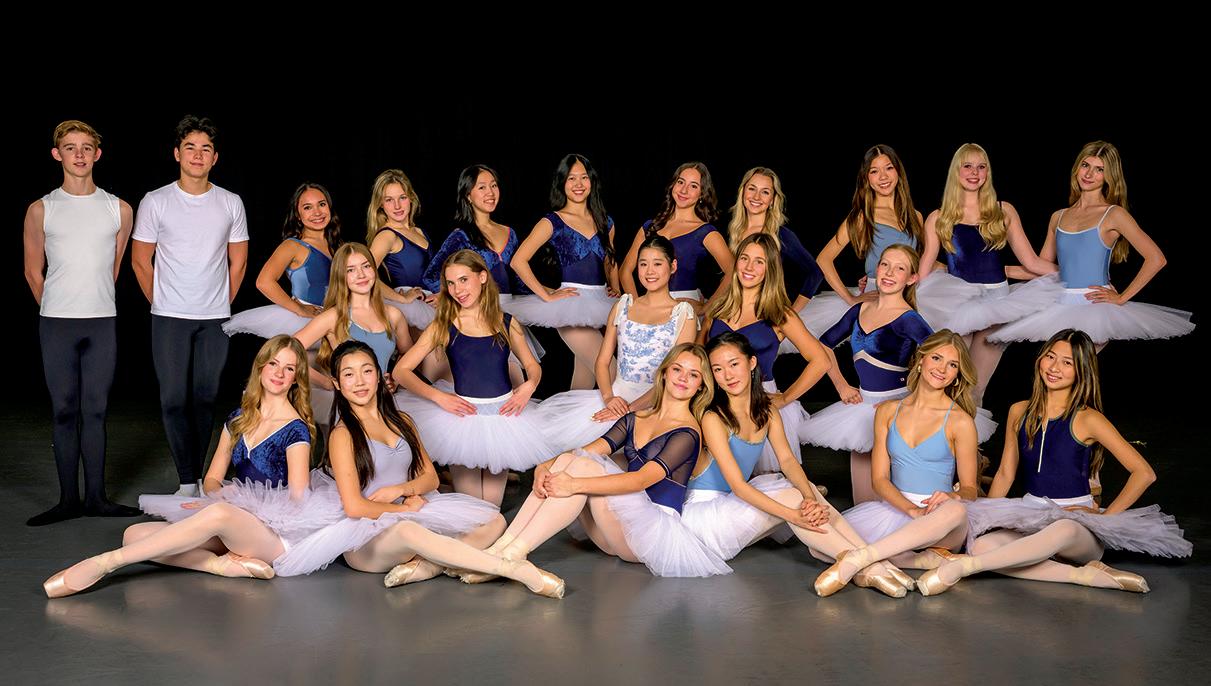
The St. Paul’s School Dance Program fosters a fun, nurturing and artistic learning environment while training technically proficient dancers with a sound work ethic. All educational curriculum including classes, rehearsals and performances are focused on challenging students to strive for excellence while supporting their physical, mental, and artistic development. The program prepares its students to dance at the pre-professional and college level through instruction in classical ballet, modern dance, anatomical theory and performance. Our faculty is committed to the idea that studying dance is a process and our students are always evolving and growing both as artists and global citizens.
The St. Paul’s School Ballet Company (SPSBC) is a year-round program for the serious dancer that can be substituted for athletic participation at the varsity level. This year, St. Paul’s School Ballet Company comprises 22 St. Paul’s School students from the Third through Sixth Forms. During their time at St. Paul’s School, these students take ballet class in all terms during their academic day (Ballet III through Ballet VI) and they dance in the afternoons six days a week. The SPSBC performs four, free of charge performances that occur throughout the year: Family Weekend, “The Nutcracker Act II,” Winter Performance, and Spring Performance.
Through the SPS Visiting Artist Program (VAP) dancers work one-on-one with guest teachers and choreographers. This program is designed to expose our students and the greater community to prominent styles of choreography. The VAP brings professional dancers, choreographers, and master teachers to campus to teach classes and repertory in their various styles and set choreography on the St. Paul’s School Ballet Company for “The Nutcracker,” and Winter and Spring Performances. Since its inception in 2012, the VAP has hosted many guests including those from the American Ballet Theatre, Boston Ballet, Dance Theatre of Harlem, Complexions Contemporary Ballet, New York City Ballet, Kidd Pivot, Ballet X, Mikhail Baryshnikov’s White Oak Dance Project, Twyla Tharp Dance Foundation, Merce Cunningham Trust, Paul Taylor Dance Company, Batsheva Dance Company, Harvard University, Brown University, New York University, and master teachers from American Ballet Theatre, the School of American Ballet, Complexions Contemporary Ballet, Boston Ballet, and The George Balanchine Trust. This year, we are scheduled to welcome Johanna Butous, Amy Hall Garner, Rosalynde LeBlanc, Carlos Lopez, and Brian Reeder.
Catherine Allen ’29
Lillian Bamberger ’28
Mackenzie Barrette ’26
Michael Bergin ’26
Dagny Bischoff ’26
Angie Bonzel ’28
Alexandra Cao ’28
Nemo Chen ’27
Vladyslav Derevko ’28
Violet Eaton ’26
Tucker Eddy ’28
SPS CHAPEL CHOIR
Tristan Emerson ’26
Anna Friston ’29
Tristan Gonzalez ’27
Dylan Gump ’28
Aaron Heitzeberg ’29
Keijiro Hori ’26
Noah Ivanov ’28
Tejas Karthik ’28
Matthew Liu ’26
James Maletz ’29
Allison Matias ’26*
Jay Nam ’26*
Raegan Otey ’26*
Alice Qi ’28
Laith Radwan ’27
Wrenn Ragsdale ’26*
Lily Reid ’26*
Lu Rodriguez ’29
Maho Rokuta ’28
Luce Ruffato ’28
Sophia Shen ’29
Jaylan Shuea ’26
Eleanor Smith ’27
Molly Smith ’28
Harry Smith ’26*
Jeb Stegall ’27
Oliver Subramaniam ’27
Asha Thomas ’27
MJ Williams-Bello ’28
Henry Wilson ’26
Raya Yuguchi ’26
*Choir Officers
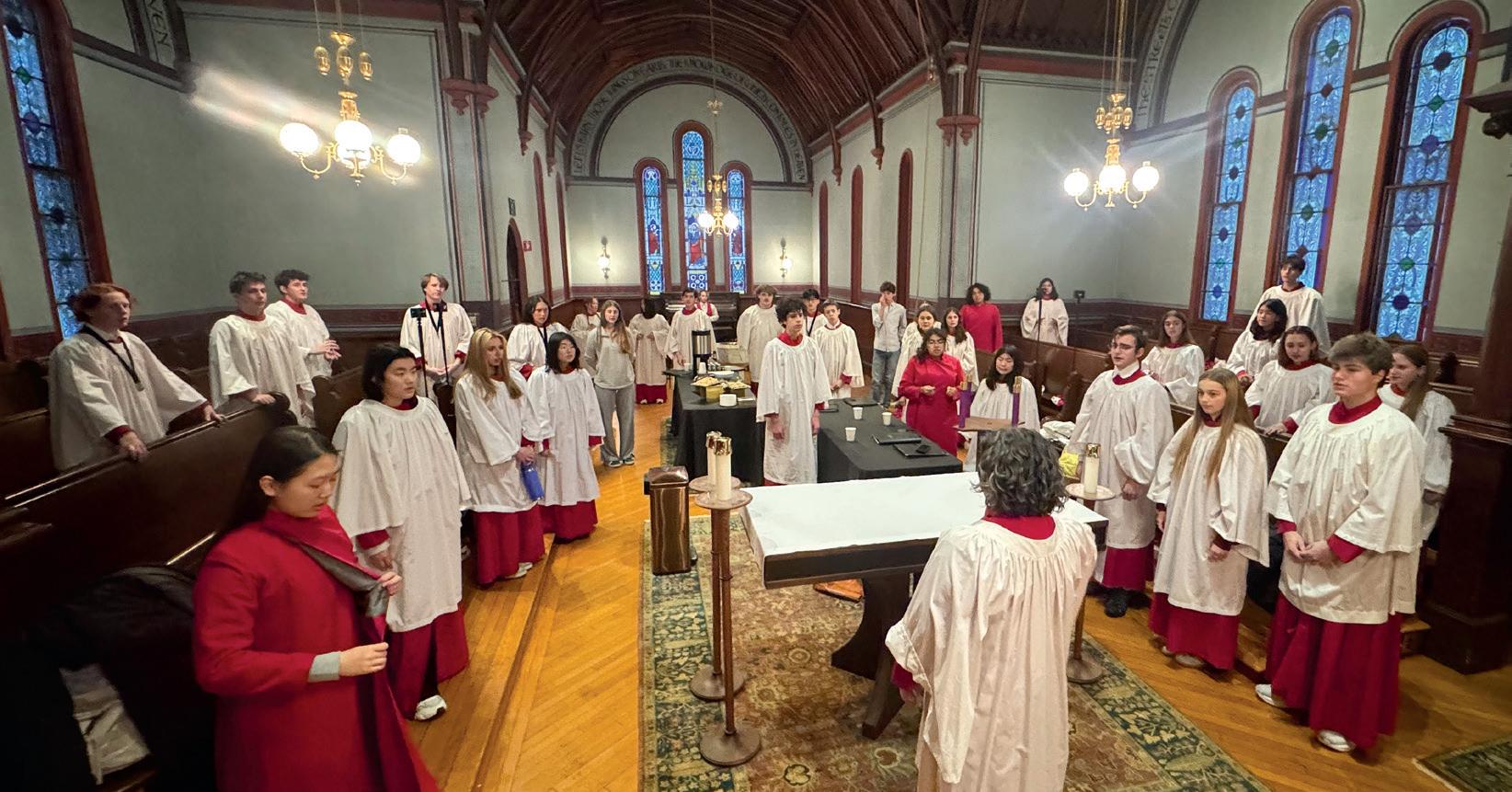
Membership in the choir program at SPS provides an opportunity for the novice singer, alongside the experienced chorister, to take part in a centuries old tradition of singing in a chapel driven music program. The educational experiences range from basic musical training, group dynamic, team building, singing with a wider purpose, working on high quality musical repertoire, thoughtful expression, personal responsibility, common sense, physical and mental discipline, healthy singing habits, and much more. In short, a choir member at SPS is contributing to something where the whole is greater than the sum of its parts, and we are fortunate to be able to offer this unique choral experience at our school.
The choir members rehearse two evenings and one morning each week, and most are not studying music for academic credit. This provides an opportunity for some respite from the rigors of the academic day, and often a challenging athletic schedule. The choir works hard, and the rewards of singing together with friends in our beautiful chapel are energizing and significant to the life of the school. Recent highlights for the choir have been concert tours to English cathedrals, collaborations with the Ballet Company on White’s “The Fire & The Rose” and “Songs of Innocence,” the Annual Festival of Lessons & Carols, Thursday night Compline, frequent recordings and livestreams, and the rich variety of services that take place throughout the school year. The opportunity often arises to welcome visiting choirs from across the world, and the choir is fortunate to work with them both in a concert and workshop setting. Recent ensembles have included Stile Antico (Oxford), Heinevankar (Estonia), Quink (Holland), Clare College Choir (Cambridge), Cathedra (Washington DC), Thomaskirche Choir (Leipzig), as well as the inspiring guest artists you hear tonight.
MELLISSA HUGHES, soprano
Hailed by The New York Times as “a versatile, charismatic soprano endowed with brilliant technique and superlative stage instincts...indispensable to New York’s new-music ecosystem,” Hughes enjoys a busy international career in both contemporary and early music. Recent highlights include Chicago Symphony’s “Beyond the Score” performances celebrating Pierre Boulez; Ted Hearne’s Wikileaks oratorio “The Source” at BAM, LA Opera, and San Francisco Opera; international performances with John Zorn, Alarm Will Sound, Bang on a Can All-Stars, a solo recital for American Songbook at Lincoln Center; and an acclaimed recording release of Jacob Cooper’s Silver Threads, from Nonesuch Records. Hughes’ additional discography includes multiple albums from New Amsterdam records, and “Shelter,” a video opera by Bang on a Can composers Michael Gordon, and Pulitzer Prize winners David Lang and Julia Wolfe, released by Cantaloupe Records. As a backing vocalist, Hughes has appeared with The Rolling Stones, The Roots, The National, and is featured on an episode of the WNYC podcast Radiolab where she sang mathematical formulas to calculate weights and measures. As a choral conductor and clinician, Mellissa has worked with the American Boychoir, the Princeton Girl Choir, and the San Francisco Girls Chorus. Mellissa currently resides in her home state of New Hampshire and serves on the faculty at Plymouth State University, Saint Anselm College, and St. Paul’s School in Concord NH and holds degrees from Westminster Choir College and the Yale University School of Music.
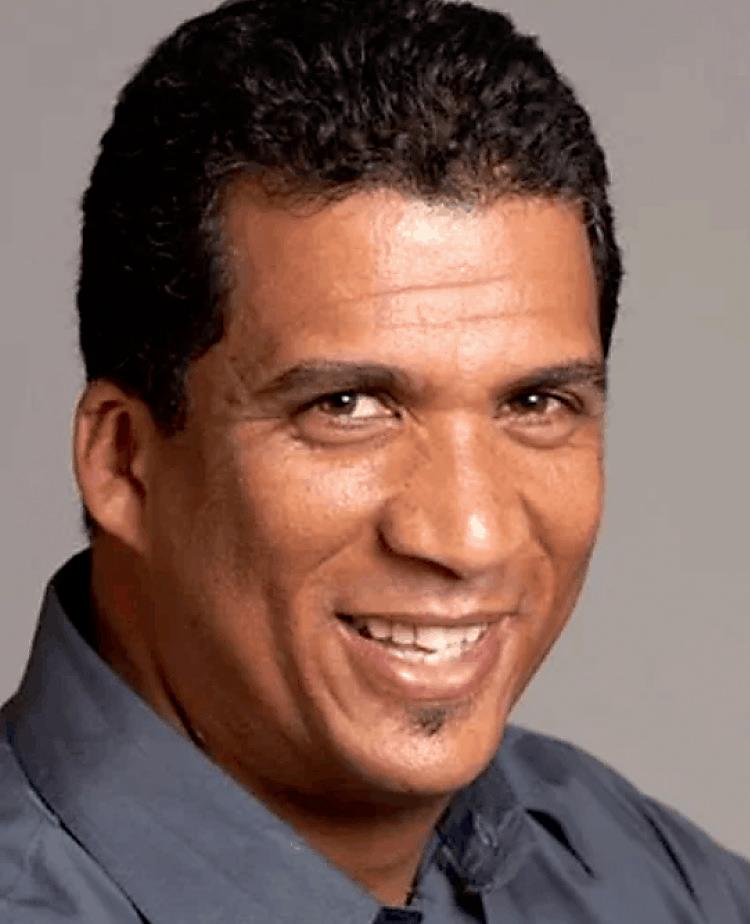
ROGER O. ISAACS, countertenor hails from Cape Town, South Africa, where he completed his music education at the South African College of Music, University of Cape Town. He enjoyed a highly successful solo career in his native country performing a wide range of repertoire from the early music to works by twentieth-century composers. Mr. Isaacs has to his credit numerous television and radio appearances with the South African Broadcasting Corporation. Since making his American solo debut, he has performed as soloist with many of the most prominent choral organizations on the East Coast of America, and in venues ranging from the Kennedy Center Opera House, Concert Hall and Terrace Theatre to the Washington National Cathedral, National Gallery of Art, St. Thomas 5th Avenue in New York City, and the The Basilica of the Immaculate Conception. Hailed by the Washington Post as a “countertenor quite extraordinary both for vocal quality and for his mastery of baroque style,” he has been called upon to perform a wide range of diverse repertoire. Past performances include solo appearances in Monteverdi’s Vespers of 1610, Bach’s Mass in B Minor, St Matthew Passion, Handel’s Israel in Egypt, Joshua, Messiah, Belshazzar, and Vivaldi’s Stabat Mater for solo alto. Among others, Mr. Isaacs has performed extensively with The Folger Consort, The Cathedral Choirs at Washington National Cathedral, Cathedra, The Washington Bach Consort, The Raven Consort, The Bach Sinfonia, Opera Lafayette, Cantate Chamber Singers, Choralis, The Tiffany Consort, The Washington Chorus, Boston Cecilia, The National Gallery of Art Vocal Ensemble. His Opera appearances include the role of Apollo in Benjamin Britten’s “Death in Venice” and Oberon in the critically acclaimed production of Britten’s “A Midsummer Night’s Dream” with the Cape Town Opera Company in South Africa.
MATTHEW LOYAL SMITH,
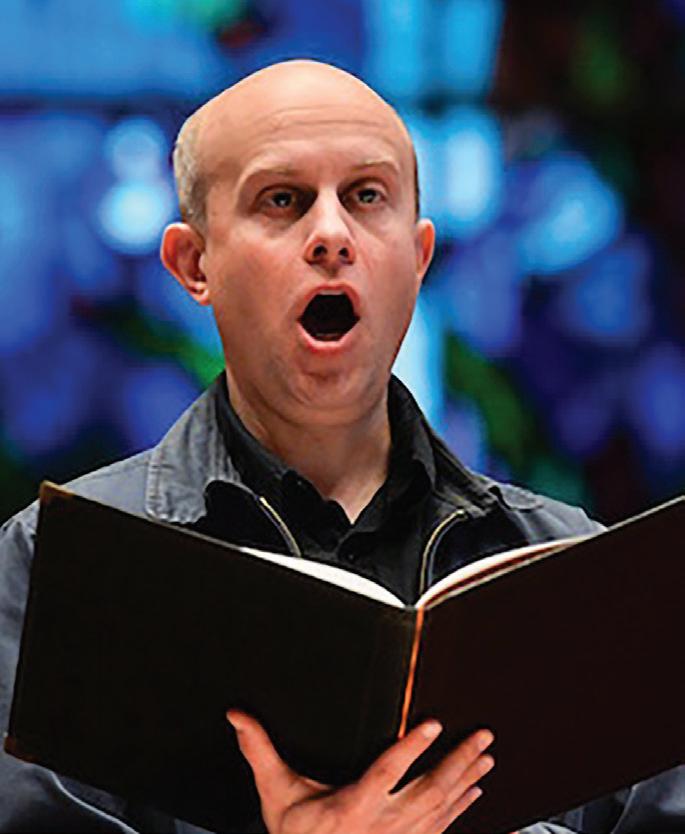
tenor has performed as a tenor soloist with many prestigious ensembles including the Washington Chorus, the National Philharmonic, Washington Bach Consort, the Cathedral Choral Society, the Washington Concert Opera, the Niagara Symphony Orchestra, the Pennsylvania Chamber Orchestra, and the Mendelssohn Club of Philadelphia. Matthew received the Carmel Bach Festival’s Adams Fellowship for performance and study of the music of Bach. A finalist in the San Francisco Opera Center auditions and a semifinalist in the Montreal International Musical Competition, his oratorio roles have included Handel’s Messiah, all of Bach’s major works and many cantatas, and Monteverdi’s Vespers 1610. His operetta and operatic roles have included Mozart in “Mozart and Salieri,” Ludwig in “Lost Childhood,” Frederic in “Pirates of Penzance,” Baron Zsupàn in “Countess Maritza,” “The Turn of the Screw: Prologue,” Kaspar in “Amahl” and “The Night Visitors,” the Mayor in “Albert Herring,” and Torquemada in “L’heure Espagnol.” He was a resident artist with the Pine Mountain Music Festival, where he covered the role of Nemorino in “L’elisir d’amore.” Matthew has studied voice with Beverley Rinaldi and Christine Anderson while earning a B.M. in Voice from the Cleveland Institute of Music and a M.M. in Opera from Temple University. He has performed in the Metropolitan Opera Chorus and is currently a member of the United States Army Chorus.
NICHOLAS WHITE, composer/conductor
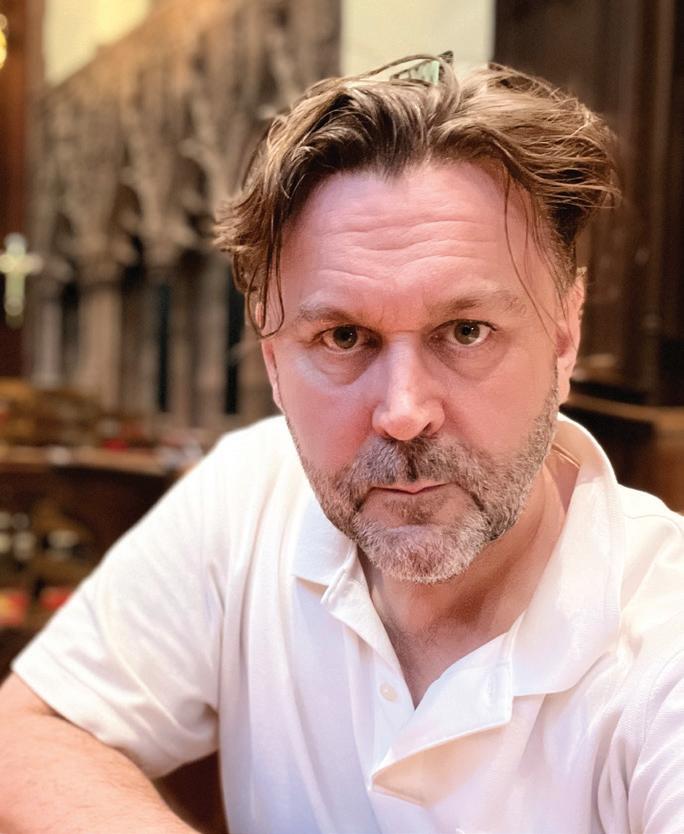
Nicholas White is a Grammy nominated composer and conductor, as well as a versatile organist, pianist, and singer. In 2011, Nicholas was appointed to the post of Director of Chapel Music & Organist at St. Paul’s School, Concord, New Hampshire. Previously, Nicholas has held positions at St. Michael’s Episcopal Church, NYC, and Washington National Cathedral, among several other churches. He has held several teaching and conducting posts, and in 2013 was appointed Music Director of The Boston Cecilia, one of America’s oldest and finest choruses. Four seasons with Cecilia included critically acclaimed performances of Bach, Handel, and Mozart at NEC’s Jordan Hall; a mesmerizing performance of Durufle’s Requiem; and the Boston premiere of White’s “From Earth To Heaven,” which featured the Lydian String Quartet. Nicholas stepped down from this position in 2017 to focus more on composition.
Nicholas sang as a treble chorister in his native England, went on to become organ scholar of Clare College, Cambridge. He has developed a large and varied catalog of compositions published by various publishing houses and has received numerous commissions from musical organizations across the world. Large-scale commissions include “Full Freedom,” a piece for multiple choirs, instrumentalists, and dancers, written for the annual choral tribute to Dr. Martin Luther King, Jr. in January 2002 at The Kennedy Center. In 2013, Dumbarton Concerts (Washington, DC) commissioned White’s setting of Poe’s “The Raven,” which received great critical acclaim and subsequent performances in Philadelphia and Washington in November 2015. No stranger to the world of musical theatre, Nicholas has written several semi-staged song-and-dance cycles, including “Immortality” (Wordsworth), “The Fire and the Rose” (Eliot), and “Songs of Innocence” (Blake).
ACKNOWLEDGEMENTS
I would like to offer my sincere gratitude to the following people who have contributed to the success of this project. A single vision is enhanced immeasurably by the support and artistry of many people. To Rector Kathy Giles and the Board of Trustees of St. Paul’s School; to everyone in the offices of Communications and Advancement for their spearheading of promotion and publicity; to Kate Lydon and Courtney Peix-Barros of the SPS Ballet Company; to all of the singers, instrumentalists, and dancers taking part in the project; to Rev. Chuck Wynder, and my inspiring, supportive colleagues within the SPS Chaplaincy, with special thanks to Lisa Gregoire for her seamless administration, and Roger Farwell for his daily care and management of the Chapel space.