
St. LouiS AmericAn
Acknowledging the problem
One man’s story of survival offers new ideas for preventing gun violence
By Sylvester Brown Jr.
Louis American
ore than 800,000 people in the past 25 years have lost their lives to gun violence in the United States. Another 2 million or more have been injured. A Washington University researcher and a new study authored by 60 leading experts offer alternative ideas aimed at reducing firearm deaths. Research and data collection are essential, but will those findings resonate with people directly affected by gun violence?
Regional Arts Commission of St. Louis (RAC) President and CEO Vanessa Cooksey (center) joined the second line at RAC’s 40th Birthday Bash during the summer. Read about RAC’s restructure and resilience in the Business section (A5).
Gambling expands
A survivor’s story
Patches Holmes, 57, is still haunted by an incident that occurred 33 years ago when he was 24. Holmes and a friend had just exited a liquor store at MLK and Goodfellow when a stranger walked up behind them and demanded money. Holmes set the case of beer down and grabbed the barrel of the gun from the surprised assailant.
As they tussled, he felt three hot bullets strike his arm, back and leg.
Holmes still has questions about that day.
“I hadn’t done anything to him. Why would he do that?”

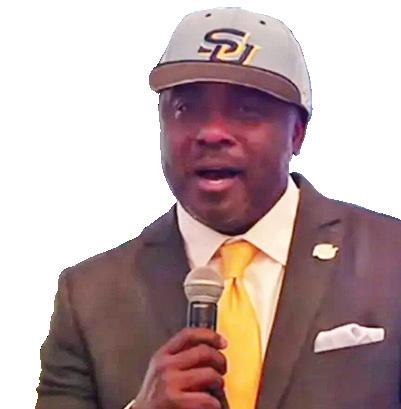
Faulk is new head coach at Southern New Orleans native Marshall Faulk is returning to his home state as Southern University head coach after serving as Deion Sanders’ running backs coach at Colorado for one season. ~ Page B5 ~ SPORTS
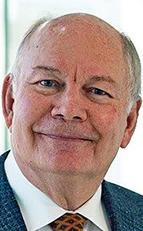
Dr. David Meiners Catalyst for arts and culture
By Sylvester Brown Jr. The St. Louis American
The Trump administration’s intensified crackdown on diversity, equity and inclusion programs through executive orders and federal enforcement actions have created uncertainty for hospitals, universities and medical schools that depend heavily on federal research dollars. The Department of Health and Human Services and the Department of Justice have signaled heightened scru-
tiny of programs that may be deemed discriminatory, advising hospitals that receive federal funding to review DEI programming tied to Medicaid services, federal employee health benefits, military healthcare, and other government-supported operations. But even with the heightened scrutiny, Mercy Hospital St. Louis says its commitment to equity will not change. See MERCY, A15 Mercy Hospital holds firm on DEI
By Sylvester Brown Jr. and Alvin A. Reid St. Louis American
When sports wagering went live in Missouri on Monday, St. Louis sports fans Craig Riggins and Ledrick Wilson didn’t waste time logging on. For years, both men crossed the river to place bets in Illinois. Now, with a mobile app in hand, they say convenience and cost were the immediate draw.
“For me, it’s a gas thing,” said Riggins, 65, a KTRS radio sports announcer and automotive industry salesman. “I don’t have to purchase as much gas traveling to Illinois anymore. We’re finally catching up with the rest of the country and, besides that, it’s good for the state.”
But as legal betting expands, Missouri is poised to inherit a set of problems long documented in other states: rising gambling addiction, financial losses and mental health strains that fall hardest on Black residents, according to national research. Black bettors are more likely to wager, more likely to increase betting after seeing ads and more likely to suffer the economic fallout. Critics also question claims
See BETTING, A14
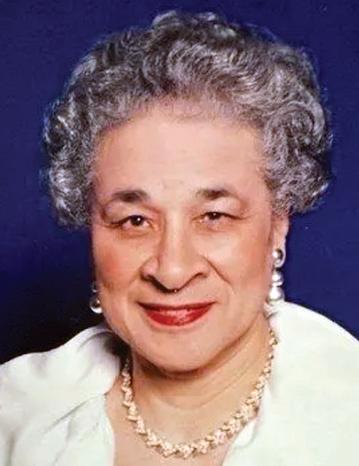
‘She let it shine’
Mary Ellen Anderson, educator, patron of the arts, dies at 103 As sports betting launches in Missouri, Black residents face higher risks
By Nia Hightower For The St. Louis American
At 103, Mary Ellen Anderson lived long enough to see the Ville neighborhood of her childhood completely transformed, the rise and fall of segregationist laws that she marched against and the thousands of students she taught to read, perform or draw a bow across violin strings.
The educator, musician and advocate died Nov. 23 at Barnes-Jewish Hospital.
“Simply saying that she was an educator isn’t adequate,” says Dale Anderson.
“My mom did teach elementary school for a few years, but her love was teaching music and teaching theater.”
She not only taught the arts, she
See ANDERSON, A15
St.
Mary Ellen Anderson, an educator, musician and social-change advocate, died Nov. 23 at Barnes-Jewish Hospital.
Photo courtesy of Anderson family
Photo courtesy of RAC
Guest Editorial
Pillars of servant leadership: The unsung champions of East St. Louis
By James T. Ingram
East St. Louis, Illinois, is a community that has gained local and national acclaim as the “City of Champions,” primarily because of its plethora of athletic prowess — from Olympic medalists to NFL and NBA stars to the perennial successes of high school champions in football, basketball and track and field.
However, the secret sauce that undergirds these successes is the servant leaders and pillars within the community who rarely seek or receive recognition.
It’s easy to focus on crime, political ineptitude and greed and systemic poverty. That’s low-hanging fruit. But the true wealth of ‘East Boogie’ lies in those who excel without fanfare.
Take entrepreneurship, for instance.
This year’s Illinois Retailer of the Year award didn’t go to some upscale outlet on Chicago’s Magnificent Mile. It went to the Personal Touch Boutique in East St. Louis, a men’s fashion retailer owned by Derrick and Bernita Maxwell and a cornerstone in the city since 1994.
Their beginnings were humble, transitioning from selling items from a car, then graduating to sales from a box car before finally building a brick-and-mortar store.
What about redemption and paying it forward? Reggie D. Smith, who once dealt drugs in the Orr-Weathers housing projects of East St. Louis, was gang-involved and later incarcerated, has done just that.
He’s turned his pain into purpose, returning home and redirecting his energy into entrepreneurship through his Pure Heat Gourmet sauce — now available at Schnucks — and by developing his own catering service.
But he didn’t stop there. Launching his own nonprofit, he has opened multiple Pure Living Recovery and Rehabilitation facilities focused on helping people recover from drug and alcohol addiction.
Reggie is also an author, sharing his journey in his new book, Cell Block to CEO: The Rise of a Fallen King, which he hopes will deter young people whose paths may lead them toward criminal activity.
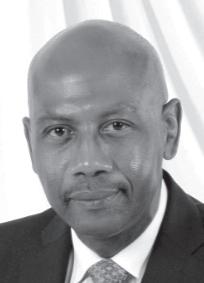
Yet, the Maxwells, despite adversity, have chosen to remain in their community and have thrived as well as provided quality men’s clothing to the region, in addition to providing scholarships and employment to area youth.
They were honored during the Illinois Retail Merchants Association’s 68th annual meeting held recently in Chicago and were praised by Gov. J.B. Pritzker.
Then, there are servant leaders like the New Life Community Church, led by Pastor Kendall Granger and his wife, Wyvetta, who have activated the gospel for the past 25 years, taking it from the pulpit to the people of East St. Louis. New Life and its staff have taken community outreach and services to new heights, offering senior services, youth programming and paid summer jobs, as well as a food pantry, parenting classes, utility assistance and a kids church, with plans to add sensory services for children with special needs.
In addition, they offer a relaxed dress code and appeal to youth, with male and female teen social organizations and a Scouting Troop that has produced four Eagle Scouts over the past two years — a major accomplishment, given that only 4-6% of scouts nationwide reach that rank.
Finally, if any family can be described as a stalwart of the East St. Louis community, it is the Officer family, proprietors of Officer Funeral Home. For four generations, their motto has been, “If it’s service you want, call Officer.” And for 107 years, they have lived up to it, serving families at their most vulnerable moments and giving back in countless ways. Speak with elders in the East St. Louis community and the stories are endless — accounts of the Officer family’s contributions to scholarships, philanthropic causes and acts of generosity, both seen and unseen.
They have been at the center of the city’s civic life and are committed to remaining in the community even as other businesses have left. Instead of walking away, they have remained a pillar and a model of what good corporate citizenship looks like, despite the challenges of doing business in an overly taxed and underserved community.
In this season of giving thanks, I am grateful for these representations and embodiments of what is good about East St. Louis.
If the community is ever to regain its 1960 status as an “All-America City,” as conferred by Look magazine, it will need more of these ambassadors and fewer of the inept, self-serving, self-promoting, opportunistic politicians who have defiled its reputation and created the reputational and practical impediments that now pose an almost insurmountable challenge.
James T. Ingram, an East St. Louis native and writer, covers the Illinois political scene.

Commentary Trump’s ICE raids are modern-day ‘slave patrols’
“White
people are trapped in a history they do not understand; and until they understand it, they cannot be released from it.”
— James Baldwin, The Fire Next Time
By Rashaad Thomas
The United States Immigration and Customs Enforcement raids are not an invention of law and order. They are the evolution of slave patrols — by another name, in another uniform, in another century.
Slave patrols, or paddy rollers, hunted and captured Black people in the antebellum South, enforcing terror and calling it law and order. Established in 1704 in South Carolina, they were formally abolished after the Civil War, but they did not disappear. Instead, slave patrols evolved into the Ku Klux Klan, lynch mobs and eventually modern policing. Today ICE and other law enforcement agencies use the same logic — state-sanctioned violence to intimidate and abuse communities of color.
ICE uses raids, detention and deportation, relying on surveillance programs like ImmigrationOS to track undocumented people, U.S. residents and citizens alike. Families are torn apart and individuals are detained, often during critical immigration processes including marriage, citizenship and naturalization interviews with U.S. Citizenship and Immigration Services. These practices are not about safety, but domination and whitening America.
ized and normalized, granting the state authority to hunt, harass and criminalize communities of color under the guise of public safety.
Slave catchers historically coerced enslaved and free Black people to hunt runaways, using threats, incentives and the logic of survival to perpetuate slavery.
ICE mirrors that centuries-old system, recruiting Black and Brown agents to police their own communities and turning them into weapons to enforce deportations, raids, detentions and racial order against people already marked as other.
Both slave hunters and ICE disproportionately target racialized communities. By using Black and Brown people in enforcement roles, the state hides systemic oppression in plain sight while perpetuating fear and control over the very communities it exploits. Slave patrols criminalized Blackness; ICE criminalizes racialized migration — both enforce rigid hierarchies under the banner of law and order.
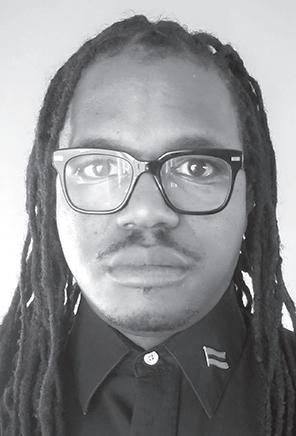
The Trump administration and ICE echo the Confederates of the Jim Crow South, reviving the logic that once defended slavery to justify detaining and deporting immigrants, citizens and undocumented people alike simply because of the color of their skin.
On Sept. 30, 2025, federal agents from U.S. Customs and Border Protection and ICE conducted a pre-dawn raid on an apartment in a predominantly Black Chicago neighborhood.
The consequences are clear. On Sept. 8, the U.S. Supreme Court ruled that ICE agents may use race and language as proxies for citizenship to stop, question and detain a person based on their own judgment.
This decision sets a precedent at the state level by legalizing racial profiling at the federal level. Arizona’s SB1070, the notorious “show me your papers” law, gave local police similar authority to target Black and Brown bodies under suspicion alone. Now, at the federal level, racial profiling is sanctioned, legal-
The operation, part of Operation Midway Blitz, resulted in the arrest of 37 people, including children, most of whom were U.S. citizens. These raids are not about public safety; they are about control, intimidation and domination over nonwhite people in service to purging America of color.
From mass incarceration to mass deportation, ICE raids, police surveillance and detention centers are modern slave patrols — proof that “making America white again” is business as usual.
Rashaad Thomas is a writer, poet and U.S. Air Force veteran. This commentary first appeared on the New York Amsterdam News.
Commentary
Nancy Pelosi exits Congress a friend of America
“When I left home to run for Congress, I had to know why I was doing that. My why was one in five children in America lives in poverty, goes to sleep hungry at night. That was my why.” — Nancy
By Marc Morial
Pelosi
If the measure of public service is how deeply one fights for the most vulnerable among us, then Nancy Patricia Pelosi stands among the most consequential leaders of our era.
From her early days in elective office to becoming the first woman speaker of the House she carried the hopes of working families, children, communities of color and low-income Americans into the halls of power. She carried them into those halls not as tokens but as rightful partners in shaping America’s future.
Her record of legislation is impressive, but what makes her stand out is her willingness to navigate hard moments. When the financial crisis struck in 2008, she led a divided House to approve the rescue package that helped stabilize the economy and protect jobs and incomes in neighborhoods long underserved.
exercise their civic power and to believe fully in the promise of equality.
In the realm of diversity, her impact was equally clear. Under her leadership the Democratic caucus in the House grew substantially more reflective of America’s rich mosaic. She remarked with pride that her caucus was “about seventy percent women, people of color, LGBTQ.”
She helped ensure that women and people of color gained not only seats but leadership roles, shifting the composition of leadership from a narrow group into a broader reflection of the nation. This was not about optics. It was about making sure the people who have borne the burdens of inequality are included in designing solutions.
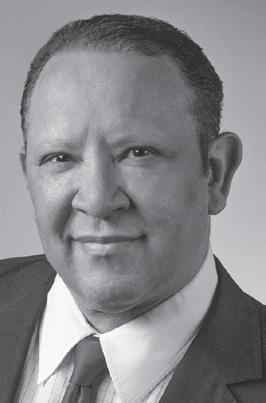
When health care reform seemed stalled she marshaled her caucus to pass what became the Affordable Care Act, extending coverage to tens of millions of Americans and laying the foundation for better economic and health outcomes in communities that too often lacked both.
But beyond those landmark laws her leadership in defending democracy was equally unyielding. When the right to vote and fair representation came under threat, she refused to accept that silence or delay was an option.
She guided her caucus to pursue efforts to restore protections for voting rights and push back against barriers to the ballot. She said publicly that democracy is strongest when every voice is heard and every vote is counted. She traveled to schools and colleges and urged young people to
What makes Pelosi’s legacy powerful for the National Urban League is that she fused all three pillars we champion — democracy, diversity and economic opportunity. She treated the fight against poverty not as separate from the fight for justice and equality. She treated access to health care, wages that lifted families, education that opened doors and representation that broadened power as interconnected pieces of the same mission.
As she steps away from Congress she leaves a living blueprint. Democracy is not self-executing. Inclusion is not automatic. Opportunity is not guaranteed. It requires leadership that refuses to stand down, that believes every child deserves a fair start and that lifts up people and communities often unseen.
Nancy Pelosi’s service reminds us that leadership is judged not by the offices held but by the lives improved. She looked at the long lines of children hungry for opportunity and chose to act. For the National Urban League, her legacy is a call to carry on — to defend voting rights, broaden participation, open doors of access and sustain an inclusive democracy that works for every American.
Marc Morial is National Urban League president and CEO
Guest Columnist Rashaad Thomas
Guest Columnist James T. Ingram
Columnist Marc Morial
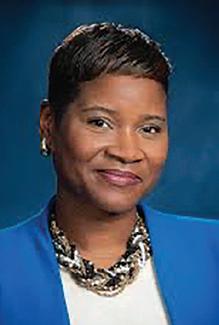
Neighborhood-led efforts get legal backing to tackle St. Louis vacancy
By Ashley Winters St. Louis American
When Nicholas Armstrong walks his block in Dutchtown, he sees signs of progress alongside reminders of how much work remains. After two years in the south St. Louis neighborhood, he’s watched long-neglected properties shape daily life — and seen how community-led efforts are beginning to shift that trajectory.
“Vacancy and blight affect everyone,” he said. “They pose health and safety risks, drive down property values, and take away what makes our neighborhood feel like a safe place to call home.”
Dutchtown is one of the St. Louis neighborhoods expected to benefit from a $250,000 grant from the Wells Fargo Foundation to Legal Services of Eastern Missouri’s Neighborhood Advocacy program. The initiative provides legal representation to neighborhood groups seeking to reclaim vacant or deteriorating properties — an urgent need in a city with nearly 9,000 vacant buildings, many concentrated in historically disinvested areas.
A neighborhood tool for tackling vacancy Since its launch in 2018, Neighborhood Advocacy has partnered with more than three dozen neighborhood associations and local developers. The program has helped spur rehabilitation of 727 vacant housing units and supported more than $10 million in private investment.
Armstrong said he’s seen momentum in Dutchtown as organizations have taken on more
of the problem themselves.
“Community-led efforts have done a great deal to raise awareness of the harms of vacancy and rally residents around the common goal of reducing it,” he said. “Many of my neighbors seem hopeful and optimistic about our community’s future, and that is always a positive sign.”
The new grant will allow LSEM to dedicate a full-time attorney to two high-need neighborhoods, including Dutchtown. Peter Hoffman, managing attorney for the program, said expanded staffing means the team can take on significantly more cases in the same geographic area — moving from a few properties each year to more than a dozen.
“This funding lets us concentrate more attorney time where we’re already seeing real momentum,” Hoffman said.
“Residents will see more cases moving, more problem properties addressed, and more visible progress, faster.”
Using the courts to break cycles of absentee ownership
Hoffman said community-initiated litigation remains one of the few direct tools to disrupt long-term vacancy, particularly when city agencies have limited capacity.
“A neighborhood-led court action can force an absentee owner to the table,” he said. “If a property has been abandoned outright, these actions can also clear title and make it possible to return the property to productive use.”
For Armstrong, the legal support strengthens ongoing work by groups such as Dutch-

town Main Streets, the St. Joseph Housing Initiative, Lutheran Development Group and the Dutchtown Community Improvement District.
“These groups have done a great deal to protect our neighborhood from long-neglected, unsafe, and abandoned properties,” he said. “A continuation of these efforts would only make things better.”
He said outside involvement is welcome if residents remain central in decision-making.
“As long as the interests of the people in our community are prioritized and our voices are heard, I absolutely would welcome outside advocates and developers,” he said.
A resident-driven model Hoffman said the program is structured so neighborhoods determine their own priorities. He noted that the group’s job is to supply legal guidance, not direct the agenda, and that neighborhood associations choose which properties to focus on and what goals they want to pursue. The community sets the redevelopment strategy, and his team helps carry it out.
The Wells Fargo Foundation said its support fits within its broader housing and community development strategy.
“We are deeply committed to investing in St. Louis and strengthening the region through our housing initiatives,” said
Vianey Beltran, vice president of philanthropy and community impact. “By supporting affordable housing and empowering local communities, we strive to create lasting impact and help build a brighter future for everyone who calls St. Louis home.”
‘It gives people hope’ For Armstrong, the investment is another step toward restoring stability — and pride — in a neighborhood still working to reclaim its potential.
“When you see neighbors working together, community groups stepping up, and now legal advocates joining that effort, it gives people hope,” he said. “And hope is something every neighborhood needs


Photo by Ashley Winters / St. Louis American

United Way of Greater St. Louis is seeking donations for its annual 100 Neediest Cases campaign and its Community Christmas programs, which invite residents to donate and support neighbors in need.
100 Neediest Cases campaign opens amid heightened need
As the holiday season begins, many people are searching for stability during a difficult year. The United Way of Greater St. Louis 100 Neediest Cases program connects donors with families facing financial hardship across the region.
Last year, community donations totaled $1.7 million and assisted 11,700 people. For this year’s campaign, the organization has identified 4,921 cases. United Way officials said about 8% of families this year cited the May 16 tornado as a direct factor in their unmet needs, compounding challenges already felt by low-income households.
One of the families seeking help is a parent who lost a teenage child to violence. After the killing, the family lost housing and has faced periods of homelessness while trying to regroup and care for surviving children. United Way officials said the case illustrates
the layered crises that often push families to seek assistance through the program.
“The St. Louis region has faced unique challenges this year, but support for 100 Neediest Cases will give our neighbors in need hope for a brighter future during the holiday season,” said Becky White, United Way direct services program manager.
All contributions go directly to families. Administrative costs are covered by United Way and 47 partner agencies. The St. Louis Post-Dispatch also supports the program.
How to help this holiday season
•Adopt a family. Support a household identified through the program.
• Donate. Contributions provide direct aid to families across the region.
• Fundraise. Encourage others to join in supporting an adopted family.
More information is available at 100neediestcases.org.
Honoring the elders who built our traditions Commentary
By Frances Murphy Draper
Every family has its holiday routines.
In many Black households, the kitchen hums before sunrise, and depending on the house you grew up in, the “children’s table” is still very much alive.
And let’s be honest: some of the people relegated there are fully grown, paying rent and filing taxes. Yet there they sit, knees squeezed under a folding table, pretending this is normal.
Most families laugh about it. But something less funny happens when the grown-ups table gradually stops making room — not for young adults, but for the older adults who helped establish these traditions in the first place.
It doesn’t happen all at once. It happens in moments. People talk around them. Talk over them. Move faster than they can respond. Or assume they’re no longer interested in certain conversations or decisions.

same as genuine connection. And connection is exactly what this season requires. This year, with so much noise in the world — conflict abroad, debate at home and more confusion than clarity — Christmas offers us a rare and necessary chance to slow down. To breathe. To notice the people who sit right in front of us. Peace isn’t only the absence of conflict; peace is the presence of care. And one of the clearest ways to create it is by tending to the relationships that anchor our families, especially the ones that stretch across generations.
And yes, sometimes they repeat themselves — occasionally twice, sometimes three times. But repetition is part of family life. Many of us have told the same story repeatedly to the same people; elders shouldn’t be singled out for something the rest of us do regularly.
Besides, none of us knows how many more holidays we get together. Why rush anyone? Why treat the stories that shaped us as interruptions instead of gifts?
Some elders respond by shrinking back. They stick to their knitting, keep quiet and fade into the background so they won’t be in the way. Others do the opposite and become self-appointed experts on everything from politics to potato salad technique. And younger relatives don’t escape blame either — many smile politely, nod at convenient moments and wait for conversations to wrap up. But polite toleration is not the
This Christmas, include elders in your conversations. Ask about the traditions that mattered to them. Invite them to weigh in on the menu or the music. Let them finish their stories, even if you can recite the ending yourself. These stories are family history delivered in real time, not something you can look up later. And while you’re buying gifts, remember the elders in your family. They don’t need anything expensive. A framed photo. A handwritten note. A promise to stop by once a month. A breakfast outing. These gestures carry far more weight than anything wrapped in shiny paper. Elders have a responsibility too. Don’t assume your voice has expired. Speak when you have something to contribute. Laugh freely. Join the fun. You helped build these traditions — your presence is part of the celebration. Take your seat. It’s yours. Christmas isn’t complete until every generation is seen, welcomed and included. And the celebration is always richer when the people who helped build the family are fully part of the joy. Frances Murphy Draper is CEO and publisher of The AFRO-American Newspapers.

Photo courtesy of United Way of Greater St. Louis
Frances Murphy Draper
By Kenya Vaughn St. Louis American
FRestructured and resilient
or four decades, the Regional Arts
Commission of St. Louis has been more than a cultural steward. Since its founding in 1985, RAC has invested $115 million into the arts and culture sector, fueling what has become a billion-dollar industry in the region.
As RAC marks its 40th anniversary, it enters a shifting funding landscape shaped by hotel-tax declines during the pandemic and new federal cuts, even as it remains a major driver of economic activity in St. Louis.
“I’m feeling inspired and a sense of responsibility,” said Vanessa Cooksey, president and CEO of RAC. “RAC has always put what is best for the region — by way of a strong arts and culture sector — at the forefront of its decision-making.”
RAC is the largest public funder of the arts in St. Louis, awarding more than 7,000 grants since its inception. Its funding comes from a portion of the hotel and motel tax collected in St. Louis and St. Louis County, overseen by a 13-member commission appointed by the mayor of St. Louis and the St. Louis County executive.
See RAC, A6

Students earn as they learn financial literacy
$50 per week disbursements provide additional no-strings cash support
By Dr. Deborah Bailey
The AFRO Digital
Pioneers Academy Charter School in Washington, D.C., this fall launched the city’s first school-based, no-strings-attached direct financial support program for students, paying high school seniors $50 a week. The pilot, known as “The $50 Study,” is part of the school’s effort to reduce barriers that can prevent students from fully participating in academics and school life.
School leaders say the new program reflects their commitment to innovation and student-centered support.
The public charter middle and high school, which opened in fall 2023, focuses on preparing underserved D.C. students for careers in computer- and science-based fields. As the city continues to grapple with the lasting effects of the COVID19 pandemic, school leaders say the new program reflects their commitment to innovation and student-centered support.
A new approach to student needs
“The $50 Study” is a test of the vision of CEO and founder Mashea Ashton and her staff.
“At Digital Pioneers Academy, we
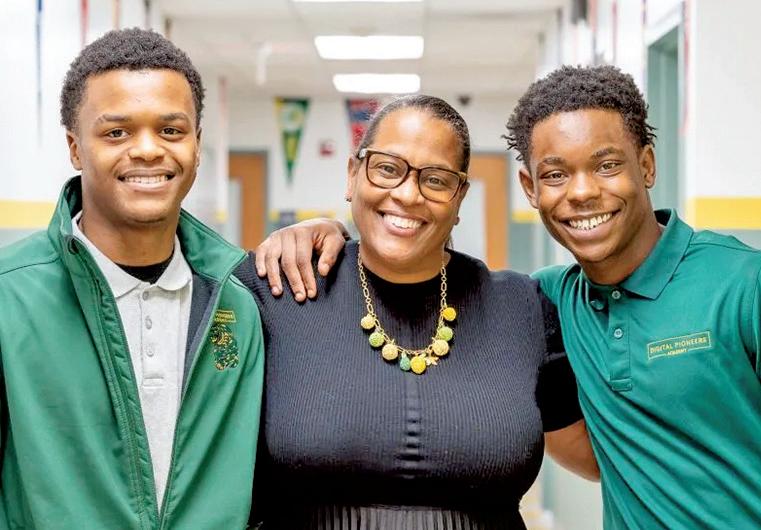
Mashea Ashton, center, CEO and founder of Digital Pioneers Academy, stands with students Clifford White, left, and Fred McRoy. The students participate in a new initiative at the D.C. charter school that gives seniors weekly no-strings-attached cash payments.
believe in removing barriers that stand in the way of student success. That’s why we’re proud to partner with the Rooted Schools Foundation on ‘The $50 Study,’ a research-based initiative that has already shown results in New Orleans and Indianapolis,” Ashton said.
While Ashton’s comments reflect the schoolwide rationale, students participating in the initiative say the weekly sup-
port is already shaping their senior year.
“I think about it as an opportunity. I learned, like, how it is like a gift,” senior Jada Faulkner told News4, an NBC affiliate in Washington.
Jada said she has saved some of the money and shared it with her family.
“Recently, I had bought
Gregory Rose announces retirement
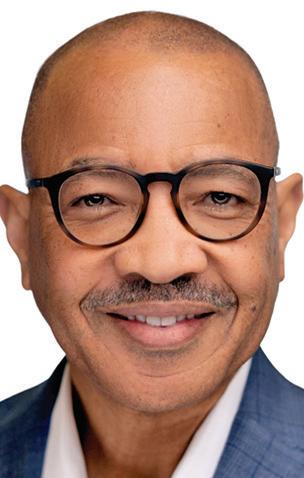
Gregory Rose, city manager of University City, will retire Feb. 6, ending a 30-year public service career that included leading the municipality through two major floods and last spring’s tornado. Rose has overseen several major projects, including the near completion of The Market at Olive, the estimated $211 million redevelopment at the Olive-Interstate 170 gateway into University City.

ReeceNichols Real Estate has announced that A.J. Graham will join its Chesterfield office. Graham launched his real estate career in Kansas City before relocating to the St. Louis area. In 2025, he closed nearly $7 million in sales in the Kansas City market. He will now serve clients in Sunset Hills, Kirkwood, Webster Groves and nearby communities.
Photo by David Jacobs
Gregory Rose
RAC President and CEO Vanessa Cooksey with The Red and Black Brass Band, who gave a second line performance at RAC’s 40th Birthday Bash at Union Station.
Photo courtesy of RAC
RAC
Continued from A5
“The value is on top of the funding,” said RAC Commissioner Roz Johnson. “It is also what it does emotionally and intellectually for the city that is beyond cost and funding.”
Cooksey began her leadership just before the COVID-19 pandemic, which devastated hotel occupancy and threatened RAC’s primary revenue stream. Bound by a law that caps administrative spending at 15%, she restructured and downsized the organization.
“I always hoped and believed that RAC would be stronger and better by our 40th,” she said. “We made significant sacrifices over the last five years to be in a place of strength.”
That resilience was highlighted at RAC’s soldout 40th Birthday Bash at Union Station.
RAC’s advocacy secured $10.6 million in American Rescue Plan Act funding from St. Louis in 2022, underwriting initiatives such as the Living It section in The St. Louis American. This year, RAC awarded $3.7 million
Students
Continued from A5 Thanksgiving food for my family. I kind of helped out a little bit. I used it on my senior pictures outfit. I gave some money to my siblings if they need it,” she told the TV station.
Another senior, Fred McRoy, said the extra cash helps him prepare for milestone moments.
“Right now I’m saving for senior pictures, senior trip ... all the senior activities,” he told News4.
Forty seniors are participating in the initiative.

in grants to arts and culture organizations across the city and county.
“While there is a dollar amount to quantify, when
Where the idea originated
Direct cash support programs expanded during the pandemic, when lowwealth families experienced disproportionate death and illness along with higher unemployment, according to a 2022 report by the National Poor People’s Campaign.
Many of these efforts were launched by local governments and nonprofits to support residents during widespread shutdowns.
“The $50 Study” began in 2022 with the Rooted Schools Foundation, which operates schools in New Orleans and several other cities. The foundation
you think of the impact that it has on one’s life — and that spans all ages — that is something not to be taken lightly,” said RAC
piloted the first version of the program at its New Orleans campus.
Talia Livneh, the foundation’s senior director of programs, led that study.
“We started ‘The $50 Study,’ direct cash transfer program in New Orleans with a small group of students who shared with us they were facing financial struggles, mostly due to the pandemic, that negatively influenced their ability to come to school consistently,” Livneh said.
“When we asked our students, they shared a number of complex and nuanced reasons for missing school. They offered substantive responses such
In its anniversary year, the arts and culture community was hit with
as providing childcare [and] picking up extra shifts of work,” she said.
In 2024, the city of New Orleans awarded the foundation $1 million to continue the program.
What researchers found
A randomized controlled trial conducted by the University of Tennessee-Knoxville, in collaboration with the University of Pennsylvania’s Center for Guaranteed Income, examined two years of the New Orleans pilot.
According to the 2022 Cash Transfer Study Report, researchers found
2025 RAC Commission Chair Jerry Gennaria with President and CEO Vanessa Cooksey as they address the crowd of their 40th Birthday Bash on August 28.
organizations.
“The decisions of the current federal administration impact us here,” Cooksey said. “But in the way that creatives do, it’s like, ‘The show must go on.’”
Cooksey said she is focused on RAC’s future as organizations navigate reduced federal support.
“What I love about creators and artists is that they will find a way — using this time, the political volatility in particular — to think about what we need to do in the short term as well as the long term,” she said. “And when we have this conversation about RAC’s 50th anniversary or 80th anniversary, we will be able to look back and say we did the right thing to ensure our sustainability.”
Cooksey said RAC remains focused on sustainability, innovation and the role arts and culture play in the region’s economic life.
sweeping federal cuts that eliminated $580,000 annually in National Endowment for the Arts funding for 20 regional
that students receiving payments experienced significant support in managing major household expenses such as rent, mortgage, gas, oil and electricity bills. Students in the treatment group also reported greater financial literacy, stronger financial stability and a shift in how they valued work.
How the D.C. pilot works
Before launching the program, Ashton and her staff issued an open call to seniors to gauge interest. Forty students were randomly selected to receive $50 each week for 40 weeks, with deposits going
“Humans were created to be creative. And the Regional Arts Commission wants to make sure that all St. Louisans have a full, creative life,” she said.
directly into designated bank accounts through the summer. Each student will collect $2,000 by the end of the trial.
The initiative is supported by Education Forward, a support organization for D.C. students. Parents and guardians will also participate.
Ashton said she hopes the project expands students’ financial confidence.
“We are going to double down on financial literacy so every scholar, not just those in the study, learns how to manage money and plan for the future,” she said.

Commissioner Andrea Purnell.
Photo courtesy of RAC

HealthMatters



A doctor’s guide to staying healthy through holiday meals
By Ashley Winters St. Louis American
A Blood sugar watch
s Missouri families navigate a season filled with travel, celebration and calorie-heavy holiday traditions, health experts say it’s also a critical time to pay attention to blood sugar.
More than 600,000 adults in Missouri are living with diabetes, and many more are unknowingly on the brink of developing the disease. Between oversized meals, sugary desserts, alcohol and the stress that comes with disrupted routines, the weeks between Thanksgiving and the New Year can pose real health challenges — especially for people already working to manage a chronic condition.
significantly harder. They need to be especially mindful of what they consume, monitor their levels closely and continue taking medications as prescribed.
American: For people who want to enjoy their favorite holiday dishes without harming their health, what does a balanced holiday plate look like?
Miller: Aim to fill half the plate with vegetables, a quarter with lean protein and a quarter — or less—with grains or complex carbohydrates. It’s not about restriction; it’s about proportion. Eating slowly, savoring food, drinking water and avoiding distractions can also reduce cravings for second or third helpings.
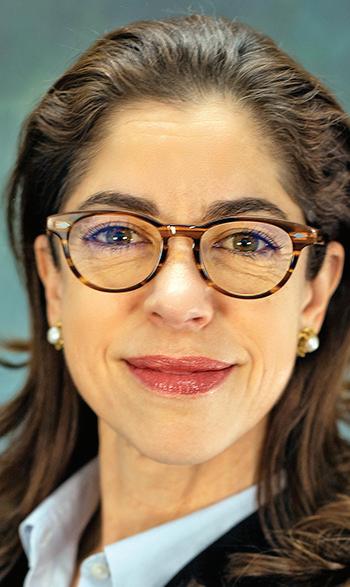
To help Missourians navigate these pressures without missing out on the festivities, Dr. Heidi B. Miller, chief medical officer for the Missouri Department of Health and Senior Services, shared practical tips on balanced eating, early risk detection and building sustainable habits that can carry well beyond the holidays. Her guidance emphasizes not perfection, but mindful choices and long-term health.
Dr. Heidi B. Miller
St. Louis American: The holidays are known for rich meals and disrupted routines. What makes this season particularly challenging for Missourians living with diabetes?
Dr. Miller: We often show our love through food — bigger portions, sweeter treats, snacking outside normal routines and alcohol. Combined with travel or irregular schedules, all of this can disrupt digestion and metabolism. For people with diabetes, it makes blood sugar management



American: What are some realistic swaps or small changes that can help with blood sugar management during holiday gatherings?
Miller:
• Sweet potatoes are naturally sweet — skip the added sugar or marshmallows and season with herbs instead.
• Choose roasted vegetables over creamy casseroles.
• Try mashed parsnips or cauliflower as alternatives to mashed potatoes, or mix them 50/50 for fewer carbohydrates.
• Stick to single dessert servings or opt for fruit. Completely avoiding treats can sometimes lead to bingeing later.
• Replace sugary drinks with sparkling water and a squeeze of lemon or lime. And be mindful that many alcoholic drinks are high in carbohydrates.
page A8
Facing delays in opioid treatment
Black Medicaid patients face steepest barriers to life-saving OUD medications
By Jennifer Porter Gore
Word In Black

Over the last two decades or so, as America grappled with a deadly opioid epidemic, the Black community dealt with a full-blown crisis. From 2010 to 2019, according to data, Black people moved from being the least likely to die from opioid overdose to being more likely to die than white opioid users.
Now, a new, first-of-its-kind study published Monday offers clues about why. Researchers found that Medicaid enrollees recently diagnosed with opioid use disorder, or OUD, are likely to wait up to six months before accessing treatment — and that Black patients face bureaucratic hurdles blocking them from potentially life-saving, anti-addiction
Researchers found that Medicaid enrollees recently diagnosed with opioid use disorder, or OUD, are likely to wait up to six months before accessing treatment.
drugs like methadone or naloxone.
The study results show that the widely accepted addiction protocol that would get OUD patients into treatment as soon as possible isn’t being followed for Medicaid enrollees. This means they are less likely to receive the highly effective drugs that reduce opioid cravings.
See OPIOID, A8

Photo by Pexels - Pixabay
New study on Medicaid enrollees diagnosed with OUD
Black Medicaid patients face bureaucratic hurdles blocking them from potentially life-saving, anti-addiction drugs like methadone or naloxone.
See HEALTHY,
HealthMattersHealthMattersHealthMatters
Care of You’
Healthy
Continued from A7
American: Many people don’t realize they’re at risk for diabetes. What early signs of prediabetes should Missourians watch for?
Miller: Prediabetes often has no symptoms at all, which is why screening is essential. People should talk to their healthcare provider about checking their blood sugar. Risk factors include being 45 or older, having a first-de-
Opioid
Continued from A7
But it also reveals how healthcare disparities may play a role in overdose deaths in the Black community — particularly since a disproportionate number of Black people rely on Medicaid for healthcare.
Peter Treitler, a Boston University professor specializing in substance use disorder and a co-author of the study, says the research underscores “the critical need for policies to ensure everyone can access treatment — regardless of where they live, their ability to pay, or other personal characteristics.”
But with drastic, mandated Medicaid cuts on the horizon, those policies may not arrive for the foreseeable future.
The study, conducted jointly by Boston University and Rutgers University, analyzed data of almost 1.2 million Medicaid enrollees who had been recently diagnosed with opioid use
gree relative with diabetes, being overweight, physical inactivity, high blood pressure, or high cholesterol. Even those who feel healthy should consider screening if they fall into these categories.
American: If someone suspects they have prediabetes, what steps should they take – and what resources are available?
Miller: Start with a simple blood test ordered by a healthcare provider. Lifestyle changes can make a major difference:
disorder. These include addictions to heroin, prescription pain relievers, and fentanyl, a powerful synthetic drug. The subjects ranged in age from 18 to 64 and came from 44 U.S. states; many also suffered from chronic pain, psychiatric disorders, and addiction to drugs other than opioids.
Black patients less likely to have access to methadone or other treatments
Previous research shows medication treatment — including methadone and buprenorphine, which reduce cravings and withdrawal symptoms — is highly effective in reducing the risk of opioid overdose. Another medication, naltrexone, blocks the effects of opioids.
The new study is among the first to analyze access to and effectiveness of all three medications in people newly diagnosed with OUD in the national Medicaid population.
Results showed what the authors describe as a ‘modest’ improvement

eating whole foods, prioritizing vegetables and lean proteins, avoiding sugary and processed foods, being
— 27% to 34% — in the number of participants who received treatment within six months of diagnosis.
However, 69% of patients surveyed did not receive medication within that time frame. Black participants were a third less likely than white OUD patients to get a methadone prescription or other treatment.
Of the 31% of patients who received medication to treat their addiction, a small number experienced an overdose within 180 days. Overdose was much less likely, however, among those on methadone and buprenorphine than for those using naltrexone.
Timely access to medication is vital, Treitler and others said. Closing the access gap is crucial for individuals who have public or low-cost healthcare and need treatment for a dependency on heroin, painkillers, and other opioids.
To reduce barriers to access, the researchers are calling for reforms such as increasing the availability

active daily, maintaining a regular sleep schedule and caring for mental health. Missourians can
of ‘take-home’ doses of methadone, which drug users can self-administer without supervision.
“Interventions should increase the use of medications for opioid use disorder and provide supports that reduce treatment dropout,” the study says.
Budget cuts could trigger an overdose-death resurgence
Data from the Centers for Disease Control and Prevention issued earlier this year showed the first significant national drop in overdose deaths since 2019: a nearly 27% reduction in opioid fatalities in 2024. But the death rates for Black Americans were still significantly higher than those of whites, and Black men are among the single highest-risk groups nationwide.
In 2010, opioid overdoses among Black Americans started rising relative to the overall population. From 2019 to 2020, the rate exploded by 44%; it was the first time more Black Americans died from opioid overdos-
also search for a Diabetes Prevention Program through the CDC’s registry.
American: Holiday stress and shifting schedules can make it hard to maintain healthy habits. What practical advice can help people stay consistent without feeling overwhelmed?
Miller: • Don’t skip meals, which can lead to overeating later.
• Slow down and enjoy the taste of your food —
es than whites.
The crisis is particularly acute among Black youth ages 15 to 24. Overdose deaths in that age range soared by an eye-popping 86% in 2020.
The researchers from Boston University and Rutgers University say the current barriers to access issues are particularly concerning. Their findings show that using medication to prevent overdoses can be highly effective.
Their results in particular indicate that methadone reduces overdose risk by 86% — the most significant reduction by a prescription — when compared to receiving no medication at all.
At the same time, the research also warns that pending cuts to Medicaid, the leading source of insurance coverage for addiction treatment in the U.S., will make matters worse. The One Big Beautiful Bill Act, which President Donald Trump signed into law in July, drastically shrinks the program’s budget.
That same month, the Trump administration
mindful eating helps.
• Avoid short-term crash diets and focus on long-term healthy habits.
• Address shame or emotional distress around food; it can drive unhealthy behaviors.
• Stay hydrated.
• Move your body every day if you’re able — even short periods of immobility affects physical and mental health.
• And remember: one meal won’t undo longterm progress. Moderation and self-care matter more than perfection.
delayed funding for the CDC’s critical Overdose Data to Action (OD2A) program. The CDC proposed slashing the program’s budget by $140 million, roughly half of prior funding levels.
Addiction researchers warned the cuts “will cause approximately 156,000 people to lose access to treatment for opioid use disorder” and lead to roughly 1,000 additional overdose deaths each year. At this point, there is no evidence that the delayed funds have been released.
The study’s authors urge policymakers to continue supporting Medicaid so overdose deaths can continue to decline. The OBBBA includes deep cuts to Medicaid and other drug-treatment programs. In 2021, over 1 million adults—roughly 2 in 10 Medicaid enrollees–were being treated for opioid use disorder.
“Increasing access to methadone may be crucial, given its large protective effect against overdose and the substantial policy and service delivery barriers to access.”

Choose roasted vegetables over creamy casseroles.

Jailhouse claims put Lil Durk back in the spotlight
An accused hitman has allegedly told a jailhouse informant that Lil Durk tied to a bounty connected to the 2022 killing of Stephon Mack in Chicago.
According to AllHipHop.com the statements raise new questions in a federal case where the rapper is already being held without bond on a separate murderforhire charge.
Prosecutors say the case stems from Mack’s shooting outside the Youth Peace Center on Chicago’s Far South Side, where Preston Powell as Marley—and codefendant Anthony MontgomeryWilson were implicated.
to see you all again—stronger than ever.”
50 Cent settles suit ahead of Netflix Diddy doc premiere
Curtis Jackson III, better known as 50 Cent, has agreed to settle a civil lawsuit accusing him of assault—just days before Netflix premieres his documentary on Sean “Diddy” Combs. The complaint, filed earlier this year by Guadalupe de los Santos and obtained by PEOPLE, alleged that in September 2024 Jackson’s SUV pulled up behind him at a Los Angeles traffic light. He said the front passenger door suddenly swung open and struck him, knocking both him and his scooter to the ground.

Investigators believe the motive traces back to Chicago street tensions. Mack was accused of involvement in the 2021 killing of Durk’s brother, DThang, outside a Harvey nightclub. Powell is scheduled to be tried first, and prosecutors are seeking to introduce MontgomeryWilson’s statements, which claim a bounty was offered for Mack’s death by “Individual A”—a figure widely believed to be Lil Durk.
Muni Long Leaves ‘The Boy Is Mine’ Tour
Singersongwriter Muni Long has officially exited Brandy Monica’s “The Boy Is Mine” tour after missing multiple dates due to health issues.
She announced her departure on social media, writing: “As many of you know, I’ve been battling some health issues throughout The Boy Is Mine Tour. Despite doing everything I can to push through, my doctors have made it clear that it’s not safe for me to continue with the remaining dates. I’ll truly miss seeing you all out there, and I’m incredibly grateful for the opportunity.” Long thanked Brandy and Monica for the chance to share their stage and promised fans: “I can’t wait
De los Santos claimed the door was opened at Jackson’s direction and sought damages for assault, battery, emotional distress, and neg-
Ray J arrested after Thanksgiving gun incident with exwife Princess Love
Ray J was taken into custody on November 27 after allegedly brandishing a gun at his exwife, Princess Love, during a heated livestream argument on Thanksgiving. TMZ reported the singer was booked into a Los Angeles jail on a criminal threat charge, with bail set at $50,000. He was released later the same day. Both later addressed the incident on social media. Ray J insisted on X (formerly Twitter) that he was defending his home and children, saying, “I love my kids. I’m not playing about my kids.”

Princess Love countered in a YouTube video that she would never endanger her children. “I would never do anything to put them in danger—including leaving them with a man who is waving a gun around,” she said. Love added that she only came over to cook for Thanksgiving so Ray J could spend time with his kids.
“I’m the best mother – and I do it alone,” Love added. “What I’m not about to do is let you deflect and not take accountability for your actions of pulling a gun out on me and my cousin’s husband for trying to take my kids out of your house.”
Sources: AllHipHop.com, Instagram.com, People.com, TMZ.com, X.com, YouTube.com





















MuniLong
Lil’ Durk
The St. Louis American’s award winning NIE program provides newspapers and resources to more than 8,000 teachers and students each week throughout the school year, at no charge.
010101010101010101010101010101010101010101010101010101010101010101010101010101010101010101010101010101010
The St. Louis American’s award winning NIE program provides newspapers and resources to more than 8,000 teachers and students each week throughout the school year, at no charge.
Questions or comments? Contact Cathy Sewell csewell@stlamerican.com or 618-910-9551
Questions or comments? Contact Cathy Sewell csewell@stlamerican.com or 618-910-9551

CLASSROOM SPOTLIGHT


Students
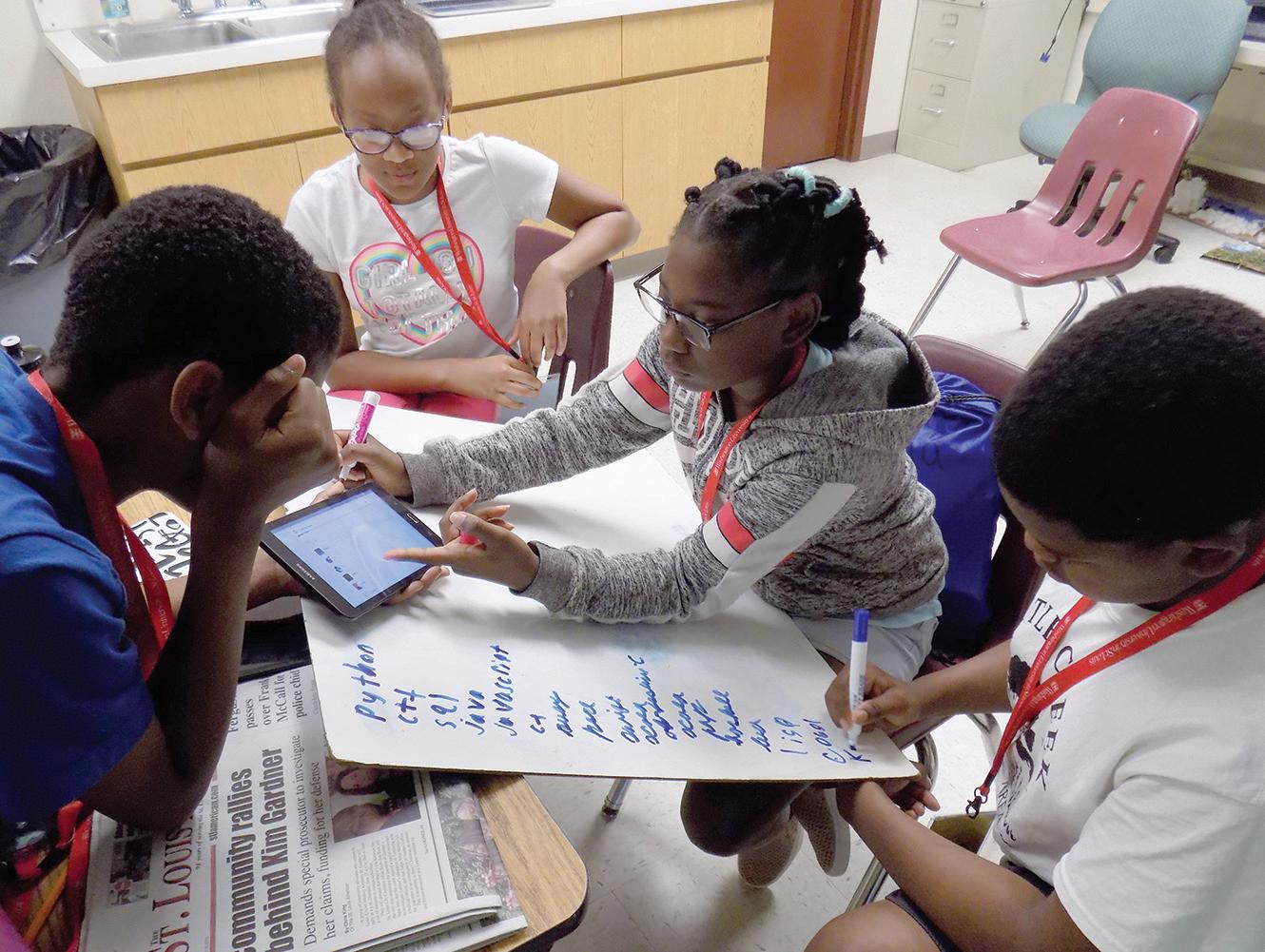
The American’s Summer Science Academy work in teams to discover the many different computer programming languages.
by Ms. Stovall Teachers,
SCIENCE CORNER

FAMILY SPOTLIGHT SCIENCE STARS
A hurricane forms over tropical and subtropical ocean water. Warm water and cool, moist air combine to create strong winds that can gust up to 200 miles per hour! These winds create waves that bring the storm on shore. Hurricanes are very destructive. They can flip cars, sink boats, uproot trees, and demolish houses.
SCIENCE CORNER
Would you like to create apps for cell phones, animate movies, design video games, or work on websites? If so, computer science is the field for you.

What is a computer scientist? Computer scientists focus on the study of computer science. Computer science includes computer theory, such as coding, programming, information theory, and graphics. (Computer engineering focuses on computer hardware.)
In addition to powerful winds, hurricanes bring a lot of rain. (Taiwan received 114 inches of rain in three days during a hurricane.) These rains can cause landslides and flash floods.
Are Fungi ?
Hurricanes can last a few hours or several days. Most hurricanes occur during the fall months. How can you stay safe? Have an evacuation plan and an emergency kit prepared. Meteorologists can track these storms and keep you informed. For more hurricane facts, visit: http://www.sciencekids.co.nz/ sciencefacts/weather/hurricane.html.
Important subjects related to computer science: physics, algebra, calculus, and English.
Fungi are organisms made of filaments (called hyphe) that are stacked together. Unlike plants, fungi do not have chlorophyll, so they cannot make their own food. Some fungi are parasites, which mean they live off of other organisms. Some fungi feed off of dead and decaying matter. Fungi are everywhere in the environment, including the soil, lakes, river and seas, air, and on plants and animals. Fungi (plural of fungus) help organic matter to decay and release carbon and oxygen into the environment. Unlike plants, fungi do not have
SCIENCE INVESTIGATION
Skills Needed: logic, analytical skills, problem solving, and good communication skills.
Education: Must have a bachelor’s, most jobs require a master’s degree or Phd.
Type of work: creating software, teaching programming, research, and development.
leaves, stems, or roots. Fungi use spores to reproduce. One common type of fungus is the mushrooms you find on your pizza. Mold, yeasts, and mildew are also types of fungus. For More Information, Go to: https://kids.kiddle.co/Fungus

SCIENCE INVESTIGATION
SCIENCE INVESTIGATION
In this experiment, you’ll create a replica of a hurricane and identify how the forces work together to create a hurricane.
Materials Needed:
• 2 Soda Bottles • 3 Paper Clips
You are able to quickly find a lot of information on the internet. That definitely has a lot of advantages. However, it also has a disadvantage when it comes to privacy. In this activity, you will learn about internet privacy.
Materials Needed:
• 3 Peanuts • ¼ C. Sand • Funnel
Materials Needed:
• Computer with internet access • Paper • Pencil
• Water • Duct Tape
• 3 slices of bread • Water • 3 Ziploc bags
Procedure:
Procedure:
• 10x10 square centimeter grid • Ruler
Process:
q Fill one bottle with the paperclips, peanuts and sand. These represent the debris and help make the movement of water easier to see.
q Log on to the computer and Google your first and last name.
q Wet one slice of bread enough to make it moist and place it in a bag. Seal the bag very tightly.
w If you found results, in what position was the first link with information about you?
w Place the funnel in the mouth of the bottle and pour water into the bottle until it is 3/4 full, then remove the funnel.
e If you did not find results, try adding your nickname or school information.
w Place the two other slices of dry bread in two separate bags and seal them, as well.
e Turn the second empty bottle upside down and hold it over the first bottle so that the mouths of the bottle are aligned. The bottles will look like an hourglass.
r Tape the seam, pressing the duct tape firmly to
z
c
In this experiment, you will learn how mold grows best. Mold is an important fungus that has several uses, including breaking down dead organic material. Some purified molds are actually used as an antibiotic to treat illnesses.

e Place the bag with the wet slice of bread and one of the bags with a dry slice of bread in a dark place, such as a closed cabinet or closet. Place the third bag with a dry slice of bread in the refrigerator.
SCIENCE STARS


AFRICAN-AMERICAN MYCOLOGIST AND EDUCATOR:
Jeanette Jones
African American Meterologist William “Bill” Parker
John Urschel: The Football Player Who Loved Math
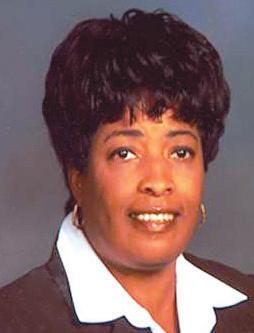
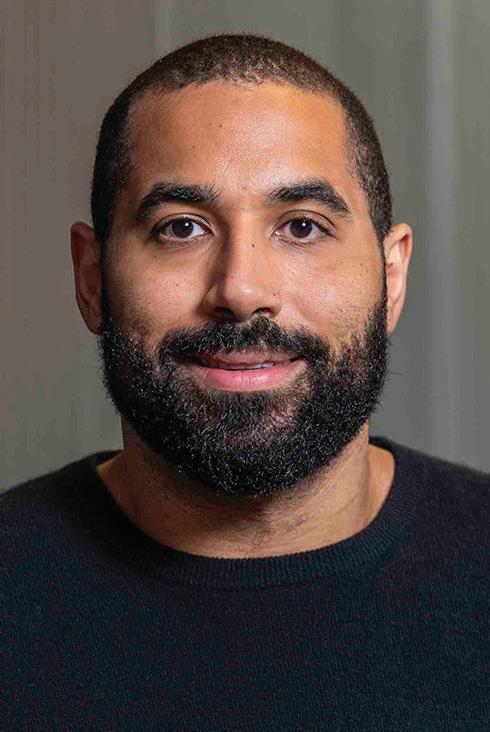
Jeanette Jones was born on September 19, 1950, in Fort Valley, Georgia. Jones graduated from Fort Valley State University in 1972 with a bachelor’s degree in biology education. In 1973, Jones received her master’s degree in botany and mycology (a branch of biology that studies fungi) from The Ohio State University. In 1976, she received her doctorate (Ph.D.) degree.
She also studied at the University of Nevada, the University of California Medical School, the National Center for Disease Control-Atlanta, and the Massachusetts Institute of Technology.
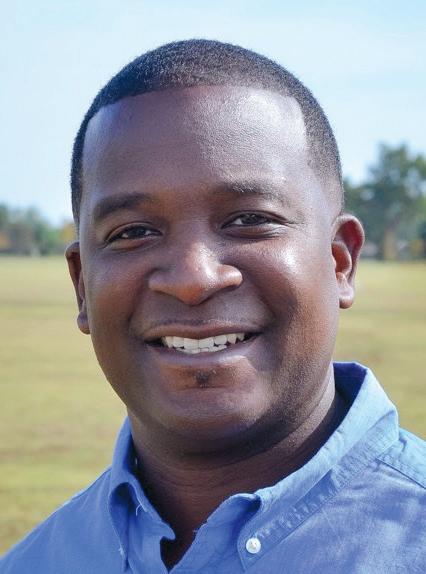
William (Bill) Parker grew up in New Orleans. He graduated from JFK High School, which focused on math, science, and engineering. Parker was interested in hurricanes at a young age, but he became interested in the weather after a high school statistics class. In this class, he learned how to predict the chance of rain. Parker wanted to attend a historically black college/ university (HBCU), so he chose Jackson State University to study meteorology. He graduated with his bachelor’s degree, in 1994.
Most people think you can be either an athlete or a math whiz, but John Urschel proved you can be both! John was born in 1991 in Winnipeg, Canada, and grew up in Buffalo, New York. From a young age, he loved solving puzzles and figuring out tricky math problems. He also loved sports, especially football.
In high school, John worked hard both on the field and in the classroom. His dedication earned him a scholarship to Penn State University, where he played football while studying mathematics. Even with a busy sports schedule, John earned both his bachelor’s and master’s degrees in math and graduated with top grades. He even taught college math classes while still a student!
Learning Standards: I can read nonfiction text for main idea and supporting details. I can make text-to-self connections.
Learning Standards: I can read nonfiction text for main idea and supporting details.
Learning Standards: I can read nonfiction text to gain background information about fungi.
After graduation, Alabama A&M University hired Jones as an assistant biology professor. In 1986, she served as an adjunct professor in the College of Pharmacy and Pharmaceutical Services at Florida Agricultural and Mechanical University and worked on a project with NASA. In 1991, Jones served as the first female vice president of research and development at Alabama A&M University. She also served as President of Alabama A&M University’s Faculty Senate from 2001 to 2006. In 1992, she was appointed to the U.S. Army Science Board by the U.S. Secretary of the Army, Togo West. Since 2004 Jones has been the director of the Center for Biomedical, Behavioral, and Environment Research at Alabama A&M University. She also worked as a consultant with federal agencies to help them develop training programs to attract women and minorities to STEM education and careers.
After college, John was drafted by the Baltimore Ravens in the NFL in 2014. While many players focused only on football, John spent his free time studying math. He carried math textbooks on team planes and worked on math problems after practice. His teammates thought it was unusual but John didn’t mind. He loved math too much to give it up. In 2017, John made a brave decision. He retired from the NFL to focus completely on mathematics. He started working toward his Ph.D. at the Massachusetts Institute of Technology (MIT), one of the best science schools in the world. His research focused on graph theory and numerical analysis, areas of math that help scientists understand networks, data, and systems we use every day.
Growing Mold!
Internet Privacy
create a watertight seal. Continue taping 1 to 2 inches above and below the seam.
t Hold the bottles by the middle and lift the jugs.
r Are there photos of you? Can you find a webpage with your personal information and photos?
y Quickly, turn the bottles over so that the water-filled bottle is on top. Set the bottles on the table again.
t Are you able to delete the photos and information or set it “private?”
Evaluate: In your opinion, is your information on the internet private? Why or why not?
i Turn the bottles over again. This time, shake the bottles in a circular motion. Be sure to keep the bottles vertical.
t For five days, measure the square centimeters of mold on each piece of bread through the bag. Use a grid, if possible, or a ruler. If mold covers more than half a square centimeter, it is counted as one full centimeter. If it is less, it is counted as 0 centimeters. This will give you the area of mold on each slice of bread y At the end of a week (5 days of measuring) or longer, use your final results to say what percentage of the bread was covered in mold. Make a table or graph to display the information.
u Observe the water as it drains into the bottle below. The water competes with the air from the empty bottle. Both substances push to pass through the neck.
o The water will form a vortex as it drains into the next bottle.
“Compute”
q A school ordered 10 Chromebooks at $399 each. If shipping and handling was $15, what was the total cost? ______
MATH CONNECTION
sequential directions to complete an experiment. I can display my results, make observations, and draw conclusions.
the Following!
Math Storms!
Analyzing a Bar Graph
Scientists often use tables and graphs to display the results of their research. Looking at these displays, you can draw conclusions.
w The computer has 6 hours of battery life when fully charged. If you have 75% of charge remaining, how much time do you have left? ______
r You have the option to buy a computer making monthly payments. If you pay $39/month for 16 months, what is the total you will pay? ______
X has grown to have wind speeds of 48 miles per hour. How much faster will the winds have to become for Tropical Storm X to become Hurricane X? ______
As we approach spring weather (and increased rain), create a bar graph that displays the amount of rain that falls for several consecutive days or weeks. (Day 1: 1.5 inches, Day 2: 0 inches, Day 3: 1.5 inches, etc.)
e A company sells a box of 12 computer mice for $75. What is the cost per mouse?

v Upon landfall of a Category 4 hurricane, local officials ordered an evacuation. City A has a population of 9,613, City B has a population of 5,013 and City C has a population of 3,972. How many people were evacuated in all?
Doug Engelbart invented the first computer mouse in 1964. It was made of wood.
t If you buy a laptop for $350, a case for $19, and a mouse for $7, and you pay 9% sales tax, how much do you spend in all? ______
Discussion Questions: Which day had the most measured rainfall? Which day(s) had the least? Looking at the bar graph, what might you conclude about rain patterns in March/April? What other observations can you make?
Learning Standards: I can add, subtract, multiply, and divide to solve a problem.
$115,264 in damage, City B reported $236,096 and City C reported $436,869 in damages. What was the total cost of damages rounded to the nearest thousand? ______ If the state and federal government promised $500,000 in aid, how much would the local people have to raise by themselves? ______
Learning Standards: I can add, subtract, multiply, and divide to solve a problem.
Have you ever wondered why
b After citizens returned to their houses after the evacuation, reports of damage were totaled. City A reported
Learning Standards: I can use a bar graph to display information. I can use the information to make deductions and inferences.

Learning Standards: I can follow sequential directions to complete an experiment. I can draw conclusions and analyze results. Check out computer factoids.
There are over 10,000 species of mold, with 1,000 of those species found in the United States.
If

This special Newspaper In Education initiative is made possible, and delivered to classrooms through the St. Louis American Foundation and its NIE Corporate Partners:




In 1975, Jones was listed in the World’s Women’s Who’s Who and she was named an Outstanding Young Woman of America in 1978. Beta Beta Beta National Biological Honor Society awarded her the distinguished service award. Jones also received the Significant Service Award from the NASA Space Life Sciences Training Program and the Extramural Associate Research Development Award from the National Institute of Health. In 1990 and 2006, she was named Woman of the Year at Alabama A&M University and was given the Outstanding Leadership Award by the Faculty Senate. The U.S. Army presented Jones the Commander’s Award for Outstanding Civilian Service as a member of the Army Science Board.
In 1993, he began to gain experience in the field when he worked as a student meteorologist. One year later, he was a meteorologist intern at Shreveport. In 1998, Parker became a general forecaster, and ten years later, a lead forecaster. In 2012, he became a warning coordination meteorologist (WCM). There are only 122 people with this title in the United States, and Parker was the only African American. Parker is currently the meteorologist-in-charge (MIC) at the National Weather Service, leading a team of 26 weather professionals. Parker is also very active as a volunteer in his community. He is a member of the Shreveport-Bossier Mayors’ Prayer Breakfast Executive Committee, La Cima Bilingual Leadership Academy, Bossier Chamber of Commerce Education Committee, Volunteers for Youth Justice, and a coach for Bossier Parks and Recreation. Parker is also an associate minister at Elizabeth Baptist Church in Benton, where he has been serving the congregation since 1997.
John has received several honors for his research, including the SIAM DiPrima Prize for his outstanding doctoral work. But even more than awards, John cares about inspiring others. He wants students to know that math is for everyone, not just a few people. He often visits schools to tell kids that curiosity and hard work matter more than being perfect.
John Urschel’s story teaches us that you can follow all your passions and still reach great heights. Whether you love sports, math, art, or science, his journey reminds us: with courage, focus, and curiosity, you can achieve amazing things no matter what others expect.
ELA Questions:

Discussion Questions: Dr. Jones received many awards and honors. How would you describe her achievements and her contributions to science? Dr. Jones is studying how fungi might be used as agents of war. What purpose do you think fungi serve in modern warfare? Are fungi beneficial or harmful?
• What are your reactions to John Urshel’s story? How do things stand out?
• John Urschel loved both football and math and worked hard to follow both dreams. What are two things you love to do, and how could you work toward both of them like John did?
Learning Standards: an African American who has made contributions in science, math, technology, or engineering.

Parker believes in serving as a role model to the youth and to recruiting African Americans in the STEM field. Personally, he has hired three African-American meteorologists. In addition, he has recruited minorities for summer intern positions. Parker has also mentored an Airline High School student for his senior project. Parker’s advice to students interested in meteorology is to take as many math and science classes as possible. Learn about summer opportunities in your community. If you are interested in meteorology, visit National Weather Service offices and serve as a volunteer or intern, and find leaders in your community to serve as your personal role models.

Learning Standards: a person who has made contributions to the fields of science, technology,
Use the newspaper to complete the following activities:
Types of News:
Enjoy these activities that help you get to know your St. Louis American newspaper.


Use the front section of the newspaper to evaluate the types of news stories presented: local, national, and international. Sort the articles into the three categories and create a bar graph that displays the amount of coverage each type of news story received.
Enjoy these activities that help you get to know your St. Louis American newspaper. Activities — Transition Words: words are important in writing to help your reader follow your thoughts more smoothly. Look through the newspaper for 10 minutes and circle all the transition words you can find. Challenge yourself to
Activities — Who works where? a picture of a building in the newspaper and of jobs people who work in that building could have.


Mystery Story: pictures from the newspaper without reading the caption. Place the pictures in a bag, and without looking, pick your mystery picture from the bag. That’s your stimulus for writing. Construct a graphic organizer to identify the 5Ws (who, what, when, where, and why) of your story by looking at your picture. Then,

I can use the newspaper to locate information. I can categorize and summarize that information.
can write for a specific purpose and audience. I can add, subtract, multiply, and divide to solve a problem.
Problem and Solution: Over a period of weeks, clip articles from newspapers that deal with problems and issues facing your local or county government. Discuss the reasons for these problems and how the government hopes to solve them. Learning Standards: I can use the newspaper to locate information. I can discuss problems and solutions. I can identify types of jobs. I can make text-to-world connections.




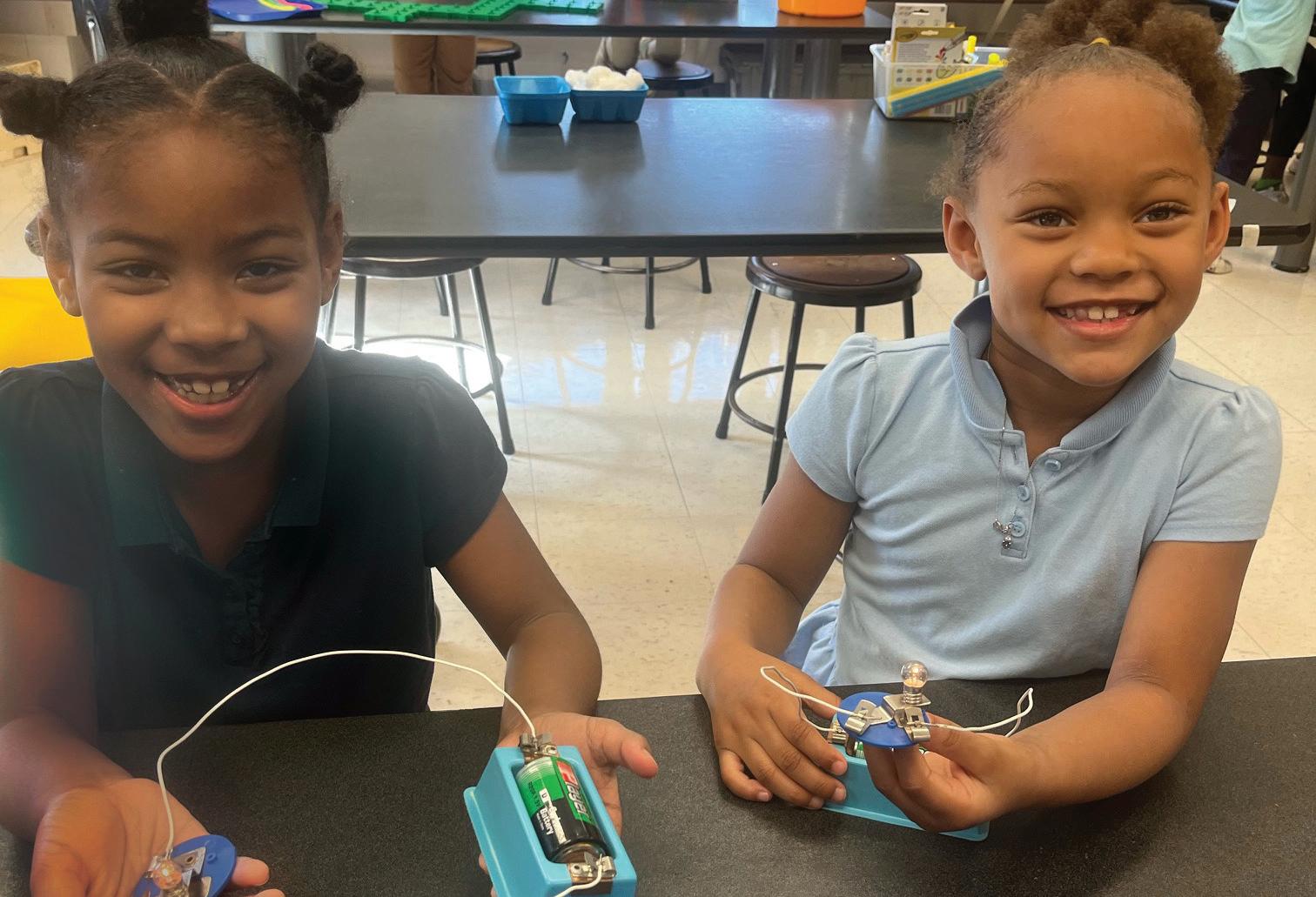
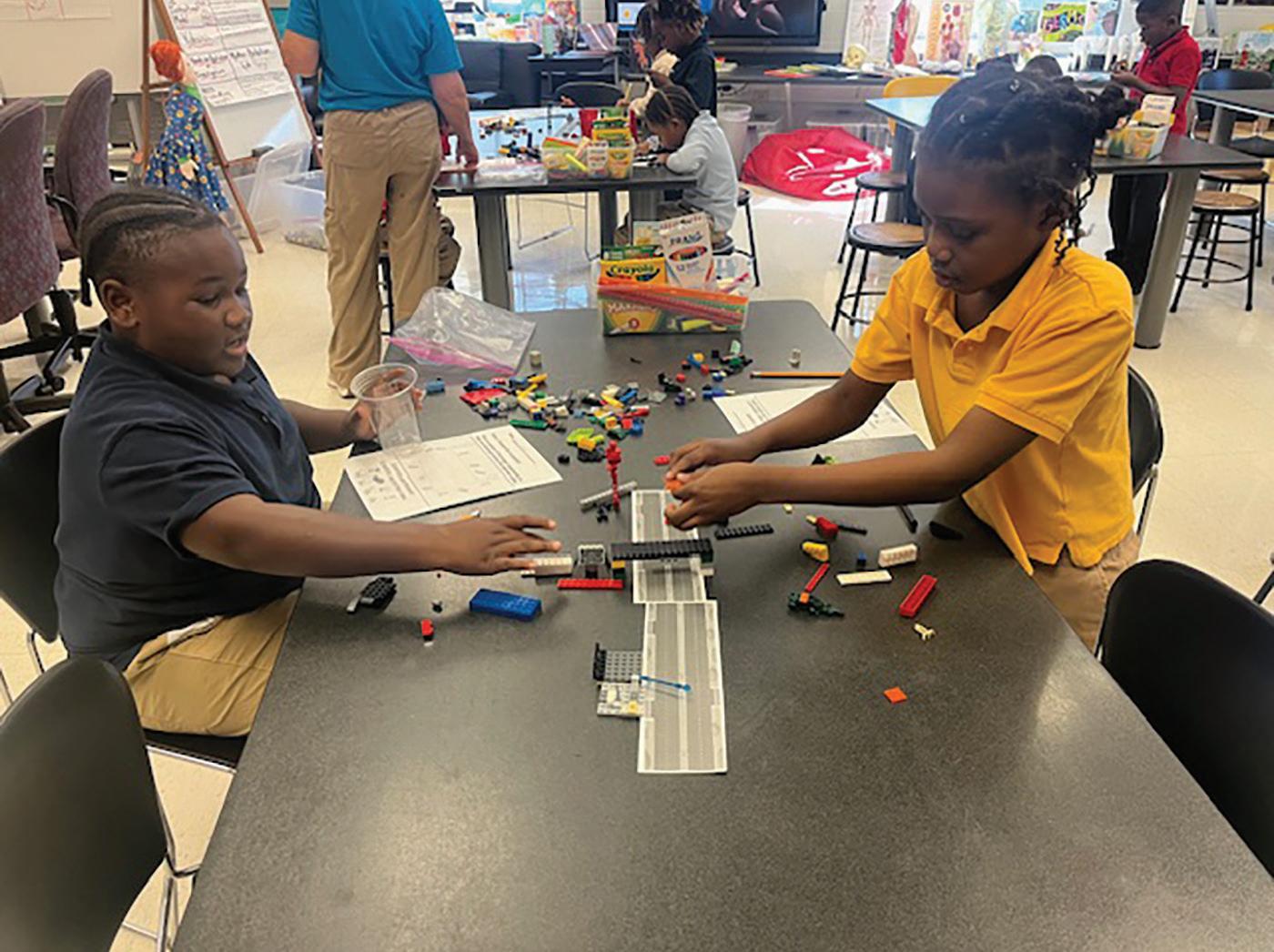
Students Aariyah Thompson and Savannah Fisher, in Ms. Stovall’s firstgrade class at Gateway MST Elementary School, are learning how to construct a series circuit.
Photo by Ms. Stovall
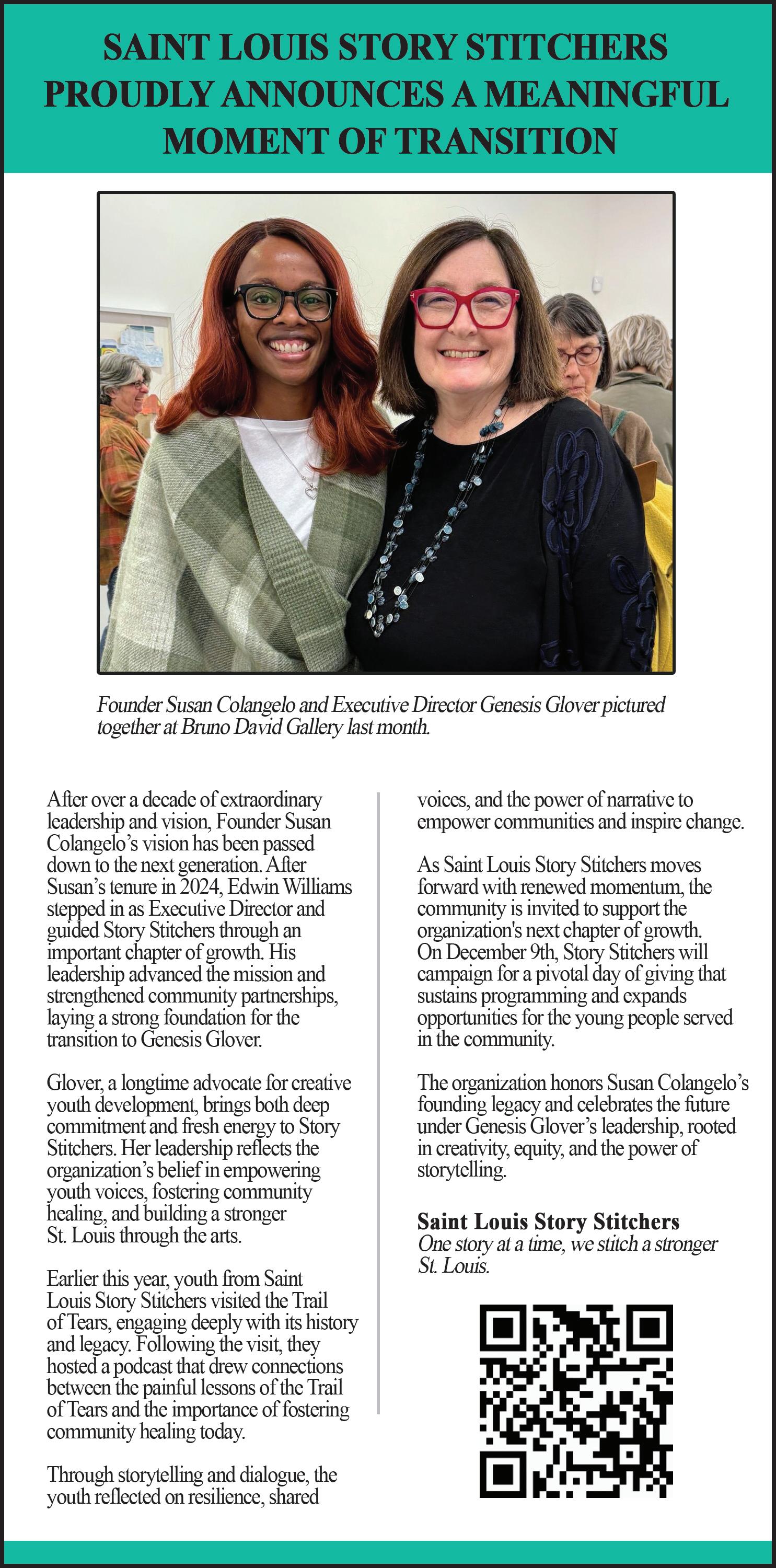
Introducing ‘Books are Magical’
St. Louis County Library rolls out newest bookmobile
By St. Louis American Staff
The St. Louis County Library rolled out its newest bookmobile on Monday, December 1, at Armstrong Elementary in the Hazelwood School District. A vibrant mobile library was unveiled, one designed to spark imagination and expand access to books for children across the county.
Sponsored by the James S. McDonnell Family Foundation, the Books Are Magical bookmobile is the fourth new vehicle to join SLCL’s fleet in 2025. Its whimsical design — featuring dragons, rainbows, and magical motifs — was created by St. Louis artist Dan Zettwoch with input from local children and selected by community vote during National Library Week earlier this year.
At the launch event, students gathered for a special assembly and story time before stepping inside the new bookmobile to explore its shelves.
“We thank the James S. McDonnell Family Foundation for this important investment in our community’s children,” said Kristen Sorth, SLCL Director & CEO. “The Books Are Magical bookmobile embodies all of the wonder and curiosity available inside a book.”
The project stems from a $450,000 donation made by the McDonnell Family Foundation in December 2023. To ensure the design reflected children’s voices, Zettwoch hosted workshops in summer 2024 where students suggested themes ranging from underwater adventures to dragons and magic. He transformed those ideas into three potential designs, with the winning concept chosen by voters online.
The Books Are Magical bookmobile carries approximately 5,000 items across genres and age levels. Key features include:
• ADA-accessible lift for inclusive entry
• Removable seating and two staff stations for checkouts and questions
• Skylights for natural light
• A 21-foot awning for outdoor activities
• Extended Wi-Fi access via cradlepoint router
SLCL’s Bookmobile & Mobile Services program currently operates four

school bookmobiles, visiting more than 50 schools across 11 districts. In 2024 alone, the program checked out over 300,000 items, issued 8,200 new library cards, and served more than 212,000 children. Demand continues to grow, with more districts requesting service each year.
Bookmobiles have been part of SLCL’s mission since 1947, providing equitable access to library resources. For many students, the bookmobile is their only direct connection to the library. With an aging fleet, SLCL has prioritized replacing vehicles to ensure the service remains reliable and inspiring. “We are thrilled to introduce this new bookmobile, which will help eliminate barriers and open up a world of discovery and enjoyment for students,” said Sorth. For more information on SLCL’s mobile services, visit slcl.org/bookmobile-mobile-services.

Healthy Kids
Our Healthy Kids, Healthy Minds program

• Provides individual, group and family therapy
• Offers trauma training for school staff members
and well-being of kids in our community extends beyond the hospital setting. We are in your community providing programs and services, which are "doing what's right for kids" every day.

Photo courtesy of St. Louis County Library
Students gathered for a special assembly and story time before stepping inside the new bookmobile to explore its shelves.

Gun violence
Continued from A1
Fear and distrust
Caitlin McMurtry, an assistant professor at the Brown School at Washington University, conducted research that speaks to why people today arm themselves and new ways to reduce gun violence.
There is a rising sense of mistrust that makes people reach for guns, McMurtry wrote in “The Changing Politics of Guns in America,” published recently in the Journal of Health Politics, Policy and Law.
McMurtry urges experts to focus less on weapons and more on the distrust and fear that drive people to buy them.
“Public health has long ignored the political and social aspects of gun ownership and failed to recognize that firearms are, for many people, a means of replacing fear and uncertainty with a sense of strength and self-sufficiency,” McMurtry wrote. “Before we can make progress toward a safer society, we need a better understanding of, and more research on, Americans’ motivations for self-armament.”
Her analysis focuses on the years before, during
Betting
Continued from A1
that sports wagering will deliver meaningful new money to public education.
and after the COVID-19 pandemic and examines how attitudes shifted during the Trump administration’s approach to the Second Amendment.
Guns during the pandemic
One example of those shifting attitudes is Jaymi Smotherson, a St. Louis County mother of two who bought a gun and completed a firearms training class during the pandemic. In an Aug. 10, 2020 interview with KSDK, she said she did it for “safety reasons.”
“It just seemed like the crime in St. Louis is getting out of control,”
Smotherson said.
That news segment also cited National Shooting Sports Foundation (NSSF) data showing a record 10.3 million firearm sales in the first six months of 2020 and ammunition sales increases of 95% and 139% compared to the previous year.
Based on her research, McMurtry says many of those 2020 firearms were purchased by first-time buyers, like Smotherson. These new owners, she wrote, are “more diverse, politically liberal and motivated by fear of racial and political violence.”
Yet they also report being more willing to engage in political violence if they deem it necessary.
“Whereas public health
Betting with guardrails
Even so, people like Riggins and Wilson say they weighed the risks, watched others struggle and still chose to partici-
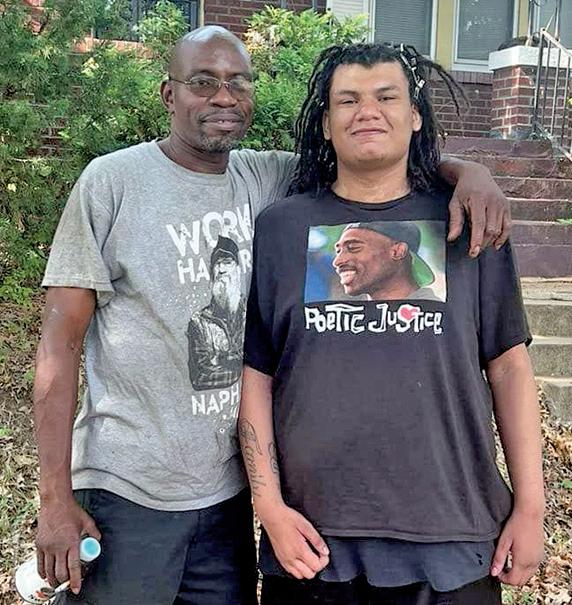
Photo courtesy of Patches Holmes
often focuses on the gun itself, such as how it is stored or handled, I argue we must tackle the root cause of gun purchasing: pervasive fear and distrust,” she said.
A different view
Holmes, when told about McMurtry’s research, said “fear or distrust” had nothing to do with his assailant’s actions. He sees something deeper.
“I think it’s just a mentality. If you ask someone why they bought a gun in the first place, they’ll say ‘security’ or ‘protection,’ but where did that come from,” Holmes wondered.
“When I was young and we got into fights, it was never with a gun; it was with hands and fists or whatever we came with.”
Holmes later lost his 24-year-old son to gun violence involving police. His son died after a police
pate with guardrails they hope will keep the pastime from becoming a pitfall. Wilson, 54, who works in auto manufacturing, placed his first legal Missouri wager on

Patches Holmes with his son, Patches Holmes, Jr., who was a victim of gun violence in 2022.
chase. Police claimed he had a gun, which Holmes disputes, saying no weapon was found.
Gun violence by private citizens or police, Holmes insists, still relates to mentality.
“I think firearms give people a false sense of authority … it makes them feel invincible, like, ‘OK, I got this gun now. I’m tough, I can do whatever I want,’ ” he said.
Holmes continues to struggle with pain from his shooting decades ago. He does not dismiss McMurtry’s thesis but believes the country needs a fuller understanding of why Americans obtain guns, legally or illegally, and why so many use them in ways that lead to high death rates.
New research on solutions
A report published last
Monday’s New York Giants-New England Patriots game.
“Man, I couldn’t wait,” he said. “I know some people who’ve lost their houses due to gambling, and I do worry about that at times. But it’s like any other addiction. For me, I set a budget where it won’t impact other necessities in my life like rent.”
A narrow vote that changed the landscape
Their enthusiasm reflects a broader demand that built during years of stalled attempts to authorize sports betting in Missouri. The issue finally went to voters last fall as Amendment 2, a measure to allow online and in-person sports wagering and direct revenue to education.
The measure passed in November 2024 by fewer than 3,000 votes, making Missouri the 38th state to legalize sports betting.
Mobile licenses have been issued to major operators including DraftKings, FanDuel Sportsbook, Caesars Sportsbook, bet365, BetMGM, Circa Sports, Fanatics Sportsbook and Penn Sports Interactive.
Ads that hit harder for some communities Sports wagering companies have flooded Missouri with ads, many featuring high-profile entertainers. While those ads aren’t explicitly targeted to Black consumers, national


month in the Journal of the American Medical Association addresses a different question — how communities and policymakers can reduce firearm harm.
The report calls for stronger investments in violence-prevention programs. Motivated by grim statistics, such as gun violence now being the leading cause of death for children and teens, the experts convened last year to create an action plan.
“We do have a body of science that can inform and reduce the burden of injuries from firearm violence,” said Dr. Sandro Galea, dean of the school of public health at Washington University in St. Louis and a study co-author. “For example, through laws that make sure that there is appropriate screening, that guns do not fall into the hands of people who have a history of violence.”
The authors call for sustained investment in community violence intervention programs.
“Firearm harm is a symptom of deeper structural issues when you think about poverty and segregation and trauma and lack of opportunity,” said Dr. Joseph Sakran, one of the study authors and himself a gun violence survivor. Sakran was critically injured at
research shows they may have disproportionate effects.
A 2023 NCAA survey found that 68% of Black respondents engaged in sports betting, compared to 63% of Hispanic respondents, 55% of Asian respondents and 54% of white respondents. African Americans also tended to place larger wagers.
The study found that Black respondents saw ads at similar rates as other groups, but 65% said the ads increased their likelihood to bet.
That’s what troubles
Pastor NL Grice of Greater Rising Star, a church near Martin Luther King Boulevard and Prairie Avenue. He said legalized gambling could become another pressure point for residents already facing instability.
“The negative aspect is that it can be a catalyst for further financial hardships,” Grice said.
People often turn to gambling as a way to cope, he added, and “if they’re doing that to compensate for their hardship, it can push them further into debt or homelessness or high-interest loans. … Economic desperation can also lead to criminal activities.”
Riggins doesn’t dismiss concerns about disproportionate harm in Black communities, but he sees the political support for legalization differently.
Big promises, contested payoffs
Backers of Amendment 2 promised that more than $100 million would support education programs in the first five years. FanDuel and DraftKings together contributed more than $15 million to the campaign committee “Winning for Missouri Education,” highlighting constitutional language that directs gambling tax revenue to public schools.
Opponents argued the promise was misleading. Missourians Against the Deceptive Online Gambling circulated a “fact sheet” warning the measure guaranteed nothing for schools.
Some educators echoed those concerns.
“We have to stop using teachers as political pawns,” Jason Roberts, president of the Kansas City Federation of Teachers and School Related Personnel, told The Kansas City Star last year. “They’re using teachers as a false prom-
17 during a shooting after a high school football game.
What programs show The study highlights the outcomes of several intervention programs, including Chicago’s Create Real Economic Destiny (CRED), whose alumni had a 73% lower chance of being involved in a violent crime, and Baltimore’s Safe Streets program, which led to a 32% reduction in homicides and a 23% decline in nonfatal shootings. Holmes, who does not dismiss either McMurtry’s findings or the experts’ call for community-driven approaches, has his own view. He said progress begins with acknowledging the scope of the problem. He thinks meaningful change requires honesty from everyone involved — from policymakers and gun lobbyists to police officers — about the role their attitudes and decisions play in preventable gun deaths.
“Once we can honestly acknowledge and accept that, it’s easier to set up protocols to address what we have all collectively admitted,” he said.
Sylvester Brown Jr. is the Deaconess Foundation Community Advocacy Fellow.
ise, making false promises to the voters that we’re going to make teachers’ lives better only to expand gambling in the state of Missouri.” Missouri taxes adjusted gross sports betting revenue at 10%. The Missouri Gaming Commission collects those funds, reimburses regulatory costs and sends at least $5 million or 10% of annual tax revenue to the Department of Mental Health for compulsive gambling services.
Calls for oversight grow louder
National advocates say the investment is necessary.
Rev. Al Sharpton wrote to the Federal Trade Commission in May 2024 urging tighter scrutiny of advertising practices, citing the NCAA findings.
“When a duopoly takes hold, consumers are the biggest losers, and the most vulnerable consumers — including Black Americans — bear the brunt of that harm,” he wrote.
Health experts warn that problem gambling is linked to bankruptcy, depression, anxiety, suicidal thoughts and stress-related physical conditions like hypertension, a major risk factor in the Black community. Nationally, more than 20 million Americans are in gambling debt, with average losses near $55,000.
Legal, but not without controversy
Sports wagering may now be legal in Missouri, but national scandals show the risks. Earlier this year, the NBA banned former Toronto Raptors player Jontay Porter for disclosing confidential information to bettors and limiting his own play for gambling purposes.
And in October, Portland Trail Blazers head coach Chauncey Billups and Miami Heat guard Terry Rozier were charged in federal court with crimes tied to providing information to gamblers and involvement in Mafia-backed poker schemes.
As for Wilson’s first Missouri wager on Monday, did it pay off?
“No, but I still have the lights on,” Wilson recounted. “Better luck next time, right?”
Sylvester Brown Jr. is the Deaconess Foundation Community Advocacy Fellow.
Bill would place Bus Rapid Transit question on April ballot
A recent bill sponsored by Board of Aldermen
President Megan E. Green would ask voters to authorize the use of the city’s economic development sales tax to help fund a Bus Rapid Transit system.
Board Bill 106 would amend language in Proposition 1, which was approved by more than 60% of city voters in 2017. The one-half percent sales tax was created to support economic development and was originally tied to the planned North-South MetroLink expansion, more recently referred to as the Green Line.
Escalating costs have pushed the most recent
The SLATE Missouri Job Center will hold its annual Holly Jolly Holiday Hiring Fair from 9 a.m. to noon on Dec. 4-5 in the first-floor conference room at 1520 Market St., St. Louis.
More than a dozen employers and training partners will take part,
Anderson
Continued from A1
immersed herself in community arts for decades
— both as an artist and educator — performing in local dinner theater productions, teaching theatre to high school students and overseeing various stage productions.
Born Jan. 28, 1922, in St. Louis, Anderson witnessed the construction of Homer G. Phillips Hospital, the only public hospital for African Americans in the city from 1937 until 1955.
A 1938 graduate of Charles Sumner High School and a 1942 graduate of Harris-Stowe State University, Anderson exhibited an early interest in literature and developed a lifelong love of the violin as well.
She passed her love of music on to her three sons — John M. Anderson III, a Wisconsin attorney who learned to play clarinet; Dale Anderson, a St. Louis psychiatrist who learned to play the violin; and the late Bruce Anderson, who became an accomplished pianist and earned his Ph.D. in music.
“My mother encouraged us to develop our abilities and our talents, to
Mercy
Continued from A1
Dr. David Meiners, president of Mercy’s St. Louis Communities, said the hospital remains “very strongly” committed to its DEIB — the “B” stands for “belonging” — priorities. St. Louis Communities includes Mercy’s network of regional hospitals, outpatient clinics, surgery centers and other facilities.
“In my presentation, I say, ‘those letters (DEI) may not be popular right now but it’s still a big thing for Mercy,’” Meiners said, recalling remarks he delivered the previous day to new employees at the hospital’s weekly Monday morning breakfast. “I want to make sure everybody knows we support it in its entirety.”
Meiners spent more than five decades at Mercy as a surgeon and administrator before becoming the system’s first physician
estimate for the MetroLink project to $1.1 billion, according to Green’s office.
After the Federal Transit Administration expressed concerns about the project, the Bi-State Development Board of Commissioners canceled the North-South MetroLink expansion earlier this year. The board then authorized a contract to evaluate the feasibility of Bus Rapid Transit in the same corridor. A BRT system along a similar route is estimated to cost between $400 and $450 million.
“I support using the eco-devo tax revenue for
Bus Rapid Transit; however, I think it’s even more important that residents demonstrate their support for it at the ballot,” Green said.
For the measure to appear on the April 2026 ballot, the bill must move through the Board of Aldermen and be approved by Jan. 27.
City voters will also be asked to renew the city’s 1 percent earnings tax in the same municipal election.
Since 2017, approximately $96 million has been collected for the MetroLink expansion project.

SLATE ‘Holly Jolly’ Job Fair Dec. 4-5
offering opportunities in transportation, customer service, healthcare, education, skilled trades, IT and other fields.
Participating organizations include Southwest Airlines, Procter & Gamble, Bi-State/ Metro Transit, St. Louis Community College, City
study hard and to excel,” recalls Dale Anderson.
Prior to marrying her husband, the late Dr. John M.Anderson, she became a teacher. While he attended Meharry Medical College, she taught violin in Nashville’s public school system to support the family and continued her work as an educator upon their return to St. Louis, where he worked for years as a psychiatrist and associate professor at Washington University School of Medicine.
Her career as an educator spanned two decades with the St. Louis Public Schools, where she taught elementary school and instrumental music.
She later decided to earn a master’s degree in speech and theatre arts from Saint Louis University and returned to complete her doctorate in education after she retired.
“There’s such a huge history of a core group of African Americans who were the firsts of things in St. Louis, and my parents were friends with Mary Ellen’s circle of friends,” said Rita Washington, who worked with Anderson at the local chapter of Young Audiences. “It was a huge circle. All of the children knew each other. We min-
leader. He emphasized that Mercy’s DEIB work is not tied to federal grant applications.
“It’s not that we’re trying to hide anything,” he said. “Our initiatives simply don’t rely on government funding.”
He noted that President Trump’s restrictions largely affect institutions that receive substantial federal research support, such as academic medical centers. Mercy is one of the region’s busiest hospitals — “one of every three babies born in St. Louis is born at Mercy Hospital St. Louis,” according to its website — but it is not a major research institution.
Bridget MarzetteBender, Mercy’s vice president of caregiver experience and DEIB, said the hospital took a “proactive approach” after the administration announced its anti-DEI directives, seeking to balance compliance with what she called Mercy’s “unwavering commitment to compassionate and equitable
of St. Louis Government, Urban League, Ranken Technical College, St. Charles Community College, City Refuse Division, SLMPD, Abbott, St. Louis Department of Health, Super Park, CyberUp, Midwest Career Source, Missouri Women in Trades, Rocket
Convenience Stores, Rung for Women, Savvy Coders, Mid-America Carpenters Regional Council and MOKAN.
Job seekers are encouraged to create or update a profile at jobs.mo.gov before attending.
“As families prepare for the holidays, many are also
looking for new opportunities and a fresh start,” said Connie Johnson, executive director of the SLATE Missouri Job Center. “Our hiring fairs make that possible by connecting people directly with employers who are ready to hire. These events help strengthen our com-
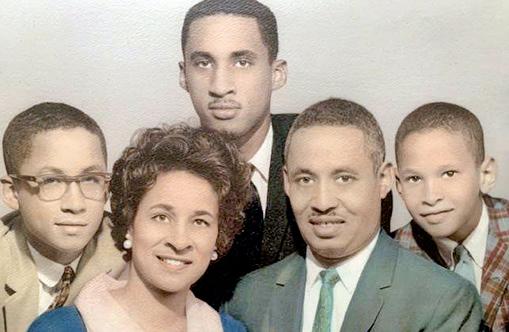
gled socially, but also with our parents.”
Anderson served on the board of directors for Young Audiences, a national arts education organization now known as Springboard to Learning. Washington, who served as director of arts education during Anderson’s tenure, says Anderson became a sort of ambassador for the organization, serving on the board and conducting her dissertation on its history.
“I introduced her to the organization, and she was immediately capti-
care.”
Marzette-Bender highlighted several initiatives the hospital continues to support. They include recruiting from historically Black colleges and universities, a “Mentoring Your Way” program that pairs minority candidates with mentors who share cultural backgrounds, and “unbiased training” intended to help employees recognize conscious and unconscious biases and promote an inclusive workplace.
In recent years, DEI programs have become a political flashpoint. Critics argue the initiatives are discriminatory, a position amplified by some conservative lawmakers after the 2023 Supreme Court decision restricting affirmative action in college admissions. Technology billionaire Elon Musk posted on X that “DEI is just another word for racism ... shame on anyone who uses it,” later calling such practices “immoral and illegal.”
The Kaiser Family Foundation, a nonpartisan
vated by our program in arts in education,” recalls Washington, who began working with Anderson at Young Audiences in the late 1980s. “Young Audiences was on a mission to show how the arts were not frivolous, but pivotal to our lives.”
Whether working to provide scholarships through social groups, advocating for arts in education or fighting racism, Anderson immersed herself in improving her community.
A devoted member of Trinity Episcopal
health research organization, has pushed back against those claims. In a March analysis, KFF wrote that DEI programs help build “more diverse and inclusive work environments” and address policies that have historically limited opportunities for certain groups.
Several of the Trump administration’s actions already are facing legal challenges.
Mercy’s commitment to inclusion is rooted in its origins. The health system traces its heritage to the Sisters of Mercy, founded in 1831 by Catherine McAuley, an Irish woman dedicated to serving impoverished women and children. The order later established hospitals across the Midwest, including in St. Louis.
Religious institutions do not automatically receive exemptions from federal rules if the government determines certain DEI practices are unlawful. Experts say Catholic hospitals face the same
Church for 64 years, she joined the Episcopal Diocese Commission on Dismantling Racism after retirement. She served as a group leader for many years with Rev. Chester Hines as chairman, training people to recognize and overcome racial bias.
“She was an extremely important voice in that work because of her own personal experiences regarding race as well as her observations about how [racism] adversely impacted people in the community,” said Hines, who grew up knowing
regulatory expectations as any federally funded provider.
Still, Mercy leaders say their mission guides their decisions.
“We obviously want to make sure that when somebody comes to our hospitals — whether it’s the emergency room or an elective surgery — they feel absolutely welcomed no matter their backgrounds,” Meiners said. “Even though we’re a faith-based, Catholic organization, we welcome everybody no matter their faith, race, creed or sexual orientation.”
When asked about allegations that DEI programs give minorities unfair advantages or put unqualified candidates into the workforce, Meiners rejected the claim.
“Well, if I had witnessed that, I’d probably feel differently, but I have not witnessed it in any way, shape or form,” he said. “I have not seen that white people have been disadvantaged by it or that
munity, support local businesses and ensure more St. Louis families enter the season with stability and hope.” SLATE also offers free weekly workshops on resume writing, interview preparation and job search strategies.
Anderson as a member of one of the families on his newspaper route. As a champion of the performing arts, she devoted time to The St. Louis Black Repertory Theatre and the St. Louis Symphony Orchestra, endowing a fund there in honor of her late son, Bruce Anderson. She performed in the violin section of the University City Symphony Orchestra, conducted by Leon Burke III, with her son Dale until age 97 — stopping only when the COVID-19 pandemic forced a temporary shutdown of the orchestra.
“She encouraged me to join the orchestra, even though I had been away from playing regularly for a long time because of the demands of medical school, residency and private practice,” her son said.
Though Burke led Anderson and her son in the orchestra, he had known the family since childhood, growing up with the Anderson boys and attending John Burroughs School with Dale.
“Anything she could offer us was welcome. She was always a presence. She let it shine,” said Burke.
we’ve made mistakes by promoting people with various backgrounds.”
Pastor Bethany Johnson-Javois, president and CEO of the Deaconess Foundation, said Mercy’s stance stands out at a time when many institutions are retreating.
“Mercy is demonstrating the courage that too many institutions have traded for silence,” she said. “Because they are not bound by the same federal funding pressures, they can speak boldly from their faith for dignity, belonging and the people they serve.”
For Meiners, that commitment is foundational.
“One of our largest tenets is dignity,” he said. “It’s not just because we’re faith-based. We believe in the dignity of other individuals — it’s central to who we are.”
Sylvester Brown Jr. is the Deaconess Foundation Community Advocacy Fellow.
A Bi-State Development rendering shows the bus rapid transit plan that could go before St. Louis voters. A bill introduced last month would permit a 2017 MetroLink tax to be used for a BRT line along the planned Green Line route.
Image courtesy of Bi-State Development
Anderson family portrait, pictured from left, Dale Anderson, Mary Ellen Anderson, John Anderson III, Dr. John M. Anderson and Bruce Anderson.
Photo courtesy of Anderson family



‘The Wiz’ brings
Black brilliance to
the Fabulous Fox
A legacy of Café Soul

Café Soul co-founder Nichol
with Grammy Award-nominated singer/ songwriter Eric Roberson in 2017.
Revival of classic musical fuses funk, hip-hop, soul and heritage
By Zaria Mac The St. Louis American
The national tour of the latest Broadway revival “The Wiz” lit up The Fabulous Fox Theatre for the first performance of its nearly two-week run. Opening night drew families and musical theater lovers from across the region for a reimagined production of the Black musical theatre masterpiece that took the Tonys by storm fifty years ago–and made Stephanie Mills a household name. Directed by Schele Williams and Emily Madigan, this revival fully embraces its heritage— weaving symbolism, sound, and movement into a vibrant celebration of Black identity. That same cultural richness pulses through the score.
Originally arranged by Charlie Smalls, Joseph Joubert and Allen Renee Louis layered Smalls’ 1970s funk with threads of hip-hop and Afro-beats. The blend felt both nostalgic
and fresh. When D. Jerome, playing the Tinman, makes his entrance in “Slide Some Oil to Me,” he breaks into a pop-locking robot dance break, hitting every beat as a classic 808 thumped beneath him. The crowd erupted in cheers, instantly recognizing the fusion of eras and styles. At the heart of the story was Dana Cimone’s Dorothy, who began her journey uncertain and insecure in Kansas. As she met and helped the familiar trio of travelers, Dorothy discovered the strength she had all along. Guiding the Lion, played by Cal Mitchell, to recall his greatest act of courage revealed her own resilience. Helping the Scarecrow build his self-worth uncovered her own confidence. And when the Tin Man finally learned to feel again, Dorothy realized she had always been surrounded by love—especially the kind waiting for her at home.
See THE WIZ, B3
Swinging into the season
Jazz St. Louis and STLDT give ‘Gaslight Dreams’ a holiday encore
By Kenya Vaughn The St. Louis American
When Jazz St. Louis and Saint Louis Dance Theatre (STLDT) joined forces last year to reimagine Tchaikovsky’s Nutcracker, the result was a holiday classic in its own right.
The production itself was an homage to another reimagination. Nearly 75 years after Tchaikovsky’s original, Duke Ellington and Billy Strayhorn gave the work a jazz edge with their 1960 interpretation, The Nutcracker Suite.
Presenting Ellington and Strayhorn’s version as a holiday performance has been a tradition for Jazz St. Louis for more than a dozen years. But last year’s collaboration—with original music by Jazz St. Louis President and CEO Victor Goines and a fullscale ballet by STLDT—infused the work with St. Louis history. From nods to the Gaslight Square entertainment district to tributes honoring Mill Creek Valley’s own Josephine Baker, the show became a love letter to the city’s cultural legacy.
In the program notes, Saint Louis Dance Theatre Artistic Director Kirven Douthit-Boyd promised audiences a production that would weave live jazz

and dance theatre into a celebration of St. Louis’s heritage and future. The production delivered on that promise—and offered so much more through its music, choreography, and overall experience.
The masterpiece returns to the Skip Viragh Center for the Arts on December 19 and 20—this time under a new name: Gaslight Dreams.
The title honors both the city’s vibrant nightclub era and the production’s St. Louis-centered narrative. Set against the backdrop of Gaslight Square, Gaslight
Dreams imagines a tale of love and music, spotlighting Billy Strayhorn’s genius and a fateful encounter with Josephine Baker.
“Yes, there were complexities that came with that troubled time in America with respect to racism, segregation, and homophobia,” Douthit-Boyd said. “But I wanted us to create something that celebrated him—as well as his life and his
for famed open mic set for Saturday at House of Soul
By Kenya Vaughn The
St. Louis American
When 2026 kicks off, it will mark the 20th anniversary since Angela Brown, Nichol Stevenson and Rochelle “Coco Soul” Walker teamed up to present their first monthly open mic series. Café Soul changed the game for the St. Louis music scene. Later joined by Tendai Morris, it was a run that lasted nearly 15 years. Many artists that are now considered St. Louis music staples were given the platform – and the confidence – to share their gifts through Café Soul. In addition to the St. Louis-based talent, Café Soul brought national talent to the city – Carl Thomas, Syleena Johnson. Tweet, Ledisi, Eric Roberson and Rahsaan Patterson to name a few.
This weekend, Café Soul will get their anniversary celebration started early. St. Louis music lovers will get the rare opportunity to relive an epic moment when Café Soul: The Reunion takes place on Saturday at The House of Soul (1204 Washington Avenue).
“Let us come together to celebrate life, love and resilience.”
- Nichol Stevenson
“It will be a night to remember,” said Café Soul co-founder Nichol Stevenson. “One that is filled with soul and fire as we commemorate two decades of bringing together people through music.”
There are moments from the Café Soul days that will go down in St. Louis music history. One that stands out is when soul singer Syleena Johnson bowed to St. Louis’ own Angela Winbush and shared the stage with her for a rendition of Winbush’s quiet storm classic “Angel.” Winbush proved that she still has the range – and was an embodiment of why Café Soul was so important: If given the opportunity, St. Louis artists have the power to shift culture with their contributions to whatever art form.
Café Soul regulars continued to prove this, both the singers and the musicians – many who gave said singers their first taste of singing with a live band.
The Lucas School House Days were particularly electric. Back then, guests gave a shout out to the artists on MySpace. The audience had a hand in the energy. They would shout “Sing!”
Photo courtesy of Café Soul
Stevenson
“The Wiz” ensemble had the crowd laughing, clapping, and smiling—an unmistakable expression of Black joy shared between stage and seats.
Photos by Jeremy Daniel Courtesy of The Fabulous Fox
HOLIDAY HAPPENINGS
Fri., Dec. 5-6, 7:30 p.m. The Bosman Twins: For The Holidays, Blue Strawberry Showroom and Lounge, 364 N. Boyle Ave, St. Louis, MO 63108. For more information, visit https://bluestrawberrystl.com.
Sun., Dec. 14, 5 p.m. & 8:30 p.m. Eric Benet: Holiday Tour, City Winery St. Louis, 3730 Foundry Way, St. Louis, MO 63110. For more information, visit https://citywinery.com.
Thu., Dec. 18, 7:00 p.m. 27th Annual Phat Buddha Holidaze Party, Atomic Garage, 4140 Manchester Ave, St. Louis, MO 63110. Purchase ticket here, www.ticketweb.com.
Thurs., Dec. 18 – Fri., Dec. 19, 7:30 p.m., St. Louis Symphony Orchestra IN UNISON Chorus presents IN UNISON Christmas with the Clark Sisters, Powell Symphony Hall. For more information, visit www.slso.org.
Fri., Dec. 19, doors 7 p.m. Funky Butt Brass Band BRASSTRAVAGANZA, Delmar Hall, 6133 Delmar Blvd, St. Louis, MO 63112. For more information, visit www.thepageant.com.
Fri., Dec. 19 – Sat., Dec. 20, Saint Louis Dance Theatre and Jazz St. Louis present Gaslight Dreams, Skip Viragh Center, 425 S. Lindbergh. For more information, visit stldancetheatre.org.
Sat., Dec. 20 – Tues., Dec. 23, Mercy Holiday Celebration starring Kennedy Holmes and the St. Louis Symphony Orchestra, Powell Symphony Hall. For more information, visit
STL Sites & Sounds
www.slso.org.
Fri., Dec. 26, 10 a.m. – 5 p.m., Saint Louis Art Museum Kwanzaa Celebration is presented in partnership with Delta Sigma Theta Sorority, Inc., Saint Louis Metropolitan Alumnae Chapter, Saint Louis Art Museum. For more information and full schedule of programming, visit www.slam.org.
Through Jan. 11, Gateway Arch Park Foundation’s Winterfest, Kiener Plaza, 500 Pine St, St. Louis, MO 63101. Build your experience at www. archpark.org.
CONCERTS
Tue., Dec. 16, 7 p.m. Through the Tesseract Cabaret Series: Becoming Her starring Margery Handy, Marcelle, 3310 Samuel Shepard Dr, St. Louis, MO 63103. Purchase tickets at www.metrotix.com.
Mon., Dec. 22- 23, 6 p.m. Raheem DeVaughn in 20 Lessons of Love Tour, City Winery St. Louis, 3730 Foundry Way, St. Louis, MO 63110. For more information, visit https:// citywinery.com.
SPECIAL EVENTS
Fri., Dec. 12, 9:30 p.m. Tom Swoope Hip Hop And R&B Bingo, City Winery St. Louis, 3730 Foundry Way, St. Louis, MO 6311. For more information, visit https://citywinery.com.
Sat., Dec. 13, 12 noon, 100 Black Men of Metropolitan St. Louis presents Dayla 2025, Marriott St. Louis Grand. For more information, visit

100blackmenstl.com.
Fri., Dec. 19, 10 p.m. DJ MuDa
Presents: Vol. 3 Reimagined, The Dark Room, 3610 Grandel Sq, St. Louis, MO 63103. For more information, visit https:// kranzbergartsfoundation.org.
COMEDY
Sun., Dec. 7, 7 p.m. Special Event: Vincent Bryant, Helium Comedy Club, 11151 St. Louis Galleria Street, St. Louis, MO 63117. For more information, visit https://st-louis.heliumcomedy.com.
Wed., Dec. 10, 5 p.m. doors, Earthquake, City Winery St. Louis, 3730 Foundry Way, St. Louis, MO 63110. For more information visit https://citywin-
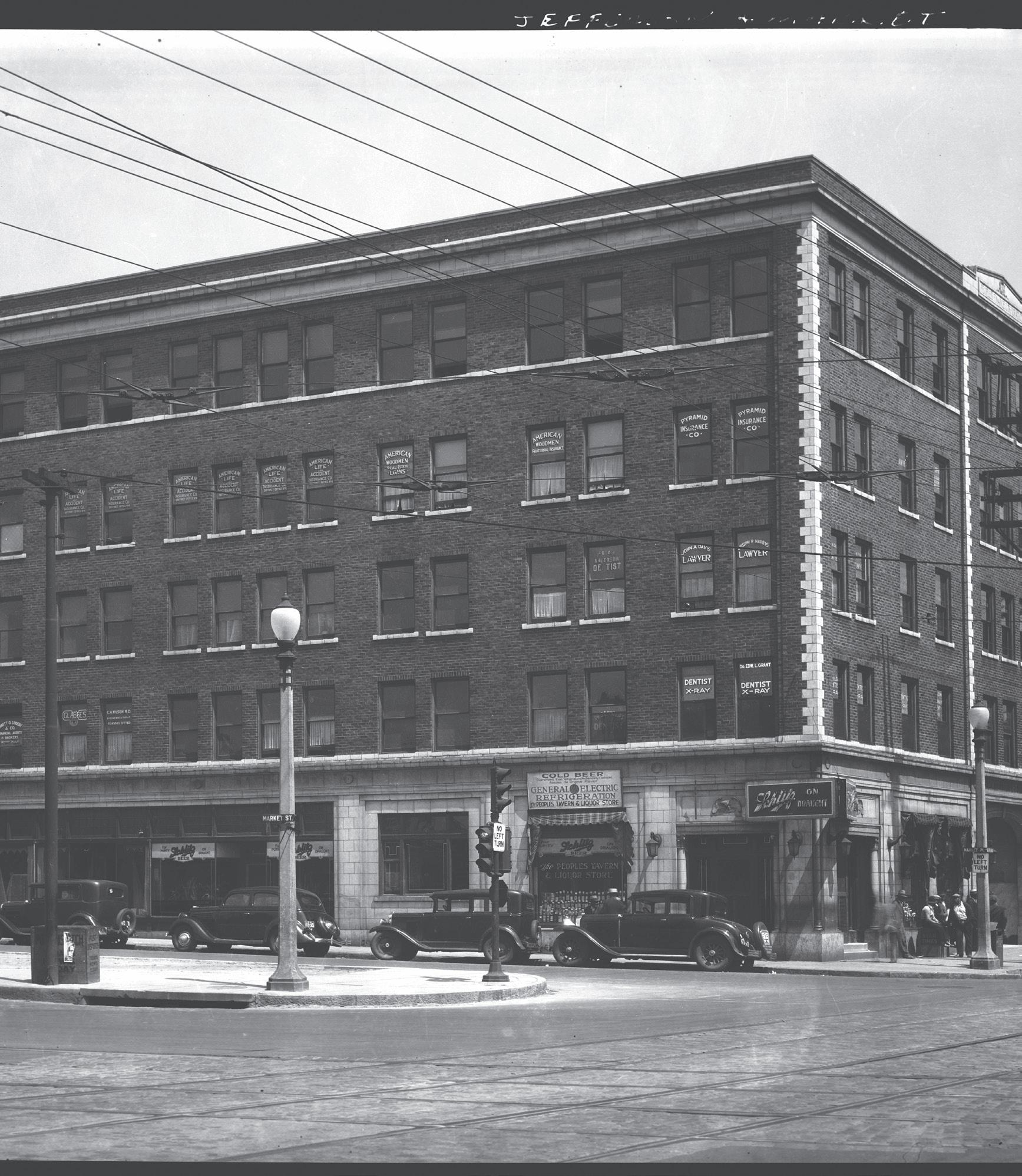


ery.com.
Fri., Dec. 19, Special Event: Corey Holcomb, Helium Comedy Club, 11151 St. Louis Galleria Street, St. Louis, MO 63117. For more information, visit https://st-louis.heliumcomedy.com.
ST. LOUIS MUSIC SPOTLIGHT
Sun., Dec. 7 6 p.m. (5 p.m. doors) Smooth R&B Concert Series presents The Phyllis Hyman Experience starring The Coleman-Hughes Project featuring Adrianne, Rize Event Center, 4444 Woodson Rd. For tickets, call 800.824.0084. Sat., Dec 27, doors 7 p.m. Sir Eddie C & Friends 4, Atomic
Garage, 4140 Manchester Ave, St. Louis, MO 63110. For more information, visit www.jamopresents.com.
Through Dec. 31, 11 a.m. Jazz Sunday, Beatnik Bob’s in City Museum, 750 N. 16 St. St. Louis, MO 63103. For more information, visit https://citymuseum.org.
THEATRE
Thurs., Dec. 4, 7 p.m. Hairspray, The Grandel Theatre, 3610 Grandel Square, St. Louis, MO. 63108. For more information, visit https://ignitewithus.org.
Through Dec. 7, The Wiz, The Fabulous Fox, 527 N. Grand Blvd, St. Louis, MO 63103. Various showtimes available. For more information, visit www.fabulousfox.com.
Through December 20, Superhero book by John Logan, Stray Dog Theatre, 2336 Tennessee Ave, St. Louis, MO 63104. For more information, visit www.straydogtheatre.org.
ART
Through February 1, 2026, Jennie C. Jones: A Line When Broken Begins Again, Pulitzer Arts Foundation and Museum, 3716 Washington Blvd, St. Louis, MO 63108. For more information, visit https://pulitzerarts.org. Through February 8, 2026, Teresa Baker: Somewhere Between Earth and Sky, Contemporary Art Museum, 3750 Washington Blvd, St. Louis, MO 63108. For more information visit, https://camstl.org.

Winter Celebrations at the Saint Louis Art Museum

Celebrate the holiday season at the Saint Louis Art Museum on Saturday, December 13 and Sunday, December 14 during Winter Celebrations—a festival of free performances and art activities inspired by traditions from around the world. This annual event invites families and visitors of all ages to enjoy art, culture, and community inspired by this year’s theme: frozen.
Guests can participate in hands-on art-making activities both days of the festival. Make an art project inspired by works from the Museum’s collection by arranging a winter scene using natural elements to freeze at home and display outdoors on a chilly day, or experiment with ice painting and sensory play in the family Frozen lounge.
program exploring the wintry sounds of art, led by Metro Theater Company and designed especially for young audiences ages 2 through 8.
WINTER CELEBRATIONS: Frozen
The Saint Louis Art Museum is proud to host Gateway Music Outreach (GMO), an impactful organization providing access to affordable, high-quality instrumental music programming for underserved youth across the St. Louis region. Led by James McKay, GMO creates opportunities for personal, social, and academic growth through music.
Saturday, December 13 and Sunday, December 14
10 am–4 pm Saint Louis Art Museum FREE
Several performances throughout the weekend are not to be missed. Saturday’s highlights include Ignite Theatre Company at 1 pm, Variety Children’s Chorus at 2 pm, and Dances of India at 3 pm. In addition to dance and music, be sure to catch story time with the Ice Queen from Enchanted Events at 10:30 am, and enjoy inflatable games and festive photo opportunities available all weekend.
On Sunday, join us for performances by Danza Folklórica St. Louis Indigenous at 11:30 am and the Gateway Music Outreach Community Youth Orchestra at 3 pm. Enjoy story time at 10:30 am with an elf from Enchanted Events, and at 1 pm, experience a special interactive in-gallery
Since its incorporation in 2017, GMO has served more than 300 students through its Adopt-A-Musician Program, Community Youth Orchestra, Summer String Institute, Young Musicians Workshop Series, and year-round school and community-based programs. More than 90 percent of participating students received instrumental instruction for the first time through GMO.
“Performing in The Farrell Auditorium gives our students not just a stage—but a platform to build confidence, showcase their growth, and celebrate months of dedication,” McKay said. “This free, family-friendly concert highlights the power of music education and the beauty of community during the holiday season.”
For more information about Winter Celebrations and to see the full schedule of events, visit slam.org.
SAVE THE DATE
2025 Kwanzaa Celebration—Bititi: Resilient, Resplendent, Resourceful Friday, December 26, 2025, | 10 am–8 pm
Enjoy a day of culture, performance, and tradition during one of the region’s biggest Kwanzaa celebrations. Celebrated at the Museum for 25 years, the free annual Kwanzaa Celebration is presented in partnership with the Saint Louis Metropolitan Alumnae Chapter of Delta Sigma Theta Sorority, Inc.
2026 Rev. Dr. Martin Luther King Jr. Celebration: The Dream Reimagined: Youth Voices Uplifted Sunday, January 18, 2026 | 2–3:30 pm The Farrell Auditorium

THE WIZ
One of the most striking visual choices appears at the gates of Emerald City. Traditionally a place of luxury and grandeur, it is reimagined as a towering Afro pick crowned with a raised fist. Simple yet powerful, the image echoed a symbol long tied to strength and unity in Black communities—and set the tone for a production unafraid to honor its roots.
Another highlight comes during “The Emerald City.” As audience members met the townsfolk of Oz, the Wiz shouted, “Show me something new,” and the cast delivered with a fullon hip-hop dance break performed over a New Orleans bounce track. The ensemble had the crowd laughing, clapping, and smiling—an unmistakable expression of Black joy shared between stage and seats.
The choreography throughout stays true to this commitment to authenticity. Instead of traditional ballet, Jaquel Knight and Ashley Seldon layered in movement techniques ingrained in the legacies of Martha Graham and Katherine Dunham. Knight and Seldon prioritized honoring pioneers who shaped modern and Black dance traditions. With such dynamic choreography and rich musicality, strong vocals are essential—and the cast delivered. Every performer offers clear, powerful, professional singing. Among the standouts are Kyla Jade, who takes on dual roles as Aunt Em and Evillene. As Aunt Em, her voice was gentle and warm. As

Evillene, she unleashes grit and gospel-soaked resonance—especially during her show-stopping “Don’t Nobody Bring Me No Bad News.”
“The Wiz” has always been a distinctly Black experience. This new ren-
dition carries that identity into a modern era—bold, joyful, and deeply rooted. Tuesday night’s opening proved that this classic story still has the power to evolve, while honoring the culture that shaped it.

Photo by Jeremy Daniel
Sheherazade as Glinda and Dana Cimone as Dorothy in the North American Tour of THE WIZ.
Photo courtesy of slam.org

U.City Ballin’. Okay. Fine. Y’all are built different, U. City. I said it. And I tip my Thanksgiving French roll to Brandy Clay, Cash Cohnes, Mick Woods and everyone else involved for pulling off that epic U.Ball in the middle of a winter weather advisory with a healthy dose of snow. But I know my props won’t be enough. How do I know? Because we’re talking about U. City! We’ll be hearing about the alleged blizzard U. Ball until at least 2061. And we won’t hear it like I just finished stating the facts. Here’s how U. City folks will tell it: “It was worse than the blizzard of ’82, and then it rained just like it did before the flood of ’93. We couldn’t even drive on the roads, but we’re U. City. So, we chartered private jets and handed out parachutes.

U.City landed on the roof of Ameristar, wiped the snow off their outfits, and kicked it like only U. City can. What was really wild is that so many people showed up, we didn’t even have enough parachutes. Tish Period used the tassels on her Shug Avery outfit as her only landing gear. And because she’s from U.City, she survived with her makeup intact. And you know Vanessa Townsend-Vann from U.City did her makeup. So Tish’s mug was weatherproof and skydive-proof!”
Please understand I say this with no hate in my heart. I had an absolute U. City Ball Saturday night!
U.City Ballin’: Part two.
Now, I did roll my eyes when I saw the “U. City, Missouri” light display in St. Charles, but that’s as close to shade as I got. The
theme was Harlem Nights, and it was giving the casino scene from that movie, with a sip of my idea of a Players Ball. There were one or two who looked like extras from “The Players Club.” Yes, Miss turquoise one-leg mesh outfit, I’m talking about you. But outside of those tiny exceptions, I still give the overall fashion an A! Beverly and Mick were among my favorites. Y’all know I’m a sucker for a winter white suit. And Beverly had the nerve to set it off with that sickening fedora and that fur. And can we talk about Brandy Clay for a second? Girl, I saw you in that black gown, which was an utter and absolute slay. The next day my timeline was flooded with U.Ball content, and there you were in white and red – slaying the game in each ensemble. Please don’t tell me you shut it down like that with three whole looks in one night! If so, I’m gonna have to step my Salute game up for 2026.
Café Soul’s snow date. While I gave props to U. City for powering through the storm, I must also shout out Nichol Stevenson for postponing Café Soul until this Saturday. I was angling like crazy trying to figure out how I was going to swing them both. And I probably would’ve had to split my time and missed the best moments from each to make provisions for my inclement weather riving. But Café Soul will have my full attention – and I’ll get the chance to help Nichol ring in another year of life – in a couple of days. I know I keep it light in Partyline, but Nichol is a walking miracle and a true cancer warrior. I’m sure things haven’t



been easy, but she’s from East St. Louis – and therefore doing what champions do! Okay, now back to Café Soul: it’s going down at 8 p.m. on Saturday, December 6 at The House of Soul. Based on y’all’s Facebook activity, plenty of my faves will be in the building – including a few faces from the milk carton. I can’t wait to get together like the good old days and cheer on some of the best, most soulful talent St. Louis has to offer.
Galas galore. Is it me, or has gala season 2025 been on ste-
roids? I promise I’ve averaged three a week since September, and it looks like that’s the routine until Christmas. So, have galas replaced holiday parties? I literally have two planned in one day next Saturday – 100 Black Men of STL’s Dayla (their word, not mine) and, of course, the Delux Power 100. They might be my last two, mainly because I’ve cycled through all my archived Salute ensembles. If you see me in a Temu rhinestone cape and some Aldi Christmas leggings, just know I didn’t have enough gowns for all these
galas. I just might be so gala-ed out that I’ll sleep through New Year’s Eve. Who am I kidding? Y’all wouldn’t let that happen. If you see me repeat a look from one of the 9,487 galas that have taken place between the first week of September and the last week of December, blame it on the organizations for not giving me enough time to shop for a new look from one gala to the next. And if you see me in something brand new, just know it’s probably a dry run for next season. And since I’m talking about all the galas, I might as well spin the block and give mention to a few looks that escaped my mind at the time. Diamond White, you did that at Salute. DT your suit was everything at Steve Lacy’s set a couple of weeks back. And while we are on the subject of Steve’s set, Ms. Easley…how dare you shut it down like that with a bath towel and those sickening buckle red bottoms!

1. Vanessa and Tish were representing for U. City at the U. Ball Saturday night at Ameristar Casino
2. Beverly and Mick were decked out in winter white at the U. Ball Saturday night at Ameristar Casino
3. Shaun and MJ were among the many stylish folks who came to party with U. City at the U. Ball Saturday night at Ameristar Casino
4. DJ Reminisce and Shadzilla ushered guests in with a pure vibe last Sunday at Legacy 101: A Steve Lacy Experience
“He likes people that bow down. I don’t bow down. That either entices him or it aggravates him, either or.”
–Phoenix Suns forward Dillon Brooks, on his interaction with LeBron James

PreP Football Notebook
With Earl Austin Jr.
Hawks make history with first trip to the Show-Me Bowl
The Lift for Life Hawks football program has come full circle in making history for its school.
At this time last year, the Hawks were leaving the field at Seneca High in southwest Missouri after a 31-0 loss in the Class 3 state semifinals. Despite the loss, it was a benchmark moment, as it was the first time the Hawks had ever advanced that far in the state playoffs.
Now, fast forward to this season and the Hawks are back in the state playoffs with another chance to take on the powerhouse program from Seneca. This time, it will be for the Class 3 state championship.
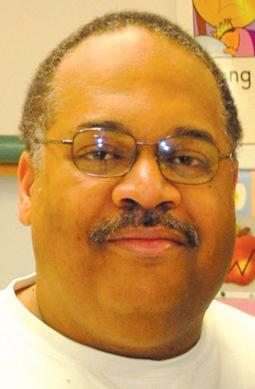
Earl Austin Jr.
Lift for Life (104)will participate in the Show-Me Bowl for the first time ever on Friday at Missouri Western State University in St. Joseph. Seneca enters with a 12-1 record after finishing as the Class 3 state runner-up last season. Kickoff is scheduled for 11 a.m.
The Hawks clinched their spot in the championship game with a 48-28 victory over St. Michael the Archangel last Saturday at Lee’s Summit North in the Kansas City area.
The architect of Lift for Life’s recent success is second-year coach Tony Woolfolk. After last year’s run to the semifinals, Woolfolk set the goals very high before the season started: take the next step to play for a state championship, and ulti-
mately win it. Woolfolk prepared his team for the postseason by playing a challenging schedule. The Hawks traveled across the state and faced several Class 5 and Class 6 schools. Lift for Life opened the season with a big victory over Class 5 MICDS. Their games against larger schools resulted in losses to Class 6 Helias, Class 6 SLUH, Class 5 Cape Girardeau Central and Tennessee power Baylor High. The aggressive scheduling paid off as the Hawks learned how to deal with adversity while playing tough competition. They had to draw on those lessons in every playoff game on their way to the state finals. In their district semifinal game against Ste. Genevieve, the Hawks trailed 21-0 early before rallying for a 54-41 win. In the district finals, the Hawks had to travel back to Ste. Genevieve to take on undefeated Valle Catholic and came away with a 48-31 victory in another high-scoring game. The Hawks’ game against Dexter in the state quarterfinals was a defensive struggle. Lift for Life’s potent offense was held scoreless for more than three quarters by an excellent Dexter defense. Lift for Life finally scored with five minutes left to take an 8-6 lead. Quarterback Phoenix Isaiah hit Tony Woolfolk Jr. for the game-tying

score, then found Ekelian Henderson in the end zone for the two-point conversion.
Dexter quickly moved back downfield and put itself in position for a potential game-winning field goal. On the final play of the game, junior Aidan Barber blocked the attempt to preserve the victory.
In the semifinals, Lift for Life again had to travel across the state to face St.
Michael the Archangel. As they have all postseason, the Hawks handled the road challenge and dispatched the Guardians in impressive fashion.
Isaiah threw touchdown passes to Henderson of 47 and 58 yards. Running backs Jay’Veon Scott and Steven Jackson each scored two rushing touchdowns. The most explosive play came from defensive back Doran Johnson, who closed the
SPortS eye
With Alvin A. Reid
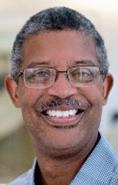
first half with a 91-yard interception return to give the Hawks a 20-0 lead. Lift for Life is now the only remaining team from St. Louis still alive in the state playoffs. Pattonville was defeated by Nixa in the Class 6 semifinals, while Kirkwood and Cardinal Ritter were eliminated in Class 5 by Platte County and Carthage, respectively. Hannibal defeated St. Mary’s in the Class 4 semifinals. St. Pius
X from Jefferson County will play for the Class 2 state championship. The Hawks are looking to become only the second athletic program at Lift for Life to win a state championship. The girls basketball team has won three state titles, in 2021, 2024 and 2025. The boys basketball team made a Final Four run in 2021, and the boys track and field team finished third at the Class 3 state meet last season.
Faulk tasked with Southern U. turnaround
New Orleans native Marshall Faulk is returning to his home state as Southern University head coach after serving as Deion Sanders’ running backs coach at Colorado for one season. Faulk admitted he is putting himself in an “uncomfortable” position by taking the job and leaving Colorado during his introductory press conference on Dec. 1.
“I could have stayed at Colorado. I was comfortable. But I’ve never done well in life when comfortable. And I’m not gonna lie to you. This is uncomfortable. and I like it,” Faulk said on the Southern University campus in Baton Rouge, Louisiana.
The NFL Hall of Fame running back, who starred with the St. Louis Rams and was a major component of “The Greatest Show on Turf,” won a Super Bowl and played in another. The 2000 NFL Most Valuable Player was
also All-Pro in seven seasons.
But he has only the single year in Colorado on his coaching resume. It was not a season of gleaming success.
Faulk oversaw a Colorado rushing offense that finished 15th of 16 teams in the Big 12 Conference. The Buffs averaged just 125.6 yards per game during a dismal 3-9 season that ended last Saturday with a 24-14 loss at Kansas State. According to Wali Pitt of HBCU Gameday, Southern has been courting Faulk as far back as 2021 but “conversations began but stalled, largely because the timing never aligned. And Southern moved forward.”
The Jaguars played in the SWAC championship game last year, but after a 1-6 start to the 2025 season, head coach Terrence Graves was dismissed and a rebuild of the football program began.
Fred “Air” McNair, who starred at Alcorn State and later returned as its head coach, served as interim head coach for Southern after Graves was fired at midseason.
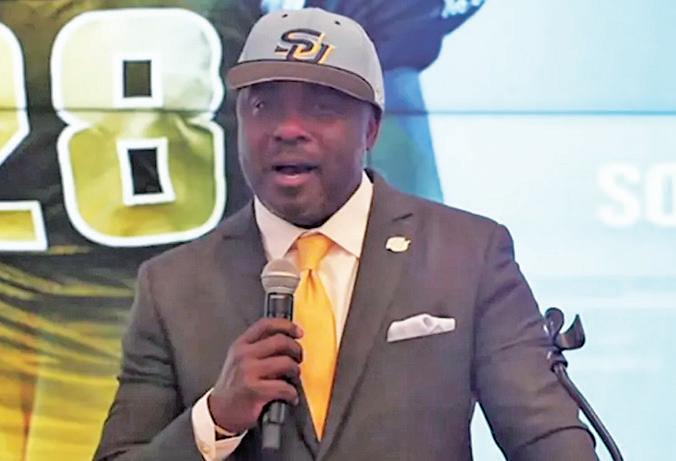
He led 1-10 Southern to a shocking 28-27 win over favored Grambling in the 52nd Bayou Classic last Saturday in New Orleans.
Kevin Batiste of WAFB 9Sports reported last week that Southern officials traveled to Boulder to meet with Faulk and that a deal was struck during the talks.
“A prominent donor helped accelerate the process, and the agreement was reportedly finalized soon afterward,” Pitt wrote.
The acclaimed Southern University marching band lit up the atmosphere
minutes before
was introduced, and the new coach promised it would not be the only
on game days.
“I hope that you guys like football in the second half as well as you do in the first half,” Faulk said.
“Although I love the band, there will be football played in the third and fourth quarters.”
The Reid Roundup
Many media members, me included, found Marshall Faulk to be somewhat abrasive and aloof during interviews
Marshall Faulk vowed to improve Southern University’s football program during his introductory press conference on Dec. 1.
but also at nonprofit and other public events… Faulk joins a list of former Black NFL players who joined HBCU coaching ranks. Deion Sanders won back-to-back SWAC titles at Jackson State before moving on to Colorado… Eddie George guided Tennessee State to the FCS playoffs before taking over at Bowling Green… DeSean Jackson turned around Delaware State’s fortunes in his first season, closing at 7-3… Michael Vick’s first season at Norfolk State was rough, with his team ending the season 1-11… Albany
State topped Benedict College on Nov. 29 to advance to the Elite Eight round of the NCAA Division II playoffs. The HBCU Golden Rams are 12-1, the best record in school history, and host Newberry College on Dec. 6… Oregon State has hired Alabama co-offensive coordinator and wide receivers coach JaMarcus Shephard as its next head coach. This is his first head coaching position after serving as a trusted assistant under coach Kalen DeBoer at Washington and Alabama… Detroit wide receiver Jameson Williams posted six catches for 112 yards and a 41-yard touchdown in the Lions’ Thanksgiving Day loss to the Green Bay Packers. He also took blame for a key drop in the fourth quarter, although QB Jared Goff’s pass was off the mark. “I dropped it. I catch that, we get a first down, we don’t have to kick a field goal.”… Some Pittsburgh Steelers fans want coach Mike Tomlin gone. Many chanted “Fire Tomlin” throughout a dismal loss to the visiting Buffalo Bills.
Junior quarterback Phoenix Isaiah will lead Lift for Life into Friday’s Class 3 state championship game against Seneca at Missouri Western State University in St. Joseph. It is the program’s first appearance in the Show-Me Bowl. Kickoff is at 11 a.m. Isaiah is shown running in the Hawks’ season-opening victory at MICDS.
Photo by Wiley Price / St. Louis American
Alvin A. Reid
Faulk
show
Photo courtesy of HBCU Gameday
and sometimes felt compelled to throw money on the stage. Years before TLC was compelled to ambush Tish Period, Tish Haynes motivated Café Soul audiences to maneuver through the packed crowd to slap a bill down.
“What a time to be alive,” Brown said as she remembered the Lucas School House days.
For someone who didn’t know the format and just moseyed in because they heard good music, it would be impossible to convince them that it was an open mic with each artist being the next name on the list.
Much like back then,
Saturdays lineup of singers will be a surprise. Tendai will host and the band will consist of Café Soul’s original drummer Dirty Lynt. He will be joined by Café Soul staples Bud Quarrels on the bass, Fred Lamont Patterson on the guitar and Mark Harris II on keys.
Much has changed since those early days. One of the challenges includes Stevenson’s battle with cancer – one she has continued to bravely fight for nearly a decade. Just before her diagnosis she had taken the leap of faith to open The House of Soul, a live music venue and event space.
“Music keeps me moving – and keeps me going down the path where I’m going,” she told The American in 2017. “It
and David Sanborn. Her voice brings authenticity to the show’s celebration of St. Louis’s musical heritage and cultural contributions.
empowers and uplifts me as I try to get through to the next phase of the process.”
Café Soul: The Reunion was supposed to take place on Saturday, November 29, but St. Louis weather decided otherwise.
Because of the date change to December 6, it was rolled into her previously scheduled birthday celebration at House of Soul.
“Let us come together to celebrate life, love and resilience,” Stevenson said.
Café Soul: The Reunion will take place at 8 p.m. on Saturday, December 6 at The House of Soul, 1204 Washington Avenue. For tickets and additional information, visit www. houseofsoulstlouis.com art.”
Douthit-Boyd noted that much of Duke Ellington’s catalog bears Strayhorn’s imprint.
“And he was an openly gay Black man,” DouthitBoyd said. “Mr. Ellington gave him agency—which was not the popular thing to do in his day.”
Douthit-Boyd presents Strayhorn as an artist who was confident in what he contributed to the world.
“What we went through as a people is well documented, but still we created,” he said. “We used our creativity to be defiantly joyful.”
Adding to the magic is acclaimed jazz vocalist Denise Thimes, whose career includes headlining the Blue Note Jazz Club in New York and sharing stages with Tony Bennett
“The collaboration between Saint Louis Dance Theatre and Jazz St. Louis allows us to bring the vibrant world of Gaslight Square to life in a way that feels connected to the very best of our city,” said Douthit-Boyd.
With live music from the Jazz St. Louis Big Band conducted by Goines, choreography by Douthit-Boyd, and a dazzling set designed in collaboration with The Muny’s T3 Program and Peter and Margery Spack, Gaslight Dreams offers a sophisticated, sultry alternative to traditional holiday fare.
“This music tells a story,” said Goines.
“We’re not just playing notes; we’re continuing a conversation Ellington and Strayhorn started decades
ago. The choreography connects with the music and vice versa, reminding us of the love affair between the two.”
The return of Gaslight Dreams underscores the strength of collaboration between two of St. Louis’s world-class arts organizations. It is a holiday celebration that is distinctively—and proudly—St. Louis.
“We’re celebrating artists who broke barriers with their talent, and that energy creates a truly joyful and inspiring holiday experience you won’t find anywhere else,” DouthitBoyd said.
Jazz St. Louis and Saint Louis Dance Theatre will present Gaslight Dreams on December 19 and 20 at the Skip Viragh Center for the Arts, 425 S. Lindbergh, 63131. For more information, visit saintlouisdancetheatre.org or jazzstl.org.


Wendell Pruitt Celebration at Soldiers Memorial
By the Missouri Historical Society
Soldiers Memorial Military Museum in downtown St. Louis is hosting the second annual Wendell Pruitt Celebration of African American Service on Sunday, December 14.
Known for their courage and determination during an era of segregated military service, the famed Tuskegee Airmen began training at Tuskegee Army Air Field in July 1941. Nearly 1,000 pilots and thousands more bombardiers, navigators, and support staff graduated from this all-Black aviation program in Tuskegee, Alabama.
The Tuskegee Airmen served with distinction in the Army Air Forces during World War II, where the red tails on their planes and their strong record as bomber escorts earned them the nicknames “Red Tails” and “Red-Tail Angels.” Their accomplishments helped pave the way for military integration starting in 1948. In 2007 they were awarded a Congressional Gold Medal, the highest civilian award presented by Congress. The medal cites their “outstanding combat record [that] inspired revolutionary reform in the armed forces.”
Pruitt was credited with shooting down three German planes over the course of 70 combat missions. He also helped sink a German destroyer, for which he received the Distinguished Flying Cross. By late 1944, Pruitt had earned a furlough to return home to St. Louis. It was on this visit that Mayor Aloys Kaufmann declared December 12, 1944, to be Wendell O. Pruitt Day in the city, commemorating Pruitt’s achievements with a ceremony held downtown.
Pruitt then returned to Tuskegee as a flight instructor but was killed during a training exercise just four months later. He was later chosen as one of the namesakes for the Pruitt-Igoe housing project in St. Louis. A school and two American Veteran posts were also named in his honor.
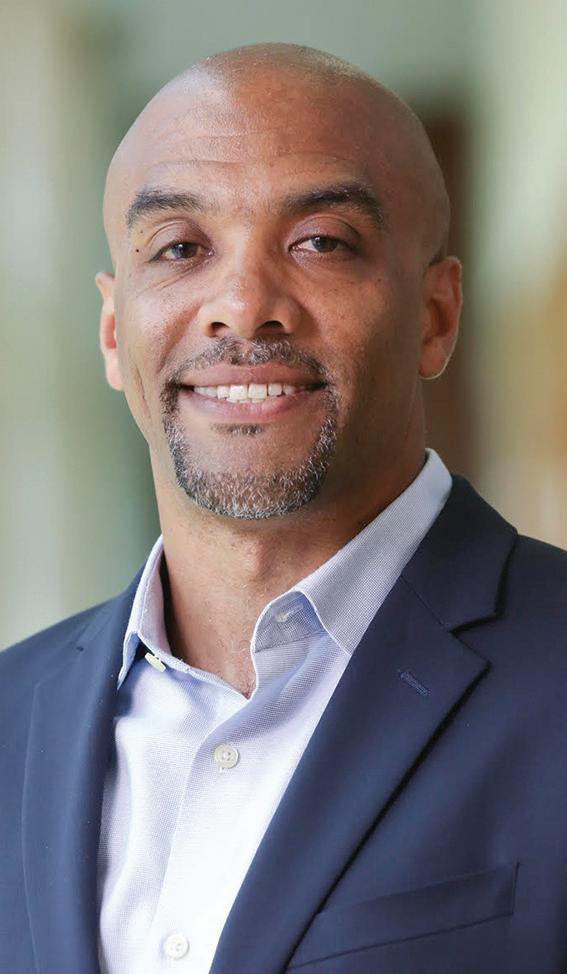
Dr. Chad Williams will speak at Soldiers Memorial on December 14.
Dozens of Tuskegee Airmen hailed from Missouri, and many of them called St. Louis home. Among them was Captain Wendell O. Pruitt, a graduate of Sumner High School and Lincoln University, who proudly flew his P-51 Mustang with the 332nd Fighter Group in Europe during World War II. The plane was nicknamed “Alice-Jo,” the combined names of Pruitt’s fiancée and of his crew chief’s girlfriend.
A fellow pilot once described Pruitt as having “a little bit of rogue in him. He didn’t mind breaking regulations with his flying and did things higher authorities didn’t approve. He was the best we had in the skies at the time. On the ground, Pruitt was a quiet, unassuming man. He just flew loud.”
Pruitt and Lieutenant Lee Archer became known as the “Gruesome Twosome” for racking up the most air victories of any pair of Tuskegee pilots.
The celebration on December 14 at Soldiers Memorial is in recognition of the 1944 Wendell O. Pruitt Day. The event begins with a reception with heavy hors d’oeuvres at 1:30pm. At 2:30pm, Dr. Chad Williams, author of The Wounded World: W. E. B. Du Bois and the First World, will deliver a keynote address, followed by a Q&A session and book signing.
Williams is the Tomorrow Foundation Chair of American Intellectual History and Professor of African American and Black Diaspora Studies at Boston University. He received his MA and PhD at Princeton University. His book The Wounded World: W. E. B. Du Bois and the First World was named a best book of 2023 by The Washington Post The New Yorker, and The Christian Science Monitor. He is also the author of the award-winning book Torchbearers of Democracy: African American Soldiers in the World War I Era and has published articles in numerous leading academic journals and collections, as well as op-eds, essays, and reviews in The Atlantic The New York Times The Washington Post, Time, and The Conversation This event is free, but registration is required. Visit mohistory.org/events/ wendell-pruitt-day to register.


JAZZ

WEBSTER
GROVES SCHOOL DISTRICT GIVENS ELEMENTARY PRINCIPAL
A student-centered leader who will guide Givens Elementary into the future. Cultivate a culture of belonging, where students and staff feel valued and supported. Bring empathy, authenticity, collaboration and innovation ensuring every child thrives. Apply on the district website. https://www.webster.k12.
ADVERTISEMENT FOR BID
Sealed bids for the Busch (August A) Memorial Conservation Area Lake 34 Dam Repair (49-01-B9), St. Charles County, Missouri, will be received online at Virtubid with QuestCDN, UNTIL 2:00 PM, January 6, 2026, then publicly opened. A Non-Mandatory Pre-Bid meeting will be held for this project at 11:00 AM on December 11, 2025, at the St. Louis Regional Office at Busch (August A)Memorial Conservation Area, 2360 Highway D, Saint Charles, MO 63304 (from Interstate 64 take Highway 94 south to Route D, then west 1.5 miles). Project bid documents must be downloaded at https://mdc.mo.gov/ bidding, Quest number 9964288, for a nonrefundable cost of $42.00, which will add your company to the Planholder List and allow access to VirtuBid for online submittal of your bid. For project questions contact Steve Dutrow, (573)522- 4115 ext. 3741, bidding questions contact Veronica Mecko, (573)522-4115 ext. 3744. QuestCDN Customer Support is available at 952-233-1632 or info@questcdn.com
REQUEST FOR PROPOSAL:
SSD 110-26
Purchase, Design, and Installation of EV Bus Charging Station Infrastructure
All vendors interested in participating in the proposal process must attend the mandatory pre-bid conference at 10:30 AM on Monday, December 8, 2025. The pre-bid conference will start at Central Transportation Garage, 5500 North Hanley Road, St. Louis, MO 63134 and go to South Transportation Garage, 12721 West Watson Road, St. Louis, MO 63127. ONLY attendees on record at Pre-bid meeting will receive any correspondence or communication after December 8, 2025.
Bids are due at 2:00 pm on Friday, December 19, 2025, with a Public Bid Opening at Special School District Purchasing Department, 12110 Clayton Road, St. Louis, MO 63131.
NOTICE TO CONSULTANTS
The St. Louis County Department of Transportation is requesting the services of a highly-qualified consulting engineering firm to perform professional engineering services for the Weidman Road Bridge No. 338 project (St. Louis County project number AR-1878).
Full details for this project, including submittal requirements and deadline, will be available on December 1, 2025 from the St. Louis County Vendor Self-Service portal: https://stlouiscountymovendors.munisselfservice. com/Vendors/default.aspx
REQUEST FOR PROPOSALS
UNIFIED COMMUNICATIONS AS A SERVICE (UCAAS) RFP 2025
The Saint Louis Zoo seeks bids from qualified firms to submit proposals. Bid documents are available as of 12/3/25 on the Saint Louis Zoo website: stlzoo.org/vendor
PUBLIC NOTICE
PHPSTL LLC, a Missouri limited liability company, has been dissolved and is winding up its affairs. Creditors must send claims to 3235 Ivanhoe Ave, St. Louis, MO 63139. Claims must include the amount owed and documentation. Claims received after April 14, 2025 may be barred.
SEALED BIDS
Bids for Construct Roadway and Parking Lot at Deutschheim State Historic Site - Pelster House Barn, Project No. X2325-01, will be received by FMDC, State of MO, UNTIL 1:30 PM, January 6, 2026. Project information available at: http:// oa.mo.gov/ facilities
The St. Louis Board of Police Commissioners (BOPC) is requesting competitive, sealed proposals for the provision of services to upgrade an existing PeopleSoft environment and implement additional modules and applications.
The BOPC, on behalf of the St. Louis Metropolitan Police Department (SLMPD), needs to upgrade PeopleSoft HCM from version 8.9 to 9.2 and PeopleTools from 8.5 to 8.61, implement the FMLA, COBRA Administration, Talent Acquisition Manager, and Candidate Gateway modules, and reinstate Benefits Administration in PeopleSoft for active and retired employees. As part of this effort, BOPC also requires the migration and conversion of employee benefits data currently maintained in the City of St. Louis’s Oracle system into the upgraded PeopleSoft Benefits Administration module.
The project will require upgrading the current PeopleSoft environment to the latest supported version and implementing additional modules, including Talent Acquisition, Candidate Gateway, FMLA, and COBRA Administration. The vendor will be responsible for incorporating and supporting BOPC’s existing PeopleSoft customizations within the upgraded system. In addition, the vendor will migrate Benefits data from an external system into the upgraded Benefits Administration module and consolidate historical data to support ongoing operations.
The selected vendor will be expected to provide full project delivery services, including project management, requirements gathering, system design, configuration, customization, testing, documentation, cutover planning, and post go-live support. The chosen vendor will coordinate with BOPC’s Information Technology staff and affected departments to minimize disruption to daily operations. Because BOPC has limited IT staffing resources, the vendor will be required to perform a majority of the implementation activities.
Training and knowledge transfer will be essential components of the project. The vendor must deliver comprehensive training for end users to ensure they can effectively use the upgraded and newly implemented systems. In addition, the vendor will be required to train BOPC Information Technology personnel so they can provide ongoing local support of the systems. Training, documentation, and knowledge transfer must be structured to ensure long-term sustainability of the solution.
The RFP for this project can be downloaded from the St. Louis Metropolitan Police Department’s website https://slmpd.org/procurement/. Questions may be submitted to SLMPDprocurement@slmpd.org. Proposals are due no later than January 5, 2026.

REQUEST FOR PROPOSALS
# 57825337, Website Hosting Harris-Stowe State University (HSSU) is requesting proposals to contract with qualified individuals or organizations to provide website hosting.
REQUEST FOR QUALIFICATIONS
The Land Clearance for Redevelop Authority of the County of St. Louis (collectively, “LCRA”) issues a Request for Qualifications (“RFQ”) for environmental consulting services, related to the implementation of Brownfields Assessment, Cleanup, and Revolving Loan Fund grant projects and additional non-grant funded Brownfields environmental assessment activities, all located in St. Louis County, Missouri. A copy of the RFQ is available at https://stlpartnership.com/ rfp-rfq/. LCRA will accept proposals on a rolling basis, with the initial review of qualifications beginning on Monday, December 29, 2025. Equal Opportunity Employer
If interested, a copy of the RFP can be obtained by emailing Barbara A. Morrow at email address: morrowb@hssu.edu. Proposals must be emailed no later than 11:00 a.m. CST on Thursday, December 18, 2025 (there will not be a public opening), and must be emailed to: morrowb@hssu.edu
The University reserves the right to accept or reject any or all responses received, or to cancel this request in part or in its entirety if it is in the best interests of the University to do so.
REQUEST FOR PROPOSALS
# 57825336, IT Infrastructure Modernization
Harris-Stowe State University (HSSU) is requesting proposals to contract with qualified individuals or organizations to provide a comprehensive technology infrastructure modernization to address aging network equipment, limited capacity and increasing demands on connectivity, reliability and compliance.
If interested, a copy of the RFP can be obtained by emailing Barbara A. Morrow at email address: morrowb@ hssu.edu.
Proposals must be emailed no later than 10:00 a.m. CST on Thursday, December 18, 2025 (there will not be a public opening), and must be emailed to: morrowb@hssu.edu.
The University reserves the right to accept or reject any or all responses received, or to cancel this request in part or in its entirety if it is in the best interests of the University to do so.
Centennial Christian Church vows to rebuild
By Andrea Y. Henderson
St. Louis Public Radio
When many St. Louisans mention Centennial Christian Church, they are often discussing its ministries that serve the Fountain Park neighborhood and other north St. Louis communities.
“The church has had historic ministries in health and housing,” said the Rev. Dietra Wise Baker, Centennial’s transitional pastor. “We have three affordable housing units in the community that the church did years ago, and also have a thriving hunger ministry that is still going on.”
It is the care that members provide to the community that has helped the 102-year-old church become the neighborhood’s cornerstone. Church leaders and previous pastors reminded members on Sunday afternoon that Centennial has always been there in the midst of triumph and tragedy and that it will continue on, even though the physical building suffered severe damage during the May tornado and will be demolished.
“Centennial members rise to every occasion, so this is not the first time we have experienced a tragedy,” said the Rev. Derrick L. Perkins Sr., a former pastor of Centennial.
“We have seen so much from this building, from people looking for food, looking for rent assistance, looking for utility assistance, bus tickets,” Perkins said. “We’ve shown up here to respond to drive-by shootings. We’ve hosted funerals of individuals who either participated in those shootings or were
affected by those shootings, but yet, out of crisis, Centennial rose to the occasion.”
Perkins and other pastors, along with city leaders and church friends, offered words of encouragement and prayers in the church’s parking lot to memorialize the building and provide comfort to those grieving the loss of the church and tornado victims, including Patricia Penelton, the member who was trapped inside the church on May 16 and later died.
Smiles were sprinkled throughout the crowd, but most members were somber. During the tribute ceremony, they swayed and clapped to gospel songs as the makeshift choir sang familiar ones a cappella. Some shed tears as people spoke about fond memories of the decades-old church building.
“If you look to the north, that building will be demolished … but that building has a cornerstone, so I’m hoping after the building is demolished, we can literally, figuratively, allegorically, find that cornerstone and build something that will give God the glory,” Samuel Hylton III said emotionally to members.
Hylton came to the church in 1961 at the age of 4. His father, Samuel Hylton Jr., was one of the church’s highly praised visionaries who led the congregation for nearly 36 years and started several of the church’s neighborhood programs.
Although his father is deceased, Hylton III still remembers spending many days in the sanctuary with him and his mother, who played music for the church. He said the destruc-
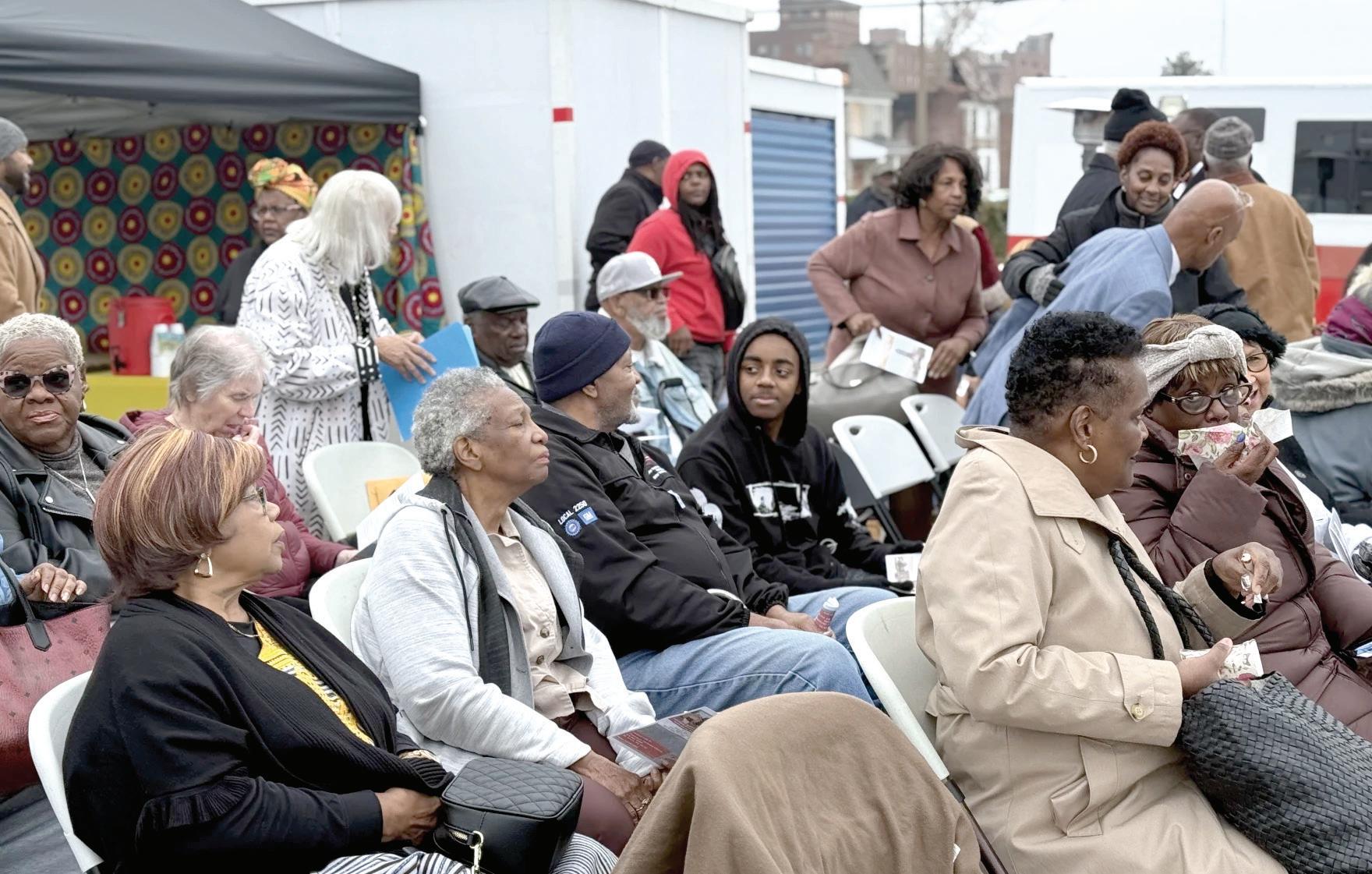
tion is devastating for him, but he is looking forward to a new beginning.
“I’m hoping that after this church is demolished, something will be built, maybe a church, maybe a school, maybe some type of help center, something,” Hylton III said. “I don’t want to see this building just like an open, vacant ground.”
“Centennial members rise to every occasion.”
- Rev. Derrick L. Perkins Sr., former pastor of Centennial
Centennial Christian Church was founded in 1904 by five women. They met in homes and tents before holding services inside the YMCA on Lucas Avenue. It was later relocated to Morgan Street and became Morgan Street Christian Church, before moving again to Kennerly Avenue in 1910. Fourteen years later, the church received a $10,000 centennial gift from the Christian Women’s Board of Missions and purchased land on Aldine Avenue. In honor of the monetary gift, the church changed its name to Centennial Christian Church. Over the

Earl A Childress, II Chairman & CEO

years, it continued to grow, and in 1945, it found a new home in Fountain Park.
Although the edifice at 4950 Fountain Avenue is boarded up and fenced off, some ministries that were housed inside the church, such as the food and health ministry, have relocated to the church parking lot and partnered with other community organizations, including 314Oasis — a mobile healing organization.
Longtime member Harry Penelton III said he is grateful for 314Oasis because it is carrying on the legacy of his wife, Patricia.
“My wife and I started in 2020 to serve food, because we knew kids were going to be out when COVID hit, and they weren’t going to have anything to eat, so we started serving lunches right from our back gate,” he said.
Harry has been working with 314Oasis since then, because he said even in the midst of tragedy, people still need to eat.
“He put us here to help people, and that’s all we’ve been doing, so that hasn’t changed me. … I am here five days a week with Dr. Punch,” he said.
Another longtime member, Sherrill Jackson, agrees. She was also with Patricia Penelton and DeMarco Davidson, a friend of the church, when the floor collapsed and the roof caved in,
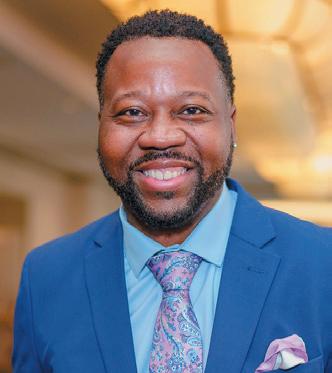
ORVIN T. KIMBROUGH Chairman and CEO, Midwest BankCentre Author, Twice Over a Man Reframing Your Relationship with Money: The
Author’s note: Over the next several weeks, I will focus on an approach I developed called the Triple R Method™, and how to use it to break free from roles, mindsets, and habits that may be holding you back from growth.
Nearly 12 million Americans take out payday loans each year, paying interest rates that can top 300%. I know what that feels like, because I lived it. I grew up in poverty. I know what it’s like to wonder if the lights will stay on or if the food will last the month. Later in life, I saw the payday loan cycle up close — how it tempts you with quick relief but traps you in long-term pain. Money is never just about numbers. It’s about the story you believe, the habits you practice, and the company you keep.
That’s why I built the Triple R Method™ — Reframe, Reclaim, Rename. It’s not just about career growth. It also applies to how we approach money. Here’s how to break free from old money stories and move toward financial freedom.
1. Reframe Your Thinking For years, I carried a hidden money story: “I’ll always struggle.” When you’ve lived with less, it’s easy to believe that lack is your destiny. But money doesn’t have to master you. You can learn to master it. Wealth isn’t built in one leap; it’s built step by step, decision by decision.
When I moved from poverty into professional life, I had to reframe my mindset. I wasn’t just surviving anymore; I was learning how to multiply. That shift helped me see money not as a chain but as a tool.
Your Move: Write your money story. Is it scarcity-driven (“I’ll never get ahead”) or growth-driven (“I can build wealth over time”)? Then reframe it. Scripture says, “As a man thinketh in his heart, so is he” (Proverbs 23:7).
2. Reclaim Your Personal Agency Money management isn’t just about income; it’s about ownership. Too often,
Centennial Christian Church members and friends congregate in the church’s parking lot to say goodbye to the sanctuary before demolition begins next month.
trapping her in a hole for three hours. Although the nurse practitioner sustained injuries that have caused lingering pain, she said it will not stop her from trying to keep the health and wellness ministry going. She also comes out to support 314Oasis during the church’s transition period.
“We are going to try to put something in the community that the neighborhood really wants,” she said. “A lot of the people are medically underserved and uninsured, and we’re going to try to put something in to either connect them to federally qualified health centers or do some screenings there.”
The health and well-being of the community are important to Centennial members. Just weeks after the storm, the church announced its plans for a largescale redevelopment project that will center on hunger, housing and healing. Wise Baker expects demolition to start within the next few weeks; however, a new building may not return in its place for another few years. In the meantime, members are worshipping at Florissant Valley Christian Church.
“We have a lot to rebuild,” Wise Baker said. “This is an opportunity for not just our church, but the community to understand who we are and to own what we should own … and not give it away, not sell it away, not let people come in and take it, but to fight for what’s ours, for our legacy, for our community, for our history, for what we’ve built and what we can build for our generations in the future.”
people wait for a raise, a windfall, or a lucky break. Freedom begins when you take control of what’s already in your hands.
When I stepped into banking, I didn’t have domain expertise, but I had discipline. I studied, asked, applied. The same principle applies to finances: you can’t be a lazy learner with money.
Your Move: Build a budget. Start investing, even small amounts. Learn how money works. Take ownership instead of waiting for luck.
Scripture says, “The plans of the diligent lead surely to abundance” (Proverbs 21:5).
3. Rename Your Social Networks
Your financial habits are shaped by your circle. If everyone around you normalizes debt, overspending, and instant gratification, you’ll absorb those values.
I’ve had to make tough decisions about who I spend time with. Some friends weren’t aiming for growth, and if I stayed with them, I would’ve stayed small. When I started spending time with people who talked about ownership and building, wealth began to feel normal.
Your Move: Audit your money circle. Who talks about building, saving, and investing? Who talks only about spending? Choose mentors and peers that model financial wisdom.
Scripture says, “Walk with the wise and become wise, for a companion of fools suffers harm” (Proverbs 13:20).
The Bottom Line Financial freedom isn’t just about dollars. It’s about your mindset, your habits, and your networks.
Reframe your thinking. Reclaim your agency. Rename your networks.
Do that, and money stops being your master. It becomes your servant — a tool for growth, generosity, and legacy. Scripture says, “You cannot serve both God and money” (Matthew 6:24). But when money serves you, it becomes fuel for freedom and generational change.
Reflection Question
What money story do you need to reframe today? What one small action will you take this week to rewrite it? For more, visit OrvinKimbrough.com or MidwestBankCentre.com.
Photo by Andrea Y. Henderson/ St. Louis Public Radio