Wes
Aruna



Wes
Aruna
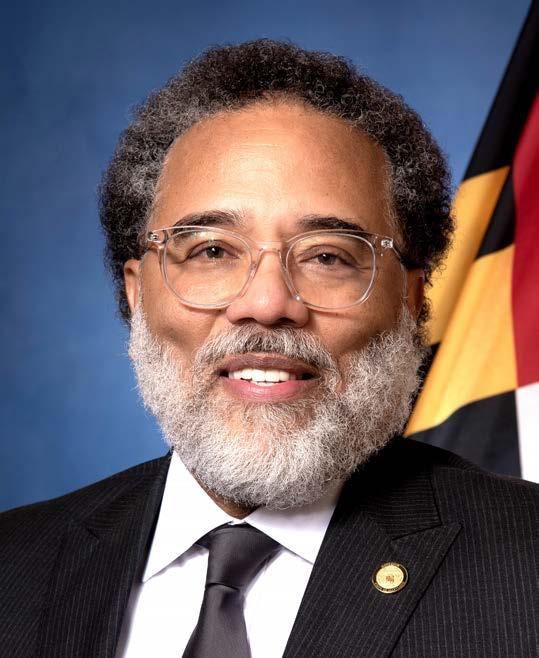
Secretary Harry Coker, Jr. joined Commerce in January 2025. Recently, he joined us to share his thoughts on the department, where we’ve been, and where we’re headed.
You’ve spent your career in service to our Nation–from the Navy to the CIA and NSA, and on to the White House. What compelled you to begin this new chapter in your service career, standing at the helm of the Maryland Department of Commerce?
The opportunity to continue my public service. As they say, it’s in my DNA. Both of my parents were public servants. My father was a career Navy sailor who became an educator; my mother became an educator after raising nine children–and getting most of us out of the house. I grew up with them as role models, they got me on the right path, and so the opportunity to serve Maryland was too great to pass up.
Economic development and economic growth are essential for any government –at the national, state or local level. Without economic prosperity, the government can’t properly serve its citizens and residents. The opportunity to support that mission was exceptional, and I’m delighted to be here.
In your first months leading Commerce, what has stood out to you or impressed you about the Commerce team?
I have been delighted with the connections I see between Commerce and our partners across the state. Our regional representatives and business attraction and retention team members, for example, are well-known commodities from Western Maryland across to the Lower Eastern Shore. They are leveraged and appreciated; the regional representative concept is a winner. The strength of our partnerships
with associations and organizations, from MACo to the various chambers of commerce around the state, also impressed me. Having those strong ties to the community is key to our work at Commerce.
I’ve also been struck by the tremendous impact of art and tourism on our state – both from an economic development perspective and from a general wellness perspective. The impact the arts can have on our communities, our psyches, our sense of belonging and how art and tourismcan help drive economic development is something that a traditional economic development entity might not appreciate. I’m delighted that, here at Commerce, we do appreciate it. We owe a lot to the leadership of the Maryland Office of Tourism and the Maryland State Arts Council.
What would you say, in the time you’ve been here, has been the department’s biggest achievement here on your watch, or the most important step that we’ve taken?
We’ve transitioned to a more proactive approach of attracting investment and developing Maryland’s business community; that’s something the whole team recognized we needed to do. Public capital is not what it used to be. So we’re pivoting to go after more private capital and look for new investment partners. In the past two and a half years, there has been $6 billion dollars of private sector investment in our state – Maryland is seen as a good investment. So we need to maintain that energy and momentum.
I’ve also been delighted with the success of trade missions and international partnerships – including the mission the governor led to Japan and South Korea and the Commerce-led mission to the United Kingdom and Ireland. These are important opportunities for Maryland to leverage. The private sector is welcoming us and appreciates our outreach, by us saying, “we need your help. We want your ideas.
And yes,we need your capital, too.” Capital is not just monetary capital, it’s intellectual capital and, frankly, emotional capital and energy capital. So they are encouraged by that.
We know we’re not perfect; we have areas that we need to improve upon. So we’re taking input from our private and public sector partners, and we’re gonna see if we can take that input into action.
We often speak of Maryland’s traditional strengths, but in this changing landscape, can you speak to the importance of Maryland values in attracting investment?
Absolutely. I’ll give you an example, during our trade mission to Ireland earlier this year we visited an innovation entity, Platform 94. One chief executive we met there said “It’s not all about monetary incentives.” What landed him in Maryland was the culture and alignment of values. He said it was a great fit not just for his company, but for his family.
And that’s what we want people to consider, not just the business enterprise, but the families of the team and all the employees.
As you meet with Maryland’s business leaders and the folks on the ground who are getting the job done, what are you hearing from them? As you travel the state, is there a message that rises most often to the top?
What we’re hearing from business leaders is that Maryland has great assets, and we have to continue to get better at optimizing those assets. These include resources like the Port of Baltimore, and the fact that we’re within an overnight drive of one-third of the U.S. population. It includes our talent base, fueled by our more than 50 accredited colleges and universities, as well as many former federal workforce who are now available to work across the state – that’s even more talent. We’re also hearing that the state needs to continue to invest in economic development.
What priorities do you see in the year ahead and where do these priorities place us in the landscape of our rapidly evolving future?
We need to continue to build out our Lighthouse Sectors. We’ve done a great job with quantum, attracting projects like DARPA’s Quantum Benchmarking Hub and Microsoft’s new quantum research center, both of which are coming to the Discovery District adjacent to the University of Maryland, College Park. We need to achieve that level of productivity for our other two Lighthouse Sectors, computational health and position, navigation and timing (PNT).
We’ll also move into phase two of our strategic planning process. Phase one was our “Winning the Decade” roadmap. It’s not yet a year old, but a lot has changed since it was published. We need to take into consideration the policies coming out of Washington, including tariff and the reduction in the federal workforce, which has hit Maryland harder than any other state.
Last question here. As a commander in the Navy, it was your job to utilize every resource at your disposal, develop the most complete understanding possible of the situation at hand, and plot the course that ends in your mission goals being met. What do you see as the commerce mission’s essential goals, and what are the steps for the coming year and beyond?
Our charge is to activate Maryland’s economy for the benefit of all of our residents. Under that charge, we are the state’s lead economic development agency. So, being the lead, we work with our partners like TEDCO, MEDCO, DHCD, Labor and others. We need to continue to enhance that collaboration. When I’ve met with my friend Tom Sadowski, executive director of MEDCO, he’s told me that MEDCO has not been as busy as they are now because the Department of Commerce is out making deals and leveraging MEDCO’s capabilities
and talents. So we’re delighted with that. We need to keep that up.
Our international team has connected TEDCO with foreign direct investment entities and those partnerships need to continue. Activate the economy, collaborate with our partners. The metrics of success are, jobs, businesses, and capital.
We want to grow the number of jobs here in our state. The businesses that are here, we want them to stay, and we want them to grow and to help them increase their revenue. We also want to attract more businesses direct investment and capital. We’re all moving together in the same direction. Plenty of challenges remain, but that’s why we’re here.

In FY25, Maryland Commerce advanced a clear plan to build a powerful future on Maryland talent, Maryland innovation, and Maryland opportunity. Working with the Maryland Economic Development Commission, Commerce moved from planning to execution by competing for anchor investments, supporting new company formation, and driving facility builds and export growth. Signature programs such as the Manufacturing 4.0 Grant, the Build Our Future Grant, Maryland E-Nnovation Initiative Fund, and the Maryland Global Gateway Soft Landing Program turned strategy into action and helped make Maryland a top spot for business leaders looking to grow.
Our Strategy
Commerce focused on five priorities in FY25:
• Boost high-growth sectors and create high-wage jobs to strengthen Maryland’s global leadership.
• Invest in innovation from research to commercialization so Maryland ideas build Maryland companies.
• Expand the talent pipeline with equity-forward programs so every Marylander shares in growth.
• Leverage federal partnerships and proximity to Washington, D.C. to accelerate tech development and win major projects.
• Compete head-to-head with top states for jobs, capital investment, and industry leadership.
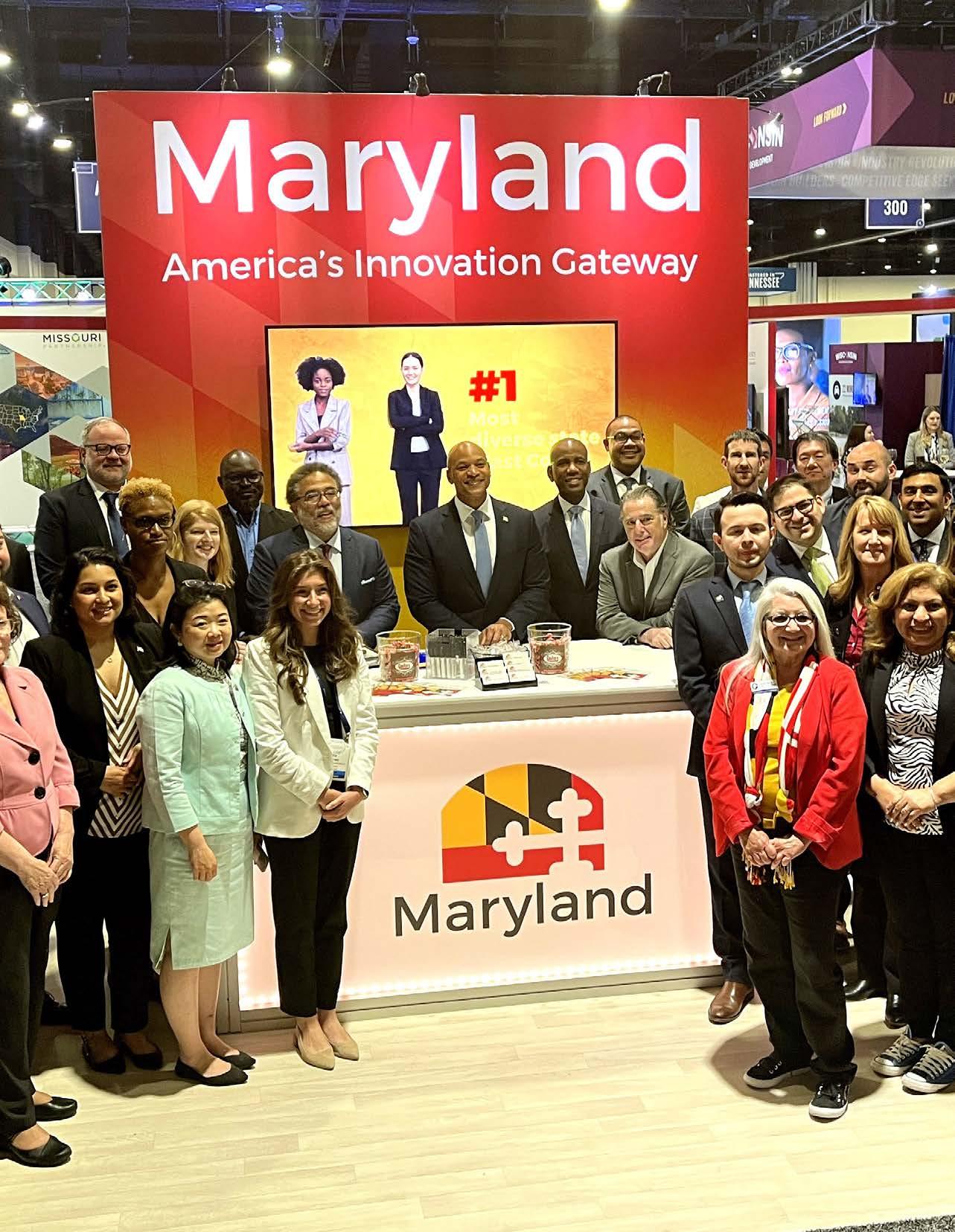
Governor Moore joins Commerce and county partners at SelectUSA Investment Summit 2025. SelectUSA is the nation’s largest foreign direct investment (FDI) event, bringing more than 5,500 attendees including thousands of international investors to National Harbor.
Commerce generated jobs, amplified industry advantages, backed up its partners, and brought new businesses to the fold, proving once again, Maryland has the mettle and the momentum to go toe-to-toe with the global heavyweights.
Commerce is turning planning into progress as it sharpens the Maryland advantage with targeted grants and tools to modernize manufacturing, anchor research, and set the stage for increased commercialization.
Maryland’s Build Our Future Grant Pilot Program awarded nearly $7 million to 10 projects in FY25, supporting infrastructure in high-growth sectors including life sciences, clean tech, cybersecurity, agriculture, and quantum. One recipient, Blackbird Laboratories, received $2 million to create the Baltimore BioHub, a 35,000 square-foot incubator and wet-lab space in the City Garage Science and Technology Center. The facility will provide early-stage life sciences companies with state-of-the-art labs, shared resources, and a collaborative community to help move discoveries from concept to market. These grants give Maryland innovators the tools to compete globally and create high-quality jobs, strengthening the state’s position as a hub for cutting-edge industries.
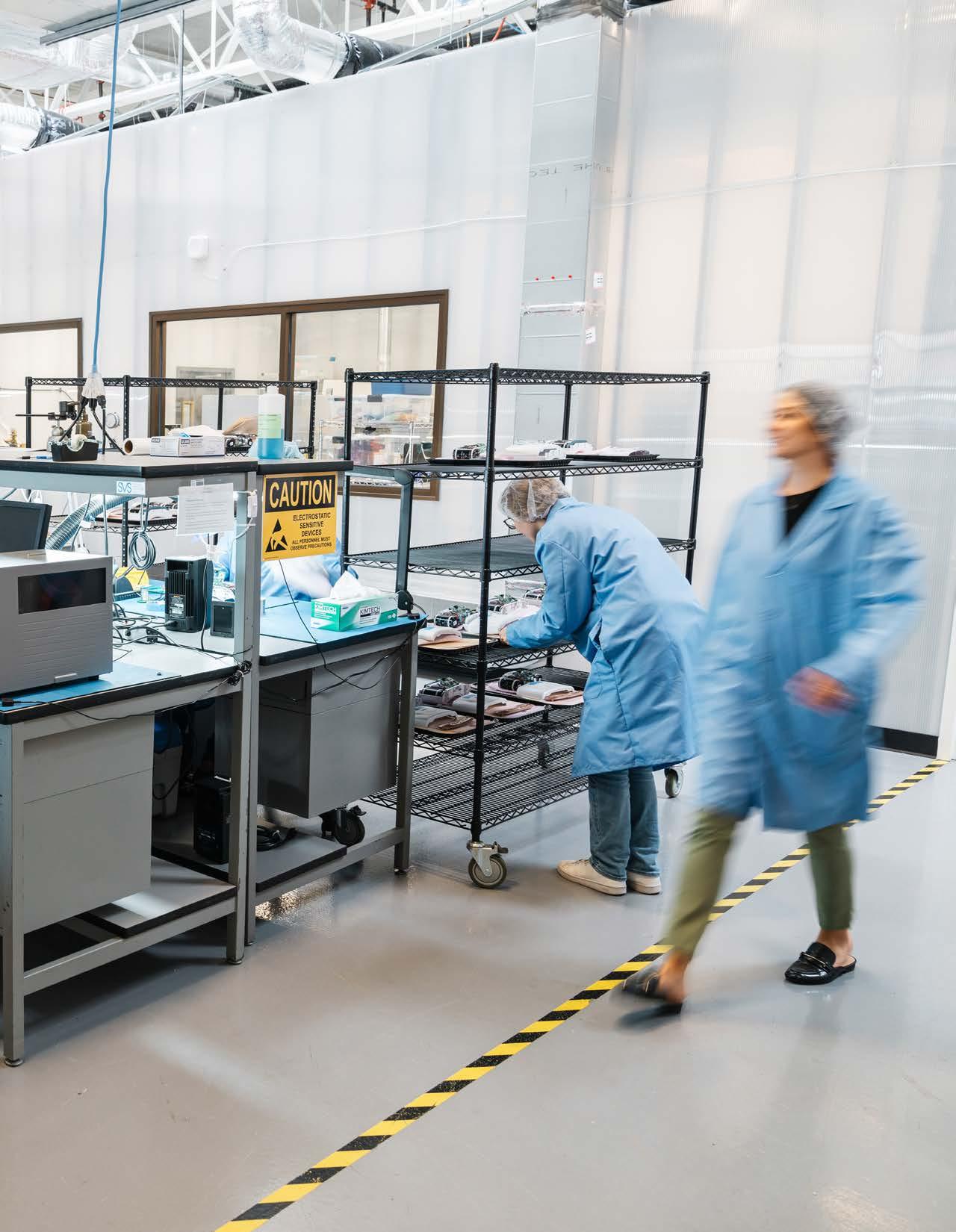
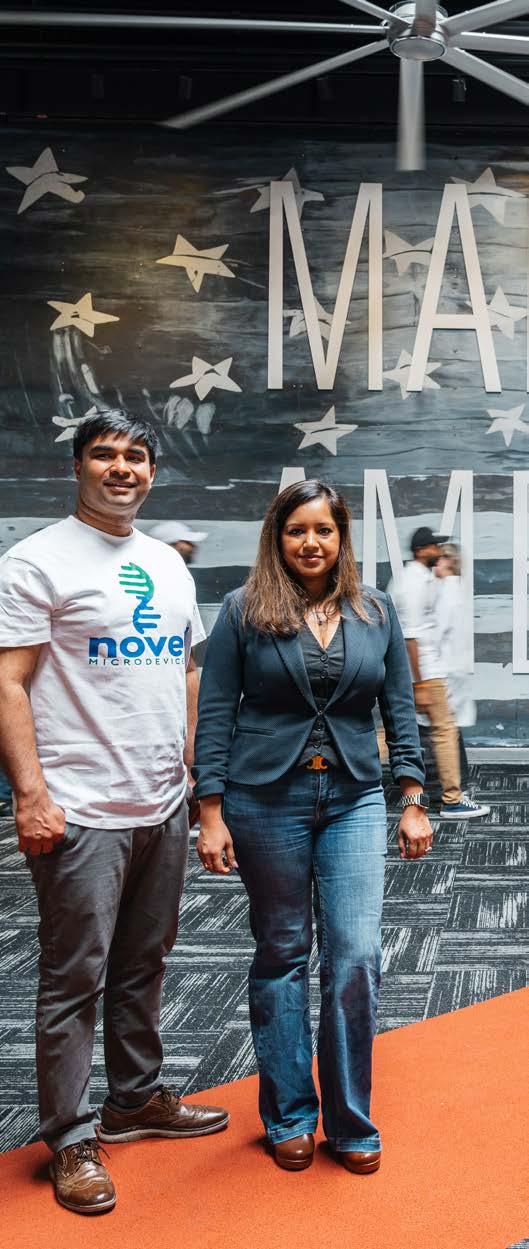
Novel Microdevices, another Build Our Future Grant recipient located in City Garage, received grant funds to establish and operationalize a Good Manufacturing Practices-compliant pilot manufacturing facility to produce innovative microfluidic cartridges for infectious disease diagnostics. The facility will be equipped to scale production, reaching fully automated custom manufacturing lines after five years.
The Maryland E-Nnovation Initiative Fund (MEIF) matches private donations to universities for endowed professorships in scientific and technical fields attracting top researchers, fostering academicindustry collaboration, and speeding the path from discovery to commercialization. In FY25, the MEIF provided $9,750,000, in matching funds to support new endowed professorships at Bowie State University; Johns Hopkins University; the University of Maryland, Baltimore; the University of Maryland, Baltimore County; the University of Maryland, College Park; and Washington College. Faculty retained or hired through the program are advancing work in cybersecurity, life and neuro sciences, translational sciences, entrepreneurship and innovation, and strengthening Maryland’s position as a national leader in applied research and innovation.
In FY25, Maryland’s Manufacturing 4.0 Grant Program awarded $5 million in matching funds to 43 small and midsized manufacturers across the state. This funding enables companies to invest in cutting-edge Industry 4.0 technologies such as digitization, automation, robotics, and advanced sensors, all with the goal of boosting efficiency, productivity, and competitiveness. The selected businesses operate across 17 jurisdictions and collectively support more than 2,400 full-time jobs in Maryland.
The projects selected reflect the program’s broad impact, ranging from tube-bending machinery for spacecraft components to advanced sensor integration for Unmanned Aerial Vehicle (UAV) systems and multi-lens mechanized microscopes for evaluating silicon neural probes. With continued state commitment, including Governor Moore’s proposal to increase program funding to
$6 million in FY26, Maryland is reinforcing its leadership in technological advancement and economic growth, ensuring the state’s manufacturers remain competitive.
The Governor’s Office of Business Advancement (GOBA) provides a wide range of customized services to help Maryland businesses leverage the state’s innovative business support programs. In 2025, GOBA provided concierge service to over 70 businesses in Maryland to expedite permits, licenses, resolve regulatory disputes, and provide a bevy of other services to simplify government processes. As a mobile office, GOBA also visited all 24 jurisdictions in Maryland to offer its support to local economic development organizations, chambers of commerce, and other business groups. GOBA also ensures the office functions equitably across Maryland with a particular focus on minority and women-owned businesses.
Looking for the companies shaping tomorrow? They’re moving to Maryland today, and Commerce is making it happen with site support, incentives, and direct access to top talent, cutting-edge research, and an ideal location.

Veritech, LLC’s proposed Industry 4.0 project will have a significant impact on both the company’s growth trajectory and Maryland’s role in strengthening domestic manufacturing supply chains, particularly in national defense. Veritech’s dedicated production line for nextgeneration lithium-ion battery packs (Pictured at left), will leverage advanced robotics, AI-driven quality systems, ERP integration, and automated testing to deliver high-reliability power sources tailored for U.S. military applications. This effort aligns directly with federal initiatives such as the DoD’s Arctic Region Battery Strategy, aimed at reducing dependence on foreign battery manufacturers, particularly in cold-weather and high-performance defense scenarios.
Belgium-based Cenergy Holdings will open a Hellenic Cables facility on a 38-acre site in Baltimore’s Wagner’s Point, supported by a federal Qualifying Advanced Energy Project tax credit and the Maryland Department of Commerce and Baltimore Development Corporation. The project will create 120 permanent jobs, 200 construction positions, and 250 indirect jobs, advancing Maryland’s green economy.
Kingspan Roofing + Waterproofing, a global supplier of energy-efficient roofing and waterproofing solutions, will convert a 348,000 square-foot former Hunter Douglas plant in Cumberland into its first East Coast manufacturing facility. The
redevelopment is expected to create 95 full-time jobs over five years. The project is supported by a conditional grant via Advantage Maryland, additional funding from Allegany County for rail infrastructure, and funds from the George C. Edwards Fund via the Tri-County Council, and eligibility for state programs including Partnership for Workforce Quality, More Jobs for Marylanders, and the Job Creation Tax Credit.
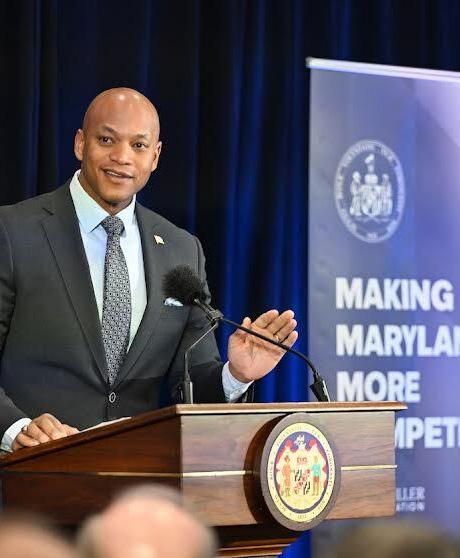
“This move will put Maryland on the cutting edge of manufacturing, create goodpaying jobs, advance our climate goals, and grow our economy,” said Governor Moore. “Together, we will make Maryland the best place in the world to change the world.”
Bora Pharmaceuticals is investing in its Baltimore facility, adding a new automated isolator line for vials, syringes, and car tridges. Designed for small-scale clinical and commercial production of high-
value therapies, the line will strengthen the company’s ability to support growing demand for potent drugs and treatments for rare diseases. The expansion increases capacity and scalability while reinforcing Maryland’s position as a national hub for life sciences and biopharma investment.
Lifetime Brands is developing a roughly 1 million square-foot distribution center in Hagerstown – its primary U.S. East Coast hub – relocating operations from Robbinsville, NJ. The facility is expected to support 230 new jobs by late 2026. The project is backed by a $1.4 million conditional grant via Advantage Maryland, in collaboration with the Maryland Port Administration and Washington County’s economic development office.
American Robotics, a subsidiary of Ondas Holdings, has launched its Maryland headquarters and a customer demonstration and training center near unrestricted airspace that allows roundthe-clock operations. The site will showcase live demonstrations of the Optimus drone in a box system with integrated detect and avoid and counter UAS capabilities, providing a hub for training, testing, and federal customer engagement. This investment strengthens Maryland’s position in aerospace and defense technology and reinforces the state’s appeal as a destination for innovation in autonomy and unmanned systems.
Aided by Commerce and the Cumberland Economic Development Corporation, fastgrowing engineering services company SPARC Research established an engineering
and management office in Cumberland. The new office already employs five people and positions SPARC to hire additional STEM talent through partnerships with West Virginia University, Frostburg State, and Allegany College, deepening SPARC’s regional footprint, and highlighting Western Maryland’s role in aerospace and defense innovation.
AstraZeneca has opened a $300 million next generation cell therapy manufacturing facility in Montgomery County with support from Commerce. The site will advance the development and production of cellbased medicines and create hundreds of highly skilled jobs. The global biopharma leader’s choice to expand underscores the strong partnership between industry and state leadership while cementing Maryland’s position as a premier destination for research, development, and advanced manufacturing.
NewCold, a global leader in advanced food logistics, is investing over $275 million to build a state-of-the-art cold storage facility in Hagerstown. Supported by a $1 million conditional loan through Advantage Maryland and backing from the City of Hagerstown, the project is projected to create 125–150 new jobs featuring highskilled roles.
“NewCold has a history of partnering with like-minded communities to create highquality employment opportunities,” said Founder and CEO Bram Hage. “We are excited to bring our innovative solutions and proprietary technology to the City of Hagerstown, contributing to its vibrant future.”
SJ Corporation will open a 35,000 square foot production facility in Cascade at Fort Ritchie, creating 300 full time jobs over four years. Commerce is backing the project with an Advantage Maryland loan supported by eligibility for state tax credits and additional financing from Washington County. SJ is also launching a new research and development facility in Frederick’s Riverside Research Park. The center will advance product development and provide flexible workspace to support growth in life sciences and advanced manufacturing. These investments represent SJ’s largest commitment in Maryland to date, strengthening the revitalization of Fort Ritchie while reinforcing Western Maryland’s growing role in the state’s life sciences and manufacturing economy.
Utilizing the More Jobs for Marylanders program and the Job Creation Tax Credit, Hart Print, an eco-friendly digital printing company and the first to introduce digital printing on recyclable aluminum cans, has opened a new production facility in Elkton. The location will increase the company’s printing capacity by 66 percent annually allowing it to better serve companies across the Northeast. “This expansion unlocks easy access to cans for the massive number of beverage providers in the Northeast of the U.S.,” said Hart Print co-founder and co-CEO Stephanie Hart. “We’re proud to bring our customizable service closer to our East Coast customers.”
Governor Moore joined IronCircle to open its new global headquarters and AI driven cybersecurity training center in Columbia creating more than 200 high skill jobs. The
12,000 square foot facility uses artificial intelligence to simulate complex cyber threats serving as both a training hub and job creator while preparing Marylanders for cutting- edge careers. Supported by Commerce, this investment strengthens the state’s national leadership in cybersecurity and expands its talent pipeline in critical technology sectors. “By doubling down on industries of the future,” said Governor Moore, “our administration is building new pathways to work, wages, and wealth for all.”
Governor Wes Moore announced that JLG Industries, an Oshkosh Corporation and global leader in mobile elevating work platforms and telehandlers, will expand its Maryland footprint with a 113,000-squarefoot satellite office and R&D facility in Frederick’s Riverside Research Park. Commerce is offering a $500,000 conditional loan through Advantage Maryland, while Frederick County will cover permitting and project fees, furthering Maryland’s commitment to job creation, economic development, and the innovation ecosystem in Frederick and beyond. To support the expansion, the Maryland Department of Commerce is offering a $500,000 conditional loan through Advantage Maryland, while Frederick County will cover permitting and project fees. “We’re always thrilled to see a company continuing to choose Maryland, year after year, as they grow,” said Secretary Harry Coker, Jr.

Hart Print’s new Elkton facility serves the Northeast providing eco-friendly, full color digital printing on recycled cans.
Commerce’s strategic industry teams bring specialized expertise to every project, connecting businesses, researchers, and government partners to accelerate innovation. Their deep sector knowledge drives collaboration that strengthens Maryland’s position in key industries.
The Maryland Department of Commerce launched the first Maryland MedTech Week in partnership with the University of Maryland’s Fischell Institute and industry leaders, convening more than 600 participants for the Maryland MedTech Summit and related events. Commerce shaped the agenda, brought together innovators, and emphasized commercialization of new discoveries, highlighting the state’s strength at the intersection of research, business, and healthcare. Assistant Secretary John Gilstrap underscored that Maryland’s future in life sciences depends not only on groundbreaking research but also on bringing new products to market. The initiative positions Maryland as a growing national hub for medical technology, investment, and cross-sector collaboration.
Governor Moore announced the creation of Maryland Aerospace and Technology Commission within the Department of Commerce to strengthen the state’s role in space, aeronautics, and aviation. The Commission will annually release a report detailing their activities from the preceding year to include a statewide strategic plan, and deliver recommendations to the Governor and General Assembly. Colter Menke, Aerospace Program Manager for Commerce, worked to convene industry, academic, and government leaders to shape early priorities. “Maryland’s future
depends on bold leadership in emerging technologies, and this Commission is central to building the jobs and industries of tomorrow,” said Governor Moore. Initial meetings in late 2024 laid the foundation for a coordinated strategy that leverages Maryland’s assets and federal partnerships, positioning the state as a national hub for aerospace innovation and high skill job growth.
Commerce, in collaboration with the University of Maryland, College Park, hosted the AI for Smart Manufacturing Productivity Forum on May 13, 2025. More than 100 participants from industry, academia, and government gathered to examine how artificial intelligence can drive industrial productivity and support Maryland manufacturers. Deputy Secretary Ricardo Benn opened the forum with UMD Dean of Engineering Samuel Graham and RMI President Mike Galiazzo, followed by panels on real-world AI implementation and opportunities for small and mediumsized enterprises. Speakers included UMD Professor Jay Lee, Hardwire CEO George Tunis, IBM’s Chris Liang, and Early Charm Ventures’ Ken Malone. Organized by Commerce, the forum underscored Maryland’s leadership in helping manufacturers adopt AI tools, increase efficiency, and grow the state’s innovation economy.

“Maryland is a uniquely valuable location for quantum startups. With the state’s quantum talent pool centered around the University of Maryland, a network of collaborators and end-users, and strong support from state leadership, Maryland is an ideal environment to foster quantum innovation.”
Capital of Quantum Initiative Makes IonQ’s Bold Moves Bigger
Maryland’s Capital of Quantum Initiative, approved in FY25, commits $42.5 million to launch various efforts to grow Maryland’s already robust quantum ecosystem – with expectations to trigger as much as $200 million in additional support from private investors, philanthropic organizations, and federal partnerships.
As part of this initiative, Maryland made IonQ’s bold moves bigger, committing $10 million to help develop a new 100,000 square-foot headquarters for IonQ, the commercial quantum computer operation located within the University of Maryland’s Discovery District.
This news was only part of IonQ’s banner year. In FY25, IonQ also completed acquisitions of Lightsynq and Capella and advanced a $1.1 billion acquisition of British-based Oxford Ionics. In addition to its expanded international footprint, IonQ added ion-trap-on-a-chip capabilities, which are critical to its roadmap of reaching 800 logical qubits by 2027 and 80,000 by 2030.
Following a U.K. trade mission where Maryland companies exhibited at InfoSecurity Europe, Commerce and the University of Maryland convened a quantum
roundtable at Oxford University. Maryland leaders promoted U.S.–U.K. collaboration, showcased investment opportunities, and highlighted the Discovery District as the heart of the state’s Capital of Quantum initiative. The Oxford Ionics acquisition underscored that message, showing how Maryland companies are building international partnerships at the frontiers of quantum technology.
“Investing in quantum computing is investing in Maryland’s future,” said Peter Chapman, then IonQ CEO. “Through Governor Moore’s strategic economic development initiative and proposed investment in quantum, he is not only supporting cutting-edge research and innovation but fostering economic growth and job creation in the state. The Governor’s commitment is a testament to his vision for the pivotal role that quantum science will play in the state’s economic development and technological leadership. This investment will also enhance our collaboration with the University of Maryland to solidify the region as a global leader in quantum innovation.”
Commerce, in partnership with the Maryland Department of Emergency Management, the Department of Planning, and the University of Maryland Center for Cyber, Health and Hazard Strategies, is advancing the Resilient Maryland Defense Communities Project. The initiative is creating a statewide framework to strengthen DOD installation readiness and mission assurance under the banner of “One Community, One Maryland,” reinforcing Maryland’s role as a national leader in defense resilience and military community support.
At AGU24 in Washington, D.C., Commerce spotlighted Maryland’s Earth and space science ecosystem, bringing together NASA, NOAA, UMD, UMBC, and private industry. The delegation showcased Maryland’s unmatched capacity in satellite technology and space-based defense, underscoring the state’s leadership at the intersection of science, innovation, and national security.
The 2nd annual Maryland Defense Forum brought more than 250 stakeholders together to address workforce development, military family quality of life, small business opportunities, and critical technology priorities. Senior leaders from the Department of DoD and industry joined Maryland’s DoD labs to discuss acquisition reform and advances in cyber, quantum, life sciences, and aerospace.
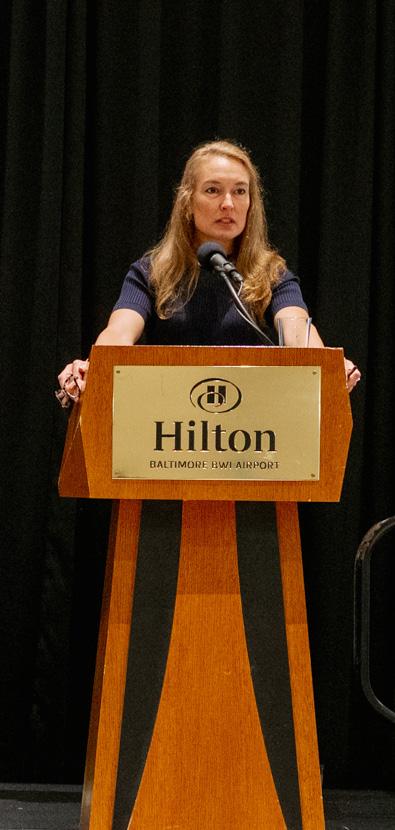

For most folks, the pressure of landing big deals for Maryland might be stressful. But Colter Menke’s first job out of college was as a naval aviator, putting 11-ton Navy Seahawk helicopters down safely at night on the pitching decks of Arleigh Burke class destroyers, so it’s fair to say he knows a thing or two about important landings. The values of teamwork, preparation, calm, and service he learned skimming the icy waves of the Pacific now serve him as Aerospace Program Manager for Commerce’s Office of Strategic Industries and Entrepreneurship.
When Menke moved to Naval Air Station Patuxent River for the Navy Reserve, he discovered a place where rapid innovation was the norm, and then Commerce offered him a new mission. “Now I serve the people of Maryland,” he says. “From aerospace and aviation to unmanned technologies, I appreciate the chance to be part of what’s happening here.”
Colter’s aviation background serves Commerce’s team of industry experts well. “In flying, you train hard and follow the checklist. When an emergency happens, you work the procedure,” he says. “In Commerce, that means studying trends and working with state, federal and private partners to find new ways to support Maryland industry.”
Menke points to Maryland’s momentum: Rocket Lab expanding in Middle River at the historic Glenn L. Martin bomber facility, Intuitive Machines developing technologies for a lunar rover, and startups like Ten One Aerospace developing satellite-docking tech. “When I started, there were a lot of silos,” Menke says. “Now we see real connections across sectors. Networks are taking shape.” And led by Colter and the Commerce team, those networks will launch Maryland into the future.
Commerce showed up strong, sharing Maryland’s industry strengths around the globe

In April, Governor Moore led his first international trade and investment mission to Japan and South Korea. Planning and execution were driven primarily by the Maryland Department of Commerce, in close partnership with the Office of the Secretary of State and supported by the Office of the Governor and the Department of Transportation. The delegation completed 35 high-impact engagements advancing the Moore–Miller Administration’s priorities of foreign direct investment (FDI), export growth, and global partnerships in Maryland’s core sectors.
Commerce played the lead role in engaging private industry and promoting Maryland companies. Highlights included investment seminars, one-on-one meetings with Maryland’s largest Japan- and Koreaheadquartered employers, and buyersupplier matchmaking events in aerospace.
Several Memorandum of Understandings (MOU) were initiated during the mission, including:
• IonQ signed a MOU with Korea’s Intellian Technologies and the Global Research and Development Center for Business by Quantum-AI technology, the quantum arm of Japan’s National Institute of Advanced Industrial Science and Technology.
• Governor Moore signed an MOU with Kanagawa Prefecture in Japan to expand life sciences cooperation.
• Maryland initiated a MOU with South Gyeongsang Province in Korea to deepen collaboration across biotechnology, life sciences, aerospace, and defense.
• The University of Maryland, Baltimore and Chosun University entered an MOU to expand research and student exchanges, alongside new agreements in quantum collaboration and study abroad.
Maryland already engages in nearly $8 billion in annual trade with Japan and South Korea and has attracted more than $1 billion in new investments during the Moore-Miller Administration. The mission reinforced these relationships while opening new avenues for economic growth and workforce development.
Maryland showcased its global leadership at RSA Conference 2025 in San Francisco, the world’s largest cybersecurity gathering with more than 50,000 attendees. Lieutenant Governor Aruna Miller and Commerce Secretary Harry Coker led a strong state delegation that engaged with SandboxAQ, NVIDIA, and other global firms while promoting Maryland innovators including Tenable, Huntress, Sonatype, and Dragos. Commerce also hosted its Maryland Cyber Leadership Breakfast, which drew more than 100 international executives and government leaders for discussions on cybersecurity innovation and resilience.
“I was pleased to join Lieutenant Governor Miller and Secretary Coker at Tenable’s booth in San Francisco,” said James Hayes, Senior Vice President of Global Government Affairs at Tenable. “Tenable is proud to represent Maryland innovation with its unwavering commitment to the cybersecurity mission, alongside strong partners in the Moore Miller Administration.” By spotlighting Maryland companies and advancing strategic partnerships, the delegation emphasized the state’s strengths in workforce development, quantum technology, and infrastructure protection, reinforcing Maryland’s position as a global leader in cybersecurity and the nation’s cyber capital.
Governor Moore announced a $1.8 million investment to equip all 16 Maryland community colleges with cyber ranges, making Maryland the only state in the nation with this capability across its entire community college system. Supported by the Maryland Department of Commerce and partners including BCR Cyber and the Maryland Association of Community Colleges, the initiative expands handson cybersecurity training and career pathways. “Maryland’s pathway to national leadership in cybersecurity runs through our community colleges,” said Governor Moore,
Maryland was one of only seven states to host a state pavilion at the AUVSI Xponential Tradeshow in Houston, the leading global event for uncrewed aerial systems and advanced air mobility. Commerce featured six Maryland companies and the University of Maryland’s UAS Research and Operations Center before an audience of more than 7,500 attendees and nearly 540 exhibitors.
Commerce engaged international partners including KOTRA and industry leaders such as Wing, while Maryland firms secured new business-to-business connections including an expected MOU with a Korean manufacturer. The strong showing reinforced Maryland’s leadership in aerospace innovation and its position as a top destination for autonomous technology.
SelectUSA, the leading forum for attracting foreign direct investment, took place at National Harbor in June. As the host state, Maryland was on full display with a large pavilion shared by Commerce and our county partners. At the show, Governor Wes Moore participated in a panel discussion and joined Commerce leadership in select meetings. Complementary to the Summit’s main programming, Maryland hosted a spinoff tour which took a delegation of foreign companies around the state, showcasing Maryland’s strengths.

Maryland isn’t just keeping pace, we’re building the future of cybersecurity and we intend to lead the nation.
–Lt. Governor Miller, RSA 2025
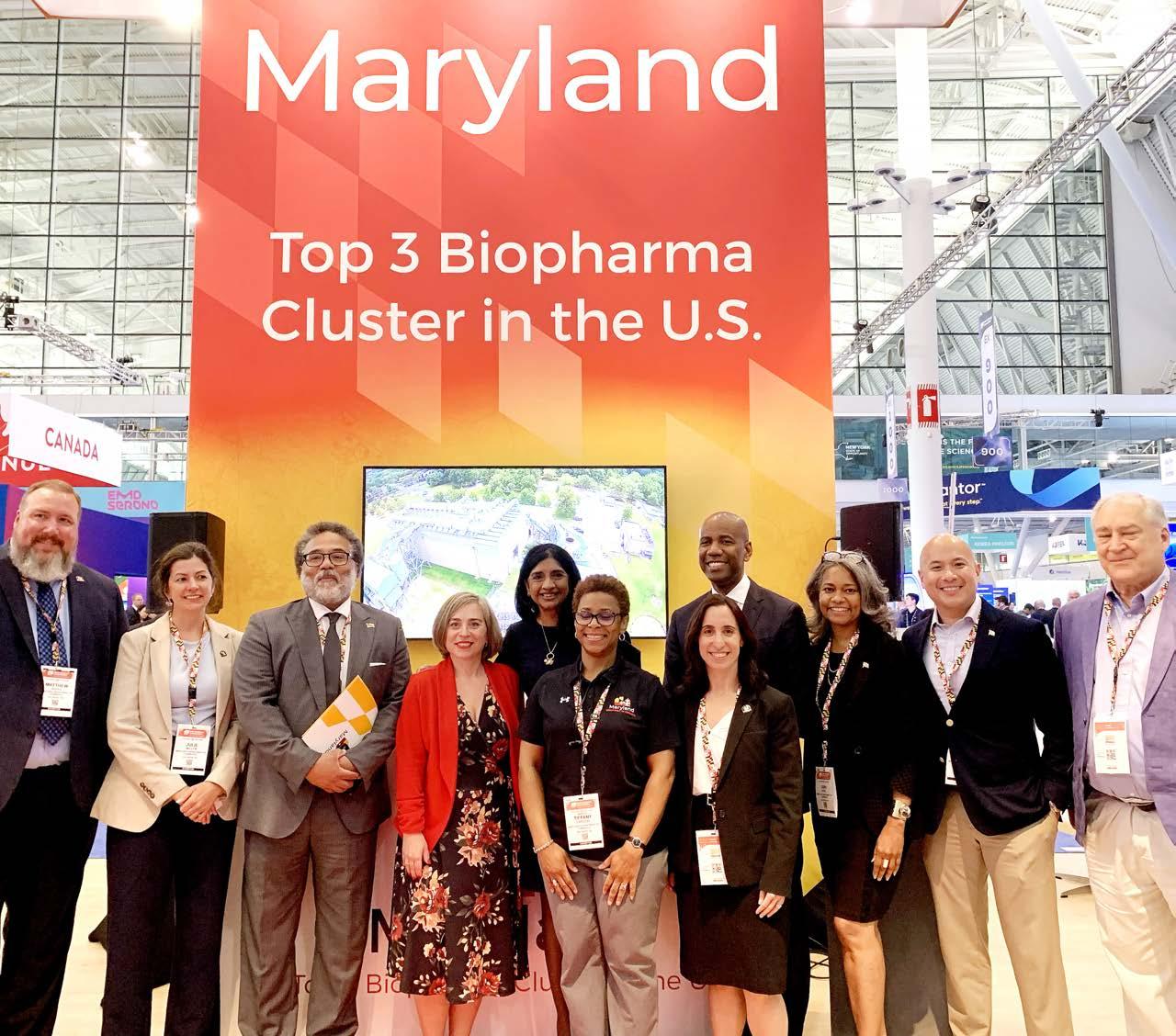
Lt. Governor Miller and Secretary Coker lead Commerce’s mission to Boston’s BIO International Convention 2025, the world’s largest biotechnology gathering. The Maryland coalition featured 35 companies and the Maryland Pavillion included the Montgomery County Economic Development Corporation, TEDCO, Blackbird Laboratories, Frederick County OED, Biotech Corridor (REDI), and the Pinkney Innovation Complex for Science and Technology,
demonstrating Maryland’s global leadership in life sciences. Commerce and its sponsors also hosted the Maryland Networking Reception and co-hosted the inaugural BioHealth Capital Region Breakfast, drawing packed crowds and international attention. Delegates reported investor interest, advanced partnership talks, and new global connections, reinforcing Maryland’s position as one of the world’s premier biohealth hubs.
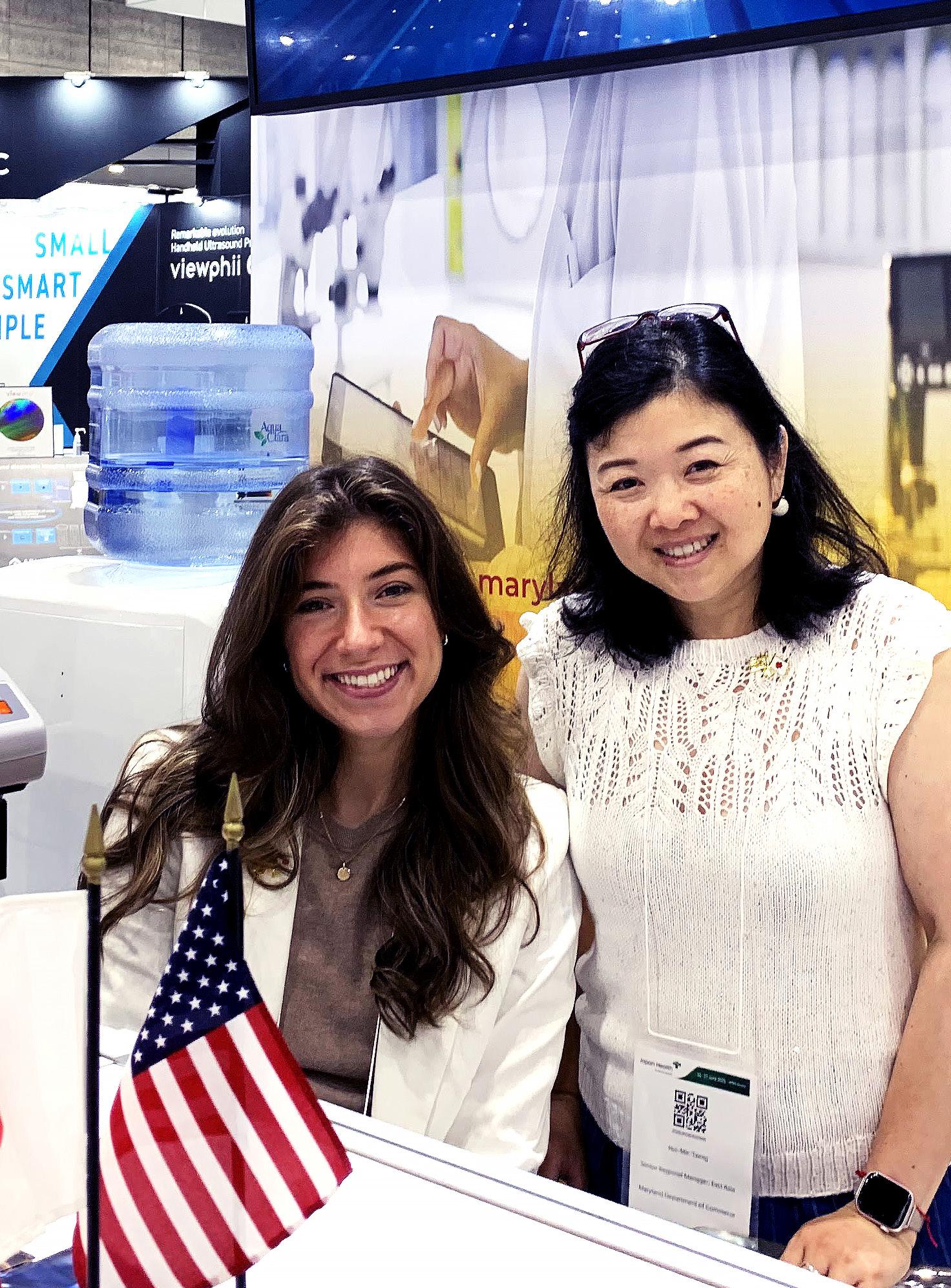
In 2022, after two decades abroad, Hui-Min Tzeng felt pulled home. She had emigrated from China as a child and grown up in Montgomery County. “Maryland’s my home,” she says. “Grade school, middle school, high school, all my schools are on the same street, Frederick Avenue!”
A Princeton graduate, Hui-Min embraced the motto “In the Nation’s Service and the Service of Humanity.” She found the perfect fit at Commerce’s Office of International Investment and Trade as Senior Regional Manager for East Asia. Her early assignments took her to Mexico City, Dubai, and Sydney. “Global Gateway is really popular,” she says. “It makes people take that second look, and that second look gives us an advantage.”
In April she helped organize Governor Wes Moore’s trade mission to Japan and South Korea, which secured new investments, a life sciences partnership between the University of Maryland, Baltimore and Chosun University, and an agreement to launch a quantum exchange. By June she was back in Asia, guiding ten Maryland companies to Japan Health in Osaka. “Japan imports more than 60 percent of its medical devices. For Maryland entrepreneurs, that is a huge opportunity.”
What drives her most are the people. “The best part is meeting founders who run on 99 percent passion. When they talk about their plans, there are just stars in their eyes,” she says. “Often it is their first time exporting, so culture and language are barriers. As a regional expert, I help them take that next step. That is our value, and my favorite part of the job.”
Through high profile trade missions, strong presence at trade shows and major industry events, and its dedicated trade offices strategically located throughout the world, Commerce was out in front carrying the Maryland message in FY25.
Mexico City Mexico
Bogotá Colombia
MAP Key Commerce International Trade Offices
In FY25, Commerce represented Maryland globally at more than 55 trade shows, summits, and events with the potential to reach more than 1.1 million attendees.
• China International Fair for Investment & Trade, Fujian and Shanghai, China
• MEDICA, Dusseldorf, Germany
• Avalon Australian International Airshow, Geelong, Victoria, Australia
• InfoSecurity Europe, London England
Maryland Global Gateway is Commerce’s soft-landing initiative that connects international firms with the infrastructure, expertise and networks to thrive in the U.S. market. By offering six months of support that includes plug-and-play facilities, training and peer access, the program gives companies the confidence to launch quickly and grow in Maryland. Here are five high-tech titans entering the U.S. market by leveraging this dynamic program:
Data-Warehouse GmbH – This German leader in advanced data management and analytics has set up at the Quantum Startup Foundry in College Park, leveraging Maryland’s research ecosystem and federal proximity to break into the U.S. market.
Safetech Innovations – A UK innovator in cybersecurity and safety technologies, Safetech is establishing its first U.S. operations through Maryland’s Soft Landing Exchange. Opening later this year, Safetech chose Maryland for its deep talent pool and concentration of federal assets.
NanoQT – This Japanese quantum technology pioneer joined the Quantum Startup Foundry to supercharge its research and development. CEO Masashi Hirose cited Maryland’s unmatched quantum expertise, collaborative community, and strategic location as key drivers for the move.
PRONAV Clinical – A leader in clinical trial supply chain operations established its U.S. foothold through a Global Gateway soft landing at the Frederick Innovative Technology Center, creating a two-way bridge for companies expanding on both sides of the Atlantic.
Brightbeam – Another win on the Ireland trade mission brought this European pioneer in AI productivity tools to Maryland with Brightbeam set to launch operations in Frederick.

Maryland
Gateway Program is a first-of-its-kind soft landing program targeted at international companies looking to explore the U.S. market. Through partnerships with one of the 20 participating business incubators and accelerators across Maryland, the first 50 eligible companies can receive incentives to reduce the costs associated with exploring a new market.
• Training, mentoring, matchmaking, and networking through both state government and local incubator programs


In July 2025, after nine years at Commerce, Kavita Verma stepped into a new role as Director of Domestic Investment with a mission to bring venture capital and private equity to Maryland. It was a full-circle moment. Originally from Toronto, she launched her career on Wall Street in 1998 as a private equity and M&A attorney shaping deals at the center of global finance. Today, she channels that expertise to connect investors with Maryland’s most promising opportunities.
“Maryland’s time is now,” Kavita says. “We have the talent, the ideas, and the leadership to compete on the world stage, and I am honored to be part of a winning team.”
Kavita’s approach is relationship led, impact driven and rooted in understanding what investors value. That strategy resonates with both meaningful returns and lasting change.
“Relationships are the core of everything, and being a go-to, trusted advisor is an honor.”
She builds bridges between entrepreneurs, family offices, and institutional investors, ensuring capital flows into sectors Maryland leads including aerospace, quantum, life sciences, and cyber, and produces projects that revitalize communities and expand talent pipelines. Kavita is especially passionate about strengthening strategic connections and helping investors find opportunities aligned with their long-term vision. “The real magic happens when you put the right people in the room and let them see what is possible. That’s when sparks fly, and that is how Maryland wins.”
Supporting our service members is always a good investment, and Maryland is backing small, minority, veteran, and military owned businesses from the shop floor to the startup hub with $2.2 million in new funding. At the heart of this effort is the Military Personnel and Veteran Owned Small Business Loan Program (MPVOLP), which provides no-interest loans of up to $100,000 for companies owned by reservists, veterans, and National Guard members, as well as businesses that employ them.
The program does more than provide capital. MPVOLP strengthens communities, protects jobs, and creates opportunity. In this round alone, MPVOLP funding is expected to help create 36 jobs and preserve 131 existing positions across Maryland. By giving military-connected entrepreneurs the tools to expand, the state ensures that service to the nation translates into economic opportunity at home.
Complementing MPVOLP is the Maryland Small Business Development Financing Authority, which extends targeted support to minority and small businesses statewide, generating economic opportunities and reinforcing both Commerce’s economic mission and its equity goals.
Maryland launched more funding for its Cannabis Business Assistance Fund to help small, minority owned, women owned, and social equity businesses establish or expand in the adult use cannabis market. The fund also supports Historically Black Colleges and Universities and business incubators that prepare the next generation of entrepreneurs.
More than $45 million has been awarded since the program’s launch in 2023, backing social equity licensees across growers, processors, and dispensaries. Maryland was the first state in the nation to reserve cannabis business licenses exclusively for social equity applicants, underscoring its commitment to a diverse and competitive marketplace.
Grants may be used for application assistance, employee training, equipment, build out, operating costs, and utilities. By lowering financial barriers, the program gives entrepreneurs the resources to compete on equal footing in an industry with steep startup costs. The Cannabis Business Assistance Fund is more than a source of capital. It reflects Maryland’s broader commitment to fairness and economic inclusion, ensuring that growth in the cannabis sector reaches communities that have too often been excluded from opportunity.
This year, Maryland was named the number one state in the nation for minorityowned businesses, underscoring the state’s commitment to equity, inclusion, and growth. According to Lending Tree, Maryland outpaces every other state in creating an environment where diverse entrepreneurs thrive. The Small, Minority, and Women Owned Business Account (SMWOBA) program has been a big part of this success. Backed by Commerce’s powerful Video Lottery Terminal Fund (VLT) which supports SMWOBA with 1.5% of gross revenues generated from VLTs, and delivered through nine local fund managers with Commerce support, the account supported more than 16,000 jobs and unlocked more than $264 million in private investment from its launch in FY13 through the end of FY25.
Funded through proceeds from Maryland’s video lottery terminals, the program directs at least half of its resources to businesses located near the state’s six casinos while continuing to serve small enterprises across Maryland. This design ensures that capital flows into historically underserved communities while strengthening the broader statewide economy. The program provides a mix of loans and investments to businesses in a wide range of industries, from local service providers to high growth startups. By giving entrepreneurs access to capital that is often out of reach through traditional financing, the fund helps small firms scale their operations, secure contracts, and compete in larger markets.
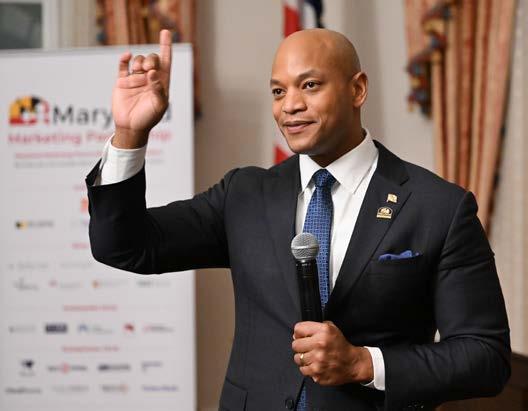
“To make Maryland more competitive, we need to uplift our entrepreneurs. That’s why we are working together to ensure Maryland is the best state in the country to start, build, and grow a business.”
Governor Wes Moore Supporting Global Expansion
Commerce’s Office of International Investment & Trade is not only focused on attracting foreign direct investment. The team also manages programs that give Maryland small businesses a leg up, providing funding via dynamic programs that help Maryland businesses scale globally, including:
• ExportMD: Maryland Commerce’s flagship grant program powering global expansion, provides up to $5,000 in matching funds for companies to cover international trade shows, overseas travel, translation, and global marketing. In FY25, Commerce leveraged $550,000 in federal STEP funding to expand ExportMD’s reach, equipping Maryland businesses to break into global markets, often through international tradeshows as part of the Commerce delegation.
• Soft Landing Exchange Breaks Barriers for Maryland Companies - In December, Maryland opened applications for its Soft Landing Exchange program, which allows Maryland companies to explore international markets at a reduced cost by connecting them with business incubators and accelerators abroad. This year, Commerce and the MarylandIreland Trade Commission announced new partnerships with international partners for this program, including a three-year partnership at Galway’s Platform94 accelerator and a new relationship with Dublin’s Guinness Enterprise Centre, one of Europe’s premier business hubs.
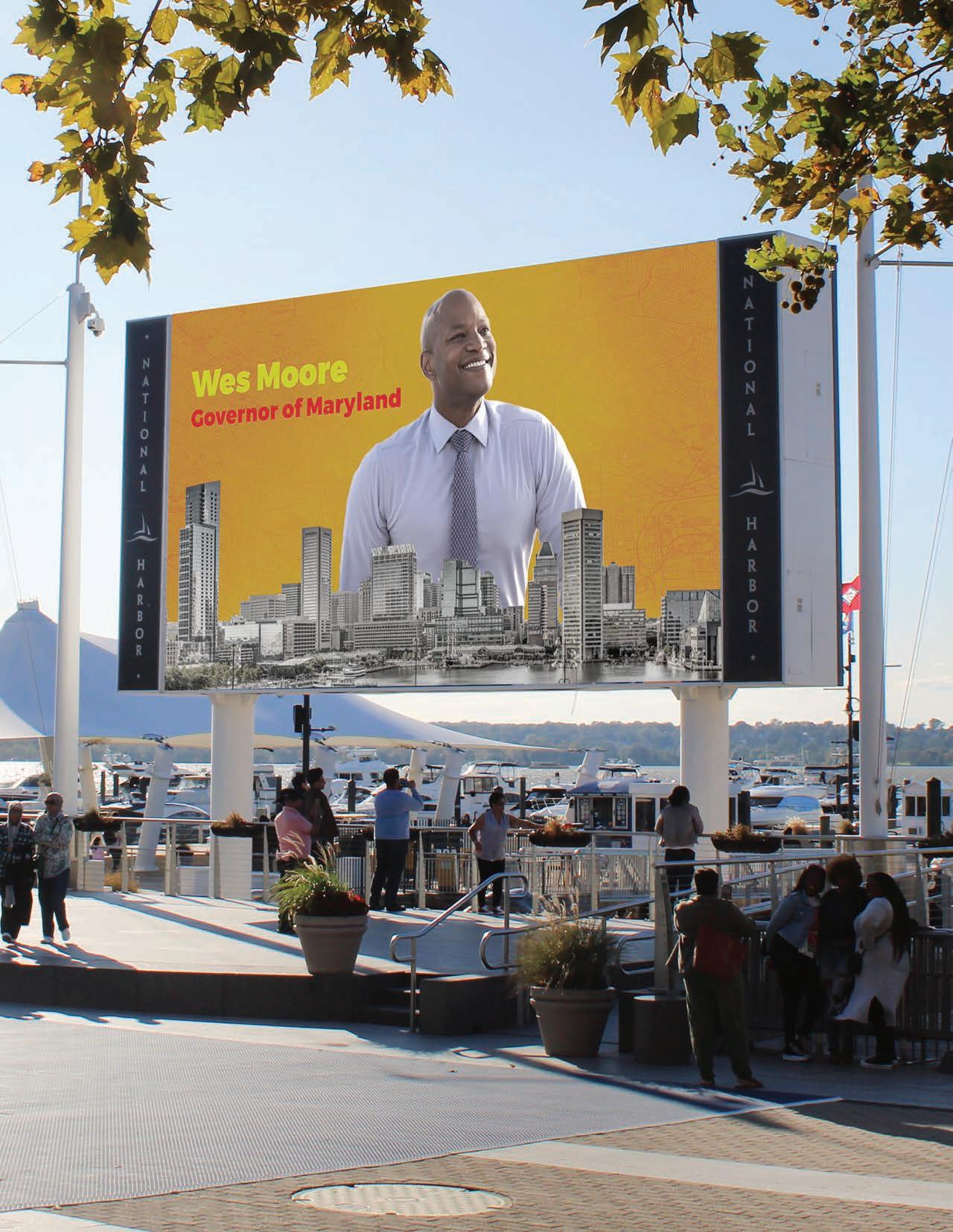
Presence with Purpose. Reach with Results.
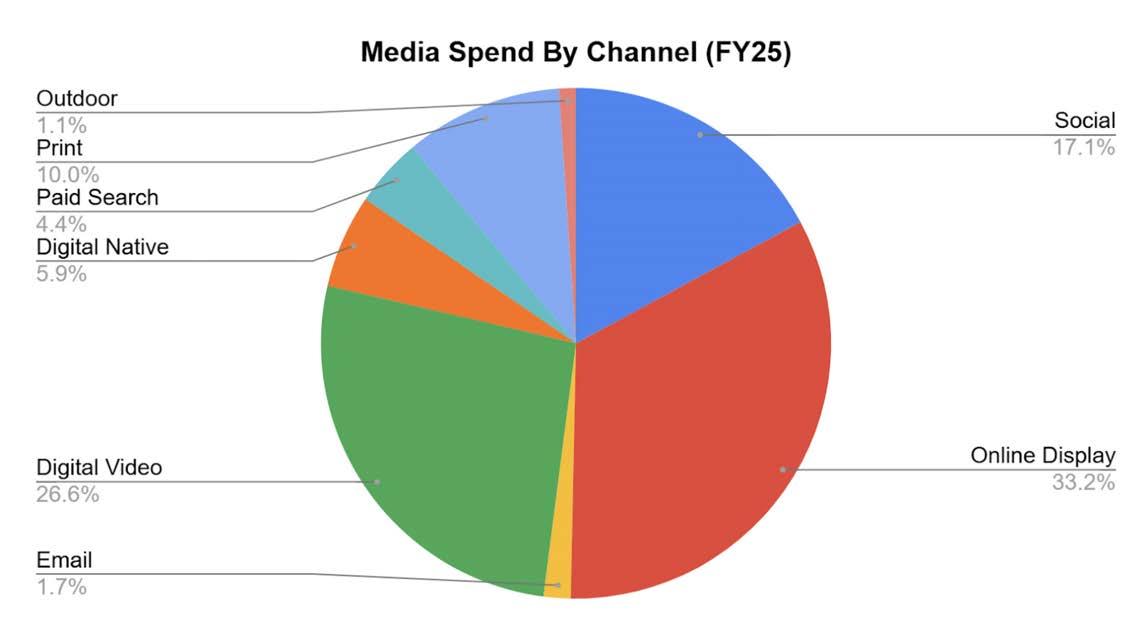
Maryland’s economic story travels on two engines powered by two teams: Marketing, which delivers targeted, datadriven campaigns that move the Maryland message directly to decision makers, and Communications, which builds credibility and trust through earned media, public relations, and executive engagement. Together in FY25, these efforts broadened Maryland’s visibility with site selectors, investors, entrepreneurs, students, and visitors – while lowering costs, improving reach, and multiplying impact.
Maryland’s marketing campaigns continued to push the boundaries of digital advertising. Maryland Marketing Partnership (MMP), staffed by Maryland Department of Commerce’s marketing team, used highly focused streaming, social, search, and targeted mobile display to move the Maryland message front and center. From LinkedIn CTV ads that hit decision makers at home while binging their favorite shows, to flooding the area at the Boston Convention Center as industry leaders gathered for BIO International, Maryland was omnipresent for the people and in the places where decisions are made.

Marketing & Communications Highlights
$503,332 in private-sector investment leveraged
Business attraction ads reached 82+ million business decision makers
Talent attraction ads reached 64+ million students and young professionals
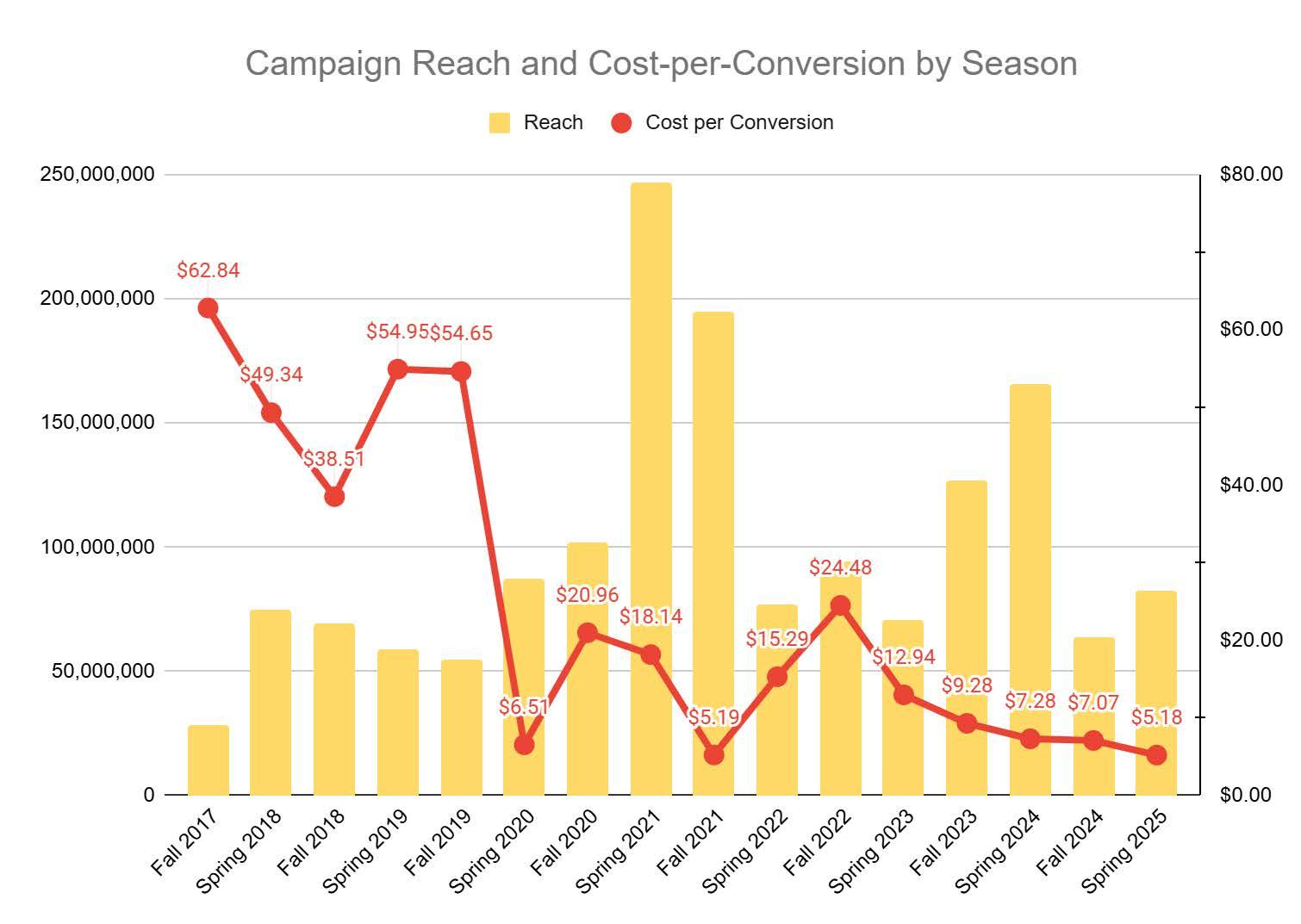
Ad conversions reduced to $5.18 each, down from ~$60 in 2017
1.1 million impressions from events
136 in-house creative projects produced, valued at $489,600
3,650 news segments secured, with an earned media value of $54M+
85 Secretary events supported across Maryland and beyond
77 blog posts published, attracting 82,700+ users
41,916 email subscribers with a 28.7% open rate
The Department of Commerce’s Roadmap identified core sectors for Maryland’s future growth: life sciences, aerospace, cyber, AI, and quantum technology. Marketing efforts amplified these priorities on the national stage. A few examples include:
Life Sciences – From a significant presence at BIO International to various media engagements, Maryland remained front and center for its leadership in life sciences.
Aerospace – MMP partnered with Site Selection Magazine to emphasize Maryland’s advantages in defense innovation and advanced air mobility, spotlighting the assets that make the state an aerospace hub.
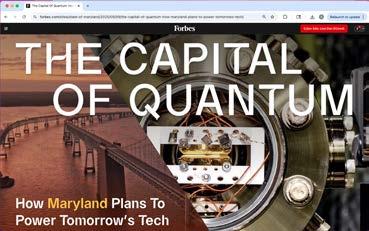
Quantum – A Forbes content partnership and a full-page Fortune spread branded Maryland as “The Capital of Quantum,” positioning the state as the place to be for one of the world’s most transformative technologies.
Reaching and retaining Maryland’s elite, next-generation workforce was another key priority for FY25. Momentum continued for Maryland’s talent attraction efforts with creative content partnerships to engage students and young professionals. MMP scripted, developed and launched three videos in partnership with Governor Wes Moore. In the video, Governor Moore engages with young audiences, encouraging them to consider a move to Maryland. A creative partnership with Hannah Williams and Salary Transparent Street gave talent attraction a viral component.
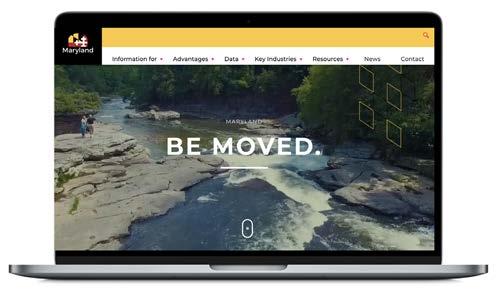

In the familiar interview style of the channel, Marylanders shared their salary stories while underscoring the state’s standing as a national leader in household income. The three-video series generated more than 10.5 million views, tens of thousands of likes, and hundreds of comments, while launching new MMP social channels devoted to talent outreach.
Advertising Maryland is a process of continuous improvement. The marketing team regularly reviews performance data to identify which tactics drive the most engaged web traffic and which audiences respond best to our ads. Each media flight builds on prior successes while introducing new channel tests to refine our approach.
Effectiveness is measured by website engagement. If a visitor spends more than two minutes on the site after being exposed to a Maryland ad, it counts as a conversion. In 2017, the average cost per conversion was
about $60; in FY25, that cost has dropped to just $5.18 – evidence that Maryland’s ad campaign is working harder and smarter, generating efficiency and driving engagement.
In FY25, overall reach declined by design. We strategically eliminated wasteful placements that failed to deliver engaged users and redirected funds toward premium, targeted placements. As a result, the conversion rate jumped from 8% to 28%, dramatically increasing the share of qualified visitors while maximizing budget efficiency.
Commerce generated jobs, amplified industry advantages, backed up its partners, and brought new businesses to the fold, proving once again, Maryland has the mettle and the momentum to go toe-to-toe with the global heavyweights.


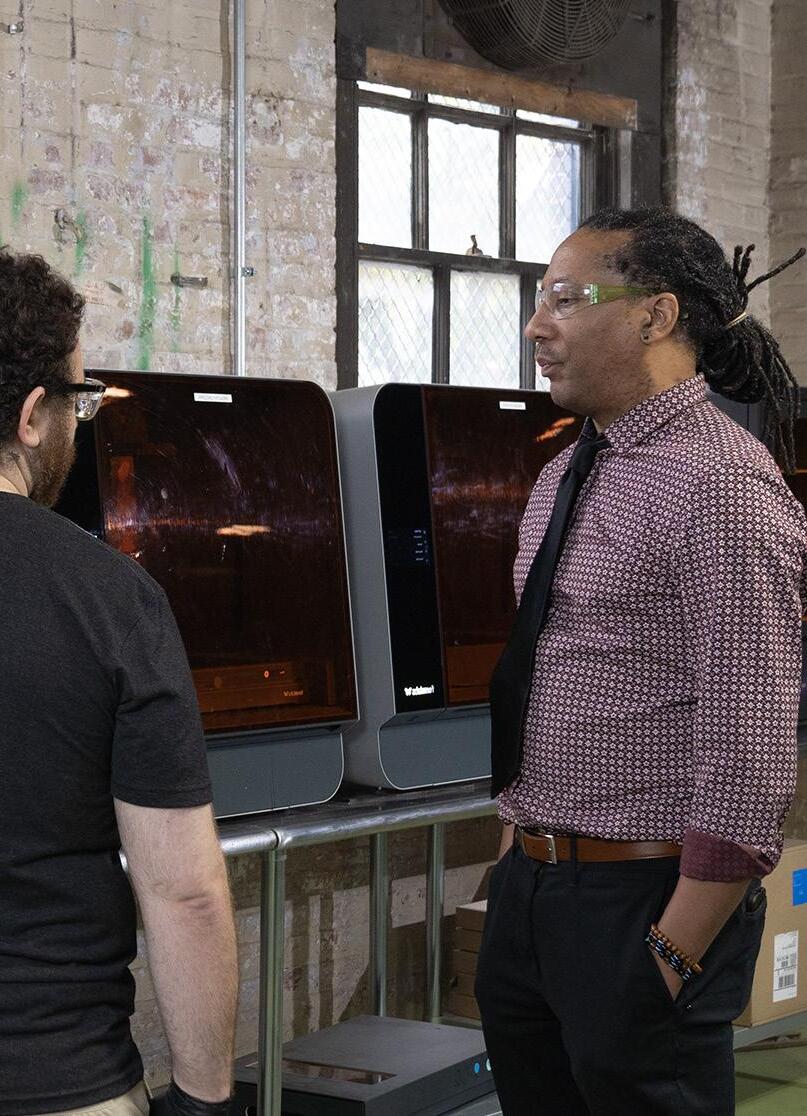
Senior Graphic Designer in Commerce’s Marketing Unit, Scott Johnson is an eclectic designer with influences ranging from Marvel Comics legends Jim Lee and John Byrne to old masters like Degas and Klimt, and brings his finely honed artist’s eye to every Commerce project.
That eye is central to a team delivering the full spectrum of modern marketing: print and digital campaigns, trade show environments, video content, and promotional materials that carry Maryland’s story to the world. “We work behind the scenes,” Scott says. “And we drive home that Maryland matters.”
Before joining Commerce, Scott transformed the Baltimore City Housing Authority’s communications shop into a full-service, in-house ad agency. In FY25, Scott designed Maryland exhibits for global audiences, reaching tens of thousands of investors, leaders, and top talent. He expanded Commerce’s photo library and added highprofile projects to his portfolio including Commerce’s Winning the Decade strategic report, the Maryland Marketing Partnership’s Annual Report, and Why Maryland, Commerce’s signature sales brochure, he still calls a favorite. He is often called on to support other agencies, partners, and the Governor’s Office, extending Commerce’s impact. “Design can tell a story,” Scott says, “that’s what I bring. I get to tell the Maryland story.”
Commerce’s in-house graphics team produces high quality design projects for the fast-paced business teams. This year, 136 print graphics projects were produced in-house which would have cost Commerce $489,600 to have produced by an external agency.
The robust advertising campaign of FY25 would not have been possible without the support of investors in the The Maryland Marketing Partnership (MMP). These companies are true ambassadors for Maryland – helping Maryland amplify its message and tell its story to the masses. Get to know the investors in the Maryland Marketing Partnership below and learn more at MarylandMarketingPartnership.com.
A rapidly growing Maryland-based Microsoft Solutions Partner focused on deploying, managing, and securing cloud and AI infrastructure, driven by a spirited mission to give back and pay it forward.

FOVNDRY is a woman-owned creative and communications agency blending big-agency expertise with hands-on dedication to build brands through strategic collaboration, authentic storytelling, and strong client partnerships.
MEDCO supports business growth, retention, and opportunity creation in Maryland through financing, real estate development, infrastructure solutions, and strategic partnerships with publicprivate entities.
Howard Hughes is a thoughtful master developer and long-term partner, supporting the businesses and residents that call Merriweather District and our other communities home.
The Montgomery County Economic Development Corporation (MCEDC) is the official public-private economic development organization for Montgomery County, Maryland, and is dedicated to fostering business growth and supporting economic development throughout the county.
M&T Bank is a financial holding company headquartered in Buffalo, New York that provides banking products and services spanning the eastern U.S. from Maine to Virginia and Washington, D.C. For more information about M&T Bank, visit www. mtb.com.
As one of the D.C. region’s largest private developers, Peterson Companies delivers some of the area’s most exciting mixeduse retail, residential and commercial destinations.
SECU (“see-Q”), Maryland’s largest statechartered credit union, serves over 250,000 members, ranking among the top credit unions nationwide with more than $5B in assets.
St. John Properties is one of the nation’s largest and most successful privately held commercial real estate firms serving more than 2,600 clients across 24 million square-feet of commercial space.
United Therapeutics, founded to cure a child’s rare disease, is a pioneering public benefit biotech focused on innovative therapies and expanding transplant options for patients.
T. Rowe Price (NASDAQ-GS: TROW) is a leading global asset management firm, entrusted with managing $1.68 trillion in client assets as of June 30, 2025.
The University System of Maryland (USM) has 170,000 students, twelve institutions, and three regional centers. Through education, research, and service, the USM is changing the world for good, starting right here at home.
TEDCO provides funding, resources and connections that early-stage technology and life sciences companies need to thrive in Maryland.
Whiting-Turner delivers construction services nationwide with integrity and excellence, leveraging 5,000 professionals across 60+ locations to build locally and delight customers since 1909.
Coverage That Counts
In public relations efforts aimed across the media landscape, Maryland chose trust. Working with Abel Communications, the MMP pushed coverage in national and industry-leading publications that experts rely on, with an op-ed in Newsweek, a feature in Medical Design & Outsourcing, and stories in Business View, Site Selection, and Area Development. Media outreach efforts at events including RSA and BIO International built relationships with reporters and thought leaders while connecting Commerce reps with key trade outlets including Pharmavoice, Big4Bio, and Biospace, strengthening Maryland’s already impressive image in cybersecurity, life sciences, and more.
Commerce’s Office of Communications distributed 48 press releases and contributed to several announcements from economic development partners in FY25. These efforts secured 3,650 segments of news coverage, reaching more than five billion people, with an earned media value exceeding $54 million.
The team prepared senior leadership for approximately 85 engagements with local organizations, boards and commissions, media interviews, and events. The office also created and delivered more than 140 Secretary’s Citations to businesses celebrating anniversaries, grand openings, expansions, and other milestones.
To tell Maryland’s story online, Commerce staff published 77 blog posts on Business. Maryland.gov featuring breaking news, small business spotlights, and program updates. This original content drew more than 82,700 users and was promoted across social media and newsletters.
In FY25, the Maryland Office of Tourism Development (OTD) and the Maryland Film Office raised the state’s profile nationally and internationally, generating cultural and economic impact through campaigns, partnerships, and expanded engagement. Strong advertising returns, new cultural content, and international collaborations reinforced Maryland’s position as a premier travel destination, a film-friendly location, and a major driver of jobs and growth.
The You’re Welcome spring/summer ad campaign ran across TV, print, radio, digital, and social channels in key markets, generating more than $132 million in hotel bookings and lifting ROI from $34:1 to $55:1. Companion efforts such as Open Roads, a series of itineraries designed to explore Maryland’s official Scenic Byways, and the 25th Anniversary of Maryland Scenic Byways drove in-state and multi-night travel. All Welcome Centers received refreshed graphics designed to amplify campaign messaging. OTD’s existing global strategy.
OTD also broadened cultural storytelling. Civil Rights travel content, released during the “Year of Civil Rights,” highlighted protest sites, legal landmarks, and museums. September’s International Underground Railroad Month introduced new web content, events at sites like Riversdale House
and Historic Sotterley, and programming to honor Maryland’s role in the struggle for justice.
The Office also led development of the four-state Cape to Cape Scenic Driving Tour. The 200-mile route links Maryland’s Atlantic coast with destinations in New Jersey, Delaware, and Virginia, encouraging longer trips. Research shows 67 percent of multistate travelers stay five nights or more.
The Destination Marketing Organization (DMO) Grant Program leveraged $2.5 million in state funds into $17.3 million in local investments for a 7:1 ROI. OTD engaged stakeholders through workshops trainings, conference presentations, and one-onone sessions, while the Visitor & Business Support team assisted more than 4,000 partners.
Welcome Centers statewide received refreshed graphics designed to amplify OTD’s existing global strategy. OTD invested in a new Maryland International Marketing Partnership to build a global strategy and the Meet in Maryland consortium to grow the meetings and conventions market share, particularly in the Quantum Technology, Computational Biology and Position, Navigation & Timing sectors.

Global reach expanded through travel trade sales, connecting OTD and Maryland partners with buyers and operators at major events including the American Bus Association Marketplace, National Tour Association Travel Exchange, Student & Youth Travel Association Conference, and United Motorcoach Association Expo, as well as in internationally in Canada, United Kingdom, Germany and France.
Additionally, OTD generated more than $29.9 million in earned media through 732 travel placements, reflecting strong post-pandemic demand, new tourism products like the Maryland Catfish Trail, and strengthened journalist relationships. Coverage appeared in leading outlets such as Travel + Leisure, Southern Living, Condé Nast Traveler, National Geographic, USA Today, and The Times. International reach grew through partnerships with Capital Region USA and Reach Global, while secured broadcast segments aired year-round across Baltimore, Washington, D.C., and Delmarva markets. Familiarization tours highlighted themes such as Great Chesapeake Bay Loop, Scenic Byways, culinary and outdoor themes.
OTD grew its social media reach through content creator partnerships, new campaigns such as the Stay in the Loop video series and Scenic Byways, and engagement programs like #MarylandMondays giveaways. The new LinkedIn page connects partners to timely updates and opportunities.
In FY25, the Maryland Film Office assisted feature films, documentaries, and independent projects that together generated $2.1 million in economic impact, engaged 465 Maryland businesses, and employed 155 Maryland residents.
Two productions qualified for the Maryland Film Production Activity Tax Credit and seven benefited from the Maryland Small Film program. Tax credits were issued to several projects, including the docuseries Born Evil: The Serial Killer and The Savior, directed by Michael Bay. By supporting both large-scale and independent productions, the Film Office reinforced its role as a driver of Maryland’s creative economy.

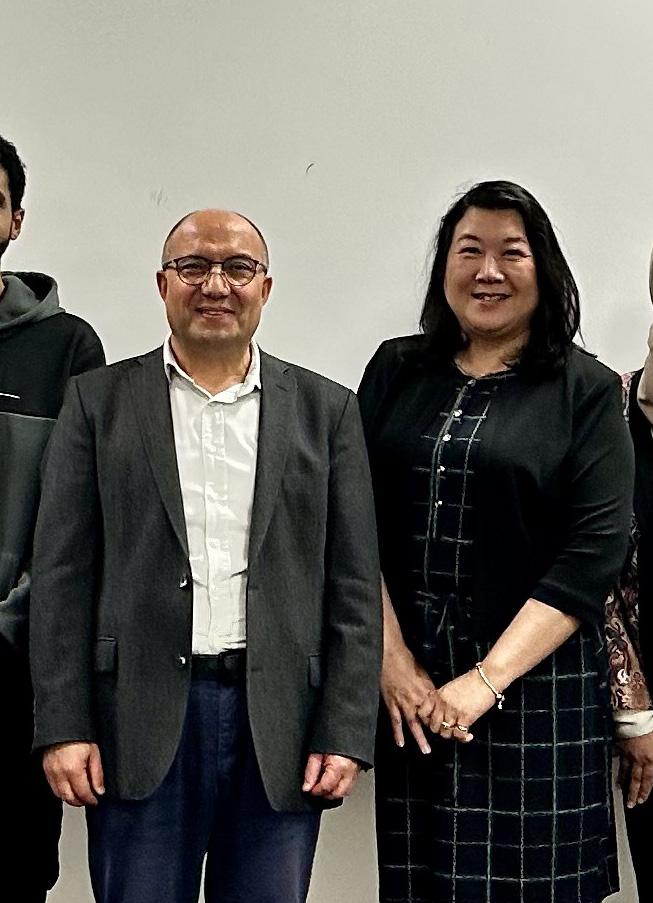
In Maryland’s competitive tourism market, having a full-time research analyst is a real advantage. That role belongs to Rianna Wan, who makes sure decisions are guided by facts instead of guesswork. “Research data drives our decisions,” she says. “It tells us who is visiting, why they are here, and where we should invest our marketing.”
In addition to providing critical insights, data analysis and strategic perspectives to drive OTD’s decision making on an ongoing basis, Rianna directs special research projects and produces situational analyses for the research portions of the Tourism Marketing and Development Plan and the Maryland Tourism Development Board’s Annual Report. She pulls information from Smith Travel Research, the Comptroller’s Office, and geolocation data that tracks movement around one hundred points of interest from Camden Yards to Ocean City. The result is a stream of insights that shape state campaigns and give counties and destinations the tools they need to sharpen their own strategies.
Her impact is felt most in the relationships she builds. Rianna is the point person for Maryland’s Destination Marketing Organizations and countless partners who depend on her consistency and quick response. She leads training sessions on the Symphony Dashboard, fields urgent questions from local leaders, and shares reports that help communities understand their tourism performance. “Our partners know they can reach me directly and get an answer quickly,” she says. “That reliability builds trust and makes Maryland’s tourism story stronger.” Rianna brings to the role a career in hotels, publishing, and international trade, along with a lifelong passion for travel. “Tourism is about seeing with an open mind,” she says. “I bring that perspective to Maryland every day.”
Making Strategic investments and delivering targeted programs, the Maryland State Arts Council (MSAC) ensures that every Marylander has access to the transformative power of the arts. MSAC’s grants provide stabilizing funding to artists and arts organizations, and its professional development offerings help to drive the state’s creative economy. All together, its programs and services enhance the quality of life for all Marylanders, advancing the mission of the Department of Commerce and spurring economic development.
In FY25, MSAC grant funding totaled $31.6 million, which reached all 24 jurisdictions of the state and included:
• Stabilizing financial support for the general operations of large and small arts organizations, county arts agencies, regional folklife centers, and Arts and Entertainment Districts
• Critical funding for capital projects supporting a modern, accessible arts infrastructure
• Placements of teaching artists in schools and community settings to inspire lifelong learning
• Help for Maryland communities to envision, create, and maintain public art
• Living and working expenses for independent artists
• Recognition and resources for traditional art forms reflecting the state’s diverse cultures
• Assistance for artists and organizations seeking professional development opportunities
A new strategic plan adopted at the beginning of FY25 will guide MSAC’s work over the next several years. The plan consists of five pillars: access, awareness, connection, equity, and leadership. These areas of focus grew from extensive consulting with constituents to determine where public support for the arts is needed most, as artists and organizations continue to adjust to post-pandemic norms.
At the core of MSAC’s grantmaking is the Grants for Organizations (GFO) program, which last year disbursed $18.1 million across 306 grants supporting the arts organizations and arts programs that make up the backbone of Maryland’s strong arts sector. In addition to this work, team members consulted with grantees and the wider public to identify changes that will make GFO resources more accessible in the future. Based on these conversations, new policies will be phased in next year to streamline application submission and review processes, as well as grow the program to incorporate more of Maryland’s smaller arts organizations.
The way MSAC communicates with its constituents and broadcasts the positive impacts of the arts in Maryland changed significantly in FY25. Updates to the style and content of press releases, social media, and website materials, as well as the rollout of a rebranded newsletter, The Council Connect, have significantly increased the effectiveness of MSAC’s communications efforts.
In addition to the primary work of grantmaking, MSAC also offers professional development resources aimed at growing Maryland’s creative economy. Virtual sessions for arts entrepreneurs have been particularly popular, with small business owners and sole proprietors seeking information on legal compliance, nonprofit best practices, and selling and marketing their work. In total, professional development sessions serving arts entrepreneurs, grantseekers, and others attracted 1,961 attendees in FY25.
Through all the work described above, MSAC received consistent feedback that public funding for the arts stabilizes and helps to maintain the success of Maryland’s arts ecosystem. In FY25, the MSAC team reviewed 3,761 applications and awarded 1,119 grants, for an overall award rate of 30 percent.The work contributed to Maryland’s national ranking as one of the most arts-vibrant states in the country, in a study accounting for several key indicators in the arts sector, including public investment in and demand for arts resources.
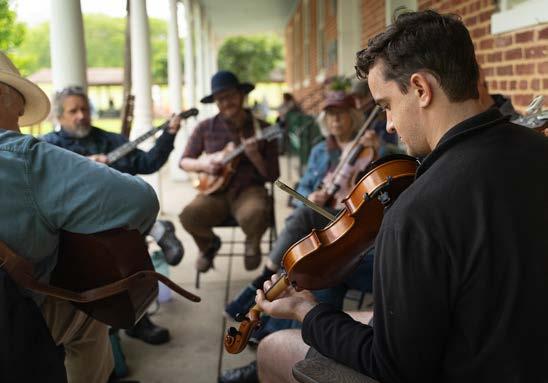


“MSAC funding has been vital in empowering us to take calculated artistic risks. This financial flexibility allows us to continually experiment with diverse programming and gain deeper insights into the evolving preferences of the music lovers in our community.”
The Columbia Orchestra (Howard)
In 2002, Ryan Patterson came from Florida to the Maryland Institute College of Art wanting to make a difference, and studying community art opened that door. He taught after-school in Baltimore’s Sandtown and Upton neighborhoods. “I’d be walking, and my kids would recognize me,” he recalled. “Their parents would thank me, and I fell in love with this City.”
That sense of service drives Ryan’s career. Before joining MSAC in 2020, he worked with Parks and People, Americorps, and the Create Baltimore. Now, as MSAC’s Public Arts Program Director, he brings community-based art to all Marylanders.
MSAC is among the nation’s best-funded arts agencies, and in FY25 its reach was clear. Ryan supported a mural at Skatepark of Baltimore; David Hess’s 20-foot sculpture in Frostburg evoking the Allegheny Mountains, seen daily by 30,000 drivers; and Towson University’s College of Health Professions welcome piece, Wellness Loop, a 35-foot knot of chrome spheres by Benjamin Ball, each sphere reflecting the viewer, encouraging students to see themselves in this place of science and learning.
He also helped artists Wesley Clark and Nehemia Dixxon II transform Prince George’s County’s Windom Road Segregation Barrier into Historic Barrier Park. Its centerpiece: two hands tearing apart the barricade. “Metaphor became literal,” Ryan said. “It turned division into a monument of reconciliation. It’s about bringing art into everyday life. On your way to class, to work, to the beach. Art should be there with you.”
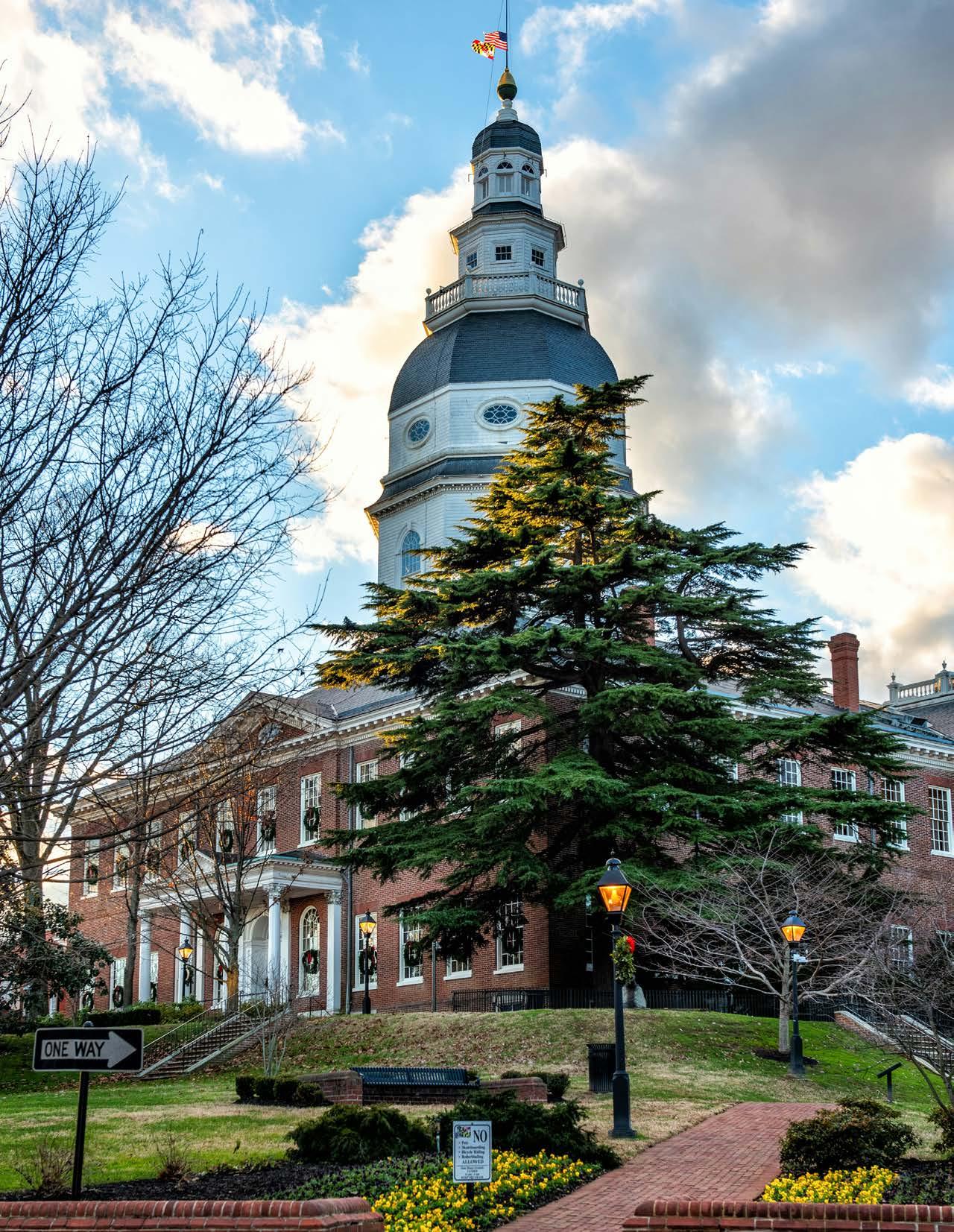
Maryland’s 2025 session was all about building Maryland momentum. Commerce secured funding to attract new businesses to Maryland, support growth in strategic industries, and fuel university innovation, while simultaneously streamlining support and reducing red-tape for small businesses and nonprofits. Even in an era of fiscal realignment and streamlined budgets, Maryland built out its capacity, solidified its standing, and strengthened its position as a hub for growth, opportunity and innovation.
The General Assembly approved a $285.3 million operating budget for the Department of Commerce in FY26, supporting a broad portfolio of business development, innovation and cultural programs.
Selected Program Funding:
• $17.5M – Advantage Maryland (MEDAAF)
• $47.8M – More Jobs for Marylanders (MJM)
• $12M – Biotechnology Investment Incentive Tax Credit (BIITC)
• $11M – Maryland Small Business Development Financing Authority (MSBDFA)
• $19.3M – Tourism Development
• $31.5M – Maryland State Arts Council (MSAC), including $310K in targeted grants
• $20M – Small, Minority, and WomenOwned Business Account (SMWOBA)
• $16M – Sunny Day Fund
• $7M – Build Our Future Innovation Economy Infrastructure Grants
• $9.75M – Child Care Capital Support Revolving Loan Fund
• $5M – Manufacturing 4.0 Grants
• $500K – BioHub Maryland Initiative
Minority Business Enterprise (MBE) Program
Numbers accurate as of 10/22/25
Total Awards = 7,131,774
Total Awards = 1,201,254
MBE Participation = 16.84%
Small Business Reserve (SBR) Program
Numbers accurate as of 10/22/25
SBR GOAL ACHIEVEMENT = 68.37%
Administration and Departmental Priorities
CH 601 – Procurement Reform Act of 2025
Modernizes procurement authority across agencies, strengthening oversight and efficiency.
FY25 Tax Credits
Biotechnology Investment Incentive Tax Credit (FY25)
• 14 Qualified Maryland Biotechnology Companies assisted (6.30.2025)
• 42 investor applications approved (as of 6.30.2025)
• $6,581,079 tax credits issued (as of 6.30.2025)
• $10,541,019 investment leveraged (as of 6.30.2025)
Innovation Investment Incentive Tax Credit (FY25)
• 1 Qualified Maryland Technology Company assisted
• 3 investor applications approved
• $115,500 tax credits awarded
• $350,000 investment leveraged
Buy Maryland Cybersecurity Tax Credit (FY25)
• Qualified Maryland Cyber Security Sellers assisted 22 (3 sellers and 19 seller recertifications)
• Qualified Maryland Biotechnology Companies approved 49
• $549,900 in credits awarded
Employer Security Clearance Costs Tax Credit (TY23)
• 71 businesses certified
• $4,203,411 total employer security clearance costs
• $2 million in credits awarded
Enterprise Zone (EZ) Program
• 36 Number of enterprise zones as of December 2024
• 639 Number of businesses to receive real property tax credits in FY25
• $56M Total real property tax credits in FY25
Job Creation Tax Credit (FY25)
• 11 businesses certified
• $3,308,000 total credits awarded
• 1752 jobs created
• $26,205,185 total payroll
Research and Development Tax Credit (TY23)
• 190 businesses certified
• $2.567B total R&D expenses
• $12 million in credits awarded
One Maryland Tax Credit (FY25)
• 3 businesses certified
• $8,500,000 total credits awarded
• $13,720,858 total eligible project costs
• 104 jobs created
• $6,594,833 total payroll
More Jobs for Marylanders (FY25)
• 33 businesses certified
• $23,363,548 total credits awarded
• 2370 jobs created and retained jobs
• $409,666,819 total payroll
Commerce Actual Expenditures
Office of the Secretary (includes Attorney General)
Office of Policy and Research
Office of Administration and Technology
Division Business and Industry Sector Development
Operations
Financing and Education and Training
Tax Credits
Division of Tourism, Film, and the Arts
Office of the Assistant Secretary
Office of Marketing and Communications
Office of Tourism Development
Maryland Tourism Development Board
Maryland State Arts Council
Preservation of Cultural Arts Total 4 ,359,928 2,025,570 8,063,901 61,988,238 15,729,226 30,479,148 315,369 2,514,895 6,385,185 13,925,929 32,011,362 1,300,000 $179,098,751