Save Madison Valley appeals approval of The Madison
Group argues city erred in assessing mixed-use development’s impacts to environment, neighborhood
By Brandon Macz
Madison Park Times editor
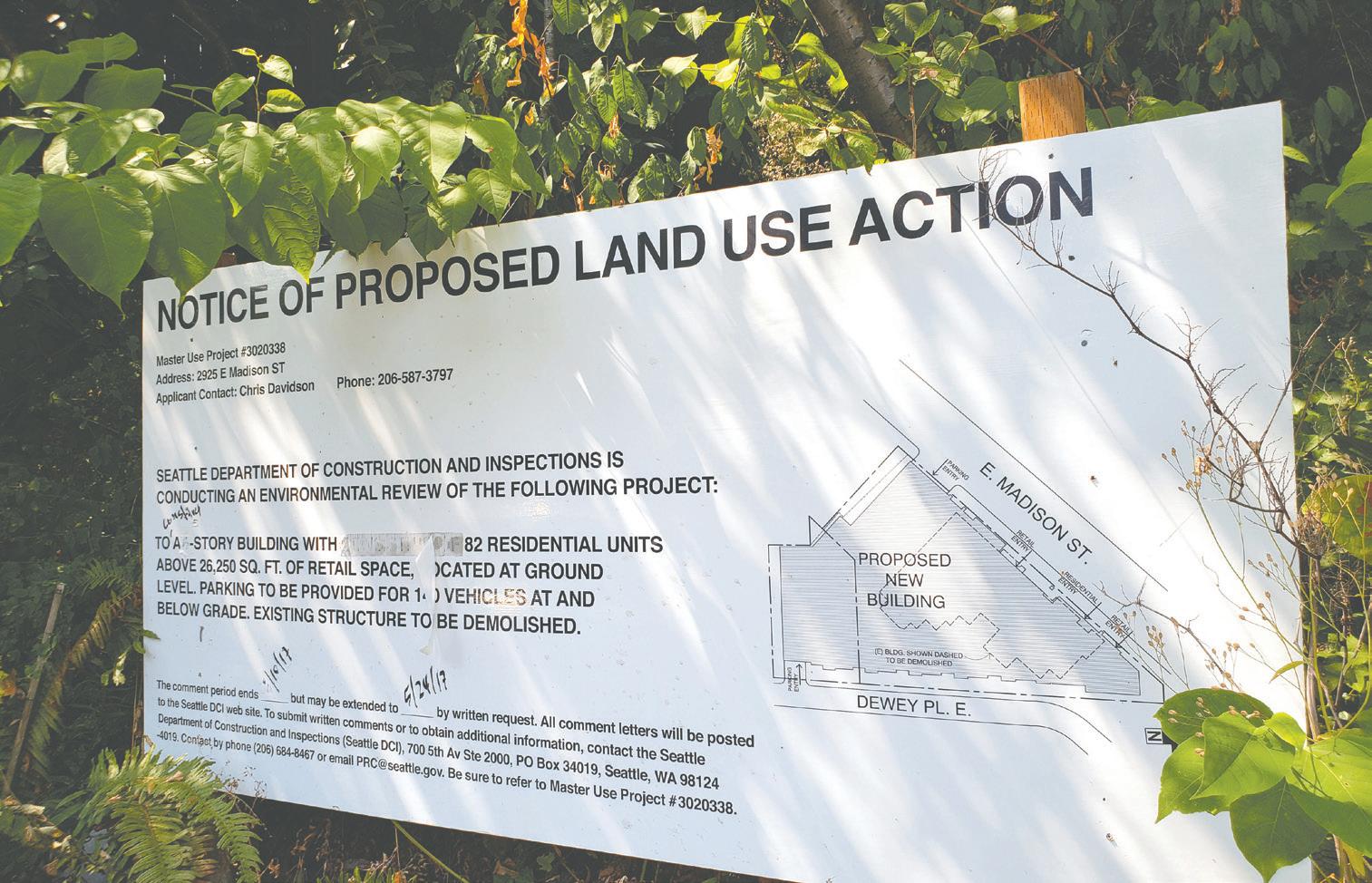
Neighborhood group Save Madison Valley has submitted its 105-page appeal to the Seattle Department of Construction and Inspection director’s approval of plans for the 82-unit mixed-use The Madison development.
The SDCI director’s decision was published on July 23. SVM had until Aug. 6 to file its appeal, which challenges a final recommendation of the design review board, the director’s decision on a land use application by architecture firm Studio Meng Strazzara and SDCI’s land use code interpretation.
The Madison would replace City People’s Garden Center, 2925 E. Madison St., with a six-story mixed-use development that includes a PCC Market. A tree canopy sloping down from East Madison to Dewey Place East would also be removed; six townhomes are planned to front Dewey.
Save Madison Valley has been critical of developer Velmeir Companies’ plans for the site since the early design guidance phase. Not only are its members opposed to losing a canopy of old trees, they also argue the size of the project doesn’t fit among Madison Valley’s single-family residences.
What Clients Are Saying
We are rating Lisa Turnure with 5-plus stars because she exceeded our significant expectations. She not only sold the house efficiently, she handled everything about the sale with professional finesse. I would describe her as dedicated, tenacious, present 24/7, thoughtful and highly skilled. I was impressed with her experienced level of intent and action. It felt like we were her only clients (we weren’t) as we got frequent updates concerning every detail of the process. From potential buyers, to their feedback, to scheduling showings-last minute or otherwise to potential and actual actions, to follow-ups, she never misses a beat! Her contacts in the business are top-notch as well, from setters to photographers, multiple miscellaneous services or title and escrow, she associates with teams of competent people to make sure the process runs smoothly and seamlessly. Her expertise is top-notch, which gave us comfort throughout. Our home was in her capable hands and we couldn’t be more appreciative of her tireless effort and skill!
-Broadmoor Client, 2018
“Velmeir used the presence of the slope to its advantage to get extra height and then, ironically, proposed to remove the slope completely,” reads a portion SMV’s appeal introduction. “Velmeir argued for and received a complete waiver of all steep slope and liquefaction protections in the code. Velmeir also argued for and
received a green light to remove every single tree on site, including exceptional trees. Velmeir didn’t even try to minimize the impacts of its development and SDCI didn’t even ask them to.”
SMV argued the there are at least 39 trees on the site that are significant by city
Photo by Brandon Macz
Save Madison Valley filed its appeal of decisions by the city that will clear Velmeir Companies to construct its six-story mixed-use development at 2925 E. Madison St.
New tower opening slated for late August; Whole Foods later on
By Brandon Macz Madison Park Times editor
The newly constructed The Danforth luxury apartment tower will receive finishing touches by three Pacific Northwest artists.
Zack Bolotin, Angelina Villalobos and Aramis Hamer have been commissioned to create custom pieces for The Danforth’s Live Well, Do Good, Have Fun contest, as well as works for the 16-story, 265-unit development that was slated to open at Broadway and East Madison at the end of August.
Developer Columbia Pacific Advisors announced in April it would provide $2,500 donations to Seattle Humane, Country Doctor Community Health Centers and the Artist Trust, and have prospective tenants and
DANFORTH , Page 9
he Madison Park neighborhood is rich in community, and it is a place I am proud and grateful to call my home. September is a special month because it means that we get to celebrate the opening night of one of my favorite annual events: the Madison Park Art Walk! I hope you will join me at Park House on September 14th from 5 to 9pm for light bites, conversation and libations as we enjoy the fabulous photography of Jason Matias, this month’s featured artist. Haven’t visited our Park House yet? You’ll find us at 4031 E. Madison Street.
For more information I invite you to visit www.LauraHalliday.com
WHAT MY CLIENTS ARE SAYING A CONTINUED LEGACY
RSIR ranks amongst the largest, most productive and fastestgrowing real estate companies in Washington with access to 22,000 brokers in 72 countries that generate US sales of $80 billion+ annually.
Sotheby’s Presents Finest & Rarest Wines at Auction this Fall.
Shift, not a crash in real estate market
Despite what you may have read or heard, the Seattle real estate market isn’t crashing. The sky isn’t falling.
It is, however, a market in transition beyond the usual seasonal slowdown. It’s not the bubble bursting; there’s no need to panic. But all signs point to a normalization of the real estate scene compared to the last few years, and especially the crazy environment of this past spring. As I am writing this article, there are 67 active listings and19 pending properties in our designated market areas. We are looking at an absorption rate of 2.8 percent. Effectively, a little over 2.5 months of inventory.
The fact is, there are a number of other major markets around the country that have transitioned from a seller’s market to a heavy buyer’s market. The amount of foreign money pouring into real estate in these places has dried up. Foreign investments are no longer taking up extra inventory in existing housing and new construction.
Our situation is a bit different. Because Seattle is home to major employers, and our job growth is still booming, we’re not as vulnerable to the dwindling foreign investment market.
A market shift
While the bubble isn’t bursting here, we are shifting to more of a neutral market. A record number of homes entered the market in June — the most since the crash in 2008. So, there is a lot more inventory available to buyers. Some neighborhoods have plateaued in terms of price — home prices can only rise so high before buyers just won’t or can’t buy.
A few factors are at play — high housing prices, an interest rate jump, buyer fatigue and a
drop in consumer confidence.
All that leads to a normalizing of the market, not a crash. Home deals will once again see:
• More time on the market, homes will no longer get snapped up in hours.
• One offer, not multiple bids.
• Prices will be negotiated down, not up, because of the time on market.
• Contingencies, on financing, inspections, and date of settlement.
The new normal
While we saw a record number of homes come on the market in June, we’ve also seen a record number of price reductions. If you’re considering selling your home, or are already on the market, you’ve got to recalibrate your expectations.
Especially in terms of pricing strategy: sellers are typically behind the market by several months. Price right for the market now.
As an example, I had buyers looking at a home that had been on the market for 44 days, asking $2.2 million (priced too high), and we went to see it when it was cut to $1.998 million. My buyers made an offer of $1.95 million with contingencies. The listing broker was dismissive and defensive, asking “How dare you?” We withdrew the offer.
The buyers agreed to be patient. We waited two weeks, resubmitted the same offer, and it was accepted. However, the sale didn’t go through — the inspection found significant water damage and resulting rot that
had not been listed on the sellers’ disclosure. It would have been an expensive nightmare to remediate.
Last spring, a seller wouldn’t have had to accept a normal offer, with any negotiation and/ or contingencies. And a buyer may well have won a bidding war, only to find out much later about the water damage.
For sellers, it’s shifts like this that call for an experienced, seasoned broker who looks at the data and knows what it means. This is the time when the top brokers shine. They can negotiate the highest and best offers when selling, getting all contingencies satisfied or changed, and get the deal all the way through to the settlement table.
Buyers need a seasoned broker to get them the best price. But don’t expect huge deals, the market hasn’t shifted that much. You’ll be able to buy at market rate, and in most cases not get into a bidding war. And your contingencies are more likely to be accepted, protecting your interests as much as the sellers. But, again, you need an experienced broker who can read the markets and advise you appropriately.
The Seattle market isn’t crashing. Don’t panic. The market is shifting, but back toward normal. Get the right advice, and you’ll succeed regardless of whether it’s a buyers, sellers, or neutral market.
Chris
Chris Sudore Property Views
MAGNIFICENT
Moder n luxury expects no less.
Madison Park storefront could get apartments
Losh family exploring residential use above old Gillespie building
By Brandon Macz Madison Park Times editor
Once the Losh family finishes repairing the old Gillespie building on East Madison Street, city records show the next step could be constructing apartments on top.
The mostly vacant building was constructed in 1926, and was purchased by Constance Gillespie’s family in 1937.
Under her ownership the building fell into disrepair, resulting in several code violations in 2014, including a decaying roof, which was discovered two years later to have partially collapsed.
The Losh family, which owns the neighboring Ewing & Clark real estate office, purchased the building from Gillespie for $1.38 million, after it had sat on the market for some time with a $3 million listing price. The transaction was carried out through a JBL Constance Court LLC — the JBL standing for John Brian Losh, Ewing & Clark’s founder.
Losh said he’s keeping a promise to Gillespie to restore the building, which he’s calling Constance Court, “to its former glory.”
“Our goal is to just preserve the building in its traditional form,” he said.
That includes fixing the roof and sidewalk out front, which puddles with water frequently when it rains.
“Things are taking a lot longer than we were hoping, so we’re kind of frustrated it’s taken this long,” said Casey Losh.
Casey Losh said they’re waiting to get the final approvals needed to finish the renovations, which his father thinks could be done by the end of the year.
went up recently at
announcing a new bookstore and restaurant will fill the longvacant storefront.
If apartments do go up, it would be two 800-squarefoot units on two added floors over a new section of the building at 4114-4118 East Madison.
“Everything takes time,” Casey Losh said. “Personally, I’m not that excited about it, putting two more units on it; I don’t think it’s worth the time.”
DHD Architects submitted a building and land use pre-application for the property with the Seattle Department of Construction and Inspections in mid-July.
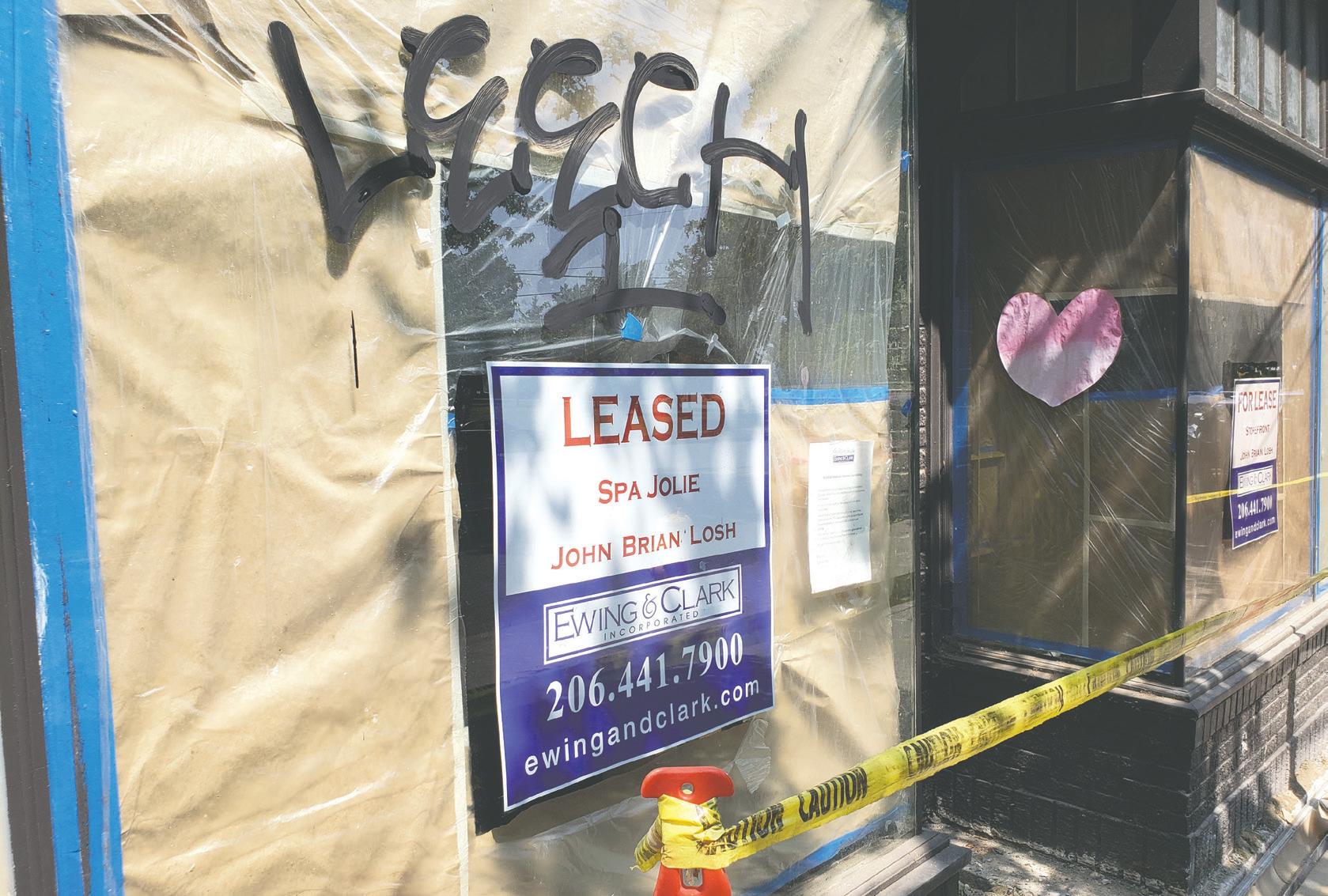
Signs recently came up on the building announcing that a bookstore has leased the east side of the building.
History is full of stories about siblings, one whose fame eclipsed the other. Cleopatra and Ptolemy XIII come to mind, or Kate and Pippa, Anne Bronte in the shadow of her sisters, Emily and Charlotte, little-known Edwin and his brother John Wilkes Booth. Or how about Penelope Cruz and her sister Monica? Google that one!
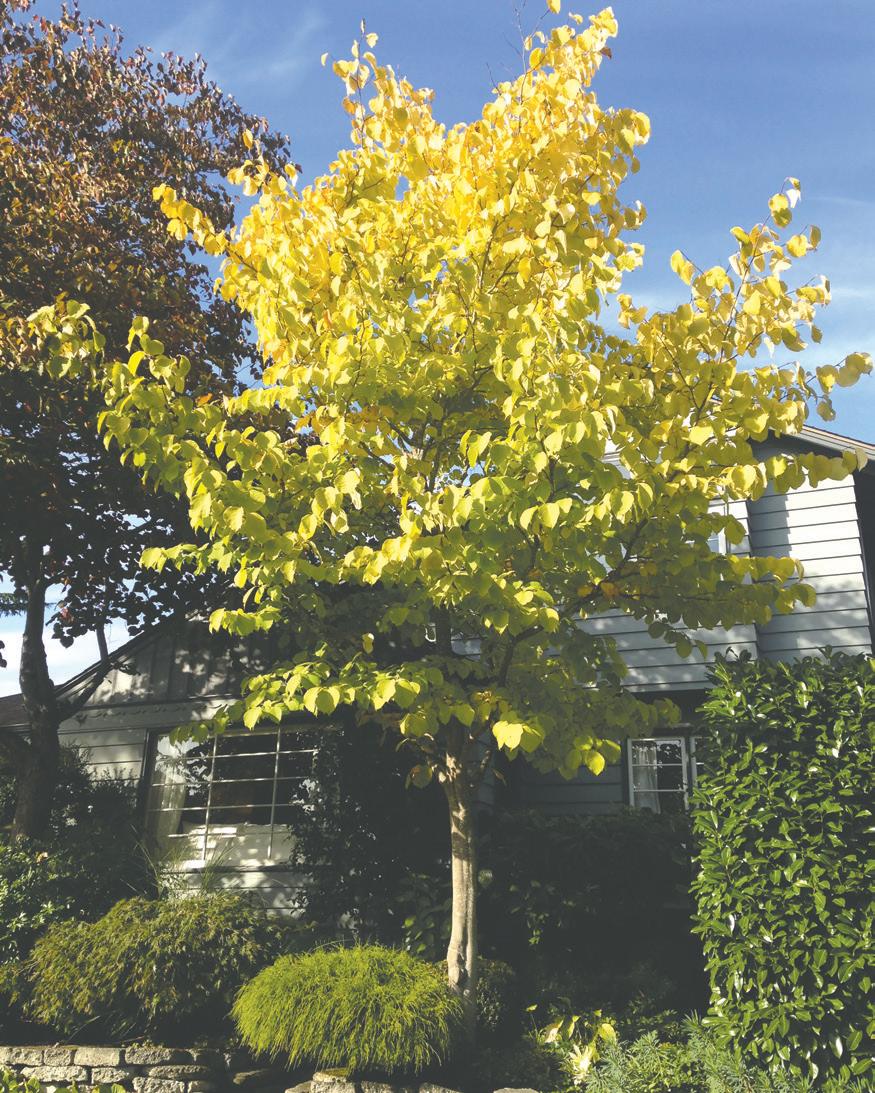
Such is the plight of Styrax obassia. It has always taken a back seat to its closest relative. Visit any nursery as planting season progresses and ask for an unusual flowering tree, perfectly scaled for the urban garden and, no doubt, the offerings will include Styrax japonica (Japanese Snowdrop Tree). But before you open your wallet and commit, consider its next of kin, the Fragrant Snowbell (Styrax obassia). If the nursery doesn’t have it, request a special order.
Native to Eastern Asia, this delicately scaled tree has the
grace of a geisha.
Like its more famous sibling, this tree reaches 20-30 feet, but it does not stretch out as wide, possibly making it even more desirable for the city garden.
The leaves are substantially larger, 3-8 inches in length, oval and dark green. In autumn they turn a handsome, medium yellow. But the inch-long flowers, which emerge in spring, really set this beauty apart.
They dangle from the ends of branches in 6- to 8-inch clusters, perfuming the air all around them. They are a spectacle, as appealing to the vision as they are to the olfactory sense.
Both Fragrant Snowbell and Japanese Snowdrop require little maintenance once planted. Give them a spot to spread a bit in sun or light shade. Prune off lower branches in spring as the plant ascends, to keep the tree from
a case for the Fragrant Snowbell, often overshadowed by the Japanese Snowdrop.
Signs
41144116 E. Madison St.,
Photo by Brandon Macz
Tree Talk columnist Steve Lorton makes
Steve Lorton Tree Talk
Photo by Mary Henry
City People’s lease extended through end of 2018
and Inspections on July 23.
DANFORTH , from Page 3
City People’s Garden Store will stay standing for another Christmas, the owners having negotiated a lease extension through the end of 2018.
Jose Gonzales and Alison Greene, who took over the business in 2017, continue looking for a new location, somewhere in south or central Seattle.
The Madison Valley garden store will eventually be razed to make way for an 82-unit mixeduse development that includes PCC Market as the anchor retail tenant.
Developer Velmeir Companies received approval for a master use permit for The Madison from the Seattle Department of Construction
APPEAL, from Page 1
definition. Removing the canopy will have “severe stormwater, aesthetic, environmental, and other impacts on members of SMV,” and the size of the new development will also “tower over SMV members’ homes,” according to the appeal.
Engineers have estimated the residences and PCC Market will generate 1,230 daily vehicle trips, with 244 new p.m. peak hour trips and 51 a.m. peak hour trips.
“The East Madison Street Proposal will also introduce significant public safety issues, espe-
Save Madison Valley has filed its appeal (See Page 1). The neighborhood group has been a vocal opponent of the project based on its scale in the neighborhood and the loss of an old tree canopy on Dewey Place East.
Geza de Gall, Velmeir vice president of real estate for the Pacific Northwest, told the Madison Park Times last month that he expected the appeals process to last through spring 2019.
Gonzales tells the Madison Park Times the extension of City People’s lease will allow him and Greene to run their Christmas program, with trees, wreaths, garlands and gifts.
MPT requested to speak with Greene and Gonzales for a feature, but they declined. Gonzales said they would contact the paper when a new business location is secure.
cially new traffic and congestion onto the streets in the area that are used by members of SMV,” the appeal states, “including the quiet, narrow residential street, Dewey Place East.”
Save Madison Valley argues the SDCI director’s decision to issue a determination of nonsignificance was in error, and city regulations do not adequately address or mitigate the impacts of the proposal.
The appeal states the director did not properly analyze adverse impacts related to slopes, surface water, groundwater, sewer, wastewater, flooding, trees, land use, wildlife, transportation, parking, noise, infrastructure, aesthetics and construction.
community members vote to decide which nonprofit would receive an additional $2,500 in funding. The contest included opportunities for participants to win a variety of prizes.
Seattle Humane ultimately earned the most votes, but Columbia Pacific Advisors announced during a private art show last month that all nonprofits were receiving $5,000, and presented them with large checks that night.
Bolotin is graphic artist who has designed posters for Death Cab for Cutie and shirts for the 2018 Sasquatch music festival. He also owns Porchlight Coffee & Records.
Villalobos is a muralist and street artist “whose work mixes the iconography of Catholicism with pop culture and folklore,” according to a news release. She designed the 2018 Pride Guide cover and a mural on the Cheasty Staircase in Beacon Hill.
Hamer is a painter and muralist, and in 2016 he created the purple goddess mural on the side of the KEXP building.
Find out more about the development at thedanforthseattle.com.
Because the design review board lacked information that would have been provided through an accurate and complete environmental review, SMV argues, it made improper and uninformed decisions. The board also did not “allow for meaningful public participation,” according to the appeal.
The appeal also argues that the developer and architecture firm did not adequately address design changes requested by the design board.
The East Design Review Board cleared the design by Studio Meng Strazzara last September, following its fourth presentation of the project.
Save Madison Valley wants the Hearing Examiner to reverse the determination of nonsignificance and require SDCI to conduct further analysis and
mitigation. It also wants the review board or director to reconsider The Madison project after proper environmental review is conducted, and also for SDCI to “conduct a new review based on a proper construction and application of provisions” in city code.
Geza de Gall, Velmeir vice president of real estate for the Pacific Northwest, told the Madison Park Times, after the director’s decision was issued, that he’s hopeful the appeals process will be concluded in the developer’s favor by spring 2019.
SMV spokesperson Melissa Stoker told MPT that the neighborhood group will pursue further appeals in the courts if it is unable to successfully argue its case before the Hearing Examiner.
“We’re going to go as far as we can,” she said. “In part, we’re do-
ing that because we do have a lot of support in the community.”
Members of SMV include engineers, attorneys, arborists and a traffic consultant, Stoker said, and they believe their challenge that the city erred in interpreting its own regulations will prevail.
“The city just has to stand beside its own rules and codes and regulations,” she said.
Stoker said she took issue with de Gall telling MPT that the potential to opt into the city’s HALA upzone to add affordable housing in return for an additional floor height would provide an interesting challenge to SMV.
A pre-hearing is set for Sept. 14. Stoker will be at the Madison Valley Community Council’s September meeting to provide an update 7 p.m. Tuesday, Sept. 18, at the MLK FAME Center, 3201 E. Republican St.
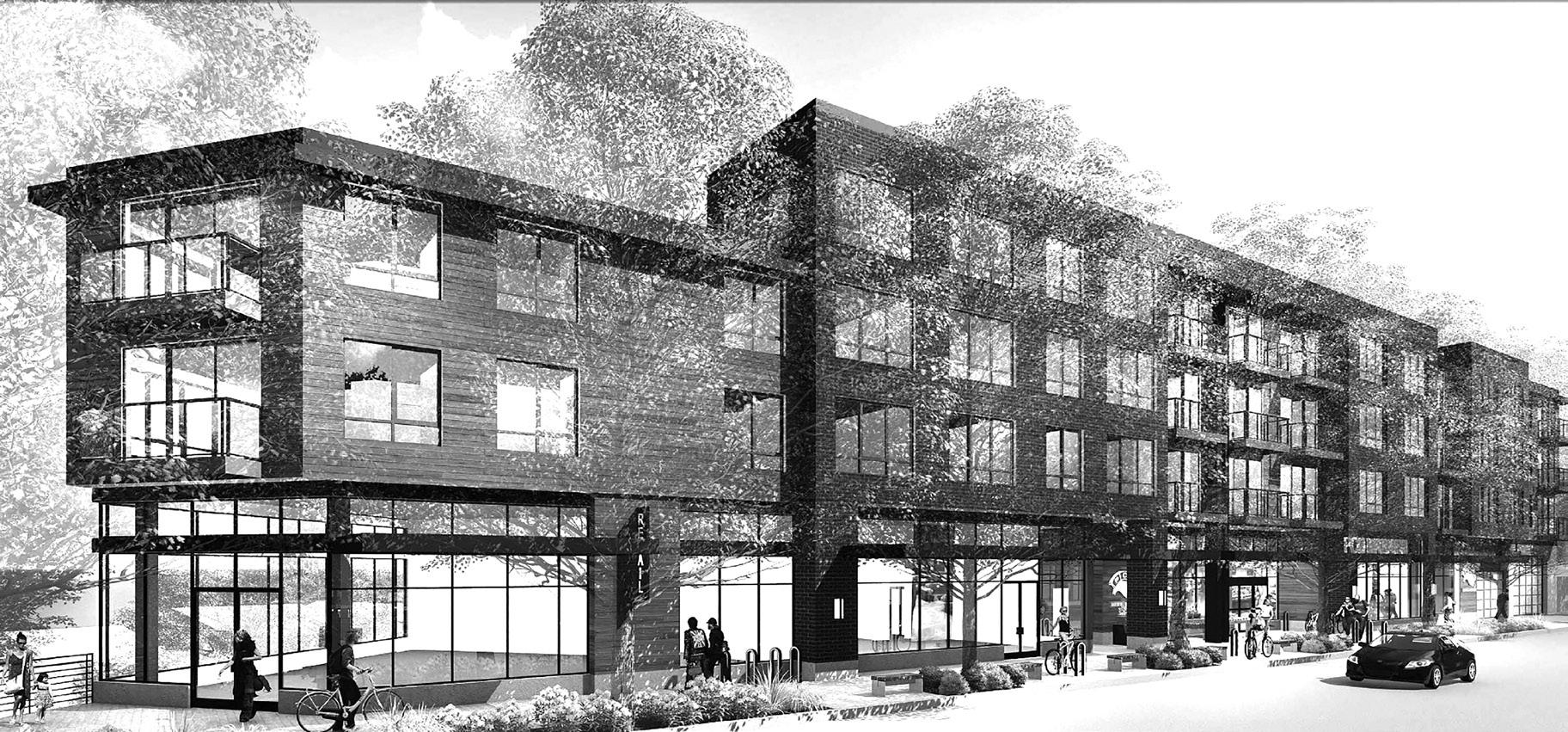
Image courtesy of Studio Meng Strazzara
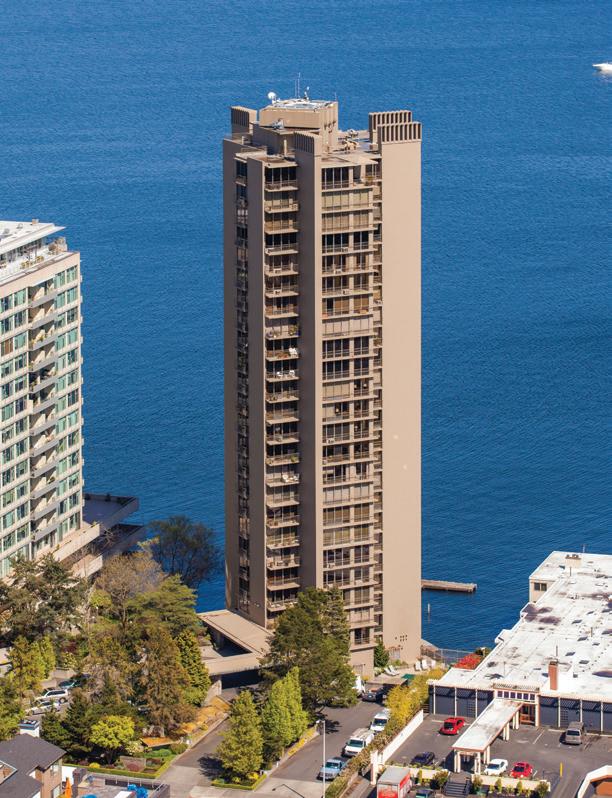
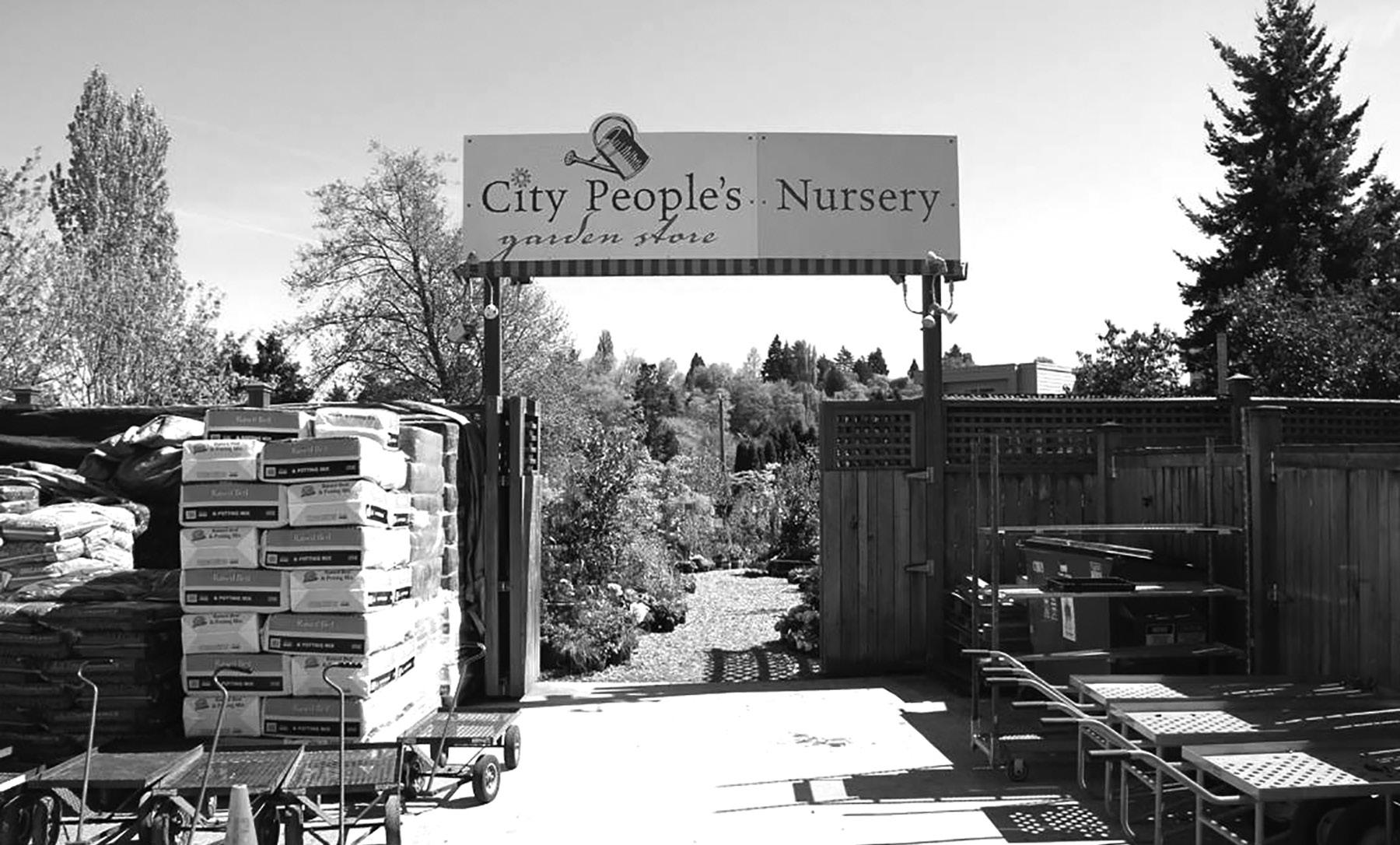
The Madison would replace City People’s Garden Center at 2925 E. Madison St.
City People’s Garden Store
2018.
Courtesy photo
By Brandon Macz Madison Park Times editor
Photo by Yvonne Chan
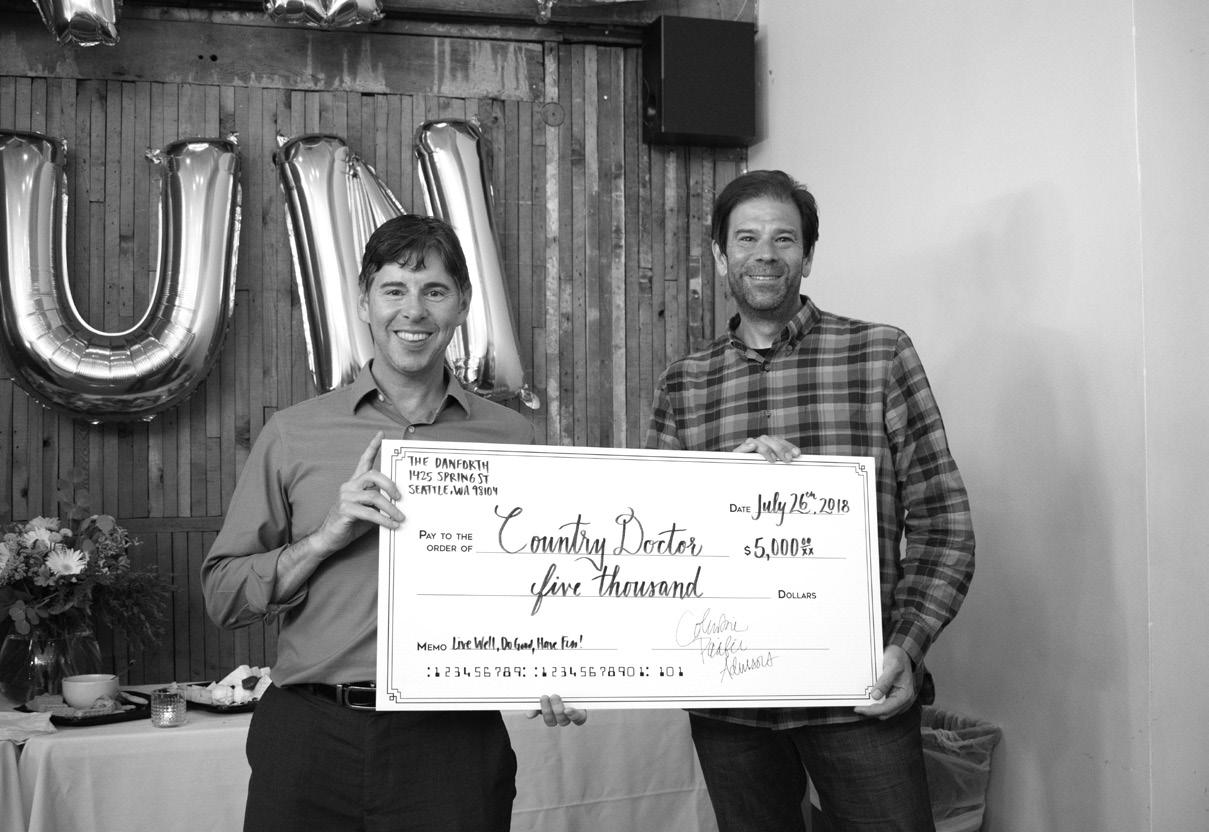
Country Doctor was one of three nonprofits gifted $5,000 by Columbia Pacific Advisors.
JazzED, Capitol Hill Housing partner to create art, affordable housing
Music education nonprofit outgrowing Madison Valley space
By Brandon Macz Madison Park Times editor
Music education nonprofit Seattle JazzED is partnering with Capitol Hill Housing to develop an affordable apartment building in Rainier Valley with a youth performing arts center and music school on the ground floor.
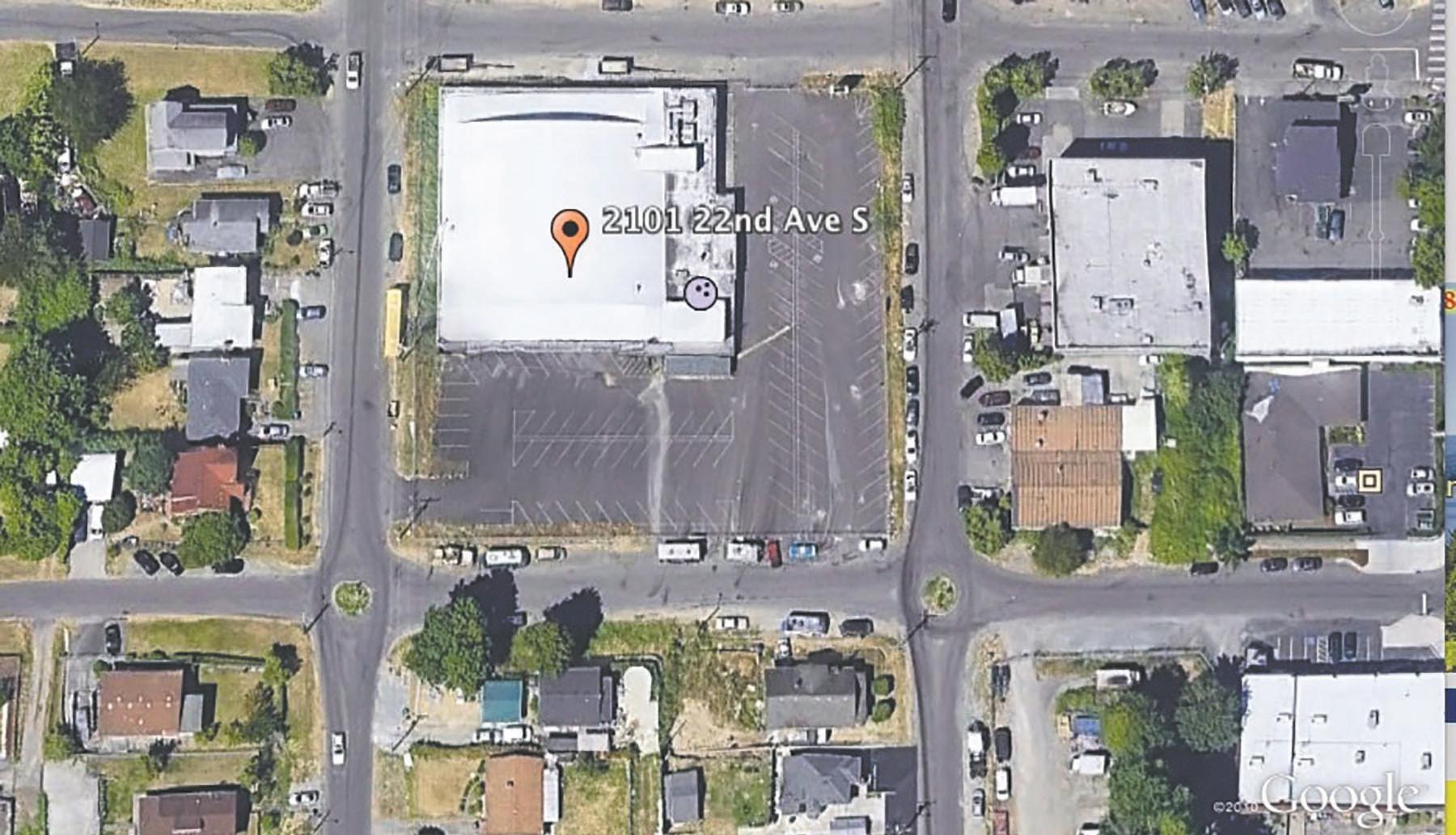
Laurie de Koch, Seattle JazzED cofounder and executive director, said she was approached by Lake Washington Girls Middle School and Giddens School in January 2017 about partnering to develop the old Imperial Lanes Bowling Alley, 2101 22nd Ave. S.
“They realized that they couldn’t afford to develop the entire city block,” de Koch said. “When the opportunity fell in our laps, we thought, ‘What a wonderful concept, but how does this small nonprofit buy a $2.4 million piece of property.’”
Seattle JazzED families have, like many in the city, been impacted by issues surrounding housing affordability, de Koch said. Forty-two percent of students receive full or partial financial aid.
Seattle JazzED went searching for an affordable housing developer to bring into the project, said de Koch, who was surprised by the positive reception she received from all of them.
She said it was Capitol Hill Housing’s positive work with the Central District community to develop affordable housing reflective and inclusive of the neighborhood that made the public corporation an ideal partner. Jazz is about empowerment, collaboration and confidence, de Koch said.
“I feel like jazz really represents the way we want to do this building and work with people,” she said.
The sale of the old bowling alley site closed on Aug. 14, with a $2.3 million loan coming from the Regional Equitable Development Initiative (REDI) fund, which is administered by Enterprise Community Partners.
“Access to affordable housing, education, transit, and arts create the foundation for healthy, productive lives and economic opportunity,” said James Madden, Enterprise Community Partners senior program director, in a news release. “Enterprise is thrilled to use the REDI Loan Fund to support this development to create nearly 100 new affordable homes by Capitol Hill Housing combined with a performing arts center and music school by JazzED.”
Capitol Hill Housing expects to complete its Liberty Bank Building at 24th Avenue and East Union in February, which is being accomplished in partnership with the Africatown Community Land Trust, as are future designs
for a companion development to the Midtown Center redevelopment at 23rd and Union.
CHH is also working to redevelop the old Eldridge Tire building on Broadway in Capitol Hill. Across the street, CHH is working with YouthCare to develop a homeless youth opportunity center. It’s also developing an LGBTQ-affirming senior housing apartment building next to its Helen V Apartments.
“We’re going to need many, many more affordable apartment buildings to resolve this affordable housing crisis,” said Michael Seiwerath, vice president of advancement and external affairs at CHH, “and creative partnerships like this are the best way forward.”
The Lake Washington Girls Middle School and Giddens School will occupy their own new buildings on two separate parcels, and CHH will potentially construct five floors of affordable housing on top of JazzED. Seiwerath said zoning and potential changes in construction requirements could affect the ultimate number of floors CHH develops.
“Just because you can build one more floor doesn’t always mean it’s financially feasible,” he said.
Seiwerath said a major challenge is the limited funding the City of Seattle has available to support affordable housing development. The Office of Housing has $40-$70 million available annually, and there’s currently around $250 million in requests, he said.
With the Rainier Valley development so far out, he said CHH will be exploring multiple funding sources, includ-
CONSTANCE, from Page 7
“We’ve talked to a ton of people, but nothing’s really finalized other than that bookstore,” Casey Losh said.
The Loshes are still waiting for the owner of Spa Jolie to sign a new lease for her space at Constance Court.
“They’re pretty excited about their lease,” Brian Losh said.
He said as the timing for completion is still up in the air, they haven’t been too worried about leasing out the whole
ing the federal Low Income Housing Tax Credit.
“It’s a critical tool that we use on most, if not all of the projects that we’ve just filed through,” he said, adding Washington Sen. Maria Cantwell has been a “champion” for pushing to increase the LIHTC.
Seattle JazzED is in the early stages of creating its $10 million capital funding campaign for the project, de Koch said, which will include seeking city, state and private support.
“We envision it’s going to take us several years to do, but we’re hopeful,” she said.
Seattle JazzED’s future home will increase educational and performance space to 12,000 square feet, which is expected to allow for programs to reach 2,000 more youth annually, according to a news release.
Plans are to increase programming, such as a full choral program, drumline and other arts instructions, plus afterschool tutoring and summer camps, and add space for repairing donated instruments that can then be provided to students, according to a news release.
The nonprofit currently serves more than 900 young musicians in three classrooms in the MLK F.A.M.E. Community Center in Madison Valley, which has required Seattle JazzED to be creative with its limited space.
“Their rents are affordable, and they’re in high demand,” de Koch said. “Nobody’s leaving, and that’s why
building. There is an 825-square-foot space in the back that could be a restaurant, but Brian Losh said
he’s not sure if that will be big enough.
“We’re just trying to restore a new car, piece by piece,” he said.
JAZZED, Page 11
Photo by Jim Leavitt
JazzED is partnering with Capitol Hill Housing to develop an affordable housing apartment building in Rainier Valley where the nonprofit can establish a permanent performing arts center and music school on the ground floor.
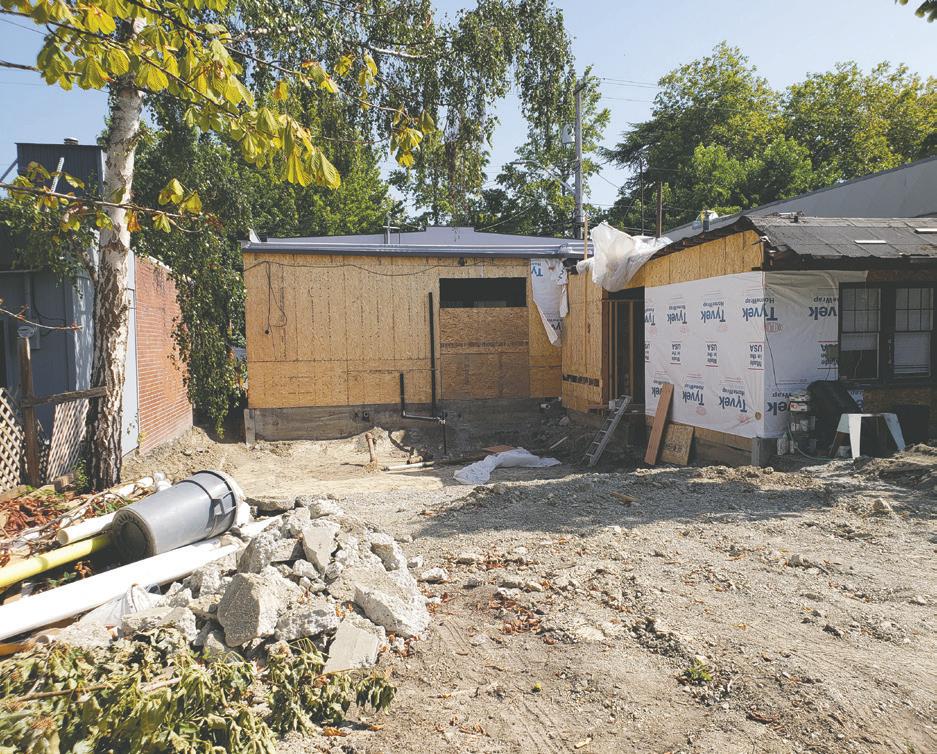
The Losh family is working on improving the backside of Constance Court, possibly a patio for a restaurant tenant.
Photo by Brandon Macz
but JazzED participation is expected to keep growing during the development process for the new education and performance center, which could take up to five years to come to fruition.
The community center has worked to accommodate the nonprofit when it needs to find additional room, de Koch said,
“I’m not sure where that’s going to lead us at this point,” de Koch said. “It’s a great problem to have — we’re grateful.”
getting shrubby, and remove cross branches.
Plant both in our characteristically rich, acidic soil, in a well drained spot. Dig a generous hole. Fill the hole with water, to the top, thrice, and let it soak down, allowing the area around the planting hole to be saturated. This advice applies to any new planting.
It encourages the roots to grow out from the rootball in search of moist ground. Remove the tree from its nursery container. Loosen the rootball and set the tree in place. Backfill with soil, water again and top with a 2- to 4-inch layer of compost. Irrigate the newly planted tree for the first two summers, if the season is dry.
Either of these trees is a good companion to place in front of dark evergreens, or to form a gentle canopy over rhododendrons and azaleas.
I like to see them, especially Fragrant Snowbell, sited at the edge of a patio where a garden chair or bench can be placed under the tree. When the plant blooms, you’ll be closer to the scent and can look up through the dropping blossoms. True, when the blooms fade, and later the seedpods and leaves drop, you’ll have to do some sweeping, but this tree is more than worth any trouble.
So, here’s to Ptolemy, Pippa, Anne, Edwin and Monica!
Those of us in the know are well aware of your value! And, after all, who wants to be a household name when you can be considered something of a unique elite. it’s so hard for us to get more space.”