By Brandon Macz
Park Times editor
Long vacant commercial spaces on East Madison Street should be ready to house new Madison Park businesses by this summer.
Ewing & Clark purchased 4116 E. Madison St. for $1.38 million in October 2017. The King County Assessor’s Office last assessed the value at $662,500.
“We’re trying to figure out the timeline for when it will get done,” said Casey Losh with Ewing & Clark. “We were thinking the spring, but now it’s looking like the summer.”
Renovations on the 1926 building, previously owned by Constance Gillespie, include updating electrical and plumbing, as well as fortifying the interior with a steel beam that will allow for the removal of interior walls for a more flexible space, Losh said. Plans also call for new foundations, framing, ceilings and roof.
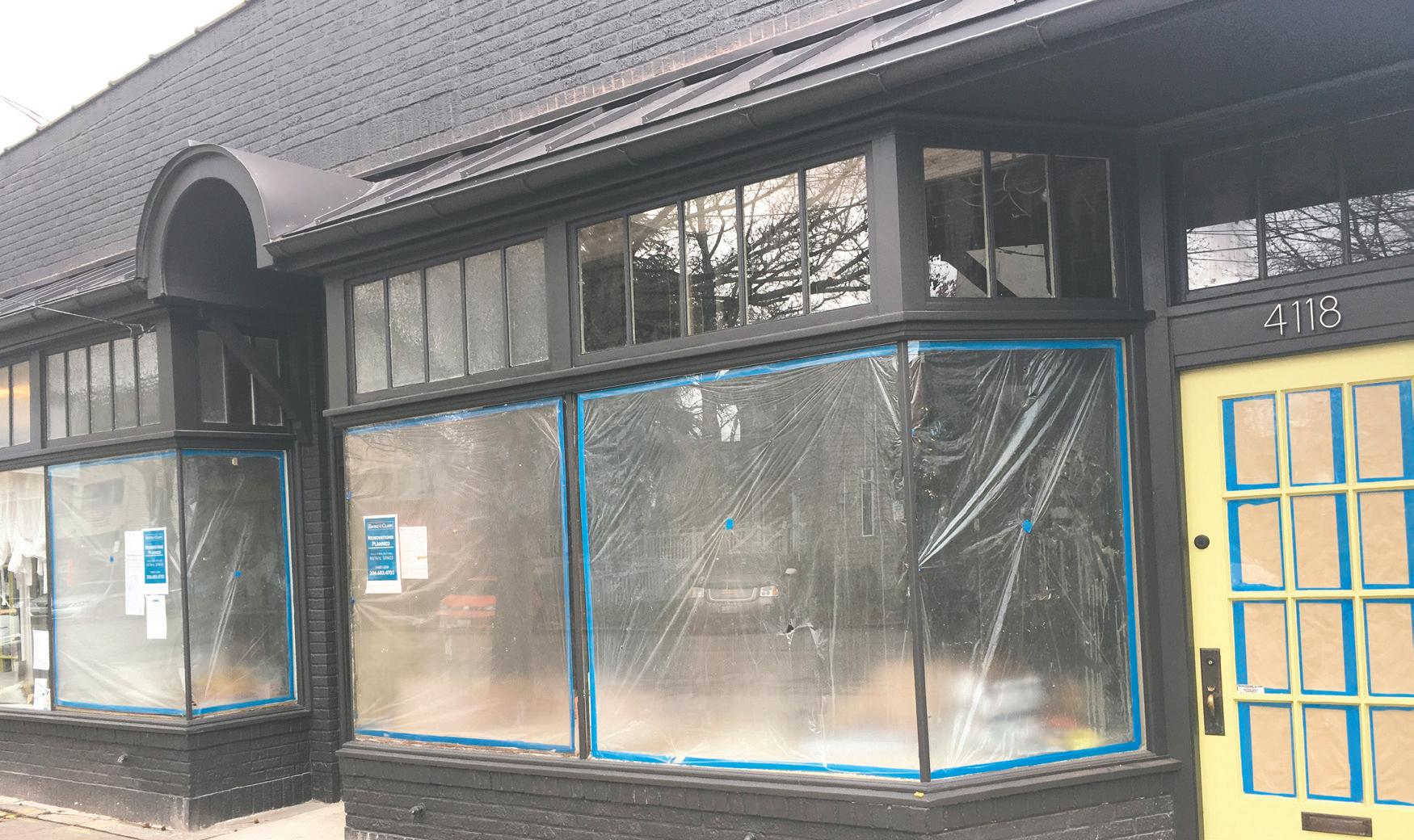
“We’re using the same engineer that she had, but it’s kind of been a slower process than we’ve wanted it to be,” he said.
A restaurant would be the ideal tenant for the 1,800-square-foot space, he said, but the building could be divided.
While renovations are lasting longer than expected, Losh said interest in acquiring the space has him showing the building several times a week.
“A lot of it’s been restaurants,” he said. “I just
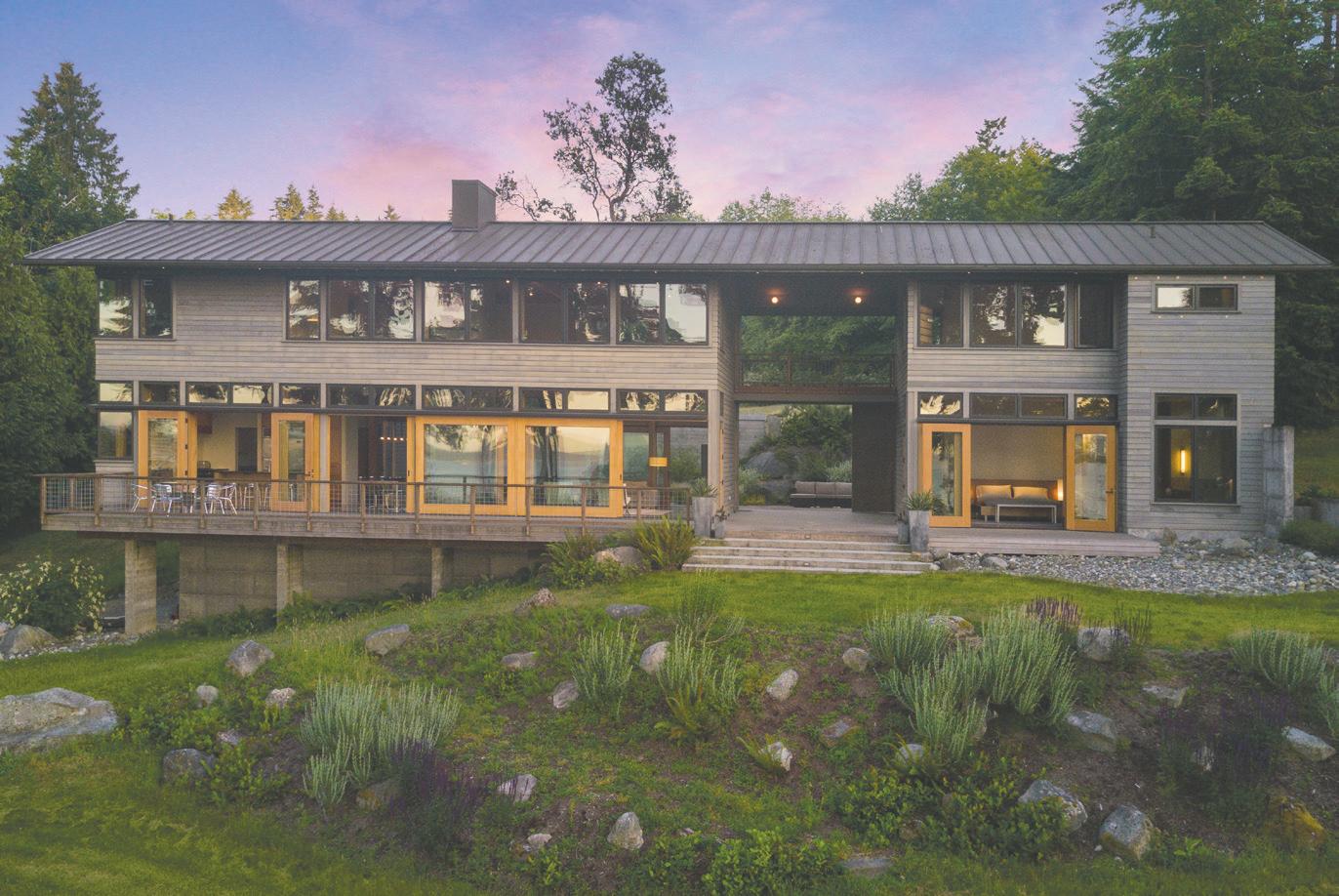
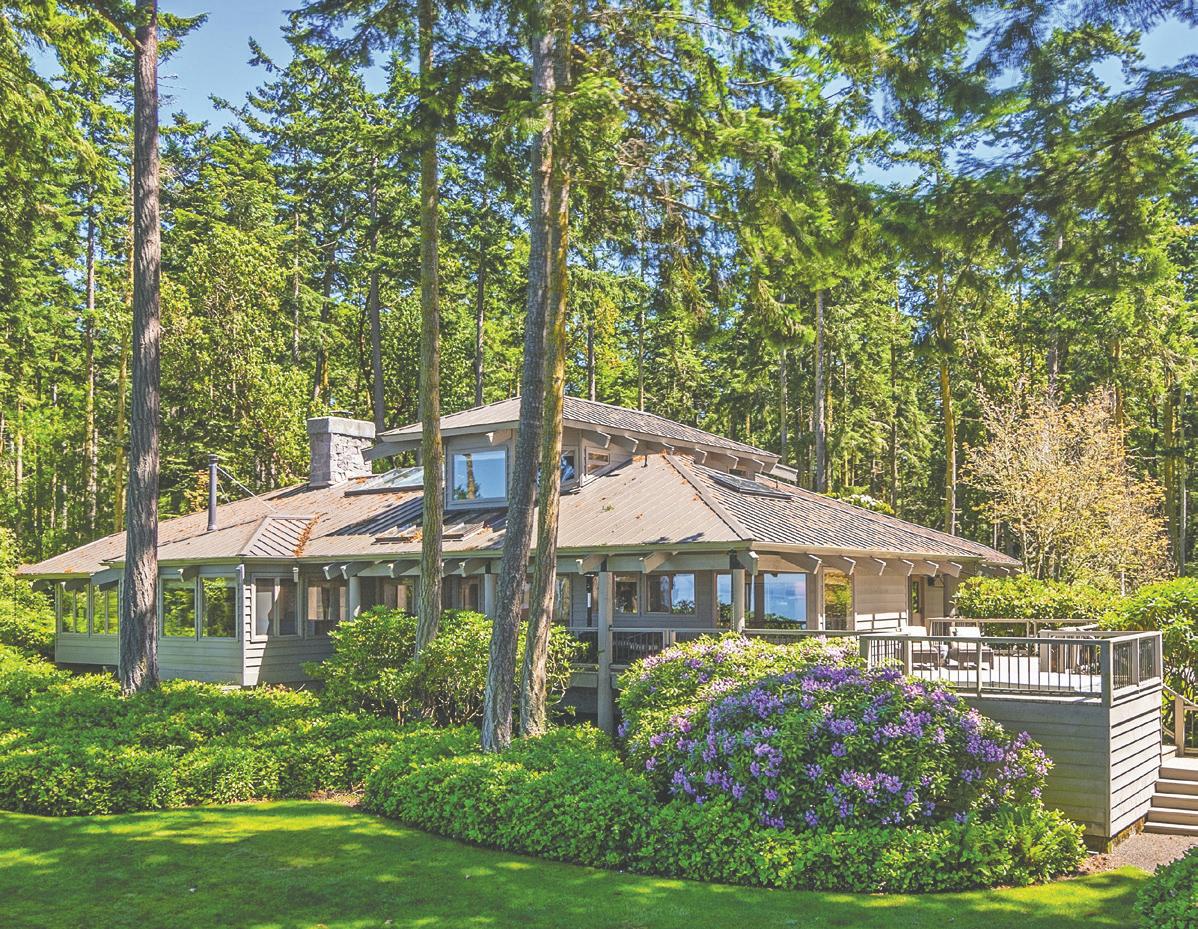
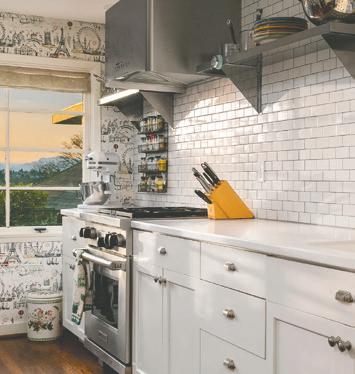
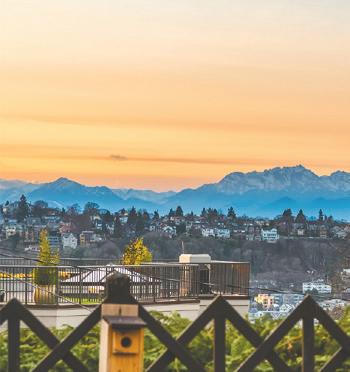
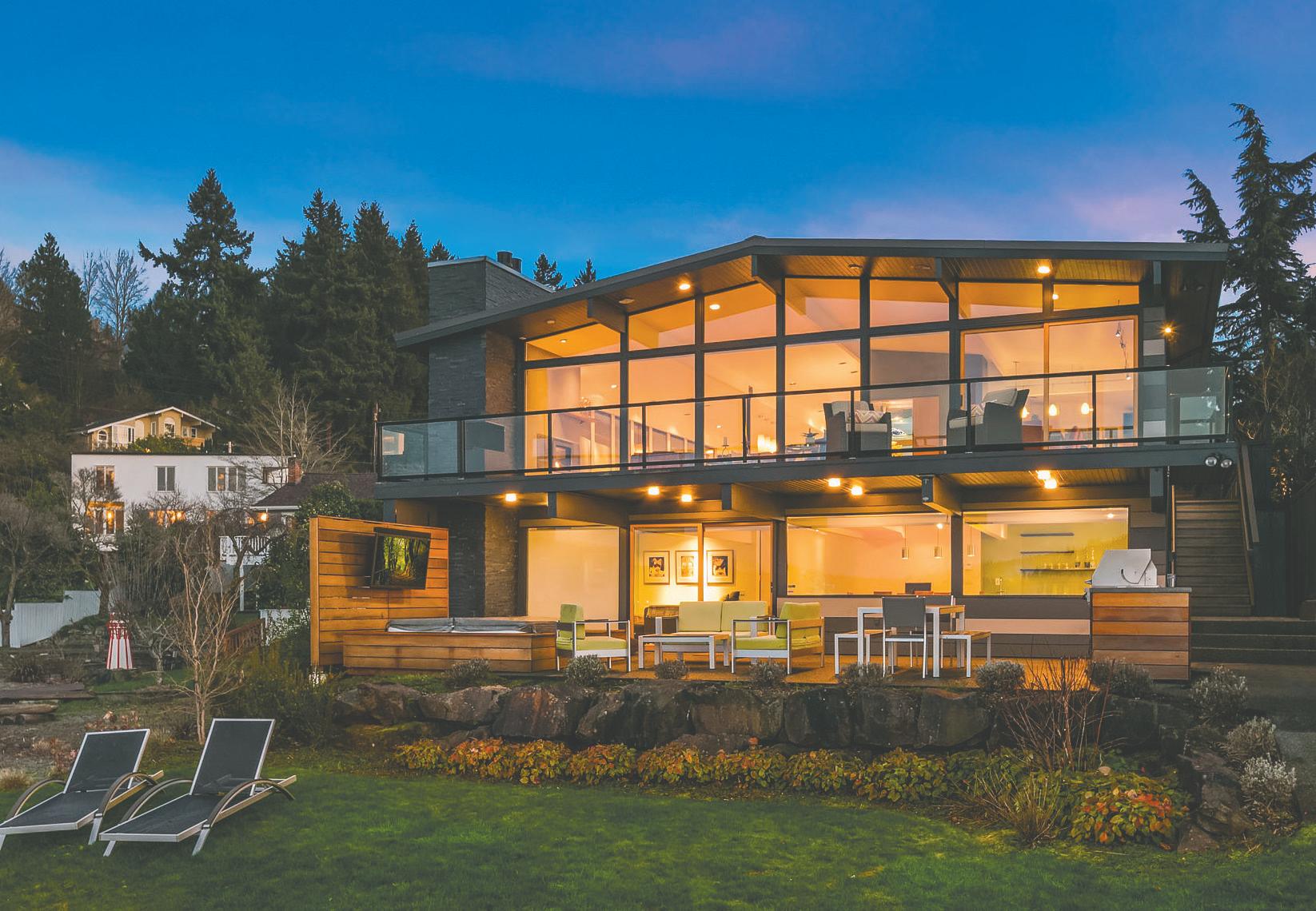
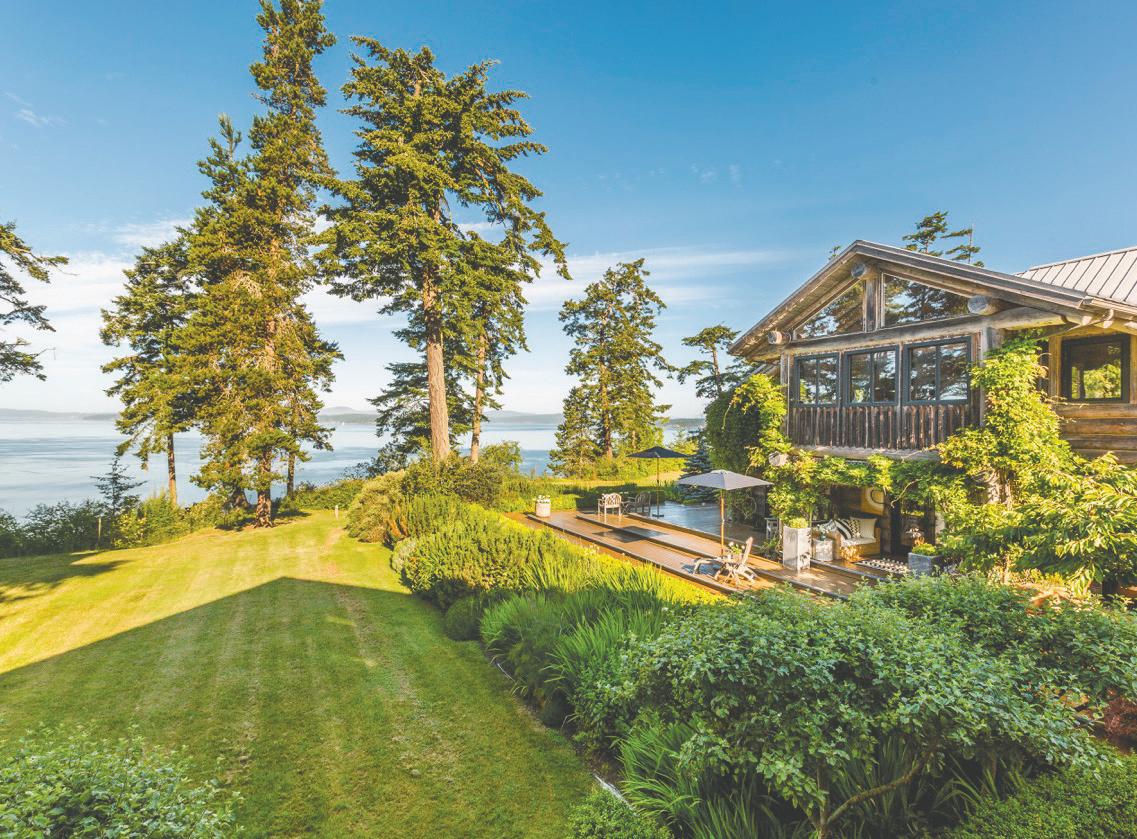
A seamless design by renowned architectural firm Olson, Sundberg, Kundig, Allen. This residence, overlooking Saratoga Passage on Washington State’s Whidbey Island, offers open spaces for entertaining and intimate spaces for personal reflection. The home rises away from the slope, ending in a dramatic cantilevered deck, soaring towards the water view. Oversized doors allow for a free flow inside and out. Masterful use of concrete, structural timbers and sustainable design strategies – including a living, green roof, operable passive ventilation and geothermal heat – inform this one-of-a-kind home.
WHIDBEY ISLAND RESIDENCE: $2,650,000
MOIRA E. HOLLEY
moirα@moirαpresents com
206.660.4787
moirαpresents com

showed it to somebody who wants to do an antique kind of shop; she works with interior decorators.”
Other prospective tenants have eyed the property for a photo gallery, hair salon and clothing store.
“I think our main ideal is to put a restaurant in there,” Losh said, “and then something, if there’s room leftover, in there.”
Those wishing to view the space can contact Losh at 206-683-4703. More Ewing & Clark listings are at ewingandclark.com.
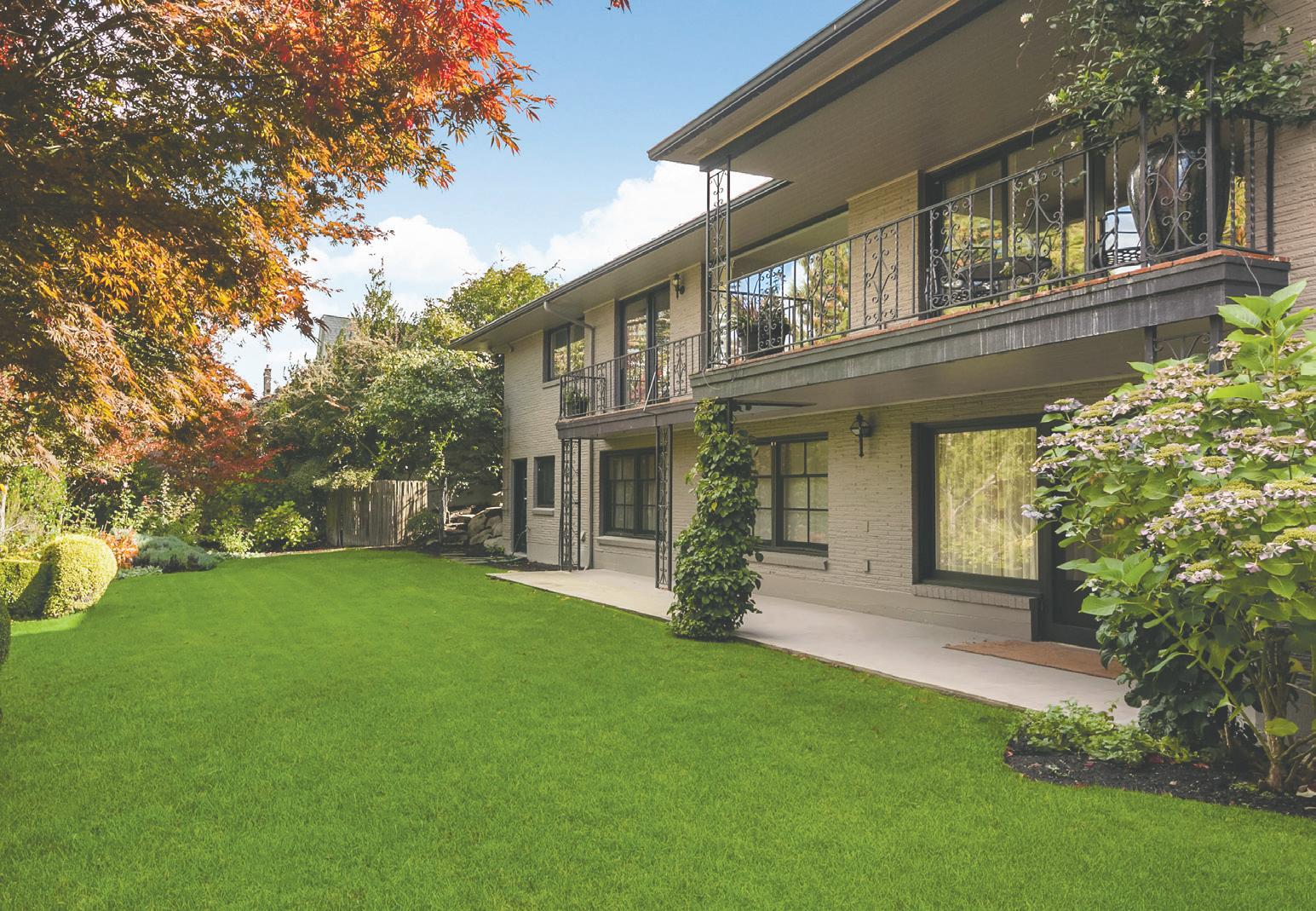

My latest Broadmoor listing is now Pending! I live and work in our community and have sold many homes here over the years. As a Seattle native and a broker with an international company, I bring the perfect balance of local knowledge and global marketing to your listing. Inventory in our area is low and demand is high, making 2018 a great time to sell. If you are considering selling your home or if you would like to know the value of your property in today’s market, I would be happy to provide you with a complimentary and confidential consultation. I also have an excellent track record at winning homes for buyers in this competitive market, so if I can help you find your next home, please reach out. I would be delighted to assist you in realizing your real estate goals in 2018 and beyond.















The Seattle Department of Construction and Inspections has cleared a land use application to subdivide a Madrona development site for individual sales, which are expected to occur once new townhouse and live-work units are constructed.
An existing single-family home has been demolished, and construction continues at 1121 34th Ave., where three townhouses and two live-work units are being developed. Denizen Development Group is developing the site, and David Vandervort Architects AIA designed the units for Madrona 12, which are 4-Star Built Green and range from 1,000-1,500 square feet and 1 1/2 to 2 1/2 baths. Find out more at denizendg.com.
Like us on


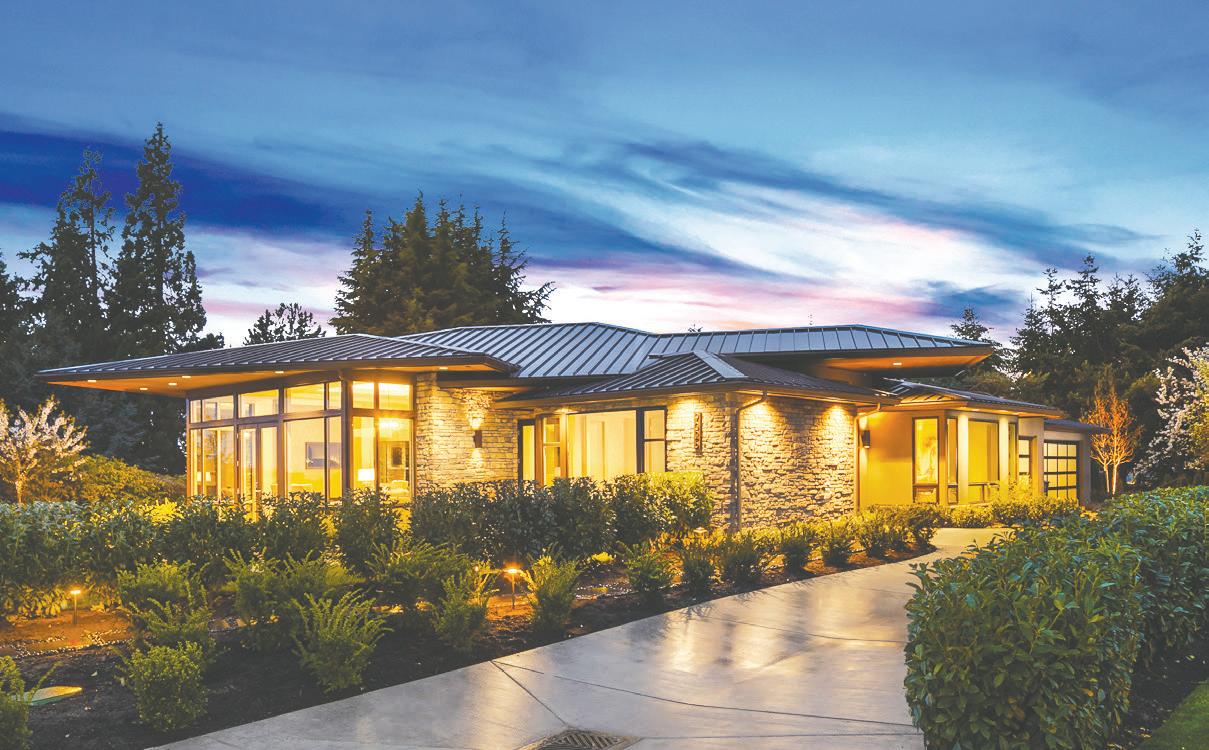
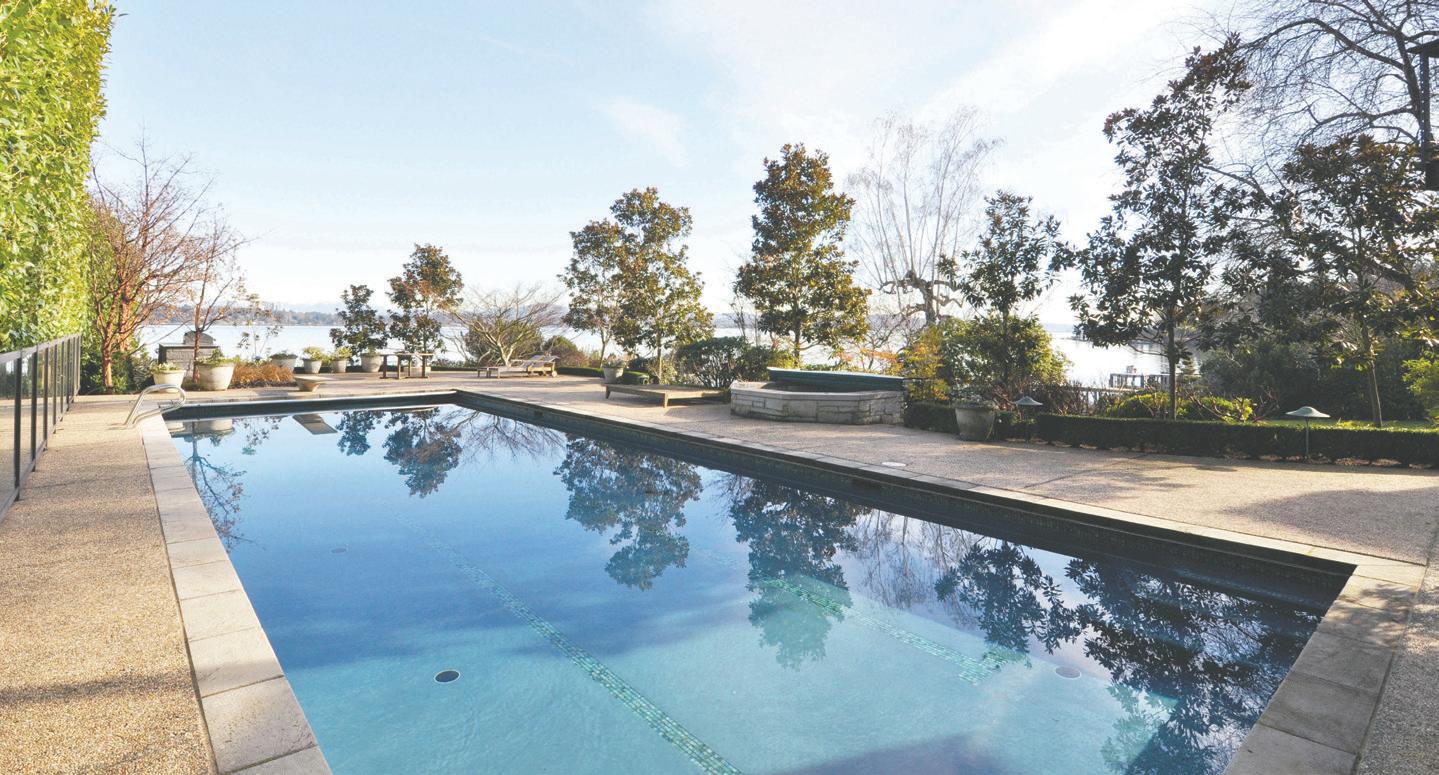
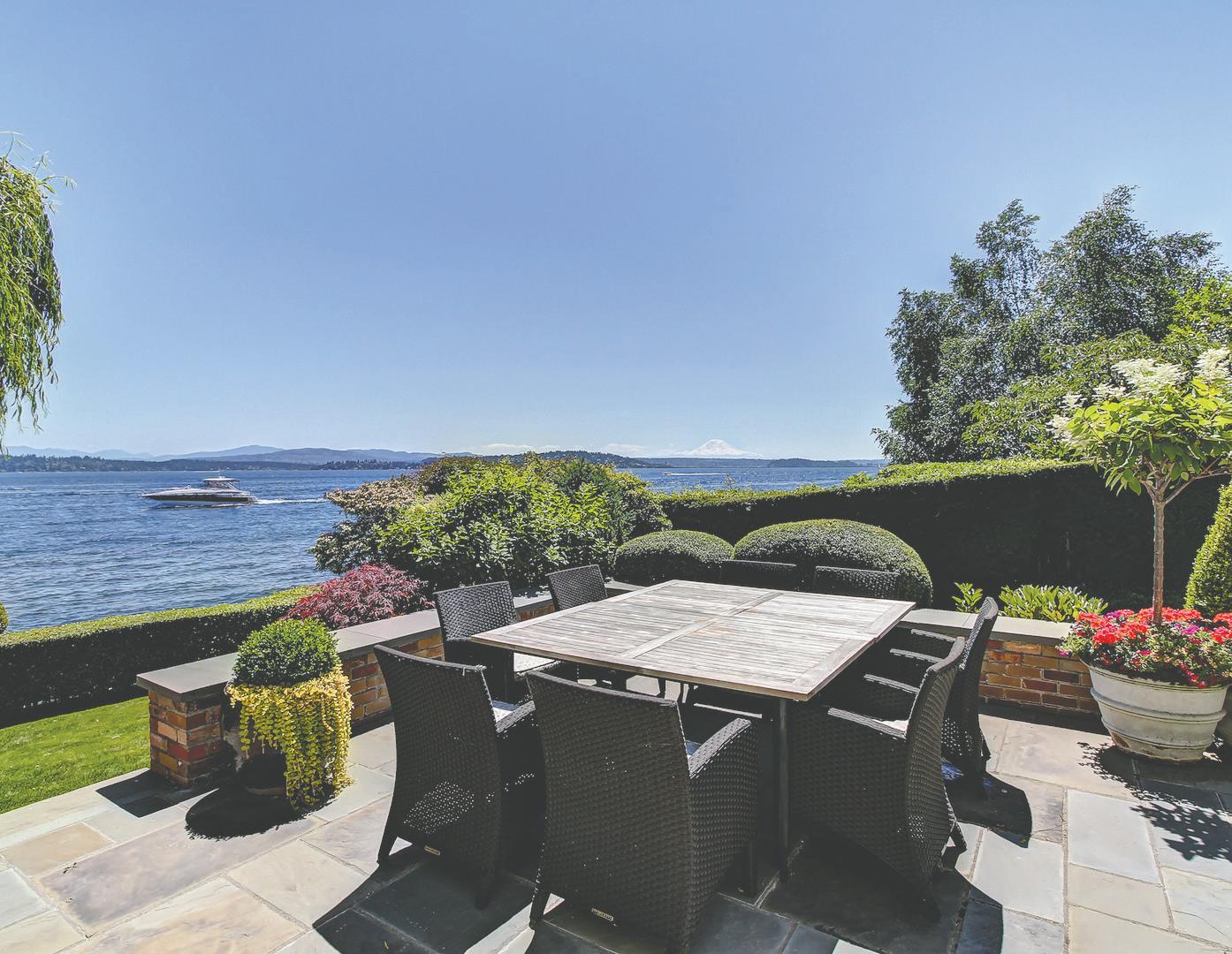
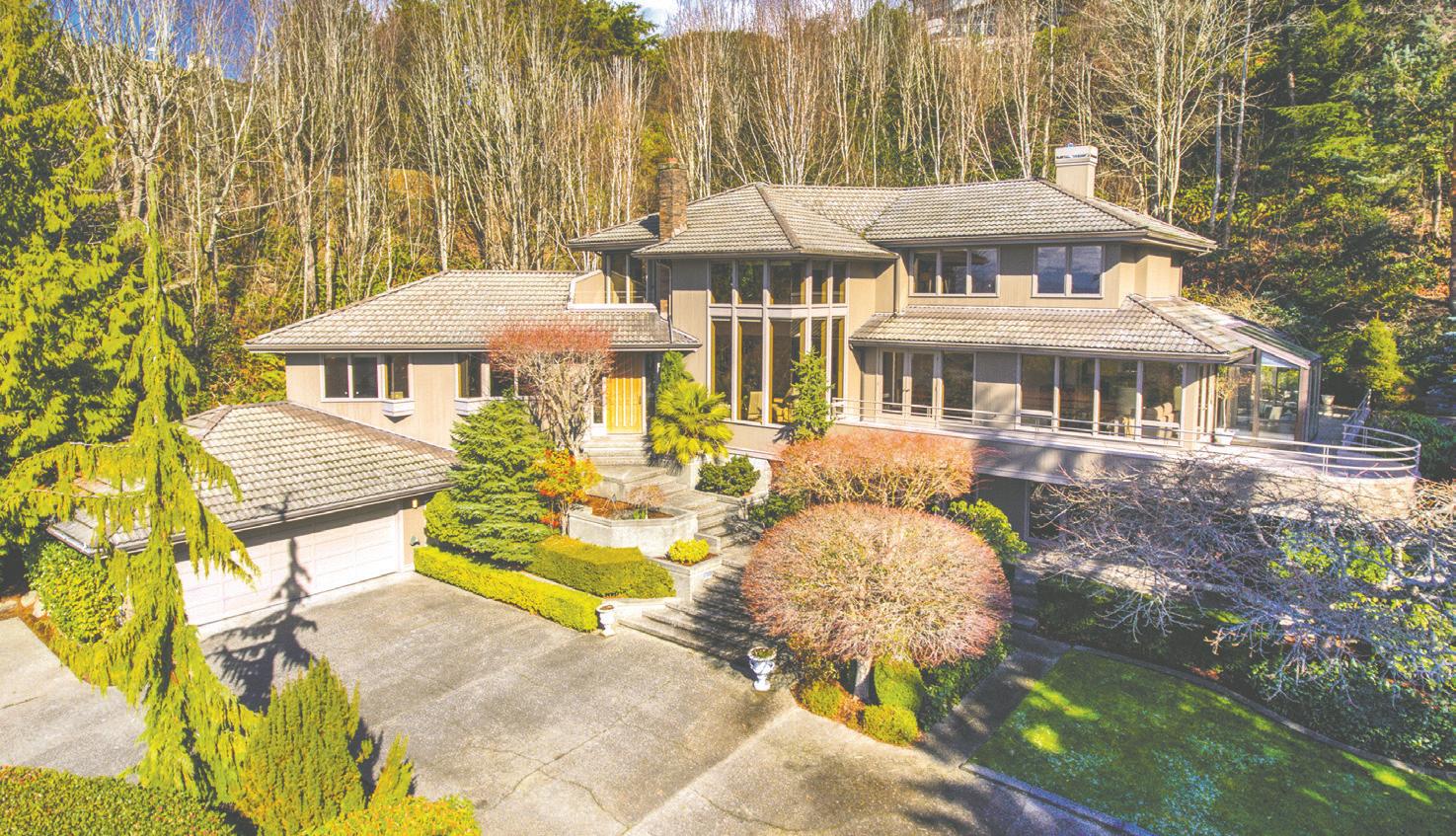
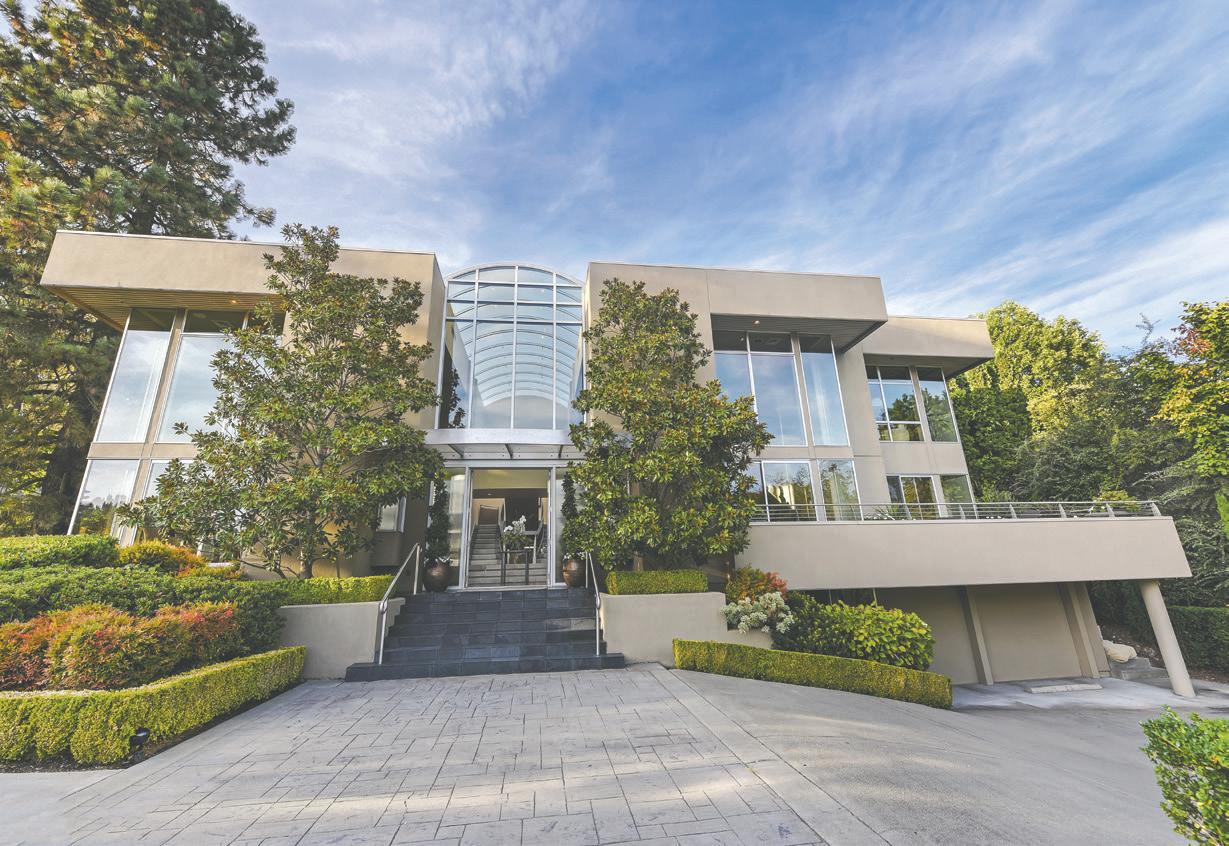
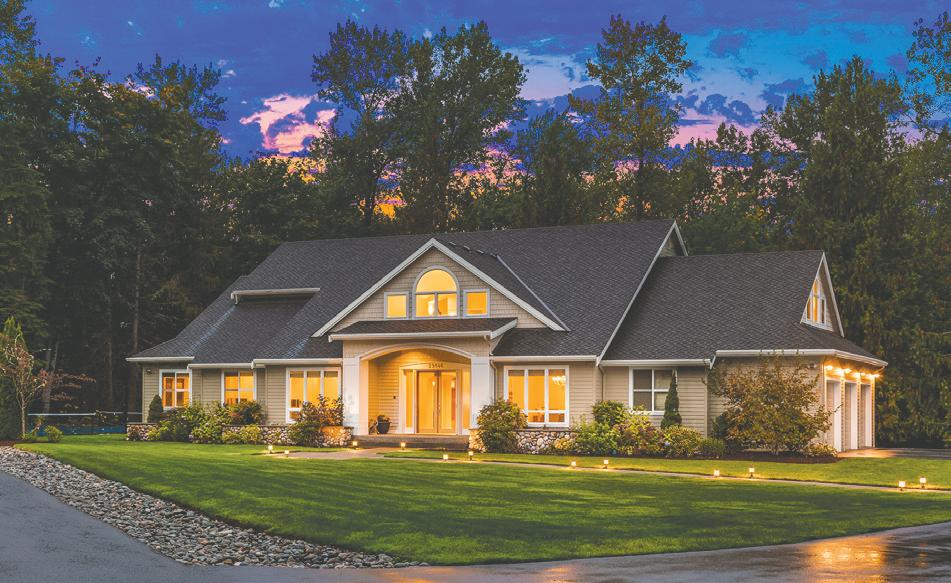
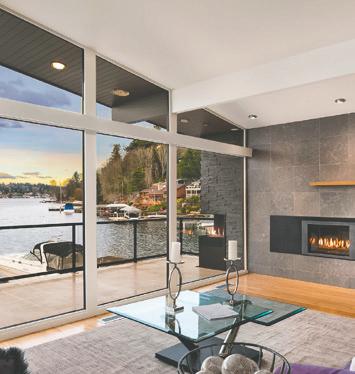
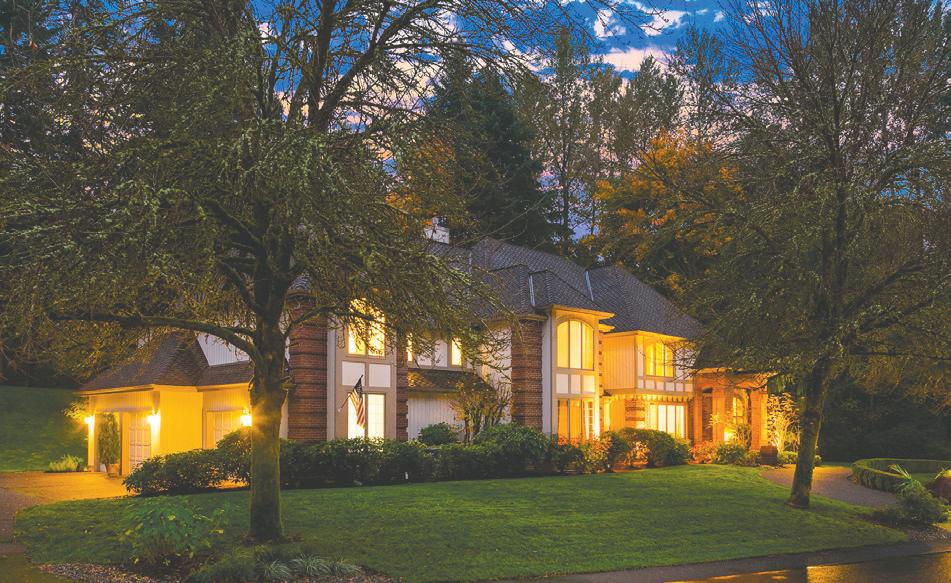
in the heart of West Bellevue, the Clyde Hill Contemporary is the jewel of the coveted Mercia neighborhood. Showcasing sweeping views of Lake Washington, the Seattle Skyline and the snow-capped Olympic Mountains, this is Pacific Northwest luxury at its finest.
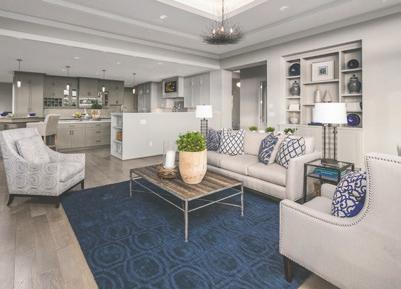
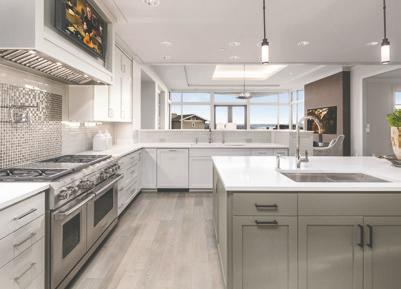
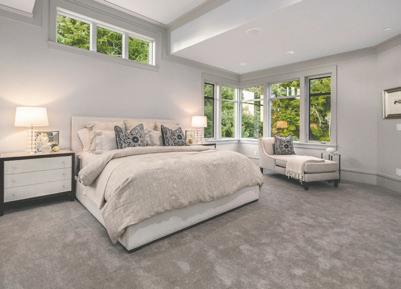






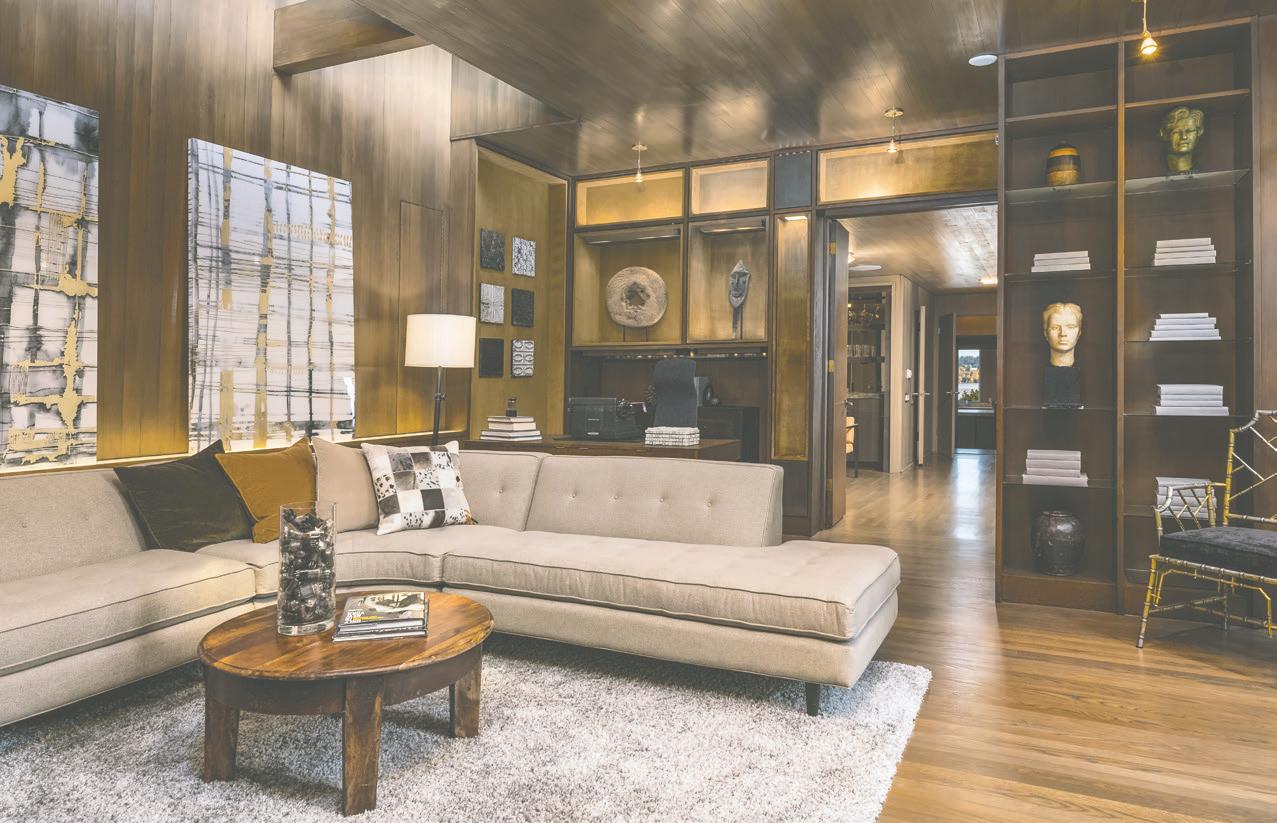
was thrilled to lend my insight to a special feature in Portrait Magazine, as I shared how I’ve helped my downsizing clients move out of too much square footage and into the lock and leave lifestyle of condominium living. Though many downsizers fear that losing square footage is a downgrade, chances are, most are living in less than 1,500 square feet of their homes anyway. Now is the perfect time to capitalize on opportunities, as the single-family neighborhoods around Seattle are setting new benchmark values. And as recent projects confirmed, it’s better to be an early adopter of this urban area.
Managing Broker | Senior Global Real Estate Advisor Founding Member | 206.399.5842 Laura.Halliday@rsir.com
Discover the reasons why I #LoveBroadmoor by following me on Instagram @Halliday.Laura


A CONTINUED LEGACY
RSIR ranks amongst the largest, most productive and fastestgrowing real estate companies in Washington with access to 21,000 brokers in 69 countries that generate US sales of $80 billion+ annually.
WHAT MY CLIENTS ARE SAYING
It as an absolute pleasure to work with Laura during our house hunt. She took the time to understand what we were looking for and led us through a clear search. She was always positive, even when we met challenges, and kept things in perspective. It brought us an incredible amount of confidence to know that we had Laura in our
when we moved through the
process, and we both feel extremely lucky to have had her guidance as we bought our home.

If you’ve been following the real estate market, the latest headlines are all too familiar: Inventory is at historically low levels (the lowest on record since 2000 in King County), and Seattle home prices are rising faster than any other city in the country. The Seattle market finished 2017 as the priciest year in history, and 2018 appears to be on track for more of the same.
Seattle has been one of the hottest markets in the U.S. for more than a year. According to the most recent Standard & Poor’s/Case-Shiller Home Price Index, in the past year the price of the average single-family home in Seattle has gone up 12.7 percent, which is more than twice the national average of 6.3 percent. It was the 16th consecutive month that Seattle led the country in rising home prices. Madison Park certainly reflects the strong growth in the region. In the last five years, Madison Park has seen the average sales price of a home nearly double to $1.294 million and the days on market drop by almost 75 percent
to 21. Real estate has proven to be an excellent investment for homeowners in our neighborhood, and according to all indicators, will continue to be a sound bet.
As the home of Microsoft, Starbucks, Amazon and myriad booming tech companies, our real estate market is employment driven. According to the state’s Economic and Revenue Forecast Council, the number of jobs in Washington grew by more than 3 percent last year, double the national average of 1.4 percent. With so many successful companies in the Seattle region, demand for talent is expected to continue — good news for sellers in this hot market.
Madison Park continues to be a big draw for house hunters. Buffered by Madison Park Beach on one end, and the Washington Park Arboretum on the other, our neighborhood offers a beautiful natural landscape as well as a vibrant business district.
One trend Avenue brokers continue to see is the desire for walkable neighborhoods. Having shops, coffee, cafés, fine dining and pubs within strolling distance is a valuable asset for the Park. While many of our residents work in the city or on the Eastside, when they get home in the evenings, they appreciate the opportunity to find everything they need in our neighborhood. Let’s continue to support our local businesses.
The Washington Park Arboretum’s new loop trail is an incredible new amenity for our area. The meandering
2-mile recreational route runs from East Madison Street to the Graham Visitors Center between Lake Washington Boulevard East and the arboretum’s Azalea Way. I love the benches lining the path cast in a classic style from the 1939 New York World’s Fair. The 230-acre arboretum is truly a hidden gem in the heart of the city, and one of my favorite aspects of the Madison Park lifestyle.
As of press time, there were 11 homes for sale in Madison Park. The highest at $12.85 million for a waterfront estate in Washington Park, and the lowest is a condominium offered at $599,950.
Year over year, pending sales in Seattle are at a consistent level while inventory is down 20 percent from the same time last year. With the selling season now upon us, we expect to see an uptick in inventory, but we will remain a decisive seller’s market. If you have given any thought to taking advantage of the strong demand for homes, now may be the time for you to make your move.
Our Avenue experts have a long history in Madison Park, and are ready to help you navigate this seller’s market to your advantage. If you’re buying, our knowledgeable and savvy agents will help you achieve success in this competitive market.
Evan Wyman is cofounder of Avenue Properties and a Madison Park resident. Find out more at avenueproperties. com. Wyman can be reached at evan@avenueproperties.com.

One of my favorite springtime projects is building a planter bed. It’s not only a reminder that sunnier, warmer months are on the horizon, but it’s also easy and affordable to make—a DIY win-win in my book. The nice thing about a planter bed, as opposed to a traditional garden, is that you can start completely from scratch—you don’t even have to have a soil foundation. Plus, a planter bed is customizable and allows you to control the soil and weeds without having to till your yard. Let’s get to it!
Step 1: Choose a spot
If you’re growing produce that requires a lot of light, keep that in mind as you plan your space and choose the best spot for your planter. Try to find some earth that’s relatively level—if you need to even things out, a shovel and a little bit of elbow grease will get the job done. I built a 4x8 planter because that’s what worked best for my yard, but the steps are scalable, so choose the dimensions that work best for you.
Step 2: Purchase and cut your lumber

Most people choose a naturally rotresistant wood like cedar or juniper, but you can use pressure-treated wood, too. I opted for cedar, which comes in 8-foot boards. Juniper should be around 8 feet, but it’s not precision-cut, so double-check your measurements before you get too far! We’ll be using six boards total—four will remain the 8-foot length, and two will be cut in half to equal 4 feet. Make your cuts with a circular saw or hand saw (or have Dunn Lumber do it at no extra cost). Once you’re finished, you should have eight boards—four 8-foot boards and four 4-foot boards.
Step 3: Lay out your planter
Start by framing a rectangle on the ground, using two of the 4-foot boards for the short end and two of the 8-foot boards for the long end. Attach the boards with
two 3 1/2-inch exterior screws in each corner. I put the shorter boards on the inside, but the choice is yours. Once the rectangle is screwed together, make sure it’s positioned where you want it. Then, if placing over a soil foundation, hammer in 1x2 wood stakes in the inside corners and along the walls—two on each long side and one on each short side. If you’re working over concrete or another hard surface, hold the stake level to the ground. Once the stakes are placed, attach them from the inside with 1 3/4-inch screws—just make sure they don’t poke through the other side or you’ll scratch yourself.
Step 4: Add another level
If you’re growing vegetables, you’ll want at least 12 inches of dirt for the roots, and if you’re growing carrots specifically, you’ll
want even more room. I’m building a twolevel planter, but there’s really no height rule, so build as many as you want (you’ll just need long enough stakes and additional lumber and soil). The second level goes up just like the first one: frame the rectangle, screw it together, then slide it over the first. Once it’s placed, screw the stake to the frame.
Step 5: Lay landscape fabric, filler, and soil
To prevent weeds from creeping in, lay down landscape fabric—it’s breathable, so the water will drain away just fine. If you want to raise your bed even higher than two levels, add a filler (concrete blocks,
















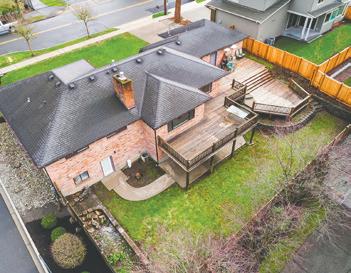
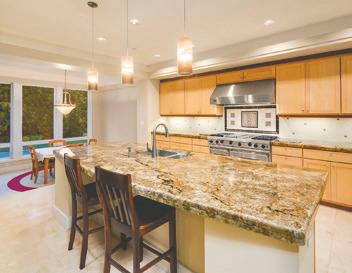
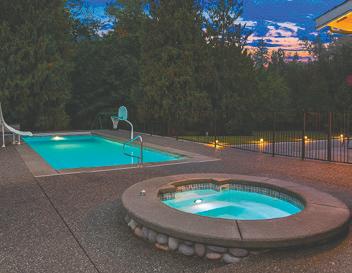
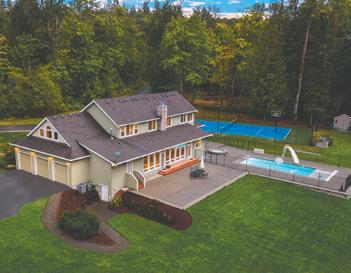
Madison Park shoreline area slated for affordable housing contributions, no change in height allowances in zoning
By Brandon Macz Madison Park Times editor
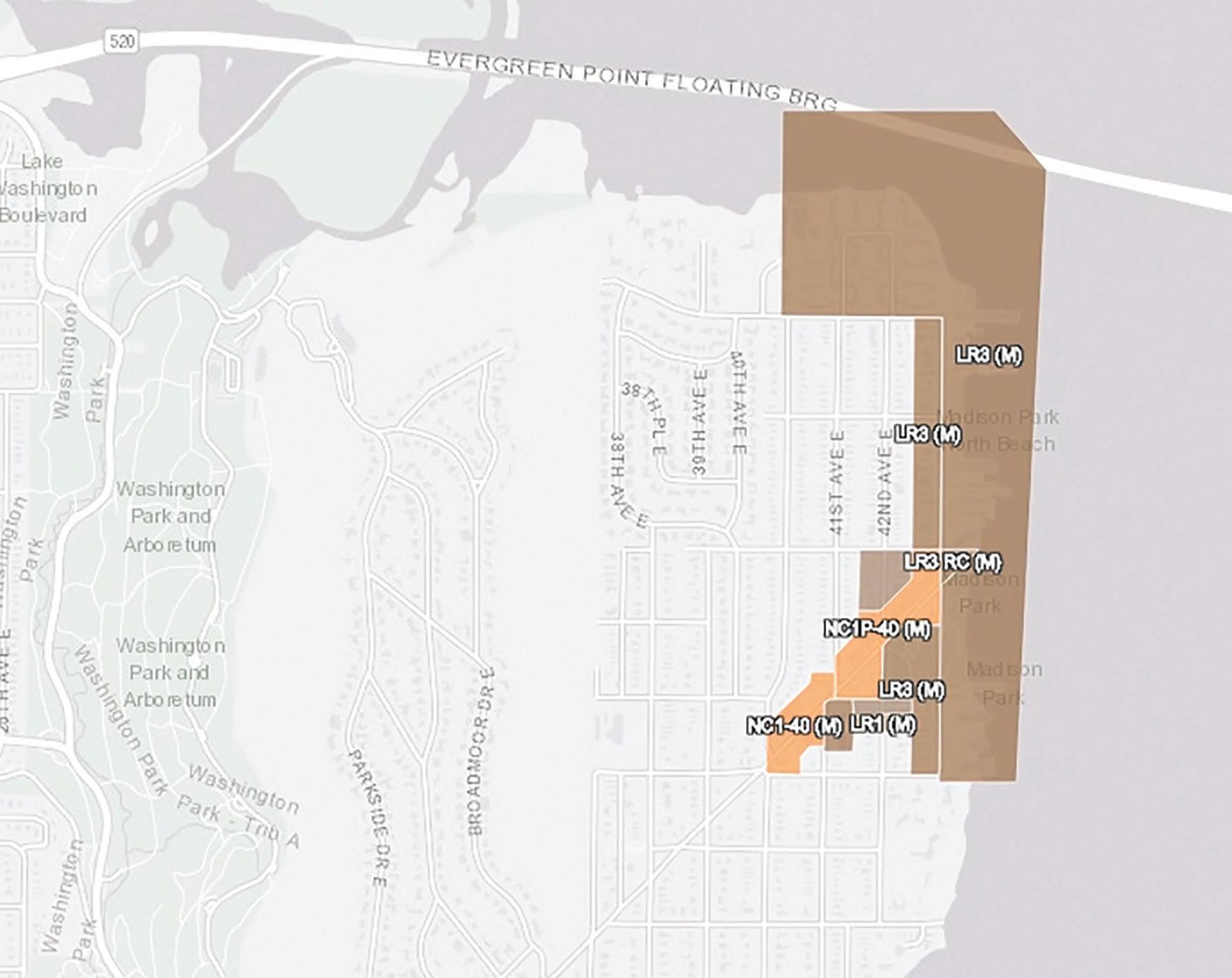
Madison Park is proposed in the City of Seattle’s preferred alternative for its Mandatory Housing Affordability program to keep its zoning relatively the same, but with added requirements for affordable housing contributions.
The MHA program requires developers to either provide affordable housing in new construction or pay an assessed fee that goes into a fund that the City of Seattle then distributes to affordable housing developers for other projects. An incentive for this program is the upzoning of portions of the city, which has already taken place in Downtown, South Lake Union, Uptown, University District and three segments of 23rd Avenue in the Central District.
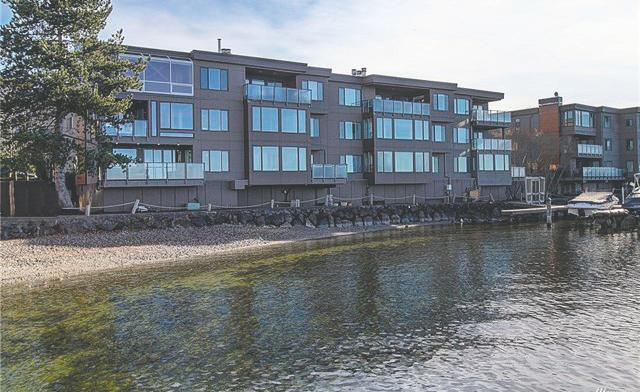
Running north from East Galer Street, along the Lake Washington shoreline all the way to State route 520, zoning would remain as LowRise 3, but include affordable housing contributions for new developments.
Height limits are proposed to increase from 30 to 40 feet along East Madison Street, from McGilvra Boulevard East to 43rd Avenue East. The city also proposes to raise height limits on East Madison Street near Washington Park from 40 to 55 feet.
A final environmental impact statement for the MHA program was released in November, and under the preferred alternative First Hill-Capitol Hill, Northgate and Rainier Beach would see the greatest increases in height limits.
Along with monthly updates to the city council, the Office of Planning and Community Development will also be hosting open houses across Seattle’s affected districts, sharing maps showing where rezones are proposed and the expected impact.
An open house for Districts 3 and 7 is planned for 6-8 p.m. Thursday, March 29, at Washington Hall, 153 14th Ave. District 3 includes Madison-Miller, Capitol Hill, First Hill and the Central District, while District 7 includes Belltown, the west end of First Hill, Pioneer Square, Queen Anne and Magnolia. A public hearing with the Seattle City Council regarding Districts 3 and 7 is set for Monday, April 16, at Seattle Central College.
In all, the MHA program is anticipated to create 6,000 affordable housing units by 2025. Councilmember Rob Johnson, who is chair for the council’s select committee on MHA, confirmed that about half of those units are expected to be created in areas that have already been rezoned.




By Brandon Macz Madison Park Times editor
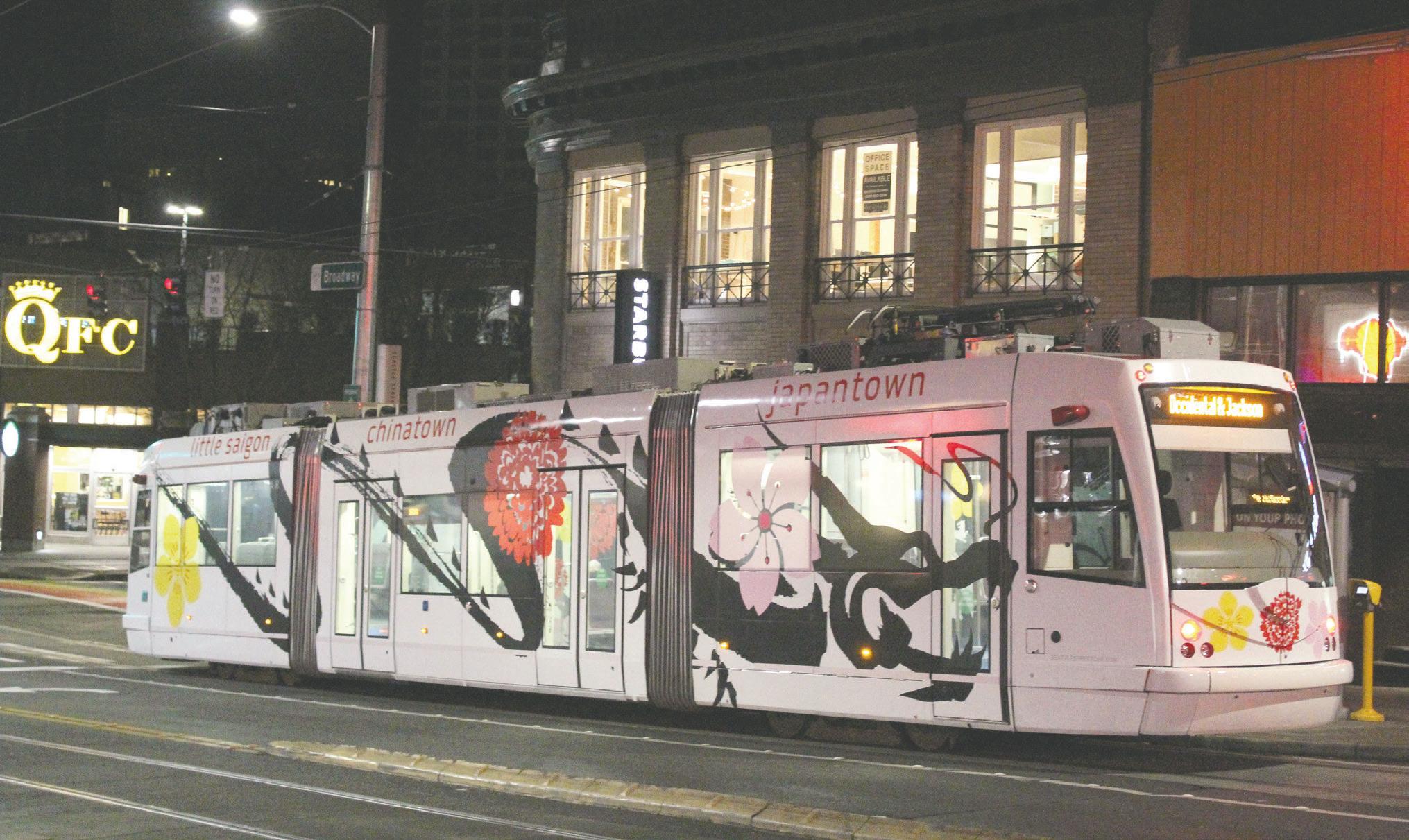
SDOT has plans to retime traffic signals and restrict motorists from making certain turns at several Broadway intersections in an effort to improve transportation times for the First Hill Streetcar.
The department is also seeking feedback on plans to create a southbound business access and transit-only (BAT) lane between Pine and Madison streets.
Broadway is one of Seattle’s busiest streets, but ridership on the First Hill Streetcar hasn’t been as strong as expected since coming on line in 2016. During its inaugural year, the streetcar was projected to be around 1.2 million, but ridership was under by a third at 840,000.
Former SDOT director Scott Kubly told the city council’s Sustainability and Transportation Committee last July that ridership was being impacted by increased congestion and growth in First Hill.
Traffic changes being proposed now are part of a revised plan to what Kubly had discussed with the committee last year, which did include signal timing improvements at 14th Avenue and East Yesler Way and at Broadway and Yesler.
A BAT lane on Broadway also came up at that time, Kubly explaining that the median/turn lane would need to be switched to a general-purpose lane.
SDOT is also planning to restrict turns on Broadway

at East Pike, Union and Madison streets. Drivers heading southbound would no longer be able to make a left-hand turn onto Pike and Union, or right turns at Union and Madison. Drivers northbound on Broadway would be prohibited from making left turns at Union and Pike, and a right at Pike.
department
Northbound travel times from
, Page 11
By Brandon Macz Madison Park Times editor
A new row house development designed by Lemons Architecture is expected to start coming together by early April on 27th Avenue East.


The 115 27th Ave E project is being constructed by Flanigan Group Development LLC, and includes four three-story row houses with a fourth-level penthouse over the stairs, said Jonathan Lemons, and two singlefamily homes behind them.
The single-family homes will be 1,866 square feet, while the row houses will be 1,540 square feet, or roughly 470 square feet per floor, Lemons said.
The first floor of the row houses
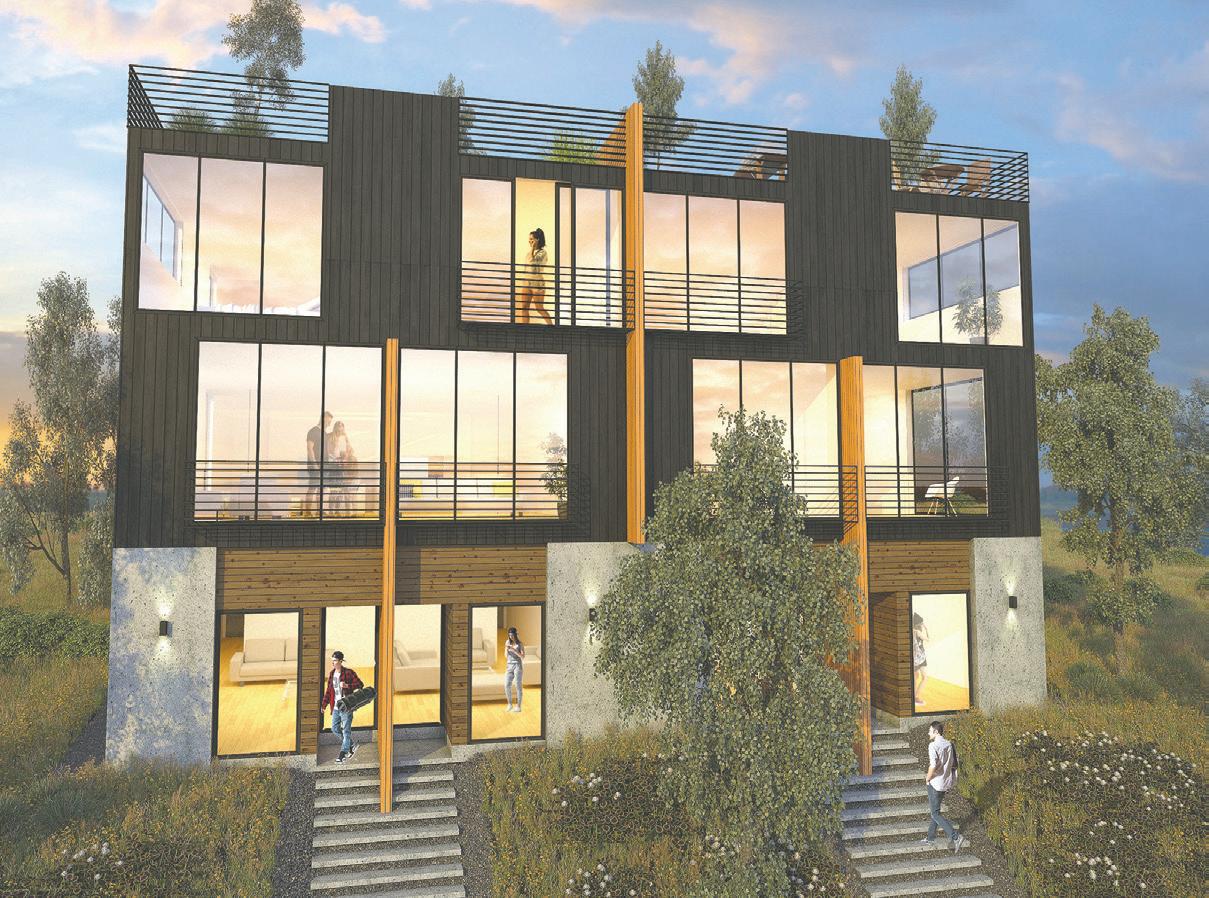
are being treated as dens, with a living/dining/kitchen level on the second floor and master suite on the third floor.
There will be a landscaped terrace area, gardens throughout the project, bioplanters to divert and treat stormwater runoff and a green roof.
“Each person has their own, a little spot for urban architecture, and the whole thing Built Green,” Lemons said.
Lemons Architecture has designed a large number of row house developments in Seattle.
Lemons said he went to The Netherlands prior to the firm’s first such project.
“They do such great urban infill, urban architecture row houses,” he said, adding the goal is never to create cookie-cutter developments. “We don’t want to start any project like the previous project. We like to reinvent each project.”
The 115th 27th Ave E project sits between East John and East Denny Way, and several blocks south of East Madison Street. Construction is slated for completion in spring 2019.
Master Builders Association of King and Snohomish Counties member Model Remodel (MRM) is a full-service, green contractor, serving clients in Seattle and its surrounding areas.
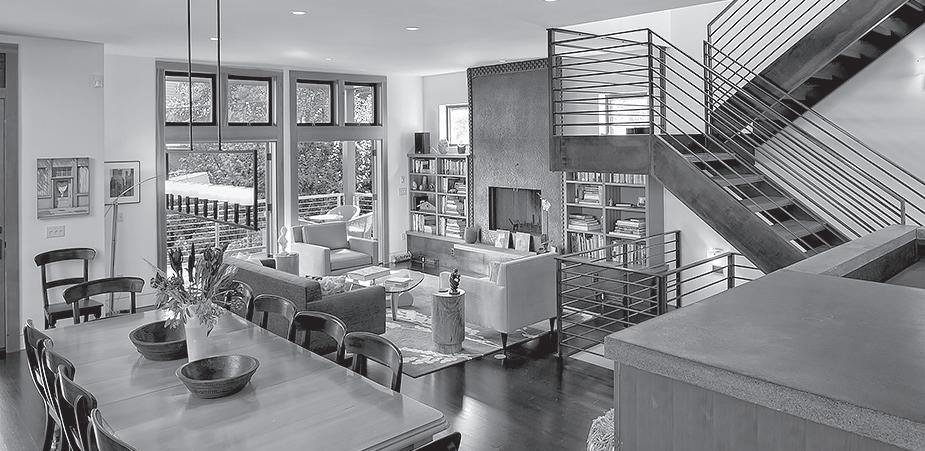
A: It’s absolutely possible to make eco-friendly choices during a remodel—but it takes careful planning. Remodeling fundamentally uses a lot of resources and creates a lot of waste. To counter that, you should work with reputable professionals who can suggest appropriate methods and materials for making your home healthier. It’s important to not only think about the new materials going into your home but where the old materials will end up. From thoughtful deconstruction, to repurposing and reusing, to choosing certified products, you always have eco-friendly options during your remodel.
The first thing to note: There’s absolutely a difference between demolition and deconstruction. Demolition is the action or process of forcefully tearing down, whereas deconstruction is the dismantling of something into its constituent parts. The latter provides an opportunity for items to be reused or repurposed. There are plenty of salvage building stores
around the Seattle area, such as Ballard Reuse or Second Use, that will resell your old cabinets or lights. One homeowner’s old clawfoot tub is another’s vintage treasure.
When talking with a contractor before your remodel begins, insist that your space be thoughtfully deconstructed. Also ask about your contractor’s recycling policy. We recycle at least 80 percent of debris for every remodel without being prompted, but not all companies do that automatically. Recycling services in the Seattle metro area are abundant, and recycling doesn’t necessarily cost the contractor any more than taking debris to a landfill. It’s one of the single smartest choices you can make during your remodel, and it’s in the hands of your builder.
Second, there’s an ever-growing selection of eco-friendly appliances, materials, and furnishings. Thinking about new countertops? Consider recycled glass or butcher blocks made with certified lumber. In need of a new refrigerator? Look for the ENERGY STAR label, or choose one with a topmount freezer and no ice maker if you want higher efficiency. Building a new deck? Use sustainably forested wood or TREX decking, which is 95 percent recycled wood
and plastic film. The point is, there’s a more eco-friendly solution for almost everything inside and outside the home! Enlist the help of a knowledgeable contractor, or spend some time at stores like Green Home Solutions that provide a showroom setting for green building options.
When it comes to smart remodeling, there are really two things to remember: buy smart and use less. Walls and cabinets require forests, tile and counters require stone quarries, plumbing and other fixtures require metal foundries. The smaller your space, the more economical it will be in price and usage of natural resources. Be aware of the products you or your contractor are purchasing and don’t be afraid to ask questions. Your research will pay off in dividends on the environment. You can also reduce your energy bill by insulating properly and purchasing efficient appliances. It can be as simple as installing dimmer or motion-activated light switches, which allow you to use less light and therefore less electricity.
Just because you’re not building a new home doesn’t mean you can’t be eco-friendly. Great options are out there for the choosing. Every little bit helps.
City Peoples Garden Store has announced a number of free gardening workshops that will take place during the month of March. To register, call 206324-0737 or email gardenstore@citypeoples.com.
City Peoples is at 2939 E. Madison St.
Planting for the Small Garden
Saturday, March 10, 11 a.m. to noon
Richard Greenberg teaches this popular class for the postage stamp lot, the balcony, the p-patch plot, and other areas where space is limited.
Happy Hour Garden
Saturday, March 17, 10-11 a.m.
Join the owners of Seattle Farm School to learn how to take your entertaining to the next level with ingredients you can grow in your own backyard. This class is about gardening, mixology and cooking
The Four Season Container Display
Sunday, March 18, 11 a.m. to noon
Learn how to use an evergreen anchor and change up the supporting plants in a container to create displays that feel fresh and seasonal year-round. Garden Coach and Designer Susan Papanikolas of How Does Your Garden Grow will teach tips and techniques for successful container gardening, and talk about plant combinations, all while she demonstrates
the potting up process.
Start An Urban Cutting Garden
Saturday, March 24, 11 a.m. to noon
Agnes P. Cwalina, owner of Hori Hori Flowers, will speak about plants that work best for the cutting garden as well as plants that offer harvests for a unique table arrangement, all on a city lot.
Wild Edibles in the Kitchen
Sunday, March 25, 11 a.m. to noon
Join experienced forager and writer Jeremy Puma as we discuss a number of local wild edible plants and how to creatively employ them in the home kitchen. Edible mushrooms are not included in this overview.




PLANTER, from Page 4
large rocks, etc.) so you aren’t filling the entire bed with expensive soil. If not, add your soil and start planting. I love this project because it’s affordable, completely customizable (you can add a cold tent for the winter months and even stain the frame to match your deck or siding) and easy to accomplish in an afternoon. Happy planting!
Kirsten Dunn is a proud fifthgeneration Dunn family member. Dunn Lumber is a member of the Master Builders Association of King and Snohomish Counties. For this project and more just like it, visit dunndiy.com.
By Brandon Macz Madison Park Times editor
The Seattle Landmarks Preservation Board was divided about whether to designate Capitol Hill’s Patrick and Johanna Sullivan House at the start of deliberations on Wednesday, but ultimately granted the 120-year-old house landmark status in a 6-2 vote based on its historic style and neighborhood prominence.
The struggle for some board members with deciding on a landmark designation for the pre-classic Queen Anne-style house at 15th Avenue and East Olive Street was whether the building conveyed its historical integrity. That is not to be confused with the condition of the property, which board members agreed is poor.
Board members did not agree with David Peterson of NK Architects, who described the building as “cookiecutter,” or that the Sullivans were not significant to Seattle’s history.
Peterson was hired to report on the property for Ann Thorson, executor of the estate of her aunt, Elaine Thorson, who purchased the Sullivan House in 1968.
While Patrick J. Sullivan owned and operated Queen City Boiler Works, Peterson said he was just among eight boiler makers in the city at the time.
“Where I really struggle, right now, is the integrity,” said landmarks board member Steven Treffers.
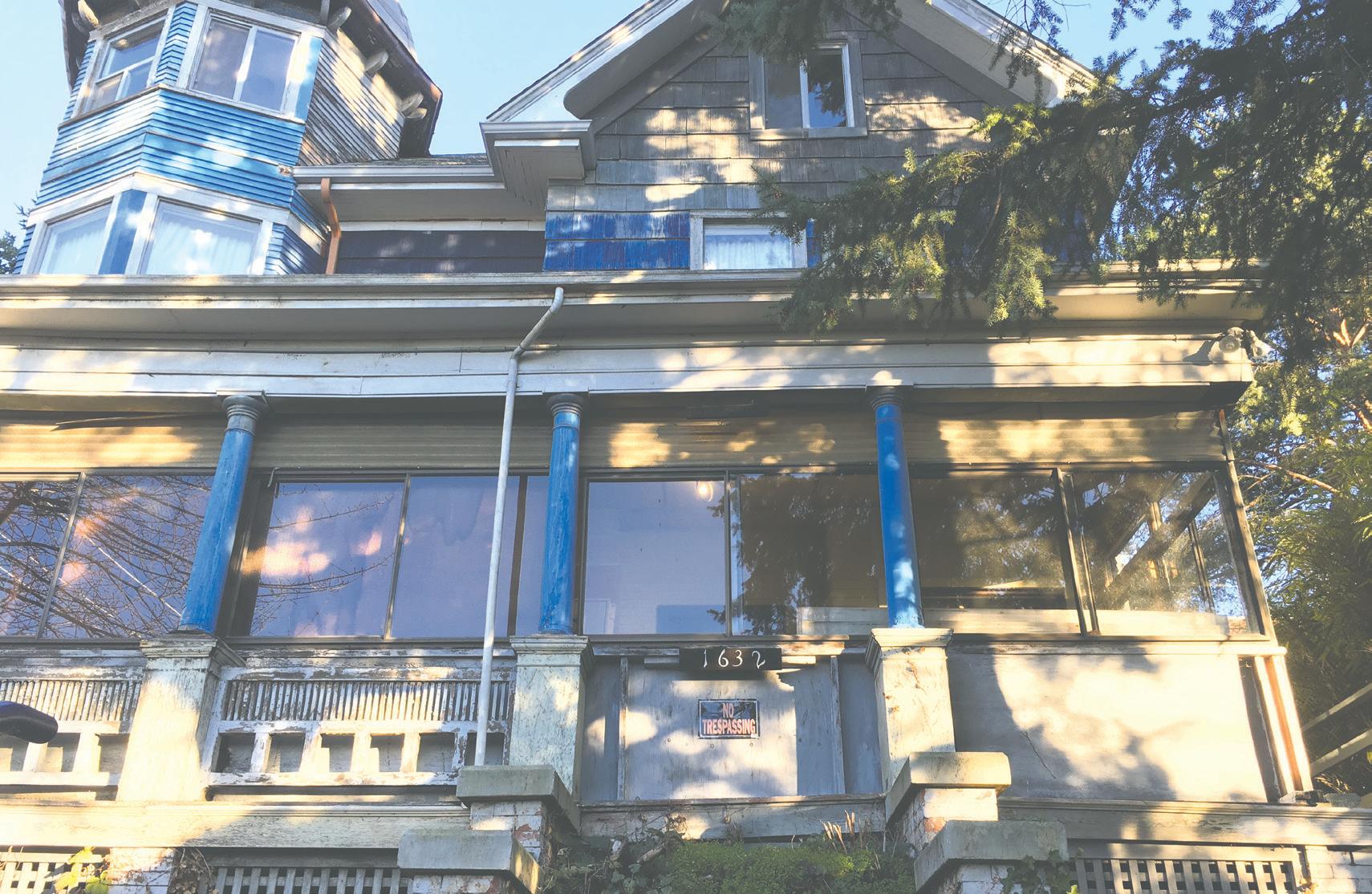
Garrett Hodgins agreed with other board members that the Sullivan House was still a good example of a more restrained Queen Anne style, but struggled with the number of alterations made since the property’s construction in 1898, most occurring after the mid-1960s. He did appreciate the style of the turret on the northwest corner of the property.
“I can’t just designate the turret on this, you know?” Hodgins said.
The board member said he did not appreciate being filled in on the financial hardships a landmark designa -
Opponents to historically landmarking the Patrick and Johanna Sullivan House, 1632 15th Ave., argued the structure was in too poor condition and not among the best examples of Queen Anne-style architecture in Seattle.
tion would create, as it was not required information for consideration.
Thorson’s attorney told the board how she’d used her savings to buy out other beneficiaries of her aunt’s estate because she thought it would pay off in the Seattle market. A buyer had been lined up for a purchase — previously reported at $2.4 million — before her neighbor and architect Jim Castanes made the landmarks nomi -
When you need a mortgage, experience counts
If you’re planning to purchase or refinance a home, choosing a lender is as important as choosing your mortgage. Look to my ��� years of mortgage lending experience to help you understand your options. Combined with the resources of the nation’s leading residential lender, I can help you find a home financing option to meet your needs.
• Jumbo loans for higher-priced properties
• Competitive interest rates
• Wide selection of conventional loan options
Let’s have a conversation today.

Tom Golon, Home Mortgage Consultant ��� Third Ave., Ste. ����, Seattle, WA ����� ���-���-���� tom.golon@wellsfargo.com
NMLSR ID ������

New Seasons still set to open in Central District, Ballard as company revises business strategy Company CEO steps down, plans for California locations scrapped
By Brandon Macz Madison Park Times editor
The departure of New Seasons Market CEO Wendy Collie, the closure of one California store and cessation of plans to open three more will not affect the company’s plans for opening Ballard and Central District locations in Seattle later this year.
New Seasons announced Collie’s exit and its “strategic shift in business direction” in a Feb. 6 news release.
That includes plans to close a New Seasons Market in Sunnyvale, California, and scrap plans for new California stores in San Francisco, Carmel and Emeryville, using those allocated investments “to support core store growth, enhancements and innovation.”
The company will use its sister company, New Leaf Community Markets, to grow its California footprint, according to the news release.
“In support of this strategic shift, we will be implementing a flatter, more team-based execu-
tive leadership structure, led by co-presidents,” Collie said in the release.
Chief People Officer Kristi McFarland and CFO Forrest Hoffmaster have assumed those co-presidents positions.
My Ballard reports the sign is up at 907 NW Ballard Way, and New Seasons still plans to open there this spring.
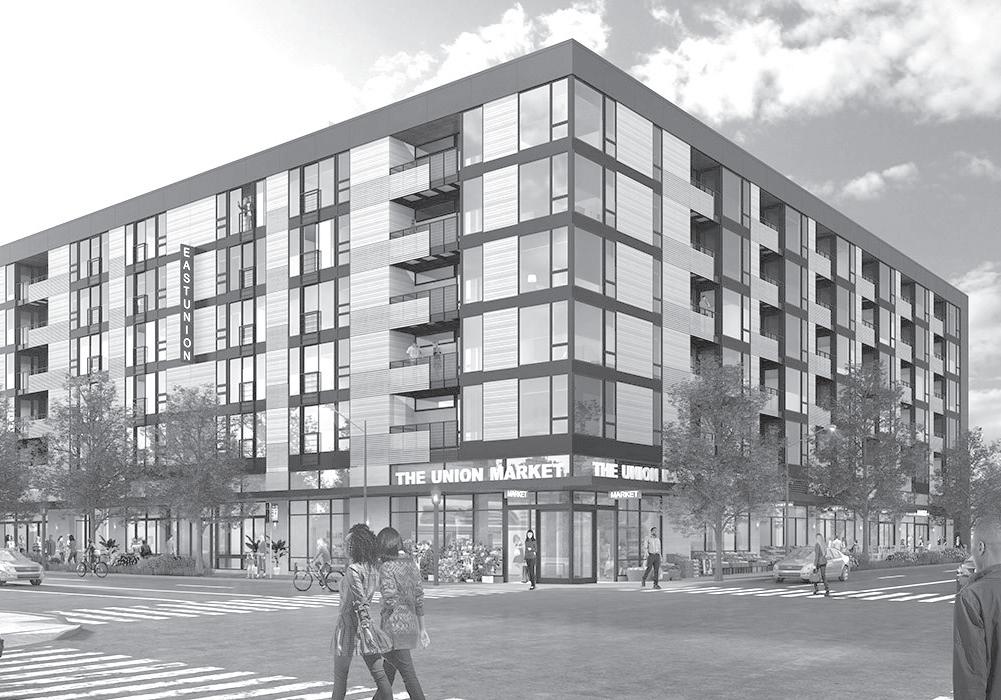
Lake Union Partners principal Patrick Foley tells the Madison Park Times that New Seasons is proceeding as planned with an 18,000-square-foot store inside LUP’s East Union development at 23rd Avenue and East Union
Street. The 144-unit mixed-use development is slated for completion by late May or early June.
Foley tells the Madison Park Times the company plans to hold hiring events for the store inside East Union this summer in order to fill the 100-plus positions to be created at the Central District store.
Central District residents came out to a meeting about the development in late October to voice opposition to having New Seasons Market be the anchor grocery tenant, due to it being a non-union company that doesn’t
By Brandon Macz Madison Park Times editor
The general contractor for the Capitol Hill light rail station is suing Sound Transit for back compensation it claims was generated by the agency’s late adjustments to the facility’s design and a lack of coordination between interrelated construction projects.
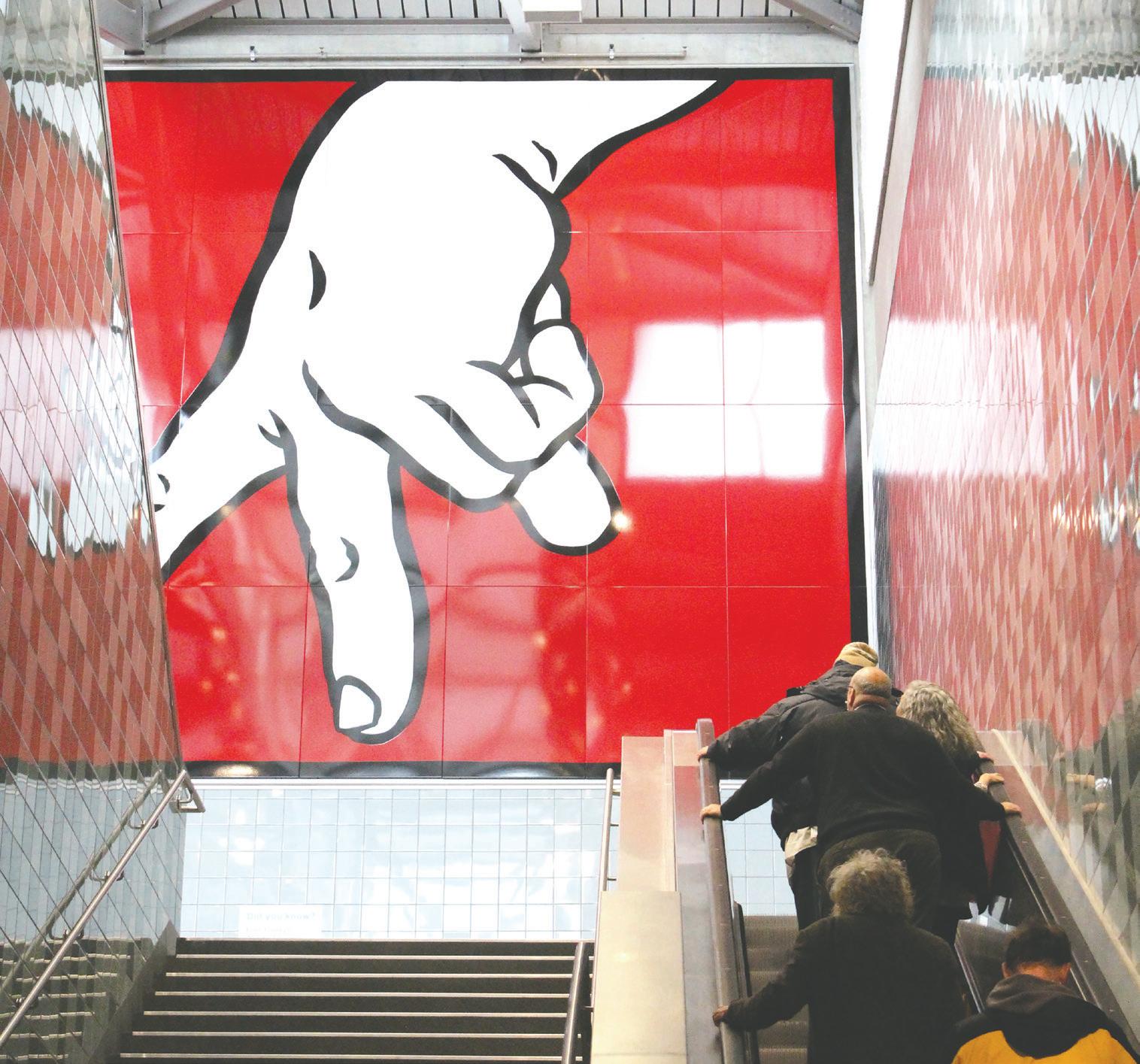
University Link light rail started on March 19, 2016, with an $858,000 grandopening celebration that included a ceremonial ribbon cutting outside the Capitol Hill station.
King County executive Dow Constantine spoke about the success of U Link — that it was six months ahead of schedule and $200 million under budget.
New York-based Turner Construction Company, which was selected as the general contractor/construction manager for the Capitol Hill station, claims in a lawsuit filed last week — and first reported by the Seattle Times — that poor management on the part of Sound Transit resulted in the company’s construction costs actually being more around $125 million — significantly higher than the $90 million.
Turner claims the transit agency has failed to compensate the company for all of its extra costs beyond $10 million. Those costs were incurred due to Sound Transit’s “changes, delays, constructive acceleration, coordination problems, design issues, and other breaches of Sound Transit’s contractual obligations,” according to the legal complaint.
“While Sound Transit has failed to compensate Turner for all of Turner’s extra costs that exceed $10 million,” the complaint
from Page 10
states, “Sound Transit spent approximately $858,379 on its grand-opening celebrations for the U-Link extension.”
The Capitol Hill station is one of nine major construction projects tied to the ULink extension project, and used the rarely used GC/CM method that made Turner both the general contractor and construction manager for the project. Sound Transit
treat employees as well as unionized stores in the region. Karinda Harris, the new community manager for New Seasons in Seattle — previously external affairs liaison in former mayor Ed Murray’s office — told community members that New Seasons Market has a minimum starting wage of $15 an hour, has a profit-sharing plan, provides a store discount and has better benefits than Safeway or QFC, though those grocers do not make that information public.
MPT has put in a request to New Seasons Market for more information about its continuing plans in the Central District, including whether there may be any adjustments to employee compensation to allay neighborhood concerns.
The Good Jobs Coalition has created a letter to LUP for people to sign that opposes New Seasons Market coming into the neighborhood. The Good Jobs Coalition claims the store is too expensive for residents, will drive up neighborhood rents and home prices, treats workers unfairly and will profit “anti-LGBTQ, anti-worker investor, the Murdock Trust.”
Endeavour Capital is the majority owner of New Seasons, and the Murdock Charitable Trust invests in a fund that Endeavour uses to fund the market. Harris made this clarification in late October, before announcing that New Seasons could be open to a community benefits agreement — a contract between community groups and a developer committing to certain amenities or standards
estimated the maximum allowable construct cost (MACC) at $90 million.
“Sound Transit involved Turner late in the design process, however, effectively precluding the full benefit of the anticipated input of the builder into the design process,” the complaint states.
Turner claims much of the delay and extra work the project experienced could have
nation, she said, adding a renovation would cost at least $1 million.
Thorson would receive 52 percent of the proceeds from the sale while her aunt has dedicated 30 percent of her estate to the Sea Shepherd Conservation Society and Homeward Pet Adoption.
Nathan Rosenbaum told the board he’d considered buying the property, but found the return would be extremely low if he had to add in rehabilitation costs.
Board member Russell Coney said the Queen Annestyle of the Sullivan House was clearly visible, that Patrick Sullivan was a prominent businessman in Seattle’s history, and the house had been designed by what was at the time a significant architecture firm.
Eugenia Woo, director of preservation services at Historic Seattle, informed the board in December that it was the first home to be designed by the firm formed by Timotheus Anton Christof Josenhans and Norris Best
Denny Way will see slight improvements for cars and the streetcar, with buses seeing a 10 percent improve-
been avoided if Sound Transit had followed the GM/CM’s suggestions.
At 90-percent design, Turner claims Sound Transit and the company reached a MACC of $97,566,098, plus $11.45 million for negotiated support services.
The project opened in March 2016, not the initially anticipated August 2015 timeline, according to the complaint, due in part to a high number of changes initiated by Sound Transit, which included $4.7 million in additional staffing and support services.
Sound Transit spokesperson Kimberly Reason said the agency disagrees with the claims made in the lawsuit.
“These are taxpayer dollars, and taxpayers entrust us to serve as stewards of these tax dollars, and we don’t simply use tax dollars to pay out claims that we believe are without merit, and we do believe these claims are without merit,” Reason said. “The changes that we made, we compensated the contractor for, so we do not agree with the characterizations in the complaint.”
Sound Transit has several light rail expansion projects underway, including the Northgate Link Extension, East Link Extension to Bellevue and Redmond and planning for a West Seattle, Ballard and Tacoma extension.
The transit agency is awaiting a final decision from the Legislature that could affect its funding. The House has passed a bill to reduce the motor vehicle excise tax that regional voters approved in ST 3 (not counting Pierce Count) that would result in a $780 million loss. Democrats are working to backfill that funding, while Republicans are pushing a bill that would slash rates even more.
Allan of Josenhans & Allan, which only lasted in Seattle for 15 years.
Coney said he’s lived on Capitol Hill his whole life, and he’s seen the poor condition of the Sullivan House, but believes the lack of attention to the building over the years is a testament to its construction.
“A lesser house probably would not have survived this lack of maintenance,” he said.
Board chair Deb Barker said she supported the designation for displaying the style, it being an example of outstanding work by a designer or builder and its prominence in the neighborhood, adding she really liked the restrained quality of the house compared to overly ornamental classes of Queen Anne design.
Castanes thanked his team that worked on getting the Sullivan House landmarked, which included Jordan Cowhig with his firm, historic architect Ellen Mirro with The Johnson Partnership and Marvin Anderson, who provided his own report on the historic and architectural significance of the property. Anderson led the restoration of the Polson House in Queen Anne, another home designed by Josenhans & Allan. All partners in the landmarks project worked pro bono.
ment. Southbound traffic is expected to see greater improvements, with travel times for cars and buses down 28 percent, and 32 percent for the streetcar, according to SDOT. Improved streetcar travel times will become even more important when the Center City Connector fills the
gap between the First Hill and South Lake Union lines. The connector is expected to be completed in 2020.
People wishing to provide feedback on these proposed changes on Broadway can contact Jonathan Dong with SDOT at jonathan.dong@seattle.gov or 206-233-8564.