New Covenant Missionary Baptist Church | 754 E. 77th Street
Mondays–Thursdays | 3 programs daily
SOUTH SIDE WEEKLY FROM THE EDITORS
The South Side Weekly is an independent non-profit newspaper by and for the South Side of Chicago. We provide high-quality, critical arts and public interest coverage, and equip and develop journalists, artists, photographers, and mediamakers of all backgrounds.
Volume 13, Issue 2
Interim
Editor-in-Chief Adam Przybyl
Investigations Editor Jim Daley
Immigration Project
Editor Alma Campos
Senior Editors Martha Bayne
Christopher Good
Olivia Stovicek
Jocelyn Martinez-Rosales
Community Builder Chima Ikoro
Editor Emeritus Jacqueline Serrato
Public Meetings Editor Scott Pemberton
Art Director Shane Tolentino
Research Editor: Ellie Gilbert-Bair
Fact Checkers: Nupur Bosmiya
Bridget Craig
Kate Gallagher
Zara Norman
Zoe Pharo
Rubi Valentin
Susie Xu
Layout Editor Tony Zralka
Publisher Malik Jackson
Office Manager Mary Leonard
Advertising Manager Susan Malone
The Weekly publishes online weekly and in print every other Thursday. We seek contributions from all over the city.
Send submissions, story ideas, comments, or questions to editor@southsideweekly.com or mail to:
South Side Weekly
6100 S. Blackstone Ave. Chicago, IL 60637
For advertising inquiries, please contact: Susan Malone (773) 358-3129 or email: malone@southsideweekly.com
For general inquiries, please call: (773) 643-8533
The collective outrage over the deaths of Renée Good and Alex Pretti— two white U.S. citizens killed by federal immigration agents—have drawn national attention to the wanton use of lethal force against communities during ICE raids.
But this violence is not new.
Other killings by ICE in similar operations, including the fatal shooting of Silverio Villegas Gonzalez during Operation Midway Blitz in Chicago last year, have received far less attention.
In fact, ICE and other federal agents have been involved in deadly enforcement operations for years, long before Minneapolis became a national story. These patterns of violence instill fear across immigrant communities, yet often go unaccounted for.
ICE agents said Villegas Gonzalez resisted arrest and attempted to flee, and that an agent was seriously injured, prompting another to fire. But body-camera footage shows the agent described his injuries as “nothing major” and eyewitnesses saw no one dragged by his vehicle. Claims that Gonzalez was “fleeing” have been used to defend the murder.
Notably, both the deaths of Good and Villegas Gonzalez were initially framed by federal authorities as responses to agents being struck or seriously injured by vehicles.
Claims that Villegas Gonzalez was fleeing, or that there isn’t enough footage, do not justify lethal force. Narratives linking undocumented status, minor resistance, or perceived threat to diminished concern follow a documented pattern: media and public framing shapes who is seen as a sympathetic victim and whose death is largely ignored.
The killing of Keith Porter, a Black U.S. citizen in Northridge, Los Angeles by an offduty ICE agent, has similarly faded from the national conversation, despite unresolved questions and family demands for accountability.
The national focus on white U.S. citizens’ deaths narrows public concern to those presumed safe from immigration enforcement and sidelines the broader fight for immigrant rights. This point is elevated when after the Minneapolis killings, the White House said President Donald Trump does not want to see people hurt or killed on U.S. streets but will not back down from efforts to deport “violent criminal illegal aliens.”
However, official data shows that most people in ICE custody have no criminal convictions, and only a small fraction have been convicted of violent crimes.
The disparity is also clear in fundraising: campaigns for Good and Pretti have raised over $1.2 million each, while efforts for others killed in federal actions range from hundreds to tens of thousands. Villegas Gonzalez is absent from many of these lists.
Maintaining attention and solidarity with immigrant communities is essential, not just when citizens are affected, because enforcement-driven fear can erode immigrant protections if public concern focuses narrowly on citizens.
Recognizing these patterns doesn’t lessen any one death; it highlights persistent inequalities in how immigrant communities are policed, reported on, and defended.
IN THIS ISSUE
city council pauses on curfew, bans some hemp products
An updated curfew ordinance designed to curtail youth gatherings was sent to committee for further consideration. leigh giangreco ..................................... 4
public meetings report
A recap of select open meetings at the local, county, and state level.
scott pemberton and documenters 5 jury acquits chicago resident of murder-for-hire plot on border patrol commander
The defendant, Juan Espinoza Martinez, was detained by immigration agents after being found not guilty and now faces deportation.
dave byrnes .............................................. 6 jurado absuelve a residente de chicago del cargo de planear un asesinato por encargo contra un comandante de la patrulla fronteriza
El acusado, Juan Espinoza Martínez, fue detenido por agentes de inmigración tras ser declarado no culpable y ahora se enfrenta a la deportación.
dave byrnes.............................................. 8
little village mauser workers reach deal
Teamsters at the Millard Mauser plant voted last week to end their months-long strike after securing severance and rehiring opportunities.
josé abonce ............................................ 10
trabajadores de la planta mauser en la villita llegan a un acuerdo
Miembros del sindicato Teamsters de la planta de Millard Mauser votaron la semana pasada a favor de poner fin a su huelga, que duró varios meses.
josé abonce, traducido por gisela orozco ............. 12 going out with a bang
Chicagoans are thrilled at the Bears’ performance this season, hopeful about what it means for the city’s football future. malachi hayes 14
‘why are we donating our towels?’ Jail insiders describe having to buy their own supplies to keep their cells clean.
micah clark moody and harley pomper 16 when keys to the city don’t work CityKey ID is meant to provide access but some Chicago residents say they face barriers and discrimination. alma campos 19 the exchange
The Weekly’s poetry corner offers our thoughts in exchange for yours.
chima ikoro ........................................... 20 the roots of poetry
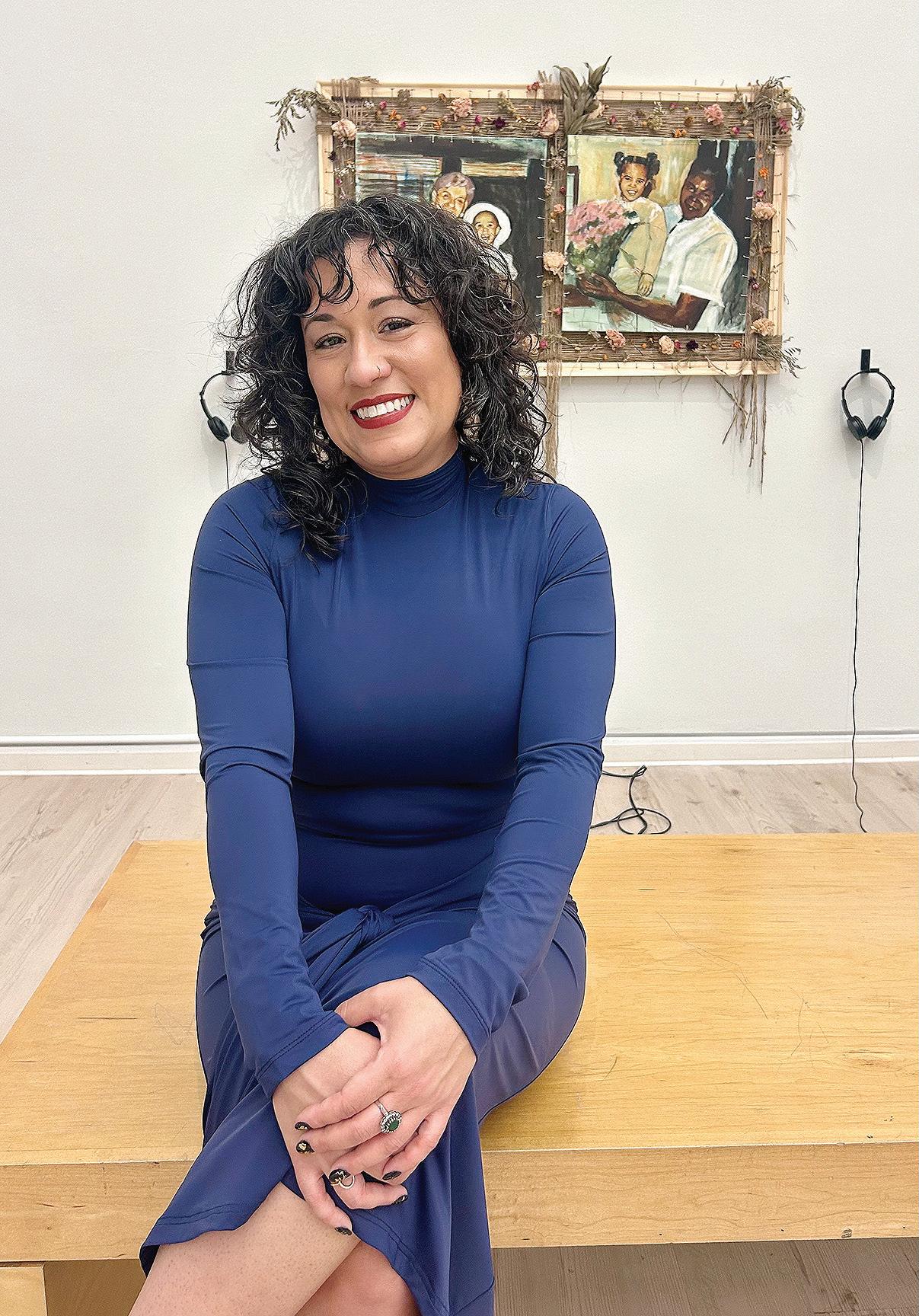
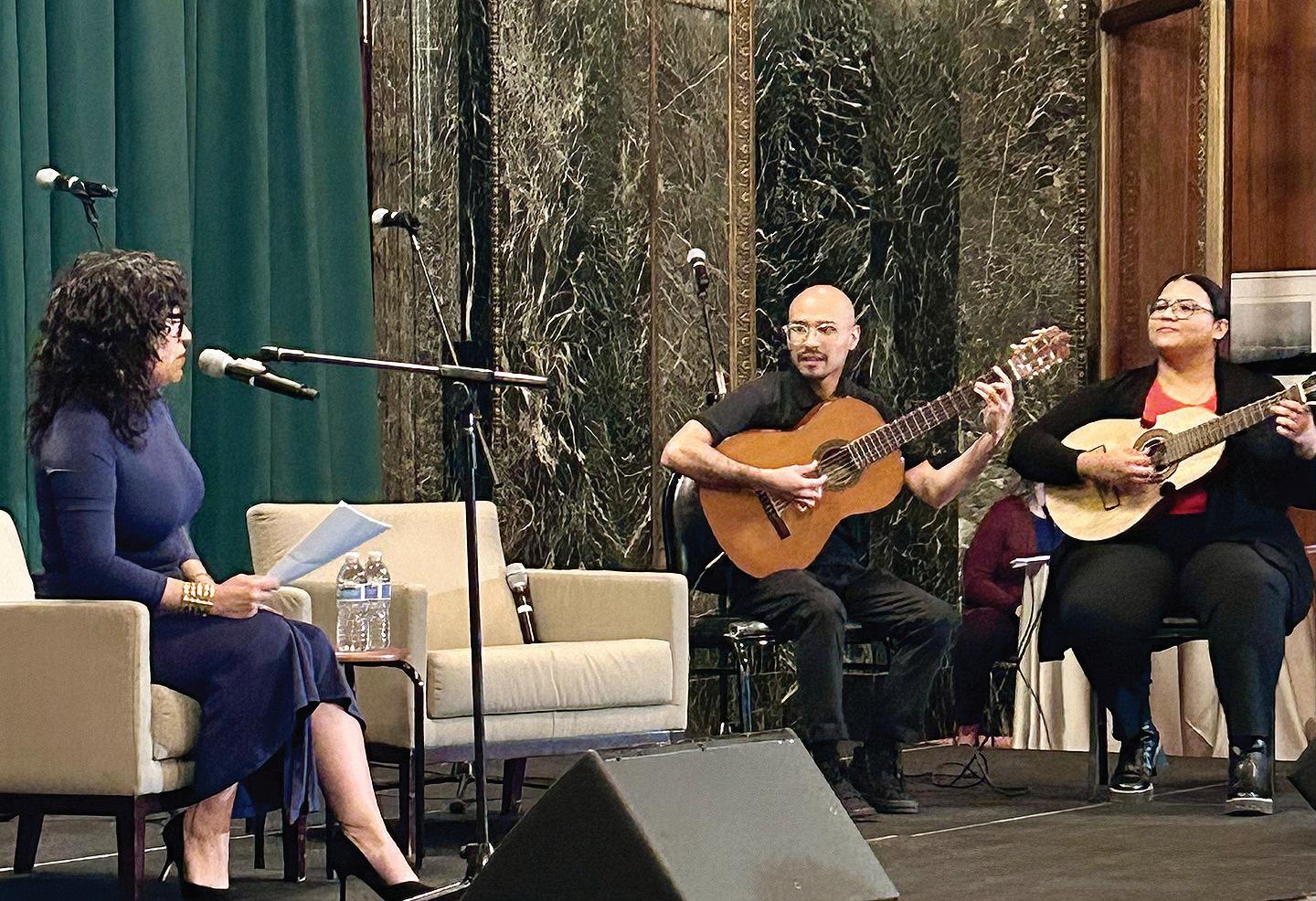
Chicago Poet Laureate Mayda del Valle reflects on her journey from the South Side to Broadway and beyond. e’mon lauren 21
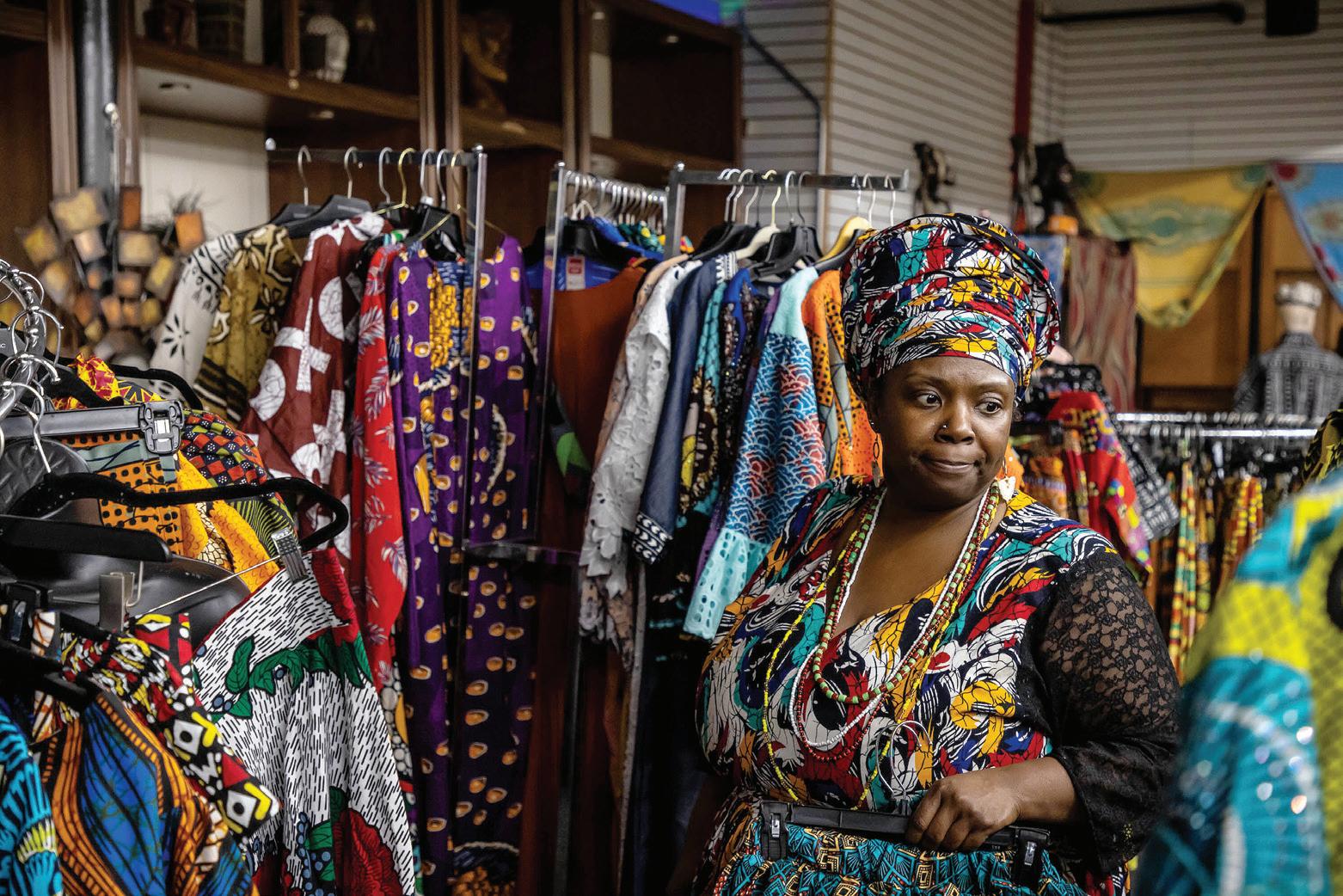
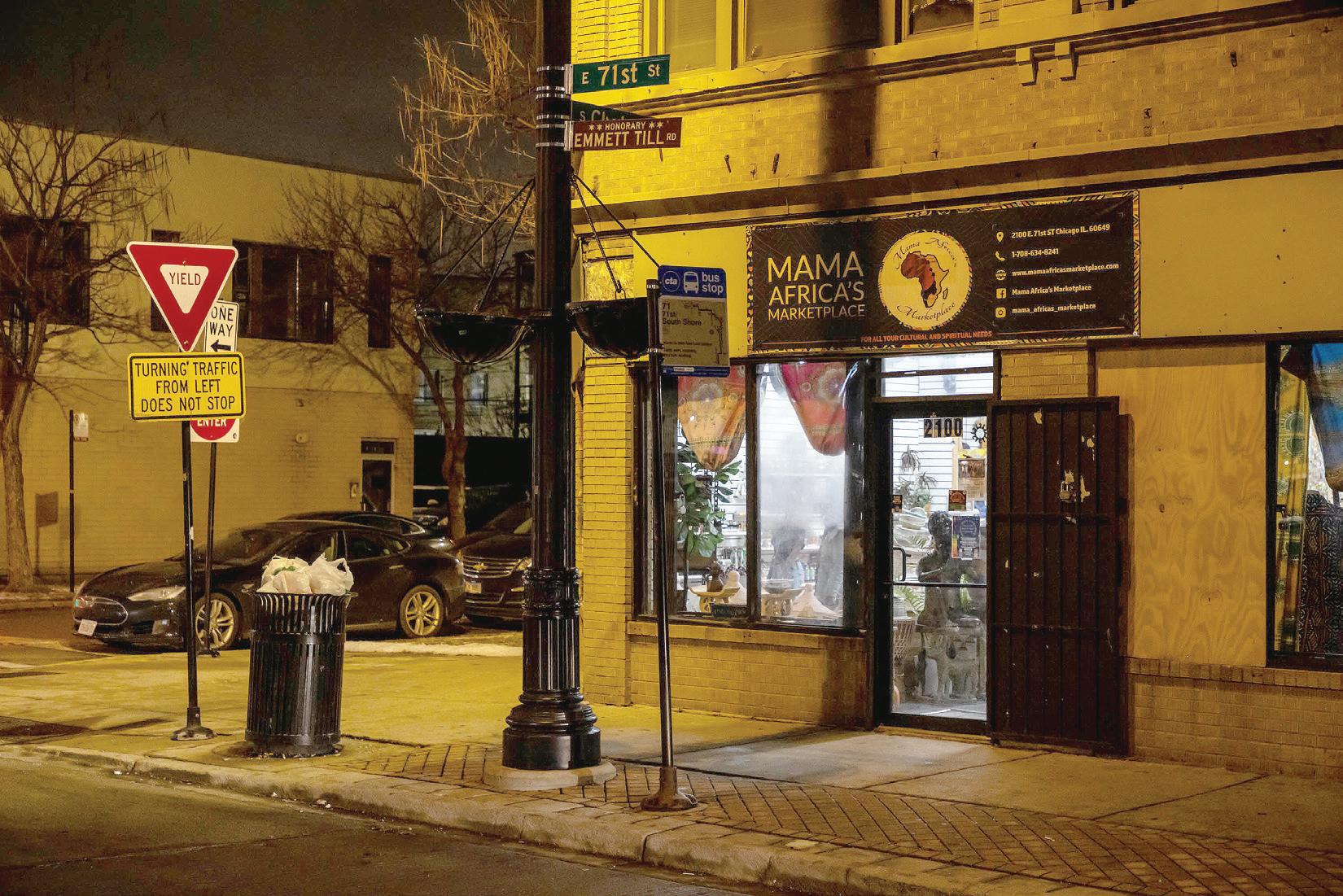
mama african marketplace forced to move
The beloved South Side community anchor will be missed by local youth, families, and vendors. jewél jackson......................................... 25 black history month calendar
A selection of events that explore Black histories and celebrate Black creativity. ellie gilbert-bair 27
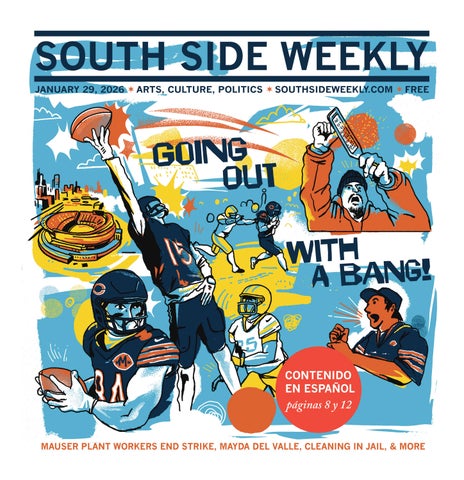
Cover illustration by David Alvarado
City Council Pauses on Curfew, Bans Some Hemp Products
An updated curfew ordinance designed to curtail youth gatherings was sent to committee for further consideration.
BY LEIGH GIANGRECO
The City Council banned nearly all hemp products sold by unlicensed stores last week in a move that local businesses have warned would send their livelihoods up in smoke.
The ban would prohibit hemp products with “intoxicating” or “psychoactive” effects from being sold at unlicensed businesses, but exempts hemp beverages, topicals, and products intended for pets. The Illinois Restaurant Association lobbied for the beverage carveout for taverns, packaged goods stores, and restaurants, an exemption designed to relieve local brewers who have turned to hemp amid the alcohol market’s downturn.
The measure also prohibits the sale of hemp, including those exempted products, to those under twenty-one years of age. Marijuana dispensaries, whose owners complained that hemp stores didn’t have to follow the same strict regulations and cut into their business, are still permitted to sell hemp products.
“The idea is that the dispensaries are regulated, and they test the products,” said Ald. Marty Quinn (13th Ward), who spearheaded the ordinance. “And one of the things we’ve heard throughout this whole process…is all these stories about people getting their hands on stuff that shouldn’t be in the hands of kids and that's unregulated today. I mean, hell, you don’t even need to be twenty-one years old to purchase this stuff.”
Quinn’s measure could change depending on what happens at the federal level. Buried in the bill that ended the government shutdown last year was a provision that closed a loophole on small amounts of THC in hemp products, effectively banning most hemp products by November 2026. The legislation also dealt a blow to Mayor Brandon Johnson’s plan to tax hemp products last year, which was projected to deliver $10 million in revenue annually. A bipartisan push this month from U.S. Senators Amy Klobuchar (DMN), Jeff Merkley (D-OR), and Rand Paul (R-KY) aims to delay the federal ban by two years.
Alders voted 32–16 in favor of the ordinance, just two votes shy of the vetoproof majority needed if Johnson chooses to quash the measure. Several alders from the progressive caucus expressed skepticism that the proposal would keep hemp out of the hands of bad actors, instead driving the substance to the black market. Alders Maria Hadden (49th Ward) and Daniel La Spata (1st) both vouched for local businesses that have profited from hemp.
Hadden, who returned to the council on Wednesday after extensive surgery, took CBD, a non-psychoactive hemp derivative that would be exempted from the ban, to help relieve inflammation. She said that “good actors” who sell a variety of hemp products could also have their businesses impacted by the ban.
“So it hurts me, cutting off an avenue for healing, for health, but also for really the backbone of our global economy,” she said.
In a press conference following the council meeting, Johnson expressed reservations about the ban, but stopped short of saying he would veto it.
“There are some real serious concerns about this ordinance. I'm not the only one that has these concerns,” Johnson said. “I have not made a decision yet, but I think it’s important that when we enact policy, that we do it right, that we do it well.”
Meanwhile, the Johnson administration reached a compromise with Ald. Brian Hopkins over the latest iteration of the 2nd Ward alderperson’s curfew proposal for minors. Hopkins later punted his measure to a committee meeting.
After a large gathering of teens downtown turned violent last spring, Hopkins floated an ordinance that would give the CPD superintendent the power to declare a localized curfew whenever an on-site police commander believes that a “mass gathering” might occur. Progressive alders pushed back, arguing the policy could infringe on people’s First Amendment rights. Hopkins returned to the drawing board with an alternate curfew that he passed in June, only for the mayor to
promise that he would veto the ordinance.
Hopkins brought forth a watereddown version of the curfew ordinance on Wednesday—one that scrapped the “snap” part completely. The language states that if the Chicago Police Department (CPD) superintendent determines that a “disruptive youth gathering” is going to happen, they can issue a dispersal order. The commander must give a verbal warning to the public and allow everyone ten minutes to obey. Minors who violate the order will be taken into police custody until a parent or guardian can pick them up, but they won’t be “booked” or fingerprinted.
Earlier that day, Hopkins huddled outside the council chambers with Ald. Jason Ervin (28th Ward) and Johnson’s senior advisor Jason Lee. The three appeared to reach a compromise while Johnson advisor Kennedy Bartley rounded up more than half a dozen members of the progressive caucus inside the Council’s copy room. Following that huddle, the progressive council members were pleased by the fact that the new language in the bill did not grant CPD any additional powers. The bill instead codifies the superintendent’s existing ability to call a curfew into the municipal code.
Soon after the hallway scrums, Hopkins emerged with fresh copies of his ordinance and distributed them to the council.
“This is a vastly superior tool to the one that was initially offered,” Hopkins said. “It avoids the constitutional question and it gives the Chicago police maximum flexibility to respond to events as they occur and to not be locked into enforcing dispersal orders at only a specific time and specific place.”
The last-minute introduction frustrated 19th Ward Ald. Matt O’Shea.
“I’m uncomfortable with what's being put before us here on the fly,” O’Shea said. “What I just heard sounds like we’re opening up the city of Chicago for more litigation.”
O’Shea expressed doubt that the ordinance would help prevent fatal events
like the November shooting following the downtown Christmas tree lighting that left fourteen-year-old Armani Floyd dead.
“It would appear to me, what I’m reading is this is just something to placate,” he said. “What does this do that gives the Chicago Police Department a tool to help them prevent another kid from getting shot and killed in a gang conflict downtown Chicago?”
Hopkins ultimately decided to hold a vote on his measure and is expected to bring the proposal back for debate in the Committee on Public Safety. In a press conference that followed the council meeting, Johnson would not say whether he supports the ordinance in its current form, though he detailed his team’s close collaboration with Hopkins. That process included the decision to remove the twelvehour notice period from Hopkins’ earlier proposal.
“We were incredibly concerned about the constitutionality around how the initial proposal went forward,” Johnson said. “And then, quite frankly, what we were also concerned about was this idea that just simply doing something and establishing an arbitrary time that that would prove to be effective. What we have seen repeatedly is that curfews and curfews alone don’t just simply prevent that type of behavior or interactions from occurring.”
Reynia Jackson, a youth organizer with Good Kids Mad City, said she still believes the curfew would target and traumatize Black and brown youth. GKMC organizers were “ecstatic” the last time Johnson vetoed the curfew ordinance, and they hope the mayor turns down the latest measure.
“We’re still very much against it. We’re still very much protesting against it,” Jackson said. “Continuously and further traumatizing our youth and further adultifying our youth. I’m 100 percent against that.” ¬
Leigh Giangreco is a freelance reporter based in Chicago. You can follow her work on Twitter/X @LeighGiangreco and at leighgiangreco.com.
Public Meetings Report
A recap of select open meetings at the local, county, and state level.
BY SCOTT PEMBERTON AND DOCUMENTERS
December 9
At its meeting, the Chicago City Council Committee on Transportation and Public Way passed an ordinance permitting outdoor dining in the 49th Ward on N. Glenwood Ave. between W. Morse Ave. and Farwell Ave. This permit gave a restaurant, already offering limited outdoor dining, permission to expand the service year-round. It also introduced an opportunity for alders in other wards to submit and consider outdoordining requests on a street-by-street basis. City regulations will apply—restaurants must allow for snow removal and street sweeping, for example, and for emergency work. Public commenter George Blakemore, who frequently voices his opinion at public meetings, said he was frustrated at the committee for scheduling its meeting at the same time as the Committee on Zoning, Landmarks and Building Standards. He also advocated for “revolution.” Committee Chair Gregory L. Mitchell (7th Ward) thanked Blakemore, said he would take Blakemore’s comments under advisement, and then moved for adjournment.
Two substitute ordinances to fund Special Services Areas (SSAs) were presented by the Department of Planning and Development (DPD) and approved by the Committee on Economic, Capital and Technology Development at its meeting. They are to be presented at the next City Council meeting. These SSAs contain sections of 59th and 63rd streets. In general, SSAs can be controversial because they require raising local taxation, and some residents contend that they don’t benefit equally from the expanded services they pay for. Some committee members complained that the Greater Southwest Development Corporation (GSDC), which services these SSAs, failed to meet expectations for communication. In his presentation, Mark Roschen, an assistant DPD commissioner, explained that the department wants to advance “budget only” ordinances for taxing levies that can support SSAs in 2026. Committee member Silvana Tabares (23rd Ward) asked whether all projects approved by the SSAs in 2025 will be completed by 2026, to which Roschen responded they would be. He also said these ordinances support snow removal, litter abatement, and security, and that the city is not obligated to use GSDC in the future. One ordinance would allow the selection of an interim service provider by mid-January. Given Council member concerns with GSDC, Roschen said, a replacement service provider could be selected by the six Council members whose SSAs are affected and begin services as early as May 1, 2026.
December 10
Thirty-six members attended a meeting of the Chicago City Council, three virtually, and fourteen were absent. The Committee heard from public speakers on several topics: dissatisfaction with current property taxes, opposition to a hemp product ban (see our City Council story for more info), the desire for greater support for U.S.-born
residents, criticism of Alders proposing to cut some five thousand youth summer jobs, and a request for the City Council to ask Mayor Johnson to acquire federal government assistance for heating issues this winter. Washington, namely the Federal Emergency Management Agency (FEMA), has previously provided support for other challenges, such as flooding. David Barboza, speaking on behalf of the Southeast Environmental Task Force, expressed support for the Hazel Johnson Cumulative Impacts Ordinance, which was introduced last spring. The proposed ordinance “aims to address the disproportionate environmental burdens on Chicago’s South and Southside neighborhoods,” according to the Chicago Reporter. The Council recognized the De La Salle Institute Boys Varsity Soccer Team for winning the 2025 state championship.
December 11
At its brisk twenty-one-minute meeting, the Metropolitan Water Reclamation District of Greater Chicago (MWRD) unanimously approved a series of motions and ordinances related to the 2026 budget, including a 2.75 percent pay raise for MWRD staff. The special meeting was called specifically to adopt the district’s 2026 budget, and there was no discussion. Board President Kari K. Steele and Clerk/Director of Finance Jacqueline Torres read each item, and the Board then proceeded directly to a vote, unanimously approving the six ordinances in the budget. The Board observed a moment of silence for MWRD Police Officer Darren Davidson, who passed away the week before the meeting.
At its meeting, the Community Commission for Public Safety and Accountability heard The Civilian Office of Police Accountability (COPA), the Chicago Police Board, and the Chicago Police Department (CPD) present their goals for 2026. Officials from COPA said their goals included improving the disciplinary process and enhancing community engagement. The Chicago Police Board said they plan to work with stakeholders to improve the Rules of Conduct for officers. They also stated their intention to work with COPA to improve the police disciplinary process. CPD Superintendent Larry Snelling’s goals include increasing transparency, strengthening the forensics team, and helping residents understand investigation processes. One public speaker mentioned an upcoming hearing on ICE/CPD interactions. Another public speaker asked about the city’s budget plans to cover police misconduct, saying city residents are feeling the financial burden of settlements. New business saw the Commission approve a series of closed meetings for the maximum time allowed under the state’s Open Meetings Act, which is designed to ensure Illinois residents have access to an open and accountable government.
December 16
At its meeting, the board of the newly created Chicago Residential Investment Fund (RIF) noted that an executive search firm, Maneva Group, had been retained to find the fund’s first CEO. Board members agreed that real estate investment knowledge and an understanding of public sector financing were requirements. The Green Social Housing (GSH) Ordinance passed by the City Council last May laid the groundwork for such a fund, which is designed to support development of “highquality, permanently mixed-income housing.” The group has access to a $135 million revolving fund that can replace private equity investments in housing. It’s seeking “partnerships with developers and impact investors interested in making mixed-income development happen in Chicago,” according to its website. The thirteen-member board includes executives from an investment management firm, an environmental justice organization, a construction company, a land trust, and a labor organization. Ex officio are a member of the City Council Committee on Finance and the city’s top staff leadership in housing, procurement, sustainability, and planning and development.
This information was collected and curated by the Weekly in large part using reporting from City Bureau’s Documenters at documenters.org.
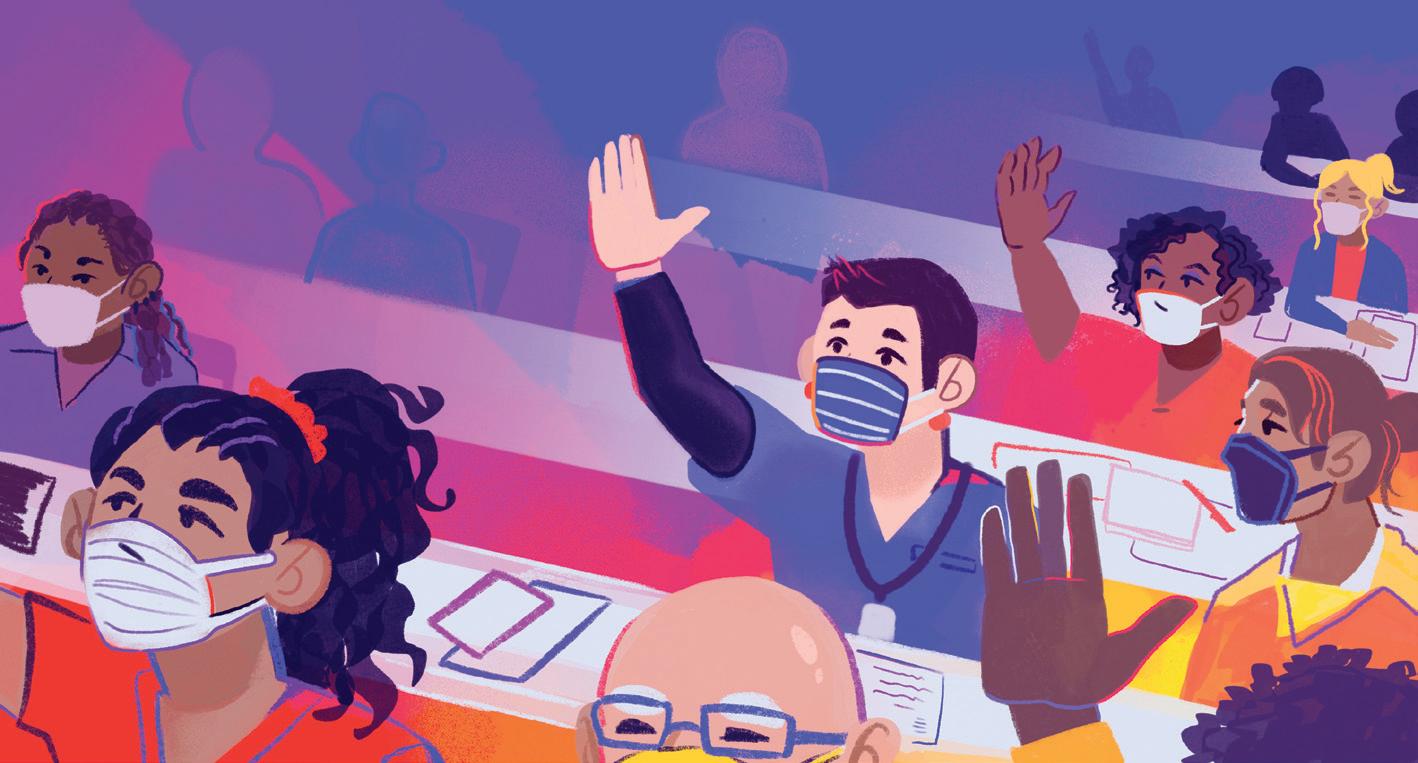
illustration by Holley Appold/South Side Weekly
Jury Acquits Chicago Resident of Murderfor-Hire Plot on Border Patrol Commander
The defendant, Juan Espinoza Martinez, was detained by immigration agents after being found not guilty and now faces deportation.
BY DAVE BYRNES
JuanEspinoza Martinez hugged his attorney Jonathan Bedi after the verdict—not guilty—was read aloud in a federal courtroom in downtown Chicago on Thursday afternoon. Since early October, the thirty-seven-yearold father, brother and Little Village construction worker had faced a federal murder-for-hire charge. Federal prosecutors alleged Espinoza Martinez had put out a $10,000 hit on Customs and Border Patrol (CBP) Commander Greg Bovino. He endured months in federal custody, and Tribune journalist Jason Meisner reported he withdrew a pretrial release motion in late November after hearing Immigration and Customs Enforcement (ICE) had a detainer out for his arrest.
After all that, a federal jury acquitted him after deliberating for about three hours.
“From day one, we said the government could not prove Juan engaged in any murder-for-hire plot. They could not,” Bedi and his fellow defense attorney Dena Singer said in a Friday press release on the verdict.
Despite the acquittal, Espinoza Martinez is not yet a free man. Echoing the release hearing in November, Immigration and Customs Enforcement (ICE) took him into custody following trial. Publicly available ICE data indicates that at time of writing, he had been moved from Chicago to a detention center in Clay County, Indiana. Espinoza was a DACA (Deferred Action for Childhood Arrivals) recipient who’d lived in Chicago since he was five
years old, but according to the Tribune, he failed to renew his status in 2020 due to financial hardship.
The Weekly reached out to Espinoza Martinez’s immigration attorney for comment regarding his status in ICE custody, but did not hear back by press time.
His trial lasted less than three days. Jury selection began Tuesday morning, attorneys read their opening arguments Wednesday morning, and the jury received the case early Thursday afternoon. Jurors heard from only four witnesses in total. Prosecutors called to the stand Homeland
Security Investigations (HSI) agents Christopher Perugini and Donald Adams, as well as self-professed longtime law enforcement informant Adrian Jimenez. Espinoza Martinez’s defense attorneys called only one witness, his brother Oscar Martinez.
Jimenez testified he owns a construction business and first met Espinoza Martinez when Espinoza Martinez reached out for work. At the heart of the case was a Snapchat message Espinoza Martinez sent to Jimenez in early October.
Accompanied by a photo of Bovino,
it read, “2K for info cuando lo agarren [“when they catch him”] / 10K if u take him down / LK on him.”
Jimenez, who also testified he’s been a law enforcement informant since “the mid ’90s,” said he contacted a federal agent about the message “almost immediately.” It kicked off an investigation that, by all accounts, Espinoza Martinez cooperated with. Federal agents arrested and interviewed him on October 6, after he willingly waived his right to remain silent or to have an attorney present. Jurors also saw Espinoza Martinez consented to a search of his phone and provided federal agents with the means to access it.
During that interview, clips and transcripts of which jurors saw at trial, Espinoza Martinez repeatedly insisted that he never meant to threaten anyone. He told the agents he was only repeating things he’d heard around the neighborhood, including gossip allegedly from the Latin Kings gang — the “LK” referenced in his message.
“I’m not hiring anybody,” he told the agents at one point in the interview.
The agents didn’t take him at his word.
“What else do you have on your phone?” one of the agents asked Espinoza Martinez at one point, as he became visibly more nervous.
A grand jury returned an indictment against him on October 14 for murder racketeering, a charge that carries a maximum ten-year prison sentence on conviction. Over the course of the trial, prosecutors showed jurors the
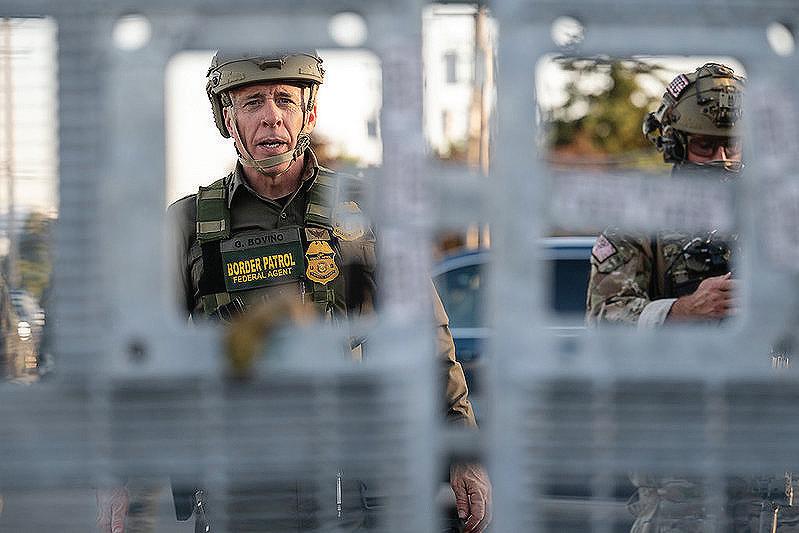
Border Patrol Commander Greg Bovino is pictured outside the Broadview federal detention center in September.
Photo by Paul Goyette
“2K/10K” message, along with other Snapchat messages related to Bovino and immigration agents’ activity that Espinoza Martinez shared.
They argued that, taken together, the messages represented Espinoza Martinez’s serious attempt to solicit Bovino’s murder, in response to the threat the Border Patrol commander and other federal immigration agents posed to Chicago’s Little Village community this past fall.
“What those messages show is that he was angry, he didn’t like [what] was going on in his neighborhood," federal prosecutor Jason Yonan told jurors, further arguing Espinoza Martinez was “fixated” on Bovino.
Prosecutors also pointed to a picture advertising a for-sale handgun, which Espinoza Martinez shared with his brother not long after he messaged Jimenez.
“That message was sent by the defendant within twenty-four hours of him sending a message about a murder for hire. It speaks for itself,” Yonan said.
Prosecutors even deemed Espinoza Martinez’s use of Snapchat suspect, noting the platform’s disappearing message feature.
“He could have sent it on another medium, but he didn’t. That is also evidence of his intent,” Assistant U.S. Attorney Minje Shin argued.
Espinoza Martinez’s defense team painted a much different picture of the messages. They argued he had merely shared “neighborhood gossip,” and pointed to a lack of material evidence that he tried to facilitate or pay for Bovino’s murder.
"You’re not gonna see wire transfers,” Bedi told jurors.
Oscar Martinez’s testimony bolstered that narrative. He said on the stand that he took his brother’s messages about a hit on Bovino as a joke.
“Nobody’s gonna do it for $10K,” Martinez said on the stand.
Martinez’s testimony also countered the government’s argument about the handgun advertisement. He said he is legally licensed to own firearms in Illinois, and that his brother sent him the advertisement because he was already looking for a gun like that.
Specifically, Martinez said he was attracted to the gun because its handle was emblazoned with a depiction of St. Jude, the family’s patron saint.
“It was only because it had St. Jude in the handle?” Bedi asked Martinez at one point.
“Yes,” Martinez answered.
Singer argued that taken together, the prosecution’s case represented an “overreaching government” —one she urged the jurors to stop.
Interwoven among the arguments from both sides was the issue of the Latin Kings.
Court documents show Perugini, even before the October 6 interview, believed Espinoza Martinez was a Latin Kings gang member, and a “high-ranking” one at that. In an affidavit dated October 5, Perugini wrote he believed Espinoza Martinez had “authority to order other [Latin Kings] members to carry out violent acts, including murder.”
of the Latin Kings.”
Espinoza Martinez’s attorneys argued he was neither a Latin Kings member nor a member of any gang, and the claim fell apart before trial. Presiding U.S. District Judge Joan Lefkow barred certain testimony and material related to his alleged gang membership from the trial in a January 15 memo.
“Without evidence showing that the defendant is a member of the Latin Kings or that the Latin Kings instructed defendant to send the alleged murder−for− hire information, the prejudicial nature of such testimony outweighs any probative value in violation of [federal evidence rules],” Lefkow wrote.
Federal prosecutors nevertheless alluded to the Latin Kings multiple times over the course of the trial. In closing rebuttal arguments, Shin argued it didn’t matter if Espinoza Martinez was actually in the gang or not. If the Bovino hit info came from the Latin Kings, Shin said, and
U.S. District Judge Sara Ellis, referenced their fear of alleged bounties placed on law enforcement. One agent specifically cited Latin Kings bounties in his justification for deploying chemical weapons in Little Village on October 23, claiming the situation was “highly dangerous” and in need of “immediate resolution.”
Bovino himself made a nearly identical claim in his own report describing his use of chemical weapons in Little Village that day.
“I felt this was an emergent, highly dangerous situation, especially in light of the aforementioned bounties placed on the heads of law enforcement, in need of immediate resolution for both the safety of Border Patrol agents and the public,” he wrote.
Espinoza Martinez is now the fifteenth person whose federal charges stemming from the so-called Midway Blitz mass deportation campaign have fallen apart in court. His case is the first of the Midway Blitz cases to reach trial.
“Nobody’s gonna do it for $10K."
The Department of Homeland Security (DHS) echoed the claim Espinoza Martinez was a Latin Kings gang member in an October 6 press release, as did the Justice Department in its own statement that day.
Assistant Homeland Security Secretary Tricia McLaughlin called Espinoza Martinez a “depraved” individual “who [did] not value human life” in prepared remarks accompanying the October 6 DHS press release, and repeated the claim he was a Latin Kings member on social media later that month. The DOJ added Espinoza Martinez was an “alleged” gang member, though its statement also included a comment from Chicago HSI Special Agent-In-Charge Matthew Scarpino calling Espinoza Martinez a “ruthless and violent member
Espinoza Martinez passed the info along with the hopes of action, he “made it his own.”
Following the acquittal, neither the Justice Department nor DHS had taken down their October statements deeming Espinoza Martinez a Latin Kings member, and they remain online as of press time. The DOJ did update their statement to note a jury found Espinoza Martinez not guilty; DHS’ statement remains unchanged.
There’s evidence DHS’ narrative around the Latin Kings impacted more than just Espinoza Martinez himself, even influencing on-the-ground federal immigration agents during Midway Blitz.
Multiple reports Border Patrol agents filed regarding their October operations in Chicago, made public per a court ruling by
The Justice Department did not respond to a request for comment by press time. Far right White House Deputy Chief of Staff Stephen Miller, however, took to X, formerly Twitter, last Thursday to rage over Sun-Times reporter Jon Seidel’s post on the verdict.
“Leftist judges and juries are empowering violent insurrection against the government in an effort to stop ICE from removing criminal alien invaders,” Miller wrote.
Bedi And Singer had a different take.
“This case is exactly why we have juries and an example of the power of the Jury Trial,” they said in their Friday press release. “Twelve ordinary citizens stood between an overreaching government and an innocent man.” ¬
Dave Byrnes is a Chicago-born independent journalist covering the Trump administration’s anti-immigrant blitz. He lives in Lincoln Square, but is a lifelong White Sox fan.
Jurado absuelve a residente de Chicago de planear
asesinato de comandante de la Patrulla Fronteriza
El acusado, Juan Espinoza Martínez, fue detenido por agentes de inmigración tras ser declarado no culpable y ahora se enfrenta a la deportación.
POR DAVE BYRNES
Juan
Espinoza Martínez abrazó a su abogado, Jonathan Bedi, después de que se leyera el veredicto de no culpabilidad en una corte federal en el centro de Chicago el jueves por la tarde. Desde principios de octubre, este padre de familia de 37 años de edad, hermano y trabajador de la construcción del vecindario de La Villita, se enfrentaba a un cargo federal de asesinato por encargo.
Los fiscales federales alegaban que Espinoza Martínez había ofrecido $10,000 por el asesinato del comandante de la Oficina de Aduanas y Protección Fronteriza (CBP), Greg Bovino. Estuvo meses bajo custodia federal, y el periodista del Tribune, Jason Meisner, informó que a finales de noviembre retiró una solicitud de libertad condicional tras enterarse de que el Servicio de Inmigración y Control de Aduanas (ICE) había emitido una orden de detención en su contra.
Después de todo esto, un jurado federal lo absolvió tras deliberar durante aproximadamente tres horas.
“Desde el primer día, dijimos que el gobierno no podía probar que Juan estuviera involucrado en ningún plan de asesinato por encargo. No pudieron”, declararon Bedi y su colega, la abogada defensora Dena Singer, en un comunicado de prensa el viernes sobre el veredicto.
A pesar de la absolución, Espinoza Martínez aún no es un hombre libre. Al igual que en la audiencia de liberación de noviembre, el ICE lo detuvo tras el juicio. Los datos del ICE disponibles públicamente indican que, al momento de escribir este artículo, había sido trasladado de Chicago a un centro de detención en el condado de Clay, Indiana. Espinoza era beneficiario del programa DACA (Acción
de 1990, dijo que contactó a un agente federal sobre el mensaje casi de inmediato. Esto dio inicio a una investigación en la que, según todos los indicios, Espinoza Martínez cooperó. Los agentes federales lo arrestaron e interrogaron el 6 de octubre, después de que él renunciara voluntariamente a su derecho a guardar silencio o a tener un abogado presente. Los miembros del jurado también vieron que Espinoza Martínez accedió a que se registrara su teléfono y proporcionó a los agentes federales los medios para acceder a él.
El comandante de la Patrulla Fronteriza, Gregory Bovino, aparece fotografiado afuera del centro de detención federal de Broadview en septiembre.
Diferida para los Llegados en la Infancia) y había vivido en Chicago desde los cinco años de edad, pero, según el Tribune, no renovó su estatus en 2020 debido a dificultades económicas.
El Weekly se comunicó con el abogado de inmigración de Espinoza Martínez para obtener comentarios sobre su situación bajo custodia del ICE, pero hasta el cierre de esta edición, no recibió respuesta.
Su juicio duró menos de tres días. La selección del jurado comenzó el martes por la mañana; los abogados presentaron sus argumentos iniciales el miércoles por la mañana y el jurado recibió el caso a primera hora de la tarde del jueves. Los miembros del jurado escucharon a solo cuatro testigos en total. La fiscalía llamó a declarar a los agentes de Investigaciones de Seguridad Nacional (HSI) Christopher
Foto por Paul Goyette
Perugini y Donald Adams, así como a Adrián Jiménez, quien se autoproclamó informante de las fuerzas del orden desde hace mucho tiempo. Los abogados defensores de Espinoza Martínez sólo llamaron a un testigo, su hermano Óscar Martínez.
Jiménez testificó que es dueño de una empresa de construcción y que conoció a Espinoza Martínez cuando este último lo contactó para buscar trabajo. El caso giraba en torno a un mensaje de Snapchat que Espinoza Martínez le envió a Jiménez a principios de octubre.
Acompañado de una foto de Bovino, el mensaje decía: “2K por información cuando lo atrapen / 10K si lo eliminas / LK ”.
Durante ese interrogatorio, cuyos fragmentos y transcripciones vieron los miembros del jurado en el juicio, Espinoza Martínez insistió repetidamente en que nunca tuvo la intención de amenazar a nadie. Les dijo a los agentes que solo estaba repitiendo cosas que había escuchado en el vecindario, incluidos chismes supuestamente de la pandilla Latin Kings, a la que se refería con las iniciales “LK” en su mensaje.
“No estoy contratando a nadie”, les dijo a los agentes en un momento del interrogatorio.
Los agentes no le creyeron.
“¿Qué más tienes en tu teléfono?”, le preguntó uno de los agentes a Espinoza Martínez en un momento dado, mientras este se ponía visiblemente más nervioso.
Jiménez, quien también testificó que ha sido informante de las fuerzas del orden desde mediados de la década
Un gran jurado lo acusó formalmente el 14 de octubre de conspiración para cometer asesinato, un cargo que conlleva una pena máxima de diez años de prisión en caso de ser declarado culpable. Durante el juicio, los fiscales mostraron al jurado el mensaje “2K/10K”, junto con otros mensajes de Snapchat relacionados con Bovino y con la actividad de los agentes de
inmigración que Espinoza Martínez había compartido.
Argumentaron que, en conjunto, los mensajes representaban un intento serio por parte de Espinoza Martínez de solicitar el asesinato de Bovino, en respuesta a la amenaza que el comandante de la Patrulla Fronteriza y otros agentes federales de inmigración representaban para la comunidad de La Villita en Chicago el otoño pasado.
“Lo que muestran esos mensajes es que estaba enojado; no le gustaba lo que estaba pasando en su vecindario”, dijo el fiscal federal Jason Yonan a los miembros del jurado y, además, argumentó que Espinoza Martínez estaba “obsesionado” con Bovino.
Los fiscales también señalaron una fotografía que anunciaba la venta de una pistola, que Espinoza Martínez compartió con su hermano poco después de enviarle un mensaje a Jiménez.
“Ese mensaje fue enviado por el acusado dentro de las veinticuatro horas posteriores a que envió un mensaje sobre un asesinato por encargo. Habla por sí solo”, aseguró Yonan.
Los fiscales incluso consideraron sospechoso el uso de Snapchat por parte de Espinoza Martínez, destacando la función de mensajes que se autodestruyen de la plataforma.
“Podría haberlo enviado por otro medio, pero no lo hizo. Eso también es evidencia de su intención”, argumentó la fiscal adjunta de Estados Unidos, Minje Shin.
El equipo de defensa de Espinoza Martínez presentó una versión muy diferente de los mensajes. Argumentaron que simplemente había compartido “chismes del vecindario” y señalaron la falta de pruebas materiales de que hubiera intentado facilitar o pagar el asesinato de Bovino.
“No van a encontrar transferencias bancarias”, dijo Bedi a los miembros del jurado.
El testimonio de Óscar Martínez reforzó esa versión. Declaró que tomó los mensajes de su hermano sobre un asesinato por encargo de Bovino como una broma.
“Nadie lo va a hacer por $10,000”, dijo Martínez en el estrado.
El testimonio de Martínez también
refutó el argumento del gobierno sobre el anuncio de la pistola. Dijo que tiene licencia legal para poseer armas de fuego en Illinois y que su hermano le envió el anuncio porque ya estaba buscando un arma de ese tipo.
En concreto, Martínez dijo que le atrajo el arma porque la empuñadura estaba grabada con una imagen de San Judas Tadeo, el santo patrón de su familia.
“¿Fue sólo porque tenía la imagen de San Judas en la empuñadura?”, le preguntó Bedi a Martínez en un momento dado.
“Sí”, respondió Martínez.
Singer argumentó que, en conjunto, el caso de la fiscalía representaba un “gobierno extralimitado”, uno que instó a los jurados a detener.
Entre los argumentos de ambas partes estaba el tema de los Latin Kings.
Los documentos judiciales muestran que Perugini, incluso antes de la entrevista del 6 de octubre, creía que Espinoza Martínez era miembro de la pandilla Latin Kings y de alto rango. En una declaración jurada del 5 de octubre, Perugini escribió que creía que Espinoza Martínez tenía “autoridad para ordenar a otros miembros [de los Latin Kings] que llevaran a cabo actos violentos, incluido el asesinato”.
El Departamento de Seguridad Nacional (DHS) hizo eco de la afirmación de que Espinoza Martínez era miembro de la pandilla Latin Kings en un comunicado de prensa del 6 de octubre, al igual que el Departamento de Justicia en su declaración ese mismo día.
La subsecretaria de Seguridad Nacional, Tricia McLaughlin, calificó a Espinoza Martínez de individuo “depravado” que “no valoraba la vida humana” en declaraciones preparadas que acompañaban al comunicado de prensa del DHS del 6 de octubre, y ese mismo mes repitió en las redes sociales la afirmación de que era miembro de los Latin Kings. El Departamento de Justicia añadió que Espinoza Martínez era un “presunto” miembro de la pandilla, aunque su declaración también incluía un comentario del agente especial a cargo de HSI en Chicago, Matthew Scarpino, quien calificó a Espinoza Martínez de “miembro despiadado y violento de los Latin Kings”.
Los abogados de Espinoza Martínez
argumentaron que no era miembro de los Latin Kings ni de ninguna otra pandilla y la acusación se desmoronó antes del juicio. La jueza de distrito federal Joan Lefkow prohibió ciertos testimonios y material relacionados con su supuesta pertenencia a una pandilla en el juicio mediante un memorando del 15 de enero.
“Sin pruebas que demuestren que el acusado es miembro de los Latin Kings o que los Latin Kings le ordenaron enviar la supuesta información sobre el asesinato por encargo, la naturaleza perjudicial de dicho testimonio supera cualquier valor probatorio, en violación de las normas federales de pruebas”, escribió Lefkow.
Sin embargo, los fiscales federales aludieron a los Latin Kings en múltiples ocasiones durante el juicio. En los argumentos finales de refutación, Shin sostuvo que no importaba si Espinoza Martínez pertenecía o no a la pandilla. Si la información sobre el asesinato de Bovino provenía de los Latin Kings y Espinoza Martínez la transmitió con la esperanza de que se actuara en consecuencia, entonces “la hizo suya”.
Tras la absolución, ni el Departamento de Justicia ni el DHS habían retirado sus declaraciones de octubre en las que consideraban a Espinoza Martínez miembro de los Latin Kings, y estas permanecen en línea hasta el momento de la publicación. El Departamento de Justicia actualizó su declaración para señalar que un jurado había declarado a Espinoza Martínez no culpable; la declaración del DHS permanece sin cambios.
Hay pruebas de que la narrativa del DHS sobre los Latin Kings afectó a más personas que solo a Espinoza Martínez, e incluso influyó en los agentes federales de inmigración sobre el terreno durante el Operativo Midway Blitz.
Varios informes presentados por agentes de la Patrulla Fronteriza sobre sus operaciones de octubre en Chicago, hechos públicos por orden de la jueza federal de distrito Sara Ellis, hacían referencia a su temor a las supuestas recompensas ofrecidas por la cabeza de agentes del orden. Un agente citó específicamente las recompensas de los Latin Kings para justificar el uso de armas químicas en La Villita el 23 de octubre, alegando que la situación era “altamente peligrosa” y
requería una “resolución inmediata”. El propio Bovino hizo una afirmación casi idéntica en su informe, en el que describía el uso de armas químicas en La Villita ese mismo día.
“Consideré que se trataba de una situación de emergencia, altamente peligrosa, especialmente a la luz de las recompensas mencionadas anteriormente por la cabeza de los agentes del orden, que requería una resolución inmediata tanto para la seguridad de los agentes de la Patrulla Fronteriza como para la del público”, escribió.
Espinoza Martínez es ahora la decimoquinta persona cuyos cargos federales derivados de la llamada campaña de deportación masiva Midway Blitz se han desmoronado en las cortes. Su caso es el primero de los casos de Midway Blitz que llegan a juicio.
El Departamento de Justicia no respondió a la solicitud de comentarios antes del cierre de esta edición. Sin embargo, Stephen Miller, subdirector de gabinete de la Casa Blanca y de extrema derecha, recurrió a X (anteriormente Twitter) el jueves pasado para expresar su indignación por la publicación del periodista del Sun-Times, Jon Seidel, sobre el veredicto.
“Los jueces y jurados de izquierda están fomentando la insurrección violenta contra el gobierno en un intento de impedir que el ICE expulse a los inmigrantes ilegales delincuentes”, escribió Miller.
Bedi y Singer tenían una opinión diferente.
“Este caso demuestra precisamente la importancia de los jurados y es un ejemplo del poder del juicio por jurado”, declararon en su comunicado de prensa del viernes. “Doce ciudadanos comunes se interpusieron entre un gobierno que se extralimitaba en sus funciones y un hombre inocente”. ¬
Dave Byrnes es un periodista independiente de Chicago que informa sobre la ofensiva antiinmigrante de la administración Trump. Vive en Lincoln Square y ha sido fanático de los White Sox toda su vida.
Little Village Mauser Workers Reach Deal
Teamsters at the Millard Mauser plant voted last week to end their months-long strike after securing severance and rehiring opportunities.
BY JOSÉ ABONCE
After seven months on the picket line, Teamsters from Local 705 at Mauser Packaging Solutions’ Millard plant in Little Village reached an agreement to end the strike on January 21.
Workers began striking in June and continued even after Mauser closed the plant in November.
According to Nicolas Coronado, legal counsel for Teamsters Local 705, the agreement allows twenty union drivers—who were not part of the contract negotiations but joined the picket line in solidarity with production workers—to keep their jobs. The 120 production workers will receive a severance pay that equates to a full work week of pay for each year they have worked at Mauser. Some will be paid upwards of $36,000.
The agreement also included a stipulation that would recognize Teamsters Local 705 as the union representative at any Chicago Mauser plant that may open in the future that reconditions drums as the Millard facility once did.
While the production workers will be allowed to reapply at other Mauser plants, they would not be given any special preference.
Mauser did not respond to requests for comment.
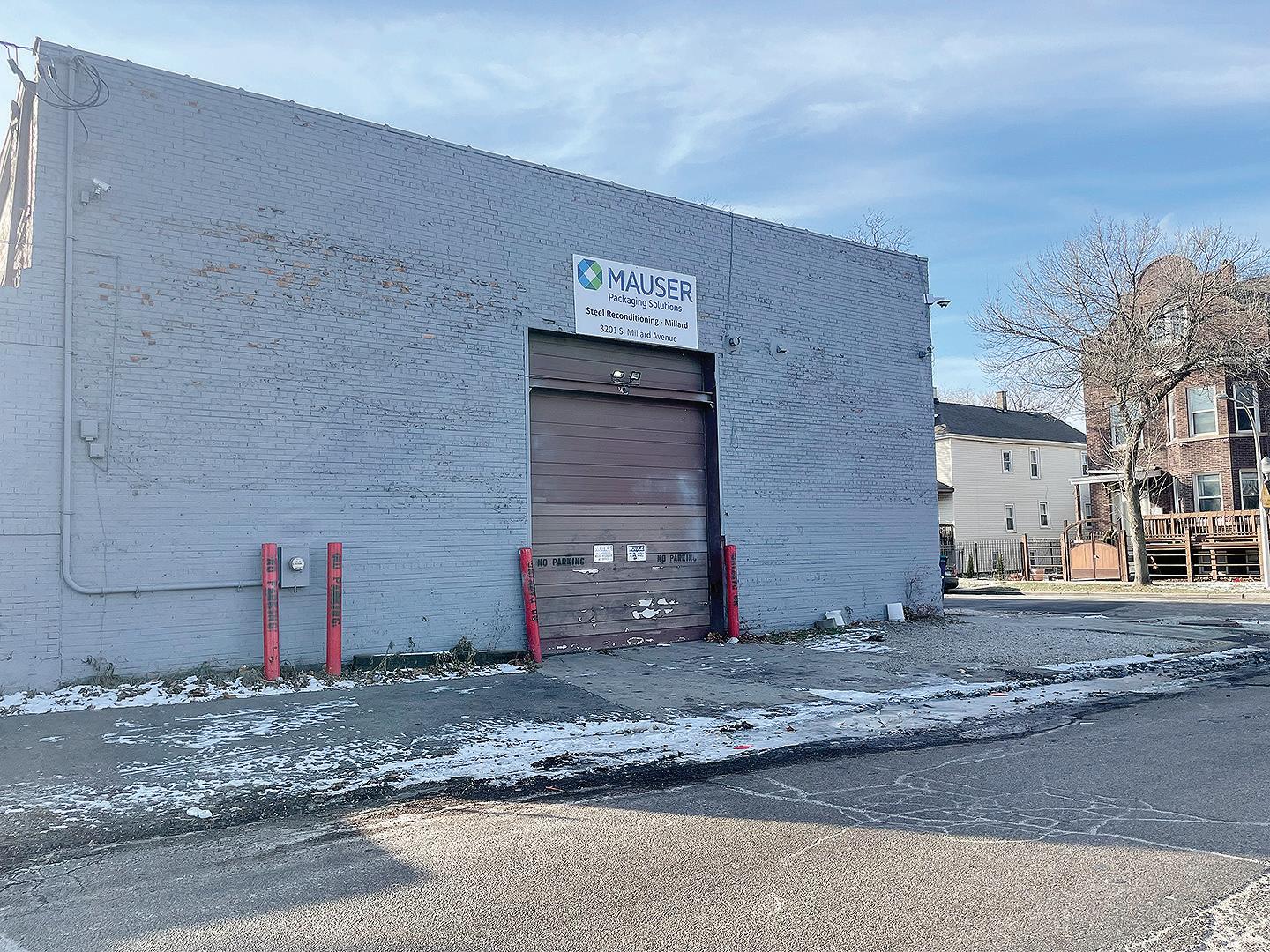
The Millard Mauser facility, which the company closed in November, sits on the corner of 32nd Street and Millard Avenue, bordered by train tracks and facing residential homes and an empty gravel lot. It was one of three Mauser plants in the neighborhood though the only one to see a strike.
Before the Millard plant closed, tensions had been building for months. The
strike began in June to win a new collective bargaining agreement that addressed unsafe conditions, extreme temperatures, inadequate protective gear, low pay, and immigration raids.
According to Mauser representatives, revenue losses tied to the strike, along with mounting safety, health and environmental violations, contributed to the decision to close the facility.
Even after Mauser announced it would close its Millard facility, workers continued the strike to pressure management to reopen the plant and negotiate a collective bargaining agreement or severance for laid off workers.
Sustaining the strike for so long took dedicated effort from workers.
Arturo Landa worked at the Millard plant for more than twelve years. A union
member, shop steward, and Teamster since 2019, for months Landa would arrive at the facility by 5:30am each morning. He’d have his coffee and prop up a blue Teamsters 705 tent across the street from the plant by 6am, with a space heater blasting to provide warmth and a resting area for members on the picket line.
Landa, a mechanic II who worked his way up from inspecting painted steel drums to overseeing the painting process and managing seven employees, had been on the frontlines of the strike since it began in June. He was the first one to arrive and the last to leave. Throughout the day, Landa would ensure that the over 140 members on strike had what they needed, whether that be protection from the elements or propane for the huge inflatable, Scabby the Rat.
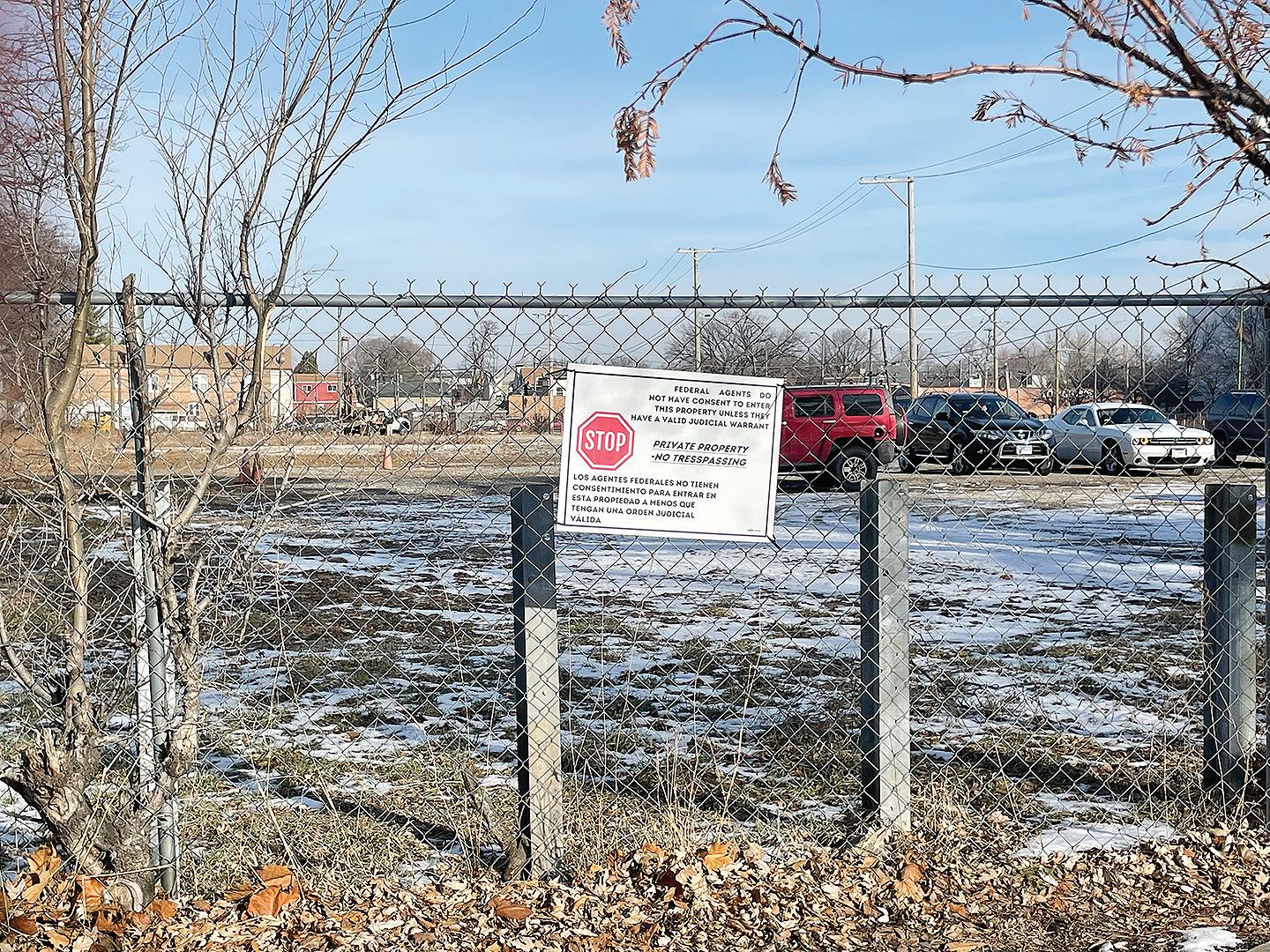
Signs posted on the fence surrounding
the empty gravel lot where the tent was stationed provide a notice to federal immigration agents prohibiting them from entering the private lot.
In December, about a dozen Teamsters were on strike near the southwest intersection of Archer and Cicero avenues when they were targeted and harassed by Customs and Border Patrol Chief Gregory Bovino and about a dozen agents.
A video posted on Instagram by Local 705 shows Bovino accompanied by a media team and several agents, some dressed in full tactical gear and others in plain clothes wearing bulletproof vests.
In the video, Bovino laughed as agents questioned members about their status. Workers, who had previously received know-your-rights training from worker rights organization Arise Chicago, remained calm, and no one was detained. But the encounter made workers concerned about future possible encounters with federal agents.
According to Landa, prohibiting immigration agents from Mauser property protects all workers, particularly as Mauser’s workforce is predominately Latino, and as the company continues its operations at other nearby facilities where Teamsters may potentially be rehired or transferred to.
Members asked for what Coronado described as the “bare minimum,” requesting immigration protection language to be enshrined in the contract that would state to Mauser employees that the company would protect their workers and keep them safe by not letting ICE or CBP enter the workplace without a signed judicial warrant.
However, because the Mauser Millard plant will not be reopening, a new collective
bargaining agreement was not reached, and the workers did not secure protections against immigration raids.
The strike began just as Mauser Teamsters Local 705’s collective bargaining agreement was set to expire.
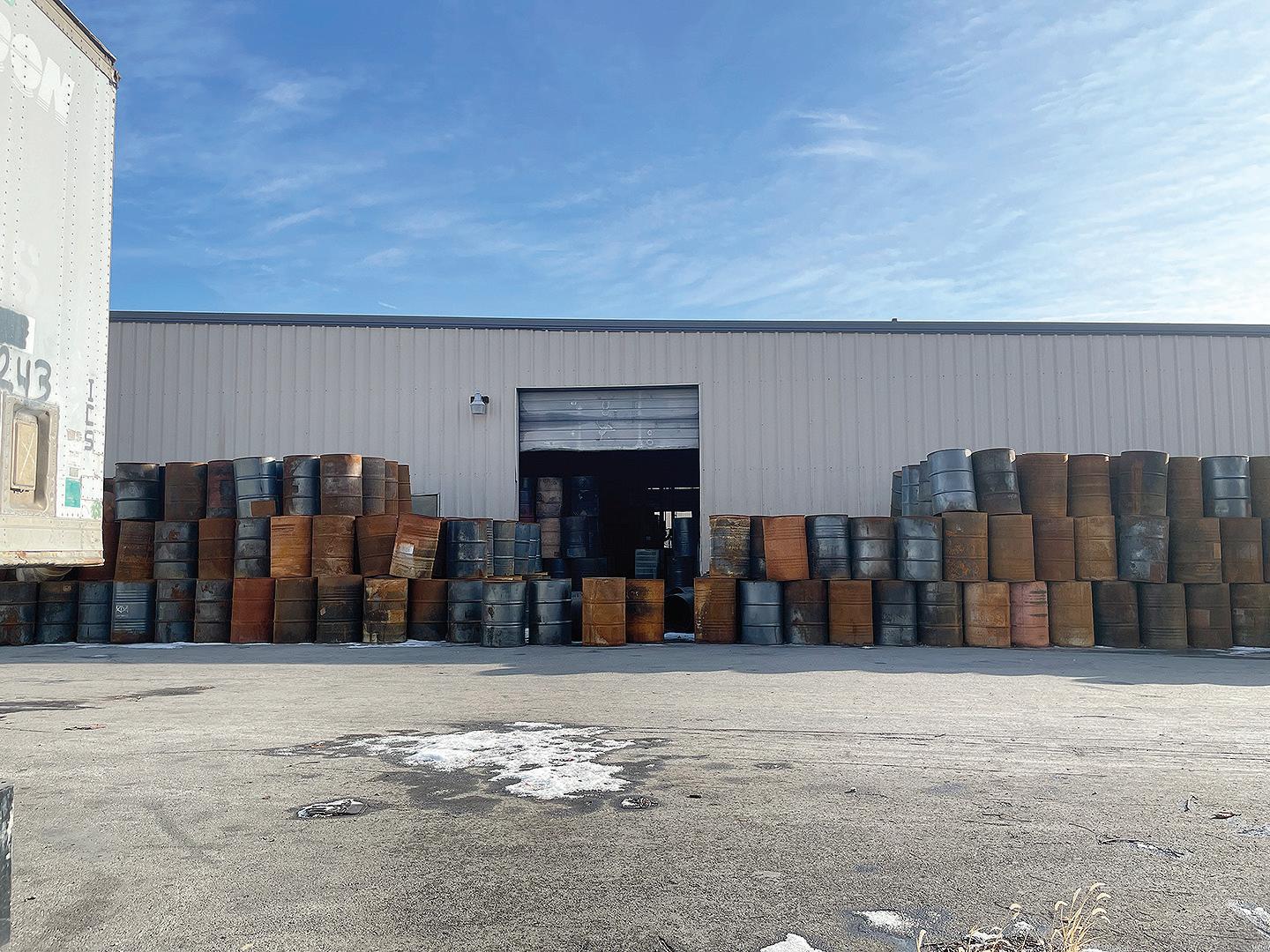
The plant recycled used dirty steel drums that at some point contained one of thirty-six possible products that complied with Mauser’s container acceptance policy. Chemicals in these drums ranged from ammonia to benzene and poisonous materials. As a recycling facility, employees reconditioned barrels using an oven that burned dirty residue from contaminants before the containers were painted and shipped back out to customers.
According to Coronado, employees worked around toxic materials without adequate ventilation. Landa explained that when the temperature outside was in the 90s, it would often be ten to fifteen degrees hotter inside the plant due to the burn-off ovens that reached up to 1,000 degrees Fahrenheit.
“They [Mauser] would show us an OSHA app on their cellphone and say ‘This reads 94. Until it reads 95 we cannot give you a 15 minute break per hour,’” Landa recalled management telling him. He said employees would express concerns that the app would only read the outside temperature and not the indoor temperatures they were working in.
Winters were especially harsh for members who were responsible for cleaning the drums. Due to the cold weather, the plant would keep windows closed.
“There would be smoke, dust, and we would even have to breathe paint,” Landa said. “There was a ton of contamination.”
Landa said that the smoke and dust would not settle until the nighttime when people were off the clock. He added that the Personal Protective Equipment (PPE) given to employees was inadequate and would cause workers to experience burning and irritation of the eyes, nose, and throat.
In a social media post, Mauser Teamster Dante Woodson described the unregulated temperatures within the Millard plant that caused extremely high temperatures during the summer and frigid temperatures during winters.
“I got really sick due to the fact that I was working in extreme heat and
accommodations, I got met with threats of being terminated,” Woodson said.
According to Landa, the fine sand used to clean drums would cut people's skin when machines were not operating appropriately. During the cold months, the hose used to suction the sand would freeze and leave the air in the workplace filled
slip and fall hazards, exposing employees to crushing hazards that resulted in broken bones, and failure to retrain employees.
According to OSHA violations summaries, the Millard facility racked up nearly $200,000 in fines between 2019 and 2025. Most violations were categorized as safety and health violations. In the state
“I’m happy that these workers can have this chapter closed in their lives. They should be nothing but proud of themselves for standing up,” said Coronado.
with dust.
A search of Occupational Safety and Health Administration (OSHA) records for the Millard Mauser facility and its subsidiary, BWAY Corporation, which shares the Millard address, found at least a dozen closed inspections since 2019 and an additional open case from 2025 involving an amputation. In one closed incident, an employee suffered a fingertip amputation on two fingers.
On another occasion a worker was moving drums off a trailer when he felt unwell and appeared red in the face before he lost consciousness. Other violations
the company was going to be shut down. But to this day, we see Mauser trucks leaving that facility on Millard, continuing to do work,” he said.
According to Coronado, Mauser used temp agencies and diverted some of the work that the Millard plant would do to a leased facility near Archer and Cicero. There, he said drums were sorted out before they would be taken out of state to Ohio and Michigan where they are reconditioned.
Before Millard announced its closure, Mauser Teamsters asked for a three-year contract with a 1 dollar hourly raise each year. Mauser countered and offered 65 cents in year one, with a 50 cent raise each year after that. “That’s not even enough for Maruchan Ramen Noodles,” Landa said.
Feeling pressured to vote and alarmed by Mauser’s fear tactics—including letters sent to members’ homes falsely claiming that the Teamsters wanted the plant closed—Local 705 unanimously rejected the company’s offer.
The Chicago strike wasn’t the first labor action at Mauser last year. In April, Teamsters Local 117 members at the company’s Seattle facility were locked out during contract negotiations.
Mauser Packaging Solutions owns and operates over 180 sites across twenty countries and five continents. It was formed in 2018 in a merger between companies BWAY, MAUSER Group, National Container Group, and Industrial Container Services, some of which date back to the 19th century. Mauser produces and reconditions metal, plastic, fiber, and hybrid packaging to industries worldwide.
of Illinois, Mauser and BWAY have had a combined total of twenty severe injury reports, eleven workers hospitalized, and fourteen workers who suffered amputations. Records show that six of those incidents involving amputations occurred at the Millard plant.
Mauser representatives at the negotiation table told members various reasons for why the Millard plant was closing, including dips in revenue due to the strike and mounting EPA and OSHA violations.
Coronado said that despite the plant’s closure, work continued. “We thought that
“When Mauser arrived they told us we would be like a family. That we would be united,” Landa reflected. “But throughout the strike we were out here during the high temperatures and now with the cold and we realized we didn’t matter to them.”
“I’m happy that these workers can have this chapter closed in their lives. They should be nothing but proud of themselves for standing up,” said Coronado. ¬
José Abonce is the senior program manager for the Chicago Neighborhood Policing Initiative and a freelance reporter who focuses on immigration, public safety, politics, and race.
Trabajadores de la planta Mauser en La Villita llegan a un acuerdo
Tras obtener indemnizaciones por despido y oportunidades de recontratación, miembros del sindicato
Teamsters de la planta de Millard Mauser votaron la semana pasada a favor de poner fin a su huelga, que duró varios meses.
POR JOSÉ ABONCE TRADUCIDO POR GISELA OROZCO
Tras siete meses de huelga, el 21 de enero los miembros del sindicato Teamsters del Local 705 de la planta de Mauser Packaging Solutions en Millard Avenue, en el vecindario de La Villita, llegaron a un acuerdo para poner fin a la huelga.
Los trabajadores iniciaron la huelga en junio y la mantuvieron incluso después de que Mauser cerrara la planta en noviembre.
Según Nicolás Coronado, asesor legal del Teamsters Local 705, el acuerdo permite que veinte conductores sindicalizados — que no participaron en las negociaciones del contrato pero se unieron a la huelga en solidaridad con los trabajadores de producción— conserven sus puestos de trabajo. Los 120 trabajadores de producción recibirán una indemnización equivalente a una semana de salario por cada año trabajado en Mauser. Algunos recibirán hasta $36,000.
El acuerdo también incluye una cláusula que reconoce al Teamsters Local 705 como representante sindical en cualquier planta de Mauser en Chicago que pueda abrir en el futuro y que se dedique al reacondicionamiento de contenedores, como lo hacía la planta de Millard. Si bien los trabajadores de producción podrán solicitar empleo en otras plantas de Mauser, no tendrán preferencia alguna. Mauser no respondió a las solicitudes de comentarios.
La planta de Millard Mauser, que la empresa cerró en noviembre, está ubicada en la esquina de 32nd Street y Millard Avenue, bordeada por las vías del tren y frente a casas residenciales y
un terreno baldío de grava. Era una de las tres plantas de Mauser en el vecindario, aunque fue la única que vivió una huelga.
Antes del cierre de la planta de Millard Avenue, las tensiones se habían acumulado durante meses. La huelga comenzó en junio para conseguir un nuevo convenio colectivo que abordara las condiciones inseguras, las temperaturas extremas, el equipo de protección inadecuado, los bajos salarios y las redadas de inmigración.
Según representantes de Mauser, las pérdidas de ingresos derivadas de la huelga, junto con las crecientes violaciones de la seguridad, la salud y el medio ambiente, contribuyeron a la decisión de cerrar la planta.
Incluso después de que Mauser
anunciara el cierre de su planta en Millard Avenue, los trabajadores continuaron la huelga para presionar a la gerencia para que reabriera la planta y negociara un convenio colectivo o una indemnización para los trabajadores despedidos.
Mantener la huelga durante tanto tiempo requirió un gran esfuerzo por parte de los trabajadores.
Arturo Landa trabajó en la planta de Millard durante más de doce años.
Miembro del sindicato, delegado sindical y miembro de Teamsters desde 2019, durante meses llegaba a la planta a las 5:30 a.m.
Tomaba su café y montaba una carpa azul de Teamsters 705 al otro lado de la calle de la planta a las 6 a.m., con un calefactor encendido para proporcionar calor y un área
de descanso para los miembros en huelga. Landa, mecánico de segunda categoría que ascendió desde la inspección de contenedores de acero pintados hasta la supervisión del proceso de pintura y la gestión de siete empleados, había estado en la primera línea de la huelga desde que comenzó en junio. Era el primero en llegar y el último en irse. Durante todo el día, Landa se aseguraba de que los más de 140 miembros en huelga tuvieran lo que necesitaban, ya fuera protección contra las inclemencias del tiempo o gas propano para Scabby, la enorme rata inflable.
Letreros colocados en la cerca que rodeaba el terreno baldío donde estaba instalada la carpa advertían a los agentes federales de inmigración que tenían prohibido entrar en la propiedad privada. En diciembre, una docena de miembros del sindicato Teamsters estaban en huelga cerca de la intersección suroeste de las avenidas Archer y Cicero cuando fueron acosados por el jefe de la Patrulla Fronteriza y de Aduanas, Gregory Bovino, y una docena de agentes.
Un video publicado en Instagram por el Local 705 muestra a Bovino acompañado por un equipo de prensa y varios agentes, algunos vestidos con equipo táctico completo y otros de civil con chalecos antibalas.
En el video, Bovino se reía mientras los agentes interrogaban a los trabajadores sobre su estatus migratorio. Los trabajadores, que previamente habían recibido capacitación sobre sus derechos por parte de la organización de derechos laborales Arise Chicago, mantuvieron la calma y nadie fue detenido. Sin embargo,
el incidente generó preocupación entre los trabajadores por posibles encuentros futuros con agentes federales.
Según Landa, prohibir la entrada de agentes de inmigración a la propiedad de Mauser protege a todos los trabajadores, particularmente porque la fuerza laboral de Mauser es predominantemente latina, y dado que la empresa continúa sus operaciones en otras instalaciones cercanas donde los miembros del sindicato Teamsters podrían ser recontratados o transferidos.
Los miembros solicitaron lo que Coronado describió como el “mínimo indispensable”, pidiendo que se incluyera en el contrato una cláusula de protección migratoria que garantizara a los empleados de Mauser que la empresa los protegería y los mantendría a salvo, impidiendo que el Servicio de Inmigración y Control de Aduanas (ICE) o la Oficina de Aduanas y Protección Fronteriza (CBP) entraran al lugar de trabajo sin una orden judicial firmada.
Sin embargo, dado que la planta de Mauser Millard no volverá a abrir, no se llegó a un nuevo convenio colectivo y los trabajadores no obtuvieron protección contra las redadas migratorias.
La huelga comenzó justo cuando estaba por expirar el convenio colectivo del Sindicato Local 705 de Mauser.
La planta reciclaba contenedores de acero sucios que en algún momento habían contenido uno de los treinta y seis productos que cumplían con la política de aceptación de contenedores de Mauser. Los productos químicos en estos contenedores variaban desde amoníaco hasta benceno, incluyendo materiales tóxicos. Como planta de reciclaje, los empleados reacondicionaban los contenedores utilizando un horno que quemaba los residuos contaminantes antes de que fueran pintados y enviados de regreso a los clientes.
Según Coronado, los empleados trabajaban con materiales tóxicos sin la ventilación adecuada. Landa explicó que cuando la temperatura exterior rondaba los 90 grados, a menudo hacía entre 10 y 15 grados más dentro de la planta debido a los hornos de combustión que alcanzaban hasta los 1,000 grados Fahrenheit.
“Ellos [Mauser] nos mostraban una aplicación de la OSHA (Administración de Seguridad y Salud Ocupacional) en
su teléfono celular y decían: ‘Aquí marca 94 grados. Hasta que no marque 95, no podemos darles un descanso de 15 minutos por hora’”, recordó Landa que le decía la gerencia. Comentó que los empleados expresaban su preocupación porque la aplicación sólo mostraba la temperatura exterior y no la temperatura interior en la que trabajaban.
Los inviernos eran especialmente duros para los trabajadores encargados de limpiar los contenedores. Debido al frío, la planta mantenía las ventanas cerradas.
“Había humo, polvo e incluso teníamos que respirar pintura”, dijo Landa. “Había muchísima contaminación”.
Landa afirmó que el humo y el polvo no se disipaban hasta la noche, cuando los trabajadores terminaran su jornada laboral.
que comparte la misma dirección, reveló al menos una docena de inspecciones cerradas desde 2019 y un caso adicional de 2025, abierto, relacionado con una amputación. En uno de los incidentes cerrados, un empleado sufrió la amputación de la punta de dos dedos.
En otra ocasión, un trabajador estaba descargando contenedores de un remolque cuando se sintió mal y se le puso la cara roja antes de perder el conocimiento. Otras infracciones incluyeron inspecciones realizadas por personal no certificado, riesgos de resbalones y caídas, exposición de los empleados a riesgos de aplastamiento, que resultó en fracturas, y la falta de capacitación continua para los empleados.
Según los resúmenes de infracciones de la OSHA, entre 2019 y 2025 la planta
“Me alegra que estos trabajadores puedan cerrar este capítulo de sus vidas. Deberían sentirse muy orgullosos de sí mismos por haber alzado la voz”, dijo Coronado.
Añadió que el equipo de protección personal (PPE) proporcionado a los empleados era inadecuado y les causaba ardor e irritación en los ojos, la nariz y la garganta.
En una publicación en redes sociales, Dante Woodson, miembro del sindicato Teamsters de Mauser, describió las temperaturas extremas en la planta de Millard, con calor sofocante en verano y frío intenso en invierno.
“Me enfermé gravemente porque trabajaba en condiciones de calor extremo y, en lugar de recibir atención y adaptaciones, recibí amenazas de despido”, declaró Woodson.
Según Landa, la arena fina utilizada para limpiar los contenedores cortaba la piel de los trabajadores cuando las máquinas no funcionaban correctamente. Durante los meses fríos, la manguera utilizada para aspirar la arena se congelaba, lo que provocaba que el aire del lugar de trabajo se llenara de polvo.
Una búsqueda en los registros de la OSHA de la planta de Mauser en Millard y de su subsidiaria, BWAY Corporation,
Según Coronado, Mauser utilizó agencias de trabajo temporal y desvió parte del trabajo que realizaba la planta de Millard a una instalación alquilada cerca de Archer Road y Cicero Avenue. Allí, explicó, se clasificaban los contenedores antes de ser enviados fuera del estado a Ohio y Michigan, donde se reacondicionaban. Antes de que Millard anunciara su cierre, los miembros del sindicato Teamsters de Mauser solicitaron un contrato de tres años con un aumento salarial de 1 dólar por hora cada año. Mauser contraofertó con 65 centavos en el primer año y un aumento de 50 centavos en cada año posterior. “Eso ni siquiera alcanza para comprar sopa instantánea Maruchan”, destacó Landa. Sintiéndose presionados para votar y alarmados por las tácticas intimidatorias de Mauser, que incluían cartas enviadas a los domicilios de los miembros, en las que se afirmaba falsamente que los Teamsters querían el cierre de la planta, el Local 705 rechazó por unanimidad la oferta de la empresa.
La huelga de Chicago no fue la primera acción laboral en Mauser el año pasado. En abril, los miembros del Local 117 de Teamsters en la planta de la compañía en Seattle fueron despedidos temporalmente durante las negociaciones del contrato.
de Millard acumuló casi $200,000 en multas. La mayoría de las infracciones se clasificaron como violaciones de seguridad y salud. En el estado de Illinois, Mauser y BWAY han registrado un total combinado de veinte informes de lesiones graves, once trabajadores hospitalizados y catorce trabajadores que sufrieron amputaciones. Los registros muestran que seis de estos incidentes con amputaciones ocurrieron en la planta de Millard.
Los representantes de Mauser en la mesa de negociación expusieron a los miembros diversas razones para el cierre de la planta de Millard, incluyendo la disminución de los ingresos debido a la huelga y el aumento de las infracciones de la Agencia de Protección Ambiental (EPA) y de la OSHA.
Coronado afirmó que, a pesar del cierre de la planta, el trabajo continuó. “Pensábamos que la empresa iba a cerrar definitivamente. Pero hasta el día de hoy, vemos camiones de Mauser saliendo de esa instalación en Millard, continuando con las operaciones”, destacó.
Mauser Packaging Solutions posee y opera más de 180 plantas en veinte países y cinco continentes. Se formó en 2018 mediante la fusión de las empresas BWAY, MAUSER Group, National Container Group e Industrial Container Services, algunas de las cuales datan del siglo 19. Mauser produce y reacondiciona envases de metal, plástico, fibra y materiales híbridos para industrias de todo el mundo.
“Cuando llegó Mauser, nos dijeron que seríamos como una familia, que estaríamos unidos”, reflexionó Landa. “Pero durante la huelga estuvimos aquí, soportando las altas temperaturas y ahora el frío, y nos dimos cuenta de que no les importábamos”.
“Me alegra que estos trabajadores puedan cerrar este capítulo de sus vidas. Deberían sentirse muy orgullosos de sí mismos por haber defendido sus derechos”, destacó Coronado. ¬
José Abonce es el director sénior de programas de la Chicago Neighborhood Policing Initiative y periodista independiente especializado en inmigración, seguridad pública, política y raza.
Going Out With a Bang
Despite
the Bears’ loss to the Los Angeles Rams last week, Chicagoans are thrilled at the team’s performance this season and hopeful about what it means for the city’s football future.
BY MALACHI HAYES
Chicagoans love their sports. When a team is good, they rally, and they rally hard. But after years of mediocre teams, the intensity of renewed interest in the suddenly competitive Bears feels remarkable. It didn’t go unnoticed outside of Chicago, either. Longtime television play-by-play man Al Michaels has probably called as many NFL games as anybody alive right now. Near the conclusion of the Bears’ stunning playoff victory against the Green Bay Packers, an awestruck Michaels declared, “I’ve done thirty-one games in this stadium and it’s the first time I’ve felt it shaking like this.”
That seismic reaction to a scoring play at Soldier Field came despite the fact that the Bears still trailed late in the game. You can imagine the pandemonium twenty minutes later, when a dramatic touchdown pass gave them the lead that would complete a historic comeback and give Chicago its first playoff win in fifteen years.
If you’re more into quantifying things, here’s a number for you: 45 million. That’s roughly how many viewers watched the subsequent week’s matchup with the Los Angeles Rams, making it the mostwatched divisional round playoff game in the history of NBC’s football broadcast. This was just a week after the Bears’ victory against Green Bay became the moststreamed NFL game ever, drawing in a record 31-million-plus viewers on Amazon Prime Video. That would have beaten every non-Thanksgiving broadcast during the NFL’s regular season—for a game that wasn’t even available on television for most of the country!
Such mania wasn’t limited to Soldier Field. Despite hailing from the Bay Area, where the 49ers and Raiders reign supreme, twenty-three-year-old graduate student Raunak packed into Jimmy’s Woodlawn Tap in Hyde Park alongside dozens of buzzing Bears fans for the game against the
Rams. “The entire bar was more packed than I’ve ever seen,” they told the <i>Weekly</i>.
“There was a collective energy in the room animating [fans’] desire to win. You could tell that everyone, regardless of whether they knew each other, where they’re from, or how they’re related to each other, all wanted to see the Bears win.”
That’s not necessarily unique in and of itself. Chicago has no shortage of raucous sports bars. What made this unique was a palpable sense of joy at the fact that there was something to be excited about. Sports fans love to argue, but there seemed to be a rare unity of satisfaction with the Bears
good, but far from spectacular. In both of the team’s historical Super Bowl runs— 1985 and 2006—they were more or less their conference’s best team from the outset of the season. Entering 2025, few analysts or fans expected the Bears to even secure a playoff spot, much less reach the cusp of the NFC Championship.
Alfred Anderson has known this team as long as anyone you’re likely to run into.
“I’m seventy-two years old and I’ve been looking at the Bears since I was about ten,” he told the <i>Weekly</i>. “I actually thought [this year] was going to be a repeat of all the other bad seasons.”
“I think the belief is generally that there’s a better foundation than there’s been in many years.”
this fall as they racked up improbable win after improbable win. Fans seemed happy simply to have made it that far. And though they ultimately lost to the Rams in heartbreaking fashion, they gave their fans one more instance of magic and elation in a season defined by such moments.
As a desperate fourth-down heave from quarterback Caleb Williams found the arms of Lake Barrington native Cole Kmet for a game-tying touchdown, for just a moment, Jimmy’s shook like Soldier Field.
Fifteen years is a long time without a taste of victory, but it’s not the first time in recent years that Bears fans have seen playoff football. Why did this particular team seem to elicit such an exuberant reaction from dedicated and casual fans alike? Their 11-6 regular season record was
Bears history provides no shortage of bad seasons. Despite being among the NFL’s oldest and most storied franchises, they’ve won just one Super Bowl, and appeared in only one more. Between that last playoff win in 2011 and the start of the most recent campaign, their .412 win percentage ranked twenty-seventh out of thirty-two teams.
Though surprising to most, the turnaround to their first NFC North title since 2018 didn’t come as a complete shock. There were signs that things would be a little different than in years past, for those who were looking.
There was the presence of quarterback Caleb Williams, the top pick in the 2024 NFL draft who some believed was primed for a breakout after an uneven
but promising rookie campaign. Perhaps more important—at least for public perception—were sweeping changes made to the coaching staff, highlighted by the hiring of Ben Johnson last February as the nineteenth head coach in the team’s 106-year history. Longtime season ticket holder Stefan Mozer called the Bears’ season “terrific” in light of low preseason expectations, opining that “perhaps most of all, the change in the coaching situation” was at the heart of the unexpected success. “I thought that Ben Johnson, when he was hired, was the kind of guy who would make a difference,” he said.
Considered an offensive innovator who helmed a high-powered Detroit Lions offense from 2022 to 2024, Johnson had been the NFL’s most sought-after coaching candidate for two years running prior to taking over the Bears. His decision to choose Chicago surprised fans and analysts alike. Their reputation for losing and organizational dysfunction had long been considered a major deterrent for wellqualified coaching candidates. (“Bad news Bears!” Raunak had laughed when asked about their impression of the team before the season.)
The combination of Johnson’s strategic chops with Williams’ quarterbacking abilities were a sign that Chicagoans might want to start paying attention. Still, some fans, including Mozer, harbored doubts about Williams’ ability to be a Bears’ long-awaited franchise quarterback. The team’s historical futility at the position is well-documented. No Bears quarterback has appeared in more games than Sid Luckman, who last took a snap in 1950. The Bears are the only team to have never produced a 4,000-yard passer in a season. The possibility that they may have finally found “the one” is a large part about why Bears fever swept through the area so intensely as their winning ways continued
“I’ve had several friends say to me they think that Caleb and crew are here to stay for a number of years and will make a difference going forward,” Mozer said. “I think the belief is generally that there’s a better foundation than there’s been in many years.”
Anderson agrees. “I think I’m seeing a team that I saw back in ’84,” he said. “Even though they didn’t win it, I knew that with Ditka at that moment and the team they had… I knew the next year was going to be something to watch. That’s the way I feel about this team.”
That’s high praise, given that virtually
every Bears team since has lived in the shadow of the famed 1985 squad. Not only were they one of the most dominant teams in league history, their collection of personalities made them cultural icons. There’s no modern point of reference for the ’85 Bears releasing the hit song “Super Bowl Shuffle” mid-season, or helping inspire the Saturday Night Live skits that birthed the now-ubiquitous exclamation: “Da Bears!”
That peak was brief, and fans have been chasing it ever since. Despite being a lifelong Chicagoan and a dedicated football fan, Mark Patterson isn’t a Bears
fan. That’s because for most of his life, as he put it, “they basically stunk!” It’s not an uncommon sentiment around Chicago. Seeing things from a more neutral (though no less invested) perspective, Patterson was struck by the “overflowing bandwagon” that developed as the team’s improbable playoff hopes became reality.
Fans across the spectrum agree that just about everyone had a good time with the Bears this season, despite the heartbreak at the end. It’s the kind of sentiment that gave this past season the feeling of magic in the air—and that the start of something special was brewing. Anderson took note of
the reaction Bears fans at Soldier Field had to the season-ending loss on the 18th.
“When they walked off the field,” he noted, “everybody stood up and gave them a standing ovation.” The sentiment, he felt, was that while fans were disappointed, they were grateful rather than angry, an all-toorare collective reaction in the sports world. It’s a sentiment we’d do well to remember as we move into what might be the most promising era of Bears football most of us have ever seen. ¬
Malachi Hayes is a Bridgeport-based writer and South Side native.
Illustration by David Alvarado
‘Why Are We Donating Our Towels?’
Jail insiders describe having to buy their own supplies to keep their cells clean.
BY MICAH CLARK MOODY AND HARLEY POMPER
PJ spent the first night in his new jail cell cleaning it.
“They gave us a broom, so we swept ourselves,” he said. “They gave us some stuff in the spray bottle, but it really was no real good stuff… So we just used our soap. We cleaned the walls, the window area. The bunks had little stuff caked up on them. We cleaned our bunks, cleaned the floor… with our own towels.”
PJ was glad to clean a cell that was dirty but “wasn’t too bad.” In another building of the jail PJ recounts seeing "gooey stuff caked on the walls" and "feces on the floor, on the wall, and stuff like that, spit everywhere." But in this cell, PJ and his “cellie” (or cellmate) used the broom and spray bottle provided by the jail, but mostly relied on hygiene products they bought from the commissary, such as a towel and hand soap to get their living space clean.
PJ and his cellie were cleaning their two-person cell, which is connected to a forty-eight-person tier. The tier—also called “living unit” or “deck”—is a floor in the jail including cells and a shared “dayroom” living area and bathroom. People are sorted into tiers according to criteria including age, security level, and program access.
Just over 6,000 people are currently incarcerated in the Cook County Jail. Insiders spend part of their time cleaning the jail, their living space. Reporting insufficient supplies, some insiders use their own money, time, and ingenuity to clean the tier.
CLEANING POLICY
The information handbook the Jail provides to incarcerated people says: “You have the right to a clean and sanitary living environment.”
It goes on to state insiders are personally responsible for keeping their cells and common area clean, warning that, “Failure to keep a clean cell can attract bugs and rodents and create an unsanitary environment that could expose you and others to diseases.”
Every insider is tasked with cleaning their cell, but one person on each tier, an “inmate worker,” is assigned the additional responsibility of keeping the common areas in the tier clean. Jail policy states that the “inmate worker” has access to a cleaning cart with supplies including cleaning spray, disinfectant, mop bucket, broom, floor squeegee, four clean rags, gloves, and one deck brush. According to the jail insiders who spoke with the
Illustrations by Harley Pomper
Weekly, correctional officers will also occasionally use their discretion to let other insiders use a vinegar spray bottle to clean, which aligns with jail policy.
Jailed workers are supervised by sheriff sanitation officers who oversee and inspect the cleaning in their respective divisions of the jail. Sanitation officers supervise how living areas like tiers are cleaned, as well as large, communal rooms called holding cells where incarcerated people who are being moved for court dates, doctor appointments, or on their way in or out of the jail are kept. Incarcerated people employed as building workers are responsible for cleaning holding cells. The incarcerated workers on every tier, four civilian janitors, and supervising sanitation officers are responsible for cleaning the nearly 5 million square feet of Cook County Jail, whose buildings combined are bigger than the area from Millenium Park to Buckingham Fountain downtown.
For Kenan, who has been incarcerated for nearly four years, the cleaning supervised by the sanitation
officer and jail-provided cleaning supplies aren’t enough.
“Vinegar water, what does vinegar clean for real for real?” said Kenan. “Vinegar don't take the mold off the showers. Vinegar not really gonna keep the stains and stuff from off the floor. It's not gonna make the tier smell any better. You can't clean up too much with vinegar.”
To clean, Kenan shops at the commissary, spending his own money on cleaning supplies.
COMMISSARY CLEANING SUPPLIES
Jail insiders purchase anything from food to clothing from the commissary while they’re incarcerated, typically with money sent to them by loved ones on the outside. Insiders are permitted to spend up to $125 per week on commissary.
Kenan and PJ don’t know one another, but they described similar strategies for cleaning with commissary purchases.
“Once you wash your body with [the Dove soap] a couple times, it gets real small,” Keenan said. “And you just put it in a cup of water and let it dissolve. Now you keep it in a cup, and you shake it up, get sudsy. That's what you sweep your floor with, mop your floor with.”
PJ said, “I like to get my floor real soapy when I clean up.”
“It’s not even a regular-size Dove,” Kenan said. “It’s like they shrunk it or something, but there’s probably three washes in a shower there. Then it’s gone.”
In 2025, jail insiders spent around $430,000 on over 159,000 bars of soap, according to a Weekly analysis of documents obtained via a public-records request.
After PJ gets the floor “real soapy”
with bar soap suds, he uses a towel purchased at the commissary to scrub the floor.
“Imagine the hotel floor towel, you know, the little ones,” Kenan said. “Not the face type but the little floor towel, foot towel. These are the only towels we can buy. And these towels cost $8.”
PJ uses commissary towels rather than the mops provided by the jail for sanitary reasons. “You don’t want to use the mop once you put that mop on the floor in a shower, bathroom, or the day room floor, or if you put that mop in two, three people’s cells, you ain’t the first person to get that mop,” he said. “We don’t use the mops because once they hit one or two cells, that mop is dirty. They’re disgusting. So we choose our towels.”
Raymond Youngblood understands the importance of cleanliness in jail. Before working as a janitorial shift leader at a Cook County health clinic on the West Side, he spent over twenty-one years incarcerated. He spent his last two months incarcerated in Cook County Jail.
Youngblood explained that to prevent cross-contamination, it is important that mop heads are specific to their area. For example, bathroom mops should not be used outside of bathrooms.
The same goes for towels. Towels at the medical facility are color-coded to indicate use for toilets or sinks. Using a towel on multiple surfaces risks taking bacteria from bathrooms or handwashing into other spaces.
While hospitals and jails expect different levels of cleanliness, these
standards are important for any highvolume facility attempting to avoid cross-contamination. Due to insiders being kept in close proximity, infections can spread through them quickly, and disease can be transmitted to surrounding communities by guards and people who’ve been released. In the first months of 2020, Cook County Jail was the country’s COVID-19 hotspot.
A CCSO spokesperson said that “mops are replaced daily,” alongside “the cleaning solutions necessary to disinfect and clean all floors and other surfaces. The tiers are also provided brooms to use in common areas outside the bathroom to avoid cross-contamination.” The spokesperson added that “fresh towels are issued at least twice weekly and additional replacements are available upon request.”
Yet multiple insiders spoke to towels being scarce in the jail, so much so that they use rags multiple times, on multiple surfaces, past the point when the provided and commissary-purchased towels are dirty.
“Why are we donating our towels?” asked Kenan. On his tier, people use commissary purchases and personal property to clean their cells and shared living spaces, tables, chairs, and bathrooms. “Why are we donating to the deck so the deck can get clean? Why are we ripping up our t-shirts so we can wipe off the bathroom stalls and tables?”
Each washcloth costs $2.49 and each towel costs $7.69.
In 2025, insiders spent over $23,000 on 8,484 washcloths and more than
Examples of clean and unkept cells from the jail information handbook.
$38,000 on over 4,500 towels, according to our analysis.
PJ and Kenan avoid using the shared brooms, too.
“We don’t even like using a broom because they sweep the day room with the broom, sweep the bathroom with the broom. Sometimes sweep the shower with the broom. And after that, you don’t want that on your floor,” said PJ.
In place of a broom, PJ uses cardboard off the back of a notebook. He uses the cardboard to sweep the floor first, then uses a towel to mop. To clean his cell, Kenan said, “I got a book [...] a crossword book. So I turned that into my broom.”
WHAT IT MEANS TO BE CLEAN
“[I clean] to keep a cleaner vibe,” Kenan said. “I ain’t gonna say I live here. I stay here. I’m being housed here. This is where I'm being forced to stay. But this is the area that we are, and we wake up and go to sleep in, and some of us would like it to be clean.”
Youngblood struggled with the mess while incarcerated. He never adjusted to the smells, such as “old poop,” which were distracting to him and made it harder to work.
“You getting up, everything thrown everywhere, you just sitting there,” he said. “Your thoughts don't even come out right; the way you process things don’t even come out right.” Youngblood adapted by cleaning with supplies bought from commissary and employing strategies to clean himself and his cell learned through trial and error and from other insiders. “I got the knack of cleaning every single day I wake up,” he said. “[If] I get up and clean myself up and it smell good, then I can work out comfortably, I could think comfortably. You refresh.”
“When I came home? Oh my God,” he said “I’m just walking down this aisle with all these choices, smelling these things, vanilla and lemon.... When I’m stepping into these stores, it's like heaven, I promise you. It's like heaven because you’ve been deprived, right? You’ve been deprived.” ¬
Micah Clark Moody is a PhD candidate in Sociology at Northwestern University. She has investigated pretrial jailing systems in Michigan, Los Angeles, and Chicago.
Harley Pomper is a PhD student in social work at the University of Chicago. They organize across jail walls to report on carceral injustices and political repression.
When Keys to the City Don’t Work
CityKey ID is meant to provide access but some Chicago residents say they face barriers and discrimination.
BY ALMA CAMPOS
It was around 10 p.m. on a weekday last fall when Catie Burrill and her boyfriend walked up to Giant Penny Whistle Tavern in Pilsen.
“Not that busy, no line outside,” Burrill said. “Two men were working the door. They let me in first after checking my Illinois driver’s license.”
When her boyfriend, a Venezuelan immigrant, handed over his governmentissued CityKey ID, one bouncer “turned to the other for advice.” The second bouncer asked if he had another form of identification.
“He didn’t,” Burril said, “and the bouncer immediately said no, shaking his head, repeatedly and assertively, stating, ‘You need a real ID, a real ID.’”
The couple left.
Her boyfriend chose not to speak publicly about the incident. “He has been under a lot of stress and doesn’t want to be involved,” Burrill said.
After stepping away, Burrill and their friend, Carlos Flores, returned to the bar to ask again whether a CityKey card could be accepted. This time, a different staff member was at the door. “She was much kinder and told us she would allow it as long as she was the one working alone,” Burrill recalled.
Flores reached out to Giant Penny Whistle afterward via Instagram, and a representative told him that they had heard about the situation and that their ID scanners “did not recognize” the CityKey and that they believed the
Chicago Liquor Commission required bars to use scanners.
But according to Burrill's account, that is not what happened that night.
And according to the Municipal Code of Chicago does not require businesses to use ID scanners.
“Some businesses may have a Plan of Operation which requires them. The use of ID scanners is the discretion of a business, unless required by a Plan of Operation,” Elisa Sledzinska, Deputy Commissioner of Communications and Outreach, said in an email.
In the same Instagram message, the business said it would begin to accept CityKey IDs.
The Weekly reached out to the business but did not receive a response.
The incident highlights how limited awareness of CityKey can result in immediate denial of access. In this case, the initial bouncers did not recognize the card and turned Burrill’s boyfriend away without further explanation.
In 2016, City Council allocated $1 million to create a municipal ID program, and in 2017, it passed an ordinance granting the City Clerk’s Office authority to operate what is now the Chicago CityKey Program.
Funded with public dollars and promoted as a way to increase access for residents who face barriers to state-issued identification, CityKey was designed to help Chicagoans navigate daily life.
But in practice, its usefulness depends
Photo by by Lloyd DeGrane
recognize it at all. This gap opens the door to discrimination, leaving some of the city’s most vulnerable residents uncertain about when and where their ID will be recognized.
Since the program began, the City Clerk’s Office says it has printed more than 153,000 CityKey IDs. City officials describe CityKey as a lowbarrier alternative intended to reach residents who may be excluded from state identification systems. No registration or pre-qualification is required, and every Chicagoan is eligible regardless of age, insurance, income, health, or immigration status. The CityKey card is free to obtain.
According to the City Clerk’s Office, residents often choose CityKey because of barriers that make obtaining a state ID or driver’s license difficult. Those barriers can include financial constraints, immigration status, housing instability, and limited access to required documents.
But unlike state-issued IDs, CityKey is a municipal identification card and does not carry the same legal authority under Illinois law. Businesses that sell alcohol or require age verification are legally required to accept state or federally issued IDs, but CityKey is not
As a result, private businesses are allowed to decide whether to accept it, creating a patchwork of policies across the city.
The City Clerk’s Office confirmed that it cannot require privately owned businesses to accept CityKey for entry, purchases, or age verification. A spokesperson said the office currently has eighty-eightbusiness partners that accept the card and works with the Department of Business Affairs and Consumer Protection (BACP) to encourage participation.
But because participation is voluntary, the responsibility ultimately falls on cardholders to know which businesses accept the ID and to explain or defend its legitimacy when it is questioned.
CityKey also does not include a barcode or scannable feature. According to the City Clerk’s Office, adding such a feature would require maintaining a centralized database, and CityKey does not store cardholder information.
For immigrants in Chicago, the uncertainty around whether an ID will be accepted can compound an already heightened sense of anxiety. Immigration raids have increased in neighborhoods across the city, prompting many residents
going out in a while, and we were really looking forward to having some fun.”
Incidents like this illustrate how a municipal ID meant to foster access and belonging can fall short in practice, especially for immigrants already navigating a climate of fear.
Even outside of immigration status, CityKey holders report facing barriers in everyday transactions. In a Reddit thread, one user wrote: “I have one [CityKey] and it's fine except that many stores won’t accept it for proof of age or residency.” The user said Mariano’s and Target refused to accept the card, adding, “There’s also no scannable barcode, which doesn’t add to legitimacy.” When they contacted the City Clerk’s Office, they were told: “The CityKey may be accepted as valid proof of age, but a business can choose not to accept it as a form of ID as a matter of policy.”
to stay home, avoid public spaces, and alter daily routines to reduce the risk of encounters with federal agents.
That anxiety has intensified as CityKey itself has come under federal scrutiny. In June, Chicago paused online applications for the municipal ID program after the City Clerk’s Office received a subpoena from U.S. Citizenship and Immigration Services (USCIS) seeking records related to CityKey applicants. City Clerk Anna Valencia described pausing online CityKey applications as a “tough decision” aimed at protecting vulnerable residents.
While residents can still apply for CityKey in person, the pause underscored long-standing concerns about data privacy and the risks undocumented residents face when their identification is questioned or documented. City officials say in-person applications do not leave records behind, as documents are returned to applicants and no database of personal information is maintained.
Burrill described how being turned away at a bar intensified fears around immigration enforcement. “We’ve both been feeling anxious about ICE and have been keeping a low profile for the past month,” she said. “It was our first time
The City Clerk’s Office says these experiences reflect the most common complaints it receives from CityKey holders. According to the office, frequent issues include businesses being unaware of the program, CityKey not being accepted for age verification at private establishments, and cardholders being unable to obtain certain government documents using CityKey alone.
In response, the office says it continues to promote CityKey by holding events throughout the city, establishing new partnerships, and collaborating with existing partners. It also encourages businesses and cardholders to help raise awareness of the card—leaving individuals with the burden to explain or defend the validity of a government-issued ID at the door or checkout counter, as with Barrill and her boyfriend’s experience that night at the Giant Penny Whistle.
“It felt like selective discrimination to us!” Flores said, echoing a reality for many who carry CityKey. Even as the card was designed to expand access and protect vulnerable residents, gaps in awareness, business acceptance, and legal authority leave holders navigating a patchwork of rules and the stress of proving their identity every time they step out. ¬
Alma Campos is the Weekly’s immigration reporter and project editor.
Illustration by Shane Tolentino
Our thoughts in exchange for yours.
The Exchange is the Weekly’s poetry corner, where a poem or piece of writing is presented with a prompt. Readers are welcome to respond to the prompt with original poems, and pieces may be featured in the next issue of the Weekly
Roach
by chima “naira” ikoro
There are places we love that we have not gone yet, but “how” is a stupid question.
For some of us it’s Thailand, or Saturn, for others it’s a full night's slumber, a complete rest, freedom to dream.
There are so many people robbed of closing their eyes at night, left to literally just wait for the day.
I can see it now, the link between hatred and flattery is made evident through your disdain for how brave and audacious bugs are.
Never mind size, you wouldn’t kill something you were not afraid of, don’t I know it?
Something multiplying instead of dying sounds like a nightmare for its assailant, and bugs, they plan and toil just to get smashed on purpose or smushed by accident.
Still every crumb was worth the possibility of ceasing to exist.
Their successors born brave, the spirit of fear is all they ever lose.
I can see it now, I misplaced my peace of mind before the serpent, a creature with no hands to take it from me on his own.
Enveloped by night, I wait for the day that my out of office email reads
the work that will free me is not in any of these spreadsheets.
I want the tenacity of a roach, and the agility of a house fly
whose life you claim to spare by opening a window. I don’t need your elusive freedom, as the Creator forgives my trespassing, He tells me this earth was supposed to be ours to share.
I’ve had my back to the sun so long, there is a garden growing between my shoulder blades.
One day, I plan to sit up straight for the rest of my life. In prayer I beg not to wilt any time soon, pleading not to be picked either, folks always wanna mistake me for a fight but I know my own name and it’s not nothing death could ever pronounce.
Even on the worst day of my life I am still alive—a fact that some despise so much they hope to change it.
Just before the night consumes me, I survive out of spite.
In the wealth of love we endlessly lend each other, we find better reasons to call ourselves rich, and I watch blessings pour out of broken people, hardpressed on every side but not crushed.
When everyone swears breaking is a curse, the shards of our redemption pin lies to the walls of hell. Evil boasts the life it took but we saw it laid down for a friend.
They dumped the clip in fear of that love multiplying and failed.
There are people we love, so we have not gone yet, and “how” is a stupid question to ask anyone when you, yourself might not be the only answer to our survival, but you are definitely one of them.
Chima Ikoro is the Weekly’s Community Builder.
THIS WEEK'S PROMPT: “HOW DOES YOUR SURVIVAL HONOR THOSE THAT CAME BEFORE YOU?”
This could be a poem, journal entry, or a stream-of-consciousness piece. Submissions could be new or formerly written pieces. Submissions can be sent to bit.ly/ssw-exchange or via email to chima.ikoro@southsideweekly.com
The Roots of Poetry
Chicago Poet Laureate Mayda del Valle reflects on her journey from the South Side to Broadway and beyond.
BY E’MON LAUREN
Imet Mayda del Valle in 2017, when I was a Youth Poet Laureate and educator for Young Chicago Authors. Jamila Woods, our cohort manager at the time, brought her in to lead our cohort sessions. The structure of our cohort was intended to help the teaching artists of the organization sharpen their literary skills, master curriculum building, and gather critique for new or developed pieces. As I write this piece now and reflect back on that moment under del Valle’s care, I wonder if I truly knew the value of this brilliantly kind and warmly talented individual’s time, or if I was able to take in all the information she offered. Almost a decade later, I can't remember the scope of the workshops but I can remember where I was artistically at the time. I remember wanting to explore new avenues of creativity. I wanted to prove to myself that I wasn't just a poet. That I had a lot more to offer myself and my community. I thought, “Why should I just be a poet, when I can do a lot more?”
Nine years later I got up close and personal with Mayda again at the Chicago Cultural Center, when this January the Chicago Public Library, alongside DCASE and the Poetry Foundation, celebrated the official appointment of Mayda Alexandra del Valle as Chicago’s second-ever Poet Laureate. She will serve a two-year term in this role, and receive a $70,000 grant to commission new works and create public programming. Through this interview, I was able to learn who she truly is and what a gift it is to be in her presence and know her story. I was particularly interested in learning how she got here. How did Mayda del Valle, a Puerto Rican from Chicago’s South Side, make her dreams come true? I wanted
to know who she was as a young writer, what experiences growing up shaped her today, and how she teaches the art of remembering where you come from.
So you are from the South Side?
I am, born and raised.
Where exactly?
I was born in Englewood, on 54th & Wood. When my parents first got here from Puerto Rico, they settled in Woodlawn and Englewood. And there was a really sizable Puerto Rican community there back in the day, in the fifties, sixties, and seventies. And then when I was about five, we moved to Chicago Lawn. So I grew up on 63rd Street, like 63rd and California. It’s funny because I found all of my brother’s and sister’s classroom photos, and I went to kindergarten at St. Basil before they knocked that church down. So I was looking at all our class photos, and my brother and sister were always one of four or five Latino kids in the mostly Black classroom. And then I was one of three or four Latino kids, with Black teachers, Black students. And then we moved west to Chicago Lawn.
When we moved, we were one of the first non-white families in that neighborhood. And then by the time I looked at my eighth grade class picture, it was three or four white girls and everybody else is Black and Latino. So it was interesting being able to see those class pictures and seeing the change of demographics. You just kind of see the history of the South Side in these class pictures. It was really cool.
Chicago Poet Laureate Mayda del Valle at the Chicago Cultural Center on January 14.
Photo by E'mon Lauren
Did they have a spoken word team?
No, they did not… I mean, I started writing when I was a freshman in high school, so I was definitely doing the school talent shows, and I was a theater nerd, and I was writing monologues for our variety show.
There was an organization called the Southwest Youth Collaborative that started a program called the University of Hip Hop when I was in high school. So myself and a group of young people that were mentored by some folks at that organization, we kind of helped kick off that program and it ran for a real long time. They basically would do classes in graffiti and DJing, MCing and Bboying—all the elements. And so my earliest experiences as an artist were always in multidisciplinary spaces and spaces of learning to be a young youth community organizer, always the arts in the context of community building and social justice. And then I left for college.
I did want to talk to you a little bit about that, what your poetic journey has been from youth to now. I hear you;re talking about organizations or organizing influences. What were some of those things that you were getting into?
Ooo! Sixteen, seventeen-year-old Mayda used to sneak out the house and do graffiti at night… wearing oversized JNCO jeans with my baseball cap and my Ralph Lauren “Polo” boots.
So I was really into hip hop, and at that time the hip hop scene in Chicago was just really vibrant. In any event all the elements were represented. Some of the earliest things that I started to write were raps—they were bad. Let’s not talk about those. But I kept writing, and I had an English teacher my freshman year in high school who had us do a lot of creative writing exercises, Mrs. Kelly, and she made us keep a journal for class. And that’s when I was like, oh, okay. I really want to be good at this. I think I have that notebook, and I think I wrote in it one time, “I want to win a Pulitzer Prize.” I was, like, fourteen… So Mrs. Kelly would have us do all this stuff, and then I started taking it a little bit more
seriously. And then at the Southwest Youth Collaborative, we would have poetry and writing workshops that our mentors would do, kind of in the style of poetry for the people, like June Jordan. I didn’t know what they were doing at the time, but in hindsight, I’m like, man, they were doing poetry for the people-type
Massachusetts. I pursued a degree in studio art: screen printing and photography, sculpture, video. My senior year, I had to take drawing classes, figure drawing, art history. I worked in the wood shop. I had to learn how to weld armatures for sculptures, learn how to work with plaster, and learn how to work with wood.
“I always tell students to try a different medium, challenge yourself. It's only going to make you a better writer. I feel like art informs each other; mediums all speak to each other. They all try to tell a story, and they all give you a vehicle and a tool for expression.”
stuff with us! And so I got real serious about it. And then I left to go to school and that was a big culture shock for me.
Where did you go to school?
I went to Williams College in
really, really, really privileged, primarily, I dunno, eighty percent white school. So it was hard for me socially there.
I had studied abroad in South Africa for six months. So when I came back, I was like, what am I doing here? It just felt like there was a cognitive dissonance in me being in this really sheltered, disconnected place. But I hunkered down and ended up doing an independent study with my dance teacher. I ended up writing a whole bunch of poems and I was like, “Oh, I’m just going to do an independent study on poetry and performance.”
I thought I was going to write a research paper or something. And what ended up happening is that it kind of merged with my art thesis. So I ended up making these videos and I ended up writing all these poems, and I put together this multimedia performance piece with music and videos and my poems and dance and all of this stuff. Then a couple of those poems I ended up doing on Broadway.
Congratulations. May I ask you the details of that?
So I graduated, I moved to New York, I took those poems, and I started going to the new Nuyorican Poets Café.
Is it still open?
It is. It’s under construction. So when I came to New York, Caridad de la Luz was already really big on the poetry scene, and she was a rapper and a singer and actress. Multihyphenate, really dope cool sister, a couple years older than me. She’s [the executive director] right now. So they’re redoing the whole building, but she’s doing programming kind of popup style all over New York.
I took photography, and then my senior year, with a semester left, I wanted to drop out of school. I was just over it. I was done. I was like, this place sucks. You’re talking late nineties, early two thousands. So affirmative action, multicultural movement in schools. And it was a really,
So I took those poems. I walked into the Nuyorican one day and I started slamming and I started winning. Nobody knew who I was because I had been out of Chicago for four years. I moved to New York in September, and in June I won the Grand Slam, which was a big deal at that time too, because there hadn’t been anybody Puerto Rican who’d won the Grand Slam at the Nuyorican since Willie Perdomo in the mid-nineties. So
Chicago Poet Laureate Mayda del Valle at the Chicago Cultural Center on January 14.
Photo by E'mon Lauren
I won the Grand Slam, which means I made it onto the 2000 Nuyorican team, which means I got to go to the National Poetry Slam, which I really wanted to do because two years prior, the Grand Slam, the National Slam had been in Chicago. And I got to see it and I was like, I want to go to the National Poetry Slam.
I got to go to the National Slam, and then I won the National Slam that year. I won the Nuyorican in June, and then I won Nationals in August, and then that September was September 11th…
That October was the first season of Def Poetry Jam on HBO, and I made the cut. Not everybody who recorded for that first season made the cut.
What was that experience like?
That was crazy. From that I ended up doing Def Poetry Jam on Broadway. They turned the show basically into a Broadway show. So that’s how the college independent study poems end up on Broadway.
You were just meant to be a star. You are very multi-hyphenated. In what ways can we make poetry more accessible? And I would love to know if any of your multi-hyphenates plays a part in that accessibility call.
I think everything has its own poetics, thinking about graffiti and music and dance. I have that visual background, which was kind of unexpected, but it makes sense for me in hindsight that I would’ve pursued that as my degree, even though I didn’t do much with it right afterwards. And then I danced in college too, and I was always a performer—that came from high school as well. So for me, they all go together. I always tell my students whenever we’re writing to, study another medium, take a couple classes, go try something in a different medium. If you feel like you’re never a good dancer, go take a dance class. All of these things inform your work. I can talk about the body in the way that I do. I can talk about movement in the way that I do because I’m a dancer. I can talk about texture and color and light and all of these different things as a writer, because I pick up a
paintbrush and I paint earrings, or I pick up a camera and take a photo.
One of the things [people say I’m] known for is the musicality and rhythm in my work. And I didn’t always study music, but there came a point when I started studying Bomba music. I got really deep into it, studying the instruments and studying the structure and the rhythm
tell students to try a different medium, challenge yourself. It’s only going to make you a better writer. I feel like art informs each other; mediums all speak to each other. They all try to tell a story, and they all give you a vehicle and a tool for expression. So have at it.
I love that you’re talking about your
of the songs. I started writing Bomba songs, but that aspect of storytelling is in that as well. So I don’t know. I always
youth. As an educator, what values or what core values of literacy do you think need most support right now?
I feel like young people have got to understand how powerful they are. And one of the ways in which they can really tap into their powers is by telling their story and taking control of their voice, having control of their voice, being able to tell their story in their own way. I feel like that’s how my mentors taught me.
Art was not just a vehicle for expression. It wasn’t just like, “Oh, just make art because it’s fun and it’s nice.” That’s a part of it, but it’s also in service of something greater. It’s in service of sharing your story so that it inspires somebody else.
I carry an ancestral thing… my grandmother didn’t even really know how to read or write. So I’m doing this for women in my family who didn’t have the opportunity to go to school, who didn’t have the opportunity to speak up and have a voice and tell their stories and share their gifts and their talents. That’s part of it for me. I think we’re in a time when these kids, man, they find it so hard to just be with each other. It’s just like this generation, they’ve been through so much and we haven’t even gone through everything that we’re going to go through yet in this country. And if writing is a way for them to be able to understand themselves a little bit better so that they can own their story and be proud of who they are in the world and share who they are with the world, I’ll continue to share it as a tool for that. And also, like I said, as a tool for them to inspire other people by listening to their stories and sharing their stories.
I am the youngest of three in my family. My parents had me when they were older, so I never felt heard in the home. And I think this is the youngest child, the baby syndrome. It is like nobody listens to you. Everyone’s too busy. You get to the little one and nobody pays attention. I think writing became my way of making sure that I was heard and escaping into that notebook and just writing pages at a time about boys and life and how mad I was at my mom or whatever, and how my teenage angst became my refuge. It became my safe space.
What are you currently impassioned about giving voice to?
Chicago Poet Laureate Mayda del Valle at the Chicago Cultural Center on January 14. Photo by E'mon Lauren
Ooh. So I am writing a lot right now about my family. Writing about my dad a lot. I’ve written a lot of stuff about my mom, but I’ve never really written about my dad. My dad is eighty-six and has late stage Alzheimer’s, and I assist with his caregiving at home. And so those family stories are really important for me to kind of capture and put down on paper. That story of migration to the South Side, which is something that a lot of people in Chicago don’t know about. They’re like, there were Puerto Ricans on the South Side? I’m like, “Yes, they’re from the ‘Lost Tribe of South Side Puerto Ricans,’ ‘The Last of the Mohicans’, ‘The Last of the South Side Puerto Ricans.’ Everyone’s like, “oh, Humboldt Park.” And I’m like, no. There’s thirteen brothers and sisters on my father’s side of the family. Out of those thirteen, ten lived in Chicago at one point or another, and they all lived on the South Side. Same with my mom’s family. A lot of people went back. What eventually became the Puerto Rican parade was started by an organization called Los Caballeros de San Juan, the Knights of San Juan. San Juan was one of the first Puerto Rican fraternal organizations in Chicago. And the first chapter was on 63rd and Woodlawn. They had a credit union, they had a co-op housing building. They had a social hall where they would do events. That’s when my aunt, mom, and dad got married and had their wedding reception. And they had offices in the airport in Puerto Rico so that when you left, you could get oriented about where you were going to be going, and you would have help when you came to Chicago. English classes, driving classes, offices to help you get your driving license.
I’ve asked all my questions, but anything else that you would like to leave us with Ms. Mayda?
Oh my goodness. I’m so excited to see Chicago more, to just get out and learn more about Chicago. I was gone for so long. I’ve been back almost ten years now, but I still feel like I’m still relearning and learning about the city and falling in love with the city all over again.
When I was in high school, I got a
job at Perfumania [at Ford City Mall] through this youth job training program that we did. And I used to frequent a store in the basement. I was the first girl to work at the skate shop in the nineties. So do you know who owned that store? Dug Infinite. Do you know who Dug Infinite is? Dug Infinite is a legendary Chicago hip hop producer. He produced and taught Kanye how to make beats… Dug was one of the first Black skateboarders. He had a straight-up skateboard shop, but he was like, we’re on the South Side, we’re in Chicago, people roller skate. So he started selling roller skates. I learned how to put together skateboards. I learned how to put together roller skates. I learned how to put together low rider bikes. And it was also around this Chicago hip hop legend who was pretty instrumental in it. I learned a lot of shit from Dug too. Just mindset stuff of dreaming big and not dreaming small.
Today, I ask a younger version of myself, have I fulfilled my biggest dreams? Have I ever made a dream that’s bigger than I? How do I access it? In sitting with Mayda del Valle, I would honestly say I am making them bigger and bigger. She encourages us to be clear about what we want, and put in the work to learn how all our art informs one another, and how we coexist, as a greater creative community of Chicago.
As our new Poet Laureate welcomes us into a new chapter, may we not take this for granted. May we understand the presence of our penmanship and push our mindset to be lush and vibrant. Guided by the brilliance of Mayda del Valle, we will know that we can be much more than we solely believe. We are encouraged to be well versed, powerful, and persevering through the community of poetics and kinship.
Chicago welcomes Mayda back home, and looks forward to where she will take us, lest we never forget where we come from. ¬
E’mon Lauren was named Chicago’s first Youth Poet Laureate. Her work unpacks her coined philosophy of “hood-womanism”. Her first chapbook of poems, "COMMANDO," was published by Haymarket Books in 2016.
Mama African Marketplace Forced to Move
The beloved South Side community anchor will be missed by local youth, families, and vendors.
BY JEWÉL JACKSON
When LaKiesha Williams opened Mama African Marketplace five years ago, she had no idea that the 4,000 sq ft business would transform into a communal space for local businesses to host events, employ dozens of youth and provide a sense of African identity to South Shore and surrounding neighborhoods.
“I allowed this space to be a space where everybody is welcome, everybody is accepted for who they are,” Williams said. “Mama’s Africa's Marketplace is a home to feel welcome, loved and appreciated.”
On the corner of E. 71st St and S. Clyde Ave, the Marketplace housed vibrant African clothes, jewelry, furniture, drums, incense, beauty products and foods. In the back of the store, customers could find an even larger space that is used to host community events such as jam sessions, healing circles or community health training.
“The idea behind Mama Africa's Marketplace was to provide affordable African cultural things to help our people connect without feeling like it is something exclusive or for the elite,” Williams said.
But since December, the Marketplace has been threatened by the prospect of a local cash buyer offering $550,000 to
purchase William’s business space. As reported in the Chicago Sun-Times, the local buyer, Eli Williamson, is on the Board of the South Shore Chamber of Commerce, and intends to transform the space for veteran affairs support.
“That's where it gets hurtful. Knowing that everybody knew that Mama Africa's Marketplace was going to be asked to leave and nobody came to reach out to help or to say, hey,” said Williams.
Williamson did not respond to comments for this article. According to their website, the South Shore Chamber of Commerce, “strengthens and supports our business corridors and small businesses, by empowering our members with effective training, technical assistance and access to private sector and governmental resources.”
With less than sixty days of notice, Williams has worked to fundraise $100,000 in order to compete with the buyer’s interest. She recalls that on Christmas Eve, her building landlord called to notify her of the buyer and that she only had days to potentially move out or raise funds.
Three days later, Williams met with her landlord and was able to convince him to give her more time to fundraise
after forty people showed up at the Marketplace in support.
“I went to Facebook, and was like, ‘if I can get people to come down here, and show some support to say, hey, we're supporting her, we're gonna help her with this. If you wanna give us some more time, we would appreciate it,’” Williams said about the social media callout.
Since then, Williams says she has been overwhelmed with the amount of community support she has received. With the help of her team, she has been able to surpass her original donation goal of $16,000, and instead has received nearly $29,000 donations via GoFundMe in less than a month.
“Showing up for a pillar, that is this space, is vitally important because they do so much work for the community,” said Cypress Wolf, a participant at a recent fundraising event in January, who drove nearly two hours from Rockford, Illinois to show support.
Williams was not able to raise enough funds by the landlord’s deadline of January 23. Fortunately, the community outreach and support has allowed her to find a temporary storefront to lease at 344 E. 71st St.
permanent home.
For many community members, the battle over Mama’s Marketplace also hints at larger, changing dynamics of the South Side given the highly anticipated opening of the Obama Center in Jackson
Park. Like Williams, many local business owners on the South Side are grappling with increased property tax rates and competition from buyers.
“It's important that there are spaces for people who are already there [South Shore]. Not for the people who want to come, not for people we're trying to draw there, but for the people who are there already,” said Martine Caverl, executive director of Ujimaa Medics.
Ujimaa Medics, a local organization, has partnered with Mama's Marketplace to provide public health and safety training about gun shot wound aid, CPR, and Black maternal health.
“What I don't understand is why the buyer needs that building,” said Caverl. “There's already an awesome community service happening in the building. Why that one? Why displace this? I don't get that.”
For local vendors and businesses, the idea of losing Mama’s Marketplace will also impact their accessibility to customers and income.
“When they have events, I bring food. She's always been available and made the space accessible to me,” said Anthony Batie, a local vegan chef and priest.
Every first Sunday, Batie has been able to host “Spirit Sundays” at Mama’s Marketplace and provide dinners to residents and community members.
“We also share African songs, dance and open up the circle in the space for healing. This is a comfortable space to do that, a comfortable space to learn,” he said.
He also highlighted how comfortable it is to do business with Williams.
“Not having a place where I can just pay out of pocket, or donate what I have if I don't have nothing, and [yet] she still offers a space. There's really nothing like that that exists out here,” Batie said.
Youth employment has also been a core mission of the Marketplace, said Williams. As a former organizer for Chicago Senator Van Pelt, Williams says the experience helped to inform her about youth needs.
“My thing was, how do I help empower these young people to be able to get paid while working, but also working on things that are important to them,” Williams said.
For some youth that has meant that they have been able to host events in her space or sell their clothing line out of her storefront, she recalled.
Williams says she is grateful for the support but says she is still looking for a
When Williams first opened her doors to the community, she wasn’t aware of the term “third space”, meaning an “informal public gathering space” that “allows an individual to put aside their concerns and simply enjoy the company and conversation around them,” as defined by sociologist Ray Oldenburg.
Many community members echo that the Marketplace is one of the few third spaces to exist in South Shore and on the South Side. Williams agrees, but emphasizes that regardless of what happens to the physical space, Mama Marketplace is a community of people.
“People are like, you are Mama’s Marketplace. But the thing is, I’m not,” said Williams. “The community is what is important. Everybody who is in this space makes this space what it is,” she said. ¬
Jewél Jackson is an investigative, multimedia storyteller who reports on society, culture and youth.
Lakeisha Williams also known as Mama Africa setup clothes for display in here store before the Infinite Love Showcase Fundraiser on Friday, Jan. 16, 2026. Photo by K’Von Jackson
Mama Africa's Marketplace 2100 E. 71 St. in the cities South Shore neighborhood on Friday, Jan. 16, 2026. Photo by K’Von Jackson
Public Notice 003
Notice is hereby given, pursuant to “An Act in relation to the use of an Assumed Business Name in the conduct or transaction of Business in the State,” was registered by the undersigned with the County Clerk of Cook County Registration No. M26001249 on January 15, 2026, under the Assumed Name of HYDE PARK TAX PREPARATION with the business located at 1021 E. 54th St., Chicago, IL 60615. The true and real full name and residence address of the owner(s)/partner(s) is Shawn Hannan, 1021 E. 54th St., Chicago, IL 60615, USA. The Plumbing Department Available for all of your residential plumbing needs. Lic. & insured. Serving Chicago & Suburbs. Senior Discounts. Call Jeff at 773-617-3686 Plumbing 145
Cleaning Service 070 Best Maids 708-599-7000 House Cleaning Services
Family owned since 1999 www.bestmaids.com
days. Must report back to HQ in Chicago, IL after ea visit, & must reside w/in commuting distance of Chicago, IL. $107,349/yr Send resume to: Adelfia LLC, arausan@adelfiacpas.com. JO & RUTH REMODELING
Construction 083
We Specialize in Vintage Homes and Restorations! Painting, Power Washing, Deck Sealing, Brick Repair, Tuckpointing, Carpentry, Porch/Deck, Kitchen & Bath Remodeling. *Since 1982* 773-575-7220
Apartments for Rent-Chgo 305
Apartments for Rent-Chgo 305 Sunny & Spacious 4BD, 2BA. 51 & Greenwood. Laundry in the building. On-site management 773-251-1200 Hyde Park/ Woodlawn 10-room apt. 3 bedrms, 2 baths, & a den! Nice! 773-330-8141
A selection of events that explore Black histories and celebrate Black creativity. By Ellie Gilbert-Bair
Performance
Trial in the Delta: The Murder of Emmett Till
Kimball Arts Center, 1757 N. Kimball Ave. February 1–March 1. $25–55. Buy tickets online. (312) 226-9633. collaboraction.org
In 1955, Emmett Till’s murderers were acquitted by an all-white jury in Mississippi. Till’s brutal murder helped galvanize the Civil Rights movement, and today, Willie Round and G. Riley Mills co-adapt the trial transcript to create an immersive theater experience, interrogating America’s past and present. The production is directed by Anthony Moseley and Dana Anderson and features actors, scattered among the audience, rising as witnesses for the prosecution and defense.
Black and Highly Flavored: A Black Excellence Comedy Revue UP Comedy Club, 230 W. North Ave. Thursdays and Fridays, February 5–March 20. $46–76. Buy tickets online. (800) 8968120. secondcity.com
The Second City returns with its annual Black Excellence Comedy Revue, this year centering joy as its theme. The 6-person cast—E.J. Cameron, Jillian Ebanks, Jason Tolliver, Tyler Vanduvall, Kimberly Michelle Vaughn, and Lauren Walker— hopes to honor Black artistry, community, and humor with a collection of high-energy songs, sketches, and improv.
Quiet Parts Out Loud: A Day in the Life of A.G. Gaston
Harold Washington Cultural Center, 4701 S. Dr. Martin Luther King Jr. Dr. February 5–8. $29–66. Buy tickets online: https://bit.ly/3Zy7UET. (773) 373-1900. https://www.broadwayinbronzeville.com Written and produced by Jimalita Tillman,
directed by Boaz McGee, and choreographed by Ian “Stormy” Archer, “Quiet Parts Out Loud” transports the audience back to 1970s Birmingham, Alabama through song and dance. Following the life and legacy of entrepreneur A.G. Gaston, the musical explores policy, power, and the role of economic strategy in progress. Showtimes vary by date.
Thank a Black Woman Comedy Show
The Lincoln Lodge, 2040 N. Milwaukee Ave. Saturday, February 7, 7:30pm–9pm. $25. Buy tickets online: https://bit. ly/4afIL89. (773) 251-1539.
In need of a belly laugh? The Lincoln Lodge has (purportedly) lined up some of Chicago’s funniest Black women for a night of stand-up, characters, and musical comedy. In their words, “Black women are always leading the march towards social justice. Here’s a chance to thank them for all they do.”
Valencia Lacy: Journey to Here
The Myron R. Szold Music & Dance Hall, Old Town School of Folk Music, 4545 N. Lincoln Ave. Wednesday, February 11, 7:30pm. Free. (773) 728-6000. oldtownschool.org
Witness vocalist Valencia Lacy belt out a tribute to Black music in the United States. With repertoire that spans spirituals, Mahalia Jackson’s iconic gospel, and freedom songs that brought soul to the Civil Rights Movement, Lacy’s performance will bring new life to the roots of Black music, showcase its evolution over generations, and celebrate the enduring power of song.
Exhibition
Paris in Black: Internationalism and the Black Renaissance
The DuSable Black History Museum and Education Center, 740 E. 56th Pl. Through
Tuesday, March 31. Tuesday–Sunday, 10am–5pm. $0–$13. Free on Wednesdays. (773) 947-0600. dusablemuseum.org
Curated by Danny Dunson, the Paris in Black exhibition captures the lives of Black artists and intellectuals who found liberty, creativity, and evolution in Paris. You’ll see familiar figures like Josephine Baker, Langston Hughes, and James Baldwin living free from the immediate shackles of American racism. The DuSable is also hosting a cabaret performance on Sunday, February 1, with the Chicago Paris Cabaret Connexion in France, to kick of Black History Month celebrations. More information can be found on their website.
Connecting Threads—Africa Fashion in Chicago
Field Museum, 1400 S. DuSable Lake Shore Dr. Through Saturday, February 28. Daily, 9am–5pm. $21–$30. Free on Wednesdays for Illinois residents. (312) 922-9410. fieldmuseum.org
Connecting Threads weaves “global traditions with local creativity,” featuring textiles, jewelry, and garments from Chicago designers who draw inspiration from both the Field Museum collections and Chicago’s African design scene. Designers include Olivia Ogbara, Stephane St. Jaymes, Hayet Rida, and Jennifer AkeseBurney.
Black Creativity Juried Art Exhibition
Griffin Museum of Science and Industry, 5700 S. DuSable Lake Shore Dr. Through Sunday, April 19. Daily, 9:30am–4pm. $15–$26. (773) 684-1414. griffinmsi.org
The Museum of Science and Industry has a fresh collection of paintings, prints, sculptures, mixed-media works, and photography on display. In its 56th year, the museum’s annual Juried Art Exhibition highlights the spirited creativity of Black artists from across the
country, amateur and professional, including youth artists ages 14 to 17.
Interactive
Woodson Community Heritage Quilt Project
Woodson Regional Library, 9525 S. Halstead St. Saturdays, January 31–February 28, 12pm–2pm. For children 3+ and their guardians. (312) 747-6900. chipublib.org
Have a creative kid? Bring them by Woodson Regional Library to learn about the textile traditions of West Africa. With a newfound knowledge of Adinkra symbols, participants will craft their own fabric square in the style of African wax-resist prints. Whether they choose to keep their square or donate it to the community quilt, the workshop will be sew much fun!
ArteSana Workshop: Black Pride Buttons and Muñecas
Abayomi
18th Street Casa de Cultura, 2057 W. 18th St. Wednesday, February 11, 5pm–6:30pm. $5 adults; free for children. Buy tickets online, https://bit.ly/4qED2yv. https:// www.18casadecultura.com/
Join in community to assemble pin-back buttons for Black History Month or knot together an Abayomi doll, a symbol of resilience and hope with roots in Yoruban culture. Throughout February, 18th Street Casa de Cultura is hosting workshops that celebrate Black culture, exploring AfroLatinidad heritage and Black American social movements. Find the full catalog of workshops on their Eventbrite collection: https://bit. ly/4bmh5zx.