County Board of Elections Monitoring Report 2024 General Election
CBOE Monitoring Report
Democracy North Carolina is a nonpartisan organization that uses research, organizing, and advocacy to strengthen democratic structures, build power among disenfranchised communities, and inspire confidence in a transformed political process that works for all. elections@democracync.org
Common Cause North Carolina is a nonpartisan grassroots organization dedicated to upholding the core values of American democracy. tdaye@commoncause.org
The League of Women Voters of North Carolina, Inc. works to encourage the active and informed participation of citizens in government and to increase understanding of major public policy issues. Lewin@lwvnc.org
Blueprint NC is a progressive ecosystem of over 100 formal partner 501(c)(3) organizations and an expanding web of network allies committed to building people power for an anti-racist, inclusive democracy. keith@blueprint.org
Southern Coalition for Social Justice partners with communities of color and economically disadvantaged communities in the South to defend and advance their political, social, and economic rights through the combination of legal advocacy, research, organizing, and communications. adrianne@scsj.org
ACKNOWLEDGEMENT
This Report is made possible by the dedication and tireless efforts of volunteers across North Carolina who observed, documented, and supported the County Board of Elections Monitoring Program during the 2024 General Election. Their commitment, often from early morning to late evening, ensured voters' experiences were seen, heard, and uplifted. We are deeply grateful for their vigilance, compassion, and belief in a democracy strengthened by collective action.
We could not have accomplished this work without the support and collaboration of the following organizations: ACLU NC, Disability Rights NC, Forward Justice, NC Black Alliance, NC NAACP, and You Can Vote. We are also grateful to the Lawyers’ Committee for Civil Rights Under Law, which administers the 866-OUR-VOTE (national) and 888-OUR-VOTE (North Carolina-specific) hotlines on behalf of the National Election Protection Coalition. Their hotline enabled monitors to report voting issues in real time, and we deeply appreciate their partnership and the use of their data in this work.
Thank you!
AUTHORS
Democracy North Carolina
Hannah Bryan
Carol Moreno Cifuentes
Jean-Patrick Grillet
Katelin Kaiser
Claire Stone
Blueprint NC
Keith Chappelle
Common Cause North Carolina
Southern Coalition for Social Justice
Adrianne Spoto
Tyler Daye
Ann Webb
BACKGROUND & CONTEXT
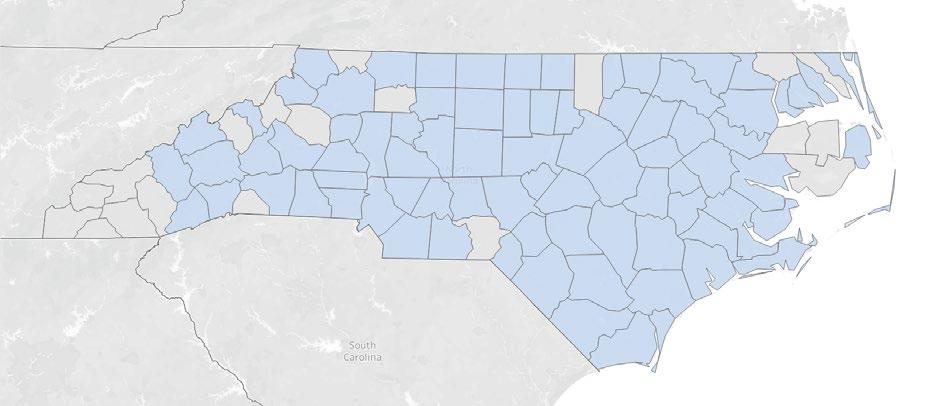
This County Board of Elections (CBOE) Monitor Report is based on the review and analysis of first-hand reports prepared by non-partisan election advocates during the 2024 General Election. Democracy North Carolina, the League of Women Voters of North Carolina, Southern Coalition for Social Justice, Disability Rights NC, and Common Cause North Carolina deployed advocates in 81 counties to attend and observe pre-canvass and canvass (i.e. the process of ensuring votes have been counted correctly) activities at CBOE meetings during early voting and in the days between Election Day and certification. Non-partisan volunteer attorneys and law students were also present to provide guidance to election officials throughout the canvass period and to observe election recounts and protests that followed the county canvass.
This Report offers valuable insights for partners, advocates, and election officials seeking to gain a deeper understanding of the complexities of election administration in North Carolina, particularly in the context of the uniquely challenging 2024 General Election and the ongoing changes to election law. By highlighting local variations, documenting recent changes, and sharing observations, this Report provides a groundlevel view into how elections are managed across the state, helping to promote uniform, consistent, and voter-friendly practices.
Election administrators across North Carolina faced unique internal and external challenges in the lead-up to the 2024 General Election. Even before the start of the
election season, the North Carolina State Board of Elections (“State Board of Elections”) predicted that 27 County Board of Elections Directors would be serving in their first presidential election.1 High turnover among election administrators from retirement, increased work demands, and low pay also proved to be a strain on election workers. 2 Despite this, and in the face of numerous external challenges, County Boards of Elections worked diligently to serve the 5.8 million voters who turned out to vote across the state.
Several external factors made the 2024 General Election stand out. For example, voters faced an abbreviated window both for receiving and returning mail ballots in this election because of political maneuvering by a third-party candidate and the implementation of a new election law passed the prior year. Specifically, on August 28, 2024, the We the People party sought to remove their candidate Robert F. Kennedy, Jr. from the General Election ballot.3 They made this request after 2 million mail ballots had already been printed and a little more than a week before the September 6th statelaw deadline to begin mailing requested ballots to voters. Following a court order, CBOEs were forced to print new ballots without Kennedy's name listed, resulting in additional printing costs for the counties and a delay of about two weeks in mailing ballots to voters. The 2024 General Election was also the first major election following the passage of Senate Bill 747 in 2023, which shortened the timeline for mail ballots to be received from three days after Election Day to Election Day itself, thereby reducing the time absentee voters had both to receive and return their ballots.
In late September, another unexpected challenge arose. Hurricane Helene severely impacted more than 25 counties in Western North Carolina. In response, the State Board of Elections and later the NC General Assembly approved measures to support affected counties by allowing flexibility in modifying early voting plans and Election Day sites, allowing out-of-county poll worker recruitment, and expanding the methods by which mail-in voters could request and return their ballots. 4
Lastly, groups seeking to sow doubt about the accuracy of election results filed a wave of last-minute lawsuits shortly before the election. These lawsuits challenged the eligibility of certain voters and other election rules and procedures. Among them was a challenge to the State Board of Elections’ approval of the University of North Carolina at Chapel Hill’s digital One Card for voter photo identification, which was the only form of identification provided to UNC students and employees. Nevertheless, the North Carolina Court of Appeals blocked the use of these IDs just weeks before Election Day, causing a last-minute scramble for those voters who were left without any other form of approved voter photo ID.
1 Opeka, T., “ Surge in county election director turnover raises concerns,” Carolina Journal, April 2, 2024.
2 Roberts, J., Greenberger, M., “Election Worker Recruitment and Retention in North Carolina,” MIT Election Data + Science Lab. March 14, 2023.
3 “ Presidential Nomination Withdrawal,” We the People NC, August 28, 2024.
4 Election Law Changes for the 2024 General Election in Response to Helene, NM 2024-07, NCSBE, Oct. 16, 2024.
5 Democracy Docket, Voting Rights Cases, North Carolina, March 7, 2025.
EXECUTIVE SUMMARY & KEY RECOMMENDATIONS
The 2024 County Board of Elections (CBOE) Monitoring Report presents a comprehensive, on-the-ground analysis of North Carolina’s election administration during the 2024 General Election. Led by Democracy North Carolina, Common Cause North Carolina, Southern Coalition for Social Justice, League of Women Voters NC, and Blueprint NC, the Report draws from first-hand observations of pre-canvass and canvass activities in 81 counties.
Despite widespread challenges, including leadership turnover in 27 counties, the aftermath of Hurricane Helene, shortened mail ballot return timelines under Senate Bill 747, and last-minute legal disruptions, North Carolina’s County Boards worked diligently to serve 5.8 million voters. The Report commends the professionalism of election staff and volunteers, while also highlighting persistent and systemic issues that jeopardize equitable ballot access.
Key Challenges Included:
• Voter Photo ID Implementation — Though implementation improved from 2023, confusion persisted among poll workers, especially regarding ID Exception Forms. Roughly 74% of voters who cast provisional ballots due to not providing a photo ID failed to return with proper documentation and were ultimately disenfranchised.
• Provisional Balloting & Registration — Over 65,000 provisional ballots were cast, a sharp increase from 2020. Most were rejected due to “No Record of Registration,” often reflecting DMV data failures or misunderstandings of residency rules, especially among students, military personnel, and voters displaced by Hurricane Helene.
• Previously Removed Voters — Overly aggressive list maintenance led to ballots rejected improperly. In some counties, every provisional ballot from a “previously removed” voter was rejected, suggesting inconsistent application of state law.
• Voting by Mail — The repeal of a three-day grace period caused about 2,708 ballots to be rejected solely for arriving after Election Day, when they would have been counted in prior cycles as long as they were postmarked on time. ID submission issues and natural disaster displacement further complicated mail voting.
• Voter Challenges & Protests — The extended deadline for mail ballot challenges under SB 747 undermined due process, allowing challenges just two days before Canvass. Post-election protests, largely politically motivated, failed to produce credible evidence of voting irregularities or violations and were overwhelmingly dismissed.
• Staffing & Funding Constraints — With no additional funding despite new administrative burdens, County Board staff endured long hours under tight deadlines. Upcoming changes under SB 382 threaten to compress the canvass timeline from 10 to two and a half days, further jeopardizing election integrity and accuracy.
RECOMMENDATIONS
By documenting the work and challenges faced by North Carolina’s County Boards of Elections during the 2024 General Election, this Report affirms the vital role of election monitors and the urgent need for policy reforms that strengthen, not undermine, voter access and public confidence in North Carolina’s democracy. To ensure accessible, transparent, and consistent elections, the report recommends the following practices and policy changes be implemented.
Voter
Photo ID
• Improve and increase training for County Boards and poll workers that voter ID Exception Forms must be offered to every voter who does not present photo ID.
• Continue state-wide public education campaigns to dispel common misconceptions and explain options for voting without photo ID.
Provisional Voting
• Provide County Boards with additional training and guidance on legal requirements when processing provisional ballots from “previously removed” voters.
• Require polling sites near county lines to have signage clearly indicating jurisdiction to prevent misdirected voters.
Voter Registration
• Expand same-day registration to include Election Day. Alternatively, increase voter education about when same-day registration is – and is not – available.
• Adopt automatic voter registration and enhanced DMV data syncing to further ensure accurate voter rolls and reduce “no record of registration” rejections and data transfer failures.
Voting by Mail
• Provide more assistance and outreach to mail voters to ensure they are able to meet the Election Day deadline and comply with voter ID requirements.
• Restore the three-day grace period for postmarked mail ballots to accommodate postal delays and ensure voters are not marginalized through no fault of their own.
Election Funding and Staff Capacity
• Extend the compressed canvass timeline limits in Senate Bill 382 for processing provisional ballots, addressing issues with ballots that can be fixed, and providing staff with sufficient time to research ballots and contact voters.
• Provide stipends and overtime pay to County Board staff to cover the extensive hours worked during canvass periods and post-election audits.
VOTER PHOTO ID IMPLEMENTATION
In North Carolina, photo ID is required for voting.6 The purpose of voter photo ID is solely as proof of the voter’s identity.7 When a voter is unable to provide an acceptable voter photo ID to vote in-person, they can complete an ID Exception Form and cast a provisional ballot. 8
WHAT IS AN ID EXCEPTION FORM?
An ID Exception Form has three categories a voter can select from when they are unable to provide photo ID: (1) reasonable impediment, which means something is preventing the voter from showing ID, (2) the voter has a religious objection to being photographed, or (3) the voter was a victim of a natural disaster, as declared by the President or North Carolina Governor within 100 days before Election Day. Additionally, mail voters who are unable to include a photocopy of their photo ID with their ballot return envelope can indicate that inability on an ID Exception Form included with their absentee ballot package. A voter’s ballot with an ID Exception Form must count if truthfully completed and signed. See Appendix to review the North Carolina ID Exception Form or download at https://demn.co/exception.
The 2024 General Election marked the first time North Carolina implemented its voter photo ID requirement in a general election. While implementation showed improvement compared to the 2023 Municipal Elections,9 and most voters were able to cast a ballot without ID-related issues, some counties still struggled to apply the law consistently as directed by the State Board of Elections. These inconsistencies were especially evident in how provisional ballots related to voter ID were discussed, reviewed, and ultimately accepted or rejected. Additionally, a concerning trend emerged: most voters who were unable to present a photo ID at the polls, and did not submit an ID Exception Form while voting, did not ultimately return to the County Board office to provide the required documentation, resulting in their ballots being denied.
Voter Hotline Reports Reveal Confusion Over Voter Photo ID Rules
Reports to 888-OUR-VOTE, North Carolina’s non-partisan voter hotline, provided insight into voters’ experiences with voter photo ID at the polls, particularly highlighting gaps in training and confusion about the rules among poll workers. In Mecklenburg County, for example, voters reported being turned away without
receiving a provisional ballot or an ID Exception Form, even when they asserted their right to these alternatives because they did not present a photo ID. In several counties, there were reports of poll workers and election officials incorrectly requiring a voter’s driver's license to match their voter registration address, and wrongfully turning voters away if it did not. In Nash County, a voter who identified as having a disability reported she was told ID Exception Forms were not available at her polling location.
“Voters were being made to cast provisional ballots if the address on their ID did not match, despite them being in the proper place. There was at least one voter who didn't vote and others confused as to why they had to cast a provisional ballot.” — Report from Mecklenburg County
“A voter was turned away because they didn't have an ID with an updated address, and were told by an election official to go home and get mail with their address on it. The voter had an unexpired driver's license and active registration. Voter was not offered a provisional ballot or ID exception form.” — Report from Alamance County
Looking at the Data: Voter Photo ID and Provisional Voting
In the 2024 General Election, voters who did not provide a photo ID accounted for 10% (6,890) of all provisional ballots cast (65,230 total). Voters who submitted an ID Exception Form and indicated a Reasonable Impediment were mostly approved, with 3,634 accepted and 641 rejected. Compare this to voters who cast a provisional ballot with no exception form and thus were required to return to the County Board of Elections office with an acceptable photo ID before the day of canvass to have their ballot count. In this group, 74% of voters were unable to return with acceptable photo ID, resulting in 1,643 ballots being rejected and only 564 approved.
Within these voter photo ID provisional ballot categories, some ballots were partially counted, indicating that a voter successfully provided their photo ID or had their ID Exception Form accepted, but voted using the wrong ballot style.
The categories of Natural Disaster and Religious Objection are generally the least utilized by voters. However, given that elections occurred during hurricane season and shortly after Hurricane Helene, the natural disaster category played a particularly important role in 2024 for Western North Carolinians. For provisional ballots cast with the Natural Disaster exception, 228 were approved while 51 were rejected — although of those 51, only 15 were rejected based on their Exception Form rather than some other
factor making them ineligible. For those cast under the Religious Objection exception, 10 were approved and two were rejected. These rejections are notable because CBOE members must have clear, affirmative evidence that the voter’s stated reason is false before denying a ballot on these grounds.
Challenges Faced by Mail Voters Under Voter Photo ID Requirements
For many voters, this was their first time voting by mail under the voter photo ID requirement. People voting by mail were required to include either a photocopy of an acceptable ID or an ID Exception Form with their ballot.10 This requirement posed some unique challenges for mail-in voters.
Some of those challenges were related to the quality of the ID photocopies. For example, some voters’ ID photocopies had the expiration date partially cut off, leading the CBOE to contact those voters to resolve the issue before the day of canvass. Other voters’ photocopies were faint or hard to read, again requiring the County Boards to reach out about a potential fix, also known as “cure.”
Other voters struggled with where and how to include the photocopy with their mail ballot. The mail ballot envelope has a clear sleeve on the back where voters are supposed to include their photocopy of ID or an ID Exception Form, so that County Board staff can verify the voter photo ID requirement is satisfied before opening the envelope and counting the ballot. But this system proved confusing: multiple voters placed their photocopy or ID Exception Form inside the same envelope as their ballot. CBOEs did not necessarily know to look inside the ballot envelope for voter photo ID documentation unless the voter alerted them to the issue with a note, for example.
In the 2024 General Election, North Carolina experienced a 73% turnout rate, with 5.8 million voters participating out of roughly 7.8 million registered voters.11
When an election official cannot confirm a voter’s qualifications or eligibility to vote at a polling place, a voter should still be provided a provisional ballot, ensuring them an opportunity to cast their vote and have it count. The CBOE then researches and confirms the voter’s eligibility. Federal and state law mandate that election officials must allow a voter who believes they are properly registered to vote a provisional ballot.12
While provisional ballots accounted for less than 1% (65,230) of overall ballots cast during the 2024 General Election, they reflect the most common barriers voters experience.13 Some of the most common reasons why a voter must cast a provisional ballot include voting at the wrong precinct, failing to update one’s voter registration after a move, or other discrepancies with a voter’s record. Provisional voting serves as a fail-safe for voters who may have encountered an apparent issue with their voter registration or qualifications to vote, allowing them to remedy the problem in some cases. For instance, election workers may find the voter’s record after further investigation or identify a typographical error that led to the discrepancy.
Many close contests in the 2024 General Election were decided by just a few votes, making provisional voting all the more important. As an example, Seat 6 on the North Carolina Supreme Court was decided by 734 votes.14 Similarly, State Senate District 18 was decided by 128 votes,15 and State House District 24 by 918.16
As in previous years, the most common reason voters had for casting a provisional ballot and the most common reason ballots were rejected (58%) was ”No Record of Registration.” This trend may reflect a range of issues, including voters being unaware of or misunderstanding registration deadlines, the DMV’s system failing to transmit voter registration forms, or poll workers misspelling names in the poll book. Read more about this trend in the chapter Unregistered and Uncounted.
Provisional voting is a critical safeguard that helps ensure voters — particularly those who identify as non-white and cast provisional ballots at higher rates compared to
white voters — are not wrongfully disenfranchised and can have their eligibility fairly reviewed.
13
14
UNREGISTERED & UNCOUNTED
Registration-Related Categories Remain the Most Common Reason to Reject Provisional Ballots
Every election, thousands of provisional ballots are rejected because the CBOE has no record of the voter’s registration, making this the largest category of rejected provisional ballots. In the 2024 General Election, more than half of all provisional ballots were coded as “No Record of Registration” or “Registration After Deadline.” Out of over 40,000 rejected provisional ballots, more than 32,000 (81%) were denied due to a lack of registration.
“No Record of Registration” does not necessarily mean the voter failed to register. For example, the voter may be registered in a different county. Importantly, in North Carolina, you must be registered in the county where you are residing and intend to vote. This can cause complications for voters who move across county lines, but are unaware of this rule. College students, in particular, may face this issue when they move to their campus address where they are living and intending to stay, but still have a registration with their home address and do not realize they are not registered to vote in person in their new county of residence until it is too late.
“Registration After Deadline” refers to a voter who is registered but not in time to cast a vote. All voters must register by the voter registration deadline (25 days before Election Day) or register and vote on the same day during the early voting period. New residents in a county can register and vote on the same day anytime during the early voting period. North Carolina is the only state with same-day registration that does not allow voters to register and vote on Election Day.17
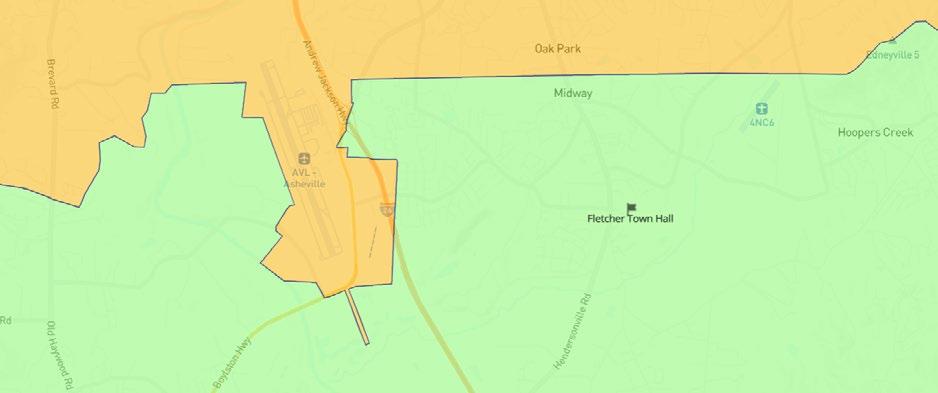
While these are common reasons why a voter may cast a provisional ballot around the state, we saw some provisional ballot hot-spots in the 2024 General Election. For example, around 130 Buncombe County residents tried to vote in neighboring Henderson County. Most showed up at the Fletcher Town Hall site in northern Henderson County, which was used for early voting and on Election Day. The Town of Fletcher sits very close to Buncombe County, with the Town Hall located only about a mile from the county line (see map on next page). Since these voters were Buncombe County residents, none of their votes counted. These voters accounted for about 27% of Henderson County’s provisional ballots. During the county canvass meeting, one voter suggested the Henderson CBOE post large signs at the Fletcher site to indicate that it is a voting site only for Henderson County residents.
The Henderson CBOE Director believed that some voters may have been confused by the increased flexibility in voting allowed by rule changes meant to address the impacts
of Hurricane Helene. Additionally, many federal workers were stationed in Henderson County during the election, assisting with cleanup and recovery efforts following the tropical storm. Some of these workers attempted to vote in Henderson County, despite not being Henderson County residents, and had their ballots rejected.
In Onslow County, the rules around same-day registration created confusion that led to rejected provisional ballots. Many active duty military members from the Marine base were misinformed about their ability to use same-day registration on Election Day. More than 800 Onslow County voters attempted to register and vote on Election Day — including many military service members — and had their ballots rejected. As a result of these very high numbers of provisional ballots cast on Election Day, the County Board had to bring in extra staff to process the ballots.
New Verification Rules Lead to Rejection of Same-Day Registration Ballots
New proof of residency requirements have made the same-day registration process more complicated and more strict. When a voter registers and votes on the same day during the early voting period, the CBOE sends a verification card to that voter’s address. If that verification card is returned as undeliverable, the voter must provide additional information to the CBOE to verify their address and cure the failed verification. Voters who do not provide this information have their votes removed from the count. However, a “return as undeliverable” status can result from factors well outside the voter’s control, like USPS delivery delays, inconsistent address formatting, or postal service errors.18 These issues can lead to the rejection of valid ballots through no fault of the voter.
Over 1,000 same-day registrants’ ballots across the state were removed due to failed address verifications. This change hit young voters — who are also more likely than other age groups to rely on same-day registration — especially hard. Based on expert analysis, young voters accounted for nearly 40% of voters who failed mail verification, and they were less likely than any other age group to successfully cure a failed mail verification.19
Buncombe and Henderson County Boundary Lines
Buncombe Henderson County
Attempts were made to salvage these ballots during the canvass period. In Randolph County, for example, an attorney represented three voters whose mail verifications were returned as undeliverable. He presented the Randolph CBOE with affidavits from the voters claiming they lived at their registered address. Ultimately, the Randolph CBOE dismissed the request because the affidavits were not submitted in the timeframe required by state law.
Verification Card is sent within 2 business days to voter's address
CBOE checks address on Verification Card mailing for accuracy. Accurate?
Verification Card returned undeliverable by 2 days before canvass?
17 " Same-Day Registration, NCSL, Oct. 25, 2024.
19 Expert Report of Kevin Quinn ¶ 132, available at https://scsj.box.com/s/22wki9d89rj18u1yktghb5ve60dufp2z NORTH CAROLINA SAME DAY REGISTRATION CURE PROCESS SDR During Early Voting
CBOE sends new Verification Card mailing to correct address
CBOE sends "Notice to Verify Your Address" by mail, email, and phone (if provided)
Voter appears before CBOE at Canvass
18 “ Mail Returned as Undeliverable in List Maintenance,” Lawyers’ Committee, March 2024.
Voter provides additional HAVA document by 5PM on day before canvass
CBOE confirms the accuracy of the voter's registration address No Yes
Counts Ballot Does Not Count
PREVIOUSLY REMOVED VOTERS
Every year, North Carolina removes thousands of voters from its voter rolls, including many who are believed to have moved. If a voter has not cast a ballot in the past two statewide general elections, the CBOEs will send them a confirmation mailing asking them to confirm whether they still reside at the same address. If the voter does not respond and also does not vote in the next two statewide general elections, they will be removed from the voter rolls. 20
However, a voter removed through this process remains eligible to vote as long as they have maintained continuous permanent residence in the county. Importantly, if the voter moves only temporarily, they do not lose their residence for voting purposes. 21
If a voter is removed from the rolls but presents to vote, they can vote a provisional ballot. Unless the County Board has evidence the voter established a permanent residency outside the county since their registration, that voter’s ballot must be counted. 22 When reviewing these ballots, County Boards are supposed to conduct research to determine if there is any evidence the voter has a permanent residence outside of the county, for example, if the voter had registered to vote in another county.
This provisional voting option protects voters who have not moved out of the county and should have remained eligible to vote. And it is especially critical because there is persistent evidence of racial disparities in removing voters from the rolls, with Black voters overrepresented on the removal list compared to their share of registered voters during the prior election. 23
During the 2024 General Election and canvass period, monitors encountered many examples of counties correctly following this procedure.
ROCKINGHAM COUNTY MONITOR REPORT
During a pre-canvass meeting, the Rockingham County Board of Elections initially moved to reject roughly 130 “previously removed” provisional ballots. A legal monitor present at the meeting alerted the Board to the requirement that these voters’ ballots be counted if there is no evidence the voter had a permanent residence outside of the county. The monitor followed up with the county’s elections director via email, reiterating that the ballots should be researched and potentially counted. At the Board’s next meeting, the director flagged 45 “previously removed” ballots that should, in fact, be counted, and the Board voted to change those from rejected to approved.
CABARRUS COUNTY MONITOR REPORT
The process for reviewing “previously removed” provisional ballots was explained during a Cabarrus County Board of Elections pre-canvass meeting. They noted that it is always better to vote provisionally than not to vote, and they try to count everyone they can legally.
CATAWBA COUNTY MONITOR REPORT
As Catawba County Board of Elections Director Amanda Duncan put it, the “State Board made clear” how County Boards are supposed to research and count these ballots.
However, provisional ballot data reports from the 2024 General Election show that 13 counties rejected every provisional ballot flagged in the “previously removed” category. This raises a question about whether the policy was being correctly followed since some of these counties had dozens of “previously removed” ballots and did not count a single one.
20 “ North Carolina Voter Registration List Maintenance,” NCSBE, Aug. 21, 2024.
21 N.C. Gen. Stat. § 163-57(2).
22 N.C.G.S. § 163-82.14(d)(3); see also NCSBE, NM 2023-04 at 7-8.
23 Southern Coalition for Social Justice, Understanding Voter Registration List Maintenance, (last updated Jan. 2025).
VOTING BY MAIL24
Voters and CBOEs also had to grapple with several changes affecting voting by mail, also known as voting absentee or by absentee ballot.
End of Mail Ballot Grace Period Leads to Increased Ballot Rejections
The 2024 General Election was the first one without a grace period for mail ballot returns. Previously, mail ballots were counted as long as they were postmarked by Election Day and received by the County Board within three business days after Election Day. But in fall 2023, with the passing of Senate Bill 747, the NC General Assembly repealed that grace period, instead requiring mail ballots received by the CBOE by 7:30 PM on Election Day be counted. 25 This restriction remained in place in the November 2024 election, despite the fact that mail ballots were sent out to voters nearly two weeks later than usual, due to a court order requiring counties to reprint ballots without Robert F. Kennedy Jr.’s name. 26
As advocates forecasted, this change resulted in many voters’ ballots being discarded despite their best efforts. 27 According to the publicly available absentee file, at least 2,708 ballots arrived after Election Day but within the previous three-day grace period. 28 In previous elections they would have been counted as long as they were postmarked on time, but under the new rule, they were not. This number does not account for voters who may have decided not to mail their ballots at all, fearing they wouldn’t arrive on time.
Voters from certain counties had more trouble with the removal of the grace period than others. In Carteret County, for example, over 10% of returned mail ballots were received in the three days following Election Day (November 6 to November 8). In Rutherford County and Pender County, nearly 6% of returned mail ballots were received during that period.
Hurricane Helene’s Impact: Mail Voting Challenges and Emergency Measures
In addition, the 2024 election brought some unique challenges for voters and County Boards due to the impact of Hurricane Helene. In response to the mass displacement that followed Helene, the State Board of Elections (and then the NC General Assembly) allowed voters from affected counties to return their mail ballots to the State Board of Elections office, any CBOE office, or any open early voting site in the state. 29 However, the voter registration deadline remained unchanged, meaning that temporarily displaced voters who were not registered by October 11 would have to return to their home county during early voting to register and vote.
In total, 300 voters benefited from the expanded mail return options.30 But canvass monitors encountered numerous examples of Helene-affected voters for whom these measures were insufficient.
FORSYTH COUNTY MONITOR REPORT
One voter was displaced by Hurricane Helene while attending school at UNC-Asheville, which caused her ballot to be rejected. This voter had previously been registered in Forsyth County where her family lived, but registered to vote in Buncombe County when she moved for school. After Hurricane Helene, she moved back to Forsyth County to live with her family with no plans to return back to Asheville. When she voted during the early voting period in Forsyth County, she was not alerted to the fact that she could re-register using same-day registration because her prior Forsyth record had not yet been removed, and she showed up as an active voter there. Unfortunately, after she voted but before canvass, her active Buncombe registration was flagged by the Forsyth CBOE, and the Board challenged and ultimately could not count her ballot because she had not re-registered there before voting. None of the emergency measures allowed her ballot to count.
GASTON COUNTY MONITOR REPORT
Hurricane Helene also affected the mail ballots themselves. For example, in Gaston County, Board members had to duplicate hundreds of mail ballots so they could be fed into the ballot tabulator where the storm had damaged the ballot paper before the voter completed it. Although the Board members were able to ensure these votes were properly counted, it added an additional, time-consuming step to an already lengthy process.
24 For more information about voter photo ID implementation, see Voter Photo ID section.
25 N.C. Session Law 2023-140 § 35.
26 “As New Ballots Are Printed, Absentee Voting on Hold in North Carolina,” NCSBE, Sept. 10, 2024.
27 “ Statewide Advocacy Groups Urge Governor Cooper to Veto Anti-Voter SB 747,” Democracy NC, Aug. 23, 2023.
28 “Absentee and Provisional Data,” NCSBE.
29 N.C. Session Law 2024-51 § 9.1(a); N.C. State Bd. of Elections, Resolution Regarding the Conduct of Early Voting, Election Day Voting, Absentee Voting, and Voter Registration for the 2024 General Election in the 13 Counties Most Affected by Tropical Storm Helene (2024).
30 N.C. State Board of Elections, Out-of-County Ballots Received
VOTER CHALLENGES & PROTEST
Voter Challenges
North Carolina allows a voter registered in a county to file a challenge against another voter’s ballot, asserting the voter did not meet eligibility requirements, was not who they claimed to be, or had already voted.31 For early voting and Election Day in-person voting, these challenges are heard by election judges at the polling place. However, challenges by voters to mail ballots are addressed during the canvass period between Election Day and the day of the county canvass.
CBOEs can also enter challenges to mail or early voting ballots where the Board reviews records in its possession, provided by the state and county — such as death records, records of active felony sentences, and information received from voters — that reveal a voter was ineligible.32 Election staff work throughout the canvass period to investigate, flag, and remove voters who cast a ballot but are later determined to be ineligible using these records.
In fall 2023, under Senate Bill 747, the NC General Assembly extended the window of time for challenging mail ballots. Previously, these challenges had to be entered by 5:00 PM on Election Day. Under the new law, mail ballot challenges are due by the fifth business day after the election.33 Due to the Veterans’ Day holiday, the deadline for entering challenges for the 2024 General Election was Wednesday, November 13, just two days before those challenges would be heard at canvass. This timing would make it difficult, if not impossible, for voters to receive effective notice and an opportunity to be heard as required by law.
LEE COUNTY MONITOR REPORT
In Lee County, a number of challenges were filed around the November 13, 2024, deadline. At the county canvass on November 15, Board members and staff all agreed that the 2 days between the challenge deadline and canvass were insufficient, and one Board member brought up the issue of voters not having received adequate notice of the challenges, raising concerns about due process.
Election Protests
After canvass, losing NC Supreme Court candidate Jefferson Griffin filed election protests in all 100 counties. These protests sought to remove more than 60,000 votes from the count in the NC Supreme Court Seat 6 race. Several losing legislative candidates filed similar protests in their districts.
In an election protest, a candidate or voter can raise an irregularity or election law violation that occurred, affecting the outcome of a specific race. The burden is on the protester to prove both that the violation or irregularity occurred and that it affected enough votes to cast doubt on the election outcome. Griffin and the other candidate protesters failed to offer any affirmative proof in support of their protests that ineligible voters cast ballots in sufficient quantity to change the outcome of any race. Instead, the bulk of their challenges targeted eligible voters who had followed the law as required of them during the election. In other words, the protests were based on a legal argument that would require changing the rules of the election after voting was completed.34
The other category of protests included allegations that CBOEs had counted hundreds of ballots that should not have been included, such as ballots cast by people who passed away between casting their vote and Election Day, ballots cast by voters with active felony convictions, or ballots cast by voters who were denied their registration or removed from the voter rolls. A thorough review of the protests by the CBOEs revealed that County Boards had resolved the vast majority of the alleged issues flagged by Griffin during the canvass period even before the protests were filed. Ultimately, the County Boards determined only 68 of the roughly 800 ballots that Griffin targeted in those smaller categories were actually ineligible to vote, which was well below the 734-vote margin between him and the winning candidate, Justice Allison Riggs, in a race where nearly 5.5 million ballots were cast. This outcome underscores not only the critical role of the canvass period but also the extraordinary effort, diligence, and commitment of County Board members and staff who work tirelessly to ensure every eligible vote is accurately counted.
31 For more information on voter challenges, read Voter Challenges in North Carolina: Guide for Voters” from Southern Coalition for Social Justice.
32 NCSBE, NM 2022-05, at 1, (revised Dec. 15, 2023).
33 N.C. Session Law 2023-140 § 15.
34 Griffin v. NCSBE, Case No. 5:24-CV-00731-M, E.D.N.C., May 5, 2025, available at https://storage.courtlistener.com/recap/gov.uscourts.nced.214953/gov.uscourts. nced.214953.125.0.pdf
CBOE Report | Voter Challenges and Protests
ELECTION FUNDING & STAFF CAPACITY
County Boards of Elections are responsible for implementing election laws within their respective counties. This includes accounting for changes to the election laws passed by the NC General Assembly. Over the past few years, several changes have been made to the rules governing North Carolina elections in rapid succession, including the implementation of voter photo ID, new restrictions on mail ballots, new rules for election observers, and numerous additional measures. These new laws have increased the workload for the CBOE staff without increasing their capacity or funding.
In the weeks prior to and after Election Day, known as pre-canvass and canvass periods, some CBOEs across the state held up to seven meetings. During these meetings, County Boards reviewed and researched mail and provisional ballots, tallied early and Election Day ballots, and conducted post-election audits. Some meetings lasted many hours. For example, pre-canvass meetings in Buncombe County lasted over 18 hours combined. Meetings on November 14 in Johnston, Gaston, and Robeson counties began between 5:00 PM and 6:00 PM and lasted until after 10:00 PM. A monitor in Forsyth County reported observing a meeting from Noon until 7:30 PM. In addition to lengthy meetings, County Board staff worked numerous extra hours researching provisional ballots and providing the Board members with the necessary information to perform their duties.
For example, Onslow County had around 1,400 provisional ballots to review during the General Election. According to the elections director, this set a new county record for the number of provisional ballots cast. The director explained that this added to the strain on staff, who were already experiencing poor working conditions due to years of understaffing and underfunding. Across North Carolina, more than 65,000 provisional ballots were cast in the 2024 General Election, which was a 20,000 ballot increase over the number of provisional ballots cast in 2020.
Senate Bill 382, enacted by the NC General Assembly in December 2024, would significantly increase the burden on County Board members and staff by drastically shortening the canvass period.35 Instead of the 10 days previously allotted to process provisional and mail ballots, County Boards would have only two and a half days to complete the same volume of work. This accelerated timeline will force Board members and staff, many of whom are already overextended due to chronic understaffing and underfunding, to condense an intensive, multi-day workload into just a few days. As a result, meetings will become even longer and more demanding, increasing the risk of inadvertent errors and making it even more challenging to conduct the careful, thorough review that voters expect and deserve.
CONCLUSION
The 2024 General Election showcased the dedication and professionalism of North Carolina’s election officials and staff, who worked tirelessly to serve nearly 6 million voters under challenging conditions and an increasingly complex voting landscape. It also highlighted the strength of our election administration, with many counties demonstrating best practices in transparency, voter assistance, and ballot review. At the same time, this election surfaced persistent barriers that continue to impact voter access, particularly around voter photo ID, registration, provisional voting, and mail ballot requirements. Building on the progress made and the lessons learned, the documentation and recommendations in this report aim to strengthen election administration, ensure greater consistency across counties, and expand equitable access to the ballot. By investing in the people and processes that make elections work, North Carolina can continue to lead in delivering secure, fair, and inclusive elections.
CBOE MONITOR SPOTLIGHTS
Miranda; Legal Monitor — Southern Coalition for Social Justice County: Statewide | Years Monitoring: 1st year
“The post-election canvass process is incredibly complex, and I was impressed by how many people worked tirelessly to ensure every vote was counted. Watching local officials put in long hours and voters showing up to cure ballots was inspiring. This work matters because it helps build a democracy where every voice can be heard.”
Cathy — Common Cause North Carolina County: Buncombe | Years Monitoring: 3 years
“I’ve seen firsthand how well thought out the election code is, and how faithfully the Buncombe County Board of Elections, and others like Haywood and Henderson, follow the laws that govern our elections. The staff work diligently to carry out their duties in accordance with the law and directives of the Board. It is democracy in action. Democracy is a living concept and requires its citizens to be actively engaged in making sure that the rule of law is followed, and this is the way I choose to serve my country and fellow citizens.”
Chiquitta — Blueprint NC County: Duplin | Years Monitoring: Over 20 years
“After more than 20 years in elections, I still see too many Boards struggling with understaffing, lack of diversity, and inconsistent rule enforcement. This work matters deeply to me because voting plays a huge part in the health and well-being of all communities. It affects every aspect of how we work, live, play, and worship.”
Sangria — Democracy North Carolina
County: Mecklenburg | Years Monitoring: 1st year
“The last meeting I attended during the canvass was powerful. Watching decisions made about voters’ ballots made me realize how important our presence is. We must shine a light on what happens behind the scenes to ensure fairness and accountability. This work is about educating, empowering, and standing up for every voice. Our Votes are our voices. Forward Together, Not One Step Back!”
Regan — League of Women Voters North Carolina (LWVNC)
County: Mecklenburg | Years Monitoring: 4 years
“When I started attending, I had no idea how much work and care goes into elections. These meetings have shown me the professionalism of the staff and helped cut through misinformation. It’s essential to understand the process so we can better prepare and support voters.”
Cheryl — LWVNC
County: Madison & Buncombe | Years Monitoring: 2.5 years
“These meetings reveal the intricacy of election administration and the professionalism of local Boards. In addition to working the polls, monitoring is a way to see democracy in action and a place where early signs of stress on that democracy may appear.”
Norma, Ralph, Carol, and Lori — LWVNC
County: Carteret | Years Monitoring: since 2021
“Over the years, we’ve gained deep insight into the laws and dedication behind elections. Our local Board works in a non-partisan manner and diligently, even in the face of challenges from election deniers. Monitoring helps us inform the public, support transparency, and maintain a strong connection with the Board and our community.”
CONTACT US
Have a question? Want to report an election issue a county is facing? Want to be connected with other advocates in your region? Interested in discovering more detailed information about one or all of the partner organizations?
League of Women Voters of North Carolina Marian Lewin
Email: Lewin@lwvnc.org
Southern Coalition for Social Justice — Adrianne Spoto
Email: adrianne@scsj.org
Blueprint NC — Keith Chappelle
Email: keith@blueprint.org
APPENDIX
NORTH CAROLINA [COUNTY] COUNTY
PHOTO ID EXCEPTION FORM FOR ABSENTEE VOTING
ELECTION DATE XX/XX/XXXX
Voter, please complete this form to explain why you cannot include a photocopy of your photo ID with your ballot. You must write your name below, check a box for at least one exception, and sign the form. You will meet the photo ID requirement if you truthfully complete and sign this form .
I (print your name)
AFFIRM that I am the voter casting the absentee ballot, and that: (choose from the exceptions below)
EXCEPTION 1: REASONABLE IMPEDIMENT
I suffer from one or more of the following reasonable impediments that prevent me from including a copy of photo ID:
(TO CHOOSE THIS EXCEPTION, YOU MUST CHECK THE BOX FOR ONE OR MORE REASONS BELOW)
1. I am unable to include a photocopy of my photo ID with this absentee ballot envelope (If choosing this option, you must write one of the following numbers):
North Carolina Drivers License/DMV ID number:
Last four digits of Social Security Number:
2. I cannot get photo ID due to:
Lack of transportation
Disability or illness
Lack of birth certificate or other documents needed to get photo ID
Work or school schedule
Family responsibilities
3. My photo ID is lost, stolen, or misplaced
4. I applied for photo ID but have not received it
5. Other reasonable impediment (if choosing this option, you must write why you can’t provide photo ID):
6. State or federal law prohibits me from listing my reason
EXCEPTION 2: RELIGIOUS OBJECTION TO BEING PHOTOGRAPHED
I have a religious objection to being photographed.
EXCEPTION 3: VICTIM OF A NATURAL DISASTER
I was a victim of a natural disaster occurring within 100 days before election day that resulted in a disaster declaration by the President of the United States or the Governor of North Carolina.
VOTER, SIGN BELOW FRAUDULENTLY OR FALSELY COMPLETING THIS FORM IS A CLASS I FELONY UNDER CHAPTER 163 OF THE NC GENERAL STATUTES. X VOTER’S SIGNATURE (REQUIRED)