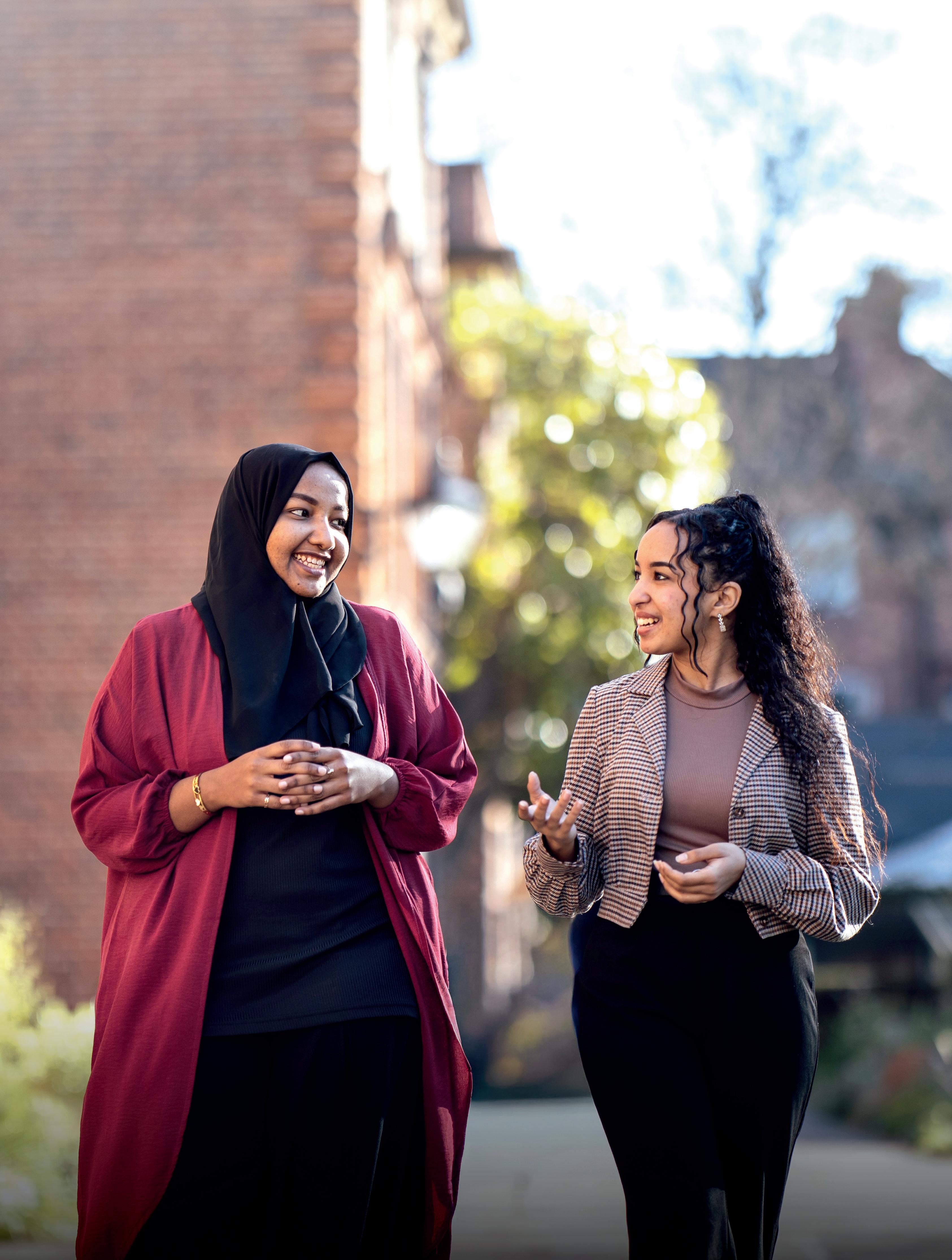
for the financial period of 1st August 2024 - 31st July 2025
for the financial period of 1st August 2024 - 31st July 2025
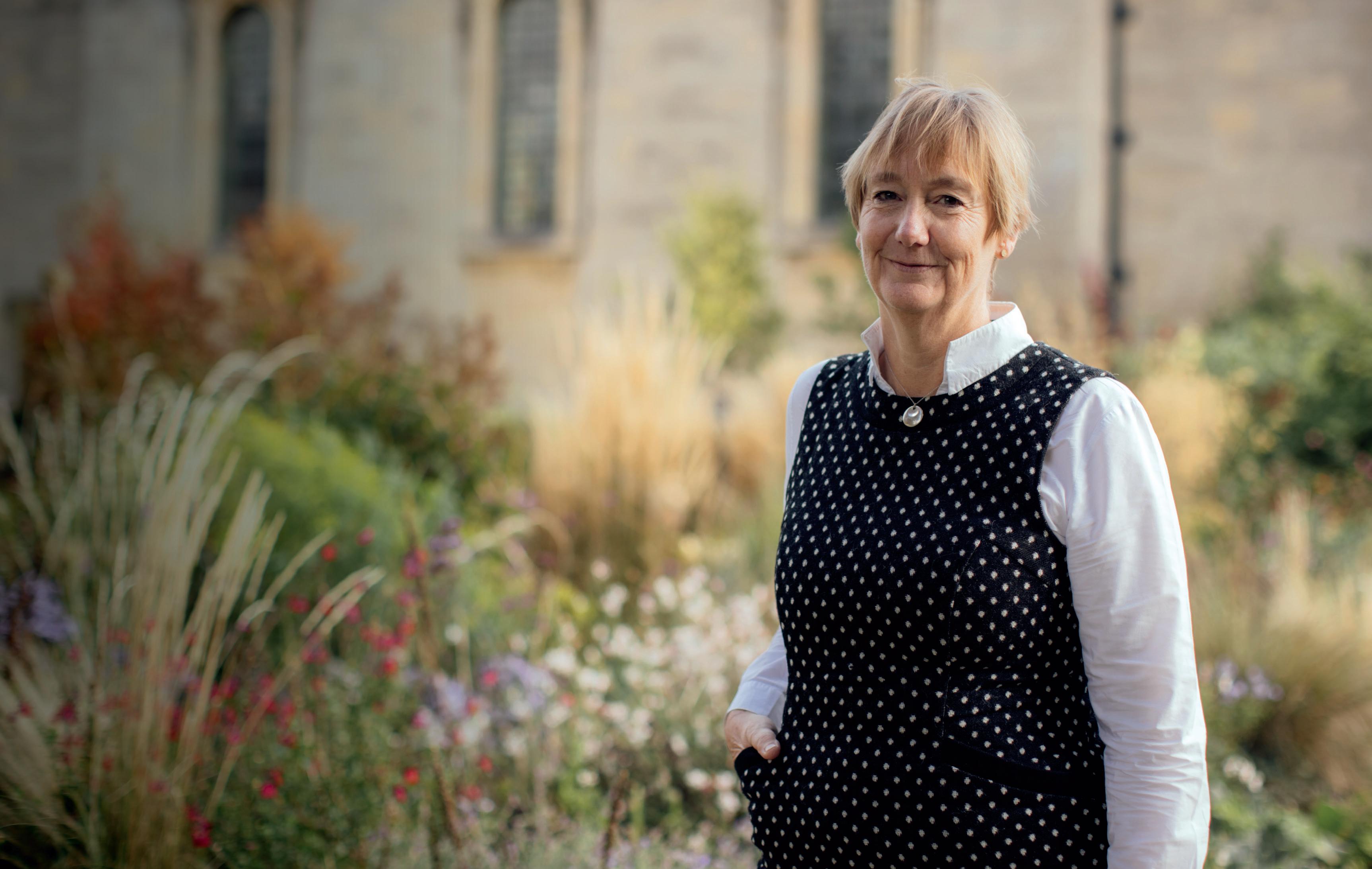
Coming back to Somerville as Principal, having been a student here in the 1980s, I have inevitably been reflecting on the College then and now.
There are some obvious differences. For starters, there were no men in College in my day (at least, not officially).
The other big difference is that Somerville’s finances in the 1980s were precarious – something we knew held true for all the women’s colleges, although I’m not sure we really understood just how hand to mouth things were.
Today, thanks to the vision and hard work of many, Somerville’s financial outlook is very different. The College’s endowment now stands at £106m, double what it was 10 years ago, placing Somerville firmly in the rankings alongside much older, more established colleges.
True to Somerville’s values and ethos, that financial security is being used to fulfil the objectives of Somerville’s earliest founders. Last year, we were able to allocate £300k in bursaries (reaching 22% of students), with a further £240k awarded in scholarships and prizes, and £600k diverted to support our graduates’ essential living and study costs. In short, Somerville today is able to ensure that
financial hardship is never a barrier to excellent students realising their academic potential, and that is a source of pride for all of us.
And yet, the harsh financial environment in which all higher education institutions operate means that there is a permanent funding gap. In Somerville’s case, the income we receive from our students’ fees covers only half what it costs for us to tutor and accommodate them.
If we are to continue to include the excluded, and to offer first-class education and research opportunities that will benefit not only our College, but the wider world, we need to continue to work together to build our resources even further. As you will see in this Report, that calls for a great deal of hard work, shrewd financial management and collaboration.
Over the coming months, I will be learning more about College finances and activities to determine how best I can, with your help, support and serve Somerville’s needs during my tenure. In the meantime, I hope you will agree with me that, despite the many challenges we face, our College is headed in the right direction. Thank you all for your continued support.
Catherine Royle, Principal
SARA KALIM
As we look back on the past year, Somerville has much to celebrate – achievements that would not have been possible without the generosity and enduring commitment of you, our alumni and friends. As always, your support continues to preserve the unique spirit of our much-loved College.
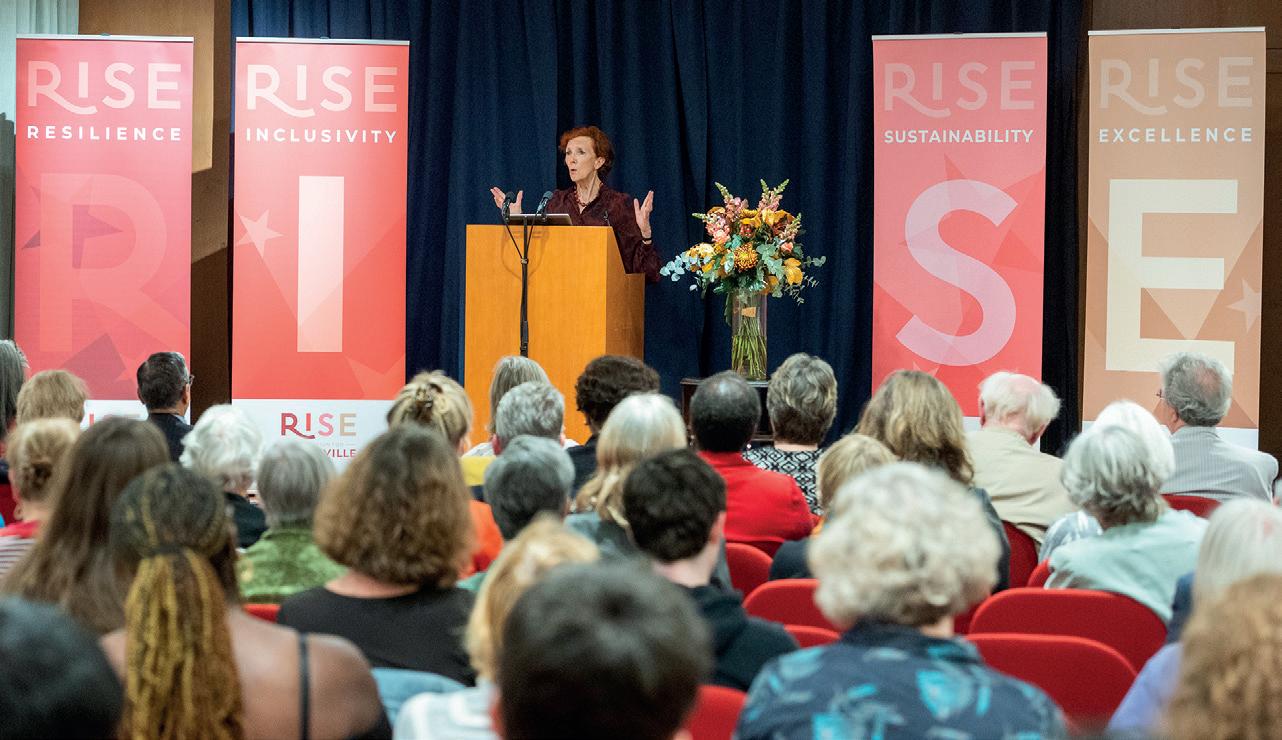
This has been a year of transition as we bid farewell to Jan Royall, whose tenure as Principal has been marked by purpose, growth and success. One of Jan’s many contributions was to launch RISE, our latest and most ambitious fundraising campaign, and I am pleased to say that we are now almost two thirds of the way to completing our £50 million target, with almost £6 million raised this
year alone. Jan’s successor, Catherine Royle, will undoubtedly take this and many other projects forward with her unique energy and vision, and we greatly look forward to introducing her to Somervillians near and far.
Stephen A. Schwarzman Centre for the Humanities
This autumn marked the muchanticipated opening of the Stephen
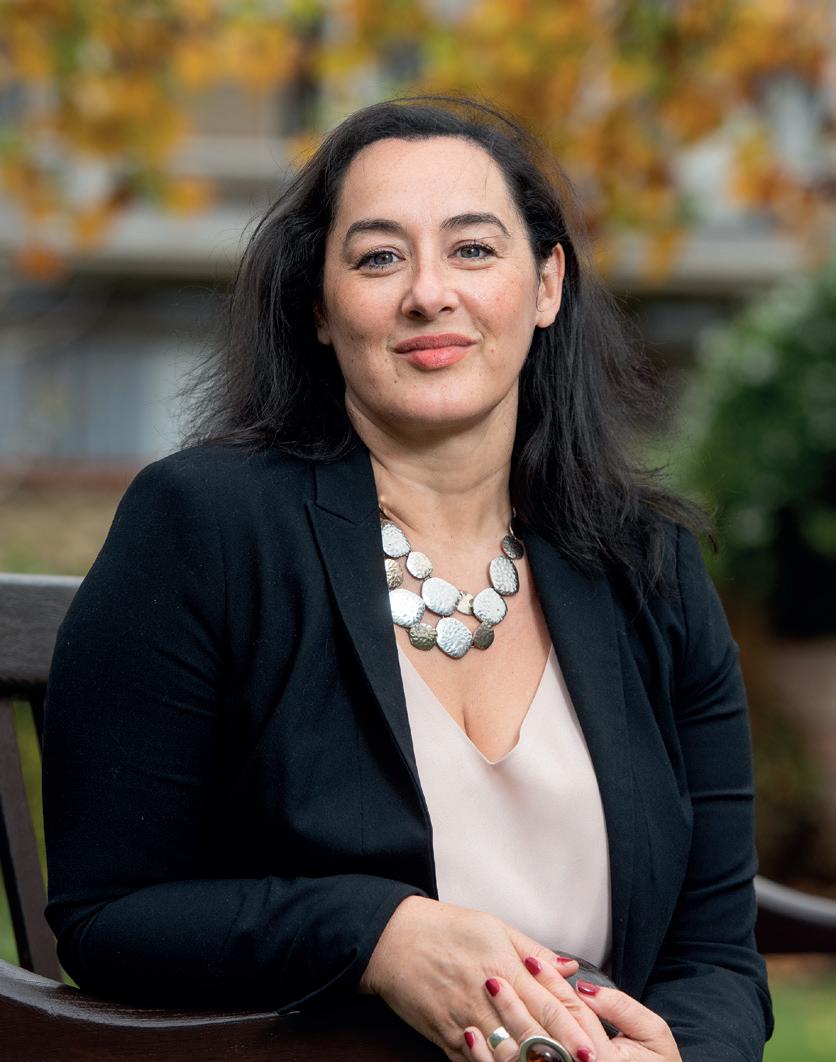
A. Schwarzman Centre for the Humanities. As the Centre’s nearest college neighbour, we are delighted to witness this landmark addition to Oxford’s landscape – a magnificent statement of the University’s belief in the centrality of the humanities to furthering human understanding, and a cause that remains close to Somerville’s history, heart and mission.
In the past year, Somerville’s humanities have been strengthened by several major philanthropic gifts. These gifts, often legacies, have enabled us to secure the future of vital disciplines and to support the scholars who keep the humanities alive and relevant in a changing world. From History and Classics to Music and English, the generosity of our community is helping to sustain teaching and research that foster empathy, creativity, and critical thought – the cornerstones of a civil society.
Your generosity is helping to foster empathy, creativity, and critical thought
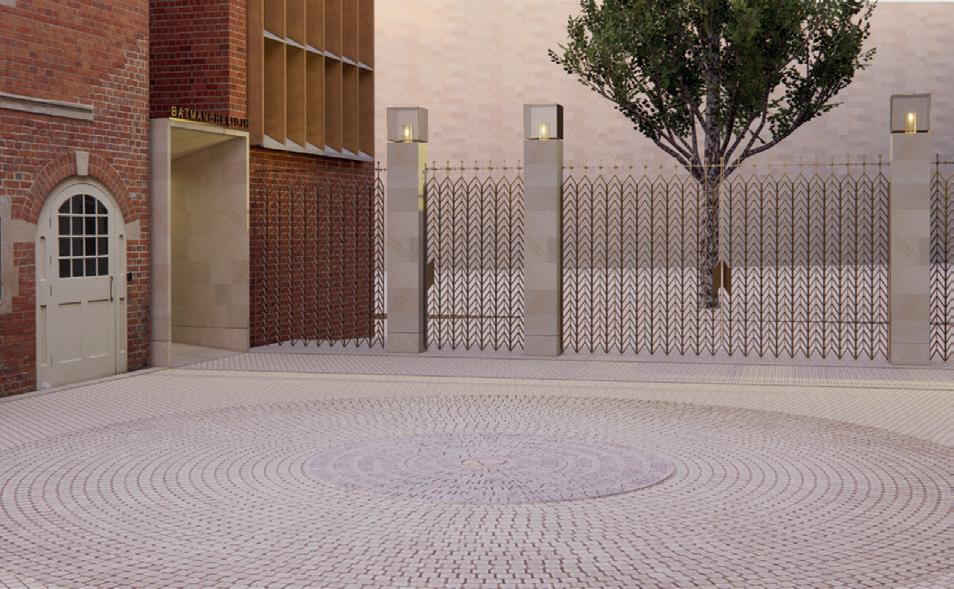
Somerville’s northern boundary has taken on new significance as it becomes the bridge to the University’s growing Humanities development. In response, we are planning a redesign and refresh of our buildings along this side of the College. These plans will include elegant new gates between Somerville and the Radcliffe Observatory Quarter, and significant naming opportunities for donors wishing to make their mark on this expansion (see p19).
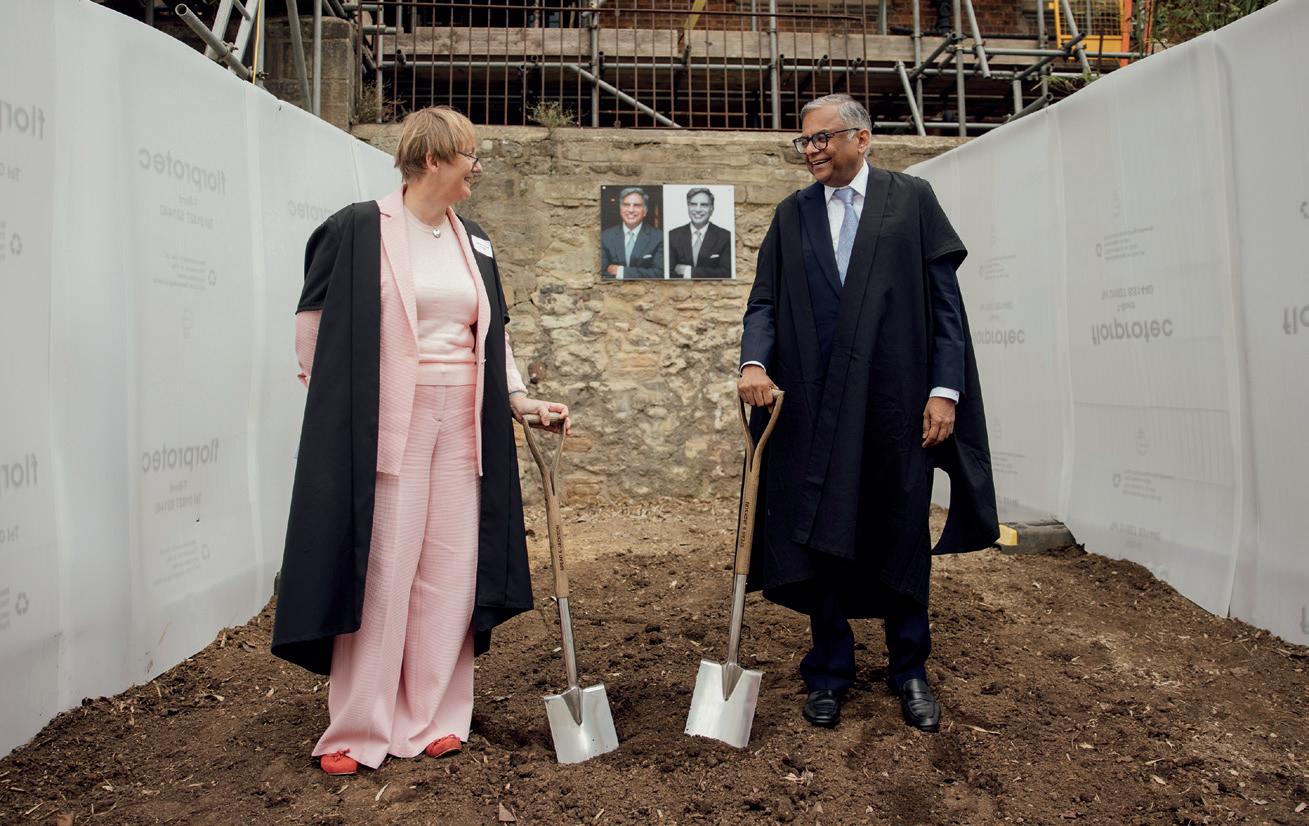
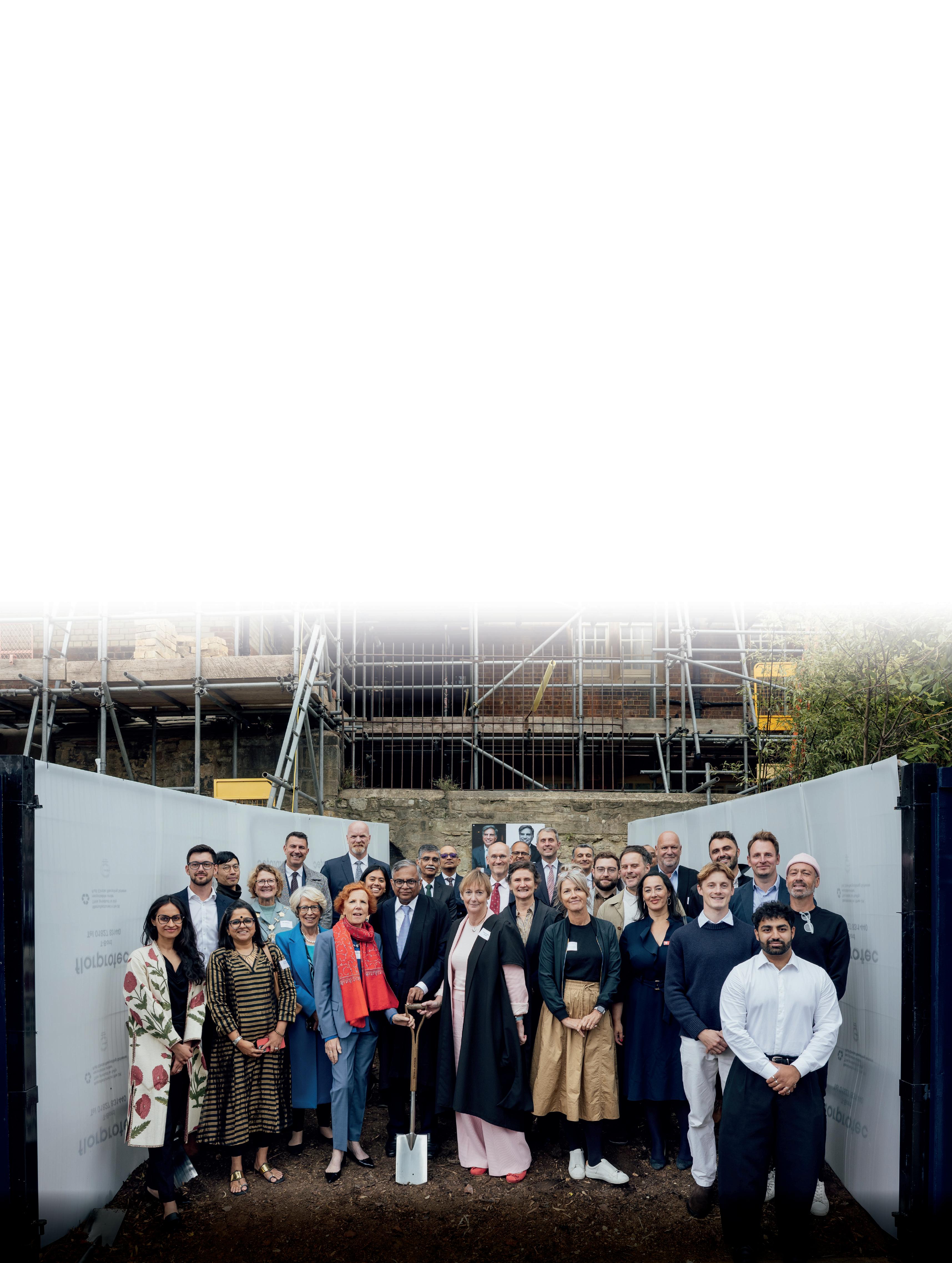
Our plans for developing the north face of Somerville began in style this September, as we broke ground on the Ratan Tata Building. We were honoured to be joined by Mr Natarajan Chandrasekaran, Chairman of the Tata Group, and Professor Irene Tracey, Vice-Chancellor of the University of Oxford. Their presence underscored the depth of our global partnerships and begins the work on a building which will give the college much-needed teaching rooms and seminar space as well as a physical home for the Oxford India Centre for Sustainable Development.
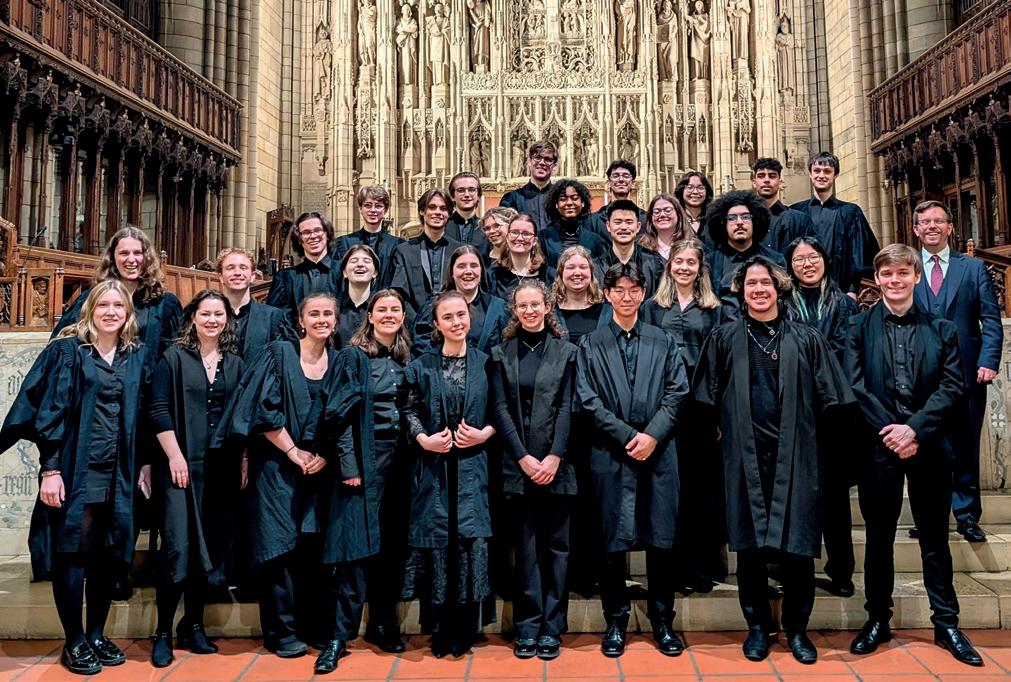
Music continues to be a defining part of College life and is central to our community. This year, enabled by the
generosity of cherished American friends, the Somerville Choir embarked on an inspiring tour of the United States, performing in Texas and New York to a rapturous reception.
This commitment was powerfully expressed through our work this year on the Crisis Scholarships, created in partnership with the University as part of our College of Sanctuary status. This year’s scholarships support students from Gaza, offering them the chance to continue their studies in safety and with dignity. Our new scholar will join the seven other Sanctuary Scholars currently studying at Somerville (see p9).
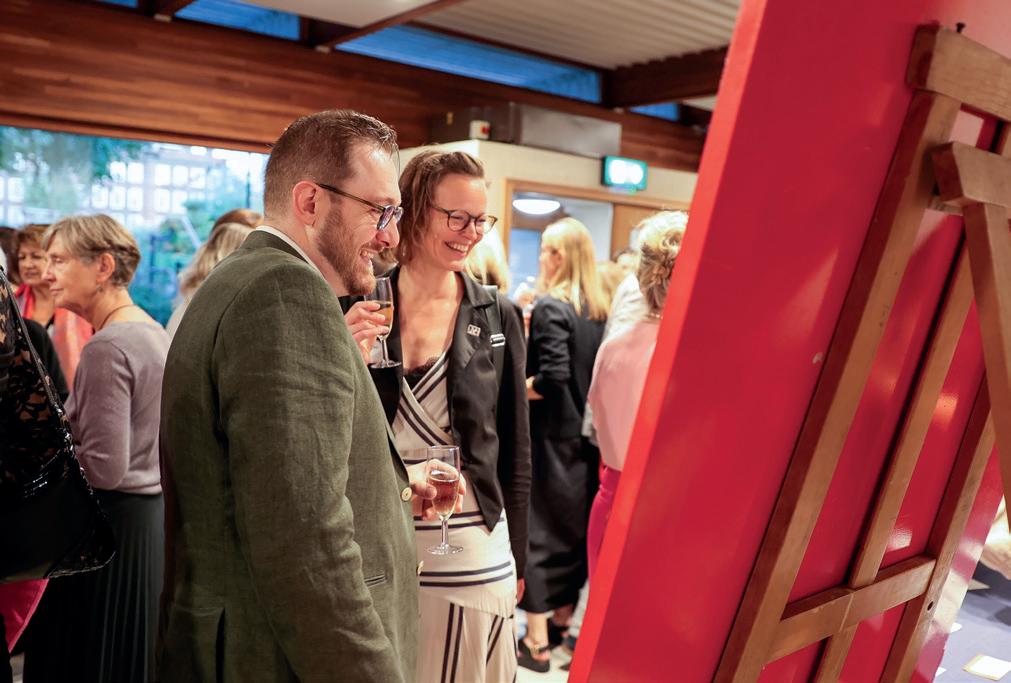
This year’s calendar was filled with joyful moments that brought our community together. From Carol Concerts in Oxford and London to celebrations of Jane Austen in Lyme Regis, to anniversary events and reunions, we were reminded again of the importance of coming together.
In a polarised
In New York, we met with alumnus Nicolas Geiger (2004, Engineering), whose vision and generosity have created a lasting legacy. Nicolas conceived a brilliant initiative to honour his former tutor, Professor Richard Stone, who retired in 2022, by leading on the funding for a graduate scholarship in his name (see p8).
In a polarised world, where democracies are under pressure and freedom of academic enquiry cannot be assumed, Somerville stands firm in its mission. We remain devoted to offering the brightest minds the opportunity to study, supported by the resources they need to thrive.
As Somerville continues to grow alongside the new quarter beside us, we thank our lead volunteers, the members of our Development Council, and our Campaign Board for their unswerving efforts. The generosity of all our donors ensures that this College remains a beacon for future generations – a place where ideas flourish, friendships endure, and academic excellence remains at the heart of human progress.
Thank you for your continued support in all that we do for Somerville.

ANDREW PARKER
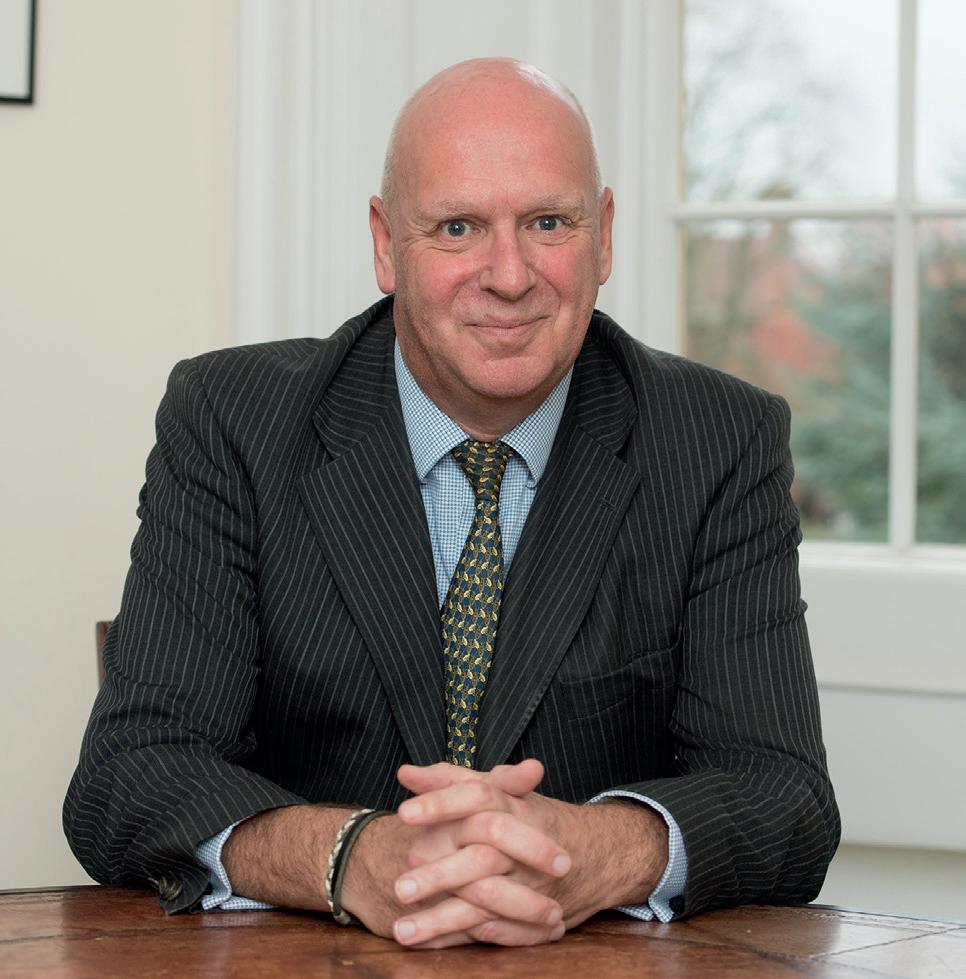
In his final year as Treasurer, Andrew Parker joins us one last time to talk through the triumphs and challenges of another year in the Somerville College finances.
As we prepare our final accounts for 2024-25, it is clear that this has been another good year for Somerville. Our net assets increased by £10m from £238m to £248m, while our endowment grew by £7m, from £99m to £106m, reflecting good performances from both OUEM and Newton. In the year, we also received donations of £2.5m towards the Ratan Tata Building, and recognised the gift of a £1m flat on the Banbury Road.
Costs have been well controlled, and our income was on target. Unrestricted donations have been strong. This will flow through to the bottom line and help us fund additional capital expenditure.
Looking forward, 2025-26 is going to be tight. We need to find an additional £0.5m in capital expenditure to fund investment in our IT infrastructure, on top of the £0.5m already invested this year. Employee costs are another issue. For the past five years or so, we have been paying the Oxford Living
Wage. This has been the right thing to do, reflecting the high cost of living in Oxford, and hourly rates for our lower paid staff have increased by 40% in that period. However, the need to maintain differentials through the wage structure means that it has also been expensive.
Our payroll costs were further exacerbated by Rachel Reeves’ decision to lower the threshold for employers’ national insurance at the same time as increasing the rate. These changes will add an estimated £200k a year to our salary bill, and will particularly affect the cost of employing our lower paid staff. We will need to manage our payroll carefully in 2025-26.
On a more positive note, plans for our new Ratan Tata building are developing apace. Planning permission was granted in September with the enthusiastic endorsement of the council’s planning officers and good feedback from the public consultation. The main contractor has just been appointed, adding momentum as we continue to refine the finer details of design and logistical planning for what is a small and constrained site.
Construction is expected to start in March 2026, with the building delivered in May/June 2027. We have already secured £11m of the £13m required for this project, and further naming opportunities are available to those wishing to support this exciting
new chapter in Somerville history (see p19).
Another positive development is that we are now in the early stages of engagement with a governmentbacked company who are planning to build a heating network in Oxford that would supply sustainably heated water to university buildings and colleges, Oxford Brookes, and the hospitals by 2030. The water would be hot enough to run with our existing radiators, pipes and insulation, obviating the need to install air source heat pumps and expensively retrofit our buildings to improve thermo performance. The cost would be a fraction of the £45m we estimate it would cost to make our site zero carbon using air source heat pumps. As they say, there’s many a slip between cup and lip –but the enthusiastic involvement of twenty-five colleges, the University, the city and county councils, Brookes and the NHS makes this by far the most feasible route to decarbonising Somerville that we have yet seen.
Finally, after thirteen-and-a-half years in post, I will be retiring at the end of October 2026. I would like to thank all of you who have supported Somerville over my time so energetically. Somerville is blessed to have such an engaged and generous alumni base, and we could not have achieved what we have over my time without your support. Thank you.
by John Cairns.
Here are the numbers for 2024-25 at a glance.
AMOUNT RAISED: £5,920,113
Revenue from legacies last year: £1,823,728
410,000
During the year, we spent £0.82m on fundraising costs and raised £7.3m as a result. Of these donations, £0.9m went into the endowment to provide ongoing income for future years, £3.2m was used to fund College running costs, and £3.3m was restricted for ongoing building and academic programmes. Total
Capital loss on unrestricted investments
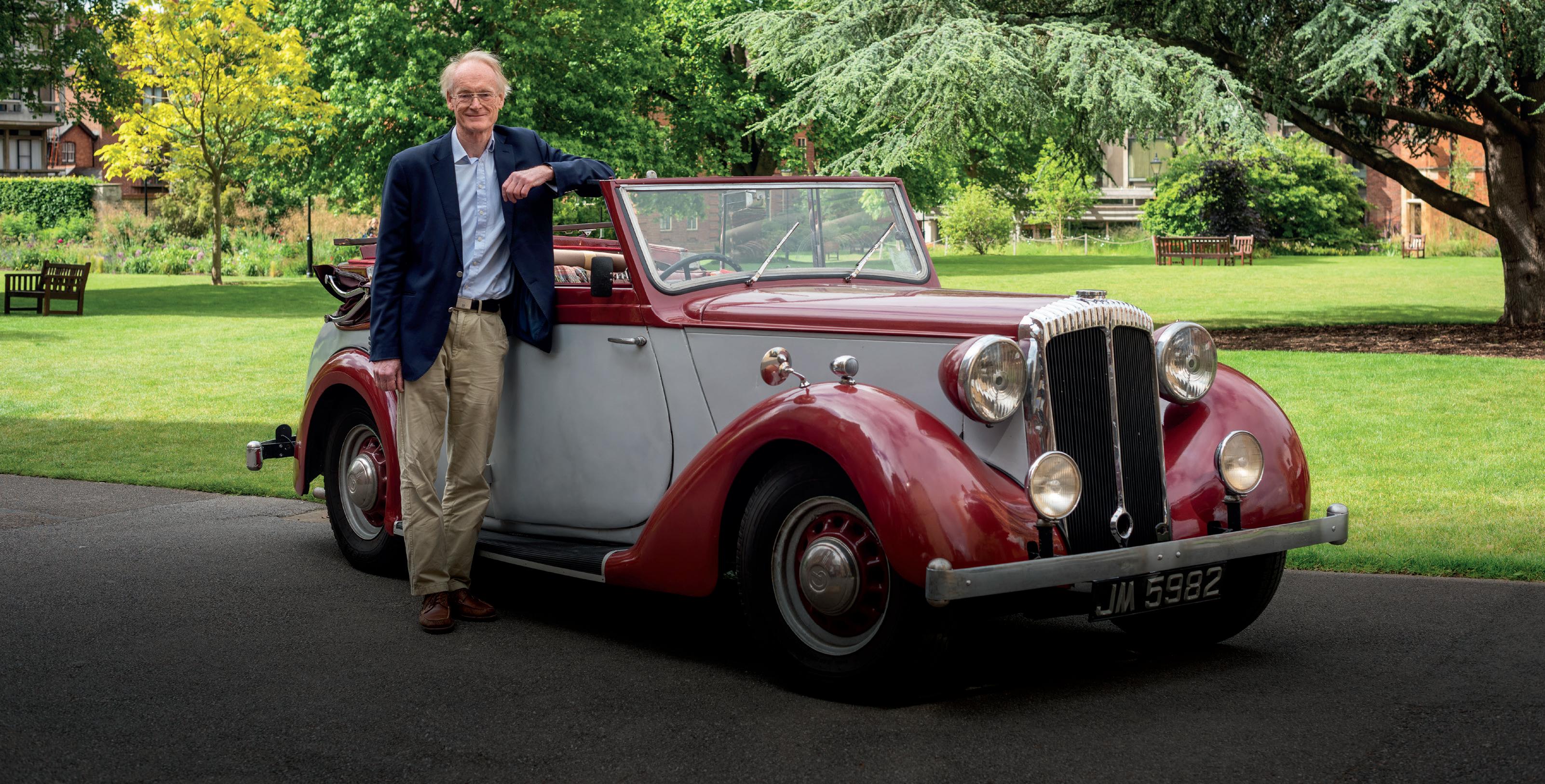
It is rare that one person shapes the lives of many. One such person is Professor Richard Stone.
In 1993, Richard Stone was one of the first three men elected to Somerville’s governing body, alongside the physicist Roman Walczak and the philosopher James Logue. From that day until his retirement in 2022, Richard was a positive force at Somerville, guiding the studies and future careers of hundreds of Somerville engineers.
Students recall the brilliance of Richard’s teaching, but also his unspoken kindness. Whether it was the little parties he hosted at the end of each term or making special access arrangements for an exam due to illness, Richard was always there for his students.
Underpinning his prowess as a tutor was Richard’s intellectual curiosity. Generations of Somerville engineers benefited from knowing that their tutor not only wrote the textbook on the internal combustion engine, but subsequently rewrote it in line with his tireless search to find more efficient, less polluting propulsion systems.
This year, in collaboration with Richard’s former student, Nicolas Geiger (2004, Engineering Science), Somerville is leading a campaign to ensure Richard’s legacy continues at Somerville. From 2026, the Richard Stone Scholarship in Engineering Science will support doctoral researchers working on novel transportation and space exploration systems, in keeping with Richard’s research and that of his successor, Professor Konstantina Vogiatzaki.
Speaking of his wish to create the Richard Stone Scholarship, Nicolas Geiger commented: “Richard defined what is so special about an Oxford education,
and in particular the tutorial system. Without his patient encouragement and explanation, I could never have learned so much, so quickly.”
Asked for her thoughts, Somerville’s current Tutorial Fellow in Engineering, Professor Vogiatzaki, said: “This scholarship will support bright home students to engage in sustainability-focused research in honour of Professor Richard Stone. Most excitingly, it will provide a unique opportunity to leverage advanced computational approaches and data-driven techniques, enabling the next generation of engineers to push the boundaries in sustainable propulsion and aerospace innovation.”
Driven as ever by concern for his subject, Professor Stone commented: “Research scholarships are the seedcorn for research, for how else can there be future postdocs or academics? As the Research Councils continue to make selective cuts, scholarships like this one are vital in supporting the full breadth of research undertaken by the current Engineering Tutors at Somerville.”
Our sincere thanks to all who have so far supported this campaign. To help safeguard the future of Engineering at Somerville, please contact sara.kalim@some.ox.ac.uk
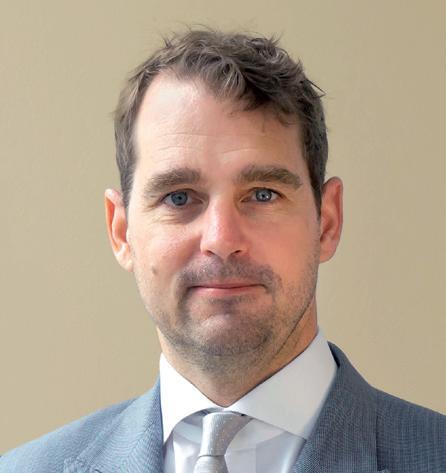
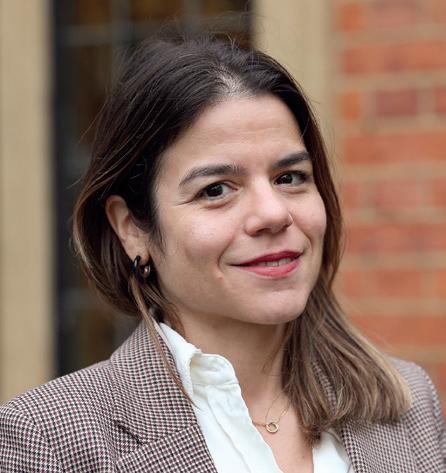
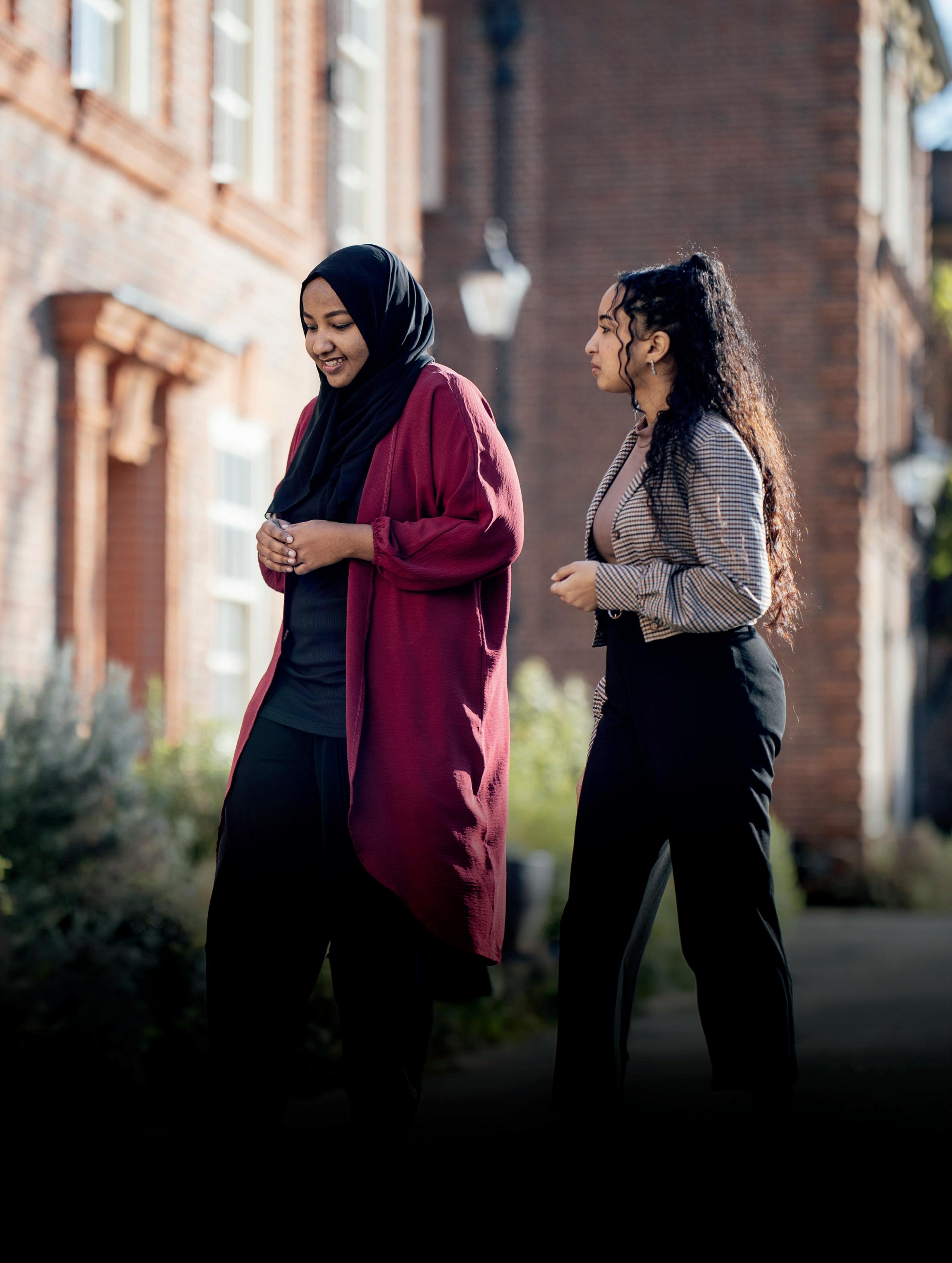
Since it began in 2023, the civil war between Sudan’s armed forces and paramilitary group the Rapid Support Services (RSF) has led to over 150,000 deaths and 12 million people being displaced. In the midst of violence and chaos, doctors and healthcare workers continue working to save lives. This year Somerville welcomed two Sanctuary Scholars from Sudan, Hadeel Abdelseid and Zainab Mohamed, who are already playing a part in these vital efforts.
Now flatmates and good friends, Hadeel and Zainab are both honing their respective training in medicine and healthcare policy, determined to create a better future for Sudan.
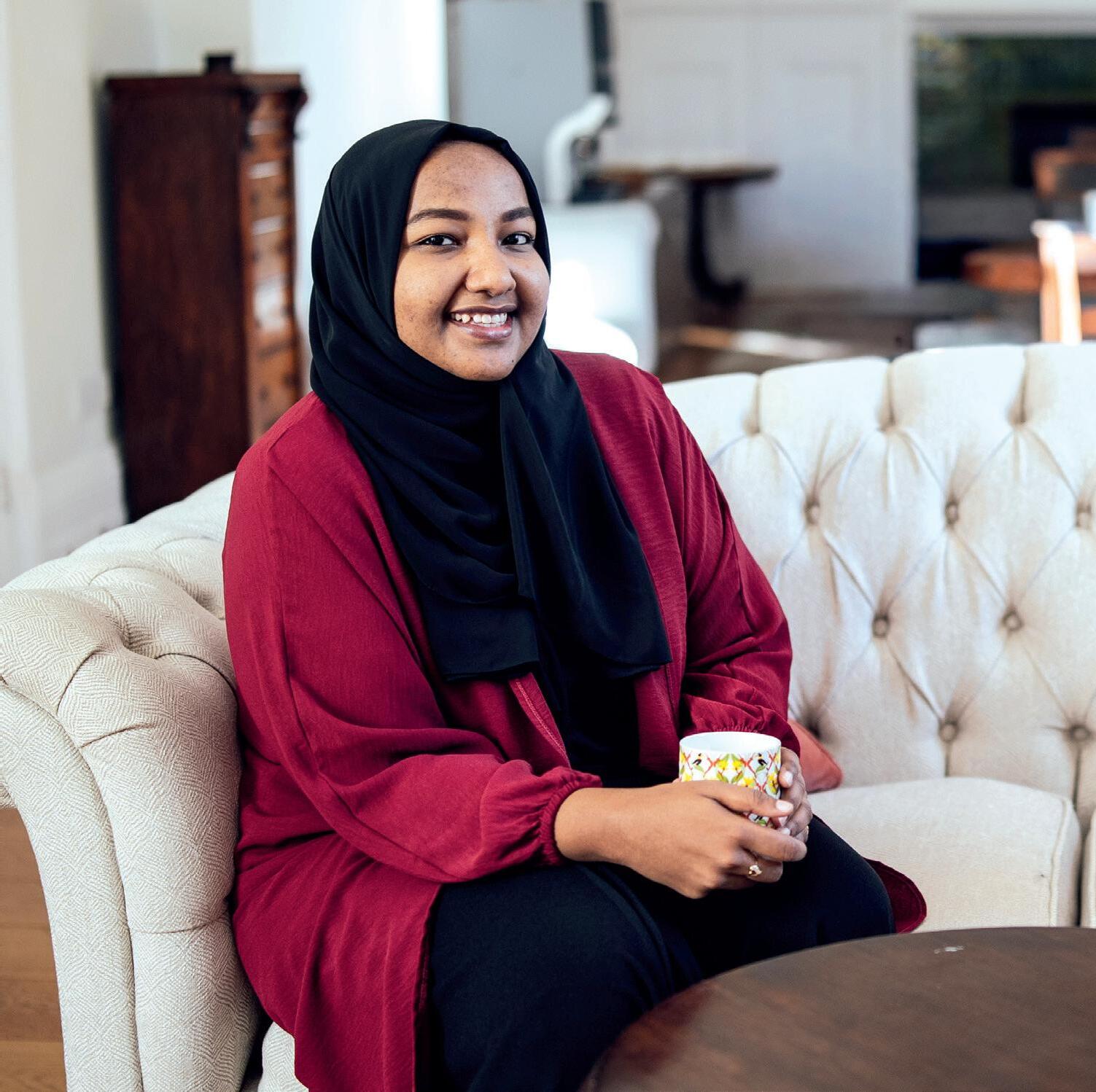
Dr. Hadeel Abdelseid is a Sudanese physician and Director of the Sudan ECHO Center of Excellence at SuDRO, a non-profit building sustainable communities in Sudan. Hadeel is reading for the MSc in International Health and Tropical Medicine.
When the war erupted, my family was forced to leave our home with no destination, carrying little more than a few bags and our faith. We travelled between states, displaced again and again. Those weeks were defined by uncertainty, fear, and a quiet determination to survive.
The hospitals I worked in became both a sanctuary and a frontline. Gunfire echoed in the distance; casualties arrived in overwhelming numbers. Yet, even in the darkest moments, the strength of Sudanese communities shone through. I found renewed purpose collaborating with Project ECHO, an international tele-mentoring initiative that connects healthcare workers in crisis settings with global expertise.
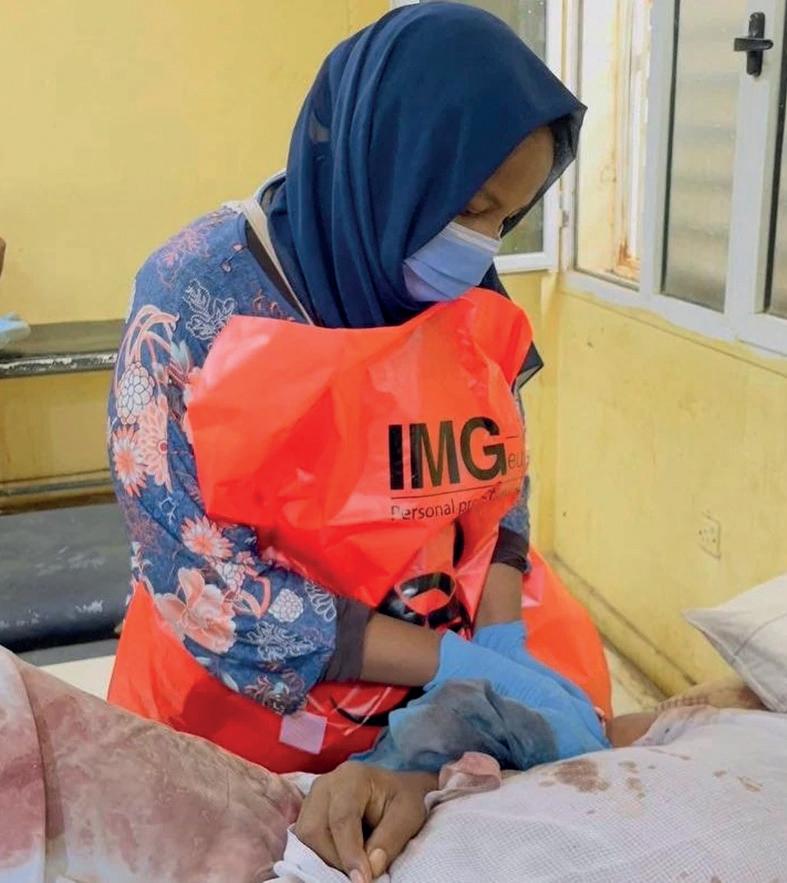
With formal training disrupted, many of us relied on emergency protocols shared through smartphones to manage gunshot wounds and trauma cases. I learnt how to leverage what I have to thrive, sometimes wearing a garbage bag to protect myself while treating patients.
In the immediate aftermath of the conflict, we launched the Sudan Emergency ECHO Programme in just two weeks. This remarkable collective effort by displaced volunteers demonstrated how communities under immense pressure can still mobilise expertise, compassion, and organisational strength to support one another.
Through this programme, I helped deliver more than 45 critical care training sessions, reaching over 2,000 healthcare providers across Sudan, ensuring that even as education systems collapsed, frontline workers continued to learn, collaborate, and save lives.
The relentless pressure and danger took their toll, and I was diagnosed with depression and PTSD. At the time when I felt most lost, a close friend encouraged me to apply for a scholarship at Oxford. It seemed unimaginable: how could someone who had just escaped conflict find a place at one of the world’s leading universities? But I applied anyway, guided by faith more than confidence.
The acceptance letter arrived weeks later: a fully funded place at Oxford, to pursue an MSc in International Health and Tropical Medicine, affiliated to Somerville College. I cried with gratitude. Every hardship, every moment of fear, had led unexpectedly to this new beginning.
Today, I carry Sudan with me in every lecture and seminar room. My studies at Oxford are deeply connected to my commitment to global health equity, and I hope to return with the skills to rebuild, advocate, and strengthen healthcare systems scarred by conflict.
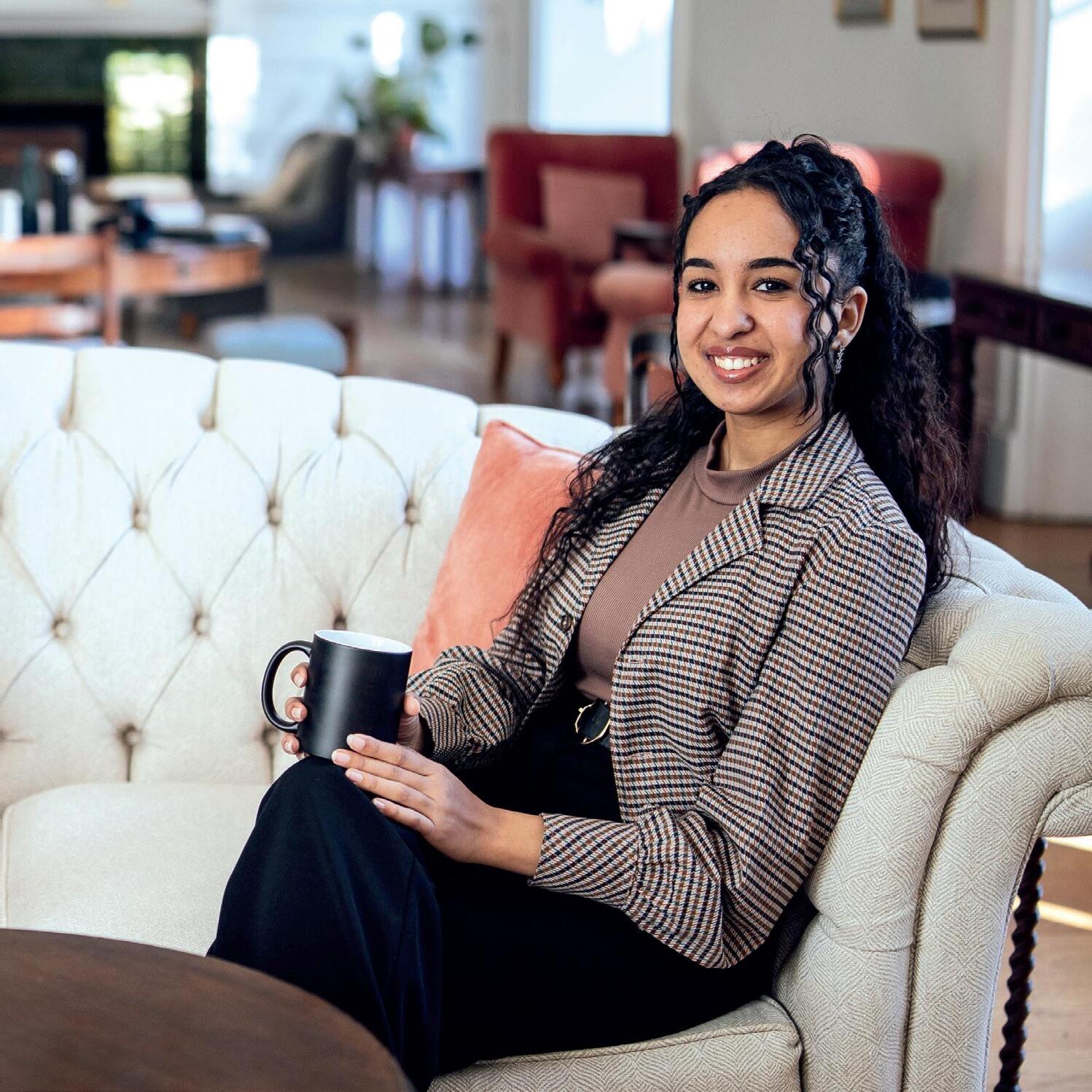
Zainab Mohamed is a Biomedical Engineer studying for the MSc in Translational Health Sciences. She hopes to build on her work at the Social Security Investment Authority in Sudan, where she discovered a passion for linking healthcare, policy, and technology innovation.
When the war broke out again in Sudan, one of the first things the soldiers attacked was the hospitals. But even before the destruction, we were already facing a deep, structural problem in our healthcare system.
In 2022, I was working as a biomedical investigator, evaluating medical equipment across hospital sites. Everywhere I went, the pattern was the same. The government had invested in expensive medical machines imported from abroad, designed for countries with controlled climates and stable infrastructure. In Sudan, even before the machines were turned on, dust and heat had already compromised critical components.
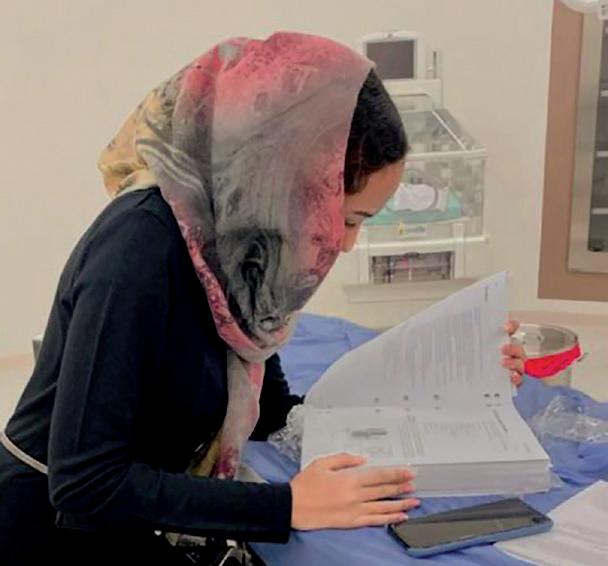
Standing in rooms full of equipment that cost millions, but could not save a single life made something very clear to me: we cannot build a strong health system on technologies that were
Every hardship, every moment of fear, led to this new beginning
never designed with us in mind. That experience sparked my commitment to finding locally driven solutions that work for low-resource health systems, not around them.
I applied to Oxford because I want to address this problem at its root, and the MSc in Translational Health Sciences offered the perfect means to do so. An interdisciplinary course for healthcare professionals and policymakers, it teaches students how to influence the adoption of new healthcare technologies at every level.
For me personally, it offers the chance to learn why technologies fail in countries like Sudan, and how they can succeed when built locally, for local realities. Small design decisions – materials, filters, maintenance needs – determine whether a device survives months or fails in days. In our context, a single failing machine represents not just wasted money, but lives lost.
My goal is to help Sudan develop its own technology-transfer and innovation ecosystem. We currently lack our own regulatory pathways for translating biomedical ideas into usable health technologies. But I believe that our researchers, engineers, and entrepreneurs have the creativity and expertise needed to change that, if we build the right structures around them.
I hope to contribute a roadmap for making this change possible: linking research, policy, and manufacturing so that the next generation of biomedical solutions in Sudan are sustainable, maintainable, and truly designed for the environments where they will be used.
To support our Sanctuary Scholarships, please contact sara.kalim@some.ox.ac.uk
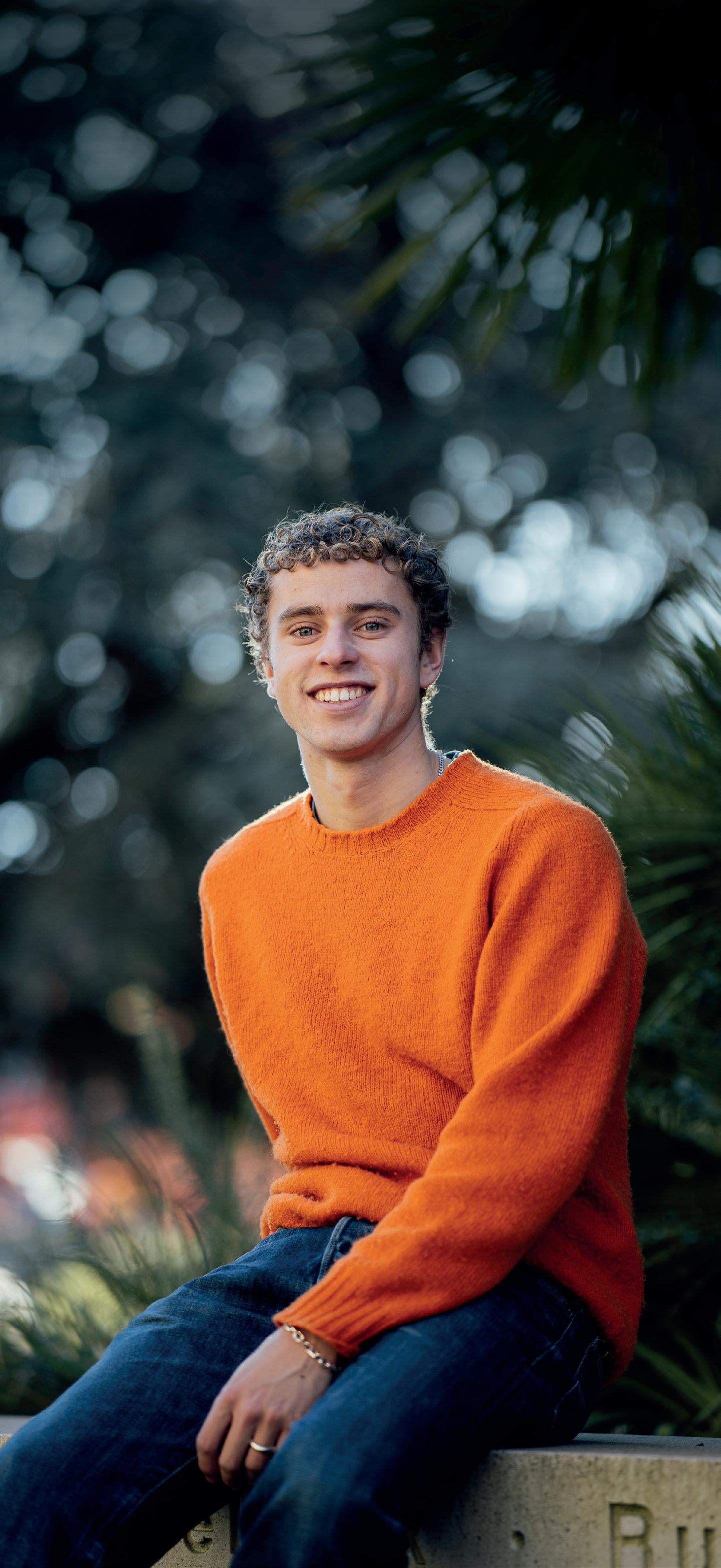
Finch Ward (2024) is a second year French and Linguistics student whose academic background and exceptional performance in Prelims just earned him a life-changing Michael Bishop Foundation Thatcher Scholarship.
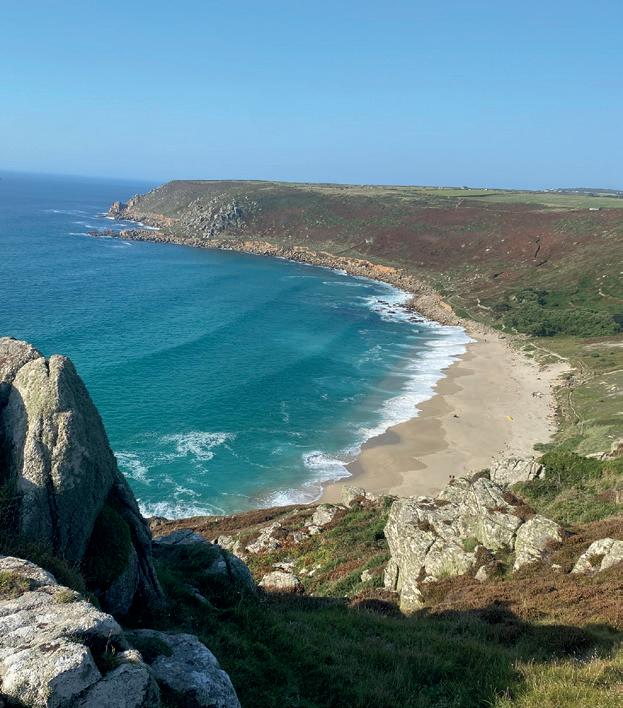
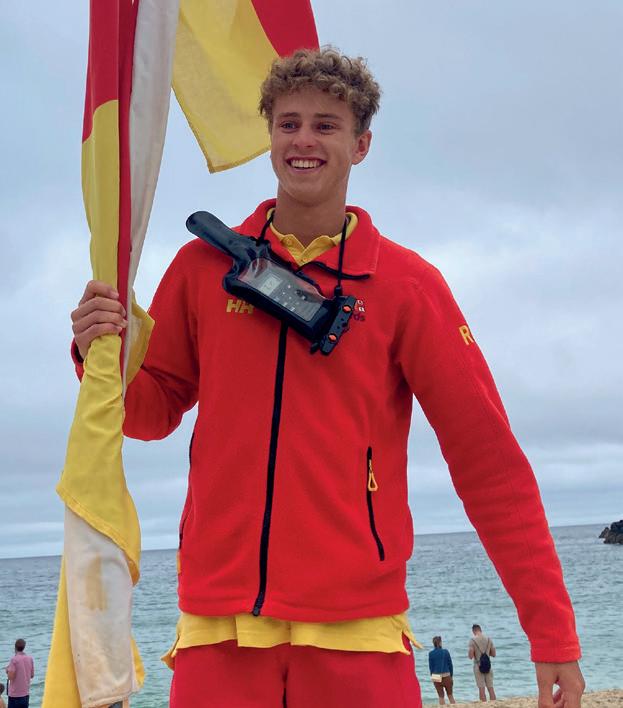
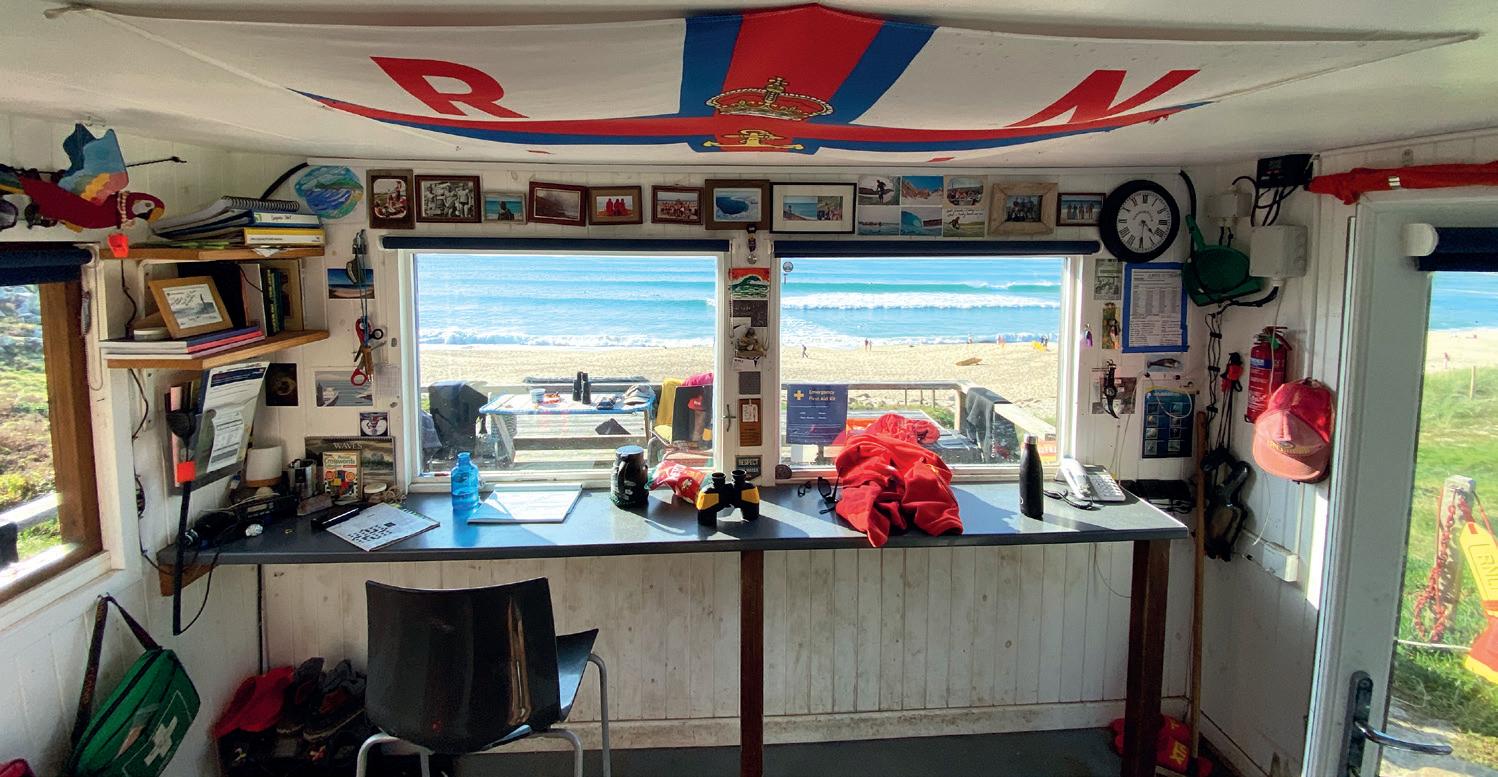
I grew up near Land’s End, overlooking the seas said to bury the lost kingdom of Lyonesse. And yet the Cornwall where I grew up was not just a place of ancient stories and rugged beauty, but of rural marginalisation and chronic educational under-funding. Working hard at school and as a lifeguard every summer, I never had time to think about the old stories, or the languages that brought them into my everyday reality.
All that started to change when I came across linguistics, initially through a school project led by a PhD student researching the death of the Cornish language. At the time, I didn’t know what linguistics was, and only felt intuitively that, somehow, this was important. My interest in languages bubbled under the surface until years later in French class, where I became fascinated by how cognates like castle and château had come to be pronounced so differently, despite their common origin. From there, I ended up down one internet rabbit hole after the next, leading me to historical linguistics and phonetics, and the realisation that linguistics was what I wanted to do.
Now I’m able to study the subject properly at Somerville, historical linguistics and phonetics remain two of my favourite branches. Since coming here, I’ve met speakers of Welsh, Irish and other Celtic languages, and have also loved studying the idiosyncrasies of these languages in seminars and tutorials, from consonant mutations to the lack of a specific verb for 'have' across most Celtic languages. For example, the phrase ‘I have a cat’ is rendered yma kath dhymm in Cornish –literally ‘there is a cat to me’.
All this has made me reconnect with my Cornish roots. In Cornwall, the Celtic language can sometimes seem very far away. The last native speaker is said to be Dolly Pentreath, who died in 1777. Growing up, the only exposure I had to Cornish was the Kernow a’gas dynergh sign welcoming you back into the county. However, finding out more about the other Celtic languages fills me with hope that this does not have to be the universal fate for languages under threat. I’m even planning on learning Cornish itself, and am excited to see how much I’ll be able to converse with my Celticspeaking friends.
As I learn more about linguistics, it becomes increasingly obvious how imperative it is that we protect the world’s endangered languages: of the roughly 7,159 languages in the world, around 3,193 are at risk. Indeed, in 1992, the linguist Michael Krauss warned that if we do not reassess our priorities, linguistics will go down in history as the only science that let 90% of its field disappear under its nose. My studies have already taught me so much about the value of all language varieties, and I now want to do everything I can to turn the tide on mass language extinction.
For goals like this, the Michael Bishop Foundation Thatcher Scholarship is life-changing; it will mean I can go on to further study debt-free and pursue my dream to be a linguist. In
this career, I could work with local communities to preserve endangered languages, or study the effects of language policy on minority or marginalised languages, particularly in France, where the belief that every citizen should speak one homogenous language is unusually prevalent. This is to the detriment of the country’s minority and regional varieties, which until very recently were actively persecuted.
Breton is a fascinating example of this linguistic marginalisation. Today, Breton is the only Celtic language not officially recognised by a national government. And yet, Breton has a unique status as an Insular Celtic language, related not to the other Celtic languages found across Europe before the Roman conquest, but instead sharing a common ancestor
with Cornish and Welsh. Breton was in fact spoken in parts of Britain until the fifth century CE; for as long as Cornish was a living language, fishermen from both regions could have happily conversed together.
As a Thatcher Scholar, I can pursue my curiosity to its end
This summer I hope to go to Brittany to hear from locals and understand the far-reaching effects of the French government’s policy towards their language. I’m particularly interested in the ‘gap in transmission’, whereby the new generation of Breton schoolchildren speak markedly differently from their native-speaker great-grandparents, as the generations between had much less fluency. I hope to use what I learn about Breton in my future studies, and eventually work on protecting marginalised languages and dialects around the world.
Receiving the Michael Bishop Foundation Thatcher Scholarship has made globe-spanning plans like this possible, and I am extremely thankful to Lord Glendonbrook for his generosity. I will no longer have to work all summer, but can instead pursue my curiosity to its end.
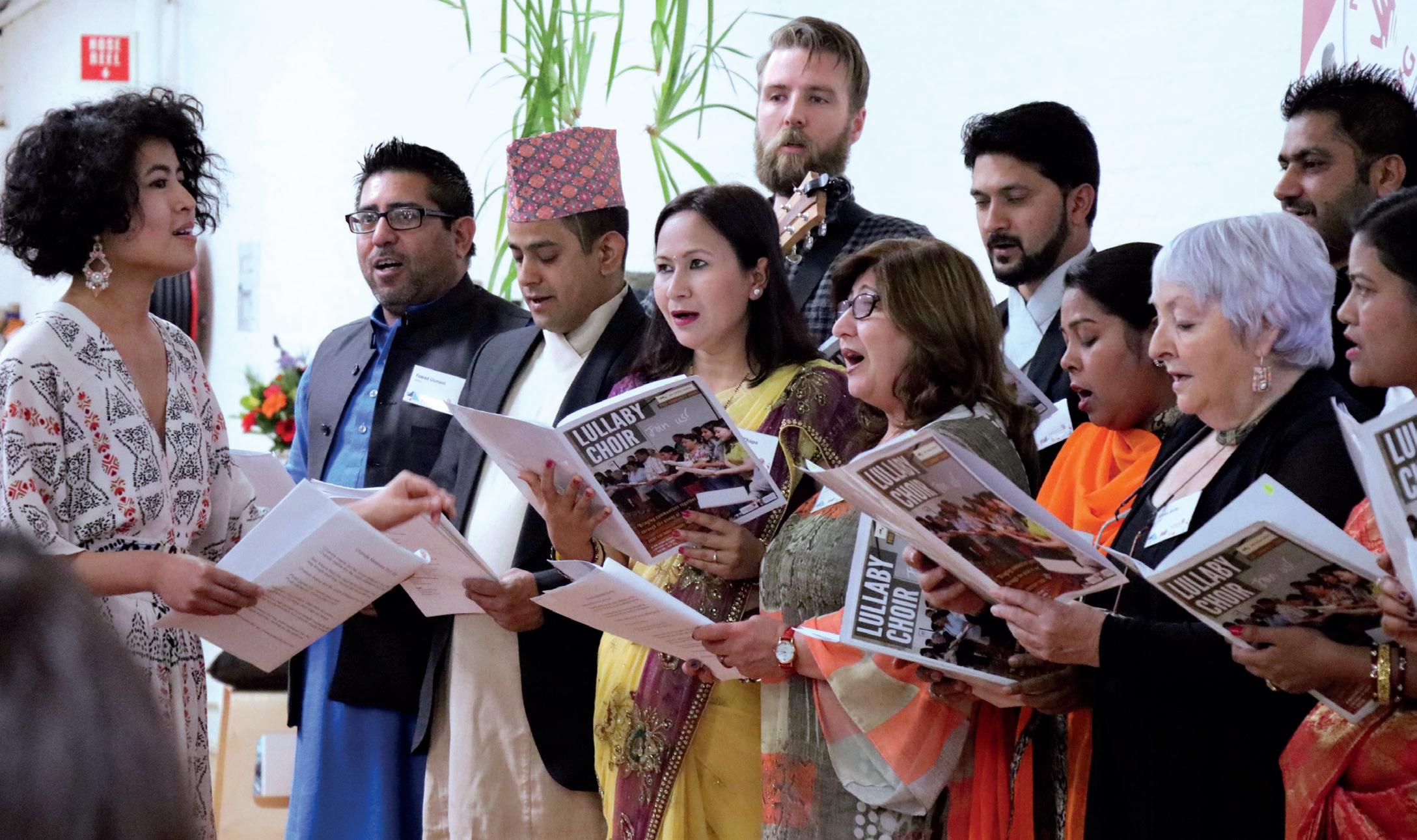
Professor Samantha Sebastian is Somerville’s Tutorial Fellow in Music. Here she reflects on how the endowment of her post through the legacy of Christian Carritt (1946, Physiology) resonates with her own academic ideas and dreams.
I feel honoured to be the first recipient of the Christan Carritt Fellowship in Music because Christian loved music and cared about people – two concerns that also mean a great deal to me.
I can’t remember exactly when I realised that I wanted music to be a part of my life, but the discovery was bound up with the realisation that not everyone had the same means to access it as I did.
I went to school in western Sydney, in an area often politicised for its socioeconomic disadvantage and large migrant and refugee population. In my music class, none of my peers were receiving instrumental lessons as I was, and I remember thinking this was terribly unfair.
I went to university to study music with the aim of contributing to music education in schools like mine. While I did start my career as a music teacher in such a school, at university I also realised my newfound knowledge of ethnomusicology and performance studies might be used to help in a different way.
Specifically, I asked myself: how might academic research illuminate the musical projects that marginalised communities themselves lead? And what if this work also contributed to new music-making opportunities developed in collaboration with those communities, fostering self-realisation, political awareness and intercultural engagement?
I’ve been pursuing that idea ever since. In my first project I observed a Bosnian women refugees’ choir, who were using songs from their homeland to process the trauma of war. I also conducted research with a drumming group for adolescent boys, and music teachers who volunteered at the asylum seeker detention centre across the road from my old school. For my PhD, I explored how music enabled three ethnocultural groups from Sydney’s unjustly vilified Blacktown neighbourhood, where I lived, to navigate the complex relationship between their heritage cultures.
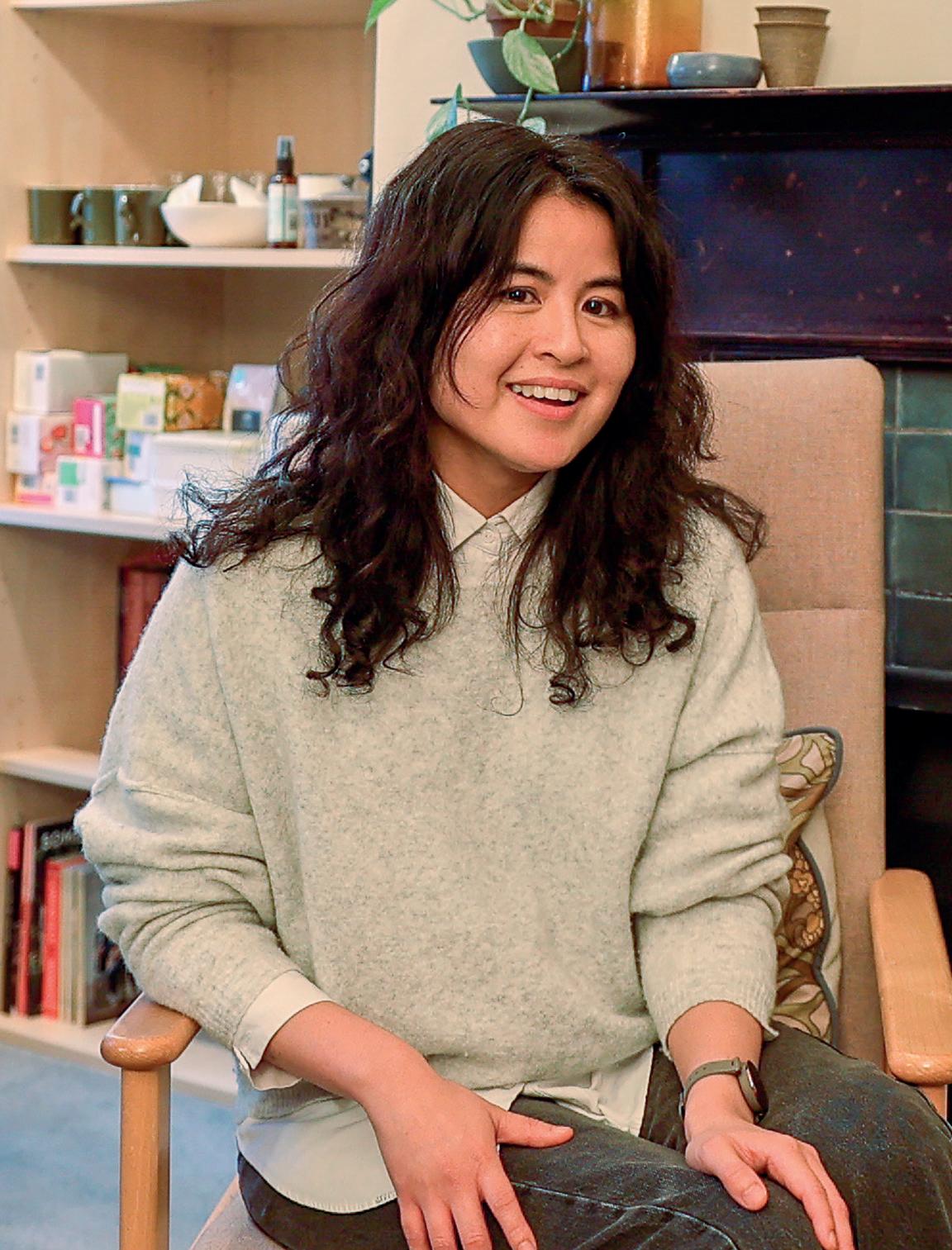
I don’t have space to describe the various projects I’ve undertaken since then, but I can perhaps name two high-points. First, there was the time I went into the recording studio with my multilingual lullaby choir and saw how the complex power dynamics of a modern studio changed how we performed. I subsequently used the testimony of my fellow singers to envisage a pedagogy focused less on idealised notions of ‘finding our voice’ and more on the embodied, sensorial experience of singing together.
Second, I want to mention my ongoing Songworlds project. This
multi-site ethnography is the most ambitious study I’ve yet undertaken of how music functions within a single community. In it, I consider the musical lives of Overseas Filipino Workers (OFWs), a widely dispersed and culturally significant population, whose contemporary form emerged from the labour policies of Ferdinand Marcos Sr.’s martial law regime in the 1970s.
By creating discrete ‘songworlds’, I have sought to classify the political, ceremonial, commercial and personal contexts in which song is deployed to narrate the lives of the OFWs. This system paves the way for an understanding of OFW experience that centres their lived realities, often in under-supported sectors such as healthcare, domestic work, fishing and seafaring. Disentangling the OFWs’ authentic experience from nationalistic narratives or reductive stereotypes in turn opens up the possibility of real change through policy and greater awareness.
So, why have I provided such a brief overview of my research? It’s because the final element I want to talk about is how all of this thinking and research shapes my day-to-day interactions with music students, including here at Somerville.
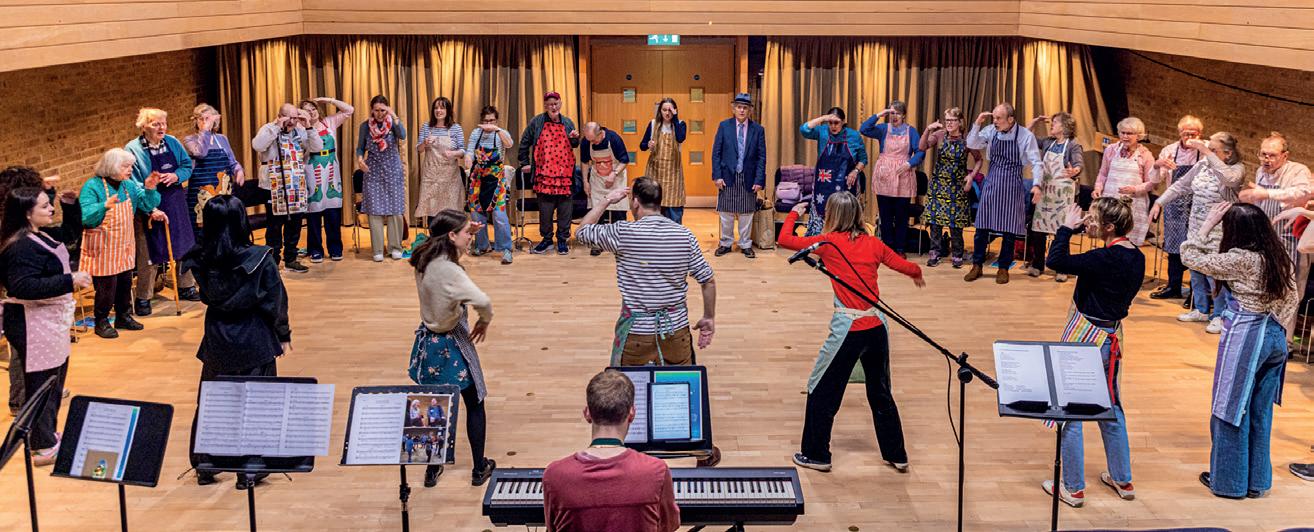
I teach many courses a year, and I supervise several postgraduate students. But, as the Music Faculty’s expert in community music and music education, I also convene the undergraduate course through which students go out and teach music in community and school settings.
Oxford’s Community Music and Music Education course partners with charities, arts organisations, schools and the county music service, so our students can use their skills to enhance the lives of others. Placements are wide-ranging and include teaching in general music classrooms or wholeclass ensembles, and making music with people with dementia, autistic young people, people with profound and multiple learning difficulties, or people in prison.
As the course convenor, I see the benefits of these programmes for endusers, but I also see the impact for our students. Stepping outside tutorials, lectures and the concert hall, they acquire new skills and insights that will benefit them as musicians, as teachers, and as people.
All of this research shapes my day-today interactions with music students
I do hope that Christian would be proud to see the current face of music at Somerville. Certainly, it means a great deal to me that I’m able to fulfil the dream I had as a teenager. It is not quite as I planned it. And yet, through my research and teaching, I like to think the same important goal is achieved.
Last summer, Evan Slater (2020, Biology) set off to South America with a very particular mission in mind, enabled by the Alice Horsman Fund, which supports alumni travel. Since returning, Evan has joined McKinsey & Company as a business analyst.
You probably think of the potato as one of the plainest vegetables – not known for inciting powerful emotions in your typical undergraduate. It may therefore come as some surprise to hear that the humble potato was the key inspiration behind my 4,000km expedition across the mountains, glaciers, and salt flats of the Andean Plateau last summer. Allow me to explain.
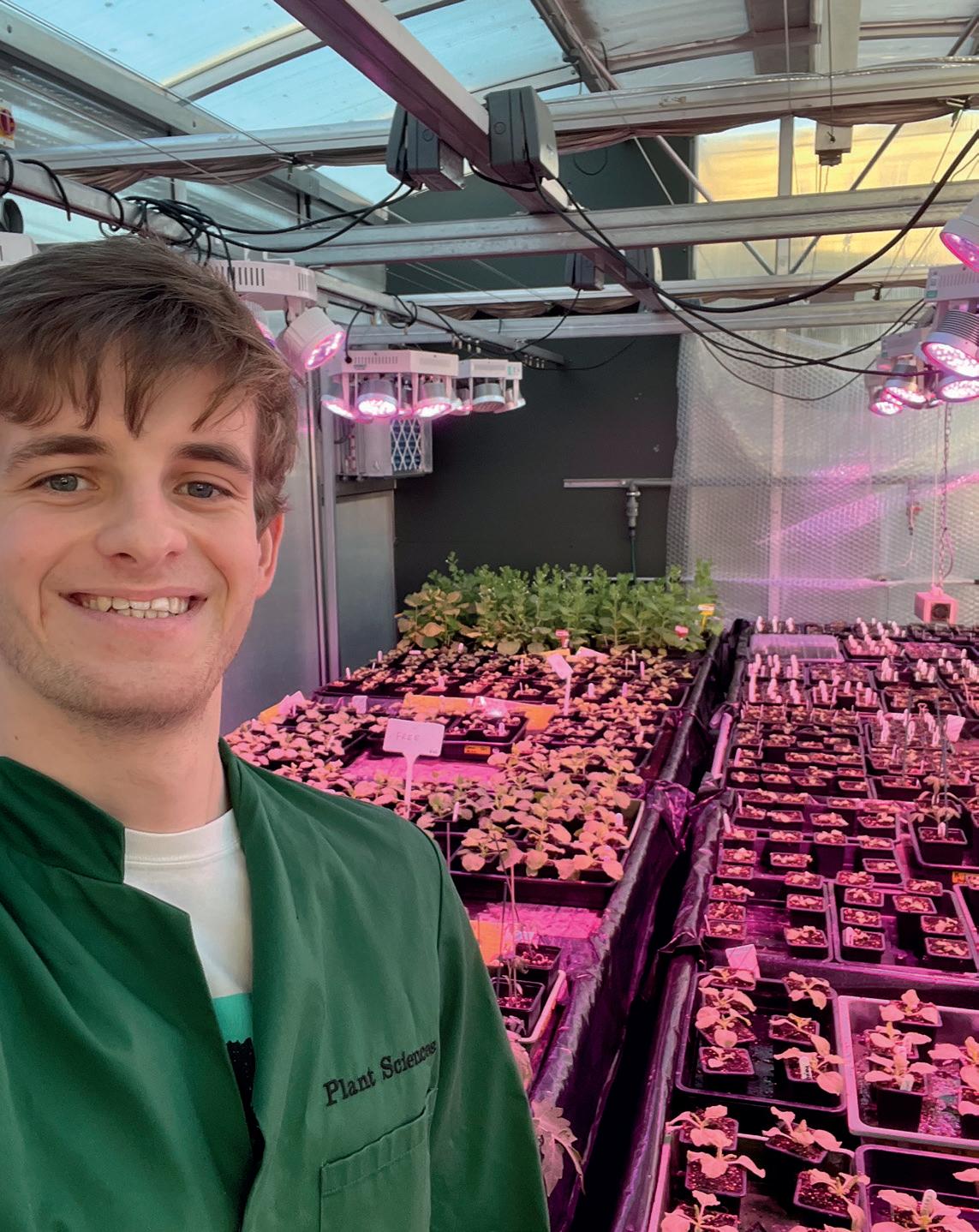
I spent my last academic year in Oxford completing my master’s on the immune response of plants to Phytophthora infestans – the devastating pathogen that causes late blight disease in potatoes, most infamously in the Irish Potato Famine of the 1840s. My research involved infecting plants with potato blight and monitoring their response.
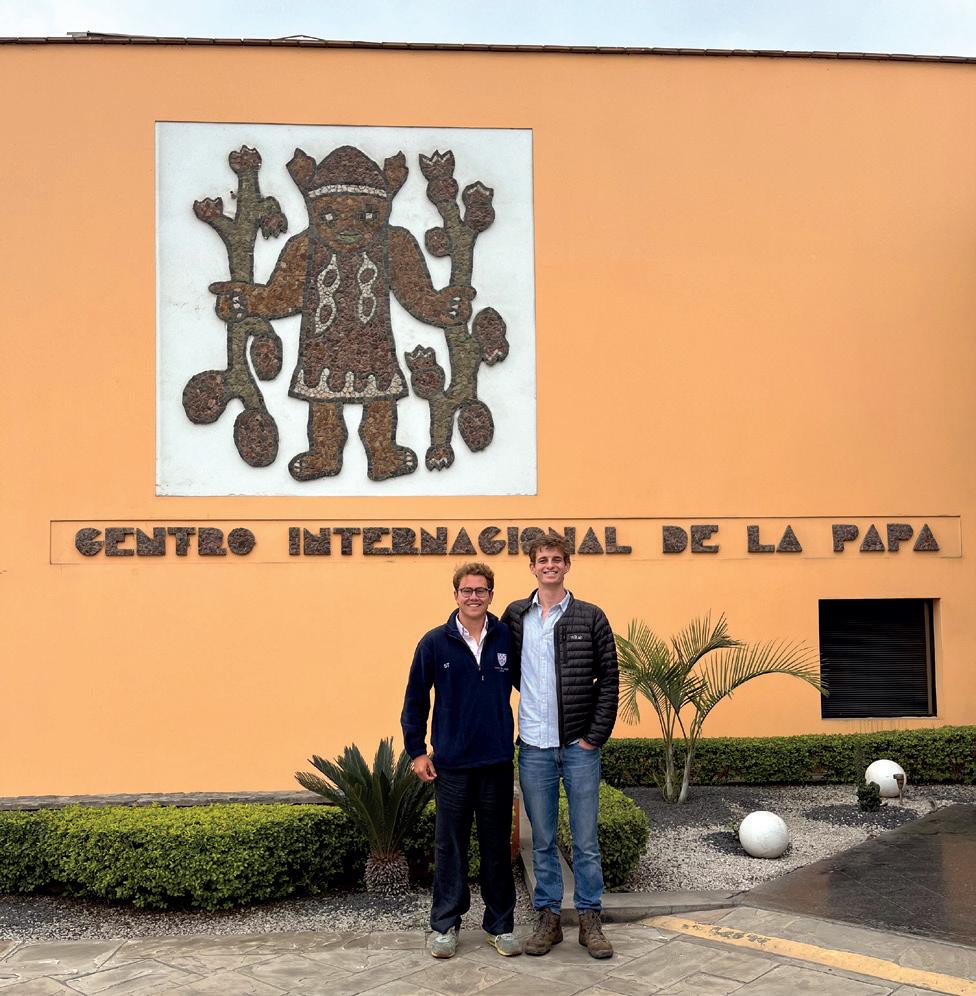
I was interested to learn that our isolates of Phytophthora infestans had originally come from the International Potato Centre in Peru. I was intrigued by the work this centre was doing and reached out to ask about the possibility of visiting. Thanks to generous support from the Alice Horsman Scholarship, I was able to start planning a trip alongside my friend Sam Thomas (2020, History). We plotted a route through Peru, ending up near Lake Titicaca so I could continue into Bolivia and through to Buenos Aires for my flight home.
The highlight of the trip was our visit to El Centro Internacional de la Papa (CIP, or, in English, the International Potato Centre), which kindly arranged for us to tour their facilities, attend seminars and meet several researchers. We heard from Dr Azevedo on her role in cataloguing the global diversity of potato species, and Dr Magembe on a disease-resistant genetically modified potato variety which he was supporting through the regulatory approval process in Kenya. We viewed the potato gene bank, a massive cold room full of test tubes containing tiny potato plants, and heard from Dr Kruze about his work adding a
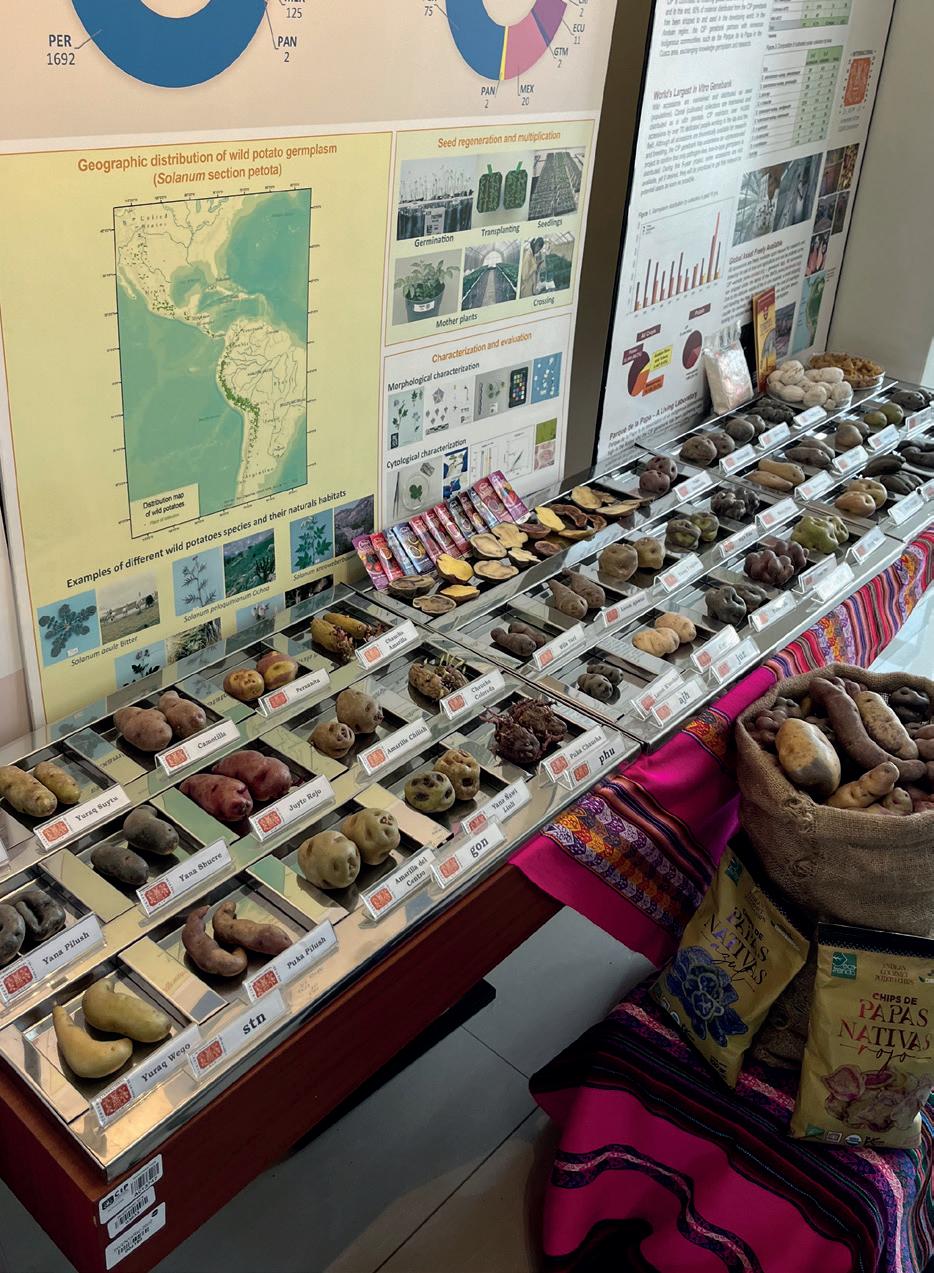
regenerative potato rotation to the growing season of rice farmers in India. Overall, we had a fantastic experience and learned a huge amount about the cutting edge of research into this most humble of plants.
For the rest of the trip, potatoes never left us alone. Trekking the Colca Canyon, with massive Andean condors soaring above, our new friends shared with us some crisps made from a beautiful purple variegated potato, each wafer like a miniature Rorschach ink blot test. After hiking Machu Picchu, we celebrated with dinner in Cusco, where the star of the show was their potato dish – three different varieties of potato (purple, white and grey) cooked simply with amazingly different flavour profiles and appearances. Finally, I was a prescribed a diet of boiled potatoes by a Bolivian pharmacy when some street food got the better of me – and mounted a strong recovery!
My final week consisted of a stunning bus ride back over the Andes to Salta, Argentina, followed by a flight to Buenos Aires for a few days of city living before heading home. This adventure was the trip of a lifetime for me, and it would not have been possible without the support of the College, for which I am extremely grateful. It was fantastic to see so many natural wonders, experience such unique cultures and meet such a diversity of people. Most of all, I’m delighted to have been able to share my passion for potatoes with you and to have given this lowly tuber its moment in the sun.
Somerville has been enabling lifechanging journeys since long before Evan set off for South America.
Barbara Freire-Marreco (1879-1967) was an anthropologist who in 1912 became the first recipient of the Mary Ewart Travelling Scholarship. This enabled her to continue her research into the Pueblo peoples of the Southwestern area of the USA. Her letters to College reveal the difficulties but also the joys of her research – and how Somerville’s funding of anthropology allowed the subject to flourish.
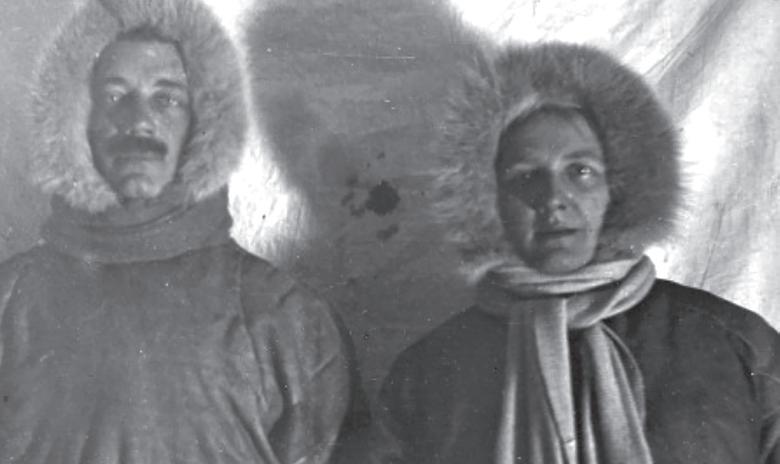
Marya (or Maria) Antonina Czaplicka (1884-1921), Barbara’s contemporary, followed her in applying for the Mary Ewart Scholarship. Marya travelled to Siberia for her research shortly before the First World War broke out. With another researcher, Henry Usher Hall, and a Tungus woman named Michikha, she spent the winter of 1914-15 travelling along the Yenisei River. She published an account of this trip as My Siberian Year (1916). On returning to England, Marya held a 3-year lectureship in anthropology at Oxford. She then struggled to find funding and, after moving to Bristol and hearing that a research fellowship she had been assured of was being given to someone else, she tragically took her own life. Barbara set up the Marya Antonina Czaplicka Fund in her memory, to help students travel to conferences abroad.
The tradition of supporting students and early-career academics in realising their travel projects has remained in place at Somerville ever since.
“To whom much is given, much will be required.”
Shahnaz Batmanghelidj (1975, PPE)
Ifeel very lucky to have been accepted at Somerville, embraced by Barbara Craig and smart tutors who over three years helped launch me.
To be immersed in Oxford, meet brilliant students from all over the world, and party, too, was simply too good to be true. I had to give back.
To be at Somerville meant encountering amazing tutors who pushed us to think critically and write better. I still remember how a few of us would cycle up the Banbury Road to Mary Proudfoot’s house, where there was always tea and a lot of laughs between the essays. When I had the opportunity of naming a pair of rooms in ROQ West, I did not hesitate to name one for my parents and the other for my Economics tutors, Judith Heyer and Peter Sinclair (Brasenose).
Somerville has produced some remarkable women. I invited Daphne Park to be our guest of honour at the Oxford and
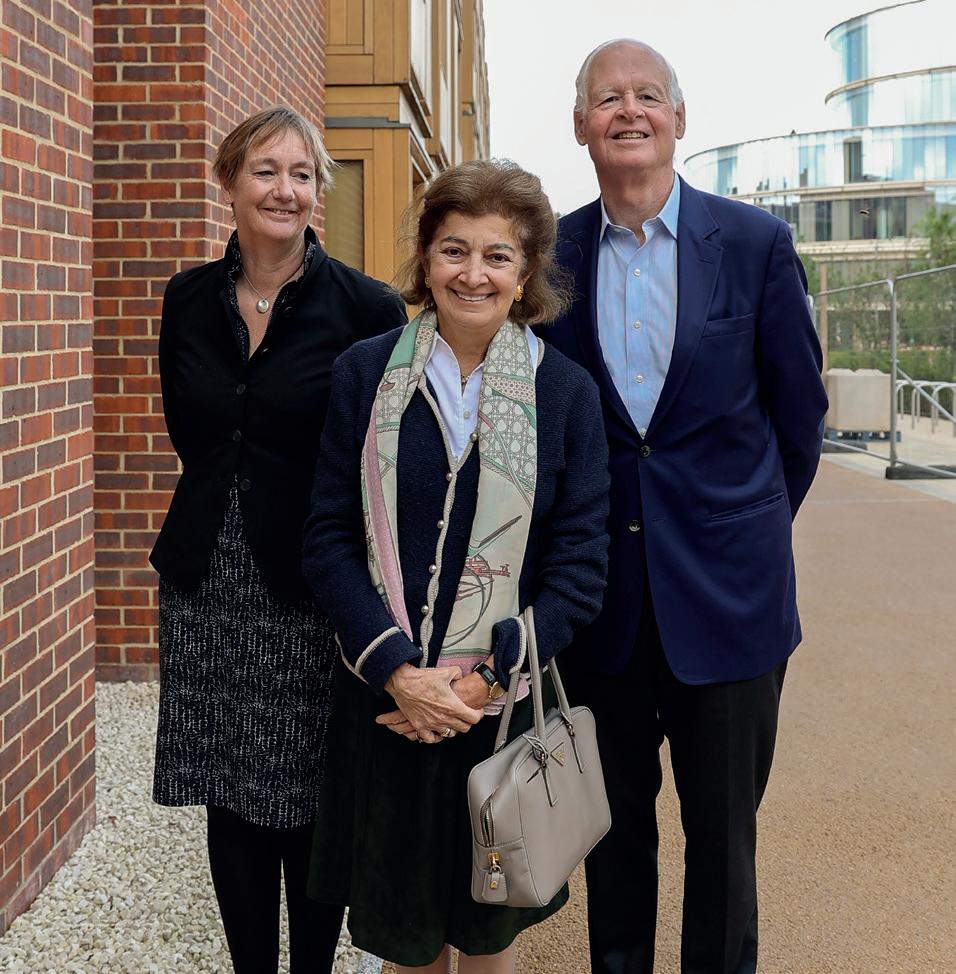
Cambridge Boat Race Dinner at the Harvard Club in New York City. This was back in the 1980s, so the audience was still overwhelmingly male, yet Daphne absolutely blew those men away with her humour and stories. Little did we know that she had been MI6’s most highly ranked female intelligence officer. In those days, the University did not ask for money, as Daphne reminded me. I had been inspired by the organised fundraising of my American alma mater, however, and began giving in small amounts.
Years later, Jan Royall and others asked me to provide scholarships, which I was happy to do for refugees from the Middle East because my life, too, had been impacted by war. The civil war in Syria was raging at this time, displacing millions. I had not suffered like them, but their plight resonated. I was a graduate student in Princeton when the Iranian revolution happened and all my family’s assets disappeared overnight. Once again, I was fortunate –on this occasion, that my wonderful professors in Princeton arranged for me to have a tuition-paying job and a place to live. I am forever grateful to them.
Finally, the ever-persuasive Jan Royall and Sara Kalim approached me last year to help fund a monetary shortfall. With the new Centre for Humanities bringing Oxford’s academic centre closer to Somerville, it seemed important that the hitherto neglected north side of College look spiffier. The new Ratan Tata Building would do much to revitalise the site, but ROQW had to look good, too.
Amusingly, I had for two years looked out over the not so beautiful Radcliffe Observatory while living in House. I was reluctant at first to have my name attached to any building, yet in time Jan, Sara and my husband persuaded me that supporting this project was the best way to make a difference for Somerville.
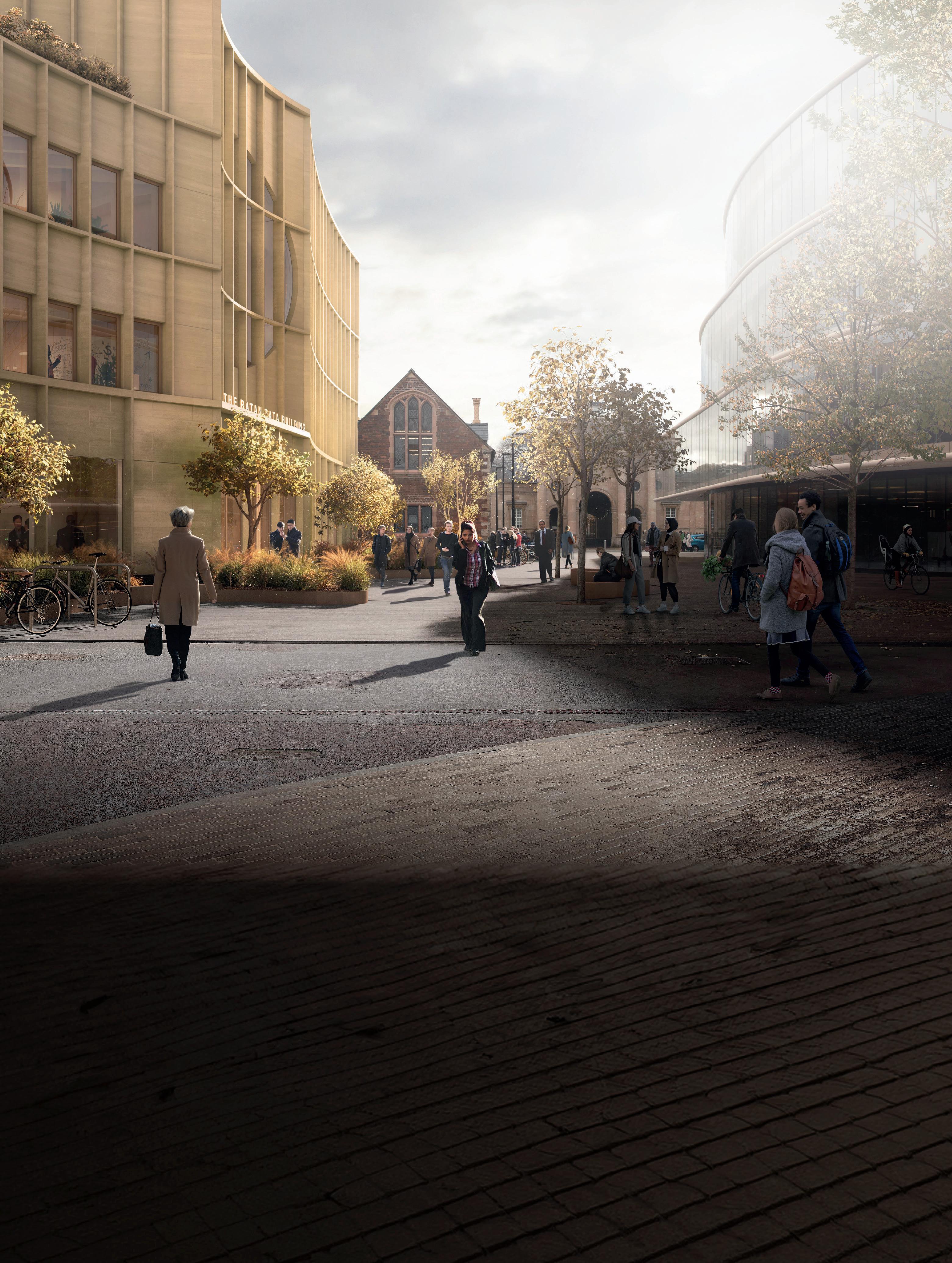
In spring 2026, Somerville College will begin construction on the Ratan Tata Building. Set on the last available plot of land in the prized Radcliffe Observatory Quarter, this landmark building represents a once-in-a-generation opportunity for Somerville to expand its teaching and learning space in a bold architectural setting.
While the building has already been named in honour of Mr Tata, there remains a range of opportunities to honour benefactors who support this transformative project. For a chance to secure your place in the next exciting phase of Somerville’s evolution, please contact sara.kalim@some.ox.ac.uk
When Tejashwari Naidu and Rahul Singh arrived in Oxford to begin their master’s degrees at the Department of Social Policy and Intervention, both brought with them years of hands-on experience addressing one of India’s most urgent and overlooked challenges: child protection.
Tejashwari, the Dr Gita Piramal Graduate Scholar, and Rahul, the Cyril Shroff Scholar, represent the next generation of practitioners shaping child protection policy through the lens of evidence and equity. Together, they embody the Oxford India Centre for Sustainable Development’s mission: to support Indian scholars committed to advancing sustainable and inclusive development.
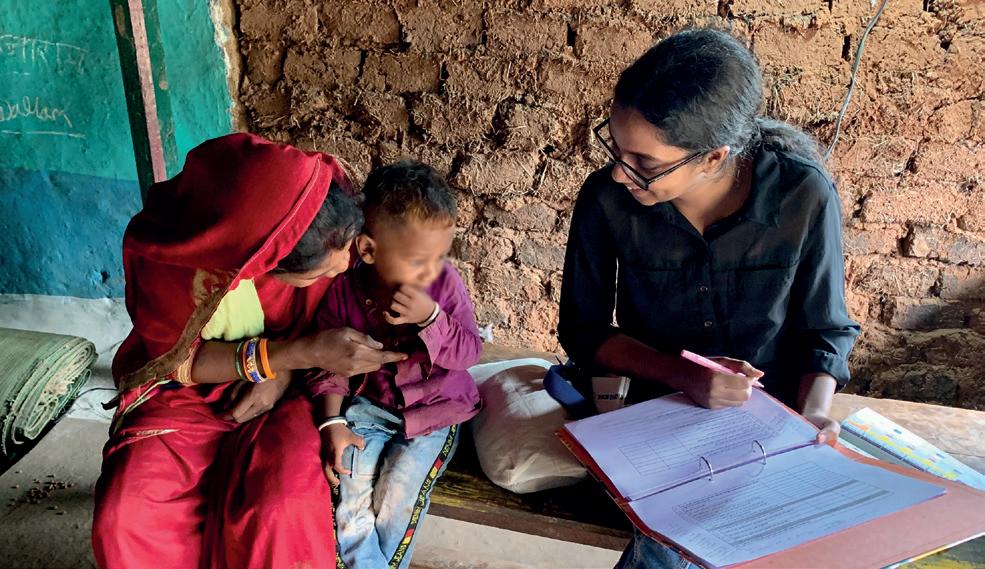
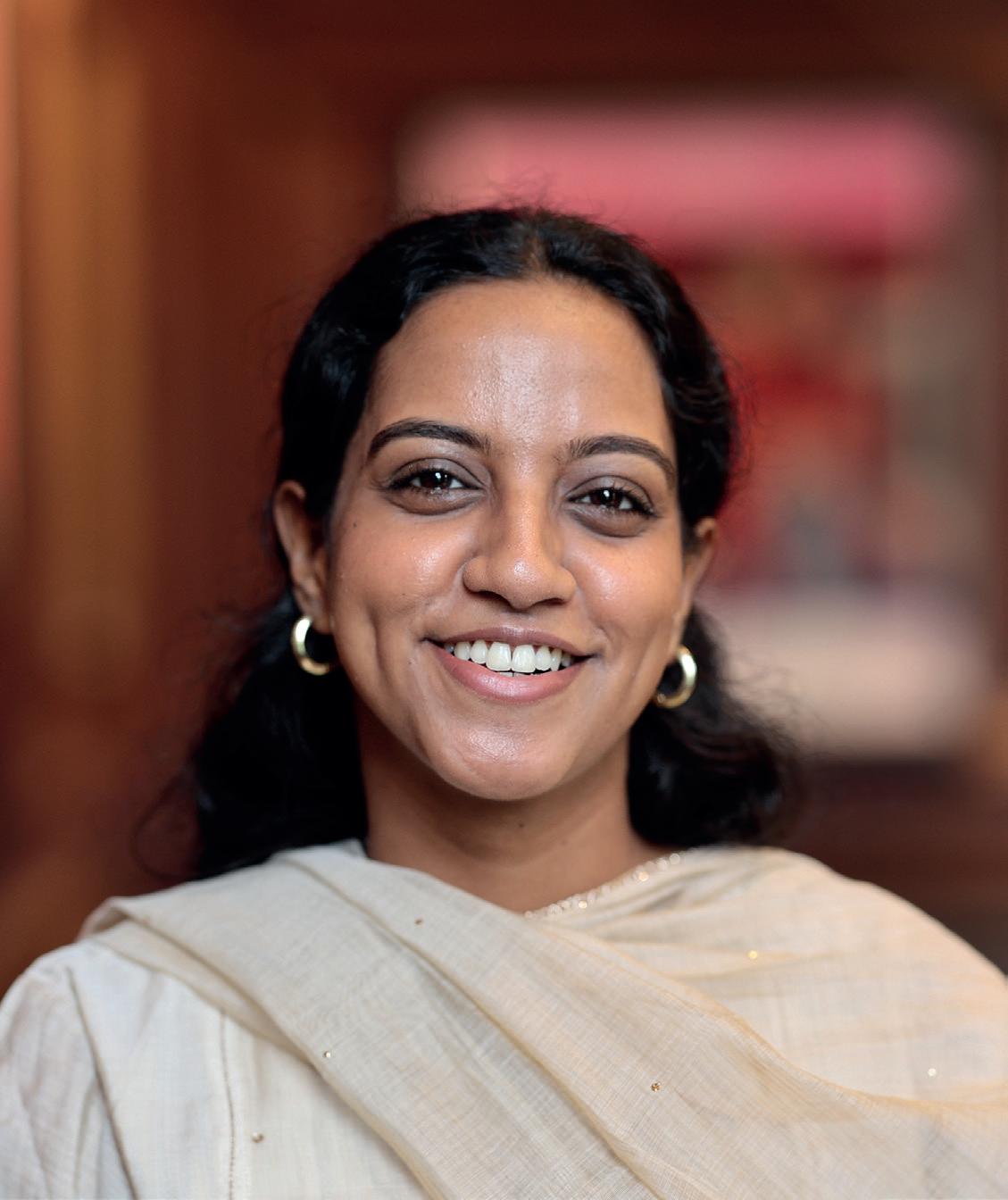
Tejashwari Naidu
For Tejashwari, child safety begins at home. “Parents are the most common perpetrators of violence inside a home,” she explains. Her research focuses on parenting interventions that reduce domestic violence against children, drawing lessons from successful global programmes in countries such as Thailand, Myanmar, and the Philippines. “Globally, it’s established that parenting interventions work, but in India, the family is seen as a private space, and this makes intervention complex,” she says.
Tejashwari’s time as a Teach for India Fellow alerted her to the urgency of this issue. “I’d often have children come to school with bruises, and when I visited their homes, I saw first-hand how domestic violence shaped their daily lives,” she recalls. Tejashwari later worked with vulnerable tribal communities in Chhattisgarh in Central India, where deeprooted social norms coupled with poverty to create a cycle of violence and marginalisation. “The circumstances these families live in not only perpetuate violence, but also make escaping it incredibly difficult,” she adds.
At Oxford, Tejashwari aims to contextualise international evidence-based parenting frameworks for India. “Corporal punishment is still not illegal in India, which means there is no acknowledgment through a policy framework of the abuse children face at home. Public policy can’t ignore what happens inside homes and it has to guarantee protection,” she says, pointing to Oxford’s Global Parenting Initiative as a key inspiration for her future work.
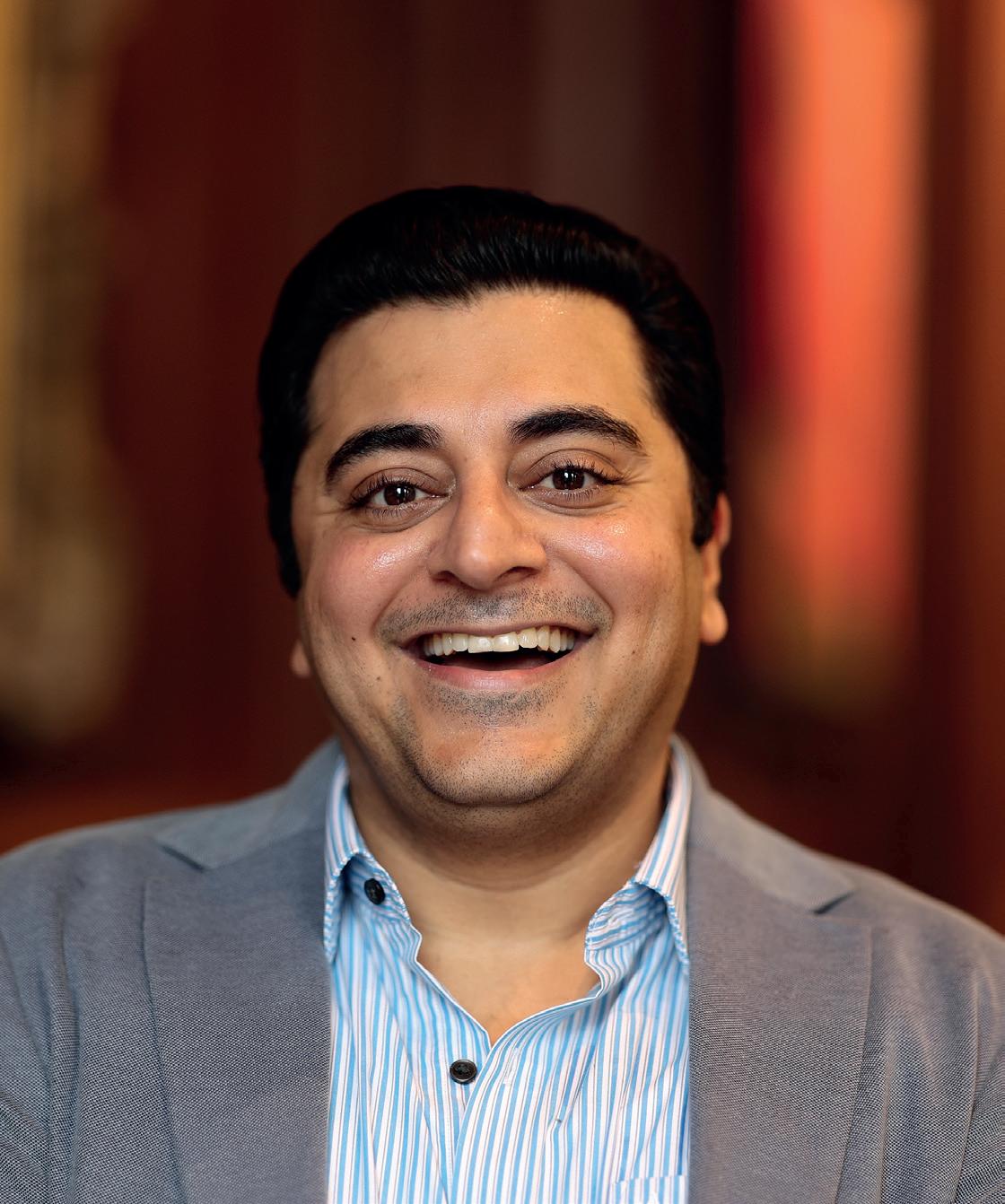
Rahul Singh’s work, by contrast, focuses on child labour and the policy gaps that allow children to fall through the cracks. His research examines the intersection of child protection, education, and labour laws in India, especially the contradictions between the Right to Education Act, which guarantees schooling until age 14, and other policies that permit child work in family enterprises.
“There is an inherent contradiction in how India perpetuates the exploitation of children through its policies,” he explains. “The Right to Education guarantees education for all children and child labour is illegal, but India makes an exception for childen to be employed in ‘family-run’ businesses.” His work unpacks why these inconsistencies persist and aims to propose policy reforms that reflect India’s social realities, including gender and caste-based vulnerabilities.
Drawing on his experience leading district-level education programmes in Punjab, Rahul stresses that “quick fixes” from the Global North often fail in India. “Evidence alone doesn’t create change. The solutions must emerge from within the system,” he says. “Education is on the concurrent list, meaning both federal and state governments have a role. We need accountability and better implementation, not just new policies.”
For both scholars, Oxford provides an unparalleled environment for interdisciplinary engagement. “The Department of Social Policy and Intervention is pioneering work in child protection,” says Tejashwari. “At the OICSD,
we find not just financial support but also a sense of belonging – a community where we can ideate, question, and connect our work with India’s larger sustainable development goals.” Rahul adds that the academic mentorship and exposure he’s received will be instrumental in shaping his future research. “This programme has given me the foundation to pursue a DPhil and contribute to policy reform grounded in evidence,” he says.
The work of Tejashwari and Rahul reflects the OICSD’s growing impact as a hub for sustainability-focused research that bridges disciplines – from education and gender equality to public health and governance. The Centre’s scholars are not only advancing academic inquiry but also applying their findings to real-world challenges across India.
This aligns closely with the vision shared by Cyril and Vandana Shroff, supporters of the Centre, who note: “The OICSD’s work in empowering talented Indian students to engage deeply with issues of sustainability, equity, and public leadership has been truly inspiring, and it’s a privilege to be associated with its remarkable scholarship programme. The partnership reflects our shared belief in education as a force for long-term change, and we look forward to seeing how all of these scholars continue to contribute to India and the world in the years ahead.”
Through their research, Tejashwari and Rahul remind us that child protection is not merely a policy issue but a moral imperative demanding empathy, systemic reform, and the courage to challenge deeply ingrained social structures. As they prepare to take their learnings back to India, their work stands as a testament to the transformative power of education and the enduring impact of the OICSD community.
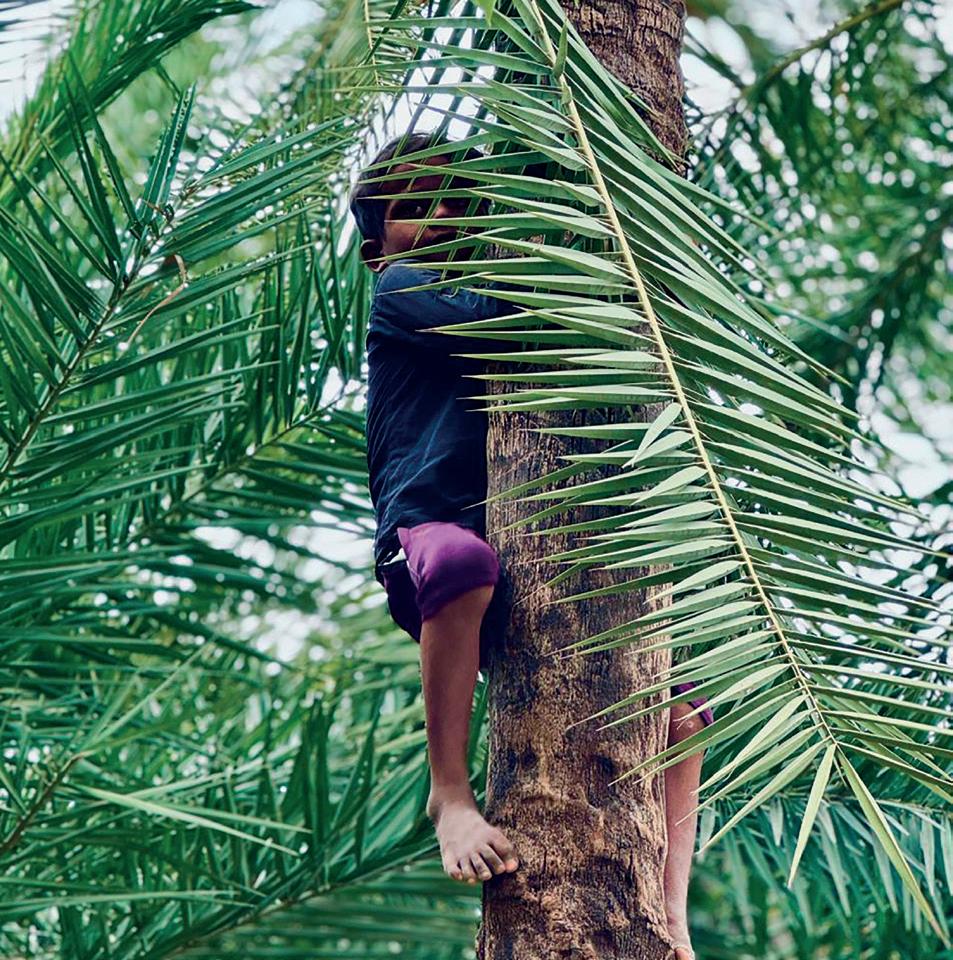
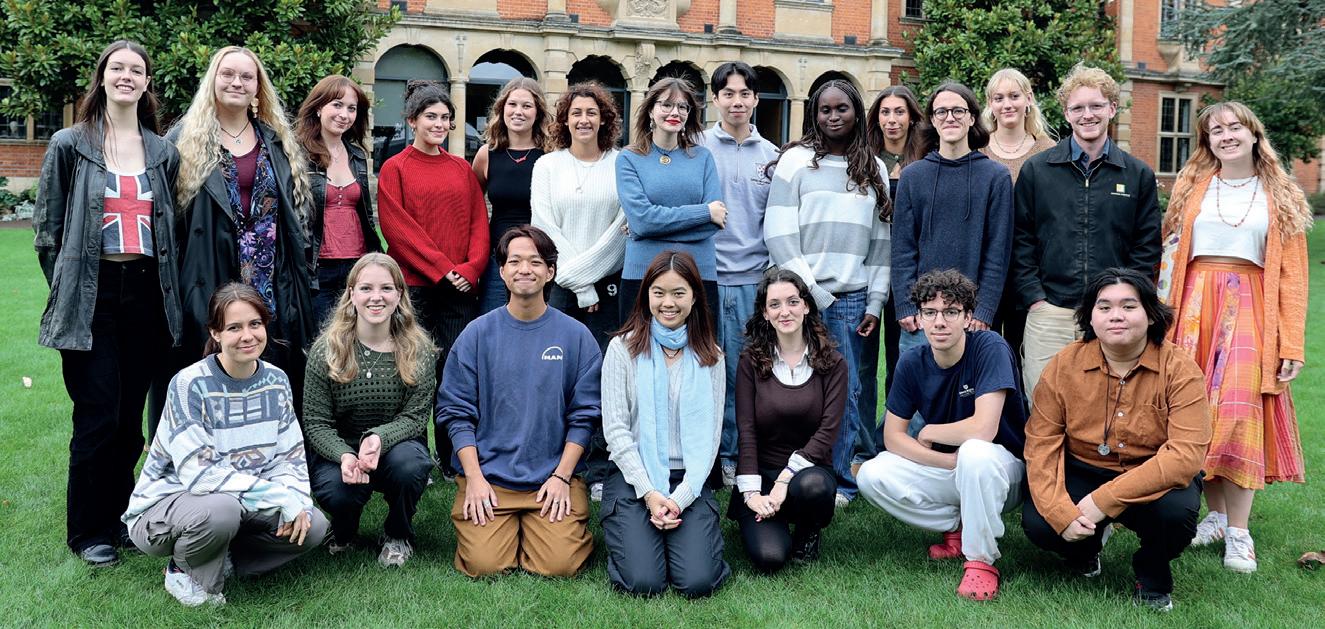
Jamie See, our JCR President 2024-25, looks back with gratitude on another successful year for Somerville's undergraduate students.
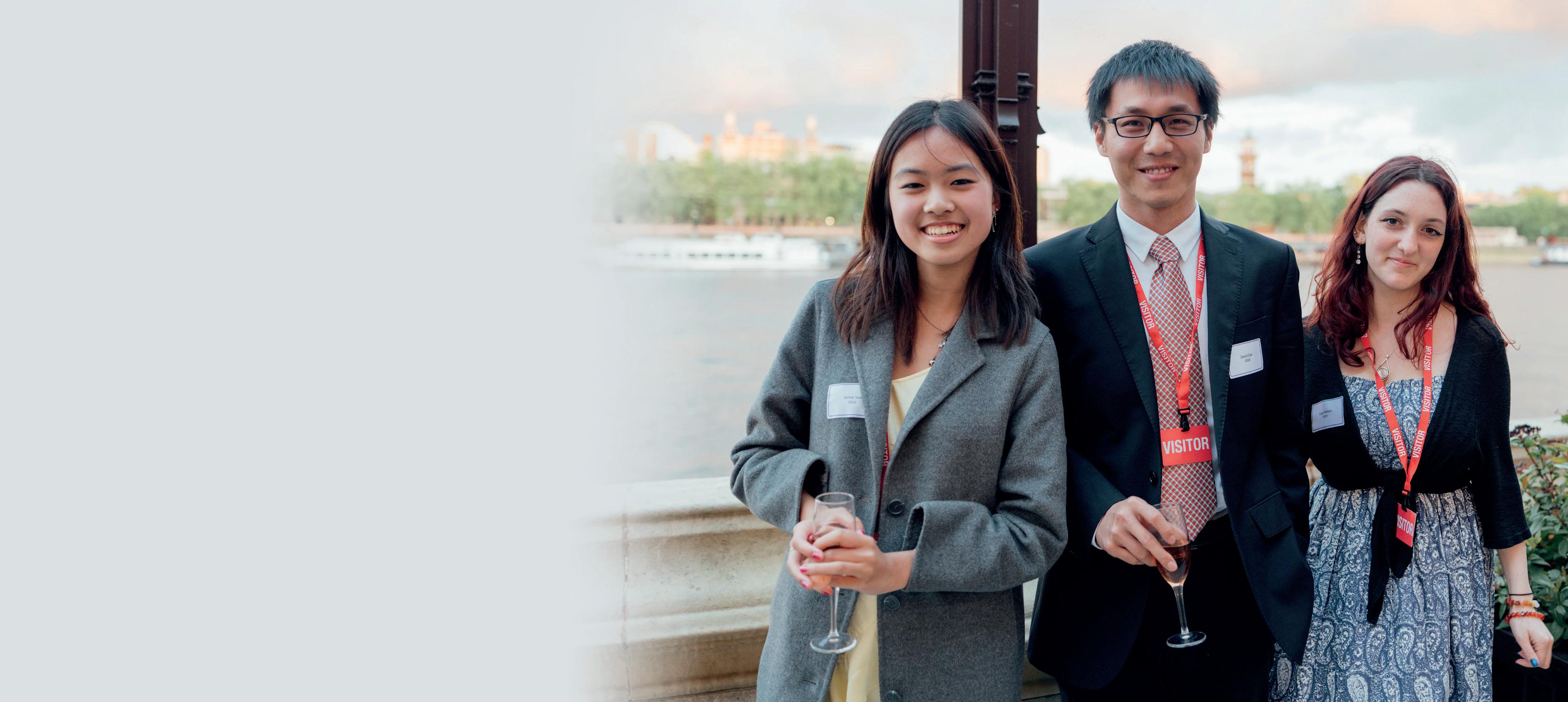
The engagement of alumni and the wider Somerville community has been integral to the success of the Junior Common Room this year. On behalf of the current JCR, I would like to thank you all for your continued kindness in enhancing student life and supporting future generations of Somervillians in succeeding here.
It is no exaggeration to say that alumni support enhances every part of undergraduate life, making college a vibrant and intellectual community where students feel they belong and can excel. This year alone, over £240k was awarded for academic excellence in the form of scholarships and prizes, and £18k was granted to students in financial hardship relief – none of which would be possible without your generous support. The Margaret Thatcher Scholarship Trust, the Skills Hub programme and Sanctuary
Scholarships have all allowed students to benefit greatly in their academic, personal and career development, both within and beyond Oxford.
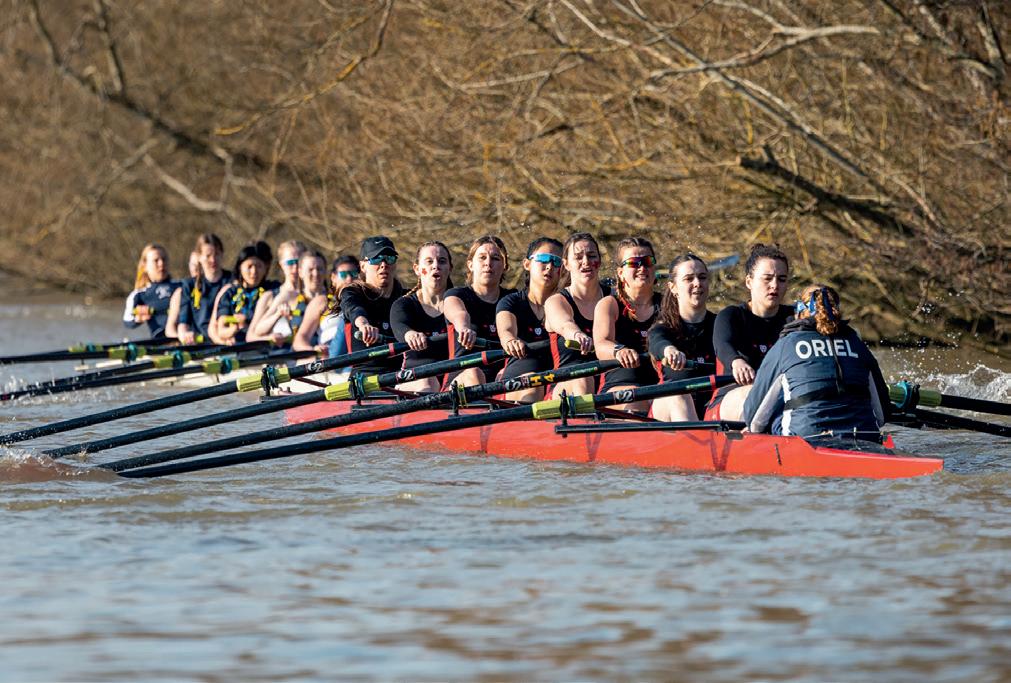
Beyond the academic sphere, the JCR embraced a full spectrum of extracurricular pursuits this year. The Somerville College Choir was able to take all of its members on a successful international tour of the United States, irrespective of personal financial circumstances. We offer our sincere thanks to the late Christian Carritt, the Hibbs Family, and the Houston Society of Oxford, including Somervillians Nancy Brown, Susan Karamanian and Virginia Ross, for enabling this unforgettable trip. The Somerville College Boat Club, meanwhile, is grateful for the continued support of SCBC alumni, which enabled them to buy new training blades. Our thanks, also, to those who supported the Sports
and Wellbeing Fund, which once again enabled students to pursue their sporting endeavours.
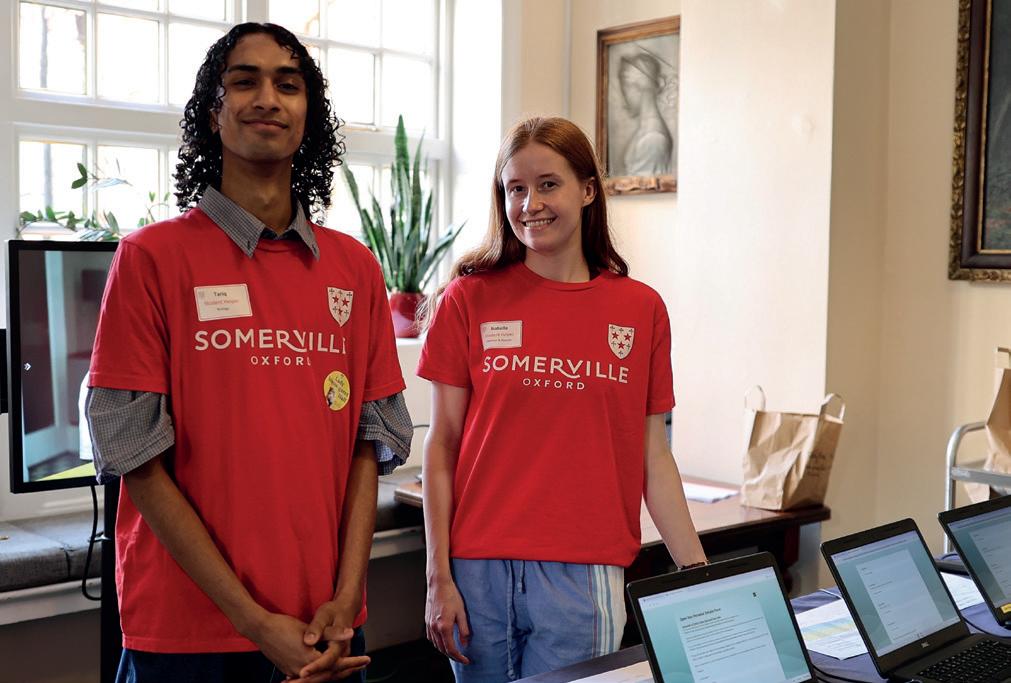
In addition to helping today’s students, your support also enables Somerville to reach the students of tomorrow. The JCR Access Roadshow is an incredibly rewarding, student-run initiative in which current students work to demystify Oxford and higher education within our partnership. This important work is only possible thanks to donor support. It’s a similar story with our highly popular Open Days and Study Days, and the UNIQ Summer Schools. All of these initiatives enable students from underrepresented and marginalised backgrounds to get their first glimpse of Oxford, and meet Somerville students who are reassuringly human. Best of all, thanks to a successful crowdfunding project supported by the Somerville community, the provision of these vital outreach projects has again been secured.
We are immensely grateful for the continued generosity of the Somerville community, which touches our lives in so many ways. With your support, students have been empowered by a community that values brilliance and talent, yet at the same time enables them to flourish as individuals. I sincerely hope we maintain this special relationship for many years to come.
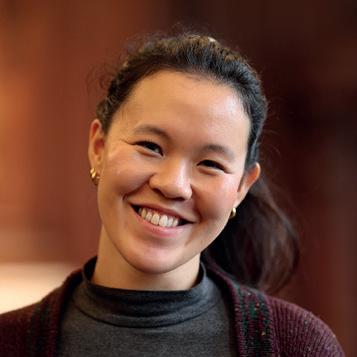
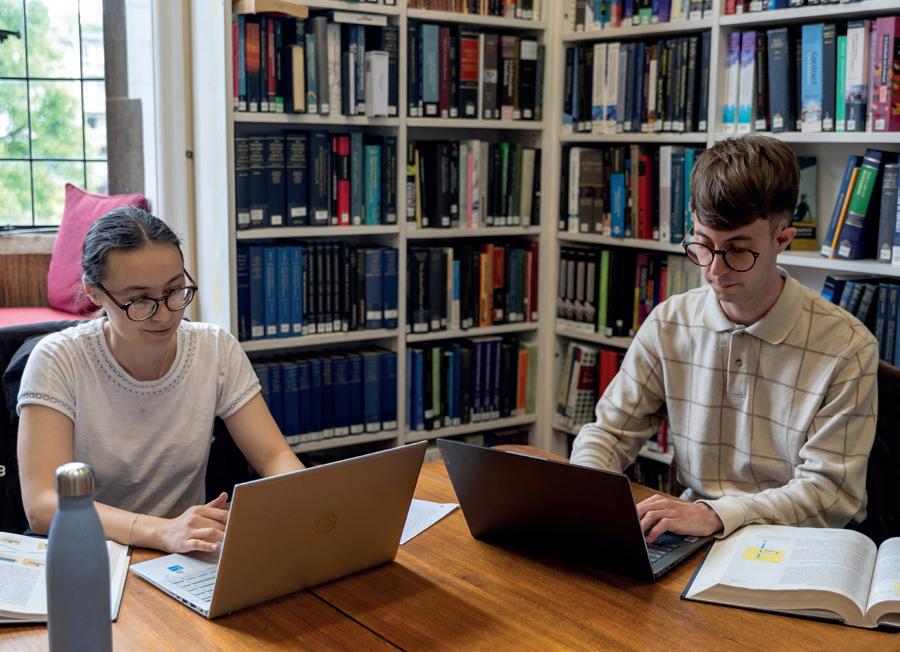
The Somerville Fund continues to be a vital source of support for our students, thanks to the generosity of alumni and friends like you. Regular Giving and Alumni Relations Executive Jackie Yip reports on the Fund’s impact in the past year.
Your contributions have made an extraordinary difference this year, helping our students thrive, supporting academic excellence, and strengthening our mission to include the excluded.
Almost £300,000 was distributed in bursaries, reaching 22% of our student body and easing the financial burden of studying at Oxford. In addition, £34,000 in discretionary grants and £18,000 in hardship funding provided urgent relief, while college offered £90,000 in free accommodation to those in crisis. Graduate students, meanwhile, received nearly £600,000
to support with fees, living costs, and essential academic resources.
Over £240,000 was awarded in scholarships and prizes, recognising outstanding achievement and enabling students to pursue their academic goals. Our Access and Outreach programme reached 3,115 pupils from 505 schools, expanding access and aspiration beyond Somerville.
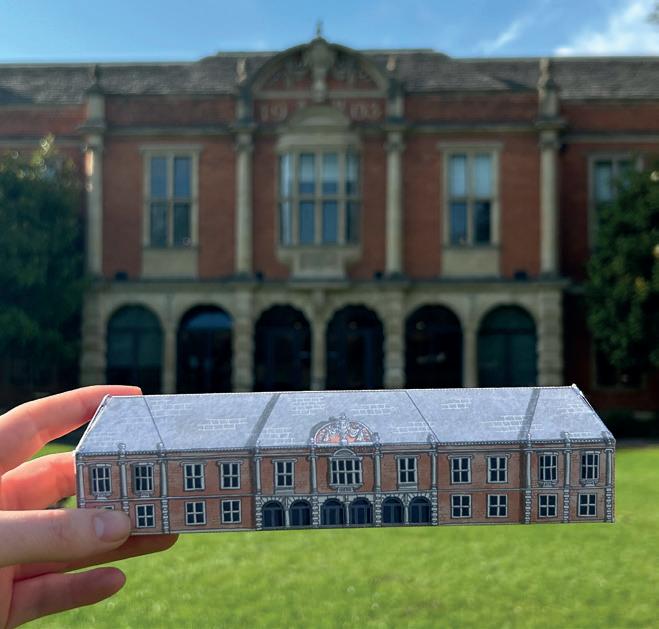
The Somerville Fund Crowdfunder this year brought donors closer to college life than ever before. In our Spring Mailing, every member of our
community received a pop-out model of the library, an invitation to start building your very own Somerville Quad! The response was inspiring, and donors voted for Vaughan as the next pop-out, which you will receive this Spring. This playful yet meaningful campaign is building momentum toward our 150th anniversary, with supporters shaping the future one building at a time.
Our Cedar Circle, for regular givers, continues to grow and has now reached 1,000 members across the globe. These donors are the backbone of our planning and resilience, allowing us to respond swiftly to emerging needs. Their commitment was celebrated in a special webinar with our new principal, where we shared stories of impact and gratitude.
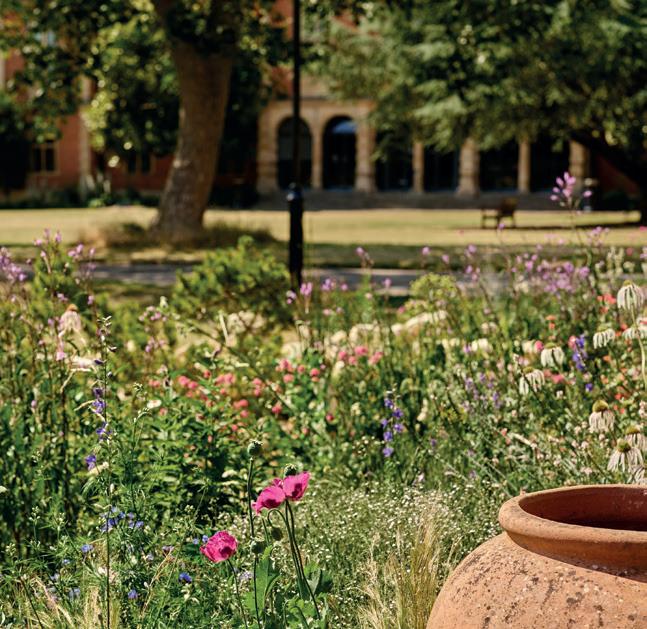
From the creation of our Remembrance Garden to the 1921 Club appeal for rowing and the urgent needs campaign, your support has this year touched every corner of college life. Whether funding new blades for our rowers or planting trees in memory of loved ones, these projects reflect the depth and diversity of our donor community.
Every year, many of those whose lives were changed by Somerville seek to guarantee the same opportunities for future generations by remembering Somerville in their wills. Here we share a few of those special stories from the past year.
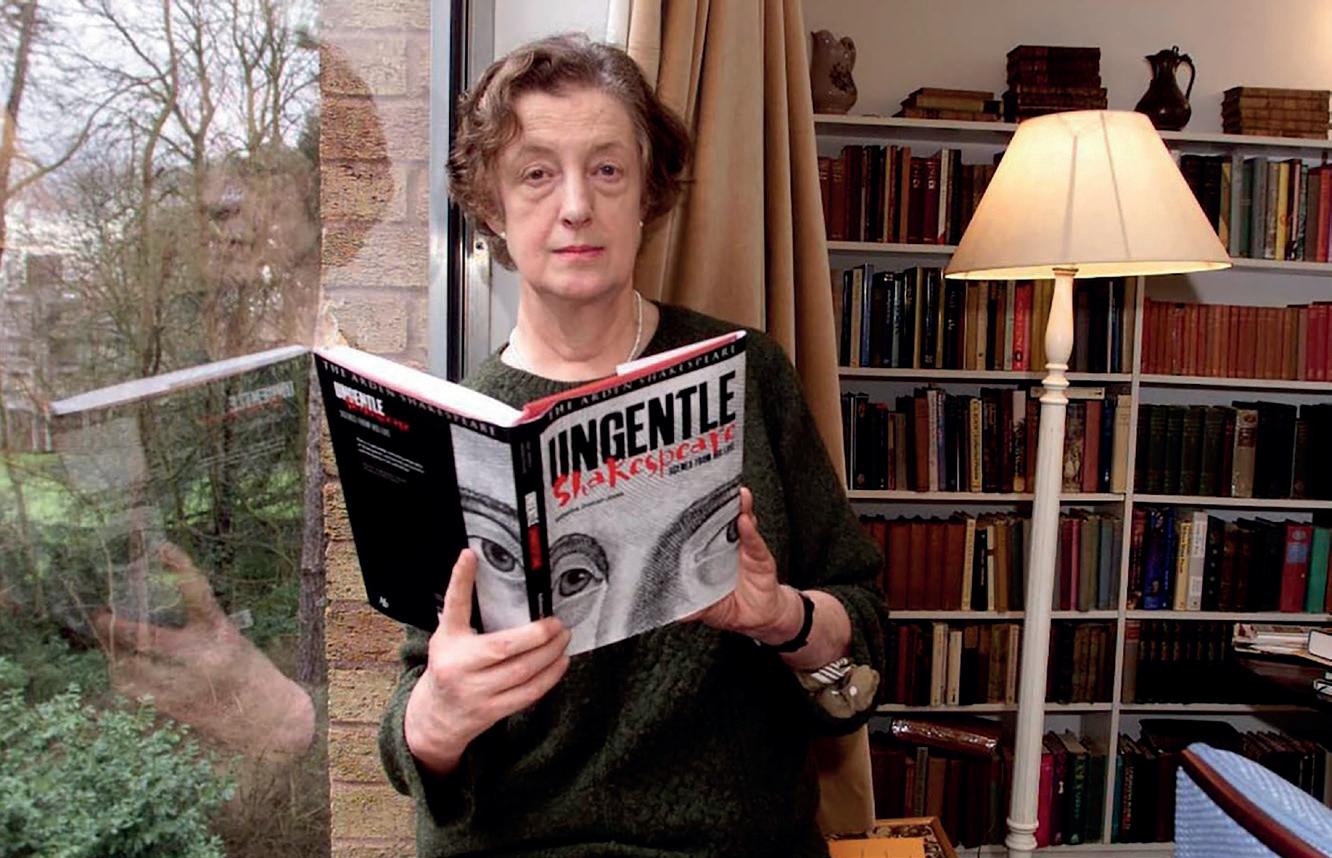
Anyone who came to Somerville from the early 1960s to the new millennium will remember Professor Katherine Duncan-Jones (1941-2022). Somerville’s long-standing Tutorial Fellow, and later Honorary Fellow, in English Literature was famously a vision of Pre-Raphaelite elegance moving about College in her ‘long, dreamy cotton dresses’. Those lucky enough to be taught by ‘KDJ’ will also remember their tutor’s unshakeable belief that seeing the plays of her beloved Shakespeare and his contemporaries was essential to grasping their true power. Many
students even accompanied Katherine on her regular trips to Stratford to watch the latest RSC production, often in support of their tutor writing another spirited review for the TLS.
On her death in 2022, Professor Katherine Duncan-Jones left an unrestricted legacy to College. In conversation with Katherine’s daughters, it has been agreed that half of this money will support the long-anticipated creation of the Anne Hudson Graduate Scholarship in Middle English. The other half will establish a theatre fund to ensure that KDJ’s love of introducing Somerville’s English students to Shakespeare in performance will continue for many years to come.
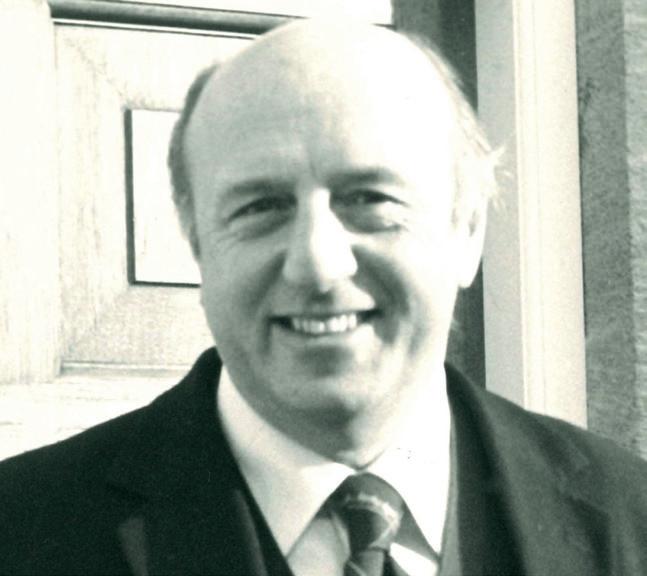
Dr John (Trevor) Hughes (1928 –2023) is remembered across Oxford as an eminent neuropathologist, an author of medical history books and a longstanding fellow of Green Templeton College. At Somerville, however, Trevor Hughes is best remembered as the husband of Catherine Hughes, Somerville’s Principal from 1989-96.
KDJ believed that seeing the plays of Shakespeare was essential to grasping their true power
Together, Catherine and Trevor were ardent supporters of Somerville until Catherine’s death in 2014. Afterwards, Trevor remained a devoted friend of College who loved returning for our Somerville Association events. His exceptionally generous, unrestricted legacy gift to Somerville is proof once again that he was an Oxford man through and through.
Phyllis Treitel (née Cook, 1930-2024, 1948, PPE) might never have studied at Somerville at all. Her first application was unsuccessful after a perfect storm of scarlet fever, the big freeze of 1947 and a collapsed sick room ceiling. Undeterred, Phyllis hitchhiked her way around France for the summer, re-sat her exams in autumn, and duly gained her place.
Phyllis showed similar levels of determination all her life. As one of the first female employees of the Colonial Service, based in the Southern Cameroons, she never accepted reports on face value. Instead, she ignored the men who said the roads weren’t navigable and set off alone to verify the
facts for herself. In due course, marriage to the Vinerian Professor of Law Guenther Treitel brought Phyllis back to Oxford and challenge of a different kind – namely, managing the Somerville alumni network. Phyllis’ two sons still remember how proud they felt helping their mother stuff the 2,400 envelopes containing the newly redesigned College Report.
In later years, Phyllis followed her love of the English countryside westward to Swindon and the home of the 19th Century nature writer Richard Jefferies, whose work she did a great deal to publicise. Her final gift to Somerville was in keeping not merely with Phyllis’ generosity, but also the love of scholarship and deep faith in others that she showed from her very first interaction with College.
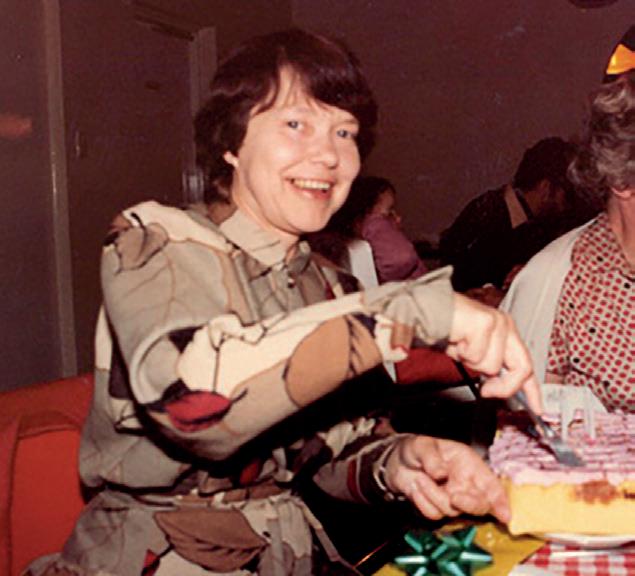
Phyllis ignored the men who said the roads weren’t navigable and set off alone to verify the facts for herself
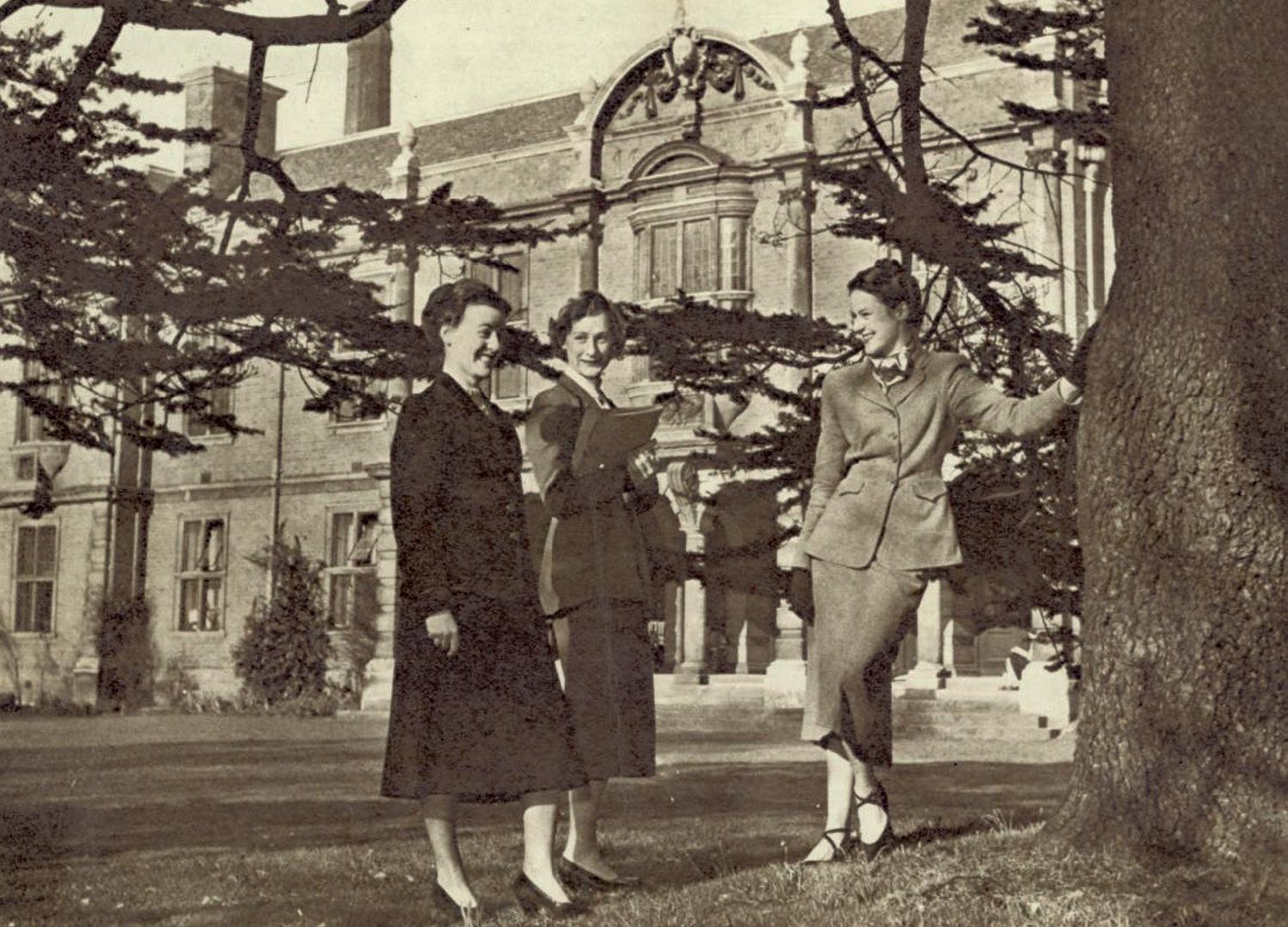
When the young Pauline Harrison (1926-2024; 1944, Chemistry) referred to her inorganic chemistry tutor as “Mrs H”, she intended it as a mark of respect and affection for the future Nobel laureate Dorothy Hodgkin. She can hardly have imagined that her own students might one day give her the same nickname in a tribute to her own scientific renown. And yet, Pauline Harrison’s scientific contribution is indisputable: her 151 publications have, to date, been cited over 12,000 times, and in 2001 she was awarded the CBE for services to science education.
At the heart of Professor Harrison’s research was the study of iron metabolism. Pauline had become fascinated by the iron protein ferritin while working as a Research Assistant under Dorothy Hodgkin. During the 36 years she spent at the University of Sheffield, that fascination never left her. She was instrumental in unlocking the structure and formation of the molecule through countless influential studies and international collaborations. On her retirement, the University of Sheffield created the Harrison Chair in Structural Biology in Pauline’s honour. However, the gift she left Somerville for student support suggests that she never forgot her connection to College, or the role it played in her life.
To discuss leaving a legacy to Somerville, please contact our Senior Development Executive Becca Coker, rebecca.coker@ some.ox.ac.uk / 07890 412404.
Legacy gifts have played a transformative role throughout the history of the College, and continue to do so.
The Penrose Society honours the special effort and commitment made by alumni and friends who have pledged a legacy or planned gift to Somerville.
If you would like more information about including the College in your estate planning, please contact Becca Coker – rebecca.coker@some.ox.ac.uk
Names ordered by surname
Emeritus Fellow
Fellow Foundation Fellow
Honorary Fellow
Honorary Research Fellow
Junior Research Fellow
Senior Research Fellow
Deceased
Dr Margaret Adams 1958 EF
Mrs Sarah Adkins (Holmes) 1984
Dr Gina Alexander (Pirani) 1953
Ms Susan Allard 1962
Ms Pauline Ashall 1978
Mrs Rosemary Baker (Holdich) 1962
Sir Christopher Ball 1956
Mrs Laura Barnett (Weidenfeld) 1972
Dr Jennifer Barraclough (Collins) 1967
Ms Hilary Bates 1976
Dr Sarah Beaver (Wilks) 1970
Lady Bingham (Elizabeth Loxley) 1957
Mrs Carol Bird (McColl)1990
Mr. Czeslaw Birukowski
Mr David Blagbrough 2008
Mrs Clare Bonney (Penny Tillett) 1964
Mrs Karin Bosanquet (Lund) 1951
Mrs Jill Bowman (Watkins) 1971
Dr Doreen Boyce (Vaughan) 1953 HF
Mrs Anne Bradley (Greasley) 1966
Dr Jill Brock (Lewis) 1956 JRF
Mrs Kay Brock (Stewart Sandeman) 1972
Professor Fiona Broughton Pipkin (Pipkin) 1964
Professor Edwina Brown 1967
Dr Hilary Brown (Maunsell) 1954
Dr Paula Brownlee (Pimlott) 1953 HF
Mrs Glynne Butt (Merrick) 1962
Lady Cilla Butterfield
Ms Judith Buttigieg 1988
Mrs Ann Buxton (Boggis-Rolfe) 1971
Mrs Alison Cadle (Cowley) 1974
Ms Charlotte Caplan 1967
Mrs Sheena Carmichael (Inglis) 1960
Dr Margaret Clark (Sidebottom) 1967
Ms Marieke Clarke 1959
Mrs Anne Clements
Miss Fiona Clements 1990
Professor Jennifer Coates (Black) 1962
Dr Claire Cockcroft 1990
Mrs Denise Cockrem (Lear) 1981
Mrs Claire Coghlin (O'Brien) 1960
Mrs Hilda Cole (Robinson) 1950
Miss Beth Coll 1976
Mrs Miranda Corben (McCormick) 1968
Dr Anne Coulson (Rowley) 1965
Ms Caroline Cracraft (Pinder) 1961
Mrs Ann Currie (MansfieldRobinson) 1953
Mrs Janet Davies (Welburn) 1958
Mrs Patricia Davies (Owtram) 1951
Mrs Chia Dawson (Chang) 1964
Dr Daphne Drabble (Fielding) 1961
Mrs Nicola Ellard (Pugh) 1976
Mrs Nest Entwistle (Williams) 1952
Ms Rosalind Erskine 1967
Mrs Elenore Falshaw (Lawson) 1987
Miss Rosemary FitzGibbon 1967
Dr Barbara Gabrys 1998
Mrs Penelope Gaine (Dornan) 1959
Dr Barbara Goodwin 1966
Mrs Sharon Gould (Rowland) 1989
Mrs Fin Gowers (Clarke) 1976
Miss Charlotte Graves Taylor 1958
Dr Andrew Graydon 1988
Mrs Jane Hands (Smart) 1981
Ms Holly Hanratty (Brown) 2006
Dr Luke Hanratty 2006
Dr Janet Harland (Draper) 1952
Professor Pauline Harrison (Cowan) 1944
Mrs Anna Hart
Miss Barbara Harvey 1946 EF
Mrs Alexandra Hatchman
Miss Diana Havenhand 1986
Dr Deborah Healey (Smith) 1971
Mrs Lisette Henrey (Coghlan) 1959
Professor Dame Julia Higgins (Stretton Downes) 1961
Mrs Aileen Hingston (Simkins) 1973
Ms Mary Honeyball 1972
Mr John Horsman 1948
Professor Judith Howard (Duckworth) 1966
Mrs Barbara Howes (Lowe) 1965
Mr David Hughes 2009
Mrs Jayne Hughes (Calderwood) 1960
Ms Penny Hunt 1975
Mrs Nicola Hyman (Tomlinson) 1993
Dr Anne Isba (Lightfoot) 1964
Mrs Lucy Ismail (Deas) 1958
Miss Carol Jackson 1982
Mrs Sarah Jackson (Venables) 1966
Professor Sonia Jackson (Edelman) 1956
Mrs Lynette Jeggo (Wilkie) 1966
Mrs Emily Johnson (Cooke) 1996
Mr Ian Johnson 1996
Dr Daphne Johnston 1969
Mrs Ruth Jolly (Foote) 1970
Dr Barbara Jones 1973
The Revd Margaret Jones (Cook) 1963
Mrs Clare Joy (Jwala) 1989
Mrs Gillian Keily (Gunner) 1953
Mrs Ann Kennedy (Cullis) 1947
Dr Racha Kirakosian 2010
Dr Meriel Kitson (De Laszlo) 1968
Miss Bridget Knight 1955
Ms Madeleine Knight
Ms Elizabeth Knowles 1970
Dr Agnes Kocsis 1974
Dr Loeske Kruuk 1988
Ms Venetia Kudrle (Thomas) 1966
Ms Jenny Ladbury 1981
Dr Kate Lay 1979
Mrs Penny Lee (Hooper) 1950
Professor Laura Lepschy (Momigliano) 1952 HF
Dr Louise Levene 1979
Ms Vicky Maltby (Elton) 1974 FF
Dr Aaron Maniam 1998
Professor Judith Marquand (Reed) 1954
Mrs Harriet Maunsell (Dawes) 1962 HF
Mrs Sheila Mawby (Roxburgh) 1962
Mrs Helen Mawson (Fuller) 1957
Dr Penny McCarthy (Gee) 1962
Dr Liz McDougall (Webster) 1972
Mrs Jennifer McKeown (Chancellor) 1961
Dr Elizabeth McLean (Hunter) 1950
Professor Kate McLoughlin 1988
Dr Minnie McMillan 1960
Dr Sophie Mills 1983 JRF
Mrs Judith Mitchell (Bainbridge) 1967
Dr Jacqueline Mitton (Pardoe) 1966
Ms Charlotte Morgan 1969
Miss Helen Morton EF
Dr Lynette Moss (Vaughan) 1958
Dr Fahera Musaji (Sindhu) 1989
Ms Margaret Newens 1966
Ms Hilary Newiss 1974
Ms Amelia Nguyen 2014
Dr Susan Owens 1990
Mrs Sue Pappas (Dennler) 1962
Ms Neeta Patel 1980
Mrs Kristin Payne (Maule) 1959
Dr Hilary Pearson 1962
Mrs Jane Peters (Sheldon) 1950
Dr Alison Pilgrim 1974
Ms Sally Prentice 1987
Mrs Niloufer Reifler (Marker) 1968
Mrs Stephanie Reynard (Ward) 1962
Dr Judy Ricks (Coles) 1963
Ms Ceiri Roberts 1975
Ms Jane Robinson 1978
Ms Joy Rodger 1976
Mrs Giustina Ryan (Blum Gentilomo) 1954
Miss Linda Salt 1976
Professor Shelley Sazer 1988
Mrs Sue Scollan (Green) 1978 FF
Ms Catharine Seddon 1981
Mrs Margaret Selby (Monitz) 1961
Ms Jane Sender (Nothmann) 1974
Professor Caroline Series 1969 HF
Mr George Shea
Mx Joanne Shepard 1989
Mrs Susan Sinagola (Livingstone) 1976
Mrs Sandra Skemp (Burns) 1957 JRF
Mr David Sleeman
Mrs Alison Sloan (Goodall) 1978
Mrs Wendy Smith (Arnold) 1965
Mrs Clare Spring (Thistlethwaite) 1952
Mrs Ann Squires (Florence) 1962
Ms Sybella Stanley 1979
Mrs Felicity Staveley-Taylor (Roberts) 1986
Dr Alison Stewart (Lacey) 1988
Ms Jocelyn Stoddard 1976
Dr Vicky Tagart 1967
Mrs Jayne Thomas (Harvey) 1977
Lady Thomas (Valerie Little) 1955
Mrs Joan Townsend (Davies) 1955
Mrs Jane Trewhella (Carpenter) 1976
Professor Meg Twycross (Pattison) 1954
Miss Judith Unwin 1973
Mrs Kate Varney (Leavis) 1958
Dr Shirley Vinall (Jones) 1965
Mrs Rhiannon Wakefield (Hogg) 1984
Professor Shân Wareing 1984
Mrs Jenifer Wates (Weston) 1951
Dr Jackie Watson 1986
Dr Trudy Watt 1971 JRF
Ms Jacqueline Watts 1979
Mrs Jenny Welsh (Husband) 1952
Miss Pauline Wickham 1950
Dr Joan Wilkinson 1955
Mrs Margaret Williamson (Allott) 1956
Mrs Margaret Willis (Andrews) 1940
Miss Liz Wilmott 1979
Mrs Margaret Windsor (Lee) 1957
Mrs Rosemary Wolfson (Reynolds) 1966
Mrs Deborah Woudhuysen (Loudon) 1974
Miss Celia Wrighton 1992
Dr Sarah Young (Gbedemah) 1980
Anonymous donors 75
Legacies received during the period 01.08.2024-31.07.2025
Mrs Shirley Beck (Clayton) 1950 ǂ
Professor Lalage Bown 1945 ǂ
Dr Jill Brock (Lewis) 1956 JRF ǂ
Dr Christian Carritt 1946 ǂ
Miss Constance Craven 1930 ǂ
Mr Feroze Duggan ǂ
Professor Katherine Duncan-Jones 1959 SRF ǂ
Miss Gillian Falconer 1944 ǂ
Professor Pauline Harrison (Cowan) 1944 ǂ
Dr Trevor Hughes 1963 ǂ
Dr Ruth Lister 1944 ǂ
Ms Jill Longmate 1978 ǂ
Mrs Helen Mawson (Fuller) 1957 ǂ
Dr Elizabeth McLean (Hunter) 1950 ǂ
Ms Sheila Porter 1951 ǂ
Mrs Cynthea Rhodes (Woffenden) 1956 ǂ
Miss Rachel Sykes 1943 ǂ
Dr Hazel Thomas 1973 ǂ
Lady Phyllis Treitel (Cook) 1948 ǂ
Mrs Diana Welding (Panting) 1949 ǂ
Mrs Margaret Willis (Andrews) 1940 ǂ
During the financial period 1st August 2024-31st July 2025
Mrs Moira Long (Gilmore) 1948
Miss Marian Brown 1949
Mrs Patricia Chancellor (Humphrys) 1949ǂ
Ms Jane-Kerin Moffat 1949ǂ
Junior Research
Senior
1940-1949
Mrs Margaret Willis (Andrews) 1940ǂ
Dr Mary Ede (Turner) 1944
Dr Ruth Lister 1944ǂ
Mrs Joyce Molyneux (Ormerod) 1945
Mrs Patricia Clough (Brown) 1946
Lady Fox (Hazel Stuart) 1946 HFǂ
Miss Barbara Harvey 1946 EFǂ
Lady Kirk (Elizabeth Graham) 1946
Dr Patience Barnes (Wade) 1947
1950–1959
Mrs Hilda Cole (Robinson) 1950
Mrs Penny Lee (Hooper) 1950
Dr Rosemary Moore (Filmer) 1950
Mrs Jo Murphy (Cummins) 1950ǂ
Mrs Renate Olins (Steinert) 1950
Mrs Jane Peters (Sheldon) 1950
Mrs Maureen Scurlock (Oliver) 1950
Miss Pauline Wickham 1950
Mrs Helen Bond (Wilman) 1951
Mrs Patricia Davies (Owtram) 1951
Mrs Ann Paddick (Dolby) 1951
Mrs Margaret Porter (Wallace) 1951
Mrs Judy Ward (McVittie) 1951
Mrs Jenifer Wates (Weston) 1951
Lady Abdy (Jane Noble) 1952ǂ
Mrs Cynthia Coldham-Jones (Coldham) 1952
Mrs Shirley Cordeaux Wilde (Legge) 1952
Mrs Pamela Egan (Brooks) 1952
Mrs Nest Entwistle (Williams) 1952 Anonymous 1952
Dr Hilary Maitland (White) 1952
Mrs Jenny Welsh (Husband) 1952
Dr Gina Alexander (Pirani) 1953
Dr Paula Brownlee (Pimlott) 1953 HF
Ms Nadine Brummer 1953
Mrs Ann Currie (Mansfield-Robinson) 1953
Dr Marjorie Harding (Aitken) 1953
Mrs Felicity Hindson (Lambert) 1953
Mrs Gillian Keily (Gunner) 1953
Mrs Katharine Makower (Chadburn) 1953
Mrs Marion Yass (Leighton) 1953
Mrs Ena Blyth (Franey) 1954
Dr Hilary Brown (Maunsell) 1954
Anonymous 1954
Dr Birgit Harley (Capps) 1954
Mrs Sheila Harrison (Ashcroft) 1954
The Revd Canon Dr Virginia Kennerley (Kent) 1954
Dr Gillian Lewis (Morton) 1954
Dr Gill Milner (Sutton) 1954
Mrs Gwyn Pettit (Coulson) 1954
Miss Gillian Richards 1954
Mrs Giustina Ryan (Blum Gentilomo) 1954
Dr Molly Scopes (Bryant) 1954ǂ
Professor Thelma Hardman (Herrington) 1955
Mrs Sally Marler (Turton) 1955
Dr Priscilla Martin (Jenkins) 1955
Mrs Elizabeth Rogers (Telfer) 1955
Professor Jane Sayers 1955
Dr Mary Seed (Selwyn-Clarke) 1955
Lady Thomas (Valerie Little) 1955
Mrs Sally Wheeler (Hilton) 1955
Dr Jill Brock (Lewis) 1956 JRFǂ
Mrs Shelagh Eltis (Owen) 1956
Mrs Carola Emms (Wayne) 1956
Her Honour Audrey Gale (Sander) 1956
The Hon Victoria Glendinning (Seebohm) 1956 HF
Professor Sonia Jackson (Edelman) 1956
Mrs Christine Parker (Gregory) 1956
Mrs Sheila Shield (Bateman) 1956
Mrs Margaret Thornton (Way) 1956
Mrs Frances Walsh (Innes) 1956
Dr Stephanie West (Pickard) 1956 JRF
Mrs Margaret Williamson (Allott) 1956
Lady Bingham (Elizabeth Loxley) 1957
Anonymous 1957
Mrs Hyacinthe Harford (Hoare) 1957
Mrs Reziya Harrison (Ahmad) 1957
Dr Hilary Heltay (Nicholson) 1957
Mrs Susan Hilken (Davies) 1957
Mrs Mary Howard (Maries) 1957
Mrs Helen Keating (Caisley) 1957
Mrs Valerie Kerrigan (Knox) 1957
Mrs Beth Leach (Goddard) 1957
Dr Mary McAuley (Harris) 1957
Dr Felicity Savage King (King) 1957
Mrs Margaret Southern (Browning) 1957
Mrs Shelagh Suett (Hartharn) 1957
Mrs Margaret Windsor (Lee) 1957
Ms Fran Barker (Flint) 1958
Dr Jane Biers (Chitty) 1958
Mrs Mary Bromley (Richer) 1958
Professor Averil Cameron (Sutton) 1958 HF
Dr Gill Cohen (Richards) 1958
Mrs Eileen Denza (Young) 1958
Mrs Margaret Goddard (Alston) 1958
Mrs Lucy Ismail (Deas) 1958
Dr Lynette Moss (Vaughan) 1958
Mrs Gillian Phillips (Hallett) 1958
Mrs Susan Segal (Wolff) 1958
Mrs Christine Shuttleworth (de Mendelssohn) 1958
Ms Auriol Stevens 1958
Mrs Jennifer Wiggins (Walkden) 1958ǂ
Mrs Tessa Wilson (Seton) 1958
Mrs Maureen Douglas (Bowler) 1959
Dr Lucy Gaster (Syson) 1959
Mrs Jane Gordon (Mackintosh) 1959
Mrs Lisette Henrey (Coghlan) 1959
Dr Hazel Jones (Lewis) 1959
Dr Liselotte Kastner (Adler) 1959
Mrs Margaret Kenyon (Parry) 1959 HF
Anonymous 1959
Mrs Mary Leedham-Green (Baldry) 1959
Mrs Sylvia Neumann (Bull) 1959
Baroness Onora O'Neill 1959 HF
Mrs Kristin Payne (Maule) 1959
Mrs Cassandra Phillips (Hubback) 1959
Mrs Jenny Bagnall (Davey) 1960
Miss Priscilla Baines 1960
Dr Liz Berry (Brown) 1960
Dr Jennifer Bottomley (Smith) 1960
The Hon Helen Brown (Todd) 1960
Mrs Sheena Carmichael (Inglis) 1960
Mrs Margaret Davies (Thomas) 1960
Mrs Janet Howarth (Ross) 1960
Mrs Jayne Hughes (Calderwood) 1960
Anonymous 1960
Mrs Bezo Morton (Moore) 1960
Dr Catherine Oppenheimer (Pasternak Slater) 1960
Mrs Margaret Panter (Daughtrey) 1960
Miss Anne Pope 1960 JRF
Dr Rosemary Raza (Cargill) 1960
Mrs Elizabeth Smith (Shearer) 1960
Mrs Elizabeth Wheeler (Scott-Brown) 1960
Mrs Carol Woollard (Hearnshaw) 1960
Ms Jane Belshaw 1961
Miss Gladys Bland 1961
Ms Jennifer Bray 1961
Ms Anne Charvet 1961
Mrs Margaret Clements (Hirst) 1961
Mrs Mary Evans (Edwards) 1961
Lady Floud (Cynthia Smith) 1961
Miss Diana Handford 1961ǂ
Mrs Helen Lowell (Krebs) 1961
Mrs Jennifer McKeown (Chancellor) 1961
Dr Vivien Morris (Evans) 1961
Mrs Alison Neil (Williams) 1961
Miss Hilary Parkes 1961
Mrs Susan Richardson (Holmes) 1961
Dr Hazel Richardson (Lyons) 1961
Dr Irene Ridge (Haydock) 1961ǂ
Dr Peggie Rimmer 1961 JRF
Ms Lyn Robertson 1961
Mrs Margaret Rustin (Barrett) 1961
Mrs Margaret Selby (Monitz) 1961
Anonymous 1961
Ms Pauline Adams 1962 EF F
Ms Susan Allard 1962
Mrs Kath Boothman (Scott) 1962
Mrs Margaret Brecknell (Dick) 1962
Mrs Glynne Butt (Merrick) 1962
Ms Rosemary Dunhill 1962
Mrs Dianne Evans (Love) 1962
Mrs Angela Gillon (Spear) 1962
Ms Cynthia Graae (Norris) 1962
Mrs Annabel Hemstedt (Evans) 1962
Ms Eve Jackson 1962
Mrs Bernice Littman (Fingerhut) 1962
Mrs Harriet Maunsell (Dawes) 1962 HF
Dr Penny McCarthy (Gee) 1962
Mrs Lin Merrick (Stephens) 1962
Dr Hilary Pearson 1962
Mrs Jane Peretz (Wildman) 1962
Mrs Arlene Polonsky (Glickman) 1962
Mrs Stephanie Reynard (Ward) 1962
Miss Janet Richards 1962
Mrs Alice Sharp (Gilson) 1962
Miss Della Shirley 1962
The Revd Vera Sinton 1962
Dr Ginny Stacey (Sharpey-Schafer) 1962
Mrs Lesley Brown (Wallace) 1963 EF F
Anonymous 1963
Anonymous 1963
Mrs Ursula Gregory (Raeburn) 1963
Mrs Helen Haddon (Parry) 1963
Dr Carola Haigh (Pickering) 1963
Dr Anna Hardman 1963
Ms Jennifer Hurstfield 1963
The Revd Margaret Jones (Cook) 1963
Ms Gill Linscott 1963
Mrs Pamela Marsden (Robinson) 1963
Dr Margaret Price (Millen) 1963
Dr Judy Ricks (Coles) 1963
Ms Clare Roskill 1963
Dr Kirsty Shipton (Lund) 1963
Mrs Jean Ward (Salisbury) 1963
Mrs Liz Young (Allen) 1963
Dr Jilly Aarvold (Stanley-Jones) 1964
Miss Corinna Balfour 1964ǂ
Ms Sunethra Bandaranaike 1964
Professor Fiona Broughton Pipkin (Pipkin) 1964
Mrs Deryn Chatwin (Price) 1964
Mrs Chia Dawson (Chang) 1964
Dr Judy Goldfinch (Oldham) 1964ǂ
Ms Sue Griffin (Watson) 1964
Mrs Jill Hamblin (Barnes) 1964
Ms Susan Hoyle 1964
Dr Anne Isba (Lightfoot) 1964
Ms Penelope Jamrack 1964
Ms Denise Jefferson 1964
Mrs Mary Keen (Keegan) 1964
Ms Christine O'Brien (Hauch) 1964
Dr Cilla Price (Pantin) 1964ǂ
Mrs Jenny Rambridge (Pares) 1964
Mrs Ruth Rostron (Treloar) 1964
Mrs Rosamund Salisbury (Wright) 1964
Dr Katherine Simmonds 1964
Ms Alison Skilbeck 1964
The Revd Canon Ann Slater (Hollowell) 1964
Lady Strathnaver (Eileen Baker) 1964
Mrs Su Vaight (Blackstaffe) 1964
Ms Jill Winter 1964
The Revd Professor Loveday Alexander (Earl) 1965
Dr Kate Badcock (Skerratt) 1965
Ms Sarah Bell (Radley) 1965
Dr Sarah Cemlyn (Garstang) 1965
Ms Margaret Clare (Baldwin) 1965
Mrs Alison Corley (Downes) 1965
Dr Anne Coulson (Rowley) 1965
Dr Gillian Cross (Arnold) 1965
Mrs Nicola Davies (Galeska) 1965
Mrs Christine Eagle (Burnside) 1965
Mrs Erika Fairhead (Morrison) 1965
Mrs Cherry Fang (Foo) 1965
Mrs Debbie Forbes (White) 1965
Mrs Sue Hastings (Edge) 1965
Mrs Caroline Higgitt (Besley) 1965
Mrs Barbara Howes (Lowe) 1965
Ms Natalia Jimenez 1965
Dr Mary Jones (Tyrer) 1965ǂ
Mrs Hilary King (Presswood) 1965ǂ
Dr Helen Lewis (Goodman) 1965
Mrs Elaine Lightman (Margolis) 1965
Anonymous 1965
Ms Carolyn Lyle (Williams) 1965
Lady Morgan (Angela Rathbone) 1965
Mrs Maggie Pringle (Griffin) 1965
Dr Alice Prochaska (Barwell) 1965 HF
Professor Dr Tessa Rajak (Goldsmith) 1965 SRF
Dr Tessa Sadler (Halstead) 1965
Mrs Tricia Savours (Jones) 1965
Mrs Wendy Smith (Arnold) 1965
Anonymous 1965
Dr Patricia Townsend (Marsden) 1965
Dr Shirley Vinall (Jones) 1965
Professor Fenella Wojnarowska 1965 HRF
Dr Marylee Bomboy 1966
Ms Anne-Marie Braun (Kelly) 1966
Mrs Carole Anne Brown (Leigh) 1966
Mrs Jill Crofton (Wright) 1966
Professor Gail Cunningham (Pennington) 1966
Ms Suzanne Elcoat 1966
Ms Lynn Haight (Schofield) 1966
Professor Judith Howard (Duckworth) 1966 HF
Miss Ann Humphries (Tross) 1966
Mrs Sarah Jackson (Venables) 1966
Mrs Lynette Jeggo (Wilkie) 1966
Dame Emma Kirkby 1966 HF
Ms Felicity Luke (Crowther) 1966
Mrs Caroline Macpherson (Bacon) 1966
Dr Jacqueline Mitton (Pardoe) 1966
Ms Margaret Newens 1966
Mrs Alexandra Nicol (Marr) 1966
Mrs Kate Nightingale (Wilson) 1966
Professor Margaret Rayman (O'Riordan) 1966
Mrs Kate Richenburg (Frank) 1966
Miss Viv Robins 1966
Mrs Sue Robson (Bodger) 1966
Ms Virginia Ross 1966
Dr Ilona Roth 1966
Mrs Helen Stammers (Tritton) 1966
Dr Janet Stanworth (Kemp) 1966
Mrs Judy Staples (Bennett) 1966
Professor Dame Elan Stephens (Roberts) 1966 HF
Dr Mary Warren (Fay) 1966 JRF
Dr Judy Wigfield (Knights) 1966
Ms Anne Winyard (Williams) 1966
Ms Helen Wise 1966
Mrs Rosemary Wolfson (Reynolds) 1966
Mrs Catherine Wright (Oates) 1966
Mrs Vanessa Allen (Lampard) 1967
Mrs Helen Bennett 1967
Ms Rachel Berger 1967
Mrs Miggy Biller (Minio) 1967
Mrs Frances Brindley (Hammersley) 1967
Professor Edwina Brown 1967
Dr Linda Clark (Woodger) 1967
Dr Margaret Clark (Sidebottom) 1967
Dr Freddie Crane (Williams) 1967
Dr Liz Danbury 1967
Mrs Angela Davies (Holdich) 1967
Ms Rosalind Erskine 1967
Ms Sarah Hale (Watkins) 1967
Dr Helen Hammond (Heywood) 1967
Ms Anne Kern (Merdinger) 1967
Mrs Stephanie Klass (Brown) 1967
Ms Maria McKay 1967
Mrs Judith Mitchell (Bainbridge) 1967
Dr Pamela Ormerod (Jackson) 1967
Mrs Sarah Roberts (Hancock) 1967
Lady Scarlett (Gwenda Stilliard) 1967
Mrs Rosamund Skinner (Forrest) 1967
Dr Vicky Tagart 1967
Dr Penny Wilson 1967
Baroness Alison Wolf (Potter) 1967 HF
Mrs Susie Worthington (Middleditch) 1967
Dr Pamela Ashton (Suissa) 1968
Mrs Helen Barnard (Ratcliffe) 1968
Lady Beatson (Charlotte Christie-Miller) 1968
Mrs Olwen Bell (Lloyd) 1968
Ms Moira Black 1968
Mrs Freda Chaloner (White) 1968
Mrs Miranda Corben (McCormick) 1968
Anonymous 1968
Mrs Angela Gillibrand (Parry) 1968
Professor Carole Hillenbrand 1968 HF
Dr Meriel Kitson (De Laszlo) 1968
Dr Bridget Long (Lymbery) 1968
Dr Terry Macdonald (Bowe) 1968
Mrs Gillian Manning (Brace) 1968
Dr Elaine Merrylees (Barrie) 1968
The Revd Jo Moffett-Levy (Moffett) 1968
Professor Mair Parry (Evans) 1968
Mrs Margaret Phipps (D'Alquen) 1968
Mrs Niloufer Reifler (Marker) 1968
Dr Ann Rolinson 1968
Ms Sonja Ruehl 1968
Dr Sara Turner (Greenbury) 1968
Dr Betsy Wiggins (Fumagalli) 1968
Miss Louise Amery 1969
Mrs Jackie Andrew (Turner) 1969
Mrs Patricia Baskerville (LawrenceWilson) 1969
Ms Gill Bennett (Randerson) 1969
Ms Jacky Clements 1969
Mrs Judith Cox (Fox) 1969
Dr Anne Davies 1969
Ms Penny Deacon 1969
Mrs Caroline Delbaere 1969
Miss Christine Denwood 1969
Mrs Annie Dobell (Champagne) 1969
Mrs Rachel Fletcher (Toynbee) 1969
Ms Laura Gascoigne (Warner) 1969
Dr Julia Goodwin 1969
Professor Jill Harries 1969
Dr Sophia Hartland (Storr) 1969
Dr Jana Howlett (Dorrell) 1969
Mrs Belinda Hunt (Knox) 1969
Dr Janet Kennedy (Harrison) 1969
Mrs Susan Markham (Whitehouse) 1969
Dr Sophie McCormick (Williams) 1969
Ms Charlotte Morgan 1969
Dame Judith Parker 1969 HF
Dr Jill Pipe (Pritchard) 1969
Mrs Yolanda Powell (Radcliffe-Genge) 1969
Professor Caroline Series 1969 HF
Mrs Elizabeth Thorne (Westbrook) 1969
Mrs Ariel Wagner-Parker (Parker) 1969
Ms Maggie Ainsley 1970
Mrs Helen Anderson (Thumpston) 1970
Mrs Ann Barlow (Jones) 1970
Dr Sarah Beaver (Wilks) 1970
Anonymous 1970
Dr Alison Callaway 1970
Mrs Sarah Danby (Sherrard) 1970
Miss Judith Fell 1970
Mrs Wendy Holmes (Beswick) 1970
Ms Patricia Kearney 1970
Dr Lucy Koshiw 1970
Dr Rowena Loverance 1970
Dr Sabina Lovibond 1970 JRF
Anonymous 1970
Mrs Janet Matcham (Milligan) 1970
Dr Judith McClure 1970
Dr Hannah Mortimer (Robinson) 1970
Mrs Grania Phillips (De Laszlo) 1970
Ms Hilary Puxley 1970
Professor Susan Senior (Nello) 1970
Dr Cathy Sinclair (Higham) 1970
Professor Christine Slingsby 1970
Dr Jenny Spurgeon (Paul) 1970
Ms Carolyn White 1970ǂ
Mrs Linette Whitehead (Dell) 1970
Mrs Jill Bowman (Watkins) 1971
Mrs Jeanne Carrington (Flood) 1971
Ms Sue Dixson 1971
Dr Chris Fletcher (Moerder) 1971
Mrs Clara Freeman (Jones) 1971 HF
Mrs Elizabeth Harbord (Harris) 1971
Mrs Rosemary Kenworthy (Peel) 1971
Mrs Nina Lillie (Piggott) 1971
Miss Karen Lukawski (Lukawaski) 1971
Dr Jody Maxmin 1971
Mrs Sally Patmore (Wiseman) 1971
Dame June Raine (Harris) 1971 HF
Dr Penelope Rapson (Eltis) 1971
Ms Mary Saunders (Dauman) 1971
Mrs Pat Sellers (Burns) 1971
Professor Susan Sherratt (Dobson) 1971
Ms Robyn Spencer (Gee) 1971
Lady Stanhope (Jan Flynn) 1971
Mrs Helena Taylor (Chicken) 1971
Dr Dilys Wadman 1971
Dr Trudy Watt 1971 JRF
Mrs Manya Wayne (Romano) 1971
Ms Sarah Wedderburn 1971
Anonymous 1972
Anonymous 1972
Ms Jenny Bradley 1972
Professor Nicky Britten 1972
Mrs Kay Brock (Stewart Sandeman) 1972
Professor Michele Calos 1972
Dr Chi Davies (Mbanugo) 1972
Dr Gillie Evans 1972
Mrs Alison Evens (Brown) 1972
Dr Susan Farnsworth 1972
Mrs Eleanor Fuller (Breedon) 1972
Dr Carolyn Gates 1972
Professor Joanna Haigh 1972 HF
Dr Alison Hardie 1972
Mrs Val James (Jacobs) 1972
Ms Jane Lethem 1972
Dr Liz McDougall (Webster) 1972
Ms Dot Metcalf (Metcalfe) 1972
Professor Fati Moghadam 1972
Mrs Nicky Ormerod (Callander) 1972
Anonymous 1972
Ms Karen Richardson 1972
Mrs Deborah Rohan (Hickenlooper) 1972
Miss Ruth Sillar 1972
Mrs Liz Watson (Jones) 1972
Professor Wisia Wedzicha 1972
Ms Louise Whitaker 1972
Ms Jill Barelli 1973
Anonymous 1973
Mrs Jane Clarke (Morgan) 1973
Dr Pauline Davies (Hodkinson) 1973
Ms Helen Demuth 1973
Mrs Karen Dixon 1973
Dr Alison Furnham (Green) 1973
Professor Penelope Gardner-Chloros (Chloros) 1973
Dr Elizabeth Grayson (Thomas) 1973
Ms Barbara Habberjam 1973
Mrs Aileen Hingston (Simkins) 1973
Mrs Susan Jenkins (Clift) 1973
Ms Krystyna Nowak 1973
Mrs Elly Pearce (Hartwell) 1973
Miss Elizabeth Potter 1973
Ms Anne Redston 1973
Ms Susan Scholefield 1973
Ms Ruth Thomas 1973
Miss Judith Unwin 1973
Ms Hilary Walters 1973
Ms Victoria Younghusband 1973
Ms Sophie Balhetchet 1974
Miss Penelope Bruce 1974
Mrs Alison Cadle (Cowley) 1974
Mrs Linda Mamie Garvin (Clews) 1974
Miss Ruth Crocket 1974
Ms Beth Crutch 1974
Mrs Linda Garvin (Clews) 1974
Ms Marie Ann Giddins 1974
Dr Tina Green 1974
Mrs Ruth Harris (Lodge) 1974
Mrs Clare Hatcher (Lawrence) 1974
Professor Mary Hepworth (Target) 1974
Ms Olwyn Hocking 1974
Mrs Alison Jones (Emmett) 1974
Mrs Rachel Kent (Paterson) 1974
Dr Agnes Kocsis 1974
Ms Monique Krohn (Rubens) 1974
Miss Margaret MacDonald 1974
Ms Alison Mathias 1974
Her Honour Judy Moir (Edwardson) 1974
Ms Susan Morris 1974
Anonymous 1974
Mrs Janie Smallridge (Wright) 1974
Mrs Gail Sperrin (Kyle) 1974
Dr Elizabeth Theokritoff (de La Briere) 1974
Mrs Janice Tibble (Fidler) 1974
Ms Bridget Townsend 1974
Professor Dr Ursula Wolf 1974
Mrs Deborah Woudhuysen (Loudon) 1974
Ms Nazee Batmanghelidj 1975
Mrs Romy Briant (Frampton) 1975
Anonymous 1975
Dr Judith Collier 1975
Mrs Sylvia Cooper (Clift) 1975
Mrs Sarah Elliott (Nicholls) 1975
Dr Helen Glanville 1975
Mrs Marianne Godfrey (Morgan) 1975
Mrs Alyson Gregory (Roberts) 1975
Ms Eleanor Harre 1975
Ms Ginny Harrison 1975
Mrs Hilary Heriz-Smith (Stephenson) 1975
Ms Marcy Kahan 1975
Mrs Christa Laird 1975
Ms Elissa Lewis 1975
Mrs Carmella Meyer (Peake) 1975
Mrs Richenda Milton-Daws (Milton-Thompson) 1975ǂ
Mrs Jane Nicholson (Wilkinson) 1975
Dr Sarah Parish (Williams) 1975
Mrs Fiona Sewell (Torrington) 1975
Mrs Jane Shepherd (Booth) 1975
Mrs Ruth Slesiona (Gainford) 1975
Ms Kate Williams 1975
Ms Jennie Abelman (Bergwerk) 1976
Ms Leila Abu-Sharr 1976
Mrs Josephine Appelgren (Turner) 1976
Mrs Penelope Baines (Lord) 1976
Ms Hilary Bates 1976
Mrs Clare Colacicchi 1976
Miss Beth Coll 1976
Mrs Anne Cowan (MacKay) 1976
Ms Catherine Darcy 1976
Mrs Angela Dean (Britton) 1976
Ms Frances Dewhurst 1976
Dr Annette Duggan 1976
Ms Lesley Fidler 1976
Mrs Gaynor Fryers (Smith) 1976
Mrs Fin Gowers (Clarke) 1976
Ms Teresa Gwilt (Teighe) 1976
Professor Lorna Hutson 1976 HF
Dr Jane Macintyre 1976
Mrs Eleanor Mary Orr (Brown) 1976
Anonymous 1976
Mrs Jenny Meader (Heseltine) 1976
Dr Latha Menon 1976
Mrs Jane Millinchip (Davenport) 1976
Mrs Rosie Oliver (Rogers) 1976
Mrs Robin Reeves Zorthian (Reeves) 1976
Miss Linda Salt 1976
Mrs Philippa Schofield (Cash) 1976
Dr Julia Smith 1976
Ms Jocelyn Stoddard 1976
Dr Jasmine Tickle (Hussain) 1976
Mrs Jane Trewhella (Carpenter) 1976
Ms Dominique Vaughan Williams 1976
Mrs Anne Williams (Kenyon) 1976
Mrs Annabelle Woolf (Spooner) 1976
Ms Hiroko Akagi 1977
Anonymous 1977
Mrs Jane Bell (Gilman) 1977
Mrs Sheila Bulpett (Thomson) 1977
Ms Cortina Butler 1977
Anonymous 1977
Miss Sally Davenport 1977
Miss Helen Griffiths 1977
Mrs Caroline Jarrett (Sankey) 1977
Mrs Merryn Kent (Wills) 1977
Dr Kate Lack (Taylor) 1977ǂ
Miss Catherine Lorigan 1977
Miss Hilary Manning 1977
Mrs Anne Marriott (Clarence-Smith) 1977
Mrs Mary McConnell (Norton) 1977
Mrs Susan Ott (Congdon) 1977
Ms Hilary Pettit 1977
Professor Susan Reigler 1977
Miss Margaret Robertson 1977
Ms Madeleine Ruehl 1977
Dr Alexandra Schaapveld (CookSchaapveld) 1977
Mrs Julie Skipworth (Deegan) 1977
Ms Kati Whitaker 1977
Ms Sarah Whitley 1977
Professor Jane Aaron 1978
Professor Loranne Agius 1978
Miss Kim Anderson 1978
Ms Pauline Ashall 1978
Mrs Joanna Bell (Priest) 1978
Dr Angela Bonaccorso 1978
Mrs Liz Brockmann (Madell) 1978
Dr Virginia Brooke (Brember) 1978
Professor Helen Dolk 1978
Dr Jane Doorly (Hargreaves) 1978
Ms Fiona Dowding 1978
Ms Anna Economides 1978
Ms Fiona Freckleton 1978
Dr Elizabeth Gladstone (Hare) 1978
Mrs Helen Harkness (Lyon) 1978
Professor Kamila Hawthorne (Ebrahim) 1978
Mrs Ruth Hazel (Grieves) 1978
Ms Elisabeth Jones 1978
Mrs Margaret McKenna (Wylie) 1978
Professor Michele Moody-Adams (Moody) 1978 HF
Anonymous 1978
Professor Carole Perry (Fairbairn) 1978
Dr Rebecca Pope 1978
Ms Annette Rathmell 1978
Anonymous 1978
Mrs Sue Scollan (Green) 1978 FF
Ms Kim Severson 1978
Mrs Alison Sloan (Goodall) 1978
Mrs Diane Smith (Lightowler) 1978
Professor Teresa Webber (Russill) 1978
Mrs Clare Whittaker (Potter) 1978
Mrs Alexa Beale (Little) 1979
Ms Dona Cady 1979
Miss Penny Chapman 1979ǂ
Mrs Judith Dingle (Martin) 1979
Mrs Chrissie Ellis (Tooze) 1979
Dr Emma Godfrey (Godfrey-Isaacs) 1979
Mrs Gail Higgins (Hudson) 1979
Ms Alison Hindell 1979
Professor Junko Kimura 1979
Ms Mary Kirk 1979
Ambassador Marita Landaveri Porturas (Landaveri) 1979
Dr Kate Lay 1979
Professor Dame Angela McLean 1979 HF
Mrs Joy Morris (Lecky-Thompson) 1979
Mrs Kate Murray (Spooner) 1979
Mrs Rachel Parker (Nicholls) 1979
Professor Isha Ray 1979
Mrs Margaret Robertson 1979
Ms Hazel Ryan (Smith) 1979
Ms Sybella Stanley 1979
Dr Elaine Tudor 1979
Mrs Elizabeth Waggott (Webster) 1979
Ms Jacqueline Watts 1979
Mrs Lynda Westhead (Dawson) 1979
Mrs Karen Willis (Harley) 1979
Miss Liz Wilmott 1979
Ms Debbie Beckerman 1980
Mrs Jane Bluemel (Boorman) 1980
Ms Nancy Brown (Freeman) 1980
Dr Margaret Casely-Hayford 1980 HF
Ms Ruth Crawford 1980
Ms Andrea Davison 1980
Miss Jessica Duxbury 1980
Mrs Elizabeth Freedman (Allsopp) 1980
Mrs Mary Giles (Puntis) 1980
Mrs Claire Hayes (Lines) 1980
Ms Anne Heal 1980
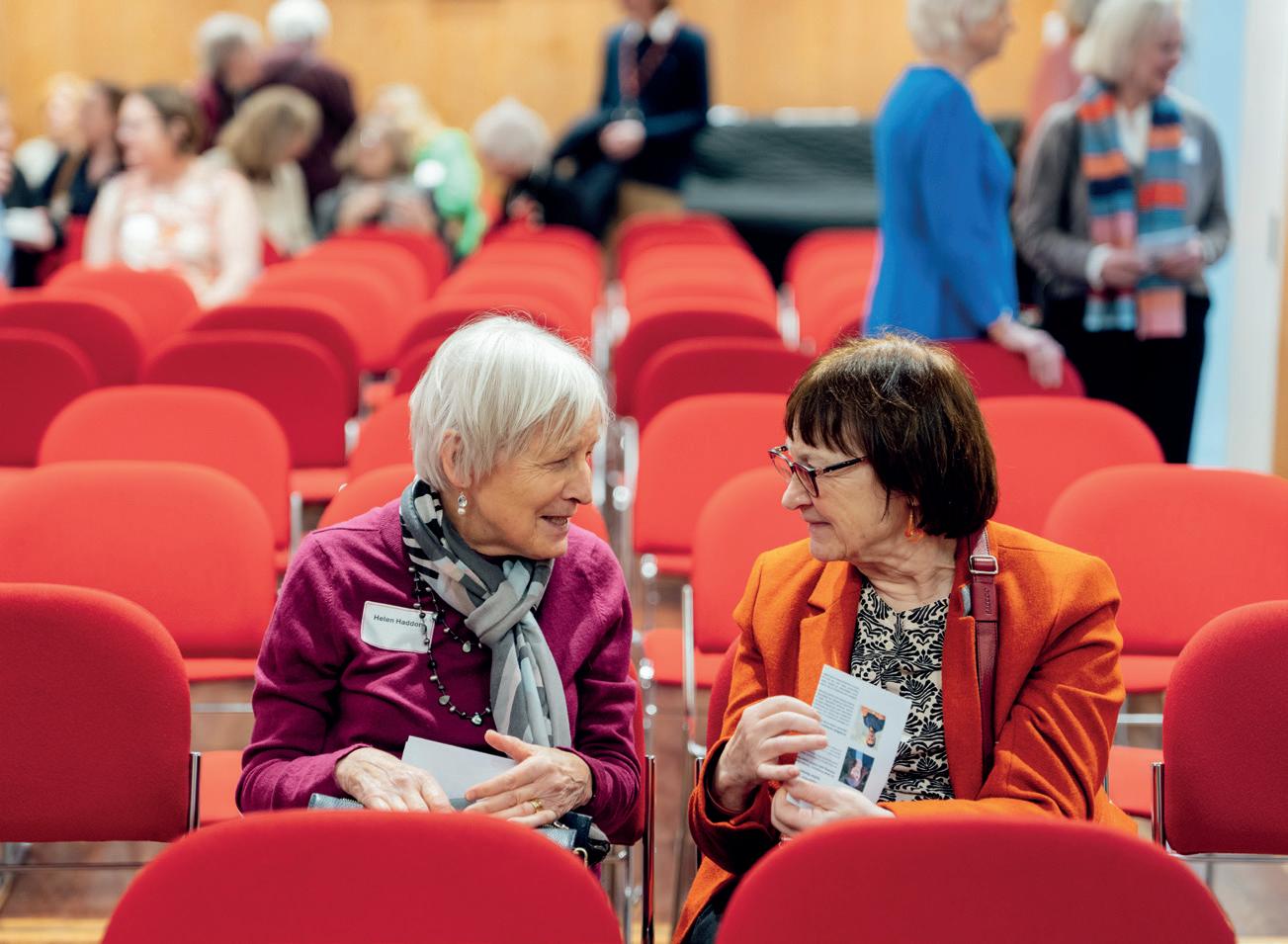
Mrs Ruth Irons (Harris) 1980
Dr Susan Karamanian 1980
Ms Kathryn Kelly 1980
Ms Betsy Kendall 1980
Mrs Daphne Leck (Bigmore) 1980
Mrs Anne Locke (Hill) 1980
Mrs Debbie Megone (Barker) 1980
Mrs Jill Moulton (Ford) 1980
Ms Neeta Patel 1980
Mrs Jacky Rattue (Roynon) 1980
Mrs Carole Rumsey (Austin) 1980
Mrs Ruth Savage (Cutts) 1980
Dr Kathy Selby 1980
Mrs Judith Shepherd (Bos) 1980
Dr Fiona Somerville 1980
Mrs Jackie Stopyra (Oliver) 1980
Anonymous 1980
Ms Alexia Tye 1980
Mrs Sharon White (Duckworth) 1980
Mrs Jane Wickenden (Stemp) 1980
Dr Sarah Young (Gbedemah) 1980
Professor Anasuya Aruliah 1981
Ms Hazel Barton 1981
Dr Sally Browne (Mellor) 1981
Ms Jennifer Bruce-Mitford 1981
Ms Sara Burnell 1981
Mrs Denise Cockrem (Lear) 1981
Miss Elaine Cook 1981
Dr Ursula Cox (Nicholls) 1981
Dr Ramona Doyle 1981
Miss Sue Elliott 1981
Dr Fiona Gatty 1981
Mrs Jane Hands (Smart) 1981
Dr Deirdre Haskell 1981
Ms Mary Kiely (Cleary) 1981
Ms Jenny Ladbury 1981
Ms Catherine McLoughlin 1981
Mrs Rachael Nichols (Warner) 1981
Ms Nilly Sarkar 1981
Baroness Shriti Vadera 1981 HF
Professor Ruth Webb 1981
Dr Louise Wilkinson (Thurston) 1981
Ms Kathryn Bourke 1982
Mrs Judith Crosbie-Chen (Crosbie) 1982
Ms Nina Formby 1982
Dr Christine Franzen 1982 JRF
Dr Catherine Higham (Clarke) 1982
Miss Carol Jackson 1982
Mrs Martha Jones (Andrew) 1982
Ms Anneli Mclachlan (Harvey) 1982
The Revd Frances Nestor (Benn) 1982
Anonymous 1982
Mrs Wendy Seago (Lucas) 1982
Mrs Julia Walsh (Hope) 1982
Ms Laura Wilson 1982
Ms Josephine Aldhouse 1983
Miss Mary Bucknall 1983
Mrs Sue Coote (Challans) 1983
Ms Susie Dent 1983
Miss Karen Eldred 1983
Miss Susan Hyland 1983
Mrs Kate Irvine (Dix) 1983
Dr Sophie Mills 1983 JRF
Mrs Julia Nisbet-Fahy (Nisbet) 1983
Mrs Jane Toogood (Bradley) 1983
Dr Jane Toswell 1983
Ms Farhana Yamin 1983 HF
Mrs Christina Bayly (Hindson) 1984
Ms Susan Bright 1984
Ms Melanie Essex 1984
Ms Robyn Field 1984
Ms Antoinette Jackson 1984
Ms Andrea Lyons 1984
Mrs Jo Magan (Ward) 1984
Ms Wendy Padley 1984
Mrs Cathy Reid Jones (Reid) 1984
Professor Claire ShepherdThemistocleous (Shepherd) 1984
Mrs Debbie Starrs (Jeffrey) 1984
Ms Elizabeth Stubbs 1984
Mrs Rhiannon Wakefield (Hogg) 1984
Professor Shân Wareing 1984
Dr Alison Warry 1984
Mrs Susanna Winter (Ellis) 1984
Dr SJ Allen 1985
Mrs Yvette Bannister (Darraugh) 1985
Mrs Janine Coulthard (Bailey) 1985
Ms Beverly Cox 1985
Mrs Fiona Freely (Say) 1985
Mrs Linda Grenyer (Grayson) 1985
Mrs Lucy Kilshaw (Butt) 1985
Mrs Emma Knight (Giles) 1985
Miss Akiko Kuni 1985
Professor Irene Lynch Fannon (Lynch) 1985
Mrs Anna McGowan (Heselden) 1985
Ms Nina Molyneux 1985
Dr Caroline Morrell 1985
Ms Kate Rogers (Wall) 1985
Ms Jane Willis 1985
Mrs Robyn Wright (Payne) 1985
Dr Fiona Andrewartha (Haworth) 1986
Miss Rachel Belsham 1986
Dr Helen Campbell Pickford 1986
Mrs Katharine Finn (Morgan) 1986
Miss Malgorzata Grzyb 1986
Mrs Helen Gurney (Mussell) 1986
Miss Sarah Harris 1986
Mrs Beccy Johnson (Wallace) 1986
Mrs Alison Lines (Waller) 1986
Mrs Linda Loder (Homfray) 1986
Professor Joan Loughrey 1986
Ms Lucy Morrison (Duncan) 1986
Miss Sian Snelling 1986
Ms Suzanne Stebbings 1986
Anonymous 1986
Mrs Emma Wattam (Goddard) 1986
Ms Clare Ambrose 1987 F
Mrs Sue Canderton (Hutchison) 1987
Mrs Katharine Cook (Chapman) 1987
Mrs Jo Donnachie (Featherstone) 1987
Mrs Elenore Falshaw (Lawson) 1987
Mrs Jane Follows (Hughesdon) 1987
Mrs Alysoun Glasspool (Owen) 1987
Mrs Jane Greatholder (Duncan) 1987
Miss Thea Jourdan 1987
Dr Jennifer Mathers (Jenkins) 1987
Ms Jackie Orme 1987
Mrs Vicky Outen (Loh) 1987
Dr Thuy Phung 1987
Miss Pri Pinnaduwa 1987
Mrs Rachel Renshaw (Perella) 1987
Anonymous 1987
Dr Liane Saunders 1987
Anonymous 1987
Professor Kate Stevenson 1987
Dr Mira Tewari 1987
Miss Philippa Wright 1987
Anonymous 1987
Professor Julia Aglionby 1988
Ms Talya Baker (Cohen) 1988
Dr Jaine Blayney (Bell) 1988
Mrs Rebecca Briscoe (Copsey) 1988
Ms Judith Buttigieg 1988
Ms Lucinda Hallan 1988
Mrs Alex Hems (Bailey) 1988
Mrs Claire Jacob (Evans) 1988
Mrs Alexandra Lawrence (Haywood) 1988
Mrs Caragh Little (Devlin) 1988
Anonymous 1988
Ms Andrea Minton Beddoes 1988
Ms Jennifer Nason 1988
Mrs Sara Nix (Field) 1988
Mrs Rachel Owens (Fox) 1988
Lady Anna Poole 1988
Professor Emma Smith 1988
Dr Alison Stewart (Lacey) 1988
Dr Jane Willoughby 1988
Mrs Rachel Wintour (Sylvester) 1988
Ms Helen Woodhall 1988
Miss Jo Ball 1989
Professor Fareda Banda 1989
Mrs Rachel Byford (Leach) 1989
Mrs Sharon Gould (Rowland) 1989
Dr Dakota Hamilton 1989
Professor Philippa Hoskin 1989
Mrs Clare Joy (Jwala) 1989
Mrs Vanessa Lawson (Patini) 1989
Mrs Claire Long (Jameson) 1989
Mrs Fiona Mayhew (McCallum) 1989
Ms Auriol Miller 1989
Dr Sara Slinn 1989
Professor Emma Sokell 1989
Mrs Helen Thomson (Ruse) 1989
Dr Kathryn Walters 1989
Mrs Sarah von Schmidt (Fatchen) 1989
Dr Shahnaz Ahmad 1990
Dr Nilanjana Banerji (Roy) 1990
Mrs Emma Cross (Rich) 1990
Mrs Catherine Callen (Goddard) 1990
Dr Claire Cockcroft 1990
Mrs Abigail Gayer (Macve) 1990
Mrs Jo Greenslade (Harford) 1990
Ms Amy Halliday (Linenthal) 1990
Lady Hannan (Sara Maynard) 1990
Miss Eugenie Hunsicker 1990
Ms Sara Kalim 1990 F
Mrs Kasia Kilvington (Johns) 1990
Ms Samantha Knights 1990
Mrs Angela Kotlarczyk (Quigley) 1990
Ms Penny Liechti 1990
Ms Sally Mitcham 1990
Miss Rachael Pallas-Brown 1990
Dr Sophie Pilkington 1990
Mrs Christine Riddington (McLean) 1990
Miss Rebecca Stubbs 1990
Ms Nicola Williams 1990
Miss Gillian Crotty 1991
Dr Jo Freeman (White) 1991
Ms Julie Hopkins 1991
Mrs Emma Ingall (Gordon) 1991
Ms Katie Jackson 1991
Mrs Miranda Jollie (Oakley) 1991
Mrs Kay Kiggell (Adam) 1991
Mrs Barbi Mileham (Cecchet) 1991
Mrs Emily Sterz (Boxall) 1991
Ms Janita Tan (Patel) 1991
Dr Tracy Watson (Axe) 1991
Ms Alex Bigland 1992
Dr Anne Bishop 1992
Mrs Clare Bone (Swinburn) 1992
Ms Clara Farmer 1992
Mrs Julia Hall (Fitzhugh) 1992
Dr Joanna Hart (Edmonds) 1992
Mrs Sarah Newman (Goddard) 1992
Ms Natasha Phillips 1992
Ms Sarah Rose 1992
Anonymous 1992
Mrs Cathy Godfrey (Lewis) 1993
Mrs Alexandra Hatchman 1993
Mrs Helen Jolliffe (Archer) 1993
Mrs Emma Kenyon (Tobin) 1993
Mrs Joanna May (Froggatt) 1993
Mrs Esther Moffett (SchutzerWeissmann) 1993
Mrs Helen O'Sullivan (Hunter) 1993
Dr Becky Parker (Green) 1993
Mrs Lucy Pover (Gooding) 1993
Mrs Vicky Price (Snell) 1993
Mrs Louise Rouch (Williams) 1993
Ms Helen Saunders 1993
Professor Maria Stamatopoulou 1993 JRF
Ms Angela Style 1993
Ms Ee-Ching Tay 1993
Ms Daisy Turville-Petre 1993 HRF
Ms Sarah Watson 1993
Dr Kate Williams 1993
Mrs Roz Akayan (Brown) 1994
Mr Tim Aldrich 1994
Mrs Daphne Alexander (Chrysostomides) 1994
Mr Matthew Blessett 1994
Dr Christian Bottomley 1994
Mr Trevor Bradbury 1994
Dr Andrew Graydon 1994
Mrs Marianne Gregson (Earl) 1994
Ms Anne Madden 1994
Ms Winnie Man 1994
Mr Ian Pickett 1994
Mrs Fiona Powell (Meldrum) 1994
Mr Kallol Sen 1994
Ms Kate Varney 1994
Mrs Jennie Watteaux (Tannett) 1994
Mr Andrew Whitworth 1994
Professor Jane Aspell 1995
Mrs Veronica Barrand 1995
Mr Chris Bland 1995
Professor Christopher Bruner 1995
Dr David Buttle 1995
The Revd Tim Carter 1995
Mrs Rebecca Catterson (Goss) 1995
Mrs Florence Collier (Coupaud) 1995
Mrs Helen Dyson (Rice) 1995
Mr Jason Gray 1995
Mrs Emily Hammer (Carlisle) 1995
Mr Richard Hartshorn 1995
Mrs Jo Howard (Cooper) 1995
Dr Eva Menges 1995
Ms Leonore Petruch 1995
Dr Francoise Sheppard (Simon) 1995
Ms Anna Tweedale 1995
Anonymous 1995
Mr Michael Caines 1996
Dr Emma Furniss 1996
Mr Ian Johnson 1996
Dr Niels Kröner 1996
Mr David Lewsey 1996
Mrs Catherine Marke (Wren) 1996
Ms Kirsty McShannon 1996
Mrs Victoria Noble (Dugdale) 1996
Dr Lynette Nusbacher (Aryeh) 1996
Ms Frances O'Donoghue 1996
Mr Peter Robertson 1996
Mr Eduard Ruijs 1996
Mr Alan Saunders 1996
Mrs Eleanor Smith (Reid) 1996
Mr Terry Stickland 1996
Mr Stephen Taylor 1996
Dr Xand Van Tulleken 1996
Mrs Alison Walker (Waldron) 1996
Mr Stephen Abletshauser 1997
Mr Chris Barron 1997
Dr Gemma Bramley 1997
Mr David Brooks 1997
Mr Omar Davis 1997
Dr Gordon Hamilton 1997
Dr Aled Jones 1997
Mr Tim Knipe 1997
Ms Kate Lancaster 1997
Mr Dan Lester 1997
Anonymous 1997
Mr Raj Nihalani 1997
Ms Katerina Potamianos 1997
Miss Kate Rennoldson 1997
Dr Claire Rosten (Popper) 1997
Dr Oliver Rosten 1997
Miss Rosie Sudol (Jenkins) 1997
Mr Graham Walker 1997
Mrs Lorraine Antypova (Perry Williams) 1998
Ms Kathryn Bonnici 1998
Mrs Rebecca Fairclough (Wood) 1998
Dr Barbara Gabrys 1998
Mr Peter Gibb 1998
Mr Peter Jolly 1998
Mr Daniel Levy 1998
Mr Chris Pell 1998
Ms Louisa Radice 1998
Mrs Nicola Avery-Gee (Ingber) 1999
Mrs Hannah Capgras (Gold) 1999
Mr Tim Cheung 1999
Dr Kate Good (Cooper) 1999
Jennie Hook (McMillan) 1999
Mr Rishi Kansagra 1999
Dr Katerina Kaouri 1999
Mr Ferdy Lovett 1999
Mrs Caroline Lytton (Smith) 1999
Ms Laura McMaster 1999
Mr Tristan Neagle 1999
Mr Ben Salter 1999
Dr Dorjana Sirola 1999
Mr Paul Waite 1999
Mrs Tara Ballinger (Reeves) 2000
Dr Isabelle Cook (Hung) 2000
Dr Alistair Fair 2000
Mrs Emily Harvey (Wentz) 2000
Mr Tony Marsden 2000
Mr Mark Pearson 2000
Dr Richard Stedman 2000
Mr Richard Whelton 2000
Mr Francesco De Cecco 2001
Mrs Aimee Donnison 2001
Mr Philip Hahn 2001
Ms Alice Mckay Hill 2001
Mr Peter Morton 2001
Ms Rachel Sales 2001
Mr Matthew Scaife 2001
Mrs Antonia Stirling (Lee) 2001
Mrs Sarah Thomas (Lumsden) 2001
Mr Kaj Thuraaisingam 2001
Mr Christopher Vessey 2001
Mr Alexander Webb 2001
Mr Caradog Williams 2001
Dr Anna Biddlestone 2002
Mr Frank Clarke 2002
Ms Annabel Gaba 2002
Mr Tom Jenkins 2002
Dr Pat Walker 2002
Professor Naomi Weiss 2002
Dr Philip Allfrey 2003
Dr Caitlin Callaghan 2003
Miss Louise Cook 2003
Mr Thomas Hodson 2003
Mr Kenneth Koon 2003
Mr Jeremy Lai 2003
Mr James Liu 2003
Mr Chris Sherwood 2003
Mr Tommy Wide 2003
Miss Eleanor Broughton 2004
Dr Rachel Brown 2004
Dr Phil Gemmell 2004
Ms Karin Lai 2004
Ms Beth Seaman 2004
Ms Zoe Sprigings 2004
Dr Helen Tyrrell (Jenks) 2004
Mr Mark Wassouf 2004
Mr Younan Zhang 2004
Dr David Broadbent 2005
Mr Luke Fitzsimons 2005
Mr Edward Fuller 2005
Mr Dave Marshall 2005
Miss Catherine Miller 2005
Miss Kathryn Skelton 2005
Mr Sean Smith 2005
Ms Sarah Glenister 2006
Mr Ben Gough 2006
Dr Luke Hanratty 2006
Mr Philip Kemp 2006
Mr James Khan 2006
Miss Fiona Lyle 2006
Ms Engjellushe Morina 2006
Mr Alex Parker 2006
Miss Rebecca Scanlon 2006
Ms Rosie Shakespear-Reeve (Shakespear) 2006
Miss Irmak Uzumcu 2006
Dr Kitty Wheater 2006
Ms Cordelia Witton 2006
Mr Ben Wood 2006
Ms Wei Xu 2006
Ms Gabriela da Costa 2006
Ms Alex Baxter 2007
Mr James Bickley-Percival 2007
Mr Wojciech Chrobak 2007
Mr Dexter Harries 2007
Mr Ian Lister 2007
Ms Samantha Miller 2007
Dr Jacques Schuhmacher 2007
Mr Philip Sellar 2007
Ms Rosie Bennison 2008
Mr David Blagbrough 2008
Mr Constantin Calavrezos 2008
Dr Nick Cooper 2008
Ms Janine DeFeo 2008
Ms Sally Dickinson 2008
Mr Alex Gunn 2008
Mr Mike Johnson 2008
Mrs Josie Messa 2008
Mr Iain Moss 2008
Mr Samuel Newton 2008
Mr Peter Stewart 2008
Dr Andrea White 2008
Mr Almat Zhantikin 2008
Dr Simi Bansal 2009
Miss Katherine Corkum 2009
Ms Anusha Couttigane 2009
Mrs Manuela Galan 2009
Anonymous 2009
Miss Pria Ghosh 2009
Dr Ivana Lin 2009
Mrs Anna Matei 2009
Miss Damilola Oshowo 2009
Mr Kumaran Perinpanathan 2009
Mr David Railton 2009
Mr Tom Allsup 2010
Mr Charlie Chichester 2010
Ms Audrey Davies 2010
Mr Barnaby Geddes-O'Dolan 2010
Mr Benedict Hardy 2010
Mrs Sally Kennedy (Stevenson) 2010
Dr Douglas Knight 2010
Miss Martha Mends 2010
Dr Vikram Nagarajan 2010
Ms Rebecca Nohl 2010
Mr Robin Nyland 2010
Mr Nicholas Shinder 2010
Ms Lorna Sutton 2010
Miss Marina Sykes 2010
Mr Alim Thawer 2010
Dr Daniel Yon 2010
Ms April Zhang 2010
Ms Sarah Zhang 2010
Dr Adiya Belgibayeva 2011
Mr Brendan Brett 2011
Anonymous 2011
Ms Alice Broughton 2011
Dr Ian Buchanan 2011
Ms Rosie Carpenter 2011
Miss Rachel Challands (Porter) 2011
Mr Jolyon Coates 2011
Dr Alice Cross 2011
Dr Zoe Fannon 2011
Dr Kate Millar 2011
Dr Philip Oddie 2011
Mr Henry Robinson 2011
Mr Rory Robinson 2011
Miss Jenny Scrine 2011
Mr Will Truefitt 2011
Mr Chris Watson 2011
Dr Fabian Ying 2011
Mr Gabriel Asman 2012
Miss Amy Fairchild 2012
Miss Polly Fullerton 2012
Miss Amelia Hamer 2012
Mr Fredrik Hellstrom 2012
Mr Richard Higson 2012
Ms Marina Holden 2012
Ms Alice Jamison 2012
Mr Di Wei Lee 2012
Miss Colette Lewis 2012
Miss Anna Nosalik 2012
Mr George Pearson 2012
Mr Gonçalo Pereira Simoes Matos 2012
Miss Tooba Qadri 2012
Ms Georgie Salzedo 2012
Dr Brigitte Stenhouse 2012
Mr Sam Walker 2012
Dr Grace Barnes 2013
Dr Richard Brearton 2013
Dr Fergus Cooper 2013
Miss Harriet Dixon 2013
Miss Holly Freeborn 2013
Mr Oliver Johnston-Watt 2013
Miss Angelica Lindsey-Clark 2013
Mr Akira Marusaki 2013
Miss Margot Mazzia 2013
Miss Olivia Murray 2013
Miss Beverley Noble 2013
Ms Maia Perraudeau 2013
Mr Joe Smith 2013
Mr Ore Smith 2013
Mr Harry Travis 2013
Miss Anna Bett 2014
Mr Chris Broughton 2014
Mr Fred Clamp-Gray 2014
Mr Jonathan Denby 2014
Ms Hannah Gain 2014
Dr Prannay Kaul 2014
Mr Michael Lin 2014
Ms Kate Ross 2014
Ms Sondos Shalaby 2014
Mr Konrad Strack 2014
Miss Becky Todd 2014
Mr Jonathan Wu-Khor 2014
Mr Ashley Barnard 2015
Miss Jess Bollands 2015
Mr Dov Boonin 2015
Miss Lizzie Bosson 2015
Miss Maya Brownlow 2015
Mr Francesco D'Antonio 2015
Mr Jack Gascoigne 2015
Miss Isobel Hettrick 2015
Miss Maria Hohaus 2015
Mr Denis Koksal-Rivet 2015
Mr Rowan Nicholls 2015
Mr Tim Riley 2015
Dr Gemma Seabright 2015
Mr Daniel Tucker 2015
Ms Niamh Walshe 2015
Mr Peter Whales 2015
Miss Alice Wong 2015
Mr Sheh Zaidi 2015
Miss Tianjia Zhang 2015
Mr Atticus Albright 2016
Miss Katie Bastiman 2016
Miss Jess Crompton 2016
Dr Zahra Gomes 2016
Mr Mohamed Hussein Iman 2016
Mr Fin Kavanagh 2016
Miss Lea Keita 2016
Mr Sasha Martiyanov 2016
Mr Alex Nash 2016
Ms Natasha Parker 2016
Miss Hannah Patrick 2016
Mr Frederik Robinson 2016
Miss Sabriyah Saeed 2016
Mr Ollie Smith 2016
Mr Jonathan Stark 2016
Mr Tony Taylor 2016
Dr Jules Alexander-Cooper 2017
Mr Matthew Brown 2017
Mr Nicholas Elliott 2017
Miss Safa Fanaian 2017
Ms Claire Nakabugo 2017
Dr Greg Sulley 2017
Ms Tina Yang 2017
Mr David Cao 2018
Mr Brendon Ferreira 2018
Miss Pippa Gleave 2018
Mrs Bianca Maus (Kuckertz) 2018
Dr Olga Runcie 2018
Mr Philip Sadler 2018
Miss Sarah Day 2019
Mrs Jessica Pateman (Wright) 2019
Mr Luca Webb 2019
Mr Saleh Algannin 2020
Mr Jason Bell 2020
Mr Simon Koopmann 2020
Ms Rosie Maxton 2020
Mr George Tyler 2020
Mr Mason Wakley 2020
Mr Alistair White-Horne 2020
Ms Rui Huang 2021
Mr Sarvatrajit Jajmann 2021
Ms Sarah Waicus 2021
Miss Anna O'Hanlon 2022
Mr Guillermo Íñiguez 2022
Mr John Koz 2023
Dr Pavan Sohal 2023
Mr Thomas Warner 2023
Mr Fahad Zuberi 2023
Ms Pauline Adams 1962 EF F
Ms Clare Ambrose 1987 F
Mrs Lesley Brown (Wallace) 1963 EF F
Dr Paula Brownlee (Pimlott) 1953 HF
Professor Averil Cameron (Sutton) 1958 HF
Dr Margaret Casely-Hayford 1980 HF
Lady Fox (Hazel Stuart) 1946 HFǂ
Mrs Clara Freeman (Jones) 1971 HF
The Hon Victoria Glendinning (Seebohm) 1956 HF
Professor Joanna Haigh 1972 HF
Miss Barbara Harvey 1946 EFǂ
Professor Carole Hillenbrand 1968 HF
Professor Judith Howard (Duckworth) 1966 HF
Professor Lorna Hutson 1976 HF
Ms Joanna Innes EF F SRF
Ms Sara Kalim 1990 F
Mrs Margaret Kenyon (Parry) 1959 HF
Dame Emma Kirkby 1966 HF
Mrs Harriet Maunsell (Dawes) 1962 HF
Professor Dame Angela McLean 1979 HF
Professor Michele Moody-Adams (Moody) 1978 HF
Ms Helen Morton EF F
Baroness Onora O'Neill 1959 HF
Dr Hilary Ockendon (Mason) EF F
Dame Judith Parker 1969 HF
Dr Alice Prochaska (Barwell) 1965 HF
Dame June Raine (Harris) 1971 HF
Professor Tessa Rajak (Goldsmith) 1965 SRF
Mrs Sue Scollan (Green) 1978 FF
Professor Caroline Series 1969 HF
Professor Fiona Stafford F
Professor Dame Elan Stephens (Roberts) 1966 HF
Anonymous
Professor Benjamin Thompson F
Ms Daisy Turville-Petre 1993 HRF
Baroness Shriti Vadera 1981 HF
Professor Angela Vincent EF F
Professor Fenella Wojnarowska 1965 HRF
Baroness Alison Wolf (Potter) 1967 HF
Ms Farhana Yamin 1983 HF
Former JRFs
Dr Jill Brock (Lewis) 1956 JRFǂ
Dr Christine Franzen 1982 JRF
Dr Sabina Lovibond 1970 JRF
Anonymous 1970
Dr Sophie Mills 1983 JRF
Miss Anne Pope 1960 JRF
Dr Peggie Rimmer 1961 JRF
Dr Nicholas Shea JRF
Professor Maria Stamatopoulou 1993 JRF
Dr Mary Warren (Fay) 1966 JRF
Dr Trudy Watt 1971 JRF
Dr Stephanie West (Pickard) 1956 JRF
Friends of Somerville
Mrs Anik Amranand (Wichiencharoen)
Mr Rajan Anandan
Mr Simon & Mrs Tracey Backshall
The Lord Glendonbrook CBE &
Mr Martin Ritchie
Mrs Sarah Botcherby
Mr Keith Bowen
Professor Paul Brand &
Dr Susanne Brand
Dr Robert Brech
Mr Daniel Brittain Catlin
Mr Bob Carnell
Dr David Carter
Mrs Janet Clayton
Mr William Cohen
Mrs Yvonne Conroy
Sir Sherard Cowper-Coles
Mr Arthur Fleiss
Ms Rati Forbes
Ms Melissa Gemmer-Johnson
Mr Mark Gibson
Mr Christian Hagemeier
Mr John Havard
With sincere thanks to our Foundation Fellows who have enabled transformational projects for Somerville.
Mr Natarajan Chandrasekaran
Sir Geoffrey Leigh
Ms Vicky Maltby (Elton), 1974
Mr Mehli Mistry
Mr Robert Ng Chee Siong
Lord Powell of Bayswater
Mr Robert Henrey
Mrs Tisa Hibbs
Anonymous
Mr Tim Jolly
Professor Bob Kudrle
Ms Claire Lamrick
Dr Justin Lau
Mrs Maro Limnios
Mr Robert Lister
Mrs Jessica Mannix
Mr Callum Marsh
Professor Andre McLean
Mr John Nicoll
Professor Yoko Odawara
Ms Amee Parikh & Mr Akash Parikh
Professor Peter Oppenheimer
Mr Robert Pidgeon
Dr Gita Piramal
Ms Radhika Piramal
Ms Aparna Piramal
Professor Paul & Dr Susanne Brand
Mrs Katharine Cook (Chapman) 1987
Mr John Havard
Professor Edwina Brown 1967 & Dr Brendan Brown
Ms Charlotte Morgan 1969
Ms Karen Richardson 1972
Mr Richard & Mrs Heather Scourse
Dr Betsy Wiggins (Fumagalli) 1968
Mr John Wiggins
Mrs Vanessa Brand (Rodrigues) 1965ǂ
Rachel Foakes (Bladon) 1987 ǂ
Mrs Vanessa Brand (Rodrigues) 1965ǂ
Mrs Irene Brown (Goodman) 1939 ǂ
Mrs Vanessa Brand (Rodrigues) 1965ǂ,
In memory of her mother
Stella Lavinia Richardson ǂ
Mr David Scourse 1999 ǂ
Jennifer Anne Wiggins 1958 ǂ
Jennifer Anne Wiggins 1958ǂ
Mr Gavin Ralston
Mr Wafic Saïd
Mrs Susan Scollan (Green), 1978
Mr Kevin Scollan
Mr Gopal Subramanium
Mrs Bernie Quinn
Dr Mary Salinsky
Mr Kevin Scollan FF
Mr Richard &
Mrs Heather Scourse
Dr Elizabeth Sharp
Dr Nicholas Shea JRF
Mr Cyril & Mrs Vandana Shroff
Mr Chander Singh FF
Mr John & Mrs Deborah Southwell
Mrs Larissa Speirs
Anonymous
Mrs Yeling Tan
Mr John Upton
Mr Chris Vermont
Ms Rebecca Williams
Professor Robin Wilson
Mr Sarosh Zaiwalla
Amansa Capital Foundation
Americans for Oxford Credits
Education Above All
Irene Brown Charitable Trust
Moyola Charity
The Mukul Madhav Foundation
The Michael Bishop Foundation
Nomura International plc
The Nuremburg Trust
ST Telemedia
Tata Group
Tate & Lyle Plc
Tibra Capital
Tisbury Telegraph Trust
UPL Limited
Venerable Matching Gifts
The Principal and Fellows would like to thank all those who have given their time and commitment to the College during the financial year 2024-25.
‡ = Chairs and Vice-Chairs
Development Council Members
Ms Ayla Busch 1989 ‡
Ms Sybella Stanley 1979 ‡
Ms Basma Alireza 1991
Mr David Blagbrough 2008
Ms Judith Buttigieg 1988
Mrs Sophie Forsyth (Wallis) 1989
Ms Lynn Haight (Schofield) 1966
Dr Niels Kröner 1996
Ms Vicky Maltby (Elton) 1974
Mrs Nicola Ralston (Thomas) 1974
Ms Judith Unwin 1973
Honorary Development Board Members
Mr Tom Bolt
Dr Doreen Boyce (Vaughan) 1953
Mrs Paddy Crossley (Earnshaw) 1956
Mrs Clara Freeman (Jones) 1971
Mrs Margaret Kenyon (Parry) 1959
Ms Nadine Majaro 1975
Mrs Harriet Maunsell (Dawes) 1962
Ms Hilary Newiss 1974
Mr Roger Pilgrim
Mrs Sian Thomas Marshall (Thomas) 1989
Campaign Board Members
Mr Omar Davis (1997)
Ms Emma Haight (1999)
Mr Dan Mobley (1994)
Mr Sundeep Sandhu (1994)
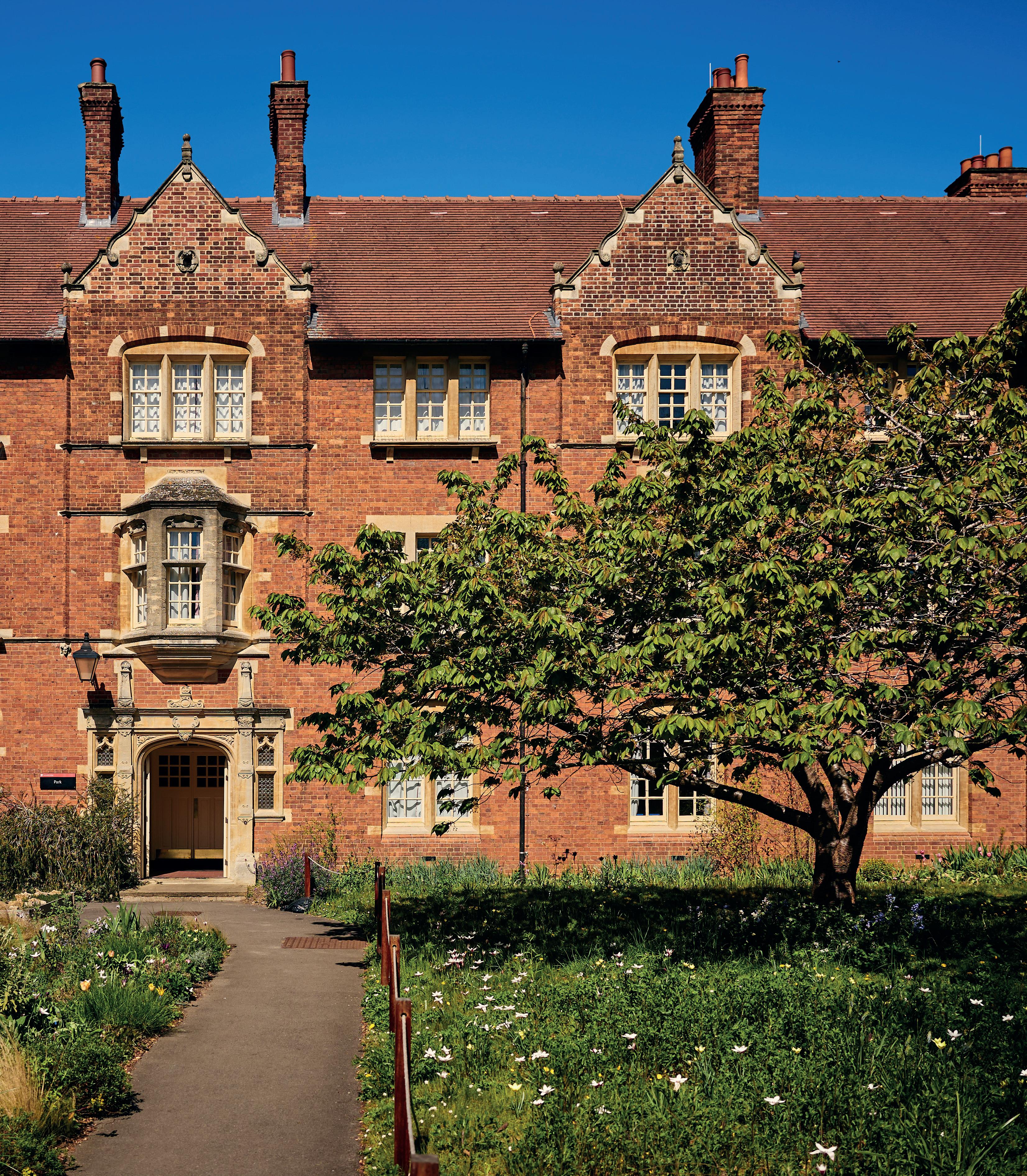
Somerville Association Committee
Dr Nermeen Varawalla 1989 ‡
Mr David Blagborough 2008
Mr Chris Broughton 2014
Ms Clare Latham 1985
Ms Hilary Manning 1977
Mrs Judy Moir 1977
Ms Virginia Ross 1966
Mr Joe Smith 2013
Ms Zoe Sprigings 2004
City Committee
Ms Judith Buttigieg 1988 ‡
Mrs Nicola Ralston (Thomas) 1974
London Committee
Ms Kim Anderson 1978 ‡
Ms Jenny Ladbury 1981 ‡
Ms Caroline Totterdill 1984
Ms Bev Cox 1985
Ms Ruth Crawford 1980
Ms Eleanor Sturdy (Burton) 1984
Mrs Sarah Wyles (Ryle) 1987
Ms Sue Canderton (Hutchison) 1987
Medics Committee
Dr June Raine (Harris) 1971 ‡
Professor Kathryn Abel 1980
Ms Farah Bhatti 1984
Dr Susanna Graham-Jones 1968
Ms Natalie Morris (Shenker) 1997
Dr Natasha Robinson 1972
Dr Nermeen Varawalla 1989
Dr Emma Whitehouse 1998