modular park - fall 2024
in
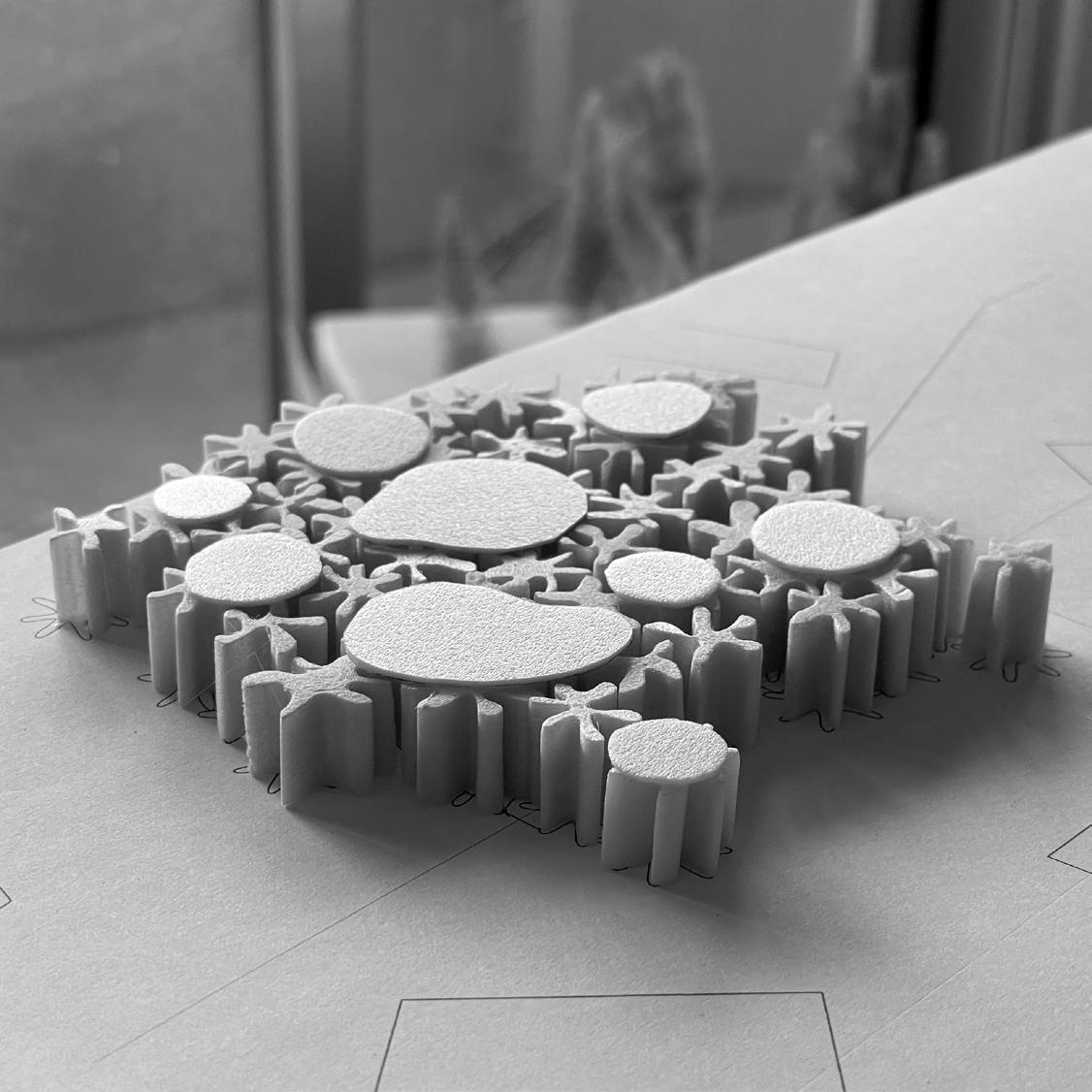
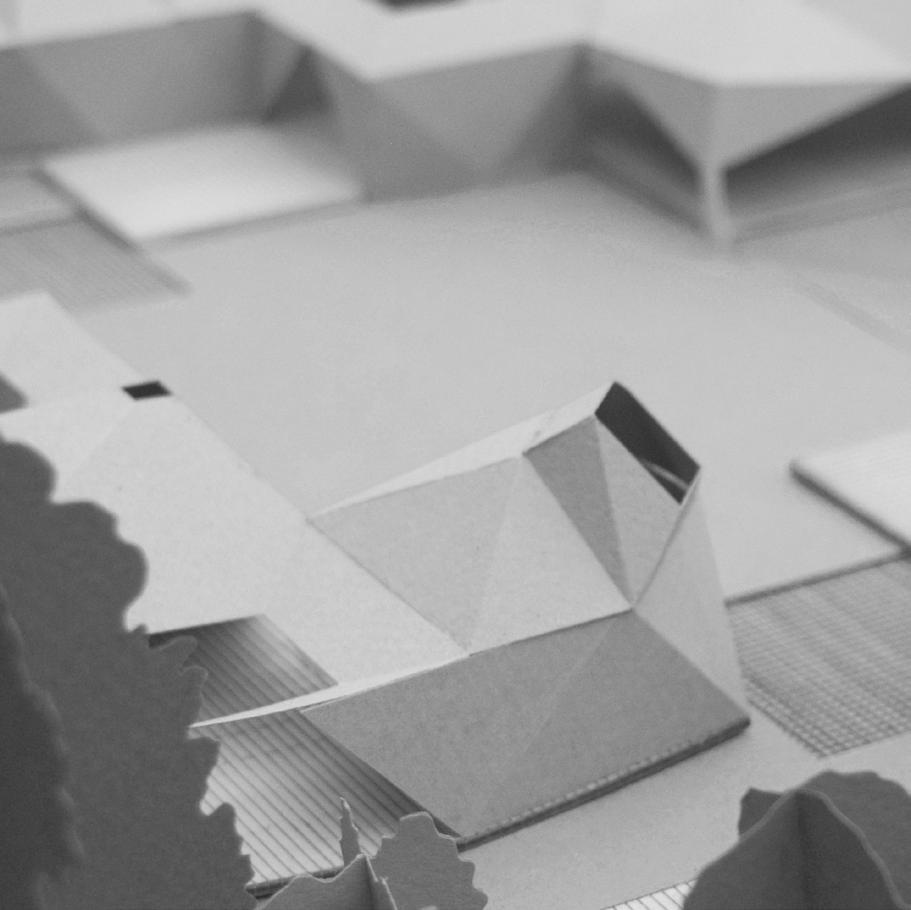
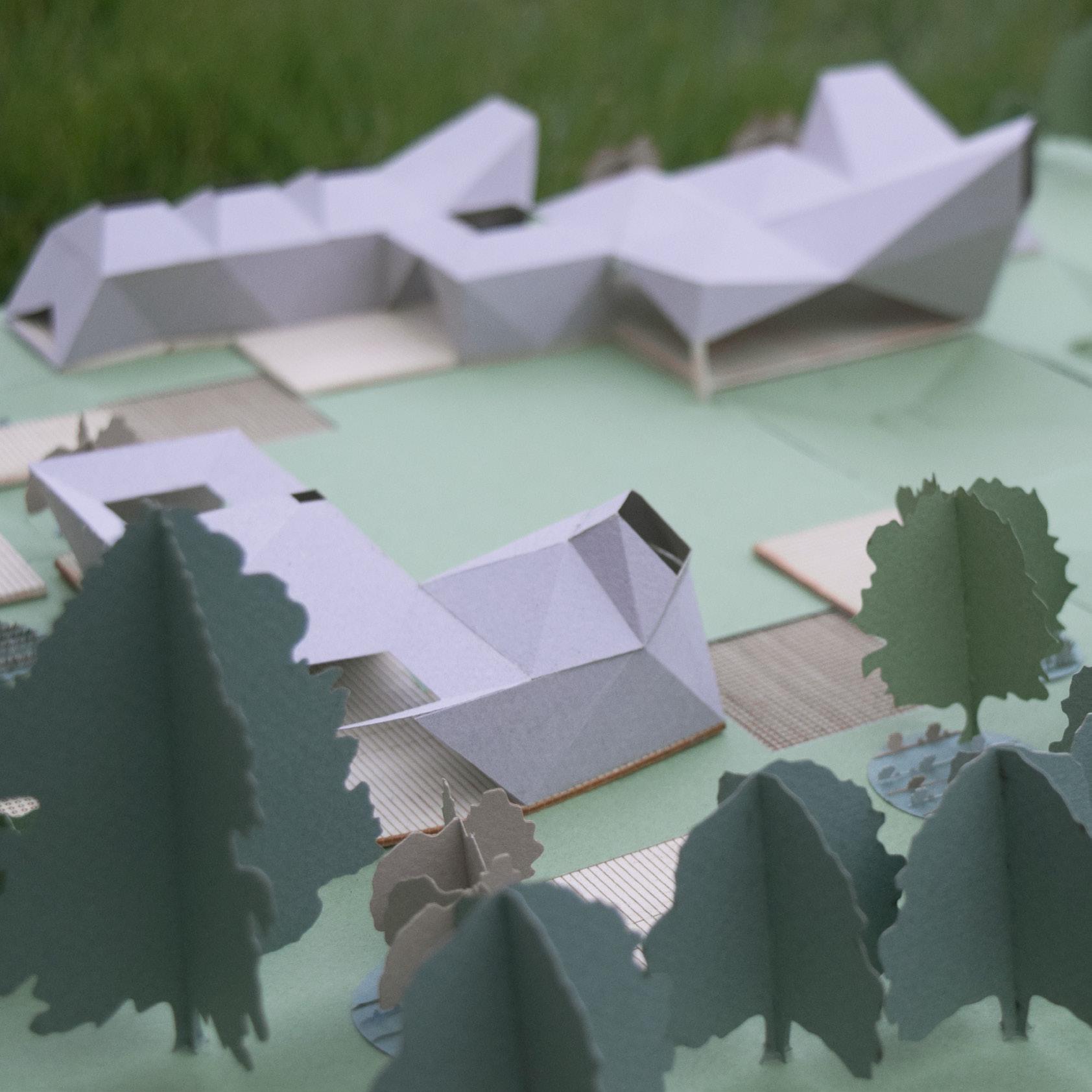
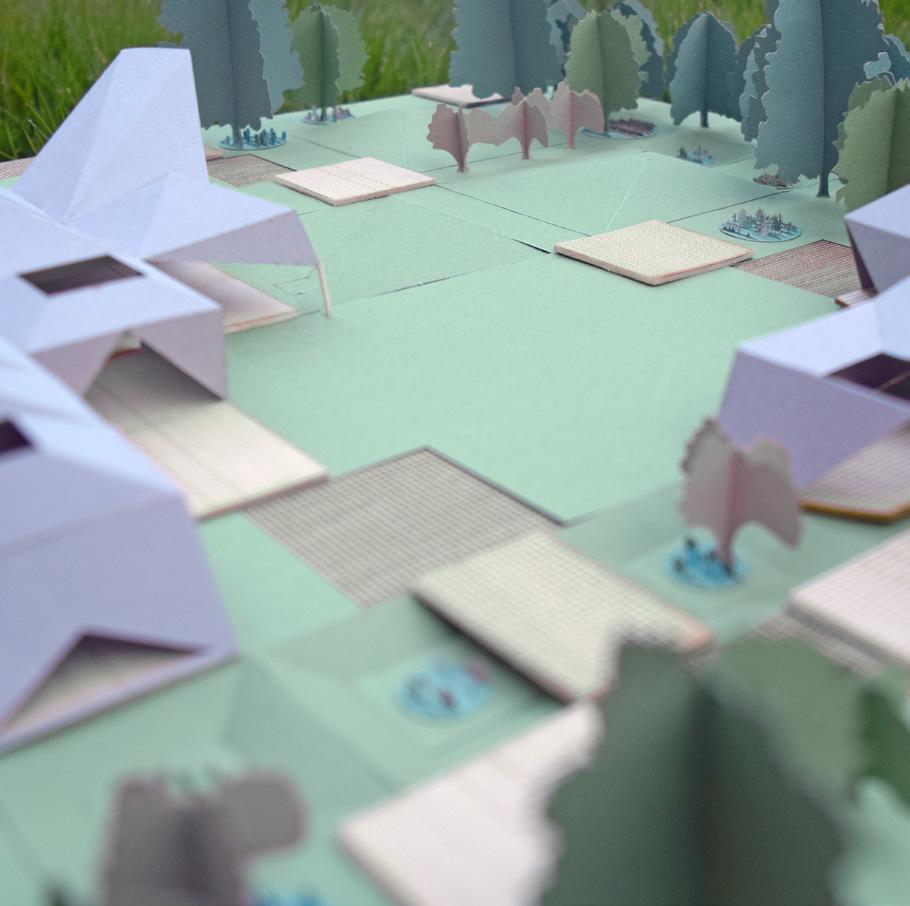
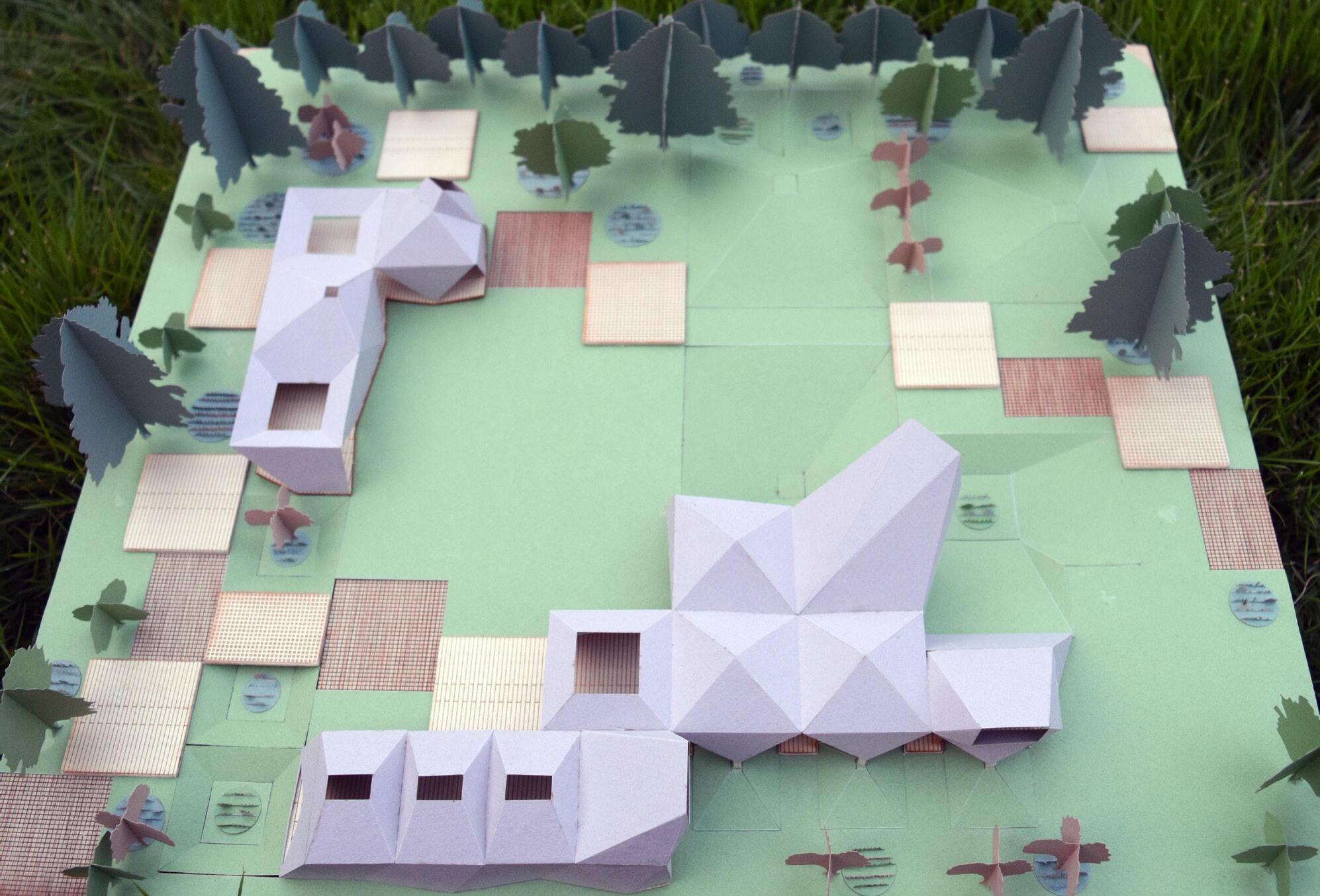
The work was heavily inspired by the Goal Park project in Houston, TX. Taking an empty lot neighbouring the future park as the site, we developed a modular proposal centred around the idea of flow. Three flows taken into account are wind flow, water flow and the flow of visitors.
The result was a catalogue of elements sloped to navigate those flows to create a comfortable and inviting space that would respond to nature and the Houston climate.
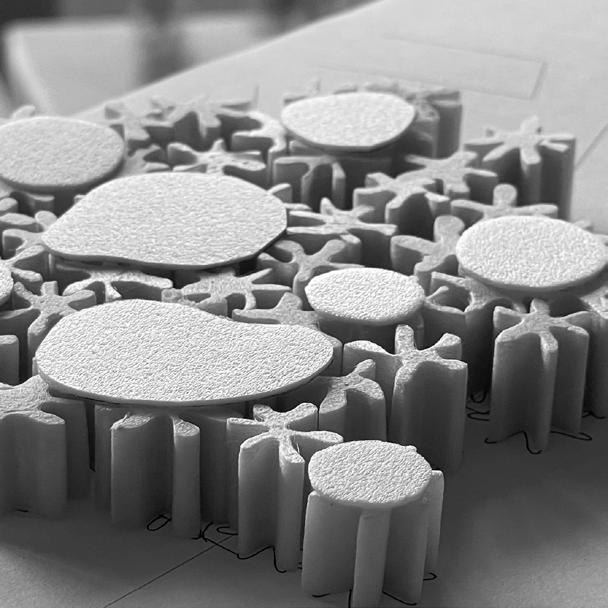
The spaces formed and shaded by the easy-to-build modular pavilions are multifunctional, intended to host outdoor group gatherings or individuals. The landscape, informed by the Houston conditions, responds to the context of the park by offering an intriguing surrounding that changes with the seasons.
The pathways respond to the scale of the module and create an ADA-accessible circulation route with directions open to interpretation.
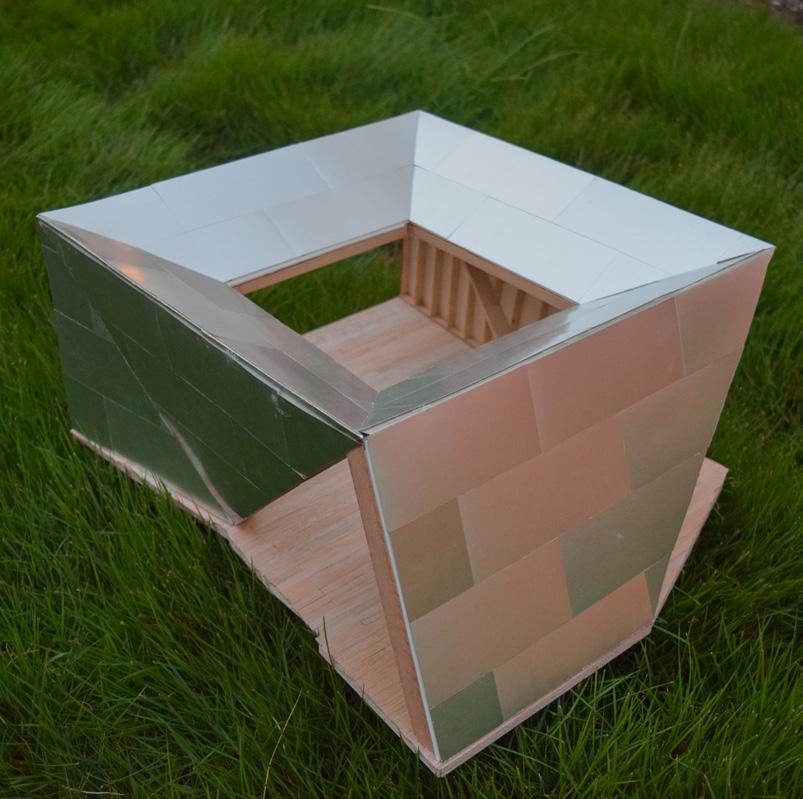
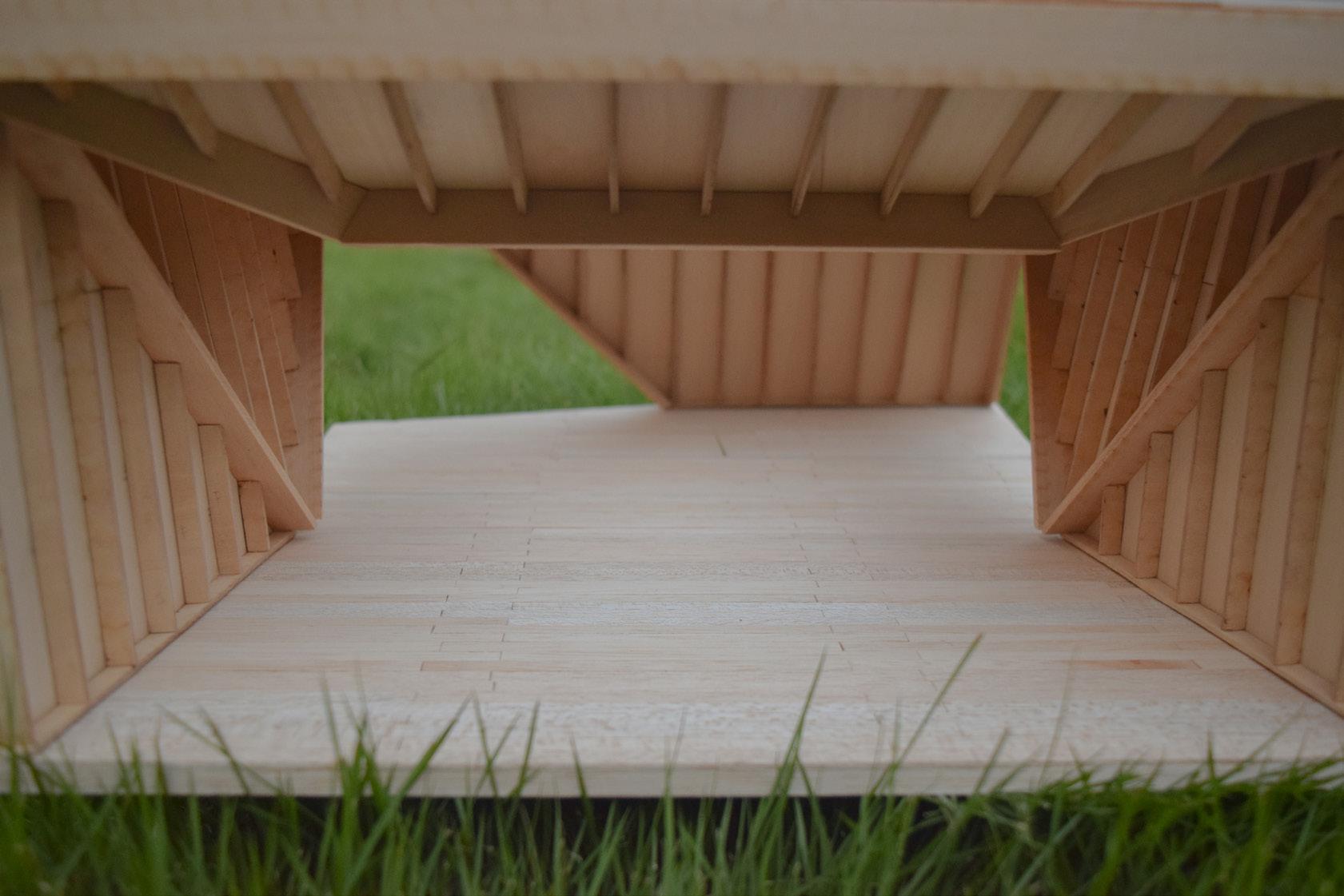
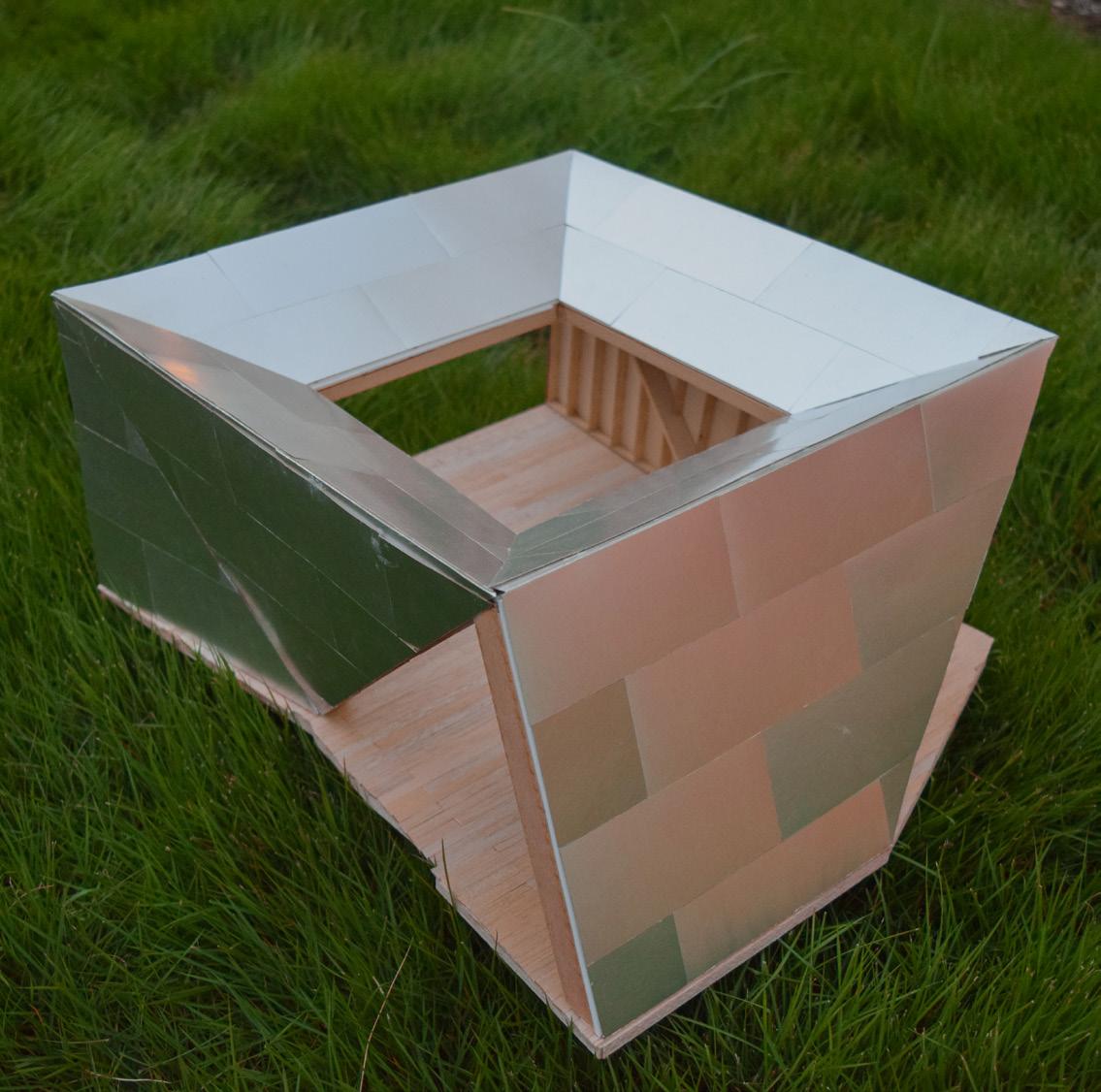
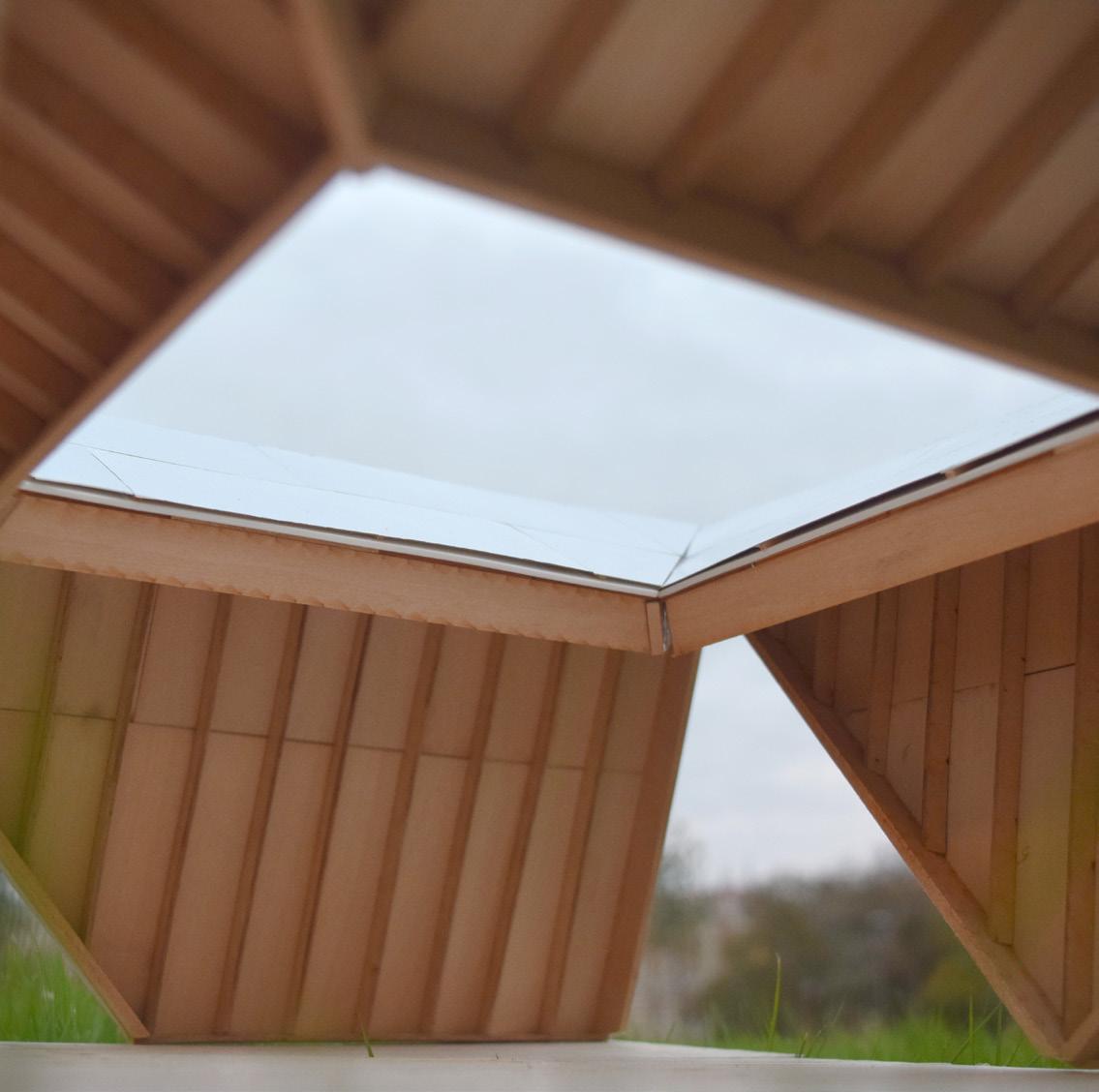
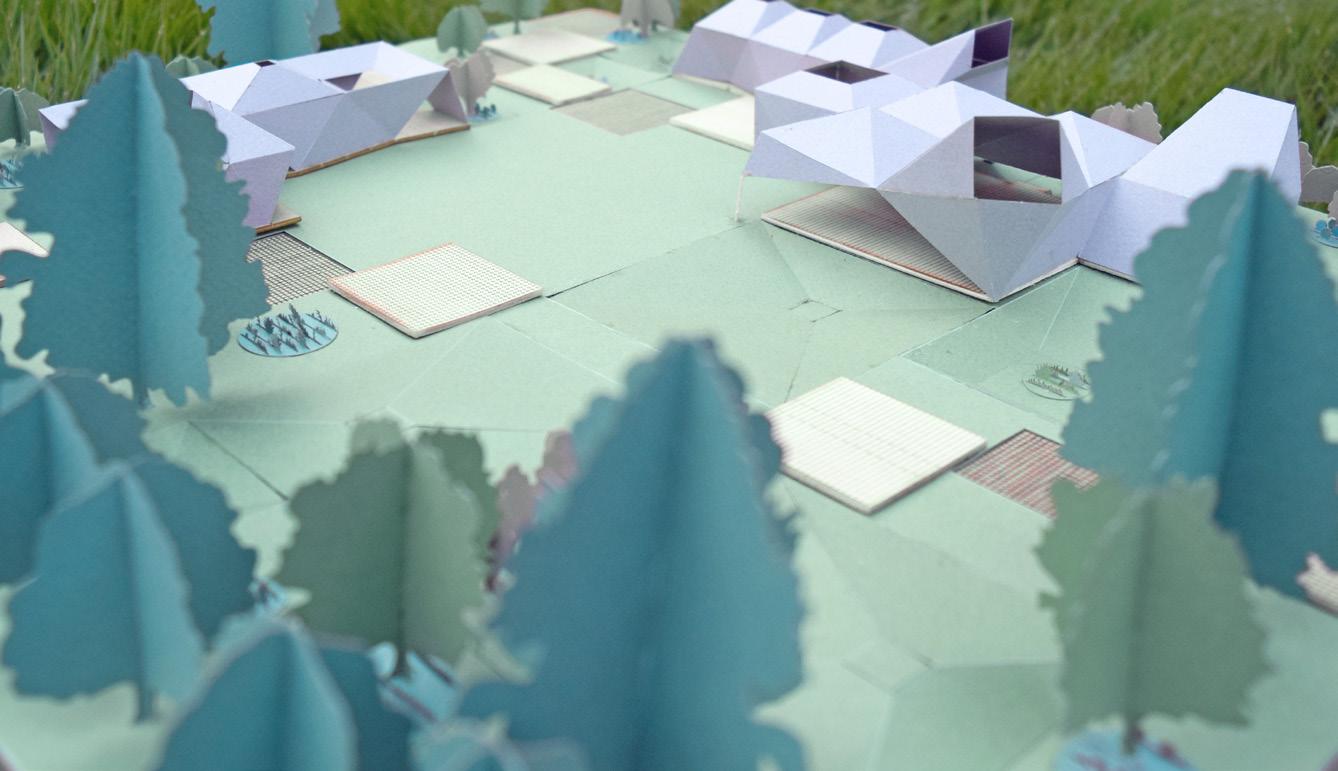
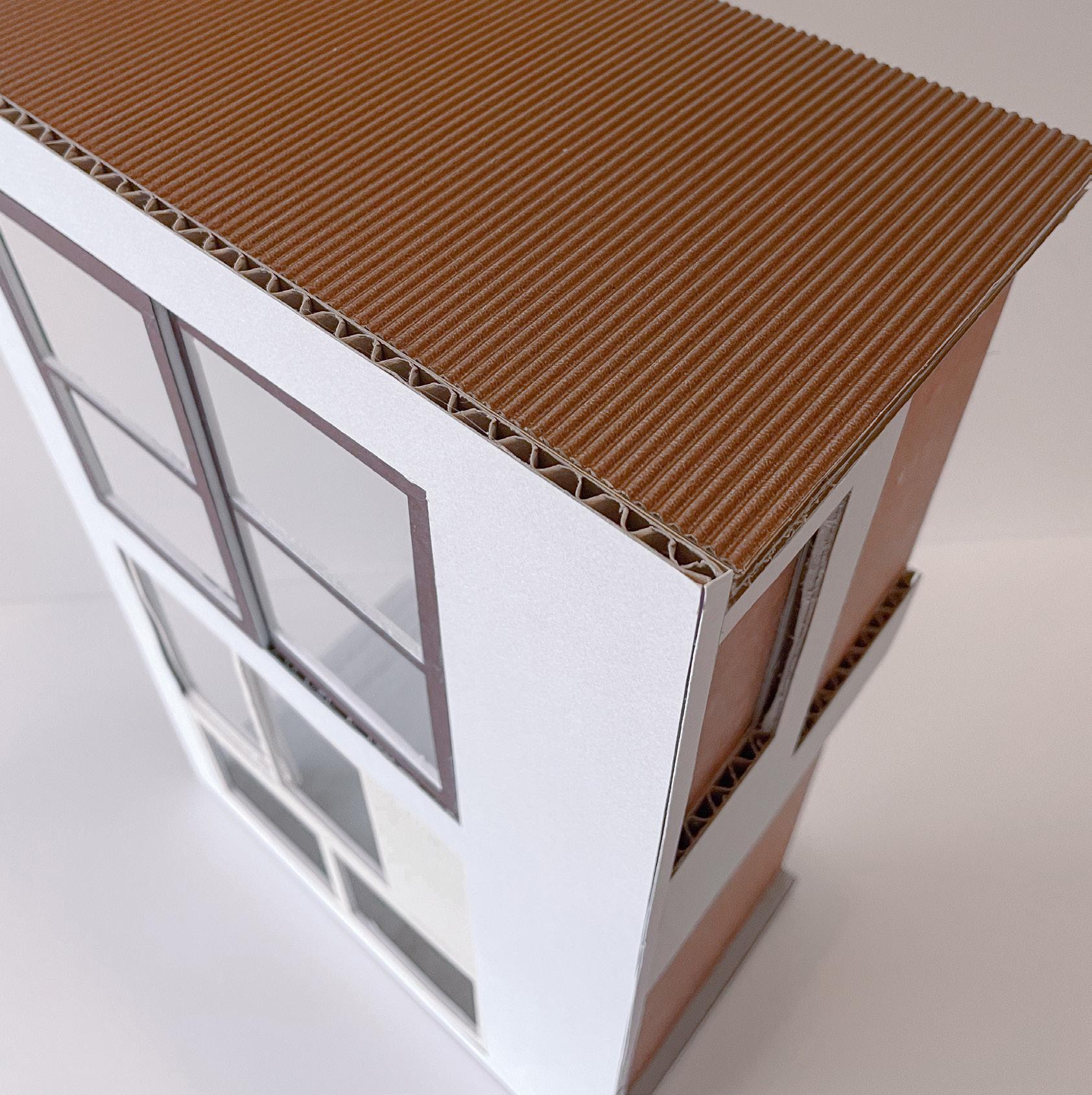
massing model of the proposal
1/32” = 1’-0”
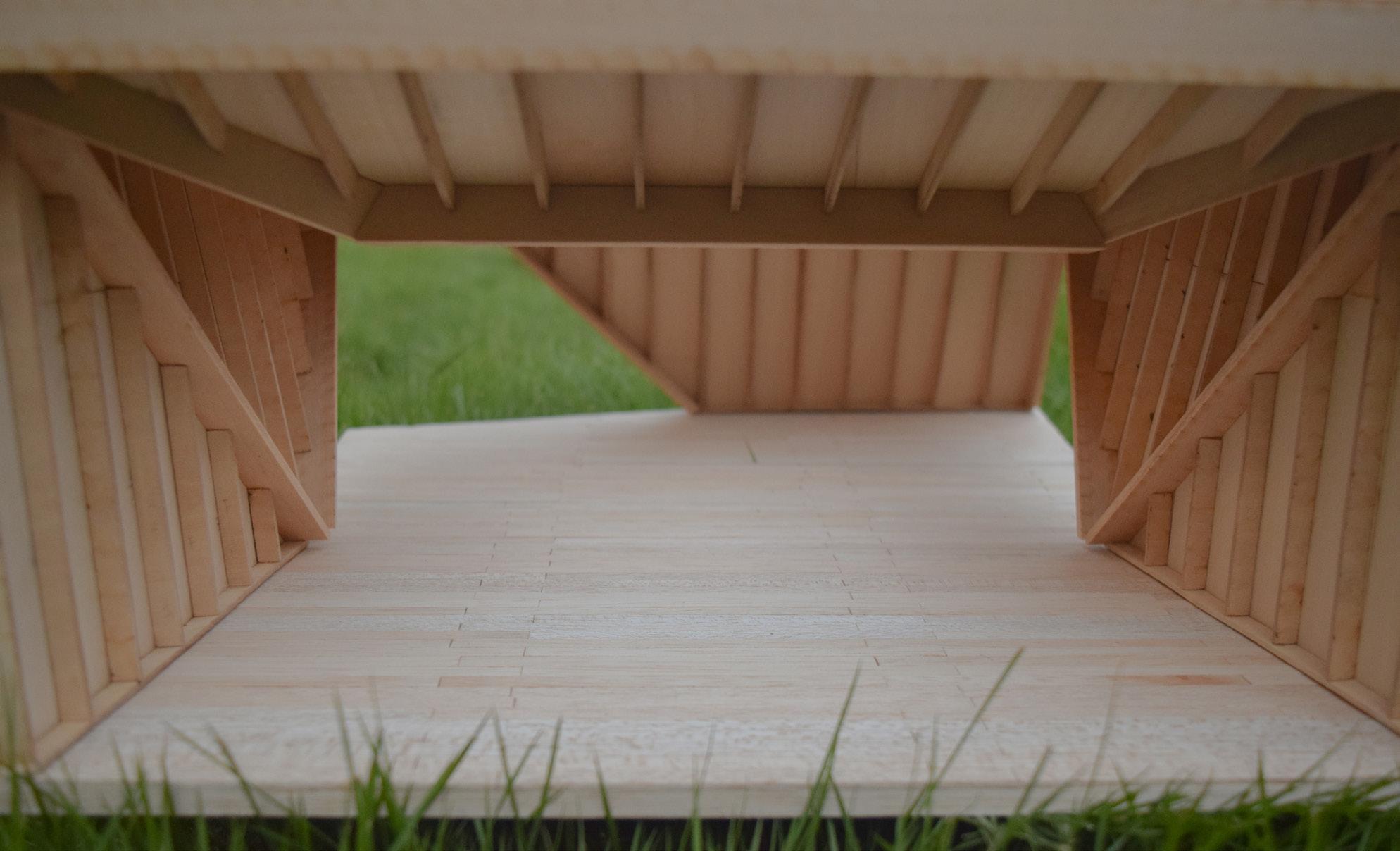
scale: 6”= 1’-0” d.02 - Section through wall and deck
- plywood, 3/4” thick
- continuous insulation, 2” thick
- rubber sealing strip, 1/8” thick - softwood framing - flat aluminium sheet, 1/4” thick General Notation
Specific Notation
- 1-3/4” screws, #9 - 2-3/4” screws, #9 - fastener - blocking - steel flashing - timber piling, 8” diameter
Notation
- Section through ground and deck - 2-3/4” screws, #9 - wood to wood steel bracket - timber piling, 8” diameter - geocell for soil reinforcement - topsoil - subsoil
scale: 6”= 1’-0”
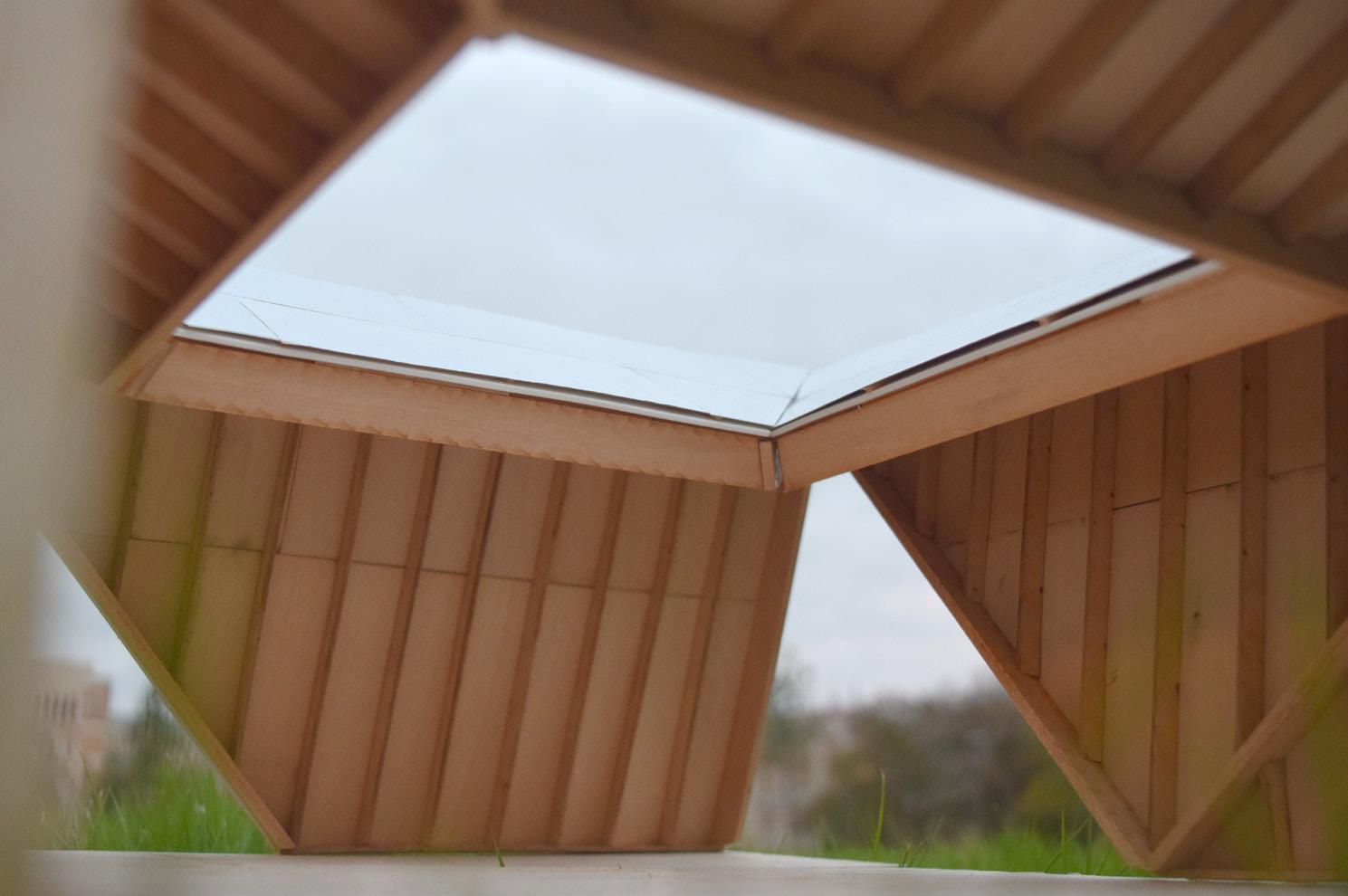
d.05 - Section through skylight and roof
- plywood, 3/4” thick
- continuous insulation, 2” thick
- rubber sealing strip, 1/8” thick
- softwood framing
- flat aluminium sheet, 1/4” thick
- separation block
General NotationSpecific Notation
- tempered glass, 4 mm thick
- extruded aluminium frame
- rubber sealing block
- /4” eathe ng sc e s
- 3” screws, #9
- metal bracket
- 1-1/4” nails
scale: 6”= 1’-0”
recycled parking - spring 2024
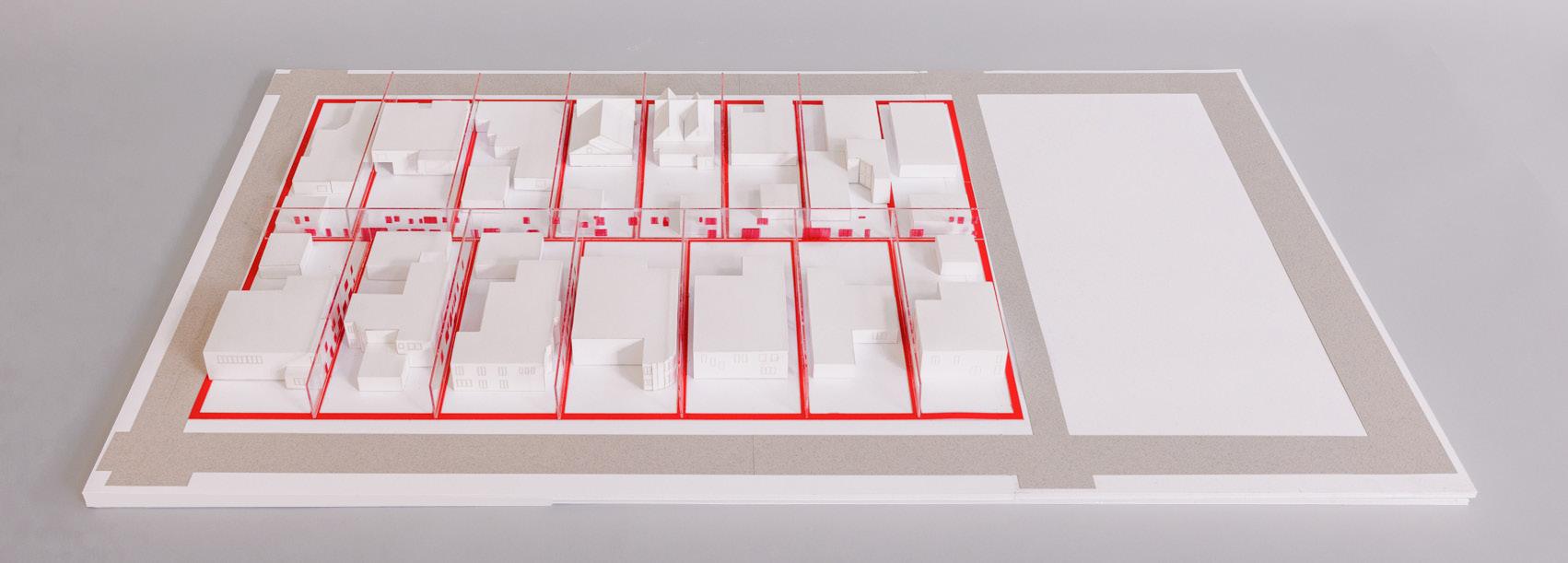
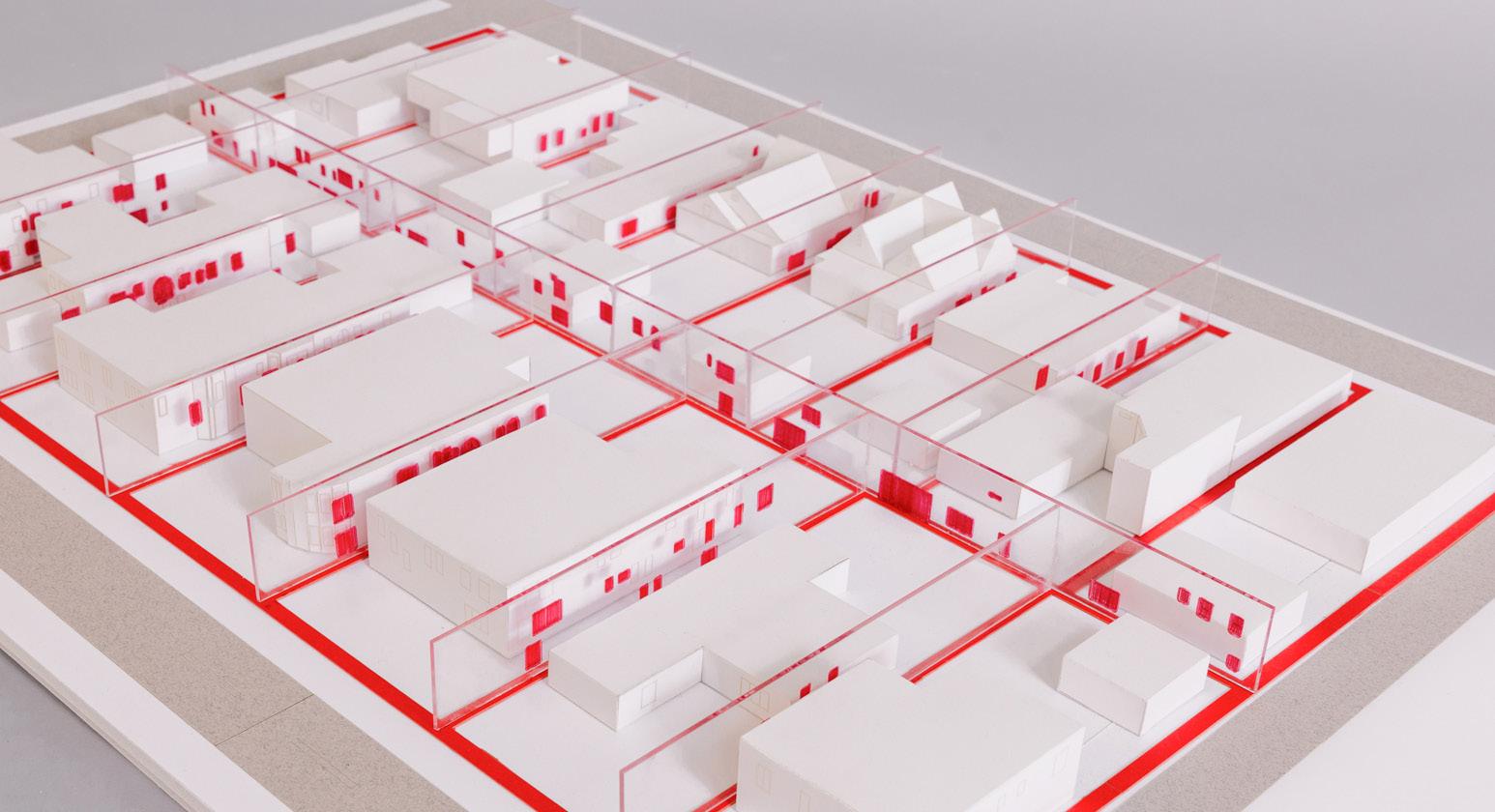
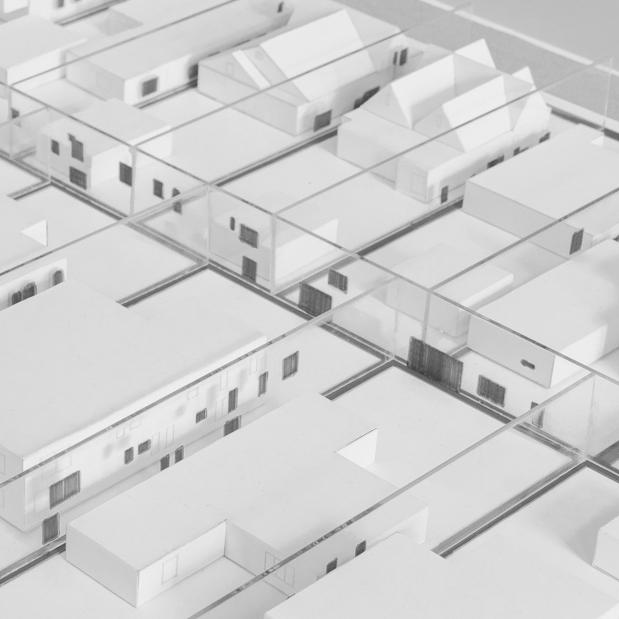
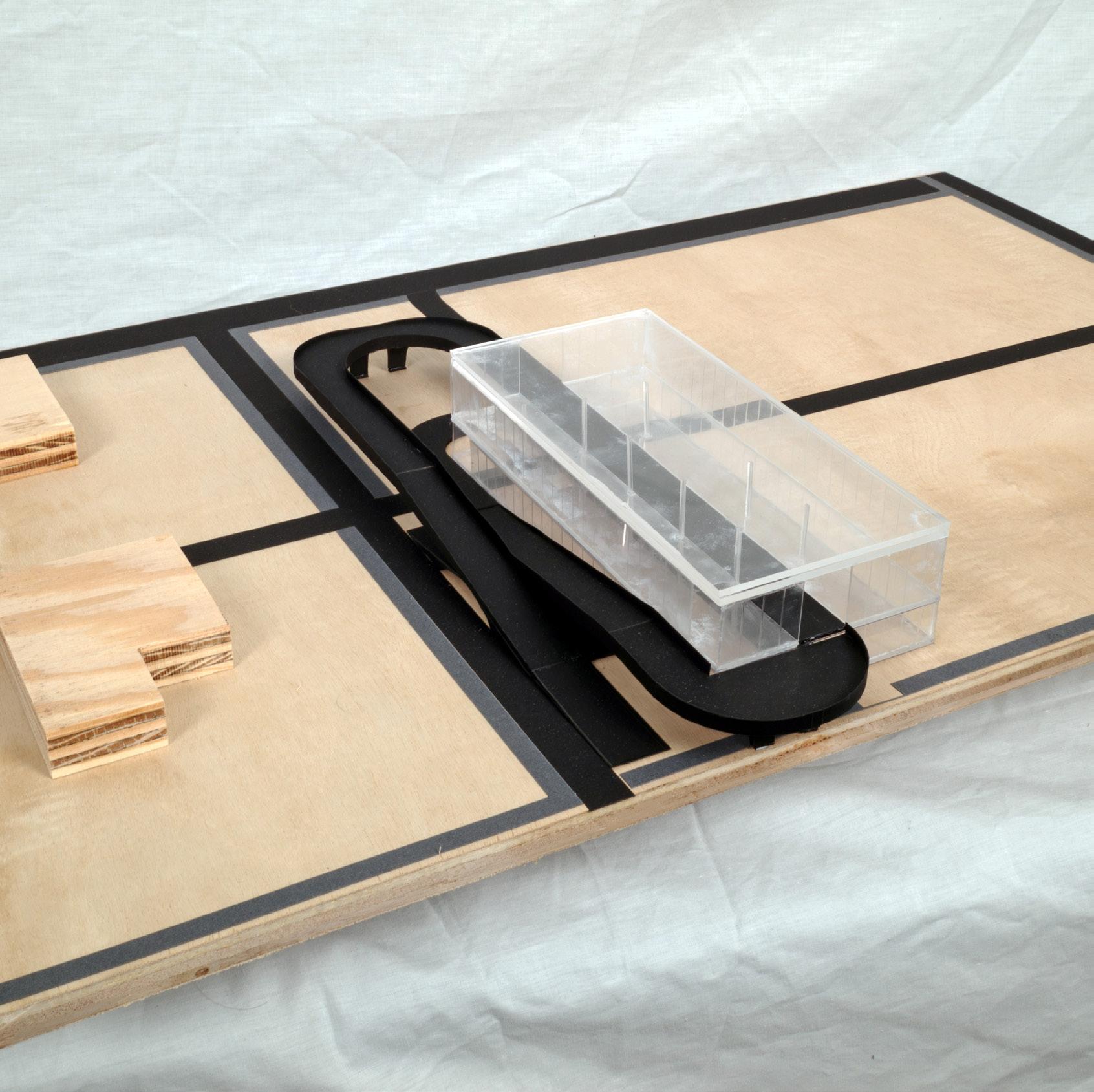
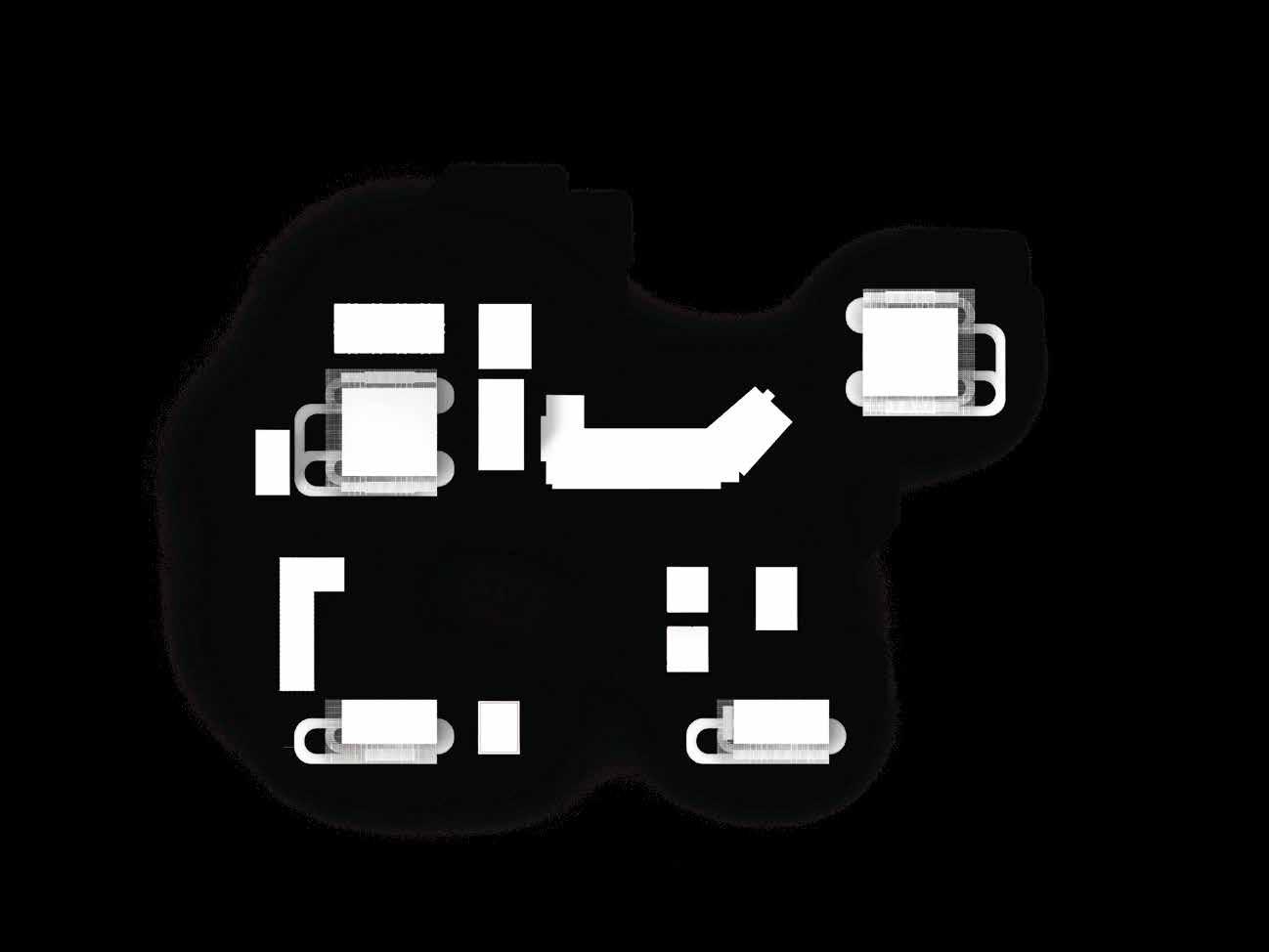
The work is a large-scale exploration of the role parking spaces can play in reshaping the urbanity of car-reliant cities. The proposal speculates how a low-density area in Houston Northside could benefit from concentrating parking spaces in fairly small sized nodes, freeing up space that forms gaps in the city fabric and then slowly recycling these nodes into public spaces. Assuming that society will slowly realise the adverse impact of cars on cities, this strategy can accelerate the transition from vehicle-centred to human-centred city space.
Two categories of nodes - single and doubleare designed to absorb the parking spaces around them, being strategically inserted into currently empty lots along the main spine of Main street. The use of a parking lot free plan allows for flexibility of spatial design in the recycling stage, offering possibilities of large and small scales of public space.
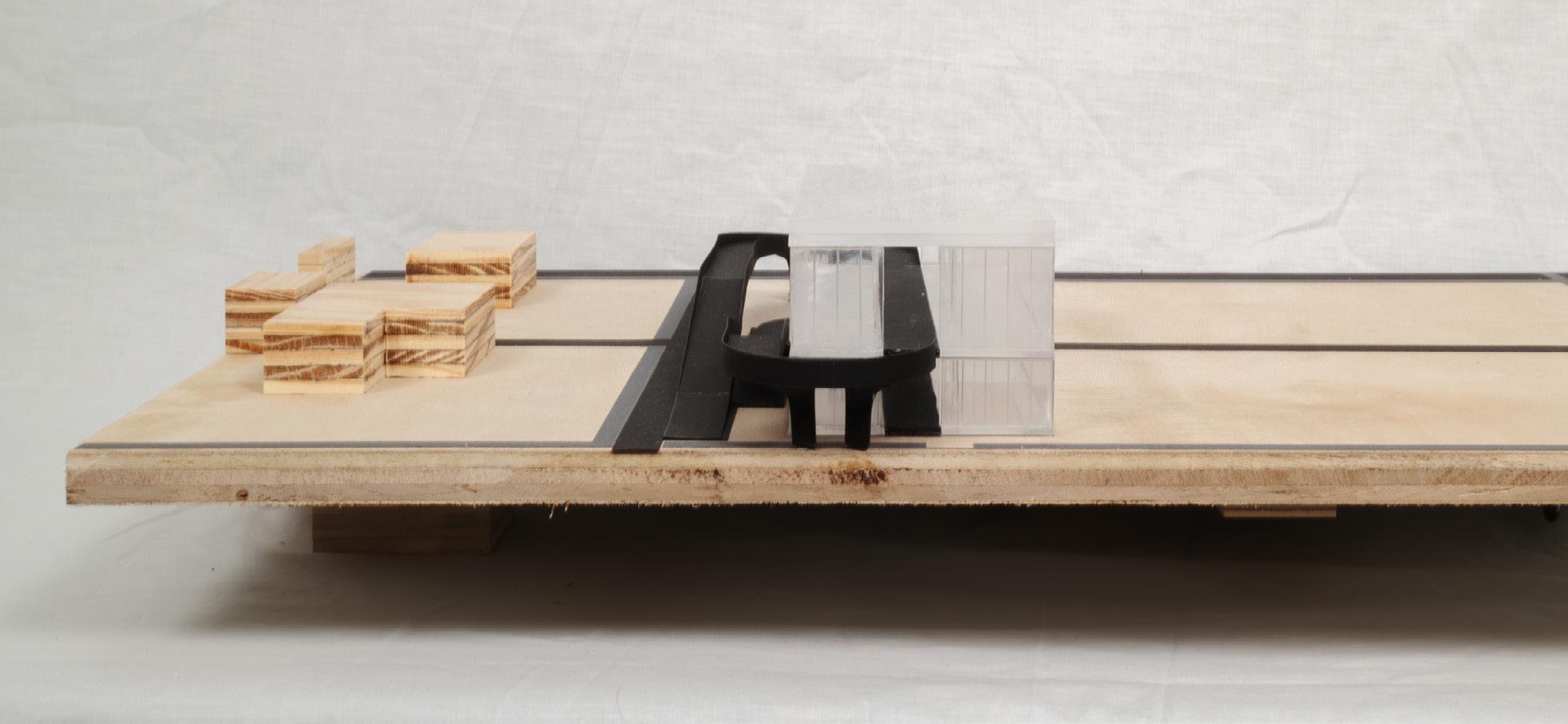
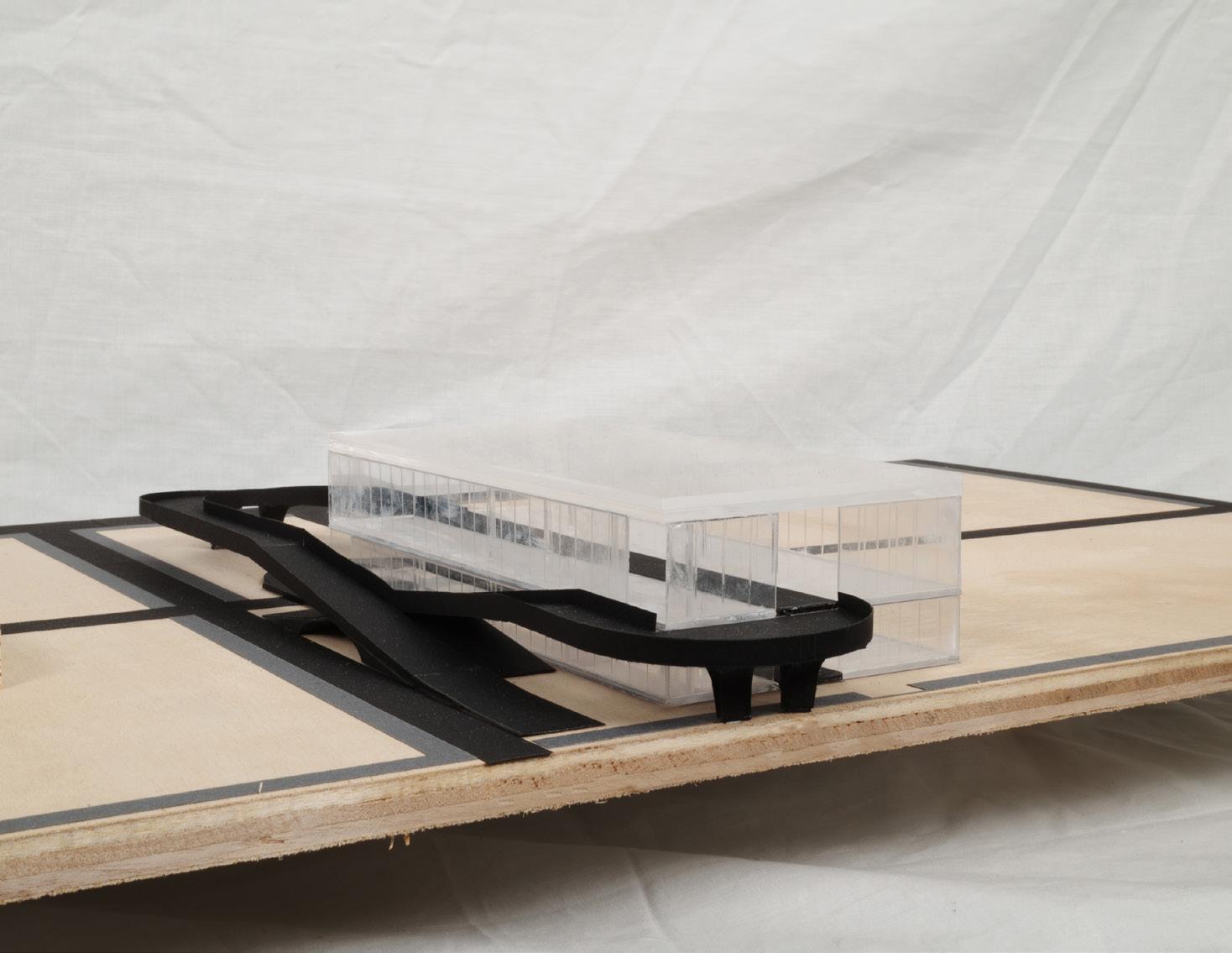
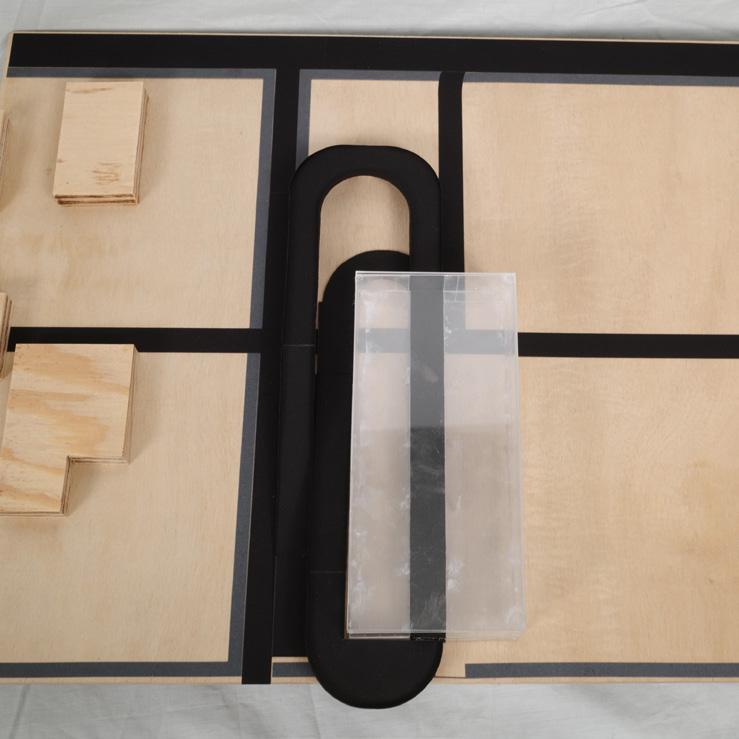
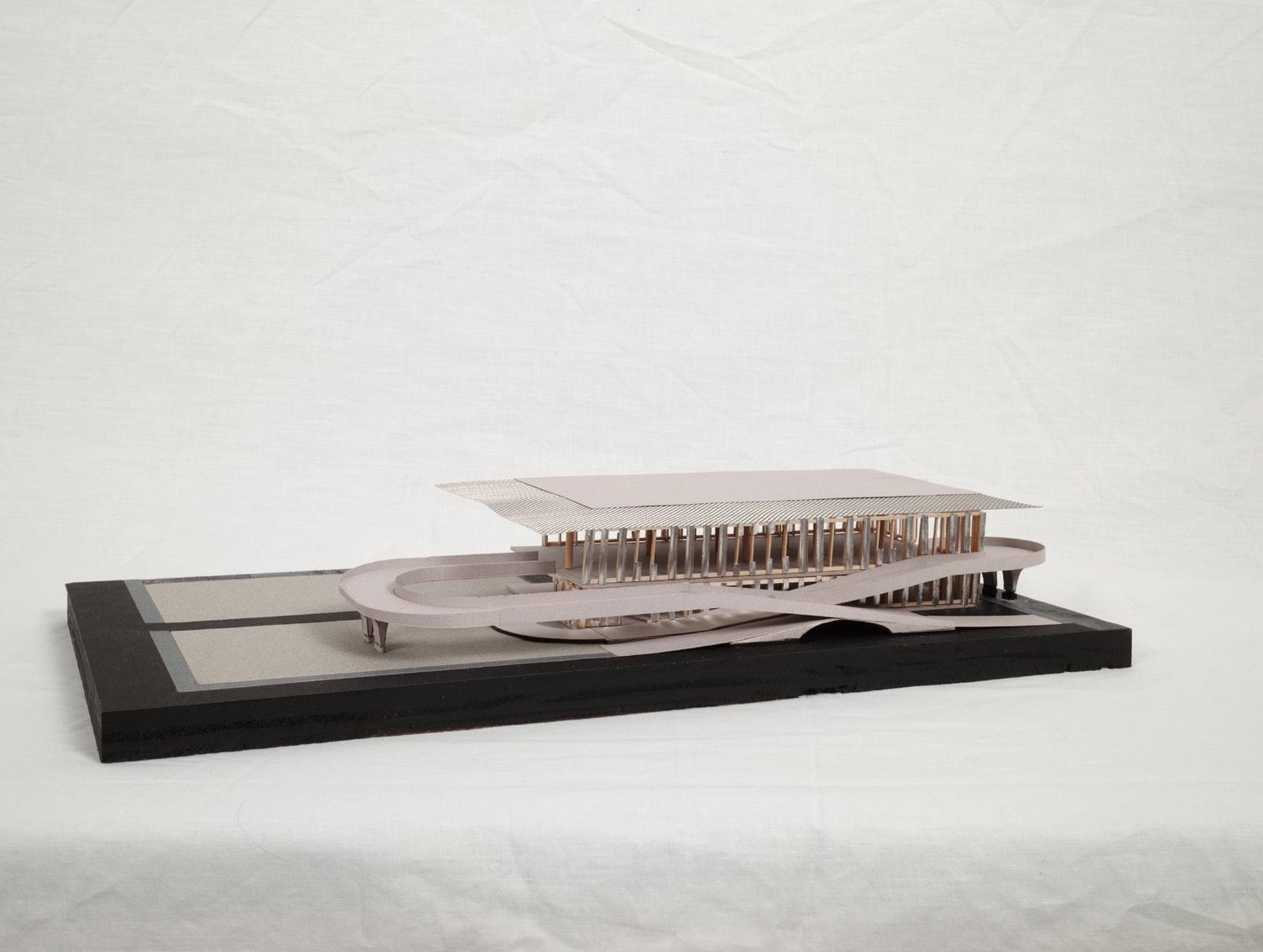
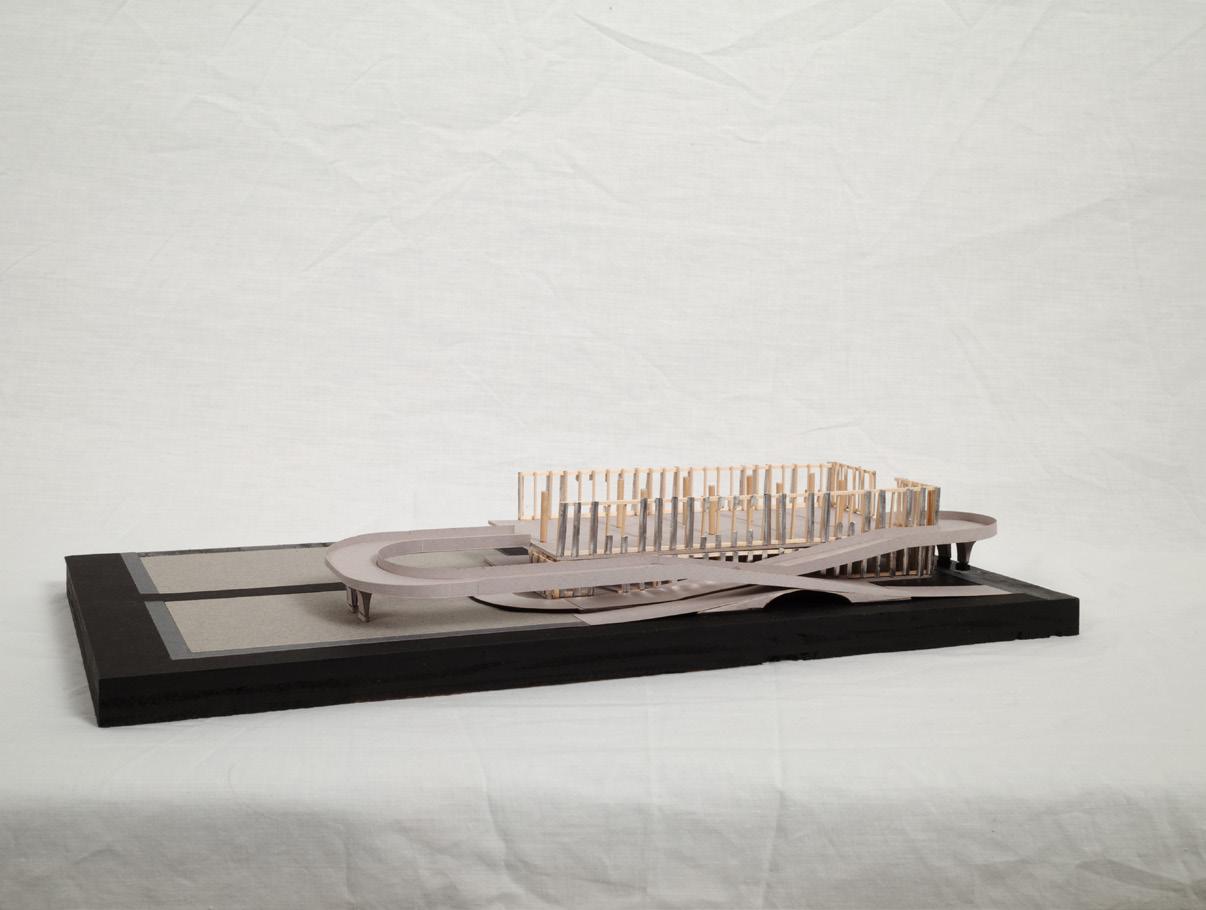
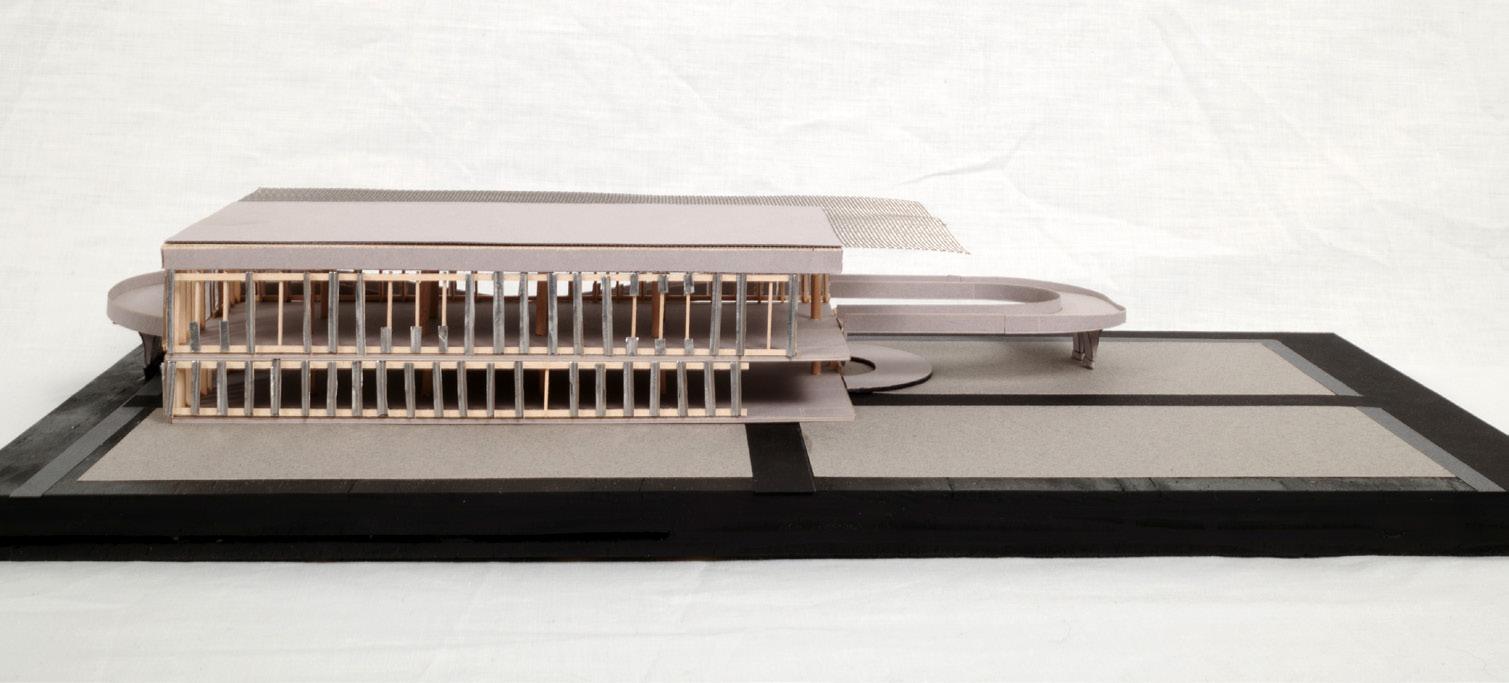
detail model of a single node: complete, roof removed, elevation view 1/16” = 1’-0”



frames of view - fall 2023
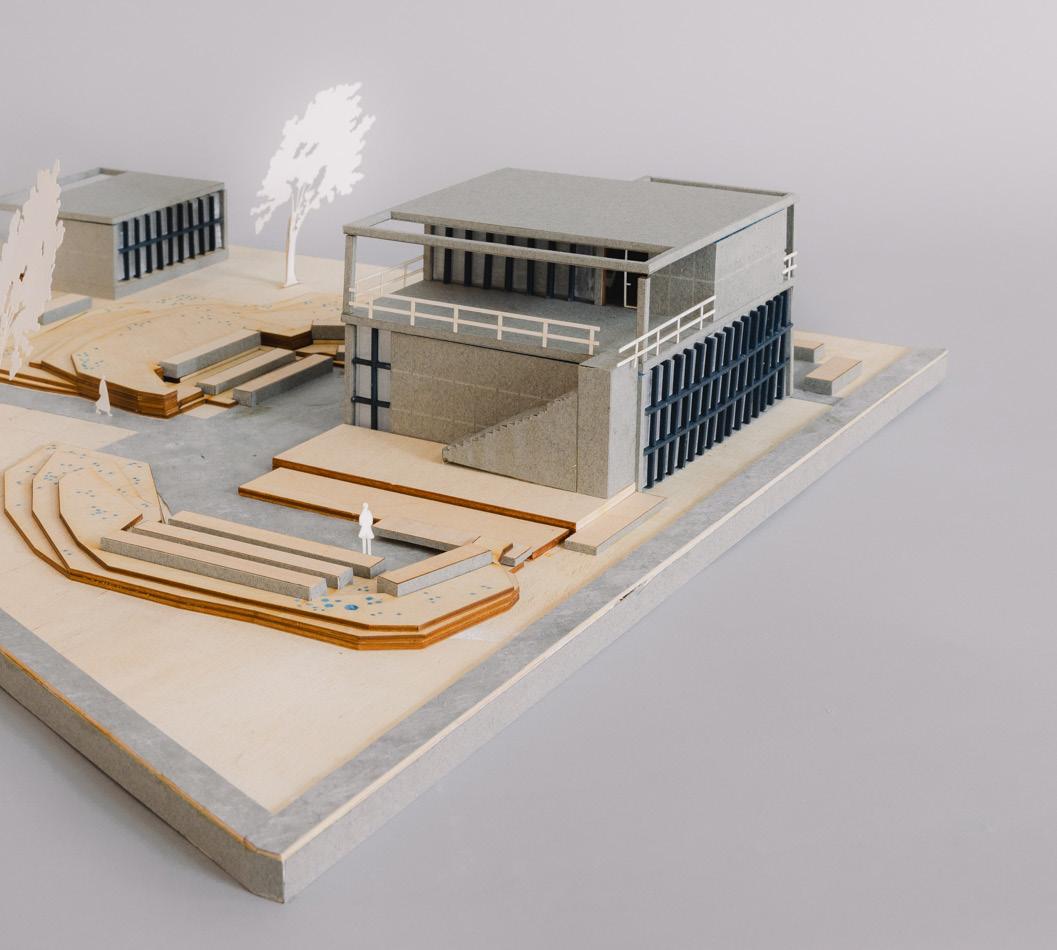
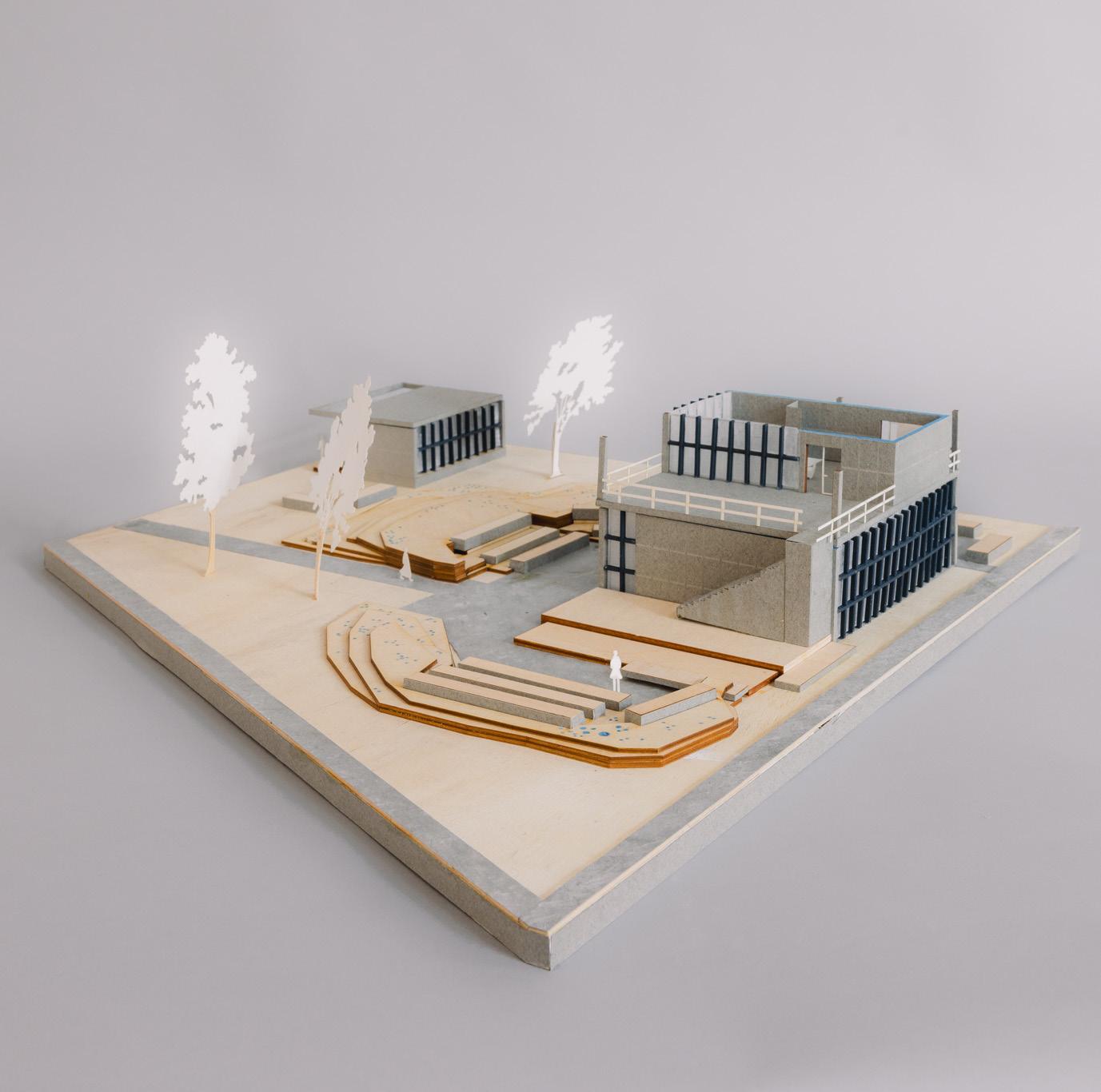
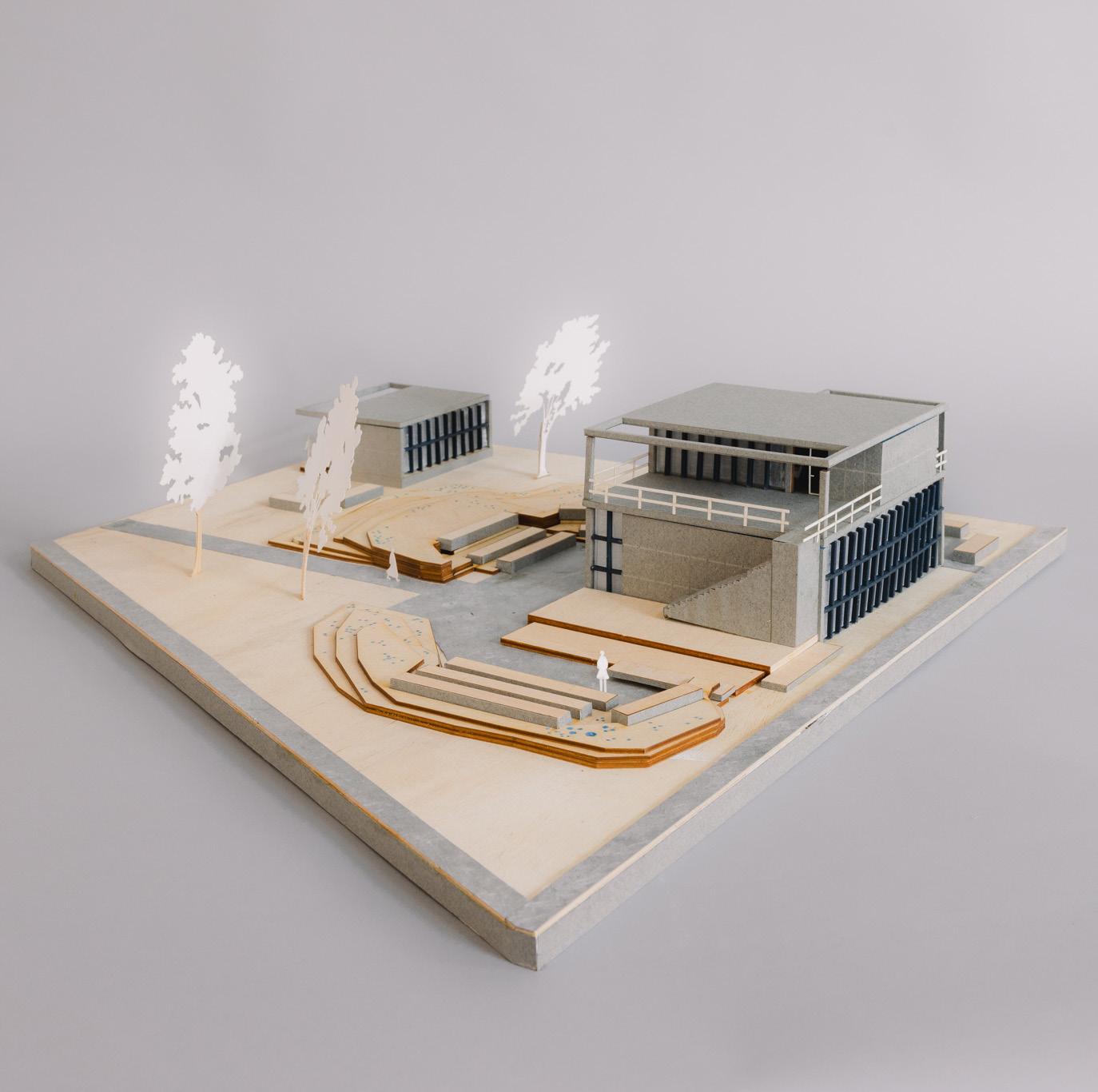
model of the large intervention: complete, roof removed, second floor removed 1/16” = 1’-0”
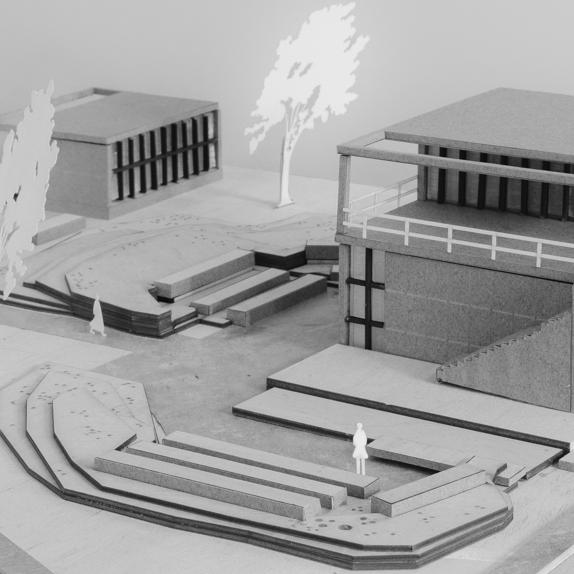
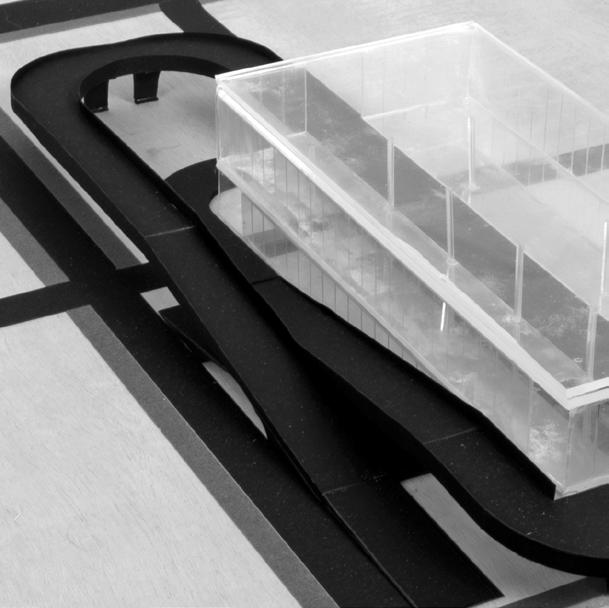
The work is a response to the way lack of non-commercialised public space disunites urban communities in today’s citites. The prompt being “display” (interpreted as a way to view public space), the proposal concentrates on the idea of frames - objects designed to focus attention. The shape of the frame becomes the base of the formal language, but the work pushes its logic further, creating a two-way corridor of observing: those behind a three-dimensional frame gain the ability to look back into the space beyond it. The bypassers in the greater urban space see and are seen by those visiting the site and vice versa. The library on the second floor is a quiet, non-commercialised and accessible public space. The flexible programming of the interior multipurpose space on the first floor allows for hosting events and exhibitions, while the space that bleeds out into the exterior is designed for performances and gatherings. The landscape introduces topography to the flat site and grounds the spaces of gathering. The second, smaller intevention creates shaded seating.
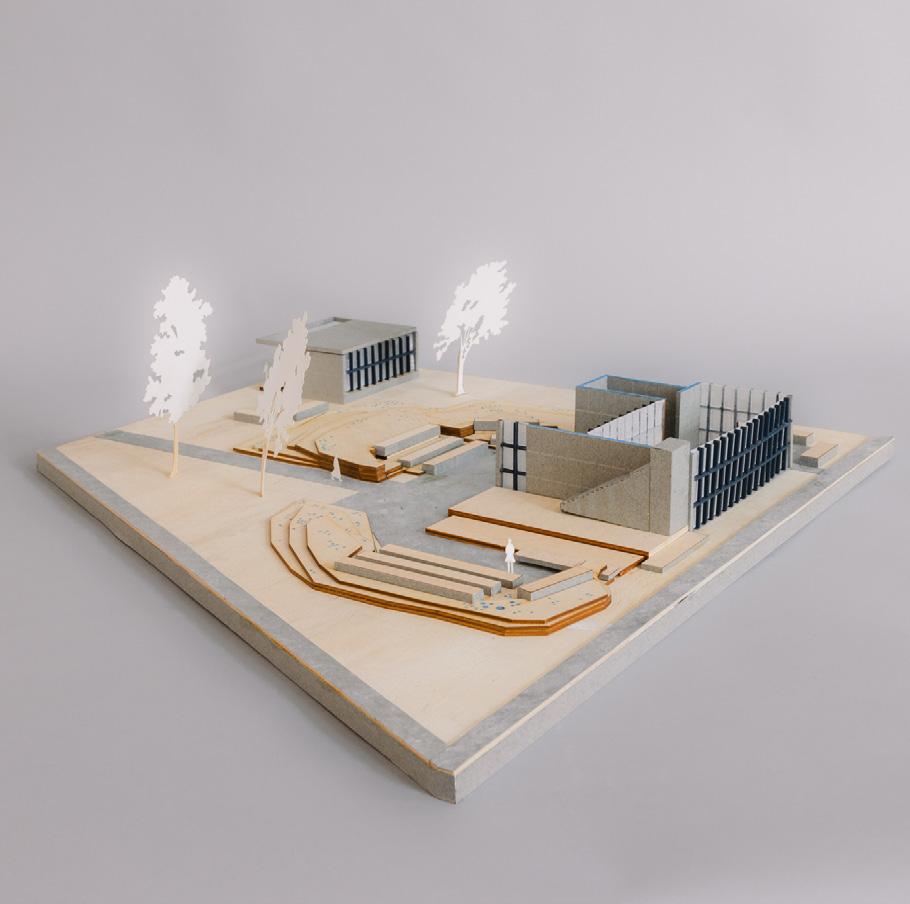
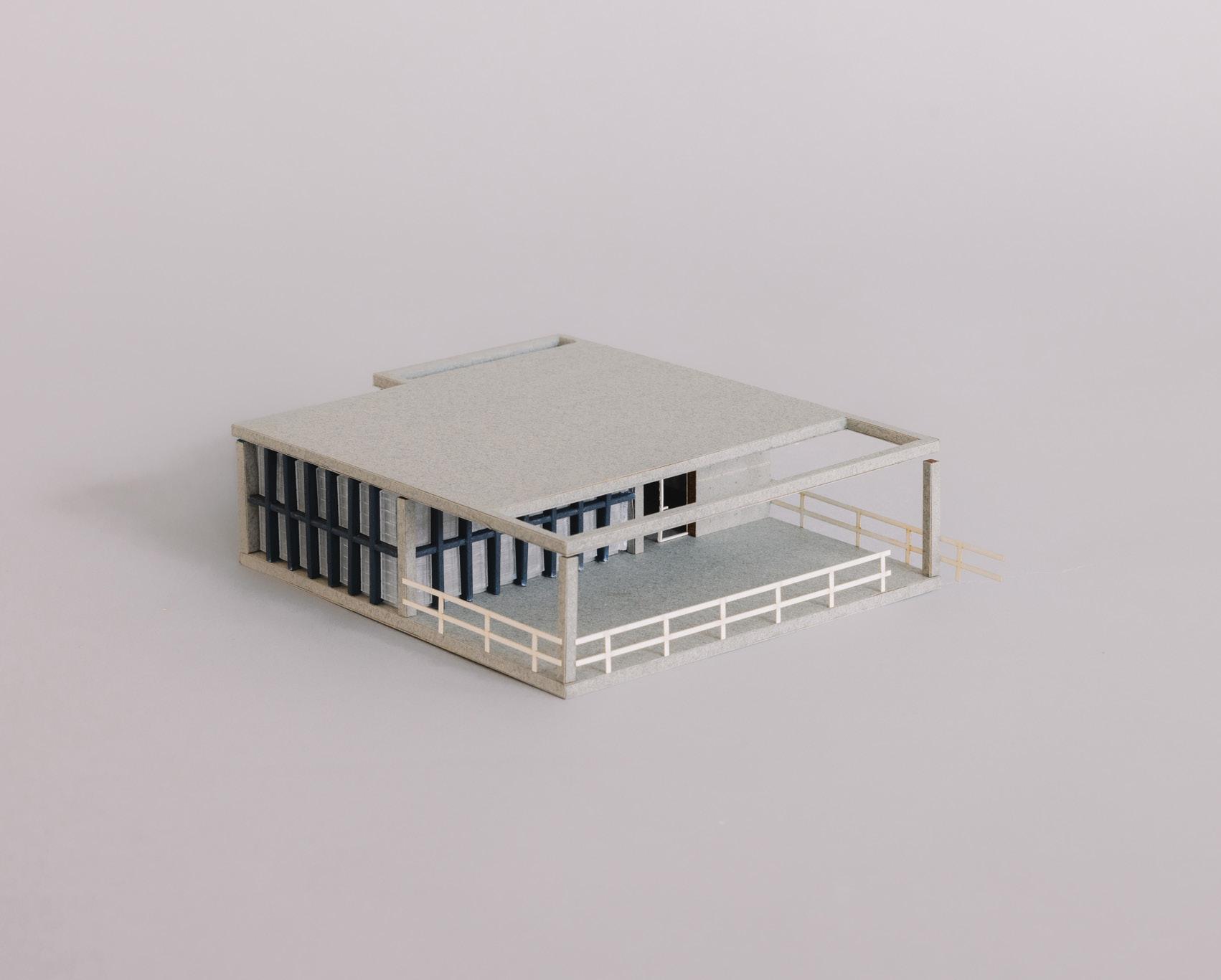
model of the large intervention: second floor complete, second floor roof removed
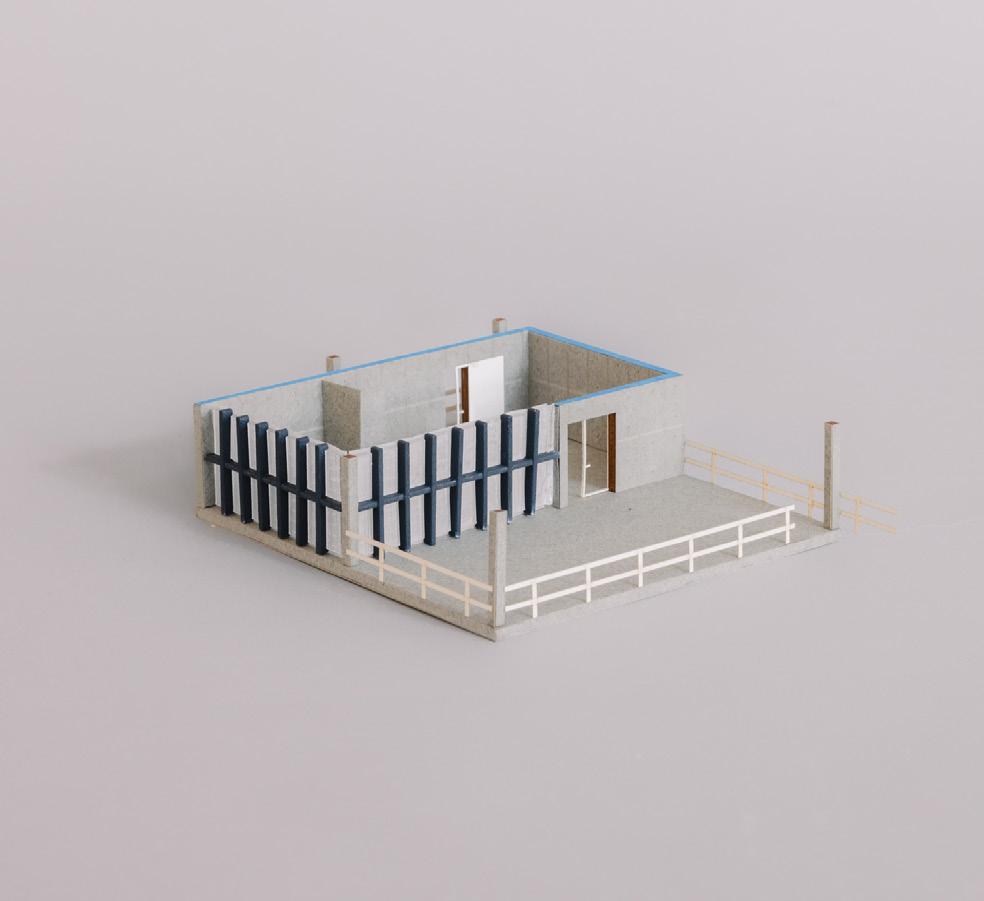
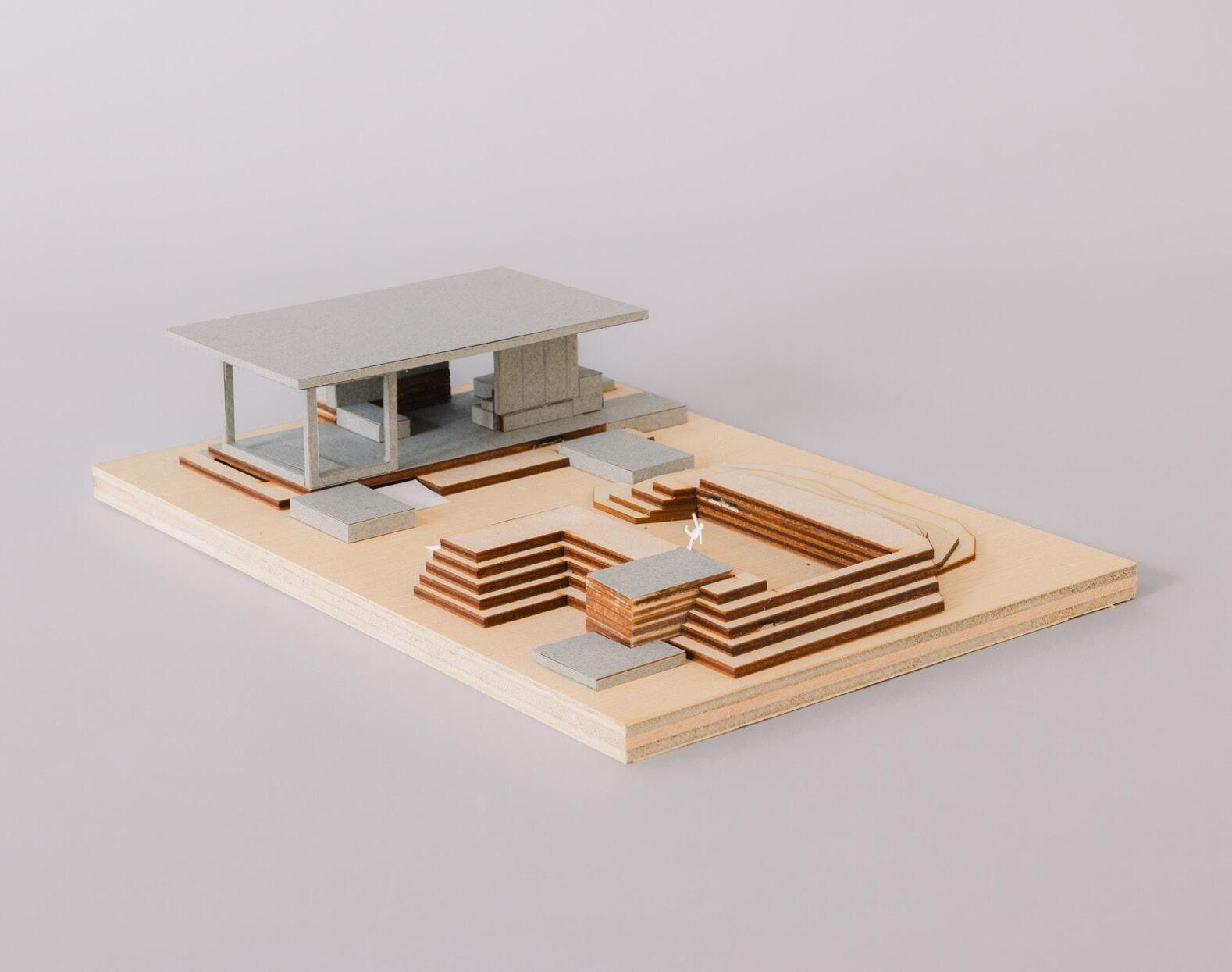
model of the small intervention
initial elementrectangle
x 2 6 x
vertical component of shaping observation
initial elementrectangle
large scale elementsoff-site audience
horizontal component of shaping observation
within both components, elements operate on a sliding scale
conditions that informed the project:
noticeable absence of non-commercialised gathering space
lack of connection between commercial and residential space
objective was to engage with the concept of display
small scale elementson-site audience
part 2 - transverse section 1’ = 1/32”
part 1 - longitudinal section 1’ = 1/16”
part 2 - longitudinal section 1’ = 1/32”
topography
public seating space (oriented towards display spaces)
second floor plan
1’ = 1/32”
1’ = 1/32” part 2
part - 1 plan