The Purpose Coalition & Travelodge - 2025 Progress Report
Social Mobility Progress Report
Forewords
An Introduction to Travelodge and its Approach to Social Mobility
Travelodge’s Response to Key Recommendations from the 2023 Social Mobility Impact Report
Benchmarking Travelodge’s Activity Against the Purpose Goals
0. Forewords
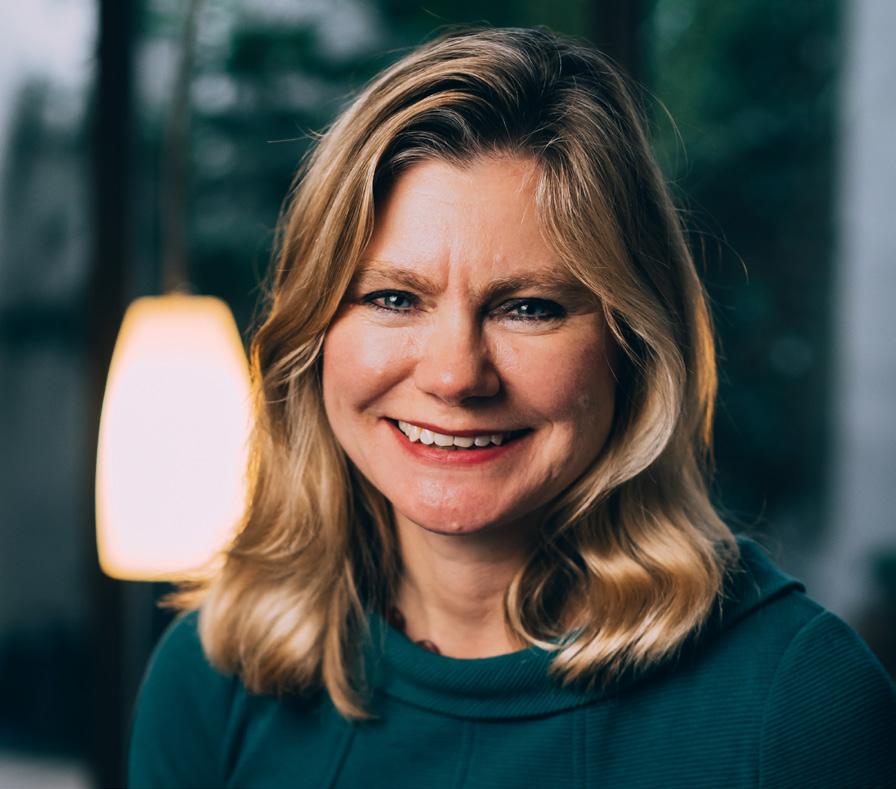
0.1. Rt Hon Justine Greening, Chair of The Purpose Coalition and Former Secretary of State for Education
Two years ago, Travelodge took a bold and purposeful step in becoming the first business to launch a Social Mobility Impact Report within the UK hospitality sector, committing to breaking down barriers to opportunity across its workforce and beyond. In partnership with The Purpose Coalition, the 2023 Impact Report laid out a clear vision, one that recognised the immense value of an inclusive, diverse, and empowered workforce. Today, as we reflect on the progress made in the two years since that landmark report, we can see just how much has been achieved.
At the heart of Travelodge’s success is a deeprooted belief that opportunity should not be dictated by background or circumstance. That principle has been embedded into the company’s approach to recruitment, training, and progression. From creating accessible career pathways for under-represented groups through its Aspire training programme, to pioneering flexible working arrangements that enable more people to thrive in their roles, Travelodge continues to demonstrate the power of business as a force for social mobility.
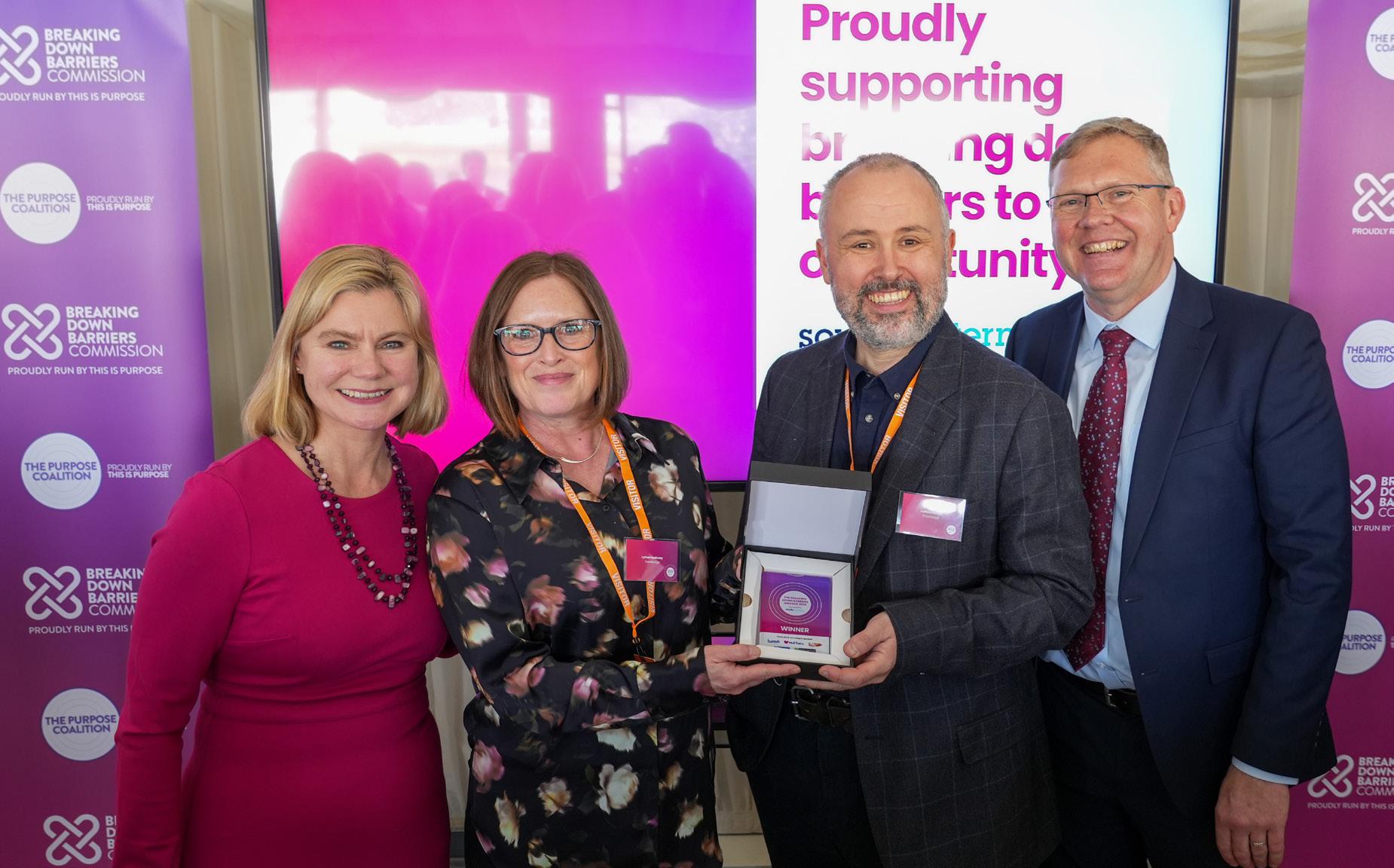
In recognition of its outstanding commitment to Fair Career Progression, Travelodge has been awarded the Purpose Goal Category 6: Fair Career Progression at The Purpose Coalition Awards for two consecutive years. At the 2025 awards, the Aspire programme was particularly celebrated, with over 1,000 colleagues onboarded in 2024 alone. Aspire is transforming career progression, developing future leaders, and promoting internal mobility, showcasing Travelodge’s dedication to nurturing talent from within.
This report highlights the impact of those commitments. Through targeted initiatives to support parents returning to work, a steadfast commitment to skills development and partnerships with local communities, Travelodge has not only widened access to employment but also set a benchmark for what inclusive businesses can achieve.
But progress does not happen in isolation. It requires collaboration, innovation, and a willingness to challenge the status quo. Travelodge’s partnership with The Purpose Coalition is a testament to the power of businesses working together to drive change, aligning their strategies with the Purpose Goals to ensure that opportunity is not just created but embedded within corporate structures for the long term.
The UK faces significant challenges in ensuring that people from all walks of life have access to the opportunities they need to succeed. Yet, the evidence from this report is clear: businesses that take an intentional, purposedriven approach to breaking down barriers can create real and lasting change. Travelodge’s journey over the past two years should serve as an inspiration for others to follow.
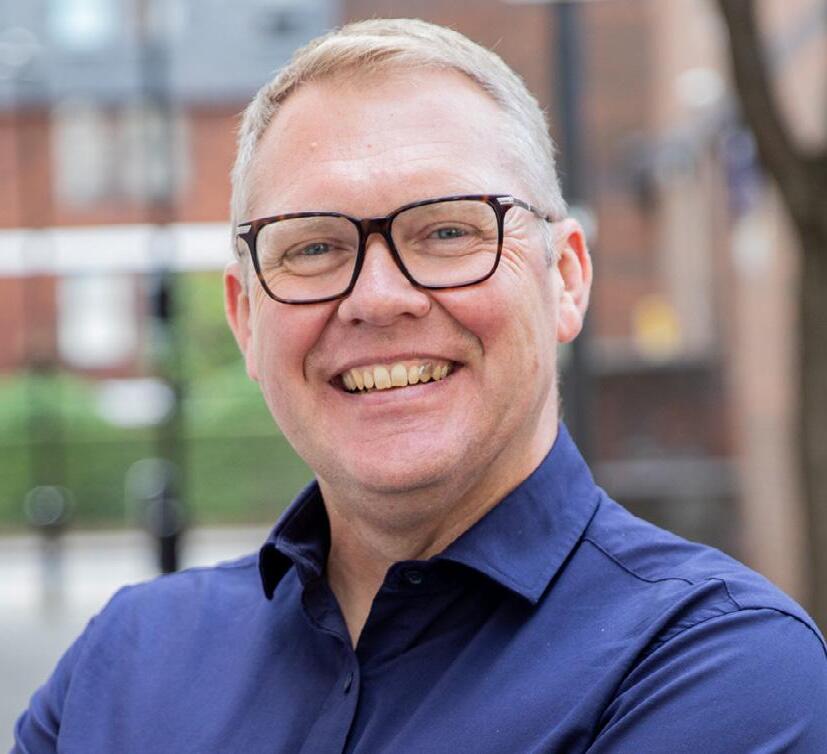
0.2. Nick Forbes CBE, Chair of the Breaking Down Barriers Commission and Former Member of Keir Starmer’s Shadow Cabinet
In today’s society, the ability to succeed should depend on a person’s talent and ambition, not their starting point in life. For too many, however, that’s still not the case. The challenges of inequality and limited opportunity are deeply rooted — but they are not immovable. This report from Travelodge offers a compelling example of how business can lead the way in creating fairer outcomes, and, crucially, in shifting systems that too often entrench disadvantage.
Since the first Impact Report in 2023, Travelodge has moved beyond intention into implementation taking a strategic, structured, and deeply human approach to social mobility. From flexible career models to barrier-busting programmes like Aspire, the company has shown that inclusive growth doesn’t just happen — it is designed.
It is built into how people are hired, trained, supported, and promoted.
But what is most striking about Travelodge’s journey is not just the scale of participation — it’s the depth of impact. The company’s commitment to developing its people has gone hand in hand with a growing sense of purpose among its workforce. Initiatives like the partnership with Care Leavers into Careers (CLIC) and the work to capture socioeconomic data aren’t box-ticking exercises; they’re part of a wider cultural shift. One that says loudly: we see you, we back you, and we are building structures around you that help you thrive.
That kind of leadership matters. In a sector often characterised by high turnover and low progression, Travelodge is setting a new benchmark — one where good work leads to great futures. Its contribution to the Purpose Coalition’s Social Scopes framework is another sign of this leadership, helping define what meaningful measurement of social mobility looks like.
There’s still much to do. But this report reminds us that change is not only possible — it’s already underway. Travelodge’s progress should be a blueprint for others: a testament to the idea that businesses, when they act with purpose, can be powerful agents of inclusion, resilience, and hope.
Travelodge is not only providing jobs, but also building careers, strengthening communities and proving that inclusive growth is both a moral imperative and a business advantage.
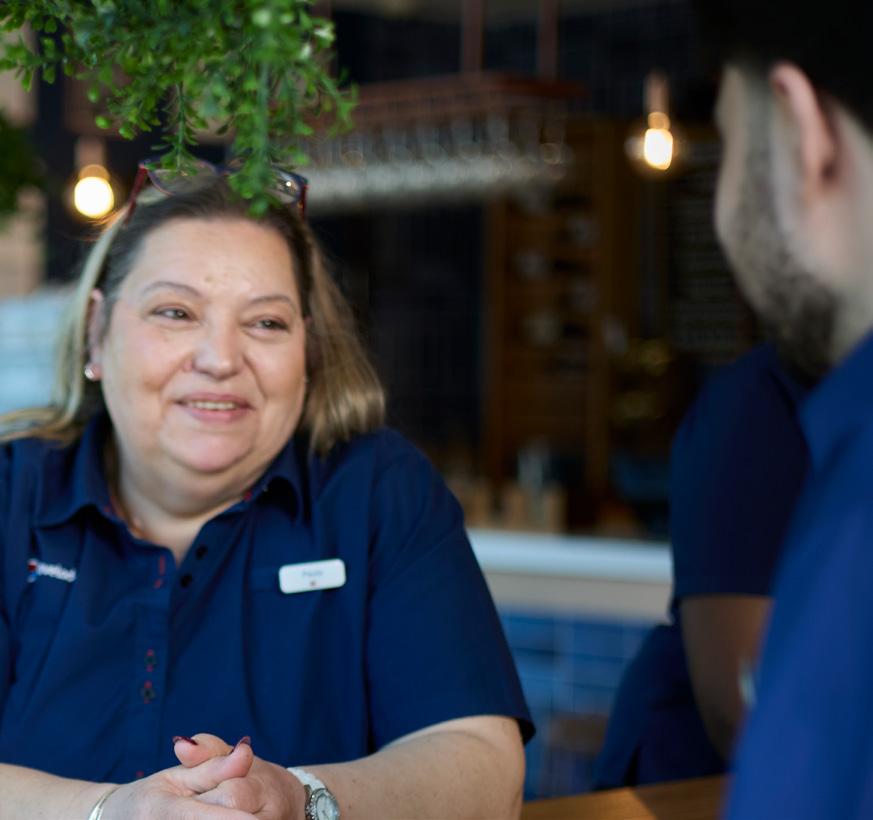
0.3. Jo Boydell, Chief Executive Officer, Travelodge
Two years ago, Travelodge embarked on a bold and purposeful journey — the first in the UK hospitality industry to publish a Social Mobility Impact Report, underlining our commitment to dismantling barriers to opportunity across our workforce and communities.
It’s been an inspiring journey. Our belief that potential — not background — should determine opportunity remains at the heart of all we do. That conviction fuels our “learn more, earn more, belong” and is reflected in the key decisions we make across our business.
From the moment a colleague joins us through recruitment, into training, career pathways, and beyond, our approach is both strategic and human by design. Our Aspire development programme has been transformative — welcoming over 1,000 colleagues in 2024, a fivefold increase on the prior year — and continues to underpin strong internal mobility and leadership development. Equally, our embrace of flexible working models — most notably by introducing part-time hotel management roles — means we’re making progression accessible to more people, including parents and carers.
Stability matters. That’s why we do not offer zero-hour contracts: instead, our contracts are designed to provide clarity, predictability, and flexibility. These are real career foundations, not stop-gap solutions.
Our holistic thinking doesn’t stop there. Through initiatives like Limitless, alongside external coaching and mentoring, we support every colleague’s growth journey — professionally and personally. We also recognise that wellbeing in all its dimensions — emotional, physical, financial, and workplace — is foundational to flourishing. That’s why we champion emotional support via Employee Assistance services and empowering variable pay schemes.
Becoming data-driven in our social mobility efforts has been a critical milestone. Since May 2024 we’ve begun gathering socio-economic background data to identify where barriers exist and this will inform how we design future interventions to support progression from all backgrounds.
We’re proud to be playing a leadership role in The Purpose Coalition, actively shaping the Social Scopes measurement framework and advocating for social mobility as a key KPI for employers. This influence extends from policy roundtables to steering industry-wide change.
There’s still much to do — inclusion and fairness are not endpoints, but ongoing commitments. Our Better Future vision — Inclusive, Caring, Conscious — drives us forward, and our dedication to building opportunity for every colleague remains unwavering.
With gratitude to all our teams, partners, and advocates: thank you for helping make Travelodge a place where everyone can feel they belong and has the chance to “get in and get on”, at the time that’s right for them.
Our belief that potential — not background — should determine opportunity remains at the heart of all we do.
1. An Introduction to Travelodge and its approach to Social Mobility
Founded in 1985, Travelodge was Britain’s very first budget hotel chain. Today, it stands as one of the largest in the UK, with a well-invested and modernised portfolio of over 600 hotels and more than 47,000 rooms across the UK, Ireland and Spain.
Travelodge’s purpose is to help people to go and do their thing by being the Brilliant Base. Being the Brilliant Base puts both customers and colleagues at the heart of the business with sustainability running through everything they do. For customers, this means providing a well-priced, well-located stay they can trust. For its 13,000 colleagues, this means creating an inclusive workplace, providing decent work, with opportunities to learn more and earn more, and where everyone can be their true self and belong.
The organisation recognises the value of a diverse workforce, where individuals from different backgrounds and experiences are employed solely on the basis of ability. This belief is supported by clear equality and diversity policies and demonstrated through strong representation from people of all backgrounds.
As a responsible business, Travelodge maintains a strong focus on its environmental impact and social responsibilities. The vision is to create a Better Future for customers, colleagues, and the planet. This ambition is driven by the three core pillars of its sustainability plan: Inclusive, Caring and Conscious. In July 2025, Travelodge published its fourth Sustainability Report which describes its approach and progress to date on its Better Future Report.
Social Mobility at Travelodge
As a business, Travelodge is committed to supporting and driving social mobility. This is a key principle of its People strategy, and forms an integral part of its long-term sustainability plan, particularly in the area of social impact.
The transition from using the term “Levelling Up” to “Social Mobility” reflects a more inclusive and people-focused approach to addressing socio-economic challenges. While “Levelling Up” referred to a UK government policy aimed at reducing regional inequalities, “Social Mobility” focuses on ensuring that individuals—regardless of geographical location, background or circumstance—have equal opportunities to progress. This shift provides a clearer and more direct framework to drive meaningful change for colleagues and the communities in which Travelodge operates.
At Travelodge, social mobility is framed as the opportunity for individuals to succeed in life regardless of background. Everyone should have the chance to fulfil their potential without being limited by the circumstances into which they were born.
As a responsible business, Travelodge maintains a strong focus on environmental impact and social responsibilities.
At Travelodge, the goal is to be a place where:
• Individuals can get in and get on, at a time that’s right for them
• An individual’s future is determined by potential, not background
• There is representation at all levels from all social backgrounds
• Positive social impact is created in the communities in which the business operates
This will be achieved by:
• Using data to identify both perceived and actual barriers to progression, and taking action to remove them
• Creating ways for colleagues from lower socio-economic backgrounds to achieve their career aspirations, by providing opportunities that may have previously been inaccessible to them
• Providing opportunities for individuals from lower socio-economic backgrounds to progress a career within Travelodge through internal employability programmes such as Aspire, and partnerships with external organisations like Care Leavers into Careers (CLIC), supporting skills development and access to sustainable employment.
About this report
This follow-up to the 2023 Social Mobility Impact Report outlines Travelodge’s approach to social mobility, the response to the three key recommendations from the initial report, and progress on the Purpose Goals—supported by key information and case studies.
As a recap, the recommendations outlined in the 2023 Report were:
• Recommendation 1 – Focusing community impact on the most deprived areas
• Recommendation 2 – Capturing and analysing the socio-economic diversity of the workforce
• Recommendation 3 – Furthering leadership and advocacy as a responsible business on Social Mobility.
An individual’s future should be determined by potential, not background
2. Travelodge’s Response to Key Recommendations from the 2023 Impact Report
Since accepting the recommendations outlined in the 2023 Impact Report, Travelodge committed to a series of strategic recommendations aimed at taking the next step in its efforts to break down barriers to opportunity for its colleagues. These recommendations focused on enhancing the company’s impact on social mobility, improving the diversity and inclusivity of its workforce, and ensuring that its operations continue to foster positive change in the communities it serves. The recommendations provided a clear roadmap for Travelodge to follow, enabling it to build on its existing initiatives while expanding its efforts to create more opportunities for individuals from all backgrounds.
This updated Report provides an overview of the progress made since 2023, highlighting how Travelodge has worked to implement these recommendations and the tangible outcomes achieved to date. The agreed recommendations were as follows:
Recommendation 1 - Focusing community impact on the most deprived areas
Travelodge should assess the results of its social impact efforts and target its community initiatives towards the most deprived areas around its key sites, particularly in social mobility cold spots. Utilising tools such as the Office for National Statistics’ Index for Multiple Deprivation and the Social Mobility Index will help prioritise these efforts.
Recommendation 2 - Capturing and analysing the socio-economic diversity of the workforce
Travelodge should track and measure the socioeconomic background of its workforce more comprehensively to better understand and identify barriers to career progression, enabling targeted actions to support colleague advancement.
Recommendation 3 - Furthering leadership and advocacy as a responsible business on Social Mobility
Travelodge should strengthen its role as a leader and advocate for Social Mobility within the hospitality sector. By using its influence and existing relationships with stakeholders, the company can help drive sector-wide changes and advocate for policies that support greater social mobility and inclusivity.
With these recommendations clearly defined, Travelodge has shown its commitment to taking a proactive approach to ensure they are not only embraced but also implemented effectively. This section delves into the progress made since the 2023 Impact Report, providing an indepth look at the steps taken to address each recommendation and the outcomes that have been achieved.
Through ongoing efforts and strategic actions, Travelodge has shown its commitment to taking a proactive approach to enhance its social impact. Below, we explore the specific actions and results against each of the recommendations outlined in the original Report.
Recommendation 1 - Focusing Community Impact on the Most Deprived Areas
To evaluate Travelodge’s social impact and explore how its vast presence across the UK can provide opportunity in deprived areas — particularly social mobility cold spots — Travelodge launched a social mobility pilot in autumn 2024.
Supporting Care Experienced Young People (CEYP)
Care-experienced young people (CEYP) face significant barriers to employment, including limited career guidance, financial instability, and lack of professional networks. Often having experienced early trauma or neglect, they are among the most vulnerable in society. At 18, many encounter a sudden drop in support from local authorities and unlike their peers, CEYP often need additional support to become work-ready. Tailored employability
programmes—such as skills workshops, training, and work experience—can help ease their transition into employment and improve long-term outcomes.
Programme Overview
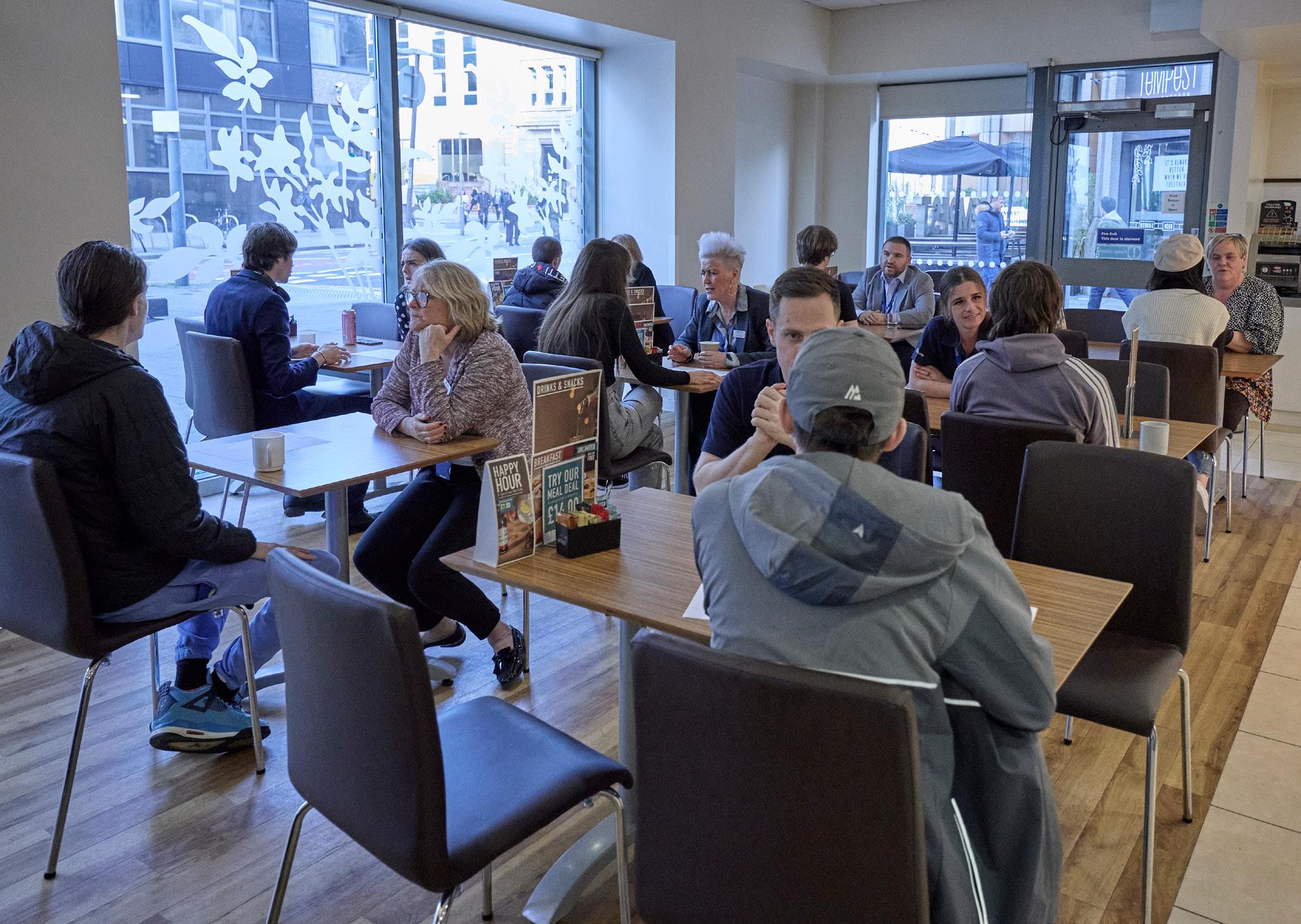
In partnership with Care Leavers into Careers (CLIC) based in Liverpool, Travelodge launched a pilot programme, which offered:
• Career workshops – interactive sessions covering CV writing, interview skills, workplace behaviours and expectations, team building activities and colleague stories
• Work shadowing at a Travelodge hotel providing real-world experience within its hotels to build confidence and skills and gain insights into the day-to-day operations
• Guaranteed interviews - offering participants the opportunity to apply for a team member role in one of its hotels.
Impact
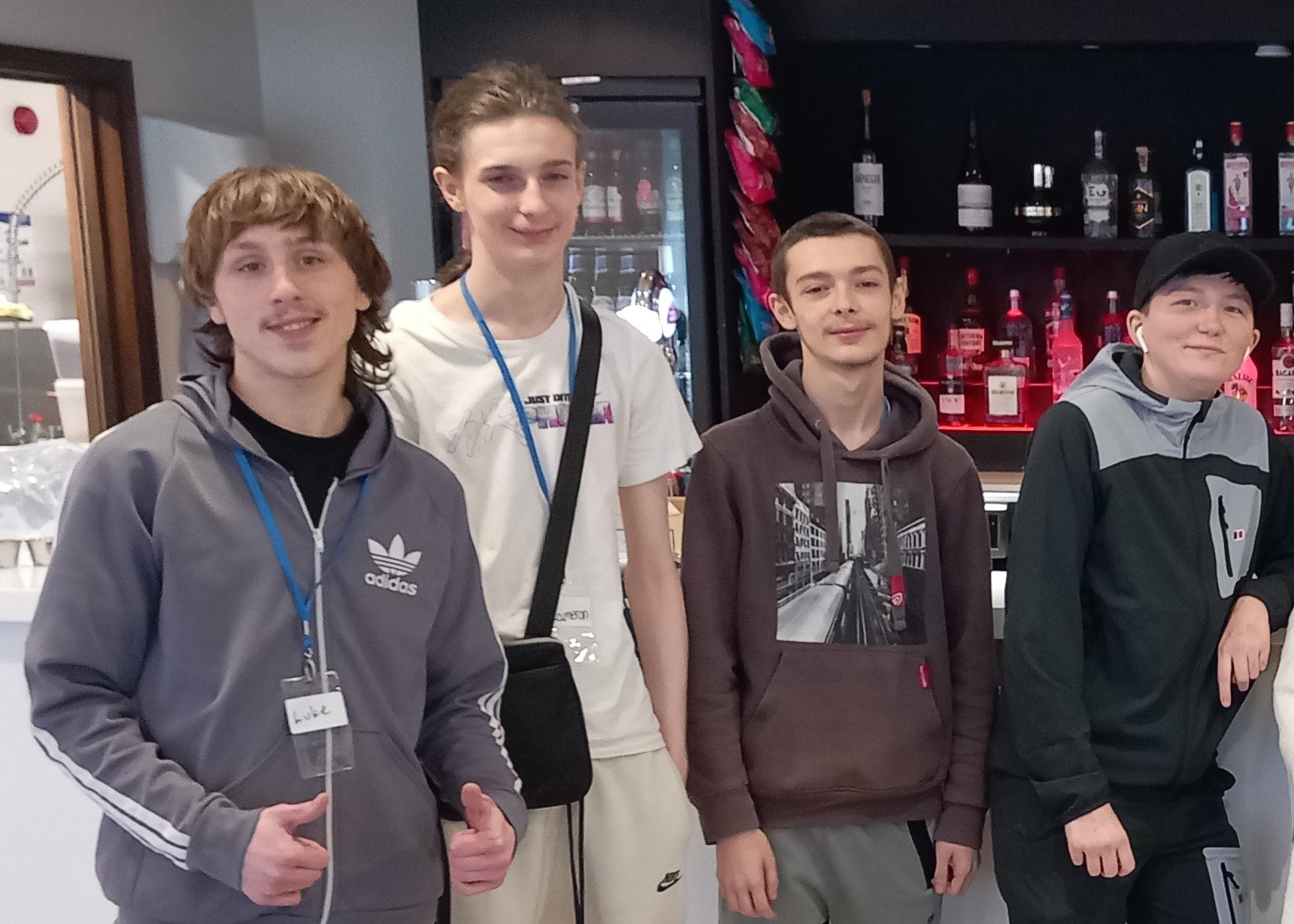
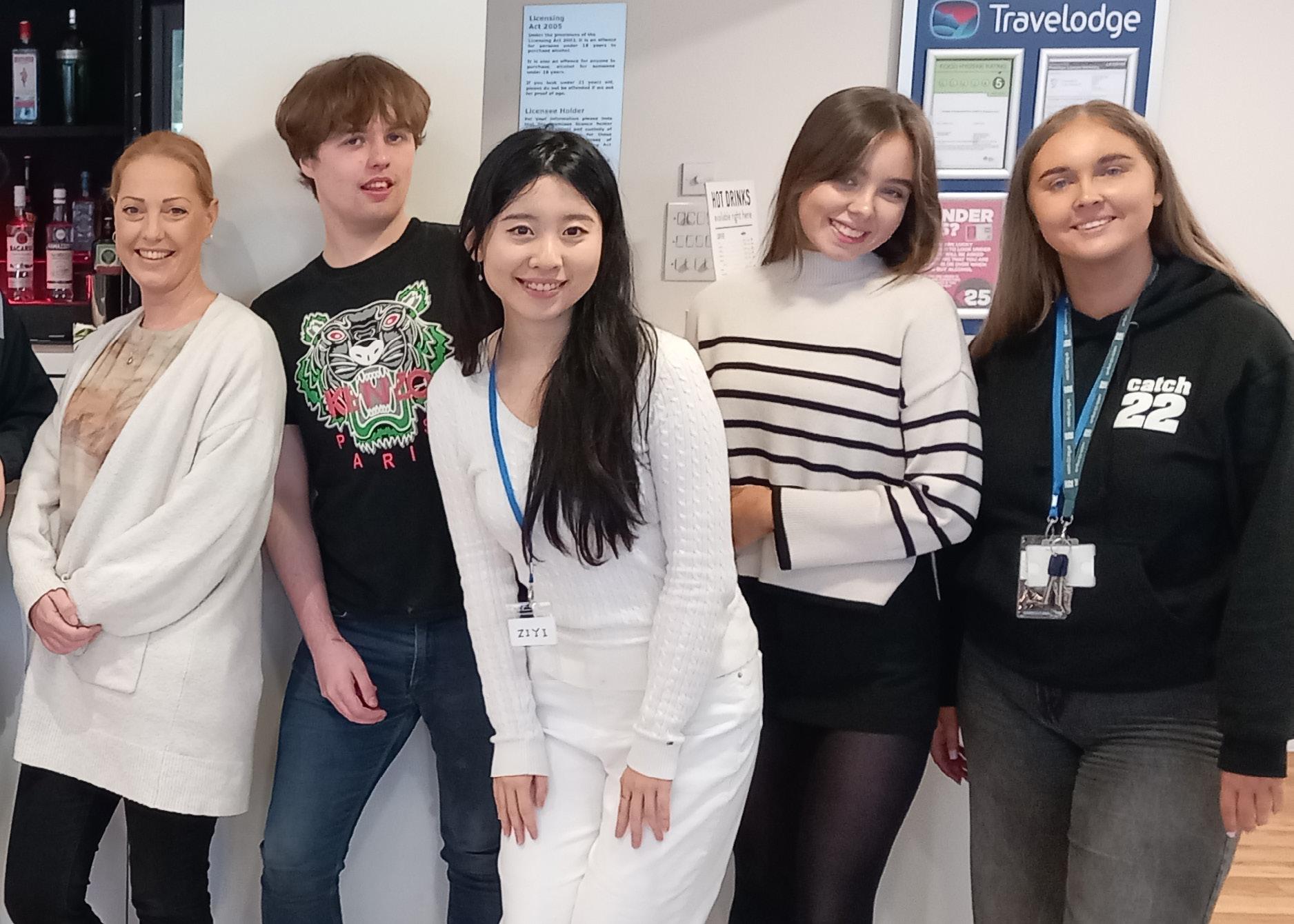
For this pilot, eight CEYP were engaged. The programme had a significant impact on participants, increasing interest in careers within the hospitality sector. Confidence levels improved across various areas, with many feeling more self-assured in social and communication skills, more prepared for job applications, and better equipped for interviews.
88%
expressed interest in a career in the hospitality sector prior to the programme
Rising
to...
100%
upon programme completion
88%
experienced an increase in self confidence and communication
50%
experienced an increase in confidence to apply for a job
75%
experienced improved awareness of workplace behaviours
50%
are more confident to create their CVs
75%
feel more prepared for interviews
Enhance employability skills
Feedback from programme participants:
“I have been really inspired by the stories of the care leaver and hotel managers that so openly shared their stories. It made me realise that even people with challenges can have great lives.”
“I had my first ever interview with someone that does interviews as part of their job. This was a great opportunity for me. I will feel less nervous when I have a real job interview.”
“I feel really empowered by many of the personal stories of the Hotel Managers. The best part for me is learning, that regardless of your troubled past you can create your own future, with an organisation like Travelodge.” Build confidence
Impact on Travelodge colleagues
Travelodge colleagues who delivered sessions gained valuable insights into the challenges faced by care leavers and found the experience fulfilling. Many felt rewarded by sharing their knowledge and the experience deepened their connection to the company’s social mobility commitments.
Feedback from colleagues: Kirsty Fleming, Hotel Manager: “It really was one of my best days I have had at work!”
Stacey Coleclough, Guest Access Manager:
“Being part of this pilot has provided me with immense job satisfaction. Helping the community and making a positive difference in people’s lives is something I feel deeply passionate about”.
Looking Ahead
Given the impact on the care leavers and the feedback from Travelodge volunteers, there is strong evidence demonstrating the value of employability programmes for Travelodge, its colleagues, and the communities in which the business operates.
Why Liverpool?
Deprivation in the UK is driven by regional, economic, social, and health-related inequalities. The UK government measures this using the Indices of Multiple Deprivation (IMD). According to the latest IMD (2019), Liverpool ranks as the third most deprived local authority in England, reflecting major socio-economic challenges in the city.
Liverpool was an ideal choice for the pilot, given the levels of income and employment deprivation in the city and the company’s strong presence in the area (with 18 hotels across Liverpool and Chester), which provided a meaningful context for the initiative. Additionally, local Travelodge colleagues were eager to champion the pilot, and their enthusiasm and commitment made it the perfect starting point for the programme.
Care Leavers into Careers (CLIC) was chosen as the programme partner due to its expertise in supporting care-experienced young people aged 18–30 into jobs, apprenticeships, training, or education. With a deep understanding of their unique needs and strong, trusted relationships, CLIC was able to engage care leavers effectively and help shape a tailored, impactful programme.
Quotes from Cath Forshaw Service Manager, Employability at CLIC
“This programme was an opportunity for our CEYP to connect with Travelodge staff and gain insights into their backgrounds and what they have achieved. As an organisation, we’ve gained invaluable experience in creating a bespoke employability program for care leavers in partnership with a major employer.
“Our young people walked away feeling, ‘I can do this,’ which is exactly what we hoped for from the programme with Travelodge. Many of them stepped out of their comfort zones to try work shadowing and reflect on their own futures.”
Many Travelodge colleagues have overcome significant challenges to build successful careers. By sharing their journeys with the care experienced young people, they aimed to inspire them in overcoming similar barriers, demonstrating that with the right opportunities and guidance, a successful career is possible.
From uncertainty to winning at life: Kelly Ward’s, Team Leader, story
“Growing up was a challenging experience for me. From a very young age, my siblings and I lived in a violent environment. When I was five, my dad went to prison for very serious crimes, and my mum coped by turning to alcohol.
As a result, we were placed in and out of care, and throughout my childhood, I lived with nine different families.”
“I struggled to make friends and found school difficult, eventually leaving before taking my exams. At 16, I moved back in with my mum, but not long after, I was placed back into foster care. Then, at 18, I was out in the world on my own—that was it. It was up to me to find my way, at a time of great uncertainty and vulnerability.”
“Thankfully, I managed to get a job, work my way through a number of different roles, and I now have a job that I love as an Employee Relations Adviser at Travelodge. Looking back, my journey wasn’t easy, but I wanted to share my story with CEYP as it shows that, no matter how difficult the start, it’s possible to create a life you’re proud of.”
I faced many challenges — falling into debt, struggling to pay bills, choosing a career, and even learning basic life skills like cooking. A programme like CLIC would have been invaluable, but at the time, it simply didn’t exist.”
Deep sense of solidarity with the young people: “I got involved with the CLIC pilot because I immediately felt grateful that programmes like this exist and a deep sense of solidarity with the young people involved. When I left the care system, there was nothing similar, and navigating adulthood alone was incredibly difficult. I faced many challenges — falling into debt, struggling to pay bills, choosing a career, and even learning basic life skills like cooking.
A programme like CLIC would have been invaluable, but at the time, it simply didn’t exist.”
Looking Ahead
Given the impact on the care leavers and the feedback from Travelodge volunteers, there is strong evidence demonstrating the value of employability programmes for Travelodge, its colleagues, and the communities in which the business operates. This has been identified as an area where the business would like to scale its impact, with further detail outlined in the commitments section on page 31.
Recommendation 2 - Capturing and Analysing the Socio-Economic Diversity of the Workforce
To gain insight into socio-economic diversity and better understand potential barriers to career progression for colleagues — and in response to the recommendation in the 2023 Social Mobility Impact Report — Travelodge began collecting socioeconomic background data from colleagues in May 2024.
The Social Mobility Commission guidance recommends the key question to ask your workforce to determine socio-economic background is, “What was the occupation of your main household earner when you were aged about 14?”.
The additional three questions that the Commission recommends, help determine economic disadvantage; or cultural and economic advantages.
Q2. What type of school did you attend for the most time between the ages of 11 and 16?
Q3. If you finished school after 1980, were you eligible for free school meals at any point during your school years?
Q4. Did either of your parents attend university and gain a degree (e.g. BA/BSc or equivalent) by the time you were 18?
Travelodge made the decision to ask all of the questions from the outset to provide further data for analysis, although its initial objective was to understand the socio-economic diversity of its workforce.
Travelodge’s Data Collection Journey
Social mobility questions were included in a mandatory sustainability training module, which received responses from 60% of colleagues; however, only 28% of the data was usable, as many responses were unclear or unclassifiable. This data was integrated into the company’s HR systems for future analysis. The results indicated a lack of understanding among colleagues about social mobility, impacting data quality and willingness to share.
Communications Campaign
To enhance understanding of social mobility, an ongoing internal communications campaign was launched to clarify its significance at Travelodge and the impact on colleagues, complemented by personal stories. Senior leaders, including CEO Jo Boydell, have been instrumental in encouraging colleagues to complete their data. A range of strategies have been implemented to promote data sharing, including regular reminders across internal communication channels, leadership advocacy, colleague stories showcasing social mobility moments, and multilingual posters.
Challenges:
• Lack of understanding – colleagues have not understood what social mobility is, and are therefore hesitant to share their data
• Cultural differences – attitudes towards discussing socio-economic backgrounds vary across regions and cultures
• Engagement levels – colleagues have not seen the benefits of sharing their data, therefore they do not feel compelled to complete the questions
• Due to language barriers, some colleagues may have unintentionally been excluded from completing the questions
• Due to the operational nature of the business, some colleagues may not be aware of the request to complete the data.
The next phase of the internal communications campaign will focus on:
• Showcasing colleagues who have successfully overcome barriers, to help ‘normalise’ the conversation around social mobility and to clarify its meaning
• Reinforcing that social mobility is a key part of Travelodge’s inclusion strategy
• Reassuring colleagues that their data will be aggregated, used anonymously, and never as the basis for individual decisions
• Reminding colleagues that their data will help identify potential barriers to progression and ultimately help break them down
• Monitoring processes to ensure the messaging is effectively communicated throughout the business.
Progress to date:
Collecting socio-economic data from the workforce is an ongoing process, and achieving a strong response rate will take time.
A 42% completion rate has been reached, but meaningful analysis will only be possible once a larger dataset (60-65%) is gathered. Among those who have responded, 17% (6% of the overall workforce) selected ‘prefer not to say.’ This is partly due to a lack of understanding of social mobility, discomfort in sharing personal backgrounds, and uncertainty about how the data will be used.
These concerns will be addressed through future internal communications campaigns.
Travelodge was among the first to actively embrace a new approach to measuring social value and social mobility
Recommendation 3 - Furthering leadership and advocacy as a responsible business on Social Mobility
Travelodge has played a pivotal leadership role within the Purpose Coalition, exemplifying a commitment to driving social mobility and breaking down barriers to opportunity for colleagues and communities, and customers. Over the past year, Travelodge has been at the forefront of developing the Social Scopes measurement standard, working alongside a select group of employers from across The Purpose Coalition. This collaborative effort was aimed at establishing a robust framework to measure the socio-economic impact of employers and their efforts to drive social mobility.
As an early contributor to this important initiative, Travelodge demonstrated not only leadership within the Coalition but also a proactive stance within the wider industry. By taking part in this landmark project, Travelodge was among the first to explore and begin adopting a new approach to measuring social value and social mobility.
While the full implementation of the social scopes model for scopes 2 and 3 is still in progress, their involvement has helped shape the development of
the framework and paved the way for others in the hospitality sector and beyond.
Travelodge’s involvement in developing the Social Scopes standard highlights its dedication to creating measurable, transparent strategies for improving opportunities for individuals from disadvantaged backgrounds.
The Social Scopes measurement standard, developed with the support of Travelodge, is a critical tool in addressing the UK’s ongoing challenges with social mobility. The work Travelodge has done with the Purpose Coalition aligns closely with these priorities, providing practical solutions for businesses to assess and improve their social impact.
The Social Scopes framework, which tracks socio-economic background (Scope 1), supply chain engagement (Scope 2), and external community impact (Scope 3), was designed with the government’s social mobility goals in mind.
Travelodge’s contribution supported in ensuring that this system was inclusive and transparent, giving businesses – large and small – the ability to demonstrate their progress in driving social mobility. This is especially important as the government seeks to address disparities in education, employment, and community engagement, all of which are vital elements of the social mobility agenda.
In addition to the development of the Social Scopes measurement standard, Travelodge has been a key player in policy roundtables and discussions across the UK, actively contributing to debates on how businesses can support the national drive to break down barriers. These discussions, which bring together leaders from various sectors, have been a critical platform for Travelodge to share best practices, learn from others, and influence policy direction. Participation in these roundtables has allowed Travelodge to further advocate for the role that employers can play in creating more equitable and inclusive workplaces.
At the heart of this transformation is the leadership demonstrated by Travelodge, which has played a pivotal role within the Purpose Coalition’s Leadership Advisory Council. As an active member of the Council, Travelodge has been instrumental in steering the coalition’s efforts to influence policy, particularly in relation to the government’s social mobility agenda. The organisation’s commitment and strategic engagement have been central to ensuring that the Purpose Coalition’s initiatives not only align with but also contribute to shaping government priorities on tackling inequality and improving access to opportunities for all.
Travelodge’s leadership has also been key in fostering collaboration within the Coalition, ensuring that diverse voices from different sectors and industries are heard and that businesses of all sizes are empowered to make
meaningful progress. The company’s advocacy for the inclusion of social mobility as a key performance indicator for employers has set a standard that others are now beginning to follow. This proactive leadership exemplifies the Purpose Coalition’s mission to drive system-wide change through partnership and shared responsibility.
Through these combined efforts, Travelodge has not only demonstrated leadership within the Purpose Coalition but has also taken bold steps to ensure that the government’s social mobility agenda is realised in practical, measurable ways. The work Travelodge and other coalition members have done in developing the Social Scopes framework and engaging with policy debates lays the foundation for businesses to better understand and track their social impact. By prioritising social mobility, Travelodge is leading the charge in creating a more equitable and inclusive society, where opportunities are accessible to all, regardless of background.
Looking forward, Travelodge’s continued commitment to breaking down barriers and advancing social mobility will be crucial in helping businesses align with government priorities, particularly in the context of post-election policy shifts. Travelodge is working closely with its Director of Sustainability to explore how they can effectively implement the Social Scopes measurement approach within the organisation. This collaboration aims to align the framework with Travelodge’s sustainability strategy, ensuring that their social impact efforts are transparent, measurable, and meaningful. As the UK navigates a changing political landscape, Travelodge, alongside its partners in the Purpose Coalition, is wellpositioned to influence the future direction of social mobility initiatives, ensuring that businesses continue to lead the way in fostering equality of opportunity for all.
2. Benchmarking Travelodge’s Activity Against the Purpose Goals
The Purpose Coalition measures organisations against 15 interconnected social impact criteria, known as the Purpose Goals, which address key barriers to opportunity in the UK.
Travelodge is actively engaged in several of the Purpose Goals, particularly in areas of open recruitment, fair career progression, and good health and wellbeing, as outlined in its inaugural Impact Report from 2023.
Goal 5: Open Recruitment
We need open opportunities and open recruitment so that our nation’s talent can make the most of its potential.
The chance to keep developing once in work and progress in a career isn’t just important from the
perspective of increasing your earnings, it’s about how you can continue to feel challenged and learn even once you’ve left your school years behind. Businesses that work out how to provide those opportunities to keep growing and moving forward will do better.
Goal 6: Fair Career Progression
A lack of fair career progression is one of the major barriers to opportunity.
The opportunity to continue to develop and progress in a career is vital. Organisations that provide opportunities for career progression and future opportunities, allowing individuals to flourish, will benefit greatly in the long run.
Goal 8: Good Health and Wellbeing
A lack of good health and wellbeing is one of the major barriers to opportunity.
Health and wellbeing inequalities lie at the heart of improving social mobility. Good health and wellbeing are often a precursor to a person being able to make the most of their talents and feel they can consider taking the next step in their career.
Goal 5: Open Recruitment
Travelodge is committed to ensuring equal opportunities and removing barriers to recruitment, creating an inclusive workforce that allows the UK’s diverse talent to reach its full potential. The company recognises that equal access to careers, irrespective of background, is crucial to fostering a fair and thriving workplace.
To this end, Travelodge has tailored its recruitment processes to make sure all job opportunities are accessible to a wide range of applicants. The company’s job adverts and careers website are designed to make it clear that positions are open to everyone, regardless of their circumstances.
The recruitment process at Travelodge is highly structured, with tools such as recruitment scripts provided to both head office and hotel operations teams to ensure a consistent and fair approach across all levels. In collaboration with social purpose organisation Employment 4 All, Travelodge has refined its interview process to focus on the benefits of the roles, ensuring that all candidates fully understand the opportunities available to them.
Travelodge is committed to improving diversity at all levels, with clear targets set out in its latest, Better Future, Sustainability Report. The company aims for 50/50 gender-balanced shortlists for Senior Leadership and Area Operations Manager roles to drive fair and inclusive recruitment, supporting its longer-term ambition of achieving 50% female representation across these positions. In addition, Travelodge has set a target that by the end of 2025, 20% of shortlisted candidates for Senior Leadership roles will be from a minority ethnic background. This forms part of its longerterm ambition to reach 10% minority ethnic representation in senior roles.
Many of Travelodge’s hotels are based in areas with high levels of deprivation, offering local people in these regions valuable training and employment opportunities.
Internally, Travelodge ensures that the majority of vacancies are first advertised on its careers website for seven days, making opportunities accessible to all colleagues. If roles are not filled internally, they are then shared externally through job boards such as Indeed, LinkedIn, and others. Travelodge’s recruitment efforts are further supported by participating in job fairs and partnering with local organisations to help connect with potential candidates in high-footfall towns.
A significant part of Travelodge’s commitment to creating fairer recruitment practices is reflected in its approach to contracts. Unlike many similar employers, Travelodge does not offer zero-hour contracts. Instead, for its hourly paid colleagues which make up 86% of the workforce, the company offers contracts that work around their lives, with a focus on providing stability and flexibility. Data analysis has shown that colleagues on contracts of 24+ hours are far more likely to stay longer with the company than those on lower contractual hours, demonstrating the importance of offering sufficient working hours to promote job retention. At the end of 2024, 29% of hourly paid colleagues had contractual hours of 24 or more.
Travelodge has set out targets for both stability and 24+ hour contracts as part of its Sustainability Report, Better Future.
For working parents, Travelodge’s flexible approach to scheduling makes it easier for them to balance work and family life. Many roles are part-time and designed to accommodate school hours, providing opportunities for individuals seeking more flexible working arrangements.
Through its commitment to open recruitment and equal opportunities, Travelodge continues to break down barriers to employment, empowering individuals from all walks of life to succeed in the hospitality industry and beyond.
Case Study - The Travelodge Revenue Team Travelodge’s 30-strong Revenue Team, led by Director of Revenue Trading Chris Graham, plays a vital role in driving pricing strategy and commercial performance across its hotels. Beyond delivering millions of daily pricing decisions, the team stands out for its inclusive, development-driven culture. By shifting to a skills-first recruitment model and removing degree requirements, the team has attracted diverse talent, fostered rapid progression, and achieved remarkably low attrition. With clear career paths, strong mentorship, and a focus on fairness the Revenue Team exemplifies how inclusive practices can fuel both high performance and long-term retention.
The move has helped attract candidates with strong analytical minds and commercial instincts even if they lack direct experience in hospitality or revenue management.
One example is Cameron Power who joined from a retail background just two years ago as a Revenue Analyst, and now operates as a Cluster Revenue Manager, thanks to the structured support and mentoring provided within the team.
The Revenue Team’s success isn’t just technical, it’s cultural. The group operates on a foundation of mentorship, coaching, and structured progression. All members are encouraged to access coaching courses, shadowing opportunities, and peer-led support.
Chris Graham and other senior leaders actively champion this developmental culture, ensuring that team members - whether new or experienced - are supported to grow.
Melissa Brown, who joined the Revenue team at Travelodge in 2012 with no prior revenue experience, described her progression as a “genuine journey of learning and belief” highlighting how the environment not only builds skills but confidence and resilience too.
The team’s ethos is encapsulated in its internal framework - a vision that drives every decision and development conversation. It rests on four pillars:
• Dynamic Team: Embracing fast-paced change, adaptability, and proactive collaboration
• Fairness: Ensuring equal access to opportunities and transparent decision-making
• Development: Embedding growth through structured support, coaching, and clear progression routes
• World-Class Results: Striving for excellence through collective intelligence, not individual ego
Chris Graham brings personal insight into the importance of social mobility. Starting his career as a youth trainee in the airline industry at 18, he progressed through commercial roles before joining Travelodge. He has championed diversity by broadening access to opportunity and creating recruitment and development practices that promote social mobility.
The Revenue Team at Travelodge is a model of what modern talent strategy can achieve: a highperforming, low-turnover team driven by purpose, development, and inclusion. With a bold vision and proven structure, the team is not just managing revenue - they’re redefining how talent is recruited, developed, and retained in one of the UK’s most competitive sectors.
Case Study – Sara Forouzin, Management Workforce Planning Advisor
Sara Forouzin’s journey to success in the hospitality industry is a testament to resilience and determination. Born in Iran, Sara and her family fled the country during the revolution, moving through Europe before settling in Portugal. There, Sara and her twin brother faced language barriers and bullying, but their challenges shaped Sara’s ability to adapt and persevere.
At 22, Sara moved to the UK for better opportunities, where she faced further challenges, including caring for her brother, who developed schizophrenia. She was introduced to a hospitality course through the Job Centre and joined Travelodge London Wembley in 2014 as a team member. Sara’s ambition quickly propelled her to a supervisor role within six months.
Sara’s career flourished as she joined Travelodge’s Gaining Entry into Management
(GEM) development programme, later evolving into the Aspire programme. She progressed to Assistant Hotel Manager at Wembley High Road, before leading the opening of a new hotel in Wood Green, where she won two awards. Her leadership continued to shine as she took on roles including Hotel Manager at London Finsbury and Manor House, even during the pandemic.
Seeking broader experience, Sara transitioned to the People Team, starting as a Workforce Planner and progressing to Talent Advisor and Workforce Planning Advisor. Throughout her career, Sara has received support from mentors who recognised her potential, enabling her to thrive.
Sara attributes her success to consistent goal-setting, hard work, and the inclusive environment at Travelodge, where merit, not background, determines progression. She is a firm believer in the importance of creating spaces where people can get in and get on –where opportunities are open to all and talent is allowed to thrive. Her story embodies the power of social mobility and the importance of creating equal opportunities for all.
Sara’s progression through the business is a clear example of Travelodge’s Purpose Goals in action—particularly Goal 5: Open Recruitment and Goal 6: Fair Career Progression. Her journey from team member to leadership roles shows how removing barriers and investing in internal development enables colleagues to truly ‘get in and get on’. It highlights how a structured, inclusive approach to talent development can unlock potential, regardless of background, and create meaningful long-term careers.
Goal 5: Open Recruitment
Over the past two years, Travelodge has made significant strides in transforming its recruitment practices to ensure opportunities are open to all, regardless of background, working pattern, or circumstance. As set out in Better Future, Travelodge’s Sustainability Report, the business has long-term ambitions to achieve 50% female representation and 10% minority ethnic representation in senior leadership.
To support these ambitions, Travelodge has refined its shortlisting approach and enhanced data collection at the application stage. These developments allow the business to monitor progress more effectively and identify opportunities for further improvement, progress against these targets is reported to, and discussed by, Travelodge’s Sustainability Committee, Main Board and reported in the Better Future Report.
Travelodge’s recruitment framework follows a clear six-level structure. This structure aligns hiring with long-term career development and creates a natural pipeline for progression. Since 2022, the business has rolled out new applicant tracking systems, including Connect for operational roles and a modern applicant tracking system for salaried hires. These tools have reduced administrative workload and enabled the resourcing team to focus more on candidate experience and inclusive hiring.
One of the most significant developments has been the introduction of part-time hotel manager roles, enabling individuals to step into management positions while working reduced hours. This initiative provides valuable opportunities for parents, carers and others with limited availability. A target of 50 part-time hotel managers was set for the end of 2024, with 44 already in place by the end of the year and 50 in role at the start of 2025.
The scheme is now being expanded to include support centre roles, further breaking down barriers to career progression. Travelodge is also progressing towards Level 2 Disability Confident Employer status, which will further improve access and support for disabled candidates. Achieving this status will be an important milestone in the company’s broader inclusion efforts.
A core element of Travelodge’s recruitment approach is to appoint from within. The company has set a target for 40% of support centre roles, excluding entry-level positions, to be filled internally, and a target of 80% of hotel manager roles to be appointed internally. This emphasis on internal growth is especially prominent in hotel operations, where team members are encouraged to move around the organisation based on attitude, work ethic and potential rather than formal qualifications or past job titles. This approach supports retention and fosters social mobility by providing individuals with meaningful career opportunities regardless of their starting point.
In just two years, Travelodge’s recruitment approach has become more inclusive, more data-driven and more focused on development. By investing in stronger systems, more flexible pathways and clearer internal progression opportunities, and by aligning short-term recruitment actions with the long-term leadership goals outlined in its Better Future Report, the company is building a workforce that better reflects the communities it serves.
A core element of Travelodge’s recruitment approach is to appoint from within.
Goal 6: Fair Career Progression
At Travelodge, career progression is seen as an essential aspect of creating a thriving, motivated workforce. The company understands that offering colleagues opportunities to develop their careers and increase their earning potential not only benefits individuals but also contributes to the long-term success of the organisation. By fostering a culture of internal progression, Travelodge helps colleagues achieve their professional goals, creating a diverse and skilled workforce that is prepared to grow within the business.
A key focus at Travelodge is encouraging colleagues to explore new opportunities within the company. Many colleagues begin their careers in entry-level roles, such as part-time housekeeping, and go on to manage entire hotels. In 2024, 66% of hotel management roles and 40% of support centre roles were filled by internal candidates. This strong commitment to internal progression reflects the company’s belief that every colleague should have the chance to advance within the business and take on new responsibilities, regardless of background or qualifications.
Training plays a vital role in supporting career progression. Travelodge offers comprehensive induction training to new starters, with sessions typically lasting between 20 and 24 hours, all of which is paid and is translated into seven of the most commonly spoken languages among colleagues. Training is continuously updated to include essential topics like fire safety, safeguarding, and customer service. Travelodge’s mobile-friendly, digital training platform ensures that all colleagues can access training whenever needed, making it easier to fit into their work schedules. The company tracks training progress to measure how well its workforce is developing
and to identify areas where further support may be required.
In addition to standard training programmes, Travelodge places a strong emphasis on career development through initiatives like the Limitless programme, external coaching through its partnership with Better Up, and internal mentoring. These development opportunities are designed to support colleagues at every stage of their careers, helping them reach their full potential and take on new challenges within the business. Through these programmes, Travelodge provides colleagues with the tools, guidance, and support they need to advance within the company and achieve their professional goals.
Travelodge’s Aspire management development programme is central to its commitment to providing clear, structured career pathways from entry-level roles to senior leadership. It supports hotel and maintenance colleagues in progressing to Senior Leadership roles through five structured levels — moving from foundational skills development through operational leadership to strategic leadership capabilities.
Launched eight years ago, Aspire equips colleagues with technical skills and leadership behaviours essential for success in hospitality, leading to nationally recognised qualifications. The programme supports colleagues in realising their potential, regardless of background or starting point.
Aspire continues to grow in response to strong demand for development opportunities. In 2024, over 1,000 colleagues enrolled in the programme, a five fold increase from just under 200 in 2023. It offers tailored pathways for those stepping into supervisory roles as well as for experienced managers seeking to progress into senior leadership positions. Alongside skills training, Aspire builds confidence, resilience, and commercial awareness — transferable skills that broaden career horizons.
Through Aspire, Travelodge is fostering a culture where talent and potential drive progression, supporting social mobility across the UK hospitality sector.
Case Study - Stacey Coleclough, Guest Access Manager
Stacey Coleclough, now a Guest Access Manager at Travelodge, is a prime example of the impact of internal progression and opportunity. With over 16 years at the company, Stacey has advanced from an entry-level housekeeper to a strategic role supporting central teams.
As Guest Access Manager, Stacey applies a broad skill set honed during her time at Travelodge, effectively liaising with both customers and internal teams. Her role demands analytical thinking, strong communication, and empathy, as well as regular reporting to senior leadership on key trends and operational impacts.
Stacey’s journey at Travelodge began in housekeeping, and within 18 months, she was promoted to Assistant Hotel Manager.
Her development was supported by senior leaders and formal training, including the Management Development Programme (precursor to the Aspire training programme) and City & Guilds qualifications.
The Aspire programme further propelled Stacey’s growth, guiding her through Levels 4 and 5 with structured support, helping her build the confidence to overcome imposter syndrome and pursue senior leadership opportunities. She is passionate about creating a safe, inclusive environment and helping others realise their potential.
Stacey’s story embodies social mobility and personal growth, highlighting how Travelodge nurtures talent, invests in career progression, and makes a broader impact on its community.
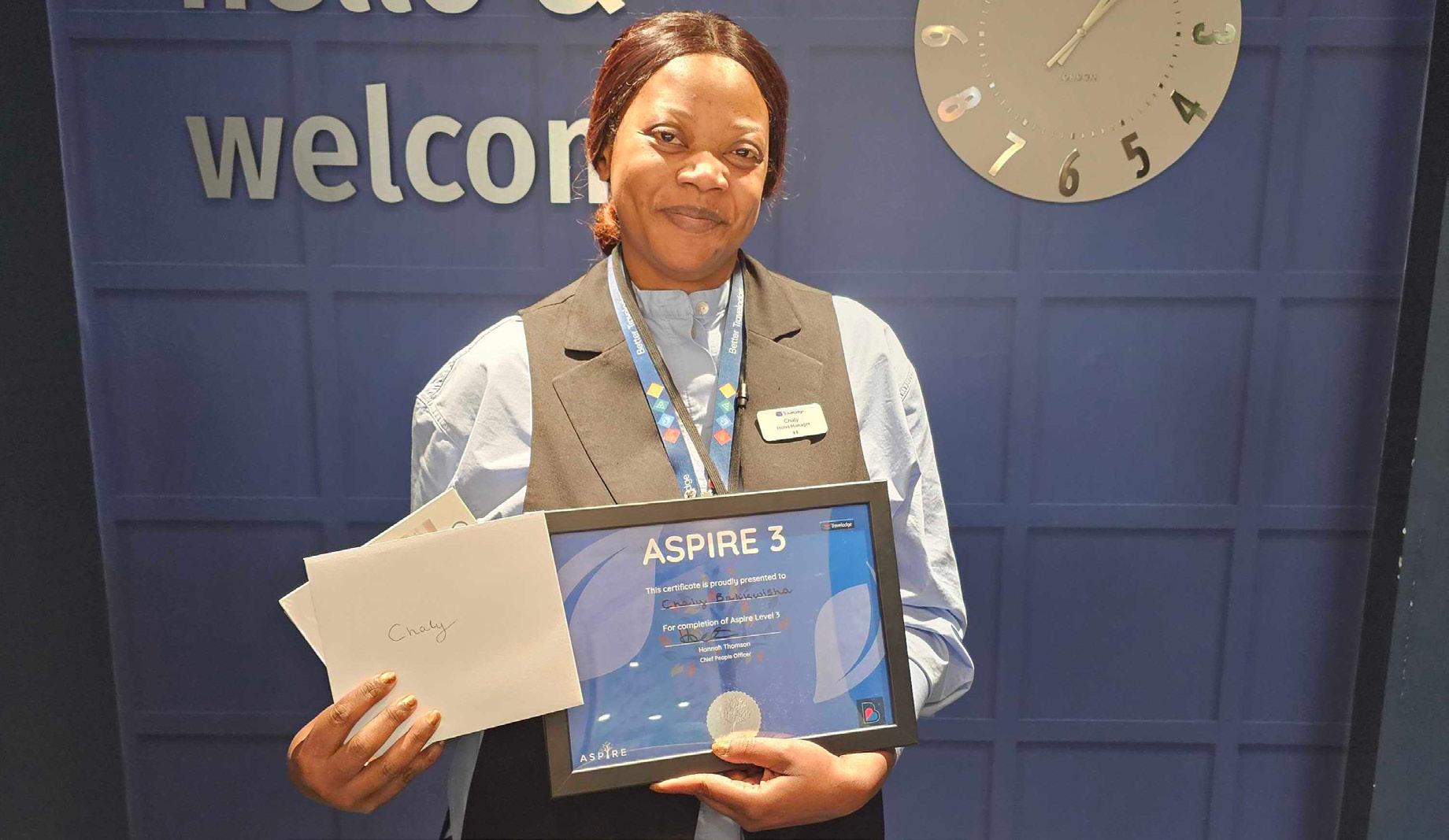
Case Study – Chaly Balikwisha, Hotel Manager Chaly Balikwisha’s story reflects Travelodge’s commitment to opening doors for individuals from all backgrounds.
Originally from a French-speaking country, Chaly began her career in the UK as a receptionist at Travelodge. Adjusting to a new country and a different work culture, she faced early challenges - language barriers, unfamiliar systems, and moments of doubt, even considering leaving the role after her first year of becoming Hotel Manager.
But with targeted support and encouragement, Chaly’s potential was recognised. Her area manager encouraged her to stay, and through Travelodge’s Aspire development programme, she gained the knowledge, skills and confidence needed to progress.
Chaly completed Aspire 3, a foundational training programme designed to equip aspiring managers with practical leadership tools.
It helped her master conflict resolution, team communication, and soft skills essential to building strong workplace relationships. She credits the programme with helping her not just improve results, but also grow into a more confident, emotionally intelligent leader.
Over her 10-year journey with Travelodge, Chaly has risen through roles from bar supervisor to assistant manager and now serves as Hotel Manager at Travelodge Colton. She is currently applying to the Aspire 4 programme, with ambitions to manage a city centre hotel in the future.
Chaly’s experience is a powerful example of social mobility in action - a story of someone who came to the UK seeking opportunity, and found it in a company that prioritises development, cultural understanding and personal growth. Travelodge’s investment in Chaly, and others like her, is shaping a more diverse and empowered leadership pipeline for the future.
Case Study – Joe McNally, Director of Commercial Pricing and Analytics
Joe McNally’s journey from a working-class background in Belfast to Head of Commercial Pricing and Analytics at Travelodge is a testament to resilience and adaptability. Growing up in a politically charged environment, Joe developed a strong work ethic and a deep understanding of the importance of navigating challenges with determination.
At Travelodge, Joe has leveraged his lived experience to champion social mobility by driving opportunities for others to thrive. His background has made him a strong advocate for breaking down barriers within the business. Joe uses his strategic expertise in data analytics to simplify complex information and ensure that all team members, regardless of their background, have access to clear insights that can guide decision-making and progression.
Joe’s leadership is rooted in his belief that resilience and adaptability are key to success. Whether navigating his early career in a sales role or adjusting pricing strategies during the pandemic, Joe consistently draws on his personal journey to support and empower others in his team. He champions fair and transparent career progression, ensuring that talent and effort – not background – determine advancement. His commitment to creating opportunities for those from diverse backgrounds is evident through his active role in Travelodge’s Race & Ethnicity Inclusion group, where he helps to shape initiatives that promote equality and inclusion across the business.
Joe’s story highlights how overcoming personal and professional challenges can fuel leadership and inspire meaningful change, making him a powerful advocate for social mobility at Travelodge.
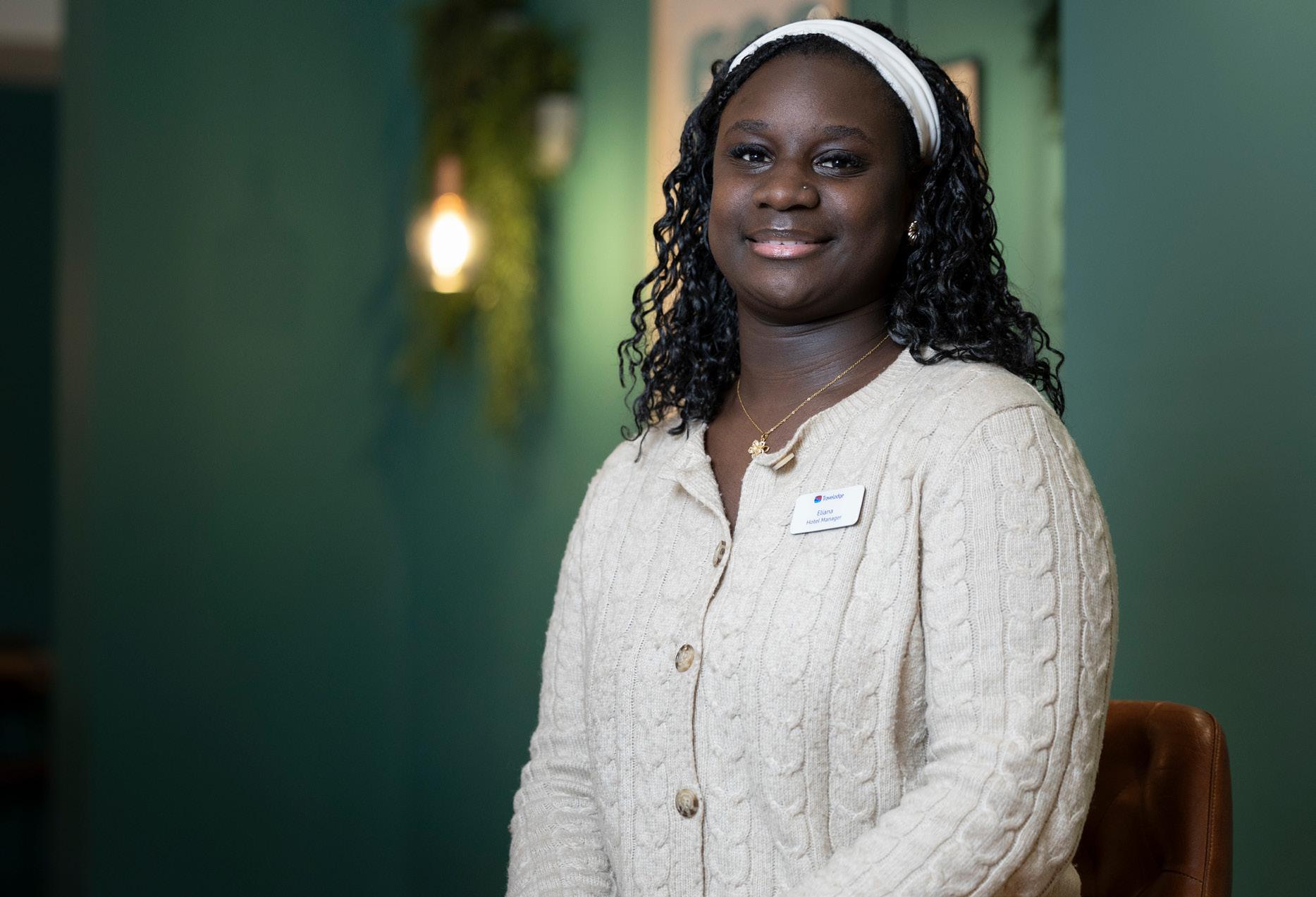
Case Study - Eliana Ramos Vieira, Hotel Manager Born in Lisbon, Eliana moved to the UK at 13, facing the daunting task of adapting to a new culture with no knowledge of English. Initially withdrawn and misunderstood, she overcame language barriers through perseverance, eventually supporting her mother—then a housekeeper at Travelodge—by translating documents and helping with administrative tasks. This early exposure introduced her to the hospitality industry.
At 18, while studying nursing, Eliana joined Travelodge as a team member. When student finance delays created financial strain, she worked full-time to support herself and her mother, balancing study and work with determination.
Eliana’s career quickly advanced. She became a Supervisor, then acted as Hotel Manager during a colleague’s leave. In 2021, she secured an Assistant Manager role and by 2023, was
promoted to Hotel Manager at Travelodge London Bermondsey—making her one of the company’s youngest in the role.
Her leadership is deeply informed by her own experiences of intersectionality — navigating race, language, class, and gender. She champions inclusivity, ensuring her diverse team feels seen and supported. From translating key documents to promoting open communication, Eliana breaks language and cultural barriers.
A passionate advocate for professional growth, she encourages her team to join the Aspire programme, crediting it with her own development. Eliana believes in recognising talent beyond background, creating a workplace where everyone can thrive.
Her story embodies how intersectionality shapes professional journeys and highlights the power of inclusive leadership.
Goal 8: Good Health and Wellbeing
At Travelodge, the wellbeing of colleagues is a priority, with the company recognising that supporting emotional, physical, financial and work wellbeing is key to creating a thriving, productive workforce.
Since the launch of the Social Mobility Impact Report in 2023, Travelodge has continued to focus on wellbeing initiatives that are relevant to its workforce. A key measure of its success is via the annual employee survey. The question “There are resources available to me at Travelodge to support my wellbeing” is part of the survey, and part of the company’s sustainability targets. For the 2024 survey results, this question achieved a score of 8.4, an increase of 0.7 points from the 2022 survey (completed in September each year).
Employee wellbeing also plays an important role in employee net promoter score (eNPS), with this question being the third main driver for both salaried and hourly paid colleagues. Travelodge introduced seven employee groups at the beginning of 2023, three of which focus on employee wellbeing and four on equality, diversity and inclusion. The groups were established to engage the senior leadership team and actively show leadership in driving wellbeing & inclusion actions that make an impact. Each group has a Senior Leadership Sponsor and around 87% of the senior leadership team are active members of a group.
Travelodge has a firm belief that the culture of any business is set by its leaders, and so engaging the leadership team to drive action through the groups is critical to its success.
Emotional Wellbeing
Over the last two years, the aim of the Emotional Wellbeing Group has been to ensure all colleagues know how to access help for their emotional wellbeing when they need it, whether through the Employee Assistance Programme provided by Aviva (Carefirst) or other support organisations such as MIND. Activities have included; webinars for line managers to understand the full EAP provision and how to signpost colleagues to get help, internal podcasts recorded to help colleagues understand what will happen when they make a call for help, and regular communications on the internal social media platform with details of EAP. All activities are supported by colleague stories showcasing real Travelodge people willing to share their own experiences with mental health, aimed at removing the stigma surrounding these types of issues.
Physical Wellbeing
The training programme Limitless is a voluntary programme which was initially aimed at middle management colleagues at Travelodge’s support centre. In 2024, Limitless expanded to include nonmanagement colleagues at the support centre and focuses on three key areas: health, motivation, and performance. Workshops cover a range of topics, including nutrition, movement and mindfulness. These sessions help colleagues improve their overall wellbeing, and highlights the link between good wellbeing, performance and job satisfaction.
Managers who applied the programme’s principles to improve team wellbeing reported higher productivity, lower sickness levels, and increased employee engagement scores.
Travelodge has a firm belief that the culture of any business is set by its leaders
Financial and Work Wellbeing
As part of its commitment to the financial wellbeing of its colleagues, in 2022 Travelodge enabled hourly paid colleagues to earn more through variable pay schemes, which resulted in the number earning a bonus increasing. In 2022, 2644 colleagues earned a bonus, and this increased to 6401 colleagues earning a bonus in 2024, which was a direct result of the Earn More schemes.
These schemes are designed to empower colleagues to take control of their financial wellbeing, rewarding their hard work, and providing financial flexibility. By giving colleagues the chance to earn more through their contributions, Travelodge helps to foster a sense of financial security and personal accomplishment.
Some inspiring examples from colleagues who have benefited from these schemes include:
Paola Lopez - Food and Beverage Supervisor, Cambridge Newmarket Road: Paola found great success with the Earn More Breakfast Scheme, driven by both a commitment to job excellence and a passion for enhancing the guest experience. Offering customers the opportunity to enjoy a delicious breakfast became more than just a task—it was a way to create a warm and welcoming atmosphere. Paola’s success was due to her direct engagement with customers, where confidence, enthusiasm, and consistency played a key role in boosting her earnings.
Vam’s advice is to stay positive, proactive, and consistent
Isobel McColgan - Hotel Supervisor, Manchester Salford Quays: Isobel loves her job and takes the time to talk to customers about their stay. By understanding their needs, she was able to suggest adding breakfast to their stay, using the Earn More Breakfast Scheme, leading to more guests choosing this option. As a result, Isobel not only helped customers feel cared for but also earned extra money. Her advice is to greet guests with a smile and show you care, creating a better experience for both them and you.
Vam Eslavath - Assistant Hotel Manager, London Central Covent Garden: Vam used the Earn More Breakfast Scheme to boost her earnings and reduce financial stress. She worked proactively, setting goals and seeking opportunities to improve her work. Vam’s advice is to stay positive, proactive, and consistent, as these behaviours make a significant difference to success.
Fostering a Culture of Wellbeing and Leadership For work wellbeing, Travelodge has continued to expand the opportunities for development for colleagues across the organisation. This includes the aforementioned Aspire programme but also includes coaching opportunities for management and leadership colleagues and the introduction of a mentoring programme to support middle managers who wish to progress into leadership roles.
By fostering a culture that supports and encourages colleagues to look after their emotional, physical, financial, and work-related wellbeing, Travelodge is committed to ensuring that colleagues can thrive both personally and professionally. The company’s holistic approach to wellbeing plays a crucial role in creating a positive, productive workplace for all.
4. Commitments
Building on the significant progress made in fostering social mobility and breaking down barriers to opportunity, Travelodge is committed to further enhancing its efforts through strategic initiatives focused on data-driven insights, community partnerships, and internal career development programmes for individuals from all backgrounds. Our future commitments are designed to ensure that opportunity is not just created, but embedded throughout our business for the long term.
Future Commitments
Travelodge will continue to strengthen its contribution to social mobility through the following key commitments:
1. Enhancing Socio-economic Data Collection and Utilisation:
Travelodge is committed to continuing and improving the collection and analysis of socio-economic background data from
its workforce. Recognising the challenges encountered in initial data collection, such as lack of understanding about social mobility, cultural differences, and engagement levels, Travelodge has already launched the next phase of its internal communications campaign. This campaign aims to clarify the meaning of social mobility, normalise discussions around socio-economic backgrounds, and reinforce that this data is a key part of Travelodge’s inclusion strategy.
Colleagues will be reassured that their data will be aggregated and used anonymously, never as the basis for individual decisions, but rather to identify and remove potential barriers to progression. This sustained effort will enable Travelodge to better understand the socio-economic diversity of its workforce and take targeted actions to support colleague advancement, helping to ensure that an individual’s future is determined by potential, not background.
2. Creating an Internal Programme for Career Exploration and Progression: Travelodge has an ambition to develop a further internal programme specifically designed to support and provide its current colleagues from lower socio-economic backgrounds with enhanced opportunities to explore career paths across the business. This commitment aligns with Travelodge’s existing belief that everyone should have the chance to fulfil their potential regardless of background. It will build upon the proven success of internal progression, which saw 66% of hotel management roles and 40% of support centre roles filled by internal candidates in 2024. The programme will aim to create more opportunities for colleagues from lower socioeconomic backgrounds to achieve their career aspirations by providing exposure to knowledge, roles and development opportunities that may have previously been inaccessible. This initiative will complement existing programmes like Aspire, which equips colleagues with management skills and leads to recognised qualifications, and Limitless, which supports overall wellbeing and performance, ensuring continuous development and progression for all colleagues, at a time that’s right for them. The goal is to further foster a culture where positive social impact is created internally, encouraging individuals to “get in and get on” at Travelodge.
The goal is to further foster a culture where positive social impact is created internally, encouraging individuals to “get in and get on” at Travelodge.
Building on the success of the social mobility pilot programme with Care Leavers into Careers (CLIC) in Liverpool, Travelodge will continue to work strategically with external organisations in the communities it operates in.
3. Expanding Community Impact through External Partnerships: Building on the success of the social mobility pilot programme with Care Leavers into Careers (CLIC) in Liverpool, Travelodge will continue to work strategically with external organisations in the communities it operates in. The pilot demonstrated significant value by increasing care-experienced young people’s interest in the hospitality sector and improving their confidence, communication skills, and preparation for job applications and interviews. Travelodge is committed to exploring how its extensive presence across the UK can provide opportunities in disadvantaged communities, particularly social mobility cold spots, by assessing the impact of its social initiatives. This will involve leveraging tools such as the Office for National Statistics Index for Multiple Deprivation, the Social Mobility Index and the recently launched UK Hospitality Social Productivity Index to prioritise efforts and continue delivering valuable employability programmes.
The Purpose Coalition campaign is proudly run by This is Purpose, part of Crowne Associates.