NCG Impact Report

Page 1


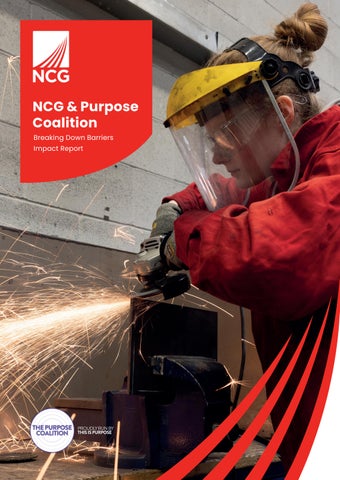
NCG & Purpose Coalition

Breaking Down Barriers Impact Report

Down Barriers

With a new, mission-led government, there is a unique opportunity to redefine our approach to building a better, more sustainable future for our country, one where opportunity will be available to everyone, regardless of background or circumstance.

Labour’s forward-looking programme is one that is undoubtedly geared towards the sort of economic growth which can generate those opportunities. But it is growth that cannot be achieved without an effective national skills base that covers all ages of the workforce. It is crucial that there is a joined-up conversation about the future of skills and how to break down the barriers to opportunity that exist for too many people, especially in our most deprived communities. We need to create higher-quality training and employment paths and empower local communities to develop the skills people need.

Partnership will also be key, with employers at the heart of the skills system. It is a demanding and diverse agenda, and there are significant challenges around the best place to start.

The Government has set out its ambitions early, with a commitment to much-needed reform of the apprenticeship levy and the creation of Skills England to bring together business and training providers with national and local government to help deliver an industrial strategy. There will also be a comprehensive strategy for post-16 education and a guarantee of training, an apprenticeship or help to find work for all 18-21-year-olds.

As gateways to their students’ next steps in education, training or employment, it is vital that the further education sector and organisations like NCG are part of our national conversation to improve skills. They are key to nurturing a talent pipeline, providing varied and inclusive career and learning pathways and ensuring that their students have the tools to develop and reach their potential across every vocation or educational interest.

The best practice highlighted in this report demonstrates the impressive range of work that NCG, through its network of seven colleges, is already undertaking to deliver opportunity to its students and the communities it serves. Working with local partners, it ensures that no one is left behind, offering a high-quality and inclusive education that will open doors to successful individual careers and facilitate the highly trained workforce that local economies need. Its work with the Breaking Down Barriers Commission also shows how it can extend its positive social impact even further so it continues to be a leading force in creating a fairer society where everyone has equal access to the opportunities that can change their lives.

0.2 NCG

The election of a new Government with strong ambitions for an industrial strategy underpinned by skills and ambition creates an environment where the further education sector can make an exciting and significant contribution to the economic and social recovery that the country needs.

With seven colleges and a University Centre placed in five geographical locations, NCG fulfils our mission to ‘enable social mobility and economic prosperity through exceptional education’ wherever we have a college. Each of our colleges is a community asset, providing life-changing opportunities through education, qualifications, work experience and employability skills development. Our work with employers ensures that our learners are workplace-ready and confident to enter an array of professions. Although a national college group, our place-based governance arrangements give us confidence that our curriculum is place-appropriate and fit for the purposes required by industry on both local and national scales. Wherever we are present we have both economic and social impact.

As the first college group to achieve indefinite taught degree awarding powers, we stand on par with traditional universities. We enable learners to progress from further to higher education in a safe learning environment that gives them the confidence to achieve qualifications that make them highly employable in key industries including health, clean energy and digital. These are the sectors that will help the new Government achieve its Five Missions.

The college experience builds confidence in our learners. The journey from GCSEs to the workplace can be daunting but the personal development, careers advice and nurturing from functional skills onwards provided within colleges like ours builds confidence where it is lacking and unfetters latent ambition. This is something we promise our learners, through our unique NCG Guarantee.

It is time for our society to think differently about post-16 education – and for young people to

consider the college experience as a viable alternative to university. College-based higher education is not a second tier option for those who didn’t ‘make it’ to university – it is a destination of choice for talented people to learn vocational skills and develop expertise in their chosen field to give them the same professional standing and career opportunities as those who opt for the academic route.

Apprenticeships and degree apprenticeships are ideal for learners who wish to start earning while they study and prefer hands-on learning over traditional lectures. These programmes offer debt-free qualifications, combining work experience with secure career prospects.

Further education colleges can transform lives through adult education by providing opportunities for career advancement and personal growth. They offer flexible learning options that cater to the needs of adult learners, helping them to upskill or reskill in a supportive environment.

NCG is proud to lead the way in delivering qualifications fit for the current and future workforce. We are secure in our mission and in our ability to change lives and contribute to our places. This report shows what value we add to our places, and the relevance of further education as being central to our economic and social recovery.

1. An Overview of NCG and its Purpose

1.1. An Introduction to NCG

NCG is a leading provider in the UK’s further education (FE) sector. With seven colleges spread right across the country, NCG has established itself as an innovative and impactful organisation that is committed to transforming lives and breaking down barriers to opportunity through education.

At its core, NCG’s mission is to “enable social mobility and economic prosperity through exceptional education”. This is lived across the organisation as commitment to its over 30,000 annual students and over 2,000 staff.

Critical to the organisation’s work is its national reach combined with strong local impact. Each of its seven colleges is deeply embedded in its local community, while benefiting from the shared resources and best practices of the wider group. This allows NCG to offer a wide range of opportunities to learners at various stages of their educational journey, from school leavers to adult learners looking to upskill.

The group’s forward-looking Strategy Towards 2030 outlines its commitment to excellence in

teaching, innovative course offerings, and creating outstanding learning environments.

An underpinning of NCG’s approach is the NCG Guarantee. This ensures students gain more than just academic qualifications – the ‘hard’ skills – but also important soft skills in areas like employability, mental fitness, community engagement, digital literacy, and enterprise. This puts NCG’s students in a position to thrive in a job market increasingly defined by rapid change.

Also critical is its national reach and deep local roots. Through which, NCG is extremely wellpositioned to understand and meet the needs of both learners and employers right across the UK. This dual perspective allows NCG to play a key role in developing the skills needed for both local economic growth and individual prosperity and opportunity.

Equity, diversity, inclusion, and belonging is also prioritised across the organisation creating a rich and inclusive learning environment that benefits all students and reflects the diverse communities NCG serves.

NCG is an organisation that is constantly adapting and innovating, ensuring it remains at the forefront of an educational landscape continuing to evolve. When learners choose to study with NCG, they don’t just get an education – they join a community dedicated to unlocking potential and creating opportunities.

1.2. NCG’s Purpose

NCG’s purpose is its role in equipping students with the technical skills needed to succeed and progress in today’s world. This is centred around providing practical, high-quality education that empowers all learners to thrive in their careers and wider life.

As a provider of technical skills and education, NCG and other FE colleges play a critical role in shaping the future workforce for all learners.

The organisation’s commitment to this purpose drives innovation in its teaching methods, improves learner engagement, and leads to better outcomes for students and their communities.

NCG’s focus on inclusion goes beyond simply providing access - it ensures that learners are equipped with the confidence, knowledge, and technical expertise needed to excel in their chosen fields.

It underpins education as a transformative and powerful tool for breaking down the barriers to equitable opportunity. Through offering accessible learning opportunities, the organisation works to create a level playing field, ensuring that individuals from all backgrounds have the chance to develop the skills necessary for success.

The organisation’s responsibility also extends to local communities, with each college within the group deeply embedded in the five diverse regions it operates in.

Through aligning its training programmes with local needs, NCG strengthens the prosperity of the areas it serves, creating life-changing opportunities for individuals while contributing to the economic and social wellbeing of these communities.

Beyond its technical training, NCG also fosters critical thinking, creativity, and civic responsibility, helping to shape not just skilled workers but engaged citizens.

This broader vision for social progress underlines NCG’s role as more than just an education provider; it positions the organisation as a key contributor to a more equitable, prosperous, and cohesive Britain.

Through its focus on technical skills and social purpose, NCG continually innovates and expands its impact, driving positive change in communities across the UK.

1.3. Britain’s Skills Challenge

The UK faces a skills gap – a disparity between the skills employers needs and the skills available in the workforce. Industries including engineering, healthcare, and information technology often report significant shortages of skilled workers. As the economy becomes increasingly digital, the demand for digital skills has increased, with employers reporting that soft skills like communication, teamwork, and problem-solving are just as important as hard skills and are lacking in many candidates.

The UK’s economy has been able to grow in previous decades mainly due to a very strong financial services sector. However, an over-reliance on this sector - which is mainly concentrated in London - has masked this underlying challenge. Productivity in the UK has lagged behind other advanced economies, especially since the 2008 financial crisis, and this is often attributed, in-part, to skills shortages.

Critically, one of the primary functions of the further education (FE) sector is to bridge this skills gap.

As the economy continues to evolve, the need and demand for a skilled workforce has continued to increase. This makes the FE sector more important than ever, as it not just meets current labour market demand but anticipates future needs to ensure the workforce remains competitive.

The FE sector’s uniquely close partnerships with employers, and an ability and willingness to adapt and innovate in response to changing educational and economic landscapes makes it so critical to this challenge.

The sector ensures that curriculums are relevant and up to date, often incorporating work-based learning and industry placements, providing students with real life experience in the world of work and local employers with a well-prepared talent pipeline.

While the sector itself contributes significantly to national and economic development - with the Association of Colleges estimating that every pound the government invests in FE generates a return of £24 - it’s important also to remember the impact a thriving FE sector has on the lives of individuals.

FE institutions are known for their role in promoting inclusivity and accessibility. Institutions like NCG cater to a diverse population, including school leavers, adult learners, and those seeking career changes. Through offering flexible learning options, such as part-time courses and apprenticeships, FE colleges make education and training accessible to individuals from various backgrounds. This is critical, with college groups like NCG also providing college-based higher education right across Britain. NCG is the largest provider of college-based higher education in the UK, with over 2,000 degree-level students. NCG is widening participation for both technical skills, college-level academic training, and higher education.

The sector is therefore a powerful tool in breaking down barriers to opportunity. It provides opportunities for a wide range of people to gain qualifications and skills that can lead to better employment prospects and higher earnings. Many FE students come from disadvantaged backgrounds, and the education they receive can significantly improve their life chances. According to the Social Mobility Commission, FE colleges play a crucial role in helping disadvantaged young people succeed.

The UK’s further education sector is central in tackling the country’s skills challenge. It is providing accessible, inclusive, and relevant education and training, FE institutions help to bridge the skills gap, unlock economic growth, and boost social mobility – working to tackle a key historical challenge across the UK.

As the economy continues to evolve at an increasingly rapid pace, investment in a thriving FE sector represents not just an important strategic decision to increase economic growth, but also an important commitment to building a fairer Britain.

1.3. Breaking Down Britain’s Barriers

The Purpose Coalition measures organisations against a set of sector-relevant social impact criteria. The Purpose Goals outline 15 interconnected impact barriers to opportunity. By drawing on expertise provided by academia and business, the Goals are designed to specifically address some of the unique challenges facing the UK.

The Coalition’s cross-party work brings together the UK’s most innovative leaders, parliamentarians and businesses to improve, share best practice, and develop solutions for improving the role that organisations can play for their customers, colleagues and communities by breaking down barriers to opportunity.

The Purpose Coalition is chaired by Rt Hon Justine Greening, the UK’s former Secretary of State for Education, Transport and International Development; and led by Nick Forbes CBE, who recently served in Sir Keir Starmer’s Shadow Cabinet, who leads the Purpose Coalition’s work with the Labour Party; Rt Hon Anne Milton, former Minister for Apprenticeships and a Minister in the Department for Health and Social Care; and Lord Walney, former No 10 Advisor to Gordon Brown and Labour Member of Parliament for Barrow and Furness.

The Goals were designed following Justine Greening’s experience - as Secretary of State for International Development - leading the UK’s delegation to the convention of the United Nations (UN) that established the 2015 UN Sustainable Development Goals (SDGs). The Purpose Goals apply the SDGs in a UK context.

The SDGs as interlinked goals emphasised the interdependent environmental, social, and economic aspects of development and centralised the role of sustainability. At the time, Justine recognised how transformative a common set of accessible but ambitious goals could be in galvanising action to effect change. After leaving Government in 2019, Justine established the Purpose Coalition and Social Mobility Pledge with the intention of galvanising UK economic and social actors to improve social mobility in the UK.

The Purpose Goals focus on key life stages and highlight the main issues that need to be resolved to break down barriers to opportunity in the UK.

The Goals are intended to guide ambition, provoke action, and measure progress.

2. Benchmarking NCG’s Activity Against the Purpose Goals

2.1. Goal 3: Positive Destinations post 16+

A lack of positive destinations Post 16+ is one of the major central barriers to opportunity across Britain.

Every student is unique, so making the right decisions as they transition from school is crucial. Britain’s goal should be to ensure that all students have a positive destination after the age of 16, whether individuals are moving on from GCSEs or taking the next steps in their education.

Traditionally, many students have been guided toward an academic path, pursuing A-Levels and then progressing to higher education and a university degree. It’s important that this pathway remains open for those who have the potential and desire to pursue it.

Equally vital is offering strong alternatives, particularly for those who prefer a both technical academic pathways and non-academic routes, through FE.

2.1.1.

Strategically Aligning Educational Courses

Through collaborating with businesses to deliver world-class training and open-up employment opportunities, NCG ensures that its students are on educational courses aligned to the needs of the local and national job markets, thereby helping its students enter the world of work.

2.1.2.

Focusing on Positive Destinations and Progression for Learners

Achieving a positive destination rate of approximately 92-93% for 16-18-year-olds, NCG demonstrates a strong track record in guiding students towards employment, further education, or training.

Utilising its degree-awarding powers, NCG provides a unique educational pathway from entry-level courses to master’s degrees, working towards seamless progression within the institution.

Partnerships with employers and outreach programmes improve this support, offering learners varied avenues to advance their careers or academic pursuits.

Through maintaining consistent support across various demographics, NCG ensures that all students have the resources and opportunities to realise their aspirations, thereby contributing positively to society.

2.1.3.

Addressing Attendance Challenges and the Impact of Deprivation

NCG recognises the significant influence of socioeconomic factors on student attendance, engagement, and positive destinations.

Data reveals that attendance rates for young people hover around 85-86%, with English and Maths courses experiencing lower rates in the

mid-70s. A notable attendance gap of 7% exists between learners from the most and least deprived postcodes, highlighting the impact of deprivation on educational participation.

To tackle these challenges, NCG uses sophisticated tracking methods using postcodes and the Index of Multiple Deprivation (IMD) dynamic deciles.

Performance management systems like Pro Achieve and Power BI dashboards visualise this data, enabling staff to identify and support learners from deprived areas effectively. Local initiatives and the Learning Support Fund also provide additional resources to those in need, aiming to bridge the attendance gap and ensure equal opportunities for all students.

2.1.4.

Developing Soft Skills

So-called ‘soft skills’ are critical to all young people across Britain achieving a positive destination. These skills however are often unevenly distributed, especially amongst those students from more under-resourced backgrounds.

To build soft skills, NCG encourages student participation in leadership events and skills competitions, which help develop their professional and personal skills. Notable events include the SkillBuild Regional Qualifier and various national competitions where NCG students have excelled. In Lewisham in early 2024, NCG hosted its fourth annual NCG Skills competition, bringing together students from across five of NCG’s colleges, testing skills and knowledge through a series of practical tasks in work-based environments, in front of a panel of judges.

In Carlisle in early 2025, NCG hosted its fifth annual NCG Skills competition, bringing together students from across six of NCG’s colleges, testing skills and knowledge through a series of practical tasks in work-based environments, in front of a panel of judges.

2.2. Goal 4: Right Advice & Experiences

A lack of access to timely and appropriate advice and experiences is a major barrier to opportunity in communities right across the country.

It is still all too often the case that individuals are unable to “be what they can’t see”. Providing students and the wider population with excellent career advice and opportunities for broader experiences that expand their horizons and connect their studies to real-world contexts is crucial.

This support can be the difference between a student understanding the opportunities available to them and knowing how to take the necessary steps or being left in the dark.

Ensuring consistent access to high-quality careers advice, support, mentoring, and work experience is a vital step in enhancing social justice and is key to underpinning it across leading FE colleges like NCG.

2.2.1.

Partnering with Local Business

NCG works closely with local businesses and community organisations to provide training and employment opportunities. This strategy

includes fostering strong partnerships that help bridge the gap between education and the job market - supporting local economic growth and workforce development.

2.2.2. Supporting High-Needs Learners through Collaboration

Committed to inclusion, NCG offers strong support for its high-needs learners, particularly through its centres in Kidderminster and Newcastle.

Through collaborating with the NHS, NCG has developed apprenticeship-like courses tailored to the unique requirements of these students. These programmes focus on delivering highquality education and practical skills, contributing to both personal and professional development.

The institution's dedication extends to consistent pastoral support and specialised resources, ensuring that high-needs learners receive comprehensive assistance.

It prioritises a college environment of understanding and inclusion, NCG enables these students to thrive academically and prepare for future employment or further education opportunities.

2.2.3.

Empowering Underrepresented Groups through Inclusive Apprenticeships

NCG is actively improving inclusion within its apprenticeship programmes by targeting underrepresented groups including care-experienced learners and those from deprived areas.

In consolidating its apprenticeship provision, NCG focuses on delivering the right standards and partnering with reputable employers to offer high-quality, technical apprenticeships for young people.

The organisation aims to grow its apprenticeship numbers from its current solid base, ensuring that these opportunities are accessible to all.

Holding the quality mark for the education of care-experienced students, NCG maintains a care covenant working group dedicated to supporting initiatives for this demographic.

2.2.4.

Addressing Socioeconomic Barriers

While NCG tracks detailed socioeconomic data for students to qualify for additional funding and tailor support services, it acknowledges a gap in collecting similar data for staff due to privacy concerns.

However, it expresses a keen interest in exploring ways to track socioeconomic data for staff in the future – and will work directly with the Purpose Coalition to achieve this. Through understanding the socioeconomic backgrounds of its employees, NCG could further improve its efforts to remove barriers and promote equity across the workplace.

For students, the detailed tracking of socioeconomic data allows NCG to identify those who may face additional challenges and provide targeted support.

This commitment ensures that students from all backgrounds have equal access to educational opportunities and resources, aligning with NCG's mission to break down barriers to opportunity.

2.2.5. Empowering Future Leaders and Promoting Wellbeing

Recognising the importance of leadership diversity, NCG has launched the Future Leaders Programme to focus on developing talent from underrepresented groups.

This aims to reflect the diversity of the communities NCG serves within its leadership roles. Providing tailored development opportunities, the programme equips aspiring leaders with the skills and knowledge necessary to advance their careers within the college group.

On top of leadership development, NCG prioritises the wellbeing of its staff.

A recent colleague wellbeing event, organised in collaboration with Ward Hadaway solicitors, displays the college group’s dedication to supporting the physical and mental health of its employees. These are critical to not only improving staff satisfaction but also contributing to a more supportive and productive work environmentbenefiting the wider student community.

We need open opportunities and transparent recruitment to ensure that students and individuals in any walk of life can fully realise their potential.

The ability to continue developing and advancing in a career is crucial, not just for increasing earnings, but for maintaining a sense of challenge and ongoing learning long after leaving formal education.

It’s important that students see a clear path for growth once they enter the workforce. Colleges, educational institutions, organisations and wider businesses that figure out how to provide these opportunities for continuous development and career progression will thrive, as they empower individuals to keep growing and moving forward.

2.3.1.

Prioritising Open Opportunities

With a mission to enable social mobility and economic prosperity through exceptional education, NCG provides opportunities for all individuals, regardless of background, to gain the skills needed for successful careers and community contribution.

In partnership with the Care Leaver Covenant, West Lancashire College, an NCG member, hosted an employability skills day for care experienced students to discover potential careers with the NHS.

2.3.2. Initiatives for Refugees, Asylum Seekers, and ESOL Learners

Recognising the challenges faced by refugees, asylum seekers, and those for whom English is not a first language, NCG has implemented targeted initiatives to support these groups to ensure its pathways are open to all groups.

It offers comprehensive ESOL (English for Speakers of Other Languages) programmes designed to improve language proficiency and facilitate integration into the community.

These initiatives extend beyond language skills, providing learners with cultural understanding and access to further education and employment opportunities. In delivering tailored support and high-quality training, NCG empowers these individuals to overcome the high barriers they face.

2.4. Goal 12: Building Sustainable Communities

A lack of safe, cohesive, and sustainable communities is a major barrier to social justice and breaking down the barriers to opportunity across the UK.

Sustainable communities are essential for retaining talent and attracting business investment - without these, communities risk stagnation. FE colleges play a crucial role in developing local talent and preparing students for the workforce. The sector also maintains a number of local relationships as anchor institutions, these are vital for wider regional collaboration and in offering students practical experiences, apprenticeships, and clear career paths.

2.4.1. The Pathway to Net Zero

NCG has committed to becoming the UK’s most sustainable college group. Their strategy includes reducing carbon emissions by 50% by 2030, implementing energy-efficient practices, promoting sustainable food procurement, and increasing biodiversity on campuses.

NCG aim to send zero waste to landfill by 2030 and are working on comprehensive waste management plans to reduce overall waste and single-use plastics.

2.4.2. Engaging with Local Communities and Stakeholders

NCG actively engages with local businesses, social enterprises, and community stakeholders to enrich the educational experience and extend its social impact beyond the classroom.

Collaborations with organisations like Ward Hadaway solicitors for wellbeing events demonstrate NCG’s dedication to staff welfare and community partnership.

These engagements provide mutual benefits: students and staff gain valuable insights and resources, while partners contribute to the development of a skilled and informed workforce.

By fostering strong community links, NCG improves its role as a catalyst for social and economic development within the seven diverse regions it serves.

2.4.3. Case Study

Kidderminster College

Kidderminster College, an NCG college, has made significant strides in expanding educational opportunities for communities marked by high deprivation and low attainment levels.

Since 2017, the college has doubled its student intake from 620 to 1,250 learners. This remarkable growth reflects the college’s commitment to providing positive destinations and second chances for young people who might otherwise be excluded from further education.

Recognising the critical role of strategic collaboration in regional development, Kidderminster College has improved its role as a leader in skills work across Worcestershire. The college actively engages employers through

comprehensive training needs analysis and workforce planning, ensuring that its curriculum aligns with local economic demands.

Through serving as the lead provider for the Local Skills Improvement Fund (LSIF) — with Principal Cat Lewis serving as Vice Chair of the LSIF Board — the college fosters strong relationships with businesses, reducing gaps between education and industry.

Committed to leading educational innovation, Kidderminster College has launched several key initiatives to underpin the student experience and promote diversity. The college has expanded its school liaison efforts, providing impartial advice and guidance to prospective students and strengthening ties with local schools. Diversity and inclusion events, including “Women in Construction” and “Women in Digital,” actively promote equality and encourage participation from underrepresented groups.

The college not only equips students with technical knowledge but also empowers them to become resilient, adaptable, and socially responsible individuals.

A central part of this innovation has been the development of a new Green Technology Centre, supported by funding from the Worcestershire LEP and NCG investment. This state-of-the-art facility focuses on construction and automotive curricula, offering cutting-edge resources and technologies. Through investing in sustainable education, the college prepares students for future careers in emerging green industries, addressing both local skills gaps and global environmental challenges.

At the heart of Kidderminster College’s approach to education is the NCG Guarantee, a comprehensive programme designed to ensure a well-rounded student learning experience.

Focusing on five core areas - employability, mental fitness, community engagement, digital literacy, and enterprise skills - the guarantee ensures that students develop both academically and personally. This approach integrates enhancement activities within and beyond the curriculum, such as live projects, work experience, and social action initiatives.

By focusing on soft skills like confidence, leadership, and public speaking, the NCG Guarantee addresses the specific needs of students from deprived backgrounds. These skills are highly valued by employers and essential for success in the modern workforce. Through this programme, the college not only equips students with technical knowledge but also empowers them to become resilient, adaptable, and socially responsible individuals.

Kidderminster College also effectively balances tailored local strategies with the advantages of national collaboration afforded by being part of NCG. While focusing on the unique needs and aspirations of the Worcestershire community, the college benefits from shared best practices and resources across the wider organisation. This national perspective allows for innovative approaches to education, drawing on diverse experiences from different regions.

3. Analysing NCG through Purpose Goal 14 - Achieve Equality through Diversity and Inclusion

NCG places equity, diversity, and inclusion (EDI) at the heart of its operations, embedding these values across all aspects of its educational provision. This commitment is clear across its strategic initiatives, governance structures, and proactive engagement in breaking down barriers to opportunity for both staff and students.

NCG’s approach is comprehensive, focusing on creating a sense of belonging for its students and staff, driving accountability, and supporting diverse communities to ensure that education serves as a powerful tool for social mobility and inclusion.

3.1. A Culture of Belonging and Inclusivity

One of the underpinnings of NCG’s strategy is creating an environment where every individualwhether staff or student - feels they belong.

This emphasis on belonging is viewed as fundamental to personal and professional growth. The institution regularly surveys staff, and over the past three years, the high scores in EDI metrics highlight the internal commitment to creating an inclusive culture. NCG acknowledges that fostering a sense of belonging is not just about representation but about ensuring that everyone feels valued, respected, and supported in achieving their full potential.

To strengthen this inclusive culture, NCG has established a People and Culture Committee, which plays a critical role in improving the scrutiny and assurance of EDI matters. This committee monitors the progress of NCG’s EDI goals, ensuring accountability at all levels of the organisation. The committee’s work enables data-driven decisions that guide NCG’s efforts to create a learning and working environment where diversity is celebrated, and inclusion is deeply embedded.

3.2. Transparency, Accountability, and Leadership Diversity

NCG’s commitment to EDI extends beyond its internal culture to the transparency and accountability of its leadership.

It proactively tracks diversity metrics, with a particular focus on ensuring representation at leadership levels. Through regularly reporting demographic data, NCG is able to identify gaps in diversity and implement strategies to address them. This focus on leadership diversity not only aligns with NCG’s values but also ensures that decision-making is informed by diverse perspectives.

The People and Culture Committee is instrumental in maintaining this transparency. Through its detailed scrutiny of people metrics, the committee ensures that NCG’s leadership is held accountable for progress toward EDI goals. This structure reinforces the organisation’s commitment to advancing diversity and inclusion across all its campuses.

3.3.

Supporting Underrepresented Groups

NCG actively works to break down barriers to education for underrepresented groups, including refugee students.

The launch of the “Our Community is Your Community” programme is central to this commitment. The programme supports refugee students by helping them integrate into a community and access opportunities. This initiative reflects NCG’s understanding that education is a critical tool for empowerment and social impact, particularly for those who face significant barriers to opportunity.

NCG’s strategy also involves targeted support for high-needs learners and those from underresourced backgrounds. The college group tracks detailed socioeconomic data for its students, allowing it to tailor support services to those most in need.

3.4.

Innovation in Mental Health and Wellbeing

Recognising the link between mental health and academic success, NCG has partnered with Activate Learning to conduct a large-scale clinical trial using the eQuoo app. This initiative aims to address mental health challenges among students, including anxiety and depression, which are often linked to nonattendance and academic struggles.

In proactively addressing these issues, NCG demonstrates its commitment to student wellbeing as a key component of its educational provision.

3.5. Collaboration for Consistent Improvement

NCG’s proactive approach to EDI is underpinned by a commitment to continuous improvement. The institution regularly seeks out sector-wide best practices and collaborates with external organisations to continue innovating in its EDI initiatives.

For example, NCG has expressed interest in working with the Purpose Coalition and its partners to explore socioeconomic data tracking for staff, demonstrating its willingness to extend its EDI efforts beyond students to include its workforce. This openness to collaboration ensures that NCG’s practices remain innovative and responsive to the evolving needs of its community.

3.6. Conclusion: Driving Change Through Education

NCG’s Strategy Towards 2030 places social equity at the centre of its vision.

The organisation aims to create inclusive learning communities that are collaborative, trusting, and inspiring. Through embedding EDI into the fabric of its operations, NCG ensures that education remains a powerful tool for breaking down barriers and promoting social mobility.

Openness to collaboration ensures that NCG’s practices remain innovative and responsive to the evolving needs of its community.

Through its focus on transparency, leadership diversity, support for underrepresented groups, and collaboration, NCG is well-positioned to continue driving social change and creating opportunities for all members of its community.

4. Key Community Opportunity Barriers Across NCG’s Seven Regions

Using the Indices of Multiple Deprivation, the Purpose Coalition and NCG have partnered to identify a number of communities of acute need across its the seven regions it operates in.

NCG already has comprehensive links to these areas and is supporting a wide range of individuals into employment and educational opportunities.

Through this data analysis, NCG can apply the recommendations outlined in Section 5 to the communities most in need.

Critically, NCG and the Purpose Coalition have identified the specific barriers most important to each of these communities – supporting NCG in targeting its work and collaborating with key partners in areas of strategic need.

In the below tables, a lower number is worse. Being in Decile 1 means the LSOA is amongst the 10% most deprived areas. Having a Rank of 1 means the LSOA is the most deprived LSOA in the country. Conversely, being in Decile 10 means the LSOA is amongst the 10% least deprived areas and having a Rank of 32,844 would mean it is the least deprived LSOA in the country.

4.1. Raffles, Carlisle

LSOA Name: LSOA Code:

Carlisle 009A E01019193

Overall, which combines information from the seven ‘domains’ below to produce an overall relative measure of deprivation

Income, which measures the proportion of the population experiencing deprivation relating to low income

Employment, which measures the proportion of the working age population in an area involuntarily excluded from the labour market

Education, Skills & Training, which measures the lack of attainment and skills in the local population

Health Deprivation & Disability, which measures the risk of premature death and the impairment of quality of life through poor physical or mental health

Crime, which measures the risk of personal and material victimisation at local level

Barriers to Housing & Services, which measures the physical and financial accessibility of housing and local services

Living Environment, which measures the quality of both the ‘indoor’ and ‘outdoor’ local environment

Carlisle 009A
Decile Rank (out of 32,844)

4.2. Beckenham Hill, Lewisham

LSOA Name: LSOA Code:

Lewisham 034D E01003192

Overall, which combines information from the seven ‘domains’ below to produce an overall relative measure of deprivation

Income, which measures the proportion of the population experiencing deprivation relating to low income

Employment, which measures the proportion of the working age population in an area involuntarily excluded from the labour market

Education, Skills & Training, which measures the lack of attainment and skills in the local population

Health Deprivation & Disability, which measures the risk of premature death and the impairment of quality of life through poor physical or mental health

Crime, which measures the risk of personal and material victimisation at local level

Barriers to Housing & Services, which measures the physical and financial accessibility of housing and local services

Living Environment, which measures the quality of both the ‘indoor’ and ‘outdoor’ local environment

Lewisham 034D
Decile Rank (out of 32,844)

4.3. Walker South, Newcastle upon Tyne

LSOA Name:

LSOA Code:

Newcastle upon Tyne 030C E01008427

Newcastle upon Tyne 030C

Overall, which combines information from the seven ‘domains’ below to produce an overall relative measure of deprivation

Income, which measures the proportion of the population experiencing deprivation relating to low income

Employment, which measures the proportion of the working age population in an area involuntarily excluded from the labour market

Education, Skills & Training, which measures the lack of attainment and skills in the local population

Health Deprivation & Disability, which measures the risk of premature death and the impairment of quality of life through poor physical or mental health

Crime, which measures the risk of personal and material victimisation at local level

Barriers to Housing & Services, which measures the physical and financial accessibility of housing and local services

Living Environment, which measures the quality of both the ‘indoor’ and ‘outdoor’ local environment

Decile Rank (out of 32,844)

4.4. Burgess Park, Southwark

LSOA Name: LSOA Code:

Southwark 015D E01003971

015D

Overall, which combines information from the seven ‘domains’ below to produce an overall relative measure of deprivation

Income, which measures the proportion of the population experiencing deprivation relating to low income

Employment, which measures the proportion of the working age population in an area involuntarily excluded from the labour market

Education, Skills & Training, which measures the lack of attainment and skills in the local population

Health Deprivation & Disability, which measures the risk of premature death and the impairment of quality of life through poor physical or mental health

Crime, which measures the risk of personal and material victimisation at local level

Barriers to Housing & Services, which measures the physical and financial accessibility of housing and local services

Living Environment, which measures the quality of both the ‘indoor’ and ‘outdoor’ local environment

Southwark
Decile Rank (out of 32,844)

4.5. Digmoor, West Lancashire

LSOA Name:

LSOA Code:

West Lancashire 014A E01025493

West Lancashire 014A Decile Rank (out of 32,844)

Overall, which combines information from the seven ‘domains’ below to produce an overall relative measure of deprivation

Income, which measures the proportion of the population experiencing deprivation relating to low income

Employment, which measures the proportion of the working age population in an area involuntarily excluded from the labour market

Education, Skills & Training, which measures the lack of attainment and skills in the local population

Health Deprivation & Disability, which measures the risk of premature death and the impairment of quality of life through poor physical or mental health

Crime, which measures the risk of personal and material victimisation at local level

Barriers to Housing & Services, which measures the physical and financial accessibility of housing and local services

Living Environment, which measures the quality of both the ‘indoor’ and ‘outdoor’ local environment

4.6. Rifle Range, Kidderminster

LSOA Name: LSOA Code:

Wyre Forest 009C E01032471

015D

Overall, which combines information from the seven ‘domains’ below to produce an overall relative measure of deprivation

Income, which measures the proportion of the population experiencing deprivation relating to low income

Employment, which measures the proportion of the working age population in an area involuntarily excluded from the labour market

Education, Skills & Training, which measures the lack of attainment and skills in the local population

Health Deprivation & Disability, which measures the risk of premature death and the impairment of quality of life through poor physical or mental health

Crime, which measures the risk of personal and material victimisation at local level

Barriers to Housing & Services, which measures the physical and financial accessibility of housing and local services

Living Environment, which measures the quality of both the ‘indoor’ and ‘outdoor’ local environment

Rank (out of 32,844)

Southwark
Decile

5. Recommendations

5.1. Expand socioeconomic data collection and targeted support across the organisation

To strengthen its commitment to inclusion and ensure that all barriers to opportunity are addressed, NCG should extend its socioeconomic data collection initiatives to include both staff and students.

Currently, student data is tracked for funding purposes, but expanding this to include anonymised socioeconomic data for staff will reveal insights into representation and barriers to career progression.

With this comprehensive data, NCG can design targeted support programmes that actively address the specific needs of its workforce, promoting fair career progression and fostering a culture of equality, diversity, and inclusion across all campuses.

This approach will allow NCG to not only meet the needs of its students but also ensure its workforce reflects the diversity of the communities it serves. Through also consulting with other Purpose Coalition organisations that have implemented similar tracking, NCG can adopt best practices and develop a robust data framework that respects privacy while improving social impact.

5.2. Strengthen school liaison, information access, and community outreach across Campuses

Kidderminster College’s success in increasing student intake and supporting underrepresented groups through strong school liaison and community outreach initiatives can serve as a model for all NCG campuses.

To build on this momentum, NCG should expand school liaison programmes and community outreach initiatives across its network. This includes improving access to impartial career advice, guidance, and tailored events, including those focused on Women in Construction and Digital fields.

Through building stronger connections with local authorities, community organisations, and schools, NCG can support underrepresented and under-resourced groups in accessing information and pathways to higher education, apprenticeships, and meaningful employment. This proactive engagement will not only increase enrolment among diverse groups but also ensure that NCG’s offerings align with the needs and aspirations of the communities it serves, providing essential pathways to positive educational and employment outcomes.

NCG can adopt best practices and develop a robust data framework that respects privacy while improving social impact.

5.3. Broaden Employer Engagement and Expand Green Skills Training Nationally

NCG’s strategic initiatives in employer engagement and green skills training, illustrated by the Green Technology Centre at Kidderminster College, have demonstrated significant regional impact.

Expanding this model across other NCG campuses would support the development of a skilled workforce that can meet emerging labour market needs in sustainable industries.

In collaborating with local employers on training needs analysis and workforce planning, NCG can tailor its curriculum to address regional skills gaps, particularly in sectors critical to the green economy, such as construction, automotive, and digital technologies.

Introducing similar green technology hubs at other campuses would enable NCG to prepare students for high-demand, sustainable careers, contributing to both individual economic mobility and regional economic growth.

This national approach would position NCG as a leading provider of green skills training, aligned with the broader agenda for sustainable development and social responsibility.

5.4. Adapt and expand the NCG Guarantee to address regional skills needs and enhance student development

The NCG Guarantee, which focuses on key employability, mental fitness, community, digital, and enterprise skills, plays an essential role in developing well-rounded, work-ready students.

To maximise the Guarantee’s impact, NCG should consider regional adaptations that address local skills gaps and provide students with regionally relevant skills. This could include tailoring community involvement projects, digital skills training, and employability workshops based on the unique needs of each area, ensuring that students graduate with a competitive advantage in their local job markets.

The NCG Guarantee, which focuses on key employability, mental fitness, community, digital, and enterprise skills, plays an essential role in developing well-rounded, work-ready students.

Expanding activities within and beyond the curriculum, including practical work experiences, live projects, and soft skills development, NCG can improve students’ confidence, leadership, and public speaking abilities - qualities that are increasingly valued by employers.

This expanded NCG Guarantee would reinforce NCG’s commitment to student success, personal development, and the cultivation of resilient, adaptable graduates equipped for both current and future job markets.

5.5. Boost diversity in leadership and develop inclusive career pathways

NCG’s commitment to equality, diversity, and inclusion can take the next step by improving pathways for underrepresented groups to progress into leadership roles, supporting a leadership team that reflects the diverse communities NCG serves.

Initiatives like the Future Leaders Programme are valuable foundations, and NCG could build on these by establishing dedicated mentorship programmes, structured development paths, and leadership development opportunities for staff from underrepresented backgrounds.

Through strategically promoting inclusion within the organisation’s leadership structure, NCG would not only demonstrate a strong commitment to EDI but also benefit from a range of perspectives that drive innovation and community alignment.

Forming partnerships with external organisations for best practices in career progression and internal pathways will also strengthen NCG’s capacity to support and retain diverse talent across its campuses. This inclusive approach will improve NCG’s social impact, build resilience, and create a supportive environment where all staff can achieve their potential.

The Purpose Coalition campaign is proudly run by This is Purpose, part of Crowne Associates. Copyright © 2025. Crowne Associated Ltd is a corporate affiliate member of the Chartered Institute of Public Relations, and reports lobbying activities to The Office of the Registrar of Consultant Lobbyists, in line with the Transparency of Lobbying, Non-Party Campaigning and Trade Union Administration Act 2014. You can read our Code of Conduct at crowneassociates.uk/code-of-conduct.

Turn static files into dynamic content formats.
Create a flipbook
Issuu converts static files into: digital portfolios, online yearbooks, online catalogs, digital photo albums and more. Sign up and create your flipbook.