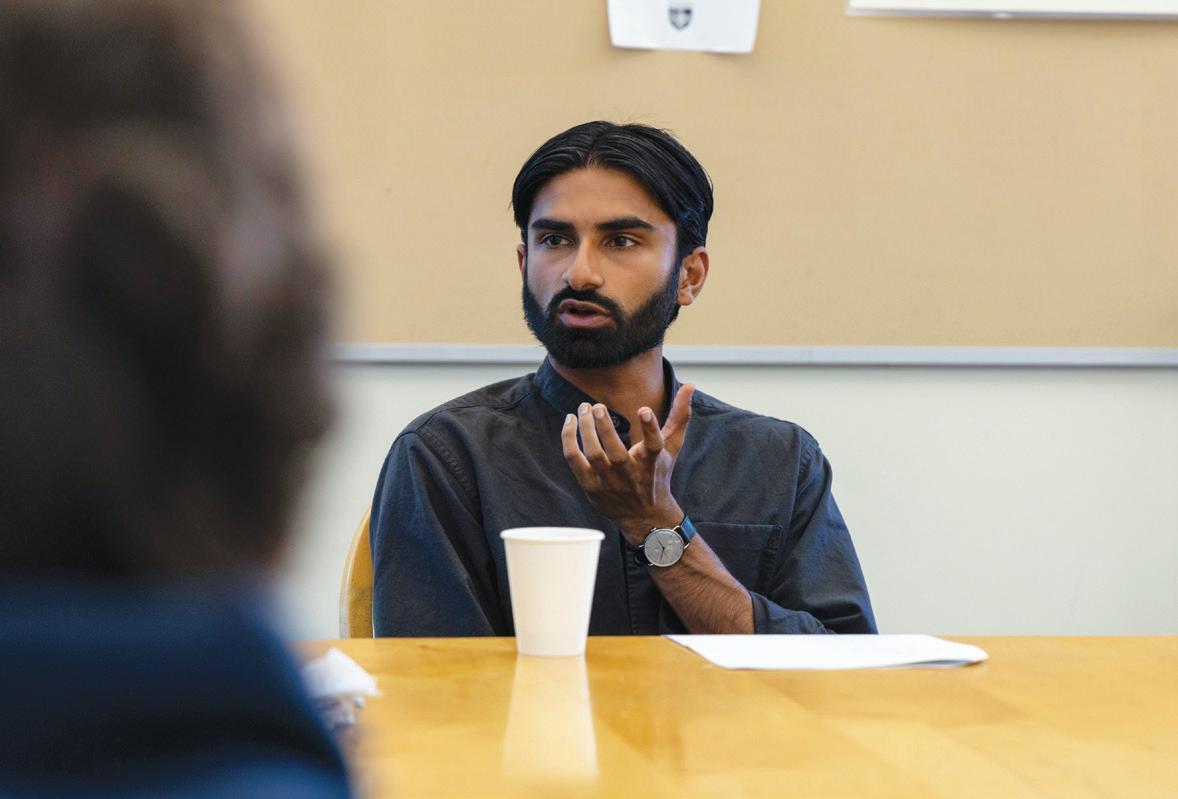
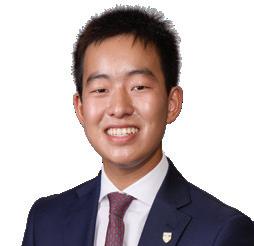
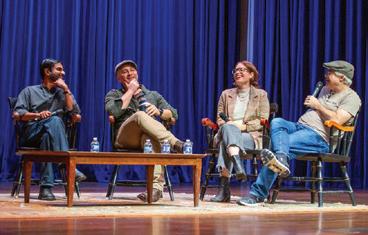
“I don’t know how I would define gifted and talented, (and) I think that is one of the big issues—that gifted and talented could be subjective.”
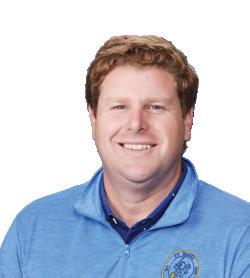
Brian Holzman
By Shiv Bhandari
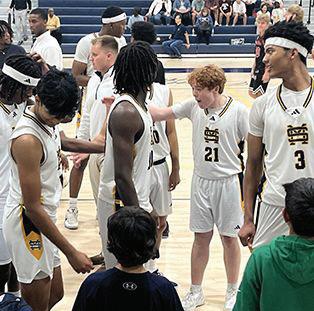
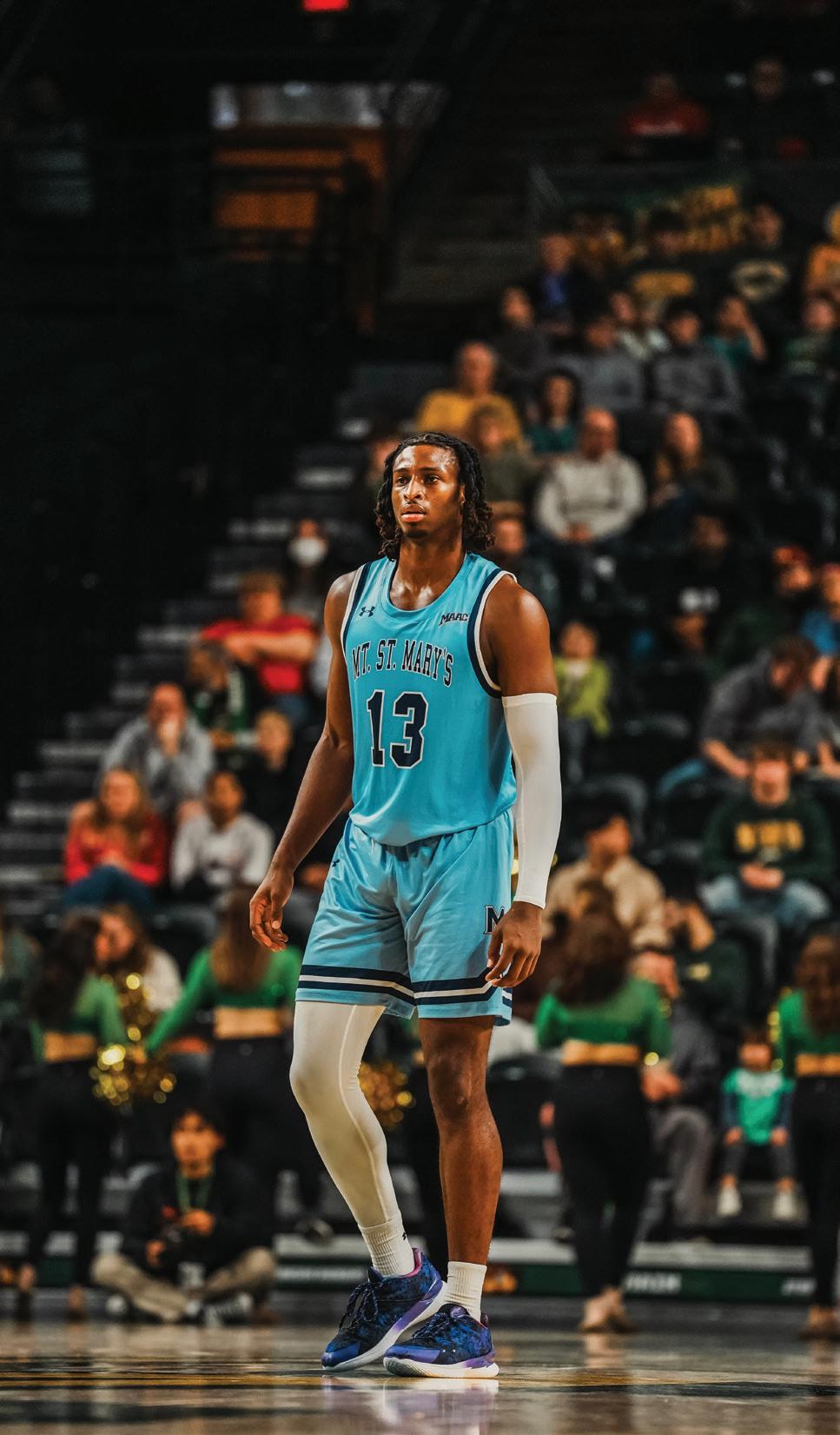
Dickson brothers bond in backfield
By Sam Morse
Friday, December 12, 2025
Volume 72, Issue 3
St. Mark’s School of Texas Dallas, Texas
Mirrored perception
Reputations evolve and reflections shift as students change and grow, but inital impressions are often hard to shake. Pages 16-17.
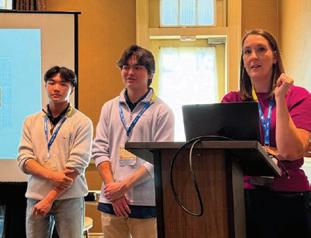
Ronit Kongara, Rishik Kapoor, Kayden Zhong
Photo Illustration by Sebastian Gonzalez and Joshua Goforth
Holding on tight to tradition
The morning after a Thanksgiving full of family, football and green bean casserole should be restful. To my dad, it means getting up before sunrise and dragging my brother and I out of our beds. Rubbing my eyes as I walk downstairs, I notice the house has transformed overnight: lights adorn the trees in the front yard, stockings dangle over the crackling fireplace, and a large space has been cleared in the living room.
It’s time to get the Christmas trees. Plural.
Ever since I can remember, my dad enlists me and my brother to get two Christmas trees with him—one for our house, and one for my dad’s other home, his restaurant Oishii. When we were younger, my brother and I were just spectators, watching in awe as my 5-foot-5 dad wrestled with the 10-foot behemoths like the present-day David in his battle against Goliath.
In recent years, the roles have switched. My dad—self-proclaimed tree whisperer—analyzes the firs with his hand on his chin, wafting with his hand to see if the Fraser Fir’s quality of smell makes the cut. Then after a nod of approval, he gets me and my brother to grapple with the trees to get the trunks trimmed.
To fit the trees into the minivan, we rearrange the seats and lodge the trees into the car until the trunks almost touch the windshield. My brother ends up sitting with his legs sideways because the branches take all of his leg room.
Once we get back home and get the trees out, my favorite part of the process comes. The shake. Back and forth. Up and down. No matter how many times you shake the tree, the dry needles are endless.
We get into the house and go into most tedious part: what I call the “Is the straight?” test. As I screw the tree holder into the trunk, my dad stands to the side to see if the tree is pointing straight up. And for some reason, every time my dad thinks it’s straight, I check for myself and see it leaning like the Tower of Pisa.
And that’s been my morning after Thanksgiving for the past decade. When we went through our routine a couple weeks ago, my dad and I watched as my sister leaned over our staircase to put the star at the top of our tree (which is her only job in this whole process). He nudged my arm and motioned to the new festive centerpiece of the house.
“Promise me that we’ll do this every year.”
I realized that I’m going to be hundreds of miles away from my family 365 days from now. I’ll be back for the holidays, but nothing is guaranteed.
It’s not like I’m going to miss making Home Depot runs at 7 a.m., right? Or lugging around 10-foot trees with frozen hands. Or struggling to wash sap off my hands for 10 straight minutes.
But I’m definitely going to miss doing it all with my dad. That’s a promise I can make.
New additions to your Christmas wishlist
This list balances two budget-friendly essentials with two splurges for when you’re feeling festive. Whether you’re saving or spending, there’s something on this list for you.
By Doan Nguyen
Strong percussion for muscle recovery
Lightweight and portable for travel
Comes with eight attachment heads
Great for athletes or office stiffness
Affordable price point under $30
Highly rated by tens of thousands of users
Spacious surface fits laptops up to 15.6”
Built-in mouse pad for full functionality
Integrated phone slot for multitasking
Cushioned base improves comfort
Solid top ensures laptop ventilation
Portable and lightweight for working anywhere
Loud, clear sound built for open spaces
Rugged IP-67 waterproof and dustproof rating
Drop- and crush-proof for outdoor abuse
Long 25+ hour battery life
Party mode syncs multiple speakers
Strong bass without distortion
Ultra-light and compact for true portability
Smooth, paper-like writing experience
Great for organized digital note-taking
Minimal distractions compared to tablets
Long battery life for all-day use
Syncs with cloud tools for workflow continuity
visit smremarker.com and @remarkernewspaper on Instagram.
Doan Nguyen Enterprise Editor
PAGE 4
Slow emergency response times affect urban areas
Many police departments face understaffing and heavy workloads, leading to slower responses for nonviolent crimes.
PAGE 5
Government shutdown leaves lasting impact
Many families are still working to recover from the aftermath of the longest government shutdown in history.
The ReMarker
Prestige drives college admissions
While name recognition can be an initial driving factor for students, college counselors highlight that success depends more on personal fit.
By Nicholas Huang and Ben Yi
As early as August, seniors are faced with the task of selecting a handful of schools out of the 5,000 American universities. Those looking to study internationally have even more colleges to sift through.
Rather than visiting each individual college, an institution’s name and prestige can provide applicants with a general estimation of the university, but colleges often have more merit than their names alone suggest.
“Ultimately, when it comes down to working with each individual student, we want to make sure that it is not only a college that they’ve heard of, but more more
importantly, how that college fits for them in terms of the alignment,” Veronica Pulido, Al G. Hill Jr. ’63 Director of College Counseling, said.
For the individual and the family, figuring out what type of college to choose — well-known or not — can be a monumental task. Making that decision is a complicated process that begins with understanding a student’s purpose of even applying to college and whether or not a college’s prestige should come into consideration.
“Why even go to college?” Pulido said.“Is it because I need a skill? Is it because I want to continue learning and growing? Is it because I want to know more about myself? There’s lots of reasons that students go to college, but having those initial conversations is really helpful just to put it on the table.”
And even then, understanding a student’s purpose of going to college doesn’t pinpoint the exact college that suits a student. Students still have to pick between small schools, big schools, public schools and private schools out of the many pos-
AVATAR: FIRE AND ASH
sible options.
“While name is a quick way to do it, in terms of knowing that you’ve heard of that institution, it is also a matter of, ‘this is an environment that a student would be in for four years, and so we want to take advantage of all the offerings of that institution,’” Pulido said.
Another integral part of the debate between college prestige and experience is the potential job and internship opportunities that come from a school’s alumni network. A prestigious university, for example, might provide more breadth and depth of opportunities than a lesser-known college.
“In terms of the schools that everyone’s heard of, potentially, those institutions are going to have great networking for alumni support,” Shandera said. “I think colleges that are more well known can potentially just open another door for you, but ultimately, it’s what you do with it is the thing. You can go to any institution and do really well and have great opportunities.”
See Prestige, Page 6
LIGHTING ON MARS
DEATH OF THE PENNY
After 232 years, the U.S. Mint has ended production of the penny since each coin now costs 3.69 cents to make, exceeding its face value. Existing pennies remain legal tender, but they will likely disappear from circulation over time.
The third installment in the franchise, James Cameron’s “Avatar: FIre and Ash” is set to open in theaters Dec. 19. The first two “Avatar” films rank first and third among the highest grossing films of all time, each earning over $2 billion.
Researchers with NASA’s Perseverance rover have detected “mini lightning” by capturing the tiny crackling sounds of electrical discharges. The finding marks the first definitive proof of electrical activity on Mars.
PAGE 7
Students and faculty celebrate gratitude
During the holiday season, recognizing and expressing appreciation for the little things can make a significant impact on daily life.
Friday, December 12, 2025
A message for my brother
COMMENTARY
When I think of my role as an older brother, I think of a guinea pig. I think of ourselves as test subjects that go through countless experiments to see what works and what doesn’t. If something goes wrong, our parents learn from our mistakes to help our younger siblings in their own journey.
My whole life I’ve been the first. The first born, the first to go to kindergarten, the first to speak, the first to go to first grade and the first to apply to college outside Mexico.
There is a silent and powerful pressure that comes with these firsts. It’s the type of pressure that you do not notice until it all comes crashing down. The type of pressure that builds up slowly and that you did not know you carried for years.
For me, the pressure of being the older brother revealed itself last year. It was Feb. 14, my sister’s birthday, and my family and I were headed to visit our grandparents in Mexico. Since moving to the U.S., we hadn’t seen them very often, and considering our grandfather had cancer, we figured we should pay them a visit.
On the way to their house, my grandfather died in his sleep. There was no warning, no sign, just the cries from my mom and my sister as the rest of us sat in silence. The silence felt like one of those hydraulic pressure machines you see on the internet. The ones that begin to crush their target slowly. The machine did not allow me to cry or to scream, only to remain silent.
However, I was the older brother. If someone had to hold their composure, it had to be me. If someone had to help out at the funeral, it had to be me. If someone had to step up on stage at chapel to talk about his now-deceased grandfather, it had to be me. I still remember hundreds of eyes staring at me. Their stares scared me, but the big brother can’t crumble under pressure.
I thought that after that weekend the pressure would die down. After all, junior year was right around the corner with many exciting opportunities: my brother had just gotten accepted at St. Mark’s.
At first, I was excited. I got to go to school with my best friend and show him around the school I loved. However, the older brother’s pressure came back. Once again, the pressure wasn’t something dramatic or instantaneous: it built up and announced itself with silence. I began to doubt myself. I began to question if I was being a good role model for my brother. I wanted to be a good example for him so he could have someone to look up to. As the older brother, I just wanted to be the guy he thought I was.
I wanted him to think of me as someone who could deal with the workload that came with the school, as someone who could deal with the pressure of taking standardized tests and as someone who could give good advice while he succeeded.
“I played baseball from the moment I can remember moving. As a kid, my dad would catch with me in the backyard. Supposedly, my first words were when we were leaving or walking up to a Rangers game, I saw the stadium and said, ‘Baseball, baseball.’ I don’t know if that’s true or not, but that’s how I remember the story. My parents always said it’s just in my blood.”
“I love St. Mark’s. I loved coaching with Coach Hunter, so coming back is bittersweet. It’s sweet because I get to be back where I love coaching baseball and coaching these young men, but it’s bitter because I’m not coaching with Coach Hunter anymore. When he texted me saying the job might be opening, I was elated, but it definitely felt bittersweet.”
“The new facilities are surreal. Walking in and seeing how beautiful, versatile and fun they are is incredible. What used to be a huge pain, especially on a rainy day, is now completely different. With the new Hicks gym and our indoor facility, we can get so much quality work done without wasting time traveling. It’s exciting for all our players to have a place we can all take pride in.”
Looking back, being an older brother can be the most enjoyable experience in someone’s life. To have the people you care the most about look up to you is both a responsibility and a privilege. It can turn into pressure, but it can also become a motivator to work harder and to help yourself and others.
To be the older brother means to be the guy that paves the way for his siblings. Now that my brother goes to school with me, there are so many things I’d like to share: I want to tell him to not worry about college because there will be so many people that flex their grades and scores; I want to tell him that the only way he’ll succeed is if he follows his own path and focuses on himself; I don’t want him to try to be me; I want him to chase his own passions and grow to be greater than me.
Photo by Peter Clark
During the admission process, students explore a wide range of colleges, each offering unique opportunities.
Dennis Kelly Head Baseball Coach
Emiliano Mayo Mejía Digital Issues Editor
5 MINUTES WITH DENNIS KELLY
Call priortization slows police response times
With limited officers and a large urban areas area to patrol, response times bring call prioritization into question.
By Luke Nguyen and Lucas Pei
When science teacher Michael Lane moved into his new house in Oakland, CA, he knew he was settling into a rough area. His neighborhood was placed between a wealthier area and a poorer one, so he equipped his house with an alarm system in case anyone broke into his house. Only six months later, his alarm went off.
Lane was at work when he got a notification on his phone: his home had been broken into. On the frantic drive home from work, he called the police to tell them that someone was breaking in.
“I arrived, and I thought, ‘I don’t know if I should go in, because there seems to be a break, the alarm’s still going off and there could be someone in there,’ so I waited outside,”
Lane said. “I must have waited for about 45 minutes for a cop to show up. It was just like,‘What am I doing here?’”
He simply went in and looked for himself. In the end, nothing was taken from his house. His back window was smashed and someone went in, but they were likely scared off. Lane thinks that the false break in may have been a test to see if he had alarms rather than a real attempt to steal from him.
His alarm went off two more times.
“After that first time, I stopped waiting and just went in, like the other time. I had a feeling no one was there, but I still went in and yelled with a really rough voice holding a baseball bat,” Lane said. “I think the alarm scared them enough, and it shouldn’t have, especially because of how slow the police are to arrive.”
Lane thinks his experience is far from unique. In urban areas, slow emergency response times could leave physically capable residents feeling vulnerable and forced to take matters into their own hands. Police departments prioritize violent crimes and immediate threats to life over property crimes such as burglaries and break-ins.
“It’s like they only respond to pressing emergencies like ‘Hey, I’m being attacked’ or ‘I see someone robbing the convenience store across the street,’” Lane said. “But if it’s ‘Someone broke in,’ or ‘Someone stole from me,’ they’ll get to it later.”
Former NYPD police officer Joseph Palladino explained that police response times can be so delayed in many urban areas, especially for property crimes because of how 911 calls are handled and prioritized.
“When a person calls 911, it goes to a police operator. There are several police operators because there are many 911 calls,” Palladino said. “They listen to your call and identify where it is and how serious the emergency is. Then they dispatch that information to a police officer working in the sector closest to that area so the response time is as quick as possible.”
To understand why incidents like Lane’s break-in fall lower on the priority list, Palladino explains how operators sort emergency calls as they come in.
“One (call) might be, ‘My car was broken into in my driveway and they stole a jacket’. But another call might be, ‘My parent is sick and
(Police) are not always on the streets. They’re in court, hospitals, already on calls, writing reports. There’s not an unlimited amount of police.
Joseph Palladino
Former NYPD police officer
needs medical attention.’,” Palladino said. “That parent becomes the priority, and non-priority call gets pushed down until the higher-priority calls are addressed.”
One contributing factor to slow response times is that there are just not enough police officers in some places. Some cities are even cutting funding for their police departments, which could further exacerbate the issue.
“When you defund, you’re left with less coverage in a geographical area,” Palladino said. “If a city is supposed to have 1,000 officers and now only has 500, that affects coverage.”
A shortage of officers is especially prevalent in urban areas, where there are larger numbers of people and more crimes.
“Where I live in Highland Park, maybe there’s one call a day,” Palladino said. “If you have three or four police cars there, they show up in two minutes. But in urbanized
areas, your apartment could be broken into at 10 a.m., and no one arrives until 2 p.m. You’re still the victim and want police there in 10 minutes.”
People also underestimate just how busy the police are. Even after information arrives, officers are often tied up elsewhere.
“(Police) are not always on the streets. They’re in court, hospitals, already on calls, writing reports. There’s not an unlimited amount of police,” Palladino said. “Sometimes criminals will call in a fake shooting on one street so every officer responds there, and then they rob a house down the block .”
Those kinds of moments highlight just how quickly a department can be overwhelmed.
“People don’t realize there are only so many resources. Once you’re out, you’re out,” Palladino said. “It’s like football — if three offensive linemen get hurt, you run out of replacements.”
The school dedicates significant resources toward maintenance, and in recent years, the maintenance team has dealt with both daily repairs and life or death situations.
The largest case of maintenance work came five years ago, when a tornado wrecked Hicks Gym. Director of the Physical Plant Mark Webb keenly remembers watching the tornado barrel towards the school.
“I saw where the tornado was and where it was headed, and I called our security person,” Webb said. “It was Daniel Mauch. I had him on the phone, and I said, ‘Hey, there’s a tornado headed
towards the school.’ He was in Hicks building, and about that time, he looked out the window, and he saw a tree fly by.”
To fill the void left by the wreck of Hicks Gym, the new Zierk Athletic Center was built in its place, with maintenance efforts being redoubled in the new facility and in the entire school as a whole.
“We average probably 12 to 15 work orders a day,” Webb said. “And that comes to my email and my phone, and it comes to my assistant’s email and phone. We distribute all those work orders to whoever it needs to go to, and it can be to any one of nine of our staff members depending on what kind of work it is.”
Typical work orders involve a variety of issues including plumbing, electrical or maintenance in general. While around 95 percent of the issues are fixed within a day, some projects take longer.
“We had a major electrical issue with the library,” Webb said. “So we had to replace the main wires that go from our basement here and nearby, all the way to the library. That took us all pretty close to three weeks.”
A large part of the facilities team’s role is to perform routine checks, assuring everything runs smoothly on campus.
“We have to pay attention to all that stuff that, and we check on a weekly basis to make
sure the pumps are doing what they’re supposed to do, that the levels are where they need to be and everything’s on track,” Webb said. “If we don’t do that and something malfunctions, we cost the school more money in chemical treatment and electricity.”
Budgeting is always a prevalent issue when managing a large team with substantial projects. That’s where the school’s Chief Financial Officer, Summer Loveland steps in.
“All of those funds are approved by the board,” Loveland said. “First, it goes to our facilities committee, and then it will go to the executive committee of the board, and they’re very keen on doing what the school needs
when we need it.”
With the school’s aim to provide an ideal learning experience for all of the students, Webb and the facilities team concentrate on making sure that malfunctions don’t hinder a classroom environment. Whether students see it or not, a dedicated maintenance team funded by a large budget works around the clock to make sure the campus is safe and usable.
“The school spends a lot of money making sure everything’s nice and neat and cleaned up, all the trash is picked up, all the bathrooms cleaned, everything’s vacuumed, dusted off,” Webb said. “It’s a nightly thing that happens.”
Photo by Terrence Cao
Dallas Fire Station 41 lies less than a mile from campus, serving as one of the primary responders for the community.
Government shutdown leaves lasting impact
After the longest government shutdown in history, families, nonprofits and federal workers endured weeks of uncertainty. Now, many groups are still working to recover from the after-
By Holden Purvis and Sebastian Garcia-Toledo
For 43 days, the government stood still.
From Oct. 1 to Nov. 12, essential government employees worked without pay, airport staffing shortages caused significant flight delays and 12.3 percent of Americans risked losing access to basic groceries.
That 12.3 percent, which includes approximately 40 million Americans as well as 3 million Texans, regularly received Supplemental Nutrition Assistance Program (SNAP) benefits. With SNAP cuts, many Americans were suddenly left with less government assistance.
During 43 days of the government shutdown, Republicans and Democrats failed to reach an agreement over Affordable Care Act (ACA) subsidies. Democrats sought an extension, but, after 14 failed attempts to pass a resolution, the shutdown finally ended when Democrats signed an agreement lacking the ACA extension, with Republicans promising to provide the subsidies by mid-December.
For Director of Community Service Jorge Correa, the shutdown reflected a broader issue — a failure of the two parties to reach any basic consensus, resulting in negative spillover effects for many families.
“Politicians, they blame each other,” Correa said. “If you listen to one side of things, they’re gonna say it’s the other
BY THE NUMBERS
The recent government shutdown, the longest in history, has impacted both federal workers and recipients of the SNAP program.
party’s fault. You listen to the other side, now it’s the other guys’ fault. But the problem with that is that in the middle are the people who actually need the help, and in the end, (those) people suffer the consequences.”
Historically, the U.S. government has spent a large part of the budget on SNAP. In 2024, the U.S. government spent nearly $100 billion on SNAP assistance. But on the 20th day of the shutdown, SNAP funding dropped to critically low levels, sparking what is now referred to as the Day 20 Crisis.
Without that federal support, up to 42 million Americans lost a significant portion of their expected benefits.
“The SNAP program is what they used to call food stamps,” North Texas Food Bank (NTFB) Director of Communications Jeff Smith said.
“It’s for people who meet a certain poverty level. If you qualify for benefits based on your income and the number of people that are in your household, you’ll get an amount on
It’s going to take a while to get everything back in line. I think it’s easier to cut than it is to get some momentum again to restart and support the family. It will definitely take some time and the problem with that is some things cannot just wait.
Jorge Correa Director of Community Service
a debit card that you can use to buy groceries at a grocery store.”
The program also gives families increased flexibility, letting them choose the food that works best for their household at local grocery stores.
While the NTFB usually experiences a significant uptick in demand during the winter, SNAP funding cuts caused an unprecedented surge. Normally, SNAP prevents families from having to rely on local nonprofits for consistent support.
“(SNAP) typically will keep people out of other assistance programs,” Smith said. “We typically do not see as many of those people needing constant help through our partners.”
As families who previously relied on those food stamps had to turn elsewhere for resources, nonprofits were left to fill the gap. In total, the organization provided more than 11.6 million meals this November — an 11 percent increase in demand from last year — stepping in by both
supplying families with food from their partnered pantries and also by organizing drives specifically to support them.
“During the end of October and the month of November we had about 20 special distributions that were solely focused on people who were impacted by the government shutdown,” Smith said. “During that time we provided food to 40,000 people who were impacted by the SNAP benefits being halted because of the government shutdown.”
Like the NTFB, many other nonprofit organizations saw reduced federal funding while similarly facing massive spikes in demand. Correa noted that the community service board, along with partners such as the Salvation Army and Brother Bill’s have also received a surge of requests for increased support.
And although the government has resumed normal activity for around a month, the shutdown’s lasting effects will continue to be prominent for some time. Families coping with lost income or resources will need to recover, and food banks must restock depleted inventories. In addition, federal employees are working to regain financial stability.
“It’s going to take a while to get everything back in line,” Correa said. “I think it’s easier to cut than it is to get some momentum again to restart and support the family. It will definitely take some time and the problem with that is some things cannot just wait.”
But despite all of the adverse effects, Correa sees a silver lining in how the community responded.
“We are in a community where people respond and they take care of each other,” Correa said. “If nothing else, that’s a positive thing, that the American people in general know how to take care of each other.”
Winter sport spirit decreases across school
By Eddie Stehel
Friday Night Lights. A gateway to the weekend, an escape from the week. Whether or not the school’s football team wins, students consistently show up to both hang out with their friends and support their fellow classmates. However, during the winter this energy declines among students.
“Friday night is a social time,”
Associate Athletic Director Josh Friesen said. “That’s why football draws big crowds.”
Unlike football, winter sports
like basketball and soccer typical-
ly have games that occur on weekdays, creating multiple issues including pressure from homework, variability and overlapping games. This can cause students to either not know about the games, only be able to attend one or just not go because of homework and extracurriculars.
“Football definitely has the most spectators,” Friesen said.
“It’s just easier to attend a Friday night game without worrying about homework.”
In addition, the new Zierk Athletic facility bleachers create
a sense of emptiness due to the size being much larger than that of the prior Spencer Gym.
“And while there might be the same amount of students when we were over in Spencer gym before the new gym got finished, it was a much smaller venue, so it seemed like it was more crowded,” Friesen said.
With younger highschoolers unable to drive to games, parents can feel burdened to take their children, even if the game is on campus. And when sports teams play away games, attendance from underclassmen is even
more scarce.
“It’s harder because a lot of those kids don’t drive, so it’s the parents who are going to have to then give the kid a ride,” Friesen said. “Sports that compete on campus naturally get more attention.”
As the winter progresses and seniors start to finalize their college application process, their schedule starts to ease up, enabling them to come and support.
“In the spring, as people are already getting into colleges, and after Christmas, when some of the seniors are not as stressed
out about college apps. I think the numbers will ramp up,” Friesen said.
Friesen believes that an increase in winter sports attendance starts with a tight-knit culture and community between athletes and students that encourages others to show up to games.
“It comes down to the attitude you have. If you want people supporting your sport, you need to show up for theirs — even if it’s not always reciprocated,” Friesen said.
Photo courtesy North Texas Food Bank
Volunteers at the North Texas Food Bank load a truck full of food for families in need.
Seating charts steer student participation
On the first day of school, students either claim seats or are assigned seats that can determine the trajectory of their class experience or even that determine their grades.
By Nicholas Huang and Jay Panta
Seating charts — some teachers love them, and others prefer their classrooms to be an open space. Some students love them, and others hate their rigidity.
But whether assigned or unofficially claimed on day one, the seats that students sit in can quietly shape participation, classroom culture and even academic confidence.
In a setting where students often claim seats early and avoid sitting too close to the teacher, seating arrangements can easily create patterns that influence how students learn, regardless of whether a physical chart is in place.
For Chaplain Rev. Stephen Arbogast, who teaches a section of Foundations of World Societies, the answer lies in creating opportunity.
“The reason I chose a seating chart is to encourage students to sit next to people they might not otherwise sit next to,” Arbogast said. “It also ensures that everyone has an opportunity to sit in a place where they can see and hear the best, so that we don’t end up in a situation where some students always have the perceived ‘good seats’ and some students always have the perceived ‘bad’ seats.”
Arbogast uses a completely randomized seating chart every quarter and shifts students two seats to the left every week, a structured way to balance both attention and engagement. Moreover, in traditional rows, students often rush to the back of the class. But at the Harkness table, they tend to choose seats that feel comfortable, or at least, safely distant.
This way, no student is placed in an uncomfortable situation for a prolonged period of time, which otherwise may affect their participation or outcomes.
The goal, he said, is fairness; it’s to provide each student with the freedom to see, hear and learn as best they can. And by rotating seats weekly, Arbogast ensures that no student is locked into the same perspective.
“If you only (change seating charts) once per quarter, there are going to be fewer opportunities for the students that are sitting far away to be close to me, able to hear and see well,” Arbogast said. “No one is sitting next to the exact same people every time, all year long.”
For teachers, proximity also influences classroom dynamics.
“I know I am more likely to call on the students who are right next to me than the ones who are farther away,” Arbogast said. “I suppose I do ask the students who are closest to me to collect papers or to distribute papers more than I would for guys who are at the other end.”
The seating chart is not only a tool to balance the room, but it’s also able to shape discussion, ensuring each student gets an equal opportunity to participate and engage in class.
“I try to make sure that within any given class period I hear every student’s voice,” Arbogast said. “As a teacher, that means sometimes encouraging students to speak who don’t speak, and reminding students who speak frequently to allow other students to participate more.”
In contrast, for Victor F. White Master Teaching Chair GayMarie Vaughan’s English class, students aren’t given a concrete seating arrangement.
Despite the different processes between classes with and without seating charts, the end goal is still
the same: to ensure that students can always feel comfortable during discussions. In fact, students in Vaughan’s seating-chart-less class still find themselves gravitating towards the same seats day after day.
“We’re creatures of habit,” Vaughan said. “I’ve had boys come back as seniors that sit in the same spot they did when they were sophomores; they must really find that place comfortable.”
And even though students may not be sitting directly next to the teacher, the Harkness table allows everyone to have an equal opportunity to participate. Creating that comfortable communal space allows for students to share a variety of opinions in their English and History classes.
“Making your room a welcoming space for all kinds of viewpoints is super important: a friendly, non-judgmental space,” Vaughan said. “If students feel welcome around that metaphorical table, they’re more likely to engage.”
For many students, the question of where to sit often comes down to finding a spot that helps them stay engaged and productive without feeling boxed in by the people
Making your room a welcoming space for all kinds of viewpoints is super important: a friendly, nonjudgmental space.
Dr. GayMarie Vaughan
Victor F. White Master Teaching Chair
around them.
“I usually sit next to people who I can have a good time next to,” sophomore Chris Householder said. “But they’re still getting their work done, so I’m not too distracted.”
Householder has experienced the pros and cons of both assigned and self-selected seating, but he still prefers the freedom to choose his own spot. For him, having that agency allows him to engage and contribute meaningfully in class, often leading him to better results.
“Personally, I like the idea of choosing your own seats, but I understand the teacher’s perspective as well,” Householder said. “They don’t want kids sitting next to people who are going to be a distraction in class. But from a student standpoint, choosing your own seats is more beneficial because you get to (sit alongside) people that you know you work well with.”
Regardless of how teachers decide to arrange seats, the ultimate goal is to foster a supportive community in the classroom. Seating charts or not, the systems of both Vaughan and Arbogast ensure that everyone can find their place at the table and in the community.
Students weigh college experience against prestige
and do those things, and you can do that at a variety of institutions.”
Students can get caught up in the pressure of choosing the perfect college. However, a major part of the college experience depends on the applicant: college acceptance doesn’t dictate the entire future of a student’s career.
In choosing the right college, students must factor in the size of the institution. For smaller schools with less people, it leads to more individualized teaching, while for larger schools, it allows for more freedom.
a larger institution, while you have to be a little bit more independent and do a little bit more guidance on your own, I think there are a lot of really great opportunities available, because larger institutions tend to have larger budgets and really strong networks and opportunities that are available.”
dents end up doing after graduation.
industry they want to go into and where would be best for them.
“Just because you go to a certain school doesn’t mean a job is going to land in your lap after you graduate. You still have to put in the work,” Shandera said. “You still have to gain experience and network
“Smaller schools are known for having more individual attention, more guidance, hand holding through the process or adjustment coming into college, and that can be really valuable for a lot of students,” Shandera said. “However, at
While most colleges offer a wide range degrees, the college environment offers opportunities outside of strictly education, whether they be internships or networking opportunities. These opportunities can play a major role in what stu-
“It’s probably true that schools that have larger networks, larger name recognition and probably have a little bit more spotlight attention from future employers,” Shandera said. “There might be a lot of groundwork or already laid there might be really strong networks available.
A lot of students choose colleges based on the weather, how far away it is Wfrom home or the cost of living, but the school encourages students to also think about what
“Some schools may have really strong regional connections because they serve an area in particular,” Shandera said. “If you go to a smaller school in New York, they may not have a lot of ties to Texas, but they may have a lot of ties to the tri-state area.”
Ultimately, whether students decide to go to a larger college for better networking or a smaller one for more individualized teaching, applicants must take an in-depth look at each individual college. PRESTIGE, from Page 3
Graphic by Joshua Goforth
In classrooms with traditional row seats, where a student sits can shape how he learns and engages with the community.
Gratitude deepens everyday moments
During the holiday season, recognizing and expressing appreciation for the little things makes a significant impact on daily life.
By Holden Purvis
For Associate Headmaster John Ashton, gratitude begins with recognition.
Recognition of the little details that get lost in everyday life.
Recognition of what he has been given but did not earn.
Recognition of the work of generations before him.
Each and every day, he realizes that he and hundreds of students walk across a campus they did not build.
When he looks around campus, he sees more than buildings. He notices the bricks from Davis Hall surrounding the Quad. He knows the stories behind the names on walls. He remembers watching the Path to Manhood Statue’s massive steel pillars sink 10 feet into the ground during its construction. For him, those intricate details, which could easily fade into the background, take on vivid meaning and bring life to the school.
“All of us are recipients of so much that we didn’t necessarily create, but that we experience and benefit from,” Ashton said.
But while gratitude is powerful, it often arrives late. Ashton has seen how easy it is to miss the moment until it’s gone — realizing what someone meant only after they’re gone, or perhaps wishing you had said the thing you had meant to say while you still could. That regret serves as a reminder to be grateful.
For junior Anderson Lee, that reminder has come through seeing how quickly time has flown by.
“Sometimes in school, I’ll be looking at the clock and wondering ‘when is this day going to be over?’ And I really have that kind of ‘let’s get through’ this mindset,” Lee said. “But when I look back, it’s already been 11 years that I’ve been at St. Mark’s, and sometimes I feel like I haven’t really taken in the whole experience. And so that is something I kind of regret.”
As Lee has gotten older, he has tried to respond more intentionally — sending quick texts to his friends, expressing his appreciation to teachers and coaches face to face
and letting people know what they have meant to him in the moment before it’s over.
All of us are recipients of so much that we didn’t necessarily create, but that we experience and benefit from.
John Ashton Associate Headmaster
Every year for the holidays, Lee visits his family in Houston, a tradition that feels more significant annually.
“Recently, with all the cousins getting older and moving out, and some of my grandparents passing away, I just think that these could be the final years (with some family members) and really appreciate it,” Lee said.“And I think going to Houston to see family is a custom that I’ve done forever, and it’s a good reminder of how important family is.”
Like Lee, Ashton’s perspective reminds him to express gratitude while he still can. He has consistently sent handwritten thank-you notes — to a former English teacher, to his high school football coach, to a mentor he hadn’t spoken to in years. For him, even the smallest acts of gratitude have gone a long way — for both the recipient and the giver.
“To me, there’s nothing like getting a letter, a handwritten note,
because it transcends time forever,”
Ashton said. “I have notes I go back to from years ago, and when you open them up you know they were penned by someone’s hand at the moment.”
During the holiday season, for both Ashton and Lee, everything is about intentionality.
Recognition first, then response — the handwritten letters, the everlasting gestures of appreciation.
And finally, the responsibility of stewarding the benefits they have received and becoming the benefactors for the future generation. Accepting the duty of being the one who gives and expects nothing in return.
At the school, that intentionality is reinforced through annual projects. For years, students have written one or two handwritten notes of appreciation before Thanksgiving for a Leadership Loop, and sophomores spend months writing a fifteen page family history paper in the spring.
“When we talk about the Family History Paper, you learn those sto -
Frequent absences challenge student experience
By Jay Panta
Students miss school for various reasons—injuries, competitions, illnesses or simply the packed schedules that accompany commitments. But regardless of the scenario, the impact on academic and social life is often the same: stress, scrambling and long days spent trying to catch up.
Sophomore Nicholas Petrikas knows these feelings well. After receiving a concussion during offseason baseball practice and bursting a blood vessel in his eye, he missed classes on Thursday and Friday, spent the weekend unable to work and then missed the first four classes on Monday.
Even after returning, he couldn’t take assessments for more than a week and spent two days unable to do anything except sit in class without fully participating.
“I was most worried about the tests, because it was during a week where I had a ton of tests and quizzes back to back,” Petrikas said. “The teachers did a great job of catching me up on my work. Also, because it was a minor injury, I was able to do most of my homework pretty quickly.”
The sudden absences also meant rearranging assessments and frequent check-ins with teachers. Luckily, some teachers offered flexibility, giving him space to recover without falling irreversibly behind.
Yet, even with support, Petrikas believes the responsibility ultimately rested on him. After missing significant class time, he said the recovery process relies less on circumstance and more on effort.
For some students, missing school isn’t a one-time ordeal; it’s a routine part of their extracurricular life. Sophomore Elijah Kim, a competitive fencer, regularly travels across the country for tournaments that keep him out of school multiple times a month.
“Fencing competitions take place about one or two times a month, with most of my absences taking place on Fridays and Mondays,” Kim said. “During these absences, I often have to find ways
to manage my time between fencing and school, usually doing my schoolwork on the plane.”
While he stays ahead as best he can, long weekends away can still create pressure.
“The hardest part about missing school is not necessarily just doing the homework, class notes, and tests,” Kim said. “The most difficult part is balancing the focus needed to compete at a high level with the concentration needed to complete schoolwork thoroughly and thoughtfully.”
Even with the stress, Kim said his teachers make the process manageable.
“While it is somewhat stressful to get all the things I missed made
ries about the sacrifices, decisions that were made that have positioned you to be here at St. Mark’s,” Ashton said. “That’s a project that lifts us up and gives us perspective, in the same way as walking around this campus.”
And while the strongest feelings of gratitude may often emerge around the holidays, it is something that can be practiced habitually. Even simple traditions — like naming one thing everyone is grateful for at Thanksgiving dinner — can spark genuine reflection.
These small gestures and practices can still bring limitless benefits, and the collective sum of those moments, thoughts and actions forms the deepest sense of gratitude.
Ultimately, gratitude is a habit that must be practiced consistently to fully reap its rewards.
“You only have the time you have right now,” Ashton said. “So how can we maintain real recognition of the finite aspect of the time we have together so that we can take full advantage of what it means to be here together.”
up in time, my teachers have all been very understanding, and I feel extremely blessed to have them,” Kim said.
But constant travel doesn’t just affect academics: it can also pull students away from the social rhythms of school life. For Kim, constantly missing out on social events is not ideal, yet he deems it a “necessary sacrifice” — one with a clear purpose.
“The trade-off is definitely worth it,” Kim said.“I fence not only for the love of the sport, but also for my future. Many high-ranking colleges have fencing teams and recruit one or two fencers to their team every year. By competing, I am working towards college admission.”
Photo by Winston Lin
A student holds a thank-you note, a small but meaningful gesture of appreciation.
9
A
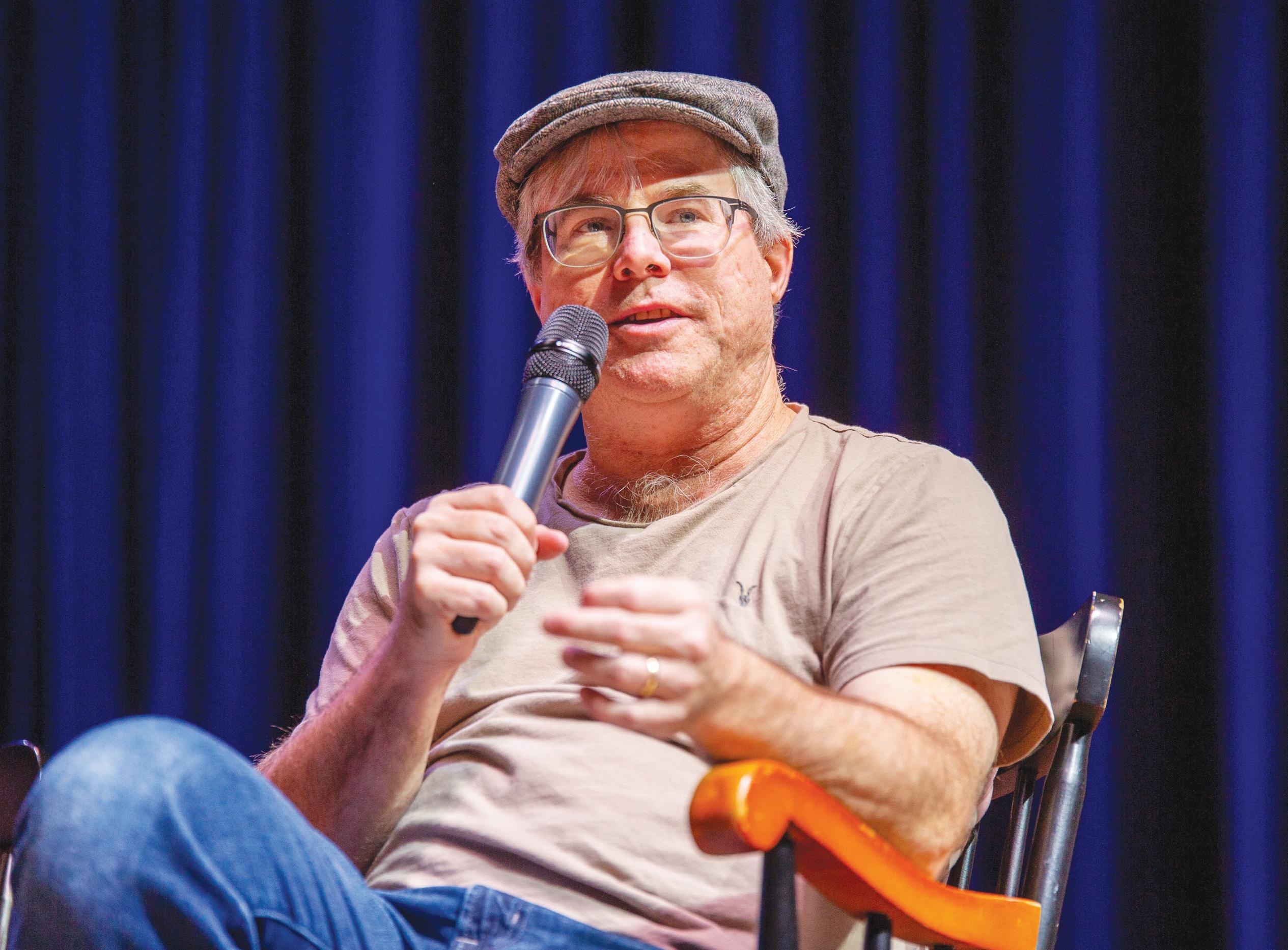
New York Times bestselling author Andy Weir recently visited campus as a guest for the annual Literary Festival.
PAGE 10
Gifted and talented programs face
controversy
Critics argue that gifted and talented programs disproportionately exclude disadvantaged students from entry.
The ReMarker
Chemistry teacher Ken Owens ’89 receives Master Teaching Chair
Having spent over 20 years teaching chemistry at the school, Ken Owens ’89 is now receiving a Master Teaching Chair for his constant dedication to his students.
By Christopher Guffey
Chemistry teacher Ken Owens ‘89 has been announced as the next holder of the Cecil and Ida Green Master Teaching Chair. The chair is designed to recognize outstanding teaching across the school, allowing educators from any department to be considered. Before Owens, the most
PAGE TURNER
TK: It describes the untold lives of the five women who were killed by Jack the Ripper in London in the 1880s. Everybody knows who Jack the Ripper is, but they really don’t know who the women are. And it’s very sad and very telling that he’s much more famous for the terrible things he did than the five women he killed. So it’s not historical fiction—it’s historical research turned into a great book.
“The
recent holder of the chair was English teacher Scott Gonzalez, who served until his retirement.
“I was surprised. I didn’t know that I was being considered for that,” Owens said. “I was very appreciative but also really surprised.”
Cecil and Ida Green were major early supporters of the school, with Cecil, co-founder of Texas Instruments, playing a central role in its growth during the 1950s. This award reflects Cecil and Ida Green’s historic support for the school.
“Cecil and Ida Green had no children of their own, and when people would ask Cecil if he had any sons, he would say, ‘yeah, about 600,’ referring to us,” Owens said.“Sitting in a chair with his name on it reminds me of all the support he gave us during the whole time I was here.”
TECH WATCH
In the 1980s, the school began endowing its first Master Teaching Chairs, bringing in award-winning teachers from across the country. Owens remembers having many of these early master teachers during his time at St. Mark’s.
“I remember just how good they were and how much I enjoyed those classes and those teachers,” Owens said. “To walk behind them is pretty amazing.”
His appointment marks a significant moment in Owens’ 29-year-long career at St. Mark’s, representing not only personal achievement but also a continuation of the school’s tradition of honoring educators who leave a lasting impact on students.
12
Benjamin Yi: Sora is an AI model developed by OpenAI that creates videos from text prompts. It has quickly evolved into a desktopbased application and a new social media app, called Sora 2. Controversies, however, have arisen over property infringement, deepfakes and misinformation. Since its release, Sora has been downloaded over 3 million times.
PAGE 13
Teachers adapt to school schedule
With the new school schedule in its sixth year, teachers have adapted to changes in class time.
Friday, December 12, 2025
Journalism deserves fine art credit
Senior year is the year where I get to choose all my classes. At least that was what I thought heading into Upper School.
After 11 years of following a curriculum that has been set in stone for countless students throughout the school’s history, I thought that I would finally get the opportunity to be in the classes I wanted to take, instead of just the usual courses that are required for everybody.
At the start of freshman year, the Upper School Office had the ninth grade do a Leadership Loop in which we planned out our classes for the next four years. Scrolling through the multitudes of course options on the Course Offerings tab, I marvelled at how many different kinds of classes I could choose from in my senior year, with topics ranging from an English 12 course in the literature of Fairy Tales and Folklore to DNA Science. It was hard to limit myself and pick which courses to take as a senior, but I eventually scribbled down the six options and turned the plan into my advisor, Dr. Moody. Just seconds later, though, he turned to me and warned me that I needed a fine arts credit to graduate, something that my four year plan notably lacked. Confused, I pointed out that I was going to take four years of journalism, which I had already started by taking Beginning Journalism that year.
That day, I learned that journalism does not count as a fine art, something that has baffled me for the last three years. Many people seem to hold the misconception that journalism shouldn’t be a fine art because it supposedly involves no creativity, just writing down and reporting about facts. Yet, as I’ve spent more time in the suite and my responsibilities on staff have grown, I’ve come to realize that this is far from the truth and that there’s so much more to journalism than what meets the eye.
Aside from discovering facts, we have somany more responsibilities. We take vibrant photos and make expressive videos for the website. We write imaginative reviews and argumentative editorials. We design creative page spreads, where each page has to fit a common theme while also being unique compared to all of the pages before. We illustrate graphics and drawings to complement our stories. The first definition of “fine art” on Google is a “creative art, especially visual art whose products are to be appreciated primarily or solely for their imaginative, aesthetic, or intellectual content,” and I believe that journalism fits every single aspect of that definition through its reporting, design and creativity.
Students, teachers, parents and alumni alike read the ReMarker, Focus Magazine or the yearbook not only to learn about what is going on at school, but also to appreciate their visual elements and all of the hours of work and creativity that have been poured into the publications’ creation. In fact, journalism covers aspects of almost every other fine art. Yet journalism is classified as a non-departmental elective while courses like debate remain as fine arts.
Each individual student at St. Mark’s has different interests, and students should be encouraged to take the courses they are interested in. Taking a fine art should be about exploring an interest: while some people like acting, some like expository writing or some other creative activity. If the school wants to emphasize the opportunity to explore different options and interests, courses like journalism should be considered a fine art.
See MASTER TEACHER, Page
Five” Recommended by Librarian Teresa Katsulos
SORA AI RELEASED
Photo Courtesy Dave Carden
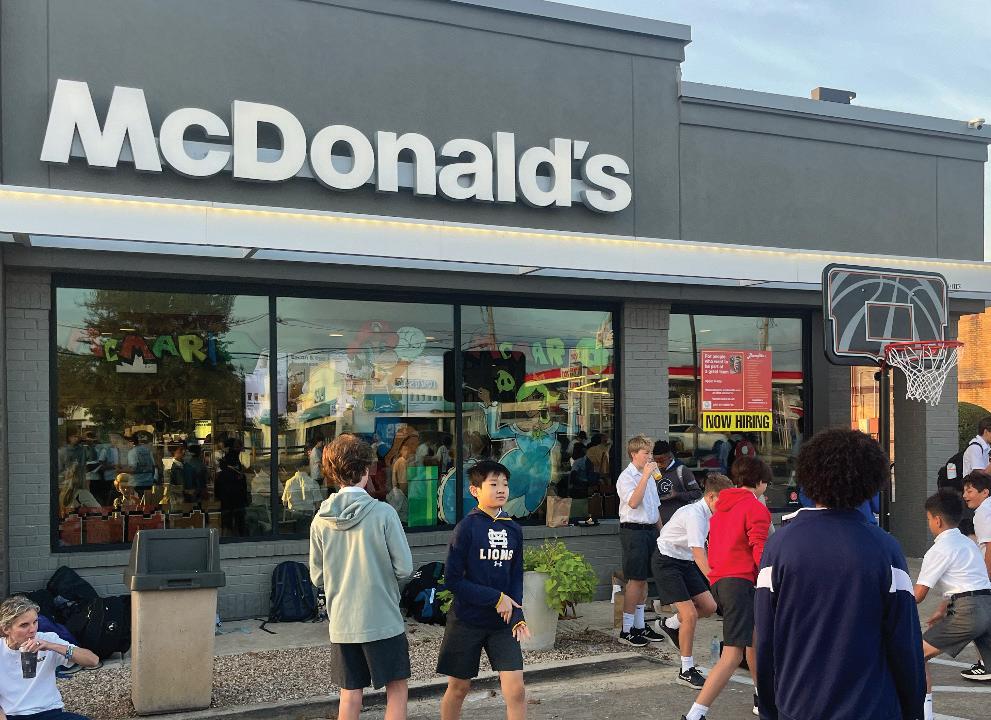
Ken Owens ’89 demonstrates an explosion at his annual McDonald’s Week chemistry show.
Award-winning authors visit campus
Bestselling science fiction author Andy Weir, along with four other guest writers, including Gopal Raman ‘17, visited the school for the 2025 Literary Festival.
By Ronit Kongara, Rishik Kapoor and Kayden Zhong
Every year, the St. Mark’s Literary Festival invites a panel of writers to campus. These writers, spanning from authors to screenwriters, speak to the students, sharing information about their processes, artistic journeys and advice on how to proceed with their own literary journeys.
This year’s edition of the Literary Festival featured screenwriter and director Angela Gulner, singer-songwriter Joshua Davis, children’s author Candace Fleming, poet Gopal Raman ‘17 and Brent P. Johnson ‘89 Guest Writer Andy Weir.
As the headlining author, Weir drew attention from students, particularly for his bestselling novels “The Martian,” “Artemis” and “Project Hail Mary.” These novels have earned widespread acclaim across the literary world and are a part of many high school curricula, including the school’s English 12: Science Fiction, Gaymarie Vaughan’s senior science fiction class.
Weir’s unique take on science fiction has in large part led to his writing success, and this style took a lot of inspiration from the science fiction he read in his childhood. The authors he draws inspiration from, such as Robert A. Heinlein, portrayed the future in a positive way, something Weir strives to do in his writing as well.
“Science fiction just means that the story is taking place in a setting where the people involved have access to technology that we have not yet invented,” Weir said. “The authors (I read) would portray a future that’s really awesome. I feel like a lot of science fiction nowadays has been taken over by dystopian storylines, and I’m not into that because I don’t find it plausible. As you look through time, we just keep getting better and better, and the quality of life for humans on this planet just keeps going up and up and up.”
Weir’s novels start with the scientific backbone, which he gets from a mix of online research and his background in computer science and software engineering. After he writes down what he already knows, he looks online to fill in the gaps in his knowledge.
Though they may captivate many readers, Weir’s novels don’t serve only for entertainment. He also hopes that his books can spark an interest in STEM nationwide by destigmatizing science and fighting the notion that only “nerds” like STEM fields.
“Anything that gets kids engaged and interested enough that they’re learning is good,” Weir said. “You can foster an interest in STEM and make sure that (kids) don’t get punished for it. In my generation, being interested in STEM meant you were a nerd, and you were ostracized as a result.”
His novels can also work to inspire social change. His book “Artemis,” which focuses on a female protagonist, can encourage women to get involved in fields they were previously unable or afraid
to go by presenting a strong, relatable female lead who tackles complex scientific challenges.
“Girls are unintentionally taught that girls shouldn’t like science,” Weir said. “We as a society should work on that and make an environment where nobody makes fun of her for following her interests.”
Having an environment that allows students to explore their passions to the fullest is important to fostering interest in STEM as well as fostering artists. For poet and alumnus Gopal Raman ’17, the school was that kind of environment.
“One of the things that’s interesting is that coming back to campus after many years has reminded me how special the place is,” Raman said. “This culture and this school allow people to really just be earnest and to explore things they care about.”
Raman’s poetry journey began early in his household, where reading literature was a core habit of his family. Growing up, Raman spent a lot of time reading, and as he entered middle school, a desire to find a creative outlet led to the discovery of poetry, which quickly clicked and resonated with him. As he got older, Raman kept writing poetry but also became
Science fiction just means that the story is taking place in a setting where the people involved have access to technology that we have not yet invented.
Andy Weir
more diligent in reading poetry, discovering poets such as Rainer Maria Rilke and C. P. Kavafy who later influenced his writing. But outside of just poetry, another art form had a heavy influence on his writing.
“I think that I’d say a lot of my photography early in St. Mark’s informed how I thought about poetry,” Raman said. “As I was out on a photography assignment taking photos, I would often be writing about the things that I was looking at really attentively. I think a photographic kind of attention was a core part of my practice of looking at things and really trying to play with what it is I saw.”
By the end of high school, Raman had published a book, “Beyond the Edge,” a collection of his own poetry. He had also been one of five poets selected nationwide by the President’s Committee on the Arts to be a National Student Poet. After St. Mark’s, Raman went on to study at Stanford and is now at South Park Commons working to incubate companies. However, he still appreciates poetry and values the lessons he has gained from it.
In his work, finding the right founders to work with is a major part of the company’s success or failure. For Raman, STEM and art
closely align when looking at the characteristics of a good founder.
“When it comes to finding founders that I might want to invest in or work with or support, a lot of what I look for are people who I think embody a lot of the characteristics that many of the best artists I know embody, which is the sense of curiosity, the sense of depth and the sense of authenticity,” Raman said.
Like Weir, Raman mixes his passion for art with his other passions. For young artists on a path similar to his, he suggests exploring all those passions and finding the points at which they intersect.
“I think one of the things that really motivated me when I was young was blending my photography, my poetry and my graphic design,” Raman said. “A lot of the stuff that makes life fun exists at the intersections of categories. What I would encourage young (artists) to do is, if you find it fun, lean into it and see how it can start to change how you think about a lot of other things in life too, because it’s a wonderful window into all kinds of experiences that you can start to have.”
Photos Courtesy of Development Office
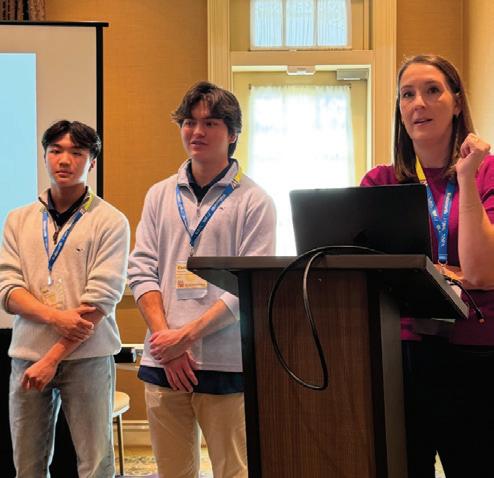
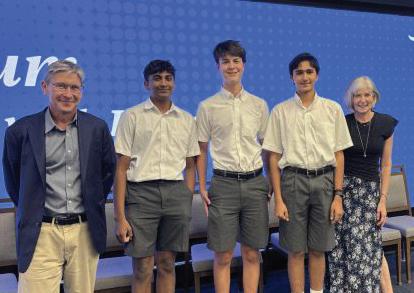
Weir speaks during a panel discussion with three other guest writers in front of the Upper School (Top). Weir signs a student’s book (Bottom Left). Raman speaks to students during a class (Bottom Right).
Brent P. Johnson ‘89 Literary Festival guest writer
Gifted and talented programs face challenges
Recent movements in the education space have sparked debate over whether gifted and talented programs have a place in public schools.
By Michael Chang and Christopher Huang
During his recent campaign, New York City’s mayor-elect Zohran Mamdani proposed a myriad of policies. A lesser-known policy proposal he floated was the dismantling of the city’s gifted and talented programs.
While not as central to his election campaign as other proposed policies, the proposal reignited the flames of a major debate in education over the question of whether or not gifted and talented programs should have a place in public school education.
The controversy in New York City is a microcosm of the larger argument over the status of gifted and talented programs nationwide. Opponents to these programs argue that gifted and talented programs increase the existing racial and income disparities in education, while supporters argue that gifted and talented programs are needed to allow students with differing levels of ability to be motivated and challenged in the classroom.
Brian Holzman, an Assistant Professor in the Department of Educational Administration and Human Resource Development at Texas A&M University (TAMU), points out that gifted and talented programs separate students in the higher track from those in the lower track, which may prevent students from learning with each other.
“One of the critiques of tracking is that you’re separating students that can learn from each other,” Holzman said. “Lower tracks are (generally not) benefiting from learning from their peers as much.
Some critics also argue that the process behind selecting “gifted and talented” students can be subjective, depending on state or school district. Some schools require prospective students to test into the program, and others prefer letters of recommendation from teachers. In either case, racial and income disparities may arise.
“I don’t know how I would define gifted and talented, (and) I
I don’t know how I would define gifted and talented, (and) I think that is one of the big issues, that gifted and talented could be subjective.
Brian Holzman Assistant Professor of Educational Administration and Human Resource Development at Texas A&M University
think that is one of the big issues, that gifted and talented could be subjective,” Holzman said. “And so I think ensuring that there are standard metrics for measuring that is essential. But also, if a wealthier parent is able to get their student tested every year, that’s introducing an external factor into the equation — just being able to test multiple times gives you an advantage.”
But on the other hand, Malcolm K. and Minda Brachman Master Teaching Chair in English Martin Stegemoeller worries that a proposal removing gifted and talented education altogether would promote an “equality of outcome” among the students of public schools, drawing all students to similar academic outcomes instead of allowing the most talented students to thrive.
For Stegemoeller, this topic also has a personal aspect, as he has two children who are in kindergarten and will be testing for gifted
and talented soon.
“If the school system my kids were a part of decided that the goal of the school was an equality of outcome, we would immediately pull our kids from the school,” Stegemoeller said. “We want our kids and all kids at the school to grow and develop as best they can.”
As a former administrator in the Houston independent school district, Holzman has seen firsthand the advantages privileged students have with regard to gifted and talented education. For example, wealthier parents can afford to send their children to tutoring in preparation for gifted and talented tests.
“I’ve worked with Houston ISD, and as far as I know, they have universal testing for gifted and talented (in) fifth grade. Everybody in school takes the gifted and talented test, but if you enter in fourth grade, you’re not going to take that test,” Holzman said. “However, if I’m a well-informed parent, (which
Seniors pursue college education overseas
By Lucas Pei
College decisions can take students in a lot of directions.
Some stay close to home.
Some head for the East or West Coast.
But one senior is looking much farther—5,000 miles across the Atlantic, applying to a school in Madrid.
Hudson Da Rosa ‘26 has been thinking of applying internationally for a long time.
“I was in a French immersion school, so I always planned on applying to international schools,” Da Rosa said. “A lot of my friends who
stayed in those French programs are doing that.”
Before coming to St. Mark’s in eighth grade, Da Rosa attended three international schools all across the globe.
First, he was in California for eight years at the Lycée International de Los Angeles. Then, he moved to Portugal, studying for three years at the Lycée Français International de Porto, before ultimately moving to the Dallas International School for one year. In terms of application to international colleges, the process is not much different than applying to a school in the U.S.
“At most schools, application times would be different—later in the year or early next year, and each school would have its own application,” Da Rosa said. “But (for example), because IE (University in Spain) tries very hard to have an international student pool, they’re actually on the Common Application. I’ve completed two interviews: one where I recorded myself answering questions, and then an in-person conversational interview downtown with one of their representatives,” A major reason Da Rosa is applying internationally is because of his career aspirations.
is) probably related to my whole income and education, I’m going to lobby for my students to take the test. And so that might result in more advantaged families getting more opportunities to place their students into gifted and talented services.”
However, Holzman believes that the issue of inequity in education is a consequence of much deeper problems in the education system.
“Unfortunately, public schools cannot completely solve (these issues),” Holzman said. “A lot of that is due to more structural conditions — segregation and residential housing patterns, for instance. So I don’t think public schools are necessarily going to solve the correlation between family income and education completely.”
Although the educational divide between students based on factors like race and income continues to persist in public education, Holzman believes that it is possible for schools to make positive changes to try to close those gaps.
“If a school district did want to ensure that low income backgrounds had more equitable chances to get into gifted education, they could think about other more systematic changes, like ensuring that the funding levels at various schools meet the students that they serve,” Holzman said. “And then there could be better teachers (at the schools) that can help those students become more prepared for testing. You could also think about finding ways to expand the program and provide special services for students.”
And for gifted and talented programs specifically, there are many proposed ways to improve the admissions process, including universal testing for all students and early identification of gifted students.
“What (some policies) are intending to do is to standardize the qualifications for (gifted and talented programs),” Holzman said. “So that could be one strategy to make sure that gifted education is more equitable.”
As schools continually address the pros and cons of gifted and talented, the status of these programs will likely be a topic of vivid discussion among parents and educators in the near future. Administrators in public schools will continue to have to decide how to allocate resources between general education students and students in gifted and talented programs.
“I’d like to go into diplomacy,” Da Rosa said. “I wanted to pick a school overseas, especially IE University, because three-quarters of their student population is from out of the country, which is appealing because I want to work on an international scale.”
And while diplomacy drew him there academically, something else is pushing him athletically — his passion for baseball.
In addition to his studies, Da Rosa is planning on playing professionally at IE University.
“There are semi-pro and pro leagues there,” Da Rosa said. “I’ve discussed it with (varsity baseball
coach) Dennis Kelly and also with a company that matches players with baseball opportunities overseas called Baseball Jobs Overseas. They both said it’s a very realistic opportunity.”
There are some complications that come with playing overseas. Playing professional baseball comes with a salary, which may interfere with college eligibility.
“If I can play over there and keep my eligibility, I think it’d be really cool to come back (to the US) and play during my grad year,” Da Rosa said.“I’m just trying to play as long as I can and get a good education.”
Graphic by Joshua Goforth
Some critics argue that gifted and talented programs reintroduce inequity into the education space.
School libraries enrich campus experience
The Green and Lower School Libraries enrich learning in the community by offering unique resources and opportunities to all students on campus.
By Christopher Huang and Jay Panta
The two libraries on campus have approximately 60,000 physical books in their catalogs, with thousands of books circulating in and out of them on a year-round basis. These unique fixtures on campus serve as places for students to relax, read and study.
Compared to other libraries, the school’s stand out as centers for learning and are well-integrated into the school community. Moreover, the librarians utilize up-todate technology to increase the effectiveness of the libraries in helping students develop intellectually.
Additionally, the Green and Lower School libraries are incorporated into the students’ education and are part of a program to teach younger students to read and older students to research. Throughout this process, the librarians hope to develop critical thinking skills and a love of reading in the students.
“We no longer just have to rely on print books, and we’re certainly no longer just a big brick building with books in it,” Director of Libraries and Information Services Tinsley Silcox said.“We’re so much more than that.”
Specifically, the Green Library features a unique World Religions Collection, showcasing a handful of rare historical religious texts on display, including the Bhagavad Gita, the Analects of Confucius, a version of the New Testament in Greek and more. Students can fully immerse themselves in these unique and significant texts, provided they put on a pair of gloves to prevent any damage.
“There are some very rare materials out (front),” Silcox said. “I don’t put them behind a glass case. I want the boys to be able to look at them, to see them, to touch them, to smell those books.”
In addition to a large number of print offerings, a standout feature of the library’s digital inventory is the wide array of databases and sources available to students for research purposes, including JSTOR, Encyclopedia Britannica and subscriptions to various newspapers. Silcox feels grateful for the school’s opportunity to offer these resources to students that can enrich their experiences in a way that may not be available at other schools or libraries.
We’re certainly no longer just a big brick building with books in it. We’re so much more than that.
Tinsley Silcox Director of Libraries and Information Services
“We have the same databases that most colleges and universities have,” Silcox said. As libraries continue to evolve beyond their traditional roles, technology has become a driving force in how students explore, research and interact with information. The library has continued to change over the years as new methods and technologies develop.
“If you’d walked into this library 40 years ago, it would’ve looked much different,” Silcox said. “For one thing, half the first floor was probably taken up with the physical card catalog.”
Now, with new technology in place, all a student has to do is type a few words on a library computer to find exactly what they need. One of the newest additions to the libraries is Sora, a digital library platform that enables students to borrow and read e-books and audiobooks from the libraries.
“I’ve been blown away by how many types of sources we have and how much students have access to,” library assistant Hailey Craig said. “One of my favorites is probably Sora — having that e-book and audiobook access is super cool, and that’s something that I never had as a kid because it just wasn’t available.”
Overall, the library maintains a vast and unique collection of books, e-books, magazines and other educational materials that continue to make it a valuable resource for all students.
“Within the fiction section, especially reading for fun, there are all sorts of books that I wouldn’t even think to pick up,” Craig said. “So I think it’s a huge blessing that the library has so many books, because it can really serve all of our community.”
Ultimately, the libraries’ growing blend of print resources, technology and specialized collections reflects a broader mission: helping students become curious, capable and confident learners, regardless of age or grade level. Whether students
come in to research, explore world cultures or simply find a story that resonates with them, the libraries aim to meet them where they are and guide them forward.
“Come to the library if you know what you’re looking for; come to the library if you don’t know what you’re looking for,” Craig said.“Don’t be intimidated by research — you have everything you need within the library, and the help of people who know how to get the information to you.”
can access the code needed to log in to
Two seniors advance to Coca-Cola scholarship semifinalist stage
By Benjamin Yi
Every year, more than 100,000 students apply for the Coca-Cola Scholarship.
Every year, only 150 students are accepted.
This year, seniors Sanjay Bohil and Reagan Graeme applied for the scholarship alongside 107,000 other applicants. Winners receive $20,000 to fund any form of education for the next 10 years.
“It’s the most applied to scholarship nationally, and it’s a scholarship (that is) big on leadership and merit,” Bohil said. “So you have your academics and you have your community impact, along with any
sort of merit through national or international awards. It’s really just a scholarship on everything, like an accumulative scholarship on leadership.”
The first part of the process starts from Aug. 1 and the cut-off date for their application is on Sept. 30. To be considered, students must submit a report on their activities, extracurriculars and accomplishments.
“You have to list all school and academic activities, along with your involvement in each from various different categories,” Bohil said. “Then you have your publications, student media or performing arts.
And then you list your community activities.”
Semifinalists are notified during October with their acceptances or rejections from the second section, during which the number of applicants is cut from 100,000 applicants to just 1,000 students across the country. These 1,000 students are then given until the end of November to complete their second application.
“The second round had six essays, a bit more extracurricular information and then a recommendation letter,” Graeme said.
The number of students will drop further to 250 in late Janu-
ary to early February after another meticulous application process, and then finally, in April, regional finalists are invited to Atlanta to confirm their selection as Coca-Cola Scholars. Aside from the prize money, many Coke Scholars have gone on to be extremely successful in their respective fields.
“Obviously, (the scholarship) is going to be very helpful towards any college, but the Coca-Cola alum ni network is incredible,” Graeme said. “And the people and the connections you have are truly so important. I think that these 150 or so finalists who meet at the official Coca Cola summit will be friends and stay connected forever.”
The entire process of becoming a Coke scholar takes around nine months, and in the end, there really is no major disadvantage to applying.
“For college acceptances, there’s a huge happiness factor if I get (a college scholarship), and I’d probably be sad or upset if I didn’t. But (the Coca-Cola scholarship) is different because it’s not determining where you’re going to spend the next four years,” Graeme said. “It’s just a huge monetary help (that connects you) to a big network and great group of people, so I’m not too nervous about it.”
Photo by Winston Lin
The Green Library’s World Religions Collection displays a handful of rare historic religious texts.
Students
the school’s Sora e-book library by going to their “Profile” tab on the school website and finding the number under the “PIN” field of their contact card.
Bluebonnet Curriculum brings controversy to public schools
In 2024, Texas introduced the Bluebonnet Curriculum under House Bill 1605, which allowed school boards to use the program in exchange for financial incentives. The curriculum has recently attracted controversy for seemingly incorporating religious instruction into public school education.
By Michael Chang and Dominic Liaw
In May of 2024, the Texas Education Agency (TEA) began “to develop state-owned textbooks (and curriculum) that (were) subject to approval by the State Board of Education (SBOE)” under House Bill 1605.
This curriculum is now known as the Bluebonnet Learning instructional materials.
Public schools have the option to switch to this curriculum, with a state-provided financial incentive of $60 per student for schools who choose to do so.
The curriculum’s primary goal is to build literacy and historical knowledge without promoting a specific religion. However, some argue that the decision, which requires students to read and analyze biblical passages, brings Christian literature into K-5 schooling.
“Parents should realize that there’s a certain amount of controversy that’s related to the adoption of the Bluebonnet program in that the Bluebonnet program has references to particularly Christian religion,” History and Social Sciences Department Chair David Fisher said.
On the other hand, Malcolm K. and Minda Brachman Master Teaching Chair Martin Stegemoeller believes the curriculum’s controversy to be minimal — but he also suspects that the program will not fully accomplish its goals.
“I understand the idea that they can have a learning two-for by purposefully using specific stories as the background for learning in other disciplines,” Stegemoeller said. “I really doubt, however, that religion is something that can be learned in a fragmentary way by piecing together backstories from math problems. It requires far more than that. So, I think this effort will be ineffectual, regardless of the separation of church and state issues on the surface.”
Another issue lies in the implementation of the curriculum — because the drafting of Bluebonnet occurred behind closed doors, teacher involvement is relatively low despite the generous financial incentives. Outspoken critics have also commented on the potential one-sidedness of a curriculum centered around “Texan” education. History lessons can be overly simplistic, leading to binary explanations of historical events. This oversimplification can lead to misleading descriptions of historical events. Take the American Revolution, for example.
“(The curriculum) is presented in very black and white patriotic terms. Thomas Jefferson and George Washington together work to make all Americans free, that kind of thing,” Fisher said. “Yes, they were the leaders of a rebellion against Great Britain, they were revolutionary figures and they had some great ideas about independence and human liberty, but they also owned slaves. And I think an elementary school student can handle that bit of information that happened to be a fact.”
However, Fisher believes that although the curriculum may go against one’s personal reli-
gious beliefs, children studying at schools where the Bluebonnet Curriculum is implemented will likely still receive quality education. Many parents, after all, care more about their children learning to read rather than the actual content of the curriculum.
“The Bluebonnet Program is a minor, minor issue. I don’t think most people really care that much about it. And most parents are probably just concerned, is my child being taught how to read? That would be the number one (priority),” Fisher said. “Second to that, if anybody really does think about curriculum in elementary school, it’s probably more about being taught how to read at an even younger age using, say, phonics as the principal delivery method.”
Even with the new inclusion of religious texts, the goals of the Bluebonnet Curriculum remain the same: to teach younger students how to read.
“The Bluebonnet Program is exclusive about referencing Christian or Judeo-Christian reading matter and includes that (sort of education) in their program,” Fisher said.
There are some nation-wide issues that indirectly affect the
I really doubt, however, that religion is something that can be learned in a fragmentary way by piecing together backstories from math problems. It requires far more than that. So, I think this effort will be ineffectual, regardless of the separation of church and state issues on the surface.
Martin Stegemoeller
Malcolm K. and Minda Brachman Master Teaching Chair
passage of programs like Bluebonnet Curriculum — in particular, through gerrymandering, certain districts may be more prone to the goals and agendas of one party. And recently, one of the indirect byproducts was a “partisan” education program.
“This is the problem of gerrymandering across the country, that in the South, legislatures are dominated by the Republican Party, and in the Northeast and in California, legislatures are dominated by the Democratic Party,” Fisher said. “And the reason why that’s the case ultimately has to do with the right of states to figure out their own way of establishing districts, and that political power parties are not prohibited if they run the legislatures from drawing those districts. It’s sort of like telling people who are prone to cheat that they can set up the rules against cheating.”
While gerrymandering helps parties achieve certain agendas, programs like the Bluebonnet Curriculum are not merely the consequence of electoral results during the 2024 election.
“If it hadn’t happened in 2024, it could have happened in 2026,” Fisher said.
Chemistry instructor appointed as Master Teaching Chair
teachers were to me, and that’s a really special part of the job.”
As he reflects on the teachers who shaped him, taking on a mentorship role has become one of the most meaningful parts of his job because it allows him to build the same connections that once inspired him. Owens now aims to offer the same guidance to his own students.
“Occasionally, I get to mentor kids a little bit closer,” Owens said.
“I get to be for them who my best
That desire to match the standard set by his mentors also drives his ongoing commitment to growth. Owens actively seeks new knowledge and experiences to turn into lessons for his students.
“You always want to keep doing better,” Owens said. “So I go to conferences, I take side trips when I vacation to get a little more chemistry. I’ll go to mines and museums, take pictures and go out to find stuff I can bring back and teach.
And I’ll keep doing that.”
Beyond the academic side of the job, Owens is motivated by the daily interactions that come with being in the classroom. For Owens, this dedication ties back to a simple love for teaching and clarity.
“I like making the world clear to people, and I just like the day-today teaching,” Owens said.
Over the years, moments of connection with former students have reaffirmed his commitment. Hearing from alumni long after graduation reminds him that what
he’s teaching continues to make an impact.
“Occasionally, I’ll have alumni come back, and I can get that feedback from students ten, 15 or 20 years later,” Owens said. “That’s great to know that you’ve had an impact.”
Those long-term connections are especially meaningful given the obstacles he has faced throughout his career. One of the most significant challenges was stepping into the role of AP Chemistry teacher during his fourth year at
St. Mark’s.
“I had to take over the AP Chemistry teaching,” Owens said. “Stepping up to that and being able to keep doing it was a real challenge.” Over time, teaching the subject at a high level has deepened both his understanding and his ability to share it.
“And even having two degrees in the field, teaching (chemistry) cements the knowledge better and how to communicate it better,” Owens said.
MASTER TEACHER, from Page 8
Photo by Ronit Kongara
The introduction of the Bluebonnet Curriculum has sparked controvery regarding whether it improperly injects religion into the clasroom.
Faculty reflect on past schedule change
Now used to the new schedule, students and teachers alike have grown to appreciate the change.
By Dominic Liaw and Sebastian Garcia-Toledo
In the middle of the COVID-19 pandemic, Director of Academic Information Systems Paul Mlakar and the school’s administration redoubled their efforts to reshape a traditional schedule into the current eight-day rotation.
For years, school administrators floated the idea of a schedule that would enhance the balance in students’ lives. They started looking into scheduling options and weighing those against the school’s current schedule.
As more studies emerge about students’ attention spans and “work-life” balance, schools all over the country are adjusting in various ways. Whether it’s light tweaking of day-to-day schedules or an extreme shift to a 4-day week, the question of what schedule works the best remains among educators.
The school, however, seems to have found a mix that works well for Marksmen.
“It was part of our goals for St. Mark’s to try to come up with a new daily schedule that could really improve the life of the boys, try to give them more flexibility, try to give us more flexibility (and) try to reduce the load on the boys, which we’re able to do with this new schedule,” Mlakar said.
The former schedule, which was broken into three trimesters, consisted of a five-day rotation to align with the five days of the week. Each Middle Schooler took the same eight classes every day from 8:00 a.m. to 3:55 p.m. However, with the schedule change, the school year was now broken into semesters. Students also had six classes each day from 8:30 a.m. to 3:25 p.m. on an eight-day rotation, allowing for more variability. With the changes, one hour was shaved off the schedule.
Following the chaos of the COVID-19 pandemic, students grew to love the new schedule.
“The student body was either in the positive or the strong positive that the new schedule was so much better for them than our old schedule was,” Mlakar said. “That was very satisfying and (rewarding) for all the work that we put into com-
ing up with this new schedule.”
With classes meeting every day under the old schedule, students could expect huge homework loads every night. With the new schedule, however, students not only have fewer classes but also less homework each day.
“When we implemented the new schedule, the faculty already had a policy about how much homework you could give per week, and we maintain that standard,” Mlakar said. “So it really has helped with the workload for some students and cut that back for them.”
Moving from a long-standing schedule required adaptations from faculty members in reshaping the curriculum to accommodate less class time overall.
“We had to take a look and ask, ‘how do we go from seeing kids every day to seeing kids just every three out of four days?’ How do we continue to teach all the topics and to go as deep as we want to do that? What was two 45 minute class times, now we have to somehow accommodate in a 70 minute class.
Every department had to do that and take a look at their curriculum
on how to adjust it,” Mlakar said.
Attention spans have dropped across the country to nearly a third since 2004 due to factors like social media. Because of this, teachers may adapt the class time itself to allow for breaks.
“Long classes are not great for lower schoolers, because realistically their brains are not able to sustain attention for that amount of time,” Director of Marksman Wellness Center Gabby Reed said. “Even in middle school, the 70 minute periods are best when the teacher allows for a brain break in the middle, just because, from a human perspective, it’s hard for us to pay attention for longer than 25 minutes frankly.”
Even though attention spans have shrunk over the years, faculty members still value the long period block.
“In my Health & Wellness class, it gives me the chance to show videos that I wouldn’t get to do. I can show reform videos, we can have (better) discussions,” Reed said. “If there’s a group project in humanities, you can actually be (doing) hands-on things.”
The student body was either in the positive or the strong positive that the new schedule was so much better for them than our old schedule was.
Paul Mlakar Director of Academic Information Systems
In order to make the most of an education, sacrifices to scheduling structure have to be made. While it’s not ideal, the balance is important.
“I think adolescent brains would love a nine o’clock starter. Adolescent brains like to sleep in, and they like to go to bed late,” Reed said. “I thought it was a huge improvement that we gained that 30 minutes. I don’t see us ever moving to a later start time just because it pushes everything back in the day, basically. But this is better for teenagers, for sure.”
As the new schedule has run its course, students and faculty members have adapted, some not even having been at the school to experience the previous schedule. Despite slight imperfections, Mlakar doesn’t see any major reason for why the schedule would need to change any time in the near future.
“There’s no perfect schedule for any school. Every school would love to have a tweak here or there. I wish our middle school students had more time for clubs,” Mlakar said. “But we’re doing the best we can with that.”
Good time management habits produce positive outcomes
By Alex Calder
Students all around the world struggle with the same problem: what should they do with the 24 hours they are given each day? How much time should they allot to academics, sports, extracurriculars, sleep, family time and fun?
The school aims to help students address this problem by building a strong time management foundation from a young age.
“Time management is a skill that is super important to learn
and build, starting as early as middle school,” Director of Academic Success Julie Pechersky said. “I think that students need to have some of those skills, so that when they move into Upper School and they’re more focused on the grade itself, they already have those skills.”
In an age where it is incredibly easy to get distracted, giving students the right resources to manage their time and stress is increasingly important and something the school continues to prioritize.
“It’s about building the habits
(for the) long term more than the immediate right now,” Pechersky said. “An organizational system is critical in that it usually has some way of managing your time from a short-term perspective and a longterm perspective.” Time management can be hard, and it becomes even harder when students can grab a device and get a quick dopamine hit from Instagram, video games or talking to friends. That is part of the reason building consistent habits is difficult, but Pechersky assures students that pushing past the dis-
comfort is worth it.
“If you practice good habits long enough consistently, you’re going to see positive outcomes from it,” Pechersky said. “The reward is being able to say, ‘Okay, I changed something that wasn’t fun or comfortable, but look at what it did for me.’”
Pechersky recognizes that many middle and high school students tend to procrastinate. Part of her role is helping students see why planning ahead matters, especially for those who struggle with putting things off.
“Some of us tend to procrastinate, and a lot of times those people think that works better because there’s a sense of urgency,” Pechersky said. “They think ‘I know I’ll get it done,’ but then they learn long-term that it can lead to a more stressful day-to-day life because you’re constantly trying to keep your head above water.”
The message is clear: with the right strategies, steady support and consistent habits, students who struggle with time management can still make meaningful progress if they want to.
Photo by Winston Lin
Middle Schoolers typically go outside and play games like frisbee during breaks between humanities periods, a consequence of the new schedule.
LPAGE 18
Blues enables students to express their passions
In a club based in decades of community and blues culture, students discover confidence through practice and connection.
PAGE 19
Alumus leads fight against child poverty in Dallas
After helping reduce Dallas child poverty, Alan Cohen ’01 now sets his sights on the rest of Texas and beyond.
Alumnus finds purpose past his paycheck
After leaving Wall Street for the Dallas Fire Department, Hinojosa found purpose in a career that changes lives.
By Kiran Parikh and Dominic Liaw
The James Avery keychain on Dallas Fire Department Deputy Chief Cristian Hinojosa’s ’96 ring is worn smooth now, the engraving almost gone. He carries it everywhere.
It was a gift from a young mother he once helped bring back to life, a woman he first met lying pulseless beside her baby’s crib in a small home in Lake Highlands.
Her husband had called 911 in a panic.
Hinojosa and his team from Engine 28 worked in practiced silence—compressions, medications, intubation—until somewhere on the way to the hospital, she started breathing again.
By the time they reached the hospital, the woman who had been clinically dead was breathing again.
The keychain doesn’t look like much anymore, but he keeps it as a reminder of the night everything he believes about service crystallized.
It wasn’t always like this.
Hinojosa used to chase paychecks. At 21, he worked in finance, pulling 80-hour weeks and managing accounts in a world of numbers and deadlines. On paper, it looked like success, but each day left him feeling hollow, like he was watching life
pass by through a spreadsheet.
“I had virtually no time for family or friends,” Hinojosa said. “Externally, did it look like I was successful? Maybe on the outside. Could I buy nice things and go to the good restaurants and take an occasional luxury trip? Sure. Did I feel fulfilled? No. I had what I call my golden handcuffs.”
Hinojosa thought it was New York and that, maybe, he would feel better if he went back home. A year into the same job in Dallas, he was still miserable.
He still woke up with the same empty pit in his stomach, asking himself why he felt so wrong.
One morning, sitting in his car in the parking lot of the Bank of America tower, he found himself stalling to avoid going up the elevator and into work.
“I remember driving around the parking lot before going into work and thinking to myself, ‘Just one more song on the radio. I’m just gonna listen to one more song,’” Hinojosa said.“And it slowly turned into ‘I don’t want to do this. I don’t want to start this day again.’”
That was the moment he finally called his dad.
Hinojosa still remembers how anxious he was before that call. He remembers how much he wanted his father to be proud of him, to see that he was choosing something meaningful and fulfilling.
He assumed that his dad wouldn’t understand why he, someone with an Amherst degree and a six-figure job on Wall Street, would walk away.
But the response surprised him. His father, a seasoned advertising executive, listened quietly and then asked just one question.
Is this something that will make you happy?
On Oct. 19, 2005, Hinojosa walked into the Dallas Fire Academy, no longer an assistant vice president but a 28-year-old rookie. The pay cut was steep, but the trade-off felt worth it.
“My quality of life, my fulfillment, my purpose, went through the roof,” Hinojosa said. “And I remember I got to the Fire Academy, and I put that uniform on, and I thought, ‘Oh, my gosh, like, I just hit the jackpot. I just hit the job jackpot.’”
And the first time he put on the uniform, he felt something he hadn’t felt in years: excitement, purpose and alignment.
Since that phone call, Hinojosa spent 20 years serving the city in his uniform, on the ladder truck, in the ambulance, on Engine 28 and eventually in leadership roles. The feeling of fulfillment never faded. Every new year became the best year of his career.
As time passed, Hinojosa has reflected further on his time at Bank of America.
“(At Bank of America) I was on somebody else’s ladder, thinking that it was my own ladder,” Hinojosa said. “And I was climbing rings that were a construct of what I thought I was supposed to be doing.”
PAGE 20-21
Music shapes campus, personal lives of students
Listening to music has numerous associated benefits, but headphone restrictions make it more difficult to utilize freely.
Friday, December 12,
Exploring historical homes with Dr. Hamilton
By Shiv Bhandari
Ever since she visited 19th-century American author Willa Cather’s house as a young girl, history teacher Dr. Andrea Hamilton has been fixated on visiting the houses of her favorite authors and important historical figures.
Hamilton was starting middle school when she first proposed to her parents that they make a trip to see Cather’s house, as she was studying her literature in school. It was just a simple road trip in her home state of Nebraska, but it ignited a passion within her, an interest that has brought her across the Oregon Trail, into presidential residences and through the moors of West Yorkshire.
Out of all the houses she has visited, Hamilton has three favorites, each one with their own quirks: Beatrix Potter’s, the Brontë sisters’ and Louisa May Alcott’s.
Potter’s house is in the Lake District of Northern England. A quintessential countryside cottage, the grey estate sits on top of a hill and is overrun with wild gardens that engulf the rugged stone walls and slowly spread across the moss-colored window panes.
Hamilton’s tip for visiting the house is to stay overnight nearby to beat out the crowds during the day and experience the house at its quietest, simply lounging in the nature and history of the landmark. Louisa May Alcott’s house, on the other hand, sits in the suburbs of Concord, Mass.. On the outside, it looks like just another colonial-era building, but after walking past its wooden exterior and walking into the charming, cozy bedrooms and the impressive yet humble dining areas.
Hamilton’s favorite note on the house is that, if you look closely, you can see the creative drawings of the Alcott children right on the walls and see the very desk where Louisa Alcott wrote her famous novel “Little Women.”
And, in contrast to Potter’s house, a visit to Alcott’s house can also include a visit to other famous writers like Nathaniel Hawthorne and Ralph Waldo Emerson, offering a more expansive opportunity than rural houses like Alcott’s or the Brontës’.
The last of her favorites, the Brontë house, sits on the edge of Yorkshire, an industrialized county north of London. A grey, gritty house, it offers a glimpse into the life of the family, as the nearby graveyard and the notorious moors mentioned in the sisters’ writings bring visitors back into 19th-century England.
CALENDAR
The
CHRISTMAS PARTY Before Winter Break, the school will hold Christmas Convocation and festivities.
Hamilton has traveled across the United States and England to see these houses and more, taking treks to the Ozarks and trains across England. For her, the experience of seeing where a historical figure lived brings color to their character, offering up information about them that no textbook or online article can offer.
Athough she has already seen many of her favorite authors and historical figures already on trips with her family, she looks forward to what experiences the future holds, and she particularly has her eye on Ernest Hemingway’s house in Key West, Fla..
Nolan Chu Senior Walker Stevens Junior Larry Fan Sophomore
Photo courtesy Cristian Hinojosa ‘96
Hinojosa radios his crew while on duty. Before he became a firefighter, Hinojosa worked as an investment banker.
Tony Lu Junior
Marksmen Connect fosters alumni connections
The Alumni Program’s online system gives graduates the ability to form connections with one another.
By Luke Nguyen
Students never leave the school, even after they receive their diploma. They become a part of something far bigger: an alumni community that stretches across workspaces, cities and generations. At the center of that network sits Marksmen Connect, the school’s online alumni platform.
Ahlberg & Ribman Family Director of Alumni Relations Jack Mallick ’14 aims to ensure that student relationships with the school don’t end when they receive their diploma.
“People enjoy a lifelong relationship with the school,” Mallick said. “It’s so much more than just a place where they come to attend school from first through 12th grade. This is a school and a community that will stick with you for the rest of your life.”
Mallick believes that a student’s relationship with the school evolves over time; many Marksmen return to campus and remark on how different it feels compared to when they graduated, and many also feel a duty to give back to the community, “Marksmen Connect is our online alumni engagement platform,” Mallick said. “The goal of Marksmen Connect is to create a platform where alums can view and see folks all over the world and keep close with one another.”
He believes people feel a responsibility to network with one another, whether through reaching out, answering phone calls or responding to emails from other alums. Marksmen Connect allows people to see career opportunities or see if another Marksmen is moving to their city.
Mallick credits the strong connection between alumni as the reason why more than 50 percent of them give back to the annual fund every year. He believes that this is what makes the Alumni Association special and unique. To him, the school is home.
“I spent first-12th grade here, and I’m one of four boys (in my family) who went here,” Mallick said. “My mom works in the Lower School. St Mark’s is family. I love keeping our alums closely connected with the school and continuing to push the school forward in a
positive way.”
St. Mark’s is a family. I love keeping our alumns closely connected with the school and continuing to push the school forward in a positive way.
Jack Mallick ’14
Ahlberg & Ribman Family Director of Alumni Relations
The Alumni Board oversees committees ranging from awards to event planning to fundraising. Each summer, committee chairs go on a retreat to set goals for the year, which are then shared with the full 43-member board. It’s a coordinated effort to get ready for the upcoming school year, and it relies heavily on alumni who volunteer their time.
Active students don’t receive unfettered access to Marksmen Connect, at least not without understanding how to use alumni resources appropriately.
“We are happy to give some (students) access to Marksmen Connect prior to graduation, but we always have them come up here and meet with somebody in our office to learn about best practices and appropriate usage: what the tool is meant for,” Mallick said. “The tool is not meant for people to just say, ‘Hey, I’m a junior at St Mark’s, and I want an internship this summer, so I’m going to email 100 alumni that are involved in
consulting and ask for an internship next summer.’”
To Mallick, the alumni network provides a place for alumni to find mentorship and ask for advice. He wants to avoid students mass-calling alums and deterring them away from making future connections.
While this may mature into an internship, the program’s goal is to foster connections between Marksmen.
Recent anecdotes suggest that this approach is highly effective.
“We hear constant stories of alums who go on Marksmen Connect and find guys who fit the bill to work for them,” Mallick said.
“We always hear from our alumns that ‘Marksmen love to hire Marksmen.’”
The Mentoring and Networking Committee, a subcommittee of the Alumni Board, has a goal to make alumni’s first instinct to look at Marksmen Connect when they have the opportunity for a job or internship.
In this way, the Mentoring and
School prepares for ISAS Fine Arts Festival
By Benjamin Yi
St. Mark’s will be hosting the Independent Schools Association of the Southwest (ISAS) Fine Arts Festival this school year from April 9-11.
The ISAS Arts Festival first began in 1967 with an invitation from the Casady School Choir to the choirs of Wichita Collegiate and Holland Hall. Since, in the past 60 years, the festival has grown to represent all of the ISAS partner schools. Typically held each spring on the campus of a different member school, the festival brings together approximately forty schools and around 3,000 students, aiming to foster creativity, experimentation and mutual appreciation among a diverse body of participating students and adults.
Lasting three days, the program
is an opportunity for kids to perform, exhibit and receive feedback and judgment from professional artists and performers. This year, the school is due to hold the festival in its largest form ever.
“We’re looking at having probably about 3,200 students from 40 schools, plus their teachers,” Anthony Vintcent Fine Arts Department Chair and ISAS Festival Chair Scott Hunt said. “So we’ll probably have around 3,500 to 3,700 people on campus for the three days of the festival.”
Due to the extensive amount of preparation and set-up required to host such a large festival, during that week, the school will be closed from Wednesday to Saturday. No one, other than people with credentials, will be allowed on campus.
“Wednesday is a faculty set-up
day. We have to transform the campus and get it ready,” Hunt said. “The festival will begin at noon on Thursday the 9th and go until 10 p.m. that evening. And then on Friday the 10th, the festival will go from eight in the morning until 10 p.m. And on Saturday, it goes from eight in the morning until noon. All athletics, clubs, and activities will be canceled; no practices, meetings or competitions will be held on campus.”
This year’s program will allow all Upper School students who are currently enrolled in a fine arts program to participate. Normally, when Marksmen travel to other schools for ISAS, only a fraction of the students are able to attend, but this year, everyone will be invited.
“We have 280 Upper School students enrolled in the fine arts, and
every one of them will be invited,” Hunt said. “And we’re going to need their help, because of course we need to be good hosts to the thousands of people who will have the opportunity to enjoy our campus for three days.”
With less than 6 months left before the event, the school’s executive team has spent a considerable amount of time planning to ensure that everything goes according to plan.
“As you might imagine, the prospect of feeding 3,700 people, building multiple stages, equipping spaces with instruments, audio and visual equipment, lighting, generators, coordinating adjudicators, workshop presenters, parent volunteers, faculty support, security staffing, concessions, food trucks, and so much more is a Herculean effort
Networking Committee’s goal is to expand the capabilities of Marksmen Connect to be somewhat of a LinkedIn for the school.
Current students recognize the importance of alumni relationships and the responsibility to give back to the school’s community. Andrew Zhang, senior and co-president of the Student-Alumni Association, sees how important these connections are.
“A big part of any school is the alumni,” Zhang said. “When you’re evaluating schools, you evaluate how strong their alumni network is. Alumni usually come back and are really enthusiastic about the school. I feel like they involve themselves more than in any other high school. At alumni events, there are always so many people.”
The strength of the alumni network reflects a larger culture of St. Mark’s: inclined to serve one’s community, connect with its members and pave the way for future generations.
that will be a community-wide lift,” Hunt said.
Hunt and Head of Lower School Marion Glorioso-Kirby are CoChairs of the festival, heading a steering committee that includes Headmaster David Dini, Associate Headmaster John Ashton and Chief Financial Officer Summer Loveland. Working with Alli Eagan, Festival Coordinator, and Kristin Mlakar, Director of Operations, the school has been coordinating with a host of other partners including fine arts department faculty, facilities team, security team, department chairs, Sage and a host of outside vendors to support the festival.
“We are both excited and confident that our broader St. Mark’s family will come together to host what is shaping up to be the largest ISAS Fine Arts Festival on record.”
Photo by Winston Lin
Members of the student-alumni association meet with alumns, strengthening relations.
WRITING ON THE WALL
People often say that one singular action doesn’t define who someone is. But to many, that first impression, first mistake, first success becomes the basis for how someone is judged.
People remember what’s significant. The off-putting comment made in freshman year. The emotional speech delivered in chapel. The game-winning goal scored against a rival. Long after context fades, these small moments linger, quietly shaping perception.
Reputation forms in fragments, little snapshots, that create a caricature of who someone is. It isn’t always built intentionally, nor all at once. It develops through everyday choices: how someone carries themselves in class, how they treat others in passing, whether or not they show up when it matters. Over time, those moments accumulate.
But if a moment becomes memorable enough, it has the power to define the whole.
Once formed, a reputation begins to work ahead of someone. It influences how much grace they’re given after a mistake, how seriously their voice is taken and what opportunities feel within reach. And while the person behind that reputation continues to change, grow and mature, perception often lags behind reality.
In a world where seemingly every action is noticed, published or posted, reputation becomes unavoidable. It’s a shadow cast by both shortcomings and accomplishments, one that follows students through their years on campus and beyond, shaping how they are seen, and sometimes how they see themselves.
Whether through his leadership in the Student Alumni Association or Lion & Sword, senior Andrew Zhang makes his presence known on campus. After serving as class president for four years, he’s fully aware that people have been watching him. His demeanor. His speeches. Even his grades. Every action he takes can build or break down the way people view him; his leadership on campus has made him someone that students, teachers and administrators instinctively look to.
“In philosophy class, we’ve been reflecting on agency, the feeling that what you do matters,” Zhang said. “When I put effort and passion into the things I do, I know my reputation will come along with it.”
But personal reputation isn’t always formed in the spotlight. Senior Ekaksh Bansal thinks his place in the community comes from being a reliable friend on a daily basis.
“I think I’m pretty well known for being the type of person who has a nice, outgoing personality,” Bansal said. “I’m someone who anyone can talk to.”
Each student develops his own reputation that reflects a caricature of who he truly is. Managing this sometimes blurred reflection of himself requires action, and restoring a fragmented legacy takes time and intentionality.
By
Doan Nguyen, Kevin Ho and Christian Warner
Photo by Winston Lin
The name of each alum, since the first graduating class, is inscribed on the walls of Graduate Hall. They are absent from campus but their legacy and reputation can still be felt.
Both Zhang and Bansal have noticed that a reputation formed in early high school or even middle school can linger around for considerable length. Especially for impressionable classmates, old rumors they might’ve heard regarding a person years ago can stick, even if that person has long since matured. However, Zhang and Bansal make sure not to harbor such predispositions before getting to know someone.
“Most of the time, if you hear something bad about someone and just talk with them, it’s overblown or not exactly true.” Zhang said. “At some point, we grow past the point where we have grudges.”
Sal Hussain ‘23 sees another angle to the gap between who a student used to be and who they’ve grown into. A bad first impression can hurt a relationship that hasn’t even gotten a chance to form. He believes mistakes made at a young age can be forgiven as long as the intentions were in the right place; old errors shouldn’t dictate an entire character.
“There will always be people who don’t want to acknowledge your growth,” Hussain said. “That doesn’t mean the growth isn’t there.”
And it isn’t just individual students who carry reputations; whole classes do. Student-run events like McDonald’s Week or the Senior Auction generate discussion among the school’s administrators as well. As senior class sponsor, Victor F. White Master Teaching Chair Dr. GayMarie Vaughan hears the comments about the Class of 2026 from other faculty members— both the compliments and the complaints.
“After somebody’s done something boneheaded, the whole class will take a collective hit,” Vaughan said.
But J.J. Connolly Master Teaching Chair Nancy Marmion notes that misbehaving freshmen eventually mature, as even classes with bad reputations can often surprise people with their leadership during senior year.
Teachers and classmates may eventually forget student misbehavior in class; but unlike memories, digital footprint never fades. Now more than ever, reputations need to be kept in check not just in school hallways, but online. A stray Instagram comment, an incriminating screenshot, a moment taken out of context can snowball into a permanent stigma.
“Whoever runs for president— someone will comb through every social media post they ever made,” Marmion said. “In today’s world, I’m not sure people are surprised that they have a reputation, because it’s so easy to spread that reputation in ways that aren’t always positive.”
The school carries a reputation that often precedes its students, one built as much on expectation as reality. Around Dallas and beyond, some may recognize a Marksman and unconsciously assume a put-together young man.
Zhang feels the weight of expectation most when he competes. He prefers school water polo over club because representing the school means showing out for something bigger than himself.
Because when he gets into the pool each time wearing a blue and gold swimsuit, he pushes himself to live up to the standards others before him have already set.
“When you go out and you’re wearing St. Mark’s clothing, people see you differently,” Zhang said. “I think people probably are less aware of that than they should be.”
Every year, Marmion takes her
Spanish IV-H class on a field trip to the Meadows Museum on the campus of Southern Methodist University (SMU). Though she’s rarely worried about their behavior, she reminds her students that there’s a standard they must rise to, not because she’s demanding perfection, but because onlookers assume it.
“People expect a lot of St. Mark’s students,” Marmion said. “If they were to be disruptive, it would be very disappointing not just to me, but to the school’s image.”
But there are two sides to reputation. With the school’s sophisticated, ‘elite’ image, students are often met with misperceptions that Marksmen are wealthy, snobbish and arrogant.
“There’s people who say, ‘Oh, St. Mark’s is just white boys full of privilege,’ and we had to make it clear: that’s not who we are,” Vaughan said. “As somebody who lives within this culture all the time, I’m often saying that’s factually inaccurate.”
As a teacher with a discussion-based class, Vaughan converses with her students daily and knows her students’ natures. In her experiences listening to boys pose varying opinions, challenging each other and admitting their faults, she knows the stereotypes are shallow. She doesn’t deny that many students have privilege, but she resists the idea that it defines a student and the school behind him.
Head of Upper School William Atkinson notes how observers might form quick, uneducated judgments despite only knowing fragments of the full story. Context, he suggests, follows on occasion.
“Two different people can see the same action and make completely different judgments,” Atkinson said. “You can’t control how people interpret you. You can only control what you do.”
The school’s image is powerful, but it should be dynamic—preconceptions about our students should never stay stagnant. The students on campus are still learning, growing and pushing back on the assumptions that surround them.
But such images often require years to construct and hone. It takes mere seconds to tear it down. And every individual choice and action accumulates into the great-
There will always be people who don’t want to acknowledge your growth. That doesn’t mean that the growth isn’t there.”
Sal Hussain ’23
er reputation as an identity that people carry in their minds long after individual moments pass.
“It’s like Jenga,” Vaughan said. “It takes a whole lot more time to put that tower back together than it does to pull a little piece out.”
Dr. Greta Davis, SMU’s Counseling Department and Clinical Associate Professor specializing in career development, also emphasizes the fragility of our towers of reputation. These negative moments can carry disproportionate weight in memory, a facet ingrained in human behavior.
In professional environments where emotional maturity is an expectation, positive actions can fade into background noise amid one moment of judgment that becomes flagged with striking clarity.
“Anything that is negative has what we call a greater emotional salience,” Davis said. “It’s just coded in the brain with more intensity, simply because there’s negative emotion associated with it. That’s part of the reason why negative interactions or mistakes are going to leave a longer-lasting imprint.”
The human brain relies on heuristics, mental shortcuts that help people process information efficiently. But Davis notes that these can work against us when we’re the ones being evaluated.
Our cognition fills gaps with assumptions, stubborn to revision once formed. And as a byproduct, first impressions become all the more consequential.
“When you meet someone for the first time, you don’t have a lot of data points to form an impression,” Davis said. “You only have what you actually see. So a lot of the time, people form first impressions about competence and character almost immediately.”
She notes that especially in professional workspaces, things like clothing, speech patterns and how people carry themselves become magnified during these early encounters. And these moments can quickly echo far longer than their significance might deserve.
But these impressions aren’t set in stone.
“The best way you can influence people’s perception is to be very direct about it,” Davis said. “Acknowledge that you made a mistake, demonstrate that you understand
why that mistake happened and communicate what you’re going to be doing differently in order to prevent that from happening again. I think communicating directly is the best way to potentially influence someone’s behavior and impressions of you.”
However, both Davis and Marmion believe that the premise of mistakes defining one’s reputation is false—learning from mishaps is part of what makes growth possible.
“We all make mistakes and can learn from them,” Marmion said. “And sometimes that means your reputation is going to take a couple steps backwards, and then you’re going to have to rebuild it.”
And whether these reputations are accurate depictions or not, Davis’s counseling experience reveals they can quickly take control of a person’s life by shaping opportunities, future relationships and self-perception in ways that can be difficult to manage without direct confrontation.
“You rebuild reputations in the same way,” Marmion said. “That’s by trying to make those right decisions, the decisions that are in accord with the person that you really want to be.”
The process is slow but methodical, with the patience required to build trust redirected toward earning it back.
So while redemption remains possible, Davis pushes for prevention. Being deliberate about one’s actions ultimately starts from the beginning—that first impression—and quickly addressing missteps that inevitably occur along the way offer the best chance of ensuring that a reputation reflects who someone actually is, instead of who they appeared to be in a single moment.
Because it’s always to manage a first impression rather than to recover from one.
“We should behave in ways that are consistent with their values, being mindful of time, place, circumstances and what expectations are for behavior,” Davis said. “I think it’s about having sensitivity to context and just asking if you’re being mindful of what you’re demonstrating according to that context.”
Photo by Sebastian Gonzalez
Senior Alex Dahlander looks into a mirror. Reputation often drifts from one’s true image, becoming a blurred reflection.
Blues enables students to express themselves
In a club shaped by decades of community and blues culture, students discover confidence through practice and connection.
By Kiran Parikh and Lucas Pei
After a long day of classes—the kind that leaves junior Deven Aurora drained and irritated—Blues Club doesn’t feel like an extracurricular. It feels like relief.
“All I’m thinking is,‘Man, I can’t wait to get to Blues Club,’” Aurora said. “I can’t wait to play guitar.”
By the time the bandroom door swings open, that exhaustion has already begun to fade. The amps blink awake, the PA hums and the leftover frustration settles into fingers and frets, turning stress into sound.
To someone outside the room, Blues Club might look like nothing more than a few students improvising after school. For Aurora, though, every note reflects a feeling, and the music itself takes on the mood of the players.
“Playing the blues is really simple,” Aurora said. “You just need to know your scales. It’s like talking, but your mood dictates it.”
Aurora thinks of it as a chef blending flavors. Each musician carries their own emotional ingredient, and when the happiness and sadness built up during the day blend through their playing, the result is music he calls “beautifully blue.”
That balance of music and emotion didn’t happen overnight. The club’s roots trace back 22 years ago, when physics teacher Stephen Houpt, then a new faculty member with a lifetime of bands behind him, wanted a place to play blues at the school.
The first meeting was held in the physics room—no songs, no vocals, just a small group of people bound together by a shared love for blues. As the club grew, it moved from that original room, to the old planetarium and eventually to the band room where they meet every Tuesday.
“We started off just playing blues-style music (without any particular song or direction),” Houpt said. “As time went by, we started playing actual songs. And probably 15 years ago or so, we started playing at Austin Street Homeless Shelter.”
The club not only keeps the tradition of classic blues alive but also brings music to the community, performing for those in need
several times a year. This commitment to service and performance has shaped more than just the club’s schedule; it has defined its culture.
Two decades later, Aurora sits in the same band room, carrying forward that same energy and tradition. He and co-president Eli Thorne usually arrive early to set up and prepare.
“(Thorne) and I usually show up first,” Aurora said. “We’ve been in it the longest, so we know where stuff goes.”
Most days, there aren’t full warmups at all. Because of homework, sports, meetings and lessons, members often rush in right as rehearsal starts, plug in their instruments and jump straight into the songs. The instruments hum under their fingers as chords and melodies fill the room, and every misstep is met with a quick correction before flowing onto the next line.
“We don’t really warm up,” Aurora said. “The most we’ll do is some Spongebob music. We just start playing the song, run it through and fix stuff as we go.”
In November, the club started practicing for its performance at the Kindness Festival, held in the AT&T Performing Arts Center. The festival closes out Dallas Kindness
Week, a celebration that aims to unite the community through the compassion and connection of live performances, storytelling and family activities.
As the event grew nearer, the club’s weekly ritual transformed into a deliberate rehearsal for a big stage, and they poured attention into truly mastering their setlist.
They practiced. They prepared. They ran the same songs until the transitions smoothed out. The band kept waiting for the moment when everyone’s music would finally fall into place.
On the night of the Kindness Festival, things began as usual.
A quick little warmup, playing the songs they had practiced for weeks.
“We didn’t do anything special,” Aurora said. “We just played the songs and were like, ‘Yeah, it’s cool. It’s good.’ We already had those songs down.”
Then came the time. Sweat slicked on their forehead as they lugged amps, drums and a rolling drum riser onto the black, rubber-coated stage. The monitors were nearly useless, and the space seemed to swallow sound. They couldn’t hear themselves at all, forcing each member to guess at what everyone else was playing.
Playing blues is really simple. You just need to know your scales. It’s like talking, but your mood dictates it.”
Deven Aurora Co-president of Blues Club
“We sounded good, but there wasn’t that connection,” Aurora said. “There wasn’t that special moment.”
That moment they had been waiting for never arrived. Still, there was a quiet sense of accomplishment afterward. Once the nerves and confusion were behind them, Houpt told them they had played well, and the band felt proud of what they had achieved together.
Walking into the band room after school, the chairs were arranged in their usual semicircle, and the instruments sat ready on stands. Only the four students and a couple faculty members show up, the small sound of their footsteps making the space seem even more empty.
They tune anyway. Fingers fly across frets, bass notes thrum, piano notes ripple across the space as the room fills with the same rough, imperfect music that has kept the club alive for the last 22 years.
And through it all, the Blues Club keeps practicing classic songs and performing at school events and at Austin Street Center, combining music, community service and camaraderie—a rhythm they plan to keep going.
Inspired by uncle, senior releases folk pop album
By Sebastian Garcia Toledo
Senior Riggs Bean’s debut EP album “Open Up Your Mind” has been a long time coming. The album contains a wide breadth of musical variety, from the slow ‘Don’t Stay Away’ to the upbeat and jumpy ‘Staring At The View.’ The EP was released on Oct. 10, but the concept for it came much earlier. In his freshman year, he learned that his uncle made music as part of a band, and the idea of making music interested Bean. While he did write lyrics, he never went about the pro -
cess of creating the sound behind it until now.
“Freshman year was my first year at St. Mark’s, and that’s when I started writing,” Bean said. “I didn’t know many people, but now that it’s senior year and I’ve spent three years with my friends and this very supportive community, I definitely felt like I could put it out there.”
While he did begin his journey towards the EP with writing his lyrics, Bean primarily wanted to focus on the instrumental portion of the songs to practice and experiment his production skills, which he felt
shined through on the EP.
“I was more invested in the music and instruments behind it than the lyrics at first,” Bean said. “But as I got more comfortable, I started to focus on lyrics more. My favorite song is ‘Staring At The View.’ It’s one of the more hyper songs on there; it has a good beat and rhythm to it. I like changing my views and how I make the music.”
For Bean, the hardest part of the process was getting over the hill and actually beginning to make the music. He often found it difficult to produce the music without having
some form of inspiration to guide him or an idea that was stuck in his head that could also translate to something that sounds good.
“The first part of finding something that is actually catchy is the hardest part,” Bean said. “There are so many chords and melodies that just do not click, but once you find something, it’s very smooth. Once I get the inspiration to do it, it’s a quick process. Usually I get inspiration by listening to other songs, and thinking ‘I should do something like that.’”
Bean produces his songs on
the app Garage Band, and while it doesn’t rival his uncle’s Chicago studio, Bean has been looking for college campuses with recording studios and instruments so that he can continue with his passion.
“I don’t think I will major in music,” Bean said. “But as for hobbies, I definitely do want to continue it. The colleges I’ve researched so far all have recording studios and a lot of tools for me to use and instruments for me to play. I think I will definitely continue with it in college and maybe even after.”
Photo courtesy Jorge Correa
The Blues Club performed at the Dallas Kindness Festival on Nov. 15.
Alumnus leads fight against child poverty in Dallas
Alan Cohen ’01 helped drive Dallas’s unprecedented drop in child poverty rates through data-driven analysis, and now he sets his sights on Texas and beyond.
By Rishik Kapoor
In 2017, 30 percent of children in Dallas lived in poverty. Yet, by 2024, that number had reduced to 19 percent.
Such a rapid decrease was unprecedented, and Dallas led all major cities in the United States with a population of above 1 million in reduction of child poverty between 2023 and 2024.
While many factors and people contribute to such a vast change, one prominent leader of the effort to eliminate child poverty was Alan Cohen ’01.
After graduating from St. Mark’s, Cohen attended Tulane University and got a Bachelor’s in Sociology. He later received his MBA from the Kellogg School of Management at Northwestern and worked as Marketing Manager for Mars Inc.
Although Cohen never personally experienced poverty, once he stepped out of his bubble and realized how many students had grown up unable to read at grade level, he was shocked. That understanding pulled him away from the corporate world and into public service.
“If there were 70 out of 100 St. Mark’s eight graders who couldn’t read at grade level, there would be a crisis (at the school),” Cohen said. “I did some research and found out that a lot of the issues I cared about in the world stemmed from a lack of quality education.”
Cohen moved back to Dallas and immediately began working with the Dallas Independent School District He spent years in coordinating with them, focusing on developing an education strategy for young children. In this role as Executive Director of Dallas ISD Early Childhood and Community Partnerships, he discovered that many of the educational issues that plagued children were much more systemic than he originally thought.
“I found out that most of the educational problems kids have were deeply intertwined and all essentially boil down to larger issues like missing basic needs, inconsis-
tent housing, education or lacking safety in their neighborhood,” Cohen said. “Kids are actually incapable of not learning. They’re going to learn from every experience that they have inside and outside of the classroom, so it’s insufficient just to focus on schools alone. I realized that if I wanted to have an effect on kids’ lives in the long haul, I was going to have to work on these big issues.”
As a result of his substantial work in public education, Cohen received a call from the mayor of Dallas at the time, Mike Rawlings, who wanted Cohen’s expertise on how to address these crucial issues. At the time, Dallas had the highest poverty rate out of any major city in the United States.
“Dallas is my hometown,” Cohen said. “When I found out that a third of the kids in the city I am from were growing up in poverty, I took that personally. I could have gone my whole life in the neighborhood I was growing up in, and I could have lived my whole life in Dallas and never seen poverty because it concentrates in certain neighborhoods. It’s important that we realize there’s a huge problem.”
So, Cohen took a larger role in his fight against financial inequity in Dallas. He served as co-chair of the Dallas Mayor’s Task Force on Safe Communities and also serves
Dallas is my hometown. When I found out that a third of the kids in the city I am from were growing up in poverty, I took that personally.”
Alan Cohen ’01 CEO of Child Poverty Action Lab
on the board of various nonprofits throughout the city.
His most impactful work, however, was founding the Child Poverty Action Lab (CPAL), of which he is currently the Chief Executive Officer. CPAL focuses on using data to guide local, city and county officials on best areas and policies to maximize community change and reduce poverty.
“Data is a superpower. We’re the research and development department that provides information so governments know what to do and where to target,” Cohen said. “Dallas is a place where we can get a lot of big things done because there are lots of really good people with resources who would be willing to take action if they could see a path forward, so it just felt like a chance to connect some of those dots and that’s kind of why we got started.”
Cohen and CPAL focus on five key issues to reduce childhood poverty: housing, criminal justice, child safety, benefits delivery (helping impoverished people access programs and funds that can benefit them) and maternal health. Targeting these five issues in particular has led CPAL to the best results in reducing child poverty in Dallas.
To get maximum results though, Cohen and CPAL enlist help from individuals who are passionate about a particular issue.
Alumus leaves finance world to pursue firefighting
Even though his true passions lied elsewhere, Hinojosa concedes that even the years he spent as an investment banker helped to shape his firefighting career.
“I haven’t worked a day in 20 years because I found joy,” Hinojosa said. ““Had (I not worked in corporate finance), I wouldn’t have the appreciation that I have today, for, where I’m at professionally, and as a result of where I’m at professionally, where I am personally.”
The trust, the camaraderie and the shared mission grounded him in a way no corporate job ever had. Instead of the dread he once felt in
the Bank of America parking lot, he found himself looking forward to going into to work.
As he moved from firefighter to paramedic to battalion chief and eventually to deputy chief, that feeling only deepened. He saw firsthand how a well-trained cohesive crew could change the trajectory of someone’s worst day. Leading people who carried that responsibility and watching them grow into their own sense of purpose became its own reward.
“We rely on each other,” Hinojosa said. “ We are a team. And we’re not just a team in battle, but we’re a team when we come back and we support each other.”
The work gave him more than a sense of purpose—it gave him a family. In the academy and on every step that followed, he found a brotherhood and sisterhood that made even the hardest days feel meaningful.
And every now and then, something pulls him back to that night in Lake Highlands. Not a call log or an award, but the small James Avery keychain hanging from his keyring. The details are nearly gone now, worn smooth from years of being handled between calls and conversations.
He still notices its weight.
It reminds him of the young mother who walked into the station
months after her cardiac arrest, her children in her arms, gratitude written across her face.
It reminds him why the work matters. Why he traded a window office on the sixty-fourth floor of a seventy-one story building for a uniform. Why he still feels that alignment two decades later.
“As I start in this 21st year, I’ll drive in, and I’ll be excited,” Hinojosa said. “And it’ll be the new best year.”
By researching something that interests them, people can make an impactul change while also having fun.
Arjun Poi ’25 and Rahil Panchbhaya ’25 conducted a research study on the impact of junk fees in the Dallas rental market over the summer of 2024, finding out how hidden costs make housing much less affordable and exacerbate poverty in Dallas.
“I found the idea of using data to solve real world problems and come up with unique and targeted solutions really interesting,” Poi said. “My work can help drive change if policy leaders look at it and change the law to make the housing more transparent and affordable for renters.”
As CPAL grows and continues to make a larger difference, Cohen plans to expand his goals and reach. He has set his sights on halving Dallas child poverty in the next generation, a goal which is now reasonable with Dallas’s unprecedented child poverty decline. He also plans to expand CPAL across the state and eventually nationwide, with new locations opening in cities that will be announced in the near future.
“Making a difference like this is so rewarding, and once we get going on a large scale, there’s no telling what we can do,” Cohen said.
Photo courtesy Alan Cohen ’01
Alan Cohen ‘01 speaks at an alumni reunion.
Photo courtesy Cristian Hinojosa ’96
Hinojosa joined the Dallas Fire Department in October of 2005.
MUSIC INFLUENCES STUDENTS’ WELL-BEING
Music offers a range of cognitive and psychological benefits, but because of restrictions around headphone use, students are often unable to utilize it during the day.
By Shiv Bhandari
Every 15 minutes of the day, the Chapel’s 24-bell Roosevelt Family Carillon rings out, announcing the time.
Three times a day, the tower chimes out the Alma Mater, marking the start, middle and end of the school day.
Despite the dozens of times the bells ring in a single day, resonating and spreading their song across campus, most students don’t notice them, hardly giving them, at the most, a quick glance before they continue on their path to wherever their schedule requires them.
Still, even if the bells aren’t noticed by most, the constant presence of music on campus hints at a deeper connection: one that’s engrained into the human psyche. Music might not always demand the attention of its listeners, but it’s always somewhere in the background, subconsciously shaping personalities, influencing thoughts or changing moods.
For board-certified music therapist Katie Lopez, music has always shaped who she is. Even before she got her professional degree from Texas Woman’s University, music played a large role in her life.
“As a kid, (music) was not only my identity, but it was also the way that I expressed myself,” Lopez said. “Because when you’re a teenager, you sometimes don’t have all the maturity and ability to express these very complex emotions, especially as you’re becoming an adult and being faced with the things that make you who you are.”
Now, Lopez specializes in using music to help patients with cognitive impairments, such as autism or Down syndrome. Music therapy, as she defines it, is the use of music as a dynamic force of change to address non-musical goals in people’s lives. By approaching problems with evidence-backed practices, she aims to improve the brain’s cognitive abilities that may be impaired when patients first come to her.
“Music helps you form your identity, who you are and what you value, but it also helps with memory, learning and academic skills,” Lopez said. “It connects with our brain on a different level with sequencing, the ability to put things in order and recognize patterns. It also increases your brain’s neuroplasticity, which is the ability for your brain to learn more information.”
Additionally, Lopez utilizes the unique characteristics of music to further help her patients. When neural pathways are damaged, she uses music to create new ways for the brain to think and process information, essentially creating new routes to the same destination.
“Music is also one of the only things we do that crosses the hemisphere of your brain,” Lopez said. “Everything else is located within certain sections of certain halves of your brain, but music interacts with both hemispheres in multiple parts at the same time. It also increases the white brain matter that connects the two halves of the brain, increasing your brain’s ability to communicate with itself.”
Listening to and creating music releases dopamine, the neurotransmitter associated with pleasure and the brain’s reward system. The growing brain is especially sensitive to these changes, making music potentially very impactful for children and young adults.
“Adolescent brains are more altered by dopamine dynamics than they are in adulthood,” Lopez said. “Music releases dopamine that can help you relax or help motivate you; it’s very adaptable to what you need it to be: it’s a regulatory stress reliever.”
Over the years, junior Sebastian Martinez has listened to a wide variety of music, from his dad’s nostalgic music to current hits that top the Billboard charts, and it’s become an essential part of his day.
“My day feels kind of empty without some sort of background noise,” Martinez said. “Music helps me stay moving, stay focused. You can get over things by listening to music. It helps you connect and relate to something while keeping your mind off of (issues). It’s therapeutic.”
A regulatory stress reliever, an energy booster or just something to help alleviate the monotony of hours of driving, Martinez’s music gives him whatever he may need in a situation.
“Music definitely helps me cope with stress,” Martinez said. “If you
play upbeat music, you’re going to feel better about yourself; it has a pretty big impact on how you think and feel throughout the day.”
And Martinez doesn’t stop listening to music when he gets out of the car and opens up his homework; instead, he swaps out whatever high-energy music, often rap, he was listening to for quieter, more instrumental songs.
“I actually have set playlists where the music is less stimulating and quieter for when I’m really locked in,” Martinez said. “I still enjoy listening to the music, but it’s not overstimulating to the point where I can’t focus.”
Although it may seem counterintuitive to have music playing while working, Martinez’s methods are rooted in human evolution. As Lopez points out, music in its simplest form, a constant rhythm, is inherently familiar to every human, and that natural connection gives certain music its calming effect.
“Rhythm is very grounding,” Lopez said. “The theory behind it is that when you’re in your mother’s womb, the only thing you have is darkness and a heartbeat, so from the very beginning of your existence, your life is tied to this constant beat. The reason we have such a strong response to beat and rhythm is that it’s deep inside our subconscious.”
But every person is different. Junior Tony Lu, although he spends hours a week practicing on his piano and working with the chamber music club, often can’t listen to music while he’s working.
“When I was younger, my parents didn’t like me listening to music because they thought it was distracting for me, so I never really got into the habit of listening to music while studying,” Lu said.“I definitely tried experimenting with it, but it depends on what I’m doing. A lot of things require me to go very deep and use 100 percent of my mental bandwidth, so I can’t have music.”
Instead, Lu listens to music less often but at extended lengths of time, choosing a movie’s soundtrack or a longer classical composition to listen to unwind or relax after a long day. Although he recognizes that classical music isn’t nearly as common as other genres like rap or pop among students, he encourages everyone to give it a try.
“I think about music as telling a story, and that’s why I’m into classical music,” Lu said. “People complain about classical music because the pieces are 20 to 30 minutes long, but it’s sort of like reading a novel. You have a theme and a character, and maybe there’s this bright mo
MUSIC IN REVIEW
ing effect can be extremely helpful, allowing students to complete their tasks more efficiently and separate themselves from outside distractions.
“School is a very overstimulating environment, and music can be used as a tool to help you ground yourself and redirect your brain away from the overstimulation and toward studying,” Lopez said.“Some people really need music to study because it can help calm their brains and give them something to focus on.”
Additionally, music gives students the opportunity to express themselves in ways that aren’t often possible in academic settings. Director of Upper School Choir and Director of Libraries Tinsley Silcox has noticed that the unique opportunities music offers have been beneficial for his students.
“There are a lot of ways to express oneself through music on subjects that you may not be able to in any other form,” Silcox said. “Think about how many people can stand up in front of a room of people and give a personal testimony about their religion or the first time they kissed someone. That’s really hard, but we sing about it every day.”
To help students feel more focused or comfortable, the Cecil & Ida Green Library offers students the opportunity to use library-administered headphones for academic work. The only place that allows all students to use headphones, the library is a useful resource for students, but Silcox maintains that it is strictly for academic purposes.
“Whatever enhances the use of the library space for academics is what I’m looking to do whenever I talk to students about the use of headphones,” Silcox said. “If you’re in the library and you need to listen to music to take a break, you can come up to the desk and ask for a pair after we’ve had a conversation about how you’re going to use them.”
Listening to music in other places on campus, however, comes with its obstacles. With the prevalence of technology like AirPods, whose noise-cancelling technology can completely isolate students from their outside environment, music can become a distraction in the classroom, potentially taking away from the lesson being taught.
“If you’re in the middle of a classroom lecture, you are going to have divided attention,” Lopez said. “There have been many studies that show we are not as good at multitasking as we think we are, and, particularly when the mu-
sic is in your ear, especially with sound-cancelling technology, it can be a tool (used) to tune out your teacher. It’s so easy for us to lock in with our devices and just isolate within ourselves.”
To help avoid these issues, the school strictly regulates the use of earbuds, only allowing students to use them for specific, pre-approved cases and only for academic purposes. Assistant Head of the Upper School Jason Leneau holds firm that, although students like listening to their music, holds firm on the fact that its use must be managed in the students’ best interest.
“We recognize and value the benefits of music for mood, focus and motivation, and the restrictions are not about denying those benefits but about fostering a community that promotes interpersonal connection,” Leneau said. “During the school day, especially in hallways and common spaces, students need to be aware of their surroundings, engaged with peers and responsive to faculty and staff. The limits ensure that music enhances student life without replacing meaningful interaction or creating safety risks. A clear, uniform expectation protects the environment we all share, and it reinforces the value we place on being fully present during transitions, interactions and learning moments.”
Still, though, Martinez believes that listening to music, specifically with AirPods, should be allowed. Although he’s aware of the risks that they come with, he prefers them over being distracted by his environment.
“The concern is valid, but from personal experience, AirPods help me focus a lot on my work,” Martinez said. “I think that most of the students can balance being present in the real world and being immersed in their music. I can have conversations with people with AirPods in; I don’t think it makes that big of a difference.”
Unable to use AirPods or headphones, Martinez plays music over a speaker while making his pottery in the ceramics studio, collaborating with the other people in the room to create an environment where everyone can focus on their craft while also bonding over a shared experience.
“In the studio, I always put on music,” Martinez said. “Sometimes ceramics can be very repetitive, and you can feel like you’re doing the same thing over and over again. It helps you get into the rhythm and focus on something else.”
Lopez believes that this sharing of music can be very meaningful, but the limited number of spaces where students can freely listen to music without being disruptive makes it harder to pull off.
“Inviting people into your expe rience, listening to the same music where each of you has an earbud, that’s connecting over a shared ex perience,” Lopez said. “Some of my best memories are (me and my friends) putting on a song and sing ing together. It’s a really powerful experience, but you have to invite people into it.”
Without zones where music is permitted, students are forced to either find different ways of staying focused or to simply deal with the distractions. Because music is so in grained into the daily lives of many, however, it can be difficult to work without it.
“To take (music) out of the world, I think our brains would need a different structure,” Lopez said. “We would need a different brain that doesn’t have the ability to process metaphor or add external meaning to abstract and concrete concepts. It’s an issue of our brains being so used to music as a coping mechanism that when you take it away, you now lack that dopamine that music brings.”
Despite the restrictions on listening to music while at school, Martinez is confident that music will maintain its position in his life as a tool to focus, an outlet for creativity and a way to connect with those around him.
“Music definitely has a place on campus,” Martinez said. “I think music will be with me forever: it’s one of the best forms of self-expression. For me at least, it plays a part in every day, whether it’s studying, being with friends or going on a road trip. It’ll always be there.”
Although students aren’t able to put in their headphones whenever or wherever they want or have an AirPod in while walking through the quad, music still remains an important part of the school’s culture, and a useful tool for many when it is allowed.
“We’re a musical community,” Silcox said. “We don’t even think about the fact that we’re hearing music sometimes. After graduation, when the seniors are still on stage, the first thing that happens is that they start singing. They put their arms around each other and sing the Alma Mater.”
Photos by Winston Lin
Senior Aryaman Lahoti uses Airpods to listen to music (Top). Upper School Orchestra Director Sarah Choi instructs junior Mihir Tare (Bottom).
DEC. 5, 2025
Next month the latest animated Diary of a Wimpy Kid movie drops. After countless live action movies, the beloved classic receives its first animated entry.
Dispatch: an unexpected hit
REVIEW
Armaan Newaskar Reviews Editor
Nobody expected Dispatch to make the waves it did. Despite containing a relatively famous cast headlined by Aaron Paul and a variety of famous youtubers, the superhero comedy sensation was an unforeseen success. Its combination of brilliant character writing, witty comedy, and interactive gameplay made it stand out.
The developers of the game faced daunting struggles in the process of making this game a reality. The studio in charge, Studio AdHoc, went long stretches without pay or steady income. Additionally, the story underwent a variety of format changes, complicated by global events like the coronavirus. The narrative was initially meant to be a live action, and then an interactive TV show, and finally a game. Amidst a sea of struggles, the game’s very existence seemed unlikely. When the game finally dropped, the developers’ struggles were made worthwhile. It hit a million copies sold in just 10 days, and the projected 3 year sales goal is on track to be beat in just 3 months.
So what is the source of Dispatch’s success? First and foremost is a host of big names appealing the game to younger generations. Paul plays the main character, Robert, a superhero working to fix his suit and get revenge for his father. In the meantime he works as a ‘dispatcher,’ specifically for a team of ex-supervillains, who he attempts to redeem and turn into proper heroes.
The cast is jam-packed with lovable characters, from the romance options Blonde Blazer and Invisigal, to the comedic relief characters like Sonar and Punch Up (who are played by famous youtubers MoistCritikal and Jacksepticeye respectively). The game’s choice based gameplay means that there are dozens of routes and storylines to choose from, giving it immense replay value. Additionally, the game has fantastic animation, a haunting antagonist, and a rich world, available for a mere $25. While its final act feels a little bit rushed, the experience remains consistently entertaining
With its expansive world and beautiful special effects, the Avatar series is one of the most exciting franchises in film history.
The Running Man
REVIEW
Jack Wilson Guest Writer
Could you survive 30 days while the entire country hunts you down? That’s what Glen Powell’s Ben Richards must do in “The Running Man” to get medicine for his dying child. “The Running Man” takes place in a dystopian future, where a mysterious corporation controls the media which in turn controls America. Richards, who is unable to find a job and struggling to support his wife and daughter, must join a gameshow called “The Running Man” to save his family.
The movie, which is an adaptation of a Stephen King novel and a remake of a 1987 Arnold Schwarzenegger movie, has a lot of good qualities. First, the action and set pieces are incredible, with every new city that Richards hides in presenting a very intricate, lived-in location that makes for great action. A lot of the performances are great too: Glen Powell shines as the lead, bringing a good balance of anger and comedy to the role, but the two standouts are Michael Cera, who makes the movie much more exciting with his small role, and Colman Domingo, who plays the gameshow’s charismatic host.
The first two acts are enjoyable and keep you hooked, but once the movie gets to its finale, things get very messy.
The action is still solid, but the writing and general story become much less cohesive, interesting, and overall exciting as the dramatic finale of the movie happens on a video call that feels very much like actors reading off a teleprompter. The third act doesn’t completely ruin the movie, but it makes the first two hours feel pretty pointless.
Another criticism lies in the message of the movie.
“The Running Man” attempts to be a biting satire on the
After years of anticipation, the epic story of Stranger Things comes to a close in just a few months. Off the heels of an exciting and dramatic first part, the second batch of episodes releases Dec. 25.
state of modern-day pop culture and how the media controls us, which is a fine message if it weren’t being said by Paramount Global, one of the largest media corporations in the world. For a movie trying to say a lot about our lives, it feels like a very safe, big bud -
get Hollywood movie that doesn’t have much to say after all.
With all of this in mind, I still had a very fun time in the theater, and most of these criticisms are smaller things that didn’t affect my experience. “The Running Man”
Other must-watch content:
Kevin Hart: Acting My Age
Kevin Hart’s new comedy special serves as his fifth, and is just as good as the ones which preceded it. The jokes, while different in subject matter, are consistently funny and are sure to get a laugh out of anyone who watches it. Acting My Age balances comedy with powerful messages on aging, family dynamics, and maturity. It provides top notch entertainment on a variety of levels, and is a stellar watch for any demographic.
Managing Editor Michael Jimenez and Head Writer Christopher Guffey went to Prince St. Pizza, an authentic New York pizzaria who recently opened a Dallas location. Scan the QR code to watch their full, in-depth review or head straight to the @remarkernewspaper Instagram.
delivers a fun ride that runs short of a great movie, but it’s far from bad.
Photo Courtesy Paramount Pictures
The Running Man official movie poster.
ReMarker
Photo Courtesy Adhoc Studios
Community responds to shutdown
Despite an unstable situation for tens of millions of Americans amid the federal government shutdown, community organizations turned out in droves to make sure that many of the country’s most vulnerable could weather the storm. Student newspaper of
Mark’s School of Texas 10600 Preston Road, Dallas, TX 75230 214-346-8000
Editor-in-Chief
Managing
Digital
Editorial
Assignments
Digital
Holden Purvis, Nicholas Huang, Emiliano Mayo (Digital)
Academics
Christopher Huang, Michael Chang, Rishik Kapoor (Digital)
Diego Armendariz, Sam Morse, Marshall Sudbury (Digital)
Reviews Armaan Newaskar
Focus Editors Andrew Ye, Kayden Zhong Wyatt Auer (Assistant)
Head Writers Ronit Kongara, Christopher Guffey
Social Media Manager Archer Wilburn
Staff
Alex Calder, Nolan Driesse, Sebastian Garcia-Toledo, Wes Jackson, Dominic Liaw, Luke Nguyen, Jay Panta, Lucas Pei, Jake Pinnell, Eddie Stehel, Ben Yi
Adviser
Jenny Dial Creech
Headmaster David Dini
Audience
The ReMarker is intended for the students, faculty, staff and alumni community of St. Mark’s School of Texas. Press run is 3,800 copies, with more than 2,600 of those mailed out to alumni, courtesy of the school’s offices of External Affairs, Development and Alumni divisions.
Opinions and Editorials
Editorials present the views of the Editorial Board and are not necessarily those of the Board of Trustees, administration, faculty or staff. All personal opinion columns, bylined with the writer’s name and photo, represent the views of that writer and only and not necessarily those of the ReMarker, Board of Trustees, administration, faculty or staff.
Online www.smremarker.com
lnstagram: @remarkernewspaper
Reader Involvement
The ReMarker encourages reader input through guest columns and story ideas. Contact the appropriate editor for suggestions. Letters to the editor are welcomed and encouraged. They must be typed, signed and not exceed 300 words. Submissions are not accepted.
Membership The ReMarker maintains membership in the Columbia Scholastic Press Association, New York City, N.Y.; National Scholastic Press Association, Minneapolis, Minn.; and the Interscholastic League Press Conference, Austin.
A new kind of campaign
The ReMarker Friday, December 12, 2025 23
EDITORIAL
Mamdani’s success in New York carries lessons for campaigning
EDITORIAL
A complete unknown a year ago, Zohran Mamdani has quickly risen to national prominence, the office of mayor of New York City and to being a face of the Democratic Party and progressive politics. This is in large part due to his personal communication style and dynamic campaign that focused on the youth and took advantage of new (and particularly short-form) media, something that might cause a shift in the way other politicians campaign moving forward. See POLITICIANS, Page 25
Communities shone amid shutdown
For a terrifying 43 days, people across the country grappled with the longest federal government shutdown in history. For millions, it didn’t just make headlines; it made the difference between knowing whether they could afford to feed their families, or, in the case of federal workers, even make a living at all.
And while these people couldn’t rely on their government to come through for them in a time of need, often, underrated and overlooked contributors emerged to take care of them: local community organizations.
They’ve become especially critical in a time when ever-increasing polarization in Washington means more shutdowns. And while government shutdowns may seem on their face like they wouldn’t make a huge impact, especially if only for a few
Zohran Mamdani’s rise to national prominence and New York City Hall highlights the changing dynamics of electoral politics, particularly the importance of his youth-centered focus and media mastery. See SHUTDOWN, Page 24
weeks, they absolutely do.
For millions of Americans who live paycheck-to-paycheck, work for the federal government or both, a shutdown could push them over the fine line from financial survival into chaos as common services are paused and instability permeates the market. This year, however, was by the far the scariest one yet, not just for its length but also for its magnitude. And one major change from past shutdowns.
This time, in particular, SNAP benefits were on the line. SNAP, the Supplemental Nutrition Assistance Program, has come to represent a central pillar in preventing hunger in America since its introduction in 1939 during the Depression Era. Now, 41.7 million Americans, or around 12.3% of the country’s population, count on these benefits to put food on the table. So, when
the Trump Administration announced its move to pause SNAP amid the shutdown, its recipients were inevitably shocked.
For America’s most vulnerable, this did nothing short of back them into a corner. Something that they had come to rely on for their sustenance was now about to be cut off and with no end in sight. Worst of all, the situation was almost completely out of their control and far off in the closed-off halls of the Capitol. So, almost instantly, demand skyrocketed for community options that could provide in this extraordinary time, especially food banks. While they understandably struggled to meet everyone’s suddenly-massive needs, they quickly rolled up their sleeves and put up a valiant effort to serve in a time that can only be described as critical.
Photo Courtesy Creative Commons
Curbing my social media problem
COMMENTARY
Christian Warner Editor-in-Chief
Every week, I’d walk into my Dystopian Literature class, and my consistent 40 hours per week of screentime would laugh at me from the screen.
I tried Apple’s screen time features, but, each time my screen greyed out, I’d just tap my phone twice, resuming my fixation. And deleting one app would do nothing; I’d just spend more time on another. So, because I clearly have no self control, I bought a Brick.
Mr. Hillier was grilling my class, as usual, for our absurdly high screen times: 30s, 40s, even two culprits in the 50s.
He mentioned some new start-up company called Brick. They have one product; it’s a little grey square that costs $60. For me, the price was worth the chance to control my “addiction.” Essentially, you download the Brick app and select the apps you want to turn off. Then, you tap your phone on it and it locks.
I gave it a preliminary test the week before Thanksgiving break; it worked well. Having a physical boundary between me and social media cut my screen time in nearly half. Honestly, I didn’t notice any improvement in my quality of life, but it definitely felt good to have a low(er) screen time.
Thanksgiving break came around the following week. We joked about it in class; my peers were fully expecting to see their hours reach the 50s, 60s, even 70s or higher. My trusty little grey Brick and I were determined to keep it as low as possible.
My week started off horrible.
I decided I deserved a nice break from school and elected to ignore my Brick. Just like that, I easily racked up around eight hours on the first Saturday and Sunday.
The next few days rolled around, and I stayed true to my commitment. I averaged around three to four hours per day with minimal social media time (albeit Clash Royale consumed the majority of my hours). I was productive and actually spent quality time with my family, something I often struggle to do between college applications, hanging out with friends and schoolwork.
By the end of the week, I racked up 35 hours. Much lower than I would have expected without the Brick.
So, it works. Having a physical boundary provided me the boost to finally curb my phone problem. It’s not an extraordinarily low number, but a number that actually reflects some progress.
I’ve kept using it throughout the school week and plan to… forever. I’ve already noticed some changes as well.
Sure, I’ve got more time on my hands and have managed to get my work done earlier in the day and spend more time with my family. But, most surprisingly, I’ve realized that I haven’t missed out on much. Being constantly active on Snapchat, Instagram and Tiktok feels no different to not in terms of connectivity.
So, to my fellow Marksmen who struggle with this issue, try out the Brick. It might lend you the means to commit to lower screen time, and the changes you’ll see are simply a better life. It’s cliché, but there’s more to life than scrolling for hours on end and snapping your friends back instantly.
Shutdown highlights importance, impact of community organizations
COMMUNITY from Page 23
To say the least, food banks, soup kitchens, churches and other organizations had a hard time meeting the massive demand they were now faced with. Many couldn’t satisfy all the hungry people asking for food, despite straining to serve them.
While they weren’t able to truly make up for the gap that the pause in SNAP brought, they often provided not only necessary food but also more personalized care with a human face to people in their local or regional areas who needed it.
These organizations have also been affected by recent government actions. In particular, federal funding cuts to all kinds of organizations have also affected charitable groups like food banks. The Tarrant Area Food Bank has lost $4.2 million in funding in the last year or so due to these changes. The NTFB itself
GROWING BURDEN
With the shutdown affecting tens of millions of Americans through SNAP, these important statistics highlight the impact of the situation.
spends around six times more on its food operations than it did in previous years, a jump from about $5 million in spending to $25-30 million.
The organizations have continued to stay in the fight of preventing hunger, though, as the recent shutdown shows. While they weren’t able to truly make up for the gap that the pause in SNAP brought, they often provided not only necessary food but also more personalized care with a human face to people in their local or regional areas who needed it. They also provided opportunities for passionate and more fortunate people across the country to volunteer in droves and help contribute to fixing the problem. Without such organizations, it’s likely that these people would not have had the same kind of organized frameworks to volunteer through.
This is probably the most underrated aspect of these organizations in current times: with most people being accustomed to usually-consistent aid from sources like the government, local and community groups engaged in the act of hands-on service have sometimes been underrecognized for the still-important role they can play, especially as backstops when a black-swan event like a shutdown occurs.
This is not to say that the role governments play is not important. At the
3.5 million Texans were estimated by the North Texas Food Bank to be affected by the temporary cancellation of SNAP funds during the shutdown.
end of the day, SNAP benefits are still the single most important thing in making sure Americans have a right to eat, regardless of their income.
Constituents should continue to pressure Washington and scold politicians for putting Americans’ lives on the line over small, partisan fights. Ideally, a similar kind of shutdown where local organizations are tested again shouldn’t happen. But the unfortunate reality is that until the political landscape experiences a major 180, it looks like these situations will continue emerging, probably every few years or so. People, especially now, shouldn’t forget how important groups like NTFB and other charitable groups can be during times of hardship. Marksmen already support these organizations with their money or their hands through community service, and they should continue to do so, now more than ever.
While by no means the most important or only solution, independent organizations provide a strong foundation to communities where people need help during hard times. We all ought to recognize and remember the impact that they can still have, even an era where government support is much stronger — it can’t always be relied on, and during times like this recent shutdown, local communities can be the one thing holding the line.
$4.2 MILLION
The Tarrant Area Food Bank has lost $4.2 million in federal funding that previously went to their operations, posing a major obstacle. 6X THE COST
The North Texas Food Bank has had to increase its expenditure on food by nearly six times as a result of federal funding cuts and increased demand. A A+
Report Card
Lit Fest
Headlined by probably its biggest author yet, this year’s Lit Fest wasn’t the best in every way but nonetheless succeeded.
Starting off the season 8-1 as of early December, including a 20-point comeback win during Thanksgiving break, basketball is off to the races. Basketball off to strong start
Despite not doing the best job, at least some free and delicious hot chocolate helped make senior decorations just a little better. Seniors decorating
Two more seniors won prestigious YoungArts awards in photography, a national fine arts award with an acceptance rate of about 5%.
Journalism sustains excellence
ReMarker and the yearbook have continued to receive outstanding national recognition.
Between the lackluster video and overall attendance, excitement was simply not enough this year and let down an otherwise-great event. McDonald’s Week
Soccer team persists
In the face of unexpected difficulties, younger and out-of-position soccer players have stepped up to contribute to the team’s good start to the season.
Gift Drive video
This may have been the best video at doing its job since Sal’s legendary 2022 Homecoming Video.
Politicians everywhere could learn from Mamdani’s campaign
MAMDANI’S from Page 23
“Zo Ron.. who?” is probably what anyone would’ve said just a few years ago if they were asked about the man who is about to be inaugurated as the mayor of New York City. And it’s not just because his name is a little hard to pronounce. Just about a year ago, Zohran Mamdani was almost a political nobody — even in the city he’s now poised to lead.
And while there’s many factors that played into his rapid rise within New York politics, both within his own party and then to the leadership of the city as a whole, what stands out most is his unique and innovative campaigning style.
Mamdani isn’t known for his speaking at the podium or for his long history in government like most notable politicians are. Instead, more people could probably point to his walking tours around the city, speaking to everyday constituents, or his many viral TikTok and Instagram videos explaining problems like inflation and how he intends to solve them.
While unthinkable as a strategy just a matter of years ago, Mamdani has effectively taken control of the modern electoral scene to stun insiders and outsiders alike as a figure whose rise to the top was as unlikely as anyone’s.
Before his mayoral campaign, Mamdani was a relatively low-profile New York State assemblyman who, again, probably wouldn’t even be recognized by most voters of the city he’s now going to represent. He wasn’t born in America, faced the struggles of being a candidate with a clearly foreign name, and carried the baggage of being a self-described socialist — a word that, however deserving or undeserving, turns off American voters, even in a more liberal city like New York.
Initially polling under 1% and seen as more of a protest candidate than anything, Mamdani looked like he was going to be out of the door sooner than he could even come in. But what almost no one expected was how soon he would masterfully
maneuver through the political scene to his advantage.
Seeing and understanding people’s dissatisfaction with rising costs, partisan divides and out-of-touch politicians who neither interacted nor empathized with them, Mamdani decided to take a novel approach to his campaign by emphasizing personal connections with everyday New Yorkers and explaining his platform directly and in easy-to-understand terms.
Also capitalizing on the fact that the youth generally feel the most excluded yet are the most flexible in their political views, Mamdani made an expressed effort to appeal to them. He often did so through another brilliant strategy: taking advantage of the new capabilities of modern social media by making short-form content less like a politician and more like an influencer, a platform through which he could reach swaths of young people and capture their attention and admiration.
It wasn’t long before he shot up in polls, grassroots support and donations on his path to becoming a true contender in the election. Even though they were often dismissed as radical by those who were unfamiliar, his ideas just clicked with people. Still, though, he remained an underdog in the Democratic Party to someone who starkly differed from him: former Governor of New York Andrew Cuomo, an established and well-known 30year politician who also was the son of a former Governor. In April, Mamdani trailed him by nearly 30% in polls with the June party primary coming in just a few months.
But as those months passed and the dust cleared after the primary, one winner clearly emerged: Mamdani. Winning by a nearly 15% margin over Cuomo in a massive upset, he and his campaign were finally vindicated.
Now the presumptive Democratic nominee and a rising star, he looked set to complete his journey to the top. And come November, he did, winning by a similar margin over Cuomo, who ran again as an independent. He also garnered more total votes than any New York mayoral
While unthinkable as a strategy just a matter of years ago, Mamdani has effectively taken control of the modern electoral scene to stun insiders and outsiders alike as a figure whose rise to the top was as unlikeley as anyone’s.
candidate in 60 years after driving a 20% increase in turnout.
And clearly, something about him and his campaign prepared him to succeed in his next tall task just later that month — meeting with and forging an unlikely friendship with President Trump, who by all accounts should have humiliated and lambasted him as Public Enemy No.1.
It’s undoubtable that Mamdani elicits the passions in people, whether that’s emphatic support or vehement derision. In large part, that’s the effect of his extraordinary and innovative campaign. He — and it — evoke memories of past American leaders who effectively took advantage of changing times like FDR, who used the radio and calming rhetoric to win people over during the Great Depression, and Barack Obama, who utilized the Internet and similarly rose from obscurity to the pinnacle of power as a self-described “skinny kid with a funny last name.”
The success of Zohran Mamdani is yet another demonstration of what has long been true about politics — that leaders who take effective stock of the current situation and change their strategy and style to meet it are ultimately the most successful. This latest masterclass just shows what might work best nowadays, but the situation is sure to change again soon.
For politicians anywhere that want to rise to the top and get their own passionate voter bases, Mamdani has clearly laid out a winning strategy. It’s not even about being conservative or liberal, but rather listening to and speaking to the people in the way they’re looking for. That is what wins us over.
Being a senior, there’s a lot of elements of my life and experiences here that are going to end when I graduate. Just to name an obvious few, I’ll almost certainly be: moving away from Dallas, not living with my parents anymore and almost completely independent to do what I want everyday. I’ll also have to say goodbye, for the most part, to the people I know here.
And though I’m excited to explore the next phase of my life, there are definitely a few things that I’m really sad to see go. I especially want to highlight something that most people on this campus probably don’t know anything about: our Piano Studies program.
Someone who consistently reads this paper might have seen some issues ago that the program was winding down and coming to an end. Well, turns out that my last year being a part of this school and this program will also be the year that it comes to an end.
The winding-down of Piano Studies has actually been pretty rapid, but rather predictable. There used to be two separate piano teachers covering a little over a dozen students across all grade levels. However, in the last few years, both of them have announced their retirement after decades of teaching and the school has decided to not move forward with trying to replace them, likely due to issues of student demand. The funny thing is, Mrs. Hendricks, my teacher, is basically retired already. She’s sticking around this year to teach some of the remaining few students, mostly seniors like myself, who still need to get their fine arts credit.
And while the era of Piano Studies at St. Mark’s is coming to an end, it’s also very likely that my own time learning and practicing piano consistently is in its twilight, too. I’m not going to enjoy the luxury of having a personal piano or probably even a keyboard in my college years, and all kinds of academic classes will likely be populating my daily schedule. I’ll have to see when and where I could fit piano in my daily schedule, but frankly, what lies ahead doesn’t look too friendly to my future in music. At best, I’ll be able to go into campus practice rooms to keep up my skills when I have free time during my day.
It’s a big change. I’ve been practicing the piano and engaging in music since the age of about 8, and it’s been a formative part of my learning and my repertoire of skills (no pun intended).
So, this year, I’m hoping to make the most of the time I have left, especially as soon as I no longer have to worry about college applications. I also want to step away from learning pieces that sound impressive to ones I just genuinely want to know how to play before I can’t anymore.
At the end, that’s what piano has been to me: a source of enjoyment and fun, something challenging yet fulfilling to do amidst my sea of classes, tests, activities and other responsibilities. While I may have started it for the purpose of looking impressive, it’s really become much more than that. As I’m seeing it already start to appear in the rearview mirror, I can say that I’m genuinely sad to see it go.
I wish the best to Mrs. Hendricks and all the other mentors who have pushed me along my piano journey. I promise you guys that I’ll try not to forget everything. I also hope other young pianists on campus are able to continue exploring their passions regardless of whether they can do so through the school or not. I know that I have no regrets spending the hours and years practicing, and whatever this new era of my life entails, I’ll be taking piano’s personal impact with me.
COMMENTARY
William Kozoman Editorial Director
SPAGE 27
Students endure the trials of officiating
Senior Mason Bosco and Sophomore Joshua Nunez have experienced the stress of competitive parents first hand.
From baseline to bleachers
COMMENTARY
A year ago, I spent my summer in Spencer Gymnasium putting up shots, preparing for my sophomore season. I would have never imagined being in the bleachers the following year.
For the first two years of high school, I poured hours of sweat, frustration, and grit into basketball. It was my passion, my therapy and everything in between.
Yet this year, I find myself on the baseline with a camera in hand, experiencing the season as a fan, spectator and most importantly: a manager.
As junior year kicked into gear, I slowly realized that my commitment to the sport I loved was fading.
I had Community Service Board meetings and St. Mark’s Upper School Rock Band practices on Mondays.
Tuesdays were Blues Club. Wednesdays and Thursdays were for guitar lessons.
My schedule was filled, giving little to no room for basketball.
A month before the season, Varsity Coach Greg Guiler sent out his annual preseason email, and I couldn’t shake the infamous saying:
“There comes a time when winter asks what you did all summer.”
Those words gnawed at me. I knew I neglected the sport that once meant too much. I felt like, although I had a chance to make the team, I didn’t deserve to.
With my hectic schedule making the thought of playing seem unfathomable, I searched for a middle ground.
I emailed Coach Guiler asking to meet with him regarding the upcoming season. Naturally, he feared that I would be asking for last-minute advice on how to make the team, but instead, I presented myself with vulnerability and honesty: I shared my concerns and asked to become the team manager.
Despite his surprise, he understood and told me how I could help the team with that role. We discussed different areas for improvement: social media prescence, watching film, etc.
A week later, I walked into the second day of tryouts in school shorts, school shoes, and a sweatshirt.
People asked me, “Are you injured?” and “Why aren’t you playing?” Each time I responded that I was the manager, the words stung a little.
The next day, I watched the final day of tryouts with a camera from the jounralism department in hand, ready to capture moments from the team that I won’t be playing on.
I stood watching the same teammates I had played with for five years get called outside to find out whether or not they made the team.
I watched them return to the gym with a smile and a thumbs up. I had felt that same feeling before, and it was bittersweet seeing the moment from the outside.
But I’ve always been a role player. And now, I am more than happy to play this role.
In the rush of senior year, many students find solace in their favorite pastime: soccer in the senior lounge.
PAGE 30
Dickson brothers bond in backfield
No matter where they reside, the Dickson family surrounds themselves with sports, creating passions and relationships along the way.
Assistant coach aims for NBA
Terrell Ard Jr. has spent his entire life working towards one goal: making the NBA. After years of work at various schools, his dream is near.
By Sam Morse
There were times when Terrell Ard Jr. lost momentum. Times when others doubted him. Times when he doubted himself.
Today, with his dream of playing professional basketball finally in reach, Ard is eight months into his recovery from a torn achilles. During rehab, he stands on
the sidelines of the Zierk Athletic Complex in a white Lions sweater, offering guidance to the Lions basketball team while he prepares for his own future.
After completing his collegiate career at Mount St. Mary’s, Ard is coaching the Lions as he continues working toward playing professionally. Although Ard’s future is bright, the lights didn’t always shine on him.
“I used to be in my head just a lot, asking ‘I’m going to practice. I’m doing workouts after practice. I’m putting shots up at night. I’m working as hard as I can. Why is it not paying off?”’ Ard said. “But thankfully, I had my parents and my uncle, my agent, telling me to keep going.”
As a kid, Ard’s father kept him active
COACH’S CORNER WITH TRENT CALDER
How do you orchestrate practices this year? We’re doing a lot of new stuff. Typically, we split up the three ends between the sprint group, stroke group and the distance group. Then, on two days every week- Monday and Wednesday- we’re getting stronger.
HOT TAKES
We asked around campus for some hot takes. Here are our favorites.
in sports, introducing him to football, baseball and basketball. With a father who played baseball, Ard originally wanted to play in the MLB. It wasn’t until his freshman year, when he grew from 5’7” to 6’3”, that he shifted his focus to basketball.
“I’ve always been a guard,” Ard said. “When I got older and a little taller, I still played guard and wing. In college, I had to transition to a forward, but I still showed that I had my guard skills.”
In Marietta, Georgia, Ard bounced around three high schools, searching for the right fit.
What are you specifically focusing on right now? We’re really focusing on legs, the yardage and getting our legs strong, and then as we build it up, it’ll be great.
How is the team doing as a group? The relationships between all the athletes are good. It has been a weird week. I feel like this week is really our first week of practice because of McDonald’s Week.
Joaquín Mayo Mejía Freshman
John Paul Hanks Sophomore
The ReMarker
Blaine Henley Junior
See Athlete, Page 29
GEORGE PICKENS IS A TOP 3 WIDE RECEIVER IN THE NFL
COLOMBIA WILL WIN THE 2026 FIFA WORLD CUP
LAMINE YAMAL IS ONLY GOOD BECAUSE OF FC BARCELONA’S PR
Sam Morse Sports Editor
Ard scans the court after checking into an away game during his senior season (Left). Ard responds to a post-game interview after a strong performance during his most recent season at Mount St. Mary’s University (Right). Ard averaged 10.9 points per game over his senior season.
Photos courtesy Terrell Ard Jr.
Trent Calder Swimming and Water Polo Coach
Students take on difficult field of officiating
Being a referee is a difficult job that often leads to controversy and upset fans. For senior Mason Bosco and sophomore Joshua Nuñez, the pressure has become regular.
By Marshall Sudbury
In a profession where the average age is almost 57 years old, senior Mason Bosco and sophomore Joshua Nuñez stand out from the rest of the field. Clad in zebra-stripped shirts, both Marksmen have taken on the often-thankless job of officiating youth soccer in a time where 12 percent of officials say they have faced physical violence according to a National Association of Sporting Officials survey.
“I started when I was 11 or 12,” Bosco said. “After I heard about it from a friend, I just had to take a class and then a test and I got my license from North Texas Soccer Association.”
The process of getting a license to referee isn’t as simple as just signing up or filling out a form. New applicants have to take classes and pay fees to join an organization or referee union, and this process has dissuaded some potential referees from applying.
“When I first became a ref, I had to pay around $80 for a class,” Nuñez said. “The class takes a while, it’s maybe an eight hour class to get your original certification and then you need a one hour safety class in case a kid collapses or goes into cardiac arrest.”
Once started, a referee might need to work five or six games just to make back what he paid in initial fees and applications. However, pay can vary depending on the level of competition and role of the referee.
“Because I was on the sidelines, I got paid $16 per game,” Bosco said. “But if you’re the main referee it was like $25-$30.”
Both Bosco and Nuñez started out reffing the youngest possible age bracket, four and five year olds. Until players reach the middle school age bracket, most refs work alone because the level of play doesn’t demand multiple officials.
“You’re not going to call penalties on three year olds,” Nuñez said. “But once you ref
older kids, you’ll be in a threeman crew with two people on the side as linesmen and then one in the center.”
Nuñez often works as a crew with his dad and older brother, who is a high school senior. His father has reffed as high as the college level, and now works parttime as a ref. When Nuñez first wanted to get a job, reffing was an obvious option.
“When I was a kid, I wanted money to buy stuff,” Nuñez said. “So I just decided that it was probably the easiest job I could get and started to do it.”
While Nuñez sometimes works with other people when his family is busy, being able to work with his dad and brother helps Nuñez to have the game run smoothly while staying interested and focused.
“Its pretty great because we have really good chemistry since we’ve worked together for a while,” Nuñez said. “It’s also fun because we make really good memories, like last weekend we had just finished a long day of five games in a row, and we went to Five Guys and grabbed burgers and were just talking and hanging out.”
But the grind of referring
Every single game, there are parents that are always mad. What I mainly do is ignore them, I don’t even look at them. They’re background noise.”
Joshua Nuñez Sophomore
takes its toll. Working as many as five consecutive games, refs face many of the same issues that players do: dehydration, fatigue and heat exhaustion.
“I have a Nalgene, and normally I try to drink all of it at least once before we head out,” Nuñez said. “Then we’ll pack food so we can eat during our small breaks and we always bring an extra big water jug.”
Then there’s the issue of dealing with parents and coaches. In a world where parents are increasingly investing both their time and money into youth athletics, confrontations between adults and officials have become more of an issue.
“Every single game, there are parents that are always mad, no one is ever happy,” Nuñez said. “What I mainly do is ignore them, I don’t even look at them. They’re background noise.”
When it comes to disrespectful players or coaches, Nuñez has given yellow cards and warnings, which usually stop any more confrontations. For a referee, Nuñez believes that one of the most important skills is thick skin.
“You have to have really thick skin to be able to take it,” Nuñez
Underclassmen thrive in varsity role
By Sam Morse
In a 63-51 thriller against Jesuit Dallas, it wasn’t the juniors or the seniors who shifted the momentum the most. Finishing with 10 points on 4-6 shooting, freshman Trevez McMiller had an array of contested threes and midrange pull-ups that created murmurs from the fans.
Although they were originally placed on JV, McMiller along with freshman Bryce JonesQuaidoo have made substantial
impact for the varsity squad.
While it may surprise some fans that freshmen are playing critical roles on varsity, the one person it doesn’t surprise is Head Coach Greg Guiler.
“Those guys have played a lot of high level basketball,” Guiler said. “They’re guards who understand the nuances of the game, and I trust them.”
Guiler tries to build his team’s rotation like a meritocracy with a game-to-game basis, rewarding each player based on their growth and effort regardless of
their age or experience. When McMiller walked into Guiler’s office on the last day of tryouts, Guiler emphasized that he wanted to instill confidence in him.
“He told me that I was going to be on JV to learn how to be the man for when I go up to varsity,” McMiller said. “He wanted me to bring the same qualities and traits that I bring to JV.”
McMiller trained almost daily while in California over the summer, and works constantly on his craft. The results have
shown on the court, and Guiler recognizes his work ethic.
“I see a gleam in their eye,” Guiler said “I see they’re hungry.”
When McMiller checked into his first varsity game, he wasn’t afraid to make his impact known.
Throughout the season, McMiller has shot the ball confidently instead of letting the nerves get to him.
“Confidence comes from preparation,” Guiler said. “You’re going to be confident and trust your own ability when you’ve been in that situation before.
said. “I definitely had to develop that ability because when I first started reffing I could feel what they said and it got to me and hurt a little.”
Ultimately, this combination of factors leads to the high rate of turnover in the profession. After working for a few years, Bosco decided to quit reffing when he got to high school.
“It’s really boring, and you’re standing on your feet for the entire day,” Bosco said. “But I’m glad I did it, and it was fun sometimes, especially when I did it with my friends.”
Although Nuñez has continued to ref into high school, he doesn’t plan to pursue it as a full-time career in the future.
“I’d use it as a part-time job and still make some money off on the side,” Nuñez said. “It’s nice to do while in high school, make a bit of money, but I don’t see myself doing this much more after I graduate.”
Although reffing might not be the most glamorous job in the world, Nuñez still appreciates the role it has played in his life.
“It’s a good break from academics, and I just enjoy being with my family and spending time with them,” Nuñez said.
Because you’ve prepared well in the offseason, well in the weight room, well in practice, you’ll be confident.”
With the help of the underclassmen, the Lions defeated a quality opponent for the first time, leaving promise for the future athletes.
“Thats the first time I’ve won a game against Jesuit,” Guiler said. “I’ve coached against them four times and we’ve had three overtime games. So it’s pretty special for me, special for St. Mark’s.”
Spectators look disapprovingly at poor officiating during a home game.
12 percent of referees say they’ve experienced physical retaliation during their job.
Photo by Bryan Li
Seniors brought together through EA Sports FC
As the Class of 2026 steps into their senior year, bonds of brotherhood are being created in a variety of ways, specifically a shared love of the soccer video game, EA Sports FC.
By Ronit Kongara and Shiv Bhandari
During any given free period, seniors huddle around an Xbox One, their faces illuminated by the glow of a tiny television set.
Cheers or groans emanate from the crowd as goals are either scored or missed. What started as just another game available in the senior lounge has quickly grown to be the most popular, and EA Sports FC has become the unexpected social center of the senior class.
The EA Sports FC video game series, also known as FIFA, is a long-running, annually released soccer simulation game that allows players to control real teams and players in virtual matches.
With the sport of soccer increasing in popularity nationwide, the video game has also gained more and more fans, with many of them discovering soccer for the first time.
For senior Elijah Kraus, his first experience with playing the game was watching people play when the Xbox first entered the senior lounge. Having never played it before, Kraus was reluctant to join in. But, starting small with games during quieter periods and lower stakes, Kraus began to build up confidence and develop a stronger desire to play the game.
“I was reluctant to play at first because (I thought), ‘wow, there are too many sweats, I’ll get cooked,’” Kraus said. “But then I finally played in some free periods with fewer people, so it would be less embarrassing when I would lose, and I was like, ‘dang, this is really fun.’”
For Kraus, the skill difference did not discourage him; instead, it motivated him to get better, so he bought EA Sports FC to play at home and started spending more time delving into the more advanced techniques. As the game in the senior lounge has served to get those unaware more interested, other seniors are now joining in.
Senior Tarik Syed, who has
played games similar to EA Sports FC before, credits the game’s realism to its skyrocketing popularity. Additionally, for students who enjoy watching soccer, the game offers the unique opportunity of placing the players in the stadiums they’ve watched since they were younger.
“A lot of kids in our grade love soccer and have grown up watching European football,” Syed said. “FIFA is a great way to express your love for the game. A bunch of guys also started playing pickup (soccer) because of it, too.”
But, for the students in the senior lounge who’s fondness for the game doesn’t come from a deep passion for soccer, the reason for sitting down with a controller in hand is much simpler: they just want to enjoy a game with their friends, an experience not often found on campus.
Especially for seniors, who have recently shouldered the pressures of the college adimissions process, EA Sports FC offers a much-needed breath of fresh air.
“It’s definitely a de-stressing activity that takes you away from
the realities of being a student at the school,” Syed said. “But it’s also addictive. The good part is that there’s a barrier to entry: people are always playing.”
EA Sports FC has also served to aid seniors in other, more unexpected ways. For many students, it has helped to relieve stress during the day. Kraus has found himself happier at school during the day.
“I actually kind of enjoy coming to school,” Kraus said. “Sometimes I find it easier to get out of bed in the morning because I know that I have a few FIFA games to look forward to in the day. So it’s honestly just improved my overall quality of life.”
For others, the game has changed their relationship with the school. For senior Tarik Syed, a relatively new player, EA Sports FC has given him a reason to stay at school even after the school day ends.
“I always pop into the senior lounge to see if there’s space for people. I have definitely been staying after school later just to play with people. Before, I would have never done that,” Syed said.
Sometimes I find it easier to get out of bed knowing that I have a few FIFA games to look forward to in the day.”
Senior
The game has also created unexpected academic benefits for some seniors. For Kraus, having it in the senior lounge has pushed him to be more productive at home, freeing up his free periods to play instead of doing homework.
The senior lounge quickly becomes an integral part of the St. Mark’s experience as every graduating class spends time there throughout their senior year. This year the Class of 2026 has come together through a shared love for the game of EA Sports FC and the lessons and teamwork that can be learned from it.
As the year has gone on, the crowd around the Xbox has only grown with each passing week. For the class going through the stress and uncertainty of college applications, those moments in the senior lounge offer uncomplicated fun and connection, giving some a new reason to look forward to walking onto campus each morning.
Fieldhouse facilities open up Lower School activites
By Sam Morse
In the wind chill of December, Lower Schoolers finish running their usual two-lap warmup on the track, eager to warm up indoors.
Instead of shaking in the insufferable outdoor cold, coach Dwight Phillips takes his students to the new fieldhouse, where they are able to exercise in comfort.
With the construction of the fieldhouse and a new coat of blue paint on the outdoor basketball court, these new additions have facilitated everyday life for everyone on campus.
“Especially when the weather is
bad, we can go inside and go to the fieldhouse,” Phillips said. “Now, we have other venues where we can conduct our P.E. classes. So it makes it easy. Man, it makes it really easy.”
Before the additions of the fieldhouse and the Zierk Athletic Complex, Phillips struggled to conduct P.E. classes efficiently.
With overlapping Middle School P.E. classes and limited space, finding adequate time and room for his lower school students.
For Phillips, the fieldhouse alleviates the pressure.
“The class that I’m with right now overlaps with fifth and sixth
grade P.E., which means that there’s at least 150 kids in P.E. at once,” Phillips said. “It is great that we have space and other things that we can do.”
Phillips has seen the immediate impact first hand.
“(The fieldhouse) has enhanced not only our sports program, but our physical education programs too,” Phillips said. “So it’s amazing. I think it gives us another avenue to what we can do with P.E..”
Even when the temperature drops, kids are still able to wear short sleeve shirts and shorts, making good use of the new facilities.
Elijah Kraus
Photo by Sam Morse
Students play an earlier version of EA Sports FC from 2016 in the senior lounge.
A class of 2nd grade students play indoor football in the fieldhouse for P.E. on a cold day.
Photo by Charlie Aisner
Athlete journeys towards dream
“I went to three different high schools,” Ard said. “Freshman year at Marietta High School, sophomore year at Hillgrove High School and my last two years at Allatoona High School.”
At Allatoona, Ard finally felt he could play his game. Yet, despite strong performances, Ard wasn’t recruited- no offers coming out of high school. He began scheduling workouts with different Division I, Division II, and junior college programs, but none gave him interest. Determined, Ard decided to play in an unsigned senior tournament- no distractions, no restrictions, just basketball.
“I played two games and got six Division I offers out of nowhere,” Ard said. “This was the first time where they let me be myself. Once I could be myself and play my game how I wanted to, all the doors opened.”
Following the tournament, Ard reclassified as a senior and went to Putnam Science Academy, a prep school in Connecticut. That summer, opportunities funnelled in for Ard, accumulating 25 offers. His hard work was finally paying off.
“When coaches finally started calling me, I was like ‘yes!’” Ard said. “This was what I always prayed for. This was what I always said I was gonna get.”
But even after reaching Division I basketball, the struggles didn’t stop. Ard committed to the University of Alabama at Birmingham, where he felt that he was in a position to succeed. He soon realized how politics in college sports could favor older players. Just as he started to adjust, he tore his ACL in practice. Rehabbing his entire freshman season, Ard was excited to come back stronger the following year. Then came another blow.
“I get to the end of the year meeting, and they tell me ‘We don’t want you any more,’” Ard said. “I was like, ‘This is crazy. I just put in all this work. I was trying so hard and I was making so much progress, and now they don’t want me?”
Searching for a new opportunity, Ard transferred to Presbyterian College, the first school that ever offered him. Eager to gain experience, Ard and the coaching staff rushed his ACL recovery. He played through
pain, taking six ibuprofens per day just to stay on the court. When their starting center got injured, they turned to Ard to fill the position, forcing him to sacrifice his playing style. Despite a solid season, friction between him and his coach led him to look in another direction.
“I entered the transport portal at the end of March, but I didn’t find a school until August,” Ard said. “That’s a long time. And the whole time, my coaches at Presbyterian were bashing me, mad at me because I didn’t want to go (back).”
Eventually, Ard landed at Mount St. Mary’s University. Due to transfer portal rules, Ard played guard on the scout team, where he thrived.
After my achilles injury, I cried because everything was going so well... But everything went out the window. It was the lowest I’ve ever been.”
I had 18 points off the bench,” Ard said. “I was the leading scorer, we won that game, and we upset a high major school.”
Ard was having his best season of his career, until he tore his achilles in the final game of the season.
“After my achilles injury, I cried,” Ard said. “Because everything was going so well. I thought I was going to have an extra year and be able to transfer to a high major school, get paid, and live the lifestyle I always dreamed of. But everything went out the window. It was the lowest I’ve ever been.”
Even at his lowest, Ard looked to his parents and his faith to keep him moving forward.
“I know God’s got me so I have to keep going,” Ard said. “I know He’s got something in place for me.”
In May, Ard began working out with Strength and Conditioning Coach Kevin Dilworth, who introduced him to Greg Guiler. Coaching during his strenuous recovery process has taught Ard lessons not only about basketball, but also about himself.
“I’m so glad that I got this job,” Ard said. “I can stay in the game of basketball, help people and help myself. I learned a lot more about myself.”
Since Ard has experienced the recruiting process first hand, he tries to support the varsity athletes who are going through the same process, while inspiring his 8thgrade athletes to play with the freedom.
Seeing the game from the press box
COMMENTARY
It was only my third football game ever. I was in seventh grade, and I didn’t realize how much the next week would change the way I interacted with one of my favorite sports. Ready. Set. Hut. I roll out right, throw the ball to my tight end for a short gain, and take a big hit from behind. I try to get back up for the next play, but I can’t. Right away I know something is off.
What happens next remains a blur. I only remember being rushed into my mom’s car, confused about why I couldn’t walk. Next thing I know, I am being wheeled into urgent care and leave with a big cast on my left leg and a pair of crutches.
I had broken my leg. The following week, I could barely move. I was confined to our first floor guest room because I couldn’t climb the stairs to my bedroom. All I could do was sleep, watch Hard Knocks and replay in my head what led up to my painful injury. For a seventh grader, being alone in the guest room was boring and depressing. My mom worked from home so she kept tabs on me, but I was still wondering what I was missing at school and what my friends were doing. I’ve always had my younger brother around, and when he was at school, I honestly didn’t know what to do. I couldn’t get up without horrible pain. It was easier to stay in bed and watch the next episode of Hard Knocks.
Since I had so much time to let my mind wander, I kept thinking about how I could convince my parents to let me play again next year, not realizing something better was coming.
I knew I was out for the rest of the season, but I still wanted to be involved. So, for the next two months, I stood on my crutches on the sidelines, watching with a mix of frustration and hope.
I wanted to rejoin the team, my friends and the action. One afternoon I looked up and noticed the announcer’s booth. I was curious what it would be like to sit up there and announce the games. The only person up there controlled the scoreboard.
“They let me play point guard, and I’m killing, cooking, cooking,” Ard said.
A rule change in late November cleared him to play that season and count it toward his eligibility. With his junior season under way, Ard played off the bench, struggling to break into the rotation.
“My coaches didn’t want to give me an opportunity because they had a favorite player in front of me,” Ard said. “After every game, I’d have fans from my own crowd coming up to me asking ‘why aren’t you playing?’”
After the season, Mount St. Mary’s head coach Dan Engelstad left for Syracuse University, bringing in a new coaching staff for Ard’s senior season. Once again, Ard didn’t start, instead playing as a sixth man and waiting for his time to shine.
“We played the University of Miami, and
“I try to see little things that could help them out with and also be like a big brother outside of basketball,” Ard said. “Carter (varsity basketball athlete) comes to me a lot. From eighth grade all the way up, I have a connection with everybody because I don’t want to just single anybody out.”
With his supporting crew and agent behind him, Ard has his sights set on the Portsmouth Invitational Tournament in Virginia, and eventually the 2026 NBA Draft Combine.
“If you have a dream, chase it until you can’t go any further,” Ard said. “I’ve known since I was little that I wanted to go to the NBA. I know that once I get the proper opportunity to show that I can play, I know I’m going to do great.”
I had watched enough games and knew enough rules to understand what the announcer is expected to know. I love listening to announcers when watching my favorite team, the Pittsburgh Steelers, and the idea that I could also be an announcer seemed fun.
I proposed my idea to Associate Athletic Director Josh Friesen and he encouraged me to give it a try. The next fall, I nervously announced the 8th grade’s first home game against ESD. I’ve always been shy, so calling a game in front of a crowd of students and spectators felt overwhelming. But, game by game, I started to find a rhythm and confidence. Quickly, I regained my connection to football without having to be on the field.
Moving to the booth wasn’t how I pictured my St. Mark’s football experience, but it was an unexpected bonus that helped me thrive and still be part of the game that I love.
I’ve gone from calling plays on the field to calling them from a booth above the away bleachers. It has become one of the best parts of my athletic journey.
Alex Calder Staff Writer
Ard gives advice to varsity athletes during a timeout amidst a Lions’ 57-56 win against Austin Prep Academy (left). Ard drives left from the top of the key during his senior season at Mount St. Mary’s University (right). Ard shot 45.9 percent on field goals during his college career.
Photos courtesy Terrell Ard Jr. and by Sam Morse
Terrell Ard Jr. Assistant Basketball Coach
AMBITION, from Page 26
Dickson family thrives through unity
David and Donnell Dickson have used their brotherly bond to capitalize on the football field.
By Sam Morse
Junior David Dickson didn’t panic when he felt his shoulder pop out of its socket. Even as he walked off the field, leaving the team without their starting running back, he never lost faith in the team’s chances.
He knew that his brother, sophomore Donnell Dickson, would fulfill the team’s “next man up” motto.
David watched confidently from the sideline as his brother caught the game-sealing touchdown to give the Lions a 21-14 win against Episcopal School of Dallas.
“There was a mixture of emotions,” David said. “I was sad. I was upset. But I was happy knowing that Donnell could handle the business.”
Though the Dickson brothers share the running back room, their bond extends far beyond the field. After 15 years of brotherhood, their passion for athletics and their family’s unwavering support have fueled the Dickson children’s success.
However, football wasn’t always their sport of choice. For David, soccer was his first passion, rooted in his visits to Ghana and his family’s heritage.
“My parents have an African background coming from Ghana, and it is all soccer out there,” David said. “That’s what they do. That’s what they love. So I always grew up loving soccer.”
But living in America, David and Donnell gravitated towards other sports like basketball, lacrosse, track and especially football. While these sports shape much of their daily lives, the foundation of the Dicksons’ success comes from the environment at home.
My dad makes extreme sacrifices... whether I have a game in the morning or at night, he always adjusts his work schedule so that he can be there.”
David Dickson Junior
Their mother, Akua, is a constant source of kindness and support. She is David’s go-to person for comfort and guidance, always supporting her children, regardless of what their interests are. Akua preaches to her kids the importance of positive words and a positive attitude, which is something that David embodies as a captain and leader.
“Her main motto is to be positive with your words because words have meaning,” David said. “So that’s always something we try to stick with in whatever we do.”
For David, their father, Douglas, is his role model. Douglas seeks connection with everyone around him, constantly laughing and even trying to pick up his kids’ slang.
“He knows the saying ‘catching strays.’ He loves using that,” David said. “We teach him about all the things we say today… and my dad finds them funny and tries to get involved with them, but doesn’t overuse them like other parents.”
As a spinal surgeon at UT South-
western, Douglas often spends long nights at the hospital. Despite this, he always finds a way to be there for his kids.
“My dad makes extreme sacrifices, which is something I want to do for my kids,” David said.“Whether I have a game in the morning or at night, he always adjusts his work schedule so that he can be there.”
David can’t remember a time when his dad didn’t show up, whether that’s waking up at 2 a.m. to perform surgery or staying up until 4 a.m. to watch David’s game livestreamed from Ghana. The Dickson children each take different parts of their parents’ personalities.
“My mom is very sociable and outgoing- that’s where I get my outgoing personality from,” David said. “My dad is a lot more reserved, like Donnell.”
Their youngest brother, Douglas Jr., is several years younger than both David and Donnell, but still holds a firm connection with both of his brothers.
“What makes Douglas (Jr.) so great is that he is a mix of me, Donnell, my mother and my father,” David said. “All of the qualities we have, Douglas takes away the best parts of them.”
Throughout their lives, David and Donnell have been competitive with each other, fostering brotherly love while also encouraging each other to improve.
“Me and David are very competitive at home whether we are playing College Football 26 or playing football in our front yard,” Donnell said. “When we are squatting or deadlifting together we are always eager to get to the next weight and rep it faster than the other.”
Donnell sees David as someone who he can confide in but also look up to as an athlete and person.
“David has taught me a lot when it comes to being a good running back,” Donnell said. “He has always been my main source of knowledge.”
Being the oldest brother carries responsibilities that David takes seriously. The magnitude of this responsibility has been eased knowing his dad once stood in the same
position.
“I would like to think that my brothers look up to me, that’s what my parents tell me,” David said. “I’ve noticed that the decisions I make affect them.”
The Dickson family is consistently there for each other, moving collectively as a family unit. They do not only keep each other afloat, but raise each other up. Even when they lived in Fort Worth, they established strong relationships and created lasting memories.
“My kindergarten year was the year that Douglas was born, and I brought him to school for show and tell,” David said. “It was a really sweet moment.”
When their father got a job offer from UT Southwestern, the family had to decide whether to move to Dallas and or stay in their quieter home of Fort Worth. No matter what the final decision would be, the family knew they had to be all in.
“We applied, but if both Donnell and I didn’t get in, we would’ve stayed at Fort Worth Country Day,” David said. “Thank God we both got in.”
Although leaving the people David grew up with hurt, he quickly learned that new opportunities bring greater things. Arriving at the St. Mark’s campus in 2019, the brothers felt anxious about finding a new community, but quickly made friends through common interests, especially sports.
“Henry McGill and Anderson Lee: those were some of my first friends at St. Mark’s. It was all about finding people who liked the same things I did,” David said. “Playing sports and being on teams opened up a lot for me, and that’s why teams are so special.”
As David created more and more memories through sports, he realized that sports weren’t just a passion but a place where he felt most alive, surrounded with the people he loves most.
When David started playing tackle football in seventh grade, he wasn’t nearly the player he is today. Having never played tackle football before, he had to learn the rules and play-by-play protocol, so
he put his head down and dove into his passion.
“William Elliot (former student) had to teach me how to play running back. He was definitely a big inspiration for me,” David said. “Stuff like ball security with Coach Flaherty… all these things you do, eventually you get used to it.”
With each passing year, David’s passion for football kept growing, motivating him to constantly pursue improvement, even during the offseason. For David, the work is not a chore, but a way to continue his love for the game.
“Me, Blaize, and others would go out to St. Mark’s in the summer,” David said. “Even in eighth grade, the high schoolers would be outside practicing while Blaize, Wyatt, and I would throw, too.”
Those workouts not only strengthened David’s relationships but shaped him into a leader. By the end of his sophomore year, he became a team captain, giving him the chance to mentor Donnell as his younger brother stepped into a bigger role.
That mentorship — the football games in their front yard, their competition in the weight room — was put to the test in their final game of the season against ESD.
“When I got into the ESD game I thought I would go in for one play and then David would come back in,” Donnell said. “But after a full drive I went to the sidelines and he had his pads off, and it hit me that he’s not coming back.”
Memories of failure rushed through Donnell’s mind as he continued to play and the team’s lead dwindled. But, on the final drive with good field position, Donnell’s moment came.
“The play I had been waiting for the whole game: a screen pass. The thoughts of ‘Do this for David,’ ‘win this game for St. Mark’s’ and ‘don’t mess up’ cycled through,” Donnell said.“I caught the ball and, with some great blocking, made it to the endzone untouched.”
After the game, David was the first person to congratulate Donnell on his accomplishments, concluding the brothers’ season on a high note.
“David told me that he was proud of me,” Donnell said. “That will be a moment that will always stick with me.”
David (left) and Donnell (right) dancing outside in Ghana while celebrating their grandfathers 70th birthday (top left). Donnell (left), Douglas (middle) and David (right) pose during a photoshoot for their father’s birthday while living in Fort Worth (top middle). David (left) and Donnell (right) on the first day of preschool, David attending Fort Worth Country Day and Donnell attending Southwest Christian School (top right). The Dickson family in Ghana in 2024 in front of their grandmother’s business (bottom left). The Dickson family posing for Christmas family photos while in Fort Worth (bottom right).
Photos courtesy David Dickson
BY THE NUMBERS
1,235
David’s total yards over his junior season
6.1
Donnell’s yards per carry during his sophomore season
20
David and Donnell’s combined total touchdowns this season
Soccer connects communities
Sophomore Ian Cho has faced many challenges moving back to Dallas from South Korea, but one thing has helped him connect to his new community: soccer.
By Wyatt Auer and Wes Jackson
When sophomore Cho walked back onto Dallas soil this year, it wasn’t the city that felt unfamiliar; it was the school. He had lived in Dallas before, spent years growing up here, and knew the place well.
But stepping onto the school’s campus for the first time felt like entering a different world: faster, harder and more demanding than anything he had experienced in Korea. However it wasn’t moving that was the hardest part for him, it was the academic challenges.
“I think the hardest part was adjusting to the level of academics and the amount of work we’re expected to do,” Cho said. “Dallas itself was fine, because I grew up here. But St. Marks … it’s pretty tough.”
Before coming to St. Marks, Cho attended an international school in Korea, an American-style private school that offered strong education, but nothing like the challenges encountered here.
But if there was one thing that helped Cho connect quickly to the U.S, it was soccer.
His transition was not only characterized by the great cultural differences that many international students face when moving to the United States from foreign countries; it was also a leap into an environment with much higher expectations of effort and time-management.
“My school in Korea wasn’t as tough as St. Mark’s,” Cho said. “It wasn’t super tied to Korean culture. It was basically just a standard American private school, nothing too extreme. But the difference with St. Marks is definitely the expectations.”
Still, despite his challenges, Cho didn’t come to the United States empty-handed. Korea shaped him through friendships and experiences. When he talks about what he misses the most it
isn’t the food or vibe or even the culture. It was the people.
“I probably miss my friends the most,” Cho said. “People who had similar experiences living in America or another foreign country, then coming to Korea and going to an international school.
But if one thing helped Cho to quickly connect to the United States, it was soccer. While academics were his biggest adjustment coming onto campus, soccer gave him an identity.
In Korea, Cho’s soccer life was split into two worlds: playing soccer for his international school and playing club soccer. At the international school the experience was very similar to American private school sports, a competitive extracurricular, but not a future career path. On club teams, everything was intensified.
“For Korean public schools and actual Korean teams, it’s very all-in or nothing,” Cho said. “My teammates didn’t study at all. Their idea of a good test score was like a 30 out of 100. It was only soccer.”
This system created the biggest decision in Cho’s life. Because unless you went all in; no hobbies, no academics, no backup plan, you couldn’t realistically play soccer at a high level in Korea. And Cho didn’t want to choose just one life.
“It’s part of the reason I moved to America,” he said. “Here you can pursue soccer and still have other options and passions. That’s really amazing.”
But Cho wasn’t done adjusting. Korean soccer and American soccer are almost two different sports. Korea requires sharp skills, touch, and footwork. The American game, especially at the high school level, leans more into strength, speed, and contact.
“In Korea we spent hours mastering technique touches, drills, and the basics,” he said. “So in
In Korea we spent hours mastering technique, touches, drills and the basics. So in America, where other things like stamina and gameplay matter a lot, having that technical foundation helps.”
America, where other things like stamina and gameplay matter a lot, having that technical foundation helps. In some ways, I might even have an advantage.”
It didn’t take long for soccer to become more than a sport to Cho at his new school. It was his first community here and his fastest path to belonging. Usually walking into a new school could be intimidating, but instead soccer made it more familiar and less daunting.
“Soccer helped me make friends for sure,” Cho said. “Sports bring a different kind of community than a classroom. You go through problems together, grow closer with your teammates and coaches, and build strong bonds.”
As Cho talks about his teammates, his adjustments, the new life he’s building here in the United States, you get the sense soccer didn’t just ease the transition, it fueled it. It gave him a way to show himself, a way to connect, and a way to have fun as he navigated the hardest academic environment he’s ever faced.
A short walk for a massive upgrade
By Alex Calder
The new Zierk Athletic Center has brought countless upgrades: a second basketball gym, new locker rooms, team rooms, a pool, and modern offices. But one feature has sparked a little controversy: its location.
For a lot of students, the new building is exactly what everyone has been waiting for since a tornado took down Hick’s gym in 2019. The extra gym space means teams aren’t fighting for practice times and space anymore, and the locker rooms and team rooms feel like a major step up from what athletes were used to. Still, even with all the excitement, people keep bringing
up the same thing: it’s too far away.
The athletic center sits on the northeast edge of campus, off to the side from the academic buildings. For most, this is not a big problem.
“The walk is a little far,” sophomore basketball player Jake Cuban said. “In my mind, the facilities just so greatly outweigh the minor inconvenience of having to walk a little farther than you would like to some days.”
The coaches who use the facility mostly feel the same way. Because P.E. happens during the school day, the distance can present itself more clearly because students and coaches have to go from academic buildings to the athletic
The facilities just so greatly outweigh the minor inconvenience of having to walk a little farther than you would like to some days.”
center very quickly. Similar to the students, coaches believe the benefits greatly outweigh any inconveniences.
“It’s a primary training facility right outside the door to go on the football field,” varsity baseball coach Dennis Kelly said. “If we want to long toss, or take grounders outside, that spot on the campus is ideal.”
For others, the location takes some getting used to. The walk from the main school building can feel long when you’re rushing from class to practice.
“It’s not a huge deal, but if last-period class runs long, you kind of have to speed-walk to get to practice on time,” a middle school
basketball player said. Almost everyone still agrees the benefits outweigh the minor hassle. The extra space has already opened up more free gyms, made scheduling easier, and given teams more room to meet and get ready. The facility’s spot on campus also helps separate the academic and athletic parts of students’ lives, which allows players to get in the right mindset depending on where they are on campus.
As the year goes on, the walk is just another part of the day.
Jake Cuban Sophomore basketball player
Sophomore Ian Cho facilitates and dribbles around two defenders.
Ian Cho Sophomore soccer player
Photo By Winston Lin
Ian Cho scans the field during a local game in Dallas.
Photo By Winston Lin
Students welcome grandparents to campus
On Friday, Nov. 21 students across campus welcomed their grandparents and special guests to spend a half-day with them. The day was full of fun in-class activites, performances and special services that capped off the last day before Thanksgiving break.
ST. MARK’S SCHOOL OF TEXAS 10600 PRESTON ROAD, DALLAS, TX 75230
Photos courtesy Development Office
1. First grader John Ruggeri and his family pose for a photo on the quad. 2. Seventh grader George Mitchell and his grandparents work on an in-class activity together. 3. Students and their grandparent’s gather for a special Grandparent’s Day Chapel service. 4. Seventh graders Noah Cooper and Thatcher Roosevelt look through a microscope during a biology lab. 5. Senior Andy Browne plays cards with his grandparents in the Centennial Lounge 6. Freshman Truman Sun talks to his grandparents on their walk to the next class.