
weaponized antisemitism





immigrant fear
into this month’s articles:

As the clock struck 2 p.m on January 20, Wash ington High School Junior Maira was one of the nearly 100 students to walk out of class in a national walkout protest against US Immigration and Customs Enforcement (ICE). Maira, who chose to give only her frst name out of safety concerns, didn’t know about the demonstration until just before it occurred — but her empathy for humans pushed her to join. See more on pgs. 10-11

luis he sprints into uchicago Senior Luis He turned spikes into opportunity, discovering his path one lap at a time. After beginning track his sophomore year, He has now committed to the University of Chicago for Division III Track and Field, fulflling a lifetime goal of his. Tis spotlight will chronicle his journey to fnding and falling in love with track, his goals for the upcoming season, and his thoughts about committing to UChicago. See more on pg. 15

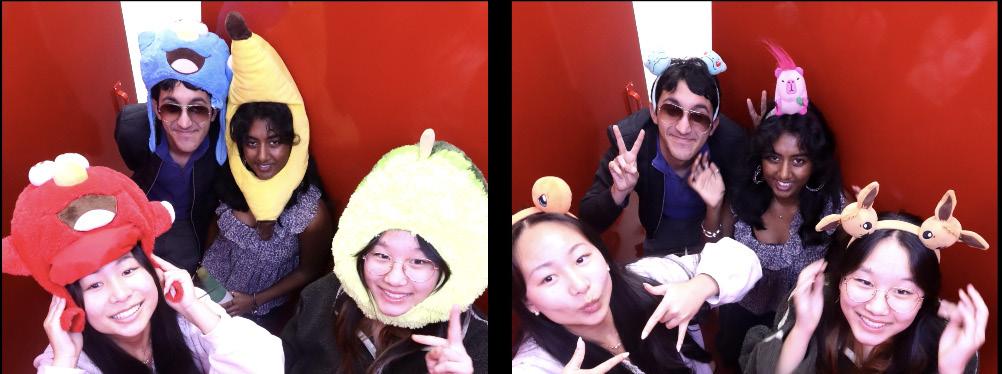
Te Bay Area is home to a variety of photobooths, ranging from vintage analog machines to modern photobooths with a multitude of digital add-ons. Locations including Potobox, San Francisco Photobooth Museum, Musée Mécanique, and Club Photomatica each have their own charms, ofering unique experiences that capture memories while blending nostalgia, customization, and afordability. See more on pg. 20
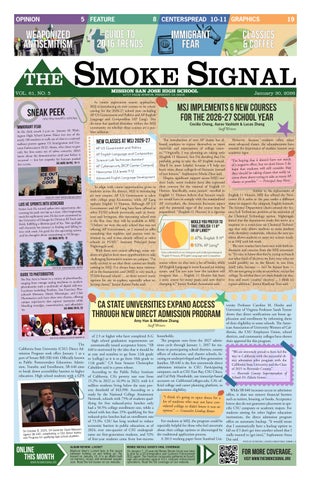
The California State University (CSU) Direct Admission Program took efect January 1 as a part of Senate Bill (SB) 640. Ofcially known as Public Postsecondary Education: Admission, Transfer, and Enrollment, SB 640 aims to break down accessibility barriers to higher education. High school students with a GPA

As course registration season approaches, MSJ is introducing six new courses to its course catalog for the 2026-27 school year, including AP US Government and Politics and AP English Language and Composition (AP Lang). Tis decision has sparked discourse within the MSJ community on whether these courses are a positive addition.
Te introduction of new AP classes has allowed students to expose themselves to more materials and expectations of college courses. “Originally, I was planning on taking only [English 11 Honors], but I’m deciding that I’m probably going to take the AP English instead. Tat’ll be more helpful, because it’ll help me learn more about college-level literature instead of just honors,” Sophomore Minlu Zhao said.
However, because students often select more advanced classes, the administrators have stressed the importance of student interest over academic rigor.


To align with course opportunities given to students across the district, MSJ is introducing six new courses. AP US Government is taken with college prep Economics, while AP Lang replaces English 11 Honors. Although AP US Government and AP Lang have been ofered at other FUSD schools previously, such as Amer ican and Irvington, this upcoming school year is the frst time they will be available at MSJ.

“I believe we were the only school that was not ofering AP Government, so I wanted to o something that students and parents were in terested in, and it was already ofered at other schools in FUSD,” Assistant Principal Jeana Nightengale said.
With these new course oferings, some students are glad to have more opportunities to take challenging humanities courses on campus. “I’m really excited to see that these courses are fnally coming to MSJ. I’ve always been more interested in the humanities, and [MSJ] is very much a STEM-focused school … so there weren’t many options for me to explore, especially when selecting classes,” Junior Kaiwei Parks said.
Despite signifcant support across MSJ’s student body, some students have also expressed their concern for the removal of English 11 Honors. Specifcally, some juniors enrolled in English 11 Honors believe that because teachers would have to comply with the standardized AP curriculum, the American literature aspect and the potential rigor of the course may be jeopardized. “[English 11 Honors] is a rigorous

would you prefer to take english 11 H* or ap Lang?*
English 11 H*
AP Lang*
Data collected from an Instagram poll at @msjsmokesignal *English 11 Honors, AP English Language and Composition
course where we dive into a lot of books, while AP English Language is more focused on writing essays, and I’m not sure how the teachers will integrate that … English 11 Honors has been a static course for many years, and now they’re changing it,” Junior Roshan Annamalai said.

of 2.5 or higher who have completed A-G high school graduation requirements are automatically issued acceptance letters. “SB 640 is motivated by the idea that it should be as easy and seamless to go from 12th grade to [college] as it is to go from 10th grade to 11th grade,” CA State Senator Christopher Cabaldon said in a press release.

According to the Public Policy Institute of California, CA’s poverty rate rose from 15.2% in 2022 to 16.9% in 2023, with 6.4 million residents living below the state poverty threshold of $43,990. According to a study by the National College Attainment Network, schools with 75% of students qualifying for free reduced-price lunches only had a 50.5% college enrollment rate, while a school with less than 25% qualifying for free reduced-price lunches had an enrollment rate of 73.3%. CSU has long worked to reduce economic barriers in public education; as of 2024, over one-quarter of CSU undergraduates are frst-generation students, and 52% of frst-year students came from low-income
households.
Te program runs from the 2027 admissions cycle through January 1, 2037 for students in participating school districts, county ofces of education, and charter schools, focusing on underprivileged and frst-generation families. SB 640 is the frst systemwide direct admission initiative in CSU. Participating campuses, such as CSU East Bay, CSU Chico, and Cal Poly Humboldt, use transcript-based accounts on CaliforniaColleges.edu, CA’s offcial college and career planning platform, to determine eligibility.
For students at MSJ, the program could be especially helpful for those who feel uncertain about their college options or discouraged by the traditional application process.
A 2013 working paper from Stanford Uni-

“I’m hoping that it doesn’t have too much of a negative efect, but we don’t know. I do hope that students will still consider that they should be taking classes that really in terest them above trying to take as many AP classes as possible.” — Principal Amy Perez
Similar to the replacement of English 11 Honors, MSJ has ofered the Newcomer ELA series in the past under a diferent name to support the campus’s English learners. Te Science Department chairs created the Science Lab Technician position as an extension of the Chemical Technology option. Nightingale stated that the department made this move as a response to a restriction on Chemical Technology that only allows students to assist teachers with chemistry credentials, whereas the new position allows students to assist any science teacher at MSJ with lab work. Te new courses have been met with both enthusiasm and concern from the MSJ community. “It’s nice to know that they’re trying to branch out what kind of electives we have into what we could possibly see in the future, in our lives, [and] jobs, because — let’s be honest here — APs are not going to take us anywhere, except for college. To see that there are more hands-on electives and more ‘creative’ electives ... I think it’s a great addition,” Junior Katelynn Tran said.
versity Professor Caroline M. Hoxby and University of Virginia Professor Sarah Turner shows that direct notifcations can boost application and enrollment by informing them of their eligibility to some schools. Te American Association of University Women of California, the CSU Employees Union, school districts, and community colleges have shown their approval for this program.

“We are extremely proud to have led the way in California with the successful direct admission pilot program with the California State University and the Class of 2025 in Riverside County,” Riverside County Superintendent of Schools Dr. Edwin Gomez
While SB 640 increases access to admission ofers, it does not remove fnancial barriers such as tuition, housing, or books. Acceptance letters also do not guarantee placement in specifc CSU campuses or academic majors. For students aiming for other higher education institutions, the direct admission program ofers an automatic backup. “It would mean that I automatically have a backup option to fall on if I don’t get into another school that I really wanted to [get into],” Sophomore Anna Dai said.


Compiled by Kanupriya Goyal & Fiona Yang Staf Writers
By Luna Bichon,

Center
On January 17, Chinese retailer and variety store chain MINISO opened its largest US store in Fremont. Te grand opening was celebrated at 11:00 a.m., and MINISO ofered free goodie bags valued at $50 for the frst 50 customers, as well as a free limited-edition tote bag for purchases of more than $40. Located at 43485 Boscell Road in Pacific Commons Shopping Center, MINISO’s newest fagship store will feature exclusive fagship designs and unique Fremont fnishes. Te new store spans more than 12,000 square feet. MINISO was founded in 2013, and its cute and unique plush toys, stationery, and other products have garnered a large global presence. ▪

Chevron’s refnery in Richmond, CA. Organizations like Bay Resistance and the Richmond Progressive Alliance (RPA), vocal critics of Chevron, were present to protest both the oil refnery and US’s involvement in Venezuela. Several hundred protesters arrived in droves on foot, holding banners and sounding of choruses outside of the police-barricaded Chevron headquarters.
ezuelans, bitter over the corruption of Maduro’s administration, have supported his capture, while Maduro’s supporters and those concerned over Venezuela’s political autonomy continue to view the raid in a more critical light.

Wikimedia Commons
US Immigration and Customs Enforcement (ICE) agents at the site of Renee Good’s killing on January 7.
Renewed scrunity after US citizen killed in fatal shooting by ICE agents in Minneapolis Renee Good, a 37-year-old US citizen, was fatally shot in Minneapolis by ICE Agent Jonathan Ross during an encounter on January 7, sparking large anti-ICE protests across the country. Eyewitnesses and independent media reports concluded that Good attempted to drive away, but federal authorities afrmed Ross’s position that he had acted in self-defense and that Good had attempted to run him over with her car. Tey have signaled a tougher response to protests, and the Pentagon has confrmed that troops were on standby as tensions grew in the city. Minneapolis Mayor Jacob Frey criticized the heavy federal immigration presence in the city and warned that deploying active-duty troops would be unconstitutional. Clashes and arrests around the Twin Cities have forced hotels to close due to safety concerns. ▪
News: P1 - According to the CA Department of Education, the requirement for grades 9-12 is 64,800 instructional minutes per year, not face-to-face learning minutes.
P1 - Te board meeting took place on November 19, not November 20.
P1 - Staf writer Aarav Vashisht should be spelled as such.
P1 - Isherwood Park closed to the public on November 14, but it began clearing out homeless individuals at least a week prior, as early as November 6.
P1 - According to the 2022 Point’in’Time counts for the City of Fremont, Fremont’s homeless population decreased from 1026 to 807 people—not 1206 to 807.
P2 - Supplemental grants are provided for every unduplicated pupil, regardless of percentage. Te 55% threshold applies only to concentration grants, not supplemental grants.
P2 - LCCF is based on average daily attendance, not enrollment.
P2 - London Breed is the former Mayor of San Francisco.
P3 - Finn McCarthy is a writer for the January Community Events Calendar section.
P3 - Tere was a seasonal pause enacted until March, so there was no Ohlone fea market on January 10.
Opinion: P5 - Te “72%” statistic is on the percentage of teens who have used AI companions at least once, not the percentage of teens who use AI companions for emotional connections.
P5 - OpenSecrets is a nonproft corporation.
P5 - Te number of weekly ChatGPT users was 400 million.
P7 - Yukie Huang should be spelled as such.
P7 - 195 parties, not countries at COP21.
P7 - Millennials should be spelled as such, not mil-lennials.
Feature: P8 - Fremont Junior Writers, not Writer in title.
P8 - TOUR les JOURS should be written as such.
P8 - Photo credits should be for Staf Writer Mansi Mundada, not Munada.
A&E: P13 - Vikram’s Smokie Playlist song should be spelled as “Saadda Haq”.
P13 - MoistCr1tikal not Moistcr1tikal.
P13 - Te Neighbourhood did not have a release named “the Neighbourhood” in 2018.
Sports: P17 - V-Scale, not V-Grades.
P17 - Andy Zhang is a writer for the Allyson Wang spotlight article.
Graphics: P20 - SJMade” should be in all caps -- “SJMADE”. P20 -
“RADICALIZED BY BASIC HUMAN DECENCY,” reads one woman’s cardboard sign, held out frmly toward the crowded, dissonant street. “DEMOCRACY NOT DOMINANCE,” is written on another sign, bobbing in a sea of homemade pickets. Tere are hundreds lining the streets that surround the Redwood City Whole Foods Market intersection. Many are dressed up in vivid costumes: international politicians, the Statue of Liberty, and American fags. Dozens of protesters walk around wearing giant paper heads of President Donald Trump — his massive forehead defaced with a crossed-out crown. It’s not a unique scene: the protest, organized on January 17 by the progressive grassroots activism movement Indivisible, is only one of 40+ advocacy events hosted weekly across the Bay Area by Indivisible alone. Tis new wave of demonstrations comes as a response to Venezuelan President Nicolás Maduro highly contentious capture. Te raid, carried out on January 3 following months of military strikes on alleged Venezuelan drug boats, resulted in the Venezuelan politician’s successful detainment in a New York pris-
With both Maduro and his wife detained and facing a slew of charges, Trump has taken the opportunity to express profound interest in accessing Venezuela’s oil reserves. “We’re getting oil proxies down, and we’re going to be giving money to Venezuela, which they desperately need,” Trump told the New York Times Activists are concerned that this was the primary motivator of Maduro’s capture, lending US oil corporations further power.
“Te scary thing is that he says, this is about drugs. It’s ridiculous. It’s about oil,” JoAnn Louland, primary organizer of the January 17 protest in Redwood City, said. A small, blue-haired woman, she donned an upside-down American fag for the protest — a statement on federal corruption in the US. “It’s not legal,” Louland said. Venezuela, while having the largest oil reserves in the world, has historically failed to fully utilize its resources. Due to being classifed as “heavy” and

on, where he currently awaits trial on charges of narco-conspiracy with designated terrorist groups, conspiring to trafc cocaine into the US, and possessing and using illegal weapons
With Maduro’s term marked by hyperinfation of up to 800% as per some sources, and a poverty rate exceeding 80%, news outlets widely cite his administration’s mismanagement as responsible for the state’s current economic asphyxiation. Under his rule, the number of Venezuelan emigrants to the US jumped from 184,000 in 2010 to 770,000 in 2023. Of the nearly 8 million Venezuelans living in exile, 12.5% of these immigrants reside in the US. Tousands more are estimated to live in the Bay Area specifcally. Many Ven-
“sour,” Venezuelan oil is in part neglected because it is difcult and costly to extract. Te industry is also hampered by restrictive US oil sanctions. Following Maduro’s extraction, the US has only tightened its grip around these resources. As of January 14, the US has begun to sell Venezuelan oil, valued at up to $500 million according to ofcials.
Locally, discussion surrounding oil has fed into physical protests against local oil corporations, namely the gas company Chevron. As the only US-based oil corporation still actively refning and shipping extracts from Venezuela, Chevron would directly proft from increased US involvement in the region, protesters say.
On January 10, a coalition of activist groups gathered outside
“We are opposed to the idea that our government should be used as a weapon for the profit of corporations,” Organizer for Oil & Gas Action Network Llonka Zlatar said. Other protestors highlighted the company’s history of unethical practices within the region.
Chevron, Richmond’s largest employer, is also the city’s largest polluter. Richmond has historically resented the company’s presence, with public bitterness coming at an all-time high following the 2025 Los Angeles fres. Tat March, more than a hundred activists gathered at
Simultaneously, however, many Venezuelans and Latin Americans are celebrating Maduro’s sudden capture as liberating. Maduro’s administration, regarded as illegitimate and highly unpopular, oversaw years of political instability and economic catastrophe within Venezuela. Yet, the relief following his removal is tempered by fears of imperialistic encroachment from the US. Trump has repeatedly asserted that the US is “in charge” of Venezuela now, and has entertained plans of seizing or annexing other countries, including Colombia and Greenland in the near future.
“We feel joy but also bewilderment,” one anonymous Bay Area Venezuelan interviewee said to KQED. “We’re worried for our families … [But Maduro] is paying now for what he has done to so many people,” the interviewee said. Another Venezuelan interviewee from San Francisco expressed abject fear to KQED. “I’m … horrifed that we, as a nation, are paying for mis-

the front gates of the Richmond Chevron refnery as part of larger protests against fossil fuel companies and their role in promoting climate change. “Imagine if Chevron was charged for the destruction it’s caused in Richmond, to the Bay, to the entire state of California,” Fossil Free California Executive Director Quinn Eide said. Local activists echoed Eide’s same sentiments.
Former Richmond city council member and lead RPA organizer Melvin Willis highlighted how, ultimately, this common frustration had united the city’s residents toward action. “Te community is saying this is not okay. Tis is illegal and needs to stop,” Willis said, “keep the [Venezuelan] oil in the ground.”
Many vocal activists denounced how the US’s aggressive posture toward Venezuela eroded democratic integrity within both countries. Coming at the heels of years of political unrest — with hundreds of thousands showing up for the anti-authoritarian No Kings protests a few months prior and thousands more protesting the death of Renee Good, and a bystander shot by ICE earlier in January of this year — anti-federal sentiment is at an all-time high. Te protesters near Redwood City’s Whole Foods Market arrived with these same concerns.
“When we attack another nation for any reason, that is not democracy,” protester Cindy Sears, a Portola Valley native, said.
siles and bombs to be dropped in another country,” she said.
“I think the people [in Venezuela] are very scared,” MSJ Spanish 4 Teacher and Colombia native Ferney Sanchez said. “Two years ago, I had my frst two Venezuelan students in a community that I was teaching … Tey would tell me always that their only wish was to be able to go back to Venezuela once the situation settled … It’s sad that we have come to this point,” Sanchez said.
As the situation continues to unfold live, Bay Area community members continue organizing for the change they want to see internationally. Advocacy organizations, from Bay Resistance to the Palestinian Youth Movement to the Peace and Justice Center, continue to fll the streets in public protests, lambasting federal actions in solidarity with local Venezuelans. On a broader level, rallies and demonstrations persist across the state, with thousands of protestors continuing to assemble in major cities, such as San Francisco and Los Angeles.
“I’m 77. I’ve been protesting since 1967,” Louland said. “It’s just so tiring, but I want people to know protests work … All the civil rights we got [were] because of protests. When people are out in the streets, it lets other people know‘Hey, this is important. Oh, you feel the same way I do.’ It lets people know we’re in this together, and we have to stay together.” ▪
By Jessica Cao & Michael Qin
Staf Writers
Carpeted hallways buzzed with nervous energy as students in blazers clutched laptops and rehearsed presentations under their breath. For many, it is their frst time at a DECA conference, while others consider the annual district competition as a return to the familiar pressure. On January 9-11, more than a thousand students from 26 high schools across the Bay Area gathered at the Santa Clara Marriott Hotel for the Silicon Valley Career Development Conference (SVCDC). Te conference challenged students to step into the roles of entrepreneurs, managers, and fnanciers by competing in cluster exams, roleplays, and written presentations.
qualify competitors for state conferences, attendance is a prerequisite and a valuable opportunity for students to practice and refne their abilities. Months before, Wednesday workshops and Entrepreneurship elective classes guided members through the strategies, roleplay frameworks, and presentation skills needed to excel at DECA conferences. Tis
ship because of newly opened entrepreneurship classes, and we have freshmen [competing] for the very frst time [in two years],” Vice President of Operations Senior Avni Goyal said.
On the frst day of SVCDC, competitors completed exams that focused on diferent career clusters — such as entrepreneurship, marketing, or fnance — which partially accounted
“I think this was an amazing opportunity that really encapsulates [what] DECA [is].”
—
JUNIOR
OWEN TSAI
As part of the organization, students may campaign for district-wide leadership roles in DECA Silicon Valley, which serve to link local chapters to state leadership and promote recruitment and resource access. During the opening ceremony, MSJ DECA Director of Education Junior Owen Tsai delivered a speech as part of his candidacy for the district’s Vice President role. Although Tsai was eliminated during preliminary voting, he found the overall experience as the only MSJ representative to be very fulflling. “I met so many amazing people who came up to my booth,” Tsai said. “Now, I’m really good friends with all of the people I was running against. I think this was an amazing opportunity that really encapsulates [what] DECA [is].”
Although district-level conferences do not
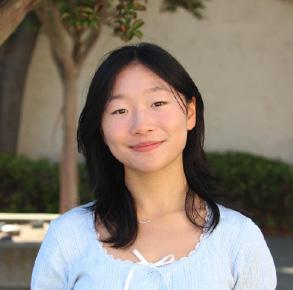
By Jessica Cao Staf Writer
Te digital clock on my nightstand reads 3 a.m., and there is salt on my tongue from where it crept in at the corner of my lips. My f ngers tremble when they reveal the next page, detailing the tragedy of a mother losing her son to a war he was too young to fght in. A sentence I read lands like a knife between my ribs, goosebumps blooming along my arms. I shudder and struggle for air as a fresh wave of tears blurs my vision. Four times.
I reread the line four times, certain that something in me was unraveled and fundamentally rearranged with every word. When my life and emotions press in close enough to su focate me, I pick up a book. Fiction, almost always, since its pages give my restless mind somewhere else to run — somewhere where my own worries get lost along the way. I read because I slip into another life the way some people step outside for air. I crave the ache and tenderness of feelings that aren’t wholly my own, wings sprouting from my back and carrying me to places no other person has been. I have left part of myself with every book that has asked me to sit with the unfamiliar pain, joy, and complexity the characters endure, and recognize myself within it. Storytelling digs up a part of me I didn’t know was buried and returns it transformed — weighted and more honest. No other medium is capable of this.
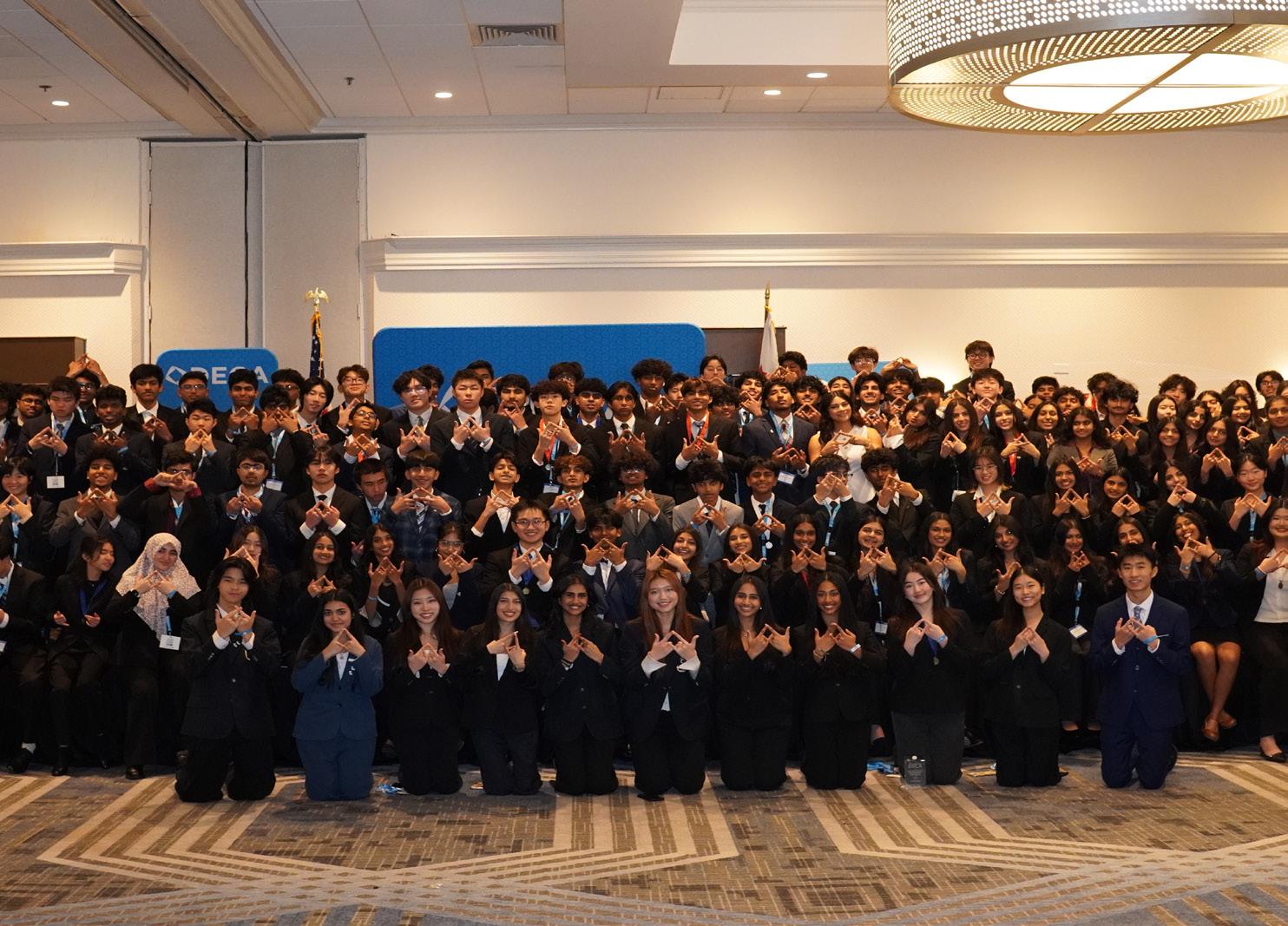
year, MSJ DECA’s leadership team emphasized collaboration and mentorship. Curated feedback sessions allowed experienced members to provide advice and workshops were tailored to align specifcally with DECA competitions. What set 2026 apart was change and growth — both in size and opportunity. “I think [it’s] one of the frst years we have such a large member-
No other form of art lets me sit so closely with another life and leaves me changed by the intimacy of it.
Te stories I read do not end when the book closes. Long after the f nal page, I carry the lessons with me, turning them over until my thoughts become tangible. When I refect, I press my own words to paper and f nd that there is a sacred power to language — how one human soul can be touched by another across lifetimes, distance, and culture. When I hold that power in my palms, I start to believe that I, too, have stories that can put the wind in someone’s hair or a pang in their heart.
What I have learned is that you must give up something in order to receive things in return. Stories demand vulnerability and connection the same way people do, only opening themselves to you if you are willing to ofer attention, patience, and an open mind. Reading teaches empathy not through instruction, but by exchange. In a digital era where literacy is reduced to speed and comprehension, and empathy is labeled as performative, reading requires something vastly more intentional and di fcult. When you lend the pages your time and your heart, they give you invaluable knowledge and new ways of seeing the world. In surrendering a piece of yourself to written words, you come away with someone else’s life and a clearer vision of your own.
for their roleplay and written collective scores. Day two consisted of written presentations and roleplay events, where competitors assumed a corporate role and were graded on fuency, creativity, and efectively addressing performance indicators. Written presentations, on the other hand, focused more on research and thorough preparation, requiring competitors to develop
detailed proposals prior to the conference. Students were evaluated on their ability to efectively justify and present decisions with data, market analyses, and fnancial projections. I think my speaking skills and ... my presentation skills, as well as thinking on the spot, [greatly improved]. Because of role plays, I was also able to learn about [a lot of technicalities] of fnance in general,” Sophomore Arav Singh said.
“I think my speaking skills and especially my presentation skills, as well as thinking on the spot, [greatly improved].”
SOPHOMORE
—
Ultimately, MSJ DECA students took home 80 topten placements across more than 30 events, including three frst-place, seven second-place, and nine third-place fnishes, marking a successful conclusion to the conference. Despite high achievements in their respective events, many MSJ competitors aspire for further improvement. Junior Matthew Wang placed frst in the Marketing Management Team Decision Making roleplay event, where he was tasked to set prices in a market economy. “I think at this conference, some of my numbers might have been of, and next time, [I will focus] on technical information,” Wang said. Looking ahead, MSJ DECA competitors have two more conferences this year: the State Career Development Conference (SCDC) at Anaheim, CA and the International Career Development Conference (ICDC) in Atlanta, Georgia. “I still think one thing our chapter needs to work on is better test scores, [...] but overall, our entire chapter is doing a great job in supporting each other,” MSJ DECA Adviser Bellamy Liu said.
“What day is it?” Pooh asked. “Today,” Piglet squeaked. “My favorite day!” Pooh said. I left a like on the post and scrolled past it. “ T at’s so corny, how can a day be a favorite if you haven’t accomplished something?” I thought as I closed Instagram to check my schedule for the day. As a freshman, I didn’t see much value in the quote because it didn’t ft into the way I saw time — to me, days were just hours to be f lled with schedules, activities, and deadlines. If I wasn’t f lling every hour with something productive — studying, extracurriculars, or plans with friends — I felt like I was wasting time, while everyone around me was accomplishing something important.
T at day, one of the many plans on my list was to volunteer for the f rst time at a hospice. I was very nervous — unsure what to expect and what it would feel like to meet and talk to someone on their deathbed. Te patient I was assigned to was bedridden and had oxygen tubes running across her nose. When I walked up and introduced myself, she glanced at me and smiled slightly before turning away again. I started making small talk as I had planned, but she didn’t respond. I began to doubt whether she was listening to me or even aware of my presence. Not sure what else to do, I started looking around the room and commented on the many paintings that hung on the walls. As I said goodbye, I began to wonder whether I had simply just wasted half an hour, but as I was a few feet from the door, she asked, “Will you visit me again?” I turned back to look at her, surprised that she had actually been listening all this time. I quickly answered yes, then left the room stunned.
As I walked out of her room into the hallway, her words lingered in my head. I thought I hadn’t done much in that half an hour beyond passing time and being there, yet her words made me realize that to her, my pres-
By Mansi Mundada Staf Writer
ence was more important than words. I never thought that something so insigni fcant to me could bring so much comfort to someone. My thoughts were interrupted by a faint squeaking sound as the rubber tips of a walker rubbed against the foor. I saw a lady walking slowly ahead of me, and for a moment, I thought about squeezing past her to get to the next plan on my list, but then I stopped myself. I started thinking about how I often rush towards the next thing to do, rarely stopping to slow down. I was always focused on what I should do rather than what was around me. But the patients here might not get a tomorrow to worry about: their days are limited; all they have is the here and now.
As I continued to volunteer, the atmosphere in the hospice began to feel di ferent. It was calm and peaceful in a way I wasn’t used to. In the hospice, time seemed to slow down; there were no rushing footsteps and sense of urgency that pressed upon me like there was when I was at school. Every time I went, I saw residents looking out the window with a peaceful look on their face or sitting in the garden simply enjoying the sunlight and fowers. Watching them, I started realizing that the value in a day doesn’t lie in what we accomplish, but in how we choose to experience it.
Pooh’s quote, which once seemed simple and silly, now truly resonates with me. It serves as a reminder of how important it is to appreciate the present rather than worry about tomorrow. Pooh’s idea of “today” doesn’t mean to ignore the past or the future, but that every day has the potential to be your favorite day if you take the time to slow down and be in the moment. Volunteering at the hospice reminds me that a day doesn’t become meaningful only when it’s f lled with important things to do — even unplanned moments, however small, can bring meaning to a day.
ARAV SINGH
hammer
to the editor:
After reading the Smoke Signal ’s article about Charlie Kirk’s legacy and “AI tools highlight the decline of empathy in digital culture” in the December issue, there are a few concerns that I would like to address. While Kirki fcation and “people not seeing death as death,” are all key symptoms of a larger problem, I believe that the Smoke Signal misdiagnoses the root cause of the issue. Te lack of empathy inherent in and synonymous with the echo chambers of the Internet doesn’t come from AI, nor does it come from memes and satire. Instead, the root cause of empathy’s decline comes from the Internet itself, and its inherently amplifying and anonymizing nature. Pundits and scientists alike have long expressed their concern regarding the efects of the Internet on human interactions. Te Internet removes a face from a person, and simultaneously empowers potential bad actors with anonymity. While those of us mature and logical enough to be able to express basic empathy despite the apparent lack of consequences are able to remain respectful, however, there are many who use this anonymity as a shield to manipulate, blackmail, and threaten others.
Read more of Senior Ian Yong’s letter at www. thesmokesignal.org.
Submit a letter to opinion@ thesmokesignal.org or with the QR code.

Mission San Jose High School
Est. 1964 Vol. 61, No.5
January 30, 2026
www.thesmokesignal.org
41717 Palm Ave.
Fremont, CA 94539
510-657-3600, ext. 37074
MISSION STATEMENT The Smoke Signal’s mission is to represent the voices of the MSJ community and serve the public by providing accurate, meaningful, and engaging information presented through print and digital media.
SCHOOL POPULATION 1878 students
EDITORS-IN-CHIEF Padma Balaji, Alice Zhao
NEWS Jennifer Li, Cham Yu
OPINION Janet Guan, Vikram Mahajan
FEATURE Ariel Duong, Trisha Parikh
CENTERSPREAD Naisha Koppurapu, Ariana Yi
A&E Navya Chitlur, Brittany Lu
SPORTS Michael Qu, Ethan Yan
GRAPHICS Hannah Bi, Emily Zhang
WEB Scarlett Huang, Ekasha Sikka
PUBLICITY/TECH Aaqib Zishan
BUSINESS Gaurasundara Amarnani
CIRCULATION Alex Duan, Abigaile Lei
ADVERTISING Fiona Yang
EVENTS Dhaeshna Booma, Felicity He
WRITERS & PHOTOGRAPHERS
Hamnah Akhtar, Luna Bichon, Jessica Cao, Eleanor Chen, Cecilia Cheng, Kanupriya Goyal, Amber Halvorsen, Amy Han, Kayla Li, Erika Liu, Varun Madhavan, Veer Mahajan, Finnegan McCarthy, Joseph Miao, Mansi Mundada, Saesha Prabhakar, Michael Qin, Kelly Shi, Warren Su, Aarav Vashisht, Megha Vashisht, Prisha Virmani, Leland Yu, Andy Zhang, Lucas Zhang, Matthew Zhang
ADVISER YC Low
The Smoke Signal‘s name originated from traditional forms of long-distance communication and honors cultures around the world, including China, Greece, and Rome.
To advertise in the Smoke Signal, email ads@thesmokesignal.org. Advertising that is included on the pages of, or carried within, the Smoke Signal, is paid advertising, and as such is independent of the news and feature content.
The Smoke Signal’s right to freedom of speech and press is protected by the First Amendment of the US Constitution and California Education Code Section 48907.
To stay updated with our online content, see our Facebook page at www.facebook.com/msjsmokesignal.
All policies on distribution, corrections, and bylines can be found at www.thesmokesignal.org/about. Send letters to the editor at opinion@thesmokesignal.org.

By Janet Guan Opinion Editor
I’m a huge C-drama fan. I watched way too many last semester, from heart futtering campus romances to chilling murder mysteries and tearjerking tragedies. Aside from being an occasional guilty dose of escapism, Cdramas are also one of the only ways I connect with my parents, Chinese immigrants who happily share my obsession. On countless afternoons, I’ve accompanied them at the dining table to watch their latest favorite, savoring a bowl of watermelon slices as another world unfolded onscreen.
Despite having grown up in the Bay Area, which is home to some of the largest Chinese communities in the US, I’m not nearly as connected to my cultural roots as I once hoped to be. Even after sitting through more than 10 painstaking years of Saturday morning Chinese school, my spoken Chinese is only enough to have an awkward conversation at a family gathering and is probably actively being surpassed by my three-year-old cousin. Although I’ve eaten Chinese food for almost every day of my life, I’m still hopeless with Chinese menus without English translations and pictures. And despite having visited China more than fve times in my lifetime, I wouldn’t be able to point out major cities or monuments even with a map. When I was younger, my mediocre ability to “be Chinese” was a major insecurity. For too many summers in my grandparents’ rural town, my younger brother and I have trailed behind our Chinese-born cousins in games and smiled politely at family dinners, faces burning as our aunts and uncles teased us for asking for forks alongside chop -
sticks. For a while, I desperately tried to bridge this gap. I bought the Chinese classics my dad had cherished as a child, braving through only one or two pages before opting for their English versions. I made plans to memorize the words in my Chinese dictionary, making long lists of essential phrases before quitting after a week. I tried to learn to cook my mom’s favorite Chinese dishes, from dumplings to stirfried tomatoes and eggs, only to give up on needing to translate every other word in her recipes.
It’s been a long time since I last tried to be more Chinese. Now that I’m in high school, it’s di fcult to f nd the time to memorize dictionaries and decipher recipes. But, even in the subtlest of ways, my Chinese roots continue to permeate every little thing I do. Laughing at C-dramas with my family, sounding out new Chinese idioms with my mom, helping my dad stir fry tofu for dinner — being Chinese is an identity so deeply ingrained within me that I no longer think of it as another skill to train or prove I have.
Culture isn’t about how well you speak a language, how well you read a book, how well you cook a dish — but the care that goes into trying. Appreciation lies in the efort: the efort to speak with your parents in their mother tongue, even if you have to mix English in between; the efort to stay for a show, even if you really only understand half of it; the efort to visit the family you love an ocean away, even if they giggle at your American idiosyncrasies — because culture is about love. And love is worth every journey. ▪
ree gun shots. A car stopped. A woman dead. On January 7, 37-yearold US citizen Renee Good was fatally shot in the face three times by ICE agent Jonathan Ross in Minneapolis, Minnesota. Good attempted to drive away from Ross; three shots subsequently erupted from Ross’s service pistol. Despite cries for justice, the Trump administration repudiated the overuse of force, with Vice President JD Vance insinuating the ofcer was right to defend his life against a “deranged leftist” on X
Good’s killing and its dismissal by the administration is not the f rst instance of government-backed ICE brutality, nor is it the last. Just two weeks later on January 24, 37-yearold Alex Pretti was shot — ten times — in a similar situation as the Minneapolis crisis further escalated.
Te Minneapolis murders are part of an insidious and worsening trend of ICE’s use of excessive force. In 2025 alone, 32 people died in custody, a record since the agency's formation in 2003. During standof s in major cities like Chicago, federal agents from ICE and other agencies tear-gassed peaceful protestors, raising concerns from federal judges and human rights organizations including the American Civil Liberties Union (ACLU) — even as Trump continued to ofer ICE steadfast and unequivocal support.
Indeed, senseless as Good’s killing was, it refects only what can be seen in open daylight, to a white woman. ICE’s abuse is disproportionately targeted toward minorities, and much of it occurs in the dark,
making it that much more di fcult to identify and speak out against.
Good’s murder is a stark reminder that legal status is no immunity to injustice and violence from ICE. Without su fering severe legal repercussions, ICE detains citizens as well, fueled by unfounded suspicion from racial biases and deportation quotas. According to an October 2025 ProPublica study, more than 170 American citizens had been detained by ICE earlier that year. Evidence also signals many confrontations unfold on the basis of wrongful charges, a troubling issue. At its core, ICE’s brutal detainment methods help shred rather than preserve social fabric. Letting these grievances go unaddressed normalizes rampant unchecked power, trampling civil liberties and perpetuating distrust in the government. A CBS News poll from January 14-16 revealed that 61% believed ICE is being too tough when detaining people, with 52% believing their communities are less safe.
Nonetheless, as residents of the Bay Area far away from the f ashpoints of ICE brutality, it’s easy to detach ourselves from the actions of ICE, to console ourselves that our lives can’t be a fected. Yet ICE has already, literally, hit close to home, with propensity to do so again. On November 8, 2025, federal agents noti fed the Fremont Police Department of “immigration enforcement and/or follow-up.” Local police were unable to prevent the searches from being conducted and for ICE agents to in f ltrate local neighborhoods.
By Vikram Mahajan Opinion Editor
In sophomore year, I received an email from Mr. Macasero, my former Civics teacher, giving me a heads-up on a service opportunity. Te League of Women Voters would be organizing a registration drive at MSJ and other local high schools, and were looking for student volunteers to help. I signed up, little realizing I was sparking an experience that would shape my time in high school.
Two years later, I’ve lead the next registration drive, as well as phonebanked for candidates and causes and gone door-to-door canvassing in both political and nonpartisan eforts. It’s been a def ning aspect of my time in high school — with the accolades I’ve received but also, more importantly, with the people I’ve met and lessons I’ve learned.
Watching or hearing the news and observing what’s happening around us, it is all too easy to become a cynic, particularly in today’s political climate. It’s tempting to decry public servants as sel f sh and corrupt, and, on some level, it’s an understandable instinct. I myself fell into this mindset as I became deeply involved in local campaigns; I saw f rsthand the mudslinging and vicious attacks leveled by all sides, broken promises of change by candidates past and present.
For someone hoping to go into politics and serve in elected ofce, these experiences were disheartening. Yet the leaders I met at the League prevented any oncoming crisis of conscience, renewing my longstanding interest and conviction in politics.
cades of experience in activism and
advocacy became mentors and role models to me. Valerie Stewart regaled us with stories of her activism during the 1970s, when she protested against the Vietnam War, pushed for the 26th Amendment, and worked alongside leading second-wave feminists. Like Valerie, Julie Dunkle had co-founded the Youth Voter Movement in the wake of the Parkland shooting to facilitate collective advocacy; she also led the organization of the district-wide registration drives.
T rough their activism, people like Valerie and Julie showed me the true meaning of leadership, rea f rming my own interest in politics and public service. From their examples, I saw a combination of conviction and perseverance, and the tangible change that combination could bring about.
T at realization rejuvenated my hopes and consequently my eforts; I pushed forth all the more aware of the positive impact that was possible. Rather than despair over the faws in local campaigns, I converted those sentiments to action, inviting both candidates to MSJ to speak directly with students. My work in the League, in Civics Club, and on the campaign trail suddenly felt all the more meaningful. Hope proved a self-ful f lling prophecy.
Te leaders at the League transformed my thinking on public service, certainly, but also taught me a bigger lesson. In places where it’s easy to paint the whole canvas dark, a single point of light — just one positive example — is enough for a ray of inspiration to emanate, to illuminate the entire landscape. ▪
In the face of hopelessness from the injustices of ICE and inadequate government response, it’s critical for citizens to unite and resist. In April 2025, Nashville neighbors stepped up to protect a man and his 12-yearold child. Tey provided food, water, and gasoline in a four-hour standof with ICE agents, even forming a human chain around the the man’s RV to ensure he and his son weren’t abducted. Ten on June 14, 2025, also known as “No Kings Day,” protestors against rising authoritarianism gathered in every corner of the country. Larger demonstrations followed on October 18, amassing an estimated 7 million demonstrators nationally, including in Fremont itself.
Individual yet consequential acts of resistance prove that ordinary Americans have the power to defend what is right. We don’t have to stay silent — we can fght injustice.
Te protests against ICE, after all, are only as strong as the sum of each of its seven million individual parts. No person is too small to make a difference to play an important part in a bigger movement. And unity across people from all backgrounds undercuts a foundational aim of the administration in its utilization of ICE — dividing Americans and targeting certain groups. Even as high schoolers cocooned in a bubble, we must stay vigilant and informed. We must take active part, even as simple as joining a local protest or writing to our members of Congress. Because alongside friends, organizations, communities, we can drive tangible change.

By



By Ekasha Sikka, Amber Halvorsen, Veer Mahajan & Warren Su Web Editor and Staf Writers
Following the intensifcation of the Israel-Gaza confict in 2023, pro-Palestinian protests have swept college campuses nationally. At the same time, though not necessarily as a direct effect of the protests, antisemitism has increased rapidly in the US. In 2024 alone, the Anti-Defamation League (ADL) reported more than 9,300 antisemitic incidents nationally. As a response, the Trump administration initiated a slew of rushed Department of Justice (DOJ)-led investigations into colleges. However, the blurred line between antisemitism and political protest has resulted in the arrests of numerous pro-Palestinian activists, deportation of immigrant students, and threats to funding and safety across universities. The current administration equates criticism of the Israeli govantisemitism, weaponizing the word “antisemitic” while simultaneously demonizing pro-Palestinian supporters. This false equivalency poses a threat to both the Jewish American community and student activists who choose to

Antisemitism has been weaponized as a result of the politicization of the defnition itself. The International Holocaust Remembrance Alliance (IHRA)’s working defnition of antisemitism characterizes it primarily as “hatred toward Jews” and “toward Jewish community institutions and religious facilities,” but names examples that include certain criticisms of the state of Israel, such as “drawing comparisons of contemporary Israeli policy to that of the Nazis.” Trump uses this defnition in his January 2025 Executive Order 14188, Additional Measures to Combat Antisemitism, establishing it in a legal and political con text. The association of Jewish identity and the Israeli govern ment within the IHRA def enables it to be manipulated and mis to silence political dissent and threaten First Amend ment-protected free speech. The lead drafter of the IHRA defnition, Kenneth Stern, wrote in an op-ed in The Guardian that it was never intended to be used as a de facto hate speech code. Free speech is a cornerstone of democracy: broad restrictions on it, even those intended to prevent hate, only pave the way for more suppression. The weaponiza tion of antisemitism’s def to unwarranted legal punishment, but it also suppresses student activism, contradicting higher education’s purpose to facilitate open learning environments.
involvement. When institutions rush to equate dissent with hate speech and label peaceful protest as discrimination, an unhealthy environment is created where students feel pressured to stay silent rather than voice their opinions.
In a study by the University of Rochester and UC Berkeley of 1,166 Jewish adults,
72%
The silencing effect is not isolated. A July 2025 testimony in an ongoing federal lawsuit revealed that the Department of Homeland Security used Canary Mission, a website that doxxes individuals it describes as antisemitic, to identify thousands of individuals to target for immigration enforcement. Prominent non-citizen student activists were detained as a result, including Rümeysa Öztürk, a Tufts University PhD student, and Mahmoud Khalil, a Columbia University graduate student. Öztürk, a Turkish citizen lawfully residing in Massachusetts on a student visa, was targeted after co-authoring an op-ed criticizing her university’s association with Israel in her campus newspaper. Khalil was arrested and held for more than three months under threat of deportation. Both incidents reveal Trump’s growing restrictions on free speech under the guise of a response to antisemitism.
believe Trump is wrongly using antisemitism claims to attack universities.
72% are somewhat or very concerned about antisemitism in colleges.

1,166 Jewish adults, 72% believe Trump is wrongly using antisemitism claims to attack universities, and 72% are somewhat or very concerned about antisemitism in colleges. Jewish people — whom Trump seeks to protect through the DOJ — are just as opposed to the DOJ’s actions as those being directly threatened by them. It is clear that the Trump DOJ does not seek to deal with antisemitism in any serious way, but instead to use it as a tool to combat dissent.
The DOJ’s primary response to antisemitism in universities came in March 2025 when it launched a series of rushed investigations into UCs based on complaints of antisemitism that violated the Civil Rights Act. Citing concerns about political motivations behind the investigation, nine DOJ attorneys resigned in December 2025, according to an Los Angeles Times investigation. Several of the attor neys said they had been told to justify a lawsuit before the facts were made clear. “It was clear to many of us that this was a political hit job,” an attorney as signed to the UC Davis and UC Los Angeles cases said.
“Colleges should, 100% stand with the students, because the colleges are there for the students. They’re there to protect the rights of the students and allow them to change the world and speak up. And the students have a right to what they are doing.” — Chasen Lam, 10
Following Hamas’ attack on Israel in 2023 and the war in Gaza, pro-Palestinian protests swept US college campuses, prompting sev eral instances of federal crackdowns and controversial arrests. In September 2025, UC Berkeley disclosed the names of 160 faculty members and staff linked with Gaza-related protests to the Trump administration as part of an investigation into alleged antisemitism. The release of these names goes against the fundamental right to protest: student activists should be free to protest without the risk of surveillance, retaliation, deportation, and ca reer loss. Student activists should not be put at risk, especially without being in formed of the nature of their alleged
Weaponizing antisemitism through the DOJ harms college environments, immigrant communities, and true efforts to combat antisemitism. In April 2025, ten organizations representing Jewish people released a joint statement claiming the government “used the guise of fghting antisemitism to justify stripping students of due process rights.” The Jewish community represented by the statement is also concerned with the fact that “students have been arrested [without] transparency [and are] being punished for their constitutionally protected speech ... [These actions] only make us less safe.” Furthermore, by cutting funds, the government eliminates college administrations’ power to protect Jewish students. These unpopular changes shift the blame to Jewish students, further hurting the fght against antisemitism.





By Hamnah Akhtar, Amy Han & Erika Liu Staf Writers
Bodies lie unburied in the streets. Families flee burning buildings, deprived of all their belongings save the clothes on their backs. Over the past few years, the nation of Sudan has been taken over by political catastrophe, rendering it “one of the worst humanitarian crises of the 21st century,” according to UN News. Rampant human rights abuses, ethnic massacres, and starvation in the region have led to the development of Africa’s most severe refugee crisis today, with estimates of 4 million forced to flee across borders. Somalia, a neighboring nation, is under similarly dire circumstances. As a “failed state,” or nation incapable of fulfilling its citizens’ fundamental needs, the country has been plagued by an immense power vacuum, precipitating widespread factional infighting as well as ethnic genocide of the Isaaq clan.
Yet, despite the scope and regional impact of these con flicts, they have elicited al most no conversation on a global scale. The Somali crisis is not formally rec ognized internationally, and no criminal trials have been conducted for the perpetrators involved. Neither has the Sudanese conflict garnered mass attention, even as its violence spills across borders and threatens regional stability. According to the Chicago Council on Global Affairs, in 2024, only 6% of Americans stated that they understood the Sudanese crisis well, as opposed to 31-32% for more mainstream issues such as the Israeli-Palestinian conflict and Russo-Ukrainian conflict. On Western media sites, the Somali genocide rarely appears at all. Collectively, it seems, nations have turned their heads, leav-
ing no one to speak on behalf of the victims impacted.

The final stage of genocide is indifference. It is indifference, after all, that truly enables atrocities upon vulnerable people. Yet, globally, genocide awareness, especially amongst more publicly underrepresented events, continues to wither. Of the eight genocides formally recognized by the US Department of State between 1989 and 2002, only the Rohingya genocide in Myanmar garnered domestic headlines. Superficial, digitallybased advocacy has played a role in reducing genocide awareness to trends based on timeliness and newsworthiness. On the Internet, atrocities garner attention based on their capacity to become sensationalized: if a disaster lacks relevancy or a clear narrative, algorithmic emphasis, and thus public support, it fades. Media interest in the Ukrainian conflict fell drastically after the conflict had aged only a few years. Following the Gaza war, beginning early October of 2023, coverage of Ukraine on CNN — the primary cable news network reporting on the Ukrainian conflict — fell to less than 1%. Public attention followed a similar trend tracing the Sudanese and Somali conflicts, which have both proceeded for decades, the latter being one of the longest-running conflicts in the world. Media outlets and viewers alike simply do not have the will or attention span to keep up with long-developing conflicts. However, global priorities are not fueled solely by newsworthiness. “I hate to say it,” History Teacher Bill Jeffers said, regarding the lack of coverage on conflicts in Africa, “but it comes down to race and racism …

When we look at … who has representation, who has political power, who doesn't have political power, those things factor into [genocide awareness] as well.” A study conducted in 2007 on global news patterns shows that incidents in Europe are far more likely to receive immediate coverage, whereas similar or even more severe events in African countries go unreported unless the scale of impact is significantly larger. The study, published in the Quarterly Journal of Economics, stated that the statistics are only worse for disasters within the Pacific, where it takes 91 Pacific lander deaths to elicit the same journalistic attention as one Euro pean death.
Perpetuating the idea that some lives are worth more than others devalues nonwhite genocides — an idea which has historically facilitated dangerous inaction. In a series of torials, The Washington Post promoted false, sensationalist statements on Sudan’s Darfur genocide, including sweeping statements accusing the nation’s government of being “delighted with the war’s slaughter” and leveraging starvation as a weapon against its own people. The statements were blatantly untrue — between 1992 and 1997, feeding stations in southern Sudan increased twentyfold, with every facility being authorized by the government. Such blatant misconception, especially from a publication as reputable as The Washington Post, demonstrates journalists’ shallow interest in conflicts overseas, a key factor in global ignorance surrounding international calamities. A similar pattern occurred in Western coverage of the Rwandan genocide.
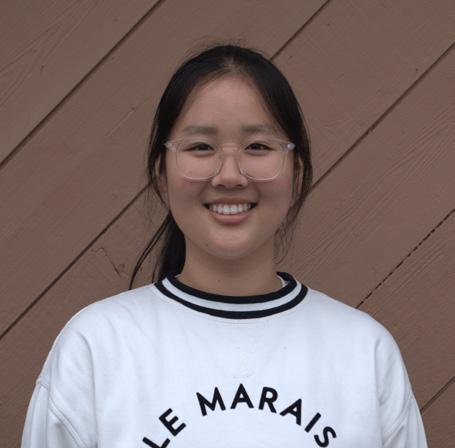
Venezuela has been in an ongoing political and economic crisis since 2013, the beginning of Nicolás Maduro’s presidency. In the early morning hours of January 3, 2026, Maduro’s military compound was raided by American troops; he was captured and placed in a New York prison cell. While the US justifed the action as law enforcement and security, the UN and several other parties across the globe denounced the operation as a violation of Venezuelan sovereignty.
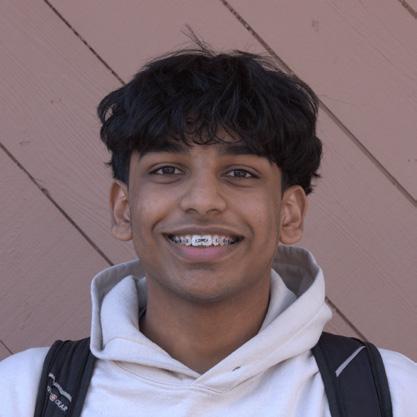
“What do you mean by justi fed? Because Trump and [others], Trump took a hundred million dollars. So def nitely justi fed for him ... For the US, [Maduro's capture] is def nitely [benefcial] ... Either the regime change works, and we get oil, or the regime change doesn't work and we go back to getting nothing … But, those people in Venezuela, they could regime change and get [harmed worse] by the new dictator … [because] US regime change never works. [As for the world], oil, there will be more of it. Authoritarianism? More of it. Populism? More of it. Moving away from green technology? More of that Te Internet is very split on it ...[Nicolás Maduro] is a horrible man, he’s killing everyone. A bad guy. Trump is putting deported immigrants, or ‘illegal people,’ into cages and committing human rights abuses. He probably doesn't care at all what happens to Venezuelan people. And you know, Maduro, he did the Trump dance. And now Trump did a US operation in his home, which has never happened in the history. Authoritarian dictators, when they start centralizing power, they actually start moving operations to their crib. T is has happened historically in Russia, with Stalin and Putin, and many other places, [and it] is an example of the US getting worse.”

The crisis developed into one of the most “efficient and complete” genocides of the 20th century, according to an International Press Institute report by MIT fellow Alan J. Kuperman, killing approximately 80% of the country’s Tutsi minority. But before the extermination progressed into its final stages, the American media reports focused almost solely on the town of Kigali, failing to accurately represent the issue as it developed on a national scale. To this day, the Rwandan genocide is commonly referred to as “the Preventable Genocide” — a stab at the Western media bias that allowed such a conflict to fester, and, to this day, allows underrepresented conflicts to continue to deteriorate. When people overlook any type of genocide, they open the door for further transgressions. The truth is, Western media has a long history of deciding which tragedies are worth our tears and which ones barely deserve a headline. When coverage is selective, so is outrage. And when outrage is selective, justice becomes a privilege, not a right.
At MSJ, students have the opportunity and resources to engage with global news and participate in real advocacy. Clubs like Model UN and Amnesty International offer accessible opportunities for high schoolers to take part in genocide discussions. “Never Again” is not a phrase confined to history classes; it is a real promise we are supposed to keep. But promises mean nothing without action. As students, we might not be able to change foreign policy, but we can change how our community talks about injustice. We can choose to be informed. We can choose to speak. And we can choose to care. ▪
“I feel like this is very controversial, but ultimately no, because the people of Venezuela are happy about this, but Trump stepped over a border and did it illegally. So as a global power, the US is setting a precedent for other countries, and I feel like that would be an even bigger issue than just one dictator. From what I’ve heard, the people of Venezuela personally are happy, but I don’t know ... I feel like our reputation is already bad, but Trump doing this sets a global example of what countries should not do … A war, or like some kind of a global con f ict could arise from this. I’ve seen a lot [on social media] ... All the people of Venezuela are happy their dictator is gone, but I’ve also seen conspiracy theories about how the US did this to cover up like the Epstein f les. Overall, I’m still very con f icted myself, but I don’t think we’re setting good examples as a global power. But yeah, I’m happy for the people of Venezuela.”
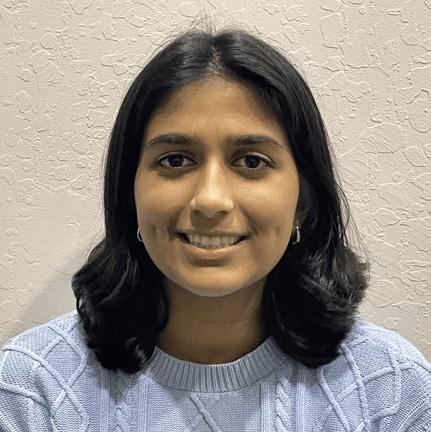
“Maduro was not the best president. He was not elected for the next term, and he stayed in ofce. T at be ing said, I don’t know how justi fed the US was in coming to Venezuela and involving themselves in something that’s clearly not part of their jurisdiction ... Now there’s a political vacuum, and it’s important to f ll that with a better system ... there’s been so many instances of a corrupt government being toppled, just to be replaced with another corrupt government. I do think it’s important to have some checks on the US’s power. I don’t know if it should be fully allowed that the US can involve themselves and their military … If the US can seize more countries, that could be pretty problematic for the rest of the world … Mostly I see people reacting pretty negatively on social media towards this whole incident. I will say that I’ve heard that the Venezuelan people are happy about this, but like, the general consensus I see is that people aren’t happy about it.”
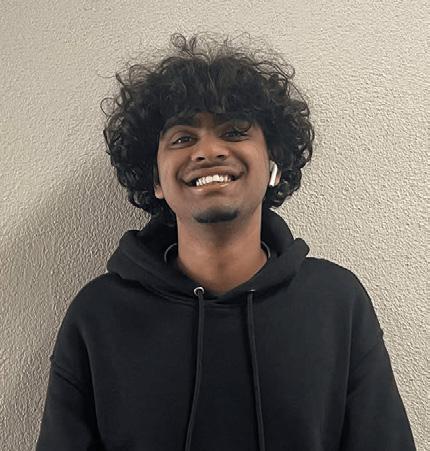
“I’ve heard that many Venezuelan people are celebrating it ... Even though the method and the administration that took him out of power was corrupt, ultimately, the Venezuelan people are currently better of for it, so it is justi fed. However, the capture does have broader negative implications, because it’s a big overstep in power from the US government, and it could ... set a precedent for other countries to capture leaders from other countries on a whim ... I’ve seen clips like saying that it’s crazy how the soldiers went in and [captured] Maduro and came out, and they were probably 20 and listening to music. It's become a cultural sensation, and you know, it’s made me realize how absurd this entire situation is.”

Composed by Kelly Shi & Joseph Miao Staf Writers
The Question Man is Feature’s newest side column, which give insight into the diverse perspectives of MSJ.
This month, students were asked: “Do you feel pressure to ‘change’ at the start of a new year?”



By Alex Duan, Joseph Miao & Leland Yu Staf Writers
Although 2025 introduced many frsts and new trends, it's difcult to ignore the nostalgic throwbacks to 2016 going viral on social media. With hashtags like #2016 garnering more than 2.1 billion engagements on



"Every year, I always strive to become a beter person and develop beter academic habits. For example, I always tell myself I'm going to spend less time on Instagram and Youtube but as I look back, every year I do see litle improvements, but not the big jump that I hope for every year. I do feel pressure to hold myself accountable and responsible."
2016 fashion has returned in the biggest and baggiest way possible. Oversized fannels, loose jeans paired with large, clunky boots—originating from Tumblr—now dominate today’s trendy platforms of Instagram and TikTok, ofen styled as if the goal were to look accidentally put together. Infuencers scour thrif stores like Goodwill to assemble mismatched outfts that somehow fow together and post them on 30 second TikTok short-form videos. “The art of thrifing is fnding stuf that looks kind of ridiculous on the rack but ends up being perfect,” Junior Randitya Hundal said. The shif away from clean, artifcial outfts into this grungy throwback represents a cultural shif of prioritizing authenticity over form. There is a broader societal move towards valuing individuality, especially through creative outlets like fashion.

The reemerging photo-editing trend barely involves editing photos at all. In 2016, poorly shot, low-efort photos dominated the amateur photography landscape. However, the bad lighting combined with intentionally blurry shots evoked a sense of homemade nostalgia that creators try to replicate in 2026. These poorly shot photos take many young Gen-Z people to a simpler time in their childhood. “I think that these photos bring back memories of me being a kid and playing Minecraf at sleepovers. I would get Mom’s iPhone and take these kinds of photos in between Clash of Clans games,” Senior Bret Chen said. In spite of their poor quality, these photos unexpectedly preserve the warmth and magic of 2016’s nostalgia for today’s teenagers and young people.


"I don’t feel pressure to change at the start of a new year because I personally believe that change is gradual. Because of that, it feels illogical to me to think that just because it’s a new year, I suddenly have to make big, drastic changes. Of course, there are certain transitions — like going from summer break into the school year, or from the school year into summer break — that naturally come with changes in routine. Those kinds of time shifs make sense for seting new goals. But when it comes to the new year itself, there aren’t many goals I would change simply because the year goes from 2025 to 2026."




Alongside the return of 2016 fashion and internet aesthetics, indie-sleaze music has resurfaced across social media platforms. Grity, high-energy tracks from rock bands like The Strokes and Yeah Yeah Yeahs are frequently used as background music for party montages and nostalgic aesthetics from the 2010s — like DIY ripped jeans and late-night city videos — on social media platforms such as TikTok and Instagram. Characterized by distorted guitar rifs and an intentionally “round around the edge” sound, this genre of music screams imperfection and chaotic melodies rather than an anodyne production. “It sounds like it was made in someone’s garage, but that’s what gives it that particular, funky vibe” Junior Ethan Wang, a big fan of The Strokes, said. The reemergence of this type of music refects a craving for music that feels raw and unpolished, matching the messy, unfltered vibe from 2016.

Handwriten captions, silly doodles, and messy collages are reappearing across social media through scrapbook-style self expression. Creators are posting collage-like photo dumps that feature layered screenshots, polaroid pictures, personalized stickers, and casual notes that feel more personal than polished. These aesthetically imperfect personal journals resemble something more authentic and honest. “You don’t have to make everything look perfect for it to mean something,” Senior Andrew Yu said. This marks a sudden departure from “Instagram-perfection” in the 2020s, and instead focusing on self-expression and authenticity rather than curated aesthetics. The trend refects a growing desire for personality over perfection.







By Eleanor Chen Staf Writer
Marked by the neighing of the horse zodiac —- on February 17th, a new Lunar year begins. A crumbled, dust-ridden hong bao (a red envelope containing money, given as a gift on holidays) is fed up with impatient, greedy children. Trough his Dear Diary, he reveals the history behind the ancient tradition of distributing red pockets — originally started of as a ward against evil spirits — and has now become a way to pass blessings to loved ones.

Small children clamour around the tiny kitchen table, passing around an old, dusty hong bao. “Is it $100 big buck-a-roos?” one asks. “Nah, more like $1,000!” another shoots back. One child scofs. “It’s as old as Nai Nai, I bet it’s got nothing but ol’ cobwebs,” they said. “Ai-ya!” shouts a voice from down below. Suddenly, the hong bao the children were holding wrestled itself out of their snot-covered grasp. Falling dramatically in slow motion, the children watch with awed eyes and open mouths as the hong bao landed on Nai Nai’s old journal, revealing a tiny diary hidden within. “You kids know nothing about hong baos! I, Lao Hong, the frst and oldest of the hong baos, will teach you!”



Once upon a time, there was once a demon called Sui, who prowled the lands dragging a talon across sleeping children’s foreheads. Startled, the children would awaken, throbbing with a demonic headache. Worried about their son’s welfare, determined parents kept their beloved son awake during the night. However, as the hours continued, the boy’s eyelids began dropping.
Desperate, his mother slipped eight lucky coins into a red
By Abigaile Lei Staf Writers
Hunched over a laptop in the corner of his bedroom, a middle schooler opened FL Studio for the first time, trying to familiarize himself with the foreign tools. Despite only being in seventh grade, Link Lee knew he had a passion for creating and producing music – but he would’ve never guessed that those hours experimenting with sound would grow into something more. Now known professionally as niko rain, he has built a career as a singer, songwriter, producer, and performer, garnering over 500k monthly listeners on Spotify.
Music was a passion for Lee long before it became a career. Since remixing his first track in middle school, he continued his hobby at MSJ, immersing himself in nearly every musical outlet available. Lee dedicated all four years of his high school career to band, singing at rallies as a member of the choir, and even appearing at assemblies as part of Perfect Noise, the former MSJ beatboxing club. “In my time at MSJ, I performed at every single Interact, Leo, Key Club, benefit show, charity show, air band, every possible show ever,” Lee said, laughing. “I feel like I didn't really have [an] ego, I really just cared about the music.”
His drive to create fuels his dedication to write music as a professional artist. He draws inspiration from intimate moments and personal memories, influenced by the experiences of his friends and those closest to him. “A lot of my music is the voice and positioning from me to a friend that I care about deeply,” Lee said. “If they had a bad day, I’d be trying to comfort them, or if they're going through something right now, I'm writing this song for them.” This ability to lift people up is one of his biggest accomplishments, highlighting how his music is deeply connected with empathy and human connection. Even with all the success and fame as a popularly streamed performer, the recognition doesn’t come without a cost. Behind the
hong bao. Te gods answered her plea; they bestowed their powers to create Lao Hong, who glowed with a brilliant light and blinded the demon.


I, Lao Hong, hardly sense any evil spirits to ward of, as I’ve defeated Sui so long ago. I know I should leave this family to get on to the next, but as I write this entry, I can’t help but feel a tug. Te old man is working tirelessly by candle-light, carving an amulet in the shape of the one his granddaughter wanted with his shaky, callused hands. Te family lives with hardly enough to eat and resides in a shabby shack too small to ft them both. I can feel the old man’s fervent wish for her to grow up with plenty without the means of providing. Te gods laze about, hardly answering their prayers anymore, so I shall do it in their stead for this family, granting long lives full of wealth and prosperity.


What a pitiful sight! Such a small boy with so much life, huddled beneath the covers. Doctors have bustled in and out, prescribing odd herbs of sorts, but
boy’s side, steadfast, clutching in his hand eight golden coins threaded with red silk. His prayer thickened the air so much that I couldn’t help but answer it. What good are my blessings if I cannot share it? Te demons have long been extinct; there’s no point in conserving my prayers anymore. To watch the boy walk for the frst time in months on unsteady legs as his brother and parents weeped, I have found my true calling —- creating the blessings of loved ones.

Lao Hong admonished the children, “Hong baos are not cherished for the money they hold, but for the blessings loved ones pass on.” Te children, still wide-eyed and surprised, numbly nodded. When the kitchen door opened to their Nai Nai, the children rushed over to greet her merrily and help with her bags. Pleasantly surprised, Nai Nai laughed, joking, “Hai zi, are you behaving so nicely just for the hong bao I left?” Te children shook their heads, proclaiming they were behaving because they love her. One mischievous child still asked how much was in it, getting elbowed in the ribs by the other two. Nai Nai patted their heads and opened up Lao Hong, only to reveal an empty hong bao. “Te money is safely stored away for future use,” she winked, “But there are blessings aplenty for you all. May this year bring you luck, wealth, and

performances and original tracks, Lee says the hardest part of being a music artist isn’t the technical skill of composing, but the constant mental strain that comes with being seen on stage and the pressure of not disappointing fans. “The fans aren't going to know about all the mental struggles, the weight of everything, [and] the pressure that comes with being perceived.” Lee said. The fight to appear confident and composed while carrying personal burdens makes the profession deeply isolating. Despite this hardship, it is also what gives his lyrics depth and honesty, turning real battles he experiences into songs that help others feel less alone.
“The fans aren't going to know about all the mental struggles, the weight of everything, [and] the pressure that comes with being perceived.”
When Link Lee opened FL Studio for the first time, he had no idea his love for producing would blossom into a professional career. Now a developed professional artist and an inspiration to millions of fans, Lee hopes that his music can help people find comfort after a long day, or feel understood in moments when words fall short. His journey from a student with a passion to a professional music artist inspires the message that success does not come from perfection or material profit, but from persistence and a willingness to keep creating even when things feel impossible. “I believe that you yourself, the person you've become today… is often the biggest accomplishment that most people don't realize.” Lee said.







By Finn McCarthy, Michael Qin & Aarav Vashisht Staff Writers

As the clock struck 2 p.m. on January 20, Washington High School Junior Maira was one of the nearly 100 students to walk out of class in a national walkout protest against US Immigration and Customs Enforcement (ICE). Maira, who chose to give only her frst name out of safety concerns, didn’t know about the demonstration until just before it occurred — but her empathy for humans pushed her to join. She walked out of class and quickly scribbled on papers to make signs that read, “Abolish ICE” and “ICE needs to melt” for her fellow demonstrators to show the traffc on Fremont Boulevard. “I think what’s been going on is just more than cruel. Families are being separated, people are dying, and with this new kind of policy in place with our current administration, rules aren’t being followed,” she said. “That goes extremely against my principles, and I feel like I had to vocalize that.”
In the last year, the Trump administration has conducted one of the largest deportation campaigns in US history. With a promise to deport 10 million unauthorized immigrants, ICE arrests have doubled, and the number of detainees has skyrocketed. Based on various sources, anywhere from 200,000 to 600,000 people have been deported, with nearly 70,000 remaining in detention facilities. The administration’s crackdown, through an unprecedented level of violence and harsh visa restrictions, has left immigrant communities across the nation in perpetual fear.
Fremont’s large immigrant population — around 50% of residents are foreign-born, according to census data — is home to the largest Afghan diaspora in the country and around 30,000 Latinos. Although immigration enforcement has been minimal in the Bay Area in comparison to sweeping raids in Los Angeles, Chicago, and Minneapolis, immigrants are watching ICE agents operate with increasing aggression and decreasing scrutiny across the nation. According to the Department of Homeland Security (DHS), the federal department in charge of overseeing ICE, more than 70% of current detainees have no criminal record. In addition, ICE has arrested more than 170 US citizens. Fremont immigrants are living under a culture of fear perpetuated by federal policies. “I feel like people are scared for their lives. have classmates who are scared for their lives,” Maira said.
For many, the idea of ICE detention for faithfully going to immigration courts to renew a visa seems outlandish. For one Fremont family, this nightmare has become reality. “Emmanuel,” a Colombian immigrant who lived in Fremont and started a family there, had received a letter in early 2025 to report to the San Francisco immigration court to meet his lawyer. (His name has been changed to protect his identity.) It was a routine visit usually taken with his family. However, with circulating rumors that ICE was cracking down on all immigrants at immigration offces, Emmanuel was afraid of jeopardizing his family’s safety and went alone. Once Emmanuel arrived at immigration court, he was detained by ICE offcers and sent to an Arizona detention facility. A few months later, he was deported back to Colombia. “[His family] told him, ‘Dad, don’t go. Don’t go.’ And he says, ‘But I have to go,’ ” Lauren Teixeira — a frequent visitor to the Mexican restaurant where Emmanuel’s son works — said. Teixeira is also the co-leader of Indivisible Fremont, the local chapter of national grassroots organization Indivisible. “He [lived] here in Fremont, went up to San Francisco to do what he was supposed to do, and they arrested him. have so much respect for how strong [the son] is, but it just hurts my heart to see them suffer.” A UCLA report found that in the frst six months of 2025, nine out of 10 ICE arrests were of Latinos. While 13% of Latinos in the US are undocumented, they make up around 70% of the entire undocumented population. Still, 82% of Latino adults have citizenship. While Fremont and the wider Bay Area have seen lower ICE activity compared to cities such as Minneapolis and Chicago, the lingering anxiety persists for immigrants. More than 182,000 people nationwide remain under surveillance by ICE for their immigration status, with the highest concentration — about 11% — of those living in San Francisco.
In the San Francisco “Area of Responsibility” — which is the feld of jurisdiction for ICE in Northern CA — ICE arrested more than 4,000 people between January and October 2025, triple the arrest count of previous years. “For the workers here, many of their families and friends have been affected a lot, and you can see it takes a toll on them,” an anonymous Fremont Mexican restaurant worker said. He asked to remain anonymous out of fear of immigration enforcement. “You can also see they are a bit more nervous when they go out, when they come to work, or when they go places — they just worry.”

“I taught at a different school that had a lot of students who were undocumented, and [ICE] was a real concern,” MSJ Math Teacher Edward Leu said. Leu said it was common for rumors of immigration raids to spread on social media. “And on those days, you would see the entire population of [undocumented students] afraid to come to school. And these are the kids that need the most support.”
A 2025 Pew Research poll found that 78% of Hispanics surveyed say President Donald Trump’s policies harm them, with 52% of Latinos fearing they or a family member could be deported. The Trump administration also drastically curtailed refugee and asylum programs, including prematurely ending a status extension that protected more than 600,000 Venezuelan asylum-seekers from being deported. This decision placed many at risk for immediate deportation and rescinded their work authorization.
While many presidents have orchestrated mass deportations to some capacity, the Trump administration has uniquely broadened its targets beyond undocumented immigrants: detaining international students for expressing political beliefs, revoking more than 100,000 visas, and threatening to revoke citizenship for naturalized Somali Americans. The new approach has left many immigrants like Emmanuel who followed legal pathways, terrifed of deportation regardless. “He was a good person, and he was trying to do things the right way, but they just took him,” the Mexican restaurant worker said.
Like Emmanuel and other Latino immigrants, fear of immigration enforcement continues to linger in much of the Afghan community, despite arriving legally. The US government granted them entry, only for it to be rescinded less than fve years later based on actions unrelated to them. This sudden attitude shift is jarring and leaves Afghan refugees scrambling to fnd solutions. “There might be immigrants who are criminals, but there are a lot of people who are [just] criminals. You can’t just grab everyone and assume they are a criminal just because they are an immigrant,” the Mexican restaurant worker said.
Last September, the Trump administration imposed a $100,000 fee for employers hiring workers on the H-1B visa — a temporary work visa that allows highly skilled immigrants to work in specialty jobs like technology and healthcare. The Bay Area makes up almost 80% of H-1B visa holders in CA, with Indian workers comprising 70% of H-1B recipients according to the DHS. Fremont has a diverse South Asian population, and like many communities, faces the rising uncertainty of the recent legislation. “Around me in my community, I’ve seen many families, including families of my very close friends, having to lose out on opportunities to go places they may want to go to because their parents are afraid that their H-1B visas may be [revoked], or [that] they may be caught and deported by ICE,” MSJ Sophomore Ananya Rawlani said.
The administration’s overhaul of the H-1B visa program could potentially lower Silicon Valley’s advantage in attracting high-skilled foreign workers, particularly for local technology companies. Silicon Valley has historically been renowned as the global hub of technology, hosting around 22% of the world’s Artifcial Intelligence (AI) startups. Two-thirds of leading AI startups were founded or co-founded by immigrants, but as AI startups hire foreign workers, experts warn about the setbacks to innovation that the H-1B fling fee has. The fee will “hurt the innovation and competitiveness of the U.S. industry … [because] a lot of the innovation and

Despite the growing fear and unease of deportations, Alameda County is currently looking for possible solutions to better support its immigrant residents. As an increasing number of cities in the East Bay continue to proclaim themselves as sanctuary ICE-free cities, Alameda County is currently in the midst of weighing new measures that are directly aimed at limiting ICE operations by considering ICE-free zones. If approved, these ordinances would bar immigration enforcement operations from taking place on city property, allowing citizens to roam freely in public spaces without fear of detainment. ICE offcers are now prohibited by state law from entering K-12 schools and child care facilities without a valid judicial warrant or court order.

It can take years of unrest to cause a revolution — and sometimes it takes fve seconds, three bullets, and one woman. On January 6, 2,000 federal agents and offcers arrived in Minneapolis for a crackdown on alleged fraud committed by Somali residents. The next day, 37-year-old Renee Nicole Good was fatally shot by ICE agent Jonathan Ross. Immediately after the event was publicized, activist organizations and ordinary people alike came together to protest by marching in front of ICE agencies and city halls. On the night of January 11, with solemn faces and homemade signs, Fremont citizens gathered in the park next to the Fremont Hall of Justice to hold a vigil for Good and the other victims of ICE brutality. Protestors lined the sidewalks of the Walnut and Paseo Padre intersection, holding signs depicting the text “ICE out of our cities 4 good” and “No Kings.” Organized by Fremont’s chapter of Indivisible, speakers of the section and the Tri-City Interfaith Council shared poems, songs, and messages of hope. “We held the vigil with the idea that it’s also about ICE in general, how it’s killing us — all of us,” Teixeira said. The day after Good’s death, Pleasanton residents gathered at Delucchi Park, holding a candlelight vigil for Good and other unarmed civilian victims of ICE. “This did not look like somebody that was trying to kill the offcers, it looked like someone who was afraid,” Livermore resident Patty said to NBC
Fremont is home to one of the largest Afghan diaspora populations, earning the affectionate nickname “Little Kabul.” Like most Afghan immigrants in the Bay Area, they arrived on refugee or asylum status. In 2021, when the terrorist group the Taliban took over the Afghan government, nearly 80,000 Afghan refugees arrived in the US under the Biden administration as refugees or asylum seekers. By 2025, roughly 120,000 more Afghans had arrived in the US under similar circumstances.


Last spring, Afghan refugees in the Bay Area received a letter from the DHS notifying them they had a week to self-deport or the federal government would nd” them. These refugees came legally on humanitarian parole visas or Temporary Protected Status (TPS), meaning they were granted temporary entrance to the US by the Biden administration after the 2021 Taliban takeover of Afghanistan and the ensuing humanitarian crisis. A few months after the DHS sent the letter, they terminated TPS for Afghanistan, leaving nearly 12,000 Afghan refugees unprotected from potential deportation. In November, ICE conducted a “Knock and Talk” operation in the Sundale neighborhood of Fremont. During the operation, a man of an unidenti was taken for a period of time before being allowed to return home to his wife and baby. “[The family is] on edge. They’re good people. hate to see them living like they don’t know if they’re going to be here,” Teixeira, who has been providing support to the family along with Indivisible Fremont, said.
On November 26, 2025, after an Afghan national allegedly shot two National Guard members, the Trump administration retaliated by suspending visa issuance for Afghanistan and 18 other countries and halted asylum application decisions for Afghans. “Especially after the shooter in DC was ed as an [Afghan] immigrant, everyone here was terrifed. There’s going to be a backlash, that person killed a National Guard [member],” Indivisible Fremont volunteer Evonne Leeper said. Since the shooting in DC, ICE has detained more than a dozen Afghans from the Bay Area, according to ABC7.
“Everyone was really, really on edge — we’re still on edge.”

on January 11 at a Fremont vigil, Protestors shared speeches expressing shock and outrage, honoring Renee Good and other victims of ICE brutality.
At another protest outside the Palo Alto Tesla showroom, around 100 protestors stood or sat on the sidewalk to voice their discontent about Good’s death and ICE. Longtime protestor and retired Superior Court of California Judge LaDoris Cordell stood with a megaphone, expressing her grievances. “No one is above the law, but the administration is sending a message that they believe they are, including the federal offcers in law enforcement,”
“I feel like nothing could do could amount to the extensive amount of respect that immigrants deserve, especially in the Bay Area [...] The reason the Bay Area is known is for our diversity, for what immigrants bring to the Bay Area,” Maira said. “I think everyone needs to remember that we all need to love each other.” To Maira, letting neighbors know of ICE activity or helping with groceries is what brings the community together and strengthens bonds. In times of mass fear and anxiety, unity, she says, can help ease those
However, advocates like Indivisible Fremont still feel the mounting pressure building in their communities. Indivisible Fremont was founded in April 2025, helping immigrants in the midst of many immigration enforcement changes. They responded quickly by undergoing ICE response training, which they utilized during ICE’s operation in Fremont, as well as at local Home Depots. As an organization advocating for democracy and justice, Indivisible Fremont recognizes that community is what makes everything happen. “I feel like we have a responsibility in our own way to be there for young people and to let them know, ‘This is what you can do,’” Teixeira said. Indivisible Fremont also works closely with other advocacy groups, such as the Alameda County Immigration Legal Education Partnership and the National Day Laborer Organizing Network, which both aim to improve justice for immigrants through ICE response training. Indivisible Fremont launched a monarch campaign, in which businesses supportive of immigrants yers of monarch butter fies in their windows to recognize immigrants’ current struggles. Researching different ways to help those in the surrounding community, either through protesting in the streets or offering a shoulder to lean on, is what can begin to heal the scars left on the immigrant community. “Stand up for what you believe in, whether it’s quietly or loudly,” Maira said.

makes the renowned Avatar franchise unique and brings it to the next level,
By Abigaile Lei Staf Writer

push the fctional world of Pandora into vent key moments of the movie from being fully processed, making what should be impactful scenes feel hollow. This remains a problem as the flm progresses, leaving the audience little opportunity to fully absorb the emotional weight Cameron in tended to convey.
Despite the faws in the plot and

lutely outstanding. She brought a remarkable emotional depth to the charac ter, not just expressing borderline grief, but rage, disbelief, and spiritual devastation at the forced migration away from her home and the loss of her frst born son. These powerful performances by numerous cast members ultimately held the movie togeth er, compensating for the otherwise muted emotional response from the audience. While it was a strong action flm with many graphic battle sequenc es, Avatar: Fire and Ash strengthened its lasting impact by

T e 2025 Korea Grand Music Awards (KGMA) unfolded with all the familiar grandeur of a year-end K-pop award ceremony. T e stage glowed under layers of lights, and idols sat shoulder to shoulder in long rows of chairs, waiting for the f rst of three winners of the Daesang, or Grand Prize, “Grand Honor’s Choice.” When the host announced ALLDAY PROJECT as the winner, clips highlighting subdued reactions from other idols began circulating online and were closely parsed by fans. Within minutes, questions formed about the unseen forces that shaped such early recognition.
Scrutiny focused mainly on ALLDAY PROJECT member Annie’s chaebol, or South Korean conglomerate, background. Her great-grandfather founded the Samsung Group, and her immediate family remains deeply embedded in South Korea’s corporate elite. T at level of inherited in f uence inevitably shaped how the win was interpreted, particularly given how early in ALLDAY PROJECT’s career the recognition arrived.
By Dhaeshna Booma, Felicity He & Kayla Li Staf Writers
Shortly following the Daesang announcement, the group was dubbed with nicknames like “All Paid Project” and “Annie’s Dad Paid,” re f ecting frustration — less with Annie herself — but more so with an industry that validates success before it has been sustained over time. T ese snarky sobriquets functioned as shorthand for a broader concern: that access, rather than achievement, increasingly determines who is rewarded at the highest level.
Awards are often treated as the cleanest verdicts an industry can o f er: impartial, earned, and untouched by the messier forces of money and access. In reality, they are shaped by visibility economies that reward sustained exposure as much as artistic achievement. Nowhere is this more openly acknowledged in Hollywood, where, according to Variety and Ireland’s RTE, industry-wide Oscar campaigning now exceeds $100 million annually. T is funds private screenings, industry events, and targeted advertising, changing awards seasons into competitions for attention as much as merited recognition. T e dynamics have been quietly reshaping media for years, with the 2025 Korea Grand Music Awards standing as a prominent example of how dramatically the system has shifted.

T e Daesang’s historical role was marking the culmination of an artist’s success industry-wide consensus around sustained cultural impact, not of a starting point, but the recent switch contrasts this role. For years, the highest prizes at Korean

award ceremonies have tended to follow long careers of in f uence, rewarding artists only after their work had demonstrably reshaped the industry, such as SHINEE’s 2013 Melon Music Awards Artist of the Year Daesang f ve years after debut; however, quick ascents are common in K-pop and not inherently undeserved, shown by NewJeans’ Daesang haul during the 2023 awards season. Yet, despite how often fast-rising groups appear, the Daesang still tends to go to artists whose in f uence is already proven. ALLDAY PROJECT, by contrast, had yet to establish a comparable moment at the time of their win and had only been in the industry for f ve months, making it especially jarring.
T is tension between artistic merit and audience reach extends beyond K-pop. How
recognition functions across media industries, where visibility often precedes, and even substitutes for, lasting in f uence has long shaped similar debates. At the Grammy Awards, Macklemore’s mainstream visible T e Heist winning Best Rap Album over Kendrick Lamar’s critically acclaimed, but more niche good kid, m.A.A.d city due to its chart success highlighted how commercial palatability is often prioritized over cultural impact. At the Academy Awards, this dynamic has been most clearly demonstrated through aggressive studio-led campaigning. A widely cited example is Green Book’s Best Picture

By Leland Yu Staf Writer
Known for his surreal, dreamlike flms that prioritize mood and imag ination over conventional storytell ing, director Bi Gan continues that approach with Resurrection. Moving beyond the rural, fog-shrouded land scapes of his previous works like Kaili Blues (2015), Gan’s new project ven tures into science fction while main taining his signature poetic style and exploration of time and memory.
Released in the U.S. on Dec. 12, 2025, the flm follows a world where humanity has traded the ability to dream with immortality. Starring Shu Qi and Jackson Yee, the flm immerses viewers in a hypnotic, nightmarish world that can be transfxing or perplexing, depending on the viewer. An outcast (Jackson Yee) navigates a world of illusions and visions as he drifts between memories and reimagined realities, exploring themes of desire, mortality, and resilience. With cinematography by Jingsong Dong and a haunting score by M83, Gan crafts a flm that is visually striking and conceptually ambitious, yet often prioritizes atmosphere over clarity, leaving its themes underdeveloped and its narrative difcult to grasp.

out. Tough each chapter layers dreamlike imagery and fragmented moments that slowly build the story’s themes, it’s often without clear narrative direction. While this approach reinforces Gan’s poetic vision, it also demands patience from viewers. Instead of feeling guided through the story with clear, structured plot, the audience is left to navigate and interpret the flm’s abstract structure themselves, which can make viewers immersed in piecing the intellectual puzzle together or immersed in bewilderment. And while this ambiguity seems intentional, the flm often crosses from thoughtful complexity into genuine confusion.
though that same silence may sometimes cause viewers to be silent from sleep. Especially with Dong’s cinematography, the flm focuses on long takes, dim lighting, and drifting camera movements to mirror the flm’s feeling of disorientation.
By Gaura Amarnani Staf Writer
Following a public breakup with Candian singer-songwriter Tate McRae, Australian singer Te Kid LAROI released his second studio al bum, BEFORE I FORGET. Prior to creating this album, Te Kid LAROI had another album prepared — but driven by his fallout with Tate McRae — he scrapped it, creating a new album focused on his heart break. With his resulting work shift ing to more intimate connection, the album feels like a diary entry, delib- erately unpolished and introspective, pulling listeners in like they’re sitting bedside with an old friend.

Rather than relying on fast-paced plot or humor, Resurrection builds its experience through surreal atmosphere, symbolism, and deliberate storytelling. Tere was not a single moment of lighthearted atmosphere. In fact, not a single smile was seen throughout the entire two hours and forty minutes. Te lack of teeth fat-


By Kanupriya Goyal Staf Writer
Student Recommendation
Title: The Murder of Roger Ackroyd
Author: Agatha Christie
Genre: Mystery, Classics, Fiction
Acclaimed detective Hercule Poirot intends to retire to a quaint English village, but is instead drawn into the murder investigation of a widow and her wealthy fancé, who is killed within twenty-four hours of the former’s death.
“Agatha Christie is a masterful writ er. Her diction is easy to understand. Her characters, particularly Mr. Per ot, are lovable, and it’s the cleverness of the story and the framing that I think drew me in.” — Yichao Jing, 12
Staf Recommendation
Title: Who Moved My Cheese?
Author: Spencer Johnson
Genre: Nonfction, Self-help
Two mice and two “littlepeople” live in a maze and rely on cheese for sustenance. One day, the cheese at their usual spot disappears. The mice quick ly accept the change and scurry of to fnd new cheese, but the littlepeople are more resistant and cling to the old loca tion.
“You can read it in a few minutes, but it’ll still be impactful. I think it’s relevant, especially to seniors, as they’re going through a time of change and thinking about how much more they could accomplish if they weren’t afraid of failure or the unknown.” — Govern ment/Economics and AP Psychology
Teacher Stephanie Kearns
Smokie Recommendation
Still, despite the flm’s abstract directorial approach, the acting is a major strength for Resurrection. Yee delivers a compelling performance, making his outcast character intriguing, even with the flm’s abstract nature. His portrayal of the diferent chapters, each focusing on a human sense, is spot on, his performances changing with every character and chapter. Instead of using heavy dia-
Resurrection is not a flm that allows viewers to simply plop down on their couch with a bowl of popcorn and scroll through their phone while expecting to understand the plot. It resists easy interpretation, fully committing to Gan’s reputation of creating flms that require a massive amount of brain cells to understand. Even though the flm demands patience and active engagement, those willing to surrender the feeling of watching a movie for relaxation may fnd a quite enjoyable time analyzing the thought-provoking flm. Ultimately, Resurrection is less a traditional sci-f flm, but rather a slow, atmospheric exploration of memory, desire, and mortality, lingering until the very last frame fades to black.
Grade: C+
MOVIE: Superbad — Shreshta Parampalli, 11
TV SHOW: Ninjago: Masters of Spinjitzu — Aritro Dasgupta, 12
ALBUM: Graduation by Kanye West — Hank Sun, 10
BOOK: Slaughterhouse-Five by Kurt Vonnegut — Nathan Hufman, 12
GAME: VALORANT — Rex Kuo, 11
Te album dives directly into heartbreak as LAROI examines his own faults and mistakes with a long- ing tone and soulful lyrics. Tracks like “ME + YOU” set a melancholy mood and the track leans into R&B and soft pop with gentle piano ad- ditions, light percussion, and airy layering replacing explosive beats of past works such as THE FIRST TIME. Much of the honesty comes from LAROI’s willingness to frame himself as part of the problem and accept his own faults. He shows re- gret and sticks to things he wishes he could take back, rather than delivering a cliché breakup anthem. Te emotional centerpiece of the album, “A COLD PLAY,” exposes the harsh reality that love and efort alone aren’t enough to make a rela- tionship work. Lines like “Fix you, fx you, fx you, wish I could” direct- ly challenge the notion of love fxing all. Here, the album stops circling around heartbreak and dives into the ugly truth: that efort doesn’t guaran- tee a happy ending and you cannot fx someone who doesn’t want to be fxed. Healing built on another per- son’s desire is like a house built on borrowed land. Even if you can stand in it for 50 years, the soil will remem- ber it was never yours. LAROI’s con- trolled vocal performance borders on
whispering confession — admitting his faults, yet acknowledging his deep love. Te album works best in its intricacies like LAROI’s masterful hooks, which remain subtle but memorable without overpowering the lyrics; honest writing, raised of real mistakes and fears; and softened production, which makes the album feel like a story recitation and allows for non-performative vulnerability. However, the same consistency that holds the album also begins to fatten it. Te stretch of songs like “JULY” and “PRIVATE” begin to blur tempos and textures until the album feels hazy. Recurring themes make tracks feel one-dimensional since the lack of peaks and shifts make it hard to tell where you are in the story. What viewers crave is val- idation of a life beyond heartbreak, but the constant repetition leads LA- ROI back to the same wounds and blocks him from a life past love. Still, BEFORE I FORGET marks genuine growth in LAROI’s craft. Even when the album feels cyclical, it never feels fake. LAROI is clearly not over his breakup, but that makes it feel okay for listeners to not move on just yet either in their own rela- tionships. More than anything, the album feels refreshingly honest in a time where genuine connections feel increasingly rare.
Grade: B+

Title: I Have The Right To Destroy Myself
Author: Kim Young-ha
Genre: Literary Fiction
A nameless narrator runs a discreet business helping people who want to die to do so beautifully. Over the course of the novel, he recounts encounters with several clients, most notably a married couple, while refecting on his own past relationships. As he becomes increasingly entangled in their lives, the boundary between observer and participant begins to blur.
“It’s my favorite book because of the experimental themes and the peaceful way the author portrays sadism. My favorite quote from it is “There are only two ways to be a god: through creation or murder.” — Navya Chitlur, 12

ceiling of theaters on Dec. 25, 2025. Te marketing campaign alone was intense, with Timothée Chalamet featuring on famous rapper EsDeeKid’s single, a giant orange blimp overhead Los Angeles, and hoodies selling for more than $100. As the movie with A24’s largest budget and Chalamet’s third ever produced movie, Marty Supreme was rife with risks that paid of Te fnal product culminates in a dazzling flm that traces the exponential self-destruction of a man who can never be satisfed.
Te movie follows Marty Mauser (Timothée Chalamet), an ambitious and quick-witted Jewish New-York shoe salesman who will lie, cheat, and steal from anyone, including loved ones, to get to his ultimate goal of becoming the world’s best in tabletop tennis. Similar to how
ator), sticks with him through thick and thin despite the up-hill challenges, but their friendship grows strained as Mauser’s greed overtakes him and Wally has to withdraw. While Wally represents steady support, Rachel Mizler (Odessa A’zion) brings a heavier emotional confict as she is pregnant, which Mauser refuses to acknowledge as his in fear of responsibility weighing him down. Meanwhile, retired actress Kay Stone (Gwyneth Paltrow) has a love afair with Mauser, giving the boost needed in his career. He sees her as just another rung on the career ladder for more opportunity to gain status.
Watching this movie is incredibly disorienting as the audience is pingponged back and forth to wilder and wilder schemes and hustles, continuously moving as if stopping for a sec-
relationships grow thinner, his lies pile higher, and his sense of identity becomes so entangled with being the best that anything less is like death. Tis chaoticness serves the purpose of the story well as it is Mauser’s internal tempo. Despite the long runtime, watching it never feels like a drag. However, it can also confuse viewers as there are so many sub-plots with intricate moving parts happening all at the same time. Te pacing considerably ramps up in the third act, making it easy for the audience to lose sight of what the main point of Marty Supreme is: the self-destruction of an ambitious perfectionist and narcissist.
Te music in Marty Supreme has such a wide array of songs as well original scores that do so well in immersing the audience. Despite being set in the ‘50s, the movie’s soundtrack is full of ‘80s music and it’s flmed
is electrifying, leaving watchers hungry for more each time. It’s no surprise as Chalamet has spent his time training ping pong since 2018. Marty Supreme is a testament to the American Dream and strength of the working class, a love letter to the dreamers and the ambitious. It’s chaotic, twisting and winding in directions no one could ever expect. Te movie is also painfully human with raw emotions. At the end of the movie, it poses a lingering question about the emotional toll that Mauser now is tied to despite the achievements he has struggled for. Tis movie is a defnite must-watch and an immediate cult classic.
Grade: A
February 7th to March 8th Saturday
March 14th to March 22nd Spring Cram Course
1PM Daily
January 31st to March 1st
February 13th to March 6th Friday 4PM - 7PM Saturday 8AM - 11AM Sunday 12PM - 3PM


Senior Luis He turned spikes into opportunity, discovering his path one lap at a time. After beginning track his sophomore year, He has now committed to the University of Chicago for Division III Track and Field, fulflling a lifetime goal of his.
Beginning his athletic career as a basketball player in elementary school, He trained strenuously in hopes of playing at the collegiate level. In his sophomore He joined Track and out of curiosity and peted in the 400-meter unknowingly open an avenue through which he would achieve his child hood dream. After running the 200-me ter event and achieving a col lege-level time of less than 24 seconds in his junior year, He fell in love with the intensity and intricacy of track. With that He de cided to focus on track as his primary sport and leave his basketball dreams behind. “I felt like basketball is so much more competitive, and I’m not tall enough. [Track] was more of a risk that I was willing to take,” He said.


By Lucas Zhang & Aaqib Zishan Staf Writers
He raced against the best runners in the nation at competitions like NorCal Youth Championships, West Coast National Championships, and AAU Junior Olympic Games throughout his junior year with his club program. Despite his late start to the sport, He kept up with his competition and found that the only way he was going to improve was by being disciplined and fearless. “Racing fast people taught me to approach every challenge [and] every race, with the same mentality of just being consistent and following the race plan,” He said.
“Racing fast people taught me to approach every challenge [and] every race, with the same mentality of just being consistent and following the race plan.” — LUIS
Despite his success, He’s journey was not a straightforward path — struggling to balance long, fatiguing practices with challenging classes did not come without sacrifce. He lost countless hours of sleep and accumulated stress while trying to exceed high academic and athletic expectations. Despite the diffculty of being a student-ath lete, He fgured out ways to spread his workload to ensure he does not burn out. “I think the main balance [I found between school and sports] was fnishing a lot of work in class,” He said. Utilizing rest days from sports and qual ity breaks from academics, He built a system that keeps him organized and on track with his busy schedule.
Following his time as an athlete at MSJ,
Following his time as an athlete at MSJ, He plans to continue his track experience while representing the University of Chicago, committing after receiving a direct offer to compete at the national level. He considered accepting offers from other NCAA Division III schools, such as Emory University, but chose UChicago due to its academic offerings for his major: economics. “Because I want to get into banking, [UChicago] just felt right because it’s one of my target schools, so it was kind of a no-brainer for me [to go there] upon receiving my offer,” He said.
In the upcoming 2026 Track and Field season, He looks forward to participating in state competitions as well as invitationals at Stanford and Arcadia. He believes that such experiences will help prepare him for the college sports environment because it puts him against some of the best athletes in the state, which is the level of competition he expects at UChicago.
He advises aspiring track and feld athletes to stay consistent while also making sure to give themselves a break when necessary, addressing a common misconception regarding training for sports. “If you train every day, you’ll get faster, but it’s really on the days
you rest when you can get better because that’s when your muscles are growing and when you’re recovering,” He said.
athletic journey highlights people can fnd their true passion through alternative paths they take after being unsuccessful in another journey. His continuous dedica sports at MSJ, which has led to nu merous late nights and early mornings, demonstrates the val ue and benefts of truly committing to personal interests. Looking for ward to his college years, He hopes to thrive against tough competition at UChicago using a growth mindset and make signif icant contributions to the track team’s record. “Instead of seeing [tough training days and setbacks] as failures, I reshaped my mentality to ward thinking about growth



MSJ was never a place Math Teacher and JV Boys Basketball coach Edward Leu expected to return to after graduating. Yet, Leu now walks those same hallways, guiding students both in the classroom and on the court. What changed was not the school itself, but Leu’s understanding of what it meant to belong to a community and what role he wanted to play in shaping it. Teaching and coaching in the same space was not something Leu had originally planned, but it quickly became his goal. “I wanted to be a part of the community and have students see me in the gym, on the court, and in the classroom,” Leu said.
“I wanted to be a part of the community and have students see me in the gym, on the court, and in the classroom.”
—COACH EDWARD LEU
That sense of integration has shaped how students view him: not just as a coach on the sidelines, but as a mentor invested in their growth.
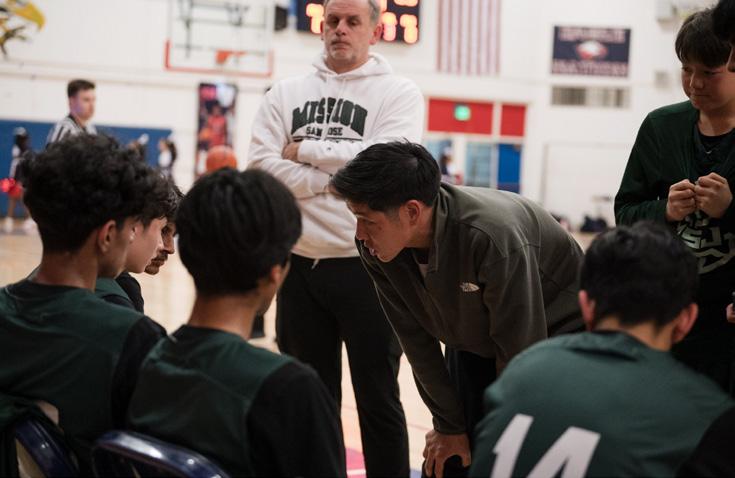
By Kayla Li & Fiona Yang Staf Writers
club teams. While Leu admits he was never the strongest player on the court, basketball gave him something he valued more than performance. “I was a good player, but I wasn’t great,” Leu said. “[Instead, what] I really liked [was] this whole idea of mentorship. ”
That interest took shape after high school, when he began work- ing with younger players as an assistant coach for middle school teams and later through club basketball. Those early experiences shifted how he saw his place in the sport from competitor to contributor.
After earning his bachelor’s degree in economics from UC San Diego, Leu considered graduate school and began bartending to save money, a job that unexpectedly became a longterm chapter of his life. As the years went on, he started questioning what kind of work would allow him to feel fulflled every day.
While bartending for six years, Leu also began coaching freshman basketball at MSJ. That experience prompted a larger question for him: if bartending was not a permanent plan, what kind of work would allow him to feel fulflled everyday? The answer became clear through coaching. Leu realized he wanted to inspire young people consistently and help them work toward their
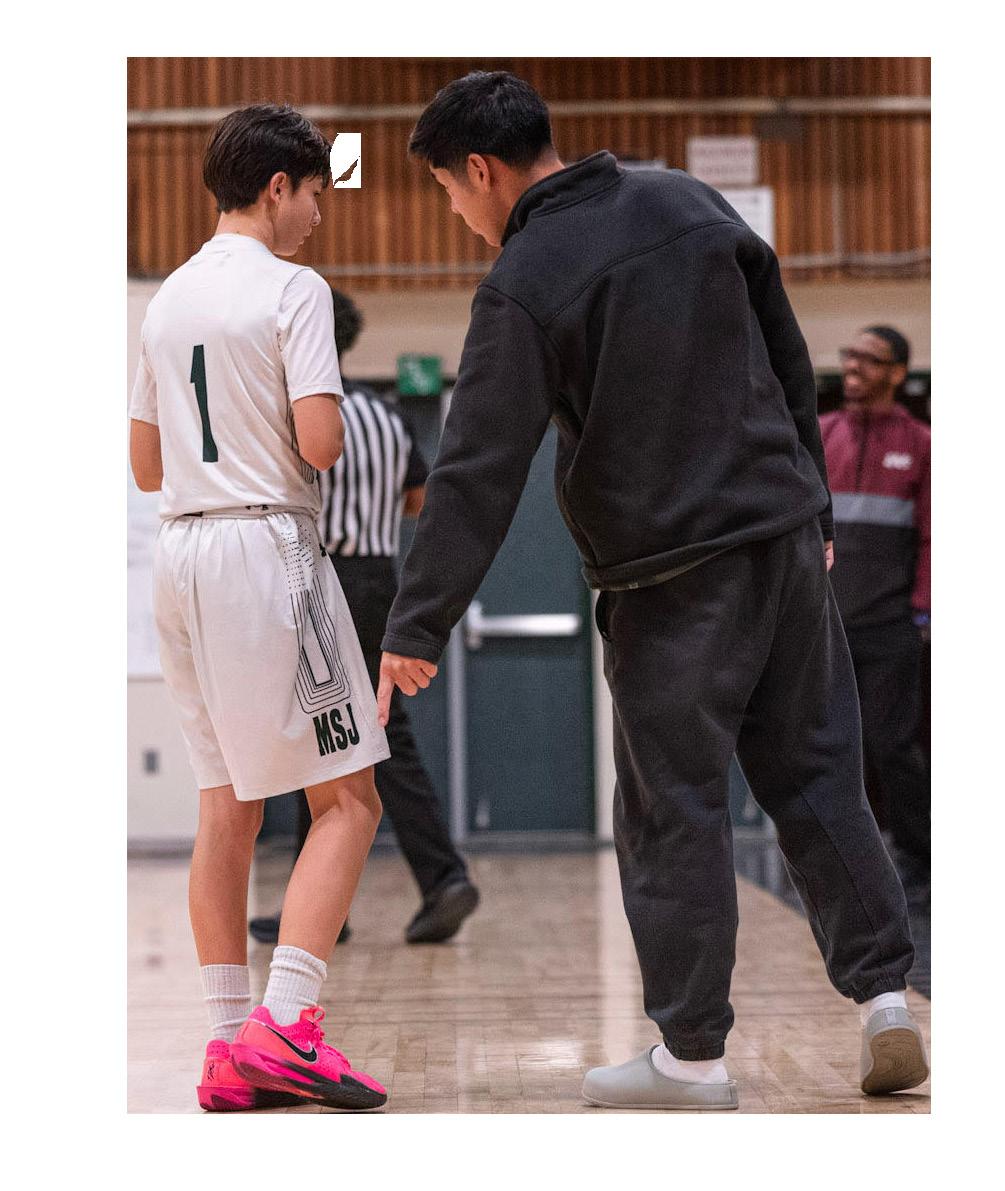
goals. “I really, really liked being able to watch student-athletes grow over the course of the season and feeling like I was helping to inspire their ambitions and aspirations,” Leu said. Teaching at MSJ, however, carries deeper meaning for Leu because of his own experiences as a student. He openly acknowledges that he did not enjoy his time at MSJ. Watching his students navigate academic pressure now has strengthened his resolve to change the learning environment.
For Leu, returning was not about nostalgia, but about reimagining what school could feel like.
That philosophy extends into his coaching. Leu values growth over immediate results, emphasizing confdence building as much as skill development. With players carrying different pressures into the gym each day, consistency is not guaranteed, but Leu sees those emotional fuctuations as opportunities to lead by example and meet athletes where they are. He fnds the most fulfllment in watching students redefne how they see themselves. Whether it is a player who once hesitated to take a shot or a student who dreaded trigonometry, Leu measures suc-
cess by shifts in self-belief. Looking ahead, Leu hopes to eventually become the Varsity head coach and build a program that consistently competes at the highest level. More than championships, he wants to help revive a stronger sports culture at MSJ. He recalls packed gymnasiums and electric crowds during his own high school years and hopes to bring that sense of school spirit back. “This is my favorite place,” Leu said, refecting on how far his relationship with MSJ has come.
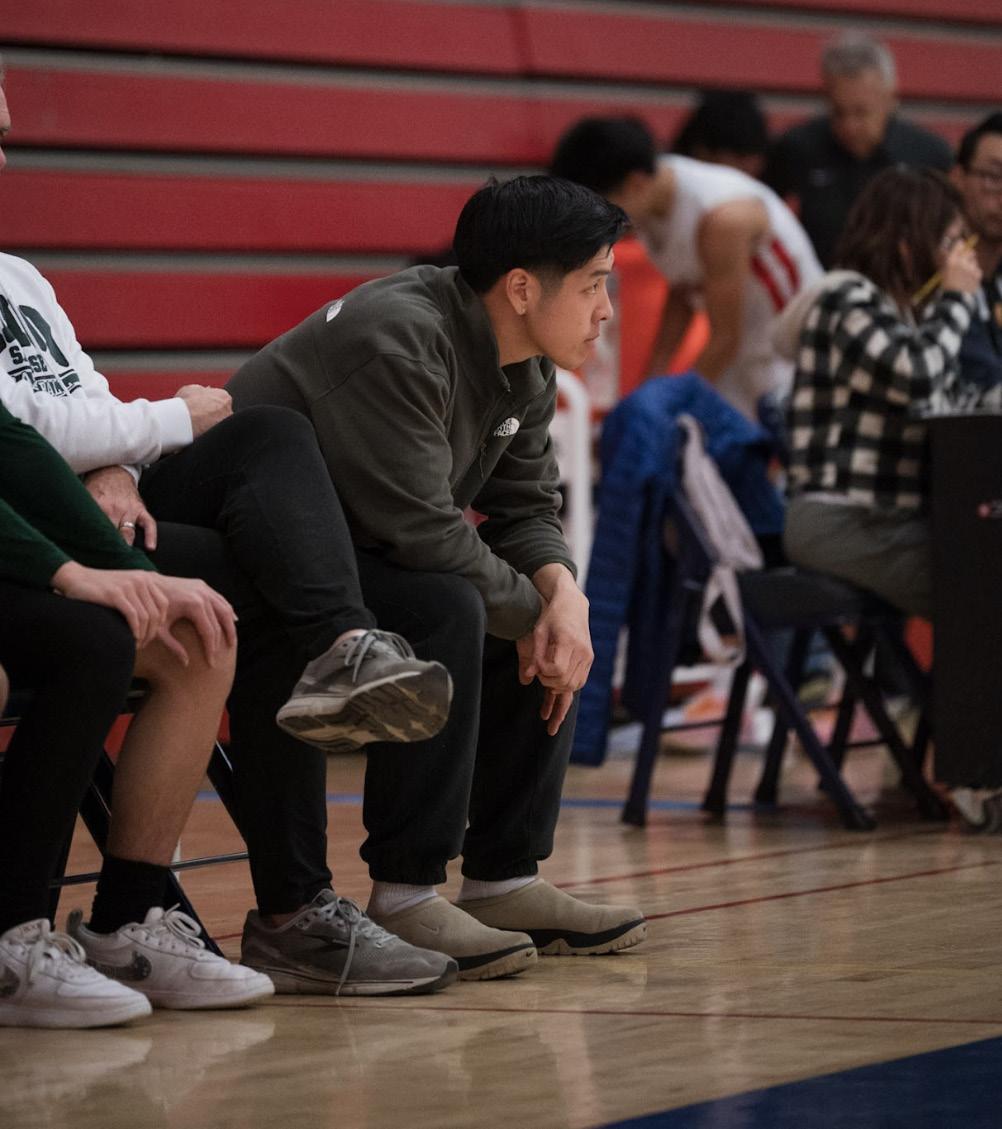
What once felt like a place he needed to leave has become the place where Leu feels most aligned with his purpose. Through teaching and coaching, he continues to shape an environment where students are not just supported and challenged, but transformed, leaving with a stronger sense of who they are and who they are becoming. ▪

The Aspiring Scholars Directed Research Program (ASDRP) is a 501(c)(3) private research institution in Fremont, CA. ASDRP is the Bay Area's premier precollegiate research & development institution, run by a consortium of highly skilled scientists, engineers, and researchers with years of academic and industry experience who collectively seek to push forward the current frontiers in biology, chemistry, physics, computer science, psychology, medicine, engineering, and more.
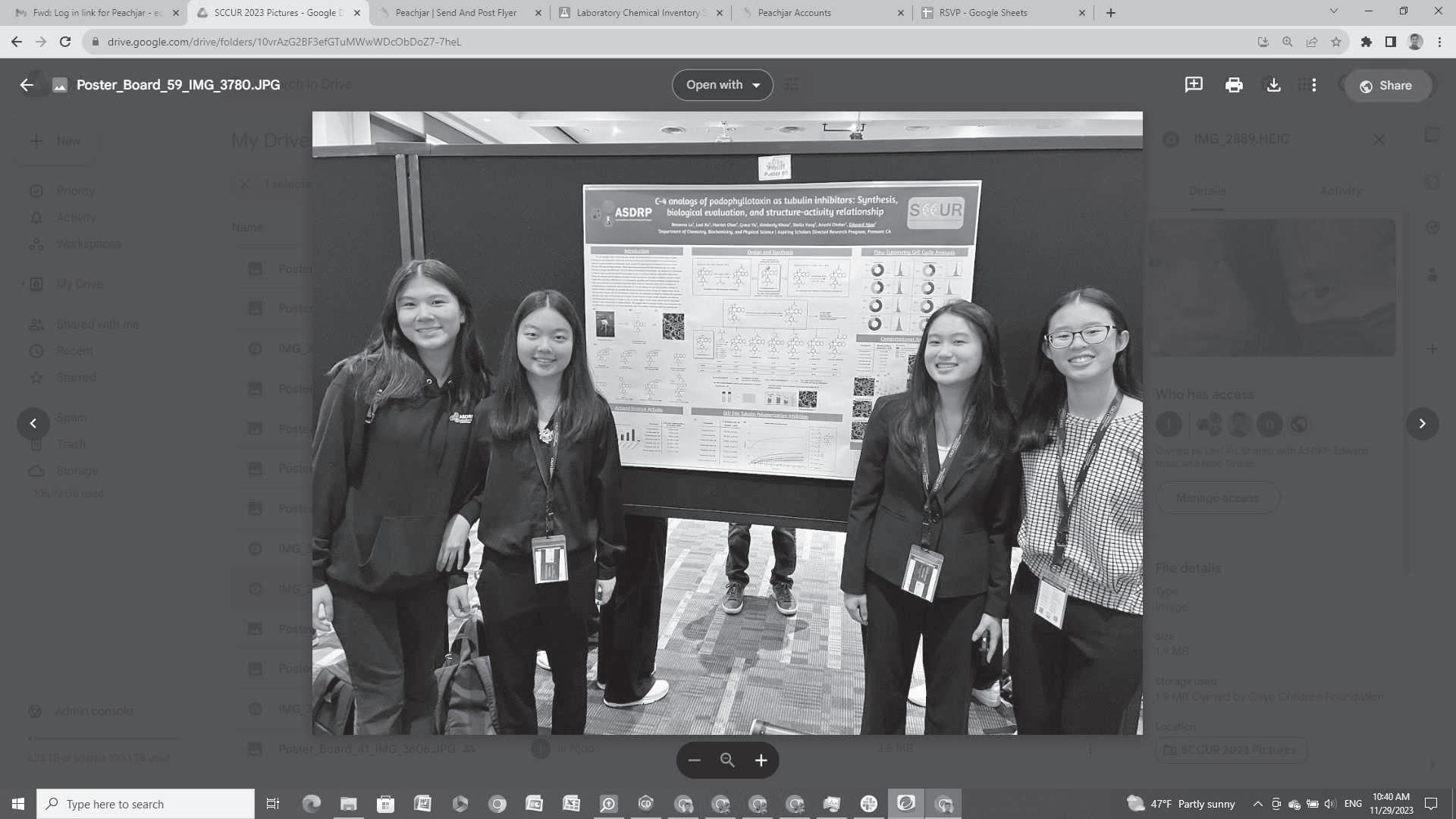
Spring 2026
Early Application Deadline: November, 2025
We mentor high school students - budding scientists in 9th through 12th grade - who come from every corner of the greater Bay Area, California, and across the United States. We seek student researchers who are passionate, who are unafraid of a steep learning curve, and who want to be involved in real science that has real impact on society
[Scan to read past student work]→
Final Applications Due: December 30, 2025
Summer 2026
Applications Open: October 2025 February 1, 2026

Final Applications Dues: April 15, 2026
Applications are competitive, and each term, ASDRP receives far more applicants than there are open research Apply online at

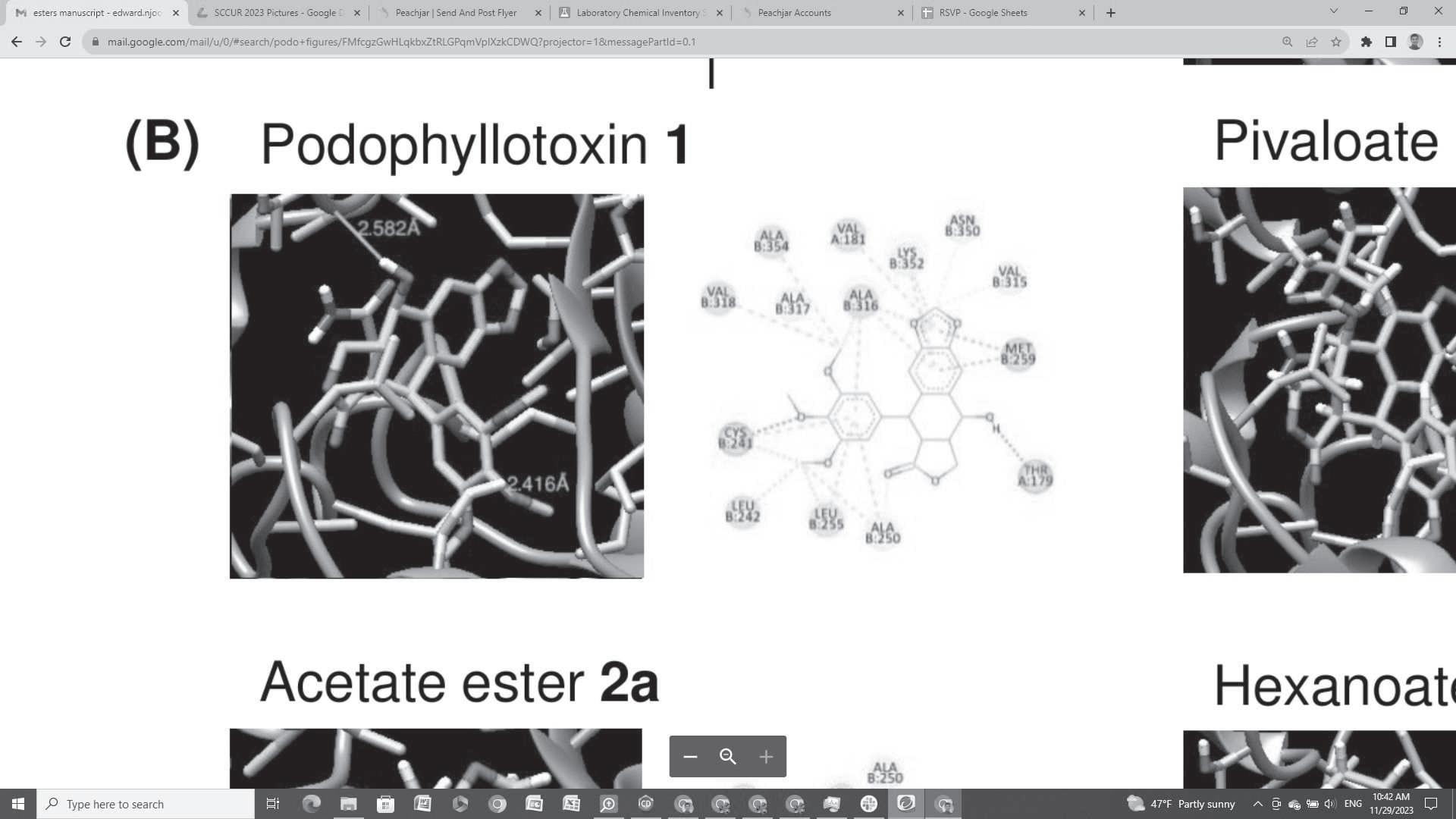

Top ranked women’s tennis player Aryna Sabalenka faced Nick Kyrgios in an exhibition match on Dec. 28, 2025. Initially dubbed a modern Battle of the Sexes, it soon turned into a narrative reinforcing old stereotypes against women’s athletics following Kyrgios’s victory. Tis was not the frst such match: in 1973, Billie Jean King had beaten former men’s star Bobby Riggs, marking a pivotal moment in sports for women. However, the Sabalenka-Kyrgios showdown yielded a diferent result — not advancing women’s sports, but setting them back. A famous match between Venus and Serena Williams and Karsten Braasch in 1998 told a similar story to Sabalenka-Kyrgios. Braasch ranked below the top 200, golfed and drank before the match — yet still won convincingly, as did Kyrgios against Sabalenka. Main event organizers contended that the outcomes were not owed to superior skills or work ethic, but inherent physical advantages men hold over women, mainly “in the upper body, where overall strength of females is about half that of men,” according to the International Tennis Federation. However, the true power of female athletes lies not solely in physical strength, but in versatile playing styles, strategy, and adaptability, qualities recognized neither in Williams-Braasch nor Sabalenka-Kyrgios.
Te structure of the Sabalenka-Kyrgios match reveals more discrepancies in competitive equality. While King-Riggs was played without any special conditions, sending the message of a match of equals, the organizers of the Sabalenka-Kyrgios match sent the opposite message: Sabalenka’s court size was reduced 9%, driving home the damaging idea of women needing special help just to match men. Tough marketed as a match promoting tennis and equality of the sexes, the Sabalenka-Kyrgios exhibition match instead discredited women’s tennis, reinforcing outdated beliefs in female athletic infe-
By Veer Mahajan, Kelly Shi, & Andy Zhang

riority. Te match’s weak steps to equality — reducing court size does nothing to address upper body strength discrepancies — did not even the odds, failed to highlight Sabalenka’s true skill, painted her as a lesser player in need of handicaps, and left the match a disappointment in the quest for gender equity in sports.
Tough gender equality in tennis is a widely-debated topic, women’s tennis remains seen as inferior to men’s, with critics arguing women’s tennis is not nearly as entertaining or that women do not work as hard in their games as men do. An exhibition pitting men against women when stereotypes are already widespread intensifes stigmas. Tough the top-ranked women’s tennis player lost to the 670-ranked men’s tennis player, the issue lies with the organizers’ im-
plementation of an artifcial equality, reinforcing stereotypes of men’s sports being superior while discrediting women’s sports. Failing to challenge these bigoted stereotypes, this match is a slap in the face to gender equality within sports, suggesting direct competition cannot be a route to equality in sports.
Successful mixed-gender formats, such as in badminton, track, and swim, prove that structural changes to sports are necessary to achieve equity. Tese changes highlight individual strengths; within mixed doubles in badminton, for instance, men and women often assume different roles on the court suiting their natural talents: men attack while women control the rally. Mixed games allow men and women to display their talents, and the audience sees the
best skills of both genders in competitive, engaging, and high-quality games. Te success of these structures reveals the failure of exhibition matches like Sabalenka-Kyrgios. Rather than bridging men’s and women’s sports, such exhibitions further widen the chasm, approaching the issue of inequality in women’s and men’s sports not to unite and uplift, but to divide and put down.
While Sabalenka believes that the match “brought more attention to [tennis] and [she does not] see how it can be bad,” the public does not share this view. Even King, whose 1973 Battle of the Sexes served as the inspiration for this event, could not call the match culturally signifcant. While King’s win became a pivotal moment in sports history through revealing that women’s sports can also be entertaining in a world where women’s sports were seen as worthless, there is no such social context underlying Sabalenka-Kyrgios. “Te only similarity [in the matches] is that one [player] is a boy and one is a girl. Tat’s it,” King said.
Exhibition matches like that of Sabalenka-Kyrgios push the stereotype of women’s sports being inferior to men’s while mixed-gender formats show both men’s and women’s sports in a supportive and empowering light. Such formats must be expanded to promote gender equity. Another way to facilitate equality here at MSJ is for students to avoid supporting events that are designed to draw attention by humiliating parties and halting progress. In order to assure progress for women’s sports, including those at MSJ, we must have coverages that value women within sports for their own strengths, instead of using them for publicity. Additionally, increasing attendance and support for girls’ games within the MSJ sports community can also help in advancing equality for the student athletes.

petition is an unavoidable part of her dance career, yet it con f icts with what dance means to her. T is is why she carved out an unique and di fcult path for herself — creating a future that prioritized performance over competition. At 14, she auditioned and was accepted with a full scholarship into City Ballet San Francisco, a highly prestigious and competitive pre-professional ballet school where she has been
By Cecilia Cheng & Scarlett Huang
roughout her life, Xiao has struggled with the self-doubt that comes with such an environment — scrutinizing her body and skills under the strict standards that bal lerinas often conform to. “Everyone has the image of a perfect ballerina, and I’m de not it. Sometimes, I’ll feel like I’m not good enough, or I just don’t belong,” Xiao said. Still, Xiao knows art will never award uniformity, constantly seeks inspiration from those who have over come the same obstacles: people like Marianela Núñez. Despite not having the stereotypically perfect body for bal let, Núñez is still widely recognized as an “one of the best ballerinas in the world.” Her in fuence has helped Xiao manage her insecurities and turn her focus to improving as a dancer.

but the graceful limbs of the Snow Queen. Her immersion only con f rms that her heart lies with performance. “I think ballet is just what I’m meant to do,” Xiao said. Unfortunately, when you put your whole heart into some thing, you risk as much as you gain.

reinforcing her faith in her own passion, but more importantly representing how far she has come as an artist. Past high school, Xiao hopes to continue to dance for the rest of her life, whether that means joining a professional dance company for a few years or attending adult dance classes. To those with aspirations just as large, and a will just as strong as herself, Xiao has a few words of advice: “I think just be genuine with what you do. If you really like it, I think you’ll get really far; don’t hold yourself back by telling yourself that you can’t do it. Everything is possible, as long as you work for it.”


By

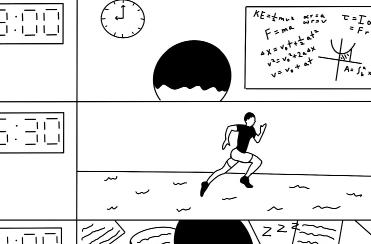
Friday, Feburary 6, 2026
USPAACC Western Region Lunar New Year Celebration

its Lunar New Year Celebration on Feburary 6.
US Pan Asian American Chamber of Commerce Education Foundation (USPAACC) will host its Lunar New Year Celebration on February 6 at the Pearl Bay Restaurant in Fremont. Te event features a traditional lion dance at 12:45 p.m., cultural entertainment, and a community luncheon honoring the Year of the Horse. Tickets are open to the public.


Marking the 60th anniversary of the longstanding cultural phenomenon, this year’s Super Bowl will be held at Levi’s Stadium in Santa Clara. Te Seattle Seahawks and the New England Patriots will face of on Feburary 8, with potentially more than 70,000 football fans watching in person at the venue, while more than 100 million will be watching from the comfort of their homes asynchronously.
Te 2026 NFL Play Football Family Festival will take place at 10 a.m.-1 p.m. on February 7 at Kathleen MacDonald High School in San Jose. Tis event celebrates the excitement of the Superbowl LX with a day of interactive games, live entertainment, player appearances, and more activities. Event highlights include interactive football zones, meeting NFL players, playing in contests, and savoring local cuisine. Dia de los Despechados Paint Party Tursday, Feburary 12, 2026

Billy Roy’s Burger Co. in Fremont is hosting the Dia de los Despechados Paint Party at 6-8 p.m. on Tursday, February 12. Attendees can enjoy food and drinks available for purchase, while creating their own paintings. Doors open at 5:15 p.m., and free parking is available.

Hosted by the Age Well Center, the Crab Feed Fundraiser will combine a delicious crab dinner with a lively social atmosphere, rafes, and an opportunity to meet local residents and community members. Students can enjoy fresh seafood, live music, and support senior wellness programs, experiencing how local nonprofts bring the city together. Tickets are $88 per person, and all goes to supporting affordable meals and programs for local seniors.
Feburary 20-22, 2026 San Jose Lunar New Year-Tet Festival

Te Eastridge Mall in San Jose will be hosting the annual Lunar New Year celebration at 3 p.m.-10 p.m. on February 20, and 11 a.m.10 p.m. on Febrary 21 and 22. Celebrating displays of Vietnamese cultural elements, this event will include live entertainment, vendors and other cultural displays.

Te 57th California International
quarian Book
co at Pier
on the
in
ary 27 to March 1, hosted by the
Association of America (ABAA). Te fair brings together more than 100 international exhibitors selling and displaying rare books, manuscripts, maps, autographs, drawings, and other historical ephemera across two foors, attracting collectors, dealers, scholars, and book lovers looking to browse, buy, and explore unique materials.
Feburary 28, 2026 East Bay Camp &

The scent of freshly brewed Niles coffee, the sound of roaring engines of vintage cars, and the sight of beautifully arranged classic cars along the curve of Niles Blvd. greeted Nick Desaulniers on Sunday morning. Part of his weekend routine, Desaulniers is an avid car show attendee, enjoying the laid-back atmosphere of chatting with people and “seeing a whole variety of new cars, old cars, [and] very different styles of cars.” Desaulniers was thrilled the morning of January 11 for Niles Flying A’s — an organization that pioneered the historic restoration of Niles car culture — frst Classics & Coffee car meet of 2026.
Every second Sunday of the month from 7:30-11:00 a.m., Niles Flying A hosts Classics & Coffee. This time, more than a hundred car enthusiasts and newcomers gathered together to showcase and admire vintage cars while enjoying coffee, donuts, and breakfast burgers. Lining both sides of the boulevard, car owners stood next to their classic automobiles, like a 1967 Ford Mustang Fastback and a BMW 2002. Periodically, they took drives down the street and excitedly waved to attendees and friends. At the heart of the event stood what was previously named the Solon Brothers Gas Station and Diner, now revamped into a museum honoring the town’s car history. In front of the station, a stall decorated with Niles Flying A merch offered free coffee and donuts, while attendees chatted cheerfully around the garage, surrounding a fre pit, and alongside the street. “Hearing the stories of [family who] used to work at these Flying A service stations … getting shared across the decades is just incredible,” Niles Flying A owner Krysten Laine said. Fulflling the goal of sharing how important Niles was to the car industry was not easy. In the early stages of restoration, Niles Flying A faced challenges with reinstalling corroded pipes, repainting the walls, and roofng the bathroom. But through patience and helping
By Fiona Yang & Aaqib Zishan Staff Writers
hands, “fnding all of those pieces in the community helped [Niles Flying A] overcome those challenges,” Laine said. Now, Classics & Coffee has blossomed into a bustling and beloved environment, cherishing the Fremont car culture. “As humans, we need this sense of community, [somewhere to belong], and sometimes cars [are] the only thing that we have,” attendee Jose said. That sense of connection and belonging is reinforced by the atmosphere around the event. What sets Classics & Coffee apart from other car meets is the historic background of Niles and the nostalgic late ‘80s and ‘90s’ energy — soft serve ice cream, classic cafes, neon signs, and accents of bright baby blue scattered throughout the streets. Not only do the cars embody that fash of time, but the local people bring that image to life through conversation, memories, and shared interests as well. “The town of Niles, California … ceases in time. You’re like in the olden days, but also with all these beautiful cars,” car owner Evelyn Marika said. Classics & Coffee is not just another car show — it’s a moment in time, revived through the help of caffeine, sweet pastries, and passionate locals with a fond love for cars.
“It's pretty cool to see this gas station that's been restored . . . it's nice to have something in the area that you know has a strong historic tie.”
“It's hearing other people's memories that's the fun part.” — event organizer Krysten Laine









r e a p h o t o b o o t h s
By Cecilia Cheng, Saesha Prabhakar & Andy Zhang Staf Writers POTOBOX
Situated within Milpitas’s Great Mall, Potobox is a Bay Area favorite for making memorabilia. The store has been well received since its opening two years ago, offering a wide selection of accessories that can accompany the photos, ranging from capybara headbands and plushies to heart glasses. In addition to pastel-colored rooms of baby blue, violet, and white, Potobox offers unique angled booths like a 0.5-mimicking high angle, a 360 high angle photobooth, and even a washing machine-themed setup. After guests choose their favorite photos to be printed on the strip, they can then choose flters such as warm, soft, and monotone, in addition to customizing the frame’s design. Besides receiving two physical strips for $12, guests will also receive a QR code to access their strips, as well as a short behind-the-scenes video,






For almost a century, photobooths have been used to capture memories and smiles. What began as flm photographs developed through a series of chemical baths has now grown to include vibrant digital images with customizable frames and stickers, making photobooths more accessible and mainstream. Whether offering black-and-white vintage photos or colorful pictures with fun props, photobooths create a joyful space for friends and family to laugh, pose, and preserve unforgettable moments. The Smoke Signal compiled a list highlighting some of the Bay Area’s most iconic photobooth spots.


Launched in December of 2024, Photomatica’s frst Photobooth Museum restores vintage analog photobooths for visitors to explore. Located at 2275 Market Street, San Francisco, this popular destination features a diverse selection of antique and digital photobooths. Inside the museum, visitors are welcomed with soft-toned walls decorated with past guests’ photo strips, a wide selection of photobooths, as well as a workstation to make custom keychains out of photostrips. “There’s something new every day, whether it be customer interactions or problems with the booths. I’ve been doing this for about a year, and I’m still learning new things and running into problems that I haven’t met before,” Photomatica technician Carter Hiett said.
Well known for its collection of more than 300 antique arcade machines, the Musée Mécanique is one of the world’s largest family-owned penny arcade museums. First established in Playland amusement park, the arcade moved through multiple sites until it ended up at Pier 45 Fisherman’s Wharf in 2001. Currently, it includes an impressive amount of 20th-century machines, ranging from puppet shows and miniature showcases to virtual games and interactive simulations.
Alongside the arcade, the museum also features an antique photobooth deep within its premises. Guests must search through rows of 1900s games before fnally reaching this hidden gem. Unlike modern photobooths, guests face a blurry mirror instead of a digital screen refection. Costing $5 per two strips, the machine prints slowly—taking fve minutes to print each set, emerging slightly damp from the chemical liquid bath system of analog photobooths. Still, for many visitors, the long wait is worth it, as the booth’s analog system produces charming, vintage-style photographs that serve as unique memorabilia, perfectly complimenting the old-fashioned styles of Musée Mécanique’s antique ma-













Washing machine and high-angle photobooths at Potobox.
Located at 1644 Haight Street in San Francisco, Club Photomatica offers a distinctive photo experience with three photobooths featuring both vintage and digital styles. The booth itself is within 710 Collective, a retail shop featuring handcrafted goods ranging from jewelry to yarn decorations, a cozy space that draws in visitors looking to take photos or shop for unique items. Guests can choose be tween restored analog booths that produce classic black-and-white photo strips or digital booths designed for quick, shareable images. Depending on the booth, prices range from $6.50-$7.50 for a classic four-frame photo strip. Club Photomatica stands out as an intersection of nostalgia and modern technology, offering a memorable way to capture moments while strolling Haight