CATALYSE NEW POSSIBILITIES IN THE ENERGY TRANSITION
OUR VALUES
FORWARD-LOOKING
Seeing what’s possible –focusing on opportunities and solutions rather than obstacles.
ENTERPRISING
Willingness to try new things and to go the extra mile to get things done
COLLABORATIVE
Teamwork and partnerships for win-win outcomes.
COURAGEOUS
Resolve and conviction about our strategy for the future; committed to doing the right thing now.
ENGAGING
Connecting and reaching out to share ideas and solutions.
ENERGISING
Bringing openness, ideas and passion to relationships, so that others are motivated to do more.
Disclaimer
The information contained in this Report is provided as of the date hereof, and may be subject to change by SLNG (at its sole discretion) without notice. In this regard, SLNG may (but is not obliged nor undertakes to) update or revise any information / statement hereto. Notwithstanding the date of the Report, this Report discloses information pertaining sustainability practices of SLNG for strictly the relevant historical time periods set out in this Report (Reported Period); and such disclosure is on the terms set out herein and based on such specifications, requirements and guidance also described in this Report. Accordingly, events and circumstances may have developed further between the Reported Period and the date of this Report; and SLNG does not undertake any obligation to publicly update or provide any new information as a result of such development. Information disclosed herein is on a ”as-is-where-is” basis, and (unless otherwise expressly stated herein) determined, collated/populated, processed and presented based on SLNG’s formulas, methodology, policies, procedures standards, and requirements. This Report has not been subject to third-party audit verification.
For the purposes of preparing and presenting this Report, SLNG may have also referred to and referenced information prepared or obtained from third parties (including URLs of third-party websites). No review or due diligence has been conducted to verify the accuracy, completeness and/or reasonableness of such third-party information. Accordingly, nothing herein shall be deemed to be construed to be SLNG recommending or endorsing such third-party information. The presentation of such third-party information in this Report is subjected to other information set out herein. Readers may wish to refer directly to the source of such third-party information for more information. For URLs to third-party websites, readers are put on notice that the access and usage of such third-party website are subject to the terms therein; and no guarantee, representation and/or warranty (whether express or implicit) is provided by SLNG that (a) these URLs will continue to be functional, (b) such websites are secure and safe for use, and (c) such third-party websites are free from virus, malware or malicious scripts. Access to third-party websites using URL links included in this Report are at the own risks of the readers. Similarly, this Report may make reference to third-party events; and nothing herein should be construed as endorsement or recommendation by SLNG of such third-party events. Unless otherwise publicly acknowledged in writing by SLNG, SLNG’s participation at or sponsorship (if any) of any third-party event is limited to the extent of such participation or sponsorship (as the case may be); and SLNG shall not be automatically deemed to support any statement or presentation of any kind made in relation to or at such third-party event.
This Report contains forward-looking statements in relation to SLNG’s operations and business. Unless otherwise expressly stated, all statements (other than statements of historical fact) may be or may be deemed to be forward-looking statements. For avoidance of doubt, forward-looking statements may cover a range of matters, including without limitation SLNG’s exposure to risks, commitments, expectations, beliefs, estimates, forecasts, projections and assumptions. Forward-looking statements are statements of future expectations that (a) are based on SLNG’s current expectation and assumptions; and (b) involve risks and uncertainties (whether known and unknown), which may in turn cause actual results, performance or events to differ from those expressed or implied in these forward-looking statements. In light of the foregoing, actual results or events could differ from those stated, implied or inferred from the forward-looking statements contained in this Report. All forward-looking statements contained in this Report are expressly qualified in their entirety by this Disclaimer and by risks factors which may affect SLNG. Readers should not place undue reliance on any forward-looking statement. No guarantee, representation and/or warranty (whether express or implicit) is provided in relation to the likelihood of achievement of any matter set out in the forward-looking statements.
Inclusion of information in this Report is based on various considerations and factors determined by SLNG (in its sole discretion), and such inclusion should not be interpreted as an indication of materiality to SLNG’s business, strategy, outlook, operational results and/or financial condition. This Report is also not intended to create any legal right for or in favour of the readers or any obligation to the readers. Nothing herein should be construed to be (a) advice of any nature; or (b) offer of any kind, made by SLNG to the readers.
There is no guarantee, representation and/or warranty (whether express or implicit) by SLNG pertaining (a) the accuracy, completeness and/or reasonableness of information contained herein; and/or (b) the “fit-for-use” for any purpose in relation to such information and this Report. This Report is made available to readers on a non-reliance basis and for reference only. SLNG shall not be liable for any reliance or use of the information set out herein. Readers should exercise judgement when reading this Report, conduct their own independent assessment of the information set out herein, and (if required) seek independent professional advice.
Save for third-party content (and their derivatives) included in this Report, SLNG owns all the interests and rights (including without limitation intellectual property rights) of this Report and its contents. Save for allowing readership hereof, no interest or right (including without limitation intellectual property right) is granted to any person. Unless SLNG’s prior written consent is obtained, this Report and/or information herein should not be (directly or indirectly; and whether in part or whole) (a) distributed; (b) replicated/reproduced; (c) reverse-engineered; and/or (d) used in such manner or for such purpose that is not approved by SLNG. This Report and its usage (including readership) are governed by the laws of the Republic of Singapore.
INTRODUCTION ABOUT THE COMPANY
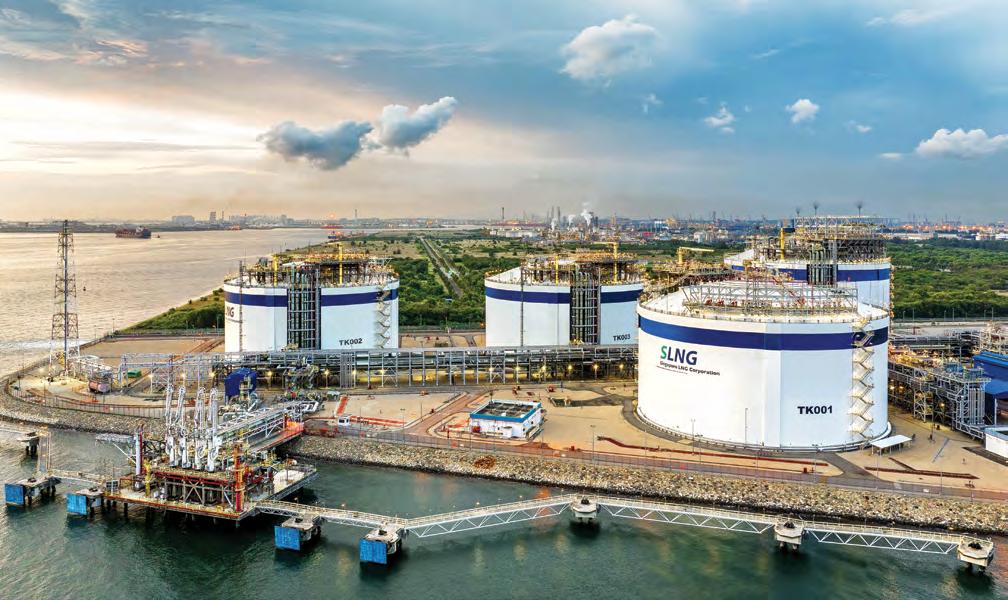
Singapore LNG Corporation Pte. Ltd. (SLNG or Company) is the owner and operator of Asia’s first open-access, multi-user liquefied natural gas (LNG) terminal. Located on a 40-hectare plot of land on Jurong Island, the SLNG Terminal (Terminal) currently features two jetties for LNG vessels ranging from 2,000m³ to 265,000m³, four storage tanks with a total capacity of 800,000m³, and an annualised average gas supply capacity of up to 9 million tonnes per annum (MTPA), with a peak capacity of up to 11 MTPA. Presently, the Terminal supplies about 50% of Singapore’s total natural gas demand for power generation.
SLNG’s vision is to Catalyse New Possibilities in the Energy Transition. In line with our vision, we work towards (a) helping to enhance Singapore’s energy security; (b) being an advocate for sustainable new energy developments and innovations; and (c) supporting the development of the LNG eco-system.
We fully support a national-level LNG strategy for Singapore that will facilitate the growth of LNG-related businesses in Singapore and establish Singapore as a LNG hub for the region. In this regard, we offer an extensive range of services for the domestic and regional markets, including long-term throughput, spot throughput, storage and reload, gassing-up/ cool-down, transshipment, LNG bunkering and truck loading services.
We are collaborating with like-minded partners to explore opportunities offered by low-carbon alternatives, such as ammonia and hydrogen; as well as harnessing cold energy to support decarbonisation.
At SLNG, we are committed to taking action, and being innovative to create a positive impact in the market and the LNG eco-system. We view this as our vital role in helping to secure Singapore’s energy future.
CERTIFICATIONS
● SS 651:2009 Safety and health management system for the chemical industry
● ISO 45001:2008 Occupational health and safety systems
● ISO 55001 Asset management systems
● ISO 27001 Information security management systems
● bizSAFE Star
AWARDS
● For information on SLNG’s Awards, please refer to our website: https://www.slng.com.sg/awards
MEMBERSHIPS AND ASSOCIATIONS
● ASEAN Council of Petroleum (ASCOPE)
● Singapore Business Federation (SBF)
● International Group of Liquefied Natural Gas Importers (GIIGNL)
● Singapore Shipping Association (SSA)
● Singapore National Employee Federation (SNEF)
● Tripartite Alliance for Fair and Progressive Employment Practices (TAFEP) signatory
● Society of International Gas Tanker and Terminal Operators (SIGTTO)
● Association of Company Emergency Response Teams (Singapore) (A-CERTS)
● Oil Companies International Marine Forum (OCIMF)
● Energy Association of Singapore (EAS)
● World Energy Council (WEC)
INTRODUCTION
BOARD STATEMENT
RESPONSIBLE GROWTH, RESILIENT FUTURE
As Singapore progresses towards a low-carbon and resilient future, SLNG works to support this transition through responsible and forward-looking business practices. Sustainable growth is increasingly central to remaining competitive and resilient, and is aligned with both national and global expectations. Guided by Singapore’s Green Plan 2030 and the broader global energy transition, these priorities will continue to shape our long-term vision and strategic direction.
Our sustainability strategy is anchored to five objectives –ensure energy security; prepare for a low-carbon future; promote sustainability growth; support Singapore’s sustainability goals; and align with ESG trends and regulations. SLNG’s Board of Directors (Board) has active oversight of key sustainability targets and has integrated ESG metrics into the Company’s performance monitoring and risk management processes. Our approach to sustainability and climaterelated matters continues to enhance existing governance practices, particularly in the areas of transparency, enterprise risk management, supply chain management and project management.
We continue to pursue operational excellence through innovation and efficiency, with a view to reducing our carbon emissions, expanding our portfolio of lower-emission solutions, while contributing to Singapore’s energy needs. We have taken deliberate steps to strengthen climate resilience across our operations.
“Through collective action, we aim to create enduring value for our stakeholders and contribute meaningfully to a just and sustainable energy future for Singapore and the region.”
To enhance SLNG's ongoing efforts to identify and manage potential sustainability and climate-related risks and opportunities, the Company is looking to reference a broader suite of internationally-recognised disclosure frameworks. In addition to referencing the Global Reporting Initiative Sustainability Reporting Standards, we are also exploring the International Sustainability Standards Board’s International Financial Reporting Standards S2 Climate-related Disclosure, relevant IFRS S1 General Requirements for Disclosure of Sustainability-related Financial Information, and the Task Force on Climate-related Financial Disclosures.
As the global energy landscape undergoes rapid transformation, the LNG sector is expected to play a critical transitional role in supporting energy security while enabling emissions reductions. This transition presents a timely opportunity to harness innovation, unlock new value streams, and advance the diversification of our portfolio. The Board remains optimistic about a growing demand for LNG and its support services across Asia, as well as ongoing investments in cleaner technologies and energy sources.
In FY2024, SLNG marked a milestone in its development of Singapore’s second LNG terminal. The project moved into the Front-End Engineering Design phase and we expect the Engineering, Procurement and Construction contract to proceed as planned. Upon completion, the floating terminal is expected to increase our LNG regasification capacity from 9 million tonnes to 15 million tonnes annually. LNG bunkering activities across the year also saw an uptick in demand in Singapore and the region, as transport and processing activities increased in response to decarbonisation efforts by countries and the maritime sector.
Beyond environmental performance, our commitment to stakeholder engagement, workforce development and ethical business practices remains central to our approach. We continue to evolve our strategy and management approach, to ensure that growth is not only commercially sound but also environmentally responsible and socially inclusive.
Through collective action, we aim to create enduring value for our stakeholders and contribute meaningfully to a just and sustainable energy future for Singapore and the region.
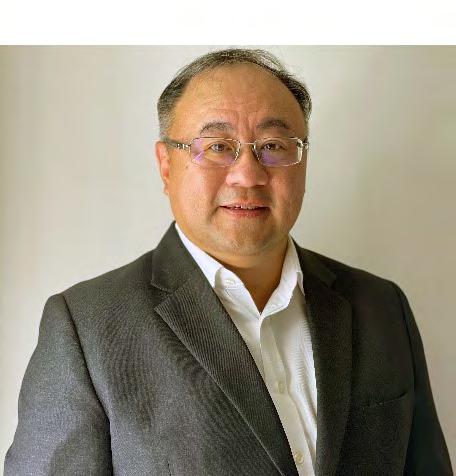
M r . LEONG WEI HUNG Chief Executive Officer (CEO)
INTRODUCTION
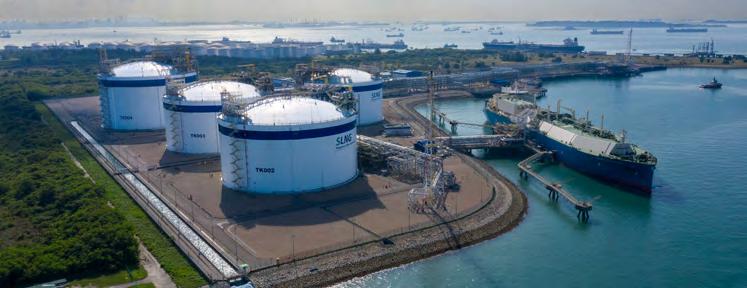
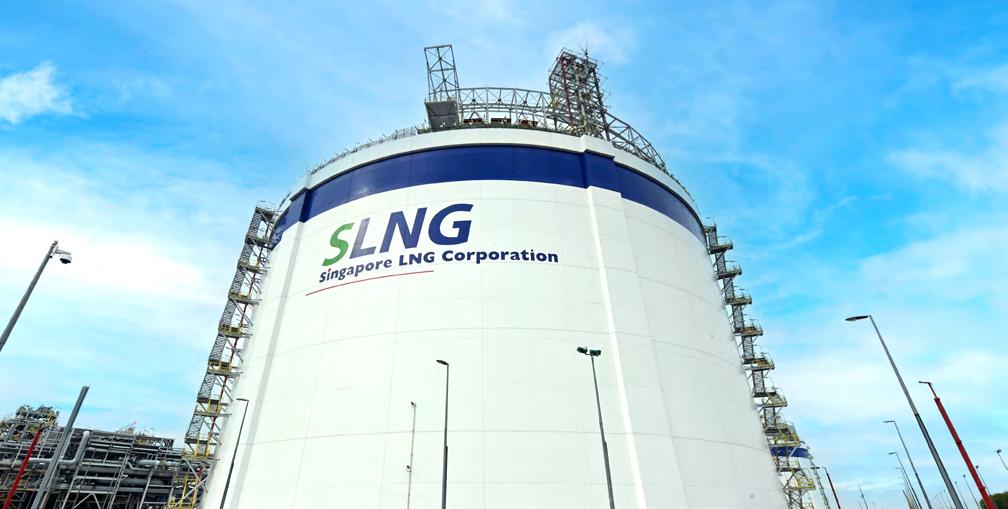
SLNG’S TERMINAL located on Jurong Island
ABOUT THIS REPORT
This Sustainability Report 2024 (SR2024 or Report) is the fifth Report published by SLNG and provides information on its sustainability performance from 1 April 2024 to 31 March 2025 (FY2024), except for data on fuel energy and Scope 1 emissions (which is from 1 January 2024 to 31 December 2024 in alignment with the tracking methodology of Singapore’s National Environment Agency (NEA). This SR2024 defines the Company’s targets for economic, environmental, social and governance (EESG) topics, as well as our longer-term commitments.
This Report has been prepared with reference to (a) the Global Reporting Initiative (GRI) Sustainability Reporting Standards, (b) the International Sustainability Standard Board’s (ISSB) International Financial Reporting Standards S2 Climaterelated Disclosure (IFRS S2), and (c) Industry-based Guidance on implementing Climate-related Disclosures, Vol 12. The principles of the Task Force on Climate-related Financial Disclosures (TCFD) and the GRI Reporting Principles have been applied in the development of this Report’s content to help increase accountability; encourage transparency and demonstrate our commitment to the United Nations’ Sustainable Development Goals (SDGs). We endeavour to continue the transition to the ISSB IFRS Framework in future reports.
The Company does not have any subsidiary nor own any joint venture entity; and the Company is wholly-owned by Energy Market Authority (a statutory board established by the Ministry of Trade and Industry of the Government of Singapore). Notwithstanding anything herein, all sustainability and climate -related disclosures (and corresponding governance, strategy, risks, opportunities and performance metrics) presented in this Report pertains strictly to SLNG only (and not to any other organisation) and are subject to the disclaimers set out hereto. As an exempt private-company-limited by shares registered in the Republic of Singapore, SLNG is not required to prepare audited accounts nor disclose publicly its financial statements.
The scope of this Report covers SLNG’s operations spanning the following locations for the relevant reported period:
● SLNG’s Offices, located at Alexandra Road
● SLNG’s Terminal, located on Jurong Island
We welcome feedback from our stakeholders. Please email us at Sustainability@SLNGCorp.com
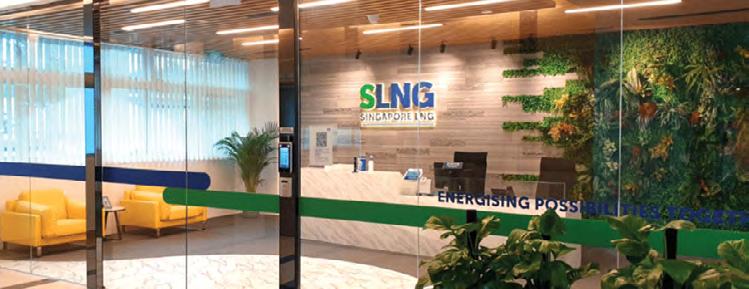
SLNG’S OFFICES located at Alexandra Road
(New premises are located at Pasir Panjang Road as of October 2025)
SUSTAINABILITY AT SLNG
SUSTAINABILITY PERFORMANCE HIGHLIGHTS IN FY2024
ENERGY SECURITY
0 INCIDENTS of gas supply disruption
CUSTOMER EXPERIENCE
97.02% SATISFACTION SCORE from marine operation customers
EMPLOYEE EXPERIENCE
100% of employees completed at least 1 development goal identified in their Individual Development Plans (IDP)
0 INCIDENTS of workplace fatality and work-related ill health OCCUPATIONAL HEALTH AND SAFETY
0 INCIDENTS related to process safety
PROCUREMENT PRACTICES
100% ESG SCREENINGS successfully implemented for SLNG Tier 1 and Tier 2 suppliers
TECHNOLOGY
100% OF DIGITAL INITIATIVES
implemented in the reported year achieved desired outcomes
CLIMATE CHANGE AND RESOURCE EFFICIENCY
Achieved site-specific energy consumption of 0.0171 kWh/Nm3 below internal target of 0.0237 kWh/Nm3
723 MWh of solar energy generated
VALUE CREATION AND SUSTAINABLE GROWTH
Successful completion of >100 RELOAD OPERATIONS onto LNG bunker vessels, placing Singapore as the top LNG bunkering port in 2024
2 nd LNG TERMINAL project marks successfull progression into next phase
Submission of co-bid for national ammonia for power generation and bunkering project
Development of the new Truck Loading Facility to support >8,000 truck loadings annually
SUSTAINABILITY AT SLNG
SUSTAINABILITY IS EMBEDDED IN SLNG CULTURE
The Company is committed to embedding sustainability into SLNG culture. By involving employees in initiatives (such as green campaigns, learning sessions, volunteering programmes, and resource conservation drives), we foster greater awareness, ownership, and shared responsibility across all levels. These efforts not only strengthen alignment with the Company’s sustainability goals but also aim to change every day behaviours that contribute to a more collaborative workplace and society.
Multiple communication platforms are leveraged to engage employees on sustainability matters, ensuring broad reach so as to foster better awareness of sustainability topics across the workforce. Through regular check-ins and feedback mechanisms such as post-event surveys, SLNG is able to gather valuable insights on employees in relation to their understandings of ESG issues. Open channels (that allow employees to indicate their interest in specific sustainability topics) enable the Company to refine and tailor SLNG’s internal sustainability initiatives, ensuring that they remain relevant and impactful while aligning with organisational goals and accommodating employees’ preferred learning pace.
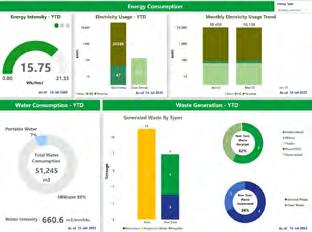
Developed and hosted in-house, the platform aims to automate and digitalise end-to-end data collection process while presenting various data sources in an easy to understand visual format. These features enhance the efficiency and accuracy of internal and external reporting, as well as improve stakeholder engagement, communication and confidence in the information disclosed to the public and/or stakeholders.
BITE-SIZED INFORMATION FOR SLNG STAFF MINDSETCHANGE ACTIVITIES AND EVENTS ESG TRAININGS
A sustainability column in the monthly staff newsletter SLiNGshots explored a range of topics (including how to change consumerism-based mindset, and how to avoid giving greenwashing messages) and provided industry-relevant updates (such as methane’s impact on global warming). ESG PERFORMANCE DASHBOARD
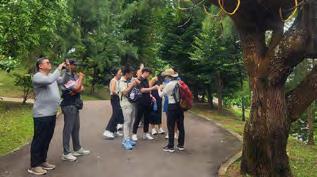
Organised to bring together the SLNG family for a common sustainability-based purpose, these activities and events include eco-walks that promote an appreciation for nature and local biodiversity; an annual Sustainability Day which rallies employees around SLNG-oriented learning; as well as behaviour-intervention campaigns around topics such as reducing water use, recycling and avoiding single-use plastics.
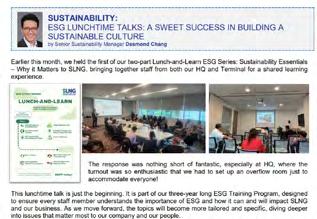
ESG learning sessions and lunch-time talks have been rolled out to generate interest and raise awareness of work-related sustainability. Contextualised for use in SLNG, these topics included knowledge essentials, sustainability-related business risks, the threat of climate change, and how to develop a sustainability mindset. Participation has been positive to the new initiative, with the engagement of more than 40% of SLNG’s workforce. SLNG has plans to launch asynchronous training modules for staff on various sustainability topics progressively over the next few years.
SUSTAINABILITY AT SLNG
SUSTAINABILITY APPROACH
SLNG’s approach to environmental and social responsibility is outlined in the Company's Sustainability Strategy and Framework. Our strategy has five core objectives that guide us in providing sustainable and resilient services as part of SLNG’s ambition to become a proactive partner in the global energy transition.
The Company’s sustainability framework is built upon the foundations of Economic, Environmental, and Social commitments to the Company’s internal and external stakeholders. This is underpinned by a strong Corporate and Sustainability Governance Framework that spans across the Company to provide direction for compliance as well as ethical and responsible business practices.
ENSURING ENERGY SECURITY
SLNG is committed to enhancing Singapore's energy security by providing reliable and resilient gas supply.
PREPARE FOR A LOWCARBON FUTURE
Our strategy includes diversification beyond LNG, adopting innovative solutions and lower carbon fuels.
Our approach supports resilience and positions SLNG favourably in a dynamic, evolving energy landscape. Additionally, we are able to attract carbon-conscious customers.
While this remains our core mandate, we recognise the importance of integrating sustainability therein. Ensuring energy stability while exploring lower-carbon solutions is key to maintaining profitability and supporting national energy needs.
PROMOTE SUSTAINABLE GROWTH
We focus on optimising asset utilisation to meet current and future business demands.
We provide efficient and profitable services, and foster people growth and expertise retention. By delivering services efficiently and retaining talent within our organisation, we are better placed for sustained long-term growth.
SLNG
SUSTAINABILITY STRATEGY
ALIGN WITH ESG TRENDS AND REGULATIONS
We are committed to staying ahead of ESG trends and regulations, and we proactively adapt to customer demands and technological advancements.
We keep pace with mega trends & regulations and energy transition changes, to mitigate risks and avoid non-compliance. This proactive approach safeguards our operations and reputation
SUPPORT SINGAPORE’S SUSTAINABILITY GOALS
SLNG is committed to supporting national efforts for energy transition and Net Zero targets.
As a proactive partner in Singapore’s sustainability journey, we contribute meaningfully to the vision for a Net Zero future through collaborative initiatives and sustainable practices.
SUSTAINABILITY AT SLNG
SLNG SUSTAINABILITY FRAMEWORK
SLNG SUSTAINABILITY VISION
Harnessing sustainability to facilitate energy security, support the energy transition, drive business opportunities and livelihoods responsibly, and futureproof our organisation
ECONOMIC
Contributing to Singapore’s energy security and economic growth, while enabling a sustainable circular economy
• Facilitating energy security and supporting energy transitions in Singapore
• Driving value creation and sustainable growth
• Providing excellent customer experience
SOCIAL ENVIRONMENT
Minimising our environmental impact and risks, mitigating and offsetting GHG emissions
• Managing and reducing energy and resource consumption
• Reducing GHG emissions
• Responding to physical climate risks
• Engaging in sustainable procurement
Ensuring the safety, wellbeing and welfare of internal and external stakeholders (where relevant) and developing human capital and skills for the future
• Prioritising occupational health and safety
• Becoming the employer of choice while fostering diversity and inclusivity
• Upskilling employees and growing the nation’s LNG expertise
• Outreach to key external stakeholders and the local communities
Commitment
To secure Singapore’s energy security and facilitate Singapore’s new energy transition
Commitment
To materially reduce our GHG emissions by 30% between 20302035 and strive to attain carbon neutrality by 2050 (if viable)
GOVERNANCE:
Commitment
To positively impact the lives of SLNG’s key stakeholders (including employees and local communities)
Upholding good corporate governance and ethical business practices
SHARED VALUES AND OUR VALUE CHAIN:
In partnership with our stakeholders, drive sustainability in a collaborative manner with the LNG ecosystem
GOVERNANCE
SUSTAINABILITY GOVERNANCE
The Board provides strategic oversight of the Group’s sustainability strategy and direction while ensuring that material ESG risks and opportunities are effectively integrated into corporate strategy and decision-making. It is supported by the Sustainability Steering Committee (SSC), which comprises senior management from key business units and corporate functions. The Committee meets regularly to review the progress of sustainability initiatives, monitor performance against targets, and assess emerging sustainabilityrelated risks and opportunities (including those associated with climate-change). A Sustainability Task Force, consisting of cross-functional work groups, ensures that initiatives are implemented across the organisation and for all staff. A Climate Change Task Force (CCTF) is responsible for SLNG’s climate-related initiatives, reports regularly to the SSC and escalates material risks to the Audit & Risk Committee (ARC).
Through structured reporting and periodic updates, the SSC informs the Board of key developments, enabling timely and well-informed decisions. This governance framework ensures alignment across all levels of the organisation and reinforces accountability in delivering on our sustainability commitments.
SLNG SUSTAINABILITY GOVERNANCE STRUCTURE
BOARD OF DIRECTORS
The Board sets SLNG’s sustainability agenda; ensures the integration of sustainability considerations into the Company’s strategic planning; and approves, guides, and reviews EESG topics that are significant to the business. The Board also reviews and discusses SLNG’s sustainability performance at least twice a year. Additionally, the ARC receives updates for review every quarter.
SUSTAINABILITY STEERING COMMITTEE
The SSC assists the Board in advancing sustainability-related initiatives. Led by the CEO and supported by a Senior Sustainability Manager, the SSC comprises SLNG’s senior management and is responsible for implementing SLNG’s sustainability strategy, managing and monitoring overall sustainability performance, and ensuring progress towards the Company’s sustainability targets. EESG priorities have been integrated with SLNG’s strategy and annual business plans.
SUSTAINABILITY TASK FORCE
The Sustainability Task Force spearheads sustainability programmes throughout the Company via cross-functional work groups; and ensures that the initiatives are executed robustly and consistently. Specialised working groups, such as the CCTF, are formed where appropriate to focus and provide support on priority areas. Meetings and discussions are held regularly.
All SLNG staff are expected to contribute to the implementation of action plans and the achievement of key sustainability objectives; and where applicable, assist in the ongoing monitoring and management of critical sustainability focus areas. ALL STAFF
GOVERNANCE
CORPORATE GOVERNANCE
Upholding a strong and effective corporate governance structure is central to SLNG’s way of business. Our governance and enterprise-level risk management frameworks are developed to uphold high standards of integrity, foster transparency, ensure clear accountability across the organisation, while integrating ESG-related topics such as climate change. These principles are essential to sustaining the confidence of our key stakeholders, including customers, suppliers, and regulatory authorities. Sustainability governance is not treated as a standalone effort, and it is continuously embedded into SLNG’s overarching approach to business strategy, model and value chain.
ENTERPRISE RISK MANAGEMENT
SLNG’s Risk Management Framework provides a structured and integrated approach to identify, evaluate and manage risks in a dynamic and complex environment. Material risks, including those related to climate change and sustainabilityrelated developments, are systematically embedded into decision-making processes to enhance organisational resilience.
The ARC, Risk Management Committee (RMC) and the assigned risk owners carry out quarterly risk assessments to ensure evolving risks are promptly addressed.
Reporting to
AUDIT & RISK COMMITTEE (ARC)
RISK MANAGEMENT COMMITTEE (RMC)
CHIEF RISK OFFICER (CRO) AND RISK MANAGER
RISK OWNERS
DEVELOP AND IMPLEMENT MITIGATING MEASURES/ACTION PLANS, AND ASSESS TARGET RISKS
MONITOR RISKS USING KEY RISK INDICATORS
GOVERNANCE
CORPORATE GOVERNANCE
ROBUST LINES OF DEFENCE AND INDEPENDENT INTEGRITY
BOARD AND ARC
Sets the tone from the top and oversees the 1st, 2nd and 3rd lines of defence.
1 st LINE:
RISK OWNERS
Manage and own SLNG’s key risks. Typically involved in day-to-day operational activities.
2 nd LINE:
RISK MANAGEMENT
Coordinates risk management, reporting activities and ensuring that risks are effectively identified, mitigated and monitored. Challenges input from 1st Line of defence where required.
INTEGRATING SUSTAINABILITY RISK MANAGEMENT IN SLNG
Sustainability-related risks (SRRs) and climaterelated risks (CRRs) that are mapped to the Corporate Risk Register are subject to the same treatment as detailed in the SLNG Risk Management Framework (RMF). SRRs and CRRs that are not mapped in the Corporate Risk Register are monitored separately by assigned risk owners, with appropriate escalation and control protocols in place. This ensures that SLNG proactively manages its broader ecosystem impacts. More information on SLNG’s management of climate-related risks and opportunities (CRROs) can be found in the Climate Risk Management section.
3 rd LINE:
INDEPENDENT ASSURANCE
(e.g. Internal Audit by a third party)
Provides independent review on adequacy and effectiveness of risk management efforts within SLNG.
SUSTAINABILITY AND CLIMATE RISK MONITORING AND TRACKING PROCESS
MONITOR & TRACK UNDER RMF
MAPPED TO CORPORATE RISK REGISTER ANNUAL REPORT UPDATE TO SSC
If ARC decides to continue monitoring under CCTF
If ARC decides to include it in the Corporate Risk Register
MONITOR AND TRACK CRR s VIA KEY RISK INDICATORS ANNUALLY BY CCTF
If CRR becomes material
ESCALATE TO ARC
GOVERNANCE
CORPORATE GOVERNANCE
KEY POLICIES AND PRACTICES AT SLNG
ETHICS AND COMPLIANCE
As a key player in national infrastructure and energy security, SLNG takes all ethics and compliance matters very seriously.
POLICY
POLICY DRUG AND ALCOHOL USE POLICY CONFLICT OF INTEREST POLICY
SLNG’s Code of Conduct serves as the foundation for ethical decision-making across the organisation, guiding employees, management, Board of Directors in upholding the highest standards of professional behaviour. These include standards related to anti-bribery; anti-corruption; zero-tolerance for fraudulent conduct; adherence to applicable sanctions and anti-money laundering laws (AML). Protocols on avoiding and managing conflicts of interests can also be found in the Code of Ethics Policy, which is to be read with SLNG’s Conflict of Interest Policy and our Gifts and Entertainment Policy. All policies and frameworks are reviewed routinely for relevance and effectiveness, and supported by stringent internal controls and audit mechanisms.
Training and awareness sessions are conducted regularly to ensure all employees understand their responsibilities and the importance of ethical conduct in daily operations. Employees are required to renew their declarations annually against a selection of key SLNG policies based on their respective scope of work.
AND ENTERTAINMENT POLICY
SLNG HEALTH, SAFETY, SECURITY, AND ENVIRONMENT POLICY POLICY
DATA PROTECTION POLICY AND DATA RETENTION POLICY WHISTLEBLOWING POLICY
GOVERNANCE
CORPORATE GOVERNANCE
WHISTLEBLOWING POLICY
Employees and business partners are encouraged to report concerns or violations through any of SLNG’s confidential channels.
In addition to having internal grievance management procedures, SLNG maintains an open-access, clearlycommunicated Whistleblowing Policy which is supplemented by an Investigation and Regulatory Disclosure Policy. All submissions sent through the stated channels are received directly by the Chairman of the ARC in confidence and without fear of reprisal, discrimination or other adverse consequences. More information can be found at https://www.slng.com.sg/ whistleblowing-policy.
KNOW-YOUR-COUNTERPARTY (KYC)
SLNG’s Third Party Due Diligence Procedure governs how we assess risks of transacting with customers, suppliers, and other business partners to ensure SLNG’s adherence to relevant legal obligations and safeguard our business’ reputation.
Our counterparties undergo a structured risk screening process. Those identified as having higher or more complex risk profiles are subject to enhanced due diligence measures. This Third Party Due Diligence Procedure framework is designed to support regulatory compliance, safeguard the integrity of our operations, and manage potential exposure to legal and reputational risks.
SLNG also has in place due diligence procedures which considers ESG criteria when assessing suppliers and vendors. More information can be found in the Procurement Practices section.
SUSTAINABLE DEVELOPMENT
In FY2024, the Company and the Board enhanced sustainability integration efforts into its long-term strategy and climatechange transition plans. ESG parameters were introduced into SLNG’s Investment Management Framework as well as our Business Development and Project Investment decisionmaking processes to enhance resilience of capital investment opportunities.
DATA PROTECTION AND PRIVACY
The Company has in place a Data Protection Policy and a Data Retention Policy. The Company is certified in accordance with ISO 27001 Information security management systems standards. In particular, our Data Protection Policy is formulated after taking into consideration the requirements set out in the Personal Data Protection Act 2012 (Singapore Statutes) (PDPA).
GOVERNANCE
CORPORATE GOVERNANCE
CYBERSECURITY
SLNG takes its role as a designated critical information infrastructure owner very seriously. We have enforced ISO27001:2022-certified information security standards, and have actively adopted the Cybersecurity Code of Practice (CCOP) issued by the Cyber Security Agency of Singapore.
To assess and ensure preparedness, particularly in relation to the Company’s operational technology systems, regular internal audits are conducted across key areas including IT General Controls, Network Security and Technical Security. In addition, annual cybersecurity risk assessments, bi-annual vulnerability assessments, penetration testing and adversarial attack simulations are undertaken with an external auditor. A robust range of network, access control, and process control measures are in place, such as the use of unidirectional gateways to segregate networks, internet and email isolation, application whitelisting as well as multi-factor authentication.
As part of efforts to embed cybersecurity alertness in the workforce, SLNG has conducted regular internal phishing campaigns since 2015. The controlled phishing campaign results are made available internally to raise awareness among staff, and phishing performance has been integrated as an individual key performance indicator for employees. Mandatory annual cyber refresher trainings are organised for all employees to ensure that the SLNG workforce stays relevant with evolving cyber threats.
ROBUST RESPONSIBILITIES OF THE SLNG CYBERSECURITY AND GOVERNANCE TEAM
● Ensure compliance to cybersecurity policies and procedures.
● Facilitate routine internal and external audits to provide assurance on SLNG security controls.
● Raise awareness, conduct phishing campaigns and provide ongoing training on cybersecurity threats.
● Regular cybersecurity review meetings are organised with department heads and led by the CEO to ensure that all necessary cybersecurity obligations are met, and that cybersecurity continues to facilitate Terminal reliability and the Company’s business growth.
KEY POLICIES IN FORCE:
● Information technology/operational technology (IT/OT) Security Policy
● IT/OT Acceptable Use Policy
● Cyber Security Incident Response Plan
IT Disaster Recovery Plan
GOVERNANCE
STAKEHOLDER ENGAGEMENT
Proactive and purposeful stakeholder engagement enables SLNG to keep our fingers on the pulse of key business issues and concerns among our stakeholders. This positions us to anticipate emerging expectations, align our business focus areas, and strengthen decision-making at both strategic and operational levels. We foster open, consistent, and constructive dialogue with seven core stakeholder groups that have significant influence on the Company and vice versa. A summary of how we interact and communicate with our stakeholders is outlined in the table below.
STAKEHOLDER ENGAGEMENT IN SLNG
KEY STAKEHOLDERS KEY ISSUES OF CONCERN
Regulators
Shareholders
● Security of gas supply to Singapore
● Reliability and safety
Employees
● Business and financial reporting in relation to SLNG
● New developments within SLNG
● Reputational impact in the event of non-delivery of services by SLNG or major safety issues
● Security of employment
● Competitive remuneration and benefits package
● Fair and equal treatment
● Career progression
● Growth of SLNG
ENGAGEMENT APPROACHES AND CHANNELS
● Strict compliance to regulatory requirements and licence standards
● Regular and frequent monitoring of management systems and internal controls
● 24-hour manned direct telephone connection to the Power Supply Operation Division of Energy Market Authority (EMA)
● Meetings and emails with EMA representatives
● Updates via Monthly Management reports
● Shareholder representative on the Board of Directors
● In-person or email communications on a need basis.
ENGAGEMENT FREQUENCY
● Whole year
● Whole year
● On a need basis
● Monthly
● Quarterly, and whenever the need arises
● Ad-hoc
● Townhall sessions (in-person/virtual)
● Monthly e-newsletters and postings on topical microsites
● Staff workshops
● Focus group discussions
● Representation on work committees
● Employee Engagement Surveys
● Pulse Surveys
● Human Resources representative based at Terminal for site-based employees
● Union representation
● Communication via email, Intranet, and mobile app
● Quarterly
● Monthly
● Ad-hoc
● Ad-hoc
● Ad-hoc
● Every 2 years
● Ad-hoc
● Accessible through working weekdays
● Quarterly and ad-hoc
● Weekly
GOVERNANCE
STAKEHOLDER ENGAGEMENT
KEY STAKEHOLDERS KEY ISSUES OF CONCERN
Customers
● Competitive pricing
● Efficient delivery of services
● Ease of doing business
Suppliers and Contractors
Union
Communities
● Safety
● Fair competition, equal treatment, and ethical practices
● Timely payment
● Progression, upskilling and employability for represented employees
● Equity and Fairness
● Continuity of support from SLNG for their causes
ENGAGEMENT APPROACHES AND CHANNELS
● Account managers to liaise with customers
● Customer forums and networking events
● Stakeholder engagement surveys
● Webinars
● Project kick-off meetings
● Workplace Health and Safety Committees
● Toolbox meetings for onsite contractors
● Permit-to-work meetings
● Annual Vendor Evaluation at the end of contract
● After-action reviews at the end of contract
● Consultation at least twice a year
● Emails/phone calls
● Events
● Emails/phone calls to keep them updated
ENGAGEMENT FREQUENCY
● On a need basis
● Ad-hoc
● Annually
● Ad-hoc
● On a need basis
● Monthly
● Daily
● Daily
● On a need basis
● On a need basis
● Bi-annually
● On a need basis
● ~2-3 times a year
● On a need basis
GOVERNANCE
MATERIALITY ASSESSMENT
SLNG’s approach to materiality assessment is guided by the GRI Standards. A list of economic, environmental, social and governance topics was developed through business needs, research, industry trends knowledge, peer benchmarking, as well as global reports and frameworks such as the GRI Standards Oil and Gas Sector Standard (GRI 11).
A stakeholder engagement survey collated the input of internal stakeholders, including the SSC and staff who have regular engagements with key external stakeholders. Material topics are validated annually to ensure that they are updated to reflect the current landscape of the business. SLNG’s material topics are identified in the highlighted box in the matrix. Its topical approaches are detailed in the following pages as well as the respective chapters. The Company has chosen to disclose additional pertinent information on topics that may not be identified as material through this exercise.
FY2024 MATERIAL TOPICS
GOVERNANCE
MATERIALITY ASSESSMENT
SLNG recognises the role we can play in contributing to responsible social and economic development and actively supports the SDGs. We have identified nine SDGs in particular where we have the ability to directly impact. These are Good Health and Well-Being (SDG 3), Quality Education (SDG 4), Gender Equality (SDG 5), Affordable and Clean Energy (SDG 7), Decent Work and Economic Growth (SDG 8), Industry, Innovation and Infrastructure (SDG 9), Reduced Inequalities (SDG 10), Responsible Consumption and Production (SDG 12), and Climate Action (SDG 13).
Below are the material topics used for SR2024 and why they are important to SLNG. The material topics have been mapped against these SDGs, and the relevant GRI Standards that have guided the reporting.
ECONOMIC
KEY STAKEHOLDERS IMPACTED:
Customers, Regulators, Shareholders, Suppliers & Contractors, and Union
FACILITATE NATIONAL ENERGY SECURITY
SLNG owns and operates Singapore’s first LNG Terminal. We have a responsibility to ensure robust and safe business operations to support Singapore’s energy security through a reliable and uninterrupted supply of natural gas. Key approaches adopted are Business Continuity Management and Robust Operating Systems.
FACILITATE AND SUPPORT NEW ENERGY TRANSITION
We facilitate the adoption of LNG by various industries, including the maritime industry; and facilitate the transition to other more sustainable lower-carbon fuels. This helps to build a better and cleaner-energy future for the people in Singapore and beyond.
VALUE CREATION AND SUSTAINABLE GROWTH
CUSTOMER EXPERIENCE
We aim to cultivate mutually beneficial partnerships with our customers, partners and collaborators. By meeting and supporting our customers’ evolving needs, we ensure positive experiences that strengthen these relationships.
TECHNOLOGYDIGITALISATION AND CYBER SECURITY
As a critical cross-functional enabler within the organisation, technology offers a range of risks and opportunities that have the potential to significantly impact SLNG’s EESG factors. Digital innovations enable us to increase efficiency, productivity and enhance relationships with our customers, partners, and collaborators. The threats of data and digital system breaches require robust management systems, which in turn safeguard our operational and informational technology environments.
SLNG supports Singapore’s position as a regional LNG trading hub and helps to grow the LNG ecosystem. We leverage on our Terminal’s infrastructure and operational expertise to develop and grow the portfolio of LNG services and product offerings, including LNG bunkering.
GOVERNANCE
MATERIALITY ASSESSMENT
ENVIRONMENT
KEY STAKEHOLDERS
IMPACTED:
Customers, Regulators, Shareholders, and Community
SOCIAL
KEY STAKEHOLDERS
IMPACTED:
Employees, Supplier & Contractors, Union, Customers, and Regulators
CLIMATE CHANGE AND RESOURCE EFFICIENCY
ENERGY
(Referenced GRI: 302-1)
It is important for SLNG to efficiently manage and reduce the use of energy (electricity) and where possible, produce and use clean energy.
EMISSIONS
(Referenced GRI: 305-1, 305-2)
While meeting the nation’s energy needs, we also seek to reduce our carbon footprint and potential greenhouse gas emissions when planning future infrastructure.
CLIMATE
(Referenced standards: IFRS S2, TCFD)
With the SLNG Terminal being a critical installation for the country, it is important to understand and manage physical climate change risks to the Terminal’s infrastructure and operations. We recognise our Company’s increasing exposure to the low-carbon economy transition and the need to plan, adapt and mitigate associated risks.
PROCUREMENT PRACTICE
(Referenced GRI: 308-2, 414-2)
In supporting the Singapore Green Plan, it is necessary to incorporate environmental and social considerations into SLNG’s procurement processes and procedures, to reduce our impact.
OCCUPATIONAL HEALTH, SAFETY AND ASSET INTEGRITY
(Referenced GRI: 11-8, 403-1 to 403-10)
Ensuring the safety of our employees, customers, contractors, and terminal users is our priority. As part of the oil and gas sector, GRI’s sector-specific guideline to incorporate a performance measure for asset integrity and critical incident management has been implemented as we share the view that asset integrity is of paramount importance to SLNG and its community.
EMPLOYEE EXPERIENCE
EMPLOYMENT AND EMPLOYEE WELLBEING
(Referenced GRI: 401-1)
Employees are our greatest asset. Improving employee wellbeing can translate into improved efficiencies and reduced staff turnover rate, thereby reducing the cost of business, and ensuring the attraction and retention of the right talent.
TRAINING AND EDUCATION
(Referenced GRI: 404-1 to 404-3)
SLNG seeks to equip employees with the right competencies – functional/ technical, and behavioural softskills for the workplace – to prepare employees for current and future work in the organisation. We also want to align learning opportunities with individual interests and career aspirations to strengthen the learning agenda across the organisation.
DIVERSITY AND EQUAL OPPORTUNITY
(Referenced GRI: 405-1)
We focus on providing equal opportunities to all of our employees, as encouraging diversity creates a positive work environment, strengthens our employees’ commitment to the organisation, fosters innovation, and ensures continuity of our business
UNION RELATIONS
SLNG believes that having good mutual relations between employees represented by the Union and SLNG is a cornerstone in sustaining an engaged workforce that contributes to the continued success of the organisation.
FACILITATE ENERGY SECURITY
● Zero incidence of gas supply disruption
● Enhance energy security
Natural gas continues to play an essential role as a transition fuel in Singapore’s decarbonisation strategy. SLNG’s mandate is to provide Singapore with a reliable supply of LNG to safeguard and diversify national energy sources while supporting economic growth, and environmental stewardship.
In developing a second LNG terminal, SLNG will provide enhanced energy security for Singapore and to meet future natural gas demand. The new facility incorporates a Floating Storage and Regasification Unit (FSRU) to significantly strengthen national ability for greater gas supply flexibility and deployment capabilities.
BUSINESS CONTINUITY AND CRISIS MANAGEMENT
As part of its operational approach for uninterrupted and quality services, the Company maintains robust contingency systems, preventive checks and inventory of critical spare parts. All response plans undergo an annual review; and an annual crisis management exercise is conducted to ensure both current systems and the workforce remain resilient and emergency ready.
● No gas supply disruption.
● SLNG has progressed to the engagement of implementation partners to advance development project for Singapore’s 2nd LNG terminal to implementation phase.
● Maintained 100% gas supply reliability and availability for critical equipment.
FUEL MIX PERCENTAGE OF SINGAPORE’S GROSS ELECTRICITY GENERATION (2024)
● Crisis Management Plan
● Emergency Response Plan
● Business Continuity Plan
● Disaster Recovery Plan
● Cyber Incident Response Plan
● Pandemic Flu Response Plan
ECONOMIC
ROBUST OPERATIONS SYSTEMS
The efficiency, safety, and reliability expectations of Singapore’s strict Singapore’s strict EMA Performance Standards are upheld by SLNG’s rigorous operating and maintenance management systems. Our operations are developed to ensure the continuous quality, reliability, consistency of our supply and emergency restoration responsiveness.
The Terminal’s reliability and resilience plans include rapid emergency response protocols, regular drills and audits, as well as quarterly training sessions. These take a holistic approach to ensure onsite personnel are equipped with the necessary skills and procedural knowledge to implement the Company’s end-to-end operational protocols effectively.
Collectively, our systems and values ensure that we operate not only with technical precision but also with integrity and responsibility, laying a strong foundation for sustainable growth and long-term resilience.
1
INCIDENT MANAGEMENT SYSTEM
Any near-miss incident, which may potentially affect gas supply and customers, is captured in the J5 incident reporting system.
4 2 5
PLANS AND PROCEDURES REVIEW PROCESS
All production and maintenance procedures, including Terminal Gas Send-Out Operating Philosophy, are constantly reviewed to ensure they remain effective, efficient, compliant, and covers human factors.
In FY2024, OAR action items were reviewed to confirm prescribed action items have been properly implemented and delivering the intended outcome.
OPERATION ABNORMALITY REPORT ( OAR ) PROCEDURE
An OAR is raised in situations of any abnormal operation, which may potentially affect gas supply or customers.
3
MANAGEMENT OF CHANGE PROCEDURE
All modifications, from initiation to implementation, are assessed, reviewed, controlled, and documented to prevent undesirable or unexpected consequences resulting from the modifications.
6
TRAINING
All Production Panelman are required to undergo training and be requalified every two years.
In FY2024, SLNG grew its pool of Production Panelman to enhance robustness of operations.
PERMIT-TO-WORK SYSTEM
All works are to be thoroughly reviewed, assessed, and approved for safety and gas supply related risks before execution.
ECONOMIC
FACILITATE AND SUPPORT NEW ENERGY TRANSITION
ONGOING TARGETS
● Identify energy transition initiatives and collaborate with relevant stakeholders to support national decarbonisation efforts
FY2024 PERFORMANCE
● SLNG, as part of a consortium with Sembcorp, were shortlisted by EMA and MPA to develop a low or zerocarbon ammonia solution for power generation and bunkering on Jurong Island.
SLNG plays an active role as a key player in Singapore’s energy transition strategy. In this green economy, we are in an exciting phase to support Singapore’s evolving needs pertaining to energy security and marine hub, while accelerating the adoption of green technologies and energy sources.
SIBCON 2024
ADVANCING SLNG’S ROLE IN ENERGY TRANSITION
In October 2024, SLNG participated in the Singapore International Bunkering Conference (SIBCON), the world’s largest marine fuel event held at Resorts World Sentosa. During the event, SLNG co-hosted a bunkering forum, during which there were discussions pertaining future fuels such as ammonia, and SLNG’s plan to reinforce its strategic role in Singapore’s energy transition and bunkering ecosystem.
A key highlight of SIBCON 2024 was Singapore’s announcement regarding digital bunkering and the development of multi-fuel capabilities, where trials for methanol and ammonia bunkering are already underway.
This initiative is significant as participation in SIBCON positions SLNG at the forefront of maritime decarbonisation, aligning with national goals and strengthening cross-sector partnerships for a cleaner energy future.
ECONOMIC
FACILITATE AND SUPPORT NEW ENERGY TRANSITION
NEW ENERGY INITIATIVES
SLNG has been collaborating with national regulators, academic institutions, and independent specialists on a range of low-carbon energy solutions.
COLD ENERGY
On-going studies are underway to explore the feasibility of harnessing cold energy produced during the LNG regasification process, in support of strategic national decarbonisation initiatives such as Carbon Capture & Sequestration (CCS). Liquefied carbon dioxide would then have the potential to be sequestered or transported elsewhere, which could contribute to Singapore’s carbon mitigation strategy. SLNG will continue to explore using LNG more sustainably through cold harnessing to support CCS or data-centre industries.
FUTURE-PROOFED CAPABILITIES
EMERGING LOW CARBON FUELS
SLNG is additionally evaluating the compatibility of its assets and capabilities with emerging potential low carbon pathways in the international space, as well as leveraging on its cryogenic expertise to support future fuels development such as ammonia or liquid hydrogen. These present key potential opportunities for SLNG’s commitment to the green transition and low-carbon LNG such as Bio-LNG.
SLNG (together with its consortium member) is shortlisted by EMA and Maritime and Port Authority of Singapore (MPA) to participate in a Request for Proposal (RFP), pursuant to which SLNG (with its consortium member) to bid to develop an endto-end solution to construct a 55–65 MW ammonia-to-power and bunkering project on Jurong Island.
If shortlisted, the final selected bidder will be appointed as lead developer to deliver an integrated end-to-end solution which includes generating electricity from imported low or zerocarbon ammonia via direct combustion in a Combined Cycle Gas Turbine, and establishing ammonia bunkering capacity of at least 0.1 MTPA. The appointment of the lead developer is expected to be announced by Q1 2025.
SLNG is developing internal levers for energy transition and decarbonisation, which will further enhance our capabilities to reduce operational emissions in alignment with national climate ambitions.
The Company has also accelerated its infrastructure resilience for Singapore climate-change transition plans. For more information, refer to the section on Infrastructure Resilience
VALUE CREATION AND SUSTAINABLE GROWTH
ONGOING TARGETS
● Maintain customers’ interests in our long-term services; and future-proof our infrastructure to meet and provide appropriate market and/or decarbonisation solutions
● Future-proof our infrastructure to continue providing quality and compliant services
● Develop business case for green or decarbonisation projects in the future
INFRASTRUCTURE RESILIENCE
DEVELOPMENT OF SECOND LNG TERMINAL
Planned by SLNG to be completed by the end of the decade, this project has moved on to the implementation phase with our partners.
Key project features:
● A newbuild FSRU with a storage capacity of approximately 200,000m3 and a regasification capacity of 5 MTPA has been chartered. The FSRU is scheduled to enter into service in 2028.
● When completed, SLNG’s total assets will see an increase in combined LNG throughput of up to 15 MTPA.
FY2024 PERFORMANCE
● Development of a new and permanent truck loading facility to cater to market demands.
● Continued efforts to evaluate the need for additional jetty infrastructure to support the growth of LNG bunkering.
● Potential decarbonisation pathways and marketbased levers were reviewed. Exploration for projects with potential is ongoing as SLNG continues to assess future synergies and value-added initiatives.
NEW TRUCK LOADING FACILITY
In response to the growing demand, SLNG is building a new and enhanced truck loading facility, scheduled for completion in Q4 2026. Capable of doubling SLNG’s current truck loading capacity, the new facility is designed to enhance operational efficiency by streamlining truck movements, reducing idle times, and improving turnaround times. It will feature two loading bays and will be able to accommodate 40-footer trucks. The facility will be optimised for single-operator use, which will reduce manpower deployment and enhance overall operational facility.
Initially launched as a pilot for marine bunkering in 2017, the truck loading facility has since become a pivotal component of the industrial sector decarbonisation strategy. It facilitates the overland transportation of LNG to industrial plants not connected to the gas pipeline network. This project will allow SLNG to enhance our support the growth of small-scale LNG distribution and support local industry's transition to more sustainable energy practices.
ECONOMIC
VALUE CREATION AND SUSTAINABLE GROWTH
COMPLETED >100
reload operations onto LNG bunker vessels
ADAPTATION FOR EMERGING LOW-CARBON FUELS
LNG BUNKERING
In FY2024, SLNG safely and successfully completed more than 100 reload operations onto LNG bunker vessels, placing Singapore as the top LNG bunkering port in 2024.
LNG bunkering demand will continue to grow as LNG remains as one of the best options to meet tighter decarbonisation regulations for the maritime sector in the near term. SLNG is evaluating the need for more jetty infrastructure to support the growth of LNG bunkering.
Preparatory efforts are in progress to secure SLNG’s terminal certification for Bio-LNG handling. Bio-LNG, depending on the feedstock and production process, offers significant potential for GHG reductions compared to conventional LNG. In addition to LNG, SLNG is also assessing infrastructure readiness for alternative low-carbon fuels such as ammonia to support the diversification and resilience of Singapore’s energy portfolio.
CUSTOMER
EXPERIENCE
ONGOING TARGETS
● Zero service unavailability for jetty and trucking operations
● Zero valid Letters of Protest (LOPs)1
● Maintain a customer satisfaction score of ≥90%
● Continuous improvement to stakeholder engagement survey
FY2024 PERFORMANCE
● Zero incidents of unavailability.
● 3 valid LOPs received. These were resolved by SLNG’s service recovery and standard operating protocols for reporting, recording and investigation.
● Achieved 97.02%.
● Achieved 89% favourable responses on engagement (2% increase from FY2023) and 91% on process efficiency (14% increase from FY2023).
Customers are SLNG’s valued partners and collaborators, and they play a central role in driving the Company’s continuous improvement. By proactively engaging with stakeholders, we aim to leverage shared insight and adopt evolving industry best practices to enhance our service delivery and operational performance.
SLNG’s Stakeholder Pulse Survey saw 89% favourable responses on our engagement, which is a 2% increase from FY2023. Ratings for our process efficiency also rose 14% to a score of 91% in FY2024.
1 Valid LOPs are defined as the number of complaints raised by Terminal or Ships pertaining to ship & shore activities that impacted operations or contractual requirements. The complaints are reported, recorded and investigated as per established procedures. The Marine Team shall verify the complaint is valid for establishing an investigation.
ECONOMIC
CUSTOMER EXPERIENCE
There were three incidents that were investigated during the reporting year, and all incidents were successfully rectified. Root cause analyses were subsequently conducted, mitigation measures were developed and the learnings were shared to prevent recurrence.
In FY2024, the below initiatives were rolled out:
Reintroduced inperson customer engagements, including forumstyle events.
“Guidelines for Loading Master” procedures were developed and rolled out with onthe-job training and assessment plans.
Updated management procedure implemented for customer complaints.
Collaboration with MPA on LNG tugboat and pilotage process improvements.
Continued rollout of LNG Analysis and Data Reporting (LADAR) System enhancement
Continued development of Jetty Operations Dashboard (Phase 2 deployed and UAT completed).
SLNG’s LADAR system for vessel documentation reporting at the Terminal continues to evolve. An initiative that was developed in response to feedback from our annual Stakeholder Engagement Survey, the system champions the Lean Principles (LEAN) by enhancing performance monitoring metrics, leveraging on automation to enhance service-level agreement (SLA) compliance and prevent data duplication, as well as digitalising workflow notifications.
A CASE STUDY OF CONTINUOUS LEAN ENHANCEMENT
PROBLEM STATEMENT BASED ON CUSTOMER FEEDBACK:
“Time to produce final surveyor reports should be faster so Client can expedite documentation for their next leg of journey (e.g. to home country)”
SLNG investigation into root causes
PROCESS ENHANCEMENTS
● SLA compliance by SLNG and vendor(s)
● Rollout of automation tools
● Monitoring of performance based on different action stages
● Added workflow notifications for task assignments
ECONOMIC
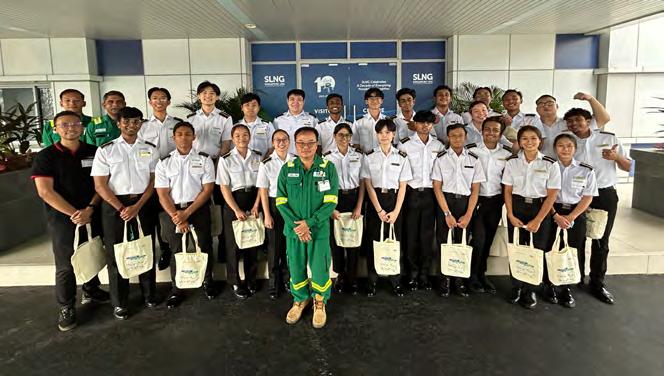
A VISIT FROM THE SINGAPORE MARITIME ACADEMY IN JULY 2024: CUSTOMER
EXPERIENCE
Hosted a range of stakeholder education visits.
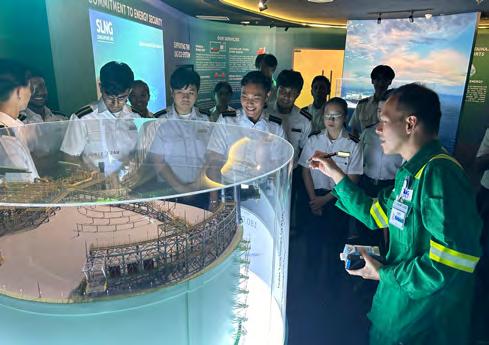
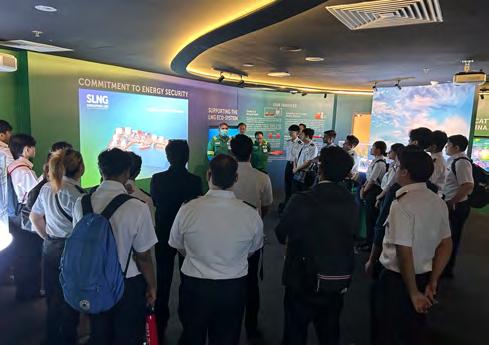
Customers and industry players visit SLNG’s facilities to understand our operations and capabilities.
TECHNOLOGY
ONGOING TARGETS
● Execute SLNG’s Digital Roadmap initiatives that achieve the desired outcomes2
Note: SLNG monitors cybersecurity performance for internal reporting purposes.
FY2024 PERFORMANCE
● 11 initiatives implemented in FY2024.
A holistic approach is taken for SLNG’s two material issues - Digitalisation and Cybersecurity. As access to digital tools become increasingly widespread, SLNG is committed to harnessing technology to improve efficiency, enhance customer experience, and support data-driven decision-making. We continue to maintain robust cybersecurity measures to safeguard our systems, protect stakeholder data, and ensure the integrity of our systems.
2 Contribute to operational excellence, productivity, value creation.
TECHNOLOGY
DIGITALISATION
SLNG’s Digital Roadmap continues to guide SLNG in being technologically resilient, relevant and efficient.
The roadmap and initiatives are led and overseen biennially by the LEAN and Digital Steering Committee. The Digital Team is responsible for monitoring the landscape to identify and assess feasibility of innovative technologies for SLNG’s strategy and growth plans.
DIGITAL ROADMAP
CURRENT STATE
RELIABLE ENERGY SUPPLY
CREATING VALUE FOR CUSTOMERS
BUSINESS GROWTH
DIGITALLY READY WORKFORCE
DIGITALLY TRANSFORMED SLNG
FY2024 UPDATE OF SLNG’S DIGITAL ROADMAP
PLANNED PROJECTS FOR FY2024 % COMPLETED AT THE END OF FY2024
Accumulated Cost Savings: OVER SGD $500,000
Estimated Manpower Saved:
1,959 MAN-HOURS a year
ECONOMIC
Reduced vendor review and processing time from TECHNOLOGY
Highlights of FY2024 cross-functional initiatives include:
LADAR PROCESS ENHANCEMENT
Previously launched platform continues to be improved. Report submission and data handling for vendors achieved an estimated 77.9% efficiency improvement and cost savings.
STREAMLINING VENDOR FINANCIAL ASSESSMENTS
ESG PERFORMANCE DASHBOARD
ESG platform streamlines quarterly data collection and compilation across departments, thus improving visibility. Efficiency was improved through an estimated 50% in time savings.
WAREHOUSE BARCODE PRINTING OPTIMISATION
23 DAYS
1 DAY
Applied GenAI to extract key information from vendor statements for a comprehensive assessment. This initiative reduced vendor review and processing time from 23 days to 1 day, delivering annual cost savings and enhancing vendor qualification speed.
EXPEDITED SUPPLIER ONBOARDING
Enhanced digitalisation of registration and documentation processes shortened supplier onboarding cycle by 80%, reducing processing time from 5 days to 1 day and cost savings annually.
ANNUAL DELIVERY
PROGRAMME ( ADP ) REPORT AUTOMATION
Automated weekly report downloads significantly enhanced the timesensitive information flow for cargo planning processes between customers and SLNG’s Throughput team. This initiative was key to improving customer satisfaction levels, cutting manual effort by 98-100%, reducing likelihood of error and achieving over 10% in manpower savings.
98.33%
Reduced weekly printing time 0 Safety incidents
Automates barcode generation directly from SAP, reducing weekly printing time by 98.33% and lowering human error risk.
OPERATOR TRAINING SYSTEM ( OTS ) FOR JETTY OPERATIONS
Implemented to support our goals of zero safety incidents and regulatory breaches, while contributing to operational excellence and preparedness for expansion works.
CYBERSECURITY
SLNG's management approach, policies and practices for Cybersecurity is disclosed as part of our Corporate Governance section
ENVIRONMENTAL
CLIMATE CHANGE AND RESOURCE EFFICIENCY
ONGOING TARGETS
● Site-specific energy consumption to not exceed 0.0237 kWh/Nm3
● GHG emissions reduction by 30% between 20302035
● Carbon neutrality by 2050 (if viable)
ENERGY
SLNG’s dedicated energy team and designated Energy Manager are responsible for monitoring, measuring and managing the Terminal’s energy needs. Working closely with operational and sustainability functions, the team conducts energy management reviews, identifies opportunities, develops management plans and implement targeted improvement initiatives. The effectiveness of these energy efficiency measures is regularly assessed and enhanced, especially for high-energy use equipment such as in-tank pumps, booster pumps, seawater pumps, and boil-off gas compressors.
SLNG has in place an Energy Management System (EnMS) which is supplemented by an Energy Policy and a digital Energy Management Information System (EMIS). This integrated platform allows SLNG to monitor and address energy efficiencies in real time. The data provides process-specific and energy-related information, and feeds into the Company’s energy and emission management, decision-making, and reporting efforts.
SLNG plays an active role in the NEA corporate reporting community. Energy use and emissions are reported to NEA annually; and we engage regulators actively to respond to any queries.
FY2024 PERFORMANCE
● Achieved site-specific energy consumption of 0.0171 kWh/Nm3, below the internal target of 0.0237 kWh/ Nm3
● In progress.
● In progress.
ENERGY INITIATIVES IMPLEMENTED IN FY2024
Jetty operations and Tank Pressure has been optimised during Holding mode to minimise Boil-off Gas (BOG) compressor units used
Optimised operational regime to avoid BOG Compressors operating in Pipeline mode to minimise energy usage
Optimised operational regime to utilise Sea Water Pumps with higher efficiencies
ENVIRONMENTAL
CLIMATE CHANGE AND RESOURCE EFFICIENCY
ENERGY CONSUMED (TJ)
In 2024, the consumption of natural gas saw a significant decline due to several factors. Gas engine generator operations which account for the largest SLNG’s natural gas consumption, saw a decrease in consumption with the completion of scheduled post-project testing and commissioning activities, as well as minimal maintenance works during the period.
ENERGY CONSUMED (TJ)
GREENHOUSE GAS EMISSIONS
Overall emission levels for Scope 1 continued to decline. GHG intensity, which monitors emissions against gas supply throughput measured in normal cubic metre (Nm3), stood at 0.009 kgCO2e/Nm3, representing an 8% decrease from FY2023’s 0.010 kgCO2e/Nm3
3 Fuel data is monitored by calendar year (1 Jan 2024 – 31 Dec 2024) in alignment with NEA requirements.
4 Conversion factors are based on Emission Factors for Cross Sector Tools V2.0 March 2024 – IPCC 2006.
5 Emission factors used by NEA have been used for Fuel Consumption (combustion), Flares (process), Fugitive Emissions, % of gross direct (Scope 1) GHG emissions from CH4, Refrigeration and air-conditioning & use of lubricants or paraffin waxes.
6 Grid Emission Factors are sourced from Singapore Energy Market Authority. Solar-energy emission for FY2022 and FY2023 have been restated based on new information.
ENVIRONMENTAL
CLIMATE CHANGE AND RESOURCE EFFICIENCY
CLIMATE RISK MANAGEMENT
As part of our commitment to long-term resilience and responsible growth, we have adopted a phased and practicable approach to managing climate-related risks and opportunities. Recognising the evolving nature of climate science, regulatory expectations and stakeholder demands, our strategy prioritises materiality, capacity building and integration into core business processes. This journey includes progressively advancing our governance, risk assessment and disclosure practices to align with international frameworks such as the ISSB IFRS S2 Climate-related Disclosures, and associated IFRS S1 General Requirements for Disclosure of Sustainability-related Financial Information and the TCFD.
Recognising that the SLNG Terminal plays a key role in national energy infrastructure, we believe it is imperative to identify and address climate-related risks and opportunities that may affect
our assets and operations. These factors have the potential to influence our business resilience, strategic direction and financial planning over the short, medium and long term. As such, they are regularly assessed to inform the development of our climate-change transition plan. We remain focused on strengthening organisational readiness while maintaining relevance to our operational context and strategic ambitions.
GOVERNANCE
SLNG integrates its rigorous approach to climate governance within its broader Sustainability and Corporate Governance processes.
A Climate Change Task Force (CCTF) is in place to review and monitor all climate-related issues. The CCTF reports to the SSC for strategy setting, developing policies and financial planning. More information can be found in the Governance section.
Delegate
BOARD
Overseeing the strategy
SUSTAINABILITY STEERING COMMITTEE
Responsible for driving the strategic transformations related to climate change risks (including physical and transition risks)
AUDIT & RISK COMMITEE
Delegated oversight of standard risk matters
RISK MANAGEMENT COMMITEE
Responsible for driving risk management activities outlined in SLNG’s Risk Management Framework
CRO AND RISK MANAGER
CRO and Risk Manager to implement duties stipulated under the Risk Management Framework
CLIMATE CHANGE TASK FORCE
Multidisciplinary team (including strategy, risk, operations, finance, etc.) that can inform and respond to climate change actions, i.e. responsibility for tracking Key Risk Indicators (KRIs), responsibility for certain mitigation measures, responsibility for key actions under the defined implementation roadmap
ENVIRONMENTAL
CLIMATE CHANGE AND RESOURCE EFFICIENCY
STRATEGY
Global efforts to reduce GHG emissions and mitigate climate change impacts remain challenging. Recognising these complexities, SLNG has applied a climate scenario analysis across the full scope of SLNG’s assets and functions in Singapore, including material impacts in the value chain. By evaluating our potential exposure to climate-related risks and opportunities as well as their financial effects, SLNG strengthens its strategic and operational planning to enhance resilience under a range of plausible climate futures.
For more information on current initiatives that have tapped into our climate-related opportunities, please refer to the Economic chapter. SLNG’s targets can be found in the Metrics and Targets and Climate Change and Resource Efficiency sections of this report.
CARBON STRATEGY
CARBON MANAGEMENT
SCOPE 3 MANAGEMENT
Decarbonisation Roadmap
GREEN ENERGY SUSTAINABLE BUSINESS COLLABORATIONS
Energy Transition Plan Low Carbon Services
CCUS | Ammonia | Bio-LNG | Biomethane | Blue Hydrogen
Sustainable Procurement
More
ENVIRONMENTAL
CLIMATE CHANGE AND RESOURCE EFFICIENCY
DEVELOPING SLNG’S CLIMATE SCENARIO ANALYSES
In 2022, SLNG took steps to identify its climate-related risk universe, starting with its physical risk assessments. This exercise was conducted with business units, reviewed with SSC and validated by the Board. It explored a range of acute risks (such as the increased frequency and severity of extreme storm events, extreme rainfall/flood events, extreme heat events, wildfire and drought) and chronic risks (consisting of higher average temperature, sustained changes in precipitation patterns, higher sea levels and ocean acidification). In subsequent years, SLNG developed its transition risks through close collaboration between the sustainability team and the risk team. We look to continue refining our sustainability and climate risk management, while focusing on potential opportunities in the coming years.
Our climate-related considerations are built on science-based reports developed by international and national organisations, best practice guidance by recognised bodies as well as Singapore’s decarbonisation roadmap.
INTERNATIONAL REFERENCES
● The Paris Agreement and guidance for national commitments and actions
● Intergovernmental Panel on Climate Change (IPCC) Sixth Assessment Report
● Task Force on Climate-related Financial Disclosures and relevant sector guidelines
● International Sustainability Standard Board’s IFRS S2: Climate-related Disclosures and relevant standards and sector guidelines
NATIONAL REFERENCES
● 3rd National Climate Change studies (V3) by Centre for Climate Research Singapore (CCRS) and Meteorological Service Singapore (MSS)
● Public Utilities Board’s (PUB) report on coastal inland flood model
● Relevant EMA studies
● Climate-related Nationally Determined Contributions (NDCs) and other national targets announced
● Singapore government plans on energy and adaptation
ENVIRONMENTAL
CLIMATE CHANGE AND RESOURCE EFFICIENCY
Three scenarios were selected from those developed by the Intergovernmental Panel on Climate Change (IPCC), one of the world’s most authoritative and widely-recognised climate science organisations. This enables the Company’s climate-related planning activities and assessments to be based on science-backed global benchmarks and aligned with the international standards (including those set out in the Paris Agreement, an international treaty on climate change).
For physical risks, the applied time horizons take reference from the Terminal, where short-term sits at 2025, medium-term at 2040 and long-term is 2060. Time horizons used for transition risks identify short-term as 0-3 years; medium-term as 3-10 years; and long-term as that of 10 years.
RESILIENCE THROUGH IPCC SCENARIOS
IPCC-ALIGNED SCENARIOS
Basis for selection
• Ambition scenario
• Paris-aligned commitments
Scenario description
• Lowest extent of warming in a Paris-compliant wellbelow 2°C degree world
• Singapore establishes stern target and approach to greening the economy
• Business-as-usual scenario
• Current commitments
• Considered as the most likely, based on our current path and firm national commitments
• It shows minimal change across societal structures
• Moderate effort and expectation from government and stakeholders
• Delayed transition to hot house world scenario
• Low commitments
• The worst-case scenario for climate outcomes based on current policies
• This scenario is consistent with no policy changes to reduce emissions, leading to high emissions and its resulting impacts
(by 2100)
Risk landscape
• Low physical risks
• Very high transition risks
• High physical risks
• Moderate transition risks
• Very high physical risks
• Low transition risks
ENVIRONMENTAL
CLIMATE CHANGE AND RESOURCE EFFICIENCY
SNAPSHOT OF SLNG’S RISKS
TYPE OF IMPACT POTENTIAL IMPACT
Risk (physical)
Risk (physical)
Risk (physical)
Risk (transition)
• Operational downtime due to changes in marine biology, which is caused by ocean acidification
• Operational downtime (such as due to utility downtime and/or asset damage) during extreme storm events; coastal flooding, pluvial flooding events
• Higher operational costs due to extreme heat events
• Inability to keep pace with ESG policies (global and local)
MANAGEMENT MEASURES
• Operations Abnormality Reports record frequency and blockage of any impacts due to marine life
• Robust facility and Terminal function contingency plans
• Exploration of infrastructure reinforcement and defensive mechanisms
• Annual review of assets’ operating regime for any abnormality due to temperature changes
• Annual review of ESG performance against salient frameworks
• Dedicate resource to track ESG regulations and policies
Risk (transition)
Risk (transition)
Risk (transition)
• Exposure to higher carbon taxes through increasing emissions as a result of business growth
• Value chain and market low-emission preference
• Development and implementation of revised Decarbonisation Roadmap
• Ongoing monitoring of operational emissions and carbon pricing mechanisms
• Development and implementation of revised Decarbonisation Roadmap
• Ongoing review of supplier/contractor management systems and Scope 3 impacts
Risk (transition)
Risk (transition)
Risk (physical)
• Compromised access to capital and other financial services
• Reduced competitiveness and/or relevance in future energy landscape due to
- Opportunity cost from not investing into emerging efficiency and clean energy technologies
- Shift to alternative energy solutions (eg. renewables, or type of storage)
• Supply chain disruption and market demand fluctuation due to geopolitical factors, conflicts, or natural disasters
• CRRO governance and management in place
• Sustainability vision and functional roadmaps in progress
• Ongoing initiatives by the Company’s business function to monitor and manage identified risks
• Operational contingency plans (for Terminal functions and equipment parts) in place
• Holistic engagement of supply chains and customers
ENVIRONMENTAL
CLIMATE CHANGE AND RESOURCE EFFICIENCY
RISK MANAGEMENT
The CCTF (which includes representatives from relevant business functions, including sustainability and risk) supports the Company’s efforts to identify, monitor and manage climate-related impacts.
All sustainability- and climate-related risks are reviewed to identify potential alignment with SLNG’s Corporate Risks identified under the Risk Management Framework. The SLNG RMF continuous monitoring of national and industryrelated regulations, guidelines and studies informs our risk and opportunity reviews. This enables the understanding and identification of risks and exposures to be integrated into the business planning cycle.
Our internal controls for these risks focus on taking a structured approach to identify and monitor financial and nonfinancial impacts, and regulatory compliance.
More information on our treatment of climate-related risks can be found in the Corporate Governance section.
METRICS AND TARGETS
As part of our ongoing efforts to strengthen the management of climate-related risks and opportunities, the Company is progressively enhancing its long-term strategic approach, including the development of relevant metrics and performance targets.
SLNG’s short- and long-term goals are to reduce Scope 1 and 2 emissions by 30% between 2030-2035, and be carbon neutral by 2050 (if viable). As the environment, climate science and technologies continue to evolve, we aim to re-assess and update our Decarbonisation Roadmap after 2030.
SLNG has kickstarted its Scope 3 data review process as part of our efforts to apply best practices in the IFRS S2 framework. We recognise that this is a challenge for many companies and seek to adopt a phased and reasonable approach to understand our Scope 3 impacts. Efforts to engage internal and external stakeholders for information are underway and we plan to disclose related information in a timely and meaningful manner.
More information on our performance can be found in the GHG Emissions and Performance Data sections of the Report.
PROCUREMENT PRACTICES
ONGOING TARGETS
● Develop and implement a Sustainable Procurement Roadmap
FY2024 PERFORMANCE
● Going beyond Tier 1 Suppliers for ESG ScreeningESG screenings completed on 100% of Tier 1 and Tier 2 suppliers.
● ESG evaluation criteria integrated into Procurement Policy’s bid and tender evaluation processes.
● Successful implementation of Fraud Risk Analytics.
SLNG has in place an ESG Screening Platform which is focused on Tier 1 and 2 partners, where Tier 1 consists of Original Equipment Manufacturer vendors, in-house contractors, and critical suppliers whose goods/services impact gas send-out; and Tier 2 is consists of vendors, each of which SLNG has or will have an average annual minimum spend value of at least S$250,000 over three years with.
ENVIRONMENTAL
PROCUREMENT PRACTICES
Total Number of Tier 1 Suppliers
Total Number of Tier 2 Suppliers
Environmental, Social, Governance Metrics
• % of Tier 1 and 2 suppliers screened
• Number of suppliers identified to have actual/potential negative impacts 0
• Number of suppliers engaged for improvement as a result of screening 0
• Number of suppliers terminated as a result of screening and engagement 0
Sustainability awareness training and discussion sessions were organised for our supply chain partners, encouraging them to strengthen their own ESG practices to align with SLNG’s responsible sourcing expectations and foster collective progress across the ecosystem.
ESG CRITERIA EMBEDDED INTO SLNG PROCUREMENT AND PARTNER EVALUATION
ENVIRONMENTAL PRACTICES
CARBON NEUTRALITY
NINE CATEGORIES
TO ASSESSING PROCUREMENT-ASSOCIATED RESILIENCE AND RISKS
HUMAN RIGHTS AND MODERN SLAVERY
LABOUR
DIVERSITY AND INCLUSION
HEALTH AND SAFETY
ANTI-BRIBERY AND ANTI-CORRUPTION
WHISTLEBLOWING
SUPPLY CHAIN ECONOMIC
Extending beyond environmental matters, SLNG has in place a Sustainable Procurement Roadmap which aims to mainstream and integrate ESG criteria in our way of business. The roadmap has been developed to embed the principles of sustainable development into SLNG’s procurement processes for risk mitigation and resilience enhancement. These include:
Integrate ESG evaluation criteria for future bids and tenders
Implement ESG Screening to beyond Tier 1 suppliers
Implement Fraud Risk Analytics into the procurement process
• Implement ESG evaluation criteria for bid/tender
• Diversity of Tier 1 supply base (S1T & S2T) Assessment
• End Of Life (EOL)/Obsolescence Review
• IT Assets Recycling Program
FY2024 FY2023 FY2025
Assessment of ESG readiness for Tier 1 suppliers
Implement ESG screening platform and management plan for Tier 1 suppliers
FY2026 - FY2030
• Enhanced collaboration to reduce emissions
• Enhanced collaboration on innovations and circular supply chain opportunities
• Supplier ESG performance review and audit
• Enhancement review of ESG evaluation criteria for bid/tender
• Develop and launch a suppliers’ capacity and training programme
• Develop and launch an incentivisation and recognition programme
SOCIAL
EMPLOYEE EXPERIENCE AND ENGAGEMENT
ONGOING TARGETS
● Sustainable Employee Engagement Index score of 3% points above the Singapore national norm
FY2024 PERFORMANCE
● Sustainable Employee Engagement Survey is conducted every 2 years. As the last was conducted in FY2023, hence none was conducted in FY2024. However, from the earlier survey:
- Commenced HR engagement sessions by business group to strengthen employee’s understanding of benefits and addressing the HR related comments highlighted in EES.
- Total of 13 employee engagement sessions held.
● Review Functional Competency and Learning Roadmap for various businesses and corporate functions to enhance current competencies and insert new competencies required for the current and nearterm business requirements
● All employees to review, update and complete at least 1 development goal identified in their IDPs
● Enhance succession management for leadership roles for current and future organisation by 2026
● Completed the review and enhancement of Career Maps and Competency Documents for two business groups - HR & Communications, and IT & Procurement.
● Career maps developed for all Business Groups in SLNG.
● 100% of employees completed their IDP.
● Completed identification of high potentials with in-house developed identification framework and in FY2025, will work towards accelerating their development.
The wellbeing of our employees and equitable access to opportunities are vital to our organisation. These factors form the foundation for sustaining our business and achieving long-term success in an ever-evolving market landscape. By focusing on inclusive employment practices, continued learning, and cultivating a positive workplace culture, we aim to strengthen employee engagement, increase satisfaction, and position the Company as an employer of choice capable of attracting and retaining top talent while nurturing a strong sense of accountability and belonging.
SLNG has in place a range of policies and practices that draw reference Singapore’s laws and regulations, associated with employment and the TAFEP. Candidates are assessed on their merits. Interview assessment forms are structured to assess candidates based on skills, competencies and ability to perform the job applied for. Career maps are developed for SLNG’s Business Groups, and regular engagement with the trade union UPAGE maintains collaborative labour-management relations.
HIGHLIGHTS OF SLNG’S HR POLICIES, PROCESSES AND INITIATIVES
● Employee Value Proposition
● Code of Ethics
● Employee Handbook
● Anti-Harassment Policy
● Whistleblowing Policy
● Functional Competency and Learning Roadmap
● Success Factors Career Development Plan and Learning
● Management System
● Individual Development Plans
● Employee SPOT Award
● SLiNGer Catalyst Award
● Union Agreement
EMPLOYMENT AND EMPLOYEE WELLBEING
Our diverse, engaged, and supported workforce is an asset that enables SLNG to grow and remain resilient in a changing business landscape. We recognise that promoting employee wellbeing and providing equitable access to growth opportunities are critical to our long-term sustainability. We continue to invest in inclusive employment policies, skills development, and a positive work environment. These efforts not only improve job satisfaction and organisational culture but also enhance our ability to attract, retain, and develop the talent we need for the future.
TOTAL
NO. OF EMPLOYEES BY GENDER
SOCIAL
EMPLOYEE EXPERIENCE AND ENGAGEMENT
SOCIAL
EMPLOYEE EXPERIENCE AND ENGAGEMENT
SLNG EMPLOYEE VALUE PROPOSITION
At SLNG, we are committed to creating a meaningful and inclusive employee experience— one that supports individuals across different life stages, career paths, and personal goals. As aspirations evolve, we provide the flexibility, support, and opportunities needed for our people to grow and thrive alongside the company.
We maintain open and constructive engagement with employees, including through our Collective Agreement with the union, to ensure that welfare-related matters are addressed inclusively and transparently. We continue to strengthen our practices in areas such as diversity, equal opportunity, and capability building, which are core to our commitment to social sustainability. By aligning individual growth with organisational success, we aim to build a resilient, engaged, and future-ready workforce that supports long-term value creation and contributes meaningfully to the company.
AN EMPHASIS ON HEALTH AND WELLNESS AT SLNG
As part of SLNG’s commitment to a healthy, supportive, and connected workplace, a range of activities were organised in FY2024: 1
Lunchtime Talk
on mental health resilience conducted by International SOS, focusing on stress recognition and building workplace resilience Monthly in-house corporate newsletter a series of articles focusing on wellness
SLNG Corporate Passes benefits: Gardens By The Bay, Resorts World & Bird Paradise
To promote physical mobility and staff wellness, the Staff Welfare Committee (SWC) explored interestbased activities such as futsal, yoga, and corporate gym access, including a futsal competition.
SOCIAL
EMPLOYEE EXPERIENCE AND ENGAGEMENT
FAIR EMPLOYMENT PRACTICES
As a signatory to the Singapore TAFEP Employer’s Pledge of Fair Employment Practices, SLNG champions the Tripartite Guidelines on Fair Employment Practices.
Initiatives include:
Recruit and select employees based on merit (such as skills, experience, ability to perform the job), regardless of age, race, gender, religion, marital status and family responsibilities, or disability
Fair training opportunities provided to employees
Attract a diverse and highly skilled workforce by offering competitive compensation and benefits
Established policies and procedures in place for employee feedback
Reporting Managers are trained to identify key risk factors (such as workplace stress or personal difficulties) and apply management skills to support employees’ wellbeing
Recognition and reward schemes for employees fairly based on ability, performance, contribution and experience
Periodic review of regular benefits and benchmarking
Biennial Employee Engagement Survey to establish deeper understanding of employee sentiments
Reward employees based on their performance and contributions on an annual and “SPOT” basis, special recognition awards in consultation with CEO and Executive committee
Code of Ethics Pledge signed off by Leadership team and placed in conspicuous areas to foster inclusiveness and respect
EMPLOYEE TRANSITION SUPPORT
In alignment with our commitment to responsible employment practices, the Company provides structured support to employees who retire upon reaching statutory age. We believe that being transparent and proactive cultivates a positive workplace environment and promotes structured transfer of expertise and capabilities. Employees with planned retirement are engaged early on potential transition employment plans to mutually agree on scope of work, as well as the terms and conditions of continued employment.
SOCIAL
EMPLOYEE
ENGAGEMENT
DIVERSITY AND EQUAL OPPORTUNITY
We are committed to fostering a diverse, equitable, and inclusive workplace where all individuals – regardless of gender, age, ethnicity, ability, or background – have equal access to opportunities for growth and success.
We recognise the value of a multi-generational workforce and the unique perspectives, experiences, and strengths each generation brings. This diversity is reflected across our organisation, from the composition of our Board and management teams to our hiring practices, career development pathways, and succession planning efforts.
By embracing workforce diversity and promoting equal opportunity at every level, we aim to cultivate an inclusive culture that drives innovation, enhances decision-making, and supports sustainable, long-term organisational performance.
DIVERSITY WITHIN ORGANISATION'S BOARD OF DIRECTORS BY AGE GROUP
DIVERSITY WITHIN ORGANISATION'S BOARD OF DIRECTORS BY GENDER
SOCIAL
EMPLOYEE EXPERIENCE AND ENGAGEMENT
SOCIAL
EMPLOYEE EXPERIENCE AND ENGAGEMENT
UNION RELATIONS
SLNG values strong collaboration with unions as part of our commitment to fostering a supportive and progressive work environment. The Union of Power and Gas Employees (UPAGE) plays a vital role in strengthening employee relations by offering practical insights into workplace dynamics, sharing practices that promote employee well-being, and helping management stay attuned to workforce needs and concerns.
We maintain regular dialogue and engagement with UPAGE to ensure it remains a constructive platform for addressing employee-related matters, including the resolution of workplace grievances. Employee and union representatives are actively involved in shaping company policies in key areas such as training and skills development, workplace safety, health, and employee welfare.
Since April 2015, SLNG has maintained a Collective Agreement with UPAGE, which currently covers more than half of our employees. The Company is firmly committed to upholding the principles of freedom of association and collective bargaining, and all new hires are informed of the support channels available through union representation. Over the years, our close collaboration with UPAGE has been marked by mutual respect, professionalism, and a shared focus on employee interests. We value the strong and trusting relationship we have built with UPAGE, which has enabled us to navigate challenges collaboratively and implement initiatives that benefit both the organisation and our workforce. We believe that such trust is built over time—through consistent engagement, open communication, and a shared commitment to the greater good.
TRAINING AND EDUCATION
SLNG provides a structured Learning and Development (L&D) framework to develop our workforce capability and ensure that employees acquired the required competencies to perform their roles.
In FY2024, we revamped our tracking of training hours to only include the formal and certification-based training programmes, where 63.69% of employees achieved at least 30 hours of training and an adjustment of average training hours per employee to 40 hours. Informal learning programmes, which include on-the-job training, coaching, job shadowing and project assignment, will continue to be a part of the workforce’s development but will not be reported as training hours.
100% of employees received regular performance and career development reviews with their Reporting Managers
AVERAGE TRAINING HOURS BY GENDER
AVERAGE TRAINING HOURS BY EMPLOYEE CATEGORY
Senior Management Level Middile Management Level
Executive Level
SOCIAL
EMPLOYEE EXPERIENCE AND ENGAGEMENT
The Learning and Development (L&D) team partners with our Management and employees to plan, develop, implement and evaluate various learning initiatives below. An SAP Success Factor system is utilised to manage employees’ Individual Development Plans and training records.
Continuously identifies learning needs at company, business group and individual levels to ensure our employees are equipped with competencies required by the business.
Reviews development goals with employees and monitors the completion of Individual Development Plans.
Supporting employees in their career development through financial assistance/sponsorship to pursue part-time academic programmes or professional certifications.
Organises SLNG101 programme to introduce our new employees to SLNG, our business, key processes and understanding our culture.
Tracks and evaluates the pipeline for leadership positions through the biennial SLNG Talent Review session with our Senior Management.
Reviews the needs of our People Managers and proposes suitable programmes to address their learning needs.
On-going competencybased training and assessment for Technicians and Supervisors in Operations to ensure they are competent and qualified in their roles.
Reviews the Business Groups’ career maps and functional competency maps to identify the functional competencies and proficiencies of all roles in the business group for career progression and development purpose.
The L&D team organises and arranges functional and leadership training for employees based on their roles and individual learning needs identified in each Individual Development Plan.
Additional in-house trainings for all employees on “Strategic Storytelling Masterclass”, “Building Resilience: Understanding and Supporting Mental Health in the Workplace” and “Restart a Heart Programme” were organised to address the learning needs at corporate as well as business group levels.
SOCIAL
OCCUPATIONAL HEALTH AND SAFETY
ONGOING TARGETS
● Zero workplace fatality
● Zero recordable workplace injury
● Zero recordable work-related ill-health incidents
● Zero reportable Tier 1 and Tier 2 process-safety incidents
● Zero reportable Tier 1 and Tier 2 process-safety incidents
● Continuously strive to improve Workplace Safety and Health (WSH) best practice
FY2024 PERFORMANCE
● Zero workplace fatality.
● Zero recordable workplace injury.
● Zero recordable work-related ill-health incident.
● Zero reportable Tier 1 and Tier 2 process-safety incidents.
● Zero reportable Tier 1 and Tier 2 process-safety incidents.
● ISO45001/SS651 surveillance audit successfully approved by external auditor.
● Prevention of Pollution of the Sea - Hazardous and Noxious Substances equipment inspection with MPA completed.
● Gas Safety Case audit was completed with EMA and the Major Hazards Department (MHD).
● Compliance with Statement of Compliance of a Port Facility (SoCPF) (ISPS CODE) intermediate verification audit.
● Successful completion of Process Safety Culture Assessment exercise.
● 576,320 man-hours with zero LTI, RWC, MTC cases (as at April 2025).
SLNG’s health, safety, security and environmental (HSSE) policies and management systems provide a structured and proactive framework for managing operational risks and ensuring the well-being of our workforce, contractors and vendors who work on our premises. Certified to ISO 45001 standards for Occupational Health and Safety Management System standards and the SS651:2019 Safety and Health Management System for the Chemical industry, the system integrates policies, procedures, and performance standards on a range of components such as access to emergency response teams (CERT) and support, representation in regular WSH meetings for risks and compliance, training requirements, empowerment of stop-work authority, as well as recognition and incentivisation programmes.
Regular risk assessments, safety audits, and environmental monitoring are carried out to ensure controls remain effective and aligned with industry best practices. Employee training, incident reporting, and emergency preparedness form key components of the system, reinforcing a strong safety culture and environmental responsibility at every level of the organisation. The HSSE management system is reviewed periodically to adapt to evolving operational needs, stakeholder expectations, and changes in applicable laws or standards.
SOCIAL
OCCUPATIONAL HEALTH AND SAFETY A PROGRESSIVE APPROACH TO HSSE
WORK-RELATED INJURIES
In FY2024, SLNG recorded two incidents which involved a subcontracted worker sustaining a minor finger injury that required first aid treatment, and a traffic-related near miss. Both incidents were investigated and shared with internal stakeholders to enhance awareness and risk-mitigation measures.
Several key safety initiatives were implemented in FY2024 to strengthen workplace risk management and emergency preparedness.
POLICIES
SLNG developed a Major Accident Prevention Policy (MAPP) in line with its classification as a Major Hazard Installation (MHI), and revised key procedures including LNG Critical 9, Incident Management, and Risk Management.
CAMPAIGNS
SLNG’S OCCUPATIONAL HEALTH SERVICES
● Annual health screening package
● Outpatient medical coverage
Safety campaigns focusing on Lockout-Tagout (LOTO), Process Safety, and Lifting Operations were also held across August to December, using bulletins, quizzes, and operational sharing to reinforce critical risk controls. Contractor management was reinforced through the Safest Contractor Program, which includes audits, inspections, and near miss Behavioural Based Safety Observation (BBSO) tracking.
SAFETY IMPROVEMENTS
During the reporting year, SLNG implemented a comprehensive range of safety and operational enhancements across engineering, administrative, and procedural domains.
Engineering controls included closed-circuit television (CCTV) upgrades with centralised decoder units, deployment of Wet Bulb Globe Temperature (WBGT) meters to monitor heat stress, upgraded the Fence Intrusion Detection System (FIDS), and replacement of wired crane control pendants with remote ones.
SLNG also renewed its Petroleum & Flammable Material Storage License and Fire Certificate.
PPE enforcement was strengthened during high-risk activities.
Ten HSSE computer-based training modules were updated, and workshops on As Low As Reasonably Practicable (ALARP) and Layers Of Protection Analysis (LOPA) principles supported the transition to the MHD Safety Case regime.
SOCIAL
OCCUPATIONAL HEALTH AND SAFETY
The Process Safety Culture Assessment progressed from Principle 6 to Principle 10, involving over 200 questions to evaluate risk culture and safety behaviours. All operations staff participated, with face-to-face dialogues conducted for each principle, leading to actionable items that are being tracked.
CASE STUDY
A CULTURE OF PROCESS SAFETY ASSESSMENT
At SLNG, we aim to build a culture that continuously works to prioritise safety, reduces risks and empowers all stakeholders for process improvements.
SLNG’S PROCESS SAFETY CULTURE
● Applies to all operations staff
● Guided by taking reference from the American Institute of Chemical Engineers’ Center for Chemical Process Safety (CCPS) and real-life case studies
● 10 core principles with over 200 indicators
Establish an Imperative for Process Safety
Provide Strong Leadership
Foster Mutual Trust
Ensure Open and Frank Communications
Maintain a Sense of Vulnerability
Understand and Act Upon Hazards/Risks
Empower Individuals to Successfully Fulfill Their Safety Responsibilities
Defer to Expertise
Combat the Normalisation of Deviance
Learn to Assess and Advance the Culture
PARTICIPANT FEEDBACK
INVITATION
COMPLETE SURVEY ACTION DEVELOPMENT
SLNG’S CONTINUOUS CYCLE OF PROCESS SAFETY CULTURE ENHANCEMENT
REVIEW BY MANAGEMENT
FACE-TO-FACE ENGAGEMENT
SOCIAL
OCCUPATIONAL HEALTH AND SAFETY
MANAGING WORKER HEALTH
In FY2024, SLNG strengthened its occupational health and safety efforts through targeted initiatives.
Noise exposure remains a key occupational health hazard, particularly in operational areas involving mechanical equipment and enclosed spaces. A three-yearly noise monitoring survey conducted by an external vendor confirmed that noise levels remained within legal exposure limits. Ongoing noise control measures—such as equipment maintenance and enforcement of exposure time limits—were maintained, and Hearing Conservation awareness training was delivered.
Fatigue risk was identified as a health-related hazard, especially among shift-based personnel due to prolonged working hours and irregular rest patterns. The Fatigue Risk Management Procedure was implemented to address risks associated with shift work. This initiative was supported by computer-based training modules, onboarding sessions, and a wellness lunch talk titled “Sleep Solutions,” aimed at promoting healthier sleep habits and reducing fatigue-related human error.
Another new procedure was introduced to manage work during Lightning Category 1 alerts, enhancing clarity and control over weather-related hazards.
Additionally, SLNG advanced its workplace health and wellness initiatives through a series of targeted programmes.
Wellness lunch talks were organised on topics such as behavioural change detection, emotional management, positive psychology, sleep solutions, and nutrition, with some sessions conducted in collaboration with Brahm Centre.
Emergency preparedness was further supported by cardiopulmonary resuscitation (CPR) training.
HSSE rolled out a new Office Safety & Health procedure, and the Employee Assistance Programme with Brahm Centre continued to provide ongoing support for workplace safety and well-being.
Annual health screenings, annual audiometry tests, respiratory fit tests and outpatient medical coverage are managed holistically with the Human Resource division to ensure robust coverage. More information of health and wellbeing can be found in the Employee Experience and Engagement chapter.
SLNG CPR training
SOCIAL
OCCUPATIONAL HEALTH AND SAFETY
ASSET INTEGRITY AND CRITICAL INCIDENT MANAGEMENT
A comprehensive safety management framework has been instituted to mitigate associated risks in the storage and management of large quantities of flammable substances at cryogenic temperatures. To minimise the likelihood of incidents such as fires, explosions or adverse health impacts on premises and the surroundings, these risks require close oversight across various departments and operational levels.
SLNG’s framework to monitor process safety performance is compliant to Singapore Ministry of Manpower’s requirements for MHI to report process-related safety incidents7 and takes reference from the American Petroleum Institute’s best practices, especially the Recommended Practice 754 (Process Safety Performance Indicators for the Refining and Petrochemical Industries) standard. Tier 1 and Tier 2 process safety incidents, which refer to the loss of primary containment release and its consequences, have a direct report and review protocol to our Board, Management and local authorities.
Rigorous risk and hazard assessment, well-defined emergency response plans, stringent maintenance and inspection protocols, and structured incident reviews and internal audits are in place. These measures are reinforced through focused training initiatives designed to build competency and preparedness across the workforce.
A series of HSSE drills and trainings were conducted, including oil spills, CERT re-certification drills, International Ship and Port Facility Security (ISPS) drills, a firefighting tabletop exercise, and Work-at-Height refresher trainings—were conducted to maintain readiness.
7 Tier 1 Process Safety Event - A Tier 1 process safety event is a loss of primary containment of the greatest consequence. It is an unplanned and/or uncontrolled release of flammable or hazardous material that directly results in: an employee, contractor or subcontractor “days away from work” injury; any injury to a third party that is serious enough to require hospital admission; an officially declared community evacuation or community shelter-in-place; or any fire or explosion that is not small enough to be classified as Tier 2.
Tier 2 Process Safety Event - A Tier 2 process safety event is a loss of primary containment that results in a lesser consequence.
Regular drills conducted to ensure emergency preparedness
SOCIAL
COMMUNITY ENGAGEMENT
SLNG recognises the opportunity it can play in contributing to the social fabric of the communities where we operate. Our approach to community engagement is grounded in collaboration, transparency, and a commitment to shared progress. Through philanthropic efforts, employee volunteerism and community partnerships, we support initiatives that enhance social well-being and respond to local needs.
We continue to support our adopted charity, Life Community Services Society (LCSS), which reaches out to children, youth and their families from low-income and/or vulnerable backgrounds. Going forward, SLNG intends to collaborate with additional organisations to widen our impact on local communities.
FY2024 HIGHLIGHTS
SUPPORTING THE COMMUNITY
● Supported the LCSS Christmas Carnival through sponsorship of a game booth and providing staff volunteers
● Sponsored and organised a clay workshop for a group of beneficiaries from the MightyKids, Families & Community (MKFC) programme operated by LCSS with SLNG staff volunteering their time to chaperone and guide the children
● Organised an internal donation drive among staff during the Chinese New Year period, raising funds to provide grocery vouchers to 33 families under MKFC’s care
SUPPORTING CHARITY ORGANISATIONS
● Engaged the Singapore Association of the Visually Handicapped to conduct massage therapy sessions for staff, as part of efforts to enhance staff well-being
● Supported of fundraising golf events for the Kwong Wai Shiu Hospital, SP Heartware Fund and LCSS
LCSS Christmas Carnival
SLNG Staff Donation Drive for MKFC
PERFORMANCE DATA
TOTAL NO. OF EMPLOYEES BY EMPLOYMENT CONTRACT/TYPE PER GENDER
NO. OF EMPLOYEES BY GENDER
3 Fuel data monitored by calendar year (1 Jan 2024 – 31 Dec 2024) in alignment with NEA requirements.
4 Conversion factors are based on Emission Factors for Cross Sector Tools V2.0 March 2024 – IPCC 2006.
5 Emission factors used by Singapore’s National Environment Agency have been used for Fuel Consumption (combustion), Flares (process), Fugitive Emissions, % of gross direct (Scope 1) GHG emissions from CH4, refrigeration and air-conditioning & use of lubricants or paraffin waxes.
6 Grid Emission Factors are sourced from EMA. Emissions relating to solar-generated energy consumption for FY2022 and FY2023 have been restated based on new information.
8 Emissions relating to solar-generated energy consumption have been restated based on new information
PERFORMANCE DATA
WITHIN ORGANISATION’S GOVERNANCE BODY
PERFORMANCE DATA
DIVERSITY WITHIN ORGANISATION’S EMPLOYEES
OCCUPATIONAL HEALTH AND SAFETY STATISTICS9
GLOSSARY OF KEY ABBREVIATIONS AND TERMS
S.NO. ABBREVIATIONS FULL DESCRIPTION
1. ADP Annual Delivery Programme
2. ALARP As Low As Reasonably Practicable 3. AML Anti-money laundering laws 4. ARC Audit & Risk Committee 5. BBSO Behavioural Based Safety Observation 6. Board SLNG’s Board of Directors
7. BOG Boil-off Gas
8. CCOP Cybersecurity Code of Practice
9. CCRS Centre for Climate Research Singapore
10. CCS Carbon Capture & Sequestration
11. CCTF Climate-related Task Force
12. CCTV Closed-circuit television
13. CEO Chief Executive Officer
14. CERT Emergency response teams
15. CRROs Climate-related risks and opportunities
16. CRRs Climate-related risks
17. CCUS Carbon Capture, Utilisation and Storage
18. EESG Economic, Environmental, Social and Governance
19. EMA Energy Market Authority
20. EMIS Energy Management Information System
21. EnMS Energy Management System
22. EOL End Of Life
23. ESG Environmental, Social, and Governance
24. FIDS Fence Intrusion Detection System
25. FSRU Floating Storage and Regasification Unit
26. FY2024 1 April 2024 to 31 March 2025
27. GRI Global Reporting Initiative
28. HR Human Resources
29. HSSE Health, Safety, Security and Environmental
30. IDP Individual Development Plans
31. IFRS S1 International Financial Reporting Standards IFRS S1 General Requirements for Disclosure of Sustainability-related Financial Information
32. IFRS S2 International Financial Reporting Standards S2 Climate-related Disclosure
33. IPCC Intergovernmental Panel on Climate Change
34. ISPS International Ship and Port Facility Security
35. ISSB International Sustainability Standards Board
36. IT/OT Information technology / operational technology
37. KYC Know-Your-Counterparty
38. L&D Learning and Development
39. LADAR LNG Analysis & Data Reporting
40. LCSS Life Community Services Society
41. LEAN Lean Principles
42. LNG Liquefied Natural Gas
S.NO. ABBREVIATIONS FULL DESCRIPTION
43. LOPA Layers Of Protection Analysis
44. LOPs Letters of Protest
45. LOTO Lockout-Tagout
46. LTI Lost Time Injury 47. MAPP Major Accident Prevention Policy
48. MHD Major Hazards Department 49. MHI Major Hazard Installation
50. MKFC MightyKids, Families & Community 51. MPA Maritime and Port Authority of Singapore
52. MSS Meteorological Service Singapore
53. MTC Medical Treatment Case
54. MTPA Million Tonnes per Annum
55. NDC Nationally Determined Contributions
56. NEA National Environment Agency
57. OAR Operation Abnormality Report
58. OTS Operator Training System
59. PDPA Personal Data Protection Act 2012
60. PUB Public Utilities Board
61. RFP Request for Proposal
62. RMC Risk Management Committee
63. RMF Risk Management Framework
64. RWC Restricted Work Case
65. S1T Singapore's first Liquefied Natural Gas import terminal
66. S2T Singapore's second Liquefied Natural Gas import terminal
67. SIBCON Singapore International Bunkering Conference
68. SDG Sustainable Development Goals
69. SLA Service-Level Agreement
70. SLNG or Company Singapore LNG Corporation Pte. Ltd.
71. SoCPF Statement of Compliance of a Port Facility
72. SR2024 Sustainability Report 2024
73. SRRs Sustainability-related risks
74. SSC Sustainability Steering Committee
75. SWC Staff Welfare Committee
76. TAFEP Singapore Tripartite Alliance for Fair and Progressive Employment Practices
77. TCFD Task Force on Climate-related Financial Disclosures
78. tCO2e Tonnes of carbon dioxide equivalent
79. Terminal SLNG Terminal
80. UAT User Acceptance Testing
81. UPAGE Union of Power and Gas Employees
82. WBGT Wet Bulb Globe Temperature
83. WSH Workplace Safety and Health
GRI CONTENT INDEX
Statement of use
2-12
SLNG Corporation Pte Ltd has reported the information cited in GRI content index for the period 1 April 2024 to 31 March 2025 with reference to the GRI Standards.
GRI CONTENT INDEX
Facilitate
Facilitate
GRI CONTENT INDEX
GRI CONTENT INDEX
IFRS S2 CONTENT INDEX
Singapore LNG Corporation Pte. Ltd.
UEN: 200911659N
991G Alexandra Road, #03-29C Singapore 119975 (until 31 October 2025)
1 Pasir Panjang Road, Labrador Tower, #15-02 Singapore 118479