
CONTENTS
An Introduction to (I)GCSEs
How to pick your (I)GCSEs A note about curriculum trips
Core Subjects:
English Language
Mathematics
Wellbeing (Pastoral, Social, Health and Economic Education - PSHEE)
Biology Chemistry
Physics
Options:
Art and Design
Classical Civilisation
Computer Science
Design and Technology
Drama
English Literature
Geography
Greek
Higher Project Qualification (HPQ)
History
Latin
MFL: German, French, Spanish, Mandarin and Triple Language
Music
Music Technology
Physical Education
Religious Studies
SHERBORNE: An introduction to (I)GCSEs
You have nearly two months to choose your (I)GCSE subjects, but you will find that there is a lot to think about, and that the time passes quickly, so start thinking about it now! You will also want to ask questions and to discuss your subject choices with your parents, your teachers, Housemaster and your Tutor before making your choices, so don’t leave it for later – start thinking about it now!
General Principles for making good choices:
1. Breadth in the curriculum. Think about the range of areas of learning and experience your choices will touch upon. Do they cover a wide area, or is it narrow? Neither is a better option than the other, but you should think about whether your interests are wide-ranging, or whether you would like to begin to specialise in a particular field.
2. The balance of subjects. In general, it is better to incorporate equivalent weighting to humanities, languages and social sciences so that you will receive adequate development within each area of learning.
3. What do you enjoy? It’s obvious, but if you enjoy something you are more likely to stick at it, and also to be successful with it. Taking subjects because you enjoy them is a very sensible way of picking your (I)GCSEs although be careful to distinguish between liking the subject and the teachers who deliver it!
4. Coursework? Some subjects (e.g. PE, DT, HPQ, Music, Music Tech, Art, etc) have a coursework project, requiring you to write an essay, complete a portfolio, produce an artefact or some other form of assessment. This can be worth as much as 50% of the marks, though for most subjects it’s around the 20% mark. Some boys thrive with coursework and really enjoy investing time into a project like this. For others, it’s a little trickier, so please think about whether this form of assessment suits you.
5. Where do your talents and skills lie? When considering your choices perhaps the most important question to ask yourself is “am I good at this subject?” If you are, chances are that you’ll enjoy it more and that you’ll work harder, which is the best predictor of success at (I)GCSE.
6. Do I want to take the BTEC / A Level? For some subjects (e.g. languages) you need to do the GCSE in order to take the A Level. Others (e.g. Music) are more flexible if you, but it’s still a still a good idea to take the subject to GCSE if there’s a chance you might want to study it in the Sixth Form
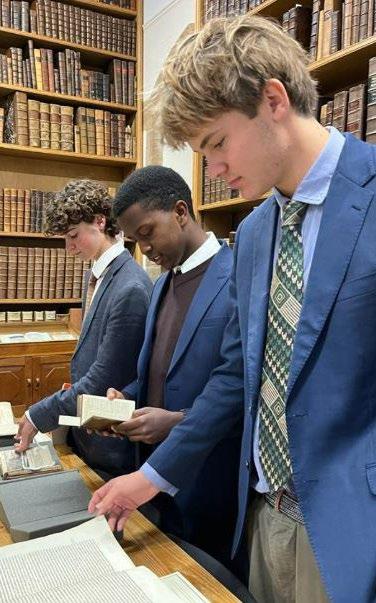
Where can I receive help and guidance for making my (I)GCSE choices?
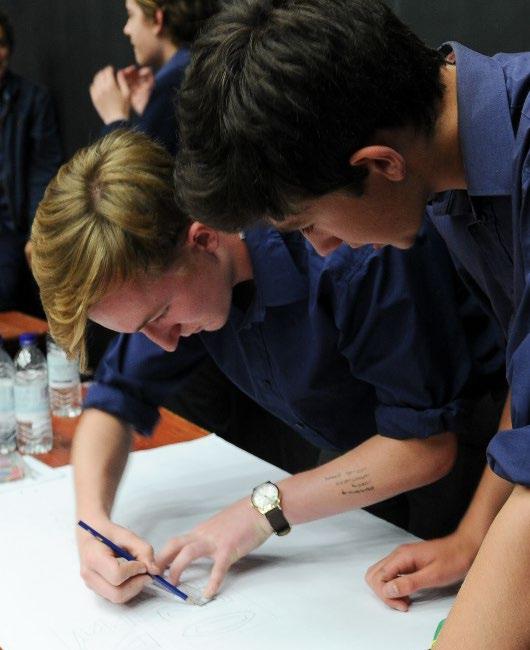
This booklet gives details of the curriculum in the Fourth and Fifth Forms and a brief description of each of the (I)GCSE courses on offer. Each section of this booklet has been written by the Head of Department. If there is anything you do not understand or if you have questions which are not answered here, you should contact the Head of Department concerned. You should also talk your options choices through with your Tutor, your Housemaster and, of course, your parents. The Careers Department is also a very good place to seek help and support in making your GCSE choices.
Parents and boys should also always feel free to contact Dr Filtness, the Deputy Head (Academic) or Mrs Thurman, the Assistant Head (Academic), to discuss choices and options (tim.filtness@sherborne.org; judy.thurman@sherborne.org).
When do I have to choose?
The deadline for (I)GCSE choices is Wednesday 7 January 2026. You can still change your mind after this date, but only within the established blocking systems.
SHERBORNE: How to pick your (I)GCSE choices
Compulsory subjects:
Everyone studies the five subjects below. There is no need to select them when making your choices.
o English Language
o Mathematics
o Wellbeing [non-examined course]
o Biology, Chemistry and Physics*
English provision:
All boys study English Language as part of the core curriculum. It is an important GCSE and is increasingly recognised as such by universities as a growing proportion now require a minimum grade 5 (or in some cases a grade 6) as a prerequisite for their more selective undergraduate courses. Whilst it is possible to retake the English Language exams in November of the Lower Sixth, securing a solid grade in this subject is a real priority for GCSE and it is important that you recognise this when you embark upon your GCSE studies.
The increasing emphasis of English Language in the GCSE portfolio has led to Sherborne rethinking how English is offered. Boys in the top sets will follow an accelerated English course, which will culminate in boys taking English Language GCSE in the summer of their Fourth Form. With a good grade secured early, Fifth Form lessons switch to an accelerated Literature programme, which will pave the way towards the English Literature exams in the summer of the Fifth Form, alongside the other GCSEs. This means that if you are in En41a or En41b (i e a set code with a ‘1’ in it, you should not choose English Literature GCSE because you are already taking it!)
All other sets follow a Language-only English course, meaning that English Literature will no longer be taught alongside English Language as a compulsory GCSE. Instead, boys have the option of picking English Literature as one of their four GCSE options (see below). This means that boys not only enjoy more curriculum time dedicated to both English courses but should also benefit from higher grades too
A further advantage of separating English Language and English Literature is that boys for whom English is not their first language receive specialist EAL tuition during their English lessons, where it is most needed Boys in EAL sets follow the ESL (English as a Second Language) GCSE course instead of English Language and take the ESL GCSE at the end of the Fifth Form in lieu of English Language. One further advantage of our EAL provision is that the ESL course incorporates a solid amount of IELTS preparation, which is the ‘gold standard’ for admission to UK universities for non-native speakers.
Science provision:
Everyone studies Biology, Chemistry and Physics separately. These subjects are taught by the three departments and will lead either to separate (I)GCSE qualifications in each of
these subjects (the ‘triple award’) or to two (I)GCSEs qualifications in Science (the ‘dual award’). In previous years, where appropriate, the School has offered a foundation entry in the dual award for boys who find Science challenging All options (foundation included) take place in the same curriculum space. For more information on the various Science courses offered, please have a look at the Science entry in this booklet.
Optional Subjects:
You have space to choose four (I)GCSE options. Unfortunately, it is not possible to pick more than four options because there are not enough lessons in the timetable to accommodate more than four options.
Although you do not have to, it is strongly recommended that you choose at least one Modern Foreign Language (MFL) as one of your four (I)GCSE options. The MFL options available are:
o French
o German
o Spanish
o Mandarin
You are welcome to choose two MFL subjects. Some boys may also have the option of studying French, German and Spanish as part of the Triple Language programme. This leads to separate (I)GCSEs in German, Spanish and French, though it is taught in fewer periods. French GCSE is taken a year early (at the end of the Fourth Form). Triple Language is only available to boys who have been following a similar combined languages course in the Third Form.
Mandarin GCSE is available by arrangement. It is a paid extra and the tuition provided by our specialist teacher is charged to fee bills following a similar arrangement to instrumental music lessons. As with Double Language, Mandarin is only available to boys who have studied the subject in the Third Form.
The HPQ:
We introduced the Higher Project Qualification (HPQ) in 2024 Although it’s technically a half-GCSE, it is very well respected by universities and employers because it teaches research skills. The HPQ follows the same format as the EPQ, with a taught element focusing on research skills, source evaluation, time- and project-management and a written element allowing you to investigate a topic of your choice. The HPQ course is delivered in two taught periods and two library periods a week, meaning that dedicated time is built in for research and writing. Used well, boys will submit their completed HPQ project during the Michaelmas term of their Fifth Form after which point the HPQ lessons are used for independent study and revision.
For further information on the HPQ course, please see the subject entry page
Available (I)GCSE Subjects:
o Art
o Classical Civilisation
o Computer Science
o Design and Technology
o Drama
o English Literature
o French
o German
o Geography
o Greek
o History
o Greek
o History
o HPQ
o Latin
o Mandarin$
o Music*
o Music Technology*
o Physical Education
o Religious Studies
o Spanish
o Triple Language (French, German & Spanish)$
* Boys should not study both Music and Music Technology (I)GCSE as, technically, they count as the same qualification.
$ Mandarin and Triple Language options are only available to those boys who have previously studied these options in the Third Form. Please note that Mandarin is only available as a paid extra.
It isimportanttostressthatitisnotalwayspossibletotimetableeverycombinationof subjects in any given year. It is also the case that we may not be able to offer particular subjects if there is insufficient demand to make them viable options. For thesereasons,theSchoolreservestherightnottooffercoursesifuptakeislimited andboysmaybeaskedtoselectanalternativeoptioniftheirpreferredchoicecannotbe delivered.
How many (I)GCSEs will I finish up with?
Added together, you will most likely complete the Fifth Form with a profile of eight (I)GCSEs if you take dual science, or nine (I)GCSEs if you take triple science. Boys taking triple science and double language may finish with ten. The absolute theoretical maximum is twelve although this can only be achieved by taking triple language, triple science and sitting the additional maths GCSE too. As you might expect, this is relatively uncommon.
Do I have to pick four options?
No! Some boys will pick just three options in order to provide additional time to consolidation work, or because they have additional commitments (e.g. they play two or more instruments or they have 1:1 Learning Support lessons). If you would like to choose just three GCSEs you should discuss this with your tutor and Housemaster in the first instance and then pick the ‘no thank you’ option for your fourth subject when completing your option choices form on the Pupil Portal.
What if I change mymind?
A block system operates at (I)GCSE and after you have made your choices, all subjects will be allocated to one or more of the timetable blocks. Although we try to offer you as much choice as possible and will make every effort to accommodate your choices, timetabling constraints mean that it may not be possible to offer every combination of subjects.
Once the choices have been made, by Wednesday 7 January 2026, the timetable blocks will be fixed. Should you wish to change your choices after this point then this is still possible but you will only be able to do so within the blocking system that has been devised, and subject to there being space available in that subject. Therefore, your initial choices need to be as accurate as possible as this is your opportunity to have an influence on how the subjects are allocated to the timetable blocks and how many sets are allocated to each subject.
Occasionally boys opt to change subjects after they have started their (I)GCSE courses. Whilst we don’t encourage this (better to get the choice right before you start) we do allow boys to change their mind during the first half of the Michaelmas term Half term, therefore, is the last point at which you will be allowed to swap options.
Dr T. W. Filtness Deputy Head (Academic)
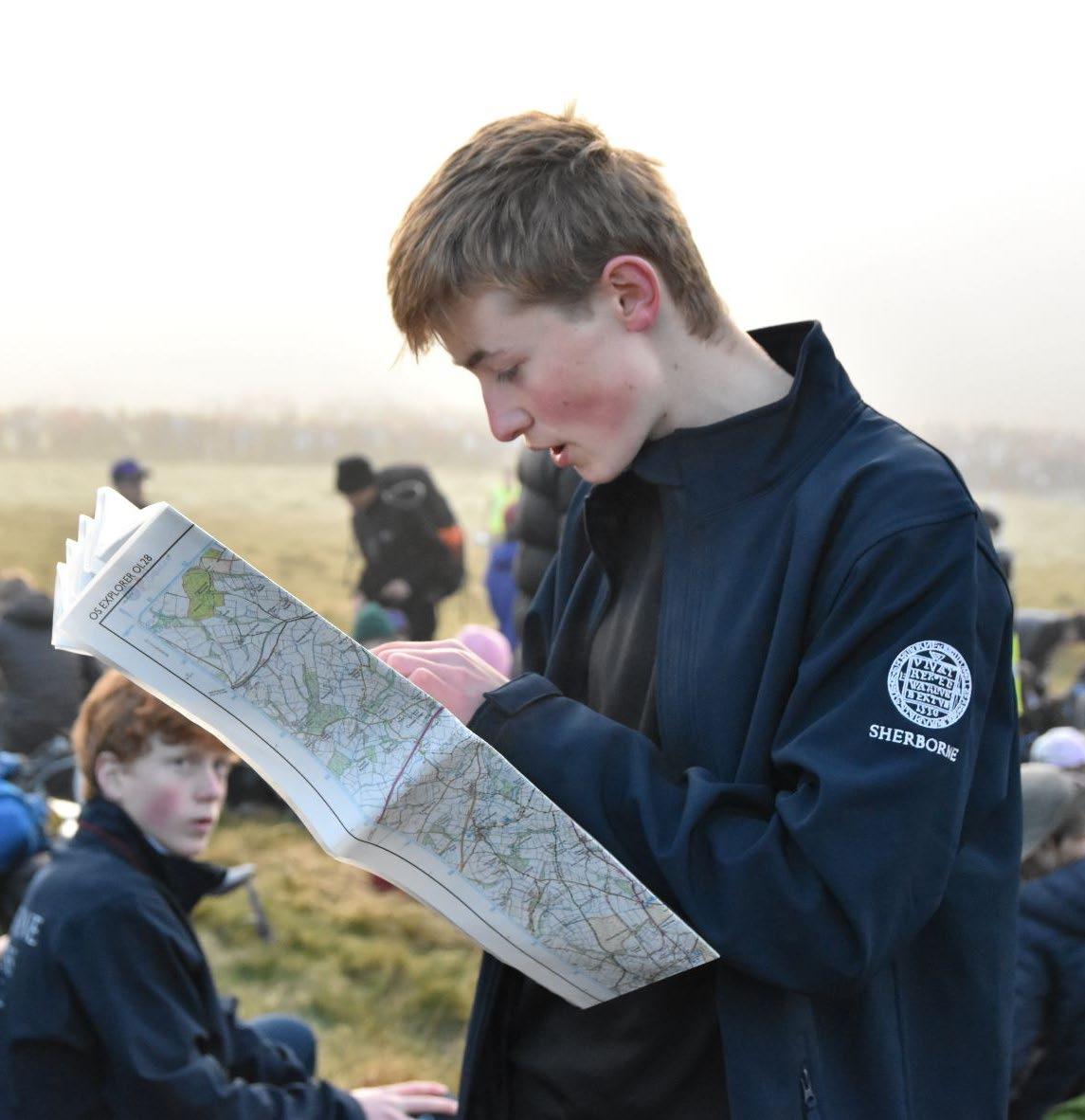

SHERBORNE: A note about curriculum trips
Some subjects have a requirement that you undertake a trip or visit as part of the course. These are compulsory components of the courses and, by signing up for that particular GCSE, you are also consenting to attend the trip. Please take this into consideration when selecting your options.
Most trips are local (e.g. both Geography field trips are short journeys away) and, whilst there is a charge for booking buses and packed lunches, the costs are not high
Mandatory Curriculum Trips in the Fourth & Fifth Forms:
Drama Fourth and Fifth Form Curriculum Play Matinee trip to watch one play.
DT Fourth form London
Exploration of commercial design, current style, materials and manufacturing by visiting a Design House, designer stores and a design-based exhibition.
English Literature Fourth and Fifth Form Performance of curriculum play Matinee trip to watch one play.
Fourth Form Christchurch Bay
Geography
Fifth Form Southampton
A fieldwork investigation looking at coastal processes and management. Assessed in GCSE paper 2.
Duration: One day
A fieldwork investigation looking at variations in quality of life in Southampton. Assessed in GCSE paper 2. Duration: One day
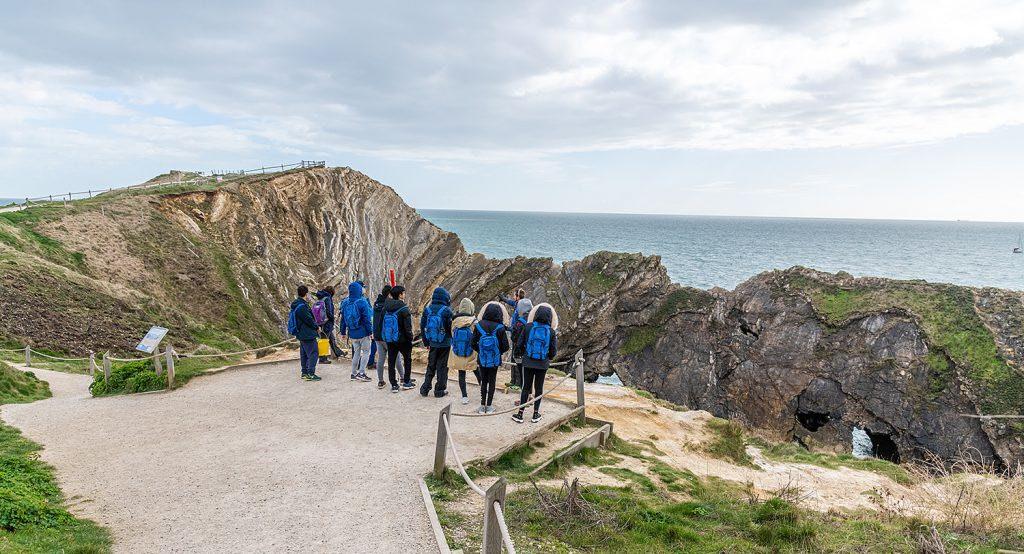
geographers enjoying
Sherborne's
a field trip to Durdle Door.
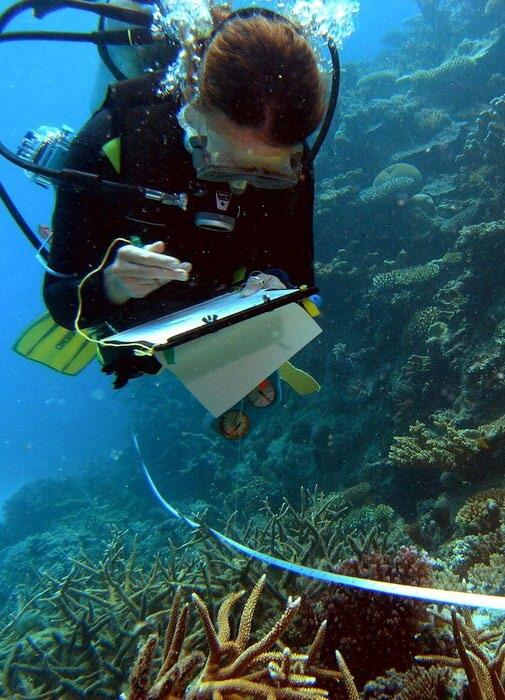
Core Subjects
English Language


English Language is a compulsory subject. Most boys follow the core English pathway, for which they have three lessons a week.
Boys in sets a1 and b1 will take the Accelerated English route and will also automatically sit English Literature; they do not need to select it as one of their options.
When you leave Sherborne, people will want to know:
• Can this man express himself clearly and quickly?
• When he’s presenting ideas, will he find the right tone?
• Can he understand what others are telling him, and respond in a way that shows his understanding?
If the answer is yes to these questions, then you will be demonstrating some of the most valuable skills in the workplace. In a changing world, the ability to express yourself accurately and effectively makes you a desirable employee. A good grade in your English Language will demonstrate that you understand what a text means; that you can see why it’s presented in a certain way; and that you can produce something just as good yourself.
What will you be studying?
At Sherborne, we follow CIE’s English Language iGCSE (9-1) curriculum. The course is divided into two parts:
Paper 1: Reading – 50%
In this paper, you will demonstrate understanding of written texts and of the language used within them. You will develop reading skills by engaging with a range of genres and text types from the 20th and 21st century, including literature, fiction and non-fiction, and other forms of writing, such as discursive essays, reviews and articles. By the end of the Fifth Form, you will be able to recognize and respond to linguistic devices, select appropriate information for specific purposes, be able to explain how writers achieve effects and summarise material.
Paper 2: Writing – 50%
As developing writers, you will learn how to create and compose texts in a variety of styles suitable for different audiences and purposes. You will learn to write descriptive, narrative, discursive, argumentative, and persuasive pieces designed to influence your reader.
H. Cant (harriet.cant@sherborne.org)
Mathematics
Mathematics is both logical and elegant in its applications. It is centred in the world in which we live, but provides the tools for us to quantify, analyse and evaluate problems ranging from the cost of a weekly shop to the mechanics of the solar system. The way in which knowledge can be built from basic principles and concepts is paramount to the development of mathematical understanding and international GCSE Mathematics is a key steppingstone in the journey.

All students, starting Third Form, study EdExcel International GCSE Mathematics to the end of Fifth Form. The course aims to equip you with the knowledge, skills and understanding to apply Mathematics to everyday situations, to other areas of study (e.g. Geography and the Sciences) and to give you a solid foundation for the further study of the subject.
Mathematics is a rigorous subject. You would be expected to work hard and make time to practice the skills and techniques you learned. The work in iGCSE includes Numbers, Algebra, Geometry, Trigonometry, Statistics and Probability; with a considerable focus on application and problem solving. There is no coursework in iGCSE and the entire course is examined by two 2-hour papers (calculators allowed).
Those in the top two sets, whilst not sitting the examinations early, will be expected to study additional Mathematics; broadening their experience and understanding of the subject. Topics and concepts chosen will complement the wider iGCSE Mathematics Syllabus and will encourage students to develop higher Mathematical skills, particularly algebraic reasoning without infringing upon AS Level Mathematics.
T. Stone Tristan.Stone@sherborneboys.group

Wellbeing
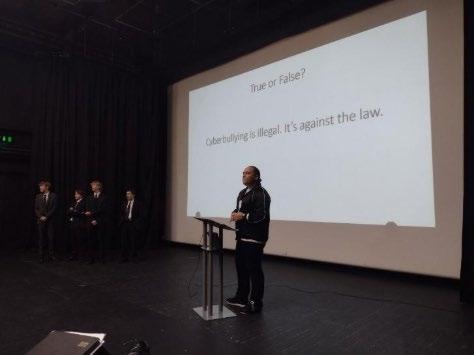
Wellbeing is a core subject in the Fourth and Fifth Form, taught in one lesson a week. In both years there will also be a variety of lectures from outside speakers. The ethos and delivery of the course is designed to enable you to make informed decisions on a wide range of topics and to take responsibility for your behaviour, build positive, healthy relationships and play an integral role in any community.
So what do we cover?
At Sherborne there is a spiral curriculum which focuses on the core themes of Health and Wellbeing, Positive Relationships and Living in the Wider World. Underpinning these themes are the mandatory subjects of Relationships and Sex Education, Citizenship and Fundamental British Values. These themes are built upon from the Third Form curriculum and taught at an ageappropriate level.
As well as knowledge acquisition the course is also designed to help develop core skills of resilience, empathy and discerning how to make rational decisions. Also, your attitudes and perspectives on these important topics are also discussed and unpacked at a deeper level.
Here is asampleofsomeof the topics covered in the Fourth and Fifth Form
Health and Wellbeing Positive Relationships Living in the Wider World
The Teenage Brain
Looking after your mental health
The impact of Drugs and Alcohol
Physical Health Hormones
Fertility and Sexual Health
Exam Stress
Consent
Healthy verses Unhealthy
Relationships
Harassment
Sexual Health
Viewing and sharing sexual images
Online Safety
Dis/Misinformation online
Echo chambers
The Equality Act
Parliament and Democracy
Financial wellbeing
Human Rights
Helping others and helping the planet
Please be aware that the new Relationships and Sex Education and Health Education will be taught from September 2026. Further information about this content to follow.
(nikola.bowerman@sherborne.org)
Biology
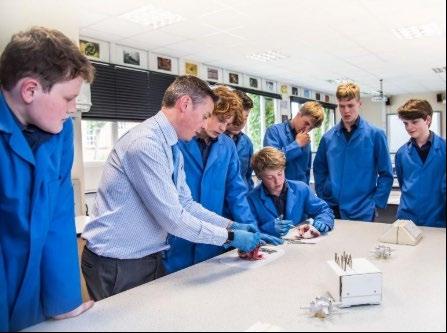
Biology investigates the science of living organisms and the varied interactions within ecosystems.

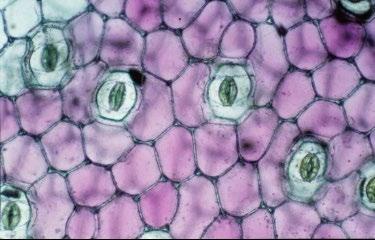
Starting off with cells, you learn about the different components (organelles) and what they do within the cell.
Plant and animal systems are studied with a particular emphasis on mammalian physiology. You will learn about the different systems for example the digestive, respiratory, circulatory and reproductive, giving an insight into how we absorb our food, what happens when we exercise and how we reproduce.

A practical approach to plant biology helps to bring this to life and enable you to understand how they photosynthesise and transport water.
A study of DNA and the mechanisms of genetics and evolution provide an understanding of how organisms change through time and how genetic modification is transforming our world in food production, medicines and developing cures for genetic diseases.
From cloning to conservation, from bacteria to biotechnology, ecology to endocrine systems, scientific principles are expanded to a range of domestic, industrial and environmental contexts. Practical work complements understanding and allows pupils to extend their knowledge and appreciation of the living world.
Boys are increasingly inspired by GCSE Biology and often opt to continue at A Level.
Dr J-P Manning (jonpaul.manning@sherborne.org)





Physics
Physics is behind the technology that put man on the Moon, made the internet possible and revolutionised surgery, and that which will shape tomorrow’s world: quantum computers, nuclear fusion or perhaps the means to colonise the solar system. Physics is both the everyday and extraordinary; from why the sky is blue and what causes a warm summer breeze, to black holes. Physics covers it all, from the innermost workings of the atom to the edge of the visible universe.
You will find Physics fascinating because it will help you understand how the technology you experience works –Nuclear Power stations, X-ray imaging, Radiotherapy, mobile phones, electric motors & generators, are all covered. The course will also help you develop your mathematical, logical and reasoning skills which are essential to everyday life.
Which University Courses/Careers does Physics support?
Physics is essential to those considering Engineering, Physics and Astrophysics as a career. It is also extremely useful as a facilitating subject for other areas including Medicine, Chemistry, Biology, Sports Science, Architecture, Material Science, Mathematics, Electronics, Economics, Finance and the Law.
How good does my Mathematics have to be?
At GCSE the course requires you to work out averages, tabulate results & plot graphs. The most complicated parts are using algebra to rearrange equations, gradients of lines, using y = mx + c, standard form & converting units. To study A Level Physics you need to find this level of mathematics routine and an 8 or 9 at GCSE mathematics is a huge advantage.
Please note that for further study on the A Level physics course, students who do not get two Level 8’s in GCSE Physics, or Combined Science, and Mathematics, and those who are not studying Mathematics at A Level, will be supported by extra timetabled lessons called ‘Mathematics for Physics’.
The Course
o Is ‘traditional’ and builds upon Common Entrance physics
o Develops a logical approach to problem solving in wide contexts
o Develops practical science which is assessed in the examination
o Includes topics on: forces & motion, electricity, waves, energy resources & energy transfers, states of matter, magnetism & electromagnetism, radioactivity & particles.

R. A. Brown (richard.brown@sherborne.org)
Science
Science is a compulsory subject. Most boys follow the Combined Science syllabus, for which they have 9 lessons a week (three each in Biology, Chemistry and Physics). Boys in the top sets are entered for Separate Sciences and, in the Fourth and Fifth Form, follow an accelerated program.
The possible outcomes are:
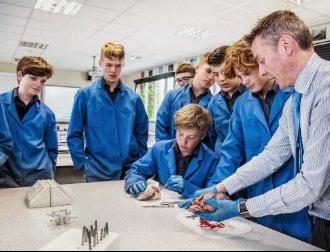
• Separate Sciences: Boys take two exams in each science and then receive one GCSE for each one. Each science’s result is completely independent of the others. For this the boys will need to study a few extra topics which will typically be covered towards the end of the course.
• Combined Science: Boys take two exams in each Science and will then receive two GCSEs based upon the sum of their results. This means that a good result in one subject could boost a poor result elsewhere. This is the typical route that most boys will take and is common throughout the country. A levels and university courses are designed around pupils coming from this level of experience.
In the Third Form all boys follow the same program and are taught in broadly mixed groups. At the end of year these groups are reset based on performance in block tests and internal exams. At the start of the Fourth Form sets 1 and 2 move to the Separate Sciences pathway and the other four sets continue on the Combined Science pathway. After the Fifth Form Trial exams we consider if any boy should be move to different pathways to ensure their best chance of success.
Whilst it is clearly better to have more GCSEs, it is also true that universities and employers are far less interested in the number of GCSEs you have, than the grades you achieve. It is, therefore, the caliber of results that is more important than the overall number – i.e. quality not quantity. Therefore, unless we are confident of boys achieving high grades in all three Sciences, the Combined Science pathway is the best route for Shirburnians. It's also important to remember that the Separate Sciences are NOT needed for A Level study, so no one taking Combined Science should feel unable to take science options in the Sixth Form.
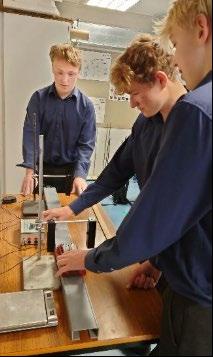
One further point is that boys in Set 6 sometimes take foundation dual award GCSE. The decision to take foundation is based on the likelihood of achieving a grade 4 or 5 weighed against the risk of a grade 1-3. As grades 1-3 are not considered passes, boys who struggle with Science are usually more likely to achieve a pass grade in Science sitting foundation tier exams.
R. A. Brown

Optional Subjects
Art & Design
Art & Design is by no means an ‘easy’ subject, as many people like to think. However, it is neither a complicated subject if you approach it with a willingness to get stuck in. As an Art & Design student, you need to strike a good balance between doing the things you love and evidence and research to succeed in this course with an excellent grade.

To improve your analytical, communication and research abilities, studying Art & Design is a great choice. The skills you gain make it a great complement to other subjects. Art is a way of seeing things and making sense of the world around you. It can help you with further study and prepare you for the world of work.
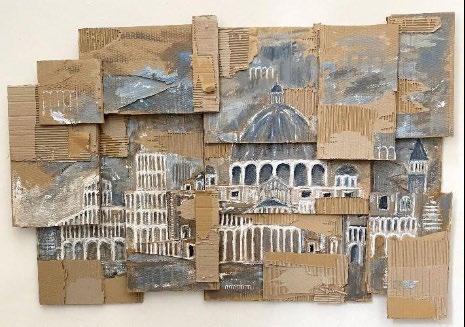
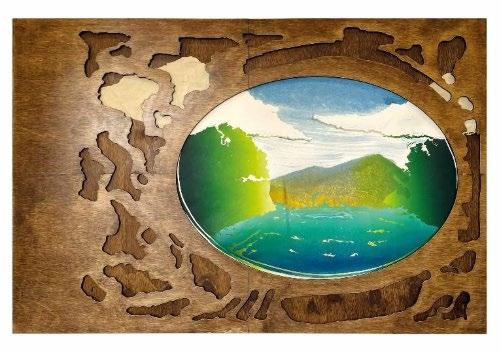
Art & Design explores ideas, conveys experiences or responds to a theme or issue of personal significance. Art & Design is a broad course of study, requiring you to develop an appreciation of the creative process through a practical response, using a variety of two-dimensional and threedimensional media, materials, techniques and processes.

GCSE Course Outline
4th Form - Year 1.
You will spend the first two terms developing an understanding of essential skills through a number of coursework-oriented projects in various areas of study in preparation to begin your Personal Investigation in Trinity Term.
5th Form - Year 2.
Component 1: Personal Investigation
This is the coursework unit where you choose the theme that you wish to study. Your portfolio must show evidence of working in areas of study drawn from two or more of the titles, taking into account the distinguishing characteristics of Art & Design.
Component 2: Externally Set Task
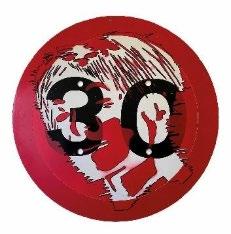
This is an examination unit. You choose a title from a list provided by the examination board as a starting point. You are then expected to generate an appropriate personal response and produce a broad and diverse portfolio of work with critical analysis and investigation, which leads to a final response produced in the formal 10-hour examination.
Coursework carries 60% of the total mark, and the Externally Set Assignment carries the other 40%.
Where will GCSE Art take you?
You can continue your Art & Design studies at A-level. You will also be able to choose areas of study to specialise in. If you do not want to take your Art & Design studies any further, the transferable skills you gain will still be valuable. You will develop problem-solving, creative thinking, investigation, research, communication and teamwork skills, and gain the ability to develop, refine and present ideas. Employers and universities regard all these skills highly.
Art & Design opens the door to lots of exciting careers:
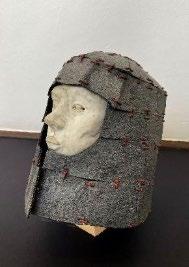
•Fashion design • Graphic design • Theatre designer • Animator • Video game designer • Illustrator •Museum curator • Photographer • Architecture • Product design • Textiles design • Ceramics • Advertising • Publishing • Interior design • Fashion and media journalism • Hair and make-up design • Retail design • Exhibition design • Jewellery design • Artist • Visual media • Teaching
If you want to know more, please talk to Mr Bone.

matt.bone@sherborne.org
M.C. Bone
Classical Civilisation
What
is Classical Civilisation?
Classical Civilisation is the study of the civilisations of Greece and Rome without learning Greek or Latin. The advantage of this is that we can focus on the culture and society of the ancient world, whereas GCSE Latin and Greek are focused on the language. As a result, it also allows you to study a much broader range of topics. Classical Civilisation is an interesting and varied mixture of different subjects: English Literature, History, Theology and Geography, focusing entirely on the Greek and Roman world.
Who can study it?
There is no need to have studied Latin, Greek or Classical Civilisation before. No prior knowledge of the Classical world, and no linguistic ability, are required. An initial interest in the Greeks and Romans is helpful, but you will soon love them!
Why study Classical Civilisation?
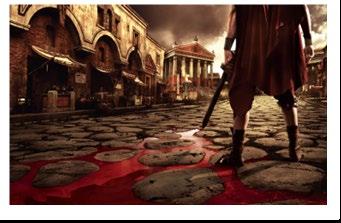
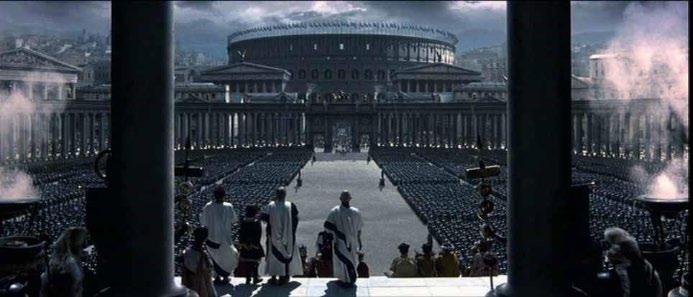
Are you interested in the ancient world? Do you enjoy reading about mythology and ancient history, but find Latin hard? Or are you taking Greek and/or Latin GCSE and want to further your knowledge of the classical world? Even if all you know about the ancient world is based on watching films like Gladiator, Troy or 300, Classical Civilisation is a fascinating subject, with a huge breadth of subject matter and has a great deal to offer you. It offers an important insight into the origins of our own society and an awareness of the similarities and differences between the classical and modern worlds.
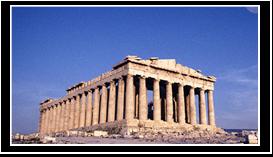
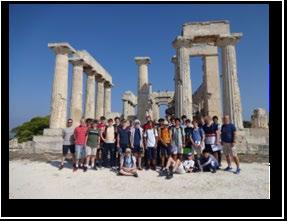
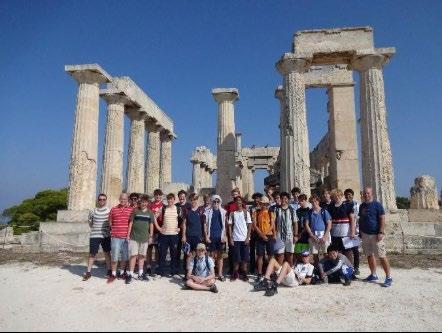
There are also excellent travel opportunities. Every year we organise a Classics trip and this year we toured Greece, visiting the Acropolis, home to the magnificent Parthenon, Delphi, the centre of the classical world, and Olympia, site of the original Olympic Games. In previous years we have also stayed in the Bay of Naples, from where we visited Pompeii and Herculaneum, both partially destroyed and buried by the eruption of Mount Vesuvius in AD 79, and climbed Mount Vesuvius
Component Group 1: Myth and Religion.
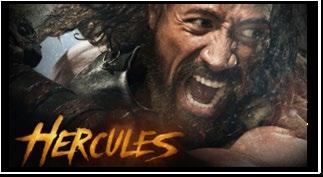
Many of you love the mythology of the ancient world. This topic explores the religion and mythology of the ancient Greek and Roman worlds. You will study the myths of the gods and heroes in the founding of Athens and Rome and the importance of Heracles/Hercules to both the Greek and Roman world. You will also explore the role of religion in the everyday lives of the ancient Greeks and Romans, including temples, sacrifice, festivals and death.
Component Group 2: Literature and Culture.
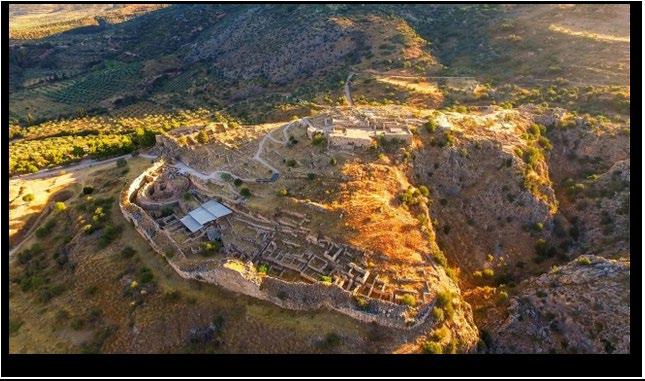
The Homeric World focuses on the art and archaeology of the Mycenaean world, as well as everyday life, allowing you to consider what life was like for real people in this period, rather than simply focusing on the exploits of epic heroes. You will also read a selection of Homer’s Odyssey, combining the fantastical and enjoyable tales of Odysseus’ journey with the exciting final books.
S. A. Heath (stephen.heath@sherborne.org)
Computer Science
Introduction
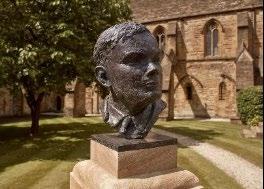
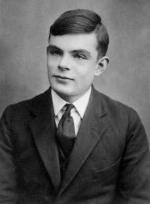
Sherborne could certainly lay claim to fame more than just about any school with Alan Turing as an alumni. In 2019 we introduced Computer Science at GCSE (and A-Level) and follow the AQA exam board.
Computer Science is becoming increasingly critical in the modern work place. Automated systems, robots, AI and computer programs will become ubiquitous so the demand for workers who are able to program and maintain these is set to grow. There is a fundamental shortage of graduates who are able to fills such jobs and in various independent studies, Computer Scientists, Programmers and Data Analysts feature heavily in the most ‘in-demand’ jobs internationally and in the UK. As society becomes increasingly reliant on AI and technology to build systems to support industry and the world’s economy, having a grounding in understanding how machines operate will be critical to succeed in the future job market.
Expertise in Computer Science enables students to make a positive difference in the world as well as lead to lucrative careers, even if your primary career is something else. If you have plans to do Computer Science A Level or even if you don’t, it is now a fundamentally essential part of a wellrounded academic preparation for university or employment. Almost every science or engineering university course will have programming elements and/or will have data analysis or AI at their heart.
One of our current Computer Science students said, “Computer Science is a fun form of puzzle solving. Computer Science offers thousands of ways to do one problem and the fun part is finding the best one for your own scenario”.
Syllabus Content
According to AQA: “This specification has been created to get students working with real-world programming and provides a good understanding of the fundamental principles of computing.” Further details are found at: https://www.aqa.org.uk/subjects/computer-science-andit/gcse/computer-science-8525
All of the following main subject areas are studied in GCSE Computer Science:
• Fundamentals of algorithms
• Programming
• Fundamentals of data representation
• Computer systems
• Fundamentals of computer networks
• Cyber security
• Relational databases and structured query language (SQL)
• Ethical, legal and environmental impacts of digital technology on wider society, including issues of privacy
Coursework
Although the coursework that you do will not count towards your final grade, you are required by the examination board to do multiple hours of programming on a larger project. You shall be given time in class to use the programming skills that you have learned to do this work. You are encouraged to write code for fun, too in your spare time.
Assessment
There will be two papers covering 100% of the available marks for grading with completion of a coursework element. Please see https://www.aqa.org.uk/subjects/computer-science-andit/gcse/computer-science-8525/specification-at-a-glance for more details.
Setting
There is no setting for GCSE Computer Science at the time of writing this document. You may be placed in a set according to other choices you have made at GCSE.
Entrance to Computer Science at GCSE
It is important to understand that there is a significant mathematical and “algorithmic thinking” component to the course. It is advised that students doing GCSE Computer Science have a good mathematical ability. Furthermore, there may be limits as to the number of students who are able to start the course and therefore could be limited by Third Form end-of-year exam results or equivalent, particularly in mathematics.
D.G. Wild (david.wild@sherborne.org)
Design & Technology: Product Design
TO BE A DESIGNER…..
We exist in a world that is driven by technology. We experience the benefits through the products that we use.
The development of these new products is driven by three key elements:
• New materials and technologies - These open opportunities to develop exciting products which were not previously thought possible.
• As our environment and lifestyles change, people generate a demand for new products and so help drive the development of these new technologies.
• Companies in business are constantly looking to remain competitive by developing existing products further by enhancing and modifying them.

Positioned at the centre of these three interconnected fields is the designer.
Taking GCSE Design & Technology could be a first step in helping develop your creativity and the skills which support it, helping you to go on to study for creative careers.
GCSE Design & Technology looks to develop your creativity.
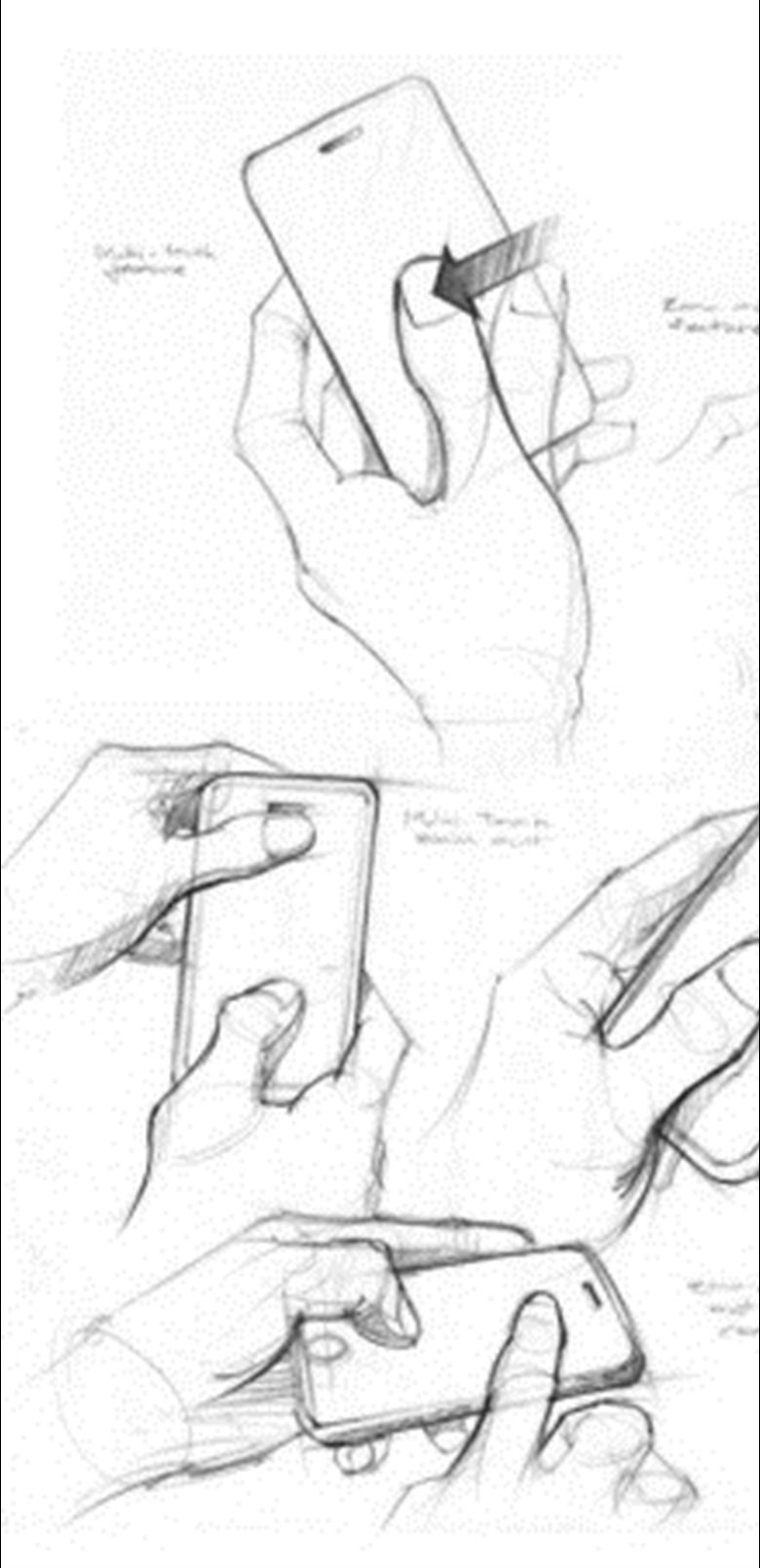
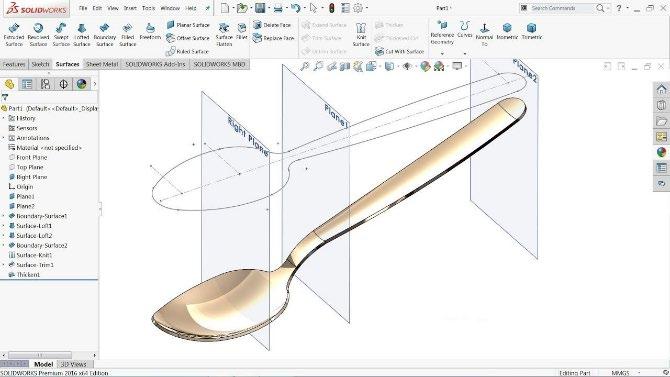
Through a series of design challenges, you will develop your ability to draw and communicate ideas using both a pencil and using industry-standard CAD/ 3D printing, toward individual and innovative solutions.
You don’t need to be a great artist to study the subject [but it may help]. We will teach you strategies to help you draw well.
You will also learn how to build simple prototypes to test your design ideas and to be able to confidently analyse the products around you.
The two-year course will help you to develop the knowledge and confidence to understand how products are manufactured and to go on and make your own.

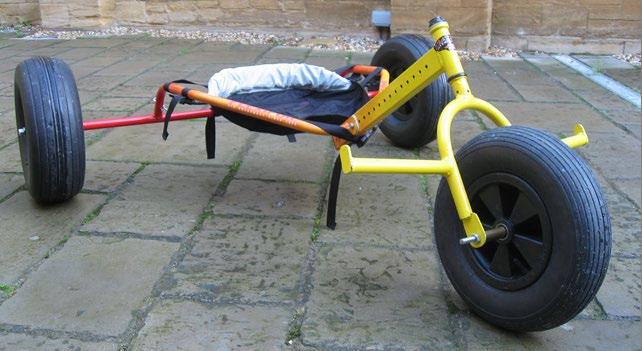
We will look at the commercial manufacture of products; an example of these could be the Tesla Model X, and learn about how the metals and plastics were formed into these complex and successful products. We will see how their performance strengthens the brand. We might look at how Biomimicry has influenced the architecture of Zaha Hadid. We have looked at programmable devices, microelectronic systems, performance textiles and the latest SMART materials.
ASSESSMENT OF ABILITY
In the third and fourth terms of the course, you will be set a contextual challenge by the exam board. In response to this challenge, you will research, develop, design and produce a prototype. This extended assessed project builds towards a portfolio which can support you should you be applying to creative Higher Education courses such as Architecture or Product Design.
We run an enjoyable field trip to London (for which a charge is added to the School bill). Whilst in London we visit several Design Houses and exhibitions or attend events such as the Clerkenwell Design Week to see what effective design looks like, meet and talk to their designers and to explore different design contexts
You are not left alone to tackle these potentially daunting coursework tasks but are carefully and individually guided through the various stages. Your NEA will contribute up to 50% of the marks for your GCSE and, if appropriate, it could form the most extending and challenging work that you are able to tackle at this age.
H.E. and CAREER PROGESSION
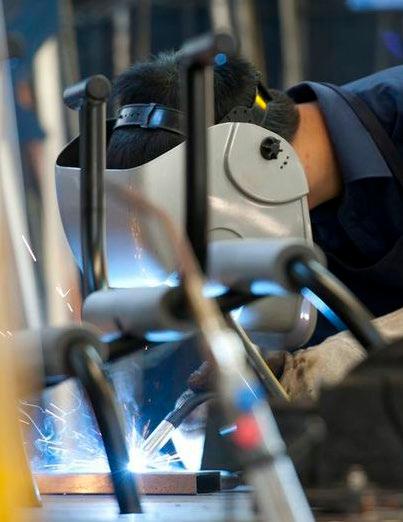
Parametric CAD skills develop confidence and ability that translates directly on degree level courses. Design ideas are outputted through 3D printers, the laser cutter or are sent directly to sheet steel manufacturers for plasma cutting.
Pupils from the department have gone on to read for creative careers in Architecture, Aeronautical or Mechanical Design, Automotive Design, Computer-Aided Design, Engineering, Product Design, Graphics, Fashion, Theatre Design and Interior Design….
P. R. Chillingworth (peter.chillingworth@sherborne.org)
GCSE project
Drama


• Build self-esteem and self-confidence
• Build team-spirit
• Encourage tolerance
• To enjoy performing and expressing yourself
• Strengthen literacy
• Provide a safe place to express one’s emotions
• Teach creative problem solving
• Drama is just plain fun! Teachers know that humour helps pupils to learn more efficiently.
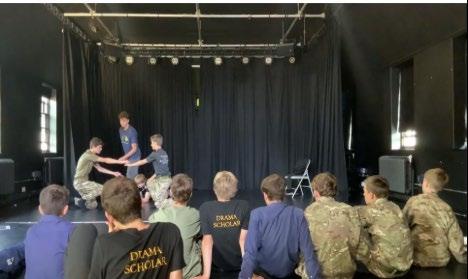
GCSE Drama at Sherborne Boys is an exciting, hands-on practical course. GCSE Drama is not just about acting. The course covers a variety of transferable skills that will be useful throughout life. The boys will develop and learn to critically evaluate live performance as well as their own performances and processes, developing maturity and a critical understanding of a work in progress.
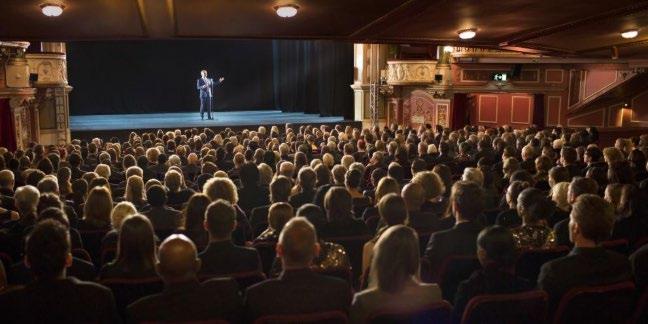
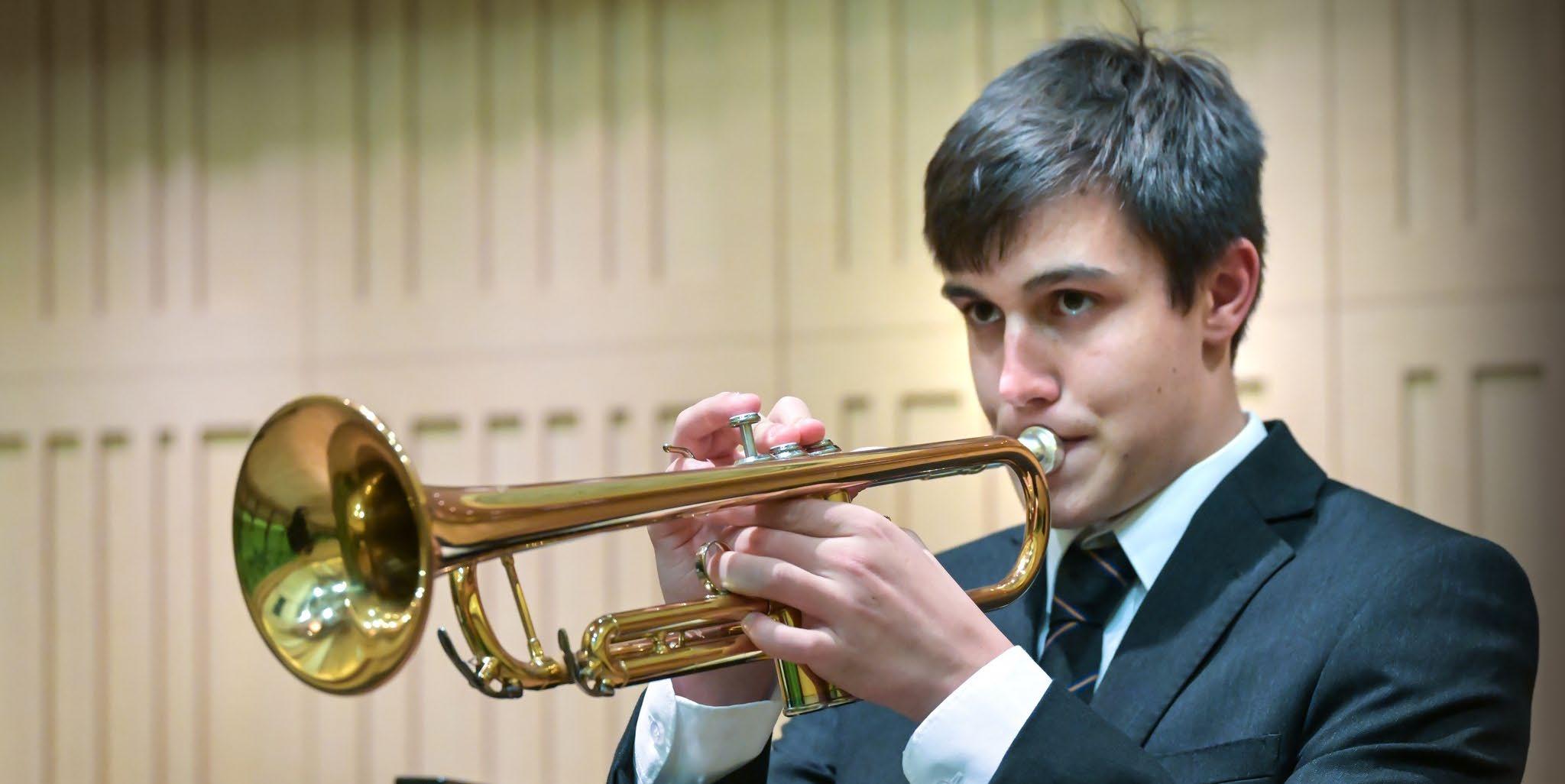
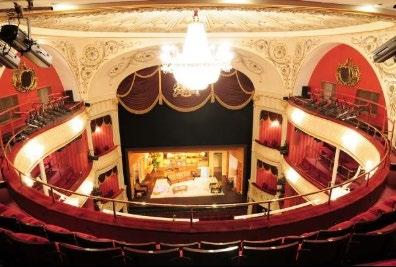
The boys’ study interesting, challenging texts through practical studio work, live theatre performances and workshops. Recent workshops have included a wonderful session with The Paper Birds Theatre Company who have a reputation as leaders in the delivery of devised and verbatim theatre workshops throughout the UK. Emma Earle, Co-Artistic Director of Pins and Needles Productions also delivered an inspiring characterisation workshop. We take the boys on at least two theatre trips per academic year, visiting venues including Natonal Theatre, London, the Bath Theatre Royal and the King’s Theatre, Portsmouth. Recent performances have included, Dear England, Blood Brothers, Small Island and The Girl from the North Country This year we also have a professional theatre company in residence which will provide a fantastic opportunity for the pupils to learn about the industry and they will also contribute to the devising process of a new production.
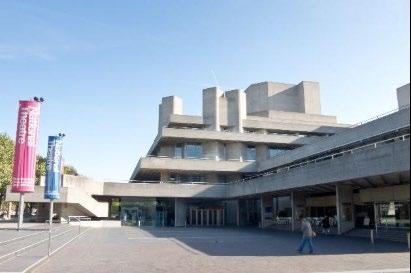

The course is taught through 4 x 45 minute lessons a week. We take a practical approach to all components, with dedicated weekly theory and written support lessons. 40% of the GCSE marks are awarded for the written examination. (30%) is awarded for the written coursework. The final 30% is awarded for the practical element of the course and the department prides itself on its creative approach which aims to brings the best out of every boy.


The GCSE course is composed of three components, each one offering different and exciting challenges to pupils.
Component 1:
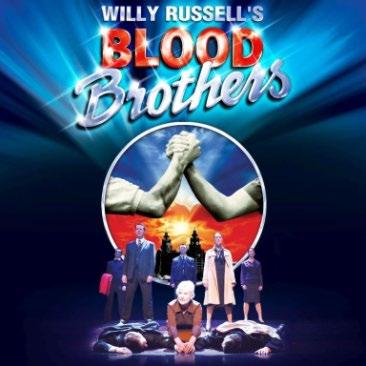
This is an in-depth study of a set text; which is either ‘Blood Brothers’ by Willy Russell or ‘Things I kNOw To This component takes a practical approach towards this text in preparation for a written exam worth 40%.
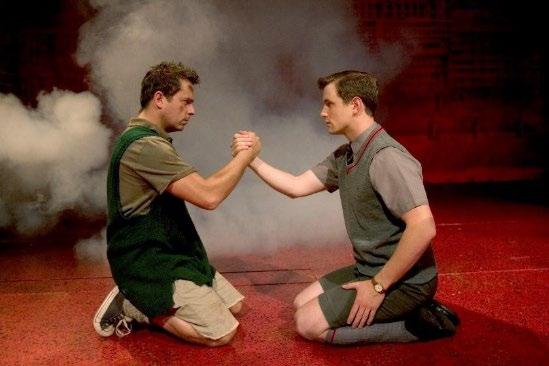

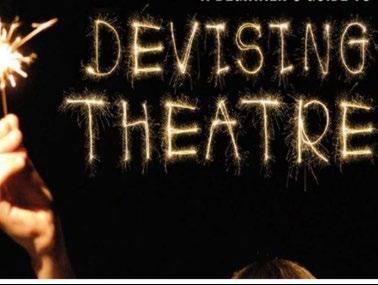
In this area of the GCSE, pupils devise and create their own performances, encouraging collaborative and imaginative work. The students complete a devising log and accompany the final performance with written coursework which challenges their research, analysis and evaluation abilities.
Component 3:
The final component is an explorative study of a text which changes from year to year. The boys perform two extracts, which can be a monologue, duologue or group acting piece. This component is externally assessed by a visiting examiner.
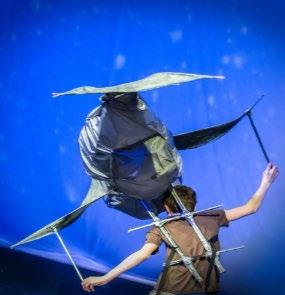
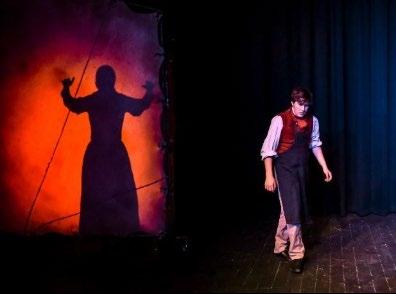
The boys can always opt to specialise in design options including lighting, sound, set, costume and puppetry. They are always encouraged to further develop their skills through involvement in co-curricular opportunities including school productions, house plays, Drama Club and LAMDA examinations.

Alastair Kirby Alastair.kirby@sherborne.org
English Literature
What will you be studying?
It has never been more important to study English Literature.
In a world of instant gratification and advancing technology, literature offers a crucial counterbalance to the digital realm. Those who study English Literature gain invaluable skills that underpin every discipline and make you desirable to future employers: critical thinking, effective communication, empathy, research, problem solving, and the ability to produce clear, coherent and thoughtful written work. By the time you leave the Fifth Form, you will understand that Literature is more than just “reading books”. It’s about understanding the world around us and gaining an insight into the minds of others.
At Sherborne, we follow CIE’s English Literature iGCSE (9-1) curriculum. The open-text nature of the papers helps you prepare effectively and sit the exam confidently.
Paper 1: Poetry and Prose (Open Text)– 50%
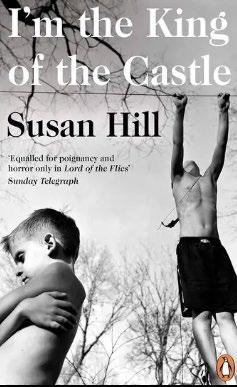
This unit is made up of two different texts. For poetry, you will explore a short anthology of poems ranging from classical to modern. You will also study Susan Hill’s I’m the King of the Castle, a chilling novel tracing the power struggle between two boys forced to live together in an isolated house, where childhood games turn dangerous and fear becomes the ultimate weapon.
What else do you do?
Paper 2: Drama and Unseen (Open Text) - 50%
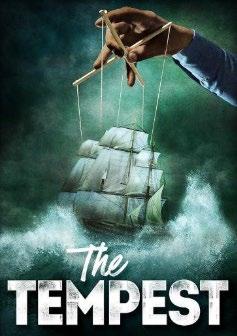
Our drama text is Shakespeare’s The Tempest, a thrilling tale where a magical storm strands heroes and villains on an island alive with spirits, secrets… and revenge. The second part of this unit offers you the chance to demonstrate the skills you have gained throughout the course by responding to a short piece of text. You will have a choice of tasks that allow you to play to your strengths.
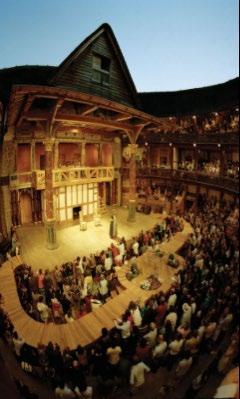
Those who study Literature can look forward to trips to the theatre and attending readings by some of the most respected authors of our times.
Boys in sets a1 and b1 will take the Accelerated English route and do not need to select English Literature as one of their options.
H. Cant (harriet.cant@sherborne.org)
Geography

There has never been a better or more important time to study Geography
“With the growing importance of issues such as climate change, migration, environmental degradation, spatial epidemiology and inequalities, geography is one of the most relevant courses you could choose to study. Above all, geographers have potential to be well-informed global citizens, using their unique combinations of knowledge and skills to make a positive difference in the world.” Dr
Rita Gardner-Director
of the Royal Geographical Society
Geography is already an extremely popular subject at Sherborne and the new GCSE specification provides the opportunity to build on the skills developed in the third form.

The course will take an enquiry-based approach to a range of issues throughout the UK and the rest of the world. Creating a sense of wonder about the world and the physical processes and human interactions that shape it underpins the new approach to Geography. It also challenges learners to become decision makers over the environment and sustainability.

What will you learn?
o Hazardous Environments.
o Urban and Rural settlement dynamics.
o Development.
o Physical processes.
o Environmental issues.
What can you expect?
o To learn about an amazing range of diverse environments.
o 2 fieldtrips (Coastal and Urban).
o To develop ICT and Geographical Information Systems (GIS) skills.
o To develop an understanding of our interconnected world.
o A student led approach based on enquiry.
What skills will you develop?
o Fieldwork skills.
o Literacy and Numeracy skills.
o The ability to interpret, understand and utilise data.
o How to analyse, evaluate and discuss a range of issues.
o The use of technology and apps to collect and analyse data.
“Geography is a subject for our times. It is inherently multidisciplinary in a world that increasingly values people who have the skills needed to work across the physical and social sciences.” The Guardian 2015.
Studying Geography at Sherborne will allow you to make better sense of the world we live and the interactions between people, place and the environment.

Classical Greek, ‘Gratin’
Why Study Latin and Greek?
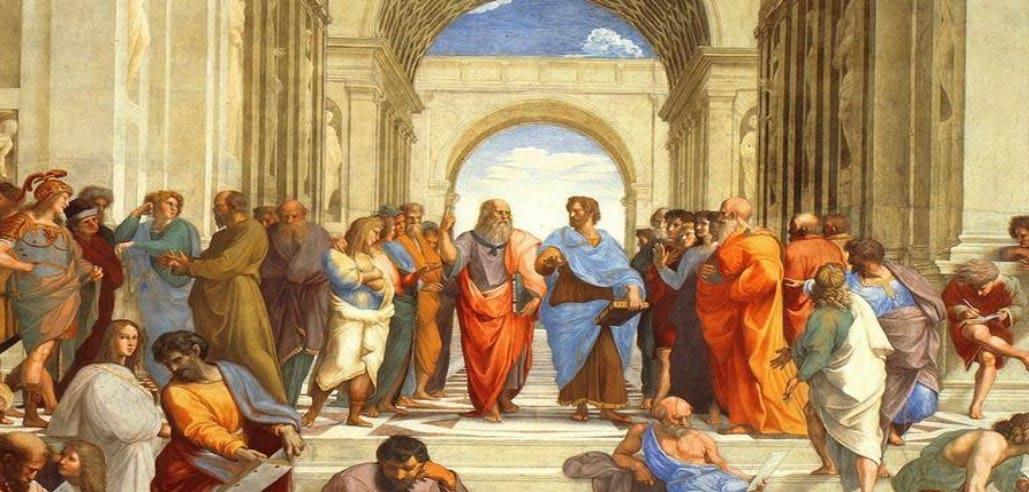
Should you choose your GCSEs purely on their practical use? The ancients did not press this argument. As Aristotle said, ‘To seek utility everywhere is most unsuitable to lofty and free natures.’ However, a knowledge of Latin and Greek will increase your English vocabulary immensely and will aid in your understanding of English grammar. It is a common fact that Latin teaches English better than English by requiring students to accurately identify each part of speech for every word! Latin and Greek will also help you learn modern Romance languages (e.g. Spanish, French and Italian), and will greatly aid in learning other inflected languages, such as German or Russian.
The classical curriculum has an unsurpassed track record, not just in filling students’ minds with useful knowledge, but also in forming their minds and their spirits. Latin and Greek implant the habits of precision and attention to detail. Intellectual rigour is at the heart of the study of Latin and Greek.
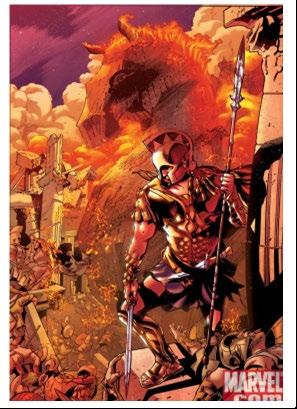
Classical Greek is only available alongside Latin. By studying ‘Gratin’, you will be accepting an exciting and difficult challenge. It is not for the feint-hearted; it is tough, but it has enormous rewards:
intellectual stimulation; the translation of some of the greatest poets, historians and playwrights, in their original language; an understanding of complex grammatical structure; the ability to analyse and unravel language; but perhaps most immediately, the satisfaction of completing two GCSEs for the price of one.
What will you study?
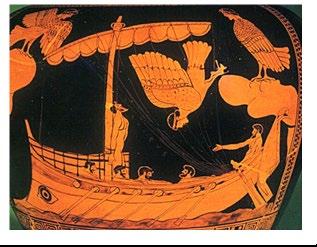
The method of assessment of Classical Greek is the same as that of Latin, except you will study Greek literature. You will read a selection from Homer’s Odyssey, ‘a salt-caked, storm-tossed, wine-dark treasury of tales of terrifying monsters and sexy witches, of alluring sirens and inscrutable queens, a poem that takes you down to the coldly echoing chambers of the dead and back up to the coves and cliffs and winding paths of Ithaca. A poem of many twists and turns, like life itself.’ (Charlotte Higgins). And you will read a selection from Herodotus’ Histories, a masterpiece on the grandest scale, a chronological history of the Persian Wars from the invasions of the empire-building Cyrus in the middle of the sixth century BC, through the stories of the ill-fated Cambyses and the opportunist regicide Darius, to the depredations of that arch-megalomaniac Xerxes in the early fifth century BC.
S. A. Heath
(stephen.heath@sherborne.org)
Discover the Past. Understand the Present. Conflict – Power - People
•CIE IGCSE History: Uncover the Forces That Shaped Our World
•Preparing you for the future…by looking at the past
•Critical Thinking and Argumentation
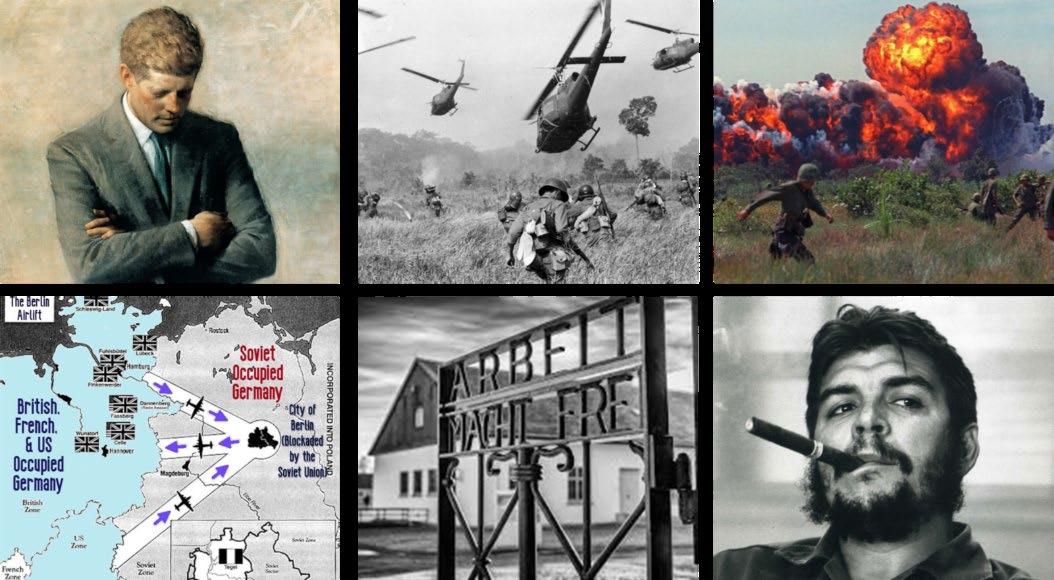
Your Journey Through History: Course Content Overview
Part 1: Core Content - International Relations since 1919 (The Big Picture)
You will examine the most significant events in 20th-century global politics, focusing on six key areas:
1.Post WW1 Peace Treaty
2.The League of Nations and International Security
3.The Causes of the Second World War
4.Who was to blame for the Cold War?
5.Korean War, The Cuban Missile Crisis and Vietnam War
6.The Collapse of the Soviet Union
Part 2: Depth Study - Germany, 1918–1945
A detailed exploration of Germany's tumultuous journey from defeat to dictatorship:
1. The Weimar Republic: Was it doomed from the start?
2. Hitler's Rise to Power: How did he dominate Germany by 1934?
3. Life in Nazi Germany: Control, opposition, and persecution.
Beyond the Dates: Skills for Life, Careers for Tomorrow
•History graduates are highly valued by top universities and employers for their exceptional transferable skills:
•Critical Thinking: Evaluating complex and often conflicting evidence.
•Advanced Research: Finding, sifting, and synthesising large volumes of data.
•Strong Communication: Presenting clear, coherent, and persuasive arguments (both written and verbal).
•Contextual Awareness: Understanding the roots of modern problems in politics and society. Where Can History Take You?
•Law (Solicitor, Barrister)
•Media & Journalism (Reporter, Editor, Researcher)
•Business & Finance (Management, Consultancy, Analyst)
•Politics & Civil Service (Diplomacy, Policy Advisor)
•Education & Heritage (Teacher, Museum Curator)
History is not just about what happened. It’s about WHY!
Do you want to:
•Explore the most dramatic periods of the 20th Century?
•Debate your points of view
•Gain a qualification that opens doors to top universities and high-level careers?
Pick IGCSE History Today!
Higher Project Qualification (HPQ)
The Higher Project Qualification (HPQ) is exciting and different. It’s a chance to study something of your choice. It can be almost anything! In this way, the HPQ is not only interesting but unique: lessons focus mainly on skills, and you decide what to investigate. During your project, you will be guided to formulate your own unique question, then undertake appropriate research to investigate it and reach an evidence-based conclusion. Here are some examples of HPQs completed here or in other schools:
• Should we be afraid of the development of artificial intelligence?
• Could humans colonise Mars using current technology?
• Should satire be used to teach history?
• How beneficial would a global language be?
• Should footballers be paid more than rugby players?
• What impact does veterinary research have on society?
How does an HPQ work?
The HPQ is a GCSE-standard qualification in the same family as the EPQ. It’s graded A*-C and is worth half the points of a ‘normal’ GCSE. You’ll have two years to complete your HPQ, but the intention is to have finished it after four terms – i.e., during the Michaelmas term of your Fifth Form. The HPQ is delivered in four lessons per week. When your HPQ is finished, you will be able to use the remaining lessons for revision for your other subjects.
Early on, you will follow a taught course covering the various skills you will need: research, referencing, source evaluation, planning, time-management, and more. Later, the lessons are used for research and production and, finally, for preparing for your presentation.
The format of your HPQ product is up to you: it could take the form of an essay, a physical artefact, or a recorded performance. You decide! You can take inspiration from something you have studied or from something completely unrelated to your academic studies. Work on the HPQ is subject to the same rules as a piece of coursework. The project will be assessed on the quality of your production log, your product, and your presentation to a live audience. Most students choose to produce an essay as their product; for practical projects, the artefact is submitted accompanied by a written report.
What will I learn?
Firstly, you will become an expert on your chosen topic! However, beyond that, project qualifications are valued by employers and universities for the skills they instill. In completing an HPQ, you will develop your independent study skills, improve your ability to read and critically evaluate, and practice reflecting on your own performance. You will learn strategies to plan your time effectively, to synthesize ideas, and to present them in your own words both on the page and to an audience.

N. J. Hall
Latin is not a 'dead' language. Its study is fascinating and rewarding in its own right, but Latin is alive beneath the surface of the modern world. The influence of Latin, as well as Greek, is as widespread today as the Roman Empire was dominant in the ancient world: almost 80% of English words derive from Latin; French and Spanish, and the other Romance languages, owe their existence to Latin; world literature and film still turn to classical writers for inspiration. The classical world has in many important ways shaped the institutions, languages and ways of thought of Europe and the West.
Why study Latin?
Do you like a challenge? Do you enjoy reading? Are you a logical thinker? Do you enjoy solving puzzles? Are you studying a modern language? This subject gives you the opportunity to enter into an astonishing world, a lost world that offers itself up vividly and excitingly through its literature. Latin will also help develop your analytical skills and intellectual flexibility, which will be useful in a wide range of jobs or in further study. You will also learn to develop a sensitive approach to language generally, including an awareness of the relationship between Latin and the languages of today.
It’s too hard!
There are also excellent travel opportunities. Every year we organise a Classics trip and this year we toured Greece, visiting the Acropolis, home to the magnificent Parthenon, Delphi, the centre of the classical world, and Olympia, site of the original Olympic Games. In previous years we have also stayed in the Bay of Naples, from where we visited Pompeii and Herculaneum, both partially destroyed and buried by the eruption of Mount Vesuvius in AD 79, and climbed Mount Vesuvius.
No! Latin is intellectually rigorous, but anyone prepared to apply a little effort will succeed. Latin is also an impressive qualification, even at GCSE. As an inflected language it is so different from our own, and yet it possesses a logic which is absent from English, which does take time to master, but which will soon ‘click’, if it has not done so already. You have all spent the last few years working through quite complex grammar, following the likes of Caecilius and Modestus; don’t give up now! Your study of grammar is near its end and we will soon be turning to the thrilling and colourful literature of ancient Rome.
What will you study?
The GCSE is made up of three units: one language paper, worth 50% of your total GCSE mark, and two literature papers, each worth 25%.
Over the two years, you will develop your understanding of language structures, learn how to write Latin and, most importantly, and enjoyably, begin to appreciate the beauty of this ancient language by reading small selections of its literature. Your set texts include selections from Apuleius’ Metamorphoses, an enchanting novel describing the adventures of the hero, Lucius, who dabbles in magic and witchcraft in order to experience the sensations of a bird, but by an unfortunate pharmaceutical error finds himself transformed into a donkey. You may read the beautiful poetry of Ovid, Horace and Martial, or Virgil’s account of Aeneas’ descent into the Underworld in Aeneid 6. Having studied these texts in class, in the exam you will be asked comprehension questions, multiple-choice questions and longer, literary appreciation questions.
potest quia posse videtur
S. A. Heath (stephen.heath@sherborne org)
Modern Foreign Languages (French, German, Mandarin &
Spanish)
Why should I learn a foreign language?

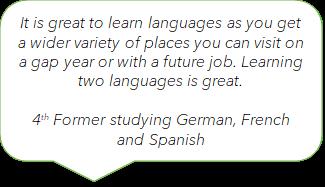
It´s good for your brain! It's been shown that if you speak more than one language you are probably a better multitasker. Being bilingual is healthy!

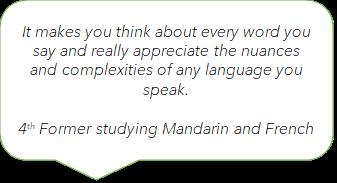
Learning a language is just a lot of fun! You’ll get to play with word order in German, explore the different accents of Latin America in Spanish and get your head around the vowels in the names of French football players!
What languages can I do at Sherborne Boys? Pupils can take French, Spanish and German IGCSE as part of the curriculum. We also offer Chinese GCSE and Italian GCSE as a paid extra.
More than 70% of the world’s population does not speak English. Speaking another language helps you communicate with the whole world.

Speaking more than one language provides a window into different cultures. As linguist John McWhorter says, “if you want to imbibe a culture, if you want to drink it in, if you want to become part of it, you have to control to some degree the language that the culture happens to be conducted in. There's no other way”.
What careers are open to me if I have a foreign language?
Graduates with a GCSE in a language or beyond are in high demand with employers. The UK urgently needs diplomats, interpreters, bankers and managers with language skills. University graduates who speak a language even to GCSE level go on to careers in areas such as law, management, accountancy, banking, journalism, the media, advertising, diplomatic service and the performing arts as well as language- specific jobs like speech therapy, speech and language technology, translation, interpreting, forensic linguistics and education.
What skills will I improve?
You will build your ability to multitask. You will improve your written English. You will become more perceptive. You will improve your memory. You will boost your decision-making skills. You will learn vital communication skills. You will become more confident.
Should I do one or two languages for GCSE?
You can choose a combination of one, two or three languages. The skills you learn in one language will carry over the other language(s). Having two or three GCSE languages really set you out from other applicants when it comes to university and job applications.
How can I do three languages?
If you want to do three languages, speak to the Head of Languages about continuing or joining the Triple Languages program in which you can take one language (normally French) in Fourth Form and then another two in Fifth Form.
How can I do Chinese or Italian GCSE?
Speak to the Head of Languages about continuing or joining Italian or Chinese GCSE.
I speak another language that is not Spanish, French, German, Chinese or Italian. Can I take a GCSE in that?
Speak to the Head of Languages about whether it will be possible to sit the exam for another language that you speak as a heritage or bilingual speaker at GCSE (e.g., Arabic, or Portuguese)

How will I be tested?
All the language GCSEs and IGCSEs will test you across all four skill areas (Speaking, Reading, Listening and Writing) in exams at the end of the course.
Each skill will be tested through a range of topics. These include Family, Travel, Environment, Media and Work, Holidays and Education.
P.A.Morrow (Head of Languages - Spanish, German, Mandarin, Italian) (Philip.morrow@sherborne.org)
W.E. Chadwick (Head of French) (william.chadwick@sherborne.org)
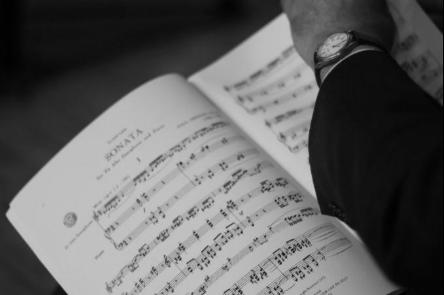
GCSE Music is an ideal course for anyone interested in the subject who has already started to develop practical skills as an instrumentalist or singer, or who has enjoyed the challenges of composing music in the Third Form. It is not essential to take GCSE Music if you wish to be considered for Music or Music Technology in the Sixth Form, but it would undoubtedly be helpful.
The course is divided into three parts:
Unit 1: Performing (30%)
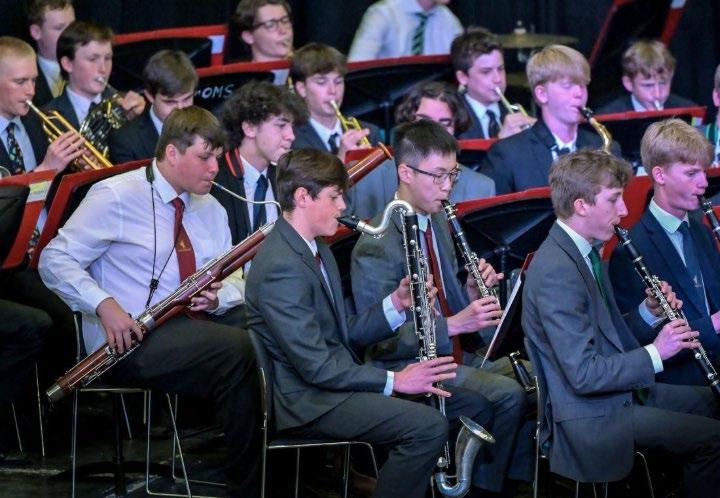
You will record one solo performance and one as part of an ensemble. Previous experience is not crucial, but being about Grade 3 standard at the start of the course, coupled with a willingness to make progress, will enable you to access the highest marks. Performances must total at least four minutes across both pieces (each lasting at least one minute). Recordings are submitted securely via the Learner Work Transfer (LWT) platform. A
Unit 2: Composing (30%)
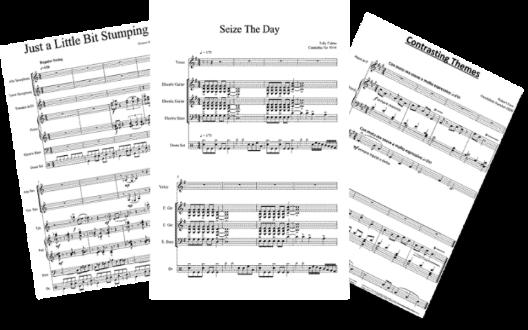
The discovery of your own creative abilities in this pursuit can be one of the most rewarding aspects of the subject. You will compose using Sibelius notation software and submit two compositions:
• One to a brief set by the examination board from a choice of four
• One completely free composition in any musical style
Compositions must total at least three minutes across both pieces and are submitted via LWT. You will develop skills in handling melody, harmony, texture, and structure while exploring different styles and techniques.
Unit 3: Listening and Appraising (40%)
This involves the study of eight set works, two from each Area of Study. It is assessed in a written paper lasting 1 hour and 45 minutes, which includes questions in response to recorded extracts (now provided as digital audio files) from the set works, as well as one piece of unfamiliar music. Listening to excerpts from works such as Star Wars or Beethoven’s Pathétique Sonata makes this one of the most engaging written papers available! The Areas of Study are:
• Instrumental Music 1700–1820
• Vocal Music
• Music for Stage and Screen
• Fusions
(robert.costin@sherborne.org)
R.Costin
Music Technology
The course is divided into three parts:
Unit 1: Performing (30%)
The GCSE Music Technology course is an adaptation of the standard GCSE Music course, with a specific focus on the use of music technology for performing and composing, as well as the study of the same eight set works. The course builds on the individual interests and talents of those keen to use computers to compose, arrange, and perform electronic music. Around 60% of the course is practical coursework in the music studio, where different compositional and production techniques are explored and developed.
Over the course you will learn and develop skills in performing using push pads and MIDI controllers to the level required to record one solo performance and one ensemble performance. These will be captured and submitted digitally via the Learner Work Transfer (LWT) platform.
Unit 2: Composing (30%)
You will compose two pieces of music using digital production techniques and sequencing software such as Ableton Live, based on different techniques covered in class — topics range from minimalist composition to creating electronic dance music. You will submit:
• One composition to a brief set by the examination board from a choice of four
• One completely free composition in any style

Unit 3: Listening and Appraising (40%)
This involves the study of the same eight set works, two from each Area of Study. The written paper (1 hour 45 minutes) includes questions on both set and unfamiliar music, with extracts played digitally during the examination. The Areas of Study are:
• Vocal Music
• Music for Stage and Screen
• Instrumental Music
• Fusions
Physical Education
GCSE Physical Education provides students with the knowledge and understanding of how to live a healthy and active lifestyle, enabling them to make informed choices about their own physical development. Students can choose from a variety of roles and activities in which to participate in physical activity.
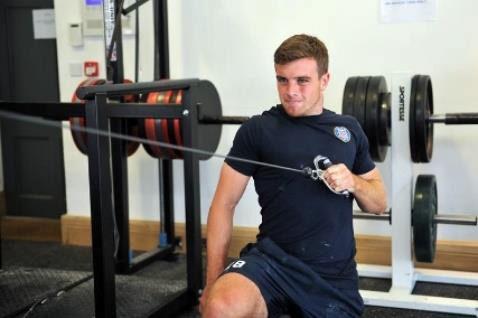

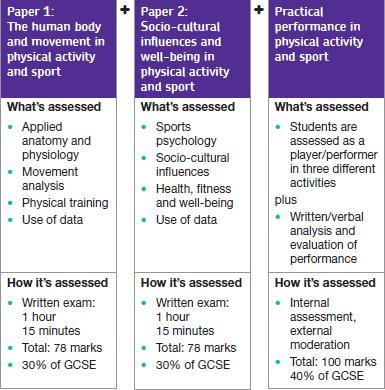
This course is ideally suited to the talented practical performer with a keen interest in the academic study of sport and Physical Education. Sport is an industry which is in a phase of huge and significant growth, and this GCSE is the first step in preparing you to embark on a career within this field. The AQA specification provides an excellent lead -in to A-level study, with a high level of crossover for those students looking to study this subject in the Sixth Form and beyond.
In it we introduce key sporting ideas and show how these interact with practical performance, you will gain insights into the relationships they have with each other throughout the course. This can impact performance in your own sport and highlight what might be happening in an elite setting.
The development of transferable skills including decision making, psychological understanding of people, independent thinking, problem solving and analytical skills as well as thinking, acting and reacting under pressure.
The study of GCSE (9–1) Physical Education opens up a range of possibilities for further study and also into careers associated with the subject. GCSE PE leads specifically to further study of Physical Education A Level and/or BTEC Sport. Beyond to degrees in areas such as Sport and Exercise Sciences; Sports Psychology; Sports Marketing; Strength & Conditioning and Physiotherapy.
B. J. Allen barnaby.allen@sherborne.org
Religious Studies
The Objective of the Course
There has never been a more important time to learn about religion. With violent acts of religious intolerance occurring in all parts of the globe and involving all religions, it is vital that you are able to distinguish genuine religious beliefs from ill-informed, fascistic bigotry. The Religious Studies GCSE aims to help students learn about some key ideas in Christianity and Buddhism, while also examining key themes present in all religions. In doing so you will finish the Fifth Form with a good degree of knowledge about two of Britain’s more important religions and will have also had the chance to form and question your own beliefs.
The Form of the Course
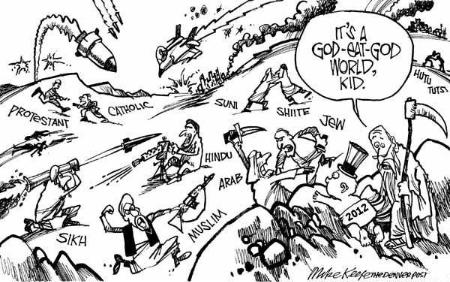
Part One
Beliefs, Teachings and Practices from two religions
There are two parts to the course: the study of two religions and a thematic study across religions. In the first part of the course you learn about the life of the Buddha, will be taught how to meditate and will understand why Buddhists do not believe in God. You will also learn about the core beliefs of Christianity, including the different forms of worship, and will be asked to question some of these beliefs, such as why a good God would create a place like Hell. In the second part of the course you will examine and question religious attitudes to crime and punishment, war and peace and families and relationships, including homosexuality. You will look at ethical problems including euthanasia and abortion. You will note that you are not required to believe in God and that this is an excellent opportunity for you to ask some hard questions about organised religion. At the end of the course you will take an exam consisting of two papers, each lasting 1 hour 45 minutes
Some elements of the course
Christianity - The nature of God, the concept of the Trinity, the problem of evil, the idea of salvation, life after death, worship, sacrifice, mission, pilgrimage.
Buddhism - The Four Sights, the Four Noble Truths, different types of meditation, karma and rebirth, how to become enlightened.
How it is examined
One 1 hour, 45 minute paper, covering the beliefs and practices of both religions
Part Two
Religion, philosophy and ethics in the modern world from a Christian perspective
Crime and Punishment (including arguments for and against the death penalty); Peace and Conflict (including Just War theory); Religion and Life (including discussions about abortion and euthanasia; and Relationships and Families (including same sex relationships and the meaning of gender)
One 1 hour, 45 minute paper, with a 5-part question on each of the themes.
Nikola Bowerman (nikola.bowerman@sherborne.org)
Sherborne Boys
Abbey Road
Sherborne
Dorset DT9 3LF
United Kingdom
admissions@sherborneboys.group
+44 (0)1935 810403
sherborneboys.group PART OF THE SHERBORNE SCHOOLS GROUP
Sherborne Schools Group is a charitable company limited by guarantee, registered in England and Wales, No. 4002575 and registered with the Charity Commission for England and Wales, No. 1081228