INSIGHT



ISSUE 42 August 2023
MAGAZINE
IN THIS ISSUE
Introduction
With Steve Morrison, MANAGING DIRECTOR SHEFFIELD HAWORTH TECHNOLOGY
Moving with Kainos into the Digital Services Premier League
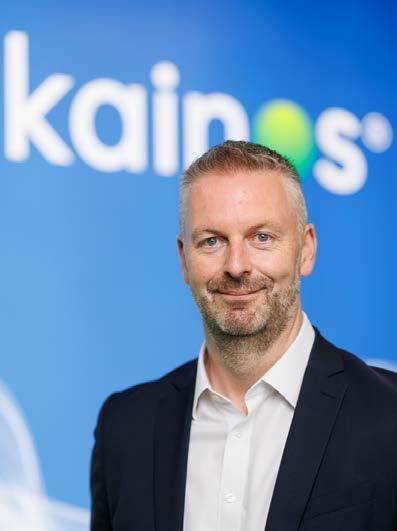
Q&A with Russell Sloan, CEO-ELECT OF KAINOS
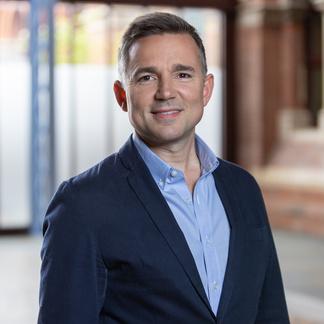


Why Education is the Key to Unlocking the Benefits of New Technology for All
Q&A with Ruth Harrison, GLOBAL HEAD OF INDUSTRY DOMAINS, THOUGHTWORKS


The Challenge of Marrying Disruptive Technology with a People-Centric Business
Q&A with Sarah Wilkes, MANAGING DIRECTOR AT FRAZER-NASH CONSULTANCY
Pursuing a Different Business Path
A conversation with Chris Martin, CEO OF WARACLE
“Seven Star” Growth Insights from the UK’s First Listed B Corp
Q&A with David Tuck, GROUP CEO – EUROPE, KIN + CARTA
Mesh-AI: Exploring the Future of AI Transformation
A conversation with Michael Chalmers, CEO OF MESH-AI
Can Chat GPT draft an insightful article into the impact of AI on the executive search industry?

Our Story 4 3 12 5 15 8 18 21
24
Our Story
EMPLOYEES GLOBALLY GLOBAL OFFICES
15
ESTABLISHED IN
Sheffield Haworth is a global consultancy founded in 1993 with over 220 employees across 15 offices in Europe, North America, and APAC. We have a history of placing executives in high-impact roles year after year, giving clients a competitive advantage in a fast-changing world. Our vision is to be the leading global consultancy in people and transformational change. We specialise in executive search and interim, talent intelligence, leadership advisory and organisation change management.
Following the acquisition of Gillamor Stephens in 2018 and Symbiosis in 2022, we have consolidated our teams as part of Sheffield Haworth Technology.
Our team work with start-up, scale-up and mature technology companies, assisting with their senior international talent requirements and specialising in executive search for leadership roles across Europe, North America and APAC. With dedicated expert teams on the ground in our major global markets, we deliver the best senior leadership talent for clients and the highest quality experience for our senior candidate network.
We operate at Board, C-suite, Executive Management and Partner levels across all functional areas.
We have a proven track record and particular expertise in working with technology companies in the following areas:
Cloud Services/Digital Transformation Services –hosting, infrastructure services, digital consulting, managed services.
Enterprise Software/SaaS, vertical market applications, AI, data analytics, cyber.
Deep Technology – Encompassing Science and Engineering based technologies from photonics to rocket ships.
For more information, please visit our website:
SHEFFIELDHAWORTH.COM
220+ 1993 INSIGHT 42 3
Welcome to the 42nd edition of Insight Magazine from Sheffield Technology, the international executive search and people consu working across the digital services, enterprise software and de
In this issue we talk with leaders across a range of digital services companies, from private equity-backed ventures through to publicly-listed businesses. They offer their experiences and insights into current market conditions and how they’re influencing the business and recruitment strategies of these companies.
Plus, we tackle the elephant in the room – generative AI. How is this technology affecting their clients, their strategies, and their product and service roadmaps?
With AI such a hot topic, it’s notable that one emerging theme from our interviewees is the difference between hype and reality. There are many limitations on how companies can use generative AI – from strict procurement rules to data privacy laws
and
more.
The overall feeling is that AI is a technology that could do a huge amount of good for the world if handled appropriately. And that includes taking on the responsibility of exploring and explaining it – the pros and cons, the benefits and drawbacks, as well as how it works! Educating not just clients, but also broader society.
Of course, while AI is the big topic of the moment, there’s plenty more on the minds of our interviewees. Some of the key insights and themes explored in this issue include:
Why education is the key to making technology careers more accessible for all
What’s creating demand in the market for AI-driven transformation
Tips on successful post-M&A integration
How to keep people at the centre of technological change – and why that’s important for successful transformation
How to bake diversity and inclusion into every part of a digital services business
Where the tech services market is heading in the next six to 12 months, and why
Not only are there signs that the future for tech services will look a good deal brighter from the end of this year, but also that technology offers the chance to help slash our carbon emissions, increase transparency, and optimise supply chains.
As one of the leaders in this issue says, “Technology does have the answers.”
In the spirit of this great potential for positive change, we’ve been reflecting on how AI will impact the search industry. To quote another “interviewee” from this issue:
“The future of the executive search industry in the technology market will be significantly shaped by AI. While AI-powered tools can enhance efficiency, improve candidate matching, expand the talent pool, and promote diversity, careful consideration must be given to ethical implications, the importance of human expertise, data quality and security, and the impact on roles and skills. By embracing AI as a complementary tool and leveraging its capabilities effectively, executive search firms can navigate the evolving landscape and continue to provide valuable talent solutions in the technology market.”
This quote comes from Chat GPT itself. It’s an excerpt from an article we asked it to write about how AI could impact the industry. You’ll find the results on page 24. I’m sure you’ll agree that the resulting article is a great illustration of the huge potential of generative AI and its current limitations.
I hope you enjoy this issue of Insight, and I welcome your feedback.
Steve Morrison, MANAGING DIRECTOR SHEFFIELD HAWORTH TECHNOLOGY
s.morrison@sheffieldhaworth.com

INSIGHT 42
4
Moving with Kainos into the Digital Services Premier League
Q&A with Russell Sloan, CEO-ELECT OF KAINOS
In the world of IT services, Kainos has a great reputation. With FY 2023 group revenues hitting £374.8m – a 24% increase year-on-year – and an impressive list of over 820 clients in the UK and globally, there are few in the industry that command greater respect.


At the same time, the company is now in the slightly odd position of being too big to be considered the SME it once was, while still not being on the same scale as many of its multinational competitors.
We met with Russell recently to discuss how the company has dealt with rapid growth and how it approaches winning contracts at its current size. We discussed the secrets to Kainos’ success, the key learnings of Russell’s two-decade-plus career in the industry, and how generative AI is likely to impact the digital services industry.
Plus, as we sat down to interview Russell, the company released the exciting news that he would be succeeding outgoing CEO Brendan Mooney in September, so we began by asking him about that.
Q: How do you feel about being named Kainos’ next CEO?
A: I’m delighted. It’s an exciting proposition, having joined the company 24 years ago as a trainee. We’re in a very different place now. When I joined, we had 160 people. Now we have around 3,000.
Q: As the incoming CEO, can you discuss any particular ambitions you have for the business?
A: We’re in high growth, particularly in our Commercial and Public Sector businesses. There won’t be big changes, but the one constant about Kainos over time is that it’s constantly changing. The Kainos 2025 strategy has been evolved over time and we’ve made good progress against that.
We already planned to do a full strategy refresh at the end of 2023. We’re not expecting anything drastic to change, but just starting to project further out towards 2030. So that will allow us to take stock of what else we want to achieve along the way.
Q: How did you get to this point of being considered as a possible future CEO at Kainos?
A: It started in 2019 when current CEO Brendan, myself, and a couple of others went to a leadership development course at Stanford Business School. That triggered us starting to think about succession planning and the future of the business. After that, I started attending Kainos board meetings and some investor meetings with Brendan.
From there, I was asked to lead our group strategy work which helped me to start thinking across all areas of the business. More recently I started addressing the innovation side of things with Brendan and Tom, our Director of Innovation. So it was quite a considered progression to enable me to grow into this position.
It’s important to do leadership transitions well if you want to continue to thrive into the future, and I think we really have done that. Not just in terms of my progression, but also all the talented colleagues around me who have also had the opportunity to develop and take on more responsibility.
Q: You’ve been at the forefront of building the digital services business at Kainos, which has grown from around 40 people to over 1,600. What are the two or three key learnings for you from scaling a services business?
INSIGHT 42
5
It’s important to do leadership transitions well if you want to continue to thrive into the future.
A: When the business unit started off in 2013, we had around 35 people in digital services. Now we have 1,600 people who’ve experienced a period of high growth. As of March 2023, our turnover accounted for about 60% of the total revenue of the business.
The first big lesson is that growth isn't linear. You can plot out how much you want to grow year-on-year but sometimes you grow more quickly and sometimes it eases off. When you grow more quickly, you can start to develop short cuts or bad habits out of necessity. And I think you need to look after the fundamentals of running a services business around your utilisation, overheads, staff development and recruitment processes, and make sure you're delivering to a high quality.
Another point is when you hit particular limits, processes that have been working perfectly well start to break. For example, at the start of one financial year we were recruiting two people per week on average. There were maybe eight to 10 people per month coming into the business who could be put through a short induction programme and absorbed into the business.

Q: Kainos has a great reputation. What do you think underpins your success? How important are your culture and D&I efforts in creating that success and that reputation?
A: Over the 24 years I’ve been at Kainos, the culture has evolved of course but there’s still that deep-seated culture of people being open and transparent and collaborating well together. Certainly, when we interview for experienced people, the cultural side is as important for us as their technical skills.

We have three underlying principles that we run the business by. First, we want to be a great employer. We want our staff at all levels to thrive within the organisation, because engaged staff produce great work.
Second, we want to delight our customers by delivering projects at the level they expect or higher. So we do what we say we’re going to do for our customers. Third, we want to be a growing, profitable, and sustainable company.
We want to be sustainable both in terms of the way we approach the industry generally, and also in terms of environmental issues and Net Zero.
By November of that year, we’d ramped up and were recruiting eight to 10 people per week. We kept the recruitment bar high. But when you move from taking 10 people per month into the business to closer to 50 things start to change. You want people to land and be successful in their career, so we had to refine our onboarding programmes accordingly.
That’s why we frequently step back and review our processes to check if they’re still working. This is an example around onboarding, but it could apply equally to team formation, allocating staff to projects, ensuring quality delivery.
When you scale, you don’t have the same small group of trusted people around you – you have lots of new people with different experience. That’s what you hired them for, but you just have to be careful that you can still deliver to the same high standard as before.
When it comes to diversity and inclusion (D&I), the key for us is making sure that it’s always part of the dialogue and not a separate stream. We have several different employee network groups, and the question for us is how they help us bake D&I considerations into the business. I happen to be the executive sponsor of our Women's Network, for example, and executive sponsorship is one way of doing this. It shows we’re taking it seriously and offering our support to the groups.
Whatever we do on this, we ask how it helps to make D&I part of the dialogue, and how it makes a difference. For example, when we work with Sheffield Haworth on recruitment, we always ask for a diverse range of candidates for executive roles. When we do our performance reviews, we make sure that we're treating all groups of people fairly and equitably.
So there’s that dialogue, there's an awareness, and there's also a measurement piece around engagement. We've recently introduced a new kind of survey software specifically to measure staff engagement in the business anonymously and we can compare answers by gender, for example. That allows you to look at feedback from a D&I perspective to see if we need to recalibrate or take any specific action within the business.
INSIGHT 42 6
We frequently step back and review our processes to check if they’ve still working.
You can see the results over time. About five years ago we had just over 25% females in the business, whereas today that’s sitting at around 32%, which compares well with industry averages of around 20%.
Q: Given how much Kainos has grown – you previously used the analogy of being at the top of the championship pushing into the premiership –how has that changed the kind of contracts you are now targeting?
A: In the early days we could take advantage of the drive within government to work with SMEs because we fitted into that mould. But if you look at Kainos now we’ve got about 3000 people, with 1600 in digital services alone. We might have project teams of up to 300 on a larger engagement, so we’re not a small player, though we're not one of the global system integrators either.
We're at a size where we can undertake large programmes of work and deliver real transformation. We can also work with a variety of smaller and larger partners as part of our ecosystem – including some of the other system integrators we compete with.
Sometimes tenders will mandate or request that we work that way. Other times we do it just to ensure we have the right mix of skills for the project.
Q: Generative AI is making waves right now. How is it impacting you at Kainos and the digital services sector more broadly?
A: There's some hype around generative AI, but we can see it will be genuinely disruptive to our industry. We’re already working with some customers on pilots around this and we're trying to encourage our own staff to undertake safe experiments with it.
But this isn’t something that’s suddenly appeared for us. We’ve been building our skills base for years, since 2016 when our innovation team started researching it. Today, we have a dedicated practice with over 120 data and AI professionals. Last year that part of business generated over £23m in revenue.
Our clients for that practice include HelloFresh, where we’ve helped to rationalise their data and infrastructure around meal choices for customers. Or the National Crime Agency, where we’ve helped them reduce child sex abuse referral times down from 45 minutes to just two.
More broadly, we're looking at how generative AI will impact our own development practices and our own
operations. Here we’ve been co-developing a pilot with part of Microsoft that will drive efficiencies in what we do.
Q: Given how new generative AI is, how do you stay on the development curve?
A: Generative AI itself makes a lot of things easier. For example, it enables you to use natural language to do things with computers or software, so you don't need to know the intricacies of a programming language. You can ask for it in natural language and it generates code for you.
In some ways that changes the skill base. That doesn't mean that generative AI right now is able to create a whole service or system for you, but it can create building blocks. So, the skill becomes how you piece blocks together to form the code and the functions. Just because it generates it for you doesn't mean that it's necessarily secure, or performant, so there still needs to be a human in the loop to look at this. But it gives you more efficiency.
Then there's a lot of other skills around that which will either be unaffected or more in demand. If you want to query data using natural language, data engineering becomes more important, as does having your data structured in a way that can be queried.
The other piece is that customers still might not know what they're asking or looking for. So you still need to be able to work with real people to figure out if you're buying the right thing. Then you have the whole design piece to make sure there's an efficient way to go through that.
Generative AI will make a lot of things more efficient, and the skills mix needed will probably change, but a lot of what we do will persist.
INSIGHT 42
7
Generative AI will make a lot of things more efficient, and the skills mix needed will probably change, but a lot of what we do will persist.
Why Education is the Key to Unlocking the Benefits of New Technology for All
Q&A with Ruth Harrison, GLOBAL HEAD OF INDUSTRY DOMAINS, THOUGHTWORKS

As well as her role at the Chicago-based software development organisation and business consultancy Thoughtworks, Newcastle native Ruth Harrison is a prominent member of several organisations; she’s the UK Chair of Corporate Boards at the Women Economic Forum, an industry advisor at Newcastle College and member of the CBI Council.

Having spoken with Ruth, there’s a clear link between these otherwise disparate roles: the importance of education. The need to help train people from all walks of life how to code, regardless of their age or social background. The need to educate some organisations on the huge potential benefits of investing in the northeast of England as a growing technology hub and the need for technologists to help educate clients and broader society on the best ways to use generative AI. As well as what other disruptive technologies the future will bring.
When Ruth agreed to sit down with us, I was curious to delve more into her career. How did someone with such a stellar track record working 30 years for leading retailers such as Selfridges, Coach, and Estee Lauder, end up involved in a tech services firm like Thoughtworks?
At the forefront of technological innovation
Her answer again had a lot to do with education –in this case, educating herself about how technology was transforming the world of retail, “I became frustrated that retail wasn't keeping up with the changes in technology as I could see them,” she explains. “I knew technology was the disrupter and that new technology was the answer, but I wasn't sufficiently steeped in it to understand how to solve the problem. So I thought I need to be at the centre of what’s going on.”
At the same time, it turned out Thoughtworks had been looking to establish a vertical retail practice. “With their tech excellence and my retail experience it was a great partnership – a great opportunity to bring the two areas of knowledge together.”
Ruth joined Thoughtworks to establish this retail practice. In the following eight years she’s gone on to work on establishing and formalising more verticals, including financial services, energy, health, pharma, life sciences, and public sector.
“I work very closely with our technologists to understand the new and emerging technologies that are coming through. My team and I work with Thoughtworks’ subject matter experts in industry to understand the implications of that technology,” she says, “because clients expect consultancy firms to have a deep understanding of their business, their pain points, the problems that they're experiencing and to collaborate with them to help solve those problems using technology as an enabler.”
She describes her eight years at Thoughtworks as, “a tremendously fast learning curve for me to learn a new industry, but also to bring 30 years of business knowledge to the relationships – understanding how executives think and how they need information to be presented and digested."
INSIGHT 42
8
Clients expect consultancy firms to have a deep understanding of their business… and to collaborate with them to help solve those problems using technology as an enabler.
between technology and the outside world, positioning it into a narrative that business leaders understand to make it digestible and to really give them the information in a way that’s helpful.”
What’s working in D&I – and what isn’t
With this in mind, it’s no wonder Ruth describes herself on LinkedIn as a “super-connector”. Of course, another thing she describes herself as is an “Equality Champion”. She’s also a member of Thoughtworks’ Global DE&I Steering Group. In 2019, she founded Limitless, a forum for women executives to network and collaborate. Today Limitless has 400 members in the UK, and its ambition is “to support Women in Leadership: Empowering, Enlightening and Enabling Executive Women Everywhere.”
diversity of their recruitment, “go back a year later and look at retention. Are those people hanging around and staying in your business? Do they feel a sense of belonging? How many stay? I think that is really, really critical.”
How do we improve access to careers in technology?
One issue with the relative lack of women in technology –Ruth cites the estimate that, globally, around 90% of technologists are men – is that “today's technology is being built with an unconscious bias whether we like it or not.”
She gives the example of using artificial intelligence (AI) for recruitment and selection, something which could end up being prejudicial against groups that don’t share the same characteristics of most technologists. For her, increasing diversity in the tech sector must be more intentional.
“We've seen actions recently around removing names, removing titles, even removing pronouns to anonymise resumes or CVs. These actions move in the right direction. But I think until we change the human psyche to really be accommodating and embrace proper equity across genders, we're not going to move the dial.”
I asked her what she thinks about the current state of diversity and inclusion in the world of business and technology. She pauses, hesitant at first to commit herself, although you do get the feeling that she’s disappointed with recent progress.
“Any positive action has to be welcomed,” she says, “but when organisations have challenging economic times, some initiatives get dropped. The organisations that drop some activities that support DEI – and climate change, etc. – I think they'll be at risk going forward.”
Ruth believes strongly that today’s employees want to work for companies with a sense of purpose, and increasingly that means working towards greater diversity and inclusion. When I ask her what she sees working to make D&I a reality, she answers right away: “What have I seen working? There has to be a very strong commitment from senior leadership. Not just some verbalised loose comments; you have to see senior leaders really commit to being allies and advocates.”
Perhaps more pertinently, Ruth believes so-called “soft skills” are too often undervalued. That even calling such skills “soft” is to see them as less valuable than the technical skills, accreditations, and qualifications that have been traditionally given more weight when recruiting employees.
“As we come out of Covid, that's a narrative we need to change. I'm not sure we should have it as hard and soft anymore. Empathy, collaboration, and the ability to understand someone’s sensibilities are critical skills in the workplace – and perhaps more so now than ever
The organisations that drop some activities that support DEI – I think they’ll be at risk going forward.
INSIGHT 42 9
Empathy, collaboration, and the ability to understand someone’s sensibilities are critical skills in the workplace – now more than ever.
girls to study STEM subjects? For Ruth, this is where the diversity question goes a lot broader than just gender: “One of the things I do have a very strong point of view on is that most technology companies tend to employ a graduate workforce, and even that in itself is discriminatory,” she says. “I think we have to be very mindful that there are tremendous skills and life experiences across a broader social demographic, and we're missing bringing that into the workforce.”
When talking about AI, Ruth is once again impassioned about the importance of education: “At the moment there’s a great buzz about AI and people asking is this the beginning of the end of humanity? No, I don’t think it is, but I do think technology consultancies have a responsibility to inform the public as well as our clients about the pros and cons of new and emerging technologies.”
For Ruth, this is about taking away the fear of new technology: “The fear in society is understandable because we fear what we don’t know. And actually technology does have the answers. It does know. And you know, we have a responsibility to inform correctly and dispel the hype. To present a very clear message, explain where there will likely be changes and why those changes will occur and how that could help.”
For example: “With generative AI, the reality is that some jobs will change and new jobs will emerge. I think we have to take away the fear and just start managing the narrative in a very grown up and sensible way.”
For her, the answer is to widen access to quality training: “In a personal capacity, I've been working with a local college here in the northeast to develop a coding course available to everybody. I’m exploring ways to get it funded, and at the moment it's available to any age, any background, any gender as a paid course at the college. That really is to encourage a higher proportion of people into the technology sector who come from more diverse backgrounds.”
This is one reason why Ruth sees the northeast of England as an emerging tech hub: “I was really fortunate to open an office for Thoughtworks in Newcastle two years ago, because we did see the potential. Not only are there great universities, but also colleges, and there's a lot of organisations that are really seeking to try and make coding much more accessible and not exclusive.”
She adds that the technology ecosystem in the region is very close and connected. Along with Thoughtworks, other significant scale-ups have been choosing the area as their UK or European hubs in recent years and months, helping to cement its position – “because of the connected ecosystem, because of the pipeline of talent,
At the same time, Ruth emphasises that there are always plenty of unknowns when it comes to new and emerging technology.
“Every time there’s a new technology, more disruptors come onto the scene. Blockchain created a lot of disruption and startups. AI will undoubtedly do the same – and that’s the exciting part of our industry. We believe
I’ve been working with a local college to develop a coding course available to everybody… to encourage a higher proportion of people in the technology sector who come from more working-class backgrounds.
INSIGHT 42 10
We believe new and emerging business opportunities will be created, initially by incorporating AI into clients’ existing data strategies to create value. This disruption will happen quite quickly, probably within the next 12 months.
data strategies to create value. This disruption will happen quite quickly, probably within the next 12 months.”
AI’s impact on Thoughtworks’ clients
Where does Ruth see AI having a genuine impact on the verticals of Thoughtworks’ clients in what continues to be a difficult market? As Ruth sees it, companies are looking to technology to help stimulate growth:

“Most mature economies have flatlined and I think that's just recognised. Technology can and will continue to help and one of the things that we're seeing is our clients still want to develop and invest in their digital transformation strategies. They now want to understand how to incorporate AI into those strategies.”
The result of this growth focus is that companies are asking where AI can provide genuine value and where it’s relevant to them: “I think we're going to come through 2023 understanding where AI can really add value and where we can work with clients to accelerate that and where we can have cautionary conversations to say this may not be the technology you need to deploy.”
In the end, as well as accelerating technology strategies, companies will probably benefit most from deploying AI to deal with repetitive work and free up more creative time for employees: “I saw that Reuters news agency is embracing AI and looking at how it can enrich its industry. Now you can think, surely journalism as an industry will be disrupted by AI? But they actually want to take away mundane tasks for journalists and free up time for creative writing and research. And isn't that the exciting part of anyone's job?”
INSIGHT 42 11
I think we’re going to come through 2023 understanding where AI can really add value and where we can work with clients to accelerate that.
The Challenge of Marrying Disruptive Technology with a People-Centric Business
Q&A with Sarah Wilkes, MANAGING DIRECTOR AT FRAZER-NASH CONSULTANCY

Frazer-Nash is a consulting firm that helps organisations “deliver innovative systems, engineering, and technology solutions” across industries including energy, defence, and transport. Despite its relatively small size of around 1,300 employees, it has an outsized impact when it comes to national security and energy security – two issues that have never been more important.
Sarah Wilkes has been managing director of the company for just a few months. It’s still a rarity for a woman to lead a company with such a strong focus on engineering, so we sat down with Sarah to ask about her career, about her future plans for Frazer-Nash, and about why we need to move beyond the hype of generative AI when investing in modernising public sector procurement to take advantage of fast-moving technology.
Q: Given your specific focus in areas like defence and nuclear energy, has Frazer-Nash been immune to the slowdown affecting most of the market?
A: Our capabilities are deployed into some very specific marketplaces, and we have a deep heritage of being a trusted solver of complex technical problems in nuclear and defence. We are trusted to go in and advise on some critical and sensitive safety, security, affordability, and sustainability issues.
As a consultancy, we get the luxury of being able to orchestrate an ecosystem for our customers. And that's where the value lies for me. Actually knowing the right partners that you can scale with and you can create growth plans with, for me that's better than trying to do things alone or trying to experiment with emerging technology.
We’ve got an amazing blend of skillsets. Under the bonnet we've got engineering of a level that I've never seen before. I come from a very different design and engineering environment and the problem solving that Frazer-Nash does is another level in terms of complexity and the criticality of the asset environment we're dealing with.
Frazer-Nash attracts amazing talent. The early careers programmes for apprentices and graduates mean that we have diverse skills at various levels with academic and experiential backgrounds, which has impressed me deeply.
Frazer-Nash’s parent company KBR had a very traditional engineering and technology background in the oil and gas industry and has now grown into defence, space, and aerospace, as well as sustainable technologies that support energy transition globally.
I would say it’s not so much that we’re immune, but that we’re evolving and growing as part of a larger group since the acquisition. Though we are likely to benefit from having those trusted relationships and deep capabilities in specialist areas that are very strategically important right now.

Q: What's the focus for you coming in as Managing Director?
A: Growth, growth, and growth! The market opportunity’s becoming more significant, particularly in energy, infrastructure, and defence. Defence spending is increasing, particularly given current global events and the drive to modernise and digitalise.
And there’s a real interest in the commercial space market. The fact that governments have taken the shackles off space is presenting an opportunity for the private sector, and the technology is becoming more affordable, resulting in ideas translating into viable solutions. The opportunity presented by space-based solar power is a great example.
INSIGHT 42
12
It’s important to recognise that the consultancy world has to change and embrace digital assets.
KBR saw that potential. That's why the company made the strategic acquisitions that it has since 2021. But it’s also important to recognise that the consultancy world has to change and embrace digital assets.
Something I talked about as I was going through this hiring process run by Sheffield Haworth was how to marry the people-centric capability with the technology that's available to us and the emerging technology that's going to become available to us. Technology develops at a faster pace and disrupts business models, particularly people-centric business models.
Growth for us will be a balance of continuing to deliver the great work we do and also looking at new business models.
Q: Is it essentially project based work or are there new delivery models as well?
A: New business models in consultancy are emerging and we see this as a huge opportunity. I’m keen for us to build a portfolio of scalable solutions starting with smaller projects around the concept of Make Once, Repeat Often and delight the client.
Think about it like the building blocks of Lego. If we solve a problem for one customer, then we can reapply and adapt that learning and parts for other use cases.
Q: You were previously a global innovation and ecosystems officer. In the context of Frazer-Nash, what does the ecosystem look like for you?
A: Ultimately, I have an ambition that we become a T-shaped organisation with management consultancy skills assessing the problems and deep technical knowledge creating and delivering solutions. This means you have lots of different ecosystems models at your disposal.
The challenge will always be deciding if we want to play a leading role or whether we want to play a participatory role to provide something quite niche. I'd like to experiment with these models, particularly in the next few years, to see what fits for us and, critically, what delivers the most value for our clients.
We also need to think about startups in the wider ecosystem. If we want disruption, that’s where it’s going to come from. But they won't necessarily know how to access the market or how to scale. So there's a role for established companies to support disruption with startups, particularly in the technology space, because they'll be coming at it from a completely different perspective and navigating procurement, particularly in the public sector.
Q: How is AI affecting Frazer-Nash’s client engagements?
A: We’re in a hype bubble right now with AI. All the stuff that's going on has existed for many, many years and is now entering the mainstream. I hear people say, “Let's use AI to write all our proposals for us.” It’s not that simple. You have to bring people along on the journey too – colleagues and customers.
We all need to focus on using the technology available to us – which includes machine learning and generative AI – in the right environment. Let's learn to use it to best effect. Thanks to the war for talent out there, it’s challenging to get the people we need. Well, let’s use technology to our advantage with the talent we do have so that the customer gets better outcomes. Right now, it’s really about learning how to work with it and how it will change the way we work to combine human intelligence and technological expertise.
I believe analytics and machine learning will be embedded in the role of consultancy in the future. It’s already happening now. We’ve just got to work out what the human-centric capability will look like and how we bring about this change. We should take cues from what happened many years ago in manufacturing. And the things that a machine can't do, or the customer doesn't want to machine to do.
The other challenge, and opportunity, is that many customers have not adapted their procurement rules for consultants to take account of AI. Many have technology frameworks, but most do not blend professional service requirements and digital needs.
INSIGHT 42
13
There’s a role for established companies to support disruption with startups, particularly in the technology space, because they’ll be coming at it from a completely different perspective.
We also have to ask can the customer buy a new solution? We need a bit of a reality check. This presents an opportunity for consultants to advise on supply chain and procurement strategies. But equally, there's not enough people out there with the right skills to do this, so we have to work together as an industry to support our clients with understanding the new value that blending people and technology brings.
Q: Any words of advice for people that would like to progress and develop their careers as you have?
A: It feels like I've had 10 years of training for this job because if you look back at what I've done, I've probably changed my job every two or three years. Although I’ve worked in one organisation for the past 16 years, I really sought out different skills and different environments and pushed myself to work out where I fit and where my skills lie and to continue to learn more.
Q: It’s still rare for a woman to become MD of an engineering and technology company. What works well in terms of attracting more women and diverse candidates into engineering and technology roles?
A: Visible leadership. If you can't see it, you can't be it. That doesn't always have to be from within your organisation. You might have a very male dominated board but then they could leverage their network to bring people in to speak to the company and bring about change over time.
From a diversity and inclusion perspective, there was room for improvement when I came into Frazer-Nash, but having the mandate to do something about it was very appealing and I’ll be driving the journey to address the change required.
You can't just flip a switch and expect people to change positions. You have to be honest about where you're at and where you're going to and actively say what you're doing.
I urge people that want to go into those more general senior leadership positions to really get some experience around different parts of a business and work out your strengths.
I had some good experience around leading teams and operational business units in the past and had also invested a lot of time in understanding the market dynamics, particularly around business model innovation and digital. I don't think you can lead a business without having an understanding of what technology is doing to businesses, because it's changing businesses quite dramatically. And if your business isn't changing because of technology, you might not have a business in a few years’ time.
So aside from that visible leadership you need a very clear narrative on what you’re going to do to affect change. There’s that old adage that it takes a village to raise a kid. Similarly, it takes a range of companies to move the needle in an industry. It's actually a peer group play about coming together on something that everybody feels really, really passionate about, and that includes your clients as well.
INSIGHT 42
There’s that old adage that it takes a village to raise a kid. Similarly, it takes a range of companies to move the needle in an industry.”
14
I don’t think you can lead a business without having an understanding of what technology is doing to businesses.
Pursuing a Different Business Path
A conversation with Chris Martin, CEO OF WARACLE
On his LinkedIn profile, Chris Martin describes himself as an “energetic and adventurous software guy”, as well as a “family guy, campervan geek,” and “spreadsheet junkie”. What’s less obvious – until you scroll down – is his track record as a successful business founder. Or the fact that he almost gave it up to become a professional footballer in his 20s!

This is what it’s like talking to Chris, who comes across as a high-energy, lateral thinker and man of many interests who often plays down his considerable business skills and experience. Having started his IT career at NCR as a technical consultant in the mid-90s, he describes setting up his first really successful business as happening “by accident”.
Chris had a decision to make regarding a possible football career when he had the chance to play full-time in Belgium in his mid-20s. “I actually considered it at that point. And I thought at the time, I've got a really nice girlfriend and I've got a really nice job. And do I really want to and live in a hotel on my own for however many days a week? That was when I realised that my career would be in IT … I was just enjoying coding, particularly on UNIX systems and playing football part time.”
How Chris became an “accidental” entrepreneur
The way Chris tells it, he was working at NCR, learning a lot and enjoying it, when he was asked to take on a role he really didn’t enjoy. At that point, Chris got to know a property developer called Tom by meeting and playing golf with him regularly at his local course, St Andrews.
“In my family and my friends, there was no one with business experience, but I was always impressed by Tom. And I thought, well, he's making money, he's got a big car, and he flies off to Cape Town for half the year and then comes back in the summer to play golf”. So, when Chris found himself enjoying his work at NCR a lot less, “I thought, I fancy a crack at my own thing, and Tom was my only exemplar.”
Chris and another consultant had been looking after a set of niche technologies for NCR which the company decided to divest itself of. NCR handed its customer base to Chris and his colleague, allowing them to set up their own business with the company’s blessing.
using my UNIX skills.”
From this grew the seeds of Chris’ next business, HoundDog Technology – whose name came from the fact that he had just ‘inherited’ a dog. The idea was to link remotely to clients’ servers over the internet, run an agent and report back on the status of key equipment. “This was novel at the time because businesses were only just getting broadband and static IPs. I built it in the cloud –a very early SaaS solution with monthly recurring payments in 2004.”

Chris brought in his friend Doug as his business partner, and credits him with contributing an outstanding commercial instinct that helped the business to become a success and go on to be acquired by GFI Software, a US venture capital-backed company. “It ended up being the global market leader for remote monitoring software for managed service providers,” he says.
INSIGHT 42 15
A guerilla marketing lesson for business founders
There’s an important lesson here for business founders about partnering with or hiring skills that they themselves don’t have. Chris highlights the example of Doug’s marketing brilliance:
“Doug had these little flyers printed up with our services and who we were. And he mailed them out to people in hand-addressed brown envelopes – thousands of people, all with address labels written out by hand. And the flyers had handwritten post-it notes on them from an anonymous person saying, ‘We saw these guys at a show – they look perfect for you – D’, like we were being recommended by someone they knew, right? The ‘D’ initial worked because invariably they left them on their desk while they tried to work who D was, all the while consuming the market messaging.”
Today, we would describe a campaign like this as “guerilla marketing”, but this was back in 2004, and Chris describes it as “pure cunning”. He chuckles as he recounts the story:
“Literally for weeks after we would go to meetings around the UK, and I would see this post-it note lying on people's desks. Because the envelope was handwritten, it had gone through their secretary, and landed on their desk. And these guys would be trying to work out who the anonymous D was. We had loads of meetings on the back of that.”
experiences that I never thought would happen to me. But I was right there in the middle of it all, learning from it. I made loads of friends all over the world and worked in countries which I’d barely even heard of, let alone thinking I’d visit regularly while integrating businesses into our product line.”
It was the ambition and confidence of the US investors that Chris most admired. They were quick to make decisions, for example: “Once we acquired a company and a month later, they had worked out that the company wasn’t going to work so they immediately made the decision to close it down. That speed of decision making was something else.”
Today, as CEO of Waracle, Chris is helping to steer one of the UK’s largest mobile application and digital product companies through the choppier waters of 2023 and an AI-enabled rebirth. How much of what Chris learned working at GFI did he take forward to Waracle when he joined?
“When I started as CEO at Waracle, it was really two businesses: a software product business and a software services business. I’d learned a lot about software products over the years, so I convinced some of my old mates to join. The only problem was that they were really interested in software products, so I ended up running the service side – again, by accident. I carried on as Chair of the separated software product business and CEO of Waracle. The software product business was eventually sold to another software firm – Optimove – backed by
INSIGHT 42
16
By everything, he means that it’s more difficult to find executive talent with experience of running and scaling a business. Plus, being based on Dundee can also make it harder to get access to capital. Yet, again, he returns to the grit and determination that has resulted from this in his career:
“Our first business was a Dundee-based business as well and that went global. And we started with a bank loan of £20,000. Waracle has always been powered by the ‘Dundee’ chip on our shoulder: we were going to compete with bigger companies, and we're going to do from Dundee (until we can’t).”
“The tech services market should be really buoyant from next year”
Chris is upbeat about the prospects for the IT services market. He anticipates it picking up by the end of 2023 or early 2024 at the latest, speaking with the confidence of a
“We’ve been looking into generative AI for over a year” “When you work with technologists, they're always interested in picking up new things and learning about them,” Chris says. “That's their nature and I've had people in the business talking about generative AI for over a year.
In fact, technologists will often seek to jump into the next big thing without thinking about whether it’s monetizable, or whether it makes sense for their company to pursue it. So much so that Chris says part of his job is to hold them back from going too far too quickly.
Maybe this was why it was only in the last few months that Chris realised how much great work his technologists at Waracle had already done in the field. And why it took him attending a recent conference for him to connect the dots:
“I was listening to people talk about their AI case studies at this conference, and I came away from that realising that we have some fantastic examples at Waracle that we need to start shouting about in public,” Chris says.
“We’ve been working on fascinating AI projects, particularly in healthcare. The one I can talk about is using an iPhone to listen to someone’s pulse, cleanup that waveform and use it to predict if somebody will suffer from diabetes in the foot – which costs healthcare providers billions of dollars a year and could save them a huge amount if they can prevent it happening.”
He also says the company is on the cusp of finalising an
INSIGHT 42
When you're in the north of Scotland, you really need to be smart, because everything's against you.
17
“Seven Star” Growth Insights from the UK’s First Listed B Corp
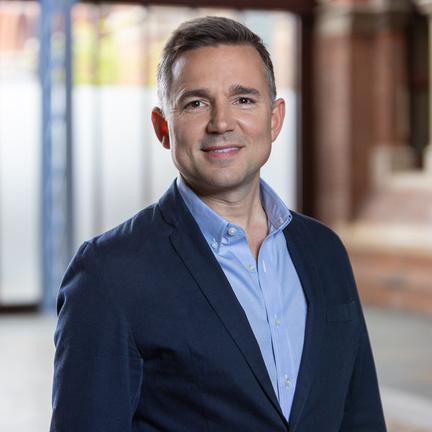
Q&A with David Tuck, GROUP CEO – EUROPE, KIN + CARTA
David Tuck leads Kin + Carta in Europe, overseeing a team of 850 people across seven countries. He’s also part of the company's global executive team. The company has been evolving its business model to stay ahead of the digital transformation curve. In 2019, Kin + Carta rebranded to focus on helping businesses create digital experience platforms. In December 2021, it became the first B Corp listed on the London Stock Exchange.
Today, Kin + Carta has over 2,000 employees in ten countries. It has continued to scale through acquisition and strategic partnerships with Microsoft, Google, and AWS. We sat down with David to discuss the growth of the business, his role within it, and the importance of a strong culture.
Q: Kin + Carta has been active on the acquisition trail. What do you look for in the companies you acquire and how do you integrate them?
A: We look for a collaborative client approach, the willingness to solve our client’s biggest challenges together, and a culture that fosters an inclusive environment. We are dedicated to creating opportunities for everyone to excel, unlock their innovation and creativity, ensuring employees have the chance to build meaningful careers. We’re interested in businesses looking for technological change as part of their strategy, whose mission is to get ahead or catch up.
Ours is a business built over many years through acquisition, divestment, and integration, and so we’ve developed a well-defined integration playbook along the way.
Prior to launching the Kin + Carta brand, we were essentially a group of boutiques – portfolio brands, each with deep specialist expertise. Our Kin + Carta brand’s unifying purpose was to build a global platform, acquire new businesses and put them onto it.
In Europe, we also have access to unbelievably strong software engineering talent for our clients. I’ve
personally led two acquisitions over the last 18 months in Europe, the first being the Melon group, which encompasses 300-plus software engineers in Bulgaria, North Macedonia, and Kosovo, as well as Frakton in Kosovo.
In May, we expanded our capability in the fast-growing data and AI space, announcing the acquisition of the European part of Forecast Data Solutions and adding 50 data consultants across Scotland and Poland to our business.

I've found that establishing a cadence of one-to-one with CEOs and founders at early stages is key to our success with acquisitions. This way, they’re clear about the company they're joining, its strategy and mission, and everything from our brand promise to the systems they’ll be using.
By the time we’re going through the acquisition stages and ready to close the deal, we’ve streamlined many of the processes for a smooth integration phase. The CEO and founder meet with me once a week, one-to-one. And then we're into a new relationship where they’re now part of the Kin + Carta team. This helps to ensure there's no misalignment.
I've found that establishing a cadence of one-to-one with CEOs and founders at early stages is key to our success with acquisitions.
INSIGHT 42 18
Kin + Carta is a global digital transformation consultancy that helps some of the world's largest enterprises solve their biggest technology, data, and digital challenges.
Q: What about the branding of those businesses? Do they change from day one, or is there a transition period?
A: It’s very much dependent on individual businesses. We consult with the leadership within each company. For example, Melon has enjoyed a very strong brand in Bulgaria and Macedonia for 20 years, so we wanted to ensure that we transitioned that brand equity in the right way. We’re doing that now together with Frakton in Kosovo because the time is right.
Everyone who works for us is energised around delivering what we’ve termed a “Seven Star Experience”. This isn’t just about building great products and digital platforms – the experience has to be brilliant.
We enjoy achieving a certain level of client intimacy and understanding. This means talking our clients’ language, focusing on their business outcomes, and enabling them to do something better than they could have without us. Delivering a “Seven Star” experience means clients want to work with us on a longer-term, multi-project basis.
I trust the leadership team knows the best time to transition their brand because they understand the market and their employees.
The European arm of Forecast Data rebranded almost immediately, updating their LinkedIn profiles and introducing themselves as part of Kin + Carta at our joint events with Google and our data and AI events in London.
Q: How have you developed from smaller to higher-value customer contracts in recent years?
A: We’ve built our business from landing contracts of around half a million to eight-figure deals in just over seven years.
Our success is based on a few key things. Firstly we’re laser-focused on our ideal client profile and key verticals in Europe, driving demand by market opportunity and industry. And we're looking for businesses of a certain size and scale that are ahead of the technological curve.
We have 850 people in Europe alone with technical depth and expertise. And we’ve expanded to servicing clients from southeast Europe. This distributed service model across different markets has enabled us to scale our business. We’ve also hired talented people to complement the existing team, elevating our
Client intimacy is what really makes the difference. There’s also a strong correlation between excellent client feedback and our employee feedback. So, rather than only considering our competitors, we review net promoter scores for clients and employees, including metrics across our delivery operation.
Q: How is the current hype around generative AI impacting your discussions with clients?
A: Data and AI are actually our fastest-growing service line today. We’ve been delivering data services for clients within both private and public sectors for some time. We have a team of 110 people in our data practice in Europe alone. The part that tends to grab attention is generative AI. However, data covers everything from building great data foundations to platforms, analytics, and insight, as well as data governance. Everything starts with having really strong data foundations.
INSIGHT 42
I trust the leadership team knows the best time to transition their brand because they understand the market and their employees.
Make sure you've got a culture of being adaptive to change as needed.
19
This isn’t just about building great products and digital platforms –the experience has to be brilliant. And people have to talk about it.
Our data specialists have been working in this industry for a very long time and can cut through the hype. There is so much of it too. With 1,000 AI tools released in May alone, AI is driving a significant change in our industry and presumably the vast majority of industries.
But we bring everything we do back to the fundamentals. Our philosophy is twofold: align your technology choices to business and customer outcomes, not the technology itself; and make sure you've got a culture of adapting to change as needed.
Because we work so closely with Microsoft and Google, they gave us early access to their generative AI platforms, giving us an added advantage.
Q: Is that how you keep your people ahead of the curve in terms of new technologies coming through?
A: At our heart, we are software engineers. Yes, we're strategy consultants and designers, but ultimately we're software engineers. We’re builders. We have innovation labs in all of our different locations, with teams building new products. We keep ahead via a combination of those close technology partnerships and our own people who are working on large projects and updating weekly on the things we build.
Q: What are the current big market challenges for you?
A: There's no doubt that, like many, we have seen an increase in sales cycles. But in a more risk-averse climate, the trend towards caution is helping us to grow in certain areas. Across all verticals our clients are seeking strong and resilient managed services to keep the lights on in their core technology platforms.
Existing clients are looking to ramp up, but for brand new ventures, the sales cycle has increased. With all of these market challenges, we focus on having great consultants in the right places doing the right work for our clients.
Q: What are the benefits of B Corp status for you as a business, and what’s the culture within the business?
A: The biggest thing for us being a B Corp is attracting the right talent. Many people coming into the workplace now want to join a business that stands for something.
Whenever we talk to new people about why they joined
diversity and inclusion strategy. We've been very vocal about ensuring our teams represent the communities they’re part of. Together with data, AI, and sustainability, these are key topics being discussed in boardrooms today.
Clients want to understand how we balance people, profit, and the planet. There's considerable work involved regarding the trade-offs and decisions that we need to make in assessing whether we should take on a piece of work, but even this benefits us by helping to shape our story and cementing the values that are important to us.
We spend a lot of time on our culture. We’ve won awards for it. Today I’m in our Edinburgh office and there are 35 people here with me. Our people come into the office regularly because they enjoy working with each other face to face, something that I know is not always the case at other companies post-Covid. The creativity that comes from being together and standing around a whiteboard and collaborating is important. That’s how we solve some of the biggest problems.
INSIGHT 42
20
Clients want to understand how we balance people, profit, and the planet.
Mesh-AI: Exploring the Future of AI Transformation
 A conversation with Michael Chalmers, CEO OF MESH-AI
It’s become almost a cliché to talk about the impact of artificial intelligence on the business world – or indeed the world in general. The wealth of opportunity and the potential impact on business value is vast and truly world-changing, but how do you stay ahead of the curve with such fast-moving technology when your company exists specifically to help other organisations use AI to become more efficient and competitive?
That’s why speaking with Michael Chalmers is so fascinating, because, as CEO of data and AI consulting start-up Mesh-AI, his focus is very much on how they are working with enterprises to enable them to capitalise on their data and reap the benefits of AI. Indeed, the general sense of confusion and lack of capabilities around AI in the market has created a clear opportunity for Mesh-AI, which has grown at a startling rate in its 20month existence.
AI isn’t new, but its current potential is enormous
Really, the key to leveraging the power of AI begins with your data, as Michael explains: “While artificial intelligence is not new, without solid data foundations and a strategy aligned to your business goals, enterprises will never be able to see real ROI. Any AI application is only worth the data it’s built on. Without that, it’s difficult to get business buy-in to make ambitions a reality, the investment into AI could be wasted and any expectations are unrealistic.”
Large enterprises have been underserved by traditional consulting firms when it comes to leveraging the true power of their data, Michael believes. The result now, with the likes of Open AI’s Chat GPT and Google’s Bard becoming popularised, is that organisations will need to go through an AI-driven digital transformation as quickly as they adapted to remote working through the pandemic.
For large enterprises, the transformative potential of AI is now huge, and could be a significant competitive advantage for early adopters.
What’s creating demand for AI-driven transformation
When it comes to demand in the market, Michael shares that Mesh-AI is seeing similar trends industry-wide.
“Many of our customers understand that when AI is implemented correctly, it can boost operational efficiency, unlock the ability to innovate, increase profit margin, reduce risk and give their customers a better experience” he states.
“As an example, regulatory compliance is a fantastic driver for adopting better data usage – and particularly AI and machine learning techniques,” Michael says. This is valuable for organisations in all regulated industries, from banking, capital markets and insurance to energy and utilities.

How does Mesh-AI add tangible value to clients?
One of Mesh- AI’s defining principles is being “outcomefocused”. But what puts them in a better position to support their customers, compared to their competitors? Michael explains “A major pattern that we see across all of our enterprise customers, is that they struggle to define a strategic link between AI use cases and business outcomes. We ensure that our work with them consistently revolves around achieving tangible results such as revenue growth, cost savings and risk reduction. Simply embracing AI for the sake of innovation is not enough; we must focus on how AI can become a powerful driver for sustainable success.”
He cites one example when Mesh-AI helped a financial services company to strengthen their operational resilience, leveraging a digital twin and knowledge graph capabilities, which has allowed them to report in minutes rather than months.
INSIGHT 42
21
Part of why Mesh-AI has been able to be so successful is the company’s deep focus: in its people and its clients. As Michael explains it, Mesh-AI takes a different approach to a traditional consultancy, "our approach is entirely outcome led. We focus on specific use cases to solve real business challenges enabling our customers to unlock the value of their data quickly and at scale."
This focus gives Mesh-AI its competitive edge, as Michael sees it, and its ability to create tangible value at a rapid pace. Michael has spent the last decade working with enterprise customers to transform them into digitally enabled organisations.
However, it became clear that their data was holding them back – despite presiding over a wealth of data, many struggled to harness it for real business value.
“That’s why Mesh-AI stood out to me,” he says. “I saw that the Mesh-AI team has the expertise to transform enterprises through people, process and technology, turning them into data rich organisations ready to unlock AI at scale.”
How Mesh-AI stays ahead of the curve
“Investment in our people’s knowledge and skills is key to how Mesh AI keeps ahead of the curve”, as Michael explains.
He believes the key to the company’s success is fostering a culture of continuous learning and development, while making Mesh-AI a great place to be. “As the people we recruit are world-class, it's really important to me that as a business we don’t stop and stand still. We offer a really generous training budget,
with plenty of opportunity for people to step up and make an impact. We’re doing some amazing things within the data and AI space for our customers and that really keeps it interesting!”
Of course, it’s important to recognise the competitive advantage of simply being a player in a much-hyped space that many people know little about. Michael himself says this lends the company an element of recession-proofing even in today’s challenging market and shrinking budgets.
Again, however, this is where Mesh-AI’s outcomefocused approach comes in useful. It’s widely discussed that the tech industry needs to work hard to attract talent from different backgrounds. Michael agreed, stating “Building a diverse workforce, in all senses of the word, continues to be one of our top priorities as we continue to grow and make sure our culture is one where people feel respected and valued, while also able to make a real impact with their work. In fact, one of the first things we did when I joined the business was revisit our values to make sure they properly reflected who we are and want to be”.
How Michael became a CEO
When Michael became CEO, it was his first experience in the role and felt “a bit different” to his previous Managing Director role at Contino, a cloud and DevOps consultancy, which he saw through to an acquisition by Cognizant.
Yet, there are several differences between the organisations.. “While this is a very different business, a different market opportunity, with different market conditions and different problems we're trying to solve with our clients.”
At the same time, running a smaller business makes it
INSIGHT 42
"our approach is entirely outcome led. We focus on specific use cases to solve real business challenges enabling our customers to unlock the value of their data quickly and at scale."
22
If you can get the right culture, the right attitude, and the right values in place, everything else will go well because you'll attract the right people and talent.
easier to influence the culture, and one of the first things Michael did when he joined the company was to review its organisational values and aspirations.
“If you can get the right culture, the right attitude, and the right values in place, everything else will go well because you'll attract the right people and talent,” he says.
The story of how Michael became a CEO is interesting too. It offers a few potential lessons for others wishing to develop their leadership careers. As he tells it, around seven years ago he was working as a chief technologist and thought he would enjoy running his own business, so he started by looking at his skills and experience gaps.
“I needed financial management experience and people management experience ” he says, “and while I'd already had sales experience, I thought I probably needed to broaden my experience internationally.”
At that time, he was working at HP, so he was able to move into a role as a global client lead managing people across the globe. This experience taught him a lot, from which he joined Contino. “I had the opportunity to run the sales team and grow that internationally.”
So the key to success in developing Michael’s leadership skills? Insatiable curiosity and willingness to learn – “Not just sales, growth, and consulting, but the people, the legal, financial, marketing aspects as well.”
From there, and the bond he had developed with founders from their time at Contino, he leapt at the chance to work with them again at Mesh-AI: “When they came to me at the end of last year with this opportunity. I just thought it would be really exciting to go after.”
The company’s progress will certainly be exciting to watch in the months ahead.

INSIGHT 42 23
Can Chat GPT draft an insightful article into the impact of AI on the executive search industry?
As discussed in our introduction to this issue of Insight, while reflecting on the potential of generative AI to help improve our lives in various ways, we wondered: could it draft a decent article about how AI itself is likely to impact our industry?
The prompt we gave Chat GPT was: “Please write a 750 word summary of the implications of AI on the future of the executive search industry in the technology market.”
The resulting text is presented below for you to read. To my mind, it shows some of the current limitations of the technology. But what do you think?
TITLE: THE IMPLICATIONS OF AI ON THE FUTURE OF THE EXECUTIVE SEARCH INDUSTRY IN THE TECHNOLOGY MARKET
Introduction:
The executive search industry plays a vital role in sourcing top-tier talent for organizations across various industries. In the ever-evolving technology market, executive search firms are facing new challenges and opportunities due to the rapid advancements in artificial intelligence (AI) technology. This summary explores the implications of AI on the future of the executive search industry in the technology market, highlighting both the potential benefits and considerations that arise from the integration of AI in the search process.
Enhanced Efficiency and Speed:
AI technologies, such as natural language processing, machine learning, and data analytics, can significantly enhance the efficiency and speed of executive search processes. These technologies enable executive search firms to automate various tasks, such as candidate sourcing, resume screening, and interview scheduling. By leveraging AI-powered algorithms, search firms can quickly analyze vast amounts of data from diverse sources, including social media profiles, professional networks, and online job boards. This enables them to identify and evaluate potential candidates more efficiently, accelerating the entire executive search process.

Improved Candidate Matching:
Matching the right candidates with the right job opportunities is crucial for executive search firms. AI can help streamline this process by leveraging advanced algorithms to analyze candidate profiles and job requirements more effectively. By applying machine learning techniques, AI systems can learn from historical data and identify patterns that predict candidate success in specific roles or organizations. This data-driven approach enhances the accuracy of candidate matching, resulting in better outcomes for both clients and candidates.
Access to a Wider Talent Pool:
The technology market is highly competitive, and accessing top-tier talent can be a significant challenge. AI-driven executive search tools can expand the talent pool by uncovering passive candidates who may not be actively seeking new opportunities. AI algorithms can scour the internet, including social media platforms, professional networks, and online communities, to identify individuals with relevant skills and experience. This broadens the reach of executive search firms and enables them to connect with previously untapped talent, potentially leading to more diverse and innovative leadership teams.
Reduced Bias and Increased Diversity:
AI has the potential to mitigate unconscious bias in the executive search process. Traditional search methods can be influenced by human bias, leading to homogeneity in candidate selection. AI algorithms, if properly designed and trained, can help identify and minimize bias in candidate evaluation. By focusing on objective criteria and removing demographic information during the initial screening stages, AI-driven systems can promote diversity and foster more inclusive hiring practices within the technology industry.
INSIGHT
42
24
Improved Candidate Matching:
Matching the right candidates with the right job opportunities is crucial for executive search firms. AI can help streamline this process by leveraging advanced algorithms to analyze candidate profiles and job requirements more effectively. By applying machine learning techniques, AI systems can learn from historical data and identify patterns that predict candidate success in specific roles or organizations. This data-driven approach enhances the accuracy of candidate matching, resulting in better outcomes for both clients and candidates.
Access to a Wider Talent Pool:
The technology market is highly competitive, and accessing top-tier talent can be a significant challenge. AI-driven executive search tools can expand the talent pool by uncovering passive candidates who may not be actively seeking new opportunities. AI algorithms can scour the internet, including social media platforms, professional networks, and online communities, to identify individuals with relevant skills and experience. This broadens the reach of executive search firms and enables them to connect with previously untapped talent, potentially leading to more diverse and innovative leadership teams.
Reduced Bias and Increased Diversity:
AI has the potential to mitigate unconscious bias in the executive search process. Traditional search methods can be influenced by human bias, leading to homogeneity in candidate selection. AI algorithms, if properly designed and trained, can help identify and minimize bias in candidate evaluation. By focusing on objective criteria and removing demographic information during the initial screening stages, AI-driven systems can promote diversity and foster more inclusive hiring practices within the technology industry.
Challenges and Considerations:
While AI offers significant advantages for the executive search industry, there are important considerations that must be taken into account:
Ethical Implications: AI algorithms must be carefully designed and trained to ensure fairness, transparency, and compliance with privacy regulations. It is crucial to address potential biases embedded in algorithms and regularly monitor and audit AI systems to prevent unintended consequences.
Human-Centric Approach: While AI can automate many aspects of the executive search process, human expertise and judgment remain vital. Building relationships, understanding client needs, and assessing cultural fit are areas where human interaction and intuition are difficult to replace entirely.
Data Quality and Security: AI relies on large volumes of data to generate accurate insights. Executive search firms must ensure data quality and security by implementing robust data governance practices
CONCLUSION:
The future of the executive search industry in the technology market will be significantly shaped by AI. While AI-powered tools can enhance efficiency, improve candidate matching, expand the talent pool, and promote diversity, careful consideration must be given to ethical implications, the importance of human expertise, data quality and security, and the impact on roles and skills. By embracing AI as a complementary tool and leveraging its capabilities effectively, executive search firms can navigate the evolving landscape and continue to provide valuable talent solutions in the technology market.
INSIGHT 42
25
Services and solutions we can provide
Executive search, Interim:
We execute senior-level searches to place talent in leadership roles. In addition to identifying, approaching, and assessing candidates, we take a hands-on approach to managing the process for clients and candidates. As brand ambassadors, we act as extensions of our clients to attract top-quality talent and determine the ideal organisational fit.

We also pride ourselves on our firmwide commitment to diversity initiatives and promoting fair hiring practices. As a team, we make it our personal mission to foster diverse networks of talent through professional and personal affiliations, including our own hosted events, conferences attended, and involvement with industry bodies such as Boardwave, MegaBuyte and Chief.
Leadership Assessment & Advisory:
We partner with organisations to advise and support management teams in the development and retention of great leaders. Our assessment process leverages quantitative tools and the qualitative assessments of our experienced teams. We then provide tailored coaching and other leadership services to maximise success.
Organisational Analysis:
We analyse firms' existing team structures and provide recommendations on potential hiring needs or organisational structure augmentations that can help the firm operate more effectively.
Talent Mapping & Pipelining:
We provide firms the opportunity to engage with top talent without a search, and provide insights on the broader competitive landscape. We map out firms that are of interest and provide insights on team structures and dynamics across functional areas and geographies. This allows clients to better understand talent at key competitors and in the market broadly.
INSIGHT 42 SHEFFIELDHAWORTH.COM
Please note the editorial is derived from interviews and has been published with consent from the interviewees. Sheffield Haworth assumes no responsibility for the usage of this editorial, and the information should be utilised for informational purposes only.