INSIGHT




ISSUE 41 September 2023
MAGAZINE
ISSUE 41 September 2023

The impact of the Climate Crisis is being felt around the world each
day. With global temperatures dramatically increasing and the World experiencing the hottest June on record in 2023, there has been a surge in both the intensity and frequency of extreme weather events, including droughts, record-shattering heatwaves, and destructive hurricanes. With the impacts on biodiversity, agriculture and water availability affecting millions more people, predominately in developing countries.
By reducing greenhouse gases and tackling the impacts of climate change, the need for renewable energy and cleantech is clear. Despite a massive global slowdown in private equity investment, cleantech is maintaining momentum through this difficult period. A huge push for ESG within both Governments and Corporations is aligning with wider market pressures, such as the need of the West to reduce their dependence on Russian oil and gas, which is resulting in a huge opportunity for companies in the sector.
With our ten-year track record of supporting clients in this burgeoning and exciting sector, we decided to get the inside track on how companies and investors are coming up with increasingly ingenious commercial solutions to these and other problems.
We are delighted to bring you our recent interviews with:
Dr Nicholas Hawker of pioneering nuclear fusion company First Light Fusion.
Faradion CEO James Quinn, on how his company has designed the next generation of cleaner, safer, and cheaper battery technology.
Davor Sutija of NexWafe, on how his company will be cleaning up the solar industry and in doing so, reducing China’s dominance.

Caspar von Ziegner of Novocarbo, on his company’s plans to remove one megaton of CO2 from the global atmosphere by 2030.
Sakowin president Gérard Gatt, who puts forward his case for why the world cannot achieve the energy transition without using decomposed methane. Veteran cleantech investor Robert Trezona of Kiko Ventures, on the changing challenges and opportunities of the of cleantech world.
As James Quinn says in his interview: “This is a once in a generation transition to global green and renewable energy - right now! It is so exciting to be a part of that.”
We hope you find these interviews insightful, enlightening, and occasionally surprising. They certainly show an industry full of confidence and promise with huge potential to drive positive change in the world in the next decade and beyond.
With a proven track record of supporting clients to build their leadership teams and boards across the technology spectrum, we have focused on cleantech for the last decade with our global team spanning the US, Europe and Asia.
I hope you enjoy this edition of Insight, and if you have any questions, please feel free to follow up directly with me Oliver Smith, Head of CleanTech & Renewables, at o.smith@sheffieldhaworth.com, or with my colleague Paul Gillespie at p.gillespie@sheffieldhaworth.com
CLEAN TECH EDITION INSIGHT MAGAZINE
CONTENTS
What will it take to achieve commercial fusion?
Q&A with Dr Nicholas Hawker, FOUNDER AND CEO OF FIRST LIGHT FUSION

People are Going to Write Books About What We’re Doing
Q&A with James Quinn, CEO OF SODIUM-ION BATTERY DEVELOPER FARADION
Europe has the opportunity to return to its former glory as the technology leader in solar
Q&A with Davor Sutija, PHOTOVOLTAIC INDUSTRY TRAILBLAZER AND CEO OF NEXWAFE
Our goal is to remove one megaton of CO2 from the atmosphere by 2030
Q&A with Caspar von Ziegner, FOUNDER AND CEO OF NOVOCARBO
Can fossil fuels really be part of the energy transition?
Q&A with Gérard Gatt, PRESIDENT OF SAKOWIN GREEN ENERGY
This might be the biggest economic megatrend we’ve ever seen as a civilisation
Q&A with Robert Trezona, FOUNDING PARTNER OF KIKO VENTURES AND 22-YEAR CLEANTECH INDUSTRY VETERAN


Our Story 6 4 18 10 22 14 26 Our ESG Practice 30 ImagerysourcedfromcompanywebsitesandAdobeStock.
OUR STORY 4
Our Story
EMPLOYEES GLOBALLY GLOBAL OFFICES
ESTABLISHED IN
Sheffield Haworth is a global consultancy founded in 1993 with over 220 employees across 15 offices in Europe, North America, and APAC. We have a history of placing executives in high-impact roles year after year, giving clients a competitive advantage in a fast-changing world. Our vision is to be the leading global consultancy in people and transformational change. We specialise in executive search and interim, talent intelligence, leadership advisory and organisation change management.
Following the acquisition of Gillamor Stephens in 2018 and Symbiosis in 2022, we have consolidated our teams as part of Sheffield Haworth Technology.
Our team work with start-up, scale-up and mature technology companies, assisting with their senior international talent requirements and specialising in executive search for leadership roles across Europe, North America and APAC. With dedicated expert teams on the ground in our major global markets, we deliver the best senior leadership talent for clients and the highest quality experience for our senior candidate network.
We operate at Board, C-suite, Executive Management and Partner levels across all functional areas.
We have a proven track record and particular expertise in working with technology companies in the following areas:
Deep Technology – Encompassing Science and Engineering based technologies from photonics to rocket ships.
Enterprise Software/SaaS, vertical market applications, AI, data analytics, cyber.
Cloud Services/Digital Transformation Services –hosting, infrastructure services, digital consulting, managed services.
For more information, please visit our website:
220+ 15 1993
SHEFFIELDHAWORTH.COM 5
First Light Fusion is a startup that spun out of research at the University of Oxford in 2011. The company is working on a pioneering fusion energy production process that could fundamentally change energy production in the UK and across the world.
First Light Fusion is a startup that spun out of research at the University of Oxford in 2011. The company is working on a pioneering fusion energy production process that could fundamentally change energy production in the UK and across the world.
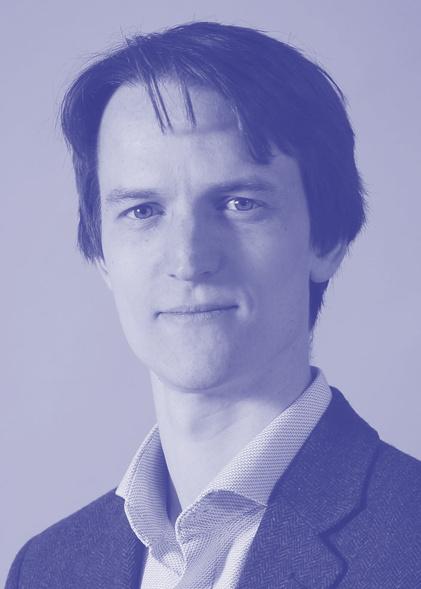
CEO and founder Dr Nicholas Hawker recently found time to speak to Paul Gillespie at Sheffield Haworth Technology and explain the complexities of inertial fusion, as well as why there’s so much interest in the fusion sector right now.
Q: Who are First Light and what is your proposition?
A: At First Light we’re working on a new approach to inertial fusion, which is the type used by the National Ignition Facility (NIF) in California where they had a breakthrough at the end of 2022 showing energy gain for the first time.
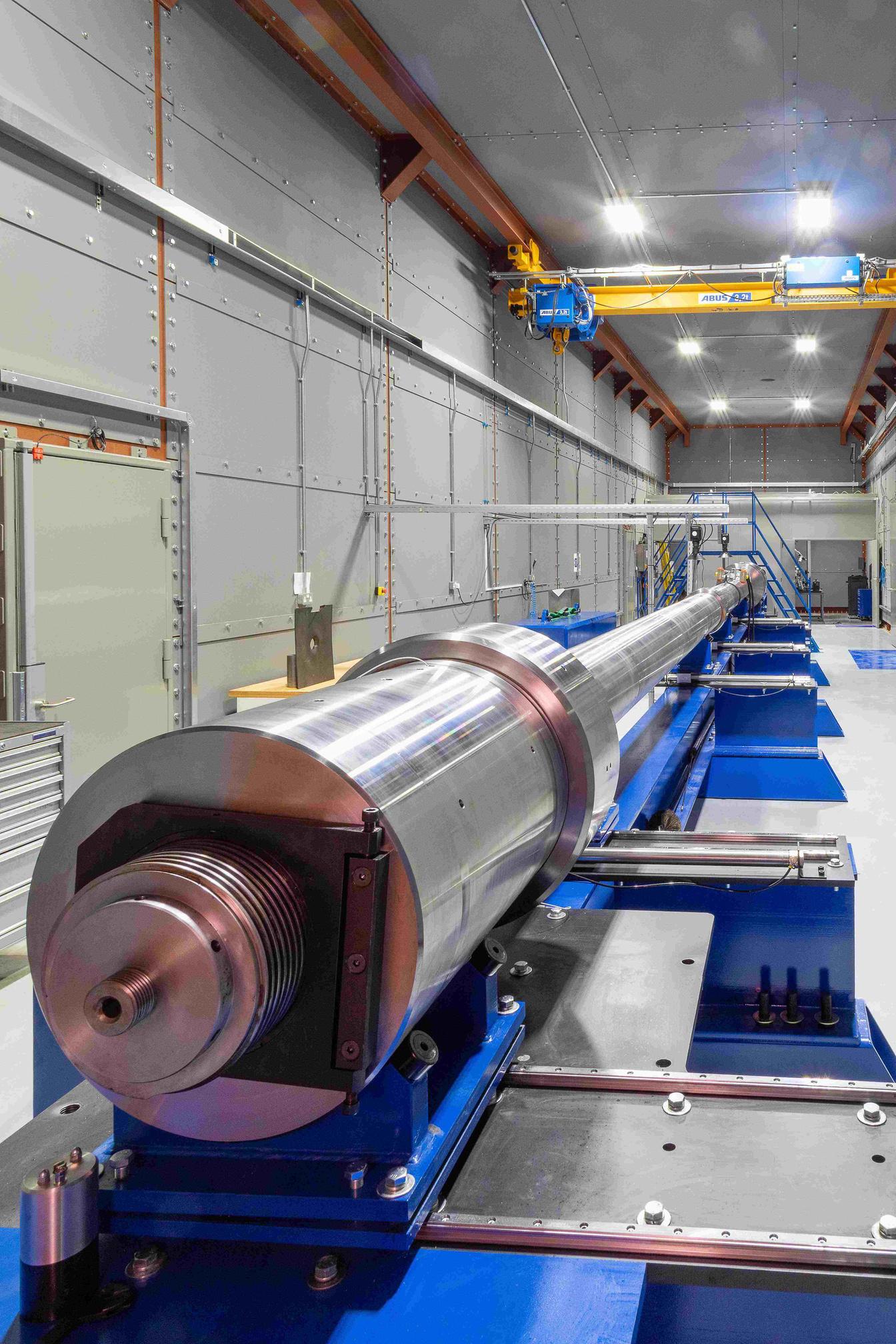
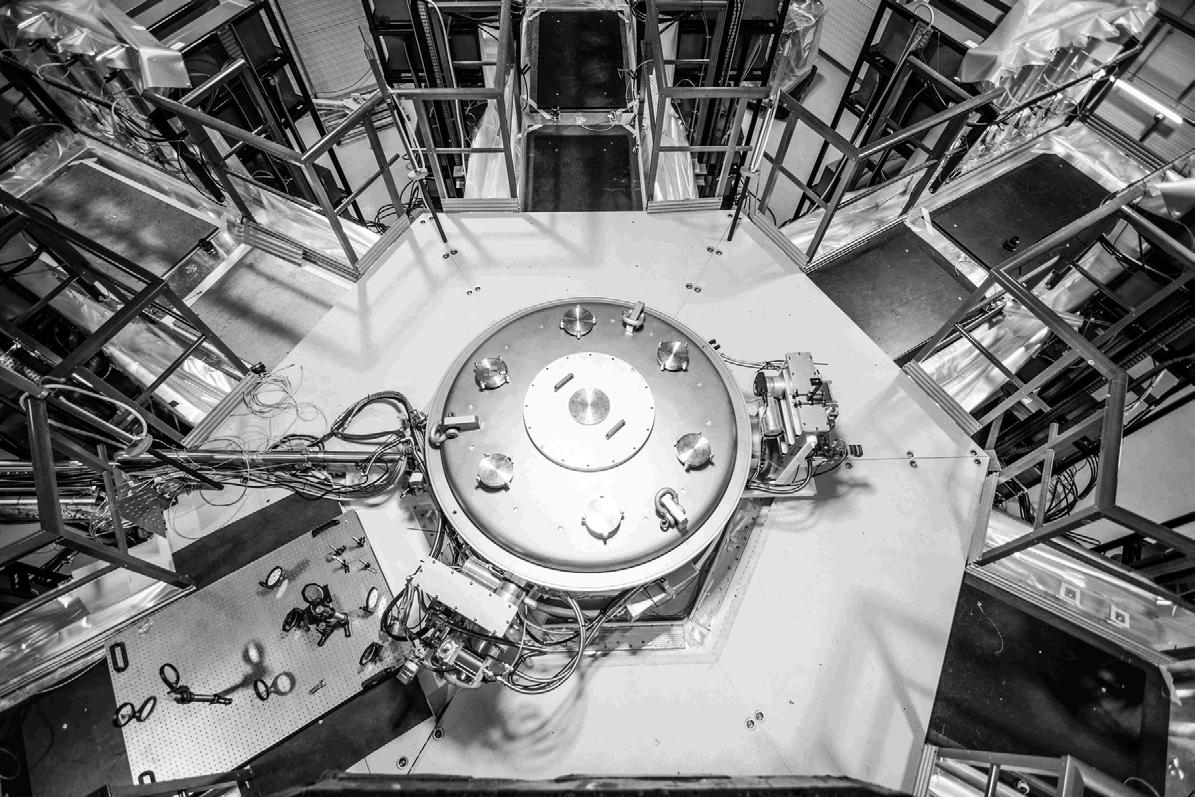
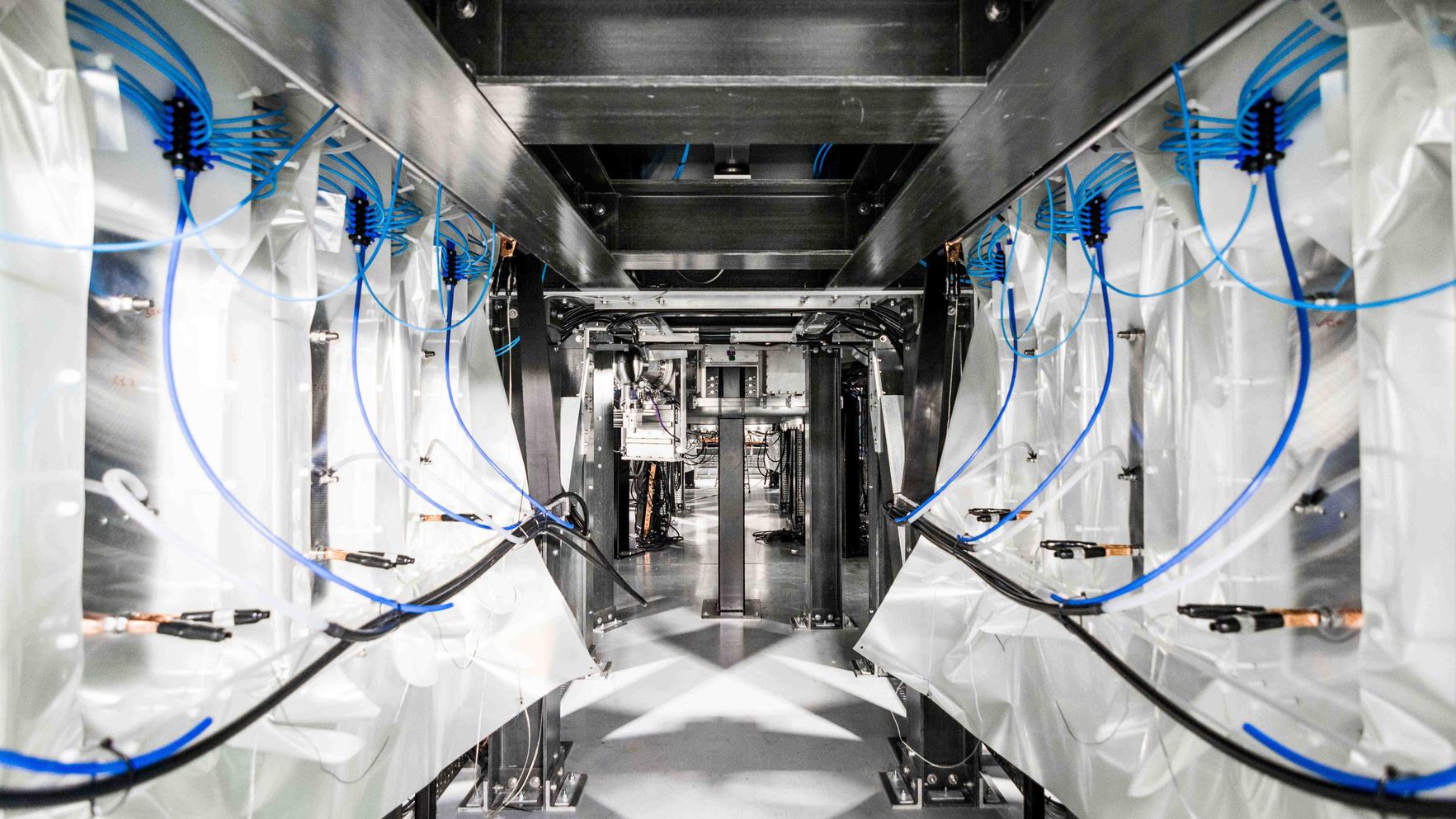
We use the same core physics as NIF, but we have a new method to create the same state of matter that they’ve proven can work. Our approach uses a projectile travelling at tremendous speed, rather than a laser. Projectile fusion is simpler, much lower cost, and much more robust. The key enabler in our approach is our unique and proprietary target technology, which
amplifies the pressure of projectile impact, creating the conditions and temperatures for fusion.
Q: Most of us understand fission for nuclear power generation and all the issues that come with that. Why is fusion so important and what does it mean for energy generation in the future?
A: Fusion and fission are different nuclear processes. Fusion joins light elements – different types of hydrogen – while fission splits apart big heavy elements like uranium and plutonium. With fusion there’s no long-lived radioactive waste or weapons-grade material. Meltdown is impossible because fusion is not a chain reaction in the way that fission is.
Fusion takes so much effort to get the reaction to work that any deviation or imperfection and it just stops immediately. It’s much safer than fission.
We are now in the position where commercial fusion is possible.
What will it take to achieve commercial fusion?
Q&A WITH DR NICHOLAS HAWKER
Q&A with Dr
Nicholas Hawker, FOUNDER AND CEO OF FIRST LIGHT FUSION
6
Other than that, it’s not something you would notice as a consumer of electricity. Fusion will fit into the energy landscape in the same way that existing nuclear fission does; it’s a reasonable-sized power plant over the horizon somewhere, producing power all year round.
Q: Fusion has been around as an idea for 50 years or more. What’s changed to have so many research institutions and businesses now striving to achieve it?
A: Essentially, it’s because the basic research has been done and we are now in the position where commercial fusion is possible. Where we are now in 2023, the ignition process that you need to get to high gain and power production has been demonstrated – for inertial fusion at least. We know now that the physics definitely work.
Q: What do we mean by “gain” in this context?
A: In terms of what NIF have achieved, gain is the fusion energy released divided by the laser energy that was used to trigger the fusion reaction. That’s not enough for power production, because the laser energy applied was way greater than what was produced.
Overall, 1% of the energy came back out that they put in. But there’s a genuine piece of physics de-risking which has happened here, and that’s the “ignition” process.
What that means is there’s self-heating – a positive reinforcement – that takes place. The fuel starts to fuse. That releases energy, which heats up the fuel, which then produces more, which means it releases more energy, which means it heats up more.
You get this positive reinforcement process and that is the physics milestone behind the number, demonstrating that the process of ignition fundamentally works.
Q: The US media and government went big on what an achievement this was. What has it done for the fusion industry in practical terms?
A: People know this is major news, but they don’t really know what inertial fusion is. They’re looking around wondering how to invest in this and who to invest in. There are many of us pursuing many different approaches.
I think we’re going to see a lot of investment into inertial fusion, and we’ll also see new companies by the end of this year for sure. Getting to commercial fusion requires a large investment, but if you compare it to the size of the opportunity, the potential return on investment is enormous venture capital multiples.
Up to now, the accepted consensus was that magnetic fusion was closer to fusion power. This inertial fusion breakthrough challenges that consensus. Governments are now reassessing where to put their funding, and there’s also been a lot more interest in inertial fusion from investors.
Q: A lot of the research of the last 10 – 20 years has been around magnetic containment fusion, and inertial has been in the shadows. But with what’s happened at NIF, you’ve leapfrogged in terms of progress and recognition.
A: Yes, but NIF is a major research programme, so it hasn’t entirely been in the shadows. People try to criticise inertial fusion and say it’s a defence program and not to do with energy. I find that to be an unwise view. It doesn’t matter why the research was funded. It matters that it works, and so now there are completely new possibilities.
Q: What are the milestones and goals for First Light moving forward?
A: Our next big milestone is to build our own ignition demonstrator. We are massively encouraged by the result from the National Ignition Facility, but we don’t get to skip a step; we have to show that it’s possible to do that with our approach as well.
It’s a cliché to say that a private company can go faster than a national lab; the question is how. We will be putting together the conceptual design of a pilot plant in parallel with the gain demonstrator. That’s how we can go faster – by bringing things in parallel and de-risking multiple parts of the technology all at once.
Q: What will you ultimately sell?
A: We have a very valuable piece of the whole solution, which is the incredibly specialist thing which would be very hard for anyone else to recreate, and that’s the
Governments are now reassessing where to put their funding, and there’s also been a lot more interest in inertial fusion from investors
INSIGHT 41 7
8 Q&A WITH DR NICHOLAS HAWKER
fuel capsule – the target itself. In inertial fusion this is a consumable item, so we at First Light have a consumables business model available to us in the future.
Our prediction is that the 2050 need for clean baseload power is about the same as the entire electricity market today. There’s a market need for thousands and thousands of fusion power plants. No one is going to be able to deliver that on their own, so the more technologies we have, the better.
Q: Given that this is such a long-term play, where will First Light be in five, 10, 15, or 20 years?
We have to be in the forefront – the thought leader putting together the design of the pilot plant – but our mission statement is “Solving the problem of fusion power with the simplest machine possible”.
This is something that is substantially easier than with any other approach to fusion – to deploy at scale. And it’s something which the existing nuclear sector can deliver. We don’t anticipate that we will ever have a power plant on our balance sheet. We’ll be using a partnership or joint venture structure instead.
Q: Are all fusion players running in parallel to achieve the same goal? Or is there a lot of interaction and collaboration at a research or broader business level?

A: There’s a lot more collaboration than competition. I don’t see fusion transitioning to a competitive scenario for a long, long time, because the market need for clean,
A: In five years, we will have commissioned our own gain experiment. We’ll have our own machine capable of demonstrating gain. We will be in the exciting and stressful time of finding out why it’s not worked yet – or the extremely exciting time of having just done it. We’re not daft. We know it will take us 100 shots at least before we get the thing completely de-bugged.
In 10 years, we hope to be in the last phases of constructing the first pilot plant. That really is the final demonstration – the integrated technology producing electricity.
There’s a market need for thousands and thousands of fusion power plants. No one is going to be able to deliver that on their own, so the more
Our mission statement is ‘Solving the problem of fusion power with the simplest machine possible’
INSIGHT 41 9
People are Going to Write Books About What We’re Doing
In 2019, James Quinn joined Faradion as CEO of what was, at that point, a very small and experimental startup. Today Faradion has become one of the world’s leading sodium-ion battery technology companies.
Faradion is on the verge of commercialising its technology at scale. It’s a technology that represents a complete step change from the lithium-ion battery technology that has dominated the market up until now.
James recently chatted with Paul Gillespie, Managing Director of Sheffield Haworth Technology’s Deep Tech practice. In this Q&A, they discuss James’ early career in Silicon Valley, why Faradion’s sodium-ion technology is so much better for society – and the planet – than lithium, and the geopolitical priorities that must guide the West’s approach to cleantech.
Q: You don’t have a background in battery technology James, so what is your background and what attracted you to Faradion four years ago?
A: You could say I’m a serial entrepreneur. I grew up on the east coast of the US and ended up in Silicon Valley in the early 80s. That was an exciting time; Apple was just getting started and you’d go out to a diner and people were creating startups on napkins.
You really get caught up in that whole atmosphere. My first company was in Palo Alto in the semiconductor space and I sold that to a public company in Germany. That brought me to Europe. Once you get bitten by that
startup bug – and especially having success early on –you really get into creating and building a culture, an organisation, and a technology you can put into a meaningful product.
And that’s what we’ve got here with Faradion. Everybody knows how important batteries are until you don’t have them. It’s nice to work on something that everyone needs, and it’s great to finally work on something that my daughters understand for a change!
Beyond that, what the team had done up until 2019 was very impressive both in terms of capital efficiency and the technology itself. What was needed was to take
We’re in a once in a generation transition to global green and renewable energy right now. It’s exciting to be a part of that.
Q&A WITH JAMES QUINN
Q&A with James Quinn, CEO OF SODIUM-ION BATTERY DEVELOPER FARADION
10
Faradion to the next stage in terms of commercialising the technology, and someone who could champion them in the market. It’s one thing to have a technology however, unless it can be put into a product and do something useful it really is only interesting rather than compelling.
Plus, I found the technology itself very convincing, and the move away from lithium is important. We’re in a once in a generation transition to global green and renewable energy right now. It’s exciting to be a part of that – as I tell my team, people are going to write books about what we’re doing.
Q: What is sodium-ion technology, and what is Faradion’s proposition?
A: The sodium is basically sodium chloride – table salt. We use a patented chemical process to transform it into batteries for multiple uses such as transportation, storage, and backup power. It’s essentially a replacement for much of the lithium-based battery technology currently in use around the world, and there are several key benefits to sodium.
First off, it’s way cheaper. Sodium costs about $200 per tonne, where the lithium price fluctuates and is tens of thousands of dollars per tonne. Because of this and other factors, our cost of materials is about 24-30% cheaper than for lithium-ion.
It’s way more environmentally friendly, since lithium technology requires 2.2 million litres of water to mine the equivalent of one tonne of lithium. It also requires the mining of copper, cobalt, and graphite. Sodium is harvested much differently and is much less damaging to produce.
Sodium is also better for the world. The main global source for cobalt today is the Democratic Republic of Congo, where child labour is often used.
Sodium is also better for the West’s energy security. If you look at where lithium is mined, it’s limited to a couple of countries where the refinement rights are largely controlled by China. We’ve seen what’s happened over oil. We could see the same kinds of things in the future with batteries and energy storage. Build a giga factory today in any country and you’d be dependent on east Asia for the materials. That’s a major geopolitical threat.
Sodium is cheaper, it’s better for the planet, it’s better for society, and it’s better for energy security. It’s also way safer than lithium. That’s really our major selling
Sodium is better for the West’s energy security.
Because there wasn’t a lot of IP or know-how around sodium-ion, that enabled us to build a minefield of IP and patents around the technology.
INSIGHT 41 11
point – that sodium is just all around better than lithium for the same kind of performance. And we can use the same production facilities and plant to make our packs as are currently used for lithium, therefore, sodium-ion is a highly differentiated chemistry but not disruptive when it comes to production. We’re even using coconut shells as anodes in our process!
Speaking of the process, because so few competitors existed in the sodium-ion space when Faradion started, that created an opportunity. Because there wasn’t a lot of IP or know-how around sodium-ion, that enabled us to build a minefield of IP and patents around the technology, which has given us a very strong patent portfolio as we go now into the market to commercialise the technology.
Q: What do you see as the main challenges for Faradion moving forward?
A: The challenges are initially to make sodium-ion competitive with lithium-ion-phosphate. We’re doing something that no one has ever done, and so it’s really about building up the whole supply chain. As you go from grams to kilograms to tonnes to thousands of tonnes, the process changes, so we have to develop this as we’re going along.
We currently have a joint venture in Australia called Nation Energy. We’re shipping battery packs to Australia for residential and commercial-industrial use right now. And then there’s Reliance. They acquired us and have continued to invest in us significantly since then.
With Reliance, we’re also scaling up to double-digit gigawatt level. When you have a new technology like this, it’s important to have a champion behind it who’s willing to bring this to market, to invest in it on the scale that you need to make it widely available. In terms of
applications, I say if it’s big, heavy, stands still, moves slow or goes fast, it’s a good application for us.
One of the things to remember is that the previous major battery breakthroughs were made in the US or at the University of Oxford in the UK, but they were commercialised in Asia. The development of lithium cobalt oxide took place in Oxford and won a Nobel Prize for Chemistry, but it ended up being commercialised by Sony in Japan.
When John Goodenough developed lithium-ion phosphate or LFP in the US, it was commercialised primarily in China and Southeast Asia. All these technologies were developed by these institutions like Oxford and MIT and the University of Austin, Texas, but they were commercialised somewhere else.
This the first time ever in the history of the battery space we have a new company that’s developed a new chemistry and has the ability to scale it at a gigawatt level globally under the same roof. This has never happened before. That gives us a huge opportunity for acceleration, to bring this technology to market and to be able to bring that cost down to make it very competitive very quickly.
Q: The Inflation Reduction Act (IRA) in the US is likely to fundamentally change the view for companies to scale in the US versus Europe as the tax incentives are so huge. Is the IRA making Faradion think about how and where you scale?
Q&A WITH JAMES QUINN
This the first time ever in the history of the battery space we have a new company that’s developed a new chemistry and has the ability to scale it at a gigawatt level globally under the same roof.
12
A: It should make the UK and Europe think about how to respond, sure. We need to champion these companies and technologies and get busy at a governmental level to have the right incentives in place to develop these technologies.
Subsidies are a compelling way to help companies achieve scale, for sure. But at the end of the day, if you have a technology that is high performance and low cost, and you can commercially scale it, incentives aren’t the deciding factor.
Q: Where do you see Faradion in five years?
A: Consumers are becoming much more aware. I was on a panel discussion last Summer and there were 30,000 people there. We presented to standing room only – 300 people. This was not an industry event with technical experts. These were people like your neighbours and friends, and they asked a lot of really good questions.
People are becoming aware of the issues with cobalt, for example, or of the fact that it takes 2.2 million litres of water to produce one tonne of lithium. This awareness also represents opportunity for us. That’s what’s exciting. Performance-wise, sodium-ion is very competitive. And the technology has a lot of head room. There are still a lot of advances that can be made.
Bear in mind that the incentives we’re seeing at the moment – not just in the US, but also in India – are not just to create jobs, but to create a certain amount of independence to supply chains. This is a key geopolitical arms race and it’s already happening. Governments should probably be taking this more seriously from that perspective.
We’re no longer alone in the market. We were the first to champion it but there are other companies now. One of the largest battery companies in the world, CATL is now entering this space, which is a real validation for all the work we’ve been doing.
Our IP is very defensible too, so with all these tailwinds I would expect us to be a long way down the round to commercialising this technology in five years, especially with the backing of Reliance.
The incentives we’re seeing at the moment – not just in the US, but also in India – are not just to create jobs, but to create a certain amount of independence to supply chains.
13
glory as the technology leader in solar
In September 2020, Davor Sutija became CEO of photovoltaic startup NexWafe. An influential industry leader for over 25 years, Davor doesn’t just see NexWafe as a promising new market entrant. He’s convinced that the young company has the technology – and the financial and strategic partnership backing – to disrupt the industry on a scale not seen since the late 1990s.
Here, Davor speaks with Oliver Smith of Sheffield Haworth Technology to explain what makes NexWafe’s technology revolutionary. He discusses why he thinks the company will be producing its photovoltaic wafers at commercial scale within five years, and his thoughts on the future of the industry.
Q: Can you tell us about NexWafe’s technology and proposition?
A: NexWafe is a technology company spun out of the Fraunhofer Institute for Solar Energy Systems (Europe’s largest solar research institute). We develop and commercialise green solar wafers. These are at the heart of the photovoltaic cells and modules used to create solar parks to help with the ongoing energy transition.
The wafer is the most important element because its properties determine the efficiency of solar cells and constitute about 40% of the cost of modules. Improving the quality of your solar wafer results in a lower cost of electricity for the consumer and a much more compact module that is easier to install and can be scaled more quickly.
Conventional technology uses six intermediate steps, during which 20 – 30% of the silicon is lost. NexWafe technology is better because it goes directly from gas phase cheap commodity chemicals straight to the final product, the wafer.
In our process, 95% of the silicon and the gas ends up in the final product. We are more silicon efficient, we're much more energy efficient, and we emit 75% less CO2 in the process of making our wafers.
Europe has the opportunity to return to its former
We are more silicon efficient, we're much more energy efficient, and we emit 75% less CO2 in the process of making our wafers.
Q&A WITH DAVOR SUTIJA
Q&A with Davor Sutija, PHOTOVOLTAIC INDUSTRY TRAILBLAZER AND CEO OF NEXWAFE
14
Q: What made you join NexWafe at a relatively early stage in the company’s development?
A: I have a PhD in chemical engineering from UC Berkeley. At that time I was researching batteries and fuel cells and I worked in a microfabrication facility and created electrode arrays on silicon wafers. After my PhD I came to Norway and after two years of postdoc I co-founded what became Renewable Energy Corporation (REC) in 1998.
To answer your question, the technology is not yet fully developed. We still have another six to 12 months of process and tool commissioning in front of us. Then we will build that first commercial facility. But we already have a strategic partner in Reliance.
Reliance supported us in our series C funding in October 2021 and they are also planning a parallel pilot and fullscale facility in Gujarat in India to support their vision of bringing the hydrogen economy to scale there. That requires solar to provide the renewable energy for making it a realistic path to scale.
REC became the largest vertically integrated producer of wafers, cells, and modules by 2005, controlling about 25% of the photovoltaic silicon in the market. Today, that company still produces wafers using the same ingotpulling technology. This method has become completely commoditised and today China produces 97% of all solar wafers.
This meant that when NexWafe approached me, not only was I familiar with the traditional technology; I saw an opportunity to revolutionise and disrupt the photovoltaic market. NexWafe takes a known technology from electronics called epitaxy and applies it to this market, and today it’s possible to do epitaxy hundreds of times faster than you could in electronics 30 years ago.
It's that combination of technologies from electronics with the knowledge we've developed of the importance of single crystal silicon for making highly efficient cells and modules, that makes NexWafe’s proposition so strategically important for the industry.
For me, it was exciting to join a company that I believe will be as revolutionary today as REC was 20 years ago.
Q: What do you see as the main challenges for NexWafe? Do you see these as being more technical or more around market adoption?
A: I've never experienced so much goodwill and interest from customers and partners who want to help NexWafe succeed. We've already secured a brownfield site in Bitterfeld in Germany's former Solar Valley, where infrastructure is available for us to create our first commercial facility to scale our prototype lines.
With that support from Reliance, we have professionalised our team, developed our technology significantly, and now have proven at prototype scale that we produce wafers with exceptional properties. Our wafers have material properties that are significantly better than today’s traditionally-produced commercial wafers.
The demand is overwhelming. Reliance has already entered into an offtake agreement with us for a portion of the production in Bitterfeld. We have expressions of interest from multiple other partners for the rest of the production.
Selling what we produce is not going to be the limitation. The question is how quickly we can demonstrate quality at scale and, together with our strategic partners, diffuse the technology to tens of gigawatts – or billions of wafers – as quickly as possible.
Q: Will NexWafe wafers be drop-in compatible with existing cell and panel manufacturing lines? Or is there a retooling to adopt your technology?
A: Excellent question. Because we deposit from the gas phase, we can deposit the silicon on a seed wafer of the same crystal orientation of a given size that our customers prefer. We're essentially creating a clone
When NexWafe approached me, I saw an opportunity to revolutionise and disrupt the photovoltaic market.”
INSIGHT 41 15
The question is how quickly we can demonstrate quality at scale and, together with our strategic partners, diffuse the technology to gigawatts – or billions of wafers –as quickly as possible.”
that we mechanically separate from the underlying seed wafer and then we reuse the seed multiple times.
Those clones can be of the exact same size and dimensions and material properties – for example, they can have the ideal resistance, thickness, and size for any particular customer’s existing processes.
So if anything, yes, we're a drop-in replacement in terms of size, performance, and physical characteristics. But of course, the improvements that we bring may allow people to modify their processes to get better performance and cheaper cost.
Our wafers are much smoother than ones that you cut from an ingot, so processing times may be slightly adjusted because our wafers are thinner and have better surface texture than people are used to. That may mean that certain process steps that are currently needed, such as saw damage, need to be modified or even dropped.
Q: How easy is it going to be to get the panel and cell companies to move away from a proven Chinese supply chain?
A: That’s why qualification is necessary and that's why we're building the first commercial facility in Bitterfeld. At first, we're going to create a facility of 250 megawatts, which is about 25 million wafers per year or 2,000,000 per month. That will be operational from the beginning of 2025.
With that facility, we'll have a substantial number of wafers with which we can qualify multiple customers. Then it's a matter of increasing the production to gigawatt scale.
Our business model is clear. We want to partner with industrial companies with the wherewithal to scale quickly. The partnership with Reliance is a fantastic blueprint for this. We have a manufacturing partnership that means that in India Reliance is going to build out at gigawatt scale once we have demonstrated in Bitterfeld that we have reached commercial and technical milestones.
We expect to do the same in Europe, North America, and potentially the Middle East and other regions as well.
Q: How do you see the US Inflation Reduction Act affecting NexWafe and the wider European PV industry?
A: The IRA is both a catalyst and a challenge for Europe. It’s a catalyst insofar as the US has identified that wafers in particular are a bottleneck for the west to achieve the
energy transition. When you rely on one particular source – in this case, China – supply chains are vulnerable to geopolitical disruption. We've seen that over the last year with natural gas and other materials.
It is imperative for the west to acknowledge that you need a public-private partnership to be able to internationalise and secure global supply chains to make the energy transformation happen as quickly as possible, and to compete against China, who already have 50% of the global market internally.
It's also important to focus on innovation at scale, and that's where technologies such as NexWafe are so well positioned. Here the IRA is an incredible accelerant. Specifically written into the act is a tax credit of 53 cents per square metre of wafer manufactured in the United States. Without this, for ingot pulling you wouldn't have competitive market conditions compared to China.
So with current technology you need this type of subsidy to be even marginally competitive. But because we use four times less energy (because we have fewer process steps) and we need less capex per gigawatt than traditional methods require, it means that we can be profitable based only on the amounts already written into the IRA.
It's clear that we will want to expand into North America because of this incentive. What Europe now needs to do – and the Net Zero Act that was recently published gives European countries the ability to do – is to create programs that give terms that are similar to the IRA in their impact.
We feel that Europe has the opportunity – and the need –to respond so that European solar manufacturing also scales to gigawatt level and returns to its former glory as the technology leader in solar.
Q&A WITH DAVOR SUTIJA
Europe has the opportunity –and the need – to respond so that European solar manufacturing also scales to gigawatt level and returns to its former glory as the technology leader in solar.”
16
Q: How do you see the funding landscape evolving going forwards?
A: 2023 is obviously a more challenging year than 2022 when it comes to raising money for technology firms. People are looking for business models that can give commercial returns with a certain amount of confidence.
That’s where our strategic partnerships make such a difference for a company like NexWafe. In addition to Reliance, we have Aramco ventures as an investor and we’re also in dialogue with other European and North American parties that have a strategic interest in helping NexWafe achieve gigawatt scale through manufacturing.
Whether it's through joint ventures or direct investment in NexWafe, the investors in our company will be a mix of financial and industrial players as we move forward.
Q: Where do you see NexWafe in five years?
A: The next step for us later this year is to finance that first commercial facility in Bitterfeld. This will require approximately €150 million, of which a significant portion will come from our current investors. We have already received €30 million to accelerate purchase of long-lead items in May and will likely raise the rest this Autumn.
We will follow a licensing and joint venture model. We’ve already determined that our licence fees for every 10-12 gigawatt facility that we support will add a billion dollars in valuation to NexWafe.
All the signs point to a tremendous interest in scaling NexWafe, so I'm very confident we will have achieved the first gigawatt facilities using that technology within five years. But NexWafe has an opportunity to be even broader than that.
We intend to be an innovation engine for the industry and will continue to develop wafer technologies that allow us to be the driving force behind the push to 30% solar efficiency. We think we can achieve that in several ways: by making ultrathin wafers, by adding other materials to our wafers by creating gradients of doping in those wafers, and by working with others to unlock future opportunities and future technologies.
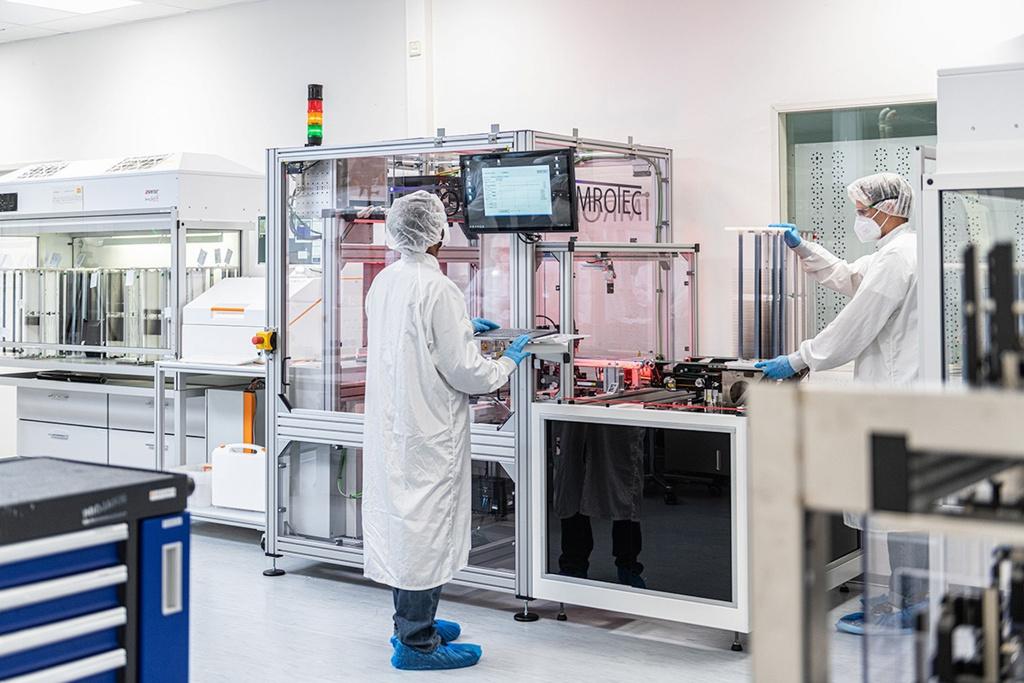
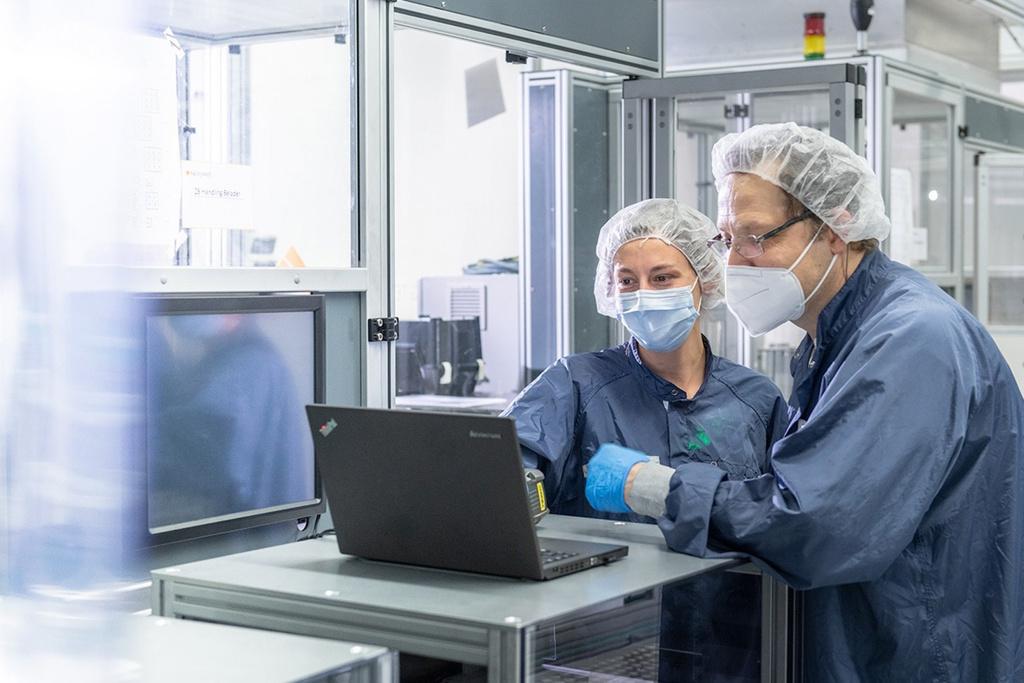
NexWafe is certainly going to participate in technology innovation and future photovoltaics through our efforts to design green engineered wafers for the photovoltaic market of the 2030s.
NexWafe is going to participate in technology innovation and future photovoltaics through our efforts to design green engineered wafers for the photovoltaic market of the 2030s.”
INSIGHT 41 17
How do you sell a little-known and poorly understood green technology to the market? This was the question that inspired Caspar Ziegner to think about how to make carbon dioxide removal pay.
Caspar and his investor were convinced that the sense of public urgency would soon appear when they founded Novocarbo in 2017, and now the time seems ripe for them to scale their carbon removal technology over the next decade.
Here, Caspar talks to us about the challenges and lessons learned along the way, the reasons why he split the company’s activities into three distinct brands, and why the world would benefit from a clearer carbon removal framework from policymakers.
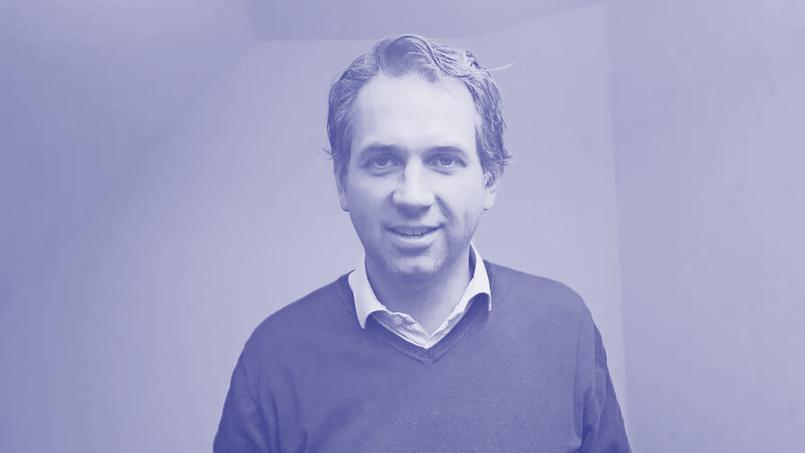
Q: What is Novocarbo and how would you describe the company’s proposition?
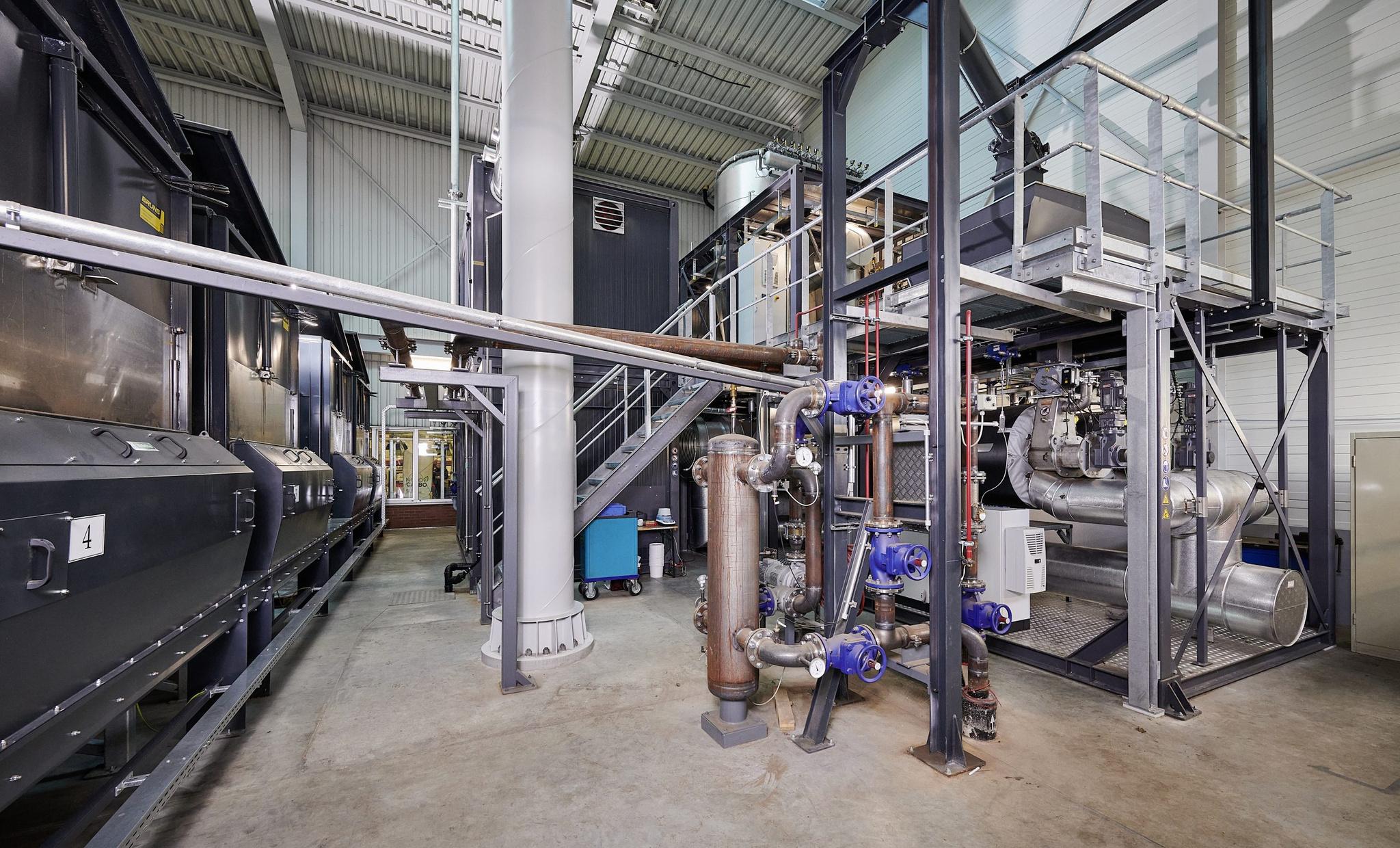
A: We are a carbon removal company developing carbon removal parks that will enable us to remove up to 30,000 metric tons of CO2 from the atmosphere annually by 2025. Through pyrolysis we process plant residues into biochar, thereby capturing and storing CO2 and generating green energy.
We’ve developed propositions under three different brands, because although for us these activities are linked, they are separate in the minds of most of our
clients. With our main brand Novocarbo we sell the climate-neutral energy in the form of “heat-as-a-service” partnerships. Under this brand we also offer carbon credits to companies that want to invest in Net Zero.
Then we have Novocarbo Biochar. This is where we produce the biochar, our main product generated through pyrolysis, and offer it to companies in horticulture, agriculture, or plastics and construction firms. These companies can benefit from using biochar as an additive in their production or agricultural processes. They’re interested purely in the biochar itself.
Our goal is to remove one megaton of CO2 from the atmosphere by 2030
We want to remove as much CO2 from the atmosphere as possible and our mission is to remove one megaton by 2030.”
Q&A WITH CASPAR VON ZIEGNER
Q&A with Caspar von Ziegner, FOUNDER AND CEO OF NOVOCARBO
18
We also have a third brand called Swiss Biochar where we produce soil-based substrates enhanced with biochar.
This is our portfolio, but to put it all together, we are a carbon removal company because this is our goal. We want to remove as much CO2 from the atmosphere as possible and our mission is to remove one megaton by 2030.
All our products and services are a means to achieve this end. Public interest in all this really ramped up when the war in Ukraine started and we all became aware that we have to get rid of gas from Russia and decarbonise industry. There are not many immediate practical solutions, but biochar production is one.
Q: Which aspect do you see as the main part of your proposition – generating green energy from the pyrolysis process? Or is it the biochar itself?
A: The core of Novocarbo was always removing CO2 from the atmosphere through biochar, called Biochar Carbon Removal (BCR). Green heat is a side product, but it has a big impact on the whole business case and on the economics.
Signing a contract with an off taker for green heat is the first step for the construction of a new carbon removal park. This can be an industry partner or a utility, for example. Once the park is up and running, the site generates income through long-term heat purchase agreements, whereas the biochar is a slightly more hands-on proposition because we need to continually keep selling it. But biochar and carbon removal remain the core of our mission and what we really do.
Q: What was it that inspired you to start Novocarbo?
A: In 2017, I discussed with an investor the possibility of creating a company like Novocarbo because they had invested in a BCR technology manufacturer. I have a background in the energy industry, working for six years for a gas and power grid operator. We agreed that if we want to reach the Paris climate goal of 1.5 degrees, then we have to do something.
We also hypothesised that carbon emissions would get capped and traded. In 2017 the price to emit CO2 was set at €7.00 per tonne on the ETS market. Today we sell our credits at €200 on the voluntary carbon market. This was the main hypothesis; we anticipated that the carbon price would increase sharply over time.
Q: The carbon credits market is global. Is most of the work you're doing in Germany, across Europe, or more global in scope?
A: Our green energy projects so far are based in Germany. Our biochar clients are mainly located in Scandinavia and the DACH region [Germany, Austria and Switzerland], and some other European countries. These are our main markets.
We are looking to expand in Europe by the end of 2024 and 25, and of course the US market is interesting for us too. We’re starting to build our networks for building carbon removal parks there.
That said, the US would be a big step for us. It is a growing market for biochar, and it is business friendly when it comes to regulation, but that remains more of a mid to long-term goal for us. But the market for carbon credits specifically is very global, so we do have US customers for that as well as in Europe.
Q: Has the US Inflation Reduction Act expedited your US growth plans?
A: There are programs within the Inflation Reduction Act that focus specifically on biochar and carbon dioxide removal and offer subsidies which are helpful for farmers to be able to afford to buy biochar. These kinds of programs would help to grow our business. This is not necessarily speeding up our plans, but it is a benefit that we’re keeping in mind for when we do focus on expanding there.
Q: Given your diverse product offering, what sets you apart from the other players in the carbon capture arena?
A: It’s worth clarifying that I think the world needs a broad portfolio of different technologies for carbon removal if we really want to reach our global target of sticking to 1.5 degrees of global warming. There are a lot of technologies out there, and broadly that’s a positive thing.
The benefit of Biochar Carbon Removal is that the technology and the market are already there, whereas lots of other CO2 removal solutions are still at an earlier stage of development. We can scale up now, whereas some of these other technologies will take a while to get to that point.
INSIGHT 41 19
Q: What are the major challenges you face? Are you getting the right amount of support from governments and policymakers?
A: There could be much more support. For us the main problem is a lack of public understanding of these carbon removal technologies. Investors prefer a certain amount of security. In Germany, for example, there is a renewable energy fund that will pay for the energy generated from wind farms or solar panels. That’s a guaranteed income, so investors are putting their money there.
What would be helpful from policymakers would be clear guidelines on the goals we want to reach in the future and how much CO2 we want to remove from the atmosphere, with a clear background for investors. It’s these guidelines that are missing at present.
Q: What are the most important lessons you've learned in your Novocarbo journey so far?
A: There is one lesson every founder will tell you. When you think you will finish something in X time, in reality you definitely need twice that. Things will never quite go as fast as you hope! We have made mistakes, but mistakes are good because you learn from them.
Beyond that, the real learning is the urgency when it comes to carbon removal and Net Zero. The whole carbon issue is definitely becoming more mainstream, and that will be a game changer for us.
When I started the company, our hypothesis was that carbon removal would become much more important, and today attitudes are definitely changing, which is helpful.
Policymakers are starting to look at the subject, which was the reason why we co-founded the European Biochar Industry Consortium (EBI) – to start the conversation about it in Berlin and Brussels. But of course, it takes time and a lot of work to get to where we need to be.
We really have to speed this up because most people have not realised how bad the changes could be if our atmosphere becomes two degrees warmer.
Perhaps the most specific thing we learned was the need to develop separate, specific propositions. Those customers who buy green energy from us are usually not interested in carbon removal or biochar. And the companies that want to buy our biochar are mostly not interested in green energy.
That’s why we came up with our separate brands for the separate propositions. Because the more successful we are with our individual brands and products, the better for the climate.
Q: Where do you see Novocarbo in five years?
A: Our main goal is to remove one megaton of CO2 from the atmosphere by 2030. We will then operate more than 100 sites around the world to realise this goal. I see Novocarbo as a cleantech company which is focusing on producing the right products, which will have a great impact on the CO2 balance of our world. This is what inspires our team every day and why I’m sure we will get where we want and need to go.
The benefit of Biochar Carbon Removal is that the technology and the market are already there, whereas lots of other CO2 removal solutions are still at an earlier stage of development.
I see Novocarbo as a cleantech company which is focusing on producing the right products, which will have a great impact on the CO2 balance of our world.”
Q&A WITH CASPAR VON ZIEGNER 20
Most people have not realised how bad the changes could be if our atmosphere becomes two degrees warmer.
INSIGHT 41 21
Can fossil fuels really be part of the energy transition?
Q&A with Gérard Gatt, PRESIDENT OF SAKOWIN GREEN ENERGY
ESG investors and regulators won’t look at any energy solution that involves methane. But for Gérard Gatt, founder and president of Sakowin Green Energy, plasmalysis of methane is the only logical way for the world to achieve Net Zero by 2050.
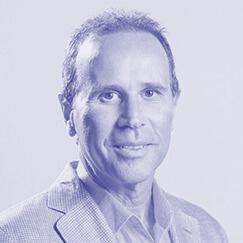
In this interview, Gérard speaks frankly about the challenges of getting the world to accept Sakowin’s disruptive green energy solution. He also speaks with great passion about the need to speed up the energy transition.
And he discusses the great strides Sakowin has taken, the support it has garnered along the way, and how he hopes the company will become a leader in the hydrogen market as the world wakes up to what it will really take to achieve the energy transition over the next 25 years.
Q: What inspired you to create Sakowin?
A: In 2016, a friend that I’d worked with at Citrix in its early days called and told me about a US-based company offering a potential cost-competitive solution for producing green hydrogen using a resonating pulsed electrolysis principle.
My research suggested that their technology to use sea water to make hydrogen worked, so I raised almost €2 million to launch Sakowin in 2017 to industrialise this technology in Europe.
In 2018 we faced a technical issue that required Sakowin to stop this first technological program. It pushed us to go back to the drawing board to think through the energy transition challenge with no specific technologies in mind.
Through this analysis we realised that decarbonising gas was the best answer to reach Net Zero emissions quickly and efficiently.
Q: What are the improvements that your proposition brings over and above existing green hydrogen generation?
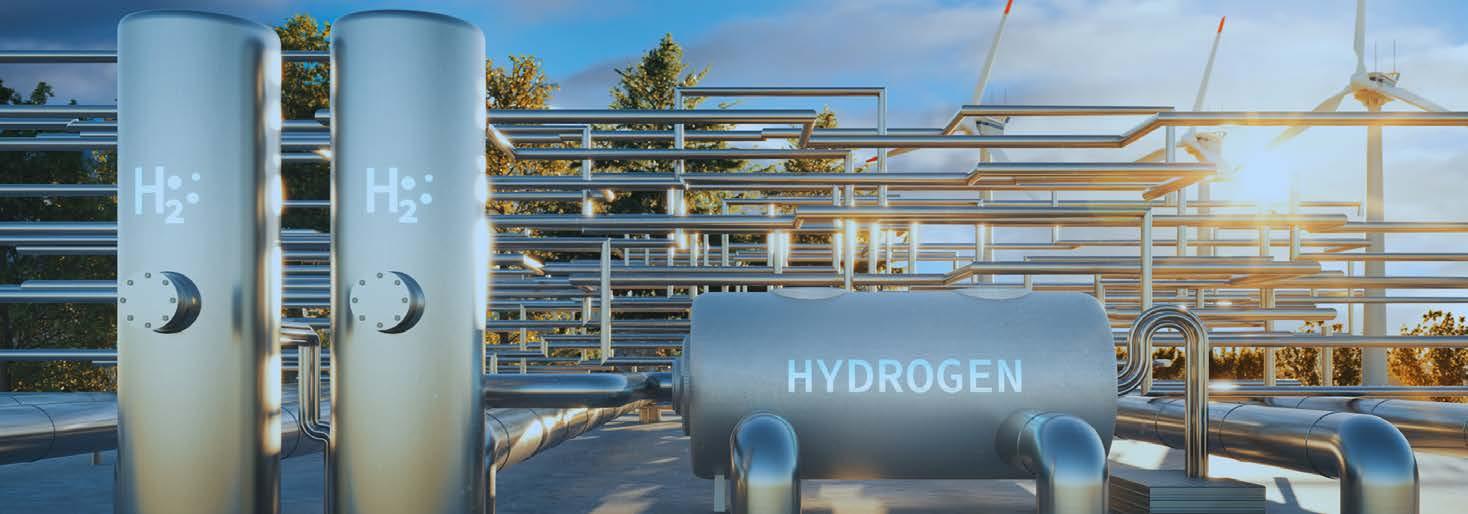
A: Our proposition is the ability to produce a costcompetitive decarbonised hydrogen on a very large scale that is going to use five times less electricity than an electrolyser. It can be installed onsite at the end of a gas line using existing gas infrastructures. This allows companies to deploy hydrogen without the need for a specialised hydrogen infrastructure.
Plasmalysis of methane is a logical answer to the energy transition problem because of the scale it allows you in converting 85% of our existing energies into hydrogen.
Q&A WITH GÉRARD GATT
22
Q: What are the biggest challenges facing Sakowin?
A: Funding is the biggest challenge, as it is whenever you have a disruptive solution. Today everyone is looking at electrolysis for hydrogen, so when you say this is a complementary solution using methane everyone responds by saying, “we have to get out of methane”.
You have to explain that actually, we have to get out of the combustion of methane, which is not the same thing. And when you use methane the way we are, it becomes the best friend you can have to do the fastest possible energy transition at the lowest cost.
Methane has to be part of the energy mix of 2050. We cannot achieve the energy transition without it. When you look at all the available nuclear, wind, and solar resources – well, if we used all the uranium on planet Earth, we still could not reach Net Zero. Not even close. So methane is essential. It’s a pragmatic solution to the energy transition today.
To keep the same environmental imprint, we need an energy system that is more efficient than what we were doing before. If not, we are going to start consuming natural resources far beyond what we can support.
Plasmalysis of methane allows us to do this because it’s based on a scientific principle which says to dissociate a CH4 molecule only 75kJ/mole is required whereas a water molecule requires 570kJ/mole.
Q: Is this something that you’ve patented or are you keeping your process a secret?
A: We have patented the applications of our technology to use this plasmalysis process to produce hydrogen from methane, yes. But it’s not all about the patent for us. This is a vital technology for the future.
Today everybody thinks they want to get out of fossil fuels. But what we really want to get out of is not fossil fuels, it’s combustion of fossil fuels, which is not the same thing. Fossil fuels are the fastest way to achieve the energy transition. The benefit of using methane as a source of energy is that when you use biomethane from biomass, you become CO2 negative, which you cannot do with electrolysis.
We have to get the message across that the world needs to stop combusting hydrocarbon-based elements. Europe has invested €140 billion in CO2 reduction and yet the CO2 curve is still going up. If the world stops combusting hydrocarbons, that will resolve 60% of the energy transition very quickly and then the CO2 curve will go down.
Decomposed methane has to be part of the energy mix of 2050. We cannot achieve the energy transition without it.”
INSIGHT 41 23
Q: Do you have a live pilot? Are you able to prove the technology?
A: We have a prototype in our lab in the South of France. We delivered the first version of it to one of our customers in Switzerland last year and we’re going to deliver more this year to other customers.
In 2024 we are going to install a pilot in Switzerland focused on decarbonising industrial processes as part of a programme run by 11 industrial organisations there. It will be the first to demonstrate the solution in an actual industrial plant.
Q: What’s end game for your technology? Will you be deployed in an industrial setting to provide hydrogen locally to organisations? Or are you talking about refinery level where you'll have very large systems and be feeding it straight into energy generation for the grid?
A: We can address both, but the main benefit of our solution is to produce a decentralised energy system with the ability to produce hydrogen at the edge. Our approach is to use microwave plasma to achieve decomposition, which is very efficient and allows us to have compact modular systems that can be assembled and installed onsite.
This is useful for industries using gas today because they can use their existing infrastructures. They can use a filter to remove carbon from their gas and they can continue their existing processes.
Then there’s transport and aviation. We've been selected to be part of a programme run by Air France, Airbus and Aéroport de Paris to build hydrogen refuelling stations that can produce hydrogen in large quantities onsite at airports.
We can also convert liquified natural gas (LNG) to hydrogen onboard ships, which enables them to run with no CO2 emissions.
Oil and gas is another potential industry for us. In refineries we can install this to produce hydrogen instead of steam reforming. Onsite hydrogen is used as fuel, but it can also be used to valorise gas rather than flaring it. Our process can remove carbon and get more value out of the gas.
Fewer plants mean less humidity going into the atmosphere, so putting carbon back in the soil is central to reducing global warming. Plasmalysis of methane answers this problem because it produces a solid form of carbon that can be put back in the soil to retain water.
Q: How do you view the role of government with regard to hydrogen-based energy systems?
A: Government needs to be aware of new disruptive solutions, so they can consider them in their regulations. This is essential, because today we have regulation in Europe which inhibits ESG funds from financing solutions that promote methane. These funds can’t invest in us or others with similar technologies even if they want to.
I've met with people in governments to discuss this and the message is starting to get through. But it’s essential to separate combustion of methane from being able to use it in a different way. We have terrific support from the French public sector investment bank Banque publique d'investissement (BPI) France.
BPI have supported us since the beginning and continue to do so. We have also been selected to take part in the EIC Accelerator Programme, which only accepts about 7% of applicants. So, there are signs that things are moving in the right direction when it comes to broader acceptance of our technology. To my mind, we need to simplify regulation so it can act as a framework to make innovation more open and accessible.
Q: Is there more of an understanding now from policymakers about the role of methane and hydrogen?
A: It is essential that the role of methane in the energy transition is better understood at the government level. There are still too many people today that don't understand its significance to the energy mix of 2050.
But people in government are doing their jobs, taking the information that companies give them. The companies that talk most to governments are not startups like us. We have no voice in the government and the people who do are much more powerful than us. But the good news is that what we are doing makes sense. And eventually, humanity always ends up doing the things that make sense.
Q&A WITH GÉRARD GATT
Because of regulation, ESG funds can’t invest in us or others with similar technologies even if they want to.
24
Q: What are some of the most important lessons that you’ve learned?
A: That it’s great to have a vision and to know where you are heading, but it’s important to achieve big ideas one step at a time. You can’t go from point A to point B in a straight line. You never know exactly where your next step will lead you.
We all know that no company completely realises its business plan. Life is completely different from a business plan and so I need to stay humble. This is the direction, but I don't exactly know what tomorrow will bring.
Q: Where do you see Sakowin in the next five years?
A: We’re currently in a fundraising round and have raised half of our goal of €4 million. We have the potential to be a leader in the green hydrogen market by focusing not just on making money, but on providing an efficient and rapid solution for the energy transition.
Sakowin’s go-to market strategy is quite unique, in that we have put together a network of industry partners to
address multiple vertical markets with us. We’re putting in place about 15 of these partnerships with organisations that will co-develop solutions with us in their verticals, with seven of them in place already.
With us doing the core technology R&D and the partners doing the solutions-based R&D, the plan is to release products to the market by 2026.

INSIGHT 41 25
We have the potential to be a leader in the green hydrogen market by focusing not just on making money, but on providing an efficient and rapid solution for the energy transition.
This might be the biggest economic megatrend we’ve ever seen as a civilisation
Over a career spanning 22 years and counting, there’s little in the world of cleantech that Robert Trezona hasn’t seen or doesn’t have an informed opinion on. We caught up with him to discuss how he recently became a founding partner of Kiko, the $450m evergreen cleantech investment platform backed by IP Group.
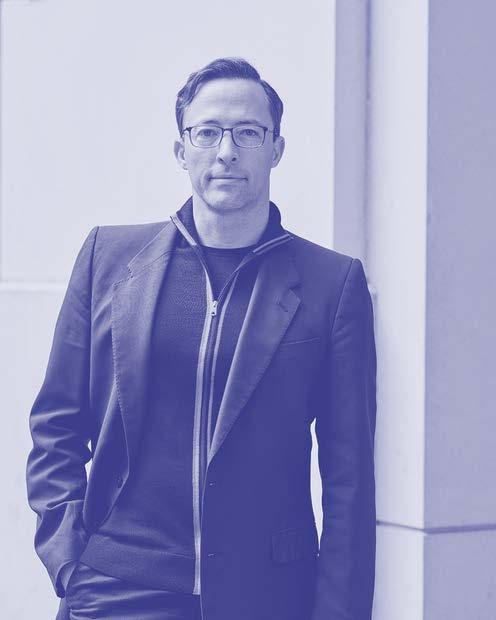
We discussed why cleantech has become so popular in the last five years, and the biggest challenges facing the sector as it struggles to make good on its massive potential to change the world for the better. We also explored why UK cleantech policy is amongst the worst in the developed world, and how this affects UK cleantech startups and investments.
Q: How has cleantech – and the perception of cleantech – changed in the last two decades?
A: People used to see it as peripheral, almost like it wasn’t a proper career. It was never seen as something that would be big or mainstream.
Then in the late 2000s there was a kind of false dawn when a bunch of west coast VC funds discovered it. You had John Doerr from Kleiner Perkins in a TED talk saying it was going to be bigger than the internet. But then, partially because of the financial crisis, there was a backlash.
What really made the difference and took cleantech into the mainstream was the Paris Climate Change Conference where at the 11th hour they inserted this –frankly made up – ambition of 1.5 degrees limit for global
warming. The UN then asked the amazing climate scientists at the IPCC to work out what it would take to keep global warming to 1.5 degrees.
Three years later they published their seminal report which said the only way to keep to 1.5 degrees was to get to net zero emissions. And that’s where Net Zero comes from. At this point it’s easy to think the concept has been with us for decades, but it’s really only been five years.
It was these and other key inflection points between 2015 and 2018 that really made Net Zero a big deal and a
It’s easy to think the concept of Net Zero has been with us for decades, but it’s really only been five years.
Q&A WITH ROBERT TREZONA
Q&A with Robert Trezona, FOUNDING PARTNER OF KIKO VENTURES AND 22-YEAR CLEANTECH INDUSTRY VETERAN
26
27
Other VCs often describe us as the energy and transport guys for that reason – as opposed to land use and food, for example. Within that EBIT focus we're looking at areas like the domestic energy envelope, so solar panels, heat pumps, battery storage and the integration of these. We’re now looking a little bit at the carbon removal economy too.
However, we reserve the right to look at many different sectors but then make no investments whatsoever because of the flexibility that we have.
Q: What are the challenges cleantech faces in the next few years?

A: Talent shortages. Although there’s been an almost exponential increase in the additional capital going into cleantech startups, there are very, very few experienced people. There’s a real lack of experienced leadership teams.
Few of our entrepreneurs have had operational business management experience, despite all being deeply talented people. There’s no lack of enthusiasm or talent, but experience matters in terms of strategy, thinking about risk, knowing what markets to prioritise. We end up tending to give a lot of advice in these areas.
Besides the lack of experienced management, there’s also the need for technical people. Chemical engineers, electrical engineers, materials scientists; it's so hard to find those people. And frankly in post-Brexit Britain it’s particularly hard.
There’s a war for talent right now, with much higher salaries available in the US and increasingly in Asia, and in Europe as its ecosystem gets going.
Q: How do you think the UK can become more attractive as a destination post Brexit?
A: Make the visa system really simple. Just have competent policy people working on it. It's not rocket science to define the areas where you want talent and these people will earn high salaries, contribute income tax etc, as they are in global demand.
We have a couple of people working for us on talent visas, but the Home Office makes it painful. It's unfriendly because all that policy machinery is so focused on factors such as keeping migrants and asylum seekers out. One of the alleged benefits of Brexit is that we can choose who we let in and that's happened a bit, but only around things like healthcare.
And the final piece is supply chains. It's not just the Brexit thing, but it's also a Brexit thing. If I want to build something like a pilot plant that’s the first of its kind, you need to import coated steel, pumps, control systems and the like. This now takes twice as long as it used to back in 2018-19, and that’s a massive problem.
Now the Inflation Reduction Act in the US is sucking activity towards the States, and people are far more likely to locate their next factory in Austin, Texas rather than Coventry.
The EU has a massive advantage too. With the mittelstand (mid-size companies) tradition in Germany and other northern European countries, they have pretty good existing capabilities and a huge number of properly trained engineers. We in Kiko have shareholders to keep happy, hence why we have an office in Berlin and are active in the Nordics. Everyone’s
Q&A WITH ROBERT TREZONA 28
Everyone’s suffering in a postpandemic, War in Ukraine world, but it’s particularly bad in the UK.
suffering in a post-pandemic, war in Ukraine world, but it’s particularly bad in this country.
So it comes down to issues with UK government policy, which can be incredibly frustrating, basically because government ministers and fast-stream civil servants are constantly rotated in and out of departments, so no one builds up any real expertise. And no one really takes energy policy seriously. It’s seen as unglamorous.
Plus, our policymakers just don’t understand it. Unlike in most other European countries, or China – or even the US – we don’t have enough qualified engineers or energy entrepreneurs in or advising government departments. So UK policy is somewhere between neutral to bad, and we have to plan our investments on the expectation that this isn’t going to change.
The US is now back in the game and is trying to catch up with China. And – although there are lots of problems with China in terms of overall politics and autocracy –China doesn’t have our climate policy problems. So I’m constantly thinking that certain investments won’t even be worth it, because I’m pretty sure we will be buying the Chinese version that’s ready in five years’ time.
You’ve got to be laser focused if you're fishing in Europe around either tech that works in the European market or if the ambition is global, then it's going to have to be world class and highly scalable and very IP rich, in which case you can incubate it here and then try and deploy it in Asia and the US.
Q: What are the main factors that you look for when you're investing in a startup?
A: It often boils down to: is this something that a big corporate will care about? If there’s nobody out there who
sees what the startup does as a priority, then you must think carefully about how much to invest or whether to invest.
Take the example of air conditioning systems. They leak greenhouse gases and could be made much more efficient. But the air conditioning companies perceive that their market wants these units as cheap as possible while meeting existing regulatory standards. There’s no appetite to fundamentally change the tech, so that’s not a great space for startups.
Whereas if you look at steel, in the last three or four years, the likes of Arcelor Mittal and Tata all suddenly care and are all in for green steel. It’s all possible, largely because many of their customers want to make their products with zero emissions ‘green’ steel.
In the end it boils down to: is there real traction where we can pick up the phone and actually speak to someone in a big company who has realised that it is going to need a tech like this? If so, then it might be worth investing in.
INSIGHT 41
29
Is there real traction where we can pick up the phone and actually speak to someone in a big company who really needs this tech?
Services and solutions we can provide
Executive search, Interim:
We execute senior-level searches to place talent in leadership roles. In addition to identifying, approaching, and assessing candidates, we take a hands-on approach to managing the process for clients and candidates. As brand ambassadors, we act as extensions of our clients to attract topquality talent and determine ideal organisational fit.
We work on all ESG, sustainability and impact roles across the entire spectrum of financial and professional services, as well as large corporates.
We also pride ourselves on our firmwide commitment to diversity initiatives and promoting fair hiring practices. As a team, we make it our personal mission to foster diverse networks of talent through professional and personal affiliations including our own hosted events, conferences attended, and involvement with diversity partners such as, and not limited to, Chief, Project Destined, and SEO (Sponsors for Educational Opportunity)
Leadership Assessment & Advisory:
We partner with organisations to advise and support management teams in the development and retention of great leaders. Our assessment process leverages quantitative tools and the qualitative assessments of our experienced teams. We then provide tailored coaching and other leadership services to maximise success.
Organisational Analysis:
We analyse firms' existing team structures and provide recommendations on potential hiring needs or organisational structure augmentations that can help the firm operate more effectively.
Talent Mapping & Pipelining:
We provide firms with the opportunity to engage with top talent without a search, and provide insights on the broader competitive landscape. We map out firms that are of interest and provide insights on team structures and dynamics across functional areas and geographies. This allows clients to better understand talent at key competitors and in the market broadly.
31 INSIGHT 41
Sample Track Record - CleanTech & Renewables
Chief Technology Officer (Germany)
Chief Financial Officer (US)
Non-Executive Director (US)
Chief Financial Officer (UK)
Head of GNC (UK)
Head of Marketing (UK)
Chief Financial Officer (UK)
Head of GNC (UK)
Head of Marketing (UK)
Chief Operating Officer (UK



Chief Executive Officer (Germany)
VP People (Germany)
VP Supply Chain (Germany)

Chief Executive Officer (Netherlands)
Our ESG Practice
Head of Asset Management (UK)
Chief Executive Officer (Germany) Director of Product and Applications (UK)


Our focus goes beyond supporting our customers, and taking into account the wider impact of our actions on the world and local communities.
Sheffield Haworth is proud to have its own dedicated ESG & Sustainability practice. Working across all the industry sectors we cover, the ESG team has an unrivalled network of ESG and sustainability specialists, which, when combined with our deep specialist industry expertise, provides a best-in-class solution to this critical and emerging part of the economy.
Tom Eagar


Tom Eagar is a Consultant at Sheffield Haworth leading the cross-industry ESG practice. In addition to Tom’s global oversight of the ESG practice, he is a core member of the Asset Management practice; within which, he focuses on all aspects of talent acquisition, development and retention across financial services, working with Institutional Investors, Sovereign Wealth Funds and Asset Managers.
Prior to joining Sheffield Haworth, Tom worked at Per Ardua Associates, where he was responsible for research across Asset Management, Real Estate, Insurance and Retail Banking. Before that, Tom was an Associate Consultant at a commodities specialist search firm, where he led the commodities lending, treasury and CFO portfolio for Europe. E: t.eagar@sheffieldhaworth.com

30 ESG PRACTICE
Please note that the data in this report and editorial is derived from research, interviews, and analysis of publicly available information. Sheffield Haworth assumes no responsibility for the usage of this data, and the report should be utilised for informational and analytical purposes only.