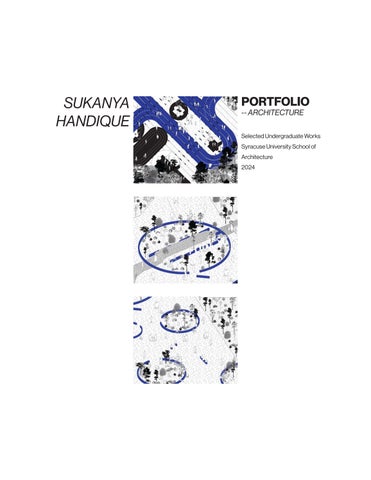
An urban platform inspired by migration, connecting Elba’s landscapes and diverse programs. 2. NEW COLLEGE NEW BOATHOUSE
A boathouse design connecting community, nature, and impermanence on Florida’s Gulf Coast. 3. STRANGE COMPOUNDS
A film school in Old Calabar reimagining impluvium roofs to unite community and cinema.
4. SOIL FOR THE CITY
Examining soil’s role in urban growth, neglect, and recycling within NYC’s evolving landscape.
01 TABLE FOR CO-EXISTENCE
Florence, Italy
Prof. Olivia Gori
In Collaboration With: Pisey Kim and Beining Xue
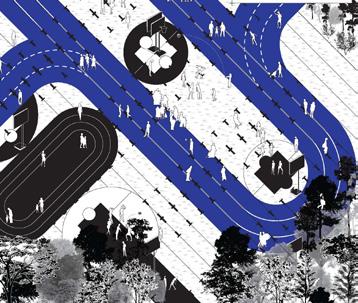
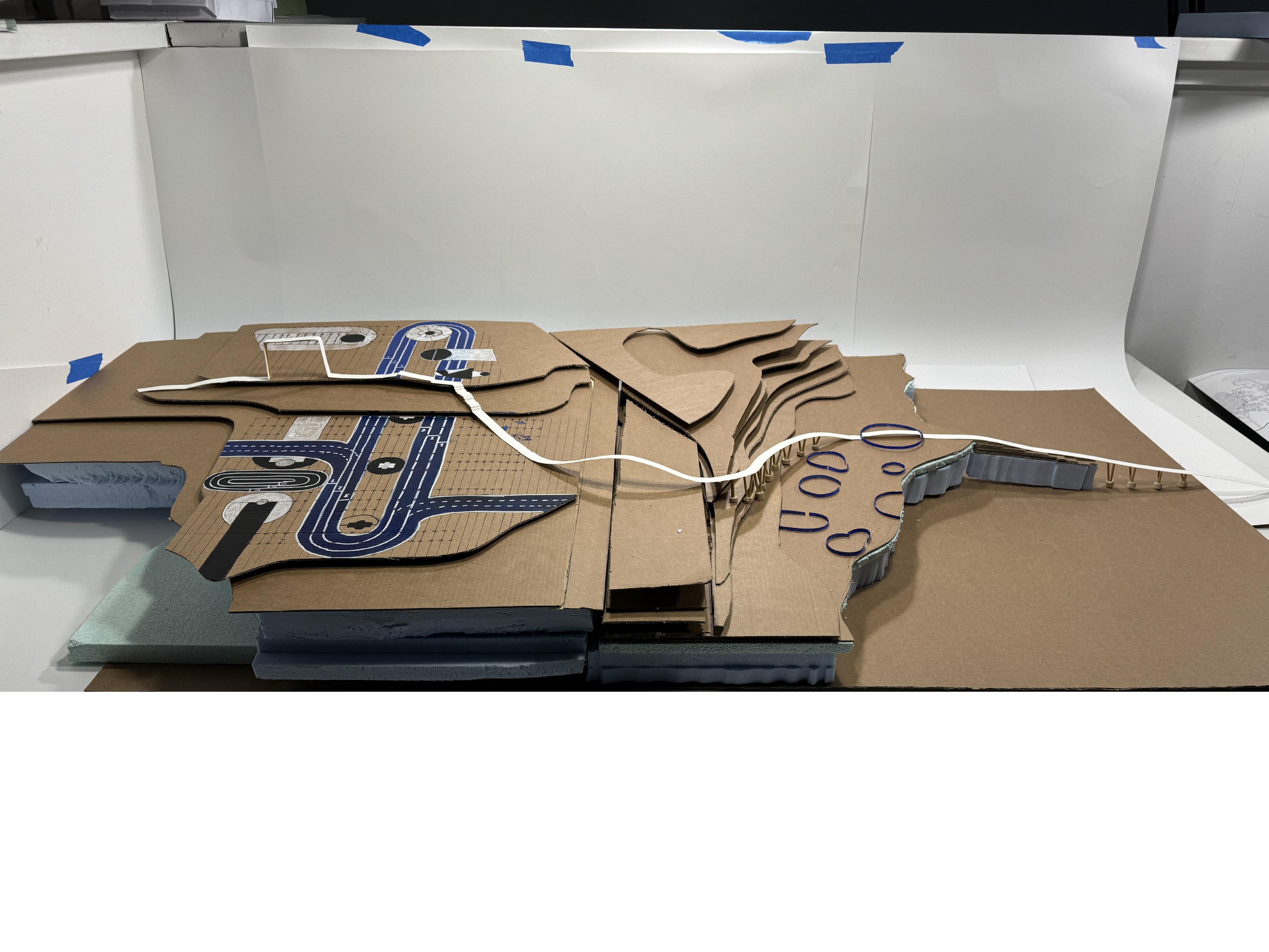
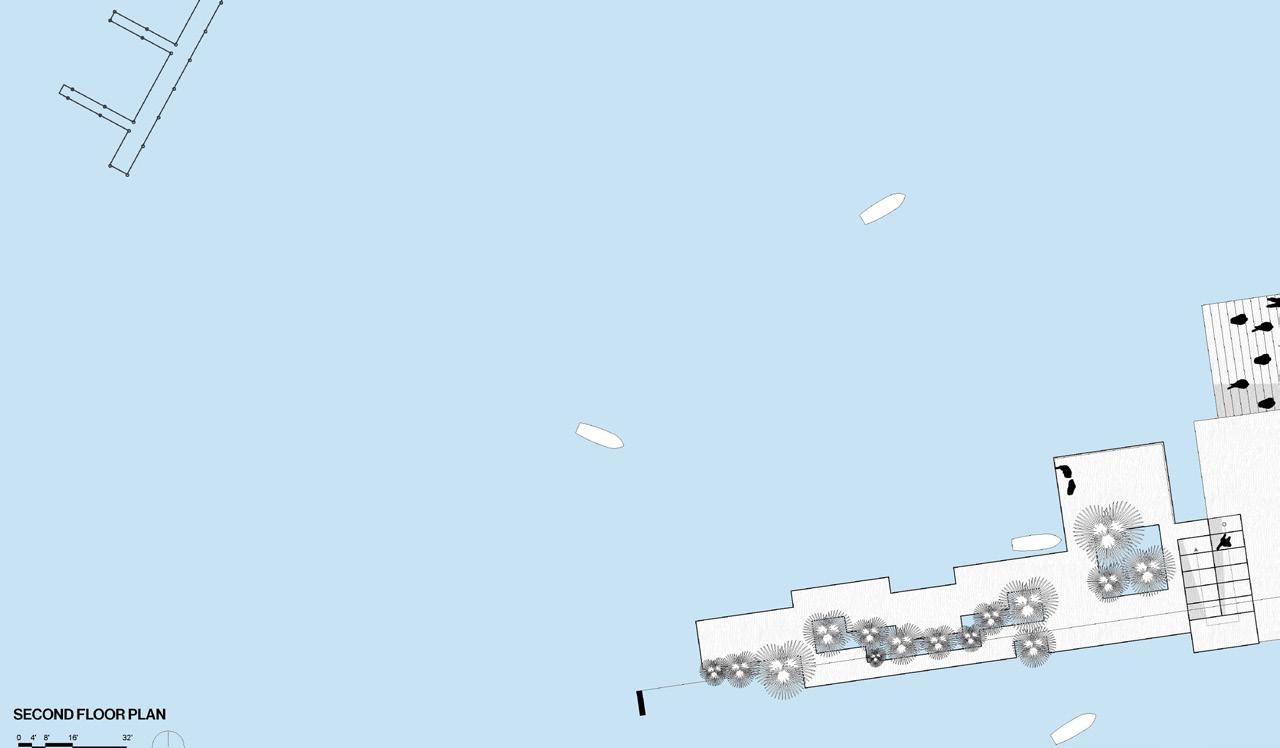
This public space, located off the coast of Elba Island, highlights a pivotal chapter in the island’s history of mineral extraction. During this period, families migrated to the coast in search of financial opportunities, sparking a transformation in how humans and their landscapes coexisted. Architecture began to reflect the natural habitats of local fauna and vegetation, with buildings constructed from local stone and traditional crafts, fishing, and cooking incorporating sustainable practices. However, the growing influx of summer tourism has created a noticeable imbalance between humans and nature, straining this delicate relationship. Table for Co-Existence reflects on Elba’s historical migratory patterns while celebrating the critical, symbiotic bond between humans and their environment.
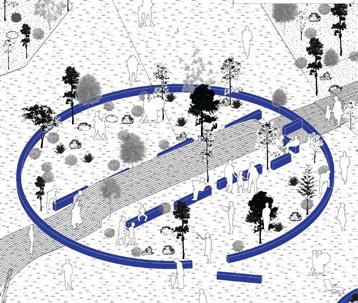
The project takes the form of a long, linear platform, inspired by the communal nature of a dining table—a surface that fosters connection and interaction. Stretching from the hills to the water’s edge, it provides a series of unique experiences along its path. Visitors encounter a movie theater and public park that address the island’s lack of child-friendly spaces, a bridge offering intimate views of the cliffs, a dining table for rest and relaxation, and a dock for aquatic exploration. By combining historical reflection with spaces for recreation and ecological engagement, Table for Co-Existence envisions a harmonious relationship between Elba’s cultural heritage and its natural environment.
Drawings completed with AutoCAD, Rhino3D, Adobe Illustrator and Photoshop
TABLE FOR CO-EXISTENCE
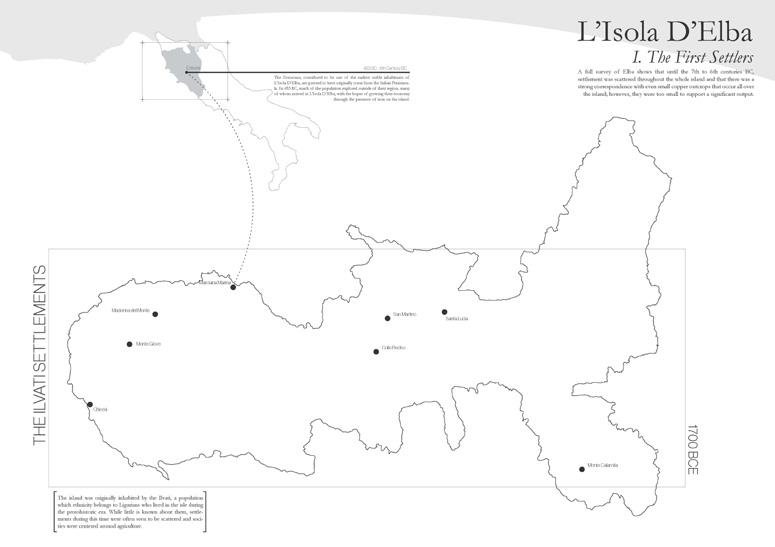
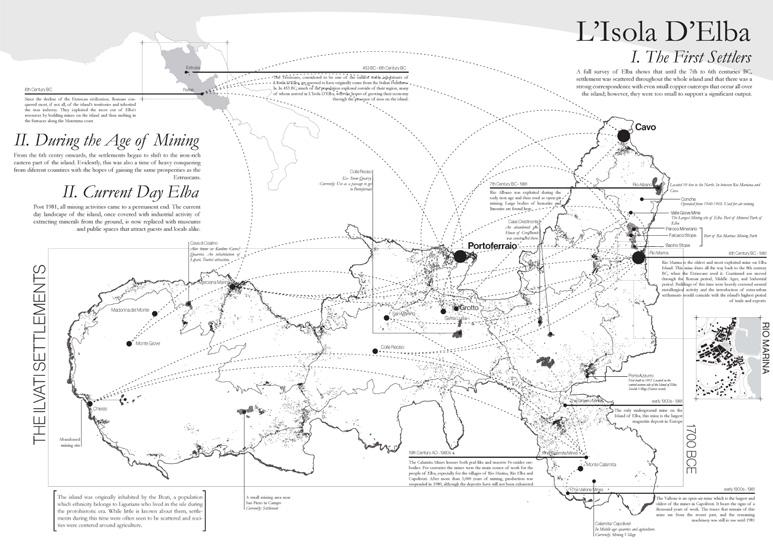
Phase I: The First Settlers Settlement, migrating from the Etruscans, seemed to have been scattered throughout the island of Elba. Indigenous groups of this time that inhabited the isle called themselves the Illvati.
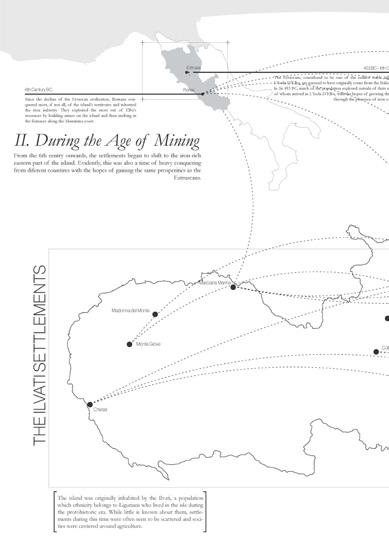
Phase II: During Settlement began iron-rich eastern Portoferraio served hub for European quer
Historical Timeline Map of Elba’s
During the Age of Mining began to shift to the eastern part of the island. served as a large entry European nations to conquer the land.
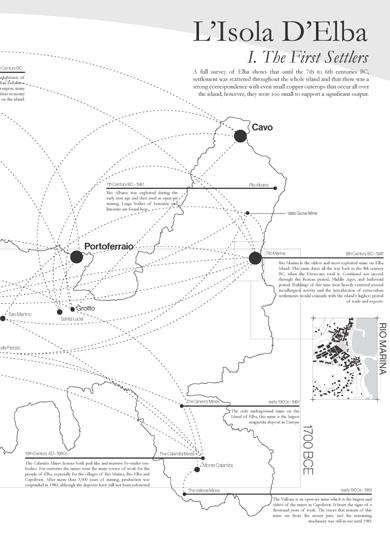
Phase III: Current Day Elba Post 1981, all mining activities came to a permanent end. The current landscape of the island, once covered with industrial activity of extracting minerals from the ground, is now replaced by museums and public spaces.
TABLE FOR CO-EXISTENCE
Elba’s Island - Mineral Extraction
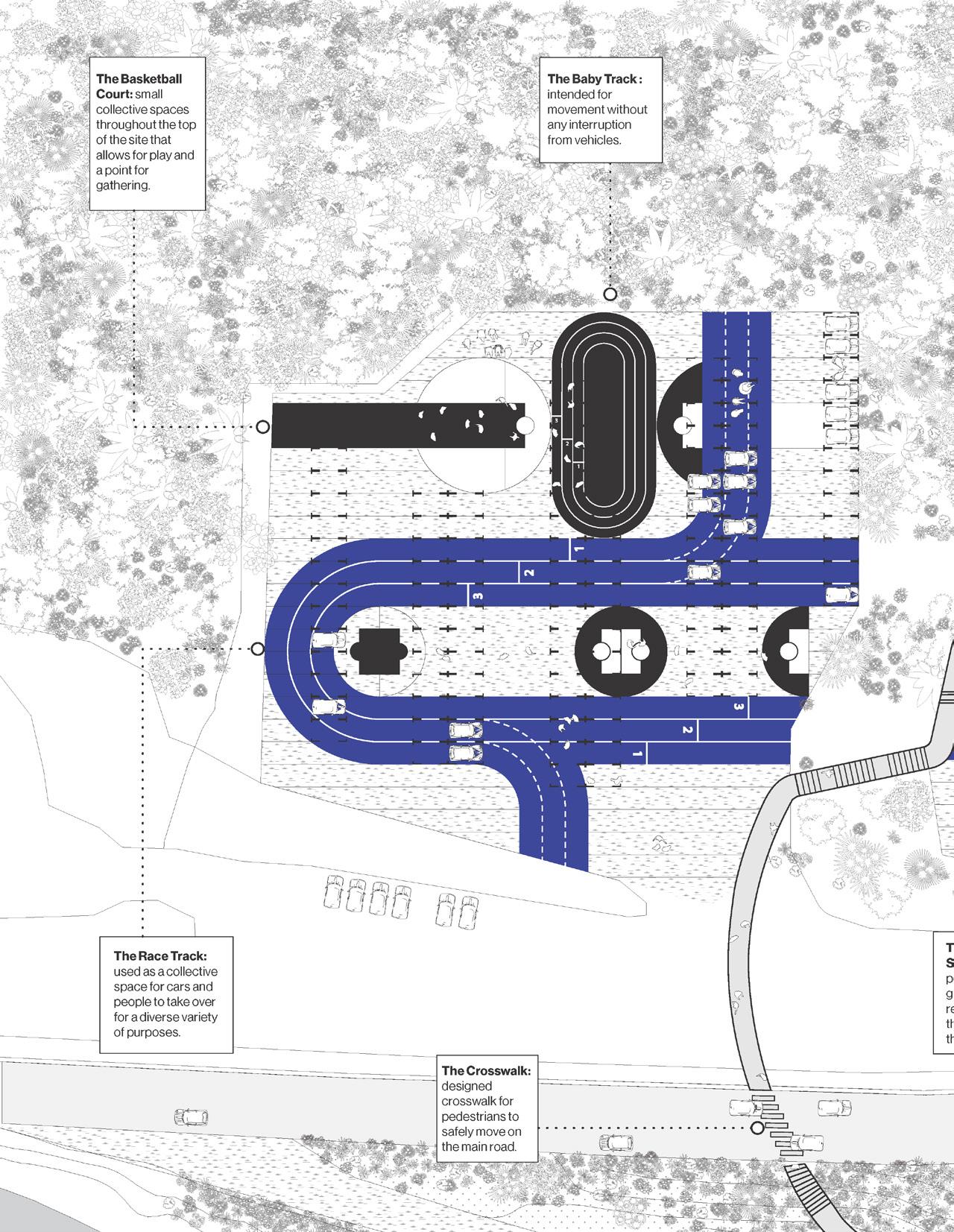
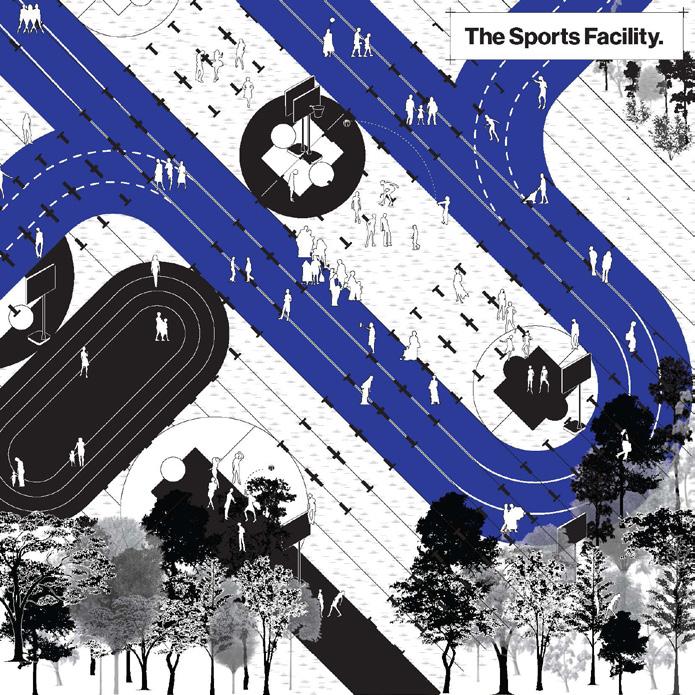
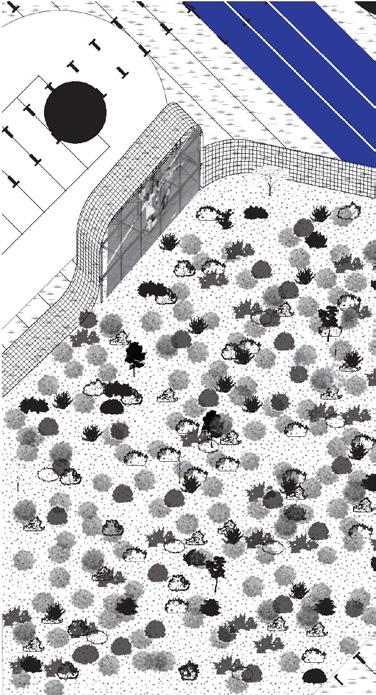
The Basketball Court: small collective spaces throughoutthe top of the site that allows for play and a point for gathering
The Race Track: used as a collective space for cars and people to take over for a diverse variety of purposes
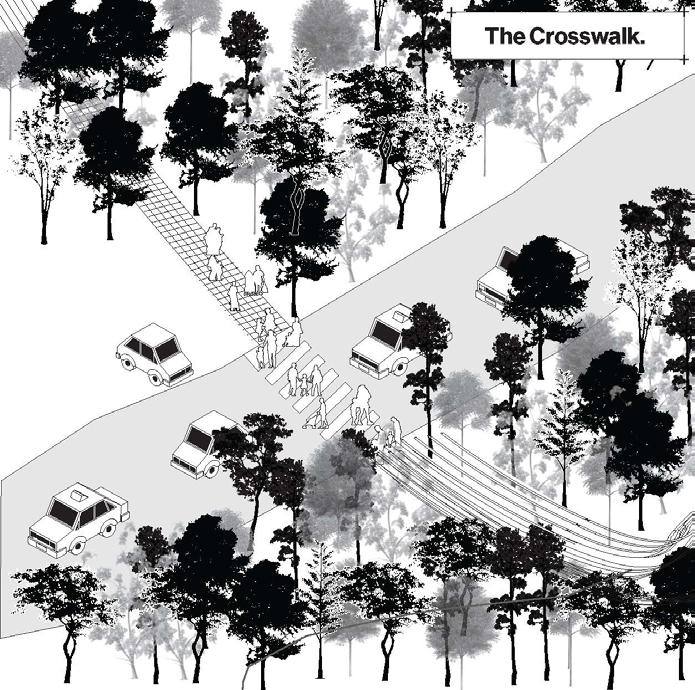
The Crosswalk: designed crosswalk for pedestrians to safely move on the main road.
The Baby Track: intended for movement without any interruption from vehicles
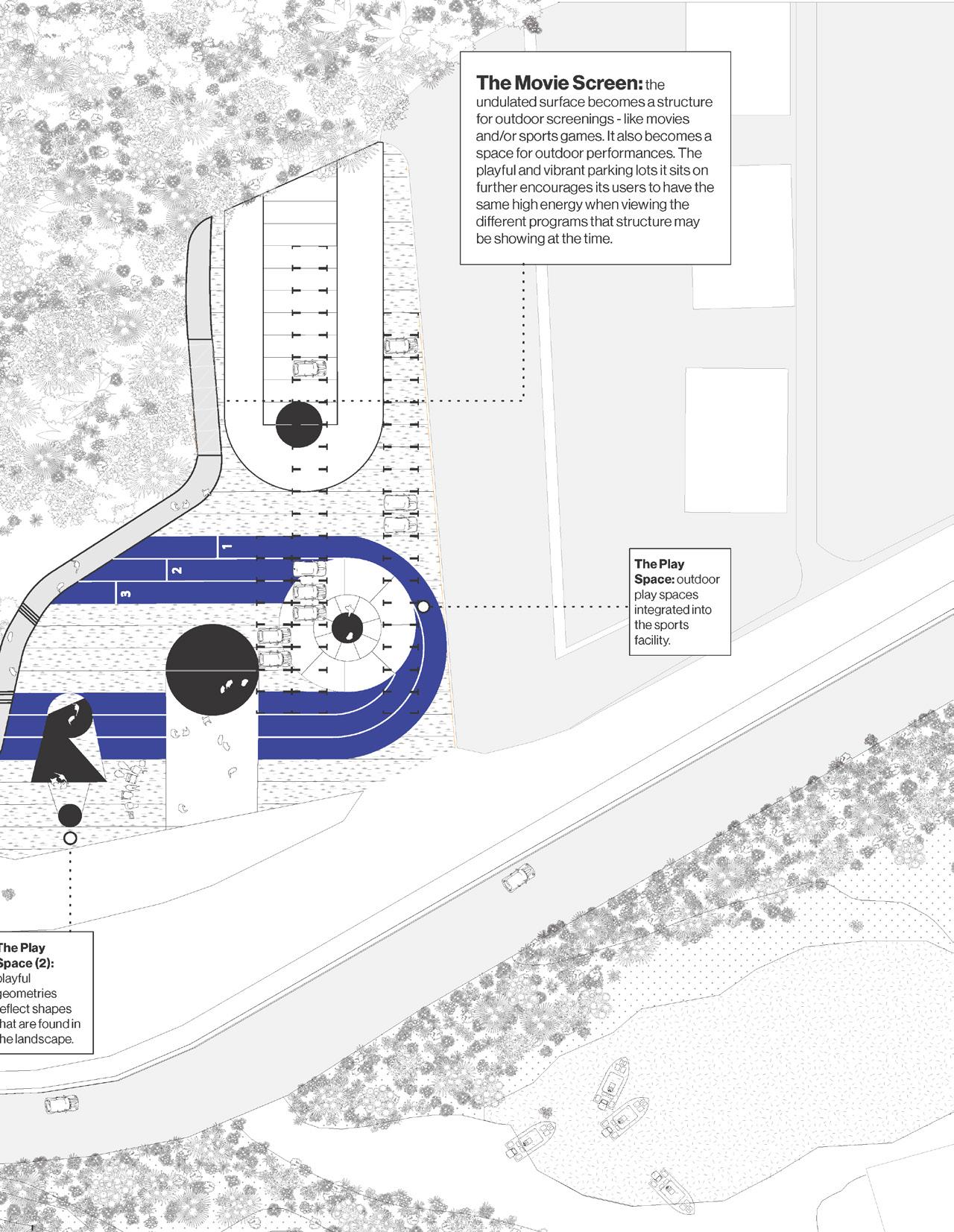
the
The Space (2): geometries reflect that
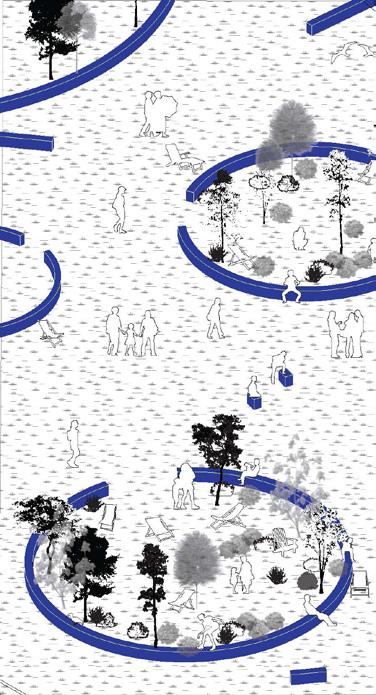
The Play Space (2): playful geometries reflect shapes that are found in the landscape.
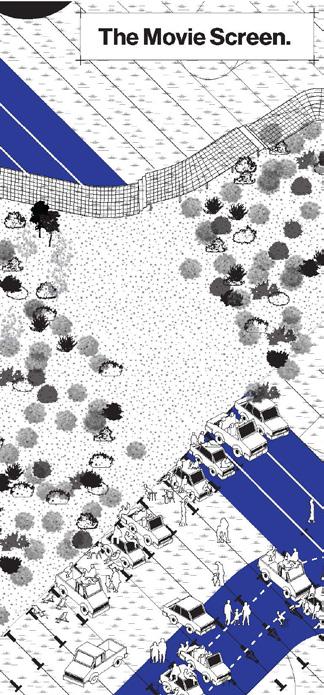
The Movie Screen: the undulated surface becomes a structure for outdoor screen - like movies and/or sports games. It also becomes a space for outdoor performances. The playfyl and vibrant parking lots it sits on further encourages its users to have the same high energy when viewing the different programs that structure may be showing at the time.
The Play Space: outdoor play spaces integrated into the sports facility.
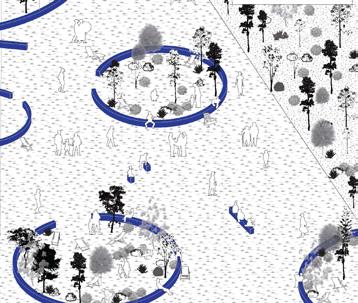
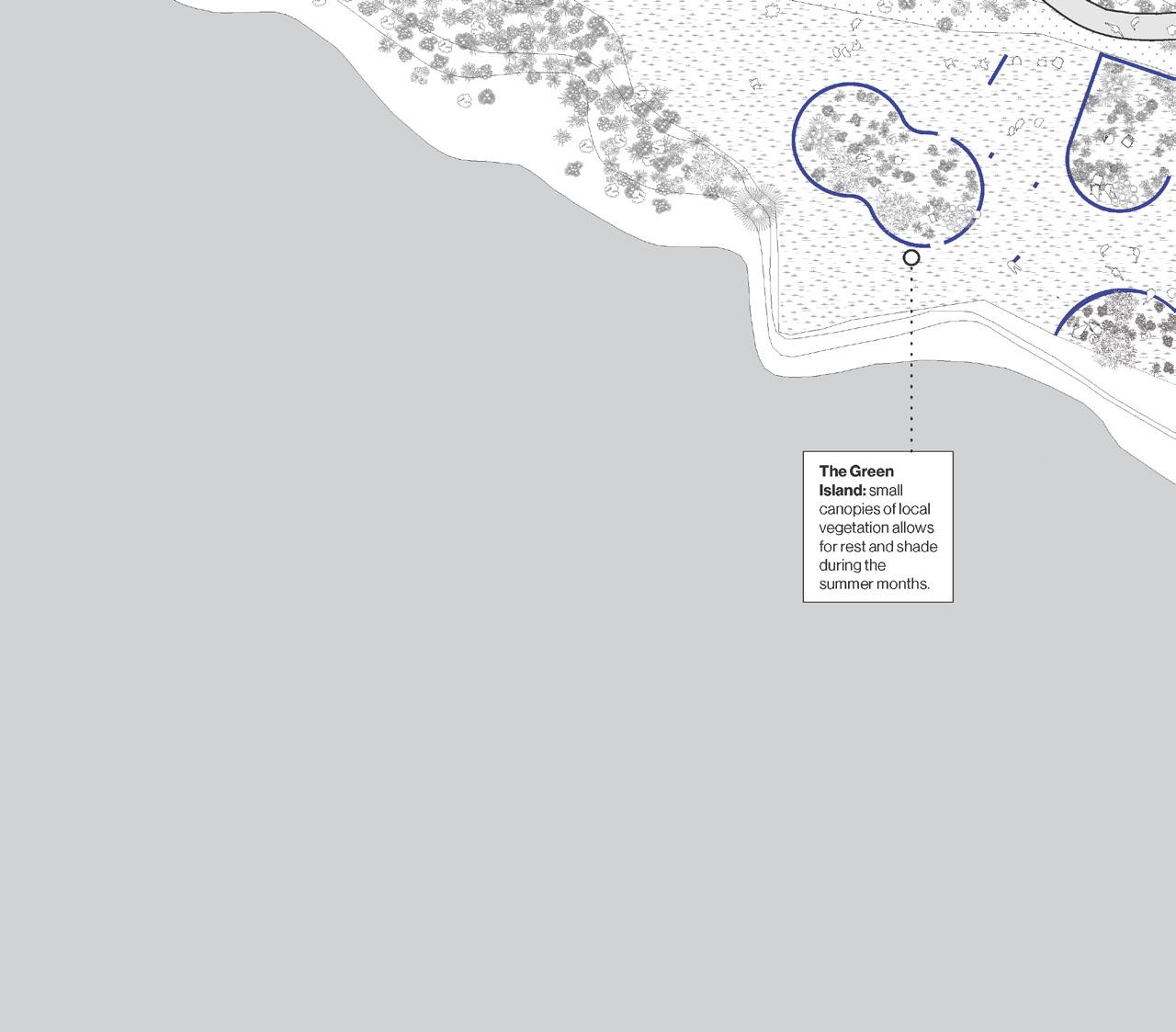
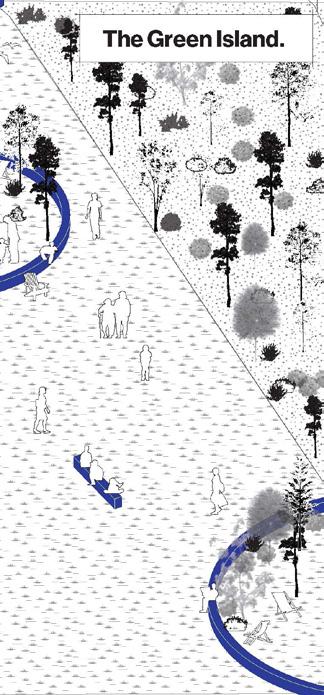
The Green Island: small canopies of local vegetation allows for rest and shade during the hot summer months
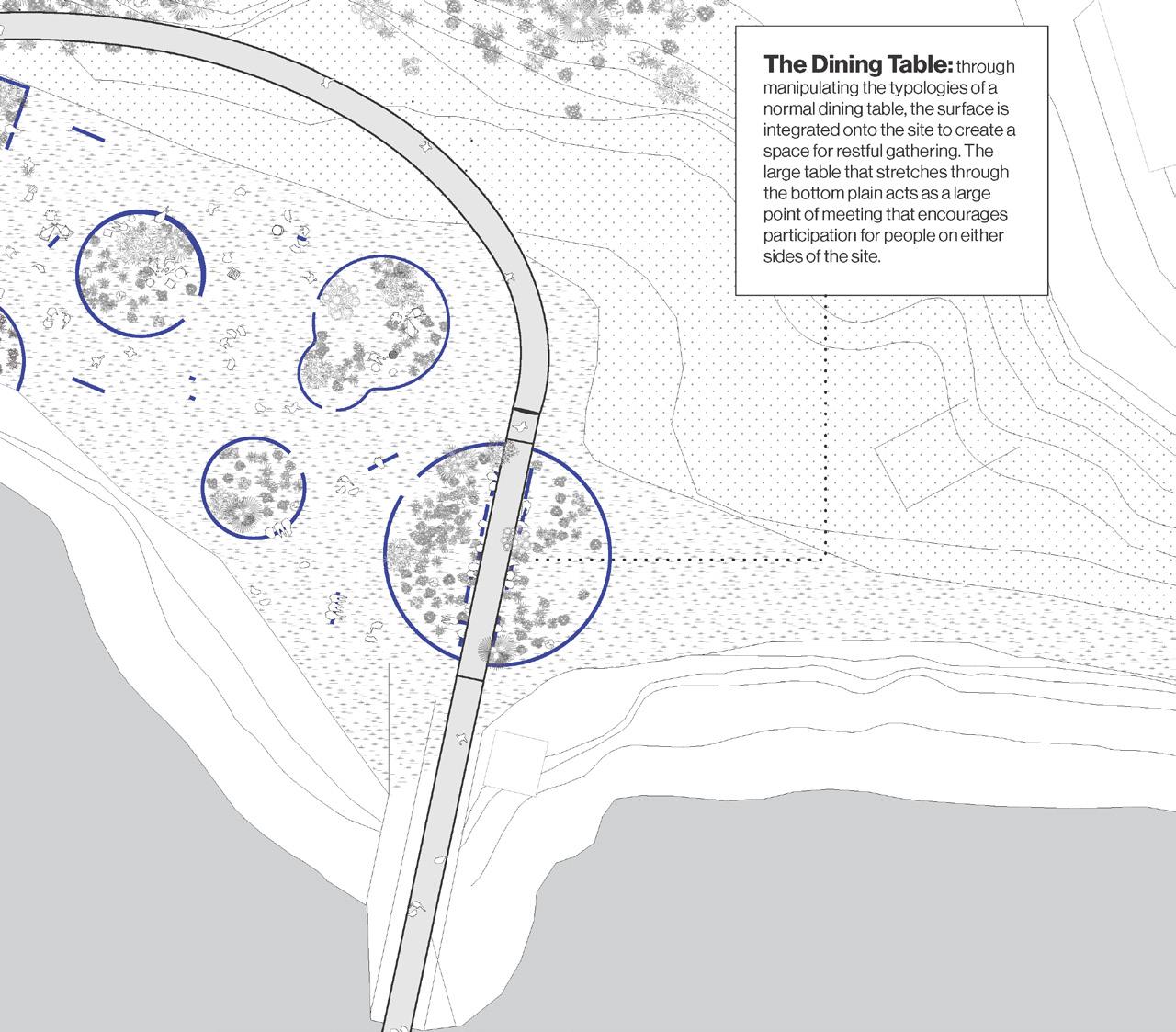
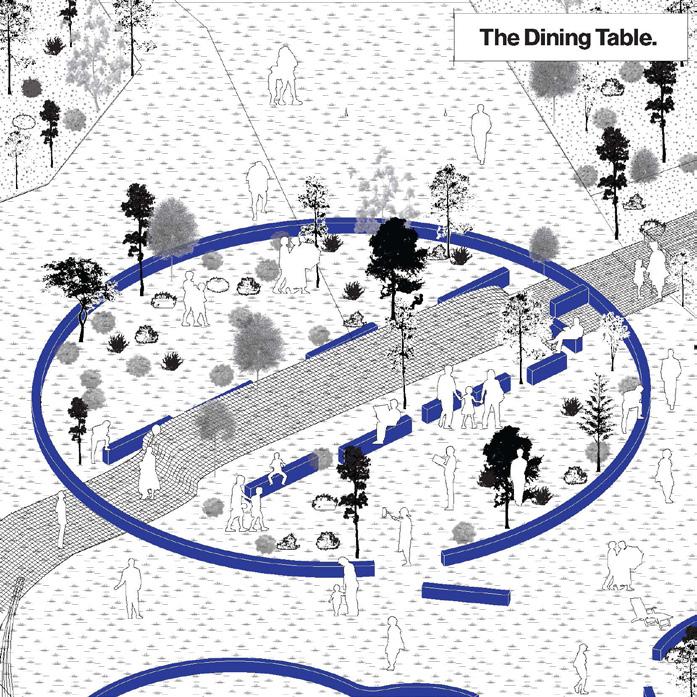
The Dining Table: through manipulating the typologies of a normal dining table, the surface is integrated onto the site to creare a space for restful gathering. The large table that stretches through the bottom plain acts as a large point of meeting that encourages participation for people on either sides of the site.
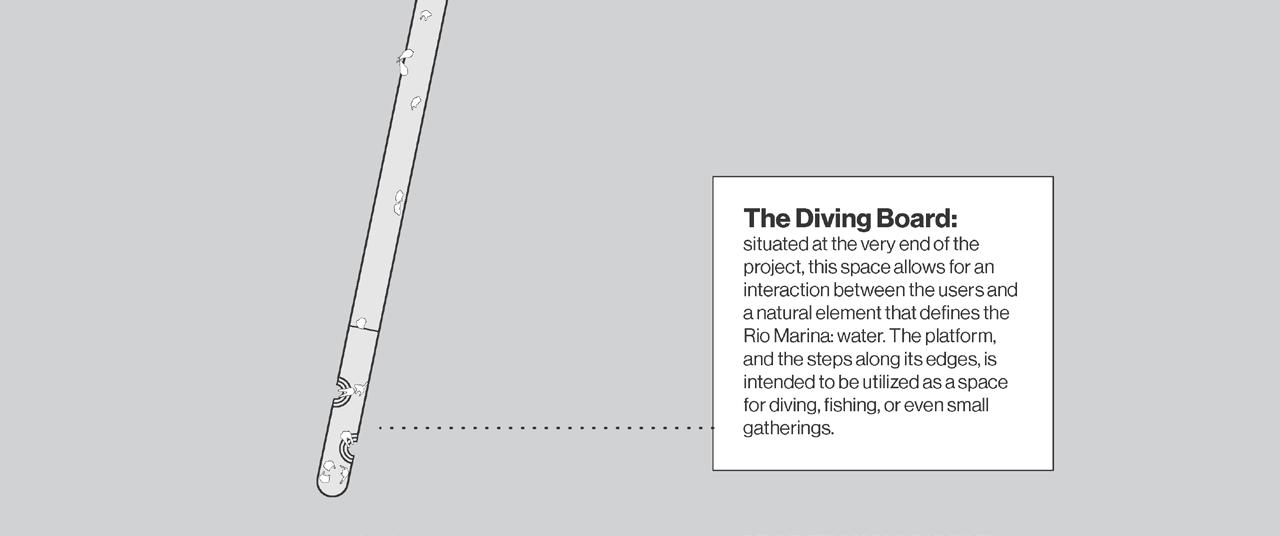
The Diving Board: situated at the very end of the project, this space allows for an interaction between the users and a natural element that defines the Rio Marina: water. The platform, and steps along its edges, is intended to be utilized as a space for diving, fishing, or even small gatherings.
The Sports Facility.
TABLE FOR CO-EXISTENCE
Interventions (Perspective
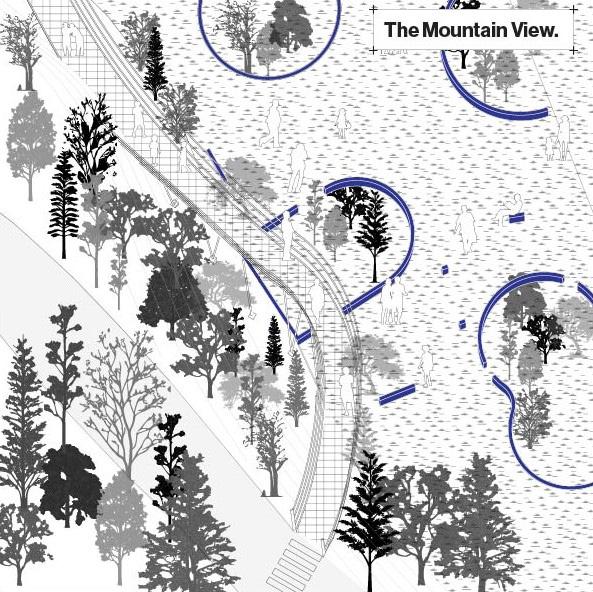
The Mountain View.
The Movie Screen. The Crosswalk.
(Perspective Views)
TABLE FOR CO-EXISTENCE
The Green Island. The Dining Table
02 NEW COLLEGE NEW BOATHOUSE
Sarasota, Florida
Prof. Aurelie Frolet
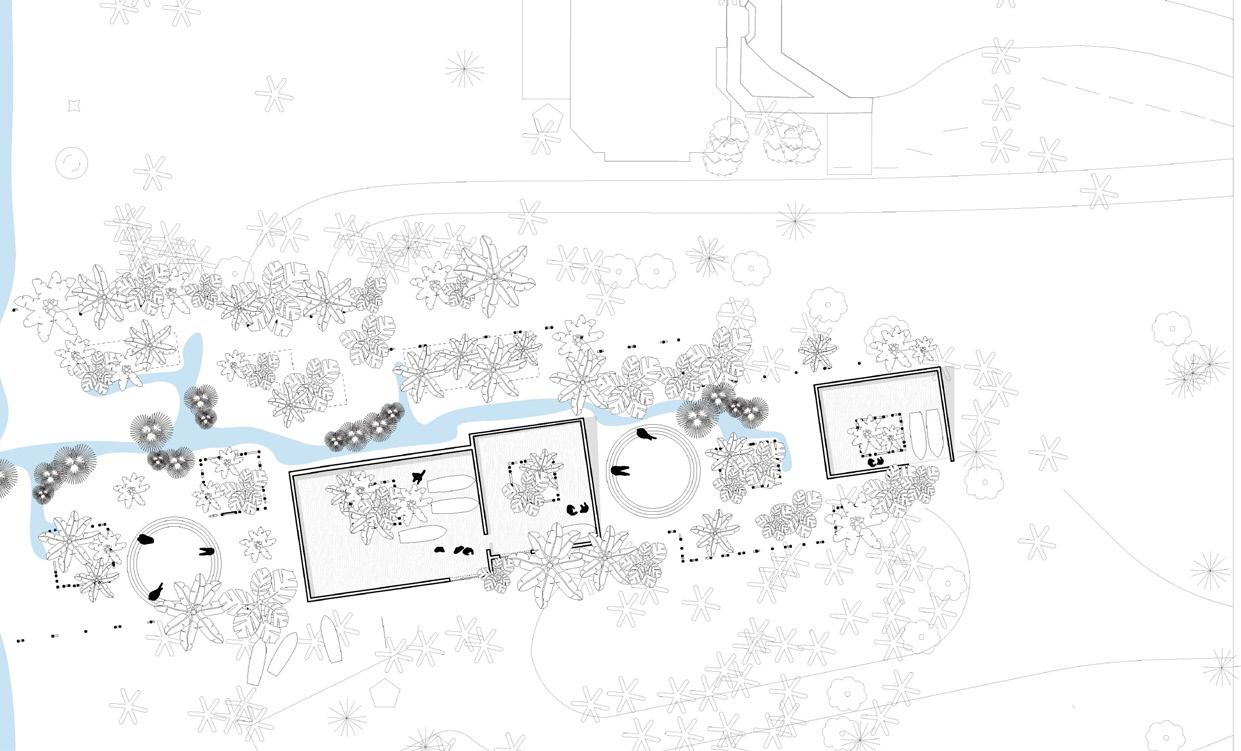
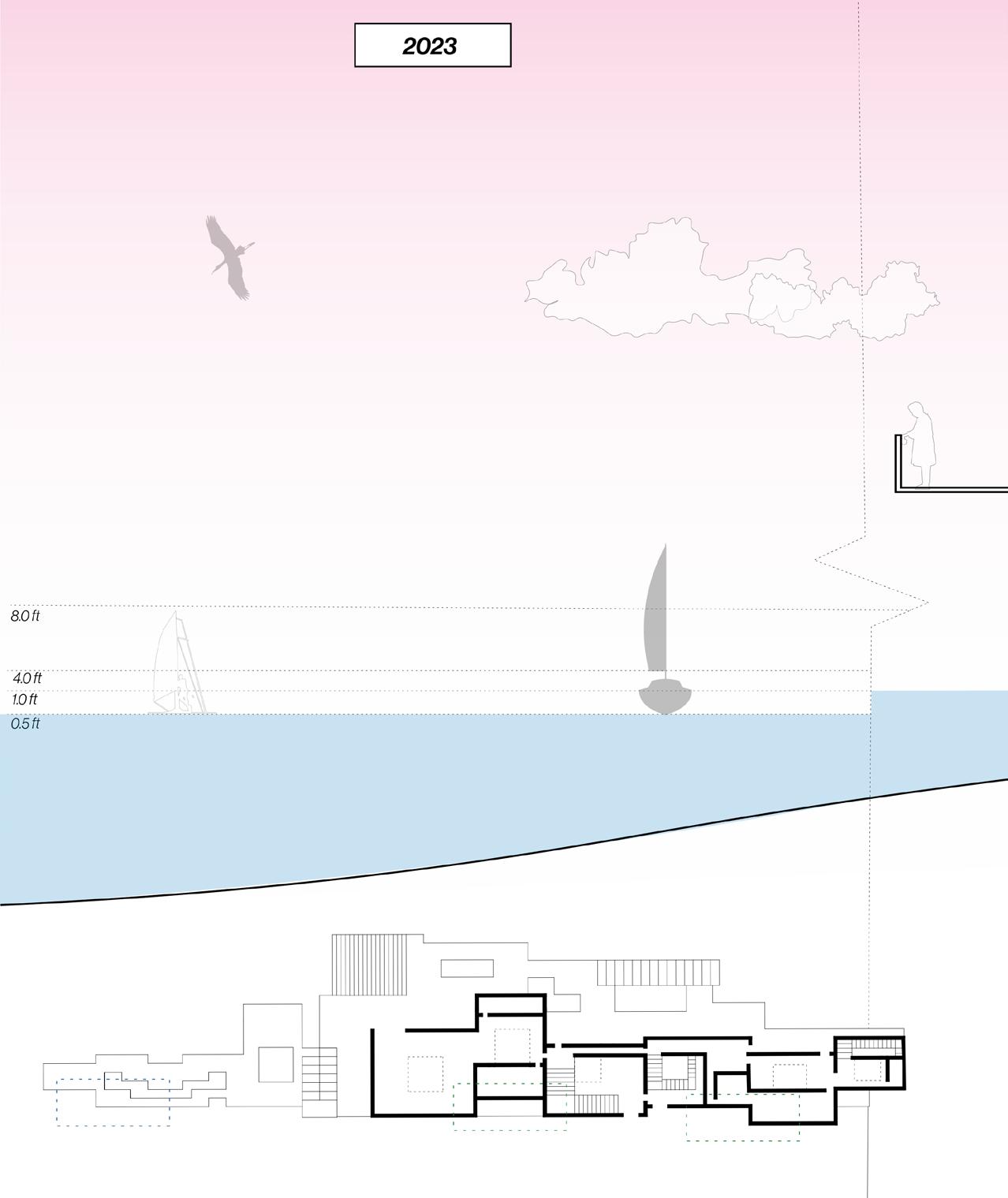
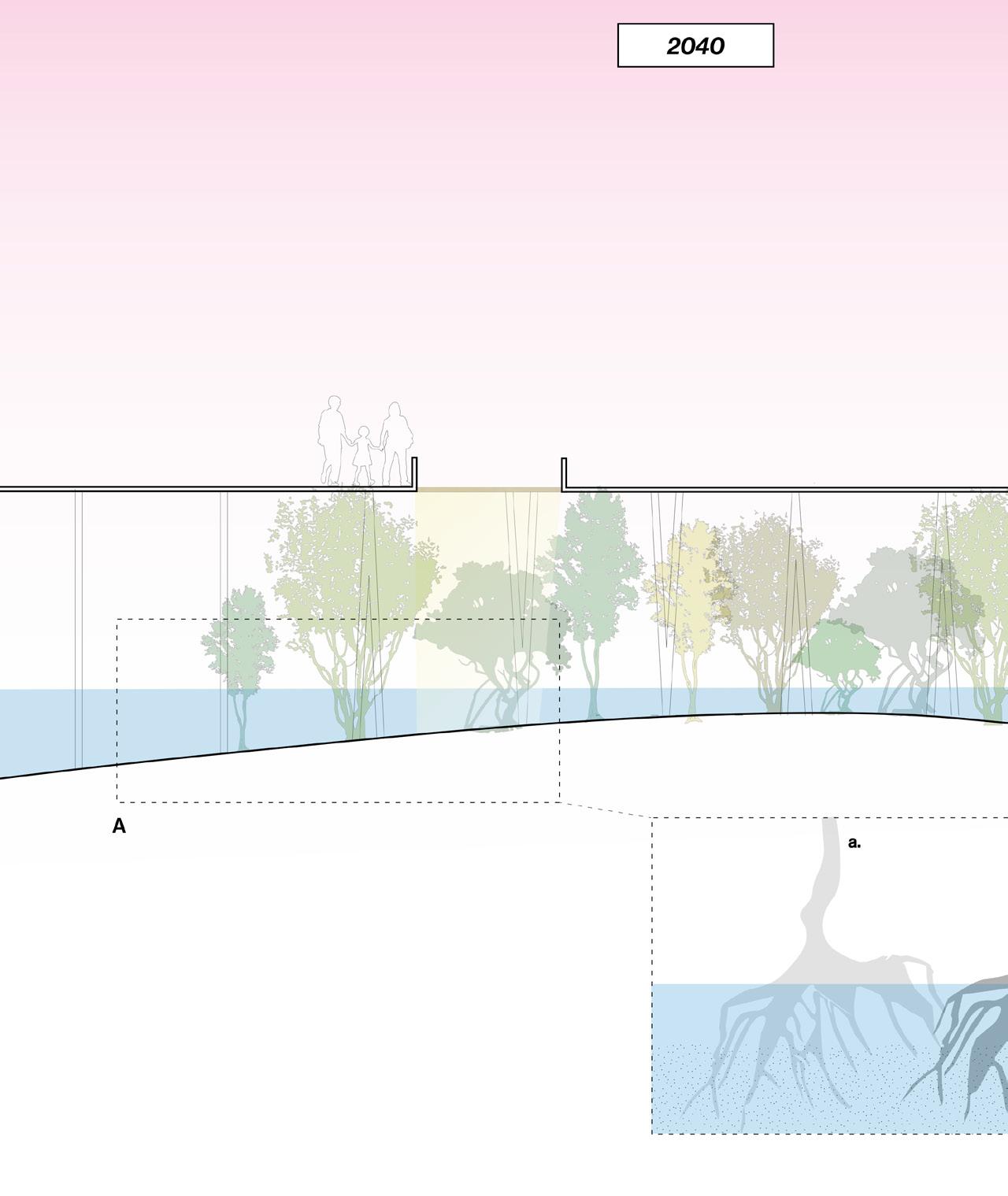
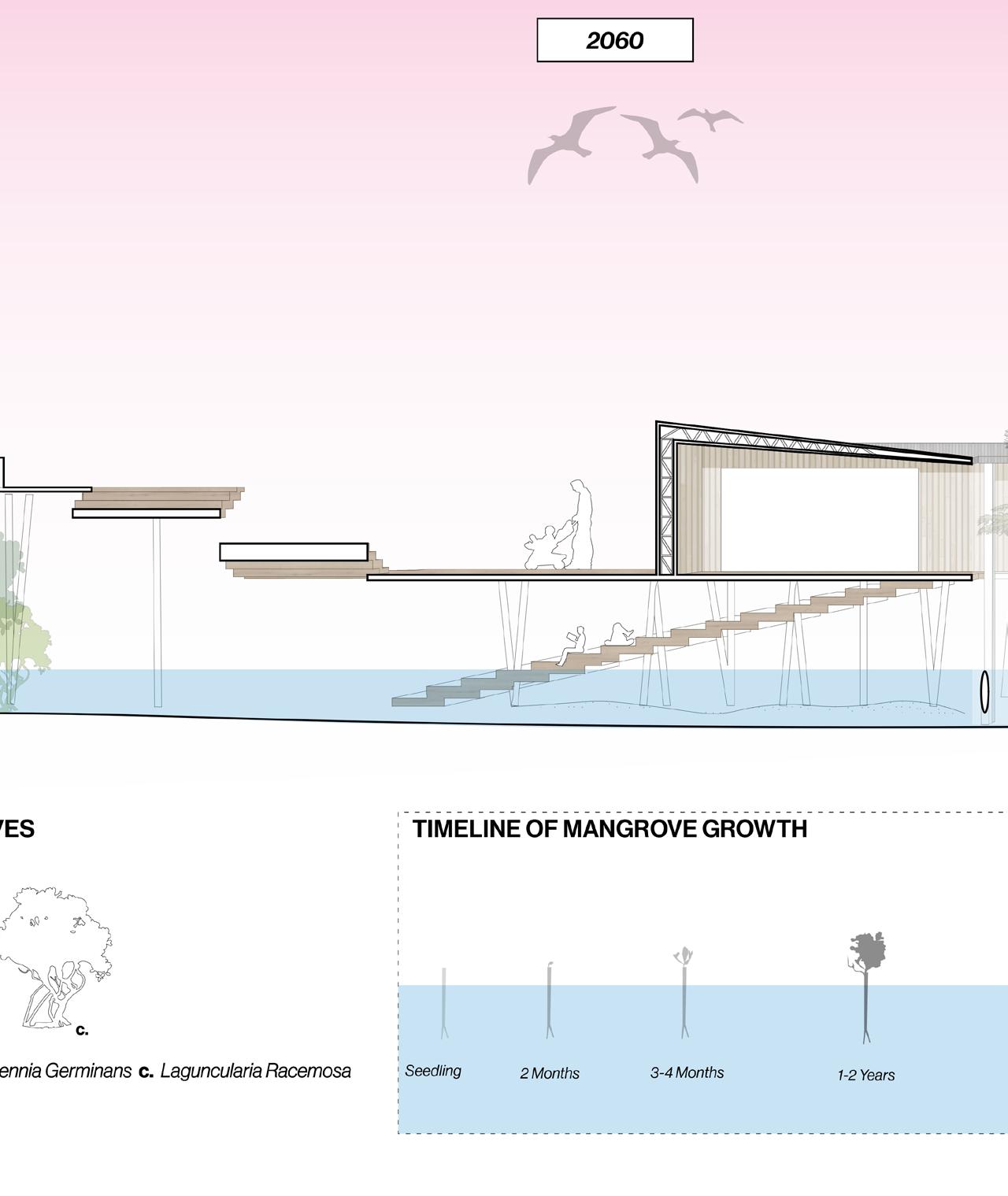
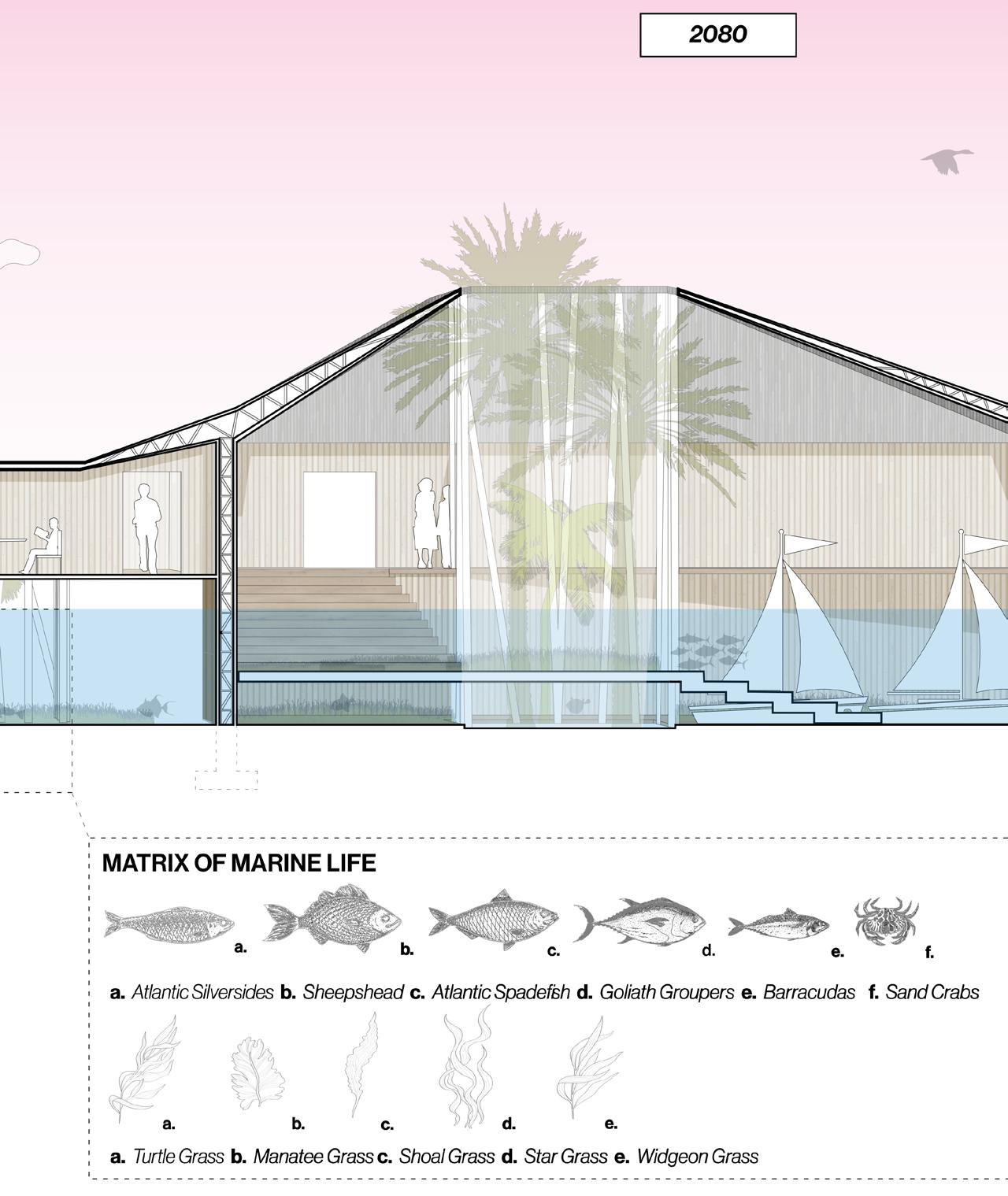
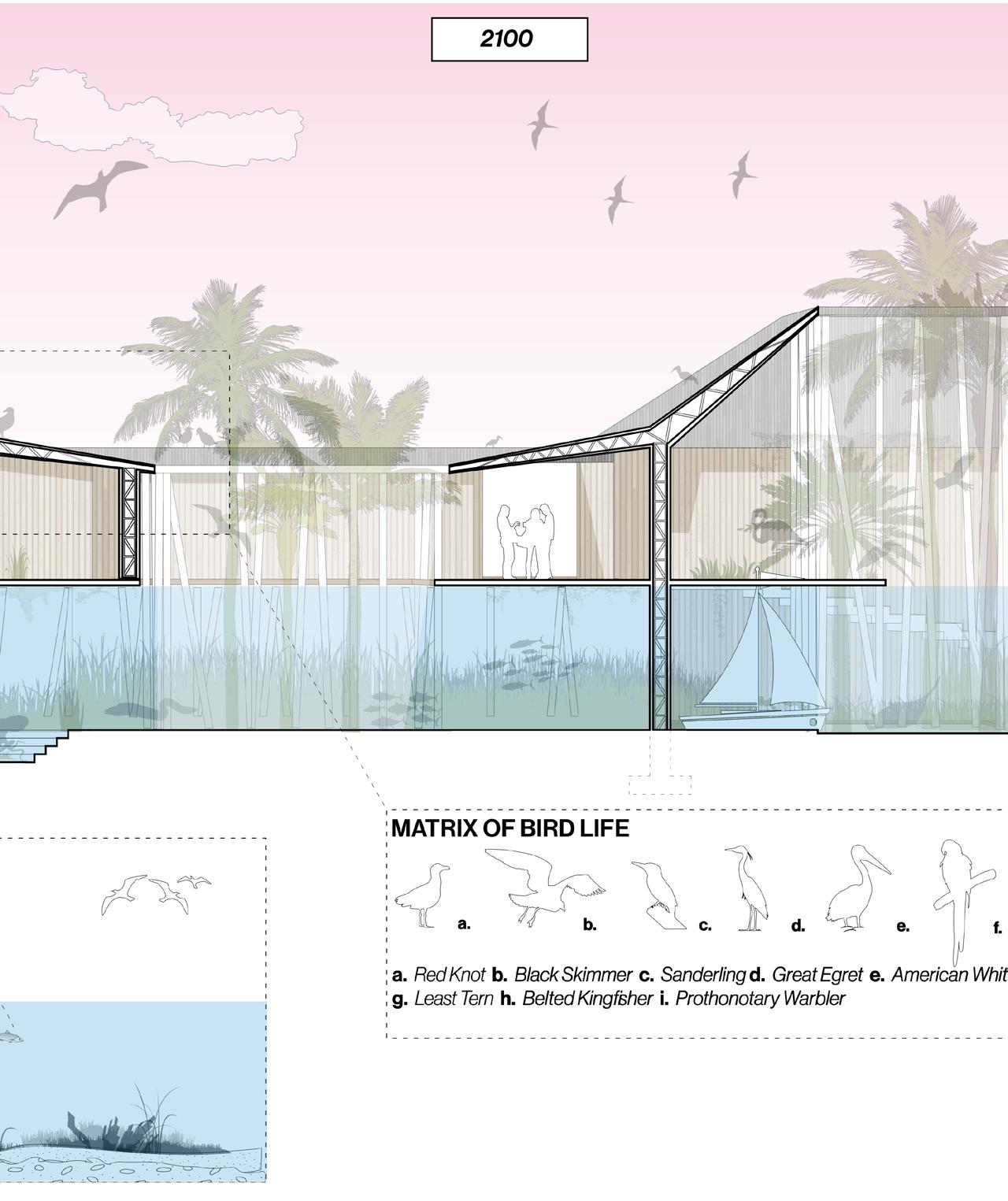
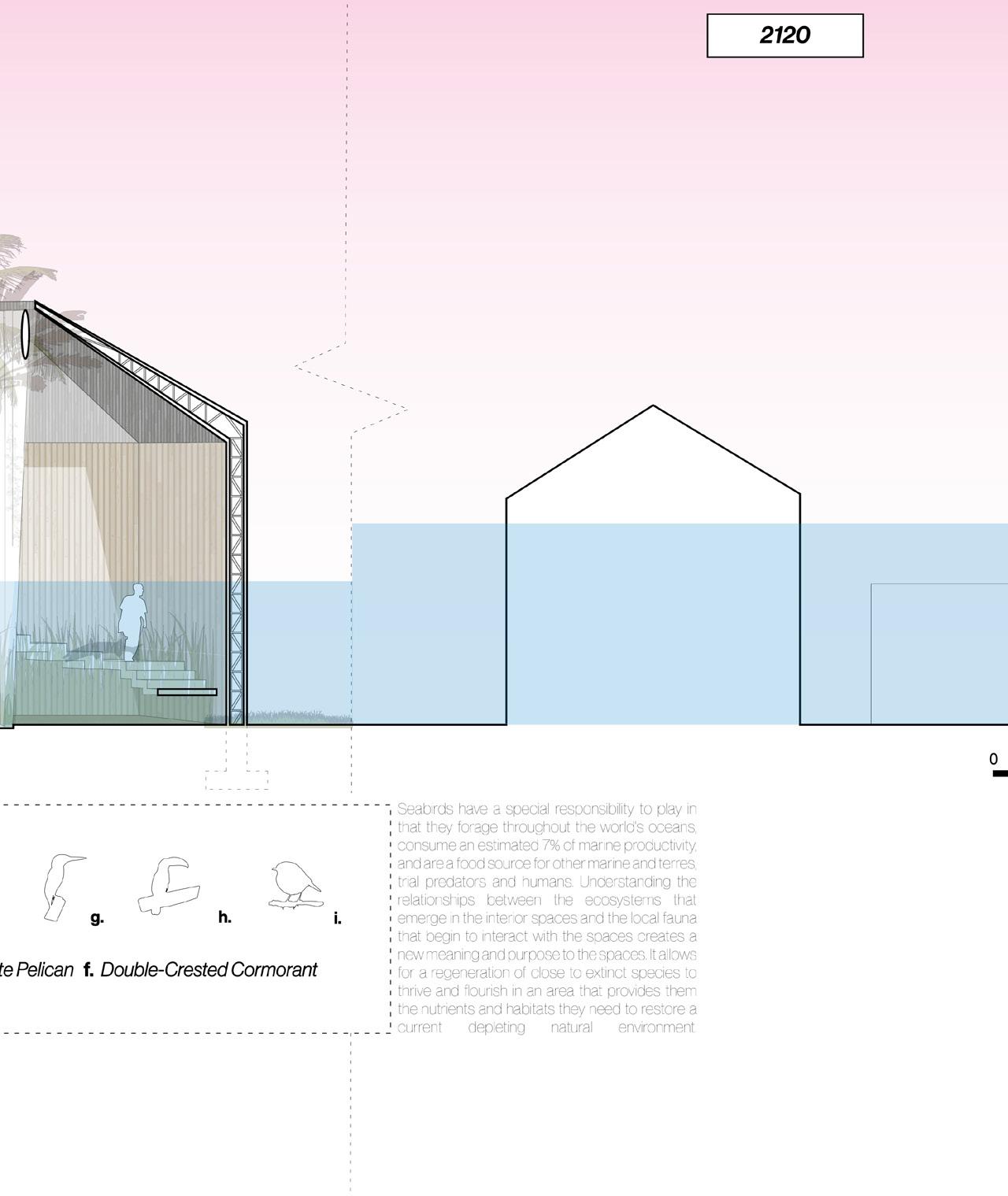
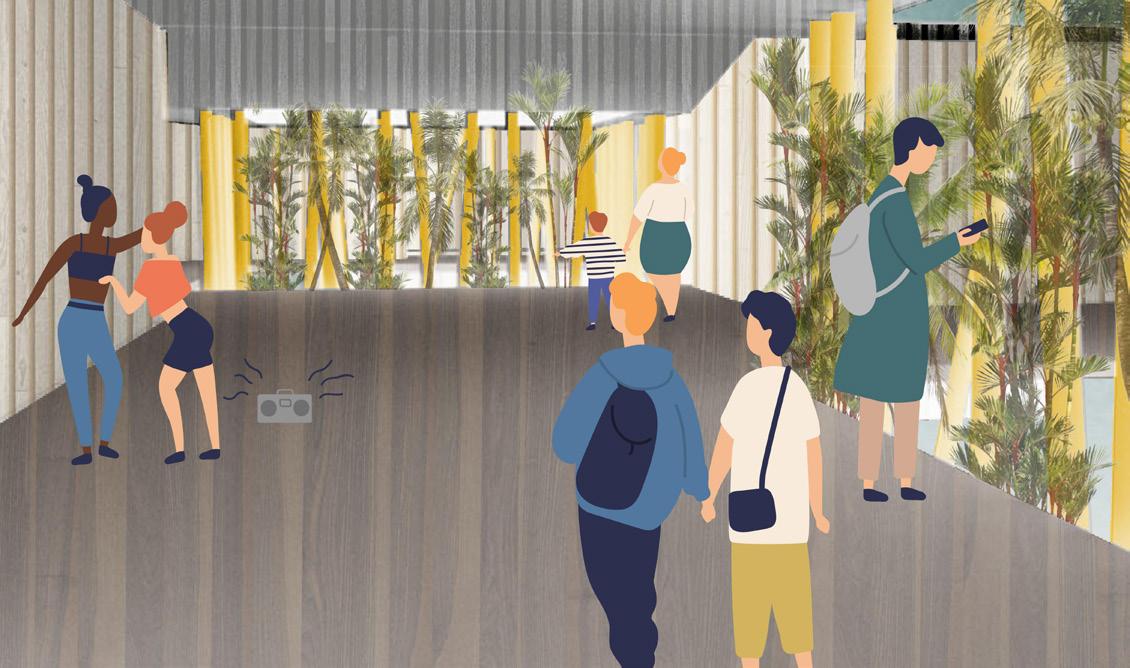
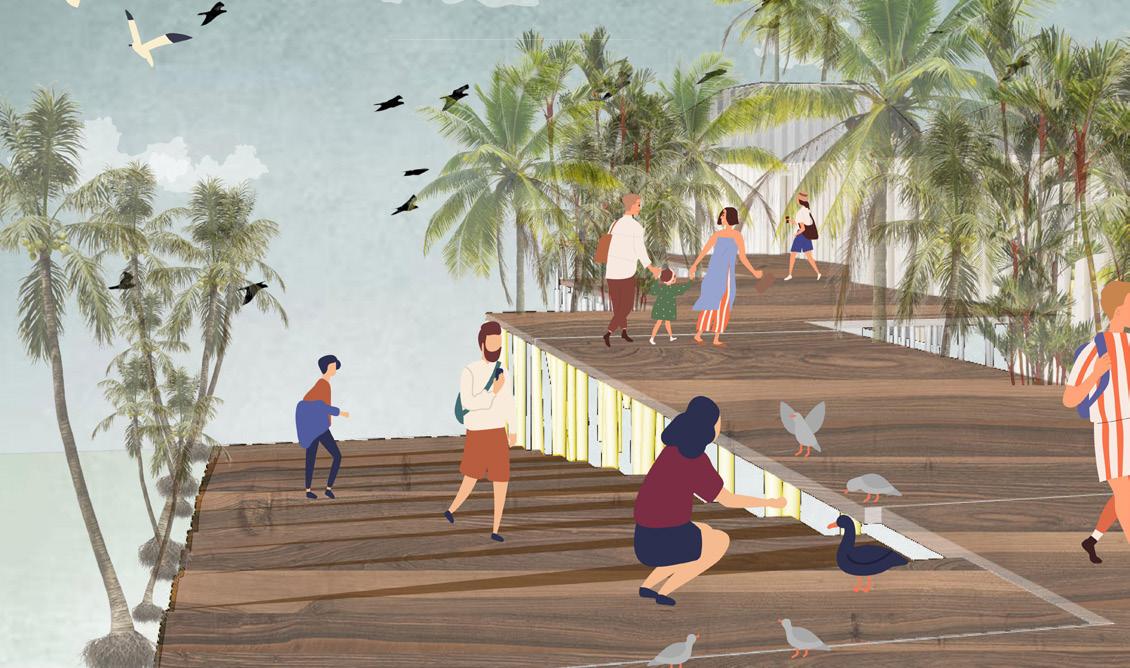
The design for a boathouse offers opportunity for student athletes attending New College of Florida their safe haven to practice a sport that dominates the coasts of the town. The location has already seen the dangesr of sea level rising and coastal erosion, two aspects that were important consdierations for the project’s design. Global Warming, as of now, as a catastrophe that continues to put... Building an architecture that begins to ‘embrace’ such changes in our environment as means to give a space new meanings was a unqiue take on how architecture can respond to climate issues. Rather than building an architecture for the people, it is an architecture that embraces changes and eventually becomes a sanctuary for the local ecosystem as the human population continues to move inland.
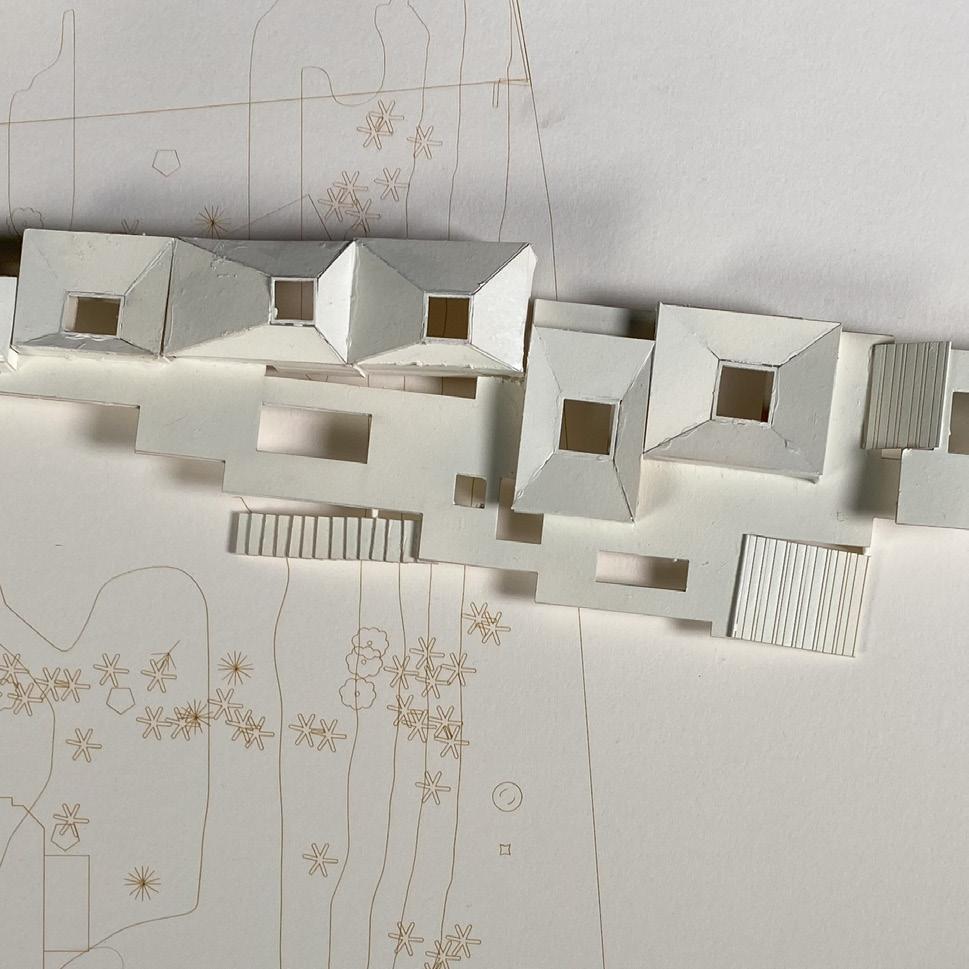
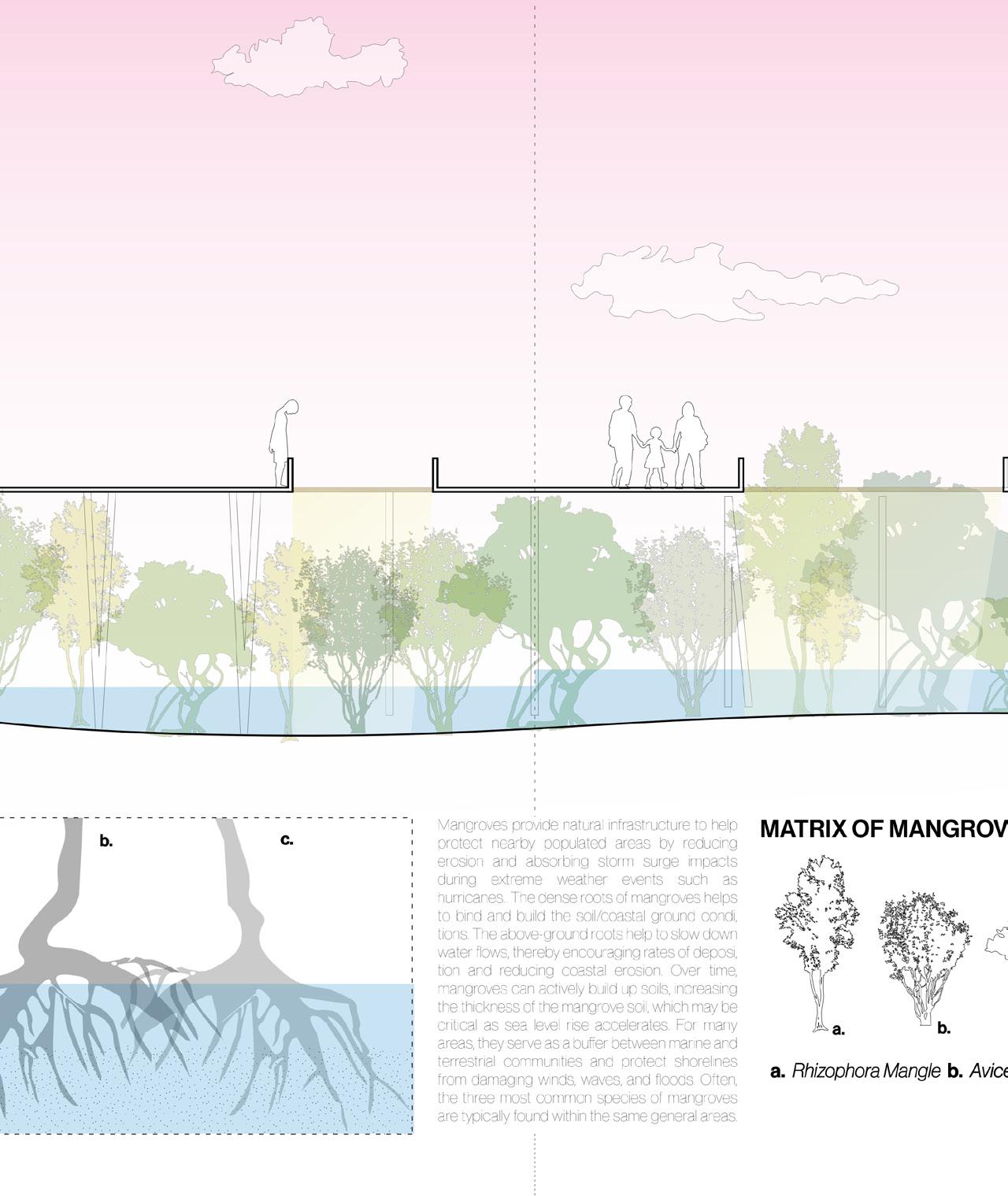
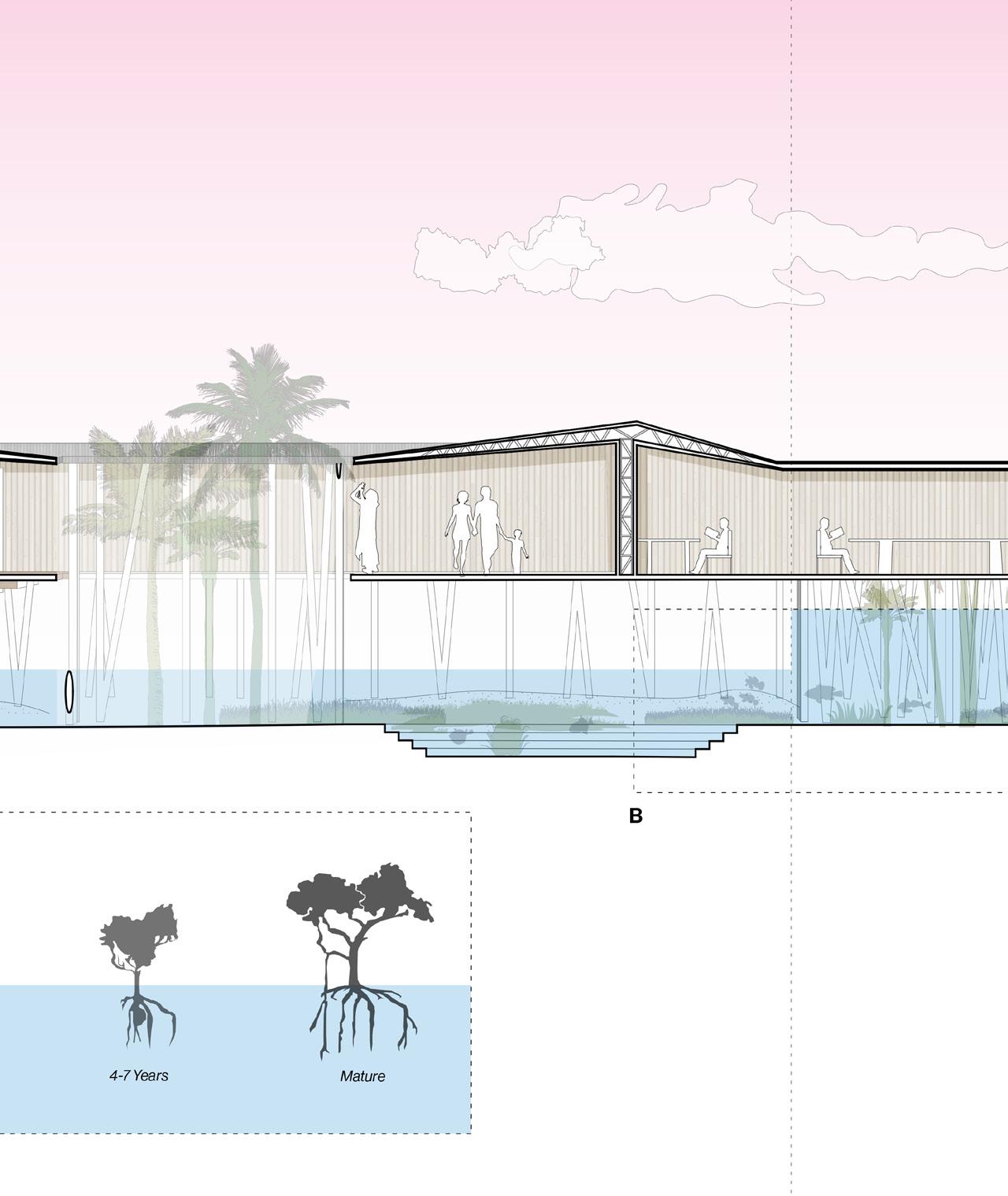
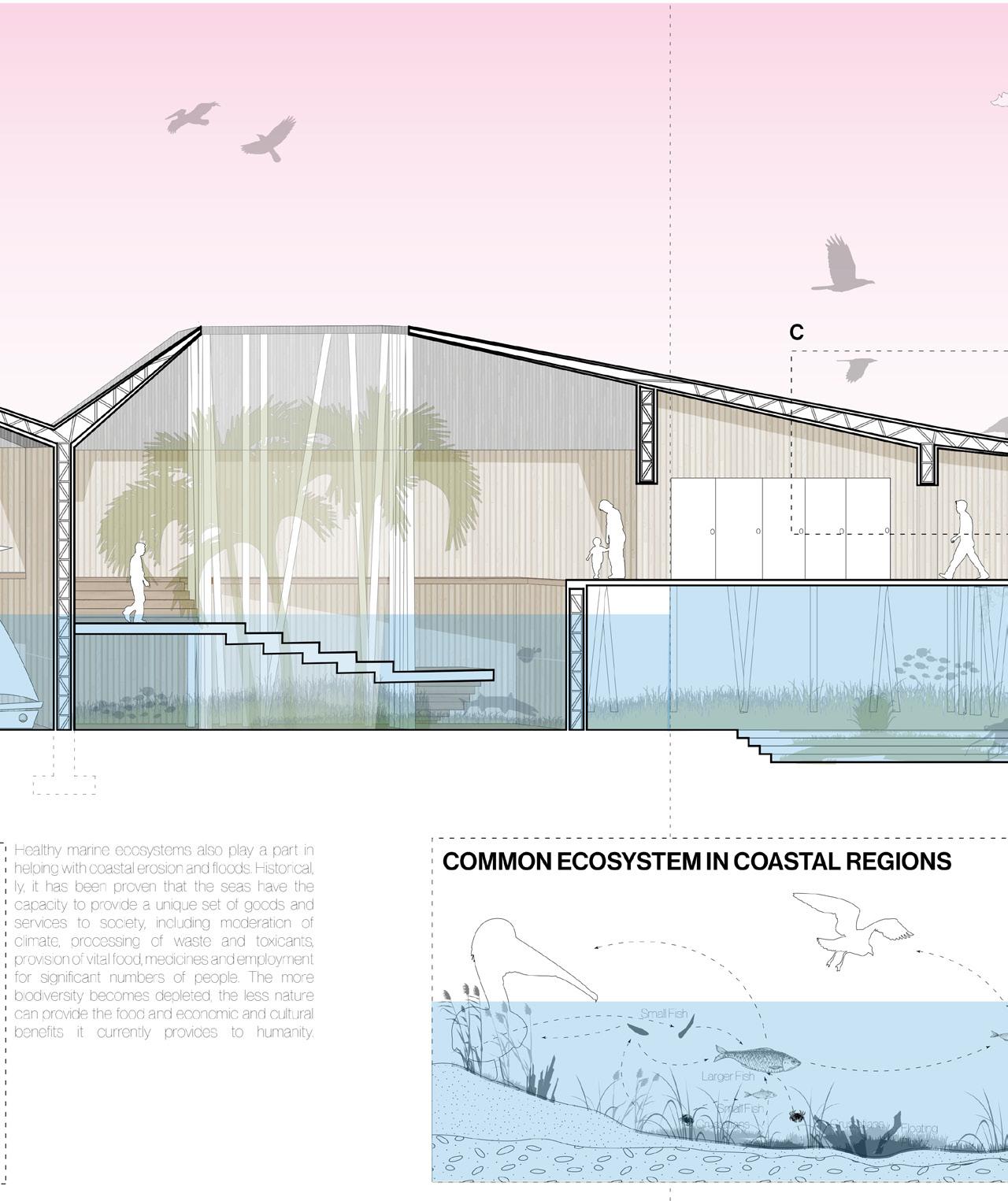
The undualting wooden roof structure and acoompanying boardwalk, all supported by columns, offers opportunity for natural vegetation to peak out and grow through the opening of the roof. Such vegetation, such as mangroves, allows for visitors to get a tangible understanding of Sarasota’s ecosystem, as well as serving as natural infrustructure to mitigate coastal erosion and flooding. The site begins to mix and blend artifical mechanisms and landscapes with those found in more natural environments.
Drawings completed with Rhino3D, Adobe Illustrator and Photoshop NEW COLLEGE NEW BOATHOUSE
Physical Model
Mangroves provide natural infrastructure to help protect nearby populated areas by reducing erosion and absorbing storm surge impacts during extreme weather events such as hurricanes. The dense roots of mangroves helps to bind and build the soil/coastal ground condiions . The above-ground roots help to slow down water flows, thereby encouraging rates of desposition and reducing coastal erosion. Over time, mangroves can actively build up soils, increasing the thickness of the mangrove soil, which may be critical as sea level rise accelerates. For many areas, they serve as a buffer between marine and terrestrial communities and protect shorelines from damaging winds, waves, and floods. Often, the three most common species of mangroves are typically found within the same general areas.
NEW COLLEGE NEW BOATHOUSE
Healthy marine ecosystems also play a part in helping with coastal erosion and floods. Historically, it has been proven that the seas have the capacity to provide a unique set of goods and services to society, including moderation of climate, processing of waste and toxicants, provision of vital food, medicines and employment for significant numbers of people. The more biodiversity becomes depleted; the less nature can provide the food and economic and cultural benefits it currently provides to humanity.
NEW COLLEGE NEW BOATHOUSE
Seabirds have a special responsibility to play in that they forage throughout the world’s oceans, consume an estimated 7% of marine productivity, and are a food source for other marine and terrestrial predators and humans. Understanding the relationships between the ecosystems that emerge in the interior spaces and the local fauna that begin to interact with the spaces creates a new meaning and purpose to the spaces. It allows for a regeneration of close to extinct species to thrive and flourish in an area that provides them the nutrients and habitats they need to restore a current depleting natural environment.
Interior Perspective View
Exterior Perspective View
03 STRANGE COMPOUNDS
Old Calabar, Nigeria
Prof. Joseph Godlewski
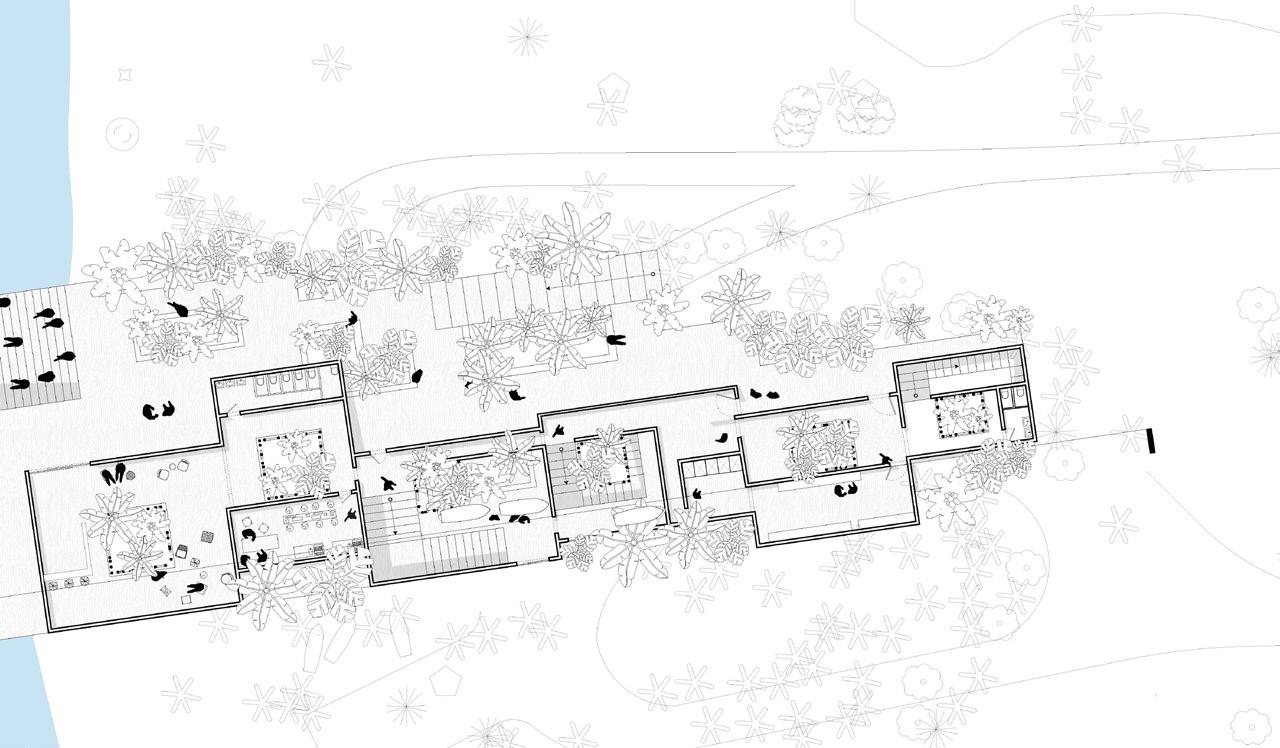
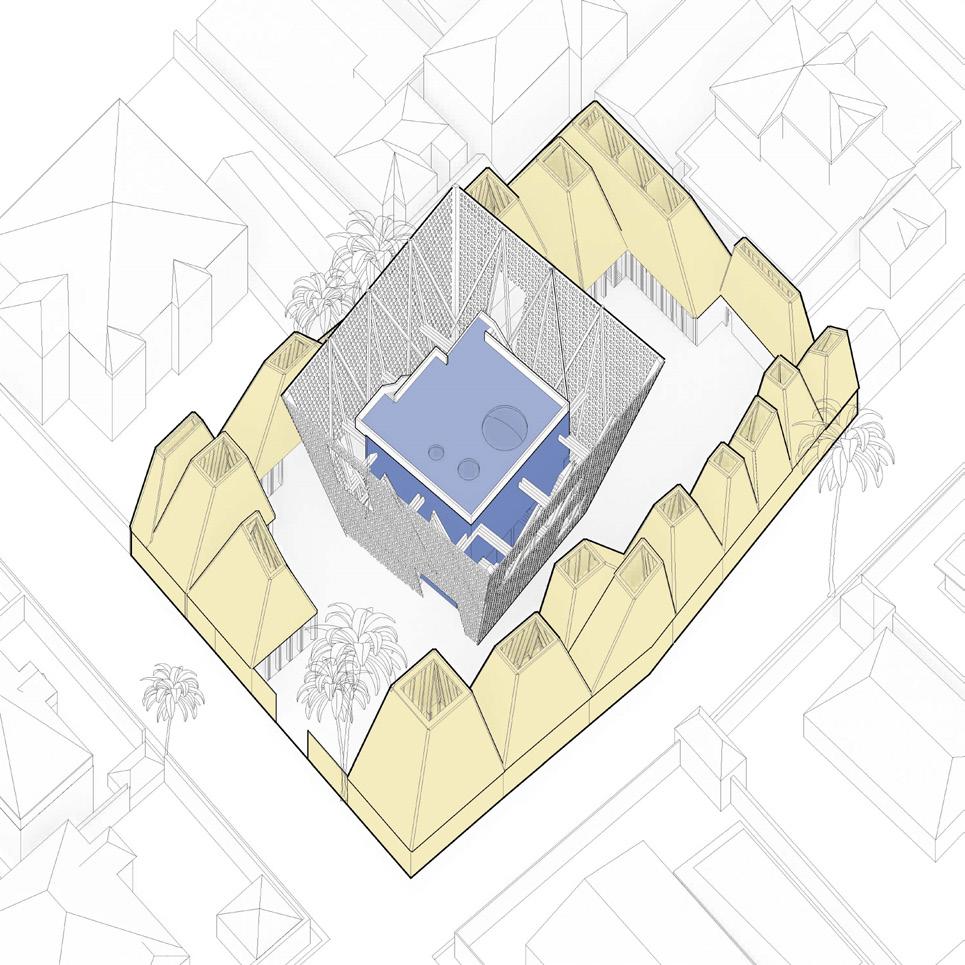
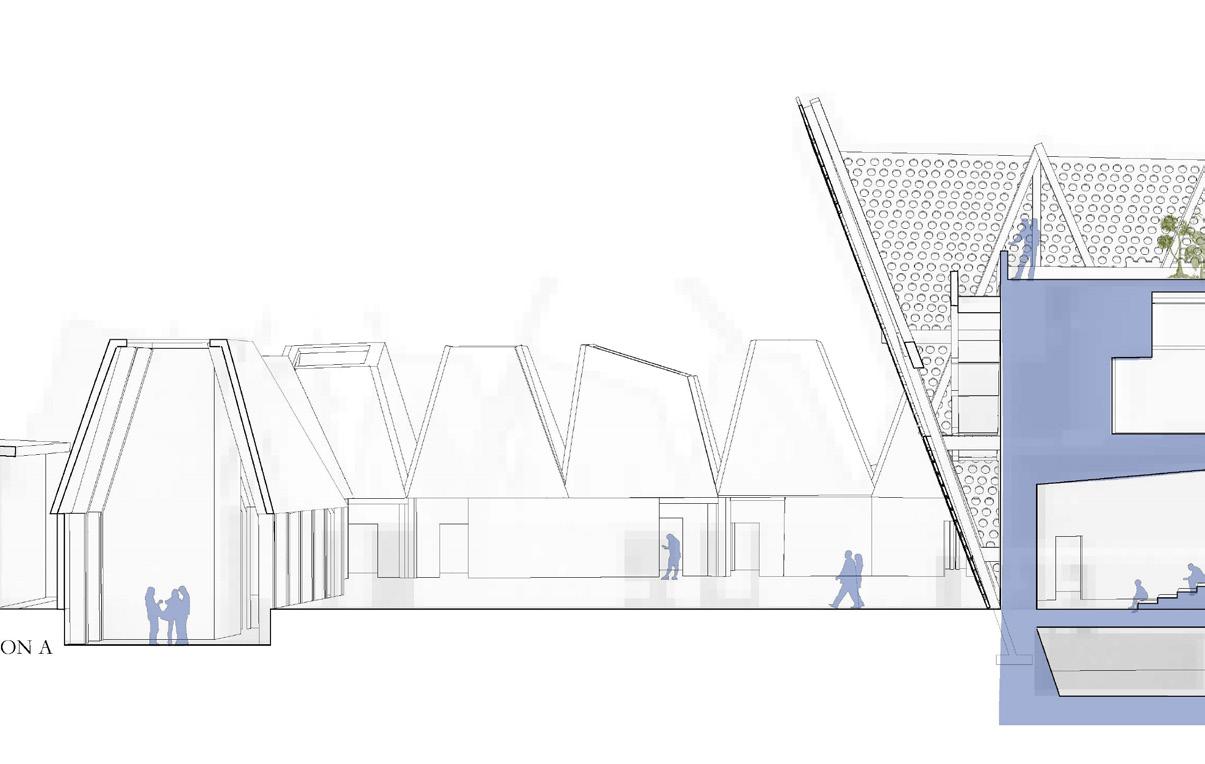
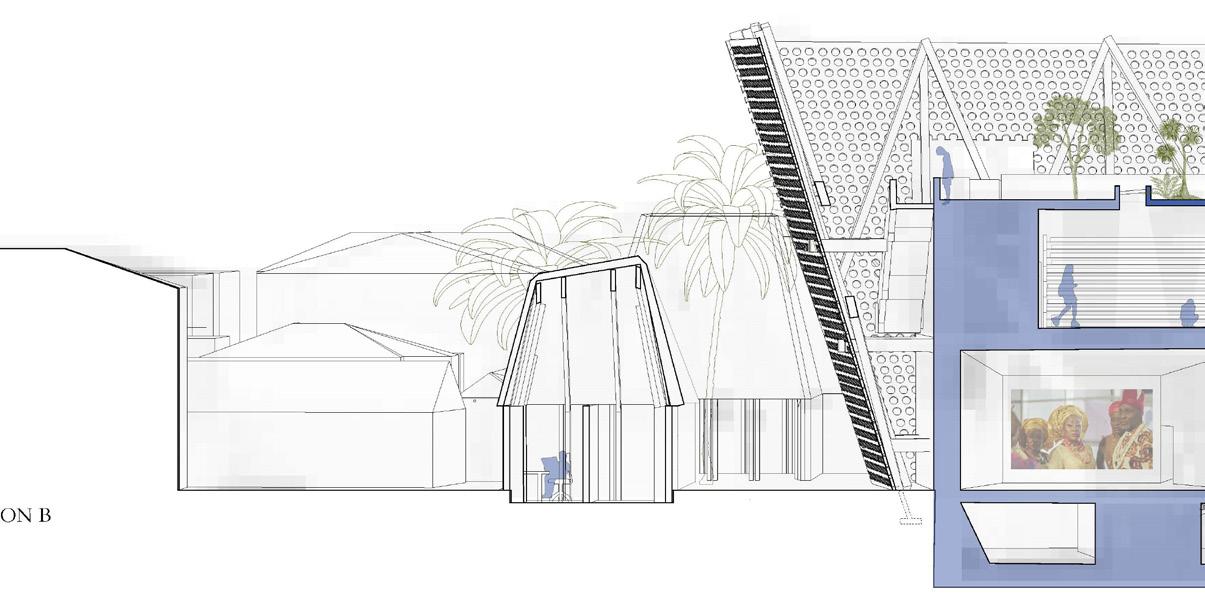
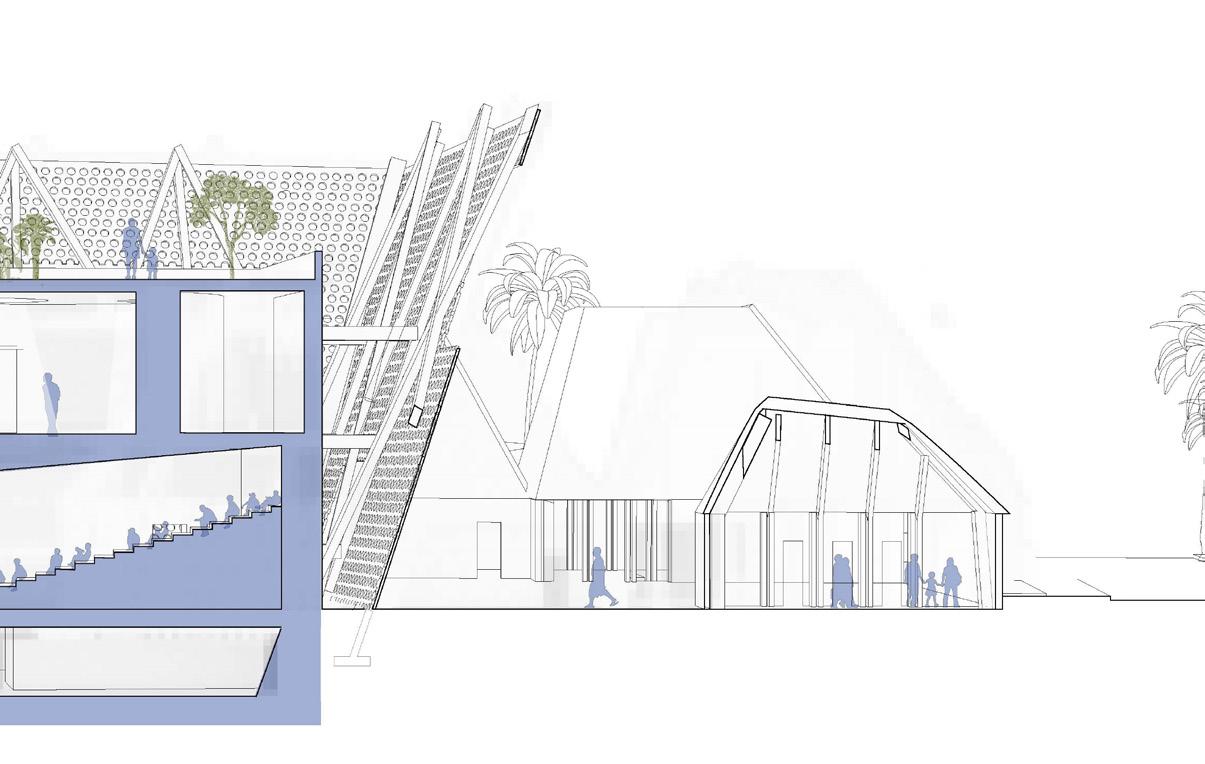
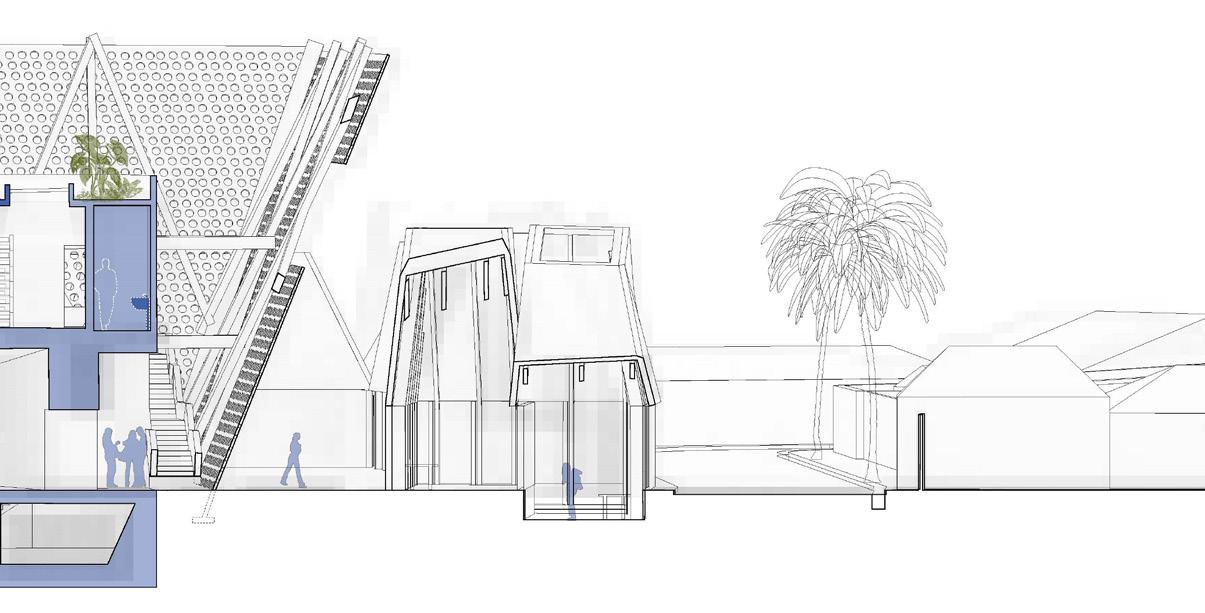
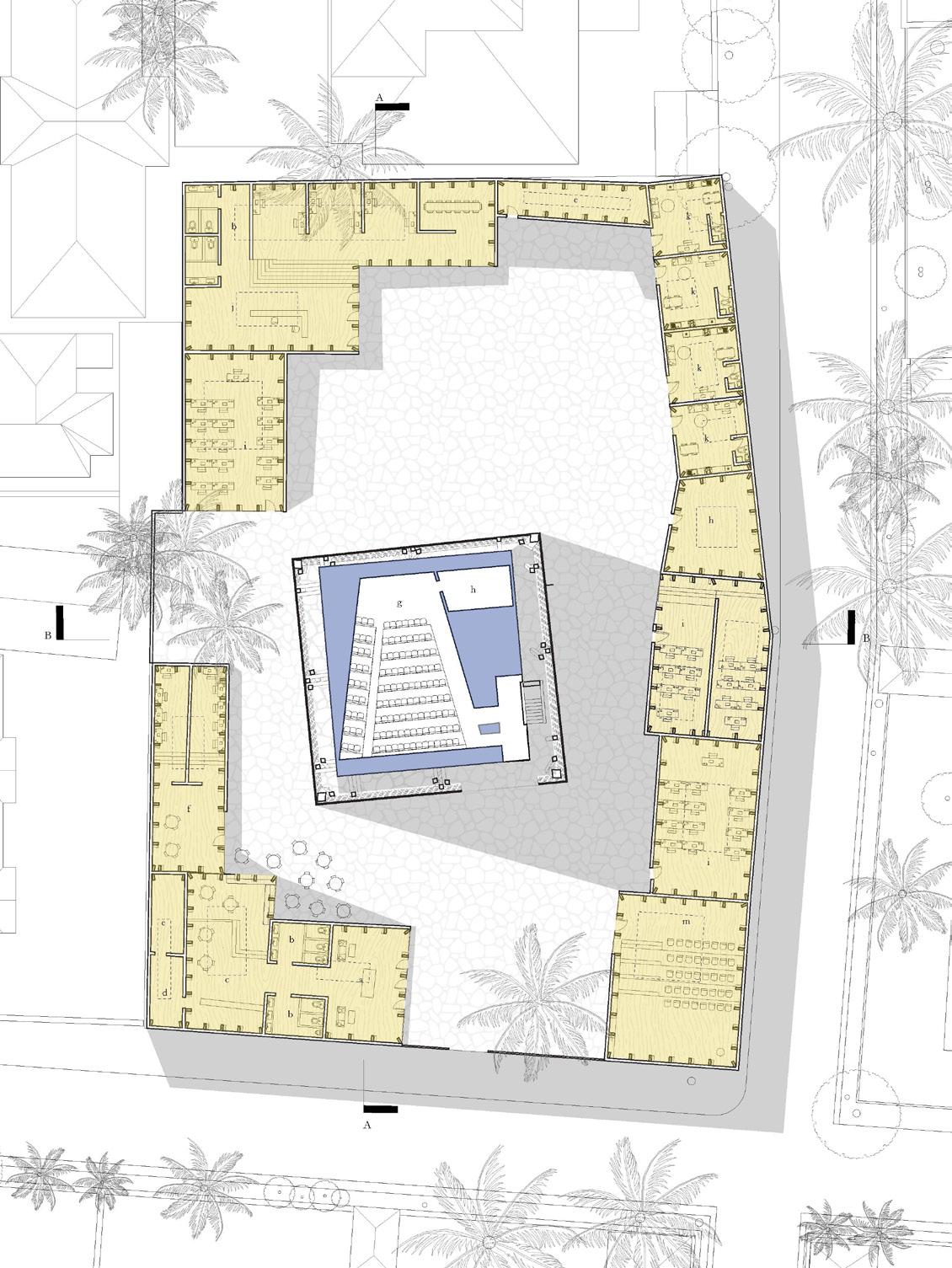
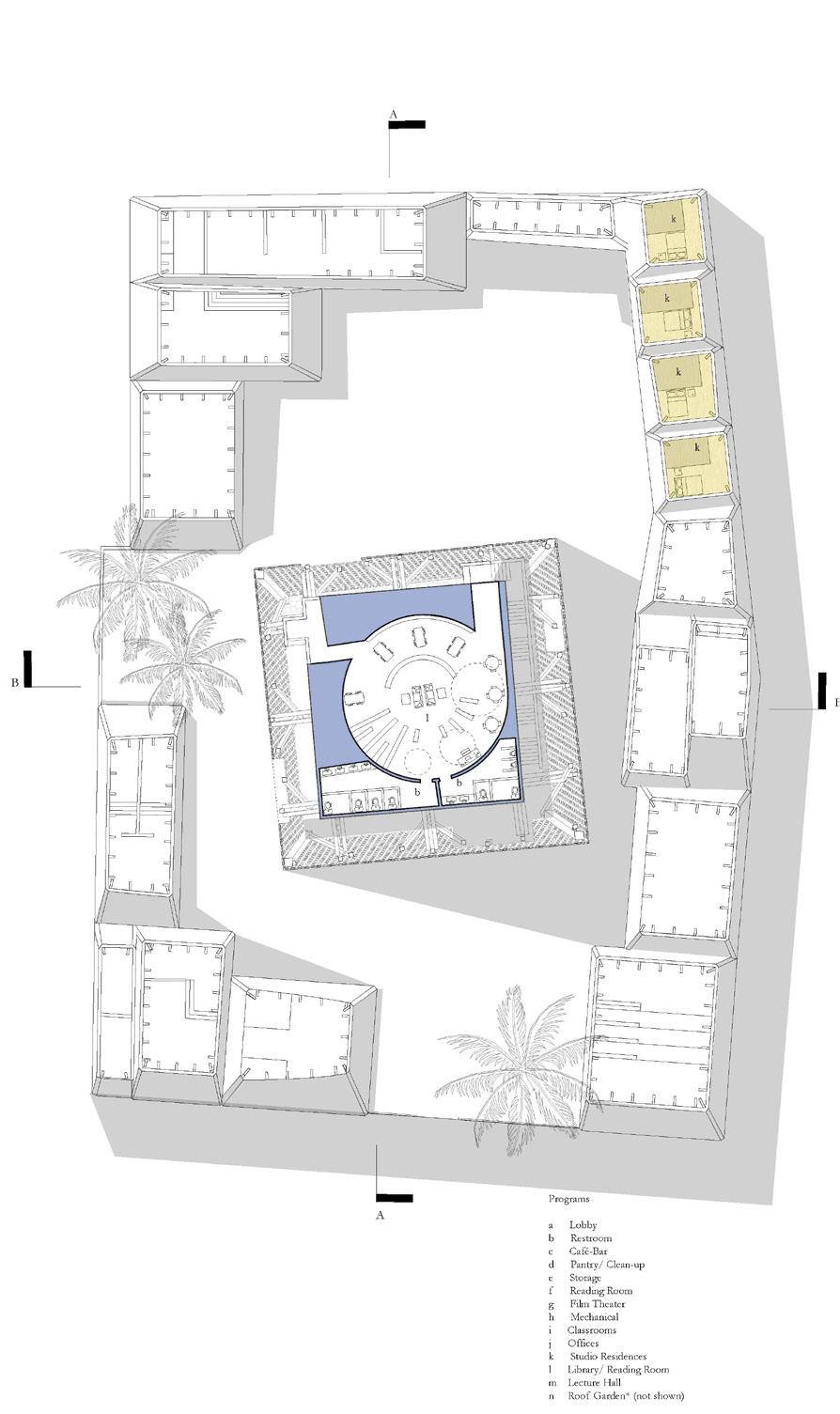
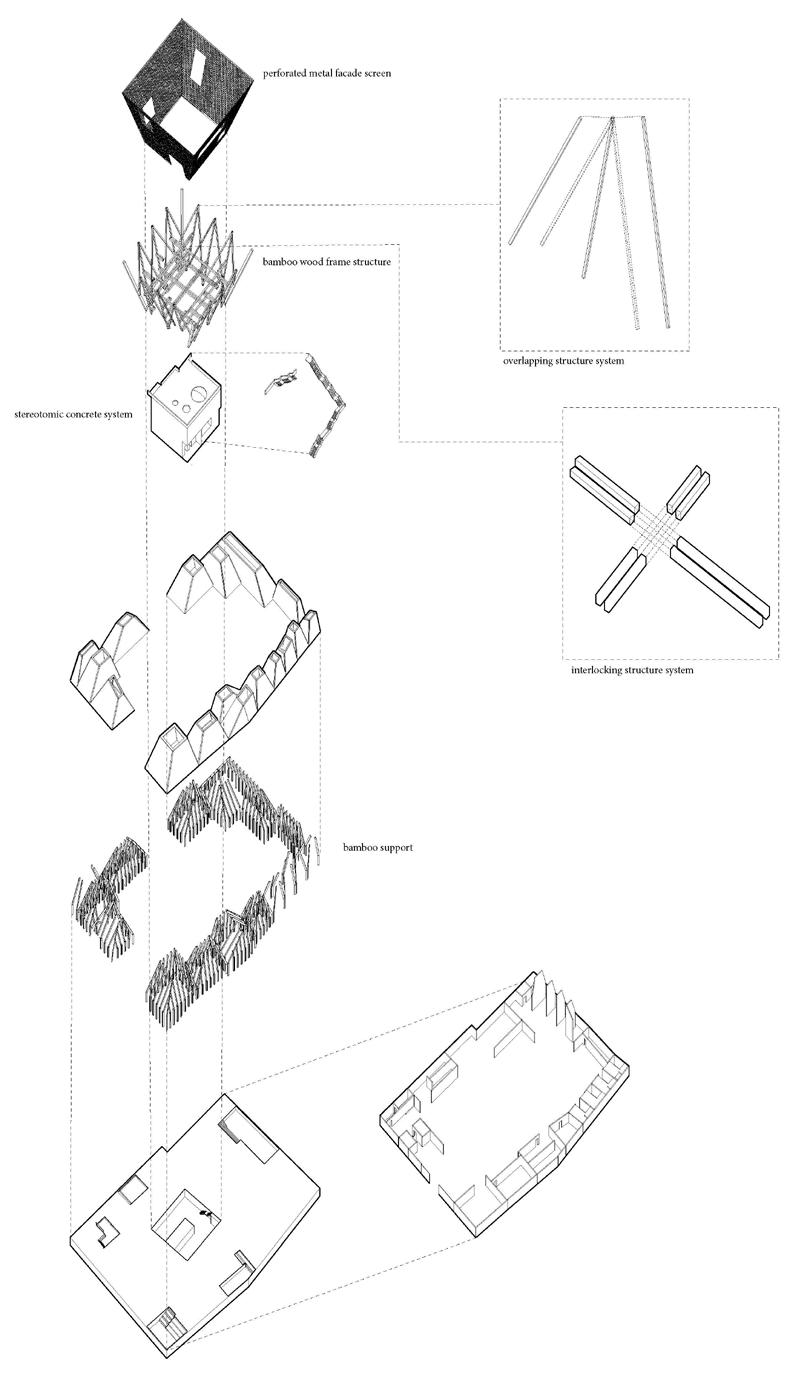
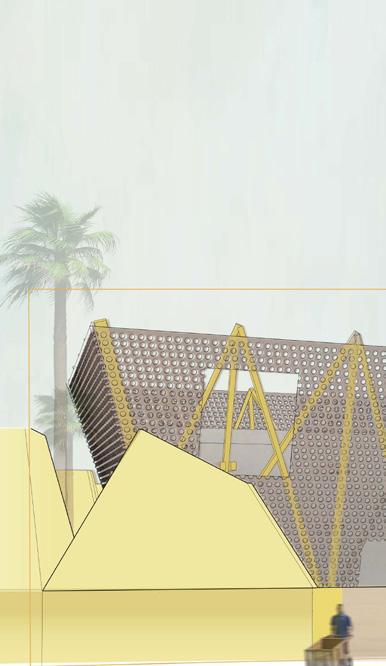
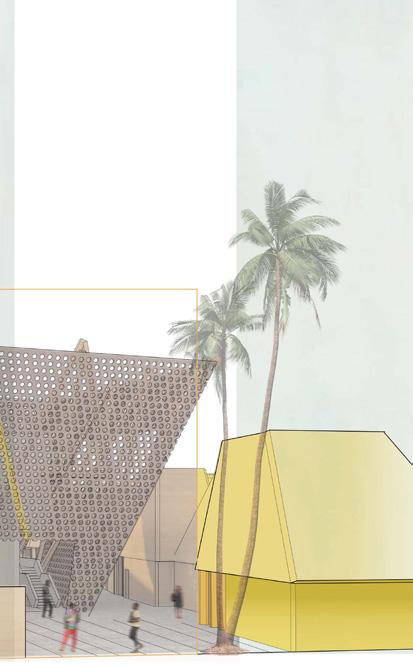
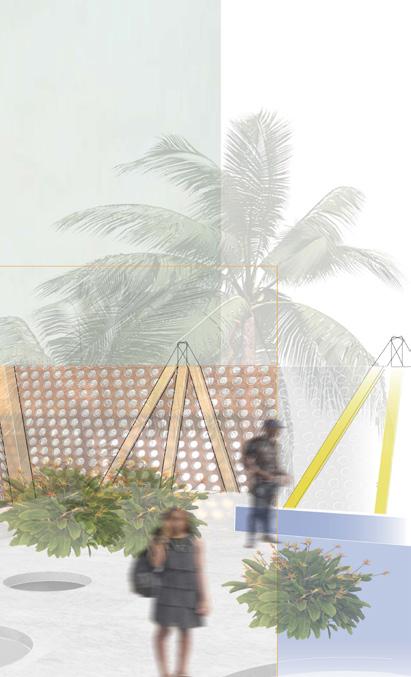
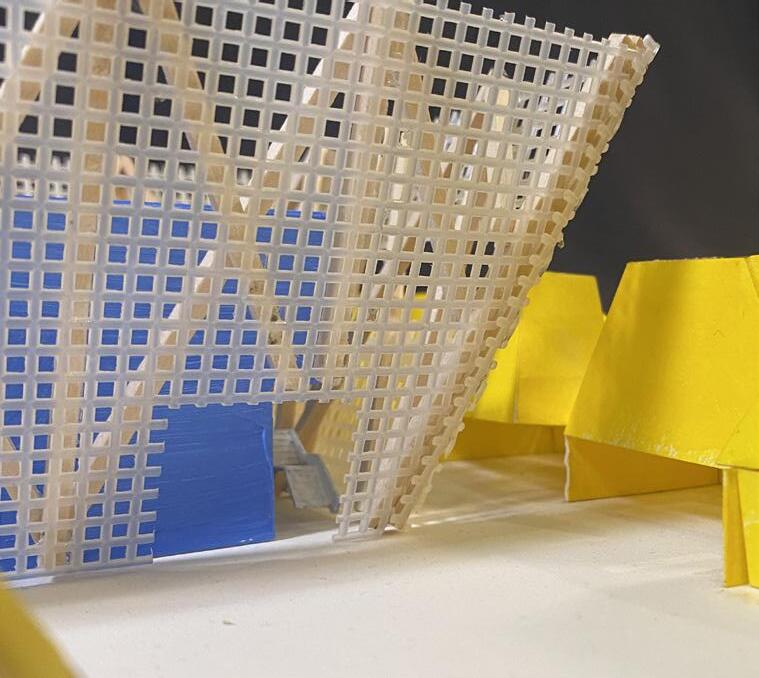
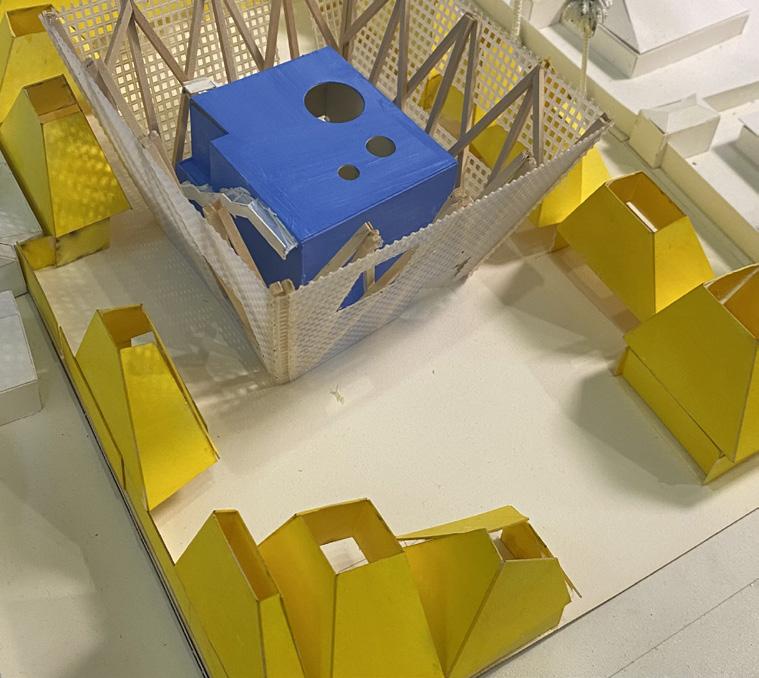
The proposed film school celebrates the rich history and cultural impact of Nollywood films by prioritizing spaces such as the film theater and library, positioning them as the “crown jewels” of the site. Enclosed within a monolithic cubic form, voids are strategically carved to create dramatic light-filled entrances and immersive interior spaces, offering unique experiences for both guests and students. This bold, stereotomic mass is surrounded by a lighter outer shell, inspired by the traditional impluvium roofs found in the region.
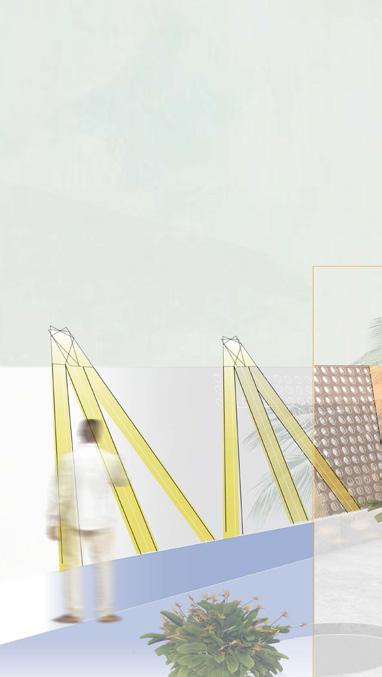
In Old Calabar, impluvium roofs are a common architectural feature in local typologies. Traditionally designed as rainwater collection systems, these sloped roofs help cool interior spaces in warm weather while framing courtyard-centered house plans. For the film school, this form serves a dual purpose: as a structural system supporting critical programs and as a roof design that introduces dynamic light patterns into adjacent spaces, further enhancing the school’s connection to its cultural and environmental context.
Drawings completed with Rhino3D, Adobe Illustrator and Photoshop
Axonometric
Ground Floor Plan
Second Floor Plan
perforated metal facade screen
stereotomic concrete system
bamboo wood frame structure
bamboo structure
overlapping structure system
interlocking structure system
Exploded Axonomteric Perspective
STRANGE COMPOUNDS
04 SOIL FOR THE CITY
New York, New York
Prof. Rami Abou-Khalil
In Collaboration With: Yingtong Su, Audrey Deliah, Yanxi Liu
An investigation of soil found throughout New York City led to a design of a soil bank that facilitated, recycled, and distrubuted soil to communities and future projects in the city. The following work is divided into three Acts: Act I,II, and III.
Drawings completed with V-Ray, Rhino3D, Adobe Illustrator and Photoshop
Act I
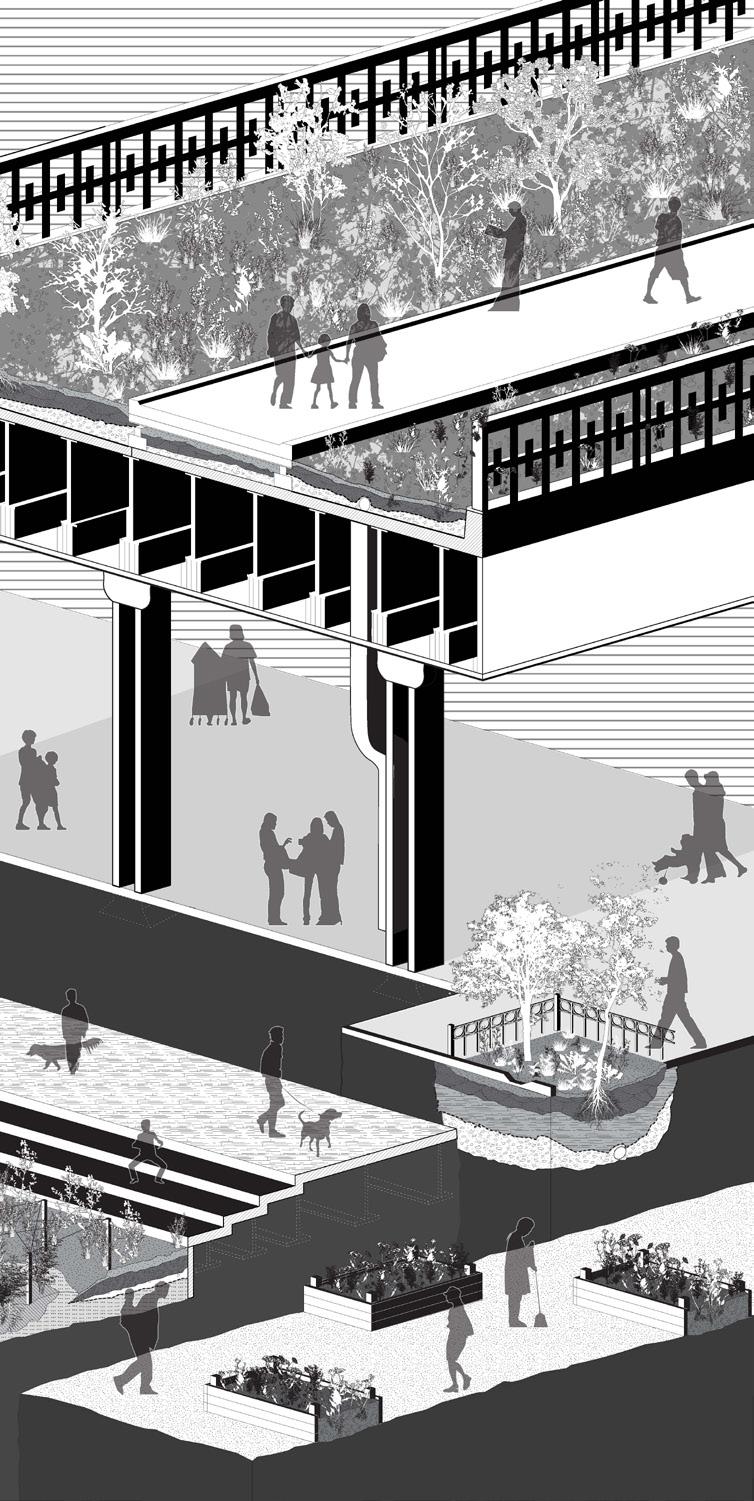
Working individually, a closer look at the presence of external (human) factors when dealing with soil in an urban context is shown through a ‘superdrawing’. The different chunks narrate the different lived conditions of soil within the city. Looking into more developed spaces such as the High Line and the Gansevoort Dog Walk in comparison to spaces more prone to wear and tear, such as community gardens and bioswales, offers a unique perpective on differnt layers of soil necessary to maintain different spaces.
Act II
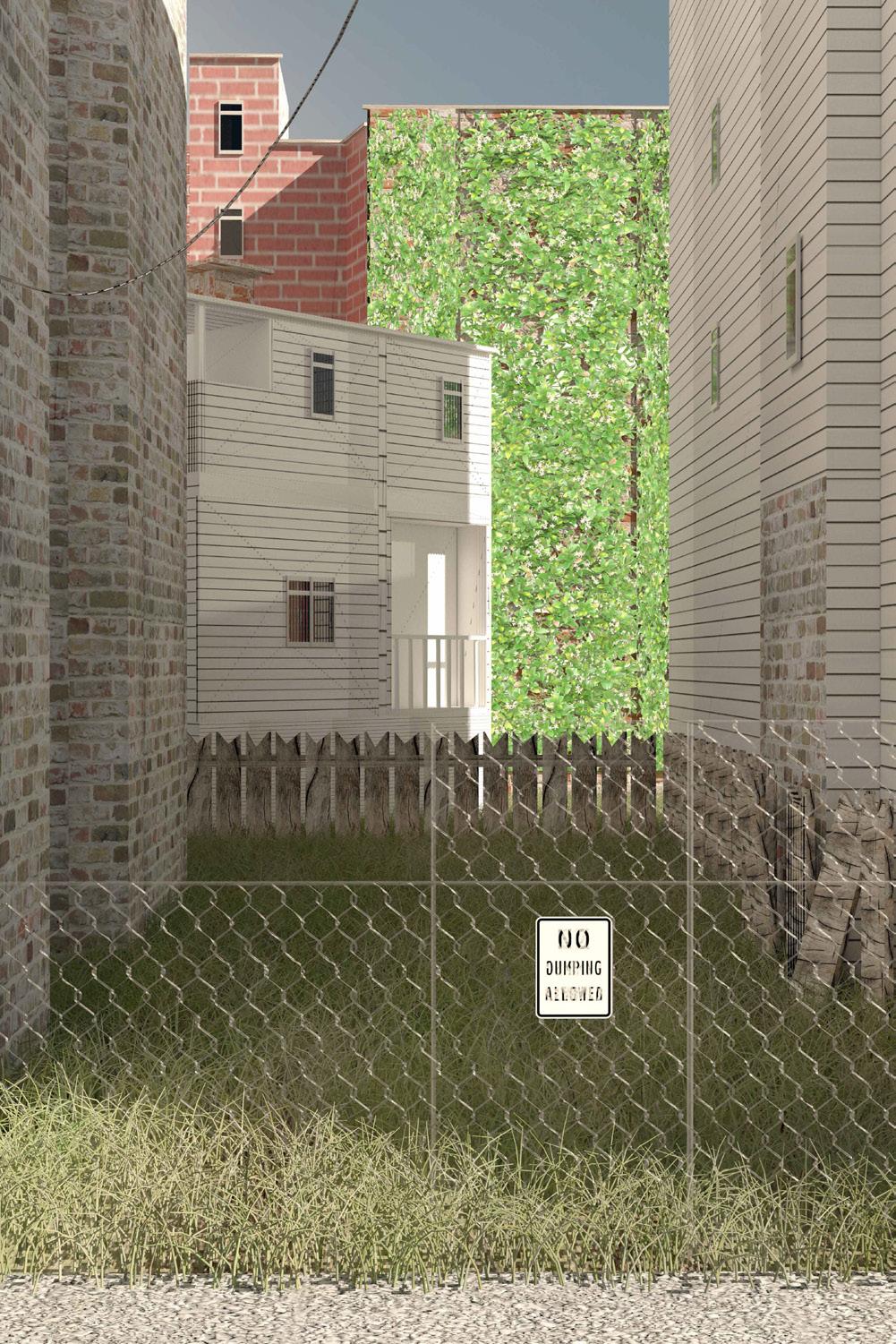
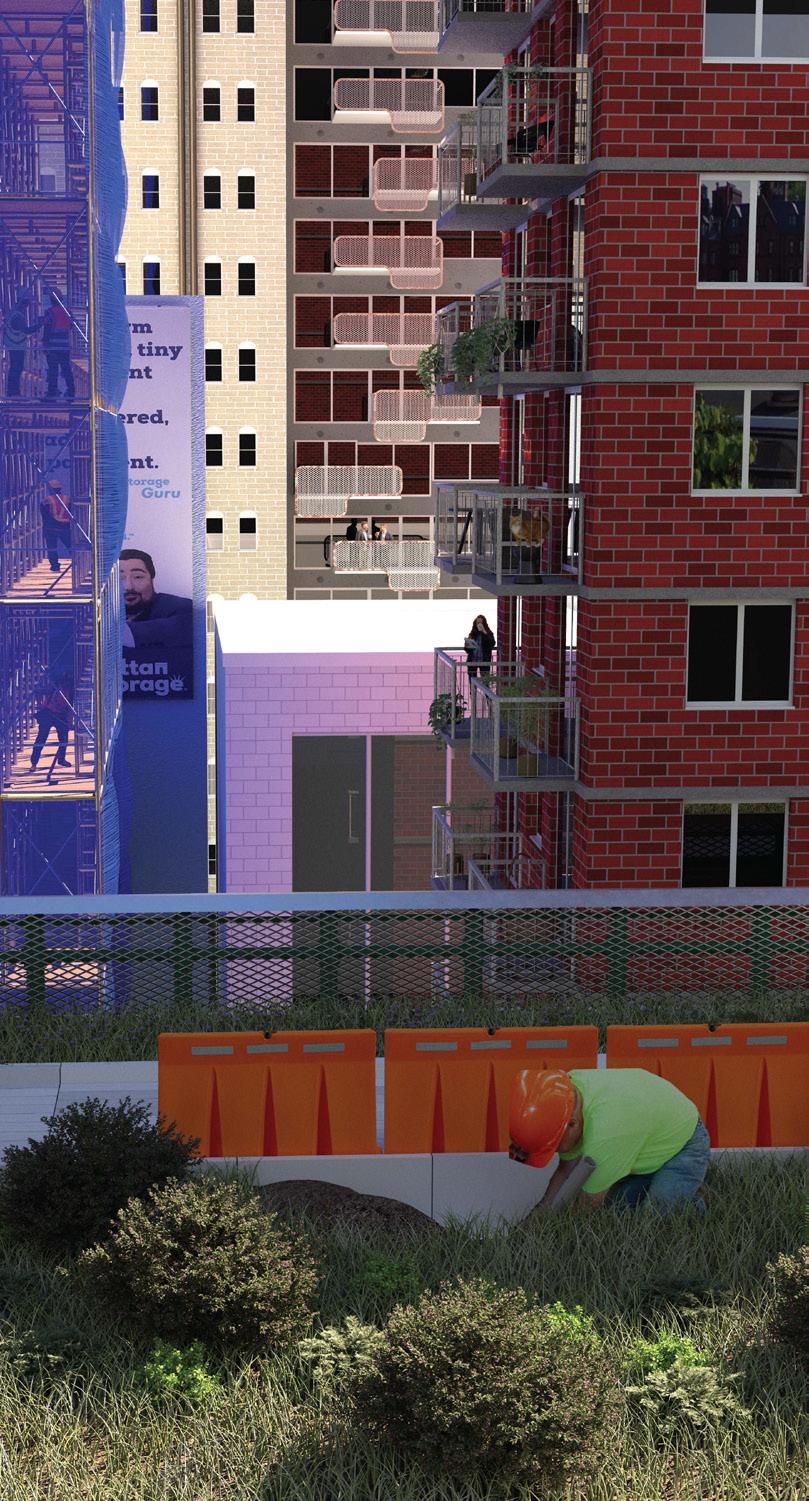
Combining individual Act I into pairs, a diptych begins to reveal the role in soil in ‘civilizing land’- or lackthereof. On the left, there is close investigation into infill lots in Harlem, and how neglected soil has been used as a zoning device to limit population growth within the area. On the other side, there evident economic value in soil found in the High Line and its neighboring context within Hudson Yards.
Left: Completed by Yingtong Su Right: Completed by Sukanya Handique
Act III
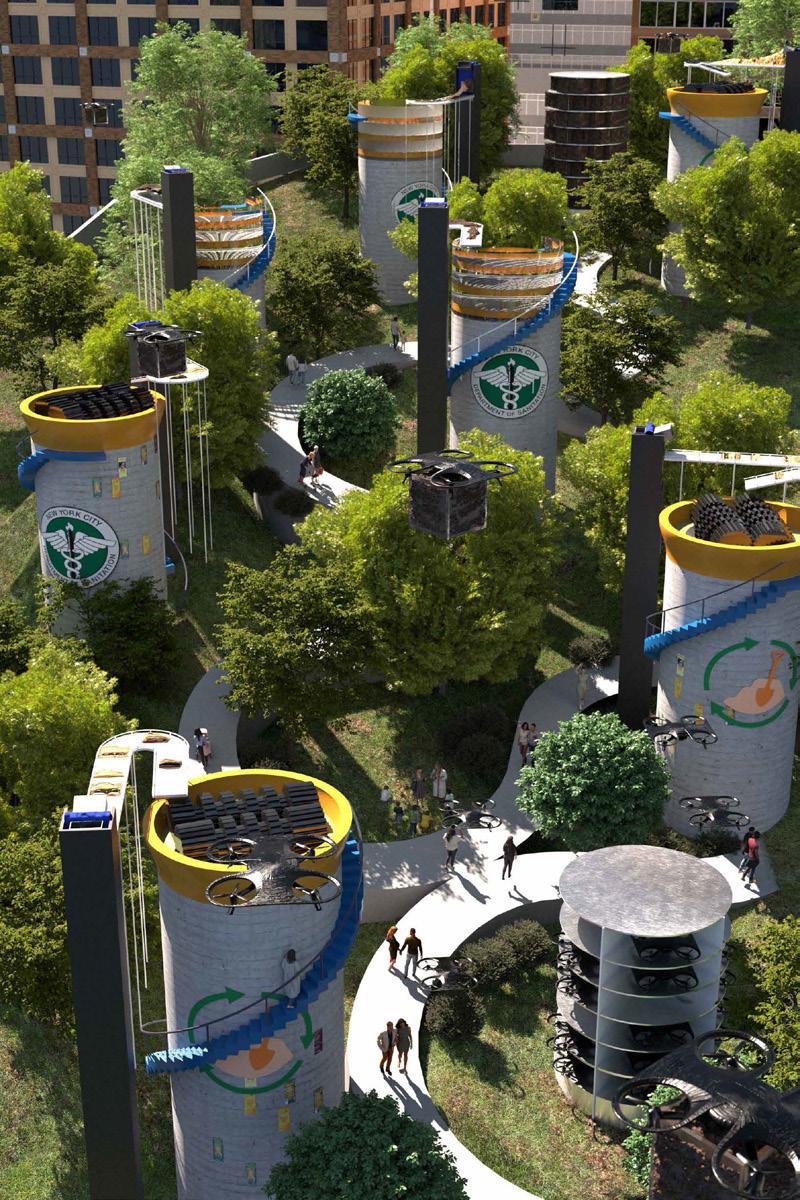
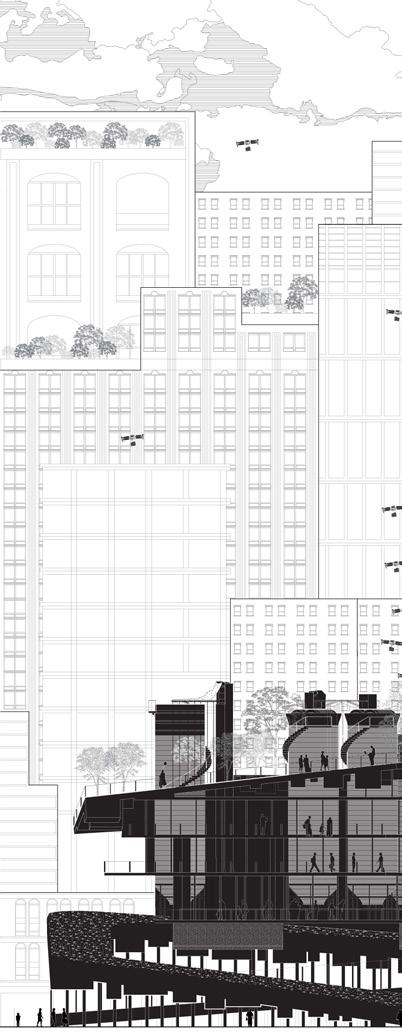
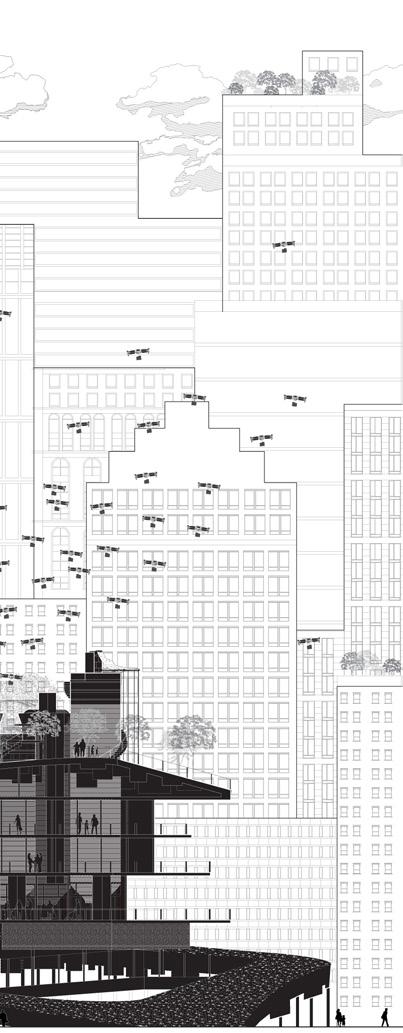
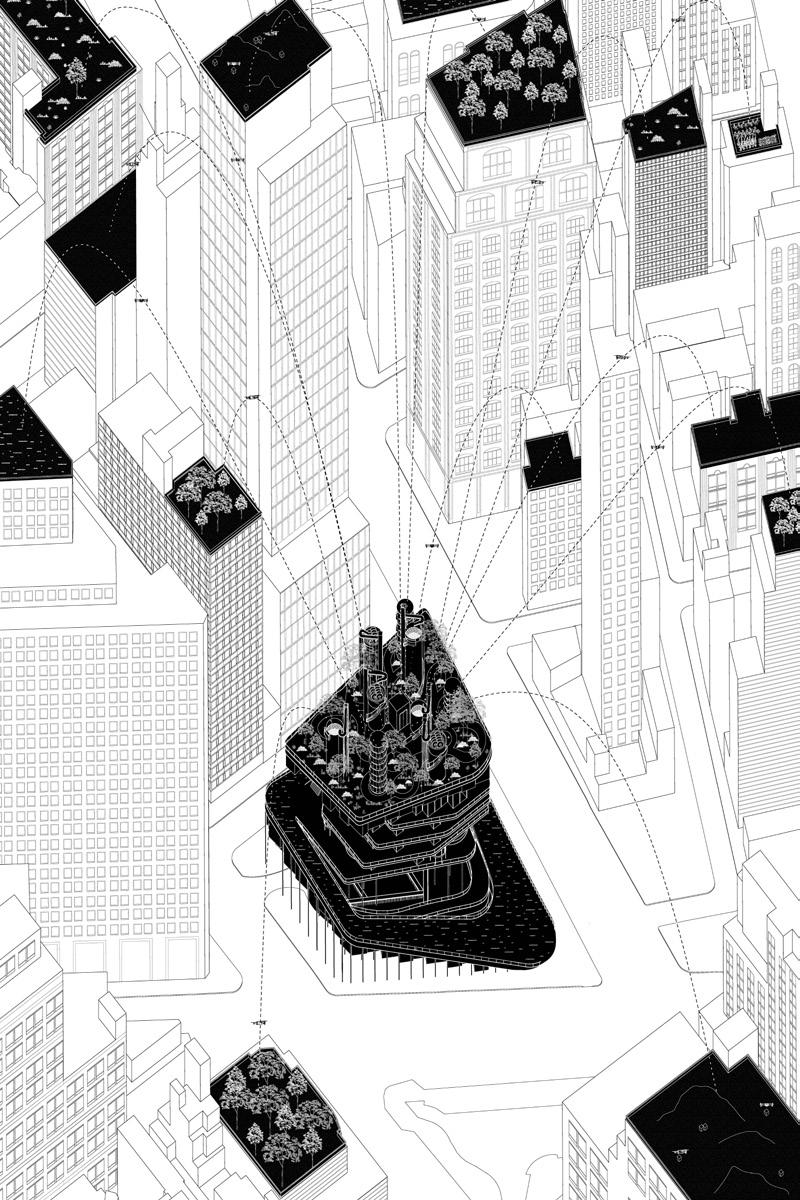
Synthesizing past work on NYC soils to respond to systems working in Manhattan, this project works in tandem with newly placed legislations in NYC: Local Laws 92 and 94, in conversation with Local Law 85. The proposed structure treats processes of soil distribution and recycling as an exhibition, where workers and guests alike can interact and witness the machinery and efforts made when thinking of the future of rooftop spaces throughout New York.