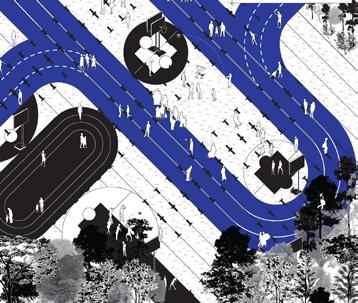
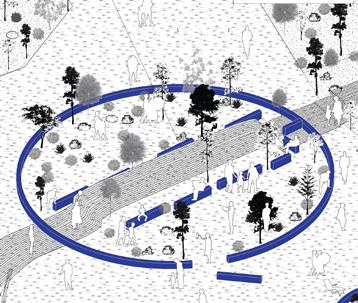
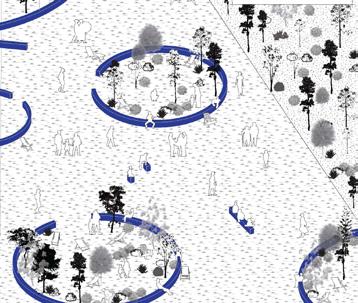
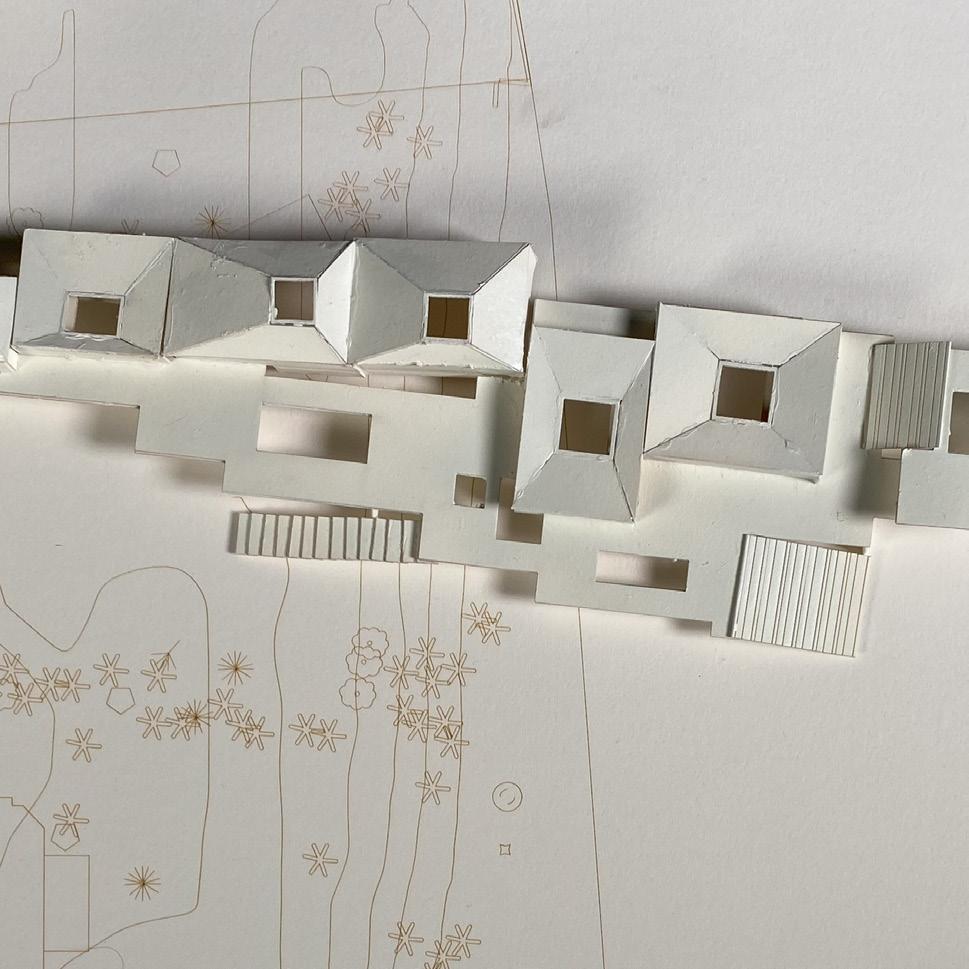
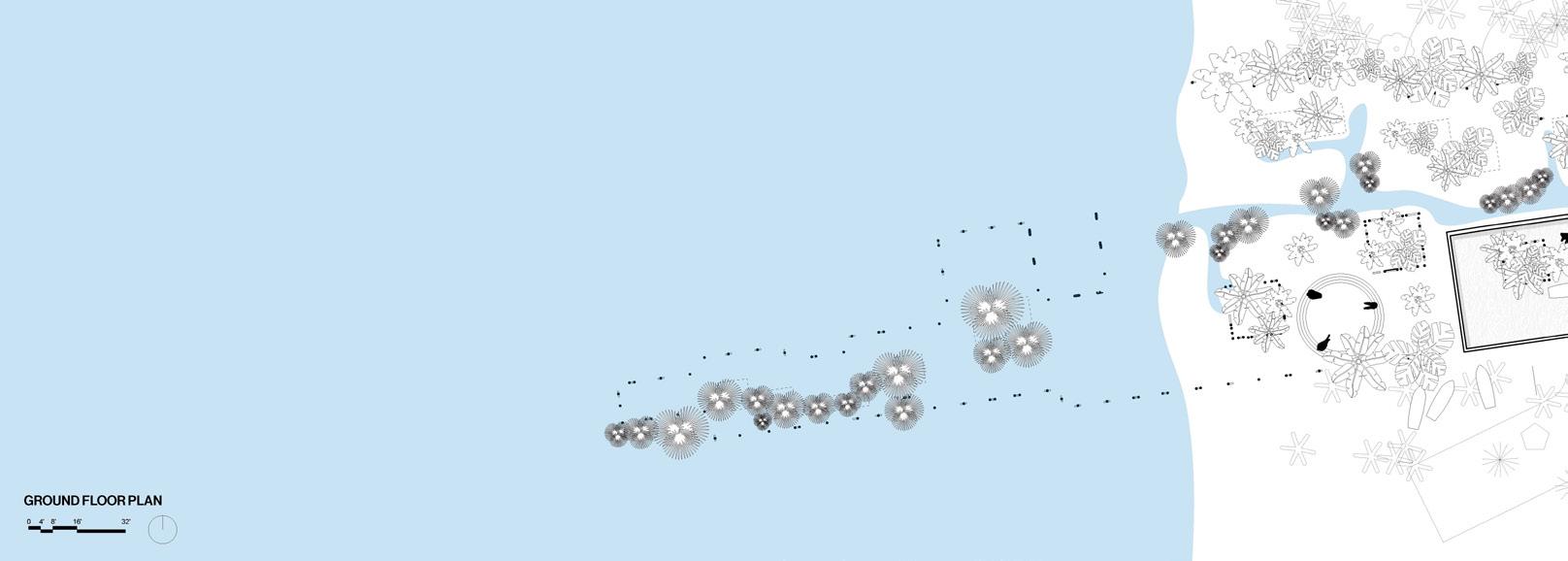
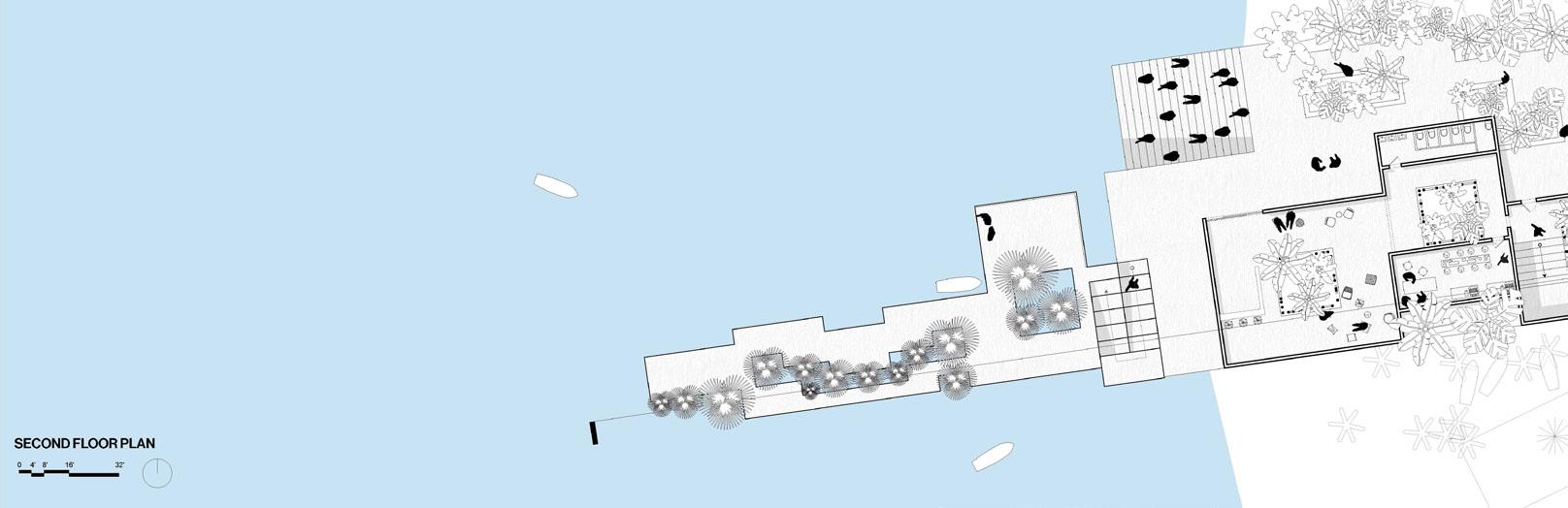
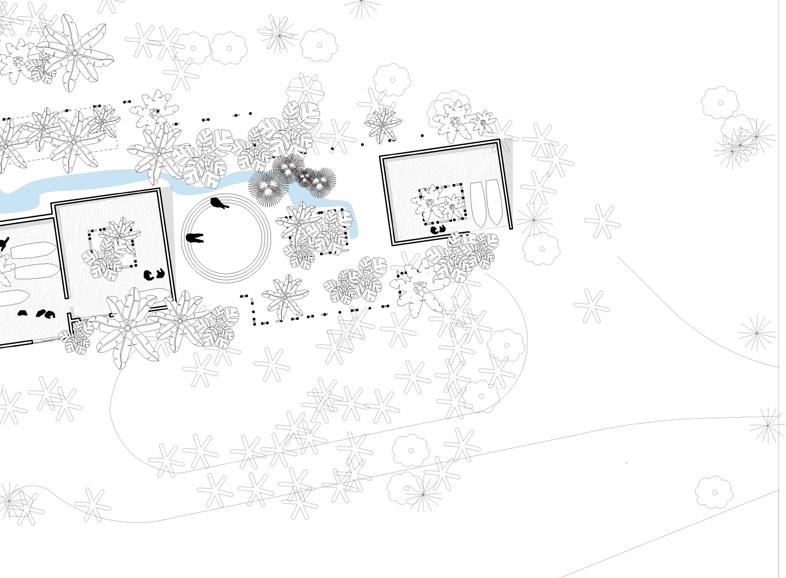
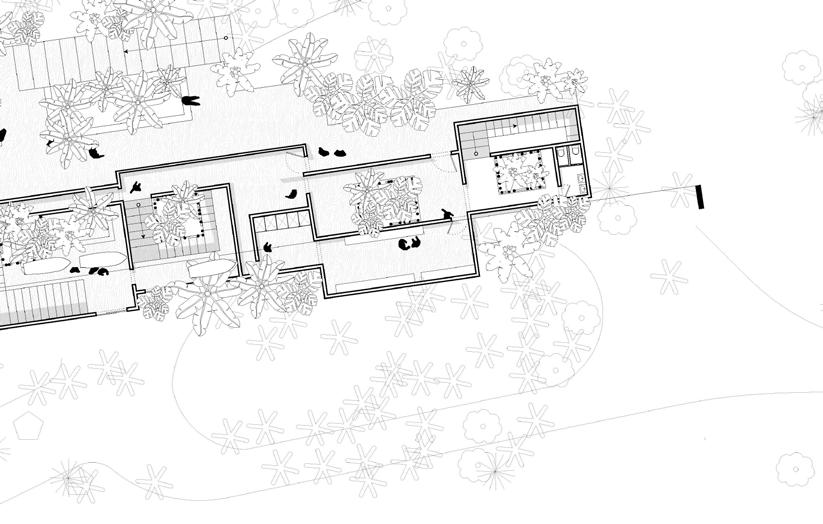
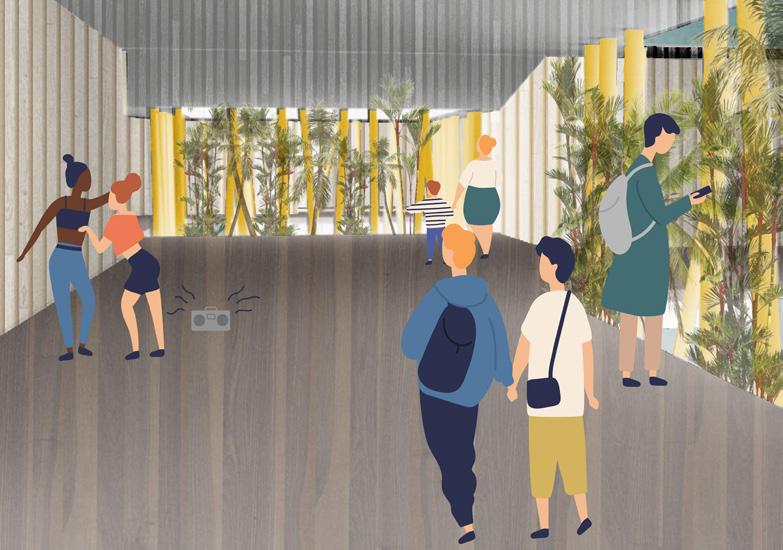
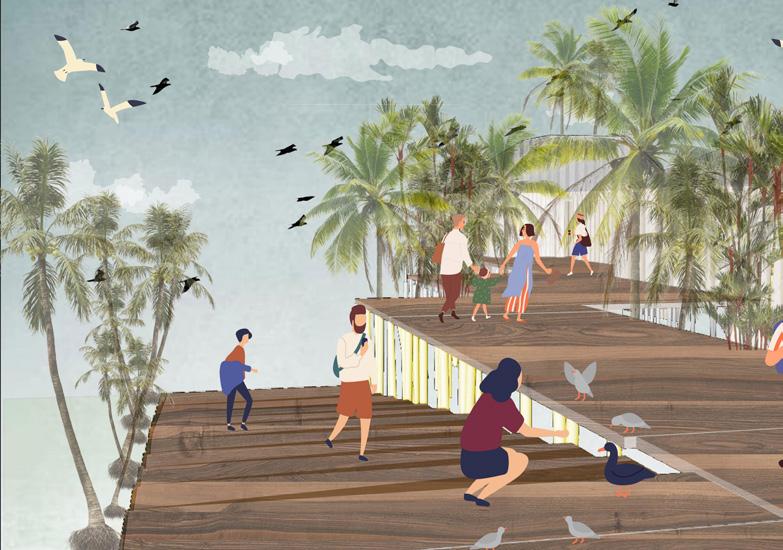
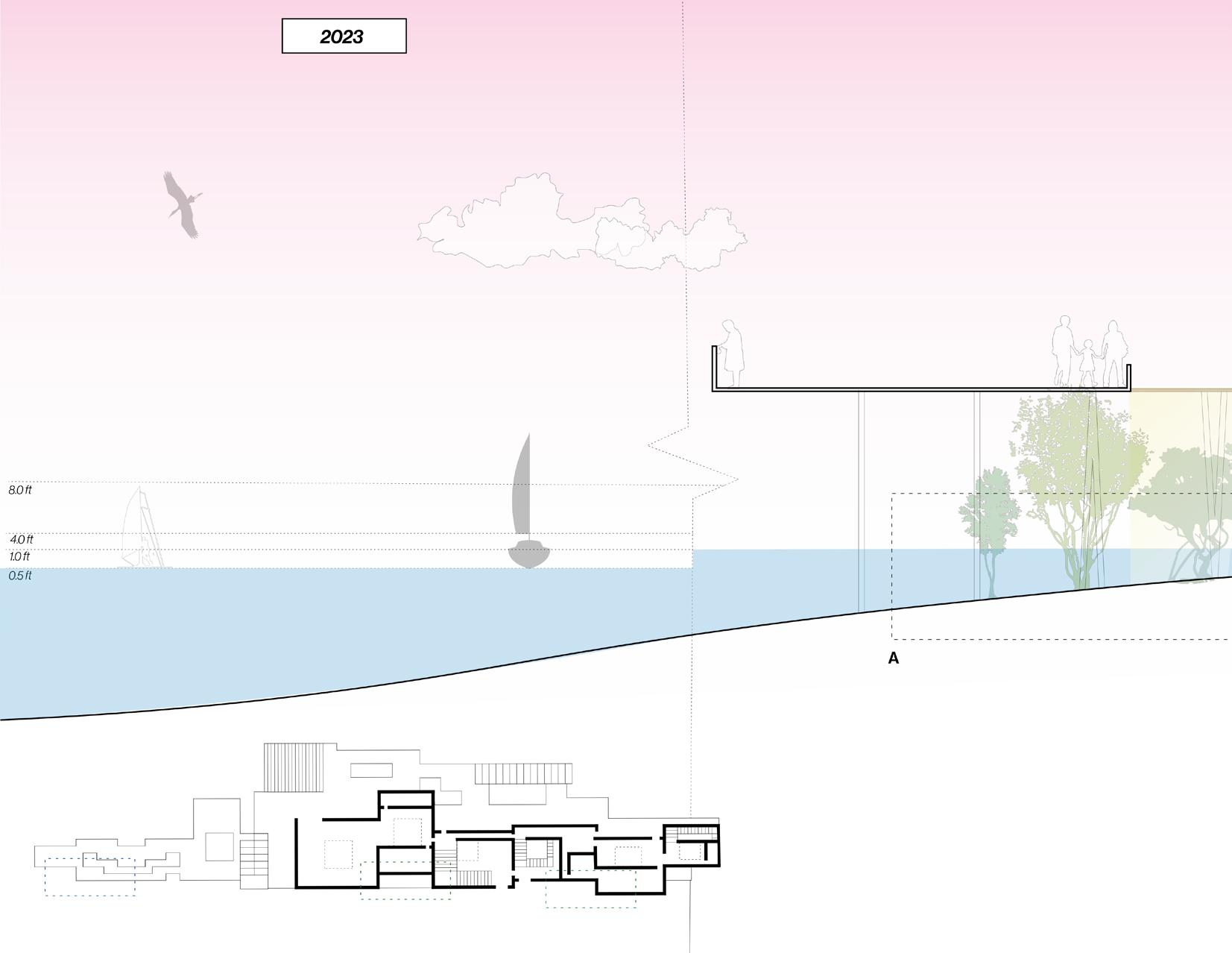
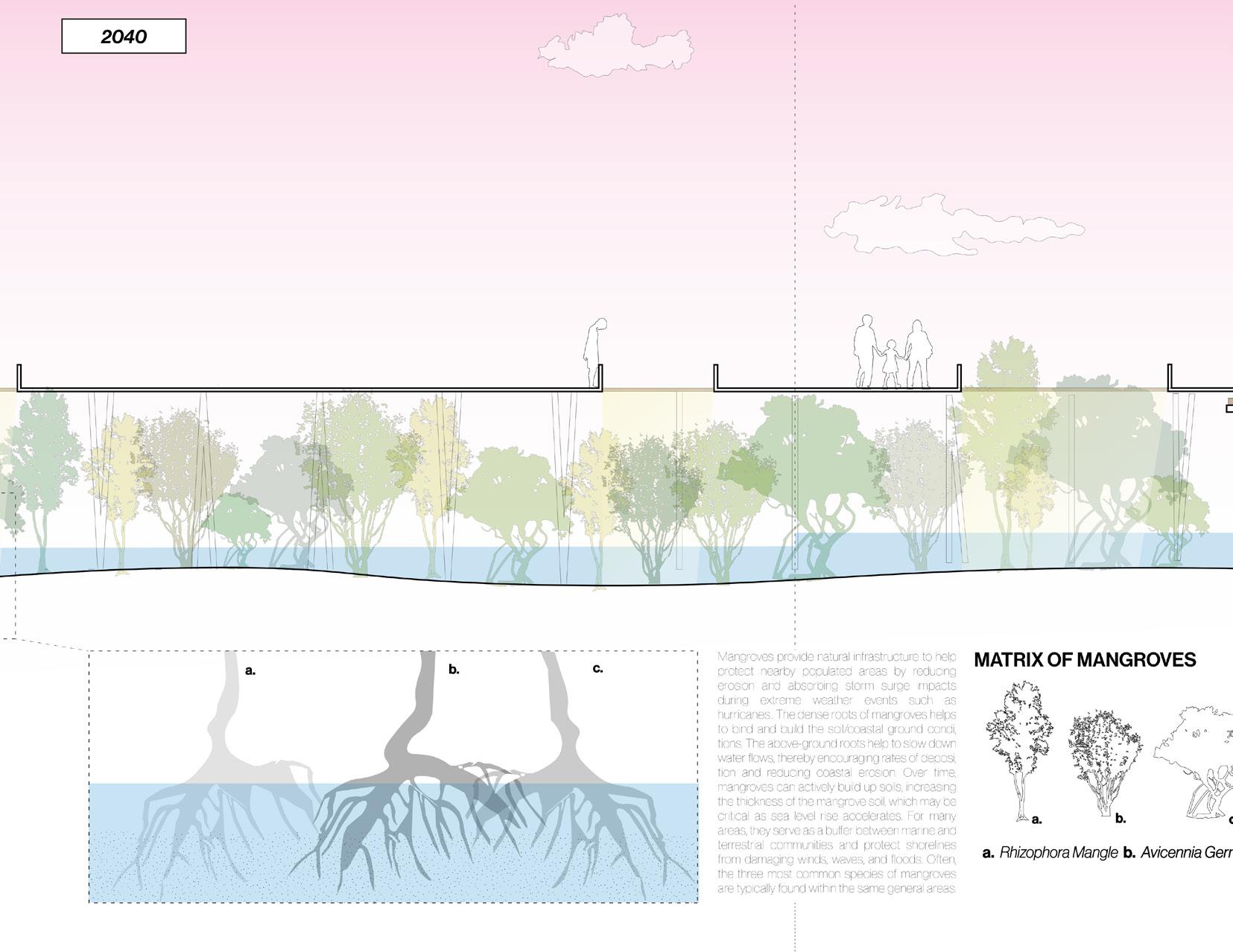
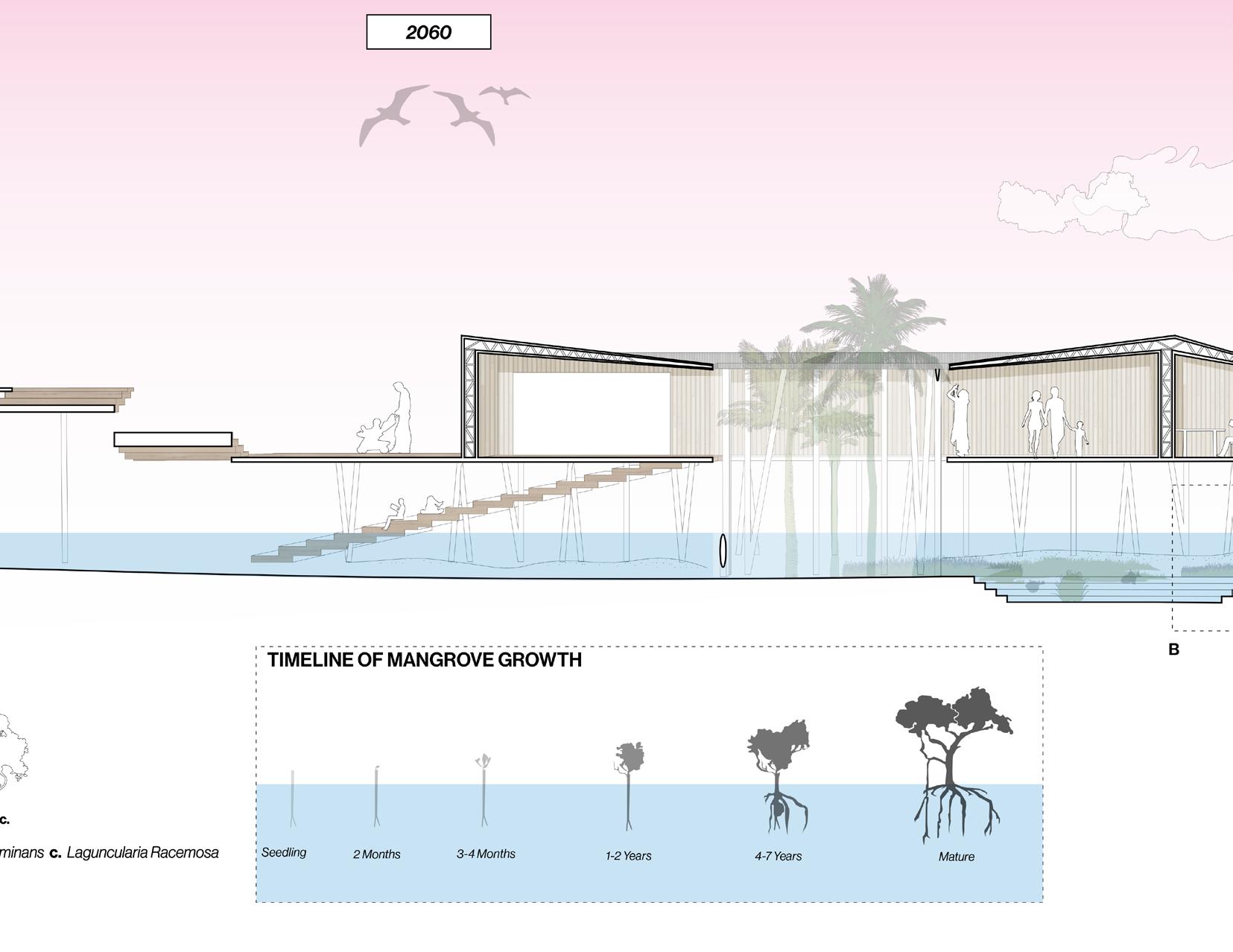
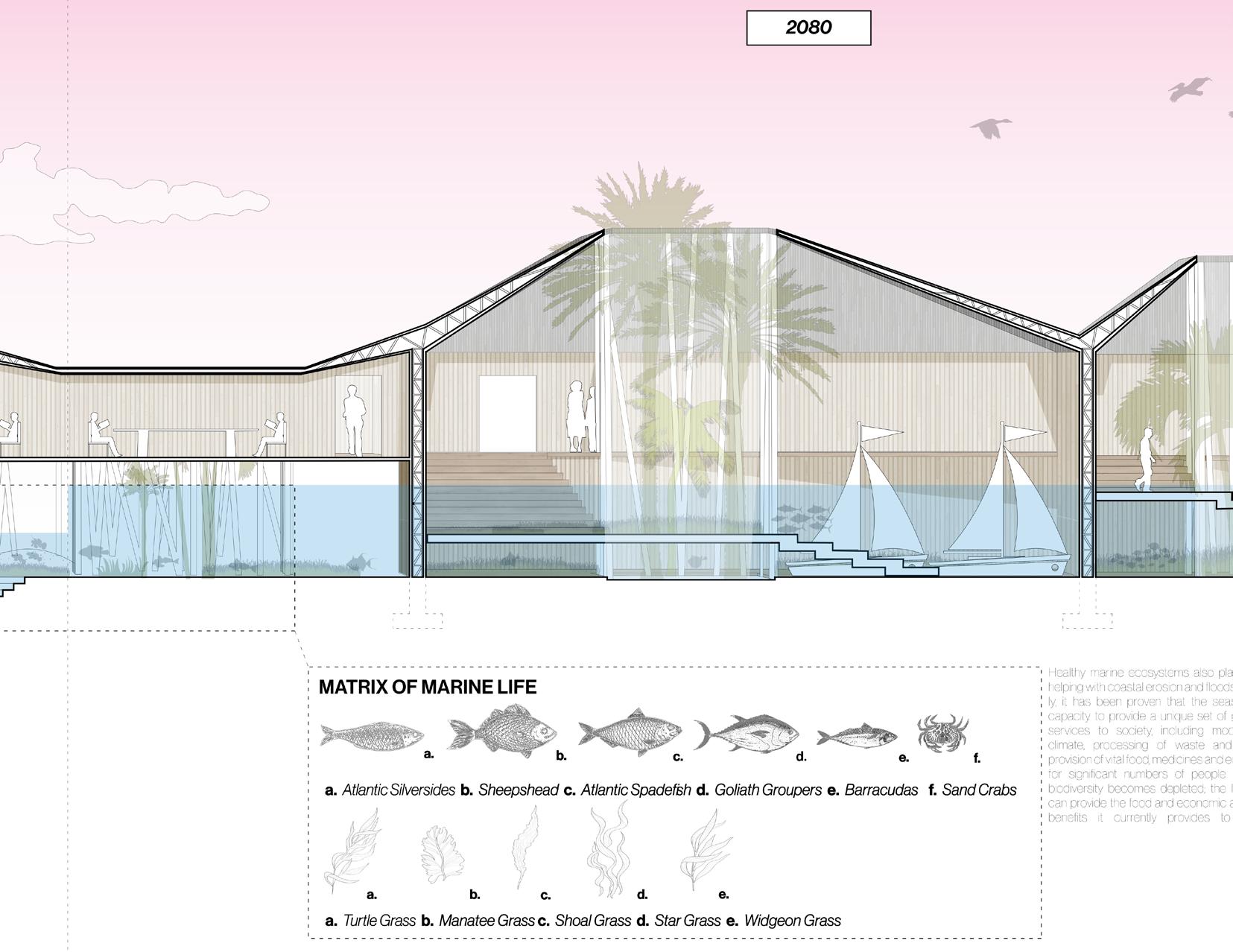
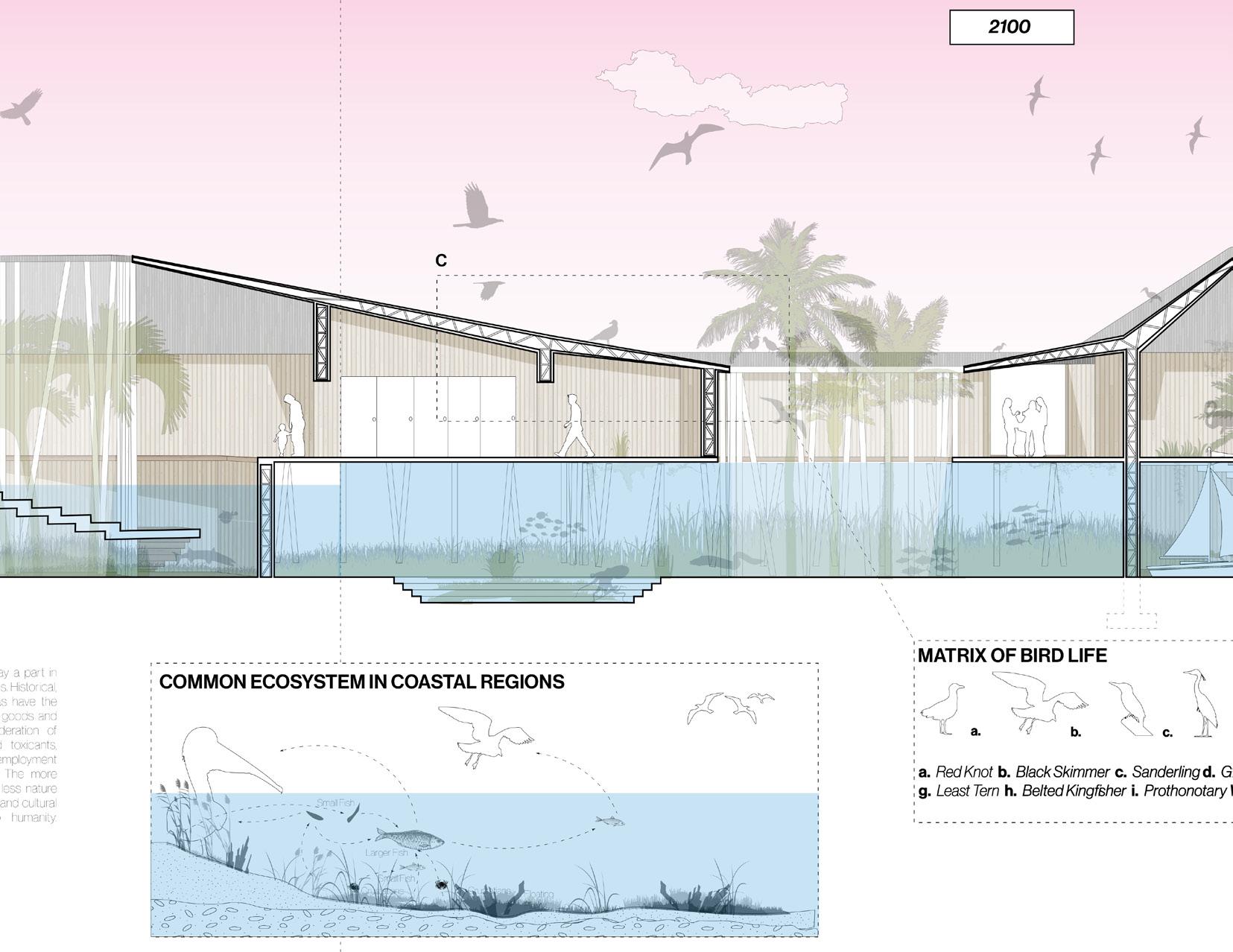
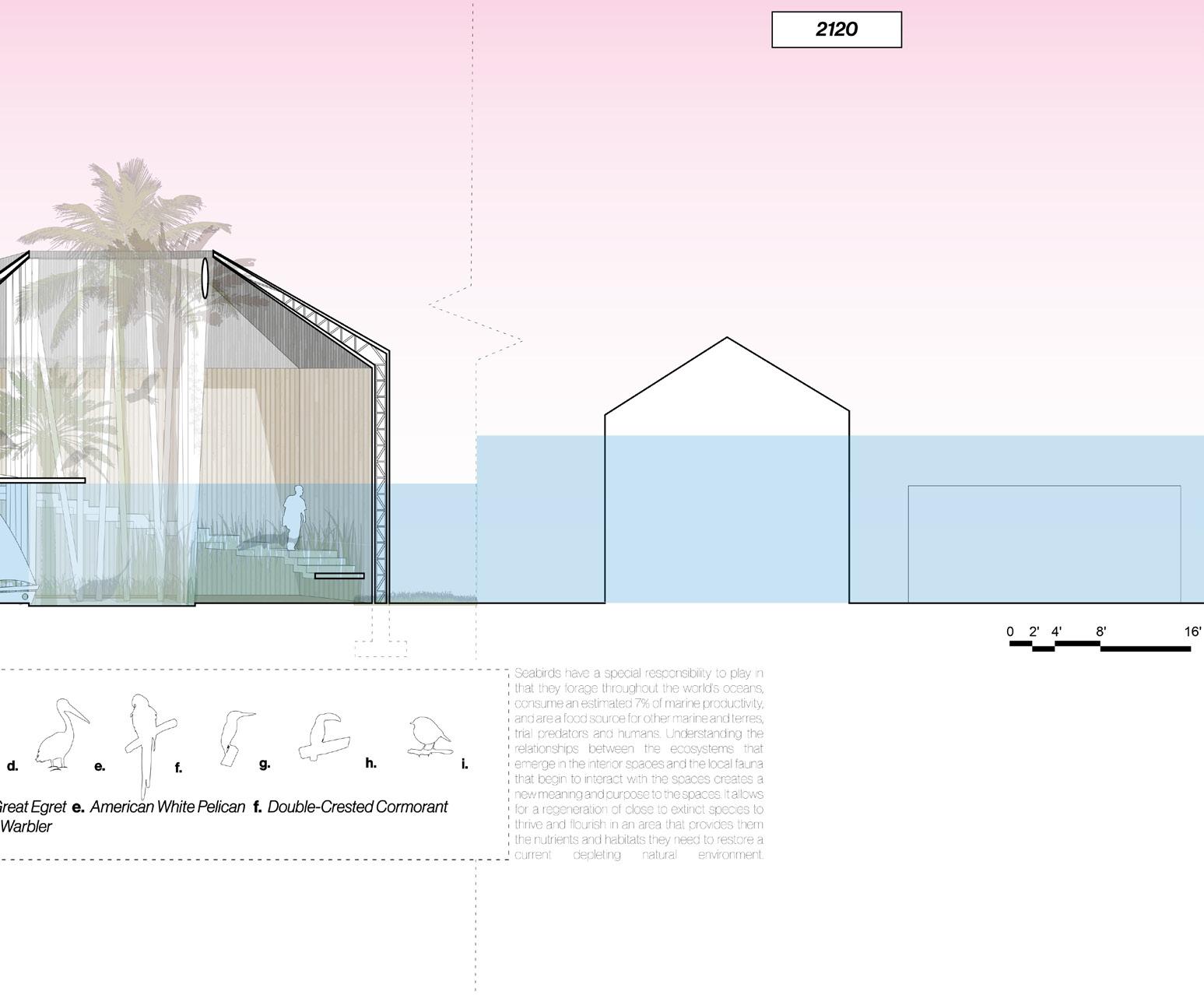
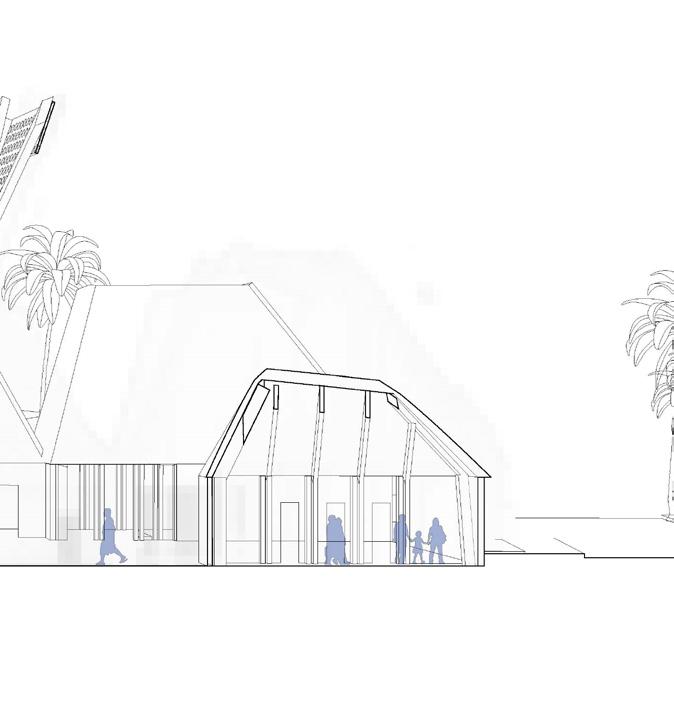
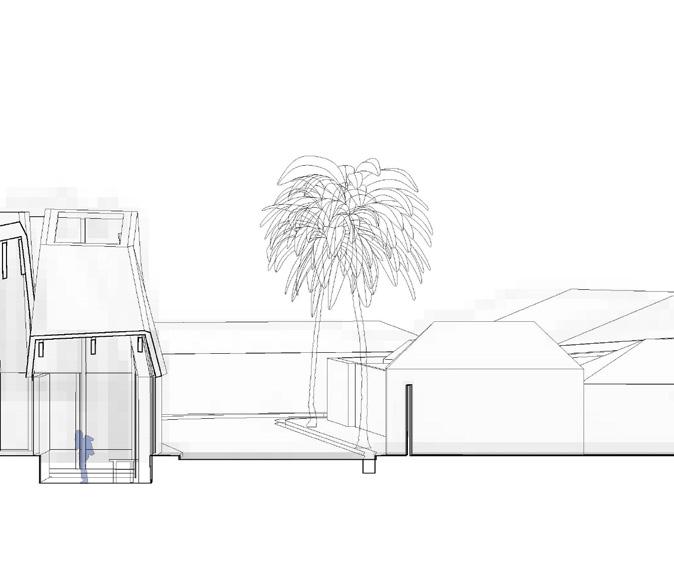
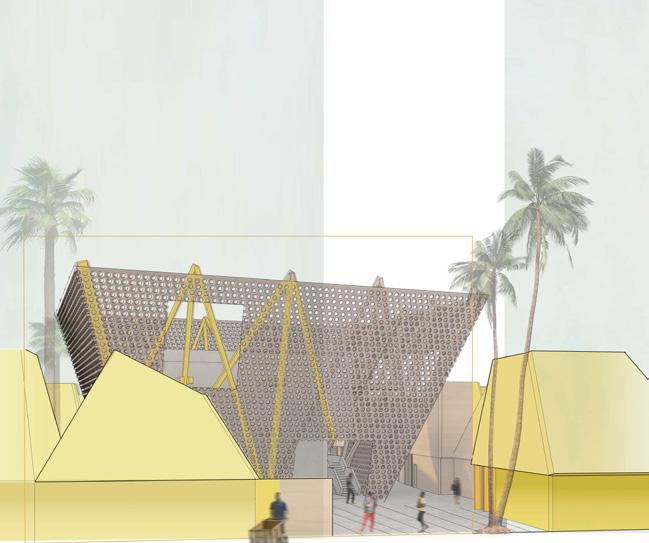
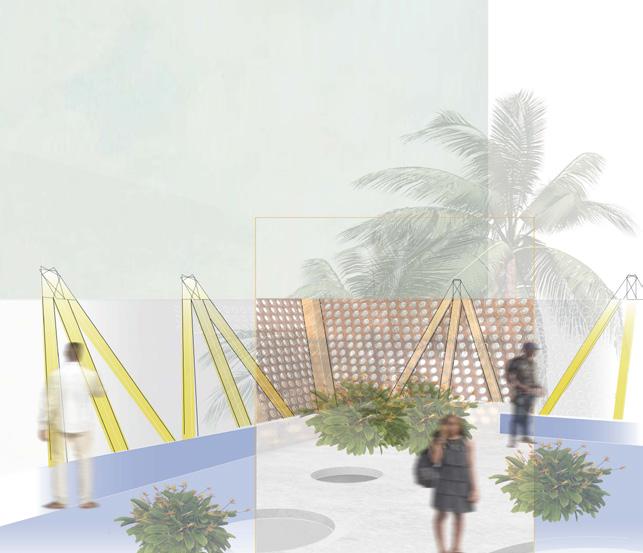
“New College, New Boathouse” is a design proposal for a liberal arts college on the Gulf Coast of Florida, blending temperance and permanence while embracing the inevitable impermanence of the structure. Designed with materials and spatial relationships that balance human activity and the surrounding ecosystems, the boathouse allows local flora to thrive through central openings in each space, fostering a sanctuary for vegetation. This structure encourages community engagement and celebrates both the sport of rowing and the natural environment. The tectonic system, inspired by a forest, regenerates the space over time, ensuring a lasting relationship between people and nature, while acknowledging that, like the nearby coast, the boathouse may eventually shift and evolve, offering a new habitat for life.
Drawings completed with Rhino3D, Adobe Illustrator, Photoshop
Model
02 TABLE FOR CO-EXISTENCE
Spring 2024
Prof.
Olivia Gori
In collaboration with: Pisey Kim and Beining Xue
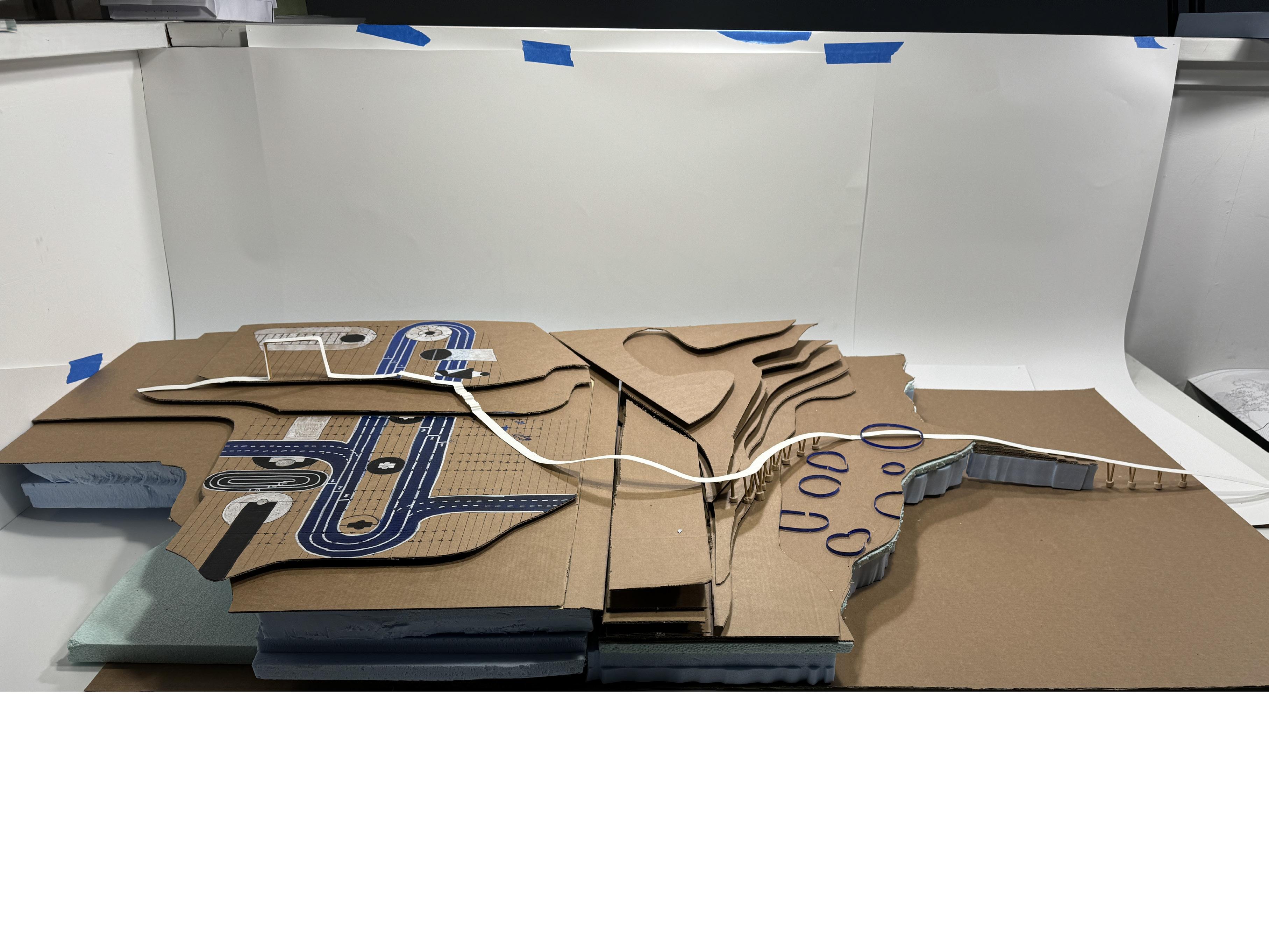
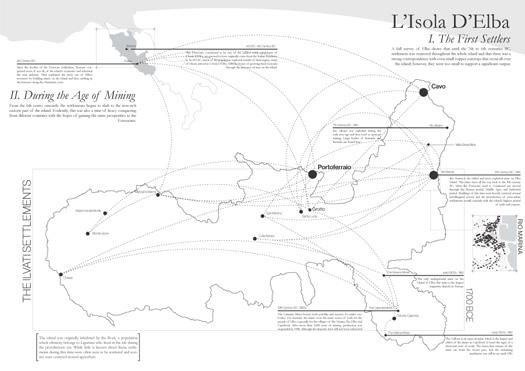
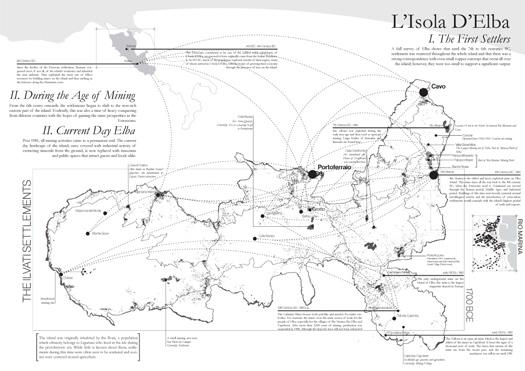
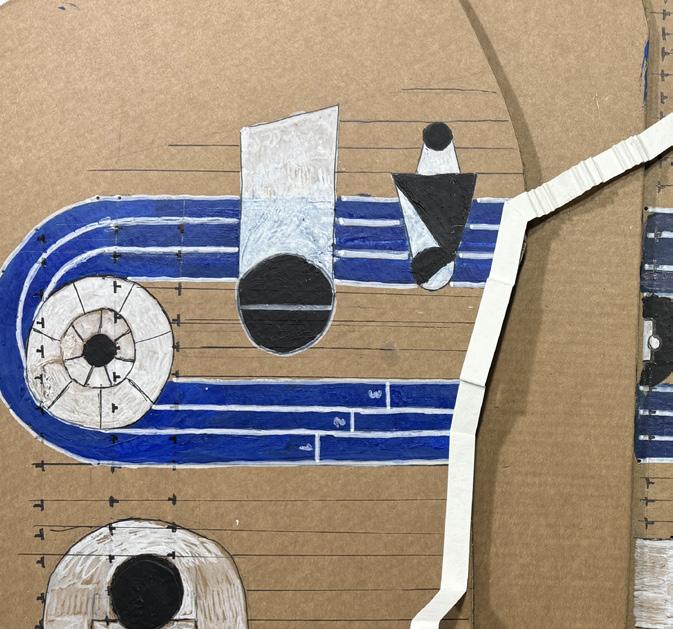
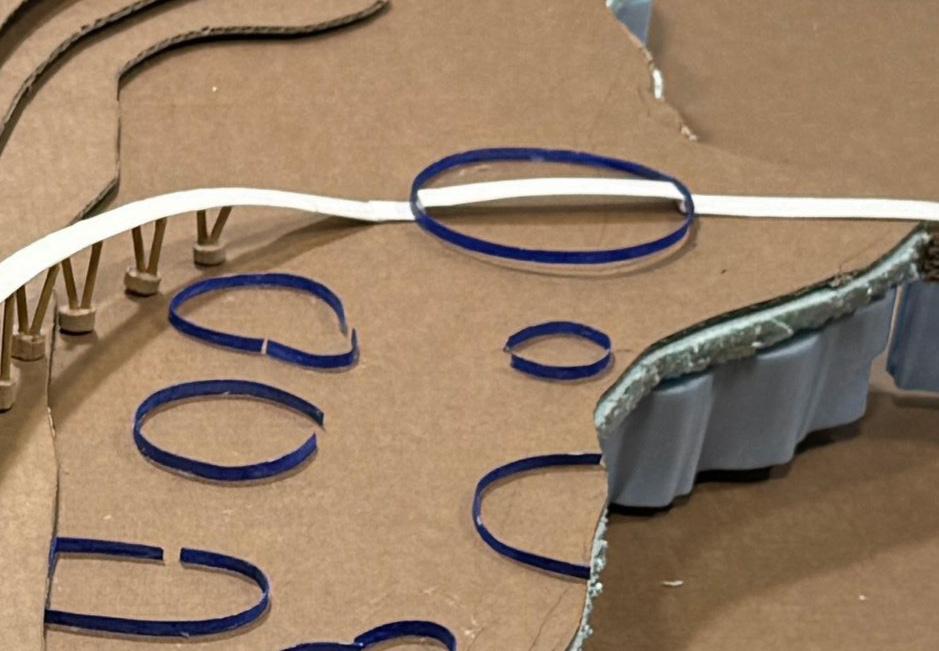
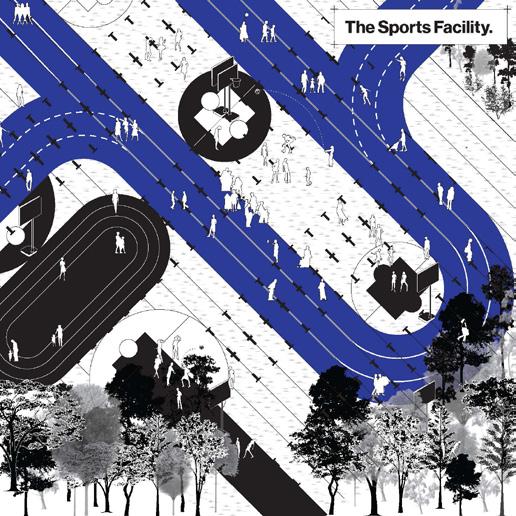
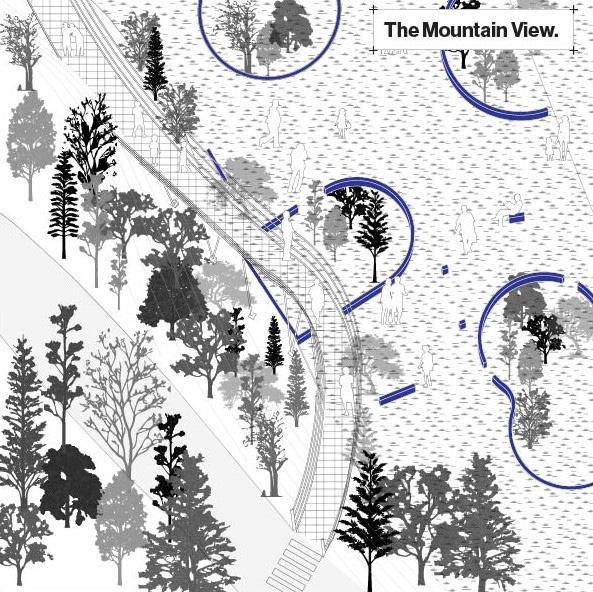
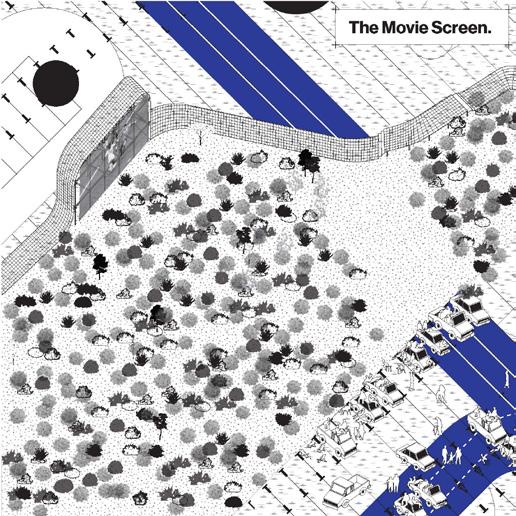
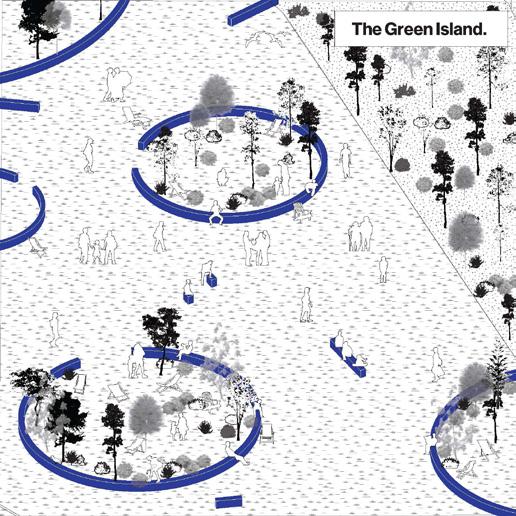
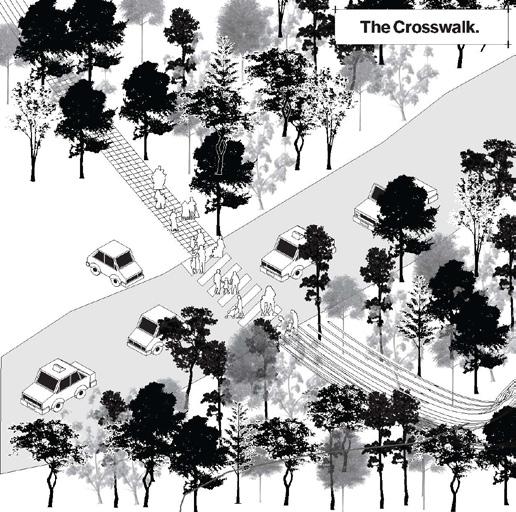
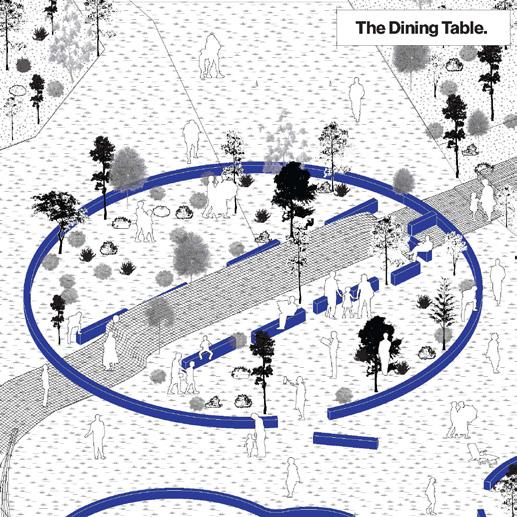
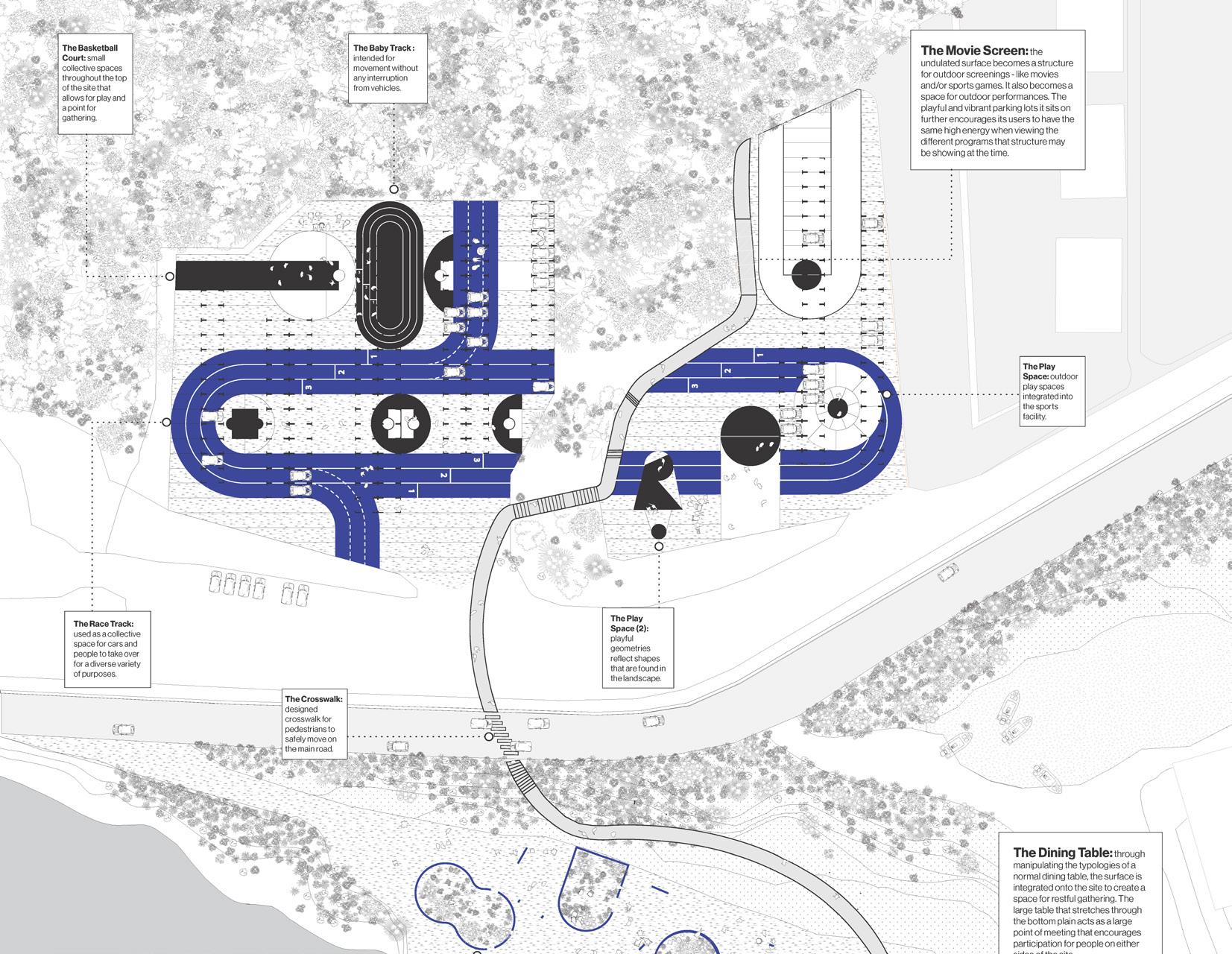
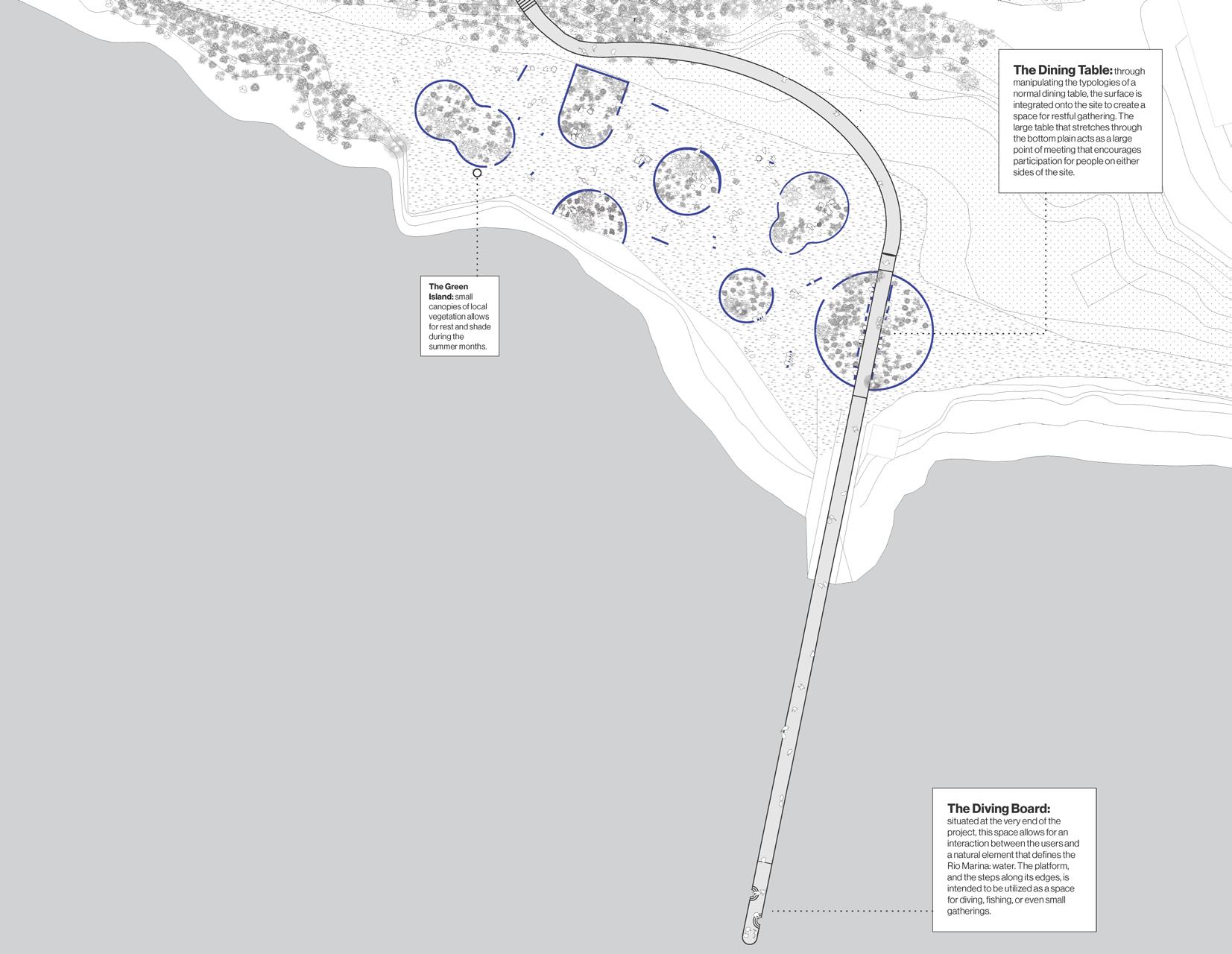
Beginning from initial observations of a population migration throughout Elba due to potentional prosperities from mining, there was this shift in movement, acting as a starting grounds between a unique interaction between humans and their surrounding ecosystems. Thus, a proposed platform begins to reflect an urban surface that speaks to a similar ‘migration’ of movemement by its occupants, where they experience different landscapes as they explore down this ‘line’. This line originates from typologies of the traditional dining table: a surface that inhabits a multitude of expressions and activities. With our project being situated along a large portion of the landscape, linking parking lots, the hillside, the dock, and the surrounding body of water, ‘the line’ takes on many different programs as users travel down towards the water. The surrounding lots also begin to take on a new character with each serving as a unique space for play, performance, rest, and conversation
Drawings completed with AutoCAD, Rhino3D, Adobe Illustrator, Photoshop
Model
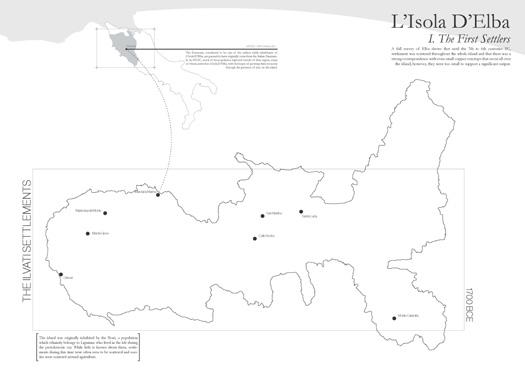
Phase I: The First Settlers Settlement, migrating from the Etruscans, seemed to have been scattered throughout the island of Elba. Indigenous groups of this time that inhabited the isle called themselves the Illvati.
Phase II: During the Age of Mining Settlement began to shift to the iron-rich eastern part of the island. Portoferraio served as a large entry hub for European nations to conquer the land.
Phase III: Current Day Elba Post 1981, all mining activities came to a permanent end. The current landscape of the island, once covered with industrial activity of extracting minerals from the ground, is now replaced by museums and public spaces.
Scenarios (Renders)
03 STRANGE COMPOUNDS
Fall 2022
Prof. Joseph Godlewski
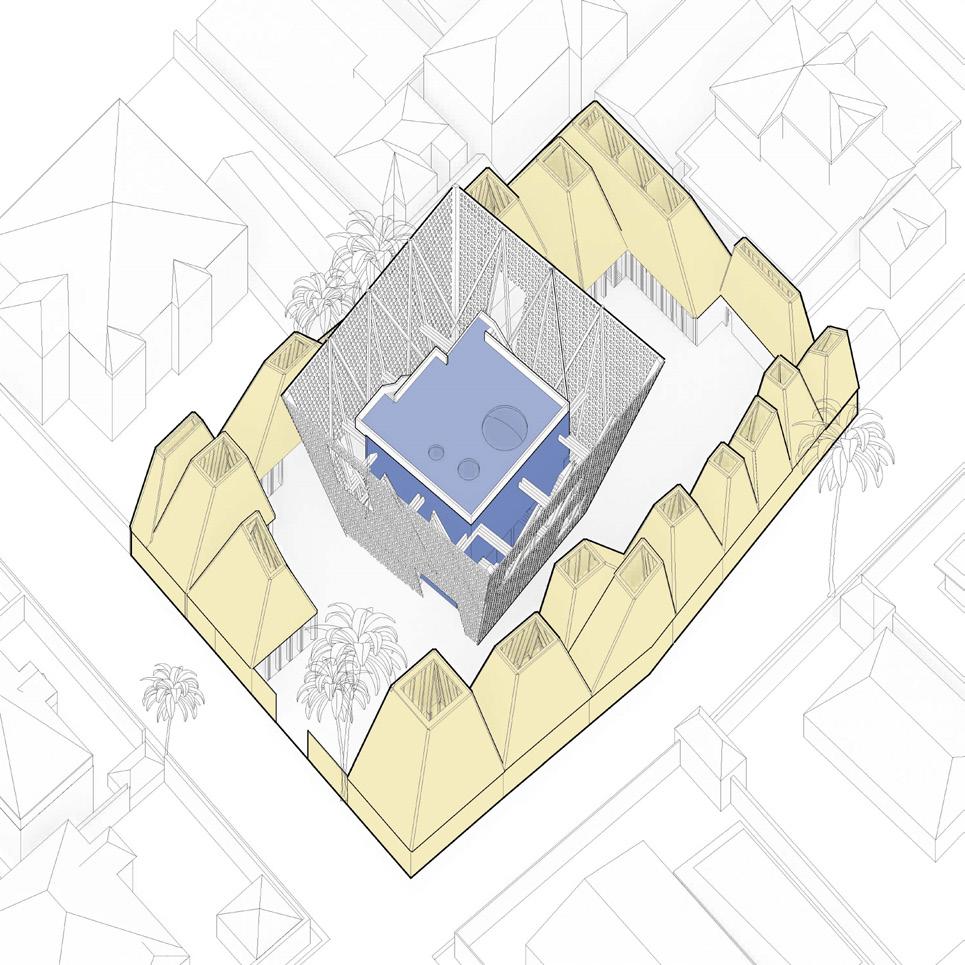
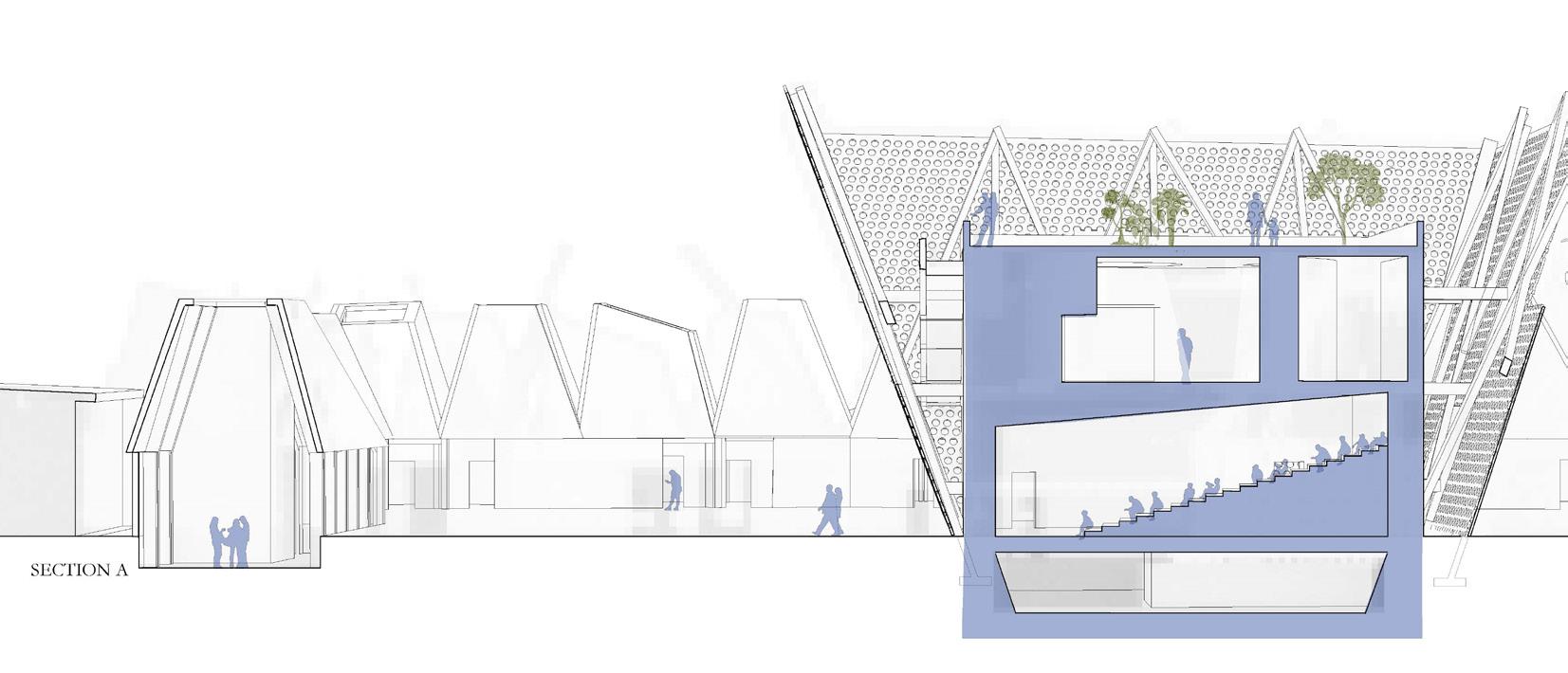
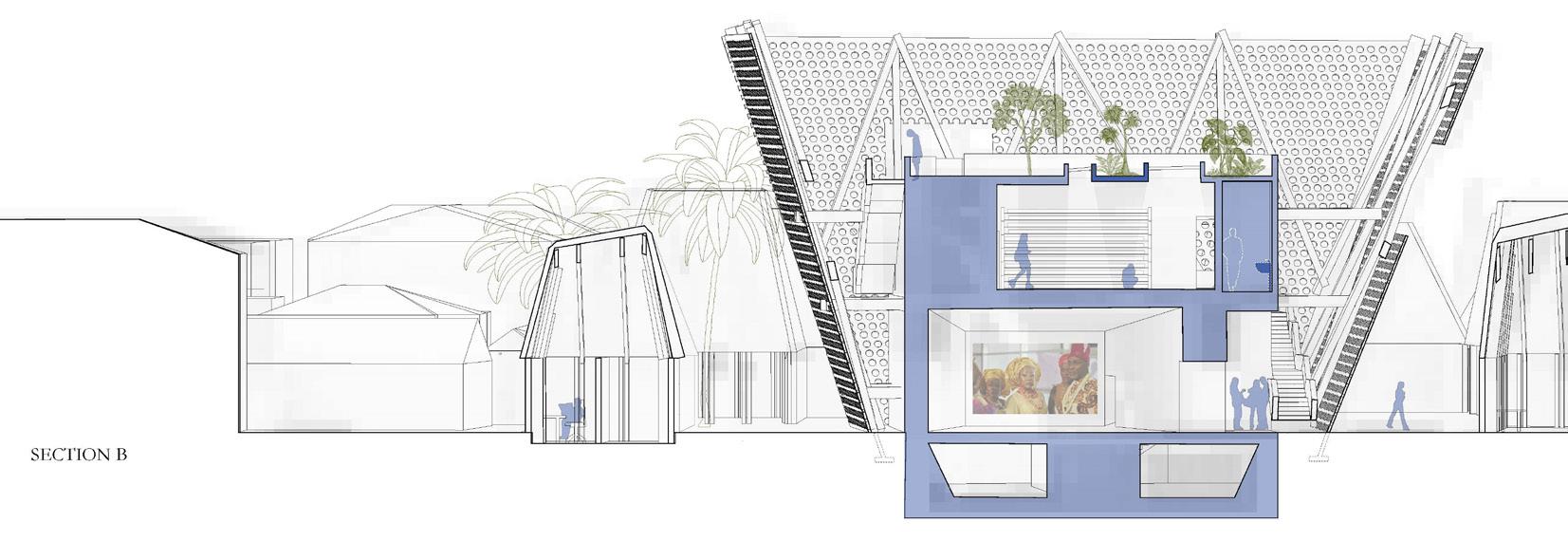
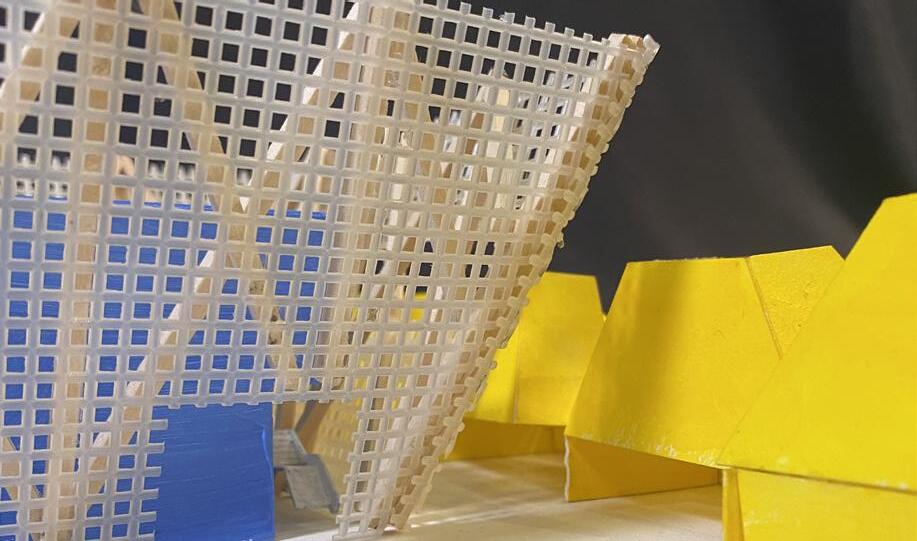
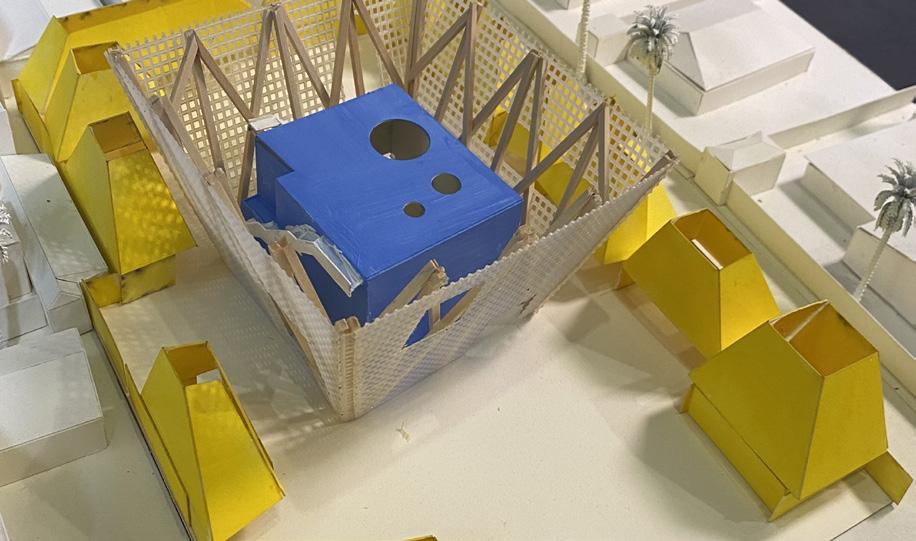
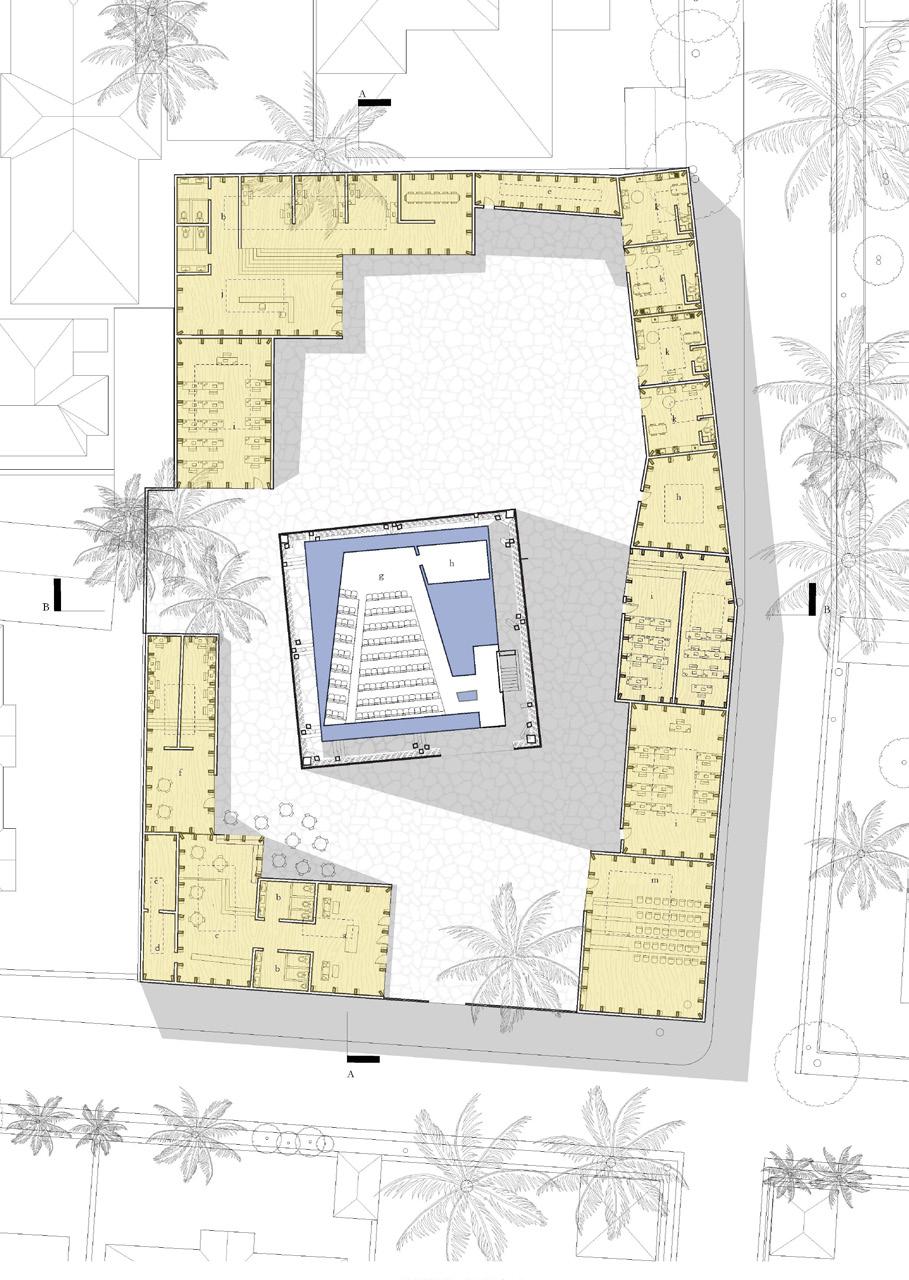
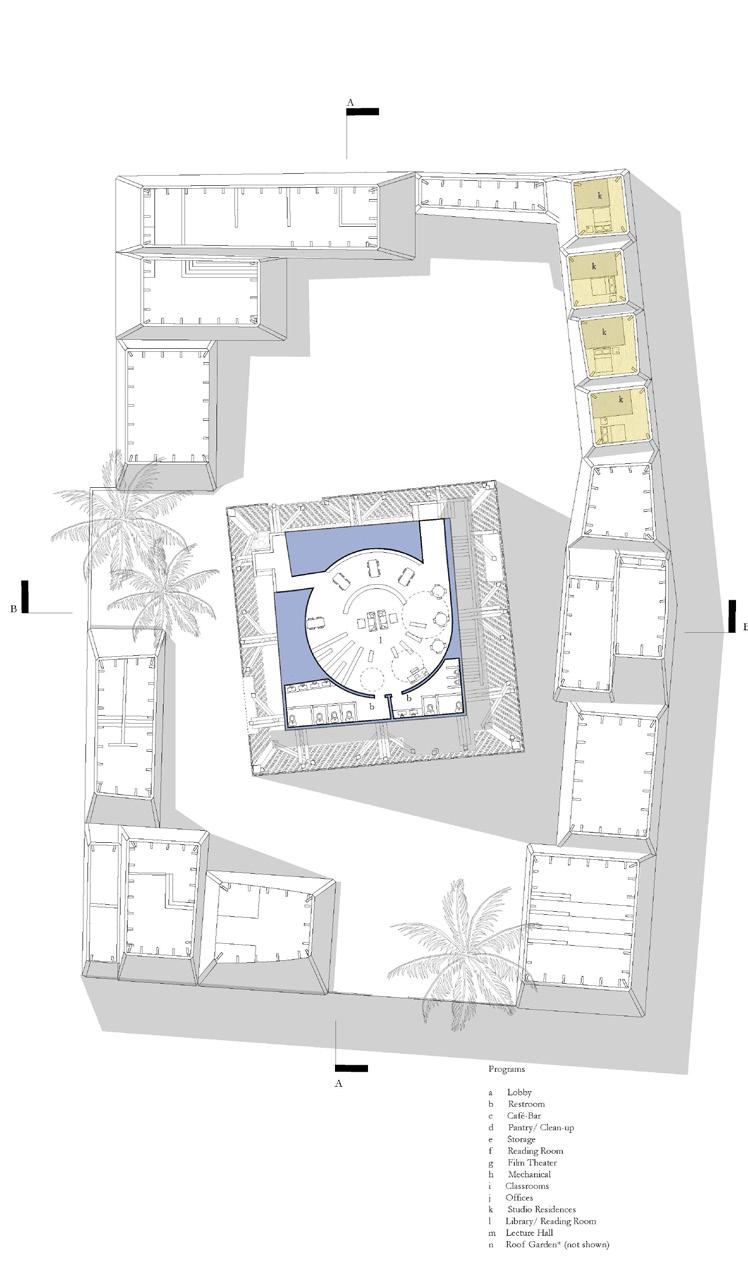
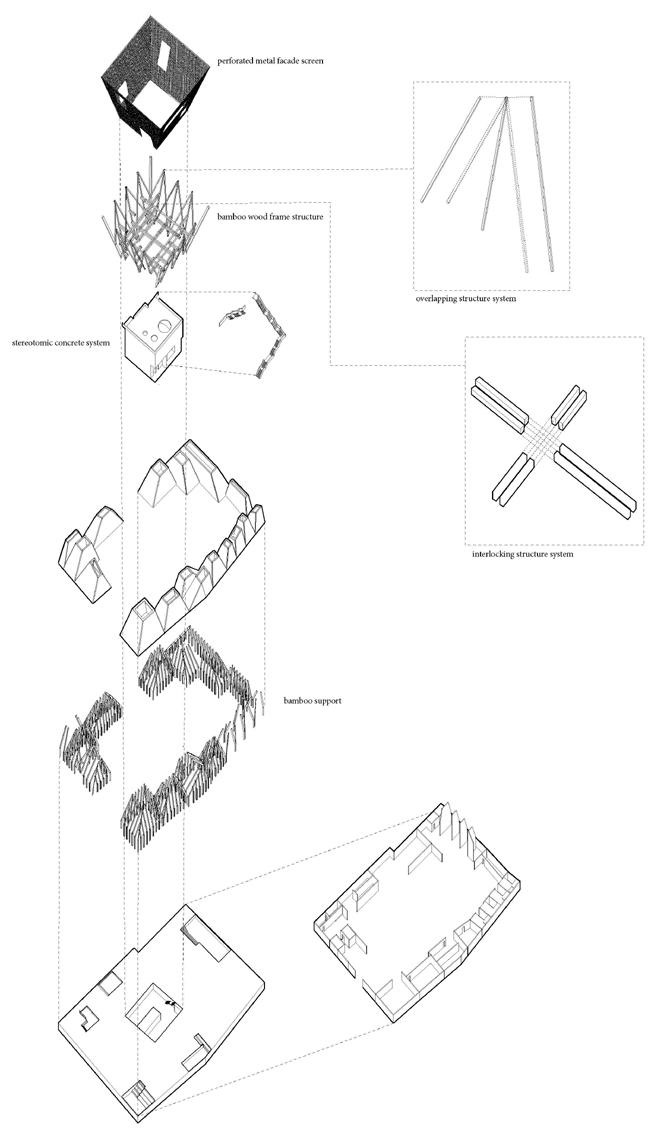
“Strange Compound(s)” is a projective re-examination of different typologies existant within Old Calabar, Nigeria. Through the design of a film school, the proposed design asks to create a space to encourage social internaction between the local community and the Nollywood film industry. The site strategy is defined by undulating impluvium roofs that run across the edges of the site. Located in the center holds the ‘crown jewel’. There is a transformation of the traditional purpose of impluvium roof systems to serve as a light outer skin that surrounds a heavier stereotomic mass which is supported by a wood frame structure. The concave nature of impluvium then inverts itself to become a roof system for surrounding programs that could benefit from the unique entrances of light coming from the top.
Drawings completed with Rhino3D, Adobe Illustrator, Photoshop
Axonometric
Model
Renders
Exploded Axon
04 SOIL FOR THE CITY
Fall 2024
Prof. Rami Abou-Khalil
In collaboration with: Eva Su, Audrey Deliah, and Yanxi Liu
Act I
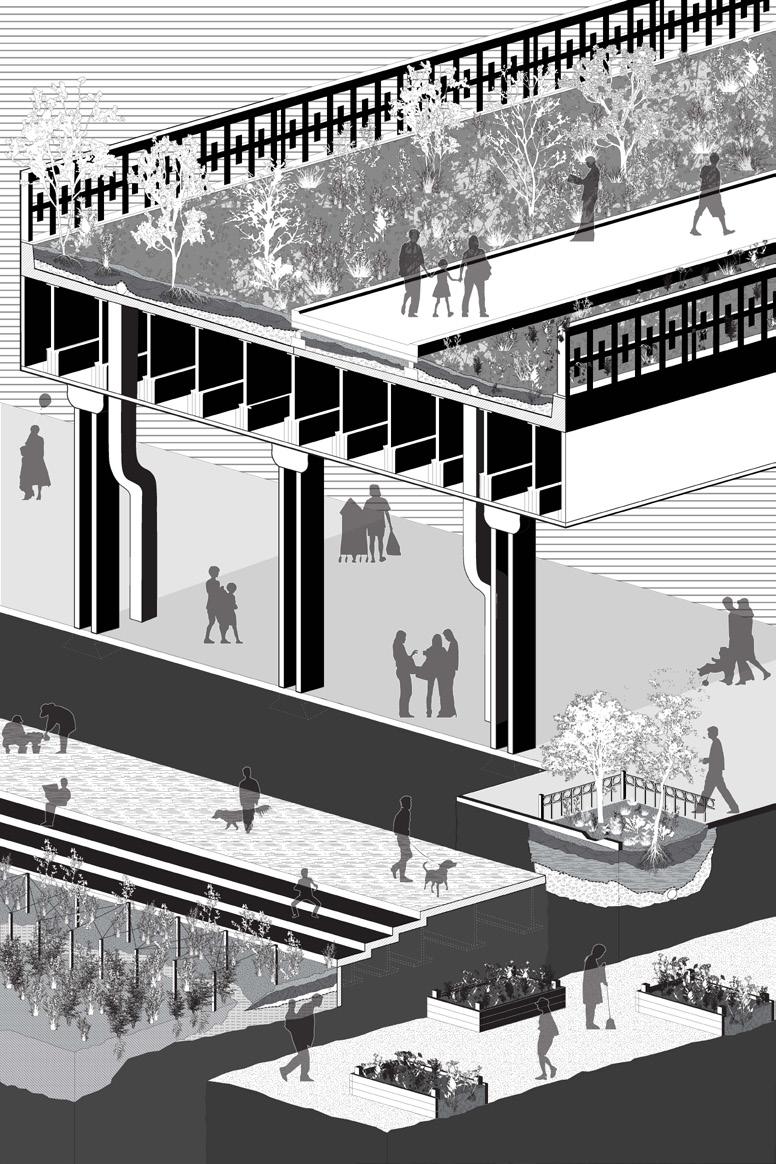
Working individually, a closer look at the presence of external (human) factors when dealing with soil in an urban context is shown through a ‘superdrawing’. The different chunks narrate the different lived conditions of soil within the city.
Act II
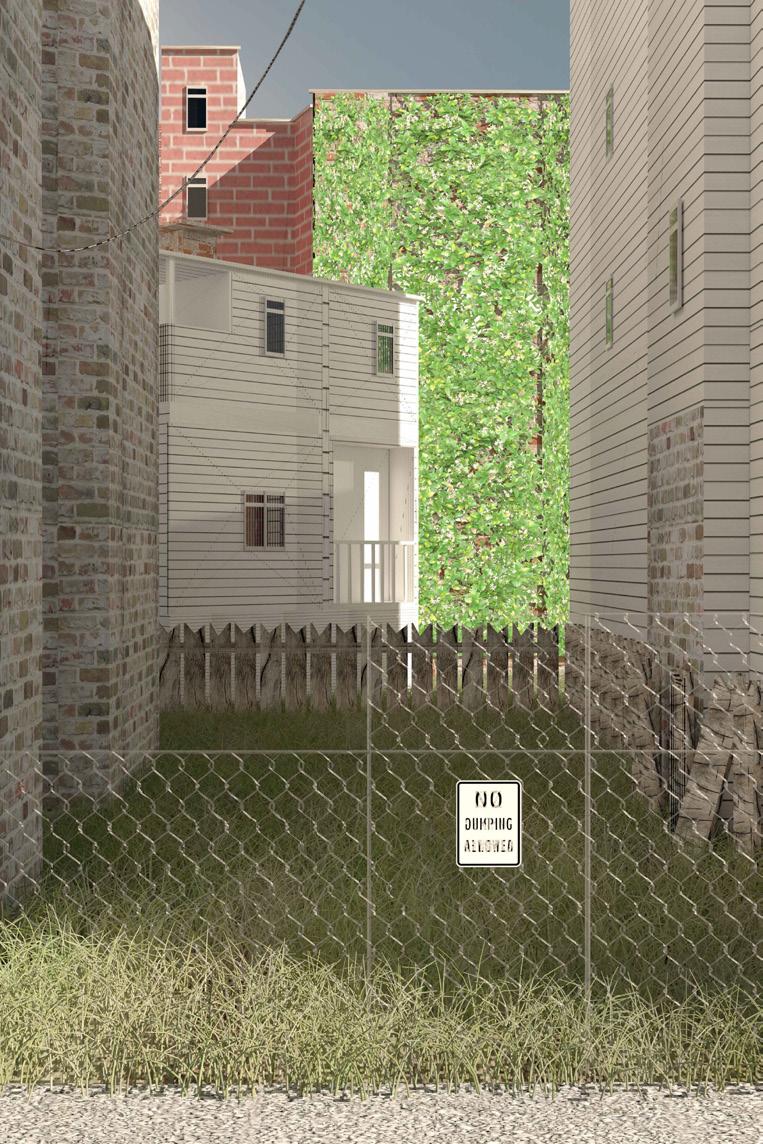
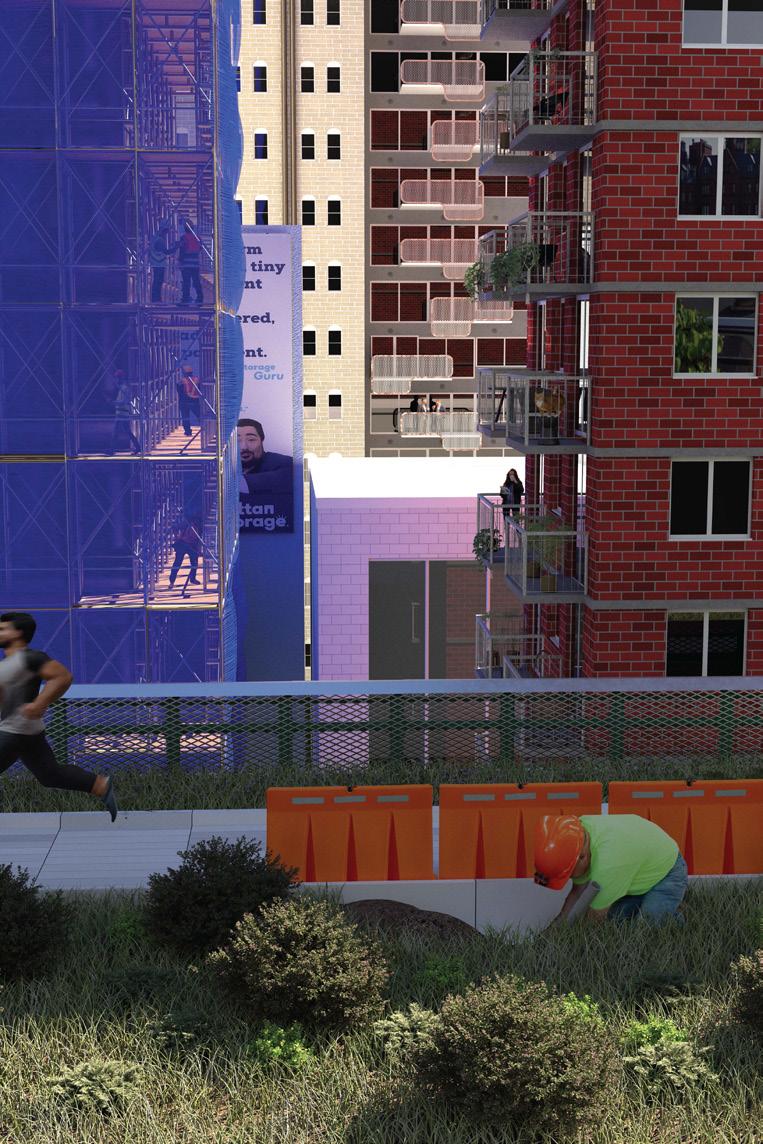
Combining individual Act I into pairs, a diptych begins to reveal the role in soil in ‘civilizing land’- or lackthereof. On the left, there is close investigation into infill lots in Harlem, and how neglected soil has been used as a zoning device to limit population growth within the area. On the other side, there evident economic value in soil found in the High Line and its neighboring context within Hudson Yards.
Act III
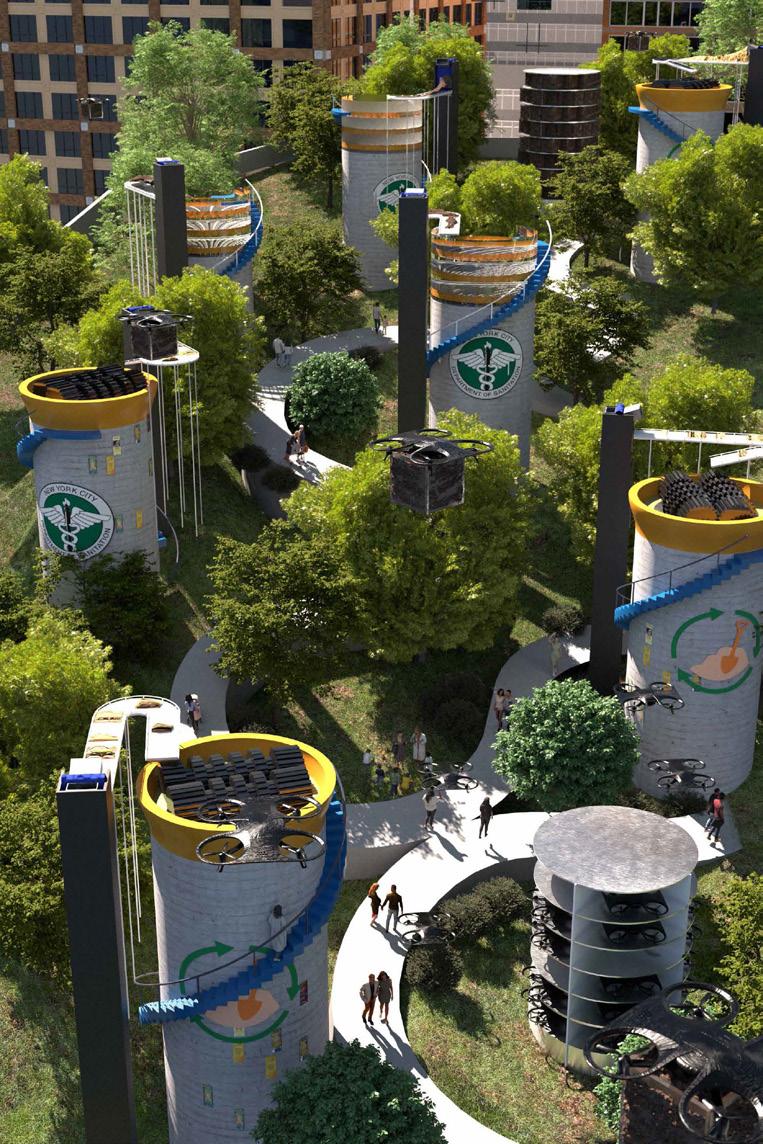
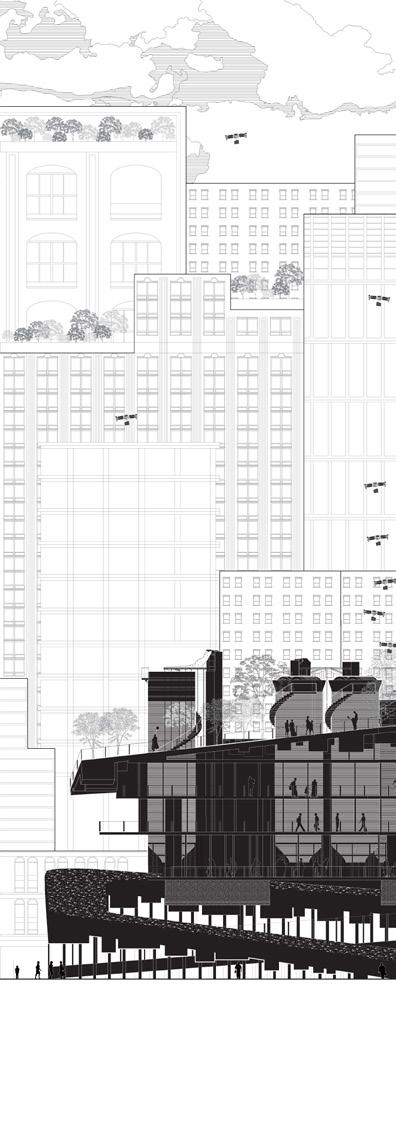
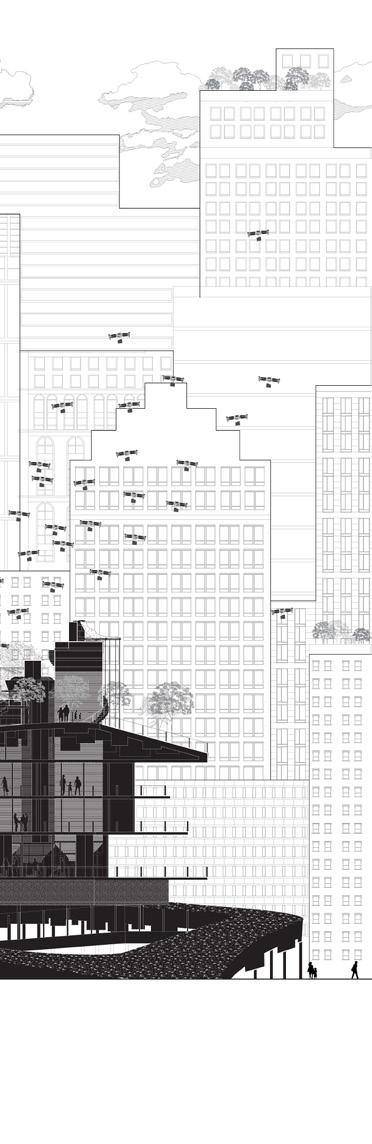
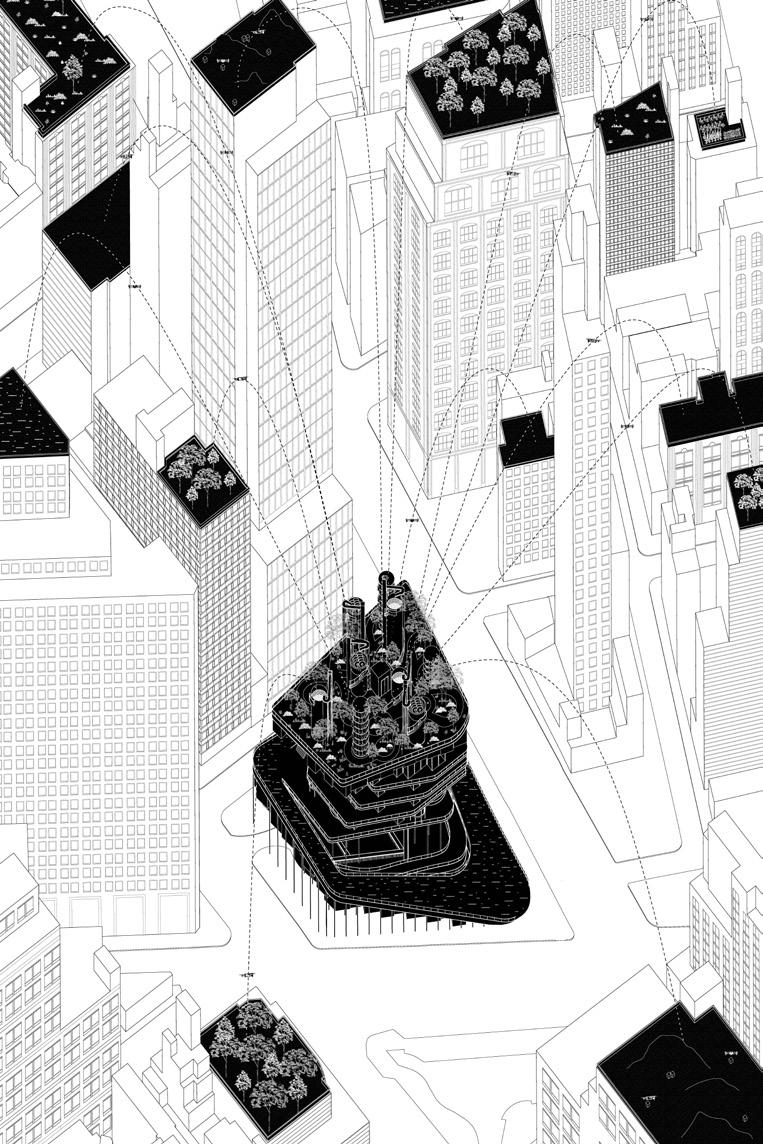
Synthesizing past work on NYC soils to respond to systems working in Manhattan, this project works in tandem with newly placed legislations in NYC: Local Laws 92 and 94, in conversation with Local Law 85. Our proposed structure treats processes of soil distribution and recycling as an exhibition, where workers and guests alike can interact and witness the machinery and efforts made when thinking of the future of rooftop spaces throughout New York.
Drawings made with V-Ray, Rhino3D, Adobe Illustrator