Fresh-air STUDENT ACTIVISTS
LEAD THE WAY


UN Seattle’sChild

ROMP
SEE A DRIVE-IN



shop DO THE PANDEMIC


Get ideas for dining al fresco from the author of ‘Vegetarian Chinese Soul Food’
HOW TO RAISE A FEMINIST SON
























Call 425-883-3271 for a tour.
• Child-centered, joyful atmosphere with strong academic focus
• Experienced, Montessori-certified teachers
• Preschool, kindergarten, and STEAM Enrichment
• Family owned and operated since 1977
• Summer, before & after school programs
• Prep Program, (starting ages 2 1/2-3)


State Heirloom Birth Certificate
A portion of the proceeds from each birth certificate benefits the Children’s Trust Fund of Washington, administered by the Washington State Department of Children, Youth & Families Strengthening Families Program.
• This official birth certificate is personally signed by the Governor and State Registrar.






• Frameable keepsake.
• For each $45 purchase of an Heirloom Birth Certificate, $20 is tax deductible.

To find out more information on Children’s Trust and child abuse prevention in Washington State visit: www.dcyf.wa.gov/about/governmentcommunity/community-engagement or visit the Department of Health to order your own Heirloom Birth Certificate.
DCYF FS_0013 (09-19)



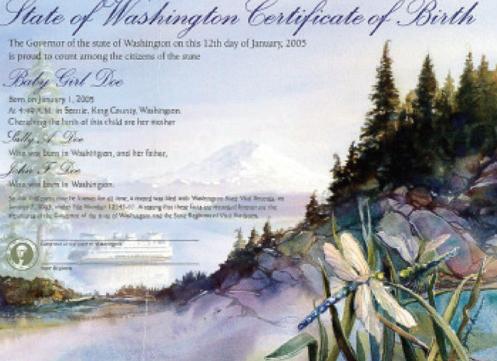
• Certificate is 8 1/2 x 11 and includes the name, date and place of birth, as well as the name and birthplace of the parent(s).






»What Parents Are Talking About
Bringing up feminist boys
Seattle U professor Sonora Jha on reimagining boyhood
by SHIN YU PAI
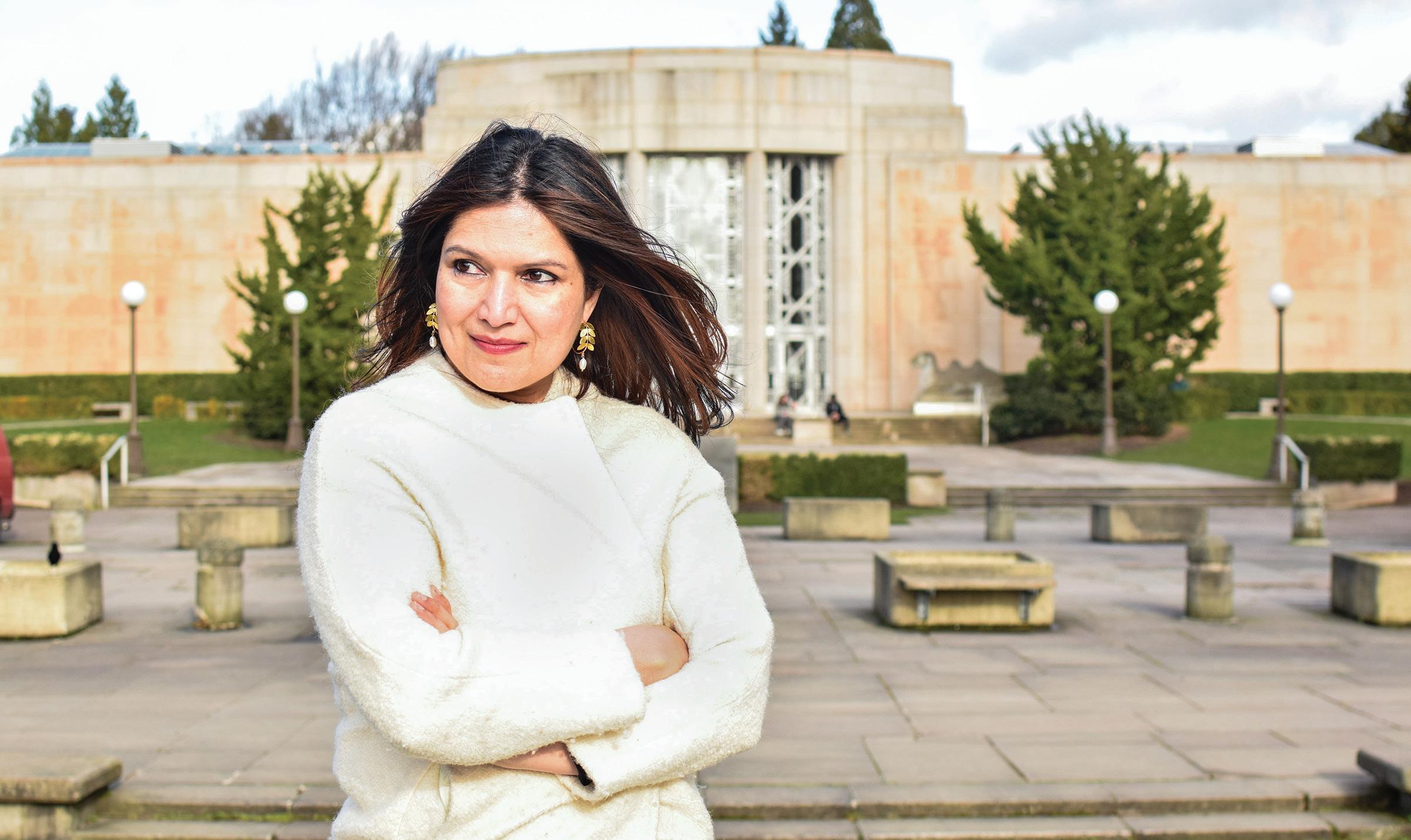
In her new book How to Raise a Feminist Son (Sasquatch Books), Seattle University journalism professor and author Sonora Jha recalls sobbing at the ultrasound where she learned that her firstborn child would be a son. Not with tears of joy, but fear. Overtaken by anxiety, Jha wondered if her son would grow up to be
as brutal as the men in her family of origin. “What if he assaulted me?” she asked.
In a series of personal essays, Jha confronts the gender-based violence she experienced as a girl growing up in Mumbai, India. Though her family was progressive in their view towards the professionalization of women, Jha observed different rules in the freedoms allowed to her brother and to her.

Jha’s father was a retired army major from the Maithil Brahmins, a caste that Jha says records only the names of male ancestors and descendants. By coming to terms with the cultural beliefs that consistently diminished and erased the feminine, Jha faces the trauma of her past, going beyond writing a parenting memoir to claim a distinctly feminist enterprise. How to Raise a Feminist Son
In her new book, Sonora Jha focuses on how she developed positive parenting practices aligned with her feminist values.
Seattle’sChild
“Seattle is my town. I know this city inside and out… or so I thought until I had kids.”
Seattle’s Child is your guide to getting to know your city all over again. Finding things to do, places to eat, and how to get around — it’s a whole new ballgame with kids in tow. We’re interested in how parents make homes in a space-challenged urban environment, how families create community, and what parents are really talking about. Seattle’s Child reflects real Washington families and their broad range of parenting experiences.
ANN BERGMAN Publisher, Founder abergman@seattleschild.com
BOO BILLSTEIN Art Director boo@seattleschild.com
JILLIAN O’CONNOR Managing Editor jill@seattleschild.com
JULIE HANSON Website Editor jhanson@seattleschild.com
MIKE MAHONEY Copy Editor
JOSHUA HUSTON Photographer JEFF LEE, MD Columnist
MEG BUTTERWORTH, HALLIE GOLDEN, JIAYING GRYGIEL, BRETT HAMIL, RENE HOLDERMAN, KATRINA OTUONYE, SHIN YU PAI, JASMIN THANKACHEN, ASTRID VINJE Contributors
JASMIN THANKACHEN Admin Coordinator/Project Manager
ADVERTISING KIM LOVE Ad Production Manager klove@seattleschild.com
JULANN HILL Senior Account Manager julann@seattleschild.com 206-724-2453
RACHEL NEVARIL Account Executive rnevaril@seattleschild.com 206-226-7844
May/June 2021 // Issue 487 Seattle’s
Seattle’sChild
School and SummerTime — distributed free throughout the Puget Sound area. Seattle’s Child is published every other month ONLINE seattleschild.com Facebook facebook.com/seattleschild Twitter @SeaChildMag Instagram @seattleschildmag
MAIL c/o Postal Plus 1211 E. Denny Way, Seattle, WA 98112
VOICE 206-441-0191 TO ADVERTISE advertise@seattleschild.com
«What Parents Are Talking About
focuses on how Jha developed positive parenting practices rooted in feminist values. Committed to building a “gentle and vital masculinity from the ground up,” she shares tactics for parents interested in raising boys with emotional intelligence. She aims to cultivate a new generation of men — allies capable of questioning masculinity and violence against women.
“I want parents of all genders and intersectional identities to read it as a conversation between them and me,” Jha says.
Each section ends with a to-do list of potential actions for readers. Jha invites fathers into the reflective process with questions like “What did you lose as you were initiated into boyhood and manhood?”
Readers will appreciate her practical approach. In a chapter on storytelling, she encourages parents to introduce their young boys to books centered around diverse characters. Jha even provides a curated resource list of age-appropriate books, including a fairy-tale collection penned by activist Rebecca Solnit. But more interesting than Jha’s editing of the bookshelves is her revisiting of Hindu tales. In her retellings, the god Krishna is a feminist ally, while the goddess Kali is viewed as a symbol of self-actualized motherhood.
kenness against bullying of female game developers resulting from the Gamergate harassment campaign. Through being involved in her son’s consumption of media and games, Jha engaged him in an ongoing conversation that created conditions to increase his sense of empathy.
The voice of Jha’s son, Gibran, is ever present in these essays. As a partner coming into his own consciousness, he has his own wisdoms to reveal. He opens Jha’s eyes to how a pop-culture flick like “Planet of the Apes” can be read as a narrative of resistance. On a journey home to India, he acts as a bridge between mother and grandmother, speaking as an ally for his mother. In breaking the cycle of internalized misogyny, Gibran finds his own voice to “speak of love in a language none of us had ever used before.”
Jha says Gibran fully supported her decision to write about their lives in this book. “He told me he wouldn’t read it, so I should not censor myself or keep his opinion in mind as I wrote. That’s an act of feminist solidarity.”
Jha’s book is no ordinary parenting manual. She devotes one chapter to ruminating on various regrets and admits her own missteps, acknowledging that “we do not yet have… the language, or the socialization to comprehend what an unquestioning love for women would look like.”
calendar@seattleschild.com
Deadline is first of the month, one month prior to publication. Include date, time, cost, appropriate ages, address, contact information and description.
In shaping the consciousness of older boys, Jha cites the importance of co-viewing habits and development of media literacy. She writes of analyzing movies with her son from a young age, encouraging his critical thinking. These habits of mind inform his ability as an adult to notice how women are portrayed and treated.
Jha had reservations about his interest in playing Grand Theft Auto as an adolescent but expresses pride in his outspo-
Yet How to Raise a Feminist Son is fundamentally a book about cultivating love and connection. Not just as a vision for our sons, but for ourselves, so that each of us might experience, and express, the whole spectrum of human tenderness.
“The world is reeling from toxic male leadership,” says Jha. “Wounded men are lashing out against us all. We can go to the heart of the problem by going to the heart of masculinity and reimagining boyhood and manhood. I have raised a feminist man against the odds and I want to scream from the rooftops that it can be done.”
»ToolBox
What every parent needs to have on hand
Giving kids independence after a COVID year
Parents have questions and we have answers from a local pediatrician
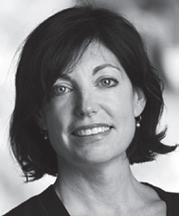
by DR. SUSANNA BLOCK of KAISER PERMANENTE
The magnolias are blooming, the temps are tiptoeing upward (on some days) and by and large, kids are returning to in-person learning. It feels like we are heading in the right direction, especially as more and more of us are getting vaccinated. This is a great time to remind ourselves that we still need to maintain COVID safety guidelines — wear a mask, practice social distancing, and regularly wash our hands. While we have made great strides, we just have to keep on being thoughtful, careful and safe.
Thank you for your questions and thank you for staying strong during this year.
Q. My 12-year-old is asking for more independence while at the same time feeling nervous after a COVID year. What should I do?
Great question! This is something we all struggle with as our children grow. It seems especially complex this year as we are emerging from COVID and a year of little independence. It helps to remember that the goal of adolescence is to gain confidence and develop the skills needed to navigate the world. As parents, we walk a fine line between helping our kids make good choices and getting out of their way so they can grow. We have to do this all while letting them know they are loved unconditionally. Yikes! Parenting can truly be like balancing on a tightrope. So, how do we do this?
Step-by-step approach to independence. Preteens and teens rebel when we try to hold them back. This is a normal developmental step. The goal is to create an environment where your child will be successful. Taking a step-by-step approach with increasing level of responsibility can help you and your child build confidence and trust. Letting your child know that new privileges do not depend on age but rather on their ability to make
wise choices. Start gradually. If your child is successful with initial independent tasks and activities, you can start allowing more independence. Mistakes are normal, as long as you learn from them: Adolescents learn through trial and error. Even though it can be hard to watch as a parent, making mistakes and learning from them is a big part of growing up. Teaching our children (and ourselves) to view mistakes through the lens of opportunity is a great lifelong skill. Keeping kids safe: One of my favorite analogies for helping adolescents stay safe is childproofing. Remember when you childproofed your house for the first time? You crawled around on the floor, read some books and talked to friends. Then you sat back and watched your toddler do something you never imagined. This prompted you to make some adjustments. Childproofing is a continuous improvement process. Adolescent safety is the same, albeit more complicated this year because of the addition of COVID safety rules. Communication, flexibility and giving yourself and your kids the grace to make mistakes are keys to success. Adolescence is a complicated time for everyone, but a foundation of love makes it all much easier. Q. How should I think about pacifiers and thumb sucking? Are pacifiers Ok? Is thumb sucking Ok?
Some babies love sucking from the beginning. Others don’t. Here are few tips about pacifiers and thumb sucking from the American Academy of Pediatrics.
As a rule of thumb (no pun intended), it is best to avoid introducing pacifiers until you have established breastfeeding or bottle feeding. This generally occurs around 4 weeks of age. Of course, some babies find their fingers or thumbs to suck on before CONTINUED ON NEXT PAGE >









«ToolBox
CONTINUED
that. For babies who want to suck beyond nursing or bottle feeding, limited pacifier use can be soothing. Be sure to only offer a pacifier when your baby is not hungry — a pacifier should never be used to replace meals. It’s also important to never tie a pacifier around a baby’s neck because that can be a choking hazard.
How do I choose a pacifier?







Be careful to only purchase pacifiers that are in a single piece. Pacifiers that break into two pieces risk becoming choking hazards. It’s also important for pacifiers to have a shield that is at least 1 1/2 inches across. This ensures your baby cannot jam the entire thing in their mouth. Finally, avoid using a bottle nipple as a pacifier as these can break and become a hazard.
How to keep a pacifier clean?
Pacifiers can get goopy pretty quickly. It is a good idea to only purchase pacifiers that are dishwasher safe. When you are done washing it, be sure to squeeze any hot water out of the nipple tip before offering it to baby to avoid burns.
Pacifiers and thumb sucking — when is it a problem?
Using a pacifier or frequent thumb sucking becomes a problem for children who are around 2-3 years old. At this age, frequent sucking can affect the shape of the mouth and how teeth line up. Persistent thumb sucking or pacifier use after adult teeth come in can lead to permanent dental changes that require correction with orthodontics.





How to help kids ‘break the habit’?
The good news is this habit will go away on its own for most children. This means that, for the most part, you can ignore the issue and kids will outgrow the need.
Some children, however, love sucking and are reluctant to leave this habit behind. Gentle reminders and praise when they are not sucking is a good first next step. Often children suck out of boredom. If you suspect this, try offering a distraction. Teasing or punishment is not helpful.
A few kids really are attached to sucking. If you start to see changes to the roof of your child’s mouth or teeth, it’s time to discuss this with a dentist. There are devices that can be used to make sucking uncomfortable. The goal is to not be punitive or do anything that is scary. As always, keep the conversation open and explain why it’s time to break the habit.

» Dad Next Door
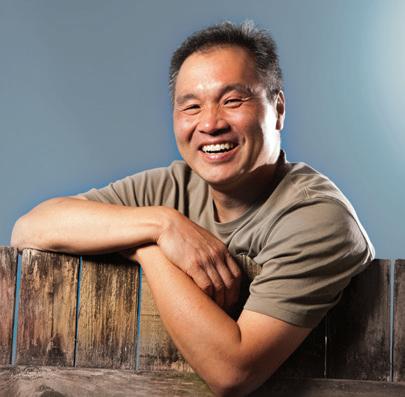
A little encouragement from across the fence
by JEFF LEE, MD
We belong here
Anti-Asian hate crimes display the violent human tribalism that needs to be left in the past
I grew up in a small town in New England. My parents had moved there to get away from the city, and we were one of only three Chinese families in town. For me, that just meant we ate with chopsticks and got money in red envelopes on Chinese New Year. Other than that, I thought I was a normal American kid.
Then one day in second grade, I was walking home from school and waiting at an intersection for the light to change, when a school bus pulled up beside me. Some kids on the bus were pressing their faces against the windows, and pulling the corners of their eyes into narrow, slanted slits. They were chanting something that was muffled by the glass, but it sounded like: Ching-chong-Chinky-chongChinky-chong-ching.
When I got home, I told my mom about it. She looked at me sadly, and sat me down. Then she gave me “The Talk.”
The Talk is the conversation nonwhite parents have with their kids when the realities of race can’t be ignored anymore. She didn’t tell me to never run away or never put my hands in my pockets when the police are watching, the way Black parents have to. She just gave me the Asian version: Those kids are stupid and ignorant. Ignore them. Keep your head down, mind your business, and stay out of trouble. Eventually, they’ll go away.
My mom was no stranger to racism. As a schoolgirl in New York City, she watched white people throw bricks
through store windows in Chinatown after Pearl Harbor was bombed. Never mind that the Japanese had attacked China, too, raping and killing tens of thousands of defenseless civilians. The subtleties get lost when people are angry and scared.
Her parents had to hang a sign in the window of their bakery: “We are Chinese-Americans. We are not Japanese.” She made sure not to go into white neighborhoods alone. She stayed home after dark. She stayed out of trouble. Eventually, the war went away.
For me, things eventually got better, too. The name-calling and harassment peaked in middle school, then gradually faded. When I went to college in California, anti-Asian racism disappeared from my life entirely – until it didn’t.
Last year, when it became clear that the pandemic was going to be a huge political liability, some politicians looked around for a scapegoat. They quickly settled on China. Soon the phrases “China virus” and “Wuhan flu” were in steady circulation, quickly followed by the more derisive “Kung flu.” Within months, reports of violence against Asians started to rise. Over the course of 2020, anti-Asian hate crimes increased 150% over the previous year. So far in 2021, that trend is only accelerating, and growing more deadly.
In my mom’s hometown of New York City, there were 28 reported incidents of anti-Asian violence last year, up from three in 2019. In one recent brutal attack, a man was caught on video kicking and stomping a















«DadNextDoor
65-year-old woman and yelling, “You don’t belong here!” Onlookers simply turned the other way.
The politicians, of course, claim to deplore these attacks, and ooze indignation when anyone suggests that they bear some responsibility. Yet, whether consciously or not, they’re blowing the same dog whistles that have triggered every wave of racial violence since the beginning of humankind.
There is a deep, subconscious vein of violent tribalism in the human psyche. It’s been there since our prehistoric ancestors defended their territory from marauding outsiders, and it’s alive and well just beneath our civilized veneer. Our failure to admit that, and to confront it head-on, is the root cause of the war, racism and inequality that have plagued us throughout our history, and that still torment us now.



As parents, we need to understand that being non-racist, and raising non-racist children, isn’t enough. We need to be anti-racist. We need to provide an active counterforce to millions of years of evolution that will forever be a part of who we are. We need to admit that our children, no matter how innocent, kind and wellraised, will always be one social upheaval away from the Hitler Youth, the machete-swinging adolescents of the Rwandan genocide and the gun-toting children of the Cambodian killing fields. Maybe white families in America should have their own version of The Talk, where their children can learn about the dangers and risks that come with the color of their skin.
As for my fellow AsianAmericans, history has lessons for us as well. Being a “model minority” won’t protect us, any more than it did the Jews who were model Germans in 1939. Keeping our heads down isn’t enough. We need to teach our children that they belong here, as much as anyone else, and that they should say so loud and clear.
ABOUT OUR COLUMNIST
Jeff Lee lives, writes and works in Seattle.

Escape from Seattle!
Cheap ferry fun
Need to get away from dry land for a bit? Take a fun and costeffective round trip on a ferry from downtown Seattle and end up feeling many, many miles away. In addition to riding the Bainbridge Island car ferry, which always invites pedestrians, you can try a foot ferry — take the new route to Southworth or head to Bremerton or Kingston, all three destinations across Puget Sound on the Kitsap Peninsula. It’s like owning a yacht share (for about an hour and a half). wsdot.wa.gov/ferries
»Romp
Things to do with kids
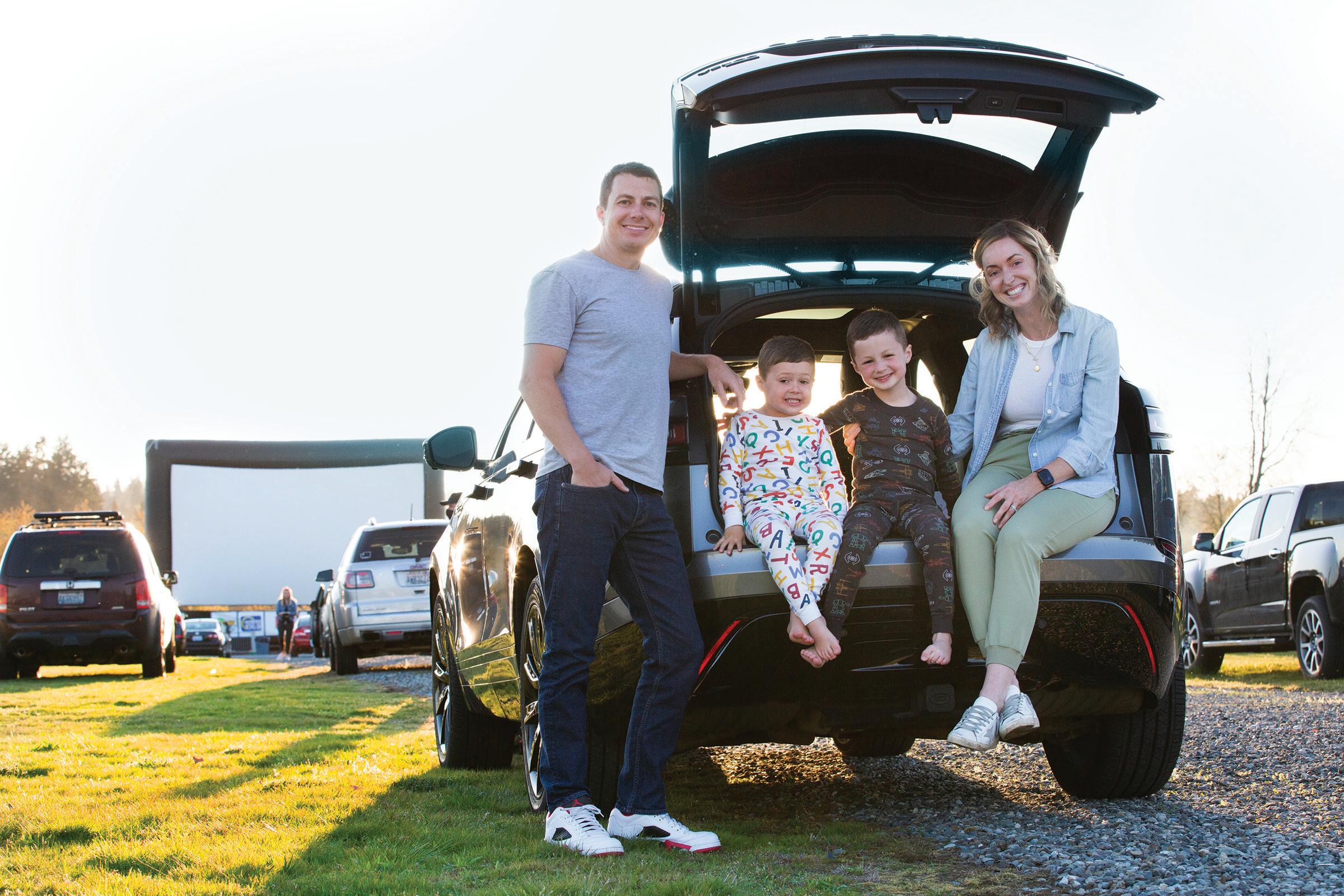
Movies under the stars
by JILLIAN O’CONNOR / photo by JOSHUA HUSTON
The drive-in theater, a 1930s American invention, made a very quick comeback during the pandemic.
Older parents likely remember the many drive-ins in the U.S. during their childhoods: kids piling into the car (often a wood-paneled station wagon) with sleeping bags, in their jammies, ready to see a movie from the car with that weird radio thingie just outside the driver’s window for sound. Very crackly sound.
5 things to do Get your dino and fossil fix
Budding scientists love to learn about and study all the different varieties of dinosaurs and fossils. Follow these tips and have a Mesozoic May and a Jurassic June!
1
Woodland Park Zoo
At the exhibition
Dinosaur Discovery, see more than 20 lifesize, lifelike moving, roaring dinos, including a 40-foot-long T. Rex. (West Gate), 5500 Phinney Ave. N., Seattle: May 1 to Sept. 6.
2
Burke Museum
Ogle the only real dinosaur fossils on display in Washington. See a T. Rex skull, as well as massive Ice Age mammals and plant fossils. 4300 15th Ave. NE, Seattle
3
Ginkgo Petrified Forest Interpretive Center Road trip to Central Washington! See an ancient fossil bed as you hike a 1.25-mile interpretive trail, and look out for nearly two dozen exposed petrified logs. 4511 Huntzinger Rd., Vantage
4
Fremont topiaries
If you were lucky, you’d get popcorn and candy from the snack bar and could eat it in the car, before falling asleep sideways on the seat, if your parents were lucky.
Since spring 2020, the drivein has made a huge comeback. And in the Seattle area, we’re fortunate to have a couple of traditional legacy drive-in CONTINUED ON NEXT PAGE >
Check out the two ivy dinosaurs that roam the earth by the Burke-Gilman Trail, just south of North 34th Street and Phinney Avenue North.
5
Dig ‘dino fossils’ in your backyard
Set up a sandbox or sand table and plant faux dino bones deep in the stratigraphic layers of your outdoor dig site.
The Baerwaldt family gets ready to take in a screening of Back to the Future at Marymoor Park.
«Romp
theaters, as well as newcomer drive-ins from organizations that made a quick pandemic pivot, serving families’ needs for COVID-safe entertainment, all sealed up in our cars. Modern drive-in audio has also been drastically improved too, with dedicated FM stations to provide the sound.
Not all drive-ins allow outside food, so please check the policy if you want to bring a picnic. And look at the posted rules online first if your dog wants to come along, too.
BECU Drive-In Movies
at Marymoor Park
6046 West Lake Sammamish Parkway NE, Redmond, epiceap.com/movies-at-marymoor/
The BECU Movies event was going strong at Marymoor Park each summer before the pandemic hit — for people with picnic blankets and portable chairs. With a quick change, it’s been repurposed as a drive-in.
Days: Tuesday, April 20, to Thursday, June 24. Ticket price: $30 per carload. Purchase online. Concessions: Yes, from multiple





food trucks. Also: ice cream and cupcakes for sale. Restrooms: Yes.
Vasa’s Drive-In Theatre
3549 West Lake Sammamish Parkway SE, Bellevue, vasaparkresorteventcenter.com
This nonprofit weekly drive-in event was started to fund extra time for staff members whose hours were cut during the pandemic. Days: Saturdays. Film begins at dusk. Ticket price: Free, but donations are encouraged. $25 per car is suggested. Buy ahead? Reserve tickets and donate online. Concessions: Yes, including themed treats for summertime children’s nights (think green alien popcorn with “Toy Story”). Other concessions include hot dogs, nachos, popcorn, ice cream, candy and beverages. Restrooms: Yes.
Discover Burien Drive-In Theatre
610 SW 153rd St., Burien, discoverburien.org
This weekly event is sponsored by the nonprofit economic development group Discover Burien. Touchless pre-registration.
Days: Between March and October on Saturday nights. Starts at sundown. Ticket price: $25 per car. $50 for VIP car tickets, which include a reusable picnic snack pack and other goodies. Buy ahead? Yes, online. Advance tickets required. Concessions: Yes, with touchless ordering.
Rodeo Drive-In Highway 3, near the Bremerton Airport, Bremerton, rodeodrivein.com
Since 1949! Three screens play three sets of double features at a time, but you do have to stick to one set only.
Days: Usually March through September, Friday through Sunday. Showtime at dusk. Ticket price: All prices are for a double feature, an old-school drive-in tradition. General admission: $10. Children 12 and under, seniors 55 and up: $7. Free for kids 4 and under. Buy ahead? Tickets available online. Concessions: Yes, including burgers, fries and pizza dogs. Online ordering for large orders. Pagers available for pickups. Restrooms: Yes.
Blue Fox Drive-in Theater
1403 N. Monroe Landing Rd., Oak Harbor, bluefoxdrivein.com
Since 1959! There’s an arcade as well as a go-kart track.
Days: Friday through Sunday. First movie starts at dusk. Ticket price (by credit card): It’s a double feature! Adults, 11 and up, $7. Children, 5 to 10: $1.50. 4 and under: Free. Buy ahead? No. Box office opens at 4. Concessions: Yes, includingpizza, popcorn, Philly cheesesteaks and churros. Restrooms: Yes.
Farther afield: Skyline Drive-In Theater in Shelton; Wheel-In Motor Movie Drive-In in Port Townsend
Right under your nose!
A berry good time
Ah, the sweet taste of summer! Strawberry season starts in June. Grab fresh, juicy red berries at your local farmers market or check out these U-pick places around town.
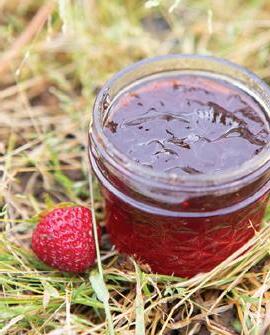
Biringer Farms Annual Strawberry Festival: Pick your berries, then indulge in the farm’s special strawberry shortcake. 21412 59th Ave. NE, Arlington, biringerfarm.com
Remlinger Farms: Get your ticket to pick ripe berries and play at the family fun theme park. 32610 NE 32nd St., Carnation, remlingerfarms.com
Harvold Farms: Select from rows and rows of the sweetest berries and start jamming. 5207 Carnation-Duvall Rd. NE, Carnation, harvoldberryfarm. wixsite.com/harvoldberryfarm
Be sure to check farm websites and social media pages for the latest on what’s ripe and ready to pick.
— Jasmin Thankachen



























Fun for dinner… and dessert
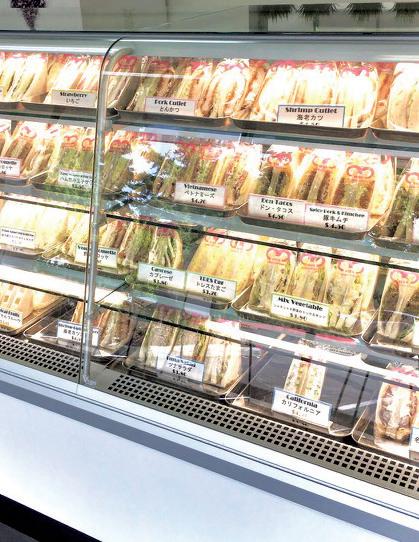
Japan’s sando craze has made its way to the Pacific Northwest. Sando means “sandwich” and TRES Sandwich House in Bellevue offers a delightful selection. The restaurant uses savory fillings like pork cutlet, yakisoba and miso katsu on fluffy white bread. Feed your sweet tooth with strawberry cheesecake, red bean paste and matcha or banana cream pie sandwiches, too. 1502 145th Place SE, Bellevue, tressandwich.com — Jasmin Thankachen

»Chomp
Eating with kids

Packing a perfect picnic
prepared at home, easy to transport and not too fussy to eat.
Chew on this
Celebrate Cinco de Mayo
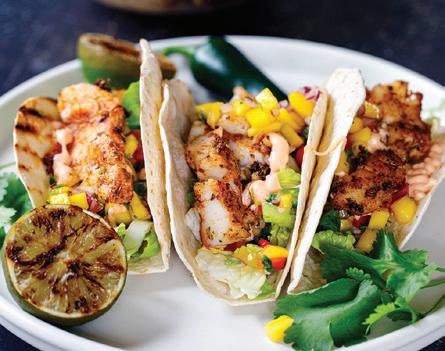
These kid-friendly Seattle spots offer fantastic takeout tacos for Cinco de Mayo — or just any time.
3 La Vaca, Pike Place Market stand: 1429 1st Ave., Seattle
3 Tacos Chukis, seattlechukis.com
Capitol Hill: 219 Broadway E.
South Lake Union: 832 Dexter Ave. N. Central District: 2215 E. Union St. Beacon Hill: 1608 S. Roberto Maestas Festival St.
3 El Borracho, elborracho.co
Pike Place Market: 1521 1st Ave. Ballard: 5465
Leary Ave. NW Tacoma: 2717 6th Ave.

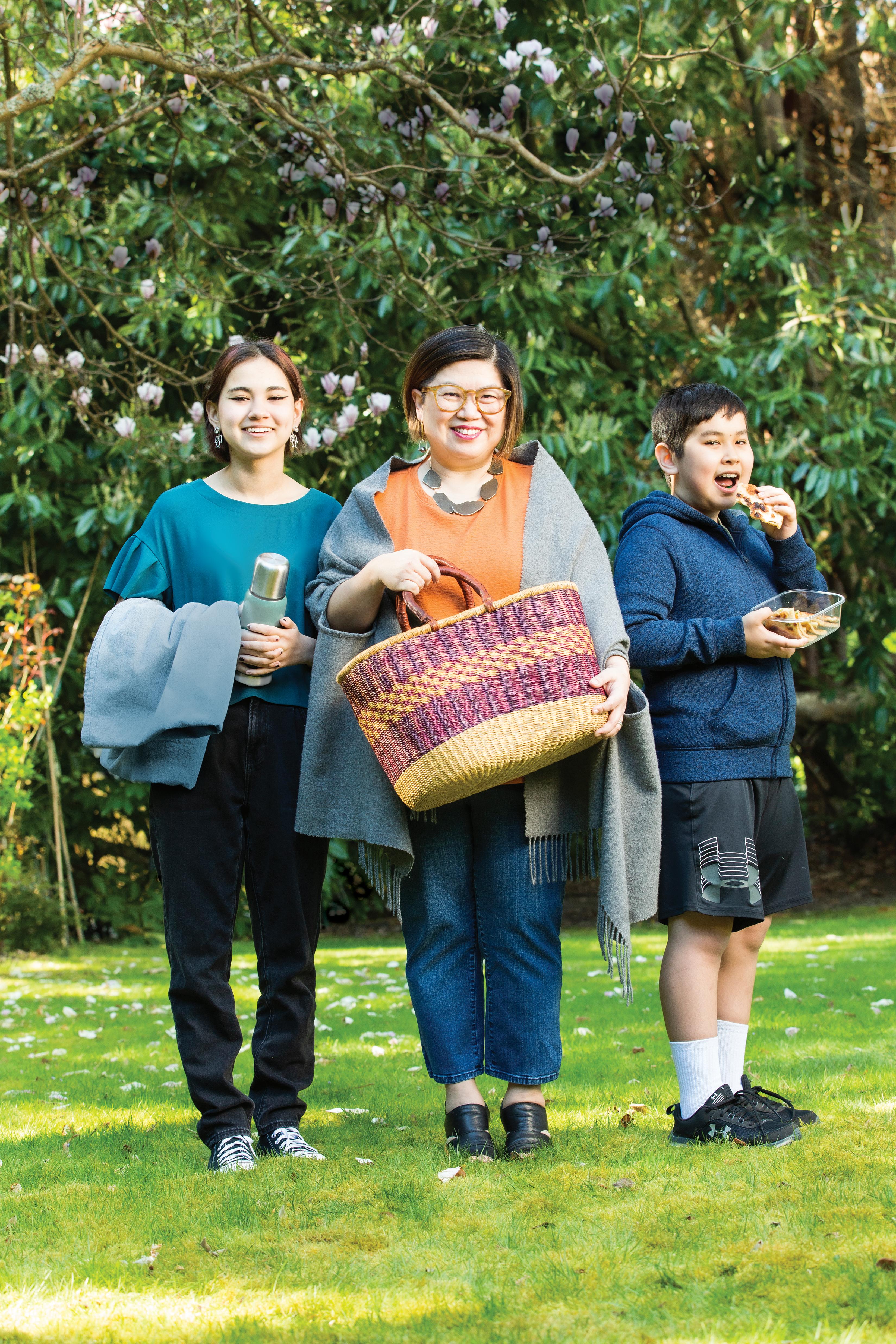
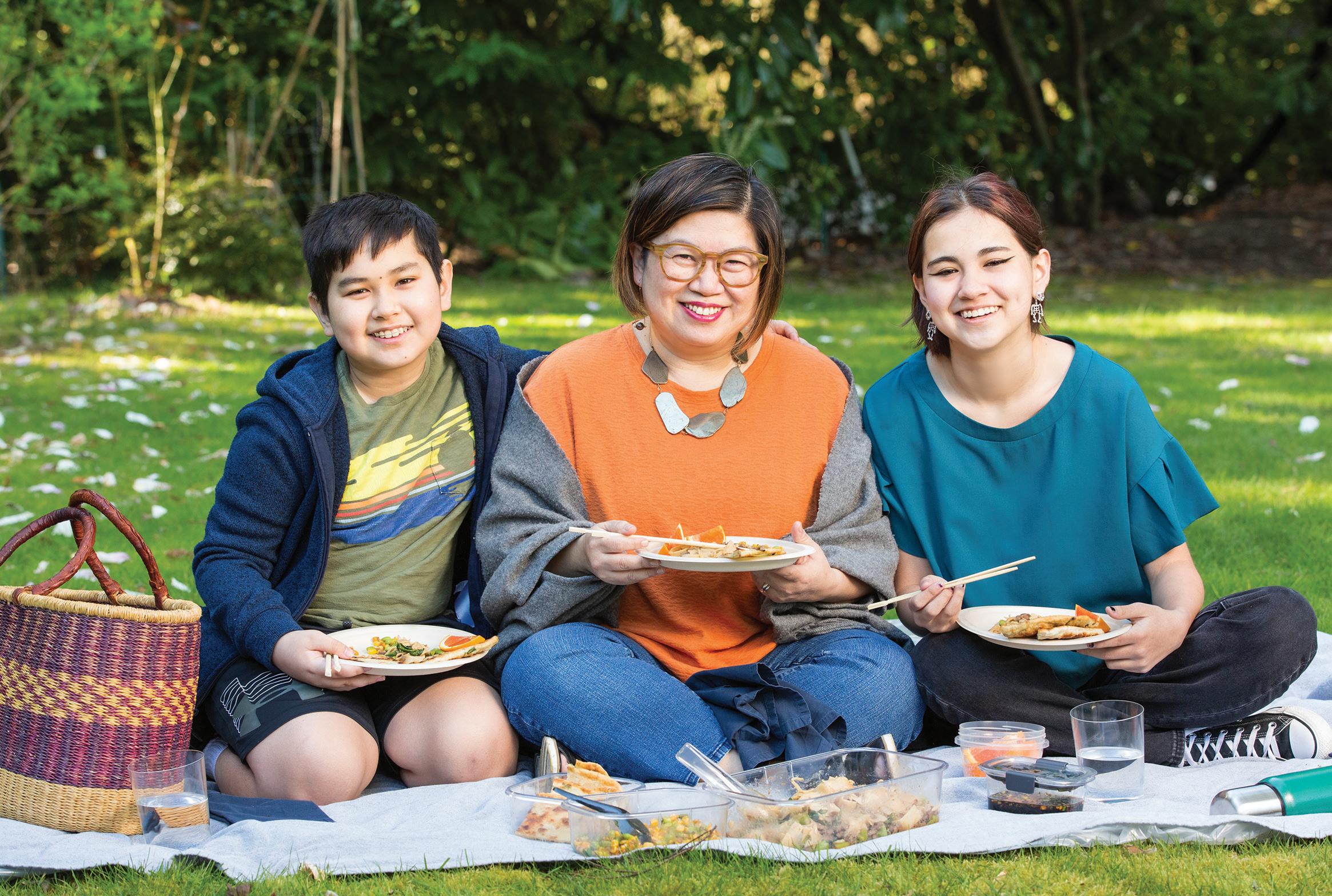
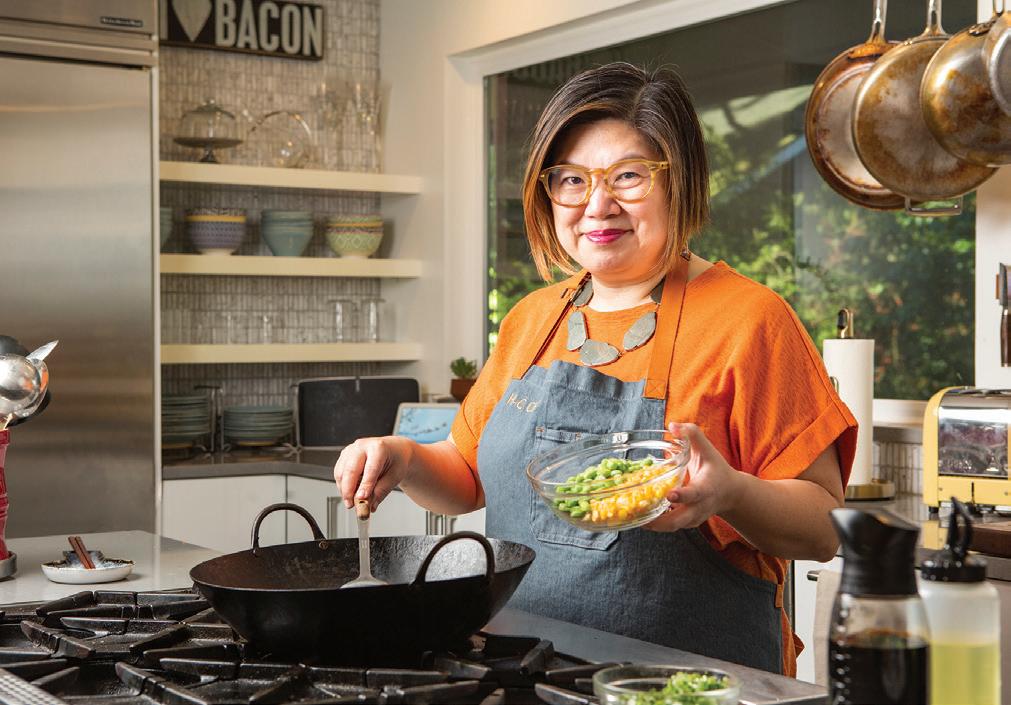
If you ask Hsiao-Ching Chou’s kids what to bring on a picnic, they’ll say definitely green onion pancakes and potstickers, which are delicious hot or cold.
Most people would think of a
JOSHUA HUSTON
sandwich as the ultimate picnic food, says Chou, a cookbook author and Magnolia mom of two. It’s got everything you need — starch, protein, sauce — in one neat package. For a successful picnic, the food needs to be
“Why do people pack sandwiches? They’re self-contained. That’s not so different from stirfried noodles or fried rice,” Chou adds. “Those are super-flexible and adaptable for your personal likes. Everybody gets a container of that and you’re set. It could be as easy as that.”
CONTINUED ON NEXT PAGE >
3 El Camion, elcamionseattle.com
West Seattle truck: 9250 45th Ave. SW
North Seattle truck: 11728 Aurora Ave. N. Roosevelt truck: 6319
Roosevelt Way NE
Sand Point truck: 4529
Sand Point Way NE — Jillian O’Connor
by JIAYING GRYGIEL / photos by
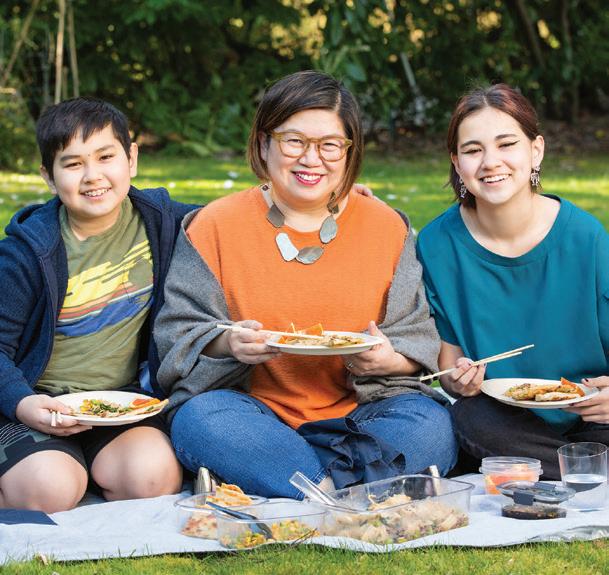
Hsiao-Ching Chou and her kids, Shen Riddle, 12, and Meilee Riddle, 14, enjoy a meal in their backyard.
«Chomp
CONTINUED
There’s an entire chapter devoted to stir-fry in Chou’s new book, Vegetarian Chinese Soul Food (Sasquatch Books). And her sweet-and-sour spare ribs (in her first cookbook, Chinese Soul Food) were always a hit at pre-pandemic neighborhood potlucks.
For kids who like just plain white rice, you could pair it with wok-seared edamame and corn (recipe below). And Chou is generous with her instructions: you can use a skillet instead of a wok, use frozen veggies instead of fresh (but don’t use canned!), or toss in peas instead of edamame if that’s what you’ve got on hand.
“My original intention was to create books that were accessible to the average home cook,” Chou says. “People who aren’t familiar with this food, who hadn’t grown up with it. I wanted something that was
more approachable.”
Chou was born in Taiwan and moved to the United States when she was 2½. She says she grew up in the Chinese restaurant in Missouri that her parents ran — if she wasn’t physically at school, she was at the restaurant.
These days, she tries to bring her own kids, 11 and 14, into the kitchen and follow their interests.


“My son really, really, really loves green onion pancakes,” Chou says. “He knows if I’m making dumplings, I’m also making green onion pancakes, because it’s the same dough. If he smells dough, he goes, ‘Are you making pancakes?’ ”
Now Shen can almost make the pancakes himself, from beginning to end, with supervision. Green onion pancakes





are forgiving (they don’t have to be round); potstickers, on the other hand, require a bit more technique. (FYI: potstickers are the pan-fried version of dumplings.)
Chou breaks down the process in videos on her website, mychinesesoulfood.com. Like in all her recipes, Chou’s directions are straightforward and easy to follow.
She’s taught dumpling-making classes to kids and adults of all ages.
You don’t expect 3- or 4-year-olds to have the attention span for the entire dumpling process.
But you can start by giving them small tasks: give them a bit of dough to roll into balls, or make it their job to pinch the edges of the dumpling.

“I have made so many dumplings in my life,” Chou says. “I spent 40 years making these, professionally or for my family or teaching classes. It’s sheer repetition.”
Try her recipe!
Wok-seared edamame and corn
2 ears fresh corn or 1 (10-ounce) bag frozen corn
1 tablespoon vegetable oil
2 stalks green onions, finely chopped
1 cup shelled edamame (frozen is fine)
1 tablespoon soy sauce
1 tablespoon water Kosher salt (optional)
1. If using fresh corn, cut the kernels from the cob. Set aside.
2. Preheat a wok over high heat until wisps of smoke rise from the surface. Add the oil and onions, and quickly stir to combine for 10 seconds, or until the onions are fragrant.
3. Add the corn and edamame, and stir-fry for about 1 minute. It will sizzle as the frozen vegetables cook through.
4. Add the soy sauce and water, and continue to stir. After 1 to 2 minutes more, the corn should have a light sear and be fully cooked through. If needed, add salt to taste. Serve with steamed rice.
Makes 4 servings
From Vegetarian Chinese Soul Food by Hsiao-Ching Chou (2021, Sasquatch Books).
Q&A
Where do you love to shop outside the city?
Katleen Snedeker, Mill Creek mom of two

I love Oopsie Daisy Boutique in Snohomish. They’ve got a great selection of clothes, toys and baby gear too! They’re part consignment and part retail, so you’re bound to find something nice for mom and baby.
»Shop
Lively + locally made
The pandemic pivot
Kids’ stores find new ways to operate during COVID-19
by KATRINA OTUONYE / photo by JOSHUA HUSTON
Everyone has made changes in the past year, including many local shops. Plenty of small businesses serving children and parents have found clever ways to pivot (and survive) in the midst of the pandemic.
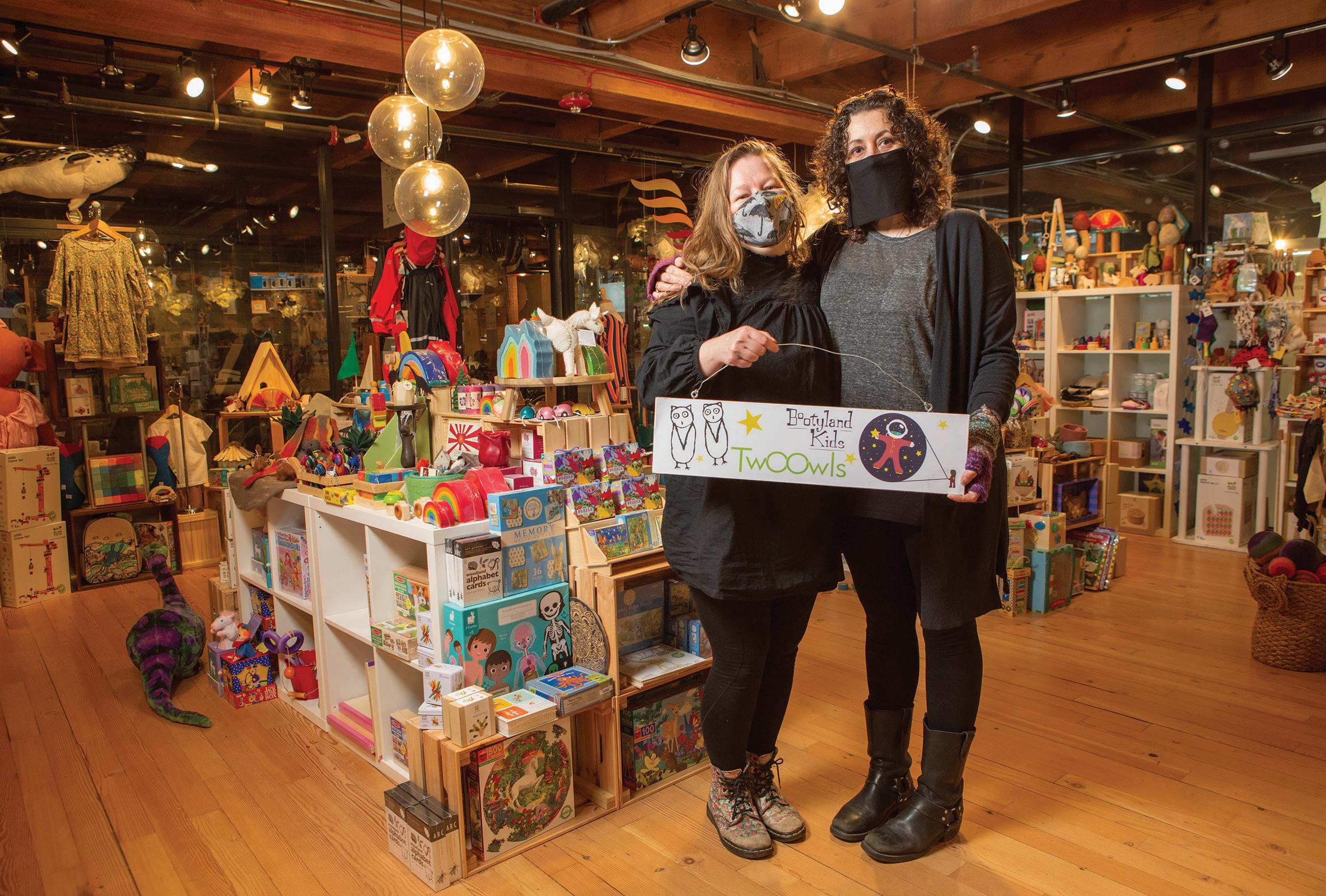
Two Owls recently combined forces with Bootyland Kids. Now the businesses are collaborating in Chophouse Row on Capitol Hill. Two Owls, formerly in the Madrona neighborhood, is known for alternative kids’ toys and organic cotton clothing;
Bootyland Kids specializes in sustainable products for toddlers, kids, tweens and adults. The stores offer online shopping and in-store pickup, as well as free gift wrapping.
Childish Things, on Holman Road in northwest Seattle, revised its layout for social distancing. Owner Wendy Powell opened the store 12 years ago to CONTINUED ON NEXT
Fuzzy friends
Pick up crocheting this summer with easy-to-follow kits and instruction books by Kristen Rask, including her latest, Amigurumi Crochet: Farm and
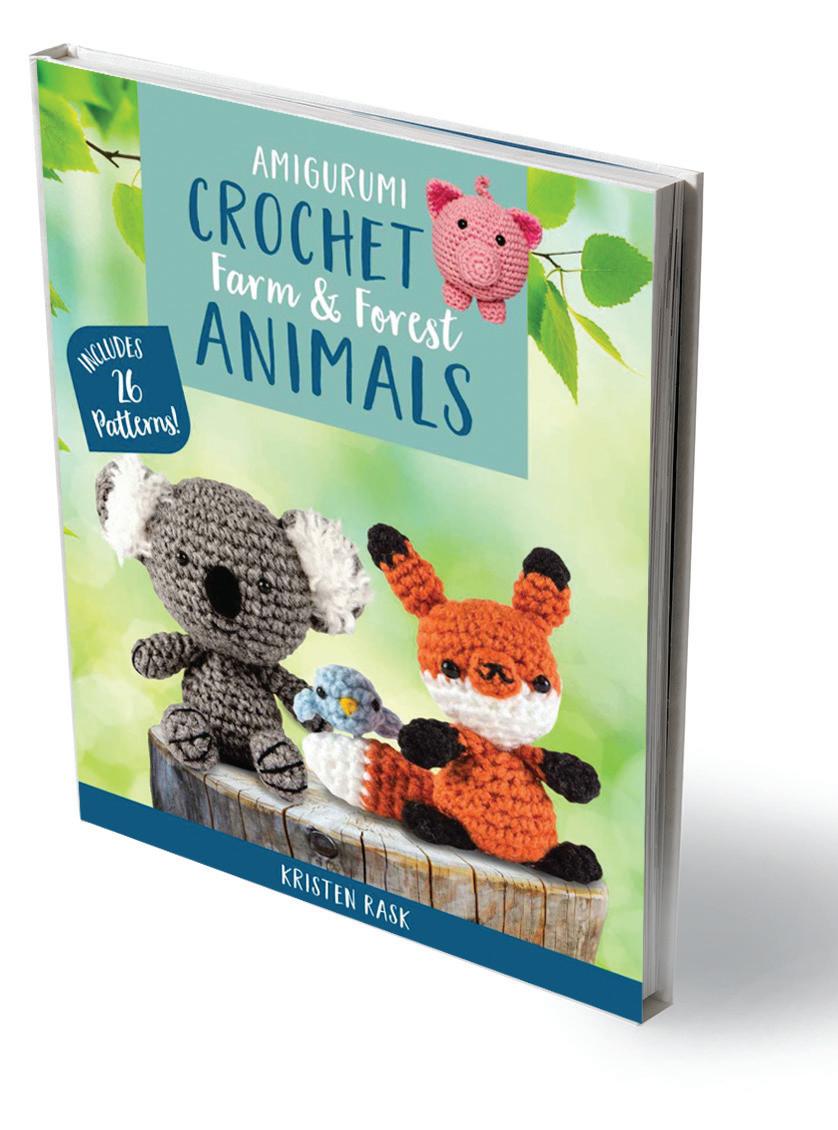
Rask, a veteran crafter, has published eight crocheting books and directs Urban Craft Uprising, the Northwest’s largest indie craft show. Help your kids learn a new stitch, and create lovable woodland and farm characters all summer long!
—

Shiny objects
Who hasn’t wanted a pair of diamond earrings at some point? This Mother’s Day, you might instead covet these locally made, conflict-free gems — silver studs, each with a cheeky image of a sparkling diamond. They work as well for children as for adults, and they’re handmade by Seattle jewelry maker Kelley Reese 3 etsy.com/ shop/kr47jewelry
Jasmin Thankachen
Ellie Cassidy and Mona Anastas joined forces to bring sustainable kids’ goods to shoppers in Chophouse Row.
«Shop
serve as a resource for families, offering a play area for kids and buying and reselling used items.
“We opened to be both a business and an experience,” she says.
The business prides itself on fitting kids for shoes and helping parents and caregivers learn how to use baby carriers. The shop has temporarily closed the play area, and it’s been a challenge to replace the fun pre-COVID experience of discovering new items for shoppers.
Childish Things carries more than 10,000 pieces and sells new items online, but it will never be a fully online store, Powell says: “It’s just not who we are.”
The store walks a fine line keeping people safe and working with the various restrictions, which can often be confusing. Powell happily welcomes people to shop in person, limiting the amount of time they can spend inside. The shop is also open for curbside pickup.
Math ’n’ Stuff, located in Maple Leaf, has seen firsthand how shoppers’ pandemic choices have changed. “This has been the year of the jigsaw puzzle,” manager Mikaela


Wingard-Phillips says. “Kites are through the roof.”
The games and toy store moved its popular Magic: The Gathering card game tournaments online after the pandemic hit in 2020.
Every solution is an imperfect one, but Wingard-Phillips has found that the last thing kids and families need right now is more screen time. “Families have been looking for escapism,” she says.
Her mother opened the store more than 28 years ago. It’s been supported by a loyal fan base, and has been able to reopen its board game rental library. Math ’n’ Stuff currently has made in-store shopping, curbside pickup and online ordering available.
Math ’n’ Stuff has also seen a popular addition to the neighborhood: a local baker, Backyard Bakery, holds a pop-up outside the store on the weekends.
“Sometimes a small baked good on the weekend is just the right amount of joy,” says Wingard-Phillips.
q Two Owls: 1429 12th Ave., Suite D3, shoptwoowls.com
q Bootyland Kids: 1429 12th Ave., Suite D3, bootylandkids.com
q Childish Things: 9776 Holman Rd. NW, #102, childishresale.com
q Math ’n’ Stuff: 8926 Roosevelt Way NE, mathnificent.com


Titles to inspire change
I am so excited to share these inspiring books about ways kids can and do make a difference in their communities. The power and impact of young voices should never be underestimated.
— Rene Holderman, children’s book buyer, Third Place Books
Our Skin: A First Conversation About Race by Megan Madison and Jessica Ralli; illustrated by Isabel Roxas
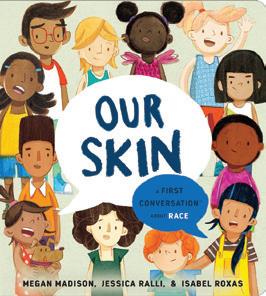
This board book offers an opportunity for both adults and children to learn the importance of discussion and increasing awareness of bias and stereotypes. Early conversations about race will encourage young voices to speak up about racial injustices.
Rise Up and Write It by Nandini Ahuja; illustrated

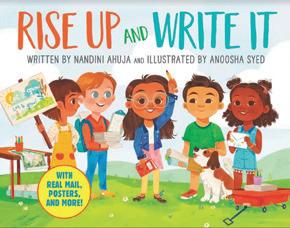
Farah Patel is determined to see an empty lot developed into a community garden for her neighborhood. As Farah pursues her goal, the reader can unfold her letters, petitions, posters and postcards, located in sturdy envelopes that serve as pages in the book.
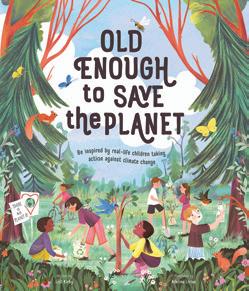
who’ve made a difference in all parts of the world with their passion and commitment. This book is full of concrete examples of ways youth can create change, and how to help empower young activists at home or at school.
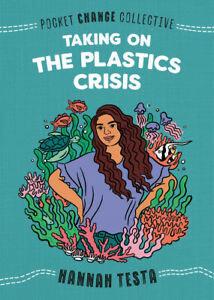
Taking on the Plastics Crisis by Hannah Testa; illustrated by Ashley Lukashevsky
A small but mighty book chronicling the efforts of 18-yearold Hannah Testa to reduce single-use plastic and its effect on the ocean. Hannah writes about her efforts from the age of 10 to inspire change, and provides concrete steps to help thwart the crisis.
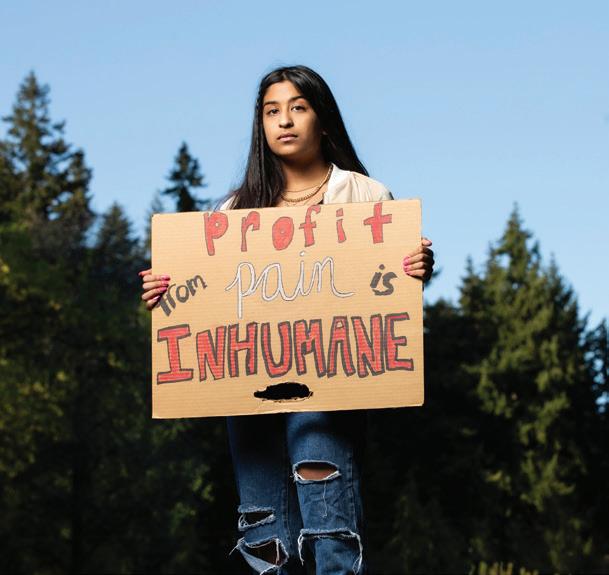
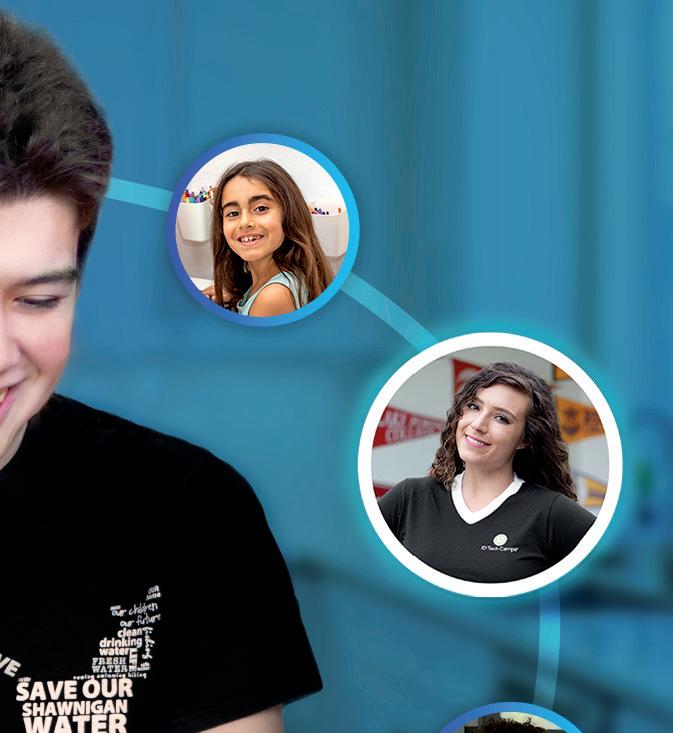
For many years, Seattle has been known for its high rates of activism, and local teens and tweens are no exception. Here’s a group of extraordinary kids — just kids — already striving to make a difference in racial justice, food security and stopping climate change.
Making their voices heard
Change makers
How 5 young activists are working to build a better Seattle by
ASTRID VINJE / photos by JOSHUA HUSTON
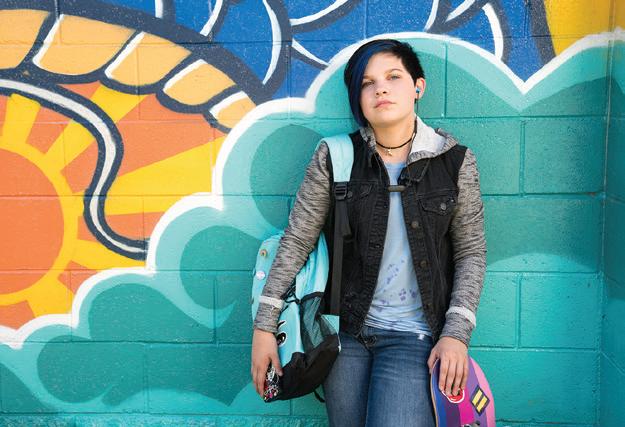
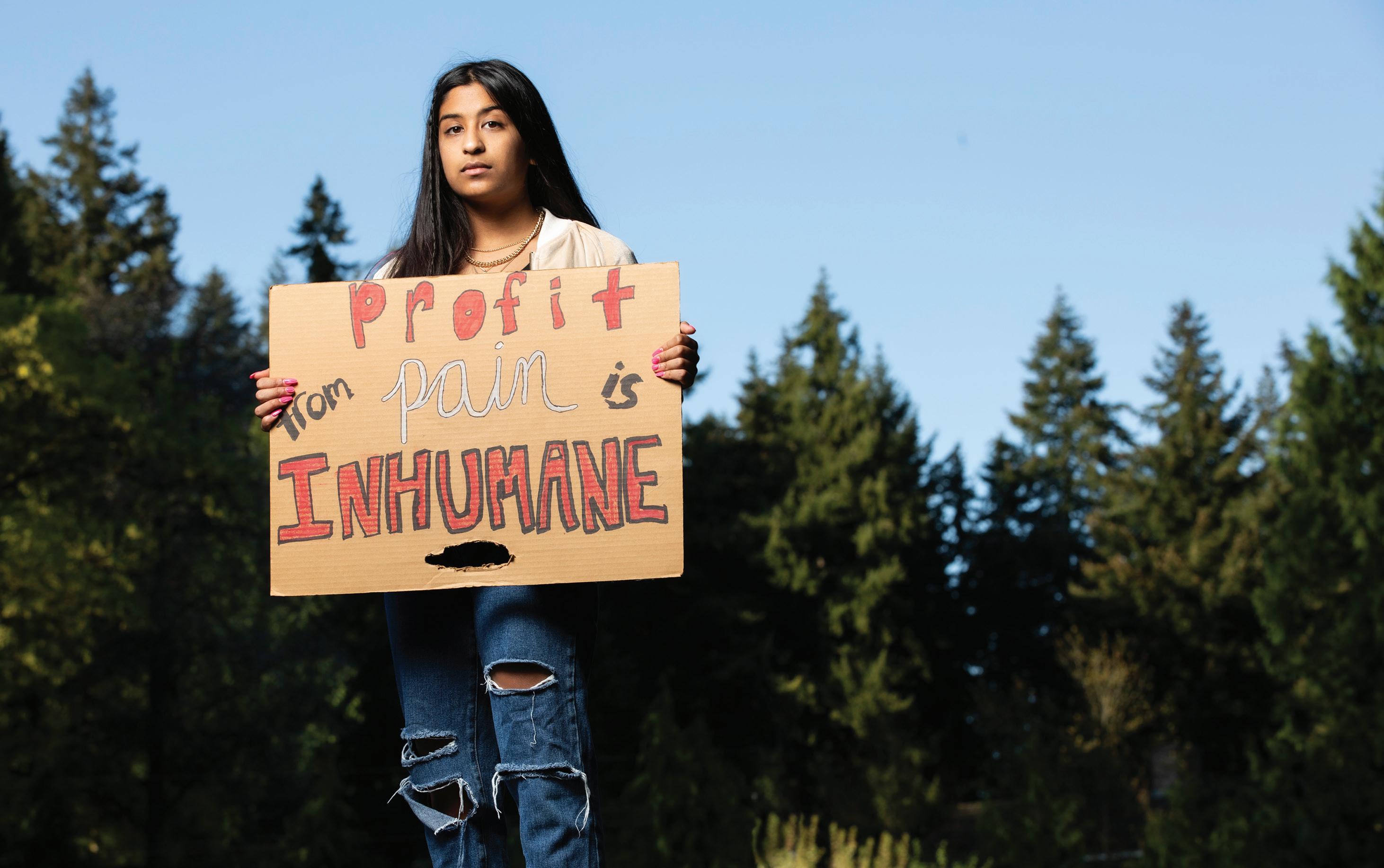
Kimaya Mahajan, 16, helped organize the U.S. Youth Climate Strike in 2019 and now works with Washington Youth For Climate Justice.
Change makers
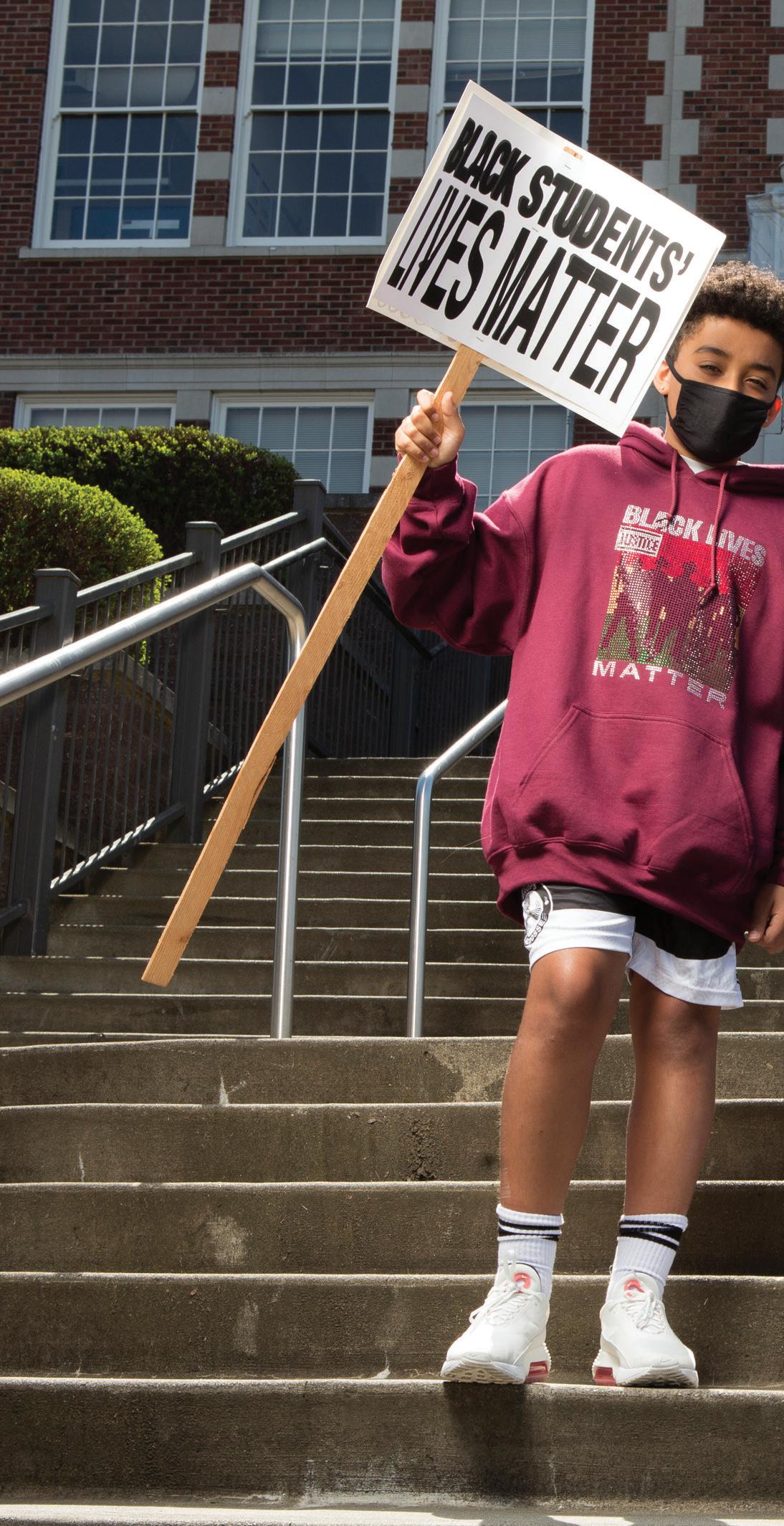
When 12-year-olds Kaz Hill and Miles Hagopian helped organize the Seattle Children’s March in June 2020, they didn’t expect their actions to have such a direct impact on the city of Seattle.
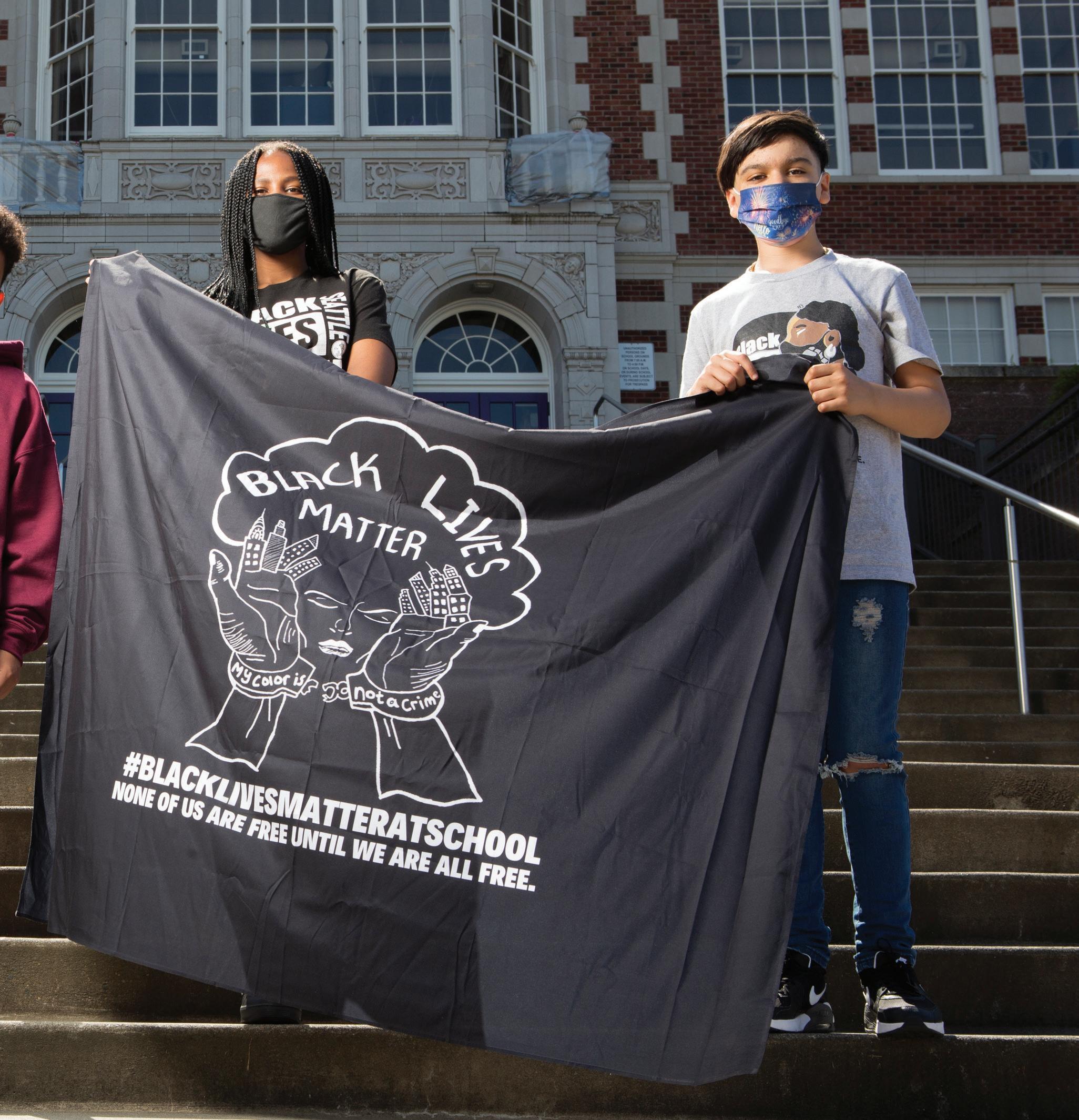
Inspired by the 1963 Children’s March in Birmingham, Ala., the Seattle Children’s March aimed to raise awareness about racial injustice and demand anti-racist actions in Seattle schools and prisons. Drawing in thousands of participants from all over the greater Seattle area, the march gave rise to groups like Youth Activists for Systemic Change, of which Kaz and Miles are both members.
But Kaz and Miles aren’t the only youth in Seattle playing active roles in their community.
In September 2019, then 14-yearold Kimaya Mahajan helped organize the U.S. Youth Climate Strike in Washington State, serving as emcee to raise awareness about climate justice. These days, Kimaya, now 16, primarily works with Washington Youth For Climate Justice. She also collaborates with other organizations like Eastside 4 Black Lives and the Emerald Youth Organizing Collective.
Kaz, Miles and Kimaya are part of a growing number of Seattle-area youth actively participating in social issues and making positive changes
in their communities. Energized by the momentum of movements like Black Lives Matter, and inspired by prominent youth activists like Greta Thunberg, these youth demonstrate that you’re never too young to make a difference.
Gaining new perspectives from activism
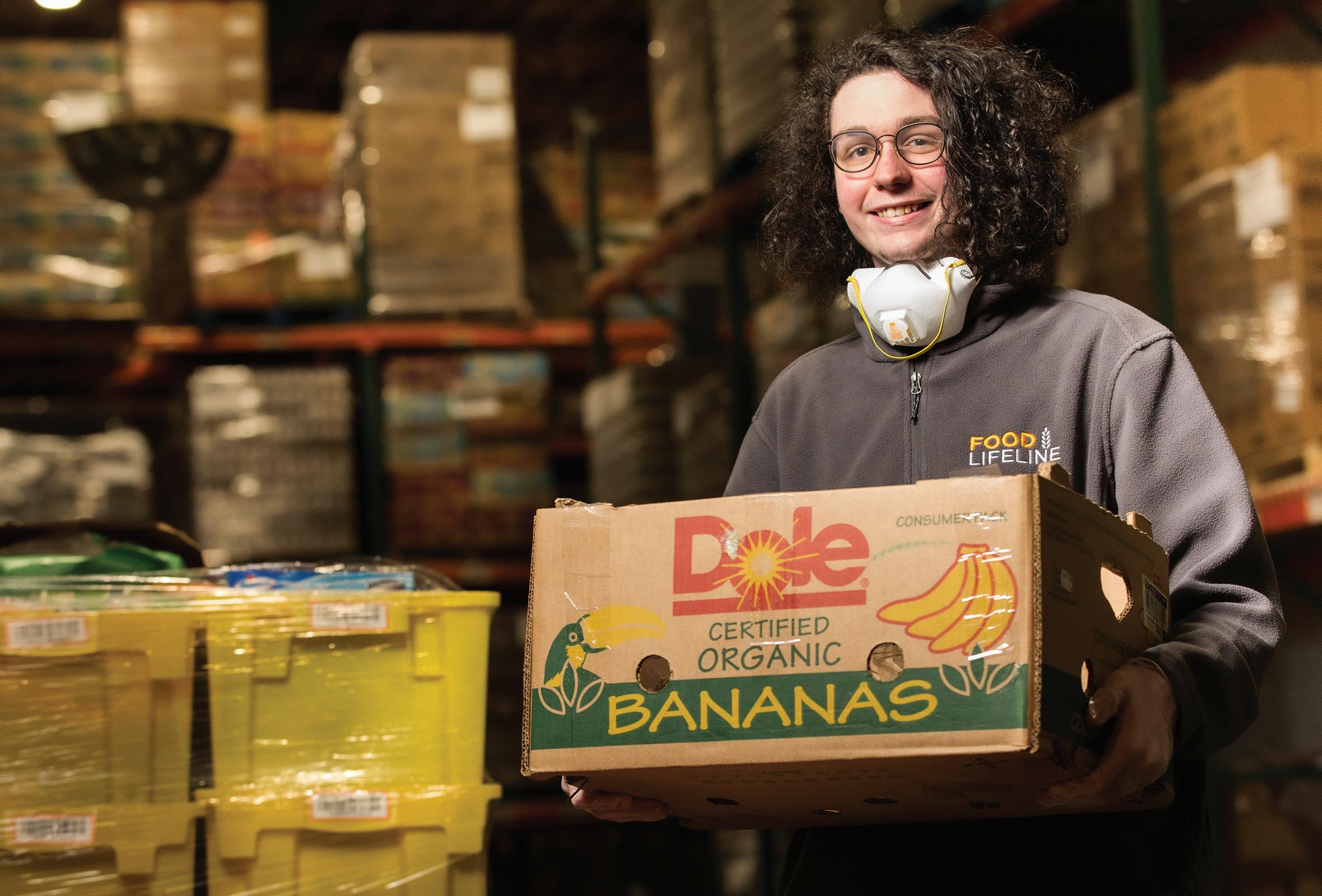
For Tristan Bonniol, 17, volunteering at Food Lifeline is a tangible way for him to address poverty in Seattle. He initially started volunteering as part of his community service requirements for Seattle Public Schools.
However, since then, he consistently volunteers at the food bank twice a week, sorting food at the warehouse.
“Every time I finish a session,” Tristan remarks, “they tell me how many tons of food I’ve sorted. It just puts into perspective for me how much I’m really doing for the community.”
Sixteen-year-old Alexis Mburu, who serves on the Youth Advisory Board of Washington Ethnic Studies Now and is a member of the NAACP Youth Council, echoes this sentiment. She explains how her activism helps ground her in her community and inspires her to take on new projects.
“It adds a new perspective to all of the work that I do,” she says. “It gives me a sense of motivation in life that I didn’t necessarily have before.”
But being a youth activist isn’t always easy.
Kimaya remembers all the missteps she made when she first started organizing in 2019.
“We didn’t really know what we were doing,” she recalls. “We definitely made a lot of mistakes back then.”
For many, the breadth of issues that exist, ranging from environmental conservation to social justice, can make the efforts of activism seem futile.
“It’s not as simple as one small success of a bill being passed or a policy being overturned,” Kimaya states. “When you look at the scope of the issues that we’re dealing with, it’s really overwhelming. It reminds you how much work there’s still left to do.”
Despite the challenges, youth like Kimaya and Miles continue
Kaz Hill, Alexis Mburu and Miles Hagopian aim to raise awareness about racial injustice and demand anti-racist actions in Seattle schools and prisons.
Tristan Bonniol feels that volunteering at Food Lifeline is a tangible way to address poverty in Seattle.
“Everyone has a place in activism. Everyone has unique experiences that should be put into the conversation.”
ALEXIS MBURU, 16
their activism because they know they are the future stewards of their community.
“In this time, it’s necessary that youth take action,” says Miles. “If we don’t, nobody will.”
Inspiring youth to get involved
For youth who are interested in activism, Kimaya recommends starting with learning about the issues. Take time to identify what needs aren’t being met in the community.
Tristan suggests starting as early as possible to help youth cultivate a sense of identity as activists. It’s also important for youth to realize that their voices do matter, Alexis adds.
“Everyone has a place in activism,” Alexis explains.
“Everyone has unique experiences that should be put into the conversation.”
And how can parents, teachers and guardians encourage activism in their own children?
As with any activity, showing genuine support and validation can strengthen your child’s confidence in their identity as activists.
“My mom always tells me how important it is, the stuff I’m doing,” Kaz shares proudly.
Being a parent who also engages in activism themselves can be a plus. This type of modeling
behavior goes a long way in inspiring kids to become involved in the issues they care about.
“My dad is a longtime activist,” reveals Miles, “so he’s always giving me good advice on ways to organize in the community.”
But even if parents are not actively involved in community organizing or volunteering, they can still show support to their kids by offering rides or helping them get supplies for events or projects.
These youth represent the next generation of leaders in Seattle, and beyond. Observing the impact they make in the greater Seattle community today provides a glimpse into the change makers they will surely become in the future.
And that’s something to inspire us all.
Opportunities for kids to make a difference
Does your child want to get started now helping out and making positive change in the world? Here are some local groups striving to make a difference that accept help from volunteers who are under 18.
Climate change
Zero Hour: This group working to fight climate change welcomes help from young activists.
3 thisiszerohour.org
Washington Youth For Climate Justice: Youth volunteers (under the age of 25) can join a statewide team or join a city group. Usually requires a minimum of two hours a week. 3 waycj.org
Food banks
Food Lifeline: Volunteers can be age 14 and up. Teenagers younger than 17 will need to have a signed consent form. Locations throughout Seattle. Kids can host a virtual or canned food drive. 3 foodlifeline.org
Northwest Harvest: Will accept volunteers who are 9 or older to work sorting food at SODO Community Market or multiple regional warehouses in the Seattle area. Kids 15 or younger need an adult chaperone. Kids can also host a virtual food drive.
3 northwestharvest.org
University District Food Bank: Kids can volunteer starting at age 15 if accompanied by a parent or guardian.
3 udistrictfoodbank.org
Social justice
NAACP Youth Coalition: For more information on getting involved, contact naacpyouthcoalition@ gmail.com
Eastside 4 Black Lives: Find out more about upcoming events at 3 facebook.com/ eastside4blacklives
Black Lives Matter at School: Find out what’s going on currently in the Year of Purpose and find contact information at 3 blacklivesmatter atschool.com
BRINGING UP ACTIVISTS
At 96, Frances Dixon reflects on parenting the founders of Seattle’s Black Panthers
by HALLIE GOLDEN
Frances Dixon says she can still remember her husband picking her up from her job at Group Health in 1968, and walking into her home in Seattle’s Madrona neighborhood to find it completely filled with young people.
“There in the house were young people lined up upstairs, downstairs, in the kitchen, everywhere. They were everywhere,” says Dixon, now 96 years old and living in the same house.
It was the first organizational meeting of the Black Panther Party for Self-Defense’s Seattle chapter, which two of her sons, Aaron and Elmer Dixon, helped found and then subsequently ran for years. Rather than interrupt their work, Frances Dixon walked silently straight through the sea of bodies to the kitchen, closed the doors and left them to it.
Today, after years supporting her children’s work in the party, she is known as “Black Panther Mom.”
Elmer Dixon says he remembers his mom cooking food for community dinners and opening up her home to the organization’s many members.
“When comrades were out in the field selling newspapers or working and we needed them to be over there for a couple hours, she would do that,” he says. “On some of their birthdays, she would host a birthday party.”
But it was in no way a role for the faint of heart. Her sons served time in jail, so she would write letters and visit them there. She also says she would receive calls virtually every day from people threatening her sons.
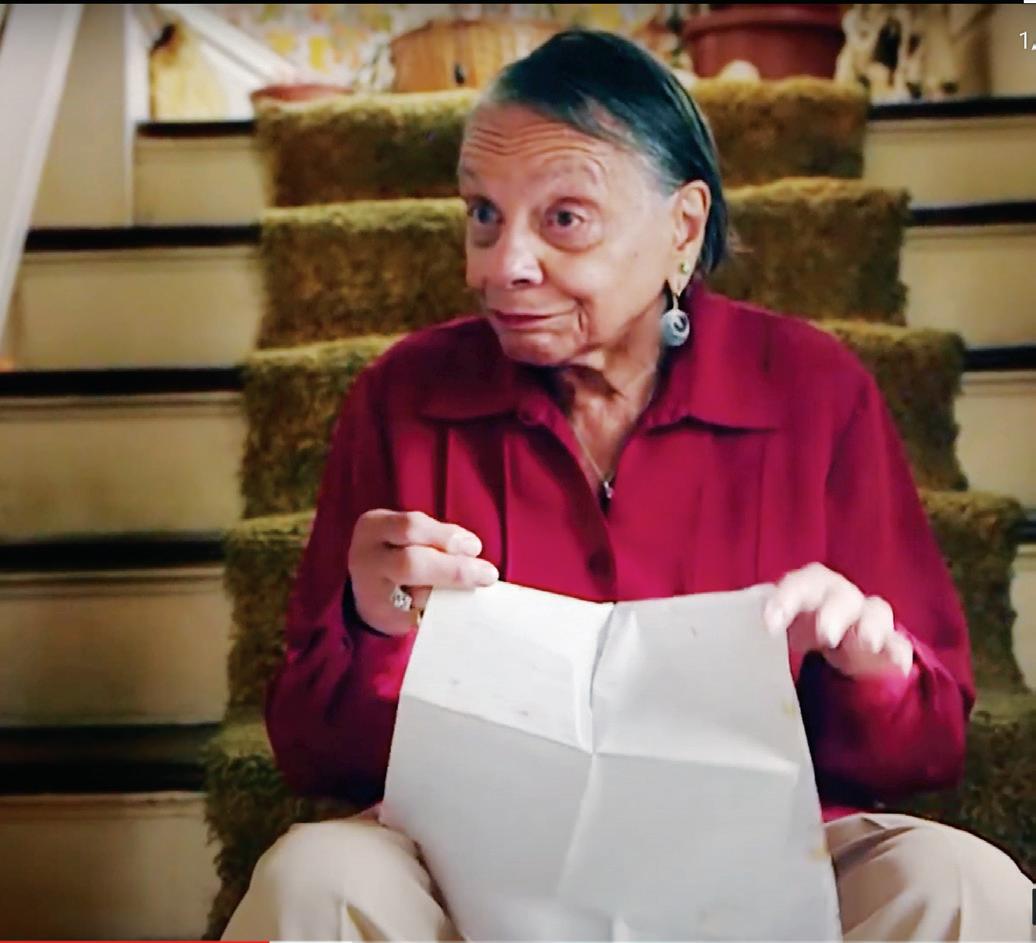
Her response? “Go ahead and try it. Try it and you’ll be sorry.”
Frances Dixon’s story was featured in a documentary first released last year called “Keepers of the Dream: Seattle Women Black Panthers.” Produced and directed by local filmmakers Tajuan LaBee and Patricia Boiko, it highlights the key role women like Dixon played in the Panther organization.
The Seattle chapter was one of the first authorized chapters outside of California, where the Black Panther Party was founded in 1966. Although many remember the party for its focus on preventing police violence as well as armed self-defense, the group was also extremely focused on helping disadvantaged members of the community.
Frances Dixon, now a retired clinical assistant, says her most vivid memory of their work was their program to feed hungry children.
“They took time to cook food for little children … They were doing it back then, when they were teenagers,” she says.
Elmer Dixon explains that he
and Aaron, along with their other two siblings and the rest of the chapter, also helped provide a free medical clinic, a free clothing program, a free legal aid program and a police alert patrol program in which they would “patrol cops, and observe them to make sure that they were not going to harm or murder someone.”
During this period, Frances Dixon says she would offer her children advice, telling them to be careful of the police because “you never know when they’re going to be following you.”
But for Elmer Dixon, it wasn’t simply one individual piece of advice from his parents that helped inform his work in the organization.
“It was through their actions daily, how they lived their lives, how they treated others. That’s what in fact influenced us the most,” he says.
When asked whether she has any advice for parents of today’s racial justice activists, Frances Dixon has a very simple but sincere response.
“Just be supportive of your children, that’s all.”
Talking to kids about the climate crisis
How families can encourage climate activism— without anxiety reaching a boiling point by MEG BUTTERWORTH
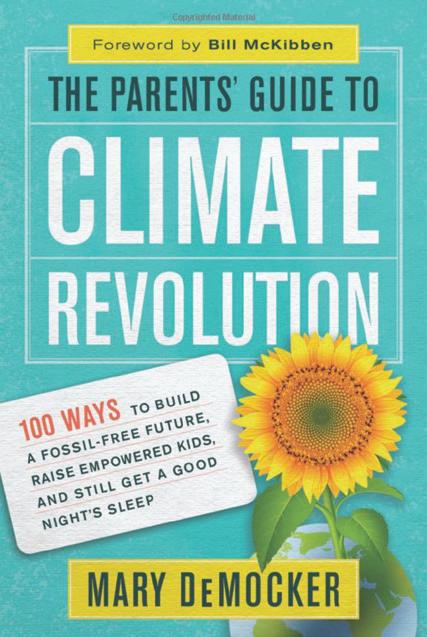
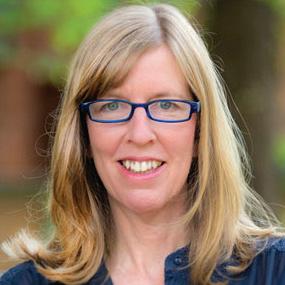
When Mary DeMocker decided to write her 2018 book, The Parents’ Guide to Climate Revolution, she wanted to help parents fight for their kids’ future in a way that wasn’t overwhelming or anxietyinducing.
Parents have little time and emotional bandwidth. Add to that trying to raise children amid the existential threat of climate change and “it’s really just a pressure cooker for families,” says DeMocker.
Even before she had her children in the 1990s, DeMocker and her husband practiced a low-carbonfootprint lifestyle. They had a small house in Eugene,
Author chat
“Black Panther Mom” Frances Dixon is interviewed in her home for the documentary “Keepers of the Dream: Seattle Women Black Panthers.”
Ore., used solar panels, planted a garden, only used one car.
Despite their efforts, by the 2000s global temperatures were rising. She struggled with how to more effectively fight climate change.
DeMocker realized that she needed to “switch off” worrying about her own carbon footprint and become more politically active.
She started writing. With no other credentials than her love for her children and her instincts to protect them, she began pitching articles about how to be more active. She started the 350.org Eugene chapter and organized protests and rallies with teachers and kids.
Parents started asking her for lists of five to 10 things they could do to protect their kids. The list grew to 100 things, then into a book. At more than 300 pages, it’s comprehensive but extremely accessible. DeMocker provides short, easy-toread chapters on a wide range of topics.
Each chapter ends with a helpful list of ways families can engage. “It’s a menu instead of a to-do list … you can pick and choose. It can be a reference over time as kids change and as circumstances change.”
Amid the numerous topics and suggestions, DeMocker’s main takeaways for parents are: Keep four things in mind when talking with your children about the climate crisis: Listen to their fears and concerns; validate them; provide honest information but keep it age-appropriate, “so, they understand only what they need to know”; and let them know that lots of people are doing good work — and how you can support that work. Emphasize the positive with your children. This is a time of innovation and
imagination; there are exciting conversations to be had about the different ways we can tackle climate change.
Do system change first.
“We’ve been doing the stuff at home first. Flip it around.” For example, DeMocker recommends that if you only have two minutes to take some kind of action and have to choose between washing out a sticky peanut butter jar to recycle or making a call to your senator, call the senator. Circle back to the peanut butter jar later.
Stop judging yourself and others. Shame and guilt can be paralyzing.
“Don’t snort at the inlaws who show up in an SUV. Focus on the larger system that allows SUVs to be made in the first place,” she says.
Pick what your family cares about and focus on that. Have fun. If her kids were young now, she says, she would use social media sites like TikTok to make entertaining videos spreading awareness about their chosen causes.
Don’t do it alone. Seek collective solutions with your family. Identify organizations to support, join community groups. Not only are adult voices amplified this way, but so are kids’ voices.
Sadly, climate change isn’t going away. Parents will continue to parent around this issue. Now in their twenties, DeMocker’s children are grappling with how to respond to the crisis as adults.
She reminds them that we have solutions.
“The biggest thing people of all ages need to know is that scientists say we have the time and solutions to slash carbon emissions … we just need those solutions to be embraced and funded by our government at the highest level,” she says.
Help available for families hit hard by pandemic
A little more than a year after the pandemic started, COVID-19 continues to shake the world. Families are struggling to find a sense of normalcy. Many face homelessness, food insecurity, mental health issues and unemployment Programs in the Seattle area offering assistance to help families in need
Food box home delivery: King County food banks, Safeway, DoorDash and United Way of King County are offering help to those in isolation or to people who don’t have access to a local food bank. If you’re unable to leave home and are in need of food, you may request an emergency food box. Boxes can be delivered throughout King County. uwkc.org/ need-help/food-delivery

Humble Design: This organization provides furniture and appliances for families and individuals who are finding their way out of homelessness. humbledesign.org
People’s Free Telehealth: This team of board-certified and state-licensed medical providers volunteers to conduct confidential video meetings with underserved, uninsured and underinsured populations. Patients can share health concerns and the providers will create a comprehensive plan for treatment. peoplesfreetelehealth.org
FareStart: This organization offers job training in the restaurant industry, helping to build critical life skills and job skills. FareStart also offers free meals to those in need. farestart.org
Seattle Parks and Recreation: If you need help with child care and online learning, Seattle Parks and Recreation provides assistance for its full-day child care for elementary-school-age kids. Teen Resource Hubs in the Seattle area provide school assistance, internet access and mental health support for teens. For details, contact your local community center. seattle.gov/parks
United Way of King County: Working with a large network of nonprofits, UWKC offers multiple services and can help with information about the CARES Act relief fund, rental assistance and the Streets to Home outreach program. UWKC also can help residents get access to emergency food packs, mental health care and employment assistance services. uwkc.org
— Jasmin Thankachen

Unlock more from our magazine at seattleschild.com
Get us delivered to your inbox! Sign up for our eNewsletters
„ Find more nest-making ideas at seattleschild.com
Find local resources for busy parents Visit our family-friendly directory of businesses
Don’t miss an issue! Subscribe and get Seattle’s Child mailed to your home
»MakingHome
Living big in small and unique spaces

The joy of hidden hideaways
These middle-grade novelists breathe life into characters who just want to find their place in the world by
HALLIE GOLDEN
Authors Will Taylor and Mae Respicio had fairly different childhoods.
Taylor grew up reading any and all fantasy books in the Seattle area, with his extended family thousands of miles away.
Respicio was raised in California’s Central Valley, with members of her extended Filipino-American family right
next door, spending recess writing plays for her friends to perform.
But they share one common memory from their childhoods: The love of constructing small shelters, all their own.

Now, decades later, both have
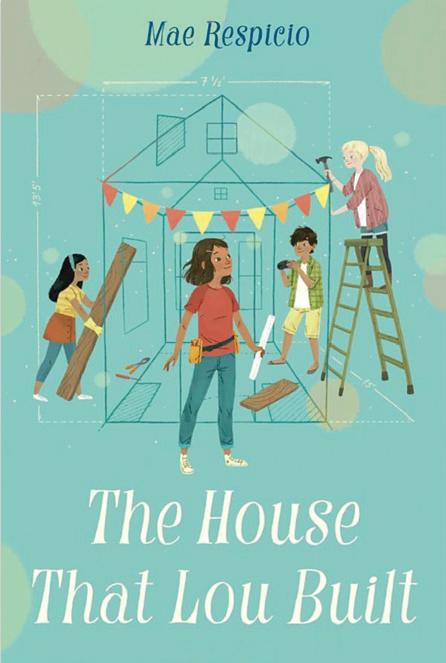
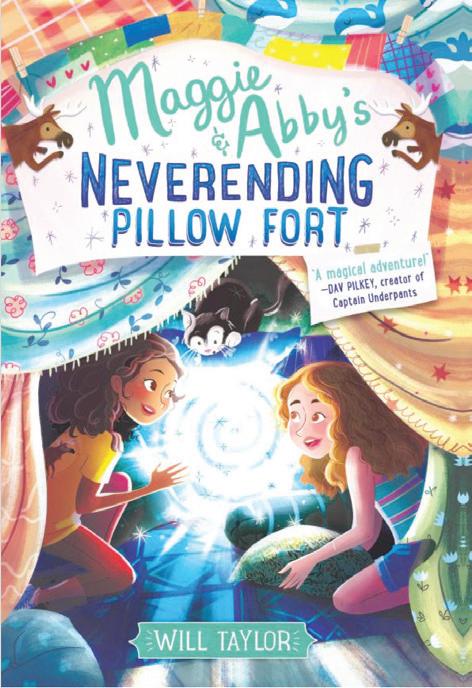
These two books celebrate kids’ need to find a special retreat.

published their first middle-grade novels, and have woven that theme into the fabric of their stories, recognizing just how universal the need to build forts and hidden hideaways can be for children.
For Taylor, who wrote Maggie & Abby’s Neverending Pillow Fort, the theme appears by way of the two 11-year-old best friends constructing their own magical forts that have the power to link up to other forts across the world.
The Seattle resident says the idea came to him in 2013 while he was working at a coffee-roasting company and had just finished reading a series of sci-fi novels where people’s homes have rooms on multiple planets. He says he remembers thinking about the kind of fun kids could have in that world, then immediately pictured a small pillow fort he’d constructed in the summer before fifth grade.
“I pictured going in, pulling aside a pillow and crawling through to someone else’s,” Taylor says. “It was like a real light coming down from the sky, kind of like, this is what you’re about to do.”
Respicio, who wrote The House That Lou Built, says she also remembers creating all different types of forts as a child, and has vivid memories of getting to build a shelter among California’s redwoods during sixth-grade camp.
“I was a kid who was always trying to make my own space and trying to figure out what was mine amidst a big family and lots of things happening,” she says.
But it was the work she did with her husband to fix up their first house, then research she conducted on tiny homes, that helped her write this book. It features a 12-year-old girl, who with the help of her friends works to build a tiny home on the land left to her by her deceased father.
While Taylor and Respicio have yet to meet in person, after being included on the same email with a few other debut authors in 2017, they’ve been social media friends and devoted fans of each other’s work ever since.
They also both quickly recognized the common themes in their writing, and just how connected each of their stories are to their own childhoods and life experiences.

“I really do think that it’s hard to separate yourself from your art,” says Respicio. “Every lens we’ve had since we were in childhood, every experience comes through in what we’re writing, whether we want it to or not.”




FAMILY