savannah work sample
b. arch 2025

about me
hi! i’m savannah paap, a designer from fauquier county, virginia, along the foothills of the blue ridge mountains. i seek to understand people through architecture and weave users’ narratives into the fabric of the built environment. this spring i will graduate with a b.arch from virginia tech. i have found interests in modelmaking and graphic representation in my studio classes, as i’ve always been passionate about expressing myself and my ideas. during this time i have not only been privileged to further myself as a designer, but also as a human being. i have worked part time in retail throughout college, connecting with people of all walks of life as i help them find which aisle the cough drops are in.
i hope as you look through my work you not only see the competency of a young, enthusiastic designer, but also the passion and sensibility of a well-rounded human being
savannah paap
about best desribed as enthusiastic and empathetic designer, my passion for people always finds its way into the way i work. i excel in communicating my ideas with others, whether verbally or through use of graphics. also a great team player and will always boost a stressed-out studio’s morale.
digital skills rhino 6 and 7 sketchup revit lumion enscape adobe suite microsoft suite
other skills customer service time management photography
ability to talk nonarchitects without use of the word juxtapostiton
references* wiilliam galloway professor
kayla craddock employer
marissa kasdan former employer
*contact information available upon request
analog skills sketching model making metal fabrication lasercamm 3d printing
virginia tech
2020- expected graduation 2025 bachelor of architecture minor in industrial design 3.74 in major gpa
email: savannahpaap@vt.edu
cell: 540-905-9580
richmond, va
cdr payette openlab boston studio august 2023-december 2023 rigorous integrative studio experience at payette through virginia tech center for design research.
appalachian futures lab january 2024- may 2024 options studio focusing on community outreach in former coal town pocahantas, virginia. produced concept designs for a mixed-use development alongside two other students, ran community meetings explaining our work to residents.
intern associate at ktgy tyson’s corner, va june 2023-august 2023
assisted in various roles on nearly 10 multi- and single family projects located across the mid-atlantic. tasks included creating unit floor plans in revit, calculating glazing ratios and graphically representing the data in design sets, creating detailed site models in sketchup using civil drawings, and sitting on in design meetings discussing client feedback and regional development.
shift supervisor at cvs health blacksburg, va november 2021-present
worked 15 hours a week on average while managing a full course load as a college student. acted as manager-on-duty when store mananger wasn’t available, counted down tills handling both cash and checks, designed attractive store displays, and fielded questions from customers and corporate.
front store cashier at cvs health august 2021- november 2021 handled cash on register while engaging with customers. assisted customers in locating various items around the store.
sunday dinner semester 7 rhythm and release semester 5 appalachian futures semester 8
futures pinwheel pavillion semester 5
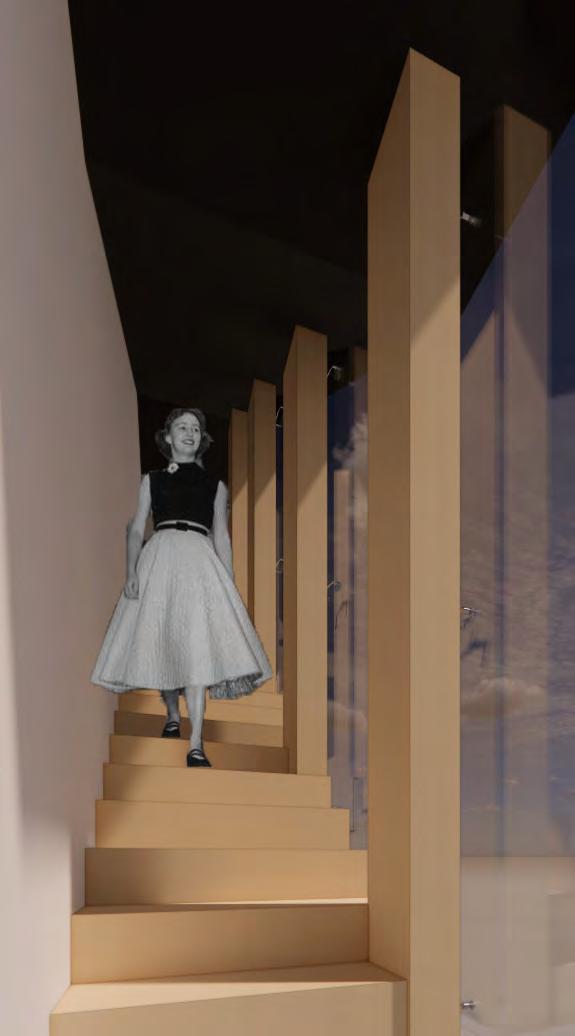
“Down and down and down the stairs. I turn Grandma’s doorknob to meet the familiar aromas of Sunday Dinner, with family in line right behind me.”
sunday dinner
term: semester 7 duration: 15 weeks in collaboration with: cholena walker role: graphics, 1/16” and 1:1 models
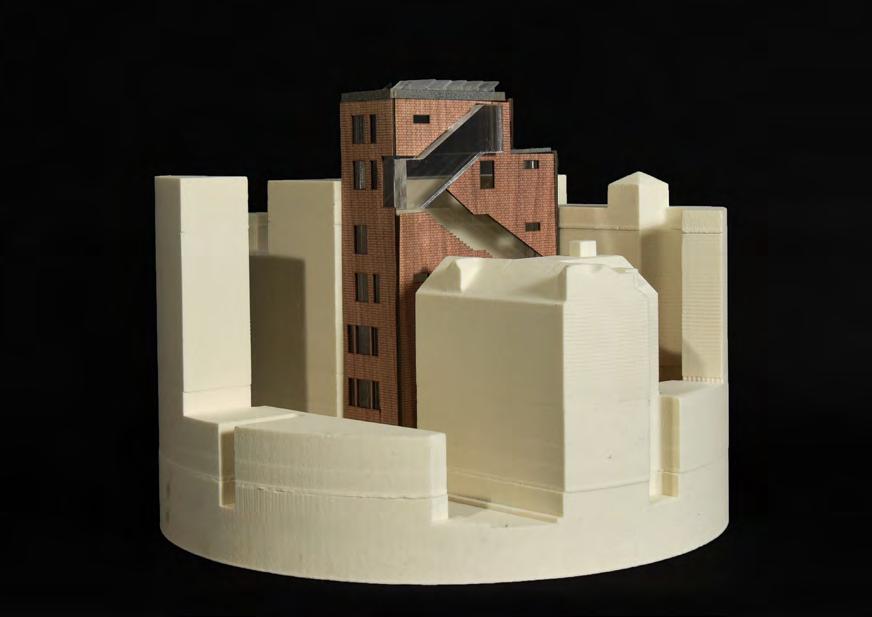
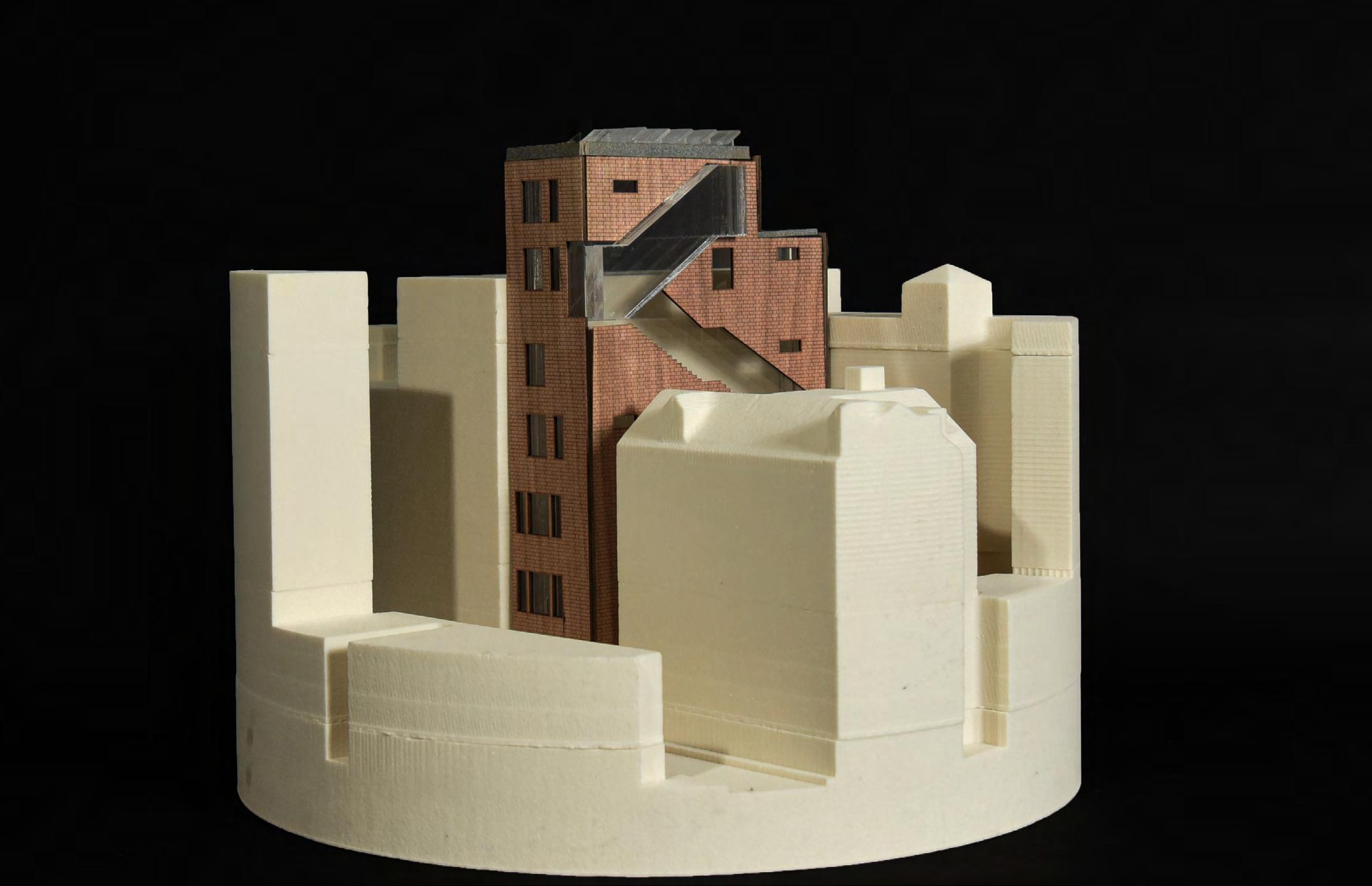
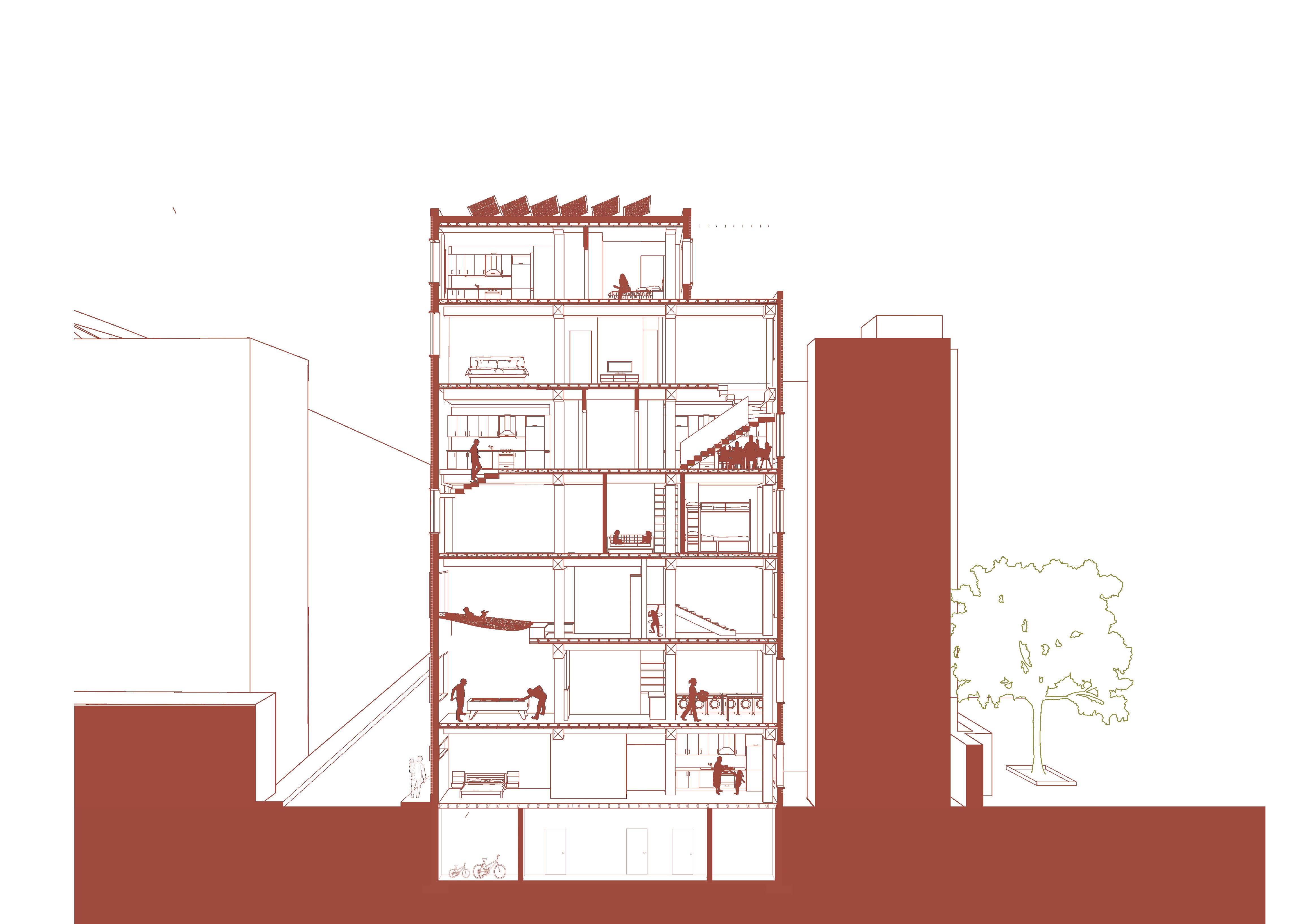
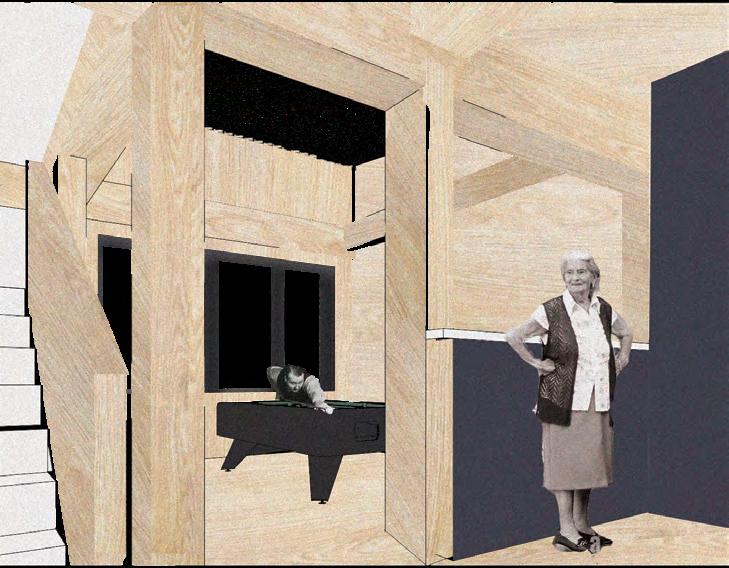
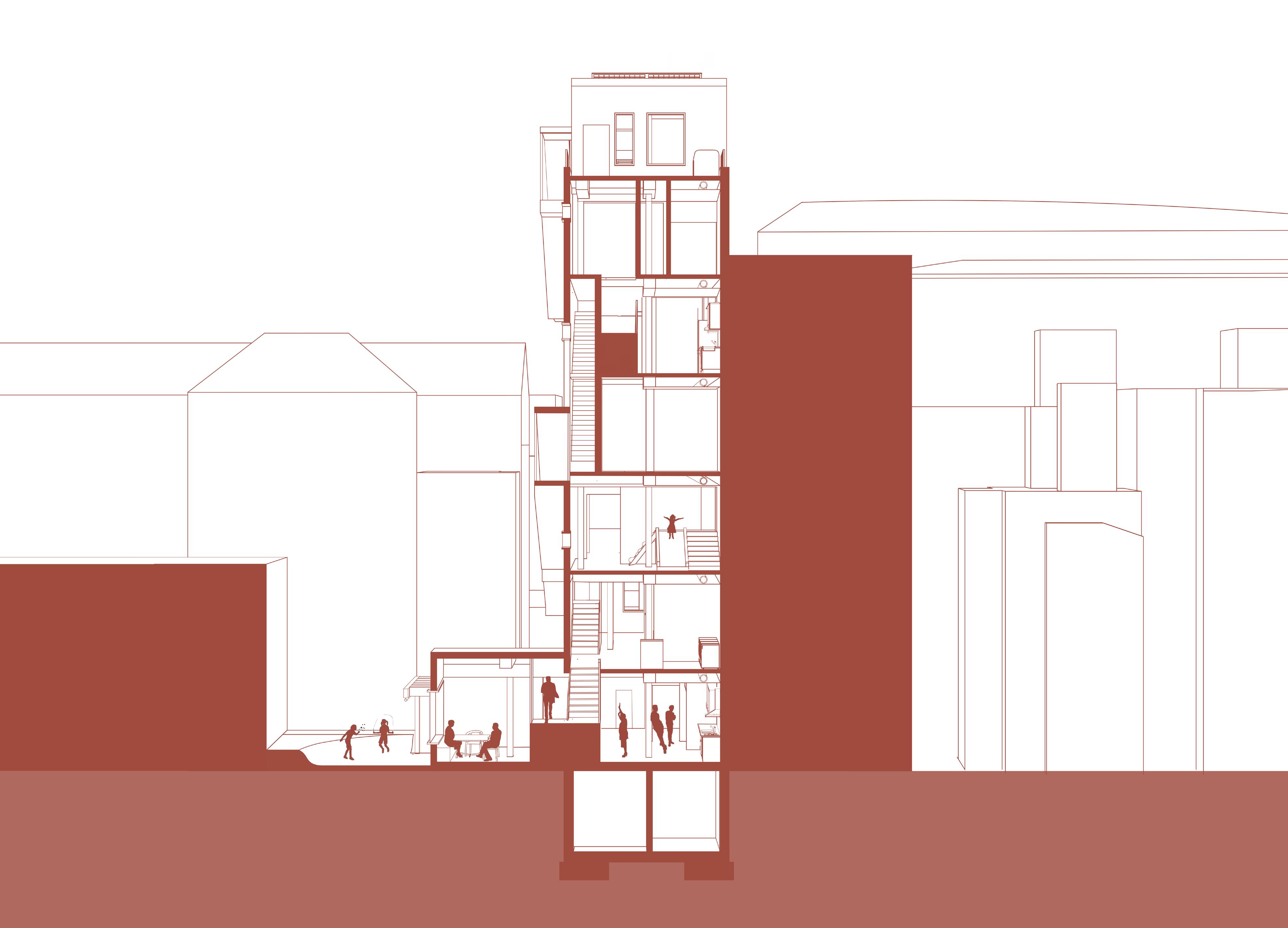
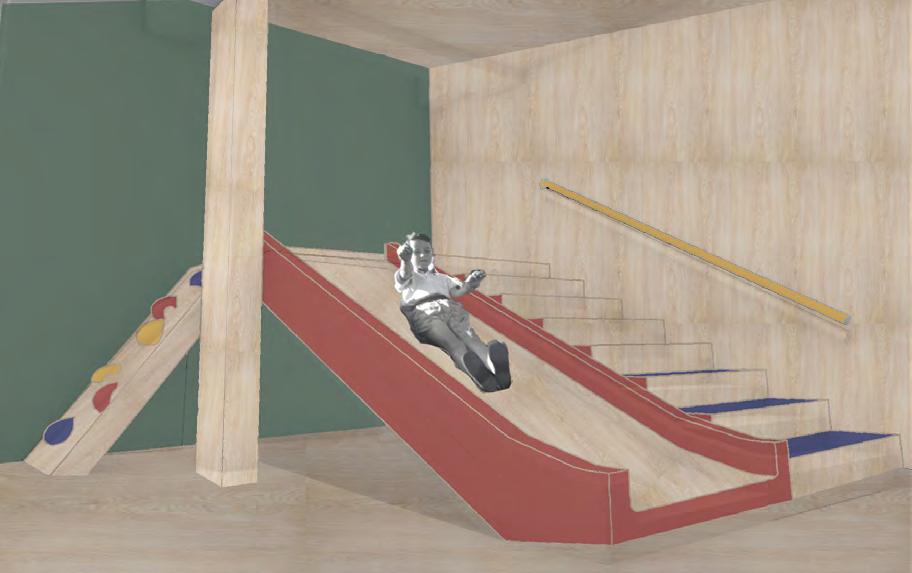
sunday dinner is a dense multigenerational housing concept conceived of in boston’s historic north end. the project weaves together practical concerns over the tight nature of the site and a desire to preserve the culture of the former italian immigrant neighborhood, long since gentrified and flattened into a tourist destination. the project has a focus on the tenets of food, family, and play.
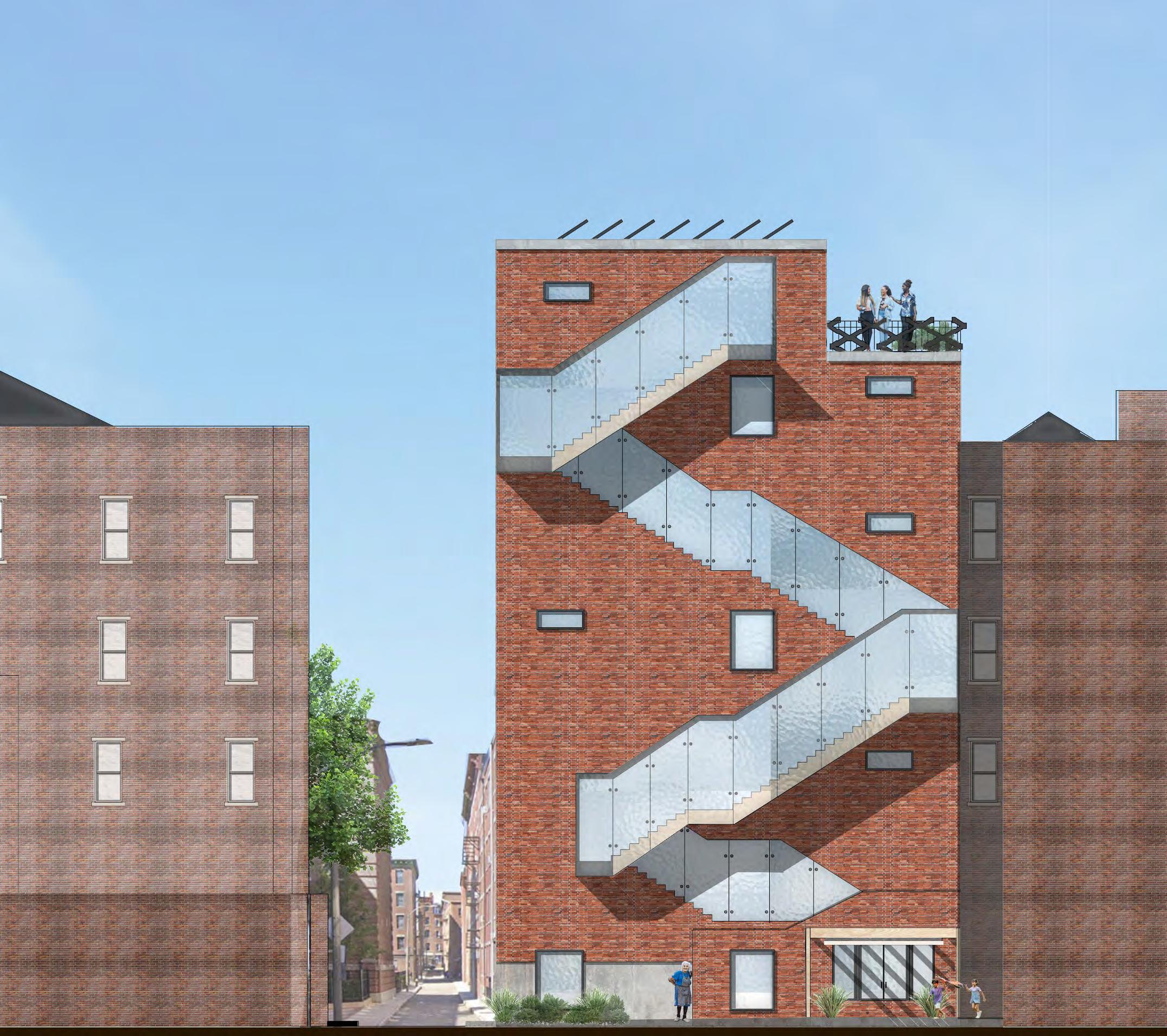
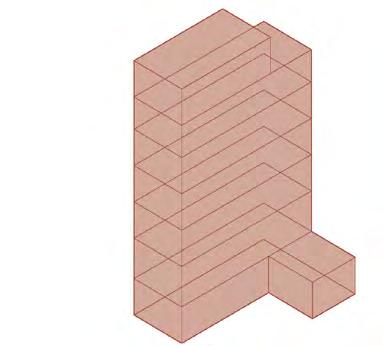
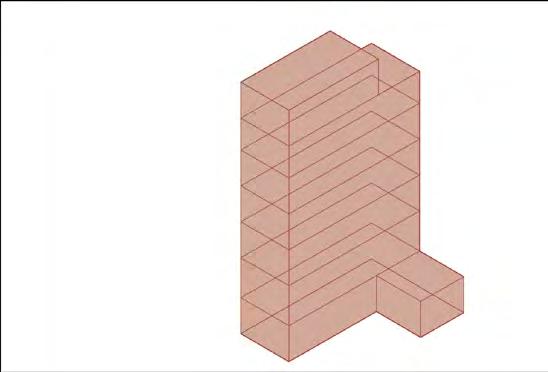
studying ways of laying out circulation ended up becoming a major formal driver in the project. the main stair is exposed throughout the facade, weaving together the different programs and unit types.
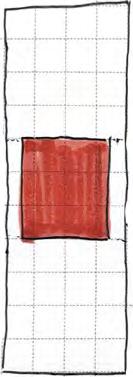
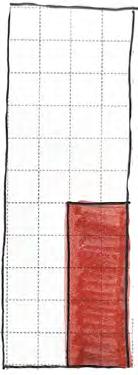
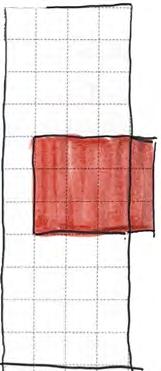
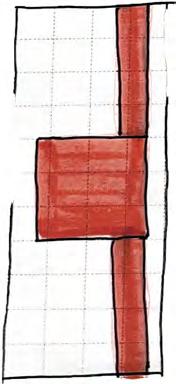
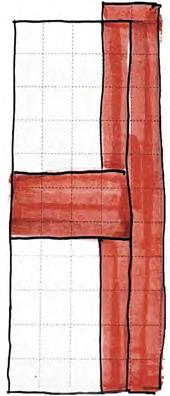
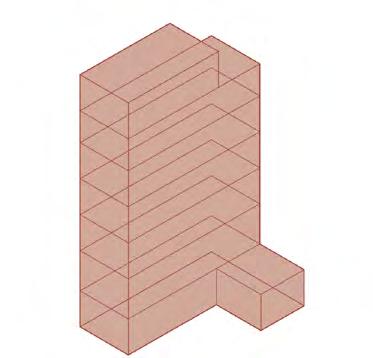
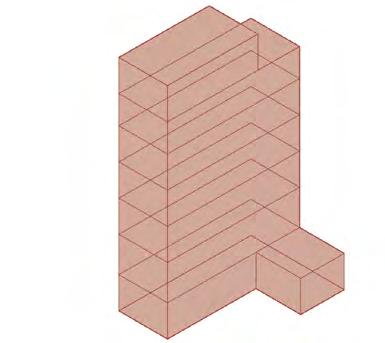
the “central” the “switchback” the “bump out” the “open arms” the “in and out”
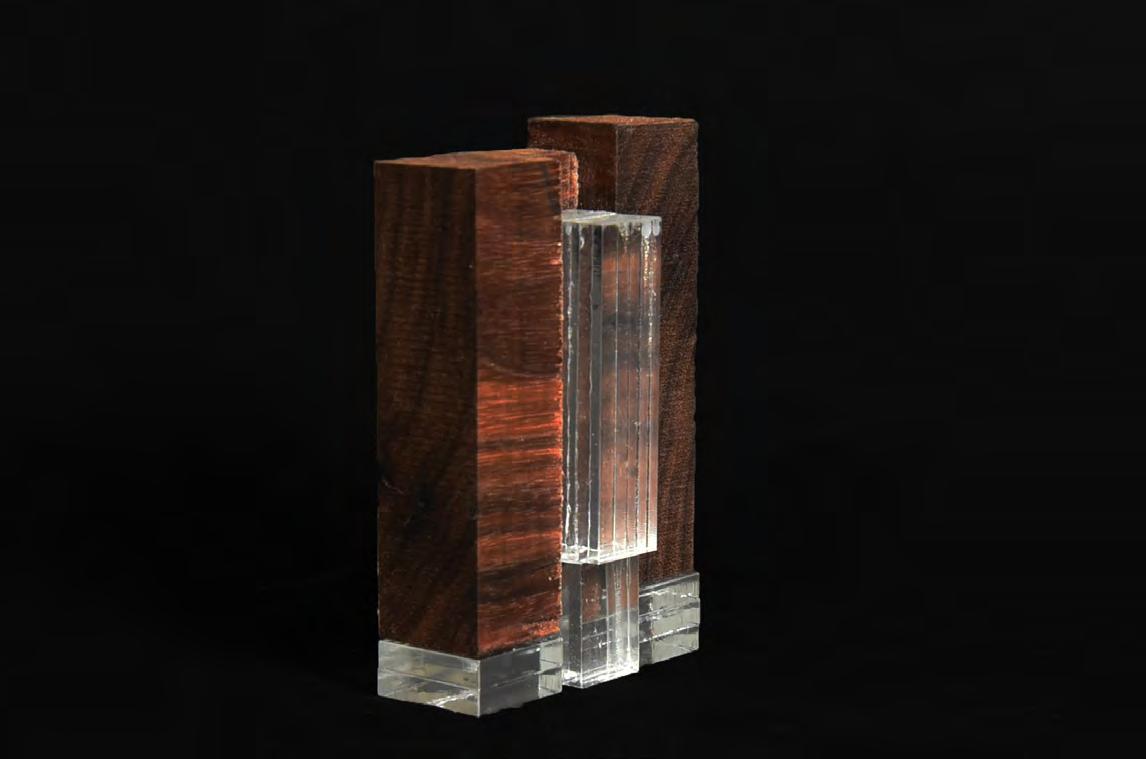
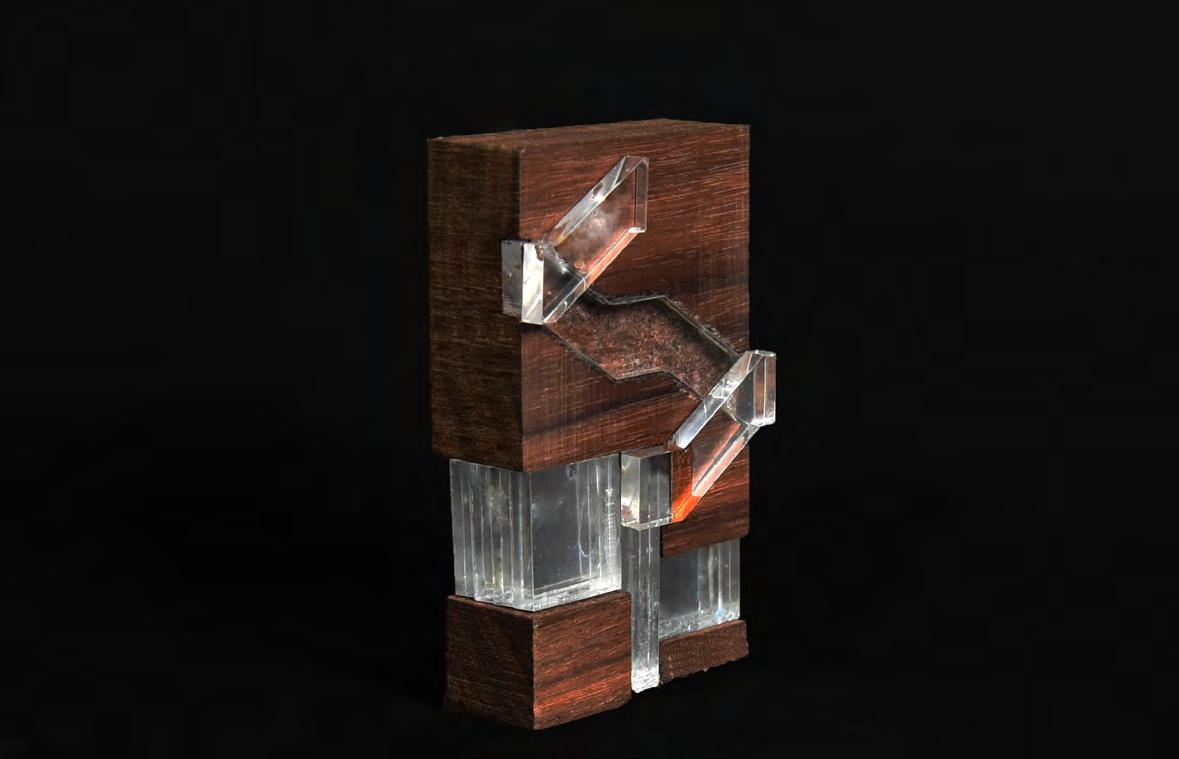
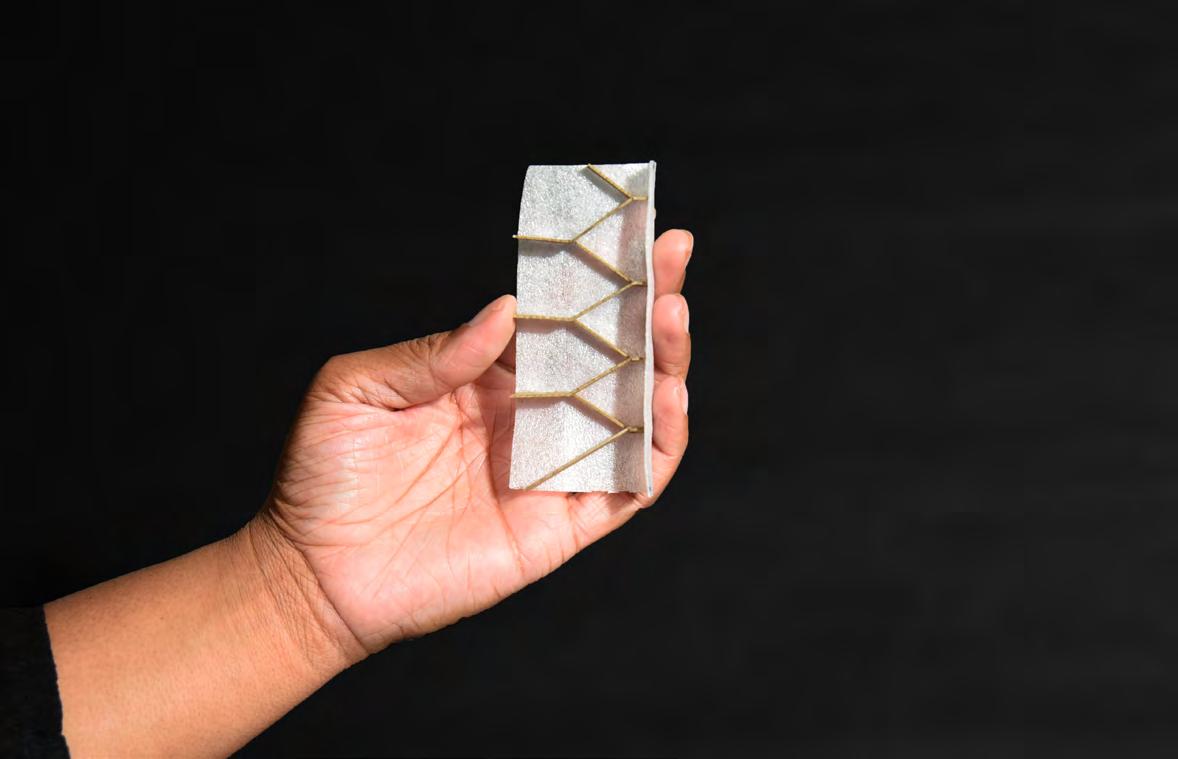
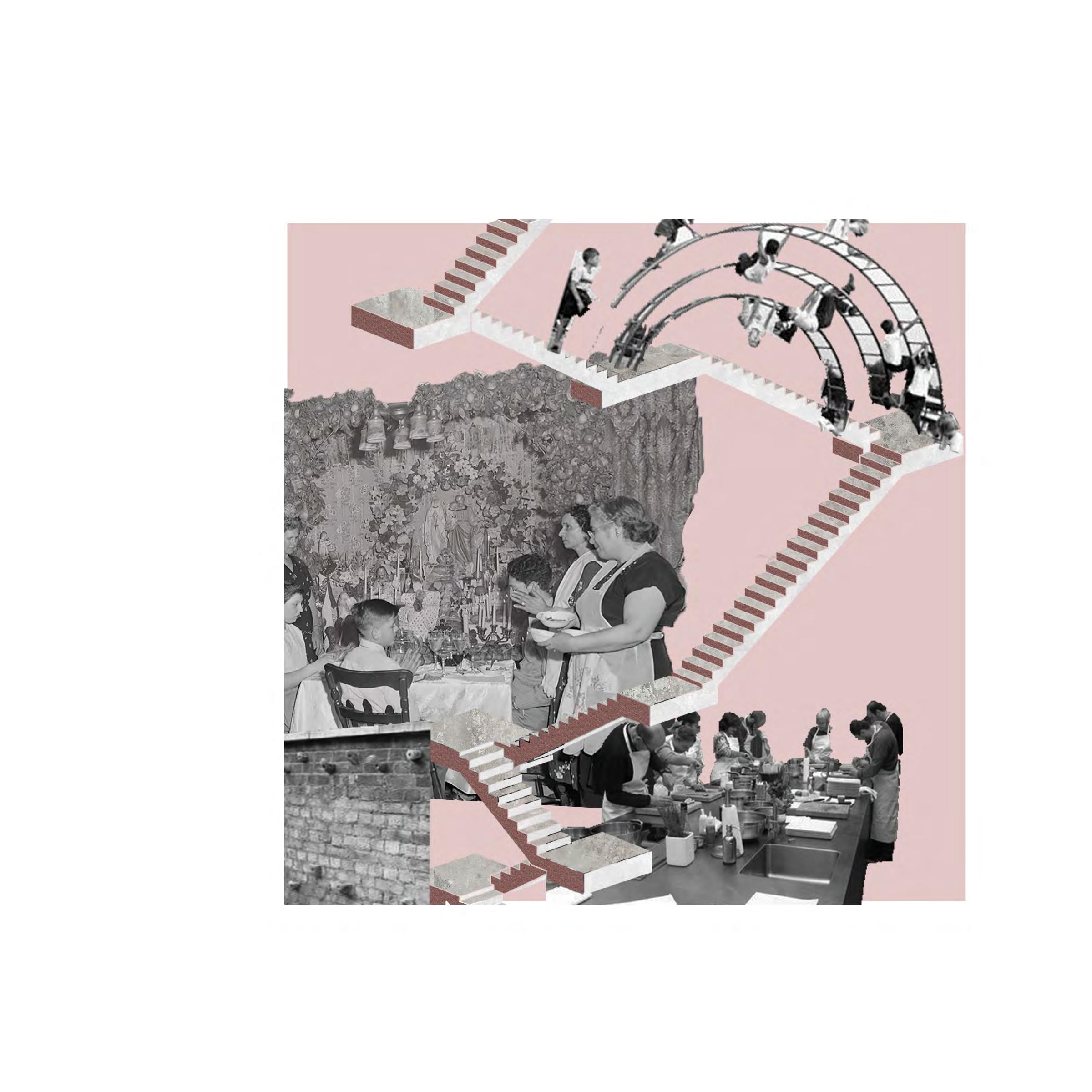
about stairs: what started out as a question of how to fit a set of stair in a project with a footprint this small became a major driver for the project. stairs became a tool for exploring connectivity within a multigenerational apartment-style building. connecting these themes of food, family, and play, the stairs weave through these different types of program vertically and horizontally. allowing for double height spaces and two bedroom units.
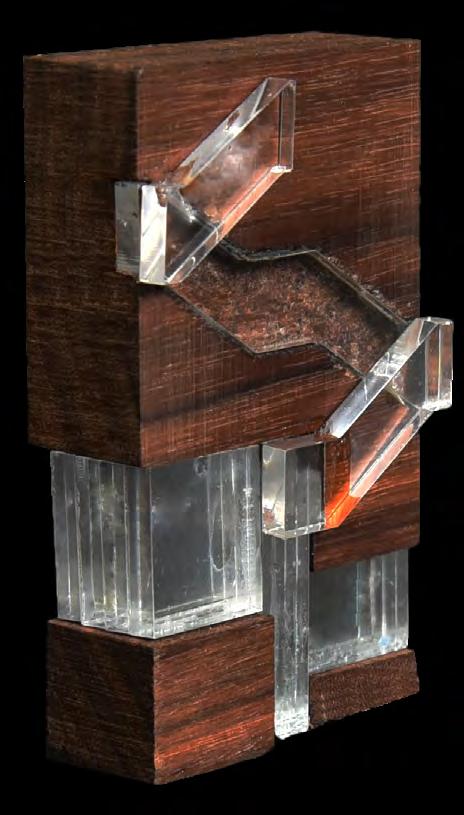
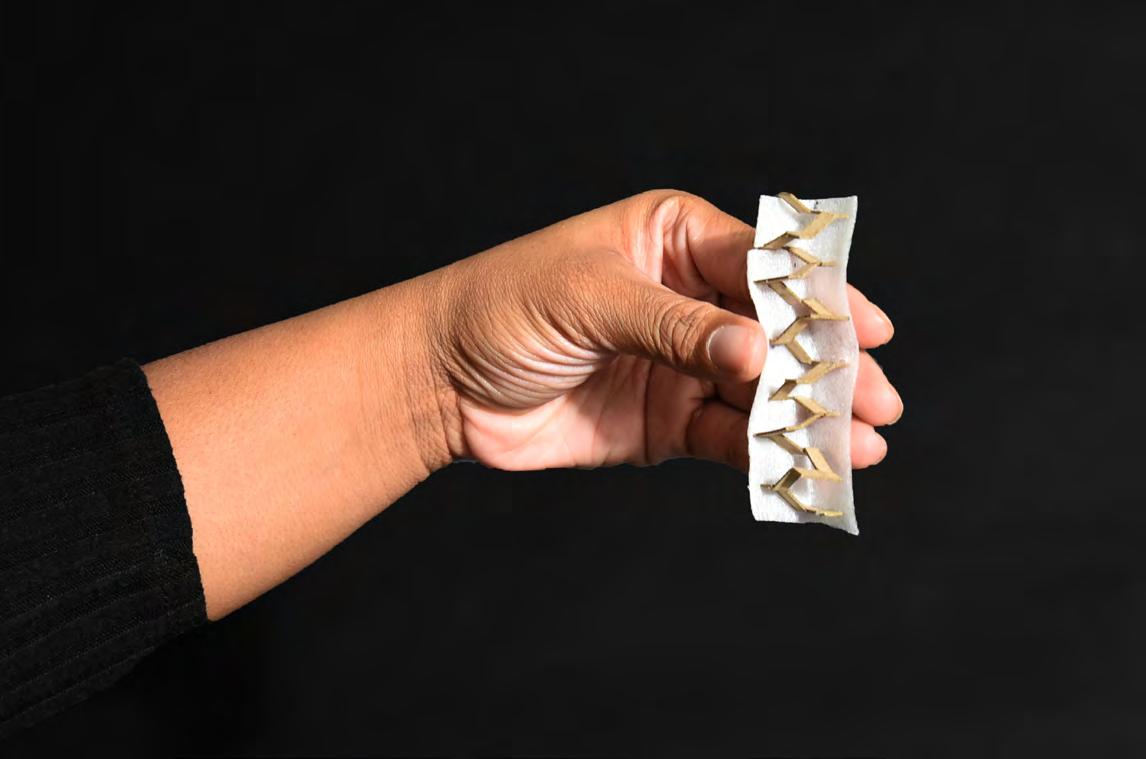
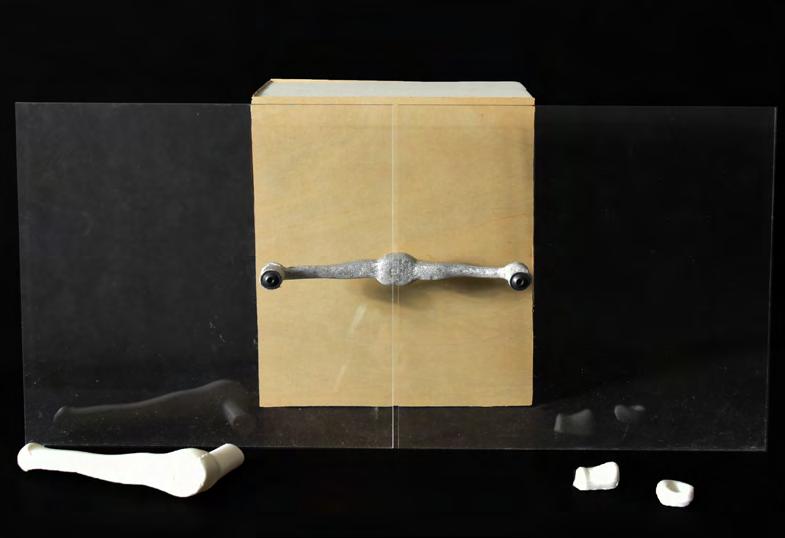
the east facade: as the project developed the meandering stair became more and more of a focal point on the east facade. we were interested in keeping a visual continuity of the stairs, unmarred by mullions. so, we developed a spider bracket to hold the glass in place. organic in form, we 3d printed the prototype and created a half scale mockup of the connection, pictured to the right.
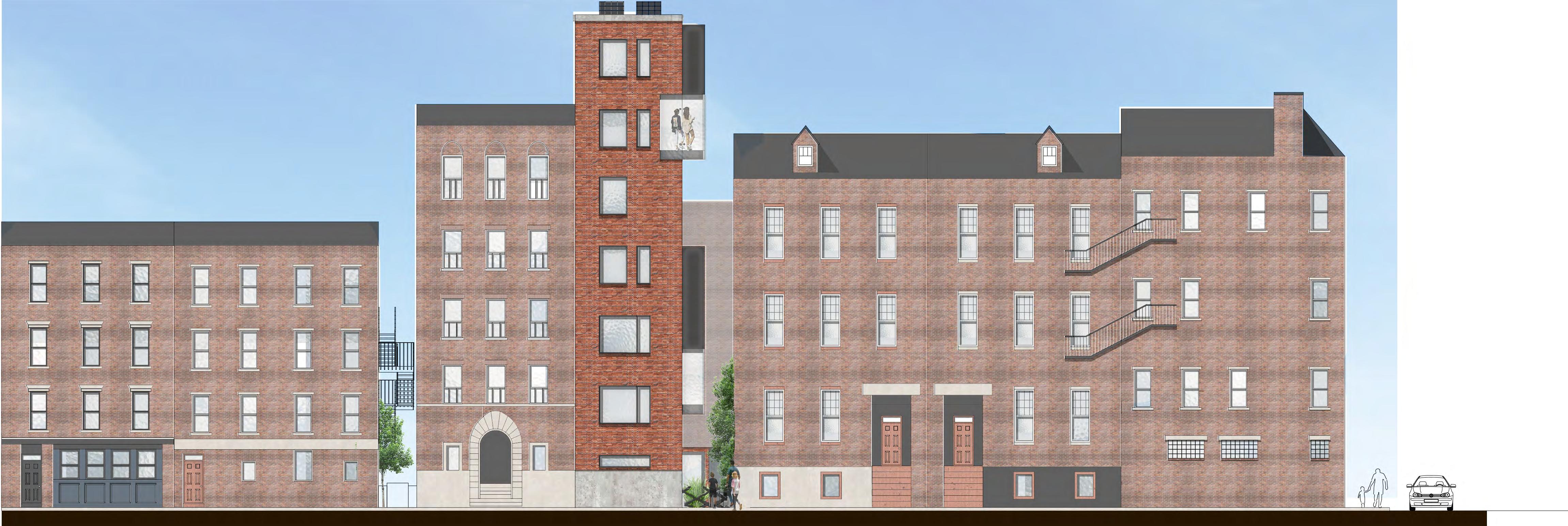
creating order: where the east facade, meandering stairs, and integration of structure were more so about the subversion of the narrative, order was created in other areas of the project to contrast. the wall section is a pretty standard brick veneer connected back to clt panels, as well as using modular windows on the facade to create visual order.

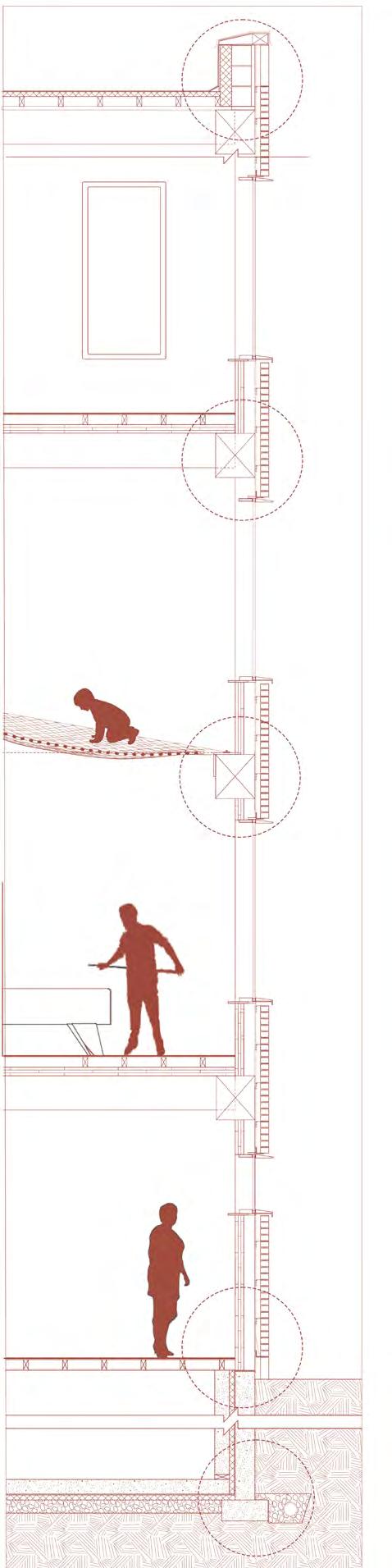
Solar Energy: Taking advantage of our buildings south-facing facade, much of the electricity is supplied through solar.
Plumbing: Hot and cold water are piped through a plumbing chase to the basement and bathrooms are stacked to minimize soil pipe size.
HVAC:
glulam columns and beams.
Structure: Composed
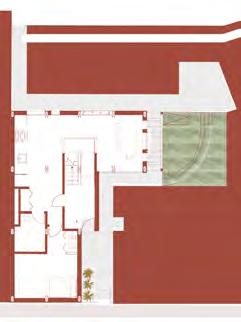
second floor plan
“for the adults”
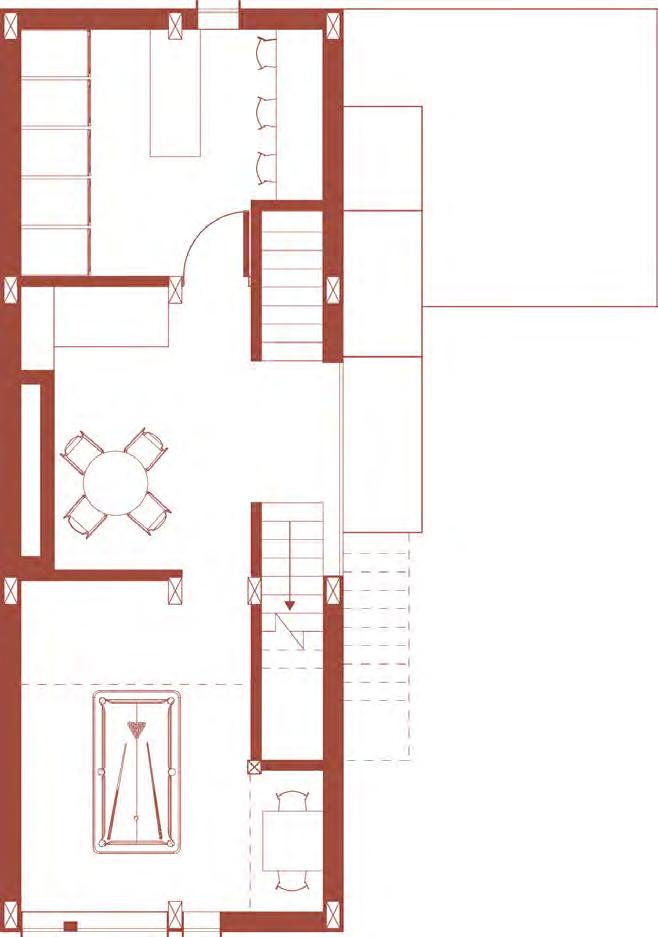
fifth floor plan
“for the adults”
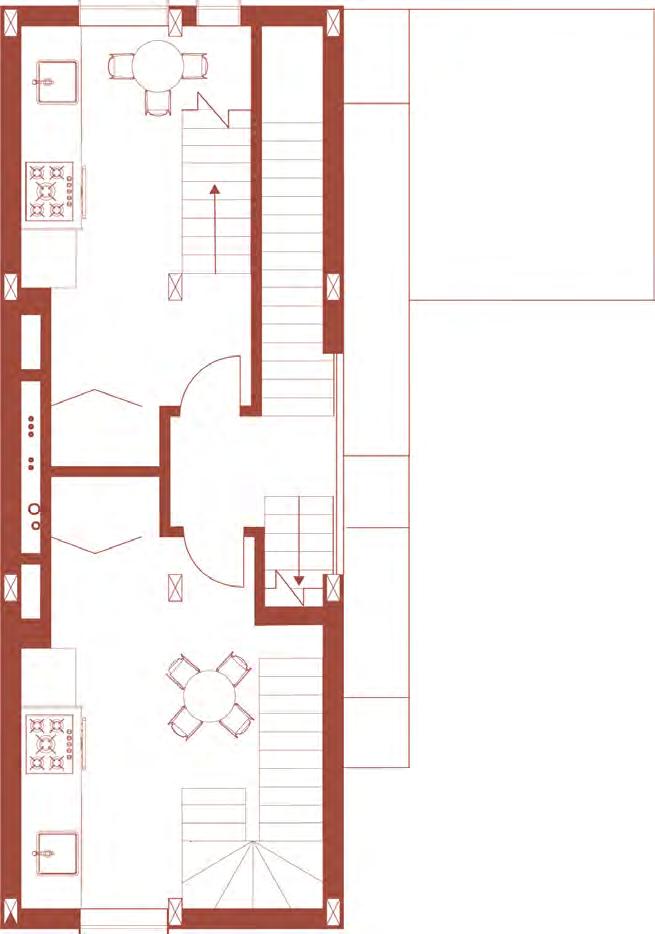
third floor plan
“for the kids”
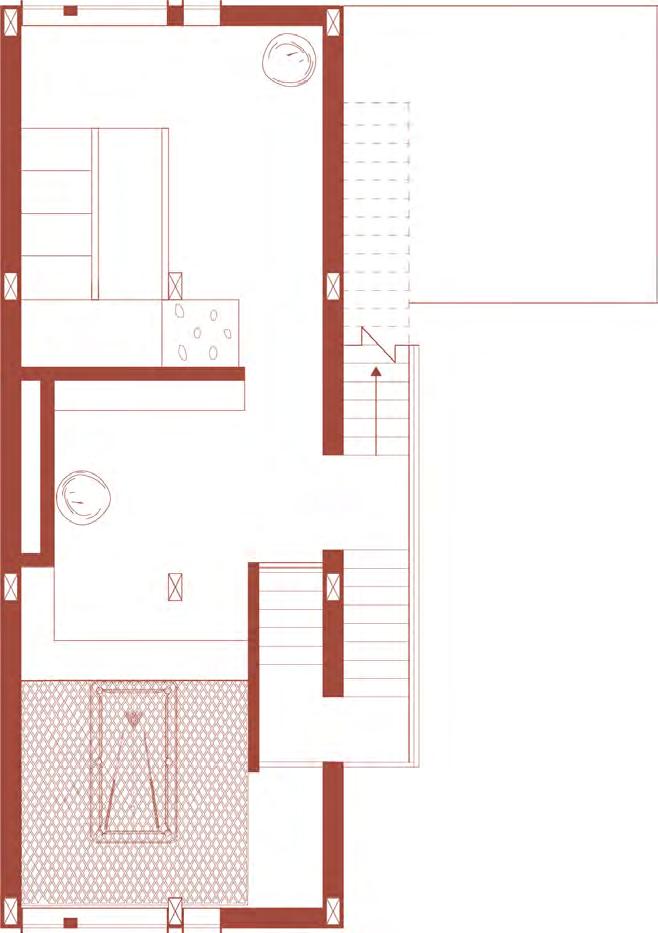
sixth floor plan
“the skip-stop”
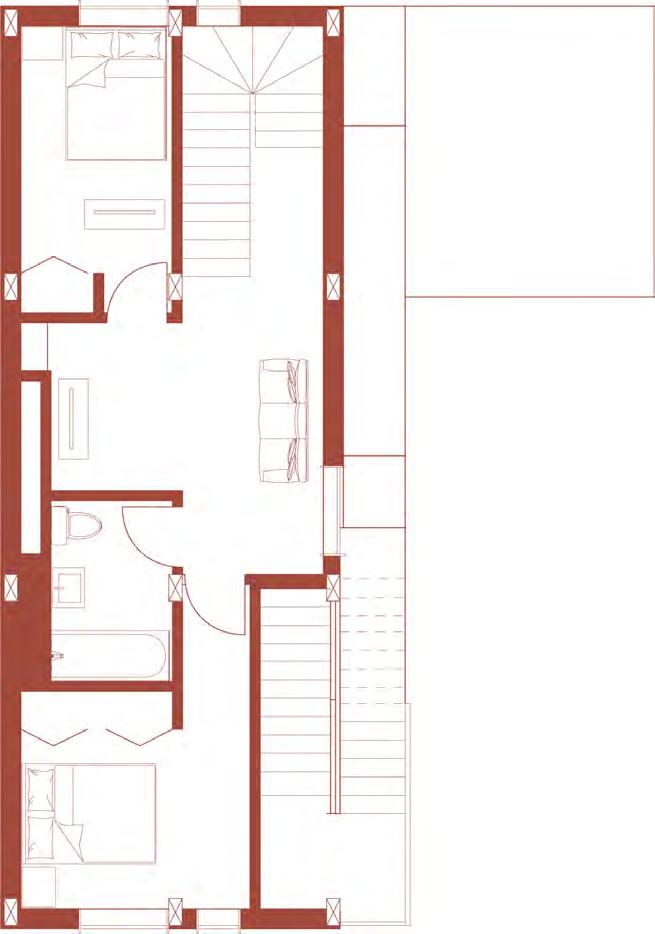
fourth floor plan
“my cousin’s place”
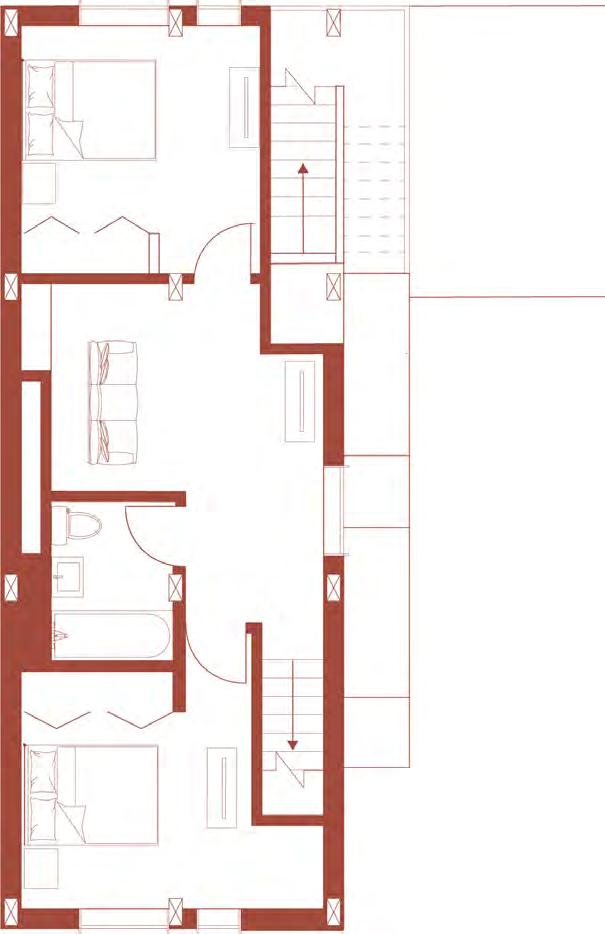
seventh floor plan
“auntie’s”
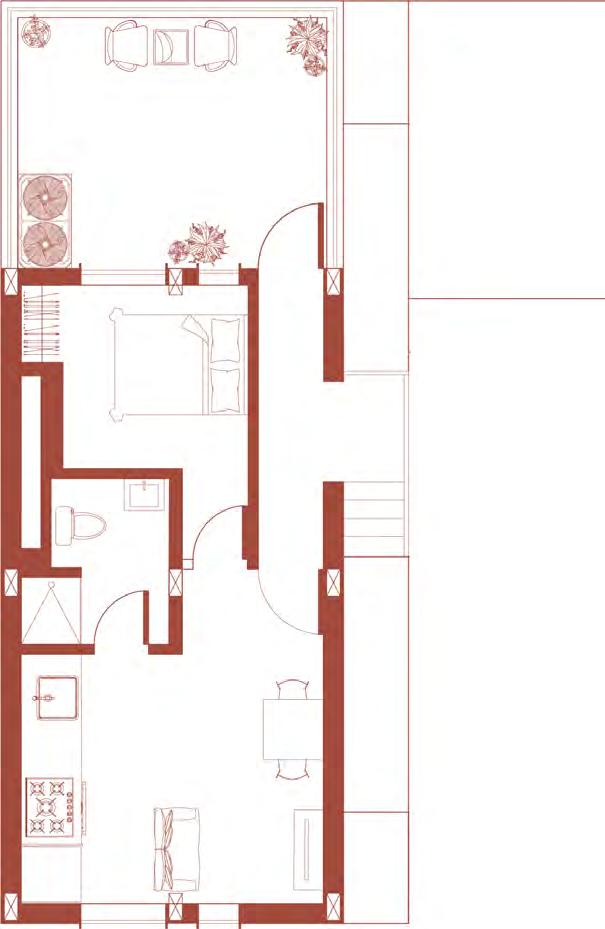
rhythm & release
term: semester 5 duration: 10 weeks individual project
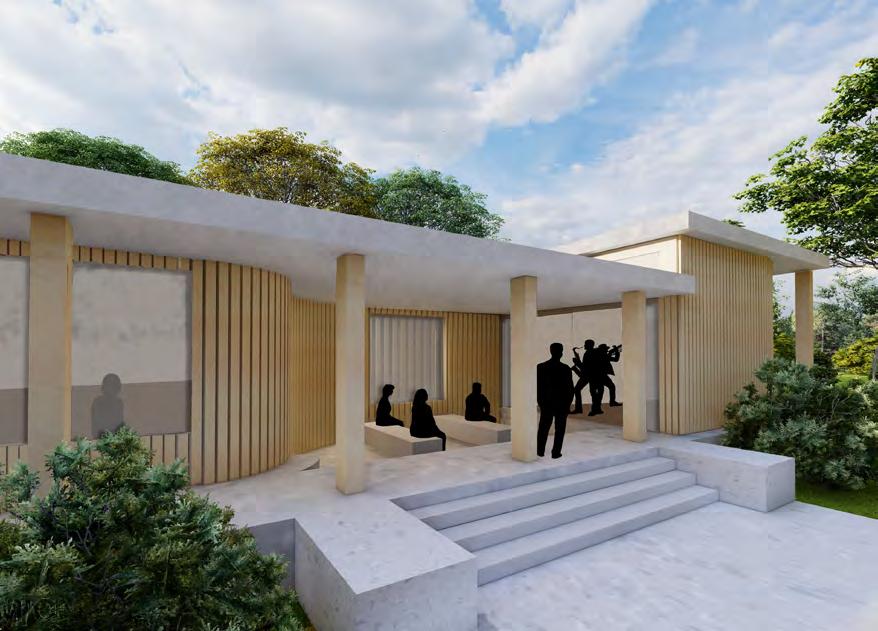
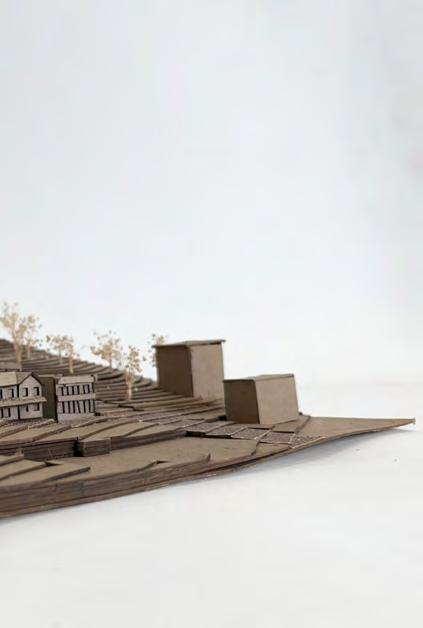
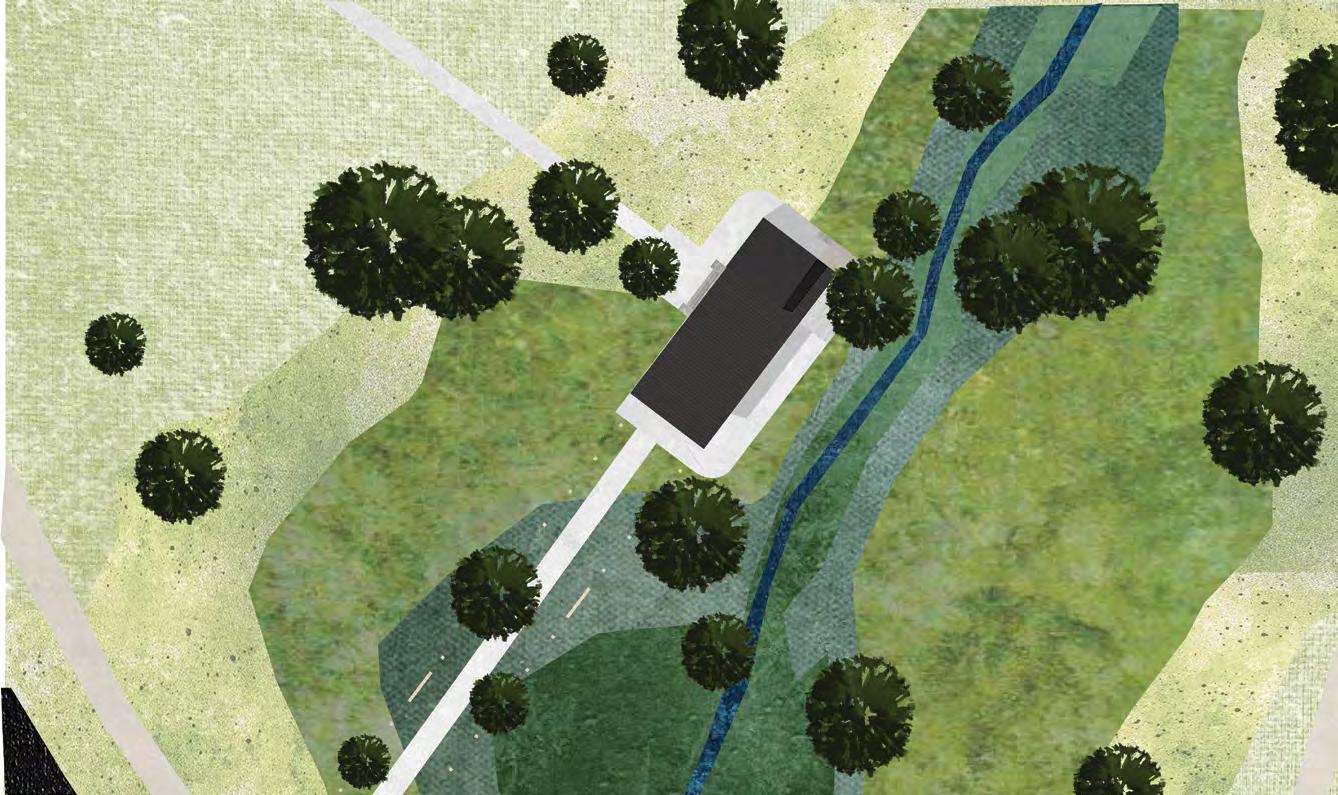
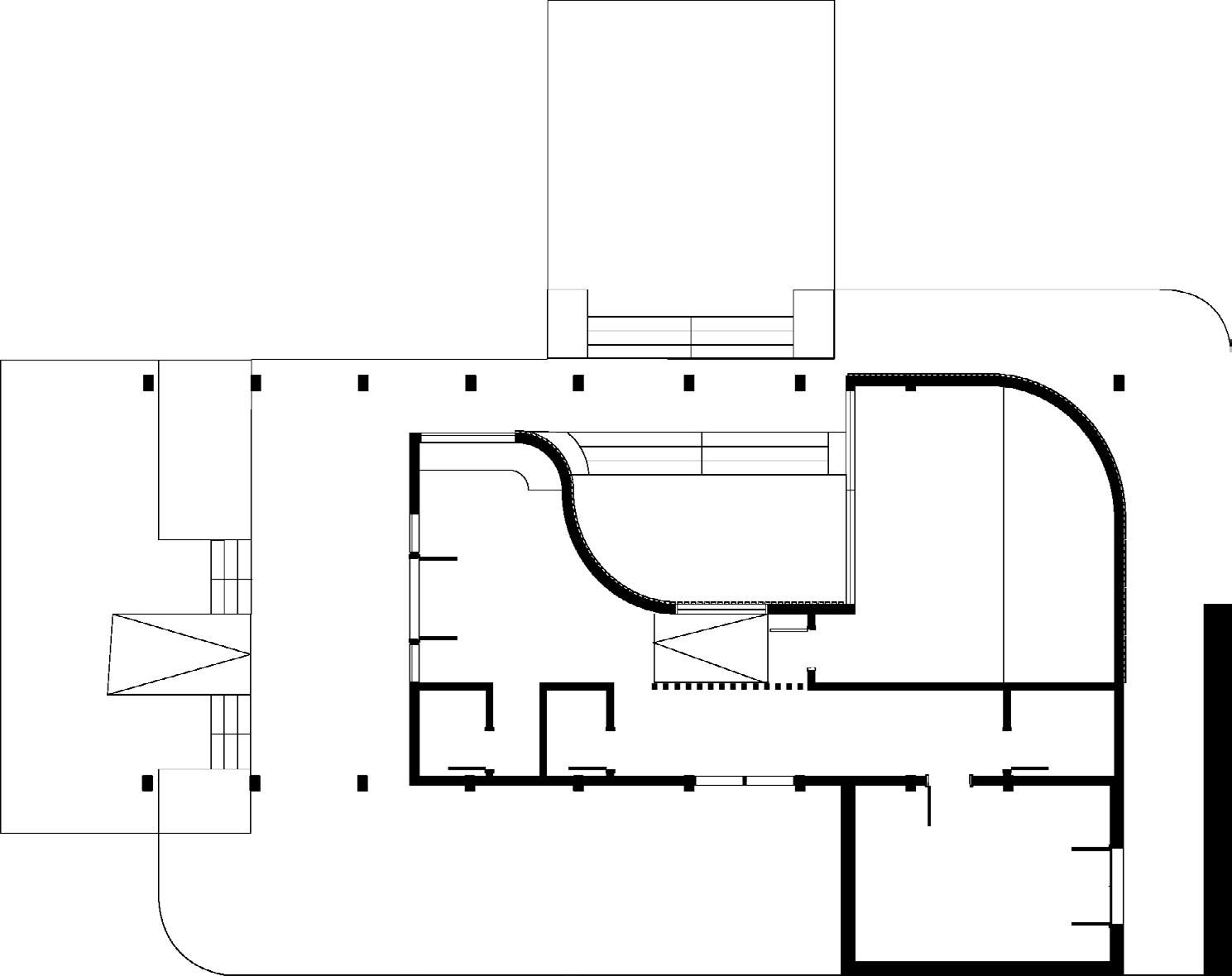
for this project, we had to design a small music performance space on the virginia tech campus. the site was located on a grassy plot of land bound by stanger street, prices fork road, and the surge space building to the east.
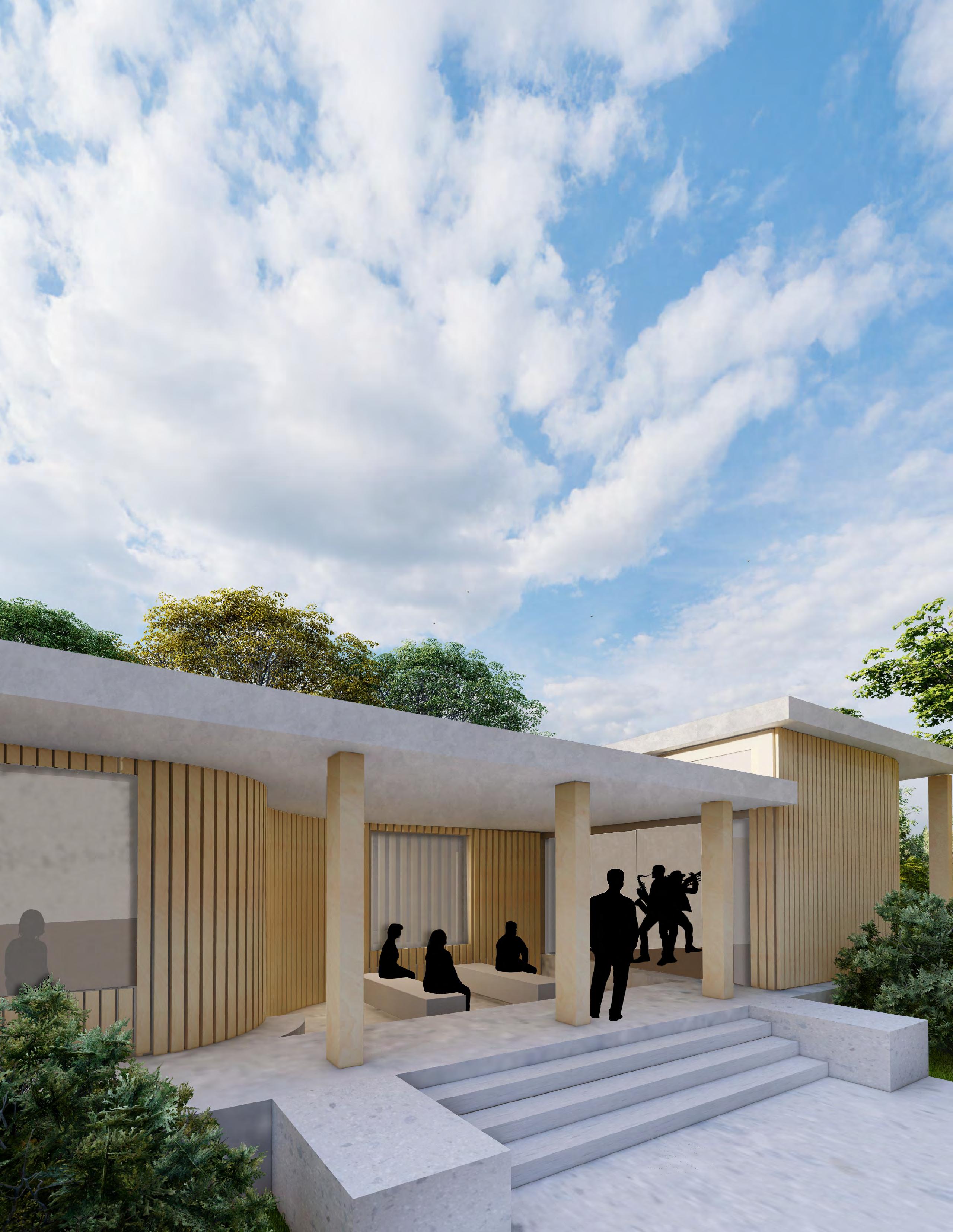
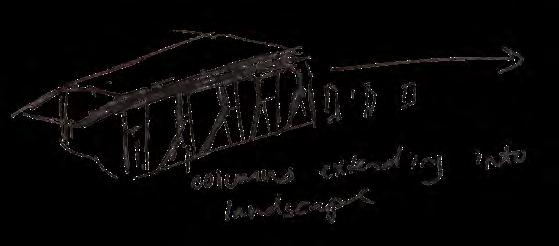
my intentions for this building mostly lied in studying the phenomenology of the space. I accomplished this by alternating spaces of compression and release. I also used the differing qualities of concrete and wood to layer subconscious meaning. through this i crafted individual narratives for the two users of the building: those playing the music and those experiencing it. the steady rhythm of glu lam columns were also a driving factor of the work as they extend out into the landscape.
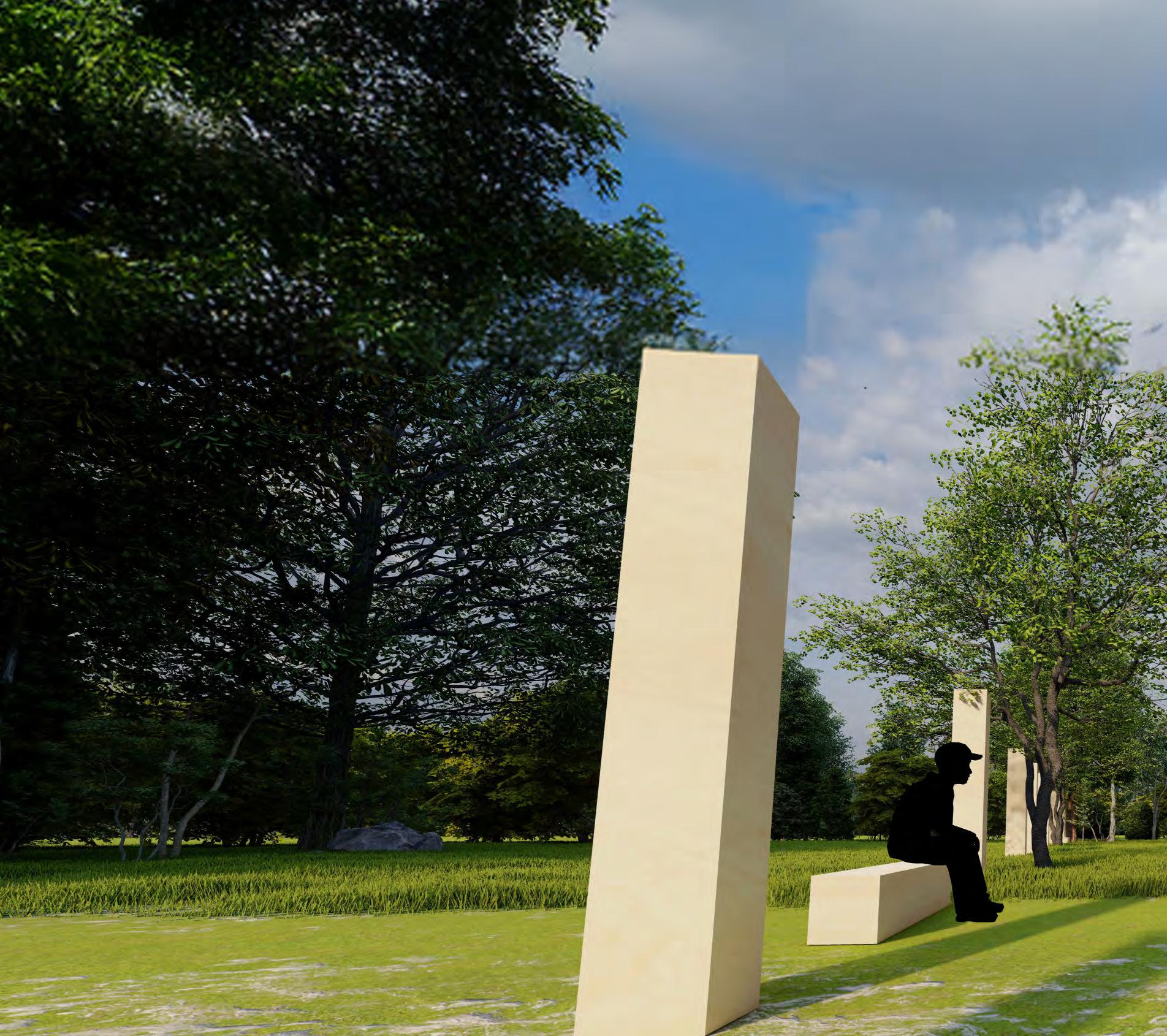
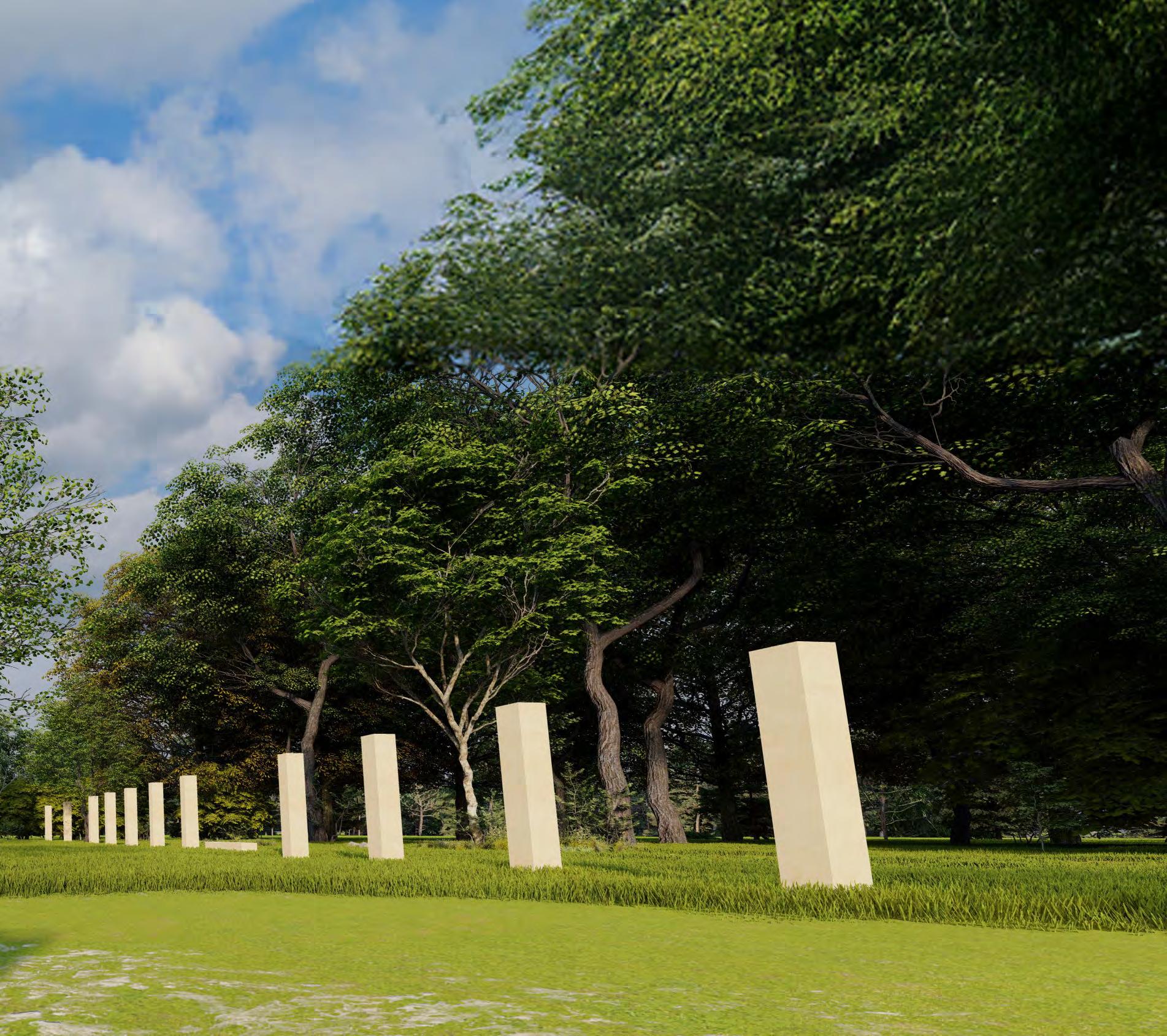
the colonnade: as our site was a park with very little circulatory infrastructure already in place, i set my music nook deep into the site, allowing for a longer sequence of entry. the glulam columns that serve as the structure for the building extend into the landscape, signally what lies deeper from the street entrance. some of the columns have “fallen over”, creating benches to listen for the distant music from the nook. other columns are replaced by trees altogether.

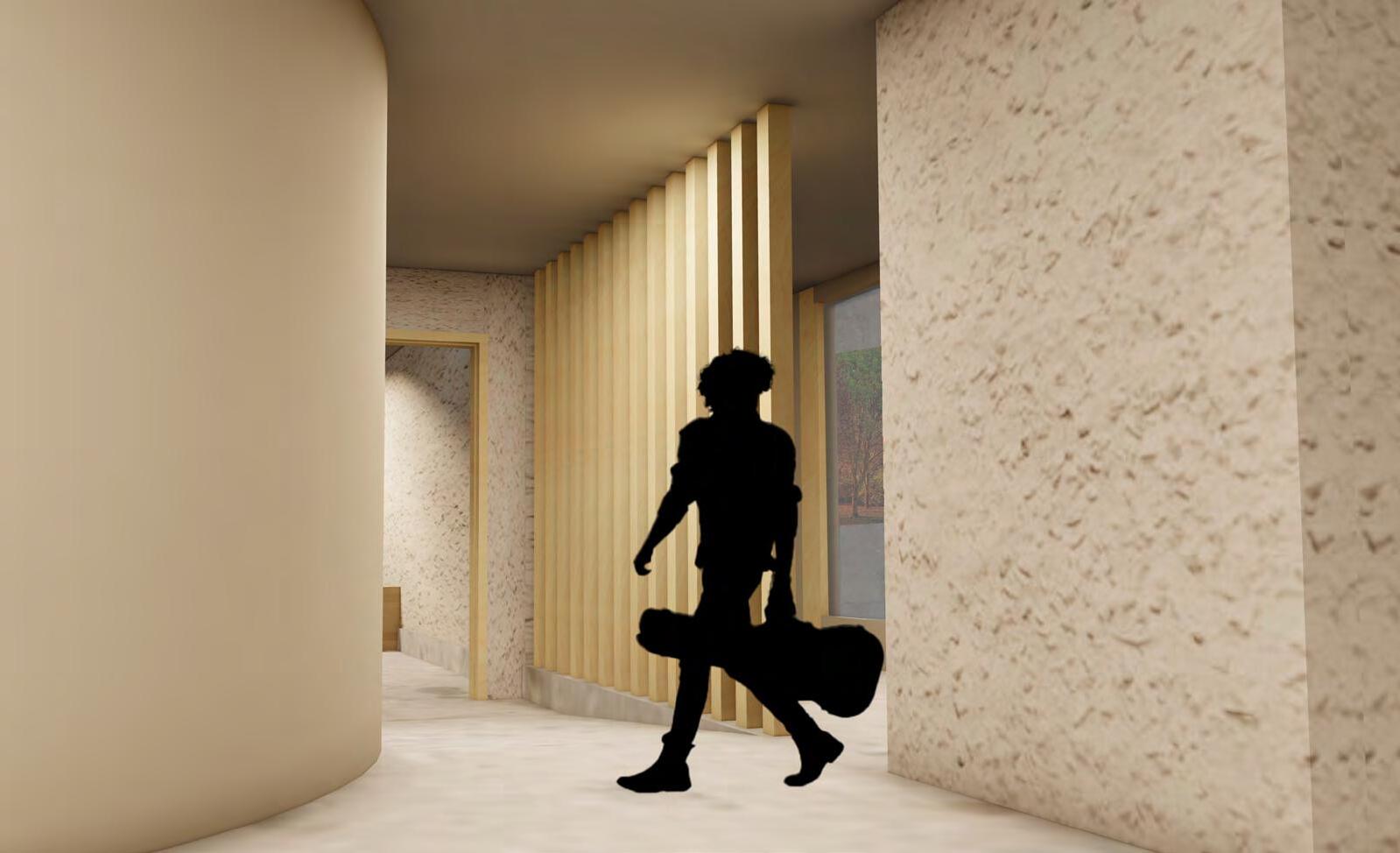

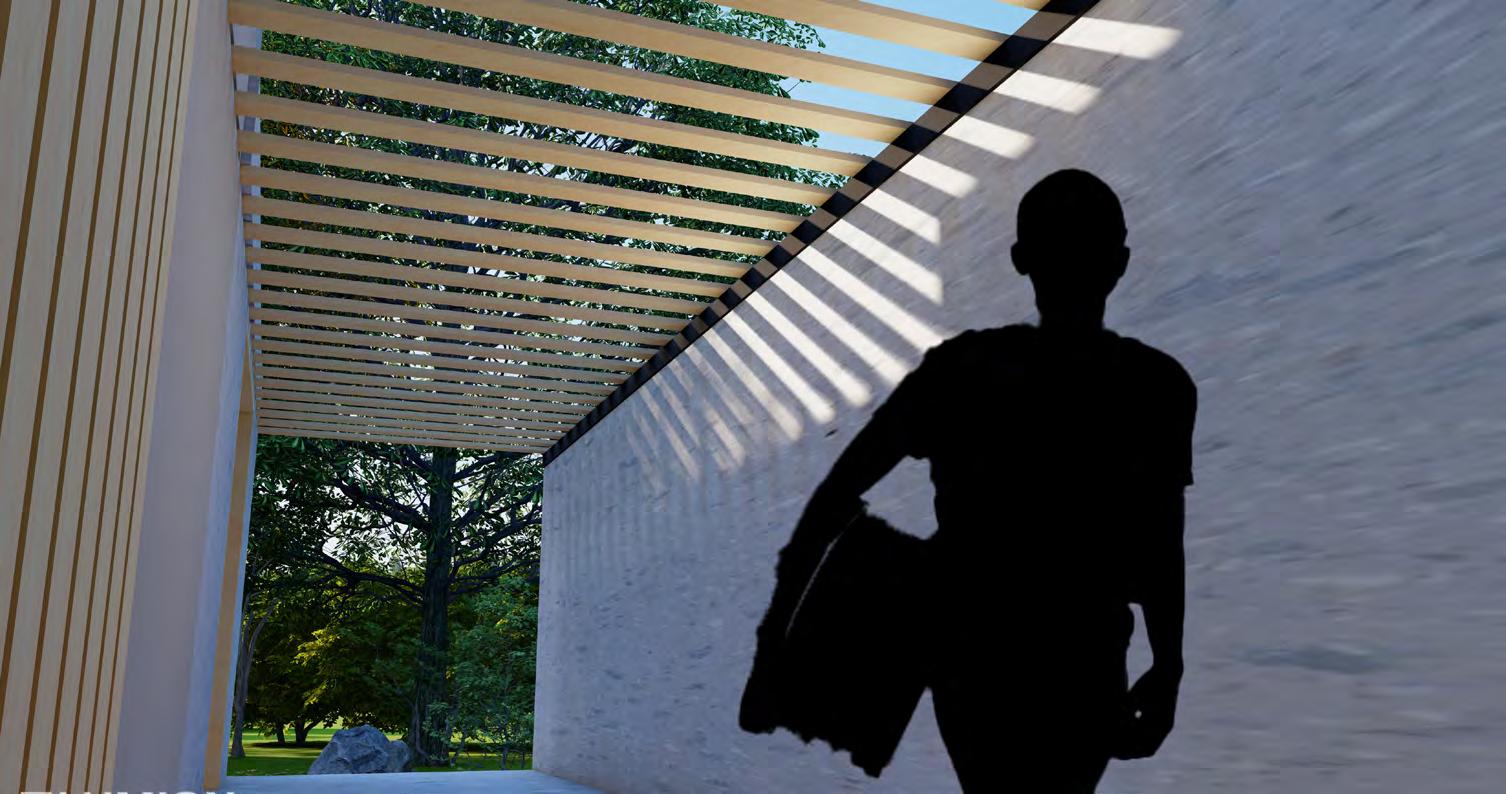
the spirit: from the outset of this project i was incredibly interested in the sensations experienced by the occupant. how would it feel to hug a curved wall as you turned a corner when a more rhythmic, ordered system of wooden slats appears to your right? how would it feel to walk next to these warm wooden slats on the exterior, before descending into a covered space filled with cool concrete benches. these juxtapositions and phenomenological relationships became their own syntax as the project developed.



03 appalachian futures
term: semester 8 duration: 15 weeks in collaboration with: andrew prieto and trey harden role: model making, concept
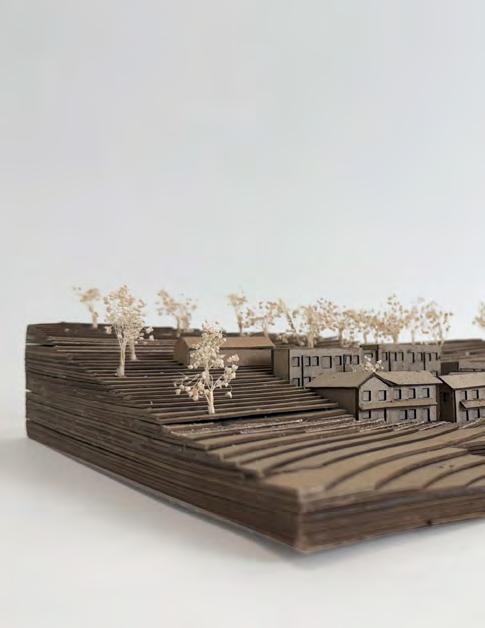
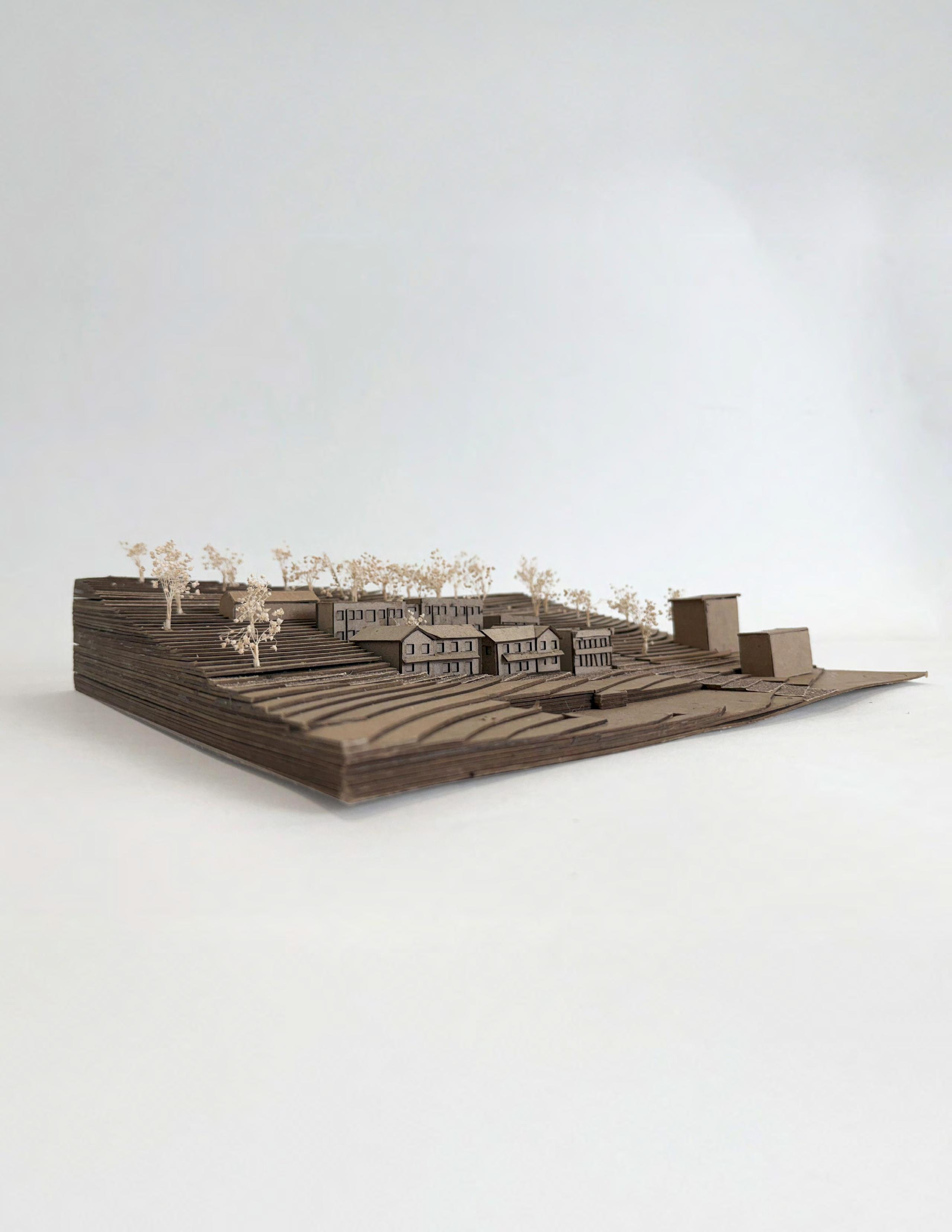
in this community-outreach focused studio, myself and 12 other students got to know the people and place of pocahontas, virginia, a small former coal company town in southwest virginia
through community meetings, we met and connected with residents in order to better understand their needs. in collaboration with two other students, we devised a mixeduse infill scheme, restoring a lost southern edge of town
throughout the process we met with residents and got feedback on our work. we also worked painstakingly to find ways of best communicating our ideas with non-architects. our project has resulted in grant funding for clearing the site our proposal was on of debris,
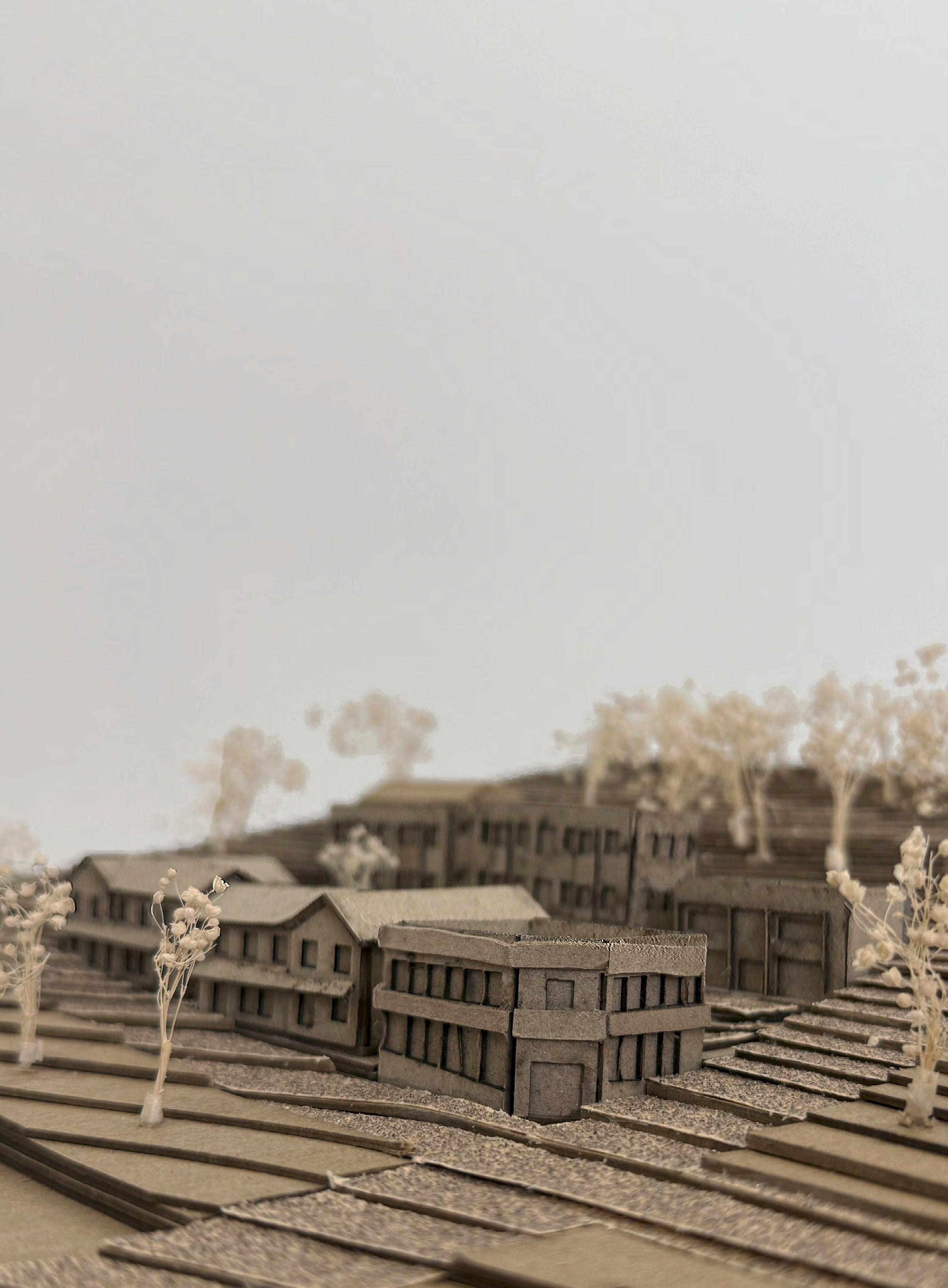
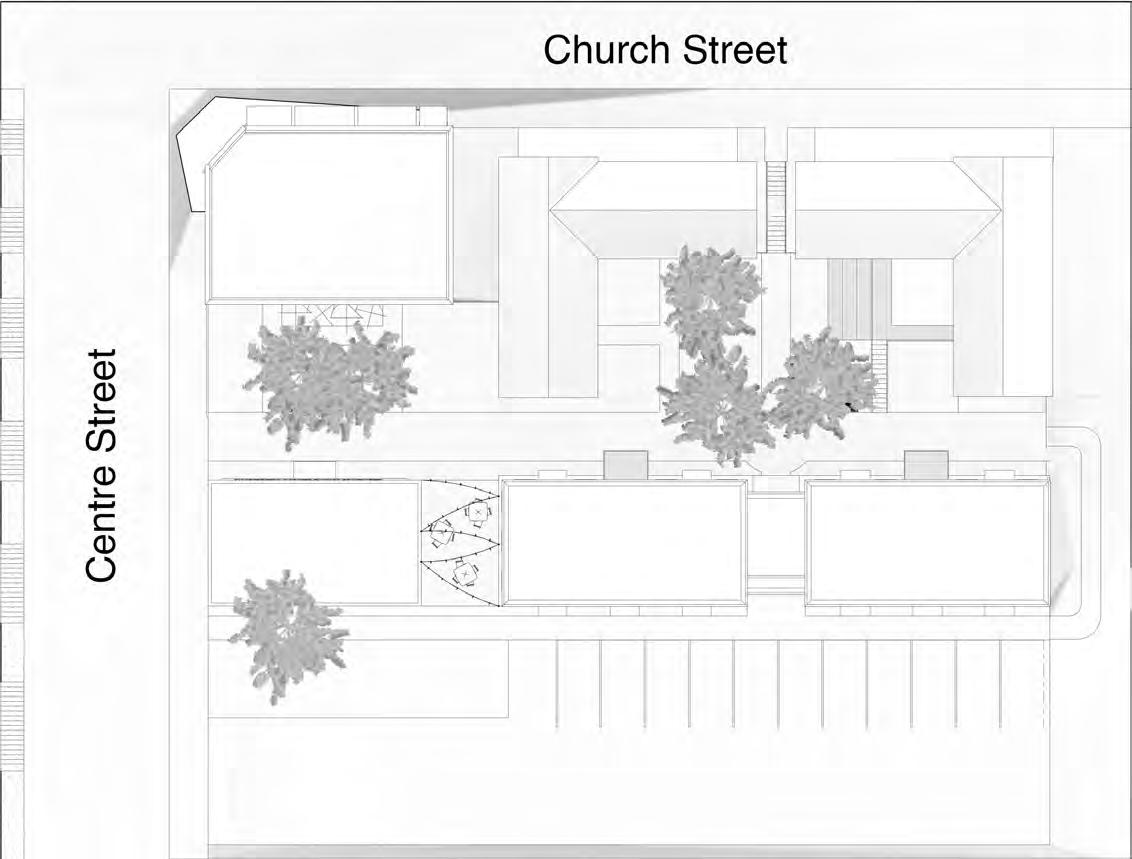
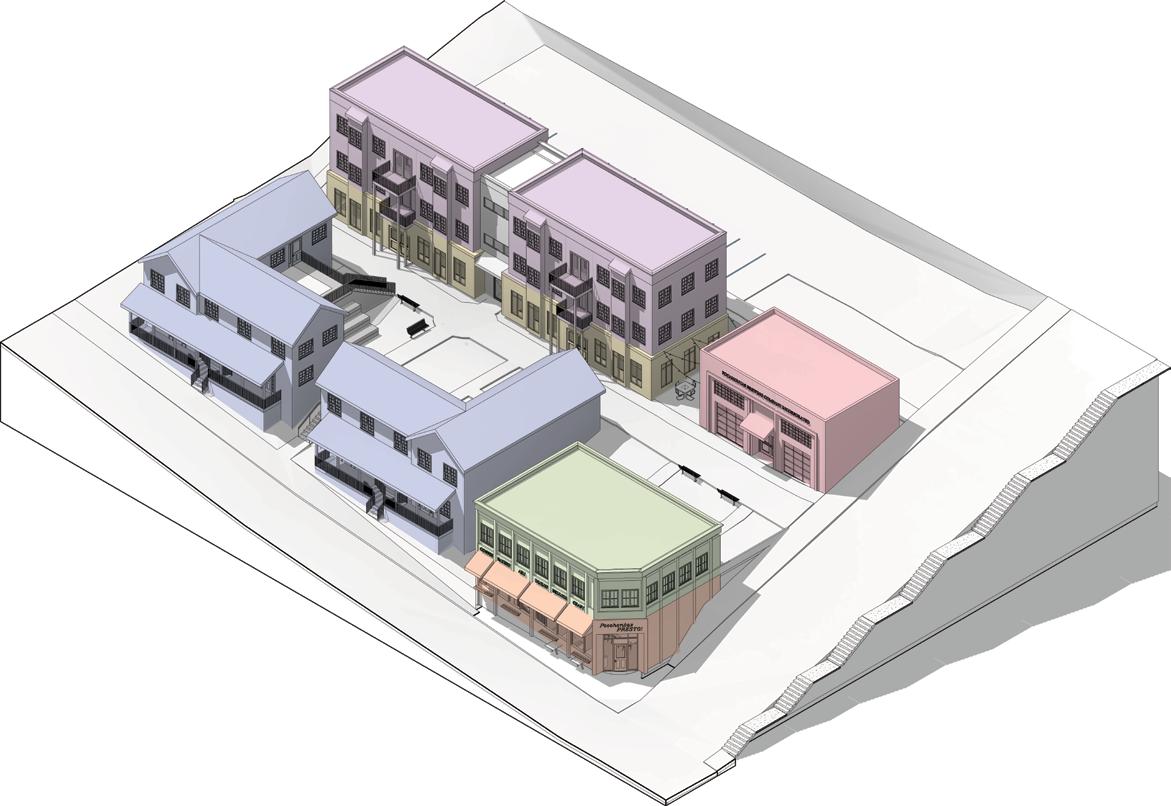
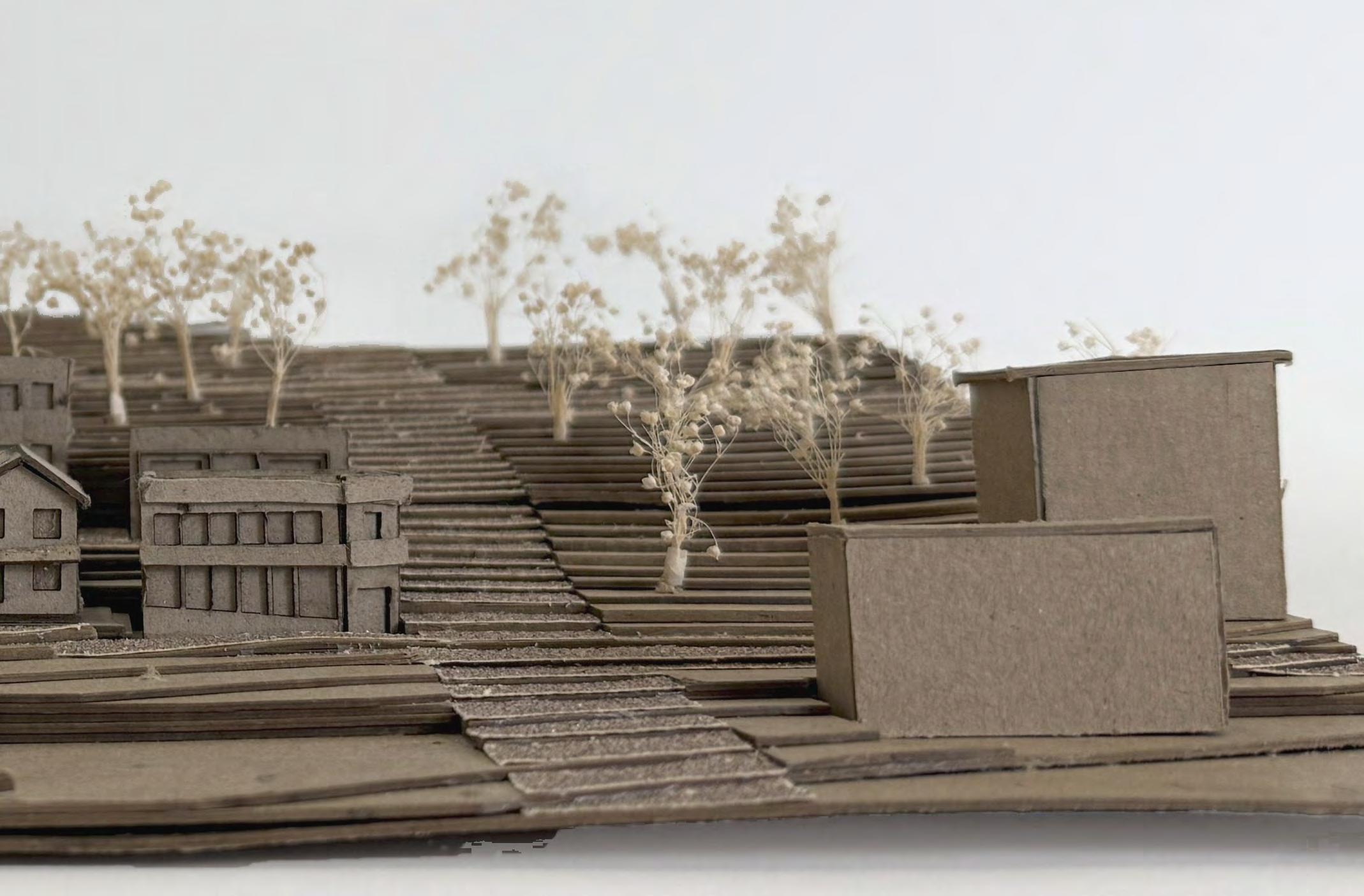
restoring a lost edge: our primary goal was to introduce new housing to pocahontas while preserving the historic street front. furthermore, navigating the terrain was also a challenge, that we turned into something that granted more access. in our teired approach the space between the two rows of housing created an interior pedestrian lane. further up the hill is parking, granting accessible units at nearly every level of the scheme, which was important for a community with an aging population.
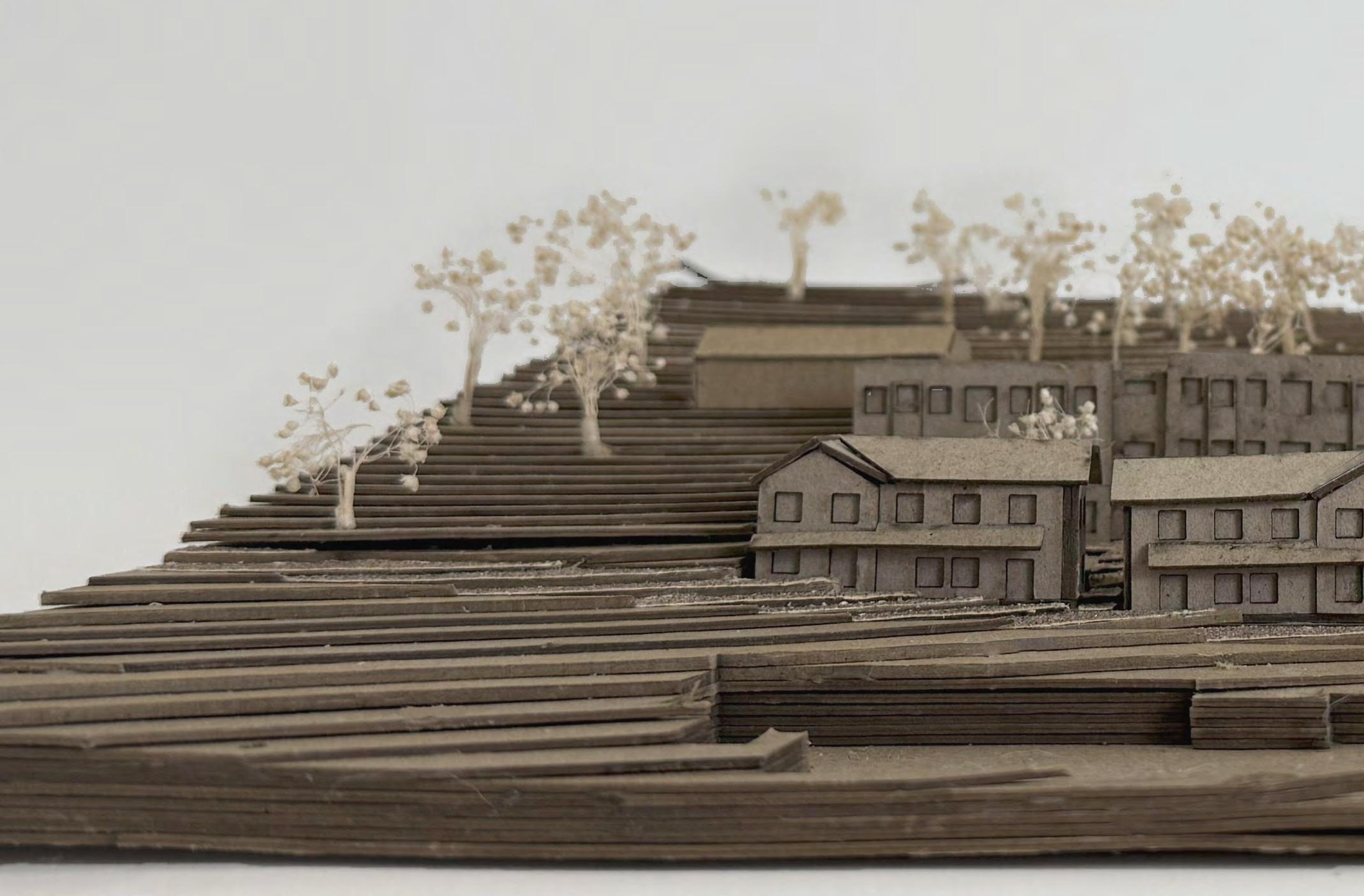
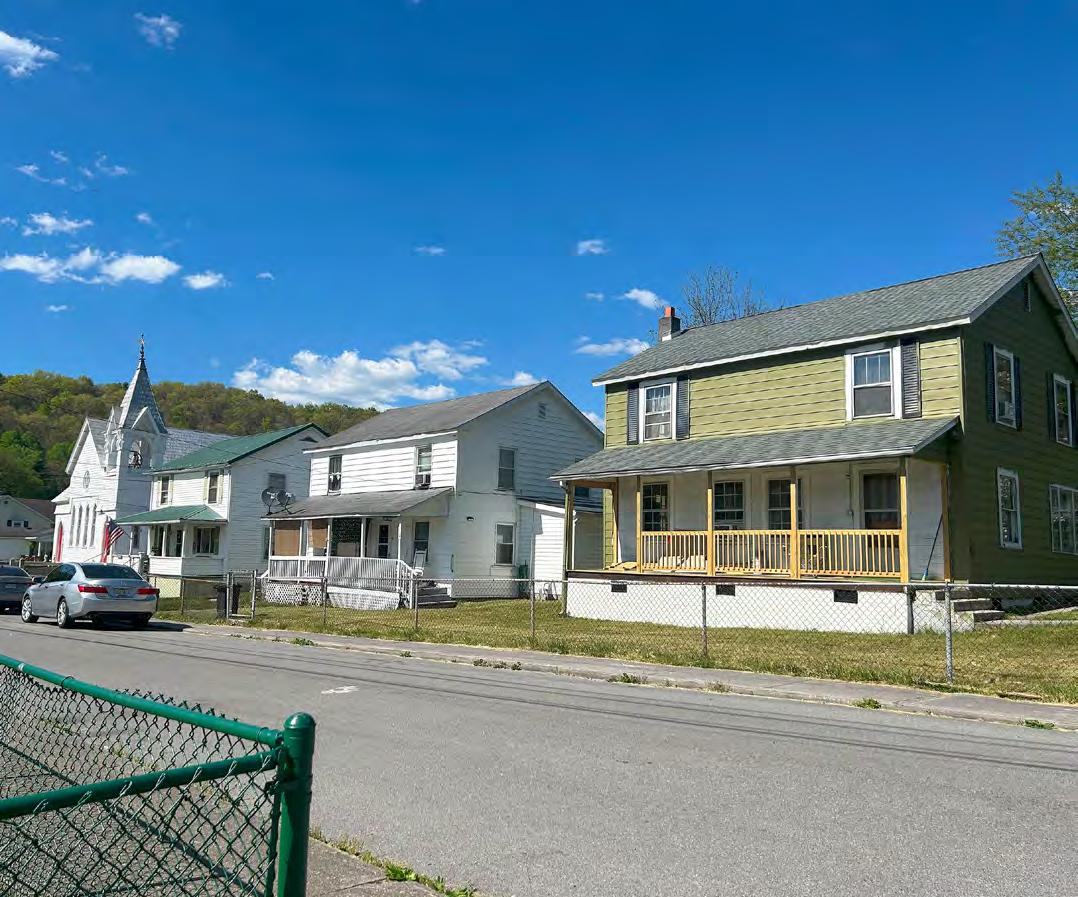
looking to the past and the future: while the duplexes retain an image of coal company housing typical of pocahontas, they’re also attractive to up and coming professionals that wish to have a place of their own, while being a part of a tight knit community. furthermore, adjacent to the interior park space is a mix of multifamily and commercial spaces, nodding to the previous medium density mixed use buildings that the town’s mains street was home to.
04 pinwheel pavilion
term: semester 5 duration: 8 weeks individual project
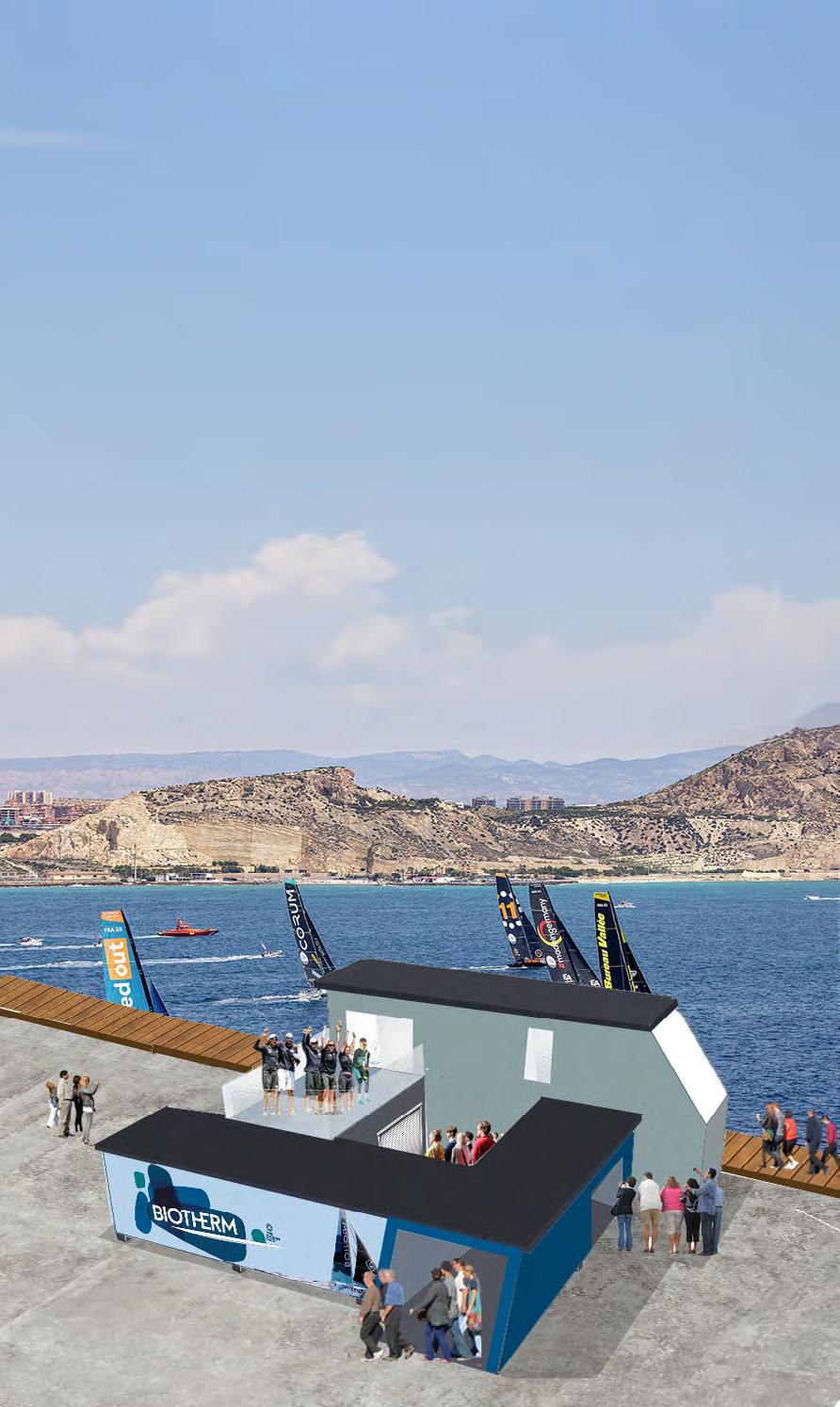
in this design brief we were tasked with designing a team base pavilion for the volvo ocean race, a sailing competition taking place in port cities around the world.
our design had to be able to be assembled and disassembled before being shipped to the next port city, with all elements of assembly being able to fit into a standard shipping container.
i explored how cold rolled steel channels could be assembled into modules of panels to minimize construction time. i used 1:1 model making as a method of exploring a window assembly, and also researched how electrical systems could be integrated into the formal logic of the pavilion.
design for disassembly: knowing the entire structure had to be assembled and disassembled a number of times, i researched the tenets of design for disassembly and implemented them into my design. all connections are mechanical as opposed to using adhesive and i also developed a module of steel stud panels to streamline the construction and deconstruction process.
top track
interior finish
steel c-stud
steel z-track
stud assembly at corner
bottom track
service core modules with electrical, hvac, etc, located below
service core modules: as i further studied how to design for disassembly in this project, i began locate places where services could more centrally be located. the structure only needed partially be conditioned and electricity was not necessary in all areas of the pavilion. as i was trying to subvert my pinwheel form in plan, i decided the spaces where the separate masses of the pinwheel “trade” space be ideal locations for some of these services be located, one being located in the conference room and the other in the workshop area. these service core modules could be separate from the rest of the structure, with these services such as electricity and conditioning being kept in partially in tact during transport, allowing for more ease of assembly and disassembly.
the window condition: as the project developed i became more interested in the sloped window condition i had created. connecting the office and conference room below i first imagined what the head condition could look like, in a detail drawn below. i then decided to mock up a 1:1 prototype of the sill out of sheet metal, having had experience with the material. the result was a 8 inch section, pictured below.
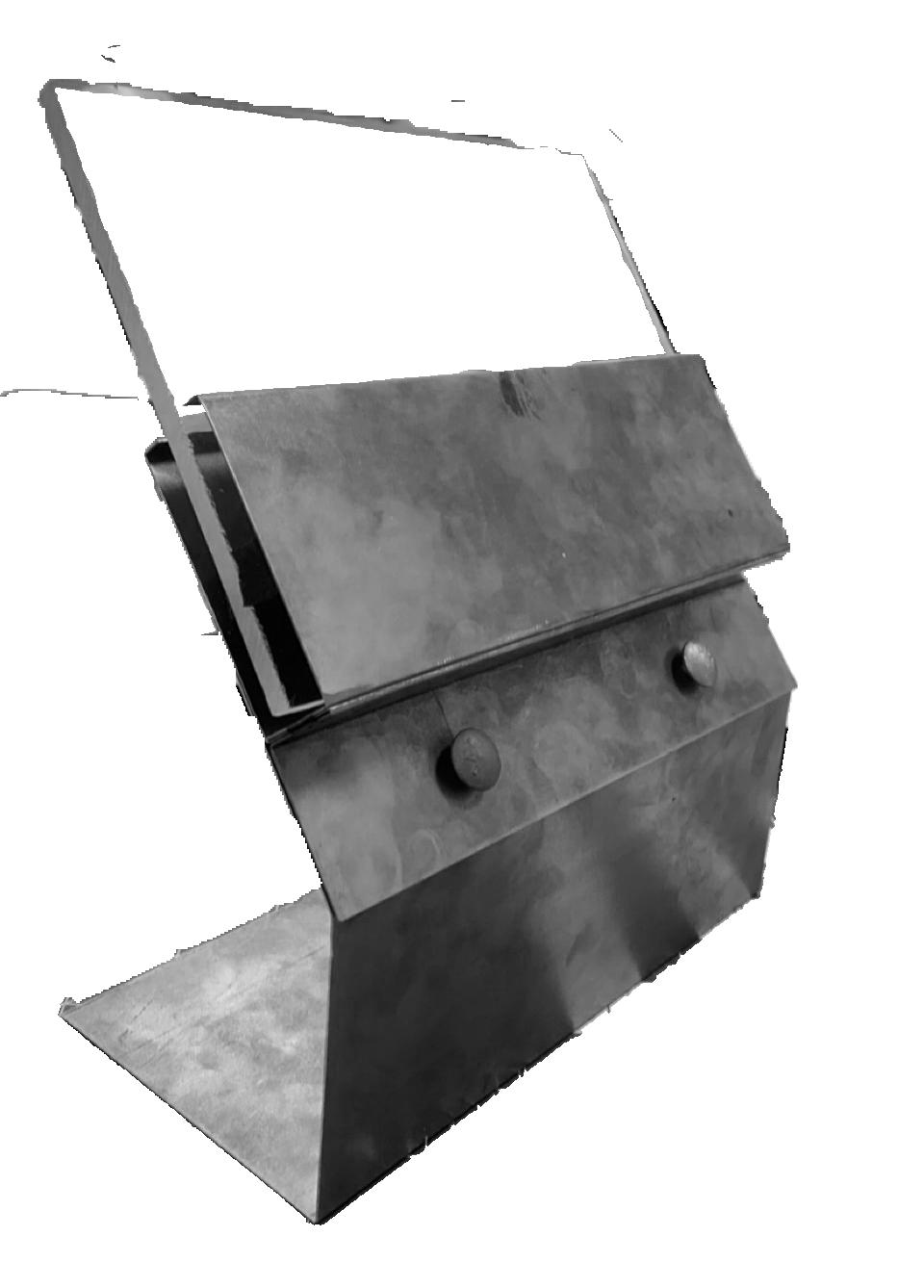
1:1 sloped window sill prototype, 8” section
22 gauge stainless steel sheet metal 3/8” bolts 1/4” acrylic