Mandated Costs Surge in Warren County Prompting Call for Sales Tax Increase
BY PAUL POST
A sales tax hike is inevitable as skyrocketing, unavoidable costs continue to mount, Warren County officials say.
Health insurance, retirement, salary and Medicaid increases are just some of the items that caused expenses to rise $6 million this year alone.
Also, demand for Emergency Medical Services continues to grow and more funds are needed to keep roads, highways and bridges safe.
“What concerns me is that the vast majority of costs are going to be back next year, another $6 million increase,” Budget Officer Frank Thomas said. “I don’t see that slowing up any time soon.”
Officials discussed such issues during a recent panel discussion hosted by Adirondack Regional Chamber of Commerce, with dozens of business and civic leaders on hand, at Crandall Public Library.
“The biggest challenge for us is that only 25 percent of our budget ($215 million) is discretionary,” county Administrator John Taflan said. “The rest of that is state or federally mandated. That pretty much ties our hands.”
Neighboring Warren, Washington and Saratoga counties are the only ones in New York with a 7 percent sales tax. All others are 8 percent or higher except Oneida County (7.75 percent).
A one percent increase would generate an estimated $25 million. Under the most likely scenario, half ($12.5 million) would go to the county with the rest dispersed to towns and the City of Glens Falls.
“We would prefer not to increase property tax,” Taflan said. “I think it would make sense to do sales tax.”
For many people, the additional cost for basic needs and incidentals would be negligible, about
Continued On Page 12
Sensory-Friendly Santa Experience Opens At New Kringle Kottage in Lake George
BY PAUL POST
Santa has something extra special for a select group of people this year.
At Kringle Kottage, kids and adults alike can enjoy personal one-on-one meetings with St. Nick, telling him exactly what they want for Christmas.
The attraction is designed specifically for people with sensory sensitivities or neurological disorders such as autism and attention deficit-hyperactivity.
Sound, light and décor may be adjusted to suit each visitor’s comfort level to create the most calm, safe environment possible.
Kringle Kottage was developed by Roger Allan, of Hadley, who plays Santa Claus professionally. It’s located on the grounds of Fort William Henry Hotel in Lake George.
Allan understands special needs persons because his adult son is autistic, and he wants everyone to experience the joy and excitement of a meeting with St. Nick.
“The magic of Christmas should be comfortable, accessible and meaningful for every child, every adult and every family,” he said. “Kringle Kottage was created to fill a gap, a place where the lights aren’t too bright, the crowds aren’t too large and the experience meets each guest where they are.”
“Every detail was designed with comfort and care so that every visitor feels seen, supported and included,” Allan said. “This

Kottage is more than a building; it is an affirmation that everyone deserves a holiday experience that feels right for them.”
Kringle Kottage was fashioned from a small hunting cabin with overwhelming support from local businesses and financial donors.
Debate Grows Over Solar Plan Near Protected Grasslands County Leaders Raise Concerns

BY PAUL POST
Washington County officials are baffled by the state’s apparent undermining of its own environmental program and local economic development initiatives.
Montreal-based Boralex has plans for a100megawatt solar project covering 567 acres surrounding a DEC Wildlife Area where rare grassland birds nest and breed in southern Fort Edward.
The state is fast-tracking large-scale solar and wind projects with a goal of having all electricity coming from renewable energy sources by the end of this decade. But projects such as this might come at considerable cost.
The endangered short-eared owl and threatened Northern harrier are among many species that need wide open grassland to survive. These two birds alone attract large numbers of natural-
ists and birding enthusiasts, contributing to the county’s ongoing tourism efforts.
The site in question is about two miles from the Alfred Z. Solomon Grassland Viewing Area on County Route 42 where people come to see and photograph scarce species. A separate, fairly large solar complex has already been built just beyond the Viewing Area’s eastern boundary.
“It’s absurd,” said county Board of Supervisors Chairman Robert Henke, of Argyle. “We spend all kinds of funds on a Viewing Area where people can set up giant camera lenses. What you see when you look out from there is a big solar facility.”
Henke, a former DEC employee, recalled writing an article for The Post-Star about the local sighting of a Northern Hawk-Owl. “Three days later we had license plates from 38 states in
On Page 9
Hometown Board Shop Opens To Rebuild Snowboard Culture In
BY ANN DONNELLY
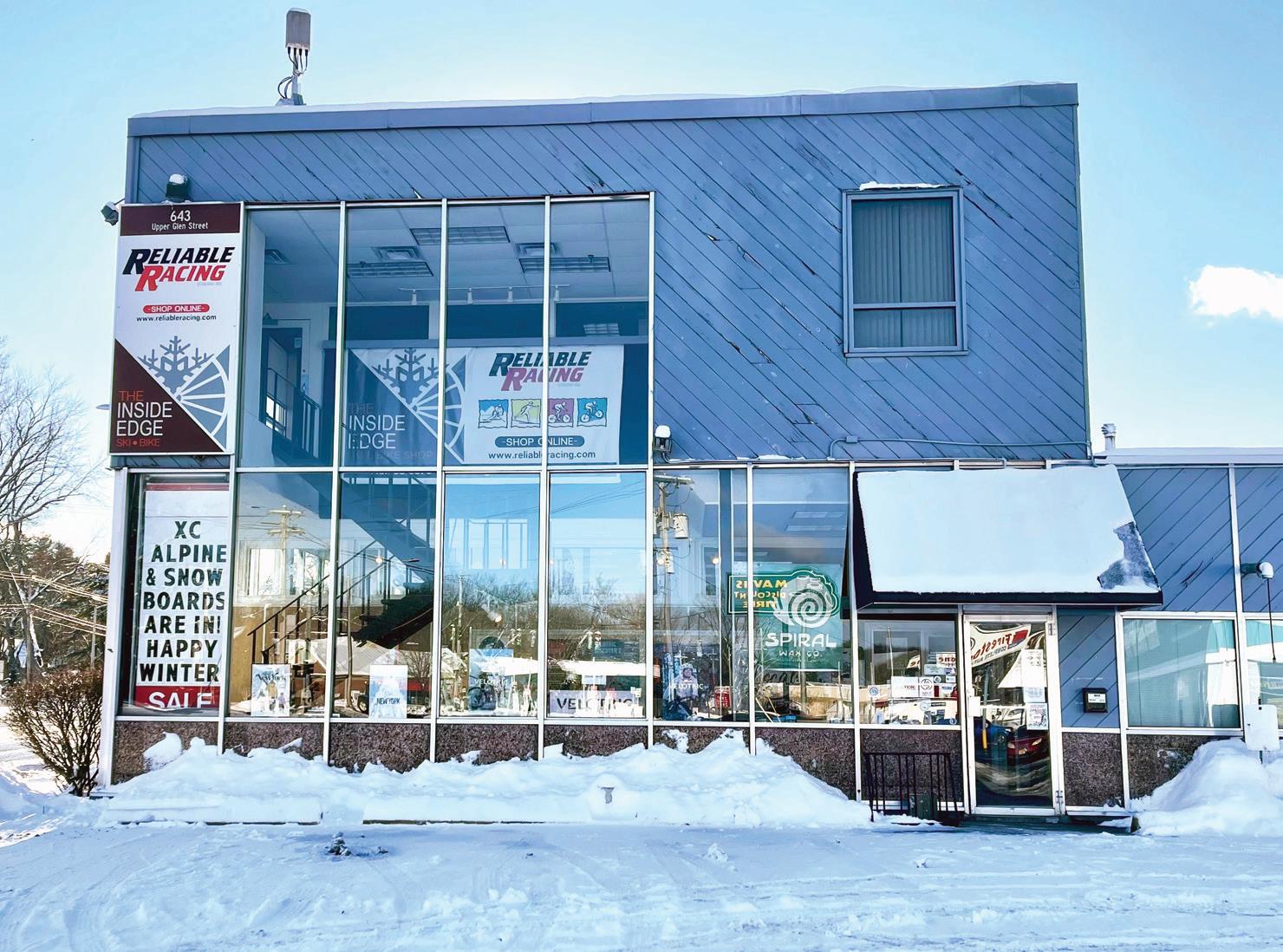
Felicia Lynn launched Hometown Board Shop with the goal of rebuilding the snowboard community she remembers growing up with in Queensbury. The shop operates within Inside Edge on Glen Street, though Lynn said it already feels far more established than its short history suggests. The 2025-26 season will mark its first official winter season.
Lynn and her husband, Matt, are Queensbury High School graduates who returned to the area after 10 years of coaching competitive freestyle skiing and snowboarding in Vermont and Minnesota. Lynn said the idea for the business was sparked by a simple question: Where did the snowboard shops go? The name Hometown Board Shop grew from a suggestion by Matt referencing Glens Falls’ “Hometown USA” nickname, with community forming the core of the brand.
Lynn brings extensive experience in ski, snowboard and outdoor sports retail. She raced for Queensbury in high school and studied outdoor recreation at Cortland. For a decade, she and Matt coached high-level youth athletes in freestyle skiing and snowboarding. That background now shapes her approach to staff training and mentoring young riders who visit the shop.
Lynn said transitioning from coaching to business ownership required her to coach herself through unfamiliar challenges. She worked with SCORE, a Small Business Administrationsupported mentoring organization, and secured a mentor who provided financial structure and
Queensbury
guidance during the startup process. Lynn said that perspective shift helped normalize larger long-term financing decisions during the shop’s launch phase. She is also familiar with the location, having worked on and off at Inside Edge and its affiliated business, Reliable Racing, since 2011. Home-
Roger Allan stands beside the festive tree at Kringle Kottage where sensory-friendly visits happen.
Courtesy Paul Post
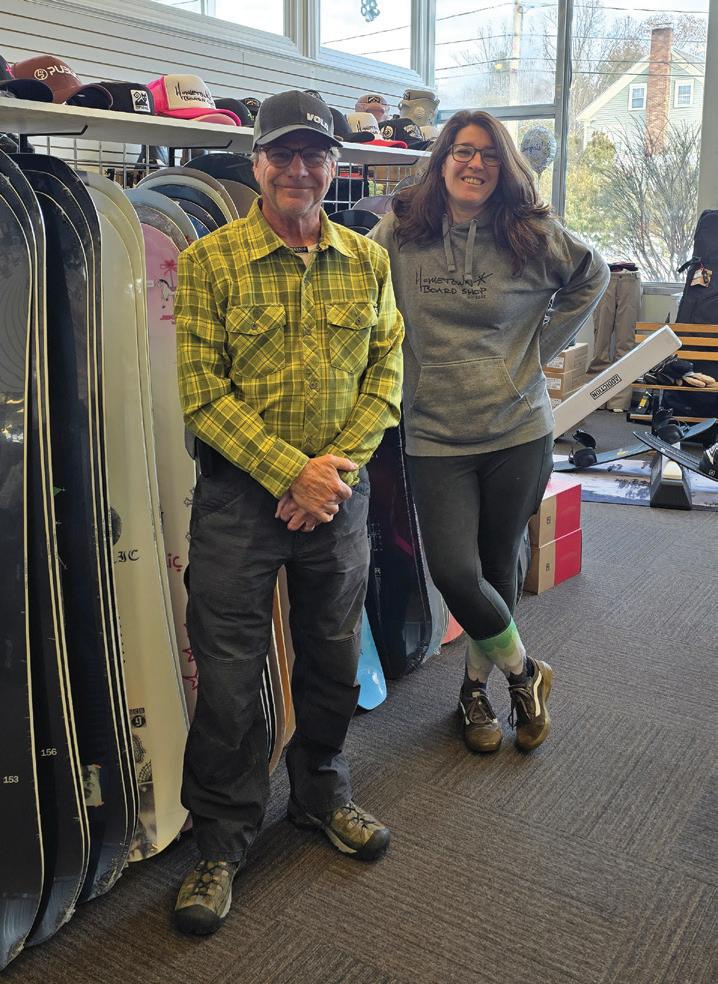
John Jacobs celebrates opening of Hometown Board with Felicia Lynn.
Courtesy Hometown Board Shop
An existing solar project may be seen from the Alfred Z. Solomon Grassland Viewing Area where people come to see endangered and threatened bird species.
Courtesy Paul Post
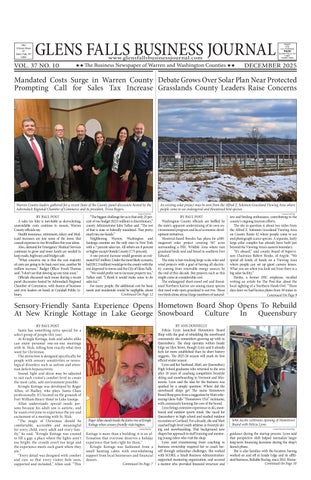
Warren County leaders gathered for a recent State of the County panel discussion hosted by the Adirondack Regional Chamber of Commerce and its president, Tricia Rogers. Courtesy Paul Post Continued
Arrow Expands Board With Appointment Of Schenectady Tech Leader Darrin Jahnel
Arrow Financial Corporation is pleased to announce the appointment of Darrin Jahnel to the Arrow Financial Corporation Board of Directors, effective November 25, 2025.*
Jahnel, a dynamic CEO, entrepreneur and AI expert, brings more than 25 years of experience building and scaling high-growth technology companies. He is the founder and CEO of Jahnel Group, a 150-person software consulting firm headquartered in Schenectady, New York. Under his leadership, the company has been named to the Inc. 5000 list for seven consecutive years and has earned multiple best workplace awards for its thriving culture.
A graduate of the University at Albany and New York University’s Stern School of Business, Jahnel is also a paid speaker, a recognized expert on AI in business and scaling high-performance teams, and a member of Mensa. Beyond Jahnel Group, he founded InfoLink, an R&D tax credit firm, and acquired LTI, a 40-person software company. He has delivered more than 100 talks on AI, leadership, entrepreneurship and culture and facilitated peer groups of emerging entrepreneurs.
“We are pleased to welcome Darrin to the Arrow Financial Corporation Board of Directors,” said David S. DeMarco, President and CEO of Arrow Financial Corporation. “His track record of innovation, his technical depth and his experience building high-performance organizations will bring valuable insight to our board. We look forward to the expertise he will contribute as Arrow continues to grow and strengthen its position in the communities we serve.”
Mary Longley
131 River Street Hudson Falls, NY 12839
518-744-7791
mlongley10@yahoo.com

In addition to his professional accomplishments, Jahnel has a long history of service and community involvement. He currently serves on the boards of the Capital Region Chamber of Commerce and Mekeel Christian Academy and is a member of The 50 Group, Entrepreneurs’ Organization and UNY50. He led mission trips to developing nations, advocates for foster care and adoption and remains active as a basketball coach, mentor and community leader.




Queensbury’s Bay Road Animal Hospital Opens With
Modern Pet-Friendly Features
BY PAUL POST
Everything about the new Bay Road Animal Hospital was designed with comfort in mind, for both pets and owners.
Widened hallways, large treatment area windows, heated kennel room floors and a sunken scale that animals simply step on without having to be lifted when fi rst entering the building are just some of its many unique features.
Trent Hunnicutt, DVM, recently held a grand opening for the practice, the former home of Convenient Medical, at 319 Bay Road near the intersection of Quaker Road, in Queensbury.
“We basically blew the building out to four walls and redid everything to what’s needed for a veterinary hospital instead of a medical clinic,” he said.
A South Carolina native, Hunnicutt grew up on a hobby farm surrounded by all types of animals large and small, and knew he always wanted to have a practice of his own someday. He did undergraduate work at Clemson University before going to Ross University School of Veterinary Medicine at Saint Kitts in the Caribbean for most of his classroom instruction; fi nishing up with clinical rotations at Auburn University in Alabama.
Hunnicutt, 41, came to the Glens Falls area 10 years ago so that he and his wife, Christina, could be closer to her family.
Previous visits were in summer, giving Hunnicutt a chance to do an externship for Battenkill Veterinary, working with dairy cows. His fi rst North Country winter was quite a shock.
“I thought, ‘Holy cow I can’t believe this!’
” he said.
His fi rst permanent positions locally were with Adirondack Animal Hospital and Greenfield Animal Hospital. Then he worked nights for Northway Animal Emergency Clinic in Moreau, while pursuing plans during the daytime to open his own practice on Bay Road.
“Working with a realtor, I asked if there was anything out there that would fit these parameters of square footage, parking and being close to home,” Hunnicutt said.
The former Convenient Medical building checked every box.
He bought the property for $600,000 and has invested about $1.2 million to make everything pet and people friendly, made possible with a small business loan from Live Oak Bank in Wilmington, N.C. “A representative flew up in the winter of 2023 to see the property,” Hunnicutt said. “We met at Bogey’s restaurant. He said, ‘Let’s go see the place,’ walked through and liked it.”
From there, Hunnicutt contacted Planimal, a Montreal architectural fi rm that specializes in designing small and start-up veterinary clinics. Hunnicutt incorporated the best features from each of the practices he had worked at before.
“I was probably a pain their side, showing up bothering them,” he joked. “They knew the unique concepts about what helps with animal flow and decreasing stress for the pet.”
Fort Edward-based V&H Construction was the contractor.
The sunken digital scale, in the lobby floor, gives a quick accurate reading that reduces animal stress by eliminating extra handling.
Continued On Page 6




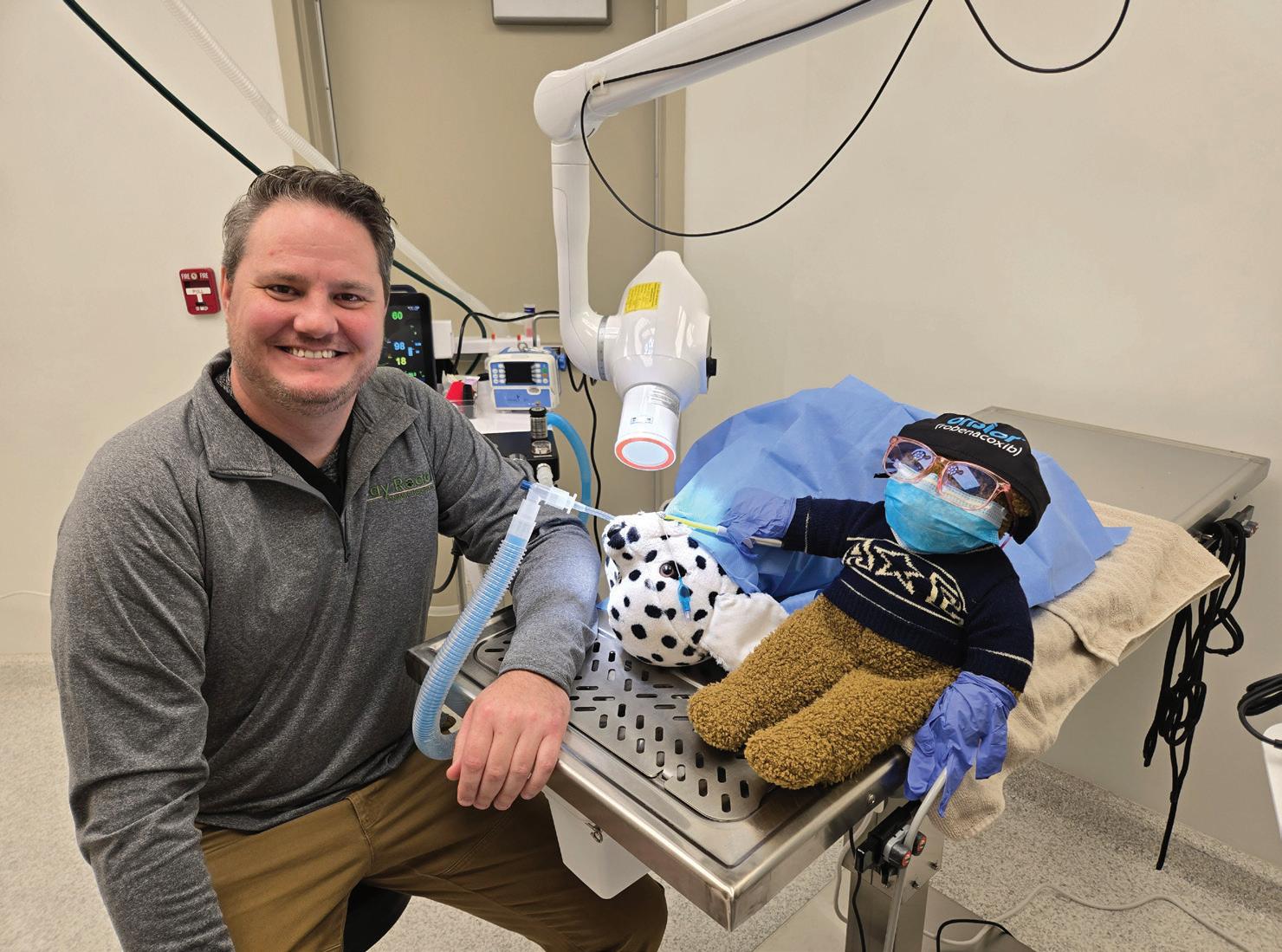
Dr. Trent Hunnicutt’s new Bay Road Animal Hospital provides a full complement of care including dental treatment.
Darrin Jahnel joins the Arrow Financial board as the company expands its leadership.
Vision For Glens Falls East End Focuses On Heritage, Housing And Growth
BY PAUL POST
From neighborhood bars and breakfast spots to The Hyde, which ranks among the Northeast’s most prestigious art museums, and Finch Paper – the city’s largest industrial employer –the East End of Glens Falls is an incredibly diverse area with deep-rooted ethnic heritage.
It’s also home to one of the state’s smallest school districts, part of the historic Feeder Canal and unique architectural gems such as the former National Guard armory on Warren Street.
Building on the transformative economic development taking place on South Street, officials are now turning their attention across town to the East End, a roughly four-square-mile area from Ridge Street east to the Queensbury town line, and from Dix Avenue down to the Hudson River.
“It’s not just about coming up with a vision, but actionable projects that receive funding,” said Nora Greenberger, senior planner with LaBella Associates, a Glens Falls engineering and consulting firm. “The goal is to understand what are the restraints and opportunities for redevelopment. How do you incentivize investment in abandoned, vacant sites.”
She is guiding a 16-member Steering Committee seeking East End inclusion in the state’s Brownfield Opportunity Area program, which would open the door to a wide variety of funding and technical assistance if an application, submitted 12-15 months from now, is approved.
The panel has named its mission “East End Rising” and held its first meeting recently at City Hall. A second meeting is expected in late January at a time, date and place yet to be scheduled.
The group spent most of the first session taking an inventory of existing economic, physical and cultural resources, and vital infrastructure such as the city’s wastewater treatment plant, nearing capacity, that’s crucial future economic development.
There’s also an eclectic mix of single family, multi-family, small retail and old industrial buildings.
“And it’s so walkable, so connected,” said Patrick Dowd, city director of community development. “We don’t want to lose that character as we move forward.”
The group discussed creating a link between The Hyde and the Shirt Factory on Lawrence Street, which attracts huge crowds for fun, food and music on summer Thursday nights, to pro-


mote a more arts-based economy. Jim Siplon, Warren County Economic Development Corp. president, said there’s significant potential for home-based arts studios and similar small business.
The goal would be to create an arts overlay district like Beekman Street in Saratoga Springs, which could be encouraged with rezoning to attract new entrepreneurs.
The Town of Queensbury is seeking Brownfield program approval, also, for the South Queensbury area where large, heavy industry was once located on River Street. Greenberger said the East End’s proximity to this area could strengthen the applications of both municipalities.
The shuttered Lehigh Cement Company property is in Queensbury, Glens Falls and directly across the river in Moreau.
Plant Manager David Dreyer said a company-owned bridge crosses the river where, hidden from public view, there’s a large quarry lake on the same level with the river.
Committee Chair Jim Martin, a professional planner, said such assets present virtually unlimited opportunity for recreation-related tourism. The bridge, for example, could link bike paths on both sides of the river.
“The state likes it when municipalities coordinate,” Martin said.
In some places, highly creative uses have been found for large industrial silos such as the cement plant’s. In Quebec city, they’re used as the backdrop for dazzling laser light shows. In Chile, tall concrete silos are now a popular climbing wall destination that garnered international publicity when visited by contestants on the CBS television show, “The Amazing Race.”
One asset panel that members didn’t discuss is East Field, the city-owned ballpark and recreation complex that has a great deal of untapped economic potential. In addition to the Glens Falls Dragons collegiate-level team, many outof-state youth baseball teams play there and fill local hotel rooms during weekend-long tournaments.
But the city Recreation Commission is currently conducting an in-depth study of the entire East Field property, considering ways to improve and maximize uses of its assets, which include the ballpark, Little League fields, clubhouse, quarry pond and swimming pool.

For example, a synthetic turf field surface at the ballpark would extend the outdoor playing season considerably, and allow for many more activities to be held.
Jeff Flagg, city director of economic development, said the East End has numerous old iconic structures such as a former Grist Mill on Maple Street, “all of which are calling for some sort of reuse.”
Glens Falls Common School District (Abe Wing Elementary School) Superintendent Brian George said the East End needs more taxpaying properties to enhance the school’s budget and create more opportunities for students. The East End already has about $30 million in tax-exempt property.
“We want families moving in,” George said.
But this means providing enough affordable housing, while at the same time promoting micro-and home-based business. “It’s a delicate balance,” Flagg said.
“They’re not at odds with each other,” Siplon said. “A residential property can also generate jobs.”
Committee members closed the meeting by seeking feedback from residents. Most comments centered on the need for greater pedestrian safety because of speeding traffic in places such as Maple, Prospect and McDonald streets.
Bethanie Lawrence, World Awareness Children’s Museum executive director, said, “walkability is increasingly important and parking is a huge issue.” Groups of children sometimes walk from the museum several blocks down Warren Street to The Hyde.
Eighty-six sites across New York state have already obtained Brownfield Opportunity Area designation leading to significant redevelopment. In Oswego, a previously abandoned commercial area has been revitalized with a mixeduse, affordable housing project.
In Broome County, an abandoned EndicottJohnson factory was converted to a residential complex.
The steering committee is expected to meet every two to three months from now until its application for Brownfield program status is submitted.
“This is an incredibly interesting part of the city,” Martin said. “There’s a lot of diversity, a lot of opportunity.”
More information may be found with an online search: Glens Falls East End Rising.




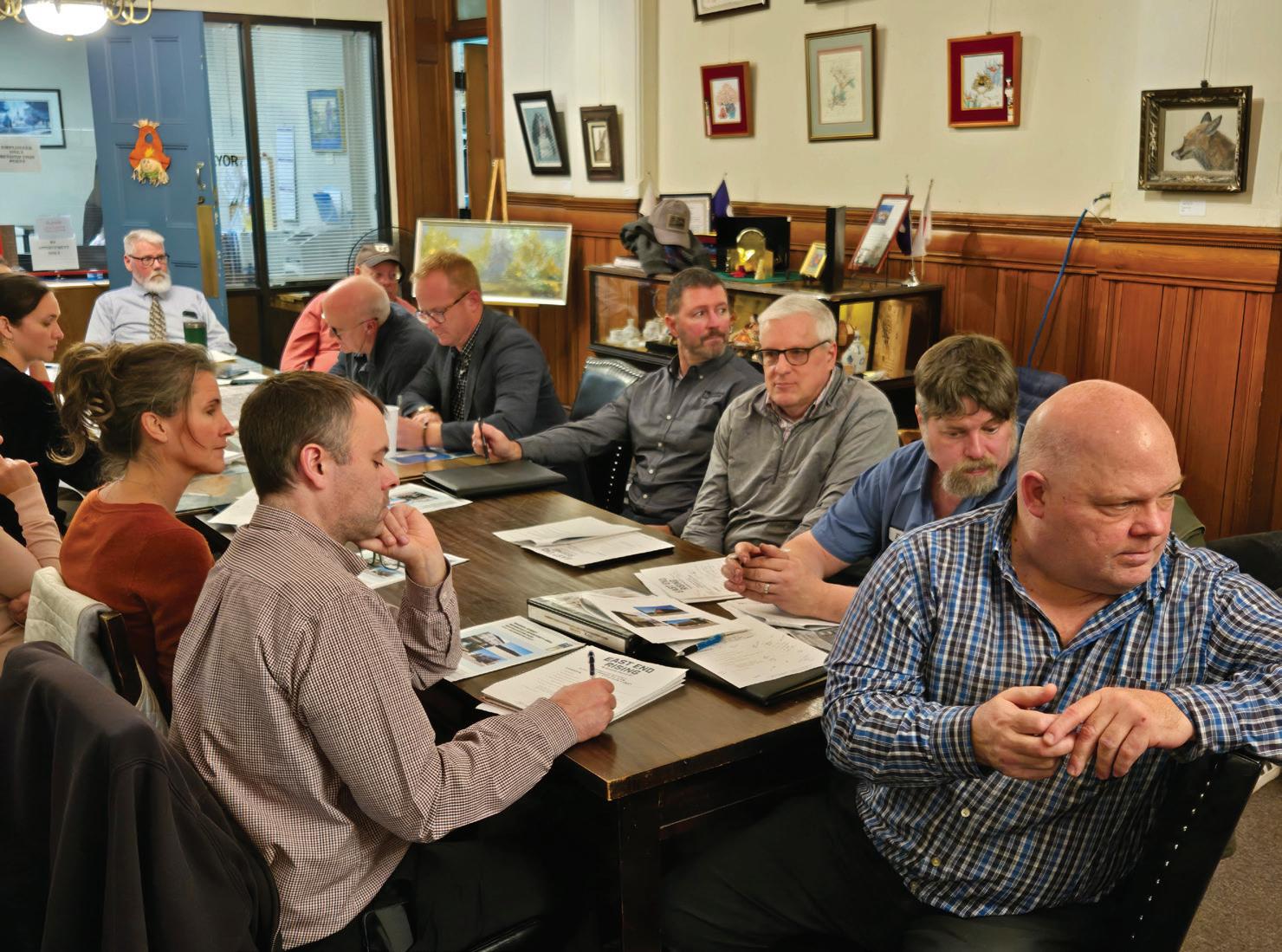
Glens Falls Economic Development Director Jeff Flagg, right, and fellow Steering Committee members listen to a resident’s comment during a recent East End Rising initiative meeting.
Courtesy Paul Post
BY ANN DONNELLY
Associates LLC 9 Broad Street #7 Glens Falls, NY 12891
GLENS FALLS BUSINESS JOURNAL
2000 Business Of The Year
Adirondack Regional Chamber Of Commerce
9 Broad St. Glens Falls, NY 12803 (518) 581-0600 • Fax: (518) 430-3020 • www.saratogabusinessjournal.com
Editorial: rodbacon@saratogabusinessjournal.com
Advertising: HarryW@saratogabusinessjournal.com Press Releases: pressreleases@saratogabusinessjournal.com
Publisher & Editor Harry Weinhagen
Editor Emeritus Rod Bacon
Sales and Customer Service Harry Weinhagen Mary Longley
Production Manager Graphic Precision
Contributing Writers Susan Campbell Ann Donnelly Paul Post Lee Coleman
Inside Edge and Reliable Racing represent a business legacy spanning more than half a century in the Glens Falls area. The enterprise evolved from a small family ski shop established by Tom and Marilyn Jacobs at West Mountain in 1963 into an international supplier of ski racing equipment. Former owner John Jacobs, their son, reflects on that success as the result of the family’s blend of retail experience and product innovation.
The family moved to Glens Falls in 1958 so Tom Jacobs could take a job at Finch Pruyn & Co. The retail operation soon followed, originally operating as the West Mountain Ski Shop and managing ski rentals, the ski school and race programs for the mountain. By 1968, the family relocated the business to Bay Road in Glens Falls, and Tom and Marilyn committed to the enterprise full time.
A near-miss airplane disaster soon became a defining moment. Tom Jacobs missed a Mohawk Airlines flight from New York City to Warren County Airport at the last minute. The plane later crashed into Pilot Knob Mountain near Lake George, killing all aboard. The next day, Jacobs left his job at Finch and dedicated himself entirely to the shop, which became known as The Inside Edge.
Reliable Racing Supply launched in 1969 after a Bromley ski club requested race bibs. Jacobs produced 100 in his basement. When a customer remarked on the company’s dependability while writing a check, the name Reliable Racing Supply was born. The B2B operation quickly expanded, leading to catalog sales and the formation of distinct retail and wholesale divisions.
Inside Edge entered the cycling market in 1968 as the first Peugeot dealer north of New York City.
The opportunity arose after Jeff Jacobs observed the French ski team training on Peugeot road bikes in Aspen. An initial order of three bikes soon grew after a shipping error delivered 200 bicycles. All were sold through Jacobs’ network of New England ski coaches, firmly establishing the shop in the cycling market.
John Jacobs formally joined the business in 1980, later taking ownership in 2000. He led the company’s product development efforts, creating specialty items for Reliable Racing, including Rollski roller skis. Under his leadership, the company also developed safety materials and automatic race timing systems.
The company’s breakaway slalom pole became a major innovation in alpine ski racing. First used in a World Cup event in 1980 at Waterville Valley, New Hampshire, it later became the official slalom pole for the 1998 Nagano Olympics. The pole was temporarily banned from the 1983 Sarajevo Olympics following protests from European teams.
Today, Reliable Racing supplies equipment for ski racing, golf courses, parks and recreation departments, equestrian training and rodeo sports. The company continues adapting its original breakaway technology for new applications, including barrel racing and pole bending.
John Jacobs sold both companies in 2017 to Steve Kvinlaug, a former employee. Since retiring, Jacobs has remained active in the industry as technical adviser and equipment director for the World Pro Ski Tour. He continues to serve on the board of the Ski Areas of New York trade association and remains a resource for customers and industry contacts.
For more information, visit insideedgeskiandbike.com and reliableracing.com.

Inside Edge and Reliable Racing continue a legacy of more than 50 years in Glens Falls, growing from a small family ski shop into a leading supplier of ski racing gear with a long record of innovation.
Glens Falls Coach Turns Personal Recovery Into National Nutrition Business
BY CAROL ANN CONOVER
Katie Margison officially launched Athena Nutrition earlier this year, but the foundations of her coaching practice were laid several years ago through her own personal transformation and extensive professional development.
In December 2023, a former member of Lake George Community Fitness approached Margison about nutrition coaching. At the time, she declined, still navigating her own wellness journey. But by mid-2024, after beginning her sobriety and focusing on her health, she reconsidered.
“I very naively thought I will lose a lot of weight because I’m not drinking anymore,” Margison said. “But the opposite happened, and I sought a dopamine response from food wherever I could.”
That realization ultimately shaped her philosophy: sustainable, evidence-based coaching focused on behavior change, not quick fixes.
Margison named her company after her dog, Athena, but the symbolism runs deeper. In Greek mythology, Athena is the goddess of wisdom and practicality — qualities Margison brings to her craft as both a coach and an educator.
Over the past several years, Margison invested heavily in her training. She holds a Bachelor’s Degree in Business Management; a Master’s Degree in Healthcare Administration; and an extensive list of coaching and fitness credentials, including Precision Nutrition L1, WAG Certified Nutrition & Sports Performance Coach, CF-L2 Trainer, USAW-L1 Coach and Referee, and multiple CrossFit specialty certificates in Gymnastics, Kettlebell, Anatomy, Lesson Planning, Spot the Flaw, and Scaling. She is also a Chronic Disease Self-Management Peer Educator through Stanford University.
After years of informal work, additional certifications, and mentoring, Margison softlaunched Athena Nutrition with a small group of free pilot clients to refine her approach. The business officially launched more recently, supported by ongoing guidance from business coaches and a steadily growing client base.
Today, she works with 38 clients — 37 women and one man who has been with her from the beginning.
Her process begins with an online application detailing a client’s history, eating habits, and past attempts at weight loss, followed by a 30- to 40-minute Zoom consultation to assess compatibility. Using the Trainerize coaching platform, Margison builds individualized nutrition and fitness plans without requiring in-person intake.
“What can you commit to?” she asks clients. “If we can’t commit to these three things, OK, what about these two?”
Clients enroll for at least four months before transitioning to month-to-month support. Through her app, she provides daily accountability, customized meal planning, and, when appropriate, fitness programming rooted in her 13 years of CrossFit experience and six years of coaching at Lake George Community Fitness.
Client Amie Gonzales said Margison’s style is unlike other programs she’s tried.
“She’s very communicative with her clients,” Gonzales said. “She puts together group sessions so you can feed off each other’s energy. She’s not just sitting there cheering you on — she’s guiding you every step of the way.”
Gonzales also noted that weekly check-ins and

monthly face-to-face meetings help prevent clients from getting “lost in the shuffle.”
“It’s motivating, even when there are ups and downs,” she said. “Katy reassures you and helps you stay on track.”
Margison avoids labeling foods as “good” or “bad,” instead using nonjudgmental terms such as “off-track meals” and reminding clients that food choices are not moral failures.
“You eating a cookie doesn’t make you bad. It doesn’t mean you’ve blown everything,” she said.
She also helps clients unpack lifelong beliefs about food formed in childhood — conversations that can be uncomfortable, but necessary.
For Margison, success is defined by identity shifts as much as physical ones. One client who has worked with her since June lost 18 pounds and recently told her she finally feels comfortable calling herself an athlete.
“That’s the kind of identity shift I went through getting sober,” Margison said. “And I want to show women they are capable of so much more than they allow for themselves.”
As the new year approaches, she encourages clients to create vision boards — a practice she credits with helping her manifest a full-time career in coaching.
Looking ahead, she hopes to broaden Athena Nutrition beyond health and fitness to support women in personal, professional and financial growth.
Margison works exclusively online, serving clients locally and across the country. Despite offering high-touch support, she notes that her rates remain lower than 90% of comparable coaches.
Her journey through addiction and weight struggles continues to fuel her work.
“If I can do it, you can do hard things, too,” she said. “I got so sick of my own toxic patterns that I knew I had to change. And nobody could have told me two and a half years ago that I had a problem. I had to come to that realization on my own.”
Now, she helps other women reach their own pivotal moments — and stay supported through the transformation that follows.
Learn more at https://athena-nutrition.com.

On Deck Athletics Opens, Providing Young Players Big-League Development
BY PAUL POST
Brett Rodriguez wants to level the playing field for local kids who dream of playing in the big leagues someday.
A three-sport star at Queensbury High School, he reached Triple-A with the Seattle Mariners, a teammate of Cal Raleigh who set big league records this year for most home runs by a catcher and a switch-hitter.
But Rodriguez can’t help wondering how far he might have gone, given the opportunity to play ball year-round like kids from California, Texas, Florida and the Caribbean islands.
“Where you come from matters,” he said. “When I was a senior in college, my coach said, ‘Think how many more reps this freshman has had, being from Southern California compared to you from upstate New York.’ I asked the kid, ‘How many sports did you play?’ He said, ‘What do you mean? I play baseball all year round’.”
“My big vision, what I want for this community, is something I didn’t have,” Rodriguez said. “I want to give kids a chance. This gives them a place where they can come and get high-level development during our harsh winter months.”
His new baseball training center, On Deck Athletics, opened this month at Aviation Mall, filling a 10,000-square-foot space previously occupied by Sears Auto Center. He’s sub-leasing the site from Jeremy Treadway, owner of a new entertainment complex, ADK Karting Experience, in the mall’s former Sears store.
“I thought about this for a long time,” said the 27-year-old Rodriguez. “It was a big step for me, if I wanted to do this or continue playing because I do have a couple more years left on my contract in Puerto Rico. I’ve already told the general manager and players, I’m not going to be able to start my business, my baby, and go play this winter. I want them to win, but I have this going on right now.”
In addition to his Mariners minor league career, Rodriguez spent several years including last winter in the Roberto Clemente Professional Baseball League, Puerto Rico’s most elite league. Its champion advances to the Caribbean Series, featuring the best teams from other island countries and Mexico.
Rodriguez, primarily a center fielder, got there twice, playing with and against many former big league stars including one of his boyhood heroes, former Yankees second baseman Robinson Cano from the Dominican Republic.
“One of the first Yankee games I ever went to, he hit a walk-off home run,” Rodriguez said. “Now I was playing against him. Before the game, I shared the batting cage with him. It was just like a big surreal moment for me. I got to meet a lot of different cool people.”
Big league catchers Yadier and Jose Molina, pitchers Edwin and Alexis Diaz, former Yankee shortstop Didi Gregorius, 2020 AL MVP Jose Abreu and third baseman Pablo Sandoval are just some of the stars he’s rubbed shoulders with Rodriguez plans to invite former college and pro teammates to help conduct baseball camps in winter and summer.
“We’ve already done camps for 180 kids in Queensbury and Glens Falls Little Leagues,” he said. “We’ve got a lot of following, a lot of good relationships with different Little Leagues. They were asking, ‘When are you going to grow bigger?’”

as a HitTrax simulator (for immediate data feedback and virtual gameplay) and a swing analyzer to help pinpoint mechanical adjustments.
Several smaller rooms might eventually be used for basketball drills, golf simulators, birthday parties and an apparel shop.
Rodriguez is banking on the mall’s convenient location, near the Northway, to attract kids from north and south in addition to the immediate Glens Falls/Queensbury area.
At Queensbury High, where he graduated in 2016, he helped the Spartans reach the state baseball finals two times. From there he went to Division I Wofford College in Spartanburg, S.C. where he majored in business with a focus on finance and accounting.
Such studies, in addition to his strong baseball background, provide all the impetus needed to launch On Deck Athletics. Financing for the project is from NBT Bank.
“I developed a business plan, detailing how many teams and how many clients we expect to have,” Rodriguez said. “We’ve already got bookings into January. There is demand.”
Rodriguez was eligible for the major league draft after his junior year at Wofford, but suffered a foot injury and decided to return for his senior year in 2020. Both he and the team (15-2 record) got off to great starts, but the season was cut short by COVID.
The draft was still held, but reduced to five rounds, to help offset the pandemic’s economic impact. Rodriguez wasn’t picked, but the Mariners called early the next day and he signed as an undrafted free agent.
He had entered the transfer portal and was committed to play at Creighton with a year of college eligibility left, but turned pro instead. “It was a very tough decision,” Rodriguez said. “I told myself, I’m not saying no to two pro contracts.”
At Triple-A Tacoma, his locker was next to Raleigh’s, now one of baseball’s biggest superstars.


Most recently, Rodriguez has given private lessons in a batting/pitching cage at The GYM in Aviation Mall. The much larger On Deck Athletics venue will have three main 13-foot-high by 72-footlong cages that can be divided for a total of six, all on newly installed turf.
A separate room will have hitting and fielding stations, equipped with high-tech machines such
“I have a bat that Cal gave me,” Rodriguez said. “He was one of my favorites. He’s a great dude. I have a lot of Mariners friends like Colin Davis, who played with me at Wofford and in the minors, who are going to come and do camps with me. The baseball world is way smaller than you think. Everyone knows everyone else.”
“It’s very exciting,” he said. “It’s been a lot of work, but it’s coming together nicely.”
For information go to: www.ondeckathletics518.com.




Katie Margison launched Athena Nutrition to coach clients through sustainable health change. Courtesy Athena Nutrition
Brett Rodriguez opens On Deck Athletics to give young players high level baseball training. Courtesy On Deck Athletics
Animal Hospital
Continued From Page 1
Heated kennel floors help keep canines warm and calm.
Hunnicutt specializes in cats and dogs, but also sees small animals such as rabbits, gerbils and ferrets, although mostly for husbandrytype issues rather than illness.
In addition to himself, the clinic has created six full-time jobs including that of Practice Manager Taylor McLarty.
Bay Road Animal Hospital is currently open Monday to Friday.
“The goal is to have weekend hours once we have the clientele to support the payroll,” Hunnicutt said. “We as veterinarians got into this to help animals. We take it hard if we can’t do that.”
For hours and information go to: www.bayroadvet.com.
REGIONAL STOCKWATCH

18 DIVISION ST.-SUITE 305, SARATOGA SPRINGS, NY 12866 (518) 584-2555
If You Build It, They Will Come
BY KENNETH J. ENTENMANN CFA® POSTED NOVEMBER
19, 2025
“If you build it, they will come.” That famous, whispered line from the movie Field of Dreams seems appropriate for today’s equity market. In April, the market sold off in an overreaction to China’s Deepseek AI model and “Liberation Day” tariff announcements. From Feb. 28th through April 8th, the S&P 500 was down nearly 20%. Since then, it has been on a tear, reaching record high levels multiple times in the Fall. The primary driver of this strong move has been Artificial Intelligence (AI). Indeed, the top 10 stocks in the S&P 500, led by the “hyperscalers” (Microsoft (MSFT), Alphabet (GOOG), META (META, formerly known as Facebook) and Amazon (AMZN)) account for nearly 40% of the S&P 500 market cap! But they also generate 33% of the S&P 500 earnings! The incredible earnings have lifted the Price/ Earnings (P/E) ratio of the top 10 to a lofty 32x earnings. The rest of the S&P 500, the other 490 companies, trade at 19.5 and the overall S&P 500’s P/E stands at 23 times earnings. Historically, that is an “expensive” P/E relative to the 30-year average of 17.1 times earnings. Nonetheless, the power and potential of AI have been used to justify the high valuation of the AI universe and the overall market. Don’t worry about high P/Es, this time will be different! The most dangerous sentence in the world!
To be clear, AI does appear to be the next great innovation that has the potential to transform economic productivity. Over the last 150 years, there have been several periods associated with great innovation and high productivity gains. In the late 1800’s, mechanization transformed the economy from an agrarian economy to an industrial economy. The automobile in the 1920s. Post WWII brought electrification and aviation. More recently, the invention of the personal computer, mobile phones and the internet had a dramatic impact on productivity and economic growth.

*DatasourcedfromMorningstar
**Stockinvestingincludesrisks,includingfluctuatingpricesandlossofprincipal.Thisisforinformationalpurposesonlyandnotintendedto providespecificadviceorrecommendationforanyindividual.
The history of economic innovation provides lessons for investors. In every case, the initial projections for these transformations proved to be ridiculously low and the ultimate impact was magnitudes better. It is possible that today’s AI projections, as grandiose as they are, will underestimate AI’s overall economic impact. For investors, there is danger in this unbridled enthusiasm for AI. Let’s give AI the benefit of the doubt and say it will be transformative beyond our imagination. That does not mean every AI stock will be a great investment. And that includes the biggest and best “first movers.” There are graveyards filled with companies that were early in the great transformations of the last 150 years. Yet, when was the last time someone drove a Packard? Flew on TWA or Pan-Am? Took a picture on Kodak film? Typed a letter on a Smith Corona typewriter? Fired up their Compaq computer, with its Intel microprocessor, and hit the screeching AOL modem to get on the internet. Have you Asked Jeeves recently? Sent a text on your Blackberry? Went to your My Space page? A core maxim of this blog is that great innovation invites an onslaught of competition. And not every great innovation proves to be great. Think the Metaverse!
The S&P 500 peaked on October 29 at 6920. Today, it trades 6590, nearly a 5% correction in less than 3 weeks. Does this mean the AI trade is over?
Hardly. Given the 40%+ rise since the April 8 lows, a modest correction should not be too surprising. But why now?
Overall, the economy is ok. Yes, the employment market seems to have cooled but is far from flashing recession warnings. Inflation remains sticky. This puts the Federal Reserve Bank between a rock and a hard place. The Fed has used the cooling employment market to justify its .25% rate cuts in September and October. But inflation has remained sticky and uncertain given the everchanging impact of tariffs on prices. In addition, the Federal government shutdown has delayed the release of hard economic data. One reason for the sell-off is that expectations for an additional .25% rate cut in December have been put on hold. When the market trades at 23x earnings, lower interest rates are very beneficial. Market probabilities for the December 10th rate cut have fallen from nearly 100% to below 50%. That helps explain, at least partially, the timing of the correction.
A bigger catalyst for the sell-off is a bit of a reality check on the AI trade. The amount of money
that is being spent in the name of AI is eye-popping. The big four hyperscalers are projected to spend over $300 billion/year for the next 3 years! Yet, when CEOs of these companies are questioned on how and when investors can expect a Return on Investment (ROI), the answer seems to be a vague “it’s going to be huge!” Ok, like history’s great transformations, AI will be huge. But how huge? And when? After all, the capital expense is real, already huge, and growing. CapEx can’t grow forever without a return! Certain expense with uncertain ROI is not a great investment thesis. In addition, the concept of “circularity” in AI is becoming popular. Today, Microsoft announced a new strategic partnership with Anthropic and Nvidia (NVDA.) Anthropic has committed to purchase $30 billion of Microsoft’s Azure computing power, Microsoft will invest $5 billion in Anthropic, and Nvidia will invest $10 billion in Anthropic. So, Anthropic will provide AI services to Microsoft, while Microsoft will provide the computing power run on Nvidia chips to Anthropic. Can you square the circle?
Similarly, Open AI has agreed to pay Oracle (ORCL) $60 billion over 5 years for computing power. Sounds straight forward. However, Open AI has never made a profit and is not projected to make a profit until 2028. Where is the $300 billion coming from? ORCL has yet to build the data centers and is already a debt ladened company. Where is the construction money going to come from? Lastly, according to JP Morgan, it will take 2.5 Hoover Dams or 4 full-scale nuclear power plants to provide the electricity for these data facilities. Currently, there are no dams or nuclear power plants under construction in the U.S. So, an unprofitable company has promised to purchase $300 billion in computing power with no power source from an indebted company. What could go wrong!
AI better be “huge” if these agreements are going to be profitable. As discussed above, history demonstrates that many first movers wind up being bad investments. What happens to these circular deals when one of the players fails. According to ORCL’s CEO, he is not concerned about Open AI’s ability to pay the $300 billion. If they can’t, there will be plenty of other buyers! Let’s hope! But if one of the leading AI model producers has failed, it is not clear there will be others to step in!
Are we in an AI bubble? I don’t think so. Unlike the dot.com bubble, most of the hyperscalers are highly profitable companies that will provide some ballast to the AI trade. That said, investors should be careful when investing in big transformations. While it is probable that AI is the next “huge” thing, not every investment will win! The AI trade is currently a Field of Dreams “if you build it, they will come” scenario. AI is undergoing a reality check. The Cap Ex is real and already huge. The ROI, while projected to be huge, is highly uncertain and the competition is and will continue to be fierce. History is clear that great innovations take years and decades to reach full potential. For long-term investors, that doesn’t mean the AI trade is over. As always, patience, diversification and strong risk management will be required. The market is finally asking for a little more than “if you build it, they will come.” And unlike the AI trade, the Field of Dreams had electricity to turn on the lights on!
Kenneth J. Entenmann,chief investment officer & chief economist with NBT Bank. Courtesy NBT Bank
Nonprofit
Common Roots Brewing Family Deepens Giving Th rough Foundation Grants

BY ROD BACON
The Weber family has always believed in giving back to the community in which they live and work. In 2020 they implemented this ethos in a significant way when triumph rose out of ashes.
In December 2014 the family, led by the father-and-son team of Bert and Christian Weber, launched Common Roots Brewing Company in South Glens Falls. The business was thriving when the building suffered a devastating fire in 2019. Fortunately, no one was injured but the building was a total loss.
“When we started Common Roots, we had the idea that brewing beer could also be a vehicle for positive change,” said Bert Weber, president of the Common Roots Foundation Board of Directors. “Eleven years later we are proud to have supported, and continue to support, our neighbors dedicated to improving the lives of those around them. At a time when so many people are struggling, these organizations are putting in the hard work, driven by compassion, and making a difference throughout the region.”
Community support for the Webers after the fire came in the form of Rally for the Roots events in the Glens Falls area as well one dubbed Rising from the Ashes in Clifton Park where over 25 New York State breweries participated. A group called Friends of Common Roots started a GoFundMe campaign called Common Roots Brewing Company Fire Recovery that raised over $40,000. There was an event with music at the
Queensbury Hotel, another at the Tack House in Troy, and others at various bars and breweries in Albany. Checks arrived from bars and breweries as far away as Colorado and Oregon.
According to him, there are several pillars upon which the Foundation rests. One is to be good stewards of the environment. Support has been provided to Saratoga PLAN for trail work, the Lake George Association for environmental initiatives, and Friends of Crandall Park for improvements.
Another pillar is helping people or communities in crisis. Weber cited examples of a family who might have had a house fire, a teacher battling cancer and needing treatment, or a business facing financial difficulties. He noted that the rate of poverty in some local towns means children might not have proper nutrition at lunch or dinner, and the Foundation can help rectify that.
Promoting healthy lifestyles is also part of their agenda. Gears and Beers, a group that meets Wednesday evenings from May to October, attracts 80 to 100 cyclists who start a ride at the brewery and end there to enjoy pizza and craft brews. A portion of every beer purchased is put into the Foundation.
In January, cyclists can also peddle for two hours at Kind Cycling Studio in Glens Falls and have sponsors contribute to their efforts, which in turn supports the Foundation.
“The owner, Rachel Meacher, came to us with
Kringle Kottage
Continued From Page 1
Northern Hardwoods of Lake George provided material to build the cozy structure. Creative Construction Company of Queensbury volunteered labor. Inside, the beautiful setting was done by interior decorator Peri Olson of Diesel & Lulu’s, of Sandwich, Mass.
A toy train runs around overhead, a fireplace warms spirits and guests even get to sit next to Santa on a special throne, from New York City.
After meeting the Jolly Old Elf, every child is given a sensory toy courtesy of the Queensbury-based Under the Woods Foundation that was formed to improve the lives of children that are differently enabled including, but not limited to autism spectrum disorders and other developmental disabili-
ties. Although primarily designed for children, special needs adults are encouraged to schedule a visit with Santa, also.
Sensory-friendly appointments for special needs persons are held from 3-7 p.m. Tuesday to Thursday, and noon to 4 p.m. Friday and Saturday. To book an appointment go to: https://www.kringlekottage. org/book-online.
In addition, Kringle Kottage is open to everyone in the general public from 5-8 p.m. Fridays and Saturdays; and 5-8 p.m. every day from Sunday, Dec. 21 to Tuesday, Dec. 23.
It’s an attraction that shouldn’t be missed by local residents and Lake George visitors alike.
The Glens Falls Area Youth Center Improves Lives Of At-Risk Kids In The
Tri-County Area
BY ROD BACON
The significant expansion of a local social services agency is currently underway.
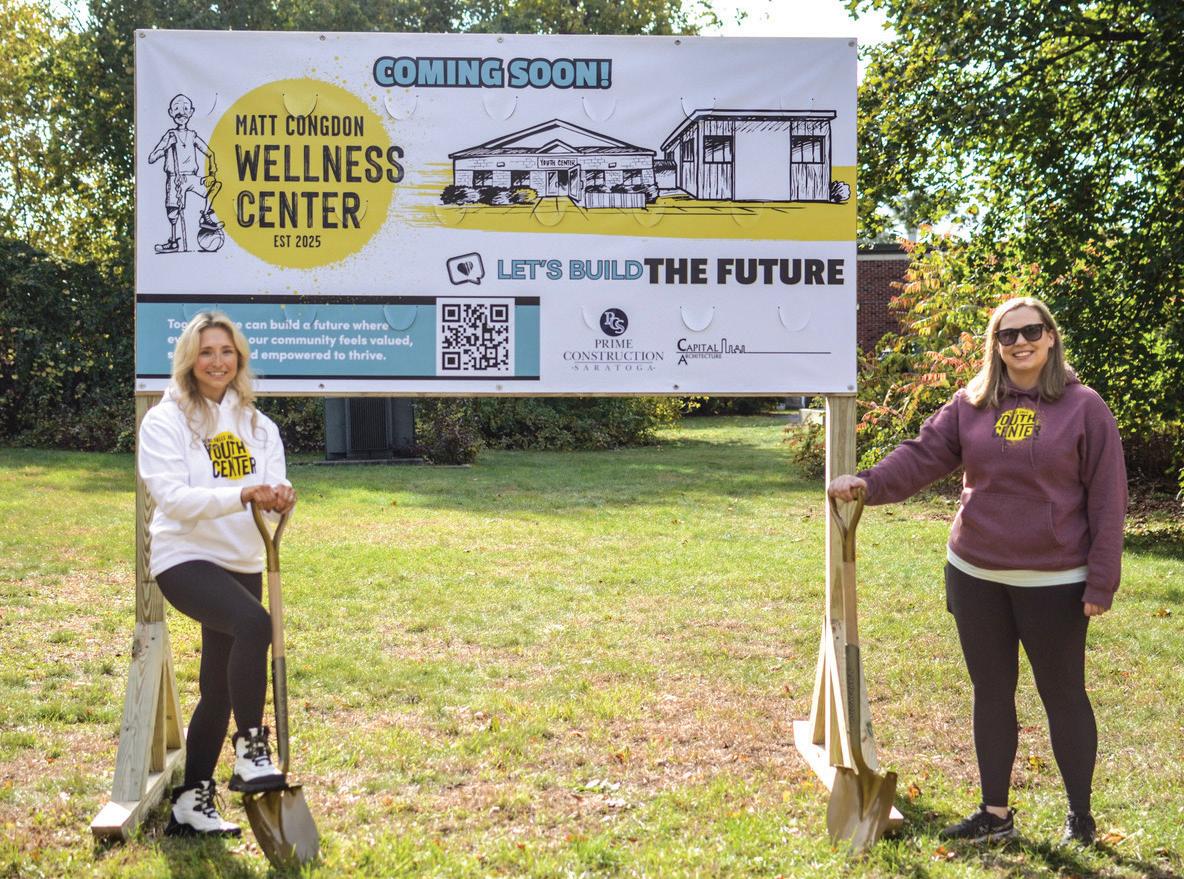
Ground was broken October 18 for a 3,000-square-foot addition to the Glens Falls Area Youth Center. Named the Matt Congdon Wellness Center in honor of its longest serving executive director, the facility will allow the center to vastly expand and improve its offerings to the area’s at-risk youth.
Following his 1982 graduation from Springfield College with a degree in physical education/health and fitness, Matt Congdon took on the role of executive director on an interim basis while the original director was on maternity leave. After she had her baby she decided to be a stay-at-home mother and the directorship became Congdon’s, a position he filled for 36 years.
Molly Congdon-Hunsdon, the center’s current executive director, said, “When I took over as executive director it was my vision to expand our facility. It’s so exciting to have this happening and I think it’s going to mean the world to our kids. We’re going to be able to grow our programs and offer them so much more while continuing our mission for the next fifty-seven years.”
The center was founded in 1968 to serve children in Warren, Washington, and Saratoga counties. For several years it was housed in “less than desirable” locations until Congdon raised $1 million in eight months to build the current facility.
“My dad felt our kids deserved so much more and it was his goal to create a permanent home for them,” said Congdon-Hunsdon. “He was fortunate to have Dr. Jim Morrissey and his wife, Kay, offer to match any money he could raise so there were a lot of public speaking ventures. He was relentless and I was very proud of him when he made that happen.”
Queensbury-based Cifone Construction Co., Inc. was the general contractor for the current building.
With the exception of the large gymnasium, the center is 3,000 square feet so the addition will double that. It will house a variety of new weightlifting and fitness equipment, most of which will be from Nautilus or Hoist Fitness Systems. The existing equipment will be moved into the addition.
Congdon-Hunsdon said the new equipment will include an assisted pull-up and dip machine as well as a machine that simulates being on a snowboard. As a certified personal trainer, she is especially excited about having more space for the daily workout sessions she hosts.








Christian, Bert, Robin and Melanie Weber help guide the Common Roots Foundation as it supports local groups with grants for wellness, environmental stewardship and assistance in times of need.
Molly Congdon Hunsdon and a colleague mark the groundbreaking for the Matt Congdon Wellness Center, a major expansion at the Glens Falls Area Youth Center that will double its space and enhance programs for local kids.
Courtesy Matt Congdon Wellness Center
Cyber/Tech
AI Search Changes How Locals Find You Now Clean Online Data Keeps Your Business Seen
BY DANI PIDGEON, COO MANNIX MARKETING
AI search tools are no longer futuristic concepts; they are daily realities for a majority of consumers. A recent survey by Higher Visibility confirmed that 71.5% of Americans have used AI search tools, with 14% using them every day.
Though nearly 80% of users still prefer classic search engines like Google for general queries, the younger, high-spending demographic (like Gen Z, with 82% adoption) is leading the charge. AI is becoming a dominant channel for specific, local answers, and if your business isn’t prepared to provide the data AI needs, your business is missing out on a huge opportunity.
How Does AI Search Work?
So how does AI pull or rank information?
Think of traditional search (Google) like a librarian giving you a list of books (links) to check out. Useful, but as an end user, you have to do a lot of leg work to get the information you need. AI Search goes a step further and acts as a very smart, research assistant who reads all those books and gives you one synthesized answer. In a culture that prefers instant gratification, it is easy to see why AI Search has been so quickly adopted.
Let’s dive a little deeper now into how AI search rankings work. AI search scans billions of documents—your Google Business Profile, your website content, other website’s content about you, your reviews, and directory listings, social media mentions—to construct a single, highly confident answer. It understands entities (your address, your service) and facts (your hours, your prices). If your data is inconsistent or weak, the AI skips over you and recommends the next authoritative business.
5 Steps Local Businesses Must Take for 2026
The introduction of AI Search is a call for digital clarity and consistency. Here are five actions to prepare your local business for the future of search:
1. Master Your Google Business Profile (GBP)
The Google Business Profile is the single most important data source for local AI search. Treat it like your main landing page. Ensure your hours, services, photos, and descriptions are 100% accurate and constantly updated. This is the foundation of your authority.
2. Synchronize Your NAP Data Name, Address, Phone (NAP) consistency is non-negotiable. Inconsistent data confuses the AI. Your business information must be identical across your website, Facebook, Yelp, and all major directories. Discrepancies lead to a loss of AI trust.
3. Cultivate High-Quality Review Authority

AI treats reviews as critical factual evidence of your service quality. High volume and consistently high ratings on platforms like Google and industry-specific sites are key signals. Make collecting genuine, positive reviews a systematic part of your customer process.
4. Build a Rich, Specific FAQ Library on Your Site
AI search thrives on answering nuanced questions. Create robust, well-structured FAQs that pull into relevant sections of your website that directly addresses user intents (e.g., “Do you offer vegan options?” “Are you pet friendly?”). This content is ideal fuel for AI-generated summaries.
5. Integrate and Optimize Schema Markup Schema markup is code on your website that literally tells the AI the meaning of your data (e.g., tagging your hours as “open hours”). Using the correct local business, FAQ, and review schema is essential for ensuring the AI correctly understands and confidently recommends your business.
The shift to AI search is not a threat; it is a clear opportunity for local businesses to gain visibility through digital precision. If you rely on outside vendors to manage your website and online profile, now is the time to ask how they are preparing you for AI search in 2026. Confirm that they are focusing on structured data, review authority, and consistency across listings. These steps help determine whether AI tools surface your company--or your competitor--when customers search locally.


Business Report
Email Security For Businesses In 2026
PROVIDED BY ADNET TECHNOLOGIES
As businesses move into 2026, email remains the most targeted attack surface for cybercriminals. CEO fraud, fake invoice schemes and increasingly sophisticated business email compromise, or BEC, attacks continue to rise. Attackers exploit trust, routine communication and identity-based access to drain company finances. The FBI reports more than $55 billion in BEC-related losses over the past decade, and in 2024 alone, three out of four businesses experienced BEC attempts. For organizations, the question is no longer if these attacks will occur, but when.
For small and midsize businesses, email security is now a critical operational concern. Effective strategies combine identity protection, authentication, employee training and proactive monitoring to reduce both risk and exposure.
Business email compromise works because it exploits everyday business tools. When attackers gain access to a mailbox, often through stolen credentials or phishing, they can quietly observe communication patterns. From there, they redirect emails, impersonate leadership and access connected cloud applications such as OneDrive or SharePoint. The result is fraud that appears legitimate, with invoices, wire transfer requests and email threads that closely mirror real workflows.
The average BEC incident now exceeds $137,000 in financial losses. Cyber insurance claims tied to these attacks continue to climb.
Managed identity threat detection and response, or ITDR, now plays a critical role in cybersecurity. ITDR continuously monitors user
Solar Plan
Continued From Page 1
the area,” he said. “It was astonishing. Talk about a potential economic driver.”
The state’s apparent support for the Boralex project could wipe this out, he said.
“The conflict within state government on the thing is just so amazing,” Henke said. “It’s just baffling to me.”
But Dennis Suarez, Boralex vice president for communications, said the project has already been scaled down about 200 acres from its original proposed size and that it’s been designed to reduce impacts on grassland bird habitat and agricultural land.
The use of agland for solar complexes is a concern across the state.
If approved, Boralex hopes to start installing solar panels in Fort Edward late next year and have the complex operational in 2027.
“We need power,” said Laura Oswald, county Economic Development Coordinator. “We have companies leaving New York state because the cost of energy is incredible. Your personal residential bills are increasing exponentially. There has to be a solution. Solar will never solve all of the world’s energy problems, but it is a contributor.”
“Having said that, there’s a cost. There’s always a cost,” Oswald said. “I don’t think there’s any doubt that covering close to 700 acres of what is basically wildlife refuge for endangered species won’t have an ecological impact. It has to. That ecological impact will trickle down to tourism impact. People who are into birding will travel all over the world to look at species. We actually have tours that come from Europe and overseas.”
“The bigger concern is that New York State, as they’re working with solar projects has created a property tax assessment formula meant to keep the cost of solar development down,” she said. “That assessment impacts the value of parcels
behavior to detect subtle account takeover indicators such as impossible travel, unknown devices, suspicious inbox rules, privilege escalation and unauthorized forwarding.
Multifactor authentication remains one of the most effective defenses available. A single unexpected MFA prompt may indicate an attempted breach and should be reported immediately.
Security awareness training strengthens the human defense. Training teaches employees to detect suspicious tone changes, urgency cues, social engineering tactics and phishing attempts. Regular simulations allow businesses to measure readiness and continuously improve protections.
Stopping email fraud in 2026 requires a defense-in-depth approach. MFA, ITDR, security awareness training and log monitoring together create layered protection that detects threats early and limits damage.
If a compromise is suspected, immediate action is critical. Organizations should contact their managed service provider or a cybersecurity firm experienced in incident response. Quick containment reduces losses and limits long-term business disruption.
Proactive services such as endpoint detection and response, managed detection and response, ITDR, security information and event management, security awareness training and security risk assessments provide advanced protection against evolving threats.
ADNET Technologies provides identity protection, email security, employee training and incident response services to businesses across the region.
and what we get at the county. At this point, even the low assessments that have been determined are viewed by the state as being too high. So the state has conveyed upon New York Power Authority the ability to own and operate large-scale solar facilities.”
The first-ever solar project turned over to NYPA is a smaller one in Fort Edward near the border of Greenwich.
“When the state owns and operates a facility, it’s non-taxable,” Oswald said. “If that were to happen to the 30-plus parcels this huge (Boralex) facility is located on, that immediately removes tax revenue to the county. We need power, there’s no doubt about that, but is this going to affect us? Yes it will.”
The state Department of Agriculture & Markets is closely watching ongoing solar project development. “We certainly support our state’s renewable energy agenda, but with the understanding that we must balance the importance of furthering these efforts with the protection of our farmland, particularly our prime soils,” spokesperson Jola Szubielski said. “With renewable energy installations expected to continue for the foreseeable future, it is important that we work together on the opportunity to integrate renewables into our working landscapes with minimal impact to local communities that have strong economic ties to agricultural production.”
“We are actively collaborating with our partners at NYSERDA and the Public Service Commission through a memoranda of understanding and technical working groups to avoid, minimize, or mitigate impacts to actively farmed land, and to refine siting approaches for higherquality soils,” she said. “We are also optimistic about the new research projects NYSERDA recently awarded that will help us gain a better understanding of how a farm business and solar can co-locate, and allow us to learn best practices along the way to ensure agrivoltaics are a beneficial option for our farmers moving into the future. We look forward to seeing these innovative projects and accompanying research across the state take shape.”
Dani Pidgeon of Mannix Marketing explains how AI search is reshaping local business visibility. Courtesy Mannix Marketing
Glens Falls Design Firm Earns CRBRA
Best Outdoor Kitchen Distinction
Zobel & Co. Kitchens, a custom kitchen design fi rm, has been recognized with the Best Outdoor Kitchen award by the Capital Region Builders and Remodelers Association (CRBRA). The honor was presented at the annual Best of Building Awards ceremony on November 13th at the Franklin Plaza Ballroom in Troy, NY.
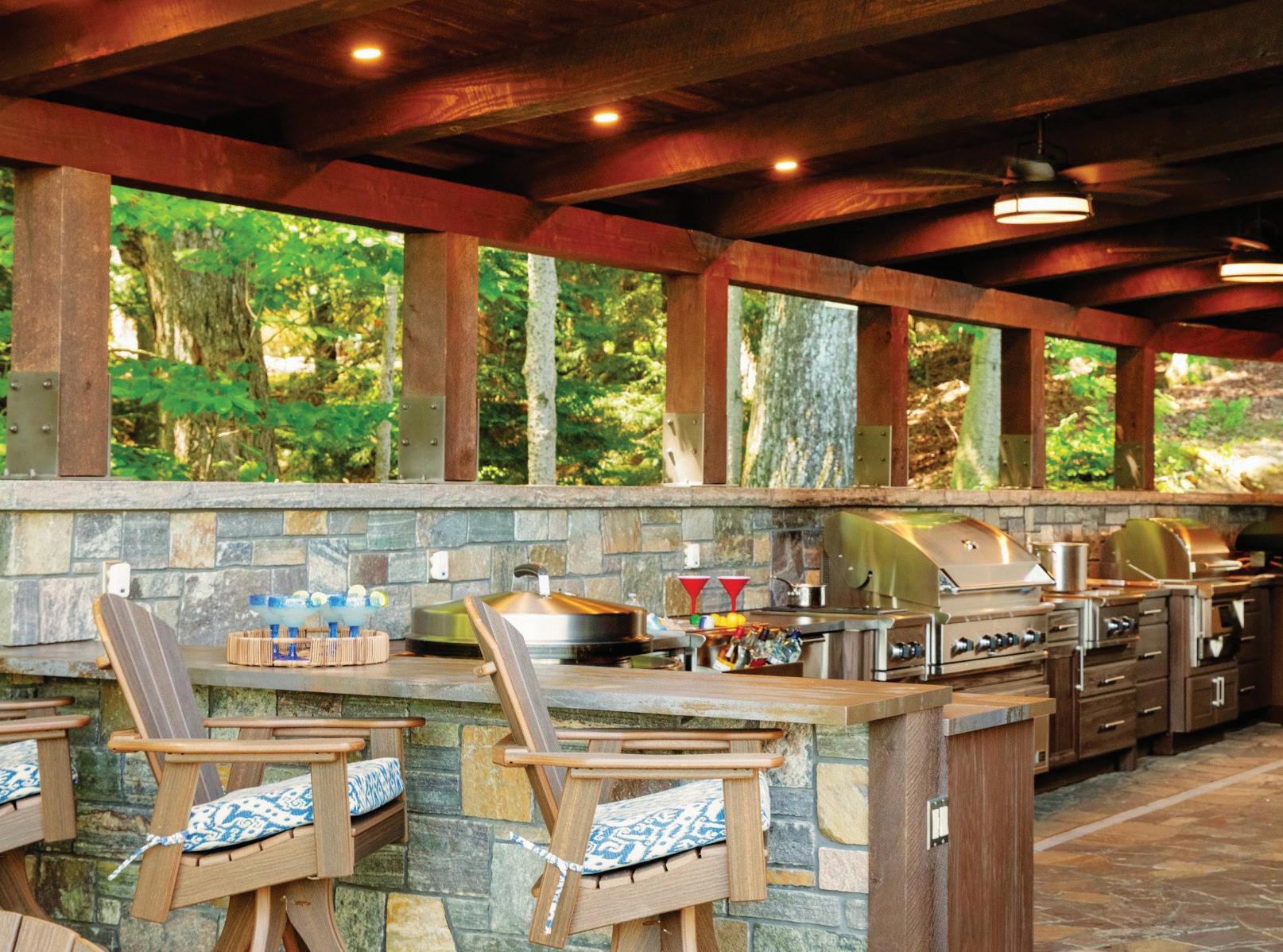
The award-winning project features an expansive outdoor kitchen housed within a pavilion connected to the client’s summer residence on Sacandaga Lake. The design showcases NatureKast outdoor cabinetry and incorporates premium appliances including an Evo griddle, 48-inch DCS grill, DCS beverage refrigerator, beverage chiller, double burner, warming drawer, Coyote smoker, and Ooni pizza oven. Custom interior cabinet configurations deliver exceptional organization and storage for dinnerware, glassware, cookware, pantry essentials, and entertain-
ing accessories.
“Recognition from CRBRA carries significant weight because entries are evaluated through an impartial, professional judging process,” said Arthur Zobel. “Our region is home to many accomplished design fi rms, so we’re deeply honored when clients trust us to transform their vision into reality.”
The Best in Building Awards celebrates CRBRA members who demonstrate excellence and innovation across residential construction, remodeling, design, and marketing. Entries are evaluated by out-of-state industry professionals who review submissions anonymously based on established criteria, ensuring completely objective assessment.
Zobel & Co. Kitchens is located at 11 Broad Street in Glens Falls’ Union Square Building. For more information, visit www.zobelandco. com.

Adirondack Thunder Celebrate Record Attendance And Deep Community Support
BY PAUL POST
The Adirondack Thunder continue to make a significant financial contribution to area charitable groups, in addition to the economic impact the team has on downtown Glens Falls businesses.
A recent Military Night jersey auction and sale of themed flags around the arena raised $35,000 for Glens Falls and Queensbury Veterans of Foreign Wars posts.
Last year, the Thunder accounted for almost $320,000 in charitable donations including $40,000 to CR Wood Cancer Center at Glens Falls Hospital with proceeds from the team’s Stick it to Cancer games.
Other activities such as 50-50 drawings on game nights and chuck-a-puck contests at the conclusion of each game benefit dozens of area youth sports teams and nonprofit agencies.
“That’s what the Thunder are all about, giving back to our community,” team President Jeff Mead said.
In addition, players made more than 200 visits to schools, hospitals and other sites last year as part of the Thunder’s community outreach program.
In this year’s first seven home games, the Thunder have already had four sell-outs and were averaging 4,617 fans per game, or 96 percent of Harding Mazzotti Arena’s 4,800seat capacity. The only other ECHL North Division team outdrawing Adirondack is Norfolk, which plays in a much larger arena (8,701) and has a much larger fan base.
Glens Falls is the league’s smallest market.
More than 18,500 fans saw the team play in a four-game stretch surrounding the Thanksgiving holiday.
The Thunder set an all-time attendance record last year, averaging 4,539 fans per game, building on the momentum from the previous season (2023-24), when the team won the North Division and Eastern Conference regular-season championships.
Mead, a Glens Falls native, was named ECHL Executive of the Year at the end of

that season and was recently named chairman of the league’s Board of Governors.
“We’ve come a long ways,” he said. “Our fan base is amazing. It’s always nice to hear feedback from a player’s mom or dad after they come into the arena for the first time. They’re always amazed at how loud our building is, how electric the atmosphere is. Not every team in the ECHL is as fortunate as we are.”
On December 13, the Thunder held their annual Teddy Bear Toss. Hundreds of stuffed animals, thrown onto the ice by fans, are collected and given to less fortunate local children.
Upcoming promotional games are Affiliation Weekend (Jan. 9-10) when players wear New Jersey Devils-themed jerseys; Law Enforcement Night (Jan. 31); Stick it to Cancer Weekend (Feb. 27-28); Country Night (March 28) and Fan Appreciation Weekend (April 11-12) when prizes are given away at both nights’ games.






































Thunder players clear stuffed animals after the annual Teddy Bear Toss to help local kids By Paul Post
The award winning Zobel and Co Kitchens outdoor project features a fully equipped pavilion kitchen on Sacandaga Lake with premium appliances integrated cabinetry and custom details throughout the space.
Zobel & Co. Kitchens
Park Street Hospitality Culinary Team Elevates Park & Elm Dining Experience
BY ANN DONNELLY
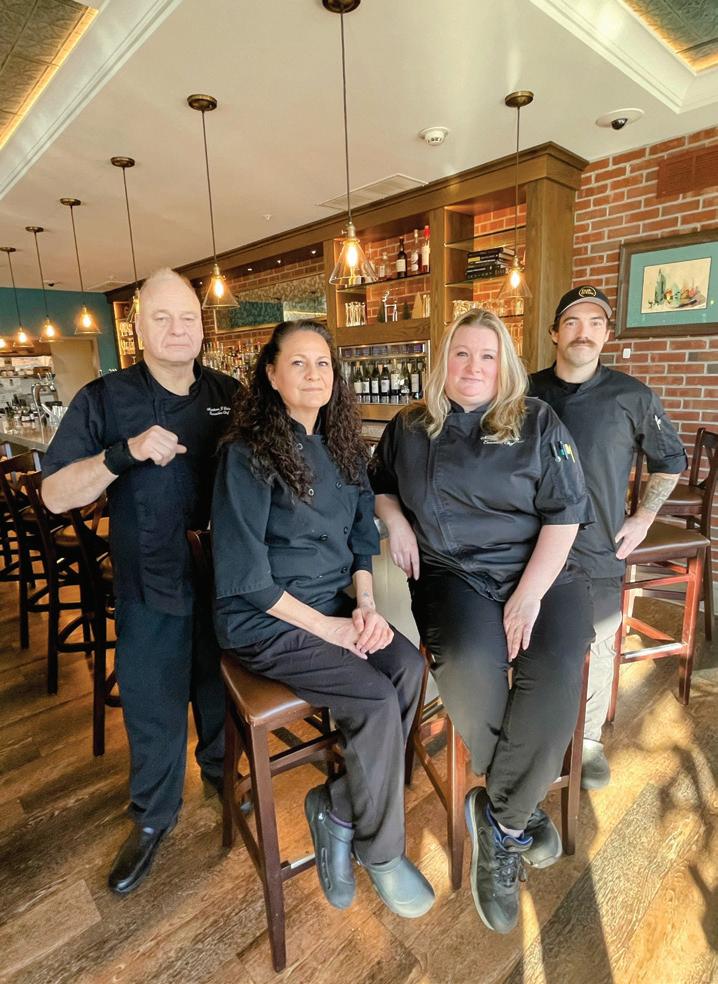
Park Street Hospitality and its flagship restaurant, Park & Elm, are elevating dining in the Glens Falls area under the leadership of a veteran culinary team whose combined decades of experience in high-level catering and classical training have positioned the establishment as a leading regional dining destination.
Executive Chef Matthew J. Delos oversees the 25-person culinary staff, guiding every department from the market and dining room to catering operations. Delos began his formal culinary training at Schenectady County Community College in 1985 and later attended the Culinary Institute of America from 1989 to 2001. Throughout his career, he has received numerous honors, including recognition from the James Beard Foundation for “Top Six Best Inn Dining.” He has also appeared as a guest chef for the foundation’s “Great Country Inn Chefs.” His work has been featured in national publications including Food & Wine, Bon Appétit and Vermont Magazine. Prior to joining Park Street Hospitality, Delos spent more than a decade with Mazzone Hospitality in a variety of roles. Delos operates under a clear culinary philosophy focused on fresh ingredients, strong presentation and classic dishes. From that foundation, he said, he enjoys adding creative twists and experimenting with new flavor combinations developed over a 30-year career. “From hotdogs to caviar, we do it all,” Delos said.
Complementing Delos’ vision is Pastry Chef Leigh Arquiett, who blends classical training with creative execution. Arquiett brings more than a decade of experience from the Hanover Inn at Dartmouth College and later operated her own Brasher Café in Brasher Falls. Known for precise, elegant desserts, she produces everything from custards to elaborate desserts. Her work was recently recognized with first place in a regional chocolate sculpting competition, along with an honorable mention for desserts. Originally from Malone, Arquiett is now focused on building Park Hospitality and Park & Elm’s reputation for refined pastries, standout desserts and warm hospitality.
Daily kitchen operations at Park & Elm are further supported by two sous chefs, Daniel Brown and April Rivers.
Brown leads dining room kitchen operations
Hometown Board
Continued From Page 1
town Board Shop operates as a distinct business within the shared retail space, which Lynn said allows the snowboard community to maintain its own identity while complementing Inside Edge’s broader equipment offerings.
Product lines include snowboards and accessories, Nordic skis and boots added due to the
and follows a largely self-taught culinary path. He began cooking at age 12 and later built experience in Asbury Park, New Jersey, where he served as head chef at established restaurants. Brown cites recipe development and team-building as core strengths and continues to focus on menu innovation and collaborative leadership.
Rivers serves as sous chef for the Park & Elm Market & Deli, specializing in Italian comfort dishes prepared from scratch. Her signature items include baked ziti and chicken parmesan. Rivers began her career with Compass Group at the SUNY Albany dining center before moving into catering and leadership roles. She later joined Mazzone Hospitality, where she led large-scale weddings and high-value events. At Park & Elm, she contributes her culinary experience, teamwork and commitment to community-driven hospitality.
With award-winning leadership, advanced pastry expertise and specialized talents across both fine dining and large-scale catering, the Park Street Hospitality culinary team continues to distinguish Park & Elm as a regional dining destination.




shop’s proximity
Operational challenges include balancing hands-on customer service with administrative responsibilities. Lynn said Matt manages bookkeeping and social media, while support also comes from her mother and two long-time technicians.
Despite the challenges of launching a new business, Lynn remains optimistic heading into winter. “Pray for snow,” she said.














































































Common Roots
Continued From Page 7
the idea and we’re very thankful for this relationship,” said Weber. “It’s one of our biggest fundraisers.”
There is also the River Run for the Roots, a 5k run/walk along the Hudson River that starts and ends at the brewery. Weber estimated the event raises $6,000-$7,000 each year.
Another popular fundraiser is the Beat the Brewers disc golf challenge held in October at the Crandall Park Disc Golf Course. There are a variety of challenges and the Common Roots beer truck is there serving libations and cooking up snacks.
The Foundation has two Legacy donors that contribute significantly to its efforts. One is Boralex, an international company specializing in energy solutions that include wind, solar, hydro, and battery storage. Based in Belgium, they have a local office and two of their employees serve on the Foundation’s board of directors. They have committed to donating $10,000 per year for 10 years.
The other Legacy donor is The Devlin, a hotel in Lake Placid.
Grants from the Foundation are awarded in three categories: Community Wellness, Environmental Stewardship, and Assisting in Times of Need. Requests are reviewed and grants awarded twice a year. The deadline for applying for the Spring cycle is May 1 and for the Fall cycle November 1. Organizations can apply for up to
Youth Center
Continued From Page 7
dining area, and storage space for clothing items that are donated by Bombas, South Glens Fallsbased nePROMO, and the local Knights of Columbus lodge.
The hallway connecting the main building and the addition will provide space for a pantry area.
“A big thing for us is providing food security for the kids we serve, ninety percent of whom fall below the poverty line,” Congdon-Hunsdon said. “We’ve always provided dinner and afterschool snacks, but since the pandemic we have provided breakfast for kids who need it. And we always have food available for kids to take home, whether it’s for themselves or a sibling who isn’t old enough to come to the center yet.”
Congdon-Hunsdon worked with Tony Dadamo of Cohoes-based Capital Architecture on the addition’s design and Paul Young of Prime Construction Saratoga on it’s construction plans. Projections are for the addition to be ready for occupancy in May 2026. The Adirondack Regional Chamber of Commerce with host a ribbon cutting.
Funds to cover the $900,000 price tag for the addition, exercise machines, and items like shelving and tables for the dining area were raised exclusively from grants. Congdon-Hunsdon said the center has an annual fundraiser but 95 percent of the operating expenses come through grants. With a Bachelor of Arts in English with a History minor from Union College and a Master’s in Journalism from New York
$2,500 for projects that fall within the parameters of the three categories. There are also microdonations of less than $250 as well as donations of beer or gift baskets.
Funds are disbursed on or around June 1 and December 1. The fall grants, totaling nearly $26,000, were announced recently. This brings the amount distributed since the Foundation was established to $263,000.
Of 38 applications, the awardees include: Corinth Aims to Reach Everyone, INC (CARE) for a winter gear drive; Lower Adirondack Pride to create a communication guide; North Country Ministry to feed 100 families for two weeks; Regional Food Bank for a drive-through Thanksgiving giveaway; Food Pantries for the Capital District for food delivery; CAPTAIN Community Human Services for a runaway youth shelter; Equinox for a domestic violence outreach program; Friends of Fort Hardy Park for an event on wild roots; Warren Washington CARE for emergency assistance for abused children; World Awareness Children’s Museum for cultural programming; Southern ADK Health Initiative for medical, dental, and vision popup clinics.
Leadership of the Foundation is a family effort. Bert Weber is president; his son, Christian, is vice president; his wife, Robin, is treasurer; and his daughter-in-law, Melanie, is a board member. For more information about Common Roots Brewing Company go to commonrootsbrewing. com. For information on joining the Foundation or submitting an application go to https://commonrootsbrewing.com/Foundation/.
University she is uniquely qualified to write grants.
Many people who support the center financially wish to remain anonymous but significant contributors include the Hudson River Community Credit Union, the Charles R. Wood Foundation, and Arrow Bank. In addition to its annual support, Arrow Bank gifted the land on which the current center is sited.
Congdon-Hunsdon is joined by three staffers to administer the center’s programs: Assistant Director Carly LaMay, Program Supervisor Anthony Rivera, and Program Coordinator Nate Mattison. They will soon be joined by Hammad Awan, a former youth center member and current student at The University at Albany, who will be another program coordinator. As a matter of fact, both Congdon-Hunsdon and Rivera are what she calls “youth center kids.” The entire staff is certified through the Youth Intervention Programs Association (YIPA) in The Art and Science of Youth Workers.
A goal for 2026 is to arrange transportation to and from the center for kids in outlying areas.
“Right now the kids are responsible for their own transportation and since we serve three counties that is difficult for may of them,” said Congdon-Hunsdon.
Further in the future she would like to establish a second youth center in the region.
The Glens Falls Area Youth Center is located at 60 Montcalm Street in Glens Falls. It is open Monday-Friday from 3 p.m.-7 p.m. during the winter and 1 p.m.-5 p.m. in the summer.
For further information about the center’s programs and ways to support it go to gfyouthcenter.org.




Warren County
Continued From Page 1
$50 per year. But it could influence spending for big-ticket items such as cars. An additional $500, for example, might prompt someone to buy a less expensive vehicle, an obvious concern for dealerships. While costs have gone up, sales tax revenue that had been growing 3-5 percent annually slowed to less than 2 percent this year. Previously, some sales tax revenue was added to fund balance to give the
county a reserve for unforeseen expenses.
But all sales tax is now used to balance the budget. Without a sales tax increase, officials might have to dip into reserve funds, impacting the county’s overall fiscal stability.
An increase would first have to be approved by the Board of Supervisors, followed by both houses of the state Legislature and the governor.
Taflan said it’s advisable for Warren, Washington and Saratoga counties to pursue such action together.
“We’re in discussions about that with the other counties because we busted the 2 percent tax cap imposed by the (state) comptroller and it’s going to




continue for the near future at least,” Taflan said.
“We’ve done it two years in a row. Our budget is not going to go down.”
Board of Supervisors Chairman Kevin Geraghty, of Warrensburg, said much needed infrastructure projects, such as highway repairs, have been deferred by rising costs and shrinking revenue. A culvert that cost a few hundred thousand dollars several years ago costs $1 million now, and the price of asphalt has gone up dramatically, too, he said.
“Those things really hit you hard and there’s no way getting around it,” he said.
If the three counties decide next year to increase






sales tax, and the state approves it, the increase would probably take effect in 2028, Thomas said.
In addition to fiscal concerns, officials said housing is one of the county’s most pressing needs, as identified in a recently completed Comprehensive Plan.
The average price of a house in Warren County is $368,000 while the average salary is $62,000, making such homes unaffordable.
A recent article in the Adirondack Explorer magazine said Lake George school enrollment has dropped dramatically in recent years, citing the high cost of homes that make it difficult for people to live there.