Review Article Page 5 of 8
Industry-directed training and research programmes
We defined our focus area as ‘Quantitative Financial Risk Management’ (which has recently been extended to include Business Analytics/Data Science). Therefore, in the early years of the Centre for BMI, the drive was to become a Centre of Expertise in Financial Risk Management solutions. Much of what is reported here focuses on the development of career-oriented training programmes and industry-directed research programmes for this field, but it is important to note that the same principles may be followed for other fields such as Data Science.
Applied industry research Industry pull Student industry projects
Integration training
Direct research Technology push
Implementation experience In order to ensure the introduction of subject-matter expertise into the programme, we liaised with the NWU School of Economics to introduce economics and finance courses within which the concepts of finance, banking and risk management are covered. These subjects were later replaced by courses in financial risk management which the School of Economics presented as part of a qualitative risk management programme. In the postgraduate programmes, several specialised courses in quantitative financial risk management had to be developed. In the end we settled on a mixture of material originating from the syllabi of the Institute and Faculty of Actuaries, the Global Association of Risk Professionals (GARP), the Professional Risk Managers’ International Association (PRMIA) and books on related topics.18-20 The BMI curricula may be viewed on our website (www.nwu.ac.za/bmi) and contain courses in Quantitative Risk Management, Business Analytics/ Data Science, Financial Mathematics and Actuarial Science. The latter programme was acquired in 2000 from the Department of Statistics, when departmental management chose not to be troubled with the administrative burden of managing the exemptions and accreditation requirements of the Institute/Faculty of Actuaries. This was an important strategic decision, which paid tremendous dividends in recent years when the actuarial profession decided in 2008 to expand their global syllabi to include enterprise-wide risk management as part of their Certified Enterprise Risk Actuary qualification. At this time, and because of the widespread perceived excellence achieved in risk management training and research, the Centre for BMI was approached by the Actuarial Association of South Africa (ASSA) with a request for assistance with this initiative. It is important to note that the BMI courses include many programming courses, in particular SAS, while courses are presented in R, C# and Java (only for the data-mining curriculum). (Note that we have found SAS skills to be a job-differentiating factor in that students with these skills have a definite advantage when applying for jobs.) Great care has been taken to incorporate industry-relevant software systems training into our curricula, in particular, risk-management systems such as Risk Watch by Algorithmics, Front Arena by SunGard, and the portfolio risk management system BARRA on campus.
Basic research
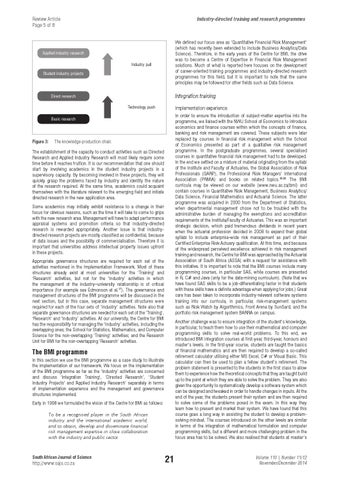
Figure 3: The knowledge-production chain.
The establishment of the capacity to conduct activities such as Directed Research and Applied Industry Research will most likely require some time before it reaches fruition. It is our recommendation that one should start by involving academics in the student industry projects in a supervisory capacity. By becoming involved in these projects, they will quickly grasp the problems faced by industry and identify the nature of the research required. At the same time, academics could acquaint themselves with the literature relevant to the emerging field and initiate directed research in the new application area. Some academics may initially exhibit resistance to a change in their focus for obvious reasons, such as the time it will take to come to grips with the new research area. Management will have to adapt performance appraisal systems and promotion criteria so that industry-directed research is rewarded appropriately. Another issue is that industrydirected research projects are mostly classified as confidential, because of data issues and the possibility of commercialisation. Therefore it is important that universities address intellectual property issues upfront in these projects. Appropriate governance structures are required for each set of the activities mentioned in the Implementation Framework. Most of these structures already exist at most universities for the ‘Training’ and ‘Research’ activities, but not for the ‘Industry’ activities in which the management of the industry–university relationship is of critical importance (for example see Edmonson et al.17). The governance and management structures of the BMI programme will be discussed in the next section, but in this case, separate management structures were required for each of the four sets of ‘Industry’ activities. Note also that separate governance structures are needed for each set of the ‘Training’, ‘Research’ and ‘Industry’ activities. At our university, the Centre for BMI has the responsibility for managing the ‘Industry’ activities, including the overlapping ones; the School for Statistics, Mathematics, and Computer Science for the non-overlapping ‘Training’ activities; and the Research Unit for BMI for the non-overlapping ‘Research’ activities.
Another challenge was to ensure integration of the student’s knowledge, in particular, to teach them how to use their mathematical and computer programming skills to solve real-world problems. To this end, we introduced BMI integration courses at first-year, third-year, honours and master’s levels. In the first-year course, students are taught the basics of financial mathematics and are then required to develop a so-called retirement calculator utilising either MS Excel, C# or Visual Basic. This calculator can then be used to plan a fellow student’s retirement. The problem statement is presented to the students in the first class to allow them to experience how the theoretical concepts that they are taught build up to the point at which they are able to solve the problem. They are also given the opportunity to systematically develop a software system which can be designed and tweaked in order to handle changes in inputs. At the end of the year, the students present their system and are then required to solve some of the problems posed in the exam. In this way they learn how to present and market their system. We have found that this course goes a long way in assisting the student to develop a problemsolving mindset. The courses introduced on the other levels are similar in terms of the integration of mathematical formulation and computer programming skills, but a different and more challenging problem in the focus area has to be solved. We also realised that students at master’s
The BMI programme In this section we use the BMI programme as a case study to illustrate the implementation of our framework. We focus on the implementation of the BMI programme as far as the ‘Industry’ activities are concerned and discuss ‘Integration Training‘, ‘Directed Research’, ‘Student Industry Projects’ and ‘Applied Industry Research’ separately in terms of implementation experience and the management and governance structures implemented. Early in 1998 we formulated the vision of the Centre for BMI as follows: To be a recognised player in the South African industry and the international academic world, and to obtain, develop and disseminate financial risk management expertise in close collaboration with the industry and public sector.
South African Journal of Science
http://www.sajs.co.za
21
Volume 110 | Number 11/12 November/December 2014