SCOTT PAYNE PORTFOLIO 2024 S.MCKINLEY845@GMAIL.COM 562.743.7376
Hi, I’m Scott!
I am a landscape designer, urban farmer, and artist. I graduated with a Masters of Landscape Architecture from Cal Poly Pomona, where I was able to hone my skills to better the landscape through environmental remediation, social justice, and sovereignty.
In my professional work I am able to blend beauty and ecological restoration seamlessly to create designs that work for clients, while contributing significantly to the surrounding environment.
While earning my BS in Environmental Sustainability at Northern Arizona University, I had the opportunity to work as the Climate Engagement Coordinator for the City of Flagstaff’s Sustainability Department. After working on Flagstaff’s first Climate Action and Adaptation Plan, I was brought on the team to help with the implementation phases and action items for over two and a half years.
After moving back to California, I focused on helping local and regional underserved communities of Los Angeles through collaborative designs, workshops, and restoration of local ecosystems. I was the sole caretaker for an urban farm designed to feed and teach at-risk youth girls of inner-city Los Angeles. This helped provide food sovereignty and security through our ‘Seed to Skillet’ program, which provides classes and meals to over 400 girls annually to help sow the seeds of their future.
My designs and volunteer work have allowed me opportunities to blend creative, multifunctional, and ecological designs throughout California.
Bio
RUSH CREEK MEADOWS
SIERRA NEVADA MOUNTAINS, CA
Ecological restoration, habitat creation, and food sovereignty through intentional design practices.
DECHAMBEAU CREEK RIPARIAN CORRIDOR
LEE VINING,
CA
Restorative design to mend the ecological impacts of grazing.
COASTAL DUNE AND WETLAND RESTORATION

NAPA VALLEY, SANTA MONICA, VENICE BEACH, ATWATER VILLAGE, CULVER CITY, PASADENA, & MARINA DEL REY 1 5 7 9 11
SEAL BEACH, CA
Providing creative and beautiful design solutions to flooding, pollution, and ecological scarsity of a seaside town.
TONGVA TARAXAT PAXAAVXA CONSERVANCY
ALTADENA, CA
Rematriating the land through ecological and cultural design practices.
Professional Work
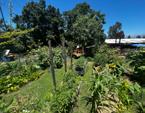
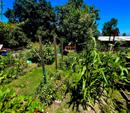
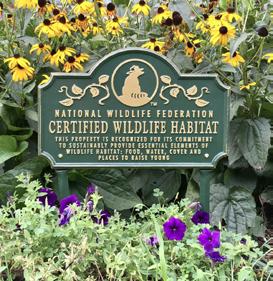
Designed culinary, native, and pollinator gardens for hotels, resorts, and residents throughout California.
TABLE OF CONTENTS
RUSH CREEK MEADOWS
Collaboration with Kootzaduka’a Tribe
Sierra Nevada Mountains, CA
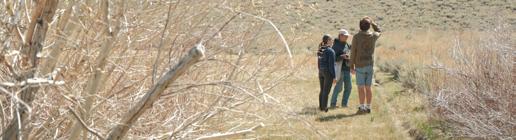
Ground-truthing designs with tribal leaders. [April 2024]
Background
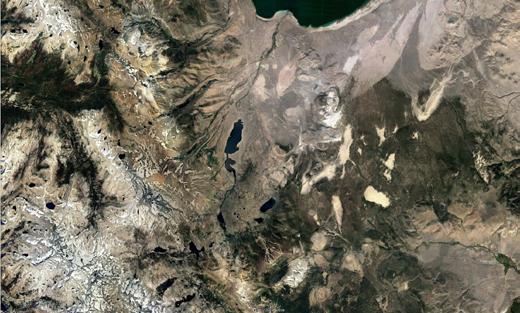
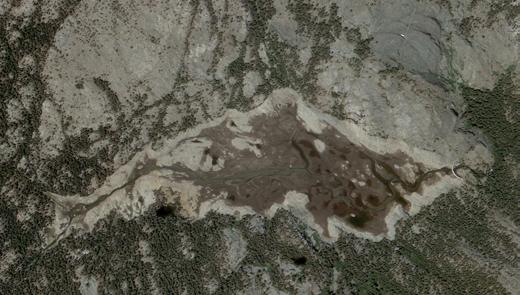
Following the Rush Meadows Dam decommissioning by Southern California Edison (SCE), a collaboration formed with the Kootzaduka’a tribe for a possible land lease for cultural management. Located in the alpine mountians of the Eastern Sierra Nevada Mountain range, Rush Meadows was a once a lush ripiarian meadow. Pearched high in one of the primary tributaries for Rush Creek, these meadows once flowed freely into Mono Lake prior to water and power diversion by LADWP and SCE. This unique collaboration offers an opportunity to heal the landscape through traditional ecological practices.
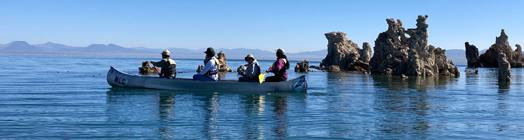
Learning traditional food sources of the tribe. [November 2024]

Ecological Islands
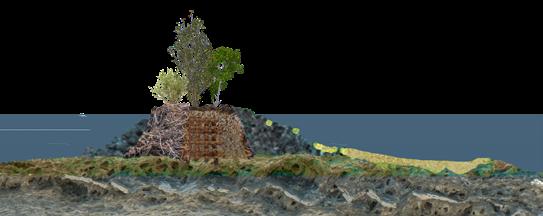
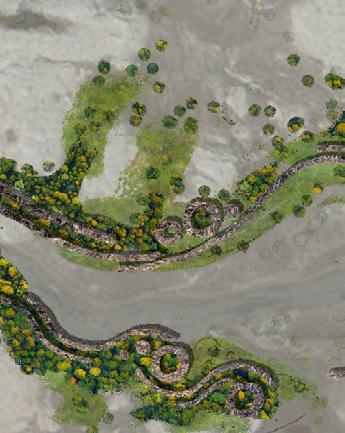
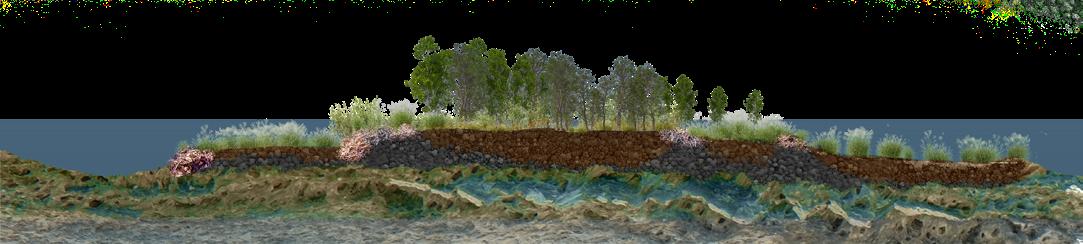
Taking inspiration from beaver and willow analogues, these islands are designed to create safe havens for early seedlings of trees, shrubs, and grasses. Built from sourcing local scrapwood logs, existing rock, vegeation cuttings, and biomesh is necessary to lock in local silt and river rocks for primary succession through soil stratification.
YEAR 1-5
Cottonwood, willow, and aspens planted in analogues.
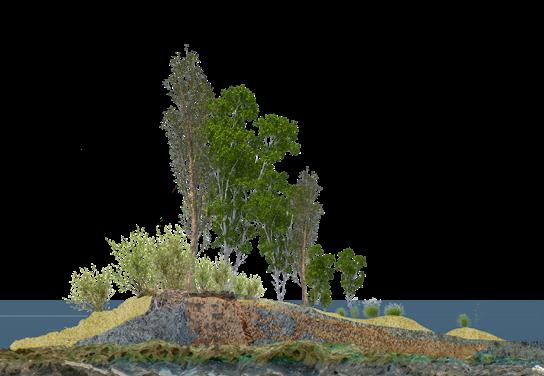
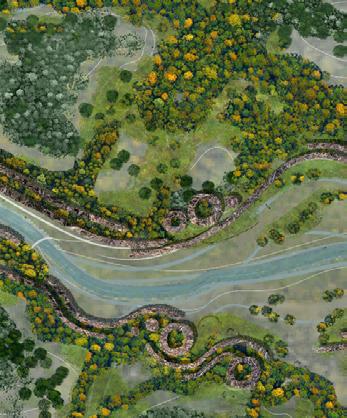
YEAR 5-10
Sediment stratification locked in by primary tree roots, as wet meadow species are interplanted.
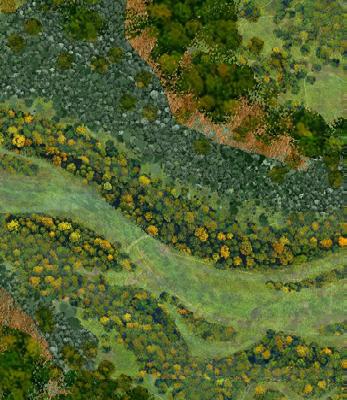
YEAR 10-100
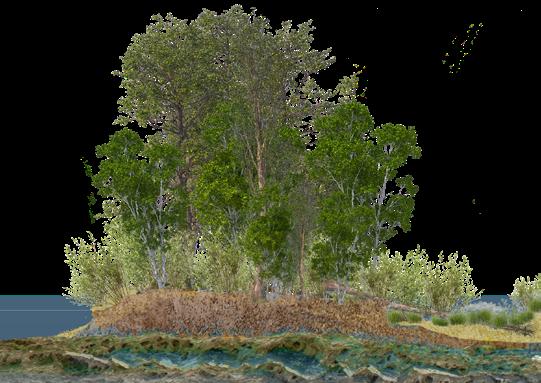
Analogue structures fully decay, allowing the river to establish its banks
Rush
1
Creek Meadows
Rush Creek Meadows Mono Lake Grant Lake June Lake Gem Lake Rush Creek Meadows (Former lakebed of Waugh Lake) 1 mile 25 miles
45 feet Rush CreekTrail (JohnMuirTrailConnection.25miles west)
Phased Regeneration
Dispersing the project into phases was necessary because collaboration, funding, and resources for the project are only available on a rotating basis. The placement of beaver and willow analogues were chosen based on areas that can leverage existing conditions to preserve hydrology, and ecology. This includes creating habitats for seven locally endangered species: Sierra Nevada bighorn sheep, sage grouse, willow flycatcher, mountain yellow-legged frog, Sierra Nevada red fox, Owen’s Tui chub, and the Pauite cutthroat trout.
YEAR 1-5
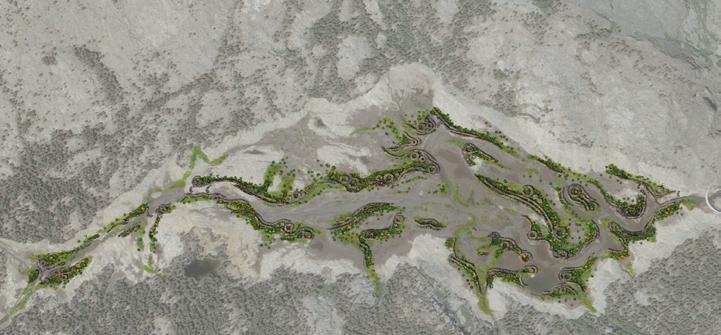
YEAR 5-10
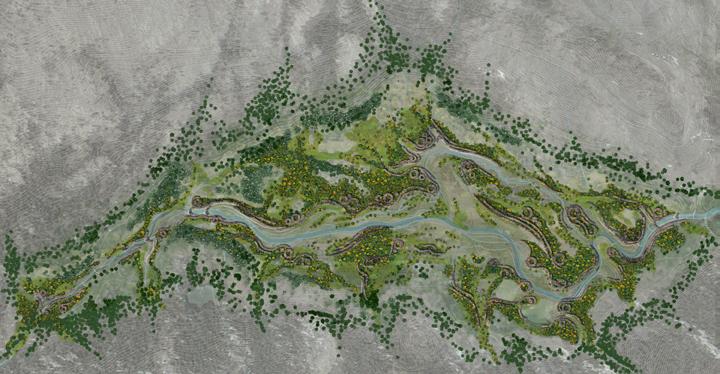
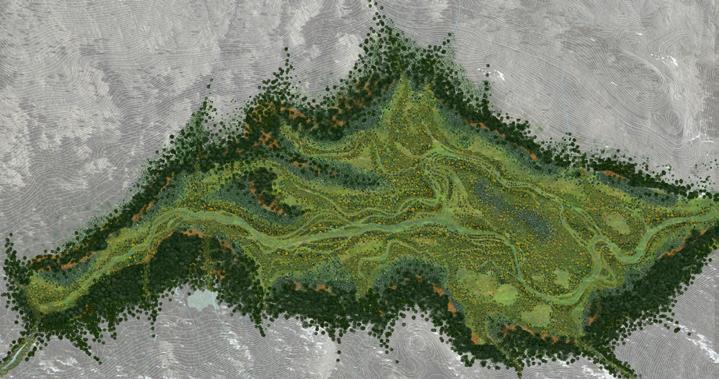
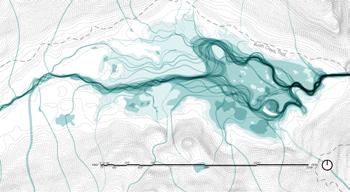
Seasonal streams, ephemeral pools, & annual floods litter the original meadows.
2
Rush Creek Meadows
YEAR
.05 miles .05 miles .05 miles
10-100
Ecological Islands
“Inspired by the natural flow of Rush Creek, phased ecological regeneration processes encourage the river to rebuild itself; choosing which direction previals to create cascading habitats and corridors for native keystone species.

*(Scientific name)[Kootzaduka’a name]
RUSH CREEK
Pauite Cutthroat trout habitat
WILLOW ANALOGUE
Willow flycatcher habitat
Red Willow (Salix laevigata)-infill
Yellow Willow (Salix lutea)-bank stabilization
Sandbar Willow (Salix exigua)-primary establishment
ANNUAL GRASSES
Sierra Nevada bighorn sheep habitat
Clustered Field Sedge (Carex praegracilis)
Yarrow (Achillea millefolium)
Great Basin Wild Rye (Leymus cinereus)[wahabe]
Wild Rice (Zizania aquatica)[wie]
White goosefoot (Chenopodium album)[kooseggwooda]
Wild Onion (Allium atrorubens) [parusi]
Mariposa lily Calochortus (kohixya)
RIPARIAN HARDWOOD FOREST
Sierra Nevada red fox habitat
Quaking Aspen (Populus tremuloides)
Black Cottonwood (Populus trichocarpa)
Sandbar Willow (Salix exigua)
BEAVER ANALOGUE
Local brush, rocks, and logs
100 year flood
Annual flood
30 feet A A1 SECTION
WET MEADOW
Owen’s Tui chub habitat
Water sedge (Carex lenticularis)
white corn
lily (Veratrum californicum)
Sierra alpine sedge (Carex scopulorum)
Seep Monkeyflower (Erythranthe guttata)
Rush Creek Meadows 3
A
A1
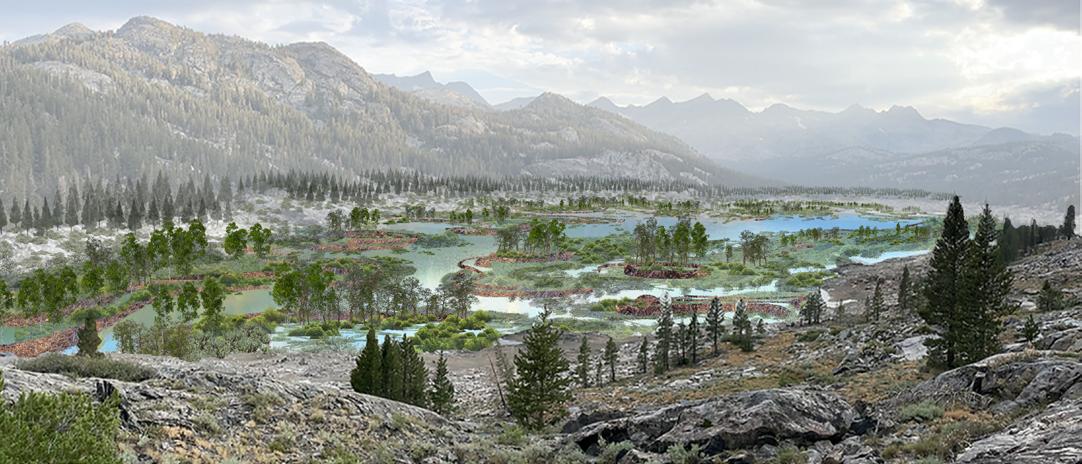
Re-Igniting Rush Creek Meadows
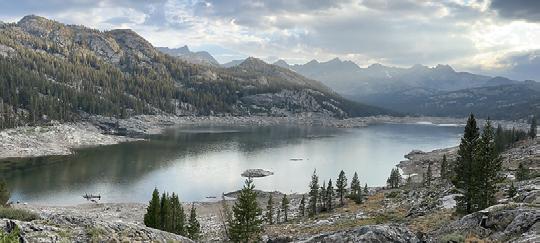
Rush meadows was flooded in 1925 by SCE for hydropower, wiping the granite bedrock of any sediment, flora, or fauna. This project seeks to heal one of the scars that hydroelectric projects have left all over Rush Creek. In 1971 the dam began to show signs of structural failure, and in 2022 a slit was cut in the side of the dam to drain the lake. The dam, along with two others downstream were deemed unsafe, and due for demolition in 2024.
YEAR 20
4
Rush Creek Meadows
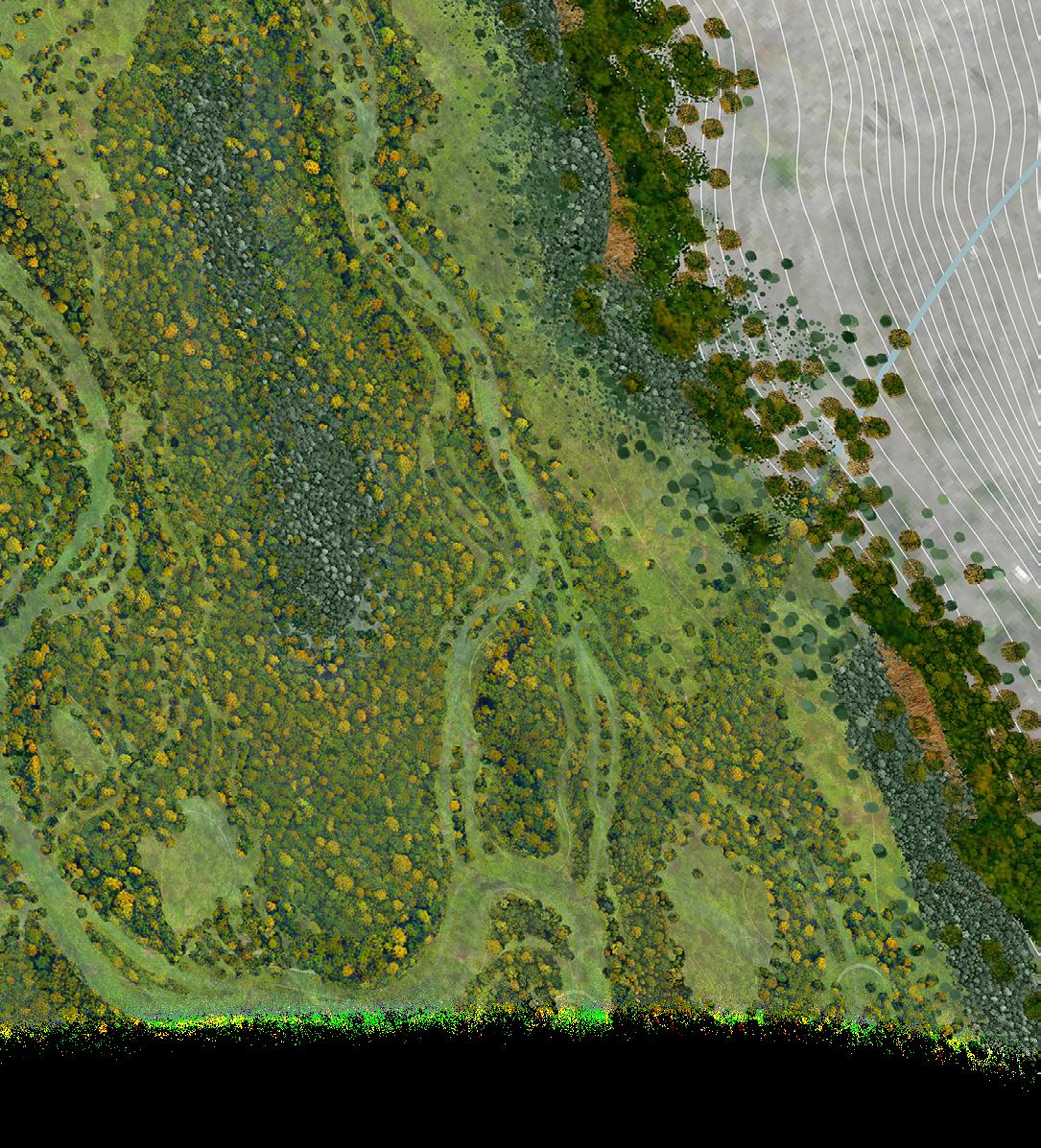
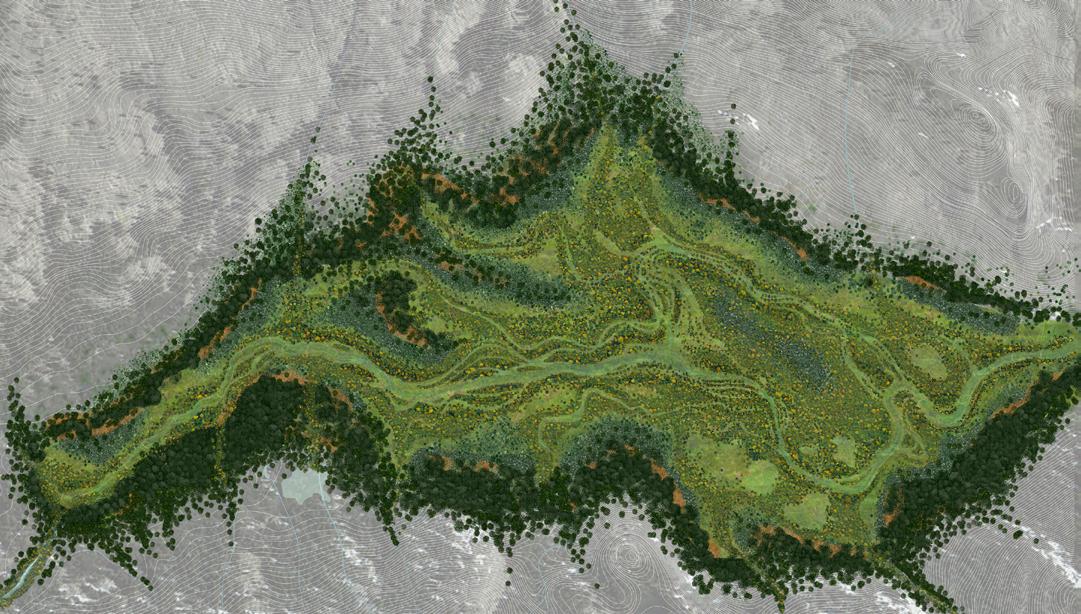
Context N SAGEBRUSH CONIFER FOREST WET MEADOW ALLUVIAL FLOODPLAIN RIPARIAN FOREST RUSH CREEK ANNUAL GRASSES .025 miles
SITE PLAN
Lakebed
Rush Creek Meadows prior to dam removal (Waugh Lake) [2017]
CREEK
Repairing a Severed Ripiarian Corridor
LEE VINING,
CA
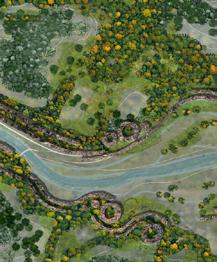
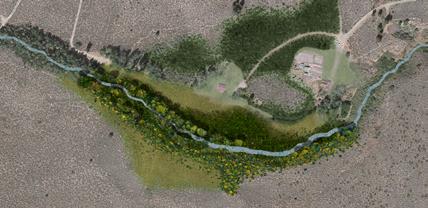
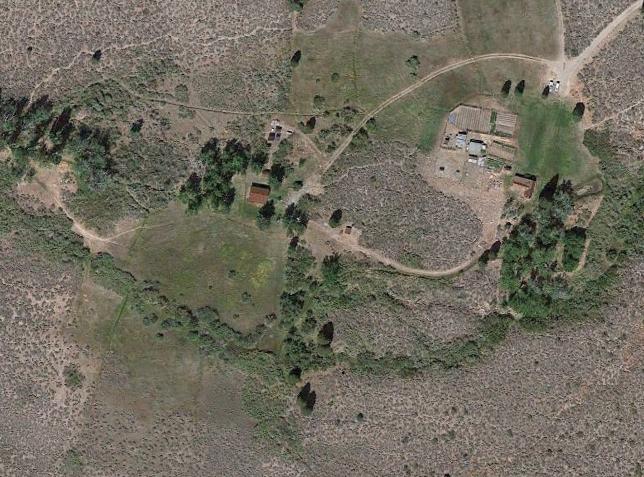
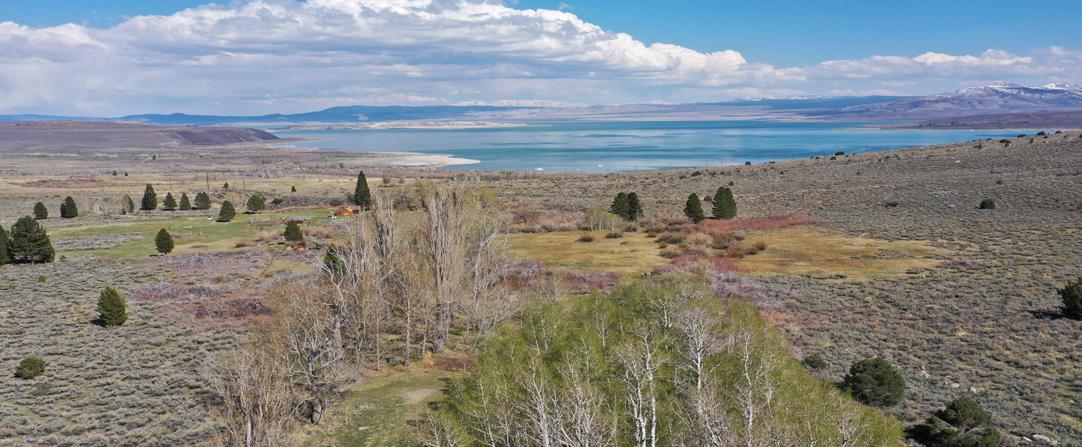
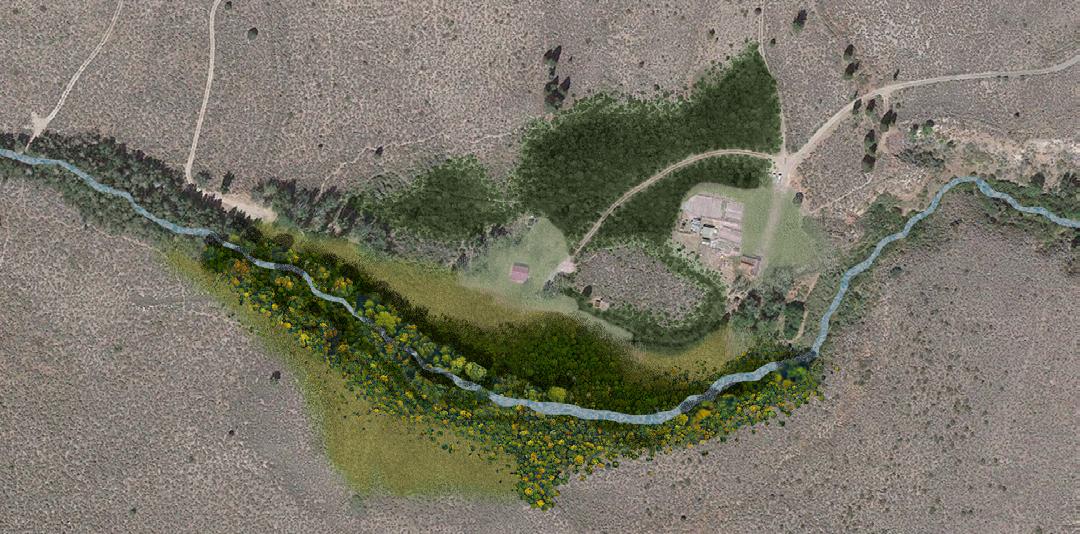
The immediate diverson of DeChambeau Creek created an intricate network of canals, artifically extending the wet meadows for the family’s pasture. The goals of this design: (1) repair and restore the riparian habitat to facilitate aspen, willow, and cottonwood corridor, (2) re-establish natural wet meadow area, eliminating the man-made canals that artificially change the landscape and take from the creek, (3) reintroduce sagebrush and annual grasslands to maintain willow an and grass habitats through cultural burns, and (4) limit the spread of erosion at the knickpoint.
Protecting from Future Erosion
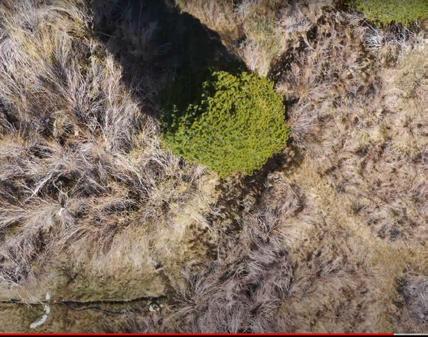
The continued diversion of DeChambeau Creek to maintain the artificial meadows has altered the course of the original river. On especially dry years, the river doesn’t flow into Mono Lake at all due to diversions, limiting the availability of freshwater to keystone species that breed in and around the lake. The continued use and maintenance of these canals have caused a knickpoint to form, which is the result of severe downstream erosion. This point will continue eroding the land upsteam until it reaches it’s source near the headwaters of this stream. This can be mitigated through reintroduction of natives, and cultural burns/management.
DECHAMBEAU
DeChambeau Creek 5
DECHAMBEAU RANCH
0.5 MILE
DIVERSION 1 DIVERSION 2 KNICKPOINT KNICKPOINT ARTIFICAL MEADOW ARTIFICAL MEADOW CAMPGROUND CAMPGROUND
GROVE DECHAMBEAU CABIN
GROVE 50 FEET ORIG I N A L CREE K TAP H (DRY)
DECHAMBEAU CREEK
COTTONWOOD
ASPEN
Mitigating Knickpoint Fallout
Existing Conditions
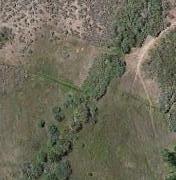
Artificial meadows containing invasives from decades of livestock grazing limit biodiversity. Limited and overgrown willow thickets from water diversions limit access to corridor, and spread water artificially into the native ecosystem.
Proposed Conditions
The artificial wet meadow is replaced by succession plantings of willows, cottonwoods, and aspens. Repairing the riparian corridor, creating safe travel, shelter, and access to resources for the endangered red fox, mountain frog, and bighorn sheep.
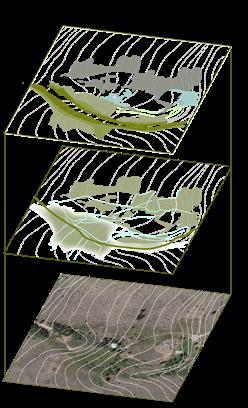
Proposed -biodiversity -cultural resources -endangered habitat Existing -artifical meadows -trenches for irrigation disrupt ecosystems, and erode dramatically downstream.
DeChambeau Creek 6
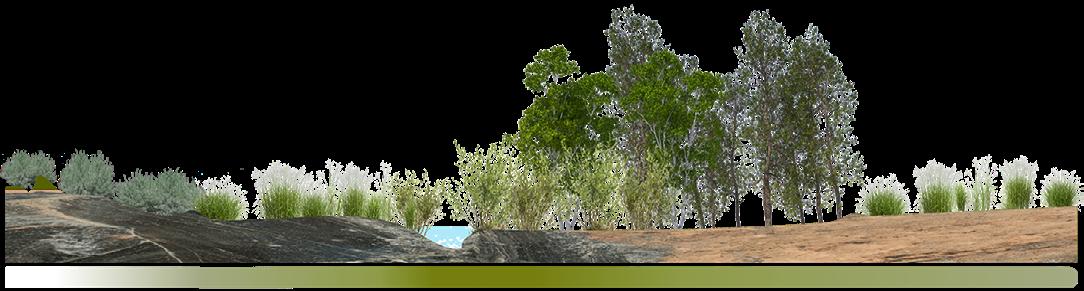
NATURAL MEADOWS REINTRODUCED SAGESCRUB ANNUAL GRASSLANDS WILLOW CULTURAL MANAGEMENT 0.25 MILES WET MEADOW AQUIFER EXPANSION WILLOW , ASPEN , &COTTONWOOD RIPARIAN CORRIDOR CAMPGROUND SECTION 25 FEET
Site Plan SECTION
Proposed
Mitigating
Seal Beach, CA
Annual Floods in Seal Beach
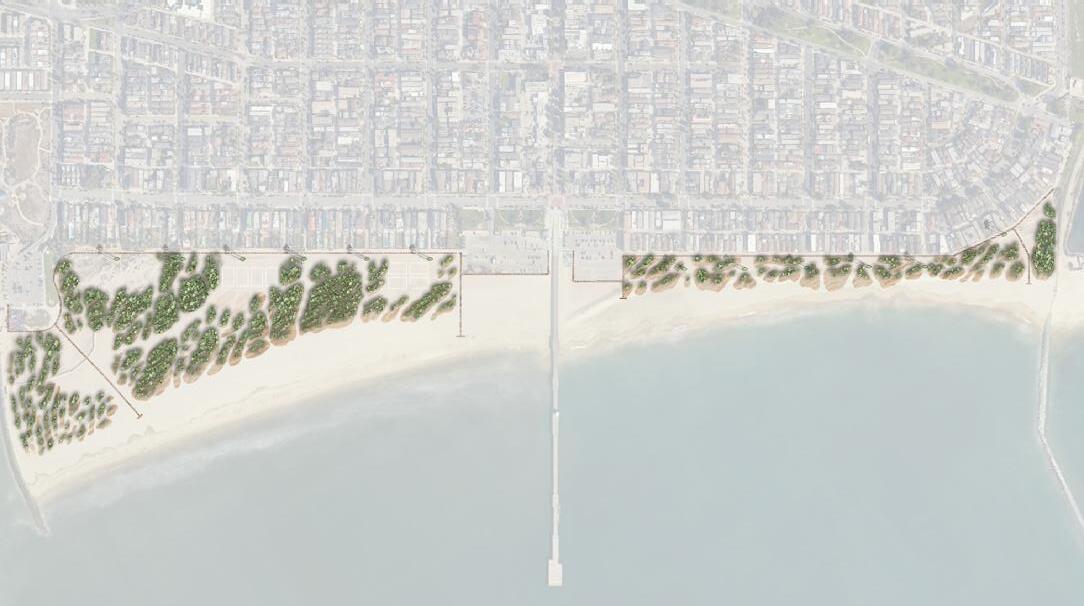
This town’s seaside community has endured yearly flooding since it was built in the early 1940s. The project seeks to address mitigation techniques for pollutants, flooding, and ecoystem restoration through the rehabilitation of the original dune ecosystem that once thrived on this beach.
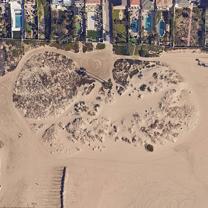
<1.5 ACRES
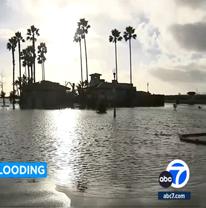
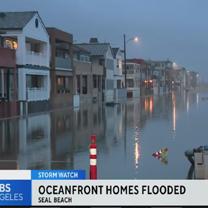
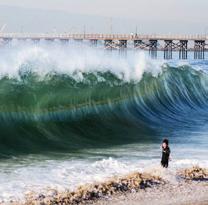
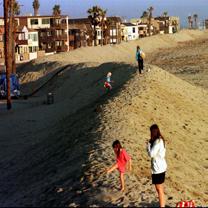
$215K/YEAR SINCE 1940
Site Analysis
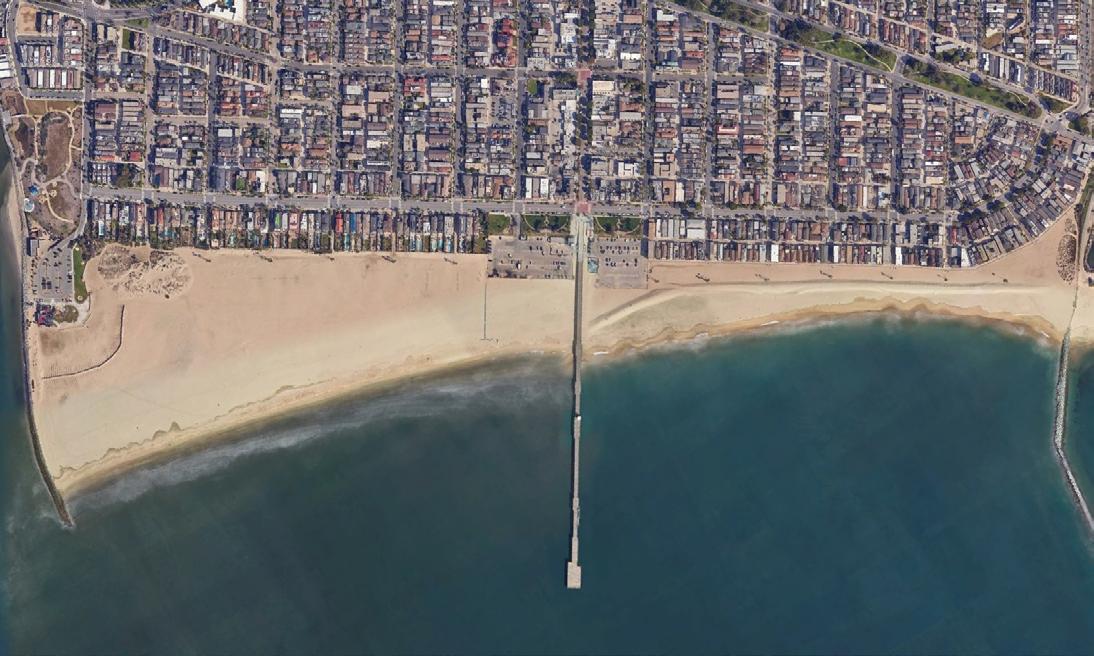
During the wet season, pollutants like heavy metals, trash, raw sewage, and chemicals rush down the San Gabriel River and dump along the coast.

Coastal Dune and Wetland Restoration 7
SECTION
COASTAL DUNE AND WETLAND RESTORATION
SECTION
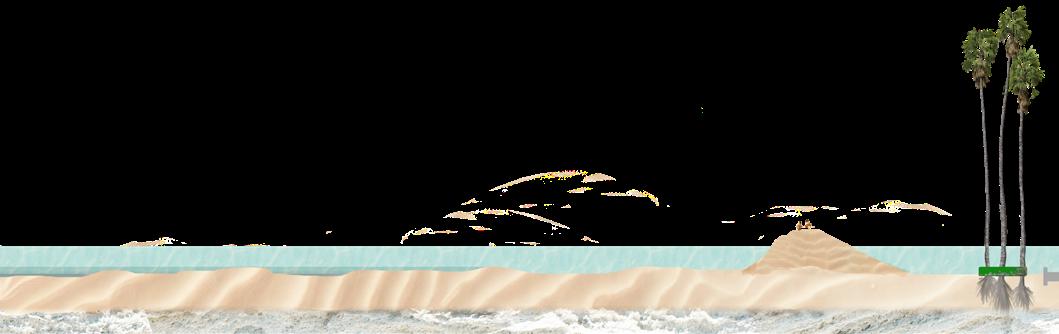
ORIGINAL DUNES ANNUAL BERM ANNUAL WINTER SWELL JANUARY 2017 FLOOD MAY 2023 FLOOD BERM 2023 FLOOD LEVEL WINTER SWELL 2017 FLOOD LEVEL HOMES
65 FEET RIVERS END CAFE S E A L B E A C H P I E R M A I N S T R E E T
Dune Establishment
Programming
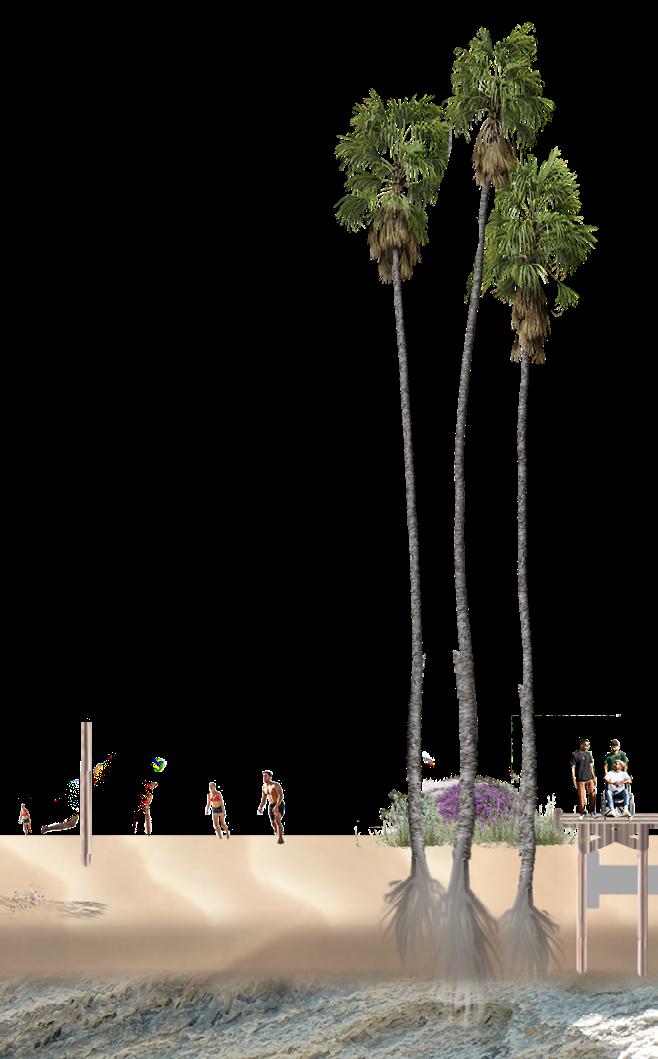
This plan was based on four main factors: (1) recreation, (2) energy dispersal, (3) access/ pathways, and (4) habitat creation. The main threat to this coastal community is flooding, the angle and placement of these dunes is refelected in their ability to disperse the energy of wind and water. This comes with the added opportunity to provide exploratory pathways, habitat creation, and opportunities for recreation.
Seal Beach’s coastline identity is currently lackluster and riddled with costly environmental problems. Restoration of the dune ecosystem solves these problems, while utilizing unused areas of beach.
Site Plan
RIVERS END CAFE
WINDSURFING LAUNCH
EVENT SPACE
ADA BEACH ACCESS
NORTHSIDE VOLLEYBALL COURTS
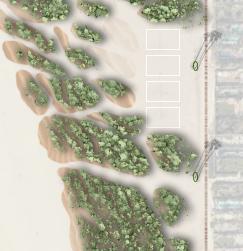
BEACH SALT BUSH-Atriplex leucophylla
PINK SAND VERBENA-Abronia umbellata
RED SAND VERBENA-Abronia maritima
DUNE WILD RYE-Elymus mollis
CALIFORNIA CROTON-Croton californicus
DUNE BUSH LUPINE-Lupinus chamissonis
DESERT SALTGRASS-Distichlis spicata
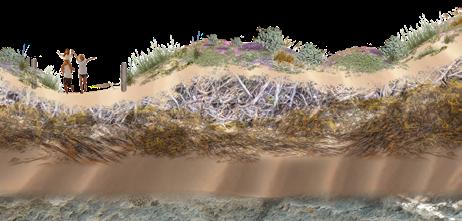
Dune Index
TOPSAND-Exisiting (e)
CONTAINMENT-Jute geofabric
STRATIFICATION-Sand fencing
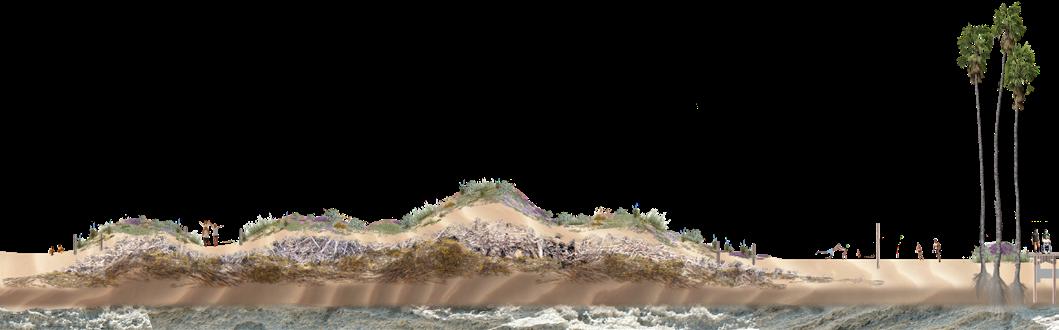
CONTAINMENT/DECOMPOSTION -Driftwood (e) DECOMPOSITION-Kelp, iceplant (e)
ORIGINAL SAND SANDSTONE BASE

Coastal Dune and Wetland Restoration 8 S E A L B E A C H P I E R M A I N S T R E E T
SECTION SECTION
Plant Palette
0.25 MILES 65 FEET (1) (2) (3) A D A (4)
Tribal Sovereignty Through Rematriation
Altadena,
CA
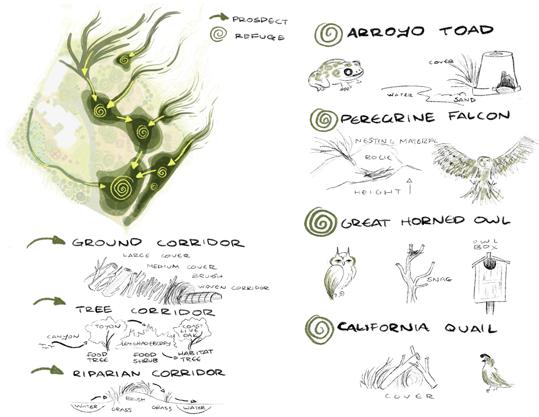
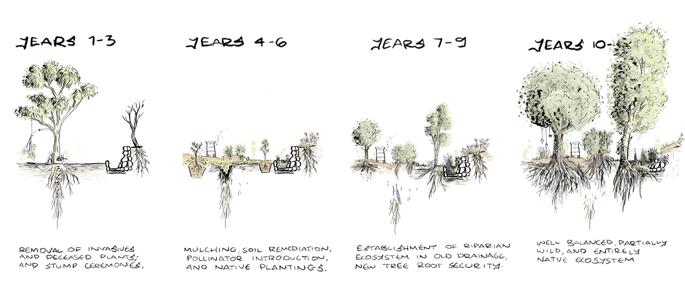
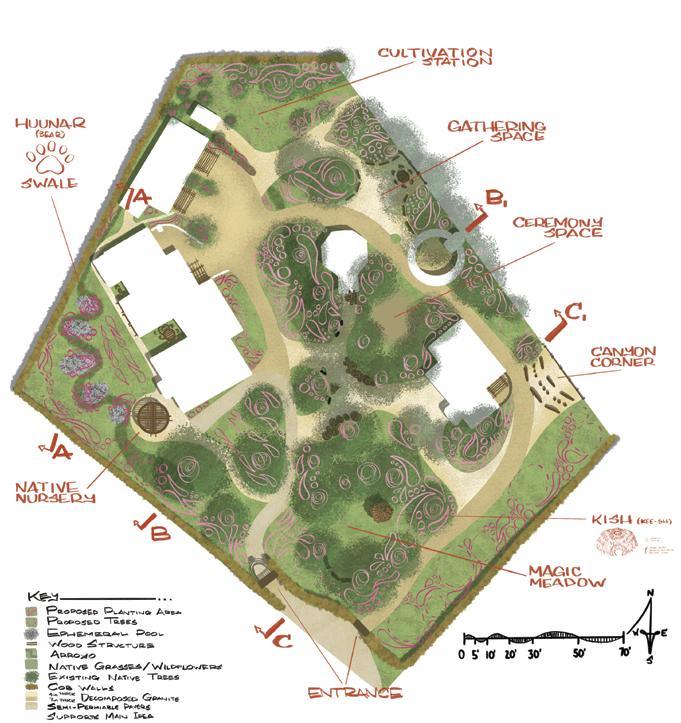
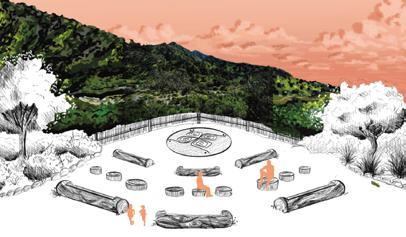
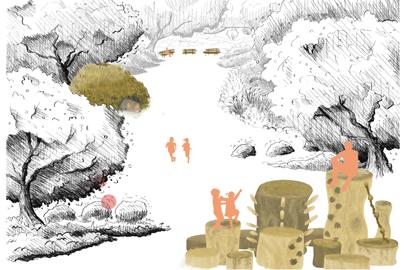
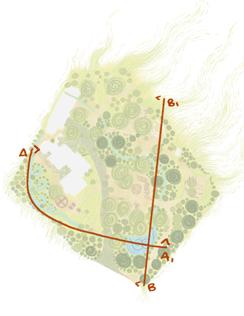
The main objectives of this project included the creation of habitat for endangered species, the removal of invasive vegetation onsite, and to provide space for the tribe to gather and practice their culture.
Endangered Habitat Creation

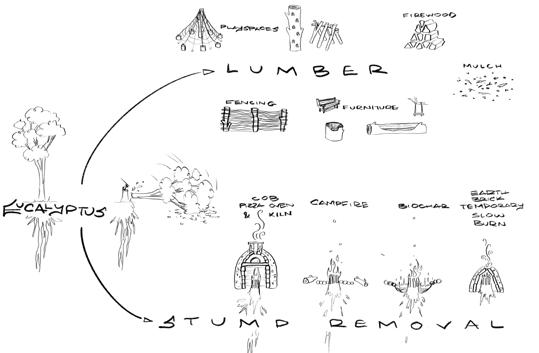
Recylcing and Removal of Invasive Eucalyptus Grove
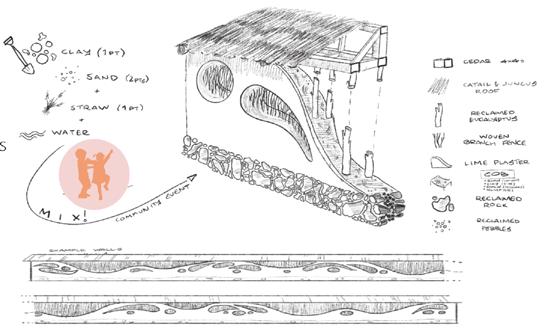
Finding alternative uses for the large grove of eucalyptus on the property allows for unique opportunities for the build form of this design. Cob walls from recycled eucalyptus trees provides a cost-free way to give the tribe privacy and safety.
Tongva Taraxat Paxaavxa Conservancy 9
TONGVA TARAXAT PAXAAVXA CONSERVANCY
Indigenous Celebration, Practice, & Play
Site Plan
Recharging Eaton Canyon’s Aquifer
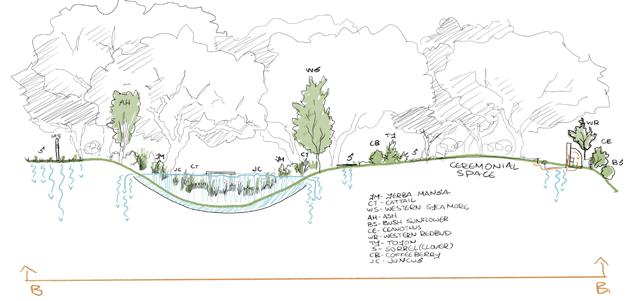
Recharging groundwater aquifers through modification of existing (failing) drainage infrastructure is crucial when designing long term sustainability.
BEARPRINT MEDICINAL NURSERY

Taraxat Paxaavxa Conservancy 10
Tongva
MAGIC MEADOW
CANYON CORNER
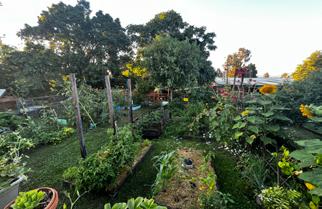
Urban Garden for Food Sovereignty
Atwater Village, CA
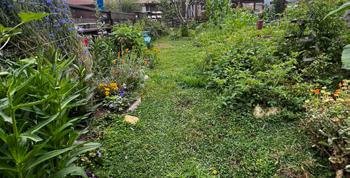
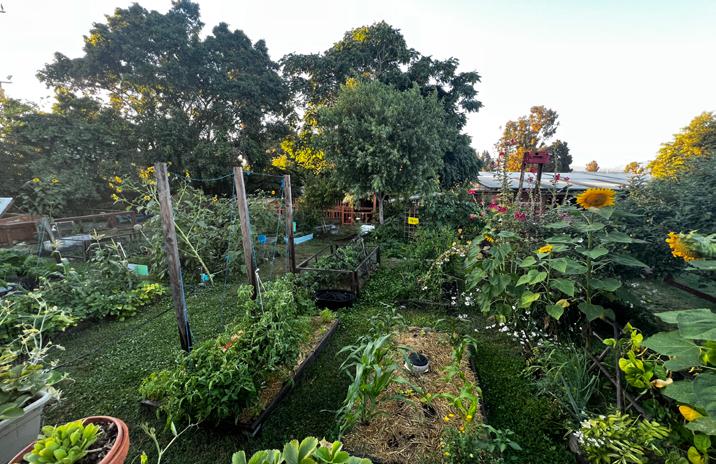
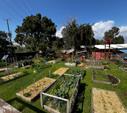
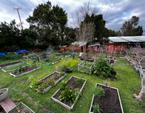
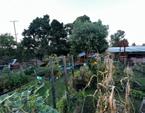
Creating a densely growing, permaculture garden is necessary for this LA urban farm. Located in the Atwater Equestrian District, this farm serves at-risk youth girls through its ‘Seed to Skillet’ program. This teaches girls how to grow, care for, and cook their own food. Rotational harvests, vertical growing, no-till, and organic methods are practiced.
The design of this garden was meant for kids, planted and manicured for their height, play, and exploration. Curves and many exploratory paths are always included between rows of crops.
& Pollinator Garden

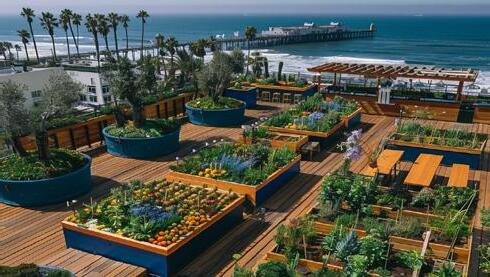
Culinary Rooftop for Beachfront Resort
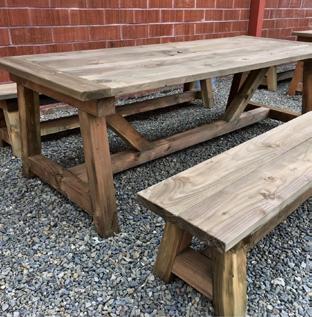




Farmhouse
Tables

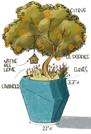
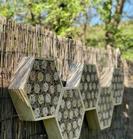
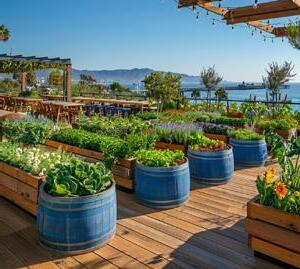
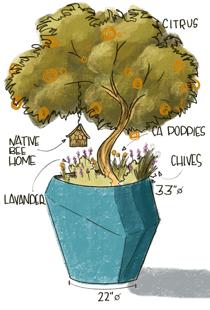
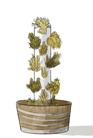
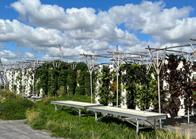
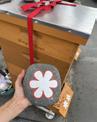
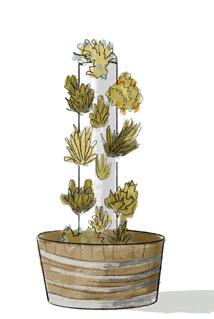
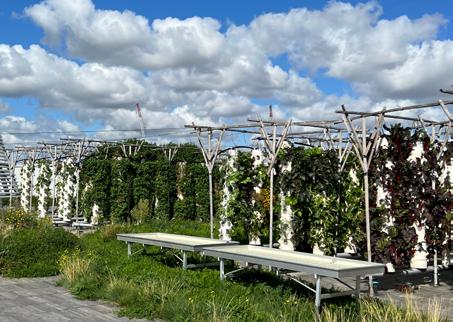
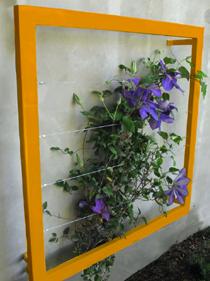
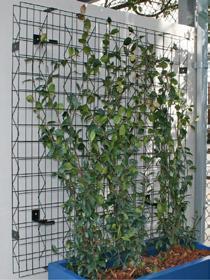
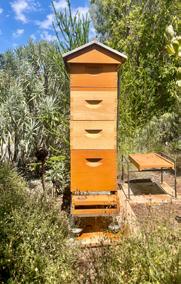
The creation and vertical integration of food production systems helps to harbor spaces for rooftop beehives, culinary classes, bars, and outdoor dining. This design seamlessly hides bulky HVAC systems, and protects from strong ocean winds.




Santa
Plan
Monica, CA
PROFESSIONAL WORK Professional Work 11 N Tower Garden Scale 0' 2' 4' 8' 12' 20' Ramp Entrance Ocean View Deck Utilities/HVAC OPC OPC OPC Rooftop Farm & Pollinator Garden and Annuals Root Vegetables, Perennials, and Herbs Orchard Trees Compost Hive Utilities/HVAC Deck Farm Grow Tower Legend Farm Grow Towers Dining Alfresco Ocean View Bars Apiary Harvest Area Cut Flowers Elderberry Organic Pest Control Hedgerows Inspiration Native Bee Houses Farm Grow Towers Beehives Ocean View OPC Rooftop Farm & Pollinator Garden Fairmont Cut Flowers and Annuals Root Vegetables, Perennials, and Herbs Orchard Trees Vine Legend Farm Grow Towers Dining Alfresco Ocean View Bars Cut Flowers Elderberry Organic Pest Control Native Bee OPC
Miramar Hotel Cut Flowers and Annuals Root Vegetables, Perennials, and Herbs Orchard Trees Vine Legend Organic Pest Control Hedgerows
Inspiration Orchard
Olive Tree
Rooftop Bar
Hedgerow
Santa Monica Pier Culinary Class Space Annual Foodcrops Culinary Event Space
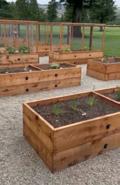
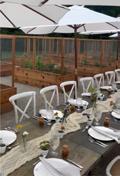
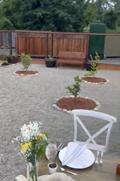
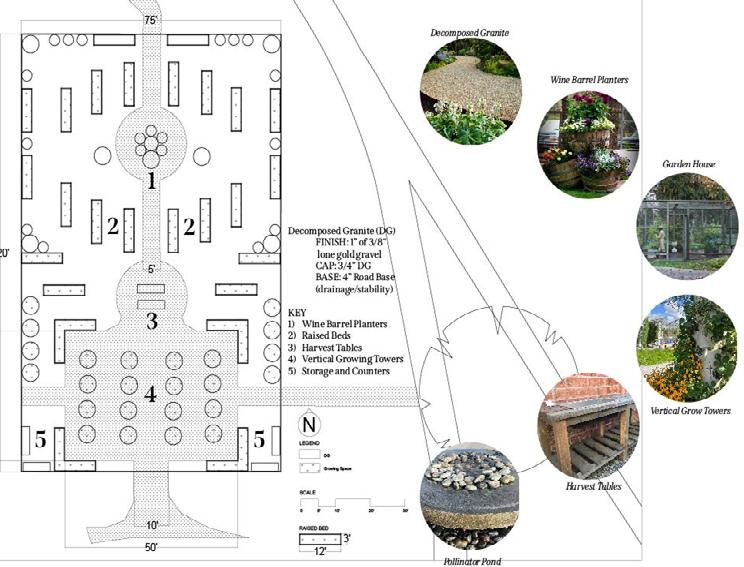
Culinary Garden and Event Space for Napa Valley Resort, Spa, and Vineyard
Napa Valley, CA
This garden serves the needs of the resort’s restaurant, bar, and spa.
Protecting from the spreading threat of redwood roots and nightly deer was crucial for the ultility aspect of this design.
This event space also serves wine tours, golfers, and sommeliers to create a truly unique destination in the heart of Napa Valley.
Pollinator Gardens
Pasadena, Venice Beach, Culver City, and Marina Del Rey Pasadena
Culver City
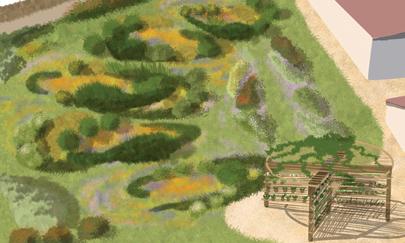
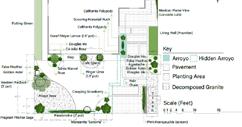
CA natives, insect friendly, drought tolerant, rainbow colors, varying plant shapes. Water retention, drought tolerant plants, low maintenence, long lasting blooms, and natural flow of water was used for inspiration.
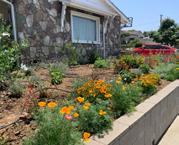
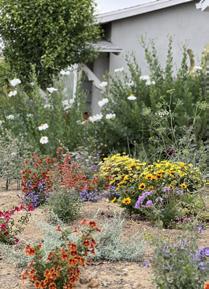
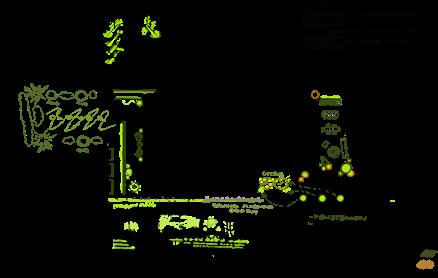

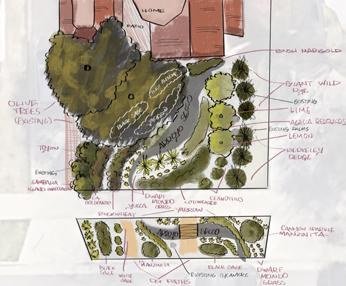
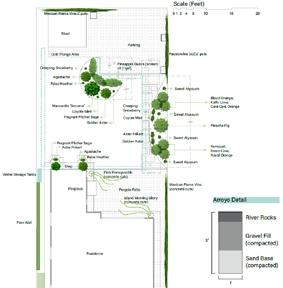


Rotating blooms, pet friendly, & jazzy colors.
 Marina Dey Rey
Venice Beach
Marina Dey Rey
Venice Beach
Professional Work 12 AckleySt Fillmore 34"x12"x24"
PAYNE PORTFOLIO 2024 S.MCKINLEY845@GMAIL.COM 562.743.7376
SCOTT