
Sustainability Mark
The value of SWNZ
Haere Rā 2025
Year in review
Planetary Facts
Measuring impacts
Sustainability Mark
The value of SWNZ
Haere Rā 2025
Year in review
Planetary Facts
Measuring impacts
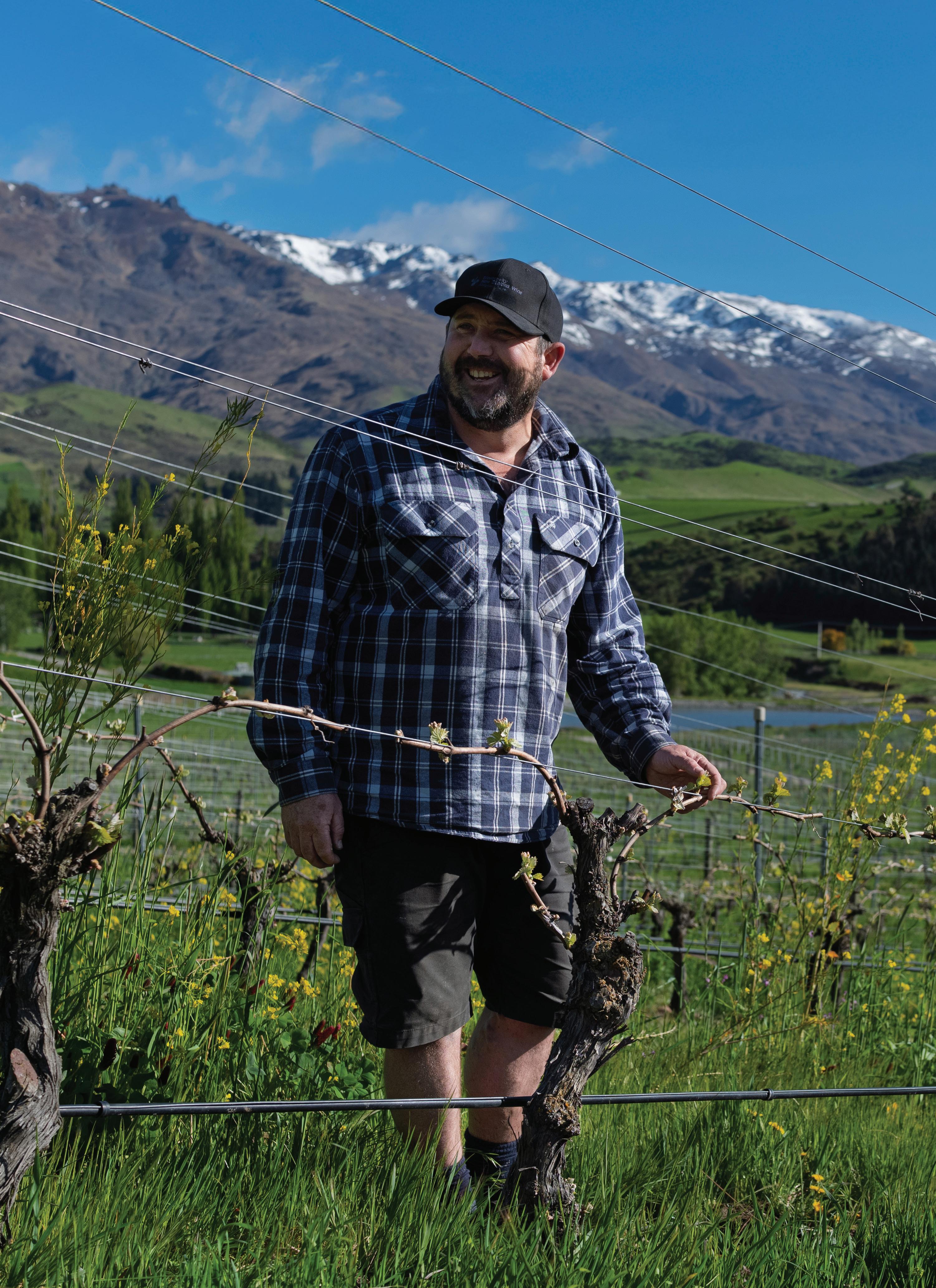
Floral crops, grazing flocks, strategic swards and supercharged soil activity





Editorial Sophie Preece
From the Chair
Philip Gregan
Women in Wine
Jess Wilson
MW Musings
Emma Jenkins MW
Art of Wine Valli’s canine homage
SWNZ on the label
Canada’s liquor monopolies know sustainability is in the “DNA” of New Zealand wine, but they want to see proof of Sustainable Winegrowing New Zealand certification on every label.
Haere Rā 2025
As they gear up for vintage 2026, industry members from around the country offer us a glass half full, and half empty, view of the year that was.
Planetary Facts
Bragato Research Institute has partnered with the Planetary Accounting Network to pilot a new environment assessment and labelling system to disclose consistent and understandable environmental data for any product.
EDITOR Sophie Preece sophie@sophiepreece.co.nz
CORRESPONDENTS
North Island
Joelle Thomson
Emma Jenkins MW
South Island
Claire Finlayson
Stephanie McIntyre
Joanna Grigg
ADVERTISING
Upper North Island: Stephen Pollard
stephenp@ruralnews.co.nz
Ph: 021 963 166
Central & Lower North Island: Lisa Wise
lisaw@ruralnews.co.nz
Ph: 027 369 9218
South Island:
Kaye Sutherland kayes@ruralnews.co.nz
Ph: 021 221 1994
CIRCULATION & SUBSCRIPTIONS
Sarah Adams saraha@nzwine.com 09 306 5644
New Zealand Winegrowers PO Box 90 276, Auckland Mail Centre, New Zealand
PUBLISHING & PRE-PRESS
Rural News Group
PO Box 331100, Takapuna, Auckland 0740
Ph: 09 307 0399
Location: Top Floor, 29 Northcroft Street, Takapuna, Auckland 0622
Publisher: Brian Hight
Managing Editor: Adam Fricker
Production: Rebecca Williams
Published by Rural News Group Ltd under authority of New Zealand Winegrowers Inc. Unless directly attributed, opinions expressed in the magazine are not necessarily those of Rural News Group and/or its directors or management, New Zealand Winegrowers Inc. or its constituent organisations. Published every second month. One free copy is mailed to every member of New Zealand Winegrowers Inc, New Zealand Society of Viticulture & Oenology and the New Zealand Vine Improvement Group, and to such other persons or organisations as directed by the owners, with provision for additional copies and other recipients to be on a subscription.
ISSN 1174-5223




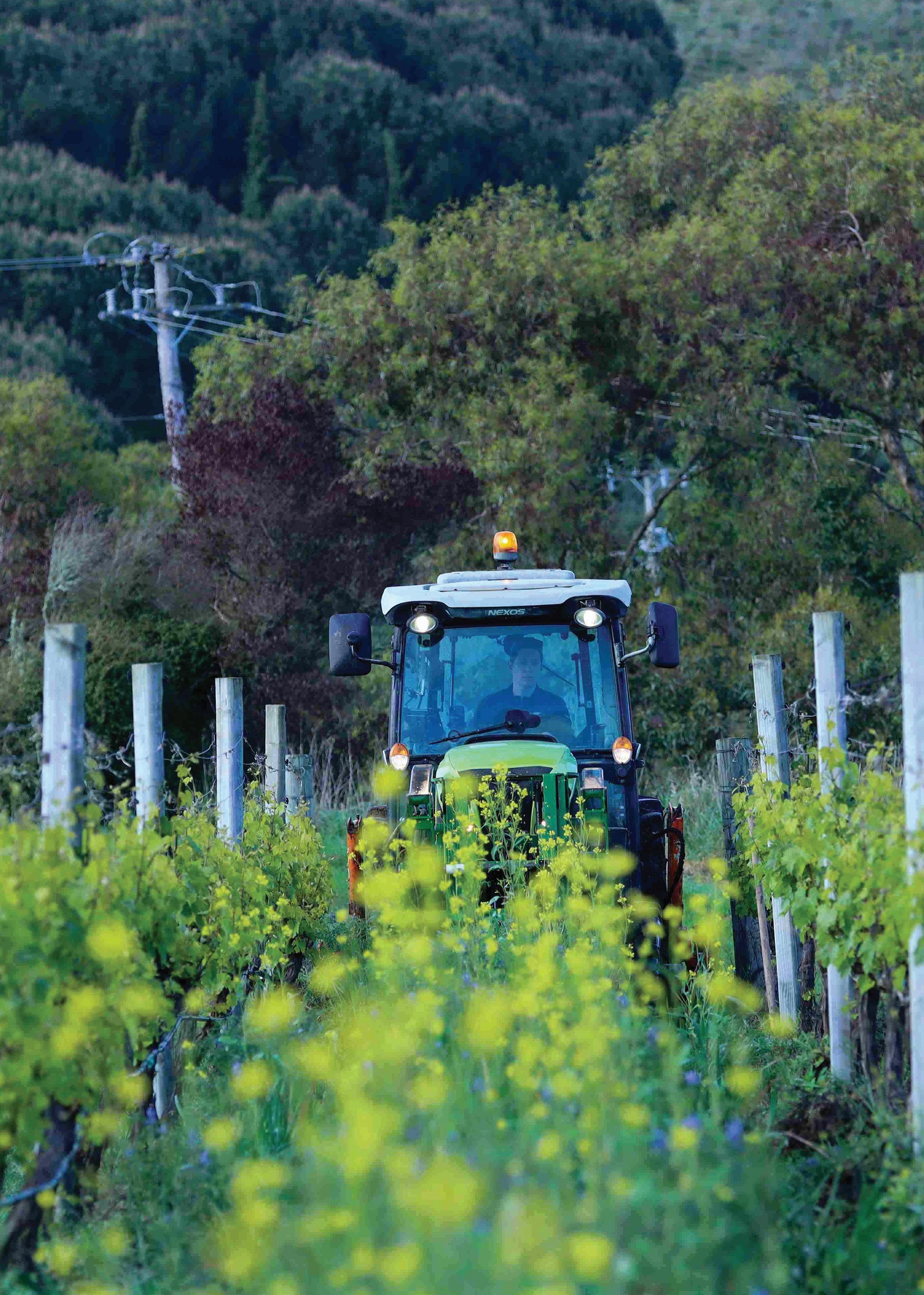
When I moved to Marlborough two decades ago, I found countless lines of tidy vines, neatly mowed and carefully sprayed, with diligent conventional practices interspersed with the odd organic or cover-cropping outlier, like Te Whare Ra (page 30). Fast forward to 2025, and I delight in seeing sheep grazing blocks in winter, kaleidoscopic cover crops bursting between the vines in spring, and native plantings protruding from pockets of vineyards and neighbouring wetlands.
Organic practices have bled into conventional farming, and the new kid on the block, regenerative viticulture, has opened a practical toolbox that growers can reach for to reduce spraying, tillage and tractor passes, while boosting their soil microbiome, vine health, and ecological impact. “The idea is not just sustaining our environment but improving what we have,” says Felton Road Estate Manager Gareth King in this month’s focus feature. “Nurturing the place we have, and leaving it in a better way than when we found it.”
As well as the regenerative viticulture feature, this edition has the Haere Rā 2025 regional update, in which industry members from around the country offer insights into the year that’s been. There’s no doubt it’s been tough, nor that the year ahead will require resilience – survive to ’25 was aspirational and survive through ’25 a battle. Getting through ’26 will be a similar test of endurance. But amid the ‘bad’ moments highlighted in the feature, there’s also an abundance of ‘good’ and ‘awesome’. “This isn’t just about weathering the storm,” says Matt Barbour from North Canterbury. “It’s about reaffirming who we are: a bold, distinctive wine-producing region with deep roots and enduring pride.”

Helen Morrison
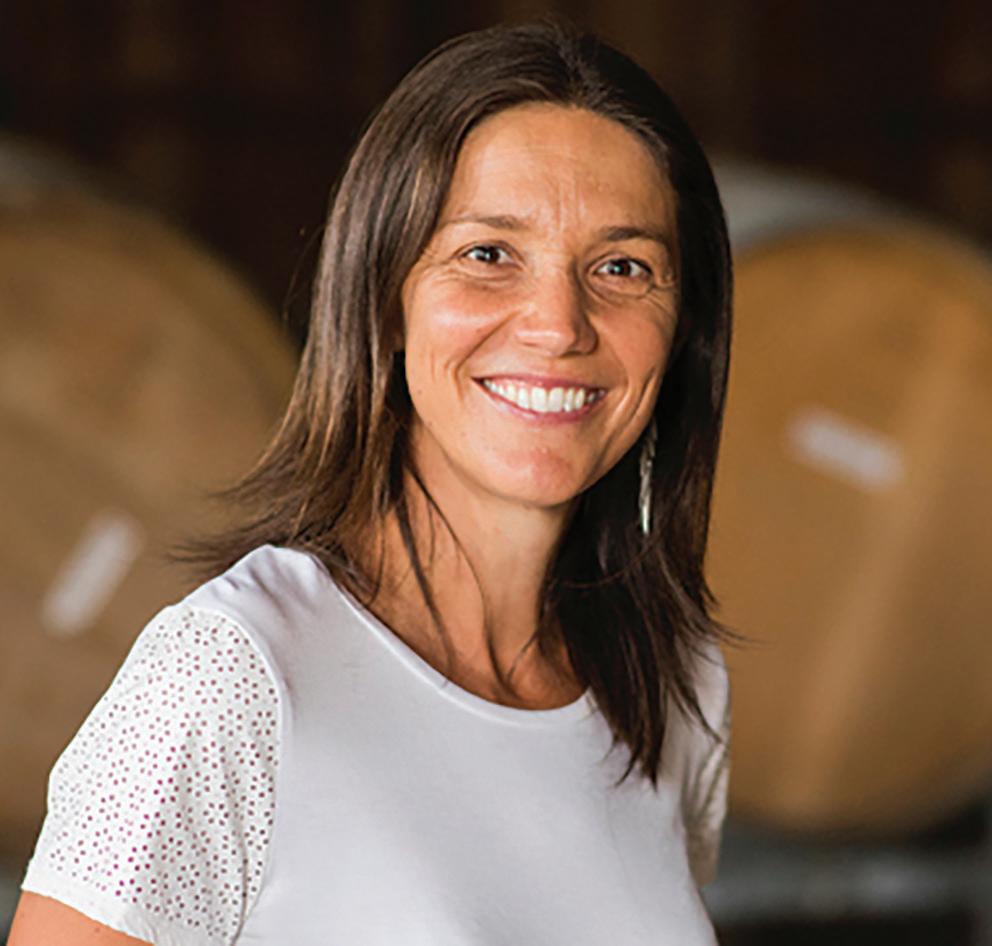
Helen Morrison is Chief Winemaker at Booster Wine Group and Deputy Chair of the New Zealand Society for Viticulture and Oenology. In this edition she explains why the upcoming International Cool Climate Wine Symposium is a key event for New Zealand wine. Go to page 13

Jenkins MW
Wine has never been more democratic, while arguably never more disconnected from its roots, writes Emma Jenkins MW in her Musings column. “If wine becomes just another drink we may find that what we’ve gained in accessibility, we’ve lost in meaning.”
Go to page 42

James Morrison
James Morrison keeps a vigilant eye on weather records and forecasts, to help winegrowers prepare for what’s coming each season. In this edition he looks back at a windy October, forward to a La Niña-influenced summer, and at wine regions nationwide. Go to page 44
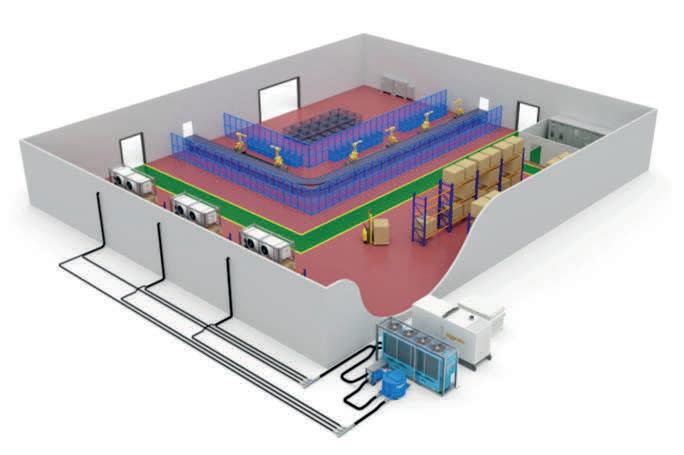
With over 20 years’ experience working with the wine industry throughout the New Zealand Pacific region, we understand what it takes to enhance productivity and decrease costs for your winery. We can help you make your vintage a success by:
• Controlling fermentation
• Providing temporary cooling for cellars or other critical functions
Providing additional power when needed
We are on call 24 hours a day, seven days a week to serve you.




PHILIP GREGAN
The end of the year is fast approaching, so here are some thoughts on a few of the significant development during 2025 to wrap things up. Times are tough, of course, but there are some positive stories to think about, as well as the challenges.
The quality was undeniable with very positive reports from regions across the motu. With our reputation based on being a quality producer selling at higher price points, the high quality vintage set a great tone for marketing and selling V25 wines. From the volume perspective, the vintage over-delivered (unfortunately). Vintage 2025 was our second largest crop ever and, with markets uncertain, the large crop added to supply side pressure already affecting growers and wineries – simply put, we produced more wine than we have sold in the past 12 months. The end result was grape prices down on last year, and reduced demand for grapes as wineries look forward to V26.
Generally, it’s tough times in global wine markets, with uncertain economic conditions and changing consumer behaviours leading to flat or declining sales. That’s certainly the case in the two largest markets for our wines – the United States and the United Kingdom. Both are in a state of flux, with volume down. Those declines are driven by various factors which are clearly contributing to the uncertainty about the future state of those markets. However, in both cases it is clear the uncertainty has been exacerbated by government interventions – in the UK higher taxes keep driving up prices, while in the US it has been the imposition of the tariffs. In both instances though, someone

ends up paying the higher costs – that’s the way with taxes and tariffs; they are not good for markets or consumers.
At December 2024, estimated total sales of New Zealand wine were 307.6 million litres, down 1.1% on the previous year. Positively, for the 12 months to the end of September 2025, total sales have lifted to nearly 344m litres, 11.8% above the end of 2024 number. This growth in sales, at a time of market uncertainty, is a real positive, reflecting the strong reputation that our wines retain in our key markets. There has been eye-catching export growth in the past 12 months into some of our smaller markets. Exports to China are up over 60% in the past year, while to South Korea growth is even stronger, +114% in volume over the past 12 months. Those two markets are now worth over $100 million per year – significant in any terms. At home, the market in New Zealand has reflected the tough economic conditions. Wine sales are down, and the hospitality industry has been in the headlines for the wrong reasons. Let’s hope there is good summer weather that drives a positive peak tourism season. Fingers crossed!
The recent October AGM saw a critical vote by members on the future shape of New Zealand Winegrowers. The AGM featured the largest turnout in years, with members voting to support a smaller Board (down to nine directors from 12) with increased independent
representation. With the new Rules now in place, we are moving to the implementation phase – the next big step will be the Board election in September 2026 when all Board places will be up for election. Watch out for news on the election process next year.
Over the past 12 months we have celebrated the 30th anniversary of the founding of Sustainable Winegrowing New Zealand. That celebration has generated some great media coverage, which has highlighted the industry’s ongoing commitment to sustainability – 30 years and counting. However, the NZW activity to generate the most news coverage was Pinot Noir New Zealand 2025. To date coverage of that event has produced an EAV (estimated advertising value) of $9.1m (more than twice the budget of $4.2m) and reached an audience of 154m people – really strong numbers, it has to be said. On the back of the success of Pinot Noir New Zealand 2025, the NZW Board quickly committed to Sauvignon Blanc New Zealand 2027 planning for which is advancing quickly, with the event now only a little over a year away.
So, 2025 has been another up and down year. Exports are probably at a level better than we could have hoped for 12 months ago, but growers and wineries are still facing a lot of uncertainty given market conditions, increased costs and tariffs. Let’s hope 2026 brings more positive news for the sector.
All the best for festive season!

New Zealand Winegrowers Biosecurity Advisor Jim Herdman is retiring at the end of 2025, after six years helping develop NZW’s member-facing biosecurity programme, putting together resources and guides, and delivering high-quality workshops and advice. Jim also significantly improved the processes for the collection of accurate Biosecurity Vineyard Register data, which forms the basis of the annual Vineyard Report containing useful industry statistics and figures. Read about 2025’s biosecurity ups and downs on page 27.
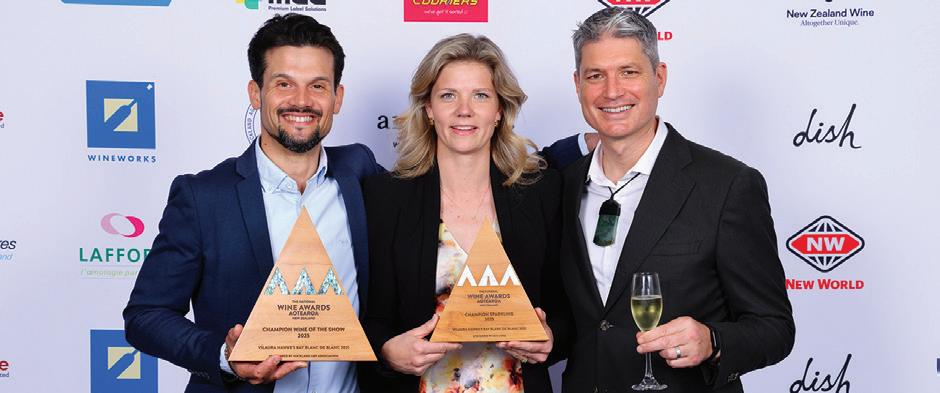
Vilaura won Champion Wine of the Show at the 2025 National Wine Awards of Aotearoa New Zealand, with the Hawke’s Bay Blanc de Blanc 2021. It’s the second time in a row for specialist sparkling producers Jascha Oldham-Selak and Sanne Witteveen, who also took top spot at the 2024 show. Other notable winners were Mount Riley’s Marlborough Syrah 2024, which won the Fruitfed Supplies Trophy for that variety, despite Marlborough having just 12 hectares planted in Syrah. Wairau River Wines won the Laffort Trophy for Champion Gewürztraminer for its 2025 Reserve, and the Mainfreight Export Trophy for its 2024 Pinot Noir. Church Road won the Heritage Rosebowl with the Grand Reserve Syrah from vintages 2013, 2016 and 2021. Growers were represented on stage too, with “Big John” and Lynne Walsh collecting the Antipodes Champion Riesling Trophy for their Saint Clair Pioneer Block 9 Big John Riesling 2025, and Te Kairanga viticulturist Dave Shepherd collecting the Pinot Noir trophy for the 2024 Estate Pinot Noir, sponsored by Classic Oak Products New Zealand.
The Rapaura Springs Bouldevines Single Vineyard Chardonnay 2024 won QuayConnect Champion Wine of the Show at the 2025 Marlborough Wine Show, sponsored by QuayConnect. It also won The Coterie Wine of Provenance and Vintech Pacific Champion Chardonnay, Current Vintage. Rapaura Springs also took home the Fruitfed Supplies Champion Southern Valleys trophy with its 2024 ROHE Southern Valleys Pinot Noir. Isabel Estate won three trophies, with its Wild Barrique Chardonnay – 2018, 2020 and 2022 – nabbing the New Zealand Wine Centre Legacy Award, sponsored by Marlborough Research Centre, celebrating a wine with the highest scores from three vintages within a 10-year period. Isabel also won the De Sangosse New Zealand Champion Pinot Noir 2022 & Older with its Single Vineyard Pinot Noir 2021, and the Scenic Hotel Marlborough Champion Rosé with the Marlborough Rosé 2025. The Lifetime Achievement Award went to Kimberley and Kevin Judd of Greywacke Wines. Read more on page 23.

Twenty years after Marcus Wickham became the inaugural New Zealand Young Viticulturist of the Year, his family company, Ormond Nurseries, has become the naming sponsor of the event. Marcus says the Marlborough based nursery is tightening its belt in these tougher economic times, but believes there’s a strong future for the wine industry. “Now is the time to draw on two decades of Young Vit success and continue moving forward with purpose by staying positive, giving back and offering support by investing in pathways for the next generation,” he says. “Working together is the greatest strength we have as an industry.” Ormond Nurseries has been involved as an event sponsor since the first Young Viticulturist competition in 2006, and in 2020 introduced the Ormond Nurseries Professional Reputation Award, which considers contestants’ overall conduct and leadership qualities. “It shines a light on the softer skills,” says Sam Wickham. Nicky Grandorge, NZW Leadership & Communities Manager, says Ormond Nurseries’ step up to naming sponsor is “a wonderful endorsement of the competition, its success in growing future leaders, and the strong community spirit around it”.
More than 50 wineries and food producers are on show at Blenheim’s new Wine + Food Experience Marlborough. Waihopai Valley label Catalina Sounds signed up to the venture early on, tapping into the opportunity to give its wines a CBD presence. Winemaker Matthew Ward says it is great to have a central place to connect with visitors and locals, along with the ability to host tasting events and private functions. At another stand visitors will find the Appellation Marlborough Wine (AMW) Annual Collection, comprised of 12 “standout” Sauvignon Blancs that reflect the best of Marlborough, says AMW Chief Executive Michael Wentworth. People tasting those wines can also navigate their way around the AMW interactive wine map, gleaning insights into the diversity of terroir. Winning wines from the Marlborough Wine Show, sponsored by QuayConnect, will also be showcased at the facility.
Terra Sancta’s Mysterious Diggings Pinot Noir 2024 has been named No. 4 in James Suckling’s Top 100 Wines of the World 2025. James and his wife Marie Kim-Suckling visited the Bannockburn producer in October, and the critic described the vineyards in his report as “among the most beautiful I’ve ever seen, with organic and regenerative viticulture”. James and his team tasted more than 45,000 wines from 18 countries, with Terra Sancta one of only two New Zealand wineries in the global Top 100 Wines, alongside its Felton Road neighbour, Felton Road wines. Terra Sancta co-founder and vigneron Mark Weldon says the ranking is “recognition of our remarkable vineyards and a dedicated team focused on expressing the soul of Bannockburn”.
Fellow founder Sarah Eliott says hosting the couple at Terra Sancta was a privilege. “James Suckling’s visit affirmed what we believe –that great wines begin with great vineyards.”
jamessuckling.com/wine-tasting-reports/top-100-world-wines2025-a-bow-tie-on-bordeaux
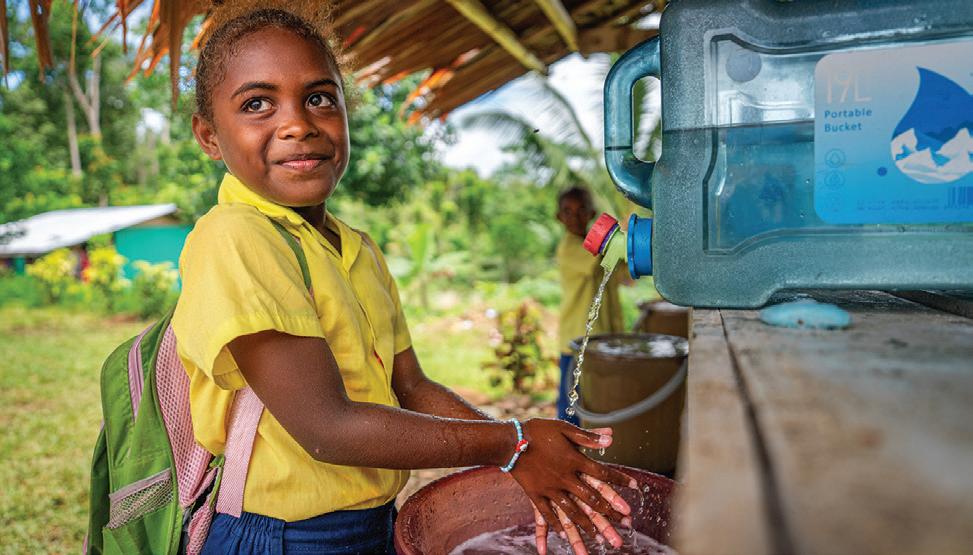
The Marlborough based Village to Village Charitable Trust is supporting UNICEF Aotearoa to help deliver lifechanging initiatives across communities in the Pacific Islands. In the first step in the collaboration, Village to Village has provided funding to support UNICEF’s partnership with the Ministry of Foreign Affairs and Trade, bringing clean water and sanitation to a school in the Solomon Islands.
The first set of facilities is sponsored by Alapa Viticultural Services Limited, as a commitment to supporting Recognised Seasonal Employer (RSE) scheme workers and their communities back home. “We rely on our RSE workers do the hard, physical work that keeps our industry going,” says General Manager Joe Walker. “Without them, the vines would go unpruned and grapes unharvested. This is our way to say thank you to them, and also their families and communities back home in the Pacific, for the vital role they play in supporting both our industry and our wider community.”
The initiative is part of Village to Village’s broader aim to acknowledge the contribution and sacrifice RSE workers from the Pacific Islands make for the success of New Zealand’s Viticulture and Horticulture industries. “We are very grateful to Alapa for coming on board and leading the way,” says Village to Village Chair Tracy Atkin. “We would love to see other businesses and organisations with connections to RSE workers join us in expanding this impact.”

Marlborough’s te Pā Family Vineyards was a finalist in the Best Medium Business category and the Māori Excellence in Export category at the New Zealand International Business Awards, with Invivo in the running for the Excellence in Brand Storytelling category. Winners were to be announced on November 27, after this edition went to print. Te Pā founder and owner Haysley MacDonald says the hard work of his team is paying off, “with quality wines, a great story and authentic, unique heritage, and strong relationships with our amazing customers”. The company, which marks 15 years in 2026, currently exports to over 25 export markets and has a strong domestic presence in Aotearoa.
Invivo has had a long-standing partnership with Graham Norton, and the talk show host visited Marlborough earlier this year. Chief Marketing Officer Rachael Everitt says being named a finalist in the business awards reflects 12 years of authentic storytelling. “To see that journey come full circle with Graham’s visit to Marlborough this year was something really special, and we’re truly honoured to be recognised.”
The Hunting Lodge Seasonal Albariño Marlborough 2025 was named Champion White Wine at the New World Wine Awards 2025, while Champion Sauvignon Blanc went to the Yealands Reserve Sauvignon Blanc 2024, described as “opulent with intense fruit and herb aromas and salty acidity”. Champion Red Wine was taken by the Church Road McDonald Series Syrah 2021, a “textbook Syrah”, judges said. “Bold, supple and laden with gorgeous berry fruit.” Mount Riley Chardonnay 2024 was Champion Chardonnay, and the Lindauer Special Reserve Brut NV was Champion Sparkling Wine. Judges also cast a spotlight on a North Canterbury Pétillant Naturel deemed one of the most exciting wines in the lineup. The Mountford Estate Blanc Pet Nat NV “is a total vibe”, said one judge. “It’s fresh, energetic, and a little bit wild. More than 1,000 wines from Aotearoa and around the globe were assessed to create a list of 50 wines priced at $30 or less. “This year’s Top 50 is a celebration of diversity, discovery, and deliciousness,” says Chair of Judges Jen Parr.
To have events added to our calendar contact sophie@sophiepreece.co.nz

Cool Climate Symposium iccws2026.nz
26-28 January 2026
Following 20 years overseas, the International Cool Climate Wine Symposium returns to New Zealand this January. Developed by the industry, for the industry, this three-day event is purposefully designed to educate, inspire and strengthen the wine sector of today. Host organisation, the New Zealand Society for Viticulture and Oenology, is renowned for its annual technical workshop series. The symposium is an extension of this collaborative format and interlaces a clever collective of international and local speakers, including Nick Lane from Defined Wine in the United Kingdom, Dr Kai Voss-Fels from Hochschule Geisenheim University in Germany, and Jenifer Cugat from the Catena Institute in Argentina, as well as Anne Escalle from Rimapere and Akarua, and Felton Road’s Nigel Greening. Read more from Helen Morrison on page 13.
Marlborough Wine & Food Festival
14 February
marlboroughwinefestival.com
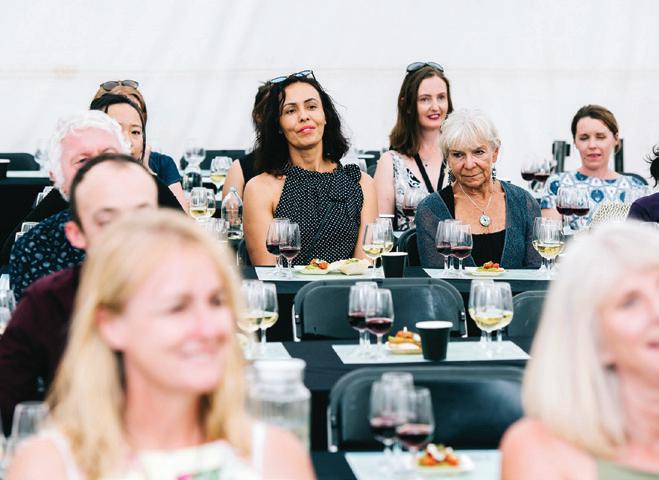
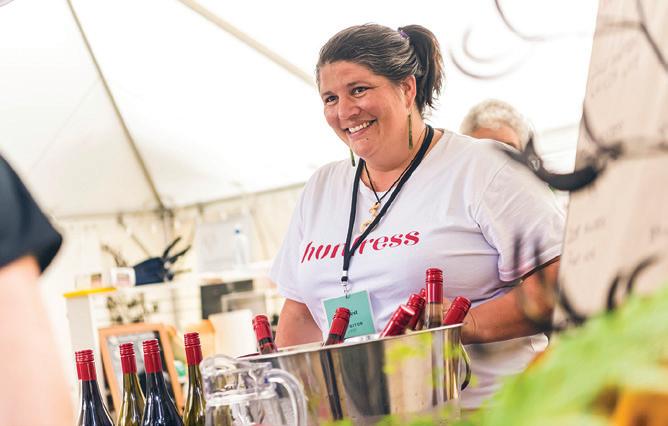
Organisers of New Zealand’s oldest wine festival are always working to keep it fresh says Marlborough Wine & Food Festival event organiser Loren Coffey. In 2026 that includes the introduction of a new free wine education zone, The Curious Cellar, which will host 30-minute talks from winemakers
on a variety of topics. For those wanting to delve more deeply, the annual Masterclasses will be back, including a class on naturally fermented wine and food, and another to “demystify” the wine judging process through a blind tasting experience, Loren says. Troy Kingi and Kaylee Bell will be centre stage, along with Sweet Mix Kids and Jaydin Shingleton, and many more local acts, including the acoustic stage and the always-popular vinyl area. “With over 30 top wineries, 20-plus eateries, including multiple winery restaurants, a local brewery option and a range of non-alcoholic beverages, the festival truly offers an opportunity to get a taste for everything the Marlborough region has to offer,” Loren says.
Harvest Festival
21 February
wairarapaharvestfestival.co.nz
Wairarapa wineries, eateries and food producers will set up against a stunning backdrop of ancient native trees and a picturesque riverside setting. The Wairarapa Wines Harvest Festival, presented by James Henry Ltd, is a day of indulgence and enjoyment.

Climate Action Week
Marlborough 23-27 February events.humanitix.com/climate-actionweek-marlborough-2026
Climate Action Week Marlborough 2026 has a theme of ‘leading by doing: local businesses, local solutions, collective action’. Yealands
Estates is the foundational partner of the five-day event, which has covers myriad key topics, including water, a circular economy, biodiversity, energy and carbon.

North Canterbury Wine & Food Festival 8 March
ncwineandfood.co.nz
A celebration of dedicated growers, talented winemakers and innovative chefs, the North Canterbury Wine & Food Festival celebrates the grape harvest in style, under the oaks at Glenmark Domain.

Ripe Wanaka 21 March
ripewanaka.nz
Sir Dave Dobbyn is the headline act for the next Wānaka Wine & Food Festival, held at Glendhu Bay. The fifth Ripe festival will showcase more than 20 Central Otago wineries, alongside locally brewed craft beers, premium cocktails and food from some of the region’s best dish makers. The event won ‘Sustainability Initiative of the Year’ at the 2025 New Zealand Events Association Awards.
Grape Days 2026
June 16 - 22
nzwine.com/grape-days
Save the date for Grape Days 2026, with Central Otago on 16 June, Hawke’s Bay on 18 June, and Marlborough on 22 June. Grape Days is supported by the New Zealand Winegrowers levy and delivered through Bragato Research Institute, to provide high-level overviews of research with a practical focus for members.
WinePro
June 23-25, 2026
winepro.co.nz
Following its highly successful debut, WinePro New Zealand returns in Blenheim in 2026, nurturing collaboration, innovation and learning in New Zealand’s wine industry. Supported by the Marlborough District Council and Marlborough Wine, the event will offer education sessions, alongside an expo showcasing leading suppliers and cutting edge technologies.

2-4 February 2027
sauvignonnz.com
Global industry leaders, trade influencers, sommeliers and wine content creators will gather in Wairau Marlborough on the cusp of the 2027 harvest, to explore the magic of Sauvignon Blanc. They’ll join a united collective of passionate producers from around the country in an exploration of the variety that’s led the charge of New Zealand wine on the world stage.
Sauvignon Blanc New Zealand 2027 will highlight the depth, diversity and regionality of Sauvignon Blanc, while indulging in showstopping Kiwi hospitality. Chaired by Yealands Chief Winemaker, Natalie Christensen, SBNZ27 is being shaped by a committee of industry representatives from nine New Zealand wineries, NZW and Wine Marlborough.
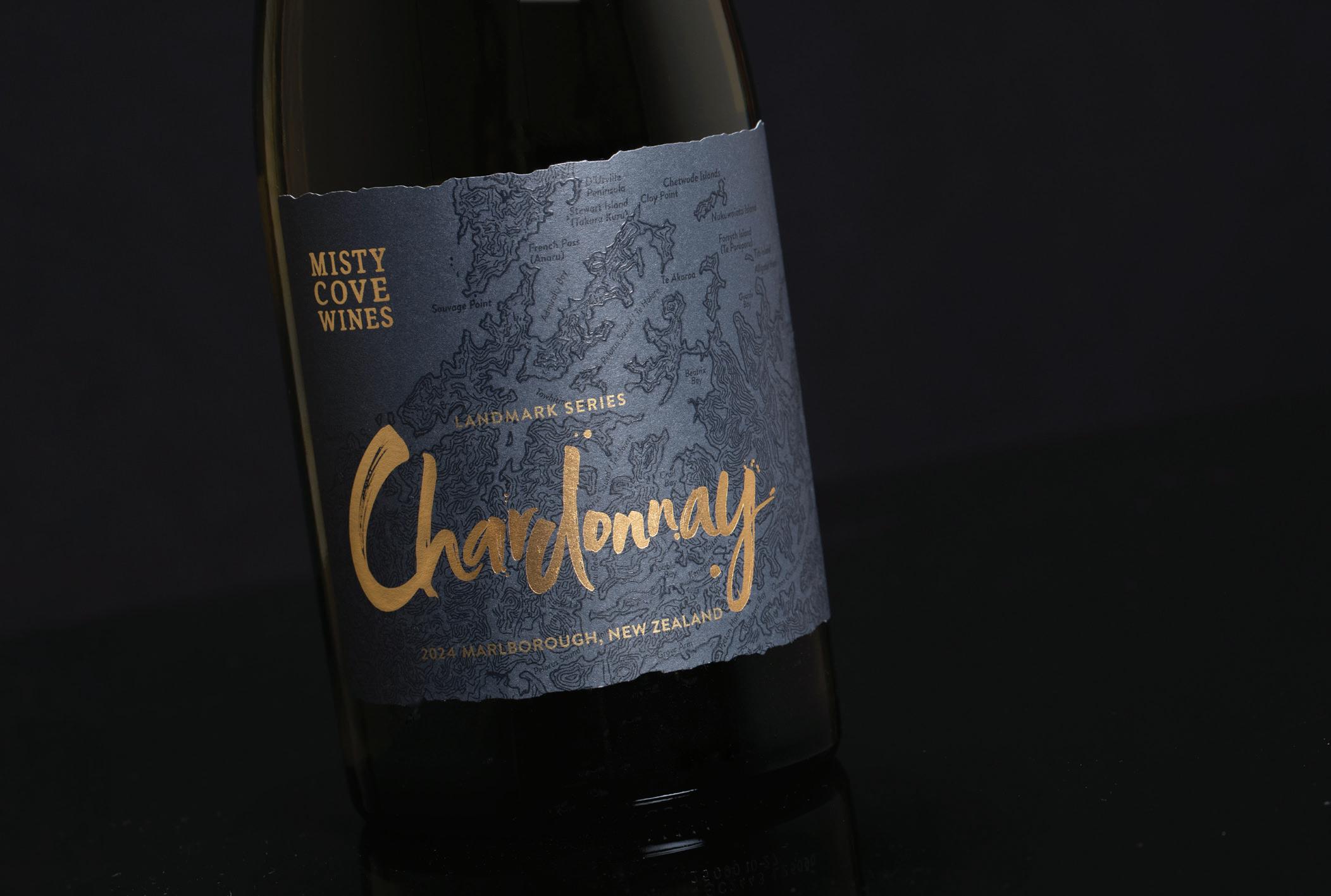
Misty Cove captures the essence of Marlborough Sounds with a label that brings its rugged coastlines to life. Gold hotfoil detailing and a tactile topographical map to celebrate the harmony of land, sea, and wine — a story of craftsmanship, heritage, and global reach.
Talk to MCC New Zealand where every product is labelled with care.
Producer: Misty Cove
Growing the reputation of New Zealand Wine
Charlotte Read
New Zealand Winegrowers was proud to host a New Zealand Wine pavilion at ProWine in Shanghai from 12-14 November. Attracting


27,363 trade visitors and 650 exhibitors from 32 countries and regions, the New Zealand presence at this event has more than doubled on the previous year, with over 40 wine brands present. A networking event co-hosted by New Zealand Trade and Enterprise and NZW was held to further enhance business networking opportunities for participating wineries. The New Zealand pavilion had a dominant central presence, with vibrant fresh imagery showcasing our diverse regions, 30 years of Sustainable Winegrowing New Zealand, and our wine tourism offerings. It was the first time for many wineries exhibiting, keen to embrace the China growth opportunity. Wineries were very happy with the level of traffic to the pavilion and the trade interaction they had. Lindsay Parkinson, from Rose Family Estate, noted that it’s important to be at fairs like this one, “as you’re not going to find trade connections sitting at home in New Zealand”. We expect that the New Zealand wine presence at ProWine will continue to grow.
Thanks to our market managers around the world for the following updates.
Charlotte Read is NZW General Manager Brand
Liinaa Berry, one of our Sommit guests this year, presented her Post-Sommit Masterclass in Melbourne at the end of October. In partnership with Sommeliers Australia, Liinaa was one of two sommeliers from Australia selected to be hosted in New Zealand in February to attend Sommit and Pinot Noir New Zealand 2025, and to take part in broader regional wine explorations.

The masterclass is an opportunity to present learnings and wine discoveries from the experience to peers back home. Liinaa’s presentation covered Pinot Noir examples from the subregions of Central Otago and from five other regions, a bracket of aromatic whites, a selection of Chardonnays, and an example of a Bordeaux blend. The wines shown came from seven of New Zealand’s regions. Paul Pujol, from Prophet’s Rock in Central Otago, co-presented with Liinaa, bringing a wealth of local and technical knowledge. Regenerative viticulture in New Zealand, and the interrelationship with the Māori value of Kaitiakitanga – guardianship and protection of the environment, left a strong impression on Liinaa and was a key theme of the presentation and tasting.
Cathy Wansink, NZW Australia Market Manager
The Sustainability in Drinks conference brought together global sustainability leaders, sparking collaboration, challenging ideas, and driving action across the drinks industry. There were a number of workshops and panel talks throughout the day, and NZW’s General Manager Sustainability, Dr Ed Massey, participated in a panel on ‘The importance of certification’. NZW also had a table to showcase each of our sustainability focus areas. It was a very successful day, highlighting New Zealand as a leading innovator in the wine sustainability space.
NZW Europe Market Manager Chris Stroud

We also marked 30 years of SWNZ in North America, with SWNZ Programme Manager Meagan Littlejohn leading activities in the United States and Canada. As part of Climate Week NYC, NZW hosted an exclusive media lunch for nine journalists, during which the Billion Oyster Project shared insights into their work in marine restoration, and their alignment with the principle of Kaitiakitanga. Guests had the opportunity to learn how to shuck oysters, followed by a three-course lunch paired with several different wines. During the lunch, Meagan spoke about SWNZ, highlighting the Roadmap to Net Zero and showcasing how New Zealand wineries are actively implementing sustainable practices.
Following the successful lunch, Meagan co-hosted a master class at the International Wine Centre, with instructors, students and alumni. Attendees were highly engaged throughout, asking insightful questions and demonstrating a strong interest in New Zealand’s commitment to sustainability and winemaking. Meagan then continued onto Canada, where she met with liquor retailer monopolies in Toronto and Montreal (LCBO and SAQ) to discuss the Roadmap to Net Zero with their sustainability teams. There is strong alignment between their priorities and those of NZW, particularly around climate initiatives. The teams commented that they would like more New Zealand wines to display the SWNZ logo on their bottles (see page 14).
Meagan also met with Michelle Bouffard, the founder of the highly respected Tasting Climate Change conference, held annually in Montreal every January. They captured their ‘fireside chat’ on NZW’s Roadmap to Net Zero, which will be shared as part of the conference next year.
NZW US Market Manager Ranit Librach and NZW Canada Market Managers, Andrea Backstrom & Melissa Stunden
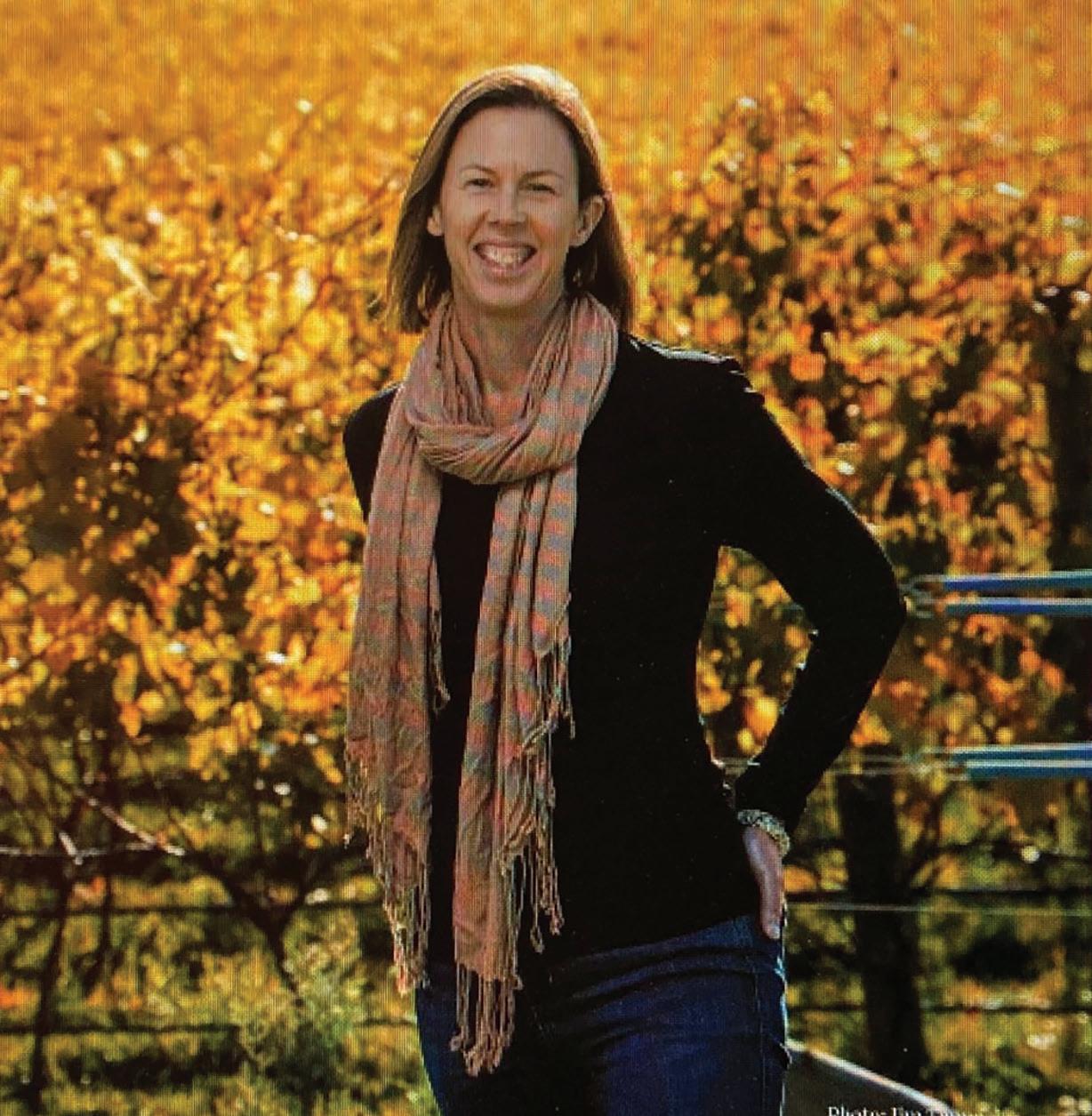
The 11th International Cool Climate Wine Symposium (ICCWS) is on in Ōtautahi Christchurch from January 26-28, 2026. Helen Morrison, Chief Winemaker at Booster Wine Group and Deputy Chair of the New Zealand Society for Viticulture and Oenology, says the event provides opportunity for global scientists, researchers, technology innovators and practitioners to come together and be “fully immersed in all things wine-industry related”.
As climate pressure increases… not just warming climates, but the bigger, more damaging weather events that continue to affect our industry, it’s more important than ever to have a collective approach to sharing ideas on how to successfully grow wine grapes in cool(er) climates in a sustainable and high quality way.
Holding ICCWS in New Zealand is… a great chance for internationals to reconnect, or visit New Zealand for their first time, as well as for us to learn what is happening elsewhere.
I’m looking forward to… being at Te Pae in Ōtautahi Christchurch again – such an amazing facility and great to see the city well into its regrowth stages post-earthquake. I am especially excited to take part in the Lincoln University visit; as alumni I have not had the opportunity to visit since I graduated in 2005. I am also excited to be hosting the panel for the Evolution of Sauvignon Blanc workshop. We have some very interesting wines to share with our participants to help us tell the history of Sauvignon Blanc to date.
Cool climate winegrowers need… to embrace the moment, be proud of the freshness in our wines that is so distinctive when produced from a cool climate.
Now more than ever… we need to continue to share new ideas, try new concepts, and look to technology for more answers. I can’t wait to see you all there in January. iccws2026.nz


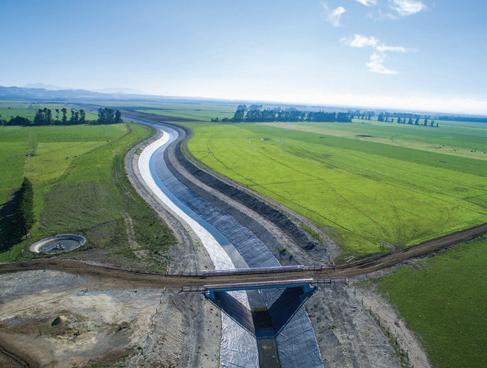


Viking Containment is New Zealand’s leading supplier and installer of geosynethic products for the primary, civil and building construction sectors.
Viking Containment is New Zealand’s leading supplier and installer of geosynthetic products for the primary, civil and building construction sectors.
Geomembrane Liners for
Geomembrane Liners for
➤ Water Storage Dams
➤ Dairy Effluent
Landfill & leachate
➤ Irrigation Canals
➤ Frost Protection
Potable Water Reservoirs
➤ Wasterwater Lagoons
Wastewater Lagoons
Irrigation & Dairy Effluent
➤ Floating Covers
➤ Baffle Curtains
Floating Covers
Baffle Curtains
Geosynthetic Products
➤ Bentomat®
Geosynthetic Products
➤ Geogrids
➤ Geosynthetic Clay Liners
Bentomat ® Geosynthetic Clay Liners
Geogrids
➤ Geocells
Geocells
➤ Geocomposits
➤ Geotextiles
Geotextiles
Associated Products
Associated Products
➤ Geoladder®
Geocomposites
➤ Depth Gauge
Geoladder ®
➤ Geolock®
Geolock ®
Depth Gauge
➤ Viking Vent
Viking Vent


SOPHIE PREECE
Canada’s liquor monopolies might be convinced that sustainability is the “DNA” of New Zealand wine, but they want to see proof of certification on every label.
“It’s the ultimate proof that they can show their consumers that this wine has gone through a rigorous process, and you can be confident in the producer’s sustainability claims and credentials.”
Meagan Littlejohn
Sustainable Winegrowing New Zealand Programme Manager Meagan Littlejohn met with sustainability teams from the LCBO (Liquor Control Board of Ontario) and the SAQ (Société des alcools du Québec) in October, and was told a “sticking point” is the lack of a SWNZ logo on some bottles. “It’s the ultimate proof that they can show their consumers that this wine has gone through a rigorous process, and you can be confident in the producer’s sustainability claims and credentials.”
Meagan, who was in North America to mark 30 years of SWNZ and share the
Roadmap to Net Zero, says conversations were centred on the New Zealand wine industry’s long standing commitment to sustainability, including initiatives at vineyards and wineries. “What we’re doing aligns really closely with what the LCBO and the SAQ are focusing on in terms of their own sustainability strategies,” Meagan says. “They both have a really strong focus on reducing and measuring emissions And they’re already very convinced of our sustainability credentials. The SAQ literally said to me a couple times, ‘sustainability is New Zealand’s DNA’.”
But they want to see proof on the label. “We know that 98% of all vineyards are SWNZ certified, and about 90% of wine is made in SWNZ certified facilities.” But some companies do not put the SWNZ logo on their label, with little space and plenty of legally required information. “I also think there might be a bit of a mindset where, within New Zealand, we know so many people are a part of the programme, so maybe some companies decide, ‘we’re all with SWNZ, so why would I put the logo on my label?’ But externally, in the market and from these retailers, they really want to see it.”
Meagan says the LCBO and SAQ are not making the logo a mandatory requirement, “but it could happen in the future”. In Norway there is such a requirement, and some New Zealand wine companies have
had wine turned away because of it, she adds. The logo may not necessarily sway consumer purchasing decisions on its own, but market gatekeepers have a growing focus, due to targets and government mandates. “It’s really more at that level, which for producers is really important, because that could be the difference between your wines getting on their shelves or not at all.”
At the New Zealand Winegrowers Wine Business Forum earlier this year, audiences saw a filmed conversation between Meagan and Barry Dick MW, from Waitrose in the United Kingdom. “He said consumers kind of expect the retailer to make sustainabilityminded decisions for them. So that’s why I think those conversations are really happening at the market gatekeeper level.”
In terms of the Roadmap, Meagan says the LCBO and SAQ both have sustainability strategies in place, with emissions and climate change as a major focus. “They are looking at actively reducing their footprint. And of course, if you are selling wine into that market, you’re a part of their supply chain, so they expect that those producers will also have that commitment and will be reducing their emissions.” While that is not formalised yet in Canada, the Nordic monopolies are again leading the charge and beginning to implement product carbon foot printing requirements, and are influencing other markets, she says.
RICHARD LEE
The US wine category remains challenged by flat participation and an ageing, affluent consumer base, yet premiumisation continues to drive value. Over 60% of regular wine drinkers now choose premium wine, reflecting resilience among engaged, higher-income consumers – even as younger adults turn to spirits, RTDs, and low/no-alcohol options they perceive as more modern and accessible.
“In the US, the key opportunity now is to lift awareness and conversion rate.”
Richard Lee
Within this landscape, New Zealand wine has expanded its share of regular drinkers from 11% in 2022 to 13% in 2025, comprising about 11.2 million adults. Importantly, conversion from awareness to purchase has climbed from 29% to 34%, and to 40% among premium drinkers, confirming stronger traction in higher-value segments.
Consumers associate New Zealand wine with taste, trust, and value for money (important in light of tariffs), reinforced by perceptions of modern and refreshing wines made in a sustainable way, distinct from other new world wine countries. However, sustainability cues softened slightly, re-emphasising that provenance and environmental integrity will be vital
to maintaining New Zealand’s premium advantage.
Overall, the key opportunity now is to increase awareness while lifting or at least maintaining conversion rates to build on this momentum.
In the UK, wine participation continues to contract – from 54% in 2022 to 50% in 2025 – as younger adults moderate and explore cocktails and RTDs. Yet premiumisation offsets volume decline: the share of premium wine drinkers has surged from 35% to 48%, as consumers drink less often but trade up to trusted, higher-quality brands.
New Zealand wine remains steady at 8.6 million drinkers, outperforming a category under pressure. Conversion among regular drinkers has risen five points since 2022, while premium conversion remains high at 50%. New Zealand’s buyer base within the premium segment has grown eight points, driven by fewer lapsed drinkers and strong loyalty.
New Zealand retains powerful associations with taste, trust, and quality. It also performs well on modern and refreshing wines made in a natural, sustainable way, helping it stand out from competitors. However, perceptions of everyday value and suitability for everyday occasions lag slightly.
The next opportunity lies in balancing premium storytelling with approachability – leveraging Sauvignon Blanc’s recognition while broadening appeal
through Pinot Grigio and Pinot Noir. Building sustainability and naturalness into tangible purchase drivers will also help reinforce New Zealand’s distinct, trusted image.
Overall, the challenge will be to convert stable penetration into new growth, especially among younger and less frequent drinkers, while maintaining the premium edge that has underpinned New Zealand wine’s impressive resilience so far.
The Consumer Pulse New Zealand Wine Webinar – US and UK markets –offered up-to-date market intelligence to support better decision-making in a challenging global alcoholic beverage market. It presented the 4th year of IWSR brand health tracking research, as well as insights from guest presenters Danny Brager from 3 Tier Beverages in the US, Antonia Fattizzi from New Zealand Trade & Enterprise (NZTE) US, and Tim Fogarty from NZTE UK, alongside our NZW UK/US market managers.
A recording of the 18 November webinar, which drew a record number of registrants, can be found at nzwine.com/ members/get-involved/webinars.
To delve into the research go to: nzwine. com/members/brand/market-intel/ usa/consumer-info/iwsr/ and: nzwine. com/members/brand/market-intel/uk/ consumer-info/iwsr/
Richard Lee is Intel and Insights specialist at New Zealand Winegrowers.
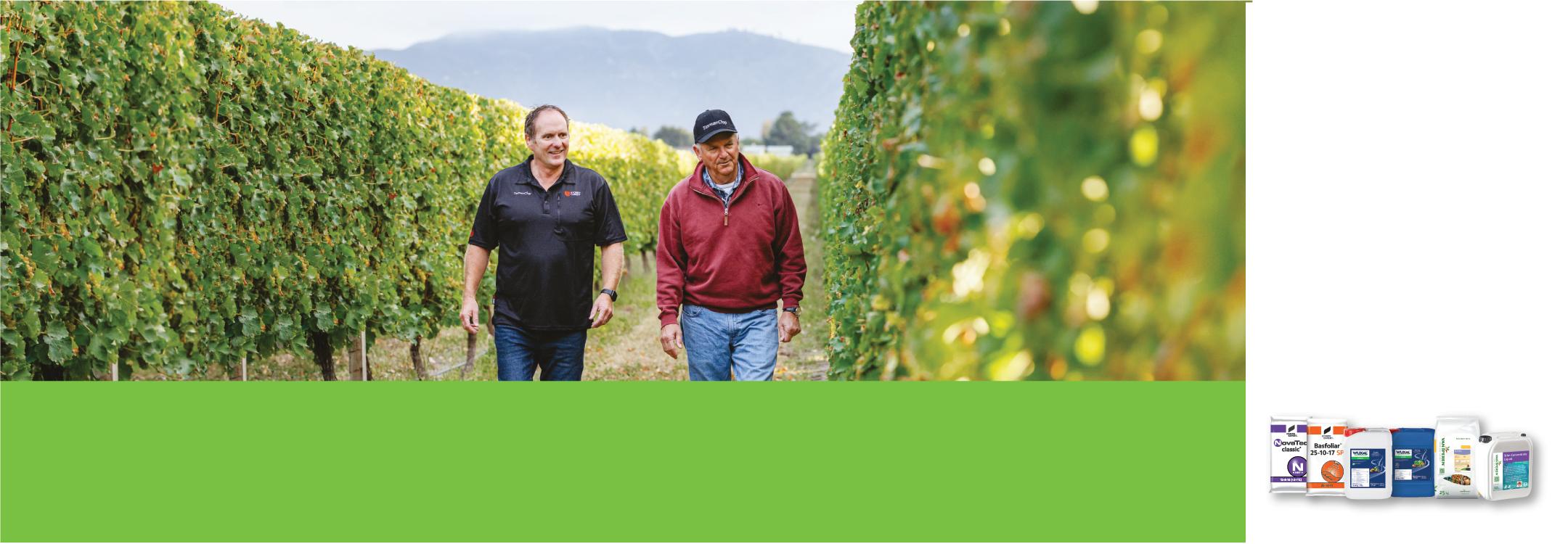

New Zealand wine survived (and in some cases thrived) through ’25, despite significant headwinds, here and abroad. As they gear up for vintage 2026, SOPHIE PREECE asks industry members from around the country to take a glass half full, and half empty, view of the year that was.
Kumeu River Winemaker Michael Brajkovich reflects on the year, including the loss of industry icons Peter Babich, Tim Finn and Dr Richard Smart.
“We have built considerable loyalty in the UK over many years, and our challenge now is to maintain that by keeping up the high quality level and value of our wines.”
Michael Brajkovich
The Good: The maximum temperature recorded for Kumeu’s summer was 28C, on one day in December. But we had many days at 25-26C, and with very dry atmospheric conditions. Apparently, it was Auckland’s driest summer since 1958, but I am old enough to remember the 1974 season, when it was both hot and dry, and the vineyards were much dustier than they were this year. The fruit ripened evenly and with gradual aroma and flavour development. Sugars were moderate to high, and once again Chardonnay was the star performer, with the grapes early and in perfect condition. Acidity was a little lower than usual, but the balance is still there after malolactic fermentation, because it was the malic acid levels that came in lower. Aroma intensity and flavour concentration are exceptional. After two consecutive small harvests, it was wonderful to get back on track with a ‘normal’ sized vintage, but without excessive

yield. We have a cellar full of quality Chardonnay barrels maturing beautifully. The Bad: The cost of everything just seems to go up and up, and there is very little room to adjust our prices accordingly in a world where demand for wine is stagnant, or even in decline. Maintaining a profitable business, with ever-increasing wages, packaging and compliance costs, is difficult and challenging. However, as long as we keep focused on quality, we are confident we will find a pathway out of the squeeze. It is a function of my own age, but this year we seemed to lose even more outstanding people from our sector. Peter Babich was a close friend of my father’s. They served together on wine industry bodies, and Peter was an iconic figure in our industry and a huge contributor to the sector over many years. Similarly, Tim Finn (see page 20) had a profound impact in bringing the Nelson region to the forefront of quality New Zealand wine, and he also gave willingly of his time to serve on industry organisations.
Peter Jones is Director at The Landing and past chair of Northland Winegrowers, with Kim Gilkinson, of Dancing Petrel, now in that role. He casts an eye on the highs and lows of the year.
The Good: Vintage 2025 was one of the best in Northland for many years, with settled weather conditions throughout the growing season. With careful vineyard management, some excellent fruit was brought into the region’s wineries, and we’re all looking forward to getting these in the bottle and into
people’s hands. Tourism numbers were back up, meaning our cellar doors and hospitality partners have enjoyed plenty of custom throughout the year.
The Bad: Firstly, powdery mildew was an issue on many of the vineyards in the North last summer, and this affected crop levels for some of our growers. Secondly, while we got through harvest before the rains arrived in April, we’ve had a very wet and relatively warm winter, and some of the effects of that are being seen in the vineyards now as vines gear up for their next vintage.
Special mention must also be made of Dr Richard Smart. I was privileged to be a student of his when he was a lecturer and Research Fellow at Roseworthy College. When Richard subsequently transferred across to head the viticultural research and extension effort in New Zealand, he introduced truly groundbreaking stuff that made huge improvements to our grape growing. His influence on New Zealand viticulture and wine places him rightfully alongside icons such as James Busby and Romeo Bragato.
The Awesome: This year I visited the United Kingdom market to launch our 2024 vintage wines. I hadn’t been there since 2017, and my spirits were lifted to see the high regard in which our wines continue to be held there. I met many long term customers who really appreciate the quality we can deliver at a price they regard as very reasonable. We have built considerable loyalty in the UK over many years, and our challenge now is to maintain that by keeping up the high quality level and value of our wines.
The Awesome: The beating heart of Northland winemaking, Marsden Estate, has a new ownership group after Rod and Cindy MacIvor sold the business. Marsden makes the wines for many local wineries and there were fears that, if whoever purchased the property decided against winemaking on the site, it would massively affect our winemaking community here in the North. The new owners, however, are fully committed to continuing and are in the process of expanding and building a new winery onsite. A fantastic outcome for all.
Matawhero Wines owner Kirsten Searle celebrated the pioneering winery’s 50th anniversary this year. Kirsten, who sits on the board of Gisborne Winegrowers, and has been part of the region’s wine industry since 2002, says some growers made tough decisions in 2025.
“Some of Gisborne’s unique wine traditions are being lost in the process.”
Kirsten Searle
The Good: The 2025 wine vintage in Gisborne will be remembered as a year when things got a bit more ‘back to normal’. After the challenging, low-yield season of 2024, local vineyards bounced back impressively. The harvest was strong, with more quality fruit on the vines. This allowed winemakers to experiment and innovate, and I’m excited to see the 2025 Gisborne
The 2025 season gleamed with silver linings, says Wilco Lam, winemaker at Oraterra and Chair of Wairarapa Winegrowers.
The Good: Another magnificent year for Wairarapa winegrowers and producers.
The Christmas and early New Year rains added to the party, keeping the vineyards fresh. Yields were up, so pretty much all the wine cellars had a full house, bulging with serious, high-quality wine.
The Bad: There were mostly just silver linings to our 2025 season. But the sad moments were that we had to say farewell to some of our beloved members. Mike Finnucane from Alexander Estate passed away, and Strat Canning, Winemaker from Margrain Wines, retired and will be enjoying spending time on the ride on mower. Their contributions will be missed.
The Awesome: Looking backwards some of the regional producers have scored big on the (inter)national stage: Craggy Range received best in show for their 2024 Te Muna Pinot Noir at the Decanter World Wine Awards, and Te Kairanga’s 2025 Sauvignon Blanc earned a gold medal at the 2025 National Wine Awards
wines flowing steadily to shelves and restaurants throughout New Zealand and beyond.
The Bad: The year has not been without its difficulties. The local wine industry underwent significant changes, driven by rising costs and shifting market dynamics. Some growers and wineries have had to make tough decisions, with some choosing not to harvest fruit or to pull up vines and exit the business altogether. This consolidation has meant a reduction in the diversity of wines and the number of people crafting them. Some of Gisborne’s unique wine traditions are being lost in the process, and the winegrowing community is feeling the impact of these changes.
The Awesome: Despite the challenges, 2025 showcased Gisborne’s enduring strengths, and the vines are in great shape as we get underway with the 2026 vintage. The region’s exceptional soils aren’t going anywhere, and the early season weather has been generous, with ample sunshine and breeze helping vines through to a good budburst. These natural advantages,
combined with a long history of weathering the ups and downs, will ensure Gisborne remains set up for a promising future. We look ahead to the 2026 vintage with a sense of hope and excitement. The next 12 months will also see a collection of wineries working together to market and showcase our most famous variety, Chardonnay, in a series of events held in May as part of ‘The Chardonnay Affair’.

of Aotearoa New Zealand. Those are awesome results for this region.
The Awesome: Looking forwards the new season is upon us, and there’s potentially another incredible season coming. With last year’s warm spring, the stars are aligning for good yields this year if the
weather doesn’t create too much havoc this summer. Cellar door operators in the region are buzzing with this warm weather and ready to welcome visitors who are eager to jump on a bike for tastings, lunches, or a scrumptious glass of summer wine.
Hawke’s Bay in 2025 could have provided the backdrop for a great spaghetti western “echoing the good, the bad, and the ugly”, says Brent Linn, founder of Wairiki Wines and Chief Executive of Hawke’s Bay Wine.
“The independent contract grower is becoming an endangered species and this is of real concern.”
Brent Linn
The Good: In starring role, Clint Eastwood was replaced by the stellar 2025 growing season and vintage. Rain when we wanted it (and when we did not want it) manageable frosts, and a long, long settled harvest period have seen some wise old heads talk about this being a vintage to rival the 2013 benchmark, across all varietals. Already we are seeing some early release white wines living up to predictions and the longer-term reds are looking full of promise. Hawke’s Bay Chardonnay goes from strength to strength. We recently completed the selection of the Hawke’s Bay annual vintage case (2024 vintage wines) from a record number of submissions, so excitement is high to see the 2025 Chardonnays. We take this collection to domestic and international media and commentators to evidence Hawke’s Bay provenance with Chardonnay. As a region that can grow the

A-Z (Albariño to Zinfandel) of varietals, diversity is a key strength for our producers. Recent Hawke’s Bay Wine regional technical workshops have been exploring this diversity and opportunities in alternative reds and sparkling wine.
The Bad: This has got to be the headache the wine industry is currently experiencing with an imbalance of supply and demand, and who ends up wearing the rebalancing costs. The independent contract grower is becoming an endangered species and this is of real concern. These people are the risk takers that experiment with new varieties, the early adopters of alternative production practices, and in essence the DNA of our
John Hancock has been inducted to the Hawke’s Bay Wine Hall of Fame, recognising the pioneer’s “passion, vision, and unwavering belief in the region’s potential”, and his influence on the course of New Zealand wine. After graduating from Roseworthy College in 1972, John honed his craft at Leo Buring before crossing the Tasman in 1979 to join Delegat in Auckland, “where he helped redefine New Zealand table wine”, Hawke’s Bay Wine wrote on announcing the induction. “By the early 1980s, his pioneering spirit found a home at Morton Estate, where his innovative barrelfermented Chardonnays – including the now-legendary Morton Estate Black
Label Chardonnay – captured national and international acclaim.” Fruit from the region’s Gimblett Gravels vineyards inspired him, and in 1993 he founded Trinity Hill. “Together with winemaker Warren Gibson, John crafted benchmark wines, including the iconic Hommage Syrah, that continue to define excellence to this day.”
John is known for his generous spirit, fierce independence, and “unmistakable charm”, they wrote. “A passionate ambassador for Hawke’s Bay and a tireless advocate for New Zealand wine on the global stage. Whether on the road, in the cellar, or with a guitar in hand, John has always brought energy, authenticity,
reputation as an innovative and adventurous wine region.
The Awesome: Three legends of the Hawke’s Bay Wine scene were recognised this year for their service. John Hancock (see below) received the Hall of Fame Award at the recent Hawke’s Bay Wine Awards for his contribution to the Hawke’s Bay wine story. Peter Robertson of Brookfields Winery received life membership of Hawke’s Bay Wine for his contribution at the helm of the region’s oldest boutique winery. And photographer Richard Brimer was also recognised with a life membership, for opening the Hawke’s Bay wine story to the world through his images.

and conviction to everything he does. His legacy is one of innovation, integrity, and belief – belief in the land, the people, and the power of Hawke’s Bay to produce wines of true world-class calibre.” John Hancock
Abel’s Mark McGill, a Chardonnay champion of the Moutere Valley, looks back at a challenging season and “stellar” vintage.
“Young people are drinking wine… Let’s not keep telling them they aren’t, or they won’t, which is clearly not awesome.”
Mark McGill
The Good: Excellent quality and, despite the early spring frost, good volume, thanks to the best flowering conditions ever seen in the region. At Abel we picked every single last grape of Chardonnay (unless it didn’t meet our stringent criteria) from our own vineyard and our grower vineyards, which sounds like it was a rare feat in 2025! Speaking with my winemaker’s hat on, it was a stellar vintage – but is it as good as 2024? I don’t think so. However, as they say, only time will tell.
The Bad: As I write this it’s pouring down
NEIL HODGSON
Neudorf co-founder Tim Finn leaves behind a legacy of innovation and excellence that has helped shape not only the Nelson wine industry but the modern era of New Zealand wine production. Tim, who passed away on 31 October, aged 79, began his winemaking journey in the early 1970’s, when he was studying for a master’s degree in animal behavioural science while working for the Ministry of Agriculture at their Ruakura research centre. At the time a new generation of producers were appearing on the New Zealand winemaking landscape and Ruakura’s sister organisation at Te Kawhata was involved in wine research. A few years ago Tim told me, “a little cross-fertilisation took place”.
After looking at most of New Zealand’s established wine producing regions, Tim and his wife Judy found a piece of land in Nelson that looked quite interesting. Many established producers of the time did not see much value in research, but as a scientist and novice winemaker
again here – we’re already over 1,250mm since 1 January. Please make it stop! Speaking with my viticulturist hat on, the 2024/25 growing season was one to forget. It darn near broke me, until the winemaker stepped foot in the vineyard and brought the sunshine (but don’t tell him). It was a very tough season with constant rain – not lots, but enough on a week to 10-day basis to make you have to get back on the horse (or drone as it were) and apply another spray. The weather app had never seen so many fingers and the canopy just kept growing. Then, just when we thought summer had come early, it quite quickly decided to disappear for six weeks, only to show itself again just in time to give us five weeks of sunshine to get things over the line. Phew! I truly think we got away with one there. Survive to ‘25 we did – just!
The Awesome: One word, Chardonnay. Clearly biased at Abel, but if you asked any winemaker in this region for the strongest variety for the vintage, I guarantee they would reply “Chardonnay”. Year in, year out, it proves resilient to challenging conditions and always makes it over the line when grown with care and common sense.

Chardonnay grown here in the Moutere clay soils is awesome. Oh yeah, and to finish, young people are drinking wine! That’s also Awesome. Let’s not keep telling them they aren’t, or they won’t, which is clearly not awesome.
Tim was like a sponge, soaking up as much information as he could and sharing the things he was learning in the vineyard with researchers. This sharing of knowledge was important to Tim and the phenomenal success of Neudorf Vineyards. He believed that the industry is in the strong position it is because winemakers and viticulturists around the country have been prepared to talk openly about things that work and things that could be done better. When he was made a Fellow of the New Zealand Wine Institute in 2008, the citation read: “Tim is widely respected in the industry for the superb quality of Neudorf wines and the contribution he has made both regionally and nationally to the betterment of the industry.”
He was a man who attained excellence in everything he did, he was a man with a huge heart, a man of generosity who always had a smile on his face, but most importantly he was a man who loved his family above everything. His daughter

Rosie says her father was “humble to a fault, inquisitive and pioneering. He leaves a legacy of excellence behind.”
Read Neil’s full piece at thepress.co.nz/nznews/360875336/winemaker-tim-finnman-who-left-legacy-excellence
Dr Ed Massey is General Manager Sustainability at New Zealand Winegrowers. He leads the Environment team responsible for driving progress towards the industry’s sustainability goals through Sustainable Winegrowing New Zealand and the biosecurity programme.
The Good: This year biosecurity planning was introduced as a mandatory requirement within SWNZ. It was great to see the high levels of engagement from members across the different wine regions to learn more about biosecurity and biosecurity planning (page 27). Biosecurity is fundamental to the success of the industry, and our members are doing an excellent job as active participants in New Zealand’s biosecurity system.
The Bad: During 2025, Project Raumatatiki: Freshwater Farm Planning for Viticulture successfully piloted a digital freshwater farm planning tool that will help our members to identify and mitigate any risks posed to freshwater by their winegrowing activities. This builds on the education programme and industry
guidelines that were developed last year. Despite this progress there remains considerable uncertainty regarding the future of Freshwater Farm Planning as the government is yet to release new regulations that will replace those launched in August 2023. In August this year we got good news as, following NZW advocacy, the Resource Management Amendment Act raised the threshold for viticultural properties that require a plan from 5 to 50 hectares. While this raised threshold will result in significantly fewer members being required to complete a Freshwater Farm Plan, the flip side is that we are still waiting for the details to be released with the regulations – hopefully in early 2026. Good things take time!
The Awesome: It has been awesome to have a key role in the work that has gone into celebrating 30 years of SWNZ. For three decades this industry-led programme has guided members to help to protect New Zealand’s environment, improve efficiency, and strengthen the reputation of New Zealand wine worldwide. This year we have worked

hard in collaboration with members to bring our commitment to sustainability to the world stage. Whether that’s through presenting at international events such as Sustainability in Drinks in London in October, working with key influencers in our export markets, or celebrating at New Zealand Wine 2025 in Christchurch, we have been able to demonstrate the passion and longstanding commitment our members show for sustainable winegrowing. It has been heartening to tell our story about the positive actions our members take to leave our industry, our world and our wine better for it.
From vine to vintage, we offer a suite of wine tests designed to help get your product to market safely and promptly. And the best bit? We’re based here in Blenheim, right in the heart of wine country. Talk to us today about how we can help with your wine testing needs.


In 1986 Hunter’s Wines shook up the wine world when it won the Sunday Times Vintage Festival in the United Kingdom with an oak aged Sauvignon Blanc from Marlborough’s 1985 vintage. Forty years on, Senior Winemaker James Macdonald, Chair of Marlborough Winegrowers, reflects on the past year.
The Good: It’s amazing how quickly we forget the harvest that was. It’s only eight months behind us, yet already it feels like a distant memory. Looking back, the 2025 harvest in Marlborough was one for the record books in more ways than one. Despite considerable efforts to manage crop loads, 2025 turned out to be an enormous vintage. In my experience, large crops often come with increased disease pressure, but this year
Glenn Thomas made his first Awatere Valley wine at Vavasour in 1989, intrigued by the subregion’s potential. Nearly 40 years on, Tūpari’s winemaker offers some insight into the ups and downs of 2025.
The Good: The 2025 vintage produced top quality wines from a range of varieties from the Awatere Valley. The Sauvignon Blancs were typical, showing classic white peach and ripe citrus notes from the Tūpari Ra vineyard, situated in the upper parts of the valley. Because the Awatere Valley is slightly cooler, especially in the upper valley, we retained good natural acidity which is essential to produce a classic Marlborough style
proved to be the exception. Marlborough’s brilliant weather played its part, allowing fruit to achieve perfect ripeness. Just a dash of early season rain, and the outcome could have been very different.
The Bad: While the harvest itself was a success, the picture since the last truck was tipped has changed markedly for many New Zealand wine companies, particularly trading with the United States. The 10% tariffs announced in May, while the juice was still fermenting, then the lift to 15% in August, was another blow to already sluggish sales. Business with the US continues, and it remains our single largest market, but growth is expected to remain flat for the time being.
The Awesome: Across the industry, everyone
of Sauvignon Blanc. The Riesling had abundant floral and honey notes, and showed how good Marlborough Riesling can be.
“Careful crop management was necessary this year, and will be for the short to medium term.”
Glenn Thomas
The Bad: 2025 had the potential to produce large crops across all varieties
is now acutely aware of the challenges ahead. It has been heartening to see growers and wine companies come together to work through these issues collaboratively. The recent Wine Marlborough industry pulsecheck survey showed a clear understanding of the importance of producing the quality grapes required to make quality wine. Marlborough Sauvignon Blanc grown to sensible cropping levels remains one of the truly great wines of the world; so good it almost sells itself. But when cropping levels push too high, the distinctiveness that built Marlborough’s reputation begins to fade, and the wine becomes less distinguishable from those produced elsewhere at a much lower cost. I know exactly where we will be aiming come vintage 2026.
at a time when markets are struggling to absorb the volume of available wine. Careful crop management was necessary this year, and will be for the short to medium term.
The Awesome: Tūpari Wines has been recognised at wine shows for our Riesling from Tūpari Ra vineyard. The Tūpari 2024 Late Harvest Riesling was awarded two trophies at the 2025 Canberra International Riesling Challenge for top sweet Riesling and top New Zealand Riesling. It was nice to be recognised at an international competition and to show that Marlborough can produce quality wines from other varieties to go with our famous Sauvignon Blanc.
A Wine Marlborough Lifetime Achievement Award is “very premature”, say Kevin and Kimberley Judd, nearly 43 years after they came to New Zealand for a three year stint. “We haven’t finished yet,” Kevin says.
It’s been more than 40 years since he made the first Cloudy Bay Sauvignon Blanc, and 16 years since the couple launched Greywacke, creating another iconic Marlborough wine label.
Kevin and Kimberley were both born in England, but moved to Australia when they were young. Kimberley went on to study politics and history at Adelaide University, and soon met Kevin, who’d taken up winemaking studies at Roseworthy College. In the third year of his studies, he worked the vintage at Chateau Reynella, south of Adelaide, with “larger-than-life” winemaker Geoff Merrill. “That’s when I realised it really was an interesting and really cool industry.”
In February 1983, Kevin took a job with Selaks in West Auckland, with the couple planning to stay in New Zealand for three years. But the next year he met
David Hohnen at a wine show, changing the course of the Judd’s lives, and of New Zealand’s wine story.
Kevin accepted an offer to be winemaker at David’s new Marlborough winemaking venture, and in 1985 the first Cloudy Bay Sauvignon Blanc took the world by storm. Kimberley recalls being in the United Kingdom when the wines were first released there, and seeing the ripples created from Marlborough. “We were listening to this bunch of upper class English people going on about Cloudy Bay and thinking, ‘are we talking about the same place here?’”
Kevin stayed with Cloudy Bay for 25 years, his name synonymous with the label, but left in 2009 to launch Greywacke with Kimberley, in the midst of the global financial crisis. The first year he created seven wines and 6,000 cases, and 16 years on Greywacke is exported to more than 50 markets.
While Kevin’s father convinced him to study winemaking instead of photography, the two careers have run in parallel, with stunning images that have reflected Marlborough’s landscapes and vineyards

across the seasons and years, including those in Kevin’s books The Colour of Wine, and The Landscape of New Zealand Wine. He has forged an international reputation for his photography, and earlier this year was named the Marlborough Living Cultural Treasure for 2025.
David Hohnen says Kevin is a perfectionist in winemaking, as he is with photography, always looking for the extra 1% in quality. And Kimberley has been a key part of the success, he adds. “They have been team Judd; there’s no doubt about it.”

Matt Barbour of Barbour Vineyards is Chair of the North Canterbury Winegrowers Association and a true champion of the region. “This isn’t just about weathering the storm,” he says. “It’s about reaffirming who we are: a bold, distinctive wine-producing region with deep roots and enduring pride.”
The Good: North Canterbury is fast becoming a must-see, must-taste wine destination – captivating both national and international audiences with increasing numbers of visitors to our region.
Accessibility is a strength, with both port and airport connections making it easier than ever for visitors to explore all we have to offer. Our region’s stunning diversity and the unwavering resilience of our people give us a distinct edge and uniqueness. Across vineyards, cellar doors, and communities, we’ve come together to navigate seasonal and market challenges, seize new opportunities, and celebrate remarkable achievements. Several of our wineries have earned prestigious awards, reinforcing the quality, depth and character that define North Canterbury wines. Our vineyards and wineries managed to communicate their way through many challenges over the growing

season. Because of this we harvested the third highest tonnage in the country.
The Bad: Yes, challenges remain. Global industry downturns and local vineyard pressures have tested us, but they’ve also deepened our resolve to move forward together. Across the region, we’re actively seeking new ways to collaborate – sharing knowledge, pooling resources and aligning our vision – to ensure North Canterbury continues to thrive.
The Awesome: Out of challenge comes innovation. North Canterbury’s diversity and tenacity are fuelling a wave of growth
and creativity. We’re seeing more wine labels proudly carry the North Canterbury appellation, each one a reflection of our evolving story. The upcoming North Canterbury Wine & Food Festival – on track to sell out – is a vibrant celebration of everything we stand for: quality, community and character. Investment in cellar doors is positive, and the development of a regional tasting venue at one of Waipara’s most iconic locations, Waipara Winehouse, marks a thrilling new chapter. These milestones aren’t just wins – they’re proof that North Canterbury is rising, together.


Even in tougher times, the New Zealand wine industry is a collaborative force, open minded and engaged by science and innovation, says Juliet Ansell, Chief Executive of Bragato Research Institute.
The Good: Our Next Generation Viticulture programme has now been underway for over a year. The programme aims to improve vineyard profitability by adopting innovative canopy systems that drive cost reductions, reduce yield variability, and enhance sustainability, all while safeguarding the quality New Zealand wine is renowned for. The programme is a partnership with the Ministry for Primary Industries, New Zealand Winegrowers, and seven wine businesses. We have been keeping the industry informed throughout the seasons with workshops. Progress has been positive, and we are looking forward to sharing the full first year results in due course.
The Bad: Watching our members go through another difficult year has been hard, and you have my genuine empathy,
as at BRI we truly feel a part of the industry. I know we still have some tough times to get through, but I believe this is where research and innovation are critical. I am keen to keep building connections with members who have insights to share, particularly regarding any challenges you are facing that could benefit from further research. We have a couple of initiatives specifically targeting short-term industry research – we’ve restarted ‘grower trials’ and plan to ring-fence applied research each year from contestable funding.
The Awesome: The engagement and participation from the industry in science and innovation. I am always excited by how truly collaborative and open-minded the New Zealand wine industry is. Over the past year, we have co-designed the refresh of the research strategy with you. This strategy will be used to guide future investment aligned with the outcomes you have prioritised. There is still going to be an element of balancing short term applied research with longer term, stretchier science, but we are so much


clearer on the challenges and how we can help. We have filled in some gaps in the dedicated team here at BRI, which has further set us up to help deliver for the wine industry. Thank you to everyone who has welcomed, challenged, and collaborated with BRI during the year.
Birdzout solutions keep grapes safe, with proven, tailored solutions. 24/7 automated defence reduces crop loss, saves time, and protects your profit. Trusted by NZ’s leading vineyards Discuss your bird control plan with our experts Phone: 0800 654 320


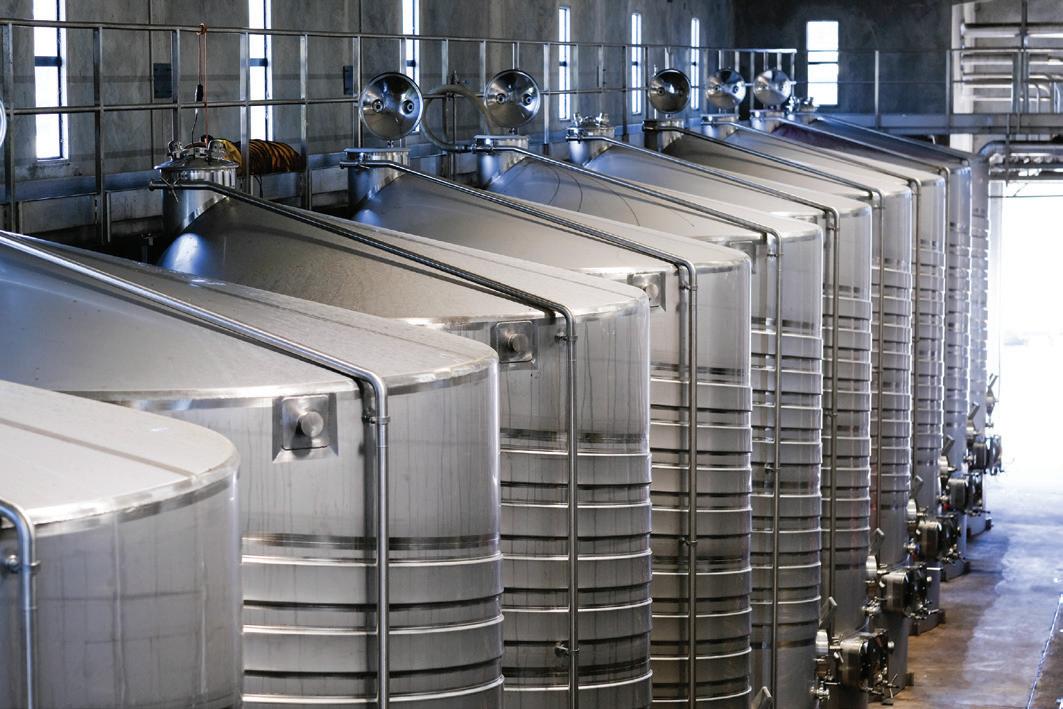
Carolyn Murray, general manager of Central Otago Winegrowers Association, says collaboration remains Central Otago’s secret weapon.
The Good: Pure Pours – Central Otago. A new initiative, driven by the narrative of Pinot Noir New Zealand 2025 speakers, encouraging the wineries to get seen in market. Pure Pours took 17 Central Otago wineries on tour traversing three Australian cities and pulling off six events in four days. We had over 450 consumers join us and 300 trade registered to celebrate Central Otago wine.
The biggest realisation? We, the producers of Central Otago, can take charge of our own story. The regions have a compelling story to tell and there are consumers there ready to hear it and taste it.
The Bad: The squeeze is real. Margins are tight, global sales are softening, and costs keep climbing. Despite this, we hold steadfast to producing quality wines without compromising on care and stewardship of the land. Add to that a proposed gold mine, set amid our world-renowned vineyard landscapes and tourism heartland – the contrast in values is hard to miss. It’s a battle between caring for the land and taking from it. How do we fight against fast-tracked legislation, closed doors, and quiet deals?
The threat is not just Central Otago’s reputation, but New Zealand’s. Are we the only ones with gloves on?
The Awesome: Wine tourism is strong with visitor numbers climbing. Adding to this, our cycle trail network is ever expanding… you’ll soon be able to ride between all of our winegrowing subregions across Central Otago to Queenstown and Wānaka, linking cellar doors and accommodation along the way. There’s more awesome to be mentioned: our people. From our board members to the committees to every grower and maker – it’s our community that makes everything we do possible (and keeps us smiling when things get tough). Collaboration has always been, and still is, Central Otago’s secret weapon. A glass in hand helps too.
Te Kano Winemaker Dave Sutton, Chair of Waitaki Valley Winegrowers, looks back.
The Good: A settled flowering period led to strong and even fruit set across most varieties. Pinot Noir showed excellent bunch architecture, and yields were strong. Unfortunately, this led to tighter bunches with more debris trapped inside, leading me to....
The Bad: Disease pressure playing a significant role in picking decisions this season, with botrytis prevalent throughout the region. Tight bunches with plenty of flower debris allowed for botrytis to make an impact on all varieties. Turning lemons into lemonade though, this high botrytis incidence led to....


The Awesome: Conditions for making noble wines meant some of the best dry botrytis I’ve seen outside of Germany being turned into some incredible nectar. The strong run of awards for Waitaki
wines also continued, with a Waitaki Pinot
taking out the trophies for Best New Zealand Red Wine and Best New Zealand Pinot
at the 2025 International Wine Challenge.
The year was marked by “progress, collaboration and reflection” in biosecurity, says New Zealand Winegrowers Biosecurity Advisor Jim Herdman. “While challenges remain, the foundations laid in previous years position us well for continued improvement in vineyard biosecurity.”
The Good: 2025 represented a significant step forward for vineyard biosecurity. Of note was the integration of biosecurity requirements into the Sustainable Winegrowing New Zealand programme. We travelled to New Zealand’s wine regions, engaging directly with members to discuss the new requirements and what effective vineyard biosecurity looks like in practice. The response was overwhelmingly positive. Workshops were well attended, there was good discussion, and members expressed genuine appreciation for the templates and resources provided. Two major
exercises – focused on brown marmorated stink bug (BMSB) and xylella fastidiosa – were conducted in collaboration with government and other primary industry sectors via the Government-Industry Agreement (GIA). These exercises helped refine our response planning and highlighted areas for improvement.
The BMSB Council’s Harvest Shield 2.0 simulation in August was particularly useful, as it tested governance coordination and operational readiness in a full-day scenario.
The Bad: Severe weather events in Tasman and Marlborough served as a sobering reminder of the sector’s vulnerability and underscored the importance of emergency preparedness. Emergency readiness and response is part of the biosecurity team’s role, and we continue to learn and adapt the way we can support members through these events. As is often the case with emergency events and exercises, they revealed not only what is working well but also what remains to be done. These insights are invaluable and point to the
need for sustained effort. Each situation brings new challenges to the fore.
The Awesome: Alongside testing response plans, the BMSB Council is also exploring long-term management strategies in the event that containment proves unfeasible – the essential next step in our thinking on BMSB. Second, our growing collaboration with Australian counterparts has been a highlight. Strengthened relationships with Plant Health Australia, Vinehealth Australia, Wine Australia, and others have opened new avenues for shared learning and strategic alignment. Observing and adapting elements of their response planning will help us refine our own approaches. Additionally, we initiated work with Bragato Research Institute on a biosecurity research plan tailored to the wine industry. This work is still in its early stages and modest in scale, but it is a good step forwards. We also released new resources for vineyard contractors, including guides and factsheets, which complement the broader biosecurity toolkit available to members.
29 I The Cover-up
Te Mata Estate
30 I Regenerative Mindset
Lowlands Wines
30 I Covercrops, Compost & Cowshit
Te Whare Ra
31 I Growing Curiousity
Nick Gill
33 I Rolling with the Seasons Felton Road
34 I Dirty Laundry AONZ’s buried undies
Regenerative viticulture has an open and evolving toolbox for growing soil, vine and ecosystem health.
Speaking to industry leaders about cover crops, crimpers, swards, sheep and worm counts, EMMA JENKINS
MW asks whether this is the next era of New Zealand winegrowing
In a quiet but notable shift, winegrowers globally are talking less about sustainability and more about regeneration – not merely reducing harm but actively improving the health of vineyard ecosystems. The term ‘regenerative viticulture’, or ‘regen vit’, has quickly entered the industry lexicon, and while its definition remains somewhat fluid, the intent is clear: to move from minimising damage to fostering renewal.
It borrows from regenerative agriculture – farming that focuses on improving soil function, enhancing biodiversity, rebuilding organic matter, and restoring natural plant and ecosystem cycles. Its goal isn’t just to sustain the vineyard environment but to actively improve it over time. In practice, this might mean multi-species cover crops, reduced or no tillage, integrated livestock, or encouraging native plants and insect life, creating selfsustaining, biologically active soils that support healthier vines and greater resilience in the face of growing climate extremes.
British author Dr Jamie Goode, who spoke on the topic at Pinot Noir New Zealand 2025, says this “new-ish” branch of farming vines seems to have a wide appeal. “I’ve seen many who wouldn’t consider organics taking a keen interest in regenerative. I love this inclusivity.” Regenerative practices often build upon organic principles but go further, requiring the benchmarking and active improvement of ecological factors like soil carbon levels or wildlife habitats. Unlike organics or biodynamics, regen vit (as yet) has no certification scheme, and this flexibility has made it attractive to a broad range of growers. “All solutions are local,” Jamie says. “It’s about intelligent application of a toolkit of interventions, not a recipe or checklist.”
The absence of formal standards has opened regenerative viticulture to criticisms of greenwashing, but “I’m not overly worried”, Jamie says. “Because so far this is something people adopt because it is a scientifically rational way to farm that results in lower inputs, lower costs, and potentially better wine quality. And morally it is the best way to go because it leads to true sustainability.”
Dr Ed Massey, New Zealand Winegrowers General Manager Sustainability, says certification is becoming increasingly
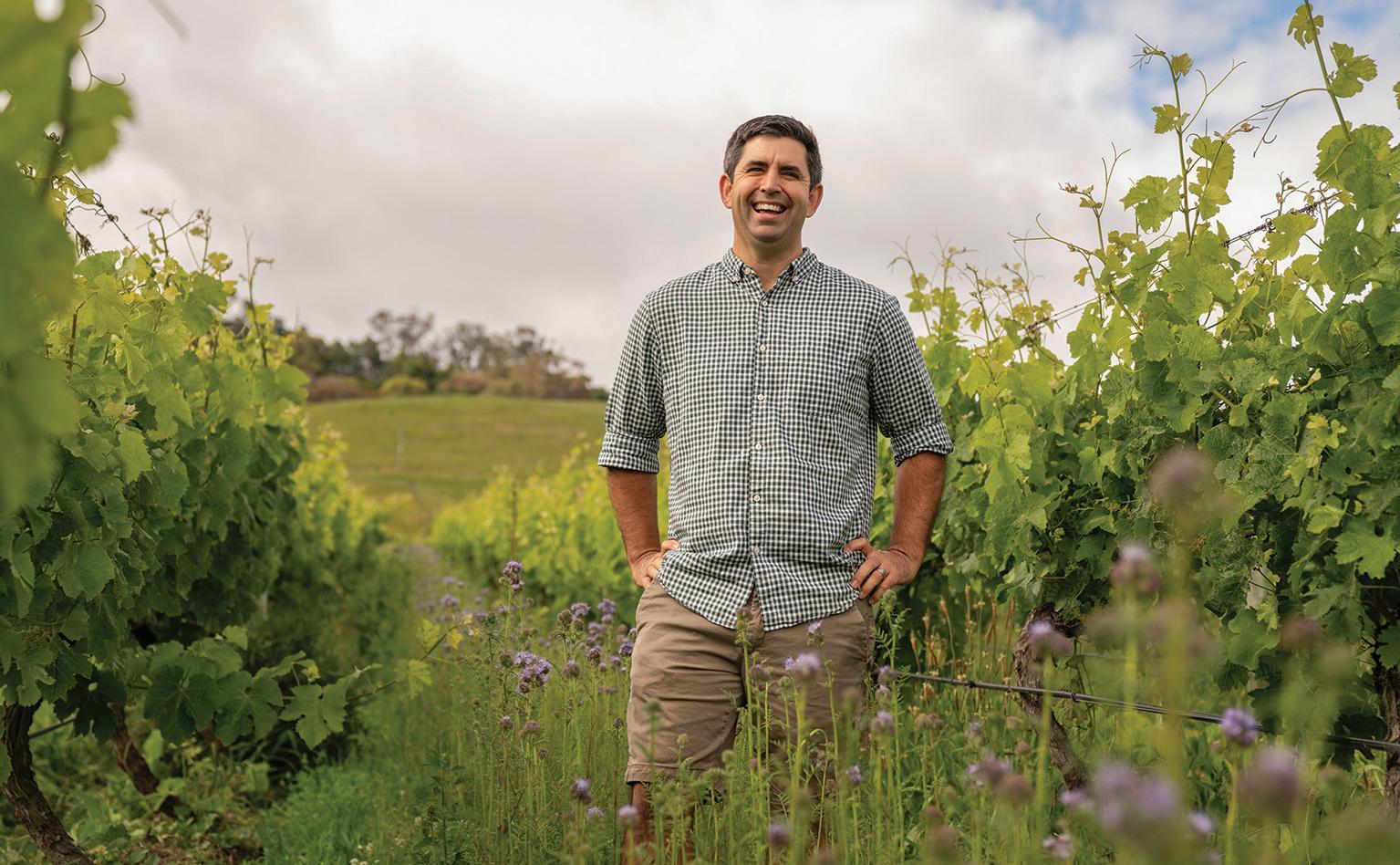
important for market access, and there are currently no bodies in New Zealand that certify vineyards as regenerative. “However, there’s heaps of space for Sustainable Winegrowing New Zealand certification and regenerative practices to exist alongside each other.”
SWNZ Programme Manager Meagan Littlejohn says there are no plans at this stage to explicitly add regenerative to the framework, “however there is alignment between SWNZ and some of the tenets of regenerative agriculture, in particular protecting and enhancing soil health,” she says. “We do have plans to review and further refine/strengthen the soil pillar of SWNZ in the near future.” In 2022 Viticulturist Jess Wilson (see page 34) wrote a research paper on whether regenerative viticulture is the answer to a future-proofed wine industry. She found that SWNZ and regenerative viticulture could play a role in protecting the industry’s prospects, “but neither is the sole answer”. The two are complimentary, she wrote in the Kellogg Rural Leadership Programme report, suggesting that regenerative could be integrated into SWNZ, for operators who want to go further than the framework. “If members of the wine industry believe they have ‘achieved’ sustainability they should be challenged to go further, there is always room for learning and improvement in a changing, dynamic environment.”
Te Mata
When viticulturist Brenton O’Reilly arrived at Te Mata in October 2019, he inherited a legacy vineyard, with muti-generation stewardship primed for evolution. “It was a chance to relook at things, where we had come from and where we were going, and to set out a 10-year plan,” he says. “We were already well set up above ground with trellising, rootstock and vineyard mapping, so the logical place to start was looking beneath our feet at soil health beyond what we were already doing with SWNZ”.
With a significant company research and development fund, and a partnership with the Callaghan Institute, Brenton spent 12 months reviewing organic, biodynamic and regenerative practices from across New Zealand and overseas, both within and outside of industry, before rolling out trial blocks across site, variety and subregion.
Senior Winemaker Phil Brodie says they didn’t want to set a mandate, “so a system with flexibility was appealing”. They asked throughout not just ‘what’ they were doing, but ‘why’. “We were looking for long-term solutions rather than band aid ones. It is a real mindset change.” For example, instead of having a spray response and schedule, they would consider the root cause of the problem, such as bunch trash driving botrytis counts, which could be solved with a foliage shaking programme.
Now, more than four years in, regenerative
practices blanket all vineyards. Key shifts have included moving away from herbicides undervine, deploying custom undervine mowers and crimp rollers, and targeting soil health and moisture retention via cover crops, with strategic mixes tailored to site, block and even clusters of vines. They incorporated highland cattle and biodynamic preps, as well as composting. “We have definitely needed new equipment,” Brenton says. “Though some of this investment is offset by fewer inputs and an improvement in fruit quality.” In tricky vintages like 2022-23 the vineyard responded much more resiliently. “Fruit came through better than expected and we had more tools to work with too.”
“The best part of the story is we believe in it.”
Phil Brodie
On the winemaking side, Phil has observed measurable gains: better YAN levels, berry integrity and thicker skins, with blocks previously suited for estate wine now earning placement in top-tier ranges. There’s also a team shift to root-cause thinking. “Buy in is crucial, especially as you need to get things set up, both in terms of vineyards and people. It’s a slow and steady process and culture is so important. We’re proud of what we have done, and what we are doing.” At Te Mata – New Zealand’s oldest continuously operating estate – this is a long-term, integrity-driven project, says Phil. “The best part of the story is we believe in it.”
When Robert Holdaway returned to Marlborough after years in ecological research, he brought with him both a scientist’s curiosity and a farmer’s instinct. A Cambridge PhD in ecology, and time at Landcare Research studying biodiversity and ecosystem function, had sharpened his conviction that vineyards could function as thriving ecosystems, not just production systems. “My brother Richard [a mechanical engineer] had already started moving down this path, and we see biological and regenerative farming practices as a natural progression of our family’s multigenerational farming philosophy,” he says. That philosophy now underpins Lowlands Wines’ vineyards across Dillons Point and the Lower Wairau. Guided by the principles of regenerative agriculture –minimising soil disturbance, maintaining
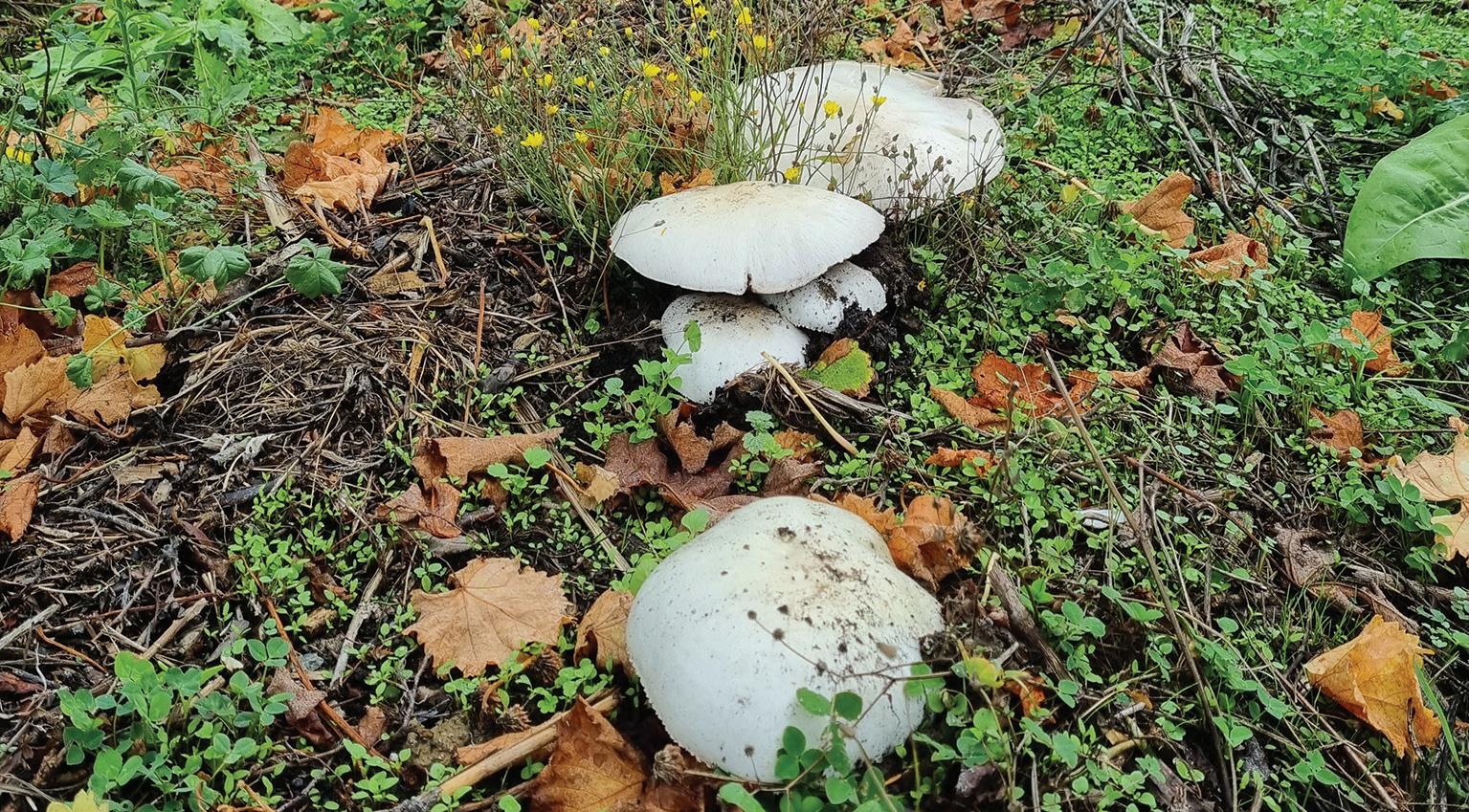
“We see biological and regenerative farming practices as a natural progression of our family’s multi-generational farming philosophy.”
Robert Holdaway
living roots year round, boosting biodiversity, keeping the ground covered with mulch, compost or living plants, maximising photosynthesis, and integrating livestock – the Holdaways have adapted each idea to Marlborough’s realities. “First and foremost is the regenerative mindset,” Robert says. “We are always looking to innovate, apply the latest science, and adapt our practices to variation in seasons and across vineyards.” For example, they have recently shifted away from annual cover crops towards a diverse perennial sward, as they found that minimises negative effects caused by the herbicide or cultivation required to successfully establish a new cover crop.
Sheep play a starring role: 1,500 merinos rotate through the blocks each winter, adding fertility, reducing mowing, stimulating root exudates as plants regrow, and aiding with frost protection by keeping interrows neat. Meanwhile, compost, foliar nutrition and microbial stimulants sustain soil function. Synthetic nitrogen is avoided altogether. These practices are applied across their 182 hectares of vineyards, specific to particular blocks, and trials of zero-herbicide blocks are currently under evaluation.
The results are encouraging – after heavy rain events their ditches deliver clearer water compared to neighbours, soils teem with earthworms, biodiversity inside the blocks has visibly increased, and they no
longer need to spray for mealybug. Robert says costs have overall been pretty similar to those of previous systems. “We’re not doing these practices with the aim of saving money. We’re doing them to improve vine health, yields, and ultimately wine quality.”
Meanwhile, extensive plantings of both plantation and native forest offset their vineyard emissions, with their annual carbon sinks now more than ten times greater than their wine production emissions. The Holdaways’ approach demonstrates how effectively science, soil, and long-term stewardship can align to create resilient vineyards and quality wines.
Te Whare Ra
Regenerative viticulture is deeply embedded in the way Anna and Jason Flowerday farm at Te Whare Ra. “For us, regen is the future of farming,” Anna says. They learned a lot about it living in South Australia, before buying their Marlborough vineyard, and found those techniques helpful in bringing soils “back to life”, she says. “Which in turn brought our old plantings back to life.”
“When we first took over here we had a lot of people tell us ‘those old vines are stuffed and you will have to pull them out and start again’. But to us they were something very unique and precious. We felt very fortunate to have access to them so we pulled out all the stops to save them.”
Two decades on, their “3 Cs” (cover crops, compost and cowshit) remain the foundation of Te Whare Ra’s system. Early adopters of cover crops in Marlborough, they drew curious stares and comments from passing growers when Jason first began experimenting. “We see the mid rows as a huge opportunity to improve our soil health,” says Anna. “We initially ran an alternate row system with summer and winter cover crops in one and a multi-species sward in the next, grazed by our cows in winter.” With numbers
now very stable, that mixed sward forms a permanent, diverse mid-row cover, including clovers, chicory, plantain, and winter-active, summer-dormant fescues.
“Jason and I both believe that to be truly regenerative you need to be organic as well – you can’t be using herbicide,” Anna says. “That might be a controversial opinion, but I don’t think you can say you are improving your soil health on the one hand whilst you are damaging it on the other.” Livestock and bees are in the mix as well. “We have our cows here 12 months of the year, and also add in sheep over winter. And we compost all our marc with hay grown on the property.”
“Jason and I both believe that to be truly regenerative you need to be organic as well – you can’t be using herbicide.”
Anna Flowerday
The results speak for themselves: soil organic matter has risen from 2% to around 7%, effectively creating “a 13.6 million litre dam under our vineyard”. There’s little run off, improved resilience and fruit quality in tougher years, something especially notable in drought years.
The Flowerdays are vocal advocates for broader change. “Much of what we do could be adopted by conventional growers,” Anna says. “You don’t have to be organic to use cover crops and compost and to integrate livestock, but you do have to walk the walk, not just talk the talk.”

Nick Gill brought a rare blend of pragmatic farming roots and visionary viticultural and permaculture thinking to his former role at Greystone Wines. And he’s built on that over the past year, as technical lead for the Regenerative Viticulture Foundation in Aotearoa New Zealand. “I feel like there are so many ways we can improve how we grow and make wine,” says Nick, who grew up on a farm in South Australia, witnessing firsthand “how fragile the landscape was”.
For the past 20 years he and his wife Angela have run a permaculture ‘food farm’ in North Canterbury, while he helped drive regenerative viticulture at Greystone.
Nick’s view on regeneration centres around two core tenets: resilience and diversity – not just of the vineyard but also of people and thinking. “Regenerative viticulture is very context-specific,” he says. “It relies on living systems and biology, so producers need to have good understanding

“People need to be curious rather than dismissive of what neighbours are doing.”
Nick Gill
of what works for their business/plants/ people.” In practice, this means minimal soil disturbance, maximising diversity, maintaining soil cover, no synthetic chemical inputs, and integrating animals into the system. On transitioning to undervine cultivation, he emphasises caution, because doing so too quickly can impact yields and vigour. A key element is the integration of living interrow plants and cover crops, rather than herbicide-based, mechanised weed management, and where possible, using animals.
At Greystone’s certified organic Waipara vineyard this approach is now embedded, with no herbicides, insecticides or systemic fungicides. They use cover crops, companion planting and canopy management, aimed at using light and air movement for disease control, including one block with a distinctive high-wire trellising system that allows sheep to graze year round. They also use native plantings to further bolster biodiversity.
Regenerative viticulture is a toolbox for all growers, including the “regen curious” looking to move in a positive direction, Nick says. “Even if at the start it’s just going from six roundup sprays to two, or allowing grasses to get longer before mowing.” Through the “One Block Challenge”, Nick invites growers to test regenerative methods on a single vineyard block for one year, document the outcomes, and share learnings. His goal is to build a network of resilience and practical diversity across the industry. “People need to be curious rather than dismissive of what neighbours are doing,” he says.
Regenerative viticulture is a natural evolution within Felton Road’s long-held values of sustainable farming. “Like all good farmers of the land you must keep an open mind,” says Estate Manager, Gareth King. “We can always learn and try to improve what we have. The idea is not just sustaining our environment but improving what we have, nurturing the place we have, and leaving it in a better way than when we found it.”
“It’s about recognising what is required and rolling with the seasons rather than having the same prescription every year.”
Annabel Bulk
With more than two decades of certified organic and biodynamic farming behind them, Felton Road’s approach feels less like a new system and more like an ongoing dialogue with their land. “It’s not really that much different than what we have continued to practice. Though more crimping means more seeds, so staff all now need to wear gaiters on their footwear,” Gareth jokes. Vineyard manager Annabel Bulk concurs. “It’s about recognising what is required and rolling with the seasons rather than having the same prescription every year”, she says. “Regen has to fit into that, and the best practice this season may not be

crimp cover crops and re-seed to increase biodiversity and soil aeration.” A newly acquired crimper and direct drill make this process more efficient, eliminating mowing passes while seeding down the narrow rows. Livestock remains integral, not just to manage growth, but to add diversity. “We may graze sheep which could save a mowing pass, but more crucially sheep bring a different diversity, with their droppings enriching the soil,” says Annabel. “Livestock are very much a part of the biodynamic system so this goes hand-inhand with regen.”
Gareth is clear eyed about the industry’s current enthusiasm. “The market likes the ‘buzz’ of regen but there is a general belief

Fine
Nick Paulin doesn’t seem like someone who spends a lot of time talking about his underwear. But you might be surprised. His “undies test” – showing the markedly greater decomposition of cotton undies buried in
“You can be regen and going great guns, or you can appear regen but just be greenwashing with sheep in photos.”
Nick Paulin
diverse cover crop blocks versus simple grass – is a disarmingly simple teaching tool about the benefits and power of regenerative viticulture. “Everyone gets it, and it blows people’s minds,” he grins. “It’s a great way to start a real conversation about what’s happening underground.”
Nick’s background in organics dates back to university, and he describes the transition to regeneration as appealing because it prioritises measuring outputs (soil health, biodiversity, resilience) rather than just inputs (certification checklists), aligning well with the views of Aotearoa New Zealand Fine Wine Estates (AONZ) co-owner Steve Smith. Nick acknowledges the grey areas that come with regenerative viticulture’s lack of formal certification. “You can be regen and going great guns, or you can appear regen but just be greenwashing with sheep in photos”.
“As a community we can make roadmaps that allow us to support each other.”
Mimi Casteel
His mantra is to encourage people to shift, because every small change matters. At AONZ they operate with a “regenerative mindset as a base” approach, layered with certified organic viticulture, incorporating biodynamic principles, at Pyramid Valley.
Certification assists market access, and they have formulated their own regenerative reporting, such as soil organic matter tests and worm counts.
Across sites the work is tailored, and Nick emphasises the trial and error process of refining what works. The old vines of the Low Burn Estate in Central Otago, with its dry-farmed set-up, differs from Pyramid Valley’s high density plantings in Waikari, and Hawke’s Bay’s quicker growth cycle, driving different cover crop strategies. At Waikari, they learnt that cereals created too much humidity in high density blocks, and switched to low growing clover and alyssum. Animals are integrated too – a small sheep mob grazed a high density block prebudburst – practices Nick sees as “closing the loop”.
Long term United States-based regenerative viticulture advocate Mimi Castell says New Zealand is well positioned to further advance wine sustainability “at this existential moment”. Moving to a regenerative mindset is about “addressing forces of degeneration”, Mimi says. “As an individual this is quite daunting, but as a community we can make roadmaps that allow us to support each other.”

Experts in liquid transfer solutions with innovation, performance and respect for the product is at the core of this pump range.
Lobe pumps allow for the gentle transfer of viscous liquids with solid particles.
The flexible impeller pump range provide superior versatility and combined with the large impeller, a very low RPM design concept is capable of moving large volumes quickly and gently.
Screw pumps are suitable for thicker liquids providing continuous, shear-free flow.

Jess Wilson
SOPHIE PREECE
In the acknowledgements section of her Kellogg Rural Leadership Programme report, Jess Wilson thanks those who’ve supported her many endeavours. “Even when I say, ‘this is the last one’ when invariably it never is.”
It’s a short line that speaks volumes about Whitehaven’s viticulturist, who by the age of 30 had written an honours thesis on trunk disease, had run special projects for Delegat, had become the first woman to win the Marlborough Young Viticulturist of the Year (runner up in the national final), and had written her Kellogg report on regenerative viticulture.
“If members of the wine industry believe they have ‘achieved’ sustainability they should be challenged to go further.”
Jess Wilson
Fast forward a few years, and Jess has a toddler and is on maternity leave, days away from having her second child, having recently joined the Bragato Research Institute Research and Innovation Committee and become Chair of the Marlborough Young Viticulturist of the Year committee. The Kellogg report clearly was not the “last one”.
Jess grew up south of Auckland at Waiau Pā, on a lifestyle block where her mother established a hydroponic lettuce and herb farm, offering plentiful jobs for pocket money. At school she loved science and knew she didn’t want to work in an office. When her mother read about opportunities in viticulture and oenology, they visited Lincoln University during the holidays, and Jess was hooked, assuming her love of chemistry would put her the path to winemaking.
But when Jess finished her degree in 2013 and fired our job applications, viticulturist Sioban Harnett gave her a summer job
in Whitehaven’s Marlborough vineyards, getting her feet well and truly in the vines. “I spent the whole summer with her and it was great fun,” Jess says. She went on to work in the winery over harvest, getting experience in the lab, “but I was starting to tend towards the vineyard a bit”.
The next endeavour was an honours degree in viticulture at Adelaide University, tackling a thesis on Grapevine Susceptibility to Eutypa, looking at varietal susceptibility to trunk disease, and the influence of xylem vessel size. It was a “massive” topic in Australia at the time, but while scientists were sending up warning flags in Marlborough, for most growers in the region it was an unseen threat that was “easy to ignore”, Jess says. That’s no longer the case, with the “big pipes” of Sauvignon Blanc putting it very high on the susceptibility list, Jess says, having recently overseen the mulching of a block of diseased Sauvignon vines, to be replanted in Gewürztraminer.
She “absolutely loved” the research and was sorely tempted to stay when the university asked her to undertake a PhD, but decided to return to Marlborough instead. From 2015 to 2017, Jess did the Delegat graduate programme, immediately “earmarked as technical” and steered away from machinery work and into trunk disease identification, young vines and irrigation. She did another year as Viticulturist, Special Projects, delving into trunk disease and virus, and any “little inhouse research programme we had going on”, Jess says. “That was really, really good.”
In the end of 2018, she became Assistant Viticulturist at Whitehaven, tempted back by the opportunity to learn more from Sioban. When Sioban left in 2020, Jess became Whitehaven Viticulturist, before going on to win the Marlborough Young Viticulturist of the Year 2021, and come runner up in the national final. The final was planned then postponed three times, due to Covid restrictions, before being finally held in January 2022. “I was a bit burnt out after that,” she says of the repeated preparation periods. “And I got everything I think I wanted out of it as well.” These days her role is behind the scenes, as a member, and now chair, of the local organising committee. “I love being on the other side, writing the quiz and speech questions. It’s been a lot of fun.”
Hot on the heels of the national competition, Jess did the Kellogg Programme, with a report asking whether regenerative viticulture is the answer to a
future-proofed wine industry. She found that Sustainable Winegrowing New Zealand and regenerative viticulture could play a role in protecting the industry’s prospects, “but neither is the sole answer”. The two are complimentary, she wrote in the report, suggesting that regenerative could be integrated into the SWNZ programme, for operators who want to go further than then framework. “If members of the wine industry believe they have ‘achieved’ sustainability they should be challenged to go further, there is always room for learning and improvement in a changing, dynamic environment.”
“We won’t necessarily jump into everything, but there’s some very cool tech in the wings and it’s going to make our lives so much easier.”
Jess Wilson
She doesn’t regard Whitehaven’s viticulture as regenerative, but they reach into the “open toolbox” of regenerative practices, by reducing herbicide use, using a Clemens undervine weeder, and sowing cover crops most years, alongside the company’s extraordinary native planting programme at The Springs. “We’re doing bits that fit into what works for us as a business, and getting the wine that we wanted at the end,” Jess says. “There’s flexibility.” She sees the value in arguments against certification, which represents having achieved something “and that’s not the point to regenerative”, she says. “It’s meant to be a continuous improvement process instead of just saying, okay, yep, I’ll tick all those boxes, we’re certified now.”
Whitehaven is also involved in new research projects, including the BRI’s UV-C trials for managing powdery mildew and Next Generation Viticulture programme, trialling alternative vine training systems. They’re also utilising new tech, including the Integrape platform, and Vure technology for data collection, meaning she can see live results of inflorescence counts, for example. Jess has her eye on an array of new technologies. “We won’t necessarily jump into everything, but there’s some very cool tech in the wings and it’s going to make our lives so much easier.”
Photo to left, Jess Wilson
Her uptake of research and innovation has stood her in good stead at Whitehaven, where she works with 30 growers, some of whom have been with the company since it began. In many cases that means taking research into the field after the likes of Grape Days. Relationship management has been a much bigger part of viticulture than Jess ever expected, but is key to having growers committed to Whitehaven’s vision. The company takes a partnership approach, Jess says. “You go into a block and you might say, ‘hey, we’re going to have to deal with the yields. You’re carrying a mass of tonnage and we can only take so much. How are you going to do it?’”
In the winery, they try to keep parcels of ferments separate, so she and the Whitehaven winemakers can go back to the growers in winter with their bottle of wine and tell them how it tastes. “It’s in a very raw state, before it’s blended, but they get to see that.” The process means that every block or vineyard gets its chance to shine at the grading tasting, “because they’re all so different”. Some of them won’t perform perfectly every year, and she’ll make a plan with the grower, “whereas

there’s others that it doesn’t matter if it gets botrytis, it shines anyway”.
She loves working with a company where she has input throughout the
process, watching the fruit during the season, sampling the ferments, and tasting the wine at the end. “It’s like that full circle, and I do very much like that.”


“Marlborough reminds me of the human brain’s potential - magnificent, but not fully utilised yet,” muses Masha Skorchenko, who with partner Alina Tenetka forms a Ukrainian winemaking duo now putting down roots in Marlborough.
The pair met 13 years ago in a Kyiv lecture theatre, bonding over a shared fascination with how tiny variations – in soil, yeast, patience – shape what ends up in the glass. That curiosity became a compass guiding them from Ukraine’s reawakening wine scene to some of the world’s key regions, and ultimately to Marlborough.
In Ukraine, Alina completed her PhD and taught winemaking and sensory analysis at the National University of Food Technologies, while Masha became an oenology consultant and winemaker at the highly regarded Beykush Winery. “Our first vintage together there in 2012 sparked our love for small-batch winemaking and working with unusual varieties.” It was a time of rebuilding. Ukraine’s deep winemaking traditions had been largely erased during the Soviet era, leaving space and energy for experimentation. “Rules don’t exist,” says Alina. “That freedom is born from resilience. You have to be incredibly brave to make wine in Ukraine, dealing with economic volatility, overregulation and today, literally, bomb shelling.”


Their work took them far beyond home – Oregon, Northern Rhône, Germany, Napa, even Uzbekistan. Each vintage was an education in style and terroir, but Marlborough stayed with them. “New Zealand was love at first sight – a beautiful country with a special calmness,” Alina says. Masha is succinct: “No secret – it’s the terroir.” She adds that Ukraine is one of the largest growers of Sauvignon in the world. “Of all the regions I’ve worked in – from Napa to Tashkent – Marlborough feels the most like home.”
By 2020, after several harvests here, they decided to stay, while continuing to consult for small Ukraine producers. Both work at established Marlborough wineries, gaining perspective on scale and precision while keeping their spirit of exploration. When the exceptional 2024 vintage offered the right fruit and timing, they quietly made small lots of
Grüner Veltliner, Viognier and Albariño, under the label Brave Roots. “It is our entire story,” says Alina. “If Ukrainian winemakers can make incredible wine during the war, why can’t we make something brave too, on the other side of the world?” The name is also a nod to the bravery of vines looking for water, to growers who plant different varieties, and to consumers willing to try new things. Collaborating with a Ukrainian design team for their label was incredibly important. “Our way of weaving our Ukrainian identity right into the fabric of our New Zealand brand,” says Alina. Masha notes it was “a creative nightmare” too. “It’s nearly impossible to explain to a Gen Z design team that wine is cool.”
Alina and Masha’s story is one of courage via curiosity, a conviction to keep learning, to cross borders, and to keep believing that identity can deepen when its roots are replanted in new soils.


SOPHIE PREECE
When the family behind Craggy Range learned that 27% of children in Hawke’s Bay were living below the poverty line, they called on their community to help. “We joined forces with some other local and national businesses to try and make a difference for these families in what can be an extremely stressful time of the year, Christmas,” says David T. Peabody.
“We believe that to be great farmers, it isn’t just about looking after the land in which you farm, but also the community.”
David T. Peabody
Eight years on, the Children’s Christmas Foundation has seen more than 25,000 Santa Sacks delivered to struggling families in the Hawke’s Bay and Wairarapa, with preparations for another 3,000 in full swing for this festive season.
David says each year the Children’s Christmas Committee comes together with charity partners and supporters to consider

what should go into the Santa Sacks.
“The goal is always to ensure these gifts are not only exciting but also meaningful, providing real benefit to the children and families receiving them. The focus is often centred around items that encourage learning and education, inspire adventures in the great Kiwi outdoors, support children with necessities such as valuable school resources, as well as including something that can bring families together, which is especially close to the heart of the Peabody family.”
Then comes the annual packing day, when Santa’s little helpers (aka partners, supporters, community organisations and charity organisers) pack the Santa Sacks according to age groups. None of the items are branded, allowing parents and caregivers the option to wrap the gifts themselves and gift them to their children.
“This small detail helps preserve the magic of Christmas morning, while giving families the joy of being at the centre of the giving experience,” David says.
Vine scientist Dion Mundy takes the notion of ‘waste not want not’ to new levels. For the past three years he’s been diverting thousands of litres of binned food and paper towels from the New Zealand Wine Centre in Blenheim to grow abundant garden beds at home in Tua Marina. “It’s about going back to basics,” say The Bioeconomy Science Institute (BSI) plant pathologist, while feeding his chickens and goat before work. “It’s what our grandparents did.”
Dion, who has an apiary within stone’s throw of his office, and also teaches beekeeping at Nelson Marlborough Institute of Technology, says colleagues from NMIT, BSI, the Marlborough Research Centre, Bragato Research
Institute, Wine Marlborough, Sustainable Winegrowing New Zealand, NMIT, and Lallemand, are on board with his waste collections, with each of those organisations represented in a Sustainability Team forging collaborative sustainable practices to reduce landfill, regenerate natural systems, and foster circular waste streams.
In a year Dion and his wife Rosalind can divert more than 150 20 litre buckets of food scraps from the staffroom and café and more than 50 big wheelie bins of paper towels, while also taking dozens of trailer loads of seasonal grape marc from BRI, NMIT and BSI each vintage. It’s all fuel for their phenomenal garden beds, but he’s pretty happy when the work inspires
“We believe that to be great farmers, it isn’t just about looking after the land in which you farm, but also the community.”
In the aftermath of Cyclone Gabrielle, Craggy Range used donations of almost 12 tonnes of food, along with the efforts of its chefs and employees, to prepare more than 11,000 meals at the Giants Estate site in Hawke’s Bay. “We are incredibly grateful to our employees and members of the community who gave their time to volunteer, coordinating logistics, packing meals, and ensuring they were delivered to community hubs and directly to those most in need,” David says.
“Hawke’s Bay is our home, and it’s important that Craggy Range contributes in a meaningful way. Whether that’s through supporting local initiatives, creating opportunities, or simply bringing people together, we see it as a responsibility and a privilege.”
If you have stories of community involvement, get in touch with sophie at sophie@sophiepreece.co.nz

someone else to take a bucket of coffee grinds, for example. “We are more than happy to talk to people about what they could do and help with a waste stream they might have and cannot find a home for.”
Read more at mrc.org.nz/news
SOPHIE PREECE
When Amelia Bradley was learning about potential career paths, the wine industry was nowhere to be seen. The aspiring winemaker is determined to see that change in the future. “I want to make it more accessible to young people and make it more known it is a career path you can take.”
“I want to make it more accessible to young people and make it more known it is a career path you can take.”
Amelia Bradley
Amelia, who is completing her second year of Lincoln University’s Bachelor of Viticulture and Oenology, is one of two recipients of the Bragato Trust Scholarships this year. She
grew up in Palmerston North and graduated high school during Covid border closures, putting a dampener on her plans for a gap year abroad. She opted for a degree at Canterbury University instead, delving into international business studies before realising she was on the wrong track. When borders opened Amelia set off for European travels, before returning to work as general manager at a bar and restaurant in Christchurch. It was in a conversation with a supplier that the wine industry, and study opportunities at Lincoln, came into focus. “It sounded amazing”.
Amelia has found a “sense of togetherness” in the wine industry, in which “people really want you to succeed”. The 22-year-old is already thinking about the role she can play in helping others, including students looking for opportunities. “I want to be able to give that back.”


SOPHIE PREECE
Replanting vineyard blocks in a downturn is something of a catch 22, says Marlborough winegrower Simon Bishell. Growers with uncontracted blocks could use a period of reduced demand to pull out ageing vines, but many won’t have the money to invest, says the owner and viticulturist at Caythorpe Family Estate in Marlborough.
“Initially, the cheapest way is to leave the trellis in place. But it’s not necessarily the most efficient way or the quickest way to get the crop off.”
Simon Bishell
But for those who can carry the cost of redevelopment, it can be “a fresh start on a clean slate”, adds Simon, who recently pulled out a 1.5 hectare Pinot Noir block at Woodbourne, and is trialling micronised copper azole (MCA) treated posts in a “fresh start” with Sauvignon Blanc. The posts are produced at Kaituna Sawmill, 10km up the road and, because they don’t contain arsenic or chromium, any broken posts can be returned to the mill to burn in biomass boilers, helping power the sawmill’s operations. Meanwhile, the plastic from irrigation hoses pulled out in
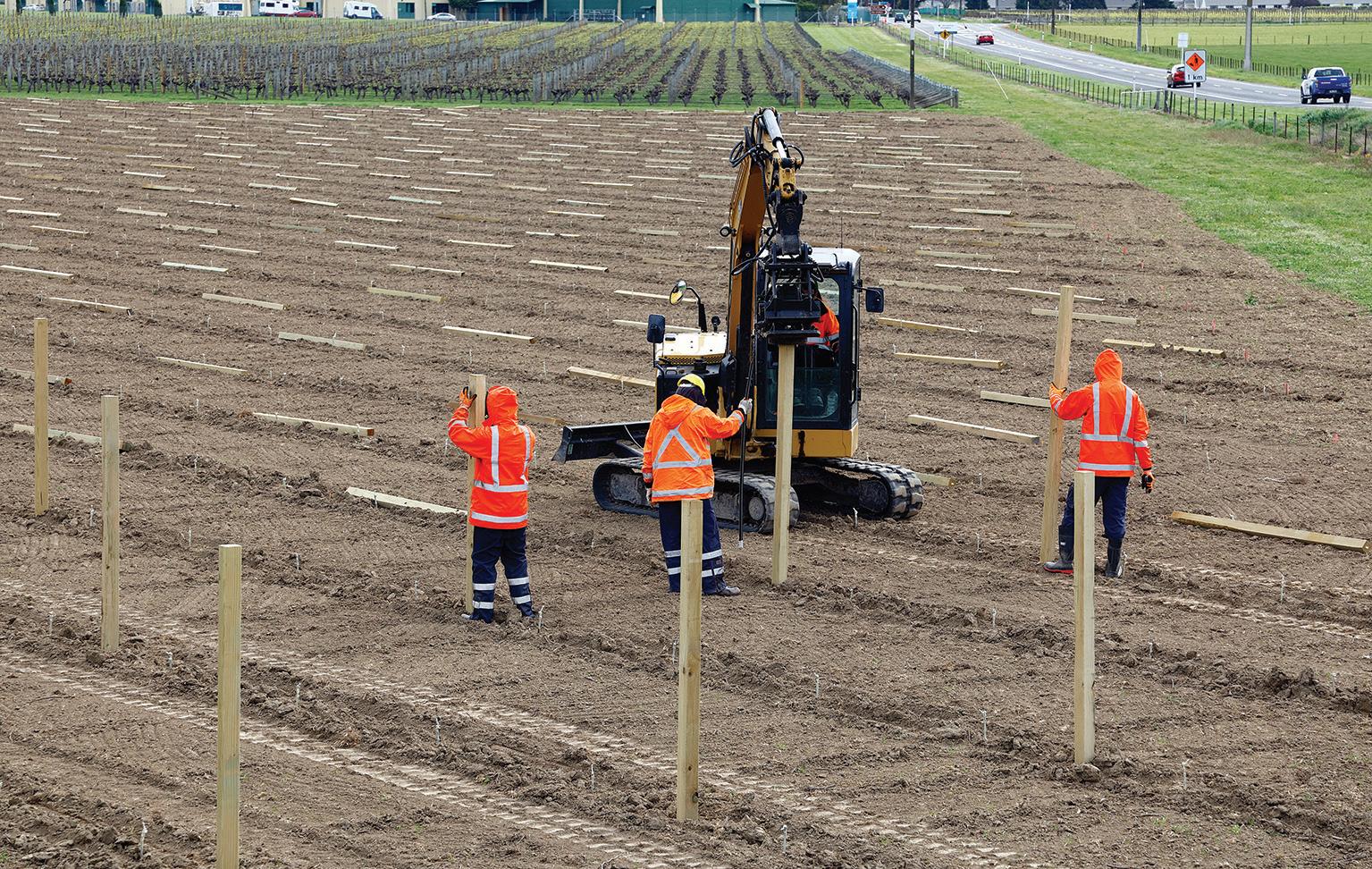
the redevelopment travels just 8km in the opposite direction, to be recycled at Future Post in Blenheim.
As well as changing variety and growing circularity, the redevelopment allows for a modernisation of trellis, including Klima clips to enable greater automation. Simon has previously replanted blocks on existing trellis, but found old vine roots remained in the soil, constraining the growth of new plants. “It took a long time for those vines to grow in something because you couldn’t extract all the old roots.”
Replacing diseased or dead vines in a piecemeal fashion created labour-intensive blocks, while compaction from 25 years of work remained an issue in status quo rows. In contrast, Simon has shifted the trellis over in this iteration, offsetting the main areas of compacted sward. “Initially, the cheapest way is to leave the trellis in place,” he says. “But it’s not necessarily the most efficient way or the quickest way to get the crop off.”
At Caythorpe, where Simon and his brother are the fifth generation on their family farm, blocks are harvested until vine age and low cropping means they are no longer financially viable. Those calculations
A company transforming plastic recycling into durable vineyard and fencing products is “an inspiring example of circular economy thinking”, said judges in the 2025 Port Marlborough Marlborough Environment Awards.
Future Post, which won the Supreme Award and top spot in the wine category at this year’s awards, ran a field day at its Blenheim factory in October, followed by a
visit to a Saint Clair Family Estate vineyard using 100% recycled plastic vineyard posts.
Founded by Jerome Wenzlick, a former fencing contractor turned innovator, Future Post has developed a closed-loop process that uses plastic types 2, 4, and 5 – including household milk bottles and soft plastics, as well as the likes of vineyard irrigation waste.
“Future Post represents the kind of
will differ depending on the financial situation of individual companies, including debt loading, he says. “Right now, people don’t have a lot of money to be spending, particularly if you don’t have a supply contract for when it comes into production.”
It comes down to farm husbandry too, he says. “I’m a firm believer that if you treat your vines well, then you will get it back from them.” That includes not pushing young vines in their early years. “I think the harder you push them… then the more quickly they will decline at the other end of the spectrum.”
After removing the trellis and vines in 2024, Simon ran a cover crop for six months, to improve soil quality. In hindsight, he would have retained the cover crop for another season, to delay production of fruit that does not currently have a contract. Instead, he has decided to train the vines to the wire and two-bud prune them, in a partial hibernation before the first harvest. “It might be like that for two or three years.”
That means a true test of the new posts –with a harvester running through – will be delayed. “That’s a wee way off,” he says. “But patience is a virtue.”
innovation New Zealand needs to achieve a low-waste, lowcarbon future,” judges said. “Turning a major waste problem into a high-value product that supports both industry and the environment.”
With factories in Waiuku and Blenheim, Future Post has processed over 9,000 tonnes of plastic waste to date, making it the largest recycler of plastic in New Zealand.
SOPHIE PREECE
New research has uncovered insights into the North Island brown kiwi’s behaviour in horticultural landscapes, including vineyards.
“The vineyard is very much part of the ecosystem”.
Peter Jones
Building on earlier pilot work from the Bioeconomy Science Institute (BSI), Massey University Master of Science student Wei (Xosha) Gong spent a year conducting fieldwork across four sites, using camera and acoustic recorders, insect traps and faecal analysis to build a picture of kiwi behaviour, diet and predator presence. “This research involved a significant amount of biodiversity monitoring. I collected 13,724 videos from camera traps as well as 1,073 audio recordings and used these to identify bird

most active in surrounding native bush, they also regularly move into and forage in the orchards and vineyards they live alongside. Diet analysis revealed they consume a wide range of invertebrates, including several horticultural pests.
The Landing in Northland, which was one of the research sites, has plenty of kiwi vineyard visitors, thanks to nearly 20 years of substantial native plantings and rigorous predator control by the property and its neighbours, says Director Peter Jones. He estimates around 300 kiwi live there, “and the vineyard is very much part of the ecosystem”.
People staying at The Landing can go out with new thermal vision scopes to watch kiwis catch the odd bug as they transit through the rows, and Peter notes that while many international tourists take the experience in their stride, perhaps assuming the national icon is a common sight, “New Zealanders are blown away”.
BSI scientist and supervisor Karen

landscapes can provide supplementary habitat for kiwi, and kiwi can help contribute to natural pest regulation. “Horticulture, and agriculture more broadly, can be more than places where we grow food; they can become habitat and corridors for our wildlife. By understanding how growing systems are interacting with these taonga species, we can design landscapes to support them.


EMMA JENKINS MW
Wine has never been more democratic, while arguably never more disconnected from its roots. For most of its history, wine wasn’t a commodity because it couldn’t be. It was local, not especially transportable, and often inconsistent. If you drank wine a century ago, it likely came from just down the road, shaped by the same seasons and soils that shaped your community.
“There are now two wine worlds coexisting: one where wine is an experience, and another where it is a ‘beverage’.”
Emma Jenkins MW
These days wine is a global product akin to any other packaged good. Advances in viticulture, winemaking, logistics and technology have delivered consistency and accessibility on an unprecedented scale. Branded bottles travel the world, promising reliability and ease. In economic and practical terms, this is remarkable progress. Treating wine as a commodity has brought stability, reach and a basic level of quality unthinkable even two generations ago. There’s a kind of beauty in that accessibility. It’s wine’s Toyota moment – reliable, affordable, democratic.
Yet the democracy of wine can be deceptive. More people might drink wine, but fewer seem to think about where it comes from, or why it tastes like it does. Access is not the same as engagement. The story of a wine’s origin is often stripped away in favour of something more easily understood, more easily bought, and ultimately more easily replaced. Commoditisation can smooth away the quirks of site, vintage and maker that gives wine its character and emotional centre.
That shift doesn’t just change the marketplace; it also changes mindsets. Consumers are being trained to buy flavour

and price with little regard for place and provenance. In making wine easier to navigate, we reduce its connection with land and history to a quick decision at the supermarket shelf.
New Zealand is not immune to this drift. We’ve built a reputation on purity, consistency, and technical polish, admirable strengths but ones that can slip into sameness if not linked clearly back to something tangible. The runaway success of Marlborough Sauvignon Blanc has made it both iconic and, at times, generic. Our challenge is how to keep that sense of ‘somewhere’ alive in an industry that seemingly increasingly must operate at scale.
There are now two wine worlds coexisting: one where wine is an experience, and another where it is a ‘beverage’. Both can have their place – there’s no shame in opening something inexpensive and reliable – and in practice there’s usually a
spectrum that drinkers oscillate between. After all, ‘supermarket wines’ can be made with care and regional identity, while many small producers are reliant on industrial logistics. It’s tempting to say that wine loses its soul when treated like a commodity, but maybe the real loss lies in when we stop asking where wine comes from, or when origin becomes just another marketing prop, with words like ‘craft,’ ‘authentic’ and ‘estate-grown’ so loosely used that they stop meaning anything at all.
The tension isn’t necessarily that wine has become a commodity, but that we increasingly stop asking it to be more than that. Appreciating the democratisation of wine shouldn’t preclude keeping the crucial thread of ‘somewhere’ intact. Because if wine becomes just another drink, we may find that what we’ve gained in accessibility, we’ve lost in meaning, making wine easier than ever to drink, but harder than ever to care about.
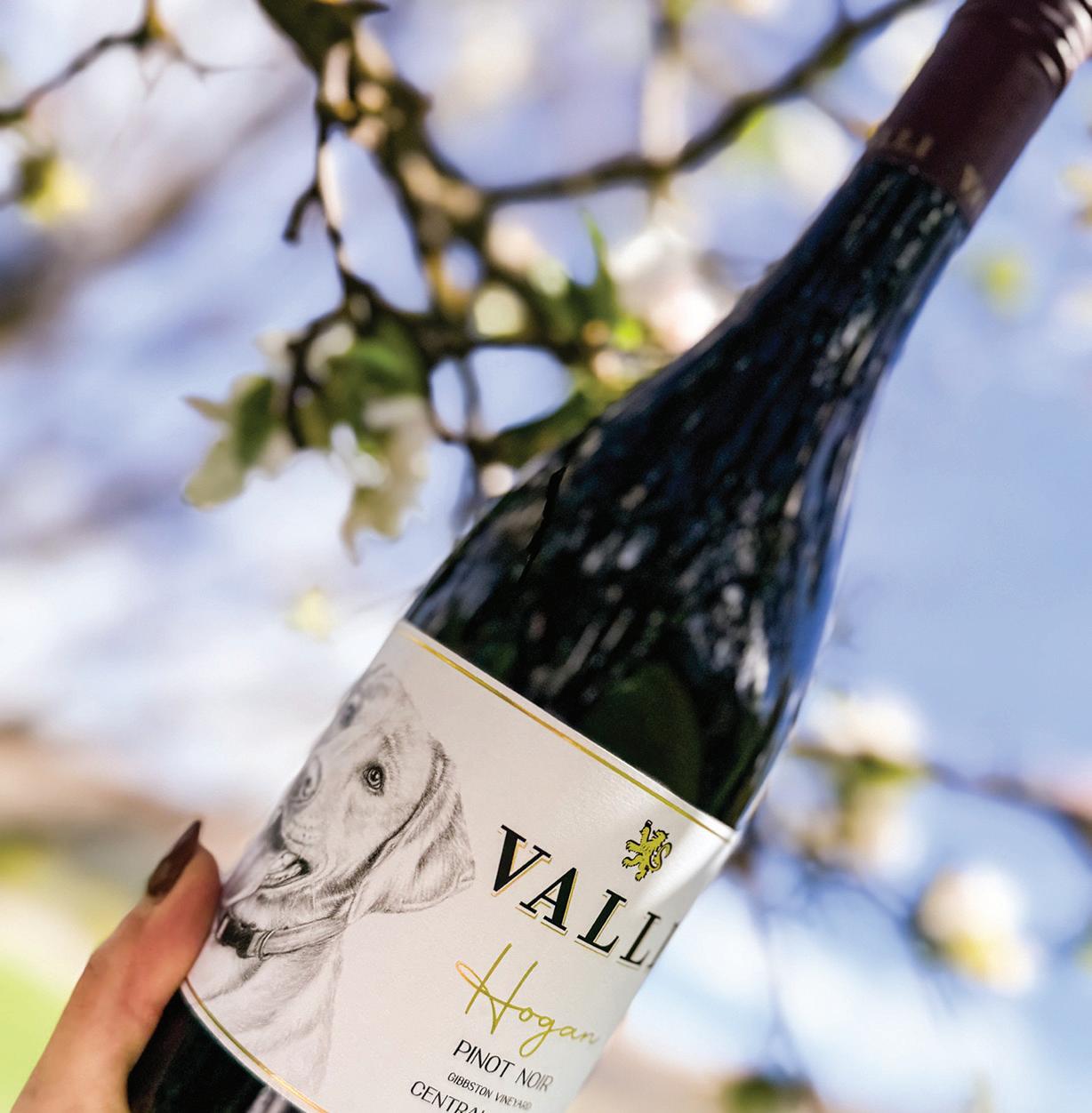
CLAIRE FINLAYSON
Having six of his wine labels colonised by dogs was never part of Grant Taylor’s plan. The founder of Valli Wine says it’s all fellow winemaker Jen Parr’s fault. She wanted to make a Pinot Noir in memory of her beloved rescue dog Missy, who used to follow her through the vineyards during harvest. Grant was “lukewarm about the idea at best”, but that didn’t put Jen off. “She suggested some of the proceeds could go to a charity, and perhaps that charity could be Pound Paws – an underfunded, volunteer Oamaru-based dog rescue centre where my wife and I had found the most amazing dog only a few months earlier,” Grant says. “I was no longer lukewarm. I was 100% behind the idea.”
“We love learning more about what dogs are capable of and continue to find deserving charities.”
Grant Taylor
They commissioned Christchurch-based artist Charles Hannah to create a pencil portrait of Missy that would sit well on a wine label. It was supposed to be a one-off, but Charles has now immortalised several more illustrious canines for Valli’s dog charity range. There are Pinot Noirs called Hogan (named for a Labrador who detects ovarian cancer); Zeffer (a New Zealand Land Search and Rescue dog); Levi (New Zealand’s first bowel cancer detection dog); and Thiefy (Grant’s own rescue dog). There’s also a Chardonnay called Mawson (a Rakiura, Stewart Island predator detection dog).
“Knowing what we did made such a difference and getting to really know the people behind charities made me want to do it again – and again and again. I reckon Jen knew this was never going to be a ‘one off’, though she won’t admit it.”
“We love learning more about what dogs are capable of and continue to find deserving charities. So, as long as I am here, there will always be a Valli wine with a dog on the label.”
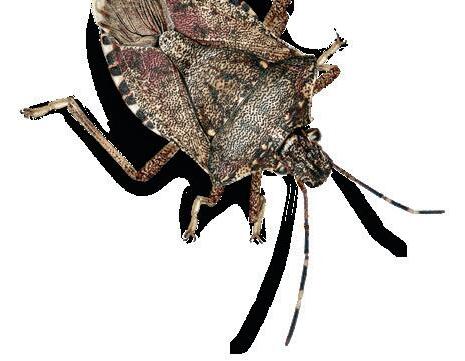



The brown marmorated stink bug is a pest that infests homes, ruins gardens, stinks when crushed, and is almost impossible to get rid of. It could also destroy our fruit and vegetable industries. It’s not in New Zealand yet, and we want to keep it that way. So if you see one, don’t kill it. Catch it, take a photo, and call us on 0800 80 99 66.
For more information (including how to identify the bug) visit biosecurity.govt.nz/stinkbug


JAMES MORRISON
Frosty at times through September and then windy through October. That would be the simplest summary of the weather across New Zealand over the past couple of months.
The stratospheric warming over Antarctica during August and again during September really helped to give the westerly flow in the roaring 40’s a major kick into life. Over the past 40 years or so I would struggle to find an October quite so windy. There have been other years where October was just miserable, especially for the west coast and lower North Island, and 2025 should certainly be in that club; in my view it would challenge October 1988, which was particularly windy.
The unsettled and fast paced weather through October meant that there was very little frost recorded across the country,

recorded about parts of Hawke’s Bay on 2 October, and several cold nights were experienced about Wairarapa. Sheltered parts of Marlborough saw some frost on 2, 20 and 29 October. There was also some light frost about North Canterbury and in Central Otago, with -1.8C recorded at Parkburn and -1.9C at Gibbston Valley on 2 October. Frost risk certainly reduced during the second half of October and



daytime temperatures started to climb dramatically in the east, with the 30C mark being threatened in Hawke’s Bay and parts of Canterbury.
The wild winds of October were always expected to ease back by November, as La Niña takes back the reins. Like other La Niña years (of which we have had several since 2015) there’s a threat of high humidity and heavy rain events, either from tropical


depressions or slow-moving fronts trapped within humid northerly airstreams.
A very cold outbreak from 26-28 October highlighted how significant southerlies can bring the snow and freezing air to New Zealand right through spring and even into summer. Snow fell to sea level for a short time in Canterbury, and fell to low levels across Central Otago. There were also reports of frost fans in Canterbury turning on at 10am as the coldest air roared through the region. Whilst it is unusual to have such a significant snow event this late in the year, it is certainly not unheard of and will happen every few years. People will recall tales from parents and grandparents of snow on the hills of Dunedin or Banks Peninsula as late as Christmas Day and although our climate has warmed over the decades, we still get a reminder of winter from time to time. The biggest risk to growers when these events occur is a damaging frost that follows the cold outbreaks, and there have been more recent examples where November frosts have caused significant damage as far north as Marlborough. Luckily, there was only a narrow ridge of high pressure following the
event in October this year and that allowed a milder airstream to quickly reestablish over New Zealand and the reports of frost were fewer than would have been expected under a larger anticyclone.
Outlook for December and January:
Gisborne/Hawke’s Bay – Summer temperatures are expected to run above average along the east coast of the North Island. Whilst there are likely to be a few 30C days through summer, the frequency of extremely warm temperatures may be reduced under a more humid north to northeast flow. Cloudiness may increase as well and if this happens, sunshine totals will be affected. Rainfall totals are likely to be near or possibly above average, with an increased risk of heavy rain events. Humidity is also likely to be elevated for much of the time.
Wairarapa – Respite from a period of recurring northwest gales is expected for Wairarapa through December and January, as mild northerly winds begin to dominate. Temperatures are likely to run above average under the northerly flow. Rainfall totals may run close to average with dry periods but there is an increased risk of a
rain event bringing heavy or prolonged rain and high humidity.
Nelson – Temperatures are likely to continue to run at or above average through early and mid-summer. Cloudiness may increase under a northerly flow and sunshine totals are likely to be impacted. Rainfall totals are expected to be near or above the average with an increased risk of a heavy rain event this summer Marlborough/North Canterbury –Temperatures remain near or above average, but the frequency of very hot days under a northwest flow are likely to be reduced. Cloudiness may increase with a north to northeast flow and reduce sunshine totals along the east coast. This may not be reflected in rainfall totals which will still have the potential to run below average. There is a risk of any low pressure systems moving out of the tropics providing rainfall from the east.
Central Otago – Temperatures are likely to remain above average through summer under a northerly flow. Rainfall is expected to be near or below average. Sunshine totals are likely to be closer to average or above average .
James Morrison runs Weatherstation Frost Forecasting: weatherstation.net.nz

The iconic Bourgogne silhouette has been lightened, retaining its original modern aesthetic proportions without altering them: 293mm in height, a harmonious shoulder, straight sides, no curve at the base, 30mm punt with node and an optimized glass weight of just 500g. simplicity this timeless design, coupled precision dimensions, make Roble BVS obvious choice for brands seeking heritage renewal.
(NZ)
Advocacy on matters of vital importance to the industry
Larissa Trownson
Promoting responsible online sale and delivery of alcohol
Earlier this year, the New Zealand Winegrowers Advocacy team launched a new voluntary Code of Conduct for the Responsible Online Sale and Delivery of Alcohol. Developed specifically for members, the Code promotes practical measures to ensure that alcohol sold and delivered online is done so safely and responsibly. It is designed to help members identify and meet their legal obligations, as well as some additional best practices which can be implemented in this rapidly evolving environment.
By signing up to the voluntary Code, members commit to meeting their legal minimum obligations, plus the additional good-practice measures recommended within it. The Code is accompanied by a checklist, which provides a concise

The sale, supply and consumption of alcohol should be undertaken safely and responsibly. Online sale and delivery is an important part of this.
summary of the legal requirements and best practice guidelines contained in the Code, to help members confirm they’re on the right track. You can find the Code and checklist, alongside a recording of a webinar held on 26 June and some practical examples of the Code’s principles, on the NZW members website under Advocacy → Obligations.
The sale, supply and consumption of alcohol should be undertaken safely and
responsibly. Online sale and delivery is an important part of this. It is important to NZW that its members are complying with their licensing requirements, whilst also behaving in a socially responsible way.
Finally, NZW notes that the responsible Minister has recently announced that Cabinet has agreed in principle to two proposed changes: strengthening the support of rapid delivery services to help reduce alcohol-related harm, and recognising approved digital identity credentials as acceptable evidence of age for alcohol purchases. These changes will require amendments to the Sale and Supply of Alcohol Act 2012 and are not yet confirmed. NZW will keep members informed of any developments and potential implications for their businesses.

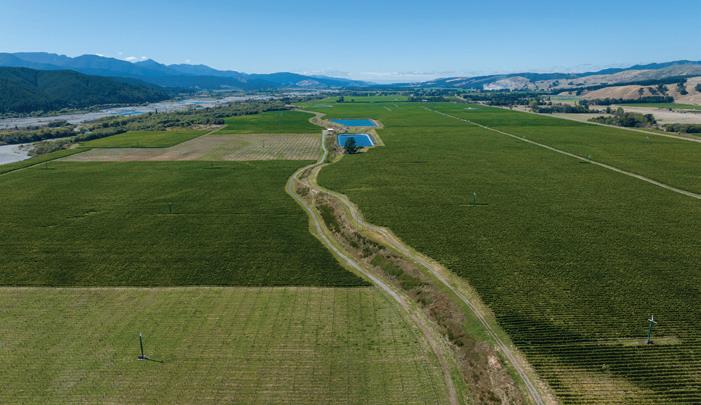
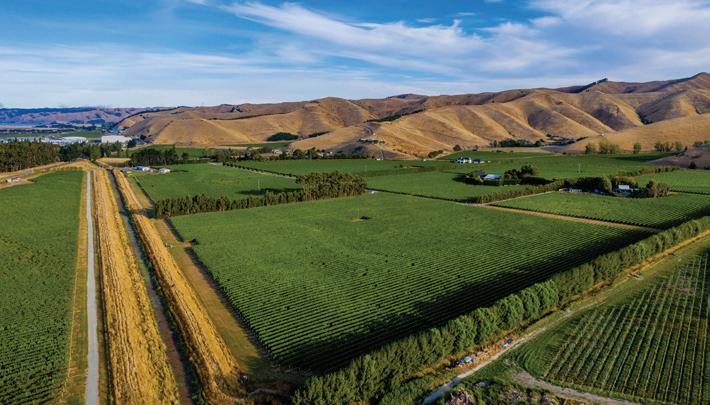

Genetic technology law reform: What is it all about?
DR EDWIN MASSEY
It is likely that the Government’s Gene Technology Bill will become law in 2026. The new regulatory environment presents important considerations for the wine industry on how to realise the potential benefits and manage potential risks.
New Zealand Winegrowers is currently reviewing our policy on new breeding techniques in research, which was adopted by the NZW board in 2019 to reflect the potential changes to regulatory settings.
Once the Gene Technology Bill becomes law, NZW will consult with members on a new draft policy in response to the new legislative settings.
Genetic technology can be a complex topic. To assist members to improve their understanding on the topic,
“The new regulatory environment presents important considerations for the wine industry on how to realise the potential benefits and manage potential risks.”
Dr Ed Massey
NZW has held two webinars in recent months. The first webinar on 8 October provided members with information on the different types of genetic research currently undertaken in New Zealand, the potential impact of the new regulations on the research environment, and the implications for plant breeding. The second webinar on 14 November explored the key implications of genetic technology for viticulture, winemaking and market access including for organic production. If you missed these webinars, or would like to revisit any of the content, or share it with your industry friends and colleagues,

you can find the recordings at nzwine. com/members/get-involved/webinars/ sustainability-webinars.
NZW will update members on government decision making, including on timeframes for consultation on the revised policy for new breeding techniques.
Dr Ed Massey is NZW General Manager Sustainability
BioStart TripleX biofungicide
» Prevents and controls botrytis by using a naturally occurring opponent to these fungi
» TripleX is compatible with a range of other sprays
» Available from leading Horticultural Suppliers.
Well known in the New Zealand spray market, BA Pumps and Sprayers has released details of its third generation vine sprayer, with the VS 3000, three-row unit. As the name suggests, capacity is 3,000 litres, with the tank mounted on a heavyduty galvanised steel frame. That along with the new mast, is a new design-backed by independent FEA (Finite Element Analysis) stress analysis.
Riding on a heavy-duty tandem, oscillating axle, equipped with wide tyre equipment to reduce soil compaction, standard equipment also includes substantial framing around the wheel equipment to minimise impact damage. Up front, a three-point hitch with an integral ball coupling enables tight turns on narrow headlands.
A hydraulically driven diaphragm pump

allows an easier connection to the towing tractor, while also reducing maintenance associated with PTO shafts, working in conjunction with an oil cooler mounted on the forward upper boom tower for maximum cooling effect, with protection via an integral pressure relief valve.
At the business end of the sprayer, the redesigned support mast has widely spaced lower supports for increased stability and long-term durability, while the fan support frames offer stepless hydraulic adjustment for rows of 2.4 to 3.0 metre spacing, travelling on oversize plastic rollers and wear pads. Colour coded indicators give an easy visual reference to the preferred spacing.
Key to the new design are tangential fans, installed for proven superior performance and crop coverage. Featuring several
design changes to offer easier set up and calibration, any daily maintenance has been improved with carefully located greasing points, while longer term, the fans are easily removed from their housings.
Operating at an optimal 2,000 rpm, the standard set up has twin roll-over nozzles, effectively offering four application rates, with oversight via a Bravo 350 Controller, with the option of ISOBUS control via the tractor’s integral screen.
Tipping the scales at around 2,200kg, meaning an all up weight of 5,300kg, the VS 3000 is easily pulled by a medium sized tractor, with hydraulic output of around 65 litre/minute. The product is currently undergoing final development testing, with full commercial availability in 2026.


A regular feature to inform and update the wine industry on research projects being undertaken for their benefit. Newly approved projects, when available, are briefly summarised. Ongoing projects have longer articles that describe progress and what has been achieved so far. When completed, each project report will be shared in full detail in the Research Library on nzwine.com.
Bragato Research Institute leads quality research and innovation that enables the New Zealand wine industry to thrive. The main research provider for each project is listed below. Updates are provided on the highlighted projects in this supplement.
Vineyard innovation
Next Generation Viticulture Programme
Bragato Research Institute
Evaluation of the short-term impact of remedial surgery on grapevine trunk disease and vineyard sustainability
Linnaeus, SARDI, Sutton McCarthy
Rapid early detection of powdery mildew using VOCs to enable better control solutions
Scentian Bio
Central Otago Pinot noir clonal trial
Bragato Research Institute, Otago Polytechnic, Riversun Nurseries
Elemental sulphur persistence on grapes and mitigation strategies
Lincoln University
Increasing financial sustainability of Chardonnay in Hawke’s Bay through long spur pruning to increase yield Eastern Institute of Technology
Long spur pruning as an alternative for Marlborough Sauvignon Blanc
Bragato Research Institute
Highwire Livestock integrated system
Lincoln University, Bragato Research Institute, Greystone Wines
Sauvignon Blanc Grapevine Improvement Programme
Bragato Research Institute, Bioeconomy Science Institute, Lincoln University
National Vine Collection virus eradication
Bragato Research Institute
Rapid detection of fungicideresistance in grapevine powdery mildew in New Zealand
Bragato Research Institute
Graft-derived drought tolerance: identifying and functionally characterising graft-transmitted elements
Bragato Research Institute
RNAi Virus Relief
Bragato Research Institute
Incorporating genetics and epigenetics into the Central Otago Pinot Noir trial
Bragato Research Institute
Winemaking innovation
Exploring reductive aromas in Pinot Noir
University of Auckland
Single Vine Wine: Development of high-throughput oenotyping methodology to support Te Whenua Tupu-Living Lab and SB2.0
Plant & Food Research – a group of the New Zealand Institute for Bioeconomy Science Limited
The impact of vineyard UV-C Light applications on Sauvignon Blanc chemical and sensory attributes
Bragato Research Institute
Sustainable winegrowing
Carbon Calculator
Bragato Research Institute
Evaluating water use efficiency and drought tolerance of various rootstocks grafted to Sauvignon Blanc
Bragato Research Institute
Insect frass in viticulture – Assessing the potential of a circular solution
Bioeconomy Science Institute
Engineered containment solutions for safe temporary storage of grape marc
Bragato Research Institute
Waste to Treasure: using novel chemistry to valorise residual plant material
University of Auckland
Planetary Facts for Aotearoa’s Food & Fibre Sector Pilot Programme
Planetary Accounting Network

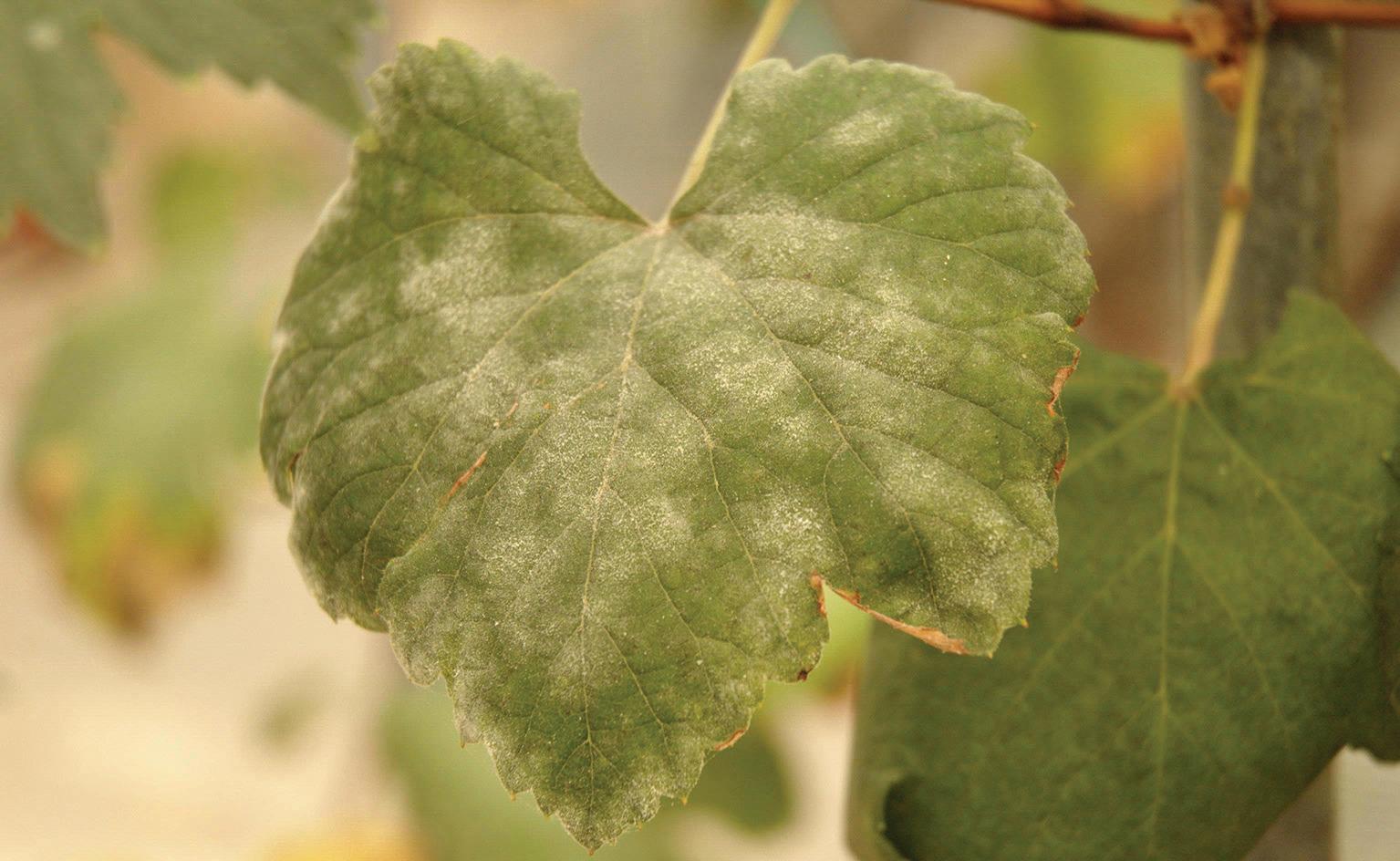
Why fungicide resistance matters
Powdery mildew (PM), caused by the fungus Erysiphe necator, is a persistent problem for grape growers worldwide. If untreated, PM can cause significant loss, as even minor infections of berries can have a detrimental effect on wine quality.
To manage PM, growers use a combination of multi-site inhibitor fungicides such as sulphur or copper, as well as modern single-site inhibitor fungicides such as Succinate Dehydrogenase Inhibitors (SDHIs), Quinone Outside Inhibitors (QoIs), and Demethylation Inhibitors (DMIs). However, the PM pathogen is highly adaptable and can quickly develop genetic variants to survive fungicide application. Regular monitoring allows developing resistance to be detected
early so that resistance management can be implemented to preserve the effectiveness of these fungicides.
Multi-site fungicides like sulphur and copper are tough for fungi to outsmart but are less effective than modern synthetic fungicides. Multisite fungicides attack multiple parts of the fungus’s metabolism, making it hard for the fungus to develop resistance. For a fungus to survive these treatments, it would need to mutate in several different genes at once, which is unlikely. In comparison, single-site inhibitors, such as QoIs, DMIs, or SDHIs, target a specific biochemical pathway within the fungus. Because of this, the fungus often only needs a single genetic mutation to resist the fungicide.
In New Zealand, data on the extent of
fungicide resistance in PM is limited. Research from nearly a decade ago documented resistance to some DMI fungicides like myclobutanil and penconazole, and a high rate of resistance to the QoI fungicide trifloxystrobin. A follow-up study in 2017 found no resistance to SDHIs like fluopyram. However, the PM pathogen has shown the capacity to develop resistance within just a few years. The development of resistance to the same fungicides in several other crop pathogens has also been documented. Therefore, improved monitoring tools and regular surveys of fungicide resistance in grapevine PM are essential.
What we did in this project Bragato Research Institute, in collaboration with The New Zealand Institute for Bioeconomy Science

Limited (BSI), carried out a pilot survey in early 2025 to assess PM fungicide resistance in two key winegrowing regions in New Zealand, Marlborough (two vineyards) and Hawke’s Bay (six vineyards). The study combined two parallel work streams:
1. Traditional phenotypic testing (detached-leaf fungicide assays) carried out by BSI, Plant & Food Research Group
2. Molecular diagnostics for specific mutations and whole gene sequencing carried out by BRI
The aim of this project was two-fold; firstly, to develop tools for early and rapid detection of fungicide resistance developing in vineyards. Secondly, provide an up-to-date snapshot of PM fungicide resistance in New Zealand vineyards, building on research undertaken in 2015 and 2017.
Based on the spray diary data from recent years, we focused on three commonly used fungicides:
• Group 3 (DMIs) - mefentrifluconazole
• Group 5 (Amines) – spiroxamine
• Group 7 (SDHIs) – fluopyram
Additionally, a well-established genetic marker of fungicide resistance to Group 11 (QoIs) (G143A in CYTB gene) was screened.
Detached leaf assay is regarded as the gold standard for phenotypic fungicide
sensitivity status, however it is labour intensive, time-consuming, and poorly suited for routine and rapid screening. A genotypic method on the other hand offers a faster, more efficient solution, by identifying specific genetic changes in the pathogen genome linked to resistance. In addition to the G143A mutation, a Y136F mutation in the CYP51 gene has been associated with DMI resistance. A G169D/S mutation in the SdhC gene and the H242R/Y and I244V variants in the SdhB gene have also been associated with SDHI resistance. No genetic marker has been identified for Group 5 fungicides.
In this project, we established a targeted assay to detect the G143A and Y136F variants. Additionally, we conducted a comprehensive assay using whole gene sequencing to screen for variants in SdhB, SdhC, SdhD (Group 7), as well as Erg24 and Erg2 (Group 5). Given the reported weak correlation between the Y136F mutation and DMI phenotypic resistance, we also sequenced the entire CYP51 gene.
For QoIs, we observed a complete resistance profile among samples from the two Marlborough vineyards based on the G143A mutation, while Hawke’s Bay samples were more mixed with only one vineyard showed full resistance. Ongoing monitoring of this variant,
especially outside of Marlborough, is recommended for regular monitoring of resistance to this fungicide group.
The
findings from this small research project indicate possible moderate resistance to key fungicide groups within some powdery mildew populations in Marlborough and Hawke’s Bay vineyards, emphasising the importance of rotating chemical groups and monitoring for signs of increased resistance.
For DMIs, a known genetic marker, Y136F in CYP51 gene was found in all samples, but it did not lead to strong resistance to newer DMIs like mefentrifluconazole, with moderately resistant isolates reported for only 14.8% of the isolates, all from Hawke’s Bay. Therefore, this genetic marker alone has limited utility for effective resistance monitoring in this group. No other notable variants were detected in the

2. Fungicide sensitivity categories for four fungicide groups. Categories for Fungicide Group 11(QoIs) were based on G143A status, and categories for the other groups were based on fungicide sensitivity assays.
CYP51 gene. Further work is needed to identify better genetic markers, including looking at CYP51 gene copy number or expression.
For amine and SDHI fungicides, 16–17% of samples showed moderate resistance, with some vineyards having relatively higher EC50 values. No previously reported or other notable variants were found among the five target genes. Further work is recommended for continued monitoring of resistance in these fungicide groups and identification of useful genetic markers.
Currently, the G143A mutation in the CYTB gene is the only reliable genetic marker to predict fungicide resistance in PM for QoI fungicides. For other fungicide groups, further research is still needed.
Within our relatively limited sample size from Marlborough vineyards, the G143A mutation that underpins QoI resistance is now prevalent in the Marlborough PM population, indicating complete resistance to QoI fungicides. In Hawke’s Bay, QoI resistance is mixed, so short-
term use may still be viable, but only with caution and rotation.
For DMI fungicides, the Y136F mutation was found in all samples, suggesting historical overuse. However, newer DMIs like mefentrifluconazole remain effective. To preserve their efficacy, growers should rotate with unrelated fungicide groups such as SDHIs, amines, or sulphur. Older DMIs (e.g. myclobutanil, penconazole) may be less reliable, though their use has declined. Currently, mefentrifluconazole is the primary DMI used in New Zealand vineyards.
SDHIs and amines show low levels of moderate resistance and remain viable options. These should be used as part of an integrated program, not in isolation. Always follow label resistancemanagement guidelines – limit the number of SDHI applications per season and avoid consecutive sprays with the same mode of action.
This project offers a small-scale update on PM fungicide resistance in New Zealand vineyards. QoIs (Group 11) resistance is widespread in Marlborough, while moderate resistance
is observed in Groups 3, 5, and 7 for the two regions, with no high-level resistance detected. Ongoing research and broader monitoring are essential to manage evolving resistance, identify better resistance markers and ensure sustainable disease control.

This one-year project is a collaboration between Bragato Research Institute and The Bioeconomy Science Institute, Plant & Food Research Group. It is funded by the New Zealand Winegrowers levy. We would like to acknowledge the research team, Yusmiati Liau, Amy Hill, Bhanupratap Vanga & Darrell Lizamore (Bragato Research Institute), Robert Beresford, Peter Wright, Peter Wood & Dion Mundy (The New Zealand Institute for Bioeconomy Science). In addition, we would like to acknowledge the vineyard managers who kindly allowed samples to be collected from their vineyards to support this research.

Alice Oswald & Kate Meyer, the Planetary Accounting Network
Planetary boundaries are an internationally recognised scientific framework to describe limits to the impacts of human activities on the Earth system. The Planetary Accounting Network (PAN), a New Zealand based charitable trust, has designed an initiative to assess the environmental impact of a wide range of products. Alongside a range of New Zealand primary sector groups, and leveraging Ministry for Primary Industries funding, Bragato Research Institute engaged with PAN to undertake a Planetary Facts Assessment for our three largest wine regions, using Sustainable Winegrowing New Zealand data. The assessment aims to introduce New Zealand wine businesses to the system, helping them to quantify, compare and communicate the environmental performance of wine production relative to the global Planetary Boundaries.
The wine industry, like many others, is faced with increasing market and regulatory demands for evidence of environmental performance. New Zealand’s wine industry has long been a sustainability pioneer, with Sustainable Winegrowing New Zealand being the world’s first industrywide sustainability programmes for wine. Today, SWNZ provides a solid foundation for environmental oversight, tracking key environmental indicators. Yet many producers still find it difficult to translate those numbers into decisions, marketing stories, or export evidence. Trade-offs between impacts are complex – say, reducing carbon but increasing water use. Without a scientific benchmark for what “good” looks like, it can be hard to know how to stand out.
To address these challenges, Bragato
Research Institute partnered with the Planetary Accounting Network (PAN)
and 16 other organisations across New Zealand’s food and fibre sector to pilot a new environment assessment and labelling system, developed by PAN, called Planetary Facts.
There is compelling evidence that environmental performance would influence businesses and endconsumers’ purchasing decisions. However, customers can be confused of environmental claims, due to the sheer number of eco-labels on the market (>450), the lack of comparability between labels, the lack of transparency of label criteria, the focus on highlighting positive aspects of a product rather than disclosing the full picture, and the narrow focus of most labels to a single product category.
Planetary Facts, inspired by nutritional labels, were established to disrupt these challenges by disclosing
consistent environmental data for any product, in a way that is easy to understand. Just as nutritional facts show calories, fat and other important health indicators against a recommended daily intake, Planetary Facts show the carbon, waste, and other important environmental footprints against a recommended daily limit, derived from scientific global limits called the Planetary Boundaries.
Planetary Facts labels comprise ten key environmental footprints, grouped under hau (air), whenua (land), and wai (water), with considerations of ora (life) integrated into limits for each of the footprints (Image 1.). The dotted line represents the recommended daily limit; the average per-person environmental allowance for each footprint, which has been derived from the Planetary Boundaries framework. Each footprint is shown as a proportion of this limit, using a traffic-light scale: yellow for impacts within the per-person limit, shifting to red where the environmental impact of that product exceeds the limit per person per day. Regenerative (positive) impacts are shown in green, and here, the larger the green area, the better. For example, the green waste footprint in the example below could
represent landfill mining (i.e. extracting waste from landfill as a raw material for this product).
“Planetary Facts, inspired by nutritional labels, were established to disrupt these challenges by disclosing consistent environmental data, in context, for any product, in a way that is easy to understand.”
be assessed for any product or service, enabling comparisons from chocolate and cheese to housing and transport!
Planetary Facts of the typical New Zealand wine BRI partnered with PAN to assess the Planetary Facts of wine from Marlborough, Hawke’s Bay, and Central Otago produced in 2024. Aggregated results were used to establish “typical” Planetary Facts of New Zealand wine (Image 3).
Results are combined into a single Planetary Impact Score — the overall percentage of the total environmental allowance used, offering a simple way to compare overall environmental performance between products. The first Planetary Facts label was released late 2024, and already,
Planetary Facts has been assessed for more than 50 products. Whilst inspired by food labelling, Planetary Facts can
The analysis was undertaken in Planetary Insights software using aggregated SWNZ survey data at the individual vineyard and winery level, supplemented with data from published studies such as the SWNZ National Plant Protection Report, the New Zealand Winegrowers Annual Report, and an industry study by Clothier & Green (2017).
The Planetary Impact Score of an average 750 ml bottle of New Zealand wine is ≈1.8%. This means if you share a bottle of wine with your partner over dinner tonight, you would each have ≈99% of a reasonable daily environmental allowance available for your meal and other purchases


and activities that day. Lifestyles that stay within 100%, essentially indicate consumption within an equal-percapita share of global environmental resources. A single glass, at just ~0.35% has comparable impacts to a locally produced apple or orange. It is reasonable to conclude that a glass of wine or two could be accommodated in a lifestyle within planetary boundaries. Key activities contributing to the Planetary Impact Score are shown below by footprint, against the specific limits for each:
• Carbon+ (6.7% of a daily carbon limit) – packaging, shipping, and winery energy use;
• Waste (2.6% of a daily waste limit) –distribution, glass bottle production and waste to landfill from winery operations;
• Water (2.4% of a daily water limit) –vineyard irrigation (70%) and glass production;
• Phosphorus (1.9% of a daily phosphorus limit) – electricity generation and packaging materials;
• Air Quality (1.7% of a daily air pollution limit) – due to emissions of air pollutants associated with distribution, manufacturing of packaging materials and energy use across wine wineries;
• Biodiversity (1.7% of a daily biodiversity footprint limit) – due to impacts on biodiversity from
the manufacture of fuel and other resources associated with shipping, the manufacture of glass, and land use for vineyards.
From a life-cycle perspective, distribution accounted for 42% of the total environmental impact, followed by packaging 31%, winery operations 14%, and vineyard activities 12%. The high impact from distribution was primarily from sea freight for exports, while packaging impacts were largely driven by the production of glass bottles. Winery-related impacts stemmed mainly from energy used in wine production and storage. On the vineyard, the main contributors were fuel consumption, irrigation, and land use.
The regional Planetary Facts showed some variation between the three regions in both the scale and shape of impacts. On average, Marlborough wines had the lightest footprint with a Planetary Impact Score of 1.6%, with Hawke’s Bay at 3.7%, and Central Otago at 4.4%. This means that even at the higher end, a glass of wine constitutes less than 1% of a daily limit, good news for wine drinkers! It also indicates the likely range in variation between brands, which will exceed the variation between regions.

The most significant impact for Marlborough and Hawke’s Bay was carbon+ (i.e. the emissions and uptake from carbon dioxide and greenhouse gases from other fossil sources). However, Central Otago’s highest impact was water use, at 14% of the recommended daily limit. Central Otago and Hawke’s Bay had higher biodiversity impacts than Marlborough due to lower yield (i.e., higher land-use per output of grapes) in these regions.
What this means for wine
The good news for New Zealand

producers, growers, and wine lovers is that the Planetary Facts assessments show that New Zealand wines could be enjoyed within the planet’s limits, depending on other consumption choices over the day.
However, our total daily impacts are the summation of many small contributions and are currently exceeding environmental limits. So, the wine industry, like every industry, must continue to minimise environmental impacts and work towards more sustainable practices. Further, with rapidly shifting markets and regulations, the results give winegrowers and producers scientific context to support them to continue to improve environmental performance, and give consumers and trade partners ongoing confidence in the integrity of New Zealand wine.
There may be limited opportunities for the wine industry to influence the impacts of international distribution in the short term, however, more than 68% of impacts are within their direct control or influence. Key opportunities to reduce the environmental footprint of wine include:
• More environmentally friendly glass, less glass bottles and/or alternative packaging solutions to reduce both glass and distribution impacts (which
are relative to weight);
• Waste reduction through operations and supply chain engagement to identify opportunities to increase circularity;
• Energy efficiency initiatives in wineries;
• Electrification of vineyards, wineries, and transport; and
• Incorporation of agroecology principles into vineyards to improve soil health and biodiversity whilst reducing reliance on synthetic pesticides and fertilisers through cover crops, agroforestry, and/or livestock.
However, the relative importance of these opportunities, and other specific opportunities for improvement will vary significantly between brands.
In all cases, Planetary Facts help to manage trade-offs to avoid impact shifting (e.g. to show if and when incorporation of agroforestry would generate a positive outcome if it reduces yield).
Further studies would be needed to establish the viability of regenerative wine, i.e. wine that has a net positive impact on the environment, which is indicated by a negative Planetary Impact Score. However, Planetary Facts provides the data and insights needed to determine both the feasibility and the roadmap.
From environmental data to market advantage
At less than 0.5% of a recommended daily limit for a typical glass of New Zealand wine, this assessment showcases the industry’s environmental performance. The results show variation between regions, which indicates an even greater variation between brands. While national average results provide a strong tool to showcase New Zealand’s collective performance, brand-specific assessments will enable ongoing brand differentiation.
Results highlight opportunities for environmental enhancement through the value chain including vineyard operations, wine production, packaging, and distribution. Initiatives such as alternative packaging solutions, enhanced water efficiency, waste reduction, electrification and energy efficiency, and agroecology practices are key levers for environmental enhancement, and may enable a transition to nature-positive wine.
With the strong foundations of SWNZ, New Zealand wine is leading the way in environmental performance transparency, as a global leader in sustainable wine production, setting an example for other industries to follow.
Stewart
Field & Jonathan Guild, Nelson Marlborough Institute of Technology; Damian Martin & Muriel Yvon, New Zealand Institute for Bioeconomy Science
Across many red grape varieties and growing regions, smaller berries tend to produce wines with deeper colour, firmer structure and richer flavour, while larger berries often yield wines that are lighter and appear less ripe. Anecdotally, this pattern is rooted in the fundamental morphology of the grape: the ratio of skin (where phenolics, anthocyanins and aroma precursors predominantly reside) to juice (which largely dilutes those compounds).
Winemakers acknowledge that smaller berry years produced wines with more intensity, while seasons with oversized berries (often linked to high vigour or an absence of vine water deficit) produced wines that lacked depth. However, when winemakers use a traditional technique such as saignée to increase the ratio of skins to juice, the resulting wines become more concentrated, but unfavourable characters, such as greenness and bitterness from the skins and seeds, also get amplified. This suggests that smaller berries not only provide added concentration but also improved ripe characters.
Recently, this effect has been quantified with Pinot Noir under New Zealand conditions in the New Zealand Winegrowers Pinot noir Programme, in which Plant & Food Research identified berry size as the dominant factor

1. Stewart and Jonathan sorting destemmed berries at the BRI Winery using a vibrating table fitted with a 12 mm grill. The setup allowed smaller berries to fall through while larger berries passed over the top.
driving changes in berry and wine composition (New Zealand Winegrower 139, 140). A threshold of berries smaller than 1.2 grams (≈ 12 mm diameter) showed distinct compositional traits associated with “icon” quality wines. They typically have higher colour intensity, softer tannin structure, and more intense ripe flavours.
Inspired by these findings, a two-year study was initiated in 2024 using destemmed grapes from Marlborough to test whether sorting berries at the 1.2 g threshold could be operationalised in wineries to consistently enhance Pinot Noir wine quality. In 2025, the research expanded to include mechanically harvested fruit from Martinborough, and saignée treatments evaluating whether berry size sorting was effective at a more commercially relevant scale.
Methods
All fruit was passed over a 12 mm spaced grill (Figure 1), equivalent to a 1.2 g berry weight, to separate into two size categories plus a control: Small (< 12 mm), Large (> 12 mm), Control (unsorted).
Fruit from Marlborough was hand harvested and destemmed at the BRI Research Winery before sorting. Martinborough 2025 fruit was machineharvested and sorted directly from the
harvester (Figure 2). In Marlborough, approximately 30 % of large berries were removed from the control lot to produce the small-berry fermentations. In Martinborough 2025, only about 10 % of large berries were removed, as the control fruit already consisted mainly of berries under 12 mm. In 2025, a saignée treatment was also applied, removing approximately 20 % of juice to increase the skin-to-juice ratio.
Each treatment was divided into three 10–14 kg parcels for triplicate fermentations that followed identical winemaking protocols.
Compositional differences between large and small berries
At harvest, larger berries had lower Brix and smaller berries the highest, confirming that bigger berries have slower ripening and greater potential to contribute unripe characters. Smaller berry and saignée ferments contributed a higher percentage of skin in the ferment, which resulted in greater marc-to-wine ratio. However, equally important is the seed-to-skin relationship. Seeds are rich in tannins that can lend bitterness if overextracted. The seed-to-skin ratio was lowest in the small berry ferments (dropped by nearly 40 % between large and small berries), meaning small berry wines extracted more colour rich skin
phenolics without a corresponding rise in bitter seed tannins. In contrast, the saignée treatment showed no change in this ratio; thus, while skin phenolic extraction increased, so too did extraction of seed derived phenolics.
“For premium producers, diverting the smallest intact berries into a dedicated fermentation could deliver a consistently high value wine across vintages. For larger, commercial scale operations, separating the smallest 10–30% of berries may yield a premium tier Pinot Noir, while the remaining portion could be used for Rosé.”
Variation in wine colour, phenolics, and sensory differentiation by berry size
Small berry and saignée wines recorded the highest colour density values across both regions in both years. Colour differences were even evident in the juice after cold soak (Figure 3) showing how important increase in skin is for colour extraction. In 2024, there were no significant differences in total phenolics between treatments, However, in 2025, large berry ferments showed significantly lower total phenolic concentrations in both regions which was evident in the sensory panel scores for astringency attribute (Figure 4).
Sensory panel assessments showed small berry wines were consistently rated higher for colour intensity and fruit sweetness, with the latter referring to the perceived richness of ripe fruit on the palate rather than residual sugar. In contrast, wines from large berries scored lower across
most sensory attributes, exhibiting less depth and vibrancy. Although the saignée treatment also enhanced colour intensity, it produced wines with reduced fruit sweetness and phenolic silkiness compared to the small berry wines.
This research reinforces that berry morphology is a key determinant of Pinot noir quality. Smaller berries concentrate more intense colour and flavour in the skins, while large berries are less ripe and more dilute. Saignée wines are less favourably scored than small berry wines, most probably because they indiscriminately concentrate ripe and unripe characters whereas small berries concentrate mostly ripe flavours. For winemakers seeking to elevate Pinot Noir expression, berry size management in the winery can be a powerful tool.
Across both Marlborough and Martinborough, the results aligned:
• Large berries = lower Brix, lighter colour, reduced phenolics.
• Saignée = higher skin and seed fraction, greater colour density, but reduced phenolic silkiness and fruit sweetness than small berry wines.
• Small berries = higher skin fraction, lower seed-to-skin ratio, greater colour density, and stronger sensory appeal.
High-throughput berry-sorting technology is now commercially available, though the investment demands a clear and compelling business case. For premium producers, diverting the smallest intact berries into a dedicated fermentation could deliver a consistently high value wine across vintages. For larger, commercial scale operations, separating the smallest 10–30 % of berries may yield a premium tier Pinot Noir, while the remaining portion could be used for Rosé, effectively creating two quality tiers from a single vineyard. Furthermore, could berry sorting be refined even
further, for example, by strategically selecting the multiple optimum berry sizes to fine tune texture and aroma attributes for desired styles?
Conclusion
Over two vintages, the berry size sorting trial confirmed a clear and measurable link between berry size and wine quality. Small berry wines consistently displayed deeper colour, richer fruit expression, and higher overall impression scores, validating the compositional and sensory advantages over large berried and saignée wines. As industrial imaging and sorting technologies advance, size-based selection could become a precision winemaking technique, allowing producers to fine tune extraction and elevate New Zealand Pinot Noir to new benchmarks of quality.
In short, when it comes to New Zealand Pinot Noir, smaller is better, and the future of precision winemaking may be measured in millimetres.

4. Sensory results from 2025 wines indicating enhanced colour intensity and fruit sweetness in small-berry wines, while large-berry wines showed lower scores overall. Saignée had the enhanced colour, but reductions in phenolic silkiness and fruit sweetness. Break out quote


The authors would like to sincerely thank Escarpment and Delta Lakes Vineyards for supplying the fruit for these trials, NMIT for providing internal research funding, BSI for supporting staff time and resources, and the BRI Research Winery for generously allowing the use of their sorting table and facilities. If you are a winery interested in undertaking commercial trials using berry sorting, we would be interested in hearing from you. Please contact Stewart Field at stewart.field@nmit.ac.nz

Slim bodied, light and agile. The Fendt 200 V/F/P Vario Series is a specialist tractor made for viticulturists and orchardists.
• Highly manoeuvrable due to its slender design, it delivers agile gliding, with a low centre of gravity that makes it extremely safe on slopes.
• The cleverly designed sloped bonnet gives you premium visibility, and the low weight-power ratio reduces soil compaction for a healthier yield.
Contact your local dealer to find out more.
• The cab delivers excellent comfort, with practical features like 8 adjustable A/C nozzles, tiltable steering, no cockpit glare and much more.
• It also comes standard with FendtONE Onboarding Technology, which can be uniquely tailored to your needs.