


Environmental justice when the world’s on fire
A legally binding global treaty, known as the Paris Agreement, was adopted in 2015 to combat climate change, aiming to limit global warming to below 2° Celsius. The U.S. joined the treaty under the Obama administration, left under the first Trump administration, rejoined under the Biden administration, and as of Jan. 27, has left again during the second Trump administration.
In Minnesota, President Donald Trump’s executive order titled “Immediate Measures to Increase American Mineral Production” allows for the utilization of resources in previously protected areas, which has possible repercussions for the Boundary Waters. Ninth-grader Henry has not personally visited the Boundary Waters, but still has concerns about it. “I would say that [the Boundary Waters] definitely matters. One of the things I love most about America is that there are so many different parts of our country that are just beautiful,” he said.
continued on pg. 10
There need to be more checks and balances on the Trump administration’s actions. Read
Karma is a religious principle. How has it made its way into pop culture? Read more in GOOD QUESTION

STUDENTS STAND UP. Students peacefully congregate at the Minnesota Capitol on Jan. 14 in their warmest winter apparel, expressing their opposition against U.S. Immigration and Customs Enforcement. The protest was student-led and attracted students from all over St. Paul. Junior Eli Perry commented on ICE's presence: “It is a dystopian reality … I feel like a lot of people are treating it as normal ... but it’s not. This is not normal,” he said.
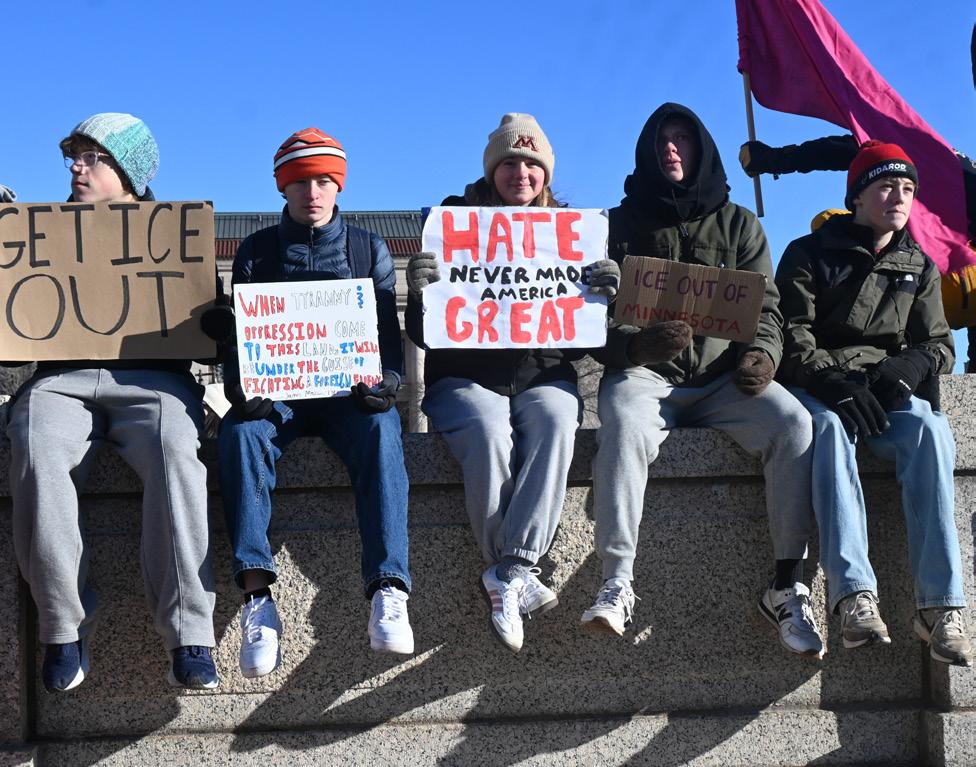

ICE OUT. Two protesters hold signs reading "Neighbors say ICE out." Many students prepared signs for the Jan. 14 walkout. Senior Hazel McCarthy participated: "I’m scared for ... all the people that are being affected by [ICE]."
AMANDA HSU CHIEF VISUAL EDITOR
TW: recap of ICE activity, gun violence
In the weeks following Renee Nicole Good’s death, Minnesota has experienced tumultuous change, from massive protests to somber vigils and yet another shooting death on a Minneapolis street, marking a momentous month in the state’s history.
Good was fatally shot in her car by U.S. Immigration and Customs Enforcement agent Jonathan Ross Jan. 7 while protesting the increased ICE activity in Minneapolis. News of Good’s death sparked over 1,000 protests nationwide.
Twin Cities residents rallied together for an economic blackout Jan. 23 and marched through downtown Minneapolis in subzero temperatures that closed most Minnesota schools.
Then, 37-year-old Alex Pretti was killed Jan. 24 while trying to protect a woman from federal agents. The same day, at the request of county law enforcement, Gov. Tim Walz activated the Minnesota National Guard to assist with crowd control
measures at the Whipple Federal Building, where detainees are being held.
Senior Hazel McCarthy said, “I’m scared for my community members and all the people that are being affected by [ICE]. Trump is using all of his power and not being held accountable for any of it.”
Schools have not been exempt, with the detainment and violence at Roosevelt High School dismissal on Jan. 7 making national headlines. Agents on scene used pepper spray, tear gas and physical force against students and teachers, resulting in the temporary arrest of an educator.
Junior Eli Perry has connections at Roosevelt and thinks the confrontation was “insane and should not be allowed or acceptable.”
The violence led to Minneapolis Public Schools closing for the rest of the week and offering online learning for those afraid to come to school at least through Feb. 12.
Schools throughout the state have staged protests. Student representatives from St. Paul Public Schools organized a walkout on Jan. 14 at the State Capitol.
Sophomore Eli Kardasis Sturtz attended the protest alongside a few classmates. “The high schools there did a really good job ... Almost everybody who’s been protesting around the U.S. has been really peaceful, so I’m really proud of that,” he said.
I’m scared for my community members and all the people that are being affected by [ICE]. “
senior Hazel McCarthy

In response to ICE activity on school grounds in the city, parents and teachers have established networks to stand guard outside before and after the school day. However, despite community efforts, student attendance throughout Minnesota has decreased over the past month.
McCarthy previously attended a Spanish immersion preschool which has been a target of recent ICE activity. She has heard about parents and adults creating a human
blockade in front of the door, buying employees Uber gift cards to avoid public transportation and taking out the trash at school so employees don’t have to leave the building.
“I think that it’s really crazy that people have to resort to literally using themselves as human shields for other people,” McCarthy said, “but it also makes me feel a little bit hopeful, because these people are willing to stick up for other people in their community.”
The campuses have also increased precautions around student arrival and departure, stationing administrators and teachers outside during those hours. Senior privileges, which allow senior students to leave the campus during free periods or in between classes, have been temporarily paused.
Perry said, “It is a dystopian reality … I feel like a lot of people are treating it as normal, as just a fact of the world that we’re living in, but it’s not. This is not normal.” McCarthy believes Minnesota has been targeted because of its prominent lawmakers, such as Walz and U.S. Rep. Ilhan Omar (D-Minnesota). Trump
has threatened to invoke the Insurrection Act; on Jan. 19, the Pentagon ordered 1,500 active-duty soldiers currently stationed in Alaska to be ready for deployment to Minnesota.
Local and state officials have urged federal law enforcement to leave Minnesota, while Homeland Security Secretary Kristi Noem and Vice President JD Vance have defended their actions.
Minnesota Attorney General Keith Ellison filed a lawsuit against the DHS on behalf of the state and the Twin Cities Jan. 12 to halt further ICE involvement.
In a time of increased hostility, Kardasis Sturtz advises protesters to use caution and be responsible when exercising their freedom of speech and assembly. “Try to just be smart and [protest] with people who you feel comfortable around,” he said. Think about whether what you’re doing is a good idea or not.”
DHS has not yet indicated when federal agents will leave Minnesota.
READ MORE about students' opinions about ICE's presence in Opinions pg. 5 and 6.
• Know your rights
• Stay informed
• Organize a school food or clothing drive
• Attend a bystander training
• Provide financial assistance to those in need
STAY SAFE:
• Go to an event with a buddy
• Prepare for the cold
• Stay alert and aware
• Document interactions with law enforcement; if approached, be comfortable asking for a lawyer
INFOGRAPHIC: Sonia Kharbanda
Scan this QR code to learn more about how to stay safe amid increased ICE presence.

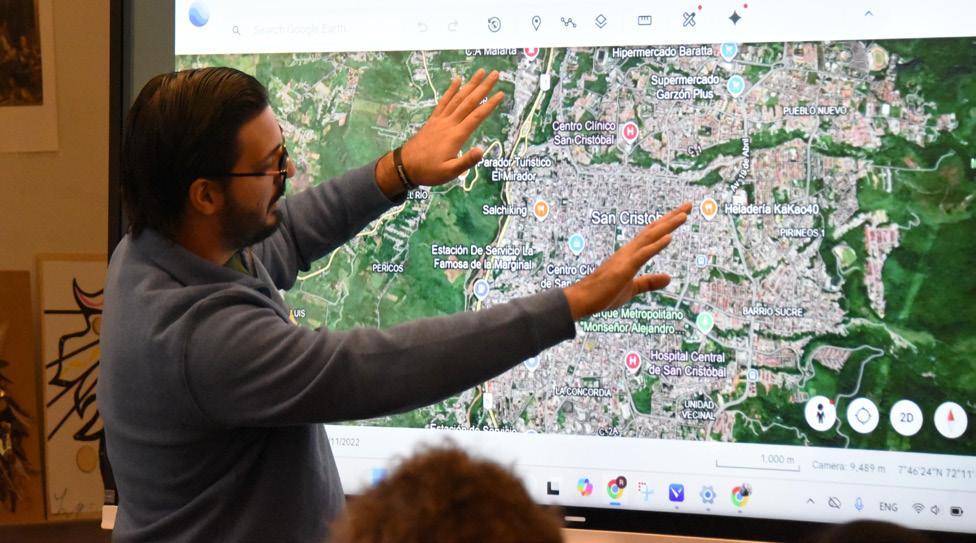
PERTINENT PRESENTATION. Guest speaker Carlos Piñero uses Google Earth to talk about his life in Venezuela. His lesson gave context to the U.S. strikes on Venezuelan military bases and the indictment and abduction of Venezuelan President Nicolás Maduro on Jan. 3. “I was hoping for students to be able to ask questions to somebody who is currently living under that repressive system,” Christine Piñero said.
PHOTOS: Caden Deardurff
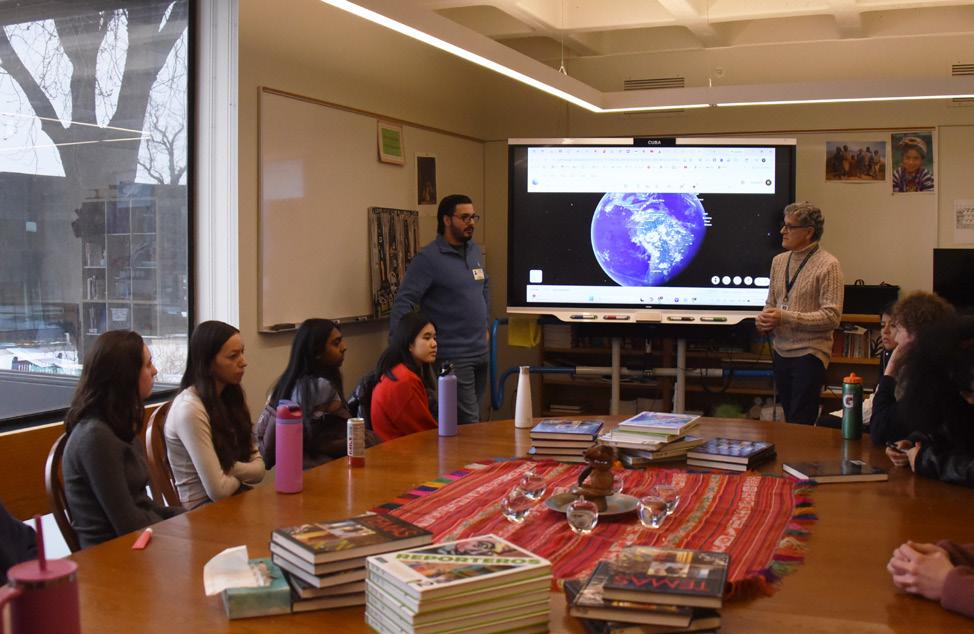
OVERSEAS EDUCATION. Advanced Spanish students listen to a presentation on Jan. 21. Guest speakers Carlos Piñero and Alexandra García explain their experiences under an authoritarian regime. “It was good to talk to them also, because they are members of the Venezuelan opposition ... that was the perspective I had been missing,” senior William Hanna said.
VENEZUELA GAINS INDEPENDENCE
JUAN MIGUEL ADAMS MANAGING EDITOR
Roughly 3,000 miles separate the lives of Venezuelans in San Cristóbal from students in classroom 6210. But on Jan. 21, that distance narrowed when students in the advanced Spanish course heard from two Venezuelan adults, Carlos Piñero and Alexandra García.
Carlos Piñero and García visited the class to speak about their experiences living in Venezuela, specifically their lives under authoritarian leaders, Hugo Chávez and Nicolás Maduro. The visit was facilitated by Spanish teacher Christine Piñero, who is Carlos Piñero’s aunt-in-law.
García was born in Colombia; however, both García and Carlos Piñero lived through Venezuela’s 2008 political transition, when Chávez was democratically elected. Chávez later implemented socialist reforms and moves to consolidate power in the presidency. Before his death, Chávez endorsed
then-Vice President Maduro, who won a narrow election and has largely continued those policies and intensified authoritarian control. However, on Jan. 3, Maduro’s reign was put to an end, after he was captured by U.S. forces and flown to New York City to face federal charges.
“[The visit] couldn’t have come at a better moment, really,” Christine Piñero said. “I was hoping for students to be able to ask questions to somebody who is currently living under that repressive system and in that space.”
The conversation was a Q&A, with students asking questions they had prepared beforehand. For senior William Hanna, the discussion shifted how they thought about U.S. military action in Venezuela. “I was very shocked and opposed to the kidnapping of Maduro … because we had no jurisdiction to do that,” Hanna said. “But it was good to talk to them also, because they are members of the Venezuelan opposition, and they told
us, ‘We are happy and grateful that he’s gone.’
And that was the perspective I had been missing a little bit.”
Christine Piñero hoped the meeting would offer a view her students hadn’t heard. “It’s a perspective you don’t get to hear in the news. It’s also just told in a way that it’s a lot more impactful, because it’s things that have happened to them,” she said.
Carlos Piñero and García talked about the pressures of daily living, government control and economic instability, but also optimism for the country’s future. Both Piñero and Hanna noticed a theme in the conversation: hope, even amid political uncertainty over who would take Maduro’s place.
“When I asked questions like ‘What do you think is gonna happen?’ They kept talking about a long transition period into a democratic government, but it’s like, they didn’t know what it was gonna look like,” Hanna said. “There’s been very
2024
little communication from anybody about what is actually changing, but they still seemed to have a positive outlook for the future.”
Christine Piñero, whose husband was born in Venezuela and who has visited the country on multiple occasions, has found a theme in Venezuela’s timeline. “It’s a continuous story of hope. With every added restriction and continued violence, there is still joy … It’s always just a reminder that they’re such a resilient group of people with incredible hope,” she said.
Carlos and García were only able to speak with one class period before they had to travel back. Even in that short time, students were able to hear firsthand from Venezuelans living under conditions very different from their own and get a glimpse into the daily life and political realities in a country that has been the focus of international news coverage.
U.S. STRIKES VENEZUELAN BASES, ABDUCTS MADURO
MADURO WINS CONTROVERSIAL ELECTION
INFOGRAPHIC: Evie Gardner INFORMATION: BBC
PEONY STEELE
THE RUBICON
Out of six Minnesota finalists for the 2026 National STEM Festival award, two are upper school students: senior Evan Morris and sophomore De-An Chen.
The National STEM Festival is a nationwide, yearround program that helps students develop real-world solutions while connecting them with mentors and industry leaders to build job-ready STEM skills. Powered by EXPLR, the festival supports expanded access to high-quality STEM learning.
To apply, Chen and Morris each submitted a threepage summary detailing their research goals, design process, real-world impact and supporting materials. Chen used tools like ArcGIS and open-source data from the Metropolitan Council. The project evolved from heat mapping to an in-depth analysis of environmental factors and urban heat disparities.
“I feel that this award shows how we can use maps to really help the world,” he said. His project began as a personal interest in geography and technology, and as he did more research, Chen realized he wanted to address real-world problems, specifically urban heat and environmental injustice. His project highlighted the vicious cycle of environmental injustice, where a lack of trees led to an increase in temperature, which in turn impacted vulnerable neighborhoods. “I feel the reason why my project was picked was because one of the themes for the national STEM [award] was environmental injustice,” Chen said.
Chen has been working on his project since eighth grade, with support from the Director of Instructional Technology Tami Brass and a geography professor at the University of Minnesota. Chen was also inspired by his passion for technology: “I’m really interested in geography, and I’m also really interested in technol-
ogy and computer science, so this project is really a blend between the two subjects I really like,” Chen sa id.
Meanwhile, Morris focused his project on improving neuromodulatory treatments for brain disorders such as depression and Parkinson’s disease. Starting in the Advanced Science Research class last year, Morris brainstormed a variety of ideas, but eventually moved on to the University of Minnesota, where access to mentors and materials helped his project succeed.
Morris’ motivation to improve neuromodulatory treatments came from a personal experience: “Someone pretty close to me developed Parkinson’s and started receiving this treatment called transcranial magnetic stimulation.”
sophomore De-An Chen “
I feel that this award shows how we can use maps to really help the world.

Morris was concerned about the lack of specificity with brain magnetic field frequency of transcranial magnetic stimulation. Because of this problem, he chose to use optogenetics, a method that uses light to turn neurons on or off. He tested various light frequencies in model organisms to see how brain cells respond. “The idea behind my project was essentially how can we find a better starting place so that when a patient goes in, they’re saving thousands of dollars and weeks of time for this really promising treatment and it’s more specific to them,” he said.

SUBMITTED
POSING PROUDLY. Senior Evan Morris stands with a friend holding their project IDs. Morris attended the International Science Fair in May 2025. “I was fortunate enough to win second [place] there in cellular and molecular biology,” he said.
In addition to qualifying him as a finalist for the National STEM Festival award, his project also won second place at the International Science Fair in cellular and molecular biology in Columbus, Ohio. Morris has also presented at regional science fairs, state science fairs and Yale University.
With personal passion, curiosity and dedication, Chen and Morris not only tackled real-word challenges, but also developed advanced skills in research, analysis and communication that can serve them in future scientific pursuits.
The selection process for each finalist is announced in March, and selected students go to Washington, D.C., in June to present their projects.
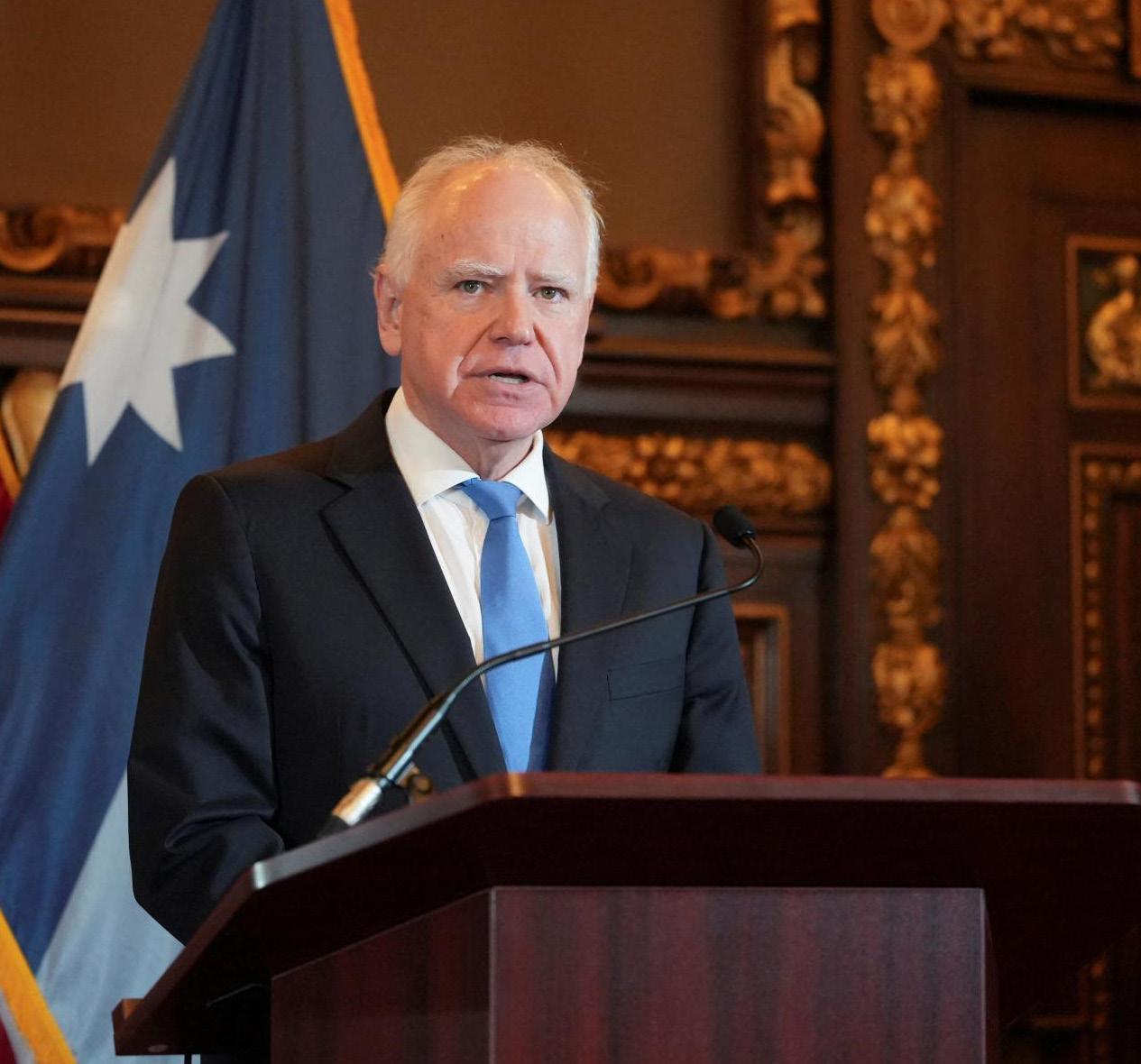
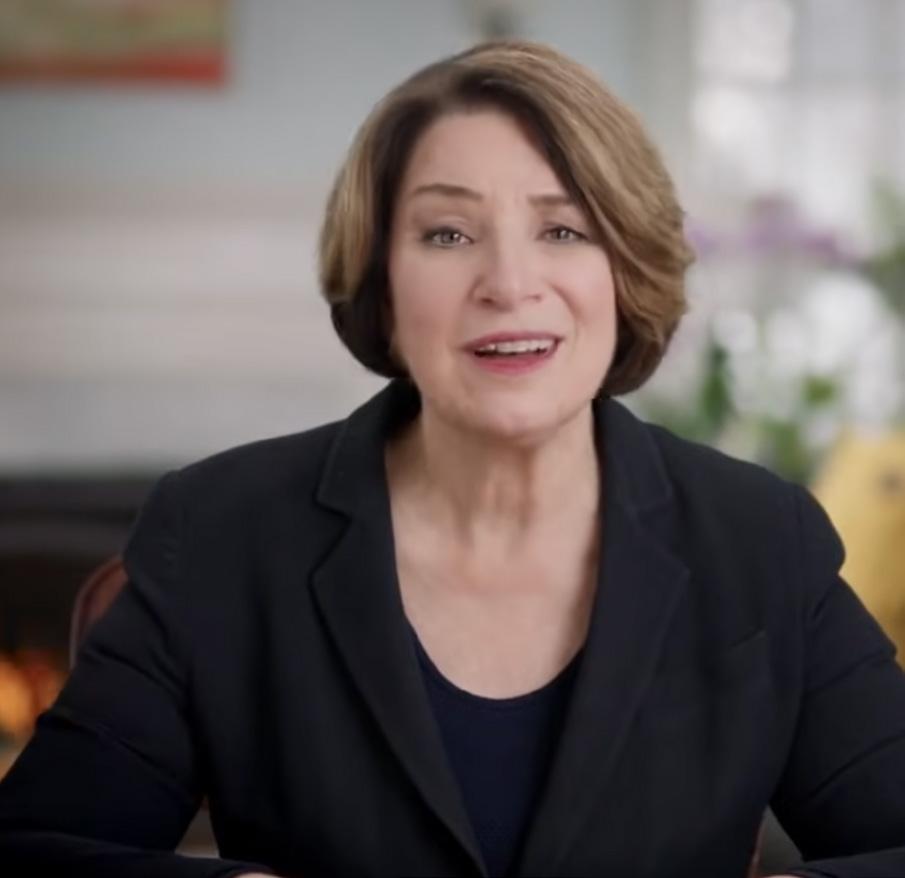
Months after launching his reelection campaign for what would be a third term, on Jan. 5, Gov. Tim Walz announced that he is stepping away after completing his second term as Minnesota governor.
Walz was facing backlash surrounding the Feeding Our Future
fraud scandal and other fraud in childcare programs. After his departure from the race, U.S. Sen. Amy Klobuchar (D-Minnesota) emerged as a potential candidate, officially announcing her campaign Jan. 29. In her campaign video, she addressed the fear and hardship many Minnesotans are currently experiencing. “These times call for leaders who can
stand up and not be rubber stamps of this administration, but who are also wiling to find common ground and fix things in our state,” she said.
Sophomore Liam Burns shared his perspective about a Klobuchar candidacy.
“People think that [Klobuchar would] be good at getting rid of the fraud and everything, so I think Walz kind of knew
that she’d just be a better decision,” he said.
Burns thinks Klobuchar would bring welcome change if elected.
“
[Klobuchar would] be good at getting rid of the fraud and everything, so I think Walz kind of knew that she’d just be a better decision.
sophomore Liam Burns

“From what I know, I think Amy Klobuchar is … better at running things … Minnesota government is, in general, very inefficient … so I think she’d do a great job at fixing a lot of those issues,” he said.
Senior Francis Matthews believes Klobuchar would not significantly change Minnesota politics.
“I don’t think it would be a huge change. They’re
different people, so obviously something would change. But they’re both Democrats, I think long term they want to secure fairly similar things for Minnesota,” she said.
Klobuchar and Walz share similar policies, such as stricter gun laws, affordable health care and abortion rights. Klobuchar has represented Minnesota as a senator since 2007, and before that, she served as Hennepin County attorney.
Despite their similarities, Matthews also thinks that Klobuchar has unique attributes she can bring to the table.
“She’s always also been pretty bipartisan, which I think is a good thing for Minnesota right now, to be able to have someone who’s able to bridge the gap a little bit,” she said.
Burns also noted Klobuchar’s two-party attitude. “I think it’s good to have a more moderate governor. I think obviously the world’s getting a little too polarized … Just in general, it’s better
to kind of get a mix of everyone’s opinions and policy,” he said.
A number of Republicans have announced plans to run, including state House Speaker Lisa Demuth, former gubernatorial candidate Scott Jensen and My Pillow CEO Mike Lindell. As Walz completes his final term as governor, the position is opening up for the first time in seven years. While Minnesota looks forward, and state political leadership shifts, new opportunities and changes will emerge in upcoming years. Primary elections are scheduled for Aug. 11, and the gubernatorial election will take place Nov. 3.
Scan this QR code to read more about the next steps for Minnesota’s governance.

ARIELLA KIM THE RUBICON
When conservative influencer Nick Shirley’s YouTube video alleging widespread fraud at Minnesota daycare centers went viral, it triggered a heated storm of reactions from politicians and social media commentators across the country.
In the 43-minute video posted Dec. 26, Shirley visited multiple childcare facilities receiving government funding to question whether children were present, in an attempt to expose fraudulent activity. The video quickly sparked debates over broader political topics, such as immigration and journalistic integrity. With social media posts, controversial claims and strong opinions moving rapidly across the internet, the alleged fraud has evolved from a single allegation to a broader battle of competing, often extreme, narratives.
Sophomore Zahra Sait first became aware of the allegations through Shirley’s video and later saw information from official state investigations addressing the claims. “I have heard through a lot of official state visits that they found very little factual basis for his specific claims regarding those daycare centers,” she said.
According to Minnesota Public Radio, the Minnesota Department of Children, Youth and Families conducted compliance checks at nine childcare centers featured in Shirley’s viral video and found that children were present at all sites except one, which had not yet opened to families on the day inspectors evaluated.
Nevertheless, Shirley’s video continued to gain traction, with many conservative political figures praising his claims. On Dec. 27, Vice President JD Vance wrote on X, “This dude has done far more useful journalism than any of the winners of the 2024 @pulitzercenter prizes.”
Online attention soon drew a response from Congress. The House Oversight Committee, Congress’ main investigative body, pledged to investigate the alleged fraud in Minnesota on Jan. 7. Committee Chairman James Comer (R-Kentucky) expressed concerns, stating, “Federal prosecutors estimate these criminals have stolen at least $9 billion. The breadth and depth of this fraud are breathtaking. And I fear it is just the
tip of the iceberg,” he said. His comments further fueled online debate, prompting questions about whether there was any concrete evidence to back the allegations.
At the state level, Gov. Tim Walz has expressed his views on the alleged fraud. “We should be concerned about fraud in our state government. We cannot effectively deliver programs and services if we can’t earn the public’s trust,” he said in a press release on Jan. 5. Despite his concern, Walz believes that the political gamesmanship, the withholding of federal childcare funding and the misinformation being spread have gotten out of hand. “It is disgusting. And it is dangerous,” he said. In the same press release, Walz announced that he will no longer be seeking a third term as governor, dropping out of the November election. As statements continue to circulate, differing claims have made it increasingly difficult for the public to distinguish facts from political opinions.
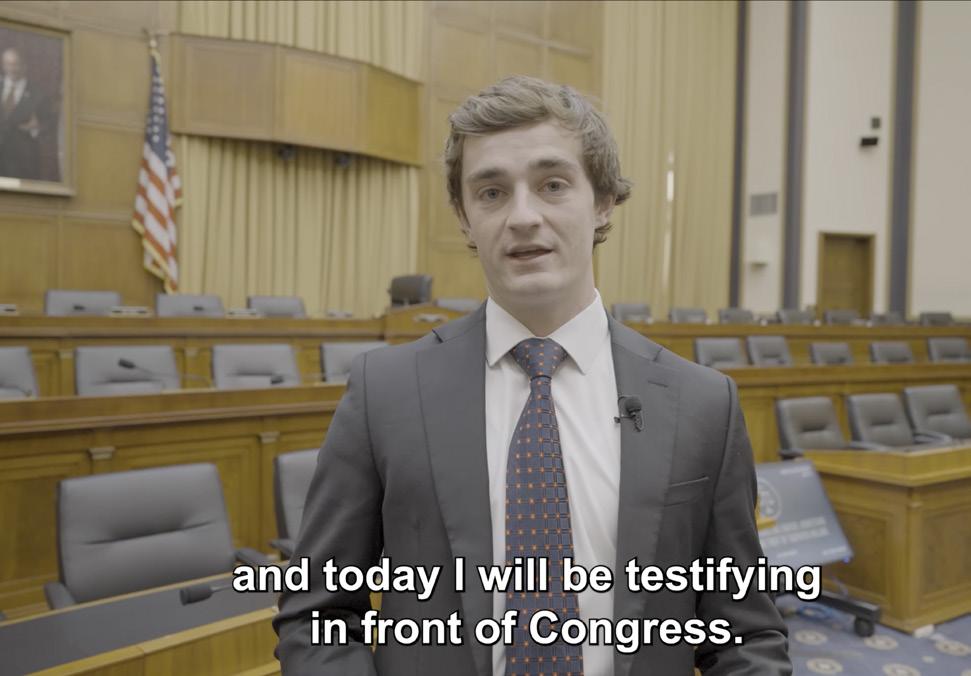
ninth-grader Ellie Whitcomb “
Fraud allegations ... [were] used as a pretext of ICE agents being sent to the state, and shifted people’s focus from the fraud allegations to immigration.

According to senior Zain Kizilbash, the impact of the rhetoric has moved beyond policy discussion and into the experiences of affected communities, specifically the Somali community. “I think on social media, there have been these influencers who have been perpetuating a lot of stereotypes and political messaging,” he said.
Kizilbash believes that politicians have seized upon the messaging from conservative influencers in order to back up their anti-immigrant rhetoric. “It was being used by a lot of politicians as just leverage against the Somali community,” he said.
President Donald Trump has repeatedly expressed criticism towards Somali-Americans and has pointed to the recent childcare fraud allegations as justification for his claims. On Dec. 31, Trump made a post
on Truth Social that called to “send them back where they came, Somalia.” Trump subsequently deployed U.S. Immigration and Customs Enforcement agents to the Twin Cities, specifically to target the Somali community. Additionally, on Dec. 30, the Trump administration announced that it would freeze federal childcare payments in response to the controversy.
Ninth-grader Ellie Whitcomb believes that the attention on these allegations directly led to the increase in federal enforcement in the Twin Cities. “The daycare fraud allegations increased the attention to Minnesota, which was used as a pretext of ICE agents being sent to the state, and shifted people’s focus from the fraud allegations to immigration,” she said.
What began with a conservative influencer’s YouTube video and spiraled into a series of political firestorms has put Minnesota at the center of national news and has led to political decisions that affect many Minnesota residents, including those relying on federal childcare payments. As the debate around the allegations continues, more news sources, politicians and influencers have weighed in, amplifying the controversy and contributing to polarizing rhetoric surrounding immigration.
OUR MISSION
We strive to capture the spirit of the community through its stories while inspiring deeper conversations. Above all, we stand for integrity in our pursuit to inform and engage our readers.
THE RUBICON
St. Paul Academy and Summit School 1712 Randolph Ave • St. Paul, MN 55105 rubicon.spa@gmail.com www.rubiconline.com @TheRubiconSPA
25-26 STAFF
THE RUBICON
EDITOR-IN-CHIEF
MANAGING EDITOR
CHIEF VISUAL EDITOR
NEWS EDITORS
OPINIONS EDITORS
HEALTH & WELLNESS EDITOR
PAGE ONE/IN DEPTH EDITOR
FEATURE EDITORS
SPORTS EDITORS
A&E EDITORS
GOOD QUESTION EDITOR
COPY EDITOR
DATA JOURNALIST
Sonia Kharbanda
Juan Miguel Adams
Amanda Hsu
Evie Gardner
Wynter Feiner
Peony Steele
Eva Burns
Izzy Middlebrook
Peter Ostrem
Ariella Kim
Sylvia Westra
Sam Galarneault
Harper Larsen
Sunde Auberjonois
Tallulah Dogwill (S1)
Lilly Parr (S2)
Lina Abid
Ivy Evans
Jack Gao
RUBICONLINE
DIRECTOR OF RUBICONLINE
PRODUCTION MANAGER
CREATIVE DESIGN MANAGER
DIVERSITY MANAGER
BEATS MANAGER NEWS EDITORS
OPINIONS EDITORS
FEATURE EDITORS
IN DEPTH EDITOR
A&E EDITORS
SPORTS EDITORS
COPY EDITOR
PODCAST EDITOR
RUBICON TV
SOCIAL MEDIA MANAGER
Thomas Chen
Greyson Sale
Zimo Xie
Lani Ngonethong
Elizabeth Tuttle
Peter Lipinsky
Ike Obi-Walker
Winston Arvidson
Audrey Jansen
Zahir Hassan
Naomi Zins
Shrey Nemani
Lani Ngonethong
Yassin Mokbel
Senetneb Theba
Allen Wang
Aiden Ruediger
Yasmin Khan
Nabeeha Qadri
Nora McKoy
Andrew Lipinsky
Audrey Peltier
CONTRIBUTORS
Jack Gordon, Carys Hsiung, Annika Kim, Chloe Kovarik, Kate Tuttle, Huxley Westemeier
STAFF WRITERS
Grace Berger, Henry Childs, Maizy Henretta, Niko Lifton, Gisele Parnell, Auden Zheng
ADVISER
Kathryn Campbell, CJE
PUBLICATIONS ASSISTANT Scott Gillespie
MEMBERSHIPS
Columbia Scholastic Press Association
National Scholastic Press Association
Private School Journalism Association
MN High School Press Association Quill and Scroll Honor Society
CURRENT PUBLICATION AWARDS
2024 NSPA All-American
2025 Pacemaker Finalist (online)
2025 CSPA Hybrid Gold Crown Award Winner
2025 SNO Distinguished Site
2025 JEM All State Gold

PROTECTIVE BUBBLE. It is worth recognizing how community members have stepped up – including by walking students to school and standing guard outside campuses – but these actions should not be necessary. No one should be forced to choose between their safety and their education. of the
The time is now for action:
no
With headlines about U.S. Immigrations and Customs Enforcement presence in the Twin Cities dominating every screen, it’s hard to look away and it’s hard to feel safe. Educators have joined administrators standing outside the Randolph campus doors in the morning, increasing the adult presence outside as students are welcomed to school. Many Minnesotans opt to carry their passports at all times. These precautions have been put into place due to the increased presence of ICE agents in the Twin Cities. The outpouring of action from community members is welcome, but they should not be necessary. ICE is inhibiting education. Empty seats plague classrooms across the Twin Cities because students are afraid federal agents will rip them out of class. Students can’t focus on an upcoming test out of concern that ICE agents could be waiting outside the building.
It is worth celebrating that, in a time when many Minnesotans are experiencing uncertainty and fear, community members are stepping up. The upper school administration has communicated a plan if ICE comes on campus, and many students have joined recent protests, with clubs and groups organizing donation drives.
Both Minneapolis and St. Paul Public Schools are offering hybrid and fully online classes for students who don’t feel safe attending in-person classes. However, the anxiety is not limited to Twin Cities schools. From pre-K to college campuses, all levels of education are feeling the weight of ICE’s presence.
ALTHOUGH IT IS EASY TO FEEL INSULATED FROM THE CURRENT TURMOIL AS A PRIVATE SCHOOL, ALLOWING THE SPLIT BETWEEN COMMUNITIES TO DEEPEN ONLY HINDERS PROGRESS.
During times of political turmoil, it is essential that children are present in school. A 2021 study by Mhairi Bow and Juliet R. H. Wakefield, et al., entitled “The mental health benefits of community helping during crisis,” found that finding community in uncertain circumstances reduces depression and anxiety and improves wellbeing.
Not only is physical presence important, but absence from the classroom diminishes learning. A 2024 study by Ammar Ahmed Siddiqui and Malik Zain Ul Abideen, et al., entitled “Students’ Perception of Online Versus Face-to-Face Learning: What Do Healthcare Teachers Have to Know?” reported that showing up to school, as opposed to learning remotely, leads to an increase in skill development and social awareness. Although it is easy to feel insulated from the current turmoil as a private school, allowing the split between communities to deepen only hinders progress. While the upper school is afforded luxuries such as excellent security staff, this community is not immune from the impact of ICE.
Don’t let ICE’s presence at schools in the Twin Cities become “just another crisis.” That sentiment merely justifies complacency. Minnesota has experienced a multitude of hardships this year – specifically at schools, with the shooting at Annunciation Church and Catholic School in August – but not continuing the conversation surrounding ICE on campus prevents further action.
In response to the Annunciation shooting, Gov. Tim Walz vowed to call a special legislative session in order to address gun violence. Five months later, no special session has taken place. We cannot allow the same promises regarding safety in schools to go unmet.
The looming threat of ICE is not at all conducive to an environment of learning. Call your state and U.S. legislators and demand legislative action to prevent ICE presence on or near school grounds. Support the community through this difficult time by checking on friends and neighbors who are affected by ICE’s ongoing operations. Even when difficult, read news about ICE presence in the city and engage in informed discussion. This is an opportunity for students to take autonomy over their right to an education. Don’t let it pass by.
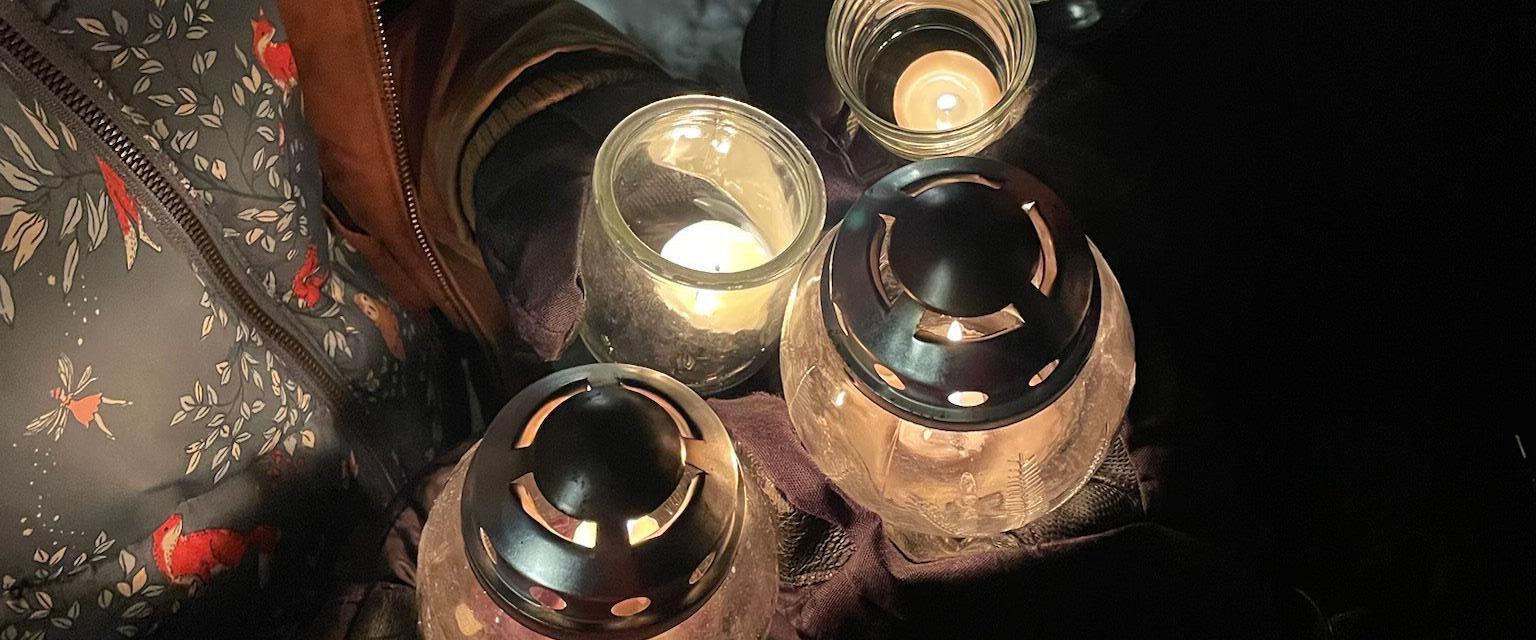

Minnesota is hurting and needs protection.
SAM GALARNEAULT THE RUBICON in ICE tactics has been repetitive in the last year. Good’s death is another way ICE has unnecessarily misused and abused their power, weapons and force while being completely safeguarded by the Trump administration and the Department of Homeland Security. ICE’s unpredictability in Minneapolis is what is making Minnesota an increasingly unsafe and undesirable place to be.
In the last year, tensions have risen throughout the country as U.S. Immigration and Customs Enforcement increased their operations under the Trump administration. The public view of ICE is controversial, but feelings of fear, distrust and disgust towards their actions are widespread after recent violence.
The public outcry has grown louder after recent events in Minneapolis. On Jan. 7, an ICE agent killed a U.S. citizen, 37-year-old Renee Nicole Good. The pattern of violence and turbulence
Becca Good, Renee’s widower, described the impact her wife had on the people around her. “Renee lived by an overarching belief: there is kindness in the world and we need to do everything we can to find it where it resides and nurture it where it needs to grow.”
There is a line where law enforcement does more damage than good. This line has been crossed. Law enforcement is needed as they ensure protection and safety in our communities when they act in good faith and with integrity. ICE does not uphold the trust or respect that they should when acting as federal agents.
Communities are filled with fear and rage, covered with horror and anxiety. The streets of Minneapolis and St. Paul are filled with the sound of protest; angry footsteps, whistles and the yelling of protesters trying to make their voices loud enough to be taken seriously. An estimated 50,000 demonstrators
downtown Minne-
ICE has raised serious concerns about their professionalism and respect for human life in recent events.

ICE has raised serious concerns about their professionalism and respect for human life in recent events. The ICE agent who killed Good was not the only agent who acted recklessly and without regard for hu-
man life. 37-year-old Alex Pretti was fatally shot by a federal agent in South Minneapolis on Jan. 24. He worked at the Minneapolis Veterans Affairs Health Care System in the intensive care unit as a nurse. Pretti was another victim to ICE’s violence and lack of morals. Around the country, ICE has disrupted communities and families for the worse.
Pretti’s parents, Michael and Susan Pretti, made a statement as they grieved the loss of their son.
“We are heartbroken but also very angry,” they said, “Alex was a kindhearted soul who cared deeply for his family and friends ... I do not throw around the ‘hero’ term
lightly. However his last thought and act was to protect a woman.”
ICE is responsible for these deaths. There needs to be an end to the excessive, unjust and violent immigration crackdown. ICE needs to leave Minnesota now.
This is not the Minnesota residents want to live in. It is more important than ever to support those around you. Even though it might be hard to not see change right away, there still needs to be hope and voices to be heard. Act with care and passion. Be there for those who need it the most and act for what you believe in. Above all, stay safe and respectful but let your voice be heard.
“The Party told you to reject the evidence of your eyes and ears. It was their final, most essential command.” This quote is from George Orwell’s novel “1984.” Written as a commentary on totalitarianism in 1949, it depicts a world of constant surveillance, complete government control and historical revisionism, capturing the cultural conversation for decades. It is a societal touchstone, even today. Especially today.
In the age of social media, when a tragedy happens, it is not uncommon for someone to have captured it on video. This was the case with the murder of Renee Nicole Good on Jan. 7. Video evidence shows Good in her car blocking the path of U.S. Immigration and Customs Enforcement agents in their vehicles. As one agent attempts to open the driver’s side door, Good angles the vehicle’s wheels away to drive off. Milliseconds later, one of the agents shoots at the car three times, towards the windshield, killing Good.
Once resistance to these lies stops and passiveness begins, that is when the mistruths can be allowed to win.

Media literacy is crucial now more than ever. The ability to distinguish between real and fake news is becoming an increasingly relevant yet challenging skill to master. With the rise of AI deepfake images spreading across the internet, it is very important for individuals to conduct their own research before sharing content.
We must think critically not only about the images and news we are consuming, but also the narratives
being fed to us by those in power. Take, for example, the official White House website. Currently, the website features articles with titles like, “57 Times Sick, Unhinged Democrats Declared War on Law Enforcement.”
Inflammatory statements like these are what people expect to see on a website like BuzzFeed, not on one that represents the federal government. The information that these articles contain is no less misleading than their titles. The declarations of war by the “unhinged Democrats” are actually just quotes from state representatives and governors whose districts have been targeted by ICE and who have had the courage to speak up about the effects of their unwanted presence.
In times of crisis, people are often told to turn to those with authority and power for guidance. But if those with authority and power are not reliable sources, what then? This is why factually accurate historical accounts are so important. The issue is this: if those authentic retellings disappear, the records won’t just cease to exist. They will be replaced with false ones.
This process of replacing the truth has already begun. President Donald Trump has been quoted saying that he believes Good was likely a part of a “left-wing network” of “professional troublemakers” who were attempting to incite violence. On Jan. 8, Kristi Noem, Secretary of Homeland Security, described Good’s final moments as acts of “domestic terrorism.” As Orwell says, “If all others accepted the lie which the Party imposed – if all records told the same tale – then the lie passed into history and became truth.” Once resistance to these lies stops and passiveness begins, that is when the mistruths can be allowed to win.
Doing one’s own research is the most effective way to combat the rewriting of stories like these. Paying attention to responsible source material and not taking every crazy headline at face value is essential. Investigate even the sources that are supposed to be the most credible. Covering one’s eyes and ears won’t change anything. Using them will.
Look away from the article and investigate the site, its mission and the other stories it has on display. Investigate the publication’s reputation and content quality.
Do a quick search on the author to find out their credentials, history or if they are even real. This is crucial for assessing the reliability, bias and expertise behind news, ensuring that the information consumed or provided is accurate.
Some times old new resurfaces and causes confusion. Reposting old news stories does not make them relevant to current events.
Consider how personal belies can cloud judgment. Common types include conformation bias (seeking info that agrees with you), availability bias (using readily available info) and negativity bias (focusing on threats).
Headlines are made to catch attention in order to garner clicks and more traffic to that website. Read beyond the headline to get the entire story.
Reach out to a known expert on the specific topic to confirm if information is accurate and current. GUIDE
THE COST OF SILENCE IS TOO

A surge in the presence of U.S. Immigration and Customs Enforcement in the Twin Cities has left me despondent. Their stated goal is to deport illegal immigrants, particularly those involved in violent crimes; however, many of their recent operations do not seem to support this goal.
The murder of Renee Nicole Good and the subsequent defense of the shooter by members of Trump’s cabinet have proved that ICE is not operating with re-
gard for U.S. citizens. The attempts to assert that Good had the intention of ramming the ICE agent with her car, even with concrete video evidence, both from a bystander and the agent himself, are appalling. Have we become a country where people care more for their political agendas than for human life? It is terrifying to think that exercising one’s right to assemble under the First Amendment is punishable by death.
Time and time again,
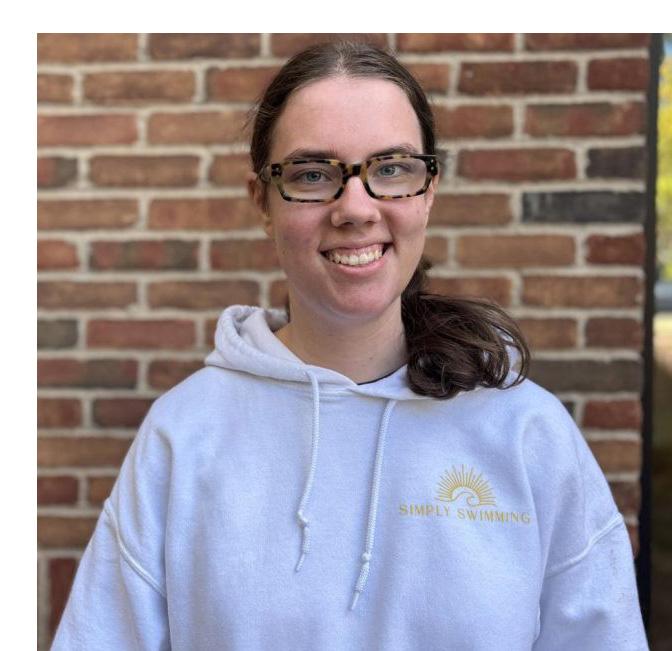
CHLOE KOVARIK CONTRIBUTOR
U.S. Immigration and Customs Enforcement is becoming an ever-present force in Minnesota, specifically in the Twin Cities. When they entered Minneapolis, it was because they were looking for and detaining undocumented immi-
grants. However, on Jan. 7, Renee Nicole Good was shot and killed by an ICE agent. The agent, later identified as Jonathan Ross, told his side of the story, saying that he felt his life was in danger from Good’s car.
Videos online circulat-
PUBLICATION INFO The Rubicon is published eight times a year. We distribute 500 copies of each issue on the Randolph Campus which are available for free.
ADVERTISING The Rubicon does not accept advertisements.
ANONYMOUS SOURCES We use discretion when reporting on issues involving safety. It is preferable to use full names, but there are times when it is necessary to protect our sources. The reporter will know who the source is and information will be verified. If anonymity is used, first name only is preferred. If the source is identifiable by first name, we will use no name. Anonymity is not used in instances that would excuse behavior consequences.
ICE claims it has the well-being of U.S. citizens in mind, but it seems that only applies to white citizens. There are few, if any, reports of ICE encountering white citizens, yet there are countless instances in the news and personal stories in which citizens belonging to various minority groups have been approached by masked agents demanding proof of citizenship. A sickening number of these confrontations end in detainment, or worse, deportation. Racial profiling is beyond unacceptable. ICE is not upholding the law, but instead reinforcing the cycle of racism.
Anyone who has read a history book should be aware of what happens when a law enforcement agency and the government it operates under disregard the law and the rights of its citizens. To quote Martin
ed, showing that Good was trying to execute a three-point turn in her car and was in no way facing the ICE officer. The Department of Homeland Security and President Donald Trump were wrong in stating that this was an act of terrorism.
This devastation shocked the community, leading to mass protests all around the Twin Cities, with many people outraged at this act from what people are afraid to call Trump’s “secret police.”
As time went on and more protests emerged, ICE agents continued to terrorize Minneapolis, fatally shooting Alex Pretti on Jan. 24 and harming
BY LINES credit the individual who conducted interviews, drafted, revised and fact-checked an assigned story. Shared bylines are given to joint effort assignments. Stories that include supplemental materials include a credit at the bottom that states “Additional reporting by” followed by the name of the reporter.
EDITORIALS articulate the collective opinion of the staff, while minieditorials, opinions pieces, arts reviews, and columns belong to the author.
SUBMISSION GUIDELINES Opinions are welcomed as Letters to the Editor or Submitted Opinions and may be published in print or online. Letters should not exceed 400 words and opinions should not exceed 650 words.
Niemoller, a pastor who lived in Germany during the Nazi party’s reign: “First they came for the Socialists, and I did not speak out — Because I was not a Socialist. Then they came for the Trade Unionists, and I did not speak out — Because I was not a Trade Unionist. Then they came for the Jews, and I did not speak out — Because I was not a Jew. Then they came for me — and there was no one left to speak for me.”
Should Minnesotans remain silent, ICE and the regime behind it will continue their unjust crusade until there is no one left to oppose them. Whether through walkouts, social media posts or support for those most affected by ICE’s efforts, find a way to stand in solidarity with the impacted community and fellow Americans and protest the recent injustice.
a 6-month-old baby with tear gas and flash bang grenades.
This has further angered the community, and has gotten to the point that Gov. Tim Walz has mobilized the National Guard. This terror needs to stop. And not just Walz, but other governors and members of Congress need to take action to stop the growing divide that Trump has started.
People live in fear that ICE will remove them from their homes and even deport them, regardless of whether they are U.S. citizens or not.
Something needs to be done, and something needs to be done now.
Both may be edited for length and style. All pieces are published with a full name.
UPDATES AND CORRECTIONS
During the post-critique process, staff members identify inaccuracies and discuss reader feedback. The staff publishes corrections when an error is discovered. Corrections should be directed to the Editor in Chief or appropriate section editor.
IN PRINT: Corrections are printed at the bottom of News p. 2. Corrections will be printed in the month following the error and, if the story is also published online, will be corrected following the online corrections policy.
PHOTO CREDITS Photos are labeled
100%
There is a quiet moment in every newsroom, student or professional, when a journalist sits alone with a story and asks, “Should I report this?” That question carries weight: student journalism has long lived in a fragile space where courage collides with the fear of institutional boundaries.
The right to free speech and press from the First Amendment has shaped this country from its very founding. But its deepest impact is often invisible: it teaches us how to think, how to question, how to engage with complexity rather than shy away from it.
In 2024, Minnesota became the 18th state to enshrine meaningful protections for student journalists when Gov. Tim Walz signed the New Voices law, requiring public and charter schools to adopt a district-wide “student media freedom of expression” policy.
The decision acknowledged that the stories students tell about their communities matter. It recognized that free expression in schools is an integral part of civic education. Most importantly, it inhibits self-censorship and assures young reporters that truth, even when it touches sensitive subjects, has a place in public conversation.
But the principles underlying these protections cannot stop at the edge of public education; private schools that promise intellectual freedom must be willing to uphold these same values in the practice of student journalism.
Currently, The Rubicon journalists are working with the upper school administration and the head of school to develop guidelines that would formalize a framework for how journalism is supported at SPA.
This marks a significant step forward. Establishing a framework grounded in the principles of the New Voices law directly aligns with The Rubicon’s mission to inform with integrity and inspire deeper conversations. It also reflects SPA’s core values by promoting transparent, ethical reporting and thoughtful engagement with issues that affect the school community.
The right to speak means nothing without the will to hear. That is precisely where the New Voices law moves beyond policy and becomes a statement about trust in students, the value of transparency and the responsibility schools have in shaping the next generation — preparing young people to be engaged, thoughtful and informed members of society.
If we choose to embrace the spirit of New Voices, the next time a young journalist sits alone with a difficult story and asks, “Should I tell this?” The answer, supported by principle, policy and trust, will be theirs to make.
Scan this QR code to read the full editorial on RubicOnline.
with the photographer name, whether on staff or freelance. Images sourced outside the staff are credited with guidance from the National Press Photographers Association guides.
NAME AND PRONOUN USE
The Rubicon uses the name and pronouns shared by sources during interview. Each interview and survey begins with a request to say and spell the person’s name and to share the pronouns they would like to see published in the story, and the reporter is transparent about where the story will be published. If a mistake is made, a correction will be posted per the corrections policy.
CONFLICTS OF INTEREST The Rubicon news and Ibid yearbook avoid

conflicts of interest while honoring that our reporters are involved in the school and local community beyond their work on staff. Staff members avoid writing about students, teachers, student clubs, affinity groups, and organizations that they are closely involved with. The reporter is always responsible for disclosing conflicts of interest, but if a conflict of interest comes to light after publication, it does not warrant removal of the story. If it is in the best interest of a source to be interviewed by a close friend in the case of a sensitive topic, the interviewer will not write the story—they will solely conduct the interview. Unavoidable conflicts of interest are specifically mentioned at the top of a story. Photographing or videography of news events is never a conflict of interest.
LILLY PARR THE RUBICON
It’s impossible for everyone to get what they want all the time, especially when it comes to class schedules, which determine how students spend most of the seven hours of their school day. Especially during the drop-add period when they can still edit their schedules, students often feel the need to find the “perfect” set of classes. While it is im portant to try to take classes of personal interest, there is a cer tain value in sticking with a class that was not your first choice.
First, when assigned to a class they didn’t want, students must understand the complexity of the class selection process. After students fill out the required forms listing their preferred classes, in the spring, the real schedule-building work takes place. According to Assistant Principal for Academics Tom Anderson, “The computer makes … a draft of what it can make and then the scheduler spends a lot of time over the summer, sort of building it.”
Along with the knowledge that can be gained from unexpected classes, many new relationships can also be formed.
sophomore


When students understand the extensive effort and energy that goes into creating their schedules, it can help them feel more appreciative of their assigned classes.

While the assistance of technology greatly aids this pro cess, it is also up to a human to consider logistics such as the number of teachers available to lead a course, the size of a class and the number of rooms in the building. Anderson describes the process as “moving the classes around to try to give students the best possible combination of their choices.”
Furthermore, there are great benefits to taking classes that aren’t a student’s first choice, such as experimenting with new content. Second or third-choice classes present the opportunity for students to be exposed to topics or fields they would not have otherwise encountered.
Along with the knowledge that can be gained from unexpected classes, many new relationships can also be formed. The classroom allows students to bond with their teachers, new and old, and to create connections with peers. A student may attempt to drop a class due to a perception of the teacher or the other students, but sticking with the class can lead to new relationships and unexpected joy.
In a world that prioritizes grades and GPA, meeting new people in classes one didn’t expect to like is another potential benefit of a second or third-choice class. According to a study conducted in 2023 by Turki Alotaibi and Khalid Alkhalifah, et al., friendships can help students perform better academically and improve their grade-point averages by relieving stress and providing support. Through making new friends, improved grades and an overall sense of community can emerge, thanks to classes that weren’t the student’s first choice.
Considering all of the benefits of accepting one’s class schedule just as it is when released in August, it is surprising that so many students attempt to alter their classes.
APPRECIATE ALTERNATIVES. Although students often try to craft their ideal schedule, sticking with a second-choice class can foster unexpected joy, friendships and interest in a new topic.
Next time, consider ignoring the temptation of “perfecting” a schedule and just go experience the power of what other students may be missing with the classes that weren’t their first choice.
JUAN MIGUEL
ADAMS MANAGING EDITOR
Power in the American presidency was never meant to be uninhibited. It was supposed to meet resistance. Checks and balances weren’t designed to guarantee leaders would be truthful; they were designed as backstops.
Checks and balances exist for the same reason there are guardrails on a mountain road: you hope you never need them, but when they fail, the drop is steep.
Ever since President Donald Trump’s inauguration on Jan. 20, 2025, the nation’s guardrails have faced constant stress.
With promises of a hopeful future, including assurances that the war between Russia and Ukraine would be quickly resolved and that energy prices would be cut in half, his presidency has once again exposed his inadequacy as a political leader. His big talk accomplishes almost nothing, unless it is unnecessarily throwing the country into war.
The illusion of checks and balances was jarringly apparent when U.S. forces carried out a strike inside Caracas, Ven-
ezuela, on Jan. 3 that led to the capture of Venezuelan President Nicolás Maduro. The operation was executed without consulting Congress or seeking a declaration of war. It was a direct violation of the Constitution, completely dismissing Congress and shocking the nation.
However, war is only the most visible symptom of a systemic issue, which is who Trump puts in power. He has filled agencies and courts with loyalists, not experts, turning branches of the government into mindless extensions of his will. Those meant to check power now only serve to reinforce it, making it all the easier for Trump to stomp around like a tyrant.
Beyond policy and personnel, Trump’s greatest advantage has been exhaustion. By overwhelming the public with constant controversy, it becomes easier to divert attention from policy violations when louder moral and humanitarian issues arise.
As each new crisis emerges, focus shifts toward safety and survival rather than the consistent, slow dismantling of democratic limits. When

topics like fear dominate conversation, violations of policy quickly lose importance.
According to the Brennan Center for Justice, a tracker for lawsuits and legal disputes involving the Trump presidency, more than 200 federal lawsuits have been filed challenging Trump administration actions as unlawful or unconstitutional. Most of these cases end up remaining unresolved or are dismissed,
but rarely stop a policy entirely.
Beyond policy and personnel, Trump’s greatest advantage has been exhaustion.
senior Juan Miguel Adams
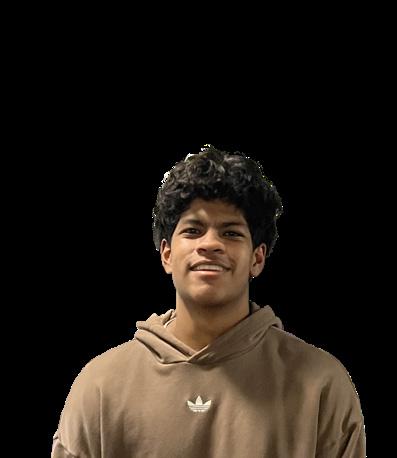
Checks and balances were designed to be uncomfortable and often slow. They served to divide power into groups that don’t always share the same stance. Right now, they feel superficial; the guardrails have dropped, and presidential authority moves freely.
The real threat is not that democracy is gone yet; it’s that Trump has shown how it can be bent, paving the way for future officials to follow
his blueprint without restraint. The U.S. is currently stranded under a president who ignores the country’s backbone and assumes authoritarian power. Gradually, citizens find the freedoms they thought were guaranteed slipping away.
Can include updating birth certificates, social security cards, medical records and driver’s licenses.
Can include changing pronouns, names, clothing/ style and other forms of gender expression.

Can include counseling, hormone therapy, puberty blockers and surgical procedures.
PERSONAL PATH. Genderaffirming care can look different depending on the individual. Legal, social and medical paths are three main branches of current care. Support from family and friends is crucial to the process.
INFOGRAPHIC: Izzy Middlebrook INFORMATION: The Curbsiders
I want people to know that we care. We’re trying to do what we can within a very difficult situation created by our current politics.
Family physician
I think there’s often a myth out there that a young person walks into a gender health program and walks out with a prescription for hormones. That is not how we provide care.
Dr. Kade Goepferd, chief education officer and pediatrician at the Gender Health Program at Children’s Minnesota

SONIA KHARBANDA EDITOR IN CHIEF
When senior Rowan* looked in the mirror, they didn’t recognize the face and body staring back. That was until they began receiving gender-affirming care in the form of testosterone in 2023. Amid the Trump administration’s attacks on transgender youth and attempts to cut federal funding for hospitals that provide gender-affirming care, Rowan worries that their hard-fought confidence in their identity will be stripped away.
Although gender-affirming care is often associated with surgery, the term refers to a broad range of social, psychological, behavioral and medical interventions to support people whose gender identity does not match their gender assigned at birth, according to the World Health Organization. These services include counseling, hormone therapy, puberty blockers, surgical procedures and social changes, such as altering one’s clothing, name, legal documents and pronouns, depending on the individual’s gender expression.
Another student* started on puberty blockers years before he started testosterone in November 2024. He described the process as a careful collaboration between doctors and his family: “A lot of people who are against gender-affirming care think it’s so easy, you can just go walk in and like 30 minutes later come out with a prescription … [In reality] they were very careful about making sure that both me and my parents understood what would happen.”
Although Minnesota is a trans refuge state – codified in a 2023 state law – the federal restrictions present a difficult choice for hospitals and health systems. Minnesota and 20 other states have signed onto a lawsuit to block enforcement of federal fund restrictions. On Jan. 5, Mike Stuart, general counsel for HHS, posted on X that he referred Children’s Minnesota to the HHS Office of the Inspector General for providing hormone therapy.
Dr. Kade Goepferd, chief education officer and pediatrician at the Gender Health Program at Children’s Minnesota, believes that Children’s has received particular federal attention because they have vocally advocated for gender-diverse youth. In addition to individual patient care, in recent years, the hospital has also worked to counter misinformation and partnered with state legislators and health advocacy groups.
The dysphoria became easy to manage, or really dampened, or kind of went away completely in some aspects.
Rowan
The student’ parents emphasized that the family initiated the question of gender-affirming care, not the health professionals. Responding to their inquiry, doctors shared information on the process and progression, and what the predicted outcomes would be.
Rowan’s weekly testosterone shots provide relief from overwhelming gender dysphoria, or the feeling of distress due to a conflict between one’s biological sex and gender identity. “Not feeling comfortable in your body and not being able to live your life the way you want to … it really takes a mental toll,” they said. After Rowan started hormone therapy, “the dysphoria became easy to manage, or really dampened, or kind of went away completely in some aspects.”
Nevertheless, in his second term, President Donald Trump has sought to restrict access to gender-affirming care and challenge the medical evidence for its use. He issued an executive order on Jan. 28, 2025, entitled “Protecting Children from Chemical and Surgical Mutilation,” which ordered the secretary of the Department of Health and Human Services to take action to end gender-affirming care for individuals under 19 years old. HHS proposed a rule on Dec. 19, 2025, to prohibit Medicaid from covering gender-affirming care for minors, and withhold Medicare and Medicaid funds from hospitals that provide gender-affirming care to minors. Along with the federal attempts to block care, as of November 2025, 27 states have passed laws or policies restricting gender-affirming services, according to the nonprofit think tank KFF.
In response to the threat on X – which has not been followed by an official lawsuit – Goepferd said, “Children’s Minnesota, like all health care systems, is continually reviewing what the threat level and risk level is of different services that we provide … we have no intent of abandoning our patients or leaving them without resources.”
Rowan emphasized that despite common misconceptions, the process to begin gender-affirming care was anything but simple. “One thing I wish [people] knew is how hard it is to get any gender-affirming care,” they said. “It’s not something you could just get willy-nilly.”
The first step for Rowan was meeting with a psychologist several times to ensure that they were of sound mind and understood the effects of hormone therapy. Once their therapist was convinced, he sent a letter to insurance attesting to the necessity of hormone therapy. After sitting on the waiting list for about a year, Rowan received their first prescription in the summer of 2023.
Goepferd explained that each medical treatment decision is individualized, but they take into account the patient’s mental health, the readiness of their parents, and the individual’s support system outside the family. Children’s Minnesota does not perform gender-affirming surgery.
During this time of uncertainty and frustration, Rowan encourages cisgender people to offer compassion to their trans peers. “They’re making another scapegoat or another enemy out of people who literally just want to live their lives and be comfortable just like anybody else,” they said.
The student agrees that support from his sister, parents and friends was crucial, both to finding confidence in his identity and to start the process of gender-affirming care. “If your parents and the people in your close circle don’t support a fundamental part of who you are, it’s hard to be happy and it’s hard to feel good and comfortable with yourself,” he said.
Gender-affirming care for youth remains rare in the U.S.; a 2025 study by Landon D. Hughes and Brittany M. Charlton, et al., found that fewer than 1 in 1,000 commercially-insured U.S. adolescents received gender-affirming medications between 2018 and 2022. The future of gender-affirming care is uncertain, as lawsuits over the enforcement of HHS orders are pending.
*names have been altered in the ditital edition to protect the safety of students
NATIONAL DATA COLLECTED OVER THE PAST 150 YEARS IN FAHRENHEIT

INFORMATION: National Weather Service WORRYING WEATHER. The National Weather Service’s report of average American tempature has shown an increase in temperature over the yeas, with a rise of 7.7° from 1880 to 2021.
Continued from pg. 1
Environmental policy has shifted significantly during Trump’s second administration, with millions of acres in Alaska opened to oil and gas drilling, the weakening of the Clean Power Plan, alterations to National Environment Policy Act and the Endangered Species Act and the rollback of clean water protections. In the Boundary Waters, mining would irreversibly pollute the land and pose a threat to the wilderness and around 250,000 people who visit it every year.
As a participant in last semester’s environmental science class, junior Ann Li explored the impact of environmental policies through a simulator called En-ROADS. “It is a simulator with many sliders you can move around, such as increased fossil fuel taxes or carbon prices. As you move the sliders, you can see how that would impact the overall rise in temperature,” she said.
NEPA is a broad declaration of national policy to protect the environment. It permanently changed the way the federal bureaucracy operates. This legislation contains disclosure requirements and mandates that federal agencies assess the environmental impacts of their actions before making decisions, rather than after. When passed, NEPA ensured public involvement and promoted informed decisions for protected environments. NEPA gives communities the opportunity to defend against environmental threats, including mining that would likely devastate northern Minnesota’s crucial outdoor recreation economy.
While the simulator is one resource for seeing the effects of climate change, Li thinks there are other ways to become knowledgeable about environmental conditions.
“We have the resources and the power to speak out and to educate ourselves through either classes like environmental science here, or just the internet, which is more widely available to us,” she said.
Li thinks that other issues are the primary focus in the news right now because environmental justice is a drawn-out process that is harder to observe.
“It is important to remember that while those issues are significant and deserve our attention, so does environmental justice because it does play a big role in our lives, whether we feel it or not,” she said.
Although environmental policy has a long history in the U.S., the entire world is affected by its actions. “It is a very interconnected issue that everyone is experiencing globally, and I think people forget the scale of that,” Li said.
In Minnesota, around 5.6 million acres of public land are managed by the Department of Natural Resources, providing recreational trails and camping areas that contribute immensely to the state’s economy. These lands function due to various environmental protections.
Science teacher Rachel Yost-Dubrow teaches the environmental science elective, and in their last unit, the curriculum gives “people a little bit of hope” about climate change. “We talk about what can be done from like an energy use standpoint, to reduce our impacts of climate change,” she said
To reverse the effects of global warming, specific goals have been established for the next few years. Yost-Dubrow describes the shift in these degree markers. “We were trying to hit 2° or less. Originally, the goal was 1.5°, and now we, the scientists, have figured out that’s really not feasible. So we’ve adjusted to 2°, which will still have a dramatic impact, but hopefully not catastrophic.” The primary goal of the Paris Agreement is to achieve this through global cooperation.
While environmental policy is changing a lot under this current administration, Yost-Dubrow noted that “even in the U.S., where things might be moving slowly, we are moving slowly in the right direction,” she said.
average rise in tempature per decade since 1850 0.11°
INFORMATION: National Oceanic and Atmosphere Association BY THE NUMBERS
10 warmest years on record have taken place from 20152025 48 years since Earth has had a colder-than-average year

SPA THINKS
What’s your biggest fear surrounding climate change?
I fear that it’s gonna get really bad before people realize the effects of it “
senior


Not being able to have clean oceans and rivers, so we won’t be able to have clean drinking water. “
ninth-grader Siri Holden
JACK GAO THE RUBICON
The environment means something different for everyone, but the cause of its damage is the same: human activity. Each year brings growing challenges, from rising emissions and trash-filled oceans to increasingly unpredictable weather patterns. While environmental problems exist on a global scale, the school community continues to value and take action for protection.
portation, and obviously biking, are great.”
Ninth-grader Zoya Jameel sees another way to prevent climate change through increasing the rate of carbon dioxide absorption.
“I’ve volunteered for planting trees before,” Jameel said. “I feel like I should volunteer more and be more active, because that’s a good thing to do.”
that people can help, because that’s the biggest thing I’ve seen: compost [and] recycling.”
Recycling and composting both have benefits for the environment.
According to the Natural Resources Defense Council and the Environmental Protection Agency, recycling and composting both conserve natural resources, reduce emissions and save energy.
Sachs believes that without recycling and composting, more land and marine life are taken.
junior Rachel Guo “
My biggest fear is that there would be no snow in the winter and it would just be really hot


I do skiing ... immediately affecting me [would be] just not being able to do the sport I love any more “
sophomore Teddy Crook
For sophomore Noah Miller-Fimpel, the environment can be defined in three sentences. “The environment means the space that I live in,” he said. “That’d be the rivers, the trees and the animals. In school, that’d be my classmates, teachers and the building.” While the environment can be understood in different ways, it generally refers to the place where people live and interact. Despite this, the environment is reaching two critical tipping points: its climate and pollution levels.
While efforts are being made to reduce carbon dioxide emissions, senior Evy Sachs believes that not enough people are aware of their actions and are still allowing more emissions.
“I do think [being unaware and not carpooling] is happening too often,” Sachs said. “It’s definitely creating a negative impact on our [environment]. It’s … just really amplifying the greenhouse effect, and we’re emitting way too much carbon.” Without a proper solution, the environment’s situation only gets worse.
“An increasing amount of our land is dedicated to just landfills, and then also all the trash that’s going in the sea is really harming ocean life,” Sachs said. “So I feel like people need to be mindful of that and try to reduce the amount of plastic they’re using daily.”
I think public transportation, and obviously biking, are great.
No one’s gonna do anything about it until it’s too late, and then there’s not gonna be much we can do.
ninth-grader
Milo Levinson “

According to a December 2024 article by Johan Rockström for WIRED, warming is at an all-time high as society nears a 2.7° increase from pre-industrial levels, with more greenhouse gases emitted into the atmosphere in 2024 than in any previous year. As emissions increase, the Earth nears a climate tipping point, a critical threshold where a small change triggers an often irreversible shift leading to cascading effects on ecosystems, weather and global climate.
To prevent a climate tipping point by reducing emissions, Miller-Fimpel has recognized the issues with conventional vehicles and changed his modes of transportation.
“I think around sixth grade, or fifth grade, I started learning about global warming. My brother biked to school. That’s when I started biking a lot,” Miller-Fimpel said. “I think public trans-
If the climate tipping point is triggered, the Intergovernmental Panel on Climate Change reports that it would cause a sharp increase in temperatures, especially in the mid-latitude and northern regions of the Earth, unstable precipitation patterns and more severe natural disasters.
The second tipping point is with pollution, mainly concerning recycling and composting.
According to WasteDive, in 2025, only 32% of recyclable material was recycled, while CNBC reported that in 2023, only 3.7% of residential food waste was composted.
Jameel thinks the main environmentally-friendly action people can take at school is to watch where their waste goes.
“I see so many times where people just put it into any bin, but there are specific things versus specific foods,” Jameel said. “And I feel like that’s honestly the easiest way
sophomore Noah Miller-Fimpel

As Miller-Fimpel finds, the distinction between what to recycle, compost and throw away is easily checkable. “I check [to] see if it’s recyclable, but if it comes from something you eat, it’s most likely [compostable],” Miller-Fimpel said. The environment represents different things for every person, but the issues of climate and pollution threaten to destroy the place where everybody lives. Instead of ignoring the issue and allowing it to get worse, take the time to be mindful of what to recycle and compost, and maybe bike to a friend’s house once in a while. Every action counts.
THE RUBICON - FEBRUARY 2026


WYNTER FEINER THE RUBICON
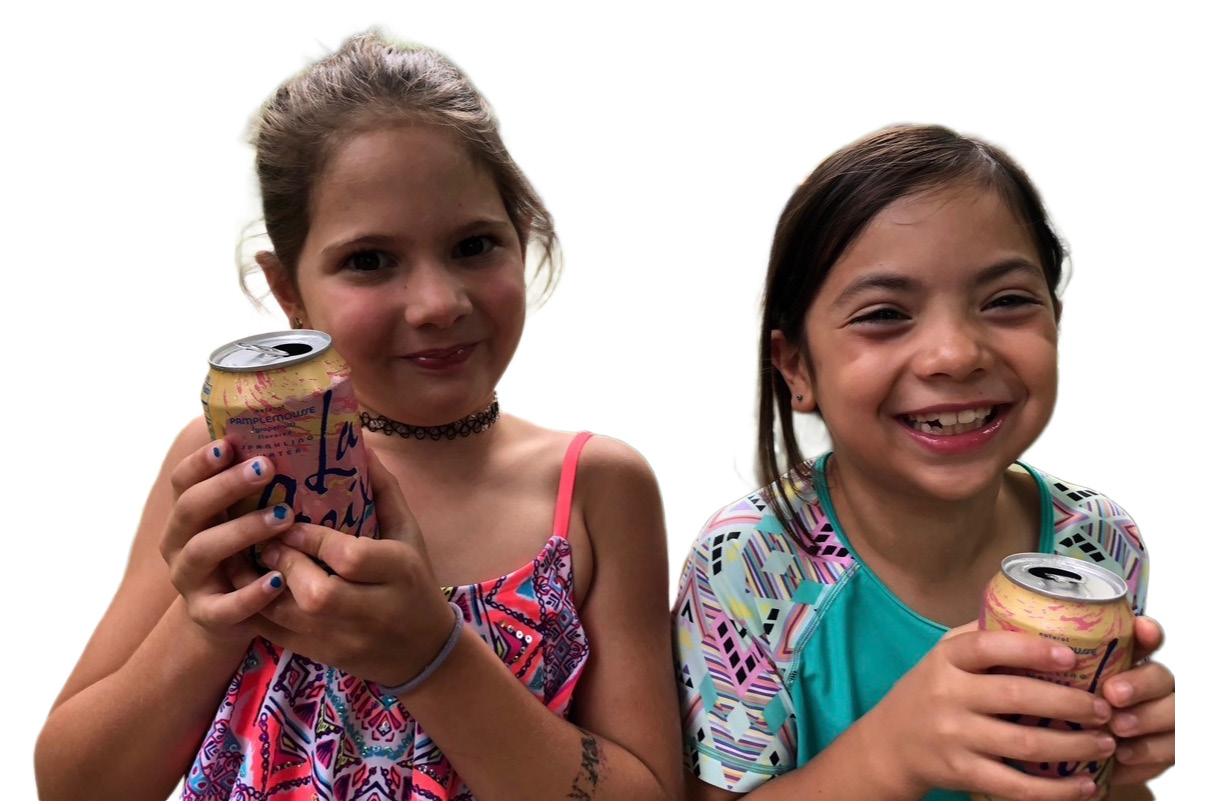
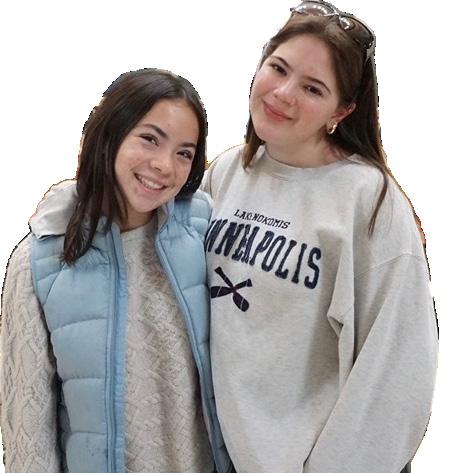
“Do you want to be friends?” were the simple first words sophomore Mae LaChance uttered to her best friend, sophomore Iris Bergad. Entering her kindergarten classroom at the Friends School of Minnesota on the first day, LaChance was surrounded by fellow five-year-olds hanging their backpacks on brown hooks, stuffing their new P.E. shoes into the bottom of their cubbies and diving into a chest of colorful dressup costumes. LaChance crept over to a large sandbox where another girl was waiting to play.
LaChance and Bergad were good friends, coexisting in their small 13-person class, but it
wasn’t until seventh grade that they dubbed each other best friends. LaChance identified the situation that brought them together as the experience of enduring similar friendships where they both felt isolated.
“We both kind of went through the same friend problems with the same group, which almost forced us to become better friends,” she said. “I was 12 at the time, so I didn’t know much, but she made me realize what a best friend could be … We both didn’t really have real best friends until each other.”
Their companionship has fostered self-discovery, as Bergad expressed that as her friendship with LaChance grew, so did her ability to be a good friend in general.
It was a summer day in June, with the sun shining brightly overhead. Senior Lucille Brooks, returning from a grad party, peered out her car window to see her street full of garage sales.
She hadn’t known, but everyone in her neighborhood had planned via Facebook and all of the garage sales were set to happen on the same day. Brooks remembered the day with fondness.
“I saw all the garage sales and I was just like, wow,” she said.
As she went from garage to garage, driveway to driveway, she walked from larger to smaller-scale sales, carrying her purchases with her.
We both didn’t really have real best friends until each other.

“Throughout our friendship, I’ve learned how to be there for someone when they may need a friend, and how to properly communicate in friendships,” Bergad said.
Establishing her first true friendship with Bergad has helped LaChance to identify the attributes she values in a friendship. “Iris was always the person who would
show up on time to the plans, which made me feel very known and respected. I feel like she was just somebody who was always there, which is important to have in a friend,” LaChance said.
Bergad feels the same sense of reliability in their friendship. “I can hang out with Mae even when I don’t really have a full social battery. I can just coexist with her, and we don’t have to do all sorts of activities together. Our friendship is effortless,” Bergad said.
Although their connection doesn’t require a pastime, Bergad’s presence in LaChance’s life has influenced a lot of her interests and hobbies. Commonly braving the Boundary Waters in the summertime, Bergad persuaded LaChance into
there are three small onion domes and a shooting star. The entire object is painted in vivid, rich colors.
Almost a year later, her love for the ringholder-snowglobe-music box-Nativity scene hasn’t changed. Whenever Brooks looks at it, perched on her bedroom shelf, she is reminded of that summer day and that precious, beautiful find, surrounded by community.
“It reminds me that there are both good deals in the future, but also … good times with other people … It brings me a lot of comfort to just look at it,” she said.
I always have a necklace on me. I like to fidget with it when I’m stressed. “

And that’s when she saw it. Atop of a white plastic table, next to a variety of other items: the ringholder-snowglobe-music box-Nativity scene.
“I was just … so enamored with it,” Brooks said. Outside of its Styrofoam box and cardboard sleeve, she could really take in its beauty. The object itself was about the size of a loaf of bread. Three-fourths of the left side features a music box that plays when wound in the rear. The snowglobe atop it features a miniature Mary, Joseph and Jesus, covered in fake snow, the Nativity.
Outside of the glass sphere, three miniature figures on camels and an angel all flank the scene. Above,
But not everyone’s comfort item is something they look at. For sophomore Emma Brewton, necklaces provide her with solace.
It’s not just an aide; Brewton also wears necklaces to show off her personal style. “I have this butterfly necklace that I love because … it’s … really pretty and matches all my outfits.”
The silver necklace, and its little white butterfly charm, is present in many of her outfits, even though Brewton is self described as a “gold girly.”
Just like the butterfly wings around her neck, the necklace helps her fly away from her worries. “I always have a necklace on me. I like to fidget with it when I’m stressed,” Brewton said.
Since getting her first necklace in sixth grade, Brewton has been wearing them since. As she has gotten older and finds herself in more stressful situations, Brewton has leaned on necklaces for support. “I use it more as a fidgeting tool right now than anything else,” she said.
Whether they act as beautiful fidgets or foster fond memories, comfort items can help students find relief and a source of happiness in difficult times.
joining her on camping trips and communing with nature. To culminate their eighth grade school year, their school hosted a Camp Menogyn trip to the Boundary Waters.
“It was a really hard trip, but Iris kind of forced me to enjoy it in a way, and then we went again the next summer, separate from our school, and it was a lot more fun,” LaChance said.
Similarly, LaChance has influenced Bergad’s emotional growth.
Bergad said, “Mae is one of the people who is very authentically herself. I think being around her makes me want to be more of my true self.”
In ninth grade, Bergad and LaChance started at the Randolph campus, braving the
WINGS FOR THE WORRIES:
Sophomore Emma Brewton’s butterfly necklace is with her at all times, providing her with comforting fidget.
transition from middle to high school together. LaChance explained the advantage of having someone by her side during the period of adjustment.
“Iris is very easy-going, and she’s also the kind of person who will just go up and talk to a stranger, which I can’t do. We made a lot of our friends because of her,” she said. “I don’t think I would have been able to [adapt] without her. I think she really helped me branch out. And I think without her, I’d be a lot more lonely.”
Going into their sophomore year of high school, Bergad and LaChance celebrated 11 years of friendship, sticking together through hardships and transitions.

Senior Lucille
oneof-a-kind garage sale find has turned into her comfort item. “It brings me a lot of comfort just to look at it,” Brooks said.

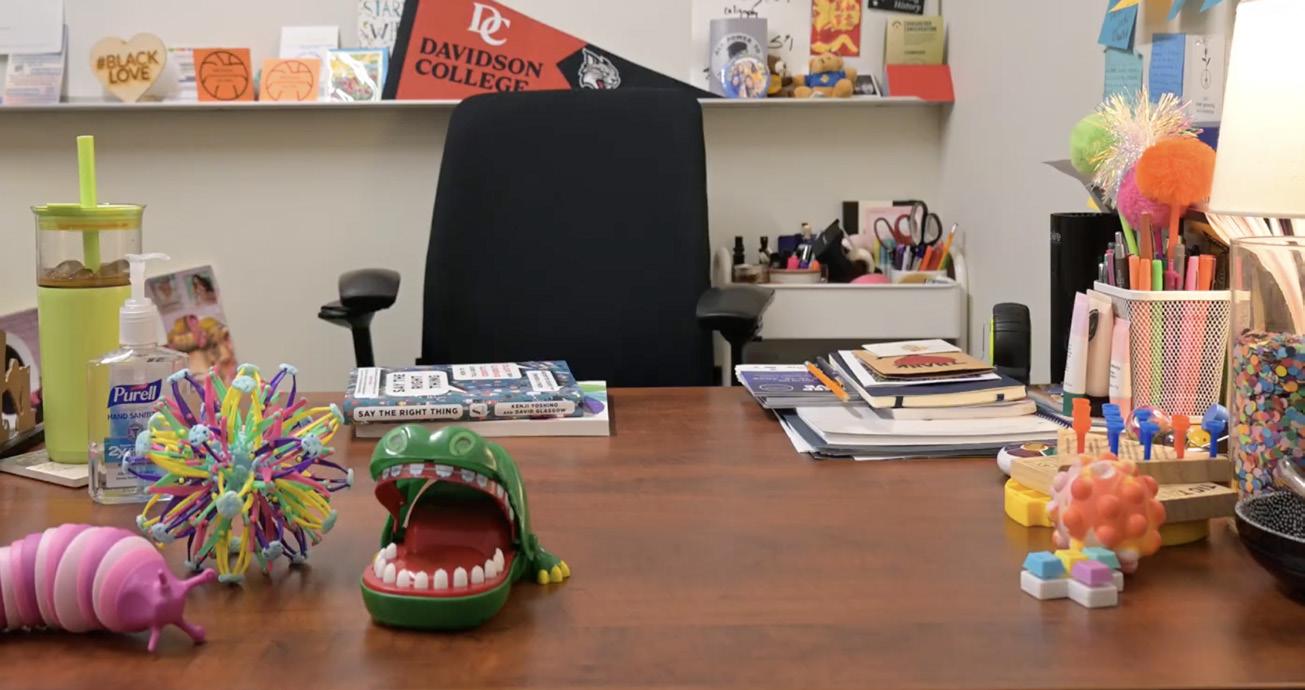
3 2
1. DECORATED DESK. Intercultural Life Program Specialist Alexis Irish fills her desk with colorful fidgets and toys for students to play with when visiting her office. 2. HOMECOMINGS PAST. Irish keeps a memento of her time at the upper school behind her desk. 3. GRATITUDE WALL. The wall across from Irish’s desk is used to recognize students’ artwork and personal notes. “It’s just any note or picture that a student has given me or drawn or anything like that,” Irish said.
- FEBRUARY 2026
LINA ABID THE RUBICON
Sourced from her own belongings, Five Below and student creative contributions, office decor covers every surface in Intercultural Life Program Specialist Alexis Irish’s office. The walls are full of items with sentimental value, with one wall specifically designated as Irish’s “gratitude wall.”
The wall holds several cards and papers that remind Irish of gratitude. “It’s just any note or picture that a student has given me or drawn or anything like that,” she said.
At the center of all of the letters that have been collected over time, a wooden map of Madeline Island hangs, a memento of Irish’s time growing up.
“That’s where my cabin is, I spent half of my time growing up there, and the other half was down [in Minnesota],” she said.
Among all of the items in her office, Irish said the gratitude wall would be the top priority if she ever had to move out of the space, with an honorable mention to her Davidson Cats flag, a tribute to her alma mater.
“I would try to take as many things off the wall as possible,” Irish said. “But for the most part, everything that’s in here means something to me or has a reason I picked it to be in here.”
Irish’s office is beloved by many for its wide selection of fidget toys, as well as necessities like deodorant or lotion that are available for students throughout the day. Students return the favor with gifts of letters, art or sometimes a strategically placed Crocodile Dentist toy for Irish to find when she returns to her desk.
Scan this QR code to view the full video on teachers’ offices.

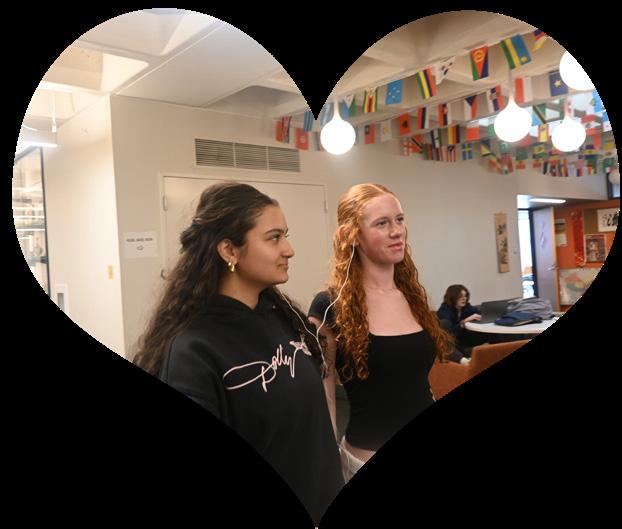
Quality time is expressed through undivided attention in relationships. Shared activities are a powerful way to stay present and practice engaging with loved ones.
Although commonly attributed to romantic relationships, physical touch such as hugs or pats on the back can also improve platonic relationships.
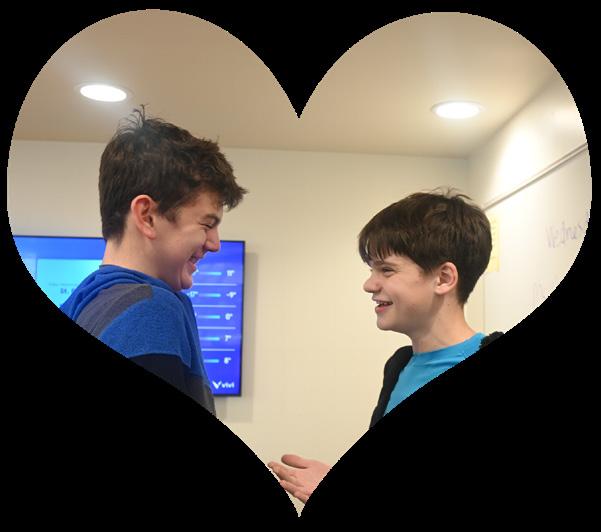
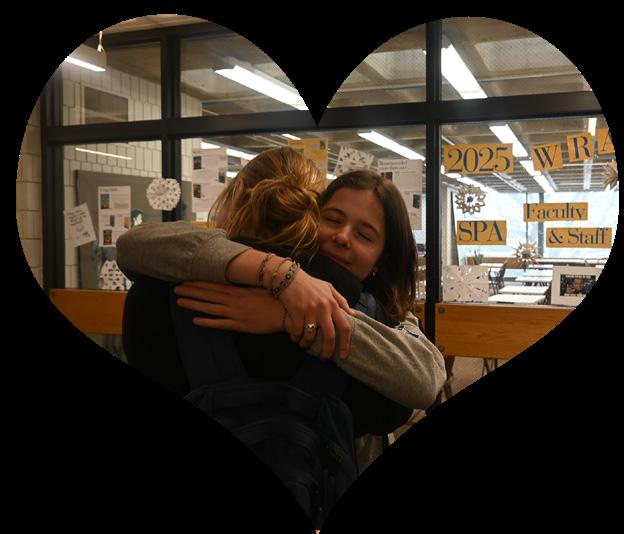
Whether written or said aloud, words of affirmation are verbal expressions of care. Compliments or positive communication can take relationships to the next level.
Items with meaning can make people feel seen or appreciated. Whether it’s baked goods or concert tickets, giving gifts is a unique way to show appreciation for loved ones.
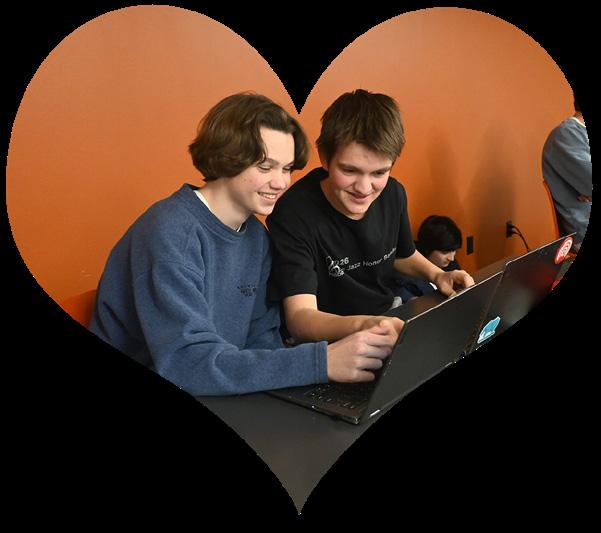
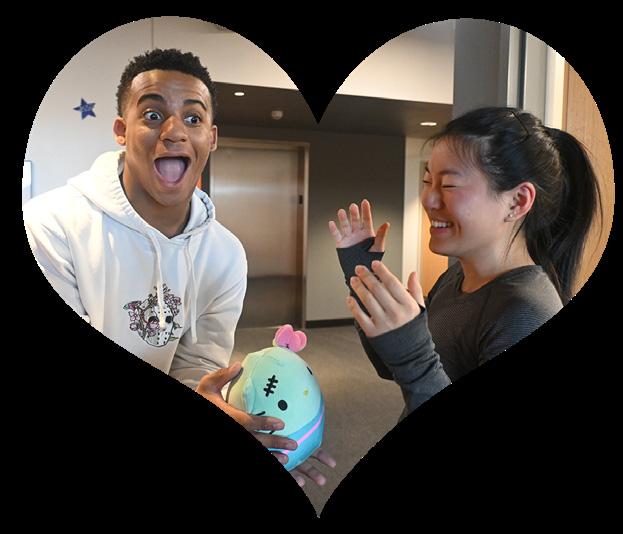
Participating in errands and chores or offering to help are all acts of service that show love through assistance. Often, actions speak louder than words.
February is the month of love — a welcome thought for Minnesotans still recovering from weeks of frigid weather and tragic news. As much as love is in the air, students still show their care throughout the year, each in their own different ways.
The idea of love languages was first outlined in the book “The Five Love Languages” written by Gary Chapman and published in 1992. Words of affirmation, gift-giving, physical touch, quality time and acts of service are all forms of love languages that have become well known. Students demonstrate their care for others through the five love languages every day, whether in family relationships, romantic relationships or friendships.
Sophomore Mariya Chaudhary doesn’t know exactly how to define her love language, but she does know that she expresses care for her friends and family through her love.
“I guess I’m pretty observant when it comes to
people, so I just try to listen to what they say and just be there for them,” she said.
That’s not the only way she shows she cares about her loved ones, though. Another way Chaudhary shows her love is by being present in other’s lives and cheering them on.
“I just showed up for them. For some family members, I’ll go to their events and then for friends, I’ll go to their games,” she said.
I think I show I care about people by checking in on them.
ninth-grader Carter Amos

On the other hand, when junior Lila Montgomery was asked what her love language is, finding the answer seemed easy.
Montgomery doesn’t have one love language and instead thinks her
ways of showing love could fall under multiple categories.
“I like giving people hugs,” she said. “I like spending time with people, spending quality time and giving them gifts and making them things.”
Ninth-grader Carter Amos shows his loved ones that he cares about them in several ways.
“I think I show I care about people by checking in on them, making sure they’re okay and just being friends with them,” he said. Amos enjoys spending time with the people he loves and he makes sure to check in on his friends and family when he’s worried.
By practicing these love languages, students create unique ways to show care for the important people in their lives. Additionally, one’s love languages can reveal their core values and needs. What started as concepts from a book and transformed into daily practices has influenced the ways students show up for one another. How do you express your love?
As all of the winter sports head towards post season, there are only a few more games, races and meets to attend. Before you watch them play, look out for
Junior John Grimsrud is one of the top performers on the boys varsity basketball team, averaging 15 points per game. Grimsrud finds it easier to score when he is in the right mindset and is able to translate his confidence into execution.
“It’s a learned skill to trust yourself to shoot and make shots, and I think it’s something that every basketball player goes through,” he said.
Nevertheless, Grimsrud brings the intensity on defense, averaging 7.5 defensive rebounds per game. In his third year with the team, Grimsrud looks forward to sections where he thinks the team will compete well.
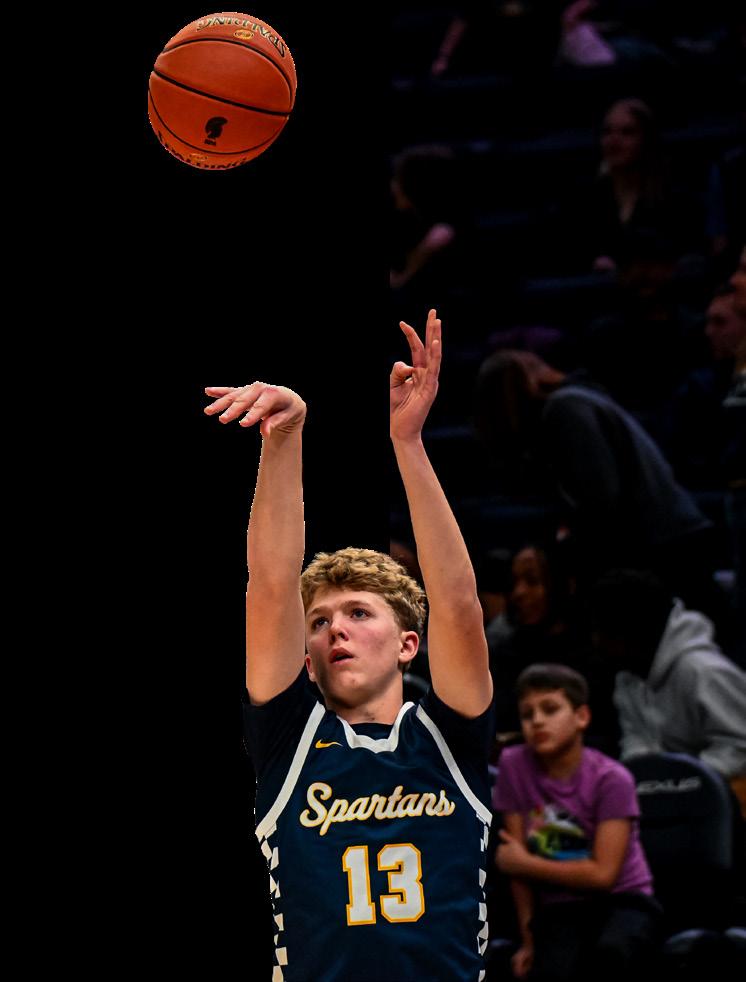
Taking on new responsibility this year as a captain, senior Ben Lee is a model leader on the Trojans Swim and Dive team. After being chosen MVP last year and rookie of the year the year before, Lee is proud of how far he has come.
“If I were to go back in time and tell my 8-year-old self the times that I have now, I’d be pretty surprised,” he said.
Lee’s speedy times in the 50 and 100-yard butterfly carried him to the state tournament in the 2024-2025 season. Although Lee looks forward to trying to make make sure the team enjoys wraps up his senior season.

Sophomore Clara Lovelace energizes the girls varsity basketball team. By creating plays and shooting frequently, Lovelace has already tallied a 10.4 game point average this season.
After coming off an injury in December, Lovelace has learned how to bring a positive energy to each game on and off the court, which captain Devi Nelson appreciates.
“She always tries to hype you up. Like, if you make a shot, you always hear Clara screaming, whether she’s on the bench when she was injured, or now when she’s in the game,” Nelson said. Lovelace has looked forward to her return to the court, and is excited to be in the competitive environment once again.
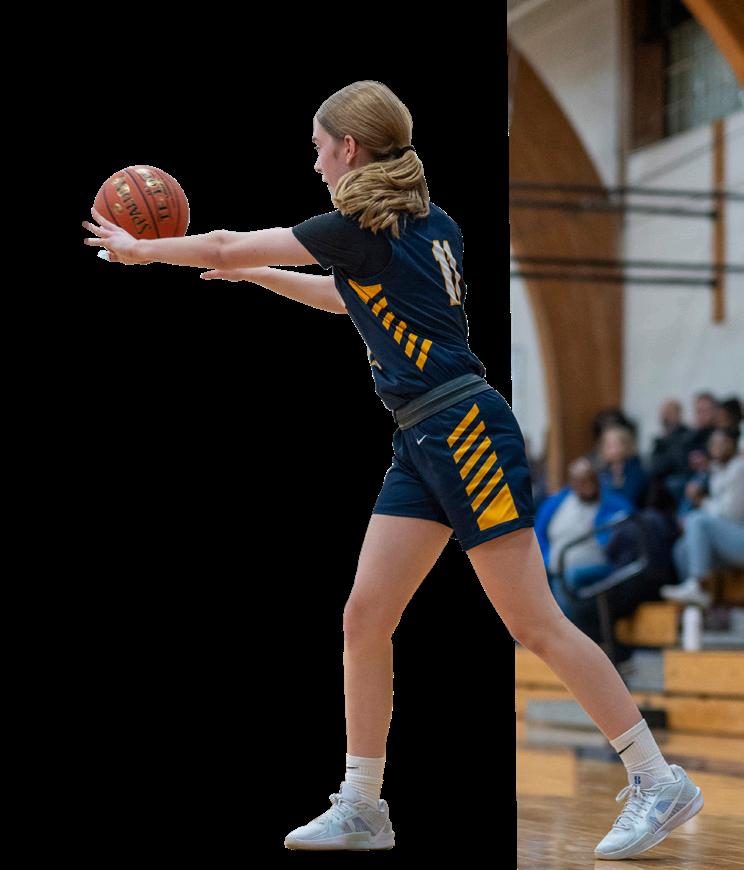
Senior Ella Bond is a hardworking team player. The skilled Williams College commit has played hockey since she was five, and has since then rode the hockey co-ops throughout her high school career.
“I’m proud of having to go through all these different co-ops, because [it’s] hard not knowing what team you’re going to be on,” Bond said.
“I think we’ve ended up in a good spot [at] SPA and playing with Blake has been really positive,” she said.

Bond’s high hockey IQ has helped her frequently create plays for the team, racking up 13 assists this season, the highest of the team.
these athletes, as they create an entertaining and exciting environment.

Junior Sam Hilton captured the spotlight last Nordic skiing season, when he championed the section sprint relay, punching himself a ticket to the state meet.
“It was something that I always had dreamed of, but I didn’t think it was a possibility, really,” he said.
This year, Hilton trained over the summer for the first time, and can already see his work paying off. At a meet Jan. 7, Hilton placed third in the IMAC Classic race with a time of 15:51.6. As a captain, he encourages the team to follow suit, and pushes them to work harder at practices, while also leaving time to play games.
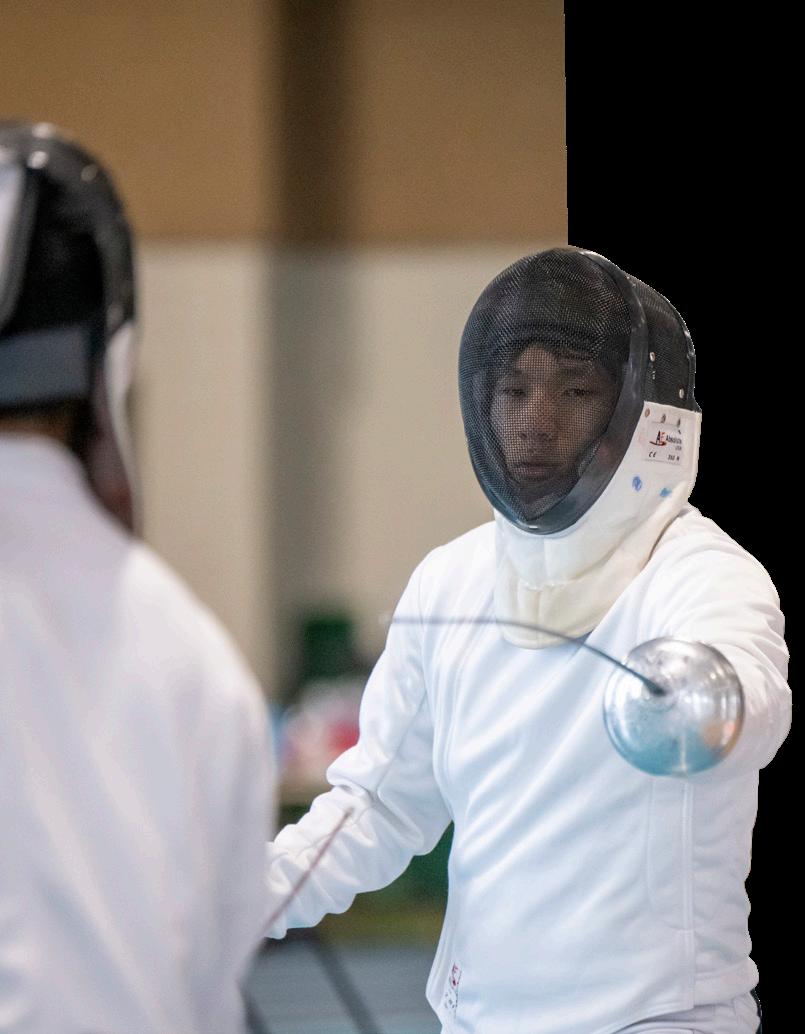
Senior Minh Tran’s attitude of improvement is what has allowed him to develop into a skilled fencer in just one year.
“When I’m fencing someone better than me, after the match, I’ll usually ask them, ‘How did you do this move?’ or, ‘How can I try and replicate what you did?’” he said.
Tran’s curiosity has leveled up his competition, allowing him to place 19th out of 35 at the 2025 Minnesota State High School Championship as a rookie. Tran brings a competitive spirit to every competition while also trying to help his teammates improve just as he has, making him an exciting player to watch.
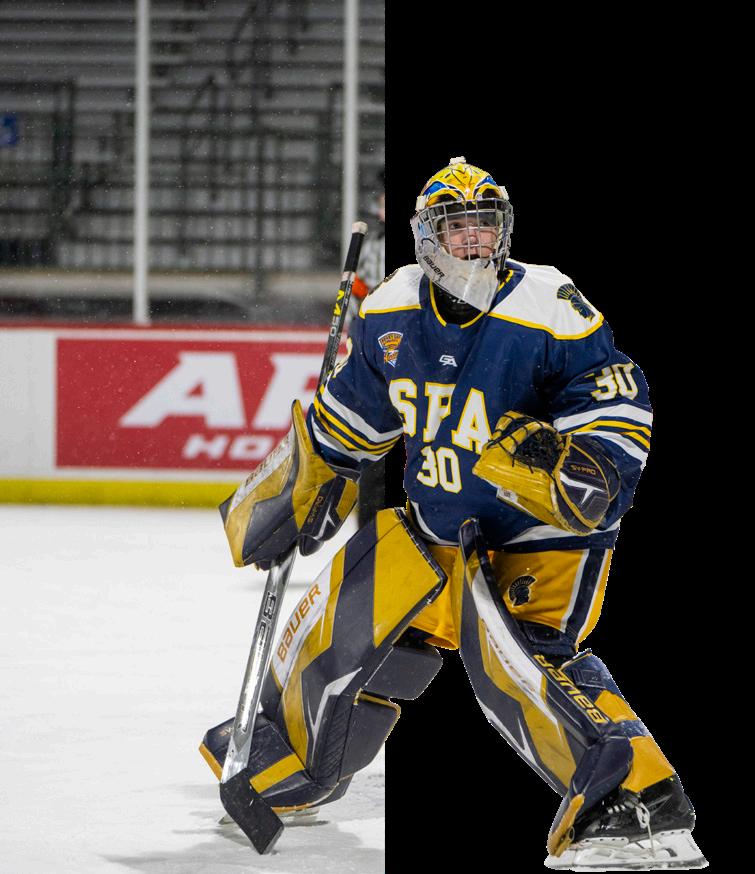
Sophomore Jake McCrady is the backbone of the Spartan hockey team. New to the team this season, he plays the position of goalie.
McCrady has already made 173 saves this season with a 80.84% average saves per shots on goal rate, a percentage McCrady is proud of. As the last line of defense, McCrady brings a positive attitude even when the games get tough, lifting up his teammates in the process.
“If I give up a goal or not, I know I can just keep battling no matter what, even if I’m doing bad, or our team’s doing bad, we can just keep playing, keep competing,” McCrady said.

Ninth-grader Sophia Wenberg hates the cold. Despite this, Wenberg is a standout alpine skier, placing first at a recent IMAC Conference meet with the fastest time of 24.67 at the meet.
Captain Evy Sachs said, “I think she’s one of the best skiers that the SPA girls team has had in years, and I feel like she just naturally is really determined to win, which I think really pushes her.”
In her third season with the alpine team, Wenberg looks forward to sections and state, aiming to place higher at state than last year, hopefully within the top five.
THE RUBICON - FEBRUARY 2026
ARIELLA
From packed stadiums of passionate fans to close matches between competitive teams, rivalries not only contribute to the drama of sports but also create a more engaging environment for both fans and players.
Maddie Wright, a junior on the co-op Bears hockey team with Blake and Minnehaha, believes that rivalries add higher stakes to sports events.
“[Rivalries] make the games more intense, as well as more thrilling compared to just a regular game,” Wright said. “Sometimes games can get kind of boring, and it feels like it doesn’t really matter if you win or lose, but against a rival, it’s a lot more competitive.”
Though Blake and Minnehaha are often considered rivals with the upper school in other sports, being on a hockey
team with players from both schools has changed Wright’s perspective.
It’s just that it feels better to watch a game when you have someone to cheer against and for. “
sophomore Sophie Karmaliani

“I have made a lot of friends on the Blake hockey team, and so for me, I don’t really think of them as rivals anymore,” she said. “It honestly motivates me more to go to their games against SPA, so I can see people that I know, especially since I’m a part of their community too now.”
Although the hockey rivalry with Blake is absent, the co-op has its
own intense rivals. One of these rivalries is with Breck School. Wright describes how the co-op’s competitiveness against Breck School stems from the ongoing rivalry between Breck and The Blake School.
“I’ve kind of taken Blake’s view of being rivals with Breck, making me dislike Breck and [side] more with Blake,” Wright said.
For sophomore Sophie Karmaliani, rivalries add to the excitement in following professional sports teams. Karmaliani is an avid Vikings fan, whose main rivals are the Chicago Bears, the Green Bay Packers and the Detroit Lions. She believes that rivalries make watching her favorite team more enjoyable.
“I think rivalries make watching sports more fun because it makes a more competitive environment, which makes a better fan base,” she said. “It’s
just that it feels better to watch a game when you have someone to cheer against and for.”
Rivalries between professional sports teams have also allowed Karmaliani to form deeper bonds with her family and friends.
“My family and I have always been huge Vikings fans, so we kind of just bond over being fans of a team that doesn’t always do the greatest,” Karmaliani said.
Whether it’s the shared excitement of cheering for a professional team with loved ones or an intense high school match up, rivalries can bring people together and make every game feel special. Although they may seem like simple competitions on the surface, rivalries can create a deeper engagement and meaning behind each sport.
In an era where every split-second decision counts, teams are turning to Artificial Intelligence not just to analyze the game, but to transform how it’s played, how athletes train and how they gain experience.
Data science and AI in the sports industry is revolutionizing how teams and organizations deal with strategy, performance, competition and fan interactions. AI algorithms and advanced analytics provide teams with a competitive advantage and inform fan experiences with data. Both positive and negative changes stem from the evolution of AI.
Ninth-grader Ben Marso watches a variety of sports, where he often sees AI being incorporated into examinations. “In baseball, there’s a new system where AI can see if the pitch is a strike or not, and that’s really cool to see,” he said.
I think it removes human emotion, because AI is just perfect every time, and it just kind of takes away the imperfections of the game that makes it more interesting.

Meanwhile, sophomore Sara Karmaliani primarily watches football, where she gathers to watch it every Sunday. Karmaliani sees AI technology appear quite a bit on television: “There’s a lot of stats and apps for AI stats like improving how athletes train,” she said. On the positive side, AI significantly improves player efficiency, such as wearable technology, injury prevention from machine learning algorithms, customized training plans and recovery optimization from AI’s recovery data records.
Computer science and math teacher Colton Werner keeps a book and is responsible for the score-
boards for volleyball and basketball games. “If there was some sort of AI model that could do that sort of data tracking, it would make it a little more accessible. For example, they have to hire and pay me to do all that data tracking, so if there was some sort of way that you wouldn’t have to necessarily have the people on staff, I can see how that would be a benefit,” he said.
The combination of data science and AI also benefits game strategy. Teams use machine learning algorithms that reflect historical performance data, statistics of players and advanced evaluation to develop strategies that address the weaknesses of opposing teams. Live data processing by AI tools also results in decision-making, where coaches can apply crucial information to make in-game decisions such as substitutions or strategic adjustments.
“I could see an application where when you go and watch film during practice, it could recognize, oh, this is a pass or a set, and then eliminate the need to do it in real time,” Werner said.
Aside from team enhancement, it can also improve fan engagement. AI can create personalized fan experiences through chatbots or virtual assistants, providing quick responses to fan queries.
While AI transformed the sports industry, its growing influence also introduces notable concerns. Marso thinks that an over reliance on data can reduce human instincts and unpredictability that make sports compelling.
“I think it removes human emotion, because AI is just perfect every time, and it just kind of takes away the imperfections of the game that makes it more interesting,” Marso said.
Werner sees it from a perspective of trust: “I could see a lot of push back from fans being like ‘there’s no one running the scoreboard’,” he said.
This can sometimes lead to a lack of connection within the sports industry.
“I think you potentially sacrifice some of the trust that you build with your team and family,” Werner said.
As a football fan, Karmaliani doesn’t feel that AI has changed the way she’s followed sports.

“If you’re still going to the games, the environment is still very much there. They do AI-generated photos of players for fans to have fun, but it’s not greatly impacting how I watch the sport at all,” she said.
Advanced AI tools are also costly, giving wealthier teams a competitive advantage and widening the gap between programs, particularly at the youth and school levels. Privacy is another issue, as wearable technology collects sensitive athlete data, raising questions about potential misuse.
In the present day, AI is an assistive technology; however, sports are not at a stage of dependency. Marso touches on the idea that taking over a coach’s role is possible in the far future, but not at the moment: “Coaches have so much human emotion that it might take a very long time to get there,” he said.
As AI continues to shape the future of sports, it offers powerful tools to influence how teams analyze performance, develop strategies and engage fans, while also introducing new challenges related to cost, privacy and the role of human involvement in the game.
TARGET PRACTICE.
In foil, fencers have a limited target area on the torso to score points. Fencers who hit off target, to the arms, legs or mask, trigger a white light that stops the match but earns them no points.



BY POINT. Fencers earn points by hitting their opponent with the tip of their weapon. Any hit is a point, so a simultaneous hit earns each fencer a point.

RUBICON I just think about getting points and being strategic. “
On Jan. 18, the fencing team hosted their annual fencing invitational. In the freezing cold, athletes staggered their arrival from 8 a.m. to 2 p.m. depending on what pool each fencer was in.
The event returned to Macalester College for the second year in the campus track and field house. It was filled with athletes and spectators from many different schools. Over a couple dozen matches happened simultaneously in the center of the indoor track, with spectators standing or in bleachers.
The team did not end up winning the tournament but that did not stop many athletes from having strong performances.
Captain Rowan Moore, who specializes

in Women’s Saber, found success not only in their event but throughout the day.
“I always like being at tournaments, especially like our invitational, because we get to set it up and it’s like home base,” they said.
Even with some tight match-ups and tough losses, Moore said, early in the day, that “The team has been super supported today and it has been going very fast so far which is good.”
two fencers, and reflected on the strong mindset needed to perform well.
“I always try to return to the basics … seeing what works and what doesn’t.”
Moore said, “The hardest part is definitely the mental part. If you let your mental fatigue get you, then you checked out for the rest of your bout.”
Sophomore Baron Bailey who specializes in Men’s Épée, where fencers can hit all over the body, also reflects on the hardest parts of the sport.
“The hardest part is that everybody fences differently, so you kind of have to change what you do,” he said.
After starting last year, Bailey makes sure to clear his mind before each bout through his routine that gets him ready.
in the bout I just think about getting points and being strategic,” Bailey said.
Both Bailey and Moore both emphasized the importance of staying mentally focused. By the end of the long meet, even though the team did not win as a school, many athletes pointed to positive moments and personal highlights.
As Bailey reflects on the invitational he is happy with how it went, and similarly to Moore, the support from peers was especially exceptional.
“They all give good advice, like if there’s not a coach there during your bout they will give you tips and encouragement,” Bailey said.
According to Bailey and Moore, the invitational created a strong sense of community and both walked away with a fun experience. SAM GALARNEAULT
Moore also won their bout, a match between
“Before I do a light little warm up and then
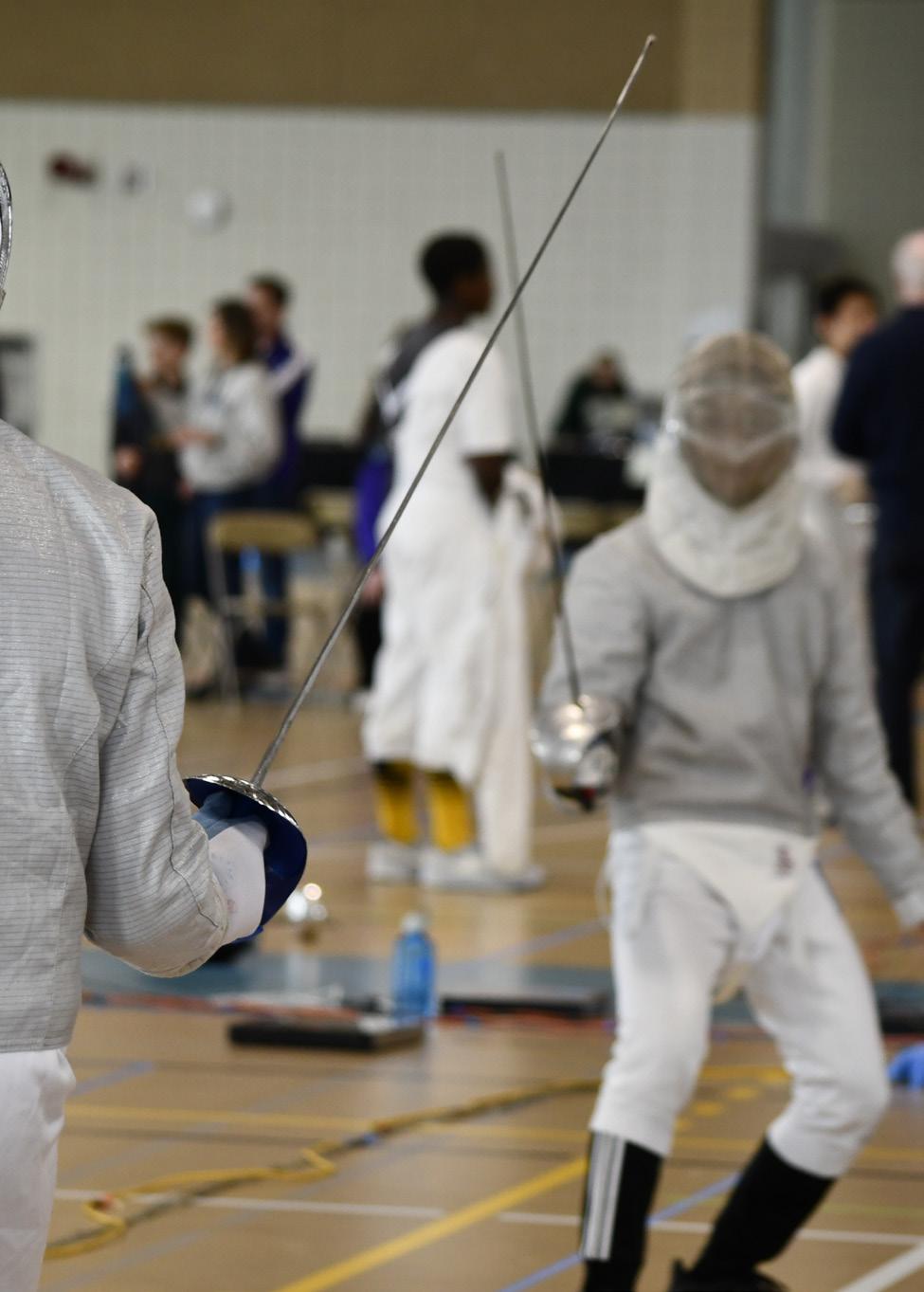
# OF 25-26 TOURNAMENTS, INVITATIONALS AND MEETS
0.77
KILOGRAM WEIGHT OF AN ÉPÉE SWORD. IT IS THE LARGEST OF THE WEAPONS USED IN FENCING. 9
5
# OF FENCERS ON THE SPA TEAM RANKED IN THE STATE TOP FIVE GOING INTO THE SEASON
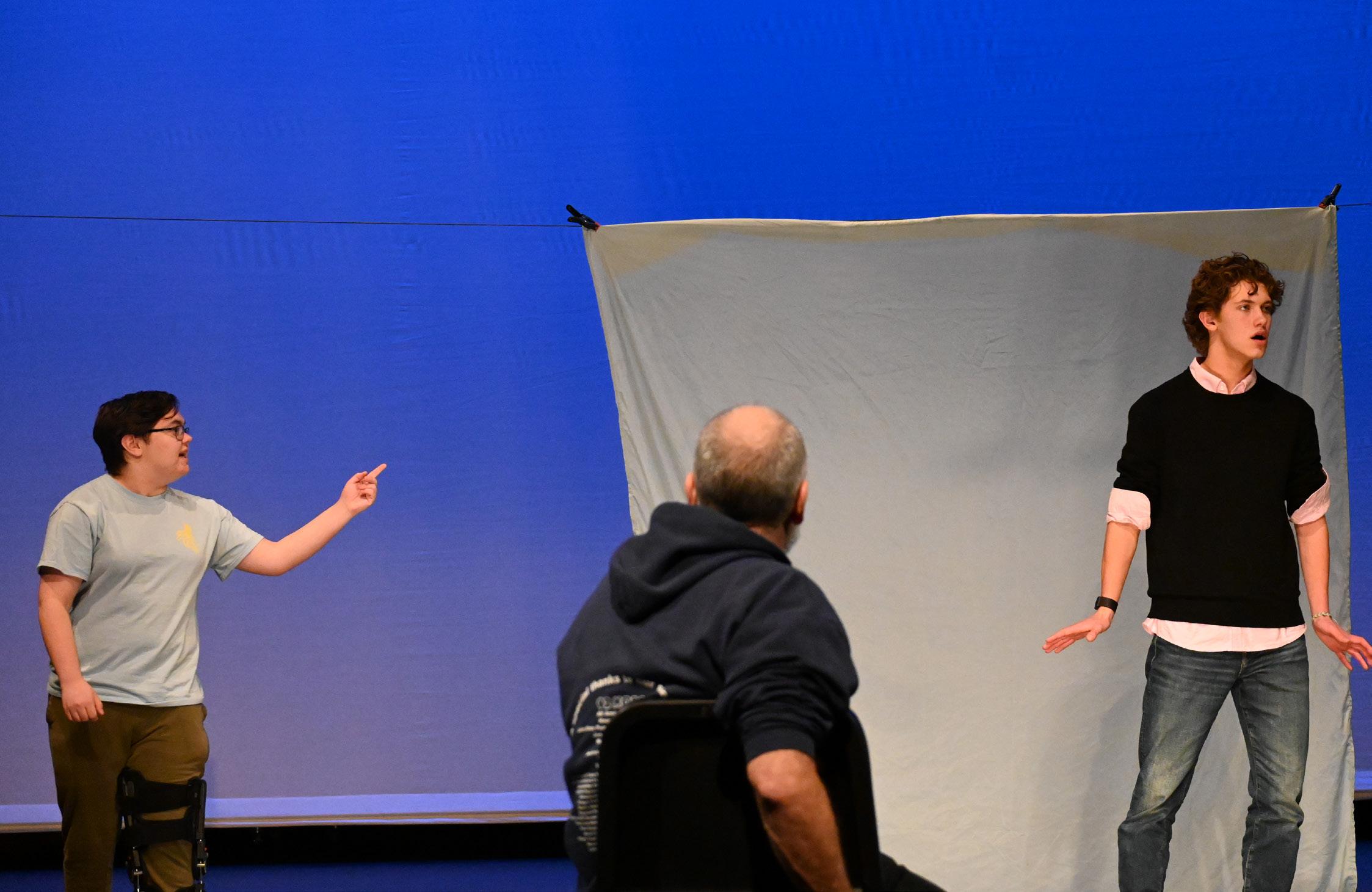

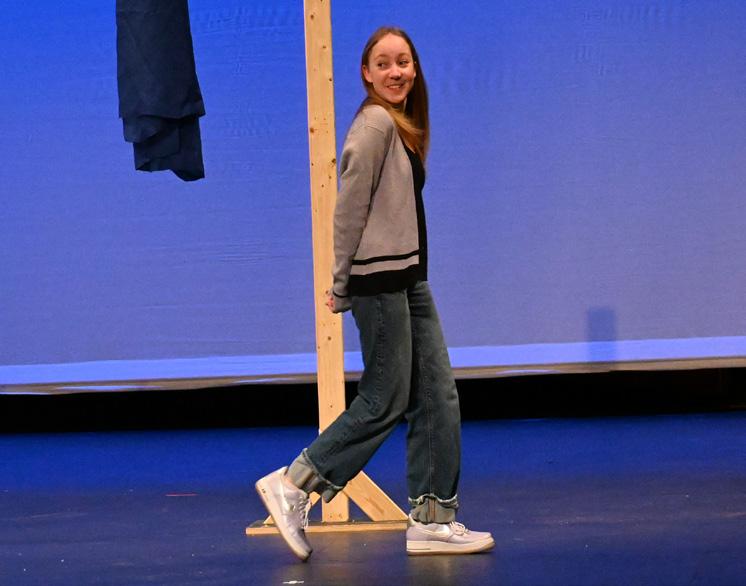
SYLVIA WESTRA THE RUBICON
What can you create with six students, one director and a heavily used Google document? According to interim theater director Jon Ferguson, the answer is a one act play. Over the winter months, theater students chosen as the cast for the competitive one act have been devising a 35-minute piece which was showcased at the 2026 MSHSL One Act Play State Festival on Jan. 24.
The storyline of this new piece centers around a Little Free Library in a neighborhood not unlike the Mac-Groveland area, a hub for community members new and old to gather, interact and build connections.
“It doesn’t feel traditional, it’ll just feel like a slice of life in the neighborhood,” Ferguson said.
Ferguson, the director of the piece, cast the six students for the devised one act in early December. After school rehearsals began and Ferguson introduced lessons about classical story structure, and presented his own ideas for the piece, but left it to the students to discuss the ideas and figure out which parts they were drawn to. By the end of the December rehearsals, the students had decided on the general story arc, and baseline descriptions of the characters, the names of which they cleverly blended with their own names.
In the first two rehearsals back after the break, the cast laid out a progression of scenes on notecards, building off of their work from December, and adding dialogue to their shared Google document. These first two days were mainly writing, until Jan. 8, when they met onstage in the Huss Center for Performing Arts.
At 3:15 p.m., the cast gathered in the first row of seats, greeting one another cheerfully, and asking about each other’s days before jumping in. There were snacks center stage and a sheet hung on a clothing line, as a set piece to represent Vivi’s home, a character portrayed by senior Violet Pitcher.
The cast quickly began playing the moments of the script they had laid out the afternoon before. Two students walked through their scene to start while the others watched and waited for their cues offstage. Ferguson sat in a chair onstage and directed the piece that was being developed in front of him.
Ferguson said, “I love it when young people make their own work ... I work with them and help them to understand that, ‘oh, we can make our own stuff. We can write our own stuff. We can work together in a group, and play on our feet and write together and make our own play.’”
As the students walked through the piece, they collaboratively proposed ideas for dialogue, stage cues,
and set design. As much as they added to the piece, they refined their ideas in order to keep the heart of the production intact, prioritizing the neighborhood feel, community dynamics and the theme of connection within the storyline.
Senior Murray Goff has done one acts in the past, but this will be his first time devising a piece. “It just is a lot of thinking and working with other people, because we all are different writers and different actors,” he said. “And so we want to make something that feels unified.”
“I feel like, in general, everyone’s voice is heard,” senior Beatrix Rhone said. “There’s been some disagreements, but also I feel like this cast is really good with taking the disagreements and looking at how we can find something in the middle.”
We had nothing, now we have something. “

senior Murray Goff
The process was choppy, and interruptions of discussions were frequent. A student read the stage directions aloud as the cast walked through their scenes for the very first time, trying their best to remember lines they had written the day before. The script was still halfway written, and the cast often paused mid-scene to suggest additions, some to the plot or to characters, to the group or others in the scene. Each suggestion was discussed with the whole cast, and each opinion was weighed.
“We had nothing, now we have something,” Goff said. “It’s a little scary, because normally I’d have a script by now to be memorizing, but we don’t yet. And so it’s a little scary, but … Mr. Ferguson has been like, ‘Trust the process, everything will go okay.’”
Ferguson observed as the students walked through the piece, often interrupting to give advice, make a suggestion, or tell a cast member to continue an action or exaggerate it. He frequently interrupted while a student carried out stage directions, asking them to “make a meal out of it” or to remind them to keep an action going as long as the audience laughs. Once, Ferguson briefly interrupted, proposing his idea for
sirens to sporadically wail in the distance, distracting the characters for short moments.
In light of the death of Renee Nicole Good on Jan. 7 and frequent U.S. Immigration and Customs Enforcement raids in nearby neighborhoods, Ferguson explained how his goal is to create a piece that is relevant and says something about being a human in today’s world. He suggested creating that clash by portraying outside pressure that is present in both the students’ and characters’ lives. “I don’t think we need to totally address it and totally go there, but it’s a presence that is affecting the characters,” he said.
In his position substituting for theater director Eric Severson, Ferguson has noticed the extra weight that technology can apply to students’ shoulders. “All the news in the world just comes down and it feeds into your pocket,” said Ferguson. “I just noticed students dealing with all that stuff, and I wanted to make a piece that felt really relevant to them, and maybe address that a little bit, the pressure that they’re feeling.”
The rehearsal carried on in the same fashion and the cast made headway which they planned to continue over the next few days. Despite all of the thematic details they were considering, time constraints were ever present. Not only must they contain the story to 35 minutes, but the remaining rehearsals were limited, and the cast felt the urgency to get the play up on its feet before the week was over.
Mid-rehearsal, the students were taken aback when Ferguson reminded them that the day of the one act competition was a week earlier than it had been in previous years, dropping their countdown to showtime to 17 days. Although they expressed worry, Ferguson redirected their stress into productivity, often reassuring them saying, “We can make this happen,” and encouraging those who weren’t needed onstage at the moment to ask what else they could do to help.
Although some were nervous for the one act state competition, the cast focused on making a piece that they will be proud of, and not just on the competitive element. “On a very basic level, I want the people to understand the story, and that’s our job as writers, and our job as actors is to be clear about what we’re trying to say. I think if they did well at one acts, that’d be cool. That’d be a bonus,” said Ferguson.
The one act piece, titled “It’s the Good Bits I Find Hard to Talk About,” was performed in Huss on Jan. 30 at 7 p.m.
Scan this QR code to see more information about the one acts.

IVY EVANS THE RUBICON
William Shakespeare is widely regarded as one of the most famous writers in history, even over 400 years after his death. His work is viewed by some as incredibly tedious, by others as the work of a genius and still others as a plethora of things in between. However, whatever one’s stance, there are a multitude of options when it comes to choosing how to consume Shakespeare’s works.
Adaptations of the bard’s plays include nearly every type of media imaginable. Even theatrical performances have found new ways to showcase his work, from Shakespeare in the Park to musicals like “Scotland, PA,” an adapted version of “Hamlet,” and “West Side Story,” a relatively modern twist on “Romeo and Juliet.”
The Twin Cities, home to the second largest number of theater seats per capita in the country, is also home to a plethora of local theaters with reimaginings of these classic spectacles. The Guthrie showcases a Shakespeare play annually, usually sticking to the original script, while other companies like Ten
Thousand Things Theater and Theater Latte Da tend to offer more variations. Recently, the former hosted a production of “Two Gents,” a colorful, playful adaptation of “The Two Gentlemen of Verona.”
English Department
Chair Anne Boemler appreciates the way both Shake speare’s original writing and its adaptations serve as a way for audi ences to connect, es pecially with so many Shakespearean turns of phrase showing up in modern English.
respectively. Boemler attributed this multitude of films and their variety of viewers as yet another point of connection.


“I think that Shakespeare is a common language and a common set of references.
Most people have been forced to read Shakespeare in high school at some point, and so [it] can be easy shorthand,” she said.
In the world of film, Shakespeare’s work is incredibly prominent, though many audiences might not even know it.
prominent example. This film, while not entirely historically accurate, is an interesting parallel to a new release, detailing the writer’s life and inspiration: “Hamnet.”


“10 Things I Hate About You” and “She’s The Man” are both hugely popular films that are based on “The Taming of the Shrew” and “Twelfth Night: Or What You Will,”


“It serves as this kind of common currency, shared language,” she said. Other movies with Shakespearian influence have little to do with his writing at all, and instead focus on his life: “Shakespeare in Love” being a
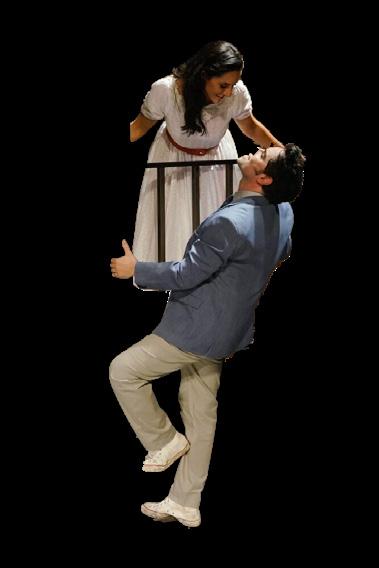

“Hamnet” was released in theaters Nov. 26, 2025, and became an instant success. Directed by Chloe Zhao and based on the novel by Maggie O’Farrell, the film was nominated for multiple Critics’ Choice Awards and won Best Motion Pic-


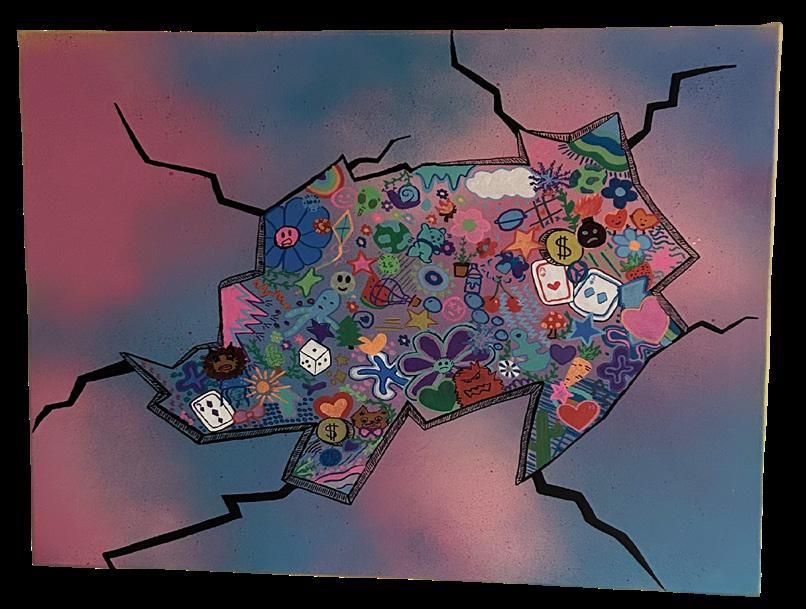



ture Drama, along with various other awards at the Golden Globes. It also received relatively widespread praise from audiences. The film, with dark and gloomy undertones and an artistic approach very different from “Shakespeare in Love,” centers on Shakespeare’s family life, the loss of his child and the grief he funneled into what would become one of his most famous plays, “Hamlet.”
sis for English and what’s seen as ‘good’ in literature,” he said.
Senior Dalia Wolkoff took the English elective ‘Shakespeare and the Modern World’ last school year. Wolkoff agreed with Boemler’s sentiment, noting several adaptations as hugely popular.
“[Shakespeare is] everywhere, there are so many words and phrases that are used that originate from his works, as well as stories and plot lines,” she said. “There are so many adaptations of his work, direct and indirect.”
Even in the modern era, Shakespeare is far from obsolete. Whatever generation or audience an adaptation may be geared toward, there is something for everyone.
Boemler believes that this applies no matter what one’s views on the original works are.
tenburg, who read “Hamlet” in spring of 2025 for English 10, reflected on Shakespeare’s prevalence in both media and academic settings. “I still think there’s pieces of media being created around his legacy, [and] he’s still such a fundamental ba-




“Even if you don’t like Shakespeare, even if you think it’s boring, you use words from Shakespeare or phrases from Shakespeare every day,” she said. “There’s so much about his plays that has just seeped into our culture. I think it still is a connective force.”

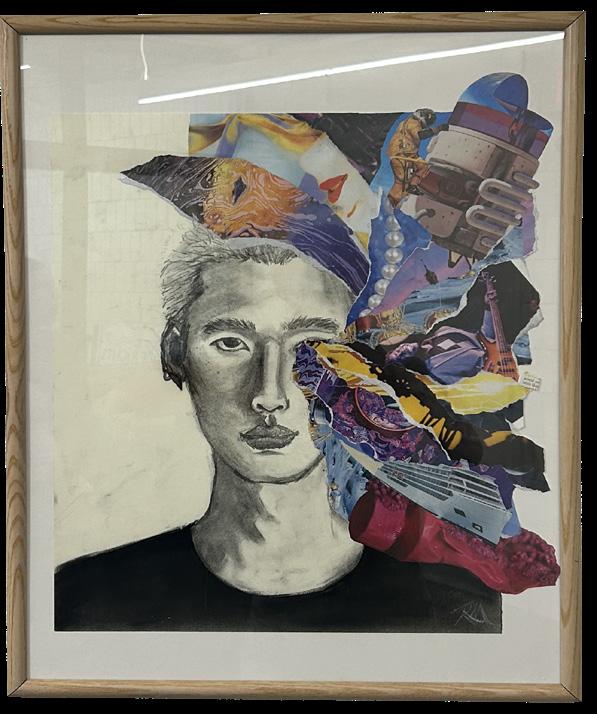


THE RUBICON - FEBRUARY 2026






















MONOTONOUS MOVIES. Over the last five decades, an increasing number of the highest-grossing films have been offshoots of franchises (marked with an “X”). Junior Axel Pearson believes the growth of franchises has reduced movie quality: “Some negatives of mass franchising include the need to please a wider audience that ends up pleasing no one.”
PETER OSTREM THE RUBICON
Nine of the 10 highest-grossing domestic 2025 films were some form of intellectual property: live-action remakes, sequels or game adaptations, with Ryan Coogler’s “Sinners” being the one exception. All 10 of the highest-grossing domestic films in 2024 were IP, eight of the 10 in 2023, and 10 of the 10 in 2022.
The last time a non-franchise film was the highest-grossing movie of the year was 2009 with James Cameron’s “Avatar,” which, of course, created an entire franchise. It’s challenging for original, non-IP entertainment to achieve massive financial success anymore; the majority of popular media consists of some form of sequel or remake. Mediocre cash-grab projects often take precedence over bold and original ideas, which has created a few significant problems in the entertainment industry.
The industry of film and television itself has become more of a business than an art form. When artistic, fresh media is overshadowed by corporate-made fan service, it’s hard for artists to get their product made anymore. This significantly impacts the quality of the media; the majority of the top box-office earners are objectively poor films, while far smarter and bolder films receive limited releases to empty theaters and are available on Netflix within 18 days.
Netflix, in general, has been a massive contributor to this epidemic of shallow media. For example, the first season of their smash hit “Stranger Things” was a huge success, receiving massive praise for both its nostalgic aesthetic and its originality. The finale of the
show premiered on Dec. 31, 2025, and was considered lackluster, even by many diehard fans. The quality of the writing and production went steadily downhill with each of its five seasons, until it eventually concluded in this disappointing culmination, despite, or perhaps because of, its increased budget.
more fan-oriented. “Keep films focused on what fans want,” he said.
Sophomore Francis Hanna shares Pearson’s negative view of franchising, believing it leads to a lack of originality.
senior Howard Huelster “
[Franchises] keep going until they become super oversaturated and boring.

Like “Stranger Things,” the aforementioned first “Avatar” film was beloved, both financially and (relatively) critically. Although “Avatar: The Way of Water,” its over-a-decade-long follow-up, is generally considered a worthy successor, the third and most recent film “Avatar: Fire and Ash,” is a stale retreading of the first two installments. In short, after being forced to overinflate by corporate overlords, it’s tough for once-promising projects to resist turning into business-first blockbuster events.
Junior Axel Pearson believes that large-scale franchises have led to a decline in product quality.
“Some negatives of mass franchising include the need to please a wider audience that ends up pleasing no one,” he said. He also thinks that movies should be
“Poor management of a single movie can leave a sour taste in people’s mouths when watching others,” he said. Hanna also found that the lack of original stories in movies is because it becomes more difficult to grow franchises. However, he thinks that franchising in entertainment has some positives.
“A benefit of movie franchising is the brand recognition it provides, which establishes loyalty to the franchise,” he said.
Senior Howard Huelster shares a similar point of view with Hanna, arguing that franchising has significant drawbacks as well as positives.
“They keep going until they become super oversaturated and boring,” he said.
While addressing the positives, he recognized the large fanbases that franchising creates: “Mass franchising brings a lot of hype when it releases new installments, which creates a sense of community among fans in the franchise.”
Mass franchising in entertainment can have a few positives: bigger audiences, more recognition and opportunities for their creators, but there are an overwhelming number of negatives, like a decrease in quality and a lack of artistic integrity. As it becomes harder for original projects to be successful and large franchises rake in billions of dollars, it’s important to value the quality of the entertainment one consumes, not just the recognition it receives.
THE RUBICON - FEBRUARY 2026
EVIE GARDNER
THE RUBICON or future lives, meaning that positive karma will give someone a better future life.
Black spidery eye makeup. Diamond studded jumpsuit. A dark silhouette emerging from a dark body of water. Who is it? What is it? Is it dangerous? “No, but karma is,” singer and influencer JoJo Siwa replies (probably).
The past four years have placed karma at the forefront of many hit singles, such as “Karma” by Taylor Swift and Chappell Roan’s “My Kink Is Karma.” These songs are catchy, and follow the typical belief that karma is someone getting what they deserve. Although it can easily be simplified into a system of reward and punishment, karma also has ancient roots and cultural significance.
Karma first appeared in Hindu scripture around 4,000 years ago. It was later adopted by Buddhism, Sikhism and Jainism as a widespread foundational value. In these religions, karma is the result of one’s actions that continue the cycle of reincarnation. The ultimate goal of karma is to balance it and ascend to a final spiritual level, called “moksha” in Hinduism and Jainism, “nirvana” in Buddhism and “mukti” in Sikhism.
Junior Adi Narayan’s grandparents gave him his first insights into the traditional Hindu belief of karma and reincarnation.
“[My grandparents] believe that you’re going to be reincarnated and depending on what your life was, your next reincarnation is different,” he said.
The repercussions for karma are felt in current
“It’s kind of like heaven and hell,” Narayan said. “But more in the sense that in your later life you’ll be better off if you do better in your life right now.”
I think that people who frequently have done harmful things are just harmful people. “

Meanwhile, in Buddhism, karma strives to answer the question of inequality; nothing happens that someone does not deserve, and people are responsible for their own misery or happiness. In religions like Hinduism and Sikhism, an alignment with God’s will is also an important part of releasing karmic energy. Jainism is unique in its belief that karma is manifested in physical particles, but like the other belief systems, the way to rid karma is through self-control and ethics.
Narayan noted the far-reaching influence of karma: “A more theological version [of karma] would be reincarnations, but now not just Hindu people use it. A lot of people say ‘bad karma,’ like if you do something bad, then you’ll have bad energy.”
According to a 2023 poll by the AP-NORC

Center for Public Affairs Research at the University of Chicago, around 63% of U.S. adults believe in karma. However, as of 2015, only about 22% of the global population is Hindu or Buddhist, according to Statista.
Even if one doesn’t practice the religions associated with karma, karma as a spiritual belief was popularized in the U.S. by hippies. In the 1960s, alternative means of religion were sought out. The idea of karma was easily adopted as a moral justice system and was simplified.
Junior Olivia Andres explains her interpretation of karma: “I believe that the energy you put out into the world is the energy you’re gonna receive … when I’m being positive and looking on the bright side, my day is better and I have better outcomes,” she said.
Karma’s accessibility makes it an easy concept to grasp and apply to daily life.
Even those who are not spiritual or are atheist can find inarguable karmic truths in physics. Karma draws a parallel to Newton’s third law of motion, which states that every action will result in an equal and opposite reaction. For some, karma is simply an application of a scientific principle to the moral, spiritual and immaterial realm of cause and effect.
Sophomore Zoe Brenner sees a relationship between actions and consequences, but doesn’t necessarily attribute them to karma.
“I think that people who frequently have done harmful things are just harmful people. Eventually, because
they’re constantly doing harmful things, they get in a lot of trouble for it,” she said.
However, beliefs are put to the test when kar ma seems to fail. Andres focuses on perseverance when faced with unfortu nate events. “Bad things happen to everyone, and that’s not really some thing that you can control. I’m still gon na have days that are bad. I think for me, the true purpose of karma is not letting that get me down and continuing to do my best and be kind to those around me,” she said.
One influential pop culture reference to karma occurred in Siwa’s song “Karma,” where she detailed karma’s impact on her life. Siwa was uncharacteristically negative while explaining the consequences of her actions. “To say ‘You screwed me over by doing X, Y, Z, and now all these bad things are happening to you, and it’s your fault, and I’m happy about it,’ I don’t think that makes any sense,” Brenner said. Pop culture often mis construes karma due to a lack of understanding. While the songs may suffice for catchy one-hitwonders, they can funda mentally alter people’s perception of karma, and border on misinforma tion.
Karma is multifaceted and has roots going back thousands of years across different religions, belief systems and cultures. The commonly used idea of
FAITH IN FATE. Karma appears in art, popular songs like JoJo Siwa’s “Karma,” South Asian religious beliefs and Taylor Swift’s album “Midnights.”

karma as a transactional force can reduce it into a potentially negative power. Karma transcends cultural divides, not only aligning with ancient theological beliefs, but also science and bleached blonde mohawks dancing on a yacht.
SPA THINKS: What comes to mind when you hear the word “karma”?
[I think of] this restaurant called Karma.

[When I hear ‘karma’] I just think of JoJo Siwa.