Seven Angels (version for soprano, countertenor and harp) (Covers)
23, 25, 27 & 28 June
Francis Melville, Tim Burton
Francis Melville, Tim Burton, Zhen Liu Alexander Semple
Georgia Melville, Francis Melville, Tim Burton, Zhen Liu
Natalka Pasicznyk, Alexander Semple
Cecilia Yufan Zhang, Francis Melville, Sam Hird
Esmée Loughlin-Dickenson, Tim Burton
23 & 27 June
25 & 28 June
Alexandra Francis Adja Thomas-Mbaye
Cecilia Yufan Zhang Esmée Loughlin-Dickenson
Cecilia Yufan Zhang Esmée Loughlin-Dickenson
Alexandra Francis Adja Thomas-Mbaye
Cecilia Yufan Zhang Esmée Loughlin-Dickenson
23, 25, 27 & 28 June
Cecilia Yufan Zhang Esmée Loughlin-Dickenson
Bella Marslen, Maryam Wocial, Will Prior
Natalka Pasicznyk, Zheng Jiang
Please turn off your mobile phone.
Filming, recording and photography are not permitted without prior written permission.
The RCM films many events and by attending you consent to any photography or recording. See www.rcm.ac.uk/recordingpolicy for our Public Recording Policy.
Latecomers will not be allowed into the auditorium until a suitable break. In the interests of safety, sitting or standing on the steps or floors is strictly prohibited. Eating is not permitted during the performance. Thank you for your co-operation.
Programme details correct at time of going to print.
Love, Conflict, Renaissance
23, 25, 27, 28 June 2025, 7pm
BRITTEN THEATRE
Monteverdi Zefiro torna (duet)
Strozzi Così non la voglio
L‘Eraclito amoroso
Amor dormiglione
Che si può fare
Monteverdi Eccomi pronta ai baci
Lamento della ninfa
Il combattimento di Tancredi e Clorinda
Interval 20 minutes
Jonathan Dove Seven Angels
Monteverdi Zefiro torna (tutti)
Programme devised by Nick Sears
Michael Rosewell conductor
Sir Thomas Allen director
Anna Smith & Harry Wilson choreographers
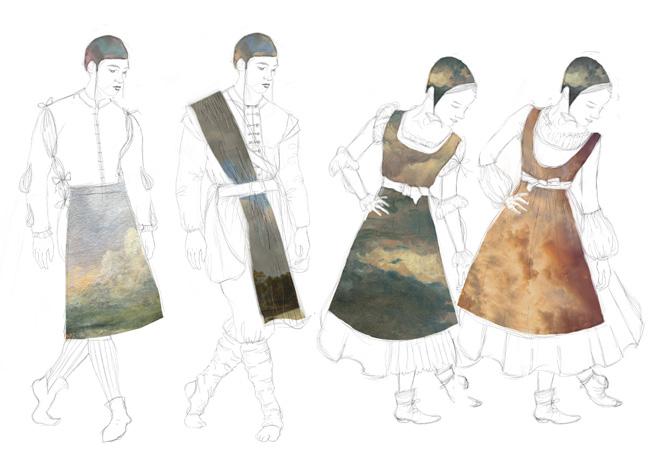
Laura Jane Stanfield designer
Kevin Treacy lighting designer
Dancers from Rambert School
Please note this production uses haze.
Approximate total running time: 1 hour 55 minutes (including an interval of 20 minutes)
This production is made possible with the assistance of Old Possum’s Practical Trust and Victoria, Lady Robey CBE HonRCM through the Robey Visiting Artist Fund
Seven Angels by Jonathan Dove/Alasdair Middleton performed by arrangement with Peters Edition Limited
Editor Joanna Wyld
Programme design by May Yan Man
SYNOPSIS
In normal circumstances, writing a synopsis would be relatively straightforward. Put on the opera or play, describe the story as succinctly as possible so as not to bore your audience with a tutorial before the lights dim, and wish them well for the ensuing evening. On this occasion, it’s different. Tonight, we celebrate the Renaissance through aspects of love and conflict. We approach this in the order you see in your programme, but in a case such as this, the order could have been whatever we chose to make it, the scenario as light or as dark as we wished; as it happens, we’ve chosen a street, somewhere in Italy.
Young people gather. As young men will, they josh and jostle as they meet, before one of them comes up with a piece of manuscript on which the ink is barely dry… Monteverdi has written. Zefiro torna… Let the games begin!
Then contrast as a young lady arrives, delegate of that great composer of the age, Barbara Strozzi, chastising them for their excessive frivolity (Così non la voglio). The fates have dealt her a less happy hand; the young men are at the receiving end of her ire.
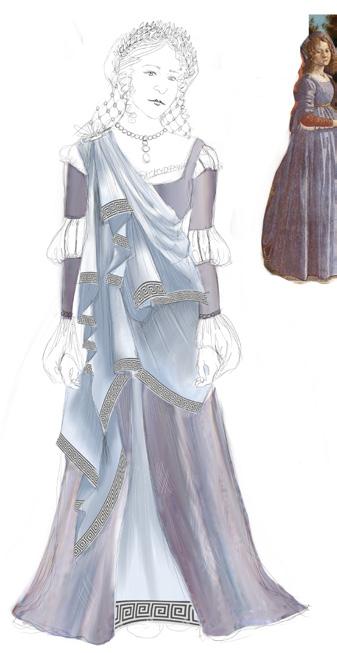
In the conventional balance of programming, now might be time for a lighter touch. But no – we had a choice, and in linking together these pieces, seeking a thread, I’ve opted for the relentlessness of Strozzi’s L’Eraclito amoroso. The long plangent phrases call out for assistance, and, Zorba-like, our young chantress is supported on the arms of several Caryatids. But the story is not entirely in keeping with Greek myth; the Caryatids tire in their task, and one, graduating to Amor, or if you prefer, Cupid, is left in the warmth of the midday sun, dreaming. Now another handmaid rouses him from slumber, inspired by her latest reading matter, perhaps? She chases him back to his amorous duties.
More Strozzi now, her last contribution to this programme, with further descriptions of anguish and suffering. Che si può fare? she asks. What can one do? What can one say? Oh the dilemma! Oh calamity! Those cruel Eumenides torture her soul.
This turmoil seems unrelenting. Could the programme order not change now and relieve us from this anguish? Yes. Certo. Sì. Subito. Three young roustabouts arrive on the scene with Monteverdi, and entertain us with his Eccomi pronta ai baci. Kisses sweeter than the chianti they can provide!
But with ‘Non avea febo’, from within Eccomi pronta, we see their more serious side, that of the highly trained choral singer, discipline to the fore, the ledgers of their own bar lines. A cooler Northern European approach perhaps, after so much Latin passion. And who is this? A further mournful woman, with Lamento della ninfa. Surely the men can aid her in her grief? Sadly not on this occasion. As they so rightly describe, ‘Love mixes flame and frosts’.
Monteverdi now gives us the clue to his greatness and that of the Renaissance itself: Il combattimento di Tancredi e Clorinda. This short, dramatic scena, almost an opera, one could argue, is a masterpiece of Monteverdi’s art, paving the way as it does for so much that we now recognise on the modern lyric stage, as well as in those places of dramatic sacred performance.
Monteverdi has used Tasso’s Gerusalemme Liberata for his story. It was first performed in Venice in 1624. The cast is made up of three characters; they are Clorinda, a Saracen woman; Tancredi, a Christian knight; and the narrator who describes in epic detail the progress of the story. Importantly, they do not know one another in the story as their faces are covered in preparation for combat. As enemies their fight proceeds and becomes more and more intense. They lie exhausted after several minutes from the many sword blows, and begin an exchange of dialogue which brings them to a further weary combat during which their physical contact seems to trigger recognition. Falling from a fatal wound, Clorinda speaks her final words to Tancredi. He scoops water from a stream
nearby and in quenching her, reveals her true identity as the one he loves. She renounces her own faith and is baptised into Christianity, moments before dying in Tancredi’s arms. Her dying words:
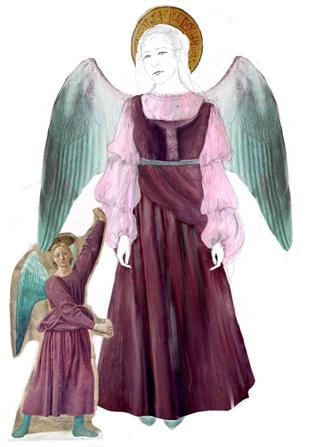
This short, seven-scene opera is an intense homage to the life and work of the 15th-century painter and mathematician, Piero della Francesca. We follow, via a series of angels, the progress of the painter, the recounting of his birth, his naming and struggle to settle upon a subject to paint, and the encroaching failure of sight which would end in his total blindness. At either end of the work are Angels who accompany his entry and exit from the world. Within this framework, we encounter Angels who act as his guides to the greatest paintings he produced.
First comes the Angel of Instruction, who establishes Piero’s identity and presence on the earth. The second, the Angel of Annunciation, takes us into the detail of The Annunciation and announces the painter’s birth and name.
A third Angel becomes the inspiration for Piero’s conception and development: the Angel of Inspiration, which has at its backdrop his depiction of the Madonna del Parto. Yet the struggle with growing darkness is present; the intensity of colour and vision rise, as though we feel his desperation to hold on to them for as long as his failing sight can.
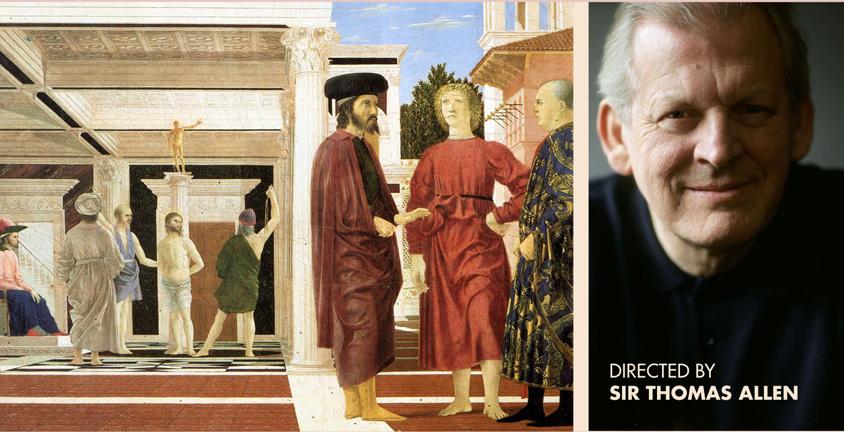
The Lady of Possibilities is his inspiration for what will follow with the fourth Angel. The Angel of Jubilation joins us in scene four, heralding the painting of The Nativity itself. Then comes perhaps the most famous of all this painter’s works, The Flagellation of Christ, accompanied by the Angel of Consolation.
Now we become aware of the other discipline in the life of Piero della Francesca, that of the mathematician, especially relating to composition and perspective – a miracle bearing in mind the man’s oncoming blindness. We feel the pain and agony of Piero in producing this monumental work.
Our Angel of Resurrection introduces us to the next stage of the story: Piero’s realisation of his total blindness. Yet the brashness of trumpets and the risen Christ create a scene of ultimate hope with darkness defeated. Now we feel Piero is on a journey. An Angel of Navigation entreats him to listen, emphasising his other senses. We end with the beauty of Light and Hope, with Piero and two accompanying Angels on their track towards eternity.
Sir Thomas Allen
We gratefully acknowledge Nick Sears for devising the programme of music for this evening. This project, close to his heart, represents his final opera project after over 18 years of dedicated leadership as the Head of Vocal & Opera at the Royal College of Music.
DIRECTOR’S NOTE
Love, conflict, Renaissance: strong words perfectly describing our evening of contrasts. Amongst a range of music that makes up the programme, it is perhaps something from another cultural field that is the inspiration behind much of what you will hear. I am referring to the extraordinary paintings of the great Italian, Piero della Francesca. At any stage in the programme, whether it be the part songs and solos of Barbara Strozzi or the great Claudio Monteverdi, the spirit of the age is beautifully captured.
And, as if to confirm that, when we add to the mix a short but intense work of the 20th century, Seven Angels by Jonathan Dove, the potion becomes even more intense. The painter at the core of this work is our man Piero della Francesca, painter and mathematician, who on top of all else in his everyday struggles – painting, wrestling with numbers and the challenges of perspective – must also accept the growing darkness that comes with his progressive blindness.
Ultimately, neither his beloved numbers and shapes, nor the subjects of his painted works, would be available to him. One can only imagine the desperateness of his situation. Jonathan Dove has written his short opera in seven scenes, inspired by some of the most striking creations from Piero’s canvases.
For me, the fascination of this subject lies in the memory of a documentary I saw many years ago. The subject was an in-depth analysis of the painting showing the Flagellation of Christ.
The painting serves us well in an appreciation of the workings of Piero’s mind. As though the head-on impact of the painting were not shattering enough, with Christ bound to a column receiving the punishment of a lashing, it cries out for further study of the detail within the perspective of the piece, the floor in particular. What that reveals, in a plan view, is the beauty and detail within that courtyard floor. Only a painter with the mind of a serious mathematician could have gone to the trouble of reproducing the details of the floor in such precise and beautiful detail. A beautiful mind indeed.
Follow that perspective to the vanishing point that is our guide through this smattering of Renaissance gems; joyous, tragic, whatever they may be. There is no particular theme, simply a choice to take us wandering through many an Italian piazza, be it Arezzo, Florence, Siena or Venice, to meet the merchants, the lads and lasses of the age; their faith, their genius, their art.
Michael Rosewell has worked in some of the world’s most prestigious opera houses, including the Vienna State Opera and the Royal Opera House, Covent Garden. He began his conducting career in Germany before Claudio Abbado invited him to join the music staff of the Vienna State Opera. He went on to become Senior Staff conductor at the Nationaltheater, Mannheim, and has conducted extensively throughout Europe and the USA. Early in his career, Michael played harpsichord for Nikolaus Harnoncourt, Jean-Claude Malgoire and Marcello Panni. He has worked with period instrument ensembles the London Handel Orchestra and Old Street Band and, as Associate Conductor for the London Handel Society, introduced rarely performed Handel operas to the London stage. Michael returns to Vienna this summer to lead conducting masterclasses in the world-renowned Musikverein.
In concert and the recording studio, Michael has conducted the RTÉ National Symphony Orchestra, Orchestra of Scottish Opera, London Mozart Players, Manchester Camerata and Aurora Orchestra, at festivals including Aldeburgh, Montepulciano, Buxton, Bath and Zagreb. As Music Director of English Touring Opera, Michael played a central role in establishing ETO as the leading British opera touring company. His achievements have been recognised by the National Opera Association of America, and with an Outstanding Achievement in Opera Olivier Award.
Sir Thomas Allen Director
Sir Thomas Allen is an established star of the great opera houses of the world. At the Royal Opera House, Covent Garden, where in 2021 he celebrated the 50th anniversary of his debut with the company, he has sung over 50 roles. In 2022 he also celebrated the 40th anniversary of his debut at the Metropolitan Opera, New York.
Equally renowned on the concert platform, he appears in recital in the United Kingdom, throughout Europe, in Australia and America, and has appeared with the world’s great orchestras and conductors. He made a triumphant directing debut in 2003 with Albert Herring at the Royal College of Music and went on to direct critically acclaimed productions of Don Giovanni and Così fan tutte for Samling Opera at The Sage, Gateshead.
His many honours include the title of Bayerischer Kammersänger awarded by the Bayerische Staatsoper, honorary doctorates from the Royal College of Music and Royal Academy of Music, Prince Consort Professor of the Royal College of Music, the Hambro Visiting Professorship of Opera Studies at Oxford University, Fellowship of the Royal College of Music, and Doctorates of Music from Durham University and the University of Birmingham. In the New Year Honours 1989, he was created a Commander of the British Empire and in the 1999 Queen‘s Birthday Honours he was made a Knight Bachelor.
Choreographer
Anna Smith
Anna Smith trained at the Rambert School of Ballet and Contemporary Dance, where she worked with choreographers such as Richard Alston, Darren Ellis and the Alleyne Dance company. Since graduating she has performed at the Royal Opera House in operas choreographed by Kate Flatt and Michael Keegan Dolan. As part of creative duo HARRYnSMITHY, she has produced work for Brighton Fringe at South East Dance, The Place’s Resolution Festival and Exeter Northcott Barnfield Theatre with Richard Chappell Dance.
Choreographer
Harry Wilson
Harry is a dancer and choreographer originally from Doncaster. He trained at the Rambert School of Ballet and Contemporary Dance, where he worked with choreographers such as Sir Richard Alston, Christopher Bruce and Richard Chappell. Since graduating, Harry has worked as a freelance dancer for companies and choreographers such as Yorke Dance Project, Susan Kempster, Eliot Smith Dance and the Royal Ballet and Opera. He also works with collaborator Anna Smith as choreographic duo HARRYnSMITHY. Their work has been performed at theatres including The Place, Exeter Northcott Barnfield Theatre, and South East Dance as part of Brighton Fringe Festival 2024.
To find out more, email natalie.matias@rcm.ac.uk or visit www.rcm.ac.uk/legacies
Laura Jane Stanfield Designer
A graduate of Wimbledon School of Art, Laura is a set and costume designer for opera, theatre and television.
Set and costume design credits include: Pirates of Penzance, UK Tour 2025, BBC Proms 2024; Il barbiere di Siviglia, West Green House Opera; CBSO’s Madame Butterfly; Little Red Riding Hood, Northern Opera Group; Orphée and Acis and Galatea for Vache Baroque Festival; Turn of the Screw, Barnes Festival; Così fan tutte and La finta giardiniera, Ryedale Festival Opera; The Juniper Tree, Richmond Festival.
Costume design credits include: Mille Regretz, English Touring Opera; Cendrillon, Northern Opera Group; Peter Pan Reimagined, Birmingham Rep; Fortitude, Sky Atlantic (Assistant Designer); The Victorian Bakery, BBC TV (Assistant Designer); Dubai, Rostov, New York, National Opera Studio; English Eccentrics, British Youth Opera; Landscapes, English National Opera; Riders to the Sea and Savitri, British Youth Opera; La bohème, Nevill Holt Opera; The Flying Dutchman, Northern Ireland (NI) Opera; Noye’s Fludde, NI Opera; Three Wishes, Tête à Tête Festival.
Laura has also been designer for various community and educational projects for the Royal Opera House, English National Opera, NI Opera and Claque Theatre.
Kevin Treacy Lighting Designer
Opera credits include Eugene Onegin, La bohéme, La traviata, The Flying Dutchman, Tosca, Agrippina, Salome, Northern Ireland Opera; La Cenerentola, Carmen, The Magic Flute, Così fan tutte, Nevill Holt Opera; Into the Woods, West Australian Opera; Aida, Opéra Orchestre de Montpellier; L’elisir d’amore, Den Norske Opera, Oslo; The Turn of the Screw, Kolobov Novaya, Moscow; Macbeth, Welsh National Opera; Die Fledermaus, Wermland Opera, Sweden; The Merry Widow, Rodelinda, Imeneo, Faramondo, Il Mondo della Luna, Die Fledermaus, Royal College of Music; The Flying Dutchman, Opera North; Cunning Little Vixen, The Magic Flute, Comedy on the Bridge | Twice Alexander, Royal Academy of Music; Albert Herring, The Abduction from the Seraglio, Grange Festival; L’enfant et les sortiléges, Orango, Renard | Mavra | Les Noces, Philharmonia Orchestra at Royal Festival Hall; Faramondo, Handel Festspiele, Göttingen; Orpheus in the Underworld, Scottish Opera; Flavio, Xerxes, La tragédie de Carmen, English Touring Opera.
CAST
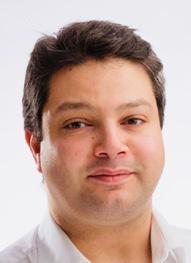
Tim Burton tenor
Tim Burton is an Yvonne Wells Scholar in his first year of the MPerf programme at the Royal College of Music, supported by the Josephine Baker and William Gibbs Memorial trusts. He studies under Tim Evans-Jones. He previously studied at the Royal Birmingham Conservatoire, singing roles including Schoolmaster in The Cunning Little Vixen, Mr Bobo in Mark-Anthony Turnage’s Coraline, Moon and King of the East in Jonathan Dove’s The Enchanted Pig, and Le Doyen de la Faculté in Cendrillon. In 2023, Tim won the Edward Brooks English Song Prize and sang in Grimeborn’s production of Trouble in Tahiti, which won an Offie Award.
Alexandra Francis soprano
New Zealand soprano Alexandra Francis is in her second year of the Masters programme at the Royal College of Music, studying with Ben Johnson and Bryan Evans as an RCM Scholar. Alexandra previously attended the University of Auckland, culminating in a Masters in Music. In 2024 Alexandra appeared in two RCM Opera Studio productions, performing the roles of Clo-Clo in The Merry Widow and Anne in Airtime (as part of Revolutions). Alexandra has sung throughout New Zealand, with highlights including the roles of the Princess (The Sleeping Beauty) and Second Apparition (Macbeth) for New Zealand Opera.
Sam Hird baritone
Sam Hird studies at the Royal College of Music Opera Studio with Peter Savidge and Sir Thomas Allen. In May, he made his Royal Opera House debut when he stepped in as cover to play the title role in Telemann’s Pimpinone in the Linbury Theatre. He will be returning as a Jette Parker Artist (2025/27) in September. In 2024 he won First Place/Audience Vote at the Clonter Opera Prize and Peter Hulsen Orchestral Song Award. Roles include Count Almaviva in Le nozze di Figaro, Ramiro in L'heure Espagnole, and Danilo in The Merry Widow (RCM). Sam is a Samling Artist, an Associate Artist for Sinfonia Smith Square, and is supported by the Josephine Baker Trust and Richard Silver Scholarship.
Zheng Jiang countertenor (cover)
Chinese countertenor Zheng Jiang is in the second year of his Masters at the Royal College of Music, studying with Ben Johnson and Stephen Varcoe. He is a recipient of a Study Award, supported by the Josephine Baker Trust. Zheng completed his undergraduate studies in Canada and was awarded third prize in the 2023 Ontario Music Festivals Association Classical Voice Competition. Alongside numerous operatic roles, Zheng is an active concert artist. In 2024, Zheng won the Nicholas Partridge Award for Outstanding Creativity at the inaugural Eastbourne International Singing Competition. He was a finalist in the 2025 Kathleen Ferrier Awards.
Zhen Liu baritone
Chinese baritone Zhen Liu, an RCM Award holder, is in his second year of his Masters at the Royal College of Music, studying under Peter Savidge, Bryan Evans and Caroline Dowdle. Zhen earned his Bachelor of Fine Arts in Classical Voice Performance from Shanghai Conservatory of Music, where he performed roles including Guglielmo in Così fan tutte, Figaro in Le nozze di Figaro, and Zweiter Priester/Zweiter Geharnischter in The Magic Flute. At the RCM, Zhen has performed in world premieres of contemporary operas: the title role in Connie Harris’ The Drifterman, and Businessman in Jasper Eaglesfield’s The Anthem
Esmée Loughlin-Dickenson mezzo soprano (cover)
Cornish mezzo soprano Esmée Loughlin-Dickenson graduated with a BMus from the RCM in 2024, and is now studying for her Masters with Sally Burgess and Gary Matthewman. She is the Helen Marjorie Tonks Scholar, supported by The Radford Charitable Trust and William Gibbs Education Trust. Esmée received the 2024 Brooks Van der Pump Competition undergraduate prize, and a commendation in the Lies Askonas Competition. She has performed in masterclasses with Edith Wiens, Brindley Sherratt, Ann Murray, Michael Chance and Bernarda Fink and in the Udo Reinemann International Masterclass in Brussels, and will sing at Lied the Way, Florence with duo partner Julia Metzmacher.
Bella Marslen soprano
Bella Marslen is postgraduate at the Royal College of Music, studying with Janis Kelly and joining the Opera Studio next September. She is an Andrew Treagus Scholar supported by the Colin and Mimi Watts Scholarship. Bella was a 2022/23 Young Artist and Bendat Scholar with West Australian Opera. Roles include Lauretta/Una Conversa in Gianni Schicchi/Suor Angelica (Freeze Frame Opera), soloist in Bach’s Easter Oratorio and First Wood Sprite in Rusalka (both West Australian Opera), and Barbarina in Le nozze di Figaro (RCM). Bella was a finalist and prize-winner in the 2024 Joan Sutherland & Richard Bonynge Bel Canto Awards.
Francis Melville tenor
Francis Melville is a tenor in the second year of his Masters at the Royal College of Music, where he is taught by Ben Johnson. He is a Cuthbert Smith Scholar, supported by the Big Give Scholarship. Roles include Count Almaviva in The Barber of Seville and Torquemada in L’heure Espagnole. He performed in the Grange Park Opera chorus for their 2024 season. He has been a young artist at the Ludlow English Song Weekend and at the Southrepps Music Festival, and has participated in masterclasses with Edith Wiens, Rachel Nicholls, Nicky Spence, Iain Burnside, Malcolm Martineau and Robert Dean.
Georgia Melville soprano
Australian soprano Georgia Melville is in her second year at the RCM Opera Studio, studying with Janis Kelly. Performances include Countess in Le nozze di Figaro, Mistinguett in Les Illuminations, Hanna in The Merry Widow, Donna Elvira in Don Giovanni Tenorio (RCM) and Soeur Claire in Dialogues des Carmélites and Chorus in L’elisir d’amore with Glyndebourne Festival Opera. Georgia is the Alastair Jackson International Opera Award Holder, supported by Melba Opera Trust and Tait Memorial Trust. She is grateful for the support of the Skellern Family. For the 2025/26 season, Georgia will join the National Opera Studio as a Young Artist and then the Wiener Staatsoper as the recipient of the Michael Byrne Vienna State Opera Award.
Natalka Pasicznyk soprano (cover)
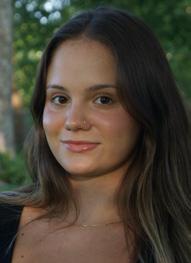
Natalka Pasicznyk is a first-class music graduate of King’s College London, currently pursuing postgraduate vocal studies with Patricia Rozario as a Royal College of Music Scholar. She has been mentored by renowned singers such as Alex Oomens, Ryland Davies and Nadine Sierra. Past operatic roles include Susanna in Le nozze di Figaro, Bessie Throckmorton in Edward German’s Merrie England, and Spring and Mystery in Purcell’s Fairy Queen. Natalka is a 2025 Leeds Lieder Young Artist and Westminster Opera Company Emerging Artist. In 2024, she won First Prize in the Dean and Chadlington Singing Competition.
Will Prior countertenor
Will Prior is studying for his Masters at the Royal College of Music as an ABRSM Scholar, supported by the Drake Calleja Trust, Josephine Baker Trust, William Gibbs Educational Trust, and by the Countess of Munster Musical Trust who, in 2024, awarded him the inaugural Dame Janet Baker Award. He studies with Veronica Veysey-Campbell and Caroline Dowdle and is a Britten Pears Young Artist 2025–26. He has sung in masterclasses with Edith Wiens, Sir Thomas Allen, Carolyn Sampson and Jeremy Huw Williams, and appeared as soloist with the RCM Baroque Orchestra, and the Choir of Magdalen College, Oxford. He recently made his Wigmore Hall debut.
Alexander Semple baritone (cover)
Alexander Semple read music at the University of Cambridge and now studies at the Royal College of Music under Russell Smythe. Roles include Papageno (The Magic Flute); Ferryman (Curlew River); and, with Hampstead Garden Opera, Alidoro (La Cenerentola). This summer he sings as a soloist alongside the BBC National Chorus of Wales in Carmina Burana, and joins Green Opera in Jane Eyre. Alexander regularly performs with choirs including Tenebrae, Polyphony and Continuum. He is a James Bowman Young Artist with Vache Baroque, supported as an RCM Scholar by the Linbury Scholarship, Josephine Baker Trust, Choir Association of St John’s College, Cambridge, and Thames Philharmonic Choral Scholarship.
Adja Thomas-Mbaye soprano
Adja Thomas-Mbaye is a soprano from New York. She recently transitioned from being a mezzo soprano and has previously performed the roles of Hippolyta/Hermia in A Midsummer Night’s Dream at Miami Music Festival, and Zweite Dame in The Magic Flute at Manhattan School of Music. Adja placed second in the 2022 Shirley Winston-Rabb Competition and won first place in the 2018 eVoco Voice Collective Competition. She recently performed at the Aspen Music Festival, and placed first in the 2025 Les Grandes Voix Competition in the young hope category. She is studying for her Masters at the RCM with Patricia Rozario.
Maryam Wocial soprano
Maryam Wocial is a postgraduate at the Royal College of Music, where she is the Poppy Holden Scholar supported by the Cuthbert Smith Scholarship, Countess of Munster Trust, H R Taylor Trust and Josephine Baker Trust. In 2024, she made her debuts with The Mozartists, Instruments of Time and Truth, and was awarded the inaugural Early Career Fellowship for vocalists with The English Concert for their 2024–25 season. She won Second Prize at the 2025 International Handel Singing Competition, and this summer she is an Atelier Lyrique artist at the Verbier Festival in Switzerland. She joins the RCM Opera Studio this September.
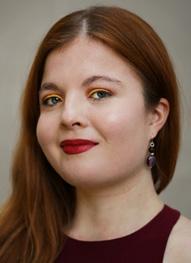
Cecilia Yufan Zhang mezzo soprano
Cecilia Yufan Zhang is a Chinese-Kiwi mezzo soprano at the Royal College of Music Opera Studio, where she studies with Patricia Bardon as an Alice Templeton Scholar. Recent performances include Cherubino (Le nozze di Figaro, RCM), the title role in The Rape of Lucretia (British Youth Opera), Julia Bertram (Mansfield Park, New Zealand Opera), and Mistinguette in a staged version of Weill’s Chansons des Quais (RCM). This summer, Cecilia will be performing as Prince Orlofsky in Die Fledermaus (Westminster Opera) and makes her Wigmore Hall debut with the RCM as part of the Mel Bonis Song Recital.
ORCHESTRA
Yichun
Mao baroque violin
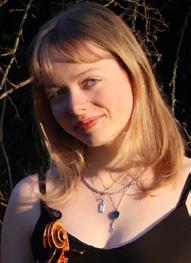
Yichun Mao studies baroque violin with Lucy Russell on the Artist Diploma course at the Royal College of Music. Experiences include performing in operas such as Offenbach’s Pomme d’Api, Verdi’s La forza del destino, Rossini’s The Barber of Seville, Weber’s Oberon, Dvořák’s Stabat Mater, and cantatas by Telemann, JS Bach and CPE Bach. This RCM opera project marks an exciting first step into early operas for them. With coaching from Catherine Martin and the opportunity to work closely with amazing musicians, they are grateful for the chance to continue learning and discovering new expressive possibilities within this repertoire.
Alma Balazs baroque violin
Alma Balazs is a Portuguese-Hungarian baroque violinist currently studying with Bojan Cicic and Catherine Martin at the Royal College of Music as an RCM Scholar. Recent highlights include performing on the RCM tour in Salzburg and Siena, and showcasing Italian Renaissance works at the King’s Gallery, Buckingham Palace and at a lunchtime concert at Hatchlands Park. Alma has attended workshops in Portugal and performed with Casa de Música in Porto under conductor Laurence Cummings. She also regularly performs as a modern violinist in orchestras, and looks forward to partnering with the RCM Museum to explore the music of Geminiani.
Vera Edgington baroque viola
Vera Edgington began studying at the Royal College of Music in 2024, learning modern viola with Jonathan Barritt and baroque viola with Pablo de Pedro Cano. She was awarded a place at Aldeburgh Young Musicians in 2018, attending courses including a side-by-side residency with Ensemble Hesperi, and performing across Snape Maltings. She also studied at Junior Guildhall. She has played in masterclasses with Nora Romanoff-Schwarzberg and Simon Rowland-Jones, and regularly performs with her string quartet, including at a chamber festival in Conzano, Italy. As an orchestral musician, she has performed in venues including the Royal Albert Hall, Sinfonia Smith Square, St Paul’s Cathedral and Birmingham Symphony Hall.
Theo Tinkler historical cello
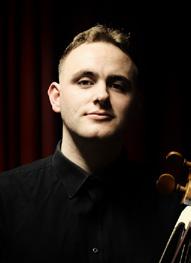
Theo Tinkler was a chorister in Jesus College Choir, Cambridge before graduating in cello (BMus Hons) from the Royal Conservatoire of Scotland, where he won the Louis Carus Prize for Strings, a Beatrice Huntington Award, and the five-year guardianship of an 1828 John Corsby baroque/classical cello owned by the Cherubim Trust. In 2023 Theo was awarded the ABRSM Scholarship to attend the Royal College of Music for a Masters degree (MPerf in Historical Performance). He is currently in his second year of study on historical cello with Catherine Rimer.
Tess Miles historical double bass
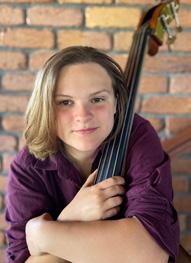
Tess Miles is an increasingly sought-after double bassist and bass guitarist. She enjoys both modern and historical performance, studying historical bass with Carina Cosgrave. She spent three years at the Royal Academy of Music’s Junior Department and now studies modern double bass at the Royal College of Music under the tutelage of Rodrigo Moro Martin. Since joining the RCM, she has played with the RCM Symphony, Philharmonic and Jazz Orchestras in venues such as Pizza Express Soho and Windsor Castle, as well as regularly participating in workshops at the RCM with the Academy of Ancient Music.
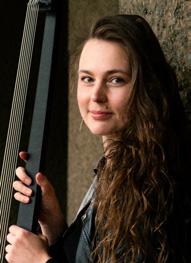
Catherine
Reid harp
Scottish-American harpist Catherine Reid made her solo recital debut in 2022 as a Peggy and Yale Gordon Trust featured concert artist in Baltimore. She received a Bachelor of Music with high distinction and performer’s certificate from the Eastman School of Music in Rochester, New York. Catherine studies harp with Daphne Boden at the Royal College of Music, pursuing the MMus degree as an RCM Scholar. She was selected for English National Opera’s 2023–24 Evolve scheme, and has extensive experience performing chamber repertoire, orchestral works and opera. Catherine returns to the RCM as an Artist Diploma student in September 2025.
Jo Ramadan harpsichord
Jo Ramadan began his music studies as a chorister at the Chapel Royal, St James’ Palace. After graduating from Durham University, Jo studied at the Royal College of Music with John Blakely and Roger Vignoles. He has been pianist for many masterclasses, a and song partners have included Mary Bevan, Amanda Roocroft, Nick Pritchard, David Butt Phillip, Martha Jones, Kitty Whately. He has worked with conductors Gerry Cornelius, Sir Andrew Davis, Bernard Haitink, Ian Page, Sir Antonio Pappano, Michael Rosewell, Jac Van Steen. Jo is an associate artist and Assistant Conductor and pianist for The Mozartists. He is also a BrittenPears Young Artist and a Samling Scholar. Recent engagements include Assistant Conductor at Drottningholm Festival for Handel’s Ariodante and at Grange Festival for Britten’s A Midsummer Night’s Dream; a Wigmore Hall recital with Emma Roberts, and organist/pianist for Curlew River at Aldeburgh Festival for Britten Pears and BBC, nominated for a Royal Philharmonic Society Award.
Kristiina Watt theorbo Estonian lutenist and singer Kristiina Watt enjoys a busy concert schedule in the UK and further afield. She has performed with the Academy of Ancient Music, Aurora Orchestra, The English Concert, Orchestra of the Age of Enlightenment, La Nuova Musica, Scottish Chamber Orchestra and Scottish Ensemble. Kristiina regularly plays for vocal consorts such as Ensemble Pro Victoria, The Marian Consort, Musica Secreta and Vache Baroque. She is featured on The Marian Consort’s CD Una Poesia Muta in which her performance was reviewed as ‘flawless’ by Gramophone. As a singer Kristiina specialises in early song. In 2025 she looks forward to a solo performance at the Oxford International Song Festival and concerts featuring Strozzi’s duets at Buxton International Festival and St George’s Bristol with her ensemble The Portrait Players.
THANK YOU TO OUR SUPPORTERS
Music has the power to transform lives. Your generosity has enabled us to reach and nurture gifted students so they can become leading musicians of the next generation, and contribute fully to the worldwide musical community, our society and economy. We would like to thank all those listed below, as well as those who wish to remain anonymous, who have generously supported the Royal College of Music between 1 May and 30 April 2025.
We would also like to thank members of the RCM Legacy Ensemble who have so thoughtfully pledged a gift to the RCM in their Will.
Founding Patrons
Amaryllis Fleming Foundation
The Estate of George Frederick Burgan
The Estate of Basil Coleman
Victor Ford Foundation on behalf of Ramona & Trevor Swale
The Croucher Hong Kong Charitable Trust
The Estate of Christopher Hogwood CBE HonDMus
Kingdom Music Education Group
Sandro & Rena Lavery HonRCM
The Leverhulme Trust
The National Lottery Heritage Fund
Geoffrey Richards HonRCM & Valerie Richards
The Estate of Neville Wathen
Ruth West HonRCM & the late Dr Michael West
Garfield Weston Foundation
The Wolfson Foundation
Leadership Supporters
The Estate of Jill Anderson
Art Mentor Foundation Lucerne
Jane Barker CBE FRCM
Blüthner Pianos
Andrea Bocelli Foundation
G & K Boyes Charitable Trust
The Derek Butler Trust
Philip Carne MBE HonRCM & Christine Carne
The Cleminson Family Trust
Meredith & Denis Coleman
Colt Clavier Collection Trust
The Estate of Thomas Cottrell
The Estate of John & Marjorie Coultate
The Estate of Jocelyn Cruft
The Estate of John & Sylvia Daughtry
The Estate of Margaret Dewey
The Estate of Dr John Donnelly
The Foyle Foundation
The Estate of Albert Frost
The Harbour Foundation
The Harry & Gylla Godwin Charitable Trust
HEFCE
Linda Hill HonRCM & Tony Hill
The Victor and Lilian Hochhauser Foundation
Sara Nelson Horner
The Harry and Gylla Godwin Charitable Trust
The Humphrey Richardson Taylor Charitable Trust
Community Jameel
Kirby Laing Foundation
Leonora Countess of Lichfield
The Linbury Trust
Philip Loubser Foundation
The Estate of William Mealings
The Mirfield Trust
Oak Foundation
The Estate of Iris Alleyne
Percy-Smith
The Polonsky Foundation
Pureland Foundation
The Julia & Hans Rausing Trust
The Reed Foundation & The Big Give Christmas Challenge
The Estate of Michael Rimmer
The Estate of Stephen P Roberts
Victoria, Lady Robey
CBE HonRCM
The Estate of Emma Rose
The Royal Commission for the Exhibition of 1851
The Segelman Trust
Dasha Shenkman OBE HonRCM
The Estate of Gerald Charles Webster
The Estate of Nancy Ann Wolfers
Principal Supporters
The Estate of Maureen Hyacinth Adams
Jane Avery in memory of Robert Avery
C. Bechstein
Pianofortefabrik AG
Dr Linda Beeley
Lord Black & Mark Bolland
Ian Boag
The Estate of Heather Curry
The Victor Dahdaleh Foundation
Peter & Annette Dart
The Drapers’ Company
The Fishmongers’ Company
Martin Fraenkel
J Paul Getty Jr Charitable Trust
The Estate of Brian Hartley
The Headley Trust
Jules Hess & the late
Tony Hess
JMC
The Estate of Frida Betty Koganovitch
James & Margaret Lancaster
John Lewis Partnership
Lord and Lady Lurgan Trust
The Estate of Sir Neville
Marriner FRCM
Rosemary Millar
HonRCM & Richard Millar
Michael & Dorothy Needley
John Nickson & Simon Rew
The Estate of Sheila & Christine Partridge
The Charles Peel Charitable Trust
Pro Musica Ltd
The Estate of Prudence
Raphael née Gaffikin
The Estate of Charles Stewart Richardson
Leopold de Rothschild
1959 Charitable Trust
Roland Saam
The Estate of Humphrey
Searle CBE FRCM
Alethea Siow & Jeremy Furniss
Miss Kathleen Beryl
Sleigh Charitable Trust
The Peter Sowerby Foundation
Steinway & Sons
Betty & the late Robert Sutherland
Ian & Meriel Tegner
The Kiri Te Kanawa Foundation UK
Mrs Lynette Tiong
Sandra Treagus
The Estate of Ivor
Charles Treby
The Estate of Gweneth Urquhart
Van Cleef & Arpels
Vaseppi Trust
Sir Siegmund Warburg’s Voluntary Settlement
Bob & Sarah Wigley
Henry Wood
Accommodation Trust
The Worshipful Company of Musicians
Yan Zhang & Yinghong
Chiu
Major Supporters
E B M Charitable Trust
Richard Goulding
Cynthia (Morey)
Jennings
Jerwood Foundation
Peter Freedman AM
The Estate of David William Patterson
The Risman Foundation
Mimi & Colin Watts
Westminster City Council
Supporters
Robert Anderson
The Robert Anderson Trust
Ernesto Bertarelli
The Maria Björnson Memorial Fund
Graham Brookman
The Brooks Van Der
Pump
Charitable Trust
Peter Brooks & Kirsty Anderson
Andrew Bruce
Il Circolo - Italian Cultural Association
London
Camellia NPT UK
Catherine Clarke
Noël Coward Foundation
Diane Davies
The Gilbert & Eileen
Edgar Foundation
The Patrick & Helena Frost Foundation
The Hargreaves and Ball Charitable Trust
L G Harris Trust
Poppy Holden
The Houston Family
International Music & Art Foundation
Melba Opera Trust
David James
Richard & Susan Jarvis
Karaviotis Foundation
Ruth Keattch
The Honourable Society of the Knights of the Round Table
David & Mary Laing
LIBER Foundation
Dr Susan Lim & Deepak Sharma
Sir Sydney & Lady Lipworth
The London Women's Clinic Foundation
Lotti Masterson
The Mills Williams Foundation
The Howard & Abby Milstein Foundation
Old Possum’s Practical Trust
Opperby Stokowski Collection Trust
Marian & Gordon Pell
The Phillimore Trust
The Stanley Picker Charitable Trust
Richard Price FRCM & Sue Price
Russell Race
Mark Redman
Hilda Scarth
The Estate of Richard Silver
South Square Trust
Peter & Dimity Spiller
Stephen Stuart-Smith
Tait Memorial Trust
Lisa Thomas
The Robert Turnbull Piano Foundation
Anne Wadsworth OBE & Brian Wadsworth
Lady Walters
The Estate of Christine Ann Williams
The Wyseliot Charitable Trust
Dr Richard Zheng & Mr Paul Hill
Core Contributors
Abinger Hammer Village School Trust
Anglo-Norse Society
The Estate of Marianne Barker
John & Halina Bennett
Robin & Alice Berkeley
The Hon Christopher Bellew
Hilary Birch
Gary & Eleanor Brass
Chichester Charitable Trust
Sir Anthony Cleaver
FRCM & Lady Cleaver
The Ann Driver Trust
Catherine James & David Edwards
The Estate of Audrey Fryer
Dr Chris Gibson-Smith
Peter Granger
Richard Hamilton
The Herbert Howells Trust
The Estate of Dolores P Jones
Professor Colin Lawson
CBE FRCM
John & Jackie Lower
Charles & Dominique
Lubar
The Hon Richard Lyttelton HonRCM & Romilly Lyttelton
David Mildon
Ellen Moloney
Richard & Minako
Mountford
Judy & Terence Mowschenson
William Newsom
Northern Trust
Nandu & Jane Patel
Gordon Palmer Charitable Trust
The Estate of Roselyn
Ann Clifton Parker
Kevin Porter HonRCM
Catherine Quinn
Christopher & Zosia Road
Alan Sainer
Sarah Sillem
Janis Susskind OBE HonRCM
Dr Nancy Uscher
The Wall Trust
Dr Paula Walter & Dr Magnus Walter
James Williams & Edward Lidster
Professor Lord Winston & the late Lady
Winston
Moira Witty GRSM
ARCM
The Worshipful Company of Saddlers
We are grateful to ABRSM for their significant contribution, and all those who give anonymously.