February/March 2026
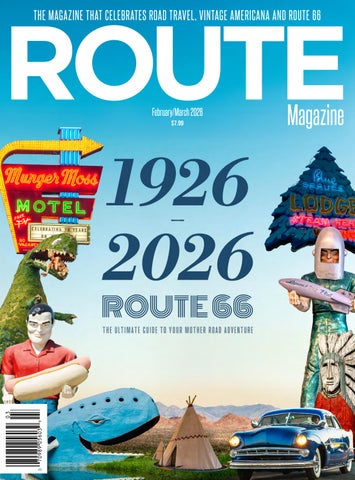
February/March 2026
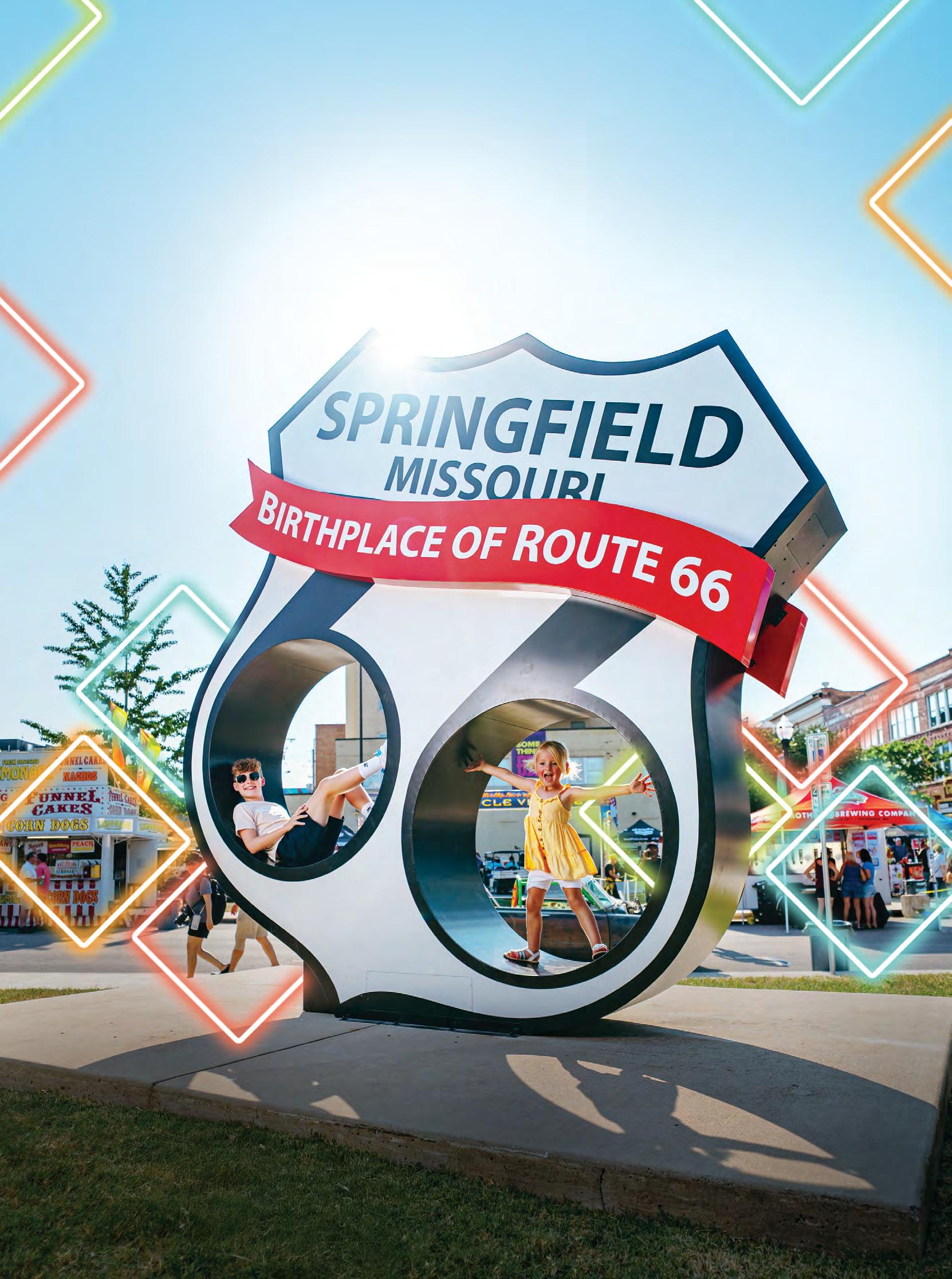
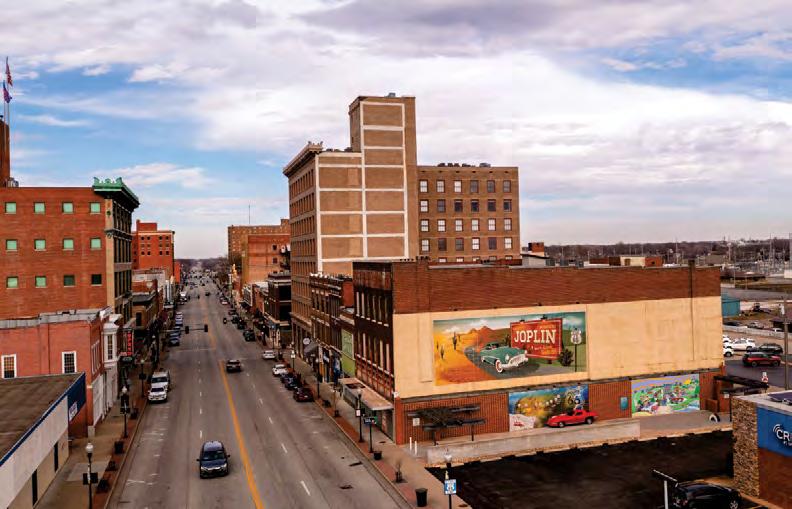
Plan your next visit to Springfield, Missouri and celebrate 100 years of America’s most iconic highway right in its birthplace. Explore classic diners, historic landmarks, and hidden gems that keep the spirit of the road alive. Here in the City of the Ozarks, it’s all about making it your own.

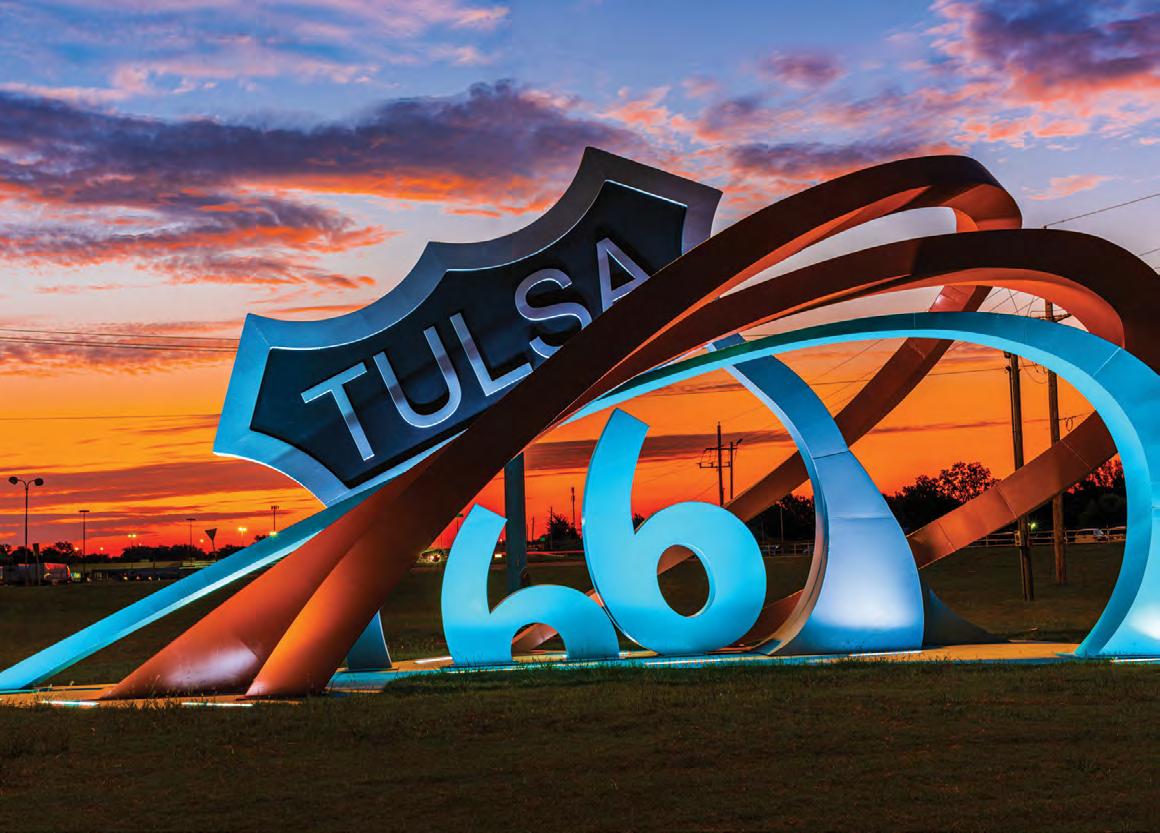
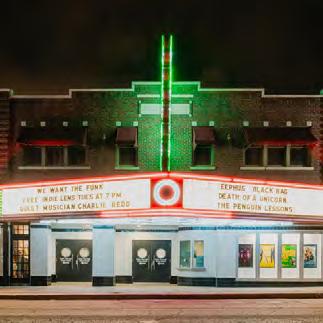
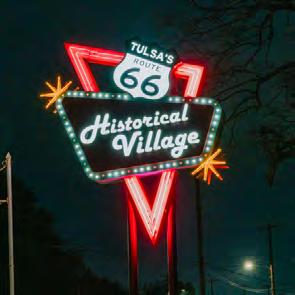
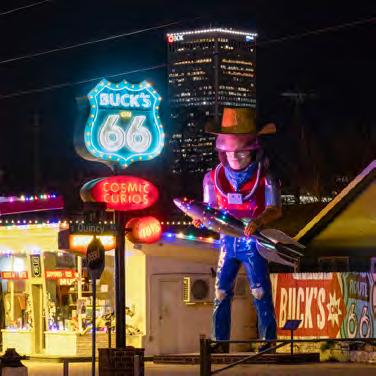


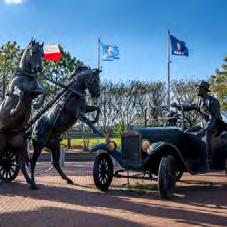
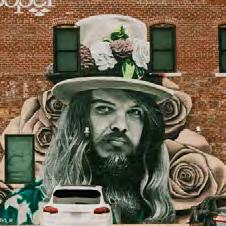
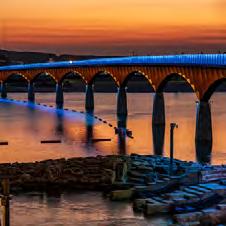
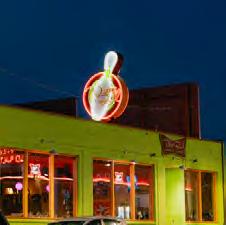


Follow the road to discover iconic stops, hidden gems and unforgettable moments along Oklahoma’s Route 66.


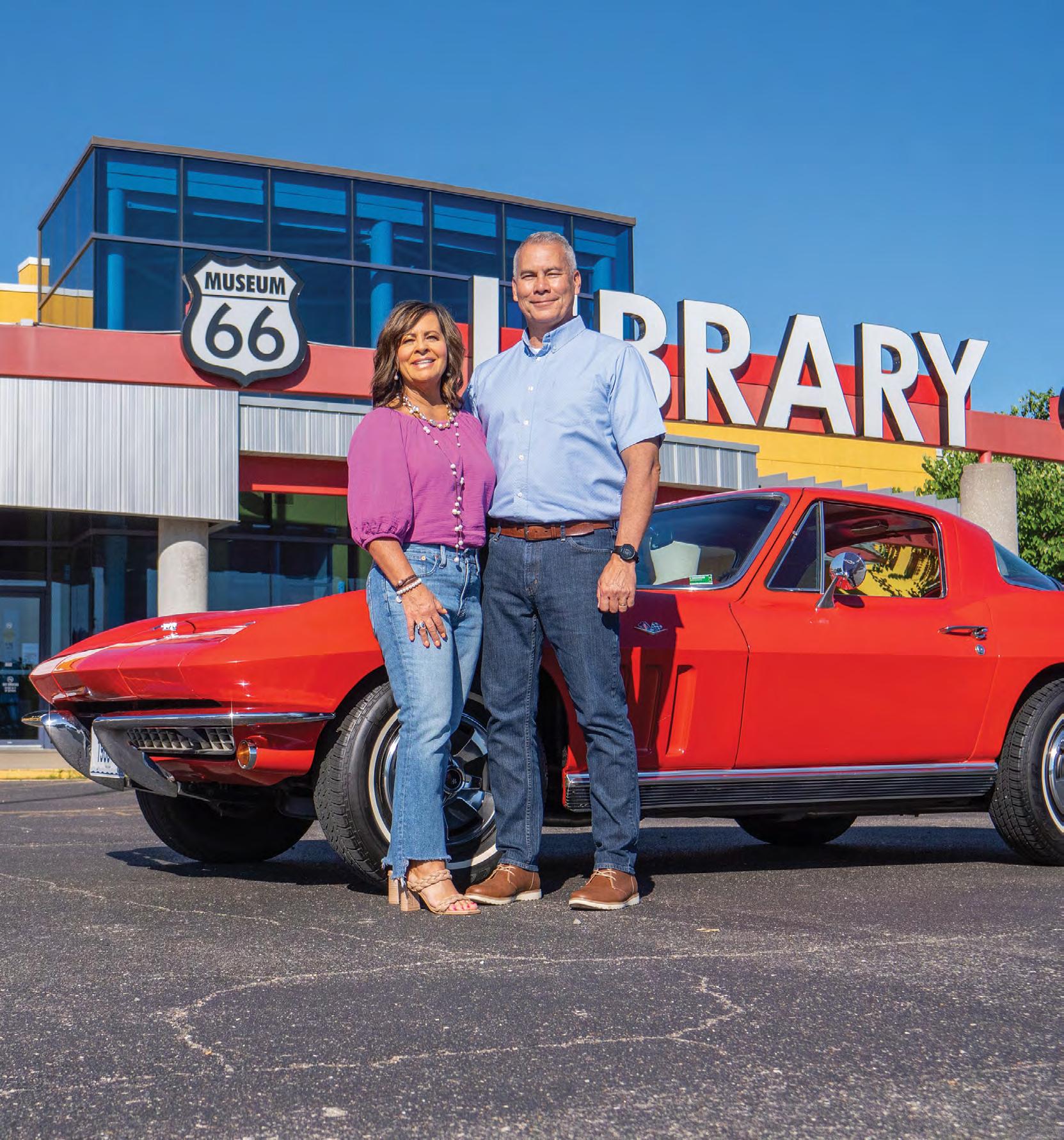

Remember when driving was a joy? Back when you drove to escape, to feel that rush of freedom, or to connect with the person across that bucket seat from you. You’d share a smile when that one song came on; the stereo would get turned up, and windows would get rolled down. You can recapture that moment—or find it for the first time—on Route 66. Feel that horsepowered heartbeat that you’ve been missing in America’s Heartland. Take the Scenic Route: VisitLebanonMo.org

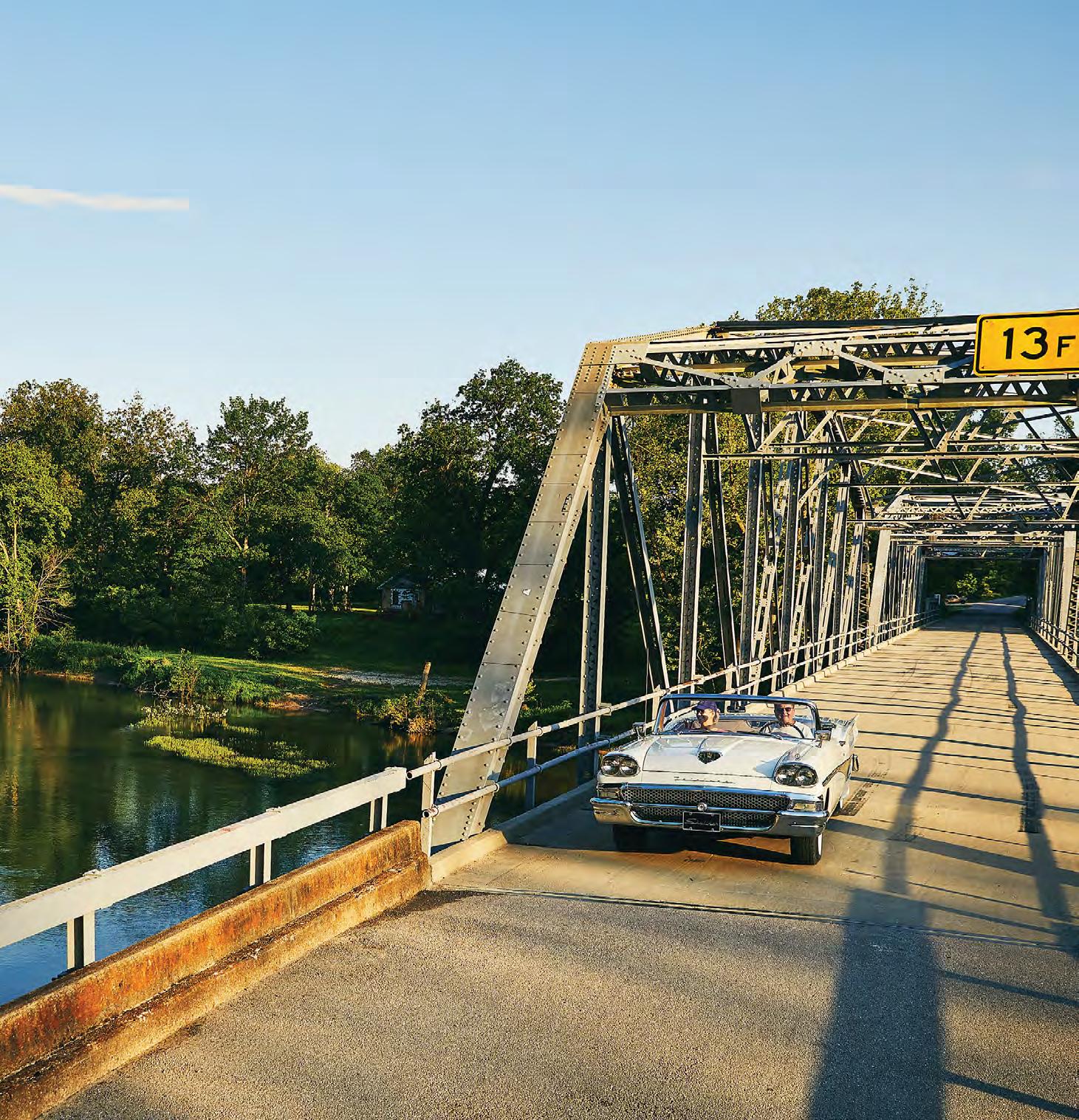
No other highway in U.S. history is more celebrated than Route 66. Also known as the Mother Road, this storied byway once connected Chicago to Los Angeles and travelers to America. Experience for yourself 33 miles of a twisting, winding, and nostalgic trip through time in Pulaski County, MO.
For more information, directions, and driving tour information, visit pulaskicountyusa.com.

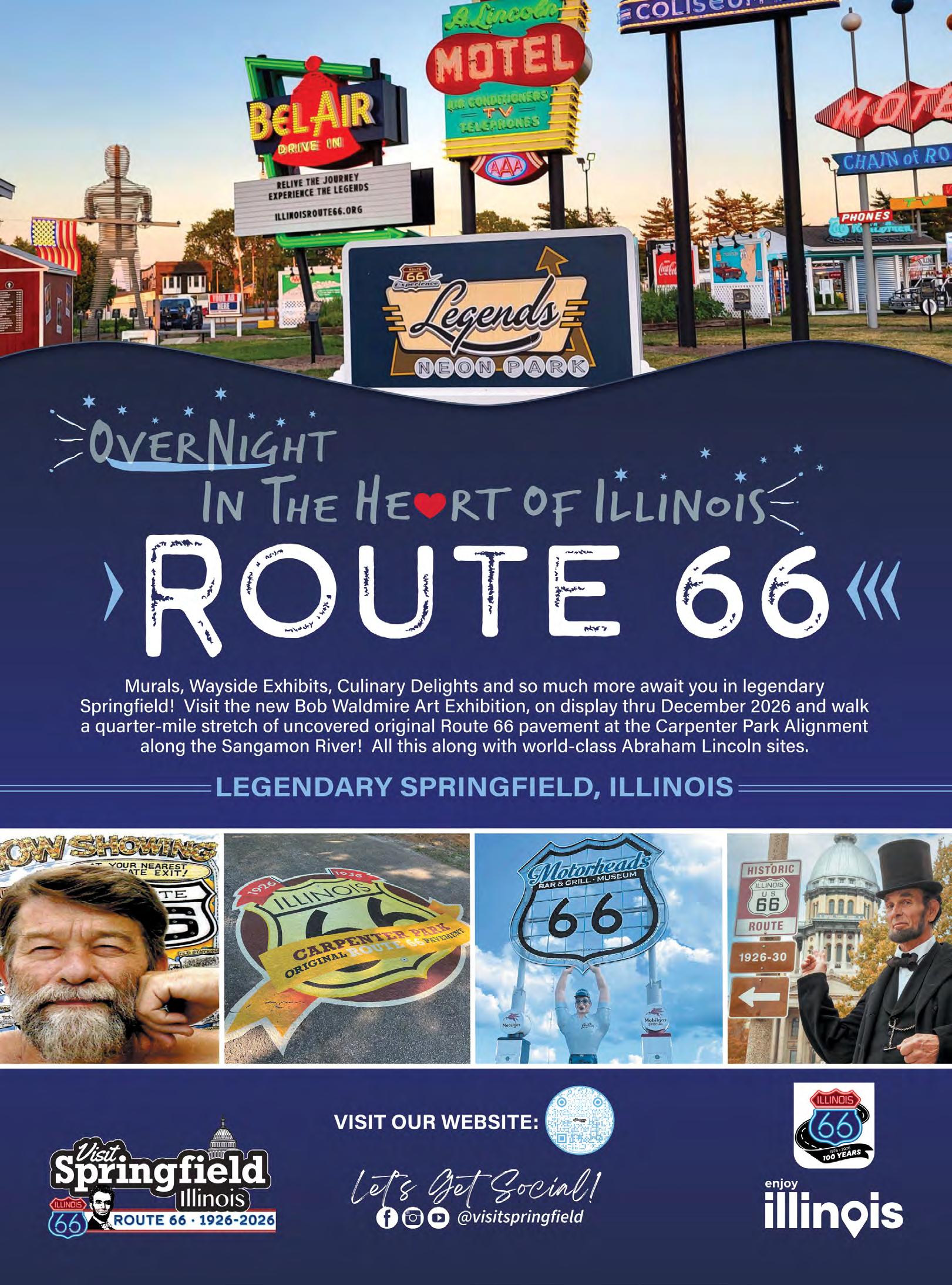
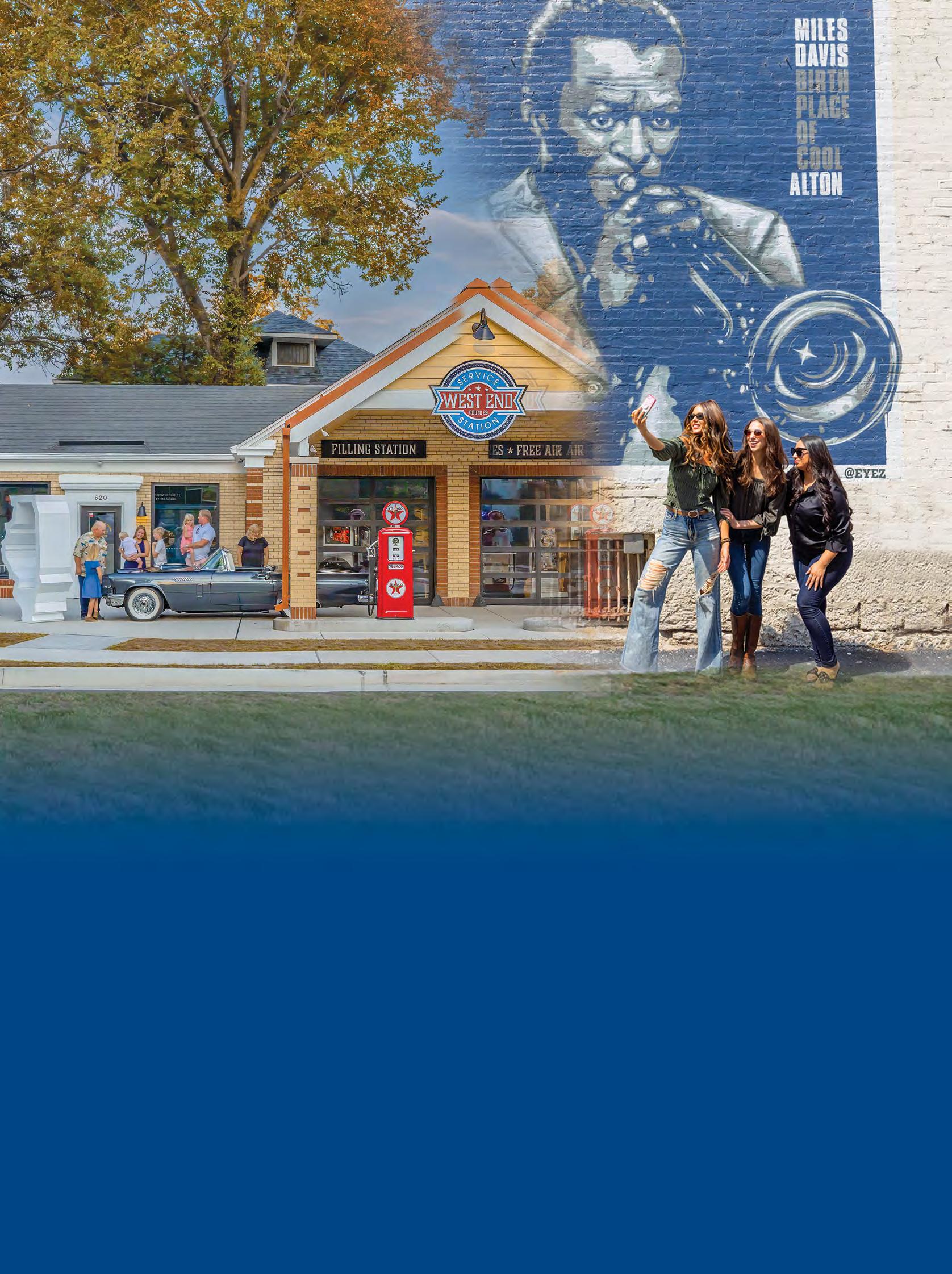
Celebrate 100 years of road tripping in the only place in America where the Mother Road of Route 66 meets the scenic beauty of the Great River Road. Follow the neon signs to the It’s Electric Neon Sign Park, dine at historic Route 66 roadside cafes, take a walk through the river bluffs and prairies and relax with a glass of locally crafted wine beside the Mighty Mississippi River.
Your one-of-a-kind adventure begins at www.RiversandRoutes.com.
By Nick Gerlich
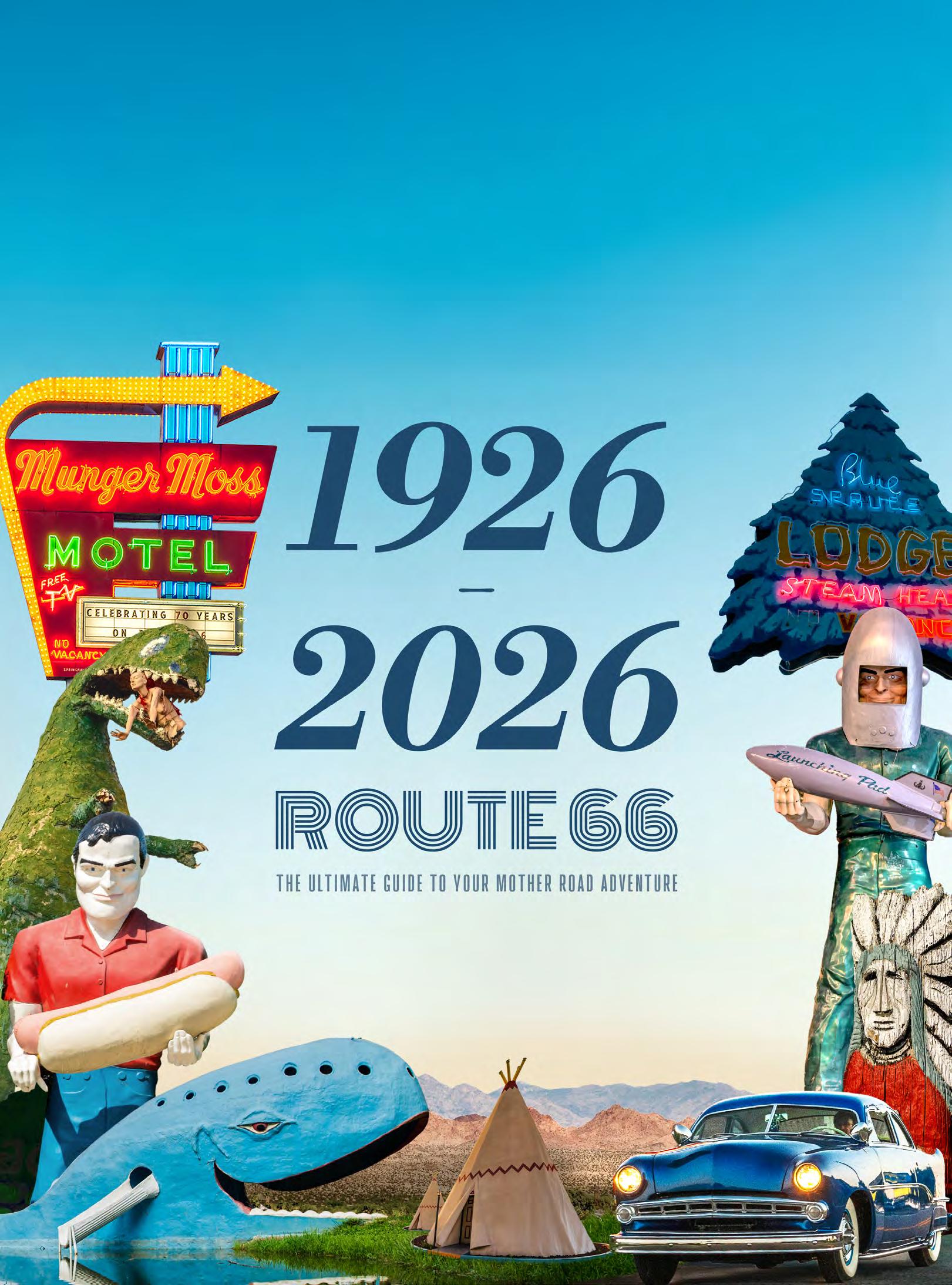
America’s Highway traces the story of Route 66—from its birth in 1926 to its lasting place in the American imagination. More than a road, the Mother Road carried families west, built towns, inspired roadside culture, and continues to invite travelers to slow down, detour, and rediscover the heart of the journey.
Roadside attractions have always been a major part of the road trip ritual—the places that make you hit the brakes, grab your camera, and smile. Along Route 66, they’re everywhere, telling stories in neon, concrete, and imagination. This hotlist rounds up our favorite picks, the must-see stops that capture the fun, weird, and unforgettable spirit of the Mother Road.
Where you stay is part of the Route 66 experience. From classic motels and historic hotels to cozy inns with stories in their walls, these places turn a night’s rest into a memory. There are plenty of options along the Mother Road, but these are our top picks—the stays we return to, recommend, and even plan trips around.
Route 66 museums are as diverse as the road itself. Some dive deep into history, preserving the people and moments that shaped the Mother Road. Others are delightfully quirky,
celebrating pop culture, oddities, and local legends. There are plenty to explore, but these are our favorites—the stops that add color, context, and unexpected fun to the journey.
Eating along Route 66 is part of the adventure. From classic diners and roadside cafés to fine dining, every stop has its own atmosphere. The food reflects the culture and regional diversity of the Mother Road, telling stories through flavors and traditions. There are countless places to eat along the way, but these are our favorite spots to slow down, sit back, and taste the journey.
Some of the most fun discoveries are just a short drive from Route 66. These detours take you to nearby towns and attractions that aren’t on the Mother Road but are well worth the trip. Rich in history, charm, and local character, these are our favorite side trips—easy drives that add unexpected highlights to any Route 66 adventure.
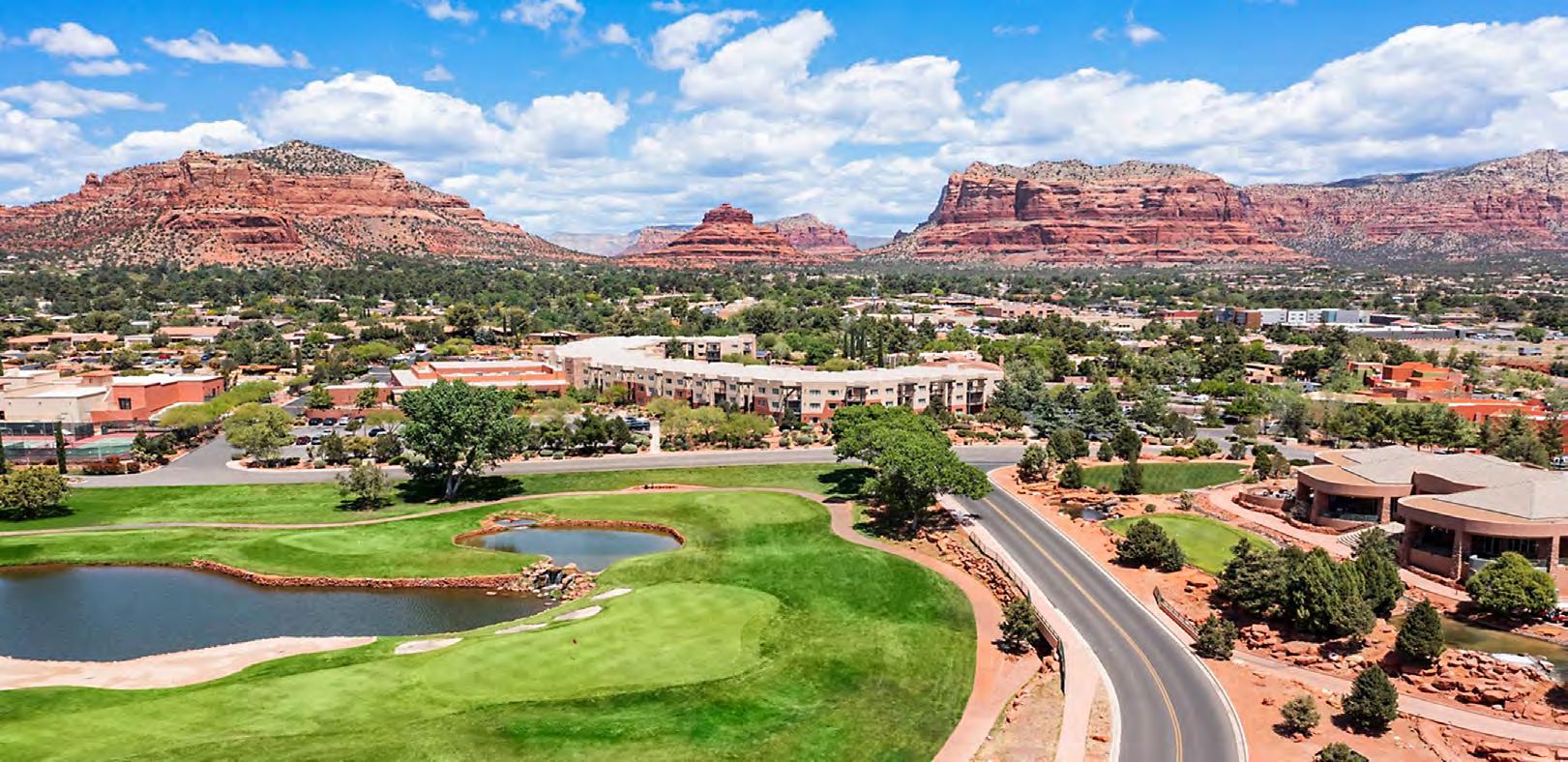
Arizona is packed with fantastic destinations that attract visitors from across the globe. However, not all of them have a story that demands to be told. The Arizona Hideaway Collection does. Showcasing a trio of unique, character-filled stays that turn any side trip into an experience, each property has its own personality, blending comfort with charm and a tale you will want to know.


This year marks a remarkable milestone: the centennial of Route 66, the Mother Road that has captured the hearts and imaginations of travelers for a century. From the bustling streets of Chicago to the sun-soaked deserts of California, Route 66 has long been more than just a highway—it is a living testament to America’s spirit of adventure, freedom, and discovery. And in this special issue, we are thrilled to bring you our first comprehensive guide to the places, experiences, and quirks that make a journey along Route 66 unlike any other.
Planning a road trip along this iconic route is both exhilarating and daunting. The Mother Road stretches nearly 2,500 miles, cutting through small towns, big cities, deserts, and plains, each with its own story to tell. Along the way, travelers encounter everything from historic motels and diners to picture-perfect roadside attractions that range from the whimsical to the beautiful. Route 66 isn’t just a drive—it’s a treasure hunt, a series of moments and memories stitched together by asphalt and imagination.
In this inaugural guide, we’ve focused on what we believe are the very best stops along the route. That meant making some difficult choices. Every museum, restaurant, venue, and roadside oddity along Route 66 has a story, a charm, and a community of passionate caretakers. We have enormous respect for each and every one of them, and we hope that in celebrating our favorites, we also shine a light on the spirit of care and preservation that keeps the road alive. With so much to see and do, we’ve had to be selective—but we’ve done so with care. In truth, if space allowed, numerous others would have been included, too.
Whether you’re chasing the neon glow of vintage signage, savoring a perfectly cooked burger or steak in a classic diner, or discovering a quirky roadside attraction that leaves you in awe, this guide is meant to be both inspiration and roadmap. We hope it encourages readers to plan not just a journey down a highway, but an adventure that lingers in the mind long after the trip is over. Along the way, you’ll find stops that evoke nostalgia, experiences that surprise and delight, and hidden gems that might not be in any other guide.
One of the joys of Route 66 is that it offers more to see, do, and discover than any other highway in America. Its layers of history, culture, and Americana are unmatched, and the journey is always bigger than the sum of its parts. This guide captures only a fraction of what the Mother Road has to offer, but we hope that fraction will spark curiosity, excitement, and perhaps a little wanderlust. We’ve chosen stops that resonate, whether for their history, their design, their flavor, or simply the feeling of stepping into a story that has been unfolding for generations. In addition, we have included a few exceptional towns that are off the route but very much worth a detour. Give them a visit.
As we celebrate this centennial, we invite you to take your time on the road. Stop for coffee in a town you’ve never heard of, linger at a roadside attraction that makes you smile, and make a night of staying in a venue where the neon sign hums as you drift to sleep. Route 66 is not just a route from point A to point B— it is a journey of discovery, curiosity, and joy.
We hope this special issue becomes your companion on that journey, helping you uncover some of the best that America has to offer, on and off the historic route, while reminding you that the adventure is always in the discoveries and the magical moments along the way.
Happy centennial, Route 66. Here’s to another 100 years of stories, surprises, and unforgettable miles.
Blessings,
Brennen Matthews
Editor
PUBLISHER
Thin Tread Media LLC
EDITOR
Brennen Matthews
DEPUTY EDITOR
Kate Wambui
EDITOR-AT-LARGE
Nick Gerlich
LEAD EDITORIAL
PHOTOGRAPHER
David J. Schwartz
LAYOUT AND DESIGN
Tom Heffron
DIGITAL
Yasir Ahmed
ILLUSTRATOR
Jennifer Mallon
EDITORIAL INTERN
Skyler Graham
CONTRIBUTORS AND PHOTOGRAPHERS
Billy Brewer
Chandler O’Leary
Denis Tangney Jr.
Eric Jacobson
Efren Lopez
Joe Sonderman
Justin Towers
Katy Pair
Kevin Eatinger
Kyle Ledeboer
Robert Reck
Rebecca Rust
Scott Flanagin
Terrence Moore
Cover designed by Khamadi Ojiambo
Editorial submissions should be sent to brennen@routemagazine.us.
To subscribe or purchase available back issues visit us at www.routemagazine.us.
Advertising inquiries should be sent to advertising@routemagazine.us.
ROUTE is published six times per year by Thin Tread Media LLC. No part of this publication may be copied or reprinted without the written consent of the Publisher. The views expressed by the contributors are not necessarily those of the Publisher, Editor, or service contractors. Every effort has been made to maintain the accuracy of the information presented in this publication. No responsibility is assumed for errors, changes or omissions. The Publisher does not take any responsibility for unsolicited manuscripts or photography.
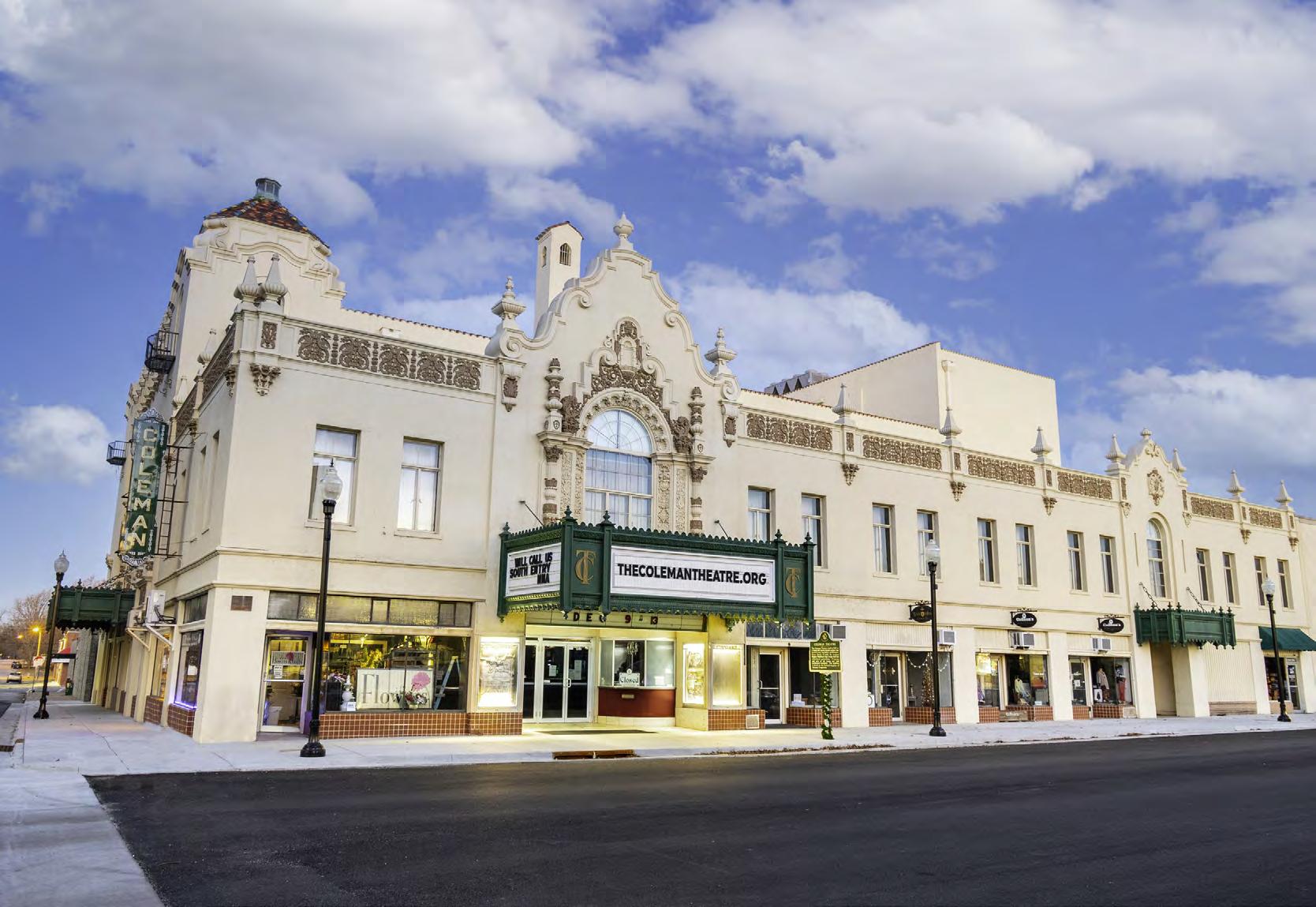
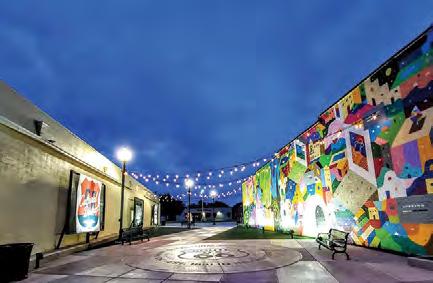
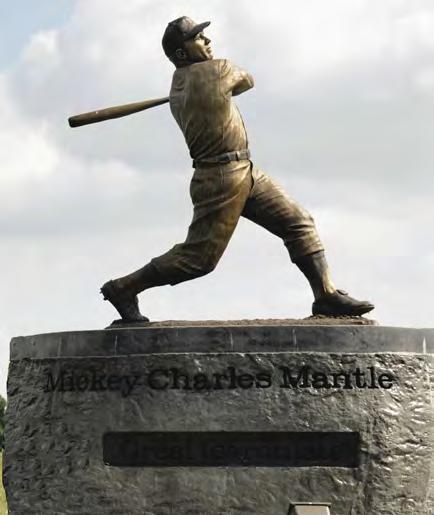
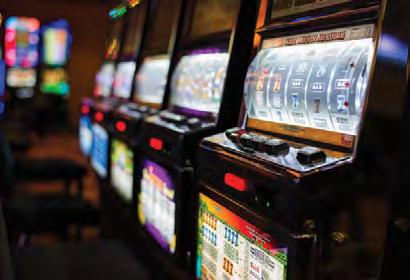
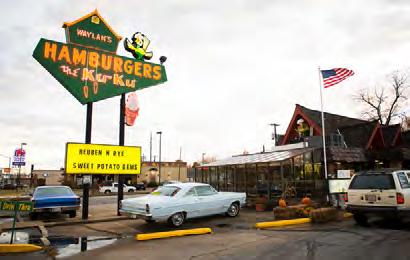
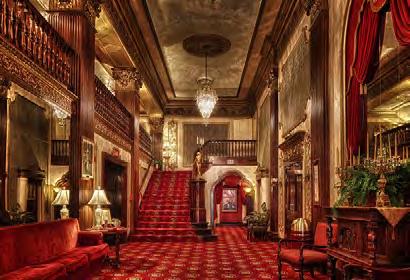
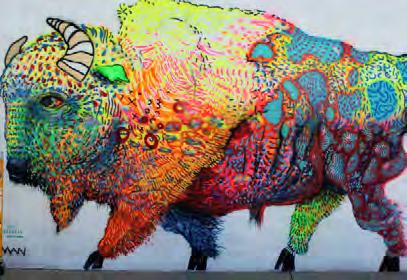






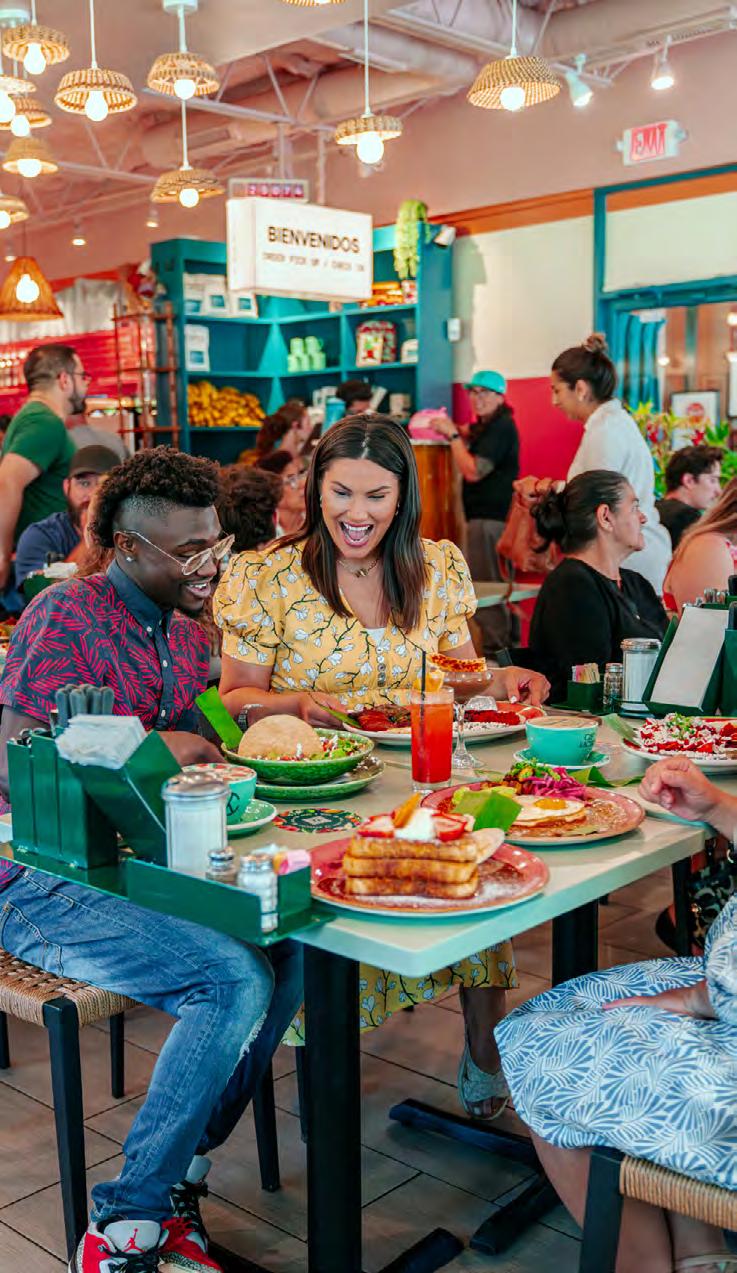
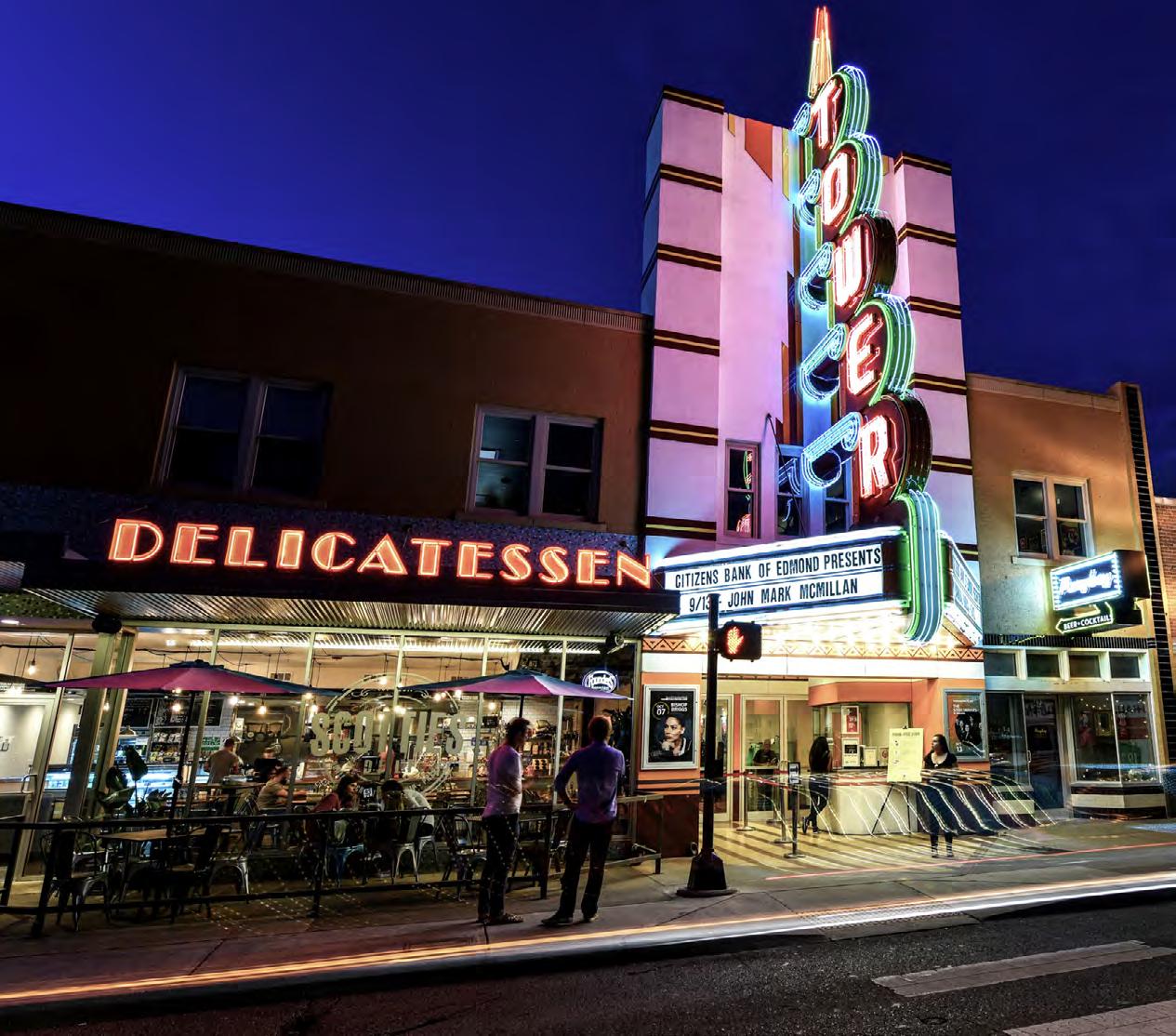
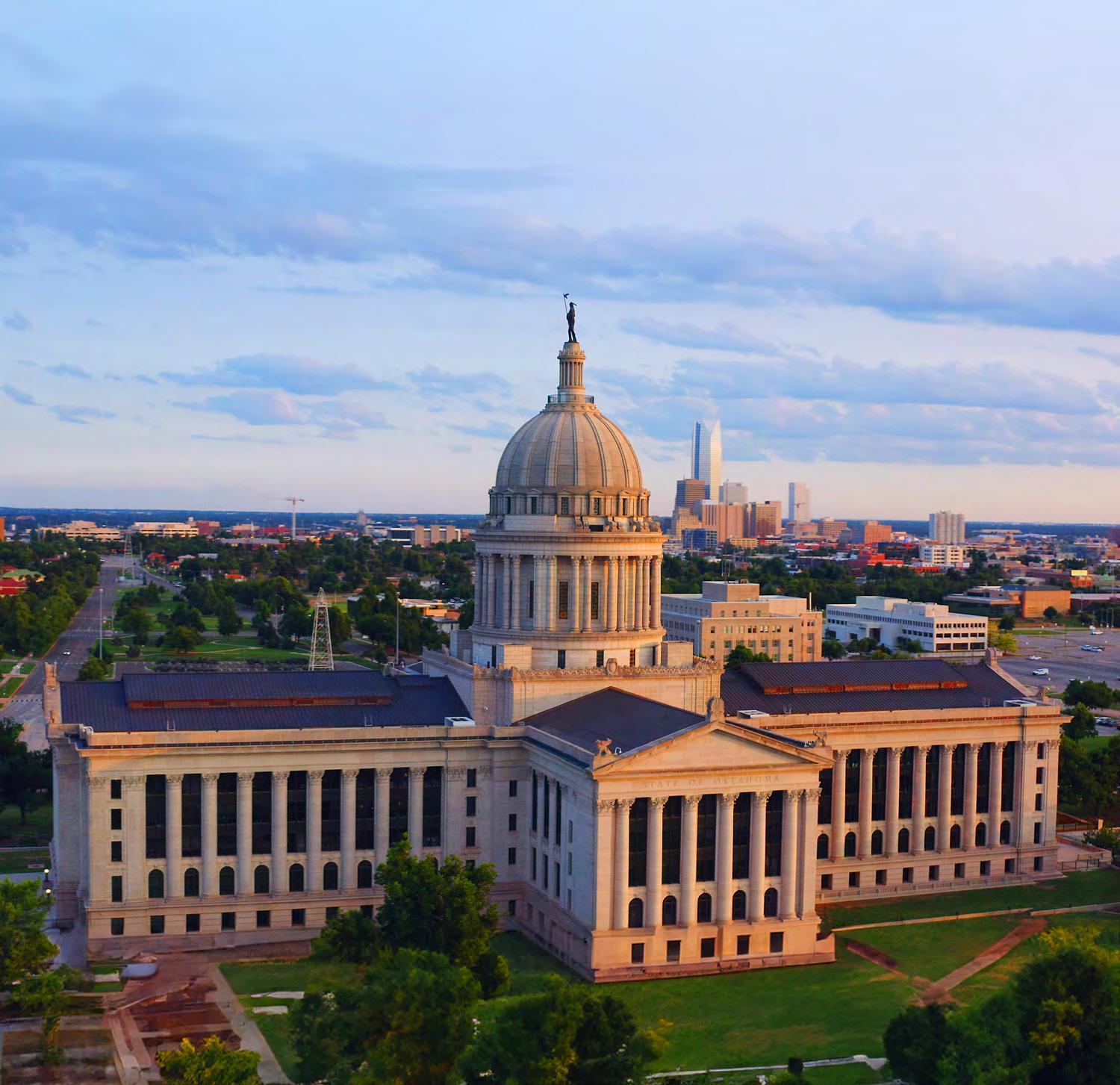
When cruising Route 66, Oklahoma City is a must-see destination. OKC’s vibrant districts welcome visitors into their diverse local restaurants and shops. Our classic neon signs and inspired murals evoke the nostalgia of the Mother Road, providing fun by day or night. Our world-class museums and only-in-OKC experiences will ignite memories for a lifetime.
Start your journey at VisitOKC.com.
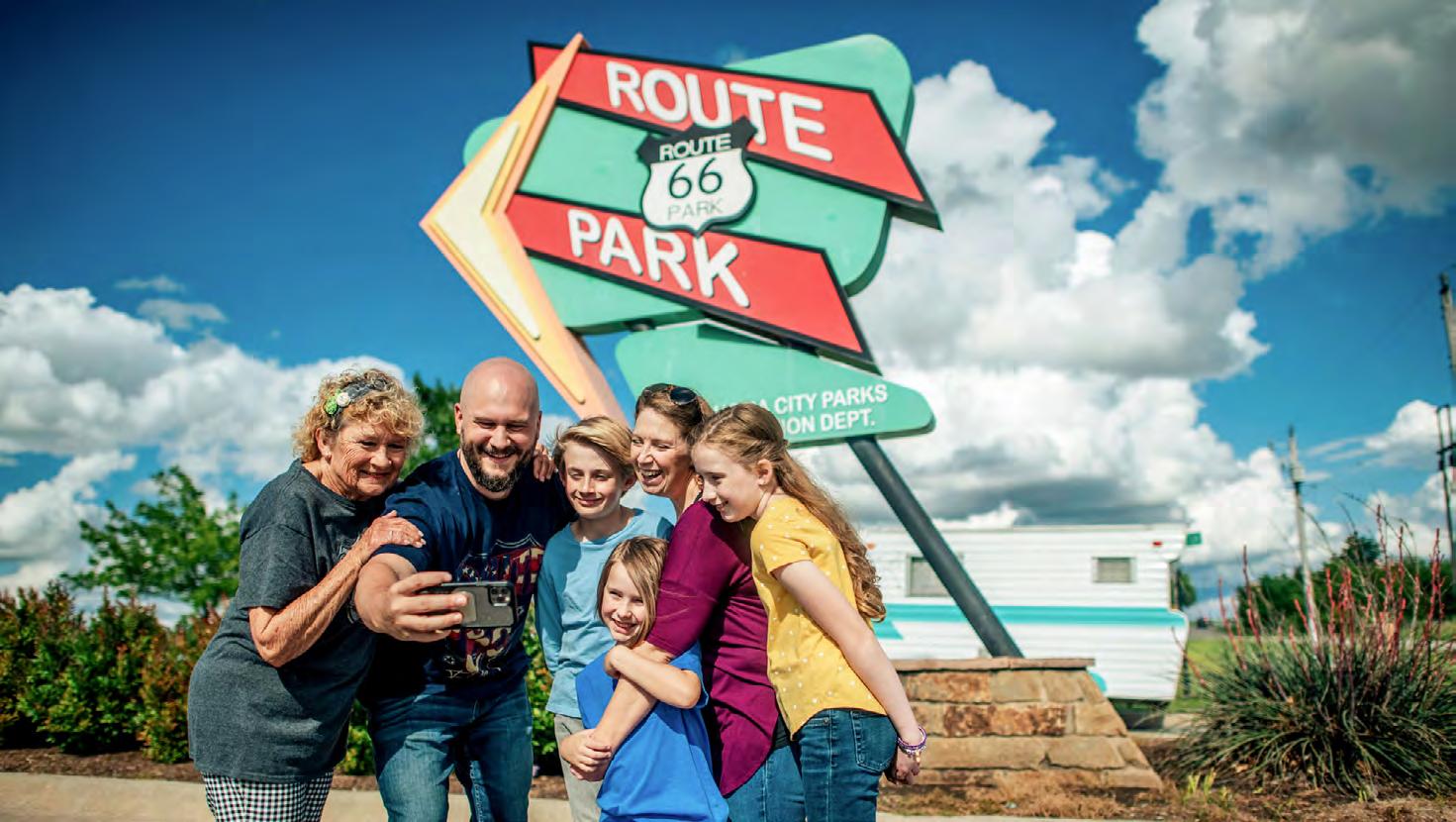
Route 66 showcases the power of community across America. The Mother Road is the central artery of the country, carrying people and goods as they venture westward (or eastward). Its allure may be within the vast landscapes surrounding the road and the unusual stops along the way that scream “photo-op”, but its renowned legacy is defined by its people. From muralists adding a splash of color to charming towns, to small retail shops partnering with preservationists, the route has long symbolized how collaboration brings forth innovation and prosperity. As Route 66 celebrates its 100th anniversary, one important national organization is leaning into such collaboration to keep the harmonious spirit of the road alive.
The Route 66 Centennial Commission is like the talent scout of historic Americana: this federally established group of 15 president-appointed commissioners identifies projects and events to honor the centennial and recommends a federal agency, like the National Park Service, to support the implementation of these projects. The projects may be artistic, historic, automotive—any endeavor that commemorates the route and the people along it.
Like many great ideas along America’s Highway, this one started with a small meeting in a medium-sized town: Springfield, Illinois. Almost ten years ago, Bill Thomas of Atlanta, Illinois, met with former Illinois State Representative Tim Butler and former Illinois Congressman Rodney Davis. Thomas has long fought for the route; in addition to serving as one of the commissioners on the Centennial Commission, he is the Chairman of the Route 66 Road Ahead Partnership, a national not-for-profit advocacy organization focused on preserving, promoting, and reviving businesses and attractions along the route. When the three met, they quickly planned how to bring their roadside dreams to Capitol Hill.
Centennial Commission, and Darren is going to introduce the legislation to designate Route 66 as a new National Historic Trail.’ And that was the start of it.”
The congressmen introduced H.R. 66 in 2017, and their vision became official on December 23, 2020, when President Trump signed the Route 66 Centennial Commission Act into law. Yet, it took an additional two years to actually form the commission—to find all the right folks to come on board. Federal officials, including the governors of each of the eight states along 66, recommended government and community leaders to the commission. By the spring of 2023, the 15-piece puzzle was complete, and the commission held its first meeting. When 15 driven, intelligent minds are in a room, there’s bound to be at least 15 different ideas. To settle debates around what they wanted to do, the Commission turned to the legislation to answer one fundamental question: What could they do? They had two main responsibilities: to identify projects and to recommend federal agencies to support the projects. Thomas proposed a strategy to give direction to these powers. This centennial, the strategy reads, should “honor the road by helping the millions who live, work, and travel along it.”
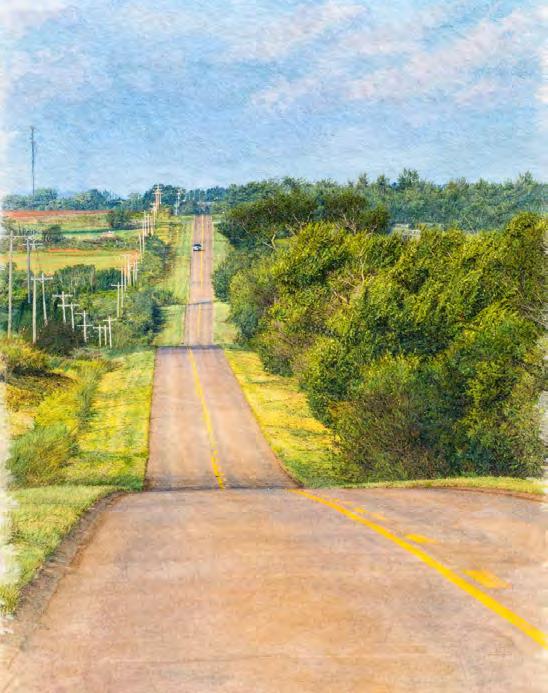
“[The strategy] allows us to deal with everything from individuals who may have planned a national [event], all the way up to a major national entity that wants to do something for the centennial,” said Thomas. “So, it’s very broad in scope, but the important thing is to raise the public’s level of awareness about the centennial and get people to participate in it.”
There are currently dozens of ways to participate, and more to come. As of December 2025, there are 54 projects designated by the Commission as official Centennial activities.
“We were saying, ‘The centennial is coming up. We got to do some stuff,’” said Thomas. “Rodney said, ‘Okay, well, tell you what. I work real closely with Darren LaHood. He’s a fellow Illinois congressman. I’ll introduce the legislation to establish a Route 66
Whether they invite you to breathe in the diverse culture and scenery along the open highway or take a moment to stop and soak in its fascinating history, the official centennial activities will undoubtedly capture the heart, icons, and stories that have shaped Route 66 over the last 100 years. Stories of struggle and triumph, of defeat and redemption—stories that we can’t wait to celebrate this year, and for years down the road.
By Nick Gerlich
Born on November 11, 1926, by virtue of federal law creating numbered U.S. highways, Route 66 found itself immediately thrust into an unprecedented economic depression. It was conceived and designed to connect U.S. cities from Chicago to Los Angeles, facilitating travel and commerce. Instead, it wound up becoming, for a time at least, a channel of human migration, a highway of hope, and an avenue for adventure and soul searching. And that is just the start.
And it’s likely that the road’s champion and patron saint, Cyrus Stevens Avery, never dreamed that the passageway that he conceded to be called 66 would evolve as it did, from desperate straits to boulevard of dreams, and ultimately weave itself into the pop culture psyche of a nation that would one day yearn nostalgically for those good old days.
It was in 1896 that the first gasoline-powered car was sold in the U.S.A. But a car was only as good as the roads beneath it, and there were few improved roads outside city limits. By 1912, there was movement afoot by cities and private developers to create highways, a decision that resulted that year in the creation of the National Old Trails Road, followed by the Lincoln Highway’s dedication in 1913, and the Dixie Highway and Jefferson Highway in subsequent years. All told, more than 250 of these named highways comprised the National Auto Trail system.
The rapid growth of demand for the automobile caused the need for federal oversight, planning, and funding. Several federal highway acts came into law in the late 1910s and early 1920s, establishing federal-state cooperation on road building. These efforts culminated in the American Association of State Highway Officials (AASHO) approving the numbered U.S. Highway System on November 11, 1926.
It was into this arena that Cyrus Avery found himself. Avery, a Tulsa businessman, and perhaps no more in tune than anyone else regarding the practical aspect of driving — quite literally — local commerce via this national highway network, set out to make sure that his hometown was not overlooked.
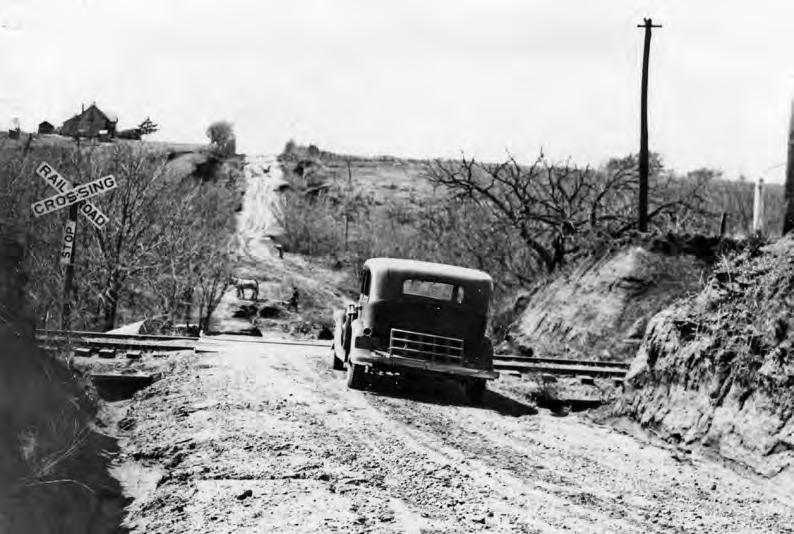
“The National Highway System was put in place at the edge of the Depression,” said Susan Croce Kelly, Avery’s biographer in Father of Route 66. “The geography between Chicago and Los Angeles is one of small towns, farms, mines, and open space. During those years — 1926 until 1938, when the whole highway was paved — times were tough. Farmers were leaving their land. Fully a quarter of the population was out of work,” Kelly added. “Cy Avery was a big community booster, and he was very interested in Tulsa’s success.”
Avery’s proposal, like most other highways under consideration at the time, relied on simply connecting — on paper, at least — previously existing roads, many of which were still dirt and at times hardly drivable. AASHO had laid out the basics of the numbering system, with even numbers running east-west, and odd numbers running north-south. Routes ending in “0” for east-west, and “1” or “5” for north-south, were considered primary corridors and were to be used for transcontinental highways. With that in mind, Avery went after Highway 60 for his road stretching from Chicago to Los Angeles.
“Cy was on the committee that determined which roads would be the cross-country or national highways. That is, he helped draw the map,” Kelly continued. “Later, he was on a five-man committee to number the roads. Avery knew that the trade route from the middle-west went north to Chicago, not across the Appalachians to the East Coast. [His route] followed the main trade route.”
Still, Avery was vulnerable, and Governor William J. Fields of Kentucky protested, arguing that a Highway 60 should indeed traverse the country, and specifically his state. Because Fields had more clout and a more reasoned argument, he prevailed, and Highway 62 was offered as an olive branch to Avery.
To Avery’s great credit, he was so displeased with Highway 62 that he went looking for other unused numbers and found that 66 was available. He named it and claimed it in perhaps one of the most opportunistic name grabs ever. It was a bloodless coup.
It is in retrospect that the importance of this highway can be seen in whole, as well as within context of significant events. The optimism of the Roaring ‘20s, in which the automobile became increasingly affordable and highways allowed for mobility, found early tourists doing the Charleston and singing Sweet Georgia Brown as they hit the road. But life ran into an abrupt speed bump in 1929 with the stock market crash, a harbinger of things to come.
With an economy on the skids, discretionary activities were put on hold. A year later, a seven-year drought and dust storms of epic proportions crippled farmers
in the nation’s midsection, giving rise to an enormous westward human migration. While the fluidity of humans was witnessed on all corners, it was Route 66 that became a primary conduit of desperate people seeking a new start in California. The exodus was significant, with 210,000 refugees heading west to escape their despair.
Times were tough, and the roads even tougher. Long dirt sections tempted some to create mud bogs, as the Jericho, Texas, story goes, and then demanded travelers pay up to get towed out. But others were more forgiving, sometimes letting travelers barter or work off their debt for lodging. The desert, too, was tough, with stations few and far between, and cars drinking both water and oil in such large quantities that motorists had to carry supplies of both. It was still a time, though, when mom and pop could hang their hopes on the roadside, building modest courts with only a handful of rooms, and tiny cafés for travelers to take advantage of as they motored west.
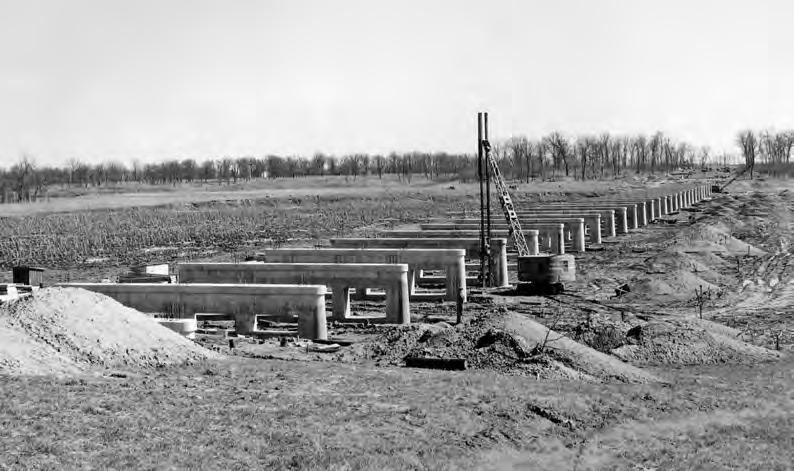
No sooner had the Depression ended than the U.S. found itself in a world war, and vast improvements were made to 66 and other roads to facilitate troop movements west. Civilian travel in the western states dropped to only 100 people per day at the Arizona inspection station, replaced by military convoys moving assets around the country on the newly improved roads. It was these improvements, such as the widening of the road, that would fuel civilian travel after the war, setting the stage for the glory days of Route 66.
“Those improvements came just in time for the beginning of the Golden Era of family road trips in the 1950s, when Route 66 really hit its peak in popularity,” said Richard Ratay, author of Don’t Make Me Pull Over! “It was during this time that the sides of the highway blossomed with all the diners, drive-throughs, souvenir shops, quirky motels, and roadside attractions that we tend to associate with Route 66.” Destinations like the Grand Canyon and Disneyland were now within reach, and just a road trip away. The ‘50s also silently marked a transition from independent motels to the new chains, like Holiday Inn, Howard Johnson, and Ramada Inn. As it always was, the road was changing.
This new optimism produced a cultural epoch that is still that of legends. With the troops back on familiar soil, it was time to get on with creating families. The American Dream meant owning a house in the suburbs,
a car in the garage, and a television in every living room. The family vacation became a heralded component of our existence, and Route 66 was the beneficiary of this desire to see the country.
Although America’s Main Street was but a youngster at the time, the significance of the road was not lost on screenwriters, poets, musicians, and authors like John Steinbeck. The Grapes of Wrath, Steinbeck’s tenth book, captured the difficulties of the Dirty Thirties, even if dressed as a novel. Released in book form in 1939, and adapted for the silver screen in 1940, it was here that the phrase “Mother Road” was coined, a metaphor perhaps of a mother’s love, a lullaby to cradle the economic victims.
In 1946, Route 66 was once again heralded in both book and song. Jack Rittenhouse’s A Guide Book To Highway 66 provided travelers with basic information about highway amenities at a time when information was scarce. But it was Bobby Troup’s snappy tune that caught people’s fancy.
While some U.S. highways have inspired songwriters and lyricists to wax poetic about a slab of pavement, none have come close to the popularity of (Get Your Kicks On) Route 66, a tune and lyrics Troup perfected in 1946 while traveling on a cross-country road trip with his wife to the West Coast. The infectious number, which had more hooks than a tackle box, went on to become the unintended theme song for generations of two-lane highway travelers.
Although Nat King Cole recorded the track initially, more than 200 versions have been recorded since, by artists as diverse as the Rolling Stones, Chuck Berry, Manhattan Transfer, and Depeche Mode. The song spent eight weeks on the pop charts, and by the time Troup died in 1999, he had earned more than $4 million in royalties from this song alone.
Troup’s tune became a cultural touchstone for generations.
While musicians were busy adding their own flourishes to the song, Hollywood was readying the television debut
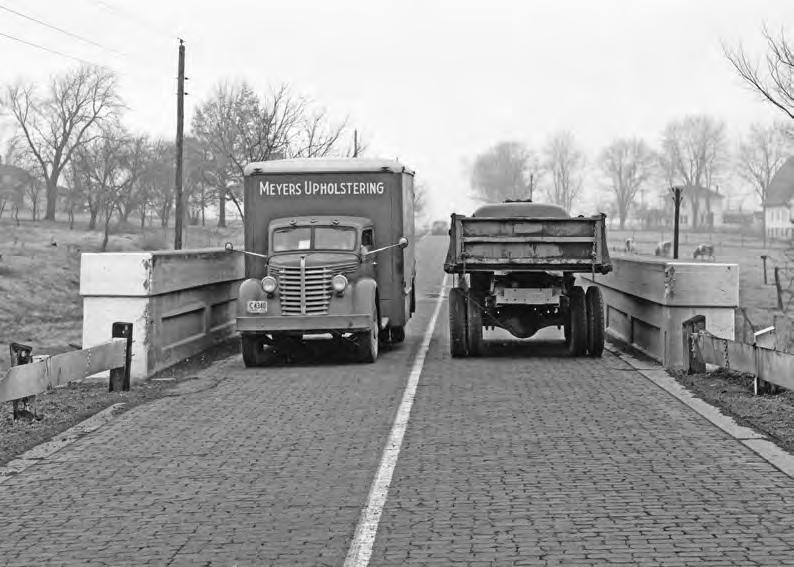
of Route 66 the series, which chronicled the adventures of Tod and Buz (and later, Linc) as they traversed America in search of discovery. The CBS show would air 116 episodes from 1960-1964. Although the series had only a handful of minor scenes actually filmed on 66, it was the metanarrative of road trips and adventure that sold it to viewers.
And what if Route 66 had been awarded the coveted Route 60 or Avery had accepted Route 62? “It’s hard to say how differently we might perceive the Chicago-toLos Angeles highway had it been numbered 60 or 62. Maybe Bobby Troup would have never written that song, or the CBS television show would never have aired. But even without the songs or TV shows, I think the road would have developed a cultural significance,” said historian Brian Ingrassia.
The timing was perfect for the Mother Road. “Route 66 came along at a time when popular culture got a boost from media innovations like radio, phonograph records, and television. It was nearly inevitable that these modern technologies would make some American roads legendary,” Ingrassia added.
Route 66 was probably never intended to last forever. It was a work in progress, an idea in motion. The ink had hardly dried on the original alignment before new paths were already carved out that effectively bypassed the very towns that the road was intended to link, such as tiny Depew in northeastern Oklahoma, Odell and a slew of other Illinois towns, and Amarillo in Texas.
The Main Street of America had become a bottleneck. In fact, the Route 66 maps
were in a state of flux, as engineers were always trying to improve it. In Illinois, the original alignment southwest from Springfield along what is now IL Route 4 was moved in 1930 to where the modern freeway is. The nine-foot-wide “sidewalk highway” between Miami and Afton, Oklahoma, was moved and widened considerably in the process. And the politics of dancing loomed large in New Mexico when outgoing Governor Arthur Hannett decided to exact his revenge for losing re-election by simply rerouting 66 directly across the state and away from Santa Fe.
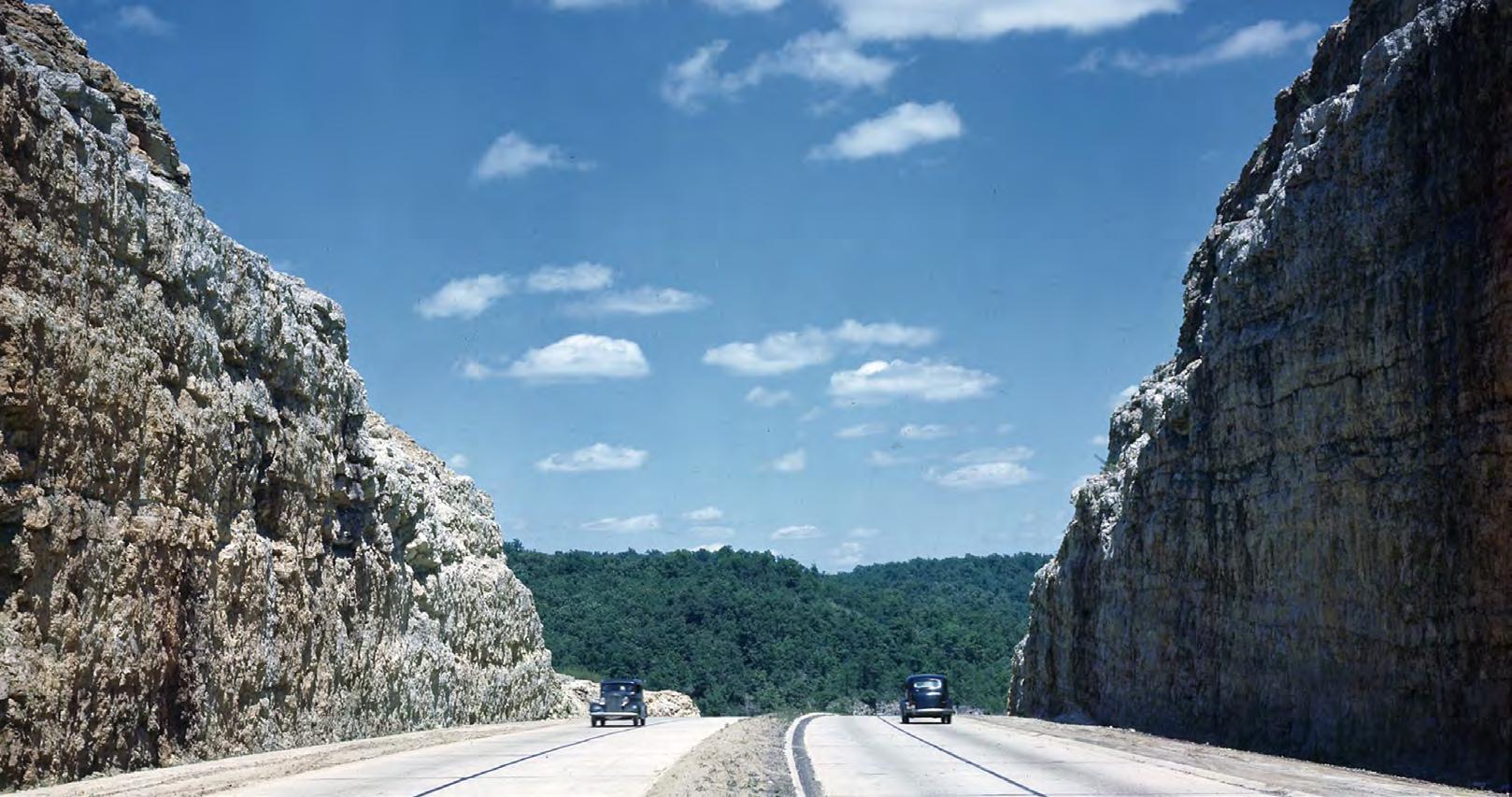
Perhaps the biggest sign of this change came in 1953 with the opening of the Turner Turnpike, linking Tulsa with Oklahoma City, and completely sidestepping the earlier version of 66. It was a taste of things to come, notably the Interstate Highway System being signed into law in 1956. Four-lane superslabs became the de facto mode of ground transportation across the U.S., and
by 1970, all original segments of Route 66 had been bypassed by either a new freeway or standard four-lane high-speed. Lifestyles had become fast-paced. Gas was still cheap, and our love affair with the automobile continued unabated. People became less interested in the journey, and more concerned with the destination.
Roadside attractions like the 1974 Cadillac Ranch in Amarillo, the product of the late Stanley Marsh 3, gave motorists even more reason to stick to the freeway, if only to view one man’s quirk. Marsh sought to entertain tourists with his public art installation, albeit with the undercurrent of a marketing critique of tail fins. The original location was never on Route 66, but instead along I-40 on the city’s west side.
Although it took more than a decade longer to come close to completing the Interstate project, Williams, Arizona, famously became the last Route 66 town to be bypassed in 1984. A year later, on October 13, 1985, Route 66 was formally decommissioned at the federal level, and its number forever removed from the federal inventory of highways. Suddenly, there was nothing but memories.
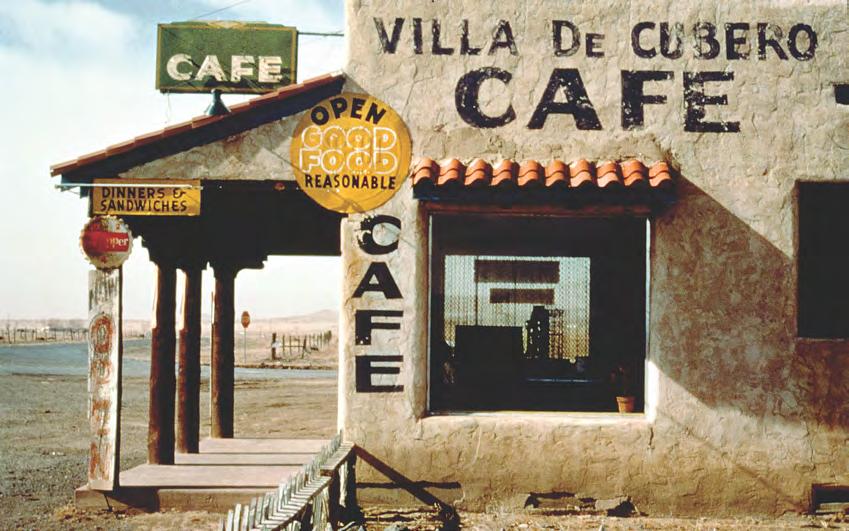
All the while, the ravages of progress were being witnessed along the Route. Tucumcari, which once proudly advertised having 2000 rooms, saw its total cut in half, and even that amount accounted for, in large part, new properties near the freeway. Cafes were replaced by fast food and formulaic chain restaurants, and gas stations were replaced by sprawling travel centers. Everyone from Afton to Ash Fork and elsewhere along 66 was affected. Glenrio, Texas, Cuervo, New Mexico, and others became ghost towns in plain view of the interstate. And once incredibly popular attractions like the Blue Whale of Catoosa, Oklahoma, and the Gemini Giant in Wilmington, Illinois, languished in solitude.
The small towns that dot the Will Rogers Highway could have accepted their fate and closed shop like many a community during the economic depression. No one would have blamed them for moving on to greener pastures. But they didn’t.
Soon there was a moment afoot and a vision was being formed. It only took a couple of years before a friendly barber from Seligman, Arizona — Angel Delgadillo — recognized the void that had been created. He became angry, frustrated that his once bustling town and Route 66 were seemingly being forgotten. He decided to act. Thanks to him and the town’s leaders, a revival was started, and in 1987, they formed the Historic Route 66 Association of Arizona. Soon Missouri followed suit and within a few years, each of the other seven states through which Route 66 had passed formed their own associations.
This set the wheels in motion, and it was only a matter of time before a cottage industry of authors sprang up to tell the story of this old road that represented the history and very essence of America, one that was increasingly finding new life as a vector of nostalgia.
Quinta Scott, co-author with Susan Croce Kelly of Route 66: The Highway And Its People (1988), and later sole author of Along Route 66 (2001), was an
early voice to chronicle this fabled road. Motivated by the urgency of collecting oral histories while pioneers of the Route were still alive, she set out to discover what it was like living and doing business along 66. After all, as she quickly learned, “Something important happened on it during every decade of the Twentieth Century.”
By limiting the project to people who came to the highway between 1926 and 1956, Scott was guaranteed a historical perspective. In so doing, she and Kelly produced a seminal work that is still highly regarded today, capturing the ethos of the road before anyone else thought to do so.
Within a couple of years, author, historian, and voiceover artist Michael Wallis had released the national best-seller Route 66: The Mother Road, which, along with Scott and Kelly, created critical mass for a movement looking back at what the nation had summarily dismissed.
Wallis, too, felt the need to set the story straight. “My motivation in writing the book was quite simple. It was the fact that I grew quite weary of people talking about the road in the past tense. I knew that the majority of the Mother Road was still there,” he said. More importantly, though, “The best resource the road had to offer was still there, and that is the people.”
Before he wrote his book, he took a lengthy exploratory trip along 66. “We found so many different situations. There were people who were quite down about the road, and I’m talking about business owners. A lot of them were really down.”
But Wallis saw hope and tried to reignite the flame. “Even the majority of those people who were feeling blue always had a little flickering light of hope. Like blowing on a fire, that little tinder to get that blaze going again, that’s what I tried to do.”
Wallis continued, “I did that several times, even with somebody who guffawed at me. ‘Why would somebody read a book about this old road?’ And I would turn it right back on them and say, ‘Alright, you tell me about the road.’ And then they would tell me about the road.
‘This is the road I grew up on. I own this business. My grandfather owned it.’ And they would keep talking and talking, and after they went through this whole litany of their connection to the road and its importance to their life, they would fall silent. Oftentimes I would see tears in their eyes. And then they would say, ‘Thanks. I’m really glad you’re doing this.’”
Over the next 30 years, more than 200 books on Route 66 would be written, not to mention the 2006 release of Pixar’s hugely successful film, Cars, which told the story of the fictional Route 66 town, Radiator Springs, and introduced an entirely new generation to America’s Main Street. Wallis, as the voice of the Sheriff as well as consultant to Pixar, made certain to remind people that Route 66 was not life in the past lane.
Cyrus Avery died in 1963, just shy of his 92nd birthday, but at the time of the road’s inception, when he was 55, he could never have imagined the cultural touchstone that his highway would one day become. His vision was based merely on transportation and commerce, not the desperate drive of Dust Bowl refugees, the movement westward by men in uniform, the cure for wanderlust that post-war families discovered, and certainly not the
modern yearnings of young and old alike to experience an America now largely in the rearview mirror.
No, it was all about dollars and cents.
Much more than the conduit for travel and business that he envisioned, it became something much larger, something that became part of the very fabric of America. It was a road of hope, a passage to adventure. It carried troops in time of war, and a Troup who would wax poetically melodic about it. And today it carries people away from the present to an ever-distant past, paving the way to a future based on the business of nostalgia and history seekers.
“Route 66 has had such an impact on the American imagination because it was a well-traveled road at the very time when American road culture was being invented between the 1920s and the 1950s,” said Ingrassia. “This was the era when Americans were traveling west, moving to places like Los Angeles or heading to Las Vegas or taking their families on roadtrip vacations to national parks or other historic sites.”
The federal designation may be gone, replaced by the brown or blue signs (depending on the state) denoting historic highway status. States like California have proudly painted the Route 66 shield on the pavement to show the way, while individual cities have championed mural projects and other elements to showcase their Route 66 status.
Traveling Route 66 today has never been easier. While Rittenhouse’s book was certainly helpful for ‘40s-era motorists, it lacked detail and required users to mentally keep track of miles between vaguely described roadside amenities. Today, we have artist Jerry McClanahan’s EZ Guide and multiple mobile apps to provide turn-byturn directions. All we have to do is show up.
Better yet, Route 66 has become big business. With as many as a half-million visitors each year, and countless others who are not counted, if only because they are daytripping or seeing 66 in bits and pieces, commerce along the Route is more important than ever.
The resilience of the road and its people is manifested in the examples of those who kept going in the face of adversity. “It’s kind of in the DNA of Route 66,” Wallis added. “They knew they had to have some element to attract the people and to lure them off the interstate. That’s why Lillian Redman [late innkeeper at the Blue Swallow] kept clicking on those blue swallows every night.”
Visionary entrepreneurs have stepped up to the plate to restore and relaunch once popular icons of the road, including many of the historic motels along the road. Kitschy gift shops are common again. Roadside attractions and museums are alive and well and welcoming visitors. Route 66 has new attractions coming up constantly, and the magical U.S. artery is finding new ways to celebrate the American Dream regularly.
The bulk of travel and commerce is now conducted via the freeway. But the old road is still alive, just serving a different clientele. “I needed to write a love letter to this highway, and let people know it is there,” Wallis added.
Scott painted a similar picture. As she aptly opened in Along Route 66 and its long look back in order to look ahead, “It was the way out.”
And it still is.


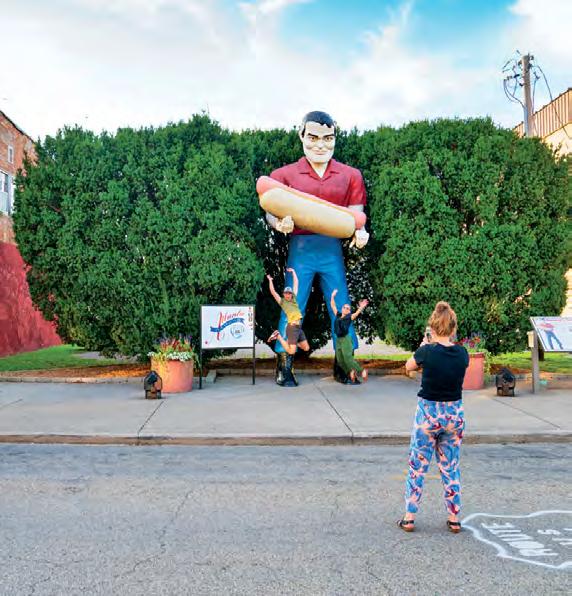







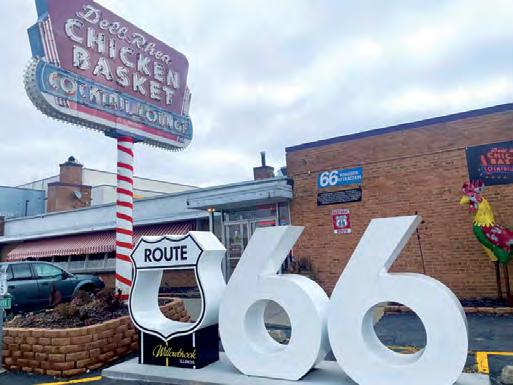
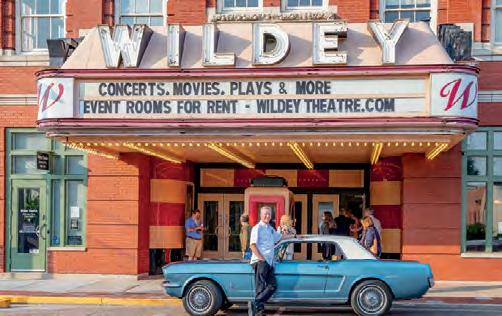



















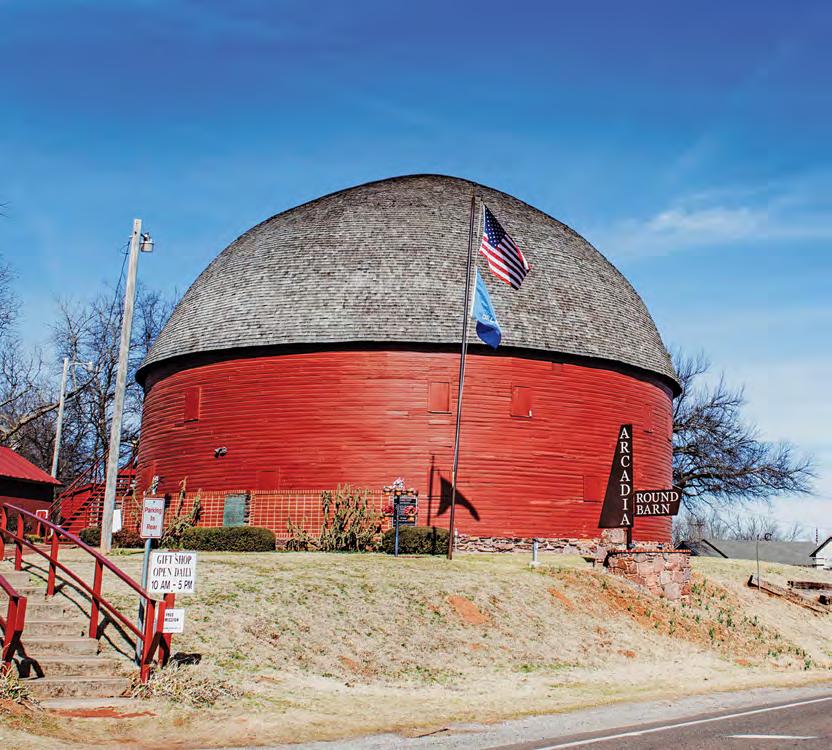
Quirky roadside America is more than a backdrop for snapshots—it’s a living chapter of the nation’s cultural story. These offbeat stops were born from long drives, family vacations, and a time when the journey mattered as much as the destination. From handmade sculptures to giant icons rising from empty highways, roadside attractions reflect local pride, creativity, and humor. They invite travelers to slow down, step out of the car, and connect with a place in a tangible way. In an era of fast routes and digital shortcuts, these roadside landmarks preserve the spirit of exploration that has long defined the American road trip. These are our top picks from America’s most famous highway.
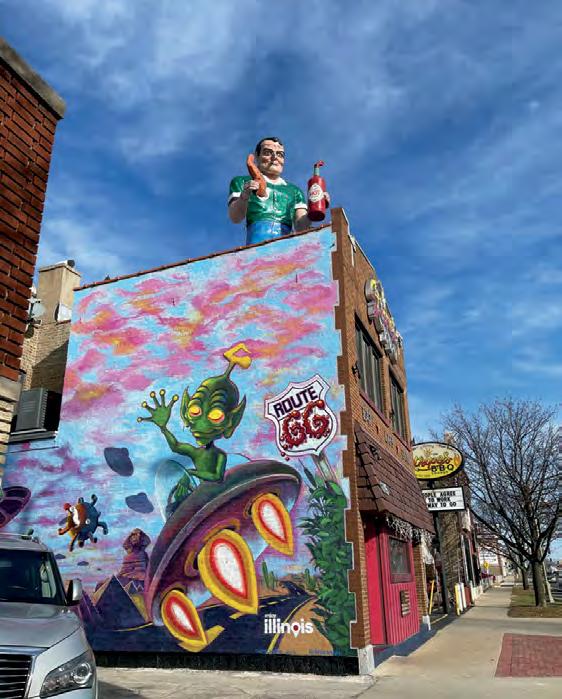
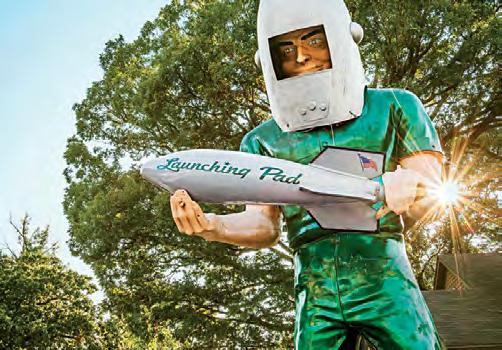
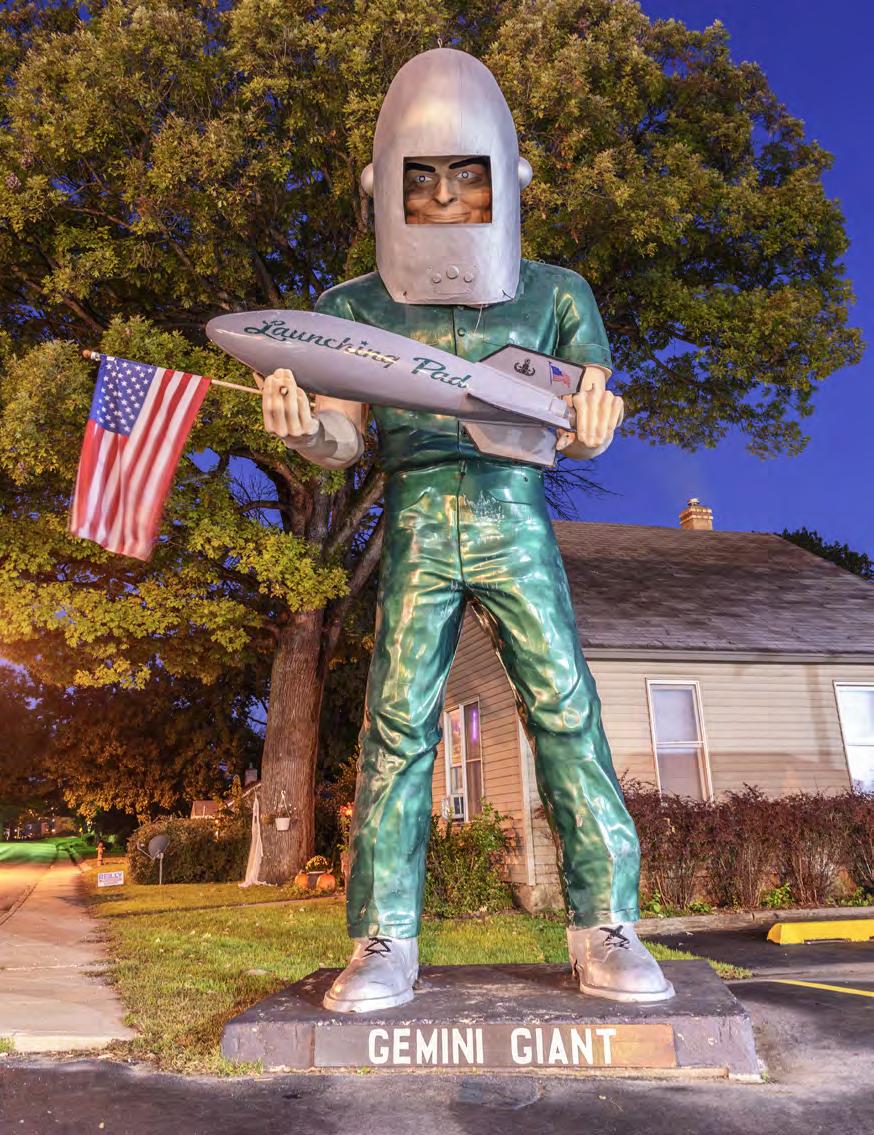
The first name on our list will be no surprise to anyone with a passion for Route 66. Over in tiny Wilmington lives a giant, the Gemini Giant, to be exact. One of only a few surviving “spacemen” Muffler Men from the 1960s, he represents a flashback to quirky roadside Americana and overthe-top advertising gimmicks. Built in 1964 and purchased in 1965 for the newly renamed Launching Pad Drive-In, he stands nearly 30-feet-tall, grinning in his shiny green jumpsuit and silver helmet, gripping a sleek rocket like a souvenir from space. For decades he greeted travelers, posing for countless photos and road-trip selfies. When the restaurant closed in 2022, his fate was once again uncertain. But in March 2024, he was sold at auction and saved for the community. By November 2024, he found a permanent home at South Island Park, a short walk from the Kankakee River—a must-see reminder of the enduring creativity and charm of roadside attractions. The Gemini Giant’s story is not just about size; it’s about the imagination of the 1960s, when local businesses embraced largerthan-life characters to draw in travelers. His creation reflected a fascination with space exploration, a symbol of the era’s optimism and American ingenuity. Over the years, he became more than an advertisement; he evolved into a cultural icon, inspiring generations to embrace the fun and unexpected moments along Route 66.
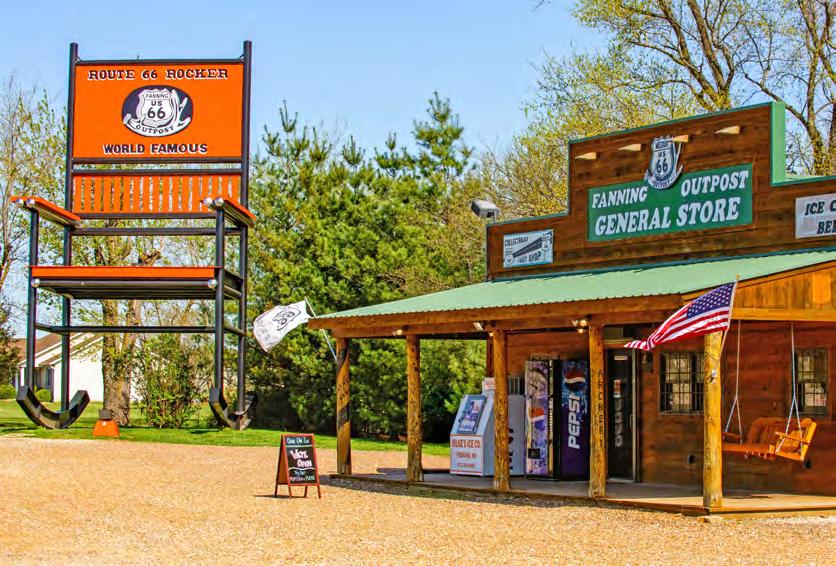
The route is filled with friendly competition. There has long been a battle to see who can hold the title of having the world’s biggest chair, a challenge that enticed business owner Danny Sanazaro in 2008. To attract customers to his archery and feed store, he built a 42-foot-tall cherry-red rocking chair, surpassing the then-record 34-foottall chair in Indiana. Even though it weighs 27,500 pounds, the chair still rocked when it was first built. Sanazaro, however, quickly realized the potential dangers of a 13-ton steel structure in motion and had the chair welded to its base. A 56-foot-tall chair in Casey, Illinois, took the blue ribbon in 2015, but Missouri’s bold rocker still embraces the playful nature of the route.
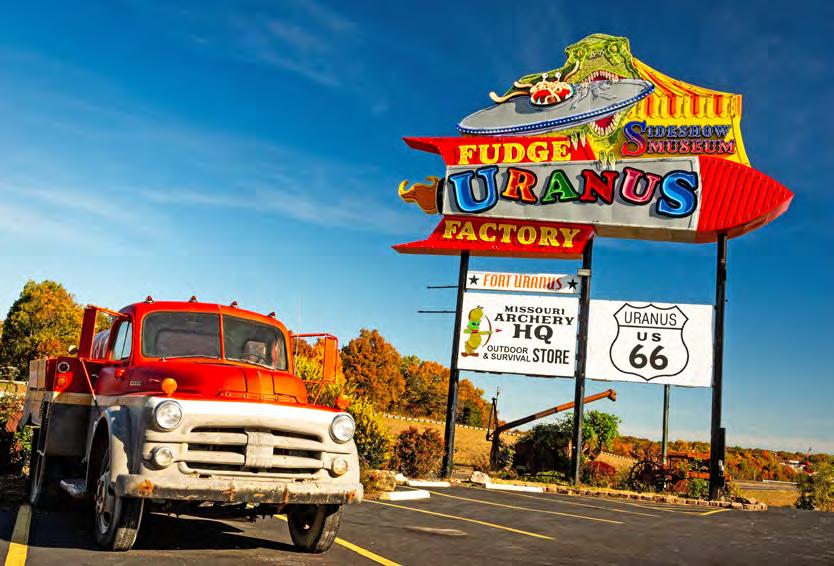
A stop at Pulaski County’s Uranus Fudge Factory is guaranteed to make you grin. A relative newcomer to the Mother Road, it was opened in 2015 by Louis Keen and has been delighting travelers with sweet treats, quirky attractions, and endless puns for over a decade. The soft, creamy fudge comes in a rainbow of flavors, but it’s the unexpected roadside charm that makes a visit memorable: the General Store brims with mid-century novelties, the escape rooms challenge your wits, and the playful “freak show” adds a dash of oddball fun. Nestled amid forested roadside scenery, Uranus seems to appear from nowhere—a little slice of whimsical Americana that celebrates laughter, indulgence, and the joy of the open road.
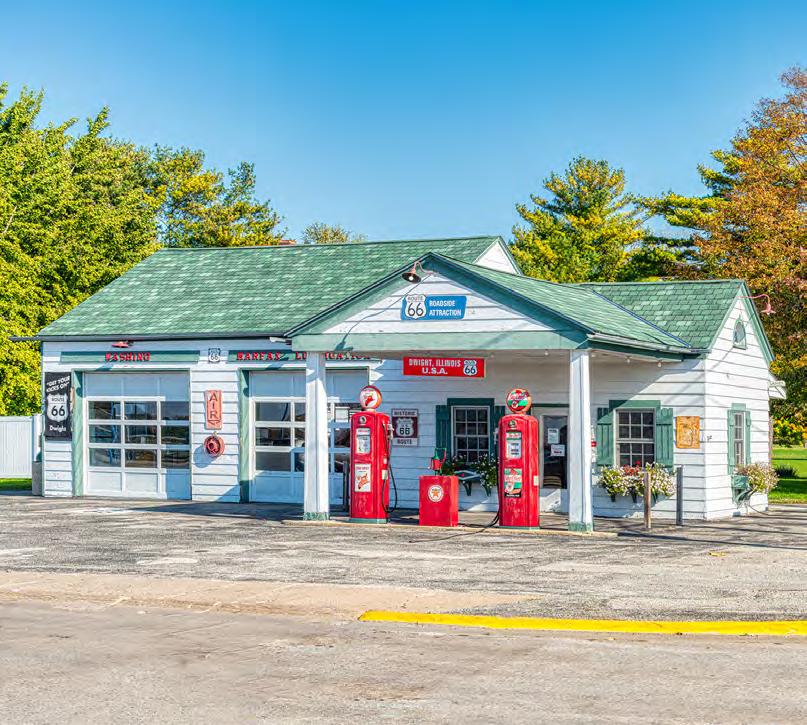
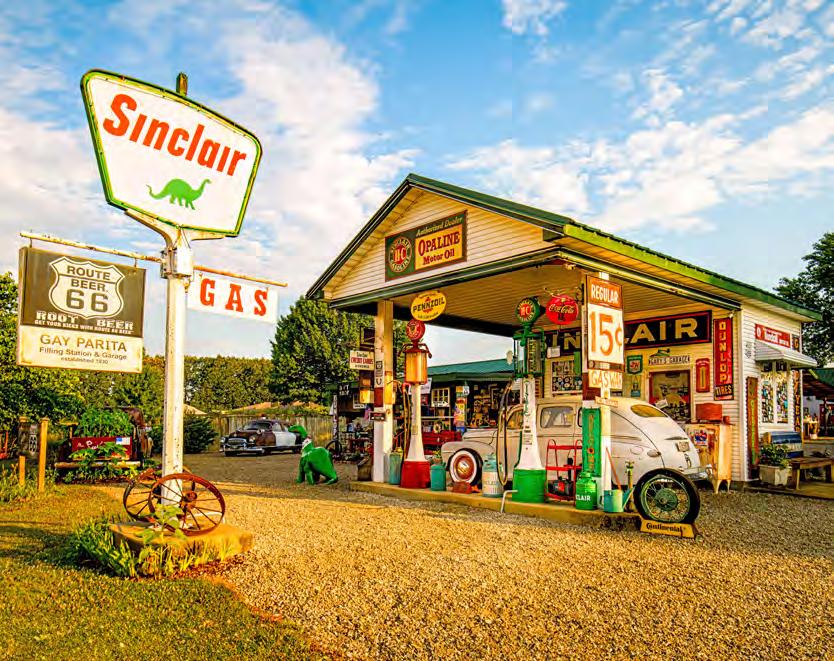
Roughly 30 minutes west of Springfield, Missouri, Gary’s Gay Parita is one of historic Route 66’s most beloved roadside stops, where nostalgia meets genuine Ozarks hospitality. The original Gay Parita Sinclair station was opened in 1930 by Fred and Gay Mason, serving motorists along the Mother Road until it burned down in 1955. Decades later, Route 66 enthusiast Gary Turner and his wife Lena purchased the property in the early 2000s and lovingly rebuilt a period- correct 1930s- style station, complete with classic pumps, vintage signs, and memorabilia. Gary’s warm storytelling and welcoming spirit made the stop a favorite among travelers. After his passing in 2015, his daughter Barbara Barnes and partner George Bowick carried on his legacy, greeting visitors and keeping the spirit of the Mother Road alive at this iconic Missouri landmark.
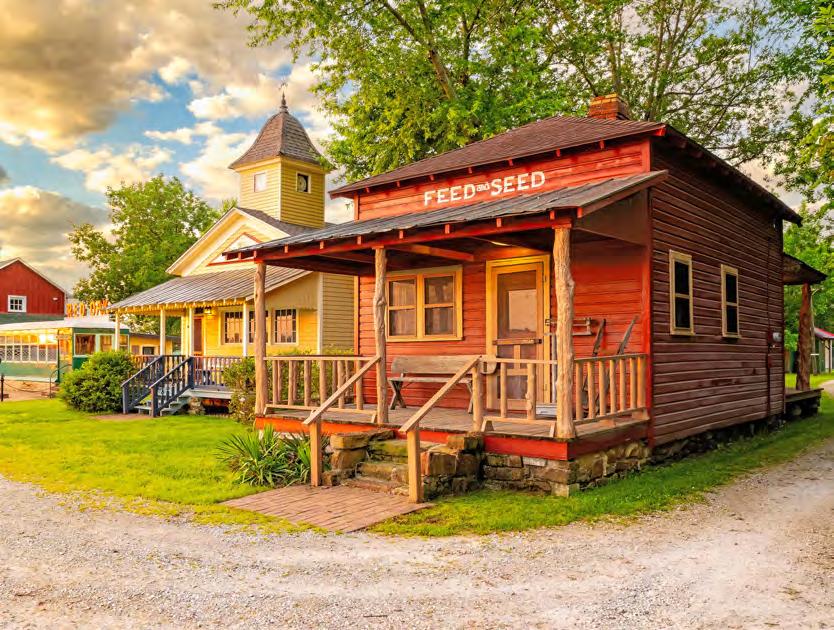
One of the coolest “towns” along Route 66 isn’t really a town at all: Red Oak II, the creation of artist Lowell Davis. Davis grew up in the original Red Oak, Missouri, which by the 1940s had mostly faded away. In 1987, he rescued buildings from Red Oak and nearby towns, transporting and reassembling them on his farm near Carthage. Visitors can wander past a Phillips 66 station, a blacksmith shop once run by his great-grandfather, a general store his family operated, and a one-room schoolhouse. Some structures were newly built in period style, but many are authentic relics. Lowell passed away in 2020, but his spirit and vision live on. What began as nostalgia became a living monument—a time capsule echoing smalltown America, restored with reverence and eccentricity.
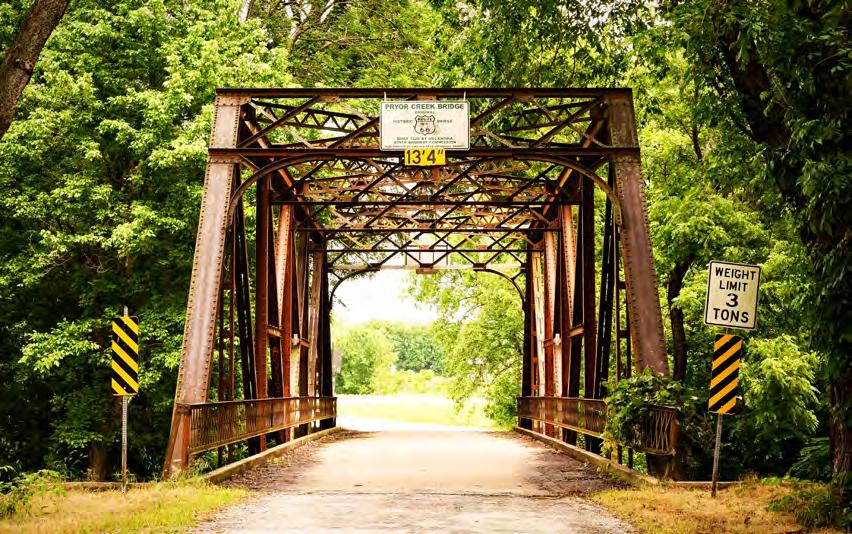
When Route 66 first opened in 1926, travelers navigated a patchwork of roads and bridges on their journey west. One gem was the Pryor Creek Bridge in Chelsea, Oklahoma—a 123-foot Pratt truss bridge that carried motorists until the route’s realignment in 1932. Today, this graceful structure invites visitors to slow down and soak in a slice of Mother Road history. Step onto the bridge, let the creek babble beneath your feet, and feel the breeze through the towering trees that frame this idyllic spot. Off the beaten path and far from the crowds, it’s a quiet escape, and a place to linger, dream, and imagine the pioneers of Route 66 as they rolled westward.
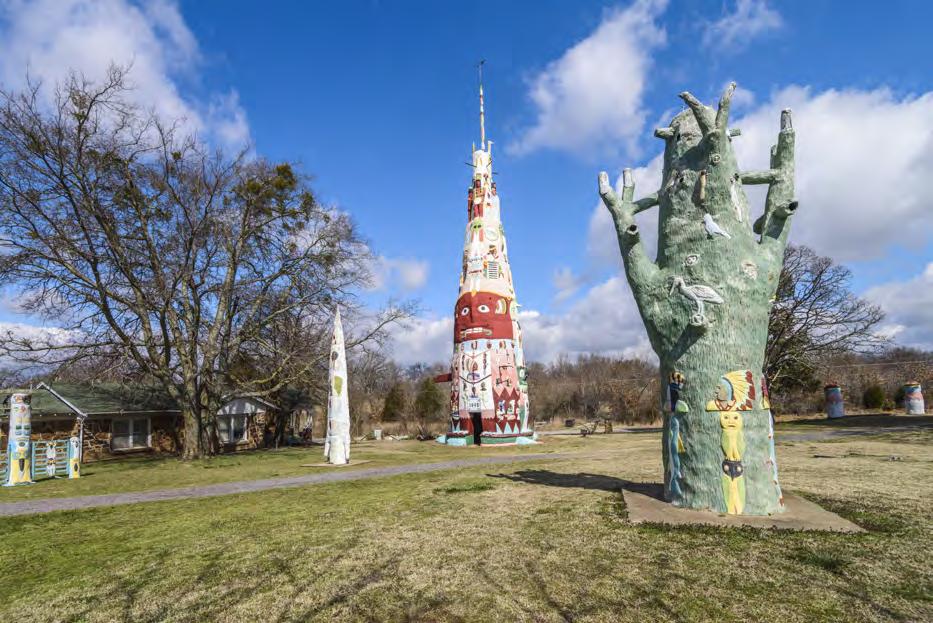
No attraction captures the magic of Route 66 quite like Ed Galloway’s Totem Pole Park. Retired teacher and folk artist Ed Galloway began his labor of love in 1937, inspired by Native American culture and a passion for woodworking. His first masterpiece, a 90-foot-tall hollow totem completed in 1948, rises from a giant turtle, depicting man and nature in harmony. Over the next decades (1937–1961), Galloway added smaller sculptures, including an Arrowhead, Birdbath, and Tree totem, and the 11-sided Fiddle House, all part of the park’s 11 major totems and structures. Today, the Rogers County Historical Society welcomes visitors to picnic, wander, and fall in love with this whimsical, historic folk-art wonder.
Blue Whale, Catoosa, OK
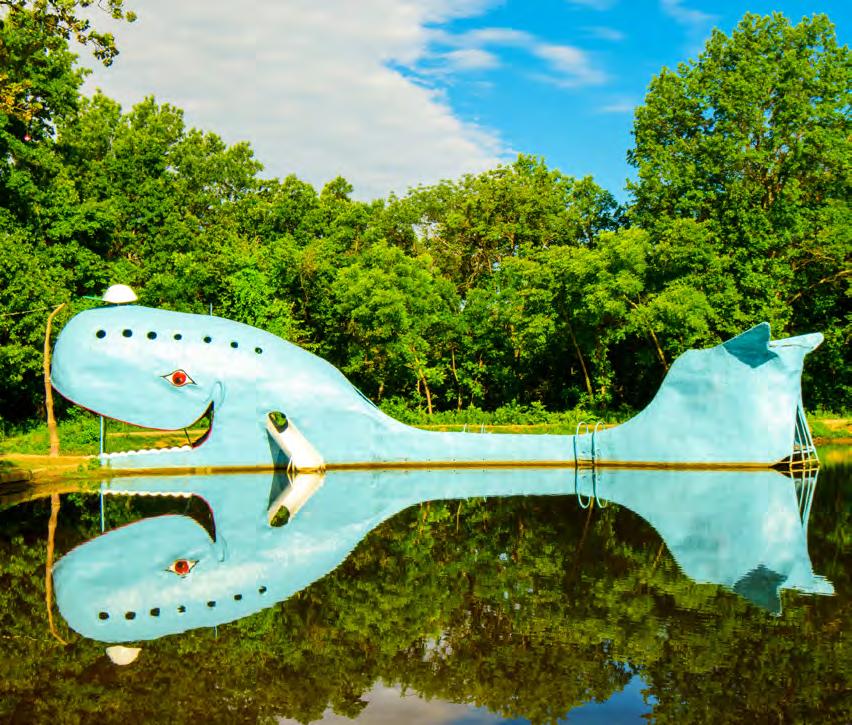
Imagine rolling down historic Route 66 and spotting something impossibly joyful: the Blue Whale of Catoosa, a towering 20-foot-tall, 80-foot-long concrete whale perched beside a spring-fed pond. Built by retired zoologist Hugh S. Davis and a friend in the early 1970s, it was unveiled on September 7, 1972, as a surprise anniversary gift to his wife, who loved whales, and quickly turned into a beloved swimming hole and roadside wonder. Families dove from the tail, slid down the fins, and swam beneath the whale’s smiling gaze. By 1988, as the Davises aged and traffic faded, the park closed, and time took its toll. But in 1997, local volunteers and the town rallied to restore Blue, repainting and reopening it as a nostalgic Route 66 icon. Today it stands bright and welcoming, a quirky, dreamy pause for any road-trip heart chasing heritage, childhood, or wonder.
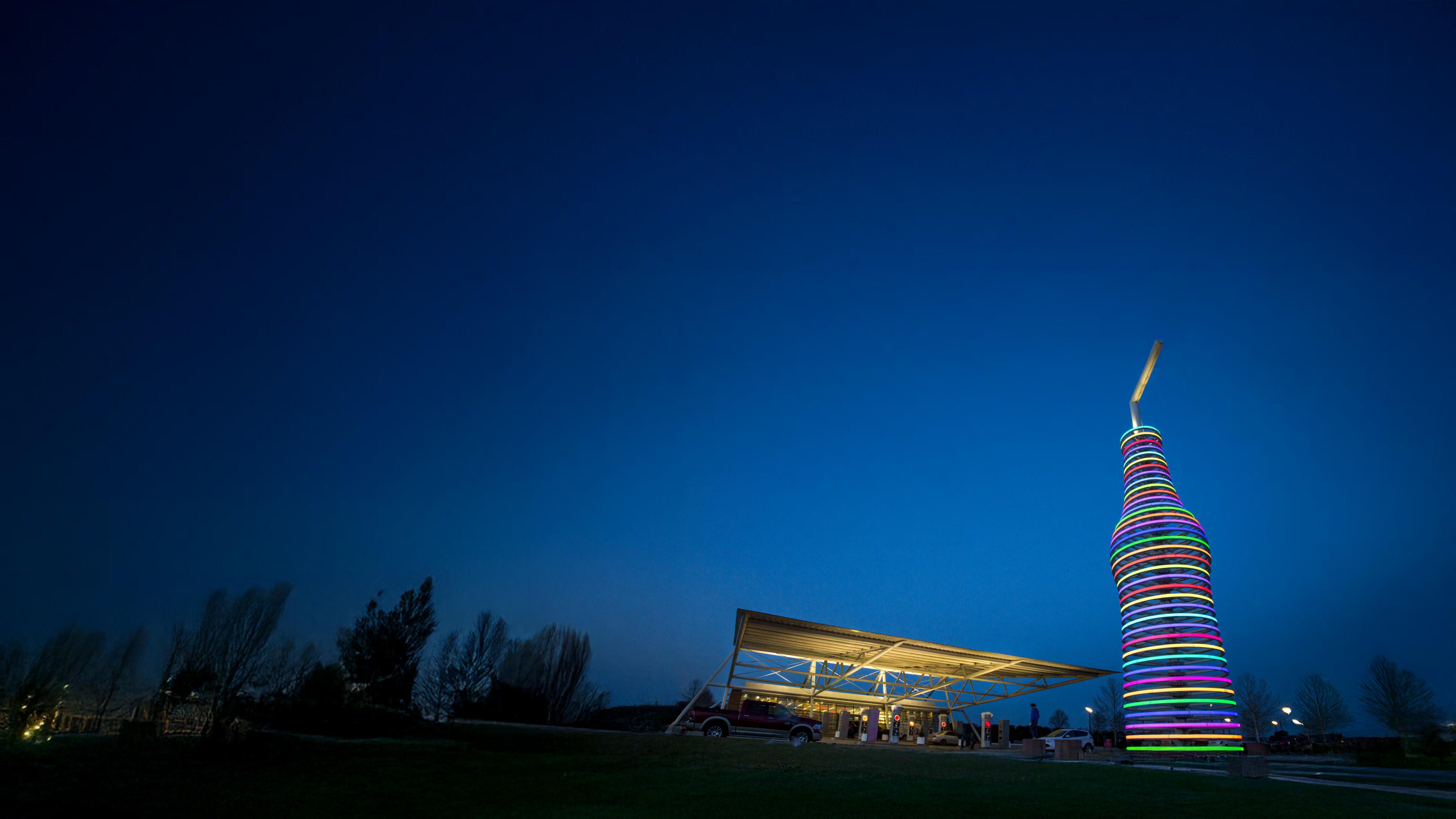
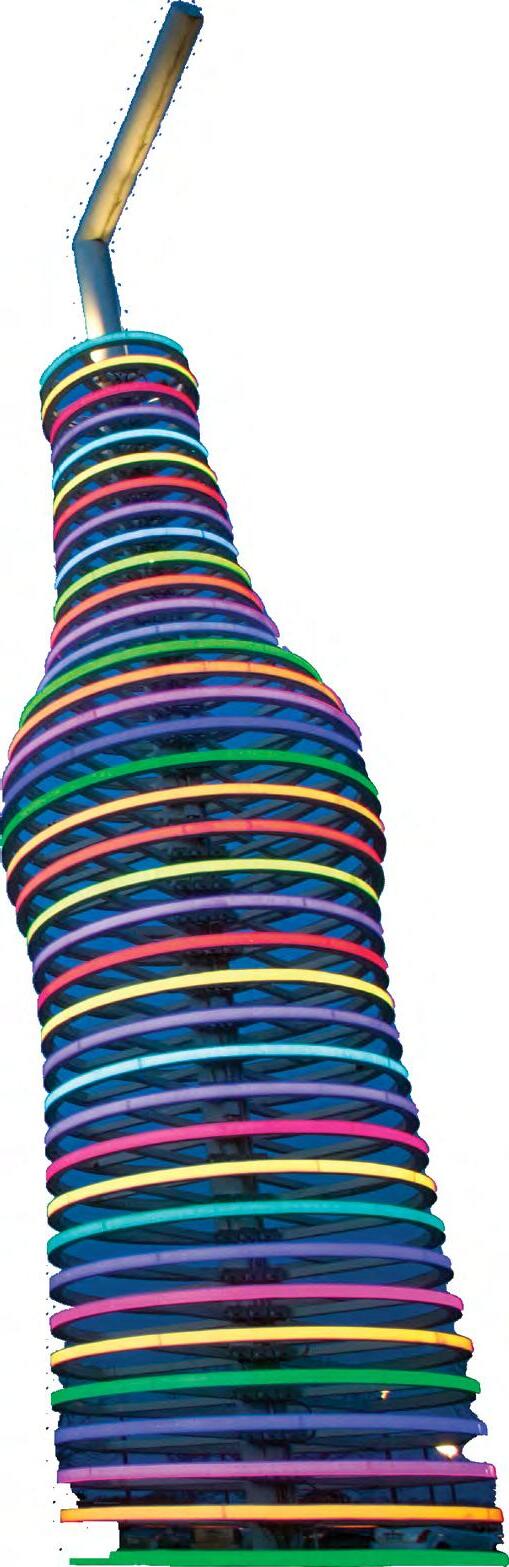
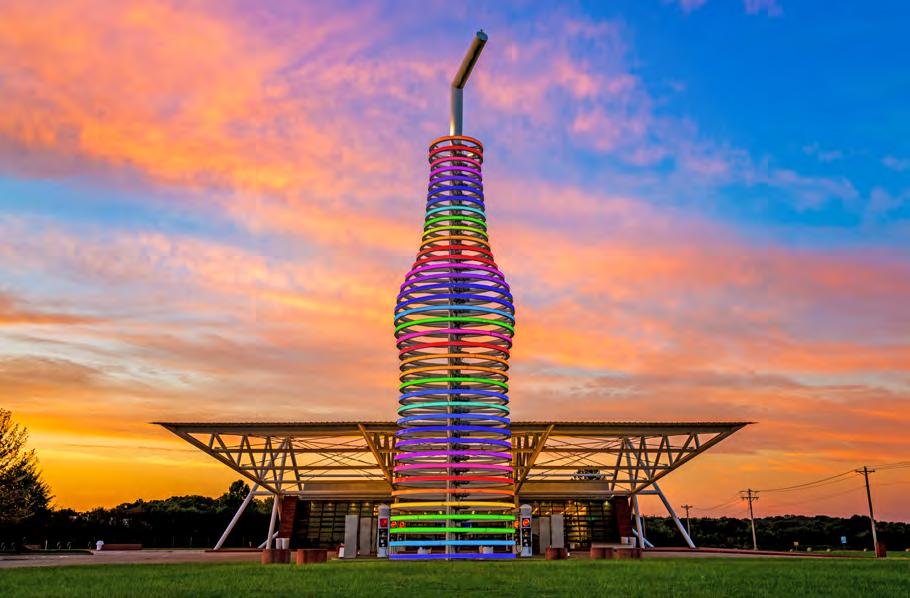
Few symbols scream Americana like a bottle of Coca-Cola, so it’s only fitting that a giant soda bottle dominates the front yard of Pop’s Soda Ranch in Arcadia. Opened in 2007, Pop’s serves a dazzling selection of more than 700 sodas, but the real star is the 66-foottall steel bottle, a playful nod to Route 66 itself. Lit by color-shifting LEDs, it glows like neon on a warm Midwestern night, perfect for photos and a little roadside downtime. Its sleek, modern design hints at the 2000s era, while the rainbow glow honors the neon tradition of the Mother Road. Pull up, sip on a soda, bite into a juicy burger, and feel the quirky magic of classic Americana come alive in one unforgettable stop.
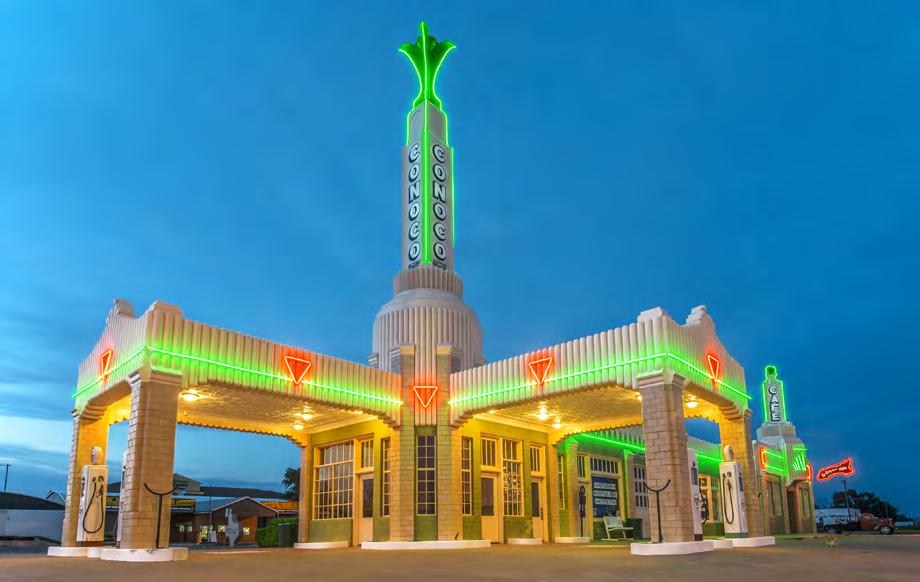
Fans of Pixar’s Cars will instantly recognize the Conoco Tower Station & U-Drop Inn Cafe, the Art Deco icon that inspired Radiator Springs’ glowing “body art” shop. Built in 1936 by J. M. Tindall and R. C. Lewis, this combined gas station and café quickly became a beloved stop for Mother Road travelers. Its soaring vertical lines, textured canopies, and playful bubbleletter signage capture the elegance and whimsy of the 1930s, while a hanging arrow sign guides visitors inside. Neon tubing traces the building’s contours, lighting up Shamrock’s night sky in dazzling color. Picture perfect!
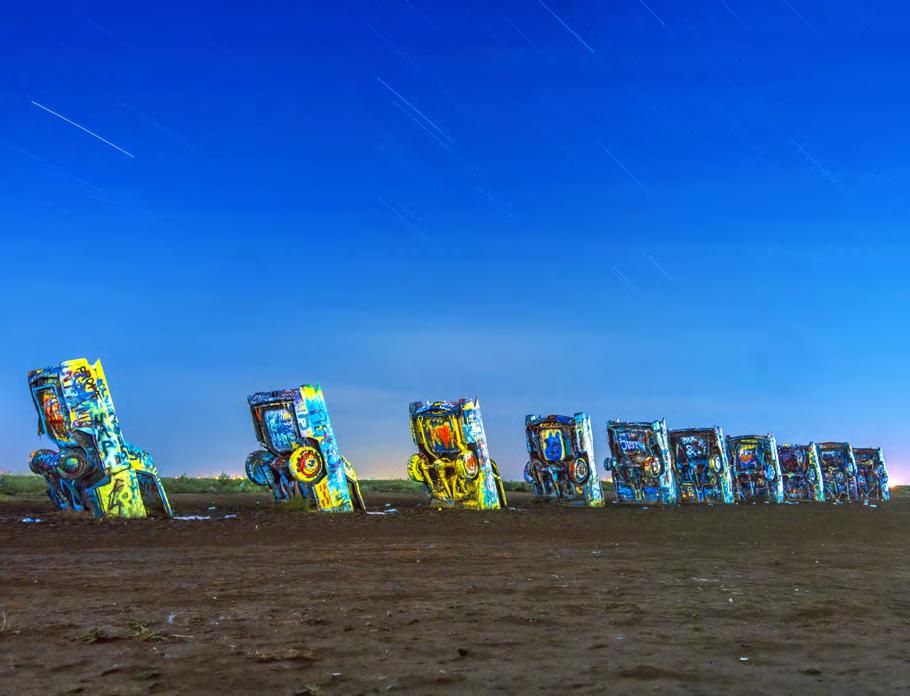
If there’s one thing Amarillo has in spades, it’s character: from the 72-ounce steak challenge at The Big Texan to a century-old saddle shop, the city is full of bold roadside surprises. None is more iconic than Cadillac Ranch, installed in 1974 by the art collective Ant Farm — Chip Lord, Hudson Marquez, and Doug Michels — with Amarillo patron Stanley Marsh 3. Ten classic Cadillacs (1949–1963) were buried nose-first into the ground, their tailfins jutting skyward in a playful, subversive ode to American road travel. From the start, visitors were encouraged to add spray-paint designs, turning the installation into a living, colorful canvas. Vibrant, anarchic, and endlessly photogenic, Cadillac Ranch remains a must-stop for anyone seeking an American legend.
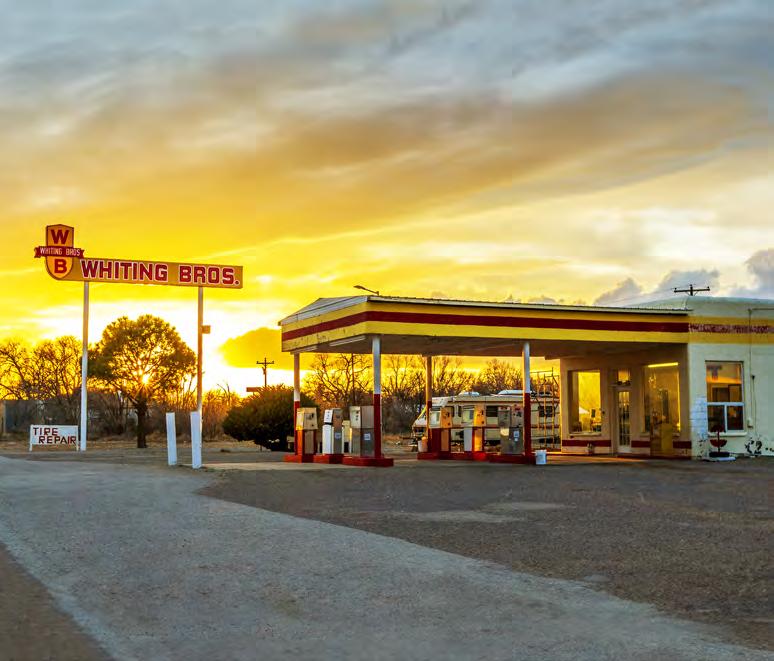
In Moriarty, you’ll find the last remaining Whiting Brothers service station still showing its original branding, a rare survivor from a once -widespread regional chain. Whiting Brothers was founded in 1926 by four siblings from Arizona and grew to operate over 100 roadside service points, motels, and truck stops across the Southwest, offering affordable fuel and traveler services as America’s road travel boomed. Station #72 in Moriarty opened in 1954 and stayed busy through decades of highway travel. When the family business dissolved in the 1980s as traffic shifted to interstates, long - time employee Sal Lucero bought the location in 1985, preserving the station’s classic look and name. Today, it no longer pumps gasoline but continues to serve motorists with repairs and maintenance, and its vintage signage was restored and relit in 2014 with help from preservation grants, making it a living link to mid - century roadside culture.
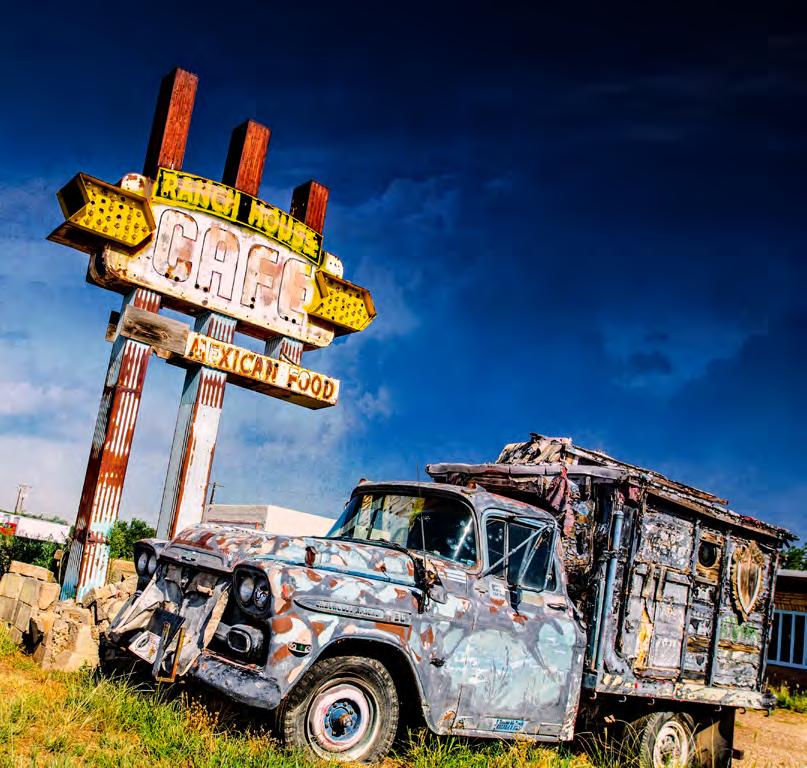
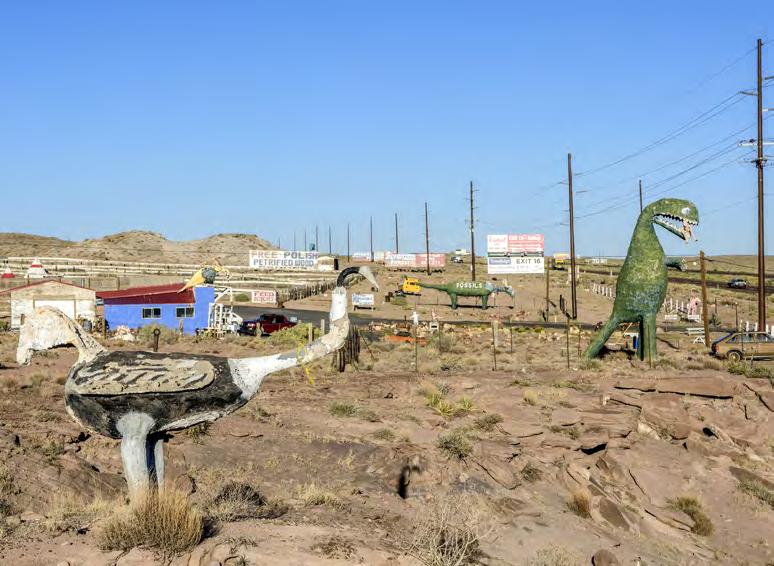
A Route 66 road trip is full of odd and unexpected stops, but few travelers are prepared for what awaits them at Stewart’s Petrified Wood in Holbrook. Opened in 1994 by Charles and Gazell Stewart, the shop lures travelers off the highway with a wild collection of DIY creations: towering metal dinosaurs, a T-Rex chomping on a mannequin, and even an old school bus turned into a roadside spectacle. The sculptures are wildly imperfect, yet that’s part of the charm: a little sketchy, a little wacky, and wholly unforgettable. Inside, polished 225-million-year-old petrified wood, sparkling geodes, and fossils bring the Triassic era to life. A small ostrich farm next door adds a modern twist. Stewart’s delivers a wonderfully offbeat Route 66 experience where imagination, history, and tenacity collide.
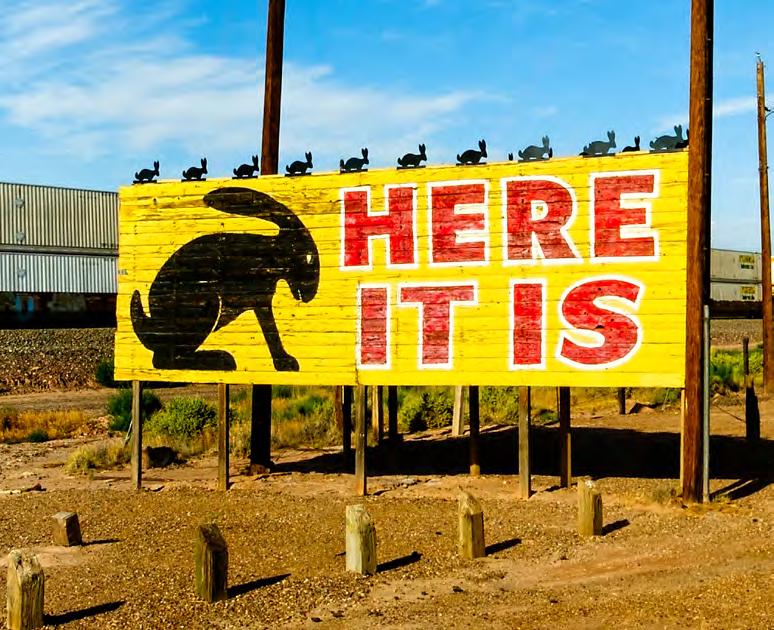
Now we come to one of the most famous destinations on the highway: The Jackrabbit Trading Post. After a short, bumpy drive off the main highway, down a cracked country road beside some railroad tracks, a huge yellow billboard declaring “HERE IT IS” pops up proudly, announcing your arrival in true kitschy Route 66 fashion. Opened in 1949 by Jim Taylor, who drove to Arizona with a rabbit statue in the back of his convertible that became the shop’s mascot, the trading post has welcomed travelers for generations. In 1961, Glenn Blansett took over, passing it to his family decades later. Today, Cindy Jaquez, Glenn’s granddaughter, and her husband, Tony, run the shop, preserving its playful charm. Shelves overflow with nostalgic memorabilia, gifts, and stories, while the iconic billboard and surrounding displays make it a must-stop on the Mother Road.
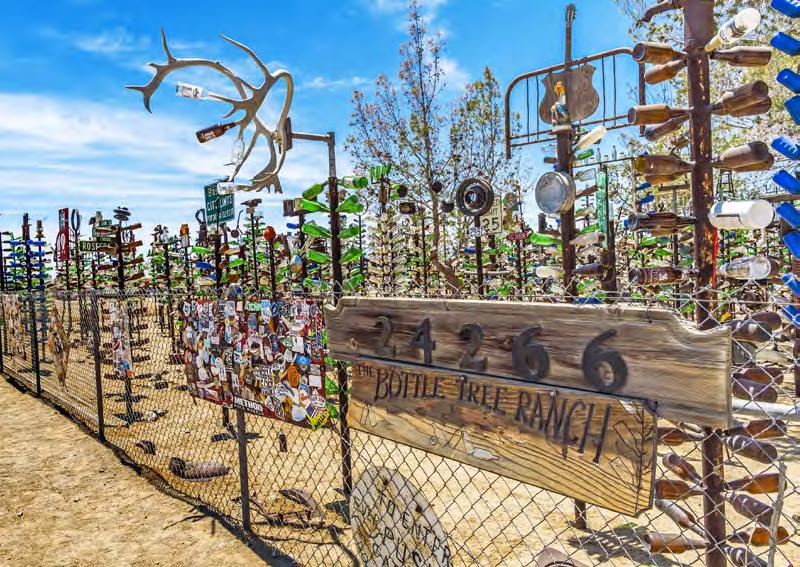
Elmer Long’s Bottle Tree Ranch, Oro Grande, CA
Just east of Barstow, where the Mojave stretches wide and quiet, Elmer Long’s Bottle Tree Ranch rises from the desert like a technicolor mirage. Created by longtime Route 66 resident Elmer Long using bottles collected by his father during cross-country trips in the 1930s and ’40s, the ranch is part folk art, part roadside rebellion. Hundreds of glass bottles — soda, medicine, and spirits — perch on steel “trees,” chiming softly when the desert wind blows. Over time, the site grew to include found-object sculptures, vintage signs, and sun-faded curiosities, all arranged with playful defiance against the emptiness around it. Equal parts memorial, art installation, and photo stop, Bottle Tree Ranch perfectly captures Route 66’s offbeat soul.
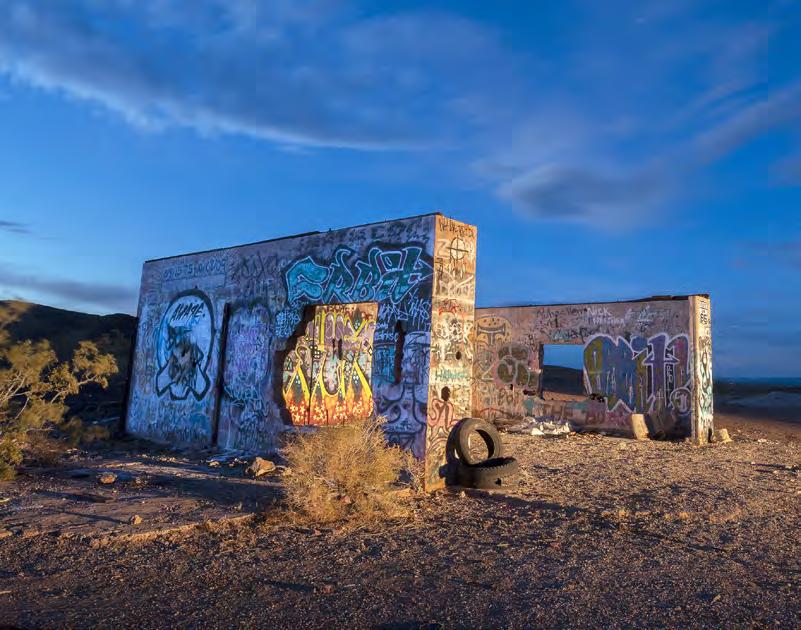
Cadiz Summit perches in the heart of the Mojave Desert, east of Chambless, where the old National Trails Highway crests the rugged terrain. Opened in the 1940s, it quickly became a bustling refuge for weary travelers, offering a service station, garage, café, and cabins for motorists braving the desert’s relentless sun and steep grades. By the early 1970s, with traffic diverted to Interstate 40, the stop fell silent, and the buildings slowly surrendered to wind and drifting sand. Today, only a handful of crumbling structures remain, leaning and weathered, their brickwork and wooden beams whispering stories of journeys long past. Walking among the ruins, visitors can almost feel the presence of travelers who once rested here, making Cadiz Summit a hauntingly beautiful, timeless monument to mid-century desert travel.
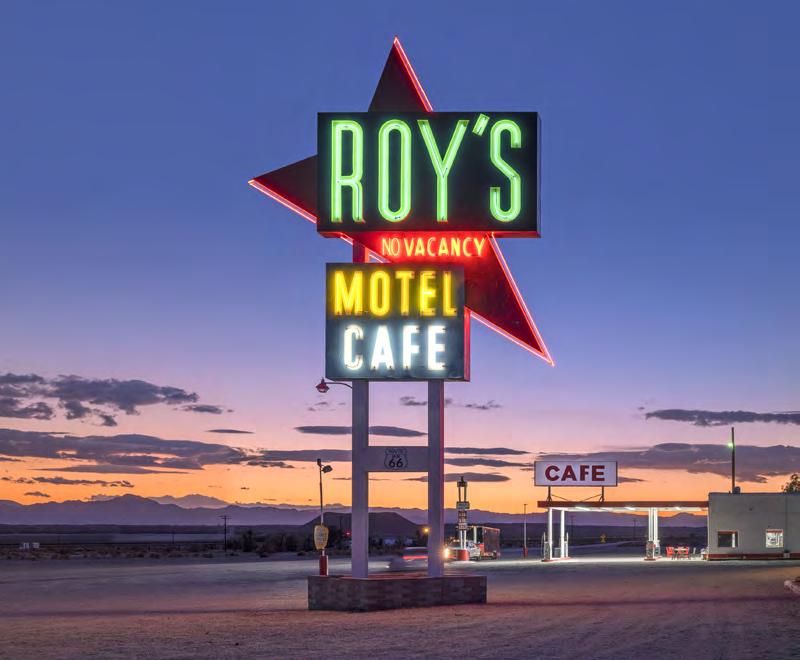
In the windswept Mojave Desert stands Roy’s, one of our favorite destinations and a timeless California beacon. It was first opened in 1938 by Roy Crowl, built to be a simple gas and service stop to welcome weary travelers. Over the years, however, it expanded into a full roadside oasis with a café, garage, and Googie - style motel. By 1959, a now iconic 50 -foot neon sign rose above the flat horizon, guiding adventurers from far away. Business was good for a time, but when Interstate 40 opened in 1972, traffic slowed and the neon fell dark. And so it sat, until, in 1995, entrepreneur Albert Okura purchased the property, and the whole town of Amboy, to preserve its heritage. Decades later, in November 2019, the legendary sign was lovingly relit. Its warm glow now bathes the quiet ruins, inviting visitors to wander, reflect, and fall in love with the spirit of classic highway travel once again.




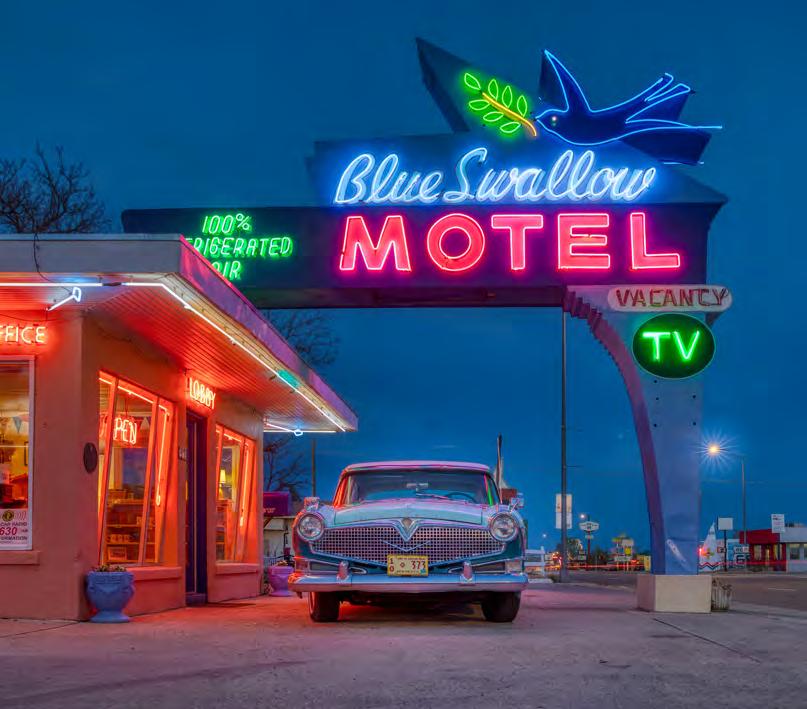
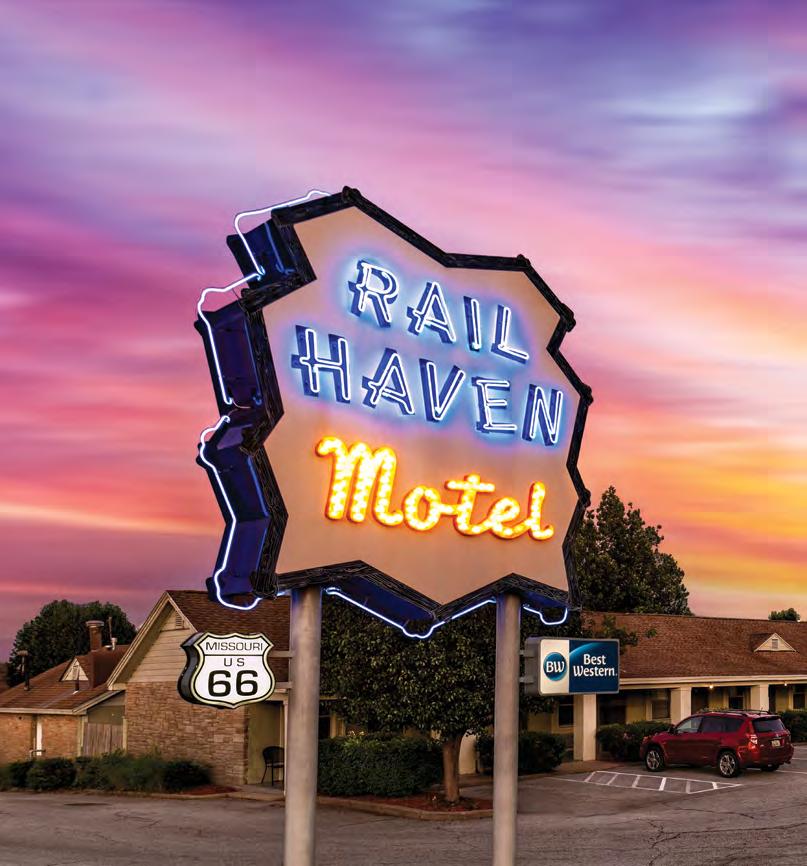
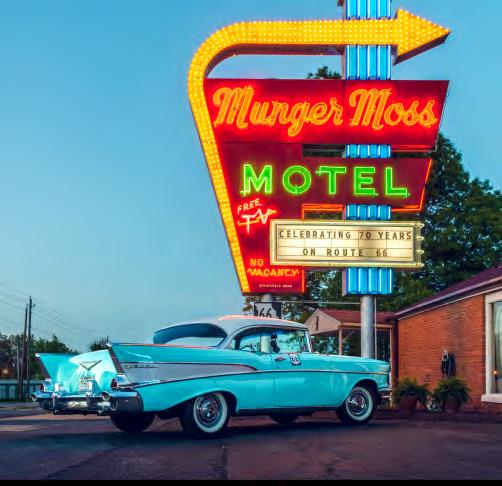
ROUTE Magazine’s Picks for the Top Places to Stay Along the Mother Road
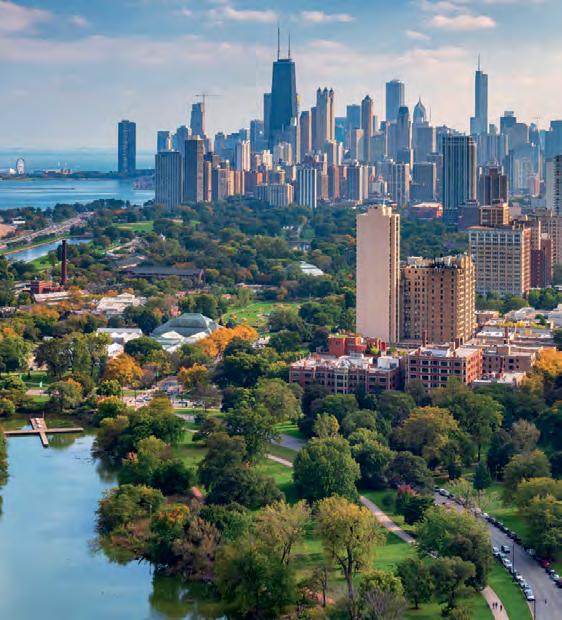
If you are beginning your Route 66 adventure in Chicago, as generations of travelers have before you, there’s no better place to stay than The Whitehall Hotel. It places you at the heart of the Windy City and just steps from the very beginning of America’s most legendary highway.
Located along The Magnificent Mile, this 1928 landmark blends Old World European style with the energy of one of the city’s most legendary corridors, once lined with mansions and now celebrated for its architecture, culture, and upscale shopping. The Whitehall opened during Chicago’s golden age, drawing actors, musicians, and tastemakers who favored its intimate scale and refined atmosphere. Even as the skyline modernized around it, The Whitehall held fast to its signature charm, becoming one of the Magnificent Mile’s longest-standing boutique hotels. Its recently refreshed rooms, handcrafted bedding, and beautifully maintained vintage elevator — a rare surviving touch of Chicago’s Jazz Age — all contribute to the quiet elegance of a property that has hosted nearly a century of Chicago stories.
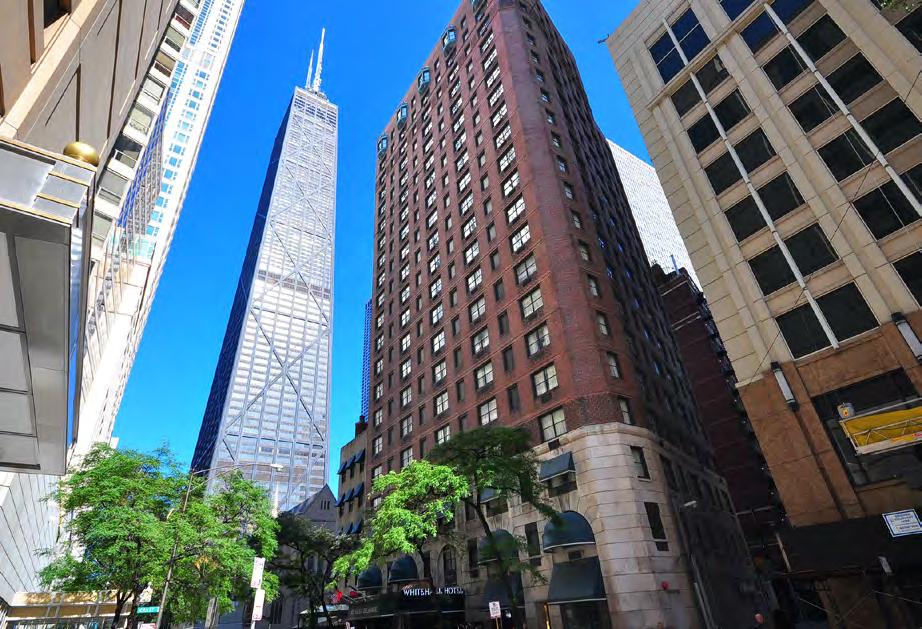
Its location couldn’t be more fitting. You’re just a quick hop to the iconic “BEGIN ROUTE 66” sign on East Adams Street, Lou Mitchell’s — a Route 66 institution since 1923, and one of Route 66’s most beloved kickoff traditions — and the city’s lakefront energy. Whether you’re setting out on the first miles of Route 66 or savoring a final night before heading home, The Whitehall is a timeless bridge between the Mother Road’s beginnings and the adventures ahead.
Just 100 miles southwest of Chicago’s iconic Route 66 “BEGIN” sign, Pontiac signals the moment when the Mother Road sheds its urban edges and truly opens into the heartland. This small Illinois city has become one of the highway’s most beloved early stops, an energetic mix of Americana and Midwest hospitality.
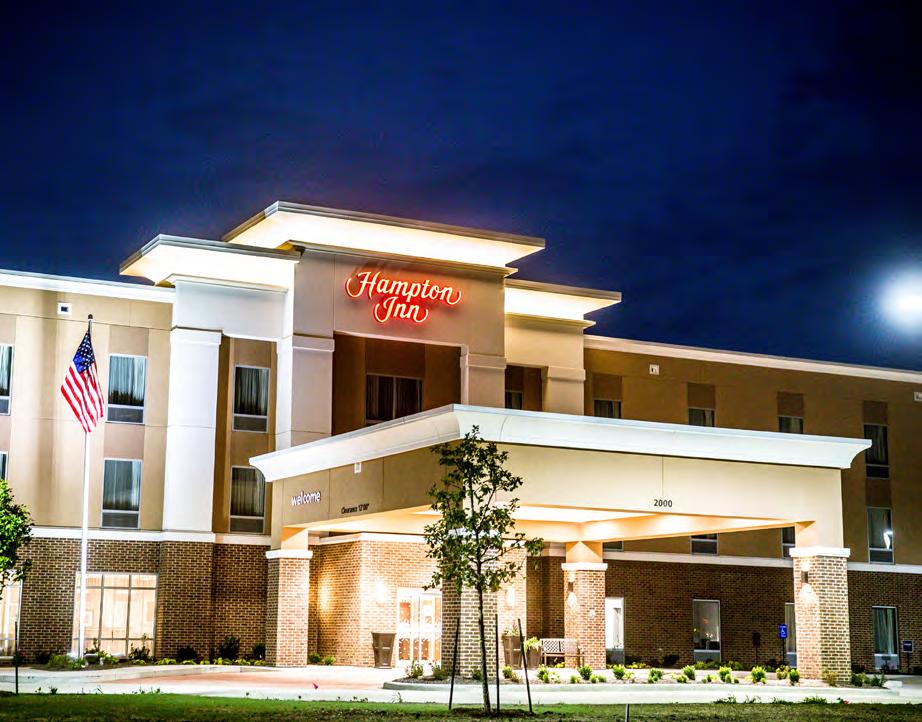
Pontiac wears its history proudly. The town is home to nine Route 66-related museums and exhibits, including the Illinois Route 66 Hall of Fame and Museum, the Pontiac-Oakland Automobile Museum, and the Livingston County War Museum, as well as more than 25 outdoor murals that turn its walkable downtown into an open-air gallery. You can take a self-guided walking tour, pose before the World’s Largest Route 66 Painted Shield, and/or embark on a family-friendly scavenger hunt to spot all 15 miniature vintage cars tucked around the city. It’s a stop that more than earns an overnight stay, and the Hampton Inn makes staying in town effortless.
Opened in 2017, the hotel greets guests with a lobby that celebrates the spirit of Route 66, complete with memorabilia, vintage signage, and road-trip inspired artwork. Beyond the lobby, spacious, plush rooms incorporate modern convenience: HDTVs, mini-fridges, and microwaves, while an indoor pool and fitness center offer ways to unwind after a day on the road. Before heading west again, a complimentary hot breakfast, including make-your-own waffles, keeps bellies (and hearts!) full for the next hundred miles.
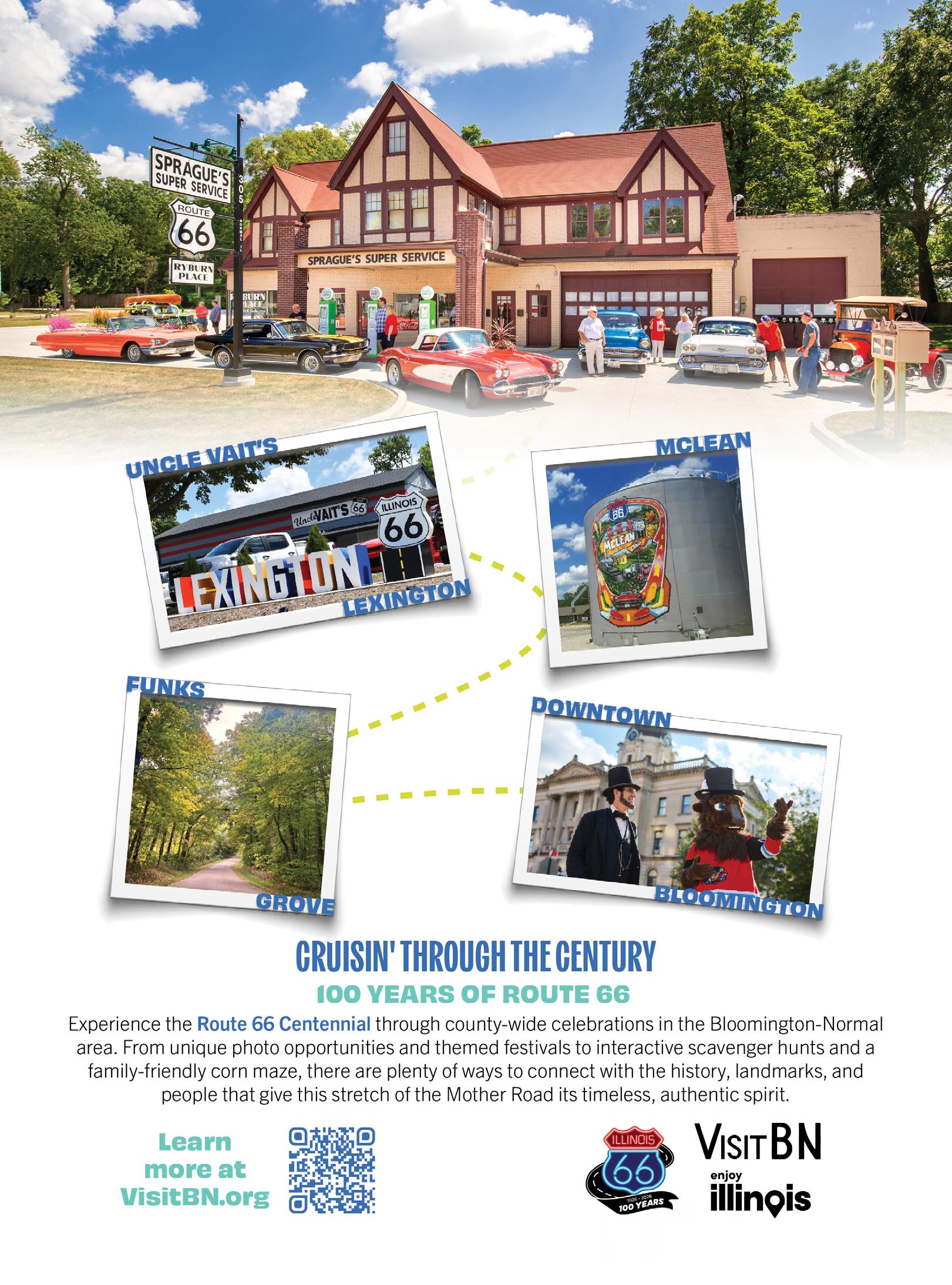
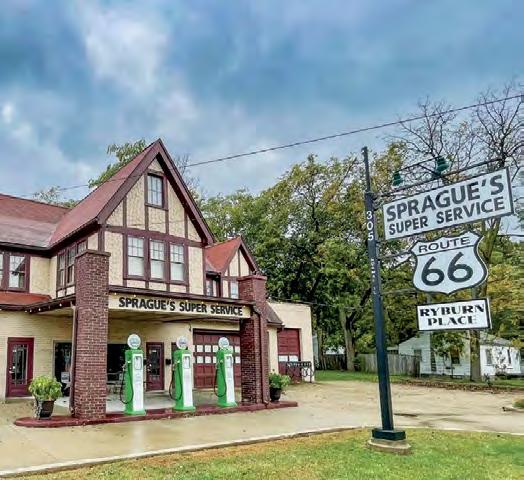
From the Cruisin’ with Lincoln on 66 Visitors Center at the McLean County Museum of History, which celebrates both Route 66 and Abraham Lincoln, to the Sprague Super Service Station, a 1930s Tudor Revival station preserving old-time Americana, to a stroll through downtown’s historic architecture, murals, and small shops, Bloomington offers a rich tapestry of history, local culture, and Lincoln lore—a stop you won’t want to rush. From Bloomington, it’s also easy to explore other Route 66 towns and attractions such as the Dixie Travel Plaza in McLean, Funks Maple Syrup in Shirley, and tiny Atlanta, Illinois, adding even more small-town charm to your journey.
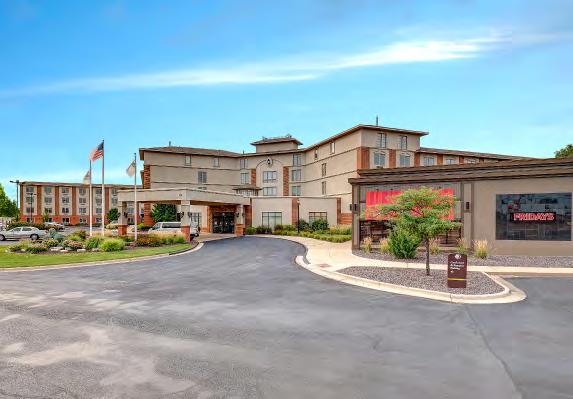
So, it helps to have a comfortable base, and the recently renovated DoubleTree by Hilton Hotel Bloomington fits the bill perfectly. Guests are greeted with the irresistible aroma of freshly baked chocolate-chip cookies — a signature complimentary treat — and pleasant rooms equipped with mini-fridges, coffee makers, and 50” flat-screen TVs.
After a day of exploring, a dip in the indoor pool or a soak in the hot tub restores energy, and the Brickyard Bar offers cocktails, local specials, and live music on Tuesday nights, the perfect way to close out the day. Pet-friendly rooms make it easy to bring the whole crew along. In the morning, a hearty buffet breakfast provides the fuel you need before heading back out, whether that means strolling a stretch of old Route 66, visiting other nearby significant sites like the David Davis Mansion, or continuing westward along the Mother Road.
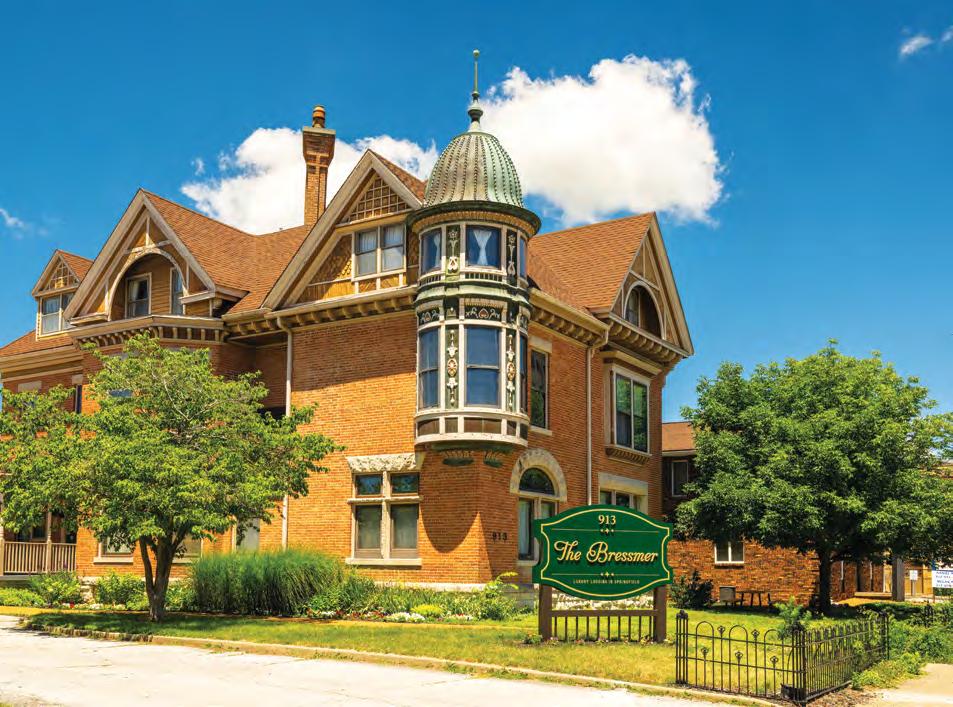
A night at the Bressmer-Baker House isn’t just a stay, it’s an invitation to live like Gilded Age royalty. Sink into the red velvet cushions of a cabriole sofa, catch your reflection in a gold-trimmed mirror set against floral wallpaper, or watch the pendulum swing as the grandfather clock chimes. Every detail of this 5,500-square-foot home, from its domed turret to intricate woodwork, evokes an era of ambition and elegance.
Built in 1853 by real estate dealer Hiram Walker, the house was purchased in 1855 by dry goods merchant John Bressmer, who hired architect Thomas Dennis to expand it into a three-story home for his wife, Mary Weiss, and their four children. Bressmer, a German immigrant who arrived in Springfield at 15, knew little English and even less about American customs. His remarkable journey from immigrant laborer to successful businessman makes the Bressmer-Baker House more than just a historic building; it’s an embodiment of the American dream.
In 1889, William B. Baker remodeled the home into its Queen Anne splendor, and in 2021, business partners James Lucas and Ben Bledsoe restored it as a private retreat. Set just off Route 66 and steps from Lincoln’s Home, the Presidential Library, and the Illinois State Capitol, the house now features nine bedrooms and six bathrooms across three floors, complete with full kitchens and convenient laundry facilities. Guests can rent a full level or the entire home, making every stay as personal — and unforgettable — as the history that surrounds it.
Chase Park Plaza Hotel, St. Louis, MO
Few places in St. Louis — the “Gateway to the West” — capture the city’s allure and rich history quite like the Chase Park Plaza Hotel. Located along Lindell Boulevard, once a Route 66 alignment, this hotel has welcomed guests since the early days of the Mother Road.
It began as two rival properties: the nine-story Chase Hotel, opened in 1922 by attorney Chase Ulman, and the 27-story Park Plaza, built by Sam Koplar in 1929. Their competition sparked innovation: elegant ballrooms, rooftop dancing on the famous Starlight Roof, and one of the area’s first outdoor pools. By the 1950s and ’60s, the Chase Club became the epicenter of St. Louis entertainment, hosting Frank Sinatra, the Rolling Stones, and Elvis Presley. If its century-old walls could talk, they’d whisper Rat Pack secrets, Hollywood starlets’ glitzy tales, and rock & roll legends’ late-night antics.
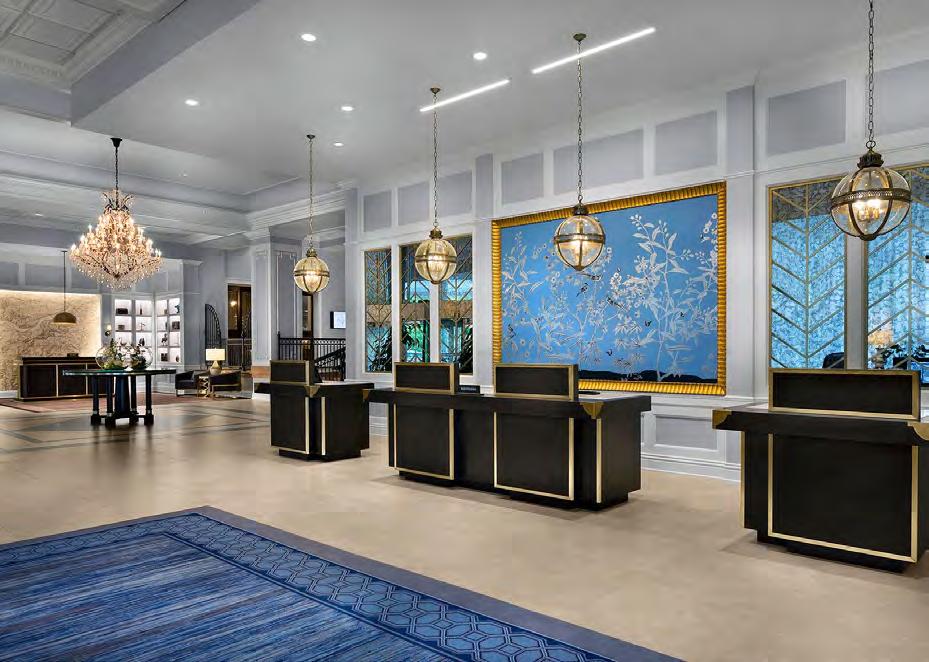
Although both properties were acquired by the Koplars in 1947, they remained separate until 1961, when they were joined to form a single iconic landmark filled with shops, dining rooms, and an espresso room, a touch of New York glamour in the Midwest.
Today, under Royal Sonesta International Hotels, it retains its “city within a city” character. The grand lobby, stonecarved porticoes, and Mediterranean-style pool framed by marble columns evoke past romance, while lavish amenities, including an 18,000-square-foot Santé Fitness facility, spa, three restaurants, and the Chase Park Plaza Cinemas, seamlessly blend history with contemporary luxury. A stay here is a chance to experience St. Louis like a star.
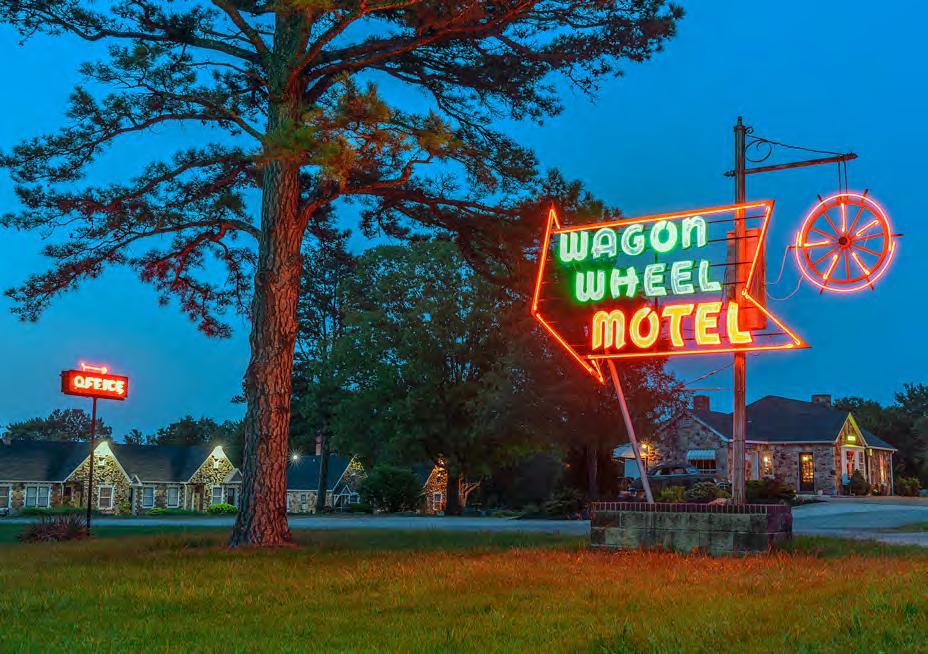
The Wagon Wheel Motel, Cuba, MO Cuba, Missouri, famously known as the “Route 66 Mural City,” is a celebrated stop along the Mother Road. Its streets are lined with more than 20 large-scale murals depicting Route 66 history, local culture, and mid-century Americana, making the town a living showcase of the highway’s legacy.
At the heart of Cuba stands the Wagon Wheel Motel, a Route 66 icon welcoming travelers since 1936. Originally opened by Robert and Margaret Martin as the Wagon Wheel Cafe, with an adjacent gas station, the property expanded in 1938 with 14 Tudor Revival-style cottages built from Ozark stone by stonemason Leo Friesenhan. By 1939, their steeply pitched roofs, elegant trim, and eclectic stonework earned them AAA praise as “a home away from home.” In 1947, John Mathis, the motel’s second owner, added the neon sign featuring the iconic wagon wheel that still attracts travelers from across the country.
Over the decades, the motel changed hands and weathered a period of decline until 2009, when Connie Echols undertook restoration, preserving its endearing character while enhancing the guest experience. Today, checking into the Wagon Wheel is like stepping into a time capsule. The rooms, with vintage fittings and thoughtful touches — flat-screen TVs, Wi-Fi, and in-room coffee makers — blend nostalgia with tranquility.
As night falls and the original neon sign flickers to life in red and yellow, casting a warm glow over the Mother Road, you know you are amid the living echoes of a storied past.
Springfield, Missouri, celebrated as the “Birthplace of Route 66,” is where the iconic Chicago-to-Los Angeles highway was first numbered in April 1926 and federally designated that November. At the heart of this historic city stands Hotel Vandivort.
Housed in a four-story, 40,000-squarefoot brick building constructed in 1906, the property served as a Masonic temple for more than 75 years. During the 1980s corporate boom, it was converted into offices until brothers and local entrepreneurs John and Billy McQueary purchased and restored it in 2012.
Careful preservation of cast-iron pillars, exposed brick walls, and subtle Masonic details maintained the building’s turnof-the-century character. In 2019, they expanded just steps away with V2, a sleek 44,000-square-foot sister property with nods to the building’s illustrious past.
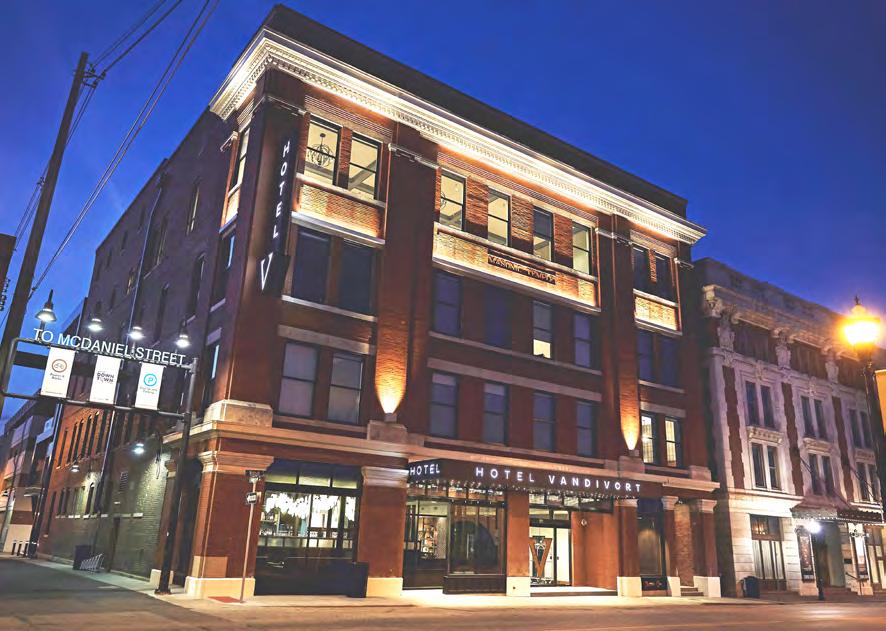
Rooms at the Vandivort and V2 combine industrial edge and Art Deco style with Springfield artistry. Floor-toceiling windows, vintage vinyl, and geometric tiles set the tone, while plush bedding, robes, and smart lighting deliver boutique comfort.
Just steps from Springfield’s Historic Square, the History Museum on the Square, the Gillioz Theatre, and enchanting downtown shops and eateries, the hotel places you at the center of the city where Route 66 was first numbered. Evenings are best spent at the Vantage Rooftop Lounge and Conservatory, where handcrafted cocktails, fresh oysters, and panoramic views of downtown and the distant Ozarks set the scene. Listen as the 171-year-old bell tolls at sunset, a reminder of Springfield’s romantic journey.
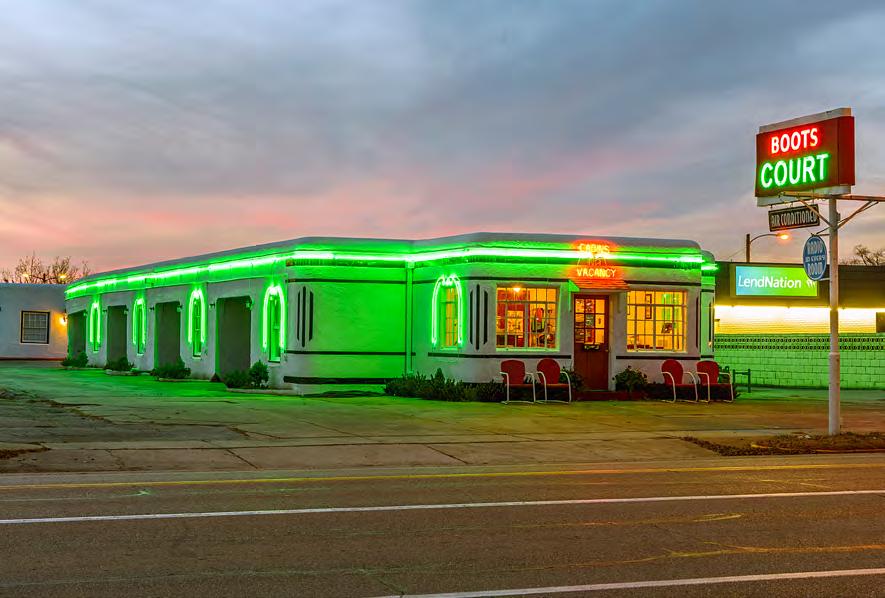
When you picture the archetypal Route 66 motel, it likely resembles Boots Court in small town Carthage, perched at the crossroads of historic Route 66 and U.S. 71, the Jefferson Highway.
During the 1930s, entrepreneur Arthur Boots operated a small filling station, Red Horse Service Station, at the so-called “Crossroads of America.” Inspired by his older brother, Loyd, who owned a motel elsewhere, Arthur and his wife Ilda opened their own roadside venue in 1939, using the Red Horse as the front office. And thus, Boots Court was born. The eight-room motel debuted in the sleek Streamline Moderne style, with carport parking beside each unit. At a hefty $2.50 per night, the motel offered one of the era’s rare conveniences: a radio in every room.
By 1946, new owners Ples and Grace Neeley expanded with five additional rooms. Over the decades, as Route 66 evolved and was eventually decommissioned, Boots Court weathered ownership shifts, renovations, and even the threat of demolition. By 2011, it was named one of the ten most endangered roadside attractions in America, inspiring sisters Deborah Harvey and Priscilla Bledsaw to purchase it and begin restoring it to its original 1940s charm. A decade later, the Boots Court Foundation completed the meticulous restoration.
Today, Boots Court Motel is a preserved gem of mid-century Americana. Its 13 unique rooms feature vintage chenille blankets, radios that play classic oldies, and beautiful glowing green neon tracing its perimeter, inviting you to step back in time. While here, explore the beloved 1949 66 Drive-In Theatre, one of the last remaining drive-ins still operating along Route 66, the Carthage Civil War Museum, and the captivating “town” of Red Oak II.
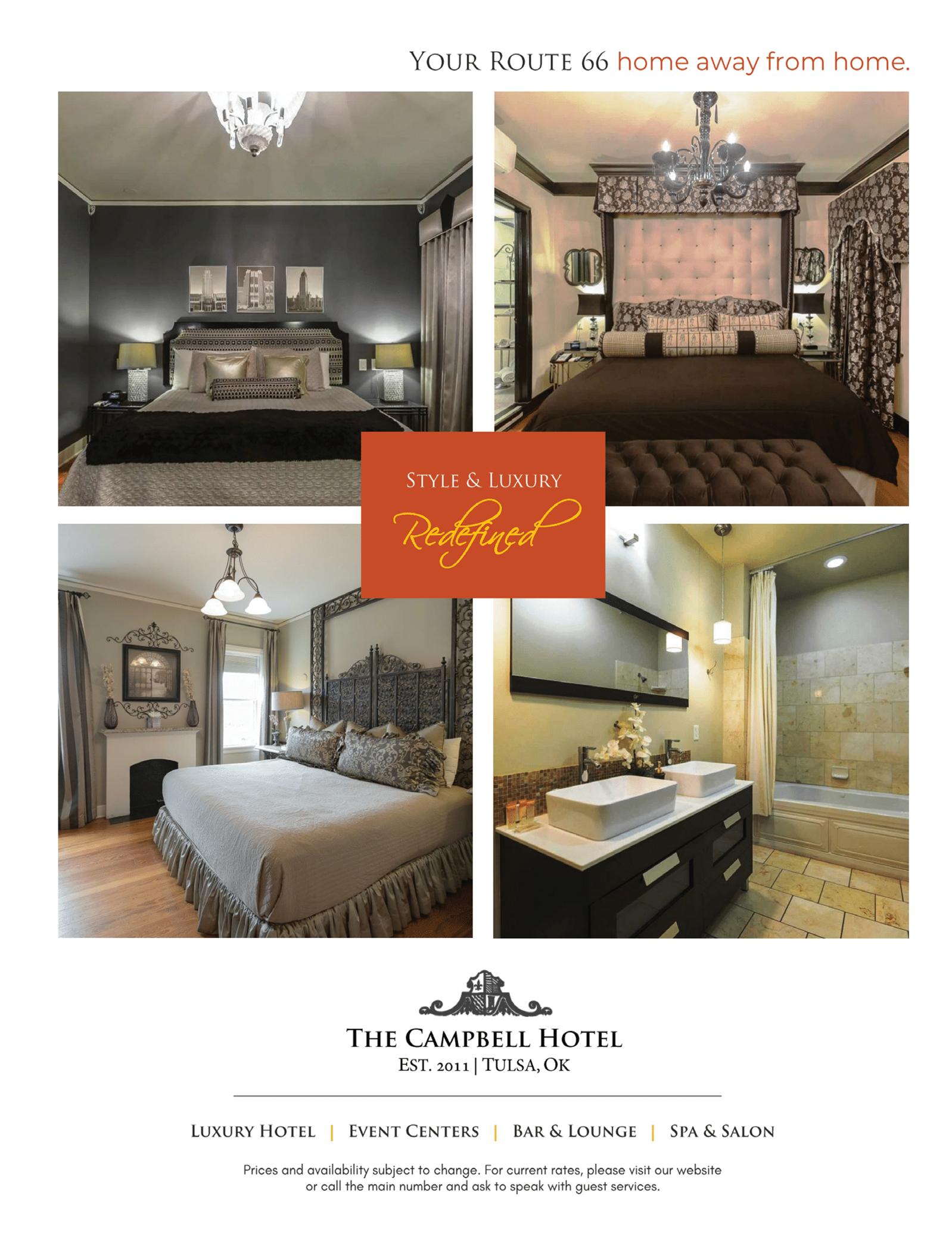
The Campbell Hotel, Tulsa, OK
No Route 66 road trip is complete without a stop in Tulsa, Oklahoma, the self-proclaimed “capital” of the Mother Road. If staying right on historic Route 66 is the goal, the Campbell Hotel is a top pick. Located on East 11th Street, it combines historic flair, blissful relaxation, and a front-row seat to Tulsa’s Mother Road revival.
Built in 1927 by Max Campbell, the building originally housed the Casa Loma Hotel upstairs, offering 30 modest rooms with shared bathrooms, while the street level featured retail shops. However, the oil bust of the 1980s, combined with traffic diverted onto new freeways, left East 11th Street in decline. By the late 2000s, the Campbell stood vacant and decaying, deemed beyond repair, with whispers of demolition circulating.
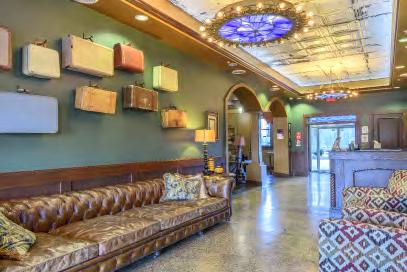
Then, Tulsa native Aaron Meek purchased the property in 2008 and led a careful three-year restoration, preserving its timeless character while transforming it into a boutique destination. Listed on the National Register of Historic Places in 2010, it reopened in 2011 as the Campbell Hotel with 26 uniquely themed rooms, a cozy lounge, and a fitness center.
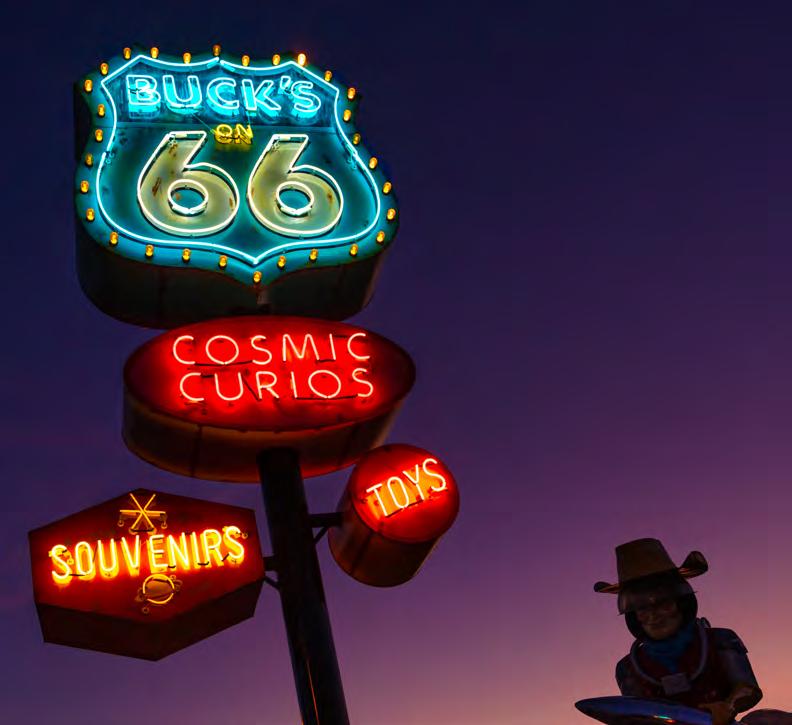
Staying at the Campbell means you don’t just sleep in history, you live it. The S.E. Hinton Room dazzles with a Spanish-style cupola and crystal chandelier; the Oil Barons Room evokes Tulsa’s oil-boom legacy; and the Route 66 Suite glimmers with a stone faux fireplace and vintage gas-station accents. Step outside, and the neon Meadow Gold sign, Buck Atom’s Cosmic Curios, and larger-than-life Muffler Men await.
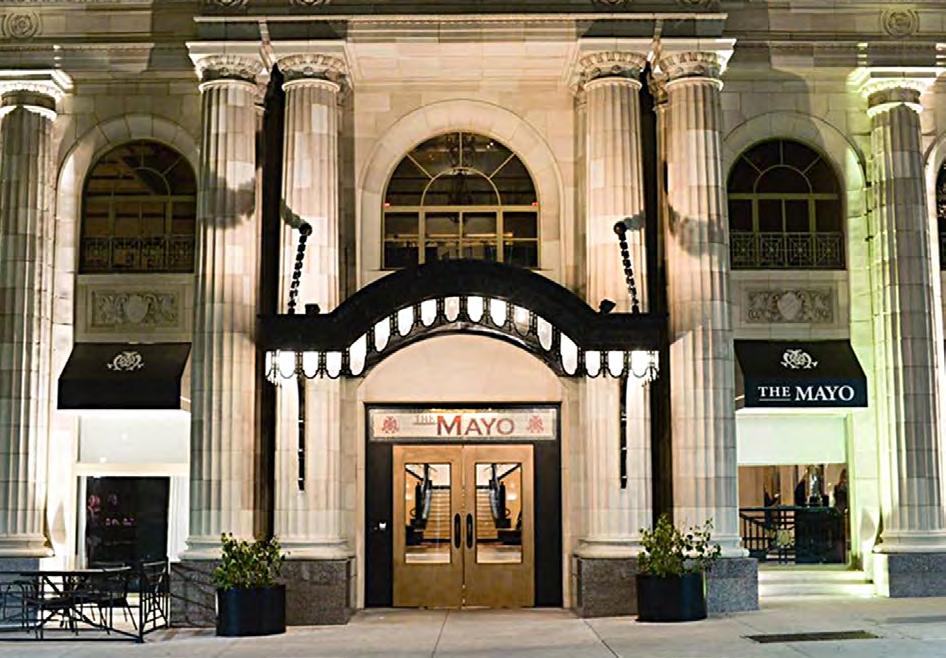
This year, another Tulsa hotel makes our list. The Mayo Hotel offers a different kind of historic elegance: a grand downtown icon with soaring ceilings, sophisticated decor, and a captivating past. Inspired by a visit to New York City, entrepreneur John Mayo vowed to build a hotel that could rival the grandeur of the Plaza. In 1925, he and his brother Cass, in collaboration with architect George Winkler, unveiled an Art Deco masterpiece boasting 600 luxurious rooms and the most current amenities of the era. The Mayo quickly became Tulsa’s social epicenter, hosting oil tycoons, politicians, and celebrities, including Elvis Presley, Lucille Ball, and Charlie Chaplin. It is even rumored to have served Tulsa’s first legal post-Prohibition drink, adding to its beguiling lore.
After decades of prestige, including being listed on the National Register of Historical Places in 1980, the hotel closed in 1981 and slowly fell into disrepair. A new chapter began in 2001 when the Snyder family purchased and meticulously restored the property. Reopened in 2009, the Mayo now dazzles with its Kubrickesque lobby, refined Art Deco details, and modern luxury, while preserving its signature grandeur. The rooftop Penthouse Bar, formerly the Presidential Suite, offers sweeping views of downtown Tulsa and the Arkansas River.
Staying here places you at the heart of the city’s history and culture. Walk among downtown’s Art Deco architecture, catch a show at Cain’s Ballroom, explore the Philbrook Museum of Art, or visit the Woody Guthrie Center, all minutes from your door, fusing the past and present in a quintessential Tulsa experience.
Fordson Hotel, Oklahoma City, OK
Oklahoma City offers its own kind of Mother Road mystique, where classic Route 66 landmarks such as the Tower Theatre, Will Rogers Theatre, the Milk Bottle building, the Gold Dome, and the State Capitol (one of only two state capitols on historic Route 66) dot the cityscape. Beyond its iconic architecture, OKC carries a rich automotive legacy, a history nowhere more tangible or inviting than at the Fordson Hotel.
The Fordson’s story reflects the spirit of Oklahoma City itself. Built in 1916 by industrial architect Albert Kahn as a Ford Model T assembly plant, it helped shape the car that would revolutionize America. During the Depression, the plant became a Ford parts depot until 1968, when former employee Fred Jones purchased the building, turning it into one of the world’s largest Ford dealerships. Decades later, in 2016, it was reborn as a 21c Museum Hotel, and in 2023, it was rebranded as the Fordson Hotel under Hyatt, proudly leaning into its history.
A vintage Model T, a nod to the building’s automotive wells flood the space with natural sunlight, preserving its architectural character. The 135 loft-style rooms and suites feature high ceilings, expansive steel windows, custom furnishings, and sophisticated touches that harmonize effortlessly with the building’s industrial character. With three on-site dining venues, a spa, fitness center, valet service, and a complimentary shuttle to downtown attractions, the Fordson offers everything needed to linger and savor Oklahoma City’s unique brand of Route 66 magic.
Small but worth a stopover, Elk City brings the spirit of Route 66 to life, making it a rewarding stop along the Mother Road. Known as the “Queen of the West,” this 15-square-mile town has been serving up Oklahoma hospitality since 1901, first as Crowe, then briefly as Busch, in an attempt to lure brewing magnate Adolphus Busch, before finally taking the name Elk City in 1907 from the winding Elk Creek that runs through it.
At the heart of Elk City’s Route 66 appeal is the National Route 66 & Transportation Museum and the associated Old Town Museum, both part of the local museum complex. Together, they offer an immersive journey through America’s highway heritage, tracing the road’s evolution from pioneer wagons to chrome-trimmed hot rods. Exhibits recreate scenes from roadside motels, drive
For an overnight stay, the fourstory Holiday Inn Express & Suites is a natural choice. Originally built in 2012, the property has undergone thoughtful renovations in 2021 and 2023, ensuring that every guest enjoys a fresh, delightful stay with updated rooms and amenities. Each room features a 37” multimedia flatscreen, microwave, mini-fridge, and plush pillow-top beds with triple sheets, along with roomy work desks for travelers on the go. Suites add a separate living area, kitchenette, and sofa bed—perfect for families. Kids will love the quaint indoor water park, and adults might find themselves splashing along too. Mornings start with a complimentary breakfast to fuel the day ahead, making it easy to hit the road refreshed.
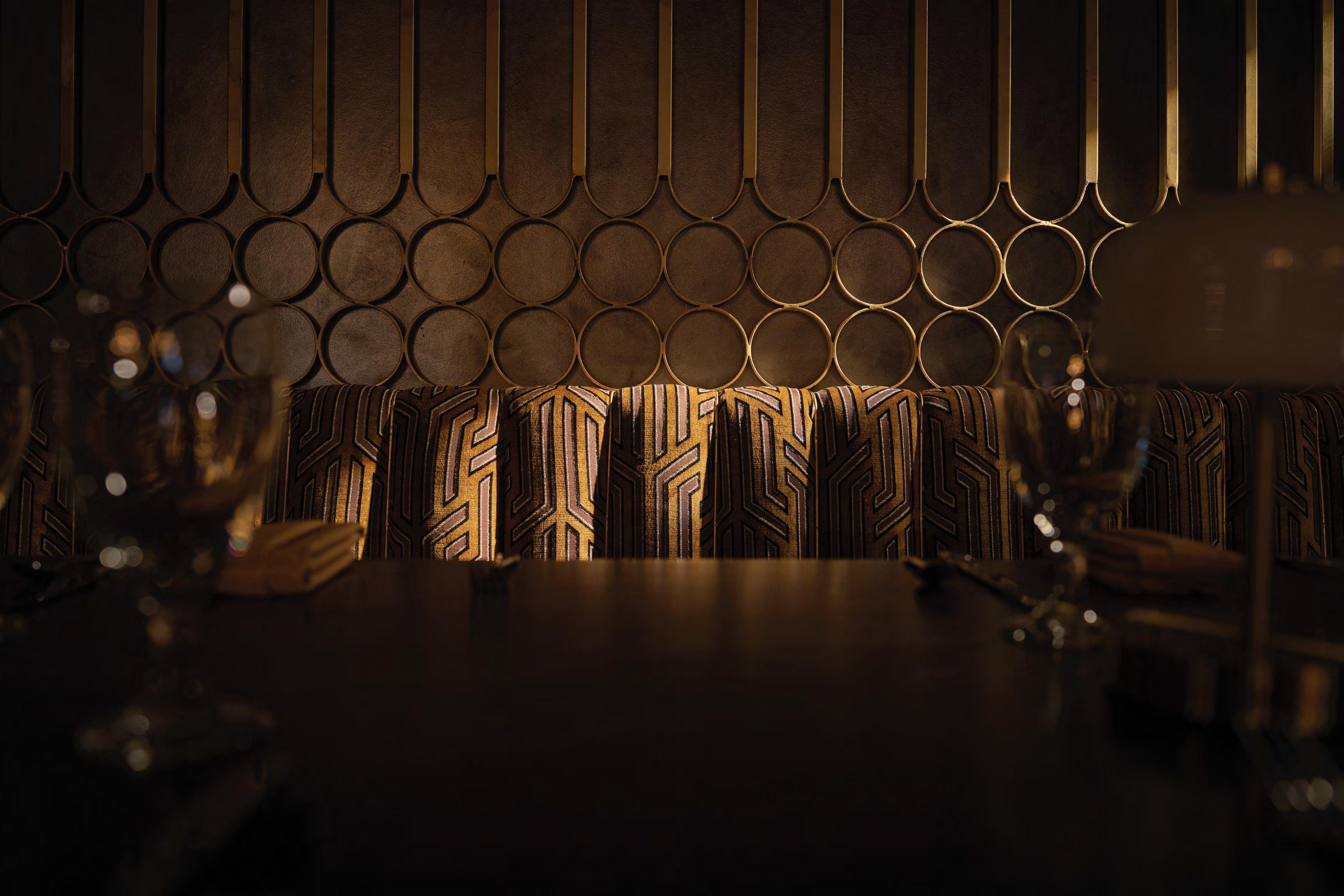

The Barfield, Autograph Collection, Amarillo, TX
You can’t drive Route 66 without stopping in Amarillo. From the quirky spectacle of Cadillac Ranch, to the legendary Big Texan Steak Ranch, to the Historic Route 66 District and the scenic Palo Duro Canyon State Park, the city serves up the perfect mix of Western charisma, quirky Americana, and wide-open Texas skies.
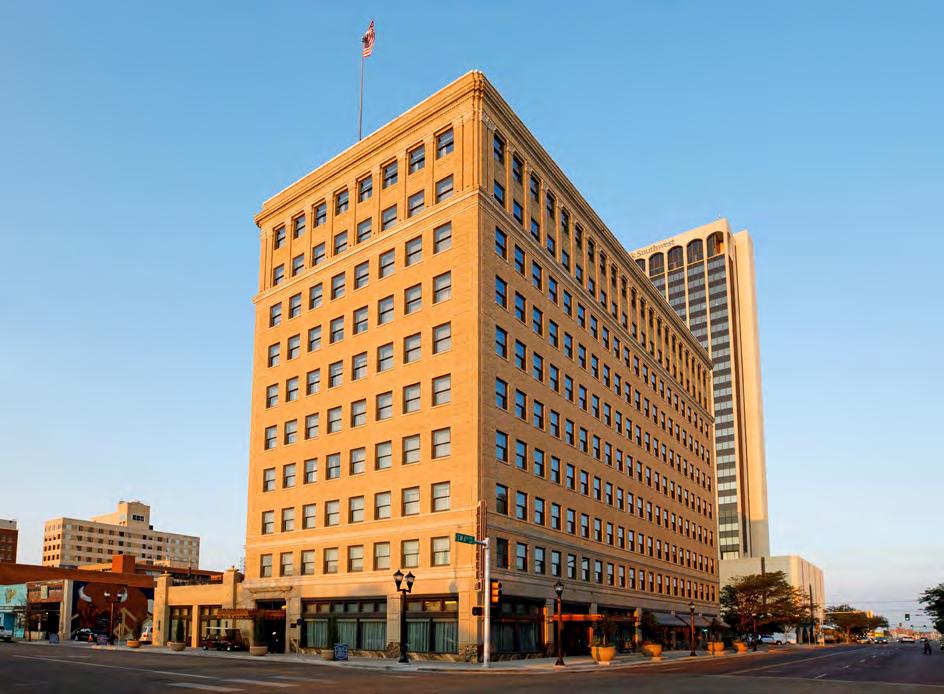
And when it comes to staying the night, The Barfield is Amarillo’s crown jewel. Standing proudly at the intersection of Historic Route 66 and Polk Street, this ten-story landmark was built in 1927 as the Oliver-Eakle Building by local luminary Melissa Dora Oliver-Eakle. Known as “The Duchess” for her generosity — she even opened the city’s first library — Oliver-Eakle imbued the building with character, including a secret Prohibition-era speakeasy tucked in the basement: the Paramount Recreation Club. Over the decades, the building weathered economic shifts, was renamed the Barfield Building, and sat vacant for thirty years, until 2021, when new owners transformed it into a 112-room hotel in Marriott’s Autograph Collection. Today, The Barfield effortlessly marries historic elegance with 21st Century polish. Guest rooms are sleek and smoky, featuring charcoal walls, West Texas–inspired decor, and wooden sliding doors; Texan through and through, with an air as smooth as a sip of a smoked Old Fashioned. The revived Paramount Recreation Club brings Amarillo’s roaring twenties to life. Leather booths, sunset-hued Aztec blankets, and an authentic vintage cigarette machine make it feel as though you’ve stepped onto the set of Yellowstone. This place will appeal to your inner cowboy and then some.
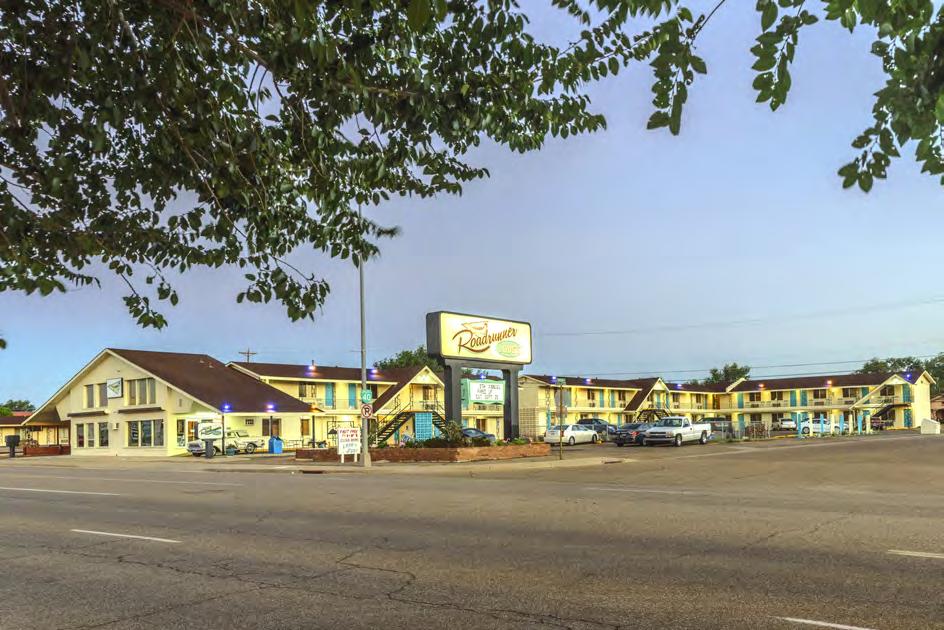
The Roadrunner Lodge Motel is your passport straight back to the swinging ‘60s, where neon signs flicker, vintage vibes reign, and every detail celebrates an era when the American road trip was pure romance.
This groovy motel is a mash-up of two neighboring properties. La Plaza Court first opened in 1947 as a motor court, complete with garages beside each unit, and in 1964, Agnes Leatherwood built Leatherwood Manor next door. The motels ran independently for about twenty years until a new owner merged them in 1985. Over the years, the motel went by several names until David and Amanda Brenner purchased it in 2014, restoring it as the Roadrunner Lodge Motel, which serves its visitors with 1960s retro flair.
Step into your room and nostalgia kicks in immediately. The Brenners created a short-range FM station that loops ‘60s hits and vintage-style ads. Moon Pies sit on tables, retro magazines await reading as if Lyndon B. Johnson were still president, and some rooms feature Magic Fingers vibrating beds. Just bring a quarter. Decor ranges from Polynesian tiki flair to Googieinspired murals, turning every room into a mini time capsule.
Step outside, and Tucumcari has plenty to keep you busy.
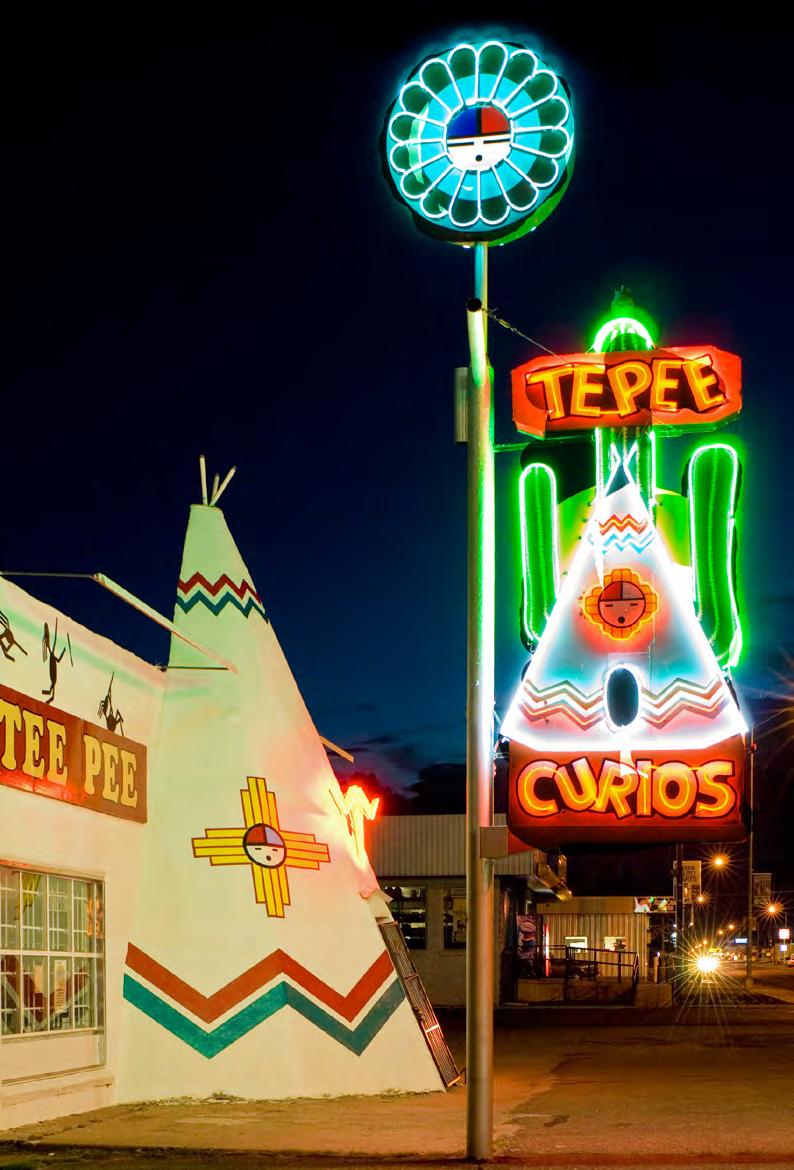
Stroll Historic Main Street, get a prehistoric thrill at the Mesalands Dinosaur Museum, visit the Tee Pee Curios trading post, and take in the glow of Tucumcari’s Neon Trail. Back at the motel, evenings are for swapping road stories with other guests around the fire pit. A petfriendly motel keeping the ‘60s alive? We can dig it.
La Fonda, Santa Fe, NM
La Fonda on the Plaza isn’t just a hotel, it’s a portal to New Mexico’s rich history, vibrant culture, and the romance of the open road. Before Route 66 was redirected in 1937, the highway followed a northern detour along the Old Pecos Trail, passing directly in front of La Fonda, placing the hotel on one of the most storied stretches of early American travel. Staying here, you retrace that original pathway, where the true story of Route 66 and the city’s Southwest magic intersect.
La Fonda’s story stretches back to 1607, long before New Mexico became a state, when the town’s first inn, or “fonda,” opened on this site. The current hotel, built between 1919 and 1922 by architect Isaac Rapp, known as the “Creator of the Santa Fe Style,” features stained glass skylights, hand-carved wooden beams, and terracotta floors that echo both Santa Fe’s Spanish Catholic roots and the desert’s burnt orange landscape. By 1925, La Fonda became a Harvey House, where Mary Colter infused Native American motifs and works by local artists, creating the hotel’s signature cultural flair.
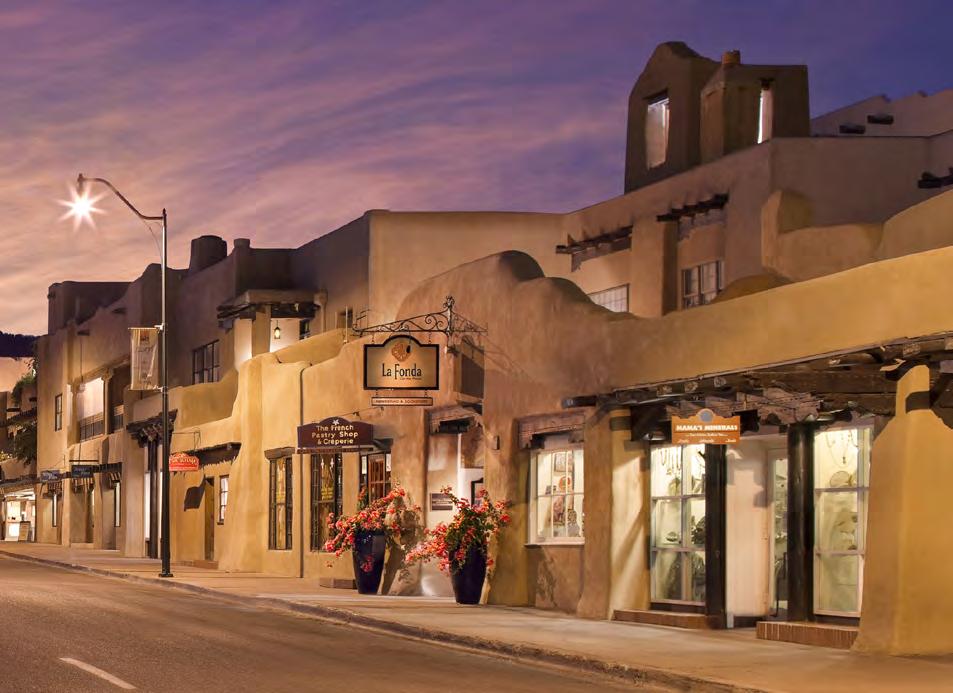
Today, under siblings Jennifer Kimball and Phillip Wise, who purchased La Fonda in 2014, the hotel adorns rugged charm with splendor. Renovations updated nearly every corner, including the Terrace Inn—a “hotel within a hotel” with 15 suites overlooking the Cathedral Basilica and Loretto Chapel. Step outside, and Santa Fe unfolds at your feet: The historic Plaza, the Palace of the Governors, and galleries of Canyon Road are all within easy walking distance.
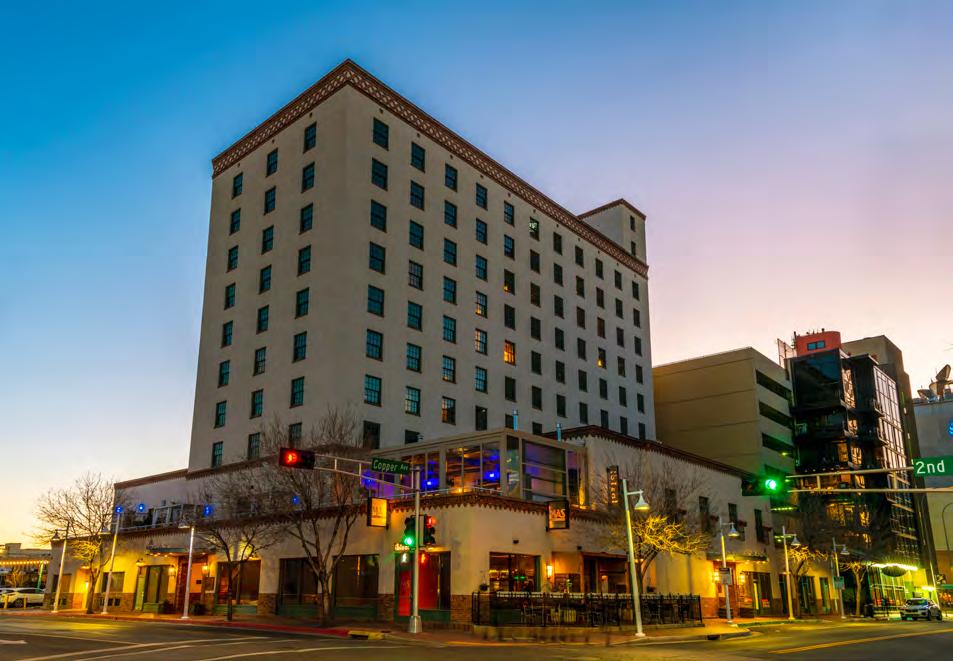
When Route 66 was realigned in 1937 to follow an east-west path through Albuquerque, Central Avenue came alive, a dazzling 18-mile stretch of neon signs, motels, diners, and roadside attractions that cemented Albuquerque’s place on America’s Main Street. In 1939, Conrad Hilton built his first hotel outside Texas, choosing a spot just steps from Central Avenue. True to his belief that each hotel should be unique, this landmark instantly stood out.
At ten stories, it was the tallest hotel in New Mexico, the first with an elevator, and the first fully air-conditioned. From its architecture to its interiors, it drew inspiration from the Andalusian region of southern Spain, infusing Spanish-Moroccan and Moorish influences into a distinctive Southwestern style. The Hilton name remained until 1969, then the property cycled through several owners and identities. In 2008, it was reborn as Hotel Andaluz, reopening in 2009 with a restored design that honored its heritage and earned a rare Gold LEED certification. A decade later, it came full circle, rejoining the Hilton family under the Curio Collection.
Inside, the lobby melds 1930s grandeur with boutique elegance, featuring wide archways and a dramatic two-story space framed with carved wood trim and a restored mosaic fountain, reminiscent of an Old-World courtyard. Intimate alcove-style “Casbahs” offer intimate seating for cocktails or conversation, while guest rooms continue the Spanish-Moorish aesthetic with earthy tones, wood, and stone. Outside, Route 66 comes alive, from the Pueblo-Deco KiMo Theatre to classics like the Dog House Drive-In, and so much more.
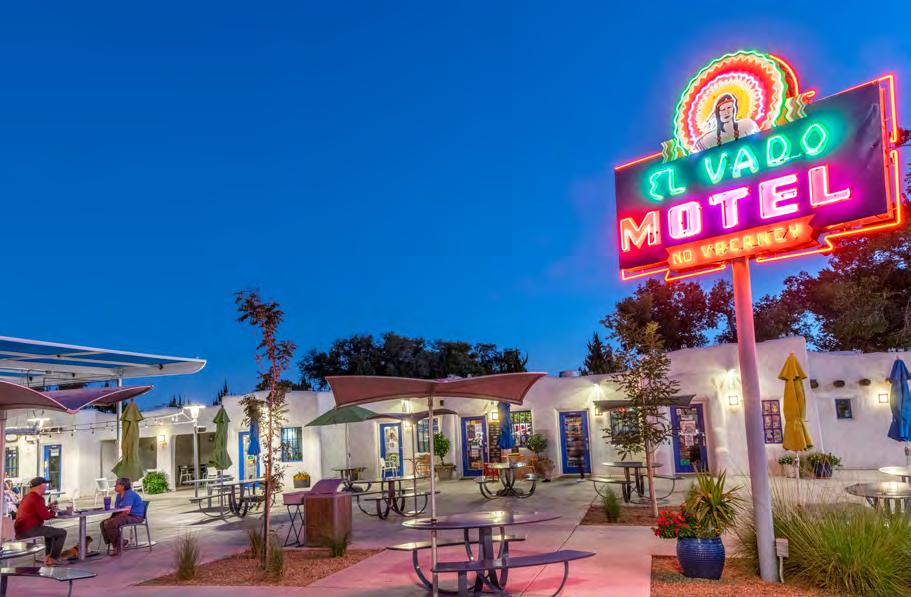
Located directly on Route 66 and steps away from Albuquerque’s vibrant Old Town, the El Vado Motel offers a rare combination of nostalgia, culture, and convenience that makes it a standout choice. Wander cobblestone streets lined with adobe buildings, browse artisan shops, and savor Southwestern cuisine, then retreat to the retro world of El Vado.
Built in 1937 by Irish immigrant Daniel Murphy, with stucco walls, exposed vigas, and carports for every room, the 22-room motel stood out as a distinctive stop along America’s Main Street. A glowing neon sign, depicting a Native American man in a colorful headdress beneath a radiant starburst, beckoned road-weary travelers.
But as the wheels of progress turned, El Vado witnessed the shifting landscapes of Albuquerque and Route 66. Over the years, it fell on hard times, changed hands multiple times, and gradually slipped into disrepair. By the early 2000s, the motel faced the looming threat of demolition. A decade of inactivity and legal uncertainty left its future in limbo, that is, until 2018, when Chad Rennaker and Palindrome Properties of Portland, Oregon, stepped in with an $18 million restoration and a second chance at life.
Today, the iconic neon sign glows anew. Expanded rooms, named after classic cars like Hudson, DeSoto, and Packard, offer modern amenities, while the courtyard, once a hub for road-weary travelers, has been revitalized into a lively gathering space with a plunge swimming pool, numerous food pods, and inviting seating areas where the spirit of Route 66 and the energy of Old Town Albuquerque come vividly to life.
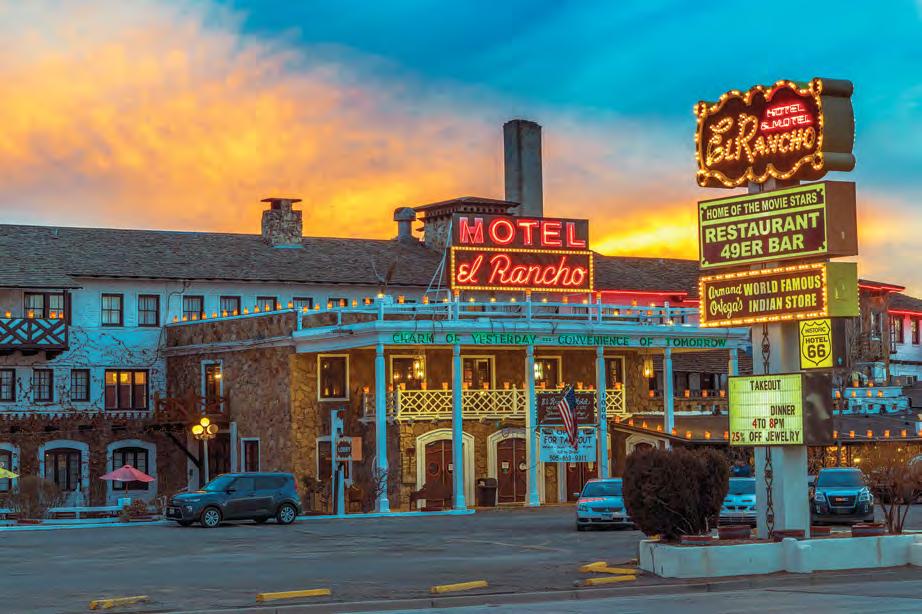
As the largest town between Albuquerque and Flagstaff, Gallup has long served as a gateway to Native American culture and the rich heritage of the Southwest. Beyond its fascinating roots, though, Gallup invites exploration: wander through Historic Downtown, visit the iconic Richardson Trading Post, and if your visit falls in July, experience the Gallup Inter-Tribal Indian Ceremonial. And no visit is complete without staying at the legendary El Rancho Hotel.
Built in 1936 by movie theater tycoon R.E. Griffith, the hotel was designed by architect Jack Corgan to fit in seamlessly with the rugged landscape. Step inside, and the lobby captivates: an oversized fireplace, sweeping curved staircases draped red carpet, and hand-hewn beams evoke the spirit of the Old West. Yet at El Rancho, the red carpet rolled out in more ways than one.
During Hollywood’s Golden Age, stars like Katherine Hepburn, Gregory Peck, Robert Mitchum, and the ultimate cowboy, John Wayne, called El Rancho home while filming in the region. However, as the popularity of Westerns, and then of Route 66 itself waned, the hotel gradually lost its appeal, falling into neglect and facing the threat of demolition.
But in 1986, Armand Ortega, owner of a Navajo trading post, thankfully, restored the property, earning it a spot on the National Register of Historic Places. Today, his grandson Shane Ortega has completed a major renovation, adding to the hotel’s glamorous Hollywood past with contemporary comfort. At El Rancho, history, Hollywood, and the open road converge, making a stay an unforgettable chapter of your Route 66 adventure.
La Posada, Winslow, AZ
Winslow, Arizona, is one of those Route 66 towns that demands an overnight stop. Perhaps most famous for its Standin’ on the Corner park — immortalized in the Eagles’ 1970s hit Take It Easy — the town offers so much more. At the heart of this iconic little town is the legendary La Posada Hotel.
Built by railway magnate Fred Harvey, La Posada — Spanish for “The Resting Place” — was the crown jewel of his hospitality empire. When selecting the right architect for the special venue, Harvey enlisted acclaimed architect Mary Colter, whose hacienda design is regarded as her masterpiece. La Posada opened on May 15, 1930, with 75 guest rooms and two dining rooms, and quickly drew Hollywood stars and luminaries such as John Wayne, Amelia Earhart, Franklin D. Roosevelt, and Albert Einstein. Yet, its debut came as passenger rail declined, automobiles reshaped travel, and the 1929 financial crash continued to ripple across the nation.
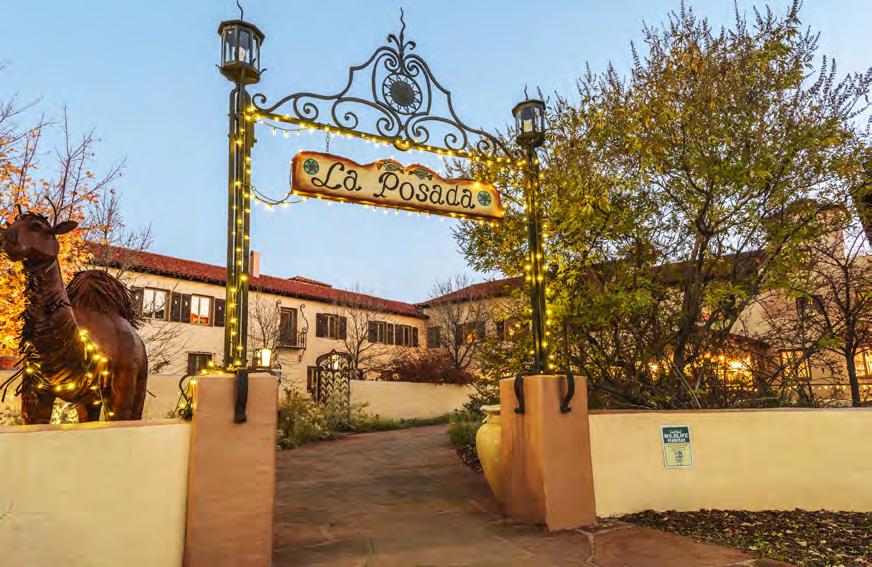
After 27 years, La Posada closed in 1957, but its story didn’t end there. In 1994, Allan Affeldt discovered the shuttered hotel listed as one of the National Trust for Historic Preservation’s most endangered places. Determined to save it, he partnered with his wife, artist Tina Mion, and fellow artist Dan Lutzick, and in late 1997, began a meticulous restoration that brought La Posada back to life.
Today, each room exudes unique Southwestern elegance, blending deluxe comfort with vibrant art. Wander the lush gardens, browse the eclectic gift shop, or watch the Amtrak Southwest train glide past the back gate. Within easy walking distance are the Old Trails Museum and First Street Park.
Historic 66 Motel, Seligman, AZ Seligman isn’t just a stop to tick off your list; it’s a living snapshot of classic Americana. Its neon glow, handpainted signs, and quirky storefronts deliver a full-blown Radiator Springs vibe. Here, Route 66 nostalgia isn’t recreated — it simply never left.
When the highway bypassed Seligman in the late 1970s, the town nearly faded into silence, until residents, rallied by local barber Angel Delgadillo, fought to revive it. Their efforts restored its historic appeal and drew travelers back, earning Seligman its title as the “Birthplace of Historic Route 66.”
Today, neon still flickers at dusk, kitschy roadside attractions line the main drag, and family-run landmarks keep the Mother Road spirit alive. Staying overnight lets you slow down and experience the town the way it deserves: wandering Historic Downtown at sunset and photographing iconic signs without rushing. And the Historic 66 Motel is the quintessential Route 66 stay.
The story goes that in 1964, the Pope family spent a night at what was then the Navajo Motel during a cross-country trip. Two decades later, they returned, bought the property, and transformed it into the familyrun Historic Route 66 Motel. Today, the children and grandchildren of the Popes welcome travelers with genuine mom-and-pop hospitality.
Simple and cozy, the rooms, many named after celebrities who once stayed here, including Martin Milner, Ben Johnson, and Montie Montana, are filled with Route 66 memorabilia that channels the romance of the open road. A night here is an immersion in the sights, sounds, and stories of classic America.
Heading west on historic U.S. Route 66, the first California stop is Needles, a very hot desert gateway that welcomed countless travelers into the Golden State. Named for the jagged “needle-like” rock formations on the Arizona border, it was designated part of Route 66 in 1926, becoming a critical entry point. Its railroad heritage, including the Santa Fe and Atlantic & Pacific lines, made the town an early hub for passengers and goods. The iconic El Garces Hotel, a Harvey House built in 1908 for rail travelers, later served Route 66 motorists seeking food, lodging, and leisure in the desert. It now serves as a transportation hub for Amtrak and Needles Area Transit.
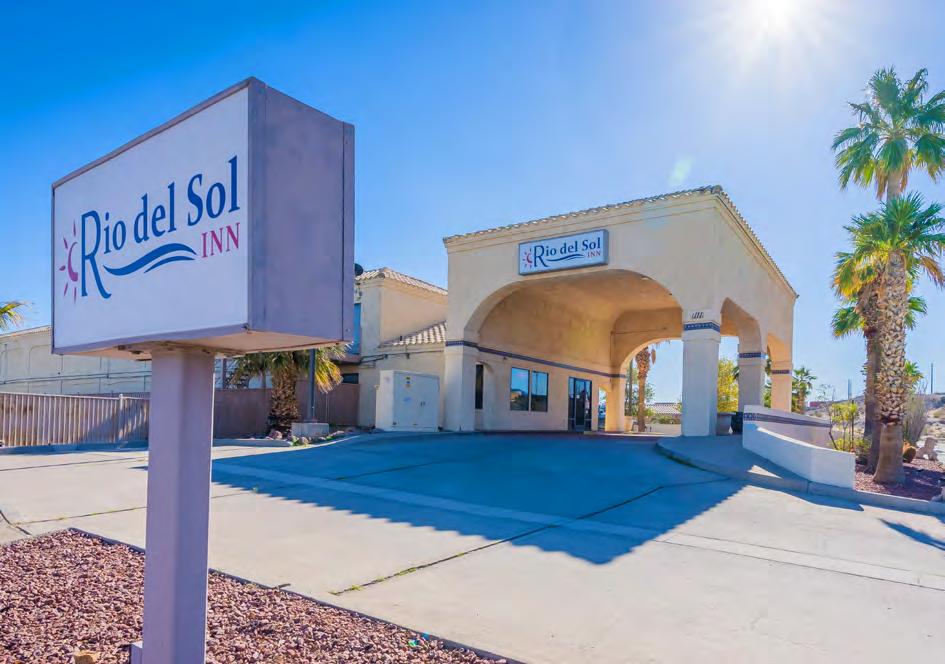
The town’s roadside radiance endures today, from the nostalgic “Welcome to Needles” covered wagon to vintage signage recalling the heyday of the Mother Road. Cartoonist Charles M. Schulz briefly lived here, inspiring desert-based tales of Spike, Snoopy’s brother, adding a quirky cultural footnote to the town’s history. It also serves as an eastern gateway to the Mojave National Preserve and Colorado River recreation, marrying Route 66 nostalgia and desert adventure.
Needles lives up to its reputation for heat, with July highs reaching 110°F. For relief and true pleasure, the Rio Del Sol Inn is your best bet. It offers relaxing rooms, oversized parking for RVs or boats, and a soothing outdoor pool. On a quiet evening under swaying palm trees, it becomes a serene retreat where you can rest, celebrate how far you’ve come, and savor the simple pleasures of the desert. What more could you ask for?
When Route 66 was officially established in 1926, its alignment passed through what is now Old Town Victorville, following portions of today’s D Street and Seventh Street. The area flourished with motels, diners, and roadside businesses springing up to serve travelers crossing the High Desert. While many of the original establishments have disappeared or been altered, the California Route 66 Museum offers a fascinating glimpse into the area’s Mother Road history.
Spanning over 4,500 square feet, the museum showcases photos, memorabilia, and exhibits that chronicle the highway’s impact on Victorville and the surrounding region. Emma Jean’s Holland Burger Cafe, a photogenic eatery that has appeared in films, TV, and music video productions, serves classic American diner fare in a retro setting, while the quirky Elmer’s Bottle Tree Ranch in nearby Oro Grande delights with its whimsical, folk-art desert sculptures.
After a day of sightseeing, unwind at the Fairfield by Marriott Inn & Suites Victorville. Opened in April 2024, this modern, four-story, 96room hotel combines sleek grayand-white minimalism with the inviting warmth of the California desert. Rooms are spacious and comfortable, featuring plush bedding, flat-screen TVs, minifridges, microwaves, coffee makers, and well-lit workspaces. Lounge by the sparkling outdoor pool and heated spa, or around the blazing fire on the patio overlooking the San Bernardino Mountains, reflecting on a day spent experiencing history, art, and California adventure.
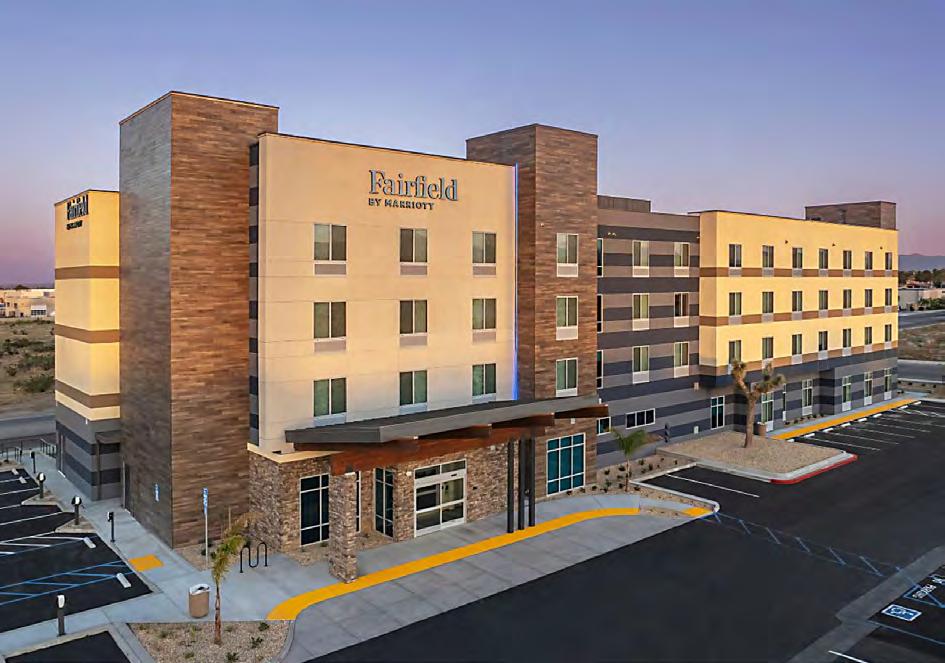
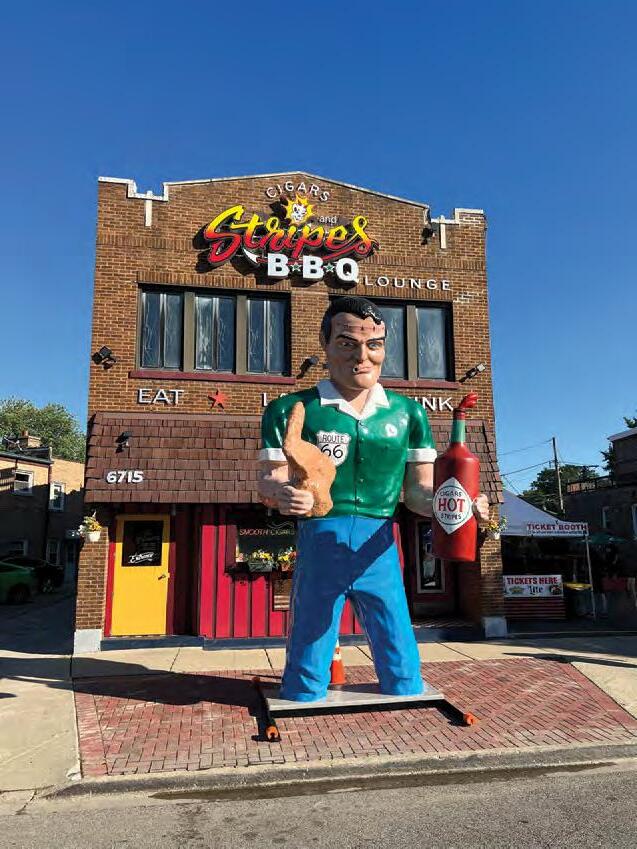

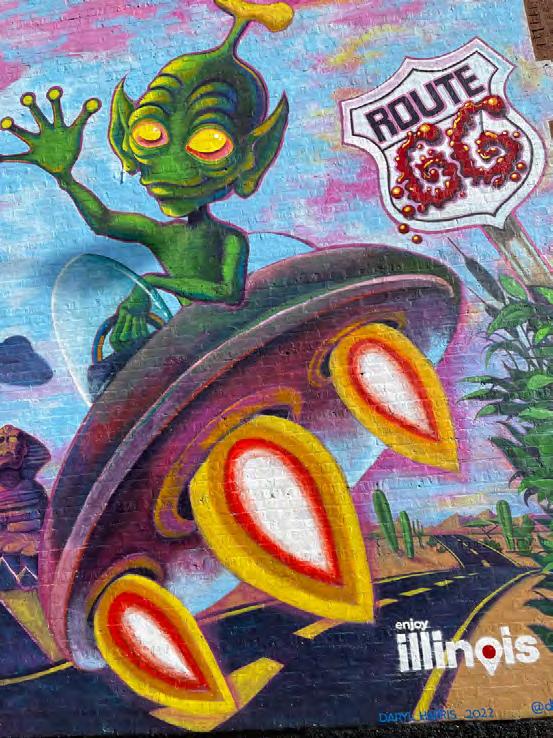




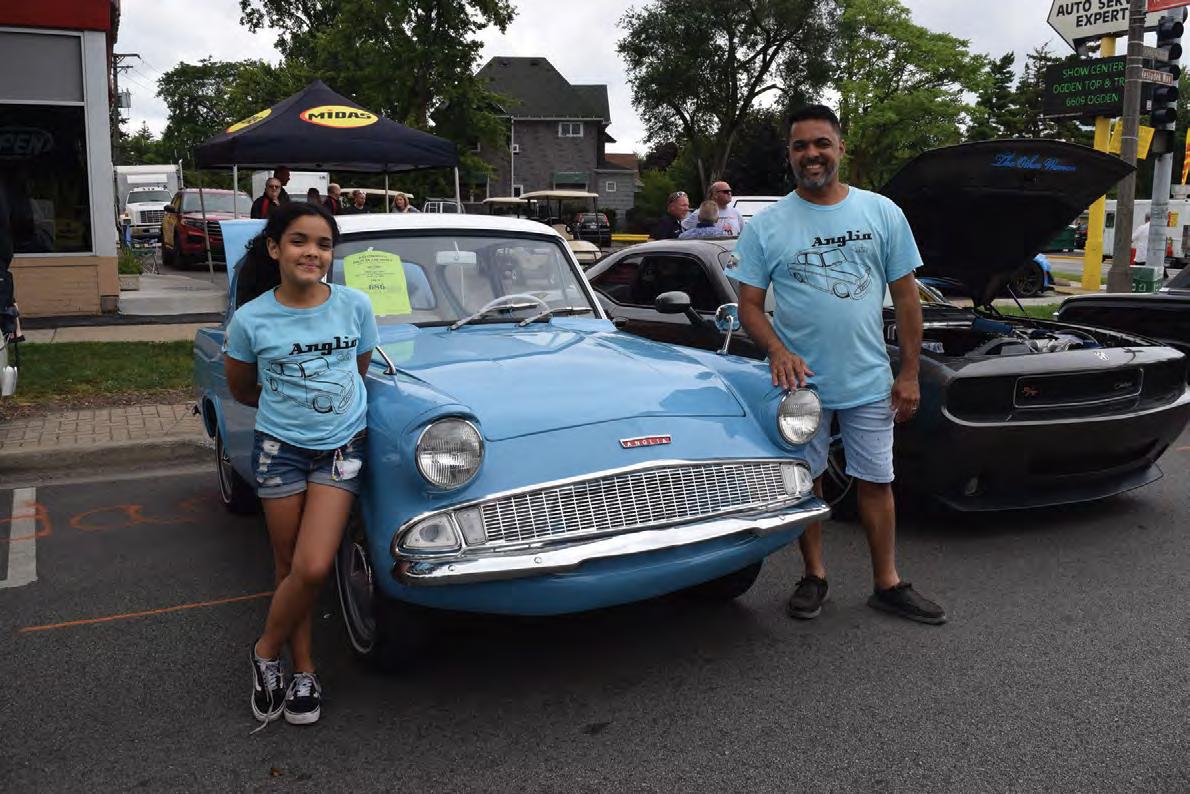


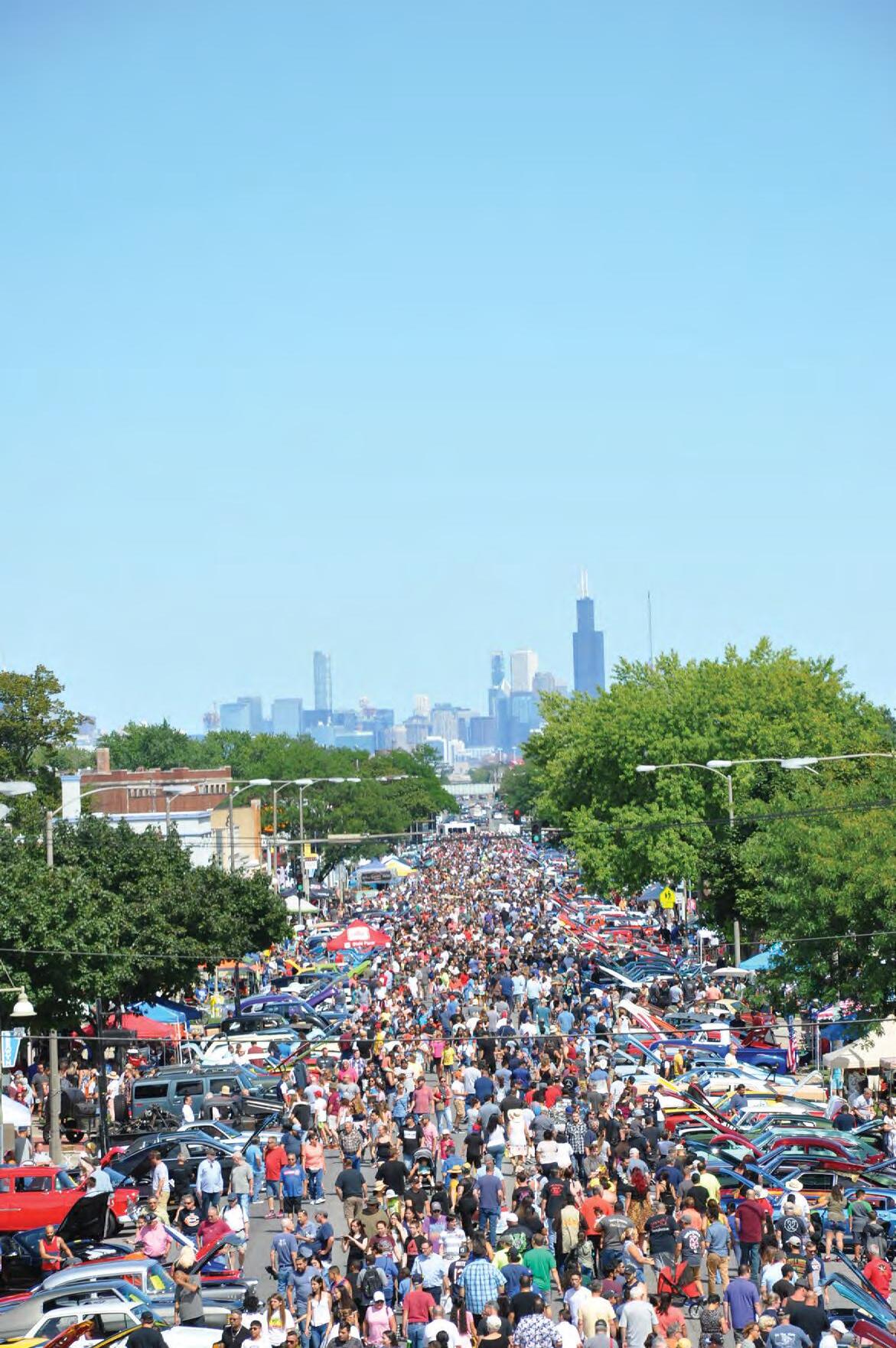







Wigwam Motel, San Bernardino, CA
Located on the famed stretch of Route 66 in San Bernardino, California, Wigwam Village #7 offers a rare chance to experience a piece of American road trip history firsthand. Built between 1947 and 1949 and opening in 1950, this iconic motel is one of the few remaining “Wigwam Villages” designed by architect Frank A. Redford. Out of the original seven Wigwam Villages across the country, only three survive today, and the San Bernardino location is among them. Over the years, the property experienced decline, a number of owners, and by the 1980s and 1990s, had developed a reputation for hourly rentals. In 2002, the motel was purchased by the Patel family, who undertook careful restoration efforts in order to revive its mid-century look, while updating amenities for today’s travelers. The 19 wigwams, arranged around the office and swimming pool, are concrete and stucco structures with wood framing, each standing roughly 32-feet-tall and 20-feet-wide at the base. For a truly quirky overnight, it doesn’t get any better than this.
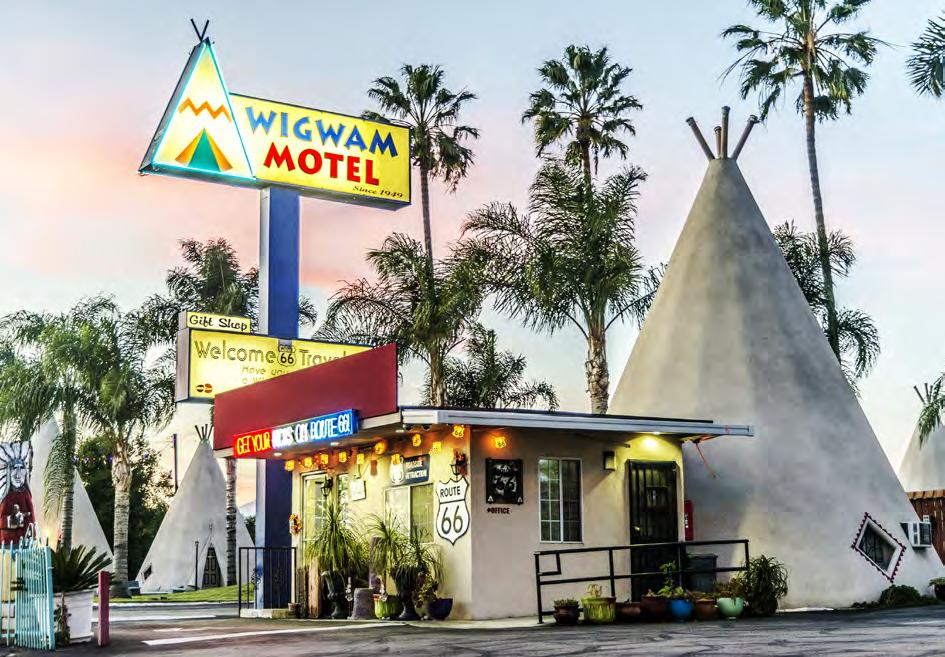
by
When Route 66 arrived in the 1920s, San Bernardino became a key stop for travelers heading west, spurring motels, diners, and service stations along Foothill Boulevard, the alignment of historic Route 66 where Wigwam Village #7 stands. The motel is part of that cultural heritage, listed on the National Register of Historic Places for its significance in American roadside architecture. While in town, check out the Original McDonald’s Site & Museum and the San Bernardino Santa Fe Depot.
The end of the road. Santa Monica holds a special place in Route 66 lore. While the highway originally ended in downtown Los Angeles, in 1936 it was extended west to Santa Monica, giving travelers a dramatic finish: the Pacific Ocean. Adventurers pay homage to the journey at the Santa Monica Pier beneath the iconic “End of the Trail” sign, a tradition officially recognized in 2009.
After following the winding ribbon of Route 66 from Chicago, feeling the road’s history beneath your wheels, that ocean breeze on your face is both exhilarating and bittersweet. It’s a moment of catharsis, a celebration of the journey, and the quiet realization that an epic adventure has reached its horizon.
Now imagine checking into a real piece of history. Hotel Casa del Mar, perched right on the sand and steps from the pier, evokes both the romance of the open road and the timeless allure of the coast. Built in 1926 as “Club Casa del Mar,” a private beach club for Hollywood’s elite, it was designed by Charles F. Plummer in Italian Renaissance Revival style, complete with lavish interiors, hand-painted ceilings, and luxurious furnishings. After decades of varied use, it was lovingly restored, reopening as a hotel in 1999.
Today, Casa del Mar honors that legacy with sweeping ocean-facing windows and an elegance that feels like a reward after 2,400+ miles of roadway. Here, you trade the hum of the highway for the roar of the ocean, because after Route 66, sometimes the ultimate destination isn’t a place, it’s a feeling.
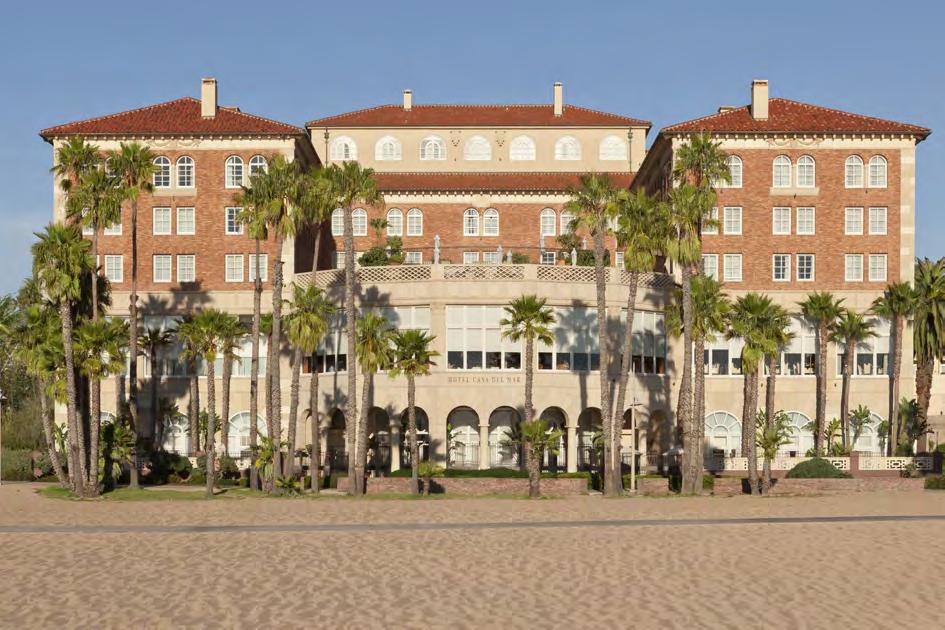
Hotel, Santa Monica, CA
If a trendy, eco-conscious retreat is more your pace, then the Shore Hotel offers bright rooms, ocean breezes, and a location right across from the iconic Santa Monica Pier and the “End of the Trail” sign.
Opened in October 2011, Shore Hotel stands as a shining gem on Santa Monica’s beachfront. Its U-shaped design connects two four-story wings with a glass link, framing a central courtyard and pool. As the only LEED Gold-certified hotel in Santa Monica, it merges sleek design with eco - conscious sensibility, from energy- efficient systems and low-impact materials to native landscaping and recycled-waste construction practices. Bright, airy rooms, many with private balconies or patios and views of the ocean or garden, offer a clean, contemporary retreat after the long road behind you. Step outside to feel the sea breeze, stroll to the pier’s end to see the Bob Waldmire Tribute, celebrating the illustrator who immortalized the Mother Road, catch a wave, or wander along the vibrant Santa Monica Promenade. Here, the rhythm of the ocean becomes part of your Route 66 finale.
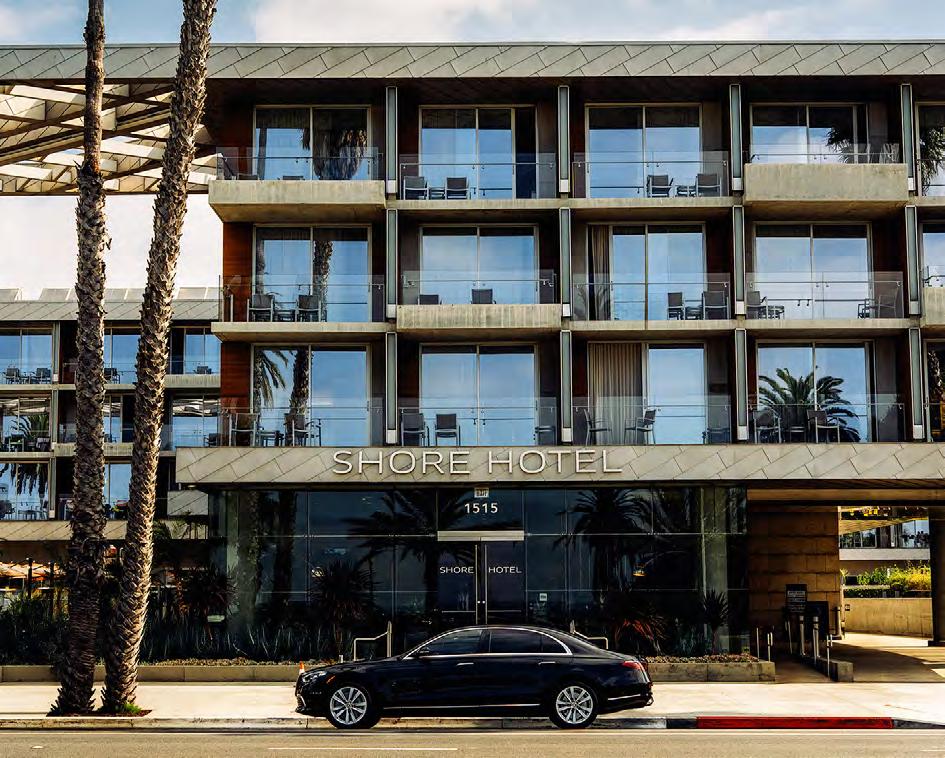
Whether you arrive weary or exhilarated, the combination of location, leisure, and conscious design makes it a wonderfully fitting bittersweet beauty of an adventure finally meeting the sea.
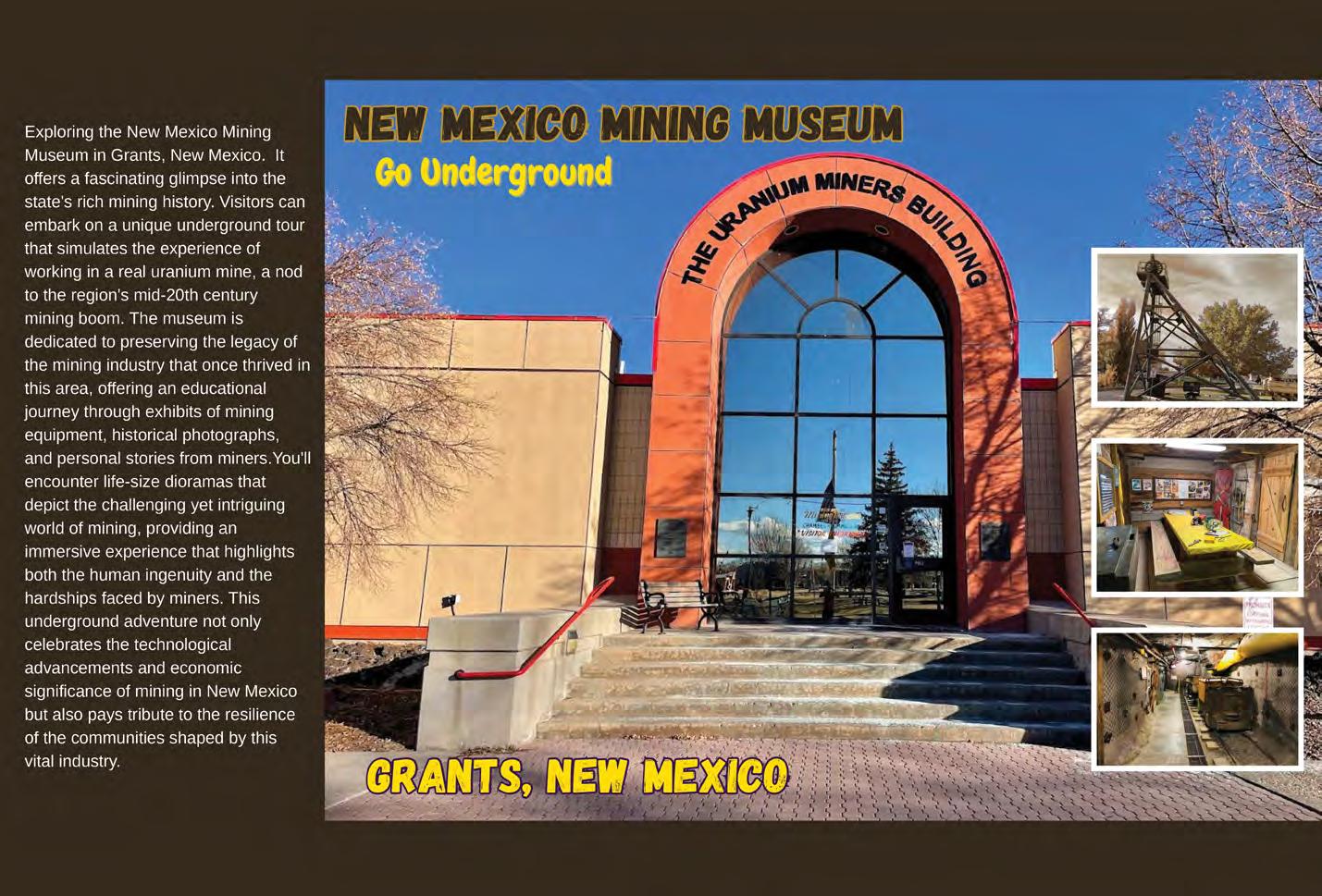
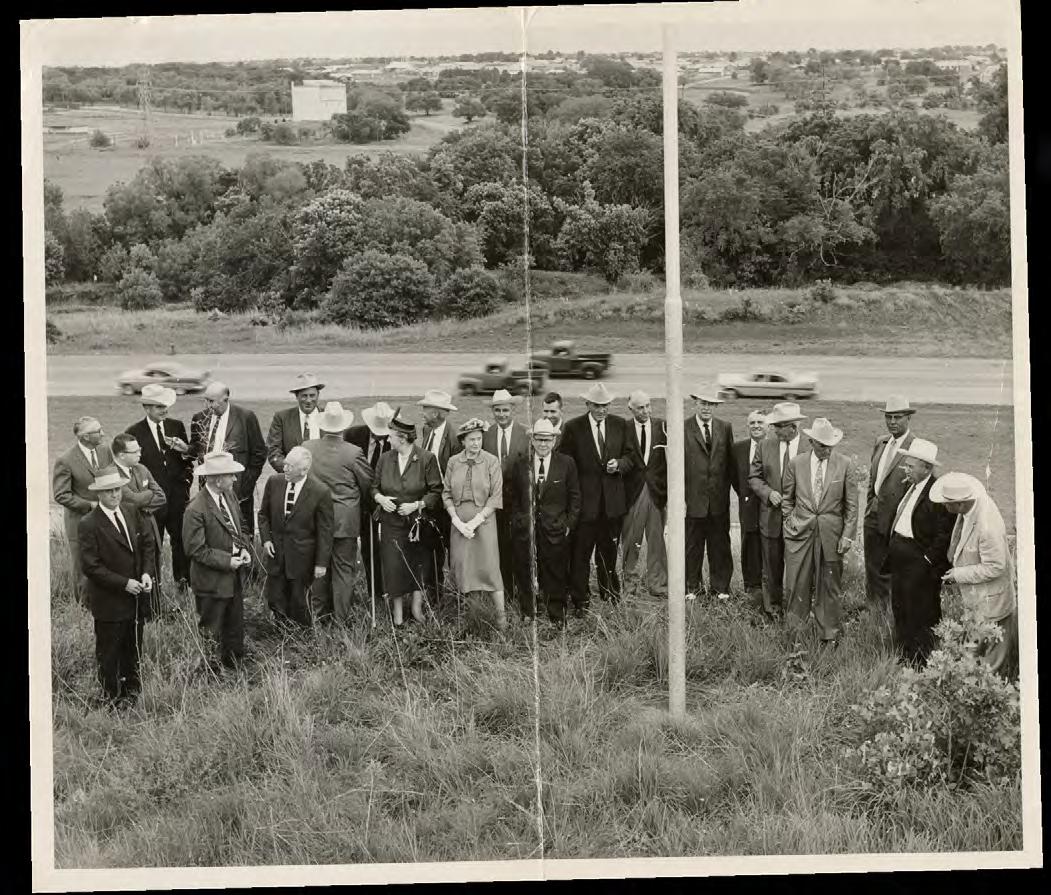
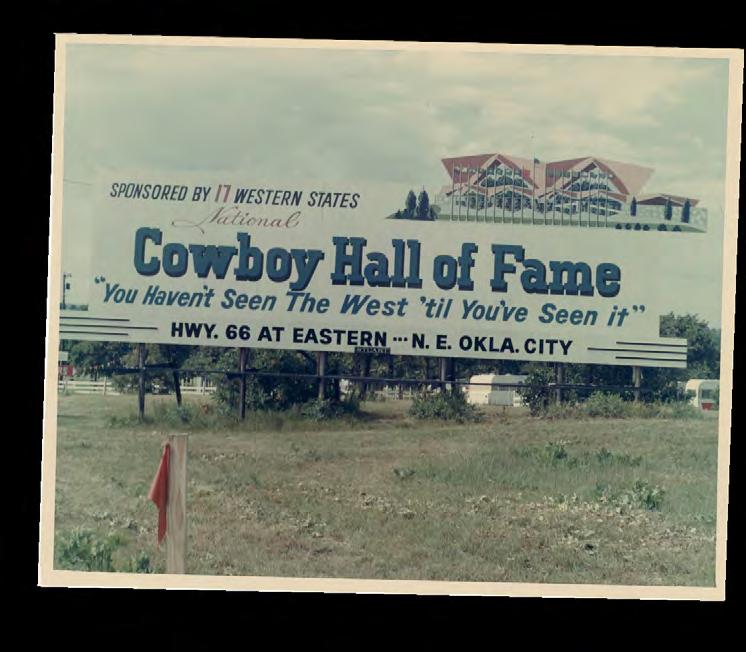
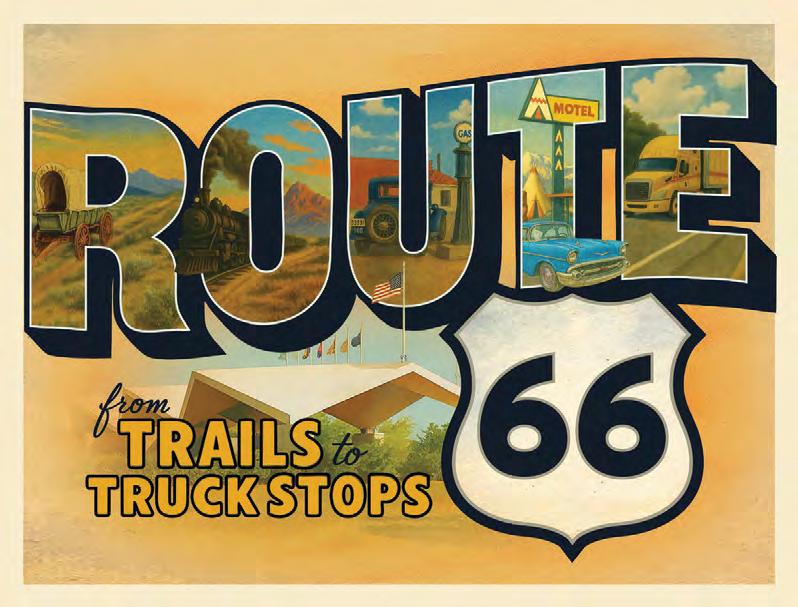

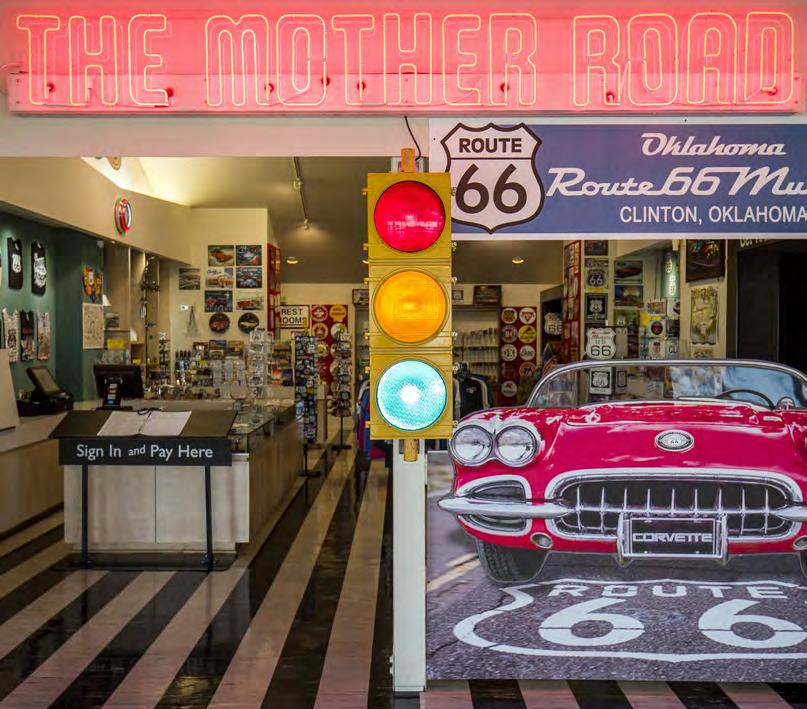
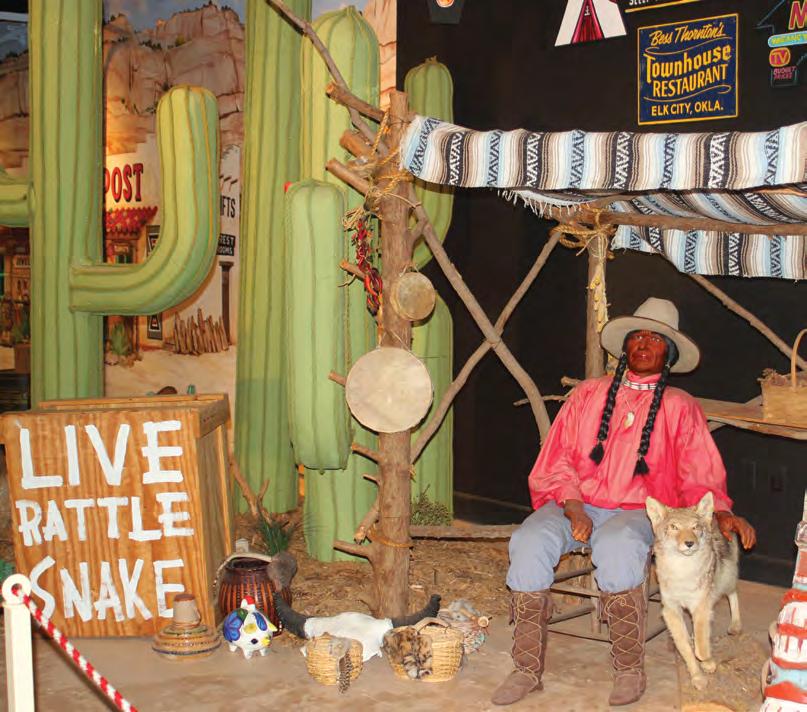
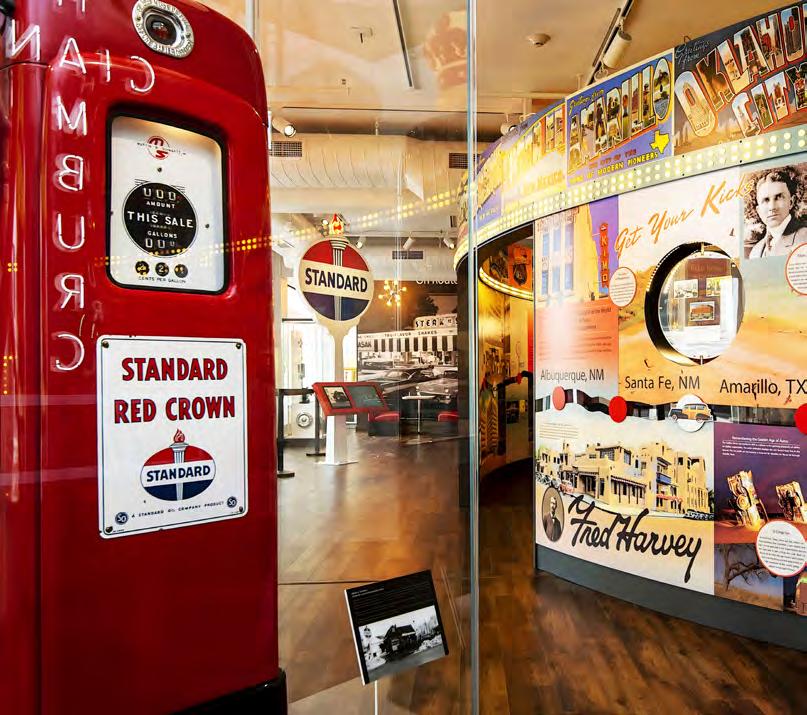
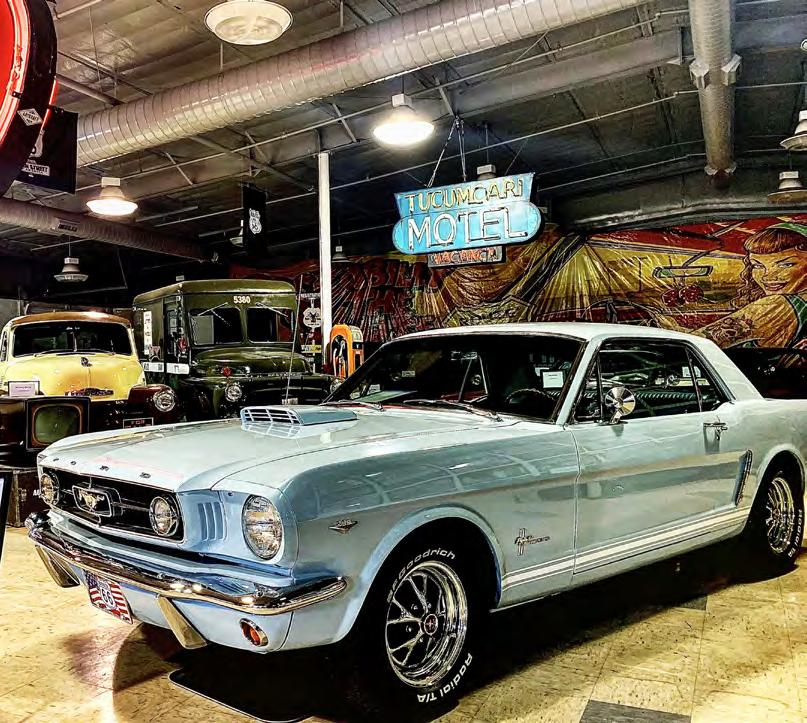
The iconic Mother Road has captured imaginations for nearly a century, weaving together stories of adventure, culture, and the open highway. Along its historic stretch from Chicago to Los Angeles, a huge number of museums bring this legendary highway to life, preserving its history, quirky roadside attractions, and the people who traveled and shaped it. From Illinois to California, these museums offer a mix of vintage vehicles, neon signs, immersive exhibits, and personal narratives that transport visitors back to the golden era of American road trips. Whether you’re a lifelong Route 66 fan or a first-time traveler, these stops provide fascinating insights, vibrant stories, and unforgettable photo opportunities along America’s most beloved highway. It is difficult to narrow down our top picks but for travelers seeking a wider history museum experience, these are our favorites.
Situated in the heart of Joliet, the Joliet Area Historical Museum offers visitors a deep dive into the city’s rich history and its connections to the wider story of Route 66. Housed in a historic building downtown, the museum preserves and interprets artifacts, photographs, and exhibits that highlight Joliet’s industrial roots, cultural evolution, and role in America’s transportation history.
A highlight is the museum’s focus on the early days of Route 66, which begins just a few miles northeast in Chicago and passes directly through Joliet. Exhibits explore the city’s contributions to the highway’s development, including local manufacturing, roadside culture, and the businesses and individuals who supported travelers along the Mother Road. Visitors can view vintage photographs, historical signage, and period artifacts that evoke the golden era of 20 th Century American road trips.
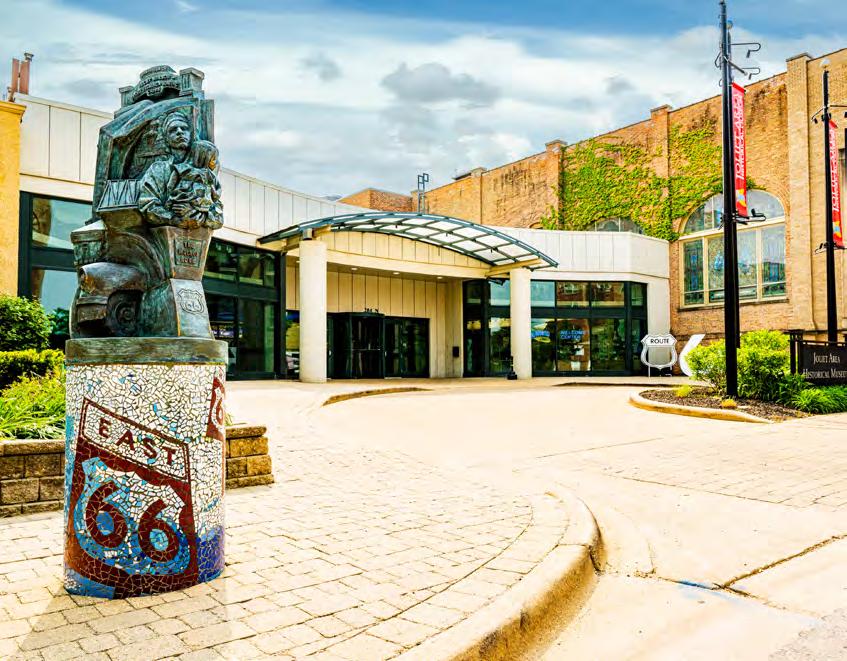
Beyond Route 66, the museum offers rotating exhibits on local history, from industry and railroads to community life and cultural milestones. Open to the public year-round, the Joliet Area Historical Museum provides an engaging, educational stop for Route 66 travelers, history enthusiasts, and anyone seeking to understand the city’s place in the story of the Mother Road.
In the center of downtown Pontiac, the Illinois Route 66 Hall of Fame & Museum stands as a favorite stop for travelers eager to explore the history of America’s most celebrated highway. Located inside the former Pontiac City Hall and Fire Station, it opened in 2004 and quickly became known for its nostalgic look into the golden era of Route 66.
The museum holds thousands of artifacts — vintage signs, photos, and memorabilia — tracing the evolution of the Mother Road. A highlight is the Bob Waldmire Experience, honoring the artist and cartographer whose whimsical maps and murals helped keep Route 66’s spirit alive. Visitors can step inside Waldmire’s legendary VW van and view his “Road Yacht,” a converted school bus that became an icon of his free-spirited travels.
The Hall of Fame portion celebrates people and businesses who have worked to preserve Route 66’s heritage. Outside, more than 20 colorful murals brighten the town, extending the experience beyond the museum walls.
Open daily with free admission, the Illinois Route 66 Hall of Fame & Museum offers a memorable blend of history, creativity, and community—an essential stop along the Mother Road.
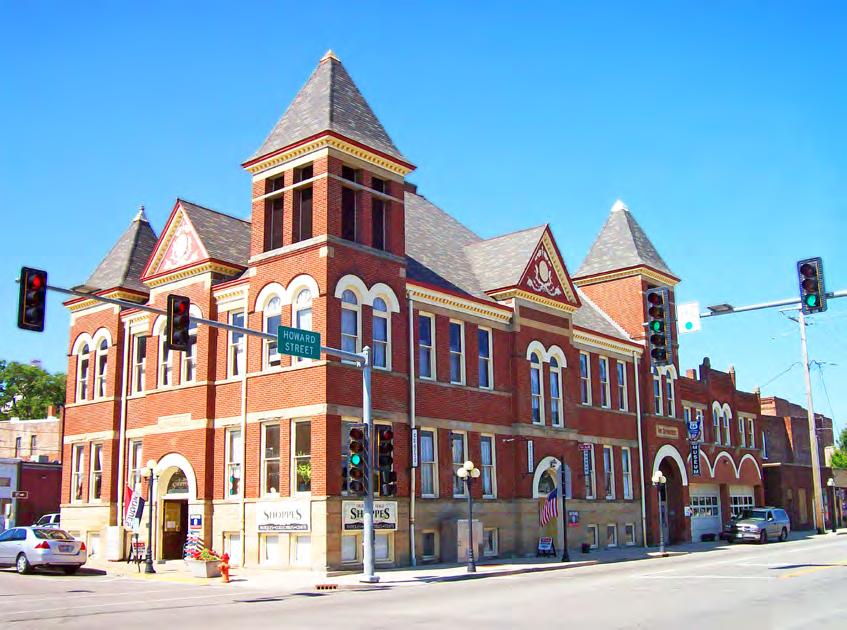
Found in the heart of downtown Springfield, the History Museum on the Square offers an immersive journey through the city’s past, highlighting its pivotal role in the creation of Route 66. Often called the “Birthplace of Route 66,” Springfield was where the highway’s name was officially adopted in November 1926. The Birthplace of Route 66 gallery celebrates this history with engaging exhibits.
Visitors can admire a restored 1957 Chevy Bel Air convertible in the John T. Woodruff Theater, honoring the Springfieldian who helped name the highway. The gallery also features neon signs from local landmarks, including Red’s Giant Hamburg, the Rail Haven Motel, and the Sunset Drive-In Theatre, each reflecting the highway’s golden era.
Beyond Route 66, the museum explores Springfield’s broader history. The Trains, Trolleys & Transportation gallery showcases the city’s evolution in travel, while Wild Bill Hickok & The American West examines his regional connections. The Civil War in Springfield gallery reveals the city’s experiences during that transformative period.
Open daily, the History Museum on the Square invites visitors to step back in time. Its interactive displays and rich exhibits make it a must-see for history buffs and Route 66 travelers alike.
While not exclusively a Route 66 museum, the National Cowboy & Western Heritage Museum in Oklahoma City connects deeply to the spirit of the American West — and by extension, the open roads, Great Plains, and travel culture that defined much of Route 66.
Founded in 1955 as the Cowboy Hall of Fame and Museum and opened to the public in 1965, the museum now spans 32 acres at 1700 NE 63rd St., featuring galleries of Western art, Native American history, immersive exhibits, and a recreated turn-of-thecentury town.
Recent exhibitions have incorporated the highways and road-trip culture of the West. An upcoming show, “Route 66: From Trails to Truck Stops” (Feb–May 2026), explores how frontier life, mobility, and modernization shaped the highway’s cultural significance.
Visitors can enjoy masterpieces by Frederic Remington and Charles M. Russell, interactive children’s zones, and stroll through Prosperity Junction, a recreated western townscape.
For Route 66 travelers in Oklahoma, the museum provides context for the land of cowboys, prairie highways, dust-bowl migrations, and midcentury travel. Its exhibits illuminate how the Mother Road became a corridor of cultural change, art, and Western heritage—a must-see stop in Oklahoma City.
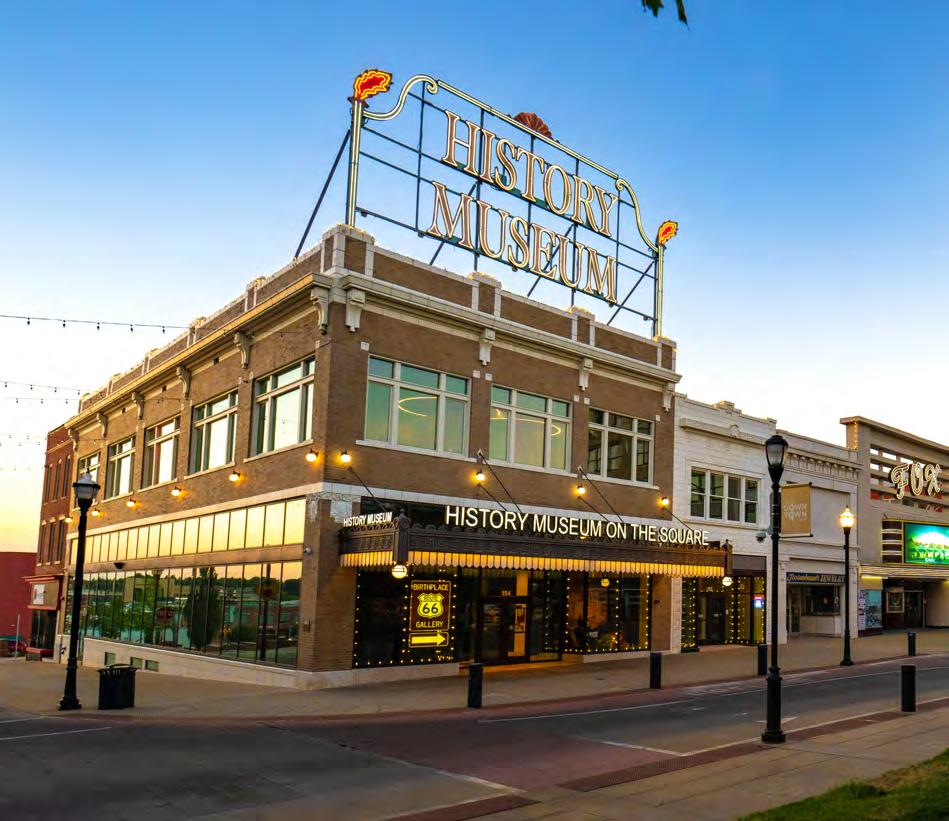
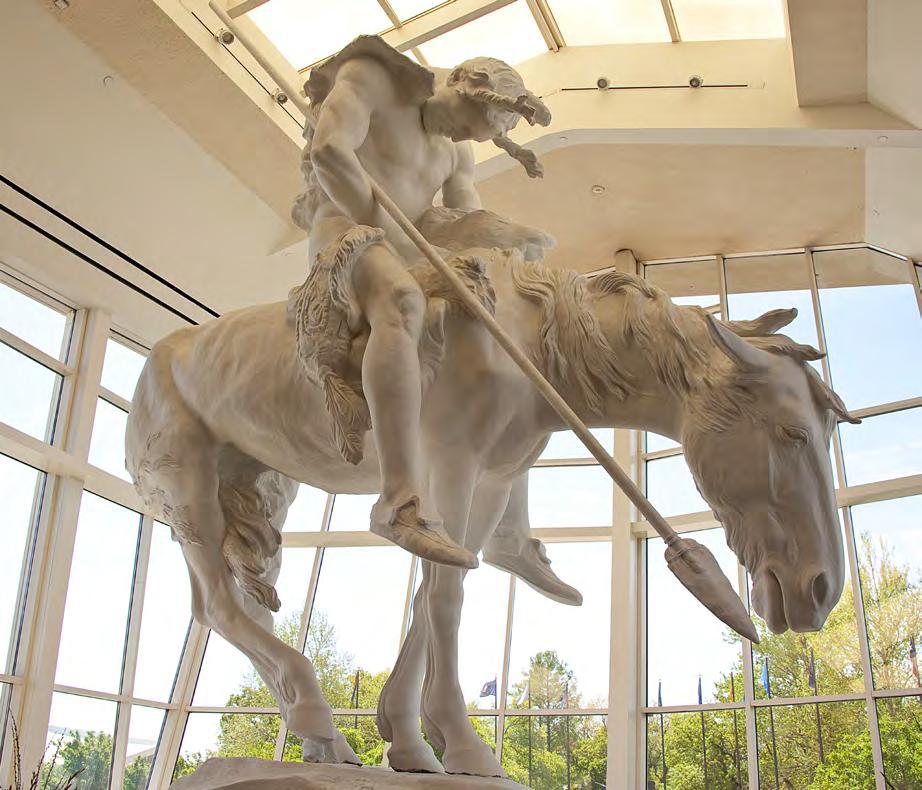
by
Oklahoma Route 66 Museum, Clinton, OK
Nestled in the heart of Route 66 country, the Oklahoma Route 66 Museum in Clinton serves as the state’s official tribute to the iconic Mother Road. Opened on September 23, 1995, and operated by the Oklahoma Historical Society, the museum immerses visitors in the history and culture of Route 66—from its origins as the Will Rogers Highway to its eventual decommissioning.
Exhibits are organized by decade, creating a multisensory timeline. Guests can ride the Dust Bowl exodus, explore the highway’s development during World War II, relive 1950s family road trips, hear the roar of big rigs, and reflect on the interstate era’s impact. The collection includes the “world’s largest curio cabinet” of Route 66 oddities and memorabilia, vintage vehicles, neon motel signs, and interactive displays.
Easily accessed at 2229 W Gary Blvd (I-40 Exit 65), the museum is engaging for both dedicated Route 66 enthusiasts and casual travelers. It provides a vivid sense of how the highway shaped commerce, travel, popular culture, and American identity. With its focused theme and high-quality exhibits, the Oklahoma Route 66 Museum is a must-visit stop along the Mother Road.
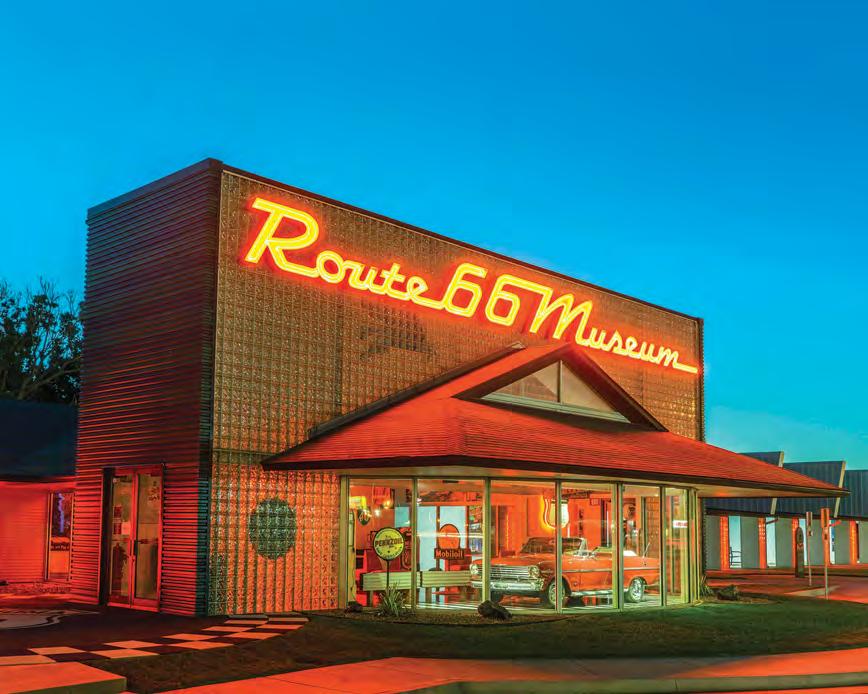
Route 66 and Transportation Museum, Elk City, OK
Nestled in historic Elk City, the National Route 66 Museum is part of a larger complex that includes the National Transportation Museum, Old Town Museum, and Farm & Ranch Museum. Opened in June 1998 at 2717 W 3rd St., the museum honors the people who lived, worked, and traveled along the Mother Road, guiding visitors on a journey through all eight states of Route 66 — from Illinois to California — through murals, vignettes, and archival audio.
Highlights include realistic scene reconstructions, the chance to “drive” a 1955 pink Cadillac, and a mock drive-in theater experience seated inside a vintage Chevy Impala. The museum emphasizes personal stories: travelers, entrepreneurs, roadside attractions, garages, motels, and the generations who made Route 66 part of American folklore. Its thoughtful layout conveys historical decades and cultural shifts that shaped the highway.
For travelers heading west through Oklahoma, this museum complements the Clinton museum by focusing less on national trends and more on lived experiences and regional voices. For visitors who value storytelling alongside artifacts, the National Route 66 Museum offers a memorable and immersive stop on the Mother Road.
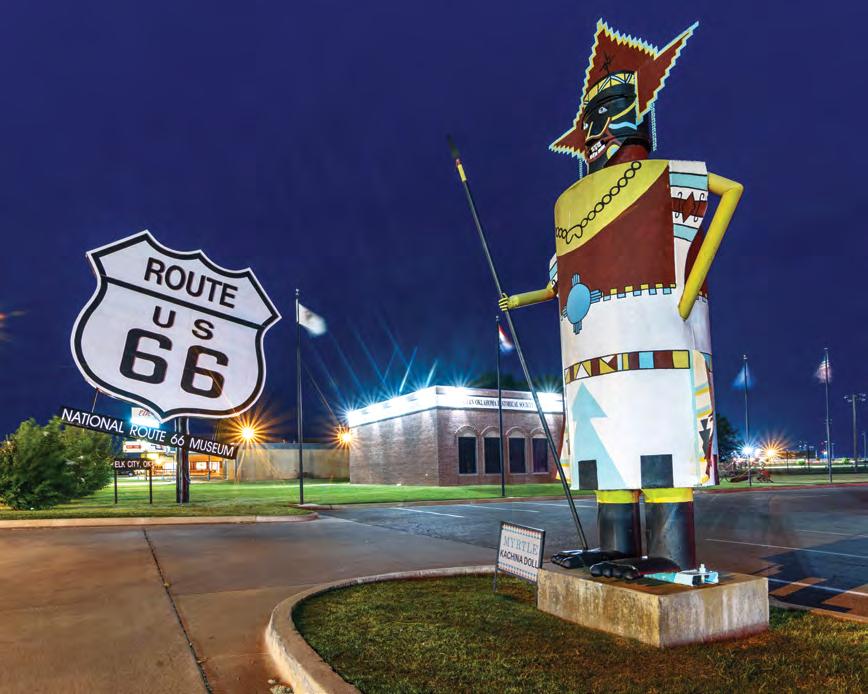
Some additional museums that should be on your radar include the Illinois Rock & Roll Museum in Joliet, IL, Abraham Lincoln Presidential Museum in Springfield, IL, Route 66 Museum in Lebanon, MO, J.W. Davis Arms & Historical Museum in Claremore, OK, OKC National Memorial and Museum in OKC, OK, Devil’s Rope Museum/ Route 66 Museum in McLean, TX, Mesalands Dinosaur Museum in Tucumcari, NM, Route 66 Mother Road Museum in Barstow, CA, and California Route 66 Museum in Victorville, CA. These each offer visitors a unique, fascinating journey that will leave a lasting impression and long impacting memories.
Oklahoma’s Route 66 Corridor
On Route 66?
Make Claremore Your Must-See Stop. Uncover our history. Explore our museums. Experience the charm that put Claremore on the map.
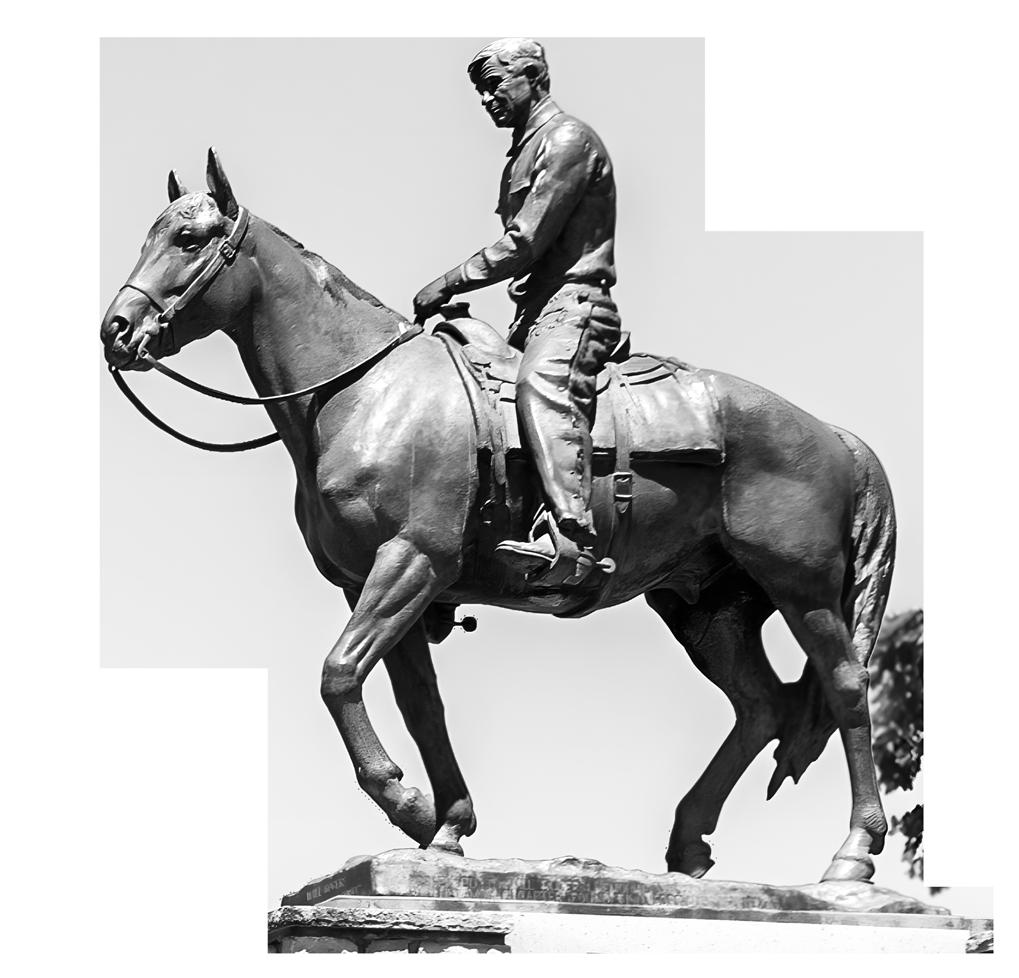
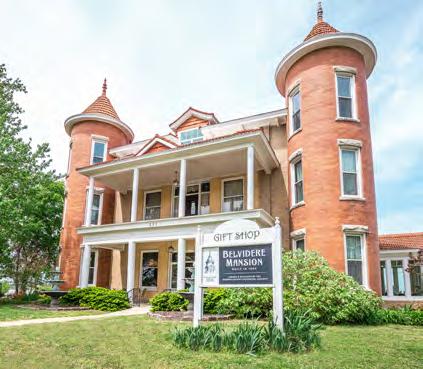
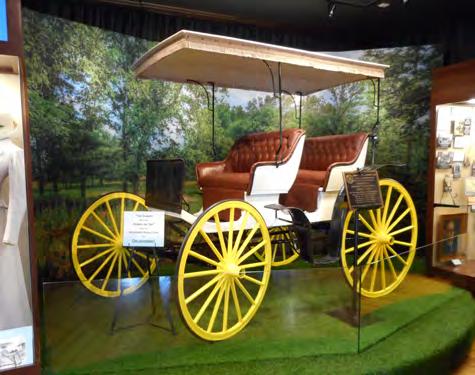
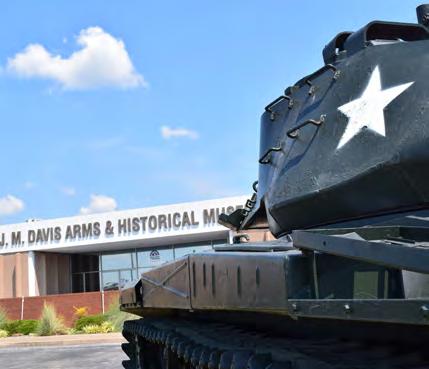
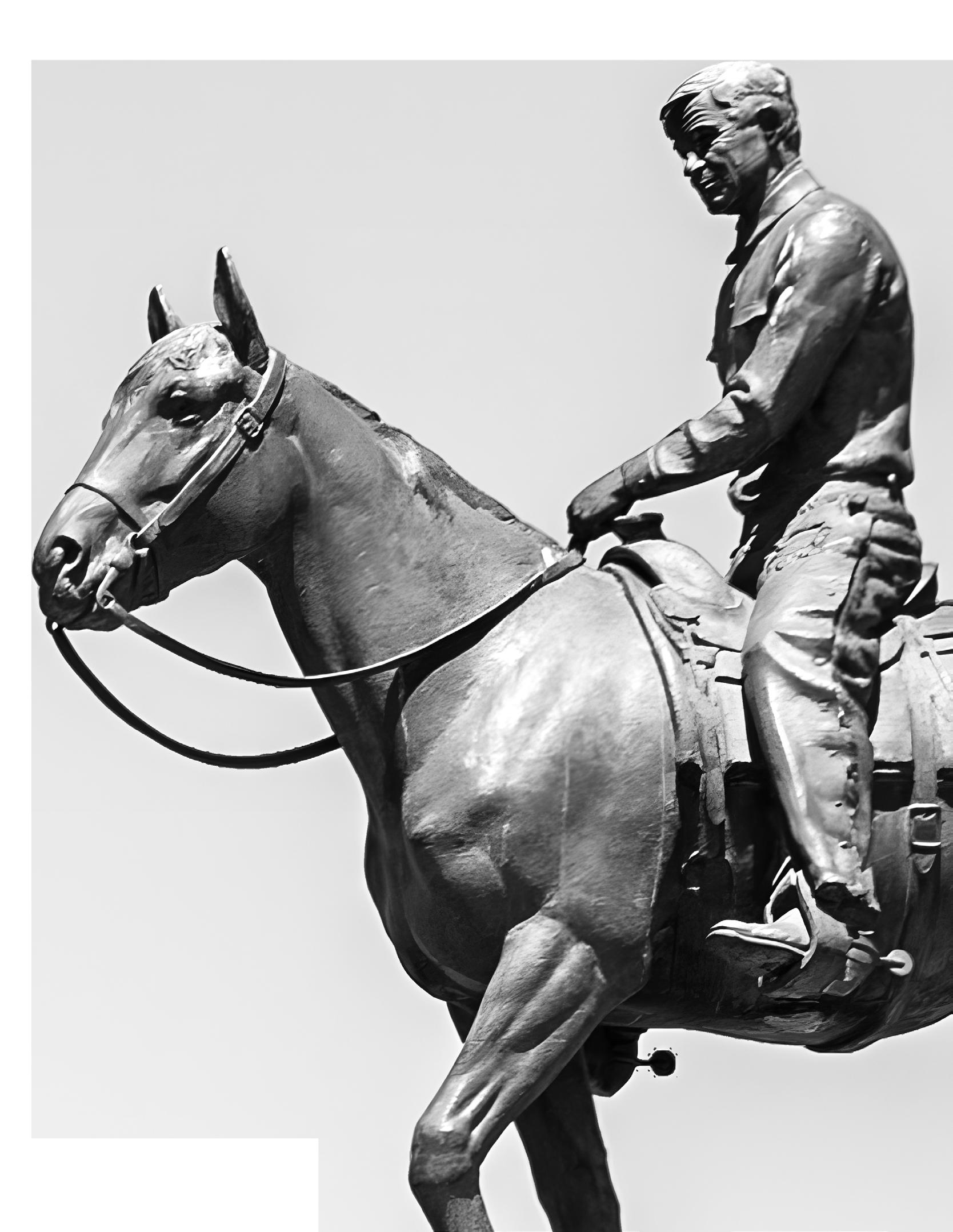
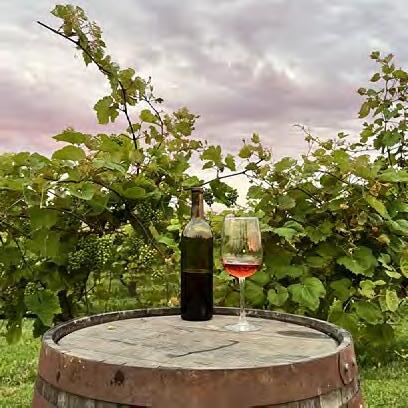


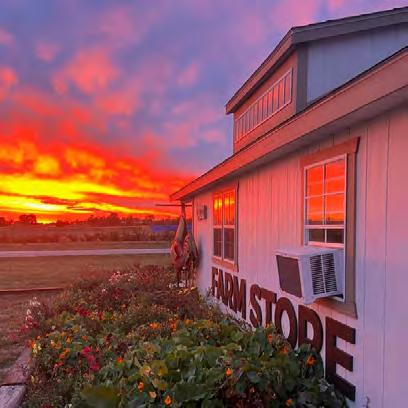
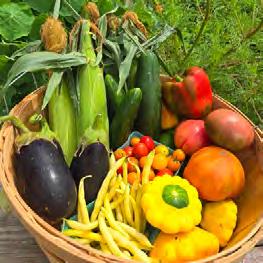


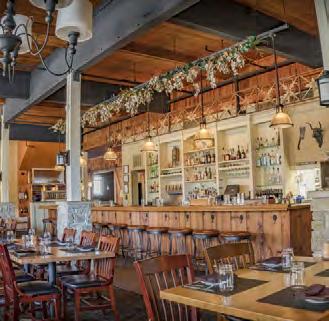



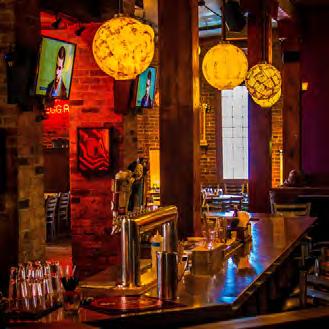

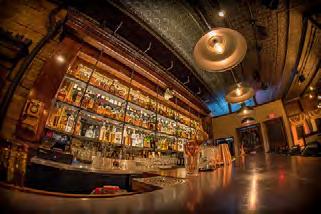

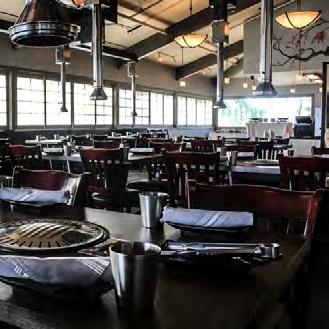


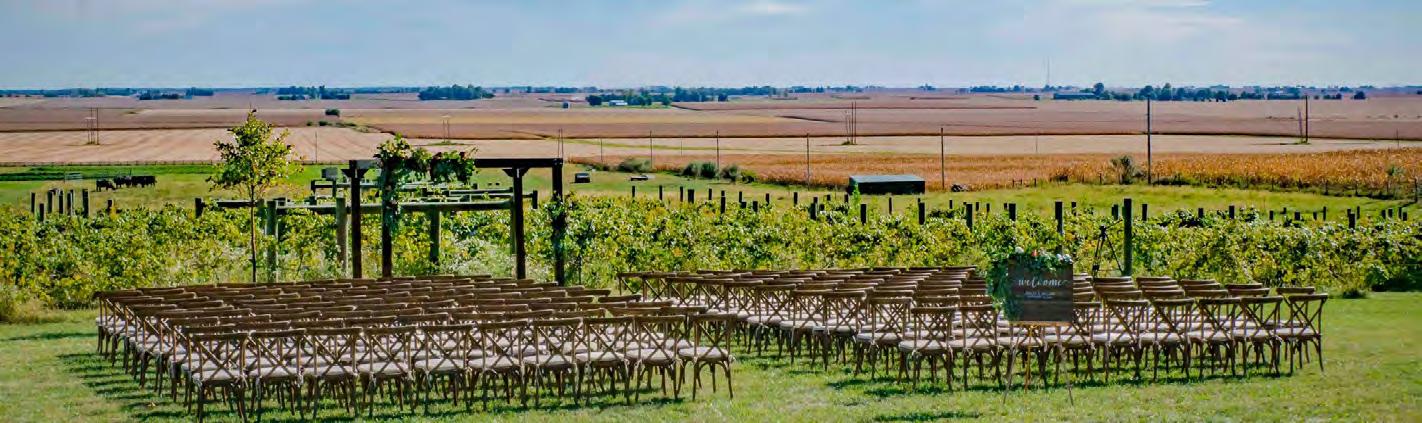
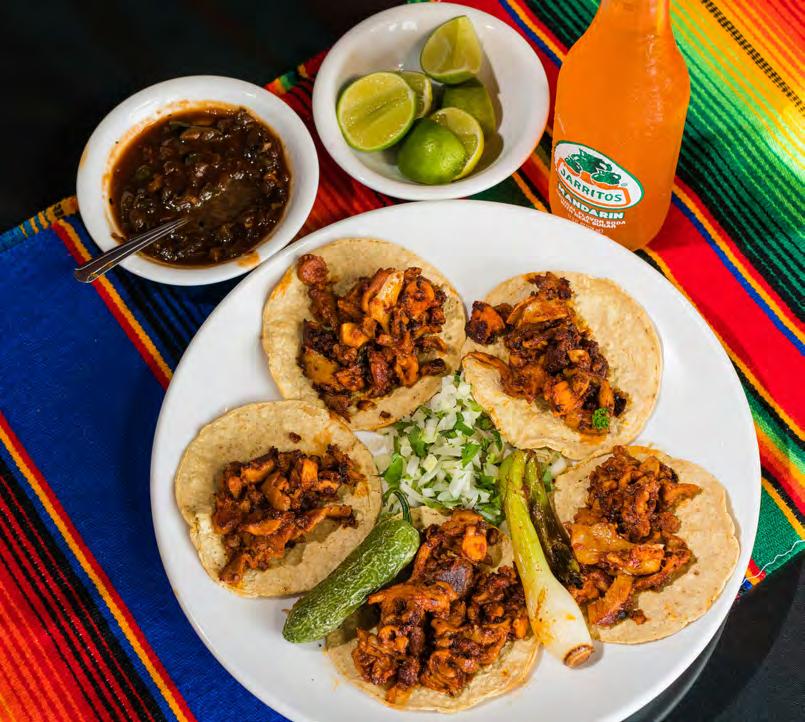
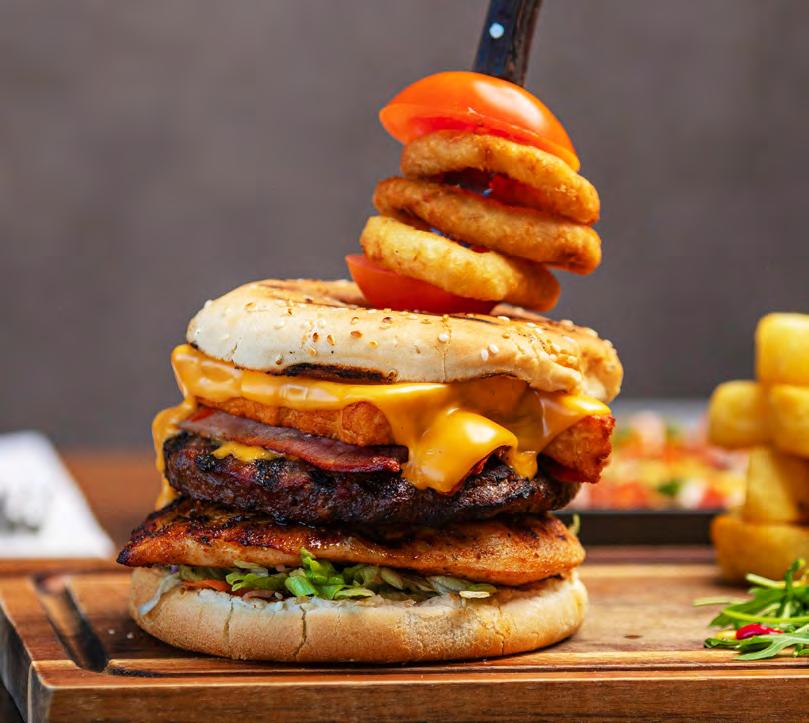
ROUTE Magazine’s Best Places to Eat along America’s Mother Road

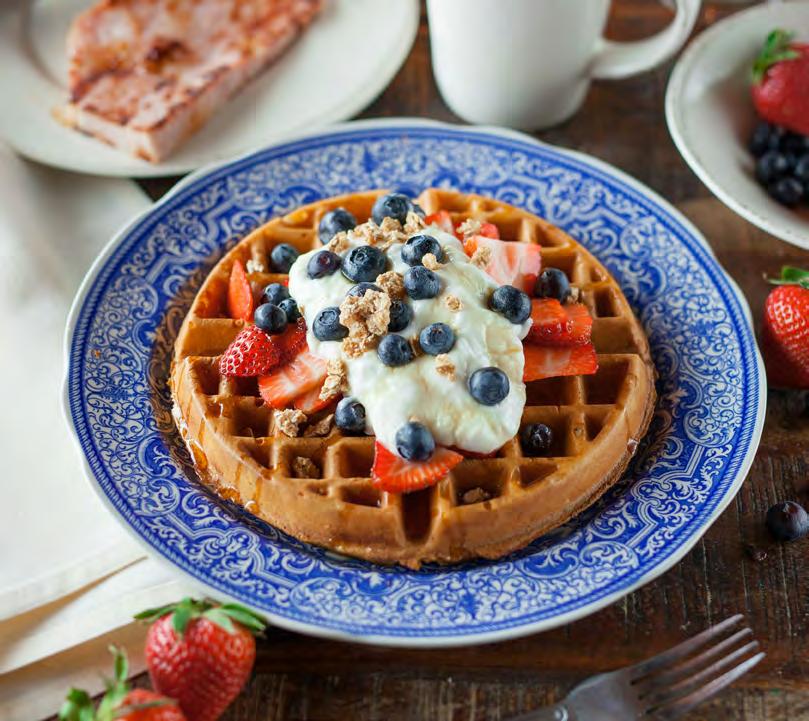
Every restaurant tells its own story, offering more than a meal. It’s a taste of history, culture, and character along the Mother Road. Whether you’re seeking hearty classics, inventive cuisine, or a memorable place to pause on your journey, these stops are perfect for savoring the flavors and stories that make Route 66 one of America’s most iconic road trips. From timeless diners and quirky cafes to family-run gems, historic icons, and stylish modern eateries, we’ve curated our favorite spots for 2026.
Lou Mitchell’s, Chicago, IL
Kick off your Route 66 adventure at Lou Mitchell’s, Chicago’s legendary diner at 565 W. Jackson Boulevard. Since 1923, when William Mitchell opened the restaurant and named it after his son Lou, travelers and locals have flocked here for all-day breakfast and warm hospitality. In 1949, the diner moved to its current Jackson Boulevard location. Lou “Uncle Lou” Mitchell became famous for home-cooked classics: Milk Duds for the ladies, and donut holes for the gents. Today, his nephew Nick Noble continues the tradition, serving oversized pancakes, real maple syrup, and retro 1950s charm. With a buzzing soda fountain, vintage booths, and a zigzag-shaped counter, Lou Mitchell’s is more than a diner, it’s a must-stop rite of passage for every Route 66 traveler.
Dixie Travel Plaza, McLean, IL
Step into Dixie’s, America’s first truck stop, where old-fashioned, allAmerican charm meets hearty comfort food. Founded in 1928 by J.P. Walters and John Geske as Dixie Truckers Home, the original building combined a small mechanic’s garage with a counter cafe and barstools, offering truckers a home away from home. After a fire in 1965, the community helped rebuild the iconic stop, which still stands today, complete with original road signs. Over the years, Dixie’s changed hands and was remodeled by Road Ranger, yet its interior retains the spirit of Route 66. The menu offers all-day breakfast, a hearty buffet, and classic favorites like chicken-fried steak and Cobb salad. Comfort food with true Southern hospitality for travelers and locals alike.
Epiphany Farms Restaurant, Bloomington, IL
One of Bloomington’s standout dining spots is Epiphany. Housed in a beautifully restored 1902 fire station, its exposed brick walls, high beamed ceilings, and large farmhouse-style windows create a bright, inviting atmosphere that mirrors the farm-to-table philosophy. They also have one of the best outdoor dining verandas in town. After honing his craft with Guy Savoy and Thomas Keller, Chef Ken Myszka and his wife, Nanam Yoon, launched Epiphany Farms Hospitality Group, which also operates sister concepts like Anju Above and a working farm that supplies many of the restaurant’s ingredients. Seasonal dishes showcase produce, herbs, and meats from their own farms, combining sustainability with decadence. From farm-raised chicken to ribeye to salmon, each plate is visually stunning, texturally appealing, and bursting with flavor.
Looking for a spot in Bloomington that’s lively, fun, and seriously delicious? Harmony Korean BBQ, also owned by Epiphany Farms Hospitality Group, is exactly that. From the moment you walk in, the smell of sizzling meat and friendly chatter sets the tone for a hands-on dining experience you won’t forget. This is Korean BBQ done right. Pick your proteins — juicy pork belly, tender bulgogi, or marinated short ribs — and cook them right at your table. Round it out with ramen bowls, fresh banchan, and drinks that hit the spot, and you’ve got a meal that’s hands-on, social, and oh-so-delicious. Perfect for a night off the road, with friends, or your first Korean BBQ. Harmony turns dinner into a full-blown experience.
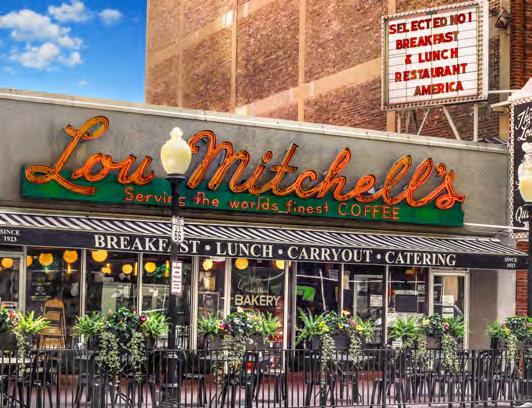
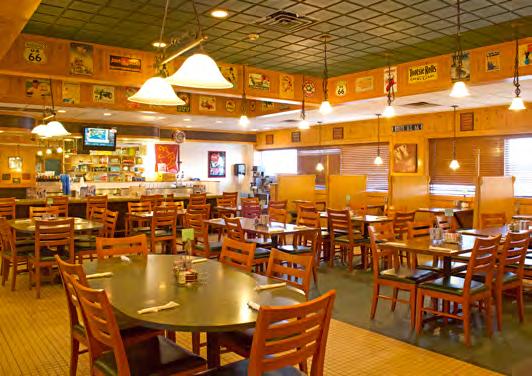
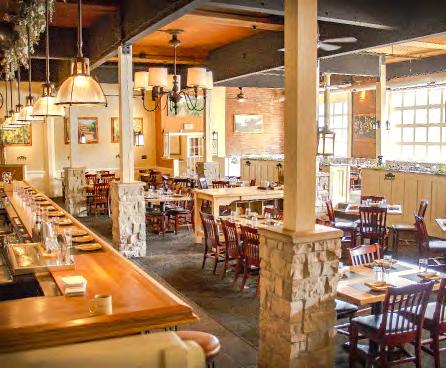
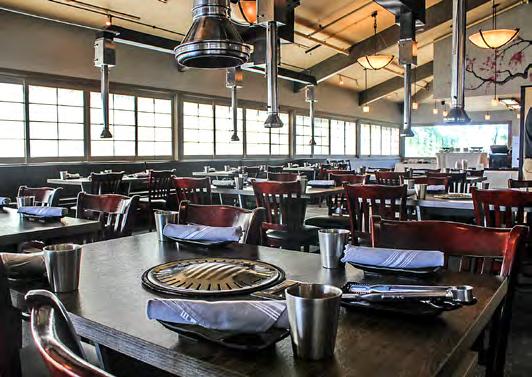
Route 66 Motorheads Bar & Grill, Museum & Entertainment Complex, Springfield, IL
Springfield’s Motorheads is a must-stop for anyone cruising Route 66 through the Land of Lincoln. This bar-grill-museum mash-up sits in a building that was once a roadside stop for Stuckey’s, now transformed into a shrine to classic cars, hot rods, and true American highway nostalgia. Vintage signs, gas pumps, motel memorabilia, and even a 1969 Chevy Camaro hang overhead, while the World’s Largest Route 66 Sign — a 32×32-foot aluminum shield — dominates the skyline. Beneath it stands Big Ron, a 30-foot-tall Muffler Man statue added in 2024, perfect for epic photos. Dig into hearty fare, including burgers, sandwiches, and fried pork tenderloin cooked just right. With 18 beer taps, live music, and car shows on the regular, every meal is an event.
Preston, St. Louis, MO
Enjoy refined cuisine amid a century of St. Louis history at The Preston, nestled within the historic Chase Park Plaza Hotel. Named for the hotel’s original architect, Preston J. Bradshaw, the restaurant combines vintage-inspired elegance with contemporary comfort. The warm dining room blends muted greys, gilded accents, and curated artwork, evoking a sense of historic glamour. Semi-circular booths and tables sit atop diagonally laid maple hardwood floors, guiding the eye toward the open stainless-steel kitchen, an inviting backdrop for an elevated dining experience. Standout dishes include dry-aged steaks, fresh seafood, and inventive poultry creations. But the true showstoppers are the pretzel croissants. Crunchy, buttery, and just-salty-enough. Dining here is that memorable stop filled with flavor, history, and style.
Eleven Eleven Mississippi has been a St. Louis favorite since 2003, blending Tuscan-inspired Californian flavors with an ambiance that’s effortlessly chic. This landmark — named for its Lafayette Park address — sits in a beautifully restored centuryold warehouse once part of the historic International Shoe Factory. It charms with exposed brick, warm wood, and soft, glowing light. Summer nights sparkle on the cozy patio. The menu? Pure scratch-made magic, with seasonal ingredients from the restaurant’s own hydroponic greenhouse. Dive into oak ovenroasted mussels drizzled with cilantro pesto and smoky bacon or sink your teeth into a 12-ounce char crust ribeye. Pair it with a Northern Italian or California wine, and don’t even think about skipping dessert. You’ll want to end on a sweet high.
Civil Kitchen, downtown Springfield’s go-to for scratch-made comfort with chef-crafted swagger, sits at the heart of historic Park Central Square, a civic hub since the late 19th Century. Framed by early 20th-Century landmarks like the Fox Theatre and the History Museum on the Square, the area got its modern look in the 1970s, when it was redesigned into a pedestrianfriendly plaza with terraces, a limestone fountain, and plenty of space to linger. Today, it’s the perfect backdrop for Civil’s effortlessly hip, warmly lit vibe. Grab a fountain-side patio seat or cozy up inside, then dive into starters like colossal onion rings, flash-fried kale, or loaded Brussels sprouts. Mains like the Civil Burger, pork-belly tacos, and seasonal comfort food riffs always hit the spot.
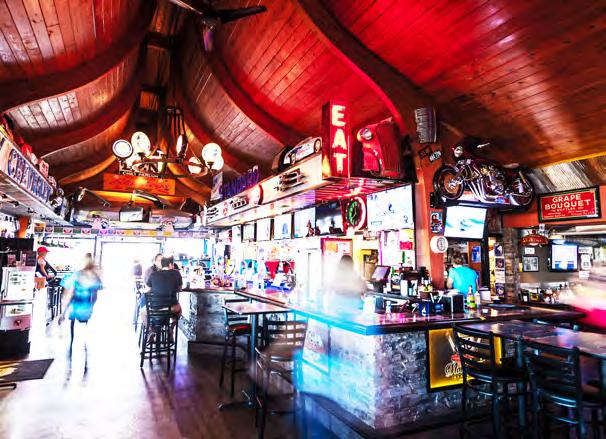
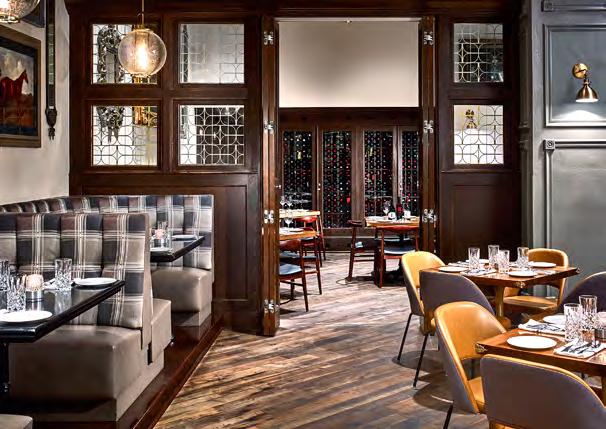
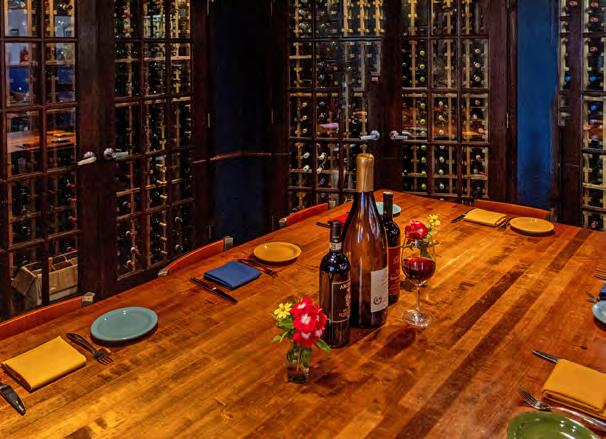
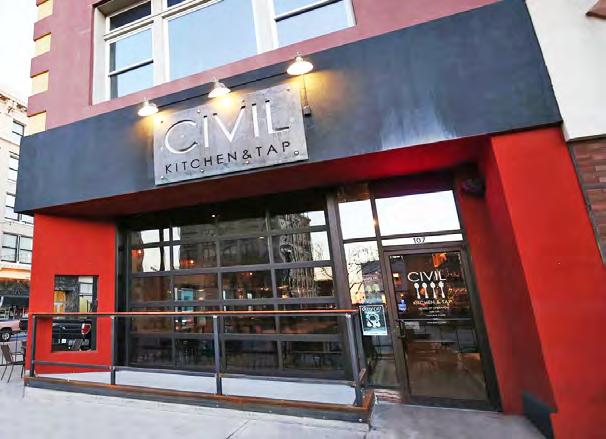
by
Luna Modern Mexican, Springfield, MO
Luna Modern Mexican landed in Springfield in spring 2025 and instantly became a go-to for tacos, cocktails, and modern Mexican flair. The mood hits you right away: sleek, relaxed, and just upscale enough to feel special. But the real gem is the inviting outdoor courtyard for al-fresco eats when the weather’s right. Don’t skip the tableside guac: fresh avocado mashed to order with lime, jalapeño, onion, cilantro, and served right at your table. Craving more? Their menu swings wide: fajitas, enchiladas, ceviche, and even a standout 12-ounce hanger steak churrasco with sweet plantains hold their own alongside tacos and seafood. Luna feels like the upgrade your taco cravings have been waiting for. A definite must-try on any Route 66 dining itinerary.
Uskana Pizza, Carthage, MO
Uskana Pizza perfectly blends hometown charm with wood-fired Italian flair. The building itself has a story: It once housed Cave Gang Pizza & Pub, known locally for its quirky underground cavern lore explored by the “10th Street Cave Gang.” Today, Uskana carries forward that pizza legacy with a charred, yet airy crust, perfect for classics like a Margherita with fresh mozzarella, basil & tomato, the build-your-own “Uskana Special,” or starters like garlic knots, fried mushrooms, and calamari. Part of a local family of eateries, Uskana Pizza shares ownership with Iggy’s Diner — right on Route 66 — and Carthage Family Restaurant, keeping the group’s town footprint strong. This spot feels both modern and steeped in local history, a must-visit for pizza lovers cruising through Carthage.
Step into Wilder’s Steakhouse, and you’re instantly immersed in history and neon. Dating back to 1929, this iconic spot has seen it all: It’s been a men-only bar, a gambling hall, and even a bordello, but today, it’s all about steaks, seafood, and cocktails done right. That giant animated red, white, and blue neon sign has been calling diners for over 70 years, and the interior doesn’t disappoint: a 1940s Art Deco bar, high-backed booths, tin ceilings, and dim lighting straight out of a sophisticated speakeasy. Favorites like Wilder’s Wedge or Hot Crab Dip start the meal, but the real draw is the hormone- and antibiotic-free black Angus steaks — think classic Mignons, Steak Oscar, and DuPont — all crafted with the same meticulous care that made Verne Wilder a legend.
Amelia’s Wood Fired Cuisine, Tulsa, OK
In Tulsa’s lively Brady Arts District, steps from the Woody Guthrie Museum, Amelia’s, known as the home of the Oklahoma Gaucho, blends chic elegance with “charmingly Tulsan” vibes. Step through tall glass doors, sink into red leather banquettes, and take in soaring brick walls and sunlit skylights. Crisp white tablecloths hint at the culinary adventure ahead, and trust us, the food delivers. Owner Amelia Eesley and chef Andrew Donovan have crafted a menu of playful sophistication, spotlighting fresh local ingredients in unexpected flavor pairings. Catch the action at the chef’s counter or unwind on the outdoor patio. Every detail, from the space to the cuisine, drips with creativity. At Amelia’s, you leave feeling like a globetrotting jetsetter without ever leaving Route 66.
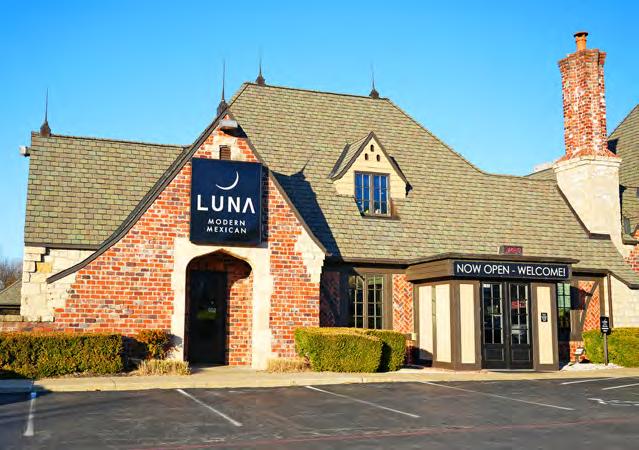
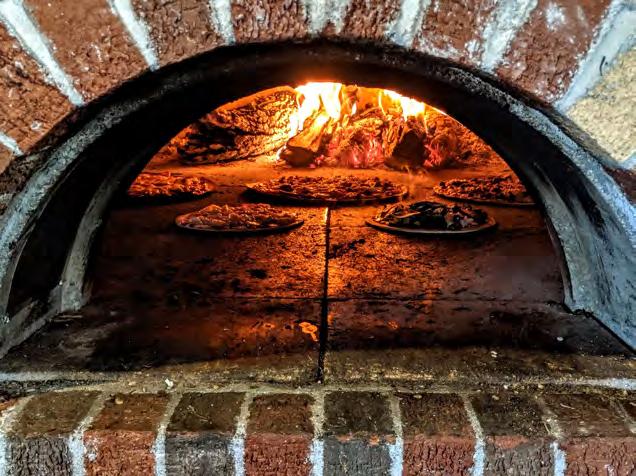
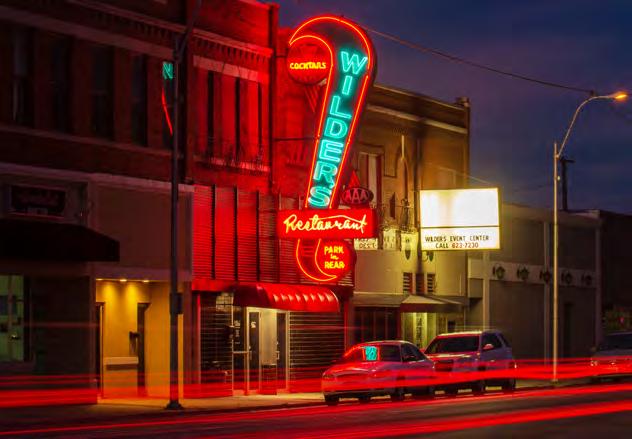
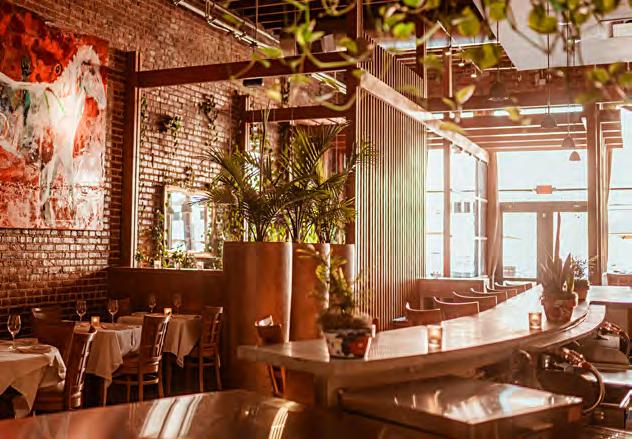
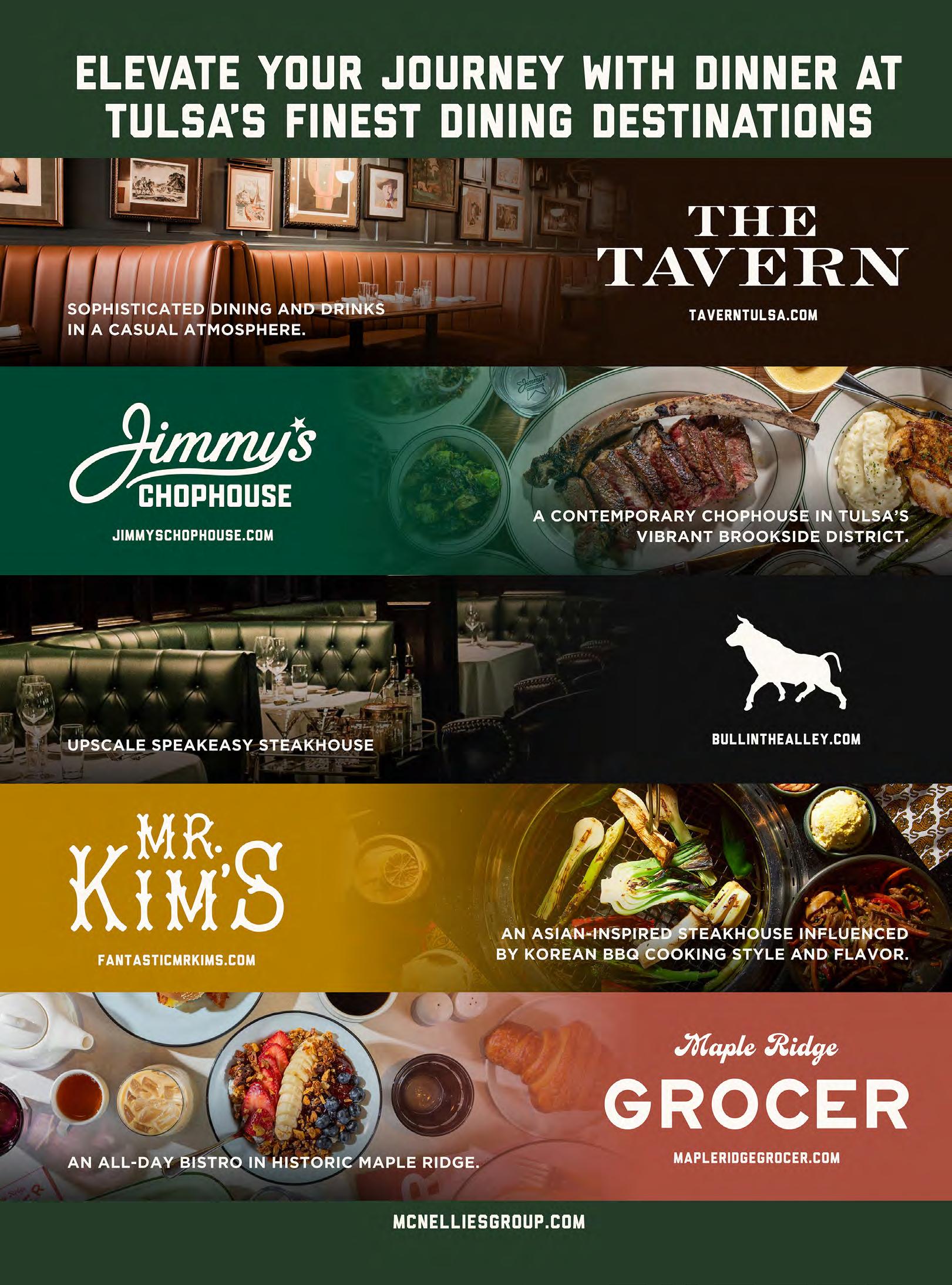
Bull in the Alley, Tulsa, OK
Bull in the Alley lives up to its mysterious name. No signage, no website, just a phone number and whispered directions among those in the know. Opened in 2016 by the McNellie’s Group, it’s tucked down a nondescript Arts District alley, where a copper bull above green doors hints at the glamour inside. Walk through velvet curtains and you’re transported to the Roaring ‘20s: dim chandeliers, dark wood accents, deep green banquettes, a grand marble bar, and a piano for live music nights. The menu? Table-side martinis, 28day aged Porterhouse, Potatoes Egan, a towering seafood platter, and the colossal Ice Cream Turtle Pie are among the standout offerings. Bull in the Alley is worth the hunt. Now, you are in the know.
Dilly Diner, Tulsa, OK
Looking for a “wake–up–hungry–and–leave–full–of–smiles” kind of spot in Tulsa? Let us introduce you to Dilly Diner, another concept from the McNellie’s Group, tucked in the heart of downtown’s Blue Dome District. Think cozy vintage diner meets laid-back brunch haven, with a menu that’s basically a love letter to all-day breakfast and comfort food. At Dilly’s, “breakfast never ends.” Indulge in “The Jed,” a gooey cinnamon roll, or the chicken and waffles drizzled with sriracha-honey—it will make you believe in breakfast for dinner. Come lunch or dinner, the menu flexes with hefty burgers, stacked sandwiches, and grown-up diner fare. Seriously, no one leaves hungry. Warm booths, soft chatter, and the smell of freshly baked pastries make it impossible not to stay awhile with a local-roast coffee.
Swing by Tulsa’s historic Brookside, the Peoria-Avenue neighborhood with roots to Tulsa’s 1920s oil boom, and you’ll find Jimmy’s Chophouse. Founded by Elliot Nelson in 2023, the creator poured his childhood dining memories into this spot, blending cozy nostalgia with slick, grownup energy. Deep greens, rounded booths, geometric wood beams, and a stone-top bar that screams “stay for one more cocktail.” The menu leans heavy on chophouse tradition with a twist: epic meatballs, crab cakes, and steaks so good they practically melt on your fork. Surf & turf, ribeye, or a bacon-wrapped filet, yes, please! And don’t skip the Jimmy Tribute Wall: a cheeky nod to famous Jimmys that sparks conversation. Jimmy’s isn’t just dinner, it’s a whole vibe.
This cozy-cool all-day bistro is nestled in the heart of Tulsa’s historic Maple Ridge District, a recognized historic residential area. Opened in 2024, its pastel walls, globe lights, soft wood accents, and mix of booths and cafe-style seating nod to the building’s mid-century, grocery-store past, while reimagining it as a lively spot where locals drop by for cookies, coffee, brunch, or a post-work drink. The menu is broad and varied. This café makes our list due to its delicious food and amazing retro ambiance. Whether you show up early for croissants and a maple donut, to dive into a fluffy all-day omelet or avocado toast for brunch or settle in for dinner with a melty roast-beef & Swiss sandwich or a salmon burger, Maple Ridge Grocer has you covered.
Mary Eddy’s Italian Grill, Oklahoma City, OK
Step into Mary Eddy’s in downtown Oklahoma City and you’re instantly swept up in history and style. Housed inside the beautifully repurposed former Ford Motor Company plant, now the Fordson Hotel, the restaurant honors Mary Eddy Jones, wife of the building’s former owner, Fred Jones. Inside, sparkling chandeliers, cozy booths, classic tables, and a stylish bar blend seamlessly with subtle industrial touches throughout the space. The design draws inspiration from Mary Eddy Jones’s neoclassical home, her warm hospitality, and even her blue-and-green mosaic-tiled lily pond, which is reflected in the interior color palette. On the menu? Elevated Italian-style cuisine: handmade pastas, grilled steaks, fresh seafood, and inventive cocktails, including a signature martini. Every detail celebrates elegance, warmth, and the building’s rich historic legacy.
Cattlemen’s, Oklahoma City, OK
Cattlemen’s Steakhouse is basically the definition of iconic. Here, cowboy boots aren’t a trend; they’re a lifestyle. This spot has been feeding folks since 1910, back when Stockyards City was buzzing with cowboys, ranch hands, and cattle traders. Walk in, and you get that warm, no-nonsense, “sit down, we’ll take good care of you,” hospitality. The walls practically wink at you with stories like the 1945 dice game that changed ownership overnight. The steaks come out sizzling, the baked potatoes are unapologetically huge, and the ambiance blends old-school Western charm with that “everyone’s-a-regular-here” warmth. Your meal feels like a journey here, one that started over a century ago and somehow keeps getting better.
Mahogany Prime Steakhouse, Oklahoma City, OK
Oklahoma knows steak, and Mahogany Prime Steakhouse proves it. Since opening in ’86 under Hal Smith, this celebrated spot has been serving perfectly cooked, custom-aged U.S. Prime Midwestern beef with flair. Steaks broiled to lock in corn-fed flavor arrive sizzling on heated plates, paired with sides that hit just right. Local ingredients and communityfocused sustainability take center stage, making every steak feel connected to the source. Classy yet approachable, it’s the kind of place where the food and service are worth dressing up for. With a sleek, beautiful interior, attentive servers who know their stuff, a stellar wine list, and valet parking, you’ve got a prime night out. If steak is your love language, this is your spot.
Toscana Italian Steakhouse, Amarillo, TX
Toscana, located in The Barfield Hotel, is Amarillo’s ultimate blend of classic steakhouse spirit and Italian flair. The hotel itself, built in 1926 by Melissa Dora “The Duchess” OliverEakle as the Barfield Building, was Amarillo’s first skyscraper, right on historic Route 66. Inside, large windows, dark wood, and striking blue accents create an inviting atmosphere. The massive restored original boilerplate mounted on the back wall serves as a dramatic focal point. Against this backdrop, locally sourced Panhandle beef meets Italian-inspired dishes. Whether savoring a perfectly seared cowboy steak, sharing a vibrant charcuterie board, or enjoying a creamy risotto, every dish balances familiarity with sophistication. Toscana delivers “the flavors of Italy to West Texas” in a way that’s effortlessly stylish and delicious.
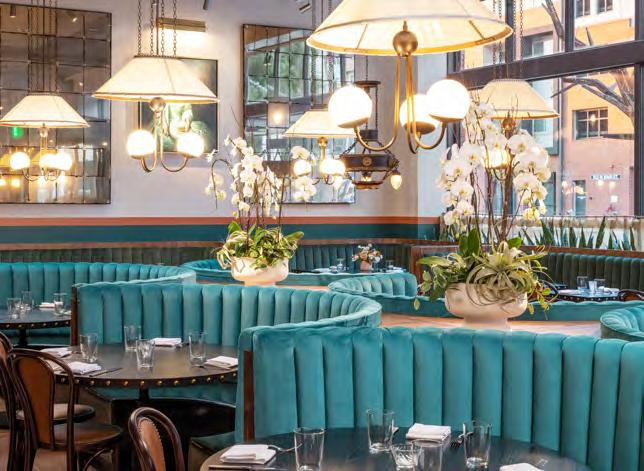
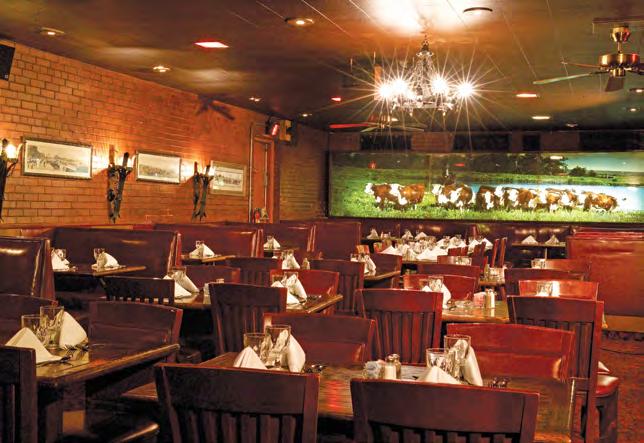
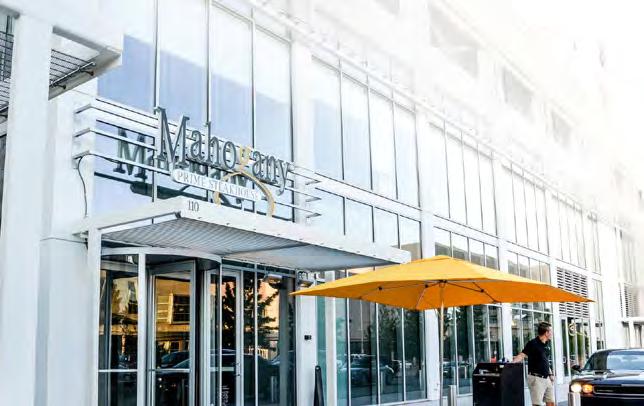
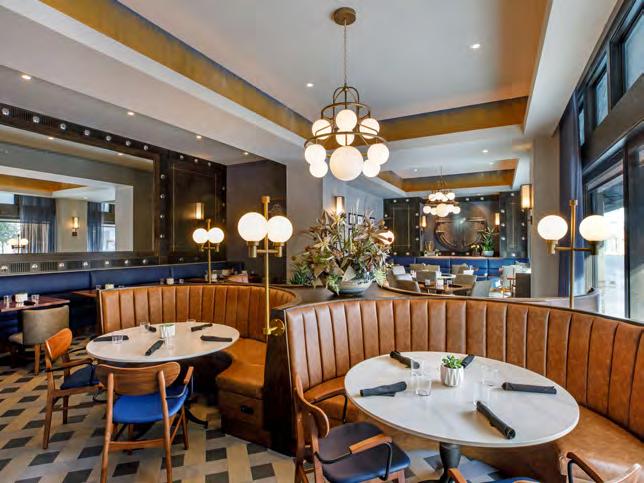
The Big Texan Steak Ranch, Amarillo, TX
You can’t miss the 60-foot cowboy sign at The Big Texan Steak Ranch, a Route 66 icon since 1960. Famous for its 72-ounce steak challenge, this place is as much theater as it is a restaurant. Diners cheer as brave souls attempt to conquer the colossal steak in under an hour; success earns a free meal; failure just adds to the legend. Inside, kitschy Western decor, cowboy and Route 66 memorabilia, and twangy tunes set the stage for pure Texas fun. It’s a feast for all the senses: hearty food, raucous energy, and a roadside extravaganza that has drawn visitors from around the globe for decades. Soak in the spectacle and ride out with a story as big as Texas itself.
Midpoint Cafe, Adrian, TX
Life’s full of decisions, but the Midpoint Cafe makes one easy: stop here. Sitting smack in the middle of Route 66 — 1,139 miles from Chicago, 1,139 miles from LA — this iconic spot has been a Mother Road staple since 1928. Once Zella’s Cafe, it shot to cult fame after then-owner, Fran Hauser, inspired “Flo” from Pixar’s Cars. Today, under Brenda Hammit Bradley, it still radiates that warm, family-run charm. Slide into a chrome-and-formica booth, crank up the old-timey jukebox, and soak in the retro Route 66 memorabilia. Chow down on a Midpoint or Route 66 Burger or go meat-free with the Ultimate Black Bean Burger. Don’t skip the legendary Ugly Pies. Made in-house, baked with love, and totally unforgettable.
Del’s Restaurant, Tucumcari, NM
Stop in Tucumcari’s legendary Del’s Restaurant, a Mother Road classic since 1956! Still rocking its original flagstone floors, Del’s serves up a mouthwatering Mexican American fusion with that warm Southwestern hospitality everyone loves. The neon Hereford bull sign? Iconic. Inside, the atmosphere is lively, sprinkled with Old West and Route 66 memorabilia that make every meal a mini history lesson. From a sprawling salad bar to hearty steaks, seafood, pasta, and classic Mexican favorites, there’s something for every craving. And yes, the portions don’t disappoint. With roots tracing from Del and Wilma Akin to former teen-employeeturned-owner Chase Waters, Del’s has heart, history, and flavor. Tip: Get here early or snag a spot on the spacious patio to watch Route 66 roll by.
La Plazuela, Santa Fe, NM
Enter La Plazuela at the historic La Fonda Hotel, and you’re stepping into centuries of history. The original 1920s open-air patio was enclosed in 1976, transforming it into a dining space that’s a living piece of Santa Fe culture. Hand-painted windows, carved beams, colorful Mexican tiles, and skylights keep that 1920s charm alive, while the restored fountain in the middle is a striking focal point. This spot nails everything from roasted chiles, fresh tortillas, seasonal Southwestern twists, and a musttry tableside guacamole. Whether sipping a prickly pear margarita or indulging in their famous huevos rancheros, every bite and sip feels like a celebration. Honestly, it’s more than a meal, it’s the Santa Fe experience you didn’t know you needed.
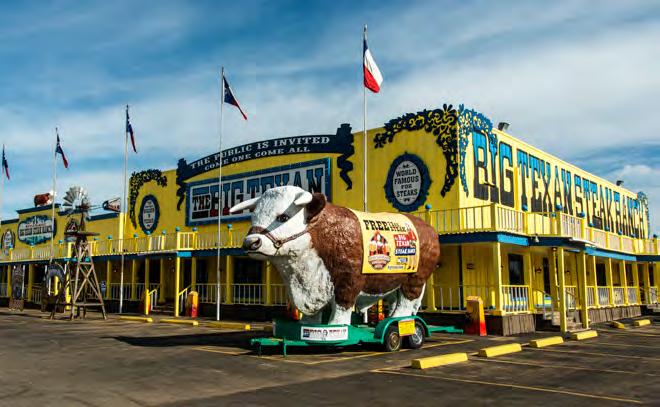
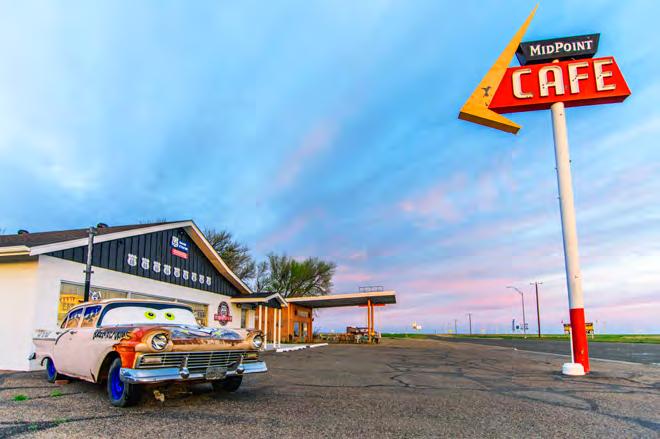
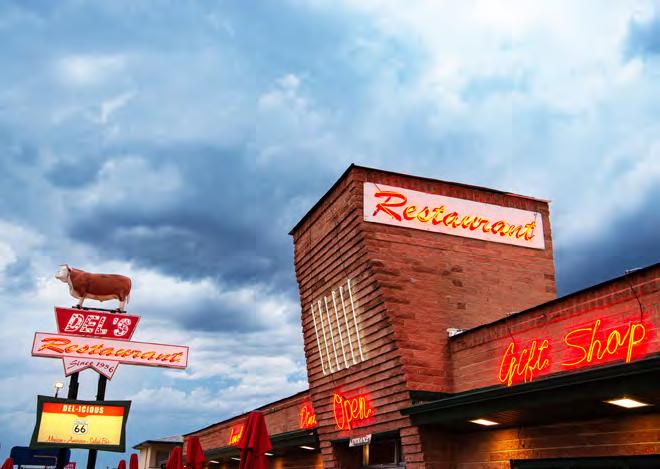
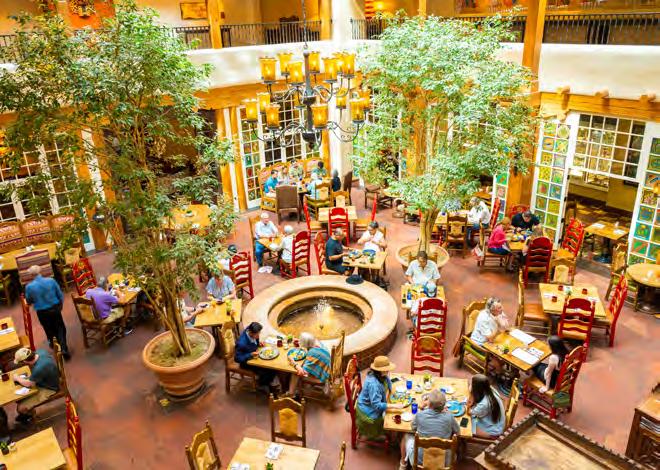
Sazón’s tan adobe facade is just the start. Inside, exposed dark wood beams, soft lighting, and bold life-size Mexican artwork set the scene for an Instagram-worthy experience. Chef and owner Fernando Olea, a Mexico City native, has been shaping Santa Fe’s culinary scene since 1991, bringing traditional Mexican flavors and Old Mexico’s indigenous culinary traditions to a fine-dining stage. Every detail feels curated, from the whimsical purse pedestal to the perfectly choreographed plate clearing. The menu is deliberately small but elevated: five signature moles with mini tortillas, plus a rotating meat, fish, and vegetarian dish. Don’t miss Dulce Sinfonía, his showstopping layered dessert. Every bite is an experience, every moment intentional. You’ll be raving, sharing, and already planning your return.
Back in the Santa Fe Trail heyday, this very spot was home to Madame La Tules, the legendary “Gambling Queen of Santa Fe,” who turned a whitewashed adobe on Burro Alley into a glittering palace of crystal chandeliers, plush drapes, and European flair. Fast forward to today, and Palace carries that spirit into a chic, contemporary dining experience. Executive Chef Angel Franco reinvents this longtime Santa Fe retreat with dishes inspired by his global culinary career, sourcing local farms and ranches. Plush booth seating, a striking red ceiling, a tree-shaded back patio, a covered front patio, a chic bar/lounge, crisp linens, and colorful Native American art set the stage. Opulence, flavor, and fun, all in one place. Madame La Tules would approve.
Tucked in a historic Santa Fe adobe, Restaurant Martin feels like stepping into a chef’s cozy, art-filled home, only the food steals the show. Since 2009, Martín Rios and his wife, Jennifer, have crafted a menu of seasonal New American cuisine with playful Southwestern, Asian, and French twists. Savor Roasted Butternut Squash-Apple Bisque, Black Angus Beef Boneless Short Rib, or a succulent New Zealand Lamb Rack. The garden patio is perfect for sunny lunches, and the intimate dining rooms make you want to linger. Chef Rios has also bottled the restaurant’s magic in The Restaurant Martín Cookbook, blending Santa Fe flavors with approachable, sophisticated recipes you can try at home. Fancy, welcoming, and totally Santa Fe, this food talks, laughs, and wows.
Campos, Los Poblanos Historic Inn & Organic Farm, Albuquerque, NM
Just outside Albuquerque, Los Poblanos offers a dreamy Southwestern escape. The historic adobe estate, designed in the 1930s, blends heritage architecture, sprawling lavender fields, working organic farmland, and modern agritourism. At the heart of it is Campo, where “Rio Grande Valley Cuisine” comes alive: seasonal, organic ingredients harvested on site or sourced from local farmers and herdsmen create a true field-to-fork experience. Guided by the season’s bounty, the menu transforms daily, making each visit uniquely memorable. The airy, chic dining room and sunlit terrace set the stage for brunch, dinner, or cocktails infused with herbs from the farm. Beyond dining, guests can explore the farm shop and gardens. It’s the kind of spot that turns meals into memories.
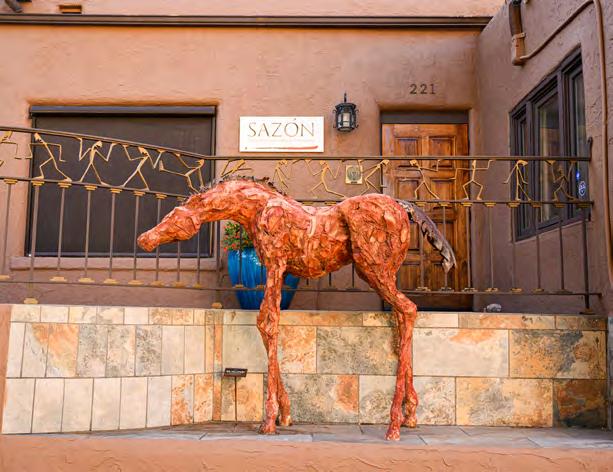
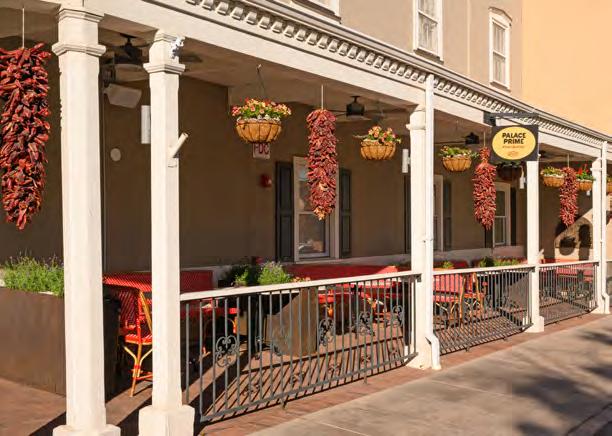
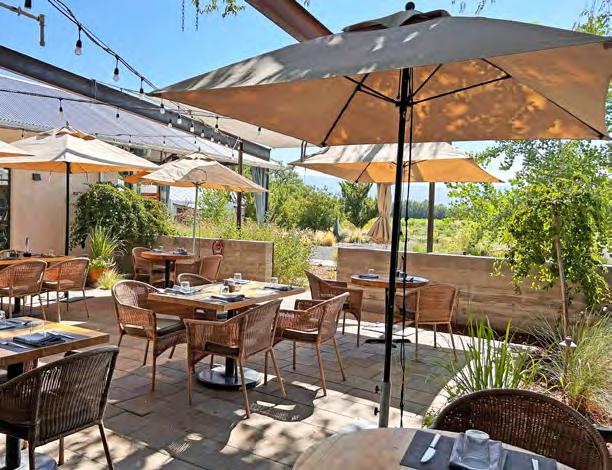
The Artichoke Cafe, Albuquerque, NM
Located on Central Avenue, Route 66’s main drag, this East Downtown spot co-owned by chef duo Pat and Terry Keene, is all about New American vibes, creative cocktails, and a menu that shifts with the seasons. Locally sourced produce stars in everything from their steamed artichoke appetizer to fresh seafood and hearty steaks, all served with care and style. The space is light, modern, and sprinkled with art, making every visit feel effortlessly cool. Choose bar seating, cozy dining tables, or a private nook, pair your meal with a craft cocktail or a glass from their wine list, and you’re set. Along Route 66, The Artichoke Cafe is the perfect pit stop to savor inventive flavors and soak in Albuquerque’s culinary creativity.
Grove Cafe, Albuquerque, NM
Picture this: You stroll into a bright-and-breezy cafe on Route 66 in Albuquerque’s EDo district, sunlight streaming through big windows, greenery tucked in every corner, and the scent of fresh-baked muffins drifting in the air. That’s The Grove Cafe & Market, the brainchild of Jason and Lauren Greene, an unpretentiously hip eatery where brunch feels like a mini celebration. Chef-driven and locavore at heart, the Grove serves inventive dishes made from New Mexico ingredients, with picky herbivores and serious eaters alike getting their fix (hello, sweet-potato hash, avocado toast, and baked-good bliss). Grab a perfect latte, snag a sunny seat, or browse the charming market shelves. The Grove nails the sweet spot where good food, good vibes, and local love intersect.
The Silver Screen, El Rancho, Gallup, NM
Gallup’s 1936 Hotel El Rancho is a Hollywood Western dream, where classic movie stars once stayed, and you can still dine like one. The in-house Silver Screen Restaurant serves dishes named after cinema royalty, like the Katharine Hepburn, a crisp BLT wedge with grape tomatoes, green chile, and applewood bacon. Burger cravings? Go big with the John Wayne (Baja guac, yes please!) or the Ronald Reagan, loaded with bacon and Jelly Belly jelly beans. Southwestern classics like the Armand Ortega and Pedro Infante bring rice, beans, tortillas, and red or green chile. The ranch-style dining room, with high ceilings, exposed beams, and rustic cowboy decor, keeps it casual, cozy, and all about traditional Southwestern flavors. Don’t skip the legendary “Elvis” French Toast.
Turquoise Room, La Posada, Winslow, AZ
This chic Southwestern jewel is tucked inside the historic La Posada Hotel. Its story? Pure Hollywood-meets-railroad glamour. In 1951, the Super Chief — Chicago to Los Angeles’ famed luxury train — debuted a private dining room named The Turquoise Room, serving Hollywood stars and Santa Fe VIPs. Fast-forward decades: La Posada’s revival. In 2000, Allan Affeldt and Tina Mion, with celebrated restaurateur John Sharpe, revived fine dining in the hotel, bringing back elegance, charm, and a sense of history. The menu honors that legacy with chic Southwestern flavors, subtle Nativeinspired design, and a whisper of Route 66 nostalgia. Elegant halibut preparations, rich steaks, and slow-braised favorites, balanced by farm-driven salads and indulgent desserts. Historic soul and modern flavors, all in one legendary stop.
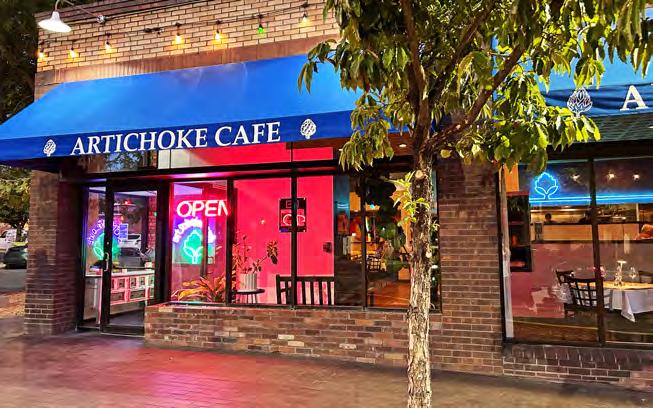
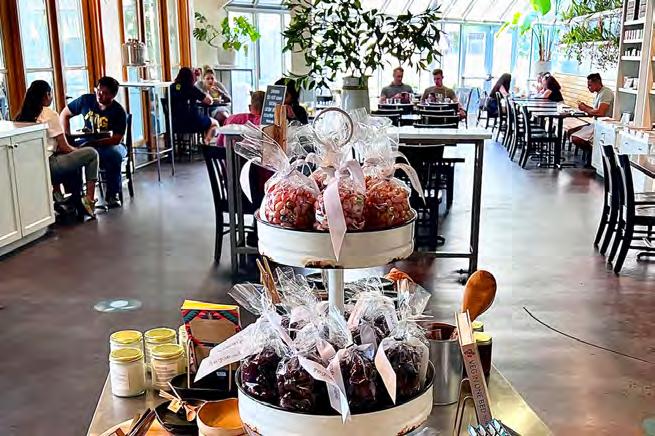
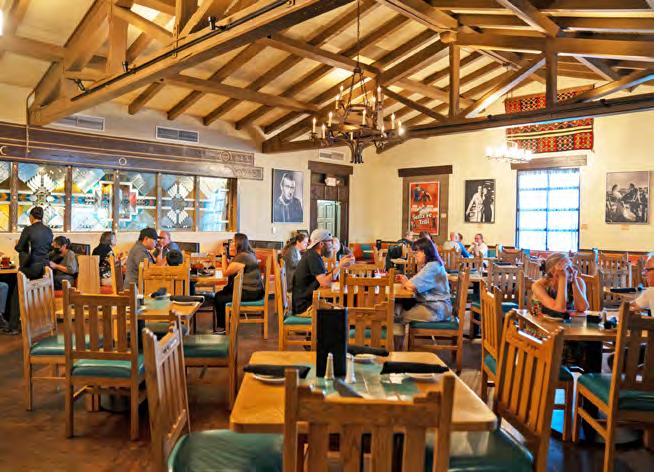
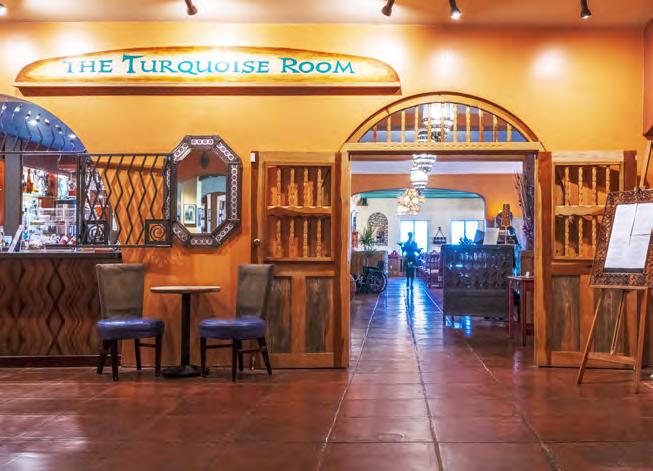
Opened in 2009 in one of downtown’s oldest commercial buildings, Tinderbox helped ignite the city’s foodie revival as the first truly upscale spot on the south side. The buzz was so strong that owner Kevin Heinonen opened The Annex next door, a chic indoor-outdoor bar that pairs perfectly with Tinderbox’s contemporary dishes. Inside, the space honors its historic roots with a vintage tin ceiling, while verdant-toned walls and intimate lighting create a sophisticated atmosphere. Feast on elk tenderloin, crispy pork belly, or seasonal seafood, complemented with Tinderbox Red, the house-made wine from Sutcliffe Vineyards. Despite its refined feel, this place stays wonderfully unpretentious. Whether you’re dressed up or dusty from the trail, you’ll fit right in. A perfect Flagstaff pit stop.
Started by Paul and Laura Moir with chef-butcher Joe Fiandach, Proper Meats + Provisions is obsessed, in the best way, with whole-animal butchery and Arizona-raised livestock. Started in 2014, this butcher-deli hybrid relocated in 2018 to a historic early-1900s building on Route 66 in downtown Flagstaff, once the longtime home of the Grand Canyon Cafe. This casual counter-service hangout hits all the senses: smoked meats, sizzling sandwiches, and gleaming cases of pasture-raised steaks, chops, and sausages you can trace to local ranches. Order the house-cured pastrami, smoked low and slow for hours, or a stacked roast beef or muffaletta with house-made chips. And don’t leave without browsing the provisions pantry, artisan sauces, local goods, and premium cuts perfect for the cooler.
This Route 66 desert-road icon has been feeding travelers since the 1950s, when it opened as Lynn’s Broiler. In 1978, it became the “Wagon Wheel” under Jimmy Jackson, who rebuilt the diner after a fire. Mike Dick and Susan Alexis bought it in 2005 and have since kept the classic diner vibe alive. The bright yellow exterior pops against the desert, while a giant gorilla statue on the roof, wild and attention-grabbing, steals the spotlight. Bold signage declares its legacy—“since 1978.” Inside, wood-paneled booths, Route 66 memorabilia, and kitschy Western decor deliver retro charm. Menu highlights? Slow-roasted pot roast with mashed potatoes and gravy, chicken-fried steak dripping in country goodness, and cinnamon-roll French toast that’s basically a hug on a plate.
Dining here feels like slipping into a sun-kissed daydream. The hotel itself has serious vintage cred. It opened in 1926 as Club Casa Del Mar, one of Southern California’s most exclusive beach clubs. Terrazza sits right above the sand, a breezy California-Mediterranean restaurant with floor-to-ceiling windows that practically gift-wrap the Pacific. The decor nails that coastal-chic sweet spot: light wood, soft marine blues, crisp whites, sculptural lighting, and a vibe that whispers “I summer here” even if you don’t. The menu leans fresh, bright, and market-minded: seasonal seafood, handmade pastas, and SoCallean cocktails that pair perfectly with ocean breezes. Come for lunch and linger. Come for dinner and watch the Santa Monica pier shimmer—the perfect finale to any Route 66 adventure.
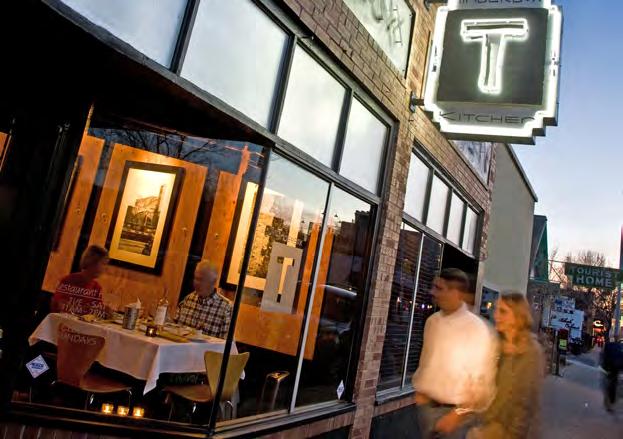
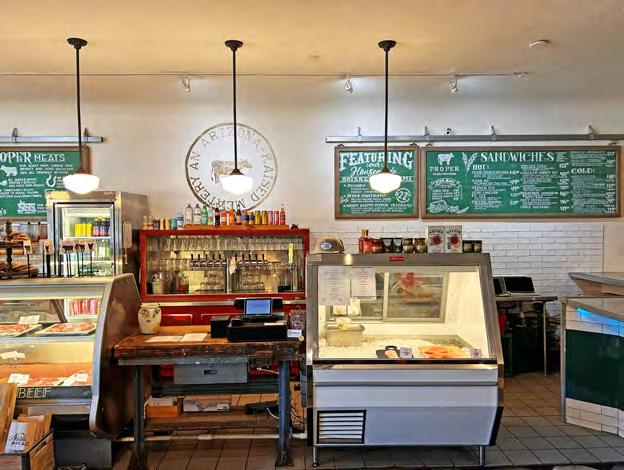
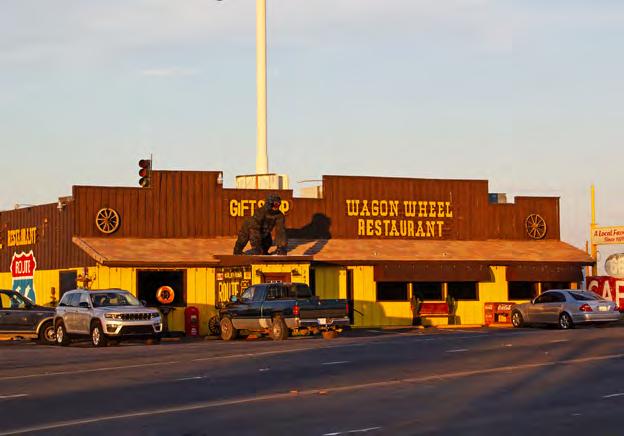
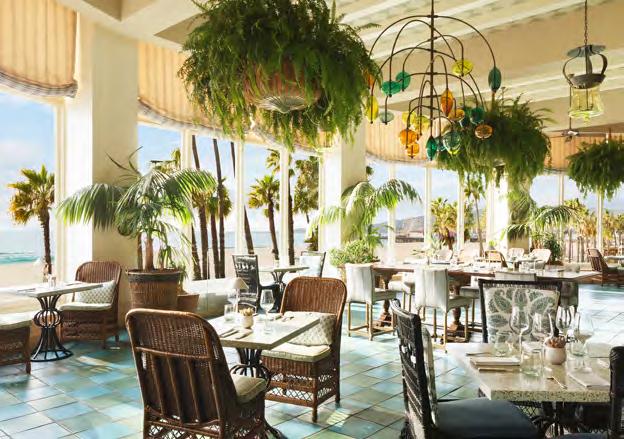
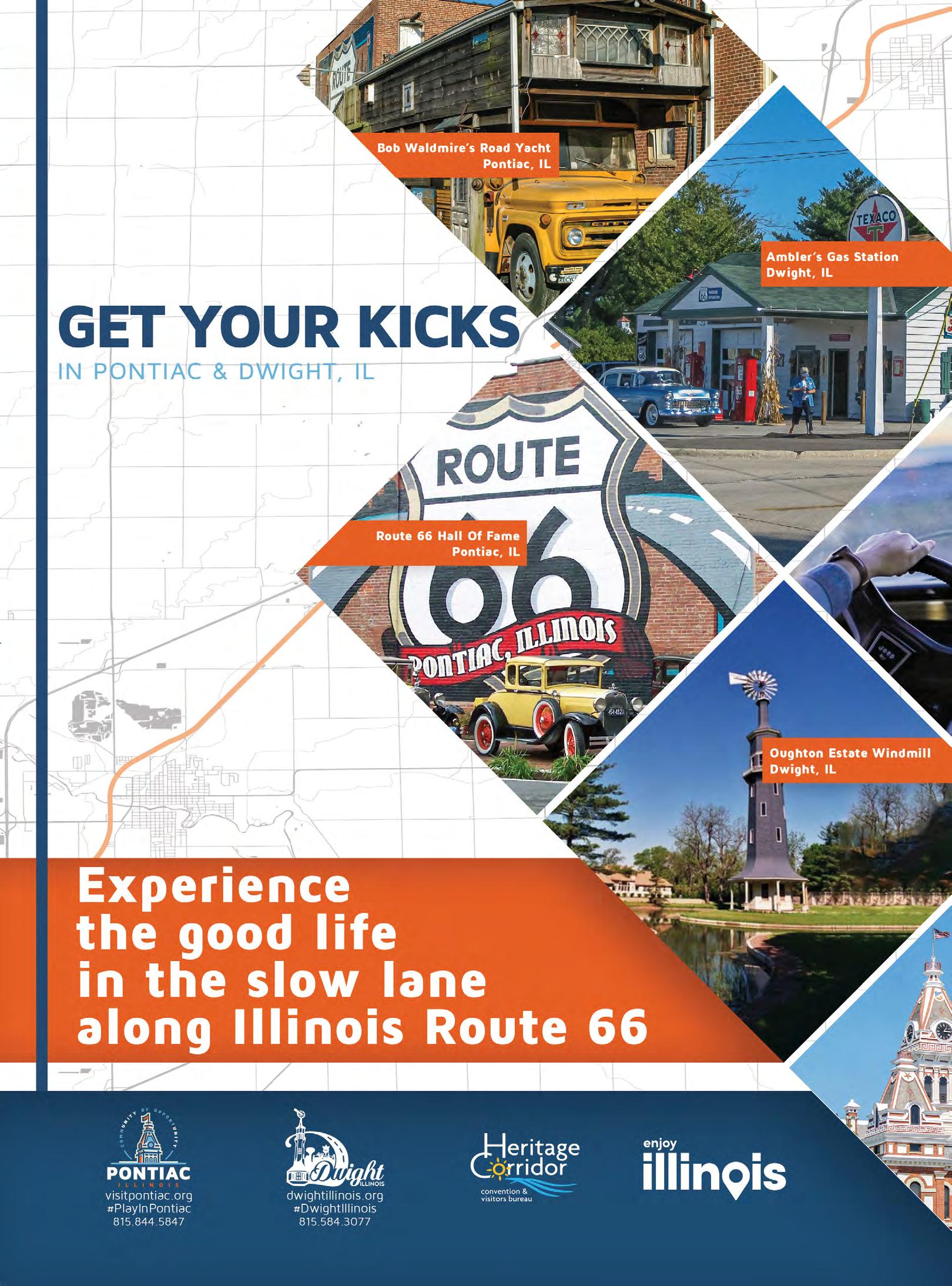
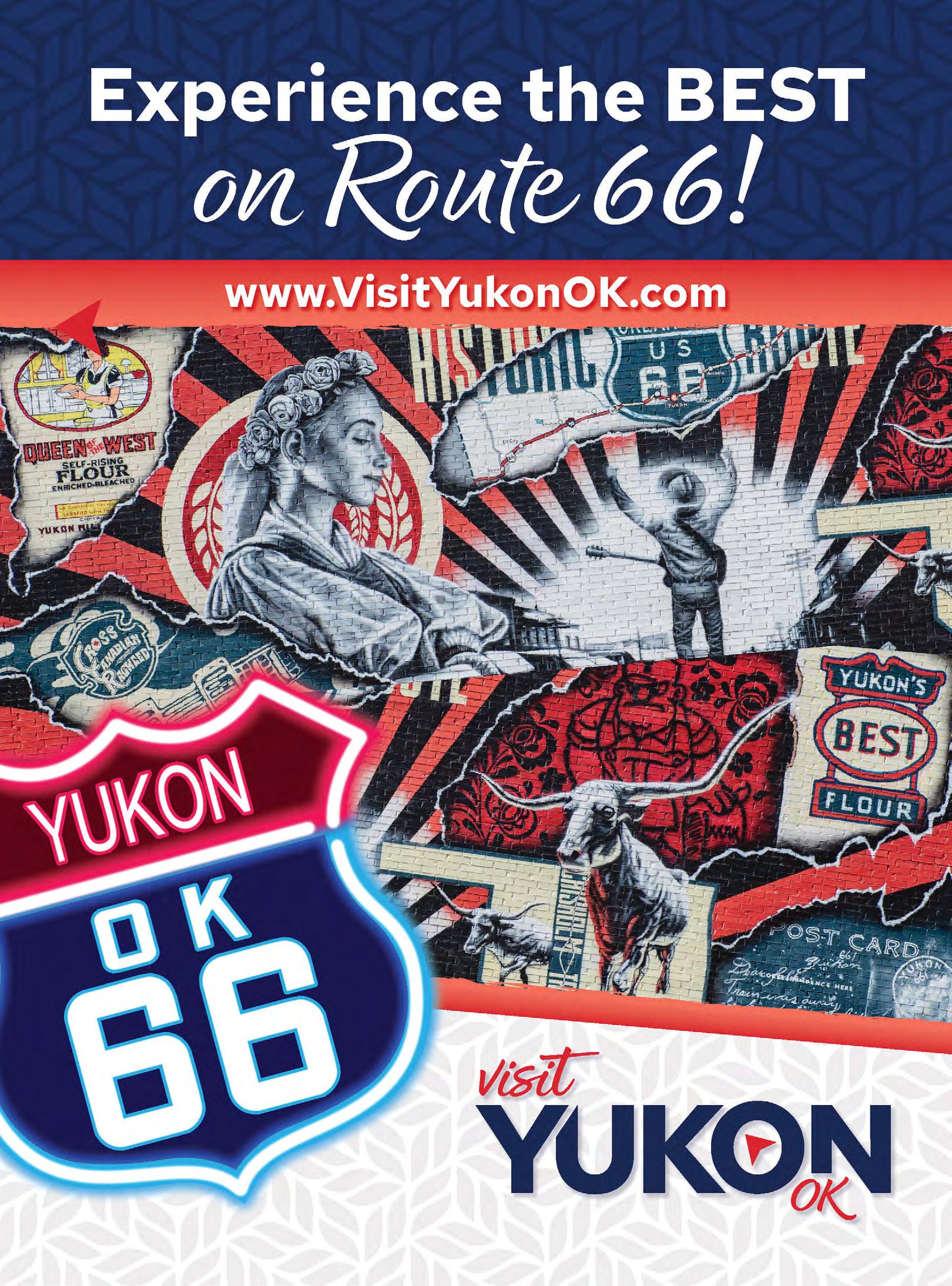
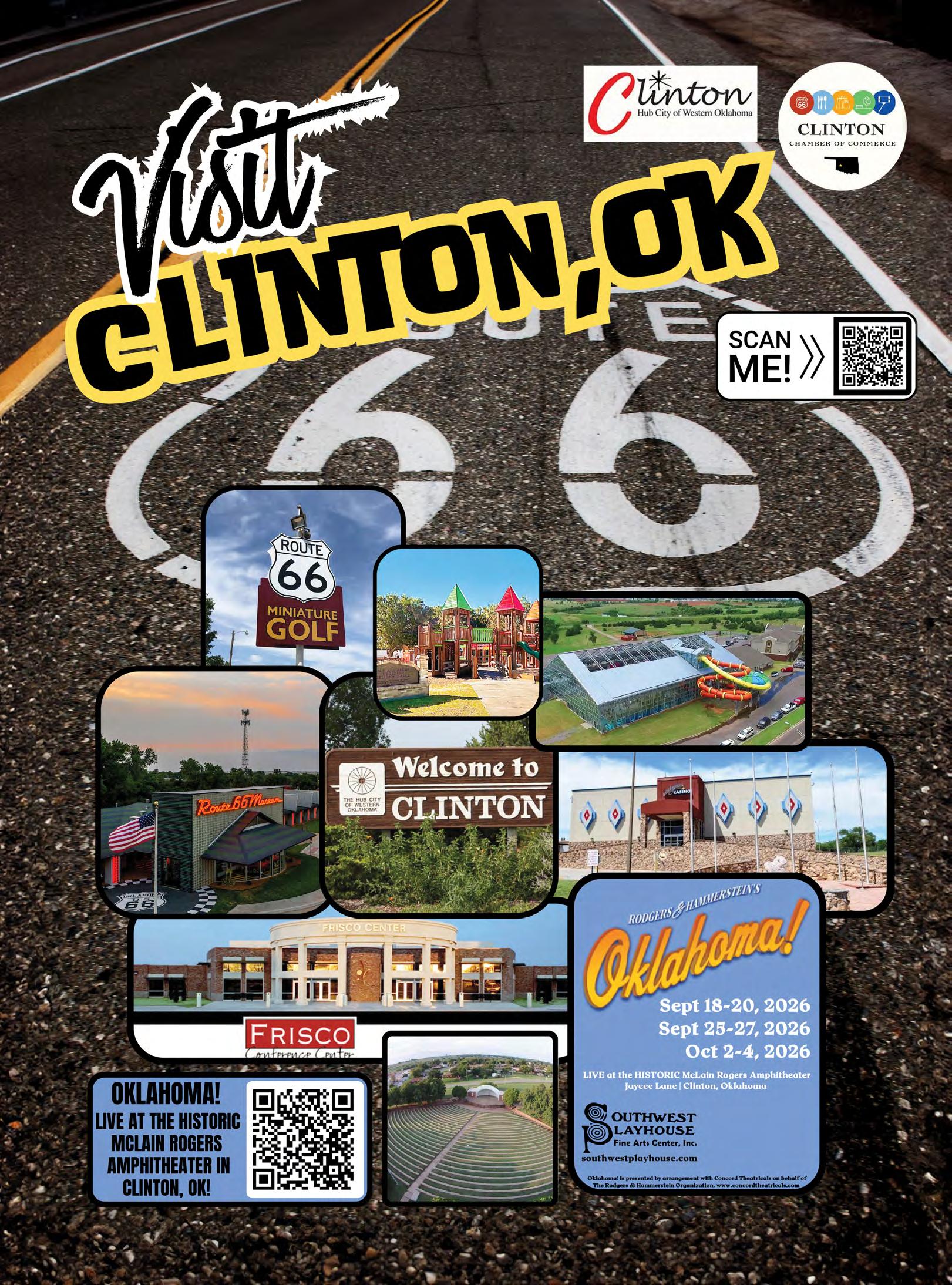
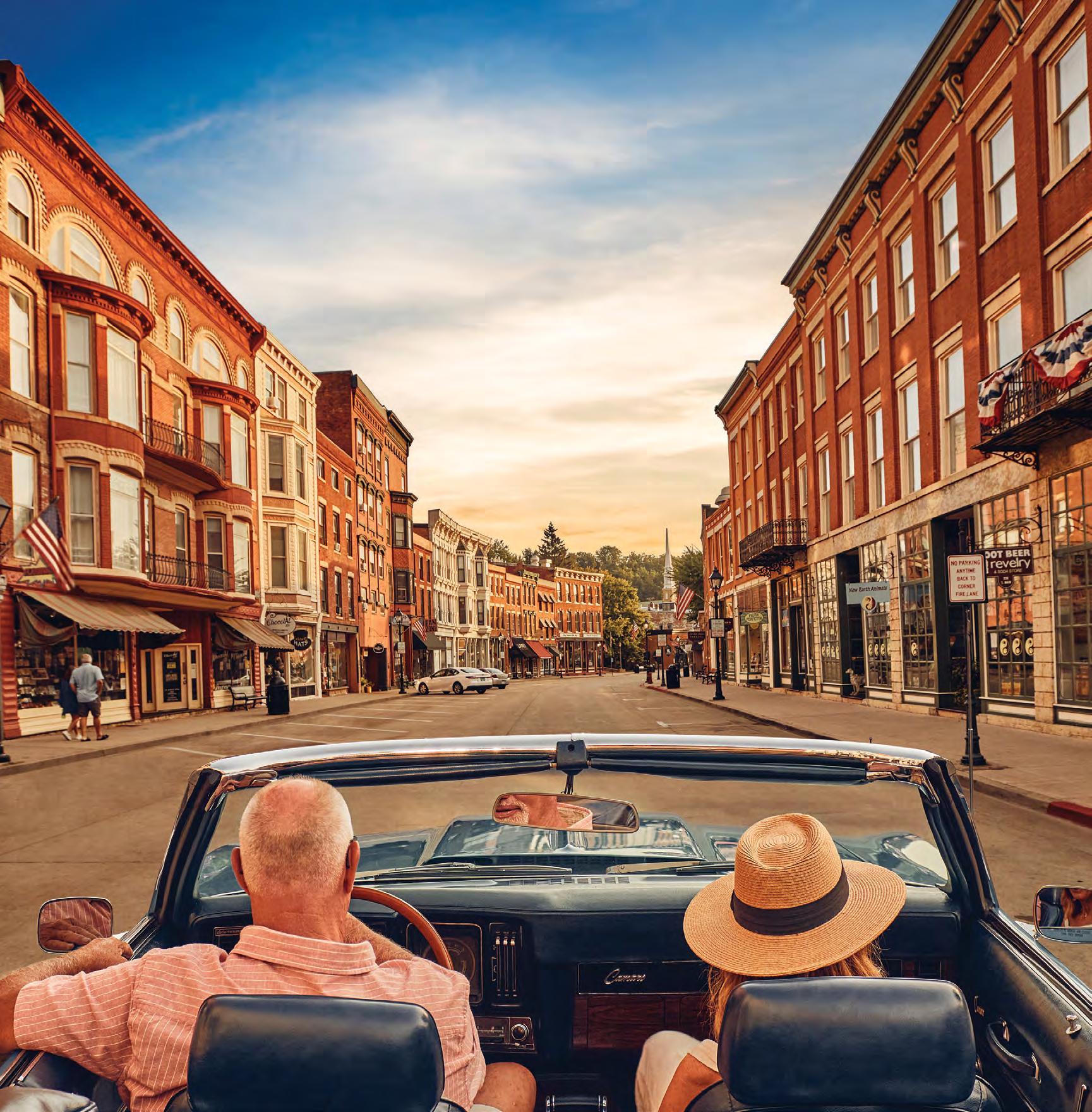











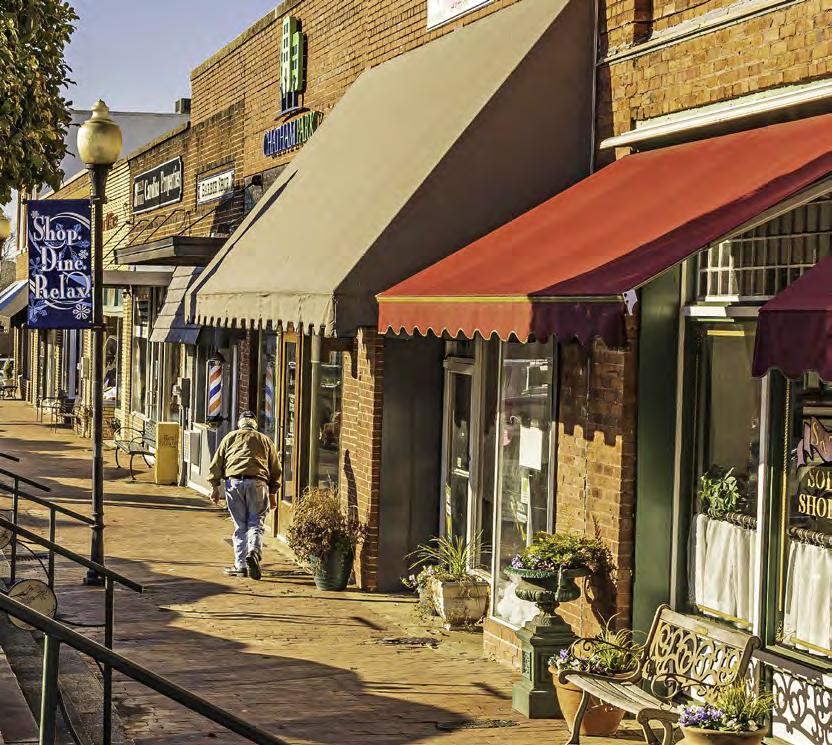
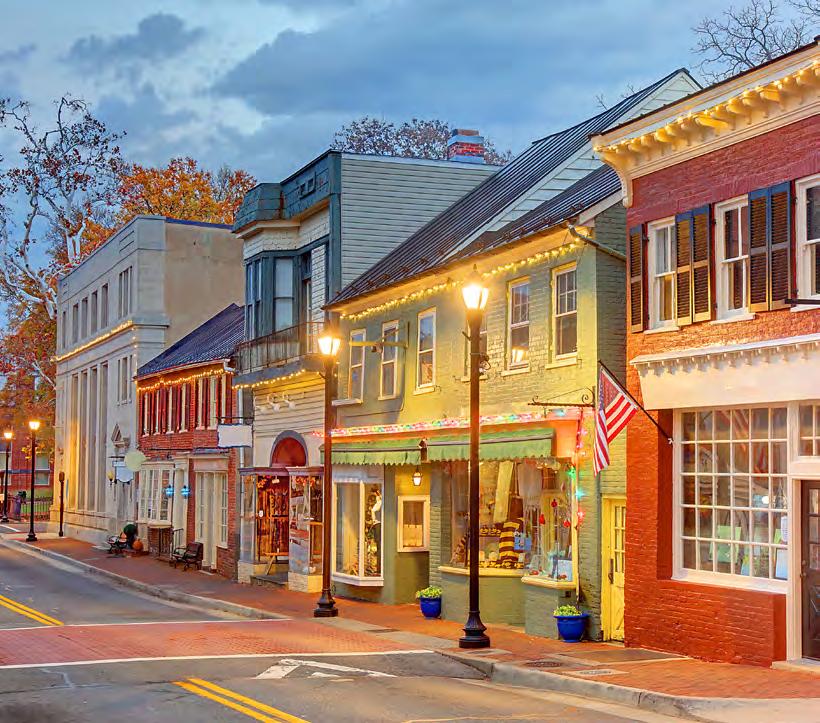
ROUTE Magazine’s Hottest
Detours Off of the Mother Road
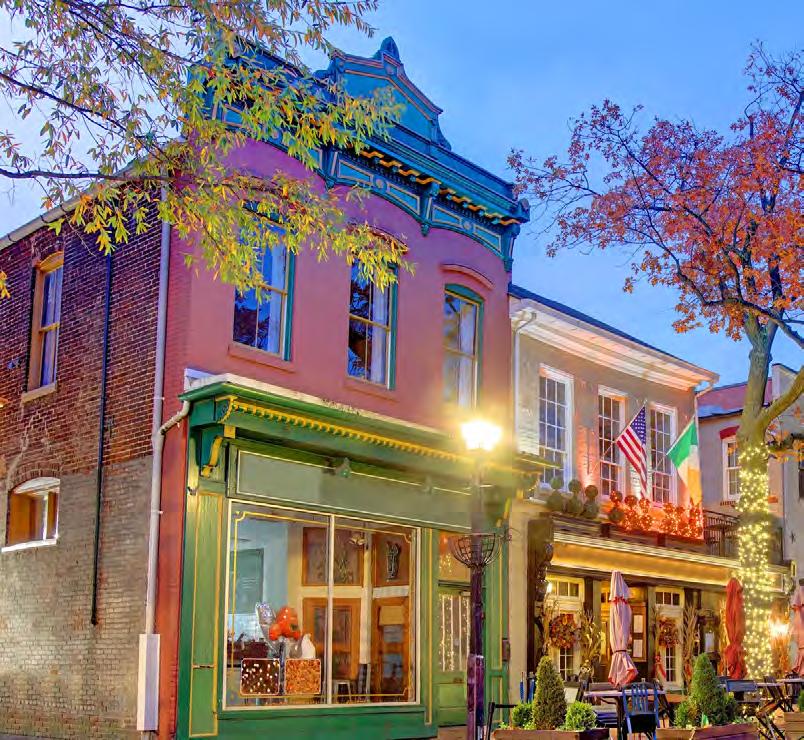
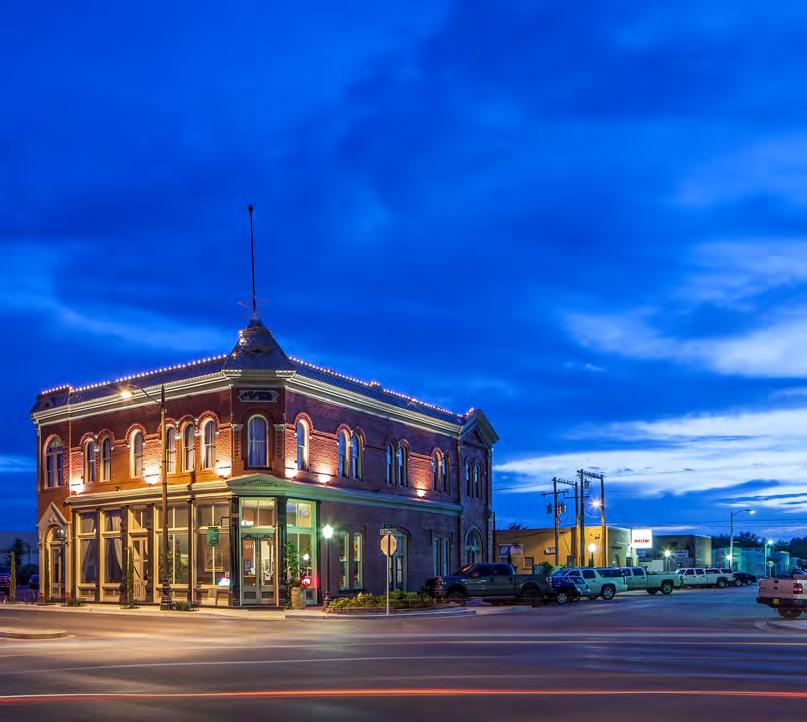
The great American road trip has always been about more than simply getting from one place to another. It’s about the freedom to explore, the instinct to chase a hunch, and the realization that some of the most memorable destinations aren’t part of the original plan. While few highways embody that spirit better than Route 66 — the most famous and beloved road of them all — a truly great road trip encourages travelers to look beyond a single line on the map.
When driving Route 66, it’s easy to stay locked to the pavement, checking off landmarks mile by mile. Yet within the eight states crossed by the Mother Road are towns and destinations that reflect the same nostalgia, character, and sense of Americana that make 66 so enduring. Some are a relatively easy drive from the route, while others demand more time and a full day’s detour. What they share is the ability to reward those willing to go the extra miles.
For this article, we’ve selected five standout destinations located within the Route 66 states that deserve a place on any classic American road trip. Each offers its own version of the magic—authentic, memorable places that feel deeply connected to the open road.
Only 44 miles from Bloomington, Decatur feels like a step into the quieter, more reflective side of the American road trip. Set amid wide prairie skies, Decatur carries its history with an unpretentious grace, inviting travelers to slow down and linger rather than rush through.
This is a town deeply woven into the American story. Decatur played a pivotal role in Abraham Lincoln’s rise to national prominence, hosting the 1860 Republican convention that helped propel him toward the presidency. That sense of historic consequence still lingers in its architecture, museums, and civic spaces, where the past feels present rather than preserved behind glass. Decatur also grew as a manufacturing and agricultural center, shaping a culture defined by resilience, ingenuity, and pride of place.
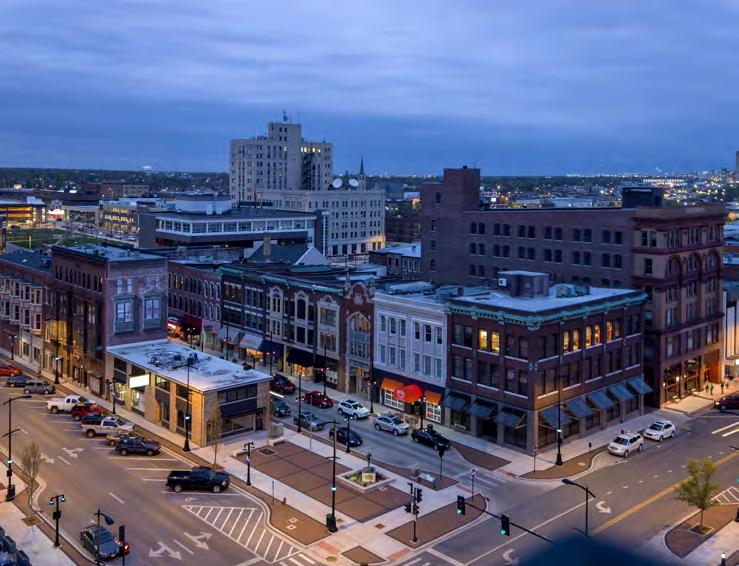
Today, downtown Decatur blends that legacy with local flavor—independent shops, classic eateries, and cultural institutions that reward curiosity. Just beyond the city center, Lake Decatur offers calm water views and treelined paths, an ideal counterpoint to long hours on the road.
Decatur isn’t about spectacle. It’s about atmosphere, memory, and the enduring romance of a Midwestern town that knows exactly who it is—and welcomes travelers who want to know it too.
If you’re looking for a place that feels like stepping into a living history postcard, Galena is your kind of town. Nestled about 160 miles northwest of Chicago, this charming destination makes an ideal weekend getaway—or a rewarding detour on a longer road trip. With rolling hills, brick-lined streets, and an easygoing pace, Galena feels like wandering into a storybook.
Its greatest draw is the beautifully preserved 19 th Century downtown, where boutique shops, cozy cafés, and inviting restaurants line Main Street. Wandering here feels like a gentle treasure hunt, with hidden gems around every corner. History runs deep as well: Galena was once home to Ulysses S. Grant, and a visit to the Grant Home offers insight into the life of the Civil War general and future president. Beyond downtown, the surrounding countryside invites exploration with hiking and biking trails, while hot air balloon rides offer sweeping views from above. In autumn, the hills ignite with color, making Galena especially memorable.
Galena’s real magic lies in its unhurried rhythm—a place that encourages you to slow down, linger, and savor the journey.
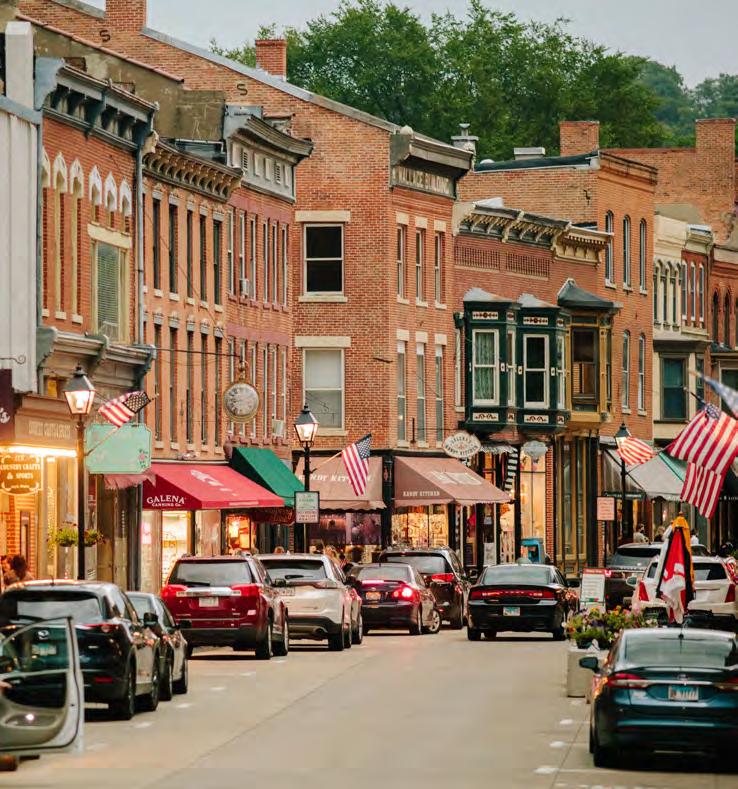
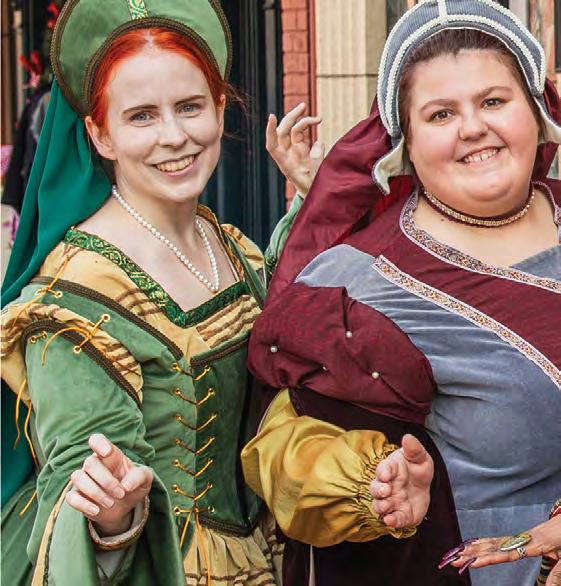
Just 25 miles northwest of downtown St. Louis, St. Charles feels like a step sideways in time—in the best way. This river town was Missouri’s first state capital and once a launch point for Lewis and Clark, but its history isn’t locked behind glass. It lives out loud along Main Street, a stretch of red-brick buildings, iron lampposts, and storefronts that look much as they did in the 1800s.
Walk the brick sidewalks and you’ll pass former trading posts, old taverns, and homes that have quietly watched centuries roll by. The Missouri River still shapes the town’s rhythm, and there’s an easy, unhurried charm here that contrasts nicely with the energy of St. Louis. Shops, cafés, and galleries now fill the historic spaces, but the bones, and the stories, remain.
St. Charles isn’t a must-see attraction so much as a place to wander, linger, and feel how history settles in when it’s allowed to age gracefully.
A relaxing jaunt — about 180 miles southeast — from the picturesque town of Carthage, Sikeston makes for a surprisingly fun and quirky pit stop, or even a destinationworthy getaway. Don’t let its small-town size fool you: Sikeston is packed with character, local pride, and a roadtrip-friendly energy that’s easy to appreciate.
Sitting in Missouri’s Bootheel region, Sikeston serves as a gateway to rural landscapes steeped in history. Traces of the Old West and Civil War era remain part of the town’s story, reflected in local landmarks and museums. Yet what many travelers remember most is the food. Sikeston is famous for its National Banana Festival, and its diners and barbecue joints deliver classic comfort fare that’s well worth the stop—especially the homemade pies and hearty plates that define Midwestern hospitality.
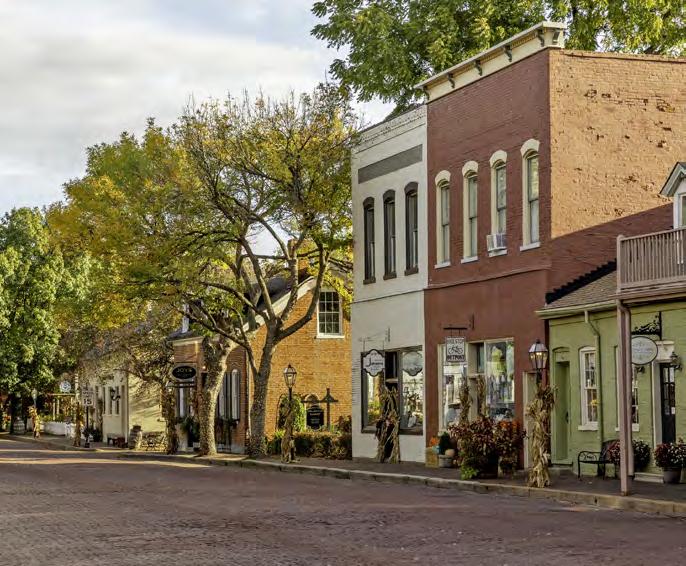
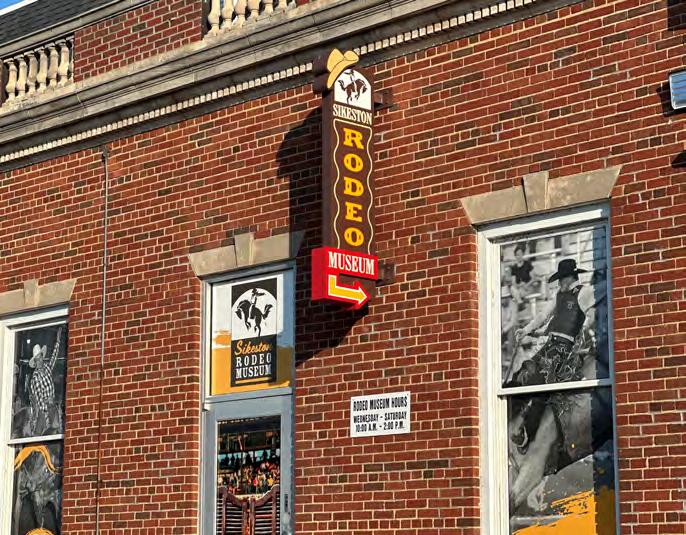
The town’s calendar stays lively with festivals and community events, while its compact downtown invites relaxed wandering. Add in nearby scenic drives and outdoor spots, and Sikeston becomes an easy, welcoming detour—a small town with big personality and genuine heart.
Only an hour from Kingman, Lake Havasu is pure desert fun with a touch of quirky history. Its most famous attraction is the London Bridge—dismantled in England, shipped piece by piece, and rebuilt here in Arizona. The bridge now anchors a lively waterfront district filled with shops, restaurants, and a relaxed, playful vibe that’s perfect for wandering and snapping photos.
Water lovers will feel like kids again. The lake is ideal for boating, jet skiing, or simply soaking up the sun. Beyond the water, the surrounding desert offers hiking, off-road adventures, and scenic drives that make you feel fully immersed in a sun-baked playground.
Lake Havasu also embraces a festival-focused lifestyle, with boat regattas, balloon events, and lively nightlife keeping the energy buzzing year-round. The combination of sunny skies, unusual landmarks, and recreational freedom gives the town a personality all its own. For road trippers, it’s a stop that blends history, scenery, and pure fun—a detour that’s unforgettable on any Route 66 journey.
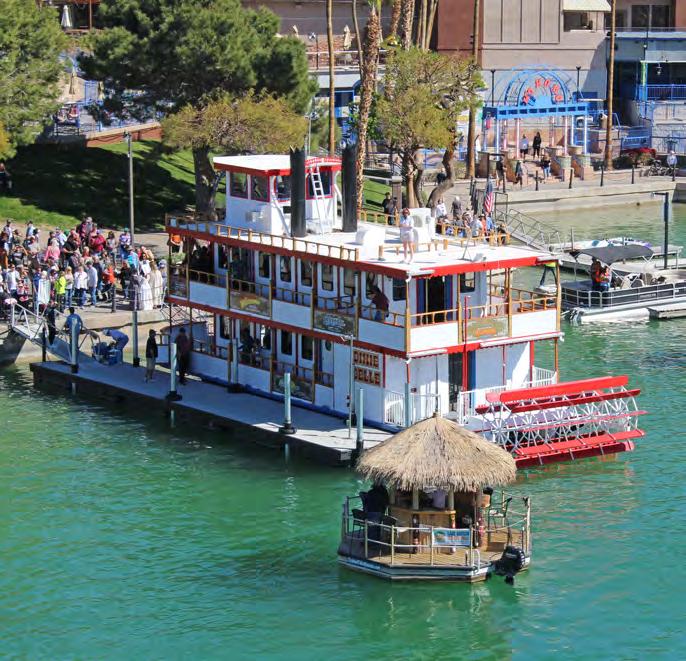
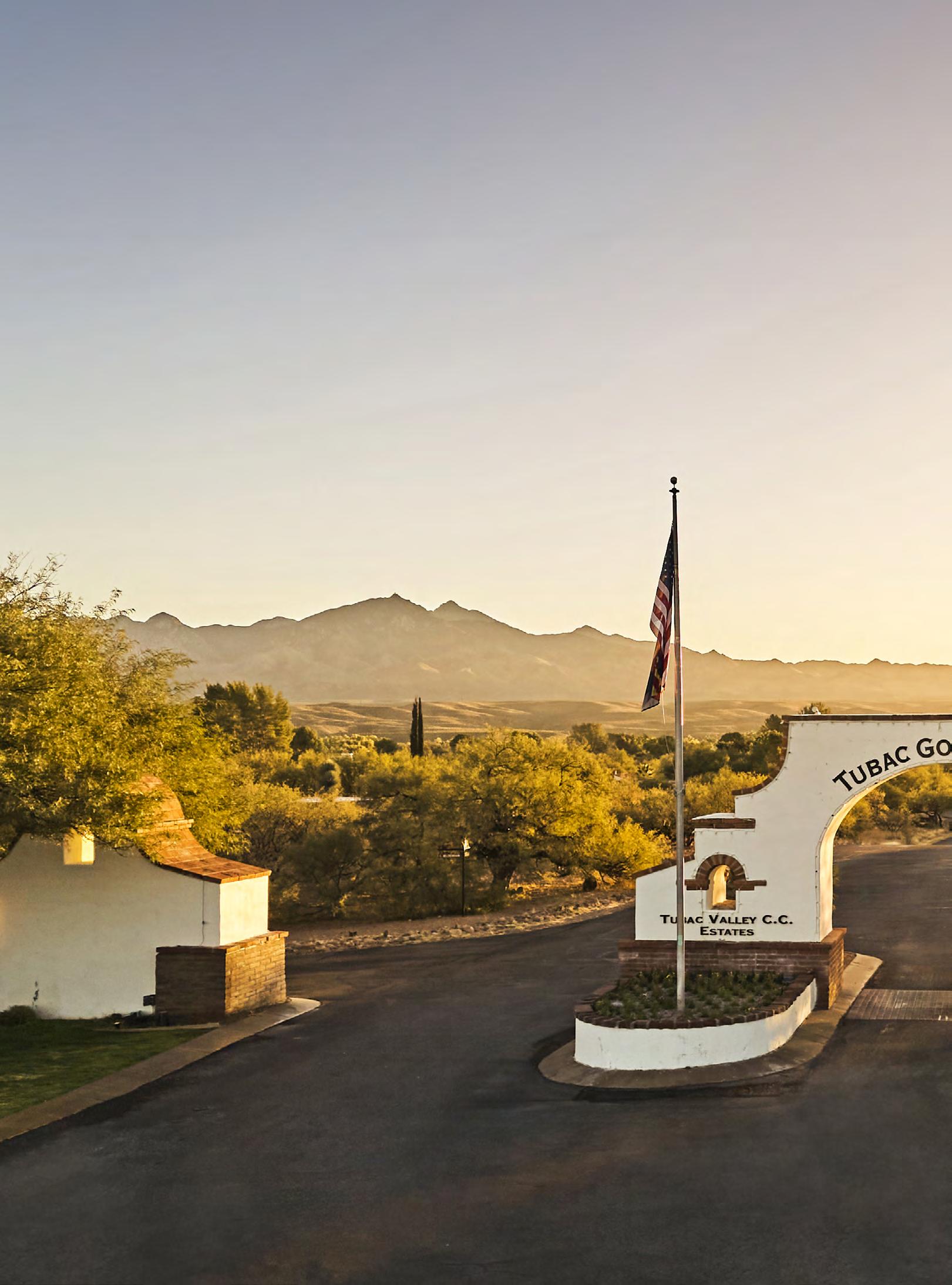
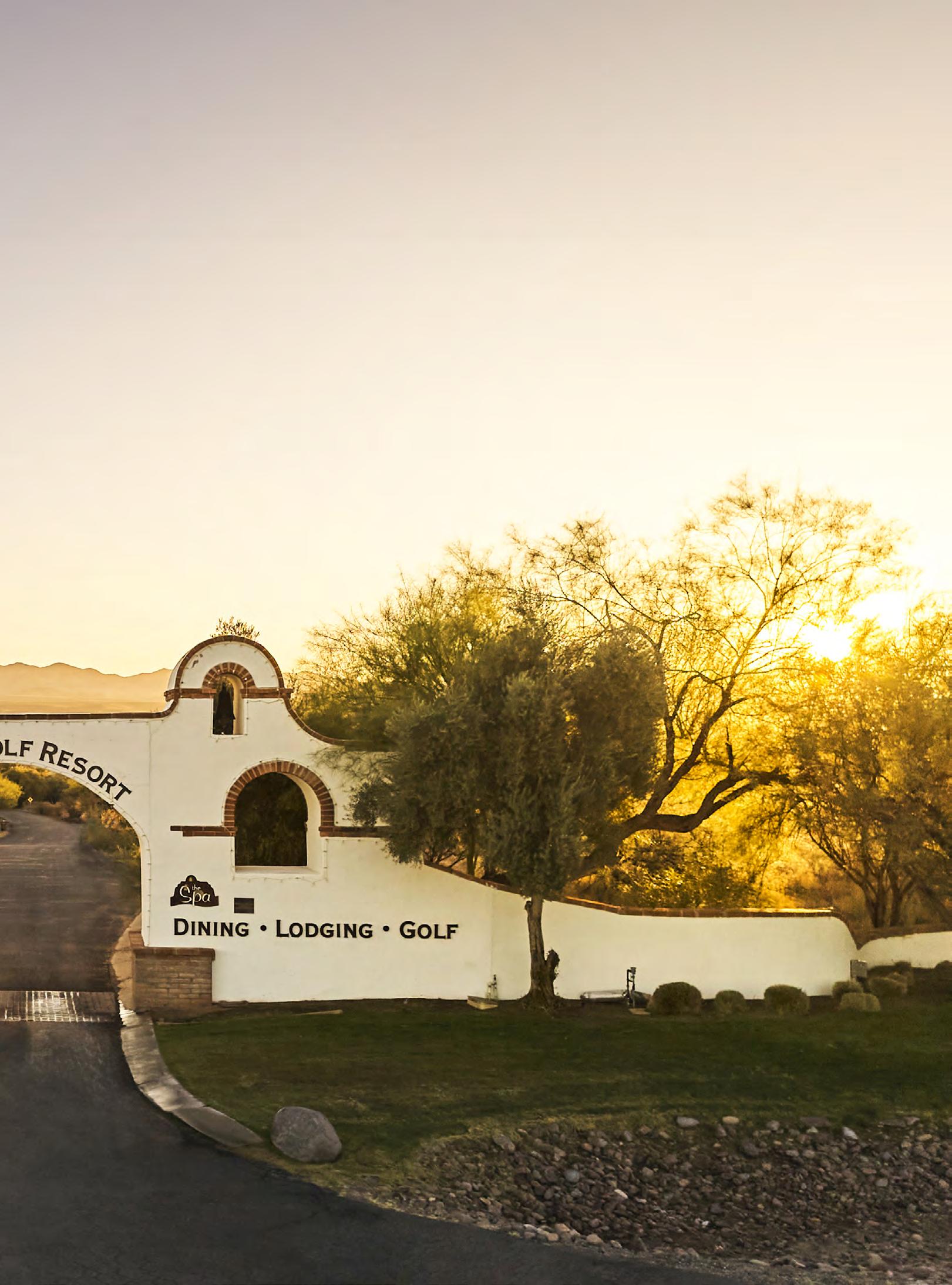
by Kyle Ledeboer
The vast terrain of Arizona is home to a long history of adventure. The “Sweetheart State,” as it is fondly known, is both mystical and grounded, its resilient creatures and rare landforms inspiring curiosity and quiet awe. Hidden among the alluring rocks and mesas are four paradises on their own, together forming the Arizona Hideaway Collection. This ensemble of resorts and clubs — the Hermosa Inn, Tubac Golf Resort and Spa, Sedona Golf Resort, and Rancho Mañana Golf Club — carries a storied texture that endures in the vision of the industrious Allred family. Known for transforming Colorado’s Telluride Ski Resort, the Allreds acquired each property across the 2000s and early 2010s, uniting them in 2025 to create a single thread connecting history, landscape, and the timeless magic of some of Arizona’s most cherished hideaways.
Like many great American tales, the story of the Hermosa Inn begins with a cowboy, a brush, and a restless dream. Lon Megargee was not the kind of artist who observed the West from afar—he lived it. Born in the late 19th Century, he grew up among ranchers and wranglers when Arizona was still a territory and the line between survival and mythmaking was thin. He worked cattle drives, rodeo circuits, and sketchbooks with equal intensity, capturing a frontier that was quickly being swallowed by modernity.
By the time he painted the iconic “Last Drop from His Stetson” in 1923 — the compassionate cowboy kneeling so his horse could drink from his hat — Megargee had already earned a reputation as one of Arizona’s most soulful interpreters. The painting became a small piece of Americana, eventually tucked into the lining of every Stetson hat, a quiet tribute to the grit and decency that shaped the Southwest.
But even an artist of the open range needed a place to settle his spirit. In the early 1930s, as the country wrestled through the Great Depression and Arizona was still finding its footing after statehood, Megargee sought solitude in the desert foothills outside Phoenix. There he built an adobe hideaway by hand, molding earth and timber into a hacienda he named “Casa Hermosa.” It was a working studio, a refuge, and a testament to the era’s self-reliant craftsmanship— thick adobe walls to keep the desert heat at bay, archways that framed long stretches of sky, and fireplaces where winter nights burned low and warm.
Word of the retreat drifted west. During the 1940s and ’50s, Casa Hermosa drew Hollywood’s quieter souls: writers, character actors, and cinematographers chasing a few borrowed days of stillness. They came for the dry air and privacy, staying for the sense that the desert still held unanswered stories.
Megargee sold the hacienda in the early 1950s, and it became the Hermosa Inn. Over decades and owners, the inn expanded, contracted, and evolved, but its heartbeat stayed the same. Even now, turquoise doors brighten the adobe like desert jewels, kiva fireplaces glow with that familiar warmth, and rugs patterned in earth tones seem to whisper the long memory of the place.
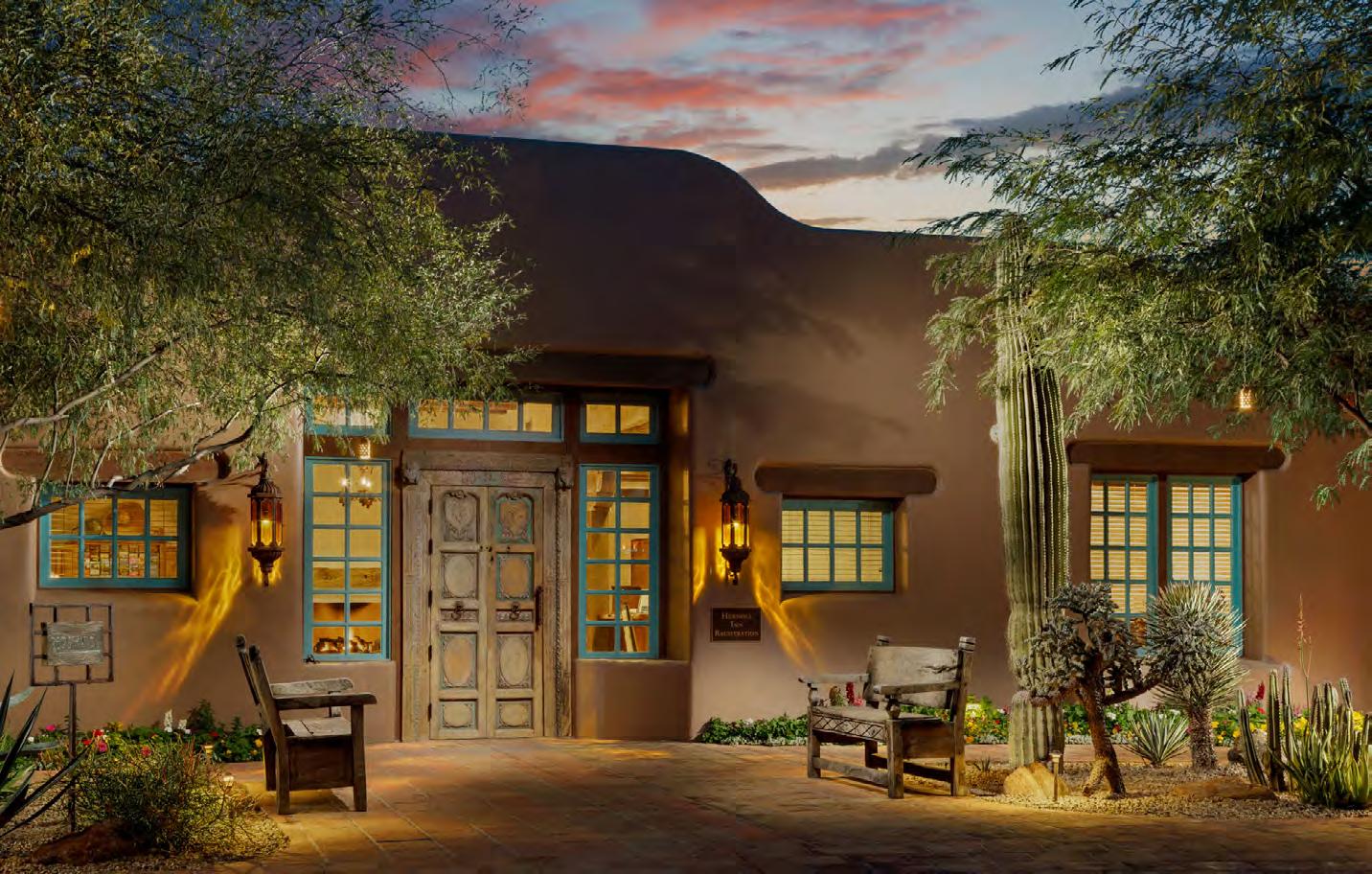
In 2015, the Inn entered a new chapter under Ron and Mike Allred — a father-and-son team known for restoring historic properties with both reverence and vision. They saw the Hermosa not as a blank slate but as a living artifact of Arizona’s past, and their work became less a renovation than a careful stewardship. The result is an Inn that feels both timeless and quietly renewed.
Today, its 43 casitas offer the same kind of contemplative refuge Megargee once sought: a place where the desert slows the pulse and stirs the imagination.
And if you wander into the restaurant as the evening settles in, you’ll find a different kind of story unfolding— firelight flickering across adobe walls, a steak arriving with the weight of comfort, and the unhurried atmosphere that makes a simple meal feel like part of the Inn’s long, lingering tale.
Long before golfers traced quiet arcs across manicured fairways, the land around Tubac carried a very different rhythm—hoofbeats, dust, and the slow churn of ranch life along one of Arizona’s earliest settlements. Today, Tubac Golf Resort & Spa stands on ground layered with centuries of stories, offering travelers a place where past and present cross paths as effortlessly as old friends.
The roots of this landscape stretch back to the 1700s, when Tubac operated as a Spanish presidio guarding the frontier. It was a lonely outpost on the edge of empire, where soldiers, settlers, and missionaries all tried, in their own ways, to impose order on the vast Sonoran wilderness. In 1789, a generous land grant from the King of Spain changed the region’s trajectory: Don Toribio de Otero and his descendants carved out one of Arizona’s earliest — and eventually most influential — ranching dynasties. For nearly a century and a half, the Oteros shaped the valley’s economy, culture, and character, raising cattle in numbers that became the stuff of local memory.
When the ranch transitioned into a resort in 1959, it was Roy and Amelia Kreiberg — a husband-and-wife team with a love for the desert and a vision for hospitality — who guided the transformation. They added guest rooms and invited visitors to play on a new course designed by Robert “Red” Lawrence, who traced fairways along the natural contours of the ranch, honoring its rugged beauty while offering an accessible, enjoyable challenge for players. The resort grew to offer 112 rooms and three sparkling pools, each tucked among courtyards and gardens that echo the region’s quiet charm.
Decades later, in 2002, the Allred family arrived with an eye for restoration and a steady hand. Known for their ability to revive storied properties without sanding away their soul, they expanded the course to 27 holes, redesigned accommodations, and introduced a 3,000-square-foot spa that feels like a quiet refuge after a dusty day exploring. They also built a chapel inspired by early colonial architecture—simple, elegant, and luminous in a way that seems to fold time back on itself.
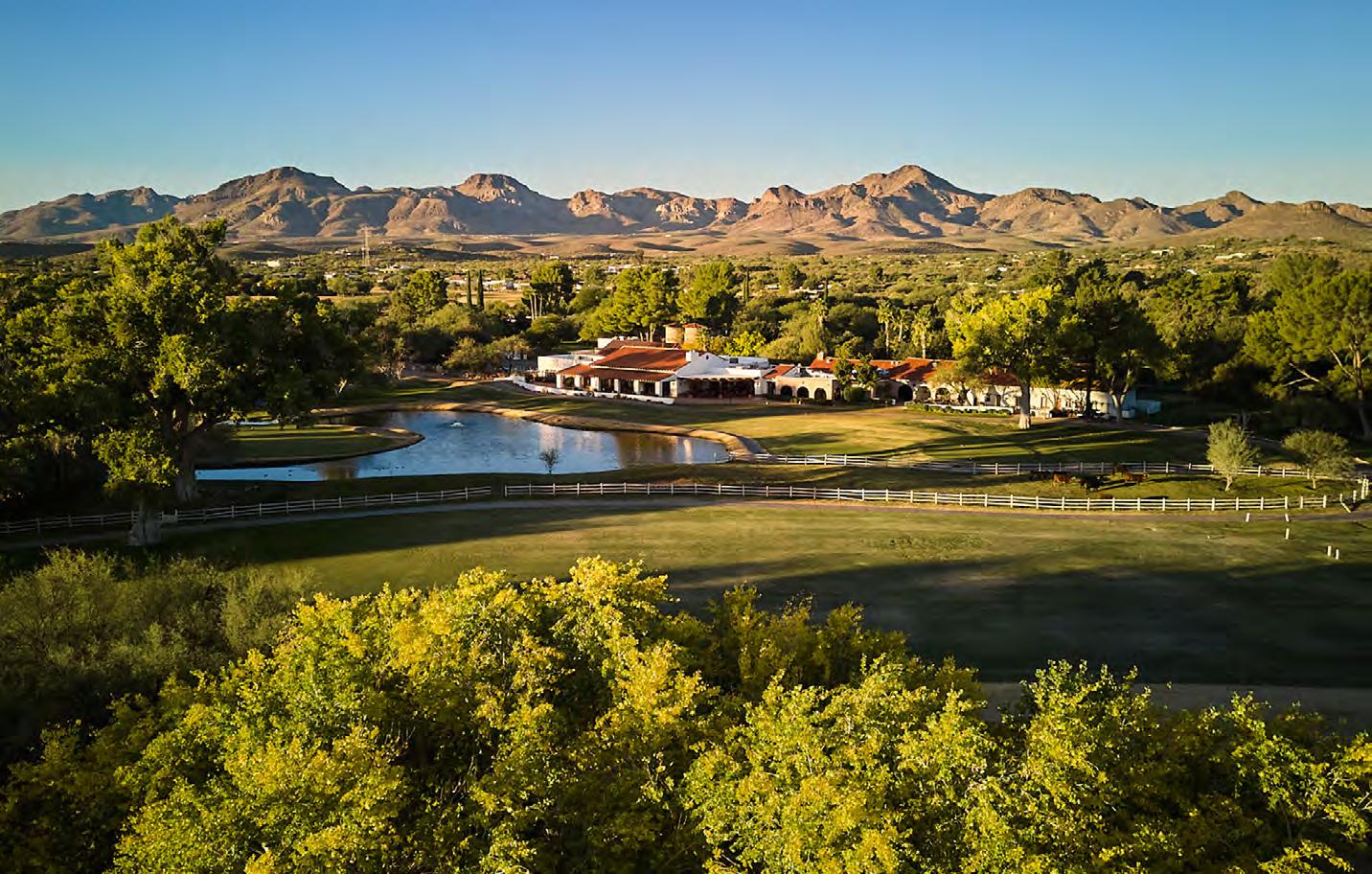
Tubac’s sense of place doesn’t end at its gates. The old Juan Bautista de Anza Trail passes just beyond the resort, tracing the footsteps of Spanish explorers, O’odham communities, and early travelers who followed the river south. Today, it’s a peaceful path for those wanting to wander under cottonwoods or listen to the steady hush of desert wind. Wine lovers can slip into a different kind of landscape with tours into Sonoita’s rolling vineyard country, where the quiet hills feel a world away from modern bustle.
Evenings settle gently here. After the last putt drops and the stars begin to spark above the desert, dinner takes on the easy mood of a ranch gathering — plates of flavorful chorizo, warm conversation drifting across adobe courtyards, and the kind of meal that anchors a day spent living between history and horizon.
The towering red rocks of Sedona have long drawn travelers, artists, and filmmakers, their rugged beauty shaping both imagination and adventure. Just a 30-minute drive south of Flagstaff, the area offers a quick escape from the high desert plateau into a landscape of juniper-studded ridges and sandstone spires. In 1965, the land that now cradles the Sedona Golf Resort appeared on the silver screen in the Western comedy Rounders, where Glenn Ford and Henry Fonda traced paths through the same canyons and mesas that now frame the resort’s fairways.
Long before Hollywood arrived, the mesas and valleys carried stories of Native American communities, who left behind rock art, trails, and a deep awareness of the land’s rhythms. By the 1980s, when architect Gary Panks began designing the resort’s 6,646-yard golf course, these histories were part of the vision. Each hole follows the natural contours of the terrain, respecting the rise and fall of ancient formations, and the course retains a quiet sense of memory—every swing brushes past millions of years of geological shaping, footprints of early explorers, and whispers of the desert’s original inhabitants.
After a morning spent among the fairways, Juniper Bar & Grille offers a gentle retreat. Its breakfast carries a warmth that mirrors the sunrise over the red rocks: skillets of eggs and local produce, freshly baked pastries, and coffee that steams in the chill of the high desert air. Large windows frame the vista, and the soft murmur of conversation blends with the rustle of juniper trees and the occasional birdcall, creating a space where time slows and the day begins quietly, thoughtfully.
Evenings take on a different rhythm at ShadowRock Tap and Table, where dinner leans toward attentive, considered dining. The menu draws on local flavors—hearty, grounded ingredients elevated with subtle complexity. Meals are taken slowly, paired with the fading light of the red-rock horizon, and the interior’s warm glow complements the shifting colors outside. Here, conversation flows easily over dishes meant to be savored, and the landscape outside becomes part of the experience, an unspoken presence at the table.
Guests stay at the Hilton Sedona Resort at Bell Rock, a partner property where 221 rooms combine Southwestern style with contemporary touches. Balconies frame the rock formations, fireplaces offer a quiet comfort, and rooms seem to echo the desert sky, transitioning from gold to indigo as the day moves on. Each evening, whether after a round of golf, a quiet breakfast, or a thoughtful dinner, there is a subtle, persistent sense of awe: that the land’s enduring presence is not only seen but felt, in the light, the stones, and the very air that moves through the canyons.