
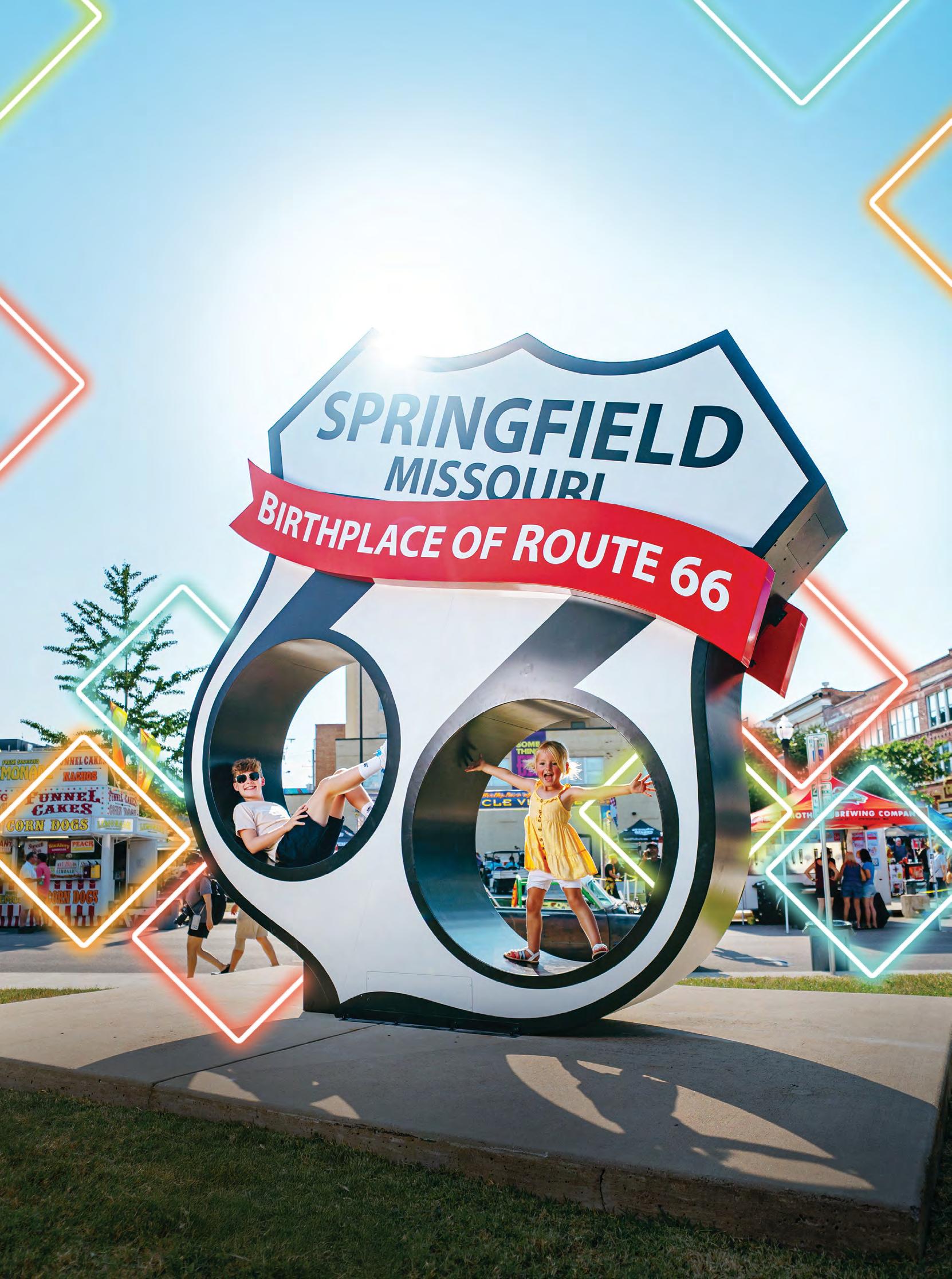
Plan your next visit to Springfield, Missouri and celebrate 100 years of America’s most iconic highway right in its birthplace. Explore classic diners, historic landmarks, and hidden gems that keep the spirit of the road alive. Here in the City of the Ozarks, it’s all about making it your own.




ROBERT, MO Route 66
A road trip along our stretch of America’s much-celebrated byway is even more enjoyable when you get out to stretch your legs. Not only are there many beautiful natural vistas to take in, but our man-made attractions are just as unforgettable – and post-worthy.
For more information, directions, and driving tour information, visit pulaskicountyusa.com.


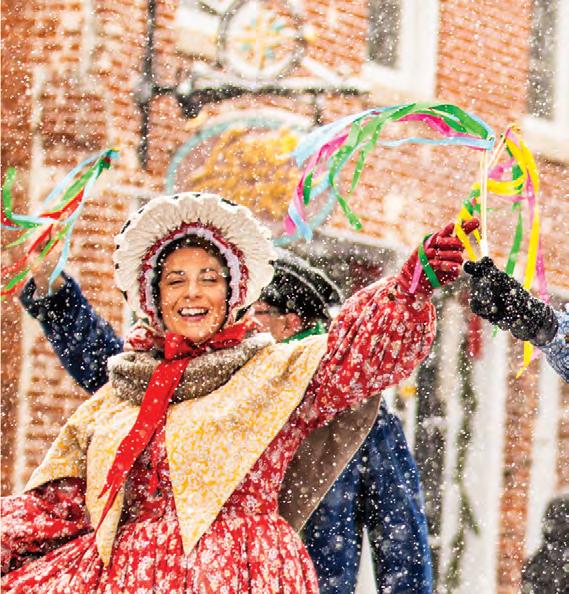





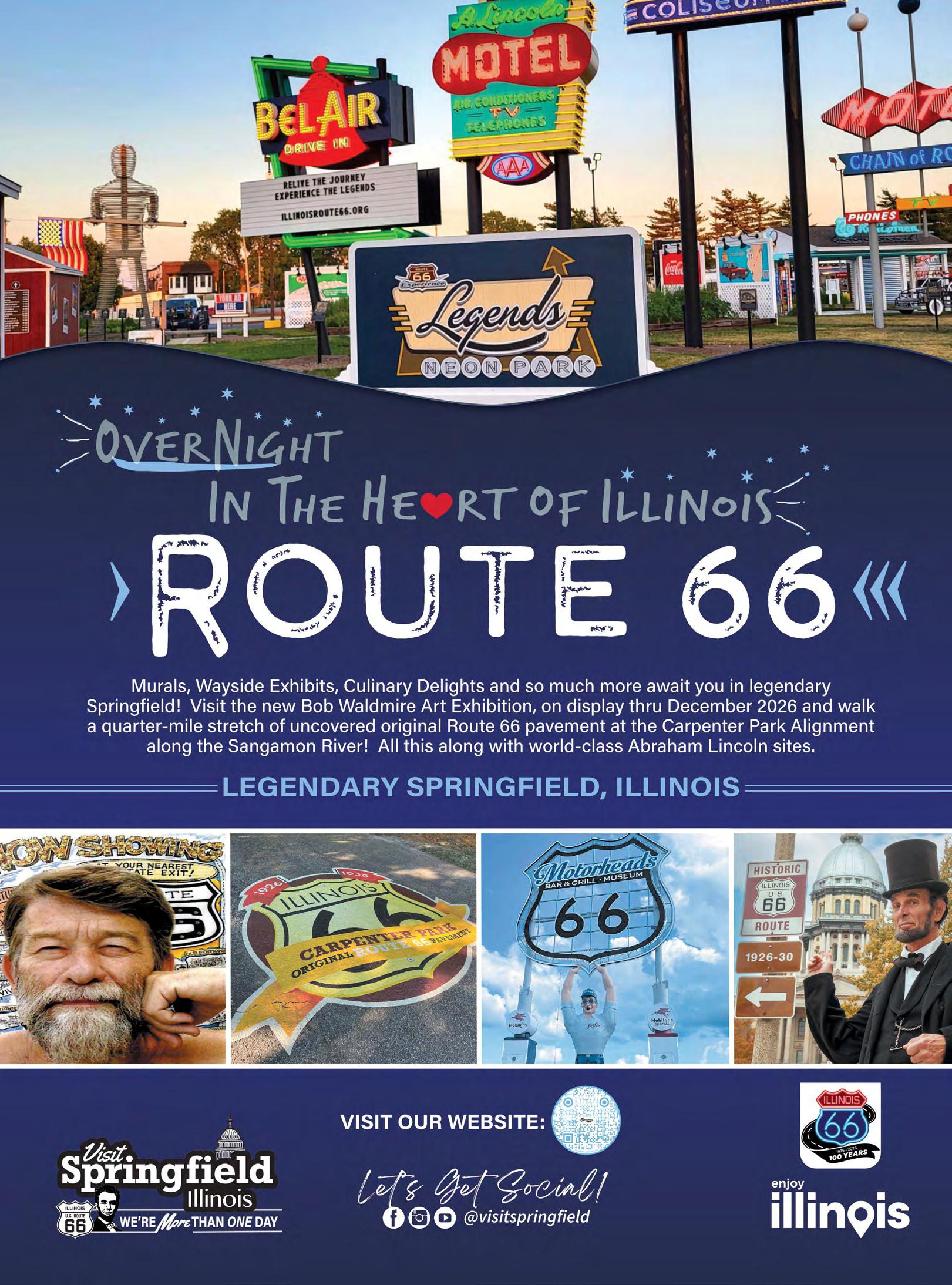
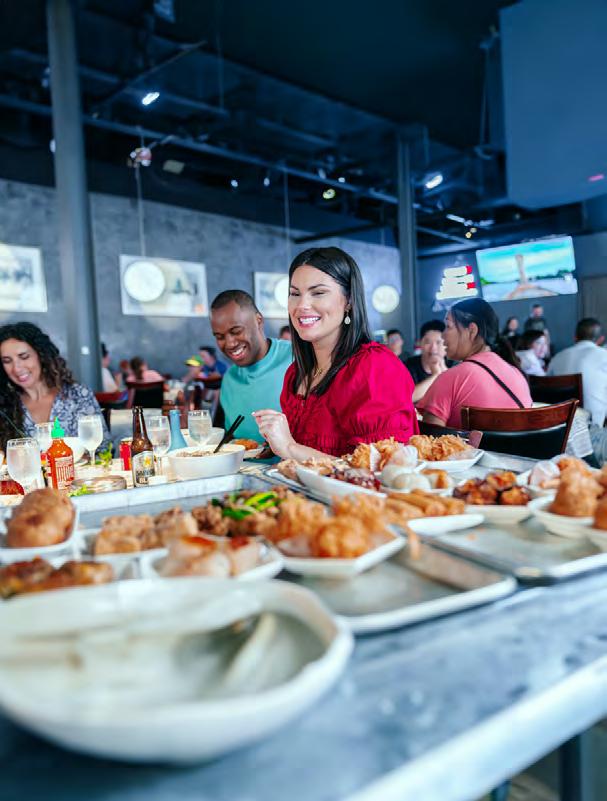


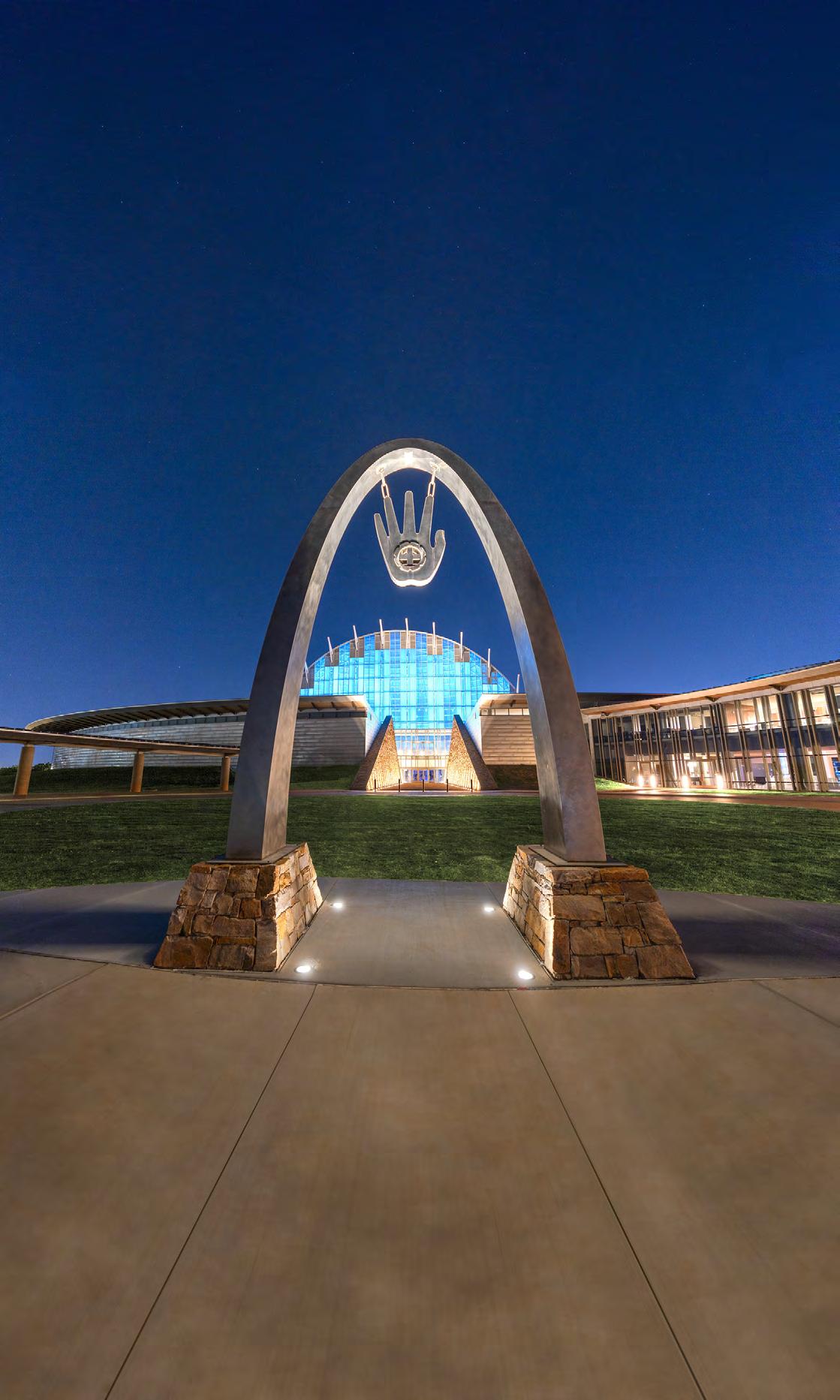
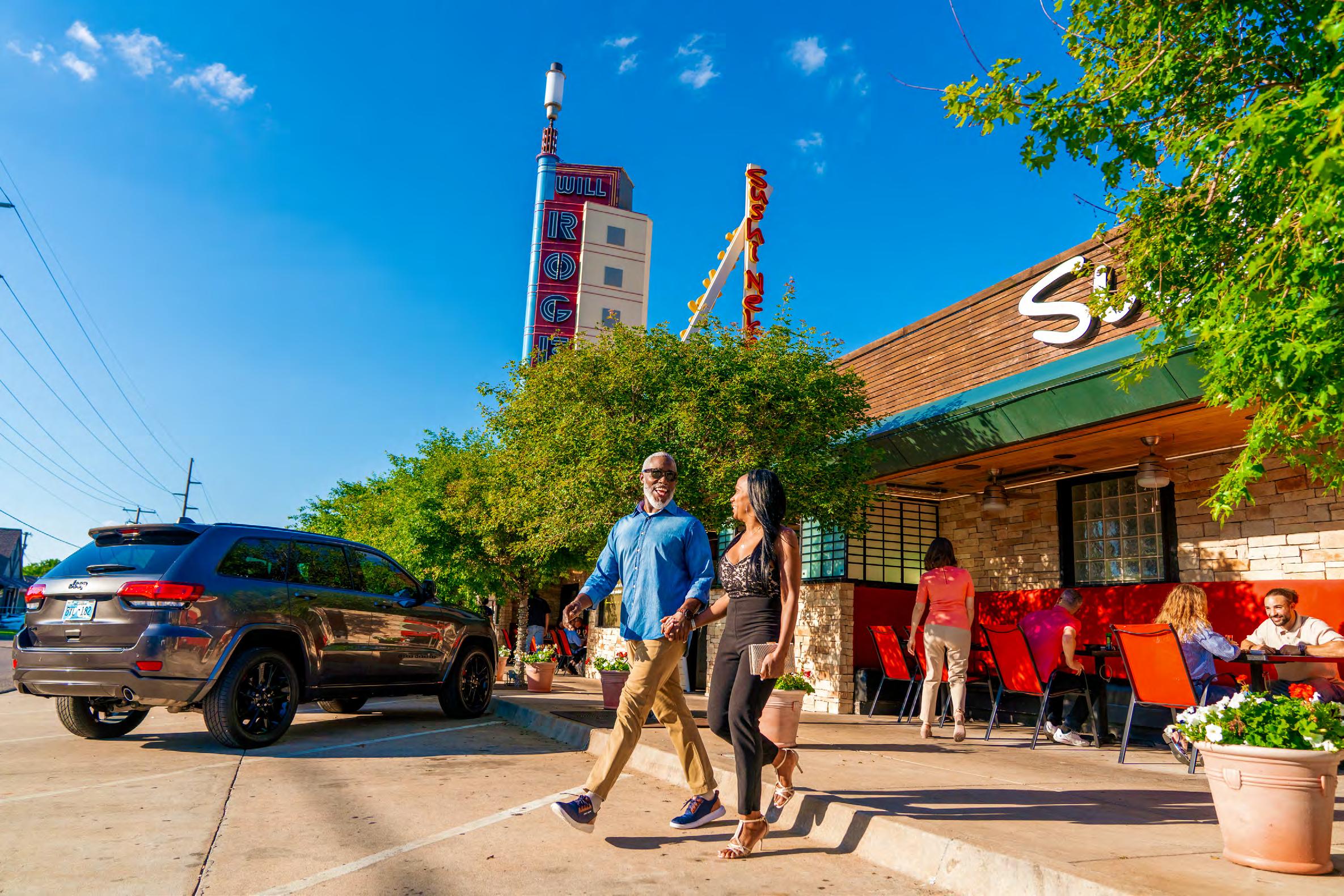
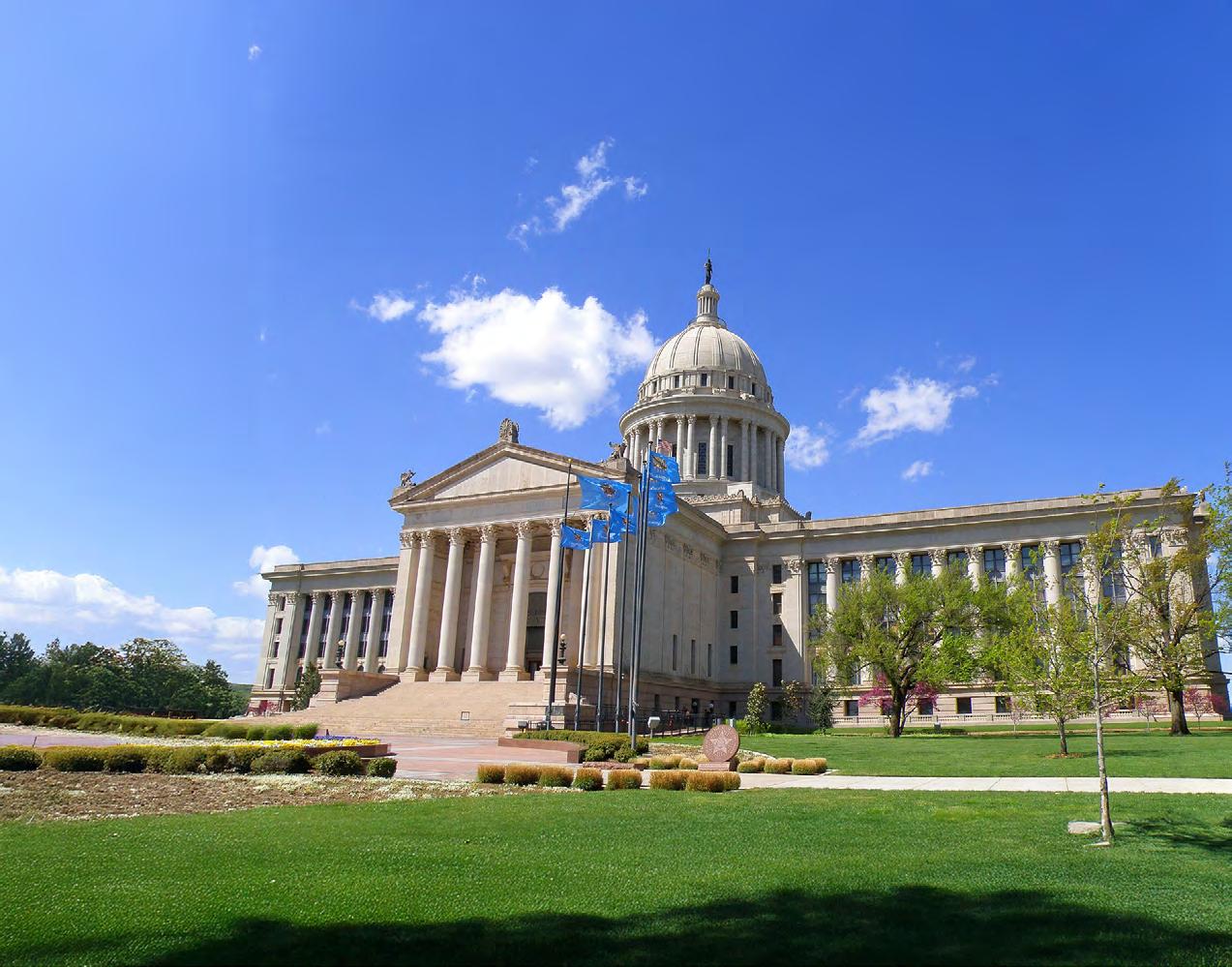
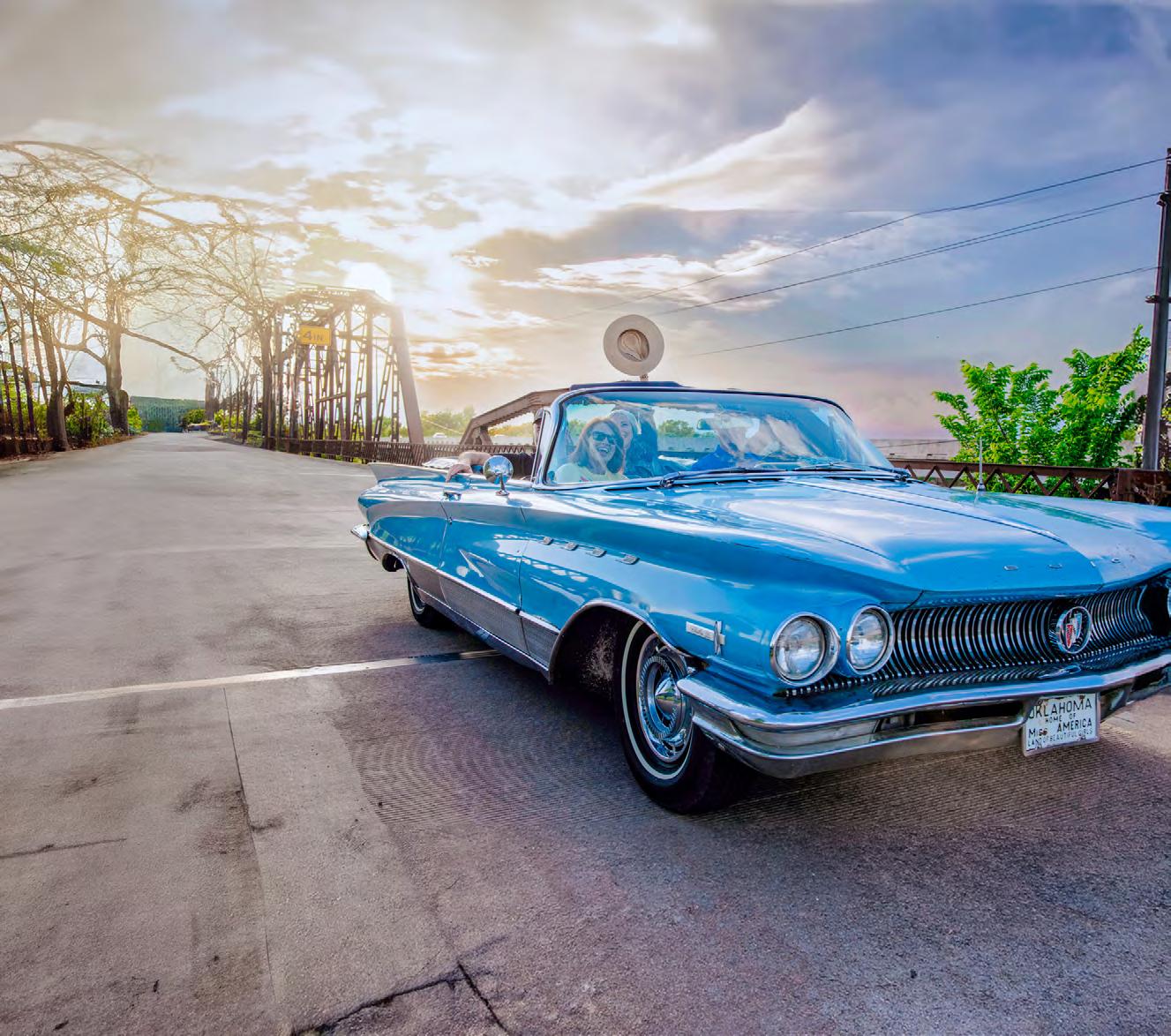
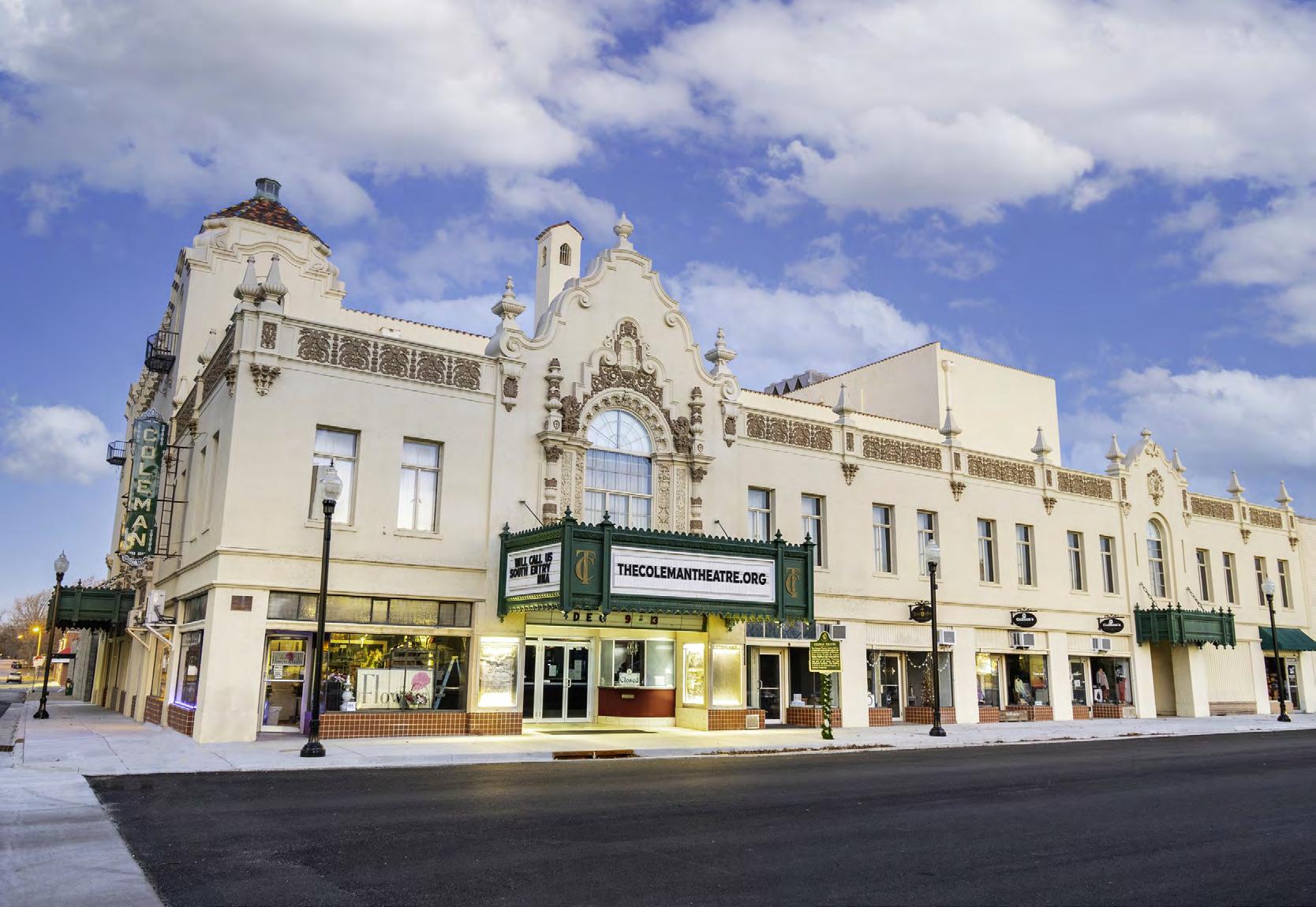
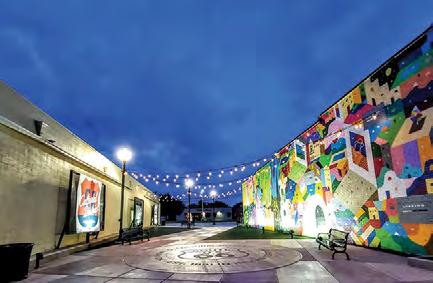
When cruising Route 66, Oklahoma City is a must-see destination. OKC’s vibrant districts welcome visitors into their diverse local restaurants and shops. Our classic neon signs and inspired murals evoke the nostalgia of the Mother Road, providing fun by day or night. Our world-class museums and only-in-OKC experiences will ignite memories for a lifetime. Start your journey at VisitOKC.com.












By JoAnn Chang
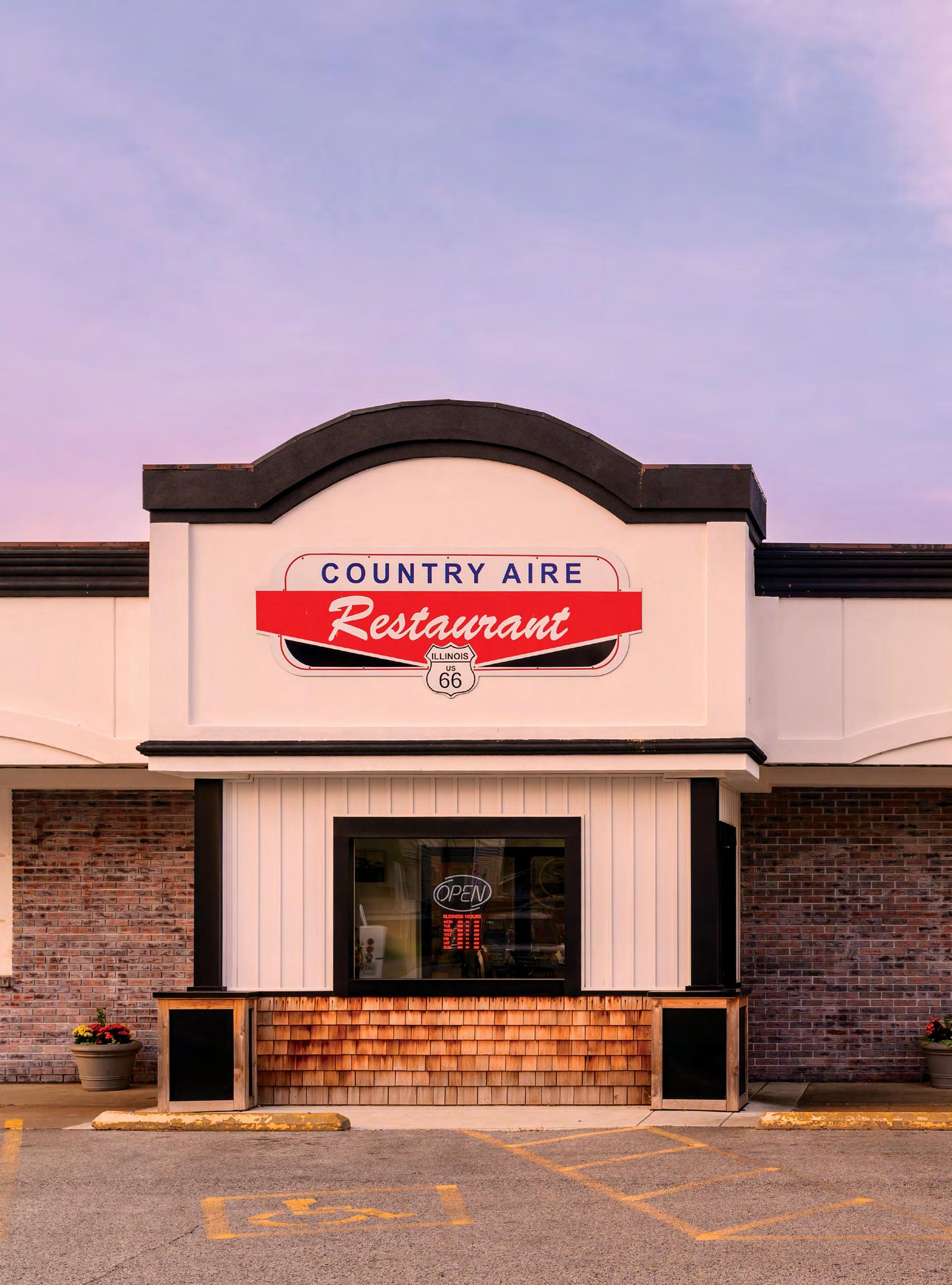
A new story is unfolding on Route 66 in Atlanta, Illinois. The Country-Aire Restaurant, a family-owned café, is bringing fresh energy to this small Mother Road town. With local flavor, hard work, and hometown charm, the restaurant is proving that even along the historic Mother Road, new beginnings — and good food — can spark excitement and community pride.
By Rachel Fernandez
Step into Oklahoma City’s Cattlemen’s Restaurant, a historic steakhouse that’s been serving up tradition since 1910. More than just prime cuts, it’s a cultural landmark where cowboys, locals, and travelers alike gather, savoring hearty meals amid authentic Western charm. Explore the legacy, stories, and enduring spirit that make Cattlemen’s a true icon of Oklahoma’s culinary and cowboy heritage.
By Robbie Green
Hit the open road with our pictorial celebrating Route 66 in all its quirky, colorful glory. From neon signs and vintage motels to roadside oddities and hidden gems, these images capture the spirit, humor, and unexpected charm that make the Mother Road legendary. A visual journey you won’t want to miss.
By Mitchell Brown
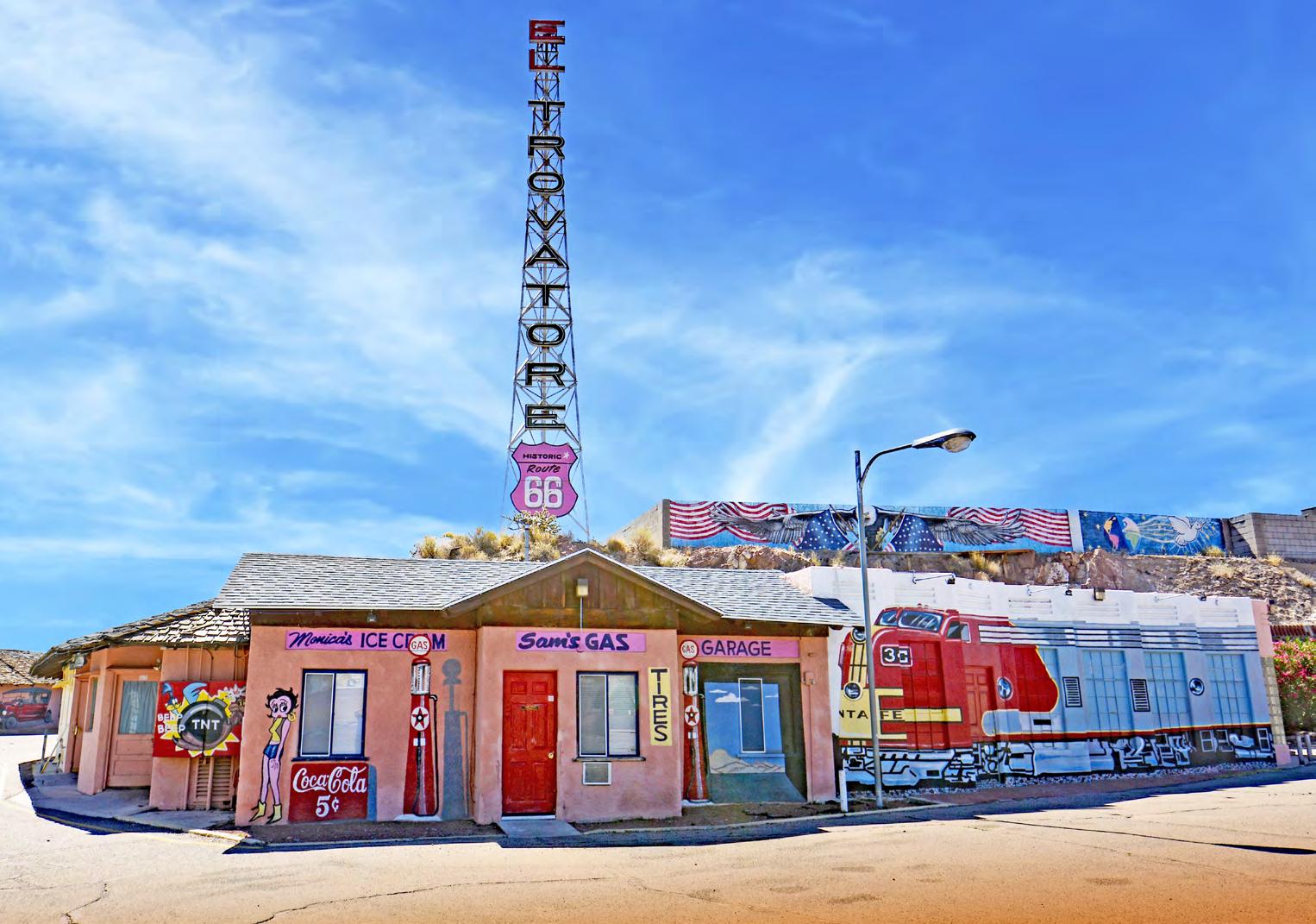
Step back into the golden age of Route 66 at Kingman’s El Trovatore Motel. With its towering neon sign, celebrity-
themed rooms, and panoramic views of the desert, this historic landmark keeps the Mother Road’s spirit alive. Discover the stories, legends, and quirky charm that make El Trovatore a true retro gem of the Southwest.
By Holly Riddle
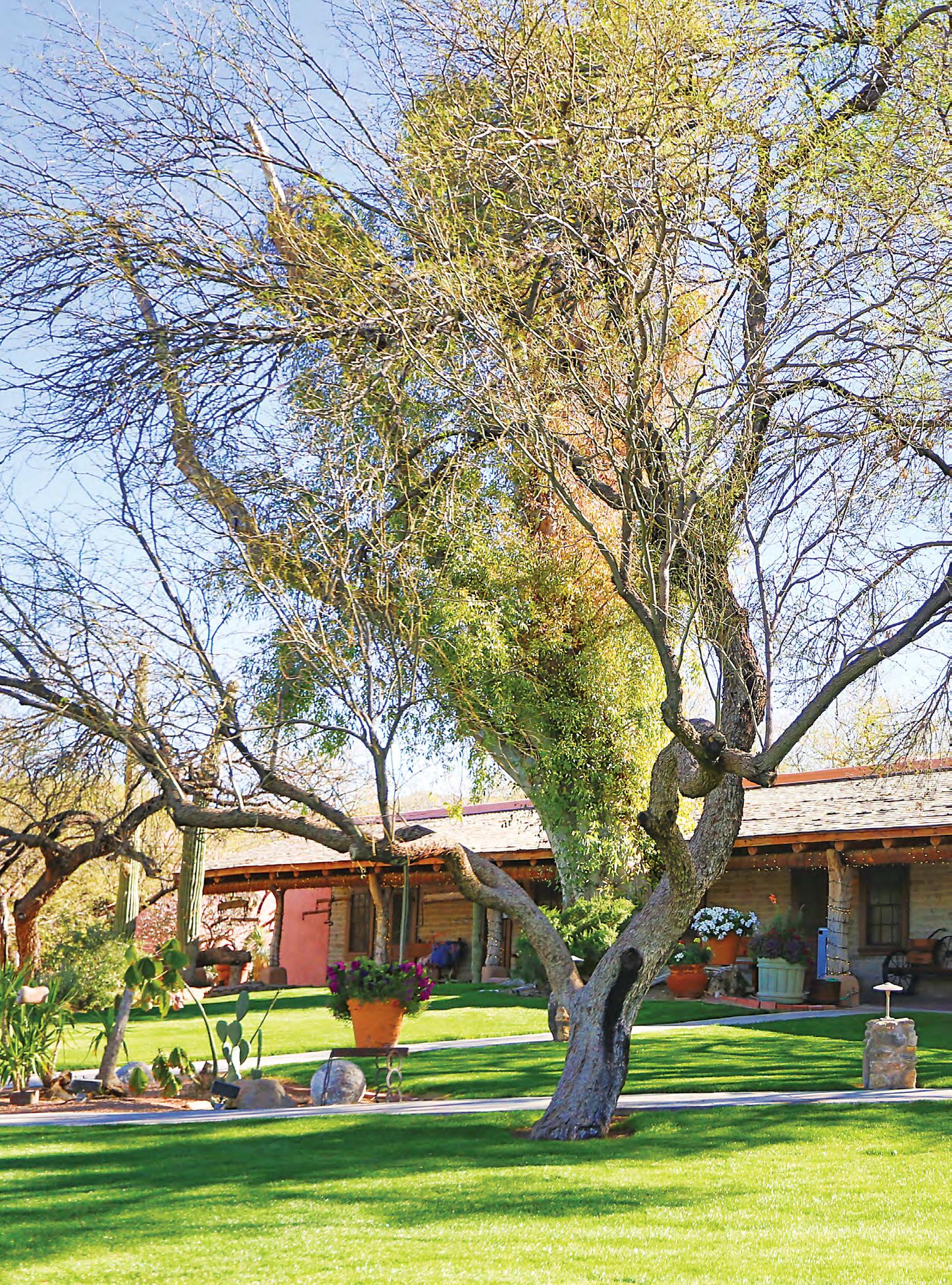
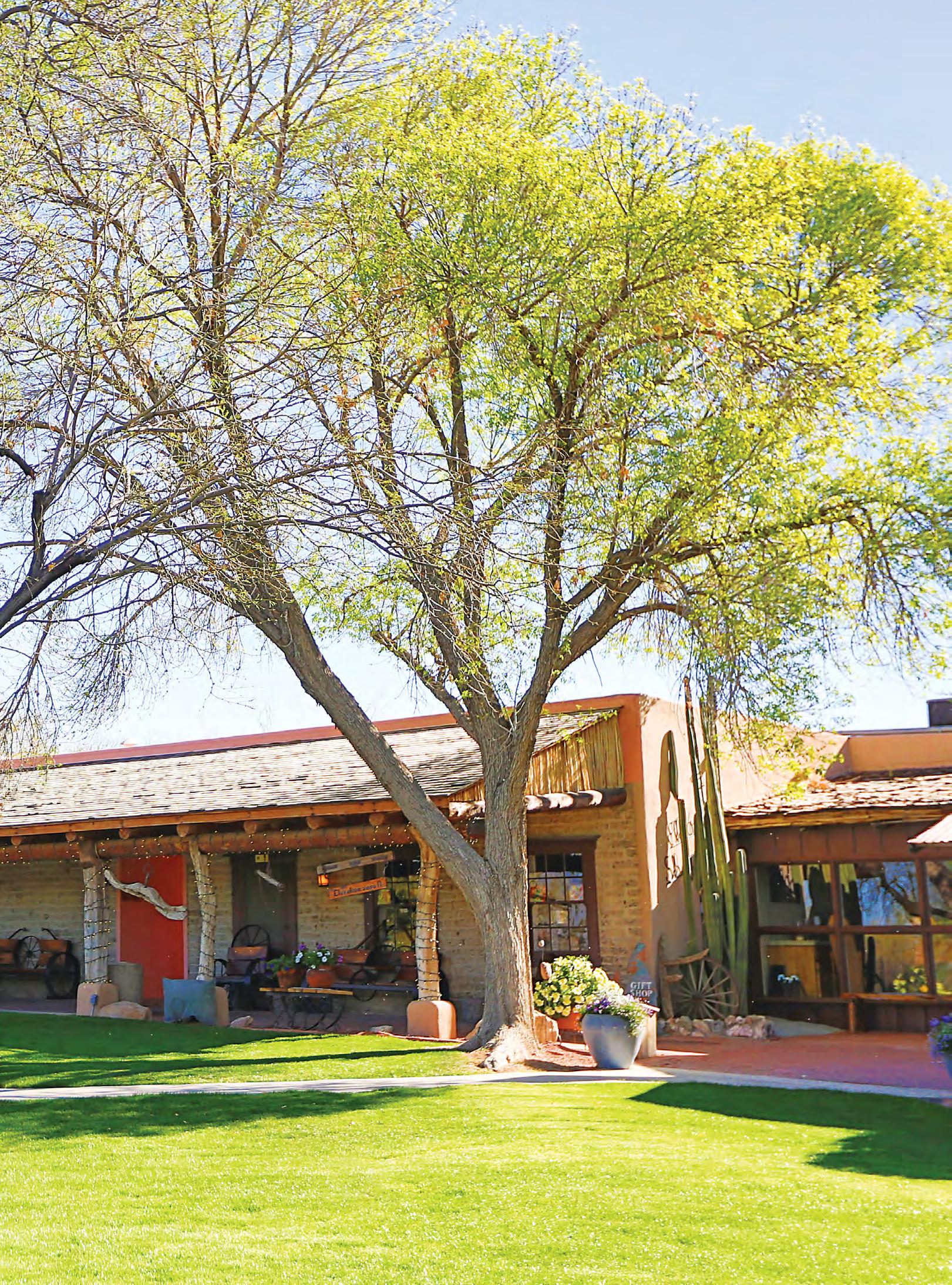
Discover the timeless romance of the Old West at Tucson’s Tanque Verde Ranch, where history and heart intertwine beneath desert skies. Founded in the 1860s, this storied retreat blends rugged cowboy spirit with refined comfort — sunset rides, adobe charm, and starlit dinners that whisper of a bygone era still alive in the desert breeze.
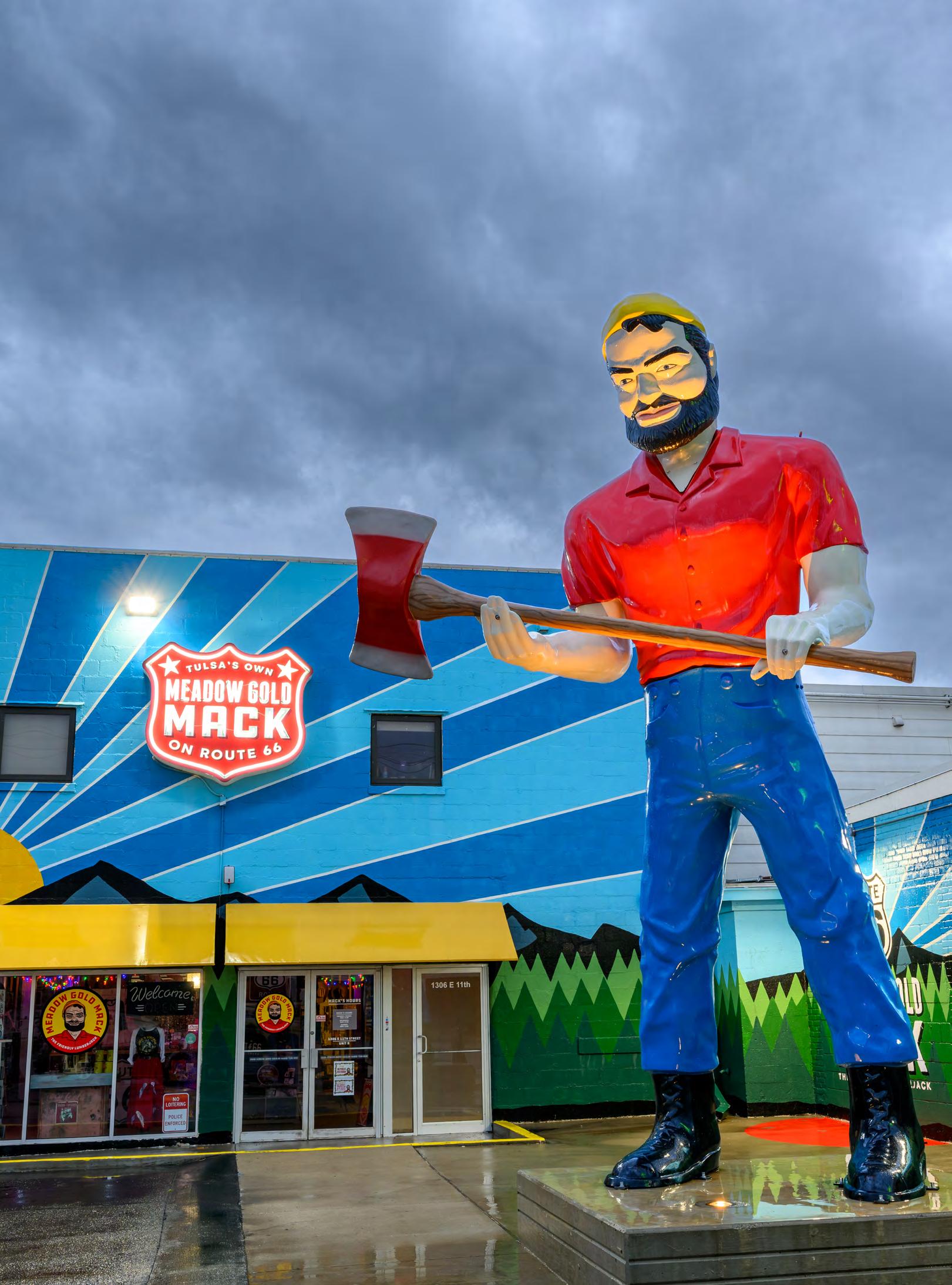
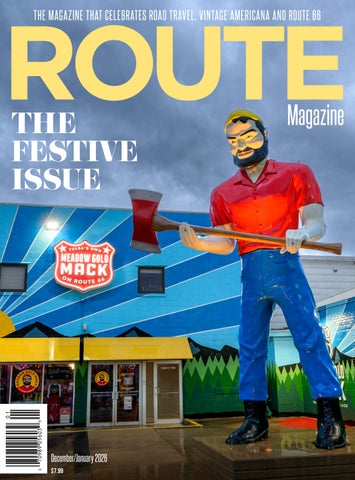
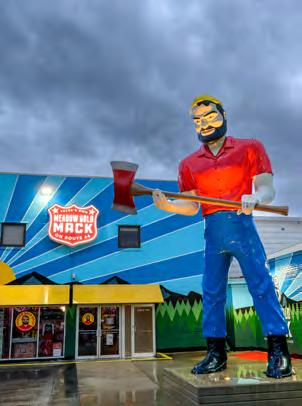
Meadow Gold Mack, Tulsa, OK. Photograph by David J. Schwartz – Pics On Route 66.
As 2026 approaches, the excitement surrounding the centennial of Route 66 feels electric. This isn’t just a milestone for the road; it’s a moment that resonates deeply with anyone who has ever driven it or dreamed of doing so. I first traveled Route 66 in 2016, and over the past decade, I’ve returned several times a year, tracing the highway from Chicago to Santa Monica. I even wrote a book based on my initial journey: Miles to Go: An African Family in Search of America along Route 66 . See, a trip down America’s Main Street is seldom just a road trip. It is a life-changing, soul-searching dive into the past and the possible future — yours and America’s.
Along the way, I’ve watched the road evolve — new diners, motels, Muffler Men giants, murals, photo ops, and attractions opening, but also beloved icons — people and places — quietly passing on. And all the while, I’ve felt a growing energy around the possibilities that Route 66 holds: for travelers seeking adventure and discovery, and for the towns and businesses that depend on them. But the centennial is more than just nostalgia or economic opportunity.
It’s a movement, backed by serious investment at both federal and state levels. Congress established the Route 66 Centennial Commission in 2020, giving it the mandate to recommend and coordinate activities to honor the road’s legacy. Illinois has been busy at the state level. In April 2023, they announced 58 awards totaling $6.6 million through Route 66 and Tourism Marketing Grant Programs, supporting communities, attractions, and businesses along the route. These investments are more than symbolic; they reflect a belief that Route 66 can continue to thrive as a cultural and economic engine for generations to come.
Missouri is also making significant strides. The Missouri Route 66 Centennial Commission offers sponsorships of up to $15,000 for the purchase, installation, and maintenance of large Route 66-themed signage and public art projects. These efforts aim to enhance the state’s Route 66 attractions and engage visitors in meaningful ways. Additionally, the Missouri Main Street Connection provides grants to support preservation and revitalization projects along the historic route, focusing on maintaining the cultural heritage of Route 66 while promoting economic development in the communities it traverses.
Oklahoma is seriously stepping up with a comprehensive approach. The Oklahoma Route 66 Grant Program, administered by the Oklahoma Department of Commerce, offers grants ranging from $25,000 to $2 million for projects that support historic preservation or promote economic development along Route 66. Eligible projects include placemaking, facility enhancement, preservation efforts, new construction, planning, signage, and more. These grants are part of a broader initiative to bring new life to Oklahoma’s wonderful stretch of Route 66, reflecting the state’s commitment to preserving and promoting the iconic highway.
New Mexico is also embracing its Route 66 heritage with a robust and community-focused approach. The New Mexico Tourism Department (NMTD) has allocated over $1.3 million in grants for fiscal year 2026, supporting marketing, infrastructure, and special events along the historic route.
But as exciting as the centennial will be, I’ve learned over the past decade that the real magic comes from the ongoing care and effort of the people who live and work along the road. Towns, restaurants, motels, and museums can’t rely on a single year of celebrations. The centennial should be a springboard, not a finish line. The opportunity, and the need, to introduce themselves to travelers, create lasting impressions, and preserve the character of the highway is just as real after 2026 as it is now. I’m deeply hopeful that when the excitement of the centennial wave subsides, all stakeholders will continue to put in the work: keeping their foot on the gas.
When I first discovered small-town America along this iconic highway, I encountered volunteers and business owners who felt that time had moved on and visitors had forgotten them. There was pride and enthusiasm, but hope seemed to wane a bit. In recent years, this has changed, and even the naysayers have seemingly jumped on the bandwagon and are ready to strive toward a productive, bright future. It may be in the Kool-Aid, or it may be revival in the air, but the coming decade for Route 66 is looking pretty darn sunny.
Blessings,
Brennen Matthews
Editor
PUBLISHER
Thin Tread Media LLC
EDITOR
Brennen Matthews
DEPUTY EDITOR
Kate Wambui
EDITOR-AT-LARGE
Nick Gerlich
LEAD EDITORIAL
PHOTOGRAPHER
David J. Schwartz
LAYOUT AND DESIGN
Tom Heffron
DIGITAL
Yasir Ahmed
ILLUSTRATOR
Jennifer Mallon
EDITORIAL INTERN
Skyler Graham
CONTRIBUTORS AND PHOTOGRAPHERS
Andrew McCain
Glen Boulier
Glen Miller
Graddy Photography
JoAnn Chang
Mitchell Brown
Heather Jones
Holly Riddle
Rachel Fernandez
Robbie Green
Tim Salisbury
Editorial submissions should be sent to brennen@routemagazine.us.
To subscribe or purchase available back issues visit us at www.routemagazine.us.
Advertising inquiries should be sent to advertising@routemagazine.us.
ROUTE is published six times per year by Thin Tread Media LLC. No part of this publication may be copied or reprinted without the written consent of the Publisher. The views expressed by the contributors are not necessarily those of the Publisher, Editor, or service contractors. Every effort has been made to maintain the accuracy of the information presented in this publication. No responsibility is assumed for errors, changes or omissions. The Publisher does not take any responsibility for unsolicited manuscripts or photography.





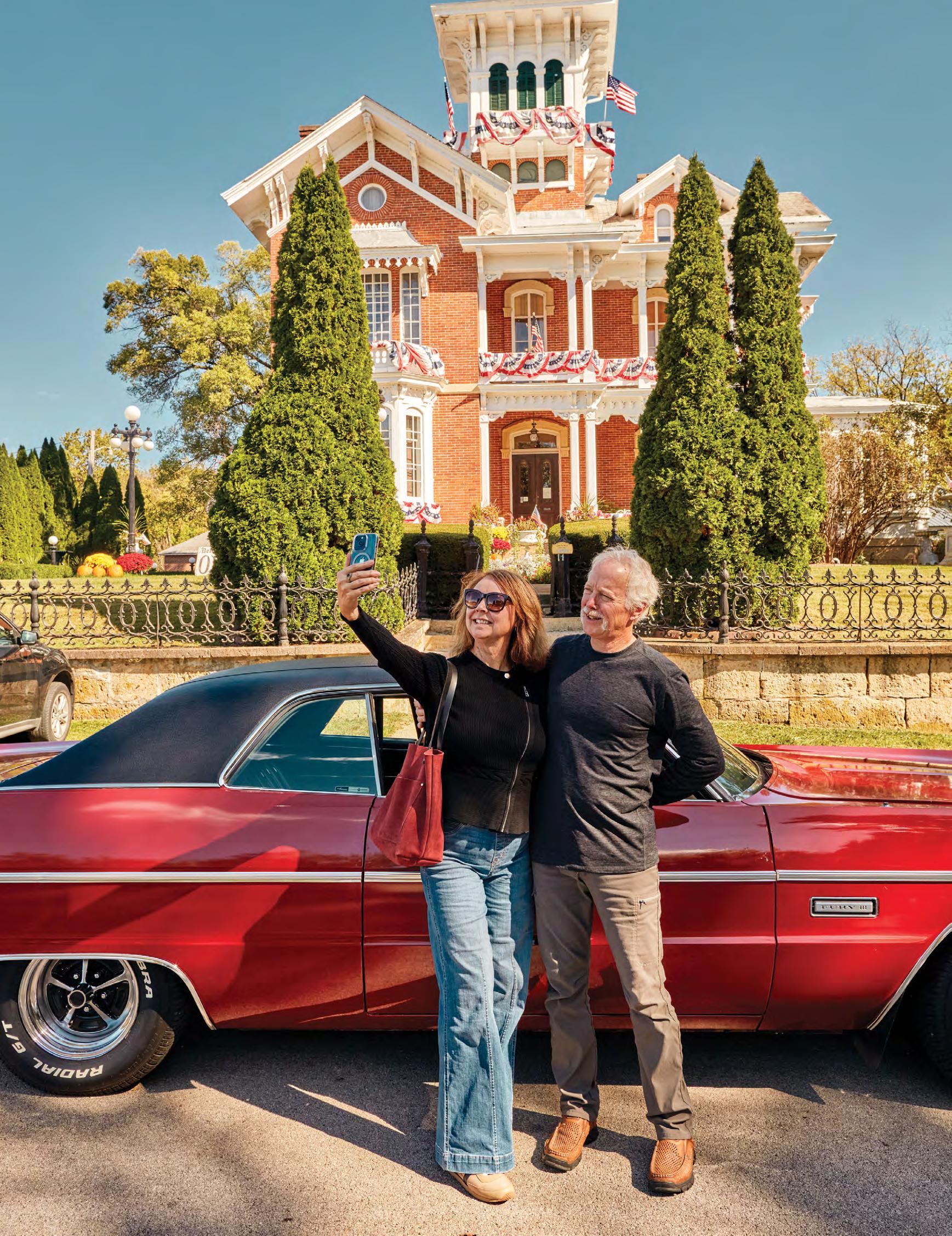









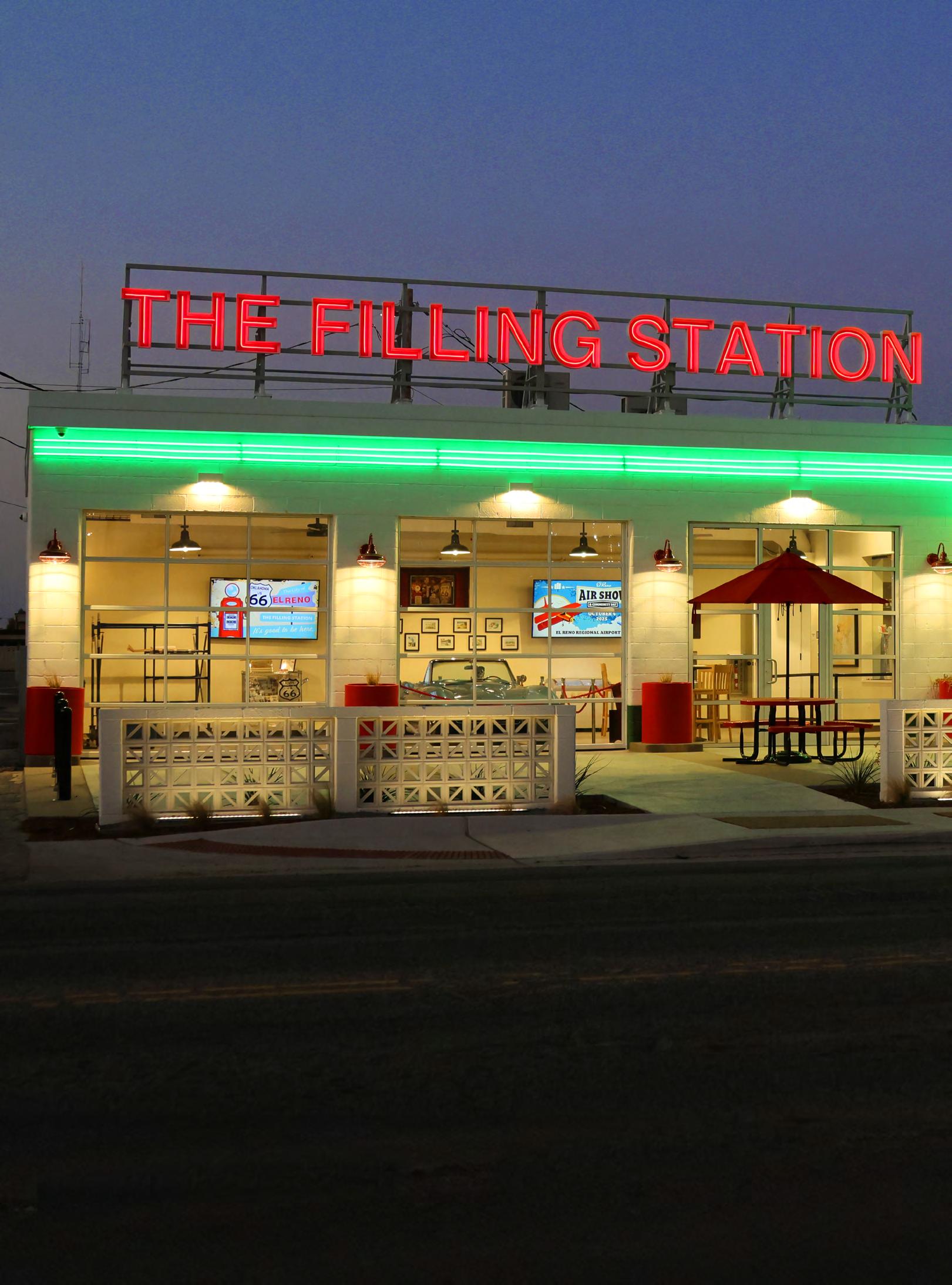
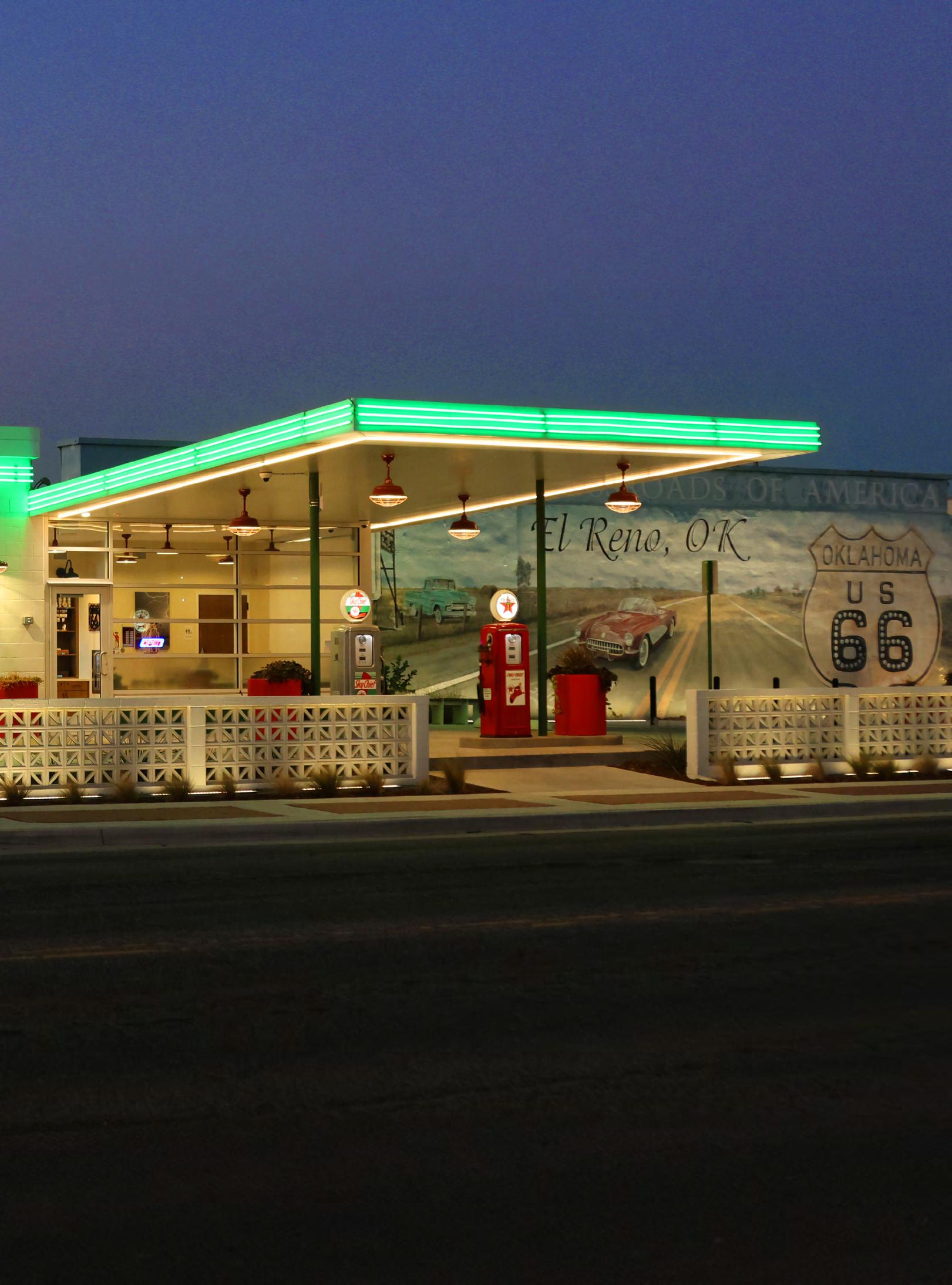
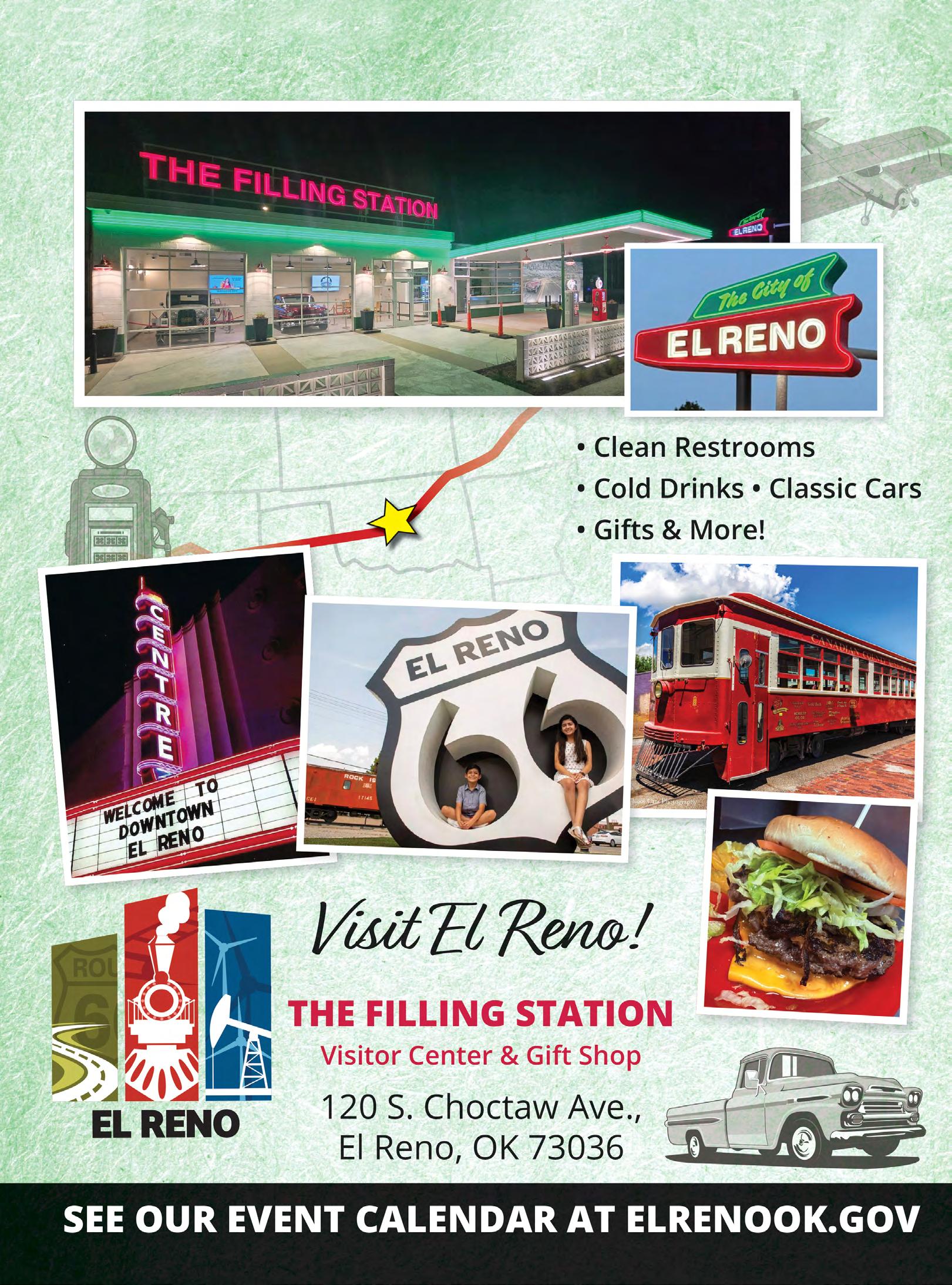
Route 66 was built to carry travelers from the bustling streets of Chicago in the east to the sun-soaked avenues of Los Angeles in the west, yet it never did follow a straight path. It twisted and turned, linking big cities and small towns. It became a road that carried not just people, but the very soul of Americana. One of those turns in El Reno, Oklahoma, led westbound travelers to veer left at the stoplight on South Choctaw Avenue (U.S. 81) and Sunset Drive (Route 66). It’s here, at this simple corner, at 120 S Choctaw Ave., that a reimagined 1930s Texaco gas station stands today as the Filling Station Visitor Center. The station no longer fills tanks, but it does carry the stories and spirit of every station that came before it.
For decades, this corner has seen the comings and goings of countless travelers. Known as the “Crossroads of the Continent,” it is where Route 66 intersects U.S. 81, a 1,200mile highway stretching from the Canadian border to Fort Worth, Texas, and an unofficial part of the Pan-American Highway that extends to South America.
Accounts differ on exactly when the property first opened, but as early as 1935, newspapers were already advertising it as the Schulte Service Station. Just a year later, the Huckabee Service Station moved in from North Choctaw, only to be replaced by a Goodyear under Don Bishop by the end of 1939. In May 1942, the Henry Schafer Oil Company gave the station a new twist, opening it as both a service station and a supermarket, an example of multitasking on Route 66. The station’s ownership seemed to change as often as the cars that rolled through. In 1944, it became a Texaco under Courtney & Baker, only for Murray W. Baker to take sole ownership the following year and rename it the Baker Service Station. By early 1951, Robert L. Harvey and Lyle McGoffin were at the helm, and by December, McGoffin bought out his partner and rebranded it simply as Lyle’s. The decades that followed are murky, but by 2003, the property was serving cars as Kelley Dodson’s Gentle Touch Detailing. But even with its storied history, by the early 2020s, the building had seen better days.
In the winter of 2023, the City of El Reno began exploring ways to boost tourism, especially with the Route 66 and U.S. 81 centennials approaching in 2026. With a history so deeply tied to auto service and repair, it’s no surprise that the City turned to this corner for inspiration. The once-proud Texaco station had fallen into disrepair, used mainly for storage, while mobile homes and RVs blocked the view of its iconic “Crossroads of America” mural. Painted in 2009 by local watercolor artist Chris Small, the mural captures an idyllic vision of the open road; a cherry-red Corvette cruising across the Oklahoma prairie. It had the potential to be a magnet for travelers, but only if it could be seen. Recognizing that opportunity, the City stepped in with a plan to renovate the building and make the most of its prime location at the junction of two historic highways.
In February 2024, the City took ownership of the property, envisioning the station as a hub for travelers heading in every direction. By June, their vision gained momentum
with the approval of a $1.2 million matching grant from the Oklahoma Route 66 Revitalization Grant Program. Over the following year, the City teamed up with Lingo Construction to bring the station back to life: fresh concrete underfoot, thoughtfully designed retail space, and LED lighting that mimics the warm glow of classic neon.
After the restorations were complete, the City held a soft opening on May 3, 2025 — coinciding with El Reno’s famous Fried Onion Burger Day Festival. With thousands of visitors flooding downtown for a taste of the city’s beloved burgers, it was the perfect moment to cut the ribbon on the Filling Station Visitor Center and give locals a sneak peek before the official opening on May 24.
But the Filling Station holds a delightful surprise: beyond its polished facilities and memorabilia, it doubles as a showcase for classic cars. A rotating “Car of the Month” display allows local enthusiasts to present their prized vehicles in the station’s gleaming two car bays, giving visitors an unexpected glimpse of automotive history.
“We’ve had visiting cars from as far as Sapulpa,” said Lyndsay Bayne, the Public Information & Marketing Manager for the City of El Reno. “It’s been so much fun.”
Car culture isn’t just present here; it’s woven into the town’s identity. The City’s annual three-day event, A Small Town Weekend, draws Americana enthusiasts from across the state, celebrating classic cars, nostalgia, and of course, the open road. By recreating the 1950s charm of this Texaco station, El Reno has given visitors the chance to see midcentury vehicles exactly where they belong. And the appeal has been global: visitors from more than 50 countries, including Mongolia, Spain, and India, have stopped by, exceeding even the City’s expectations.
“We had no idea how popular it was going to be,” said Bayne. “Locals were kind of naysaying at the beginning, but as soon as we started reporting how many people were stopping, our haters became our defenders. It’s been a real point of pride for the community.”
The Filling Station reflects El Reno’s history not just in its car culture but also through displaying the work of its local artists. From Cheyenne and Arapaho beadwork to Joseph Buchanan’s Route 66 paintings and postcards, and a quilt by MaCrae Putnam.
“It’s so much fun to display all of this local art that wouldn’t otherwise be showcased,” continued Bayne. “A lot of these people don’t have their own stores. So, it’s been really nice to sell their merchandise, and the travelers really appreciate the custom stuff over the generic stuff. They want the Route 66 experience.”
Every Route 66 stop has a story, and The Filling Station is no exception. From early gas pumps to local artwork and classic cars, it captures the rhythms of a town shaped by movement, by travelers, and by community, a vivid reminder that the spirit of the endless road is alive and well in El Reno. In this town, the road doesn’t just pass through, it pauses, leaving a mark on both the people who live there and the ones who wander through.
By JoAnn Chang
Some places have a way of capturing more than just a moment, they capture a feeling, a sense of belonging, a thread of community woven through generations. The kind of place where you can step inside and immediately feel at home, where the familiar scent of coffee and pie mixes with the laughter of friends and neighbors. For those who live in, or travel through, Atlanta, Illinois, along iconic Route 66, that place is the Country-Aire Restaurant.
The story of Country-Aire is intertwined with the story of Atlanta itself, a typical charming Midwest town located about midway between Chicago and St. Louis, and a longtime haven for travelers along Route 66. For Bill Turner, though, it was a perfect place to create a service station and café. In 1937, Turner married Mildred Demling and settled on a local farm. He and his wife farmed quite successfully for about ten years before deciding that they wanted to be closer to the conveniences of town. Their search led them to a prime piece of property along the newly realigned Route 66. So, in the fall of 1949, construction began, and on February 23, 1950, Bill’s 66 Cafe and Service Center opened its doors. While the café was an instant success, it was only one piece of Turner’s larger business plan. In addition to the service station, he ran Phillips Petroleum Company bulk plant, delivering fuel to the many farms and businesses in the area.
“I remember going there as a child. It was almost an attachment to the gas station, maybe double the size of a regular gas station inside,” said Amy Wertheim, Director of the Atlanta Public Museum. “It had a little counter that you walked up to, where the men sat and had coffee. There probably weren’t more than eight or ten tables, and that’s being generous. It was just a small-town café, but this was a place where everybody went to hang out.”
She likened it to the bar in Cheers , where everyone knows your name, a place that captured the same sense of familiarity, camaraderie, and community. “You walked in and ‘Hey, Tom, how you doing? How much rain did you get last night?’ and things and that,” Wertheim continued. “It was the place where they came in and people would touch base in the morning before they went out to work in the field. That’s where everyone came in and met. I don’t recall anywhere else in town like that during that time.”
The café held a special place in Wertheim’s heart, not just as a community hub, but as a part of her own family history. Her mother, Connie Renfrow, started working there in 1965 at the age of 17. “She was just working there to get a little extra pin money at the time, and that’s where she met my dad. He would come in and sit at the end of the counter and wait for her to get off,” said Wertheim. “There were ladies, who worked there, who ran the whole thing. Ruth Mason, Onie Karrick, Bertie Wheeler, and Helen Carlin. There was one lady who worked there, and I’ve heard stories about this forever, but she never, ever wrote anything down. It was in her head, and she had it all figured up.”
Things were going well for the Turner family until the 1960s brought news of I-55 construction. By 1972, they were beginning to grasp just how profoundly eminent domain would affect their home and business. “The first plan presented to them, the road was literally going right through their house. He’s losing not only his home, but he was also losing his restaurant. He was losing his livelihood, because that’s where they had the big gas tanks,” explained Wertheim. Turner protested in an effort to save all he had worked for, so they returned with a second plan. “It only took the front steps, so he received absolutely nothing, and his restaurant was completely cut off. They weren’t even going to allow people to come into his service station or the café.” There was no access. They were blocking it all with fencing. The irony of the whole thing is, Bill Turner and his son, Wayne, were the ones hauling gas out onto the interstate to the crews who were building the new highway. But yet they completely took out their whole business,” added Wertheim.
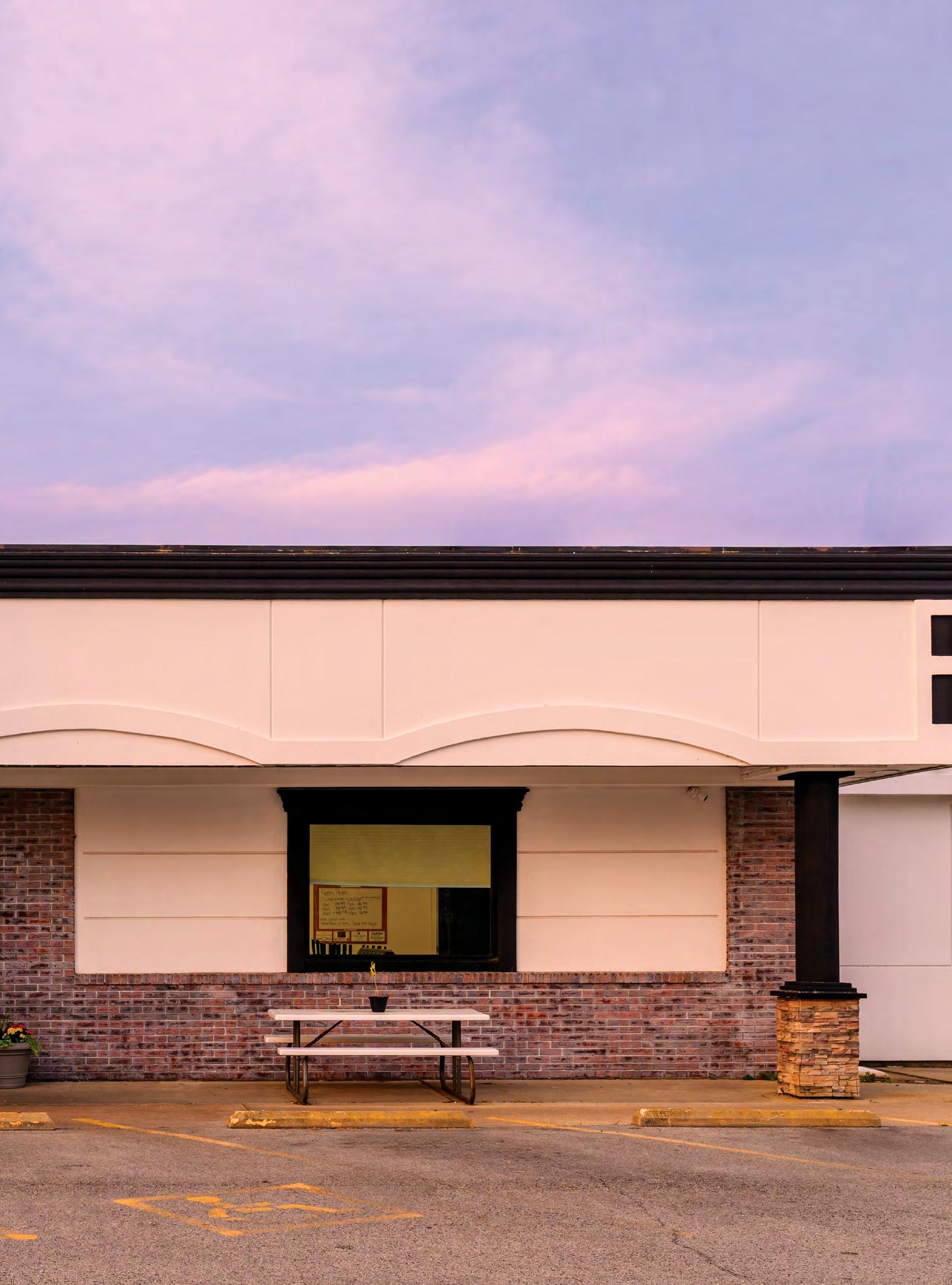
So, the Turners made the decision to move across the street to a property that Turner already owned. With that move, Bill’s 66 Cafe was reborn as Country-Aire Restaurant, with his new service station, Turner Oil Company, next door. The grand opening celebration was held on March 2 and 3, 1974, marking the beginning of a new chapter for the family and the community.
The new restaurant featured the same menu served by the same talented ladies, with a few notable changes. This new location would expand beyond the small confines of the café, offering seating for 125 people. With the larger space came a few new menu items, boasting USDA steaks and pan-fried chicken, prized offerings at the time. “When they moved, it was a full-blown, serious restaurant. When you walked in, you had to the right where folks still had their intimate coffee gathering clique. But on the left side, it had booths all along the sides and tables in the middle. It was an honest-to-gosh restaurant and it had a salad bar. I mean, that was big time,” shared Wertheim. “There were people who met there every Sunday and sat together in those booths and always had their meals. Bill Turner’s chicken could almost rival JP’s up the road at Dixie Truckers. They fried it in lard and fat in the back, and it was so delicious, so crispy.”
For years, the Country-Aire Restaurant flourished, continuing to serve as a beloved hometown spot for locals and a welcome stop for travelers now also passing through on I-55. In 1979, Bill’s son Wayne took over the gas station, and his wife Connie Turner and her friend Julie Osborne took over management of the restaurant. Over time, however, life began pulling Connie and Julie in different directions. Bill Turner wanted to keep the restaurant in the family and wasn’t ready to sell, so in 1983, he leased it to Ron Aper, a longtime Atlanta businessman who also owned and operated several local establishments. He continued the restaurant’s successful homestyle meal tradition, adding in a small Sunday buffet.
As the Country-Aire continued to thrive, a new family was quietly building their own story. Ray Bekteshi, an Albanian immigrant, arrived in America in 1972, with hopes of
creating a better life for his family. Following in the footsteps of many other Albanians before him, he settled in Illinois, working in Greek restaurants, and learning the ins and outs of the business. He loved the small towns in Illinois, and eventually settled in Seneca, where he leased and ran his own restaurant, Seneca Family Restaurant. His wife Bejlije, who went by Becky, was with him for a time, but had to go back to Albania to care for an elderly family member. In 1991, Bekteshi had his 12-year-old son, Nick, join him in Illinois. The schools were much better in the U.S., and he wanted Nick to start to learn the business. A few years later, his wife Becky, son Mindi, and daughters Lusha and Sherry, were finally able to join them for good.
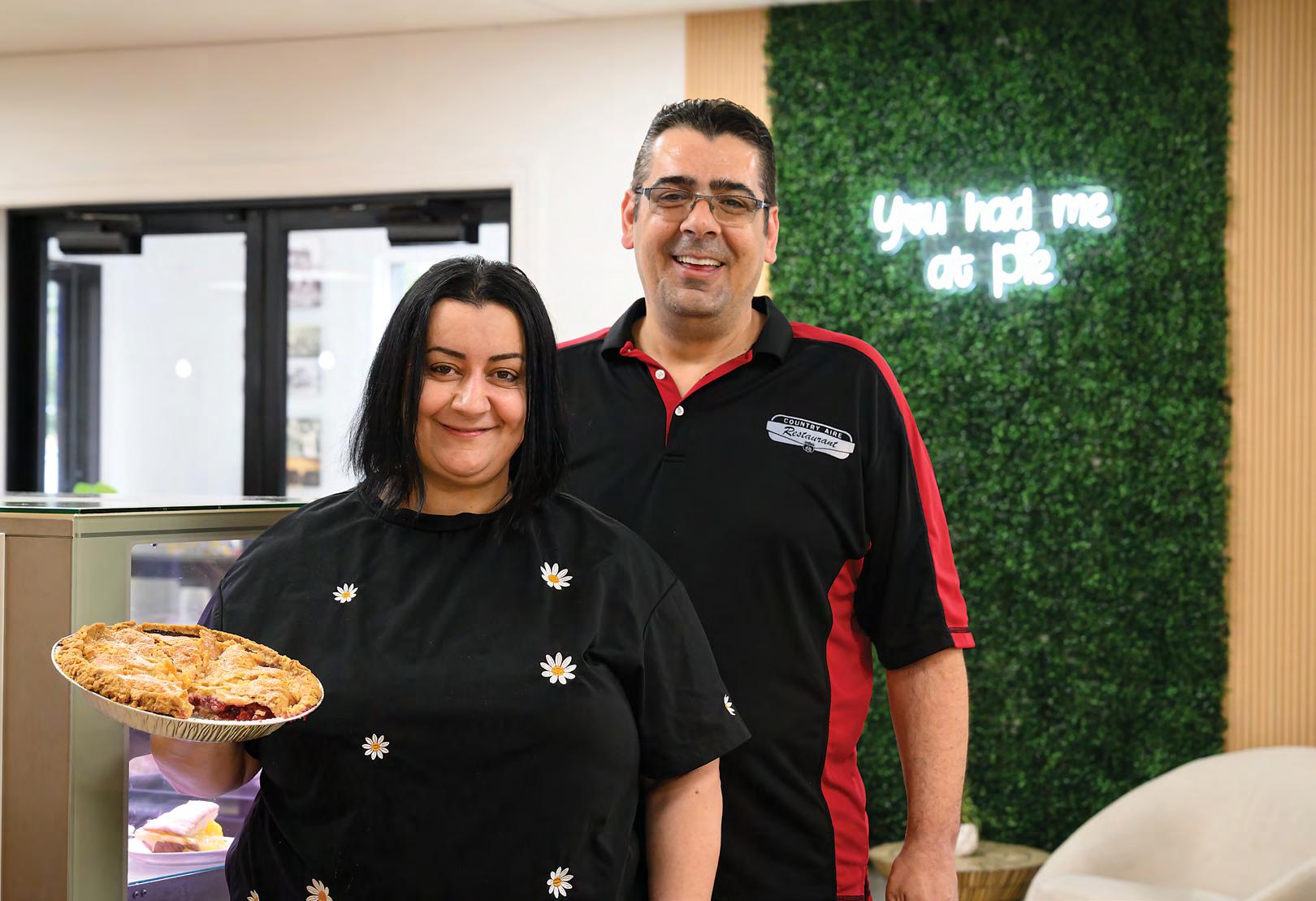
In 1997, when Nick turned 18, his parents decided it was time for him to have a bride. “It’s a matchmaking thing. I did the same with my kids,” shared Lumi Bekteshi, Nick’s wife and partner in the restaurant business. “You introduce them, and they meet, and they see if they like each other. For example, you have a son, and I know somebody that has a good daughter from a good family, and that’s how it works. I think God speaks for people, honestly, because me and Nick are such a good fit, like magic.”
Lumi joined Nick and his family in Seneca and started to learn the family restaurant business. As the family grew, so did the need and desire for more restaurants for the family to run. They expanded with a restaurant in Heyward. They
also started leasing The Palms Grill in Atlanta, Illinois. “We were renting it from the town. I think we kept it for about 10 years. I was mostly running that one. At one point, I started cooking too. I did very good business on it when I was there,” said Lumi.
It was during her time at The Palms Grill that Lumi learned the art of pie making. While an excellent cook, skilled in baking, she had never made a pie before. Bill Thomas, Chairman of the Route 66 Road Ahead Partnership and a former educator, was Lumi’s pie mentor, teaching her the fine art of pie making. When they proved to be a success at The Palms Grill, Thomas entered three of her pies in the state fair, where she took home two first place blue ribbons. “It was his idea. I didn’t think I was gonna win, to be honest, because I had just learned. But all Albanian women, we learn how to bake at a young age. So, it was easy for me,” continued Lumi. “I learned really fast how to make them, and I won.”
In 2004, Bill Turner passed away, leaving behind a legacy of community and good food. Two years later, his wife Mildred sold the Country-Aire Restaurant to Ray Bekteshi, who added it to the family’s growing group of restaurants. “Nick and his brother were driving, and this restaurant was closed at the time. They called his dad and asked around. Why was
it shut down? What happened? Was it busy before?” shared Lumi. “Ray was very good at picking locations. He liked the location. I’m glad he did. So, he bought the place, remodeled it, and took over from there.”
Nick began helping out at Country-Aire while Lumi focused on The Palms Grill. She took her newfound pie making skills and shared them with others. “Albanians, a lot of them here have restaurants, so we support each other. I trained a lot of women to make pies. And there’s another restaurant in Springfield, Star 66. [The owner’s] wife taught me how to make cheesecakes. And I taught her how to make pie. We get along good with each other,” said Lumi.
When Ray passed away in 2010, Nick stepped up to lead Country-Aire, committed to carrying forward the family’s legacy of hard work and welcoming hospitality. Two years later, the lease at The Palms Grill ended, and Lumi joined Nick full time, bringing her skills, and her heart, fully into the restaurant. Together, they continued the traditions the Turner family had built decades earlier. Just like the skilled waitresses of the past, Lumi and her staff greet regulars with a familiarity that feels like family, moving with an unspoken rhythm and knowing each patron’s preferences by heart. “When Sherman walks in, they write Sherman. I know what he has. That one has one egg and toast. He doesn’t change. Everybody has names. If I see people walk in, I know what they’re having,” shared Lumi. “It’s special, just for them to think of us as part of their family. And they love my kids. They raised my kids. All of them.” Their son Toni was three when the family moved to town and Jonny was born there. Today, at 26 and 23, they have wives of their own and they all work together, running the restaurant.
Building on this strong foundation of community and connection, Nick and Lumi have also ushered in a new chapter for Country-Aire, blending the restaurant’s cherished traditions with thoughtful updates for the future. In November 2023, they temporarily shut the doors for a huge remodel of
the restaurant. Several months, and nearly $300,000 later, they reopened the doors on February 19, 2024, with a fresh look and a better use of space. “I think it looks really good. I think I made it easy and more accessible for everybody, back and front. Everybody likes it so far,” said Lumi.
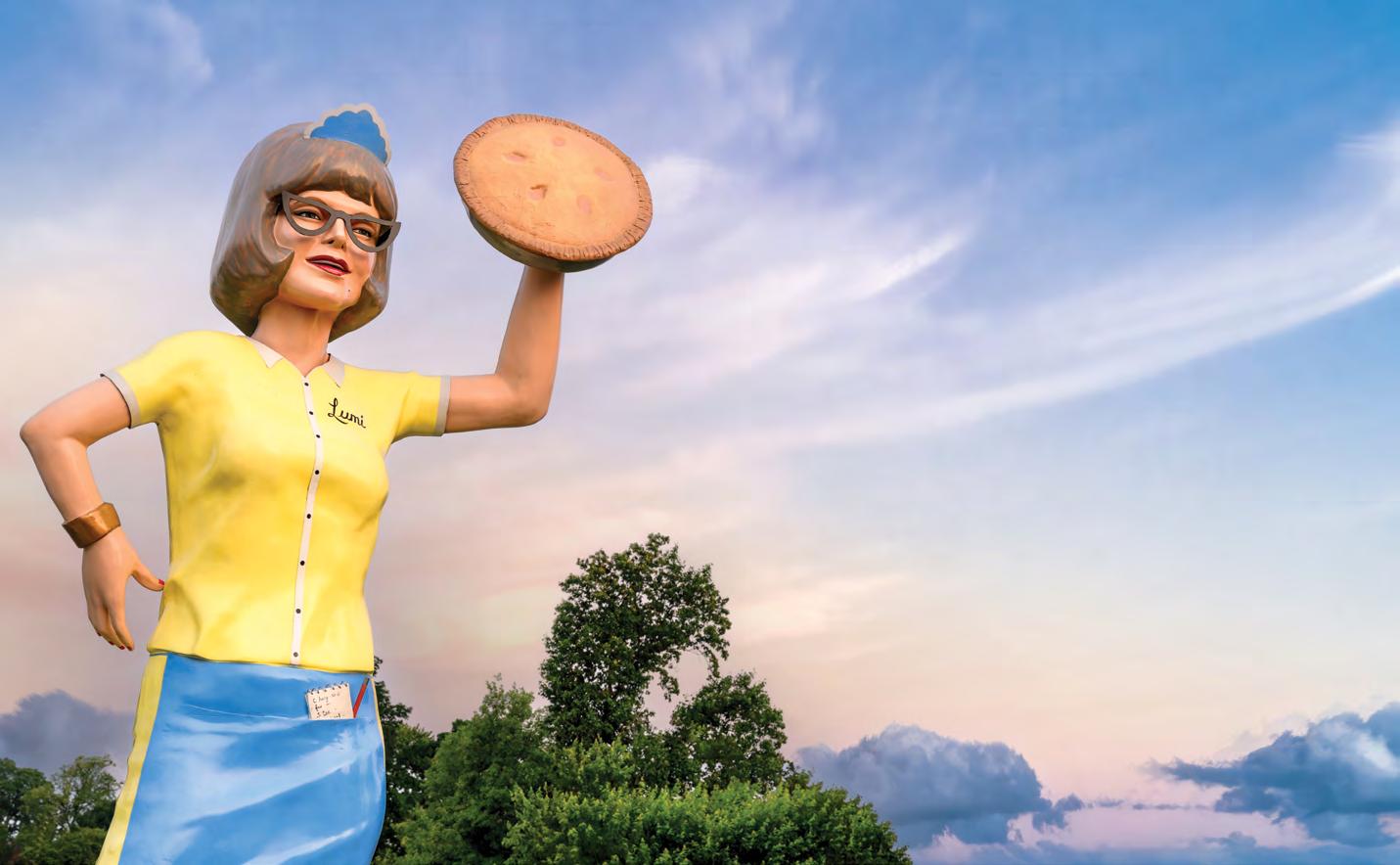
With the restaurant refreshed and ready for the future, Nick and Lumi added a bold, playful touch that captures the spirit of Country-Aire and the town itself. In August 2024, as a nod to the American Giant Museum downtown, they commissioned Mark Cline of Enchanted Castle Studio in Virginia to create a new giant modeled off the Uniroyal Tire Gal variety, originally built by the International Fiberglass Company in the 1960s. Standing 19 feet tall, the aptly named “Lumi the Pie Lady” dons a waitress uniform and cat-eye glasses, holding up a pie in one hand with her order pad tucked in her apron. “I wanted to match the town. I thought, ‘It’s gonna be cool to put one here too.’ They didn’t have a woman one. And I thought about either a chef or a woman since they don’t have one,” explained Lumi. “She thinks she’s famous,” joked Nick. “I got Lumi at work. I got Lumi at home. I got Lumi outside. I got Lumi everywhere!” In the 75 years since the Turners first opened its doors, the Country-Aire Restaurant has been far more than a place to eat, it has been the heart of a friendly little Illinois town. Through decades of change, it has remained a gathering place where community thrives. Farmers still line up outside at 6AM, eager for the day’s first cup of coffee, and locals like Connie Turner and Amy Wertheim continue to visit for lunch or dinner, keeping traditions alive across generations. And for travelers journeying along the iconic Route 66, CountryAire remains a welcoming stop, offering a taste of home and hospitality. Every visit is a reminder that some places are more than destinations, they are family.
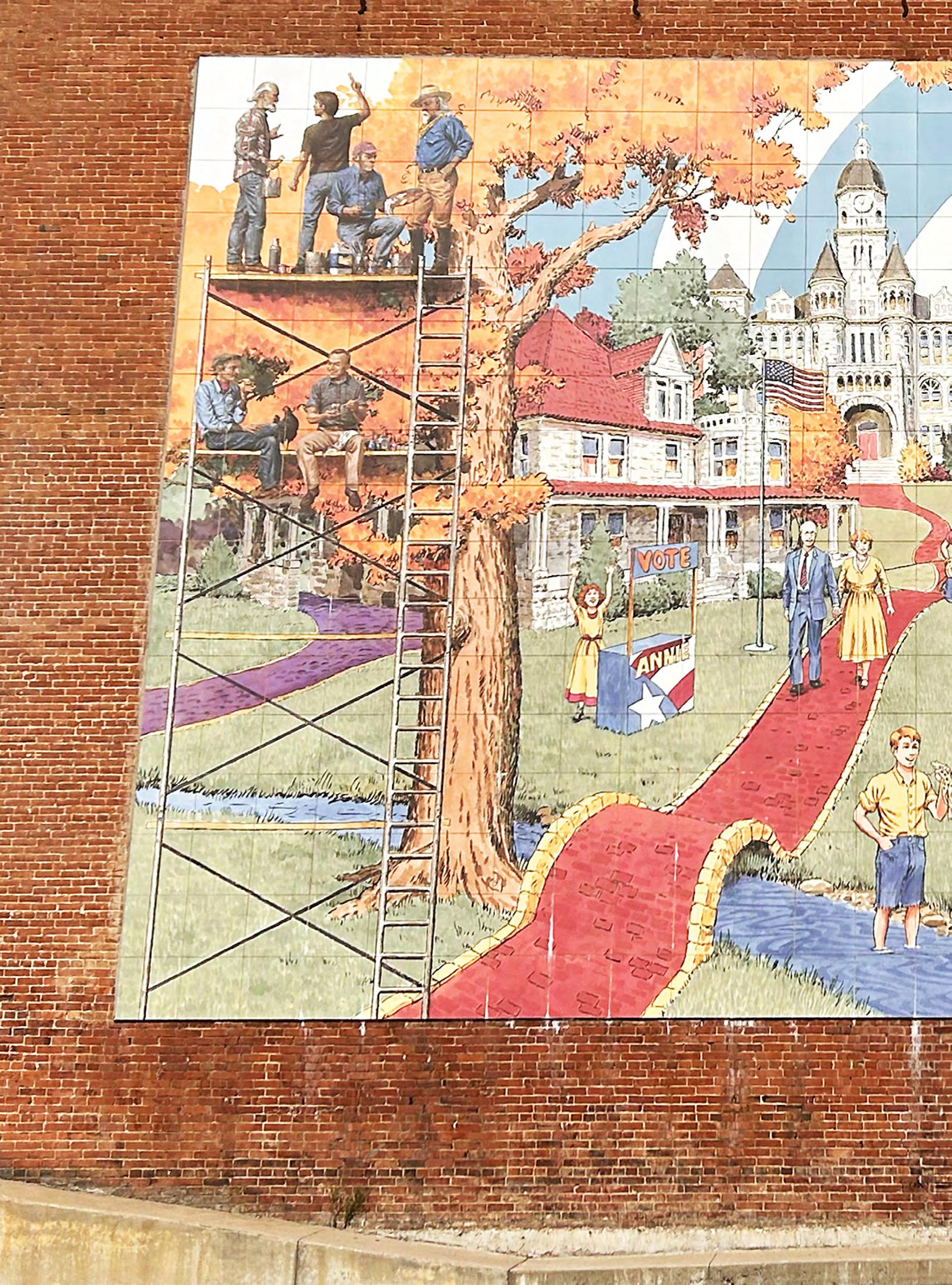
In Carthage, Missouri, a stroll through the town square feels like stepping into a storybook. At its center rises the Jasper County Courthouse. Completed in 1895, its turrets and steeply pitched roofs give it the air of a stone castle, casting long, dramatic shadows across the area. Around it, a collection of late-19th and early-20th-Century buildings, each constructed in Italianate and Romanesque Revival styles. Their ornate trim, weathered brick facades, and faded lettering tells the stories of the merchants, craftsmen, and families who shaped Carthage after the Civil War. The square hums with subtle movement, the flutter of a flag, the occasional creak of a storefront shutter, reminders that history isn’t just remembered here, it lingers in every corner. Everywhere you look, Carthage seems alive with possibility, its streets, its architecture, its history whispering tales to anyone who stops to notice.
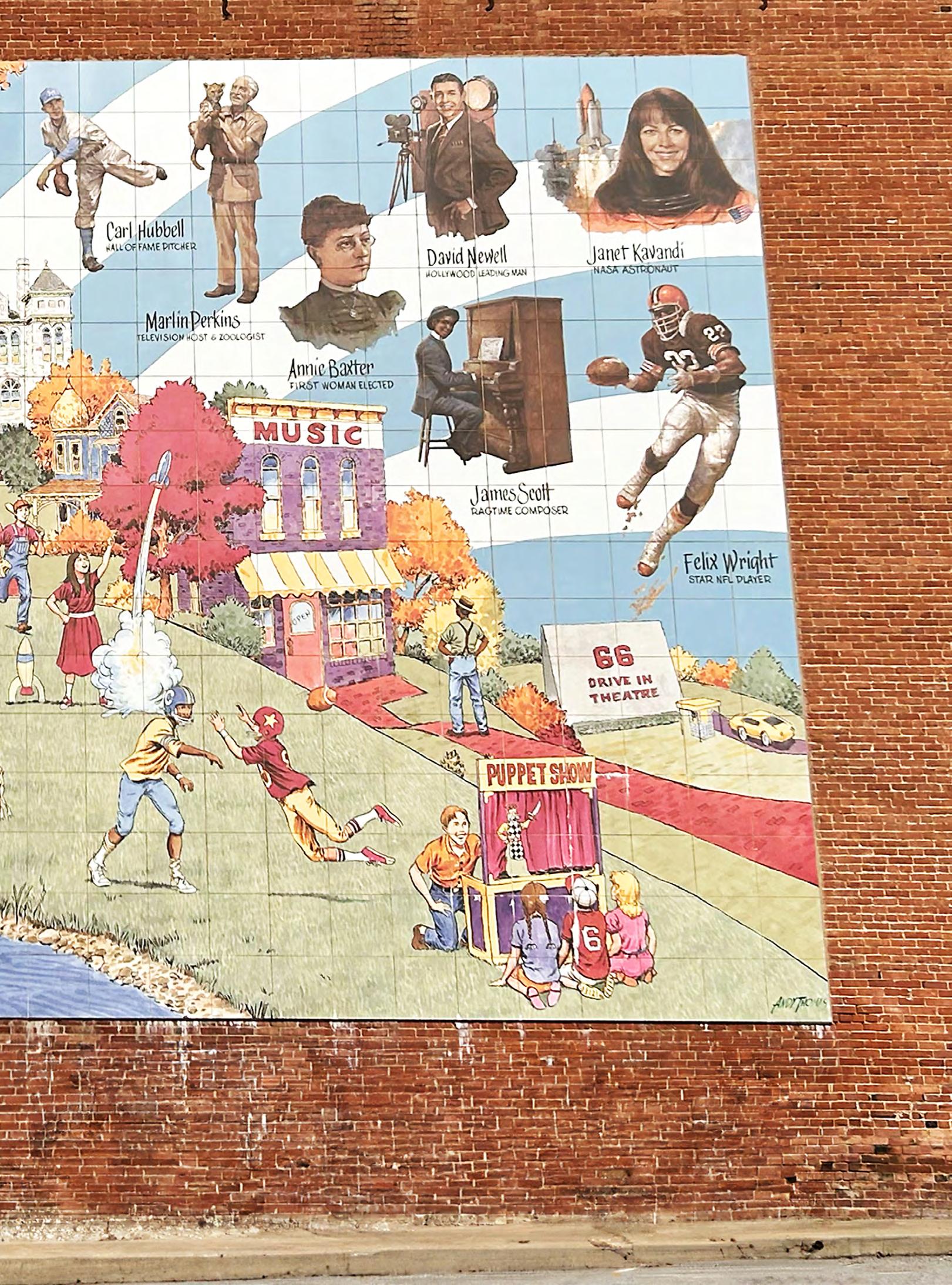
On a brick wall at 146 East Fourth Street, right in the heart of the square, the story continues in color, weaving together the town’s past and present. The “Big Dreams Grow in Carthage” mural stretches 44 feet long and 28 feet tall and is composed of 459 hand-painted tiles. It celebrates 14 famous Carthaginians, portraying some as both an accomplished adult and their younger selves. NASA astronaut Janet Kavandi dons her spacesuit above a young girl in red, her childhood version, who plays with toy rockets at her feet. Cleveland Browns MVP Felix Wright floats above two boys tossing the pigskin, capturing his youthful days on local fields. Political pioneer Annie Baxter, America’s first elected female County Clerk, watches over a cheering child in a yellow dress, her younger reflection poised behind a booth that reads “VOTE ANNIE.”
The mural brightens a brick wall on the east side of McBride’s Antiques, a surface that has stood witness to more than a century of the town’s commercial life. Originally constructed in 1861 as a mercantile store and rebuilt in 1869 after a fire, it became the McCrillis Brothers Hardware store in 1879, at one point the largest hardware store in southwest Missouri. Over the decades, the space housed Bee’s Variety Store, a sporting goods shop, and most recently, in 2008, the Sassy Spoon Bistro, a modern comfort food eatery. After a 2013 fire destroyed the restaurant, the City of Carthage purchased the remaining lot and converted it into a parking area, leaving a blank wall that disrupted the historic streetscape. Seeking to restore both character and charm, the City turned to Vision Carthage, a nonprofit formed in 2011 to revitalize and beautify the Maple Leaf City, to transform the space into more than just a wall.
“Vision Carthage is really dedicated to preserving [our history], because we see shadows of the past everywhere,” said Kate Kelley, the current co-director for the organization. “We have ghost signs and ghost murals of these businesses that really built Carthage, that are fading, and we don’t want them to. We want them to be remembered. Because when I think of Carthage, I think of history. And I think a lot of people who visit feel the same way.”
One Carthaginian who shared that passion for preservation was local illustrator Andy Thomas. Thomas grew up in Carthage and attended school with several local legends; NASA astronaut Janet Kavandi, for example, had been his
sister’s best friend and often visited their home. So, when Vision Carthage approached him in the summer of 2020 to design a mural that would bring life back to the empty lot, he already knew how he wanted to fill the scarred space.
“They wanted to highlight some of the famous people from Carthage,” said Thomas. “So, we made a list of the [individuals] that we wanted to highlight, and I presented them with a sketch of a layout. I wanted to do a kind of a colorful, semi-cartoonish rendering, but I can’t do cartoons exactly, so it end[ed] up being, you know, my kind of artwork.”
The final mural is more than a gallery of famous faces, it’s a vivid journey into childhood, alive with primary colors and playful scenes. Below the adult figures, children skip and run, their youthful reflections mirroring the accomplishments above, set against a backdrop of Carthage’s most cherished landmarks. Philanthropists Kent and Mary Steadly stroll down the ruby-red brick road emerging from the courthouse, while ragtime composer James Scott pauses to admire a whimsical purple music store. Thomas also honored Carthage’s artist community by depicting six local creators: Bob Tommey, Sam Butcher, Jerry Ellis, Bill Snow, Lowell Davis, and himself, working together on the mural. Ellis and Davis, both of whom passed in late 2020, had been mentors to Thomas, and Davis, often called the “Norman Rockwell of Rural Art,” may have inspired his experimentation with the vibrant, joyous color palette, or perhaps that exuberance flowed naturally from the town itself.
“We have beautiful maple trees in Carthage, so it’s a good time to use bright reds and yellows and oranges,” said Thomas. “That goes back to, you know, artists like Dr. Seuss, who used bright colors and fantastical worlds to excite children. That was a little bit what I was trying to create, that Wizard of Oz feeling of going into a really different world. And yet, [for the] people from Carthage, all those landmarks are so very familiar to them. It doesn’t look that fantastical for them.”
In early September 2020, Thomas completed his original sketch, which he and Vision Carthage then worked with Paul Whitehill of Whitehill Enterprises to transfer onto 19-by-19-inch, 14-pound tiles. By May 2021, the installation was complete, and the mural was unveiled to the town. Since then, visitors have flocked to the square, pausing to photograph the vibrant scenes.
“We have travelers from all over the world who are on Route 66, who are here to see incredible, charming things like that,” said Kelley. “I think art, in general, public art, goes a long way toward tourism and just creating spaces where people want to stop and reflect on their journey; to think about where they’re headed, imagine themselves in that beautiful picture, and just to be thankful that they’re there in that moment. We’re thankful that they’re here in Carthage.”
In a world where memories are short and the next new thing is worshipped, small towns like Carthage offer something different. It’s a town jam-packed with wonderful classic Americana, a town that holds important stories that still linger. Here, past and imagination meet, inviting travelers and locals alike to pause, take it in, and remember that even a small town can hold dreams as wide as the open road.
By Rachel Fernandez
David J. Schwartz
You might not believe Joy’s full name the first time she tells it. When you ask, she’ll grin and say something like, “If I told you my name, you’d just die laughing.” You’ll probably think she’s making it up, but honestly, her full name is Joy A. Weed.
Weed is 71 years young with short silver hair and long, shiny, dark-purple nails that make a satisfying ‘click click click’ every time she types on her phone. She’s chatty and honest and exactly the kind of customer you can expect to meet at Cattlemen’s Steakhouse in Oklahoma City.
“My family’s been eating there since 1961, and my husband’s family has been eating there for 30 years before that,” she said. “Every Sunday we go for breakfast. Any other time, we go for a steak or a chicken-fry.”
If you ask for a suggestion from the menu, she might urge you to try the lamb fries (fried lamb testicles) and “don’t make a face until you try them!” They’re a Cattlemen’s delicacy and one of their most popular appetizers.
Other than swearing by the great quality of the steak, she might also rave about the salad and the creamy house dressing and wonder about which spice they use because she and her family “have been trying to figure out for 50 years what spice he uses in that.”
Even if you’re just stopping at Cattlemen’s on a Route 66 journey or during a visit to the Oklahoma National Stockyards, Weed will reassure you that “if you’re new in town, that’s alright, they still treat you like you’re home. The food is good, and the service is excellent.”
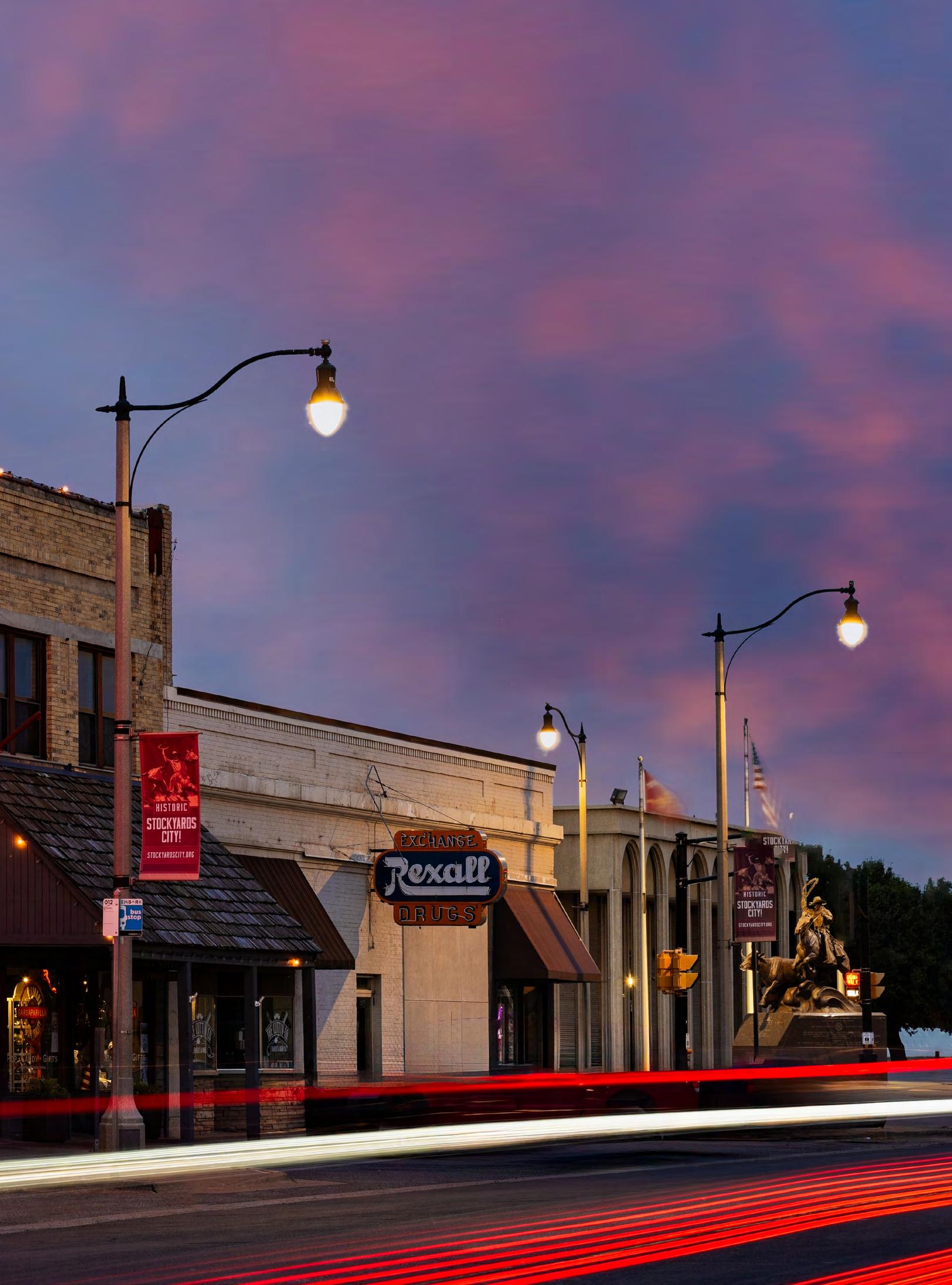
Cattlemen’s Steakhouse is an Oklahoma staple. The restaurant first opened west of downtown Oklahoma City in 1910, the same year that the stockyards started operating as a public livestock market. The stockyards, established to serve as the country’s primary source for meat processing and packing, had the highest concentration of labor at the time, with two meatpacking plants operating along with the stockyards and employing over 2,400 people. The area became a hub for cattlemen, farmers, ranchers, and cowboys. It was against this backdrop, the beginnings of an industry that would later place Oklahoma City stockyards as the world’s largest market for livestock handling, that a restaurant made its debut as Cattlemen’s Cafe, a place where both locals and stockyard visitors could stop in for a good meal or a cup of coffee. Part of its draw was that it stayed open late and even had a history of serving ‘liquid delights’ during the prohibition era.
To put the age of Cattlemen’s into perspective, the restaurant is almost two decades older than the invention of sliced bread, which was first commercially sold in 1928. The restaurant has been around for two world wars, 21 presidents, and two sightings of Halley’s Comet. Cattlemen’s is a treasure chest of stories. Perhaps a bit unassuming from the outside, but its
walls hold memories as precious as gold and gems. From the restaurant’s ownership changing on a gamble, to U.S. presidents going in for a bite, to generations of people who’ve been going there since they were kids, Cattlemen’s has a history and a story that has turned the steakhouse into a legacy.
By the 1930s, Stockyard City was a bustling town within a town. The stockyards were a tough place, run by tough people. Think old western films. Cowboys on their horses. Spurred boots kicking up dusty dirt roads. Farmers and ranchers picking up their weekly supplies. Rowdy bars. Seedy hotels. Bootleggers selling whiskey and spirits in secret, and gamblers betting big bucks in basements and back rooms. The air foul with the stench from the meatpacking plant. And Cattlemen’s Cafe was there, open around the clock, ready to sate the hearty appetites of Stockyard City patrons. Day or night.
The ownership of Cattlemen’s Cafe between 1910 and 1925 is not very clear. However, it appears that H.V. “Homer” Paul took ownership of the already popular establishment in 1926. There are tales of Paul and Hank Frey — a known gambler and bootlegger — betting the restaurant back and forth while bootlegging. What is known for certain is that in 1945, Cattlemen’s Cafe was in the hands of Hank Frey.
The chilly Christmas Eve of December 1945 found Frey playing a game of craps with a local rancher named Gene Wade Jr. Wade Jr. most likely got involved in the game because of his rather dubious father, Percy Wade Sr., who was notorious for running underground gambling circles and peddling illegal liquor and had a sizable arrest record to show for it. Historical accounts suggest that Wade Sr. had been involved in underground gambling as early as 1943 and had a particular liking for running high-stakes dice games. And so, the story goes: On one fateful night, Frey was on a losing streak at one of Wade Sr.’s popular dice games held at the Biltmore Hotel in downtown Oklahoma City. The 33-story Biltmore Hotel, built in 1932, was at one time among Oklahoma City’s tallest buildings, and was a favorite location for Wade Sr.’s gambling ways. The hotel was demolished in 1977.
Running out of money, Frey put Cattlemen’s Cafe in as collateral. Not an entirely surprising wager for someone in the competitive Oklahoma City gambling circle at the time. The bet was that if Wade Jr. could roll a “hard six” (two threes) with the pair of dice, the restaurant would be his. Just like that. Some stories are of the opinion that Wade Jr., being just 26 years old, did not have much money and so his father, Percy Wade Sr., convinced that Lady Luck was on his son’s side, put down the $25,000 bet against Frey’s restaurant.
The ending is easy to figure out: After a flick of his wrist and a brilliant stroke of luck, Wade Jr. was the next rightful owner of Cattlemen’s Cafe. A ‘33’ brand on the wall of Cattlemen’s stands as a reminder of Wade Jr.’s lucky streak. The Wades operated the restaurant for the next 45 years, expanding it and continuing to build on its reputation. Wade Jr. became a feature at Cattlemen’s, known to personally welcome guests as they entered the restaurant. But as times changed, packing houses started closing their doors and Cattlemen’s clientele numbers started to fade; the restaurant fell on hard times. Wade Jr. was ready to pass the torch to a new owner, Dick Stubbs, who also ended up with the restaurant in a rather interesting way.
“A banker friend of mine called me, and I guess he had loans against Cattlemen’s,” Stubbs said. “Cattlemen’s Restaurant at the time was not doing very well, and so he asked me if I was friends with the owner, and I said, ‘Yeah,’ and he said, ‘Will you go down there and help him try to save that restaurant?’ because he did not want to be the banker that closed the restaurant after 80 years. So, I went in as kind of a consultant at first, and one day the owner [Frey] said, ‘Why don’t you just take this and go pay off my debts before I die?’ And so, we did!”
And just like that, a game of chance, Stubbs took over Cattlemen’s Cafe, changing its name later to Cattlemen’s Steakhouse. Stubbs had owned another popular restaurant in Oklahoma City called Applewoods for over 20 years, so he was no stranger to the game. He first leased the restaurant for about eight years before finally buying it in 1990. When he came on board at Cattlemen’s, his main goal was to upgrade the quality, while still keeping it the same restaurant that generations of people knew and loved.
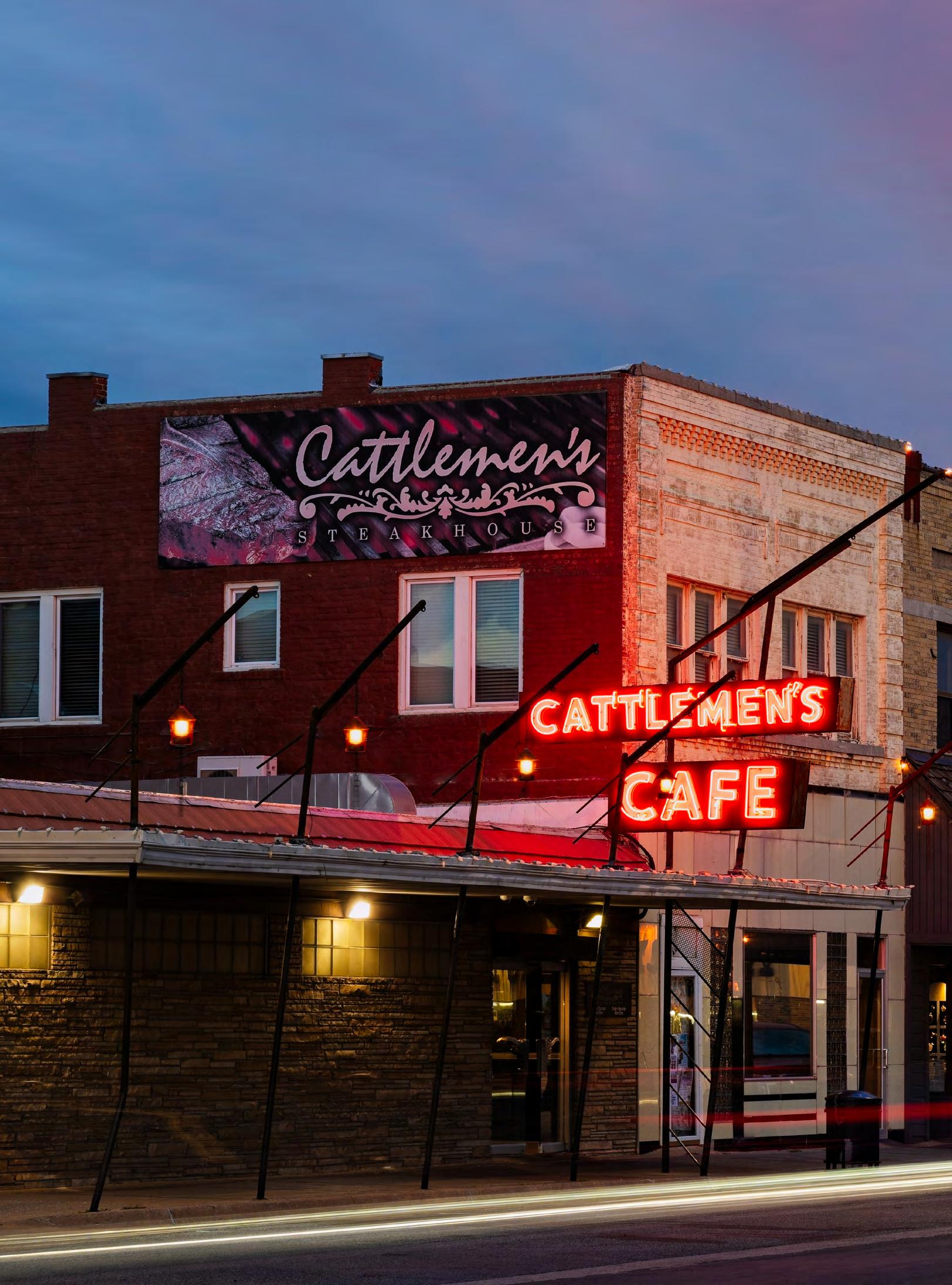
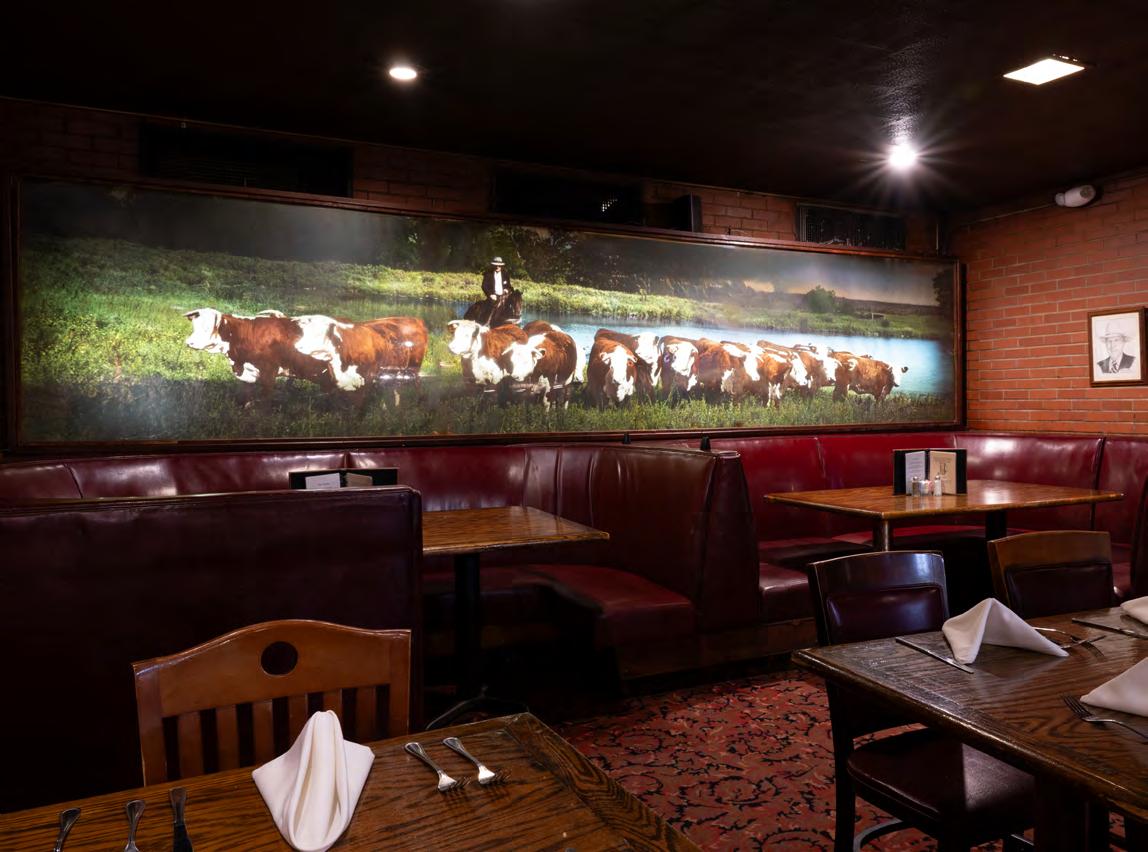
Cattlemen’s Cafe, with its red vinyl booths and low countertop seating, and another that acts as a more upscale steakhouse dining room with dim lighting, intricate murals of livestock, and photos of notable guests who have dined on a famous Cattlemen’s steak, including the late George H.W. Bush, Dr. Phil, and country singer Reba McEntire.
“I had a philosophy that people tend to forget the bad and remember the good,” Stubbs said. “So, what we tried to do is start out with a campaign: ‘It’s just like it used to be.’ A lot of people hadn’t eaten there in almost a decade, and they started coming back to try it.” Stubbs undertook a strategic marketing campaign that began with advertising on radio stations and then television, before finally approaching the state’s tourism bureau to promote Cattlemen’s as a tourist attraction.
Since taking over, Stubbs has been running Cattlemen’s with David Egan, the Chief of Operations. The two have been working together in the restaurant business since 1974, when they worked under restaurateur Max Walters in Oklahoma. Egan himself has been going to the steakhouse since his dad took him there as a kid. Multigenerational customers are one of the hallmarks of Cattlemen’s.
“I’ve gotta say that probably our biggest pleasure comes from people who’ve moved out of town and come back and tell the stories of how they ate here as a kid with their grandfather when he brought cattle here and how the place looks the same, and is the same, and they’re so happy that this memory that they have from 1940 or 1960 or 1980 is still alive and well,” Egan said.
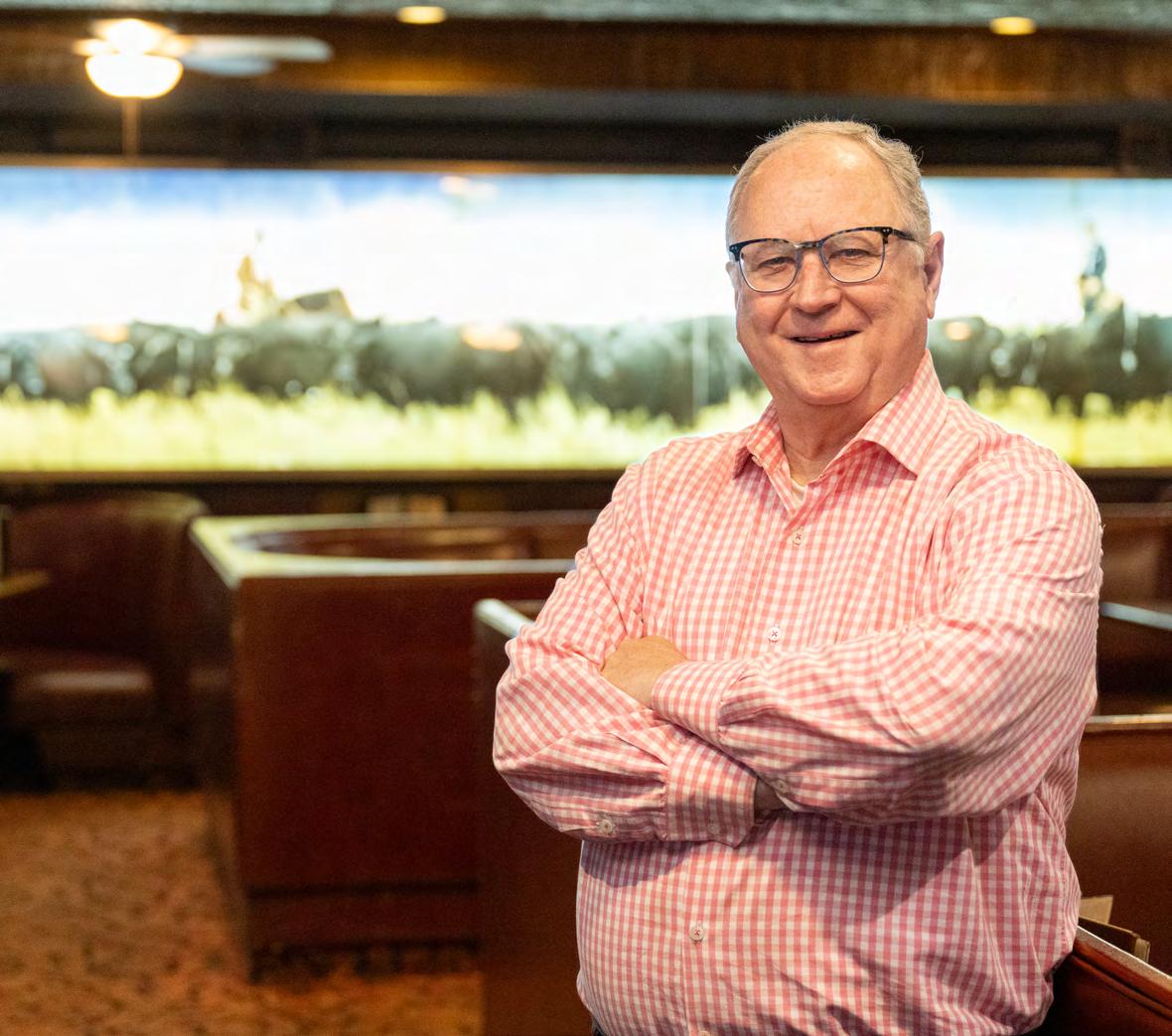
Cattlemen’s has two very distinct dining rooms: one that acts as a coffee shop and mirrors the original 1910
The steakhouse dining room came later as Cattlemen’s expanded in the ‘50s, but the spirit of the restaurant remained no matter where you were standing in the building. The menu is the same on both sides of the restaurant, despite the juxtaposing looks, and that sentiment reflects itself in the diverse clientele.
“It kind of tells a story of its own, I think, when you have the mayor and the governor, the publisher of the [local] newspaper that come in at lunch with their coat and tie with business associates, and then they come back at night with their family, and they have jeans and a flannel shirt on, and maybe a cowboy hat or a ballcap or whatever,” Egan said.
“It’s just that anybody and everybody feels comfortable here, whether you’re dressed up or dressed down. You might be in overalls and ratty-looking shoes, or you might have just signed a multi-million-dollar deal for someone punching a bunch of oil wells in your farmland, and people are very — for the most part — very meek and humble around here.”
The steakhouse is almost always busy. There’s a 15-minute wait at 1PM on a Monday, so one can only imagine what a Sunday post-church rush would look like. Throughout the restaurant during the push, waiters and waitresses weave in
and out of the tight aisles, narrowly avoiding collisions in what almost seems like a choreographed dance, to deliver people their food.
“It’s a very fast-paced restaurant, so it’s constantly busy. Not a lot of downtime, so it keeps you on your toes,” waiter Robert Santi said. “You don’t want to be bogged down and not able to do anything. That’s when you make mistakes. When you’re slow.”
Santi has been working at Cattlemen’s for almost 11 years now and waiting tables for years before that. His easygoing personality, yet efficient service, seem to be what Cattlemen’s is all about.
“I found my niche and I ran with it. Waiting tables, I get to meet people every day — new people, people I’ve known forever — and make money. So, I ran with it, and it’s been my career ever since. People have just been coming in here all their lives. It’s generations. Their grandma and grandpa brought them, mom and dad brought them, and now they’re bringing their kids. I think that’s the best thing about it. I wait on grown-ups now that I waited on when they were children. It’s crazy.”
When asked to describe the atmosphere of Cattlemen’s, Joy A. Weed gave a two-word answer that said it all: “It’s Oklahoma. In other words, it’s friendly, it’s Western. It’s something you would see if you walked back in the ‘50s or the ‘60s. The way things used to be a long time ago, because it’s just been there that long ... if you know anything about Oklahoma, we’re kind of crazy people here. We’re kind of these people who go, ‘Where’s the beef?’”
Even after more than a century, Cattlemen’s hasn’t lost sight of what makes it special: honest food, loyal patrons, and a sense of place that’s as steady as the Oklahoma plains. That legacy earned new recognition in 2024, when Cattlemen’s became one of only seven restaurants nationwide inducted
into the National Steakhouse Hall of Fame, and the only one from Oklahoma. It was a fitting nod to a place that’s long defined Western hospitality and the kind of steak and dining experience that you remember for years. In May that same year, after more than three decades of ownership, 81-year-old Dick Stubbs quietly began preparing for retirement. And in true Cattlemen’s fashion, the next chapter began the way so many things here do — over lunch. The following month, fate, or perhaps tradition, brought old friends back through the front doors.
Former boss Max Walters and his son, Brad, stopped in for lunch during a road trip. Between bites of steak, Brad mentioned that he might like to buy the place. There was just one condition: David Egan, Stubbs’s longtime business partner and steady hand, had to stay on.
When the deal closed in February 2025, thanks to Egan’s consistency, there were no sweeping changes or corporate fanfare, just the usual hum of customers and the smell of sizzling beef. “Even lifelong customers,” Egan noted, “wouldn’t have known a transaction occurred based on their dining experience.” He and Walters may not share a 50year working history, but they do share something equally important: a belief that what’s made Cattlemen’s special for more than a century shouldn’t be messed with.
“We know we will evolve going forward as we have over the last 35 years,” said Egan. “But the general consensus is that we won’t change anything that is recognizable. We won’t change how we train our employees. We won’t change the value that we try to provide to the guests. We won’t change the sensitivity that we have for trying to please guests. That is a very important part of our culture here.”
For Egan, the real story of Cattlemen’s isn’t found in the ownership transitions or headlines, it’s in the thousands of small, everyday moments that unfold within its walls.
“Honestly, I know everyone is looking for an earthshattering story that will make everybody’s head swim, but I really think that probably our biggest story really happens every day when people come in and say, ‘Golly, I haven’t been here since I was 15 years old, and I’m 68 now, and I used to eat here with my dad, and every time we brought cattle or every time we had a birthday, they’d bring us here to eat,’ and people get a connection with a restaurant.”
That connection, built plate by plate and handshake by handshake, is what has carried Cattlemen’s through wars, booms, busts, and generations of Oklahoma history. And as the torch passes to a new era, the promise remains the same: the steak will be cooked just right, the coffee will be strong, and the welcome will always feel like coming home. Just the way that it is meant to be in the West.

Words and photographs by Robbie Green
Every mile of Route 66 holds a story, and every photographer finds a different one. In this series, Shots from the Road, we feature artists who share their unique perspectives on the Mother Road, capturing its signs, landscapes, and people through their own eyes. From neon-lit motels to small-town characters and hidden roadside gems, each feature offers a fresh glimpse of the road that continues to inspire travelers and photographers alike, one frame at a time
Ihad the good fortune to be born and raised in a Route 66 town — Amarillo, Texas. That definitely provided the spark, but there were two things that shaped where I am today: signs, and my parents’ love of road trips.
From the time I could read, my parents were convinced I would end up in the sign business. Any time we were on the road, I would be pointing out all the signs that had a letter burned out. If the X in Texaco wasn’t lit, I was sure to mention it.
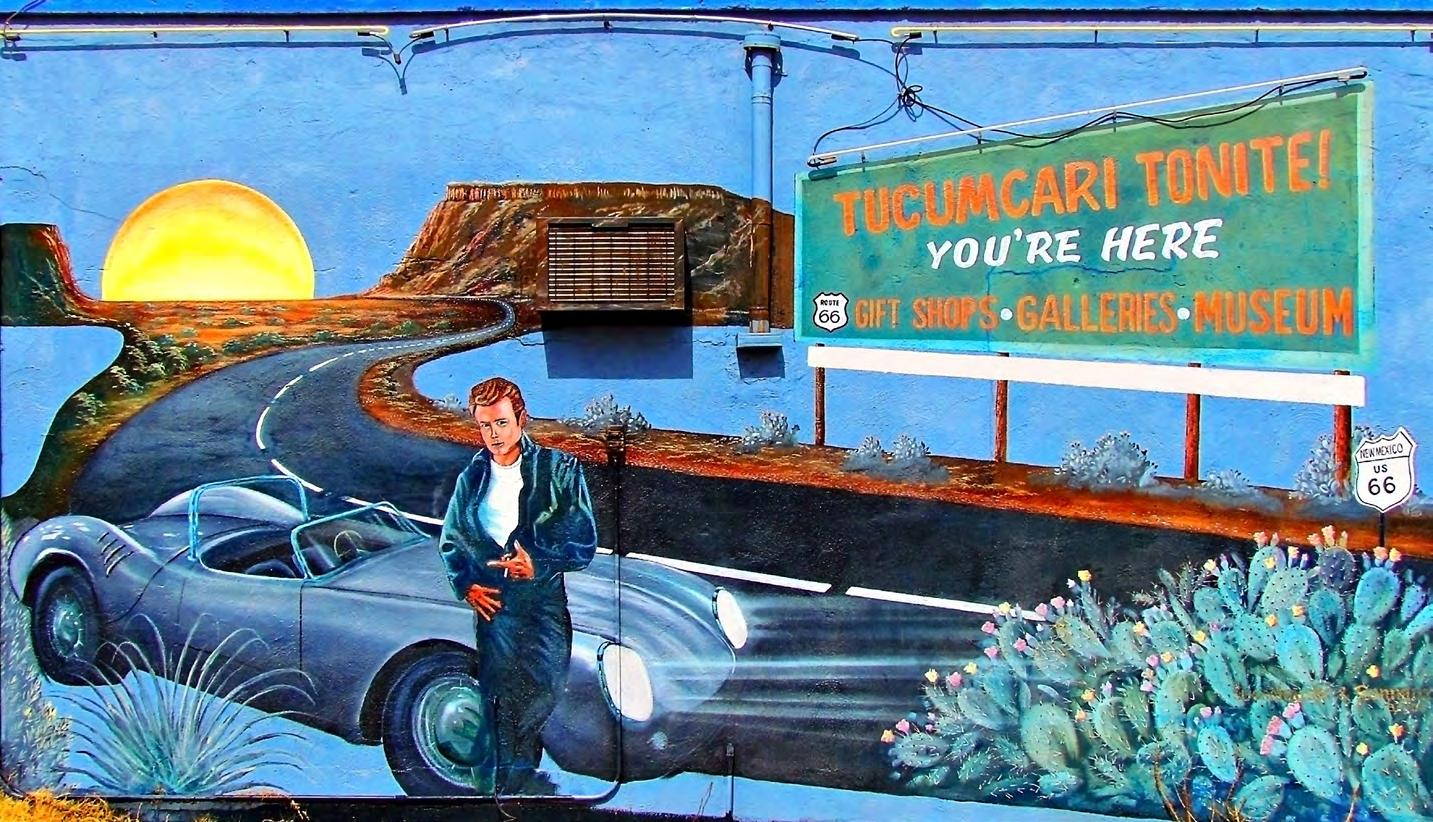
The second factor was all the time I spent on the road with my family. My mom and dad love the mountains, and almost every trip started with us heading west through New Mexico, stopping in Tucumcari or Santa Rosa. For a kid who noticed signs, can you imagine a more fascinating place than those two towns in the ‘80s?
I got into photography early too, taking my Kodak 110 and Disc cameras to all of my Cub and Boy Scout adventures. I was the darkroom guy for the Amarillo High School yearbook from 1990 to 1993.
I started working in radio as a senior, and became the fulltime overnight DJ on Amarillo’s 107.9 KISS-FM the week before I graduated high school, eventually moving to Z-93, then leaving my hometown for a job at KHFI Austin, then doing the radio nomad thing — town to town, up and down the dial — for the next 10 years. (Which included stops in more Route 66 towns, like Oklahoma City and Tulsa.)
I don’t think I picked up a camera even once during that time.
By 2005, I’d moved to the technical side of the radio business, building studios and taking care of transmitter sites, and I bought my first camera of the digital era, a Nikon D50, to document my work more than anything else, but that Nikon re-lit the fire, and I’ve been shooting ever since.
My interest in Route 66 was renewed around 2010. I was in Amarillo visiting my family, and I told my dad I wanted to go photograph Amarillo Blvd, because of all the incredible neon signs there that I remembered from my childhood. When we got there, I was horrified to find most of them gone — replaced by bland, generic, backlit plastic signs. The heritage and history had been erased.
So, we ventured out, and I was relieved to find the historic signs still in place in Adrian, Vega, and Shamrock, and I was determined to document as many of them as I could for my own kids and future generations.
Traveling the route as much as I have, I can honestly say everyone I’ve encountered has been pleasant and accommodating, except for this stubborn teenager I met just outside Oatman. She was standing in the middle of the
highway and wouldn’t budge. Since she wouldn’t move, we had an impromptu portrait session, which I shared on Facebook. One of my followers said her name was April, and of course, she is one of the famous Oatman burros.
Not only was April very photogenic, but she was also a good sport. As I was pulling my camera out of the bag, a six-year-old boy went up behind her and tried to push her out of the road. I have to give April credit, she just stood there ignoring him, but I was more than a bit concerned. I called the boy’s father — who was admiring some other burros just off the highway — over to retrieve his son, and I got a few shots of her. Eventually she moved on, and I did too.
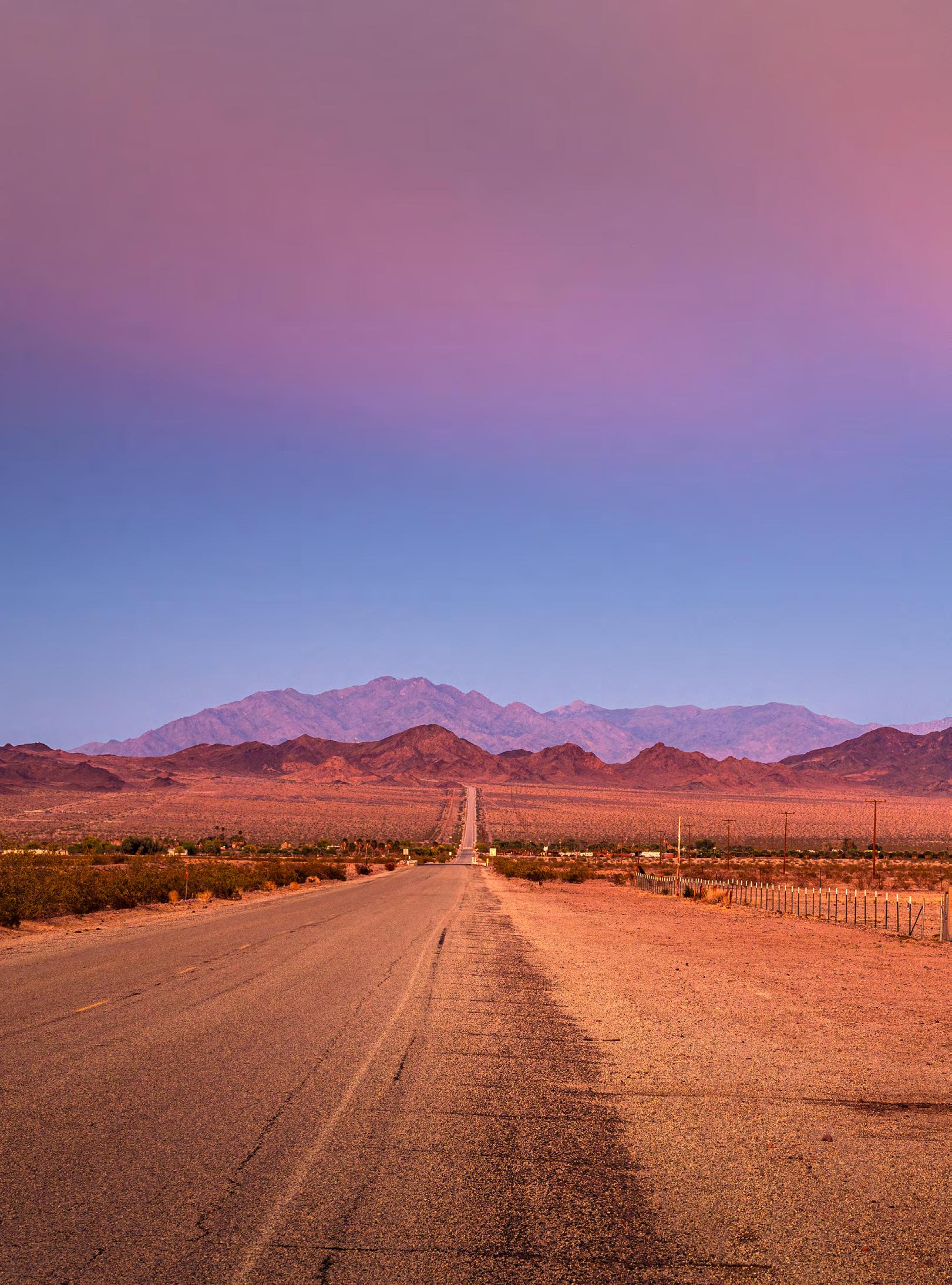
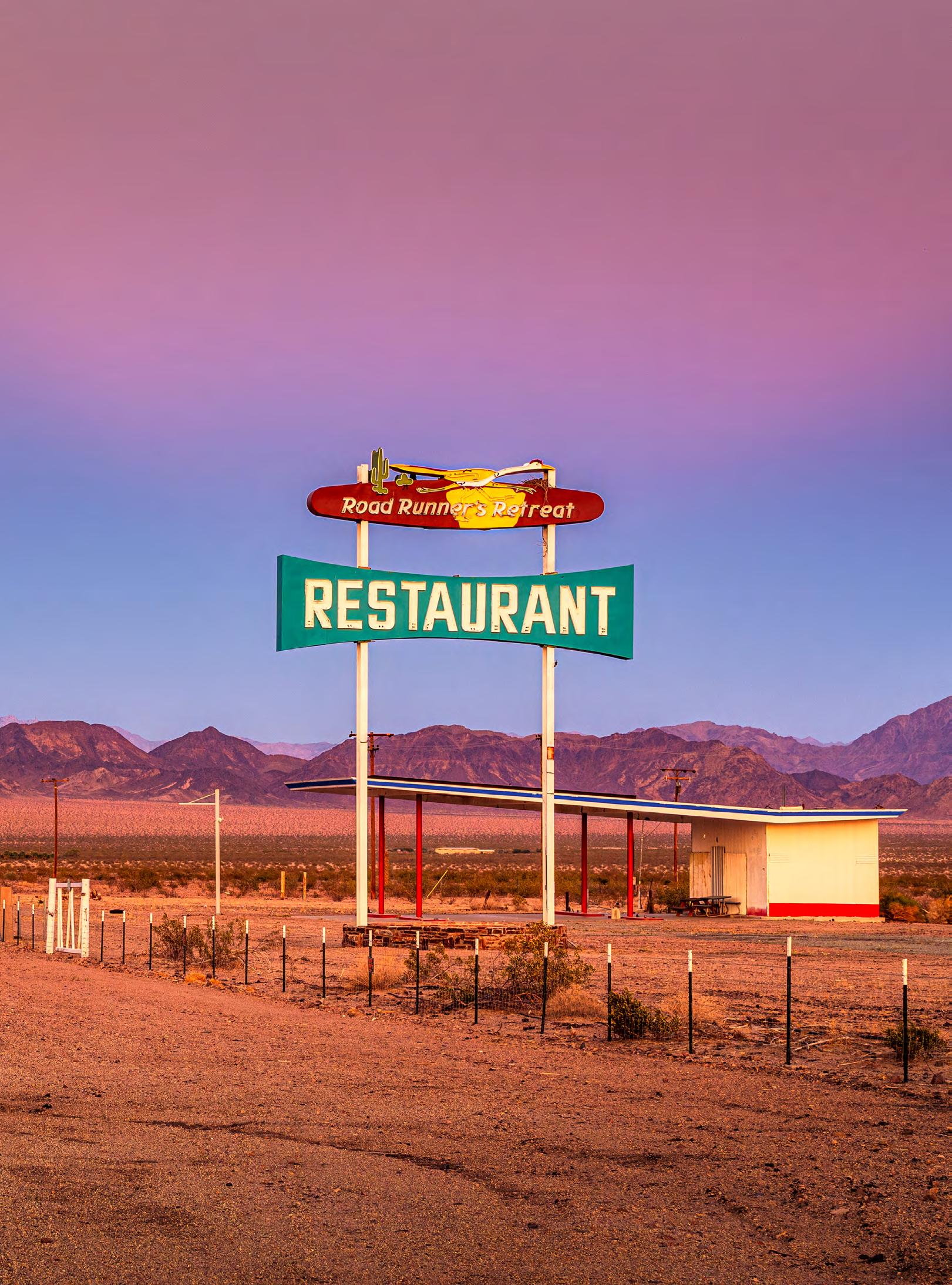
There are so many amazing places to explore, but if I had to pick a few favorites, Roy’s in Amboy, California, and the whole town of Tucumcari, New Mexico, rise to the top. Roy’s is just iconic Googie perfection. It’s no surprise it has been featured in so many films and music videos. The video for Enrique Iglesias’s Hero was filmed there in August 2001 and has been viewed 594 million times on YouTube. I’ve wondered how many of those millions of viewers recognize Amboy.
Tucumcari has a bit of everything. If you’re looking for the authentic ‘50s experience, it’s there. If you want something a bit more modern, but not too modern, it’s there too. Tucumcari’s motels run the gamut from pristine to dilapidated, and everything in between. For a photographer who loves both classic neon and urban decay, it’s paradise.
I’ve been surprised there a few times, too. I was staying at The Blue Swallow Motel once and wandered out to grab some shots of the big neon sign and office as the sun dipped below the horizon. I was set up low to the ground with my camera on a tripod, when a van came barreling into the entrance that I was blocking. Thankfully, the driver saw me and stopped in time. It turned out to be a crew from a TV show, there to capture some B-roll, and the videographer and I spent a few minutes geeking out over each other’s gear.
Along the way, what had been purely documentary turned more artistic, and I’ve made it back to the route as often as I could, focusing primarily on everything west of Tulsa, but photographing almost all of it. The one stretch I haven’t traveled yet is west of Barstow, and I’m hoping to do that in 2026.
* There’s always another sign, another story, another mile to discover. To see more of Robbie Green’s photography along the Mother Road and beyond, visit robbiegreenphotography.com
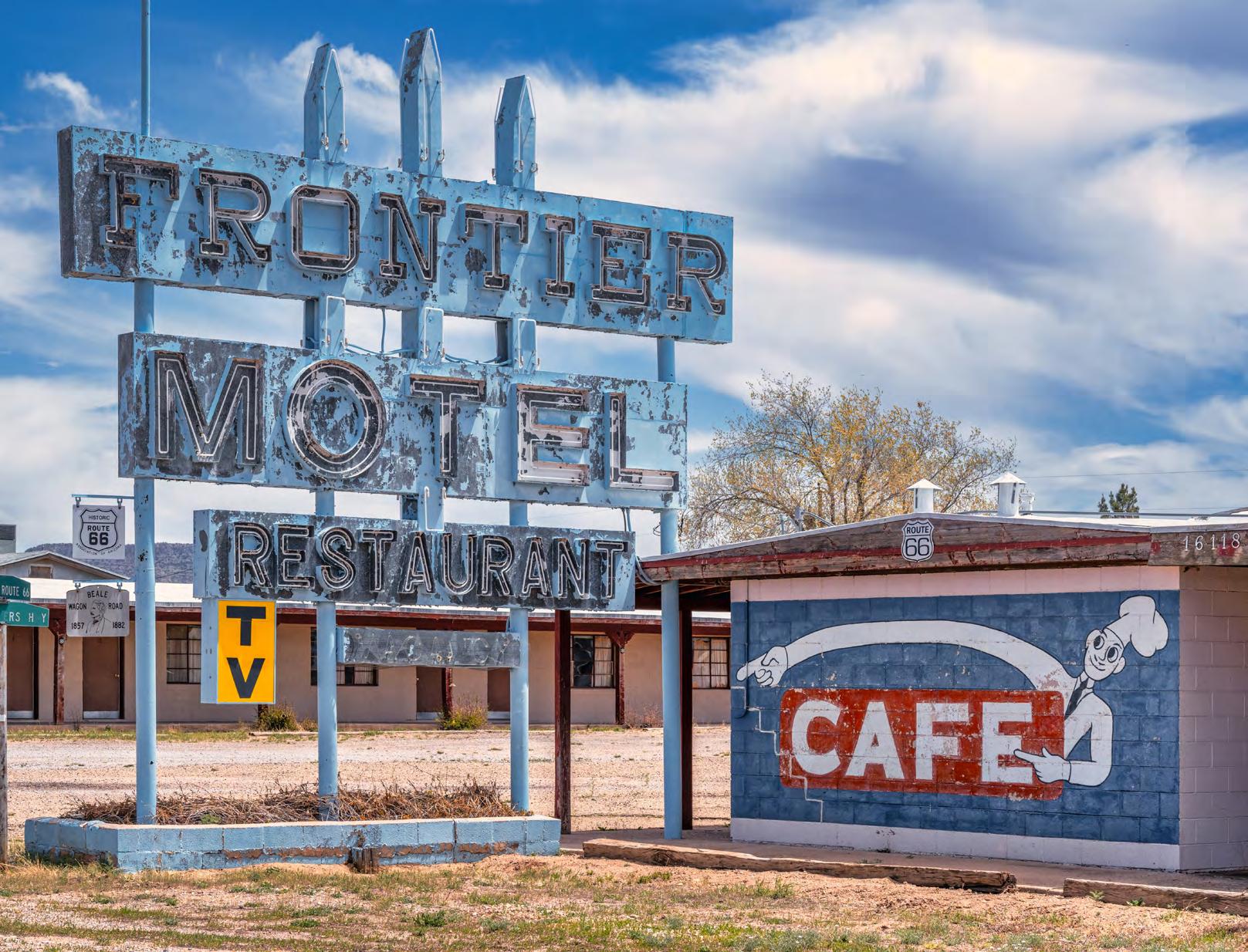
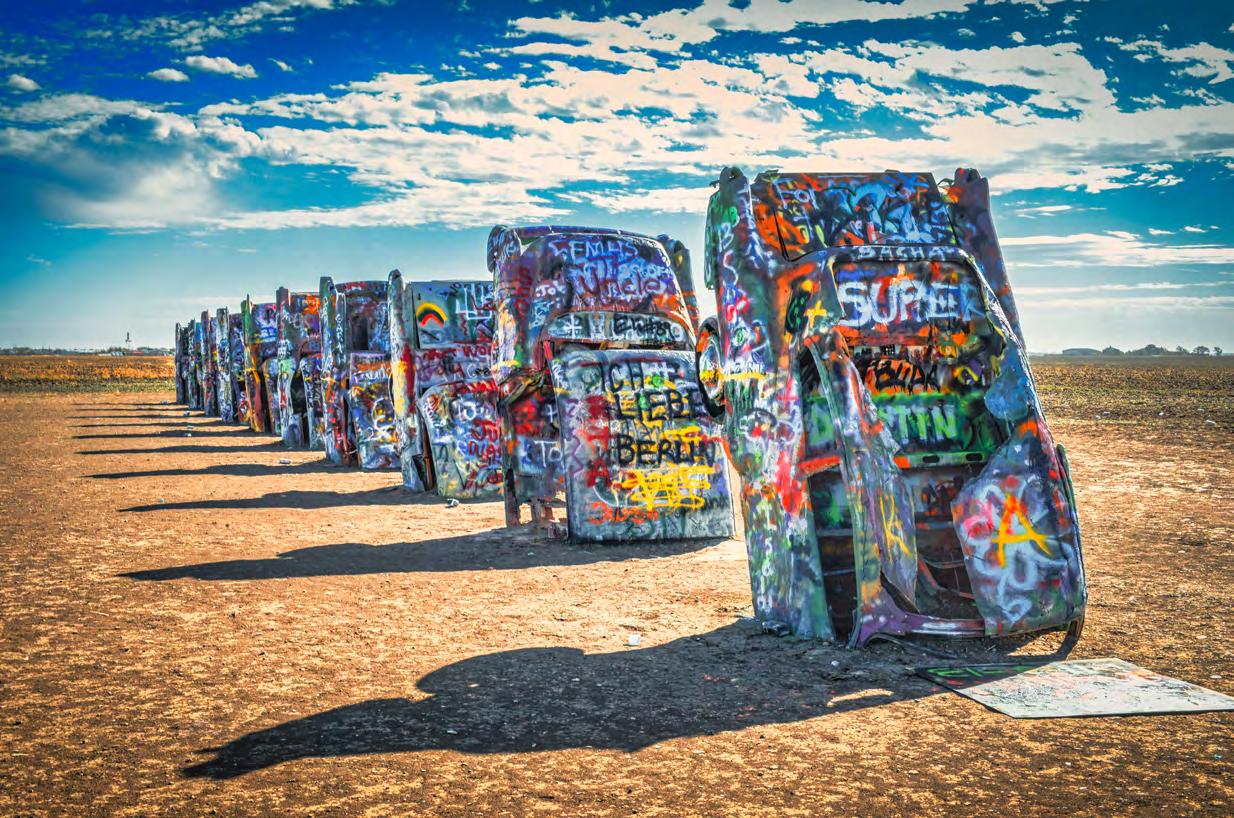
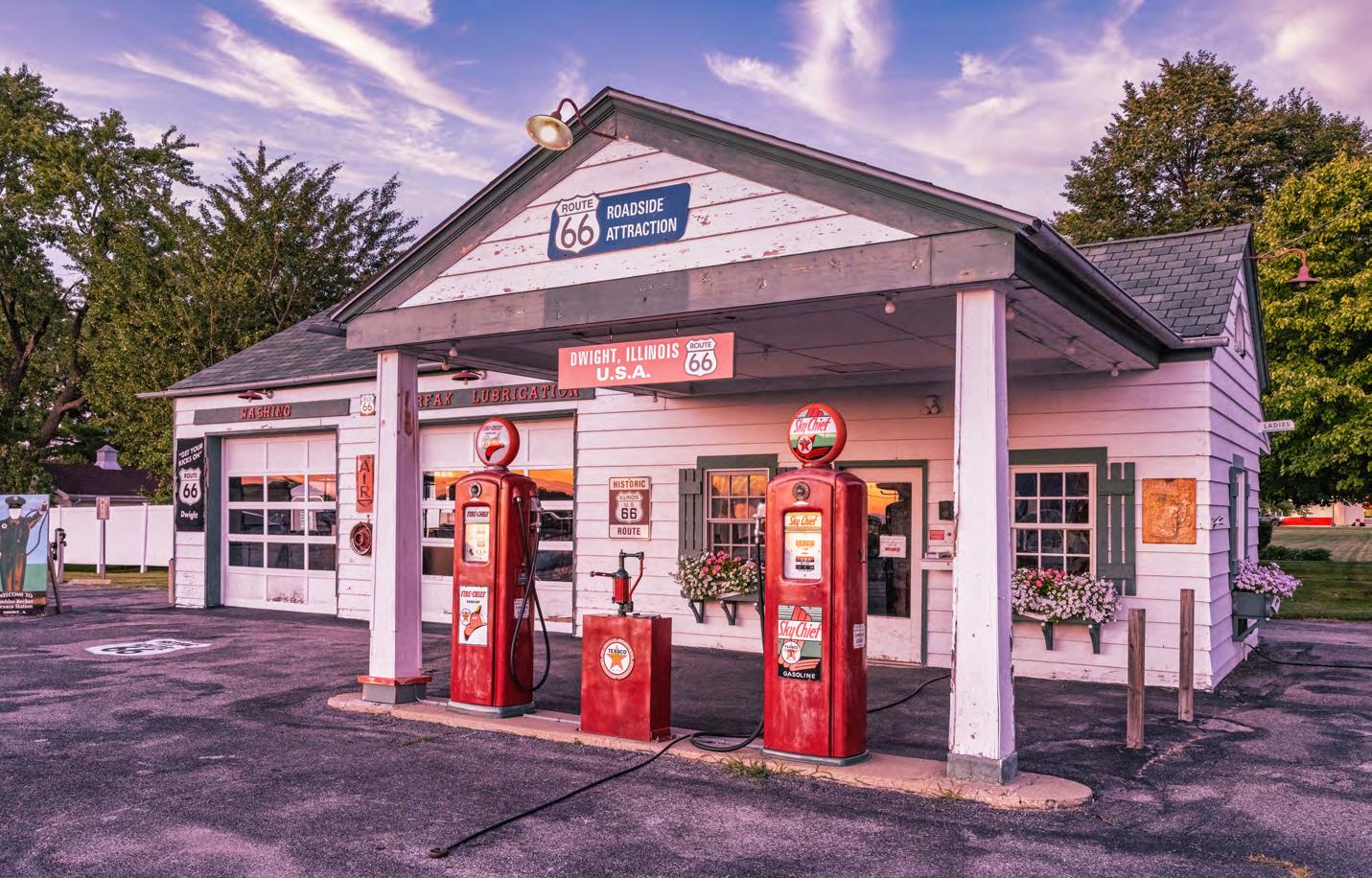
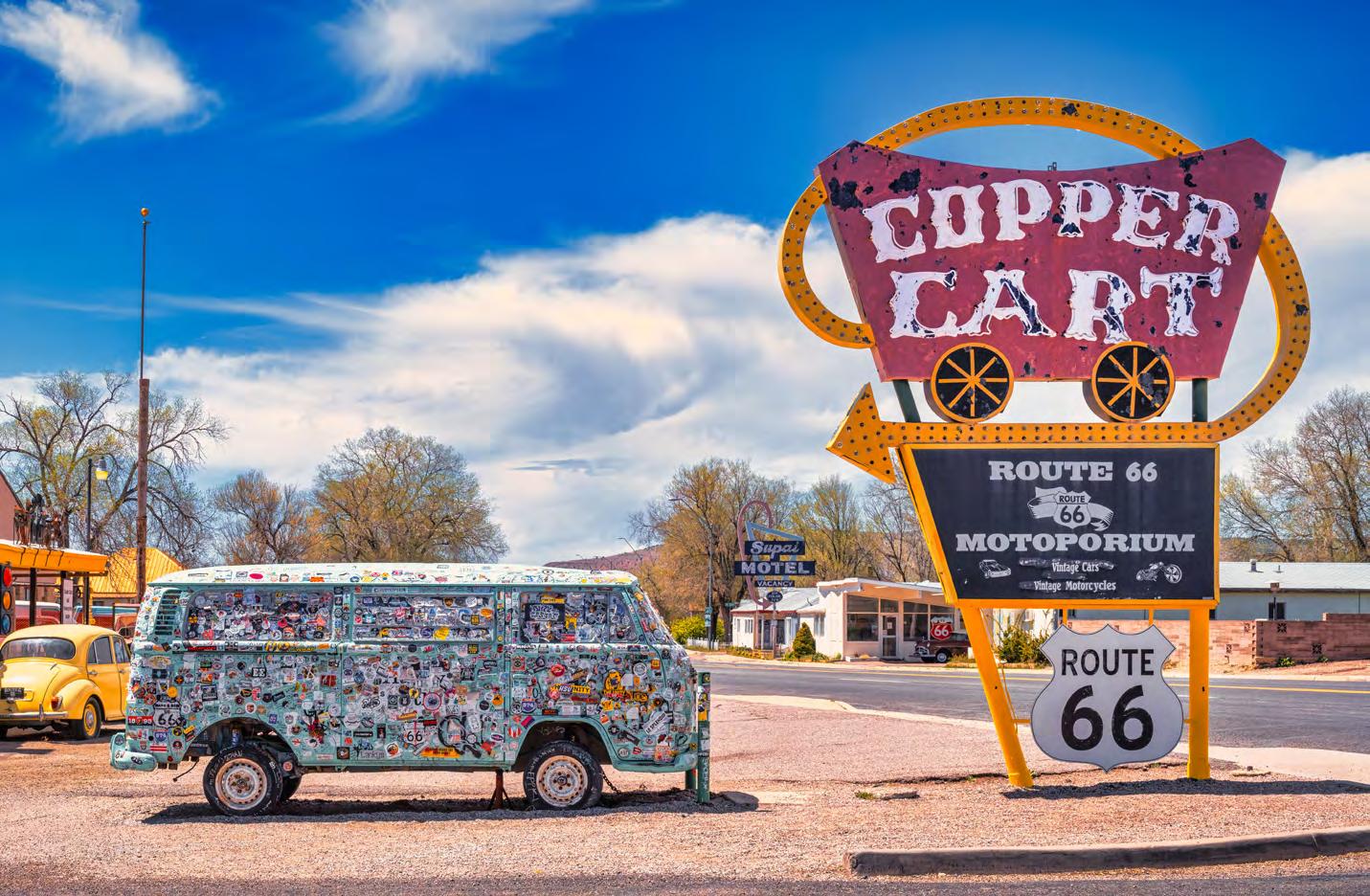
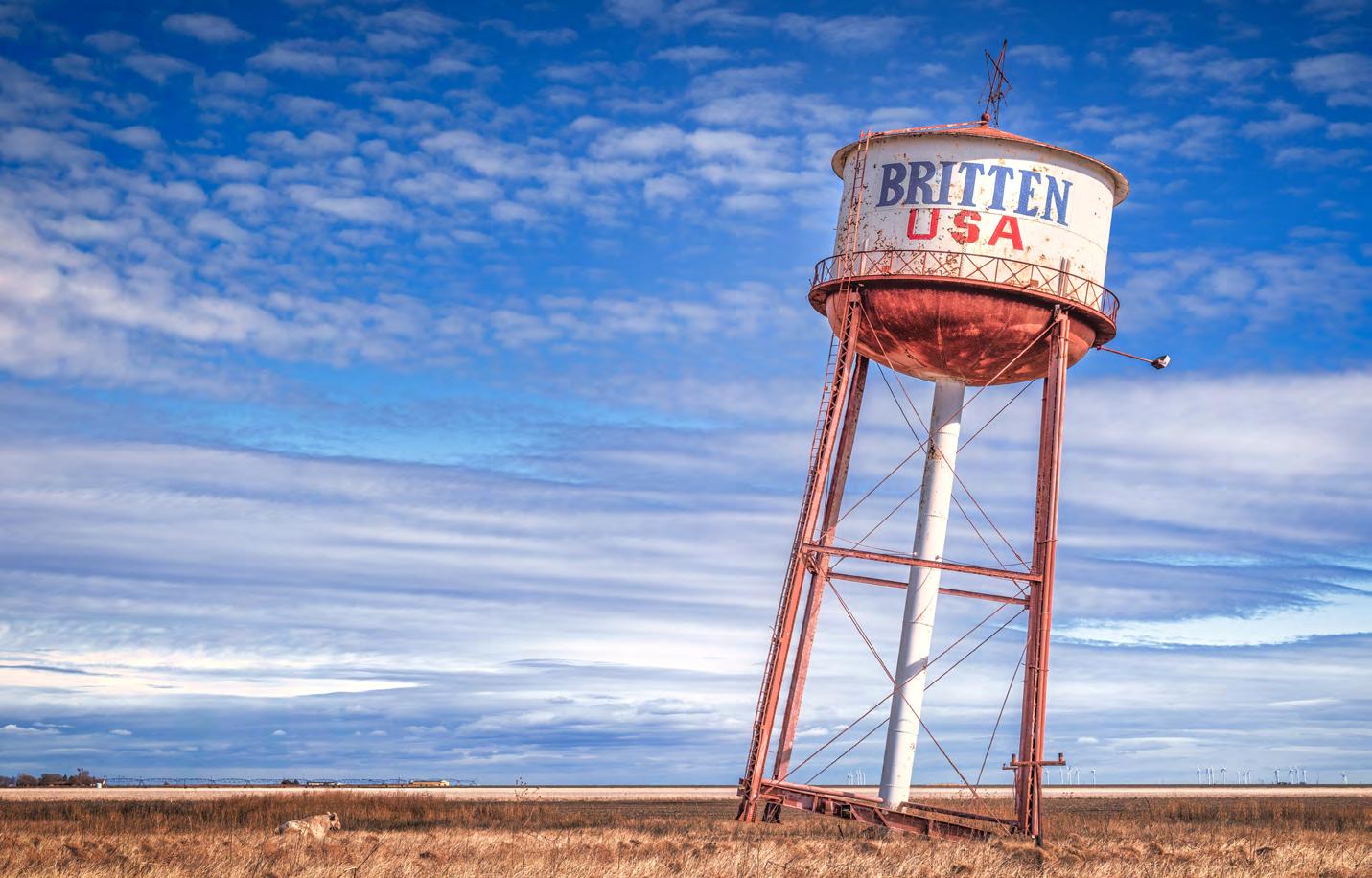
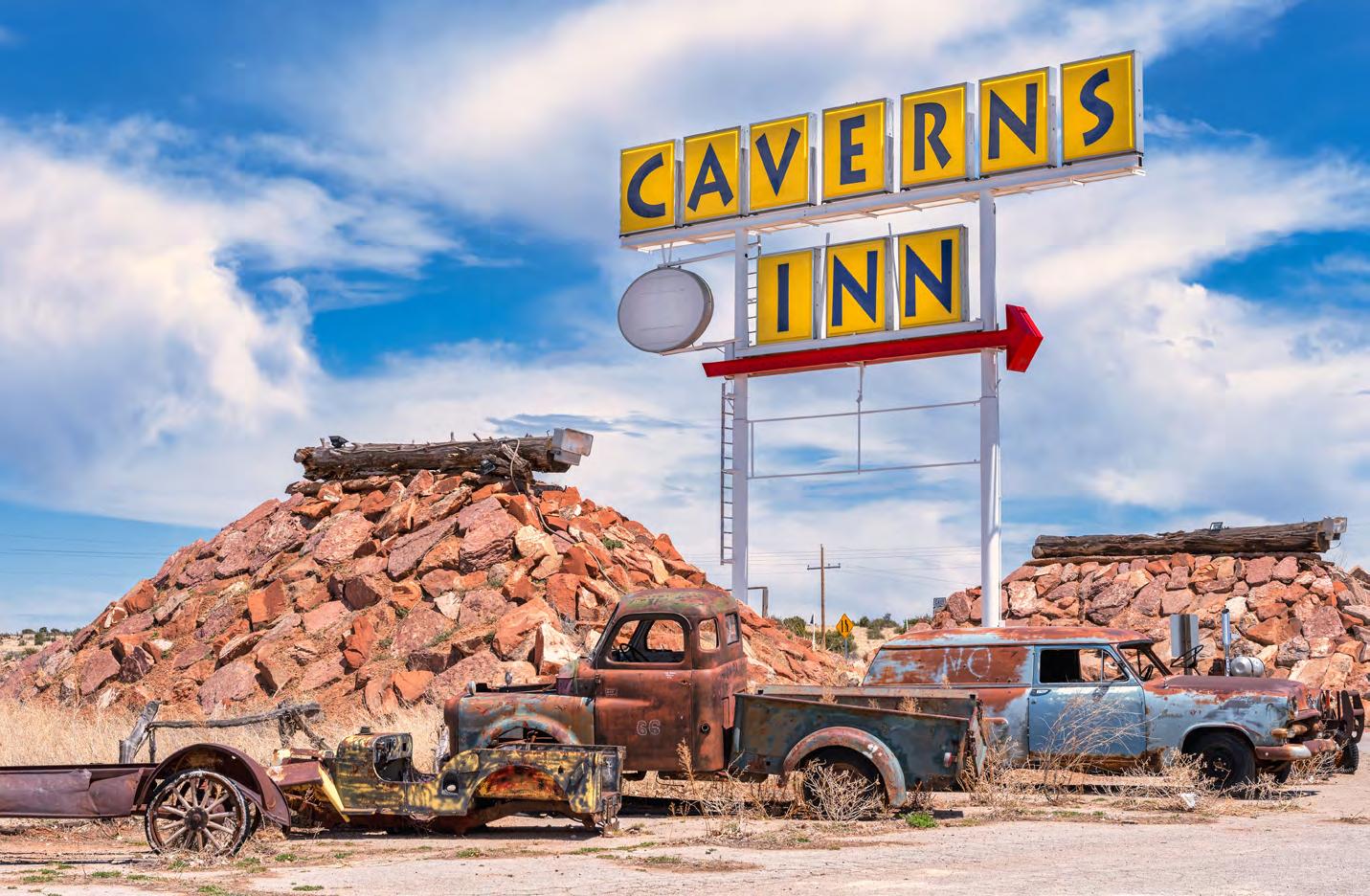
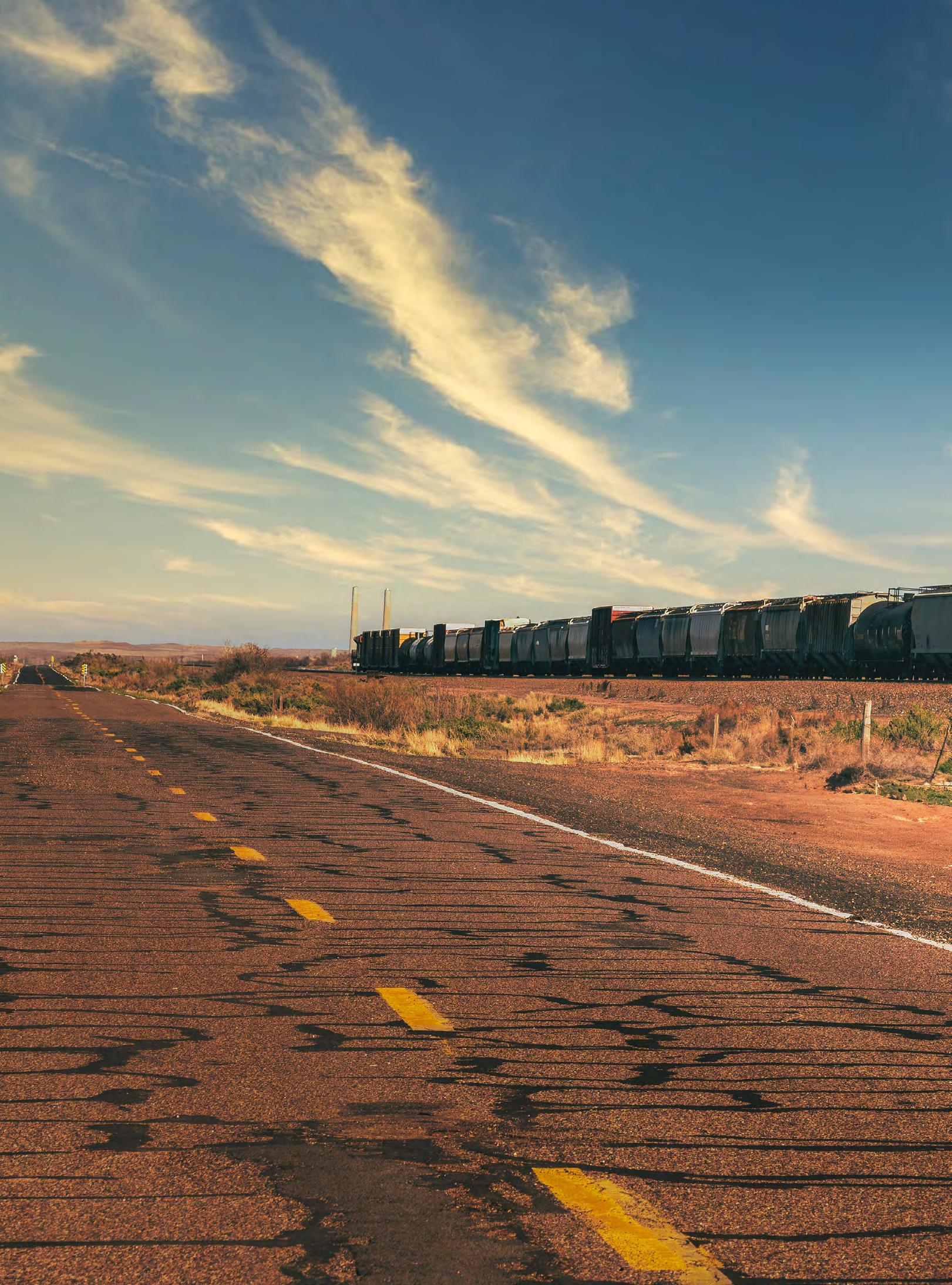
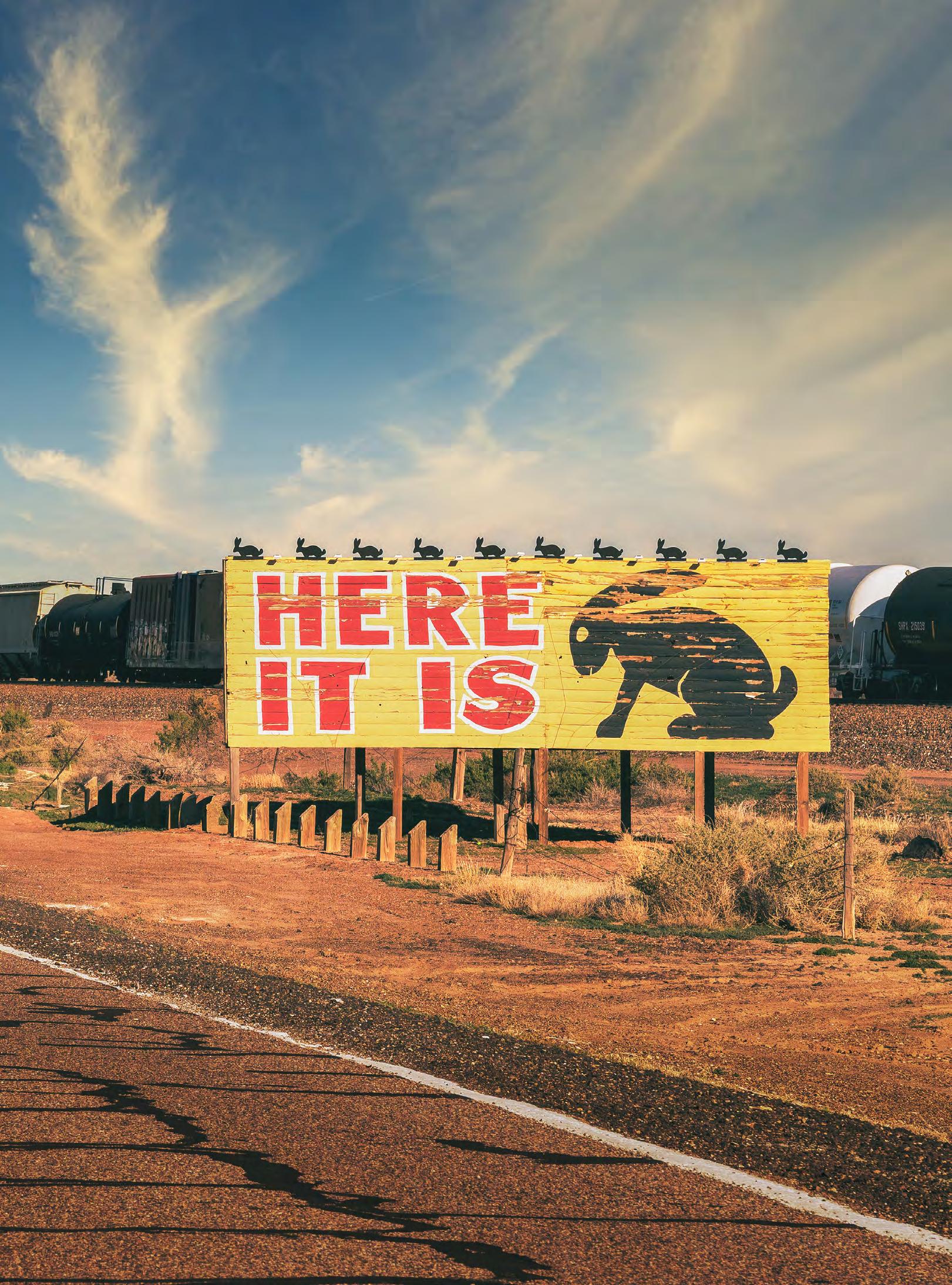
By Mitchell Brown
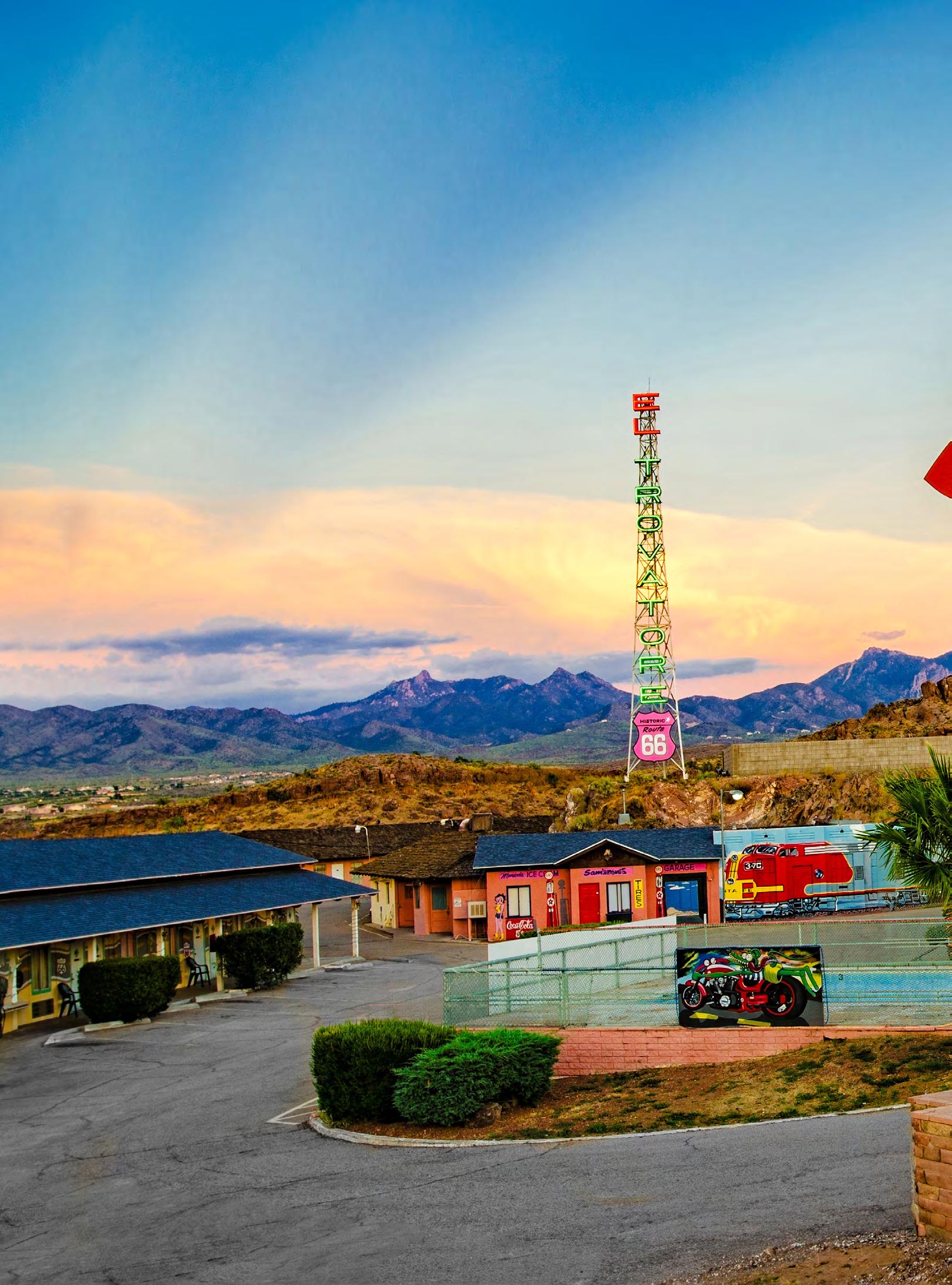
It’s 3PM in Kingman, Arizona, and Sam Frisher has just clocked in to work — not as a typical desk clerk, but as the co-owner of the historic El Trovatore Motel. From his office window, he takes in the view: the motel’s towering neon marquee, a gleaming 1937 Mercedes parked just beneath it, and the sunbaked ribbon of Route 66 stretching beyond. His shift isn’t about paperwork — it’s about storytelling. As the day unfolds, Sam prepares to welcome travelers with tales of the Mother Road and the colorful legacy of the motel he calls home.
The story of the El Trovatore Motel begins in 1937, in the shadow of the Great Depression and just before the world was thrust into war. It was the vision of John F. Miller, a seasoned entrepreneur with a talent for spotting opportunity in unlikely places. Decades earlier, Miller had made his mark in a dusty railroad stop called Las Vegas, founding one of the city’s first two banks and opening its very first hotel — the Hotel Nevada — in 1906. When Nevada legalized gambling in 1931, Miller adapted quickly, adding a casino and renaming his property Hotel Sal Sagev (pronounced Sal-Sagy) — Las Vegas spelled backwards, a clever semordnilap. Today, that same building stands in glittering downtown Las Vegas under a name more familiar to modern visitors: the Golden Gate Hotel & Casino.
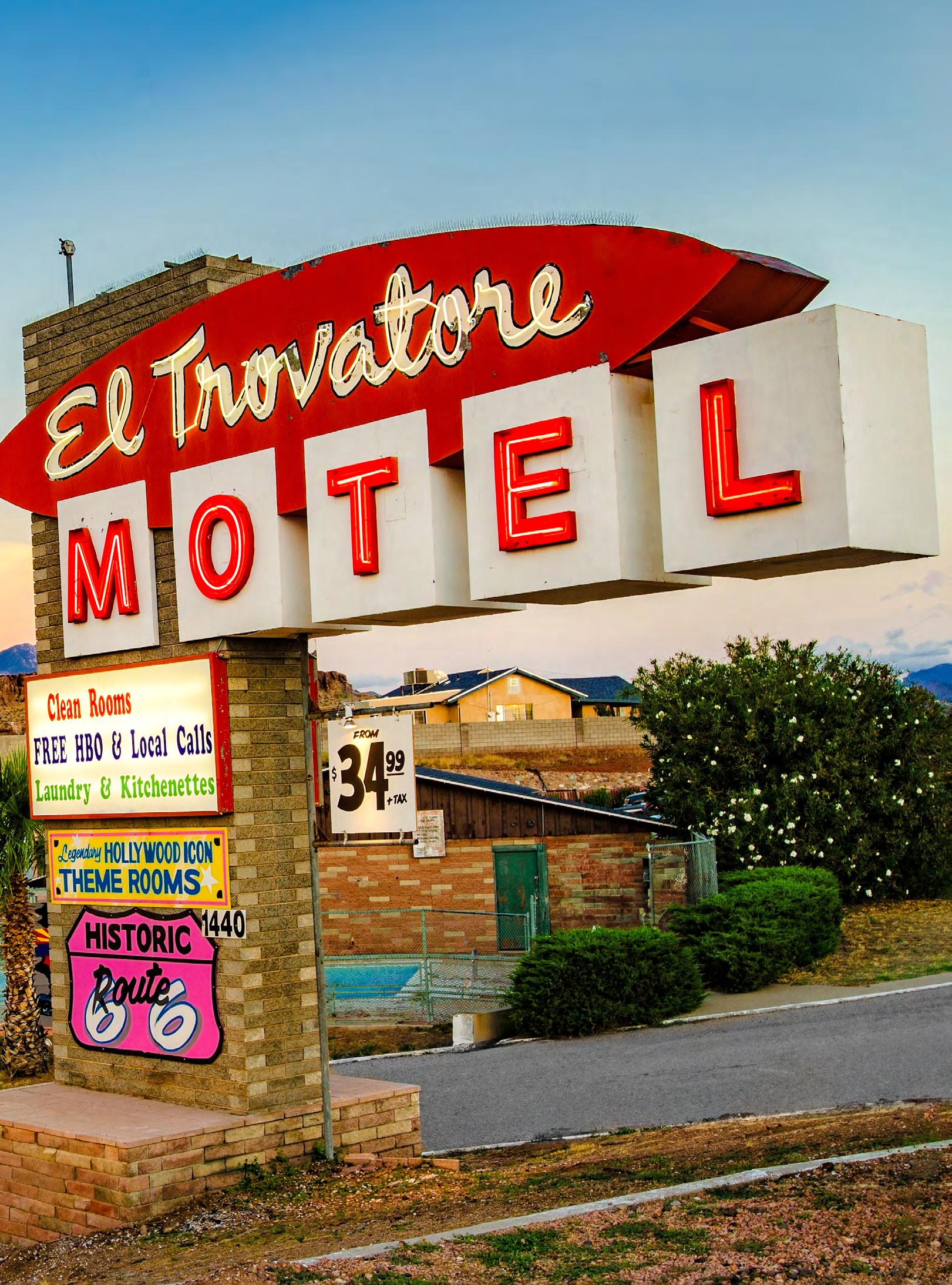
Following the completion of the Boulder Dam, Miller saw an opportunity in Kingman, a dusty desert town poised to become a vital junction along the increasingly traveled highway. With earnings from his ranches and properties scattered across southern Nevada and Arizona, Miller saw more than just open land — he saw potential. In 1937, he chose a spot in what was then a small, incorporated area known as El Trovatore and built a service station, laying the first stone in what would become one of Route 66’s most iconic motels. He later added a tourist court in 1939, charging patrons three dollars a night (the equivalent of $67 today). The El Trovatore Autel Court, as it was then called, was touted as “one of the finest courts along ‘66,” being the first motel in the state to have air conditioning, a luxury in the late 1930s, plus an inviting cafe, curio shop, and cocktail lounge. A giant 100-foot-tall tower, sporting the motel’s name in bright neon red-and-green lettering was built the same year as the venue. Set on a bluff, the neon tower, an illuminating beacon of hospitality, could be seen for miles. Another retro sign, standing on Route 66, displaying the era’s iconography, was added in 1945.
John F. Miller passed away in 1957 at the age of 92, after a long decline in health. By then, one of his five sons — Abe P. Miller — had taken the reins, overseeing the family’s hotel ventures. Miller had seven children in total, but it was Abe who continued his father’s legacy. What became
of the El Trovatore in the years following World War II is largely lost to time. But by the late 1980s, the neon lights had flickered out, and the once-proud motel had faded into a weekly or monthly apartment complex, a shadow of its former self. With time, vagrants and drug users would strip the motel clean. What was once “Northern Arizona’s finest Autel” had fallen into intense disrepair and eventual bankruptcy. The motel’s best days appeared to be in its rearview mirror. That is, until the Frishers came into the picture.
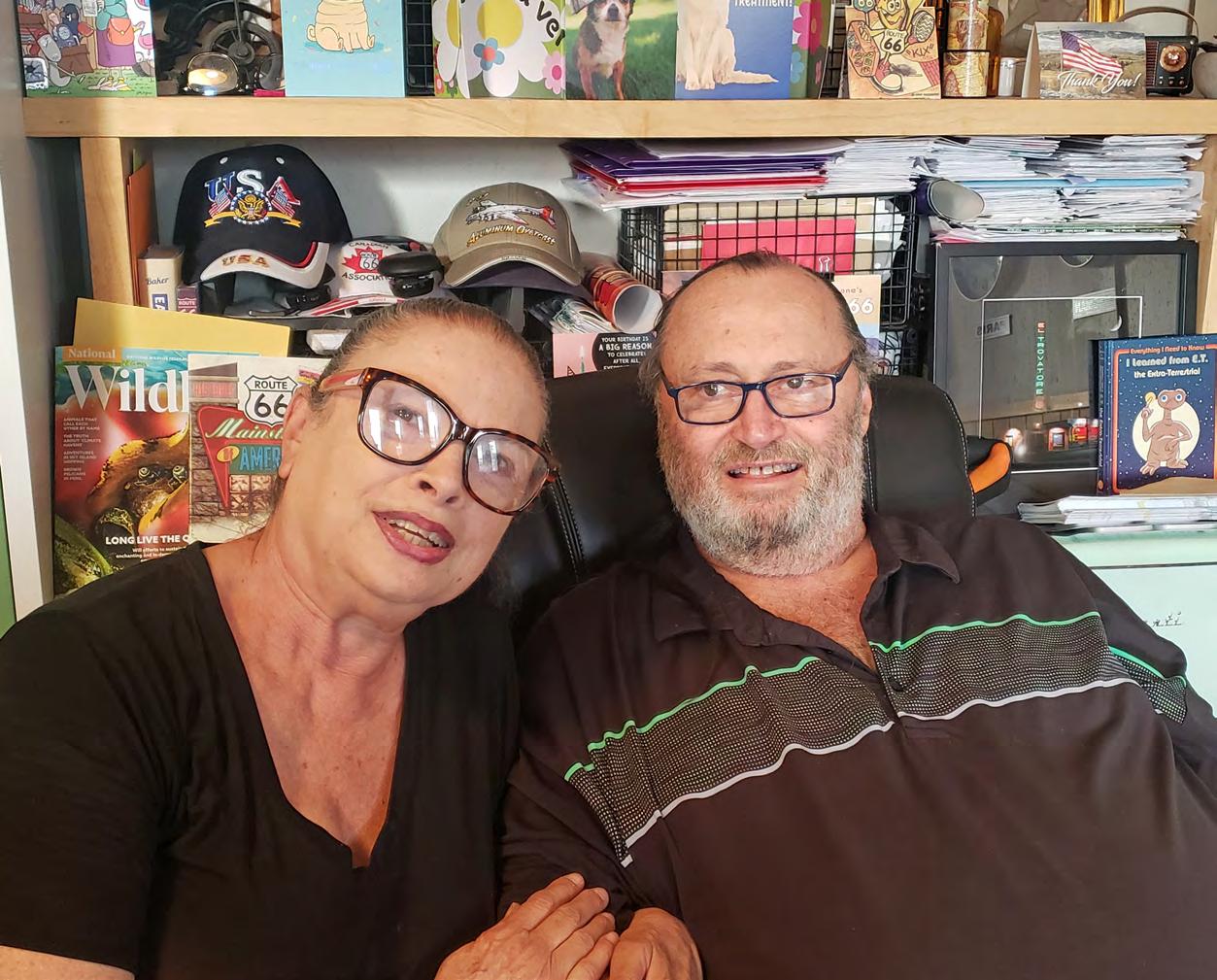
While born in Tel Aviv, Israel, Sam and his Los Angelesborn-and-bred wife Monica were California residents long before the El Trovatore became their career path. Sam did maintenance work on apartment complexes in LA until he got his contractor’s license and worked as a contractor for the next 22 years. Monica was no stranger to the work either, having 30 years of experience herself as a contractor, in maintenance and management. After Sam and Monica got married in 2002, they set their eyes on bigger dreams. “We decided to look for an apartment building to buy and manage. So, we put our money together slowly. We went to Vegas because we couldn’t buy anything in Los Angeles. It was too expensive,” said Sam Frisher. “We bought two properties in Vegas, though we still lived in Los Angeles at that time.” One of the properties was an apartment building that the Frishers renovated and was eventually bought out by an investor in 2010 who made them an enticing offer that they couldn’t refuse. Along with the money earned, the couple also received a 1031 exchange, wherein they had to invest the money within six months to be deferred onto the next property. Otherwise, it would’ve put them at a higher tax rate. This turned into something of a ticking clock to find a new property and find it quickly. Fortunately for them, luck and serendipity seemed to be on their side. “When we sold the property, which was a year and one month later, we started buying stuff, and this [El Trovatore] was one of the places we bought. We were driving through Kingman to Mesa, where we owned an 88-unit apartment building, and on the way — usually we would go via the freeway, but this time we drove through the town itself, down Route 66 — my wife looked to the right, and saw this place,” Frisher continued. “It was fenced completely; it was in bankruptcy for a few years. It was closed; it was kind of destroyed. We didn’t know what was inside. We looked at it through the fence, and I saw a small sign on the fence that said a bank owned the place, and it was the same bank that we had all the way in Vegas.”
Through a fortuitous bit of luck and a well-placed phone call, Sam contacted the bank’s manager, whom the Frishers had known for several years by that point. Because of that familiarity, the manager trusted them with the keys to the motel so they could get a proper look at the inside of the building. Dilapidated would be an accurate word to describe the condition of El Trovatore. The interior was all but destroyed, and the walls were covered with vandalism. Where others may have seen a lost cause, the Frishers saw an opportunity. So, after three months of negotiating with the bank, they secured a loan and put money down, becoming the proprietors of the historic El Trovatore. That’s when the real work began.
Considering the state of the building when they bought it, it’s no surprise that it took a lot of work to bring it to the condition of being hospitable. The interior had to be completely remodeled, new carpets had to be installed in some rooms, while others required new tiles and hardwood flooring, and finding the proper pipes for fixing nearly centuryold plumbing required some innovation and research. All told, the renovations took five months to complete, and even then, the motel had limited rooms for guests, but the endeavor became something of a passion project for the Frishers. “We put more than $200,000 into this place to fix it,” said Frisher. “As a contractor, it was easy for me, but it’s still a work in progress. You can’t just walk into a Home Depot to buy faucets for plumbing that goes back to 1937. Everything is a challenge in this place, but you either love what you’re doing in life, or you don’t.”
Despite the effort put into bringing the property back, the Frishers ran into some trouble when, in 2011, they were forced to close the motel for nearly a year due to a series of unpaid electricity bills that almost brought the establishment into foreclosure. During that time, they worked to negotiate a lower interest rate, as well as secure an additional loan to remodel the motel and create 20 Hollywood-themed rooms. This Tinseltown theme wasn’t just some gimmick — it came from the motel’s historic patronage.
“In the Second World War, in Kingman, there was a base here with 7000 B-17s that were delivered out to Europe. There was also a gunnery school in town. Charles Bronson and Don Knotts were gunners in this town,” said Frisher. “At that time, the USO would come here to perform for them, so a lot of famous people would stay at the motel, people like Bob Hope, The Three Stooges, Rita Hayworth, Marilyn Monroe, James Dean, even Elvis Presley stayed here three times.” The motel was a desirable place for the entertainers to stay, thanks to the rooms having both air-conditioning and bathrooms. It would give them a
comfortable resting place after performing for the 40,000 soldiers stationed there during World War II. Hollywood plays an integral part in what gives the motel its charm. Its sign promotes its “Hollywood Icon Theme Rooms,” and its stretch of Route 66 is even called Andy Devine Avenue, Devine being a renowned character actor from the area who starred alongside famous Hollywood juggernauts like John Wayne and Roy Rogers. And while that would’ve been a suitable enough facelift to give the motel a new look and incentive for guests to stop in, the Frishers went further and added their own touch to the historic motel through murals.
Even those who lack an observant eye would have a hard time not noticing the murals that cover the walls of the El Trovatore, such as the ones of a B-17 Bomber and Kingman Airfield — the World War II training facility located east of the city — and the motel-spanning red locomotive that splashes across the front of the building. The building’s most famous mural, however, is the 206-foot-long Route 66 mural, which is promoted as the world’s largest map of the Mother Road (the Guinness Book of World Records hasn’t verified it, but the Frishers are getting around to it). While the paintings have become a noteworthy part of the appeal of staying at the motel, they’re also a recent addition.
Around 2013, Sam was looking for a muralist to do work on the motel, even going to the local college and
attending classes to see if he could get some of the students involved. He approached the school and sponsored a small competition at the college to see if people could give him ideas of what murals would look best for the motel, going so far as to ask one of the art professors if they would be interested in getting involved, but to no avail. That’s when luck appeared to, once again, be on his side.
“I was driving one day from here to Vegas, and on the way, I noticed some murals on a gas station, and I found the name of the muralist: Dan J. Louden,” says Frisher. “It took me over a year to find this guy. I brought him here and he lived with us for close to a year. I started doing murals, and the first one he worked on was of Elvis Presley, on the side. Then we started doing some on the front; he did the mural of the B-17 and painted Route 66 on the building itself.”
Louden completed the first mural in a day, but the map took nearly three weeks. The murals have stayed on the walls since they were painted, but the Route 66 mural received a touch-up sometime in late 2022 or early 2023, when the Frishers got a visit from the TV series Motel Rescue on Discovery+. In the episode “Reno on Route 66,” which aired in May 2023, the mural gets a more contemporary look.
Nearly a hundred people came over five days, and the visit got them a remodeled lobby, updated rooms, and a communal locker room. The helping hand was needed because, like many small businesses, the pandemic hit the motel hard.
It eventually reached such a critical point that they had to use their social security to keep the lights on. But luckily, they managed to keep their heads above water and get out of the pandemic with the motel intact. Mostly intact, anyway. At one point, the tower that stands over the motel was struck by lightning, so they’re in the process of trying to get it fixed.
When it comes to the motel’s day-to-day, the clientele consists of a lot of travelers — Kingman has a monthly car show of over 350 classic cars, which draws in business — but it’s no surprise that the motel’s bread and butter is Route 66 travelers. The season runs from March through October, and they’re always bound to see a few regulars from out of town. With a history that spans decades, Art Deco architecture that reflects the style and optimism of the pre-World War II era, and a vibrant neon sign, one of the largest and most colorful on Route 66, the El Trovatore stands as a landmark and an integral part of the history of Kingman and Arizona’s stretch of Route 66. From its history of housing celebrities to entertaining the troops during World War II, to its ramshackle days of housing vagabonds and drifters, to its current state of being lovingly maintained by the Frishers, the El Trovatore stands as a vibrant beacon of Route 66 history and American road travel culture.
By
Dude ranches are in vogue again. As television series like Yellowstone and its spinoffs have graced the country’s screens with images of the Wild West and dude ranching, cowboys and cattle, more and more travelers have begun channeling their inner Billy Crystal a la 1991’s City Slickers , albeit with a lot more luxury and fewer comedic mishaps.
“We were getting a lot more inquiries from people who wanted to come out and see what it was like to experience ranching for themselves,” said Mo Olivas, the communications manager at Visit Tucson. And one of those ranches receiving extra interest: the historic Tanque Verde Ranch.
At one point, Arizona, and the Southwest in general, boasted hundreds of such ranches, but today that number has dwindled. “Now,” estimated Olivas, “I would say that there’s even less than a dozen in our area.” In response, the state and organizations like the Arizona Dude Ranch Association are attempting to do as much as they can to preserve the history of ranching and this quickly disappearing culture.
“While a few dude ranches got started in the mid-1800s in the northern Rockies, most got started in the 20th Century,” added the Arizona Dude Ranch Association’s Mary Miller. “I don’t think any Arizona ranches were started as guest ranch[es] in the 1800s. Arizona had many, many dude ranches at one time… Now there are about a dozen guestslash-dude in [the state].”
Accordingly, what makes Tanque Verde Ranch stand out is its long, documented history. In the 1600s, the land was a Pima settlement. The ranch as it is today was established in 1868 by Don Emilio Carrillo. Then, Jim Converse purchased it in 1928. The Cote family — and now Cote Hospitality — came in, in 1957. Currently, the ranch boasts more than 600 acres, with additional tens of thousands of acres leased from the U.S. Forest Service for its cattle operations.
However, the journey from Indigenous settlement to luxury guest ranch is a little more complicated and colorful than all that.
Terry Hanley, managing director at Tanque Verde Ranch, tells the story well: “In 1868, Emilio Carillo established the ranch as a cattle ranch and did very, very well with it. On May 7, 1904, a group of robbers came to the ranch because there was a rumor that Emilio had gold. We have a room [on the ranch] — we call it the Card Room or History Room — and they hung Emilio in that room. They didn’t kill him, though. They hoisted him up and said, ‘Where’s your gold?’ He said, ‘I don’t have any gold.’ So, they hoisted him up and let him down. They said, ‘Where’s your gold?’ And he said, ‘I don’t have any gold.’ They did that three times.”
Hanley continued, “Some neighbors who saw strange horses at the ranch thought that Emilio was having a party, or he was in trouble. They came over and broke it up and he
survived. He survived for another four years after that and then died of complications from the hanging. He passed in 1909. His son, Raphael, took over the ranch and ran it until 1928. Then he sold it to a gentleman by the name of Jim Converse.”
It was Converse, Hanley explained, that first got the idea to turn Tanque Verde Ranch into a guest ranch, where people could pay to come out, stay, and work — brushing and feeding the horses, rounding up cattle, etc.
“He built a couple of buildings and started to rent rooms,” Hanley continued. “As the ranch became more popular, his wife said, ‘I don’t want to live down here with the staff. You build me a house.’” That house, now called The Old Homestead, is about 1,000–1,500 yards up a mountainside. “[Converse] said, ‘I’ll build you a house, but just be aware that every bug on the side of the mountain is going to come to this house because we’re the only lights up there.’ So, that’s what they did, and apparently that’s exactly what happened. There were just bugs everywhere, so they only lived up there for about a year. That was in the late 1920s–early 1930s.”
However, soon, bugs would be the least of Converse’s worries.
“Jim liked his whiskey from what we understand,” said Hanley. “He was in a bar one afternoon, and he got into a bit of a heated discussion with one of his ranch hands. He pulled out his six-shooter to shoot the guy’s hat off and he missed the hat. He ended up in prison for a couple of years, in the mid-1950s, for third-degree manslaughter.
“When he got out of prison, his wife didn’t want to have anything to do with him, so he actually lived up at the homestead, for a while, [in the house] his wife made him build. We have a picture of him somewhere, standing on the porch, smoking a cigarette with his shirt off, just looking out over the landscape. They basically lost interest in the ranch at that point and sold it to the Cote family, and the Cotes have had it since 1957.”
While Converse was building his bug-infested homesteadturned-bachelor pad and then serving time for manslaughter, the Cotes had been at work in Minnesota, building the start of their hospitality empire. Their first property, once known as The Blake Camp but rechristened Camp Lincoln, was purchased by Reynolds Fredrick Brownlee “Brownie” Cote in 1923; Brownie was a former Blake Camp staff member. Today, Camp Lincoln and the nearby Camp Lake Hubert, founded not long after Brownie bought Camp Lincoln, serve as boys and girls summer camps.
Then, in 1937, the Cotes acquired Grand View Lodge on Gull Lake in Nisswa, Minnesota. Located just miles from Camp Lincoln and Camp Lake Hubert, the resort targeted the parents of campers.
“Brownie had gone to law school and passed the bar but never practiced law. He had this desire to help kids, so he and a couple of his college friends bought the boys’ camp,” said Hanley. “He met his wife, Judy. They built the girls’ camp, and then they bought Grandview Lodge, a 12-room lodge there, so the parents could stay at the lodge while the kids were at the camps.”
So how did the Cotes eventually make their way to Tucson? In short, the same reason many travelers wind up there: trying to avoid winter weather.
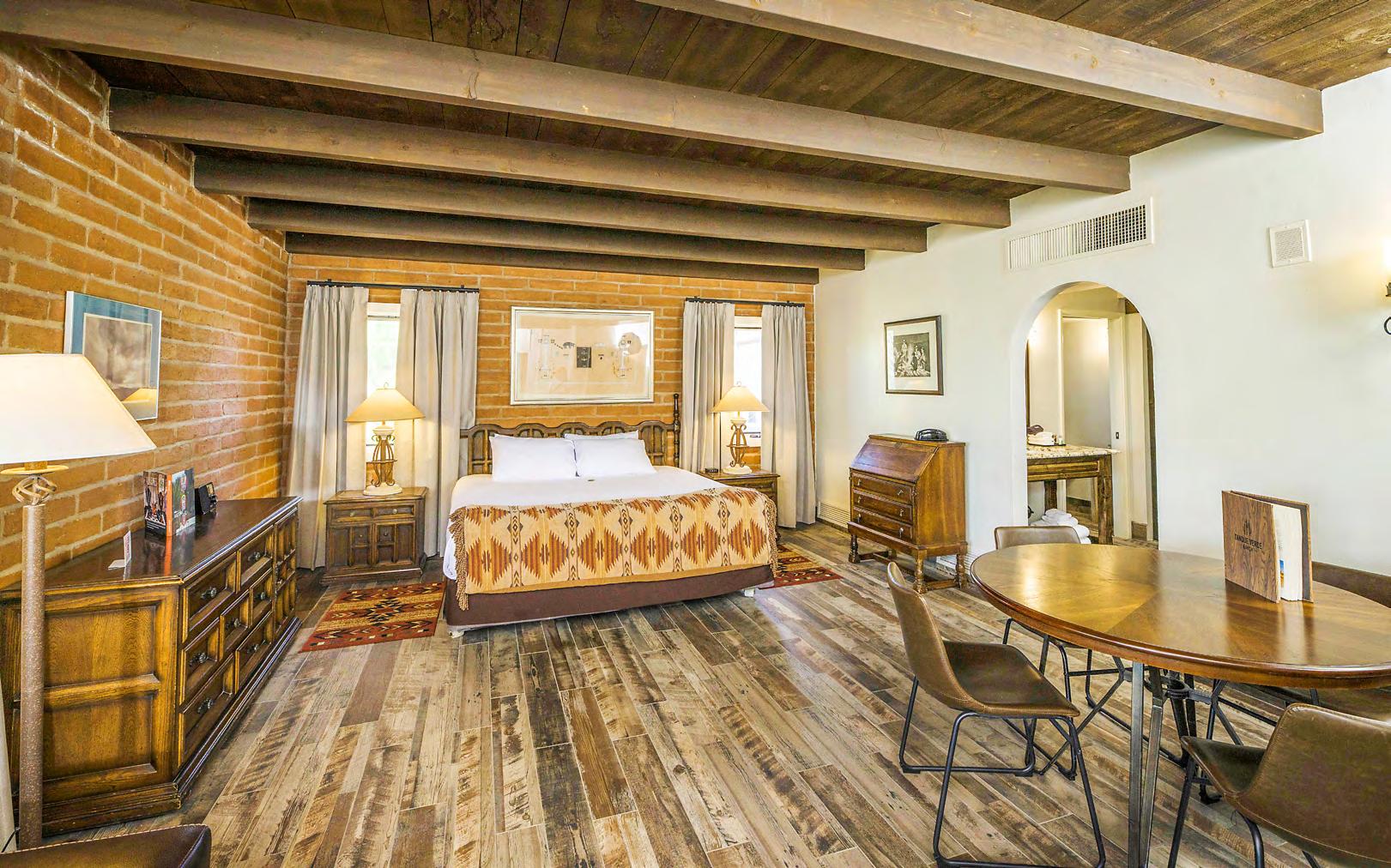
“They came to Tucson in 1945, and they initially bought a ranch called Desert Willow, about five miles from [Tanque Verde Ranch]. They had that for about 12 years. They would run the camps and Grandview Lodge over the summertime in Minnesota and then close everything up and come down here and run Desert Willow, then pack it all up in April and go back up to Grandview,” Hanley explained. “They did that for several years and then they sold Desert Willow and bought Tanque Verde in 1957, but they continued to do the back-and-forth until both properties were busy enough to stay open all year.”
Agnelo Fernandes, CEO of Cote Hospitality, chimed in regarding the Cotes’ decision to set up business in Tucson: “Arizona was something that always attracted Brownie. He was a very optimistic real estate developer-slash-buyer, and he always found that — and to this day, the family’s philosophy on real estate is — let’s find the right real estate and then let’s hold onto it forever, because it’s always going to increase in value. When he found [Tanque Verde Ranch], number one, he was amazed, as the story goes, by its beauty and, secondly…[they] just needed a getaway.”
“At that time, the ranch was very small, with a few rooms, maybe 10 or 12, [but] it was something that a lot of folks from California, a lot of folks from cold weather, gravitated to. That then turned [the ranch] into a business proposition for [Brownie], and Tucson, believe it or not, is a big draw for not only Californians, but also for Europeans. Europeans loved coming to Tucson and they loved coming to the ranch.”
Brownie and Judy had five children, and, by 1969, they decided that they needed a hand running things. They asked their son Bob, who was teaching English and going to school in Japan at the time, if he’d come back to Tucson and help out.
“He had never been here before,” said Hanley. “They owned the [ranch] 12 years and Bob had never been here. So, he said to them, ‘I’ll give you one year.’ Forty-nine years later, we sprinkled his ashes around the property. He came, fell in love with it, and ran it for many, many years. He retired and had other people manage [the ranch], but he was still around.”
Just like his father, Bob put his own stamp on Tanque Verde over the years. “What we found is that, when Bob — who they called Big Bob — took over the ranch as the general manager, he got into the true marketing of the ranch,” added Fernandes. “The true expansion of its activities and its offerings, the true branding of what the dude lifestyle could be. Bob took it to a whole new level, along with his wife, Rita.”
After Bob’s retirement, Rita took over the management for a few years, before they eventually turned over the reins by and large to Hanley.
Even the preceding families didn’t completely stay away from Tanque Verde Ranch over the decades, seemingly drawn back to the haunting, enchanting landscape. The ranch has many stories to share about those connected to the land and returning.
One year, the granddaughter of Emilio Carillo made the special choice to host her 80 th birthday dinner on the property. During the event, one of the staff members, Chef Justin Macy, came across her standing in front of the building where her family once lived in.
“She had tears running down her eyes,” said Hanley, “and Justin went over to her and said, ‘Ms. Carillo, is everything okay?’ And she said, ‘Yes, I am thinking back to my childhood, and I remember getting in trouble when I was
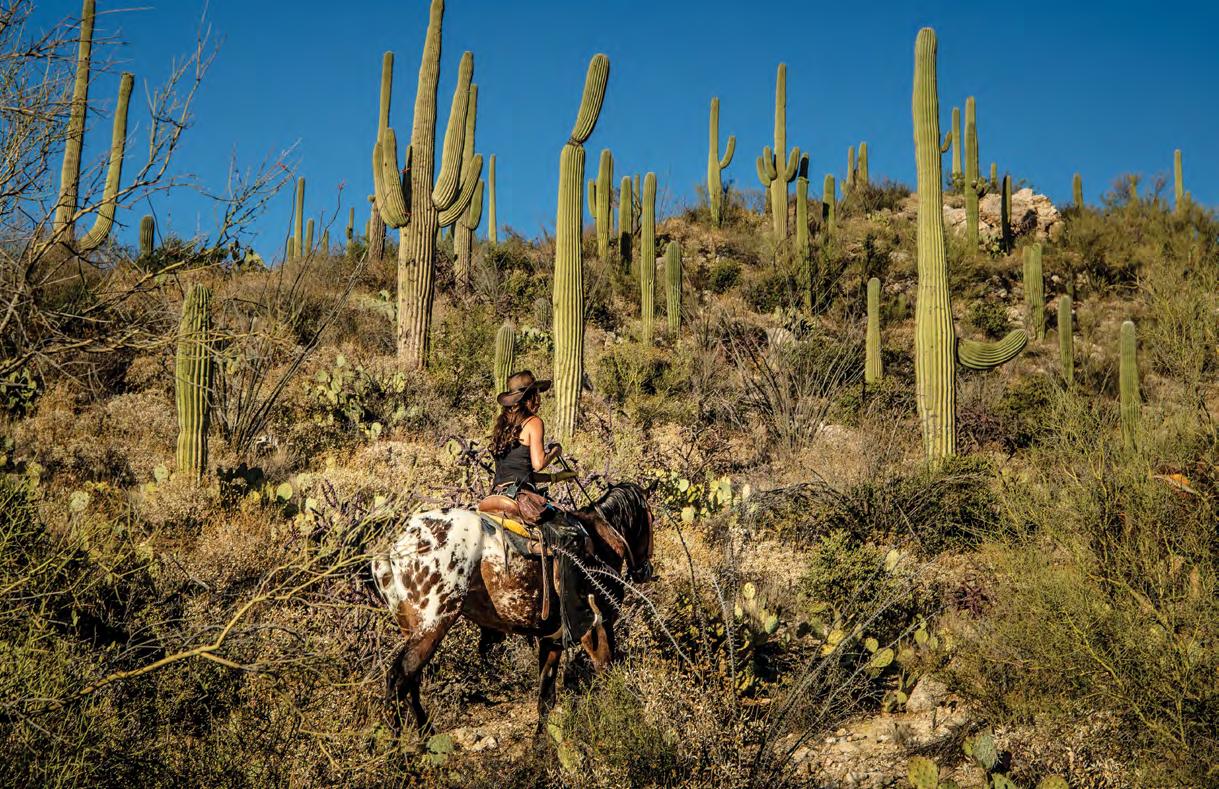
about seven years old, because we used to go up in the attic of this building and play when we weren’t allowed to.’ Justin said, ‘Well, why is that?’ She said it was because the U.S. Army stored guns and ammunition up there to fight off the Apache who were trying to attack the town of Tucson. So, it was the Wild, Wild West… It wasn’t that long ago.”
For those who want to experience Tanque Verde Ranch’s history for themselves, ample opportunities still exist during a stay. There’s the infamous Card Room that Hanley discussed in relation to the tragic incident that led to Emilio Carillo’s death, which now sports various preserved photographs and newspaper clippings reflecting the property’s history and its three owning families. You can still see the original rooms where Converse’s ranch hands lived. Converse’s Homestead is open to the public during breakfast rides, wherein guests can take their preferred transportation up — horse, mountain bike, golf cart — and enjoy their morning meal with a view.
(Fun fact: According to Olivas at Visit Tucson, dude ranches are where today’s all-inclusive packages supposedly got their start. Thus, if you’re staying at a dude ranch in Arizona or anywhere else, you should be able to expect three square meals a day.)
While small changes may be in the future for Tanque Verde Ranch (Fernandes mentions a future spa expansion), a simultaneous concentrated effort is being made to keep the ranch’s history intact. From the natural wild landscape — it’s not uncommon to see a rattlesnake, a heard of javelina, or desert rat from time to time — to the adobe mud structures, Tanque Verde is sticking true to its roots.
“For a place to be in business for 157 years and only have three owners is unheard of,” offered Hanley. “It just doesn’t happen anymore.”
“Dude ranches offer a vacation experience that people really need and crave these days,” reflected Miller [of the Arizona Dude Ranch Association]. “They offer the outdoors, a great combination of peacefulness and adventure, and the company of other people. A dude ranch experience is a social experience, whether with the people you traveled with or people you meet at the ranch. If you don’t know about dude ranches, this aspect is often a real surprise, but I think it’s a big part of why people tend to return to dude ranches, often annually.”
This annual homecoming to travelers’ favorite ranches is something that the Cotes and staff at Tanque Verde Ranch have witnessed for themselves.
“They come because it’s a bucket list thing. They see the Western movies and the cowboys. We have a lot of people that say, ‘I’ve always wanted to do a dude ranch. I’ve always wanted to go and ride horses,’” said Hanley. “We have so many repeat guests that come back year after year after year, some twice a year.”
What’s happening at Tanque Verde Ranch is part of something larger. As the pace of daily life quickens and digital connection replaces real conversation, many travelers are looking for places that slow time down. Dude ranches, once thought of as nostalgic holdovers from another era, are finding new life in this moment of rediscovery. They offer something that feels almost subversive in its simplicity — days built around movement, nature, and shared experience. Guests come not for luxury or spectacle, but for the rhythm of the outdoors, for the honest fatigue that comes from riding a trail or hiking a ridge, and for the quiet at night when the desert cools and stars begin to fill the sky.
The appeal isn’t about pretending to be a cowboy. It’s about remembering what it feels like to inhabit the world fully, to listen instead of scroll, to move with the land instead of rushing past it. Whether that happens on a horse, at a campfire, or over a meal where no one checks their phone, it’s an experience people increasingly crave.
So, the renewed popularity of dude ranches like Tanque Verde isn’t really about a trend at all. It’s about returning to a kind of travel that asks for participation instead of consumption, that trades novelty for connection, and that feels, in a fragmented world, remarkably whole. In that sense, the West isn’t a destination so much as a reminder that there are still places where time, space, and silence haven’t yet been crowded out, and where people are quietly finding their way back to them.
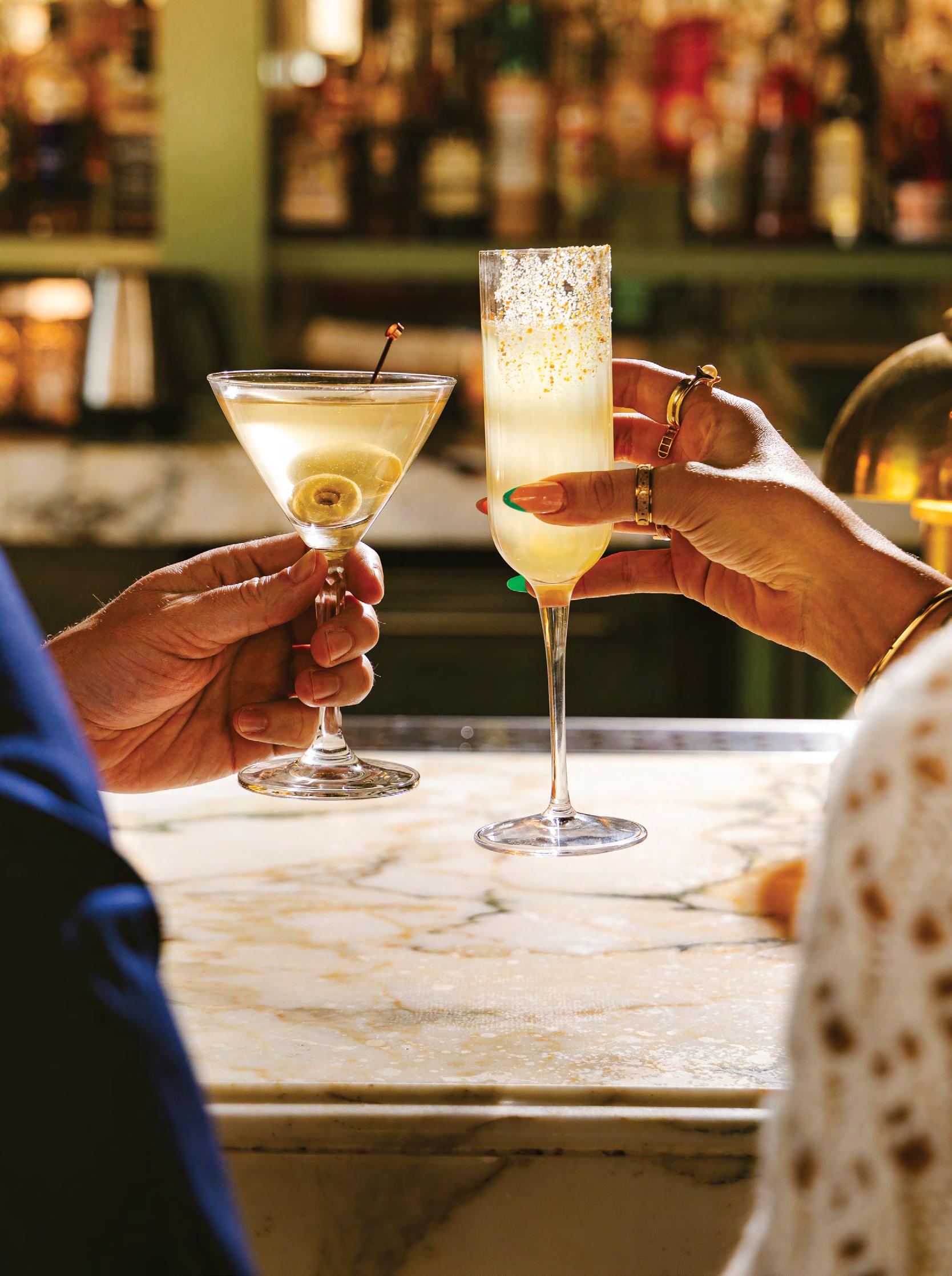

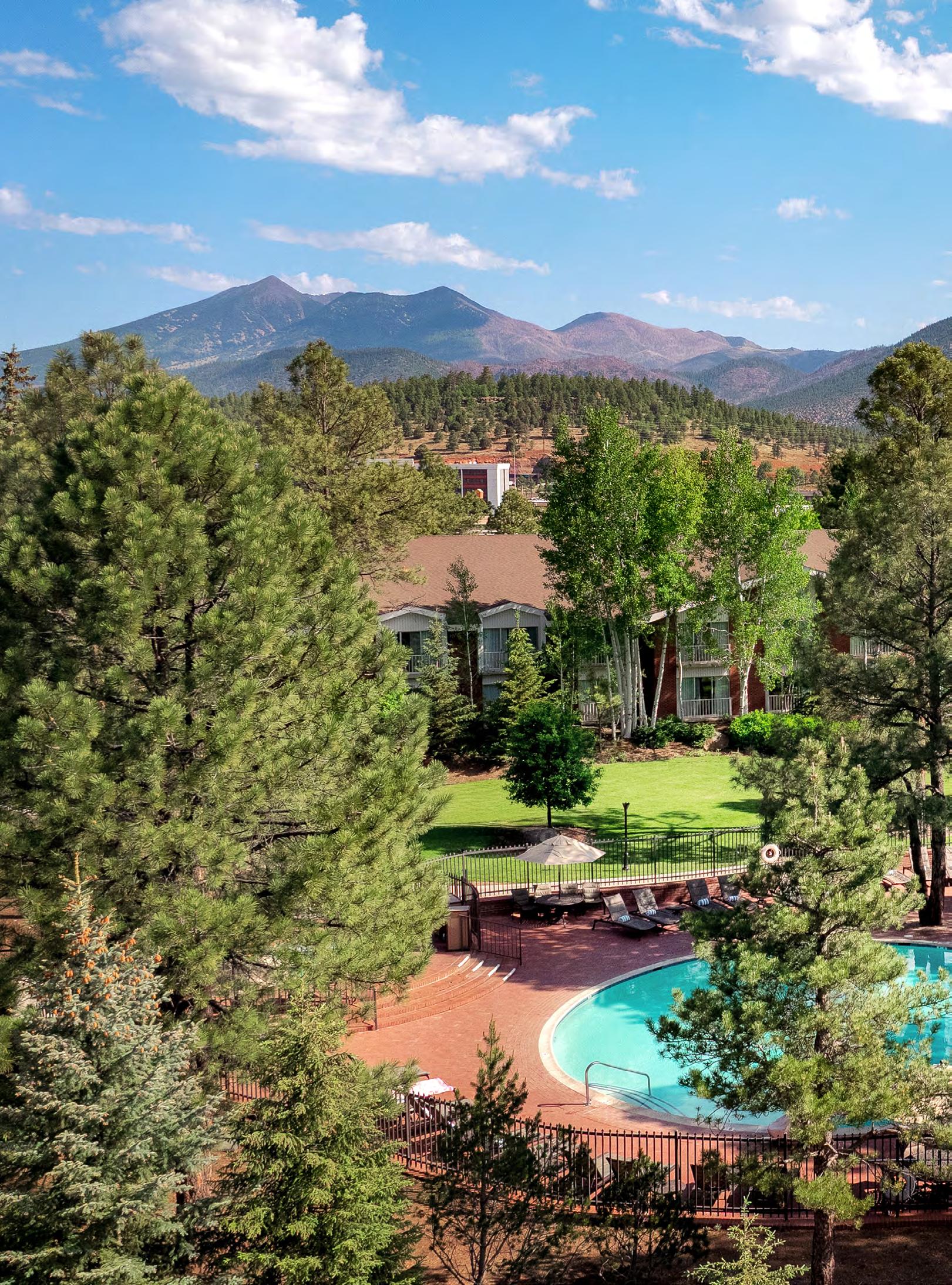
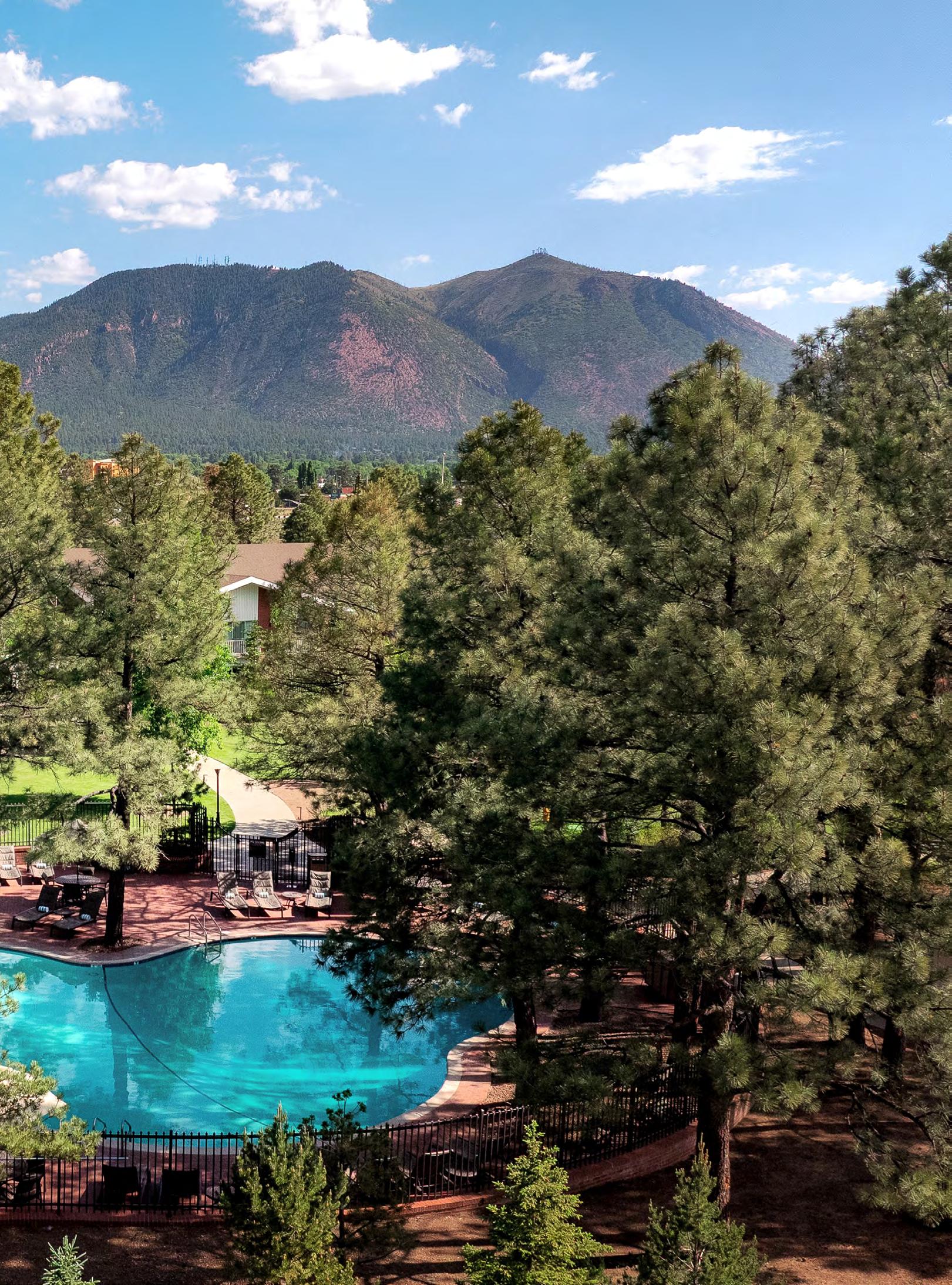
Within the towering ponderosa pine forest of Flagstaff, Arizona, lies a lodge that feels like a secret castle in the woods. Warm lights across the expansive lawn twinkle, while the cool mountain air and hum of Route 66 steadies the racing thoughts of restless travelers. The lobby is decorated with icy tones and dazzling geodes, inviting guests into a wonderland of the West. Any of Little America’s rooms tells the story of how one family built a luxury hotel and a tradition of hospitality in the middle of the forest.
The Little America legacy started in 1934, when three brothers, Stephen Mack, Almon Andrew and Hyrum T. Covey, opened a modest two-pump gas station, 12-cabin motel, and 24-seat café in Granger, Wyoming. The brothers already owned apartment complexes around Salt Lake City in Utah, but excitedly ventured into tourism when they saw the chance. But this direction took root decades earlier. One night, in the 1890s, Stephen, who was only a teenager, was forced to spend a night bracing a blizzard in the wilderness of Granger and vowed to create shelter there so that no one would ever have to go through the same danger and discomfort. In 1934, he made good on that goal. The motel was aptly named “Little America” after the similarly barren research bases in the Antarctic.
Throughout the ‘30s and ‘40s, the motel attracted guests with its slot machines, 35-cent hamburgers, and a quirky penguin mascot (a wink to the Arctic expeditions it was named after). After the original building burned down in 1949, the Coveys rebuilt it in 1952 — but they needed help in managing it. They called on a longtime family friend, Robert Earl Holding.
Like the Coveys, Earl Holding had a Mormon background. When his family suffered from the stock market crash of 1929, his parents worked as custodians for the Covey family at one of their Salt Lake City Apartment complexes. There, a nine-year-old Earl Holding did yard work, where he earned 15 cents an hour. After returning from a stint in the Army Air Corps in 1944, he decided to attend the University of Utah, where, in 1946, fate had plans for him and he met Carol Orme. In 1949, he finished his degree, and the couple married.
The Holdings spent their marriage as diligent life and business partners, with their first venture as a married couple being a 25-acre peach, pear, and apple orchard in Dimple Dell, Utah. In 1952, the Coveys offered the Holdings a 10% stake in the newly rebuilt Little America property, as long as they agreed to manage the venue. The couple moved to Wyoming without hesitation and started flipping burgers in Little America’s cafe. By the end of the year, the Holdings bought out the property from the Coveys, who were focused on their investments in Salt Lake City, as they were more profitable than the motel at the time. The Holdings took over the Wyoming motel and quickly built other Little Americas from the ground up. They brought their entrepreneurial spirit and quality service to Cheyenne in 1965 with a second Little America location. These locations benefited from the droves
of families taking to the road throughout the ‘60s. In 1972, the Holdings brought their expertise a little bit closer to Route 66, and the Arizona pine forest.
By the ‘70s, Flagstaff had become a prime tourist destination, with its proximity to Route 66, the red rocks of Sedona, the majesty of the Grand Canyon, and other natural wonders of the state. When Holding purchased vacant land in the city at 2515 Butler Ave, he saw an opportunity to provide motorists with a place to relax in style. By September 1972, after the arduous construction of digging through dirt and rock, 247 guest rooms were completed. One pool and main lodge later, and in 1973, Little America Flagstaff opened its doors.
An early stay at the Flagstaff hotel would have naturally had the hallmarks of the 1970s: intricate damask wallpaper, powder blue carpeting, and a rotary phone resting on a glass table. A stained-glass tree dangled over the bar in what was then called the Tiffany Tree Lounge. What separated it from other hotels in town, though, was not its interior design. It was the owners’ dedication to service.
The Holdings were known to work directly in the kitchen, dining room, and guest rooms to make sure operations ran smoothly. They didn’t just passively observe employees; when the Flagstaff location first opened, then-multimillionaire Earl Holding waited on tables in the hotel’s restaurant, and Carol was often found making beds or bussing dishes. Well into their prosperous careers (Earl was even featured on the Forbes 400 in 1994), the couple exemplified the idea that money and titles don’t exempt you from the grind.
Following the Nixon-era opening of the Flagstaff hotel, the Holdings went on to buy San Diego’s Westgate Hotel (1974), created another Little America in Salt Lake City from existing hotels (1977), purchased the Sun Valley Lodge (1977) and the Snowbasin Ski Resort (1984), and opened the Grand America Hotel (2002). Through their hands-on approach, the Holdings transformed the Little America properties into a series of eight luxury hotels and resorts accommodating the old frontier. His work ethic would help Earl eventually become a billionaire: in addition to these properties, he owned the Sinclair Oil Co. and a 450,000-acre ranching operation in Wyoming and Montana.
Although the Holdings almost always had a new business venture, they never let the Flagstaff location feel like the forgotten middle child. In 2016, the hotel underwent a twoand-a-half-year renovation that upgraded all 247 rooms with LED-lit mirrors, down bedding, and granite countertops that look as though the ponderosa pines are camouflaged within them. They also replaced the dark, wooden Western Gold fine-dining restaurant with the light and airy Silver Pine Restaurant and Bar, which is much more appealing to the families staying there.
Today’s Little America in Flagstaff is evidence of this hospitality, and a testament to the American dream. A dream where a boy from a poor family can become a billionaire and use his fortune to give others the feeling of finding a home along the road — even if it’s just for a night.
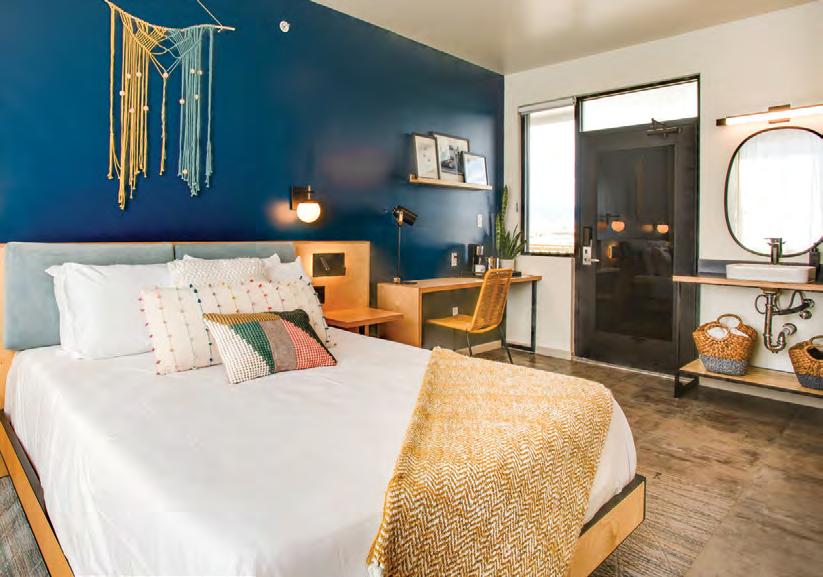
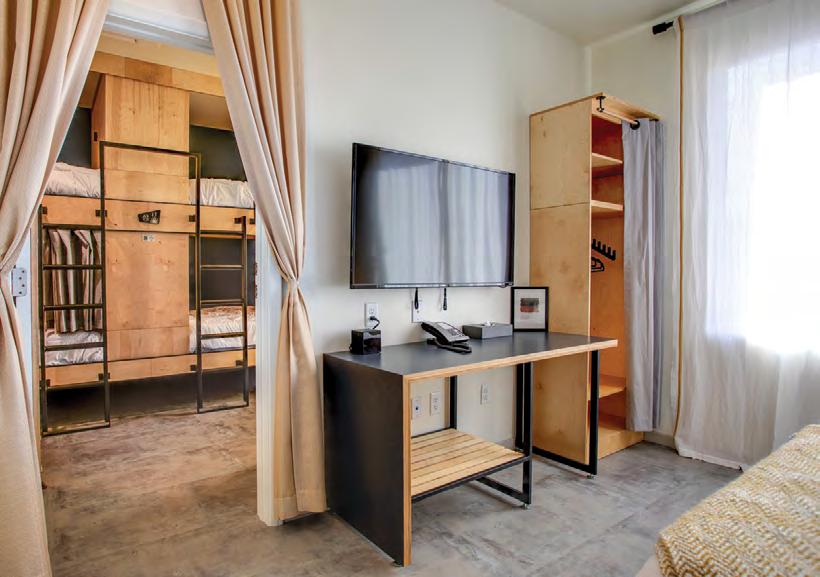
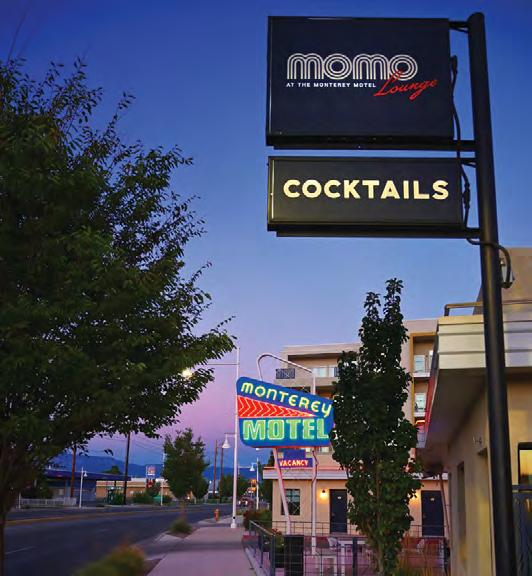
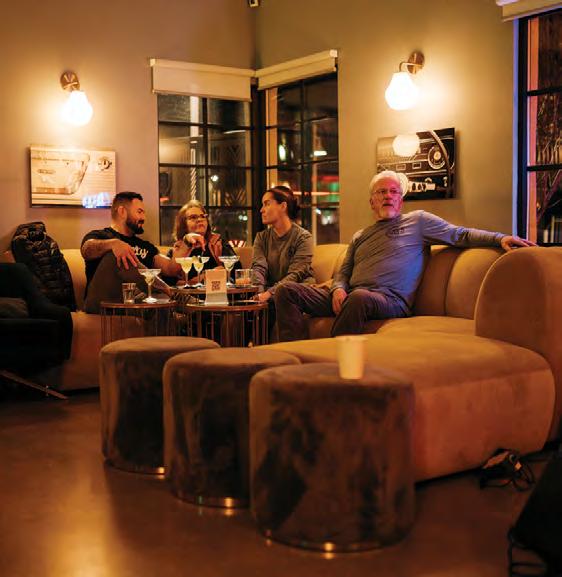
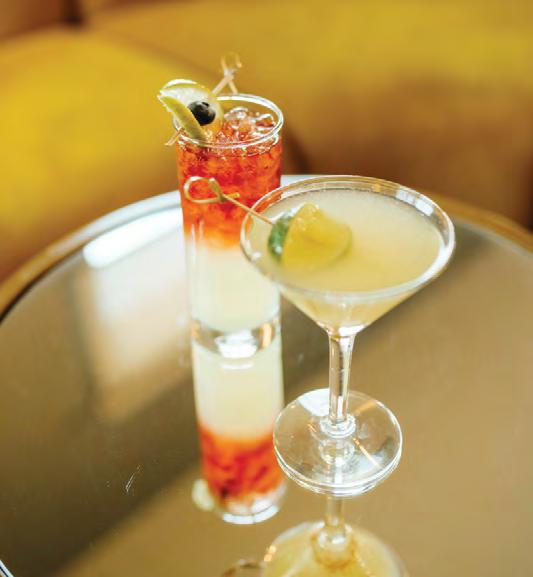
Experience the free-spirited adventure of the Albuquerque high desert at the Monterey Motel. Located on the historic Mother Road, we combine vintage desert vibes with a modern touch for an unforgettable journey.