Fri 13 February 2026 • 20.15
Simone Lamsma plays Brahms
Fri 13 February 2026 • 20.15
conductor Tarmo Peltokoski
violin Simone Lamsma
Johannes Brahms (1833–1897)
Violin Concerto in D major, Op. 77 (1878)
• Allegro non troppo
• Adagio
• Allegro giocoso, ma non troppo vivace - Poco più presto intermission
Ralph Vaughan Williams (1872–1958)
Symphony No. 3 ‘A Pastoral Symphony’ (1921–22)
Clarinet solo: Julien Hervé
• Molto moderato
• Lento moderato
• Moderato pesante - Presto
• Lento - Moderato maestoso
concert ends at around 22.00
Most recent performances by our orchestra:
Brahms Violin Concerto: Jun 2023, violin Bomsori Kim, conductor Lahav Shani (on tour)
Vaughan Williams Symphony No. 3: first performance by our orchestra
One hour before the start of the concert, Emmeline Mooij will give an introduction (in Dutch) to the programme, admission € 7,50. Tickets are available at the hall, payment by debit card. The introduction is free for Vrienden.
Cover: Photo Luka Tennie (Unsplash)
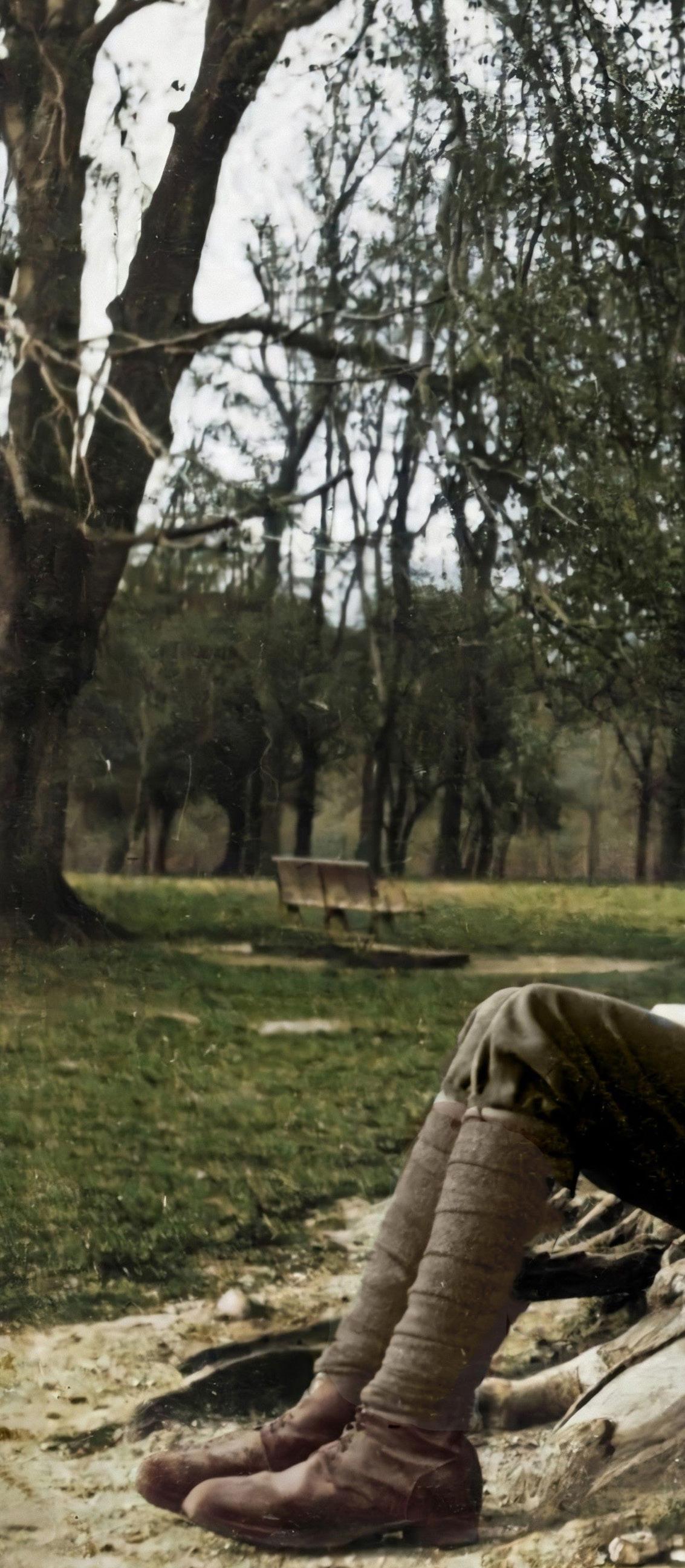
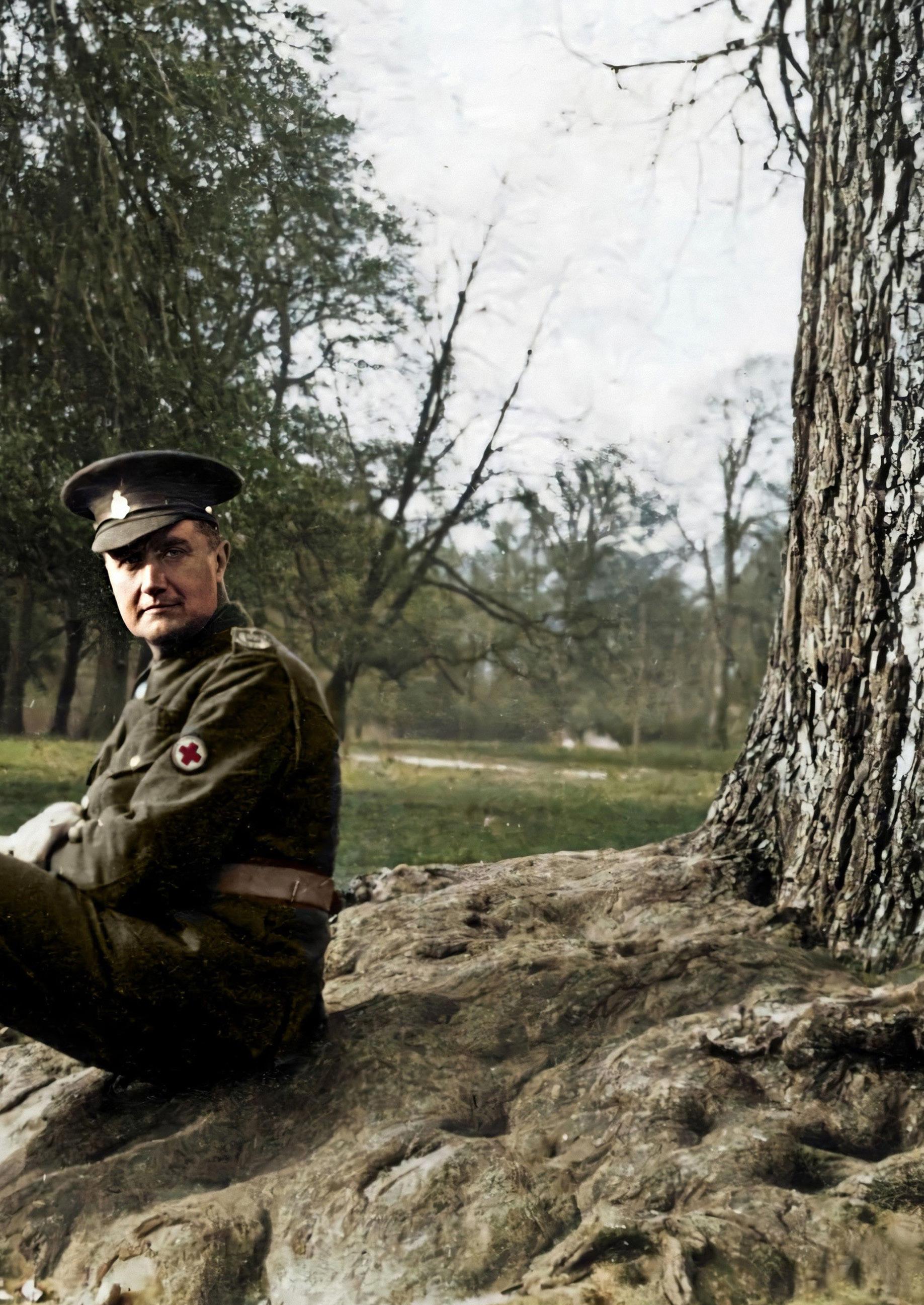
Ralph Vaughan Williams wearing the Field Ambulance Unit uniform during his training in Saffron Walden, 1915. Coloured photo, coll. Vaughan Williams Charitable Trust
After the first performance of his Violin Concerto, Brahms realised that he had mainly confused the audience. Vaughan Williams had a similar experience at the premiere of his Third Symphony. But then again, he had deliberately misled his listeners.
The seeds for Johannes Brahms’ Violin Concerto were sown in the spring of 1853. The composer was travelling with violinist Eduard Reményi on a joint concert tour through north-eastern Germany. In Hanover, Reményi arranged a meeting with an old college friend, the already world-famous violinist Joseph Joachim. Joachim was impressed by the talent of the then 20-year-old Brahms, and the foundation for a lifelong friendship was laid. Of course, he also asked Brahms for new work, but his patience was severely tested. Not until 1878 did Brahms dare to write a concerto for the violin. The fact that it took so long had everything to do with Brahms’ doubts about his own abilities. His First Piano Concerto from 1857 had received a lukewarm reception and the composer was reluctant
to write another large orchestral work. It was only when he finally completed his First Symphony in 1876 that he found the courage to write a violin concerto for Joachim.
In August 1878, the first sketches were ready. Brahms sent them to Joachim with a request for suggestions and comments. The violinist responded with compliments on Brahms’ original writing for the violin and indeed made a few suggestions, most of which were followed up by the composer. Joachim’s enthusiasm encouraged Brahms, and the premiere was scheduled for New Year’s Day 1879 with the Gewandhaus Orchestra in Leipzig.
The initial reactions to the Violin Concerto were rather tepid – probably mainly because
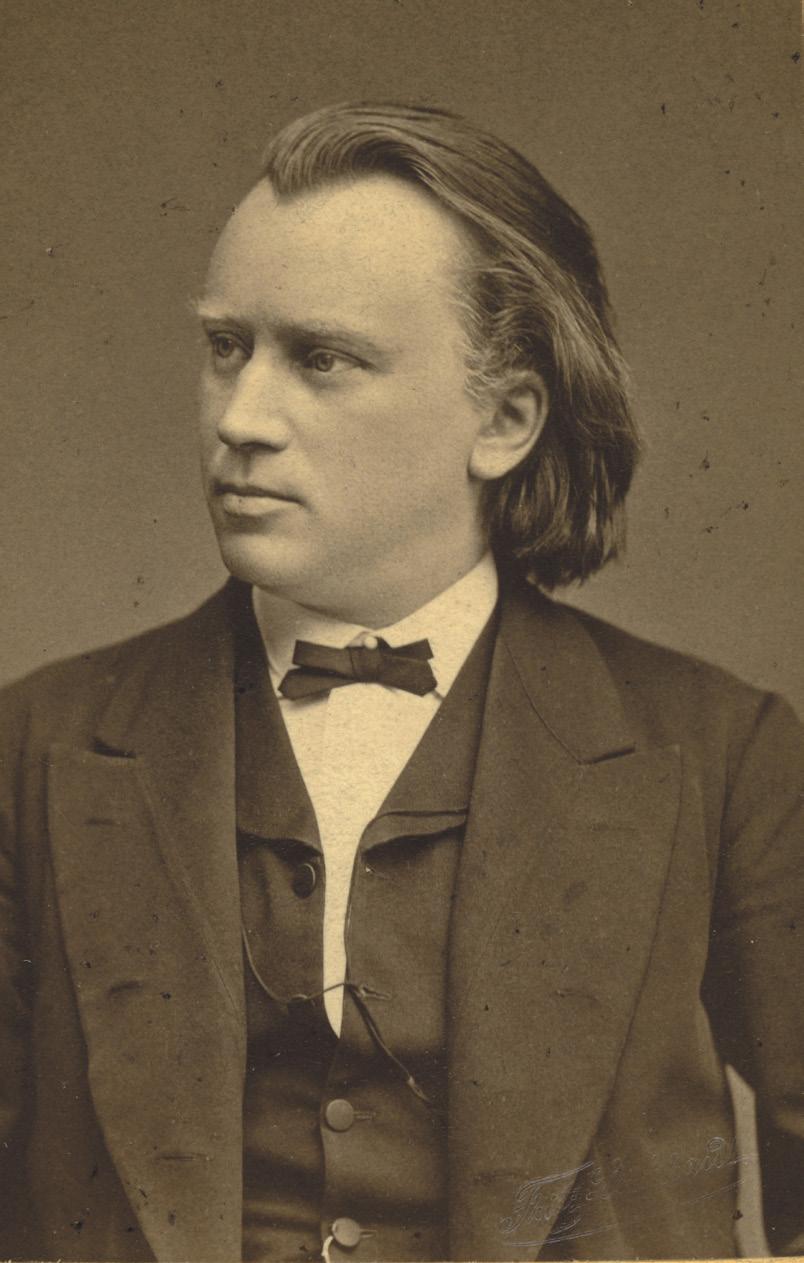
the listeners had expected more display of virtuosity. They only got that in the finale, which, with its Hungarian gypsy influences, provides musical fireworks. But in the first two movements, the Violin Concerto seemed like a disguised symphony, with the solo violin as the foregrounded partner of the other instruments. When the violinist Pablo de Sarasate was later asked if he would also include Brahms’ new concerto in his repertoire, he shook his head. ‘I will not deny that it is quite good music,’ he is reported to have said, ‘but does anyone think that I am so devoid of taste that I will take my stand on the rostrum, violin in hand, in order to listen to the oboe playing the only melody in the adagio?’ Sarasate was referring to the beginning of the second movement, where the
oboe begins with a truly magnificent melody that is Brahmsian in every respect. Fortunately, Joachim thought differently. Thanks mainly to his tireless efforts, Brahms’ Violin Concerto became so popular that at the beginning of the twentieth century it even surpassed that of Beethoven – Brahms’ great example.
Where Brahms wrote a ‘symphony’ disguised as a violin concerto, shortly after the First World War the Englishman Ralph Vaughan Williams composed a deeply felt lament which he called A Pastoral Symphony. With that title, he raised expectations of an idyllic impression of the countryside, and he had indeed found the initial inspiration for this work among lovely rolling hills. But the circumstances were anything but fairy-tale-like. ‘It is really war time music,’ Vaughan Williams himself said about it in the end. ‘A great deal of it incubated when I used to go up night after night in the ambulance wagon at Écoivres and we went up a steep hill and there was a wonderful Corotlike landscape in the sunset – it’s not really Lambkins frisking at all as most people take for granted.’
An army trumpeter used to practice, and this sound became part of that evening landscape
There is indeed nothing frisky about the notes. The symphony with the misleading title (it was only years after its premiere that Vaughan Williams would call it his Third Symphony) reflects the composer’s experiences as a volunteer with a Field Ambulance Unit during the war years. He was stationed in northern France, some five miles behind the front line,
where he transported wounded soldiers from the trenches to the military hospital. Composing was out of the question under those circumstances, but Vaughan Williams absorbed all his impressions.
When he completed his symphony in 1922, he must have thought of the idyllic landscapes that formed the backdrop to the most terrible images and human tragedies. His symphony is just like that. The first movement seems to begin as a melancholic morning picture of nature. Only the underlying unease tells the discerning listener that there is more going on. This disturbing ambiguity remains present throughout the symphony, which consists of four predominantly slow movements. A good example is the trumpet cadenza in the middle of the second movement, in which a fragment of the Last Post creeps in like a kind of phantom. It is taken from a direct memory of Vaughan
Williams: ‘An army trumpeter used to practice, and this sound became part of that evening landscape and is the genesis of that long trumpet cadenza.’
Also in the third movement, a kind of scherzo, and especially in the finale, Vaughan Williams subtly undermines the conventional idea that a pastoral should be idyllic. That last movement perhaps contains the essence of the symphony. Slow, progressive music with two great clarinet solos that seem to come from another world. This ambiguous lament with which the finale begins seems unable to find solid ground anywhere. When the clarinet solo returns at the end after a violent climax, it sounds lonelier and more distant than ever. As if Vaughan Williams wanted to give a voice to all the senselessly lost lives. But so soon after the war, his audience was not yet ready for that.
Paul Janssen
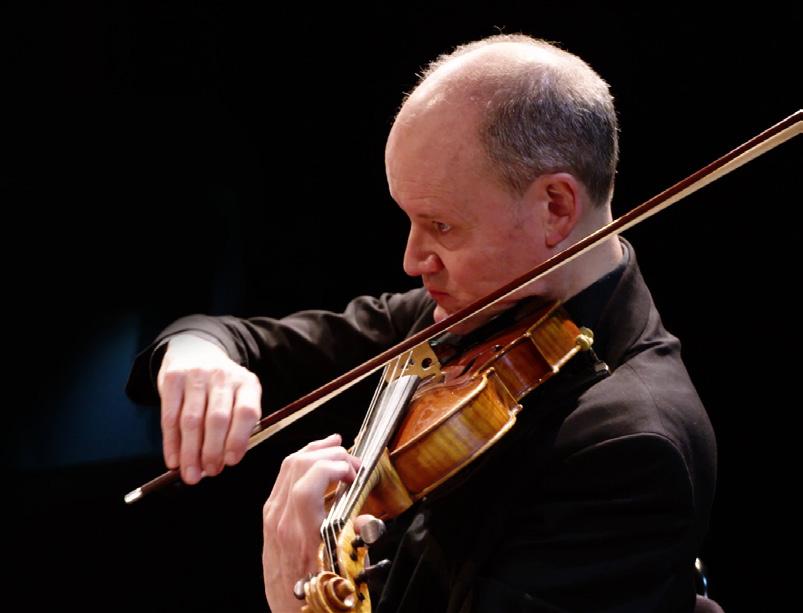
Farewell
Francis Saunders
This is the last concert week of our violist Francis Saunders. After 28 with the Rotterdam Philharmonic Orchestra, he is now retiring.
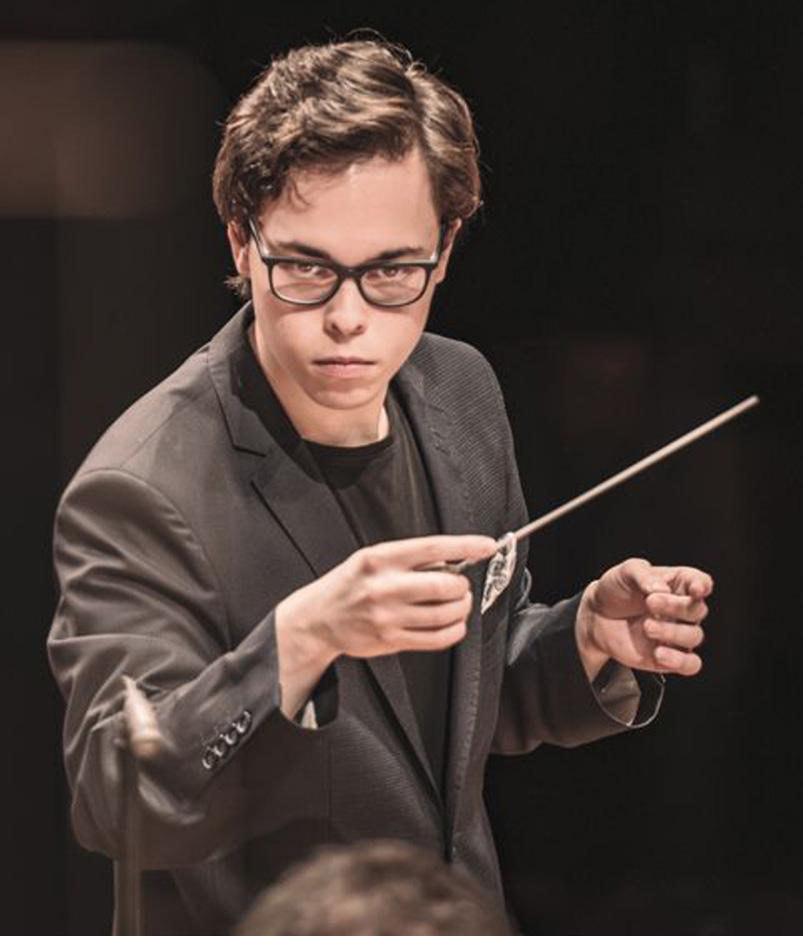
Born: Vaasa, Finland
Current position: Music Director Orchestre
National du Capitole de Toulouse, Music
Director Designate Hong Kong Philharmonic
Orchestra, Principal Guest Conductor Deutsche Kammerphilharmonie Bremen, Conductor
Laureate Latvia National Symphony Orchestra
Education: piano at Kuula College (Vaasa) and the Sibelius Academy (Helsinki), conducting with Jorma Panula, Sakari Oramo, Hannu Lintu and Jukka-Pekka Saraste
Breakthrough: 2022: positions in Bremen, Riga, Rotterdam, and Toulouse
Subsequently: debuts with Hong Kong Philharmonic, Toronto Symphony Orchestra, RSO Berlin, Konzerthaus Orchester Berlin, Deutsches Symphonie-Orchester Berlin, SWR Symphonieorchester, Göteborgs Symfoniker, Swedish Radio Symphony Orchestra, Orchestra dell’Accademia Nazionale di Santa Cecilia, Los Angeles Philharmonic
Debut Rotterdam Philharmonic: 2022
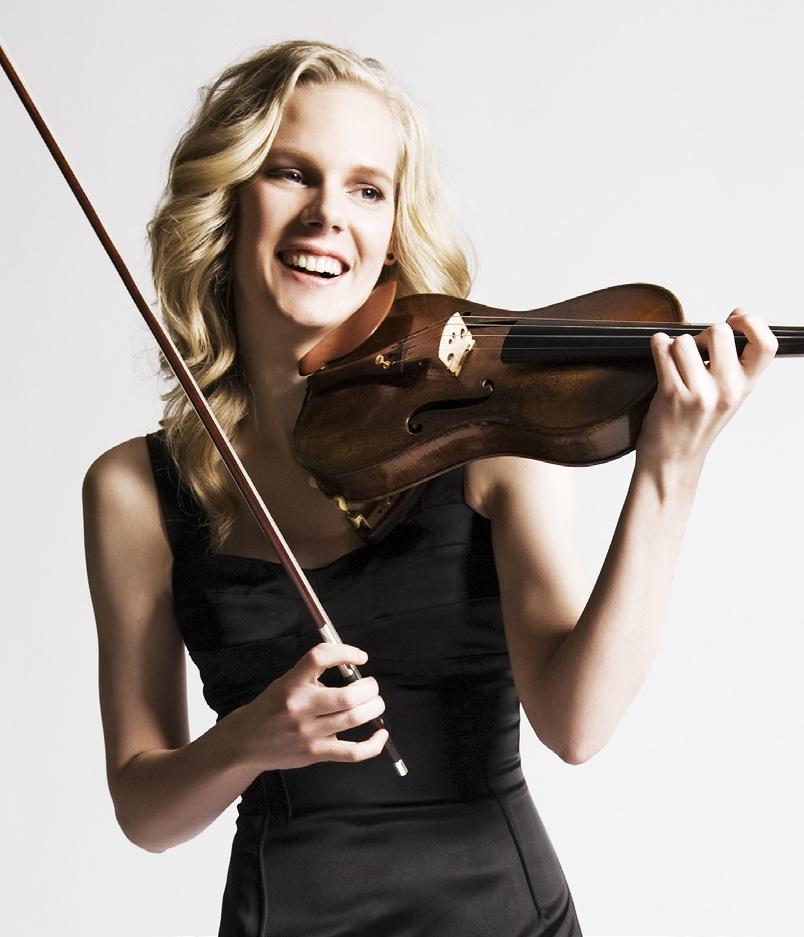
Born: Leeuwarden, the Netherlands
Education: Yehudi Menuhin School with Hu Kun; Royal Academy of Music in London with Maurice Hasson
Awards: International Violin Competition of Indianapolis (2006), Benjamin Britten International Violin Competition (2004); Oskar Back Violin Competition (2003)
Solo debut: as fourteen-year-old with the Northern Netherlands Orchestra in Paganini’s Violin Concerto
Soloist with: London Symphony Orchestra, Academy of St Martin in the Fields, Vienna Symphony, Chicago Symphony Orchestra, Cleveland Orchestra, Hong Kong Philharmonic Orchestra, Royal Concertgebouw Orchestra, New York Philharmonic, Los Angeles Philharmonic Premieres: Violin Concertos by De Roo, Van der Aa and Wantenaar, Lost Landscapes by Rautavaara Instrument: ‘Aurora ex-Foulis’-Stradivarius from 1703
Debut Rotterdam Philharmonic: 2009
Sun 1 March 2026 • 14.15
conductor and piano Lahav Shani
Dukas The Sorcerer’s Apprentice
Shostakovich Suite for Variety Orchestra
Shostakovich Piano Concerto No. 2
Strauss Till Eulenspiegel
Thu 12 March 2026 • 20.15
Fri 13 March 2026 • 20.15
Sun 15 March 2026 • 14.15
conductor Santtu-Matias Rouvali cello Senja Rummukainen
Rimski-Korsakov Capriccio espagnol
Elgar Cello Concerto
Shostakovich Symphony No. 6
Desplat Conducts his Film Music
Fri 20 March 2026 • 20.15
Sat 21 March 2026 • 20.15
conductor Alexandre Desplat
Desplat Music from Godzilla, The King’s Speech, The Shape of Water and other films
Thu 2 April 2026 • 19.30
Fri 3 April 2026 • 19.30
Sat 4 April 2026 • 19.30
conductor Leonardo García Alarcón
soprano Sophie Junker
alto Wiebke Lehmkuhl tenor (Evangelist) Moritz Kallenberg tenor (Arias) Mark Milhofer
bas (Vox Christi and Arias) Andreas Wolf
chorus Laurens Collegium, Nationaal Jongenskoor
Bach St. Matthew Passion
Proms: The Four Seasons Recomposed
Fri 10 April 2026 • 20.30
violin/leader William Hagen
Richter The Four Seasons
Chief Conductor
Lahav Shani
Honorary Conductor
Yannick Nézet-Séguin
Principal Guest Conductor
Tarmo Peltokoski
First Violin
Marieke Blankestijn, Concert Master
Vlad Stanculeasa, Concert Master
Quirine Scheffers
Hed Yaron Meyerson
Saskia Otto
Arno Bons
Rachel Browne
Maria Dingjan
Marie-José Schrijner
Noëmi Bodden
Petra Visser
Sophia Torrenga
Hadewijch Hofland
Annerien Stuker
Alexandra van Beveren
Marie Duquesnoy
Second Violin
Charlotte Potgieter
Frank de Groot
Laurens van Vliet
Elina Staphorsius
Jun Yi Dou
Bob Bruyn
Eefje Habraken
Maija Reinikainen
Babette van den Berg
Melanie Broers
Tobias Staub
Sarah Decamps
Robin Veldman
Viola
Anne Huser
Roman Spitzer
Galahad Samson
José Moura Nunes
Kerstin Bonk
Janine Baller
Francis Saunders
Veronika Lénártová
Rosalinde Kluck
León van den Berg
Olfje van der Klein
Jan Navarro
Cello
Emanuele Silvestri
Gustaw Bafeltowski
Joanna Pachucka
Daniel Petrovitsch
Mario Rio
Eelco Beinema
Carla Schrijner
Pepijn Meeuws
Yi-Ting Fang
Killian White
Paul Stavridis
Double Bass
Matthew Midgley
Ying Lai Green
Jonathan Focquaert
Arjen Leendertz
Ricardo Neto
Javier Clemen Martínez
Marta Fossas Mallorqui
Mario Fernández
Flute
Juliette Hurel
Joséphine Olech
Manon Gayet
Flute/Piccolo
Beatriz Baião
Oboe
Karel Schoofs
Anja van der Maten
Oboe/Cor Anglais
Ron Tijhuis
Clarinet
Julien Hervé
Bruno Bonansea
Alberto Sánchez García
Clarinet/
Bass Clarinet
Romke-Jan Wijmenga
Bassoon
Pieter Nuytten
Lola Descours
Marianne Prommel
Horn
David Fernández Alonso
Felipe Freitas
Wendy Leliveld
Richard Speetjens
Laurens Otto
Pierre Buizer
Trumpet
Alex Elia
Adrián Martínez
Simon Wierenga
Giovanni Giardinella
Trombone
Pierre Volders
Alexander Verbeek
Remko de Jager
Bass trombone
Rommert Groenhof
Tuba
Martijn van Rijswijk
Timpani/ Percussion
Danny van de Wal
Ronald Ent
Martijn Boom
Jesús Iberti Rubira
Harp
Albane Baron