A Compendium of Neuropsychological Tests - Fundamentals of Neuropsychological Assessment and Test Reviews for Clinical Practice, 4e (Sep 21, 2021)_(0199856184)_(Oxford University Press) 4th Edition Sherman
Visit to download the full and correct content document: https://ebookmass.com/product/a-compendium-of-neuropsychological-tests-fundame ntals-of-neuropsychological-assessment-and-test-reviews-for-clinical-practice-4e-sep21-2021_0199856184_oxford-university-press-4th-edition-sh/
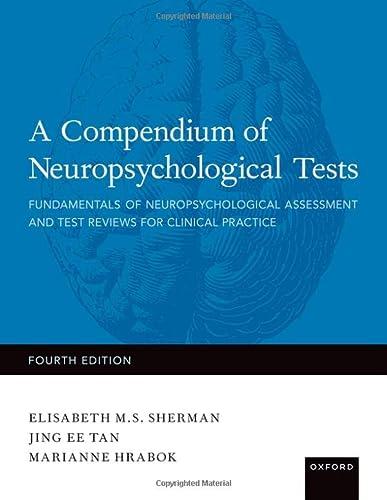
FOURTH EDITION

ELISABETH M.S. SHERMAN
JING EE TAN
MARIANNE HRABOK
A Compendium of Neuropsychological Tests FUNDAMENTALS OF NEUROPSYCHOLOGICAL ASSESSMENT AND TEST REVIEWS FOR CLINICAL PRACTICE
OXFORD
A COMPENDIUM OF NEUROPSYCHOLOGICAL TESTS
i
A COMPENDIUM OF NEUROPSYCHOLOGICAL TESTS
Fundamentals of Neuropsychological Assessment and Test Reviews for Clinical Practice
FOURTH EDITION
Elisabeth M. S. Sherman, Jing Ee Tan, and Marianne Hrabok
iii
Oxford University Press is a department of the University of Oxford. It furthers the University’s objective of excellence in research, scholarship, and education by publishing worldwide. Oxford is a registered trade mark of Oxford University Press in the UK and certain other countries.
Published in the United States of America by Oxford University Press 198 Madison Avenue, New York, NY 10016, United States of America.
© Oxford University Press 2022
All rights reserved. No part of this publication may be reproduced, stored in a retrieval system, or transmitted, in any form or by any means, without the prior permission in writing of Oxford University Press, or as expressly permitted by law, by license, or under terms agreed with the appropriate reproduction rights organization. Inquiries concerning reproduction outside the scope of the above should be sent to the Rights Department, Oxford University Press, at the address above.
You must not circulate this work in any other form and you must impose this same condition on any acquirer.
CIP data is on file at the Library of Congress
ISBN 978–0–19–985618–3
This material is not intended to be, and should not be considered, a substitute for medical or other professional advice. Treatment for the conditions described in this material is highly dependent on the individual circumstances. And, while this material is designed to offer accurate information with respect to the subject matter covered and to be current as of the time it was written, research and knowledge about medical and health issues is constantly evolving and dose schedules for medications are being revised continually, with new side effects recognized and accounted for regularly. Readers must therefore always check the product information and clinical procedures with the most up-to-date published product information and data sheets provided by the manufacturers and the most recent codes of conduct and safety regulation. The publisher and the authors make no representations or warranties to readers, express or implied, as to the accuracy or completeness of this material. Without limiting the foregoing, the publisher and the authors make no representations or warranties as to the accuracy or efficacy of the drug dosages mentioned in the material. The authors and the publisher do not accept, and expressly disclaim, any responsibility for any liability, loss, or risk that may be claimed or incurred as a consequence of the use and/or application of any of the contents of this material.
Printed by Integrated Books International, United States of America
iv
This book is dedicated to the memory of Dr. Esther Strauss, mentor, role model, and friend. Esther was one of the first female neuropsychologists whom we saw gracefully mix science, scholarship, and family. She was humble and hard-working; she taught us that the most daunting tasks of scholarship don’t require innate stores of superlative brilliance or rarified knowledge; they simply require putting one’s head down and getting to work. Over the years, we saw her navigate life with warmth, humor, and intelligence, and witnessed her dedication to and love of neuropsychology. She died too soon, in 2009, three years after the last edition of this book was published; her imprint is still there in the words of this book. She is deeply missed.
We also want to acknowledge and remember Dr. Otfried Spreen. Otfried was a pioneer in neuropsychology who helped shape neuropsychology as we know it today through successive generations of students, academics, and clinicians who relied on his writings and scholarly work as roadmaps on how to understand and best practice neuropsychology. The very first edition of this book was a compilation of tests used at the University of Victoria Neuropsychology Laboratory at a time where few commercial tests existed and neuropsychologists relied on researchers for normative data. We hope that the current edition lives up to Otfried’s initial vision of a useful compilation of tests for practicing clinicians.
v
vii CONTENTS Preface ix 1. PSYCHOMETRICS IN NEUROPSYCHOLOGICAL ASSESSMENT 1 2. VALIDITY AND RELIABILITY IN NEUROPSYCHOLOGICAL ASSESSMENT: NEW PERSPECTIVES 24 3. PERFORMANCE VALIDITY, SYMPTOM VALIDITY, AND MALINGERING CRITERIA 37 4. PREMORBID ESTIMATION 48 National Adult Reading Test (NART) 48 Oklahoma Premorbid Intelligence Estimate-IV (OPIE-IV) 58 Test of Premorbid Functioning (TOPF) 64 5. INTELLIGENCE 73 Kaufman Brief Intelligence Test, Second Edition (KBIT-2) 73 Raven’s Progressive Matrices 78 Reynolds Intellectual Assessment Scales, Second Edition (RIAS-2) and Reynolds Intellectual Screening Test, Second Edition (RIST-2) 87 Test of Nonverbal Intelligence, Fourth Edition (TONI-4) 92 Wechsler Abbreviated Scale of Intelligence, Second Edition (WASI-II) 96 Wechsler Adult Intelligence Scale—Fourth Edition (WAIS-IV) 100 Woodcock-Johnson IV Tests of Cognitive Abilities (WJ IV COG) 119 6. NEUROPSYCHOLOGICAL BATTERIES AND RELATED SCALES 129 CNS Vital Signs (CNS VS) 129 Kaplan Baycrest Neurocognitive Assessment (KBNA) 142 Neuropsychological Assessment Battery (NAB) 148 Repeatable Battery for the Assessment of Neuropsychological Status (RBANS Update) 165 Ruff Neurobehavioral Inventory (RNBI) 190 7. DEMENTIA SCREENING 196 7 Minute Screen (7MS) 196 Alzheimer’s Disease Assessment Scale-Cognitive (ADAS-Cog) 201 Clinical Dementia Rating (CDR) 206 Dementia Rating Scale-2 (DRS-2) 213 General Practitioner Assessment of Cognition (GPCOG) 233 Mini-Mental State Examination (MMSE), Mini-Mental State Examination, 2nd Edition (MMSE-2), and Modified Mini-Mental State Examination (3MS) 237 Montreal Cognitive Assessment (MoCA) 260 8. ATTENTION 273 Brief Test of Attention (BTA) 273 Conners Continuous Performance Test 3rd Edition (CPT 3) 283 Integrated Visual and Auditory Continuous Performance Test, Second Edition (IVA-2) 289 Paced Auditory Serial Addition Test (PASAT) 298 Ruff 2 & 7 Selective Attention Test (2 & 7 Test) 318 Symbol Digit Modalities Test (SDMT) 327 Test of Everyday Attention (TEA) 347 Test of Variables of Attention (T.O.V.A.) 356 9. EXECUTIVE FUNCTIONING 362 Behavior Rating Inventory of Executive Function—Adult Version (BRIEF-A) 362 Behavioural Assessment of the Dysexecutive Syndrome (BADS) 374 Category Test (CAT) 382 Clock Drawing Test (CDT) 391 Cognitive Estimation Test (CET) 409 Delis-Kaplan Executive Function System (D-KEFS) 419 Design Fluency Test 434 Dysexecutive Questionnaire (DEX) 442 Five-Point Test 448 Frontal Systems Behavior Scale (FrSBe) 457 Hayling and Brixton Tests 466 Ruff Figural Fluency Test (RFFT) 480 Stroop Test (Stroop) 488 Trail Making Test (TMT) 518 Verbal Fluency Test 549 Wisconsin Card Sorting Test (WCST) 583
viii viii | C ONTENTS 10. MEMORY 602 Benton Visual Retention Test Fifth Edition (BVRT-5) 602 Brief Visuospatial Memory Test—Revised (BVMT-R) 614 California Verbal Learning Test—Second Edition (CVLT-II) 624 Continuous Visual Memory Test (CVMT) 636 Hopkins Verbal Learning Test—Revised (HVLT-R) 642 Rey Auditory Verbal Learning Test (RAVLT) 665 Rey-Osterrieth Complex Figure Test (RCFT) 697 Rivermead Behavioural Memory Test—Third Edition (RBMT-3) 720 Selective Reminding Test (SRT) 726 Tactual Performance Test (TPT) 752 Warrington Recognition Memory Test (WRMT) 760 Wechsler Memory Scale—Fourth Edition (WMS-IV) 769 11. LANGUAGE 786 Boston Diagnostic Aphasia Examination Third Edition (BDAE-3) 786 Boston Naming Test, Second Edition (BNT-2) 797 Multilingual Aphasia Examination Third Edition (MAE) 829 Token Test 835 12. VISUAL-SPATIAL SKILLS 843 Benton Facial Recognition Test (FRT) 843 Hooper Visual Organization Test (HVOT) 850 Judgment of Line Orientation (JLO) 858 13. SENSORY FUNCTION 871 Bells Cancellation Test 871 Finger Localization 876 University of Pennsylvania Smell Identification Test (UPSIT) 880 14. MOTOR FUNCTION 892 Finger Tapping Test (FTT) 892 Grip Strength 904 Grooved Pegboard Test 914 Purdue Pegboard Test 923 15. PERFORMANCE VALIDITY 930 b Test 930 Dot Counting Test (DCT) 937 Medical Symptom Validity Test (MSVT) 944 Non-Verbal Medical Symptom Validity Test (NV-MSVT) 957 Rey Fifteen-Item Test (FIT) 966 Test of Memory Malingering (TOMM) 974 Victoria Symptom Validity Test (VSVT) 987 Word Choice 995 Word Memory Test (WMT) 1002 16. SYMPTOM VALIDITY 1019 Minnesota Multiphasic Personality Inventory-2 (MMPI-2) 1019 Minnesota Multiphasic Personality Inventory-2 Restructured Form (MMPI-2-RF) 1038 Personality Assessment Inventory (PAI) 1056 Structured Inventory of Malingered Symptomatology (SIMS) 1068 Credits 1077 List of Acronyms 1081 Test Index 1085 Subject Index 1097
PREFACE
KNOW YOUR TOOLS
How well do you know your tools? Although most of us have a fairly good grasp of the main advantages and limitations of the tests we use, if we dig below the surface, we see that this knowledge can at times be quite shallow. For example, how many neuropsychologists know the test-retest reliability coefficients for all the tests in their battery or can describe the sensitivity and specificity of their tests? This is not because the information is lacking (although this is also at times a problem), and it isn’t because the information is difficult to find. Indeed, most of the information one could ever want on neuropsychological tests can be found on the office shelves of practicing neuropsychologists, in the test manuals of the tests we most frequently use. The rest can be easily obtained via literature searches or online. A working knowledge of neuropsychological tests is hampered by the most common of modern-day afflictions: lack of time, too many priorities, and, for want of a better term, information overload.
Understanding the tests we use requires enough time to read test manuals and to regularly survey the research literature for pertinent information as it arises. However, there are simply too many manuals and too many studies for the average neuropsychologist to stay up to date on the strengths and weaknesses of every test used. The reality is that many tests have lengthy manuals several hundred pages long, and some tests are associated with literally hundreds, even thousands, of research studies. The longer the neuropsychological battery, the higher the stack of manuals and the more voluminous the research. A thorough understanding of every test’s psychometric properties and research base, in addition to expert competency in administration, scoring, and interpretation, requires hours and hours of time, which for most practicing neuropsychologists is simply not feasible.
Our own experience bears this out. As is always the case prior to launching a revision of the Compendium, there was a large number of tests to review since the previous edition, and this was compounded by the release of several major test batteries and complex scales such as the Wechsler Adult Intelligence Scale, Fourth Edition (WAIS-IV), Wechsler Memory Scale, Fourth Edition (WMS-IV), Advanced
Clinical Solutions (ACS), and Minnesota Multiphasic Personality Test-2 Restructured Form (MMPI-2-RF) since the previous edition. As an example, the ACS has an online manual that is almost 400 pages long, in addition to an administration and scoring manual of more than 150 pages; the MMPI-2-RF has multiple test manuals and entire books dedicated to its use. In parallel, since the previous edition of this book, there was an exponential increase in the number of research studies involving neuropsychological tests. As authors and practicing clinicians, we were elated at the amount of new scholarship on neuropsychological assessment, yet dismayed as our offices became stacked with paperwork and our virtual libraries and online cloud storage repeatedly reached maximum storage capacity. The sheer volume of literature that we reviewed for this book was staggering, and completing this book was the most challenging professional task we have encountered. Our wish for this book is that our efforts will have been worth it. At the very least, we hope that the time we spent on this book will save the readers some time of their own.
The essential goal for this book was to create a clinical reference that would provide, in a relatively easy-to-read, searchable format, major highlights of the most commonly used neuropsychological tests in the form of comprehensive, empirically based critical reviews. To do this, we balanced between acting as clinicians and acting as researchers: we were researchers when we reviewed the details of the scientific literature for each test, and we were clinicians when providing commentary on tests, focusing as much on the practicalities of the test as on the scientific literature. As every neuropsychologist knows, there are some exquisitely researched tests that are terrible to use in clinical practice because they are too long, too cumbersome, or too complicated, and this was essential to convey to the readership so that the book could be of practical utility to everyday clinicians like ourselves.
In addition to the core focus on test reviews, the book was also designed to provide an overview of foundational psychometric concepts relevant to neuropsychological practice including overviews of models of test validity and basics of reliability which have been updated since the previous edition. As well, woven throughout the text is a greater emphasis on performance validity and symptom
ix
validity in each review, as well as updated criteria for malingered neurocognitive dysfunction. The current edition of this book presents a needed updating based on the past several years of research on malingering and performance validity in neuropsychology.
“Know Your Tools” continues to be the guiding principle behind this edition of the Compendium of Neuropsychological Tests. We hope that after reading this book, users will gain a greater understanding of critical issues relevant to the broader practice of neuropsychological assessment, a strong working knowledge of the specific strengths and weaknesses of the tests they use, and, most importantly, an enhanced understanding of clinical neuropsychological assessment grounded in clinical practice and research evidence.
CHANGES COMPARED TO PRIOR EDITIONS
Users will notice several changes from the previous edition. Arguably the biggest change is the exclusive focus on adult tests and norms. Not including pediatric tests and norms had to be done to prevent the book from ballooning into absurd proportions. As some of us have combined adult and pediatric practices, this was a painful albeit necessary decision. Fortunately, pediatric neuropsychological tests are already well covered elsewhere (e.g., Baron, 2018).
Since its first publication in 1991, the Compendium of Neuropsychological Tests has been an essential reference text to guide the reader through the maze of literature on tests and to inform clinicians and researchers of the psychometric properties of their instruments so that they can make informed choices and sound interpretations. The goals of the fourth edition of the Compendium remain the same, although admittedly, given the continued expansion of the field, our coverage is necessarily selective; in the end, we had to make very hard decisions about which tests to include and which tests to omit. Ultimately, the choice of which tests to include rested on practice surveys indicating the tests most commonly used in the field; we selectively chose those with at least a 10% utilization rate based on surveys. Several surveys were key in making these decisions (DandachiFitzGerald, Ponds, & Merten, 2013; LaDuke, Barr, Brodale, & Rabin, 2017; Martin, Schroeder, & Odland, 2015; Rabin, Paolillo, & Barr, 2016; Young, Roper, & Arentsen, 2016). As well, a small number of personal or sentimental favorites made it to the final edition, including some dear to Esther and Otfried. All the reviews were extensively revised and updated, and many new tests were added, in particular a number of new cognitive screening tests for dementia, as well as additional performance and symptom validity tests not covered in the prior edition. We can therefore say fairly confidently that the book does indeed include most of the neuropsychological tests used by most neuropsychologists.
Nevertheless, we acknowledge that some readers may find their favorite test missing from the book. For example, we did not cover computerized concussion assessment batteries or some specialized computerized batteries such as the Cambridge Neuropsychological Test Automated Battery (CANTAB). To our great regret, this was impossible for both practical and logistical reasons. These reasons included but were not limited to a lower rate of usage in the field according to survey data, but also the need to avoid more weekday evenings, early mornings, weekends, and holidays with research papers to review for this book, a regular albeit inconvenient habit in our lives for the last several years. Hopefully the reviews of computerized assessment batteries already in the literature will compensate for this necessary omission; a few did manage to slip into the book as well, such as the review of the CNS Vital Signs (CNS VS).
Because of the massive expansion of research studies on tests, most reviews also had to be expanded. To make room for these longer reviews, some of the general introductory chapters were not carried over from the prior edition, as most of the information is available in other books and resources (e.g., Lezak, Howieson, Bigler, & Tranel, 2012). We retained the chapter on psychometrics and gave validity and reliability their own chapter to better cover changing models in the field. We also retained the chapter on performance validity, symptom validity, and malingering given their critical importance in assessment.
In this edition, we also elected not to include any scales covering the assessment of psychopathology, unless they also functioned as symptom validity scales. Psychopathology scales are not specific to neuropsychological assessment and are reviewed in multiple other sources, including several books. We retained some scales and questionnaires measuring neuropsychological constructs such as executive function, however. Last, for this edition, we included a look-up box at the beginning of each review outlining the main features of each test. We hope that this change will make it easier for readers to locate critical information and to compare characteristics across measures.
ORGANIZATION OF THE BOOK
The first chapter in this volume presents basic psychometric concepts in neuropsychological assessment and provides an overview of critical issues to consider in evaluating tests for clinical use. The second chapter presents new ways of looking at validity and reliability as well as psychometric and practical principles involved in evaluating validity and reliability evidence. (Note the important table in this chapter entitled, “Top 10 Reasons for Not Using Tests,” a personal favorite courtesy of Susan Urbina [2014].) Chapter 3 presents an overview of malingering, including updated malingering criteria.
x x | P REFACE
Chapters 4 to 16 address the specific domains of dementia screening, premorbid estimation, intelligence, neuropsychological batteries and related scales, attention, executive functioning, memory, language, visual-spatial skills, sensory function, motor function, performance validity, and symptom validity. Tests are assigned in a rational manner to each of the separate domains—with the implicit understanding that there exists considerable commonality and overlap across tests measuring purportedly discrete domains. This is especially true of tests measuring attention and of those measuring executive functioning.
To promote clarity, each test review follows a fixed format and includes Domain, Age Range, Administration Time, Scoring Format, Reference, Description, Administration, Scoring, Demographic Effects, Normative Data, Evidence for Reliability, Evidence for Validity, Performance/ Symptom Validity, and Comment. In each review, we take the bird’s-eye view while grounding our impressions in the nitty-gritty of the scientific research; we have also tried to highlight clinical issues relevant to a wide variety of examinees and settings, with emphasis on diversity.
CAUTIONS AND CAVEATS
First, a book of this scope and complexity will unfortunately— and necessarily—contain errors. As well, it is possible that in shining a spotlight on a test’s limitations, we have inadvertently omitted or distorted some information supportive of its strengths and assets. For that, we apologize in advance. We encourage readers to inform us of omissions, misinterpretations, typographical errors, and inadvertent scientific or clinical blunders so that we can correct them in the next edition.
Second, while this book presents relevant research on tests, it is not intended as an exhaustive survey of neuropsychological test research, and as such, will not include every relevant or most up-to-date research study for each test profiled. Our aim is to provide a general overview of research studies while retaining mention of some older studies as historical background, particularly for some of the older measures included in the book. The reader is encouraged to use the book as a jumping-off point for more detailed reading and exploration of research relevant to neuropsychological tests.
Third, neuropsychology as a field still has a considerable way to go in terms of addressing inclusivity and diversity, particularly with regard to ethnicity and gender. Many older tests and references have ignored diversity altogether or have used outdated terms or ways of classifying and describing people. As much as possible we have attempted to address this, but our well-meaning efforts will necessarily fall short.
We also want to make it explicit that norms based on ethnicity/race including the ones in this book are not to be interpreted as reflecting physical/biological/genetic
differences and that the selection of which norms to use should be a decision based on what is best for the particular patient’s clinical situation. We acknowledge the Position Statement on Use of Race as a Factor in Neuropsychological Test Norming and Performance Prediction by the American Academy of Clinical Neuropsychology (AACN), as follows:
The field of neuropsychology recognizes that environmental influences play the predominant role in creating racial disparities in test performance. Rather than attributing racial differences in neuropsychological test scores to genetic or biological predispositions, neuropsychology highlights environmental factors to explain group differences including underlying socioeconomic influences; access to nutritional, preventative healthcare, and educational resources; the psychological and medical impact of racism and discrimination; the likelihood of exposure to environmental toxins and pollutants; as well as measurement error due to biased expectations about the performance of historically marginalized groups and enculturation into the groups on which tests were validated. The above is only a partial list of factors leading to differences in performance among so-called racial groups, but none of these factors, including those not enumerated here, is thought to reflect any biological predisposition that is inherent to the group in question. Race, therefore, is often a proxy for factors that are attributable to inequity, injustice, bias, and discrimination. (https:// theaacn.org/wp-content/uploads/2021/11/AACNPosition-Statement-on-Race-Norms.pdf)
ACKNOWLEDGMENTS
We first acknowledge the immense contribution to the field of neuropsychology by Otfried Spreen and Esther Strauss, who first had the idea that neuropsychology needed a compendium for its tests and norms. They created the first Compendium in 1991 and were authors for the subsequent editions in 1998, with Elisabeth Sherman joining them as an additional author in the 2006 edition. Both Otfried and Esther sadly passed away after the 2006 edition was published, leaving a large void in the field. We hope that this book does justice to their aim in creating the Compendium and that the fourth edition continues their legacy of providing the field of neuropsychology with the essential reference text on neuropsychological tests and testing.
We express our gratitude to the numerous authors whose published work has provided the basis for our reviews and who provided additional information, clarification, and helpful comments. Thank you to Travis White at Psychological Assessment Resources, David Shafer at Pearson, Jamie Whitaker at Houghton Mifflin Harcourt,
xi P REFACE | xi
and Paul Green for graciously providing us with test materials for review, and to all the other test authors and publishers who kindly provided us with materials. We are indebted to them for their generous support.
We also wish to thank those who served as ad hoc reviewers for some test reviews. Special thanks to Glenn Larrabee, Jim Holdnack, and Brian Brooks who provided practical and scholarly feedback on some of the reviews and to Kevin Bianchini and Grant Iverson for some spirited discussions and resultant soul-searching on malingering. Thanks also to Amy Kovacs at Psychological Assessment Resources and Joseph Sandford at BrainTrain for checking some of the reviews for factual errors. An immense debt of gratitude is owed to Shauna Thompson, M.Ed., for her invaluable help at almost every stage of this book and especially for the heavy lifting at the very end that got this book to print.
Finally, we thank our families for their love and understanding during the many hours, days, months, and years it took to write this book. Elisabeth wishes to thank Michael Brenner, who held up the fort while the book went on, and on, and on; she also dedicates this book to her three reasons: Madeleine, Tessa, and Lucas. Special thanks to Tessa in particular for her flawless editing and reference work.
Jing wishes to thank Sheldon Tay, who showered her with love and encouragement through the evenings and weekends she spent writing, and for rearranging his life around her writing schedule.
Marianne extends gratitude to Jagjit, for support, love, dedication, humor, and his “can do” attitude that sustained her during this book; to their children Avani, Saheli, and Jorah, for continuous light and inspiration; to her Mom,
who spent many hours of loving, quality time with her grandkids so Marianne could focus on writing; and to her family for support and believing in her always.
REFERENCES
Baron, I. S. (2018). Neuropsychological evaluation of the child: Domains, methods, and case studies (2nd ed.). New York: Oxford University Press.
Dandachi-FitzGerald, B., Ponds, R. W. H. M., & Merten, T. (2013). Symptom validity and neuropsychological assessment: A survey of practices and beliefs of neuropsychologists in six European countries. Archives of Clinical Neuropsychology, 28(8), 771–783. https://doi. org/10.1093/arclin/act073
LaDuke, C., Barr, W., Brodale, D. L., & Rabin, L. A. (2017). Toward generally accepted forensic assessment practices among clinical neuropsychologists: A survey of professional practice and common test use. Clinical Neuropsychologist, 1–20. https://doi.org/10.1080/ 13854046.2017.1346711
Lezak, M. D., Howieson, D. B., Bigler, E. D., & Tranel, D. (2012). Neuropsychological assessment (5th ed.). New York: Oxford University Press.
Martin, P. K., Schroeder, R. W., & Odland, A. P. (2015). Neuropsychologists’ validity testing beliefs and practices: A survey of North American professionals. Clinical Neuropsychologist, 29(6), 741–776. https://doi.org/10.1080/13854046.2015.1087597
Rabin, L. A., Paolillo, E., & Barr, W. B. (2016). Stability in test-usage practices of clinical neuropsychologists in the United States and Canada over a 10-year period: A follow-up survey of INS and NAN members. Archives of Clinical Neuropsychology, 31(3), 206–230. https://doi.org/10.1093/arclin/acw007
Rabin, L., Spadaccini, A., Brodale, D., Charcape, M., & Barr, W. (2014). Utilization rates of computerized tests and test batteries among clinical neuropsychologists in the US and Canada. Professional Psychology: Research and Practice, 45, 368–377.
Young, J. C., Roper, B. L., & Arentsen, T. J. (2016). Validity testing and neuropsychology practice in the VA healthcare system: Results from recent practitioner survey. Clinical Neuropsychologist, 30(4), 497–514. https://doi.org/10.1080/13854046.2016.1159730
xii xii | P REFACE
PSYCHOMETRICS IN NEUROPSYCHOLOGICAL ASSESSMENT
DANIEL J. SLICK AND ELISABETH M.S. SHERMAN
OVERVIEW
The process of neuropsychological assessment depends to a large extent on the reliability and validity of neuropsychological tests. Unfortunately, not all neuropsychological tests are created equal, and, like any other product, published tests vary in terms of their “quality,” as defined in psychometric terms such as reliability, measurement error, temporal stability, sensitivity, specificity, and predictive validity and with respect to the care with which test items are derived and normative data are obtained. In addition to commercially available tests, numerous tests developed primarily for research purposes have found their way into clinical usage; these vary considerably with regard to psychometric properties. With few exceptions, when tests originate from clinical research contexts, there is often validity data but little else, which makes estimating measurement precision and stability of test scores a challenge.
Regardless of the origins of neuropsychological tests, their competent use in clinical practice demands a good working knowledge of test standards and of the specific psychometric characteristics of each test used. This includes familiarity with the Standards for Educational and Psychological Testing (American Educational Research Association [AERA] et al., 2014) and a working knowledge of basic psychometrics. Texts such as those by Nunnally and Bernstein (1994) and Urbina (2014) outline some of the fundamental psychometric prerequisites for competent selection of tests and interpretation of obtained scores. Other neuropsychologically focused texts such as Mitrushina et al. (2005), Lezak et al. (2012), Baron (2018), and Morgan and Ricker (2018) also provide guidance. This chapter is intended to provide a broad overview of some important psychometric concepts and properties of neuropsychological tests that should be considered when critically evaluating tests for clinical usage.
THE NORMAL CURVE
Within general populations, the frequency distributions of a large number of physical, biological, and psychological
attributes approximate a bell-shaped curve, as shown in Figure 1–1. This normal curve or normal distribution, so named by Karl Pearson, is also known as the Gaussian or Laplace-Gauss distribution, after the 18th-century mathematicians who first defined it. It should be noted that Pearson later stated that he regretted his choice of “normal” as a descriptor for the normal curve because it had “the disadvantage of leading people to believe that all other distributions of frequency are in one sense or another ‘abnormal.’ That belief is, of course, not justifiable” (Pearson, 1920, p. 25).
The normal distribution is central to many commonly used statistical and psychometric models and analytic methods (e.g., classical test theory) and is very often the implicitly or explicitly assumed population distribution for psychological constructs and test scores, though this assumption is not always correct.
DEFINITION AND CHARACTERISTICS
The normal distribution has a number of specific properties. It is unimodal, perfectly symmetrical, and asymptotic at the tails. With respect to scores from measures that are normally distributed, the ordinate, or height of the curve at any point along the x (test score) axis, is the proportion of persons within the sample who obtained a given score. The ordinates for a range of scores (i.e., between two points on the x axis) may also be summed to give the proportion of persons who obtained a score within the specified range. If a specified normal curve accurately reflects a population distribution, then ordinate values are also equivalent to the probability of observing a given score or range of scores when randomly sampling from the population. Thus, the normal curve may also be referred to as a probability distribution.
1 1 |
x f (x)
Figure 1–1 The normal curve.
The normal curve is mathematically defined as follows:
Where:
1
fx ex () () =−
2 2 2 πσ
µ [1]
x = measurement values (test scores)
µ = the mean of the test score distribution
σ = the standard deviation of the test score distribution
π = the constant pi (3.14 . . . )
e = the base of natural logarithms (2.71 . . . )
f (x) = the height (ordinate) of the curve for any given test score
RELEVANCE FOR ASSESSMENT
As noted previously, because it is a frequency distribution, the area under any given segment of the normal curve indicates the frequency of observations or cases within that interval. From a practical standpoint, this provides psychologists with an estimate of the “normality” or “abnormality” of any given test score or range of scores (i.e., whether it falls in the center of the bell shape, where the majority of scores lie, or instead at either of the tail ends, where few scores can be found).
STANDARDIZED SCORES
An individual examinee’s raw score on a test has little value on its own and only takes on clinical meaning by comparing it to the raw scores obtained by other examinees in appropriate normative or reference samples. When reference sample data are normally distributed, then raw scores may be standardized or converted to a metric that denotes rank relative to the participants comprising the reference sample. To convert raw scores to standardized scores, scores may be linearly transformed or “standardized” in several ways. The simplest standard score is the z score, which is obtained by subtracting the sample mean score from an obtained score and dividing the result by the sample standard deviation, as show below:
zx XSD =−() / [2]
mean of 25 and an SD of 5, a raw score of 20 translates into a z score of −1.00. In addition to the z score, linear transformation can be used to produce other standardized scores that have the same properties. The most common of these are T scores (mean [M] = 50, SD = 10) and standardized scores used in most IQ tests (M = 10, SD = 3, and M = 100, SD = 15). It must be remembered that z scores, T scores, and all other standardized scores are derived from samples; although these are often treated as population values, any limitations of generalizability due to reference sample composition or testing circumstances must be taken into consideration when standardized scores are interpreted.
THE MEANING OF STANDARDIZED TEST SCORES
As well as facilitating translation of raw scores to estimated population ranks, standardization of test scores, by virtue of conversion to a common metric, facilitates comparison of scores across measures—as long as critical assumptions are met, including that raw score distributions of tests being compared are approximately normal. In addition, if standardized scores are to be compared, they should be derived from similar samples or, more ideally, from the same sample. A T score of 50 on a test normed on a population of university students does not have the same meaning as an “equivalent” T score on a test normed on a population of older adults. When comparing standardized scores, one must also take into consideration both the reliability of the two measures and their intercorrelation before determining if a significant difference exists (see Crawford & Garthwaite, 2002). In some cases (e.g., tests with low precision), relatively large disparities between standardized scores may not actually reflect reliable differences and therefore may not be clinically meaningful. Furthermore, statistically significant or reliable differences between test scores may be common in a reference sample; therefore, the base rate of score differences in reference samples must also be considered. One should also keep in mind that when raw test scores are not normally distributed, standardized scores will not accurately reflect actual population rank, and differences between standardized scores will be misleading.
Where:
x = measurement value (test score)
X = the mean of the test score distribution
SD = the standard deviation of the test score distribution
The resulting distribution of z scores has a mean of 0 and a standard deviation (SD) of 1, regardless of the metric of raw scores from which it was derived. For example, given a
Note also that comparability across tests does not imply equality in meaning and relative importance of scores. For example, one may compare standardized scores on measures of pitch discrimination and intelligence, but it will rarely be the case that these scores are of equal clinical or practical significance.
STANDARDIZED PERCENTILES
The standardized scores just described are useful but also somewhat abstract. In comparison, a more easily understandable and clinically useful metric is the percentile, which denotes the percentage of scores that fall at or below
2 | A C OM p EN d IUM O f N EURO psy CHOLO g ICAL T E s T s 2
a given test score. It is critically important to distinguish between percentile scores that are derived directly from raw untransformed test score distributions and percentile scores that are derived from linear transformations of raw test scores because the two types of percentile scores will only be equivalent when reference sample distributions are normally distributed, and they may diverge quite markedly when reference sample distributions are non-normal. Unfortunately, there is no widely used nomenclature to distinguish between the two types of percentiles, and so it may not always be clear which type is being referred to in test documentation and research publications. To ensure clarity within this chapter, percentile scores derived from linear transformations of raw test scores are always referred to as standardized percentiles.
When raw scores have been transformed into standardized scores, the corresponding standardized percentile rank can be easily looked up in tables available in most statistical texts or quickly obtained via online calculators. Z score conversions to percentiles are shown in Table 1–1. Note that this method for deriving percentiles should only be used when raw score distributions are normally distributed. When raw score distributions are substantially non-normal, percentiles derived via linear transformation will not accurately correspond to actual percentile ranks within the reference samples from which they were derived.
INTERPRETATION OF STANDARDIZED PERCENTILES
An important property of the normal curve is that the relationship between raw or z scores (which for purposes of this discussion are equivalent since they are linear transformations of each other) and percentiles is not linear. That is, a constant difference between raw or z scores will be associated with a variable difference in percentile scores as a function of the distance of the two scores from the mean. This is due to the fact that there are proportionally more observations (scores) near the mean than there are farther from the mean; otherwise, the distribution would be rectangular, or non-normal. This can readily be seen in Figure 1–2, which shows the normal distribution with demarcation of z scores and corresponding percentile ranges. Because percentiles have a nonlinear relationship with raw scores, they cannot be used for some arithmetic procedures such as calculation of average scores; standardized scores must be used instead.
The nonlinear relation between z scores and percentiles has important interpretive implications. For example, a onepoint difference between two z scores may be interpreted differently depending on where the two scores fall on the normal curve. As can be seen, the difference between a z score of 0 and a z score of +1.00 is 34 percentile points, because 34% of scores fall between these two z scores (i.e., the
scores being compared are at the 50th and 84th percentiles). However, the difference between a z score of +2.00 and a z score of +3.00 is less than three percentile points because only 2.5% of the distribution falls between these two points (i.e., the scores being compared are at the 98th and 99.9th percentiles). On the other hand, interpretation of percentile score differences is also not straightforward in that an equivalent “difference” between two percentile rankings may entail different clinical implications depending on whether the scores occur at the tail end of the curve or if they occur near the middle of the distribution. For example, the 30 percentile point difference between scores at the 1st and 31st percentiles will be more clinically meaningful than the same 30 percentile point difference between scores at the 35th and 65th percentiles.
INTERPRETING EXTREME STANDARDIZED SCORES
A final critical issue with respect to the meaning of standardized scores has to do with extreme observations. In clinical practice, one may encounter standardized scores that are either extremely low or extremely high. The meaning and comparability of such scores will depend critically on the characteristics of the normative samples from which they are derived.
For example, consider a hypothetical case in which an examinee obtains a raw score that is below the range of scores found in a normative sample. Suppose further that the examinee’s raw score translates to a z score of −5.00, nominally indicating that the probability of encountering this score in the normative sample would be 3 in 10 million (i.e., a percentile ranking of .00003). This represents a considerable extrapolation from the actual normative data, as (1) the normative sample did not include 10 million individuals, and (2) not a single individual in the normative sample obtained a score anywhere close to the examinee’s score. The percentile value is therefore an extrapolation and confers a false sense of precision. While one may be confident that it indicates impairment, there may be no basis to assume that it represents a meaningfully “worse” performance than a z score of −3.00, or of −4.00.
The estimated prevalence value of an obtained standard score can be calculated to determine whether interpretation of extreme scores may be appropriate. This is simply accomplished by inverting the percentile score corresponding to the z score (i.e., dividing 1 by the percentile score). For example, a z score of −4 is associated with an estimated frequency of occurrence or prevalence of approximately 0.00003. Dividing 1 by this value gives a rounded result of 33,333. Thus, the estimated prevalence value of this score in the population is 1 in 33,333. If the normative sample from which a z score is derived is considerably smaller than the denominator of the estimated prevalence value (i.e., 33,333
p sy CHOMETRIC s IN N EURO psy CHOLO g ICAL Ass E ss MENT | 3 3
4 | A C OM p EN d IUM O f N EURO psy CHOLO g ICAL T E s T s 4 TABLE 1– 1 score Conversion Table s TAN d AR d s CORE s a T s CORE s s CALE d s CORE s b p ERCENTILE s – Z / + Z p ERCENTILE s s CALE d s CORE s b T s CORE s s TAN d AR d s CORE s a ≤55 ≤20 ≤1 ≤0.1 ≤3.00≥ ≥99.9 ≥19 ≥80 ≥145 56–60 21–23 2 <1 2.67–2.99 >99 18 77–99 140–144 61–67 24–27 3 1 2.20–2.66 99 17 73–76 133–139 68–70 28–30 4 2 1.96–2.19 98 16 70–72 130–132 71–72 31 3 1.82–1.95 97 69 128–129 73–74 32–33 4 1.70–1.81 96 67–68 126–127 75–76 34 5 5 1.60–1.69 95 15 66 124–125 77 6 1.52–1.59 94 123 78 35 7 1.44–1.51 93 65 122 79 36 8 1.38–1.43 92 64 121 80 6 9 1.32–1.37 91 14 120 81 37 10 1.26–1.31 90 63 119 11 1.21–1.25 89 82 38 12 1.16–1.20 88 62 118 83 13 1.11–1.15 87 117 84 39 14 1.06–1.10 86 61 116 15 1.02–1.05 85 85 40 7 16 .98–1.01 84 13 60 115 17 .94–.97 83 86 41 18 .90–.93 82 59 114 87 19 .86–.89 81 113 20 .83–.85 80 88 42 21 .79–.82 79 58 112 22 .76–.78 78 89 23 .73–.75 77 111 43 24 .70–.72 76 57 90 8 25 .66–.69 75 12 110 26 .63–.65 74 91 44 27 .60–.62 73 56 109 28 .57–.59 72 29 .54–.56 71 92 30 .52–.53 70 108 45 31 .49–.51 69 55 93 32 .46–.48 68 107 33 .43–.45 67 94 46 34 .40–.42 66 54 106 35 .38–.39 65 36 .35–.37 64 95 9 37 .32–.34 63 11 105 47 38 .30–.31 62 53 96 39 .27–.29 61 104 40 .25–.26 60 41 .22–.24 59 97 48 42 .19–.21 58 52 103 43 .17–.18 57 44 .14–.16 56 98 45 .12–.13 55 102 49 46 .09–.11 54 51 99 47 .07–.08 53 101 48 .04–.06 52 49 .02–.03 51 100 50 10 50 .00–.01 50 10 50 100 aM = 100, SD = 15. bM = 10, SD = 3.
in the example), then some caution may be warranted in interpreting the percentile. In addition, whenever such extreme scores are being interpreted, examiners should also verify that the examinee’s raw score falls within the range of raw scores in the normative sample. If the normative sample size is substantially smaller than the estimated prevalence sample size and the examinee’s score falls outside the sample range, then standardized scores and associated percentiles should be interpreted with considerable caution. Regardless of the z score value, it must also be kept in mind that interpretation of the associated percentile value may not be justifiable if the normative sample has a significantly nonnormal distribution. In sum, the clinical interpretation of extreme scores depends to a large extent on how extreme the score is and on the properties of the reference samples involved. One can have more confidence that a percentile is reasonably accurate if (1) the score falls within the range of scores in the reference sample, (2) the reference sample is large and accurately reflects relevant population parameters, and (3) the shape of the reference sample distribution is approximately normal, particularly in tail regions where extreme scores are found.
NON- NORMALIT y
Although ideal from a psychometric standpoint, normal distributions appear to be the exception rather than the rule when it comes to normative data for psychological measures, even for very large samples. In a landmark study, Micceri (1989) analyzed 400 reference samples for psychological and education tests, including 30 national tests and 131 regional tests. He found that extremes of asymmetry and multimodality were the norm rather than the exception and so concluded that the “widespread belief in the naïve assumption of normality” of score distributions for psychological tests is not supported by the actual data (p. 156).
The primary factors that lead to non-normal test score distributions have to do with test design, reference sample
characteristics, and the constructs being measured. More concretely, these factors include (1) test item sets that do not cover a full range of difficulty resulting in floor/ ceiling effects, (2) the existence of distinct unseparated subpopulations within reference samples, and (3) the abilities being measured are not normally distributed in the population.
SKEW
As with the normal curve, some varieties of non-normality may be characterized mathematically. Skew is a formal measure of asymmetry in a frequency distribution that can be calculated using a specific formula (see Nunnally & Bernstein, 1994). It is also known as the third moment of a distribution (the mean and variance are the first and second moments, respectively). A true normal distribution is perfectly symmetrical about the mean and has a skew of zero. A non-normal but symmetric distribution will also have a skew value that is at or near zero. Negative skew values indicate that the left tail of the distribution is heavier (and often more elongated) than the right tail, which may be truncated, while positive skew values indicate that the opposite pattern is present (see Figure 1–3). When distributions are skewed, the mean and median are not identical; the mean will not be at the midpoint in rank, and z scores will not accurately translate into sample percentile rank values. The error in mapping of z scores to sample percentile ranks increases as skew increases.
TRUNCATED DISTRIBUTIONS
Significant skew often indicates the presence of a truncated distribution, characterized by restriction in the range of scores on one side of a distribution but not the other, as is the case, for example, with reaction time measures, which cannot be lower than several hundred milliseconds, but can reach very high positive values in some individuals. In fact, distributions of scores from reaction time measures, whether aggregated across trials on an individual level or across individuals, are often characterized by positive skew and positive outliers. Mean values may therefore be positively biased with respect to the “central tendency” of the distribution as defined by other indices, such as the median. Truncated distributions are also commonly seen for error scores. A good example of this is failure to maintain set (FMS) scores on the Wisconsin Card Sorting Test (see
p sy CHOMETRIC s IN N EURO psy CHOLO g ICAL Ass E ss MENT | 5 5
34% 34% 13.5% 13.5% 2.35% 0.15% +3 +2 +1 –1 –2 –3 0.15% 2.35% 0
Positive Skew Negative Skew
Figure 1–2 The normal curve demarcated by z scores.
Figure 1–3 Skewed distributions.
review in this volume). In a normative sample of 30- to 39year-old persons, observed raw scores range from 0 to 21, but the majority of persons (84%) obtain scores of 0 or 1, and less than 1% obtain scores greater than 3.
FLOOR AND CEILING EFFECTS
Floor and ceiling effects may be defined as the presence of truncated tails in the context of limitations in range of item difficulty. For example, a test may be said to have a high floor when a large proportion of the examinees obtain raw scores at or near the lowest possible score. This may indicate that the test lacks a sufficient number and range of easier items. Conversely, a test may be said to have a low ceiling when the opposite pattern is present (i.e., when a high number of examinees obtain raw scores at or near the highest possible score). Floor and ceiling effects may significantly limit the usefulness of a measure. For example, a measure with a high floor may not be suitable for use with low functioning examinees, particularly if one wishes to delineate level of impairment.
MULTIMODALITY AND OTHER TYPES OF NON- NORMALITY
Multimodality is the presence of more than one “peak” in a frequency distribution (see the histogram in Figure 1–4 for an example). Pronounced multimodality strongly suggests the presence of two or more distinct subpopulations within a reference sample, and test developers who are confronted with such data should strongly consider evaluating grouping variables (e.g., level of education) that might separate examinees into subgroups that have better shaped score distributions. Another form of non-normality is the uniform or near-uniform distribution (a distribution with no or minimal peak and relatively equal frequency across all scores), though this type of distribution is rarely seen in psychological data.
SUBGROUPS VERSUS LARGER REFERENCE SAMPLES
Score distributions for a general population and subpopulations may not share the same shape. Scores may be normally distributed within an entire population but not normally distributed within specific subgroups, and the converse may also be true. Scores from general populations and subgroups may even be non-normal in different ways (e.g., positively vs. negatively skewed). Therefore, test users should not assume that reference samples and subgroups from those samples share a common distribution shape but should carefully evaluate relevant data from test manuals or other sources to determine the characteristics of the distributions of any samples or subsamples they may utilize to obtain standardized scores. It should also be noted that
even when an ability being measured is normally distributed within a subgroup, distributions of scores from such subgroups may nevertheless be non-normal if tests do not include sufficient numbers of items covering a wide enough range of difficulty, particularly at very low and high levels. For example, score distributions from intelligence tests may be truncated and/or skewed within subpopulations with very low or high levels of education. Within such subgroups, test scores may be of limited utility for ranking individuals because of ceiling and floor effects.
SAMPLE SIZE AND NON- NORMALITY
The degree to which a given distribution approximates the underlying population distribution increases as the number of observations (N) increases and becomes less accurate as N decreases. This has important implications for norms derived from small samples. A larger sample will produce a more normal distribution, but only if the underlying population distribution from which the sample is obtained is normal. In other words, a large N does not “correct” for non-normality of an underlying population distribution. However, small samples may yield non-normal test score distributions due to random sampling errors, even when the construct being measured is normally distributed within the population from which the sample is drawn. That is, one may not automatically assume, given a non-normal distribution in a small sample, that the population distribution is in fact non-normal (note that the converse may also be true).
NON- NORMALITY AS A FUNDAMENTAL CHARACTERISTIC OF CONSTRUCTS BEING MEASURED
Depending on the characteristics of the construct being measured and the purpose for which a test is being designed, a normal distribution of reference sample scores may not be expected or even desirable. In some cases, the population distribution of the construct being measured may not be normally distributed (e.g., reaction time). Alternatively, test developers may want to identify and/or discriminate between persons at only one end of a continuum of abilities. For example, the executive functioning scales reviewed in this volume are designed to detect deficits and not executive functioning strengths; aphasia scales work the same way. These tests focus on the characteristics of only one side of the distribution of the general population (i.e., the lower end), while the characteristics of the other side of the distribution are less of a concern. In such cases, measures may even be deliberately designed to have floor or ceiling effects when administered to a general population. For example, if one is not interested in one tail (or even one-half) of the distribution, items that would provide discrimination in that region may be omitted to save administration time. In this case, a test with a high floor or low ceiling in the general
6 | A C OM p EN d IUM O f N EURO psy CHOLO g ICAL T E s T s 6
population (and with positive or negative skew) may be more desirable than a test with a normal distribution. Nevertheless, all things being equal, a more normal-looking distribution of scores within the targeted subpopulation is usually desirable, particularly if tests are to be used across the range of abilities (e.g., intelligence tests).
IMPLICATIONS OF NON- NORMALITY
When reference sample distributions are substantially nonnormal, any standardized scores derived by linear transformation, such as T scores and standardized percentiles, will not accurately correspond to actual percentile ranks within the reference sample (and, by inference, the reference population). Depending on the degree of non-normality, the degree of divergence between standardized scores and percentiles derived directly from reference sample raw scores can be quite large. For a concrete example of this problem, consider the histogram in Figure 1–4, which shows a hypothetical distribution (n = 1,000) of raw scores from a normative sample for a psychological test. To simplify the example, the raw scores have a mean of 50 and a standard deviation of 10, and therefore no linear transformation is required to obtain T scores. From a glance, it is readily apparent that the distribution of raw scores is grossly non-normal; it is bimodal with a truncated lower tail and significant positive skew, consistent with a significant floor effect and the likely existence of two distinct subpopulations within the normative sample.
A normal curve derived from the sample mean and standard deviation is overlaid on the histogram in Figure 1–4 for purposes of comparing the assumed distribution of raw scores corresponding to T scores with the actual distribution of raw scores. As can be seen, the shapes of the assumed and actual distributions differ quite considerably.
Percentile scores derived directly from the raw test scores are also shown for given T scores to further illustrate the degree of error that can be associated with standardized scores derived via linear transformation when reference sample distributions are non-normal. For example, a T score of 40 nominally corresponds to the 16th percentile, but, with respect to the hypothetical test being considered here, a T score of 40 actually corresponds to a level of performance that falls below the 1st percentile within the reference sample. Clearly, the difference between percentiles derived directly from the sample distribution as opposed to standardized percentiles is not trivial and has significant implications for clinical interpretation. Therefore, whenever reference sample distributions diverge substantially from normality, percentile scores derived directly from untransformed raw test scores must be used rather than scaled scores and percentiles derived from linear transformations, and tables with such data should be provided by test publishers as appropriate. Ultimately, regardless of what information test publishers provide, it is always incumbent on clinicians to evaluate the degree to which reference sample distributions depart from normality in order to determine which types of scores should be used.
CORRECTIONS FOR NON- NORMALITY
Although the normal curve is from many standpoints an ideal or even expected distribution for psychological data, reference sample scores do not always conform to a normal distribution. When a new test is constructed, nonnormality can be “corrected” by examining the distribution of scores on the prototype test, adjusting test properties, and resampling until a normal distribution is reached. For example, when a test is first administered during a try-out phase and a positively skewed distribution is obtained (i.e.,
p sy CHOMETRIC s IN N EURO psy CHOLO g ICAL Ass E ss MENT | 7 7 Percentiles 0.0 20 30 40 50 60 70 80 Raw Score Mean = 50, SD = 10 0.8 68 84 93
Figure 1–4 A non-normal test score distribution.
with most scores clustering at the tail end of the distribution), the test likely has too high a floor. Easy items can then be added so that the majority of scores fall in the middle of the distribution rather than at the lower end (Urbina, 2014). When this is successful, the greatest numbers of individuals obtain about 50% of items correct. This level of difficulty usually provides the best differentiation between individuals at all ability levels (Urbina, 2014).
When confronted with reference samples that are not normally distributed, some test developers resort to a variety of “normalizing” procedures, such as log transformations on the raw data, before deriving standardized scores. A discussion of these procedures is beyond the scope of this chapter, and interested readers are referred to Urbina (2014). Although they can be useful in some circumstances, normalization procedures are by no means a panacea because they often introduce problems of their own with respect to interpretation. Urbina (2014) states that scores should only be normalized if (1) they come from a large and representative sample, or (2) any deviation from normality arises from defects in the test rather than characteristics of the sample. Furthermore, it is preferable to modify test content and procedures during development (e.g., by adding or modifying items) to obtain a more normal distribution of scores rather than attempting to transform non-normal scores into a normal distribution. Whenever normalization procedures are used, test publishers should describe in detail the nature of any sample non-normality that is being corrected, the correction procedures used, and the degree of success of such procedures (i.e., the distribution of scores after application of normalizing procedures should be thoroughly described). The reasons for correction should also be justified, and percentile conversions derived directly from un-normalized raw scores should also be provided as an option for users. Despite the limitations inherent in methods for correcting for non-normality, Urbina (2014) notes that most test developers will probably continue to use such procedures because normally distributed test scores are required for some statistical analyses. From a practical point of view, test users should be aware of the mathematical computations and transformations involved in deriving scores for their instruments. When all other things are equal, test users should choose tests that provide information on score distributions and any procedures that were undertaken to correct non-normality over those that provide partial or no information.
PERCENTILES DERIVED DIRECTLY FROM RAW SCORE DISTRIBUTIONS AS A PRIMARY METRIC FOR TEST RESULTS
Crawford and Garthwaite (2009) argue that, for clinical assessments, percentile scores derived directly from raw score distributions should always be obtained and they should serve as the primary metric for interpretation and presentation of
test results in reports. These researchers state that “percentile ranks express scores in a form that is of greater relevance to the neuropsychologist than any alternative metric because they tell us directly how common or uncommon such scores are in the normative population” (p. 194). They note that when reference sample distributions are normally distributed, standardized scores are also useful, particularly for certain arithmetical and psychometric procedures for which percentiles cannot be used, such as averaging scores. However, raw score percentiles must always be used instead of standardized scores whenever reference samples are non-normal as the latter have minimal meaning in such cases. Crawford, Garthwaite, and Slick (2009) also advance the preceding argument and, in addition, provide a proposed set of reporting standards for percentiles as well as detailed methods for calculating accurate confidence intervals for raw score percentiles—including a link to free software for performing the calculations on Dr. John Crawford’s website ( https://homepages.abdn. ac.uk/j.crawford/pages/dept/psychom.htm). It is good practice to include confidence intervals when percentiles are presented in reports, particularly in high-stakes assessments where major decisions rely on finite score differences (e.g., determination of intellectual disability for criminal-forensic or disability purposes).
EXTRAPOLATION AND INTERPOLATION
Despite the best efforts of test publishers to obtain optimum reference samples, there are times when such samples fall short with respect to score ranges or cell sizes for subgroups such as age categories. In these cases, test developers may turn to extrapolation and/or interpolation for purposes of obtaining a full range of scaled scores, using techniques such as multiple regression. For example, Heaton and colleagues have published sets of norms that use multiple regression to derive scaled scores that are adjusted for demographic characteristics, including some for which reference sample sizes are very small (Heaton et al., 2003). Although multiple regression is robust to slight violations of assumptions, substantial estimation errors may occur when model assumptions are violated.
Test publishers sometimes derive standardized score conversions by extrapolation beyond the bounds of variables such as age within a reference sample. Such norms should always be used with considerable caution due to the lack of actual reference data. Extrapolation methods, such as regression techniques, depend on trends in the reference data. Such trends can be complex and difficult to model, changing slope quite markedly across the range of predictor variables. For example, in healthy individuals, vocabulary increases exponentially during preschool years, but then the rate of acquisition begins to taper off during early school years and slows considerably over time through early adulthood, remains relatively stable in middle age, and then shows a minor decrease with advancing age. Modeling such
8 | A C OM p EN d IUM O f N EURO psy CHOLO g ICAL T E s T s 8
complex curves in a way that allows for accurate extrapolation is certainly a challenge, and even a well-fitting model that is extended beyond actual data points provides only an educated guess that may not be accurate.
Interpolation, utilizing the same types of methods as are employed for extrapolation, is sometimes used for deriving standardized scores when there are gaps in reference samples with respect to variables such as age or years of education. When this is done, the same limitations and interpretive cautions apply. Whenever test publishers use extrapolation or interpretation to derive scaled scores, the methods employed should be adequately described, any violations of underlying assumptions of statistical models utilized should be noted, and estimation error metrics should be reported.
MEA s UREMENT ERROR
A good working understanding of conceptual issues and methods of quantifying measurement error is essential for competent clinical practice. We start our discussion of this topic with concepts arising from classical test theory.
TRUE SCORES
A central element of classical test theory is the concept of a true score, or the score an examinee would obtain on a measure in the absence of any measurement error (Lord & Novick, 1968). True scores can never be known. Instead, they are estimated and are conceptually defined as the mean score an examinee would obtain across an infinite number of equivalent randomly sampled parallel forms of a test, assuming that the examinee’s scores were not systematically affected by test exposure, practice, or other time-related factors such as maturation (Lord & Novick, 1968). In contrast to true scores, obtained scores are the actual scores yielded by tests. Obtained scores include any measurement error associated with a given test. That is, they are the sum of true scores and error. Note that measurement error in the classical model arises only from test characteristics; measurement error arising from particular characteristics of individual examinees or testing circumstances is not explicitly addressed or accounted for.
In the classical model, the relation between obtained and true scores is expressed in the following formula, where error (e) is random and all variables are assumed to be normally distributed:
xt e =+ [3]
When test reliability is less than perfect, as is always the case, the net effect of measurement error across examinees is to bias obtained scores outward from the population mean. That is, scores that are above the mean are most likely higher than true scores, while those that are below the mean are most likely lower than true scores (Lord & Novick, 1968). Estimated true scores correct this bias by regressing obtained scores toward the normative mean, with the amount of regression depending on test reliability and deviation of the obtained score from the mean. The formula for estimated true scores (t ′) is:
tX rx X xx ′= +− [( )] [4]
Where:
x = obtained score
t = true score
e = error
Where:
X = mean test score
r xx = test reliability (internal consistency reliability)
x = obtained score
If working with z scores, the formula is simpler:
tr z xx ′= × [5]
Formula 4 shows that an examinee’s estimated true score is the sum of the mean score of the group they belong to (i.e., the normative sample) and the deviation of their obtained score from the normative mean weighted by test reliability (as derived from the same normative sample). Furthermore, as test reliability approaches unity (i.e., r = 1.0), estimated true scores approach obtained scores (i.e., there is little measurement error, so estimated true scores and obtained scores are nearly equivalent). Conversely, as test reliability approaches zero (i.e., when a test is extremely unreliable), estimated true scores approach the mean test score. That is, when a test is highly reliable, greater weight is given to obtained scores than to the normative mean score; but, when a test is very unreliable, greater weight is given to the normative mean score than to obtained scores. Practically speaking, estimated true scores will always be closer to the mean than obtained scores (except, of course, where the obtained score is at the mean).
THE USE OF TRUE SCORES IN CLINICAL PRACTICE
Although the true score model is abstract, it has practical utility and important implications for test score interpretation. For example, what may not be immediately obvious from Formulas 4 and 5 is readily apparent in Table 1–2: estimated true scores translate test reliability (or lack thereof) into the same metric as actual test scores.
As can be seen in Table 1–2, the degree of regression to the mean of true scores is inversely related to test reliability and directly related to degree of deviation from the
p sy CHOMETRIC s IN N EURO psy CHOLO g ICAL Ass E ss MENT | 9 9
reference mean. This means that the more reliable a test is, the closer obtained scores are to true scores and that the further away the obtained score is from the sample mean, the greater the discrepancy between true and obtained scores. For a highly reliable measure such as Test 1 (r = .95), true score regression is minimal even when an obtained score lies a considerable distance from the sample mean; in this example, a standard score of 130, or two SDs above the mean, is associated with an estimated true score of 129. In contrast, for a test with low reliability, such as Test 3 (r = .65), true score regression is quite substantial. For this test, an obtained score of 130 is associated with an estimated true score of 120; in this case, fully one-third of the observed deviation from the mean is “lost” to regression when the estimated true score is calculated.
Such information has important implications with respect to interpretation of test results. For example, as shown in Table 1–2, as a result of differences in reliability, obtained scores of 120 on Test 1 and 130 on Test 3 are associated with essentially equivalent estimated true scores (i.e., 119 and 120, respectively). If only obtained scores are considered, one might interpret scores from Test 1 and Test 3 as significantly different even though these “differences” actually disappear when measurement precision is taken into account. It should also be noted that this issue is not limited to comparisons of scores from the same individual across different tests but also applies to comparisons between scores from different individuals from the same test when the individuals come from different groups and the test in question has different reliability levels across those groups.
Regression to the mean may also manifest as pronounced asymmetry of confidence intervals centered on true scores, relative to obtained scores, as discussed in more detail later. Although calculation of true scores is encouraged as a means of translating reliability coefficients into more concrete and useful values, it is important to consider that any significant difference between characteristics of an examinee and the sample from which a mean sample score and reliability estimate were derived may invalidate the process. For example, it makes little sense to estimate true scores for severely brain-injured individuals on measures of cognition using test parameters from healthy normative samples because mean scores within brain-injured populations are likely to be substantially different from those seen in healthy normative samples; reliabilities may
differ substantially as well. Instead, one may be justified in deriving estimated true scores using data from a comparable clinical sample if this is available. These issues underscore the complexities inherent in comparing scores from different tests in different populations.
THE STANDARD ERROR OF MEASUREMENT
Examiners may wish to quantify the margin of error associated with using obtained scores as estimates of true scores. When the reference sample score SD and the internal consistency reliability of a test are known, an estimate of the SD of obtained scores about true scores may be calculated. This value is known as the standard error of measurement, or SEM (Lord & Novick, 1968). More simply, the SEM provides an estimate of the amount of error in a person’s observed score. It is a function of the reliability of the test and of the variability of scores within the sample. The SEM is inversely related to the reliability of the test. Thus, the greater the reliability of the test, the smaller the SEM is, and the more confidence the examiner can have in the precision of the score.
The SEM is defined by the following formula:
SEMSDr
Where:
SD = the standard deviation of the test, as derived from an appropriate normative sample
r xx
= the reliability coefficient of the test (usually internal reliability)
CONFIDENCE INTERVALS
While the SEM can be considered on its own as an index of test precision, it is not necessarily intuitively interpretable, and there is often a tendency to focus excessively on test scores as point estimates at the expense of consideration of associated estimation error ranges. Such a tendency to disregard imprecision is particularly inappropriate when interpreting scores from tests with lower reliability. Clinically, it is therefore very important to report, in a concrete and easily understandable manner, the degree of precision associated with specific test scores. One method of doing this is to use confidence intervals
The SEM is used to form a confidence interval (or range of scores) around estimated true scores within which obtained scores are most likely to fall. The distribution of obtained scores about the true score (the error distribution) is assumed to be normal, with a mean of zero and an SD equal to the SEM; therefore, the bounds of confidence intervals can be set to include any desired range of probabilities by multiplying by the appropriate z value. Thus, if an individual were to take a large number of randomly parallel versions of a test, the TABLE 1–
10 | A C OM p EN d IUM O f N EURO psy CHOLO g ICAL T E s T s 10
xx =− 1 [6]
OB s ERVE d s CORE s ( M = 100, SD = 15) RELIABILIT y 110 120 130 Test 1 .95 110 119 129 Test 2 .80 108 116 124 Test 3 .65 107 113 120
true scores rounded to whole values.
2 Estimated True score Values for Three Observed scores at Three Levels of Reliability
NOTE: Estimated
resulting obtained scores would fall within an interval of ±1 SEM of the estimated true scores 68% of the time and within 1.96 SEM 95% of the time (see Table 1–1).
Obviously, confidence intervals for unreliable tests (i.e., with a large SEM) will be larger than those for highly reliable tests. For example, we may again use data from Table 1–2. For a highly reliable test such as Test 1, a 95% confidence interval for an obtained score of 110 ranges from 103 to 116. In contrast, the confidence interval for Test 3, a less reliable test, is considerably larger, ranging from 89 to 124.
It is important to bear in mind that confidence intervals for obtained scores that are based on the SEM are centered on estimated true scores and are based on a model that deals with performance across a large number of randomly parallel forms. Such confidence intervals will be symmetric around obtained scores only when obtained scores are at the test mean or when reliability is perfect. Confidence intervals will be asymmetric about obtained scores to the same degree that true scores diverge from obtained scores. Therefore, when a test is highly reliable, the degree of asymmetry will often be trivial, particularly for obtained scores within one SD of the mean. For tests of lesser reliability, the asymmetry may be marked. For example, in Table 1–2, consider the obtained score of 130 on Test 2. The estimated true score in this case is 124 (see Equations 4 and 5). Using Equation 5 and a z-multiplier of 1.96, we find that a 95% confidence interval for the obtained scores spans ±13 points, or from 111 to 137. This confidence interval is substantially asymmetric about the obtained score.
It is also important to note that SEM-based confidence intervals should not be used for estimating the likelihood of obtaining a given score at retesting with the same measure as effects of prior exposure are not accounted for. In addition, Nunnally and Bernstein (1994) point out that use of SEMbased confidence intervals assumes that error distributions are normally distributed and homoscedastic (i.e., equal in spread) across the range of scores obtainable for a given test. However, this assumption may often be violated. A number of alternate error models do not require these assumptions and may thus be more appropriate in some circumstances (see Nunnally & Bernstein, 1994, for a detailed discussion). In addition, there are quite a number of alternate methods for estimating error intervals and adjusting obtained scores for regression to the mean and other sources of measurement error (Glutting et al., 1987). There is no universally agreed upon method for estimating measurement errors, and the most appropriate methods may vary across different types of tests and interpretive uses, though the majority of methods will produce roughly similar results in many cases. In any case, a review of alternate methods for estimating and correcting for measurement error is beyond the scope of this book; the methods presented were chosen because they continue to be widely used and accepted, and they are relatively easy to grasp conceptually and mathematically. Ultimately, the choice of which specific method is used for estimating
and correcting for measurement error is far less important than the issue of whether any such estimates and corrections are calculated and incorporated into test score interpretation. That is, test scores should never be interpreted in the absence of consideration of measurement error.
THE STANDARD ERROR OF ESTIMATION
In addition to estimating confidence intervals for obtained scores, one may also be interested in estimating confidence intervals for estimated true scores (i.e., the likely range of true scores about the estimated true score). For this purpose, one may construct confidence intervals using the standard error of estimation (SEE; Lord & Novick, 1968). The formula for this is:
SE SD Exrrxxx =−() 1 [7]
Where:
SD = the standard deviation of the variable being estimated
r xx = the test reliability coefficient
The SEE, like the SEM, is an indication of test precision. As with the SEM, confidence intervals are formed around estimated true scores by multiplying the SEE by a desired z value. That is, one would expect that, over a large number of randomly parallel versions of a test, an individual’s true score would fall within an interval of ±1 SEE of the estimated true scores 68% of the time, and fall within 1.96 SEE 95% of the time. As with confidence intervals based on the SEM, those based on the SEE will usually not be symmetric around obtained scores. All of the other caveats detailed previously regarding SEM-based confidence intervals also apply.
The choice of constructing confidence intervals based on the SEM versus the SEE will depend on whether one is more interested in true scores or obtained scores. That is, while the SEM is a gauge of test accuracy in that it is used to determine the expected range of obtained scores about true scores over parallel assessments (the range of error in measurement of the true score), the SEE is a gauge of estimation accuracy in that it is used to determine the likely range within which true scores fall (the range of error of estimation of the true score). Regardless, both SEM-based and SEE-based confidence intervals are symmetric with respect to estimated true scores rather than the obtained scores, and the boundaries of both will be similar for any given level of confidence interval when a test is highly reliable.
THE STANDARD ERROR OF PREDICTION
When the standard deviation of obtained scores for an alternate form is known, one may calculate the likely range of obtained scores expected on retesting with a parallel
p sy CHOMETRIC s IN N EURO psy CHOLO g ICAL Ass E ss MENT | 11 11
form. For this purpose, the standard error of prediction (SEP; Lord & Novick, 1968) may be used to construct confidence intervals. The formula for this is: SE
Where:
SDy = the standard deviation of the parallel form administered at retest
r xx = the reliability of the form used at initial testing
In this case, confidence intervals are formed around estimated true scores (derived from initial obtained scores) by multiplying the SEP by a desired z value. That is, one would expect that, when retested over a large number of randomly sampled parallel versions of a test, an individual’s obtained score would fall within an interval of ±1 SEP of the estimated true scores 68% of the time and fall within 1.96 SEE 95% of the time. As with confidence intervals based on the SEM, those based on the SEP will generally not be symmetric around obtained scores. All of the other caveats detailed previously regarding the SEM-based confidence intervals also apply. In addition, while it may be tempting to use SEP-based confidence intervals for evaluating significance of change at retesting with the same measure, this practice violates the assumptions that a parallel form is used at retest and, particularly, that no prior exposure effects apply.
STANDARD ERRORS AND TRUE SCORES: PRACTICAL ISSUES
Nunnally and Bernstein (1994) note that most test manuals do “an exceptionally poor job of reporting estimated true scores and confidence intervals for expected obtained scores on alternative forms. For example, intervals are often erroneously centered about obtained scores rather than estimated true scores. Often the topic is not even discussed” (p. 260). As well, in general, confidence intervals based on age-specific SEMs are preferable to those based on the overall SEM (particularly at the extremes of the age distribution, where there is the most variability) and can be constructed using age-based SEMs found in most manuals.
As outlined earlier, estimated true scores and their associated confidence intervals can contribute substantially to the process of interpreting test results, and an argument can certainly be made that these should be preferred to obtained scores for clinical purposes and also for research. Nevertheless, there are compelling practical reasons to primarily focus on obtained scores, the most important of which is that virtually all data in test manuals and independent research concerning psychometric properties of tests are presented in the metric of obtained scores. In addition, a particular problem with the use of the SEP for test-retest comparisons is that it is based on
a psychometric model that typically does not apply: in most cases, retesting is carried out using the same test that was originally administered rather than a parallel form. Usually, obtained test-retest scores are interpreted rather than the estimated true scores, and test-retest reliability coefficients for obtained scores are usually lower— and sometimes much lower—than internal consistency reliability coefficients. In addition, the SEP does not account for practice/exposure effects, which can be quite substantial when the same test is administered a second time. As a result, SEP-based confidence intervals will often be miscentered and too small, resulting in high false-positive rates when used to identify significant changes in performance over time. For more discussion regarding the calculation and uses of the SEM, SEE, SEP, and alternative error models, see Dudek (1979), Lord and Novick (1968), and Nunnally and Bernstein (1994).
s CREENIN g , d IA g NO s I s , AN d OUTCOME p RE d ICTION O f
In some cases, clinicians use tests to measure how much of an attribute (e.g., intelligence) an examinee has, while in other cases tests are used to help determine whether or not an examinee has a specific attribute, condition, or illness that may be either present or absent (e.g., Alzheimer’s disease). In the latter case, a special distinction in test use may be made. Screening tests are those which are broadly or routinely used to detect a specific attribute or illness, often referred to as a condition of interest (COI) among persons who are not “symptomatic” but who may nonetheless have the COI (Streiner, 2003). Diagnostic tests are used to assist in ruling in or out a specific condition in persons who present with “symptoms” that suggest the diagnosis in question. Another related use of tests is for purposes of prediction of outcome. As with screening and diagnostic tests, the outcome of interest may be defined in binary terms—it will either occur or not occur (e.g., the examinee will be able to handle independent living or not). Thus, in all three cases, clinicians will be interested in the relation between a measure’s distribution of scores and an attribute or outcome that is defined in binary terms. It should be noted that tests used for screening, diagnosis, and prediction may be used when the COI or outcome to be predicted consists of more than two categories (e.g., mild, moderate, and severe). However, only the binary case will be considered in this chapter.
Typically, data concerning screening or diagnostic accuracy are obtained by administering a test to a sample of persons who are also classified, with respect to the COI, by a so-called gold standard. Those who have the condition according to the gold standard are labeled COI+, while those who do not have the condition are labeled COI . In medicine, the gold standard may be a highly accurate diagnostic
12 | A C OM p EN d IUM O f N EURO psy CHOLO g ICAL T E s T s 12
SD r py xx =− 1 2 [8]
TE s T s
test that is more expensive and/or has a higher level of associated risk of morbidity than some new diagnostic method that is being evaluated for use as a screening measure or as a possible replacement for the existing gold standard. In neuropsychology, the situation is often more complex as the COI may be a psychological construct or behavior (e.g., cognitive impairment, malingering) for which consensus with respect to fundamental definitions is lacking or diagnostic gold standards may not exist.
The simplest way to relate test results to binary diagnoses or outcomes is to utilize a cutoff score. This is a single point along the continuum of possible scores for a given test. Scores at or above the cutoff classify examinees as belonging to one of two groups; scores below the cutoff classify examinees as belonging to the other group. Those who have the COI according to the test are labeled as test positive (Test+), while those who do not have the COI are labeled test negative (Test ).
Table 1–3 shows the relation between examinee classifications based on test results versus classifications based on a gold standard measure. By convention, test classification is denoted by row membership and gold standard classification is denoted by column membership. Cell values represent the total number of persons from the sample falling into each of four possible outcomes with respect to agreement between a test and a respective gold standard. Agreements between gold standard and test classifications are referred to as true-positive and true-negative cases, while disagreements are referred to as false-positive and falsenegative cases, with positive and negative referring to the presence or absence of a COI per classification by the gold standard. When considering outcome data, observed outcome is substituted for the gold standard. It is important to keep in mind while reading the following section that while gold standard measures are often implicitly treated as 100% accurate, this may not always be the case. Any limitations in accuracy or applicability of a gold standard or outcome measure need to be accounted for when interpreting classification accuracy statistics. See Mossman et al. (2012) and Mossman et al. (2015) for thorough discussions of this problem and methods to account for it when validating diagnostic measures.
TABLE 1– 3 Classification/prediction Accuracy of a Test
SENSITIVITY, SPECIFICITY, AND LIKELIHOOD RATIOS
The general accuracy of a test with respect to a specific COI is reflected by data in the columns of a classification accuracy table (Streiner, 2003). The column-based indices include sensitivity, specificity, and the positive and negative likelihood ratios (LR+ and LR ). The formulas for calculation of the column-based classification accuracy statistics from data in Table 1–4 are given below:
Sensitivity = A / A+ C () [9]
Specificity = D/D +B () [10]
LR = Sensitivity/ 1Specificity () + [11]
LR Specificity Sensitivit y =− /( ) 1 [12]
Sensitivity is defined as the proportion of COI+ examinees who are correctly classified as such by a test. Specificity is defined as the proportion of COI examinees who are correctly classified as such by a test. The positive likelihood ratio (LR+) combines sensitivity and specificity into a single index of overall test accuracy indicating the odds (likelihood) that a positive test result has come from a COI+ examinee. For example, a likelihood ratio of 3.0 may be interpreted as indicating that a positive test result is three times as likely to have come from a COI+ examinee as from a COI one. The LR is interpreted conversely to the LR+ As the LR approaches 1, test classification approximates random assignment of examinees. That is, a person who is Test+ is equally likely to be COI+ or COI . For purposes of working examples, Table 1–4 presents hypothetical test and gold standard data.
Using Equations 9 to 12, the hypothetical test demonstrates moderate sensitivity (.75) and high specificity (.95), with an LR+ of 15 and an LR of 3.8. Thus, for the hypothetical measure, a positive result is 15 times more likely to be obtained by an examinee who has the COI than by one who does not, while a negative result is 3.8 times more likely to be obtained by an examinee who does not have the COI than by one who does.
TABLE 1– 4 Classification/prediction Accuracy of a Test
p sy CHOMETRIC s IN N EURO psy CHOLO g ICAL Ass E ss MENT | 13 13
in Relation
g OL d s TAN d AR d TE s T RE s ULT COI + COI ROW TOTAL Test Positive A (True Positive) B (False Positive) A + B Test Negative C (False Negative) D (True Negative) C + D Column total A + C B + D N = A + B + C + D
of interest.
to a “gold standard” or Actual Outcome
NOTE: COI = condition
in Relation to a
g OL d s TAN d AR d TE s T RE s ULT COI + COI ROW TOTAL Test Positive 30 2 32 Test Negative 10 38 48 Column total 40 40 N = 80 NOTE: COI = condition of interest.
“gold standard” or Actual Outcome (Hypothetical data)
Note that sensitivity, specificity, and LR+/ are parameter estimates that have associated errors of estimation that can be quantified. The magnitude of estimation error is inversely related to sample size and can be quite large when sample size is small. The formulas for calculating standard errors for sensitivity, specificity, and the LR are complex and will not be presented here (see McKenzie et al., 1997). Fortunately, these values may also be easily calculated using a number of readily available computer programs. Using one of these (Mackinnon, 2000) with data from Table 1–4, the 95% confidence interval for sensitivity was found to be .59 to .87, while that for specificity was .83 to .99. LR+ was 3.8 to 58.6, and LR was 2.2 to 6.5. Clearly, the range of measurement error is not trivial for this hypothetical study. In addition to appreciating issues relating to estimation error, it is also important to understand that while columnbased indices provide useful information about test validity and utility, a test may nevertheless have high sensitivity and specificity but still be of limited clinical value in some situations, as will be detailed later.
POSITIVE AND NEGATIVE PREDICTIVE VALUE
As opposed to being concerned with test accuracy at the group level, clinicians are typically more concerned with test accuracy in the context of diagnosis and other decision making at the level of individual examinees. That is, clinicians wish to determine whether or not an individual examinee does or does not have a given COI. In this scenario, clinicians must consider indices derived from the data in the rows of a classification accuracy table (Streiner, 2003). These row-based indices are positive predictive value (PPV) and negative predictive value (NPV). The formulas for calculation of these from data in Table 1–3 are given here:
PPV =A/A +B () [13]
NPV = D/ C+ D () [14]
PPV is defined as the probability that an individual with a positive test result has the COI. Conversely, NPV is defined as the probability that an individual with a negative test result does not have the COI. For example, predictive power estimates derived from the data presented in Table 1–4 indicate that PPV = .94 and NPV = .79. Thus, in the hypothetical dataset, 94% of persons who obtain a positive test result actually have the COI, while 79% of people who obtain a negative test result do not in fact have the COI. When predictive power is close to .50, examinees are approximately equally likely to be COI+ as COI , regardless of whether they are Test+ or Test . When predictive power is less than .50, test-based classifications or diagnoses will be incorrect more often than not. However, predictive power values at or below .50 may still be informative. For example, if the population prevalence of a COI is .05 and the PPV
based on test results is .45, a clinician can rightly conclude that an examinee is much more likely to have the COI than members of the general population, which may be clinically relevant.
As with sensitivity and specificity, PPV and NPV are parameter estimates that should always be considered in the context of estimation error. Unfortunately, standard errors or confidence intervals for estimates of predictive power are rarely listed when these values are reported; clinicians are thus left to their own devices to calculate them. Fortunately, these values may be easily calculated using a number of freely available computer programs (see Crawford, Garthwaite, & Betkowska, 2009; Mackinnon, 2000). Using one of these (Mackinnon, 2000) with data from Table 1–4, the 95% confidence intervals for PPV and NPV given the base rate in the study were found to be .94 to .99 and .65 to .90, respectively. Clearly, the confidence interval range is not trivial for this small dataset.
BASE RATES
Of critical importance to clinical interpretation of test scores, PPV and NPV vary with the base rate or prevalence of a COI.
The prevalence of a COI is defined with respect to Table 1– 3 as:
() A+ C/N [15]
As should be readily apparent from inspection of Table 1– 4, the prevalence of the COI in the sample is 50%. Formulas for deriving predictive power for any level of sensitivity and specificity and a specified prevalence are given here:
PPV Prevalence Sensitivit y
Pre = × ×+ )
(PrevalenceSensitivity
[(1 v valence) (Specificity×−1)]
NPV 1PrevalenceSpecificity
[(1Prevalence) Specificity] = −× −× +
[PPrevalence (Sensitivity×−1)]
[16]
[17]
From inspection of these formulas, it should be apparent that, regardless of sensitivity and specificity, predictive power will vary between 0 and 1 as a function of prevalence. Application of Formulas 16 and 17 to the data presented in Table 1–4 across the range of possible base rates provides the range of possible PPV and NPV values depicted in Figure 1–5 (note that Figure 1–5 was produced by a spreadsheet developed for analyzing the predictive power of tests and is freely available from Daniel Slick at dslick@gmail.com).
As can be seen in Figure 1–5, the relation between predictive power and prevalence is curvilinear and asymptotic,
14 | A C OM p EN d IUM O f N EURO psy CHOLO g ICAL T E s T s 14
with endpoints at 0 and 1. For any given test cutoff score, PPV will always increase with base rate, while NPV will simultaneously decrease. For the hypothetical test being considered, one can see that both PPV and NPV are moderately high (at or above .80) when the COI base rate ranges from 20% to 50%. The tradeoff between PPV and NPV at high and low base rate levels is also readily apparent; as the base rate increases above 50%, PPV exceeds .95 while NPV declines, falling below .50 as the base rate exceeds 80%. Conversely, as the base rate falls below 30%, NPV exceeds .95 while PPV rapidly drops off, falling below 50% as the base rate falls below 7%.
From the foregoing, it is apparent that the predictive power values derived from data presented in Table 1–4 would not be applicable in settings where base rates vary from the 50% value in the hypothetical dataset. This is important because, in practice, clinicians may often be presented with PPV values based on data where “prevalence” values are near 50%. This is due to the fact that, regardless of the prevalence of a COI in the population, some diagnostic validity studies employ equal-sized samples of COI+ and COI individuals to facilitate statistical analyses. In contrast, the actual prevalence of COIs may differ substantially from 50% in various clinical settings and circumstances (e.g., screening vs. diagnostic use). For examples of differing PPV and NPV across different base rates, see Chapter 16, on the Minnesota Multiphasic Personality Inventory, 2 (MMPI- 2) and Minnesota Multiphasic Personality Inventory, 2 Restructured Form (MMPI-2-RF).
For example, suppose that the data from Table 1–4 were from a validity trial of a neuropsychological measure designed for administration to young adults for purposes of predicting development of schizophrenia. The question
then arises: Should the measure be used for broad screening given a lifetime schizophrenia prevalence of .008? Using Formula 16, one can determine that for this purpose the measure’s PPV is only .11 and thus the “positive” test results would be incorrect 89% of the time.
Conversely, the prevalence of a COI may in some settings be substantially higher than 50%. As an example of the other extreme, the base rate of head injuries among persons admitted to an acute hospital head injury rehabilitation service is essentially 100%, in which case the use of neuropsychological tests to determine whether or not examinees had sustained a head injury would not only be redundant, but very likely lead to false-negative errors (such tests could, of course, be legitimately used for other purposes, such as grading injury severity). Clearly, clinicians need to carefully consider published data concerning sensitivity, specificity, and predictive power in light of intended test use and, if necessary, calculate PPV and NPV values and COI base rate estimates applicable to specific groups of examinees seen in their own practices. In addition, it must be kept in mind that PPV and NPV values calculated for individual examinees are estimates that have associated measurement errors that allow for construction of confidence intervals. Crawford, Garthwaite, and Betkowska (2009) provide details on the calculation of such confidence intervals and also a free computer program that performs the calculations.
DIFFICULTIES WITH ESTIMATING AND APPLYING BASE RATES
Prevalence or base rate estimates may be based on large-scale epidemiological studies that provide good data on the rate of occurrence of COIs in the general population or within specific subpopulations and settings (e.g., prevalence rates of various psychiatric disorders in inpatient psychiatric settings). However, in some cases, no prevalence data may be available, or reported prevalence data may not be applicable to specific settings or subpopulations. In these cases, clinicians who wish to determine predictive power must develop their own base rate estimates. Ideally, these can be derived from data collected within the same setting in which the test will be employed, though this is typically time-consuming and many methodological challenges may be faced, including limitations associated with small sample sizes. Methods for estimating base rates in such contexts are beyond the scope of this chapter; interested readers are directed to Mossman (2003), Pepe (2003), and Rorer and Dawes (1982).
DETERMINING THE OPTIMUM CUTOFF SCORE:
ROC ANALYSES AND OTHER METHODS
The foregoing discussion has focused on the diagnostic accuracy of tests using specific cutoff points, presumably
p sy CHOMETRIC s IN N EURO psy CHOLO g ICAL Ass E ss MENT | 15 15
1.0 Sensitivity = .75 Specificity = .95 .9 Predictive Power .8 .7 .6 .5 .4 .3 .2 .1 .0 .0 .1 .2 .3 .4 .5 .6 .7 .8 .9 1.0 Base Rate PPV NPV
Figure 1–5 Relation of predictive power to prevalence—hypothetical data.
ones that are optimal for given tasks such as diagnosing dementia or detecting noncredible performance. A number of methods for determining an optimum cutoff point are available, and, although they may lead to similar results, the differences between them are not trivial.
Many of these methods are mathematically complex and/ or computationally demanding, thus requiring computer applications.
The determination of an optimum cutoff score for detection or diagnosis of a COI is often based on simultaneous evaluation of sensitivity and specificity or predictive power across a range of scores. In some cases, this information, in tabular or graphical form, is simply inspected and a score is chosen based on a researcher’s or clinician’s comfort with a particular error rate. For example, in malingering research, cutoffs that minimize false-positive errors or hold them below a low threshold are often explicitly chosen (i.e., by convention, a specificity of .90 or higher), even though such cutoffs are associated with relatively large false-negative error rates (i.e., lower detection of examinees with the COI, malingering).
A more formal, rigorous, and often very useful set of tools for choosing cutoff points and for evaluating and comparing test utility for diagnosis and decision making falls under the rubric of receiver operating characteristics (ROC) analyses. Clinicians who use tests for diagnostic or other decision-making purposes should be familiar with ROC procedures. The statistical procedures utilized in ROC analyses are closely related to and substantially overlap those of Bayesian analyses. The central graphic element of ROC analyses is the ROC graph, which is a plot of the true-positive proportion (y axis) against the false-positive proportion (x axis) associated with each specific score in a range of test scores. Figure 1–6 shows an example a ROC graph. The area under the curve is equivalent to the overall accuracy
of the test (proportion of the entire sample correctly classified), while the slope of the curve at any point is equivalent to the LR+ associated with a specific test score.
A number of ROC methods have been developed for determining cutoff points that consider not only accuracy, but also allow for factoring in quantifiable or quasiquantifiable costs and benefits and the relative importance of specific costs and benefits associated with any given cutoff score. ROC methods may also be used to compare the diagnostic utility of two or more measures, which may be very useful for purposes of test selection. Although ROC methods can be very useful clinically, they have not yet made broad inroads into most of the clinical neuropsychological literature, with the exception of some research on dementia screening and research on performance validity and symptom validity (see reviews in this volume). A detailed discussion of ROC methods is beyond the scope of this chapter; interested readers are referred to Mossman and Somoza (1992), Pepe (2003), Somoza and Mossman (1992), and Swets, Dawes, and Monahan (2000).
EVALUATION OF PREDICTIVE POWER
ACROSS A RANGE OF CUTOFF SCORES AND BASE RATES
As noted earlier, it is important to recognize that positive and negative predictive power are not properties of tests but rather are properties of specific test scores in specific contexts. The foregoing sections describing the calculation and interpretation of predictive power have focused on methods for evaluating the value of a single cutoff point for a given test for purposes of classifying examinees as COI+ or COI . However, by focusing exclusively on single cutoff points, clinicians are essentially transforming continuous test scores into binary scores, thus discarding much potentially useful information, particularly when scores are considerably above or below a cutoff. Lindeboom (1989) proposed an alternative approach in which predictive power across a range of test scores and base rates can be displayed in a single Bayesian probability table. In this approach, test scores define the rows and base rates define the columns of a table; individual table cells contain the associated PPV and NPV for a specific score and specific base rate. Such tables have rarely been constructed for standardized measures, but examples can be found in some test manuals (e.g., the Victoria Symptom Validity Test; Slick et al., 1997). The advantage of this approach is that it allows clinicians to consider the diagnostic confidence associated with an examinee’s specific score, leading to more accurate assessments. A limiting factor for use of Bayesian probability tables is that they can only be constructed when sensitivity and specificity values for an entire range of scores are available, which is rarely the case for most tests. In addition, predictive power values in such tables are subject to any validity limitations of underlying
16 | A C OM p EN d IUM O f N EURO psy CHOLO g ICAL T E s T s 16
1.0 .9 .8 .7 .6 .5 .4 .3 .2 .1 .0 .0 .1 .2 .3 .4 .5 .6 .7 .8 .9 False-Positive Probability True-Positive Probability 1.0 Figure 1–6 An ROC graph.
data and should include associated standard errors or confidence intervals.
COMBINING RESULTS OF MULTIPLE SCREENING/ DIAGNOSTIC TESTS
Often, more than one test that provides data relevant to a specific diagnosis is administered. In these cases, clinicians may wish to integrate predictive power estimates across measures. There may be a temptation to use the PPV associated with a score on one measure as the “base rate” when the PPV for a score from a second measure is calculated. For example, suppose that the base rate of a COI is 15%. When a test designed to detect the COI is administered, an examinee’s score translates to a PPV of 65%. The examiner then administers a second test designed to detect the COI, but when PPV for the examinee’s score on the second test is calculated, a “base rate” of 65% is used rather than 15% because the former is now the assumed prior probability that the examinee has the COI given their score on the first test administered. The resulting PPV for the examinee’s score on the second measure is now 99%, and the examiner concludes that the examinee has the COI. While this procedure may seem logical, it will produce an inflated PPV estimate for the second test score whenever the two measures are correlated, which will almost always be the case when both measures are designed to screen for or diagnose the same COI.
A more defensible method for combining results of multiple diagnostic tests is to derive empirically derived classification rules based on the number of positive findings from a set of screening/diagnostic tests. While this approach to combining test results can produce more accurate classifications, its use of binary data (positive or negative findings) as inputs does not capitalize on the full range of data available from each test, and so accuracy may not be optimized. To date, this approach to combining test results has primarily been used with performance/symptom validity tests, and there have been some interesting debates in the literature concerning the accuracy and clinical utility of the derived classification rules; see Larrabee (2014a, 2014b), Bilder et al. (2014), and Davis and Millis (2014).
A preferred psychometric method for integrating scores from multiple screening/diagnostic measures, one that utilizes the full range of data from each test, is to construct group membership (i.e., COI+ vs. COI ) prediction equations using methods such as logistic regression or multiway frequency analyses. These methods can be used clinically to generate binary classifications or classification probabilities, with the latter being preferred because it is a better gauge of accuracy. Ideally, the derived classification formulas should be well validated before being utilized clinically. More details on methods for combining classification data across measures may be found in Franklin and Krueger (2003) and Pepe (2003).
WHY ARE CLASSIFICATION ACCURACY STATISTICS NOT UBIQUITOUS IN NEUROPSYCHOLOGICAL RESEARCH AND CLINICAL PRACTICE?
Of note, the mathematical relations between sensitivity, specificity, base rates, and predictive power were first elucidated by Thomas Bayes and published in 1763; methods for deriving predictive power and other related indices of confidence in decision making are thus often referred to as Bayesian statistics. Note that in Bayesian terminology, the prevalence or base rate of a COI is known as the prior probability, while PPV and NPV are known as posterior probabilities. Conceptually, the difference between the prior and posterior probabilities associated with information added by a test score is an index of the diagnostic utility of a test. There is an entire literature concerning Bayesian methods for statistical analysis of test utility. These will not be covered here, and interested readers are referred to Pepe (2003).
Needless to say, Bayes’s work predated the first diagnostic applications of psychological tests as we know them today. However, although neuropsychological tests are routinely used for diagnostic decision making, information on the predictive power of most tests is often absent from both test manuals and applicable research literature. This is so despite the fact that the importance and relevance of Bayesian approaches to the practice of clinical psychology was well described 60 years ago by Meehl and Rosen (1955). Bayesian statistics are finally making major inroads into the mainstream of neuropsychology, particularly in the research literature concerning symptom/performance validity measures, in which estimates of predictive power have become de rigueur, although these are still typically presented without associated standard errors, thus greatly reducing the utility of the data.
A ss E ss IN g CHAN g E OVER TIME
Neuropsychologists are often interested in tracking changes in function over time. In these contexts, three interrelated questions arise:
• To what degree do changes in examinee test scores reflect “real” changes in function as opposed to measurement error?
• To what degree do real changes in examinee test scores reflect clinically significant changes in function as opposed to clinically trivial changes?
• To what degree do changes in examinee test scores conform to expectations, given the application of treatments or the occurrence of other events or processes occurring between test and retest, such as head injury, dementia, or brain surgery?
p sy CHOMETRIC s IN N EURO psy CHOLO g ICAL Ass E ss MENT | 17 17
A number of statistical/psychometric methods have been developed for assessing changes observed over repeated administrations of neuropsychological tests; these differ considerably with respect to mathematical models and assumptions regarding the nature of test data. As with most areas of psychometrics, the problems and processes involved in decomposing observed scores (i.e., change scores) into measurement error and “true” scores are often complex. Clinicians are certainly not aided by the lack of agreement about which methods to use for analyzing test-retest data, limited retest data for many tests, and limited coverage and direction concerning retest procedures in most test manuals. Only a relatively brief discussion of this important area of psychometrics is presented here. Interested readers are referred to other sources (e.g., Duff, 2012; Heilbronner et al., 2010; Hinton-Bayre & Kwapil, 2017; Holdnack et al., 2013) for a more in-depth review.
REFERENCE SAMPLE CHANGE
SCORE DISTRIBUTIONS
If a reference or normative sample is administered a test twice, a distribution of observed change scores (“change score” = retest score minus baseline score) can be obtained. When such information is available, individual examinee change scores can be transformed into standardized scores or percentiles derived directly from raw change scores, with the latter being preferable when the distribution of change scores is non-normal. These change scores provide information on the degree of unusualness of any observed changes in performance over time. Unfortunately, use of this method of evaluating change is usually complicated by a number of factors. First, retest samples tend to be relatively small for many tests, thus limiting generalizability. This is particularly important when change scores vary with demographic variables (e.g., age and level of education) and/or initial test score level (e.g., normal vs. abnormal) because retest samples typically are restricted with respect to both. Second, retest samples are often obtained within a short period of time after initial testing, typically less than 2 months, whereas in clinical practice typical test-retest intervals are often much longer. Thus any effects of extended test-retest intervals on change score distributions are not reflected in most change score data presented in test manuals or otherwise available. Last, change score information is often presented in the form of summary statistics (e.g., mean and SD), which only allow for the creation of linear scaled scores that have limited utility if change scores are not normally distributed.
THE RELIABLE CHANGE INDEX
Jacobson and Truax (1991; see also Jacobson et al., 1999) proposed a psychometric method for determining if changes in test scores over time are reliable (i.e., not an artifact of imperfect test reliability). This method involves calculation of a reliable change index (RCI). The RCI is an
indicator of the probability that an observed difference between test-retest scores from the same examinee on the same test can be attributed to measurement error (i.e., to imperfect reliability). When there is a low probability that the observed change is due to measurement error, one may infer that it reflects other factors, such as progression of illness, treatment effects, and/or prior exposure to the test.
The RCI is calculated using the standard error of the difference (SED), an index of measurement error derived from classical test theory. It is the standard deviation of expected test-retest difference scores about a mean of 0 given an assumption that no actual change has occurred. The formula for the SED is: SE
where SEM is the standard error of measurement, as previously defined in Formula 6. Inspection of Formula 18 reveals that tests with a large SEM will have a large SED. The RCI for a specific score is calculated by dividing the observed amount of change by the SED, transforming observed change scores into SED units. The formula is given below:
() SS /SE 21 D [19]
Where:
S1 = an examinee’s initial test score
S2 = an examinee’s score at retest on the same measure
The resulting RCI scores can be either negative or positive and can be thought of as a type of z score that can be interpreted with reference to upper or lower tails of a normal probability distribution. Therefore, RCI scores falling outside a range of −1.96 to 1.96 would be expected to occur less than 5% of the time as a result of measurement error alone, assuming that an examinee’s true retest score had not changed since the first test. The assumption that an examinee’s true score has not changed can therefore be rejected at p < .05 (two-tailed) when their RCI score is above 1.96 or below −1.96.
The RCI is often calculated using SD (to calculate SEM) and reliability estimates obtained from test normative samples. However, as these values may not be applicable to the clinical group to which an examinee belongs, care must be taken in interpretation of the RCI in such circumstances. It may be preferable to use SD and reliability estimates from samples similar to an examinee, if these are available. Because the SED value is constant for any given combination of test and reference sample, it can be used to construct RCI confidence intervals applicable to any initial test score obtained from a person similar to the reference sample, using the formula below: RCICI= S–
18 | A C OM p EN d IUM O f N EURO psy CHOLO g ICAL T E s T s 18
D =⋅ 2 ()2 SEM [18]
.
SE 1D() z
[20]
Where:
S1 = Initial test score
z = z score associated with a given confidence range (e.g., 1.64 for a 90% C.I.)
Retest scores falling outside the desired confidence interval about initial scores can be considered evidence of a significant change. Note that while a “significant” RCI value may be considered as a prerequisite, it is not by itself sufficient evidence that clinically significant change has occurred. Consider RCIs in the context of highly reliable tests: relatively small score changes at retest can produce significant RCIs, but both the initial test score and retest score may remain within the same classification range (e.g., normal) so that the clinical implications of observed change may be minimal. In addition, use of the RCI implicitly assumes that no practice effects pertain. When practice effects are present, significant RCI values may partially or wholly reflect effects of prior test exposure rather than a change in underlying functional level.
To allow RCIs to be used with tests that have practice effects, Chelune et al. (1993, as cited in Strauss et al., 2006; see also Chelune, 2003) suggest a modification to the calculation of the RCI in which the mean change score for a reference group is subtracted from the observed change score of an individual examinee and the result is used as an adjusted change score for purposes of calculating an adjusted RCI. Alternatively, an RCI confidence interval calculated using Formula 21 could have its endpoints adjusted by addition of the mean change score.
Adj. RCI CI =S1CMSE() D −+ ± () z . [21]
internal consistency reliability (Cronbach’s α) to estimate measurement error because the measurement model is only concerned with test-intrinsic measurement error and not with any other sources of error, such as those arising from examinees and testing environments. In contrast, test-retest reliability coefficients are a more accurate reflection of variability in change over time based on actual test-retest data rather than a theoretical model, and they often differ considerably from internal reliability coefficients, in many cases being substantially smaller. In addition, the RCI model assumes that change scores are normally distributed, when in reality large departures from normality are not uncommon. Therefore, clinicians should very carefully consider whether or not to use RCIs, especially when internal consistency and test-retest reliability coefficients differ markedly and/ or test-retest score distributions are non-normal.
Last, RCIs should be interpreted with regard to base rates because healthy people show some changes over serial assessments detected by RCIs; to be clinically meaningful, the number of RCI scores exceeding the RCI must be greater than the base rate of low scores for the population in question. For more information on this, see Brooks et al. (2016; see also Nelson, 2015).
STANDARDIZED REGRESSION- BASED CHANGE SCORES
Where:
S1 = Initial test score
MC = Mean change score (Retest − Test) z = z score associated with a given confidence range (e.g., 1.64 for a 90% C.I.)
This approach appears to offer some advantages over the traditional RCI, particularly for tests where large practice effects are expected. However, adjusting for practice in this way is problematic in a number of ways, first and foremost of which is the use of a constant term for the practice effect, which will not reflect any systematic variability in practice effects across individuals. Second, neither standard nor adjusted RCIs account for regression toward the mean because the associated estimated measurement error is not adjusted proportionally for the extremity of observed change.
Two final issues with the use of RCIs arise from their foundation in classical test theory, a model that assumes that an equivalent parallel form is administered at retest rather than the same measure that was used initially, which is rarely the case in actual clinical practice. RCIs use
The RCI may provide useful information regarding the likelihood of a meaningful change in the function being measured by a test, but, as noted earlier, it may have limited validity in some circumstances. Many quantifiable factors not accounted for by RCI may influence or predict retest scores, including test-retest interval, baseline ability level (Time 1 score), scores from other tests, and examinee characteristics such as gender, education, age, acculturation, and neurological or medical conditions. In addition, while RCI scores factor in measurement error, it is operationalized as a constant and so does not account for regression to the mean (i.e., the increase in measurement error associated with more extreme scores). One method for evaluating change that does allow clinicians to account for additional predictors and also controls for regression to the mean is the use of linear regression models (Crawford & Howell, 1998; Hermann et al., 1991).
With linear regression models, predicted retest scores are derived and then compared with observed retest scores for purposes of determining if deviations from predicted values are significant. In the preferred method, this is accomplished by dividing the difference between obtained retest scores and regression-predicted retest scores by the standard error for individual predicted scores (SEŶ). Because score differences are divided by a standard error, the resulting value is standardized. The resulting standardized score is in fact a t statistic that can be translated into a probability value using an appropriate program or table. Small probability values indicate that the observed retest score differs
p sy CHOMETRIC s IN N EURO psy CHOLO g ICAL Ass E ss MENT | 19 19
significantly from the predicted value. The SEŶ is used because, unlike the standard error of the regression, it is not constant across cases but increases as individual values of independent variables deviate from the mean, thus accounting for regression to the mean on a case-by-case basis (Crawford & Howell, 1998). Thus, persons who are outliers with respect to their scores on predictor variables will have larger margins of error associated with their predicted scores, and thus larger score changes will be required to reach significance for these individuals.
As with other standardized scores (e.g., z scores), standardized regression-based change scores (SRB scores) from different measures can be directly compared regardless of the original test score metric. However, a number of inferential limitations of such comparisons, described in the section on standardized scores earlier in this chapter, still apply. Regression models can also be used when one wishes to consider change scores from multiple tests simultaneously; these are more complex and will not be covered here. Examples of regression equations for measuring change developed for specific neuropsychological tests are presented throughout this volume.
LIMITATIONS OF STANDARDIZED REGRESSION- BASED CHANGE SCORES
It is important to understand the limitations of regression methods. Whenever SRB scores are derived, it is imperative to assess model fit and check for violations of assumptions of the linear model (linear relationship, multivariate normality, minimal multicollinearity, minimal auto- correlation, and homoscedasticity; see Pedhazur, 1997, pp. 33–34). SRB models that do not fit the data well or that violate assumptions should not be used, and other types of prediction models such as nonlinear regression should be considered instead. Regression equations based on smaller sample sizes will lead to large error terms so that meaningful predicted- obtained differences may be missed. Equations from large-scale studies or from cross-validation efforts are therefore preferred. In order to maximize validity, sample characteristics should match populations seen clinically, and predictor variables should be carefully chosen to match data that will likely be available to clinicians. Test users should generally avoid interpolation; that is, they should avoid applying a regression equation to an examinee’s data (predictor variables and test-retest scores) when the data values fall outside the ranges for corresponding variables comprising the regression equation. For example, if a regression equation is developed for predicting IQ at retest from a sample with initial IQ scores ranging from 85 to 125, it should not be applied to an examinee whose initial IQ is 65.
It is critical to understand that SRB scores do not necessarily indicate whether a clinically significant change from baseline level has occurred—for which use of RCIs may be
more appropriate. Instead, SRB scores are an index of the degree to which observed change conforms to established trends in a reference population. These trends may consist of increases or decreases in performance over time in association with combinations of influential predictor variables, such as type and severity of illness, treatment type, baseline cognitive level, gender, age, and test-retest interval. For example, healthy individuals may obtain high scores at retesting, while individuals with progressive neurological disease may obtain decreased scores. The following two examples will illustrate this point.
In the first example, consider a hypothetical scenario of a treatment for depression that is associated with improved post-treatment scores on a depression inventory, such that in a clinical reference sample, the testretest correlation is high and the average improvement in scores at retest exceeds the threshold for clinical significance as established by RCI. In the simplest case (i.e., using only scores from Time 1), regression-predicted retest scores would be equivalent to the mean score change observed in the clinical reference sample. In this case, an examinee who at retest obtained a depression score at or near the post-treatment mean would obtain a nonsignificant SRB score but a significant RCI score, indicating that they demonstrated the typically seen clinically significant improvement in response to treatment. Conversely, an examinee who obtained an unchanged depression score following treatment would obtain a significant SRB score but a nonsignificant RCI score, indicating that they did not show the typically seen significant improvement in response to treatment.
In the second example, consider a hypothetical scenario of a memory test that has significant prior exposure (i.e., learning) effects such that, in the normative sample, the test-retest correlation is high and the average improvement in scores at retest exceeds the threshold for clinical significance as established by RCI. As with the depression score example, in the simplest case (i.e., using only scores from Time 1), regression-predicted retest scores would be equivalent to the mean score change observed in the reference sample. In this case, an examinee who at retest obtained a memory score at or near the retest mean would obtain a nonsignificant SRB score but a significant RCI score, indicating that they demonstrated the typically seen prior exposure/learning effect (note the difference in interpretation from the previous example—the improvement in score is assumed to reflect treatment effects in the first case and to be artifactual in the second case). Conversely, an examinee who obtained an unchanged memory score following treatment would obtain a significant SRB score but a nonsignificant RCI score, indicating that they did not show the typically seen prior exposure/ learning effect. Conceivably, in the context of a clinical referral, the latter finding might be interpreted as reflective of memory problems.
20 | A C OM p EN d IUM O f N EURO psy CHOLO g ICAL T E s T s 20
CLINICALLY SIGNIFICANT CHANGE
Once a clinician has determined that an observed test score change is reliable, they will need to determine whether the change is clinically meaningful. This is because a reliable change is not necessarily evidence in and of itself of clinical significance. A trivial change can be reliable using precise and exact psychometric tools with little error variance but matter nothing clinically.
Jacobson and Truax (1991) proposed that clinically significant change occurs, in the context of treatment, when an examinee’s score (e.g., on the Beck Depression Inventory) moves from within the clinically depressed range into the normal population range. A reliable change from the impaired to the average range could similarly be interpreted as significant change, but a change of one SD, or half an SD could also be evidence of clinically significant change, depending on the condition and the tests used. However, there are at present no widely accepted criteria for defining clinically significant change within the context of neuropsychological assessment. Rather, the determination of clinical significance of any observed change that is reliable will depend greatly on the specific context of the assessment and the judgment of the clinician, based on psychometric methods for determining whether change should be interpreted as significant in the first place. For more information, see Heilbronner, Sweet, Attix, and colleagues (2010).
NORMAL VARIABILIT y AN d BA s E RATE s O f LOW s CORE s
Normal variation or normal variability refers to the fact that many healthy individuals demonstrate considerable variability in performance across a battery of neuropsychological tests. Research on normal variation indicates that it is not uncommon for healthy adults to obtain a wide range of scores on a battery of neuropsychological tests or a single test with multiple subtests, including a non-insignificant number of scores in the impaired range (e.g., Binder et al., 2009). Additionally, the number of low scores obtained by healthy adults varies with factors such as IQ and level of education. These studies show that the development and routine application of comprehensive norms for normal variability and base rates of low scores will be greatly beneficial to the field of clinical neuropsychology.
Taking a more basic psychometric approach, Ingraham and Aiken (1996) have shown that the likelihood that a profile of tests scores will exceed criteria for “abnormality” increases as (1) the number of tests in a battery increases, (2) the z score cutoff used to classify a test score as abnormal decreases, and (3) the number of abnormal test scores required to reach criteria decreases. Ingraham and Aiken (1996) developed a mathematical model that may be used for determining the likelihood of obtaining an abnormal
test result from a given number of tests. Implicit in this model is an assumption that some “abnormal” test scores are spurious. As Ingraham and Aiken note, the problem of determining whether a profile of test scores meets criteria for abnormality is considerably complicated by the fact that most neuropsychological measures are intercorrelated, and therefore the probabilities of obtaining abnormal results from each test are not independent. However, they provide some suggested guidelines for adapting their model or using other methods to provide useful approximations. Expanding further on Ingraham and Aiken’s work, Crawford et al. (2007) provide a model for estimating the percentage of the population with abnormally low scores or abnormally large score differences from a given set of intercorrelated neuropsychological tests. Of great benefit to clinicians, they also provide free computer software to perform the calculations.
The accumulated research and normative data indicate that clinicians should always consider available data on base rates of low scores when interpreting results. When these data are not available, mathematical models can be used to estimate the prevalence of low scores in healthy populations. In either case, the data show that a conservative approach is warranted when interpreting a small number of large score discrepancies or abnormal scores from a battery of tests (see also Brooks, Holdnack, & Iverson, 2011; Brooks, Iverson, & Holdnack, 2013; Heyanka, Holster, & Golden, 2013; Holdnack, Tulsky, Brooks, Slotkin, Gershon, Heinemann, & Iverson, 2017; Zakzanis & Jeffay, 2011).
A f INAL WOR d ON THE VALUE
Though progress has been made, much work remains to be done in developing more psychometrically sound and clinically efficient and useful neuropsychological measures. At times, the technical limitations of many tests that are currently available with regard to measurement error, reliability, validity, diagnostic accuracy, and other important psychometric characteristics may lead to questions regarding their worth in clinical practice. Indeed, informed consideration may, quite appropriately, lead neuropsychologists to limit or completely curtail their use of some measures. The extreme argument would be to completely exclude any tests that entail measurement error, effectively eliminating all forms of objective measurement of human characteristics. However, it is important to keep in mind the limited and unreliable nature of human judgment— even expert judgment— when left to its own devices. Indeed, “this fallibility in the judgments made by humans about fellow humans is one of the primary reasons that psychological tests have been developed and applied in ever-increasing numbers over the past century” (p. 393; Dahlstom, 1993). In this context, neuropsychological tests need not be perfect, or
p sy CHOMETRIC s IN N EURO psy CHOLO g ICAL Ass E ss MENT | 21 21
NEURO psy CHOLO g ICAL TE s T s
O f
even psychometrically exceptional; they need only meaningfully improve clinical decision making and significantly reduce errors of judgment—those errors stemming from prejudice, personal bias, halo effects, ignorance, and stereotyping—made by people when judging other people (Dahlstom, 1993; see also Meehl, 1973). The judicious selection, appropriate administration, and wellinformed interpretation of standardized tests will usually achieve this result.
REFERENCES
American Educational Research Association, American Psychological Association, & National Council on Measurement in Education. (2014). Standards for educational and psychological testing. Washington, DC: American Psychological Association.
Baron, I. S. (2018). Neuropsychological evaluation of the child: Domains, methods, and case studies (2nd ed.). New York: Oxford University Press.
Bilder, R. M., Sugar, C. A., & Hellemann, G. S. (2014). Cumulative false positive rates given multiple performance validity tests: Commentary on Davis and Millis (2014) and Larrabee (2014). The Clinical Neuropsychologist, 28(8), 1212–1223.
Binder, L. M., Iverson, G. L., & Brooks, B. L. (2009). To err is human: “Abnormal” neuropsychological scores and variability are common in healthy adults. Archives of Clinical Neuropsychology, 24(1), 31–46.
Brooks, B. L., Holdnack, J. A., & Iverson, G. L. (2011). Advanced clinical interpretation of the WAIS-IV and WMS-IV: prevalence of low scores varies by level of intelligence and years of education. Assessment, 18, 156–167.
Brooks, B. L., Iverson, G. L., & Holdnack, J. A. (2013). Understanding and using multivariate base rates with the WAIS-IV/WMS-IV. In J. A. Holdnack, L. W. Drozdick, L. G. Weiss, & G. L. Iverson (Eds.), WAIS-IV/WMS-IV/ACS: Advanced clinical interpretation (pp. 75–102). San Diego, CA: Elsevier Science.
Brooks, B. L., Holdnack, J. A., & Iverson, G. L. (2016). To change is human: “Abnormal” reliable change memory scores are common in healthy adults and older adults. Archives of Clinical Neuropsychology, 31(8), 1026–1036.
Chelune, G. J. (2003). Assessing reliable neuropsychological change. In R. D. Franklin (Ed.), Prediction in forensic and neuropsychology: Sound statistical practices (pp. 65–88). Mahwah, NJ: Lawrence Erlbaum Associates.
Crawford, J. R., & Garthwaite, P. H. (2002). Investigation of the single case in neuropsychology: Confidence limits on the abnormality of test scores and test score differences. Neuropsychologia, 40, 1196–1208.
Crawford, J. R., & Garthwaite, P. H. (2009). Percentiles please: The case for expressing neuropsychological test scores and accompanying confidence limits as percentile ranks. The Clinical Neuropsychologist, 23(2), 193–204.
Crawford, J. R., Garthwaite, P. H., & Betkowska, K. (2009). Bayes’ theorem and diagnostic tests in neuropsychology: Interval estimates for post-test probabilities. The Clinical Neuropsychologist, 23(4), 624–644.
Crawford, J. R., Garthwaite, P. H., & Gault, C. B. (2007). Estimating the percentage of the population with abnormally low scores (or abnormally large score differences) on standardized neuropsychological test batteries: A generic method with applications. Neuropsychology, 21(4), 419–430.
Crawford, J. R., Garthwaite, P. H., & Slick, D. J. (2009). On percentile norms in neuropsychology: Proposed reporting standards and methods for quantifying the uncertainty over the percentile ranks of test scores. The Clinical Neuropsychologist, 23(7), 1173–1195.
Crawford, J. R., & Howell, D. C. (1998). Regression equations in clinical neuropsychology: An evaluation of statistical methods for comparing predicted and obtained scores. Journal of Clinical and Experimental Neuropsychology, 20(5), 755–762.
Dahlstom, W. G. (1993). Small samples, large consequences. American Psychologist, 48(4), 393–399.
Davis, J. J., & Millis, S. R. (2014). Reply to commentary by Bilder, Sugar, & Helleman (2014 this issue) on minimizing false positive error with multiple performance validity tests. The Clinical Neuropsychologist, 28(8), 1224–1229.
Dudek, F. J. (1979). The continuing misinterpretation of the standard error of measurement. Psychological Bulletin, 86(2), 335–337.
Duff, K. (2012). Evidence-based indicators of neuropsychological change in the individual patient: Relevant concepts and methods. Archives of Clinical Neuropsychology, 27(3), 248–261.
Franklin, R. D., & Krueger, J. (2003). Bayesian inference and belief networks. In R. D. Franklin (Ed.), Prediction in forensic and neuropsychology: Sound statistical practices (pp. 65–88). Mahwah, NJ: Lawrence Erlbaum Associates.
Glutting, J. J., McDermott, P. A., & Stanley, J. C. (1987). Resolving differences among methods of establishing confidence limits for test scores. Educational and Psychological Measurement, 47(3), 607–614.
Heaton, R. K., Taylor, M. J., & Manly, J. (2003). Demographic effects and use of demographically corrected norms with the WAIS-III and WMS-III. In D. S. Tulsky, D. H. Saklofske, G. J. Chelune, R. K. Heaton, R. Ivnik, R. Bornstein, A. Prifitera, & M. F. Ledbetter (Eds.), Clinical interpretation of the WAIS-III and WMS-III (pp. 181–210). New York: Academic Press.
Heilbronner, R. L., Sweet, J. J., Attix, D. K., Krull, K. R., Henry, G. K., & Hart, R. P. (2010). Official position of the American Academy of Clinical Neuropsychology on serial neuropsychological assessments: The utility and challenges of repeat test administrations in clinical and forensic contexts. The Clinical Neuropsychologist, 24(8), 1267–1278. doi: 10.1080/13854046.2010.526785.
Hermann, B. P., Wyler, A. R., VanderZwagg, R., LeBailly, R. K., Whitman, S., Somes, G., & Ward, J. (1991). Predictors of neuropsychological change following anterior temporal lobectomy: Role of regression toward the mean. Journal of Epilepsy, 4, 139–148.
Heyanka, D. J., Holster, J. L., & Golden, C. J. (2013). Intraindividual neuropsychological test variability in healthy individuals with high average intelligence and educational attainment. The International Journal of Neuroscience, 123(8), 526–531.
Hinton-Bayre, A. D., & Kwapil, K. J. (2017). Best practice approaches for evaluating significant change for individuals. In S. C. Bowden (Ed.), Neuropsychological assessment in the age of evidence-based practice (pp. 121–154). New York: Oxford University Press.
Holdnack, J. A., Dorzdick, L. W., Iverson, G. L., & Chelune, G. J. (2013). Serial assessments with the WAIS-IV and WMS-IV. In J. A. Holdnack, L. W. Drozdick, L. G. Weiss, & G. L. Iverson (Eds.), WAIS-IV, WMS-IV, and ACS: Advanced clinical interpretation. New York: Elsevier.
Holdnack, J. A., Tulsky, D, S., Brooks, B. L., Slotkin, J., Gershon, R., Heinemann, A. W., & Iverson, G. L. (2017). Interpreting patterns of low scores on the NIH toolbox cognition battery. Archives of Clinical Neuropsychology, 32(5), 574–584.
Ingraham, L. J., & Aiken, C. B. (1996). An empirical approach to determining criteria for abnormality in test batteries with multiple measures. Neuropsychology, 10(1), 120–124.
Jacobson, N. S., Roberts, L. J., Berns, S. B., & McGlinchey, J. B. (1999). Methods for defining and determining the clinical significance of treatment effects description, application, and alternatives. Journal of Consulting and Clinical Psychology, 67(3), 300–307.
Jacobson, N. S., & Truax, P. (1991). Clinical significance: A statistical approach to defining meaningful change in psychotherapy research. Journal of Consulting and Clinical Psychology, 59, 12–19.
Larrabee, G. J. (2014a). False-positive rates associated with the use of multiple performance and symptom validity tests. Archives of Clinical Neuropsychology, 29(4), 364–373.
22 | A C OM p EN d IUM O f N EURO psy CHOLO g ICAL T E s T s 22