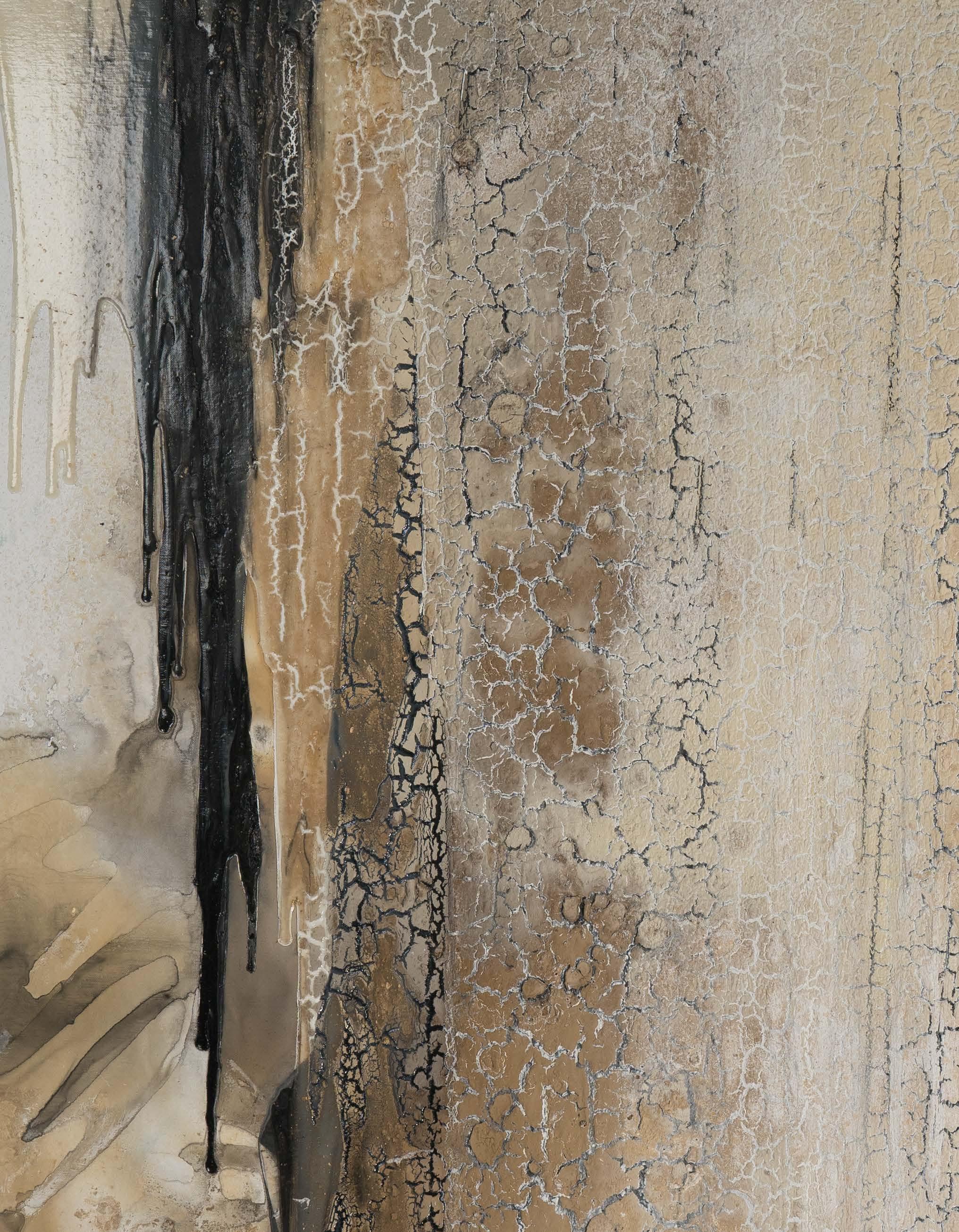
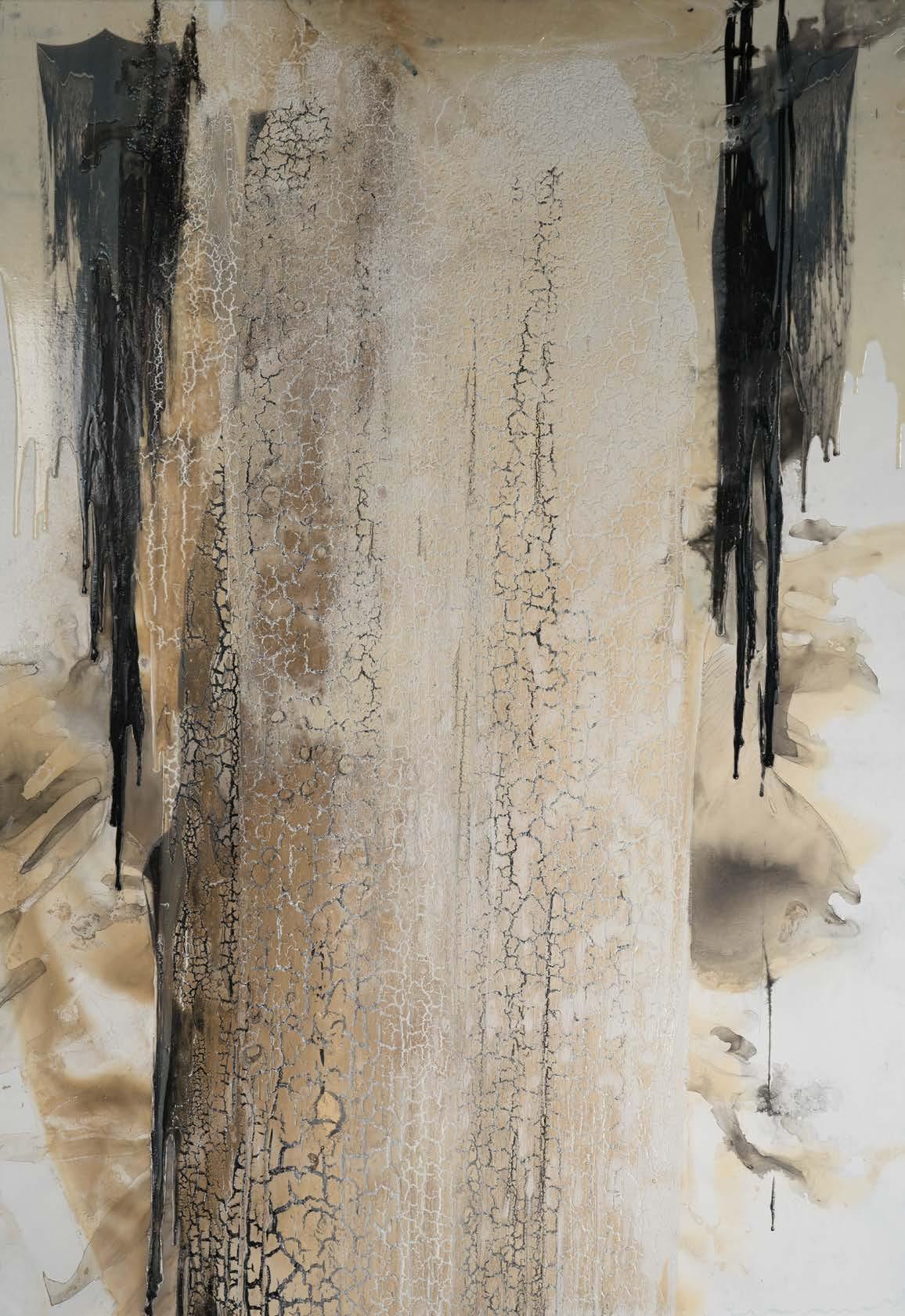
Philippe Pastor: North Pole and Other Precarious Landscapes
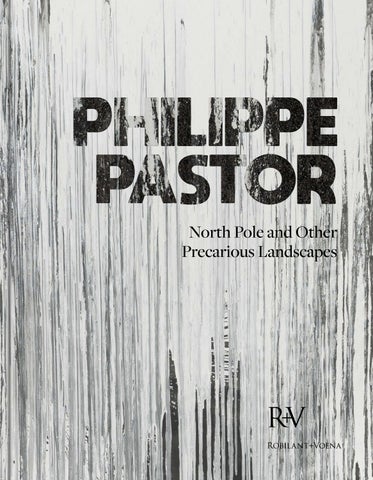
North Pole and Other Precarious Landscapes
North Pole and Other Precarious Landscapes
“J’aime pas les choses qui brillent.”
A conversation between Philippe Pastor and Caroline Corbetta
CC: You were born in Monaco but these days spend much of your time in northern Spain and the mountains of France. Your large studio is in the countryside near Figueres, but what about your time spent in France, near Chamonix – what is it like there?
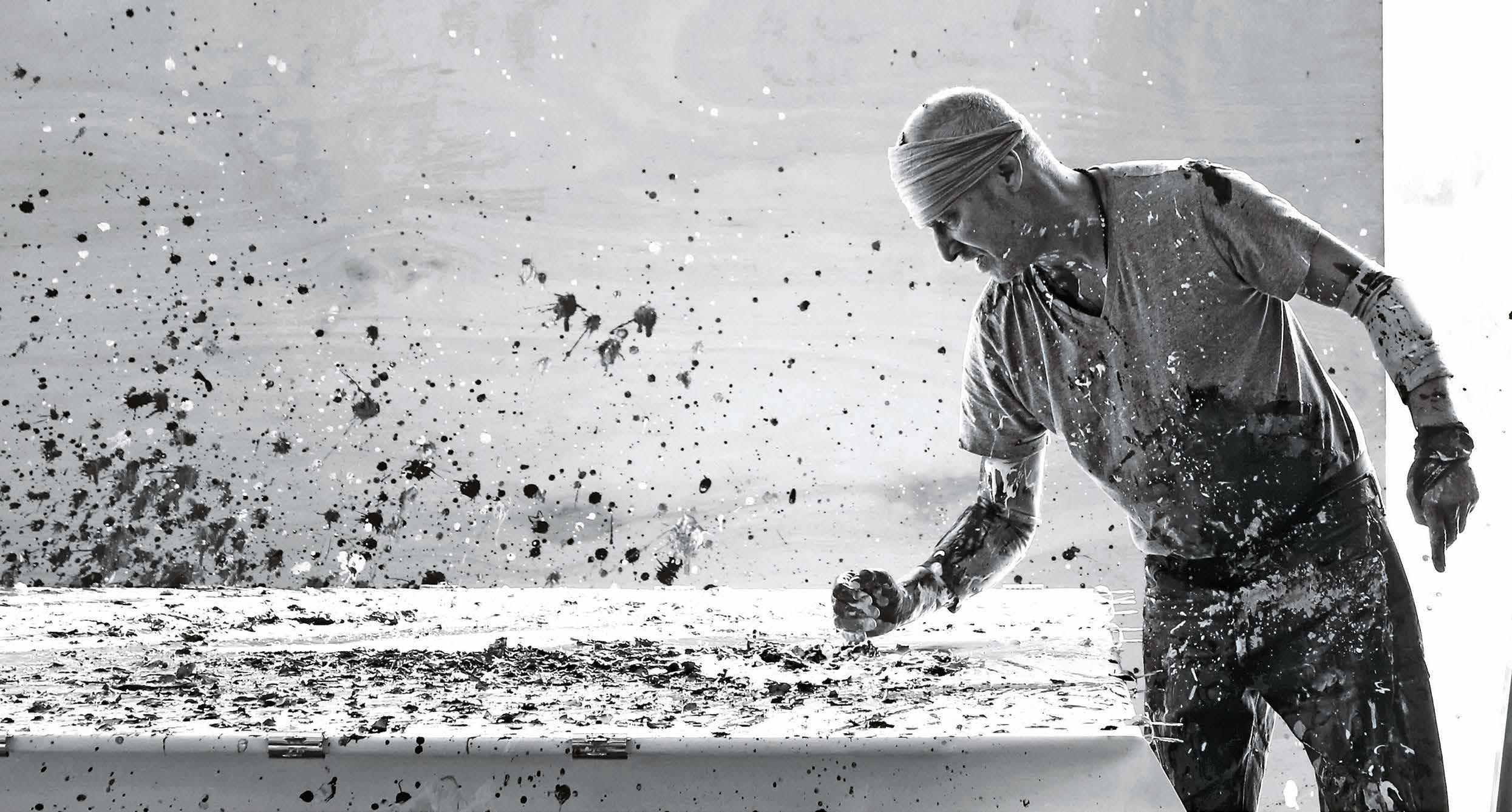
PP: I have a small studio, just one room. It’s perfect for my needs; there’s the window with a view directly onto Mont Blanc. Even though it’s near the town of Chamonix, I prefer to keep myself immersed in nature when I’m there. I can’t paint if I’m not in an environment of peace, a place where I’m isolated, where there are no distractions. Personally, if I want to paint well, I have to let go of almost everything else. Painting has to become everything: it takes over your mind. It has to be the last thing you think about when you fall asleep, asking yourself about the process, the technical aspects: how do I make this painting happen? Do I apply the glue first? Do I apply the coloir first? How do I mix the alcohol with the pigments to make it behave how I intend? Do I trace on the canvas to dictate the direction of the flows? All these preparations happen beforehand. Not in the studio, but in your head. When you go into the studio, you are already prepared – all you have to do is the making. You do it once, and if it doesn’t work, you do it a second time, and if it doesn’t work, you do it a third time.
CC: Does that mean you’re thinking about painting twenty-four hours a day?
PP: Absolutely. For the last 40 years, all I think about is painting. I always carry a little camera with me, so I can capture the fall of light, the shades, the colours.
CC: And then transfer them to the canvas. Where does this almost obsessive interest in the relationship between humanity and nature stem from?
PP: I’ve always been very interested in cave paintings, in the world of the Neanderthals, in the art that was made by the first men on earth. There are many places to consider; there are famous places like Lascaux, but that’s not the most interesting. What really fascinates me are those in Africa, the cradle of the world, where you find places where these early people made drawings in mountains, even in areas where they hollowed out parts of the earth, where they buried their dead.
CC: When did you start using nature as part of your paintings? The leaves, the branches, the twigs. Not only representing nature, but also using it as a medium.
PP: I started after that second Venice Biennale [that I participated in,] in 2007. When I got back to the studio, I said to myself: after everything you’ve seen, just let go and do what you really want to do. Rid yourself of restraint, free your work, free your painting.
CC: Why did you decide to use your practice to communicate the message of the environmental crisis?
PP: In around 2003 I was living in an ancient stone farmhouse in La Garde Freinet, near Saint Tropez. That year, the forest fires ravaged the countryside. And my studio there escaped by the narrowest of margins. But the destruction was everywhere.
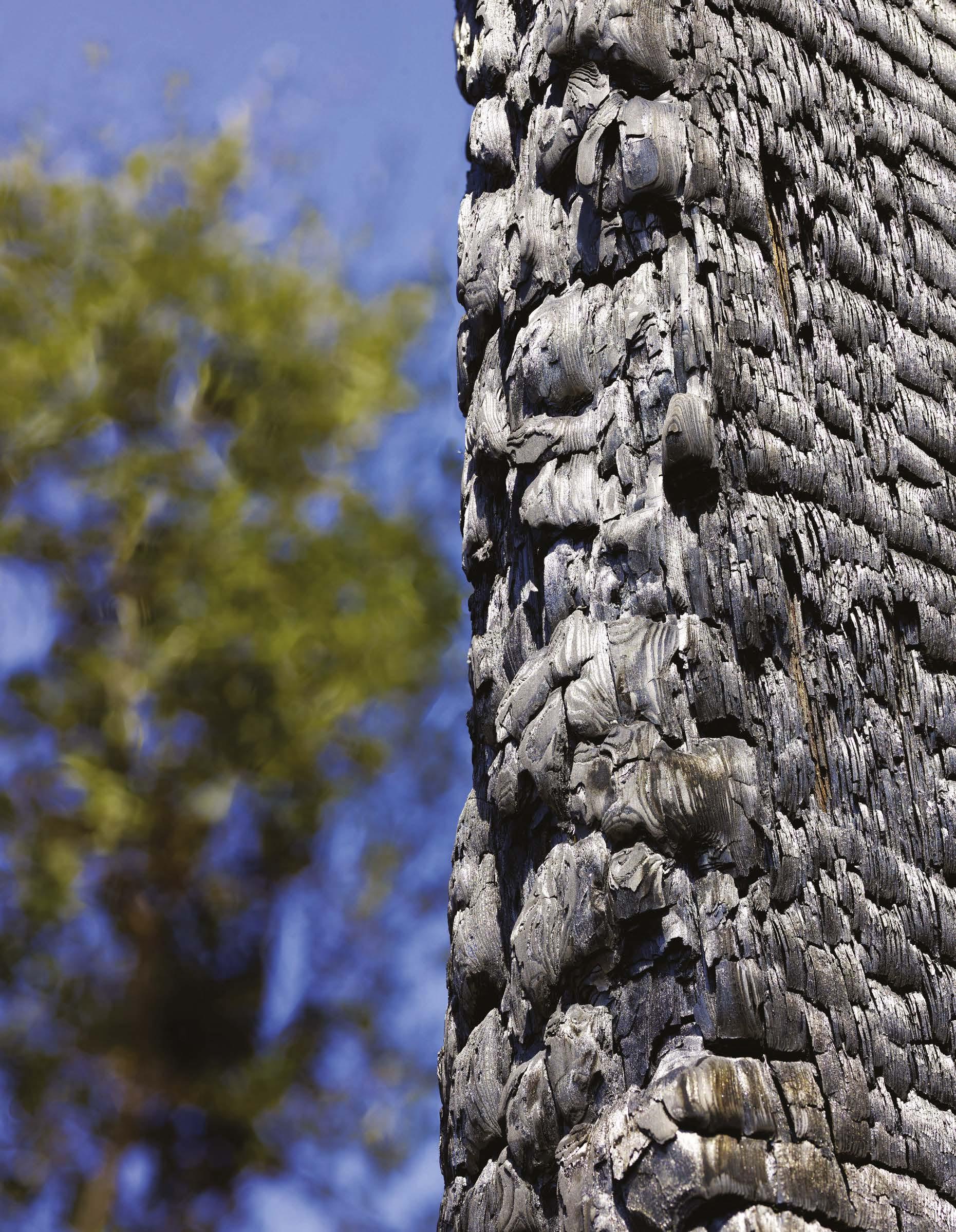
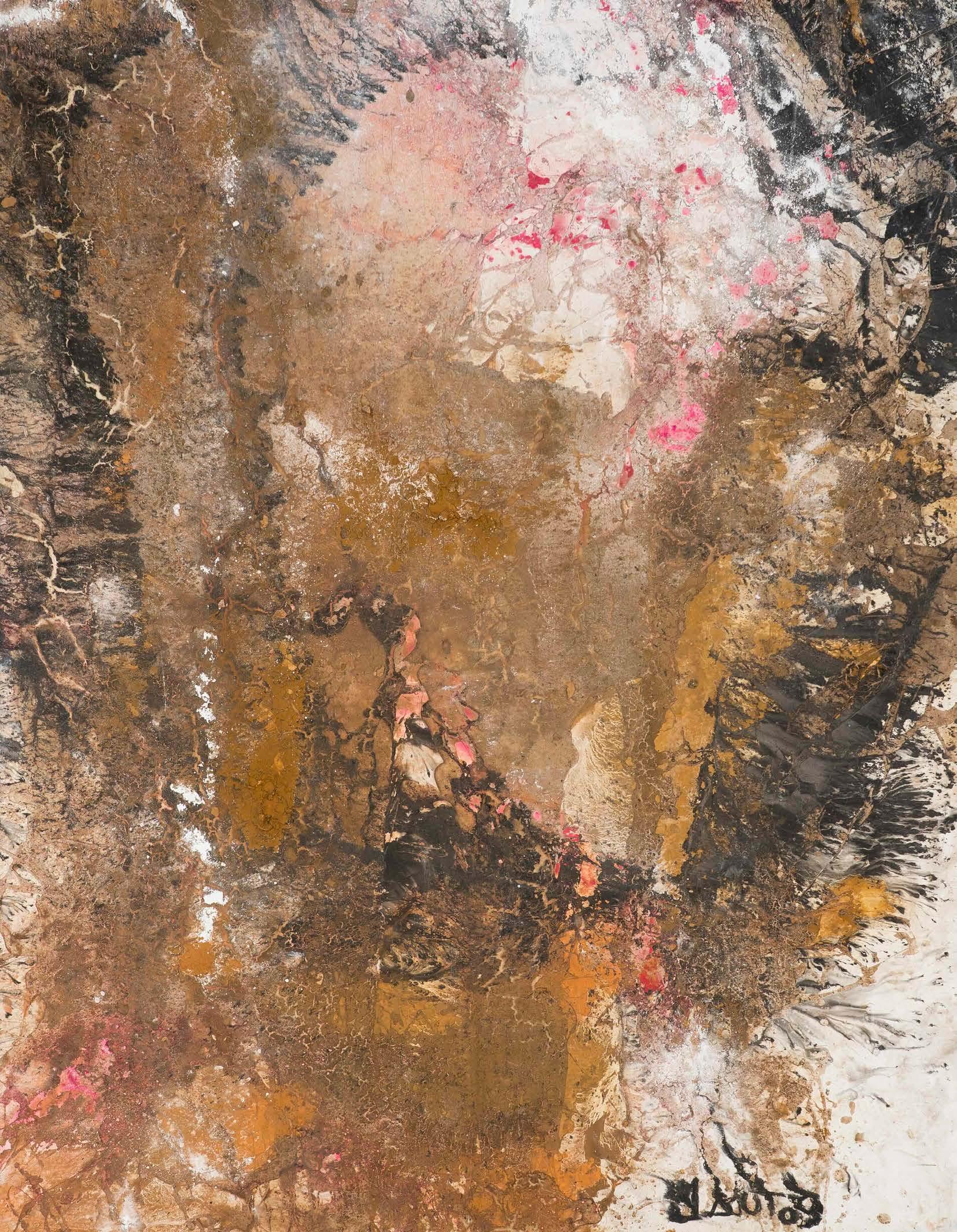
Everything was burned. When I saw all those trees, I knew I had to do something. But how could I say anything stronger than what the fire had already said? Instead, we used the fire to tell its own story. All day long, we worked on the tree trunks, fetching them from the forest, cleaning them up, removing the small branches. I brought back a dozen to the studio and I put five of them leaning against a wall. The evening light in Saint Tropez has a pervasive yellow hue: the sky is yellow, making everything beneath it yellow. I looked at these trees in the yellow light and I knew I needed to share them with the world. Then people from [the newspaper] Paris Match came to take photos of the fire and they also took photos of my trees. And after that, I was contacted by people from the United Nations in Nairobi; they asked me if I wanted to take part in a new initiative, called Planting for the Planet. So the idea was to replant. Replanting first in Madagascar and then in the Singapore region. I worked with them on this initiative, followed by projects with
other foundations and groups. These experiences opened up something inside of me. Quite simply, I went to nature.
CC: How do you spend your time when you’re not in nature but in a city like Milan? Do you draw at all?
PP: For me there are too many people, too much noise. I find it difficult to concentrate. I occasionally make drawings in my loose, easy style. Here, I have with me my bag with my small sketchbook, my pencils, a pot of Indian ink, sheets of paper. Always good paper – paintings on paper are such wonderful things.
CC: When we met, one of the first things you said to me was “Tu sais Caroline, j’aime pas les choses qui brillent.”
PP: Yes, it’s true, I don’t like shiny things and they even frighten me a little. Things that shine are not always reflective of the truth.
CC: So in a way, what is really important to you is the truth. You are involved in a search for the truth. You find falsehood and lies uncomfortable.
PP: Exactly, I’m not comfortable at all with such things. In order to live in peace, I think you have to be truthful, you have to tell the truth. And of course, truth means honesty, because truth and honesty work together. If you’re not honest, you can’t speak the truth.
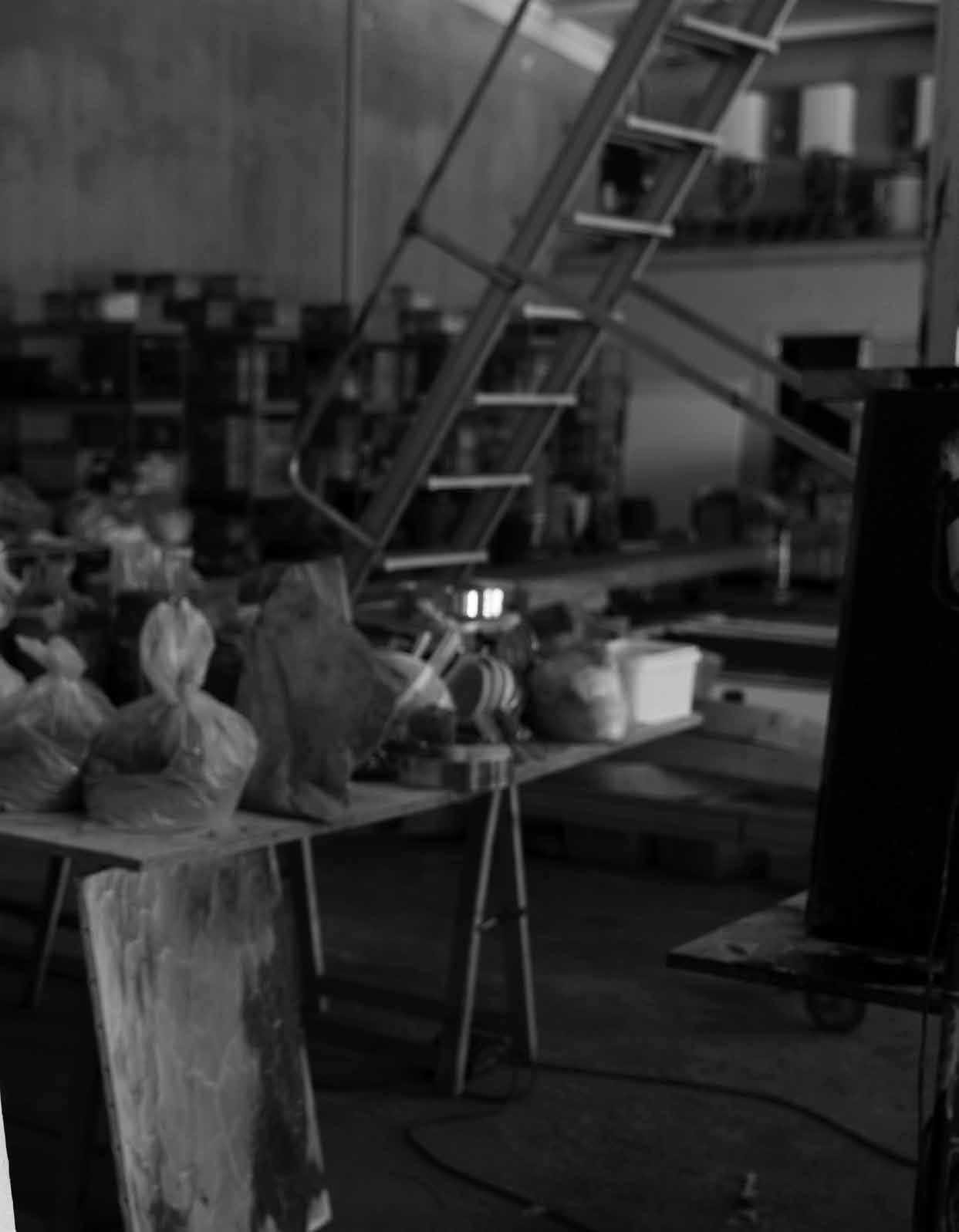
CC: Now let’s talk about your studio and the amount of pigment in it. It’s really wonderful. It’s almost like an installation: all those bags and boxes everywhere, filled with pigments. How do you manage your materials? For example, when you need a certain pigment, how do you know where to find it?
PP: I know where they are because I remember where we put them; I’m there with my assistants almost every day. If we’re talking about pigment material, they’re all recognizable by touch. Some
are more oily than others. If one is extremely oily, then that’s a very good pigment. And then it settles, becoming like talcum powder.
CC: When did you decide to paint with pigment and not with pre-prepared paint?
PP: It’s because I love imprints. I love footprints in the ground. I love the marks of life, the walls. When you go through an old town and you see the marks, the traces of trucks that have damaged the road. Now that’s what I like. I like old things, things with a past life. For example, in my house, why do I have almost only second-hand furniture? It’s because I like the stories they tell.
CC: So you like traces of the past, things that have a history?
PP: When I’m painting, I often apply a colour, then use a roll of paper to make it disappear, and place another colour over it, and make it disappear again.
What interests me about pigment is being able to do, undo, redo, again and again until I get to the point that I’m content. Then I can manipulate it; draw lines, use strokes to press the colour in, to make a mark. In other words, I don’t do anything that’s definitive and unchangeable; everything is always being taken up again, remade, redesigned.
CC: But how do you know when to say ‘enough’. How do you know when the work is done?
PP: Knowing when something was finished was very, very hard when I was younger. But these days, I know when it’s over. That’s the difference between before and now, today I do what I want with the paint. And the bigger the canvas is, the more I feel I can do what I want. In other words, the bigger it is, the more comfortable I am. There’s a very physical aspect to it. It’s instinctive and wild. And after that spontaneity, there’s a level of control and management, something that I’ve acquired with experience, and perseverance.
CC: And how long do you usually work on a painting?
PP: It depends on the painting. Some also take longer to dry. It can take from around three days t o much, much longer. But you can’t really put a time frame on it, because the process is a very unique thing.
CC: When I came to your studio, you told me you’ve never thrown away a painting or drawing. Why is this?
PP: I’ve rarely thrown away my work. A lot of paintings are tests, experiments. Some paintings I can’t immediately see what will become of them. The pigment needs to dry. Until it’s fully dry I don’t know what it becomes. And even when it’s dry, you don’t really know until you put it on an easel and take the time to really look at it, and I’m the only one who can really make that decision, the only one who knows.
If I make the judgement that it’s not right, I save the canvas and reuse it.
CC: I want to ask you about David Sylvester, the critic who wrote a lot about Francis Bacon, with whom he did many interviews. At one point, Sylvester asked Bacon “Do you like to live well?”. I’d like to ask you the same question: do you like to live well, and what does that mean to you?
PP: Living well today, what does that mean for a man like me? I am 64 years old. What’s good living? It’s about experiencing quality things. It’s not about living in a crazy way, not about the high life in nightclubs at 3 a.m. like I did for many years when I was younger. I have a hard time understanding this world. The world we live in, the technological world, the structured, pressured world, booking ahead for everything, planning everything in advance. I don’t know where I want to eat in two, three days’ time. Today, that’s what you have to do. Plan ahead, sometimes months in advance…
CC: Yes, it’s crazy. That’s why you have built your own refuge; that’s why you’ve found your perfect situation in a rural spot in Spain, and in the mountains in France?
PP: I move around a lot, often with the seasons. I go to the mountains in January, February, March; then I go to Spain for a while; I go to Saint Tropez for a while, see my mother and her partner Adrian Maeght. I go back and forth. It’s only when I have a project that I can throw myself into that I lock myself away, without moving, without making contact with the outside world, trying to find peace so that I can dedicate myself to my work.
CC: And don’t you ever feel lonely?
PP: No, because I’m not alone. There’s my partner Linda, my assistant Beppe, there’s the little motorcycle club with a group of good people, with a positive spirit.
CC: I have the impression that in your painting, there’s a lot of rhythm. Do you listen to music while you work?
PP: I’ve been listening to the same music in the workshop for 30 years. I only listen to Léo Ferré. I met him when I was a boy; I did everything I could to finally get to meet him. I would pass by his studio every day after school, with his LP and a pen in my satchel. One day, he appeared with his black cape, and I went up to him. He says to me, “What do you want, kid?” I was 9 or 10 years old. He asks me my name, and I say “Philippe Pastor”, he pats me on the head and tells me that things won’t be easy for me. Anyway, he signed the record, and I still have it to this day. I saw him a few times in concert when I was young, and I got to know his family a little – his daughter, Emanuela, who was a sculptor. I even include some of his words in my paintings. Occasionally also his lyrics in my catalogues.
CC: Thinking about your childhood, through your mother you met a lot of important artists of the day. You have even said that you were surrounded by ‘giants’. What was it like growing up in that milieu?
PP: My mother got together with Adrian Maeght when I was twelve years old. From then, I existed in a world of great artists, attending vernissages, sharing meals with these people. However, I didn’t really want to live at the Fondation, or nearby at Mas Bernard, so instead I preferred to sleep at the Colombe d’Or in Saint Paul, where César stayed. My tiny bedroom was right next to his huge one, and César kept an eye on me. That’s how I really got to know him and started helping out in his studio doing odd jobs, moving around old bits of car bodies, doing the grocery shopping.
CC: And what about Matisse – you own a pair of pliers that Matisse used to stretch his canvases. How did you come by that?
PP: The gentleman who manufactures my stretchers, his grandfather used to prepare all the canvases for Matisse. And one day, this chap gave these pliers to me because he could see that we were working hard in the studio and he thought we would make more use of them. He seemed happy to give them away. We still use them now!
CC: I’m going to ask you a question I’ve asked you once before. Do you believe in God?
PP: Yes, I do. And fortunately so. I believe in God because I believe that people who believe in nothing are quick to think they’re God. But I think there’s a problem with religion in the world; it’s terrible. We’re blaming religions for many of the ills of humanity. But we’ve got a new Pope who’s good, who’s calm, who’s young and who seems to be doing things intelligently.
CC: You explore the fragility of nature in the face of human action, while simultaneously reaffirming its great power, compared to which we human beings are insignificant and ephemeral - even if we pose a significant danger to the natural world. Do you think that nature is divine, and that we are therefore committing sacrilege?
PP: I don’t see nature as anything less. Of course somewhere it’s divine. The preoccupation of the modern world shouldn’t be making more weapons or waging wars and killing each other. It needs to be about making our world and lives as liveable as possible. If we go on like this, it’s going to get a whole lot worse for everyone. People don’t want to face up to what’s happening. But they must, we must, all do so collectively, as a society.
North Pole: Melting ice, a mirror of the world
By Axelle Corty
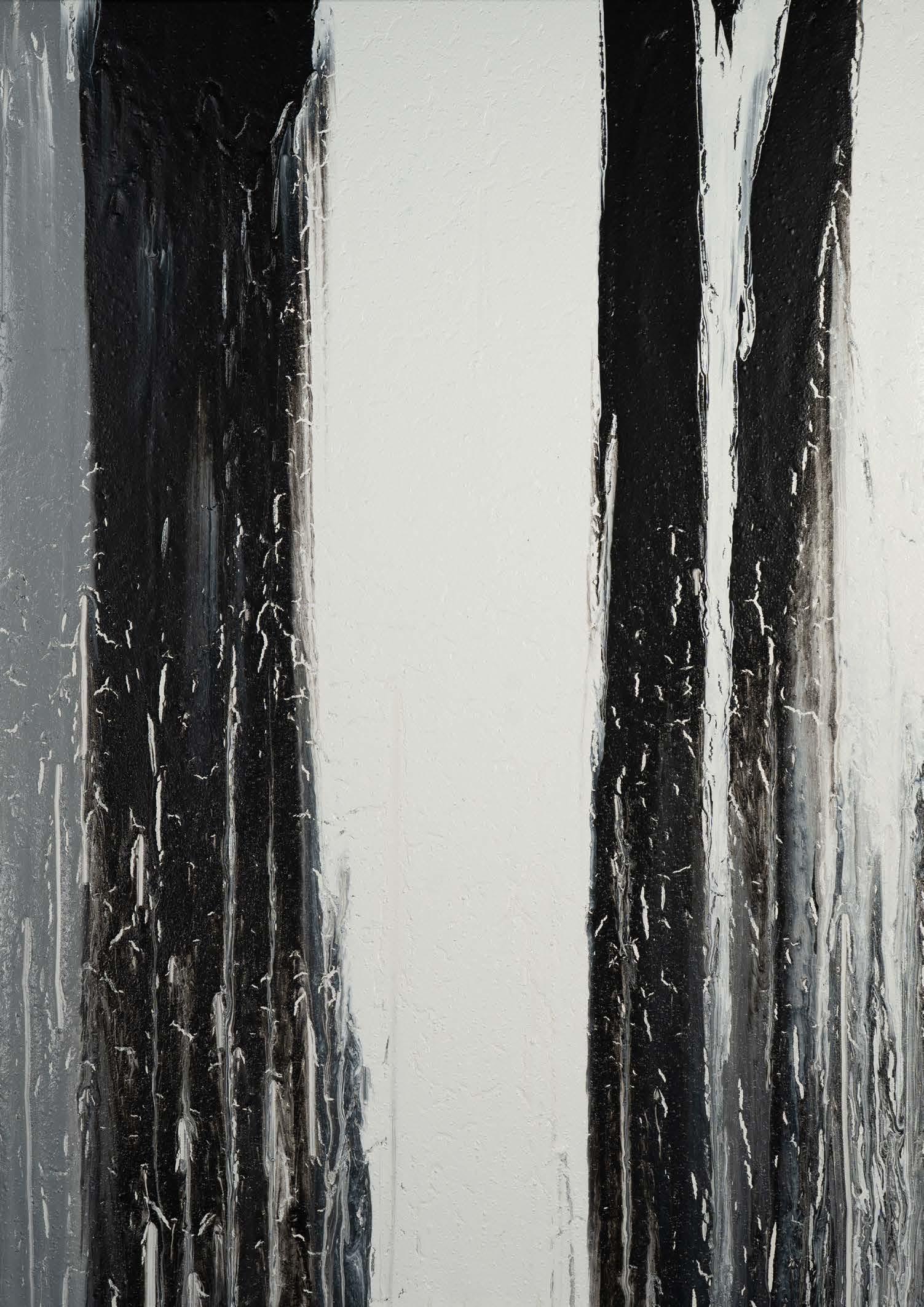
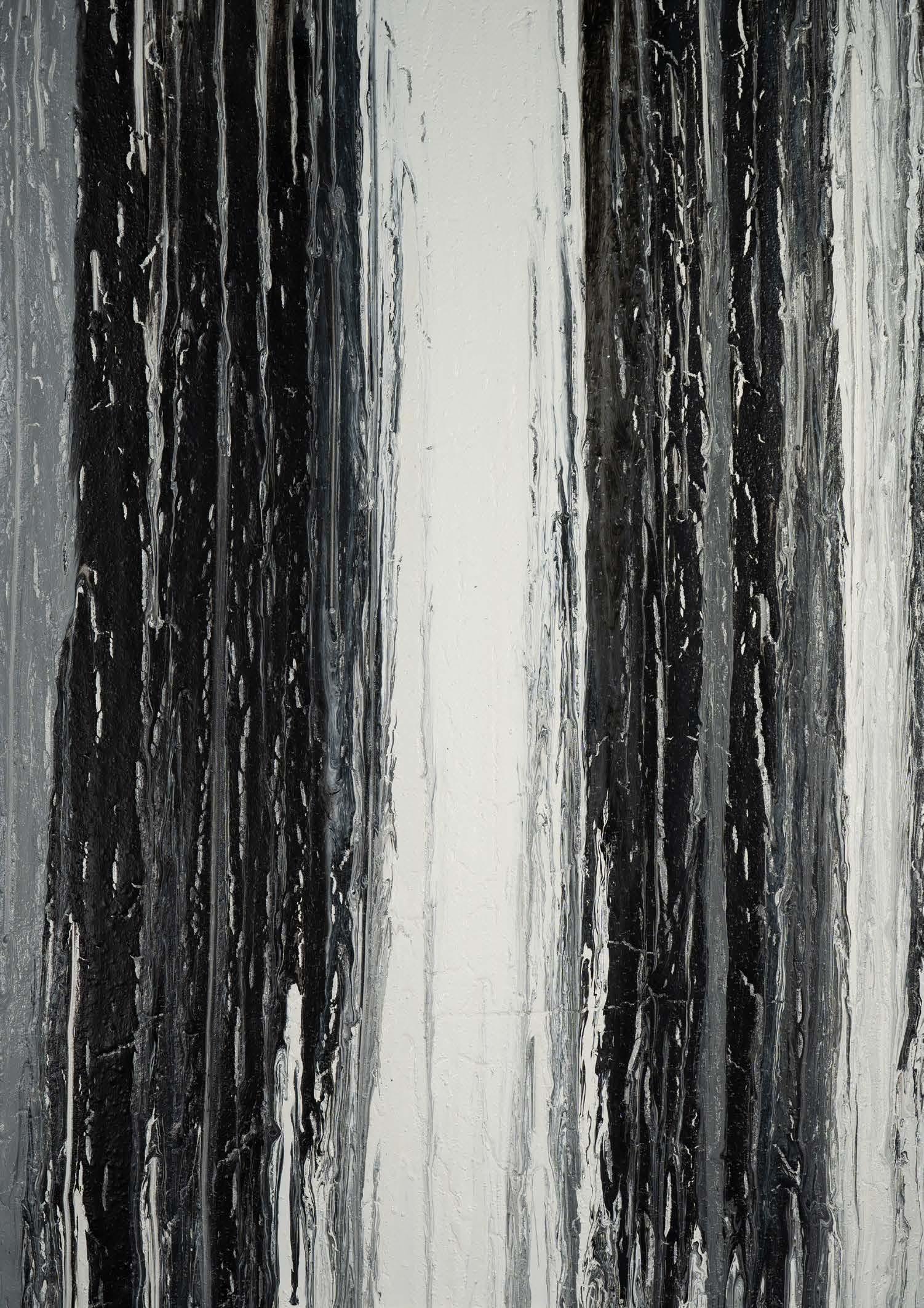
As a suite of works, Philippe Pastor’s North Pole paintings are intentionally intimidating and alluring, the embodiment of his aesthetic and social mission.
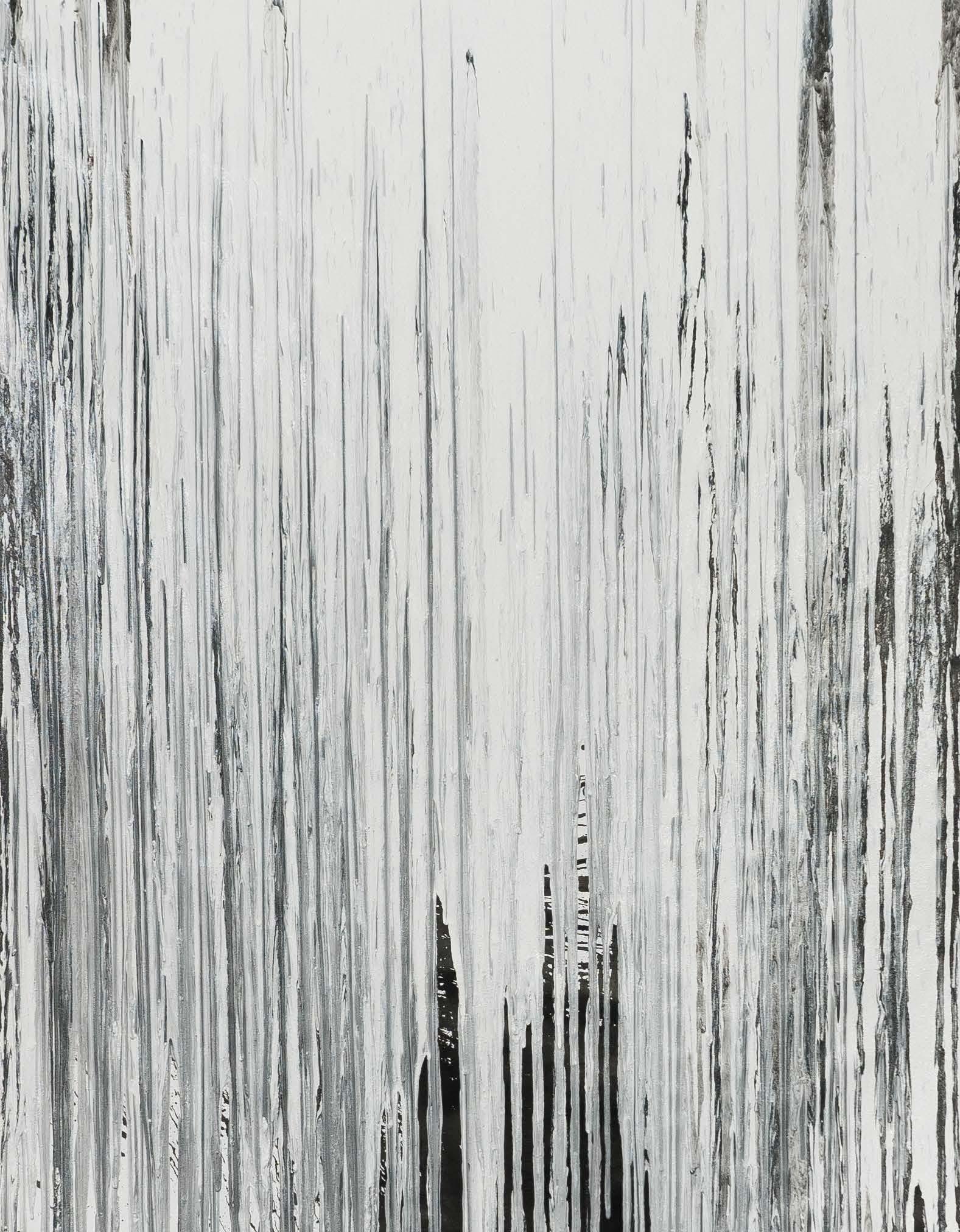
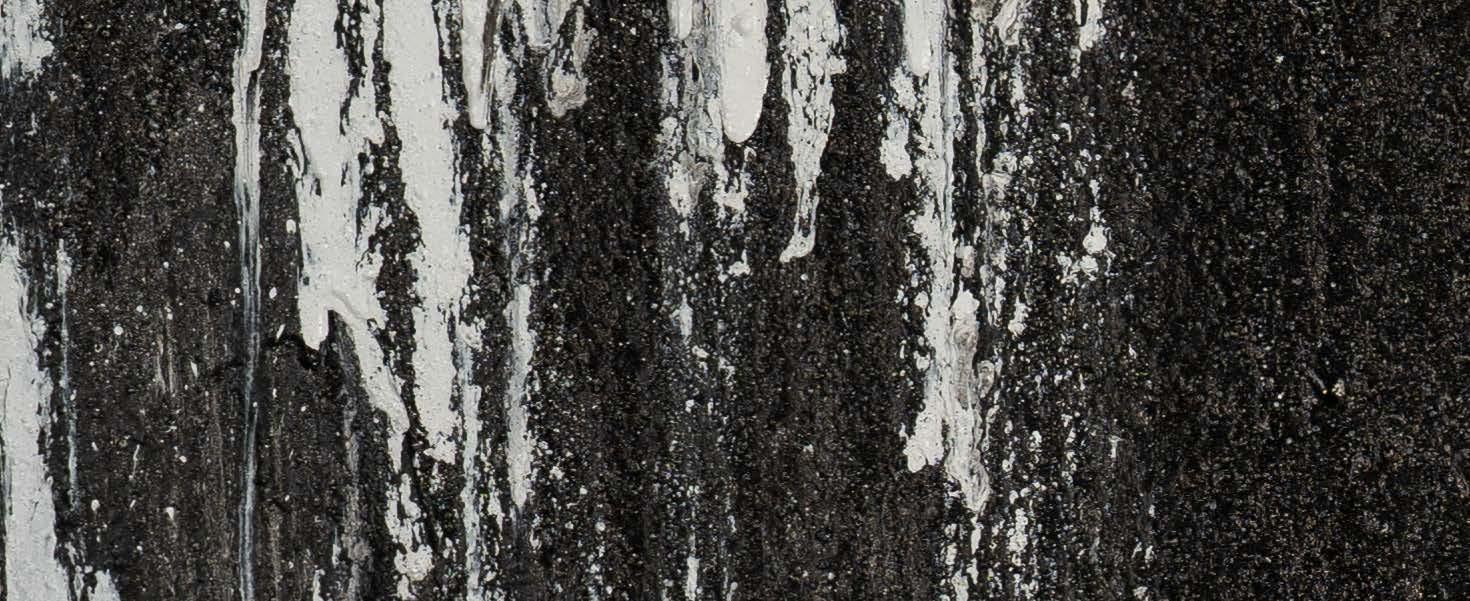
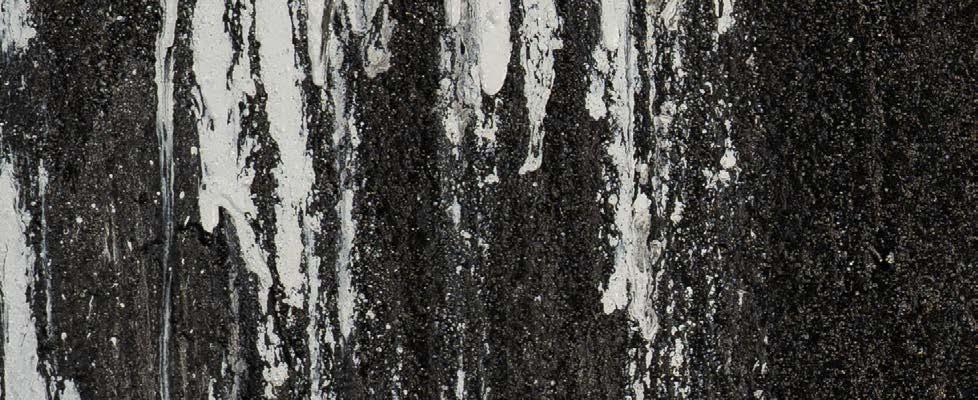
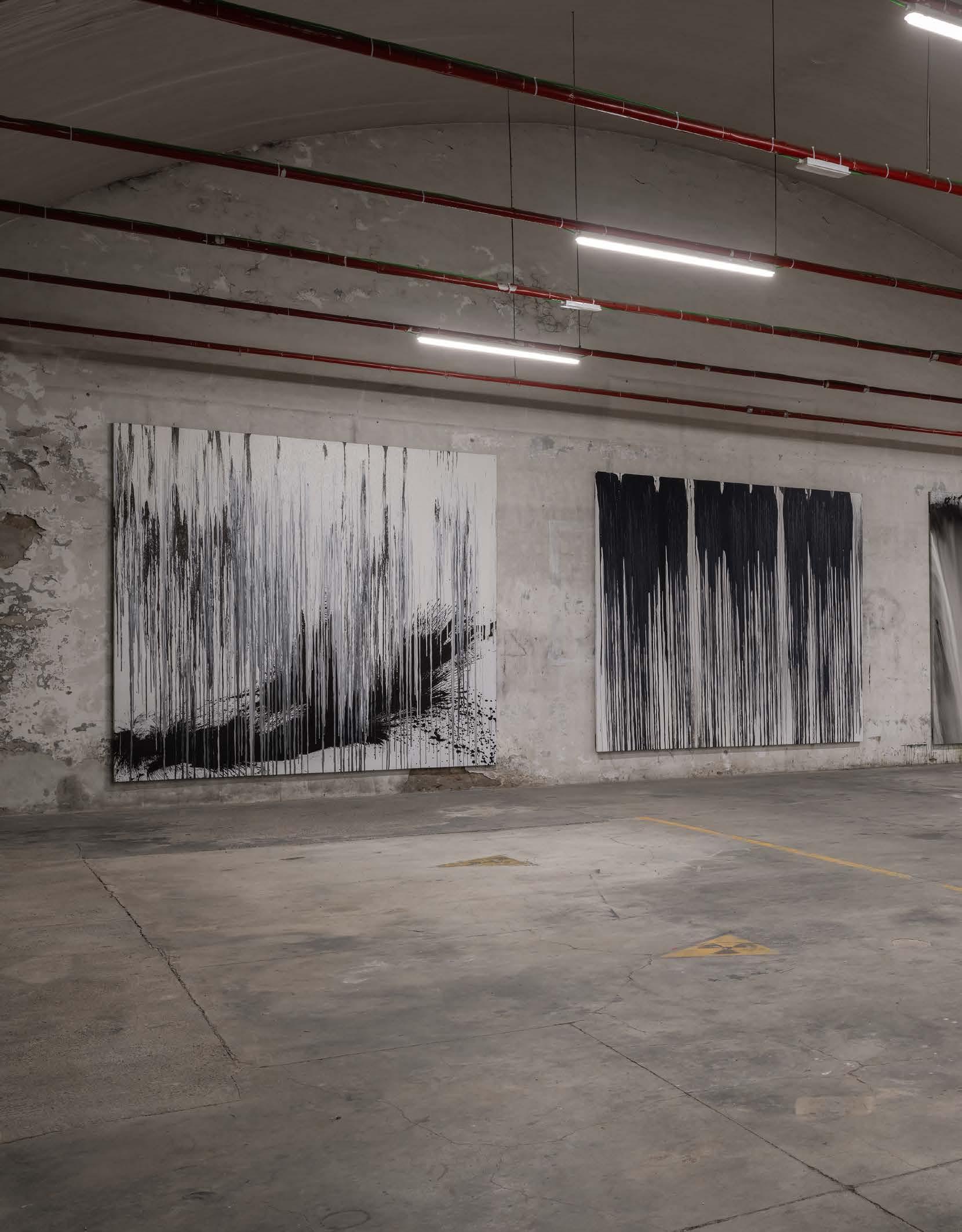
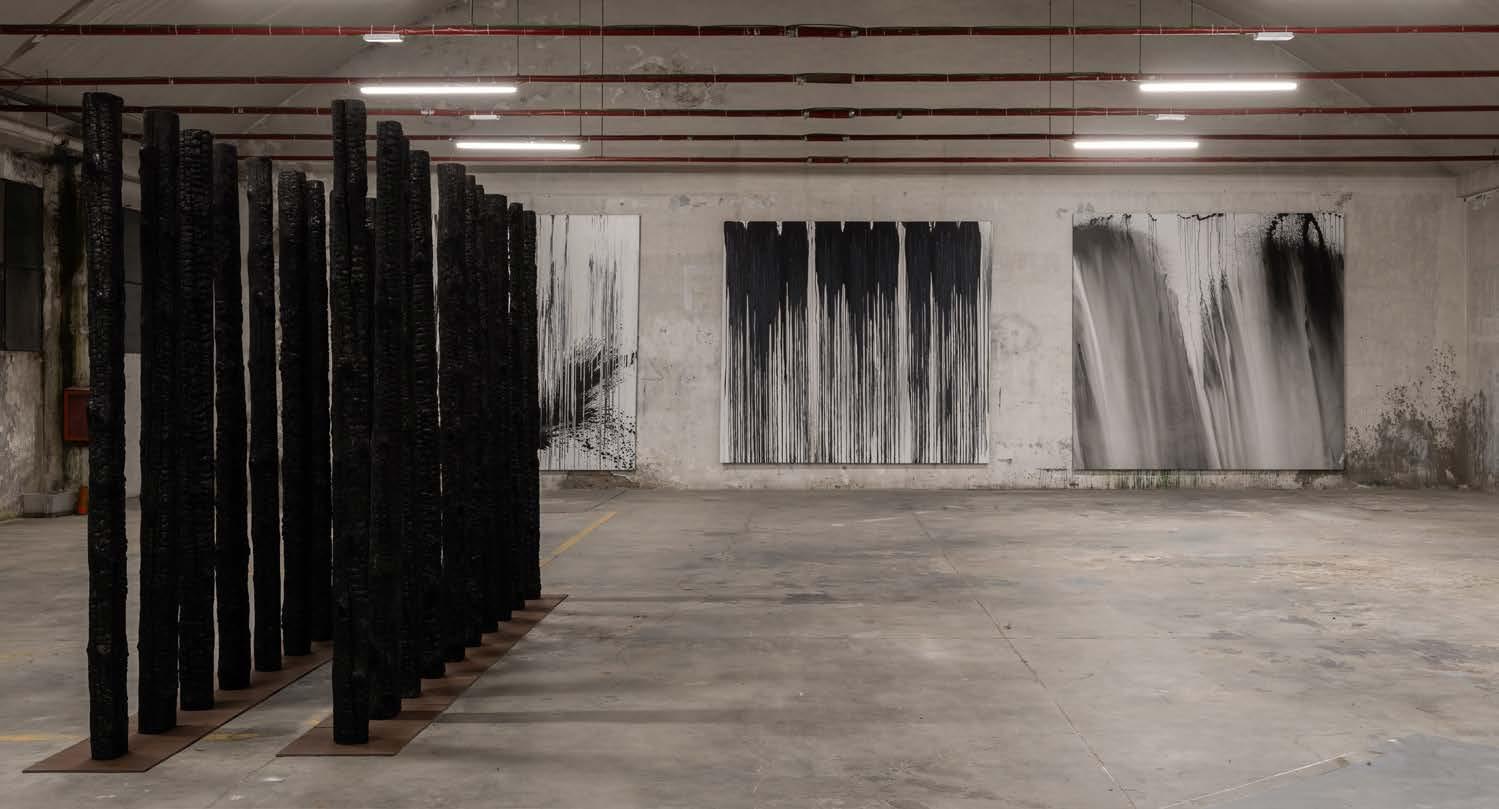
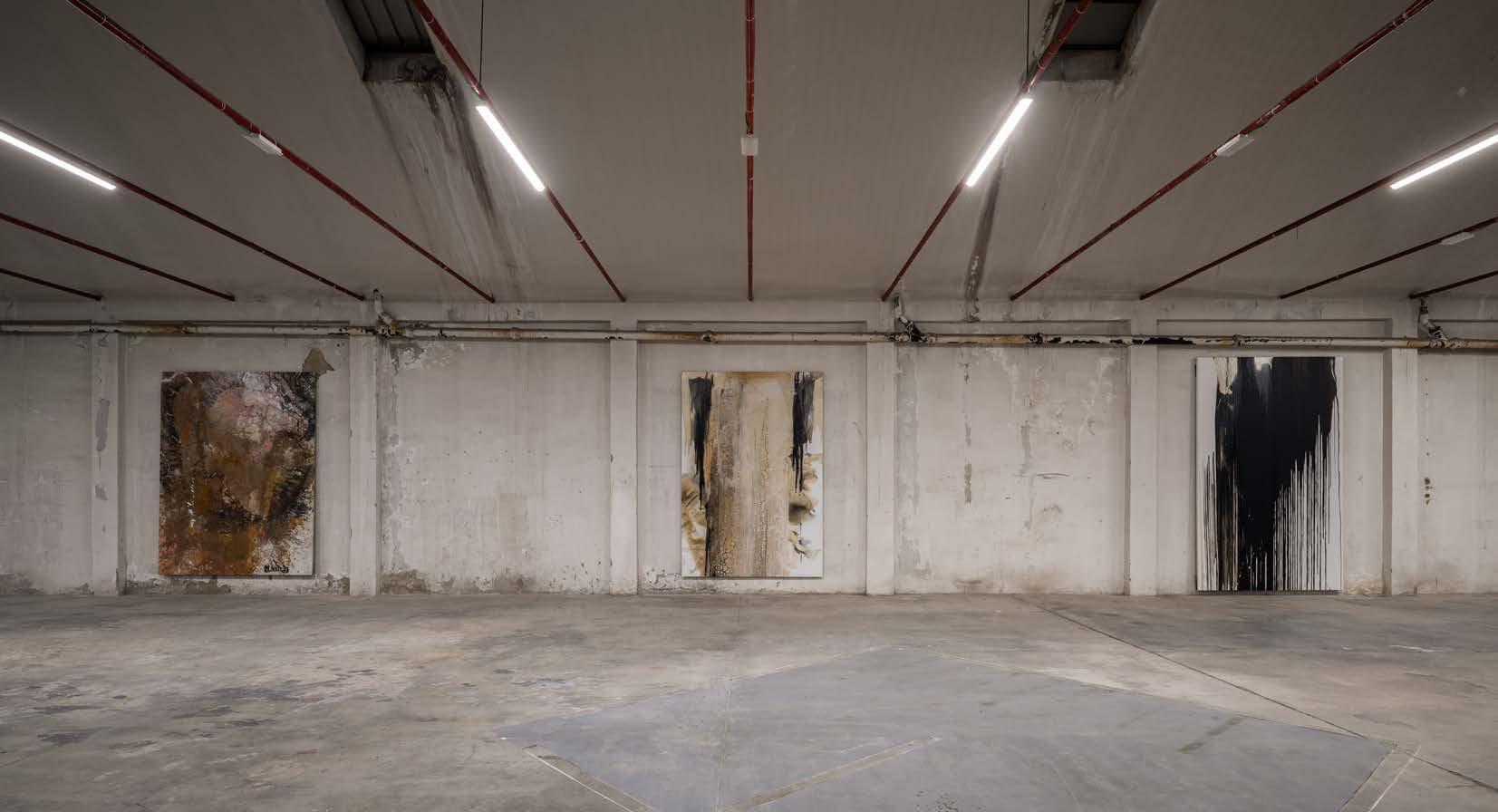
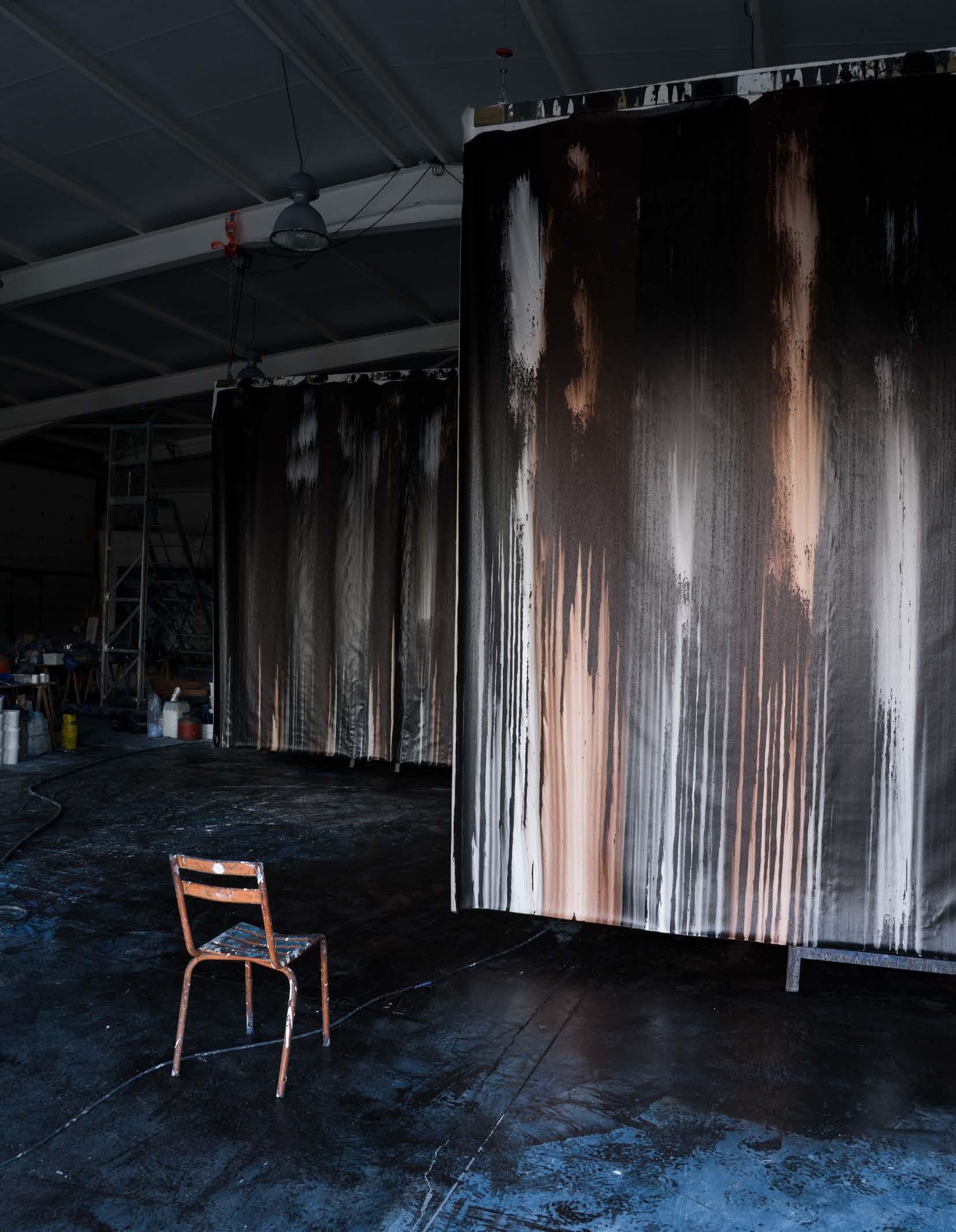
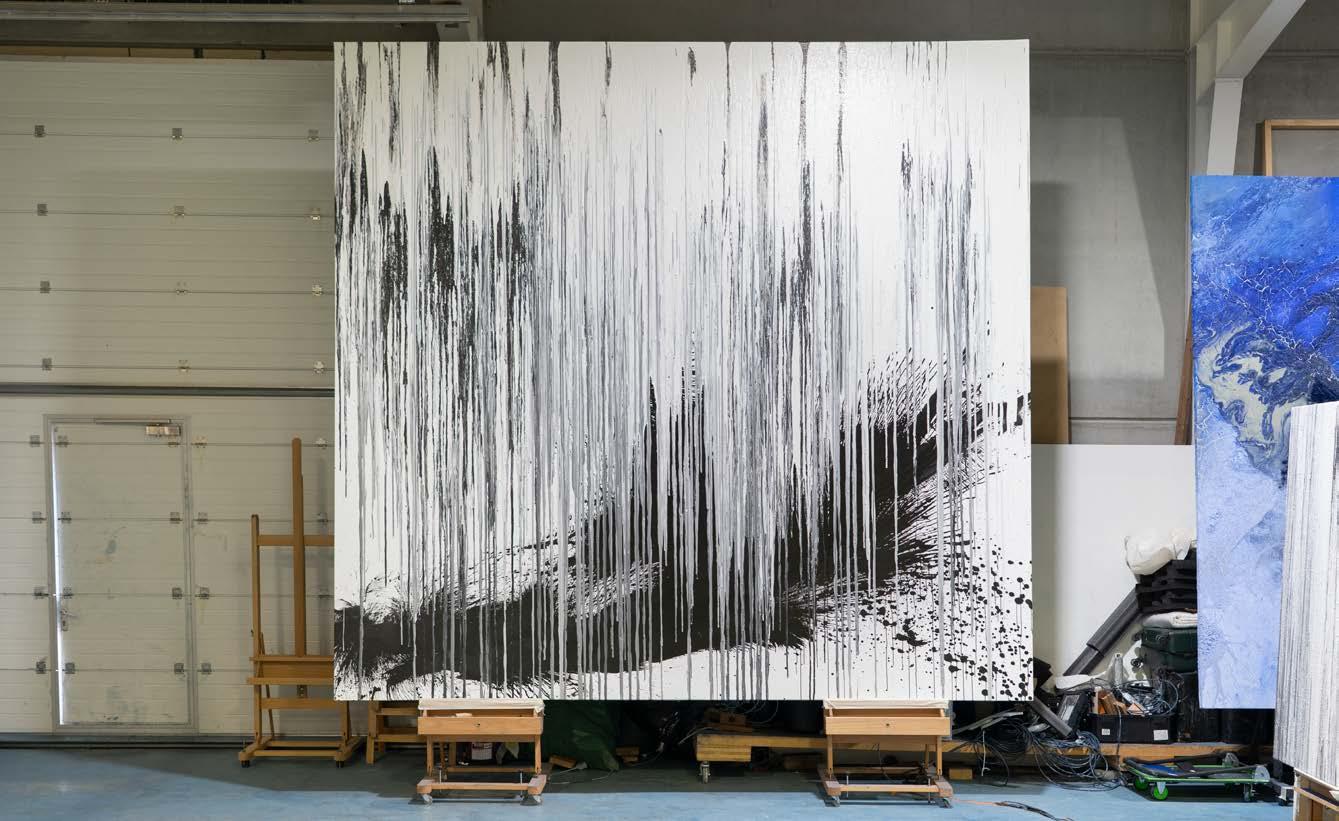
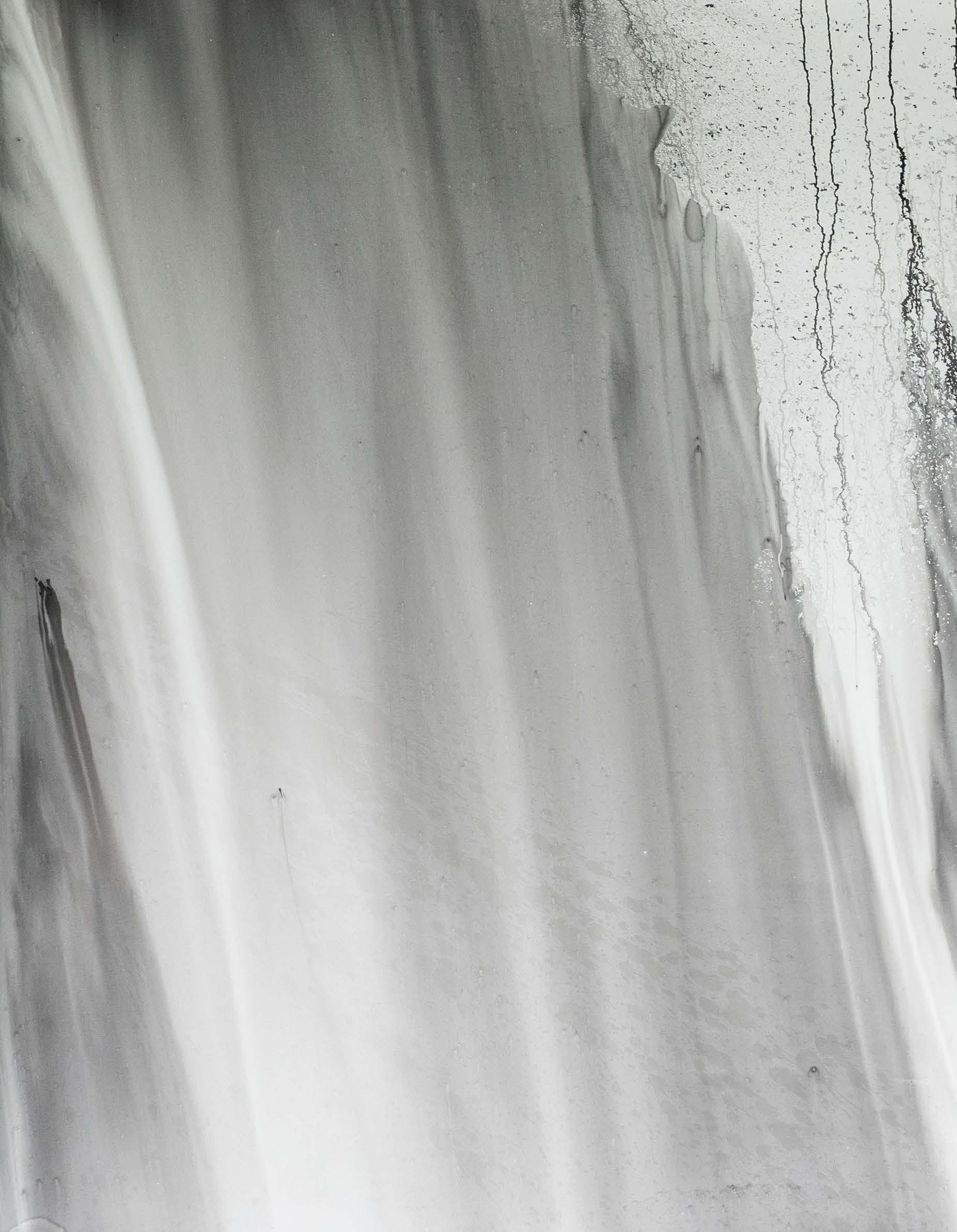
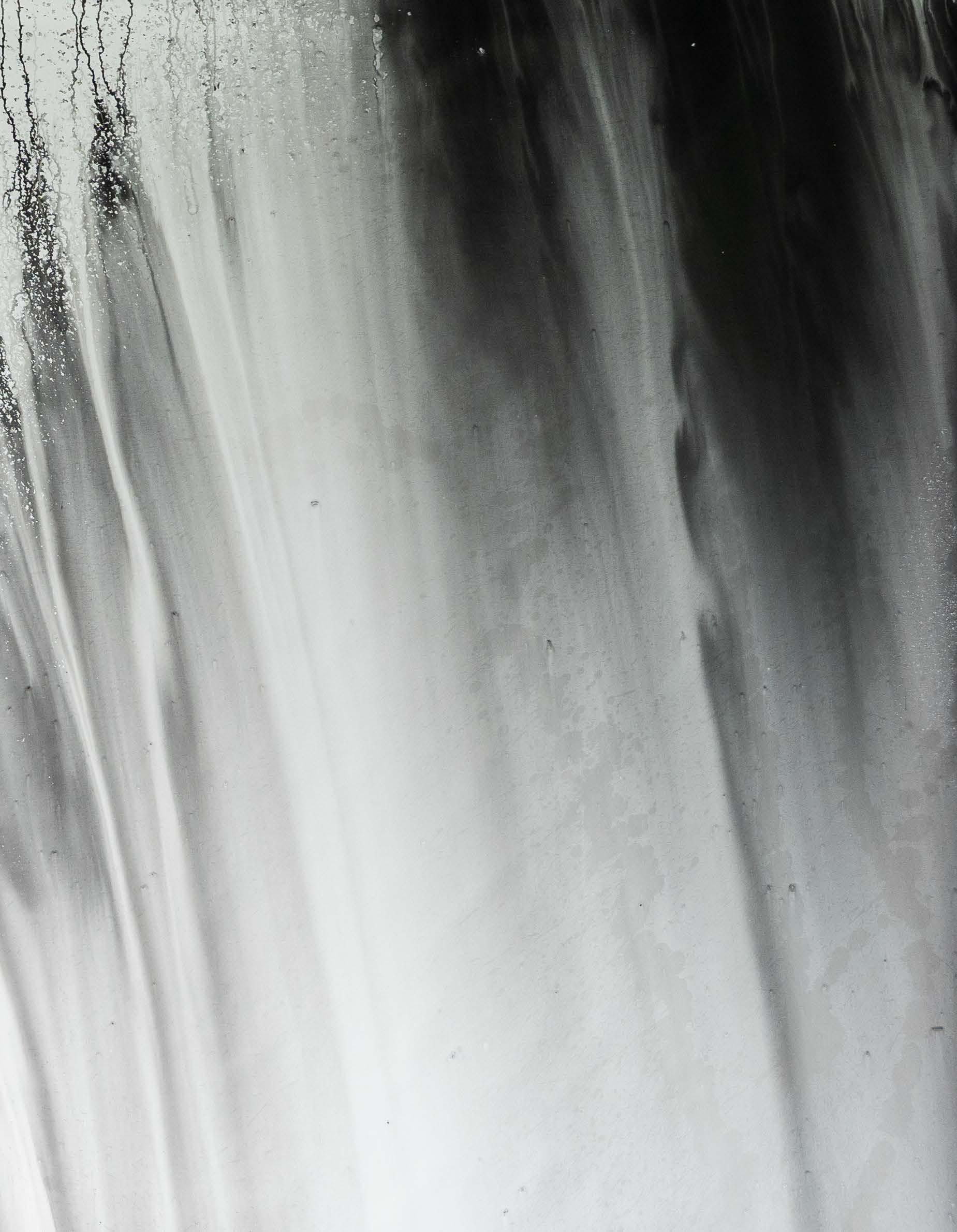
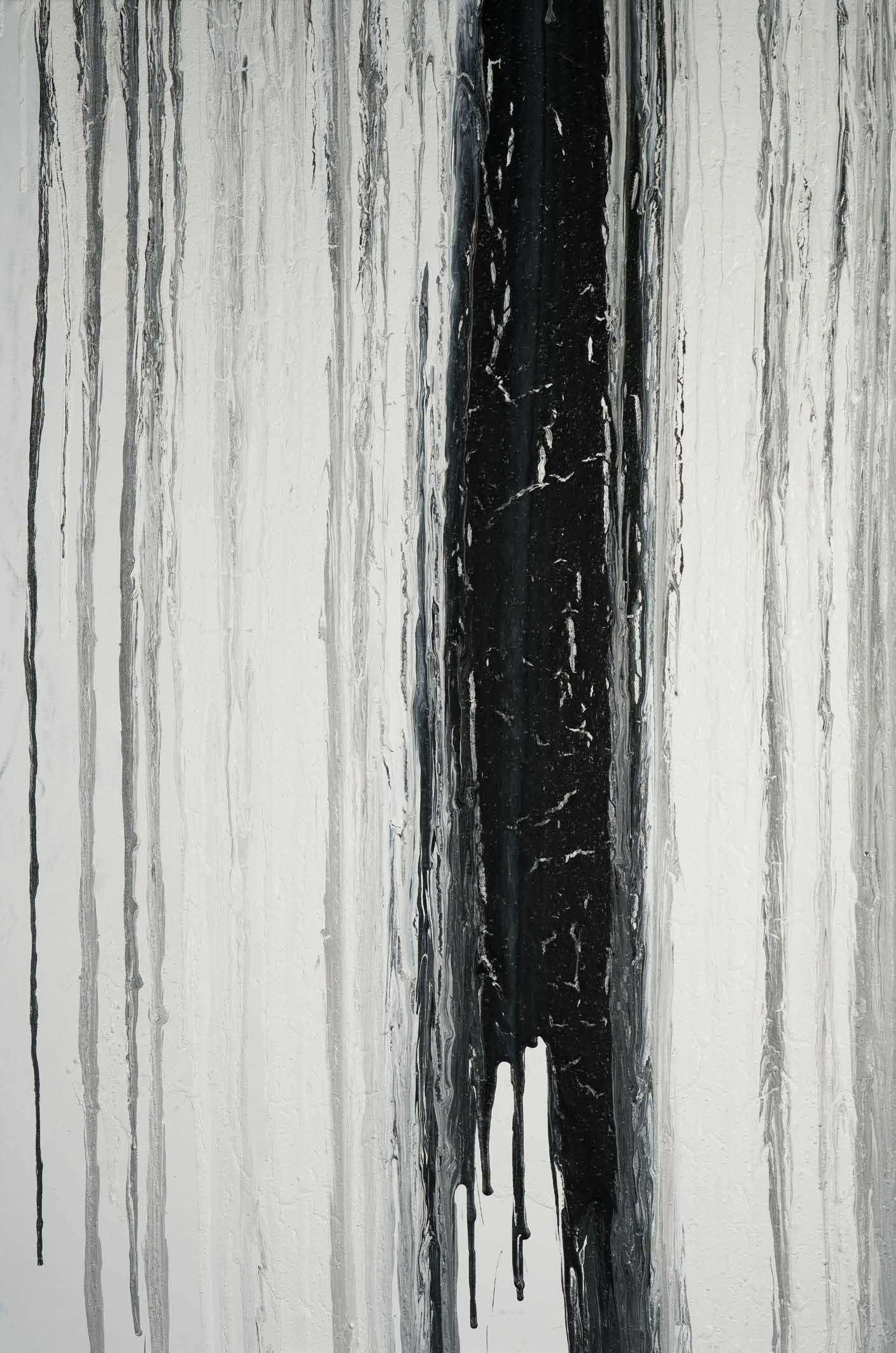
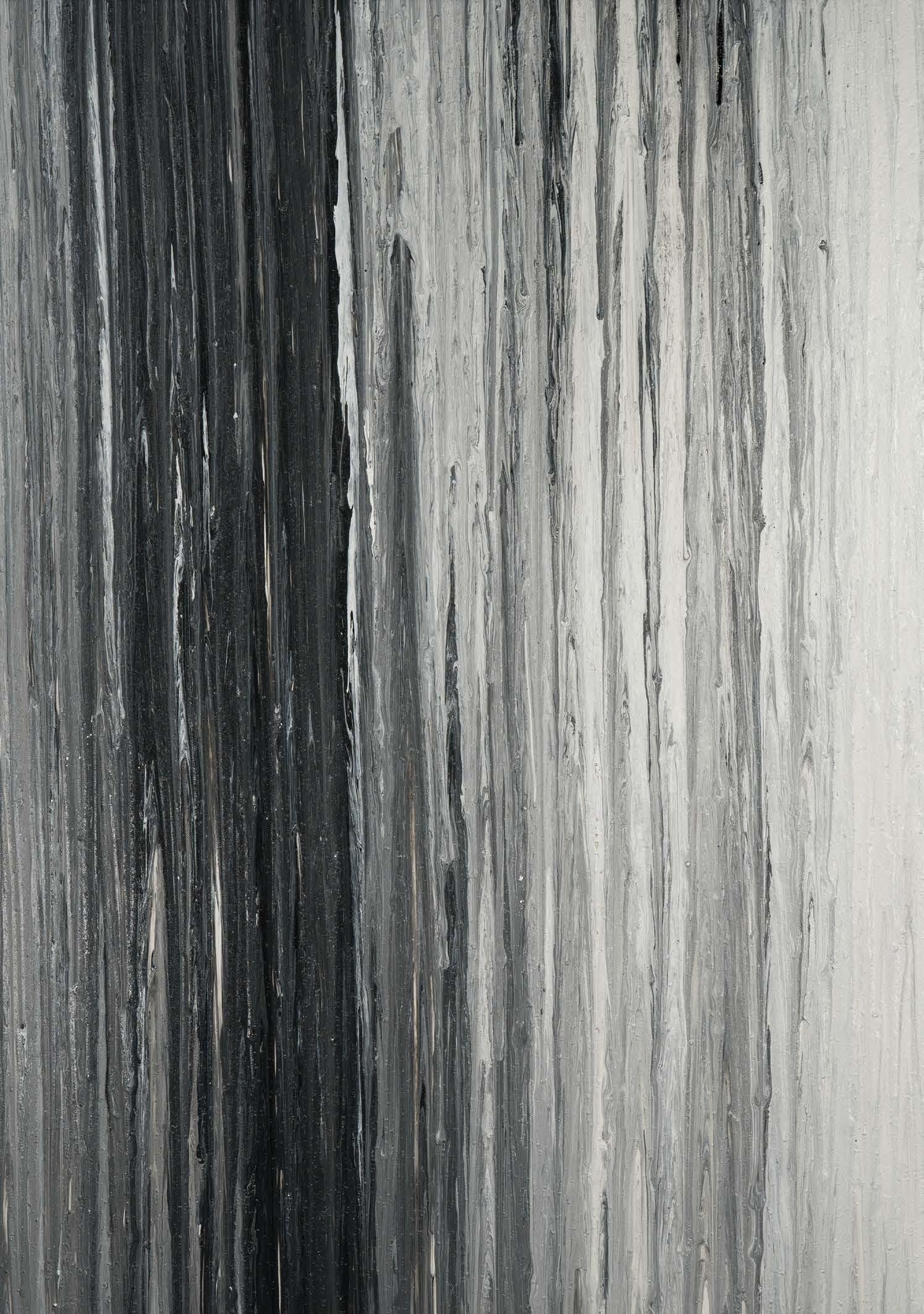
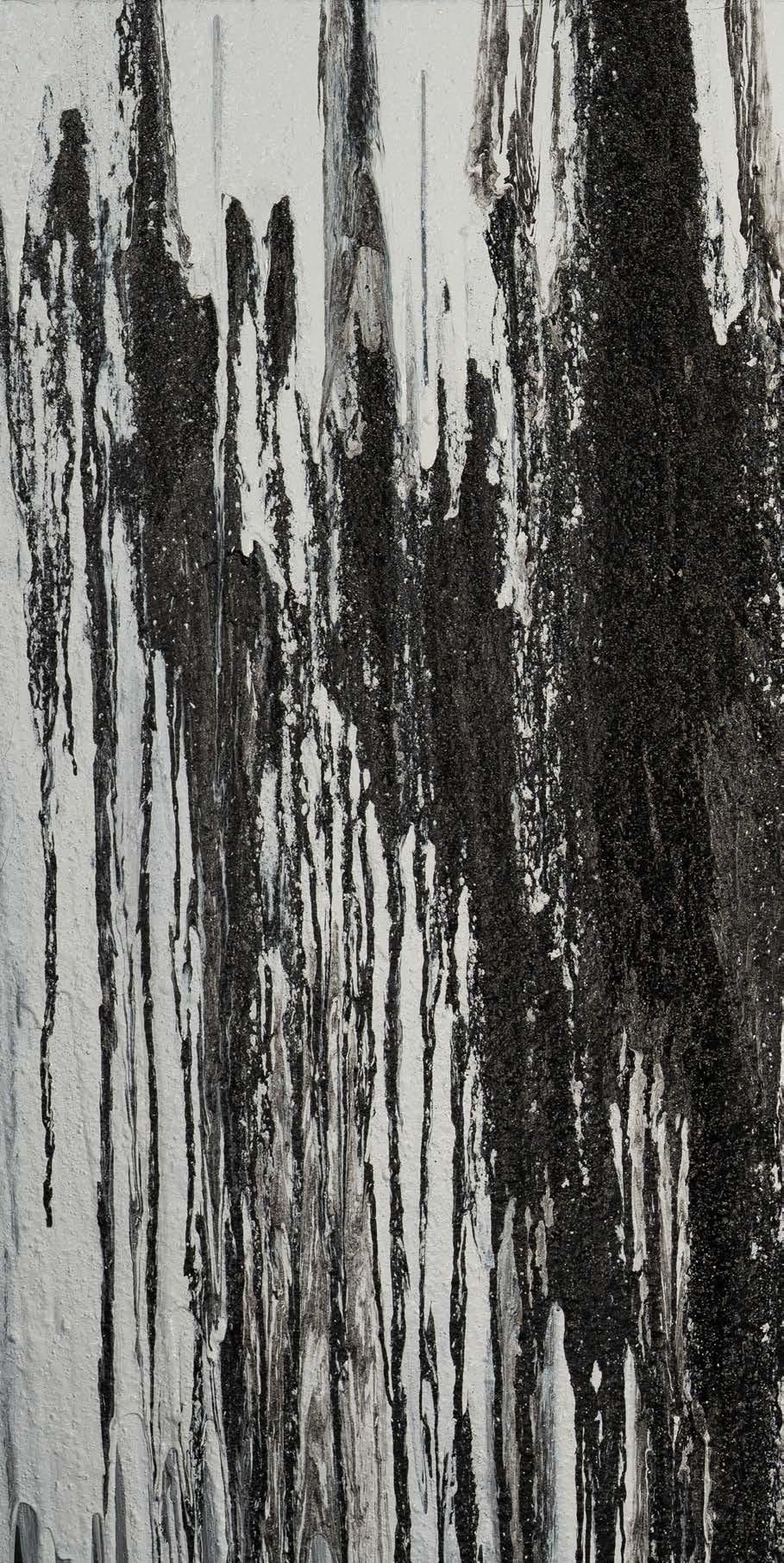
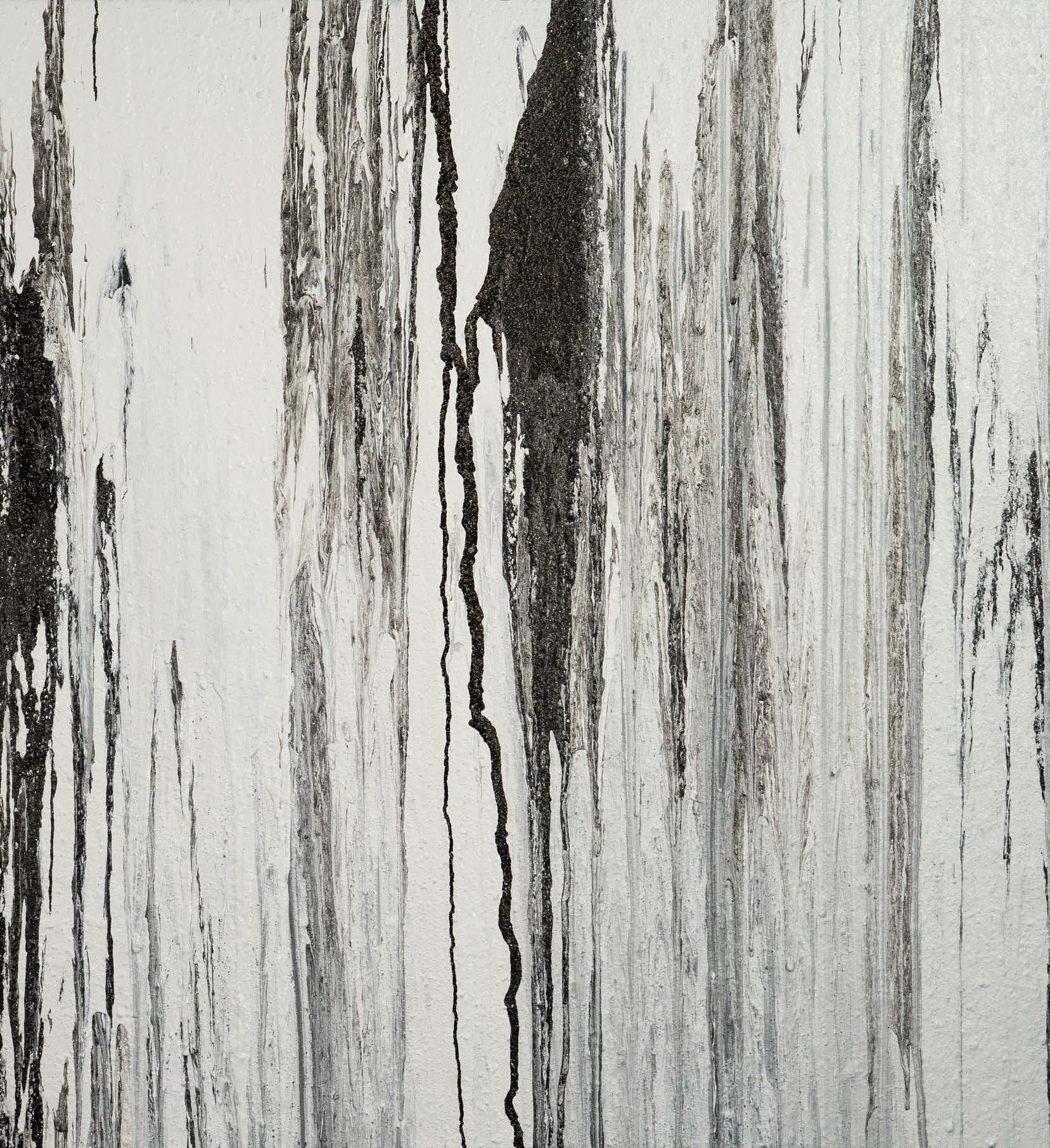
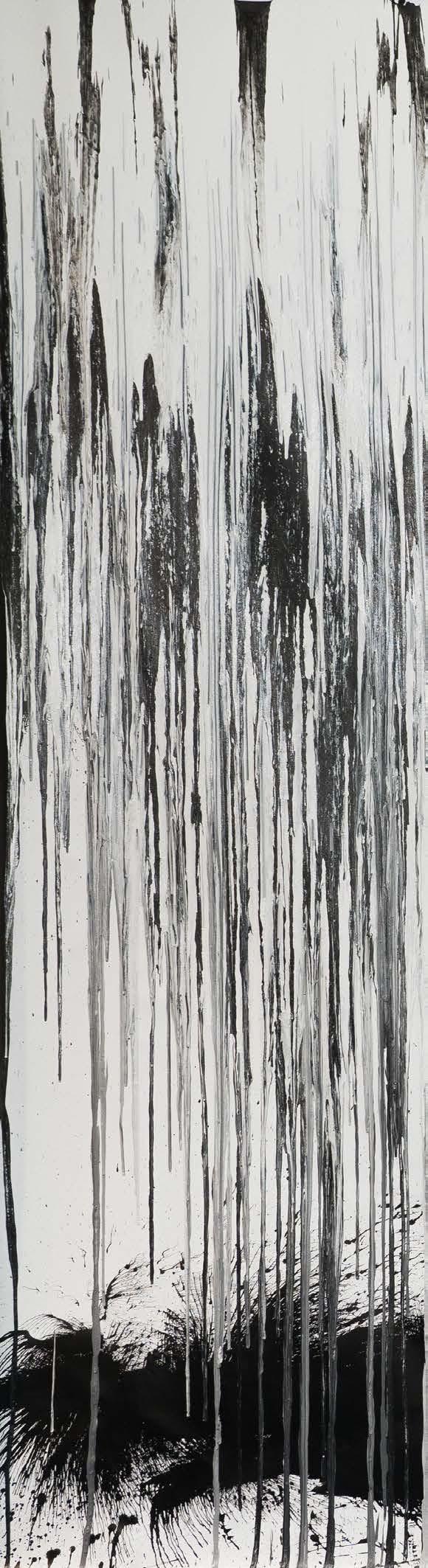
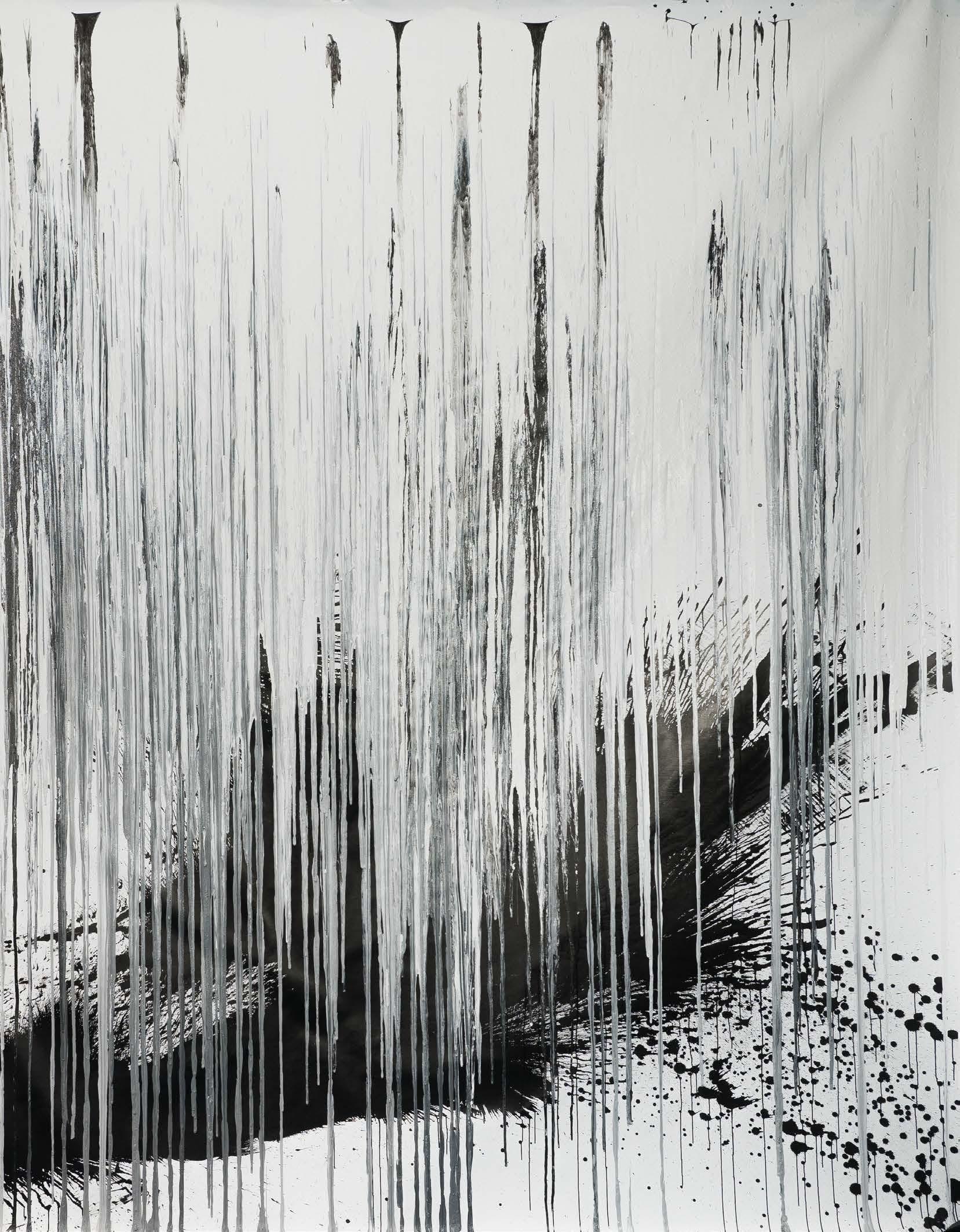
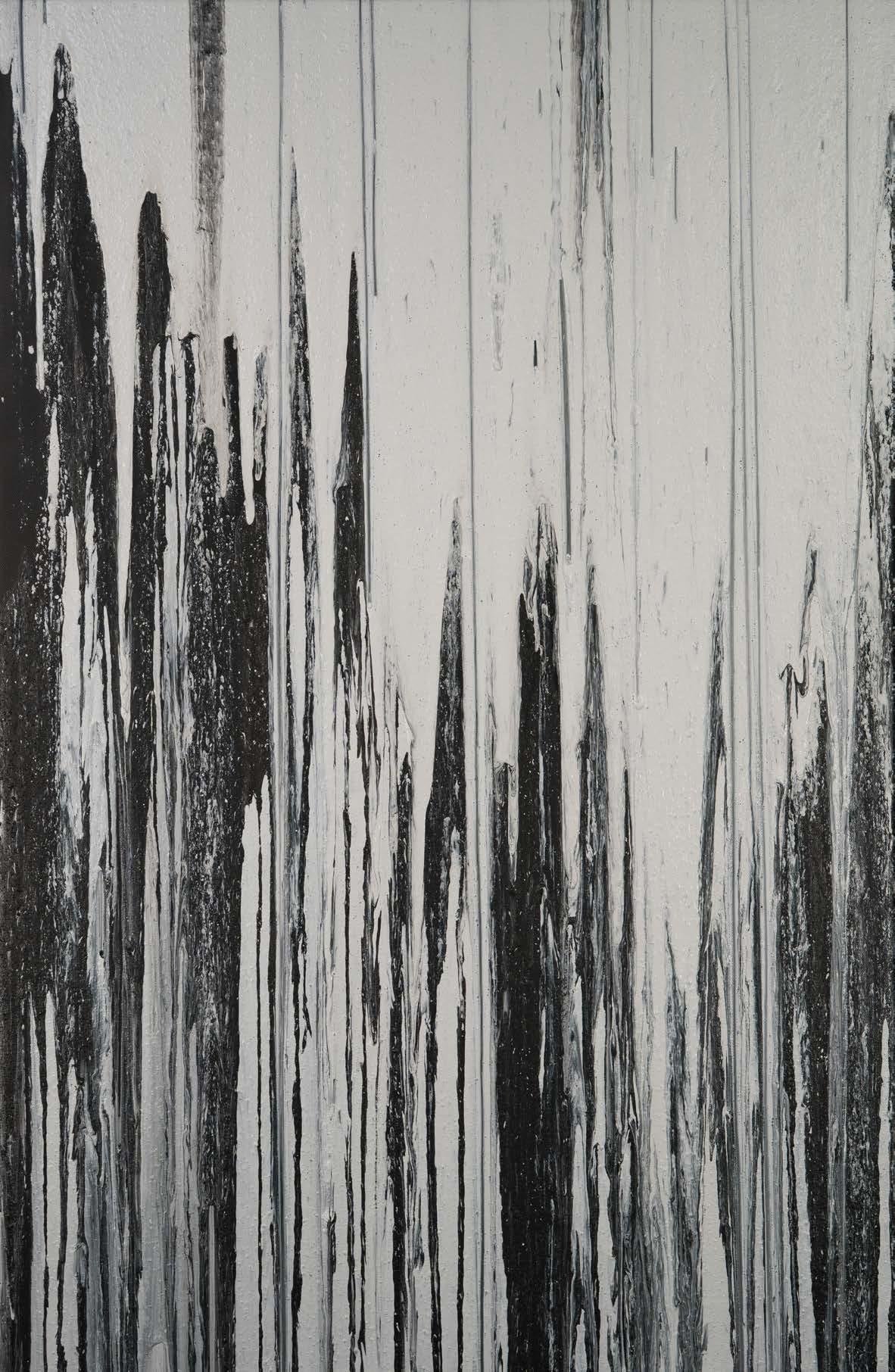
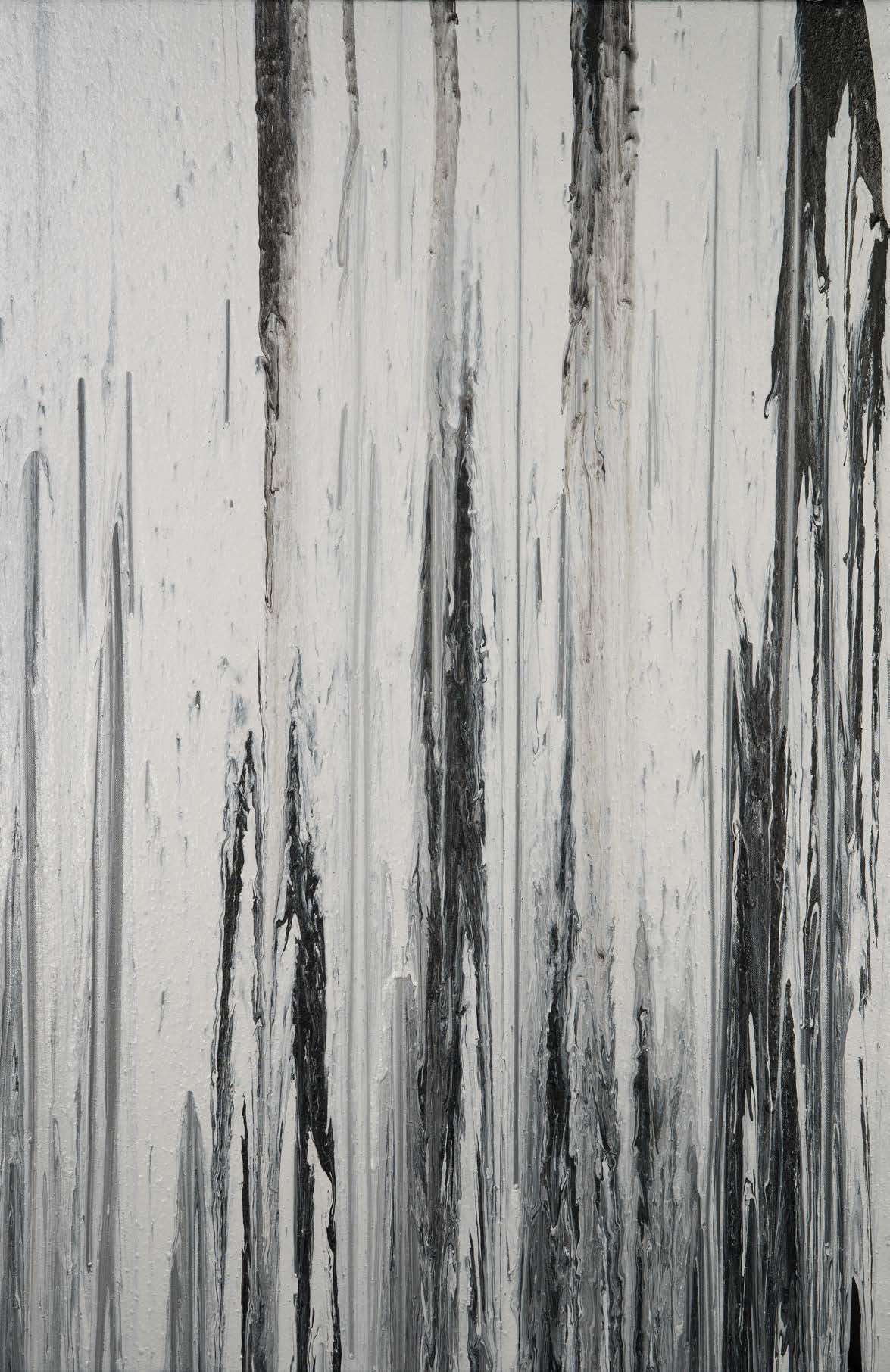
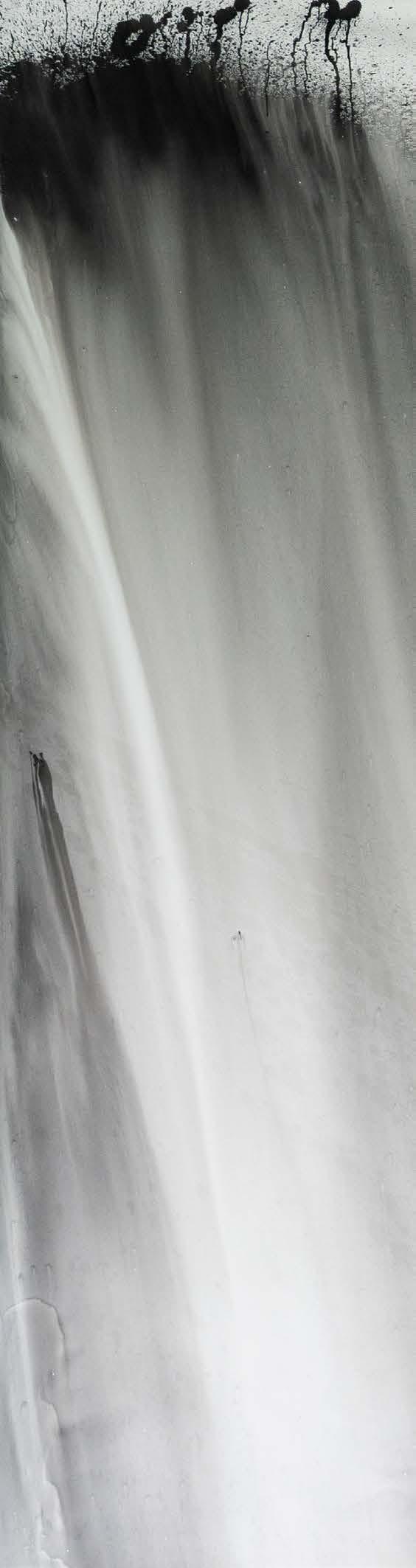
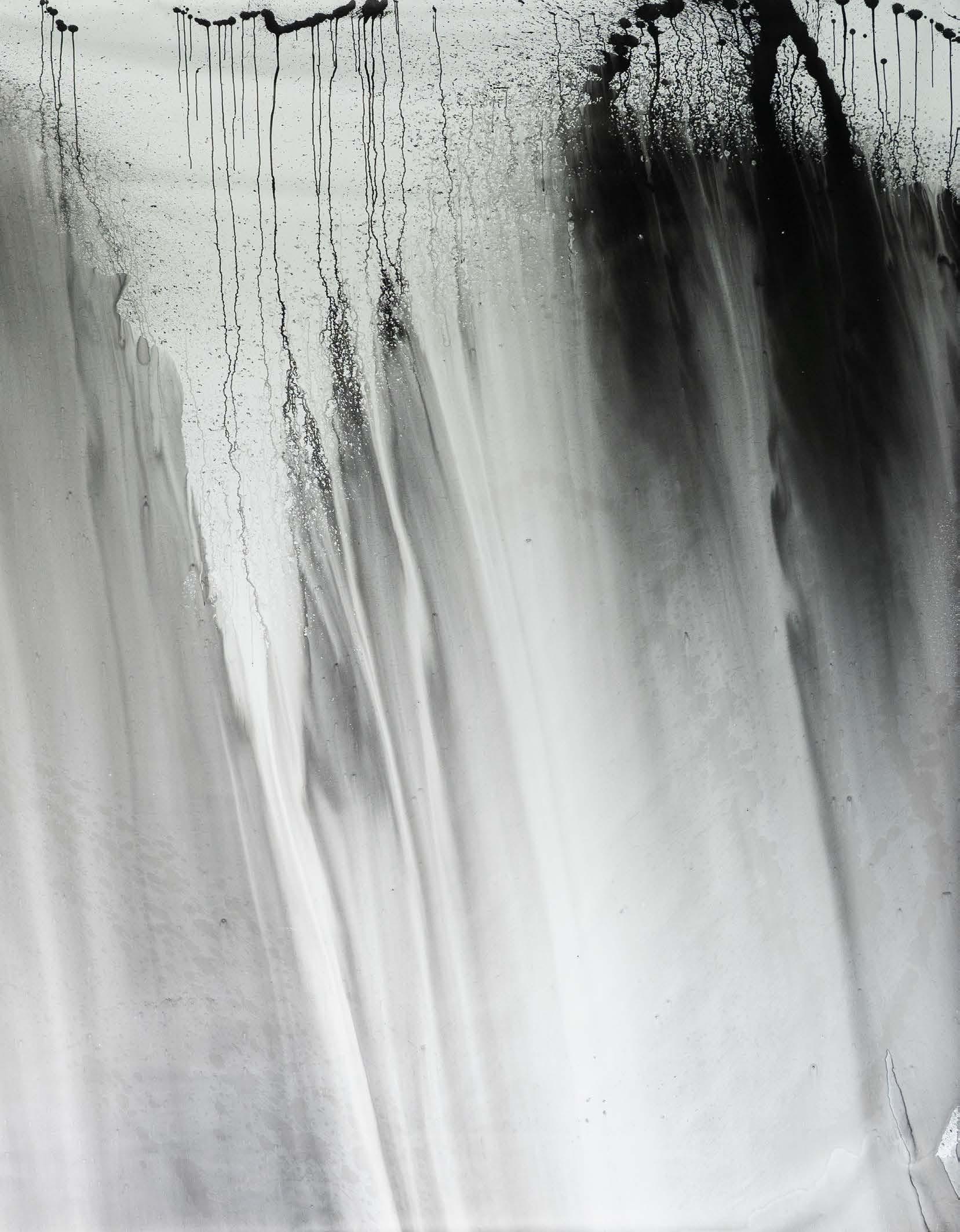
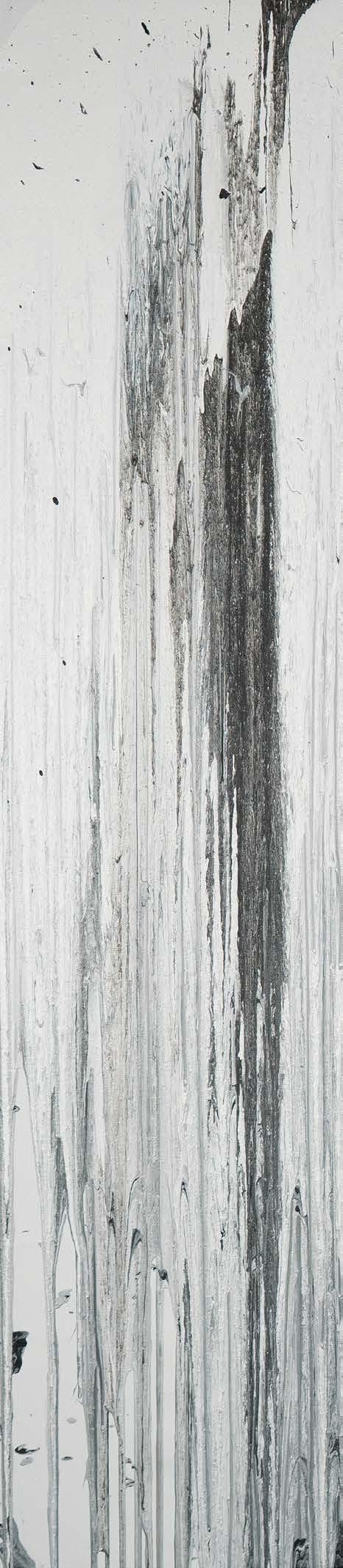
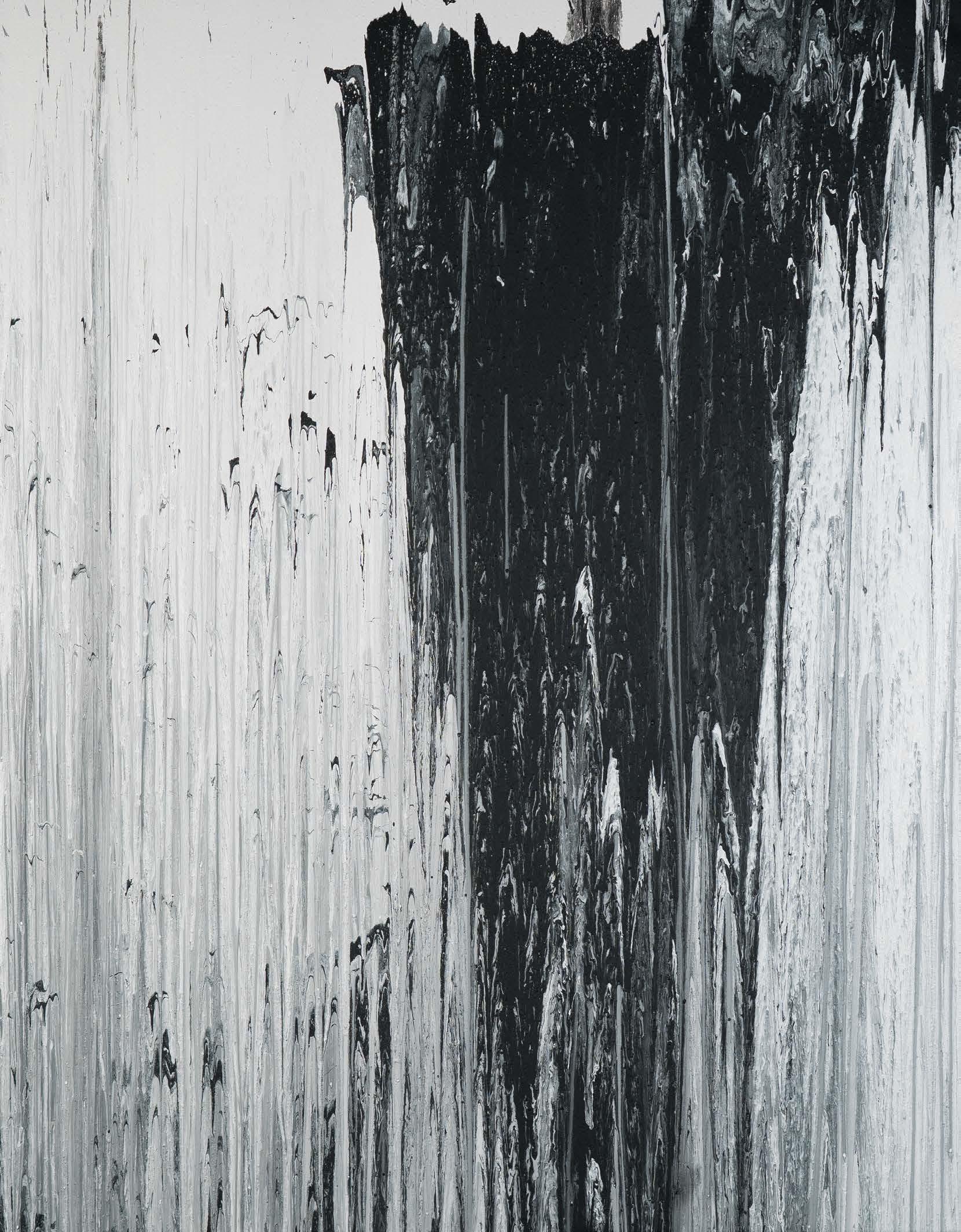
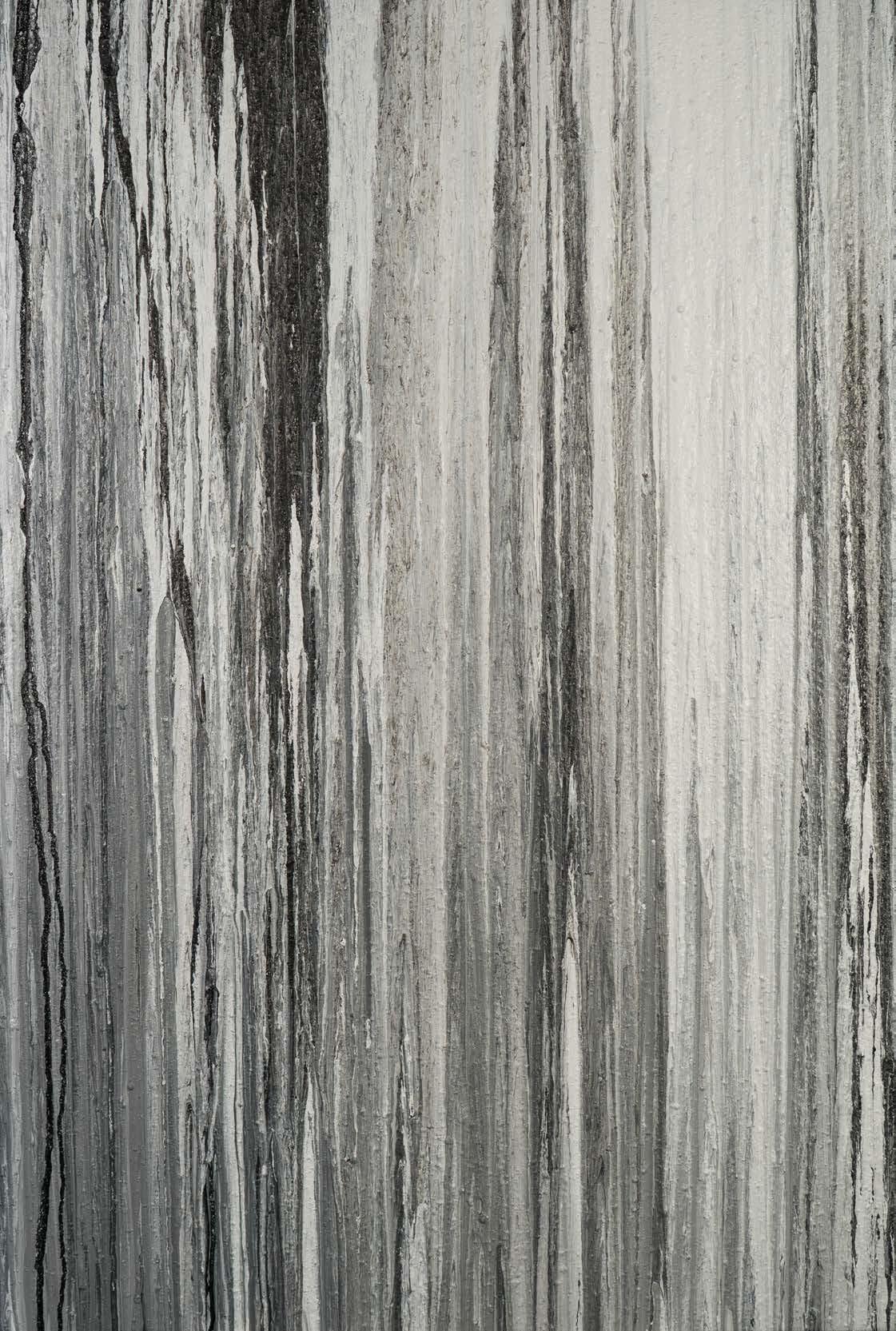
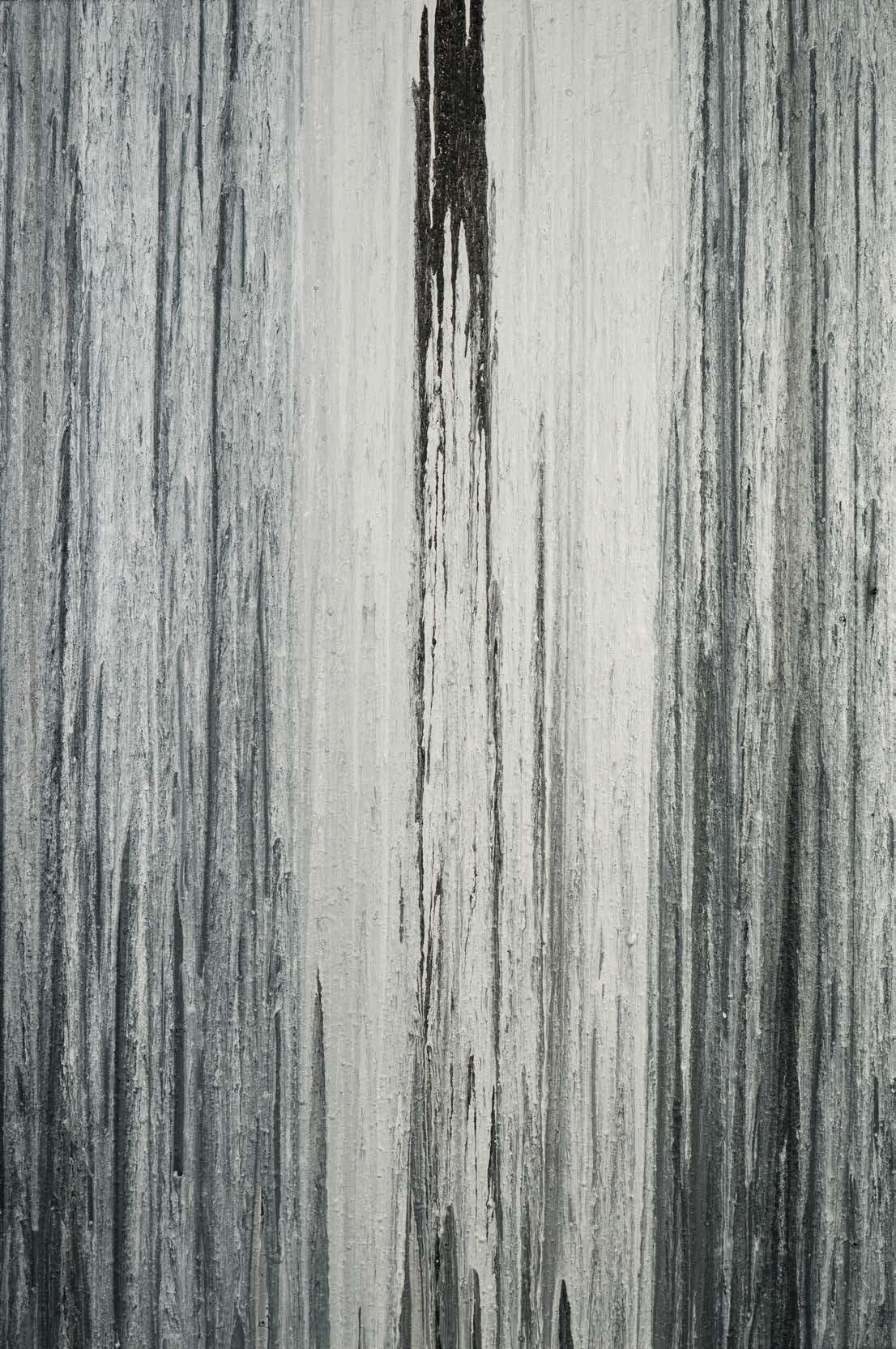
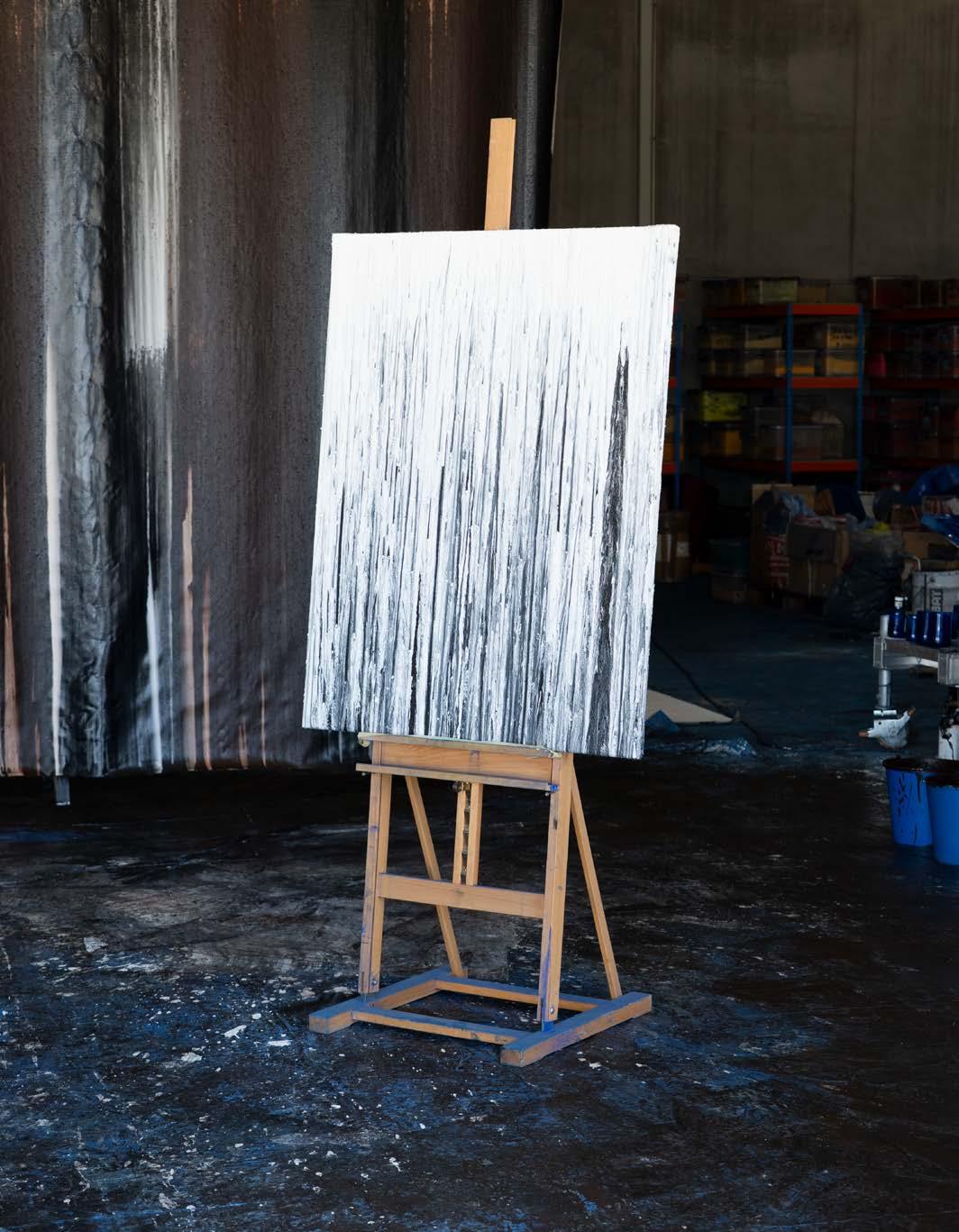
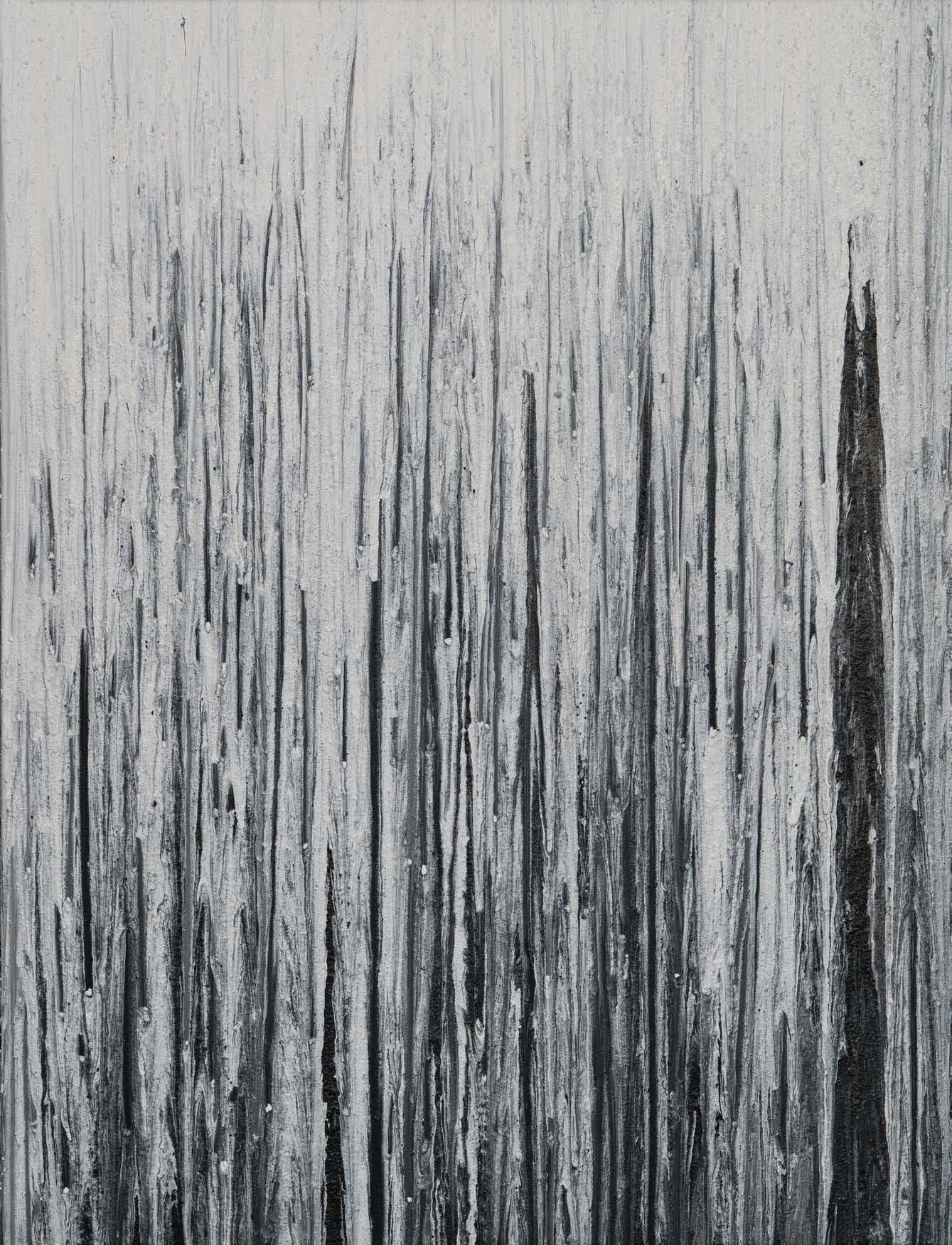
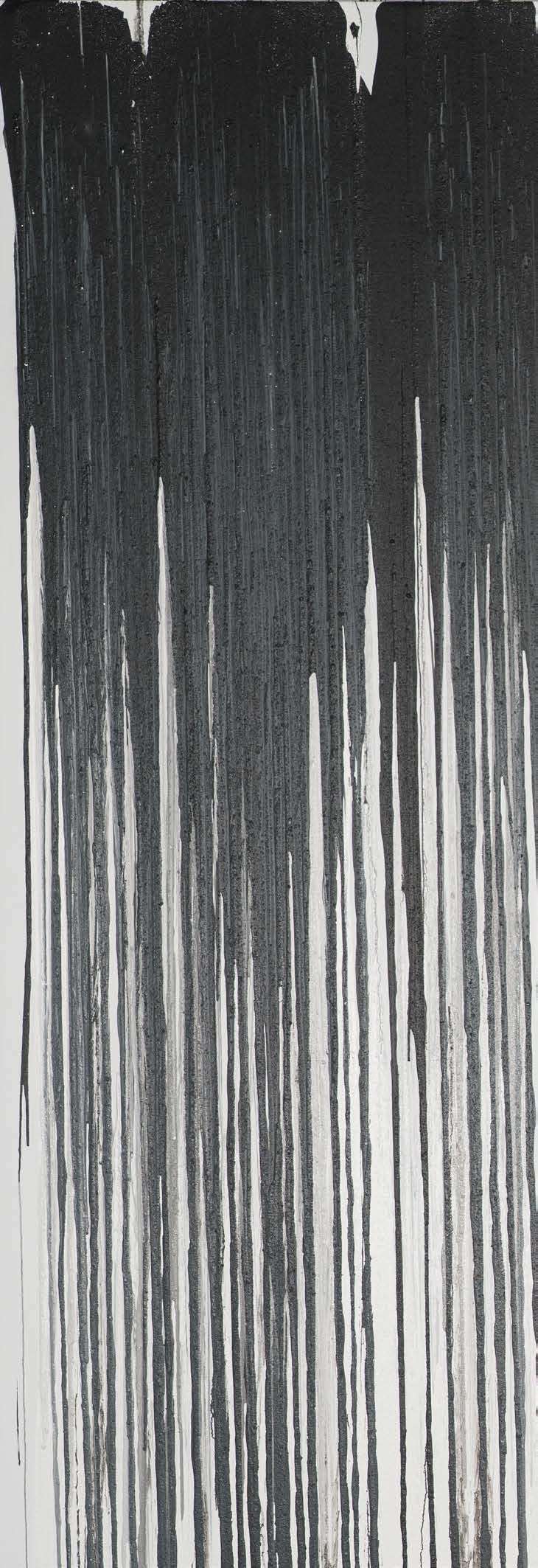
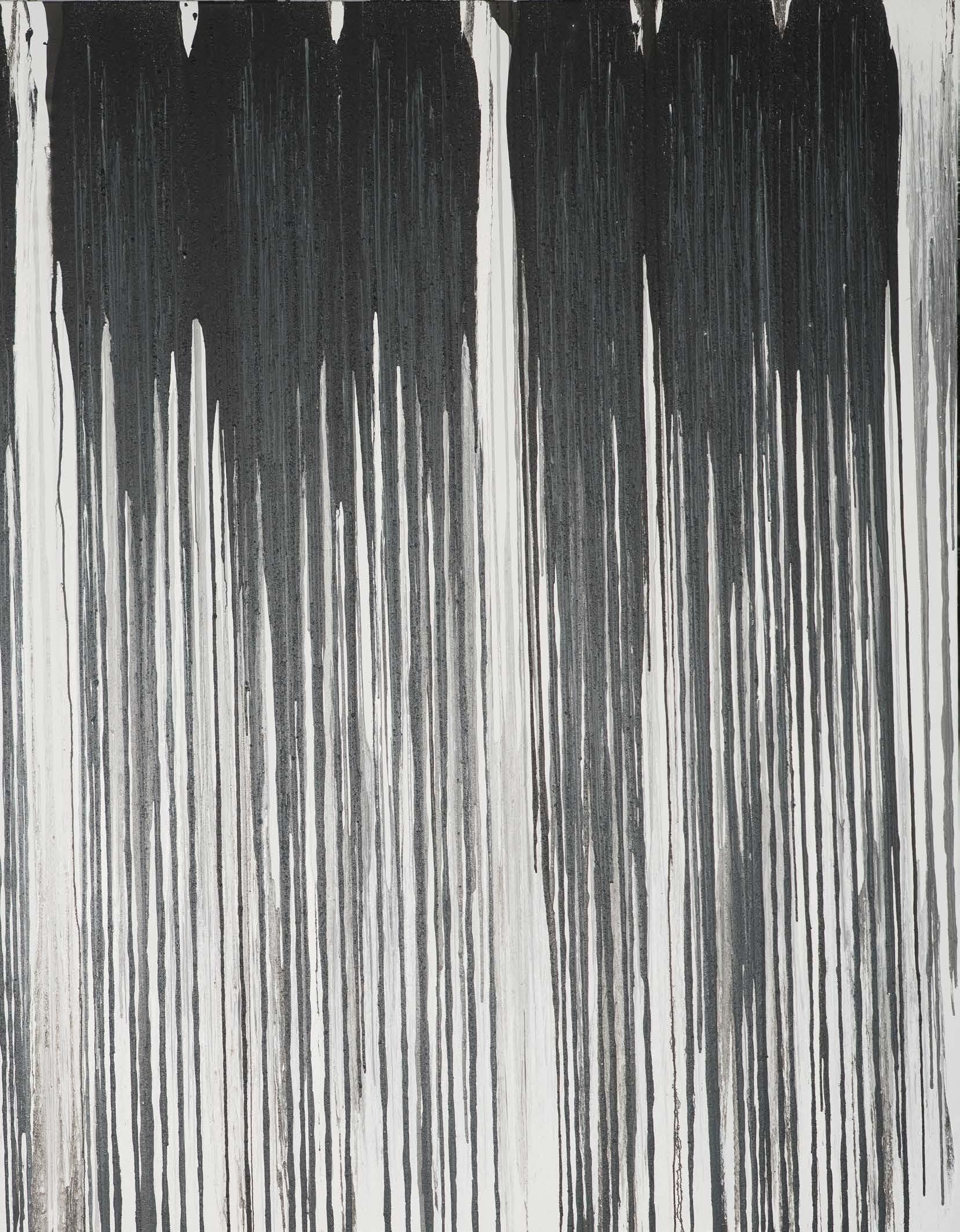
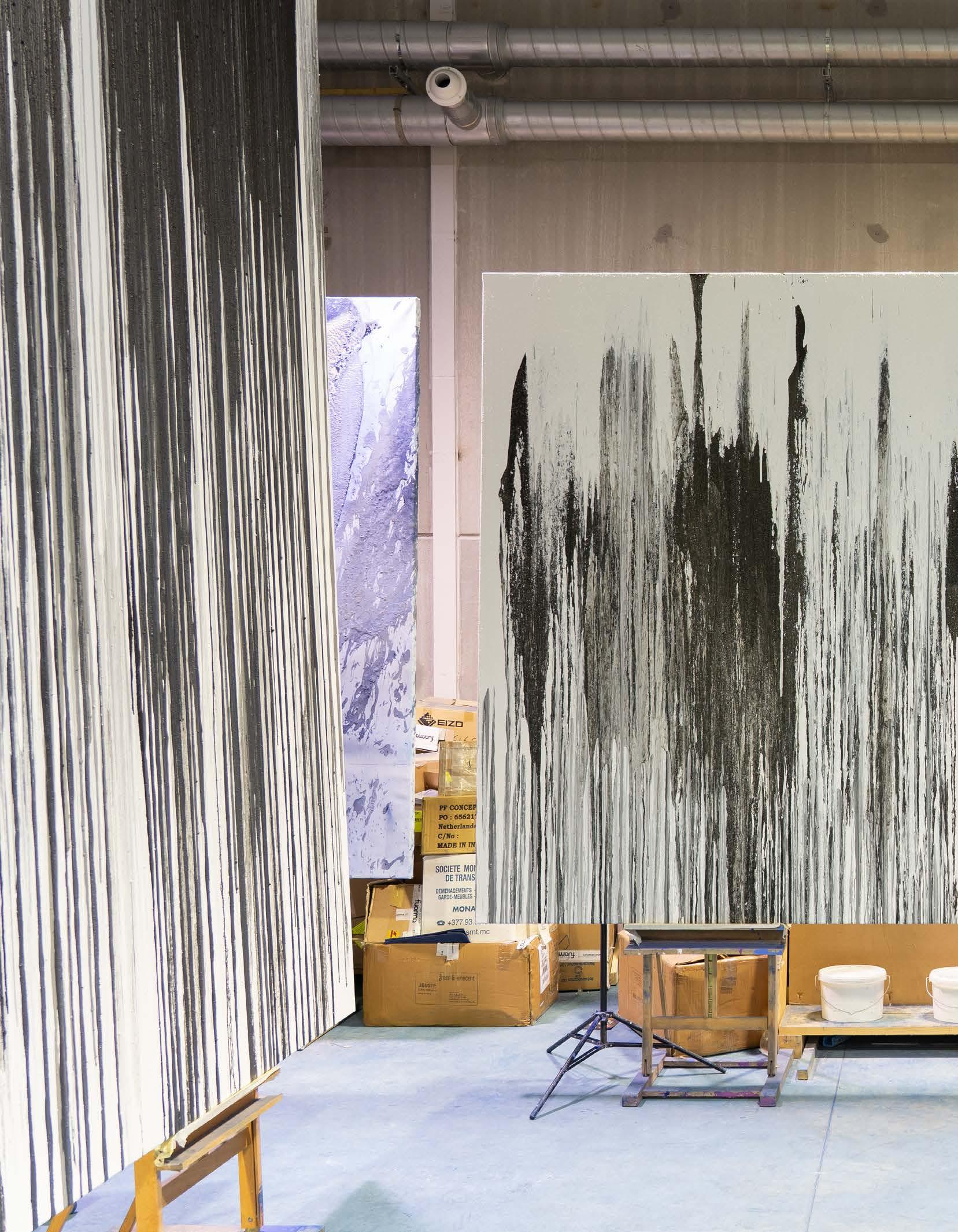
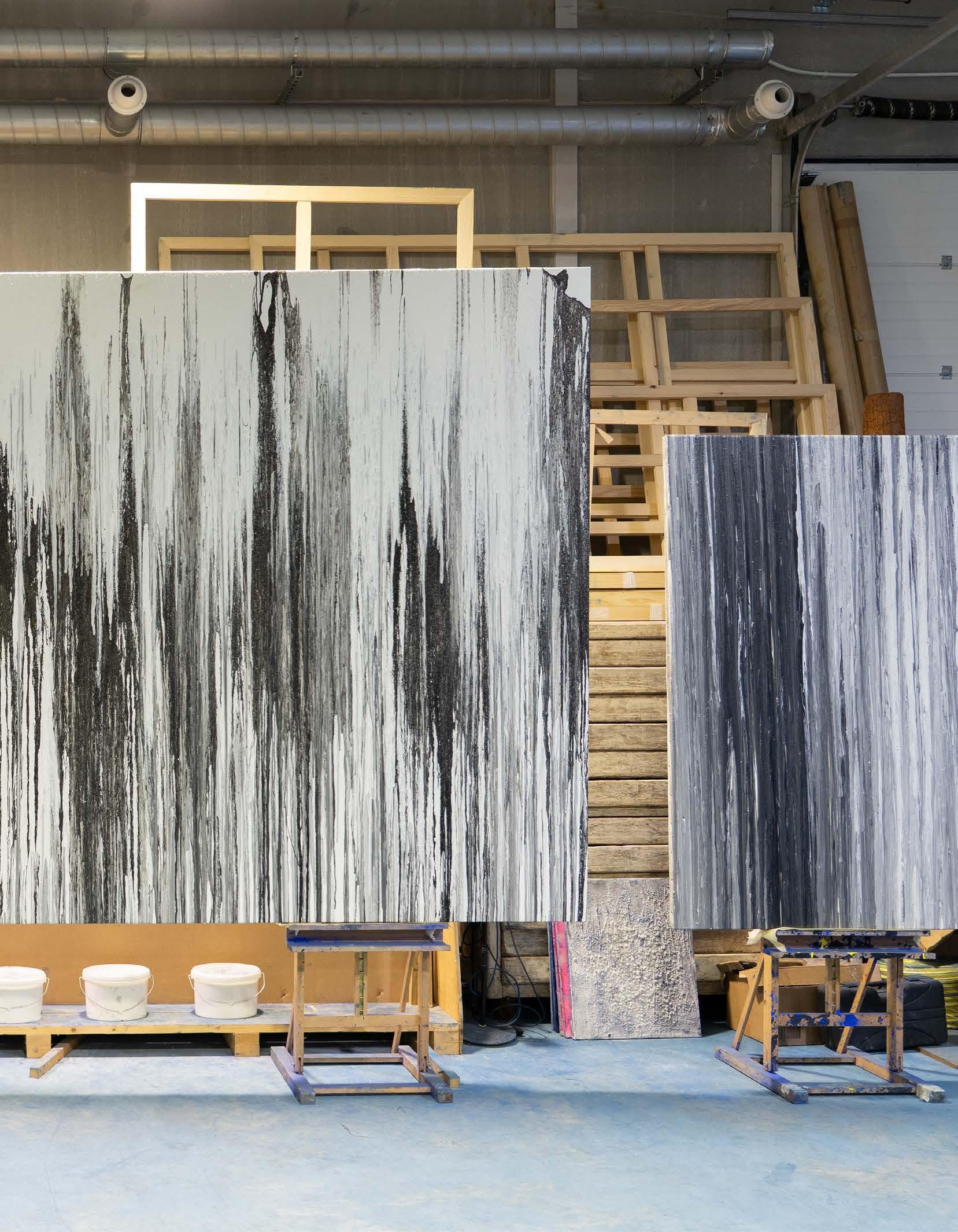
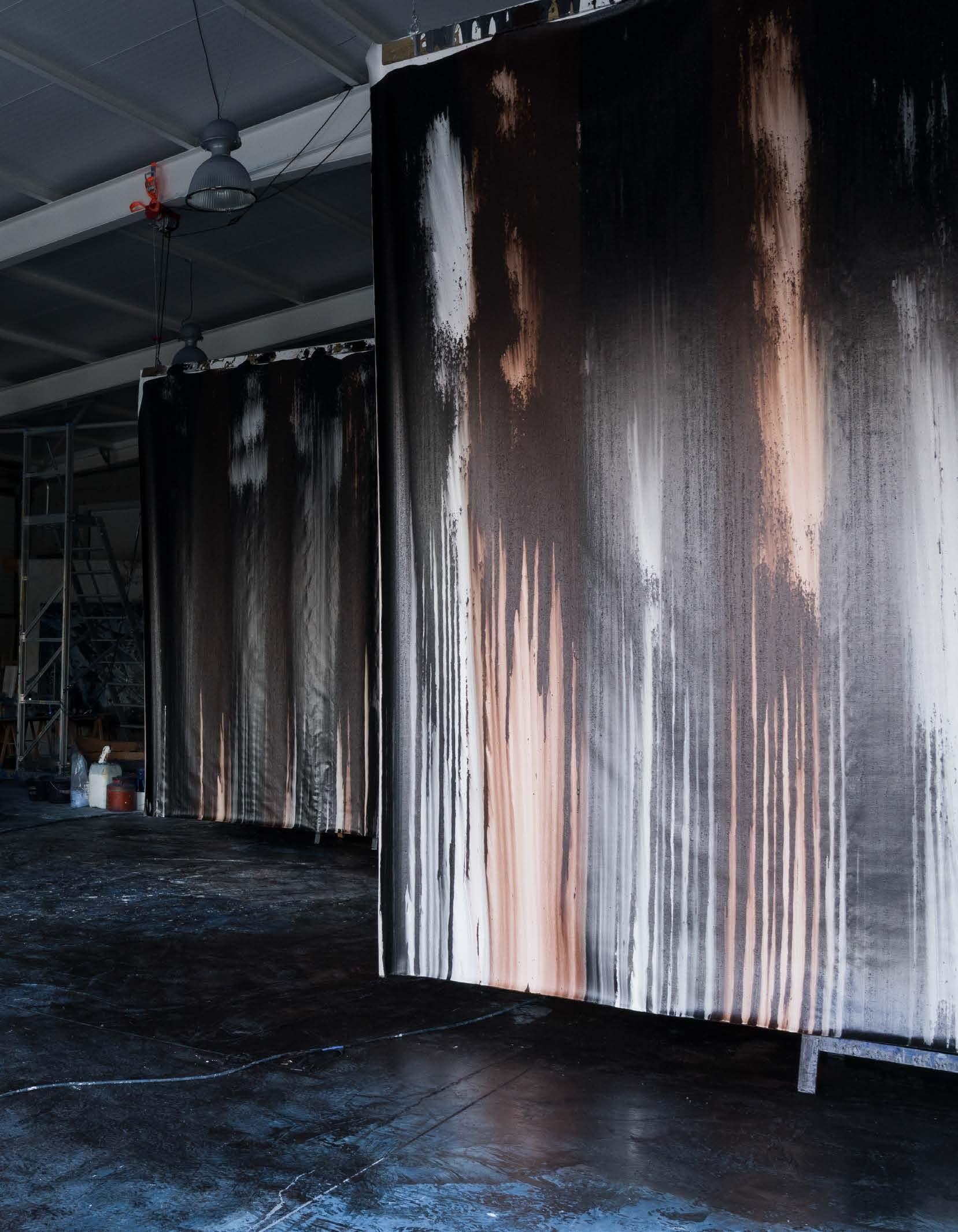
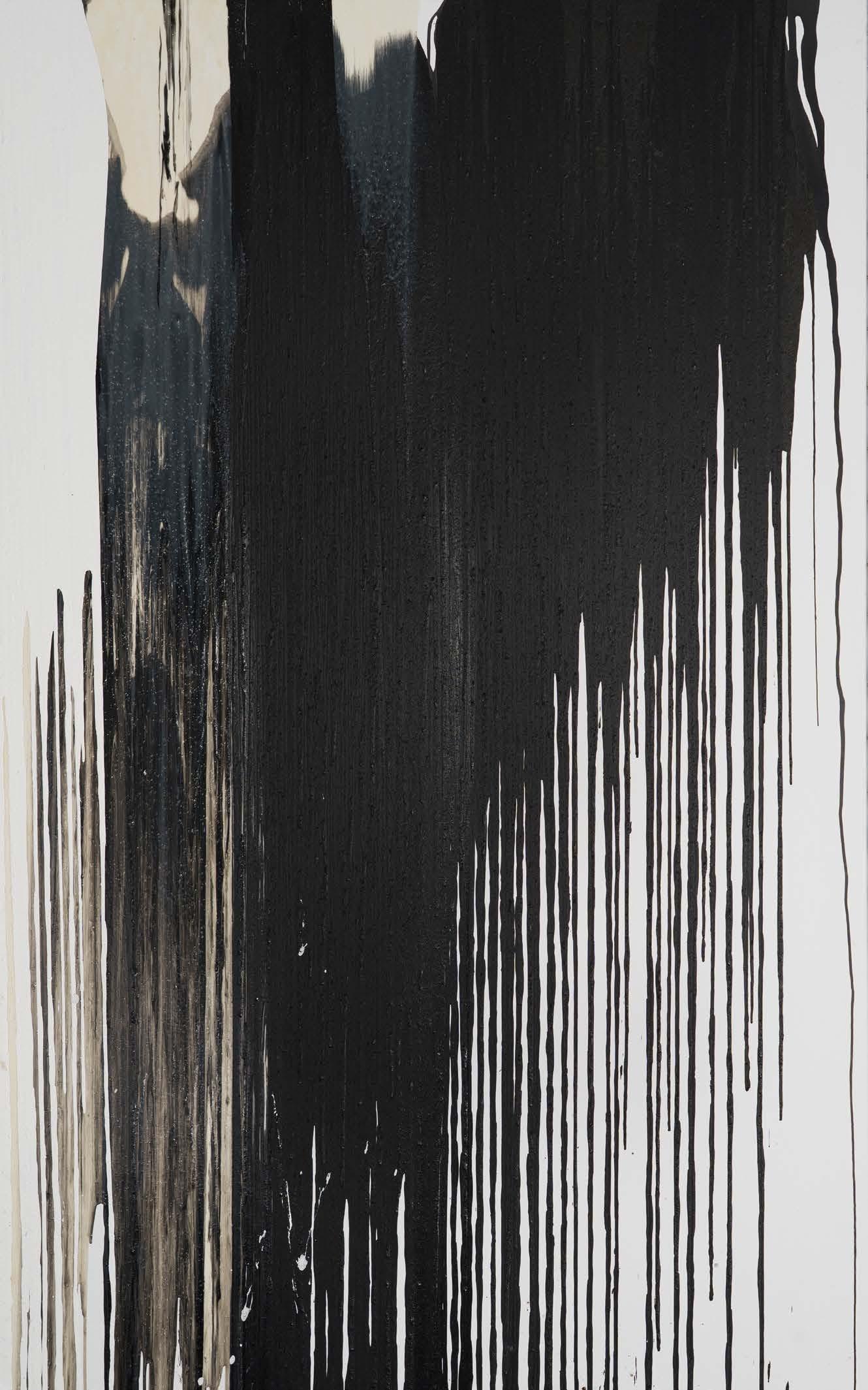
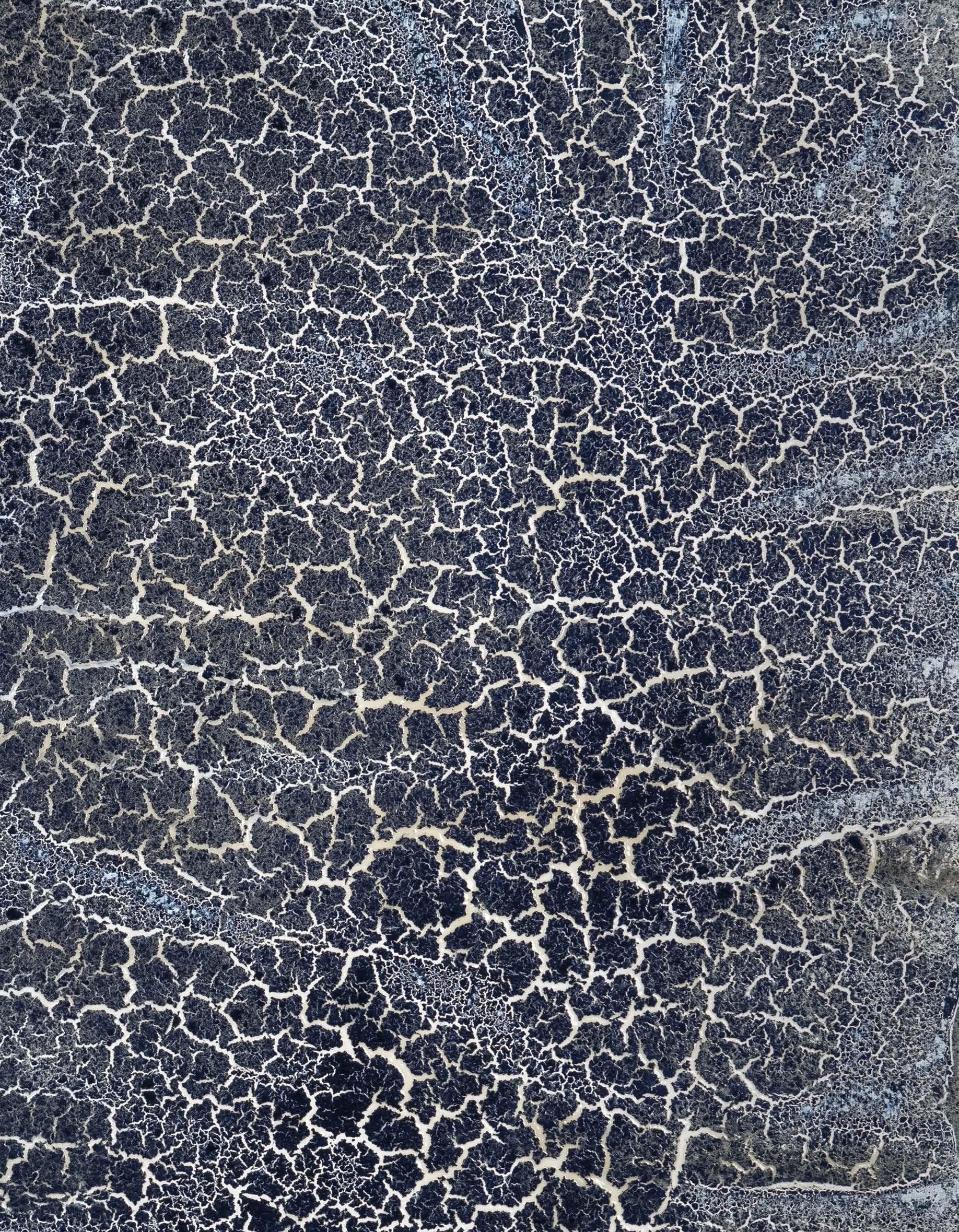
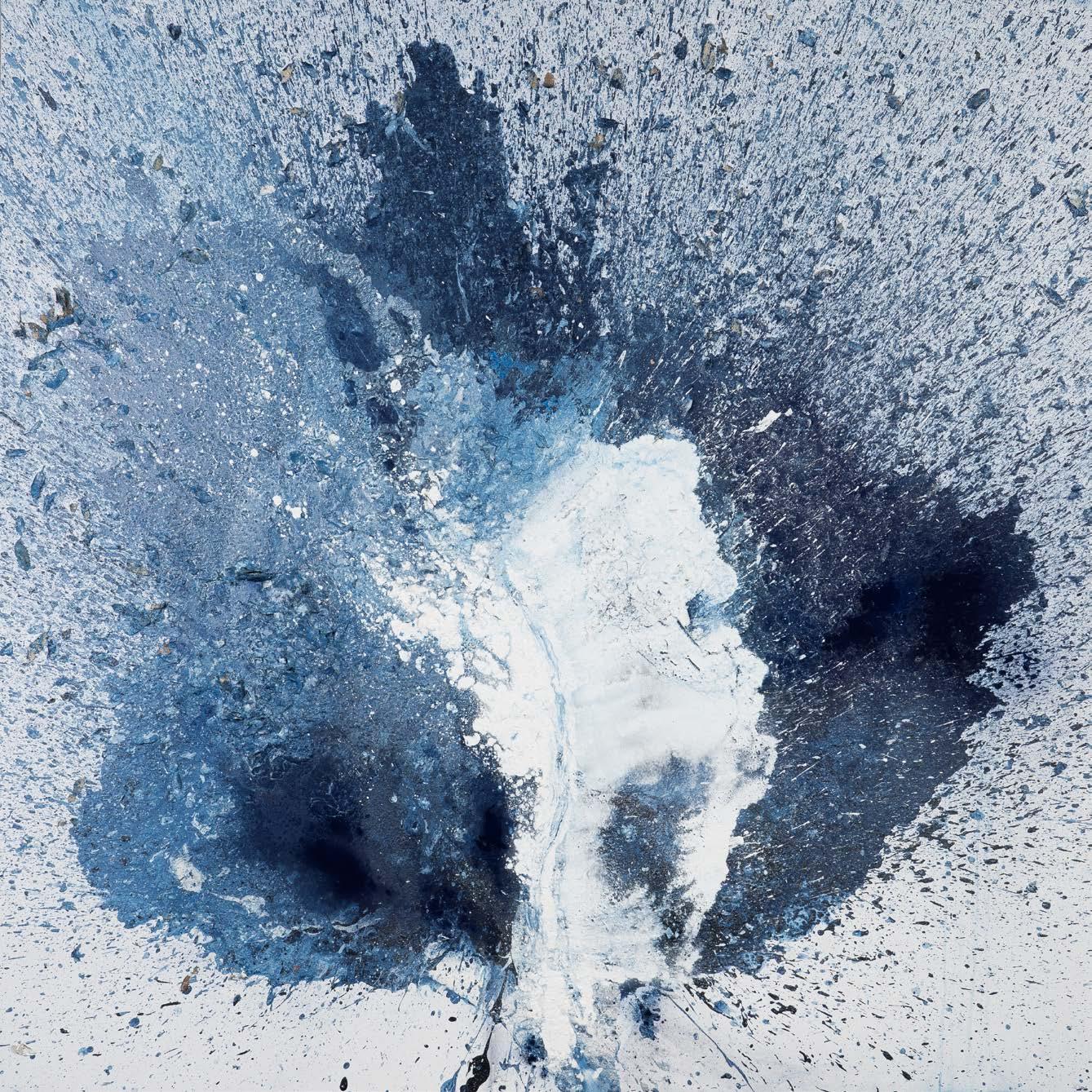
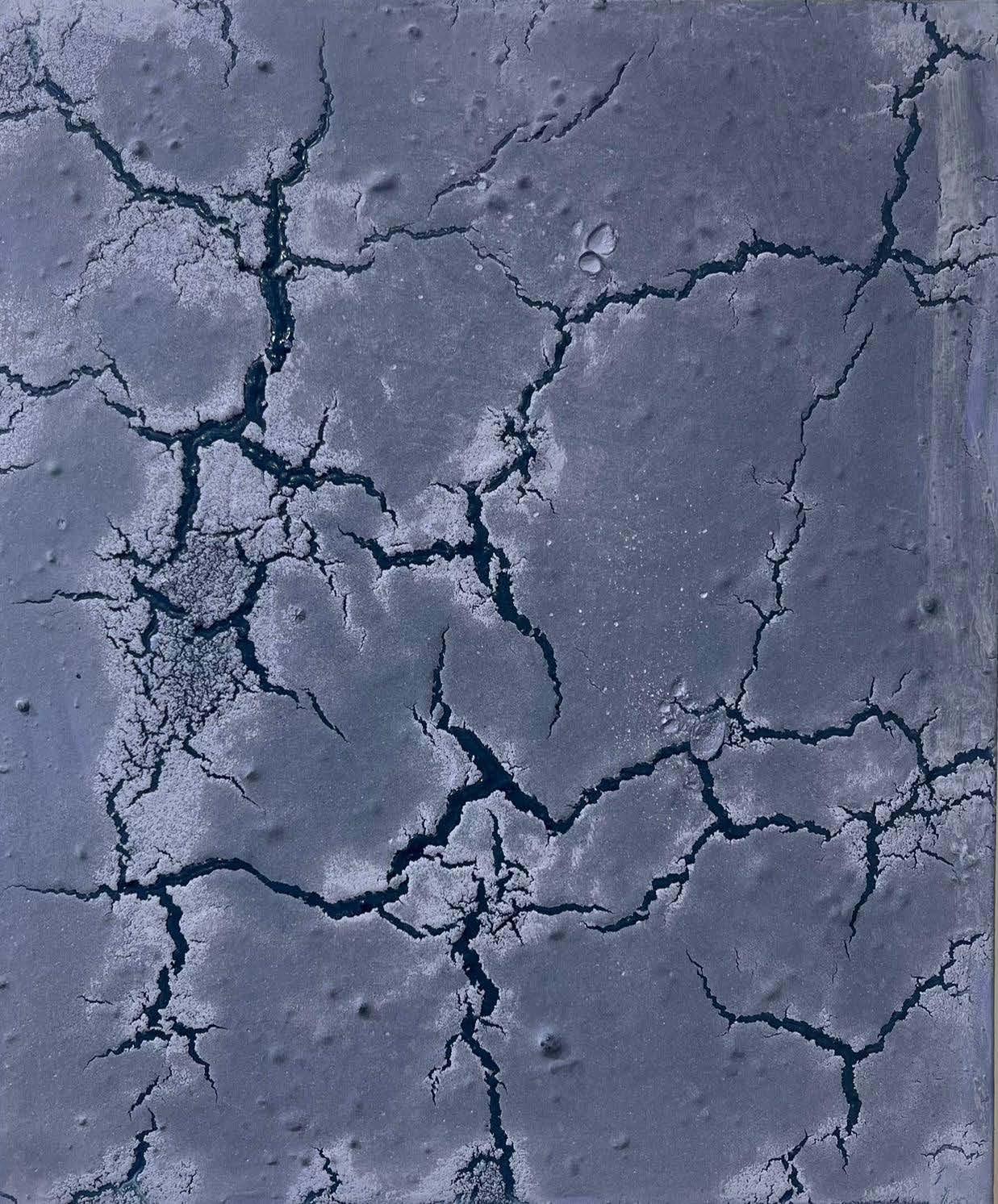
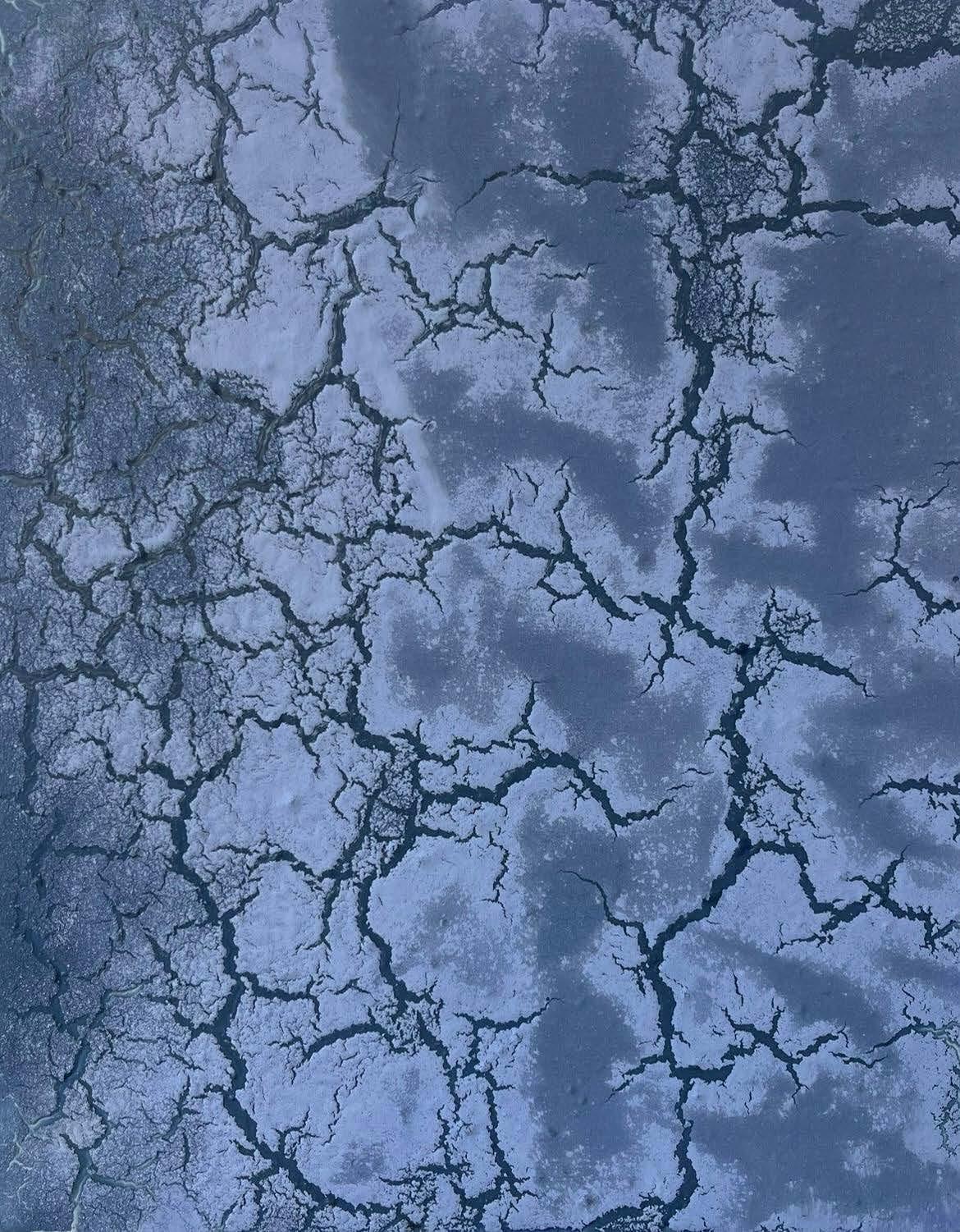
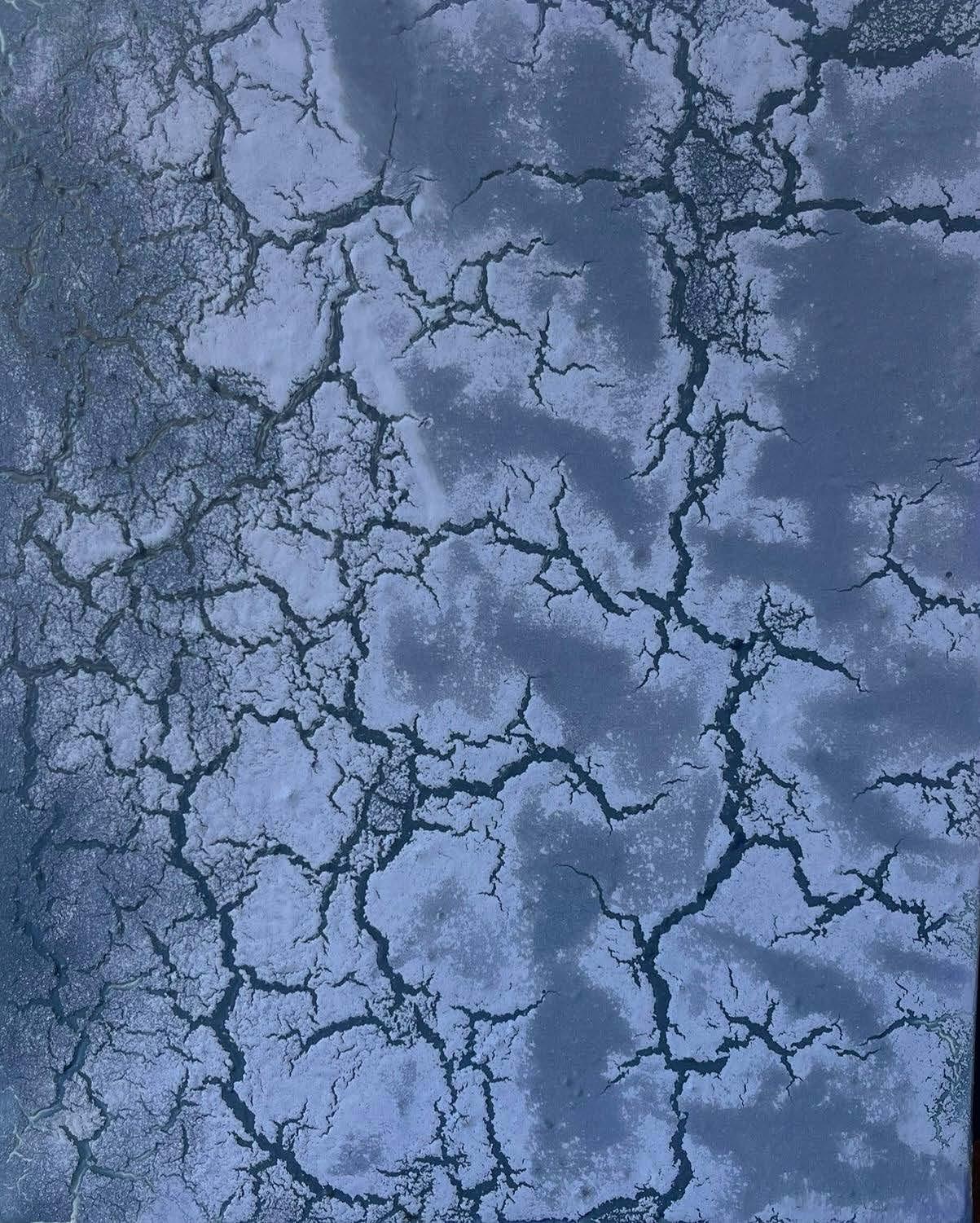
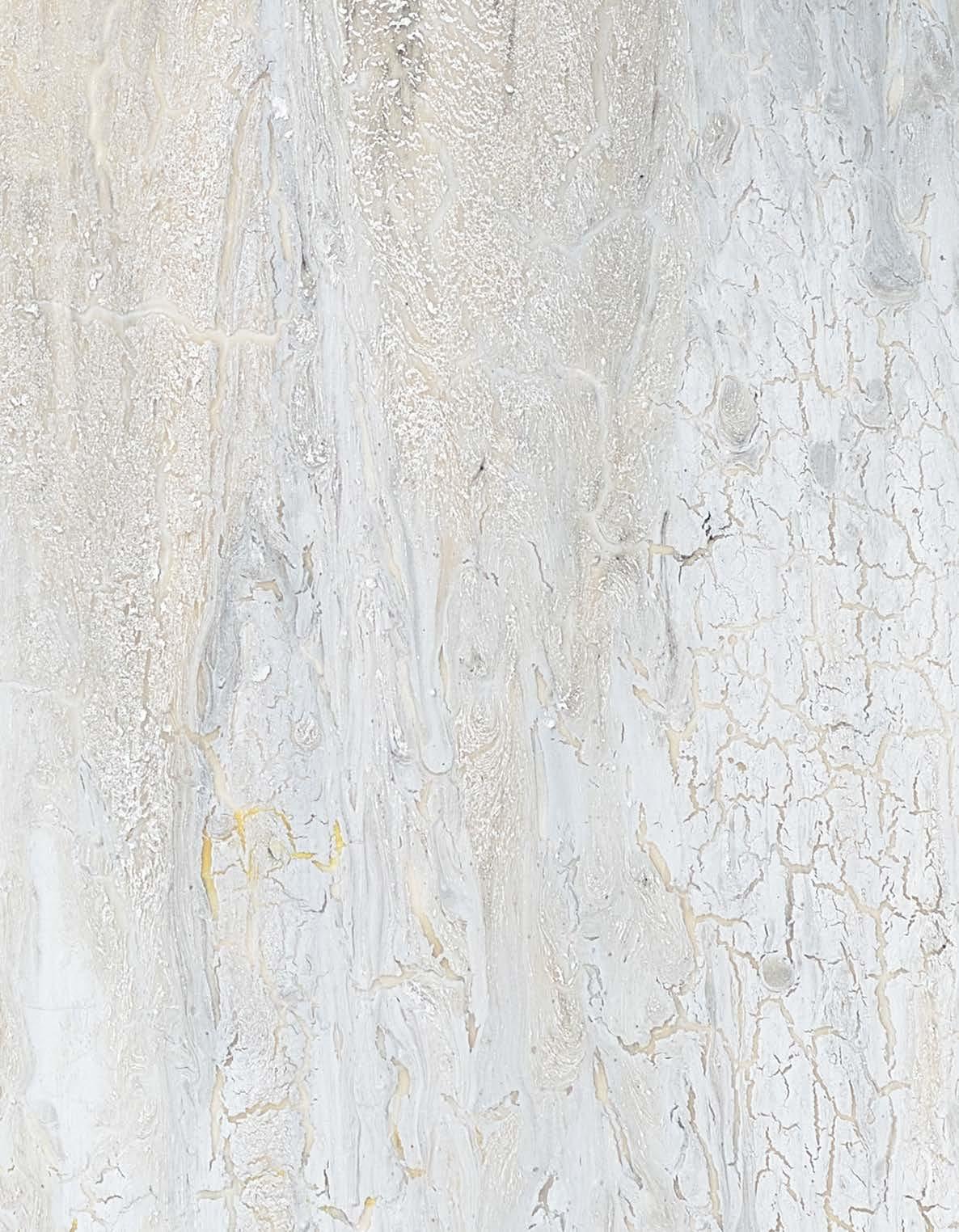
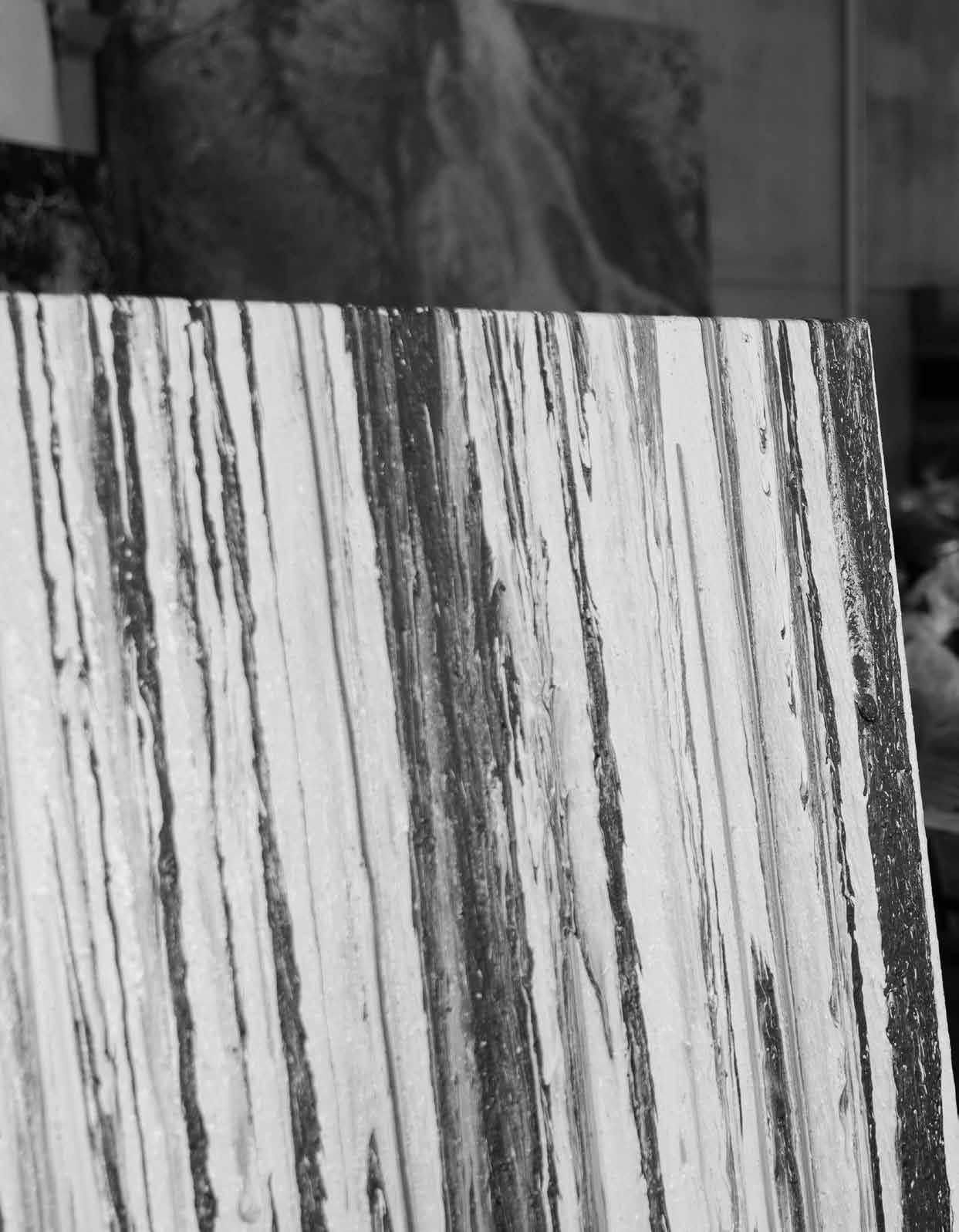
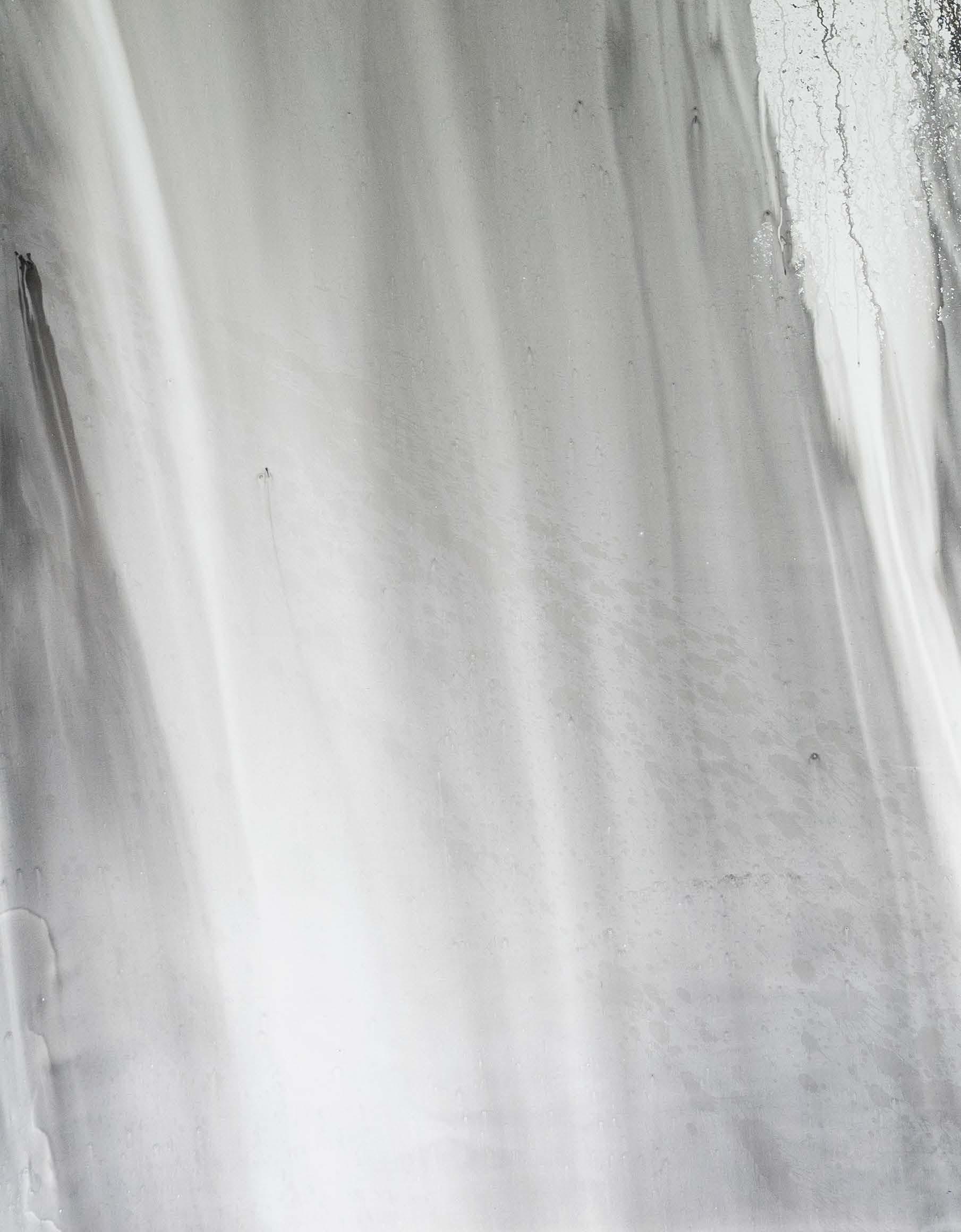
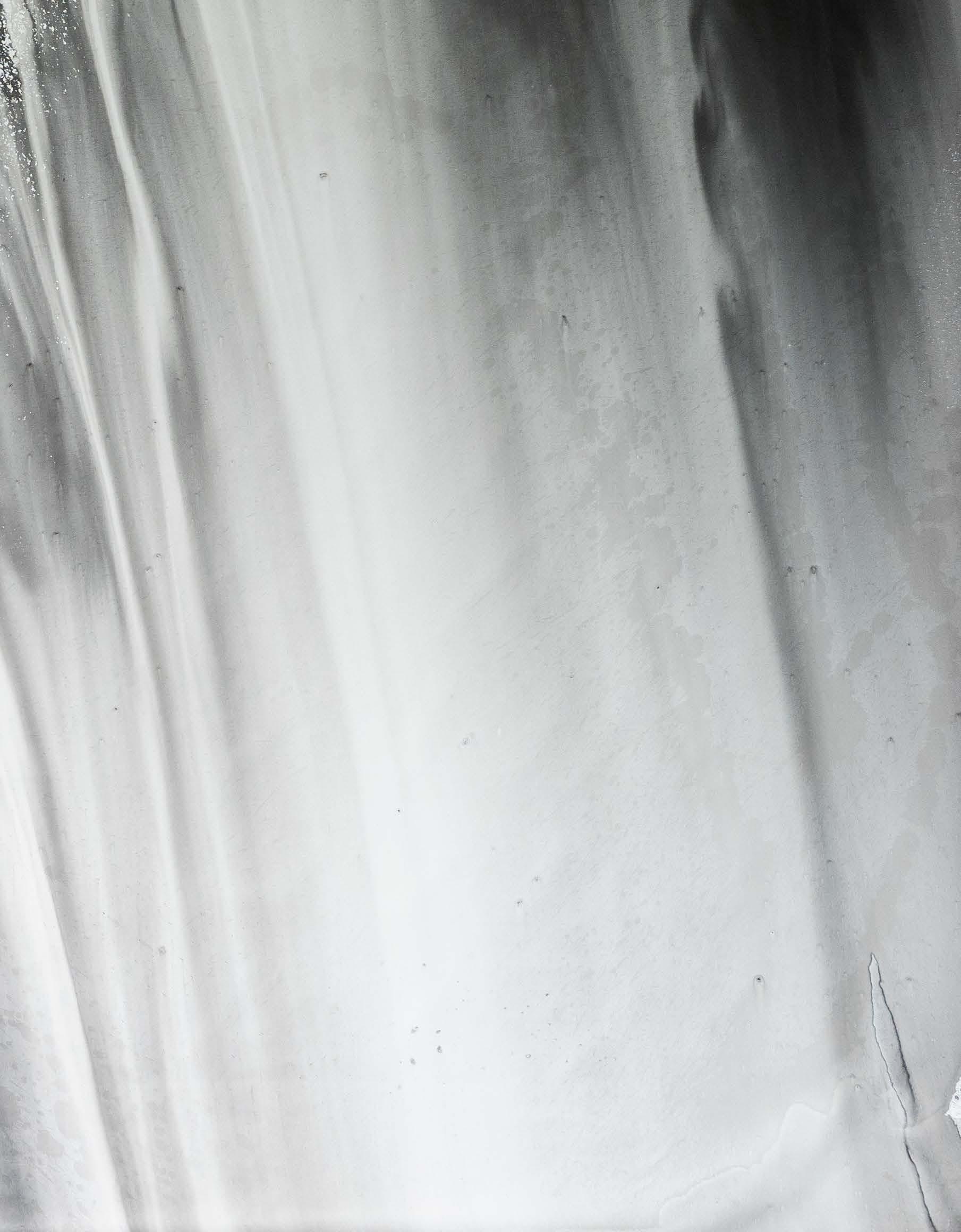
The surface of each canvas is an arena of monochrome juxtaposition, with alternating strips of white, black, and grey. This study in contrast is founded upon a predominance of white and black – unprecedented for an artist renowned for bold use of colour – reveals a landscape of chasms and collapses, drips of dull hues and watery reflections, belying the modesty of the means. The effect is a beautiful and unsettling expression of an ongoing catastrophe. The ice of our the planet, once thought to be eternal, is melting as we watch. The North Pole cycle – executed over an intense six-month period – marks a new, urgent phase in Philippe Pastor’s pictorial research, insisting and expanding upon the core of his practice as a whole: to warn of the destruction of the planet and the existential threat this poses to humanity.
The origins of this series stem from the artist’s personal experience, not in the polar regions, but in France, where he spends around half of each year living in a secluded house in the Chamonix Valley. “Mont Blanc is no longer white,” he asserts. “Striations in the ice, dirt tracks, traces of pollution from the valley and rocks carried by the melting glacier – these are visible from all sides.” This disturbing metamorphosis has also been observed for years on the largest ice sheets on Earth, in the Arctic and Antarctic, which are crucial to the climatic balance of the planet. Ever conscious of imminent environmental catastrophe, Pastor wanted to dedicate this series to the melting of ice across
Pôle Nord: la fonte des glaces, miroir du monde
By Axelle Corty
Considérées comme un ensemble d’œuvres, les peintures du pôle Nord de Philippe Pastor sont volontairement intimidantes et séduisantes, incarnant sa mission esthétique et sociale.
À la surface des toiles, des lignes de blanc, de noir, de gris en alternance. Ce travail graphique sur le contraste, cette prédominance du noir et du blanc, inédit chez l’artiste réputé pour son usage magistral de la couleur, révèle malgré l’économie des moyens des gouffres et des effondrements, des coulures à la teinte terne et aux reflets aqueux. Autant d’expressions picturales belles et angoissantes d’une catastrophe en cours. Les glaces de la planète, même celles que l’ont pensait éternelles, fondent sous nos yeux. Avec « Pôle Nord », exécuté sur une période intense de six mois, Philippe Pastor inaugure un nouveau cycle de sa recherche picturale, tout en conservant l’axe qui sous-tend toute sa pratique : avertir sur la destruction de la planète et la possible disparition de l’humanité.
« Pôle Nord » trouve sa genèse dans une expérience sensible de l’artiste, pas dans les régions polaires, mais en France, ou il vit environ six mois par an dans une maison isolée de la vallée de Chamonix. « Le Mont Blanc n’est plus blanc. », assène-t-il, « Des stries dans la glace, des coulées sales, traces des pollutions de la vallée et des roches entraînées par la fonte du glacier, s’imposent à la vue de tous côtés. » Cette inquiétante métamorphose s’observe aussi depuis des années sur les plus vastes étendues glacées du globe, en Arctique et Antarctique, pourtant garantes de l’équilibre climatique de la planète. Toujours conscient de la catastrophe environnementale imminente,, Pastor a voulu consacrer ce cycle à la fonte des
the globe. “The destructive process linked to climate change is the same at the North Pole as in the Alps. The loss of our European glaciers may be a blessing in disguise. At least it’s happening before our eyes.”
Despite its title, Philippe Pastor did not visit the polar regions to prepare his series. He drew inspiration from his contemplative observations of the Lautaret and Galibier passes. “I found these streams of snow amidst the grey rock fascinating. It’s the same type of landscape as that seen from the sea, of the melting polar ice caps. I took many photographs during my walks, viewing them as portraits of the landscape. From there my imagination took flight.” Pastor also considered the more technical, glaciological aspect of this process, taking inspiration from scientific photographs of the melting polar ice caps. “I did a lot of drawing from my own observations, then I arrived at this system of flows, which conveys the sensation of a shard of ice falling. For me, it’s the perfect image of a disastrous future.”
As always, a clear quest for beauty underpins the artist’s work, despite the inherent fears he conveys. “Opposing the madness of our world, I seek a certain elegance in expressing my suffering faced with the destruction of the planet by mankind. The essential thing is not to live in an illusion with the knowledge of this disrespect for the environment, which is a disrespect for ourselves. My driving force is to alert public opinion in a certain way, one might say in a gentle way. I know what I have to do: I am in the studio and I paint.”
Material remains
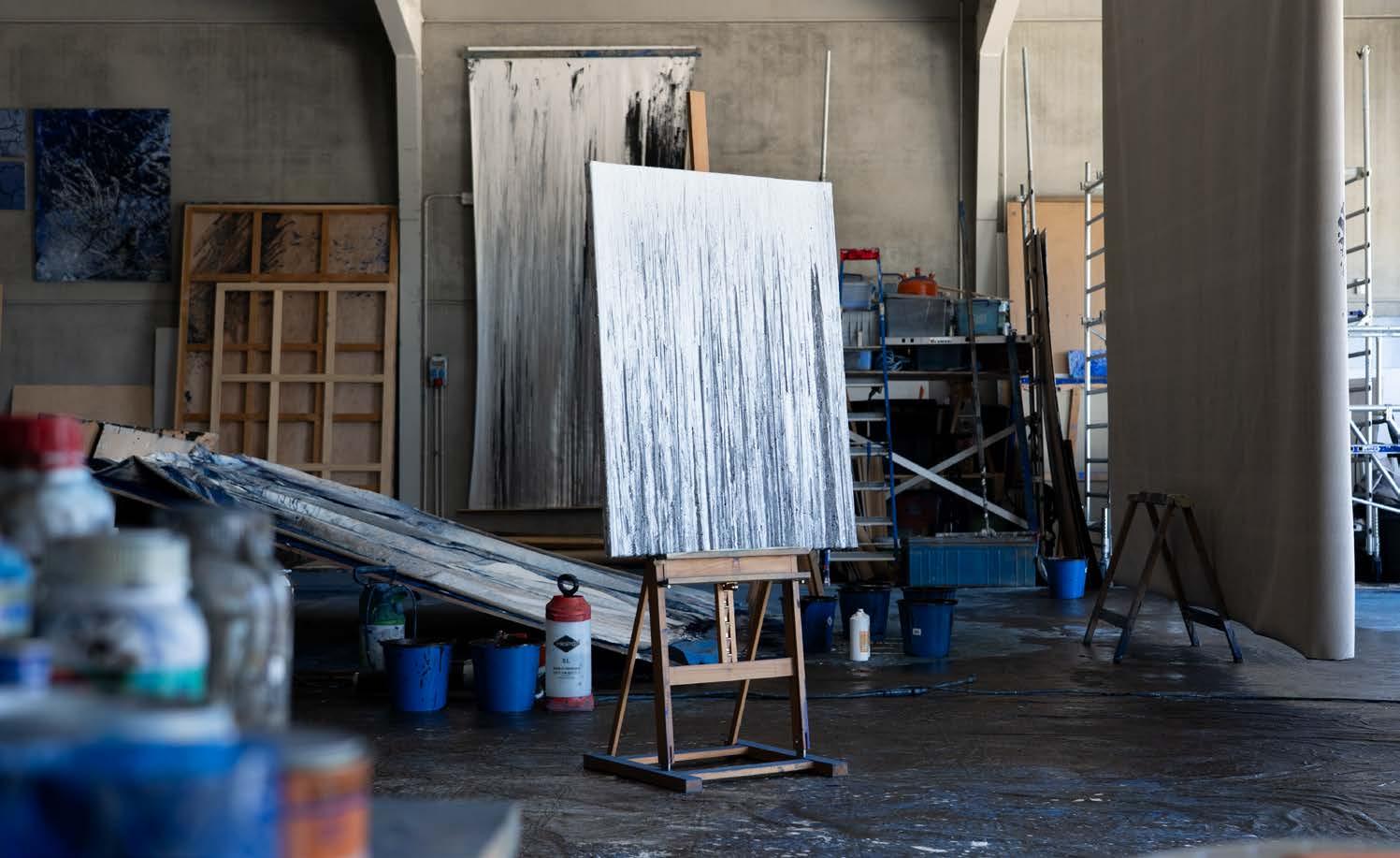
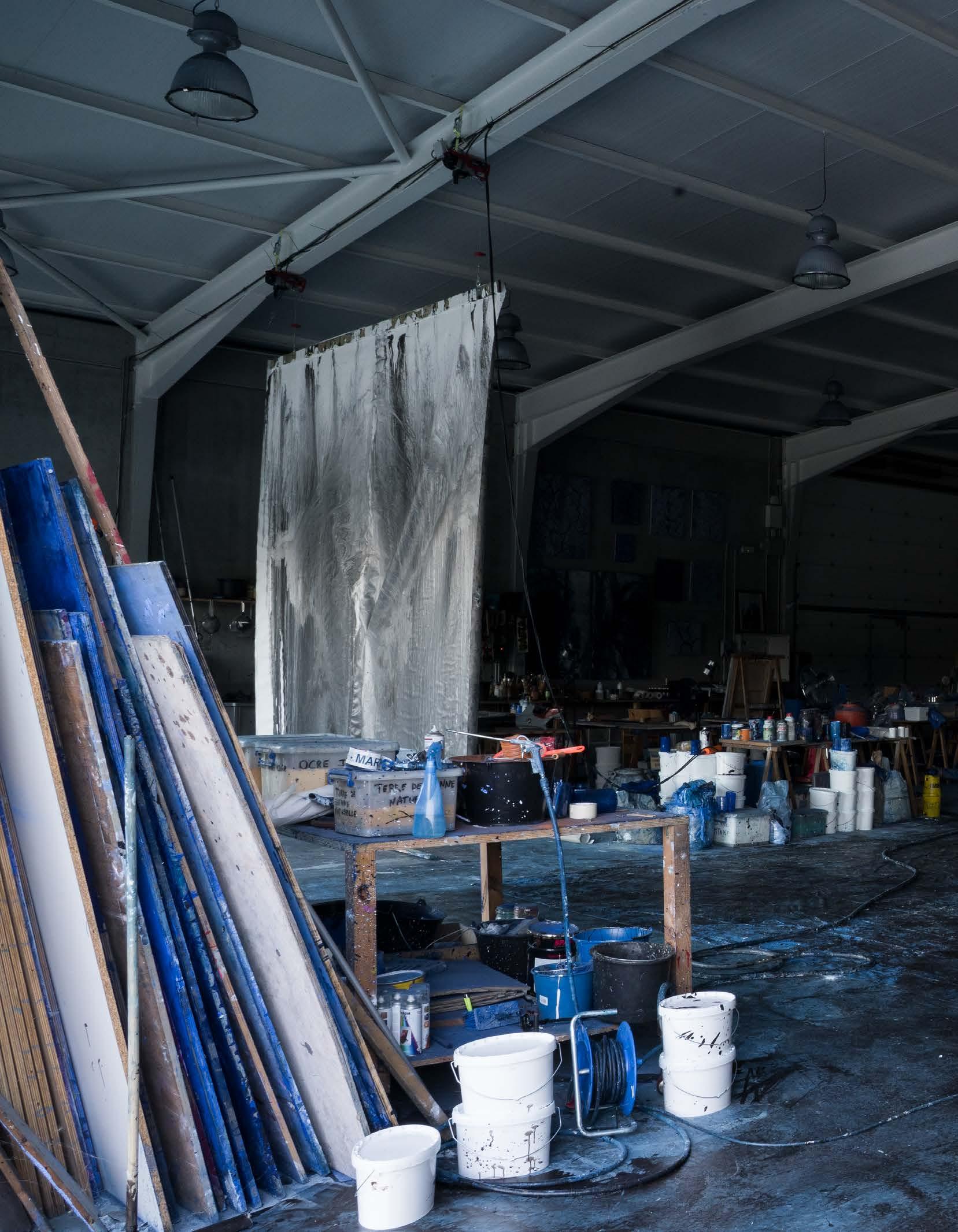
Philippe Pastor prefers a quiet existence, away from the machinations of city life. His rural studio in Catalonia offered the space he needed to consolidate his ideas and give form to the North Pole paintings. Set deep in the countryside, the presence of nature is a constant, and the terrain surrounding the house blends seamlessly into the undulating landscape, giving views of the distant mountains.
glaces en général. « Le processus de destruction lié au dérèglement climatique est le même au Pôle Nord que dans les Alpes. La perdition de nos glaciers d’Europe est peut-être un mal pour un bien. Au moins nous l’avons sous les yeux. »
Malgré son titre, Philippe Pastor n’est pas allé au Pôle Nord pour préparer sa série. Il s’est nourri de ses observations contemplatives des cols du Lautaret et du Galibier. « J’ai trouvé fascinantes ces coulées de neige au milieu de la pierre grise. C’est le même type de paysages qu’offrent, vues de la mer, les étendues glaciaires des pôles en train de fondre. J’ai pris beaucoup de photographies lors de mes promenades, comme des portraits de paysage. Ensuite l’imagination a pu sortir du cadre. » Pastor a également examiné l’aspect plus technique et glaciologique de ce processus, en se nourrissant de photographies scientifiques de la fonte des glaces aux pôles. « J’ai beaucoup dessiné d’après modèle, puis je suis arrivé à ce système de coulées, qui traduit la senstaion d’un éclat de glace qui tombe. Pour moi, c’est l’image parfaite d’un futur désastreux. »
Comme toujours domine dans le travail de l’artiste, malgré les terreurs qu’il exprime, une quête de beauté manifeste. « En opposition à la folie de notre monde, je recherche une certaine élégance dans l’expression de ma souffrance face à l’humanité détruisant sa planète. L’essentiel est de ne pas vivre dans l’illusion face à cet irrespect de l’environnement qui est un irrespect de nous-même. Mon moteur, c’est d’alerter l’opinion publique d’une manière particulière, on peut dire d’une manière douce. Je sais ce que j’ai à faire : je suis dans l’atelier et je peins. »
Restes de matière
Philippe Pastor privilégie une existence paisible, loin du tumulte de la vie citadine. Sa maison de campagne en Catalogne lui offrait l’espace nécessaire pour consolider ses idées et donner forme à ses peintures du pôle Nord.. En pleine campagne, la nature y est puissante, et le terrain qui entoure la maison se
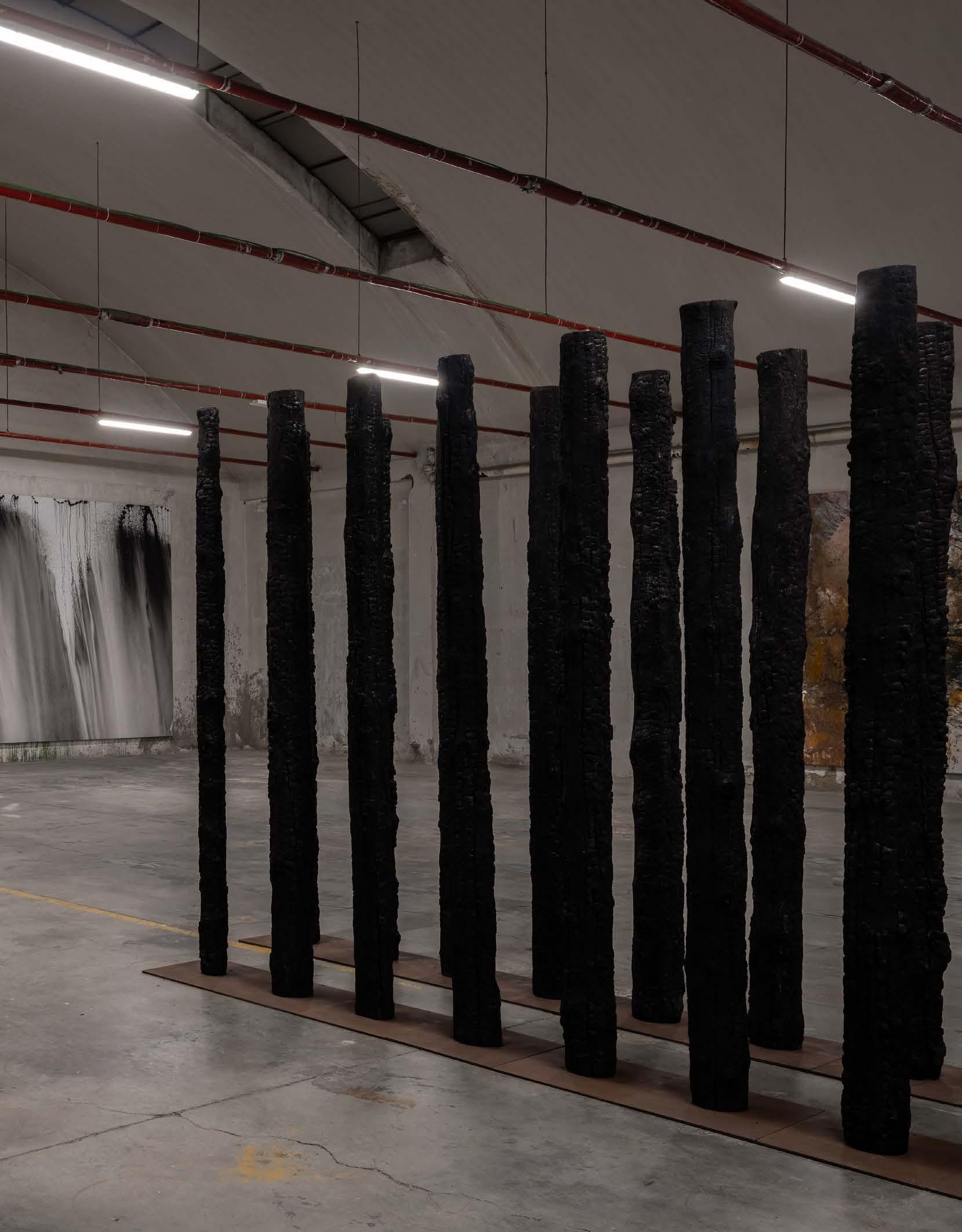
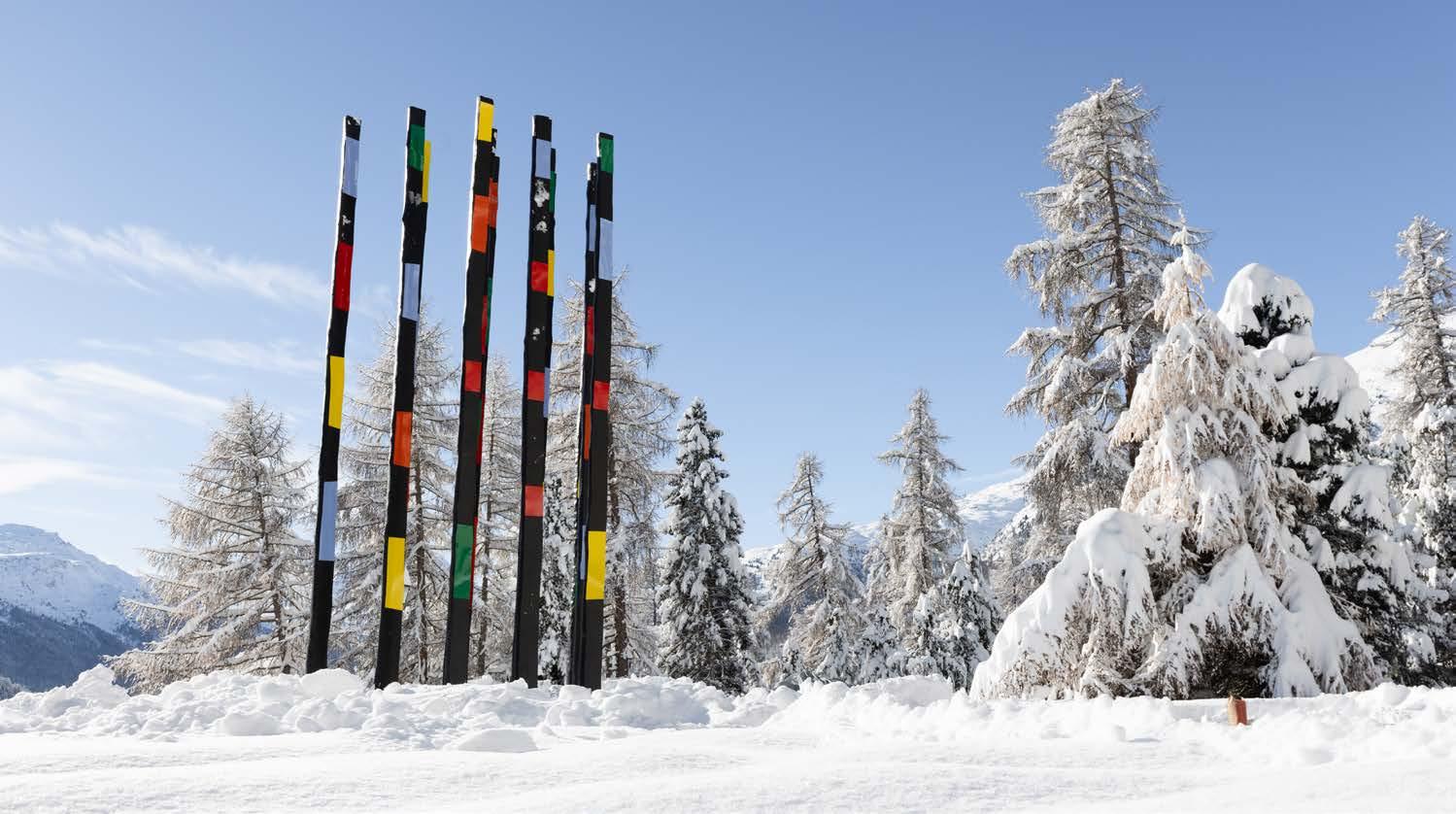
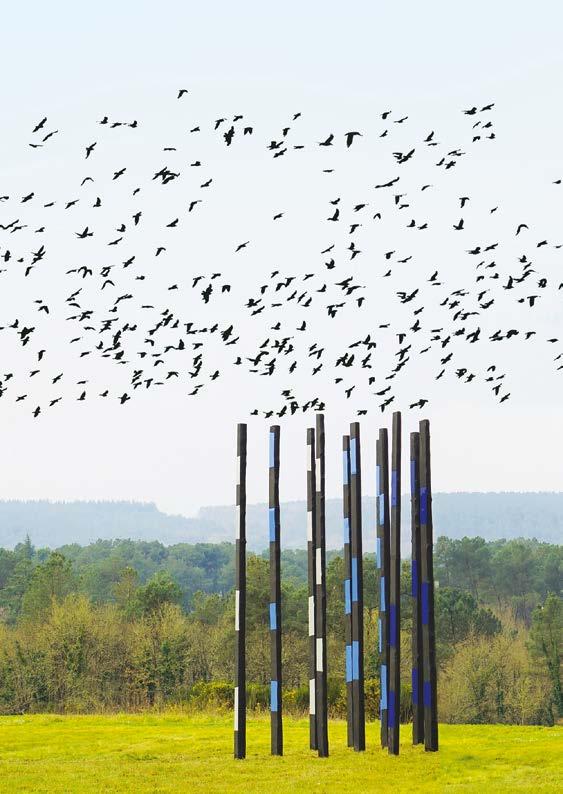
There, stand an installation of his Arbres Brûlés – lifesize sculptures of charred larch trunks that evoke the devastation of forest fires and, more broadly, deforestation.
Exhibited from New York to Nairobi, the Arbres Brûlés established Pastor’s place within a lineage of artists for whom the natural world and its threatened destruction provide the primary source for their work. There are similarities between the Arbres Brûlés and the work of the Brazilian sculptor Frans Krajcberg. Pastor feels an affiliation with this pioneer in raising awareness forest destruction, who dedicated his entire life to using his art in service of nature. By creating his works from wood salvaged from fires in the Amazon rainforest, he sought to mobilise global awareness of the need to stop this devastation.
fond avec le paysage vallonné des alentours, avec des vues sur les montagnes lointaines. L’artiste y a installé quelques uns des ses « Arbres brûlés », ces sculptures de troncs de mélèze calciné grandeur nature, qui évoquent les ravages des incendies de forêt et plus largement la déforestation.
Exposée de New York à Nairobi, « Les « Arbres brûlés », ont contribué à inscrire Pastor dans une lignée d’artistes qui ont fait de la nature et de la conscience de sa destruction la source de leur production. Il y a des familiarités entre les « Arbres brûlés » et l’œuvre du sculpteur brésilien Frans Krajcberg. Pastor se sent en compagnonnage avec ce pionnier de l’alerte sur la destruction des forêts, qui mit toute sa vie son art au service de la nature. Composant ses œuvres à partir de de bois « rescapés » des incendies de la forêt amazonienne, il voulait mobiliser une conscience planétaire face à la nécessité d’arrêter le massacre.
Les Arbres Brûlés at Suvretta House, St. Moritz, 2024.
The Arbres Brûlés series began after a similar catastrophe. The forest fires that swept through the south of France in 2003 stopped just metres from where Pastor had his studio at the time. In total, 40,000 hectares of trees and wildlife habitats were destroyed.
The desolation was shocking; the artist sought to exorcise this traumatic vision using trunks charred by the flames. To some, he added daubs of paint in vibrant colours, likening them to sacred totems; others, he cast into bronze, with the illusionary bark transformed into something eternal.
The imprint of art history
Pastor started pursuing painting seriously in the 1990s. Although he never received formal artistic training, art had informed his experiences for much of his life. “I’ve been drawing since I was a child. I had a studio hidden in a shed on the terrace of the apartment where we lived in Monaco. I was drawn to colour; I was inspired by catalogues of Georges Braque’s exhibitions, by his reds and his blues. For a very long time, I kept these drawings hidden. Perhaps I was a little ashamed of them. How can you pretend to be an artist when you’re surrounded by great artists every day?”
Fundamental to Pastor’s formation was a youth spent immersed in artistic channels. His mother, from Nice, was passionate about art, and moved in circles that included artists Ben and César; around whom the young Philippe grew up. As a teenager, Pastor assisted the latter in his studio near La Collesur-Loup, lugging around car bodies and hubcaps. “I wondered why I was putting myself through this, why I was so drawn to this place to which I always returned. In reality, I was finally blossoming, experiencing a kind of liberation. I was gradually understanding what I wanted to do with my life.”
La série des « Arbres brûlés » a débuté après une catastrophe. Les incendies de forêt qui ont ravagé le sud de la France en 2003 se sont arrêtés à quelques mètres seulement de l’endroit où Pastor avait son studio à l’époque. En tout, elles ont détruit 40 000 hectares d’arbres et des habitats.
La désolation était choquante. L’artiste a commencé à exorciser cette vision traumatique à travers des troncs calcinés. Il en souligne certains de lignes aux couleurs vives, comme des totems sacrés. D’autres sont métamorphosés en bronze, avec une écorce illusionniste à se méprendre, qui devient ainsi éternelle.
L’empreinte de l’histoire de l’art
Philippe Pastor a commencé à se consacrer sérieusement à la peinture dans les années 1990. Bien qu’il n’ait jamais reçu de formation artistique formelle, l’art a marqué son vécu pendant une grande partie de sa vie... « Depuis que suis enfant je dessine. J’avais un atelier caché dans une cabane, sur la terrasse de l’appartement où nous vivions à Monaco. J’allais dans la direction de la couleur ; je m’inspirais des catalogues d’exposition de Georges Braque, de ses rouges, de ses bleus. Très longtemps j’ai dissimulé ces dessins. J’en avais peut-être un peu honte. Comment exister artistiquement quand vous côtoyez chaque jour de grands artistes ? »
Une des clés de l’univers de Philippe Pastor, c’est sa jeunesse passée immergée dans des milieux artistiques. D’origine niçoise par sa mère, passionnée d’art, il côtoie dès l’enfance Ben ou César. Encore adolescent, Pastor assiste le sculpteur dans son atelier près de la Colle-surLoup, peinant à transporter carcasses de voitures et autres enjoliveurs. « Je me demandais pourquoi je m’imposais cela, pourquoi j’étais tant attiré par cet endroit où je revenais toujours. En réalité je vivais enfin un certain épanouissement, une certaine libération. Je comprenais peu à peu ce que je voulais faire de mon existence. »
There were also the lunches with his mother and Adrien Maeght at Mas Bernard, the Maeght family home in Saint-Paul-de-Vence, not far from the foundation that today bears their name, the legacy of this dynasty of gallerists and benefactors. At Mas Bernard, filled with bronze furniture by Diego Giacometti, the door was open to artists during the summer. It was there that Pastor met painters from the Support/Surfaces movement, such as Jacques Martinez and Louis Cane. He was undoubtedly influenced by the serious game that painting represented for these artists. The text for the exhibition La Peinture en question, organized at the Le Havre museum in 1969, which Louis Cane cosigned, proclaims: “The object of painting is painting itself, and paintings (...) offer no escape, because the surface, through the breaks in form and colour that are made there, forbids mental projections or dreamlike digressions of the viewer. Painting is a fact in itself, and it is on its own ground that problems must be posed.”
Il y eut eu aussi les déjeuners auprès de sa mère et Adrien Maeght au Mas Bernard, la maison familiale des Maeght à Saint Paul de Vence, non loin de la fondation qui porte aujourd’hui le nom de cette dynastie de galeristes et mécènes. Dans ce lieu peuplé de meubles de bronze de Diego Giacometti, la table était ouverte pendant l’été pour les artistes. Là, Philippe Pastor croisa des peintres du mouvement Support/Surfaces, Jacques Martinez ou Louis Cane. Il faut sans doute imprégné par le jeu sérieux que représentait la peinture pour ces artistes. Le texte de l’exposition « La Peinture en question », organisée au musée du Havre en 1969, que Louis Cane cosigna, proclame : « L’objet de la peinture, c’est la peinture elle-même et les tableaux (…) n’offrent point d’échappatoire, car la surface, par les ruptures de formes et de couleurs qui y sont opérées, interdit les projections mentales ou les divagations oniriques du spectateur. La peinture est un fait en soi et c’est sur son terrain que l’on doit poser les problèmes. »
A partnership with Nature
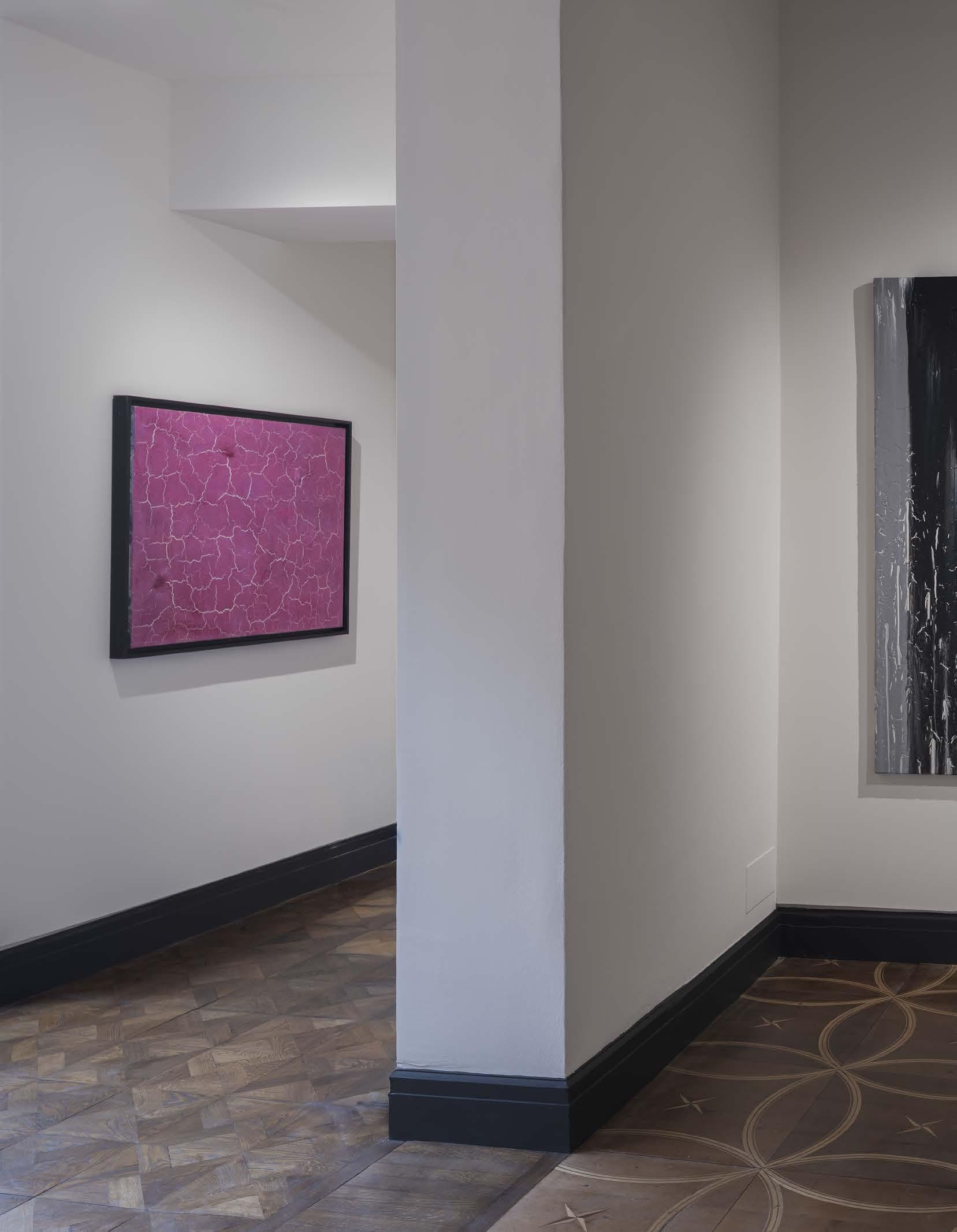
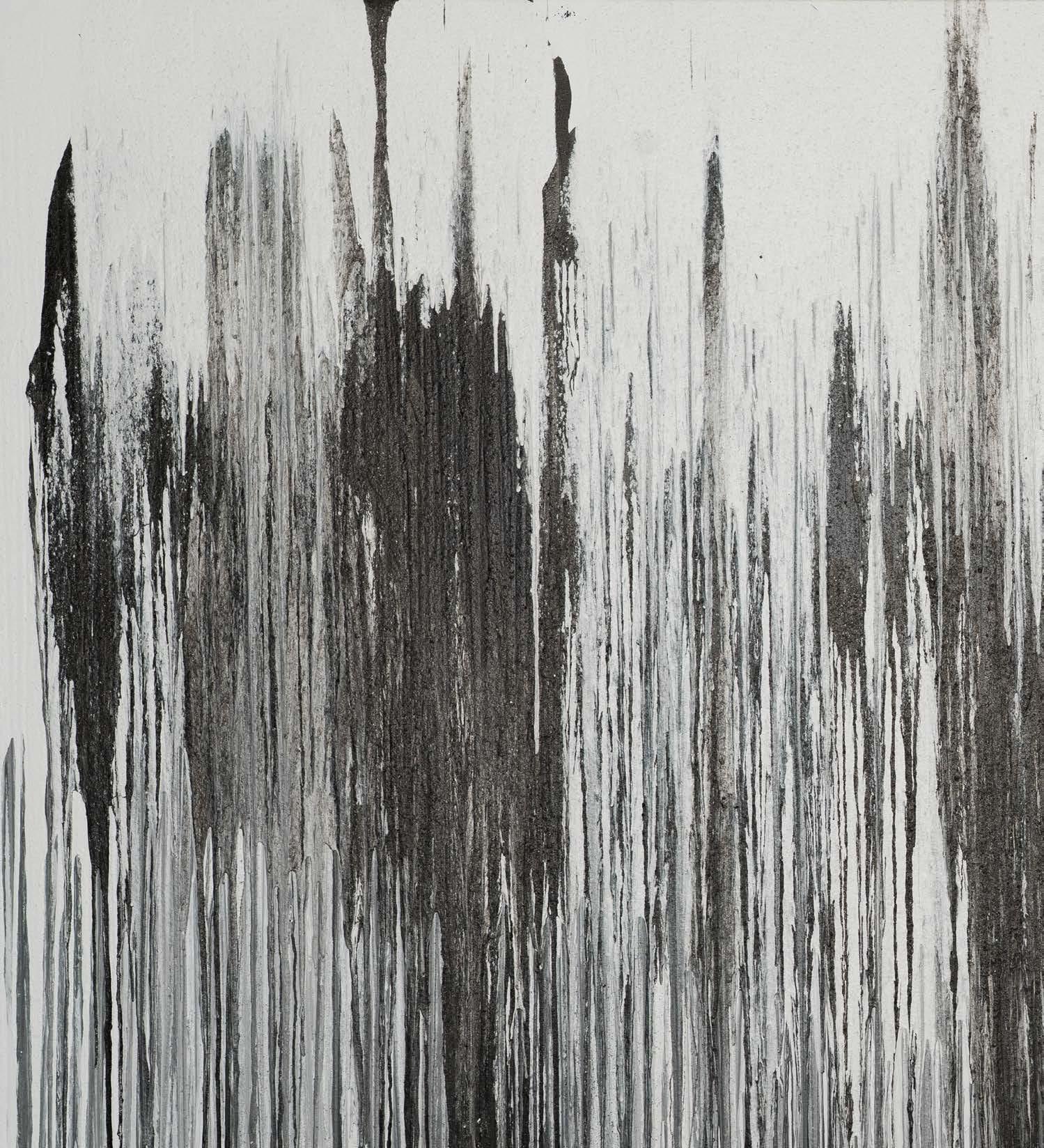
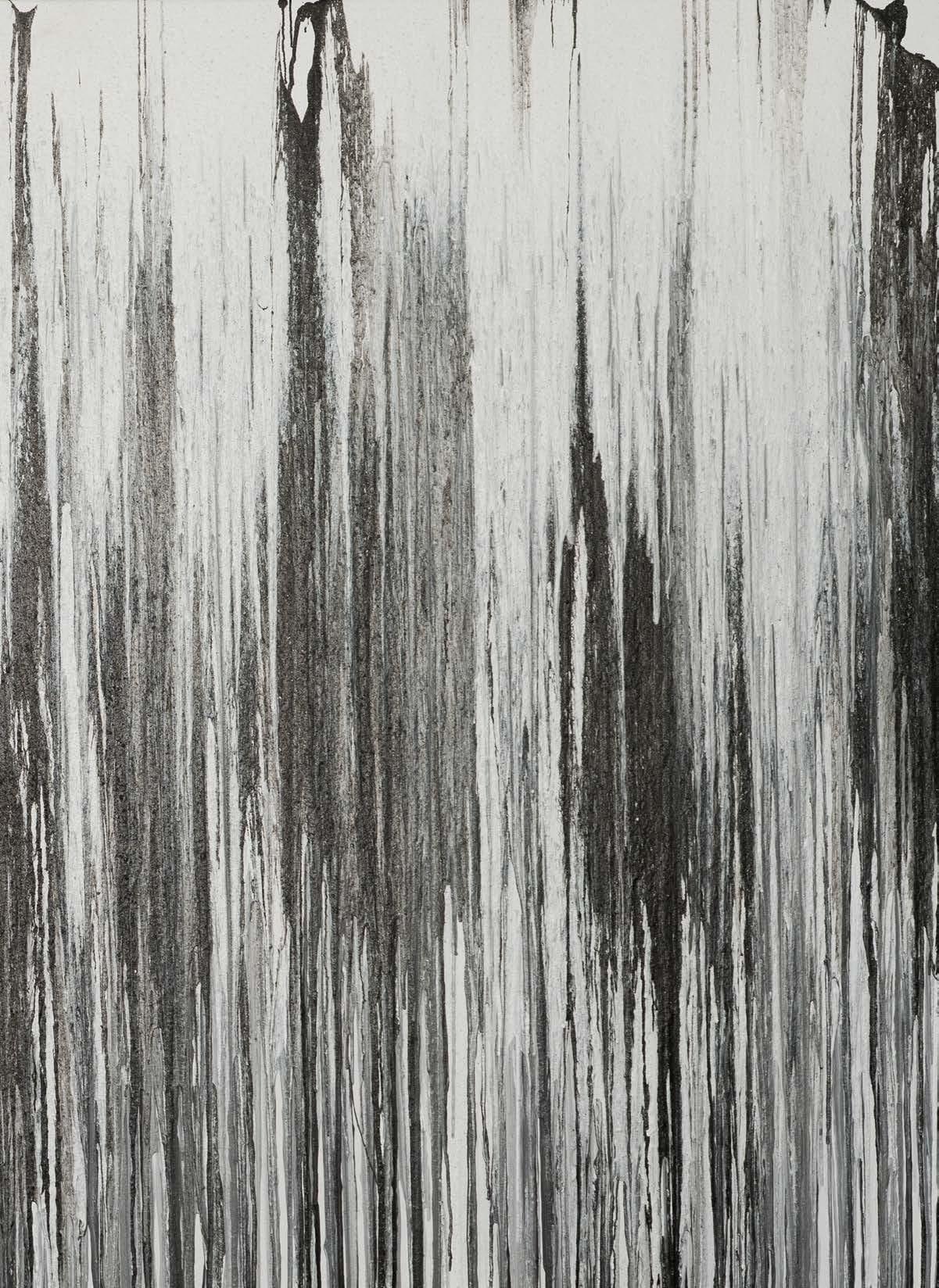
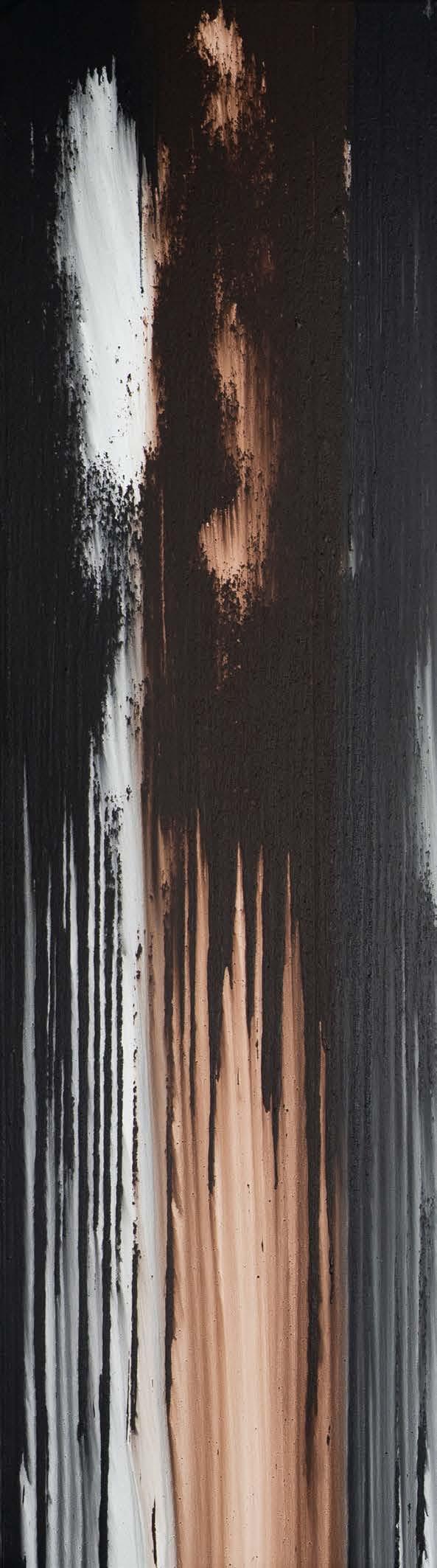
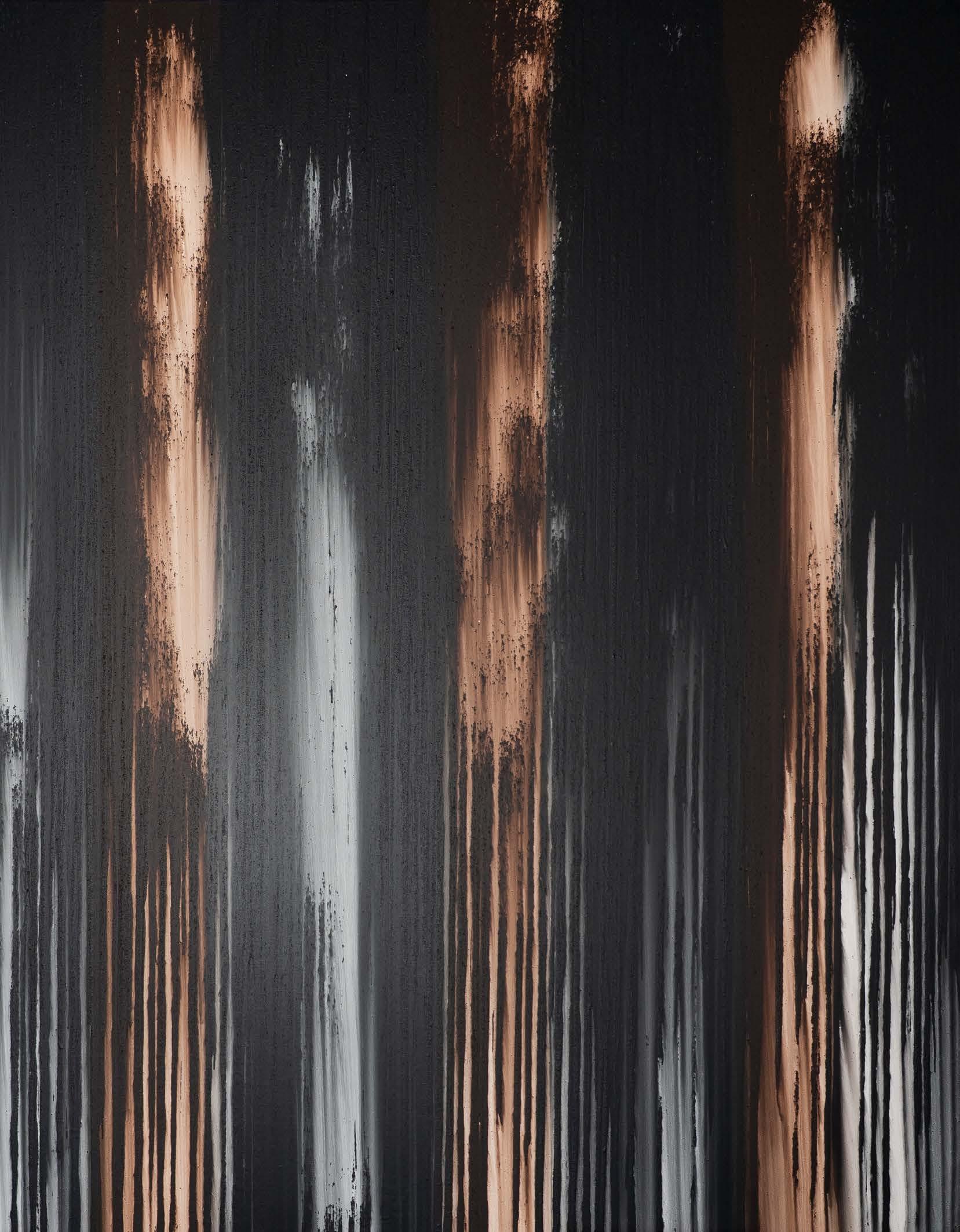
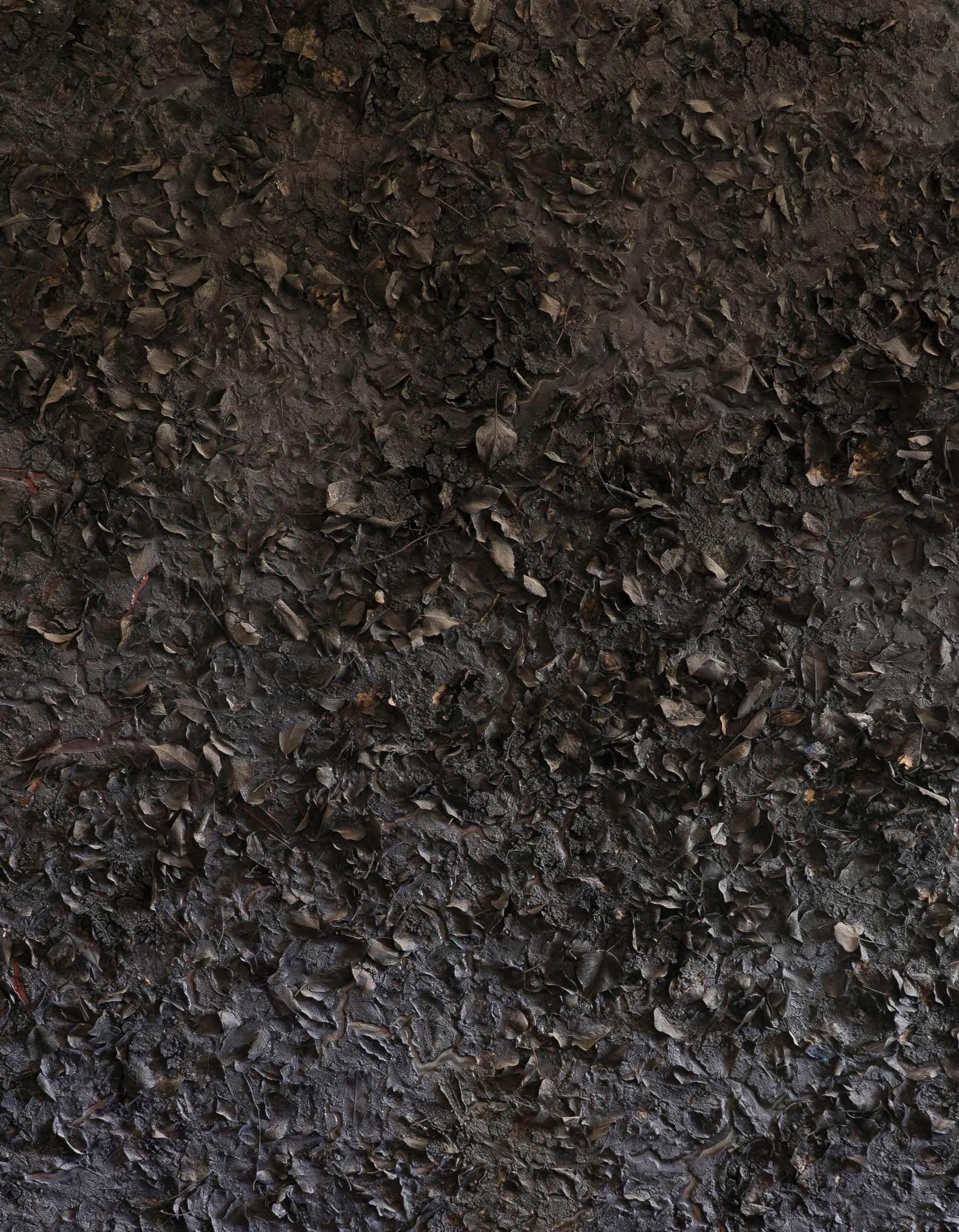
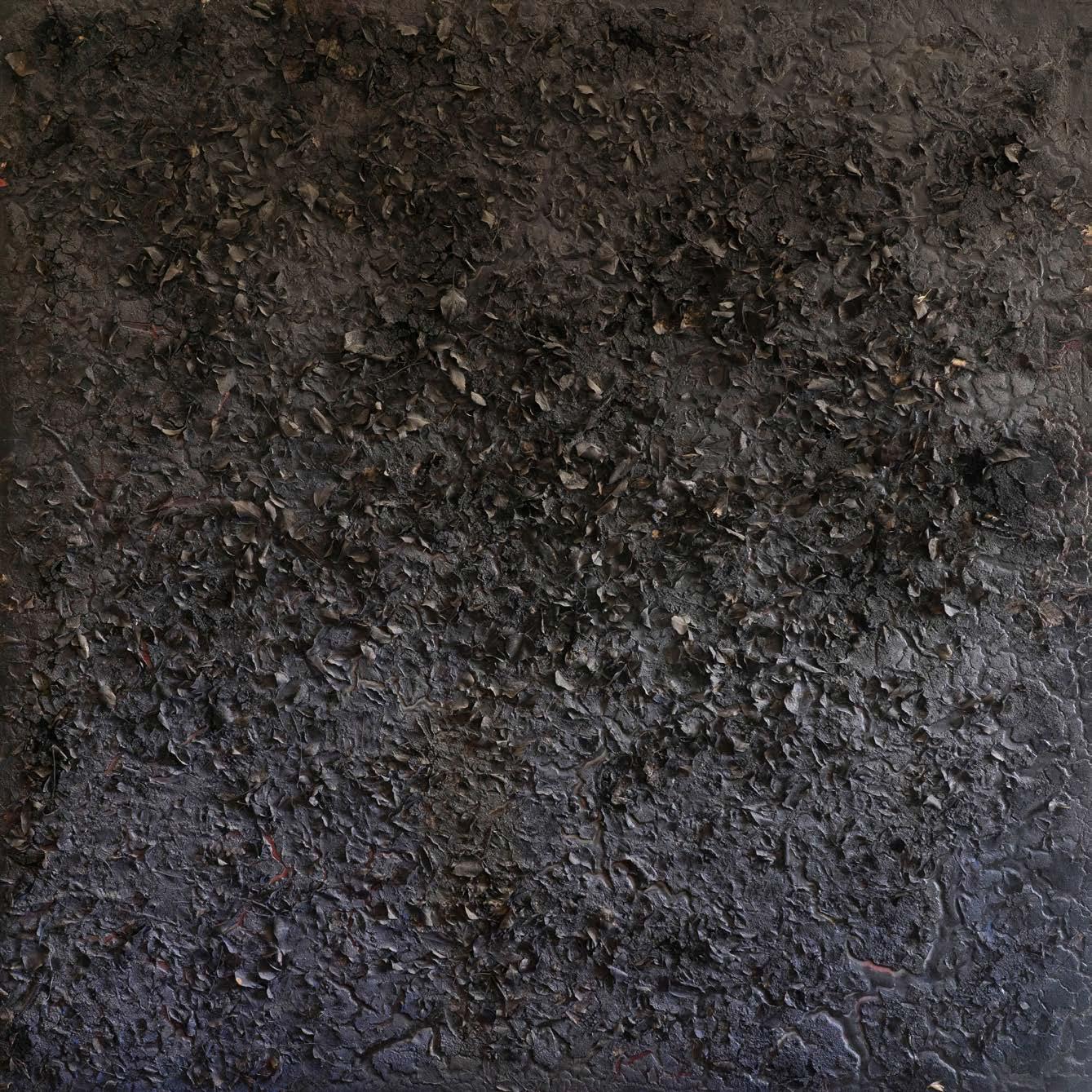
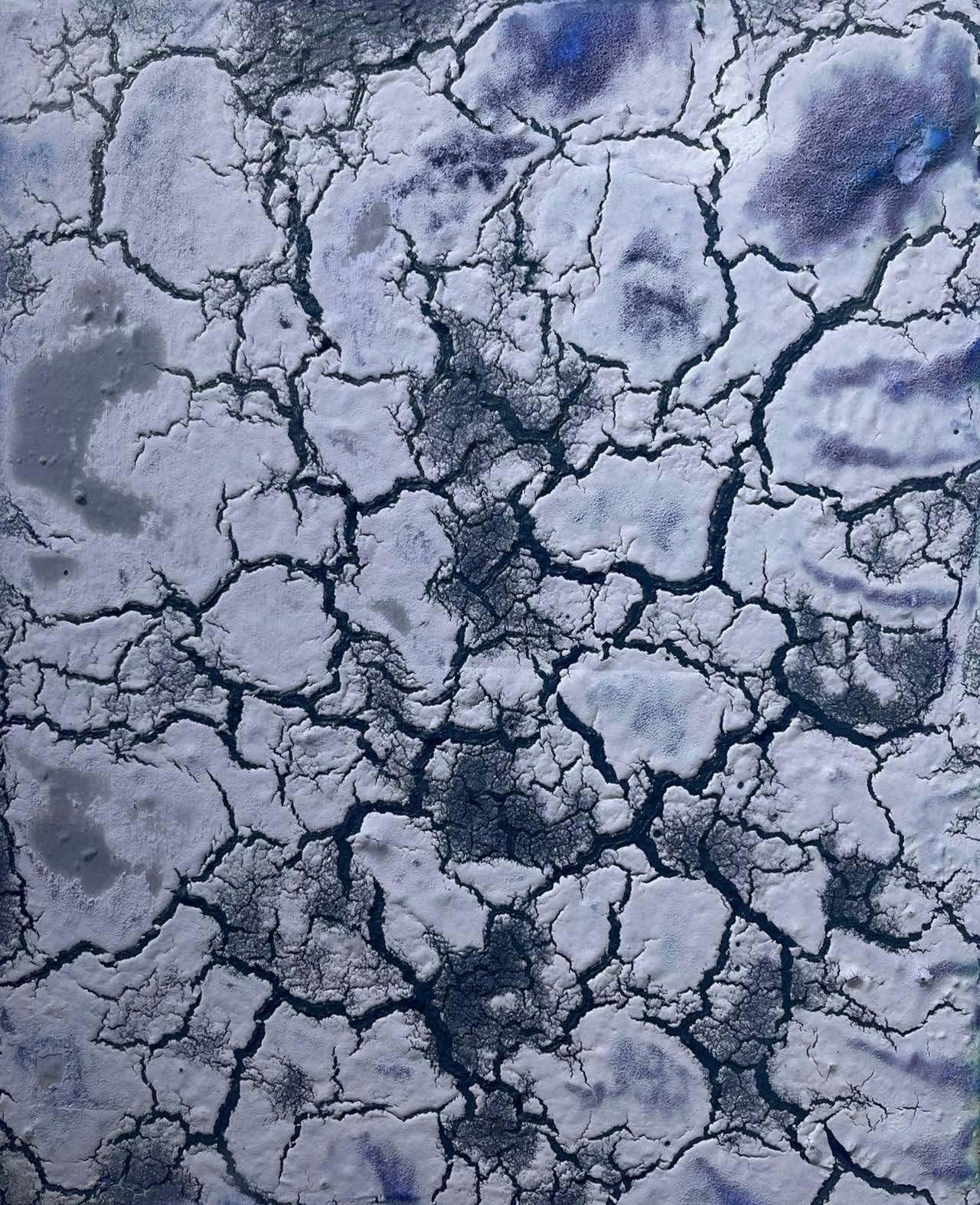
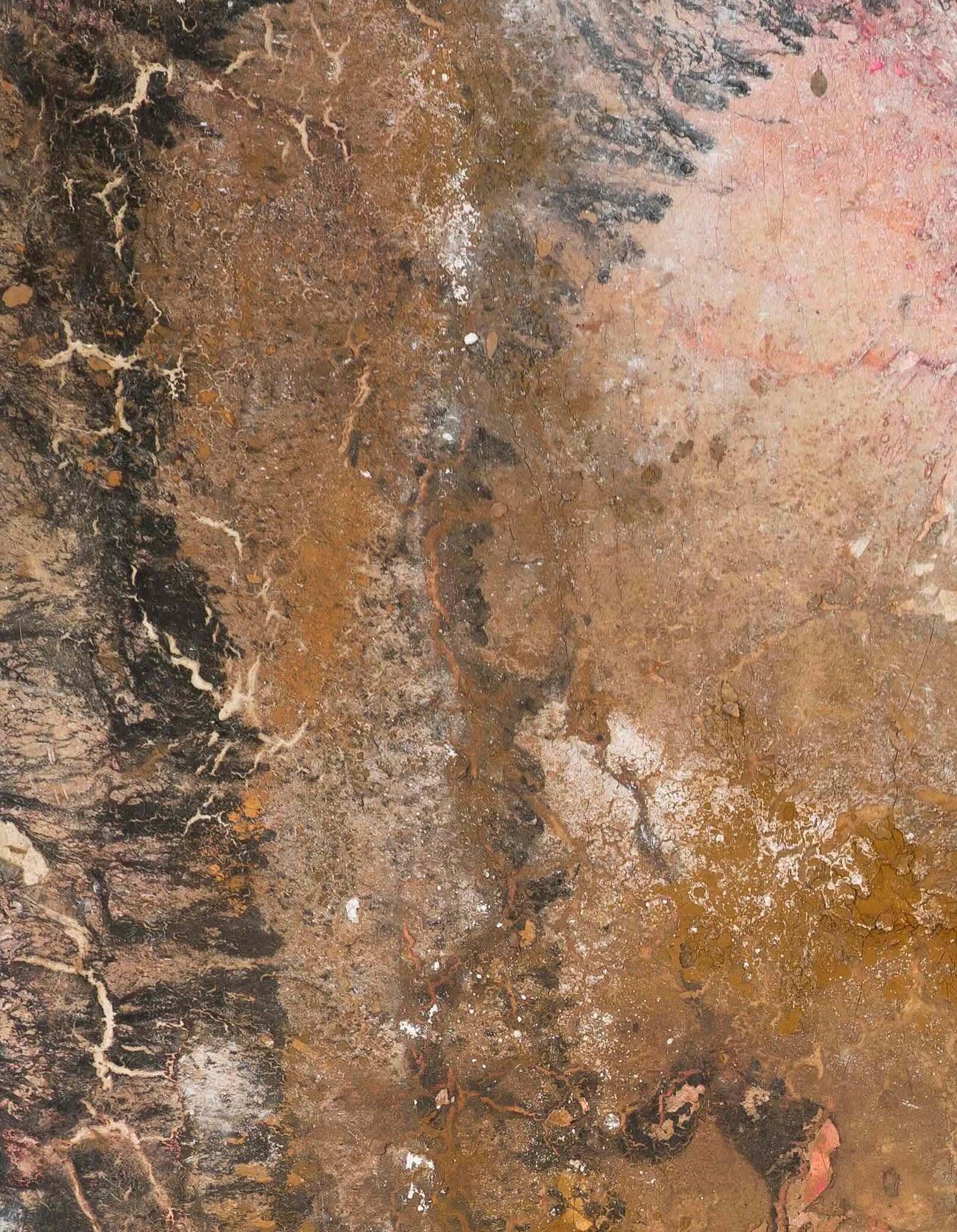
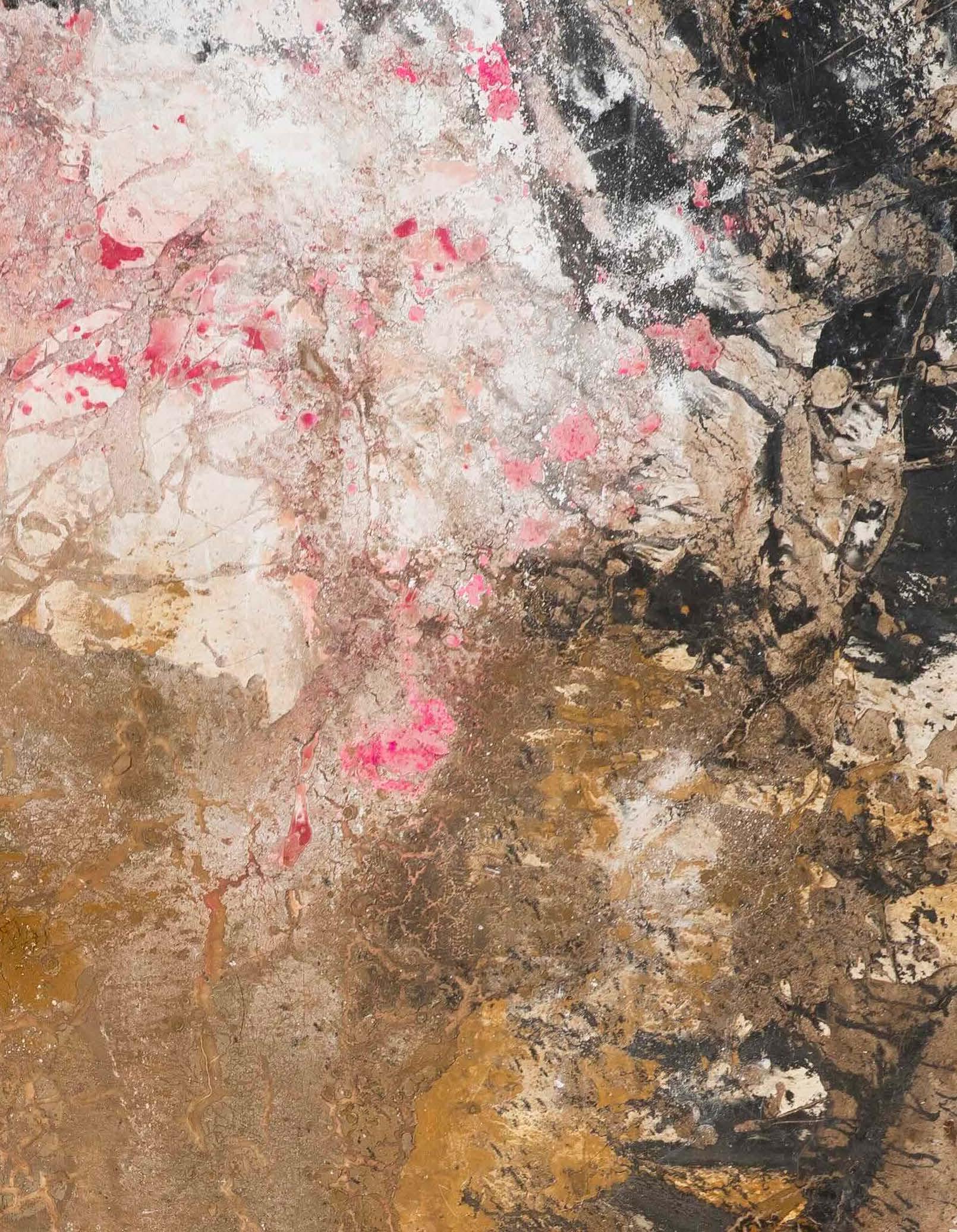
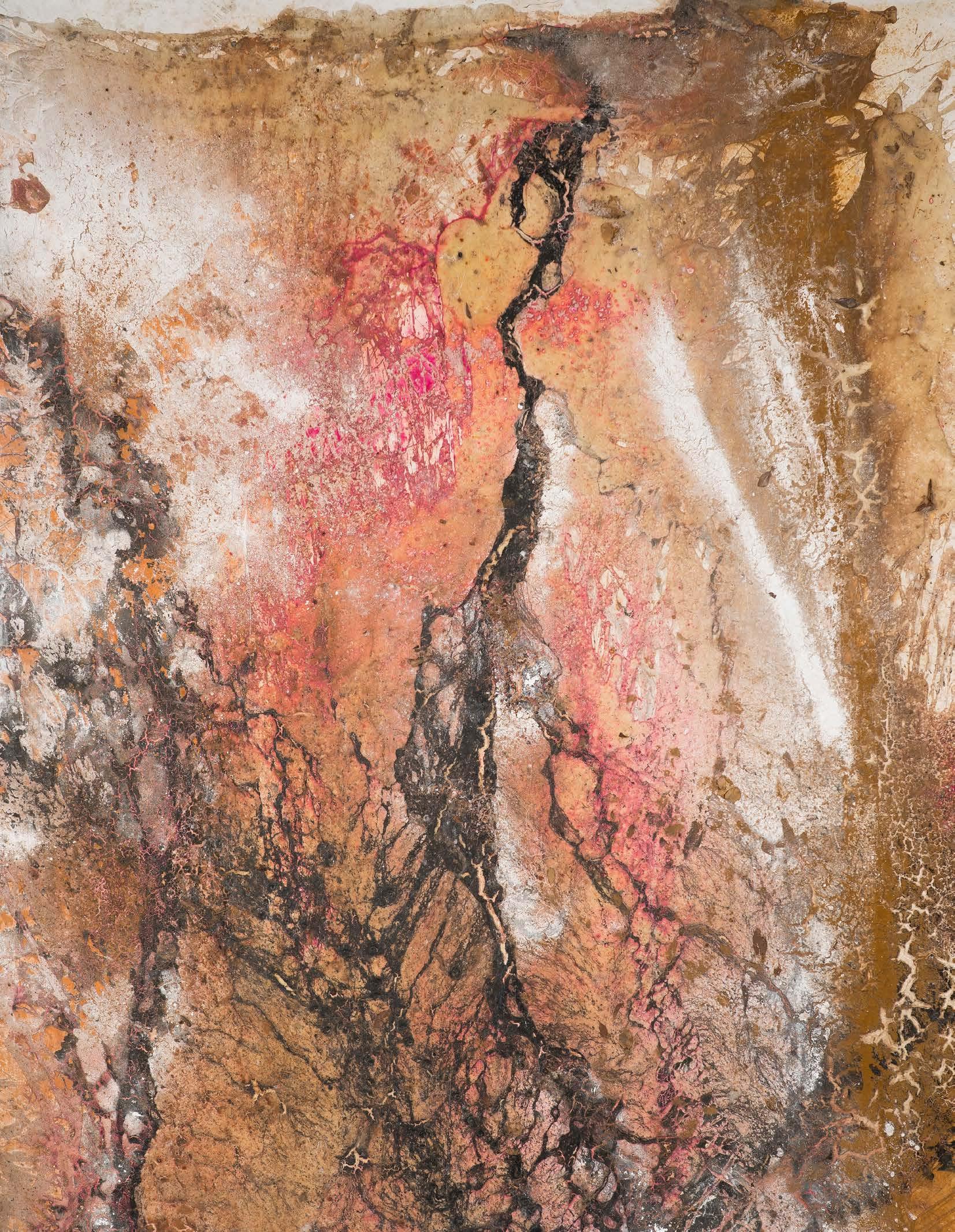
A photograph of the painter Paul Rebeyrolle greets Pastor every day at the entrance to his Catalan studio. “For me, he is the greatest French painter. He knew how to work the texture of his canvases like no other.” Also fixated by nature, Rebeyrolle lived and worked in an old mill in the Aube region, deep in the French countryside, never ceasing to be concerned with the upheavals of the world. To enliven the surface of his works, he incorporated earth, horsehair, or twigs into his canvases. The younger artist also engages in such rituals, integrating elements from the landscapes he explores into his paintings: oak leaves, dried Mediterranean seaweed, ferns, and even soil. “I take Nature as my partner. Working with the elements is essential to my experience as a painter.” He doesn’t use ready-mixed paint, rather his pigments are exclusively natural: rare ochres or pink powder from dried flowers.
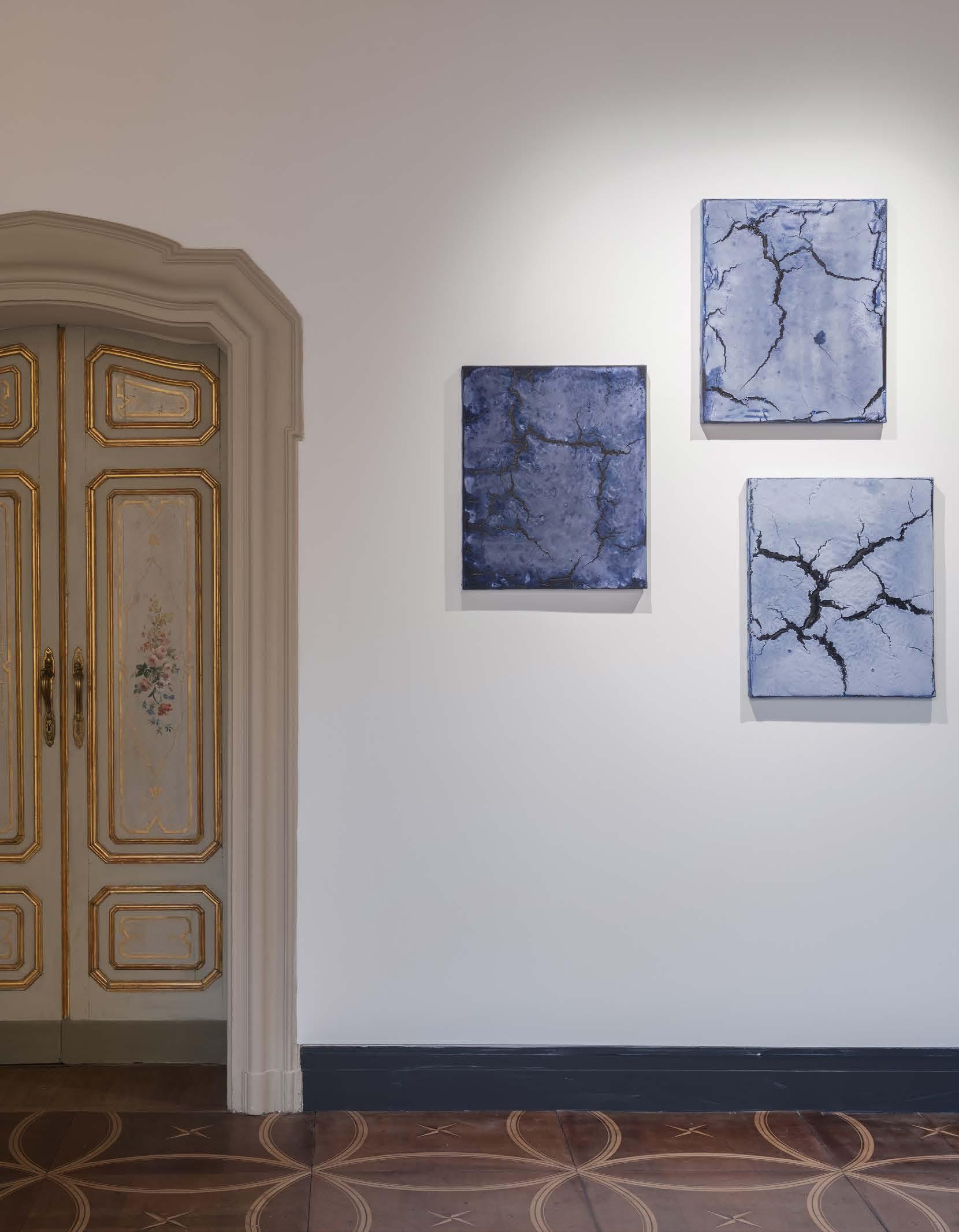
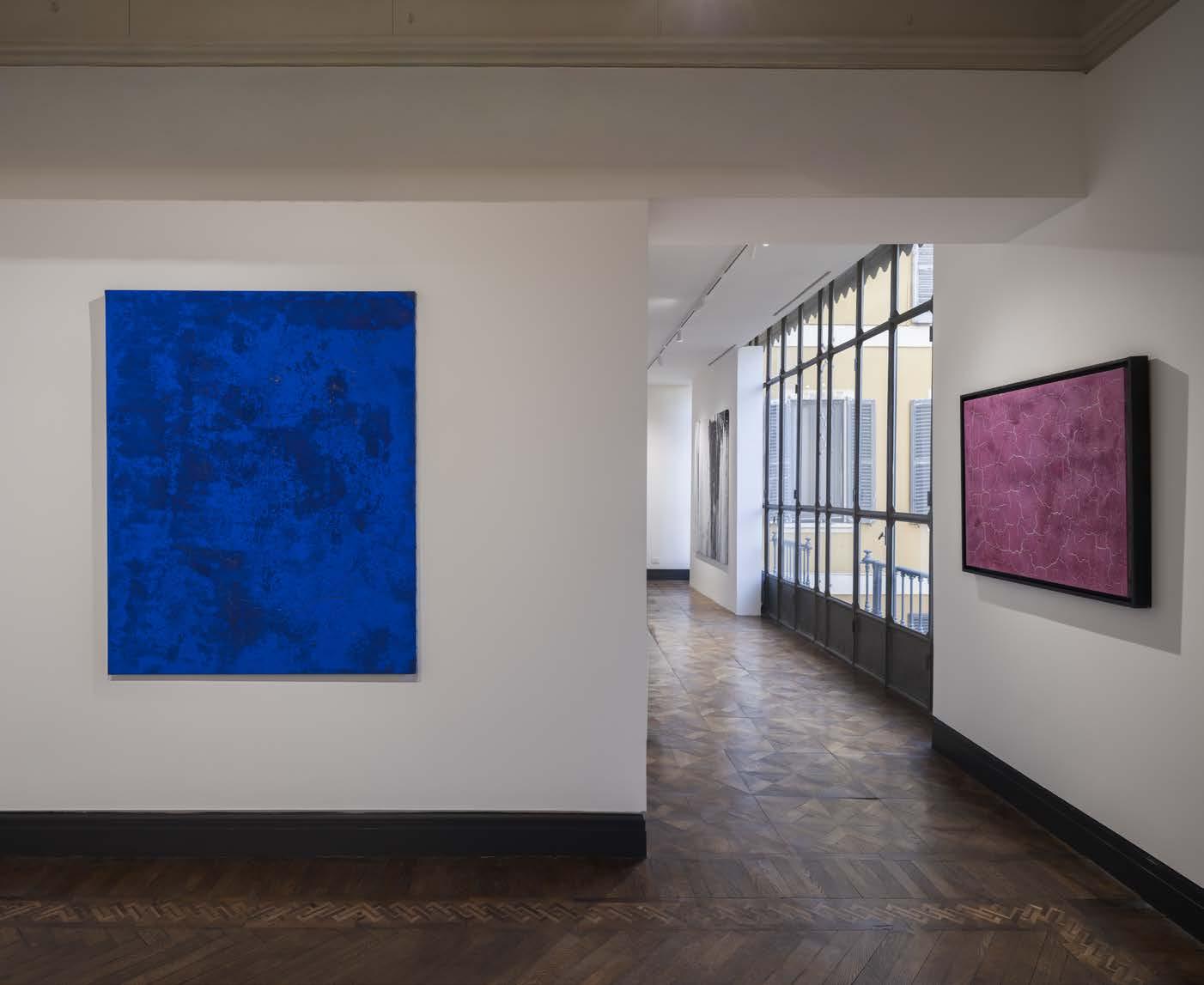
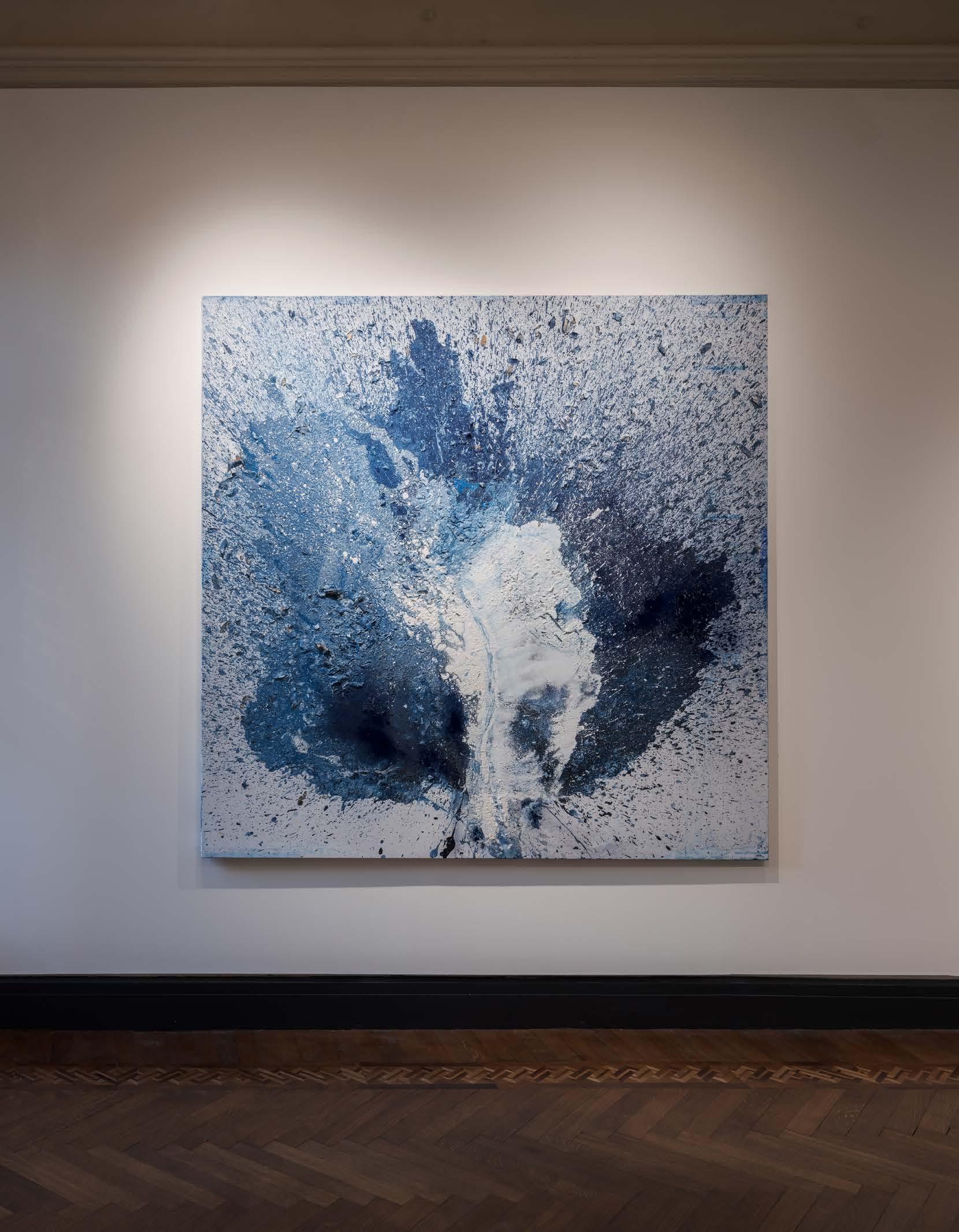
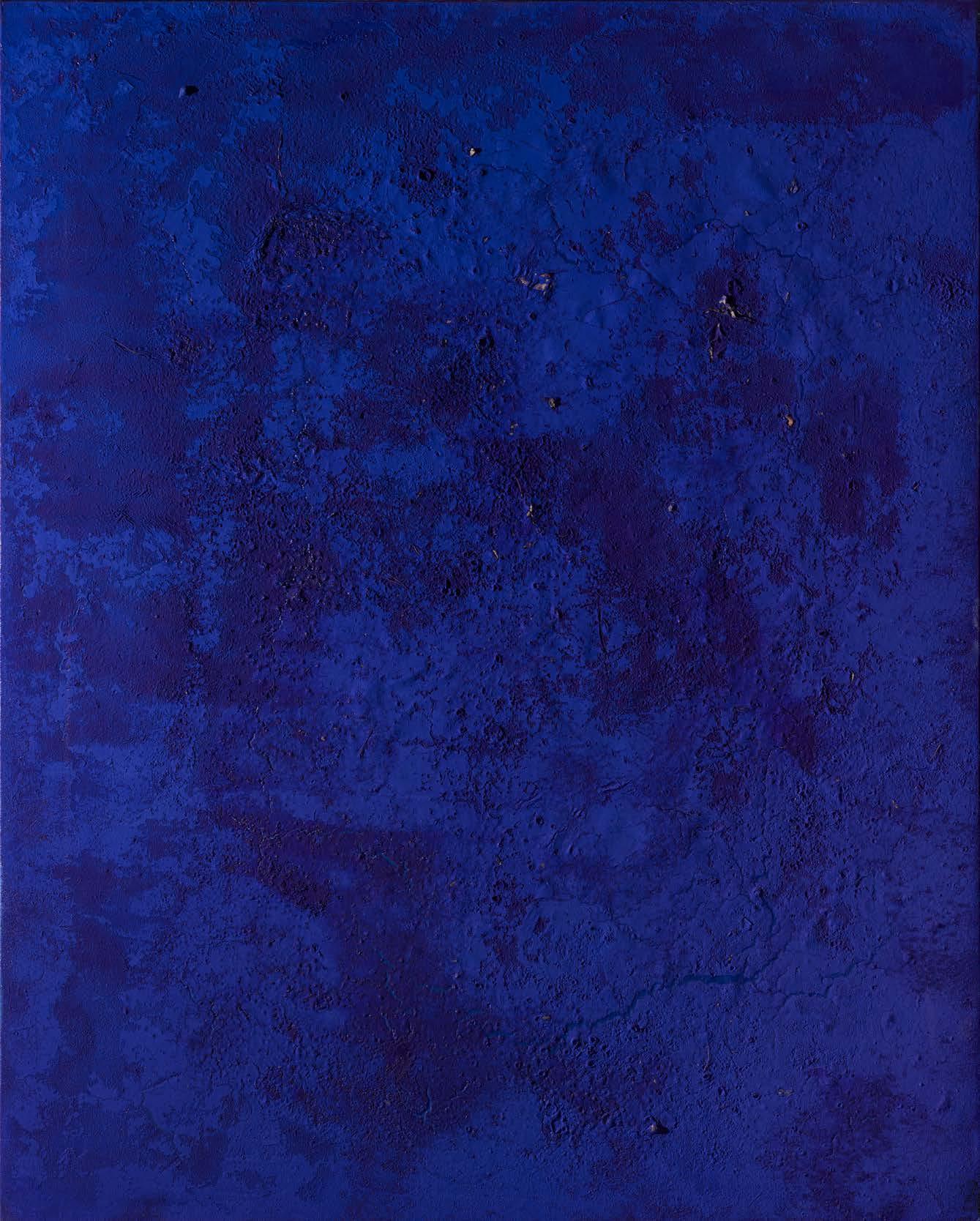
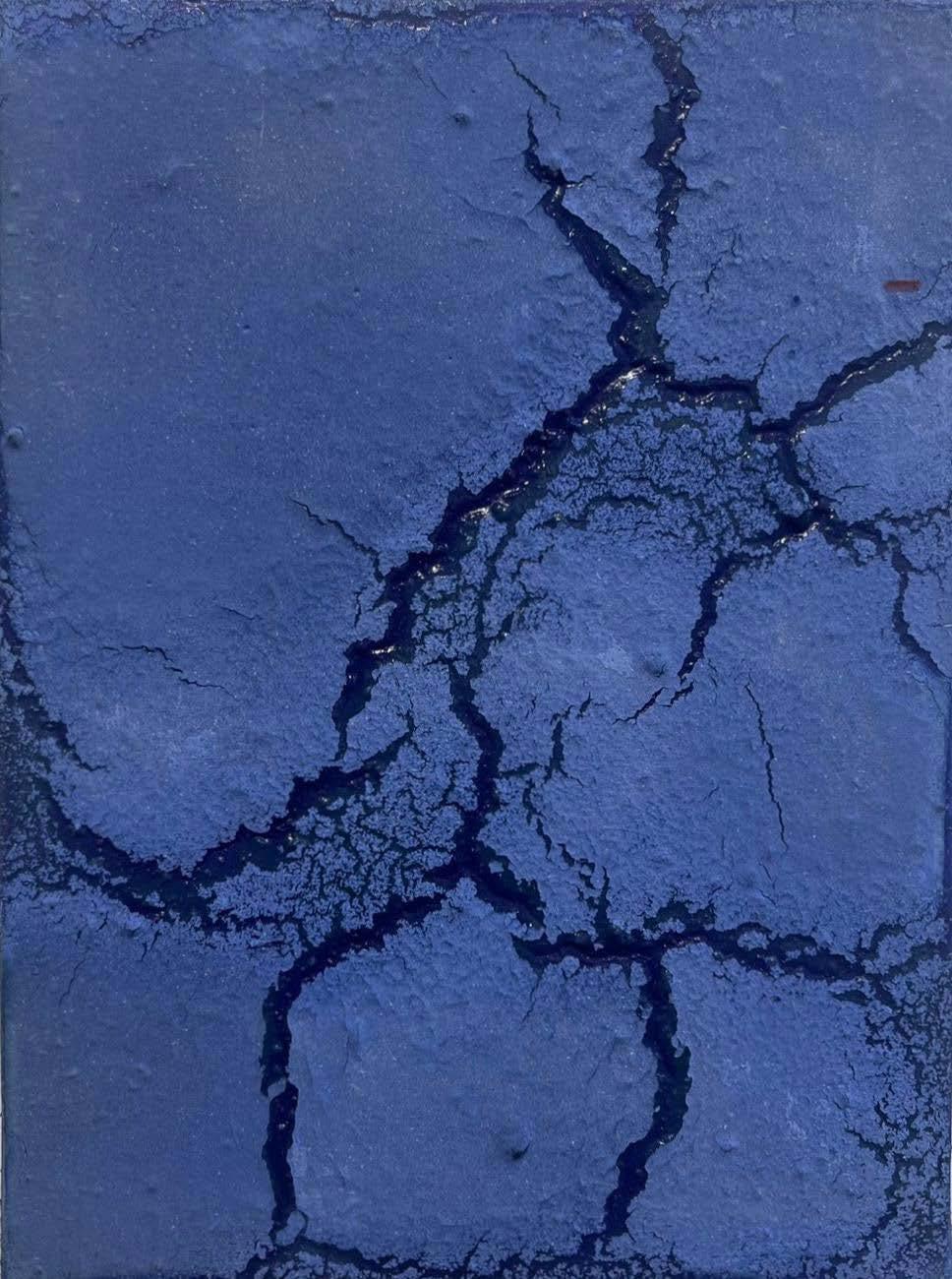
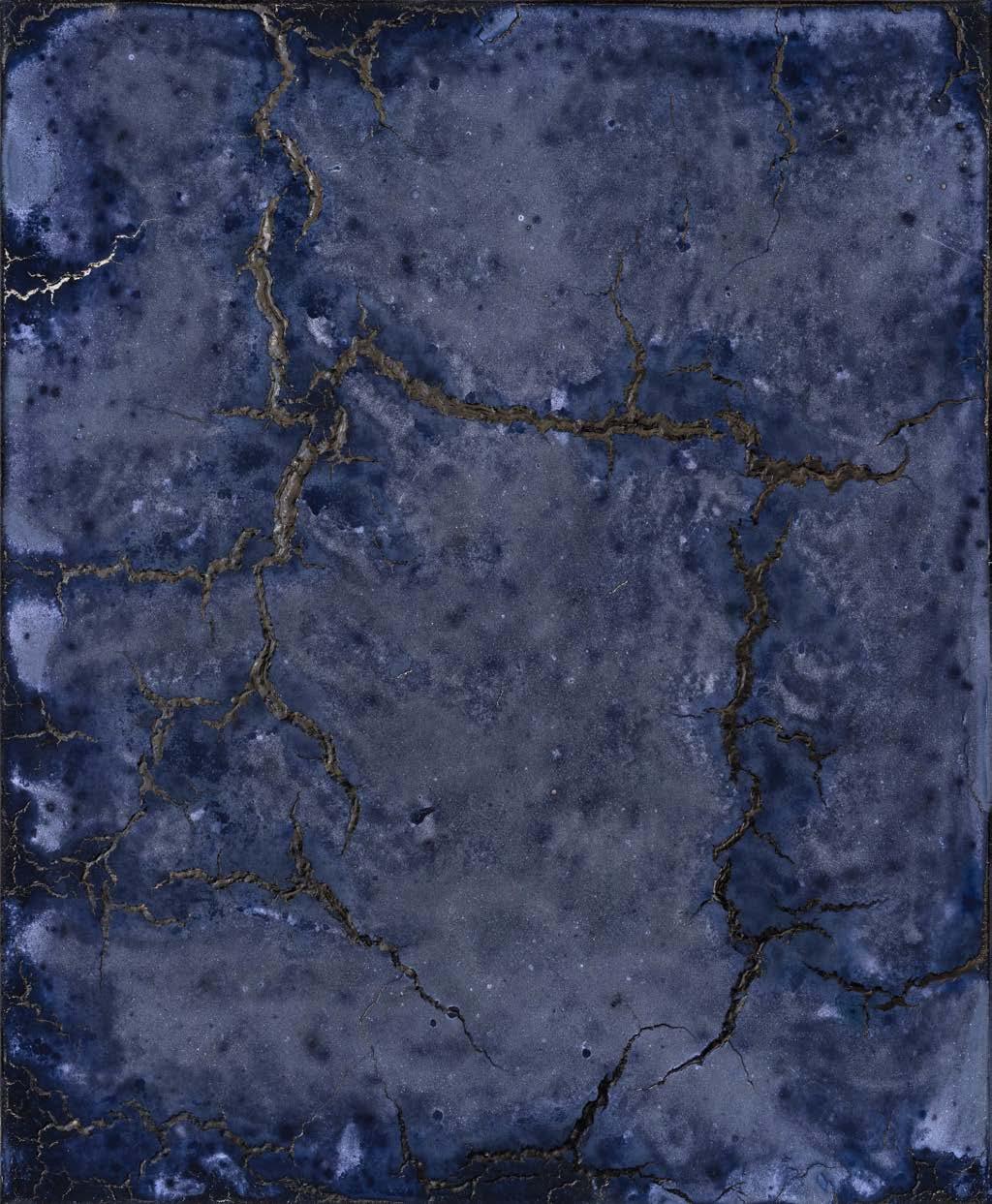
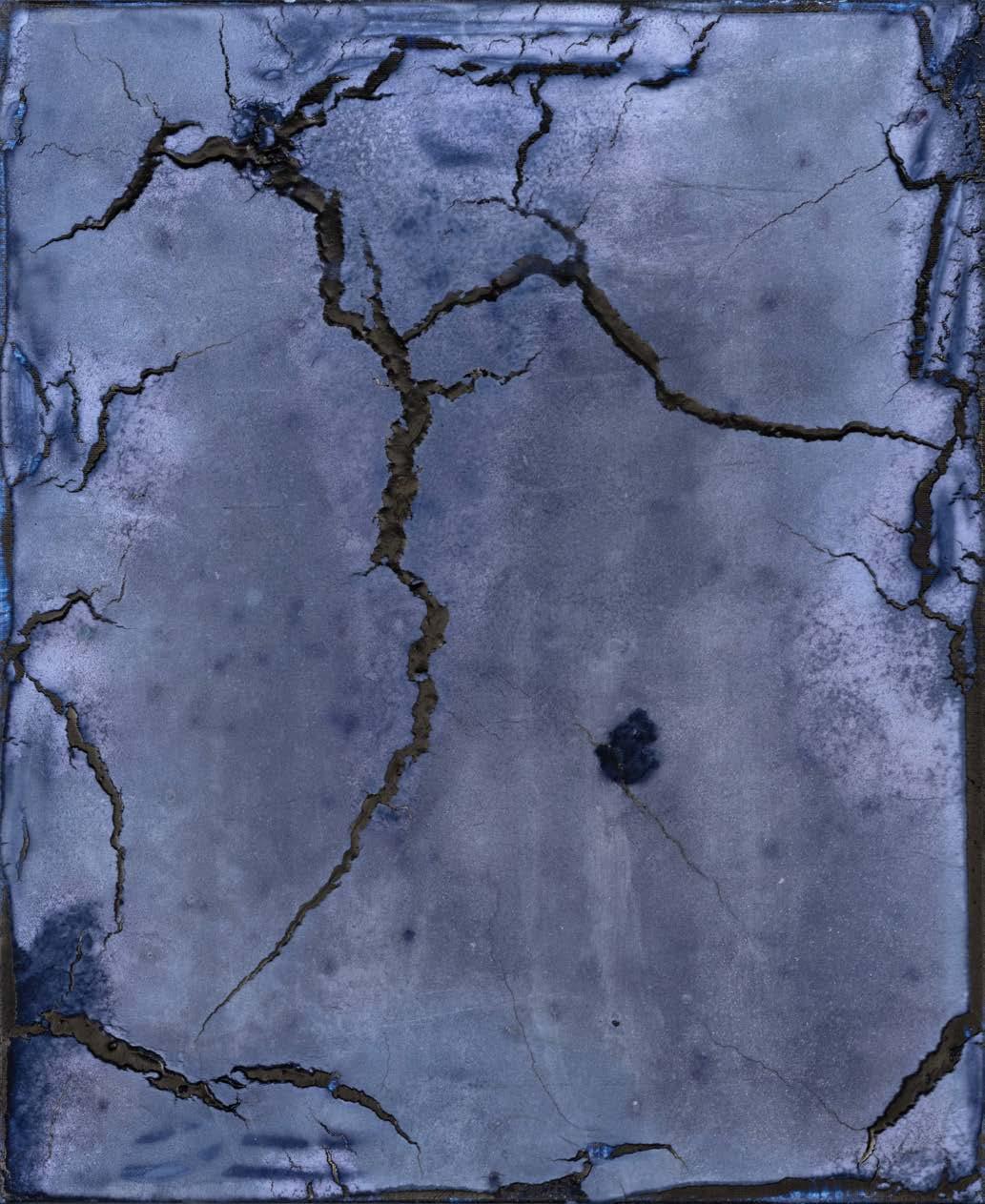
At a certain point, the artist allows the sun, wind and rain to impart a final patina on his canvases. Outside his studio in Catalonia, his largest canvases are left to the elements, laid flat on the terrace or leaning against one of the exterior walls. Pigments mingle with veils of earth deposited by the breeze, their colour softening, diluted by the drizzle. The process can take months, testified to in one case by an abandoned nest, balancing atop a monumental canvas distinguished by shades of blue.
For Pastor, these processes are a way of getting to the very essence of Nature, whose destruction he senses and fears. He is engaged in the timeless quest of painting, a quest that Paul Cézanne articulated at the start of the 20th century in his conversations with art critic Joachim Gasquet: “Nature is not on the surface; it is in the depths. Colours are the expression, on this surface, of this depth. They rise from the roots of the world.”
La nature pour partenaire
Une photographie du peintre Paul Rebeyrolle accueille chaque jour Philippe Pastor à l’entrée de son atelier catalan. « Pour moi il est le plus grand peintre français. Il a su travailler la matière de ses toiles comme aucun autre. ». Lui aussi fou de nature, Rebeyrolle vivait et travaillait dans un vieux moulin de l’Aube, en pleine campagne française, sans cesser de se préoccuper des soubresauts du monde. Pour animer la surface picturale de ses œuvres, il intégrait à ses toiles terre, crin ou brindilles. Pastor procède lui aussi à de telles cérémonies, intégrant à sa peinture des éléments des paysages qu’il arpente, feuilles de chênes, algues de Méditerranée séchées, fougères, et même de la terre. « Je prends la nature pour partenaire. Travailler avec les éléments, c’est capital dans mon expérience de peintre. » Ses pigments sont exclusivement naturels, ocres rares ou poudre rose de fleurs séchées.
À un certain moment, l’artiste laisse le soleil, le vent et la pluie achever la patine de ses toiles. En Catalogne, de vastes toiles s’infusent du temps qui passe, posés à plat sur la terrasse de l’atelier, ou appuyés contre l’un des murs extérieurs. Les pigments se mêlent aux voiles de terre déposés par la brise, leur couleur s’apaise, délavée par la bruine. L’opération peut prendre des mois, comme en témoigne un ancien nid bâti en haut d’une toile monumentale aux tons de bleus.
Pour Pastor, ces pratiques sont une manière de comprendre l’essence de cette Nature dont il pressent et redoute l’oblitération. Il est dans une quête immémoriale de la peinture, que Paul Cézanne mit en mot à l’orée du XXe siècle au fil de ses entretiens avec le critique d’art Joachim Gasquet : « La nature n’est pas en surface ; elle est en profondeur. Les couleurs sont l’expression, à cette surface, de cette profondeur. Elles montent des
Pastor spent a long time searching for a technique that would satisfy him. “I didn’t find myself in oil painting or gouache. It was a documentary about the Lascaux caves that led me to my path. I told myself: this is what you need to do, work in a wild, precise, and unrestrained way.”
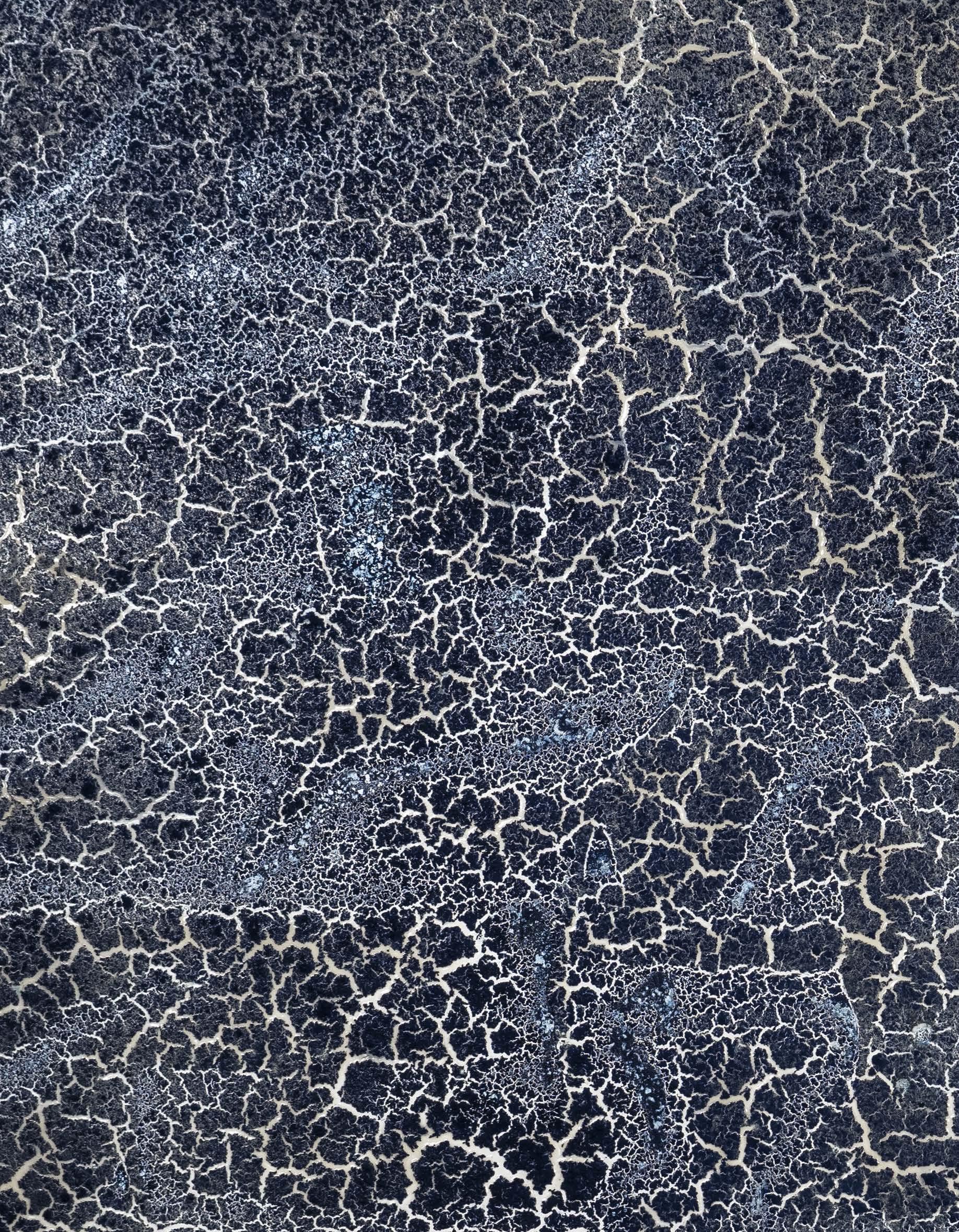
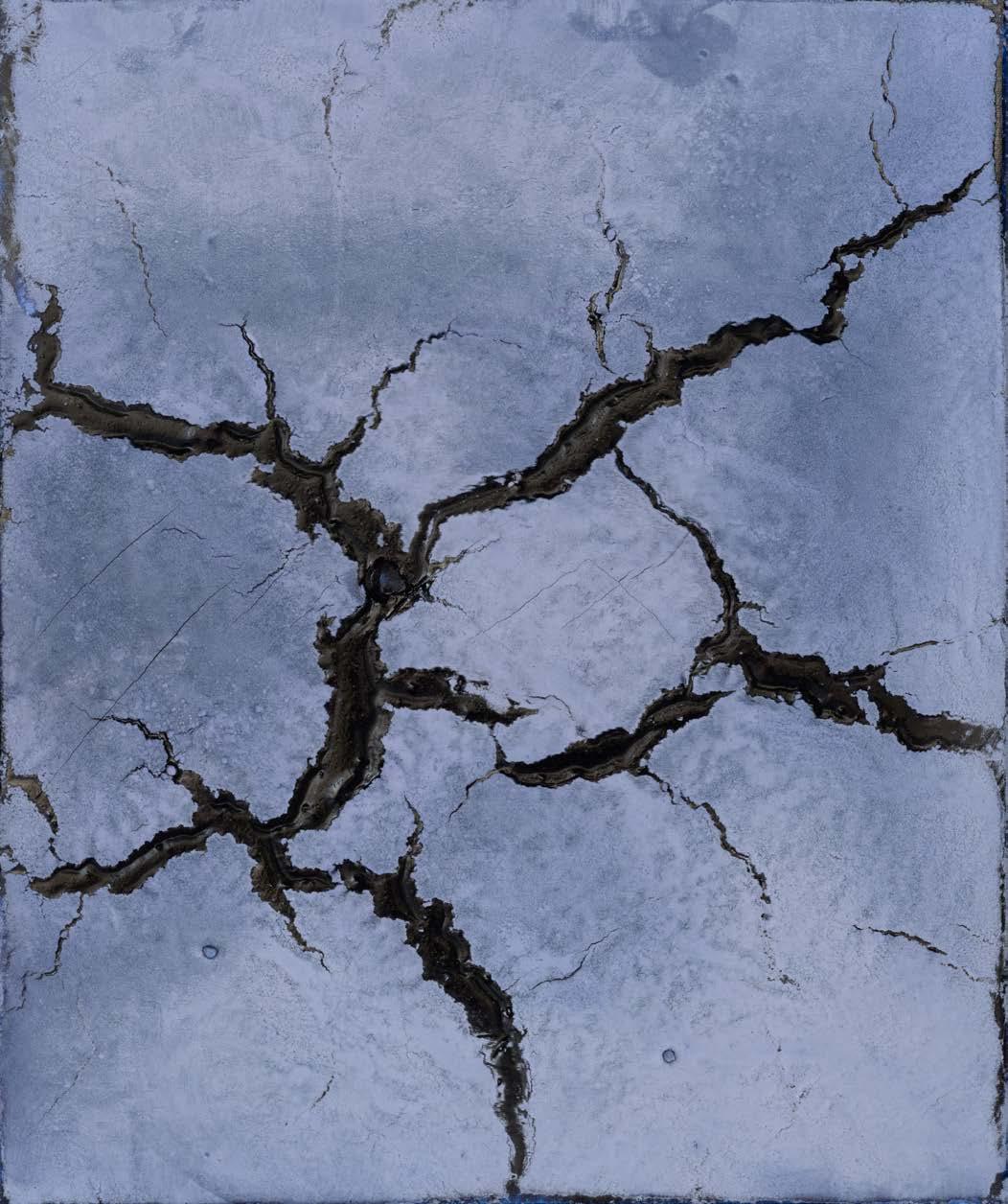
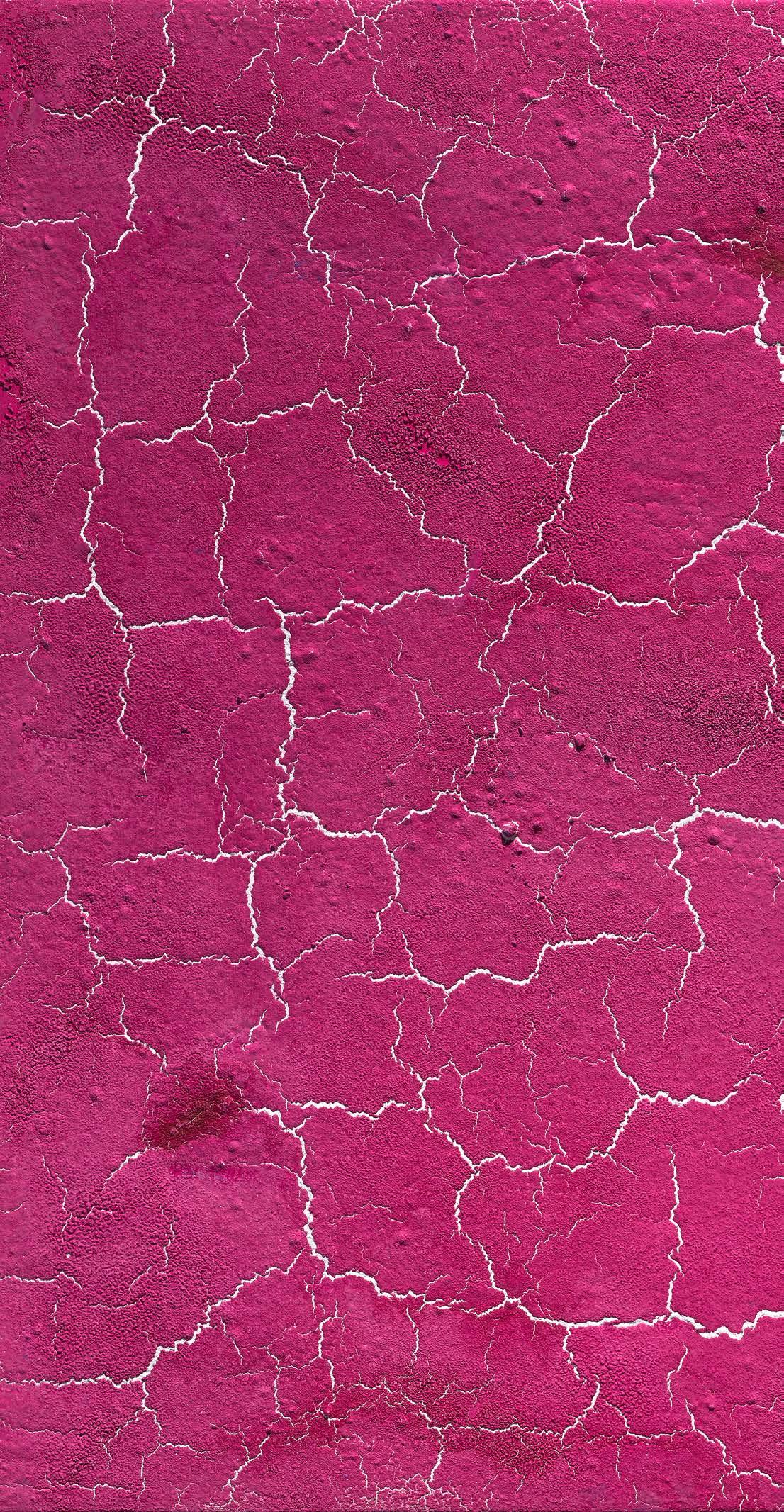
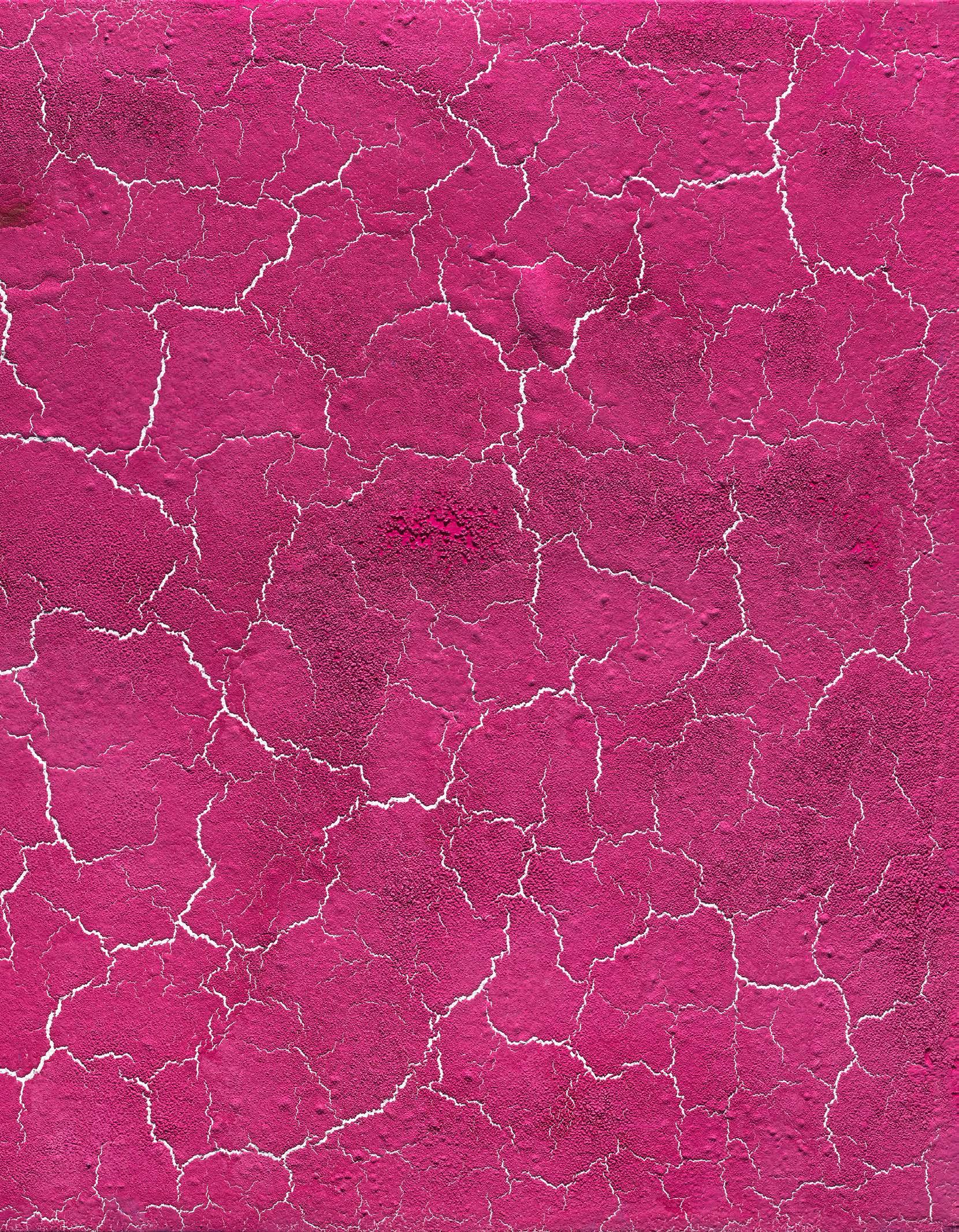
These caves have also provided inspiration for another of the few artists with whom Philippe Pastor feels close: the Spanish painter Miquel Barceló, who claims to have visited more caves than museums in his lifetime. This fundamental notion of painting is accompanied in Pastor’s work by a technique acquired over decades through patience, reflection, and a constant desire to experiment. “Over the years, the surfaces on which I practised my technique became increasingly larger.” With his current practice, he employs a range of means to achieve his aims in animating the material: paper pulp for volume, jets of water or air for chromatic explosions, fans, heaters, or ovens for various surface cracking effects.
racines du monde. » Pastor a longtemps cherché une technique qui le satisfasse. « Je ne me retrouvais pas dans la peinture à l’huile ni la gouache. C’est un documentaire sur les grottes de Lascaux qui m’a fait trouver mon chemin. Je me suis dit : c’est cela que tu as besoin de faire, travailler d’une manière sauvage, précise et folle. »
Le pouvoir des grottes agit aussi sur un autre des rares artistes dont Pastor est proche : le peintre espagnol Miquel Barceló, lequel professe avoir visité davantage de grottes que de musées dans son existence. Cette conception primordiale de la peinture s’accompagne chez Pastor d’une technique acquise au fil des décennies avec patience, réflexion et volonté constante d’expérimenter. « Au fil des années, les supports où je pratique cette technique sont devenus de plus en plus grands. ». L’artiste déploie aussi dans l’éventail de ses techniques ce qu’il appelle « beaucoup de malice » pour faire vivre la matière : pâte à papier pour créer les volumes, jets d’eau ou puissants jets d’air pour des explosions chromatiques, ventilateurs, chauffages ou fours pour divers effets de craquèlement de la surface.
The joy of chance
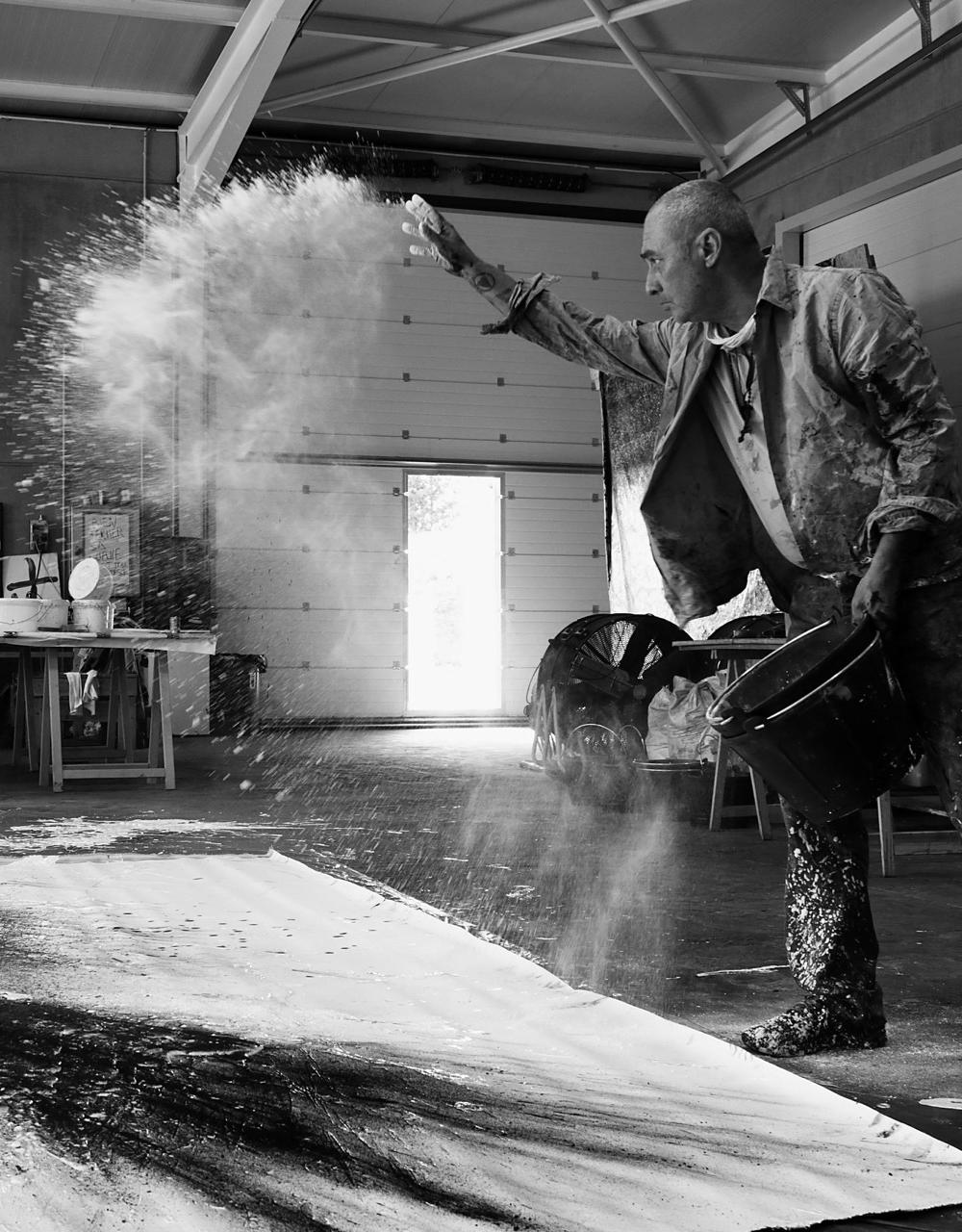
In the North Pole paintings, alongside these more liberating methods, the artist directs the marks and drips through a controlled, skilful application of a glue that he manufactures himself. “I play with black and white like I play a piano keyboard, applying titanium white pigment and lampblack mixed with Indian ink to the surface, so that the drips can spread across the entire four meters of the canvas.” The painting is then suspended by cables from the height of the studio, and the work is left to continue its own creation. The outcome is arresting, achieved through a process that is directed but unpredictable, precise but flowing. “Sometimes I’m surprised that the result is exactly what I wanted. But that’s probably called experience.”
Philippe Pastor works in the studio in the evenings and at night. His days, his lifestyle, are structured by this ritual. This adherence to a rule is accompanied by a delight in chance. “You have to let the paint find its own way. That chance can leave its mark is a great joy.”
Le bonheur de l’aléatoire
Pour « Pôle Nord », c’est l’application savante sur les toiles d’une colle fabriquée par l’artiste qui permet de maîtriser quelque peu la direction des coulures. « Je joue avec le noir et le blanc comme avec le clavier d’un piano, en disposant sur la surface le pigment blanc titane et le noir de fumée, mélangé à l’encre de Chine, pour que la coulure puisse s’effectuer sur les quatre mètres de la toile ». Alors le tableau est suspendu par des câbles sur la hauteur de l’atelier, et l’œuvre semble poursuivre seule sa propre réalisation. « Parfois je m’étonne que le résultat soit exactement celui que j’aurais souhaité. Mais ça s’appelle sans doute l’expérience. »
Philippe Pastor travaille à l’atelier le soir et la nuit. Ses journées, son hygiène de vie, sont rythmés par ce rituel. Ce souci d’une règle s’accompagne d’un bonheur de l’aléatoire. « Il faut laisser à la peinture la possibilité de faire son chemin. Que le hasard puisse laisser sa trace est un grand bonheur. »
North Pole
North Pole (24 002 NP), 2024
Mixed media on canvas
320 x 220 cm (126 x 86 5/8 in.)
North Pole (24 005 NP), 2024
Mixed media on canvas
195 x 130 cm (76 3/4 x 51 1/8 in.)
North Pole (24 006 NP), 2024
Mixed media on canvas
183 x 130 cm (72 x 51 1/8 in.)
North Pole (24 007 NP), 2024
Mixed media on canvas
183 x 130 cm (72 x 51 1/8 in.)
North Pole (24 009 NP), 2024
Mixed media on canvas
130 x 183 cm (51 1/8 x 72 in.)
North Pole (24 010 NP), 2024
Mixed media on canvas
183 x 130 cm (72 x 51 1/8 in.)
North Pole (24 012 NP), 2024
Mixed media on canvas
400 x 400 cm (157 1/2 x 157 1/2 in.)
North Pole (25 006 NP), 2025
Mixed media on canvas
152 x 100 cm (59 7/8 x 39 3/8 in.)
North Pole (25 011 NP), 2025
Mixed media on canvas
152 x 100 cm (59 7/8 x 39 3/8 in.)
North Pole (25 014 NP), 2025
Mixed media on canvas
400 x 400 cm (157 1/2 x 157 1/2 in.)
North Pole (25 028 NP), 2025
Mixed media on canvas
200 x 200 cm (78 3/4 x 78 3/4 in.)
North Pole (25 036 NP), 2025
Mixed media on canvas
152 x 102 cm (59 7/8 x 40 1/8 in.)
North Pole (25 037 NP), 2025
Mixed media on canvas
152 x 102 cm (59 7/8 x 40 1/8 in.)
North Pole (25 058 NP), 2025
Mixed media on canvas
116 x 89 cm (45 5/8 x 35 in.)
North Pole (25 061 NP), 2025
Mixed media on canvas
350 x 390 cm (137 3/4 x 153 1/2 in.)
North Pole (25 062 NP), 2025
Mixed media on canvas
240 x 392 cm (94 1/2 x 154 3/8 in.)
North Pole (25 064 NP), 2025
Mixed media on canvas
370 x 390 cm (145 5/8 x 153 1/2 in.)
North Pole (25 065 NP), 2025
Mixed media on canvas
360 x 225 cm (141 3/4 x 88 5/8 in.)
Bleu Monochrome (13 027 BM), 2013
Mixed media on canvas
162 x 130 cm (63 3/4 x 51 1/8 in.)
Bleu Monochrome (14 072 BM), 2014
Mixed media on canvas
200 x 200 cm (78 3/4 x 78 3/4 in.)
Bleu Monochrome (23 035 BM), 2023
Mixed media on canvas
200 x 200 cm (78 3/4 x 78 3/4 in.)
Bleu Monochrome (23 072 BM), 2023
Mixed media on canvas
200 x 200 cm (78 3/4 x 78 3/4 in.)
Bleu Monochrome (23 100 BM), 2023
Mixed media on canvas
73 x 60 cm (28 3/4 x 23 5/8 in.)
Bleu Monochrome (23 104 BM), 2023
Mixed media on canvas
61 x 50 cm (24 x 19 3/4 in.)
Bleu Monochrome (24 019 BM), 2024
Mixed media on canvas
40 x 30 cm (15 3/4 x 11 3/4 in.)
Bleu Monochrome (24 020 BM), 2024
Mixed media on canvas
61 x 50 cm (24 x 19 3/4 in.)
Bleu Monochrome (24 021 BM), 2024
Mixed media on canvas
61 x 50 cm (24 x 19 3/4 in.)
Bleu Monochrome (24 022 BM), 2024
Mixed media on canvas
61 x 50 cm (24 x 19 3/4 in.)
Bleu Monochrome (24 023 BM), 2024
Mixed media on canvas
73 x 60 cm (28 3/4 x 23 5/8 in.)
Les Quatre Saisons Rose Bonbon
Les Quatre Saisons (09 021 QS), 2009
Mixed media on canvas
315 x 239 cm (124 x 94 1/8 in.)
Les Quatre Saisons, 2009
Mixed media on canvas
315 x 239 cm (124 x 94 1/8 in.)
Rose Bonbon (17 001 RB), 2017
Mixed media on canvas
89 x 116 cm (35 x 45 5/8 in.)
Philippe Pastor (b. 1961, Monaco)
Philippe Pastor’s wide-ranging practice encompasses painting, sculpture and mixed-media techniques. A determined advocate for the preservation of nature, Pastor uses his art to promote awareness and inspire action in support of environmental causes. There are two main complementary strands of his practice: abstract canvases, in which composition is defined through the use of natural pigments and raw elements, with Nature’s contribution through the elements that compose it, and the sculpture series Les Arbres Brûlés (The Burnt Trees), an explicit denunciation of the devastation caused by forest fires and deforestation.
Internationally recognised – Pastor participated in the Venice Biennale in 2007 and 2009, and the Milan Expo in 2015 – the artist aims to highlight the urgency of the climate emergency. He has collaborated with the United Nations Environment Programme (UNEP), supporting and participating in the ‘Plant for the Planet: The Billion Tree Campaign’ project. Sculptures from the Les Arbres Brûlés series have been installed in Singapore, New York, Munich, Nairobi, Nice, Paris among other places, testifying to the artist’s determination to promote widely the environmental cause that motivates his practice.
Pastor is also the founder of the Art & Environment Association. Launched in 2007 under the patronage of His Serene Highness Prince Albert II of Monaco and Professor Wangari Maathai, Nobel Peace Prize winner in 2004, the Association organises exhibitions and events to promote awareness of climate change and the associated threats facing our planet.
Pastor works between Megève, France and Figueres, Spain.
Selected solo exhibitions
2024 Philippe Pastor, Robilant+Voena, New York, USA
Bleu Pastor, Robilant+Voena, St. Moritz, Switzerland
2023 Comment Va le Monde?, Baux-de-Provence, France
2021 Philippe Pastor, Fin du Monde, Monaco Modern’Art, Monaco
2020 Philippe Pastor, Est-ce que ce Monde est Sérieux ?, Musée de Bormes-les-Mimosas, France
Philippe Pastor, La Vie en Rose, Monaco Modern’Art, Monaco
2019 Philippe Pastor, Est-ce que ce Monde est Sérieux ?, Monaco Modern’Art, Monaco
Philippe Pastor, Azul Tierra, Barcelona, Spain
Terre & Métamorphoses, Monaco Modern’Art, Monaco
2017 Pastor, Jerome Zodo Gallery, London, UK
Philippe Pastor, 10 Monochrome, De Jonckheere, Geneva, Switzerland
Philippe Pastor, Les Arbres Brûlés, Château des Marres, Golfe de Saint-Tropez, France
2016
Philippe Pastor, Galerie 56, Megève, France
2015 Philippe Pastor, Les Arbres Brûlés, Monaco Pavilion, Expo2015, Milan, Italy
2014 Philippe Pastor, La Galerie 38, Casablanca, Morocco
Philippe Pastor, Territoires, Galerie D.X., Bordeaux, France
Philippe Pastor Monochrome Blue, Monaco Modern’Art, Monaco
Philippe Pastor, Galerie Nicolas Deman, Paris, France
2013 Philippe Pastor, Monochrome Blue, Nina Torres Fine Art, Miami, USA
2012 Philippe Pastor, Galerie Nicolas Deman, Paris, France
2010 Philippe Pastor, Retrospective, Opera Gallery, New York, USA
Philippe Pastor, The Four Seasons, Barbara de Palma Gallery, Saint-Tropez, France
Philippe Pastor, Recent Works, Showroom, 49 Curzon Street, London, UK
Philippe Pastor, The Hearts, MIA, Miami International Art Fair, Platform Gallery, Miami, Florida, USA
2009 Le Ciel Regarde la Terre, 53rd Venice Biennale, Pavillon of the Principality of Monaco, Caserne Cornoldi, Venice, Italy
2008 Philippe Pastor, Les Arbres Brûlés, Centre Culturel Français, Milan, Italy
Philippe Pastor, Le Ciel Regarde la Terre, Casino de Monte-Carlo, Monaco
Philippe Pastor, Regards, Atelier Soardi, Atelier Matisse, Nice, France
2007 Sulle Vie di Damasco, 52nd Venice Biennale, Pavillon of the Syrian Arab Republic, Venice, Italy
Philippe Pastor, Arbres Blancs, Festival International du Film, Cannes, France
2006 Philippe Pastor, Atelier Soardi, Atelier Matisse, Nice, France
Philippe Pastor, Fondation Valerio Riva, Venise, Italy
Philippe Pastor, Œuvres Récentes, Galerie du XX Siècle, Paris, France
2005 Philippe Pastor. Exposition Itinérante, Musée National Cotroceni, Bucharest, Romania
Philippe Pastor, The Strange Cheerfulness of a Sad Cansun, Galleria Nazionale d’Arte Moderna e Contemporanea, San Marino, Italy
Les Arbres Brûlés installations
2025 Château Des Marres, Golfe de Saint-Tropez, France
2024 Suvretta House, St. Moritz, Switzerland
2022 Château des Marres, Golfe de Saint-Tropez, France
Permanent installation, Vilanant, Spain
Gala de la Croix-Rouge Monégasque, Monaco
2021 Permanent installation, Saint-Paul-de-Vence, France
Château des Marres, Golfe de Saint-Tropez, France
2019 Permanent installation, Jardin Sacha Sosno, Nice, France
Château des Marres, Golfe de Saint-Tropez, France
2018 Château des Marres, Golfe de Saint-Tropez, France
2017 Château des Marres, Golfe de Saint-Tropez, France
2016 Grimaldi Forum, Monaco
Mègeve, France
Permanent installation, La Gacilly La Grée Des Landes – Eco-Hôtel-Spa Yves Rocher, France
2015 Permanent installation, Terminal Neige –Totem, Flaine, France
2014 Gare de Montparnasse, Paris, France
Gare du Nord, Paris, France
2013 Grimaud, Ramatuelle, Sainte-Maxime, SaintTropez, France
2012 Château des Marres, Golfe de Saint-Tropez, France
2011 L’Alpette, Megève, France
Permanent installation, Grimaud, France
Château des Marres, Golfe de Saint-Tropez, France
2009 Permanent installation, Eco-Hôtel La Grée des Landes, La Gacilly, France
Caroline Corbetta is a curator and cultural journalist active on the international scene. She has curated exhibitions for public and private institutions in Europe and the United States, including Francesco Vezzoli for the Moderna Museet, Stockholm; Ugo Rondinone at the Galleria d’Arte Moderna, Milan; Performa Biennial in New York, and MOMENTUM - Nordic Biennale. She has developed numerous projects to promote young Italian artists, including Il Crepaccio. Corbetta is a regular contributor to various publications, including La Repubblica, Vogue, Domus and La Gola. Employing a variety of contemporary cultural languages, she creates innovative exhibition formats aimed at showcasing emerging talents and disseminating art to diverse audiences.
Axelle Corty is a French journalist and writer, with specialisms in art and design. She lives and works in Paris, where she has collaborated with the magazine Connaissance des Arts for more than 20 years. She has also spent over ten years working with AD France. Corty is the co-author of two books, both published by Éditions de l’Amateur: one with Anne Bonny on the sculptor Jean Touret (2022), the other with Frédéric Migayrou and Anne Bonny, on the sculptor Pierre Sabatier (2024).