RMIT Design Archives Vol 7, No 1 and 2, 2017 | 10th Anniversary Issue
EDITORIAL
100 objects from the Collection
Journal Editor
Harriet Edquist
Assistant Editor
Ann Carew
Editorial Assistance
Rickie-Lee Robbie
Simone Rule
Archive photographers
Georgina Matherson
Margund Sallowsky
Stephanie Bradford
RMIT Design Archives Staff and Volunteers
Design
Letterbox
The RMIT Design Archives (RDA) holds a unique place among Australia’s collecting institutions for its exclusive focus on design practice across all disciplines. From automotive to fashion and architecture the
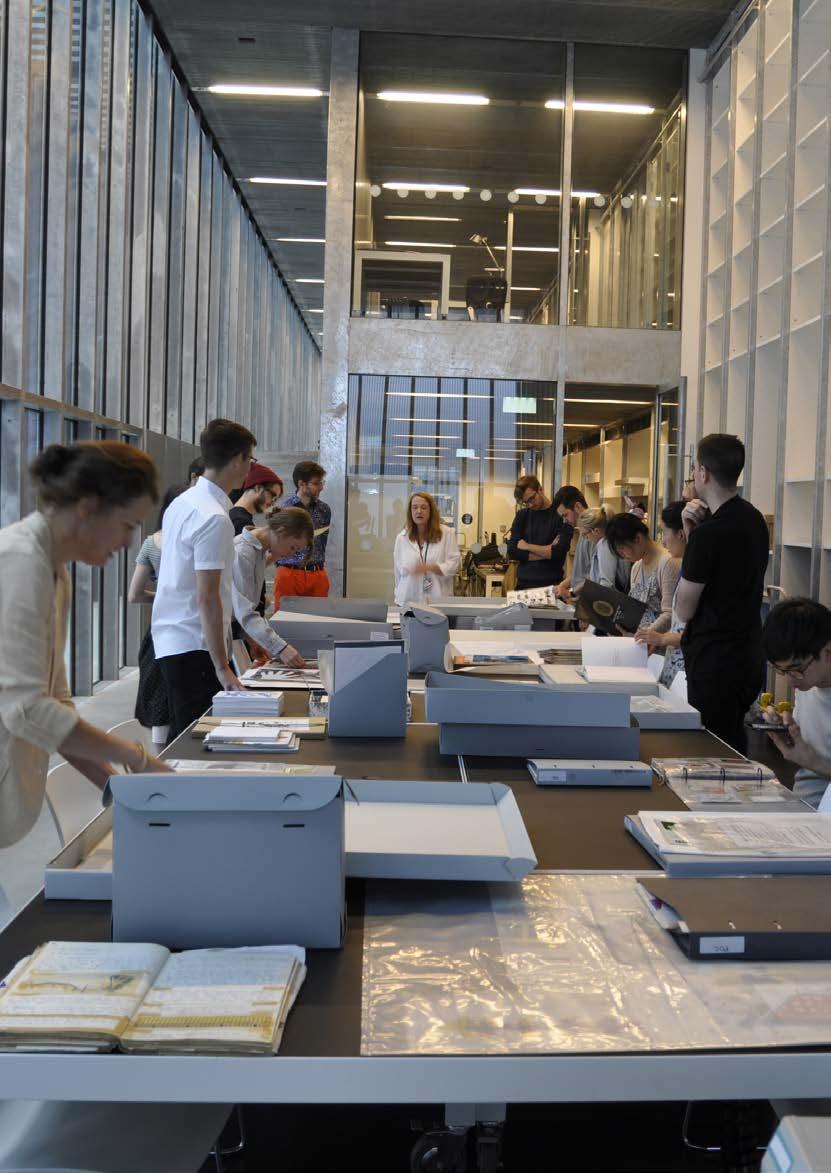
To mark the 10th anniversary of the Archives, we invited friends, associates and colleagues to select an artefact from the collection that they particularly admired. Pieces were chosen for what they said about a movement, a cultural moment, material consciousness, design process, or exemplary design practice, in some cases one designer has been chosen by several contributors. The RDA staff also selected pieces to ensure that all the design disciplines were represented. Above all the choices reveal the relevance of the Design Archives to people’s understanding and enjoyment of the world around them.
The origins of the RMIT Design Archives (RDA) lie in the RMIT Textile Resource Centre created with the assistance of federal funding in 1994 by Janet Medd, Head of the Fashion and Textile Design Department. It became the Frances Burke Textile Resource Centre (FBTRC) in 1997 following a generous bequest by Fabie Chamberlain in memory of her life-long companion Frances Burke, a celebrated textile designer who had been awarded an Honorary Doctorate by RMIT for her services to design in 1987. Robyn Oswald-Jacobs was its founding Director. When she left in the late 1990s, Kaye Ashton assumed the management role and continued Oswald-Jacobs’ initiatives, bringing in interesting new archives and beginning to document the collections. In 2007 the decision was made to expand the remit of the Centre to align it more closely to the strategic mission of RMIT. Archives were added to the core FBTRC
collection to represent Victorian design and designers from all disciplines. As RMIT had built a strong reputation for practice-based research, those collections that demonstrated exemplary design practice (through sketches, models, design drawings, specifications, client correspondence etc) were particularly sought after. Fortuitously, when RDA came into being the University had embarked on plans for building the Design Hub on the corner of Swanston and Victoria Streets that was to facilitate design research by co-locating teams of design-focused research groups. Space was made for the RDA to be housed on this site to amplify its research potential and connection with the student body, and research and student experience remain the central purposes of building the collection. Given its position within a vibrant creative environment the RDA has focused from the outset on the concept of the ‘Active Archive’. This idea asks the questions:
How do we understand a history of design that is not based on objects and names but people and the practices of historians, archivists, students, designers, curators, scholars and facilities? How can archives of past practices and design forms be used as a means to make sense of the future? What are the collection and curatorial challenges for archives in relation to new design domains such as service, social, interaction, activism and so forth? What are the critical considerations of the networked archive and the relationship between the analogue and the digital? (RDAJ Editorial, 2013)
Archives holds exemplary collections of some of Melbourne’s most important and influential post-war designers and it is through their records that we can begin to reveal the ‘archaeology’ of a creative city.
These questions continue to frame the collection policy and activities of the RDA as it constantly refines its position within the contexts of RMIT and Melbourne’s cultural ecology. The last question, concerning the relationship between the analogue and digital archive is particularly challenging and is one all collecting institutions face. There are two issues at play. The first concerns the digitization of the analogue archive for public access. This work is one of the few areas where funding has been forthcoming because its benefits are so obvious and compelling. The second area concerns born-digital artefacts and how to store these into the future when software and hardware are not stable entities and the security of the WWW uncertain. This question is far more difficult to answer.
Yet for all the ubiquity of the digital empire of things the analogue archive has not been left behind and has in fact seen an increase in popularity over the past few years. In her 1989 book The Allure of the Archives, Arlette Farge offers the reader a seductive and sensory initiation into the pleasures of archival research. Centred on her own experience in French judicial archives, specifically in the criminal records of the Prefecture of Paris at the Arsenal library where the police archives are held, Farge’s book is striking evidence of the socalled ‘archival turn’ of recent decades.
The writing, not matter how meticulous, how regular, is barely legible to untrained eyes. It sits before you on the reading room table, most often a worn-out looking bundle tied together with a
cloth ribbon, its corners eaten away by time and rodents. It is precious (infinitely so) and damaged; you handle it cautiously out of fear that a slight tear could become definitive…Gently, you begin undoing the cloth ribbon that corsets it around the waist, revealing a pale line where the cloth had rested for so long.1
In fact it is just this materiality of the archive that draws people to it today. The feel and look of objects, the skill with which they have been crafted, their design languages and codes, their secrets and local histories – all these things are alluring to generations whose experience of the world is mediated by a screen. Within a contemporary discourse of ‘new materialism’ the analogue archive can be seen to resist commodification and to bear witness to generations of designers whose embodied engagement with the world has left such powerful testimony.
Harriet Edquist, director
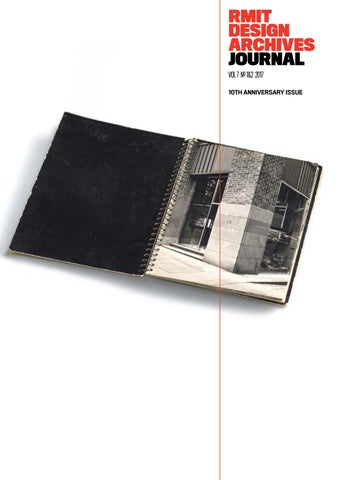
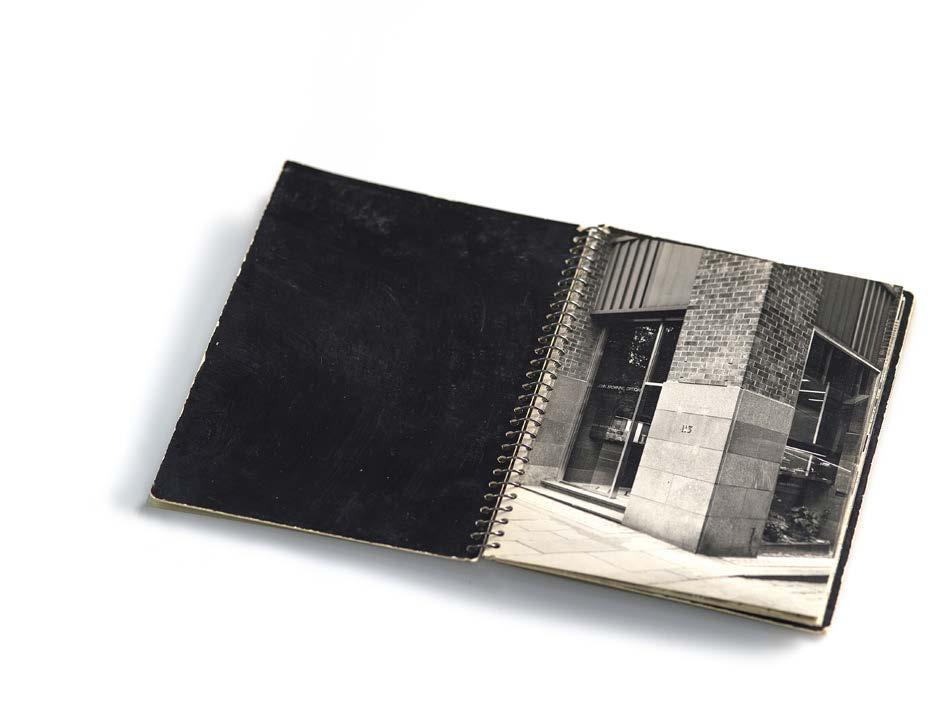
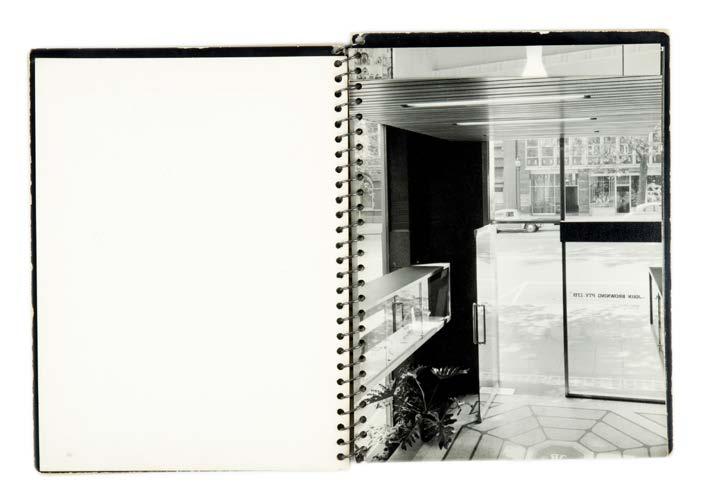
Cover Athol Shmith, Booklet of photographs for John Browning Opticians, c. late 1950s Inside Front Cover
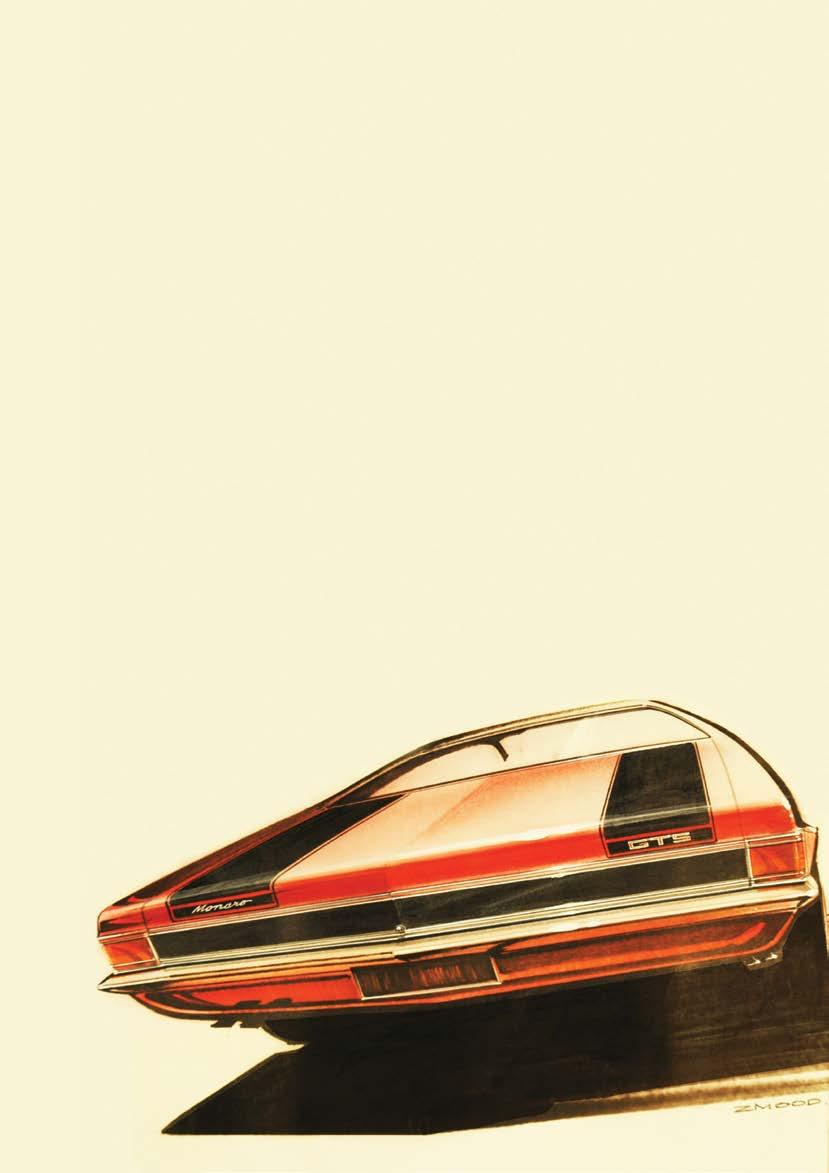
Phillip Zmood sketch of HK Monaro. c.1970s
1. Arlette Farge, The Allure of the Archives, trans. Thomas ScottRailton, Yale: Yale University, 2013, 1–2.
07 Frances Burke in studio, unknown photographer, 1960
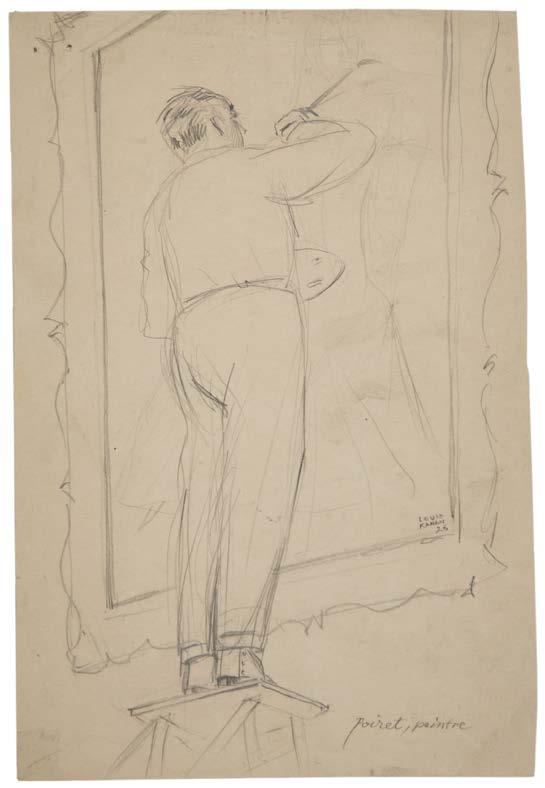
08 Louis Kahan, ‘Poiret painting’, 1926
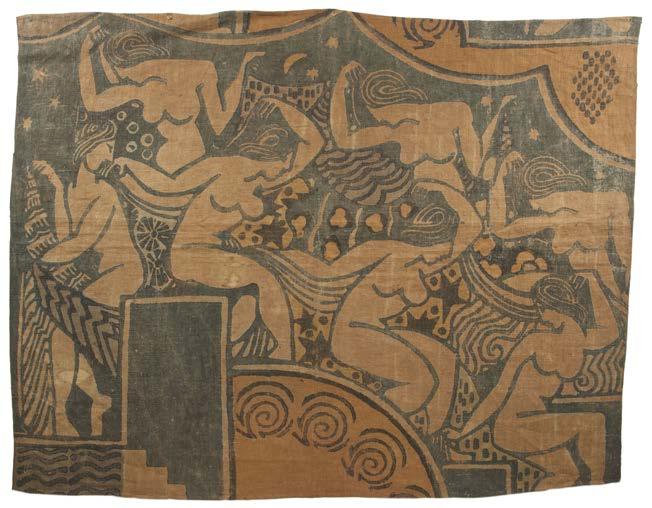
09 Michael O’Connell, textile featuring women dancing, c.1932
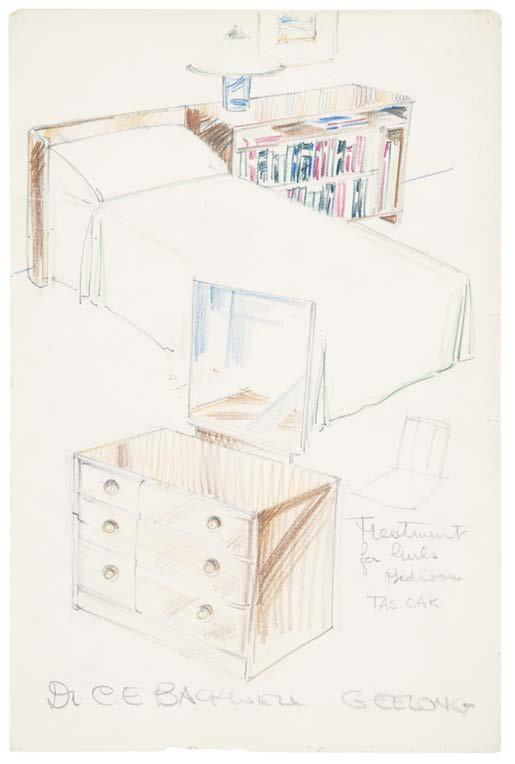
10 Frederick (Fred) Ward, Girl’s bedroom for Claude Backwell, Geelong, 1935-1940
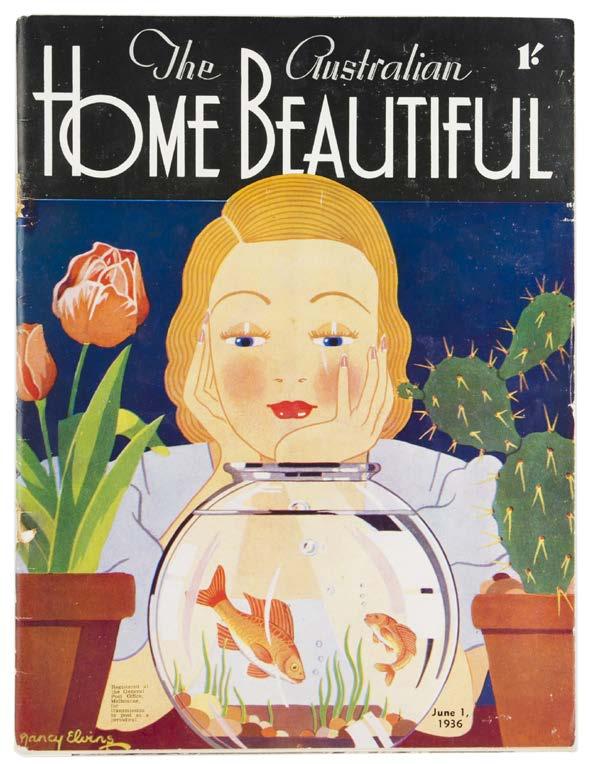
11 Nancy Elvins, Cover for the Australian Home Beautiful June 1936
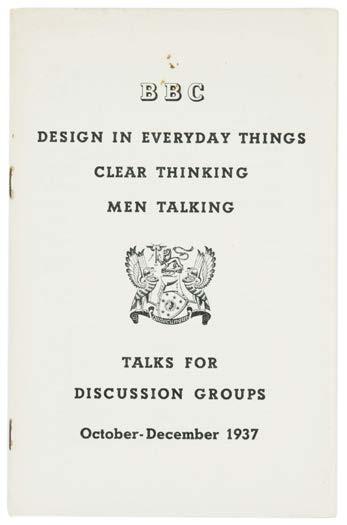
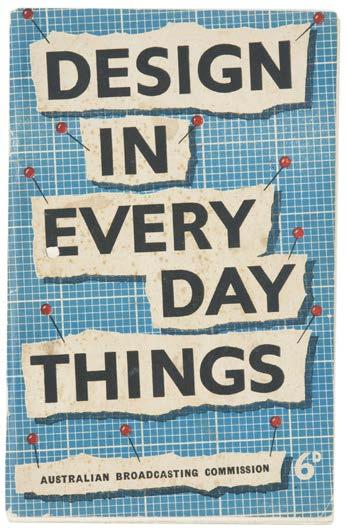
12 Design in Everyday Things, BBC 1937, Australian Broadcasting Commission 1941
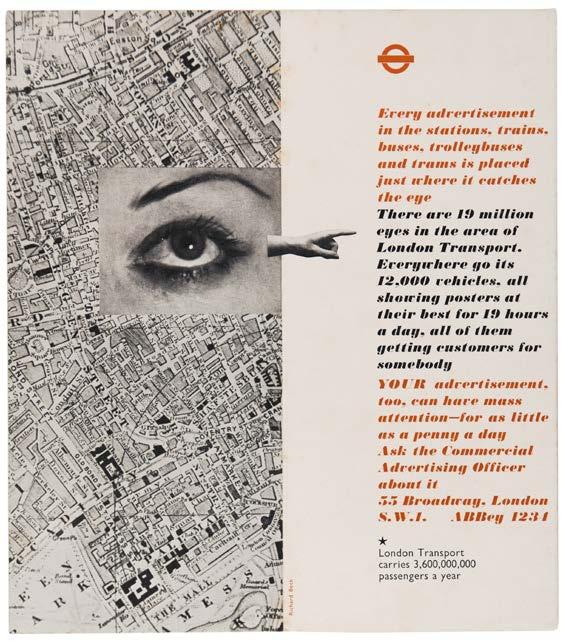
13 Richard Beck, Brochure for London Transport, c.1930s
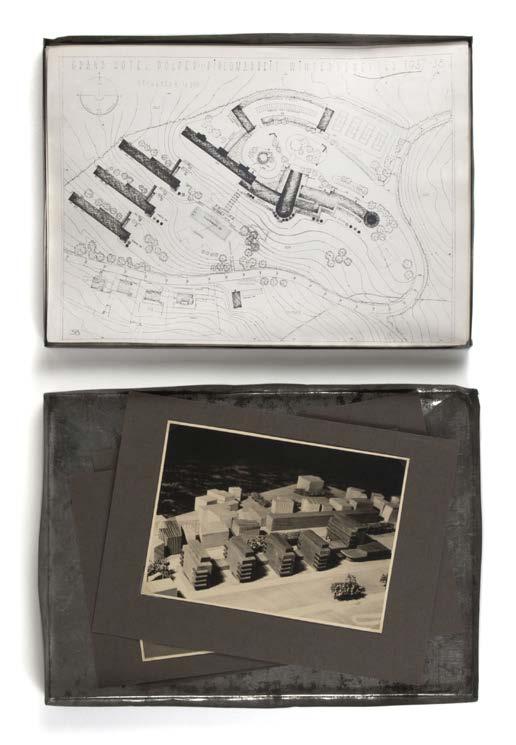
14 Frederick Romberg, Student work at ETH Zurich 1933-1938
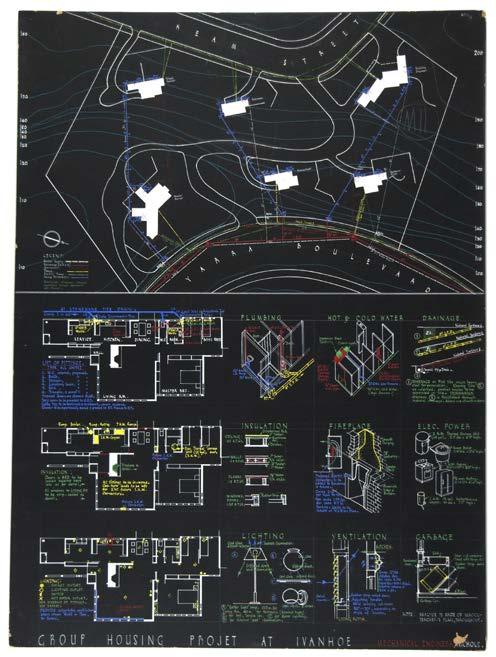
15 Geoffrey Nichols, ‘Plans and details for the Group Housing Project, Ivanhoe’, Student project, Melbourne Technical College, c.1940
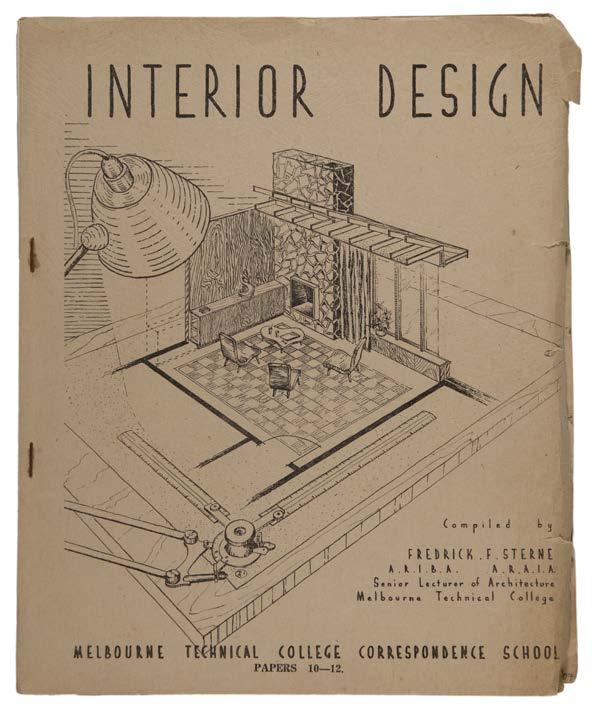
16 Frederick F Sterne, Melbourne Technical College Correspondence School, papers 10–12, c.1948
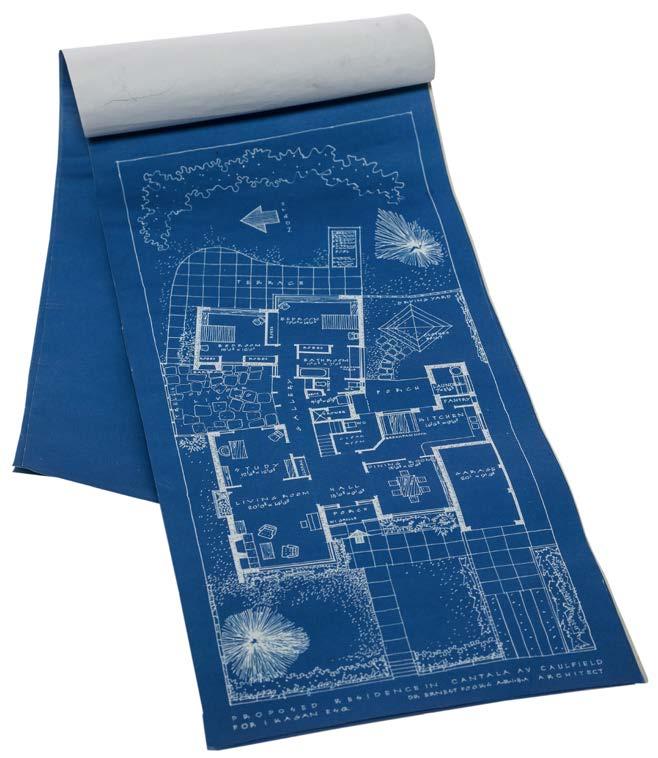
17 Ernest Fooks, Plan of Kagan house, Cantala Avenue Caulfield, 1951
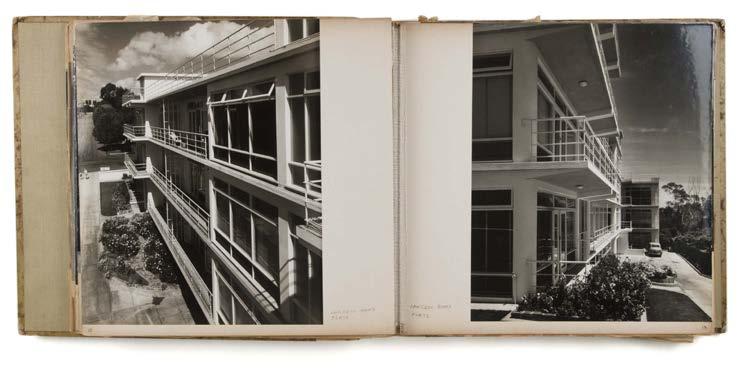
18 Wolfgang Sievers, Album of photographs of work by Anatol Kagan, c.1950s
19 Unknown photographer, US Models at Prestige Studio, 1950
20 Stanislaus Ostoja-Kotkowski, Prestige Studio textile piece, c.1952-53
21 Marion Fletcher, Page from sketchbook of designs for fabrics, c.1950
66 Robin Edmond, Landscape design for North Fitzroy, 1970
67 Alex Stitt, Index book containing contact prints, c.1970s
68 Alex Stitt & Bruce Weatherhead, A Dictionary of Magic, c.1971-1973
69 Anthony Frederick Ward (Tony Ward), Luna Park advertising folio for All Australian Graffiti, c.1976
70 Champion Books/Backyard Press, Postcard ‘I’m not voting Liberal’ c.1975
71 Tim Laurence, At el Almanac, 1977
72 Phillip Zmood styling proposal for HJ Monaro coupe, 1974
73 Chris Emmerson, Cutaway illustration of Toyota, 2003-4
74 Barry Hudson, General Electric’s KE12 kettle, 1978
75 Robert Pataki, Prototype of powerboard design for Kambrook, 1979
76 Selection of Fast Forward Cassette Magazines, 1978-1992
77 Helen and Ken Abson, ZAB Design, ‘Waves’, c.1970s
78 Cocks and Carmichael, Civic x 2 project house, c.1969
79 Hanson Todd & Woodfall et al, Port Phillip Link Project, 1973
80 Berenice Harris, Proposed 2-storey addition to Melbourne University Boatshed, 1976
81 Frederick Romberg, Aboriginal Keeping Place, Shepparton, elevation, section and aerial view, 1979
82 Joyce Nankivell, Australian High Commission Building Kuala Lumpur, view, 1978
83 Robert Pearce, Illustration of Edmond & Corrigan’s Barber house, Carlton, 1979
84 Les Mason, A.R.C Weld Mesh catalogue, c.1970s
85 Robert Pearce, The Hardware Club, poster c.1980
86 Fashion Design Council of Australia newsletter, 1984
87 Alfredo Bouret, Illustration of a woman in Mexican clothing, c.1954
88 David Lancashire, Godfrey (Geoff) Fawcett, Experimental lettering, c.1980s
89 Marion Fletcher, Marked-up drawings for Costume in Australia 1788-1901, c.1980-1984
90 Bruce Weatherhead, Merchant Builders brochure, 1988
91 Built Moderne, ‘Architecture as Idea’, RMIT Gallery 1984, Poster designed by Robert Pearce
92 Landscape Architecture at the Edge conference programme by Maggie Fooke and Jerry de Gryse, RMIT 1983
93 Lecki Ord, Letter to Joan Kirner, 26 July 1988
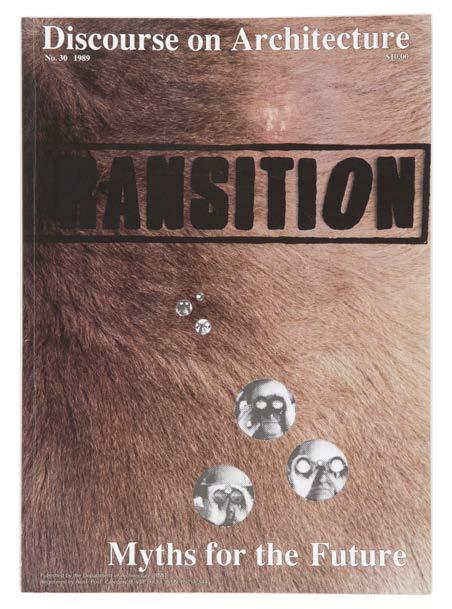
94 Transition vol 30 1989
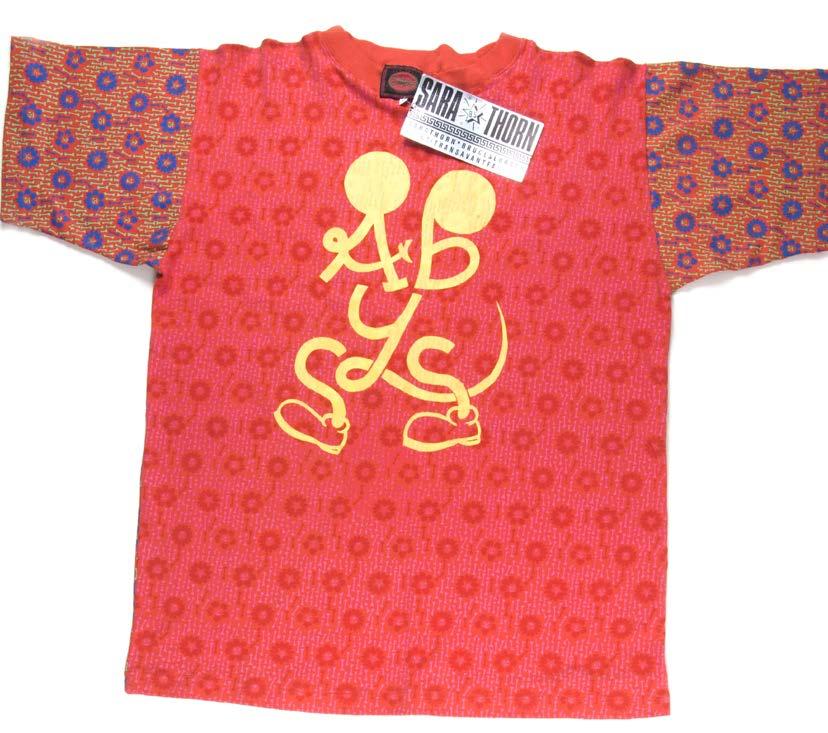
95 Bruce Slorach and Sara Thorn, Abyss, Daisy-bone t-shirt, 1988
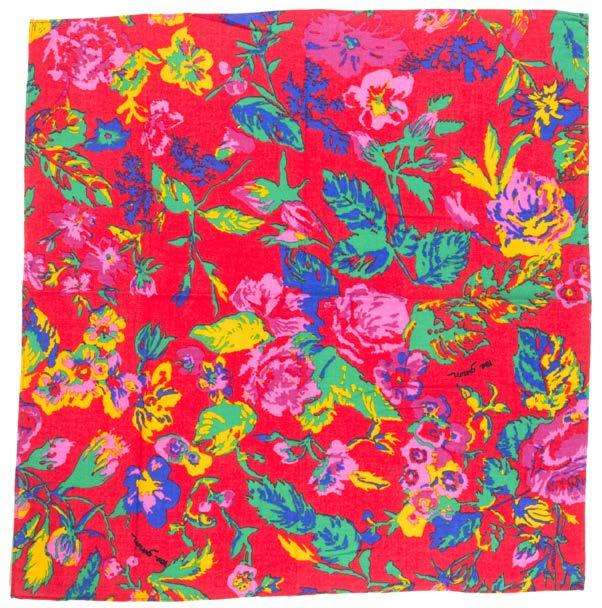
96 Rae Ganim, ‘Winter’ textile piece, 1988
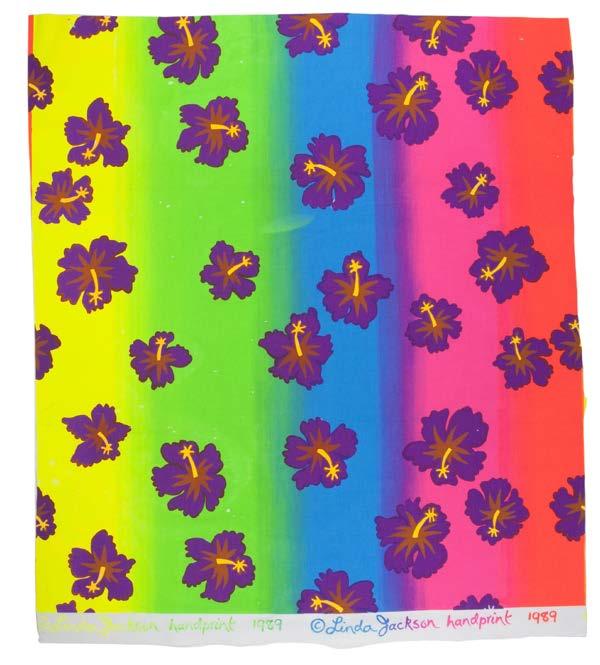
97 Linda Jackson, Textile piece for ‘Bush Kids’, 1989
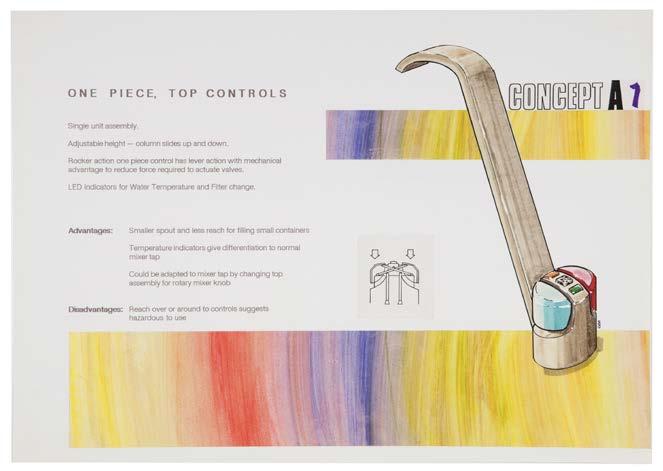
98 Ian Edgar, Billi water dispenser design concepts, 1991
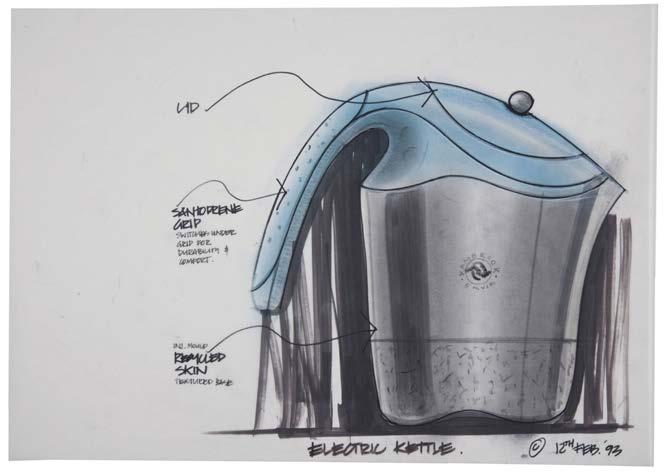
99 Paul Taylor for Form Australia, Kambrook Axis Kettle concept rendering, 1993
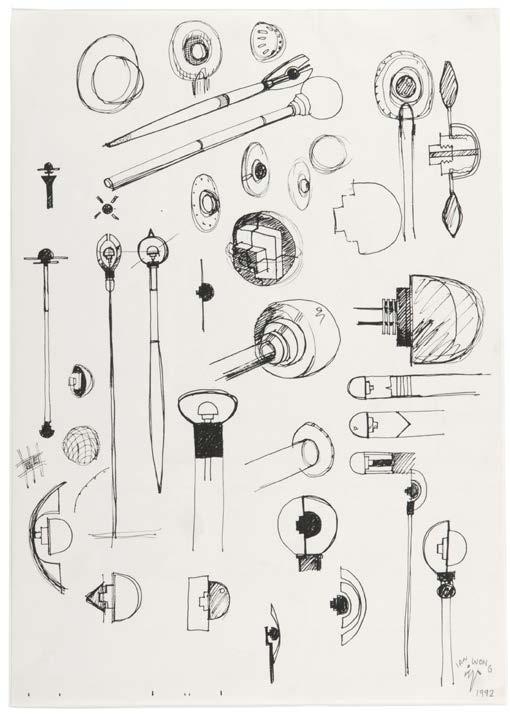
100 Ian Wong, Sketches of designs for RMIT ceremonial mace, 1992
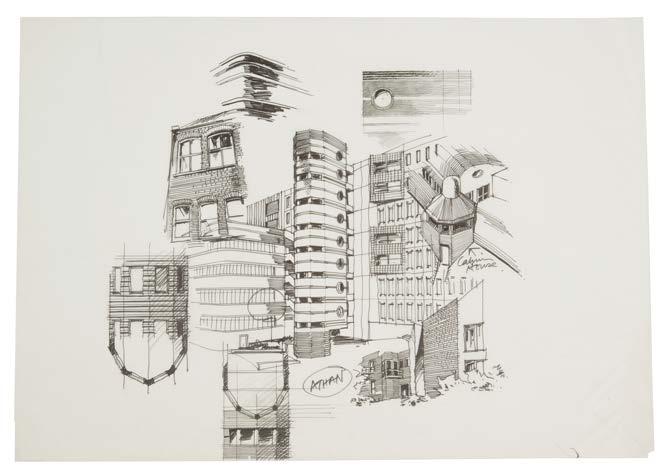
101 Peter Corrigan, Sketches for RMIT Building 8, c.1991
102 David Lancashire, Avon Graphics Security, c.1990s
103 Is Not Magazine, Volume 11 July 2008, Melbourne, 2008
104 David Lancashire, Hallelujah Christmas promotion for KW Doggett Fine Paper, 2009
105 Simone LeAmon, Sketch of Lepidoptera chair, 2009
106 Las Vegas Studio RMIT Design Hub, Edmond & Corrigan drawings, objects, ephemera, 2014
107 Contributors
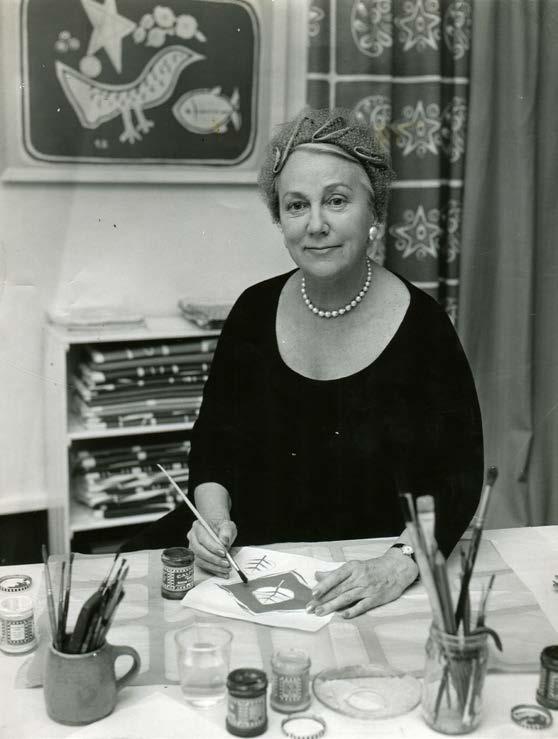
Frances Burke in studio, 1960, unknown photographer
Gift of Fabie Chamberlin in honour of her lifetime companion Frances Burke, 1999 | 0024.2011.0203
To me this image which appeared on the October 1960 cover of Housewife Home and Family contains interesting contradictions: Burke, wearing a cocktail hat whilst painting, was never a housewife, nor did she have children. Gladys Hain, editor of the magazine, exhorted women who did have children to get busy, start businesses and contribute to the economy! The image highlights Burke’s ability to attract publicity and demonstrates her acute understanding of the power of PR and marketing. Burke established her textile business in 1937, developing it between the wars in a very challenging marketplace by capitalising on opportunities as they presented. | Robyn Oswald-Jacobs
Louis Kahan, ‘Poiret painting’, 1926
Gift of Lily Kahan, 1997 | 0019.2011.0002
Louis Kahan made this small sketch of Paul Poiret when he was working in the French couturier’s atelier in Paris in the mid 1920s. Poiret, ‘Le Magnifique’, revolutionised modern dress before the war, although his star was waning in the 1920s and he closed his studio in 1929. Kahan had trained as a tailor in Vienna where he was born in 1905 and in Poiret’s studio he worked as a tailor and a designer. In the 1930s he continued to work in Paris as an illustrator and tailor while at the same time developing his skill as an artist for which he is best known in Australia. | Harriet Edquist
Michael O’Connell, textile featuring women dancing, c. 1932
Gift of Christopher Wood, 2008 | 0035.2008.0001
Michael O’Connell arrived in Melbourne in 1920 with no professional training apart from that of a soldier on the Western Front. During the 1920s however he discovered a talent for design and, returning from a visit home to England via France and Italy in 1929, focussed on textile design with his wife Ella. This fragment of a wall hanging shows clear indebtedness to the School of Paris, Matisse in particular, and other designs from the early 1930s indicate that O’Connell was familiar with the work of Raoul Dufy who had created some successful and popular fabric designs for Paul Poiret. | Harriet Edquist
Frederick (Fred) Ward, Girl’s bedroom for Claude Backwell, Geelong, 1935–1940
Gift of Martin Ward, 2013 | 0052.2013.0004
Fred was the first designer that I am aware of who was employed by a major company in the form of the Myer Emporium, where he acted as a consultant and advised on residential interior design programs. Fred was one of the first to build and sell his own furniture. However more than this Fred championed the profession of design and engaged at top levels of business to promote the use and engagement of designers in Australia. He was also engaged in the foundation of professional design representation as President of the Society of Designers for Industry. | Geoff Fitzpatrick
Nancy Elvins, Cover for the Australian Home Beautiful
June 1936
Gift of Harriet Edquist, 2014 | 0038.2014.0006
A graduate of Swinburne Technical College’s art school, where she studied from 1930 until 1934, Nancy Elvins illustrated stories and designed headings for journals such as Table Talk, Mufti, the Australian Journal and Australian Home Beautiful. This magazine was originally launched as Australian Home Builder, rebranded Australian Home Beautiful in 1925, and is one of Australia’s longest running magazines. This cover references an article titled House for Little Fishes, although it must be said the writer, C B Frond, did not recommend fish bowls, a craze he thought to be waning! | Ann Carew
Australian Broadcasting
Commission,
Design in Everyday Things, 1941
Gift of Michael Bogle, 2017 | 0008.2017.0002
British Broadcasting Corporation (BBC), BBC Design in Everyday Things, 1937
Gift of Michael Bogle, 2017 | 0008.2017.0001
Design in Everyday Things is an illustrated booklet published by the Australian Broadcasting Commission (ABC) in autumn of 1941. It accompanied a series of radio broadcasts by designers and architects including three important members of the Melbourne design community: interior designer Margaret Lord, fashion designer Edna Lewis and curator and graphic artist Alleyne Zander. With an imaginative cover by Alistair Morrison, the booklet, the designers and the national broadcaster demonstrate the incremental maturity of the Australian design scene of the era. The comparison to the BBC’s Design in Everyday Things, “men talking” of 1937 is irresistible. | Michael Bogle
Richard Beck, Brochure for London Transport, c. 1930s
Gift of Barbara Beck, 2011 | 0001.2011.0013
Richard Beck established a consultancy as an industrial designer in London in the 1930s, designing posters, booklets and advertisements for London Transport, Shell-Mex, Orient Line and the London GPO. His work was illustrated in Radio Times, Evening Standard and News Chronicle. His posters used montage and surrealist techniques, as in this example, reminiscent of E McKnight Kauffer who was prominent in commercial art in interwar England. The London Journal Art and Industry reproduced a number of Beck’s posters for the Orient Line and London Transport and in 1938 Modern Publicity’s annual round-up featured Beck’s cover design and included a profile of his work. | Harriet Edquist
Frederick Romberg, Student work at ETH Zurich 1933–1938
Donated through the Australian Government’s Cultural Gifts Program in memory of Frederick Romberg and Robin Boyd, 2008 | 0020.2008.0033.1-116
Packed in a shallow tin box are copies of Frederick Romberg’s student work carried out at ETH Zurich that he brought to Melbourne when he emigrated in 1938. Expressive of a thorough training in the Swiss modernism of Otto Salvisberg, the drawings helped secure Romberg a position with architects Stephenson and Turner. In 1939 he was appointed job captain on their Australian pavilion at the Wellington Centennial Exhibition where he skilfully combined the knowledge he had brought with him from Europe with what he was rapidly learning in Melbourne. | Harriet Edquist
Geoffrey Nichols, ‘Plans and details for the Group Housing Project, Ivanhoe’, Student project, Melbourne Technical College, c.1940
Gift of Sue Lowndes | 0080.2010.0001
In 1934 Osborn McCutcheon of the firm Bates Smart McCutcheon was brought in to Melbourne Technical College (RMIT) to modernise the three-year architecture diploma. This he did by employing young practitioners and orienting the curriculum toward professional training rather than technical competence. Geoffrey Nichols was a beneficiary of the new course during the late 1930s and early 1940s and his scheme is a text-book interwar modernist approach. I particularly like the economy of means whereby so much information is packed on to one sheet. | Harriet Edquist
Frederick F Sterne, Melbourne Technical College Correspondence School, papers 10–12, c. 1948
Gift of Estate of Emden-Snook, 2009 | 0011.2009.0007
Slight tears and yellowing are signs of time travel from c1948, the year Frederick Sterne set up a four-year Interior Design program for the Melbourne Technical College. The first program of its kind in Australia, the hand-written words ‘Interior Design’ have a sense of pride in their hand and the drawing of an interior –probably Sterne’s – emerging from the drawing board illuminated by artificial light projects a future. Viewing and selecting this actual paper cover in the present, gives significance to a path in the past and carries it towards a future. Archives enable this. | Suzie Attiwell
Gift of Noemi Fooks, 1989 | 0018.2011.0005
The extensive work of Austrian émigré architect, Ernest Fooks, has had a marked impact on the built environment of Melbourne. His approach to residential design and international exposure introduced a dynamic language to the city in the post-war period. A recent immersive exhibition at the former residence of the architect and his wife, Noemi Fooks, ‘The House Talks Back’, demonstrated the breadth and influence of his work. Drawing from various archival collections the exhibition facilitated Master of Architecture students from the Melbourne School of Design to explore the archives and reveal this fascinating journey of discovery to the wider public. | Ariani Anwar
Wolfgang Sievers, Album of photographs of work by Anatol Kagan, c.1950s
Gift of Dawn G Kagan and family, 2011 | 0068.2011.0005
When the Design Archives received this album from the Kagan family I thought that Kagan himself had assembled it. It was only when I saw Wolfgang Sievers’ label at the back I realised that he must have created it on commission from the architect. I had no idea that Sievers produced albums of this kind but the Archives has another, smaller example, put together for Frederick Romberg. They are rare and precious artefacts bringing together the talents of three exceptional émigrés who helped enrich post-war Australian culture. | Harriet Edquist
Gift of Gerard Herbst, 1994 | 0097.2012.0189
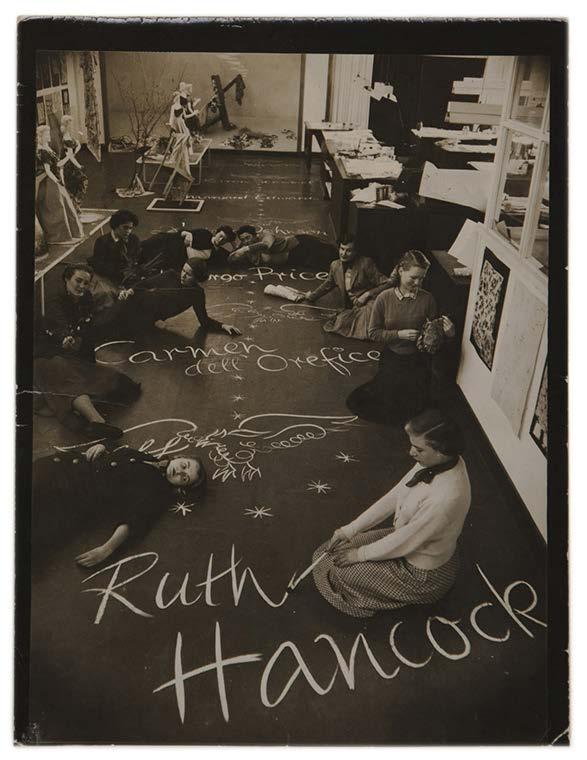
In July 1950 Melbourne’s Myer Emporium in conjunction with Neiman Marcus, Dallas, Texas presented the first American Fashion Parades in Australia. Ruth Hancock, the leading model and buyer for Neiman Marcus, directed the Parades, and the eighteen year old modelling prodigy, Carmen dell’ Orefice, described by Cecil Beaton as ‘the world’s most beautiful woman’ was one of the stars of the runway. In a bid to encourage a market for Australian textiles in the United States, the models visited textile manufacturers and design studios in Melbourne, such as Yarra Falls Mills and Prestige Studios, one of Melbourne’s premier textile design studios. | Ann Carew
Stanislaus Ostoja-Kotkowski, Prestige Studio textile piece, c. 1952–53
Gift of Jane and Edward Booth, 1994 | 0002.2006.0001
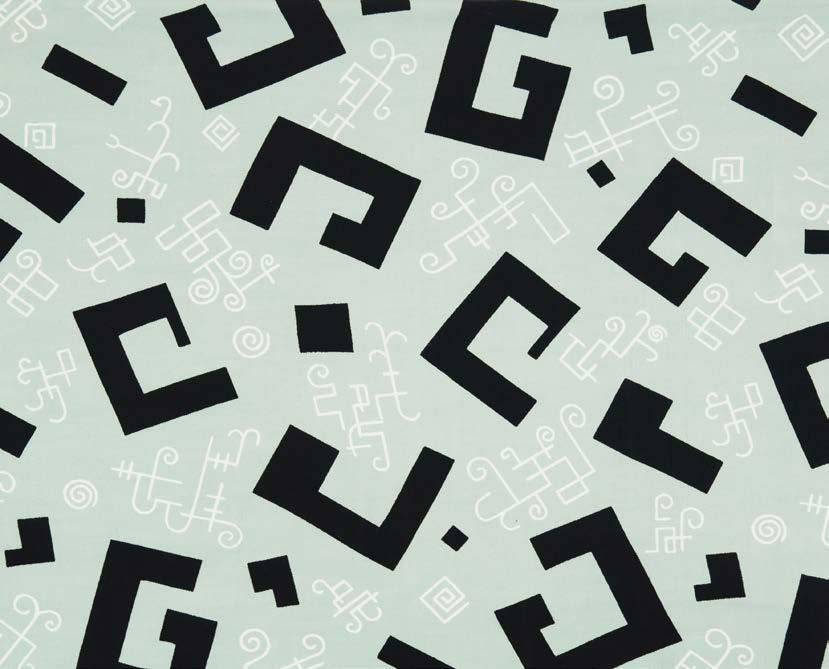
The Polish born artist, designer and filmmaker, Stanislaus Ostoja-Kotkowski arrived in Melbourne in 1949 on the ‘Fairsea’, a ship carrying displaced persons from Europe and the Baltic States. He sought employment in architectural and design practices, and also enrolled in classes at the National Gallery School. From 1952 until 1953 Ostoja-Kotkowski had a brief, but productive, period working as a designer in the Prestige Fabric Design Studio in Melbourne. The play of colour, shape and line in this textile, with suggestions of abstracted Cyrillic letters, hints at Ostoja-Kotowski’s interest in European modernism and the art of the Russian constructivists. Ann Carew
Gift of Angus and James Fletcher, 2012 | 0126.2012.0001
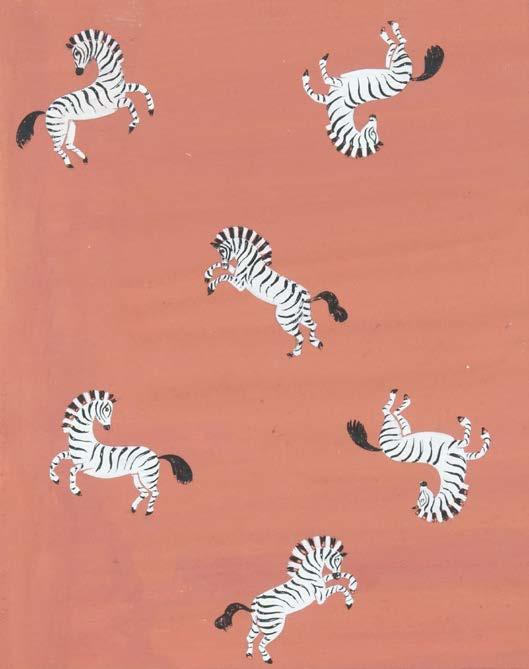
This page is one of my favourites from the Fletcher collection of work spanning 60 years of rich history and hidden gems. I found it incredibly difficult to choose one favourite item, but kept revisiting this particular image. The striking composition and playfulness of forms is visually appealing with its bold use of colour and fluid movement. This page is significant in the collection of a specialised practitioner who produced a vast range of work in varied mediums from the intricate and detailed to this free flowing image. | Catrina Sgro
Frances Burke, ‘Canna Leaf’, textile piece, 1951
Gift of Fabie Chamberlin in honour of her lifetime companion Frances Burke, 1999 | 0024.2011.0047
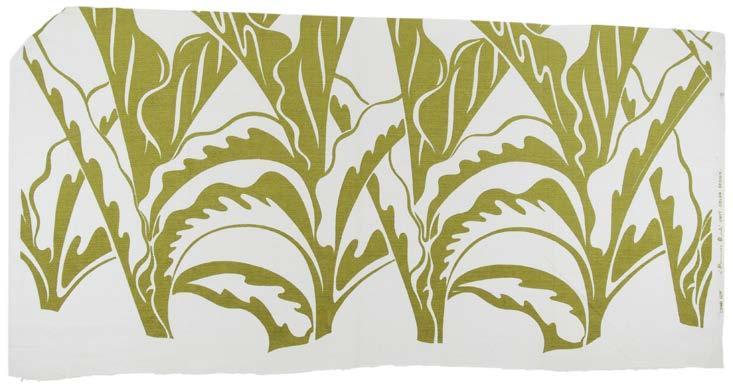
Frances Burke made a great contribution to the Melbourne textile industry and the development of contemporary local fashion retailers. As the textile artist and fashion designer who founded Australia’s first textile screen-printing business, Burway Prints in Melbourne in 1937, Burke’s textile designs highlight Australian motifs such as local fauna and flora as well as motifs inspired by Aboriginal culture. Such design style and focus have had a strong influence on the contemporary Australian design industry, local designer and fashion labels and brands as Gorman, Abbey Rich, FME Apparel to name a few. | Yiwei Qui
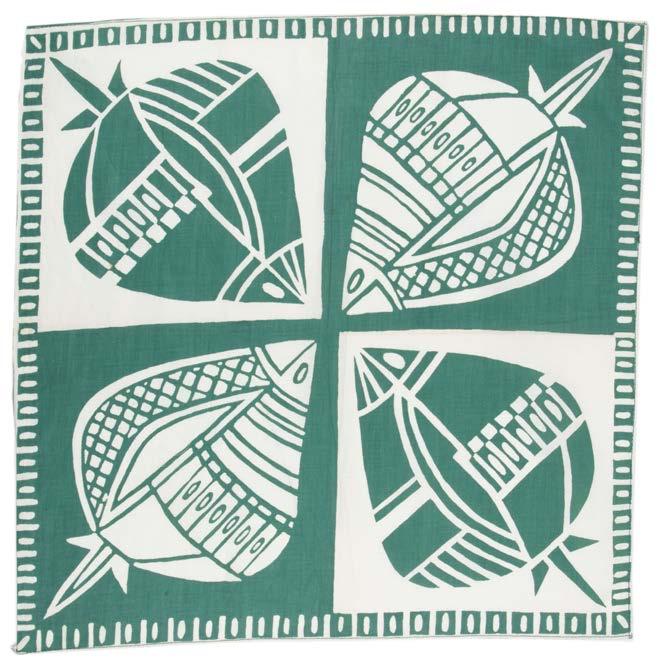
Beverley Graham, Scarf featuring fish design for Ailsa Graham Art Fabrics c. 1954
Gift of Ailsa Dunore Matheson and Beverley Graham, 1994 | 0023.2011.0047
Between 1947-1958, Ailsa Graham Art Fabrics produced a number of products for the local and international market using their own hand printed fabrics. This scarf is a prime example of the wonderfully bold graphic prints Beverly Graham designed. | Simone Rule
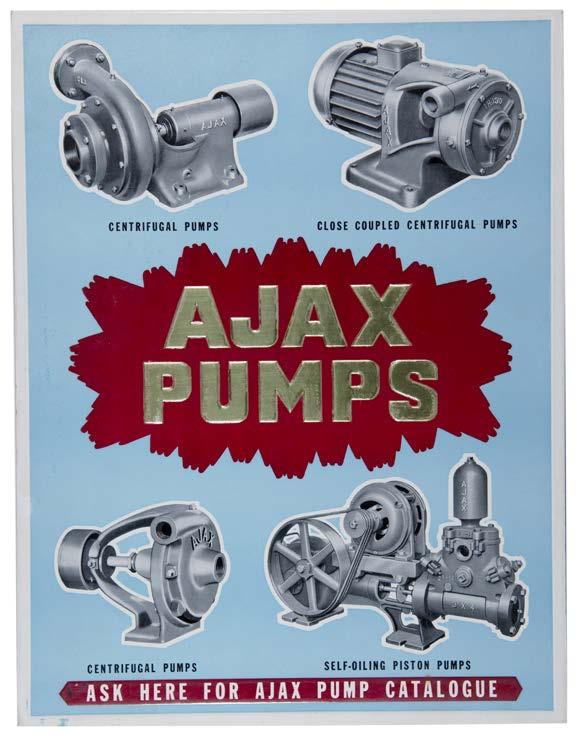
Grahame King, Ajax Pumps Firestone Embossed Showcard, c. 1950s
Gift of Inge King, 2014 | 0031.2014.0017
One of Australia’s most acclaimed printmakers, Grahame King originally trained as a commercial artist in the mid-1930s. The Design Archives holds a collection of embossed advertising showcards designed by King in the 1950s which reveal examples of graphic design and typography in post-war Melbourne. The showcards were used by some iconic companies for advertising and promotion on shop counters and in window displays and were produced by Firestone Embossed Showcards. | Megan Atkins
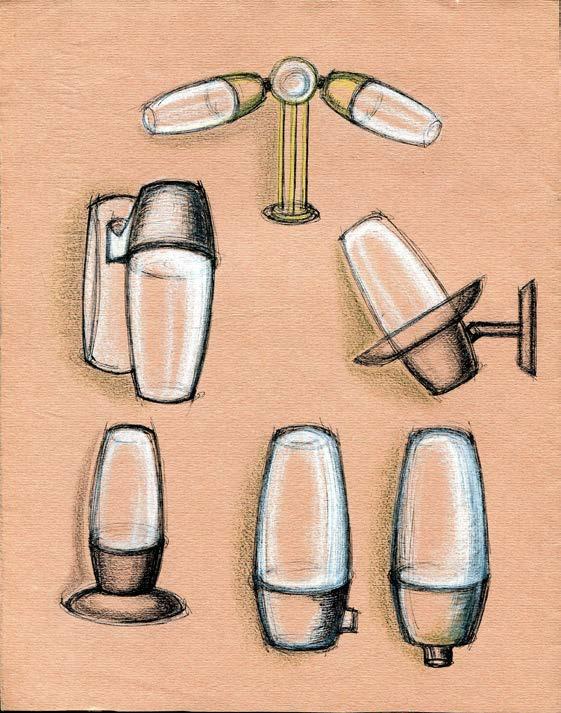
Joyce Coffey, Drawing of a Kempthorne Well Glass Wall Bracket Lamp, c. 1950s
Gift of Anthony, Caroline and Jeremy Coffey, 2012 | 0057.2012.0059
Joyce Coffey (nee Hiddlestone) was the first woman to receive recognition as a designer in a major Australian manufacturing business, Kempthorne Lighting, where she was the chief designer in the post war period. These drawings by Joyce Coffey were for the Well Glass lamp series of lights that were designed for indoor and outdoor use. Joyce Coffey worked in partnership with Selwyn Coffey on the designs. In 1956 lights from this series won a bronze award in the Industrial Design section of the Arts Festival exhibition of the Melbourne Olympic Games. | Ann Carew
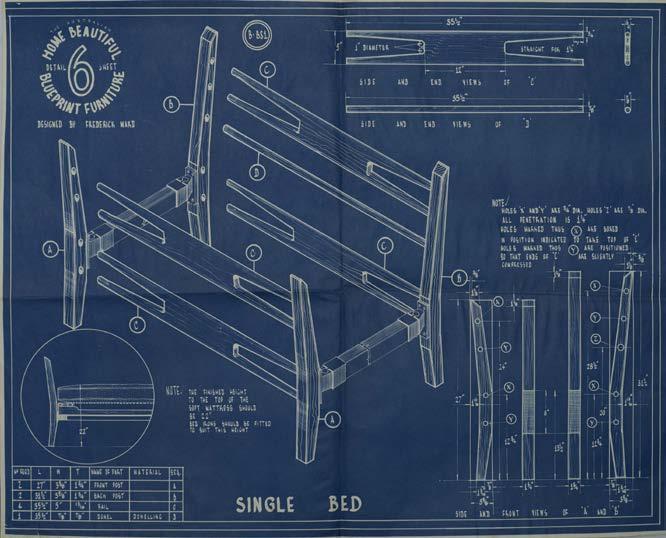
Fred Ward, Detail sheet for ‘Home Beautiful
Furniture’ single bed Nº6, 1950-51
Gift of Martin Ward, 2013 | 0052.2013.0022.1
After his experience in designing moderately priced furniture in the 1930s and working in the aircraft industry during World War II, designer Frederick Ward developed Patterncraft paper patterns. They were available by mail order through Australian Home Beautiful from 1947. For those with rudimentary skills Ward developed Timber-pack kits of components ready to glue and assemble. Blueprint, his subsequent project for the mass-market was launched in 1951. At a time of austerity and shortages, Blueprint patterns helped Australians furnish their modest homes with modern furniture they had made themselves.
Nanette Carter
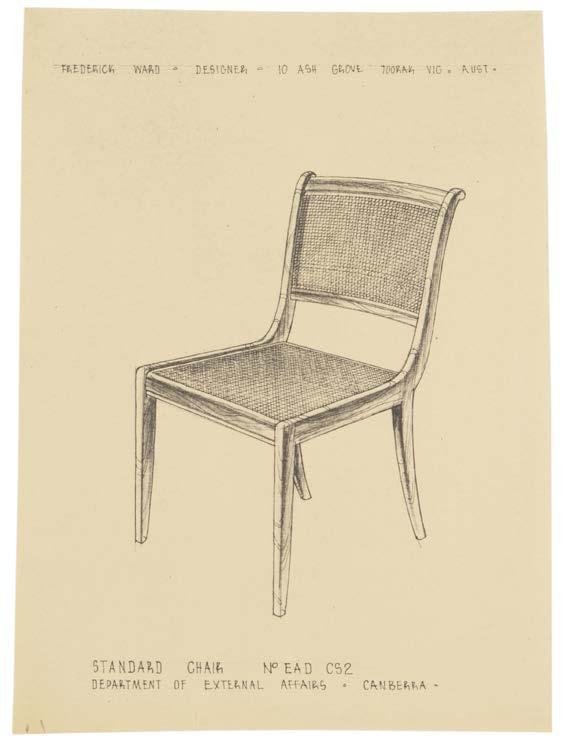
Fred Ward, Standard Chair Nº EAD CS2, Canberra, c. 1951-60
Gift of Martin Ward, 2013 0052.2013.0024
Fred Ward, better known for his work with Myer Heritage, Patterncraft and the ANU, began making furniture in the late 1920s for his own house in Heidelberg. An early client was the sophisticated and progressive Maie Casey, who in 1932 furnished the rented Gwynn house in Canberra in a radically austere style, with Michael O’Connell textiles, Ward’s monastically simple waxed timber designs and imported steel tubular chairs. Maie Casey’s patronage proved enduring and influential. The RDA’s collection shows designs and details of bespoke pieces commissioned by Lord Casey for government offices during his political and vice-regal career. | Catriona Quinn
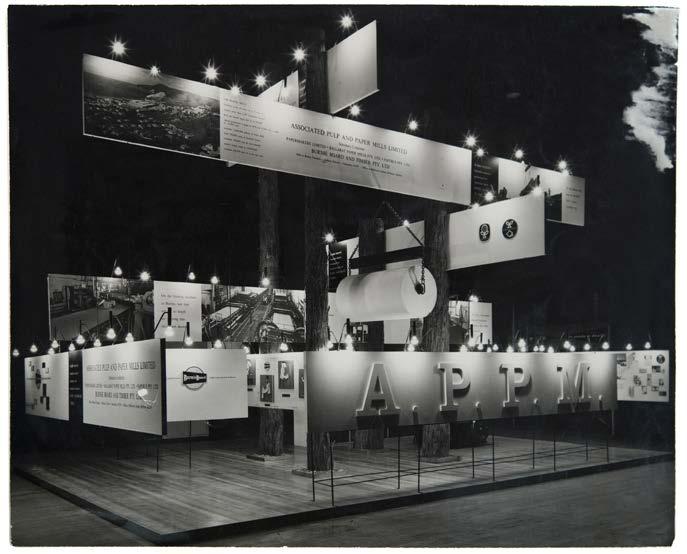
George Kral, APPM display, photograph by Wolfgang Sievers, 1958 Gift of Kral family, 2013 | 0051.2013.0002
This spectacular photograph shows George Kral’s capacity as an exhibition designer in full flight. Arranged on a 3-D grid, the explanatory panels surround a suspended roll of paper that, with the oversized lettering APPM (Australian Pulp and Paper Mills), says it all. | Harriet Edquist
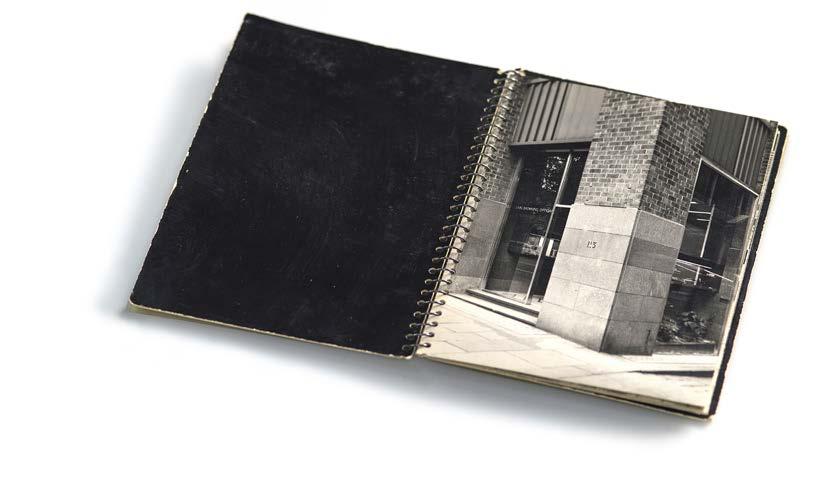
Athol Shmith, Booklet of photographs for John Browning Opticians, c. late 1950s
Gift of Yvonne Raphael Oeser, 2013 | 0054.2013.0001
Yvonne Raphael was the Managing Director of her father’s manufacturing and retail firm, John Browning Opticians and she had a keen appreciation of design. During the 1950s and 1960s she commissioned Gerard Herbst, a friend, George Kral and Bernard Joyce to design her window displays, shop interiors and, as here, shop exterior. Clearly proud of her achievement she commissioned Athol Shmith to create this small booklet of his photographs as a record of her sparklingly modern, new premises. | Harriet Edquist
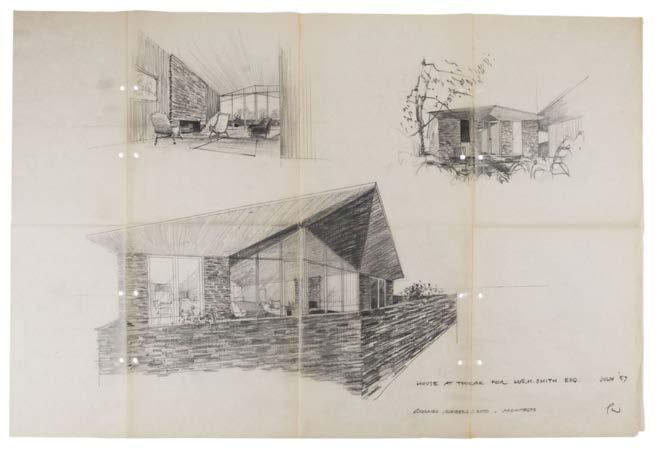
Roy Grounds, Grounds, Romberg and Boyd, Smith house, Toorak, exterior and interior views by Paul Wallace, 1957
Donated through the Australian Government’s Cultural Gifts Program in memory of Frederick Romberg and Robin Boyd, 2008 | 0020.2008.0030
The experimental houses Roy Grounds designed from the mid 1930s through to the 1950s are among my favourite domestic designs from the period. Non-argumentative, lacking in pretension and ideology, they are endlessly inventive and pack in a lot of architecture into often quite small envelopes. In his big-roofed Smith house, tucked away in a cul-de-sac in Toorak, Grounds quietly broadcasts his ambitions for Australian architecture in a wealthy suburb that now has architectural proclivities of a quite different order.
Harriet Edquist
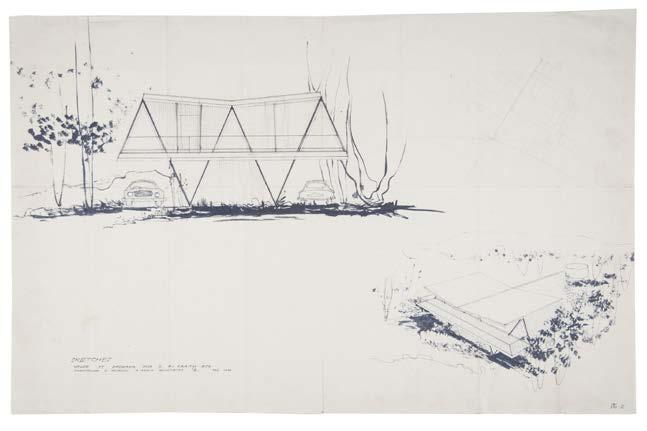
Rex Patrick and David Chancellor, Sketch for house at Dromana for G McCraith, 1955
Gift of the Dixon-Ward family, 2013 | 0050.2013.0001
The McCraith house ‘Larrakeyah’, popularly known as the ‘butterfly house’, was donated to RMIT in 2013 by the Dixon-Ward family along with an endowment to support its maintenance. Commissioned by Gerald and Ellen ‘Nell’ McCraith as a beachside holiday house ‘Larrakeyah’ was designed by Chancellor and Patrick in 1955 and is a landmark of Melbourne’s experimental post-war modern architecture. The McCraiths also commissioned three speculative houses on the opposite side of the road. The Dixon-Ward gift to the Archives includes plans, specifications, correspondence and amazing film footage of the builders at work in the days when OH&S was but a dream. | Harriet Edquist
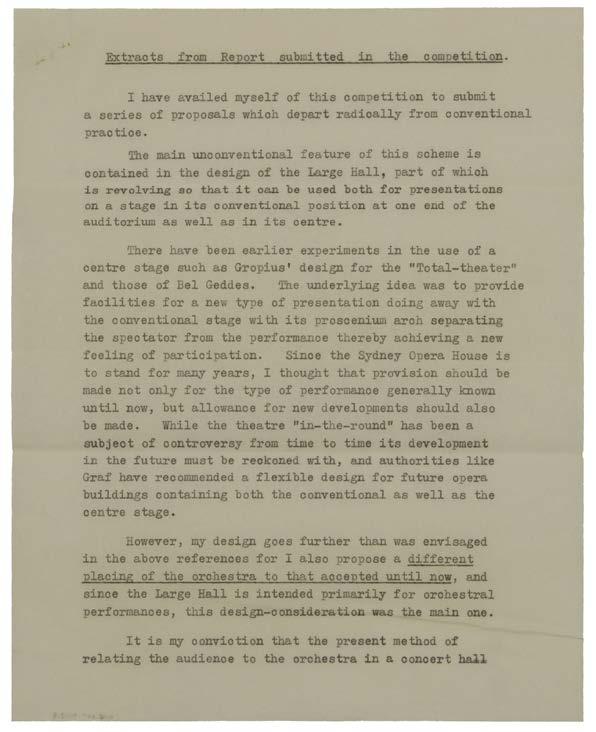
Anatol Kagan, Letter to Walter Gropius enclosing extracts from a report submitted in the competition for the Sydney Opera House, 1958
Gift of Dawn G Kagan and family, 2011 | 0068.2011.0002.4
Entering the Sydney Opera House competition in 1956, Anatol Kagan prepared an ingenious design based around a circular auditorium, inspired by Walter Gropius’s unbuilt scheme for the Totaltheater (1928).
Despite being one of few to be published at the time, Kagan’s entry remained unplaced and, like Gropius’ antecedent, unrealised. Refusing to give up, Kagan honed his design further and ultimately sent copies of the drawings to Gropius himself. Although Kagan’s charmingly self-effacing letter met with a typically mixed review from the Master, one suspects that Kagan treasured this brief connection. | Simon Reeves
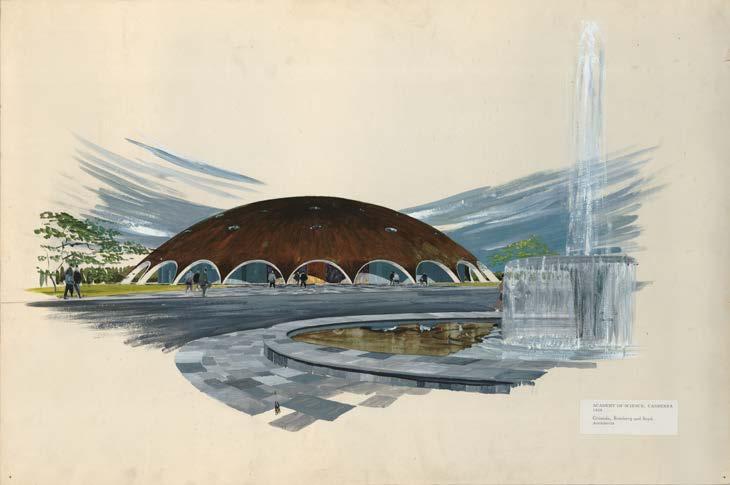
Paul Wallace, Perspective of Academy of Science, Canberra, Roy Grounds, Grounds, Romberg and Boyd, architects, W L Irwin and Associates, engineers, 1958
Donated through the Australian Government’s Cultural Gifts Program in memory of Frederick Romberg and Robin Boyd, 2008 | 0020.2008.0004
It is a beautiful drawing of a building that embraced the future. As a PhD student working at Mt Stromlo in the late sixties I was enchanted by the building and recall one night, looking up at a full moon as I delighted in walking around the building. I was deceived by the curvature and found myself in the moat. I still love the building and I love Paul Wallace’s work. | Robin Hirst
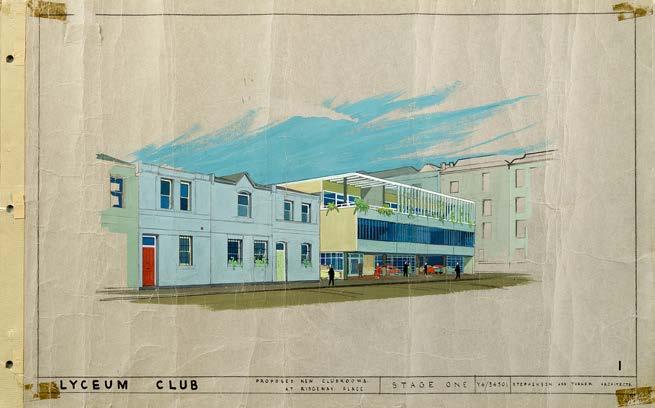
Edythe Ellison Harvie for Stephenson and Turner, Proposed new clubrooms for the Lyceum Club Ridgeway Place, 1959
Gift of the Estate of Berenice Harris, 2014 | 0008.2014.0001
Ellison Harvie attended Swinburne Technical College and then, from 1925 to 1928, the Melbourne University Architectural Atelier where she become the first woman to receive a diploma of architectural design. As a principal of Stephenson and Turner, Harvie was an advocate for the professional development of women in architecture and was a mentor to younger women. She was President of the Lyceum Club, established in 1912 for women graduates and those who had distinguished themselves in public service, from 1963 to 1965. The watercolour perspective is held in the archive of Berenice Harris, whose last major project was a renovation and extension to the Lyceum Club in the 1980s. | Harriet Edquist
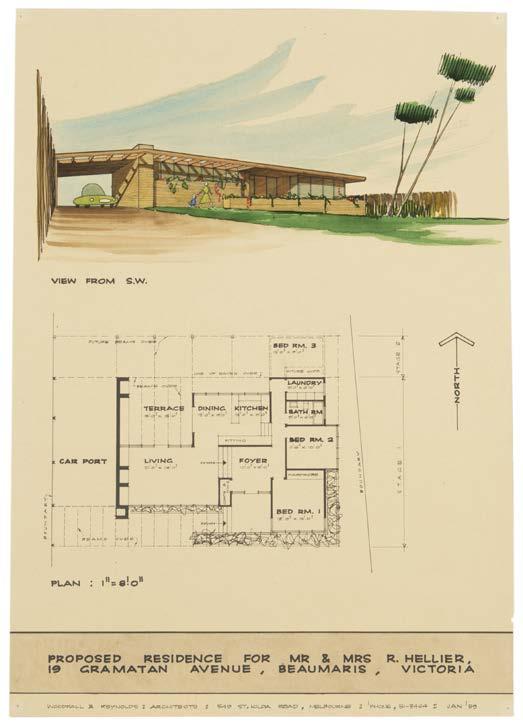
Geoffrey Woodfall, Proposed residence for Mr. & Mrs. R. Hellier, Beaumaris, 1959
Gift of Geoffrey Rolfe Woodfall and Judith Woodfall, 2015 | 0017.2015.0010
Geoffrey Woodfall was a prolific designer of houses, mainly in Melbourne’s southern and south-eastern suburbs. This colour presentation drawing of a low-slung spreading brick house in the Bayside suburb of Beaumaris is one of a number that Woodfall prepared of his early work and clearly displays his interest in the architecture of Frank Lloyd Wright. | Harriet Edquist
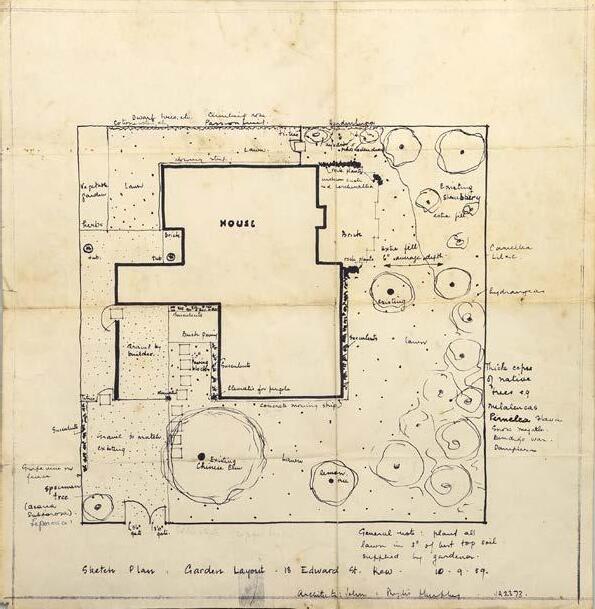
John and Phyllis Murphy, Garden layout, 15 Edward Street Kew for Sir Frank and Lady Burnet, 1959
Gift of Christine Reid, 2012 | 0111.2012.0001
John and Phyllis Murphy designed this house and garden in Kew for Sir Frank and Lady Macfarlane Burnet in 1959, the year before Burnet received the Nobel Prize for discovering, with Peter Medawar, acquired immunological tolerance. For the most highly honoured scientist to have worked in Australia, Burnet’s house is modest - single storey with two bedrooms. Lady Burnet asked if the architects had any ideas for the garden and they produced this layout without charge. It shows a mix of existing shrubs and trees, old favourites such as camellia, hydrangea and lilac and, unusually, ‘a thick copse of native trees’. | Harriet Edquist
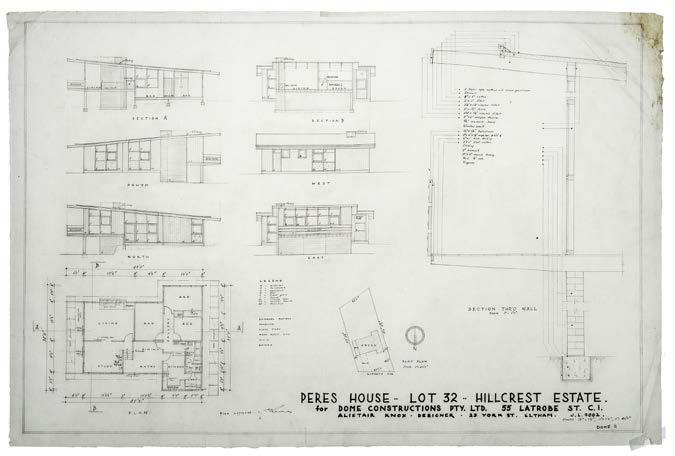
Alistair Knox, Peres House, Lot 32, Hillcrest Estate for Dome Constructions, 1958-1959
Gift of Knox family, 2014 | 0021.2014.0002
Alistair Knox’s 1950s work for Dome Constructions is less well-known than his mud-brick houses in Eltham and Warrandyte but equally significant, being early examples of the post-war Melbourne project home. Dome Constructions created the Hillcrest Estate in 1957 from lemon orchards in what was then Mitcham and Knox designed at least 46 houses for the estate. Unlike later project homes by Boyd (Appletree Estate, Glen Waverley), Merchant Builders, Pettit and Sevitt, Civic and others, Knox designed for a range of construction methods – timer, pise, brick, stone – broadly influenced by Frank Lloyd Wright’s Usonian houses of the 1930s and 1940s. | Harriet Edquist
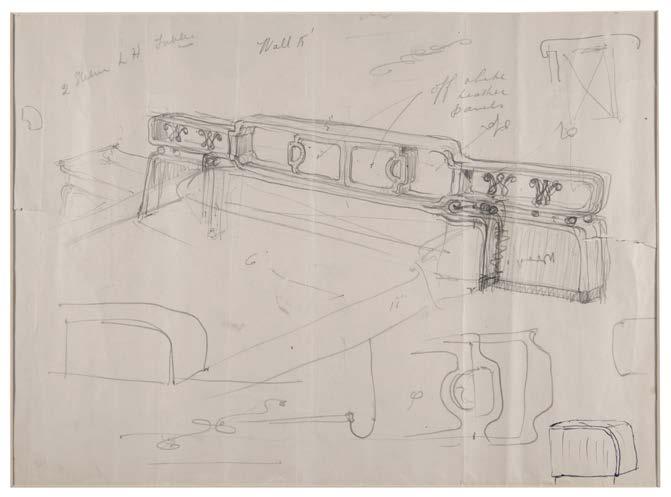
Noel Coulson, Pencil sketch for bedhead for Mary Lipshut House, 1959
Gift of Estate of Mary Lipshut, 2014 | 0049.2014.0001
Noel Coulson carried out a successful architecture and interior design practice in the 1950s and 1960s in Melbourne. He counted among his clients many of the city’s wealthiest families and for a number of them he designed not only a house but its furniture and fittings as well. Coulson’s style was eclectic and somewhat decorative and for decades it was ignored by architectural historians but recent scholarly research into the architect and his clients by Catriona Quinn, Simon Reeves and others has seen his rehabilitation into our history of post-war architecture and design. | Harriet Edquist
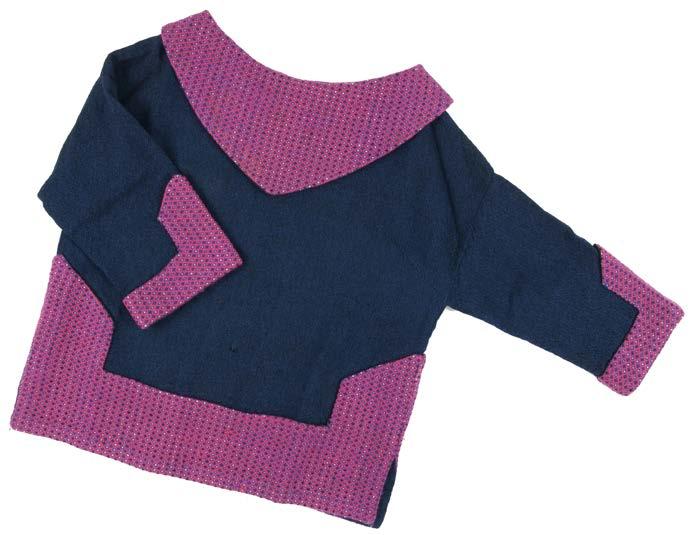
Robert Maltus (fashion house), Marian Swinton (designer), Adrianus Janssens (designer), All wool poncho, 1960s
Gift of Irene Schiffer, 2013 | 0059.2013.0001
First starting out of her workshop-residence in Mt. Eliza, and ending up in a boutique in South Yarra, Marion Swinton created Robert Maltus as a fashion label where garments were designed to showcase handwoven fabrics. Adrianus Janssens joined the business in 1957 and collaborated with Swinton on both textile and fashion designs, becoming partner in 1960. This poncho shows the duo’s attention to detail in both weaving and cutting (Janssen cut each garment separately to ensure the fabric pattern matched) and their great use of colour. | Simone Rule
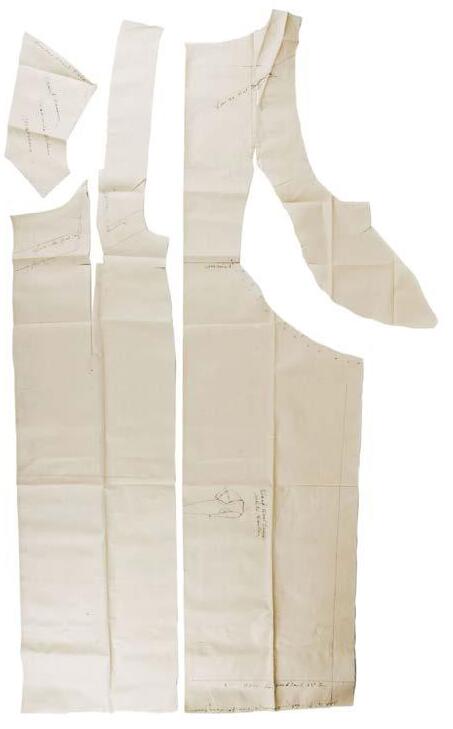
Hall Ludlow, Toile of cocktail dress, c.1950s
Gift of Diane Masters, 2009 | 0008.2009.0001.1-10
Hall Ludlow’s (born New Zealand 1919, arrived Australia 1947, died 2003) fashion practice became an intrinsic part of Melbourne’s high fashion ideal of the 1950s. He played a critical role in the economic push to establish ‘Australian’ fashionability and design, both as a symbol of national identity and key export commodity. The collection of ‘toiles’ from the Hall Ludlow archive, provide an insight into the technical process and design iconography of Ludlow’s designs. These unique garment fabric prototypes/pattern templates show the process of how a dress was formed and detailed. | Robyn Healy
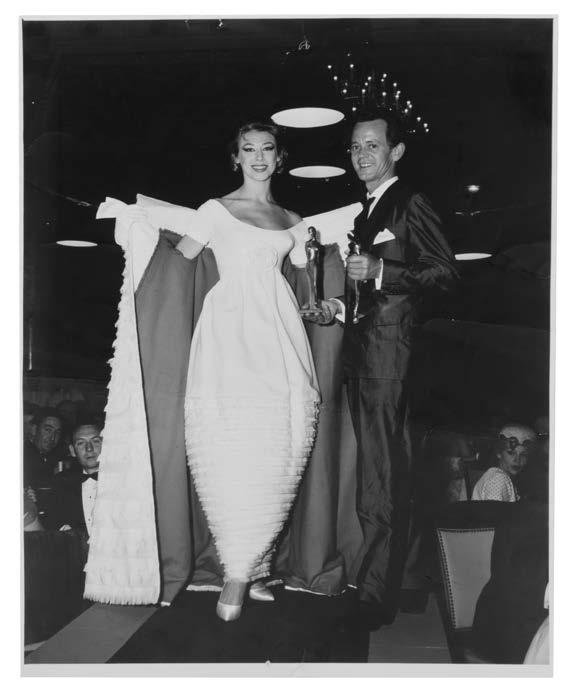
Athol Shmith, Diane Masters with Hall Ludlow at the Gown of the Year, 1959
Gift of Diane Masters, 2009 | 0014.2009.0001
Diane Masters has played a seminal role in contributing to the Design Archives through her personal and professional fashion archive, her role in the Hall Ludlow collection and archive, the Laurie Carew collection, and her generosity in gifting items from the Frederick Romberg archive. She has been and remains a key figure in Melbourne and Australian fashion. | Suzanne E Davies
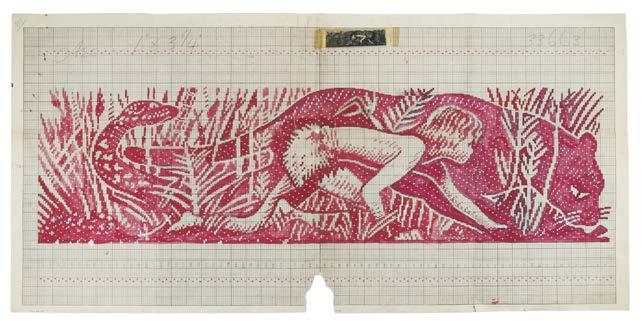
Cash’s (Australia), Point paper design featuring boy, puma and snake, 1958
Gift of Cash’s (Australia) Pty Ltd, 2006 | 0027.2006.0003
Sliding the drawer open housing the Cash’s point paper designs for clothing labels always left me with a sense of the richness of simplicity. These ink works on graph paper, mostly in two or three colours, possess a graphic honesty and naiveté. They set off a thread of memory to my past: the Bulldogs, Loaf n’ Leisure shirts, and my favourite, which may have been an appropriation of imagery from Kipling’s Jungle Book by The Boy Scouts. I always felt protective of them too as these twenty or so were orphans, finding their way into the Archives as a surprise discovery in the drawer of an inherited wooden desk. | Kaye Ashton
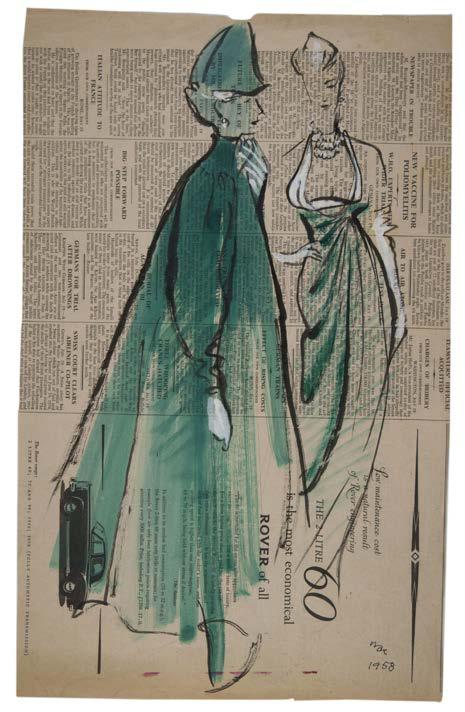
Louis Kahan, Fashion illustration on newsprint, 1958
Gift of Lily Kahan, 1997 | 0019.2011.0025
When Louis Kahan executed this fashion illustration in 1958, he was a well-established artist four years away from winning the Archibald Prize for his portrait of Patrick White. It is less known though that Kahan had a career in theatre and fashion, in Vienna and Paris during the 1920s and 1930s that continued when he came to Australia in 1947. He signed his fashion illustration with the initials ‘nac’, a phonetic interpretation of his surname spelled backwards. In this illustration on newspaper we can see Kahan playing with the graphic effects of line and text, while communicating the cut and drape of late-1950s fashions. | Laura Jocic
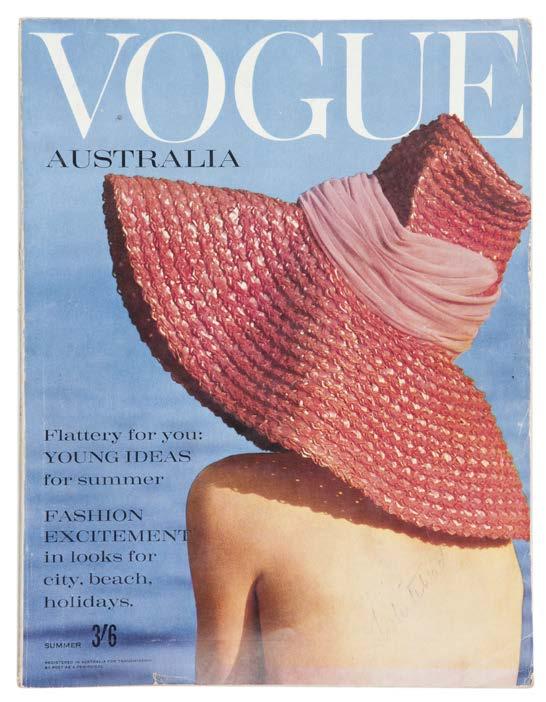
Vogue Australia, Summer 1960, Helmut Newton photographer, for Condé Nast
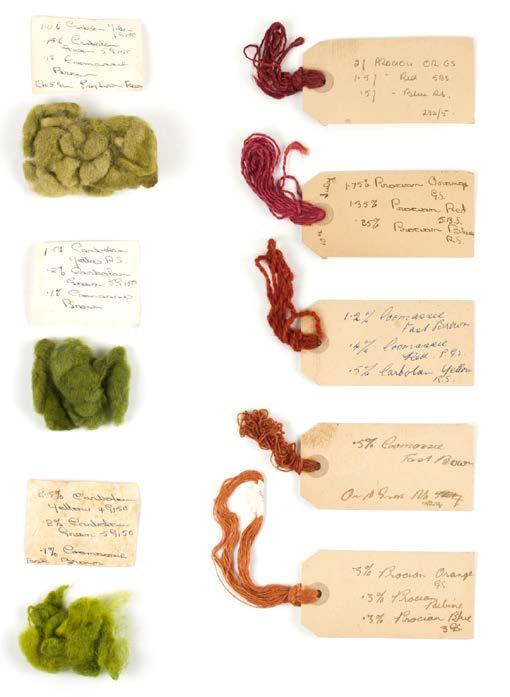
eclarté, Dyed wool roving samples (L), dyed yarn samples attached to tag (R) c.1960
Gift of Elizabeth Hill, 2017 | 0001.2017
Edith ‘Mollie’ Grove and Catherine Hardress created eclarté with a goal to hand dye, spin and weave their own fabrics. These roving and yarn samples are part of a collection of hundreds created by the company, housed in the Archives. The handwritten tags list the dye recipes used to create the colours, and show how just 0.5 grams difference in one chemical can create a completely different shade. | Simone Rule
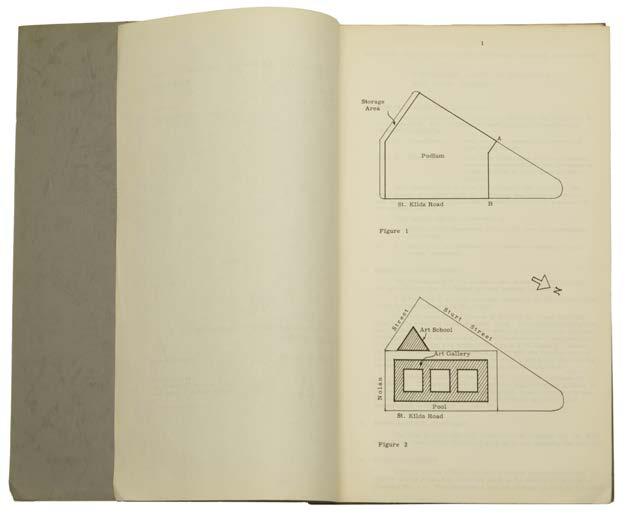
National Art Gallery and Cultural Centre Project, Melbourne Report on Site conditions for Information of Piling Tenderers, 1961
Donated through the Australian Government’s Cultural Gifts Program in memory of Frederick Romberg and Robin Boyd, 2008 | 0020.2008.0032
The Romberg files speak to the ambitious 1960s in Melbourne. Tasked with the job to deliver a new art museum for Victoria, Roy Grounds’ design drawings and documentation detail innumerable nuances of a state-of-the-art museum. The museum, the NGV, is now the eighth most visited art museum in the world. These documents, hand-bound and on rich paper stock, show a site plan of the gallery, the oblong box, which was also to be the first brand logo of the NGV’s new premises. This oblong block can still be seen overhead and is referenced in many subtle elements through the building. | Megan Patty
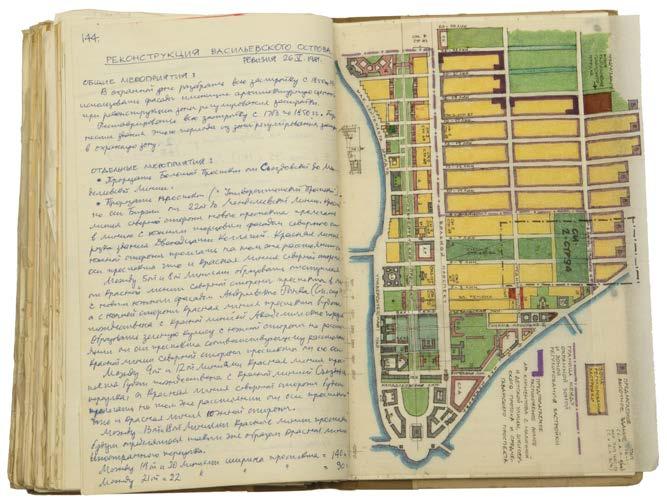
Anatol Kagan, Notebook titled
*Reconstruction of Historical Centre Gift of Dawn Kagan and family, 2011 | 0068.2011.0004
1960s
RMIT Design Archives holds the priceless collection of documents by Anatol Kagan. One of the most significant parts of the collection is his little known project dedicated to his native city, glorious SaintPetersburg. This was a lifelong project which he called, ‘The Leningrad-Filia’ and ‘Saint-Petersburg-Mania’. Kagan designed a city restoration plan and multiple solutions for any future emergencies, such as natural and urban disasters. His main idea was to develop the plan which would help reconstruct the historical part of the city, returning it to a pre-revolutionary state. The collection includes scrap books, manuscripts, plans, maps, and letters in Russian and English. | Anna Anisimova
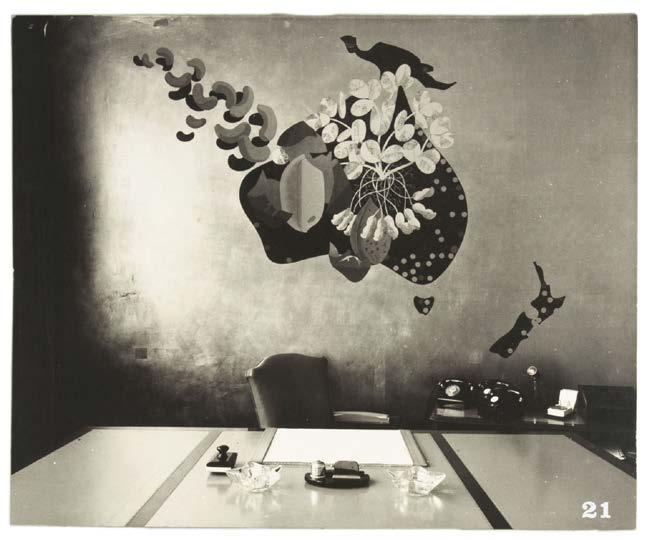
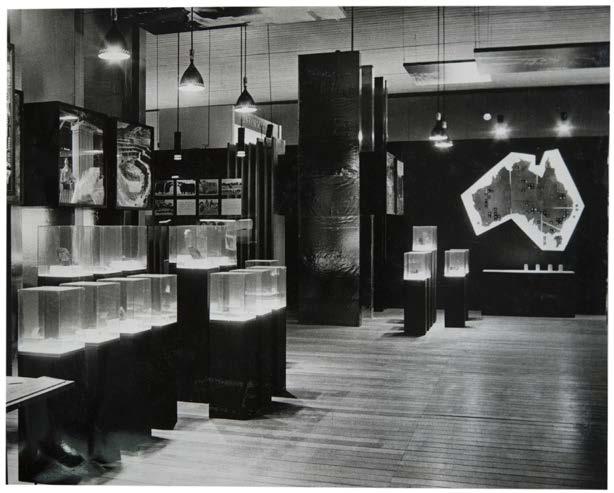
Eric Thake, ETA Factory Mural 1961, unknown photographer
Donated through the Australian Government’s Cultural Gifts Program in memory of Frederick Romberg and Robin Boyd, 2008 | 0020.2008.0031a
Eric Thake had a unique way of looking at the world, uniting a singular vision that found the extraordinary in the everyday, with a whimsical sense of humour and refined modernist aesthetic. One of his lesser-known commissions was a mural for the Victorian Manager’s office at the ETA Factory in Braybrook designed by Frederick Romberg in 1957. The mural depicted a stylised map of Australia, with Indonesia above and New Zealand to the south, and showed the peanuts and other raw materials that ETA used in the production of various foodstuffs against a striking and entirely gilded wall. | Kirsty Grant
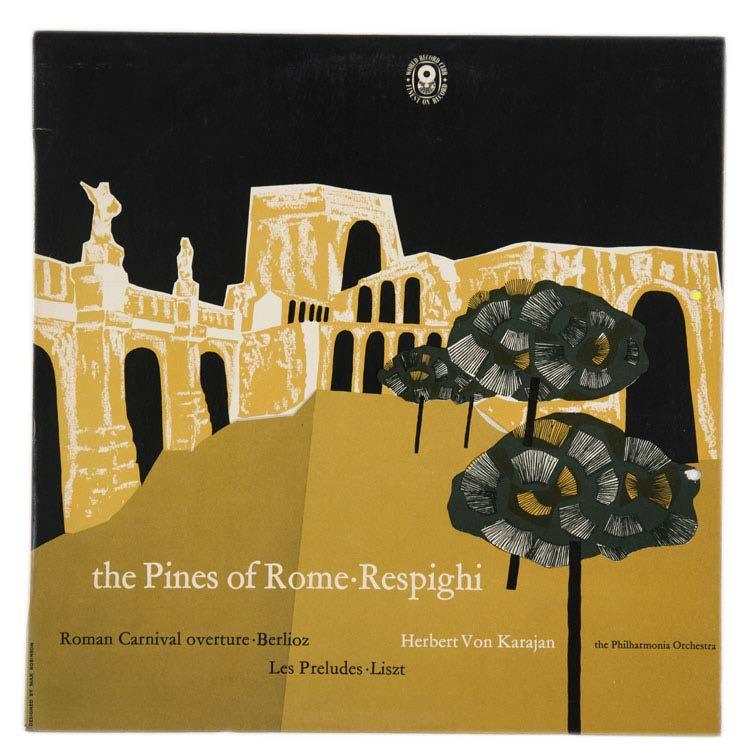
Max Robinson, World Record Club, cover for ‘The Pines of Rome – Respighi’, 1961
Gift of Geoff Digby, 2014 | 0022.2014.0069
Max Robinson worked at the World Record Club in its early days. It is understood that artists weren’t able to listen to the music but often relied on cover notes. Reading the description of ‘the Pines of Rome’ by Respighi on the back cover is like seeing Max’s imagination in motion, the direct connection between the description and the illustration is so vivid the deserted Campagna, a solitary … with a few pine trees behind it; and then there is a hymn chapel … which rises as if from under the earth and expands and then turns and sinks below ground into a sort of catacomb. | Rickie-lee Robbie
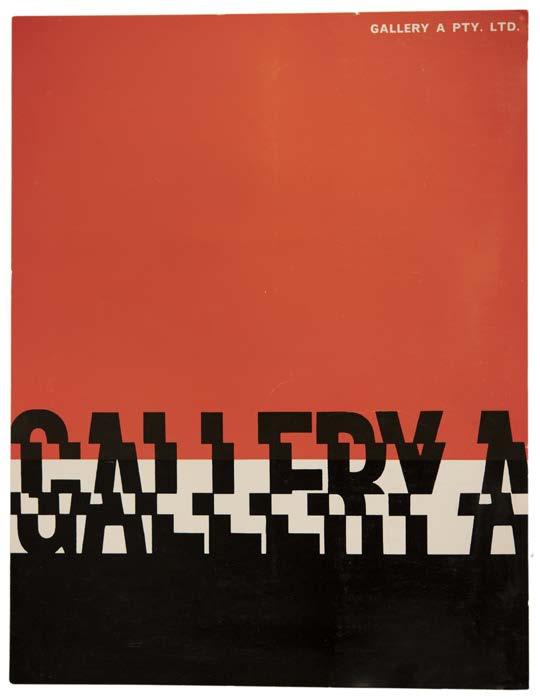
Kral, Gallery A poster, c. 1960 Gift of the Kral family, 2013 | 0051.2013.0002
While Gallery A has a prominent place in the history of Australian modernism, it is less well-known that attached to its South Yarra gallery building was a design studio run by George Kral. Kral was a gifted typographer as well as interior designer and he designed the corporate identity of Gallery A including logo, letterhead and posters, as here. | Harriet Edquist
Bernard Joyce, Proposed family residence for Mr. & Mrs. Spedding, Brighton, 1963
Gift of Peter Nankivell, Sarah Hicks and Priscilla Nelson, 2011 | 0067.2011.0006
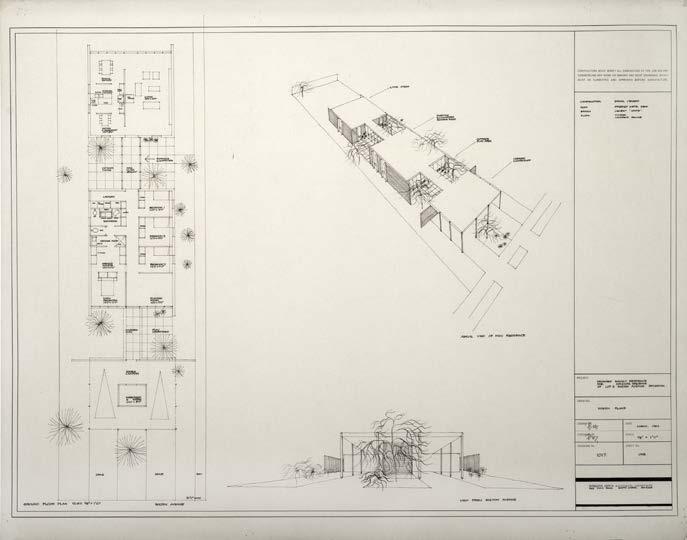
One of the things I like about Bernard (Bernie) Joyce’s architectural drawings is the unusual, almost square format of the sheet, his sparse arrangement of views and plans and his exiguous line work. The control of elements is immense and carries through into Joyce’s built work. | Harriet Edquist
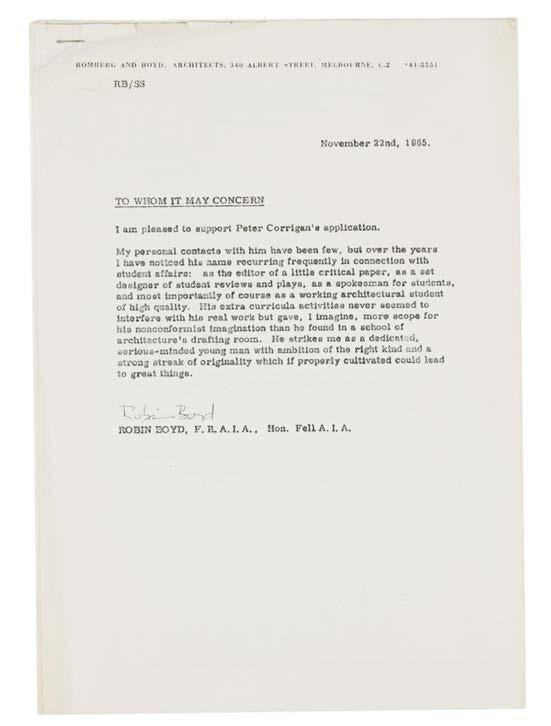
Robin Boyd, Carbon copy of reference for Peter Corrigan, 1965 Gift of Edmond & Corrigan, 2017 | 0006.2017.0001.1
This wonderful, small letter of reference brings together two architects who in my mind belong to different worlds. Boyd wrote in support of Peter Corrigan’s first application to go to Yale in 1965, the year Corrigan completed his architecture degree at Melbourne University and started out in private practice. Boyd, perceptive as ever, could already see his potential. | Harriet Edquist
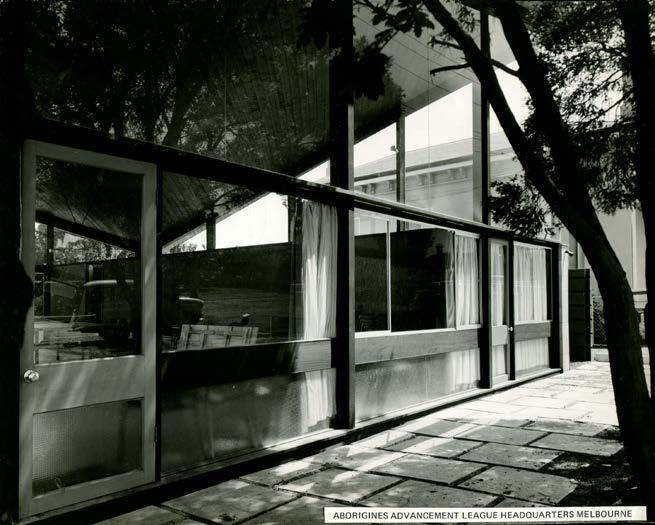
William H Nankivell, Aborigines Advancement League
Headquarters Melbourne, 1964–1966
photography by Val Foreman
Gift of Peter Nankivell, Sarah Hicks and Priscilla Nelson | 2009 0067.2011.0007
The Victorian Aborigines Advancement League (AAL) was established in 1957 and was the first association of its kind in Australia. In 1964 it commissioned William Nankivell to design their meeting and recreation hall in Northcote. Completed in 1966 the hall was square in plan and featured a hyperbolic paraboloid timber roof. The AAL used the building for meetings, social functions and as a rest centre for Aboriginal people travelling through Melbourne. Nankivell also designed the Expo-Aborigine exhibition at the Melbourne Town Hall (1967), a rural settlement project connected to Doug Nicholls, and the Aboriginal Hostel and Offices in Cunningham Street, Northcote (1974-1975). | Harriet Edquist
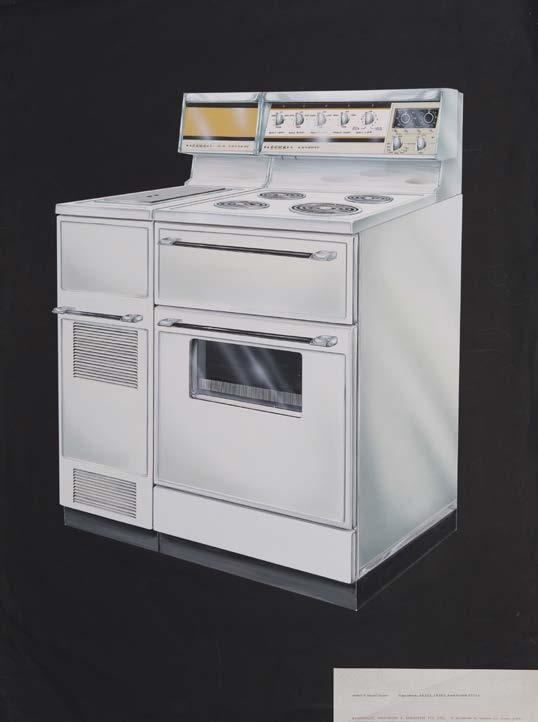
Rosenfeldt, Gherardin & Associates, presentation drawing for a Backwell IXL electric stove, c. 1963
Gift of Robyn Carter, Peter Rosenfeldt and Andrew Rosenfeldt, 2013 | 0053.2013.0007
In the 1950s Backwell IXL’s stoves were slow combustion, however in 1958 with the growing use of electricity, and due to shortage of gas burners, John Backwell decided to produce an electric stove, it was called the Corio. In 1963 a ‘Warm Morning’ feature was incorporated into the Corio (a heater that would come on automatically in the morning to warm the kitchen). Backwell employed industrial designer Ron Rosenfeldt to improve the Corio’s styling, and his ultimate design was called the ‘Vision’ – the new stove’s stylish and sleek design aimed to improve this enterprising Geelong firm’s market share. | Ann Carew
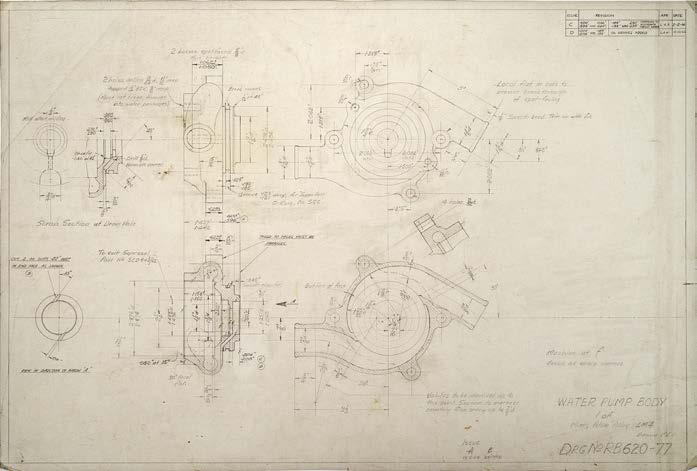
P [Phil] E Irving, water pump body for the RB620 racing car, 1964
Gift of Nigel Tait, 2014 | 0050.2014.0005
The only thing about this technical drawing I could claim to understand is the lettering at the bottom right corner which indicates that it is a water pump body and the 77th sheet in a sequence of design drawings for the Repco Brabham 620 engine. It is initialled ‘P E I’, first dated 18 August 1964 and subsequently revised. The history behind the development of Repco’s new engine that powered Jack Brabham’s BT19 to Grand Prix victory in 1966 is convoluted and riven by jealously guarded opinions. This drawing is one of many in the collection that confirms Irving’s pivotal role in the engine’s design. | Harriet Edquist
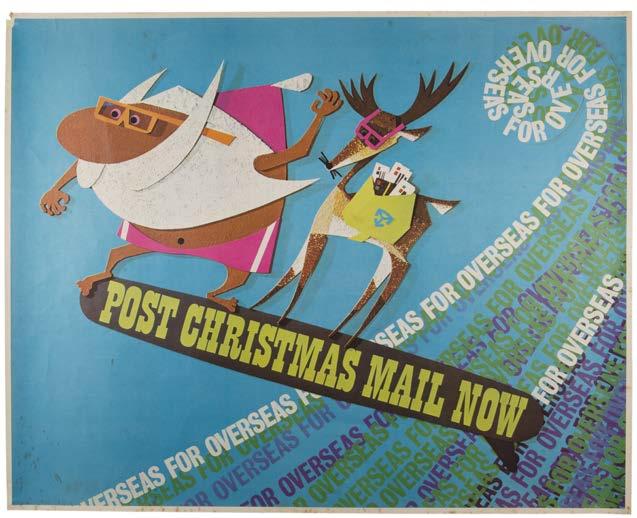
John Whittenbury, Post Christmas Mail Now, c. 1962–1969
Gift of John Whittenbury, 2014 | 0032.2014.0001
In the days before television advertising and the WWW, commercial artists such as John Whittenbury designed posters, railway billboards and trade exhibitions to advertise products and services to the masses. Whittenbury’s series of quirky Christmas mail posters for the Post Masters General Office, now known as Australia Post, were displayed in post offices across Australia. He had a wealth of experience in the field, having worked as an illustrator, graphic designer, cartoonist, and mechanical draftsman for the RAAF in Laverton and then Victoria Barracks, and also taking out a qualification in Advertising Art from RMIT in 1961, prior to joining the PMG. | Ann Carew
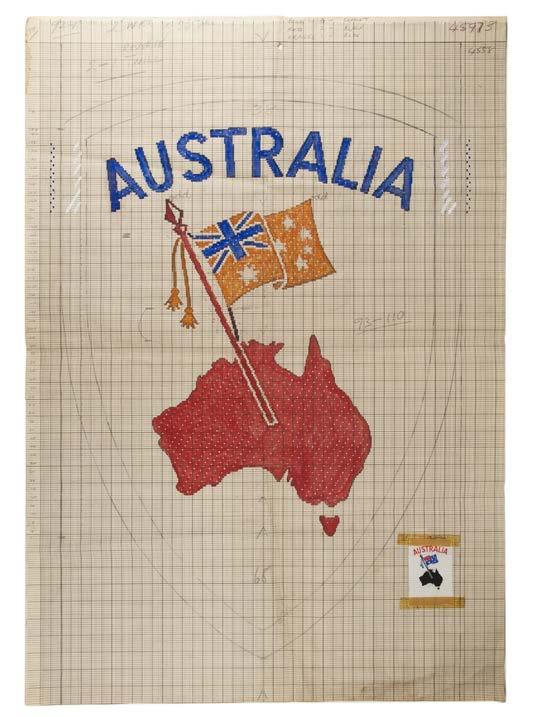
Cash’s (Australia) point paper design, ‘Australia’ featuring map and flag, 1966
Gift of Cash’s (Australia) Pty Ltd, 2000 | 0027.2006.0037
Paying attention to objects in the archive is a distinctive kind of learning. Spending too much time working at monitors, we can forget to look closely, and with care. This clothing label pattern reveals the thinking about materiality that underpinned the design process. How should a flagstaff, or the Eyre Peninsula, be stitched?! Catherine Moriarty
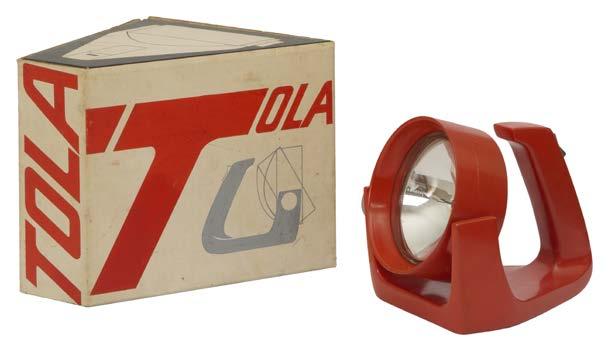
Ken Foletta, Tola Light, RMIT 1967
Gift of Ken Foletta, 2017 | 0004.2017.0039-1-3
Ken Foletta studied Industrial Design at RMIT in the mid-1960s when the course was headed up by German émigré Gerard Herbst. Herbst is something of a legend at RMIT Industrial Design and this final year project combining packaging and product design is a rare survivor of his classes. | Harriet Edquist
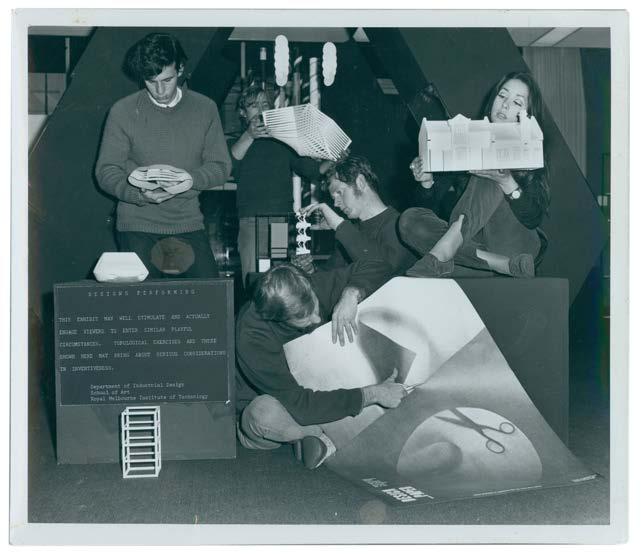
Students from RMIT School of Art displaying their works with paper, 1969
Gift of Gerhard Herbst, 2007 | 0008.2007.0001
In 1969 Gerard Herbst arranged a student exhibition at the NGV’s Design Centre. In ‘Design with Paper’ his students explored the characteristics of a sheet of paper, an exercise based on similar ones set by Josef Albers at the Bauhaus, Germany and Black Mountain College, USA. The exhibition attracted press attention, Bulletin critic Brian Hoad noting You are told that in the tradition of Gropius and his Bauhaus experiments of the ‘twenties they are attempting to bridge the gulf between the fine arts and the technical crafts to produce one day from among their numbers a new type of creative thinker. | Harriet Edquist
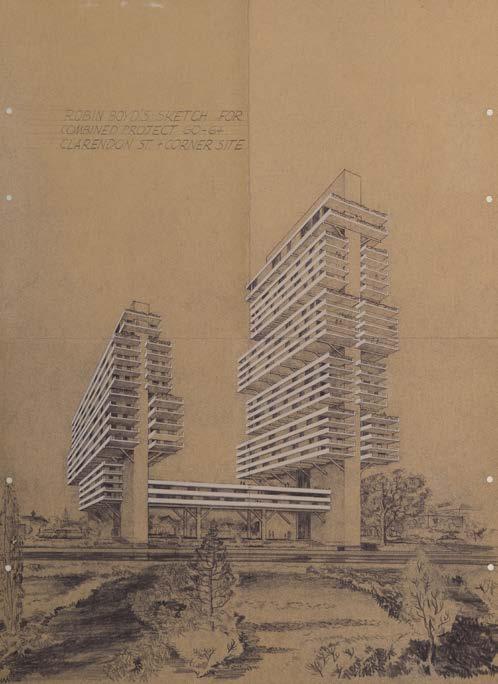
Romberg and Boyd architects, Robin Boyd’s sketch for combined project for 60-64 Clarendon Street corner site, 1968
Donated through the Australian Government’s Cultural Gifts Program in memory of Frederick Romberg and Robin Boyd, 2008 | 0020.2008.0016
Robin Boyd’s unbuilt scheme for two residential towers for Carnich Pty Ltd in East Melbourne is one of his most striking late projects – remarkable for its daring scale, its indebtedness to the megastructural polemics of Paul Rudolph and Japanese Metabolism, and its prescience – a high-rise apartment building now sits on the same site. The drawing is spectacular: trays of space are held aloft on angled concrete props that branch off trunk-like vertical slabs. With balconies and spandrels highlighted in white, the scheme’s dynamism echoes El Lissitzky’s mad Wolkenbugel (‘Skyhooks’) while also signalling a tragic last hurrah before Boyd’s 1971 death. | Philip Goad
Bernard Joyce and George Kral, Australian Pavilion at the JETRO (Japan External Trade Organisation) Fair in Tokyo, 1961
Gift of Kral family, 2013 | 0051.2013.0002
JETRO had been established in 1958 to promote Japanese exports abroad and the pavilions commissioned by the Australian Department of Trade reflected the growing commercial ties between the two countries. The Australian pavilion shown here was completed in 1961 and is a little-known but excellent example of the collaboration between Bernard Joyce and George Kral: the austerity of Joyce’s architecture on the one hand and the relative richness of Kral’s interior on the other with his signature use of reflecting surfaces, large black-framed square light boxes and over-scaled photographs, some suspended from the ceiling. Harriet Edquist
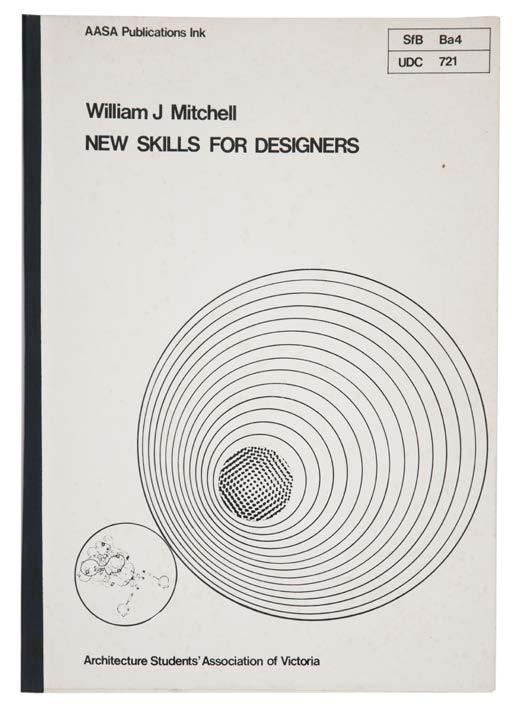
William J. Mitchell, New Skills for Designers, Melbourne, Vic, Architecture Students Association of Victoria, 1968
Gift of Ian Godfrey and Lecki Ord, 2014 | 0025.2014.0062
Architecture students have a tradition of activism in Australia and publication is a favoured mode of expression. In 1947 for example, the Victorian Architectural Students’ Society published Robin Boyd’s first book Victorian Modern. Twenty years later they produced William J (Bill) Mitchell’s BA (Hons) thesis from Melbourne University for a seminar ‘New Skills for Designers’. Mitchell went on to become one of the world’s leading urban theorists. Former dean of MIT’s School of Architecture and Planning and director of the Smart Cities research group at MIT’s Media Lab he also helped oversee an ambitious building program that transformed MIT’s physical campus. | Harriet Edquist
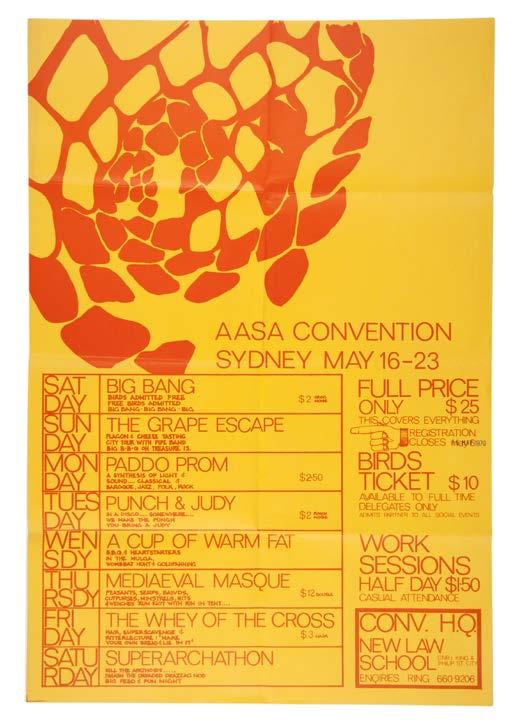
Australasian Architecture Students Association, Poster titled AASA CONVENTION SYDNEY MAY 16-23, 1970
Gift of Ian Godfrey and Lecki Ord, 2014 | 0025.2014.0036
This poster, author unknown, documents the unreconstructed social programme of an event heralded for its progressive line up, which included Buckminster Fuller, Dennis Compton, Christopher Alexander, and Tony Dugdale. Could this have been printed at the Tin Sheds Art Workshops? Perhaps, in which case its content runs counter to many of the ideals being advanced there: ‘We make the Punch, you bring a Judy’. It documents a moment both close and distant. | Andrew Leach and Lee Stickells
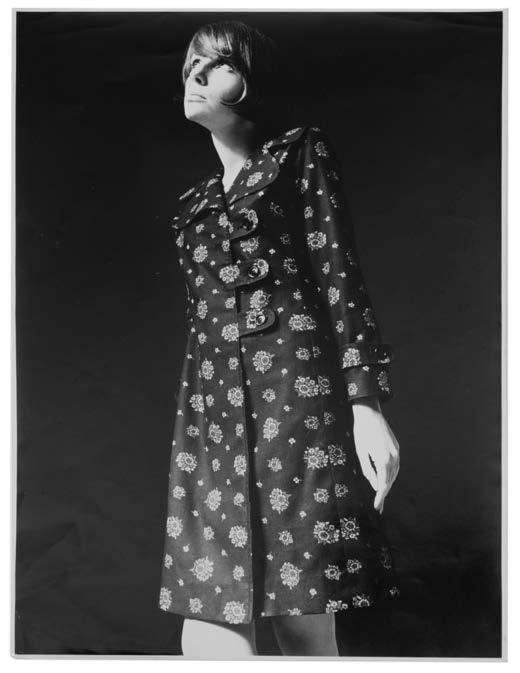
Helmut Newton and Henry Talbot Pty Ltd, Model wearing coat designed by Prue Acton, c. 1964–69
Gift of Prue Acton, 1994 | 0017.2011.0006
In the 1960s Prue Acton fashioned a modern look for Australian teenagers and young women. She established her business in Flinders Lane in 1963, and by the mid-60s her inexpensive fashions for ‘young sophisticates’ were selling like hot cakes across Australia. By the end of the decade she had secured markets for her clothes in New York, London and Tokyo. Australia’s leading fashion photographers, German émigrés, Helmut Newton and Henry Talbot photographed Acton’s new collections in the 1960s. I chose this picture because it demonstrates so aptly Acton’s flair with marketing, her love of textiles, as well as her design skills. Ann Carew
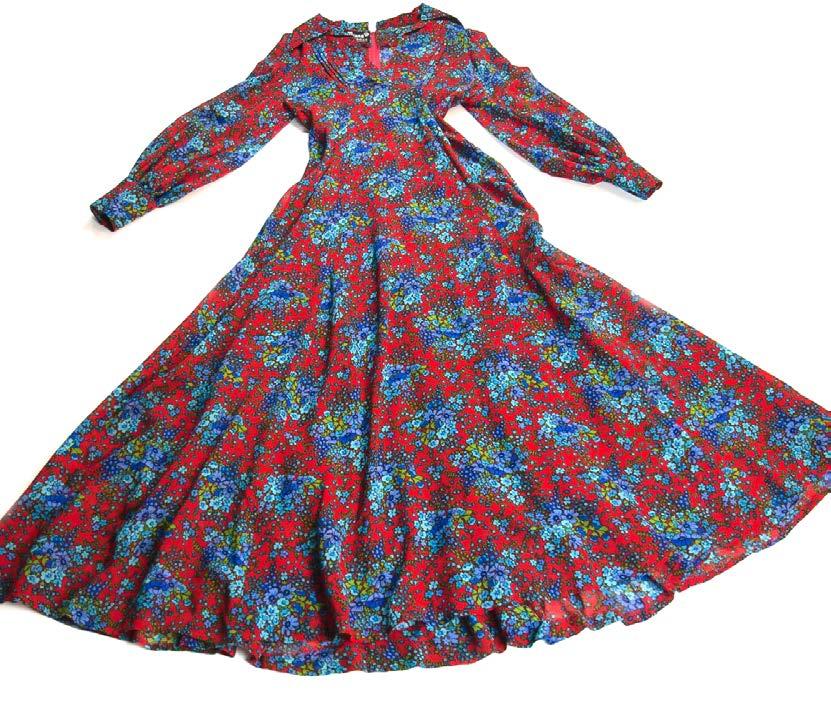
Gift of National Textile Museum, 1999 | 0055.2014.0001
Norma Tullo established her business in 1956 and opened her studio in Lonsdale St. in the 1960s, and quickly became one of Australia’s top designers of the time. This dress, with its bold red and blue floral print, is made from a fine wool fabric and is indicative of the many long dresses for day and evening wear Tullo designed in the late 1960s and early 1970s. Many of these were created in wool and Tullo won a number of Wool Board Awards, including seven in 1965. | Simone Rule
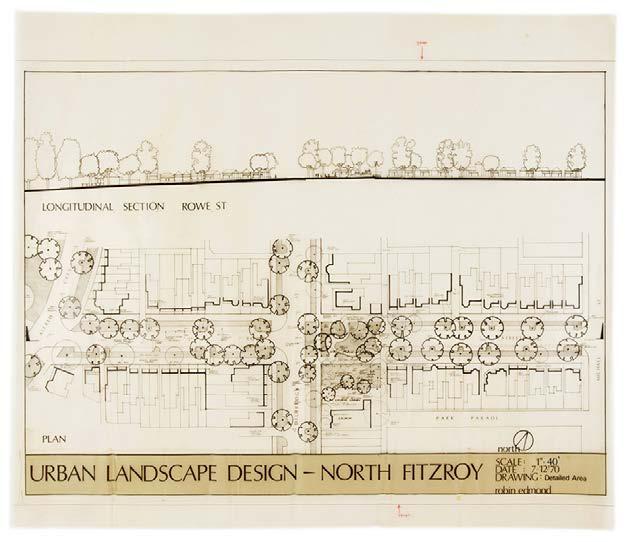
Robin Edmond, Landscape design for North Fitzroy, 1970
Gift of Elvira Edmond, 2016 | 0007.2016.0001
Robin Edmond was something of a pioneer for water sensitive urban design, large scale ecological urbanism, and landscape sustainability in general. He was well ahead of his time in these spheres as well as understanding Australia’s relationship to China. His landscape practice included the vast Ocean Park and Water World complex in Hong Kong, but his origins were in Melbourne with work for Merchant Builders’ Elliston development (1968-70) and this 1970 proposal for an urban redevelopment of North Fitzroy. Harriet Edquist
Stitt, Index book containing contact prints, c.1970s
Gift of Paddy and Alexander Stitt, 2010 | 0105.2010.0314
Sourced from Alex Stitt’s extensive archive, this well-used index book provides a fascinating insight into the operation of the designer’s graphic design studio from the 1970s. Used as a repository to catalogue client artwork, each contact print was given a hand-written code, evidence of a simple system developed to manage the process of creating artwork. The book’s monochromatic pages speak of a time long past, when design was a manual undertaking, a time of hard copies, not hard drives. | Dominic Hofstede
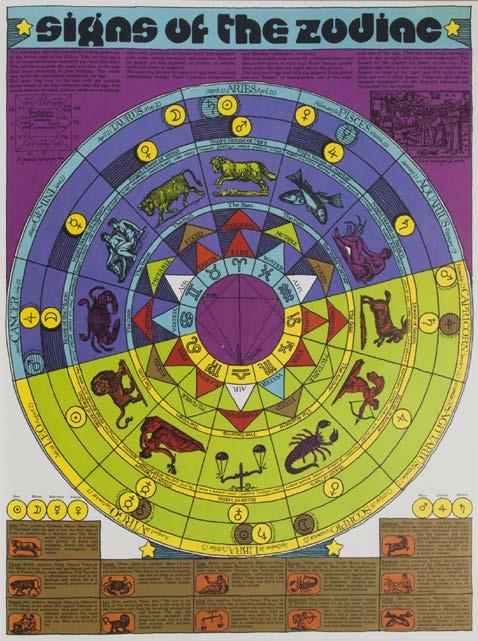
Alex Stitt & Bruce Weatherhead, Jigsaw Factory, A Dictionary of Magic, c. 1971–1973
Gift of Paddy and Alexander Stitt, 2010 | 0105.2010.0480
In 1971, Alex Stitt and Bruce Weatherhead left advertising and opened The Jigsaw Factory – a design studio focussed on educational material for kids. The Richmond premises included a store, play space and craft workshop and produced books, games, posters, toys, and more. This page is from A Dictionary of Magic, a large coloured book that describes a number of aspects of magic and also contains four ‘games’ including a Ouija board and tarot deck. Visually the book is stunning, the content is educational but also slightly satirical and you can the sense the duo’s signature sense of humour throughout. | Rickie-Lee Robbie
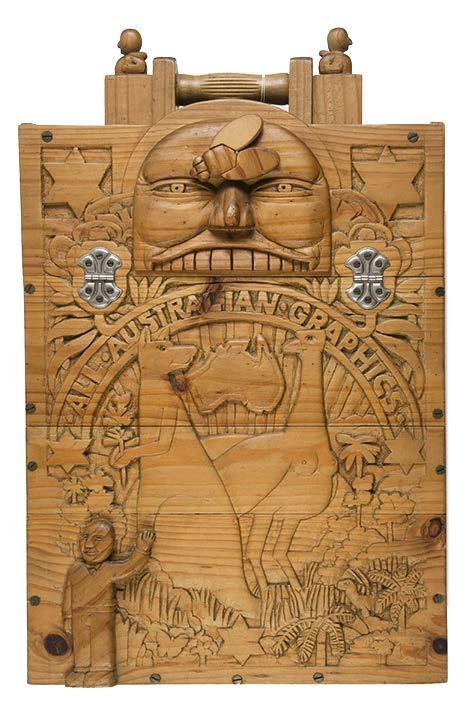
Anthony Frederick Ward (Tony Ward), Luna Park advertising folio for All Australian Graffiti, 1976, carved wooden container with hinged lid and carrying handle, 54.1 x 34 x 10 cm
Gift of Mimmo Cozzolino and All Australian Graffiti, 2016 | 0002.2016.0006.1
Mimmo Cozzolino and Con Aslanis created All Australian Graphics (AAG) in 1972, an illustration collective which grew to seven illustrators/designers and changed its name to All Australian Graffiti in 1975. Cozzolino attributes the success of the collective to ‘sincere but whacky promotion’ which can be seen in this wooden folio case. The carved symbols of Australia bring AAG’s branding front and centre, and inside contains examples of the collective’s design work. Two different yet equally amazing folios are also part of the Archive – owned by Con Aslanis and Neil Curtis – and together they show an innovative group of people who didn’t take themselves too seriously. | Simone Rule
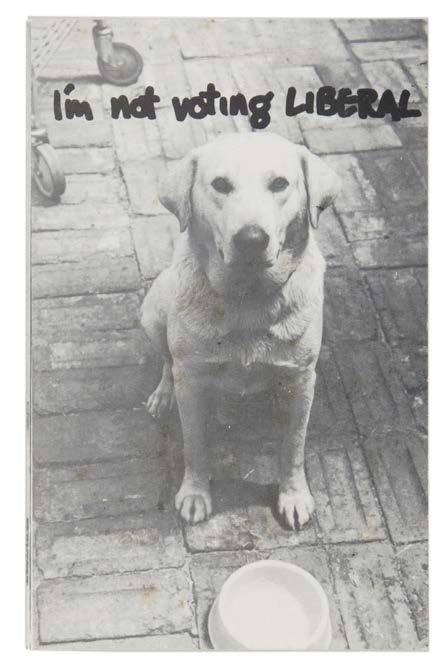
Champion Books/Backyard Press, Postcard ‘I’m not voting Liberal’ c. 1975
Gift of Ted Hopkins, 2010 | 0078.2010.0013
The verso of this postcard reads: ‘Beau was born in 1973. He had a happy youth. Then Malcolm Fraser was elected in 1975. Since then he has been waiting to see what would happen to his bowl.’ As a child, I had a dog with a homophonous name, but Bo was a she and of a different breed to the pooch pictured here. Today, a different Malcolm is in power. In all other respects, circa forty-two years on, this Backyard Press postcard rings true. | Brad Haylock
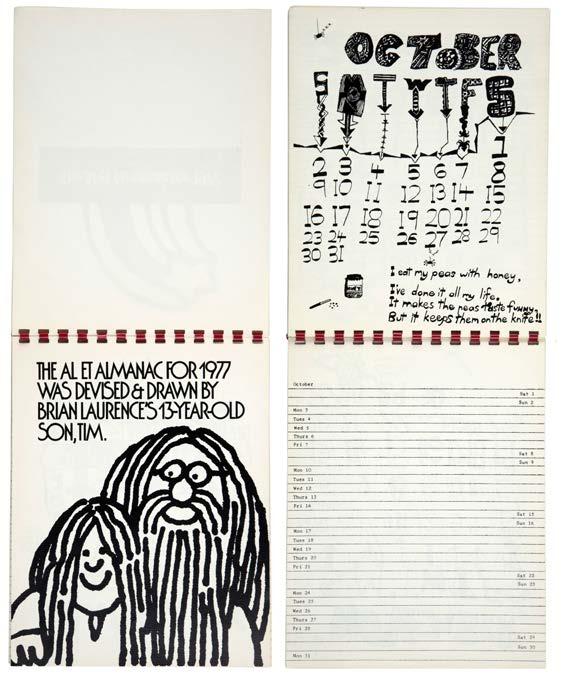
Tim Laurence, At el Almanac, 1977
Gift of Paddy and Alexander Stitt, 2010 | 0105.2010.0445
Whenever I am fortunate enough to spend some time with the Alex Stitt collection I am immediately struck by two things; firstly, its clarity as visual communication, but perhaps more importantly, the sheer joy within the work. After experiencing the wild, energetic pure spirit of Stitt + Weatherhead’s Jigsaw Group, much contemporary graphic design appears as a rather humourless Pantone Grey 5. Here, the decision to feature the drawings of a child (Tim Laurence) is an inspired one, not only making it dynamic and memorable but one that shows those other rather rare virtues – humility and playfulness. | Stephen Banham
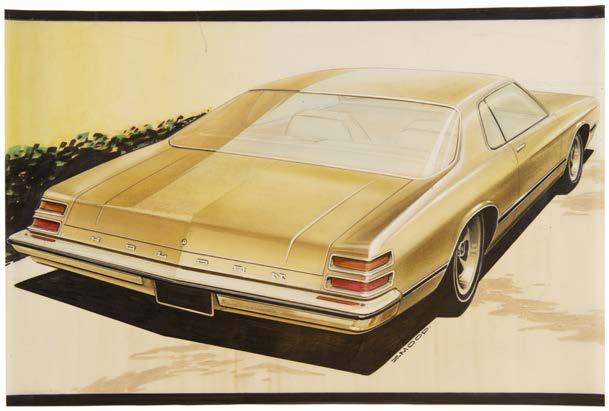
Phillip Zmood, Styling proposal for HJ Monaro coupe, 1974
Gift of Phillip Zmood, 2009 | 0017.2010.0107
The placement of Phil Zmood’s automobile styling art in the RMIT Design Archives marked an important step in the archive’s growth. I had witnessed Zmood take a roll of drawings from his garage while researching my book Monaro Magic, rolling them out on his office floor and appearing surprised there were so many and wondering what he would do with them. I have chosen his HQ concept coupe as my favourite piece for two reasons, it exemplifies what Michael Simcoe describes as shape reflecting light to support the graphic elements of the design, and, I own a HQ coupe. | Norm Darwin
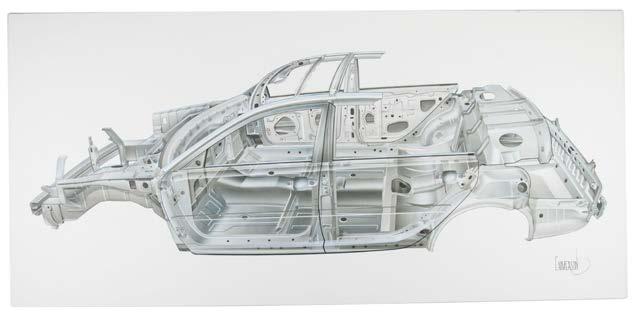
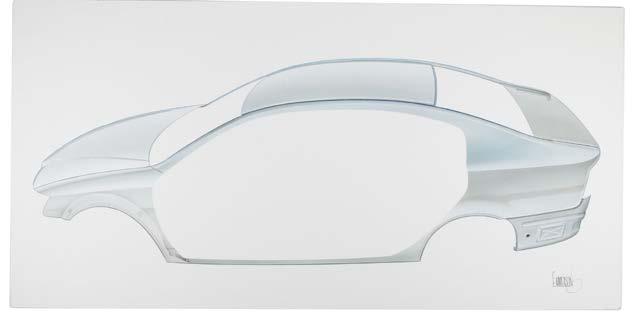
Chris Emmerson, Cutaway illustrations of Toyota, 2003-4
Gift of Chris Emmerson, 2015 | 0016.2015.0021; 0016.2015.0022
There were four renderings in this series of which two are shown here, that were part of a major presentation in 2003-4 to the management at Toyota Japan. The presentation was to explain how Australian designers and engineers could effectively develop cars for two different market segments, by sharing structure and adding unique exterior surfaces, as well as mechanical changes, for cost-effective differentiation.
Paul Beranger
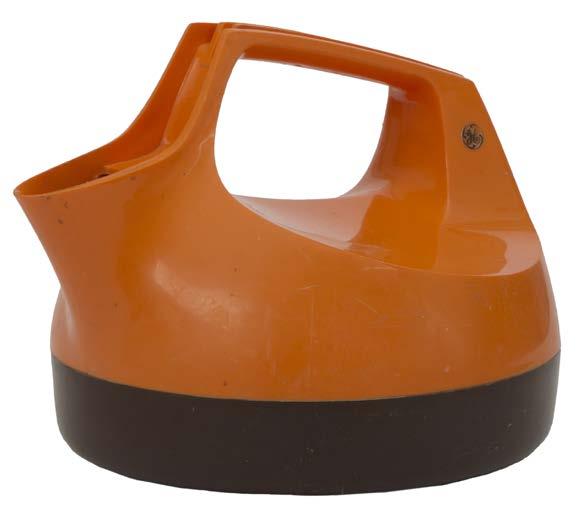
Barry Hudson, General Electric’s KE12 kettle, 1978
Gift of Leonie Hudson, 2008 | 0024.2008.0002
Barry Hudson’s KE12 kettle won the Australian Design Award and the Prince Philip Prize for Australian Design in 1978 while Hudson was Research and Development Manager at General Electric. The kettle was innovative in a number of ways; it was an early example of an all plastic electric kettle with a single-handed opening spout that used the live hinge property of polypropylene for the spout opening. | RDA Staff
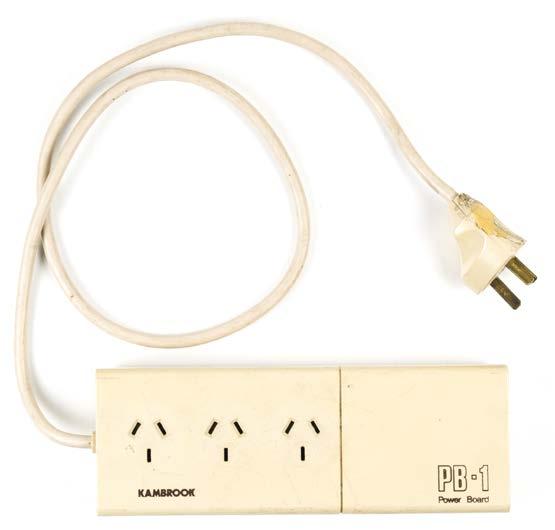
Robert Pataki, Prototype of powerboard design for Kambrook, 1979
Gift of Jackie and Robert Pataki, 2012 | 0108.2012.0001
Robert Pataki’s prototype established a design for power boards that was adopted worldwide. Remarkably, it was never patented and, although hugely successful, eventually lost market share to other brands. Alone, power boards do nothing. Plugged-in, the plastic meeting spot for multiple electrical devices simply provide convenience, replacing the chaos of piggy-backed adaptors. But I can no longer look at this yellowing object and the fantastic PB-1 font, for its functionality alone. Post David Lynch’s Twin Peaks, a power socket – and its travelling companion electricity – is a fizzing, flickering source of cryptic power that can move people through dimensions and both give and take away life. | Kate Rhodes
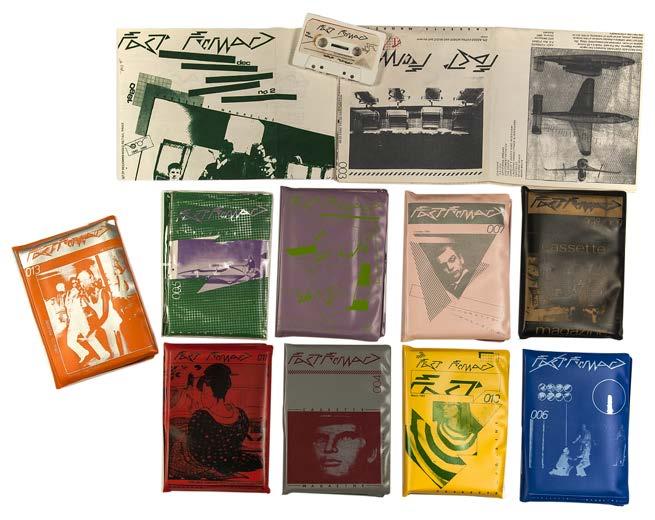
Selection of Fast Forward cassette magazines, 1978-1992. Creators: Bruce Milne, Andrew Maine, Michael Trudgeon and Jeff Ansell
Gift of Michael Trudgeon and Jane Joyce, 2013 | 0042.2013
Fast Forward was a cassette magazine documenting post-punk music in the early 1980s. The cassettes interspersed interviews with music and were packaged with printed artwork and distributed in record shops around Australia and abroad. Thirteen issues were produced between November 1980 and October 1982. The innovative format of the magazine was symptomatic of the 1980s critique of existing forms of communication and design practice. | Harriet Edquist
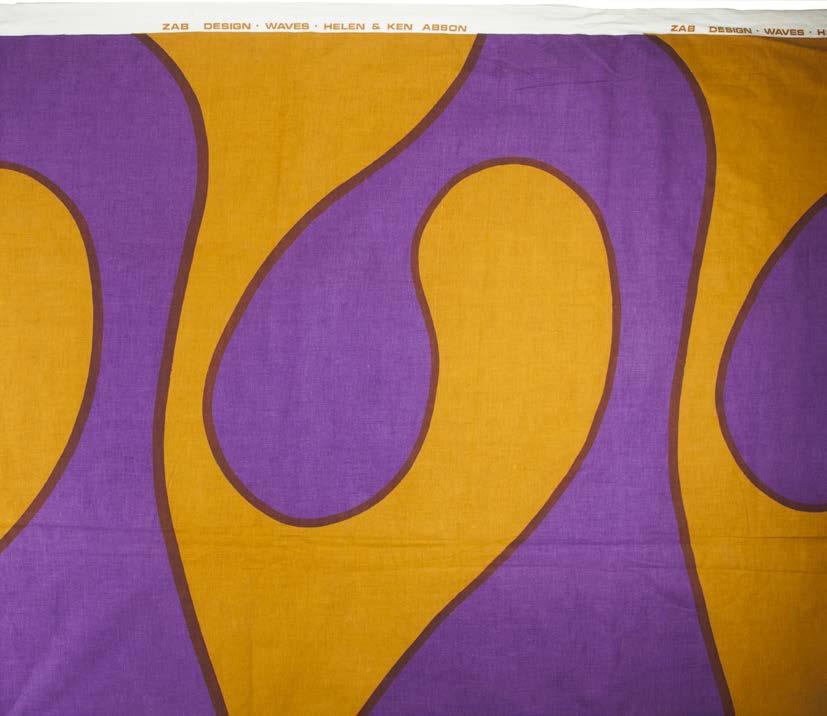
Helen and Ken Abson, ZAB Design, ‘Waves’, c.1970s
Gift of Mary Lewis and Miles Lewis, 2012 | 0060.2012.0001
Textile and furniture company Zab Design was established in Melbourne by Helen Abson and Ken Abson in 1972 when they brought out their first range of brightly-coloured printed cotton furnishing fabric. Inspired by popular Scandinavian design such as Marimekko, Zab produced competitively priced similar fabrics that did well and were used as curtains, blinds, bedspreads, cushions, wall-hangings and clothes. In 1973 Zab Design began production of an equally vivid range of flat-pack furniture made from particle board with integrated supports. | Harriet Edquist
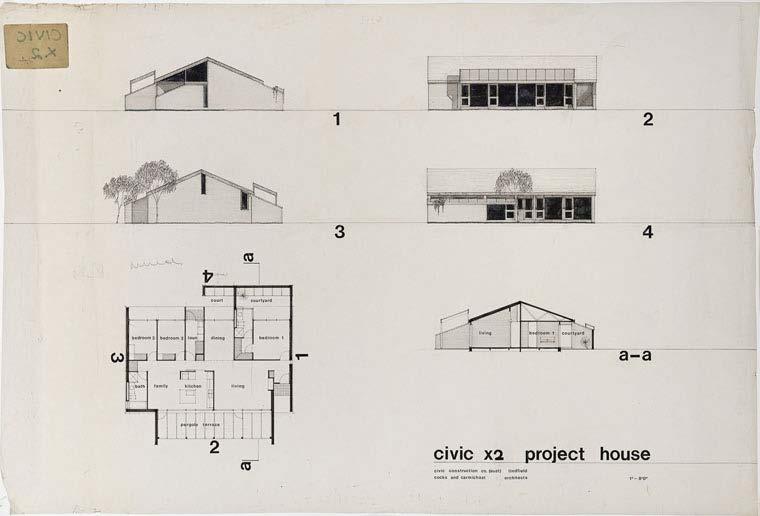
Cocks and
Carmichael,
Civic x 2 project house, c.1969
Gift of Robin Cocks and Peter Carmichael, 2015 | 0018.2015.0004
Robin Cocks and Peter Carmichael formed their architectural partnership in 1967 and in the late 1960s and 1970s designed some of Australia’s most innovative project houses. For example, the award-winning Civic Growth House (1974) designed for Civic Construction Co., as was Civic x 2 illustrated here, provided clients with a modular grid and a range of components that allowed choice in location and spatial variation.
Harriet Edquist
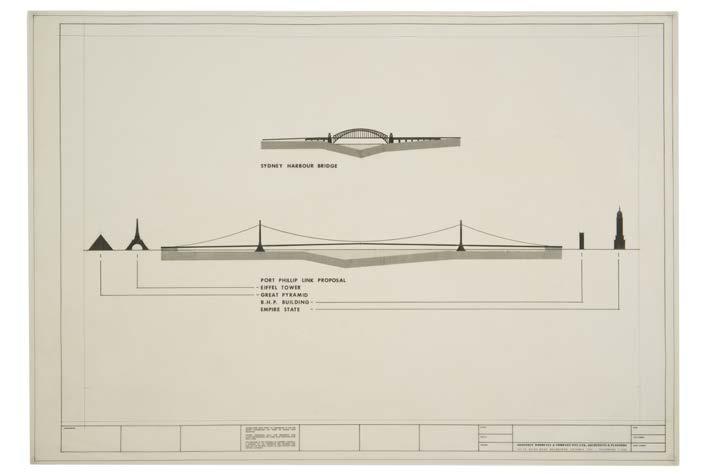
Hanson Todd & Woodfall et al, Port Phillip Link Project, 1973
Gift of Geoffrey Rolfe Woodfall and Judith Woodfall, 2015 | 0017.2015.0008
I had always associated Geoff Woodfall with domestic architecture so coming across this drawing in his archive was a surprise. The proposal, to span the Heads with a bridge, was put forward and championed by a consortium led by architects Hanson Todd & Woodfall, town planner Gordon Rushman, traffic engineers L Fraser & Associates and structural engineers Irwin Johnston & Partners. I particularly like the comparisons suggested between the height of the bridge and the world’s architectural icons like the Eiffel Tower and withering comparison (in terms of length) with the Sydney Harbour Bridge – so very Melbourne. Harriet Edquist
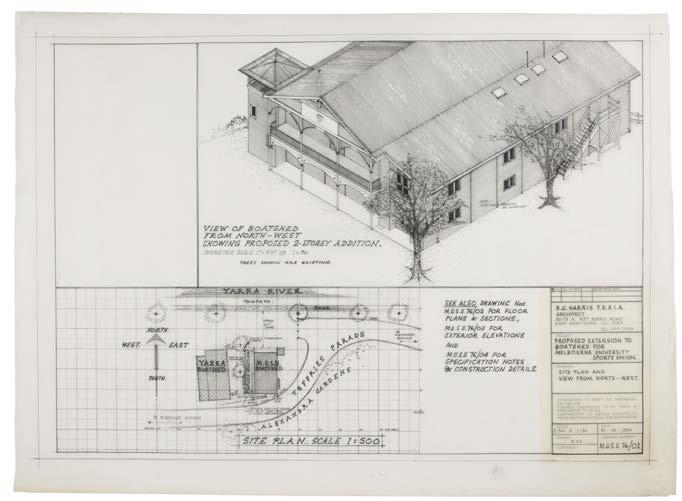
Berenice Harris, Proposed 2-storey addition to Melbourne University Boatshed, plan and view, 1976
Gift of the Estate of Berenice Harris, 2014 | 0008.2014.0002
Berenice Harris spent more than 20 years of her professional life working closely with Frederick Romberg, becoming an associate of Grounds Romberg and Boyd in 1961 and a partner of Romberg and Boyd after Grounds left the partnership. She was a brilliant draughtswoman as hundreds of her drawings in the Archives attest. Setting up on her own in 1975 she undertook a number of commissions including this one, a sympathetic extension to the Melbourne University boathouse on the Yarra that housed a club founded in 1859. | Harriet Edquist
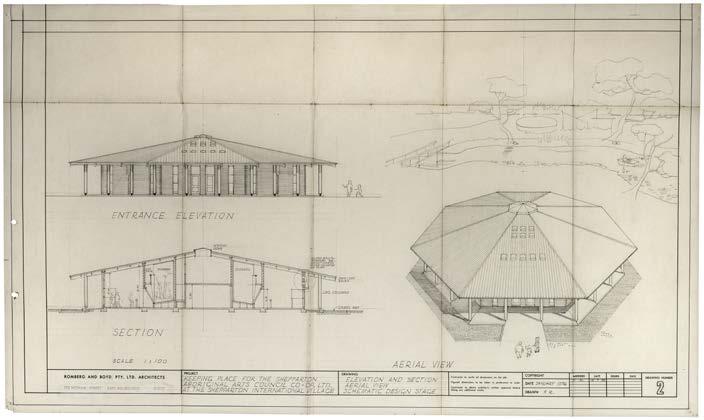
Frederick Romberg, Aboriginal Keeping Place, Shepparton, elevation, section and aerial view, 1979
Donated through the Australian Government’s Cultural Gifts Program in memory of Frederick Romberg and Robin Boyd, 2008 | 0020.2008
The Aboriginal Keeping Place, now known as the Bangerang Cultural Centre, is sited at Parkside Gardens, formerly the Shepparton International Village. The first Aboriginal cultural centre located outside a capital city, it was established in 1982 as a joint venture between the former Shepparton Aboriginal Arts Council Co-operative and the Shepparton City Council. Today the Centre is recognised as an important phase in Aboriginal and non-Aboriginal relations and early attempts at reconciliation. The octagonal pavilion form encircled by a colonnade suited the client’s brief and had a long history in the practice of Grounds, Romberg and Boyd. | Harriet Edquist
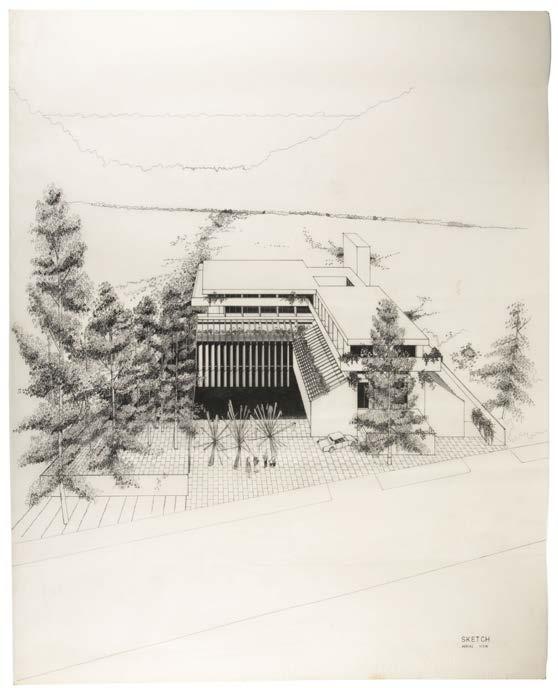
Bernard Joyce and William H Nankivell, Australian High Commission Building Kuala Lumpur, view, 1978
Gift of Peter Nankivell, Sarah Hicks and Priscilla Nelson, 2011 | 0067.2011.0005
The Joyce Nankivell Australian High Commission building and associated diplomatic housing in Kuala Lumpur are not well known in Australia nor is their Perak Turf Club building in Ipoh designed in 1968. But they are symptomatic of the clarity, both formal and functional, that is a hallmark of their architecture and are polished essays in Australian Brutalism. | Harriet Edquist
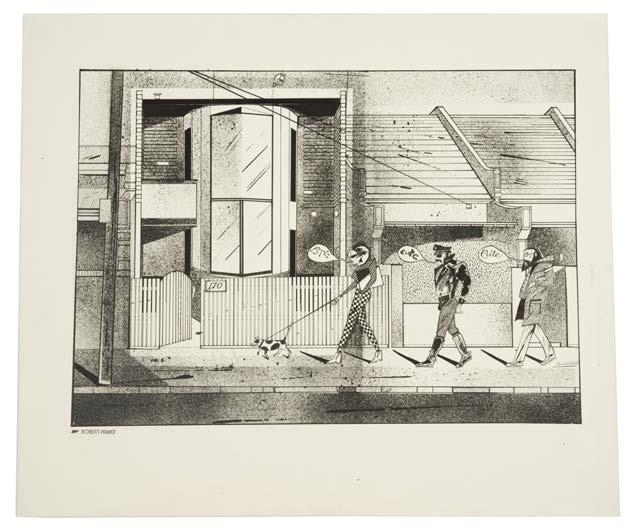
Robert Pearce, Illustration of Edmond & Corrigan’s Barber house, Carlton, 1979
Gift of Edmund & Corrigan, 2017 | 0006.2017.0002
This illustration of Edmond & Corrigan’s Barber house by Robert Pearce, best known as a fashion illustrator, broke the mould of how architecture could be represented. Suddenly, it was understood as part of contemporary culture, rather than a somewhat abstruse design practice that was difficult for non-architects to penetrate. | Harriet Edquist
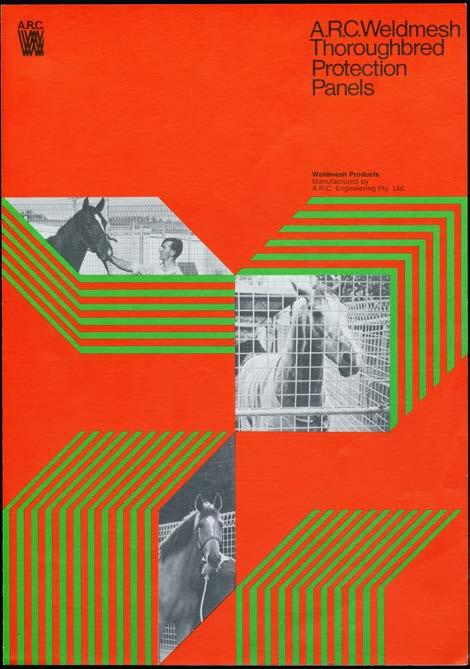
Les Mason, ARC Weld Mesh catalogue, c. 1970s
Gift of Gail Devine Mason, 2016 | 0010.2016.0011
Les Mason is best known for his 1960s and 1970s Epicurean magazine covers. The Design Archives holds a lesser known collection of ARC Weldmesh catalogues with covers designed by Mason during the same period. Utilising similar techniques, his love of abstraction and Op Art take prominence. In a bizarre pairing, agricultural scenes and livestock are juxtaposed with highly contrasting patterns in architectural or somewhat diagrammatic layouts. For me, the cover images are more like absurdist artworks than commercial design, elevating a seeming banal subject to something fascinating. | Rickie-Lee Robbie
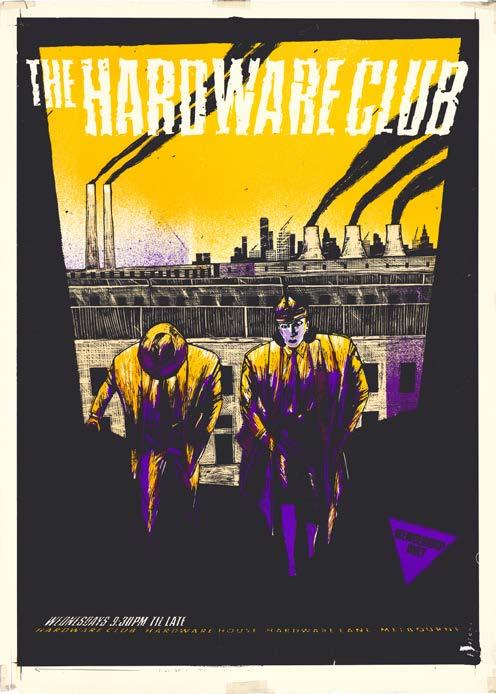
Robert Pearce, The Hardware Club, poster c. 1980 Gift of Anne Shearman, 2017 | 0005.2017.0041
This poster, like so much of Robert Pearce’s work, encapsulates Melbourne’s alternative culture of the 1980s. Harriet Edquist
Fashion Design Council of Australia newsletter, 1984,
Designed by Robert Pearce
Gift of Robert Buckingham, 1998 | 0176.1998.0231a,b
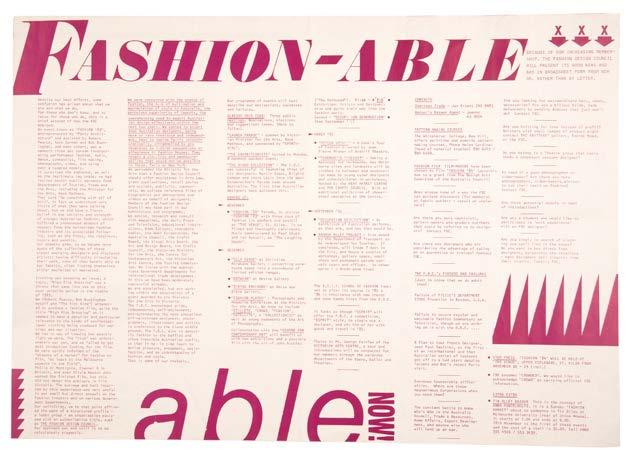
When looking at the Fashion Design Council archive I often feel surprised at how easily you are transported to the period. Every object reinvents itself, exudes excitement and is refreshingly honest. In contrast, today we often manufacture ourselves and our organisations and understand staying ‘on brand’ as a mark of success. This newsletter is a document of record but like the whole archive it embodies the FDC’s attitude – pragmatic and authentic. | Rickie-Lee Robbie
Alfredo Bouret, Illustration of a woman in Mexican clothing, c. 1950s–1960s
Gift of Lex Robert Aitken, through Cultural Gifts Program, 2008 | 0015.2008.0051
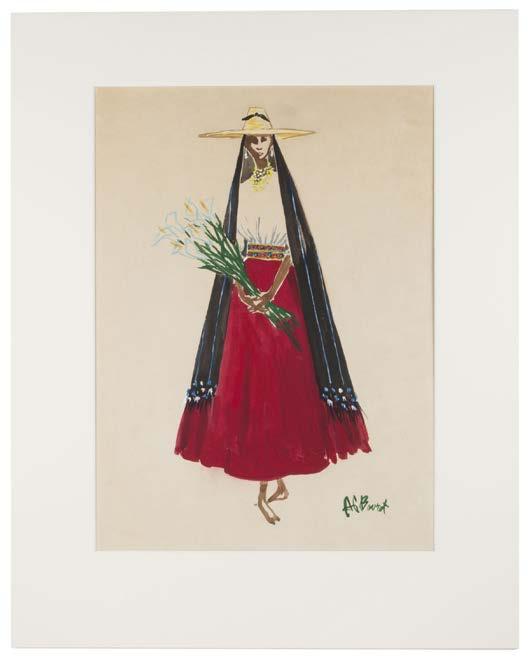
Best known for his work illustrating for French and English Vogue in the 1950s and 60s, Mexican born
Alfredo Bouret also illustrated a collection of Indigenous Mexican clothing. Bouret was unhappy with Hollywood’s depiction of Mexican people, and chose to show a different side of his country in his artwork. His illustration style brings the clothing into the realm of high fashion, and highlights the colour, beauty and variety of local Mexican dress. | Simone Rule
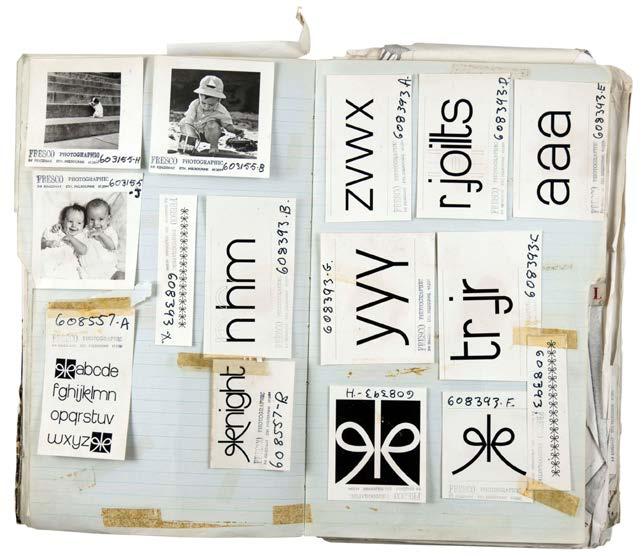
Godfrey (Geoff) Fawcett and David Lancashire, Lettering sketch, c.1980s
Gift of David Lancashire, 2014 | 0033.2014.0008.1
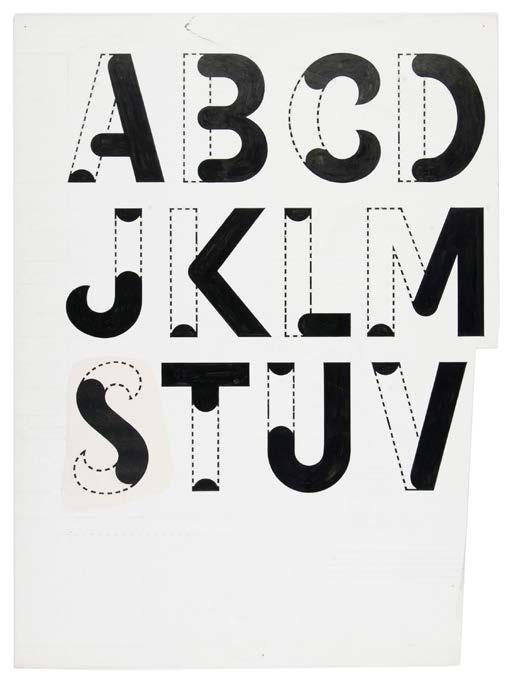
This sheet shows a preparatory lettering sketch that seeks to focus upon the individual essence of each letterform. In the complete version, the point of essence is filled with black. This interest in the reductive follows a lineage of similar typographic experiments going back to the Bauhaus’ Herbert Bayer (1900–1985) and the French typographer AM Cassandre (1901–1968). | Stephen Banham
Marion Fletcher, Marked-up drawings for Costume in Australia 1788–1901, c. 1980–1984.
Gift of Angus and James Fletcher, 2012 | 0126.2012.0035
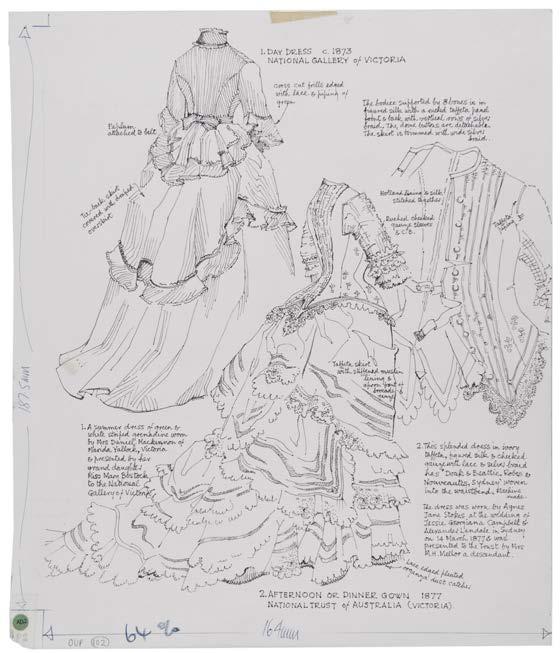
Marion Fletcher’s career is the embodiment of RMIT’s ethos of encouraging ‘a skilled hand and cultivated mind’. As the first curator of costume and textiles at the Museum of Applied Arts and Sciences, now Powerhouse Museum, I looked to Marion’s work as the curator at the National Gallery of Victoria as the exemplar of a modern curator – a scholar who could write for a general reader and open new perspectives and, a skilled, accomplished, practical curator who understood the very fabric and structure of her chosen area of curatorship. This page is visual rendering of Marion Fletcher’s significant contribution to the development of costume and textile curatorship in Australia. | Jennifer Sanders
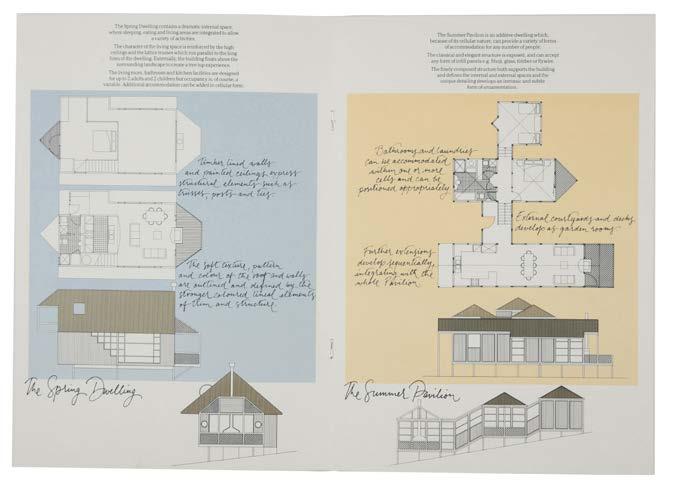
The project house building firm Merchant Builders was founded by David Yencken and John Ridge in 1965 to fill the market gap they perceived in good quality, medium-cost suburban housing. Initially Graeme Gunn was sole consultant architect but later the company worked with others such as Peter Carmichael. After 1987 Merchant Builders was sold on to companies that focussed on one-off houses, as demonstrated in this brochure, designed by Bruce Weatherhead who, with Alex Stitt had worked with the company from its inception. | Harriet Edquist
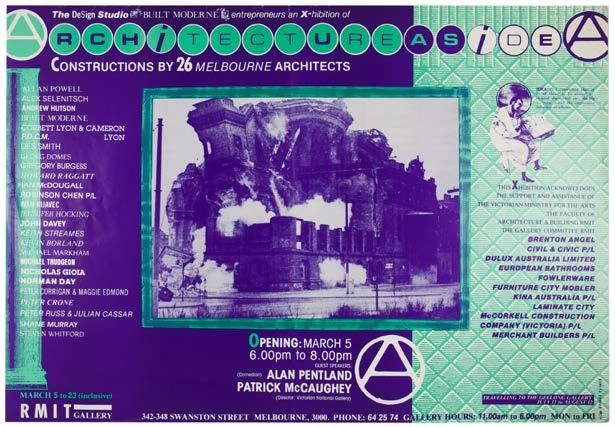
Built Moderne, Curators, ‘Architecture as Idea’ exhibition, RMIT Gallery 1984, poster designed by Robert Pearce Gift of Anne Shearman, 2016 | 0005.2017.0029a,b
This extraordinary exhibition curated by recent RMIT graduates Dale Jones-Evans, Randall Marsh and Roger Wood who had founded Built Moderne in 1983 challenged the way architectural exhibitions could be. Rather than exhibiting representations of architecture (drawings, models, photographs) the curators invited their 26 exhibitors (25 men and 1 woman, Jennifer Hocking) to build an object expressive of their idea of architecture. It was a wild adventure and spawned a number of other ideas-driven exhibitions such as Val Austin’s 5AR (George Paton Gallery 1986) and Jenepher Duncan’s New Classicism? (Monash Gallery 1986). Harriet Edquist
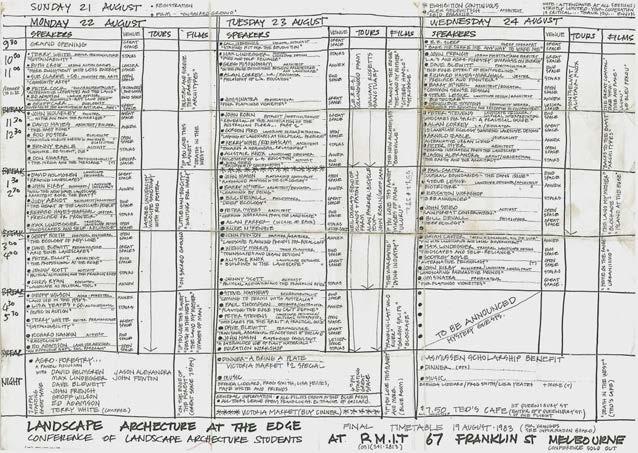
Landscape Architecture at the Edge conference programme handwritten by Maggie Fooke and Jerry de Gryse, RMIT 1983 Gift of Roderick McIvor, 2011 | 0080.2011.0011
The EDGE conference series began in Melbourne in 1983 and inaugurated a tradition of radical student conferences in landscape architecture. The first, Landscape Architecture at the Edge, was followed by EDGE TOO (1992), Big Sky (1995) and WEDGE (1997). | RDA Staff
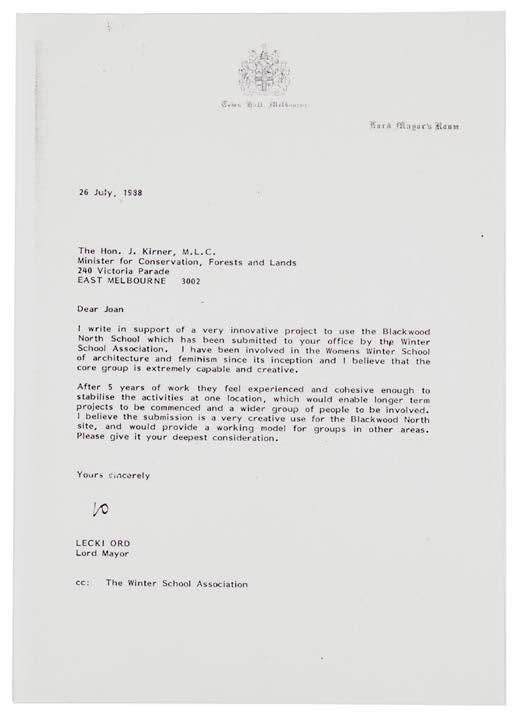
Lecki Ord, Letter to Joan Kirner, 26 July 1988
Gift of Lecki Ord, 2017 | 0007.2017.0032
Lecki Ord was Lord Mayor of Melbourne when she wrote this letter to Joan Kirner, Minster for Conservation, Forests and Lands in John Cain Jnrs Labor government. Kirner would soon be elected the State’s first woman Premier. Ord writes in support of an initiative by the Women’s Winter School of architecture and feminism, an association Ord helped found and one of a number of feminist organisations in Melbourne she was active in at this time, including Women in Architecture. Ord had honed her activist skills as an architecture student at the University of Queensland and RMIT. | Harriet Edquist
Gift of Harriet Edquist, 2014 | 0038.2014.0005
Publishing, exhibition, conferences, new social venues, student associations, women’s associations, deinstitutionalised professional organisations, these were some of the ways in which Melbourne architecture and design activists changed and shaped their practices through the 1980s. Transition was a part of this, founded in Adelaide by Ian McDougall and Richard Munday in 1979 and brought to Melbourne in 1980, to be absorbed into RMIT three years later where it remained until folding in 2000. | Harriet Edquist
Bruce Slorach and Sara Thorn, Abyss, Daisy-bone t-shirt, 1988
Gift of Sara Thorn and Bruce Slorach, 2010 | 0072.2010.0001
Abyss Studio was one of a number of fashion labels established by Sara Thorn and Bruce Slorach in the 1980s and 1990s. From 1986 to 1992 the pair also operated the Galaxy Emporium where they stocked their own designs as well as those of fellow Fashion Design Council members. Abyss was a street wear label and, like many independent designers at the time, was concerned with creating culture through clothing. A strong focus on pattern is present throughout the range, this t-shirt features the Daisy-bone motif in two colour ways used together creating an eye bending Op Art-esque effect. | Rickie-Lee Robbie
Rae Ganim, ‘Winter’ serviette, 1988
Gift of Rae Ganim, 2011 | 0053.2011.0001
Rae Ganim’s archive is a treasure trove of textile pieces, press clippings, promotion and other ephemeral material. The hand silk-screened textiles in fine wool jerseys and cottons demonstrate Ganim’s mastery of colour and design. This cotton textile with its intense colour combinations and vivid colours is labelled ‘Winter’ 1988. As well as employing the fabric in a range of accessories and napery, Ganim designed a knee-length winter skirt with this textile. The cotton was quilted for extra warmth and bounce and, teamed with a red woollen knit, black tights and red flats, was one of my favourite outfits. | Ann Carew
Linda Jackson, Textile piece for ‘Bush Kids’, 1989
Gift of Linda Jackson, 2011 | 0020.2011.0001
Made for her ‘Bush Kids’ line, this textile piece is an excellent example of Jackson’s skilled use of vibrant colours. I know my 8 year old self would have wanted one of her designs in this fabric! | Simone Rule
Gift of Ian Edgar, 2013 | 0055.2013.0038.12
Corporate Industrial Design Australia (CIDA) were tasked with designing an under bench hot and cold water dispenser for Stirling Office Equipment, which would ultimately become the ‘Billi’ water dispenser, still in production today. This page was used as a presentation of design concepts in response to Stirling’s brief. The Archives also holds the original concept sketches by Ian Edgar, which reveal how the 14 different concepts he showed at the presentation were designed in less than a week. None of these became the final product, but they do give insight into the complexity of the design process, and what could have been. | Simone Rule
Paul Taylor for Form Australia, Kambrook Axis Kettle concept rendering, 1993
Gift of Centre for Design RMIT, 2016 | 0009.2016.0001
The Axis Kettle was developed through the EcoRedesign project funded by the Federal Government and based at RMIT in the 1980s and 1990s. The project involved the expertise of significant Victorian designers such as Paul Taylor, Gerry Mussett, Liam Fennessy and Michael Grima, as well as prominent sustainability experts such as academics John Gertsakis, Chris Ryan and Alan Pears. Axis changed the way kettles were used, guiding users to save resources through their behaviour. It is regarded globally by academics from prominent design institutions such as Loughborough and Delft as one of the first successful eco-design projects. | Simon Lockrey
Ian Wong, Sketches of designs for RMIT University’s ceremonial mace, 1992
Gift of Ian Wong, 2010 | 0113.2010.0029
University’s first ceremonial mace was designed in 1992 by Ian Wong, lecturer in Industrial Design. It was the result of a collaborative effort, with staff from industrial design, gold & silversmithing, sculpture, engineering, applied physics, and optical technology working on its production. Materials used include carbon fibre, optical fibres, computer chips, honeycomb aluminium, gold, titanium and crystal. Drawings show how the University’s distinctive pixel logo (that conveys a sense of being at the forefront of technology) was incorporated into the design of the top element of the mace. | Michelle Novacco
Peter Corrigan, Sketches for RMIT Building 8, including elements from the Athan House and the Calnin House, c.1991
Gift of Edmond & Corrigan, 2013 | 0058.2013.0003
I found it almost impossible to choose an object to represent the Edmond & Corrigan Archive it is so immensely rich in material. But I thought these small sketches of Building 8 sat well opposite Ian Wong’s sketches of the university’s ceremonial mace, executed at around the same time. They both express the optimism of the years when RMIT finally became a university, a status it had fought hard to gain since the 1960s. | Harriet Edquist
David Lancashire, Avon Graphics Security, c.1990s
Gift of David Lancashire, 2014 | 0033.2014.0019.2
This is an exemplary model of what is possible in design for print. Only 20mm across, this magnification reveals nine separate print passes that each differently affect the paper’s surface. Printed on a cheque commissioned by Avon Graphics Security, designed by David Lancashire and detailed by Geoff Fawcett in the 1990s, the design represents an important aspect of graphic design history: the creation of labour intensive marks that are impossible to forge. | Jenny Grigg
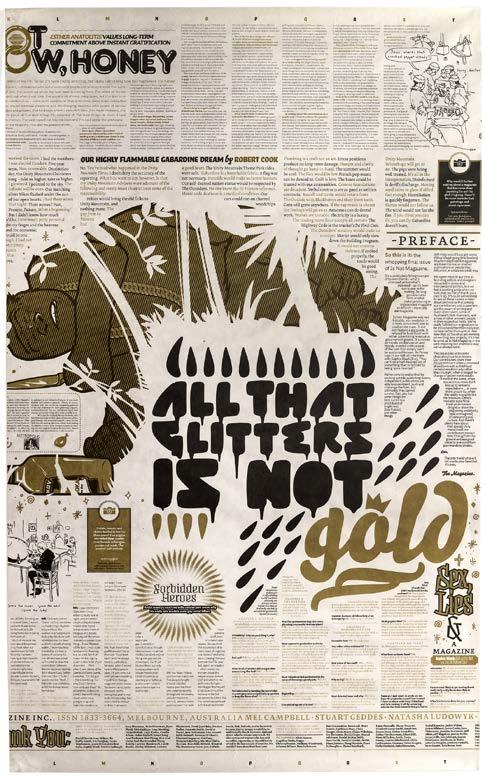
Is Not Magazine, Volume 11 July 2008, Melbourne, 2008
Gift of Stuart Geddes, 2011 | 0011.2013.0002.1-3
Posted in 50 locations around Melbourne, Is Not Magazine was a bi-monthly magazine published as a billposter. It was created by five young Melbourne writers and designers: Mel Campbell, Stuart Geddes, Natasha Ludowyk, Penny Modra and Jeremy Wortsman. The first issue appeared in April 2005 at cafes, laundromats and other locations and the last issue appeared in July 2008. Geddes and Wortsman won the 2000 Victorian Premier’s Communication Design Prize for Is Not’s first six issues, and the final issue ‘All that Glitters is not Gold’ was nominated for the Designs of the Year Award at the London Design Museum. | RDA Staff
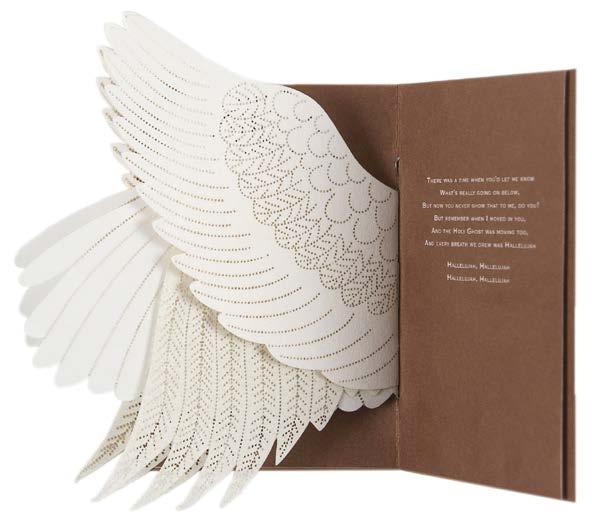
David Lancashire, Hallelujah Christmas promotion for KW Doggett
Fine Paper, 2009
Gift of David Lancashire, 2014 | 0033.2014.0022.1-2
David Lancashire’s Christmas promotion ‘Hallelujah’, designed for KW Doggett Fine Paper in 2009, is an example of one of the many innovations that Lancashire has contributed to the Australian paper industry. Considering the celestial aspects of Christmas and a favourite song—Leonard Cohen’s ‘Hallelujah’—David recalled a Wayang Kulit shadow puppet collected in Bali because of the way it interacted with light. Made from hide, the puppet was peppered with hand-punched holes to add intricate decorations to projected shadows. David adapted this concept to laser-etched paper and translated the fringed skirt of the puppet to die cut angel feathers. | Jenny Grigg
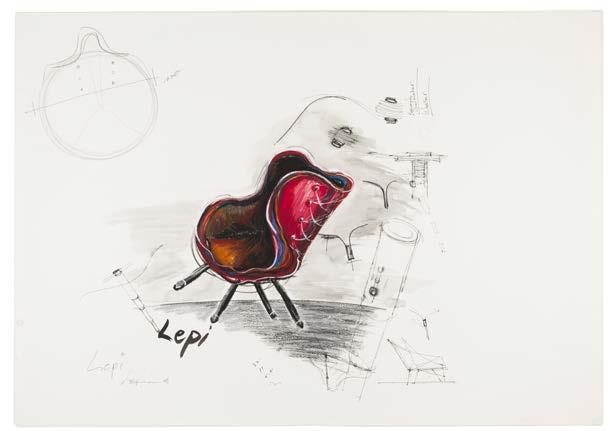
Simone LeAmon, Sketch of Lepidoptera chair or ‘Lepi’ winner of the 2009 Cecily and Colin Rigg Contemporary Design Award
Gift of Simone LeAmon, 2010 | 0019.2010.0001
The name of this chair, Lepidoptera, refers to the insect species of moths and butterflies as LeAmon drew upon the anatomy of a butterfly to develop the concept of the chair’s structure, colour and pattern. Another key feature of the design was the use of textile remnants from automotive textile manufacturer Autofab, recalling LeAmon’s redeployment of leather offcuts from the manufacture of cricket balls to make her ‘Bowling Arm’ series of bangles. | RDA Staff
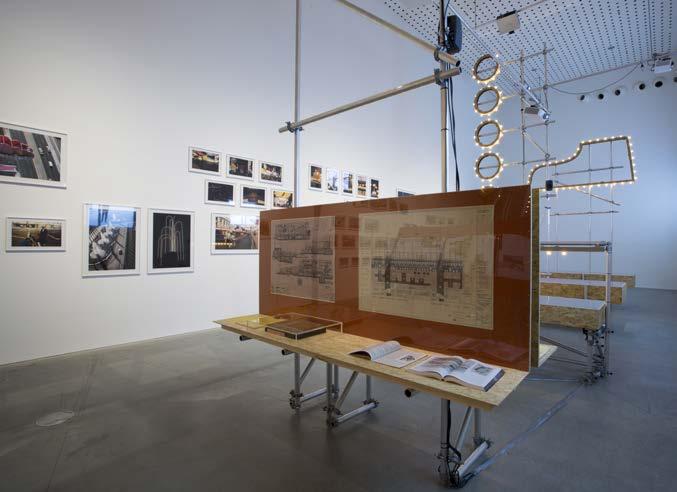
Las Vegas Studio, RMIT Design Hub, installation view of Edmond & Corrigan drawings, objects, ephemera, 2014
In 2014, RMIT Design Hub presented an exhibition of archival material drawn from Robert Venturi and Denise Scott Brown’s Las Vegas Studio. I visited Peter Corrigan with an idea to present the archive alongside interviews, drawings and objects collected from local architects that revealed the influence of Venturi and Scott Brown’s research on Melbourne’s architectural culture. After expressing his outrage at the lead-time Peter generously provided access to his archive and wrote a catalogue essay where he states: ‘The Venturis raised the possibility of a “speaking” architecture, an architecture of identity, alive to a vernacular, which could bring new life to the contemporary city’. | Fleur Watson
Contributors
Anna Anisimova is a PhD candidate in the School of Fashion and Textiles, RMIT University
Ariani Anwar is a Master of Architecture graduate, Melbourne School of Design, The University of Melbourne
Kaye Ashton is the former co-ordinator of the RMIT Design Archives, RMIT University
Megan Atkins is an industrial designer who runs a studio specialising in the design of exhibitions and art installations
Suzie Attiwill is Associate Professor of Interior Design, School of Architecture and Design, RMIT University
Stephen Banham is a typographer, curator, writer, lecturer and PhD candidate in the School of Media and Communications, RMIT University
Paul Beranger is a retired automotive designer, with 45 years of experience, working for major Australian and overseas car companies
Michael Bogle, PhD (RMIT) is a design historian
Ann Carew is a Master of Arts (Curatorship), The University of Melbourne, and Curator Officer, RMIT Design Archives, RMIT University
Nanette Carter Ph.D. is Senior Lecturer, Design History and Theory, Faculty of Design, Swinburne University of Technology
Norman Darwin is an automotive historian and author, and is a PhD candidate in the School of Architecture and Design, RMIT University
Suzanne Davies is Director & Chief Curator, RMIT Gallery, RMIT University
Harriet Edquist is Professor of architectural history and Director of the RMIT Design Archives, RMIT University
Geoff Fitzpatrick, OAM, LFDIA is an Accredited Designer, Design Ambassador, Design Institute of Australia
Philip Goad is Redmond Barry Distinguished Professor and Chair of Architecture, The University of Melbourne
Jenny Grigg is a graphic designer, Industry Fellow and Lecturer in the School of Media and Communication and PhD candidate in the School of Architecture and Design, RMIT University
Kirsty Grant is an independent curator and writer, and a member of RMIT Design Archives Advisory Panel
Brad Haylock is a designer and publisher, and is Associate Professor of Design, and Program Manager of the Master of Communication Design, RMIT University
Robyn Healy is Professor of Fashion and Head of School of Fashion and Textiles, RMIT University
Dr Robin Hirst PSM, Director of Hirst Projects and National President of Museums Galleries Australia, Chair of Deakin University’s Cultural Heritage and Museum Studies Advisory Board and member of the RMIT Design Archives Advisory Panel, RMIT University. Former Director Collections, Research and Exhibitions with Museums Victoria
Dominic Hofstede is Adjunct Senior Research Fellow, Monash Art Design and Architecture, Monash University
Laura Jocic is an independent curator, and recently the curator of the exhibition Louis Kahan: Art, Theatre Fashion, , and a PhD candidate in the School of Historical and Philosophical Studies, The University of Melbourne
Andrew Leach is Professor of Architecture in the University of Sydney School of Architecture, Design and Planning, The University of Sydney
Simon Lockrey is a Research Fellow, Co-ordinator of the Design Action Program and Industrial Design Engineering in the School of Architecture and Design, RMIT University
Catherine Moriarty is Professor of Art and Design History at the University of Brighton and Curatorial Director of the University of Brighton Design Archives, United Kingdom
Michelle Novacco is Archivist, RMIT Archives, Strategy and Governance, RMIT University
Robyn Oswald-Jacobs is an arts and heritage consultant and co-founder and founding Director Frances Burke Textile Resource Centre, Department of Fashion and Textile Design, RMIT University
Megan Patty is Publications Manager, National Gallery of Victoria, and a PhD candidate in School of Architecture and Design, RMIT University
Yiwei Qui is a Masters of Communication Design student, RMIT University
Catriona Quinn is a consultant curator and design historian, a former curator with Sydney Living Museums, a PhD candidate in the Faculty of Built Environment, University of New South Wales and the recipient of an Australian Government RTP scholarship
Simon Reeves is principal of Built Heritage Pty Ltd, a firm of heritage consultants and architectural historians
Rickie-lee Robbie is a Master of Information Management, RMIT University, and the Collection Database Coordinator, RMIT Design Archives, RMIT University
Kate Rhodes is Curator, RMIT Design Hub, RMIT University
Simone Rule is a Master of Cultural Heritage, Deakin University, and the Archives Officer, RMIT Design Archives, RMIT University
Jennifer Sanders is a member of the Australiana Fund, and former Deputy Director, Collections at the Powerhouse Museum
Catrina Sgro is Archives Officer, RMIT Archives, Strategy and Governance, RMIT University
Lee Stickells is Associate Professor in the University of Sydney School of Architecture, Design and Planning, The University of Sydney
Fleur Watson, PhD, is Curator, RMIT Design Hub, RMIT University
CONTACT US
Email rmitdesignarchives@rmit.edu.au
www rmit.edu.au/designarchives
Tel +61 03 9925 9946
Post RMIT Design Archives, RMIT University GPO Box 2476 Melbourne Vic 3001 @rmitdesignarchives
RESEARCH REQUESTS
Researchers are able to access RMIT Design Archives by prior appointment. For instructions and information see Collection Access at www.rmit.edu.au/designarchives
JOIN OUR MAILING LIST
Email rmitdesignarchives@rmit.edu.au or submit an online request at www.rmit.edu.au/designarchives
DONOR ENQUIRIES
For information about donations to the RMIT Design Archives email rmitdesignarchives@rmit.edu.au
DISCLAIMER
The RMIT Design Archives has endeavoured to contact the copyright holder of this material. In the event you are the copyright holder of material contained within this edition, RMIT is seeking to hear from you in the use of this work. Please contact RMIT immediately to discuss permission release and consent. Contact: copyright@rmit.edu.au
This Page
This photo was taken at the RMIT Design Archives in February 2015. It shows British designer Fraser Muggeridge’s International Typography Summer School viewing the Design Archives’ graphic design collections.
ACKNOWLEDGEMENTS
Permission to publish the images in this Journal has been sought at the time of publication and every effort has been made to trace the original source of copyright material. The publishers would like to hear from any copyright holder to rectify any errors or omissions. We gratefully acknowledge the following people for their permissions.