DESIGN STUDIO
BALLOTING POSTERS &
DESIGN STUDIO
BALLOTING POSTERS &




This studio challenges two persistent clichés of urban thinking: the authority of scale and the dominance of the master plan. It proposes an alternative position in which small, precise and opportunistic interventions act as catalysts capable of reshaping large urban territories over time. Rather than treating urban design as a project of total control, the studio explores agency, incremental change and long-term spatial consequences.
Working in partnership with A New Normal (and in concert with parallel studios run by Melbourne and Monash Universities) students will speculate with pilot projects to transform our own Campus. Proposals will align with one of twelve key strategies addressing systemic challenges such as energy, water, waste or resource flows. Projects will operate as catalytic interventions capable of both adapting the existing campus and seeding a new master plan that is capable of generating a precinct-scale impact.
The studio situates this work within RMIT’s own urban history. Unlike comprehensively planned campuses, RMIT has evolved through incremental occupation, adaptation and opportunistic annexation of the surrounding city. Students will begin by documenting this process, producing a sourcebook of small urban moves that reveals how asymmetrical and fine-grain tactics can accumulate to produce significant urban transformation.Building on this research, students will develop spatially resolved projects that act as enabling infrastructure and that provide a framework for the accelerated evolution of the city. The studio ultimately reframes urban design as an evolutionary practice concerned with time, systems and catalytic agency rather than the projection of unchallenged authorial desire.
Group work (2 student groups) will happen in the first 5 weeks of the semester. After that time, it will be your choice about whether to continue in groups or to work alone. An all University talk hosted by RMIT will be held at 5:00pm on Wednesday the 5th March.
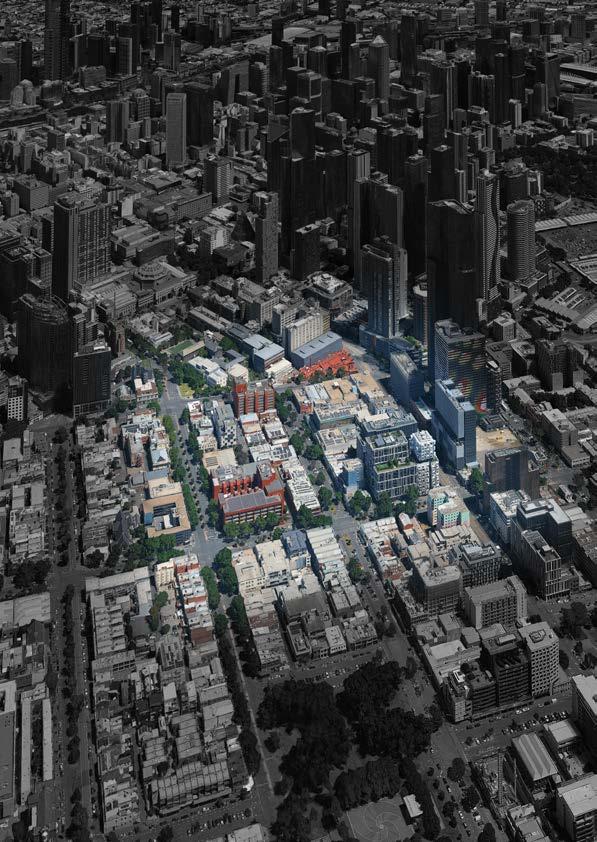
Agrippa! was... a roman general a poem
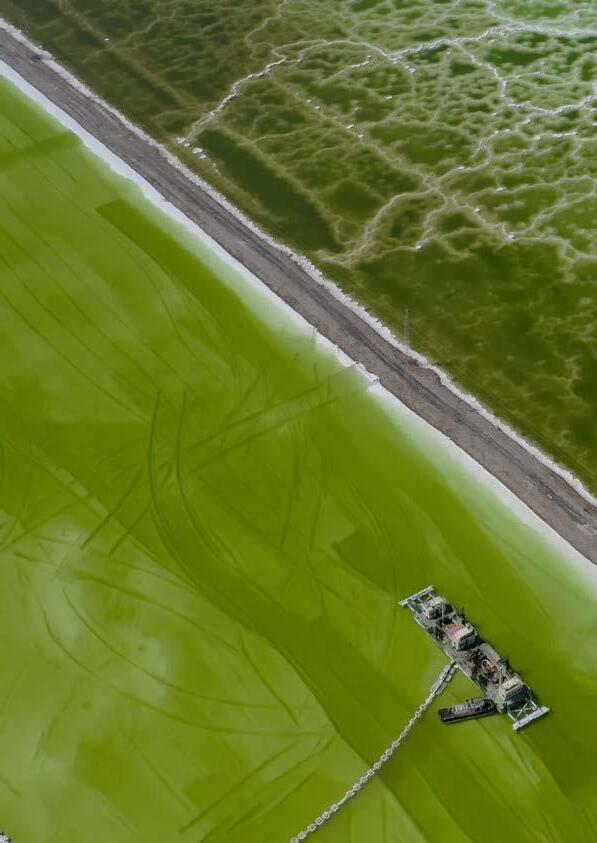
Agrippa! is a studio that explores the occupation of Melbourne’s CBD when subjected to a rise in sea level, questioning how the city might transform if its terrain were to alter completely, with roads becoming rivers, footpaths becoming shores. Students will design for themselves a houseboat, which they will then occupy for a 50 year career. Subsequently, you will engage with a series of sites along the Swanston St axis from Flinders St to Victoria St, ordered around and perceived through your houseboat, Agrippa! The studio output will be represented through a single 3.6m horizontal drawing of the whole Swanston St axis, furnished with your interventions, in the manner of Hokusai’s “Scenery on Both Banks of the Sumida River.” The studio reaches out to conceptual friends in Peter Eisenman, via Lateness, in Liam Young, via Planet City, and in Jane Bennett, via Vibrant Matter. There may or may not be a skerrick of Deleuze and Guattari in there too.
Agrippa! is... your beginning your end
Agrippa! is a studio about how we develop the discipline, the form, and the language of architecture when we’re faced with the unavoidable effects of climate change.
Agrippa! will be... the flood the raft
Agrippa! is a studio led by Bryn Murrell taught on Wednesdays at 6

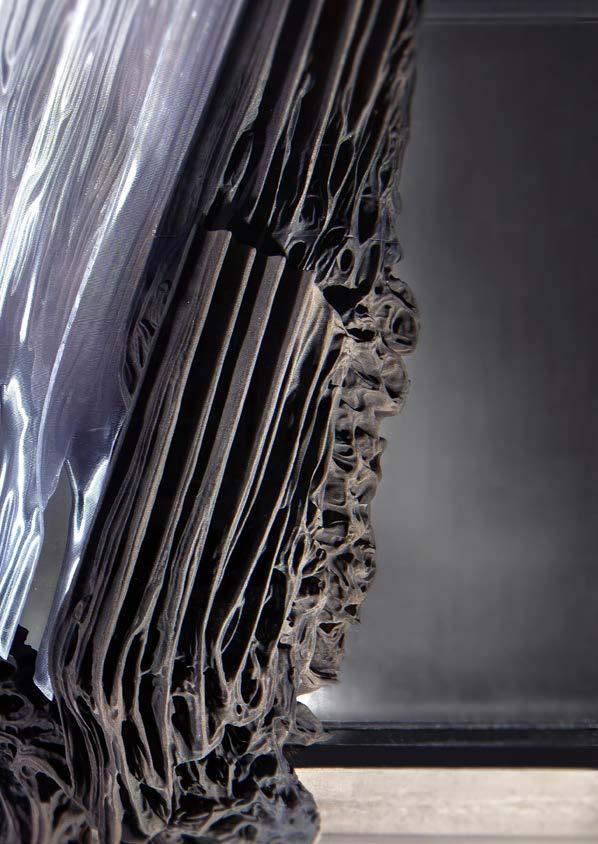
| MARC GIBSON | 6:00PM - 10:00PM | WEDNESDAY |
| Outline
Painterly Formation is a speculative design studio that explores architectural form at the intersection of gestural and algorithmic design processes. The studio asks how designer intuition, pressure, rhythm, emphasis, revision, can operate inside computational systems, not simply as a post-process, but as an active force that steers formation as it unfolds. Working between manual sculpting and rule-based procedures, students will test how hybrid aesthetics can emerge when authored intent and behavioural logics repeatedly negotiate control over the same geometric substrate.
Across the semester, students will develop a series of formation studies that treat algorithms as instruments rather than automated generators, using painting, masking, deformation, and multi-agent behaviours to localise forces and modulate growth, folding, smoothing, and subdivision. The aim is to move beyond the indexical look of any single tool or method, and instead cultivate emergent surface and spatial effects produced through iterative, hybrid workflows.
The studio investigates these implications across scales, from ornamental striation and fine-grain texture to larger spatial conditions and architectural organisations, testing how painterly control can operate simultaneously as detail, structure, and atmosphere. Outcomes will fuse procedural formation with directed intervention to manage the legibility of the geometry, navigating the threshold between recognizable technique and new, unresolved forms.
| Physical Model Making & Material Costs
Students will produce physical models using 3D printers &/or Laser Cutting. Please note that there will be material costs for 3D printing (PLA & Resin) & cardboard.
There are 3D print facilities at RMIT however there can be long lead times in busy times of the semester. Most students in previous semesters purchased their own 3D printer (Roughly $200-$250).
| Software
No prior experience in ZBrush or Coding required. Communications 3 or equivalent Grasshopper experience is required.
| Evaluation
Students will be assessed on their design, visual communication and comprehension of algorithmic process. Individual folios are to be submitted at the conclusion of this subject.
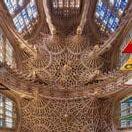
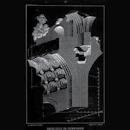

Procedural Materials
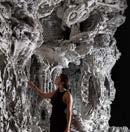
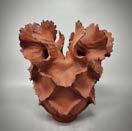

Studio Leader: Grace Leone with Simone Koch
Tuesday 1:00pm-5:00pm
Site Visits: Friday 20 March & Friday 29 May
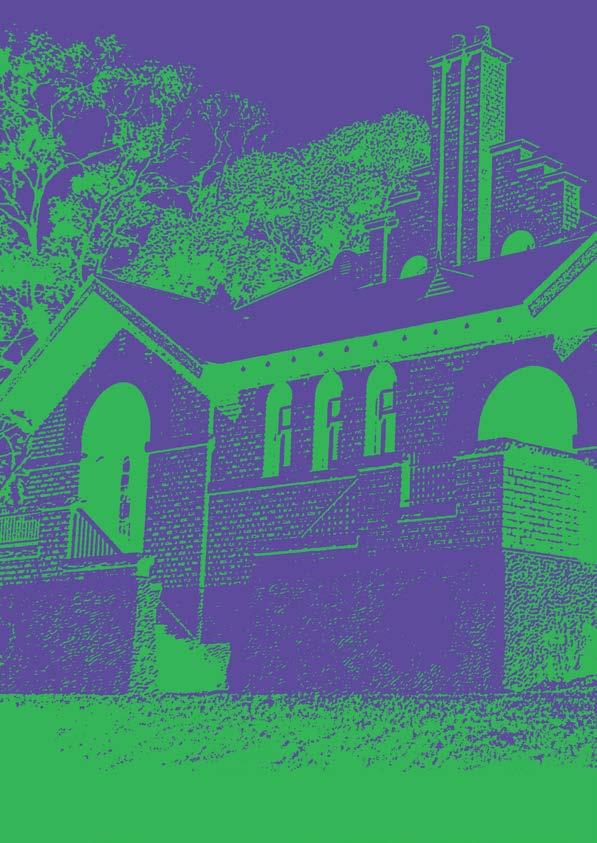
This studio takes the chronopolitics of transition as its critical focus: how does architecture practise in contexts where futures are undetermined, communities are transforming, and conventional expertise proves insufficient?
Situated at the Omeo Justice Precinct in East Gippsland, a heritage site existing between economic eras, post-extraction and pre-unknown, the studio operates in the generative space between endings and emergences. We treat architecture education as training for the not-yet: preparation for practising in contexts where conventional expertise proves insufficient and communities hold multiple possible identities in tension.
The studio’s intellectual inquiry draws on temporal architecture (Cedric Price’s enabling frameworks, Lacaton and Vassal’s loose-fit spatial generosity), participatory and community-led practice (Giancarlo De Carlo, muf architecture/ art), post-industrial transformation (Lina Bo Bardi, Assemble), and critical regionalism (Kenneth Frampton, Glenn Murcutt). Theoretical grounding in Jeanne van Heeswijk’s concept of the not-yet and practices of radicalising the local positions architecture as public practice emerging from community knowledge rather than imported expertise. Post-extractive practice further informs the studio’s ethical stance, questioning
relationships between expertise, place, and community agency.
Areas of focus include temporality, adaptive reuse typology, material culture, site specificity, and community agency. Design strategies introduce scenario planning for multiple possible futures, reversible and loose-fit interventions, and temporal diagramming.
The studio is driven by the following questions: Can architecture design for its own irrelevance? Can heritage preservation and economic transformation coexist without one colonising the other? What can this specific place, in this specific moment of transition, teach architecture about flexibility, temporality, and situated practice?
Site visit to Omeo, Victoria: Week 3, Friday 20 March.
Final presentation to East Gippsland Shire Council and community stakeholders at Omeo: Week 12, Friday 29 May.
Please note: Public transport from Bairnsdale to Omeo is limited, scheduled once daily only Monday to Friday.
Travel, accommodation and meal costs to be covered by the student.


Tutor: Claire Scorpo
Tuesday 9:00 - 1:00
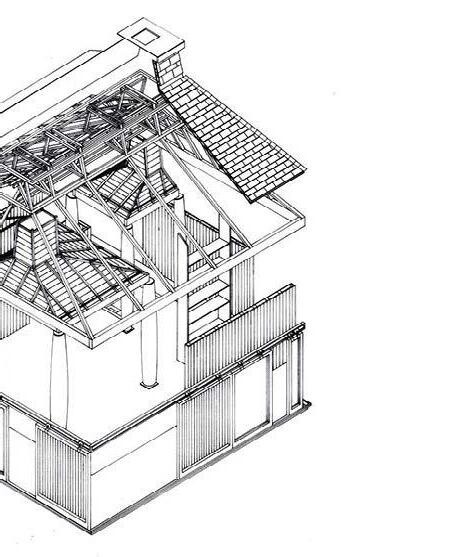
This third iteration of the studio is framed by a broader ethical and environmental concern with the ways housing both produces and normalises particular standards of comfort.
As suburban models continue to expand in size, consumption, and environmental detachment, comfort is no longer simply a question of amenity but of resource use, spatial expectation, and cultural conditioning. When the contemporary home operates in a state of continuous thermal and spatial luxury, the studio asks what disappears when discomfort, negotiation, and seasonal variation are designed out.
Underpinning the work is an ethical commitment to housing and to challenging development models that are environmentally unsustainable and socially flattening. Rather than accepting prevailing benchmarks as given, the studio positions comfort as historically produced and therefore open to redefinition. In this context, alternative housing futures will be explored, evolving toward medium density models that recalibrate relationships between climate, occupation, and built form.
Students will investigate comfort as a set of interconnected practices shaped by technology, architecture, behaviour, and expectation. Through the study of vernacular architecture and contemporary precedents that engage climate and occupation in more contingent ways, the studio will catalogue thermal rituals, material responses, thresholds, and patterns of inhabitation.
By shifting focus from optimising ‘comfort’ to interrogating how it is made, maintained, and spatialised, the studio positions housing as an active participant in environmental relations rather than a sealed refuge from them.
The studio will be based in Frankston within the Future Homes framework, with engagement across industry and site. Students will produce detailed linework drawings, plans and sections, as well as physical models and new housing policy guidelines.
Students will work in groups for all research, precedent analysis and policy development, and individually for design projects. There will be 2 x site visits to Frankston.
What becomes of a typology built on permanence, memory, and preservation when it meets the pressures of ecological, social, and political change?
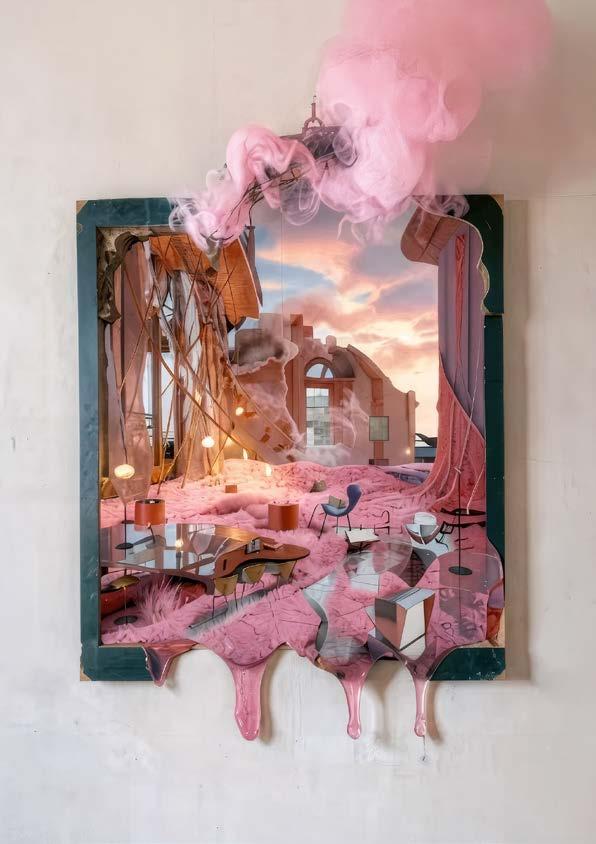
The studio is an invitation to perform and expose the typology in ways it no longer recognises. In doing so, we ask: who gets to decide,who is represented,and who is left behind?
Shin Lynn
The State Library of Victoria was founded as “People University,” a civic monument organised around preservation, order, and the authority of classification, promising endurance and continuity. Today, it is outpaced by a world moving faster than stone.
In an effort to remain relevant, the institution inserts “hubs” and “innovation zones” into its grand volumes. These gestures signal accessibility and responsiveness, yet often function as a mask stretched across an empty vault. Each transformation reveals that typology is never settled, only rehearsed differently through shifting publics, technologies, and structures of power. What appears permanent is constantly renegotiated.
This studio is a new series on typology and speculative future imaginaries of our built and cultural environments in collaboration with the State Library of Victoria.
Drawing from Superscale’s Great Reclamation, students will use worlding, gaming environments, immersive simulations, and narrative provocations to investigate the institution as a living climate: part political machine, part experimental platform, part anchor of cultural production. Perhaps,investigating typology is just another disguise; the experiment is itself a performance; romanticising hope, grief, and everything in between.

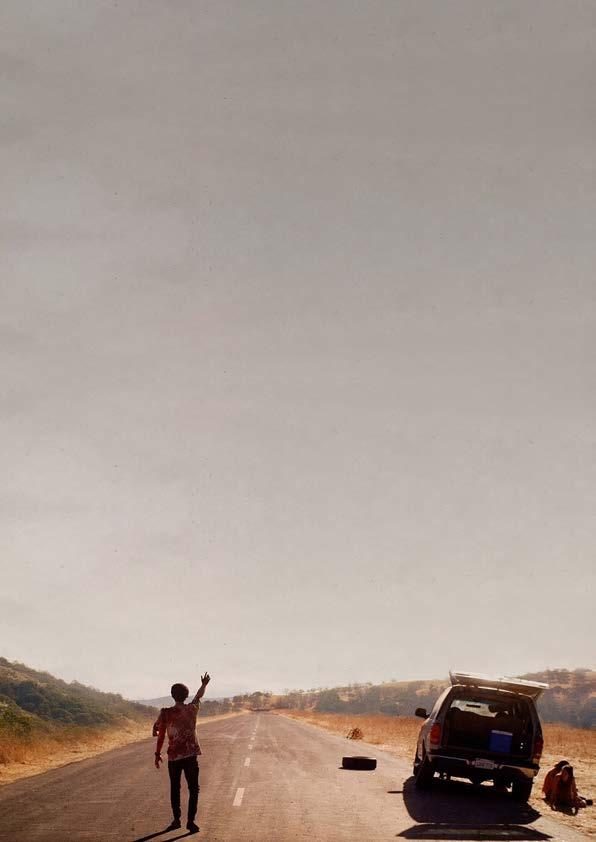
This studio is an intervention. It is about design survival. Hitching will test and reframe the value of architecture in a world that sees it as a luxury product. Architects are no longer the lead consultants, so we need to find covert ways of demonstrating value. The studio offers hitchhiking as a strategy, to ease open the passenger door, and reclaim agency. There are 3 timeframes to be considered; the ‘right now’ present, the ‘tens of thousands of years ago’ present, and the ‘no-one quite knows how many millions of years ago’ past. Students will look at techniques in other disciplines that enable them to synthesise, push and pull ideas through these time strata’s. These techniques will use software to mimic the following behaviours; gate crashing, skin grafting, weaving and darning, oozing or ruptures due to extreme force or miscalculation. To better understand these timeframes the studio will be engaging with an indigenous consultant and a geologist and undertaking numerous site visits of the city. To garner appropriate techniques the studio will be engaging with among others, medical professionals, and weavers from the Australian Tapestry workshop.
The attitude to bring is grit and unwarranted optimism. The way to find agency is to find the opportunity in despair.

MASTER’S DESIGN STUDIO LED BY EMMA JACKSON TUESDAYS 9.30am -1.30PM
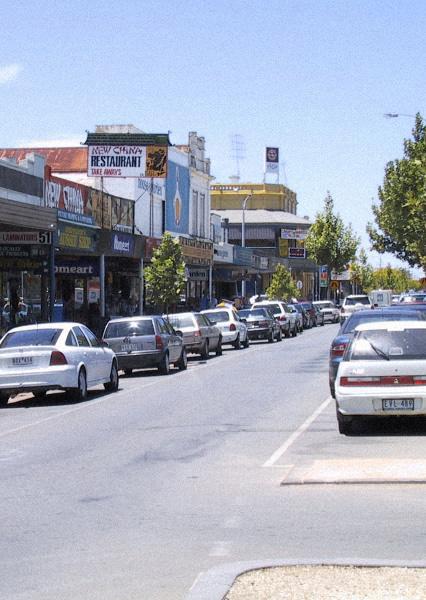
This studio proposes a city built to serve its vulnerable population. Shepparton is one of Australia’s most rapidly growing regional cities, with a rapidly growing at-risk community. hugs is interested in the scale of the city, the scalability of public services, and in turn the form and delivery of community services buildings.
We accept an economy of scale for the delivery of critical public services, but this doesn’t account for the financial and social costs of that occur when these services aren’t deemed feasible to provide. In this studio, we will argue for the delivery of these services in a small and scalable form as an architectural response to a social and financial problem. We will test the urban implications of this approach.
The studio will negotiate between data and narrative, beginning with investigation of the current policies, initiatives and thresholds that regulate the delivery of these services. Students will undertake a series of small weekly design projects to challenge these findings. These projects will act as seeds to form a masterplan for central Shepparton. Seed projects will include a women’s refuge, a youth housing facility, and a public transport station.
Students will use social, environmental and financial data in conjunction with the creation of artworks to test a framework for a development that is care based, scaleable and reflective of those it serves.
The deliverables of the studio will be a master plan and a community services building, with final project work undertaken individually.
This design studio repositions the “back of house” — the spaces of storage, logistics, fabrication, rehearsal, and service — as the primary site of cultural production and public life. Working with an existing warehouse in Abbotsford, students will develop a masterplan for a mini cultural precinct and a detailed architectural proposal for a self-sustaining creative industry hub with its own spatial, social, and economic logic.
Rather than understanding adaptive reuse as tenancy and fit-out, the studio explores architecture as a framework for alternative forms of making, exchange, and collective organisation. Students will investigate how shared infrastructures, intellectual property, platform models, and new forms of cultural value can generate a productive interior that operates as a heterotopia: a real place that functions by different rules while remaining embedded within the wider city.
Through mapping Abbotsford’s existing ecologies of production, river-edge conditions, and creative labour, the project asks: What spatial thresholds, governance models, and time-based occupations support an autonomous yet public cultural economy?
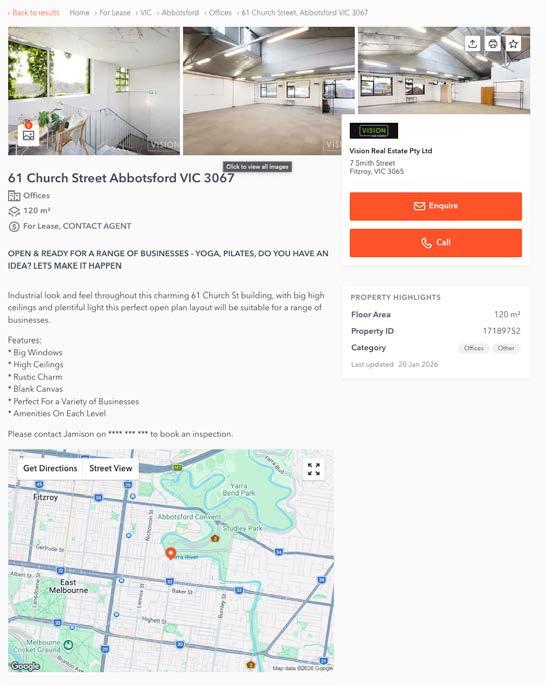

Aworkingculturalprecinctthatisspatiallyrealbutinstitutionally unrecognised—producedthroughnetworksofmaking,shared infrastructure,andalternativeeconomies
Site:Existingwarehouse,Abbotsford
Site visit: Week 2 -TBC
PhysicalModel:allow$50perstudentformodelmakingmaterialcosts GroupworkfromWeeks1-6,IndividualFinalProject Weeks6-14
MAS 2026 Sem 1 Lecturer Dr Peter Brew EXTRA housing
Wednesday Evening 5.30-8.30
We need to develop a new housing type that allows us to imagine new ways of being in the world. Architect BREW KOCH.
We assume that the property industry is broken . Reading the news it would seem that nobody is happy, First Home buyers, tenant’s, Architects Builders Unions, urban planners, the productivity commission. We want to introduce a new model of property. To create new models of housing and to reimagine the building industry..
If we consider this description by James Graaskamp “Unlike many mass-production industries, each real estate project is unique and the development process is so much a creature of the political process that society has a new opportunity with each major project to negotiate, debate, and reconsider the basic issues of an enterprise economy, i.e., who pays, who benefits, who risks, and who has standing to participate in the decision process. Thus the development process remains a high-silhouette topic for an articulate and politically sophisticated society.”
Currently Property, Labour relations job skills definition of trades, finance , Codes and standards, taxes levies and fees combine perfectly to pro-
duce lots of suburban villaswe know that this pattern is an disaster on so many levels but the system that produces them is highly efficient and very interesting.
Suburbia like Robo debt is not an accident ,it is design feature of the current settings, it is the expressed of the systems intentionality. We can see tht it is possible to replace the suburban with another product, though to do that one has to properly recognise the reasons why things don’t change. This was a problem that Thomas Kuhn identified in his study of Science, the structure of scientific revolutions.
It is possible to see the problem of the industry is not that it is broken but fixed. For reasons that we can discuss we have come to a narrow path of options for each project, According to the Productivity commission the industry is now producing Less housing that is more unaffordable. This has the effect of raising the value of existing housing, and by default land prices which further feeds the price spiral. It is possible to reimagine the relationships to bring about a very different outcome.
In post war France the Citroen is an example of an product that changed how cars were perceived, how they were produced and subsequently what they were used for, in our time the I phone did something similar.

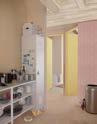
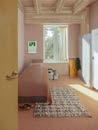
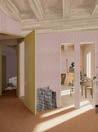
SEM 01 2026 | TUESDAY 6-10PM
RMIT Master of Architecture & Master of Urban Design Studio
STUDIO TUTOR: JIMI CHAKMA
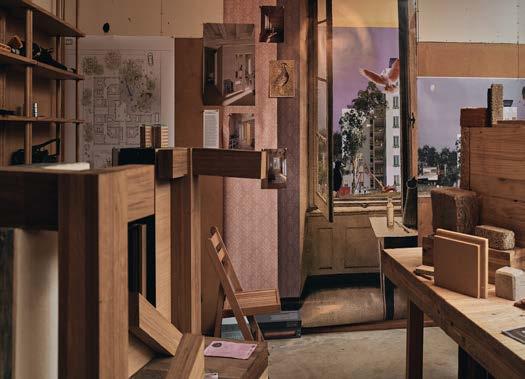
While cities are often shaped by top-down policies, rigid zoning laws, and large-scale master plans that predetermine urban form without specificity. This studio wants to challenge that approach by exploring how micro-scale urban elements can become catalysts for new forms of block or precinct development.
This studio will begin with rigorous observation, documentation and design of micro elements (small urban objects, thresholds, edges, utilities, informal structures, and social micro-spaces) of existing urban conditions, with the question ‘what forms a city in real? -drawing and naming their spatial relationships with a bigger context.
We will speculate,What if these micro elements became the design seeds for larger urban formations-from very detailed scale to a precinct scale? How can these micro elements govern and assemble other functions, live, visit and work?.
This studio will explore how smallness, tightness and fine-grained conditions can break the bigness of the city to a more human-scale experience.
The studio ultimately seeks to develop an alternative model of block/precinct development grounded in micro to macro thinking.
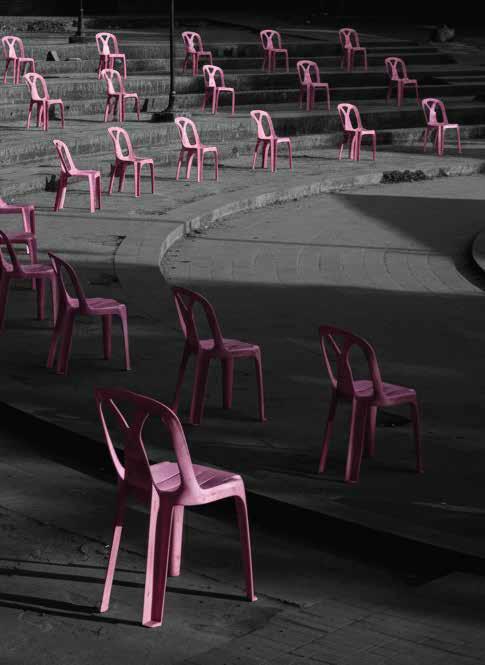

Images in the mind motivate the will.
- Walter Benjamin
tues 6-10pm
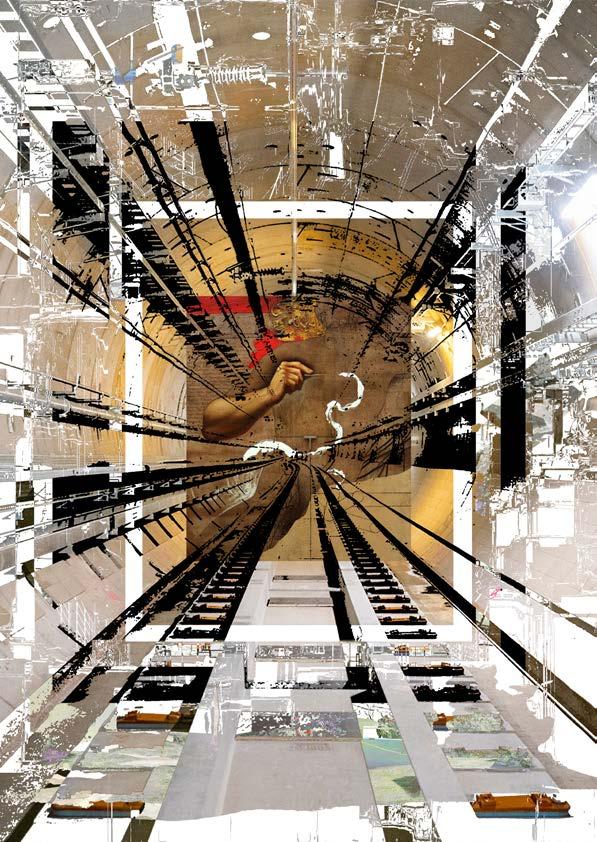
This studio will resurrect the historic rail line that once ran along the Outer Circle, and will masterplan and design the stops in between.
Rather than treating their stations as technocratic instruments of economic growth, students will ask what other kinds of spaces, institutions, objects, or artefacts might be over or adjacent to their stations. Using existing OSD (Over Station Development) and ASD (Adjacent Station Development) models as a guide, students will explore the architecture of transportation through fortnightly projects that value qualities beyond economics:
Working at times in pairs, and at times alone, students will develop potential stations across five projects that place the station in contention with existing communities and infrastructures. The rail line is not positioned as an unquestionable good, but as a locus around which aggravation, desire, contention and contempt can circulate. In the end, each student will curate their station projects and the group masterplan into a final vision for the suburb, eschewing conventional planning documents in favour of a set of illuminated afterimages that describe
M Arch Studio
Wed 6-10pm
Dr Paul van Herk
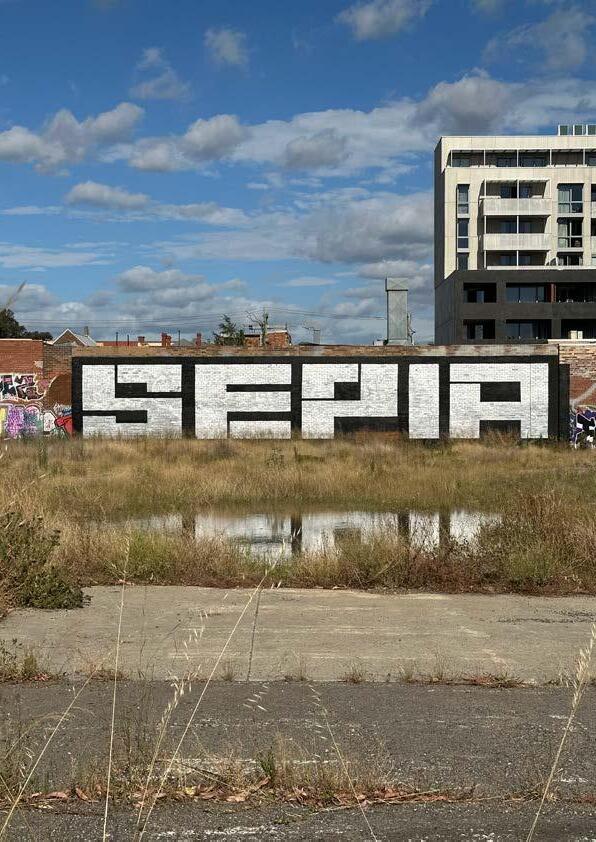
This Masters of Architecture studio will centre on the design of a large rail trackside site in Brunswick. The client is is a government housing developer that operates in parallel to the private market.
The brief is nominally for the provision of multi-residential housing. However, the studio will demand speculation on more fundamental assumptions about housing: as a place away from work, as a site of competitive leisure, as an asset and wealth creation tool. At the core of this speculation will be experimental visions of what the ‘welfare’ in ‘welfare state’ really means. What is the good life? Who gets to take part in it? What’s the cost of entry?
There are plenty of historical examples of people deciding to live together in ways derived from consensus rather than state administration. One of the main failures of public housing in the 20th century was the insistence on top-down administration and procurement - that is, a government client had things designed and built for ‘users’ who the architecture then happened to. At the same time there were many experiments in collective living - often utopian, short-lived and prone to charismatic corruption.
The first half of semester will be devoted to understanding, debating and testing possible urban strategies for the Brunswick site and it’s surrounds. There are numerous built case studies nearby that students will study and draw to gain a solid foundation.
In the second half of semester, students will produce increasingly speculative visions for the site, making explicit, adventurous, stylish and heterotopic claims for an alternative welfare state through architecture.

MASTERS OF ARCHITECTUR STUDIO
ROLAND SNOOKS + ALAN KIM
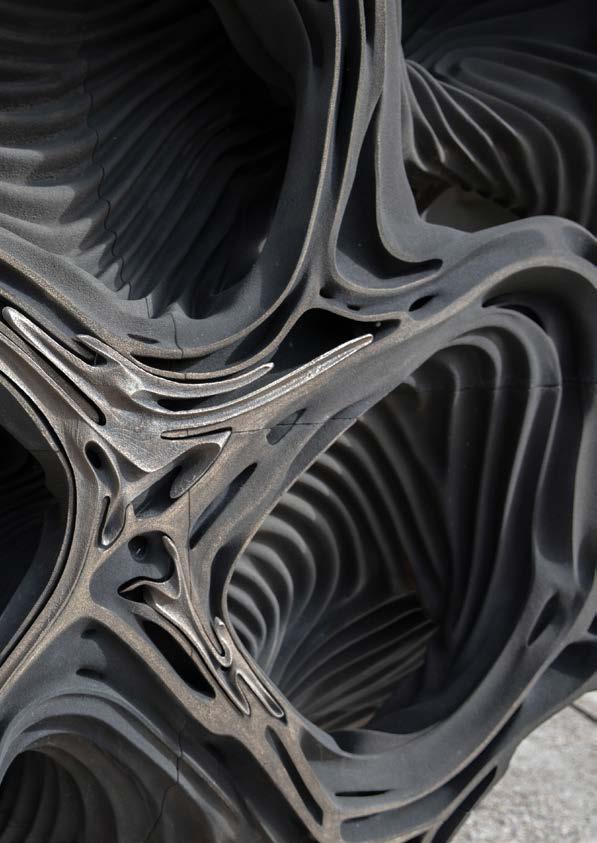
Diffusion Tectonics marks the fifth iteration of an ongoing exploration into the evolving relationship between AI and architectural design. While previous studios focused on computational articulation and formal experimentation of AI, this iteration expands the scope—examining both novel spatial formations that transcend traditional design languages and architecture as a procedural and adaptive system shaped by material behaviour, contexts and generative intelligence AI is positioned as a speculative medium for exploring the emergence of architecture through dynamic relationships between computation, material properties, spatial logic, and form.
This studio challenges architecture’s dependency on predefined typologies, instead examining how AI-driven methodologies generate adaptable configurations beyond fixed spatial programs. Materiality is not an afterthought to form but an active driver—influencing spatial structure, articulation, and inhabitation. AI will mediate between generative workflows and material adaptation, fostering a new architectural logic.
By leveraging AI to simulate emergent behaviours, students will move beyond static representations, developing speculative workflows that integrate material intelligence, tectonic adaptation, and computational synthesis. The studio explores how design is informed by both digital and physical constraints, producing architectural systems that respond to forces beyond visual articulation.
AI, Materials, and the Procedural:
Students will investigate how material intelligence translates into architectural form, focusing on process-driven emergence rather than imposed formal outcomes. AI will be explored as a speculative tool for synthesising digital and material realities.
Complex Architectural Typologies:
Students will critically examine typologies beyond singular use, exploring adaptive and multifunctional spaces that respond to material and spatial hybridisation rather than rigid programs.
Partial Architecture (Chunk Development):
Working in groups, students will conceptualise an architectural chunk, integrating emergent spatial qualities, site conditions, and tectonic relationships.
Site Generation:
Rather than empirical analysis, students will generate imaginary sites through descriptive AI methodologies, proposing that site conditions emerge from conceptual narratives rather than predefined environmental factors.
Rhino 8, SubD and Grasshopper will be used. No prior experience in coding, Z Brush, Mid Journey, ComfyUI, Stable Diffusion, LoRA, ControlNet, Runchat, Img-to-3D tools Txt-to3D or Houdini is necessary. However, a willingness to engage and learn in a group environment and to experiment with diverse ideas is essential.
This studio requires substantial computing power, requiring the use of minimum Nvidia Graphics Card of vram 12gb on Windows. If using lower-spec hardware or a Mac PC, opting for online cloud services will be needed with some costs.
WEDNESDAY 6PM - 10PM LEVEL 10 LONG ROOM
This studio is part of a network of studios and electives aligned with the RMIT Architecture | Tectonic Formation Lab Collaborative engagements, including combined reviews and symposia, will allow students to position their research within a broader disciplinary discourse.
Group framework from week 7/8 (TBC)
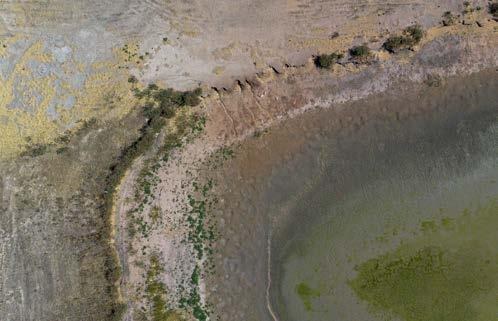
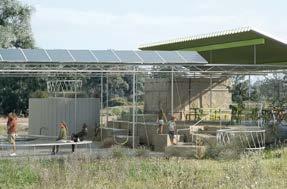
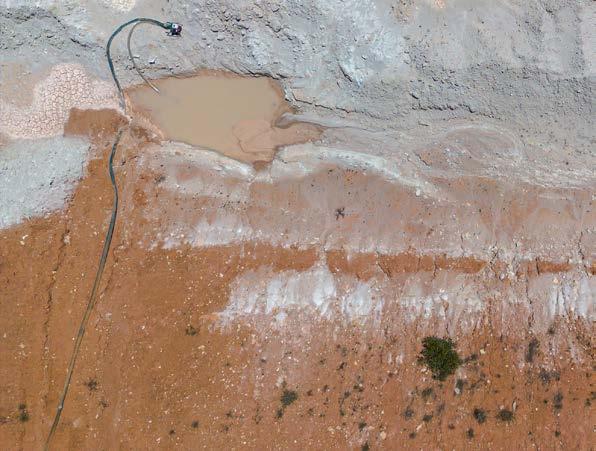
In an age of changing climate and ecological transition, architecture must resist the prevailing impulse to dominate or control ecological dynamics, and instead recognise interdependencies, and act as a mediator with the aim to give form to beneficial relationships of coexistence.
Materials are the primary medium of inquiry in this studio. Each project must be anchored in a bioregional material palette, with a clear position on extraction, toxicity, repair, reuse, and embodied emissions. Students will test non-standard materials, bio-based assemblies, reversible detailing, and passive thermal strategies, shading, ventilation, thermal mass, evaporative and radiant effects, to achieve comfort without defaulting to emissions-intensive systems.
The architectural project will be developed across two sites at two scales. First: a basic rural shelter, somewhere between a tent and a house, where the project is forced into direct negotiation with a landscape, wind, water, fire, ground conditions, habitat, seasonal variation, and maintenance capacity. The shelter becomes a test of restraint: what can be left exposed, allowed to weather, repaired, or replaced; what must be protected; what relationships does it create or disrupt. Second: a medium-density infill housing proposal in Parkville, where the problem shifts from ‘survival in landscape’ to ‘negotiating coexistence’. Here, yielding is not retreat or softness; it is precision. The question is what an inner-urban project can give up, space, materiality, certainty, enclosure, in order to host other forms of life and to reduce harm. How might a building yield to existing trees and root zones, to water inundation and to shared microclimates, to daylight and to changing occupancy, or to future disassembly?
Across both sites, students will treat impermanence as an active design instrument rather than a defect. Projects must demonstrate a clear ethic of stewardship through assembly logic, detailing, and material choice: designing for maintenance, replacement, adaptation, and eventual unmaking (disassembly), while still producing an architecture that is specific, legible, and inhabitable.
There will be work conducted in groups and individually across the semester, with ‘final projects’ completed individually for assessment. There will be a 1-day walking fieldtrip to a Parks Victoria managed National Heritage Park located 1.5hrs north of Melbourne (date tbc).
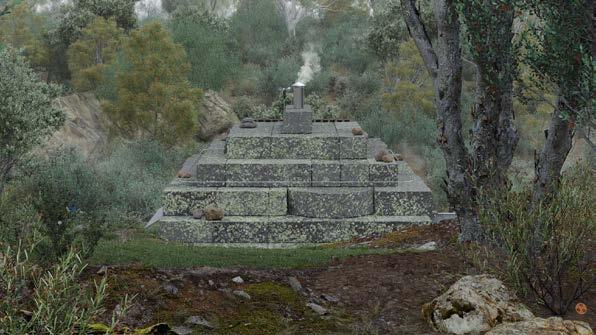
Anna Jankovic
9:00am - 1:00pm,

The Museum of Weather is about how architecture can be both of and about the contemporary situation we all share. Its subject is impossible to summarise or contain – weather belongs both to the lightning flash of a passing storm and to the deep time of the carbon cycle. It is how architecture selects its effects, how it brings its records to the museum’s occupants that concerns this studio.
A successful project in this studio will combine research and techniques drawn from studio themes to produce a conceptually complex and insightful project; a useful articulation of our time and its chief predicament. This will require different modes of representation, drawing heat, fog or rain into the work.
How is weather seen? How is it evidenced – within and across cultures, in collective and individual memory, in its gradual and instantaneous effects? We are interested in how a building can draw our attention to the observations and discoveries made through your investigation of these questions. We are excited to see what your building draws our attention to, how it does so and what architecture those actions create.
The structure of the studio is simple: In its first 6 weeks there will be a series of short preliminary design projects to lead your exploration of the topic and its representation. In the second half of the semester the focus will be the design of the Museum as the studio’s concluding project.
The Museum of Weather is about how architecture can be both of and about the contemporary situation we all share. Its subject is impossible to summarise or contain – weather belongs both to the lightning flash of a passing storm and to the deep time of the carbon cycle. It is how architecture brings its effects and records to the museum’s occupants that concerns this studio.
How is weather seen? How is it evidenced – within and across cultures, in collective and individual memory, in its gradual and instantaneous effects? We are interested in how a building can draw our attention to the observations and discoveries made through your investigation of these questions. We are excited to see what your building draws our attention to, how it does so and what architecture those actions create.
By examining weather as the basis of an architectural project, the studio asks how ideas can be communicated through the actions of things on their environment and through the actions of the environment on things. It also considers how we, as architects, understand the sensing subject as the medium through which, and for whom, these ideas are conveyed: ideas expressed through texture and heat, through what is heard and what is seen, and through what unfolds through movement and over time.
Working through examples - projects from architecture, art, literature and cinema - different modes of design will be explored alongside research into weather and climate. A successful project in this studio will combine research and techniques drawn from studio themes to produce a conceptually complex and insightful project; a useful articulation of our time and its chief predicament.
This project will be for a museum of medium scale – about the size of Tarrawarra Museum of Art. As introduced, it will be a conventional museum brief, thought this will be challenged in the consideration of what a museum of weather holds and what its spaces can be as a consequence.
The museum brief is conventional and will be introduced through the first half of the semester. The brief will not change, though students will be encouraged to work creatively with what the museum spaces can be when exhibiting weather and climate.
In its first 6 weeks there will be 3 cycles of 2-week long design projects. Each preliminary project will examine pairs of spaces from the museum brief. In the second half of the semester the complete brief will be used in the design of the concluding project.
Each student will select the site for their project, either from the site provided in the preliminary projects, or another proposed in Victoria. You will need to be able to be visit the site for a duration necessary to compile detailed research.
The site for your concluding project will be selected either from the site specified in the preliminary projects, or another proposed in Victoria. You will need to be able to be visit the site for a duration necessary to compile detailed research.
At is core this is an inquiry how ‘atmosphere’—defined in terms of space, containment, character, and situation—might operate as a synthesising force between the conceptual and the sensed.
Studio Leaders: Dr Simon Whibley, James Staughton, Jamie Kelson
Time: 6.00pm -10.00pm Wednesdays*
Studio Leaders: Simon Whibley, Eilidh Ross, James Staughton and guests
Location: Workshop Architecture Office
Time: 6:00pm - 10:00pm Wednesdays
* Week 2 studio will run on Tuesday 10th March
Workshop Architecture office, L2 491-495 King Street
AGENDA
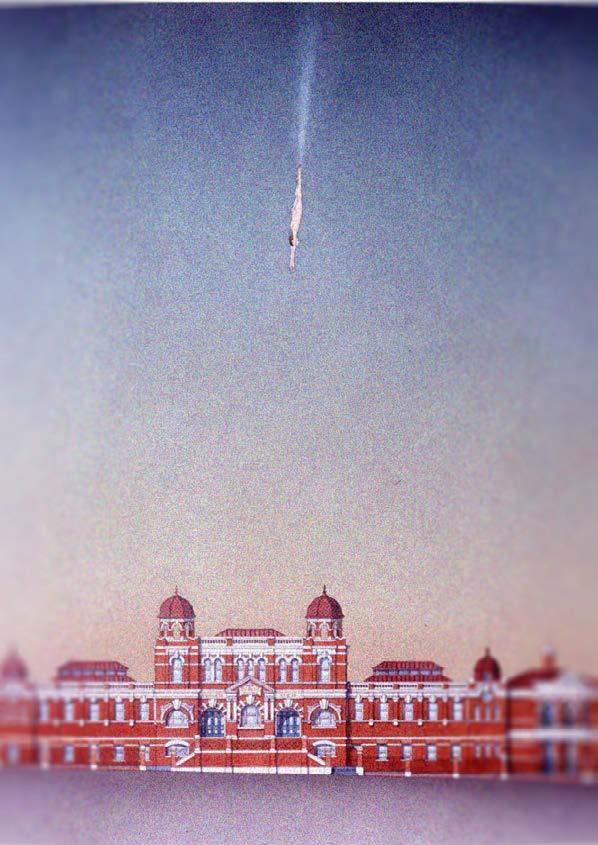
This studio investigates how architecture can affect social, cultural, and political change using the design of a Community Centre as a vehicle to form positions on a mode of practice where acts of making are informed by an understanding of what they unmake.
THEMES
Place, Culture, Identity
STUDIO LEADER
Steven Chu, Architect Founder & Creative Director Artefact Architects
MODES
Literary Design Methodology
Plato’s Theory of Forms
Physical Model Making
Socratic Method of Discourse
Drawing
Reading
Writing
Individual & Groupwork
PROJECT BRIEF Community Centre
PROJECT SITE Melbourne City Baths
TIME & PLACE
Tuesday Evenings 6PM - 10PM RMIT Design Hub
RMIT Master of Architecture Design Studio (Intensive)
Studio Leader: Prof. Dr. Alisa Andrasek
Teaching Period: Weeks 1–7 (14 sessions; 2 sessions/week)
Time/Location: Tuesday & Friday, 9:00am–1:00pm
Weeks 1–5 + Week 7: 100.02.007 | Week 6: 100.10.003 (Pav 1)
Student Mode: Team-based research and development with individual workflow sequences
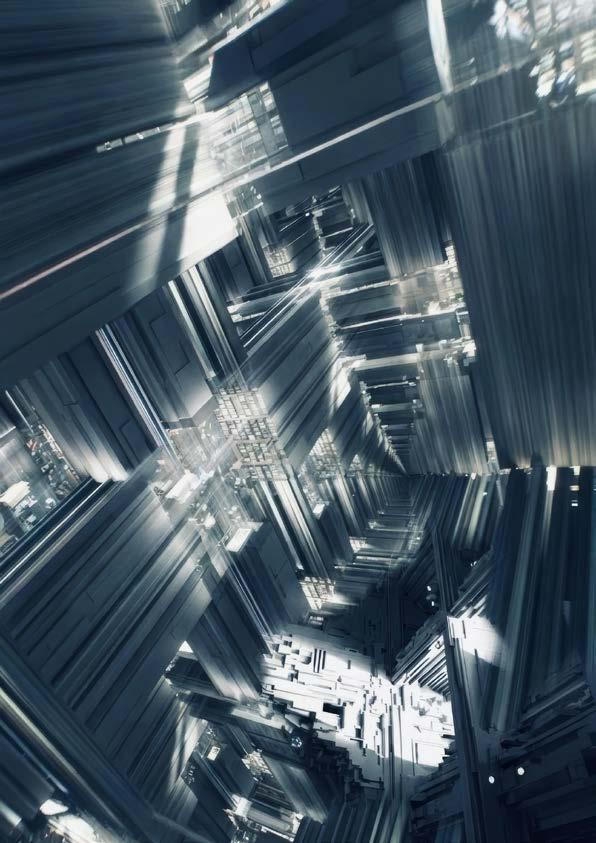
This studio engages architecture as a form of hybrid cognition, where human designers collaborate directly with AI agents to construct generative tectonic systems. Through agent-assisted modelling and conversational (“vibe-coded”) workflows, students operate at the level of behavioural logic—designing the rules and interactions from which architectural intelligence emerges.
Working on a strategic development site within the RMIT City Campus—one of the university’s designated grounds for its next generation Learning–Teaching–Research Hub—students deploy their generative tectonic systems at full architectural scale, transforming an active institutional frontier into a live testbed for cognitive architecture. This studio prepares students to operate at the forefront of architectural practice, where architects design not only buildings, but the processes and intelligences that produce them— positioning architecture as an evolving interface between human and machine cognition.

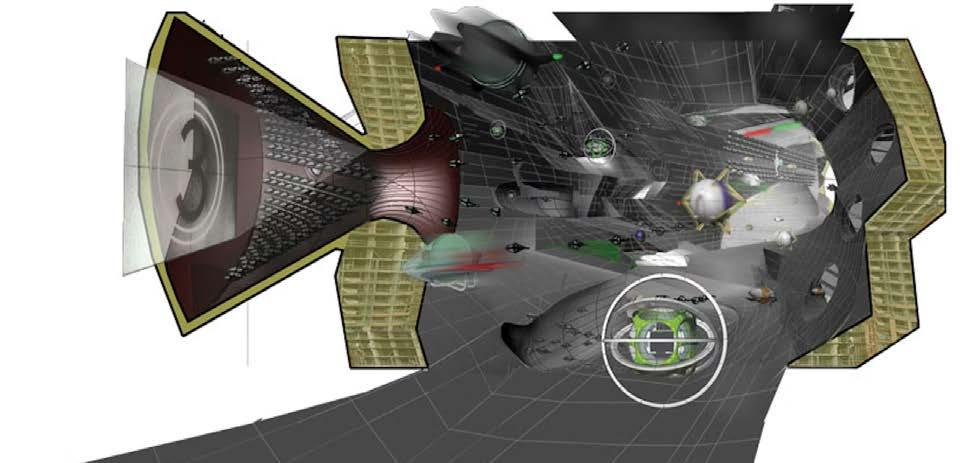
Sky City – Living in the Flying Community will build on prior investigations of t?f into the systemic and top-down formulations of the ying city. This studio shifts scale and perspective - from remote analysis to spatial immersion.
How is a truly three-dimensional city navigated, negotiated, and inhabited? What hierarchies, priorities, and con icts emerge within volumetric circulation? Which spaces stabilise a city de ned by constant motion? Must such an environment operate through rigid orbital schedules (planets), or can it accommodate distributed, individualised agency (anarchy)?
Across the semester, students will analyse, model, and visualise the functioning of a three-dimensional neighbourhood embedded within aerial infrastructures. Projects will combine physical and digital modelling with computational simulation, exploring ows, densities, environmental externalities, and behavioural patterns. Techniques will include algorithmic scenario testing, dynamic systems modelling, and gami ed simulations to examine urban performance over time. The studio positions design as research, producing speculative yet evidence-informed propositions that contribute to an evolving body of work culminating in the forthcoming publication AirCity.
Sky City expands this inquiry by examining the intersection of architecture, urbanism, and ying technologies within an emergent three-dimensional spatial order. As ground-based cities confront climate instability, density saturation, and logistical strain, the studio reconceptualises the atmosphere as a designed domain—simultaneously infrastructure, medium of habitation, and site of collective organisation. Flying cars, drone logistics, and algorithmically governed mobility systems are framed not as technological curiosities but as forces that restructure circulation, access, and spatial hierarchy.
Positioned within a lineage of radical urban speculation—from Krutikov’s Flying City and Sant’Elia’s Città Nuova to Archigram’s Walking City and MVRDV’s Skycar City—the studio treats speculation as a methodological tool. The sky is approached as a programmable layer and operational interface. Buildings shift from static objects toward volumetric systems that mediate ows of movement, resources, data, and energy. Roofs, façades, and sections become active zones of exchange, docking, bu ering, and occupation.
The studio engages aerial technologies as urban infrastructures capable of reorganising spatial relationships and patterns of collective life. Drone corridors, air-taxi networks, and algorithmically managed ight paths introduce a civic layer that is largely invisible yet architecturally decisive. Students will explore emergent typologies, including elevated public realms, vertical logistics hubs, suspended neighbourhoods, and hybrid megastructures integrating habitation with mobility. Projects will interrogate how these systems produce new proximities, behaviours, and social formations, challenging inherited assumptions of ground, street, boundary, and centre.
Projects will be developed collaboratively in teams, with students assuming de ned roles across design, analysis, modelling, and representation. Outcomes will synthesise data-driven investigation, contextual and behavioural mapping, critical visual narratives, and immersive simulations.
The studio extends an ongoing collaboration between RMIT Architecture and The Why Factory at TU Delft. Founded by Winy Maas, The Why Factory operates as a research studio and think tank dedicated to the future of cities through design-led speculation, modelling, and narrative visualisation.
Weeks 1,4,7,12 - Wednesdays 6.00 - 10.00 | Weeks 8 and 9 - Intensive Workshop | Week 14 - Final Presentation


Wednesdays 6pm > 10pm
Note: two classes in week 6, no classes in week 7
There is ample evidence that the waste material of fossil fuel energy production is far more damaging, per unit of energy, to human health than nuclear power production. And the evidence shows this is the case from a pollution perspective and a global warming perspective alike.
It is inevitable that renewable energy sources will replace fossil fuel energy sources evnetually -but there is serious doubt whether thye transition can happen quickly enough -- and the effects of global warming on human populations and the environment we inhabit are alreaedy well advanced.
Nuclear energy is a viable short term alternative in places where nuclear plants already exist. The United States alone has 90,000 metric tons of nuclear waste and is increasing by 2000 metric tons per year.
A geologic solution for storing the waste has been developed, but it cannot be enacted until signage warning of the dangers of disturbing the repository can be developed.
And at this point the solution has been stalled by this problem, known as ‘Nuclear Semitiocs”: how can symbols be made legible to communities many thousands of years in the future when all current known languages and symbols will have become obsolete. And it is this problem that is the primary focus of this studio.
The studio will design a facility that can accommodate this waste within Australia, and speculate how
Jan van Schaik
Your tutor is an architect, artist, and strategist based in Melbourne.
He runs MvS Architects, teaches and researches at RMIT Architecture & Urban Design, and is design director at the creative-sector consultancy Future Tense.
Jan is the founder of the performance series +Concepts and the creator of
the language of architecture could be used to communicate danger to future generations fluent in yet unknown languages.
The studio will employ Generative Large Language Models and physical model making as design tools. The Artificial Intelligence tools will be employed to create images, from which the students will then be required to make physical models, and vice versa.
Each student will be required to engage with geological, cultural, environmental issues and propose their own site for the storage facility.
The physical models will be cumulative – which means that all the material used in each week’s model will need to be re-used, and added to, in the following week’s model.
The models will be the studio’s presentation tool. All text, images, plans and sections required to present each scheme will be built into the models. Students will present their work each week via this model.
Folios will document the process of making the models, their development, and all the images and set-out files generated in creating the models – and will include a full set of drawings of a resolved nuclear waste repository and its associated architectural language.
Allow a budget of $300 for model making materials.
two series of artworks: Lost Tablets and The Red Box.
He is a practiced designer and supervisor, with over a decade of experience empowering bachelor’s, master’s, and PhD candidates by teaching the methods of critical thinking through the process of design.
More information at janvanschaik.com

Vicky Lam is an Associate Lecturer at RMIT Architetcure. She coordinates Selections and teaches Design in the Bachelors and Masters Programs.
Design Studio: Back of House e: vicky.lam@rmit.edu.au
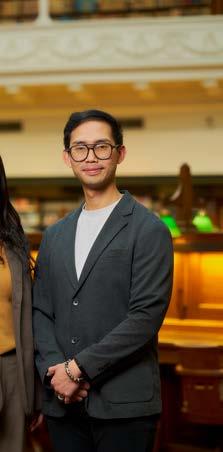
Dr Patrick Macasaet is Lecturer and Research Leader at RMIT A&UD Immersive Futures Lab.

Tom Muratore is an Associate Lecturer in the School of Architecture & Urban Design.
e: thomas.muratore@rmit. edu.au
w: superscale.com.au ig: @superscale ig: @immersivefutures e: patrick.macasaet@rmit. edu.au

Professor Alisa Andrasek is a Professor of Architecture at RMIT School of Architecture & Urban Design.
Design Studio: AI Accelerated Architect: Agentic Architecture — Cognitive Tectonics w: alisaandrasek.com

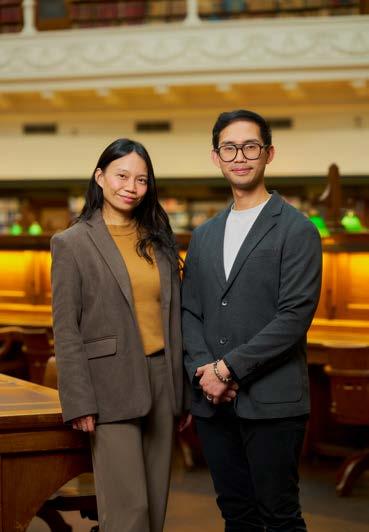
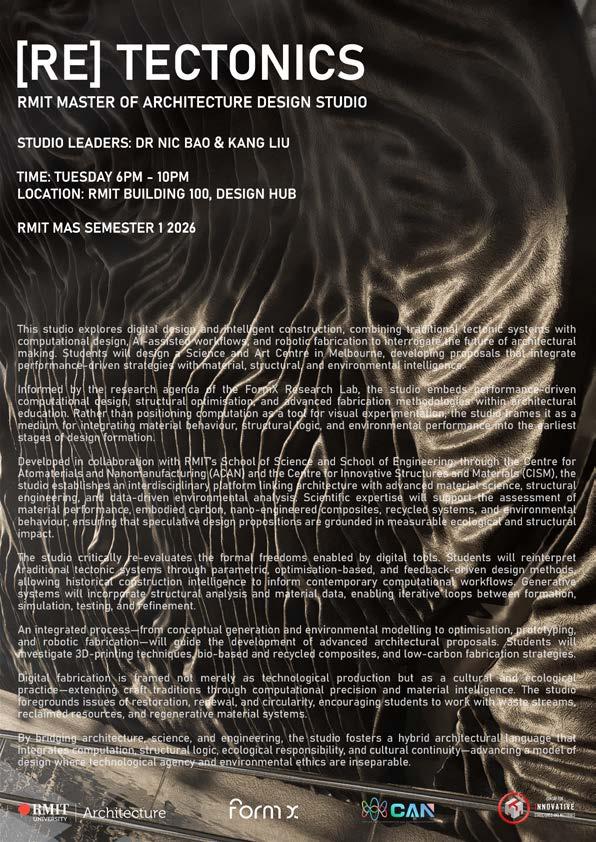
Nic Bao is a Registered Architect and Senior Lecturer in Architecture at the School of Architecture and Urban Design, RMIT University.
Audrey Avianto is an RMIT Architecture Alumna and Urban Designer at City Design, City of Melbourne. She works across large-scale strategic work and smallerscale public projects.
Design Studio: Extremely Small and Very Loud (or, University Challenge)
Design Studio: [Re] Tectonics e: nic.bao@rmit.edu.au

Meagan Brooks (she/her) is an Architect, working at Wood Marsh. Through her architectural work and teaching, Meg aims to cultivate a practice that embraces and challenges the dynamic nature of the discipline she is working within.
Design Studio: Re-Werk

Steven Chu is an architect and educator who emerged from an upbringing within a brutal military dictatorship. He now holds the positions of Principal Architect and Director at Programmed, where he leads the design and delivery of projects instrumental to strengthening local communities for government clients across Victoria.
Design Studio: Artefacts of Rigour

Peter Brew is a Lecturer at RMIT Architecture in the School of Architecture & Urban Design, RMIT University, and a Director of Architect Brew Koch.
Design Studio: Xtra Housing e: peter.brew@rmit.edu.au
Jimi Chakma is an urban designer, academic tutor and overseas architect from Bangladesh. Currently, he is a PhD student at RMIT University.
Design Studio: Alt-Block: Micro to Macro ig: @folio_jimi.chakma

Emma Donovan is an architect and Associate at Antarctica Architects working on a range of public and private projects, with a particular interest in social and crisis housing.
Design Studio: hugs

Yuchen Gao is a Master of Architecture graduate and a design researcher at Superscale Architecture. Her interests examine architecture as an outcome of conflicts, constraints, and systemic pressures shaped by legal, cultural, and spatial forces.
Design Studio: Re-Werk

Marc Gibson is a Lecturer at the School of Architecture and Urban Design, RMIT University where he is undertaking his PhD in Architecture.

Lyn Gonsalves is newly graduated from Masters of Architecture and is working as a researcher with SuperScale. Her creative direction investigates the material agency of site and explores how architecture can activate socio-political systems.
Design Studio: Ether & Current

Design Studio: Painterly Formation

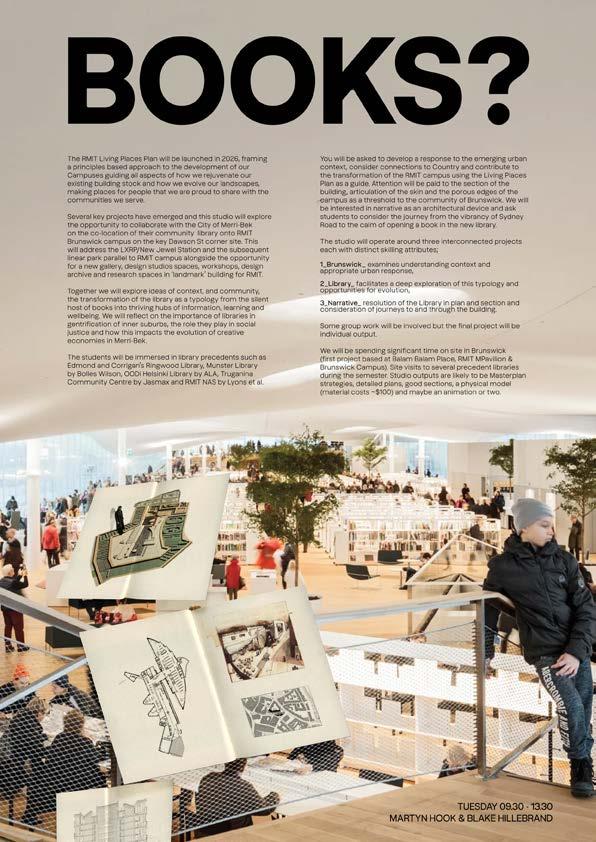
Blake Hillebrand is a graduate of RMIT University. He is based at Kerstin Thompson Architects, contributing to housing, education, and public projects.
Design Studio: Books?
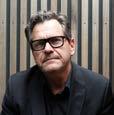
Dr Paul van Herk is an architect and urbanist with international experience in public architecture, master planning, public art, research and urban strategy. He has taught design and history at RMIT since 2015.
Design Studio: Welfare State of Mind
Distinguished Professor
Martyn Hook is Pro ViceChancellor Campus Design and University Architect at RMIT University, providing academic voice and professional insight to the evolution of RMIT’s 2050 Living Places Plan.
Design Studio: Books?

Anna Jankovic is an architect, director of Simulaa. An Associate Lecturer at RMIT Architecture, Anna teaches Design Studio, History and Professional Practice, and supervises Major Projects, alongside her research on adaptive and resilient architecture that explores cultural, historical, and timebased design.
Design Studio: ‘it yields and will not last’ e: anna.jankovic@rmit.edu.au

Dr Emma Jackson has taught at RMIT Architecture for over 2 decades both sessionally and as a full time academic. In that time, she undertook roles as the Program Manager for the Master of Urban Design and the Bachelor of Architectural Design.
Design Studio: Hitching: Finding Love in a Hopeless Place

Mark Jacques is an Urban Designer and Landscape Architect with more than thirty years’ experience across a wide scope of public projects.
Design Studio: Extremely Small and Very Loud (or, University Challenge)

Grace Leone is a designer, artist, curator, educator, and researcher, currently a PhD candidate in RMIT Architecture.
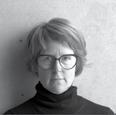
Simone Koch found architect brew koch with Dr Peter Brew in 2022. Their quest is to understand the idea, the architecture that exists already in a place. This architecture is then embedded in their work. Their idea is to discover what is, in many ways, immanent.
Design Studio: Architectures of NotYet:Training for Transition
Design Studio: Architectures of Not-Yet: Training for Transition
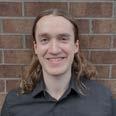
Alex Moorrees is a graduate of the RMIT Master of Architecture program with an interest in computational urbanism and architecture, digital tools and systems and how these impact the ways in which we design and understand out built environment.
Design Studio: Why Factory

Kang Liu is a PhD Candidate in Architecture at RMIT University and a Research Assistant at the FormX Research Lab. He holds a Master of Architecture from RMIT University and has worked at BWA Architects and Archi-Union Architects.
Design Studio: [Re] Tectonics
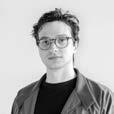
Bryn Murrell is an architect working in practice, where he works on projects of every scale. He is also a part of HABIT & ENQ., interdisciplinary collectives that have provided works for the City of Melbourne and the University of Melbourne.
Design Studio: Agrippa!

Ian Nazareth is an architect, researcher and educator. Ian is an academic at the School of Architecture and Urban Design at RMIT and the director of TRAFFIC - a design and research practice working across architecture, urbanism and computation.
Design Studio: Why Factory w: trafficcollective.com ig: @trafficcollective e: ian.nazareth@rmit.edu.au

Sumy Shin is a Master of Architecture graduate and a design researcher at Superscale Architecture. Her interests examine architecture as an outcome of conflicts, constraints, and systemic pressures shaped by legal, cultural, and spatial forces.
Design Studio: Ether & Current
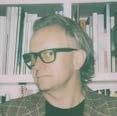
Dr Jan van Schaik is an artist and architect based in Melbourne. He is the director of MvS Architects, a researcher and PhD supervisor at RMIT Architecture & Urban Design, the founder and convener of the +Concepts creative practice presentation and performance series, the designer of the Lost Tablets art project, and founder and creative and cultural sector activist at Future Tense.
Design Studio: Design Studio ig: @mvsarchitects e: jan.vanschaik@rmit.edu.au

Claire Scorpo is the codirector of Agius Scorpo Architects, and Lecturer at RMIT School of Architecture + Urban Design.

Professor Roland Snooks is the director of the RMIT Architecture | Tectonic Formation Lab and the architecture practice Snooks+Harper.

Design Studio: Suburban Drift ig: @clairescorpo e: claire.scorpo@rmit.edu.au

James Staughton is a Fellow of the Australian Institute of Architects and co-founder of Workshop Architecture. Chair of the Architect Victoria Editorial Committee, he has also taught at many Victorian Universities.
Design Studio: Workshop Practice Studio

Dr Simon Whibley is co-director of Workshop Architecture, an alumnus of the RMIT Master of Architecture by research and Practice Phd Programs, and former senior lecturer in the RMIT Architecture Program.
Design Studio: Workshop Practice Studio
Design Studio: China Travelling Studio: Hybrid Tectonics w: tectonicformationlab.com ig: @tectonicformationlab e: roland.snooks@rmit.edu.au
Laura Szyman has recently completed her design research PhD at RMIT University, developing dialectical drawing methods to reveal the morphological effect of commodification