ARCHITECTURE DESIGN ELECTIVES COMPRISE A SUITE OF VERTICALLY INTEGRATED COURSES OFFERED ACROSS THE BACHELOR OF ARCHITECTURAL DESIGN AND THE MASTER OF ARCHITECTURE PROGRAMS.
ARCHITECTURE DESIGN ELECTIVES DRAW ON KEY AREAS OF ARCHITECTURE HISTORY AND THEORY, COMMUNICATIONS, TECHNOLOGY, AND DESIGN, AND FROM INTERDISCIPLINARY COMBINATIONS WITH THE MASTER OF URBAN DESIGN AS WELL AS DESIGN PROJECTS OFFERED ACROSS THE SCHOOL OF ARCHITECTURE AND URBAN DESIGN PROGRAMS.
THE EMPHASIS OF THE ELECTIVES ARE THE APPLICATION AND SYNTHESIS OF NEW SKILLS IN THE DEVELOPMENT OF YOUR PRACTICE AND KNOWLEDGE OF ARCHITECTURE.
Student Mode: Team-based research and development with individual workflow sequences
This elective explores a new generation of architectural workflows where AI agents participate directly in the production of generative design systems. Using agent-assisted modelling in Blender (MCP), students engage in “vibe coding”—working conversationally with AI to construct algorithms that generate spatial, tectonic, and material organisations in 3D.
Rather than manually modelling geometry or relying on image-to-3D reconstruction, students develop bespoke generative logics that produce architecture through behavioural rules, interaction, and iteration. The designer’s role shifts toward curating processes, directing computational behaviour, and constructing workflows that synthesise human intention and machine execution.
The course positions workflow formation itself as a central design problem, reflecting the rapid emergence of AI-assisted generative environments. It is intended for students interested in computational design, advanced 3D generative methods, and the evolving relationship between architecture, algorithms, and artificial intelligence.
Will your studio be engaging with Indigenous Knowledge Holders: YES
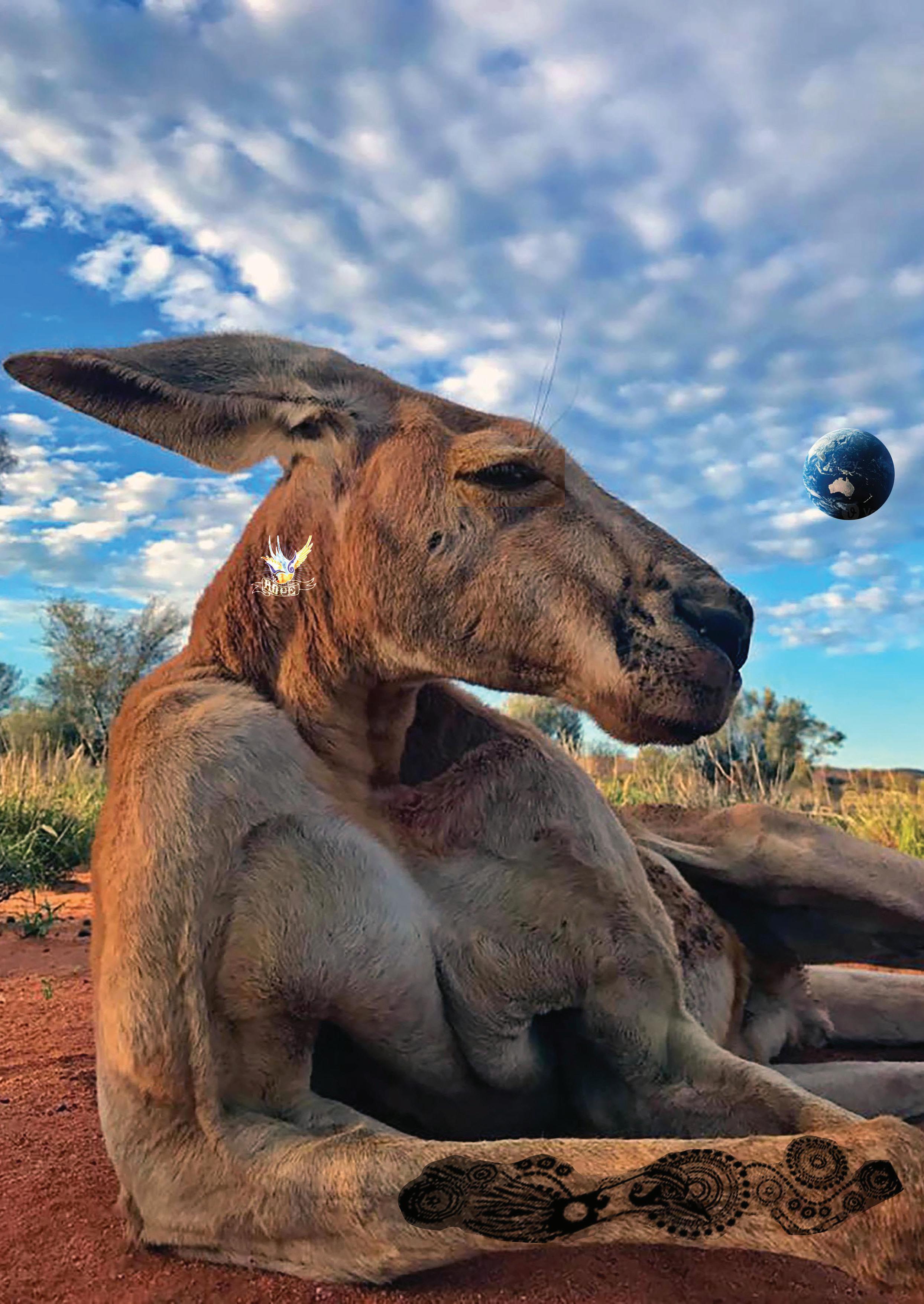
Arid: Is the word used to describe a landscape category that equates to approximately 70% of the Australian continent and is the name of the semester 2026.01 elective to be led by practitioners Hazel Porter and Simon Drysdale.
The site: Located in the depths of the ‘Little Desert’ in Victoria and accessed via Dimboola – the site will seek to propel the new future of post treaty and the propositional influence this may have on the spatial arrangement of programme, built form, and experiential relationship with adjacency and boundary definitions into a future present state.
Structure: There are 3 phases to this studio – ‘Then’, ‘now’ and ‘when’. These phases will guide learnings about country, science and mythology in an inclusive brave and ambitious studio culture. These three phases correlate with the electives’s - site, state and solar scales of ambition.
Project: The published Pental island cultural masterplan brief will silhouette the evocations developed in the studio that will aim to and theoretically increase regional visitation, give shape to a strategic alignment with a post treaty state and reveal a series of cultural experiences unique to place but common to elsewhere in impact.
Immersion excursion: This studio will require commitment to travel and a camping site expedition. This means associated costs which we will endeavour to minimize. You will need to arrange your camping tent, bedding, clothing, cutlery, and toiletries. There, you will witness dark sky stars, fauna, and flora. You do not need to be an experienced camper to participate. Bring sketch book / camera / video / sound recorder
Hazel Porter and Simon Drysdale Wednesday mornings 9:30-12:30pm
AR D I
The little desert CULTURAL MASTERPLAN
THE OPPORTUNITY
• Cultural experience demand
• Regional visitation
• Strategic alignment
THE JOURNEY AHEAD
• The Masterplan
1a. AREA 1: CULTURAL TOURISM / EDUCATION Caring for Country program
• Cultural Awareness Training
• Education Programs
• Cultural Tours
• Bushtucker dining experience
1b. AREA 2: NATIVE BOTANICAL GARDEN Native bush tucker garden and nursery
• Nature Play Adventure Playground
1c. AREA 3: CULTURAL CAMPING
• Cultural Retreat (overnight)
• On Country Camp
Target Markets
• LOCAL COMMUNITY
• VISITING FRIENDS AND RELATIVES
• GREY NOMADS
• AUSTRALIAN FAMILIES
• YOUTH TRAVELLERS
HIGH VALUE COUPLES
• SCHOOL GROUPS
• CORPORATE GROUPS
ELECTIVE LEADER:
VEI TAN IS A PRINCIPAL OF SUPERSCALE,
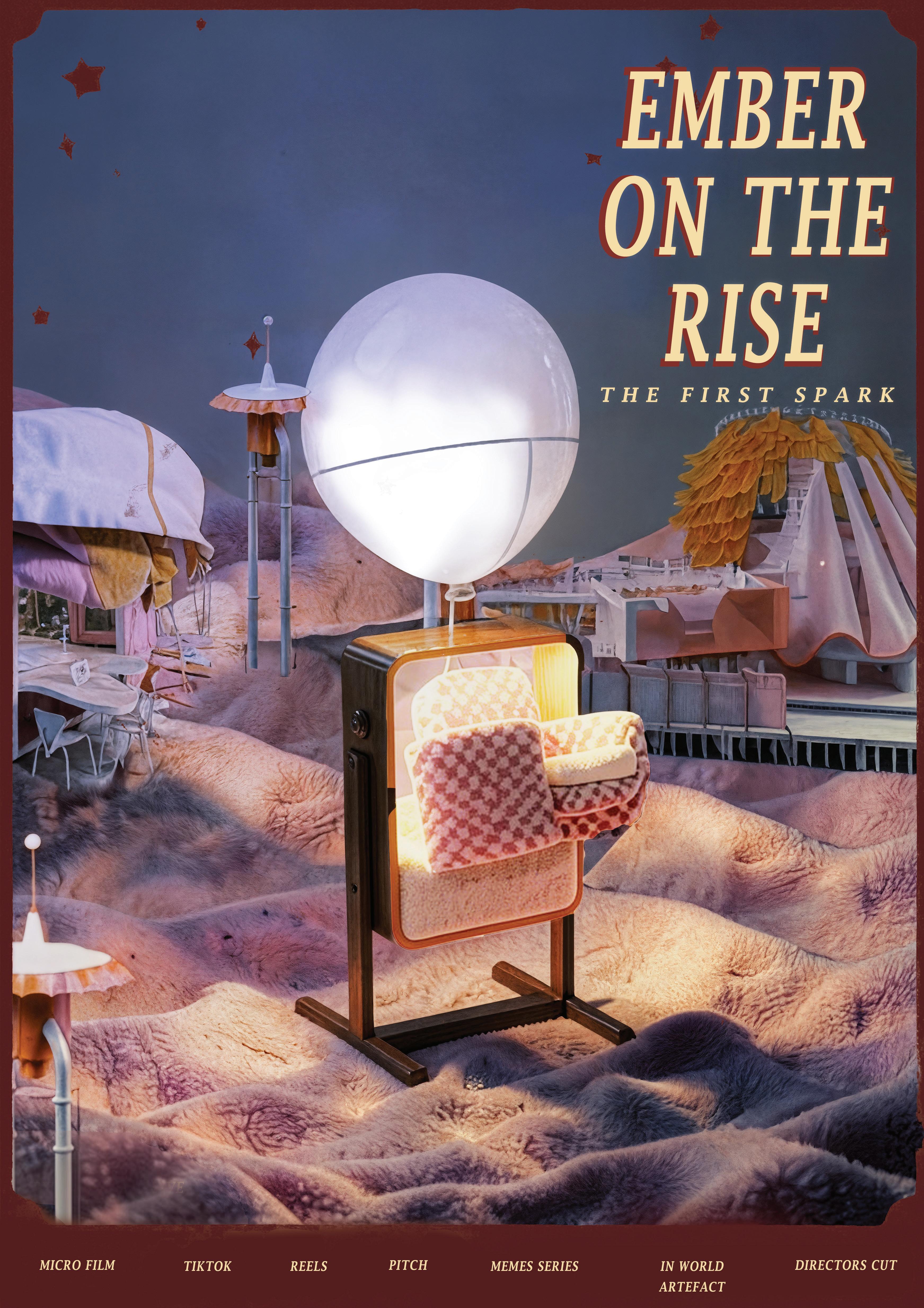
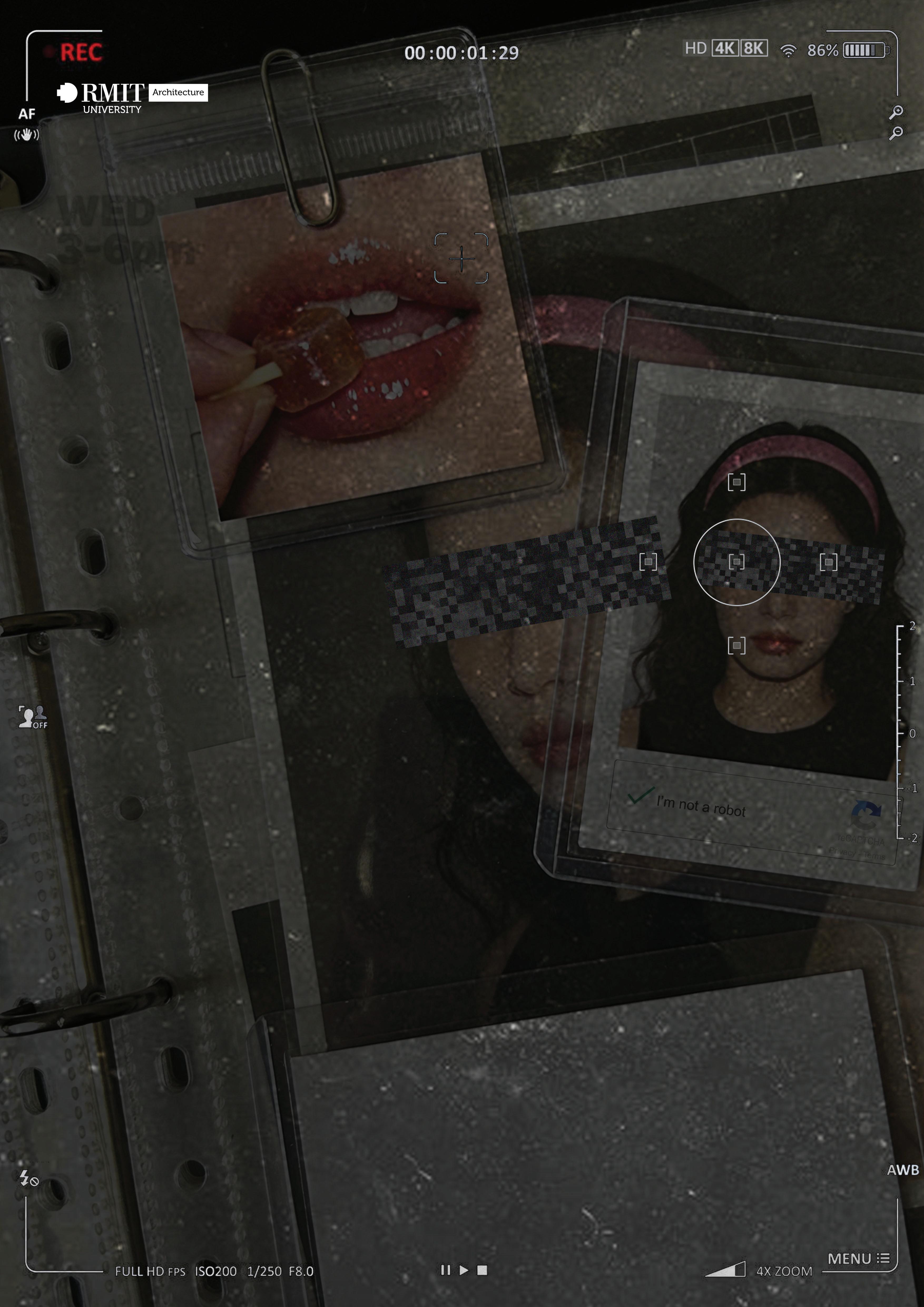
Ember on the Rise invites students to explore architecture as a practice that expands from imagined worlds, using speculative environments, emerging media, and narrative as methods for experimentation.
In collaboration with the RMIT AUD Immersive Futures Lab, the State Library of Victoria, and the Master of Architecture Design Studio ‘Ether and Current’ (led by Vei Tan, Lynn Gonsalves, and Sumy Shin), students will engage audiences of all ages, testing how worlds can shape new thinking, spark new language, and explore ecological, cultural, and social futures.
Students will experiment with game engines, immersive simulations, and pop culture to probe spatial, social, and narrative possibilities. Drawing from directors, writers, choreographers, journalists, scientists, and entrepreneurs, we will investigate how people, places, and stories interact, and how friction and contradiction can ignite alternative futures.
Cross-disciplinary research, including behavioral science, ecology, and entrepreneurial methods will inform speculative worlds that are pitched, iterated, and experienced with public audiences, creating dialogues that make architecture imaginative, socially meaningful, and culturally resonant.
To world, make world embodies an ethos where architectural practice extends beyond designing objects or spaces and into facilitating, hosting, translating, and choreographing conditions for exploration, dialogue, and engagement.
Ember on the Rise is a space for the trailblazers: the risk-takers, the curious, and the mischievous minds. Where speculative worlds become laboratories for architectural ideas, and architecture itself emerges from the worlds we imagine, feel, and inhabit together.
Future Practice & Architecture Design Elective Outcomes :
By the end of Ember on the Rise, students will develop a spatial vocabulary that extends beyond drawings and models, using worldbuilding as a method to test how architecture speaks, behaves, and is experienced. Students will work through bite-size, iterative outputs that allow ideas to grow without the pressure of producing a large, singular project.
Through these outputs, students gain skills in narrative construction, spatial storytelling, public communication, and cross-disciplinary research, rethinking the future practice of Architecture.
The elective strengthens students’ ability to translate architectural inquiry into worlds that are imaginative, culturally aware, and accessible to diverse audiences.
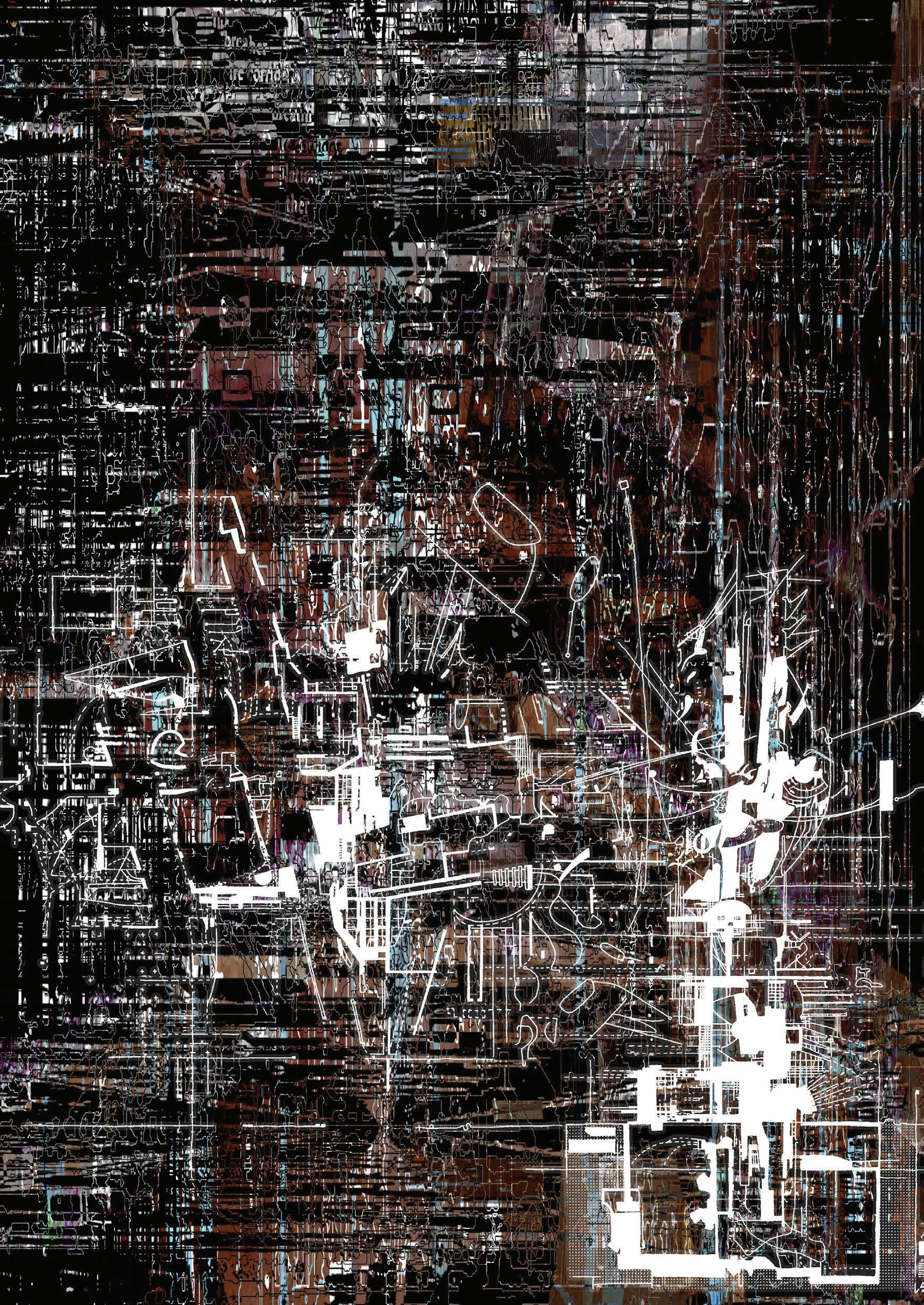
In this elective, image-making is positioned as a form of design research: a way of thinking through making that operates across analogue and digital media. Students will test how images can reveal latent architectural qualities, generate new spatial organisations through hybrid work flows, and illuminate existing projects by reworking their pictorial logic.
Rather than treating drawings as finished artefacts or disciplinary
The ease of image-making with new AI tools, and the ten-fold increase in building documentation volume since the 1950s means architects are dealing with orders of magnitude more images. Students are saturated with images daily, no longer delivered through online platforms as knowledge, instead coalescing into a hum, the individual image no longer as impactful as the accumulative image of the space they’ve been allocated within the algorithm. As this volume increases, it becomes increasingly important for students to understand their architectural images as operative design tools capable of observing site, developing narrative, and embedded with those fragments of thought that are otherwise hidden in the finished product.
shibboleths, the elective frames them as provisional and operative. promiscuous,
Across three projects students will:
- Position image-making as a form of design research
- Develop and understand images as operative tools
- Develop a broad range of image-making skills
- Test how images can reveal latent architectural qualities through revelation, generation, and illumination.
There are no skill prerequisites, and projects will be supported by in-class demonstrations and skill-building workshops.
There will be some costs incurred through the purchase of drawing tools and printing supplies.
EXPERIMENTAL DRAWING
with Dr. Laura Szyman
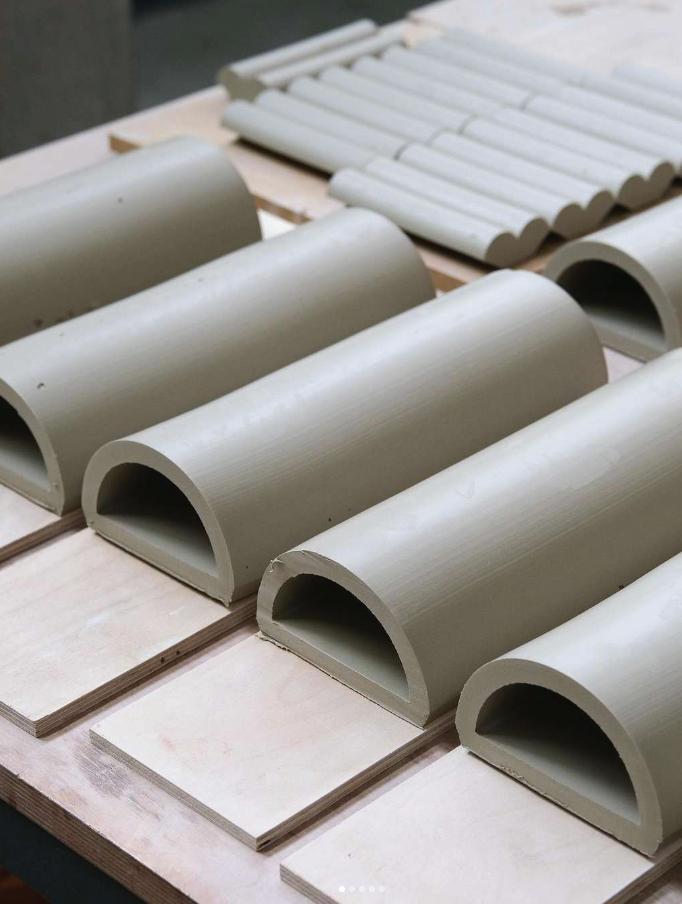
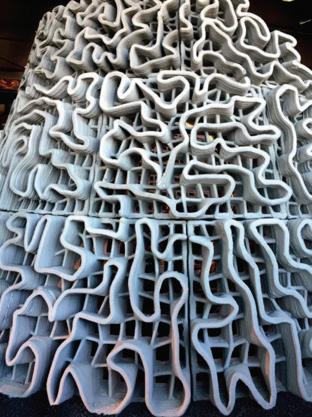
This elective aims to provide you with an insight into how, as an architect in practice, you might approach the use and application of unfamiliar materials and processes. Wire cut bricks are manufactured through the process of extrusion. A largely neglected question however is what other opportunities does extrusion o er in manufacturing other building components. Similarly industrial extrusion have relied on simple steel die plates to generate extruded forms. What opportunities does 3d printing o er in creating more complex die forms when coupled with ceramic extrusion. How does tacit know-ledge and theoretical material understanding impact the challenges of this type of design research? The elective will commence with a broad introduction to ceramics in architecture particularly as they are used in contemporary architecture. The rst project, tile production, will introduce students to the principles and practices of plastic clay extrusion and the properties of clays. Starting with digital modelling, questions of modularity, and how wire slicing might be combined with extrusion to create novel forms will be explored. A key question will be how does materiality inform and /or modify digitally generated ideas?
Having established a good foundation into the extrusion process and a basic understanding of the properties of clay, the second project will challenge the you to consider material and process in relationship to architectural applications, such as facades. Façade is used here broadly and may include any element with a relationship to a buildings façade such as brise-soleil, cladding etc. The outcome of this project will be a sample section of a façade / architectural assembly. You are making your design so consideration of detail will be essential. You should budget on spending about $200 on materials during the course. The workshop will organise the supply of the required materials. There will be no group work.
When : Tuesday 1:30 - 4:30
Where : B49 Gossard workshop, Franklin St 049.01-004
Weeks : 1 - 12
Tutor : John Cherrey - architect, designer & impassioned maker
Bachelors & Masters Students
Prerequisites : curiosity, patience & persistence
extrusion
FIBROUS FORMATION _ PATTERNATION
| RMIT ARCHITECTURE AND URBAN DESIGN
| 2026 SEM 1 DESIGN ELECTIVE
| ELECTIVE DESCRIPTION
Recent advances in material technologies, additive manufacturing, and computational design have broadened how architects understand the relationship between pattern and structure. This elective approaches patternation as a differentiated system— varying hierarchy, directionality, and geometry to influence how architectural skins behave, organise, and perform.
TUESDAYS 1500 - 1800
| TIME | LOC | ELECTIVE LEADER
100.05.005 ALAN KIM
| MATERIALS AND PHYSICAL MODELS
Students will produce physical models weekly using 3D printers. Please note that there will be material and fabrication costs associated with 3D printing.
While 3D print facilities are available at the RMIT DSC Workshop, RMIT Library Makerspace and City of Melbourne Makerspaces, lead times can be significant. In such cases, outsourcing is an option, though this will incur additional costs.
| TOOLS
Houdini Redshift for Houdini Grasshopper
FEA Analysis tool - Karamba or Millepede in GH Rhino 8
ZBrush
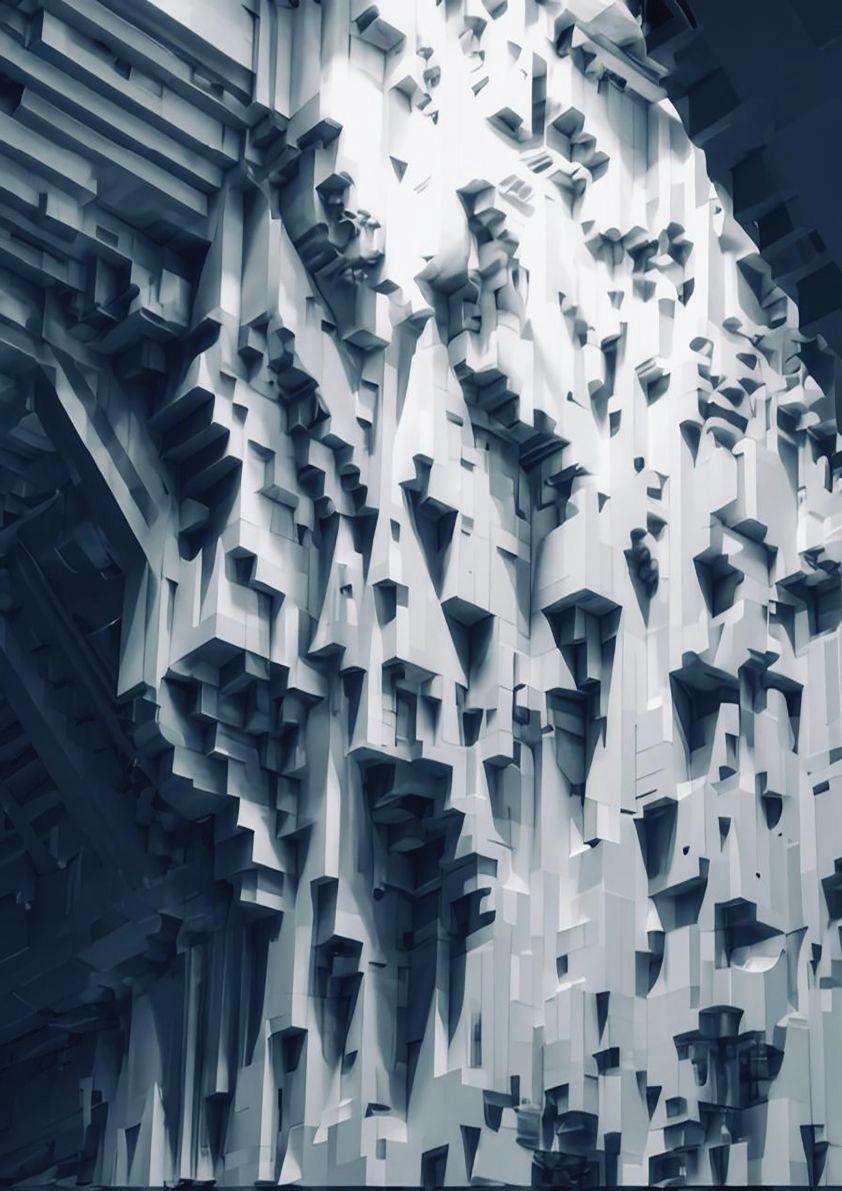
Pattern is not understood as an applied surface treatment. Instead, it acts as a structural and organisational agent that shapes continuity, subdivision, articulation, and the redistribution of force across complex surfaces. Students examine how differentiated pattern strategies can carry design intent while engaging with the tectonic and structural conditions of the underlying skin geometry.
Two frameworks set the conceptual territory of the elective. Tom Wiscombe’s notion of “objects on objects” positions patterned constructs as intentional and spatially articulate elements that assert design agency.
Pier Luigi Nervi’s isostatic ribbing demonstrates how structural demands generate differentiated surface organisations. Rather than treating these as opposing tendencies, the elective situates itself between them. Patternation becomes a medium through which aesthetic organisation and structural behaviour negotiate one another. Students are required to articulate their own position within this relationship—whether prioritising structural clarity, emphasising aesthetic order, or developing a balanced interdependence between the two.
Throughout the semester, students develop workflows that pair structural analysis, generative patterning, and multi-system simulations across Houdini’s VFX environment and Rhino Grasshopper. The studio emphasises feedback between deformation behaviour, stress trajectories, and design intent. This process enables transitions between systems to emerge through differentiated rules rather than collage-based assembly.
Weekly 3D-printed prototyping forms an additional component of the elective. Students produce incremental physical artefacts that test how differentiated patterns influence the behaviour of skin geometries. These prints serve as hands-on studies that refine an understanding of how pattern and structure interact, diverge, or reinforce each other through material differentiation.
The semester finishes in the design and fabrication of an architectural system in which patternation plays a direct organisational and structural role. Final prototypes demonstrate how pattern can act as both a structural logic and a site of design agency, producing coherent, materially attentive, and performative architectural skins.
Indexical and Non-indexical Design Process
Computational Design
Skin and Structure
Skin Treatment
Advanced 3D Modelling 3D Printing | KEYWORDS
| WEEK 1 - 5 : GROUP (PAIR) WEEKLY ROTATION | WEEK 6 - 12 : GROUP OF 3 FIXED
| PRE-REQUISITES
Completion of Communications 3 or an equivalent level of experience with Grasshopper and Rhino is required.
No prior experience with Houdini, ZBrush, or coding is necessary; however, a willingness to engage with various new 3D tools is essential.
“The anguish of the beautiful that shines through the fragility of ornament is atopian: displacing more than could any nudity.” – Franco Rella
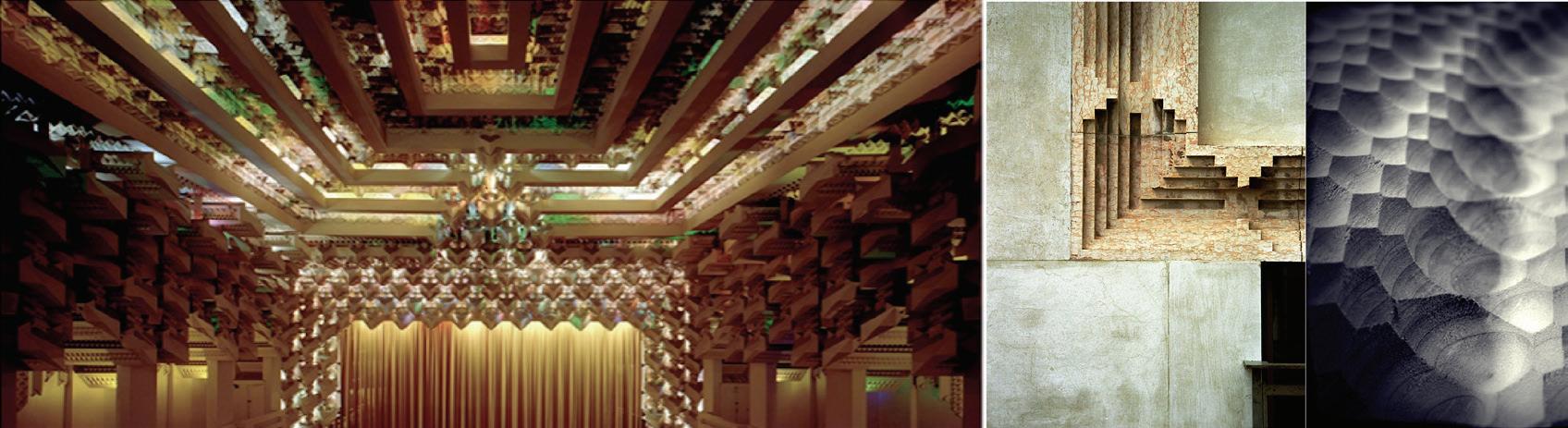
Ornamental Operations elective students will engage with an open range of Ornamental Operations, responding to a series of thematic theoretical, historical, spatial, qualitative, experiential, representational, material, technological, fabrication, digital, AI, and design practice concerns that test the role of ornament.
Ornamental actions include framing, masquerade, grotesquery, interlacing, prosthesis, negative detailing, marginalia, backgrounding and mediation, atmosphere, affect, discretism, hybrid tectonics and spatially active relational systems
Weekly thematic topics on the role of ornament are supported by recorded lectures, extensive readings and project precedent resources.
Responses are trialed through weekly thematic project-based investigations, with modular exhibition systems/architectural expo pavilions and propositional manifestos as the provisional design research vehicle. Weekly tutorials review these project responses and accompanying discursive writing or workflow documentation or notation
A final student defined Ornamental Operations Expo Pavilion Project and Manifesto or Exegesis consolidates the semesters work along with a portfolio of project investigations, writing and collaborations.
Architectural Expos (architectures in and as exhibitions) have long served as creative and experimental platforms in architectural history.
The Ornamental Operations elective tests the legacy of the Modernist prescription against the ornamental, reconsidering and revising accounts of the role of ornament in post-digital practice where both the emergent and anachronistic are contested.
Non-standard digital technologies modulate prefabrication shifting the representational role of ornament towards performative actions.
Boethius argues the role of ornament was to mediate transitions in state from conditions of tension to resolution to tension in iterative cycles. Related counter-compositional strategies will be explored.
Elective Students will explore speculative Post-Digital propositions, practices, workflows and prototypes
This Elective is running in a series partnered with University of Innesbruck Department of Experimental Architecture REX|LAB led by Professor Marjan Colletti (REX|LAB Innsbruck/Bartlett UCL) with online cross-elective workshops.
Charlie Bowman of the RMIT Tectonic Formations Lab will provide specialist guest tutoring.
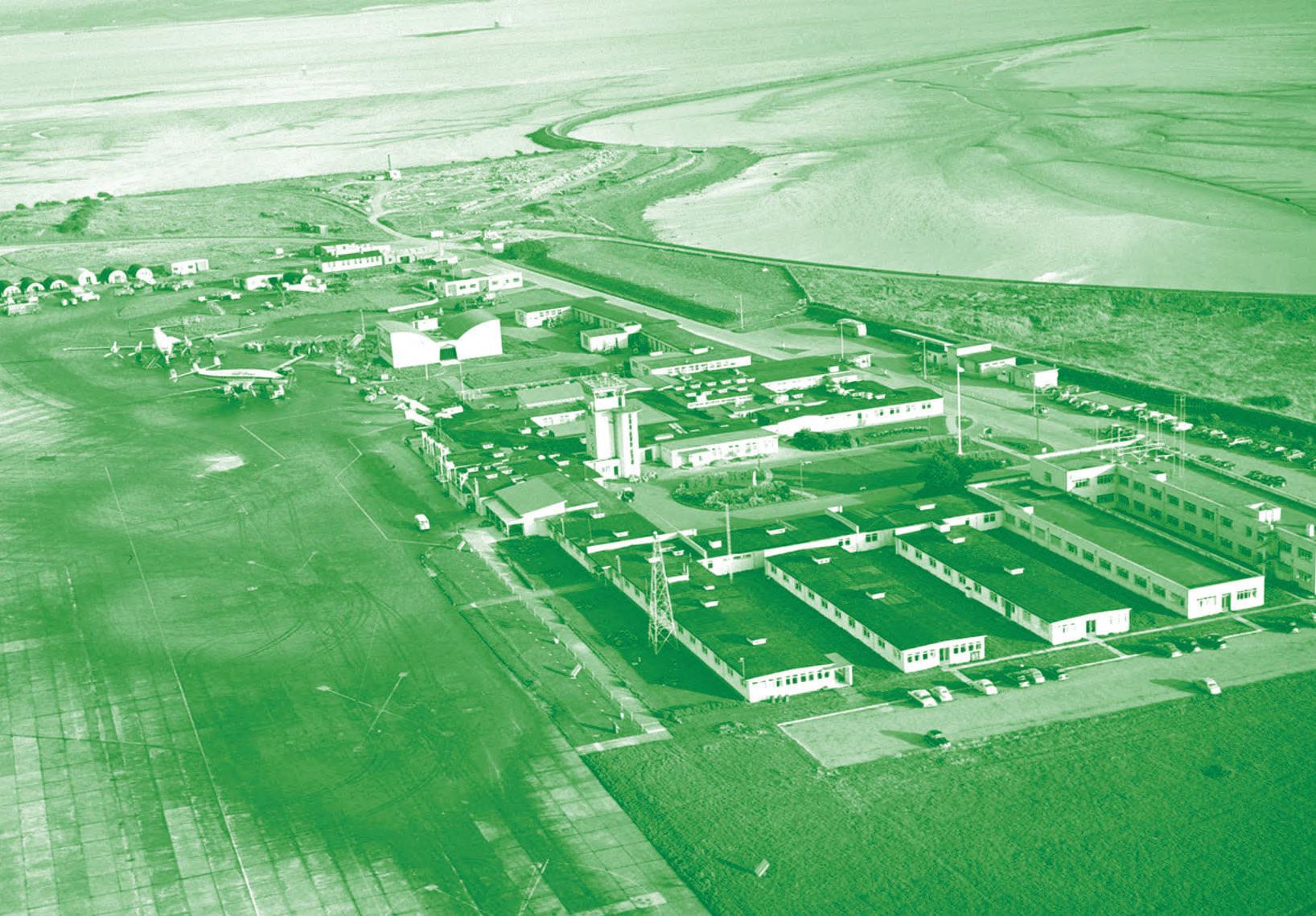
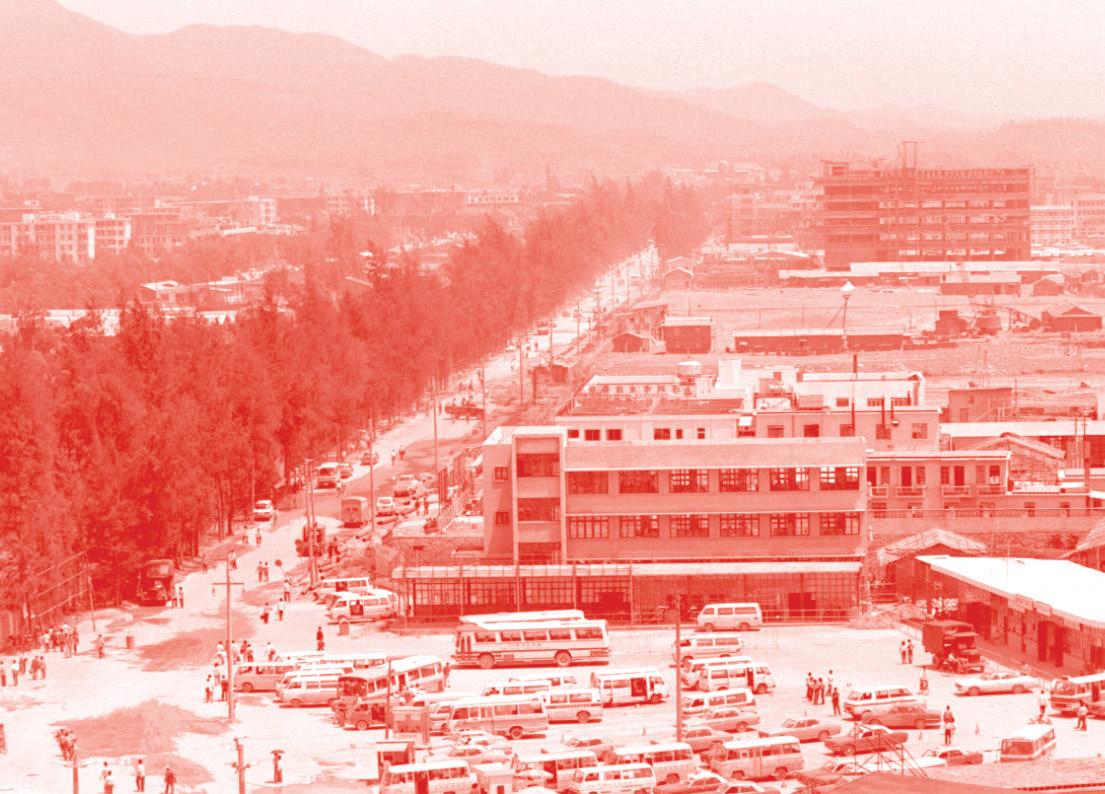
Shannon to Shenzhen > SEZs and Freeports : zones of exception
How do Special Economic Zones and freeports spatially encode economic and regulatory exception? This design research elective investigates bounded territories where capital, goods, and labor operate under alternative governance frameworks—from Shannon Free Zone’s industrial evolution to Shenzhen’s explosive growth to Geneva’s hermetic art vaults.
Working in groups of 2-3, students select a zone from a global catalogue and develop analytical representations that make visible invisible systems: regulatory boundaries, capital flows, logistics networks, temporal transformations. Drawing on critical diagramming practices (Gandelsonas & Agrest, Archizoom, James Corner), students develop analytical drawings and animations that decode organizational logics and expose how spatial configuration enables economic function. The elective centers on expanding architectural representation to capture complexity that conventional drawing cannot: dutyfree movements, governance structures, labor exploitation and environmental extraction, accelerated urbanization.
MASTERS AND BACHELOR STUDENTS
- this is not an animation elective - NO fly through renders
- this elective is about precision in visualising and describing systems
- students will need access to adobe suite- Aftereffects, Premiere Pro
SCHEDULE
Weeks 1-3: Foundations— Case Studies, Drawing precedents, critical diagramming methods
Students learn Adobe After Effects to create animated diagrams revealing economics-space relationships through time-based media, while developing drawing suites that function as research instruments. Final work produces a collective catalogue of exception zones, demonstrating how different territories demand different visual languages while revealing patterns in contemporary urban production under capitalism.
Weeks 4-6: Aftereffects Workshop, Drawing suite completion Presentation Preparation
Week 7: Mid-semester review
Weeks 8-10: Deep work—infrastructure, labor, environment
Weeks 11-12: Final presentations and critique
Week 14-15: Folio submission and Exhibition Preparation
SKILLS DEVELOPED
Adobe After Effects animation //Critical diagramming and notational systems // Spatial analysis methodologies //Research writing
DELIVERABLES
1-2 minute video animated diagram (group)
Suite of 6 analytical drawings (group)
2000-word essay (group)
Individual research folio + reflection
TUTOR GUIDED HOURS - 36 hours
LEARNER DIRECTED HOURS- 108 hours (approx. 9 hours per week)
Xtra!
ARCHITECTURE Elective 2026 Sem 1
URBAN VILLAS research
Lecturer Dr PETER BREW
Wednesday Morning 9.30
This seminar explores the idea of the architectural subject through an investigation into housing types, albeit one that is yet to be defined . and therein lies the challenge, to bring into existence and classify a new architectural type. Alain Badiou in Philosophy and the event recognises the subject in this way
...to hear something that wasn’t heard or to see something that wasn’t seen. The subject, for its part, is the real of this Idea. In other words, what renders this Idea possible is the works’ existence. The real of this Idea is, strictly speaking, the subject of this sequence, what orients it, what makes it exist, what causes it to be real.
Classification follows discovery or an invention, though much of what is classified as new or deemed a discovery already existed but had not been noticed, or seen in a certain way. The subtext of this seminar is that there are an abundance of good and interesting models for medium density housing in established suburbs that we could draw on as precedents to address the current urban and social problems, Developments that are established well used and often recognised as significant locally and or to architects that would not be permitted under the current planning rules and culture, without a recognised status or classification we have no recourse to an abundance of Suburban Alternatives
To do this we must consider how we would access these, by naming them by defining a type by creating a subject
Butler’s mansionette style seems to value the grouping of circulatory halls and services together. There is a of open plan - rooms are conventionally boxed and tucked away into their allocated zones, and can only be experienced singularly. The linear hallway refuses to be flexible in its function, thought spatially offers the purpose of both circulation and interior break. It is a buffer between two spaces, both relevant and irrelevant in the program.
1.Explore the concept of the subject in philosophy ( written text nominally 3000 words)
2.Study and document a range of potential prototypical examples of our subject (studies of existing buildings plans elevation sections diagrams )
The habitable rooms in each flat are intrinsically a "social product" - in some plans, the sitting and dining rooms must be crossed to gain access to other program. An occupant is thus forced to traverse through socially vivid zones, meaning they become accustomed and even inclined to entering these spaces. Butler also addresses the domestic conundrum of maintaining a connectivity with outdoor and indoor space.
Build a case for them and present them as instances of class of things 3000 words
Prepare an exhibition and combined studio publication.
“Toinhabittheworldinembodiedwaysmeansthatwemustalsoinhabitouressentialsociality,sincethe contingeniciesofcorporeallifearehowandwhywearedrawnintorelationsoftheinterdependencewith others.Nooneeversingularlyinhabitsabodybecauseembodimentisnot,asitmightseem,astateof beingaself-sufficientthing.Itsexistenceisinseparablefromandcanonlybeconstitutedassuchwithina matrixofcontactandconnectivitythatcanproveeithersustainingordetrimental,dependingonthequality of the bonds.”
This will be part of a larger project that will engage with similar studies from Monash and Melbourne universities which will bring into the seminar discussions about research and models of research.
Hence in Butler's design exists a fine party wall, communal lawn, curated landscaped link to the street front and balconies/terraces. One flat is not self-sufficient; it exists in correlation with its neighbours. The ease of connectivity encourages a codependent theme of living, despite the demands of a capitalistic lifestyle. Moreover, the singular flat plan responds to the subtle changes in its adjacent residence, its fabric becoming flexible and allows interconnectdness through moments such as opposite entries accessed from one path, or the strategic placement of windows to allows for visual and even spatial attachment to the world outside.
1 Bates, Stephen, and Jonathan Sergison. “Feeling at Home.” Essay. In Feeling at Home: Finding Common Ground in Six Urban Housing Projects in Europe, 39–47. Sergison Bates architects, 2012. 2 Kaestle, Anne, Schürch, Dan, Balland, Ludovic, Dechmann, Nele, Adam, Hubertus, and Duplex Architekten, Architect. Duplex Architects : Rethinking. 2021. 3 Waggoner, M., 2018. Unhoused. United States: Columbia Books on Architecture and the City, pp.90-111.
Studley Flats
Lorem Ipsum
Studley Flats
3_PARTY WALL DIAGRAM
ARCHITECTURE DESIGN ELECTIVES WITH MASTER OF URBAN
DESIGN
BALLOTING POSTERS
IAN NAZARETH ALEXANDER MOORREES
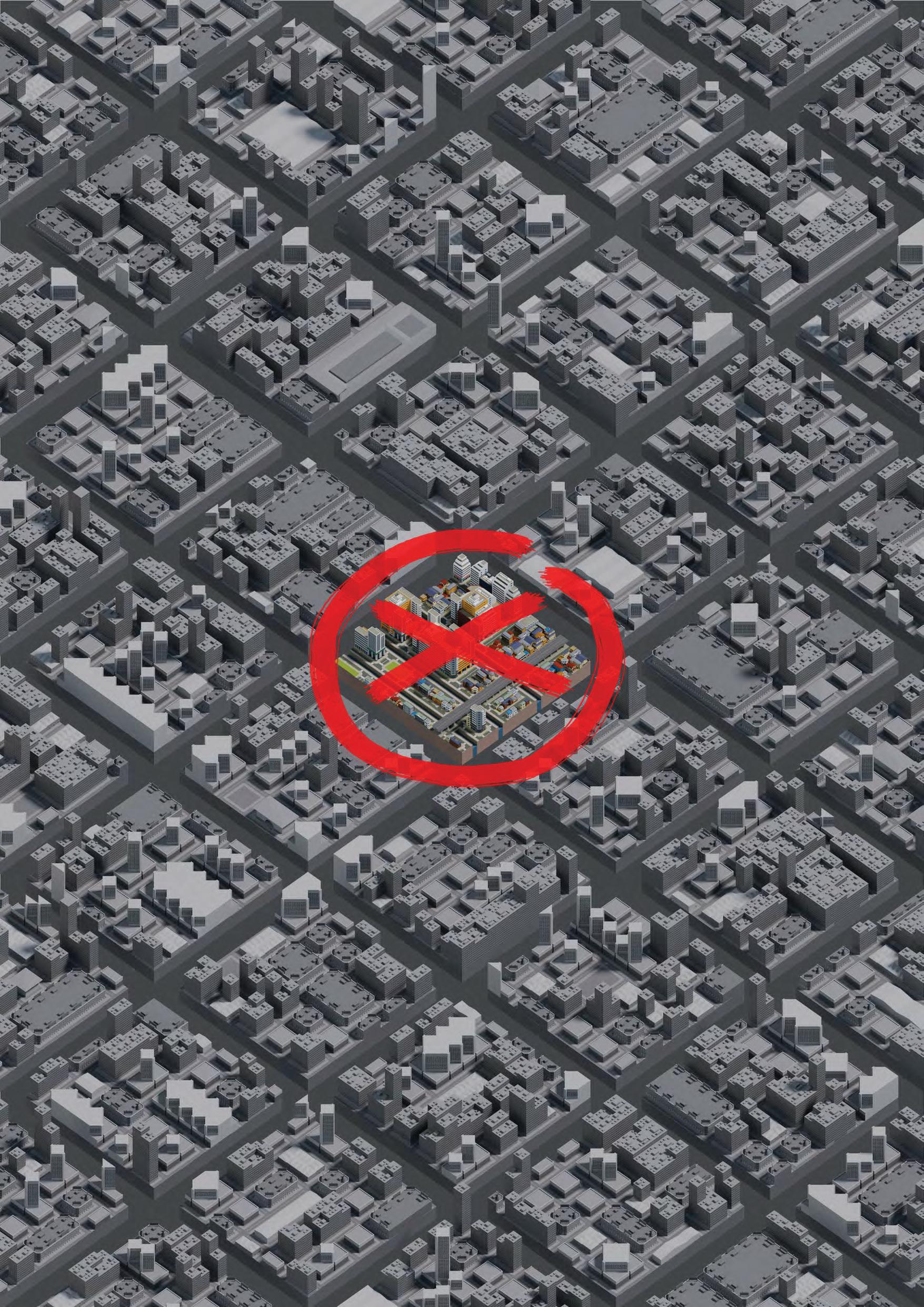
Mean Cities argues that urban development is shaped less by vision than by probability. This research reframes the city as an artefact of averages rather than intentions. It proposes that contemporary urbanism is governed by statistical convergence, where entropy appears not as breakdown but as stabilisation around the most probable condition. Within this framework, the mean is not merely descriptive but operative. It acts as a hidden regulator produced through planning protocols, financial logics, risk management practices and bureaucratic consensus. Collectively, these forces privilege repetition over divergence and reliability over experimentation.
The agenda of Mean Cities is both diagnostic and projective. Diagnostic, in revealing how urban environments normalise caution, flatten difference and recode compliance as quality. Projective, in questioning whether architectural and urban practices can meaningfully intervene in systems predisposed towards equilibrium. Within such systems, architectural singularity is understood as structurally insufficient, a local deviation that is rapidly absorbed by the wider field.
The ambition is not to reject the average but to politicise it. Mean Cities calls for a shift from designing exceptions to redesigning baselines, from producing icons to recalibrating norms. It positions the mean as a site of struggle, where the future of the city is shaped less by isolated acts of excellence than by contested definitions of what is considered normal, desirable and possible.
The Suburban Rail Loop is a megaproject currently under construction in Melbourne, delivering an approximately 90 kilometre orbital rail line through the middle suburbs and linking major metropolitan corridors. This
course engages these ideas through a bespoke computational platform that works directly with statistical and urban data. The SRL functions as a catalyst for examining statistical convergence, supporting analyses and speculative scenarios that model shifts in networks, dynamics and metropolitan impacts.
Proficiency with GIS and scripting tools such as QGIS and RhinoGrasshopper is valuable but not required. Specific tools and workflows will be introduced and demonstrated but you will be expected to develop your skills in order to progress your projects.
You will work in teams on a specific site, chosen from a selection of key intersection points between existing urban centres and the Suburban Rail Loop. These sites present compelling locations for speculation on future development and the impacts of changes to policy or lack thereof.
Students will be tasked with speculating upon an alternate average - a new status quo which inevitably shapes the future of their site. In particular, we are looking for the creation of conditions, decision making pathways, incentives, and policies which leverage unconventional data vectors and build unexpected correlations and conflations.
These visions of a new average future with be presented through mapping, statistical analysis, spatial visualisation and animation
Wednesdays, 3-6pm 100.04.007
URBANISM: HISTORY & THEORY
Tuesday 9.30 - 12.30
Urbanism: Histor y and Theor y introduces you to the key ideas, precedents and theoretical discourse in urban design, both current and historical I t provides a critical understanding of the discipline and an intellectual framework through which you can establish a position on future urban design practice Seminal texts, key practitioners, exemplar y projects and speculative proposals are curated to highlight critical issues in urbanism historically and currently These issues include: design process and urban morphology ; economic and political frameworks; technological, industrial and infrastructural development; and socio-political policies in design. Course content provides you with a comprehensive over view of urban design practice and a detailed understanding of the mechanisms
Examples from local and international contexts are presented
ASIAN URBANISM
ONE LAST TOUR IN URBAN DESIGN
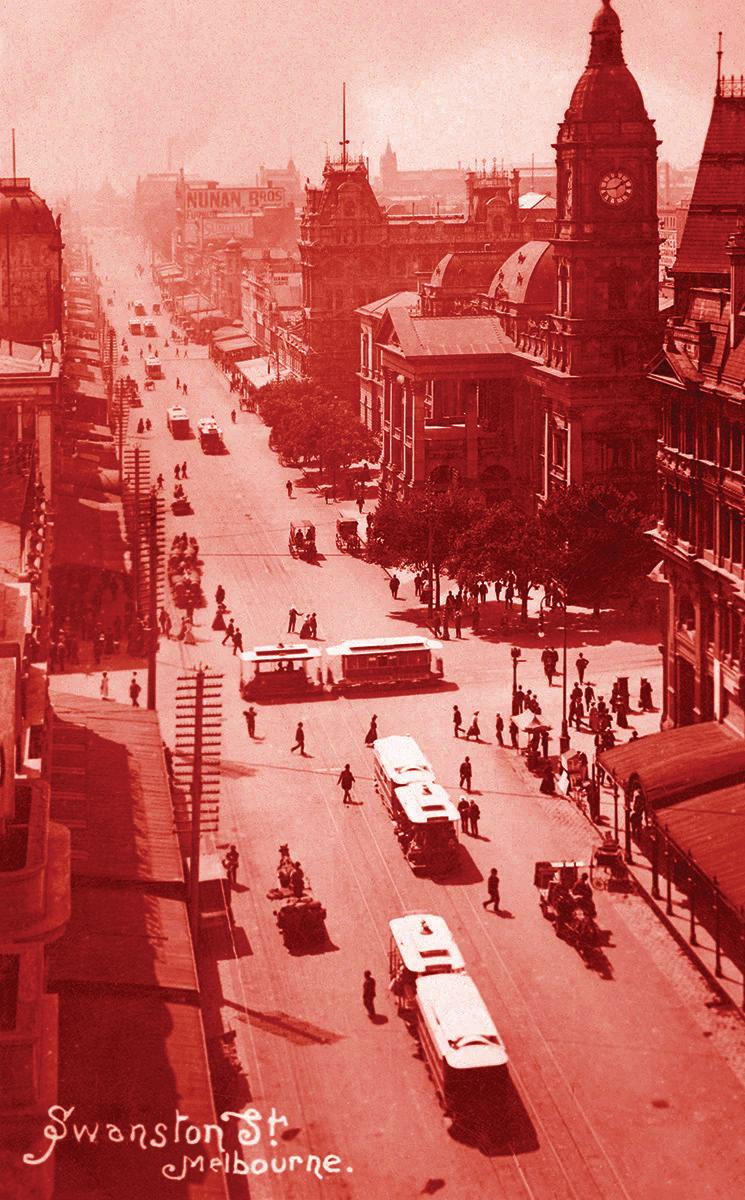
The legendary Asian Urbanism course is back for one more tour. Asian Urbanism is an overview of the most dynamic cities on earth and the design experiments that have happened there. It is an opportunity to re-visit the archive of lectures and projects of the course over its history, and to project design experiments for the future city of our region.
with Graham Crist & guests tuesday 3-6
PRACTICE RESEARCH PLACEMENTS BALLOTING POSTER
There are a limited number of Practice Research Placements Positions available. This smester the patricipating practice is PMA Architects. This is not a balloted elective. Contact Course Coordinator (Ian Nazareth) with your expression of interest.
Space, the material of architecture
Presented by Eli Giannini
MGS Architects
Eli Giannini & Catherine Ranger
Manton Lane Melbourne
MGS Architects
RMIT Architecture
RMIT Architecture
Practice Based Research Semester 1 2024
Practice Based Research Semester 1 2026
Send EOI to ian.nazareth@rmit.edu.au
‘Space Reader‘ aims to catalogue the characteristics of built spaces as a guide to students and architects in practice. How has architectural space evolved in time?
Space Reader examines architectural space as the material of architecture.
How has architectural space evolved over time?
What constitutes space as the material of architecture?
What opportunities does the advent of artificial intelligence and other computational tools offer the study and evolution of architectural space?
Students will investigate spatial themes through research, critical analysis and experimental modes of representation.
SP
contiguous breaking the grid klein bottle symmetry
ELECTIVE BASED RESEARCH ASSISTANTS (EBRA) POSTERS
There are a limited number of Elective Based Research Assistant (EBRA) Positions available - for which you do not need to ballot via the ballot form - refer to the poster, and contact the relevant tutor to lodge an expression of interest.
This elective is seeking up to four self-motivated EBRA student research assistants to develop a competition proposal for Designing Resilience Global (DRG) 2026 in collaboration with RMIT AUD Immersive Futures Lab and Super Urban Lab. The challenge targets a 2km urban stretch of Vadodara’s flood-prone Vishwamitri River, requiring multi-scale designs for ~34,500 new residents amid monsoon extremes, ecological restoration, and regenerative urbanism.
The RMIT AUD Immersive Futures Lab explores the potentials of gaming technologies and immersive media for architectural design. The lab’s interdisciplinary approach explores gaming environments and technologies to develop new immersive and real-time design processes, visualisations, applications and pedagogies. They posit that understanding possible “now, near, and future” visions and realities, require innovative hybrid methods for making, curating, engaging, and imagining our cultural and built environments.
The RMIT Speculative Urbanism Laboratory explores ways of rethinking cities through architectural and urban design. The lab uses design processes to model and test the implications of economic and social forces on urban development and to speculate on the form that these forces can take. The lab pursues both experimental and applied design research through industry partnerships. It aims to impact on real questions facing cities now and in the future. The lab is committed to the position that reducing the footprint by redesign has numerous benefits for 21st century cities. They work closely with project partners to understand what urban innovations are to transform their business and confront real problems and collaborate to develop techniques to combine design, data and policy, translating these to strategies with value to industry.
We will collectively develop a competition proposal for Designing Resilience Global (DRG) 2026, leveraging the interdisciplinary strengths of both labs: from immersive real-time technologies, worldmaking, and narratives to speculative urban design strategies. The competition requires multiscale strategies (river, city, site, architecture) to accommodate ~34,500 new residents in a 2km flood-prone Vishwamitri River stretch in Vadodara, integrating monsoon flood resilience, ecological restoration, dense housing, and regenerative urbanism. You’ll design replicable solutions adapting to water/climate extremes while measuring quantifiable impacts (flood mitigation, carbon-negative strategies), and together with the labs, produce competition deliverables that include: an A4 report, competition panel, 3-min video, and competition presentation (optional model).
Students will develop skills in real-time urban modeling, immersive simulations, research synthesis, and visual storytelling for resilient cities.
Regular development sessions in the RMIT AUD Immersive Futures Lab (Level 9, RMIT Design Hub) with Dr Patrick Macasaet (IFL) and Dr Ian Nazareth (SUP). Regular meetings and times to be negotiated between the collective. Students will be required to complete a Student Participation Agreement form. This research and development will involve the use of Unreal Engine 5.7+. Laptops are required with Unreal Engine 5.7+ recommended hardware requirements.
This is not a balloted elective. If you are interested, please email Patrick Macasaet (patrick. macasaet@rmit.edu.au) or Ian Nazareth (ian.nazareth@rmit. edu.au) directly with why you are interested.
SUPER URBAN LAB
ELECTIVE BASED RESEARCH ASSISTANTS SEMESTER 1 2026
The Super Urban Lab is a multidisciplinary research cluster within the RMIT University School of Architecture & Urban Design. The Lab investigates future scenarios for buildings and cities through architectural and urban design practice.
The Lab employs design as a research instrument to test and model the spatial implications of emerging technologies, policy frameworks, and the economic and social forces shaping urban environments. This methodology distinguishes itself from conventional urban decision-making processes by foregrounding the modelling and visualisation of spatial outcomes. Design practice research provides a framework through which diverse inputs may be synthesised into clear and accessible outputs, including three-dimensional models, visualisations, drawings, and physical prototypes. These outputs can then be rigorously evaluated by researchers, policymakers, and the broader public.
Through spatial modelling, it becomes possible to assess the financial, social, and environmental consequences of decisions, to explore alternative approaches to city-making, and to identify latent value within urban environments.
The Lab undertakes both experimental and applied research in collaboration with public and commercial partners. Working closely with industry and institutional collaborators, the Lab develops techniques that integrate design, data, and policy, translating research into strategies that deliver value to both industry and community stakeholders. The Lab operates in parallel with established research frameworks, contributing either by modelling the outcomes of traditional research or by developing speculative design scenarios for scientific analysis and evaluation.
The Super Urban Lab is committed to advancing innovative urban models that respond to the complex challenges confronting future cities.
Elective-Based Research Assistant (EBRA) Positions
Multiple EBRA positions are available to support a series of research initiatives, including:
1. Re:Permissioning the City: A project examining flexible, community-led governance models for urban spaces enabled through digital tools, undertaken in collaboration with Dark Matter Labs (DML), Incheon, South Korea.
2. Counterfactual Cities: A project exploring radical alternatives to urban development through speculative “What if?” scenarios, to be presented at NGV Melbourne Design Week 2026.
3. SUL – The Super Urban Podcast: A podcast series investigating cities and their design from multiple disciplinary and professional perspectives.
4. Strategic Development and Lab Support: General assistance with strategic development, resources, and collateral for the Lab.
These roles provide opportunities to contribute to specific projects as well as to the broader activities of the Lab. Participating students will be engaged in research, design, project development, and production assistance. Students will receive appropriate credit in publications, exhibitions, and associated Lab materials.
The Super Urban Lab is led by Ian Nazareth, John Doyle, and Graham Crist. Please note that these positions will not be listed on the electives balloting form. Weekly meeting times will be organised flexibly to accommodate availability. Students interested in joining the Lab are invited to express their interest via email: ian.nazareth@rmit.edu.au, john.doyle@rmit.edu.au and graham.crist@rmit.edu.au
GRADUATE EXHIBITION ASSISTANT ROLE END OF SEMESTER EXHIBITION
6 to 8 students are sought to assist in the preparation and delivery of the End of Semester Exhibition, supporting the installation and presentation of work emerging from MAS and BAS design studios.
This role is design, editorial and production focused. It involves thinking about how student work is communicated in physical space through layout, sequencing, graphics and installation strategy.
Role responsibilities include
Assisting with exhibition layout and spatial planning
Preparing drawings, models and printed material for display
Designing wall graphics, captions and signage
Formatting catalogue and exhibition collateral
Coordinating print production and mounting
Supporting installation and deinstallation
Collaborating on the visual identity and narrative structure of the exhibition
Time commitment
Intensive period leading up to exhibition install, plus install days
Based at RMIT Design Hub, with some schedule flexibility depending on install program
Seeking students with strong graphic sensibility, solid Adobe Suite skills and an interest in exhibition design, publishing and architectural representation. This role suits students who enjoy hands-on making, spatial composition and the translation of research into public format.
To apply
Send a short EOI (max 200 words) to lauren.garner@rmit.edu.au