
Health Hunters

Inside this Issue
Navigating the Dual Roles of Caregiving: Your Health First
Methylation for Beginners: Why Nutrient Levels Need to Be Tested
THE COMPLEX WEB OF SENIOR DEMENTIA CARE: Gen X Style
Recipe: Salmon with Garlic “Cream” Sauce Over Cauliflower Rice

Riordan Clinic is a world-renowned, academic medical center that has led the world in integrative oncology and complex chronic illness care since 1975. The Riordan Clinic was established as a 501 (c)(3) non-profit organization with missions in research, provider education, and patient education. The Health Hunter Newsletter has been published since 1986 as an educational resource to providers and patients.
CAREGIVER EDITION

 AUTHOR
Jasmin Murphy
AUTHOR
Jasmin Murphy
For those in the sandwich generation, juggling the care of your aging parents while supporting your own children, life can feel like a constant balancing act. Amidst the responsibilities of caregiving at both ends of the spectrum, your own health often takes a backseat. However, to be the strong link that holds both ends of your family together, prioritizing your health is not just important—it's essential.
The Check Your Health Event: A Timely Resource
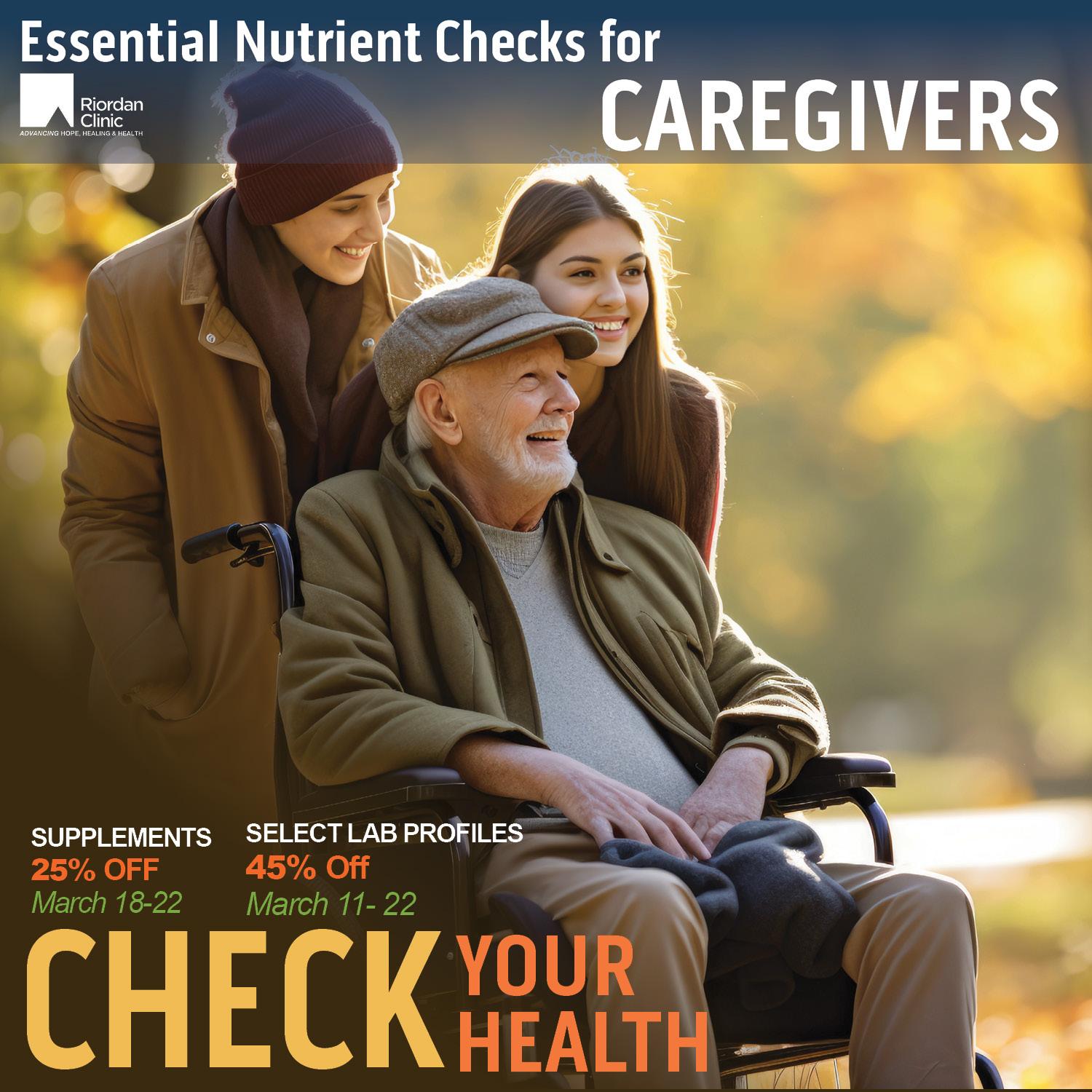
The Riordan Clinic's Check Your Health event presents a unique opportunity for caregivers to pause and refocus on their own health needs. Understanding that your time and energy are limited, this event is designed to offer comprehensive health insights with convenience and affordability in mind.
Tailored Health Insights for Busy Lives
Choosing from a variety of lab profiles, you can gain insights into key health indicators like nutrient levels, cholesterol, and blood pressure—vital
information that can help you adapt your lifestyle and dietary habits to support your long-term well-being. These tests are quick, require minimal preparation, and provide actionable data that can empower you to make informed health decisions.
Sup porting Your Role as a Caregiver
As a caregiver, you're accustomed to discussing health plans and treatments for others, but this event encourages you to put your health front and center. Reviewing your results with healthcare professionals can provide clarity and direction, allowing you to address any health concerns proactively and set a positive example for those you care for.
Convenient and Accessible Health Checks
Recognizing the tight schedules of the sandwich generation, the Check Your Health event is structured to minimize disruption to your busy life. Appointments are available on weekdays from March 11-22, 2024, at convenient locations, ensuring you can find a time and place that works for you.
January 2024 Vol. 38 No. 1
1 Continued on page 2
March 2024 Vol 38 No. 3
A Holistic Approach to Your Well-being
In addition to lab tests, the event includes access to discounted supplements tailored to your specific health needs. This holistic approach ensures you can not only identify areas for improvement but also take immediate steps to enhance your health with the right nutrients.
Empowering Yourself to Empower Others
By participating in the Check Your Health event, you're taking a crucial step towards sustaining your health and vitality. Remember, maintaining your health is not just for your benefit; it's for the well-being of your entire family. As you navigate the complexities of caregiving, let this event be a reminder that taking care of yourself is the foundation of being able to care for others.
Take Action Today
Don't let another day pass by without prioritizing your health. Schedule your appointment for the Check Your Health event by calling 1-800-447-7276 x1385 or x1302. By securing your spot, you're not just booking a health test; you're setting the course for a healthier, more balanced life, empowering you to fulfill your caregiving responsibilities with energy and resilience.
In the journey of caregiving, remember that your health is the anchor that keeps the family ship steady in turbulent waters. The Check Your Health event is more than a health check; it's a lifeline, offering you the knowledge and resources to ensure you can continue to be the support your family relies on, today and in the future.
2

Methylation for Beginners:
Why Nutrient Levels Need to Be Tested
 AUTHOR
Charles Hinshaw, MD Laboratory Director
Forward By Tayler Youngers - New Patient Coordinator
AUTHOR
Charles Hinshaw, MD Laboratory Director
Forward By Tayler Youngers - New Patient Coordinator
I was looking at previous articles on our website in order to learn more about our laboratory tests, and I ran across this article by Dr. Hinshaw that sheds light on the Riordan approach and why our Bio-Center Laboratory is essential. Humans are complex, biological processes are complicated, and finding root causes takes concrete evidence, not guess work. A single nutrient or biomarker alopne can not provide all the evidence needed to move towards real health? Our Methylation Profile is an example of how we can use a variety of tests together to create a more complete picture of why your body is functioning the way it is.
Charles T Hinshaw Jr, MD, Director, BioCenter LaboratoryMethylation describes the addition of a methyl group to a substrate with the purpose of making another substance. This begs the question, what is a methyl group?
A methyl group consists of a carbon atom (C) to which three hydrogen atoms (H) are attached: thus CH3, the chemical expression of methyl. The process of adding to or taking away a methyl group is critical in cellular metabolism, and in fact, occurs in every cell in human beings, billions of times every second.
Methylation is needed to keep all cells in good working condition. There are many examples that illustrate the importance of methylation, such as:
1. If the “feel good,” antidepressant brain chemical serotonin is not methylated, it will become inactive, which in turn leads to depression.
2. When the essential amino acid methionine is used to methylate proteins and DNA, a secondary amino acid is produced, homocysteine. Homocysteine is an amino acid that is a well-recognized independent cardiovascular risk factor, and must be methylated itself to convert back to methionine.
3. Methylation of certain parts of your DNA can switch off unnecessary genes and prevent abnormal DNA division and cancer development.
Fortunately, rather than worrying about complex biochemical pathways, the status of methylation can be evaluated by testing the levels of key, essential nutrients necessary for normal methylation.
Patterns of specific deficiencies are indicative of impaired methylation and can be used for initial diagnosis, confirmation and follow-up. When deficiencies are recognized, supplementation with the appropriate nutrients can correct the impaired methylation pathways and thereby relieve symptoms. As medical knowledge continues to improve and grow, correction of impaired methylation related to DNA defects, either hereditary or acquired (SNPs), will also be added to the armamentarium of treatment methodologies.
The BioCenter Laboratory at the Riordan Clinic offers a comprehensive Methylation Panel that evaluates key nutrients that are needed for optimal methylation. Included in the panel are:
3 Continued on page 4
Coenzyme Q10 Glutathione-RBC Histamine Homocysteine B12 Folate Vitamin B2 Vitamin B6 Magnesium Copper Zinc Urinary Pyrroles
THE COMPLEX WEB OF SENIOR DEMENTIA CARE:
GenXStyle
 AUTHOR
Staci Moore Guest Columnist
AUTHOR
Staci Moore Guest Columnist
The role of a caregiver in today’s society often falls on the shoulders of the so-called sandwich generation. This term describes individuals, typically from Generation X, who find themselves responsible for raising their own children while also caring for their aging parents. However, when the caregiving extends to a step-parent with whom the bonds are not born of a shared history, but forged through circumstance, the role becomes even more intricate and emotionally complex.
Understanding the Sandwich Generation
The sandwich generation is caught in the middle, juggling the responsibilities of their immediate family and the needs of their elderly parents. For Gen X, this often involves navigating a world where traditional family structures are evolving, and caregiving roles are increasingly complex.In some cases, there are 4, or even 5, generations existing with very different needs to address.
The Unique Position of Gen X
For those in Gen X, the challenge is two-fold. Not only do they face the pressure of being a part of the sandwich generation, but they also grapple with the nuances of caring for a step-parent, as our parents remarried bringing with them a pre-existing family, and sometimes no communication between the two. In my case, my stepfather (my second), a late-stage dementia patient, represents a unique caregiving challenge. One challenge I was not expecting was triggers from my own past of a disconnected father that is now 12 years deceased and all of the words and actions left unsaid. The emotional landscape of such a scenario is rich and multifaceted, involving love, duty, and a sense of moral obligation that transcends conventional familial bonds.
Stepping into the Role of Caretaker
Becoming a caretaker for a step-parent, particularly one with whom there are no shared childhood memories or long-standing bond, is a journey filled with unexpected challenges and emotional growth. For me, my stepfather, while not a figure from my past, has become a significant part of healing my past, recognizing the present and transforming my future. This transition from absence to prominence in one’s life highlights the capacity for human connections to evolve and deepen, even in the most unconventional circumstances. And although my mother is the primary caretaker, it’s undeniably how I got here.
Supporting the Primary Caregiver
At the heart of this experience is the desire to support the primary caregiver, my mother, to preserve her quality of life. And though some have said this is noble, it underscores the complexities of caregiving within blended families, where the lines of responsibility and affection are redrawn and redefined. One begins to internalize how important planning and freedom of time and money are.
The Dynamics of Family Support
Navigating the dynamics of family support, or the lack thereof, adds another layer of complexity. With most of my stepfather’s biological children absent, the burden of care disproportionately falls on my mother and subsequently I have absorbed

4
what I can. This scenario is all too common in many families, where the distribution of caregiving duties is uneven, often leading to emotional and physical strain on the primary caregivers. Medical support is a rubix cube of options that many 70 year olds find challenging to maneuver through, and shouldn’t have to. Community support is thin, jobs only have but so much understanding, and the financial responsibilities are blurred at best.
The Medical Truth
The journey through dementia varies for each individual, necessitating different types of care facilities tailored to each stage of the disease. These facilities range from less intensive support environments for those in the early stages to more comprehensive care settings for advanced dementia. Here's an overview of facility types corresponding to different dementia stages
● Independent Living Communities
● Assisted Living Facilities
● Nursing Homes
● Continuing Care Retirement Communities (CCRCs)
● Adult Day Care Centers
● Memory Care Units
● Skilled Nursing Care
● Hospice Care
When it comes to managing dementia, the medical options available aim to alleviate symptoms, slow the progression of the disease, and improve the quality of life for those affected. While there is currently no cure for dementia, several types of medication can help with cognitive symptoms, such as memory loss and confusion. Beyond pharmaceuticals, non-medication-based therapies like cognitive behavioral therapy, occupational therapy, and personalized activity programs can significantly contribute to managing daily challenges and supporting mental health. Lifestyle modifications, including a healthy diet, regular physical activity, and social engagement, are also encouraged to support overall brain health. It's essential for caregivers and patients to work closely with healthcare providers to tailor a treatment plan that meets the individual's needs and preferences. Seeking naturopathic and integrative care options from institutions like the Riordan Clinic can also provide a piece of mind, health and wellness.
The Psychological Impact
The psychological impact of such a role on the caregiving role and to those that support them cannot be overstated. It involves a constant balancing act between managing one’s own life and the needs of the primary caregiver. In my case, managing my life and my needs with those of my mother, stepfather, and other loved ones. I’ve found my mother’s journey and that of my own to be a testament to the human capacity for love, empathy, and resilience in the face of complex family dynamics.
There is a struggle between the respect that I have for my mother and the humble care she gives my stepfather and the desire I have to preserve every day, hour and minute of her life that I can by assisting with my step-father’s care. This often results in making a blind sacrifice of self until being reminded that my needs and care have to remain top priority in order to truly support my mother.
Legal and Financial Considerations
Beyond the emotional and physical aspects of caregiving, there are also legal and financial considerations. Planning for long-term care, especially for someone with late-stage dementia, involves navigating a maze of healthcare options, legal rights, and financial planning, further complicating the caregiver’s role. And with mixed and blended families, finances can become even more dynamic.
Creating a Support System
One of the key strategies in managing the demands of caregiving is creating a support system. Oftentimes we are left reaching out to extended family members, including brothers and sisters who may also be aging. Creating an ever evolving and well rounded support system often involves leveraging community resources (including online options), embracing external help, and fostering connections with others in similar situations. The importance of a supportive network cannot be underestated in preserving the well-being of both the caregivers and the person receiving the care.
The Importance of Self-Care
Self-care for caregivers of dementia patients is crucial, not only for their own well-being but also to maintain the quality of care they provide. Caregiving, especially for someone with dementia, can be emotionally taxing and physically demanding, making self-care an essential component of the caregiving journey. Here are some self-care strategies for caregivers that I’ve focused on:
Prioritize Your Health
• Maintain regular check-ups with your healthcare provider to monitor your health.
• Eat a balanced diet, exercise regularly, and ensure adequate sleep to maintain physical health and energy levels.
Take mental health breaks
• Practice mindfulness or meditation to reduce stress and improve mental clarity.
• Engage in hobbies or activities you enjoy to relax and rejuvenate your mind.
Set boundaries and manage time
• Learn to say no to requests that are too demanding or beyond your capacity.
• Use time management tools to organize care tasks and personal time effectively
5
Seek professional help when needed
• Consider counseling or therapy to cope with the emotional stress of caregiving.
• Explore respite care options to take temporary breaks from caregiving duties.
Educate yourself about dementia
• Understand the disease and its progression to better manage care expectations and challenges.
• Attend workshops or seminars on dementia care to learn coping strategies and care techniques.
Create a safe, supportive environment
• Adapt the home environment to make it safer for the dementia patient, reducing the stress of constant vigilance.
• Use available resources and technologies to simplify caregiving tasks and enhance the patient's quality of life.
Keep a journal
• Document your experiences and feelings as a therapeutic way to express emotions and reflect on the caregiving journey.
Plan for the future
• Prepare legally and financially for the future care of your loved one with dementia to reduce future stress and uncertainties.
Practice gratitude
• Focus on positive moments and achievements, however small, to foster a sense of gratitude and fulfillment in your caregiving role.
Self-care is not selfish; it's a necessary aspect of being a caregiver. By taking care of your own needs, you're ensuring that you have the physical energy, mental clarity, and emotional stability to provide the best possible care for your loved one. Reaching out for help and acknowledging your limits are signs of strength, not weakness.
Reflections on Love and Responsibility
The journey of caring for a late-stage dementia stepfather, a figure who entered my life not through shared history but through the bonds of marriage to my mother, is a poignant reflection on the nature of family, love, and responsibility. It’s shown me the ability to find love in unexpected places and the depth of commitment that caregiving entails. Being part of Gen X and the sandwich generation, there is a complex web of emotional, physical, and legal challenges. Yet, within this web, there is also the opportunity for profound personal growth, deeper family connections, and the realization of the strength of the human spirit to love and care beyond the confines of traditional family roles.
Scan Here To Register for Lunch and Lecture!
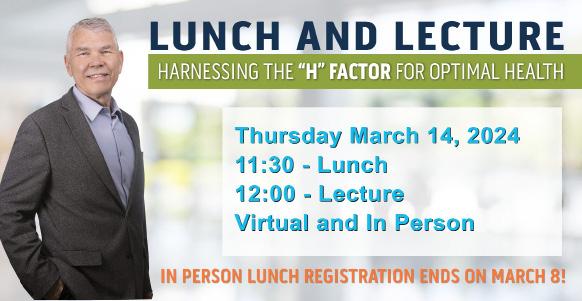
Visit riordanclinic.org/check-your-health or Scan QR Code Above 6
Salmon with Garlic “Cream” Sauce Over Cauliflower Rice
This recipe is a testament to the balance between health and taste, proving that dietary changes can indeed be delicious and embraced by all family members.

Ingredients:
- 4 salmon filets
- Salt and pepper, to taste
- 2 tablespoons olive oil
- 2 teaspoons Italian seasoning
- 1 tablespoon coconut oil
- 8 garlic cloves, minced
- 1 cup canned coconut milk (full-fat)
Instructions:
- 1 teaspoon paprika
- 1/2 cup nutritional yeast (for a cheesy flavor without the dairy)
- 2 cups spinach
- 1/2 lemon, juiced
- 1 large head of cauliflower, grated into “rice”

1. Prepare the Salmon: Season the salmon filets with salt, pepper, and Italian seasoning. Heat avacodo oil in a large skillet over medium-high heat. Add salmon, skin-side up, and cook for about 4 minutes on each side until golden and crisp. Remove salmon from skillet and set aside.
2. Create the “Cream” Sauce: In the same skillet, add coconut oil and minced garlic. Sauté until fragrant. Stir in the coconut milk, paprika, and nutritional yeast, cooking over medium heat while stirring until the sauce thickens.
3. Incorporate Spinach: Add spinach to the sauce, cooking until wilted. Squeeze lemon juice into the sauce and stir well.
4. Cook the Cauliflower Rice: While the sauce simmers, heat a separate skillet over medium heat. Add grated cauliflower with a dash of salt and sauté until tender and slightly crispy, mimicking the texture of rice.
5. Combine: Return the salmon to the skillet with the “cream” sauce, spooning the sauce over the filets. Let it simmer for 1-2 minutes to ensure the salmon is thoroughly heated and coated.
6. Serve: Place a scoop of cauliflower rice on each plate, topping it with a salmon filet and a generous spoonful of garlic “cream” sauce.
This dairy-free, grain-free version of our beloved recipe has not only met my dietary needs but has also won the hearts (and stomachs) of my entire family. It’s a celebration of how adapting to healthier eating doesn’t mean compromising on flavor or family mealtime joy.
Hunters
Contact the Editor Please send any comments or suggestions to newseditor@riordanclinic.org Thank you for reading. Melody Spurney Editor Connect with Us facebook facebook.com/riordanclinic instagram instagram.com/riordanclinic youtube youtube.com/user/healthhunter1 our website riordanclinic.org Health
Newsletter Join our mailing list to have the Health Hunters delivered to your inbox each month for FREE. To sign up, go to riordanclinic.org or email us at information@riordanclinic.org To become a patient at Riordan Clinic, call 800-447-7276
7

FOOD AS MEDICINE GUIDEBOOK
The “Food as Medicine: Nourishing Your Mind, Body, and Soul” guidebook is still available for download.
Whether you are making big life changes or simply want to make better food choices with an understanding of how food relates to overall health, this free guide is an amazing resource and available online.
The 42-page guide covers a variety of topics, including recommendations to get started, the relationship between food and inflammation, toxins, tips for buying organic foods and understanding labels. It also includes more than a dozen recipes for breakfast, lunch, dinner, dessert, and snacks.
Link to download:
riordanclinic.org/food-asmedicine-free-guidebook/