





PRESIDENT
Jim Stucchi, MCH
Ahronian Landscape and Design, Inc.
Tel: (508) 429-3844
VICE PRESIDENT
Tim Hay, MCH
Bigelow Nurseries, Inc.
Tel: (508) 845-2143
SECRETARY/TREASURER
Peter Mezitt, MCH
Weston Nurseries, Inc.
Tel: (508) 435-3414
PAST PRESIDENT
Tim Lomasney
One Source Horticulture
Tel: (978) 470-1934
DIRECTORS
Chris O’Brien, MCH Howard Designs, Inc.
Kerry Preston, MCH Wisteria & Rose, Inc.
Steve Charette Farm Family Insurance Family
David Vetelino, MCH Vetelino Landscape, Inc.
Jean Dooley, MCH
Mahoney’s Garden Centers
GOVERNMENT RELATIONS DIRECTOR
Henry Gillet
Tel: (508) 567-6288
EXECUTIVE DIRECTOR
Rena M. Sumner
Tel: (413) 369-4731

EDUCATION & RESEARCH COMMITTEE
Kathy Bergmann, MCH — Chair
Bergmann Construction
Tel: (508) 435-3414
FINANCIAL COMMITTEE (FINCOM)
Steve Corrigan, MCH — Chair
Mountain View Landscapes & Lawncare, Inc.
Tel: (413) 536-7555
Chuck Baker, MCH — Vice Chair
Strictly Pruning
Tel: (508) 429-7189
GOVERNMENT RELATIONS COMMITTEE
Chris O’Brien, MCH — Chair
Howard Designs, Inc.
Tel: (617) 244-7269
HISTORY COMMITTEE
Philip Boucher, MCH — Chair
Elysian Garden Designs
Tel: (508) 695-9630
Skott Rebello, MCH — Vice Chair
Harborside P.S.
Tel: (508) 994-9208
MAGAZINE COMMITTEE
Gaele McCully, MCLP — Chair
Mahoney’s Garden Center
Tel: (781) 729-5900
MEMBERSHIP COMMITTEE
Tim Hay, MCH — Chair
Bigelow Nurseries, Inc.
Tel: (508)845-2143
David Ahronian, MCH — Vice Chair
Ahronian Landscape & Design, Inc.
Tel: (508) 429-3844
Massachusetts Nursery & Landscape Association P.O. Box 387 Conway, MA 01341 mnlaoffice@aol.com www.mnla.com www.PlantSomethingMA.org www.mnlafoundation.org
MASSACHUSETTS CERTIFIED HORTICULTURIST BOARD (MCH)
Jack Elicone, MCH — Chair
John R. Elicone Consulting
Tel: (617) 527-5706
PRODUCTS COMMITTEE
Mark Ahronian, MCH — Chair
Ahronian Landscaping & Design, Inc.
Tel: (508) 429-3844
Peter Mezitt, MCH — Vice Chair
Weston Nurseries, Inc.
Tel: (508) 435-3414


PRESIDENT
Michelle Harvey, MCH Lakeview Nurseries
Tel: (978) 342-3770
EDUCATION COMMITTEE
Kathy Bergmann, MCH Bergmann Construction
Tel: (508) 435-3414
Tim Hay, MCH
Bigelow Nurseries, Inc.
Tel: (508) 845-2143
The Massachusetts Nursery and Landscape Association, Inc. is proud to be a founding partner of New England Grows.
ProGrowNews is published quarterly by the Massachusetts Nursery & Landscape Association (MNLA), P.O. Box 387, Conway, MA 01341, tel. (413) 369-4731. Articles do not necessarily reflect the view or position of MNLA. Editorial coverage or permission to advertise does not constitute endorsement of the company covered or of an advertiser’s products or services, nor does ProGrowNews make any claims or guarantees as to the accuracy or validity of the advertiser’s offer. (c) 2014 All rights reserved. No part of this publication may be reproduced in print or electronically without the express written permission of the MNLA.
www.mnla.com pro|grow|news

By Jim Stucchi
e have all made it through another amazing year, and I am sure of one thing: This year is one for the record books! In a single 12-month period, we have seen it all, from early season starts and stops, record high and low temperatures, droughts and flooding, stock market volume jacked up like Foxboro stadium in a snow bowl, and a labor shortage choking our ability to make a solid return. Winter is here, so bundle up, move some snow, and start making plans for spring. It’s time to take the pulse of your business knowing that, through it all, MNLA provides the resources for all of your business’s needs.
At the top of my list this year are the labor challenges we faced in 2016. My first stop to make some headway on this was the Future Leaders Program at New England Grows. By becoming a sponsor, Ahronian Landscaping was able to get in front of and showcase our business to over 600 students, advisors, and interested industry people. Connecting at Grows this year was a good initial punch for solidifying our labor needs. We also took advantage of vendors on the show floor to purchase much needed new equipment to create more efficiency.
We brought our entire crew into the show again, and it was a well-deserved break from the fast-paced fall schedule. Our new employees were wide-eyed with the offerings and our veterans were able to fulfill some CEU requirements and touch up their safety training. Catching up with some of our industry friends and vendors at the after-hours party, and hitting Del Frisco’s for one of the best steak dinners I’ve every had were a few highlights.
I hope you attended MNLA’s own Dreams & Solutions Career Fair on February 7. Held in conjunction with MNLA’s Green Industry Winter Forum and Annual Meeting, this was the only professional green-industry job fair in the state. Education and cutting-edge business classes were offered, and there was plenty of time to connect with potential employees to promote job openings and careers in the green industry.
Watch for the Dreams & Solutions Green Industry Career Fair Guide, a comprehensive listing of green industry firms seeking motivated employees for 2017. Take adantage of this opportunity to put available jobs in front of thousands of eager potential employees. MNLA is proud to add another tool to help you locate and develop high-quality workers for our industry.
As always, if there is anything I can do to help you, please do not hesitate to contact me at Jim@Ahronian.com.
Jim
Stucchi, MCH, Ahronian Landscape and Design, Inc. MNLA President
Recognize the unsung member of your team — the “person” who approaches every day and every job with curiosity, enthusiasm, and a willingness to stay by your side to the end of the day, no matter what.

Shasta Boy is a 13-year-old Basenji mix that Renee Portanova first met while living in coastal Ecuador. He regularly accompanies Renee to work on the Charles River Esplanade, where his main responsibilities are chasing geese off the renovated oval lawn, swooning volunteers, and begging for biscuits at the park’s bistro.
Just submit a photo of your favorite canine friend in a work-related activity. All entries will be posted online, and one lucky dog will be featured in each Pro Grow News issue in 2016. The quarterly winner will receive a bag of their favorite treats.
At the end of the year, an esteemed panel of judges will select the MNLA Dog of The Year. Top dog will receive a cookie jar and a donation made in their name to their local animal shelter.
Please submit your photo and a brief introduction to your faithful companion to www.mnla.com.


Welcome to our quarterly column dedicated to keeping the MCH community informed and up to date. As professionals in the green industry, our motivation as MCHs should be maintaining and improving the environment. The shrubs, trees, flowers, and turf that we grow, sell, and plant for our clients help clean the air, produce oxygen, and make our outdoor living space more pleasant. The expertise we possess should be constantly used in our letterheads, signage, promotional materials, and proposals. Use the MCH logo on all your business forms, join MNLA if you are not already a member, and utilize the organization for its resources and networking.
As winter winds down into spring, we should be preparing for the challenges of the upcoming season. We need to be ready to deal with the many issues that face us as an industry. Just to mention a few:
• Communities with water bans and restrictions
• The problem of invasive plant species
• Promoting and using native plants
• Selling and planting more pollinators
Hopefully, we will receive normal rainfall this coming season, but if the extended drought continues, it is our duty to promote sensible water use. Provide watering guides for your customers, promote drip irrigation, sell drought tolerant plants, use intelligent mulching practices, and just be ready to answer the tough questions that may arise.
We can all address the invasive plant problem by at least eliminating them from the landscapes we maintain and doing this in as sensible manner as possible. Many of our communities are seeking volunteers to help eradicate these invasives from their public spaces, parks, and trails, and this is an additional way to get the MCH word out to the public. The practice of selling and using as many native plants and pollinators in the landscape assists our efforts to solve these problems and adds to our stewardship of the environment. As specialists, we should always stay on top of changing trends, current research, and new and interesting plant materials, and convey this to the consumer.
On February 7, MNLA hosted the Winter Forum at the Sturbridge Host Hotel. Two MCH credits were available for attendance. This was also the location and date for the latest MCH Exam for those of you who were ready to join the ranks of our nursery and landscape professionals.
Save the date for the 2017 Down to Earth Summer Conference & Trade Show on Wednesday July 19 at Wachusett Mountain. It’s a great way to network with your fellow MCHs and take the Plant I.D. Challenge. Please plan ahead for Plant Geek Day on August 23, 2017, too.
As always, if you have any questions or suggestions for us as a committee, please email me at jackelicone@gmail.com
Jack Elicone, MCH
John R. Elicone Landscape Consulting
Massachusetts Certified Horticulturist (MCH) Board Chair
Jill Costello of Mahoney’s Garden Center, Annie Stuart of Weston Nurseries, and Jess Wozniak of Plant Something MA have teamed up this winter to enhance and boost MNLA’s social media platforms. Jill and Annie bring a wealth of marketing, design, and social media expertise to the committee. Annie is an artist, web developer, teacher, and gardener, and works for Weston Nurseries as their creative content and marketing manager. She specializes in intensive gardening, seed starting, and indoor gardening. She is particularly interested in horticulture, modern technology, and finding ways to encourage and inspire a new generation of gardeners to grow something.
Jill is a project manager, designer, and master gardener. At Mahoney’s, she works in the Landscape Design department. She comes by her interest in gardening genetically, having spent hot summers at her grandma’s farm in California. Jill is keen on technology, traveling, and making gardening easy for newbies.
Jess has been with Plant Something MA since 2016. She comes to us from the environment and recycling field, but has been enjoying gardening for over 10 years.
The committee’s first task was to promote the February 7th Green Industry Career Fair in Sturbridge on the MNLA Facebook page. Through this outreach effort, thousands of people were able to view the event on Facebook alone.



The committee has big plans for the future. They’re hoping to increase activity on MNLA’s Facebook, Twitter, and Pinterest platforms. They hope to expand the reach to more professionals in our field and increase awareness of MNLA, with a short-term goal of directing more traffic to the MNLA website. In the long term, they expect to grow the membership.
They will be developing more content, with more links to interesting articles, blogs, and how-to content. They have already developed a long list of topics they would love to cover – annuals, beekeeping, bulbs, construction, difficult sites, drought and water usage, fertilization, green roofs, groundcovers, HR strategies (hiring, organizational behavior), insect issues, lawns, low-impact design, low maintenance, natives, organics, perennials, permaculture, plant selection, pollinators, rain gardens, rain harvesting, shrubs, soil fertility, tools, trees, vines, and everyone’s favorite — weeds. If you find articles or information that should be shared with your colleagues, please send it to us.
If you are interested in a project or would love to talk and write about anything related to plants, Plant Something MA (PSMA) welcomes your involvement in its social media efforts. We are looking for content writers for our Facebook and Twitter pages, as well as relevant photos for our Instagram account. PSMA has developed a social media calendar for appropriate content suggestions throughout the year. If you would like to volunteer for a month or a topic, PSMA would be grateful.

New England’s most comprehensive horticultural grower and distributor. We cultivate and sustain over 250 acres of annuals, perennials and nursery stock, complimented by a premium selection of soil mixes, stone, and landscape supplies.
Our goal is to supply our customers with the best service, quality, and selection in the industry.
By Robert L. Ryan, Jon Bronenkant, and Alicia Coleman
Massachusetts continues to experience the worst drought in more than a decade, illustrated by the Boston Globe in August 2016 as “Another week, another upgrade in the Massachusetts drought.” Many communities have responded with mandatory or voluntary municipal water use restrictions. Water use restrictions generally restrict nonessential outdoor watering, which includes activities such lawn irrigation.
Recognizing the value of outdoor water conservation, Johanna Stacy, a University of Massachusetts-Amherst graduate student (Department of Landscape Architecture and Regional Planning ’16) focused her Master’s thesis on the yards of Massachusetts homeowners. She was interested in understanding homeowners’ motivations and willingness to adopt outdoor water conservation practices including techniques such as rain gardens that increase stormwater infiltration. This research, centered on the Ipswich River Watershed northeast of Boston, was part of a larger, USDA-funded study directed by UMass professors Robert L. Ryan, Anita Milman, and Allison Roy. The Ipswich River was once named the third most endangered river in the U.S. by American Rivers, and communities within the watershed continue to issue water bans annually.
This study used a survey of over 225 homeowners in the Ipswich River watershed to determine their preference for
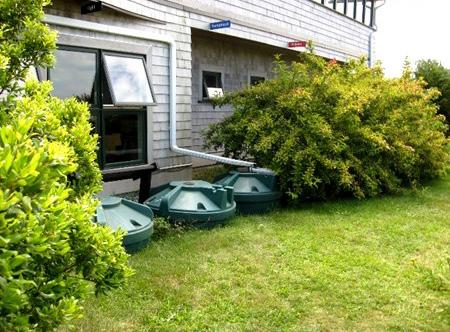
different types of water conservation and stormwater management practices. To survey this, Stacy asked participants to rate images of different landscape practices, including simple ways to reduce outdoor water use, like irrigating at dawn and using mulch to retain soil moisture. Other practices were more permanent installations, like constructing rain gardens, reducing lawn size, and planting drought-tolerant landscapes.
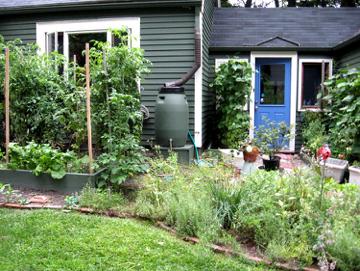
The results showed that local residents were aware of existing water shortages and supportive of policies to restrict water use. The homeowners’ willingness to adopt innovative landscape practices was motivated by appearance; participants largely favored practices that appeared cared for, rather than those that were seemingly rough and unkempt. For example, one survey question compared two photos of rain barrels; one barrel was camouflaged with the house (right), and the other was a large, black plastic barrel (left). The rain barrel that camouflaged its presence and mimicked the home’s existing design rated higher than the synthetic-looking barrel. Additionally, homeowners’ knowledge about the environment, education, and income level were significant variables in predicting aesthetic preferences and willingness to adopt low-impact development practices.
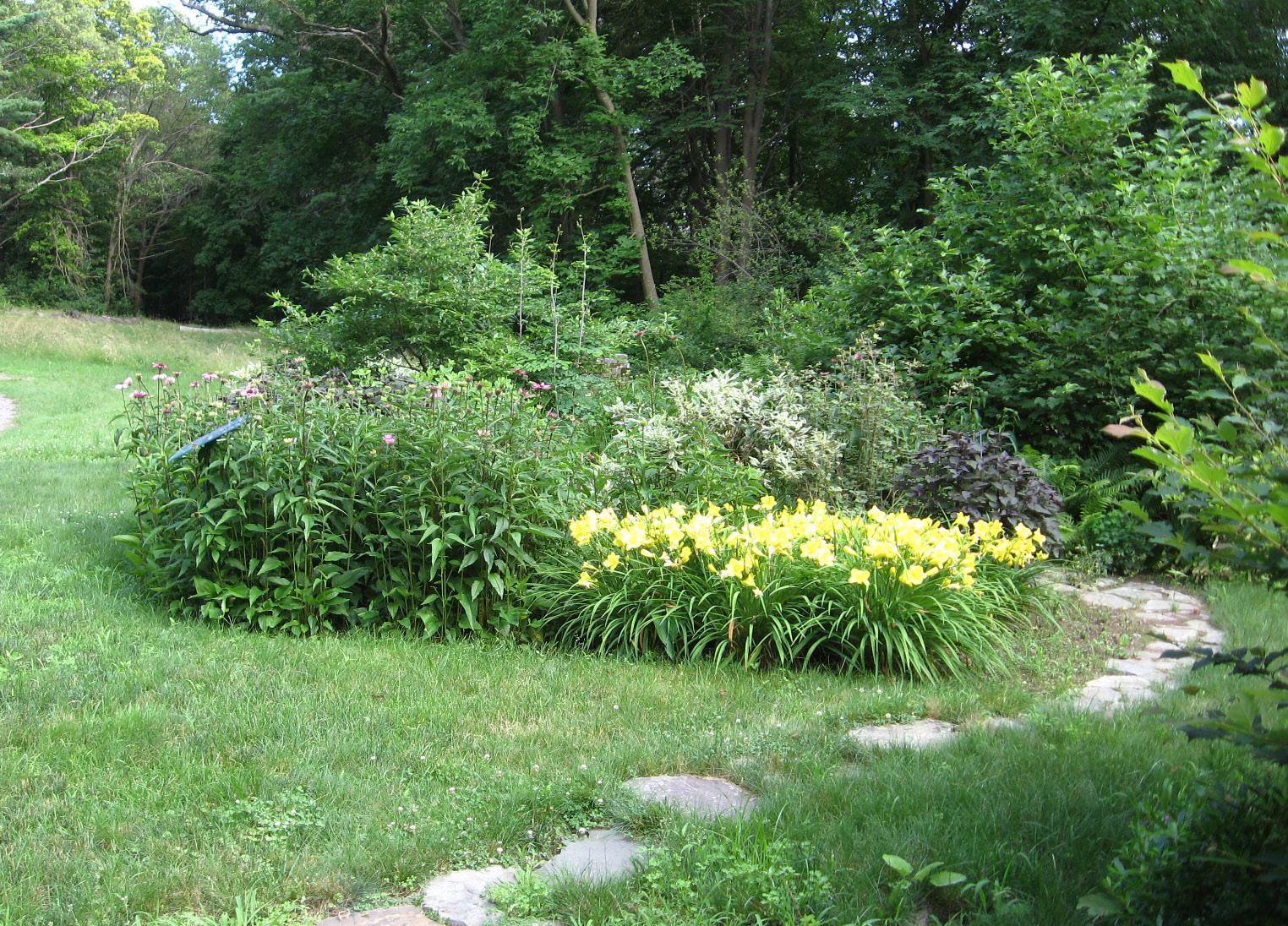
This study has many implications for the landscape design field. Foremost, the aesthetic appeal of landscaped areas

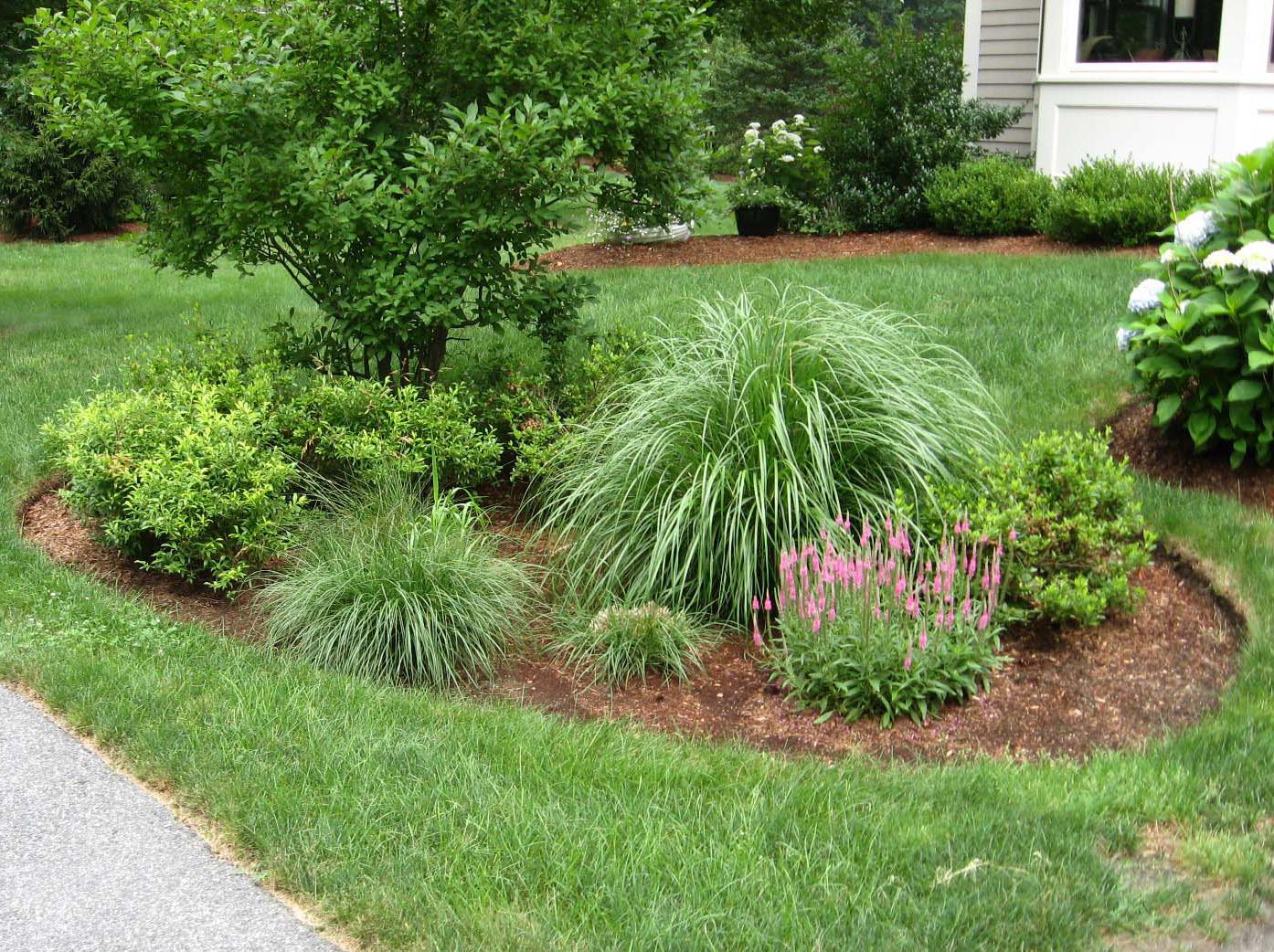
(continued from page 12) appears to be the most important reason for adopting innovative water conservation and stormwater management practices. Designers need to create landscapes that look organized, well designed, and beautiful in the eyes of the owner. Planting design and site placement are key to this success. The photograph of the rain garden on the right shows an example of the type of landscape that local residents found appealing. The neatly mown edge around this landscape helps to increase acceptance of the rain garden plants.

The next implication for designers centers on tailoring the water conservation solution to the specific homeowners and the site characteristics and use of their yard; one-size landscape practice does not fit all. For example, some homeowners have a need to retain some mown lawn area for recreation, but only a portion of the lawn needs to be mowed; the rest of the lawn can be left unmown, or converted into a meadow.
Education remains an important tenant supported by this research. Stacy found that it is important to promote the
benefits of water conservation practices beyond the ecological value. Not only was aesthetics an important motivation to installing landscape conservation practices, other important reasons were increased property values, reduced flood damage, and low-maintenance yard care.
A final important insight from this research is that homeowners are concerned about potential negative impacts of water conservation practices. Some homeowners in this study had safety concerns about mosquitos breeding in rain gardens and tall meadow grasses hosting ticks and increasing risk of contacting Lyme disease. Proper landscape management and design, along with communication and outreach efforts can address these concerns. A welldesigned raingarden should drain within 24 hours, too short a time for mosquito proliferation, and mowing the edges of meadows can reduce contact with long grasses that may host ticks.
The results of this study show that there is interest among Massachusetts homeowners in making innovative changes to their yards that are environmentally beneficial, reduce water use, and help minimize stormwater runoff and pollution. Landscape designers play a critical role as advocates for these environmentally beneficial solutions to help address the current drought in Massachusetts, while promoting a greener future for the long-term environmental health of the Commonwealth.
We extend our thanks for the research funding and support from the UMass Center for Agriculture Food and the Environment (MASS000445) and the Department of Landscape Architecture and Regional Planning. Thanks also to the other University of Massachusetts-Amherst researchers on this project including: Assistant Professor Anita Milman (Dept. of Environmental Conservation), Assistant Research Professor Allison Roy (Dept. of Environmental Conservation and USGS), Associate Professor Paige S. Warren (Dept. of Environmental Conservation), Mary Owen (UMass Extension Educator), (Director of Landscape Contracting, Stockbridge School) Mike Davidsohn, and graduate students Rachel Danford and Emily Argo. Editing thanks on this article goes to PhD student, Alicia Coleman. (To find out more about Johanna Stacy’s thesis or other related research, please visit www.umass.edu/larp/center/ center-resilient-metro-regions-crm.

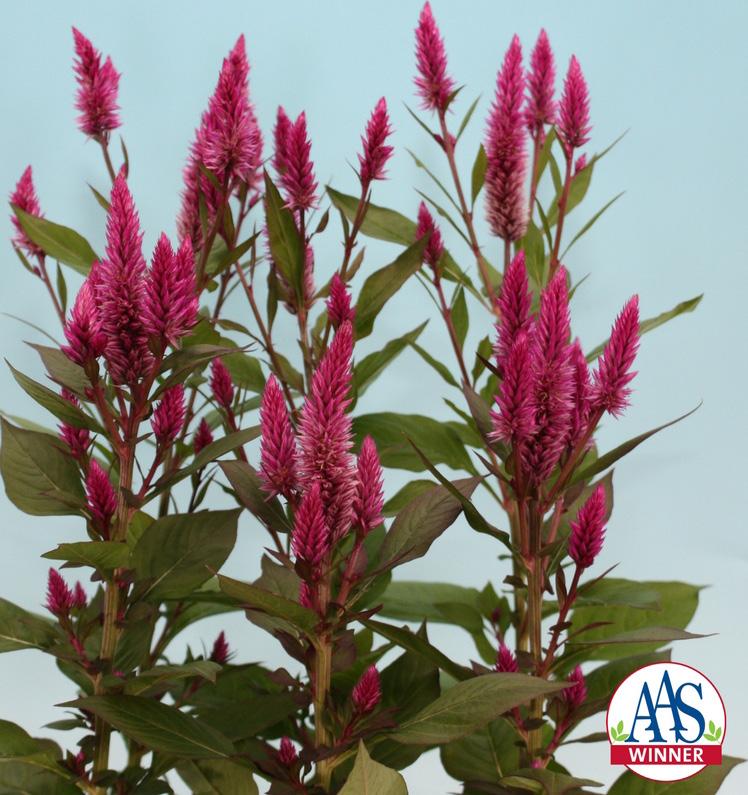
This spiked beauty claimed victory in North America’s trial sites to become the first ever AAS Winner from Japanese breeding company Murakami Seed. The judges gave this entry high marks in the greenhouse for the good branching, almost bushy growth habit and early to bloom flower spikes. In the garden, Asian Garden Celosia continued to bloom on sturdy stems, keeping the bright pink color all summer long, holding up even through some of the first frosts of the season. The AAS Judges commented on the fact that this celosia was a pollinator-magnet, making this AAS Winner a sure bet for pollinator-friendly gardens.

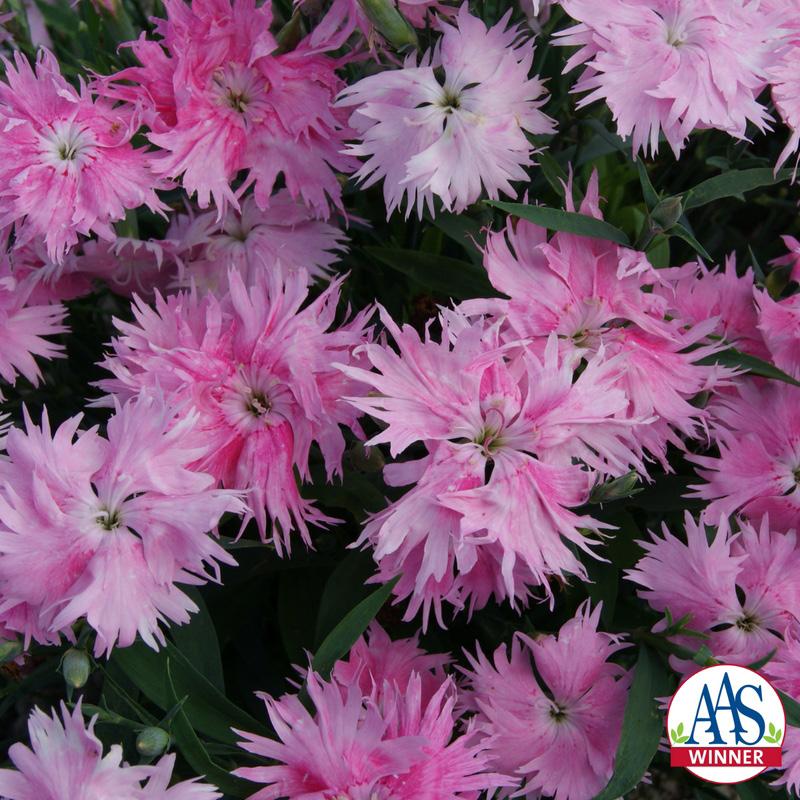
Supra Pink joins its sister, 2006 AAS Winner Supra Purple, to give us two fantastic colors in an easy-to-grow interspecific dianthus for three-season (spring, summer, fall) garden color. This compact, bushy plant blooms prolifically with novel mottled pink flowers sporting frilly petal edges that hold up even in summer heat and drought. No deadheading needed on this winner. One judge attempted to deadhead this entry but it re-bloomed too fast to do so! Supra Pink grows to just under a foot in height but is a vigorous grower and will deliver fancy, clear pink flowers for a long time as observed over and over by the AAS Judges. Supra Pink was tested as an annual and won the award based on first-year performance, but similar to other dianthus, it may overwinter in some regions.
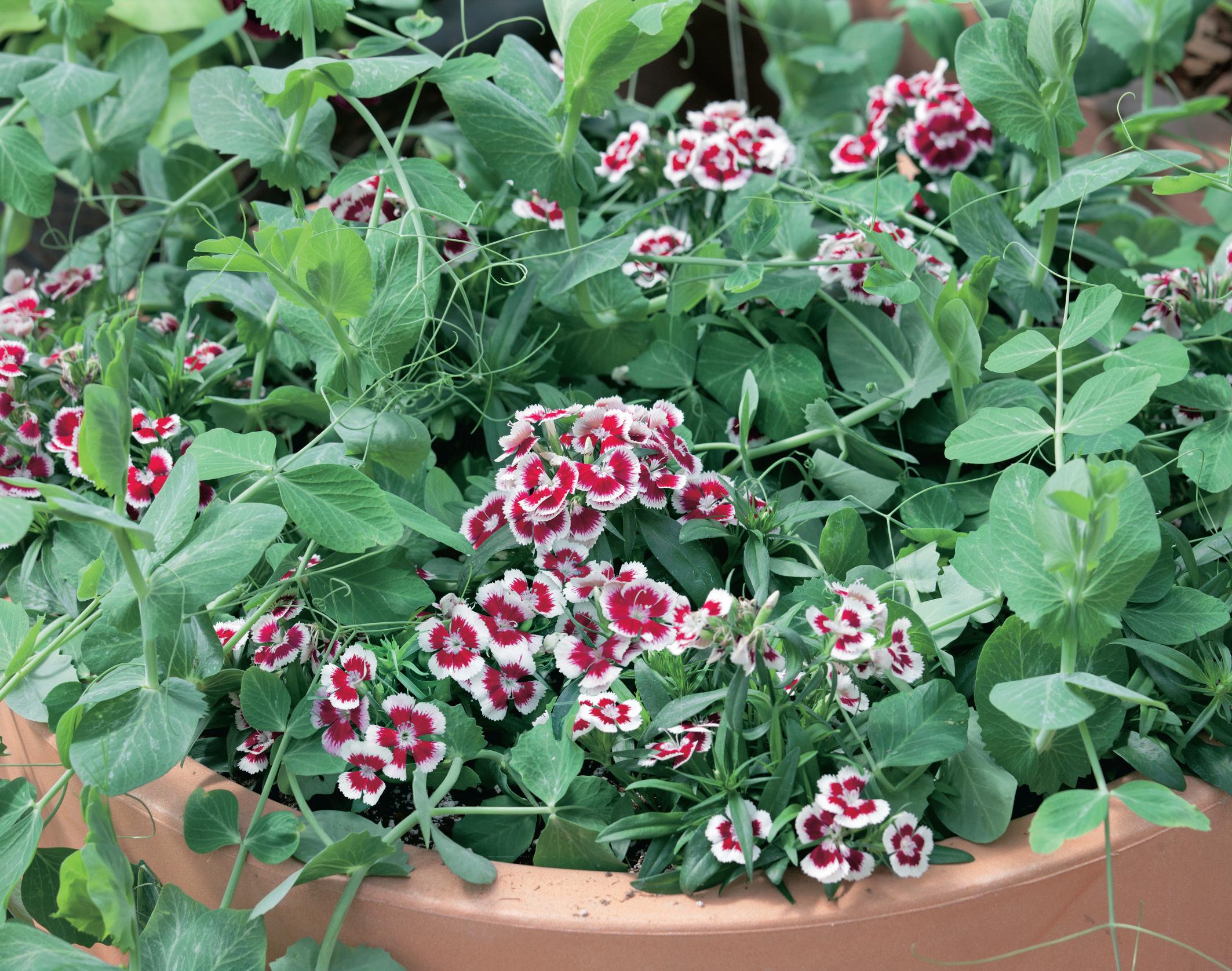
This compact beauty produces sweet, uniform pods that are very tender when harvested early. With only 40 days needed to maturity, Patio Pride can be one of your first spring harvests or one of the last fall harvests from your Southeastern garden! This pea is wonderful when planted in containers and is ideal for succession planting yielding a consistent harvest over many weeks. Plant in patio containers with cool-season flowers for a beautiful combination ornamental and edible display.

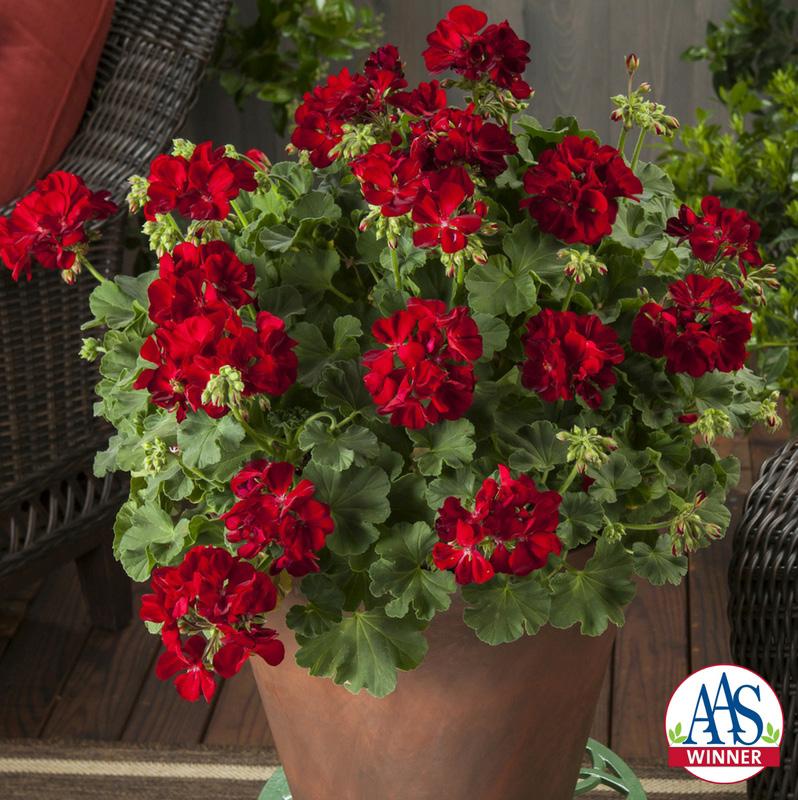
With an outstanding deep red velvety flower color and great branching habit, Calliope® was unmatched in the AAS Trials when compared to other market varieties. Calliope® Medium Dark Red geranium is an interspecific hybrid with zonal-type flowers and leaves. This AAS Winner has a mounded, semispreading growth habit with strong stems supporting the flower heads that are loaded with deep red blossoms. These plants work great in containers, combination plantings, hanging baskets as well as in an in-ground landscape. Gardeners will enjoy exceptional landscape performance in normal conditions as well as in more challenging high heat and drought conditions.
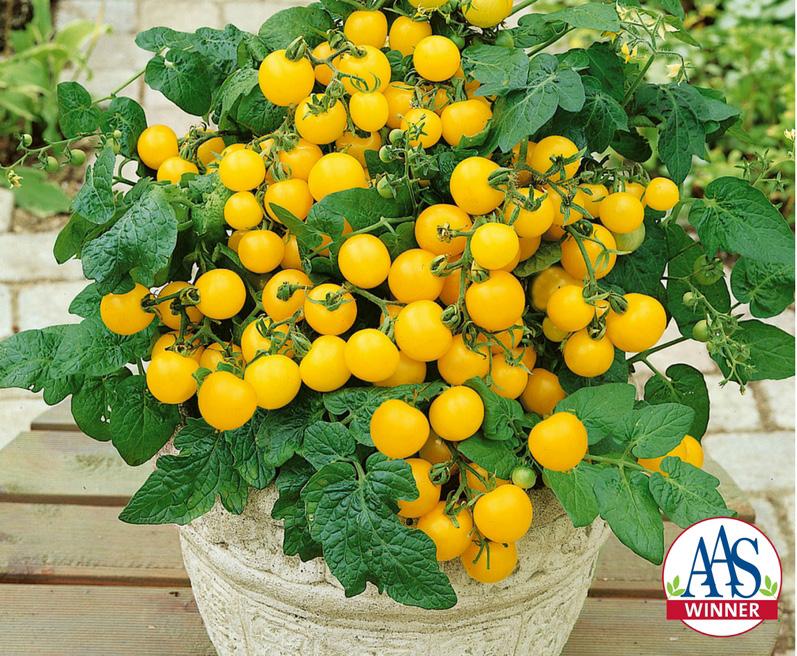
Patio Choice Yellow is a new compact, determinate tomato developed specifically for small spaces and container gardens. This AAS Winner produces very large yields of 1/2 ounce bright yellow cherry tomatoes on short vines that grow only 18 inches tall. This mild flavored cherry tomato sets over 100 fruit on compact plants which are perfect for urban or small space food gardeners. Consider using these beautiful tomatoes either fresh or in the oven or sun dried for a deliciously sweet treat. For even easier picking, plant in a hanging basket.
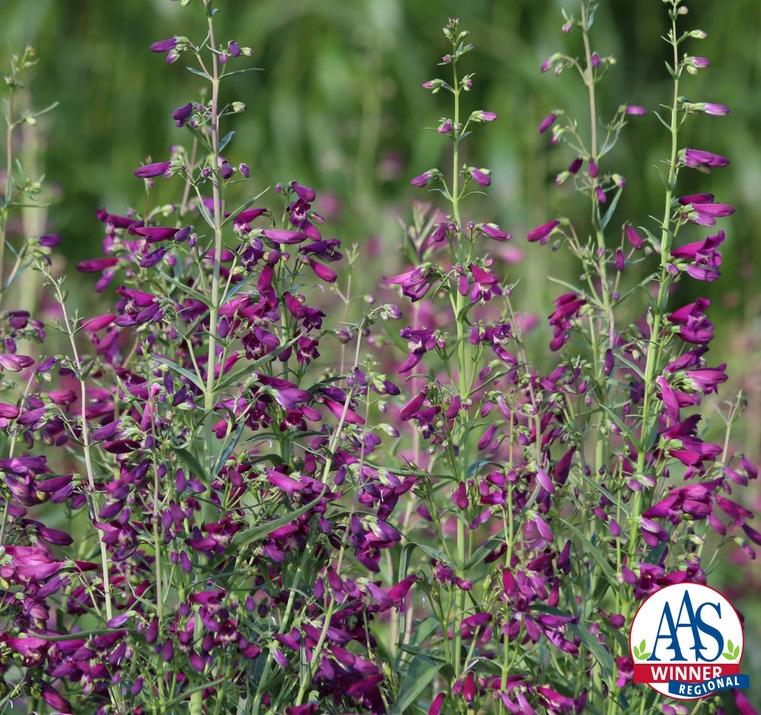
Vibrant purple blooms present a new and unique color in penstemon! Twizzle Purple was judged as a first-year flowering perennial by judges who were impressed with the upright plant habit and superb flowering performance. This North American native blooms profusely with 1-inch tubular flowers on long slender stalks that grow up to 35 inches high, making this beauty a magnet for pollinators from mid- to late summer. Twizzle Purple can be used to add height to combination planters or in landscapes for high-impact color.

EnduraScape™ is described as “tough as nails” because it is the first verbena that can tolerate drought and heat plus survive cooler temperatures down to the low teens. This long-blooming pink bicolor verbena is spectacular in the landscape, edging a walk or border as well as in large containers and baskets. Vigorous plants are sturdy spreaders that pop with abundant soft pink blossoms that darken in intensity toward the center of the bloom. Pink Bicolor is the newest color in the series and the AAS Judges deemed it truly spectacular!
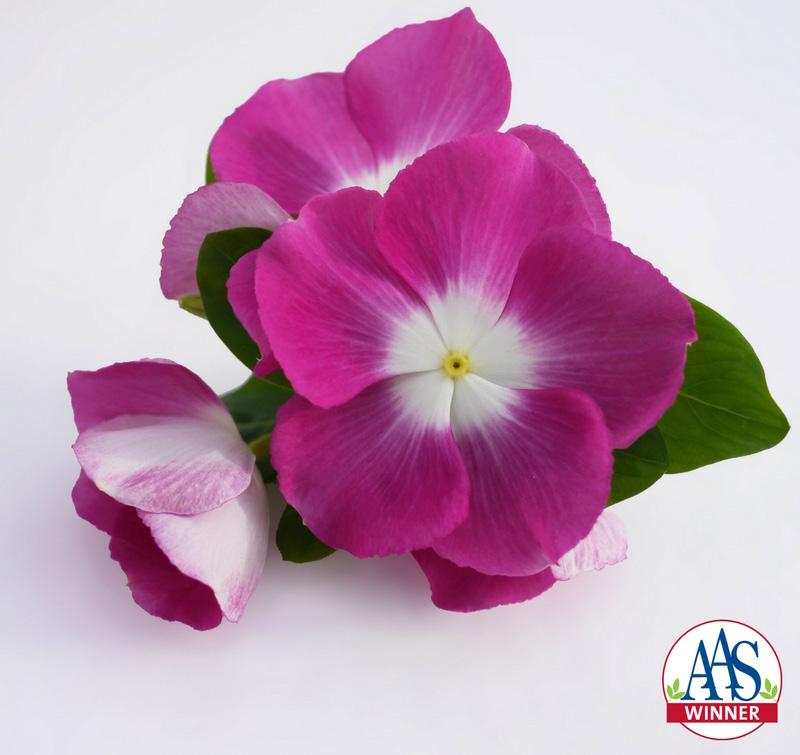
Mega Bloom is an exciting new series of vinca bred to withstand heat and humidity without succumbing to disease. Orchid Halo produces huge, bright, rich purple blossoms with a wide white eye creating a striking look for the garden, even from a distance. Plants maintain a nice, dense habit with flowers staying on top of the foliage for full flower-power color. Growers will like the early bloom time, compactness in the greenhouse and plant uniformity.
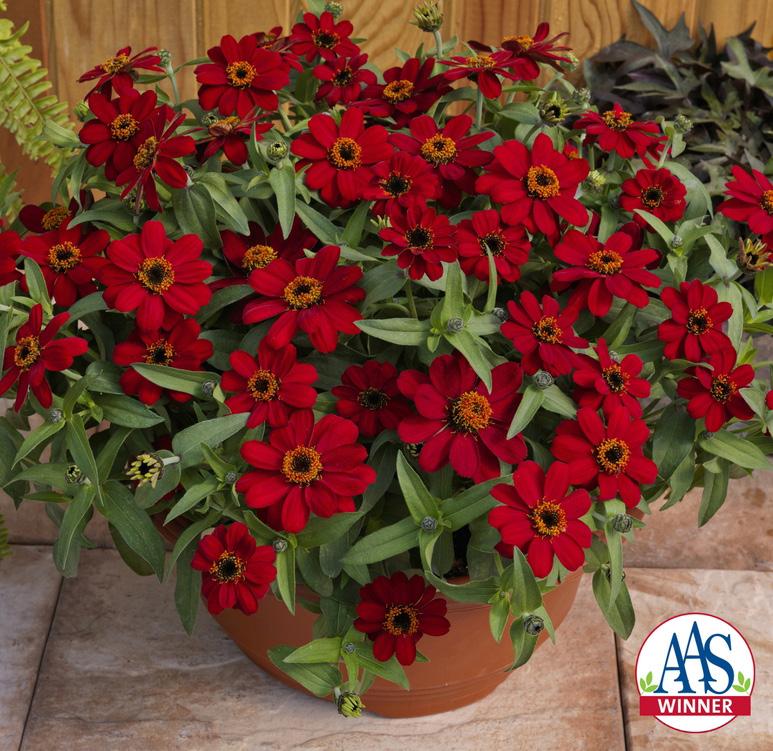
This newest Profusion Zinnia winner is the fourth color in the single flower series to win the coveted AAS Winner award. The original Profusions were ground-breaking plants because of their compact form, disease resistance, early and continuous blooms all season long, and ease in growing. Judges raved about the vibrant, perfectly true red color of this zinnia which doesn’t fade in summer’s intense rays. As one judge stated, “We have waited for years for this true red color in zinnias!”
Gardeners will find many uses for the true red zinnia that’s easy to grow and a favorite of pollinators. Uniform plants and outstanding greenhouse and garden performance will be especially important for growers producing Profusion Red for retail sales.
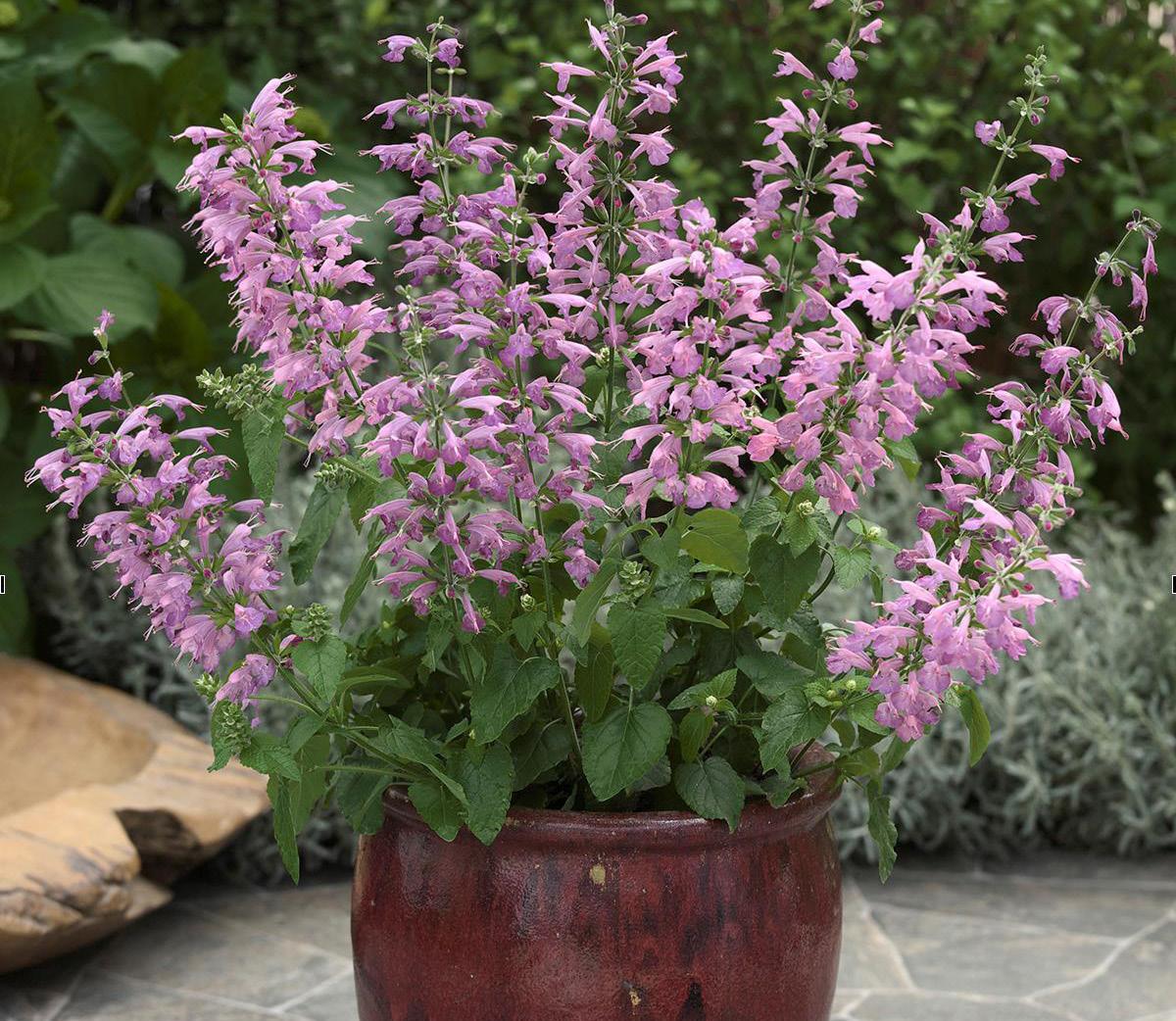
The fourth AAS Winner in the Summer Jewel™ series of popular AAS Salvia Winners is the newest in color, Summer Jewel™ Lavender. The unique flower color of dusty lavender purple is a delight in the garden and flower containers as well as a major attractor of pollinators including bees, butterflies, and hummingbirds. An extra bonus is how much the Goldfinch loves these flower seeds in the fall. It’s a photo-ready moment when these complementary colors of gold and lavender connect! The early blooming, stable, compact uniform growth and continuous flowering of this plant are additional positives to this plant.
By Lynne Franklin
HHave you ever wondered why you connect so well with some people and don’t with others? When the “others” are your clients or people you work with regularly, your life gets diffi cult, especially if they’re clients you need to persuade to take your landscaping recommendations or colleagues you want to motivate to work with you. Most of us just accept this, but you can do something better. Here are two powerful tools to increase the chances you’ll get what you want more often.
Understand the Persuasion Cycle
Developed by Dr. Mark Goulston, the Persuasion Cycle shows the steps our brains go through to agree to do anything. Let’s focus on the first part of the cycle, because that’s the toughest.
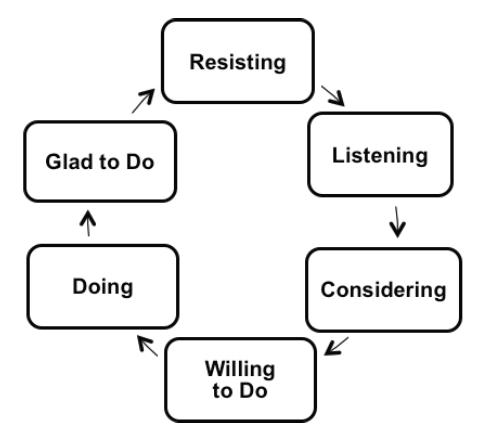
We all start in resisting. Even people who want to say “yes” will resist you. The good news is that this has nothing to do with you — it’s just how we’re wired. Our brains are skeptical about any new idea.
As you can see, getting approval is a series of small decisions. Here’s where we often shoot ourselves in the foot. We want to skip from resisting to doing — because our goal is to get them to do something. But then we’ve missed the most important step: getting them to buy in to what we’re offering. This only happens during Step 2, when we move them from listening to considering. And when we don’t get buy-in, we will likely face their buyer’s remorse later and have to go through the whole process again.
Here are some simple ways to help you move people through this part of the
Listen first. Most of us wander through life feeling unseen and unheard. A great way to move people from resisting to listening is by listening yourself and giving them all of your attention. For example, bring up a subject and ask their opinion.
2. Make it all about them. Why would they want to do what you’re suggesting? Make sure the benefits to them are immediately clear.
Play back what you heard. By listening to the words and thoughts the people you’re trying to reach are using — and then replaying them — you can get them to tune in to you. (More on this under body language.)
4. Convey rather than convince. People expect you will try to sell them something, and they’re just waiting to resist you. Instead, conveying the reasons your approach will help them solve a problem or get what they want is more effective. You are speaking from your place as an expert, with ideas that are tailored to their needs. This approach reduces their resistance and they are more likely to listen. Because, let’s face it, once we have to convince someone to do something, we’ve already lost.
(continued on page 20)

Let’s face it: Even difficult people are less frustrating when they say “yes” to us more often.
Sometimes you and the people you’re trying to persuade will agree on goals and strategies, and other times your opinions will differ. You always want to ensure that the information you provide to them, and the way you give it, increases the chances that they will get it.
You don’t have to change who you are — just become more observant. Now you will be more in tune with those who were troublesome to you in the past. You can notice where they are in the Persuasion Cycle and say things that move them to the next logical step.
Get ready to benefit from being the most persuasive person in the room.
Lynne Franklin is a speaker and coach who works with organizations that want to use persuasive communication to increase their performance, productivity, and profit. She is the author of “Getting Others to Do What You Want.” You can reach her at Lynne@LynneFranklin.com.






By Jeffrey Scott
Landscaping and baseball are similar.
To win at baseball you have to grind it out every day — through injuries, bad weather and long days and nights. You have to work hard all year through the fall. The same goes for landscaping and any contracting field: You must finish the year strong to reach your true potential and maximize year-end profitability.
Whether you are a Cleveland Indians or Chicago Cubs fan, or just an interested onlooker, you can learn valuable lessons from how each team competed in the World Series and how each manager (Cleveland’s Terry Francona and Chicago’s Joe Maddon) led their teams.
Lessons
1. You must be in it to win it: Your team must still be selling and pro-
ducing work at a strong pace.
2. Each player must support and believe in one another, grinding it out together every day.
3. Individual goals must be set aside for the common goal.
4. It helps immeasurably if you enjoy your position and enjoy the work.
5. Don’t give up when you have a tough day; work through the struggles with a positive attitude.
6. Put your best effort forward every day, the minute you step on the field — or into your yard or on a job site.
7. Keep perspective. As Joe Maddon says, “Don’t ever let the pressure exceed the pleasure.”

8. Be relentlessly positive.
Jeffrey’s Breakthrough Idea: Don’t compare your company to other companies; improve on your past record, and celebrate the wins.
Take Action: Communicate every day to your team; inspire them to believe in one another and finish strong. Give them ongoing feedback on their successes and good efforts. Motivate them, in Terry Franconia’s words, to leave it all out on the field.”
Jeffrey Scott, MBA, author, business coach, consultant, is an expert in growth and profit maximization in the green industry. He grew his company into a successful $10 million enterprise, and is devoted to helping others achieve successfor his newsletter newsletter. To sign up go to www.jeffreyscott.biz
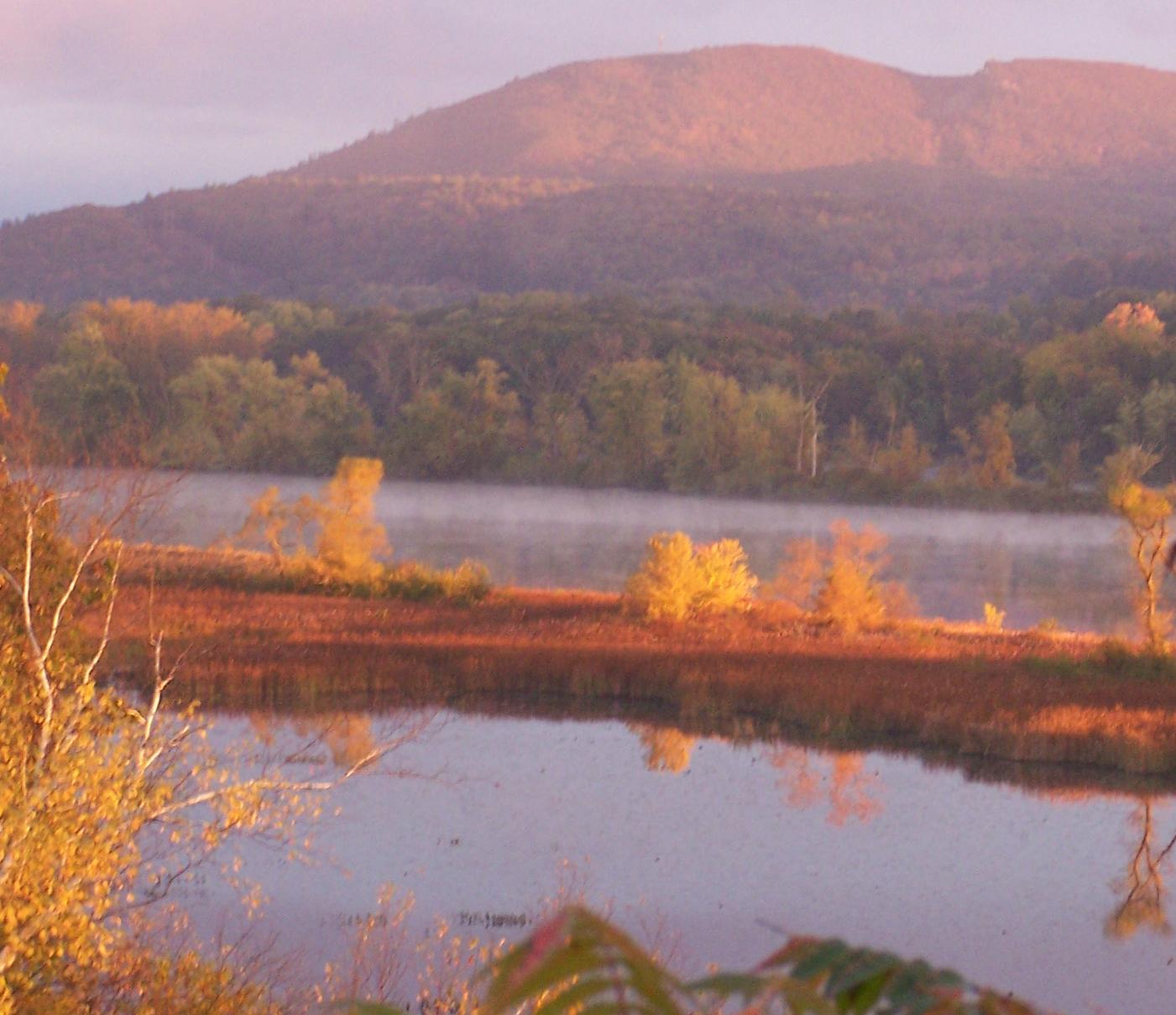
The Vermont Mulch Company is located on the banks of the majestic Connecticut River, in the far southeast corner of Vermont. This strategic location allows us to e ectively service Vermont, New Hampshire, Massachusetts, Connecticut, Eastern New York and New Jersey markets.



Hemlock Mulch Aged Hemlock Mulch Fragrant Forest Dark Bark Cedar Mulch
Hardwood Mulch Colorlast Playground Chips




by Mark Ahronian MCH
Ahronian Landscaping has been working with interns from Holliston High School for many years. Each year, we encourage the school’s career office to look for and vet students who are interested in what we do.

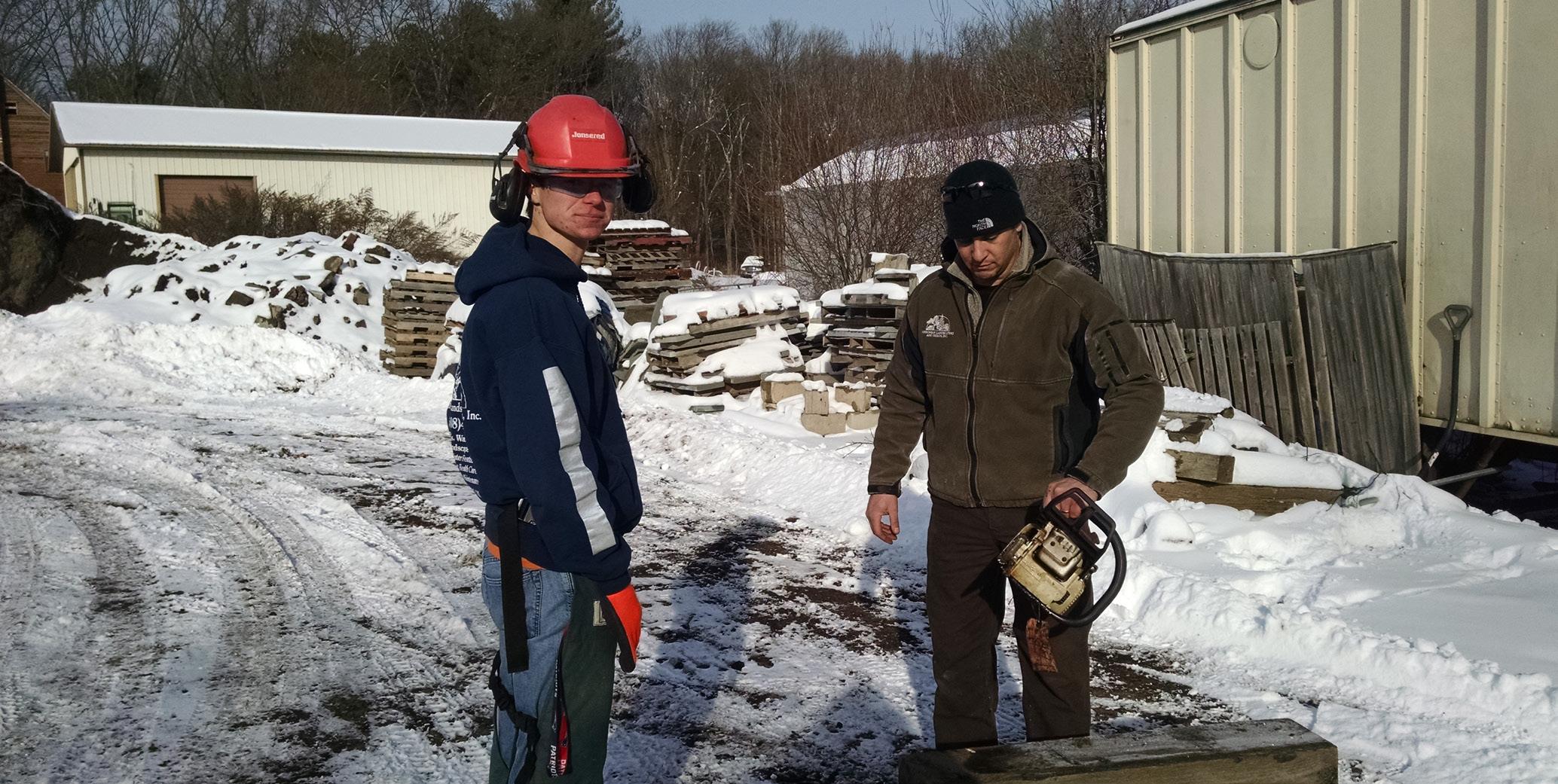
As Ahronian Landscaping continues to build its intern program, MNLA president Jim Stucchi has been working with Ahronian Landscaping intern Matt Corbett.
Matt has learned to identify more than sixty plants, including their common and Latin names, how to spell them, and how best to use these plants in the landscape. He has learned how to use various pieces of equipment, including a chain saw, as well as how to dig a plant and replant it properly. He is now learning how to measure to scale, and is working on a colorrendered landscape project that will be his final grade. As he learns, Matt takes a weekly quiz.
Ahronian Landscaping has been successful in turning out good summer employees as well as filling its ranks with leaders who go on to further their knowledge of our industry in college. Contact me if you have any questions or need help in starting an intern program at your company.
Mark Ahronian, MCH President, Ahronian Landscaping & Design Inc.

by Darryl Sullivan, MCH, Mount Auburn Cemetery
1. Dendrochronology is the science of calculating a tree’s age by its rings.
2. The evaporation from a large oak or beech tree is 10 – 25 gallons in 24 hours.
3. Only one percent of rainforest plants have been studied for medicinal potential.
4. Strawberry is the only fruit that bears its seeds on the outside.
“An investment in knowledge pays the best interest.”
Benjamin Franklin



Flooding causes a larger number of fatalities than any other storm-related hazard, according to the National Oceanic and Atmospheric Administration (NOAA), and more than half of all flood-related deaths result from motorists driving into floodwaters where just two feet of water will float most pick-up trucks and sport-utility vehicles. Heavy rain presents significant risks on the road, as 80 percent of driving decisions are based on visibility, and downpours can cause vehicles to hydroplane. Hail from severe thunderstorms, falling at more than 100 mph, can break vehicle glass, and thunderstorm winds can overturn any vehicle. Vans and trailers are particularly vulnerable.
An effective storm emergency plan can prevent employees from being on the road – or quickly get them off it and into safer shelter – during severe weather.
Ensure professional mechanics conduct regular safety checks of company vehicles, and maintain the vehicles according to manufacturers’ recommendations.
Check that seatbelts, headlights, and other vehicle/ trailer lights are working properly prior to each trip,

and replace windshield wipers every six months.
Equip vehicles with emergency supplies including firstaid kits, safety flares, warning triangles, flashlights, blankets, and booster cables.
Train all employees on safe driving techniques and what to do in case of severe weather.
Teach employees to secure equipment, tools, plants, materials, and chemicals that could become projectiles or pose other hazards.
Include OSHA-advised components in storm emergency plans: information on conditions that activate the plan; your chain of command; details on suitable places to take shelter; evacuation procedures and routes; methods to ensure all personnel are accounted for; and procedures for addressing hazardous materials. The plan should describe conditions under which employees should or should not travel and what they should do if they encounter severe weather while travelling. Employees should know the overall plan as well as their specific roles in it.







With FARM FAMILY, you’ll get an agent who has the know-how and products to help you properly manage your family’s risks. An open appointment book, along with options for home, auto, life, farm and business coverage, means you can feel good that you’re getting more an ally than just an agent.
Wherever you are in Massachusetts, there’s a Farm Family agent close to you. Give us a call for more information.







Richard Blair Carver (508) 866-9150
Mark Sylvia Centerville (508) 957-2125
* Photo by Jennifer Gunn
Josh Nadeau Easthampton (413) 203-5180
Jonathan Stewart Framingham (508) 283-1456
Bob Sinopoli Great Barrington (413) 528-1710
Dominic Sinopoli Great Barrington (413) 207-5044
Martin West Marlborough (508) 485-3800







Kevin McCarthy Marlborough (508) 485-3800 Associate Agent
Kay Spencer Middleboro (508) 747-8181 Associate Agent
Andrew Brodeur Middleboro (508) 747-8181
Kevin Sullivan Middleboro (508) 998-0512




Jason Charette North Andover (978) 208-4713

Richard Simonian Northborough (508) 393-9327
Jeff Pichierri Northborough (508) 393-9327


Francis Bingham Norwood (781) 255-2002

Marc Cohen Worcester (774) 329-7067
Tim Viles South Deerfield (413) 665-8200

Sean Rooney Wilbraham (413) 887-8817
Diane Mason-Arnold Southwick (413) 569-2307

Maureen O’Mara Williamstown (413) 458-5584
Eric Mason Southwick (413) 569-2307

Thomas Carroll Worcester (508) 752-3300
John Pagliaro West Springfield, MA Granby, CT (860) 653-3300
Dale Johnson Topsfield (978) 887-8304

Steve Charette General Agent North Andover (978) 686-0170
Don Ludwig Westford (978) 467-1001
Give all employees a copy of the plan and make sure it’s in every company vehicle and every vehicle employees use on the job.
Be aware of weather forecasts, create a warning system to alert workers when they should not be on roadways, and develop a procedure to account for crews travelling when severe weather arises.
Appoint a weather watcher and alternate on each crew. The weather watcher should keep a constant lookout for dark clouds, increased wind, thunder, lightning, and heavy rainfall; notify the crew leader of predicted weather hazards; notify the crew when instructed that travel must be delayed or stopped; continue monitoring the weather and updating management personnel.
Evaluate your storm emergency plan every time it goes into action and make changes based on lessons learned.
Employees Should:
• Make sure you or another member of your crew is serving as a weather watcher at all times.
• Know and follow your company’s storm emergency plan and all training related to safe driving.
• Secure equipment, tools, chemicals, etc.
• Understand the most dangerous time for driving is

right after the precipitation begins. Oil and anti-freeze rise to the surface, making the road slippery and hydroplaning more likely.
• If you encounter a storm or heavy rain, make sure the headlights are on and try to safely exit the roadway and park. Stay in the vehicle and turn on emergency flashers. If you hear thunder or see lightning, seek shelter in a fully enclosed building with plumbing and wiring. If such shelter is not available, close vehicle windows and avoid touching metal or other surfaces that conduct electricity.
• If you encounter strong winds, exit the road using extra caution near trailers, vans, and vehicles carrying lightweight cargo, and take shelter in a sturdy building.
• If excessive rainfall could lead to flooding, exit roadways immediately. If floodwaters begin to rise around the vehicle and you cannot drive safely to higher ground, quickly abandon the vehicle and move to higher ground. Do this when water is not more than a few inches deep. If the vehicle is swept into moving water, stay in the vehicle. If water rises inside it, move to the roof.



Creeping thyme, Thymus serphyllum, is a plant I’d used for years in herb gardens and as filler between paving stones. I never thought it would become one of my favorite plants, but it has, and here’s how it happened.
In 2012, I designed and installed a new garden for the Hedge House Museum in Plymouth, Massachusetts. The property had been cleared of its existing plantings and undergone extensive regrading to correct persistent and damaging drainage problems.
One of the prominent new features was a 100-foot-long embankment that presented me with a challenge common to many designers and gardeners: What to plant on a hot, dry slope. I knew a key element to the success of the planting would be choosing a ground cover that would prevent erosion and reflect the historic nature of the site. The museum’s executive director suggested creeping thyme. I wasn’t sure of its durability, but decided to take a chance and try it.
I planted 125 plants massed along the sunnier parts of the slope. They came in 3-inch-pots and were spaced 12 inches on center. You can see from the accompanying photos, taken two years later, what a striking display the plants make when they are flowering.
Creeping thyme grows best in average to sandy, well-drained soil in a sunny exposure. It has profuse reddish magenta flowers in late May/early June. Bees and other pollinators love it, and it’s hardy in zones 4-8. Always start with a well-cultivated planting area and weed it as needed to keep grass and weed seedlings from getting a foothold between the new plants. Water regularly until the planting becomes established.

Here’s further proof of creeping thyme’s durability: I used a few plants on a traffic island as part of a Plant Something beautification planting in 2013. They flowered well and survived drought, road run-off, and all of the hazards of growing in the middle of a busy intersection.
Bob Hoxie is the owner of Great Hill Horticultural Services, which specializes in planting, pruning, and creating personalized garden spaces. Bob is a Massachusetts Certified Horticulturist with a diverse background in landscape design, fine gardening, and ecological landscaping.