WELCOME to the latest edition of Retail News, your premier source for the latest insights, trends, and innovations in the FMCG retail industry. This special December/January double issue features our annual Retail Groups Report, where some of the biggest names from right across the Irish grocery landscape report on the last 12 months in retailing and look forward to what lies ahead in 2026 (Page 41-61).
Also inside, we examine the EY Consumer Pulse for Ireland as festive fever takes hold (Page 16), we have a pictorial spread from the IGBF Christmas Lunch, one of the social highlights of the year for the FMCG industry (Page 18), and we report from the inaugural ECR Ireland Supply Chain Summit, which discussed the implementation of AI in supply chains, amongst other things (Page 26), while on Page 37, we reveal Euromonitor’s top trends for 2026.
As we come to the close of another year, we want to extend our heartfelt thanks to all our readers, advertisers, partners, and everyone we’ve had the pleasure of working with in 2025. Your support, collaboration, and trust have played a vital role in our journey, and we truly value the relationships we’ve built together.
Wishing you a joyful Christmas season filled with peace, celebration, and time spent with those who matter most. We look forward to continuing our work together in the new year and achieving even more great things.
2 The year of living dangerously: what retailers want in 2026.
3 Eco-conscious consumers to buy less Christmas gifts
4 Reputations in sustainability continue to improve in Ireland; EY Entrepreneur Of The Year revealed; Major rise in purchase scams in the first half of 2025.
5 Ambitious plan for Irish Prepared Consumer Foods sector; Irish food and drinks market to hit €36.6 billion.
6 Food reformulation networking event held in Dublin; Retailers share supply chain struggles.
8 Irish shoppers get festive early; Normal comes to Ireland.
EY Ireland Consumer Pulse
16 While Irish consumers are planning to focus on value this Christmas, the vast majority will complete most of their festive shopping in-store.
IGBF Christmas Lunch
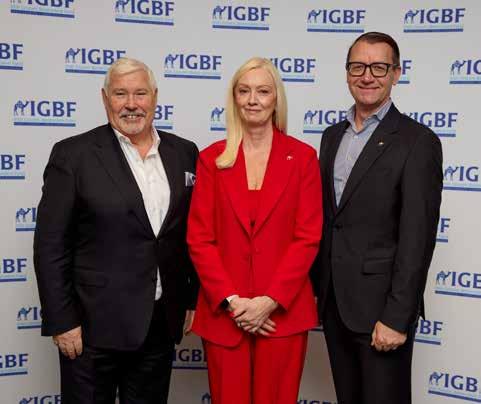
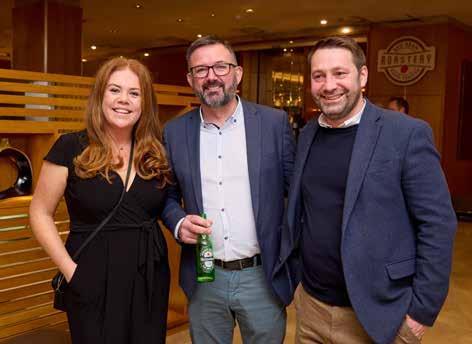
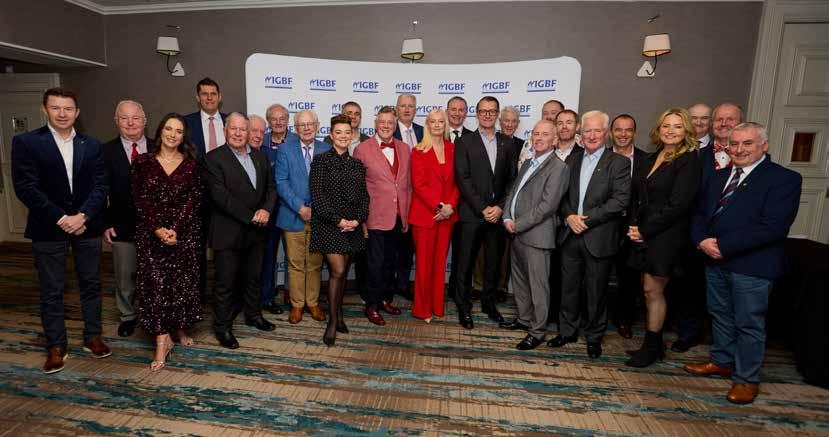
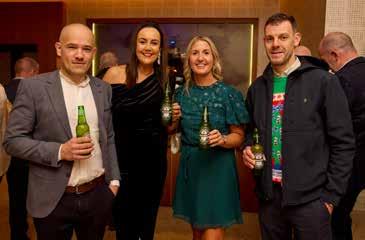
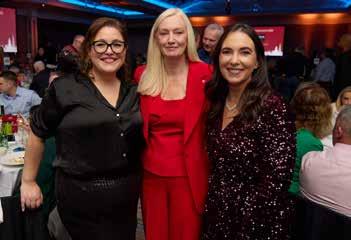
18 The Irish grocery industry united for the 62nd annual Irish Grocers Benevolent Fund Christmas Lunch, celebrating community, support and industry leadership.
Payment Data & Insights
22 Start 2026 by unlocking the hidden value in your checkout. Peter Charmant from Elavon explains how.
ECR Ireland Supply Chain Summit
26 Tackling some of the biggest challenges facing FMCG supply chains, including how best to utilise AI to introduce efficiencies.
Cash Management
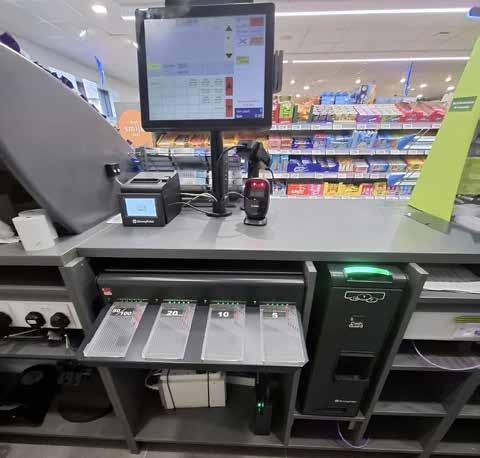
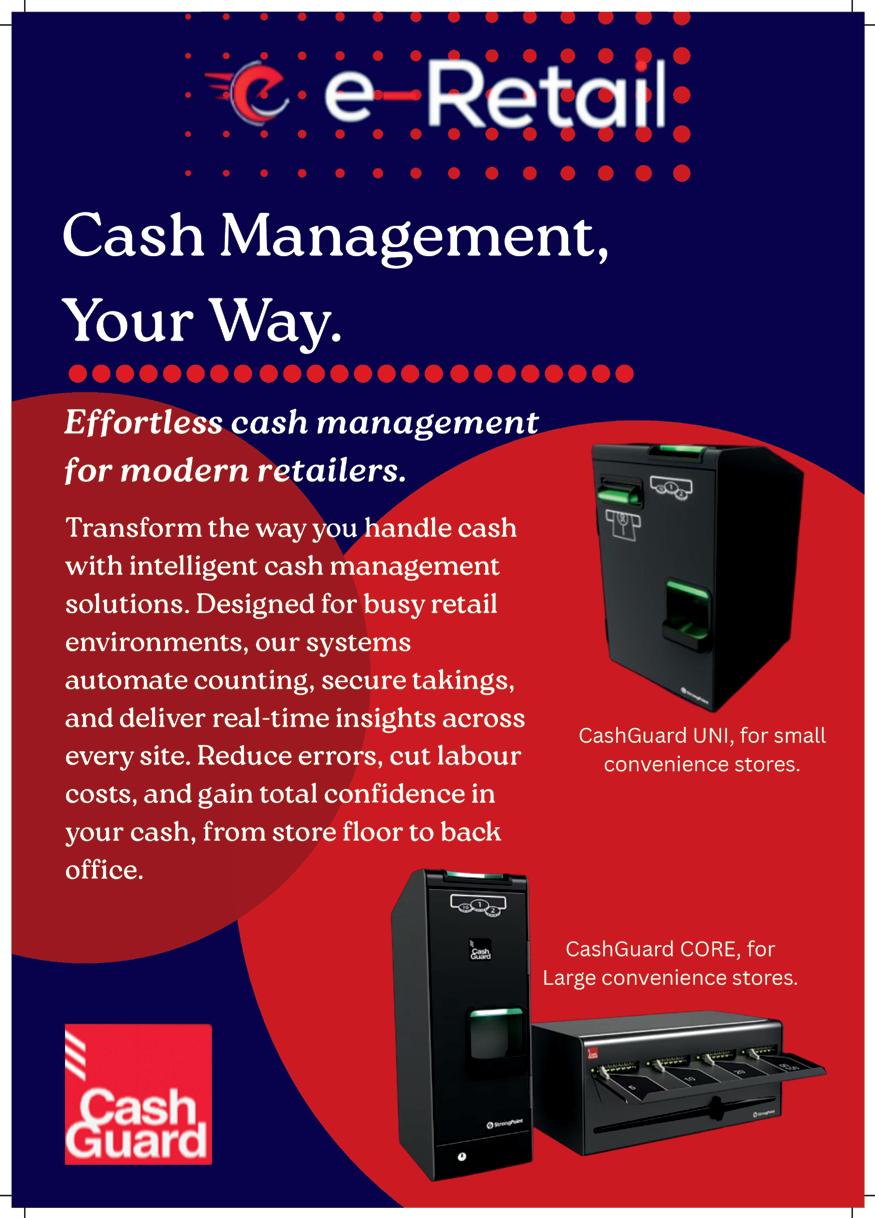
34 e-Retail CashGuard have cashhandling systems to suit every retailer, regardless of size or budget, saving you hours of time every week.
Trends for 2026
37 Dara analytics experts Euromonitor International have unveiled the four global consumer trends that will drive sales throughout 2026.
Retail Groups Report
41 The annual Retail News Retail Groups Report, where some of the biggest names in Irish grocery reflect on the year that was and look forward to 2026.
On the Vine
62 Jean Smullen looks back on the year in the wine trade, including some notable movers and shakers.
Edward Dillon/Santa Rita SuperValu Off Licence of the Year
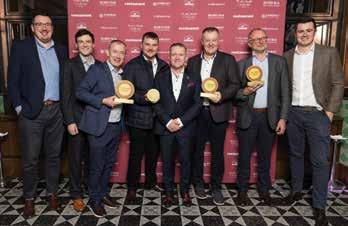
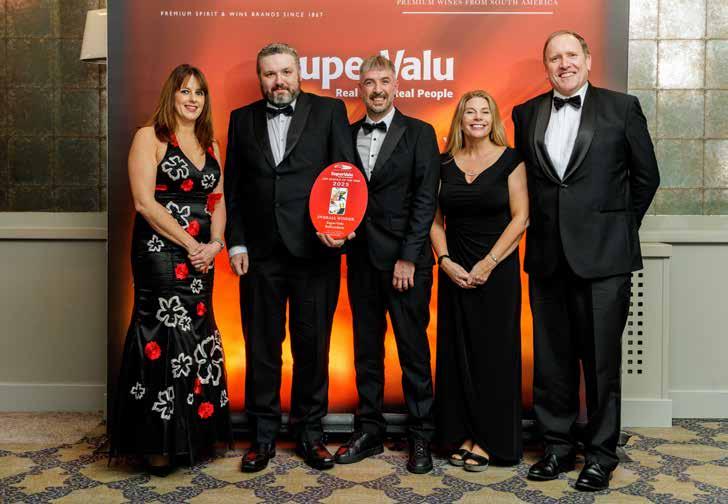
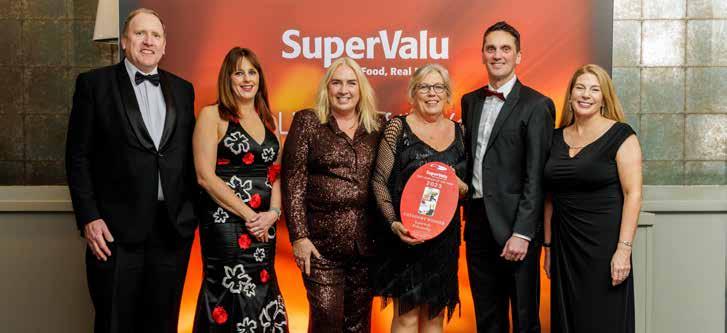
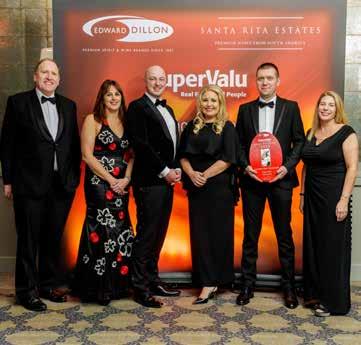
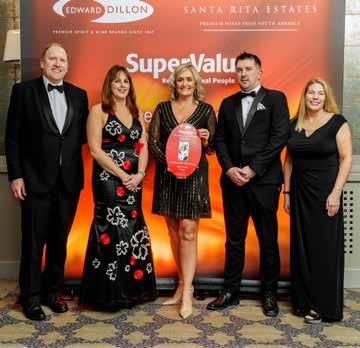
66 Four SuperValu stores won top awards at the Edward Dillon & Santa Rita Estates SuperValu Off Licence of the Year Awards.
Employment Law
69 Joanne Hyde and Megan Hurley of Lewis Silkin review some of the key developments in Irish employment law over the last 12 months and what employers should look out for in 2026.
The year of living dangerously: wh
HIKES in wage costs, a 9% VAT reduction, and a new defamation bill are just some of the items on the shopping list for retailers in 2026.
A new annual licensing system for retailers who sell tobacco products and e-cigarettes, which replaces the previous one-off fee, is one of a number of government-introduced measures likely to push up the cost of business in 2026. Vincent Jennings, CEO of CSNA, welcomed compliance for “questionable shops that sell vaping products”, but believed the decision to make the HSE, instead of Revenue, responsible for the fee-collection will make it more expensive to sell tobacco products.
Retailers face hikes to the cost of business from January 1, 2026, when the national minimum wage will rise to €14.15 per hour and pension auto-enrolment is introduced. Both of which amount to “a near 5% increase” in wage costs, according to Arnold Dillon, Director of Retail Ireland. There is better news six months later, July 1, when the reduced VAT rate of 9% kicks in for delis and foodcourts, although CSNA expects many of its members to pass on cost savings to customers. Retail Ireland prefers a targeted rebate for PRSI and hopes the Government will revisit this prospect in Budget 2027.
Re-turn’s ongoing review into the retailer handling fee around the deposit return scheme, expected to be announced in early 2026, is some consolation. “We hope the concerns raised by smaller retailers will be addressed,” said Tara Buckley, Director General of RGDATA. “It's not cost-neutral for the vast majority of small retailers. It's taking more staff time, more cleaning time, more investment and management. The present handling fee is not covering all those costs.”
For Irish off-licences, costs of business
are impacted by high excise duties, NOffLA’s Evelyn Jones told Retail News, describing them as “Europe’s second highest alcohol excise rates, which inflate prices, erode margins and undermine competitiveness.” Punitive excise rates combined with Minimum Unit Pricing (MUP) “no longer serve a meaningful public health function,” she said. Recycling responsibilities and MUP seem to be combining to propel Irish consumers across the border for their alcohol purchases.
NOffLA wants Government to “work towards a co-ordinated, all-island approach to MUP and related pricing measures to reduce distortion, support public health goals and protect retailers who are losing business due to these disparities.” A decent first step, reckoned Evelyn Jones, would be for Government to initiate a reduction in excise duty in 2026.
There are also disparities in energy costs for Irish retailers – not just in comparison to north of the border, but across the EU. RGDATA raised the issue with the Cost of Business Forum following a report that suggested our energy costs are the highest in Europe and hopes the topic of competition within the Irish market will be address in a 2026 report.
Retailers also want to see “a meaningful change in insurance costs” next year, remarked Arnold Dillon: “We need to better benchmark ourselves against other countries and investigate why Ireland is still a very expensive place for insurance.”
Tara Buckley agreed: “We remain disappointed that after all of the work and interventions, we're not seeing reductions in our premiums. Insurance companies are not handing over the benefits of this good work that's been done.” The Cost
of Business Forum is also looking into insurance and Buckley hoped it will make “serious recommendations” to the Minister.
Next year may see the unveiling of the Retail Crime Strategy from the Department of Justice via the Programme for Government. RGDATA have been conducting “high-level meetings” with Garda HQ around retail crime. “A lot of work still needs to be done because [RGDATA] members are facing crime and youth antisocial behaviour on a daily basis and increasingly aggressive behaviour by serial shoplifters, criminals and young offenders,” Tara Buckley warned.
Tara Buckley, Director General, RGDATA.
The Retail Crime Strategy is likely to incorporate a range of different changes, some of which could be legislative. In the meantime, retailers are looking to the Defamation Act, currently in its final stages in the Oirchteas, for support. RGDATA has requested the Act include a specific clause to absolve retailers (who make polite enquiries from customers about proof of purchase) from defamation actions. As it stands, the proposed legislation does not sufficiently protect retailers from speculative claims, believes CSNA’s Vincent Jennings.
“There are clear ways to enshrine in legislation the notion that a retailer hasn't defamed somebody if he or she asks for
Vincent Jennings, CEO, CSNA.
at retailers want Eco-conscious consumers to buy less Christmas gifts
a receipt or stops somebody and asks them to show their bag,” said Jennings. “You have a right to ensure your business is being run correctly.”
Arnold Dillon of Retail Ireland believes defamation reform is long overdue: “The measures as currently proposed may not have gone as far as this industry would have liked. There was concern there might have been constitutional issues had it gone further. What is envisaged will be a significant improvement and will hopefully strengthen the defence of retailers against vexatious and spurious claims.”
Retail Ireland want to see the Public Order Act amended to incorporate exclusion orders for retail: “Those exclusion orders can currently be applied to other settings but not to retail. That would be a useful tool to address repeat offenders.”
NOffLA are targeting another piece of legislation: the Public Health (Alcohol) Act. In particular Section 23 of the Act, which governs promotional practices, including loyalty-based incentives and price-linked offers. “Current interpretations of Section 23 remain too narrow,” argued Evelyn Jones, “enabling some large retailers to continue promotional practices that appear contrary to the intent of the legislation. Updated regulations, accompanied by clear and consistent enforcement, are essential to ensure fairness and legal certainty for all retailers.”
NOffLA also want to see regulation that targets distance selling of alcohol. “The growth of online and app-based alcohol sales has far outpaced existing licencing structures, resulting in inconsistent age-verification standards and weak oversight for operators who do not trade from a physical retail premises,” Evelyn argues. “This undermines responsible bricks-and- mortar retailers who comply fully with licencing law and creates a two-tier regulatory environment.”
Sustainability regulations are another spinning plate for the retail community in 2026, a year that from a wider national and even global perspective can only get better. Arnold Dillon pointed out that 2025 has been an unusually weak year for consumer sentiment. “It’s resting at a much lower level than it would have historically done due to inflationary pressures in some food categories,” he said. “We'd like to think those will moderate over the first quarter of the year.”
Vincent Jennings added: “If things returned to somewhat normal in Ukraine, it could lead to a supply of gas and oil at more sensible pricing.”
World peace would be welcomed, but would it encourage government to reduce business costs? Jennings laughed. “Who knows? Unfortunately the Government seem hell-bent on resisting any significant changes in areas that they can actually affect.”
NEW research published by Repak revealed that the Irish public will be more eco-conscious this Christmas. 30% of adults in Ireland are going to upcycle items to gift to a loved one and a similar amount (33%) will buy gifts that can have a second life to ensure that they last longer. Almost four in five (78%) shoppers see sustainability as an important factor when buying gifts, looking for products that are locally produced and whose packaging is recyclable.
This eco-conscious mindset extends beyond gift giving, with almost half of households planning on reducing how much they spend on food and drink in a bid to cut back on waste. The days of buying mountains of wrapping paper are also over, with 57% opting to put presents in reusable or recyclable gift bags and over 43% planning on using wrapping paper that they have saved or newspaper to wrap gifts. Two thirds (66%) of the public are also planning on saving and storing gift packaging for next year.
The Irish public is also getting creative with how they are giving their home a festive makeover, with approximately a third (30%) planning on using homemade decorations.
“Irish households are finding creative, thoughtful ways to make Christmas more eco-friendly, from upcycling gifts and reusing wrapping paper to cutting down on food waste,” said Zoe Kavanagh, Repak CEO. “The fact that almost four in five shoppers are actively seeking locally produced and recyclable products speaks volumes about how engrained sustainability is becoming as part of our Christmas planning.”
Approximately 102,000 tonnes of packaging waste will be generated this Christmas and Repak are encouraging households to give back to the environment where possible. To make a real difference, shoppers should focus on recycling the packaging we use most in December: wrapping paper, boxes and mixed packaging.
NOffLA’s Evelyn Jones.
Zoe Kavanagh, Repak CEO.
Arnold Dillon, Director, Retail Ireland.
Reputations in sustainability continue to improve in Ireland
IRISH organisations have improved their reputation in sustainability overall, according to the Ireland Sustainability Reputation Index 2025, carried out by The Reputations Agency, as Credit Unions retain their top position in the Index, with Bord Bia taking second place. An Post were in fourth place, with Lidl Ireland the top performing retailer in sixth position. Retail – Food was the best sectoral performer in 2025.
The Index, now in its fourteenth year, tracks the perceptions of 5,500 members of the informed public on the sustainability measures undertaken by 100 prominent organisations in Ireland. The Index measures four pillars - Conduct, Environmental Impact, Social Performance, and Workplace. These pillars are underpinned by 16 sustainability factors, which reflect the European Sustainability Reporting Standards (ESRS) under the EU's Corporate Sustainability Reporting Directive (CSRD).
“It’s reassuring that organisations are perceived to be moving in the right direction, with the average Sustainability Reputation Score significantly improving by +1.7 points,” said Niamh Boyle, Chief Executive of The Reputations Agency, who noted that the 2025 results indicate that the public recognise “the turbulent environment in which organisations operate and appreciate those that continue to prioritise sustainability.”
The study found that some sustainability factors are more important than others in driving the public’s perception of an organisation’s reputation. The Social Performance factors ‘Improves the lives of others and their communities’ and ‘Positive
EY Entrepreneur Of The Year revealed
EY Entrepreneur Of The Year, Edward McCloskey, founder and Executive Chairman of WaterWipes.
EDWARD McCloskey, the founder and Executive Chairman of WaterWipes, was named the overall EY Entrepreneur Of The Year 2025 at the 28th annual awards gala held at Powerscourt Hotel, Enniskerry, Co. Wicklow, recently.
McCloskey also took home the International category award, recognising his leadership in building a global brand that has redefined the wipes category with its pure, innovative and sustainable products. In addition to WaterWipes, he owns and leads Boyne Valley Group, a portfolio of well-known FMCG brands, including household names such as Chivers, McDonnell’s and Kinetica Sports Nutrition. Together, his businesses employ more than 650 people and continue to expand internationally, while maintaining a strong commitment to quality, innovation and sustainability. He will go on to represent Ireland at the EY World Entrepreneur Of The Year Awards in Monaco in June 2026.
Other winners include David Corcoran of Soltec Ireland Ltd, who won the Sustainability award, while Denis O’Brien was presented with the Special Recognition Award.
influence on society’ were ranked as the two most important factors by the public in this year’s Index, followed by three Conduct factors, ‘Fair in the way it does business’, ‘Behaves ethically’, and ‘Open and transparent’.
Robert Ryan, Chief Executive Officer, Lidl Ireland and Northern Ireland, was delighted with Lidl’s performance:
“Over the last 12 months, we’ve continued to deliver on our Sustainability Strategy, taking tangible action against climate change. From delivering a landmark project for Irish retail with the opening of Ireland’s first Net Zero Energy supermarket in Maynooth earlier this month to launching the inaugural Lidl Green Fund, which rewards schools, charities and community groups with funding for local sustainability projects, no measure is too big or too small. Today’s results show that our efforts are resonating with the public, who increasingly value organisations that create real change to improve lives and safeguard our planet.”
Major rise in purchase scams in the first half of 2025
BANK of Ireland are advising consumers to remain vigilant of purchase scams ahead of the busiest retail weeks of the year.
Recent analysis by Bank of Ireland’s Fraud team revealed that purchase scam cases rose by 47% in the first half of 2025 when compared to the final six months of 2024. The monetary value of losses associated with these scam cases rose by 16%, with consumers being defrauded on items ranging from cosmetics to electronics, garden tools to concert tickets.
Online purchases tend to rise in the second half of the year, as Bank of Ireland card spending analysis reveals that online outlay was higher on cosmetics (+34%), and electrical goods (+39%) between July and December 2024 when compared to the first six months of 2025.
With purchasing overall reaching peak levels, fraudsters take advantage of the increased online retail traffic, targeting key gifting categories including electronics, beauty products and clothing.
“The 47% rise in purchase scams in the first half of this year underlines the need for people to stay vigilant, to buy from trusted outlets and websites, and to avoid complacency when shopping online or in person,” said Nicola Sadlier, Head of Fraud, Bank of Ireland.
Robert Ryan, Chief Executive Officer, Lidl Ireland and Northern Ireland.
Training and Development Programmes
Together, We Achieve More
Our experienced team is always on-site to support you in growing sales and providing great customer service. Benefit from bespoke plans, training programs, open communication, and effective problem-solving.
Join a trusted, established brand that supports your success and rewards your hard work. Choose Costcutter.
Find out more about becoming a Costcutter Retailer Contact Hugh O’Donnell, New Business Recruitment Manager on 086 199 2822.
Dedicated Coffee and Ice Cream Project Teams
Ambitious plan for Irish Prepared Consumer Foods sector
THE Prepared Consumer Foods (PCF) Council recently revealed an ambitious strategy for the next decade. Part of Ibec’s Food Drink Ireland sector, the PCF Council’s Prepared Consumer Foods Strategy for Ireland 2025–2035 was launched by the Minister for Agriculture, Food and the Marine, Martin Heydon TD, and reflects the sector’s strong performance over the past decade, offering insights into current challenges facing businesses, and providing recommendations that create an environment for this sector to thrive over the next 10 years.
There are currently 1,650 PCF companies producing or supplying value-added food and beverages, from packaged fruit and vegetable produce to value-added meat, consumer dairy, ambient, frozen, bakery, non-alcoholic beverages, and much more.
The vision of the strategy is to foster a vibrant, competitive and growing PCF sector that enriches lives, economies and our planet, cementing its role as a key contributor to Ireland’s economy by driving job creation, leading in both innovation and sustainability, and supporting healthier lifestyles.
“In an environment of evolving challenges, from climate change to global market pressures, the provision of a clear roadmap for the development of Prepared Consumer Foods sector is now more critical than ever,” noted Minister Heydon, who noted how the strategy “delivers a blueprint designed to deliver continued growth for Irish companies in an increasingly competitive marketplace”.
Killian Barry, Danone Ireland Managing Director and Chair of the PCF Council, said that the strategy “presents a vision and an action plan to ensure that the passion, innovation and energy that drives PCF businesses is recognised and supported by Government, to allow the sector to reach its potential by 2035.”
Director of Prepared Consumer Foods in Food Drink Ireland, Linda Stuart-Trainor, said, “We believe the Government has an opportunity to create a policy environment that serves as a
launchpad for PCF. By building on the strong foundations created over the last decade, this strategy can accelerate the growth of an indigenous manufacturing sector that is committed to long-term investment and employment in all parts of Ireland.”
The strategy is built around five interconnected pillarsCompetitiveness, People, Innovation, Sustainability, and Health - and outlines key policy recommendations and industry initiatives that will enable the sector to fulfil its potential.
Irish food and drinks market to hit €36.6 billion
NEW research from Institute of Grocery Distribution (IGD) has revealed that Ireland’s total food and beverage (F&B) market will reach €36.6 billion this year, with a projected CAGR of +3% to 2030. However, growth will mainly come from inflation and population increases, as households continue to tighten spending and prioritise affordability.
James Walton, Chief Economist at IGD.
Ireland's 2026 Budget included VAT relief for food and catering services, reducing rates from 13.5% to 9%. But it is unlikely that
savings will be passed to consumers when operators have an opportunity to claw back some of the margins they have lost in recent years to rising costs. As a result, consumers' cost-cutting behaviours will continue for the foreseeable future.
These findings are revealed in two new IGD reports which provide five-year forecasts for Ireland’s Away From Home (AFH) channel and Ireland’s total F&B market, which take into account all sales from both retail and AFH channels.
“It is important to recognise that the significant growth experienced in the first half of the year is expected to slow,” noted James Walton, Chief Economist at IGD. “A drop in consumer confidence could reduce discretionary spending in the upcoming months, especially if global uncertainties regarding trade policy continue.”
IGD projects Ireland’s AFH market will reach a value of €15.4 billion, with a CAGR of +3.9% to 2030, but real volume growth will not arrive until at least 2027, as economic pressures continue to weigh on both consumers and operators.
The long-term outlook is slightly brighter, however, as Nichola Gallagher, Senior Insight Analyst at IGD, explains: “We expect rising tourism and Gen Z’s growing appetite for quick-service restaurants to boost visit frequency in the coming years.”
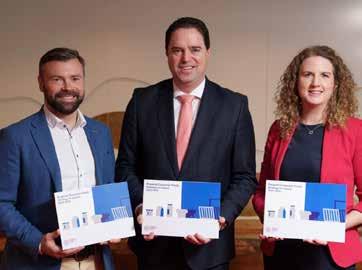
Pictured are: Killian Barry, Danone Ireland Managing Director and Chair of the PCF Council, and Linda StuartTrainor, Director of Prepared Consumer Foods in Food Drink Ireland, launching the new 10-year strategy with Minister for Agriculture, Food and the Marine, Martin Heydon TD.
gift for our Office Comedian
The One4all Gift Card can be spent directly in-store and online with 1000s of retailers on 1000s of brands. Reward your staff through the BIK, with no tax, PRSI or USC, and you can save up to €1,980.68 when you gift up to €1,500 per employee.
Have you staff remote working? Choose the One4all Digital Gift Card that has all the same great benefits of the physical One4all Gift Card. Customise with a video message or photo and deliver by text or email.
Ask about the One4all Chip & PIN available for higher load values from €150 to €5,000ideal for online shopping with ease.
Order online or at your local Post Office
A
Food reformulation networking event held in Dublin
THE Food Reformulation Task Force, a partnership between the Food Safety Authority of Ireland (FSAI) and Healthy Ireland, recently hosted a food reformulation networking event entitled 'From Plan to Product: Implementing the Food Reformulation Roadmap'.
The networking event brought together food manufacturers, retailers, and food service operators to explore the practical and commercial opportunities of food reformulation in Ireland. The event featured an update from the Food Reformulation Task Force by Dr Sinead O’Mahony, Food Reformulation Task Force Manager at the FSAI, outlining food reformulation as a strategic approach for industry. The event also included an update from Prof. Mary Horgan, Chief Medical Officer, Department of Health. Healthy Ireland was represented by Fiona Ward, National Policy Advisor for Nutrition and Obesity at the Department of Health, and Matthew Doyle, Department of Health.
The keynote address was delivered by Dr Aisling Aherne, Senior Nutrition Scientist, Kerry on ‘Food Reformulation as a Strategic Approach: Enablers and Benefits’.
Attendees also heard case studies from industry leaders highlighting the benefits of reformulation, emerging trends in healthier product development, and practical examples from businesses already advancing reformulation initiatives.
moving goods, it’s about delivering delayed container has the potential damage brand reputation, and erode the so hard to build.
Pictured are (l-r): Dr Sinead O Mahony, Food Reformulation Task Force Manager, FSAI; Greg Dempsey, CEO, FSAI; and Fiona Ward, National Policy Advisor in Nutrition and Obesity, Health and Wellbeing Unit at the Department of Health.
Retailers share supply chain struggles
Leader,
AS global retailers enter the final weeks of the 2025 peak selling season, new research from DP World shows that 93% are still taking a reactive or ‘firefighting’ approach to operations, while 91% have suffered revenue losses linked to supply chain or transport challenges.
The findings show that despite early preparations for the year’s busiest period, most retail supply chains remain reactive and stretched. 84% of retailers have seen a rise in customer complaints linked to delivery performance, while nearly two-thirds have had to escalate logistics issues to board level in the past three years, underscoring how supply chain stability has become a defining business issue.
These risks carry real financial consequences: revenue losses linked to transport issues now threaten peak-season margins at a time when customer expectations and competition are highest.
“Retailers are under extraordinary pressure to deliver reliability in a world where disruption has become the norm,” said Tony Zasimovich, Global Vertical Leader – Retail, DP World. “This research shows that even the best-prepared businesses are being forced to react rather than plan, and that’s where partnership makes the difference.”
The study also highlights a clear gap between investment priorities and operational pain points. While 60% of retailers are investing in warehousing and visibility upgrades, far fewer are addressing the areas causing the greatest disruption – only 43% invest in customs compliance and 45% in international freight, even though 88% cite border delays as a recurring challenge.
“Retailers have made strong progress in digital visibility and storage efficiency, but true resilience depends on keeping goods moving,” said Beat Simon, Chief Operating Officer – Logistics, DP World. “Investment must now shift toward strengthening the flow itself, through reliable transport capacity, smarter customs processes and integrated data visibility. By connecting these elements, retailers can create supply chains that perform consistently, even in volatile conditions.”
Tony Zasimovich, Global Vertical Leader – Retail, DP World.
Irish shoppers get festive early
THE latest take-home grocery sales in Ireland rose by 5.5% in the four weeks to November 2, 2025, according to the latest data from Worldpanel by Numerator. Despite prices continuing to rise, shoppers spent an additional €64 million on groceries and were out instore more often over the four weeks, boosting overall sales by €5.8 million.
Grocery price inflation is now standing at 6.06%, falling slightly from last month by 0.5%. Irish shoppers, however, are in full flow for the festive season as they start to stock up on seasonal favorites.
“It’s that time of year again as Christmas ads light up our screens and supermarkets fill their shelves with festive fare, signalling that the countdown to the big day has begun,” noted Emer Healy, Business Development Director at Worldpanel by Numerator. “Shoppers are already getting into the spirit, spending an additional €8 million on boxed chocolates compared with last month.”
Retailers are acutely aware of the financial pressures that many households are under right now, especially with this year’s Budget, and are keen to show how they’re delivering value for money, with a big focus on promotions. Nearly a quarter (22%) of all grocery sales are on promotion, up nearly 5.9% versus this time last year. Promotional activity typically intensifies in the lead-up to Christmas, so this is likely to persist well into December.
Own label saw strong growth over the last 12 weeks, up 6.3%, with shoppers spending an additional €99 million on these ranges versus last year. Premium own label ranges continue to see strong growth, up 15.3%, with shoppers spending an additional €18.5 million on these ranges compared to last year.
Brands continue to grow behind the total market, with growth slowing to 5.2% in the last 12 weeks, but Irish shoppers still spent an additional €85.4 million on branded products. Brands currently hold 48.2% value share of the total market, the highest share since February, showing how shoppers are more likely to treat themselves in the lead-up to Christmas. Own label holds 46.2% value share.
“Shoppers are usually looking for both value and quality – not just the lowest price – particularly at Christmas,” Emer reveals. “I think we all like to indulge a little at this time of year and, despite the ongoing cost-of-living crisis, many have managed to find a balance by choosing retailers’ premium own-label ranges as an affordable way to treat themselves.”
Category increases included frozen fruit, low alcoholic drinks, hot beverages, confectionery sweets, chocolate, sweet spreads and
Normal comes to Ireland
DANISH retailer Normal recently opened their first Irish store, bringing their unique shopping experience to Dublin’s Ilac Centre, marking the next step in Normal’s rapid European expansion, with over 950 stores across 10 markets. Since opening their first store in Denmark in 2013, Normal have become known for offering everyday essentials, popular branded products, and new surprises every week, all at fixed low prices. The first Dublin store spans 600m², with 5,500 products in its permanent range and over 100 new arrivals each week.
savoury snacks, all of which grew ahead of the total market in the latest 12-week period.
Online continued to grow at a significantly faster rate compared to last month, up 6.4% year-on-year to take 5.6% value share of the market. Shoppers spent an additional €13.1 million online during the period, helped by an influx of new customers, who contributed €5.8 million to overall performance, more than double last month. Over 18% of Irish households bought their groceries online during this time.
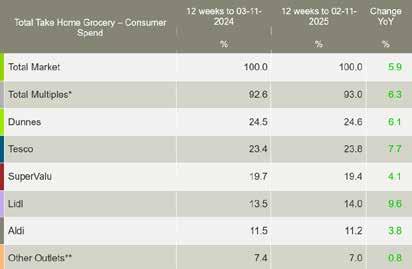
Dunnes hold 24.6% market share, up on the last 12-week period, with sales growth of 6.1% year-on-year. Larger and more frequent trips contributed an additional €26.2 million to their overall performance.
Tesco claim 23.8% of the market, with value growth of 7.7% year-on-year. Shoppers increased their trips to stores by 0.8% and, together with new shoppers, contributed an additional €29.8 million to the grocer’s overall performance.
SuperValu hold 19.4% of the market, with growth of 4.1%.
Consumers made the most shopping trips to this grocer, averaging 24.1 trips over the latest 12 weeks. SuperValu recruited new shoppers to store, which contributed an additional €11.4 million to their overall performance.
Lidl have 14% of the market with growth of 9.6%, the fastest growth among all retailers once again. Lidl also saw shoppers pick up more volume in store, up 2.1%, contributing an additional €9.5 million to overall performance.
Aldi claim 11.2% market share, up 3.8%. Increased store trips and new shoppers drove an additional €9.9 million in sales.
for
Minister of State
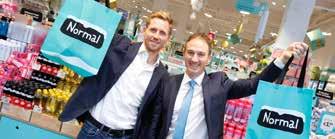
Small Business and Retail, Alan Dillon TD, joined Jakob Frølich Maarbjerg, CEO of Normal, at the opening of the Danish retailer’s first Irish store.
SuperValu partner with Focus Ireland
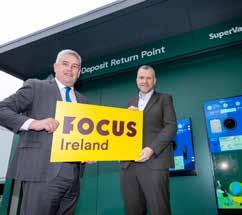
SUPERVALU have announced Focus Ireland as their new charity partner this Christmas, supporting the organisation’s ‘No Child Without a Home’ campaign to help families and children experiencing homelessness. The partnership will give SuperValu customers across Ireland the opportunity to donate their Deposit Return Scheme (DRS) vouchers directly to Focus Ireland. The charity campaign runs from November 5 until the end of March, helping to raise vital funds for children and families in need during the festive season and beyond. “Supporting families and communities is at the heart of everything we do, and we’re proud to partner with Focus Ireland to help families and children experiencing homelessness. There is even greater awareness at Christmas time, when so many of us are gathering with loved ones,” said Luke Hanlon, Managing Director of SuperValu, pictured with Pat Dennigan, CEO of Focus Ireland.
Lidl Ireland open 190th store
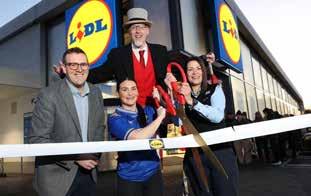
LIDL Ireland recently opened the doors to their brand new store in Ballymahon, Co. Longford. Located on Church View, Main St, Ballymahon, the new Lidl store marks a major milestone in the retailer’s ambitious expansion programme and has created 25 permanent retail jobs for the community in what has been a highly anticipated opening, with planning permission granted earlier this year. Longford County LGFA Vice-Captain, Katie Crawford joined the Lidl Ballymahon store team including Andrew Griffin, Sales Operations Manager, and Katalin Laszay, Lidl Ballymahon Store Manager, to officially open the brand-new Lidl store in Ballymahon, Co. Longford.
Aramark volunteers transform outdoor school space
ARAMARK Ireland staff members recently joined forces for the company’s annual Aramark Building Community Day (ABC Day), volunteering their time to create a brighter, more engaging outdoor space at An Cosán Community Special School, which is under the patronage of City of Dublin Education and Training Board. As part of Aramark’s on-going commitment to supporting local communities, a team of 10 volunteers donated their time and skills to install new play and sensory features designed to enhance the children’s learning and wellbeing. The project, which has received more than €3,400 in funding, included a mud kitchen and two water walls to encourage sensory play, tables and seating to promote outdoor learning and social interaction, brightly coloured tarps to decorate the fencing and create a cheerful atmosphere, and sensory stepping stones with fresh paintwork to enhance the outdoor space.
M&S to transform Dundrum store
'Give Winter More' with Knorr
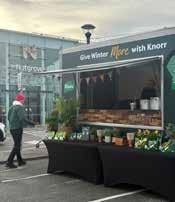
KNORR are encouraging Dubliners to Give Winter More - more warmth, more community, and more kindness - with the launch of the ‘Give Winter More with Knorr’ truck. From November 21-23, the Give Winter More with Knorr truck visited locations across Dublin in Nutgrove Shopping Centre, The Square in Tallaght and Dundrum Town Centre, inviting the public to enjoy a warming cup of Knorr soup and take home some free samples. For every soup given out, Knorr donated the equivalent number of packets to the Simon Community, supporting people experiencing homelessness during the coldest months of the year all over Ireland. “At Knorr, we believe that good food has the power to bring people together. Through this campaign, we’re not only sharing our soups with the public, but extending that warmth to those who need it most,” said Aoife McCarthy, Senior Brand Manager at Knorr.
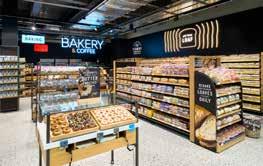
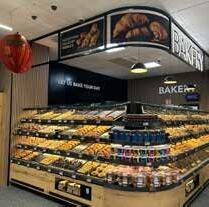
MARKS & Spencer are set to invest in their Dundrum store, reinforcing their longstanding commitment to serving the local community with quality food, clothing, homeware and beauty. The upcoming transformation will create a modern, refreshed environment designed to make shopping even more enjoyable for customers. The fashion, home and beauty departments will be significantly expanded, while the Foodhall will feature new additions such as a larger in-store bakery, complete with two served coffee machines, offering barista-made beverages. The Dundrum store will remain open throughout the renewal works, with the team committed to keeping disruption to a minimum.
Industry News
Tesco Ireland
donate €100,000
to Late Late Toy Show Appeal
TESCO Ireland have announced a €100,000 donation to the RTÉ Toy Show Appeal, further showing their support for children and families who need it most across Ireland during the festive season. Tesco also brought extra Christmas magic into homes nationwide with the launch of their free Toy Show Treat Boxes in stores across the country. Designed to help families get Toy Show–ready, the Tesco Toy Show Treat Box was packed with fun kids’ activities. Families could enjoy colouring, spot-the-difference and word search games printed directly on the box. Customers could pick up a free, fillable Treat Box in stores ahead of the Late Late Toy Show, ready to be filled with the snacks and treats they pick up in store, with 300,000 available nationwide. Each box included a QR code, with the top prize of an unforgettable trip to Lapland for a family of five.
Nestlé Ireland offer ‘Helping Hands’ at Barretstown
NESTLÉ Ireland and Nespresso Ireland joined forces for an annual ‘Helping Hands’ day as part of their first ever volunteering event with new charity partner, Barretstown, with a 70-strong team going on-site to help the Barretstown team in a wide range of maintenance work, including painting, site preparation and tree planting. “Working on the ground was eye-opening for everyone involved, revealing the true magic of Barretstown and the impact it achieves. Nestlé staff gained a deeper understanding of the charity’s mission and the vital role our partnership will play in supporting communities across Ireland, and we look forward to deepening the relationship further in the coming years, through activities such as Helping Hands, and others,” said Kieran Conroy, Managing Director at Nestlé Ireland.
Aldi reopen Naas store after €3.5
ALDI officially reopened their Monread store in Naas at the end of November following a €3.5 million refurbishment. The revamped store features a brighter, modern design, offering a more pleasant shopping experience for customers, as well as a new in-store bakery, self-checkouts, wider aisles and hi-spec fixtures and fittings. The new and improved Aldi store also boasts an impressive multi-feed external reverse vending machine that enables shoppers to deposit multiple DRS (Deposit Return Scheme) returns into the machine in one go. This is the first Aldi store in Ireland to offer this bulk return service.
million renovation
Tayto Christmas boxes are back
TAYTO’S Christmas Boxes recently landed, bringing the magic of Ireland’s most iconic crisp brand back into homes across the country. A festive favourite for decades, the Tayto Christmas Box remains the musthave item this Christmas, guaranteed to deliver that nostalgic taste. This year, the classic Tayto Sandwich has sparked global conversation after making waves on the red carpet and even catching Santa Claus’s attention. This Christmas, Tayto are encouraging the nation to leave out a ‘Tayto Sandwich’ for Santa, celebrating this Irish tradition rooted in great taste, generosity, and shared moments. Whether gifted, shared, or tucked under the tree, the Tayto Christmas Box is a heart-warming way to bring people together and honour an Irish tradition.
Uniplumo blooms with renewed Lidl deal
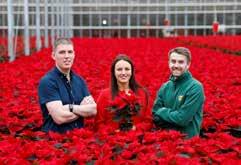
DUBLIN-based plant grower Uniplumo has secured a renewed seasonal supply deal with Lidl in an expanded contract which will see more than 70,000 Christmas poinsettias sold across Lidl stores throughout the island of Ireland. "As a proud Irish grower, we’re delighted to expand our partnership with Lidl Ireland to supply the hugely popular festive poinsettias and ensure Lidl stores are stocked with the very best local blooms as Christmas approaches,” said Rob Lyons, Commercial Manager at Uniplumo, pictured with Caoimhe Power, Demand Buyer at Lidl Ireland, and Jonathan O'Connor, Senior Buyer at Lidl Ireland.
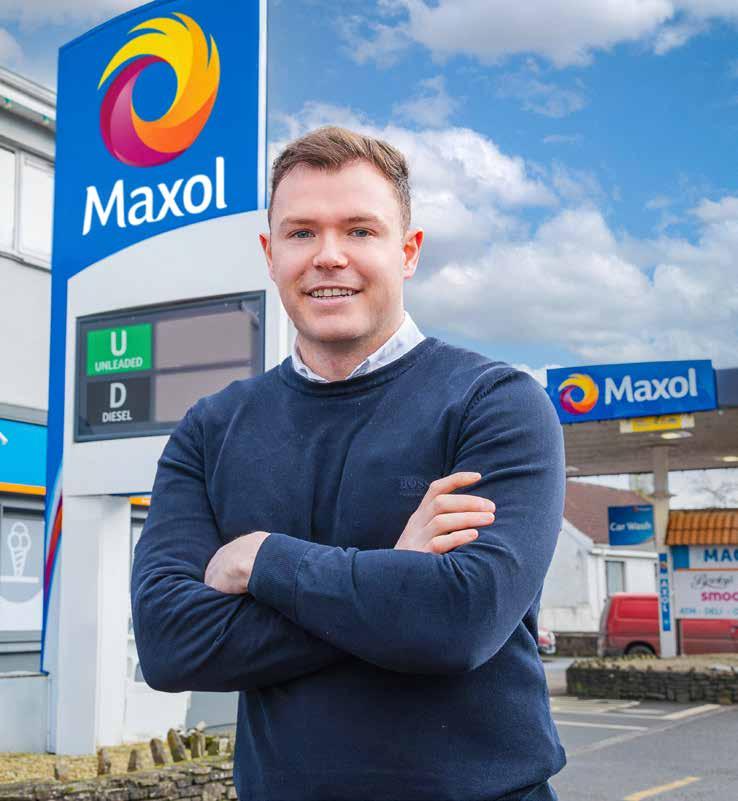
“Partnering with Maxol has elevated our business and allowed us to better serve our customers. Our Regional Manager has been invaluable to us, providing knowledge and expertise throughout. I would recommend Maxol to anyone and look forward to growing the business together in the years ahead”
Donal Hannon Maxol Newmarket,
Cork.
Call one of our Regional Managers today to start fuelling your business.
Dermot Cogan 00353 (0)87 231 5122
Declan Murphy 00353 (0)83 371 6143
Norman Graham 0044 (0)79 4481 0038
Industry News
Barretstown and Flahavan’s launch Magical Reindeer Food
BARRETSTOWN, Ireland’s leading provider of psychosocial care for children impacted by cancer and other serious illnesses, has once again teamed up with Flahavan’s to produce ‘Magical Reindeer Food’. Now available to purchase for €2 in Applegreen and Dealz stores nationwide, 100% of proceeds from the sale of each packet goes directly to the charity. Barretstown camper Conor O'Donnell (front right), is pictured alongside his brothers Shane and Rory, with Barretstown ambassador Keith Barry and CEO Dee Ahearn at the launch of Barretstown's Magical Reindeer Food appeal. At just five years old, Conor was diagnosed with an inoperable brain tumour and faced 22 months of chemotherapy. Throughout his treatment, Conor and his family spent time at camps in Barretstown where they received 24/7 onsite medical care and took part in therapeutic programmes, tending to both his physical and psychosocial needs.
Aldi open new Donabate Store
ALDI Ireland have opened their newest store in Donabate, creating 30 permanent local jobs. The new €15 million store is Aldi’s 166th store in Ireland. The new 1,320 square metres store features Aldi’s award-winning Project Fresh layout, with wide aisles and hi-spec fixtures and fittings, as well as seven self-service checkouts as part of Aldi’s nationwide trial. The store also includes an in-store bakery, while 262 square metres of solar panels have been installed in the store’s roof, contributing to Aldi’s nationwide programme to improve energy efficiency and reduce emissions. The store was officially opened by the local Aldi team, including Store Manager Mark Mulvany, alongside Aldi Play Rugby Ambassadors Paul O’Connell and Linda Djougang.
New Head of Sales at Nestlé Ireland
Tesco open new Howth superstore
NESTLÉ Ireland have announced the appointment of David Adams as their new Head of Sales. David will have responsibility for the commercial strategy for an extensive portfolio of Nestlé products in the Irish market. He will oversee the implementation of Nestlé’s sales strategy as it continues to expand and grow across the confectionery, beverage, pet care, food and nutrition categories in Ireland. With more than 15 years’ experience in management and sales, David joins Nestlé from Kraft Heinz, where he worked for 11 years, holding several senior commercial and strategic positions.
TESCO Ireland have opened a new store in Howth, Co. Dublin, creating 80 new jobs. The brand-new superstore is in the Claremont development, close to Howth Dart station, and offers customers a modern retail experience and a wide selection of quality fresh local and Irish produce. Dublin suppliers Manning’s Bakery, Keoghs Crisps and Oishii Foods are just some of the great local producers found on the shelves in Tesco Howth. The store has also been fitted with several energy-saving measures, such as doors on fridges, which will help reduce energy consumption. Pictured at the official opening are deputy manager Siobhán Byrne (second left) and manager Oisín Gartlan with colleagues from Tesco Howth.
Fulfil sponsor U-20 hurling championship
FULFIL have announced a three-year partnership to become the new title sponsor of the GAA Hurling Under-20 All-Ireland Championship. Through this partnership, Fulfil will be ‘Supporting Ireland's Game’ to foster emerging hurling talent and active lifestyles across the nation. Pictured are (l-r): Barry Walsh, Fulfil ambassador & Cork Under-20 hurler; Catherine Hayes, Sales Director, Fulfil; Paolo Cantini, Head of Marketing UK & IRE, Fulfil; Avril Pratt, Brand Manager, Richmond Marketing; Rachel Jaccarini, Marketing Director, Better For You Snacks UK & IRE; Michael Geoghegan, President of the Ulster Council GAA and Leas-Uachtarán Chumann Lúthchleas Gael; Aoife Moloney, Senior Trade Marketing Manager, Richmond Marketing; David Kilcommons, Commercial Director, Richmond Marketing; Sophie Blackburn, Marketing Manager, Fulfil UK & IRE; Sean Brew, Commercial Accountant, Richmond Marketing; Aoife Moloney, Senior Trade Marketing Manager, Richmond Marketing; Steve Hodson, Sales Director Ireland, Fulfil; Sean Brew, Commercial Accountant, Richmond Marketing; and Walter Walsh, former Kilkenny hurler.
Season’s Greetings
From shop floor to head office, thank you to all of our business partners for your engagement and collaboration throughout 2025. On behalf of the team at JTI Ireland, wishing you a merry Christmas and a happy and prosperous New Year.
Garin Murphy Sales Director JTI Ireland
EY Ireland Consumer Pulse
Irish consumers prioritise smart spending
While Irish consumers are planning to focus on value this Christmas, the vast majority will complete most of their festive shopping in-store, according to the EY Ireland Consumer Pulse.
IRISH households are approaching Christmas shopping with a focus on value for money and more careful and considered spending, all while keeping festive traditions alive, according to the latest EY Ireland Consumer Pulse 2025.
While digital tools such as AI chatbots are playing an increasing role, especially for younger age cohorts, the good news for physical retailers is that Irish shoppers still expect to undertake most of their shopping in-store.
The research, based on a nationally representative survey of 1,032 adults, finds that as the festive season gets underway, Irish consumers are prioritising value for money and practical choices. Premium and branded products are no longer seen as an absolute necessity at Christmas, and spending wisely has become a practical necessity and aspirational, according to the EY Ireland Consumer Pulse, with more than half of adults (51%) planning to incorporate lower cost or own brand products into their Christmas shopping.
Financial pressure remains a reality for many Irish shoppers, with 43% reporting
feeling financially worse off compared to last year and one in three respondents stating that they will be opting for lower cost alternatives across the board this year. Interestingly, a noticeable majority of Irish consumers (70%) say they have noticed the impact of trade disruptions and tariffs in the price of goods for sale.
Bricks and mortar versus digital
In spite of the continued growth of online retail, physical stores remain at the heart of Ireland’s Christmas shopping experience. Seven in ten Irish consumers (71%) say they will complete the majority of their festive purchases in-store, valuing the reassurance of seeing products first-hand and the sense of tradition that comes with shopping in person.
While the act of purchasing Christmas food and gifts is still rooted in bricks and mortar retail, younger consumers are turning to AI tools to help them with planning and budgeting.
Findings from the EY Consumer Pulse show one in three (33%) adults aged 18 to 34 are using AI tools (for example ChatGPT,
Colette Devey, EY Ireland Partner and Consumer Products and Retail Sector Lead.
Google Gemini and retail chatbots) for gift ideas, budgeting, product discovery and shopping itself. This contrasts sharply with the 55+ age group, where only 5% report using AI to support their Christmas shopping.
“As the festive season approaches, Irish shoppers say they are planning early, using digital tools and prioritising value,” noted Colette Devey, EY Ireland Partner and Consumer Products and Retail Sector Lead. “While many households continue to have Christmas traditions built around much-loved brands, choosing lower cost alternatives or incorporating own-brand products is no longer seen as a compromise; it’s often a sign of savvy decision-making.”
The interplay between digital planning and physical shopping is increasingly shaping a more connected retail experience, according to Colette: “Gen Z and Millennial shoppers are turning to AI tools to plan, budget and discover gifts, a trend we expect to continue as these transformative technologies become more common across generations. However,
EY Ireland Consumer Pulse
this does not seem to be coming at the expense of in-store shopping, which continues to hold an important place for Irish households, especially at this time of year. It is the retailers who connect these worlds; offering a seamless link between digital research and an engaging in-store experience will turn convenience into certainty.”
Trust and transparency in a volatile environment
According to the report findings, seven in ten (70%) adults say they have noticed price changes that they associate with trade disruption and tariffs, particularly in food related groceries and household goods, where small trade movements are quickly felt. This in turn is leading to consumers looking for transparency and consistency from retailers this festive season.
While volatility is expected, shoppers want reassurance that businesses are managing these challenges responsibly. Many retailers are already responding by sourcing locally where feasible and building flexibility into operations.
The research shows that when these actions are communicated to customers clearly, price changes feel less arbitrary and trust in the retailer strengthens.
Simon MacAllister, EY Ireland Agri-Food Sector Lead and Co-Head of EY Ireland Geopolitical Strategy, noted, “Trade disruptions are now an ongoing feature of the operating environment for every business, but retailers are not powerless. The most resilient businesses are actively de-risking their supply chains by sourcing closer to home, building regional
The interplay between digital planning and physical shopping is increasingly shaping a more connected retail experience for Irish consumers.
All they want for Christmas is…
• Over half (51%) of Irish adults plan to mix branded favourites with own-brand products this Christmas, with 30% primarily opting for lower cost alternatives.
• Seven in 10 (71%) say they will complete most of their festive shopping in-store.
One-in-three 18–34-year-olds using AI tools to help with Christmas shopping, compared to just one in 20 (5%) of over 55s.
• Four in 10 (43%) say they are feeling financially worse off compared to 12 months ago, while almost six in 10 (57%) the same or better.
Seven in 10 (70%) report noticing price changes they associate with trade disruptions and tariffs.
partnerships, reducing single-country exposure and creating flexibility in how and where products are produced.
“If retailers can communicate these actions clearly to customers, it can help build confidence that price changes are being managed with intention rather than being quickly passed on without scrutiny.”
Looking
ahead to early 2026
As 2025 draws to a close, Irish households are setting realistic expectations for the year ahead. While financial confidence is cautious for 2026, with half of all respondents (50%) expecting their current financial position to remain the same, consumers look to be focusing on more careful and considered spending rather than cutting back. The consumer outlook for the new year is reflective of traditional post-Christmas trends, with people looking to make savings on general spending (29%) and prioritise allocating finances to areas such as improving their overall health and fitness (30%), and planning for future trips or experiences (16%).
“As consumers look beyond Christmas and into the new year, it’s no surprise that getting healthier and saving are top of the agenda for many,” concluded Colette Devey. “However, it’s interesting to note that twice as many 18-34 years olds are already planning a ‘wardrobe refresh’ in the January sales, compared to the overall average (10% vs 5%), showing that savvy shopping habits are firmly embedded in younger age cohorts.”
Seven in 10 Irish consumers say they will complete most of their festive shopping in-store.
IGBF Christmas Lunch
Celebrating the festive spirit
The Irish grocery industry united for the 62nd annual Irish Grocers Benevolent Fund Christmas Lunch, celebrating community, support and industry leadership.
THE Irish grocery industry gathered in festive spirit at the 62nd annual Irish Grocers Benevolent Fund (IGBF) Christmas Lunch, held on Friday, December 5, at the Clayton Burlington Hotel, Dublin. With more than 1,200 attendees, this muchanticipated event celebrated the vital work of the IGBF in supporting industry members in need.
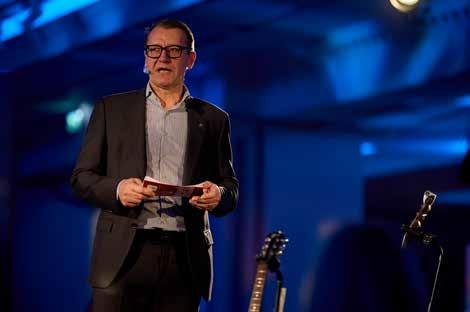
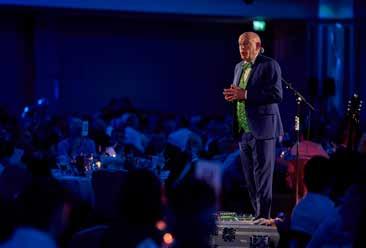
This year’s lunch was hosted by Kevin Donnelly, Managing Director of Britvic Ireland, who welcomed guests and acknowledged the importance of the charity’s work across the industry. The event was made possible thanks to the generous support of sponsors, including Coca-Cola, Monster Energy, National Lottery, Tesco Media, PRM Group, and drinks support from Britvic, Coca-Cola, Comans, Heineken and Monster Energy. Their contribution ensured guests enjoyed a memorable afternoon, while reinforcing the shared purpose of supporting colleagues and families within the Irish grocery sector.
President of Appeals
During the lunch, the room joined together to acknowledge the contribution of Simon Marriott, Chief Retail & Commercial Officer
Pictured at the annual IGBF Christmas Lunch are John O’Connor, Incoming President of Appeals and Managing Director of Tayto Snacks; Frances Higgins, Chairperson of the IGBF; and Simon Marriott, Outgoing President of Appeals and Chief Retail & Commercial Officer, BWG Foods UC.
of BWG Foods UC, who completed his year supporting the charity as President of Appeals. Simon was warmly thanked for the time, energy and commitment he has given in support of the Fund.
He then welcomed incoming President of Appeals for 2026 John O’Connor, Managing Director of Tayto Snacks, who has kindly agreed to take on the role for the year ahead.
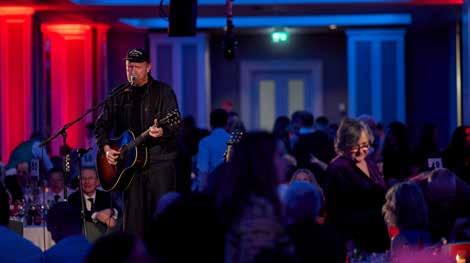
Entertainment on the day was provided by Gavin James, who delivered a powerful and uplifting performance. The popular ‘Best Dressed Christmas Outfit’ competition added festive colour to the afternoon.
Making a real impact
In her address, Frances Higgins, Chairperson of the IGBF, spoke about the continued importance of the fund and its impact on the lives of colleagues and families. A moving video shared real stories of individuals who received confidential support during difficult times.
Higgins encouraged everyone in the room to raise awareness of the charity, reminding attendees that assistance is available to anyone in need: “If you know someone who needs support - please reach out. All cases are handled with absolute confidentiality.”
The IGBF Christmas Lunch remains a cornerstone of the social and fundraising calendar for the Irish Grocers Benevolent Fund charity, bringing colleagues together in a celebration of community, generosity and care. To learn more about the IGBF, its mission and upcoming activities in 2026, visit www.igbf.ie
Help is just an email or a call away FOR confidential support from the IGBF, email gus.oreilly@igbf.ie or call 086 2444442.
IGBF Christmas Lunch
Pictured are James Kelly, Colgate; Sinead McDonagh, Mars Wrigley; and Daniel O’Toole, Mars Wrigley.
Gus O'Reilly, IGBF Executive Secretary.
Simon Marriott, Outgoing IGBF President of Appeals.
Gavin James, entertaining the audience at the IGBF Christmas Lunch.
IGBF Christmas Lunch
The IGBF Committee pictured at the Christmas Lunch.
From Suntory Beverage & Food GB&I: Michelle Darlington, Alan Claffey, Nuala Kabe Galligan, and Barry Cassidy.
Pictured are Jenny Eustace, Frances Higgins, and Sharon Yourell Lawlor, enjoying the IGBF Christmas Lunch.
MC Kevin Donnelly from Britvic Ireland.
Pictured enjoying the IGBF lunch are Richie Mahony, Stafford Lynch; Donal O’Shea, Jack Links; and Kabhian Mallon, Colgate.
IGBF Christmas Lunch
From Keelings: Mairead Clerkin, Sarah Slevin, and Meabh McEniff.
Members of the IGBF committee pictured at the lunch.
Pictured are Gerry Lawlor, CPM, and Simon O’Connor, Britvic Ireland.
Members of the Today’s Women In Grocery (TWIG) Committee, pictured at the IGBF Christmas Lunch: Sharon Yourell Lawlor, Siobhán Drummond, Sharon Doherty and Michelle Darlington.
Kevin Keating, Tennant & Ruttle; Fergal O’Reilly, Rose Confectionery; and John Bradley, Febvre Ltd, enjoying the lunch.
Members of the Tesco Ireland team, pictured at the IGBF Christmas Lunch.
Turning tills into insights: new year, smarter approach
FOR grocery retailers, the New Year is a time to take stock, literally and figuratively. After the festive rush, the focus shifts to efficiency, cost control, and planning for the year ahead. But where do you start when margins are tight, competition is fierce, and consumer expectations keep rising?
The answer might be closer than you think. Every transaction processed in your shop holds valuable information that can help you make smarter decisions. Yet, for many businesses, this data remains untapped. In 2026, that needs to change.
Irish grocery retail is under pressure, with prices climbing significantly in recent years and the top-five supermarket chains now accounting for 93% of the market (Source: Worldpanel by Numerator). Independent retailers need every advantage to stay competitive. The information that sits untapped in your reporting systems offers exactly that.
Think of each payment as a data point. When aggregated and analysed, these points reveal patterns that can help you transform how you run your business. How often are shoppers coming back to your
store, for example? What are their go-to payment methods and when is your store at its busiest? Payments data is a goldmine for operational insights like these.
And the timing couldn’t be better. In 2024, over 1.5 billion contactless pointof-sale payments were made in Ireland, worth €26.7 billion. That’s a whopping 87% of all card transactions, with mobile wallets like Apple Pay and Google Pay accounting for more than half (Source: BPFI Payments Monitor – March 2025). Whatever about the pros and cons of cash decline, this shift means more digital data, more opportunities to learn and more ways to act.
What insights can tills provide?
Your tills and the data they hold can provide a whole range of insights, including:
• Customer behaviour
Payments data shows when customers shop, how much they spend and how they prefer to pay. Do you see spikes in contactless transactions on Friday evenings? That’s your cue to increase
Start 2026 by unlocking the hidden value in your checkout. Peter Charmant from Elavon outlines how every transaction holds insights that can help you plan smarter, boost efficiency and deliver a better customer experience.
staffing or run targeted offers. Are mobile wallets gaining traction among younger shoppers? Time to ensure your terminals are fully compatible.
• Loyalty integration
Linking payments data with loyalty programmes creates a powerful feedback loop. You can track how rewards influence spend, identify high-value customers and personalise offers. For example, if loyalty members using digital wallets spend more per visit, consider promoting wallet-linked rewards.
• Fraud detection
Payment anomalies can flag potential fraud. Unusual transaction patterns, repeated declines, or mismatched card details are all signals worth monitoring. Modern payment systems often include built-in tools for this, but understanding the data helps you act faster.
Practical applications for grocers
Utilising date effectively can help you in a number of ways:
Explore a whole world of payments with Elavon.
Whether your goal is to attract more shoppers, introduce new ranges or grow your team, Elavon makes payment-taking simple so you can focus on your business. You take on the world. We’ll take care of the payments.
Payment Data & Insights
• Staffing optimisation
Knowing your busiest hours means you can schedule staff more effectively. If payments data shows a surge from 5-7pm on weekdays, you can allocate resources to keep queues short and customers happy.
• Inventory planning
Combine payments data with sales reports to forecast demand. If you see consistent spikes in certain categories, adjust orders accordingly. This reduces waste, improves availability, and protects margins.
• Targeted promotions
Payments data helps you identify patterns that generic promotions miss. If contactless users spend more on fresh produce, tailor offers to encourage repeat behaviour. If weekend shoppers favour premium lines, create bundles that appeal to that segment.
• Financial forecasting Settlement speed and transaction volumes
About the author:
PETER Charmant is Head of Relationship Management Enterprise Retail (Pan-EU, UK & IE) with Elavon Europe, the preferred payments partner for Retail Excellence Ireland and its 2,000-strong membership base. Emailsales@elavon.ie or see www.elavon.ie.
Scan for more on retail reporting
influence cash flow. Analysing payment trends helps you predict revenue more accurately, plan investments, and negotiate better terms with suppliers.
Irish consumers are embracing digital payments at pace. Some 70% use contactless regularly, and nearly 40% plan to use cards even more in future (Source: BPFI Consumer Payments Survey). Cash is declining and mobile wallets are becoming mainstream. For grocers, this means more data to work with, as every tap or scan generates a digital footprint. It also means higher expectations; customers want speed, convenience and security.
At the same time, cost pressures are mounting. Grocery baskets are significantly more expensive than three years ago, and operational costs - from energy to staffing - continue to rise. So, it’s important to remember that insights from payments data aren’t just for the big multiples. Symbol group retailers face similar challenges in balancing efficiency with customer experience. While many operate as independently owned stores under a shared brand, they still process thousands of transactions daily. Leveraging payments data can help these businesses optimise staffing, manage stock, and deliver the personalised service that keeps local customers loyal.
How to get started
So where do you begin?
• Audit your systems
Do your payment terminals integrate with your point of sale (POS) and reporting tools? If not, you’re missing out on valuable insights. Look for solutions that consolidate data across channels, whether in-store, click-and-collect or online.
• Set clear objectives
Decide what you want to achieve. Is it reducing queues, improving stock accuracy or boosting loyalty engagement? Define your goals before diving into the data.
• Train your team
Technology is only as good as the people using it. Ensure staff understand how payment systems work and why data matters. This builds buy-in and maximises impact.
• Act on insights
Data without action is just noise. Use what you learn to make tangible changes: adjust staffing, tweak
What January sales can teach you
SALES periods generate a wealth of payments data that can reveal how customers behave when promotions are in play. By turning January’s rush into actionable intelligence, you can make every promotion more profitable.
• Spot the patterns Grocery sales rose 6.5% in January 2025 compared to the previous year, with promotions up 8.4% (Source: Worldpanel by Numerator). Which offers drove the biggest uplift? Did multi-buy deals outperform percentage discounts? Payments data can show which promotions delivered the best return, helping you refine your strategy for future events.
• Understand payment preferences Sales often attract impulse purchases, and speed matters. Look at which payment methods dominated. If digital wallets surged, consider making them more prominent at the checkout.
• Plan for staffing and stock
High-volume trading during January sales highlights peak times and basket trends. Use this insight to optimise staffing schedules and ensure popular items are well-stocked next time.
refine stock orders. Start small, measure results, and scale up.
The future of payment insights
As we move into 2026, expect payment systems to become even more sophisticated. Artificial intelligence-driven analytics, real-time dashboards, and predictive modelling will make insights faster and more accurate. Loyalty programmes will integrate seamlessly with payment platforms, enabling hyper-personalised offers. And as cash fades further, digital data will dominate.
For retailers, whether you’re running a single store, part of a symbol group or managing multiple outlets, the opportunity is clear: turn everyday transactions into strategic intelligence. It’s not about replacing your instincts, but enhancing them with facts. In a market where every cent counts, that could be the difference between surviving and thriving.
The tills in your store are points of insight as well as points of payment. The information is already there. The question is: what will you do with it?
Park, Dublin 18, D18 W2X7,
Bank
DAC, trading as Elavon Merchant Services, is regulated by the Central Bank of Ireland.
Peter Charmant is Head of Relationship Management Enterprise Retail (PanEU, UK & IE) with Elavon Europe.
promotions,
BAY GROU P HODSON
More than just meetings & events
Scan the QR code to gain access to our meeting and events Fresh Thinking brochures or visit our websites for more information:
Barrymore Suite Hodson Bay Hotel
Athlone Golf Club at Hodson Bay
River Shannon Athlone Town
The Siege Suite at Sheraton Athlone Hotel
Diverse Refreshment Break Options with a Twist
Sean’s Bar Athlone
ECR Ireland Supply Chain Summit
How AI can impact on supply chains
The first ever ECR Ireland Supply Chain Summit saw a host of top class speakers tackle some of the biggest challenges facing FMCG supply chains, including how best to utilise AI to introduce efficiencies.
THE inaugural ECR Ireland Supply Chain Summit took place at the Radisson Blu Hotel in Dublin Airport on November 20, 2025, highlighting the myriad challenges that have confronted the sector over the last five years, how things are evolving now and offering fascinating insights on how the sector will develop over the next decade.
Hosted by ECR
Ireland General Manager Declan Carolan and Ray Peelo, Director of Replenishment at Musgrave, the summit included top class speakers from across the FMCG sector, including Trayc Keevans, Global Foreign Direct Investment Director, Morgan McKinley; John Power of Relex Solutions; Mark McKeever of PwC; Christy Quirke, Client Service Director, Advantage Group International; and Eoin Butler, Chief Supply Chain Officer, Musgrave.
over the last year, generated by a +0.5% increase in unit sales and the rest due to rising prices. Irish consumer sentiment is lower than it was last year, driven by the impact of inflation and the budget, which did little to improve the situation of the average worker, he explained.
According to NIQ, one in three shoppers admit they have been severely impacted by cost-of-living increases this year, up +7% since March of this year. Consumers are being heavily influenced by promotional activity, with 28% of shoppers saying that good deals determine where they will
Artificial Intelligence was one of the main areas of focus over the course of the morning. This event brought together some of the largest players in FMCG and the supply chain sector on the island of Ireland and it cut through the layers of hype to examine where we are on the journey towards the adoption of AI and what this technology really offers brands and businesses in terms of introducing efficiencies and affecting people and processes.
A poll of attendees showed that almost 20% of organisations rated their organisation as a 1 out of 10 when it comes to its AI journey. Given that some of the biggest players in the sector were present on the day, this shows just how early we are in the process of truly adopting AI. With that being said, one third of attendees felt their organisation rated from 6 to 8 on this journey, which demonstrates very clearly just how seriously many organisations are already taking the implementation of AI systems into their day-to-day operations.
Consumer sentiment and the cost-ofliving crisis
David Berry, Country Manager, NIQ [formerly Nielsen], began proceedings with some insights on consumers and the overall FMCG sector. The FMCG sector in Ireland enjoyed sales value growth of +3.8%
Declan Carolan and Tatiane Reiner, ECR Ireland.
Aidan Harrington, Synovia Digital.
ECR Ireland Supply Chain Summit
shop. In contrast to that, products in the premium or super premium categories have enjoyed the strongest unit and value growth in sales over the last year. This clearly demonstrates that brands with a truly premium proposition can get Irish consumers to choose to treat themselves.
The challenges of AI
Aidan Harrington, CEO, Synovia Digital, gave a fascinating presentation on the challenges of making AI a useful tool in the supply chain sector. He explained how supply chains are lagging behind many other sectors, due to their unique impediments, which he detailed. Supply chains are often very complex and intricate,
with lengthy paper trails and significant tribal knowledge. The legacy systems used to run supply chains have APIs that are not yet easily integrated into AI tools. On top of that, retail and CPG run on low margin, high volume models, which makes them cost averse and expensive investments in AI can be difficult to justify, while the supply chain sector also suffers from a lack of in-house AI talent, he argued.
However, according to Aidan, now is the time to move on building the foundations for the future development of AI tools to help drive efficiency in the sector into the future. The reality is that AI offers huge opportunities to the supply chain sector, he stressed, from planning loops where
AI agents will be able to sense, decide and execute across demand, inventory, production and logistics, through to the ability to create digital twins with highfidelity models of the entire supply chain network. It also offers the capability to create AI-native control towers that don’t just show exceptions but propose and trigger interventions immediately, in order to keep systems flowing freely and efficiently.
Automated picking is already common in warehousing and AI will be easily able to manage people and robots as a single unified workforce. It will also be able to create models that anticipate disruption and supplier risks with very high levels
Tesco.
of accuracy. With increased co-operation between retailers and manufacturers, shared models will be able to help improve everything from production targets right through to on-shelf availability.
“If our core is not ready, AI cannot scale,” Aidan warned. “AI needs stable data, clean masters and a unified planning backbone in order to unlock competitive advantages within our complex supply chain systems.”
His advice, wherever you are on your journey to AI, is to create systems that allow you to automate real decision-making processes now, because AI only delivers maximum benefits when processes and behaviours are actually changed by AI systems. By acting now to develop and integrate AI tools into your supply chain activities, you will unlock their true potential to generate value for your operations and reduce costs significantly over time.
Panel discussion featuring Mark McKeever, PwC; Lee Mawson, Unilever; Chris Jenkins, Tesco; and Eoin Butler, Musgrave.
Ray Peelo, Director of Replenishment, Musgrave.
Chris Jenkins, Category Supply Chain Manager,
ECR Ireland Supply Chain Summit
“AI already has the potential to deliver real value to the core of your business, for demand, inventory, logistics, warehouse and factories,” Aidan concluded. “The reality is that the next decade will belong to supply chains that run on closed-loop autonomous decision engines – but only if the foundations are properly laid.”
Supply chain engagement with partners
Despite the fact that we are an island nation and therefore have an added layer of complexity to many of our supply chains, 68% of attendees on the day rated their supply chain engagement with trading partners over the previous two months at a four or five out of five.
This shows that despite the complexity that exists in Irish supply chains, operators in retail and supply have a happy and healthy relationship. This is a testament to the strength of the systems we have in place and may help show why the supply chain sector has been a little slower to
radically change successful systems by dramatically overhauling them with the introduction of AI.
However, the reality is that AI tools are ready to be developed and a good system can always be made better.
Building resilience into supply chains
Resilience was another widely referenced idea on the day. Incidents such as the next Suez Canal blockage, the global Covid-19 pandemic, and global conflicts are inevitable. It has become increasingly important to build resilience into supply chains. It has led to a significant rise in near-shoring, as in the physical shortening of the distance between production and distribution.
David Berry, Country Manager for Ireland at NIQ, and Andy Johnson, Advantage Group International.
Ed Northway and John Power from Relex Solutions.
From Nestlé: Karen Colbourne, Tom Walls, Simon Everatt, and David Stoner.
Christy Quirke, Client Service Director, Advantage Group International.
ECR Ireland Supply Chain Summit
Chris Jenkins, Category Supply Chain Manager, Tesco, shared insights on how an organisation where 60% of ambient product on sale in Ireland originates in the UK deals with a lengthy supply chain. According to Chris, Tesco are actively looking to deal with complexity through automation and create simpler end-to-end systems that allow the organisation to take trucks off the road as often as possible.
“Contingency ordering and planning has become increasingly important in allowing us to develop systems and processes that help us to deliver marketing leading availability,” he said. “We have an extremely complex supply chain, with over 3,200 stores in total and over 180 in Ireland. We need to manage risks around climate change, cyber-attacks, legislative changes and many others, all of which can
affect the tens of thousands of product lines that we offer.”
He explained how Tesco are looking to develop “a low touch operation that uses world class systems, automated ordering and a longer term view”.
“We are looking wherever possible to take actions like double-stacking single trailers, or use longer trailers if possible, and at all times make our systems and processes more robust and efficient to protect and improve our supply chains,” he said, “with the ultimate aim of delivering a better service to our customers in Ireland.”
Collaboration remains key Collaboration was another key topic for the summit, with attendees on the day rating it as one of the most important areas affecting their day-to-day operations. Lee Mawson, Head of Customer Operations, Unliever, explained how the organisation is increasingly looking to build closer cooperation with its partners.
“We are looking to develop mutual strategic growth benefits with our partners through collaborative innovation, transformation and excellence,” he explained. “We see technology as the next frontier to make existing processes better and more efficient, and the do things that were simply impossible before.”
He described how Unilever operate a customer-centric approach and how they are actively looking to develop close knit partnerships with the organisations they work with to the extent that they allow some partners to control aspects of business planning that they used to control in-house: “We have split areas of operation into ‘grow’ and ‘run’ and while we retain control of all activities to ‘grow’ our organisation, we are increasingly letting trusted partners take control of operational concerns that ‘run’ our massive multinational operation."
He insists that such “high-level trust and integration is allowing us and our partners to introduce huge efficiencies into the way we operate our business and is making us and the companies we work with stronger.”
Conclusion
The first ever ECR Ireland Supply Chain Summit brought together some of the biggest brands and businesses in the country and allowed practitioners to share truly valuable insights with one another in a spirit of collaboration that will allow all who attended to bring valuable insights back home and use them to inform and improve their operations and activities across the island of Ireland.
Pictured are: Andy Moran, Jim Kelly, Bulmers, and Ronan O'Connell, IBM.
Pictured are Orla Twohig and Caoimhghin Daly from Musgrave, with Carla McSorley, Foodcloud, and Gioia Onofri, Richmond Marketing.
The Unilever Team: Philip Dalton, Debbie Gorman, Lee Mawson, Adrian O'Boyle, Tom Bearham, and Paul Kelly.
Forecourt Focus: News
Maxol reveal Excellence Award winners
MAXOL have announced the winners of their annual Excellence Awards, with County Cork dominating the scoreboard, winning six of the eight awards. The winners were presented with their awards at a gala dinner during Maxol’s Retail Conference, which was recently held at The K Club.
The annual awards programme promotes and rewards excellence in station and store standards, customer experience, and community engagement across Ireland. The accolades are presented to both company-owned and independent dealer-owned service stations and standards are stringently assessed through a combination of audits by external assessors, site audits by regional managers, the team from head office, and mystery shopper visits.
In addition, each store’s community engagement for Maxol’s nominated charity partner, Irish Guide Dogs for the Blind, is included in the assessment of the overall programme.
The 2025 Excellence Awards winners in the company-owned network were:
• Maxol Carrigaline in Cork, operated under licence by Shane Cantillon, who took home the top prize: the highly coveted Overall Store of the Year 2025 Award – making it a hat trick for this year.
• Maxol Clonakilty in County Cork, operated under licence by Shane Cantillon, was awarded Excellence in Standards, following on from the site’s success as Store of the Year in 2024.
• Maxol Wilton in Cork, operated under licence by Ruaidhri O’Hare, was awarded Excellence in Customer Experience.
(Excellence in Community Engagement), and Clonakilty (Excellence in Standards). Shane is pictured
Hadnett,
Year for the independent dealer network. Pictured are Dermot Cogan, Maxol Regional Manager, with independent dealers, Linda Coleman & Donal O’Mahony.
• Maxol Ballinrea in Cork operated under licence by Shane Cantillon, had a well-deserved win, receiving the Excellence in Community Engagement Award for raising over €3,000 for Irish Guide Dogs for the Blind as part of Maxol’s Paw-some Fresheners campaign.
In the independent dealer network, the winners were:
• Dano's Maxol in Mallow, awarded Overall Store of the Year, operated by Donal O’Mahony.
• Coleman’s Maxol on Millstreet, awarded Excellence in Standards, operated by John & Mary Coleman.
• Sheahan’s Maxol on the Muckross Road in Kerry, awarded Excellence in Customer Experience, operated by Aisling Sheahan.
• In Kilkenny, Eivers Maxol won Excellence in Community Engagement for the second year, operated by John Eivers.
“Every year, the Excellence Awards allow us to shine a light on the incredible standards, customer service and community spirit delivered by our retailers, and this year’s winners have truly raised the bar again,” said Brian Donaldson, CEO of The Maxol Group. “From exceptional standards on the forecourt, and instore experiences to meaningful local engagement, our dedicated retailers and their teams continue to demonstrate what the Maxol brand stands for.
“It is particularly encouraging to see such strong performances across our company-owned and independent dealer networks, and I want to congratulate all our winners, especially those in Cork, who enjoyed remarkable success this year. Their commitment to their customers and communities is something at Maxol that we are extremely proud of.”
Dano’s Maxol in Mallow was awarded Overall Store of the
Shane Cantillon’s Maxol stores took home awards in Carrigaline (Overall Store of the Year), Ballinrea
(right), with John
Maxol Senior Operations Manager, and Lorraine Brophy, Maxol COO.
The rise and rise of CashGuard
e-Retail CashGuard have cash-handling systems to suit every retailer, regardless of size or budget, saving you hours of time every week.
OFFERING a wide range of cashmanagement systems, backed by multiple POS integrations, e-Retail CashGuard remains the only company in Ireland that can genuinely offer a solution for every budget, every counter space, and every type of retail environment.
Whether you’re running a small local shop or managing a busy supermarket, they have a system designed to fit seamlessly into your daily operations, while delivering speeds and reliability that simply outpace everything else on the market.
And really, if the goal is to get your time back, what are you waiting for?
Time is the one asset we can never replenish. Anyone working in retail knows how quickly it disappears into the grind of float preparation, recounts, discrepancies, and end-of-day reconciliation. The beauty of automated cash-handling technology
is that it gives you those hours back. What you do with that extra time, whether it be improve customer engagement, reduce staff stress, or simply enjoy smoother days in the business, is entirely your choice.
More security and increased efficiency
Since their introduction to Ireland in 2011, CashGuard, now operating as e-Retail, have
grown year after year across the retail marketplace. Their systems consistently save retailers hours of reconciliation time, eliminate errors at the till, tighten cash security both front-of-house and backof-house, and dramatically reduce the workload in the back office. The result is a more secure, more controlled, and more efficient operation, regardless of store size.
Speaking with Patrick Turner, Chief Operations Officer at e-Retail, one thing becomes evident very quickly: there truly is a cash-management system for every business that has a cash drawer. From compact solutions designed for tight counter spaces to high-capacity systems built for large, fast-moving stores, e-Retail can match each retailer not only to the right technology, but also to the right price point. That flexibility has been one of the driving forces behind their nationwide success.
e-Retail have worked with leading distributors like Musgrave and BWG, with installations in Centra, Eurospar, Daybreak, Spar, Mace, Gala and XL stores.
Cash is not dead
And despite what some might claim, cash is far from dead. In fact, the trend appears to be moving the other way. Across the country, retailers continue to rely on cash as a core part of their business, and the demand for secure, automated systems is stronger than ever.
e-Retail have surpassed 600 installations nationwide in 2025.
With powerful partnerships, including CBE, Retail Solutions, Stationmaster, as well as support from Musgrave and BWG, e-Retail have now surpassed 600 installations nationwide, marking their strongest installation numbers since before Covid. This continued growth proves what many retailers already know: cash isn’t going anywhere, but the way we handle it is changing. e-Retail’s systems make that change easier, safer, and far more efficient. If you’re ready to take control of your cash, reclaim your time, and bring real efficiency back into your business, visit www.e-retail.ie Explore the full range of solutions and see how automated cash handling can transform your day-today operations. Don’t wait; your time is too valuable.
Euromonitor predict global consumer trends for 2026
Euromonitor International have unveiled the four global consumer trends that will drive sales throughout 2026.
DATA analytics company Euromonitor International have revealed their top Global Consumer Trends for 2026, with the annual report identifying four global trends that highlight crucial shifts in consumer behaviour.
In a reality shaped by cost of living, authenticity and wellbeing expectations, these trends are at the core of consumer behaviour worldwide.
“The future of consumer behaviour is characterised by a desire for comfort, self-expression and cutting-edge wellness solutions, driven by the need for authenticity and simplicity in an increasingly complex world,” explains Alison Angus, head of innovation at Euromonitor International.
Euromonitor’s top Global Consumer Trends in 2026 are:
1. Comfort Zone:
Consumers are seeking comfort and simplicity amid global volatility, with 58% experiencing moderate to extreme stress daily. They are looking for products that provide emotional reassurance, like natural and wholesome ingredients. Businesses need to develop products and services that offer comfort, boost confidence, simplify life or promote balance to help consumers find serenity in uncertainty.
Consumers are seeking comfort and simplicity amid global volatility, including a demand for natural and wholesome ingredients.
Solutions or services should help shoppers adapt to changing circumstances. Flexible, low-commitment business models like subscriptions with pause options, for example, give users the freedom to adjust preferences as needed. Similarly, real-time support tools add a layer of reassurance because these provide timely customer assistance on their terms.
You should focus on ease of use in product designs and customer experiences to remove unnecessary complexities, offer practical solutions to enhance wellbeing and provide a greater sense of control.
You can use AI or tech integrations in
such applications but with a clear purpose. AI or tech integrations add value when designed with the user in mind. That means intuitive interfaces, stress-free experiences and useful applications like smart appliances that streamline household tasks.
2. Fiercely Unfiltered:
Consumers are embracing bold selfexpression and radical honesty. Half of all consumers seek products and services that reflect their unique identity, while 65% feel society accepts who they truly are.
Authenticity has moved beyond a desirable brand trait to a social currency,
Trends for 2026
a marker of trust in an uncertain world. More than 50% of consumers only buy from brands or companies they completely trust.
Consumers are more divided than ever as global tensions shape their values and preferences. Generation Z and younger millennials are at the forefront of this Fiercely Unfiltered trend. But older generations are also embracing this newfound freedom, challenging traditional age related assumptions. For example, 63% of baby boomers use technology to improve daily life.
Authenticity and self-expression drive consumer behaviour and brand loyalty.
Brands should move beyond one-sizefits-all approaches and shift strategies towards authenticity to demonstrate genuine understanding of diverse identities, while staying true to their own ethos.
Companies need to translate authenticity into action with transparent, genuine communication and engagement. Focus on hyper-segmentation for targeted strategies to resonate with specific customer profiles or buyer personas.
You should develop hyper-personalised solutions that cater to individual preferences and needs like adaptable, customisable or a wide range of options.
You can also establish strategic partnerships or bring loyal customers into the development process to co-create unique, personalised experiences and solutions.
3. Rewired Wellness:
Demand for high-tech, medically validated wellness solutions is growing, with consumers willing to pay for premium products with scientific formulations. 49% of consumers would be willing to pay 10% or more for premium beauty products with a scientific formulation.
Advanced self-care options should be easily accessible and deliver quick results, combined with long-term benefits. From seller to partner, brands will act as copilots in ongoing personal health journeys.
A majority of consumers use an app or device to track their health like sleep, nutrition or exercise, among other metrics, and 35% are looking for new prevention or treatment methods because their current approach isn’t effective.
Form strategic tech and medical partnerships to gain clinical knowledge, elevate credibility and guide responsible development of products or services. Innovate beyond generic health claims with bio-personalised, tech-driven solutions and professional-grade precision that can be achieved at home or on the go.
Brands can leverage data-driven and science-led storytelling to showcase tangible health outcomes and educate consumers on short- and long-term benefits.
4.
Next Asian Wave:
East Asian brands, particularly Chinese companies, are gaining global influence by combining affordability, innovation and digital-first experiences. China's projected export value is expected to reach USD4 trillion by 2026.
Companies need to understand the strategies of these Asian competitors, advise Euromonitor, as well as monitoring cultural trends and adopting tech-enabled models that deliver fast, authentic and forward-looking solutions.
Euromonitor advise businesses to collaborate with Chinese brands, creatives and suppliers to gain insights and inform innovation strategies. Honour cultural origins with transparency and respect; authenticity builds loyalty, but appropriation risks backlash.
Businesses should optimise mobile-first digital experiences and design frictionless shopping journeys that blend content and commerce, leveraging trend-driven discovery and AI-powered personalisation to remain competitive.
East Asian brands are setting the standard for products that blend affordability, digital agility, cultural relevance, speed and personalisation.
Focus on your core strengths and USPs to defend market share against new entrants.
Use stand-out visual storytelling like bold packaging and algorithm-optimised short-form videos to grab attention and reinforce brand power.
• To access the full report, visit: www. euromonitor.com/insights/topconsumer-trends.
Wellness is going pro as consumers demand professional-grade solutions for everyday use.
2 Irish Angus Striploin Steaks
32 Day Matured. 454g 1kg = 27.51
Voted World’s Best Steak 2025!
13.39
Congratulations to our supplier Dawn Meats. Their 32-day aged Irish Angus striploin steak was crowned the ultimate winner in the 2025 World Steak Challenge. This award-winning cut can be found in Lidl stores in Ireland and Poland.
Retail Ireland: Monthly Update
Navigating the Cost of Doing Business: The 2026 Landscape
FOR the Irish retail sector, the period between Black Friday and the January sales is traditionally a whirlwind of footfall, inventory management, and seasonal staffing. However, as we approach the end of 2025, the focus for Retail Ireland and our members is shifting beyond the immediate festive rush toward significant, ongoing structural changes in the cost of doing business.
Come January 1, 2026, the legislative landscape regarding labour costs shifts once again. This presents a complex challenge for the grocery and independent retail sector, an industry already operating on exceptionally tight margins.
The consumer context
Heading into the final stretch of the quarter, feedback from our membership indicates a mix of resilience and caution. While footfall remains steady, the "cost of living" mindset has settled in as a permanent backdrop to daily life. We are observing a consumer base that is actively trading down, hunting for value, and deliberating over discretionary spend. While retailers are optimistic for a strong finish to the festive season, the "cost of doing business" remains the primary anxiety for the year ahead.
Wage floors and compression
The most immediate impact on the ledger is the increase in the National Minimum Wage. Following the recent Budget, the hourly minimum rate will rise to €14.15, effective from New Year's Day.
For the grocery sector, a 65-cent increase represents a sharp hike in direct overheads. However, the concern for our members extends beyond the entry rate to wage compression. When the floor rises to €14.15, the differential between a new recruit and a supervisor with five years of experience narrows significantly. To maintain morale and retention, businesses face inevitable pressure to apply proportionate increases up the chain. This “ripple effect” inflates the wage bill far beyond the statutory minimums.
Retail Ireland has actively engaged with the Government regarding the viability of a rapid shift to the calculated ‘Living Wage’. We welcome the decision to push the full implementation timeline out to 2029, providing a vital runway for businesses to adapt their models to this high-wage environment.
The era of auto-enrolment
January 2026 also marks a historic structural change: the arrival of the Auto-Enrolment Retirement Savings Scheme (‘My Future Fund’).
For the first time, pension provision becomes a mandatory operational cost for the majority of the workforce. The scheme automatically enrols employees aged between 23 and 60 who earn over €20,000 per year. For the first three years (2026–2028), employers must match employee contributions at 1.5% of gross pay. While the National Automatic Enrolment Retirement Savings Authority (NAERSA) manages the investment, the administrative burden falls on the employer. For a local retailer, this levy, on top of
a rising minimum wage, transforms pension contributions from a competitive perk into a nonnegotiable line item.
Certainty on sick pay
Amidst these rising costs, our advocacy has delivered a definitive result regarding Statutory Sick Pay (SSP). The Government has confirmed that the scheme will typically remain capped at 5 days, marking a permanent halt to the previously proposed expansion to 7 or 10 days.
Retail Ireland has consistently represented the view that further expansion would be unsustainable for small retailers. The decision to permanently set the ceiling at 5 days provides much-needed certainty, removing the looming threat of a "double cost" burden, paying sick pay while simultaneously funding replacement cover.
The transparency shift
While financial costs are headline news, a cultural shift arrives in June 2026 with the EU Pay Transparency Directive. Many smaller retailers assume this only applies to large multinationals. It does not. The days of advertising a role with ‘Competitive Salary’ or ‘DOE’ are effectively over. Under new rules, employers must disclose the pay range in job ads or before the interview. Furthermore, pay secrecy clauses will be banned; staff will have the legal right to discuss wages. For family-run businesses with informal pay structures, now is the time to formalise pay bands to avoid internal disputes next summer.
Crime and compliance
Finally, two operational issues loom large. First, retail crime remains a crisis. In 2026, Retail Ireland will be lobbying hard to ensure the promised ‘Defamation Reform’ is finally enacted, allowing retailers to challenge theft without fear of litigious repercussions.
Second, on commercial rates, new legislation comes into full effect allowing for interest on unpaid rates from January 1. The traditional grace period used by many to manage Q1 cash flow is no longer an option without financial penalty.
The era of absorbing these cost increases through volume growth alone is fading. 2026 will demand strategic operational planning, tighter rostering, and rigid compliance. Retail Ireland will continue to represent the sector's interests at Government level, ensuring that the voice of the retailer is heard as we navigate this changing landscape.
Tel: 01-6051558 | www.retailireland.ie
Need more?
For more information about Retail Ireland and details of how your retail business can benefit from our unique services and supports, please visit us at www.retailireland.ie.
2025 in Retailing:
Ireland’s leading grocery brands on the highs
Retail Groups Report: SuperValu
A year of innovation at SuperValu
INNOVATION, investment and community impact remained key attributes for SuperValu in 2025. With major store developments, industry-leading sustainability initiatives, record-breaking producer success and exceptional award results, the retailer reinforced their position as a driving force in Irish grocery retail.
Hansfield: exciting new flagship store With over 220 SuperValu stores operating nationwide, the retailer’s independent retail partners continue to deliver exceptional standards of quality, innovation and customer service across the country. This commitment was recognised at the highest level in 2025, when Garvey’s SuperValu Listowel was crowned National SuperValu Store of the Year. The Kerry store excelled across key criteria, including fresh food leadership, sustainability, people management and community involvement, demonstrating the strength and consistency of SuperValu retailers nationwide.
Against this backdrop of excellence, SuperValu marked one of their most significant developments of the year with the opening of their state-of-the-art
Chicken Hatch hot food counter, Healthy Living Hub and a new artisan bakery.
Sustainability is at the forefront of the store’s operations, with advanced energy efficient refrigeration, next-generation LED lighting, recycled and circular design materials and high-speed EV charging complementing the innovative offering. Its Deposit Return Scheme (DRS) capacity will allow the store to process up to 2.4 million containers annually. Hansfield has also established itself quickly as a community hub, supporting local schools, clubs and TidyTowns groups, and offering weekly autism-friendly shopping evenings.
Food: innovation and Irish excellence SuperValu reinforced their position as a champion of Irish food in 2025, driven by strong innovation and support of homegrown Irish suppliers.
SuperValu continued to prioritise customer experience, with a strategic focus on anticipating shifting consumer
Hansfield store, a flagship addition to the fast-growing Dublin suburb. Creating up to 100 new jobs, the 14,000 square feet store sets a new benchmark for modern grocery retailing and forms part of SuperValu’s €37 million network investment programme.
Designed as a testbed for SuperValu’s future store format, Hansfield delivers an elevated food experience through premium fresh food counters, expanded convenience offerings and innovative in-store concepts, including an Oakberry açaí bar, Sushi Circle,
preferences. This approach supported the expansion of their meals proposition, including the launch of Clean Cut Meals. With demand for convenient, nutritious options for time-pressed shoppers remaining a key market driver, Clean Cut Meals is positioned as a category leader in quality, sourcing and value.
‘The Difference is Real’ campaign was introduced to highlight the operational strengths that differentiate the brand, with a focus on in-store expertise across bakery,
Pictured at the official opening of new SuperValu Hansfield are (l-r): Luke Hanlon, SuperValu MD; Marc Flanagan, SuperValu Hansfield Store Manager; Christy Keenan, Chairman of Erin Go Bragh GAA; Shyamala Sathiaseelan, Ongar TidyTowns; Ian Lynam, Head of Operations - Retail; and Thomas Morrison, MD of Musgrave Retail Stores.
Retail Groups Report: SuperValu
fresh foods, dairy, meat and seafood. These specialist teams deliver product knowledge and personalised service that enhance customer journey and reinforce brand trust, supporting SuperValu’s strategy of maintaining leadership through quality, innovation and community connection.
A standout achievement this year was the launch of 25 new food and drink producers through the Food Academy programme. Now in its 12th year, the accredited programme, developed in partnership with the Local Enterprise Offices and TU Dublin, has generated more than €260 million in sales since inception, with €30 million projected for 2025 alone. This year’s cohort included innovative producers such as Dublin Spice Company, NU Infusions and Bay Biotics, all of whom are now launching products into SuperValu stores nationwide. SuperValu producers also achieved exceptional results at the 2025 Blás na hÉireann Awards, securing 96 medals across Signature Tastes, Own Brand, Food
Academy and The Happy Pear ranges. SuperValu received 12 Gold awards for Signature Tastes favourites such as Irish Organic Salmon Darnes and Allenwood Cheese, while Food Academy producers claimed 51 awards, including Best Start-Up for Nice Ice Cream. The Happy Pear added six awards to its growing list of accolades. These results reinforce SuperValu’s commitment to local sourcing and excellence, supporting more than 1,800 Irish suppliers and bringing exceptional quality, variety and innovation to customers nationwide.
Community: supporting towns, inclusion and families nationwide
SuperValu’s community leadership expanded further in 2025 through their continued sponsorship of the SuperValu TidyTowns competition, long-standing support for autism charity AsIAm, and a major new charity partnership with Focus Ireland.
Dara Calleary TD, Minister for Rural & Community Development and the Gaeltacht, Luke Hanlon, SuperValu Managing Director, with local school children from Ballincollig, Co. Cork, at the official launch of the 2025 SuperValu TidyTowns competition.
The TidyTowns competition saw record participation this year, with 929 towns entering, the highest since SuperValu began sponsoring the competition 30 years ago. More than 30,000 volunteers contributed over one million hours to enhancing their communities. Concluding a record-breaking year for the competition, Carrick-on-Shannon, Co. Leitrim, was named Ireland’s Tidiest Town and Tidiest Small Town at the annual awards ceremony in Croke Park. The Government also announced €1.5 million in funding to support nearly 1,000 TidyTowns groups nationwide, reinforcing the impact of community and SuperValu’s enduring role in sustaining the programme’s success.
SuperValu customers also helped drive extraordinary support for autism inclusion, raising €100,000 for AsIAm through donated DRS vouchers, the first retailer in Ireland to reach this milestone. Since the start of the DRS initiative, more than 424 million containers have been recycled across the Musgrave network of stores, demonstrating both environmental and social impact. The funds raised help expand vital programmes supporting autistic individuals and their families.
In November, SuperValu announced Focus Ireland as their Christmas charity partner, giving customers the opportunity to donate their DRS vouchers to support the ‘No Child Without a Home’ campaign. With child homelessness rising 135% in four years, the partnership provides essential support to over 18,000 people annually, including 4,500 children, through housing, educational and family support services. Celebrating excellence across the network
Across their store network, SuperValu retailers achieved outstanding recognition at awards ceremonies throughout the year, where stores nationwide were celebrated for excellence across bakery, fresh food, dairy, meat, seafood and whole-store operations. Winning stores included Barry Collins’ SuperValu Carrigaline, Garvey’s SuperValu stores in Listowel and Castleisland, Scally’s SuperValu Clonakilty and Murphy’s SuperValu Castletownbere. These wins highlight the strength of independent retailers who consistently deliver top-tier grocery experiences in communities across the country.
2025 saw SuperValu continue to be a retail brand firmly embedded in the heart of Irish communities - supporting community groups and suppliers, delivering awardwinning food leadership and raising standards across a nationwide network of independent retailers.
Pictured are some of the winning SuperValu suppliers at the Blas na hÉireann awards: Mark Bergin, Coffee House Lane; Leigh Kelly, Zaeire Artisan Chocolates; John Casey, Galmere Foods; and Luke O'Donnell, Sunshine Juices.
Retail Groups Report: Centra
Centra raise the bar in convenience retail
Centra remain at the forefront of innovation across the Irish convenience retail market, with a stunning new store showcasing the future of retail.
AS Ireland’s convenience market continues to evolve at pace, Centra have this year been at the forefront of innovations and initiatives which are food-led, missiondriven, and encompass the communities they serve. Few examples illustrate the shift in shopper experience more clearly than the opening of the newly revamped Centra Drumcondra, one of the brand’s most significant store developments in recent years.
Alongside their continued commitment to advancements in sustainability, highprofile community partnerships, and even a record-breaking lotto win, Centra are ending the year and entering 2026 with momentum that reflects both their retail innovation ambitions and commitment to serving their local communities.
The Centra stores leading the way Centra Drumcondra represents a defining moment for the brand – a “stake in the ground”, new flagship store, it is designed to reset expectations around convenience shopping. From the store layout to enhanced technology, the store is purpose-built to provide customers with a frictionless shopping experience.
Through this redevelopment, Centra Drumcondra has introduced several new customer-friendly sections in-store, one of which is its On-the-Go (OTG) zone, placing convenience for customers at its heart. The offering includes a Frank & Honest range,
expanded hot and cold pre-packed ranges and a hot self-serve unit designed for busy customers seeking quality products without delay.
Located in the centre of the store is the Dinner Made Easy section, offering fresh meat, produce, prepared meals and accompaniments. This approach reflects the modern shopper’s priorities: highquality food solutions that remove the stress from midweek cooking.
Beyond this, the store transitions naturally into ‘take home missions’, including an elevated bakery, top-up shopping and an impressive off-licence. Operational efficiency underpins the entire design, with customers encouraged to pick
up additional items to complement other purchases.
Centra Drumcondra has also responded to hyperlocal customer needs, most notably through the introduction of a Pet Essentials zone and even Pup Parking, allowing customers peace of mind while doing their shopping.
Early indications show that the new deli and expanded fresh-food offering have been standout favourites among customers, proof that food quality and convenience are top of mind for shoppers.
Thornton’s Centra Drumcondra recently celebrated further success, being named alongside Jordan’s Centra Tallaght as Ireland’s top Centra stores for 2025. It was the first time ever that two stores were awarded the prestigious accolade, following an exceptionally close competition and the outstanding performance of both locations across all evaluation categories.
The Store of the Year award, which is presented at the Pride of Centra Awards, celebrates and recognises the very best of Centra stores, their people and continued commitment to retail excellence.
The recognition for these stores underscores Centra’s belief that retail excellence begins at local level. By equipping retailers with the right tools, innovation pipelines and operational support, the brand continues to strengthen its local network while ensuring stores like Jordan’s Centra Tallaght and Thornton’s Centra Drumcondra can thrive and set new benchmarks for the sector.
Pictured are Glenda Ryan, Director of Fundraising & Marketing, Irish Cancer Society, and Rita Kirwan, Marketing Director, Musgrave Retail.
Retail Groups Report: Centra
Food innovation at the core of Centra’s growth
The evolution of Centra Drumcondra mirrors the brand’s overall food strategy, which places Irish sourced and healthfocused solutions at the centre of convenience retail.
Shoppers are not just on the lookout for quick solutions, they also want to stay healthy. Through this lens, Centra’s offering of Clean Cut Meals has been transformational, allowing the retailer to tap into the growing demand for nutritious, ready-to-eat meals without compromising on taste or quality. The brand’s launch through Centra stores was one of the most successful in recent years, and additional innovation is already planned.
Meanwhile, Centra’s own product development engine continues to deliver. The high-protein egg muffin exceeded expectations with 350,000 units sold. The launch of Centra Protein Yoghurts and a pipeline of further high-protein options are reinforcing the brand’s position at the intersection of wellness and convenience.
Frank & Honest also continues its upward trajectory, now the number one coffee brand in Ireland, with 26 million
cups sold in 2024. This was assisted and boosted by the introduction of iced coffee and oat-milk options to the product range.
As part of this continued momentum in food-led innovation, Centra have also expanded their deli proposition with the introduction of Lickin’ Chicken Sauce. This new hot-food concept builds on Centra’s strong credentials in quality, convenience and flavour, offering customers freshly prepared chicken tenders, wings, fillet rolls and dipping sauces.
Sustainability in action: the DRS charity partnership
Sustainability has long been a strategic pillar for Centra and at the heart of their operations. Centra’s role in the Deposit Return Scheme (DRS) along with other retailers has demonstrated a clear example of how the brand sees environmental responsibility as an opportunity to create social impact.
Earlier this year, SuperValu and Centra launched a first-of-its-kind initiative enabling customers to donate their DRS refunds to charity. With up to €47 million expected to be returned to shoppers
through the scheme in 2025, the potential for impact is significant. Centra partnered with the Irish Cancer Society, and more than 700 machines across both brands have facilitated donations.
The three-month initiative connected the everyday act of recycling with meaningful community support, something fully aligned with Centra’s values. The campaign also strengthened awareness of the DRS system among the general public. The DRS as a whole is playing a crucial part in the country’s plan to reach a 90% recycling rate for plastic bottles and cans by 2029.
Store-level sustainability initiatives continue to grow too. Centra Drumcondra, for example, features solar panels and energy-efficient LED systems, contributing to the brand’s broader ambition to reach Net Zero by 2040.
Hurling for Cancer Research: a community partnership making a national impact Centra have a long-standing partnership with sport in Ireland, both through individual retailers’ support of local GAA clubs and Centra’s overall sponsorship of the GAA Hurling Championship. Their support for the annual Hurling for Cancer Research charity match continues to spotlight the brand’s commitment to community. This year, the event raised more than €200,000, adding to the millions generated since its inception.
The match and event brings together hurling greats, horseracing stars and fans in support of the Irish Cancer Society’s vital research and patient services. For Centra, the partnership is not just sponsorship; it reflects the brand’s commitment to supporting vital causes in the communities they operate in.
Staying ahead in a changing marketplace Certain shopping patterns have emerged this year; for example, with more people commuting to work, customers are seeking healthier on-the-go options. Centra see these patterns not as obstacles but as opportunities. With strong innovation pipelines, AI-driven trend analysis, and a focus on value bundles and fresh-food excellence, Centra believe they are well positioned to stay ahead of the curve and provide customers with what they need.
As Centra showcases, the future of convenience retail is not just about proximity; it is about purpose-built stores to meet customer needs, elevated food standards, community connection and embracing technology for the better. Together, these elements form a blueprint to ensure success for Centra going into 2026.
Centra's new Lickin’ Chicken range includes freshly prepared chicken tenders, wings, fillet rolls and dipping sauces.
Pictured are: Jim Bolger; Co-Founder, Hurling for Cancer research, Luke Hanlon; Managing Director, Centra; Glenda Ryan; Director of Fundraising & Marketing at Irish Cancer Society; and Davy Russell; Co- Founder, Hurling for Cancer Research.
Retail Groups Report: Daybreak
Daybreak: staying ahead of trends
Janine Watson, Head of Retail Sales at Musgrave Wholesale Partners, outlines how Daybreak continue to respond to emerging trends, evolve their offer, and support retailers for the year ahead.
AT Daybreak, we’re committed to helping retailers respond to shifting customer preferences. Thanks to our in-house Insights & Innovation team, we stay on top of consumer trends and use this insight to shape our product offer and promotional focus.
A cross-functional team, spanning Trading, Sales, Marketing, Fresh Food Specialists and our Development Chef, works collaboratively to turn these insights into action, continuously evolving the Daybreak brand’s consumer offer with a strong focus on ensuring our food and beverage range continues to excite shoppers.
Indulgence remains a major trend in food-to-go, and our ‘Pimp My Croissant’ range, introduced earlier this year, delivers just that, with eye-catching toppings and in-demand flavours like pistachio which
resonate with younger consumers.
This year, we also introduced a new range to our deli offer: French Tacos –tortilla wraps filled with options like Tex Mex beef or crispy chicken, combined with cheese, chips, spice seasoning and taco sauce. They’re proving to be a big lunchtime hit.
A great example within beverages is our exclusive 9 Grams coffee offer, where we’ve introduced oat milk options in response to rising demand for dairy alternatives. We've also expanded the range to include iced coffee and new hot drinks such as Cortado and Café Crema, offering more choice for coffee lovers on the go. Launches like these keep our offer fresh, exciting, and aligned with evolving convenience missions.
Strong retailer support Retailer success is at the heart of
everything we do. Our dedicated Business Development Managers and Fresh Food team work closely with stores to provide hands-on support. From day-to-day operations to new store openings and deli optimisation, we are focused on driving sales and delivering great in-store execution at every stage.
Retailers also benefit from being part of the wider Musgrave group, which provides access to best-in-class expertise across areas such as IT, Store Development and HR. For example, practical tools like the Musgrave Institute learning and development platform, our recruitment hub, HR Helpdesk, and the dedicated Retailer Zone make it easy for retailers to access training resources, policies, and HR support – helping them manage their business and build strong, capable teams.
A standout strength of the Daybreak model is the collaboration between retailers and the central team. Our Retailer
Janine Watson, Head of Retail Sales at Musgrave Wholesale Partners.
Retail Groups Report: Daybreak
Daybreak’s continued innovations, including new deli flavours and their expanding 9 Grams coffee offer, help the brand the remain on top of new trends.
Council plays a key role here, offering valuable insight from stores across the country and helping shape our brand direction. Their input into refining our promotional plans is just one example of how this collaboration leads to better outcomes for both retailers and shoppers.
Marketing & community impact
At Daybreak, our marketing approach blends traditional and digital media to drive visibility and footfall across the network. We continue to invest in high-impact in-store POS and leaflets as part of our promotional cycles, while geo-targeted digital campaigns help us connect with the right shoppers at the right time.
Our creative approach to digital, for instance, was recently recognised with multiple wins at the 2025 Sockies Social Media Awards and a silver for best use of video at the 2025 Digital Media Awards. Broadcast also plays a key role, with regular radio advertising reinforcing our national presence and ensuring Daybreak remains top of mind with convenience shoppers.
relevant special offer. At the heart of every ad is a simple promise: ‘Great Value – Close at Hand’.
Beyond advertising and promotional activity, our partnership with the Irish Heart Foundation continues to showcase how Daybreak engages with local communities. Retailers nationwide have supported initiatives such as coffee mornings and mobile health unit visits, raising vital funds and promoting heart health awareness.
This year, we strengthened that relationship by backing the Irish Heart Foundation’s ‘12 Dips in December’ challenge, which encourages participants to take 12 cold-water dips throughout the month to raise funds and awareness. From sea swims to ice baths, the
A major milestone in 2025 was the launch of our first-ever TV advertising campaign, a significant step in elevating the brand’s presence on a national stage. The campaign shines a spotlight on Daybreak’s core pillars - local, convenient, and great value - while speaking directly to everyday shopper missions. Each ad in the series is tailored to a specific occasion, from grabbing lunch on-the-go to picking up treats for a big night in, and features a
campaign is all about getting involved, having fun, and supporting a great cause. Daybreak retailers have embraced the challenge by organising local fundraisers, rallying customers, and even taking part themselves - reinforcing our commitment to community wellbeing and our role as a positive force in local life.
Looking forward
As we look to the future, Daybreak remains focused on delivering value and driving continued growth. Our strong brand proposition and proven store formats consistently drive strong retailer profitability, which has been a key factor in the increasing number of retailers joining the Daybreak brand. We expect this momentum to continue, with strong growth in store numbers anticipated for 2026.
In parallel, we will continue to work with existing retailers to develop their stores and implement our latest brand initiatives to further enhance performance.
With collaboration, innovation, and agility at our core, we’re committed to keeping Daybreak at the forefront of Irish convenience retail.
Pictured at the launch of the 12 Dips in December campaign were TV and radio presenter, fashion designer, and advocate for positive wellbeing Brendan Courtney, Emma Balmaine, CEO of the Irish Heart Foundation, and Janine Watson, Head of Retail Sales at Musgrave Wholesale Partners.
Daybreak’s hugely popular Munch & Co deli offering.
Retail Groups Report: Tesco Ireland
Terrific year for Tesco Ireland
Tesco Ireland marked a number of key milestones and new initiatives across 2025, from growing their store network to recordbreaking award wins.
2025 has been a thrilling year for Tesco Ireland, with a number of key milestones marked and several new announcements made by the retailer. Strategic plans to grow the store network, continued progress on working with new and existing suppliers, an exciting launch of Stronger Starts Cooks and a record-breaking year at Blas na hÉireann were just a few of the many highlights.
400 new jobs through 10 new Tesco stores
Tesco Ireland announced a major boost to the Irish job market in July with plans to create 400 new jobs across the country this year. The initiative is part of a significant €40 million investment aimed at expanding the retailer’s operations by opening 10 new stores nationwide over the next 12 months. The new jobs will bring Tesco Ireland’s permanent workforce to over 13,500 colleagues, further solidifying the retailer’s position as one of the largest private employers in Ireland.
at the Greenvolt
announcement, on
store in Dundalk, were (l-r) John Carty, Chief Commercial
of the
Ireland and UK; Minister for Climate, Environment and Energy,
TD, and Tesco Ireland CEO Geoff Byrne.
More sustainable Tesco stores
Tesco Ireland teamed up with Greenvolt Next Ireland to significantly expand solar energy generation across their larger stores nationwide. By the end of the year, solar panels will be installed on 24 Tesco locations nationwide, generating an impressive 6MW+ of renewable energy, with 5MW of that coming from their partnership with Greenvolt Next Ireland alone.
This solar installation, along with other smaller renewable projects across Tesco Ireland’s stores, will generate enough clean electricity each year to power around 1,150 homes.
Tesco Whoosh
Tesco Ireland rolled out their rapid delivery service, Whoosh, to customers in Ireland earlier this year, giving shoppers the ability to order groceries and have them delivered in 45 minutes. A successful pilot began at three stores in Dublin in April and quickly expanded to Cork and Galway by September.
Customers within a 4.5-kilometre radius of participating Tesco stores can order from a range of more than 3,000 products, including fresh fruit and vegetables, evening meals, everyday essentials like toilet roll, laundry capsules, butter, milk, and eggs, as well as selections from Tesco’s Finest range and alcohol.
Pictured
Tesco
the roof
Tesco Extra
Officer, Greenvolt Next
Darragh O’Brien
Retail Groups Report: Tesco Ireland
Tesco food ambassadors Marcus O’Laoire, Eunice Power and Dr Aisling Farrell are helping to bring their new food platform, ‘It’s not a little thing. It’s everything.’, to life.
Turning apples into the big apple In November, Aer Lingus and Tesco Ireland unveiled an exciting new partnership that offers AerClub members a unique opportunity to turn their Tesco Clubcard vouchers into Avios, unlocking unforgettable travel experiences. Tesco Clubcard members can use the retailer’s Reward Partner programme to convert Clubcard vouchers into Avios, the rewards currency of Aer Lingus’ loyalty programme, AerClub. These Avios can then be redeemed on Aer Lingus flights, upgrades, hotel stays, car hire, and more, making it easier than ever to turn groceries into getaways.
New food strategy
Food has always been at the heart of Tesco
Ireland, from the quality on the retailer’s shelves to the meals that bring people together. In September, they launched ‘It’s not a little thing. It’s everything.’ – a new food platform, celebrating food as nourishment, comfort, connection and everyday magic.
Tesco’s new research shows how much food means in Ireland, from the comfort of a home-cooked meal to pride in worldclass produce. Three new Tesco food ambassadors - Marcus O’Laoire, Eunice Power, and Dr Aisling Farrell - are part of how Tesco brings food to life every day, creating inspiring and helpful content for customers and working with the Tesco teams to keep a passion for food at the heart of every decision.
Partnering with the best local Irish suppliers
Tesco partner with over 500 Irish suppliers to source the very best quality branded and own-label food and drink products for their shelves.
This year, the retailer announced a new partnership with Connemara’s The Wild Atlantic Ice Co to bring 'Just Ice', premium 2kg party bags of locally sourced ice, to all Tesco stores across Ireland, boosting local production and creating new jobs in the Gaeltacht region.
Tesco pizza supplier, Crust & Crumb, also announced it was to double the size of its production facility in Co. Cavan, creating 120 new jobs and allowing it to grow to support its continued business expansion with the retailer. The new €12.5 million production facility in Ballyconnell will increase the site capacity and will allow it to diversify and expand its range of products to include five new premium pizza varieties it has created for Tesco.
Most awarded retailer at Blas na hÉireann
Tesco Ireland celebrated 29 of their food suppliers whose products took home 84 Blas na hÉireann Irish Food Awards for Tesco own-label products in October. The Blas na hÉireann Awards are the biggest celebration of Irish food and drink, shining a spotlight on the craft, quality and creativity of producers nationwide. This year, 137 Tesco products from 41 suppliers made it to the shortlist.
In total, 84 products from 29 suppliers from Tesco won awards, including 26 gold, 26 silver and 27 bronze medals. Tesco products also achieved five Chef’s Larder honours, making them the most-awarded retailer at the ceremony for the second year in a row.
Stronger Starts Cooks: championing children’s health
Tesco Stronger Starts Cooks launched in May, a brand-new, free six-week educational programme aimed at supporting children’s health and wellbeing. This programme has been delivered to almost 3,000 primary school pupils across 42 primary schools this year, giving them hands-on experience with food and nutrition. To gain further insight into the cooking habits and nutrition awareness of the nation’s children, Tesco Ireland commissioned a survey of parents. The results revealed that the majority of parents (92%) would welcome more food education in the primary school curriculum to give children a stronger start in life.
Pictured at the launch of the new Tesco Superstore at the M1 retail park in Drogheda are Store Manager David Murphy with Assistant Manager Paul McGuinness with his son Max McGuinness and colleagues from the new store.
Retail Groups Report: Costcutter
Costcutter driving retail forward
Edwina Lucey, Sales Director, Barry Group, explains how Costcutter are shaping the future of convenience in Ireland via their focus on agility, innovation, and partnership.
AS Ireland’s convenience retail landscape continues to evolve, Barry Group’s Costcutter symbol brand remains a key player, balancing innovation, value, and community focus. With shopper expectations shifting rapidly, the group’s approach to retail agility and brand evolution has kept it at the forefront of the independent convenience sector. Retail News spoke with Edwina Lucey, Sales Director at Barry Group, to discuss how Costcutter are adapting to consumer trends, supporting their retailers, and planning for the future.
The Irish convenience market continues to evolve rapidly. How are Costcutter ensuring they stay ahead of emerging trends?
“Remaining ahead of the curve has always been central to Costcutter’s strategy. Shopper behaviour is changing faster than ever, and we monitor those shifts closely, particularly the demand for foodto-go, healthier choices, and high-quality convenience.
“Our response has been to build agile sub-brands that meet those evolving needs. Market Street Deli, Urban Sips Coffee, and Freezi Licks Ice Cream were developed specifically to capture these
growing segments. Continuous innovation keeps those concepts relevant; for example, this year we introduced an iced coffee solution under the Urban Sips brand to meet seasonal and lifestyle-driven demand.
“Equally, our store formats are deliberately flexible, ensuring retailers in both urban and rural areas can adapt layouts and ranges to local demographics. That agility is what allows Costcutter retailers to stay profitable in an FMCG landscape defined by change.”
The Costcutter brand has undergone a major refresh in recent years. What impact has that had, and what differentiates the group today?
“The rebrand has been transformational. Our new identity combines a modern, vibrant design with a shopper-first layout that enhances flow and visibility. It’s not just a cosmetic update, it’s about reimagining the shopping experience to reflect modern consumer expectations.
“We’ve also sharpened our value and quality proposition. Costcutter stores are now recognised for combining competitive pricing with premium touches like our coffee and deli ranges. Our exclusive alcohol portfolio is another real strength, offering a diverse range of beers, wines,
and spirits, supported by strong promotions and in-store visibility.
“Importantly, we continue to nurture a sense of locality. While we offer a national framework, each retailer can tailor their store’s range and communication to their community. That balance between local independence and central support remains one of Costcutter’s biggest competitive advantages.”
Marketing and sponsorships have played a major role in growing Costcutter’s profile. Can you tell us more about that?
“Our marketing strategy is about creating meaningful connections that go beyond
Edwina Lucey, Sales Director, Barry Group.
price. We take a 360-degree approach, blending in-store theatre with digital targeting, national campaigns, and local engagement.
“One initiative I’m particularly proud of is our partnership with Vision Ireland, which has galvanised both our retailers and their customers. Through in-store fundraising and awareness activity, we’ve driven tangible support for a cause that resonates deeply across the country.
“On the campaign side, we’ve had strong results from initiatives like ‘Back to School Made Easy’, which combine local store activation with national media coverage. Our POS kits are designed for both impact and ease of use, ensuring consistent execution across the network.
“Digitally, geo-targeted social advertising has become a cornerstone of our approach. It directs consumers to their nearest Costcutter, while keeping offers relevant to local audiences. Layered with national radio, print, and online advertising, it ensures our promotions are not only seen but acted upon. It’s a results-driven model that integrates awareness with measurable sales performance.”
Costcutter often describe themselves as a partner, not just a symbol group. How does that partnership work in practice?
“That distinction is very important to us. We operate a 360° support model that covers everything from daily operations to longterm strategic development.
“Each retailer benefits from a dedicated account manager who visits on a threeweek cycle, providing tailored business guidance based on real data and performance benchmarks. This hands-on approach ensures stores are optimised to meet local customer needs, while maintaining profitability.
“Behind that is a strong central support network, covering marketing, finance, HR, IT, category management, and store design. This means our retailers have access to expertise across every aspect of their business.
Retail Groups Report: Costcutter
“What really sets us apart is the blend of local and national support. We’re on the ground in stores, understanding challenges first-hand, while also using data insights and market intelligence to guide strategic decisions. That’s what partnership means in practice; it’s collaborative, consistent, and performance-focused.”
Sustainability is now a core expectation for both retailers and consumers. What progress has Costcutter made over the past year?
“Sustainability is embedded into how we operate. Over the past year, we’ve made significant strides in energy efficiency, rolling out LED lighting, sustainable materials in store fit-outs, and solar panel initiatives through affinity partnerships.
“Our new store specifications use advanced refrigeration technology to reduce energy consumption, and we’ve increased the use of recycled materials in fixtures and displays. We’re also actively reducing plastic packaging and supporting local Irish producers, which helps lower transport emissions, while strengthening community connections.
“The introduction of Deposit Return Scheme (DRS) machines across our stores has been another major success. Consumers have embraced it quickly, and it’s helping embed a more circular economy mindset.
“Beyond environmental sustainability, we’ve also launched wellbeing programmes for staff and retailers. The goal is to ensure sustainability runs through both our operations and our people strategy. Looking ahead, it will remain a key pillar of our long-term vision.”
Promotions remain vital in driving store performance. How do Costcutter approach promotional strategy?
“Promotions are a core part of our commercial engine. Our approach is data-
led and focused on three key outcomes: increasing basket size, driving footfall, and strengthening loyalty.
“We plan activity around trading periods that matter most, using consumer insights, seasonal data, and market analysis to identify opportunities. Our campaigns are structured to ensure relevance and profitability across different store formats, whether large or small, rural or urban.
“Flexibility is critical. While we offer national promotions and creative assets, retailers can localise offers to reflect their customer base. That balance gives every campaign a broader reach, while retaining local resonance.
“Our creative execution is consistent and impactful, with high-quality assets across print, digital, and in-store channels ensuring brand recognition. Most importantly, our promotions communicate value simply and clearly, helping consumers understand why shopping at Costcutter means getting great value without compromise.”
Finally, looking ahead, what are the key priorities for Costcutter over the next year?
“Our focus is on sustainable growth through innovation, partnership, and insight. We’ll continue investing in our food-to-go strategy, strengthening our subbrands, and ensuring our stores stay ahead in quality and experience.
“We’re also prioritising digital marketing and data intelligence, giving our retailers the tools to make smarter decisions. And of course, sustainability will continue to shape how we develop stores and operate as a business.
“The Irish convenience sector is incredibly competitive, but Costcutter’s strength lies in our people, our retailers, our teams, and the partnerships we’ve built. Our goal for the year ahead is simple: to continue delivering value and relevance for both our customers and our retail partners.”
Costcutter’s partnership with Vision Ireland has driven tangible support for a cause that resonates deeply across the country.
The Barry Group management team, including Jim Barry, MD (fifth from left) are very proud of the new Costcutter image, which has been transformational.
Market Street Deli, the hugely popular concept from Costcutter.
Retail Groups Report: Gala Retail Community convenience at Gala Retail
2025 was another exceptional year for Gala Retail, with instore innovations, new technologies and exciting marketing campaigns helping to drive success.
FRESH from celebrating their 25th anniversary in 2024, Gala Retail have carried that momentum into another standout year. Strengthened by their network of independent retailers nationwide, the Group has continued to invest in innovation, sustainability, and community initiatives that keep the brand at the forefront of Ireland’s convenience sector.
Against this backdrop, Gala Retail have maintained a strong, progressive approach, evolving to meet changing market demands. As an Irish convenience brand with more than 220 Group stores nationwide, Gala’s retailer-first philosophy and strong sense of community have kept it growing, innovating, and attracting new retailers to the Group.
“From increasing costs to legislation changes, the pace of change and challenges in retail is relentless, but our job is to help make our retailers’ businesses stronger,”
says Gary Desmond, CEO of Gala Retail. “By creating new concepts, introducing advances in technology and delivering impactful marketing initiatives that drive both sales and shopper engagement, we’re helping Gala stores find new opportunities to grow.”
Driving innovation and new concepts
Innovation remains at the core of Gala’s strategy. The past year has seen the introduction of Krispy Hen, Gala’s latest fresh-food concept, developed in partnership with DC Poultry. Designed to meet the growing consumer demand for quick, high-quality hot food, the concept
has been carefully modelled around value, margin, and menu versatility - ensuring it delivers strong commercial performance for retailers.
Alongside Gala’s established in-store favourites - Coffee Junction, The Deli, Baker’s Corner, Distill and Galato - Krispy Hen adds a new dimension to the Group’s food-to-go offering, giving shoppers even more reason to visit their local Gala store.
“Consumer habits continue to evolve, and food-to-go remains one of the biggest growth areas for our sector,” notes Gary. “Our goal is to give retailers the resources, support and flexibility to offer high-quality, convenient options that exceed their customers’ expectations, and keep them coming back for more.”
Investing in data, technology and efficiency
In 2025, Gala Retail have also accelerated their digital transformation, with the roll-out of a state-of-the-art EPOS system across their network. The new system will centralise store data, offering valuable insights into shopper trends, regional differences, and performance benchmarks.
Gary explains: “Data drives smarter decisions. With this technology, we can identify opportunities at both store and Group level, helping retailers respond faster to market changes, optimise ranges and improve margins.”
Athletes from Kerry Stars Special Olympics Club with members of Gala Retail’s Retail Council.
Celebrity home-bakers Alice Kelly and Catherine Leyden are pictured at the launch of Ireland's Best Baker, which has been nominated for multiple sponsorship awards.
Retail Groups Report: Gala Retail
Gala are also exploring AI-led efficiencies as part of their long-term strategy. These developments aim to future-proof operations and simplify processes for both retailers and at Gala Retail HQ.
Sustainable retailing
Sustainability continues to be a cornerstone of Gala’s growth strategy. The Group’s €500,000 Gala Greener Grants programme, launched as part of their ESG plan, supports retailers in adopting energyefficient technologies.
Since its introduction, Gala have already distributed over €100,000 in grants to stores across Ireland, helping fund solar panels, refrigeration upgrades, and LED retrofits. The initiative has made a measurable impact, lowering costs, reducing environmental footprints and supporting Gala’s commitment to greener, more sustainable communities.
“Our sustainability approach is practical and partnership-driven,” Gary says. “We’re
not just setting targets, we’re co-investing with our retailers to make real, lasting change.”
Community, sponsorship and marketing momentum
Gala Retail’s long-standing partnership with Special Olympics Ireland remains a cornerstone of the brand’s community commitment. As a Platinum Sponsor, Gala have donated more than €1 million to the organisation, supporting athletes across Ireland. Preparations are already underway for the Special Olympics Ireland Games in 2026, in which more than 3,000 athletes will compete on home soil.
“Gala’s long-standing commitment to community-focused marketing and sponsorship has played a vital role in building strong connections with our shoppers. We’ve proudly partnered with Special Olympics Ireland for over a decade, and this partnership is something truly special,” says Gary. “It reflects who we are, a brand rooted in community spirit and committed to making a difference.”
This community-first attitude extends across Gala’s marketing calendar. Big giveaways like ‘Home or Away’, which gifted €80,000 in holiday prizes, and community campaigns such as Gala Retail’s Ireland’s Best Baker and Junior Baker with Virgin Media TV celebrate local talent and keep the brand front-of-mind. Created by Gala, Ireland’s Best Baker celebrated homebakers across the country, whilst driving brand engagement, both in-store and on screen. In its first year, it has been shortlisted for multiple awards, a testament to its success in connecting with audiences and reinforcing Gala’s authentic, friendly brand image. Alongside the major national activations, upcoming seasonal initiatives, including the ‘Gala-la-la-la’ social media campaign, keep the brand visible, relevant and engaging across all channels.
“These campaigns aren’t just about visibility,” Gary adds. “They build trust, create goodwill, and remind shoppers that Gala is more than a store; it’s part of their community. By combining national promotions, local rewards and strong social engagement, we’ve created a balanced marketing strategy that drives footfall and celebrates the people behind our brand.”
Supporting retailers
Central to Gala’s success is their support for their retailers. Each Gala store benefits from a dedicated operations and fresh-food team, hands-on assistance with layouts, training, sales and margin analysis, marketing activations, and cluster meetings.
The Group’s innovative VR store-layout simulator, launched last year, remains a standout tool for new and refurbishing retailers, allowing them to visualise and optimise their store before any physical work begins. Several major store revamps are currently underway, alongside a pipeline of new openings planned for 2026.
Looking ahead
As Gala Retail move into 2026, their focus remains clear: supporting retailers, growing their network, and staying close to their communities. Despite the ongoing challenges, the Group continues to invest in its people, technology, and sustainability to keep stores strong and competitive.
“Retail has always been about people - our retailers, our shoppers, our communities,” concludes Gary. “That connection is what will continue to define Gala’s success in the years ahead.”
Coffee Junction at Gala has proven hugely popular with Irish shoppers.
Ireland’s Best Baker winners, Leah Mallinson and Mary Buckley, with Catherine Leyden, Alice Kelly and Gary Desmond, CEO of Gala Retail.
Gary Desmond, CEO of Gala Retail, and Nikki Worrell from Worrells’ Gala, Kildangan, Co. Kildare, the latest store to receive a Gala Greener Grant.
Retail Groups Report: Lidl
Lidl: ‘More to Value’
Lidl celebrated 25 years in Ireland during 2025, ending the year with a record share of the Irish market.
LIDL understand the many pressures that 2025 has brought, from record inflation to global instability and they know these challenges have a significant impact on families across the country.
“We take our responsibility to be a pillar of support in uncertain times seriously and we hope to have continued demonstrating that support and positive impact on communities across the country over the last 12 months,” noted Robert Ryan, CEO of Lidl Ireland and Northern Ireland.
2025 marked Lidl’s 25th year operating in the Republic of Ireland, a milestone they celebrated with customers, employees, suppliers and business partners. “After a quarter century of growth in Ireland, we’re very proud to end the year with a record 14.1% market share,” said Robert. “This growth is a testimony to how our brand proposition continues to resonate with communities across the country.”
Earlier this year, Lidl launched their ‘More to Value’ campaign that outlines their evolved commitment to offering customers affordable quality every day, delivering great choice and a shopping experience that puts people first. In this way, Lidl believe they can create real, lasting value for customers, colleagues and business partners.
“We are proud to have made a significant contribution to Irish society in the past 25 years and we are eagerly looking to the future to ensure we continue to build on this progress through core commitments for the years ahead,” said Robert.
Fresh
investment
Since first opening their doors in 2000, Lidl have grown to become a household brand, employer and trusted retailer, as well as a significant economic contributor. Last year, Lidl Ireland contributed €997 million to Irish
GDP and supported over 10,000 jobs across the country. Looking towards the future, they confirmed a fresh investment of €600 million in developing 35 new stores and a Regional Distribution Centre at Little Island, County Cork, over the next five years.
A growing retail footprint
Over the last twelve months, Lidl have made significant progress on their ambitious expansion and refurbishment plans, delivering 10 brand new stores, three relocations, three rebuilds and one modernisation, taking them to 190 stores in Ireland and 234 stores across the island.
Lidl opened stores in new towns for the very first time, including at Killorglin in Kerry and Ballymahon in Longford, reaching into more communities and bringing their renowned quality and value to even more shoppers.
Most sustainable supermarket
Over the last 12 months, Lidl have continued to deliver on their ‘A Better Tomorrow’ sustainability strategy. From delivering a landmark project for Irish retail with the opening of Ireland’s first Net Zero Energy Supermarket in Maynooth, Co. Kildare, to launching the inaugural Lidl Green Fund, which rewards schools, charities and community groups with funding for local sustainability projects, no measure is too big or too small.
Lidl are exceptionally proud to retain their position as the Most Sustainable Supermarket in the Ireland RepTrak Sustainability Index 2025, underscoring their commitment to tangible action to fight climate change, protect the environment and build a better social and economic future for the next generation. “Leading the way in sustainability in the Irish retail sector continues to be a priority for us, so customers can trust that by shopping at Lidl, they are positively contributing to protecting the environment,” Robert notes.
An exceptional team and Great Place to Work
Lidl have worked hard over the last 25 years to build their reputation as a leading
Retail Groups Report: Lidl
Pictured at the official opening of Ireland’s first Net Zero Energy supermarket in Maynooth are Minister of Climate, Energy and the Environment, Darragh O’Brien TD with Robert Ryan, CEO, Lidl Ireland and Northern Ireland.
employer for their more than 5,500 colleagues across the island of Ireland.
“We have prioritised building not only an exceptional place to work, but also an inclusive, rewarding and fulfilling culture at Lidl and we’re very proud to be recognised as a Top Employer for 2025 for the fifth consecutive year,” Robert stresses.
Lidl have made significant progress in the progression of female talent into key leadership roles in recent years and continue investing in industry-leading benefits for employees, as well as a suite of inclusive policies, supports and programmes that have real impact on colleagues' lives and career trajectory.
“We're proud to report a 3.8% mean gender pay gap – a significant decrease of almost half since 2023,” said Robert.
Maeve McCleane, Chief People Officer at Lidl Ireland and Catherine Cox, Head of Communications at Family Carers Ireland, pictured beside a special commissioned mural at Lidl Glenageary at the launch of Lidl’s ‘We Care Back’ campaign ahead of National Carers Week.
Quality produce from valued suppliers Over the last 25 years, Lidl have expanded their network to more than 1,800 suppliers and business partners, many of which have been with them from the beginning, growing in tandem.
Last year, Lidl Ireland procured more than €1.67 billion worth of goods and services from Irish businesses - an increase of €41 million (or 2.5%) on the previous year – and bumped Irish exports by 5% to more than €360 million, showcasing the best of Irish produce on the global stage through their international store network.
Closer to home, their Kickstart Supplier Development Programme has invested more than €37 million in supporting almost 300 Irish businesses across the island of Ireland to gain unrivalled access to local and international markets.
“We’re very proud to fly the flag for Irish produce, which we know is the best in the world,” Robert says. “That’s evident in the multiple award wins that we as a retailer, along with our valued suppliers, have achieved this year, including being awarded the ‘World’s Best Steak’ at the World Steak Challenge 2025.”
A force for good in the community Spanning almost a decade of support, and an investment of €10 million, Lidl’s partnership with the Ladies Gaelic Football Association (LGFA) continues to work to smash inequality in sport, giving female players the recognition they deserve. It also supports the game and its players through grassroots initiatives like the Lidl Stamp Card programme and Serious Support club and schools programme, delivering both practical support, as well as bespoke
physical and mental health programmes designed to keep girls in sport and further grow grá for the game within communities across the country.
They also continue to deliver on their charity partnership with Family Carers Ireland and have made significant progress in their efforts to fundraise €1 million over the next three years to support their vital work. With more than half a million carers in Ireland, Lidl are using their extensive reach and community connection to promote the charity’s services and help ensure that no one has to care alone.
Looking ahead
“As we embark on a new year, we remain steadfast in our commitment to being the best value retailer, ensuring our customers and communities continue to have
O’Shea (Kerry) and Shannan McQuade (Fermanagh) at the 2025 National Football League Launch in Croke Park.
unrivalled access to affordable, healthy and quality food for many years to come,” says Robert.
2026 also marks more milestones for Lidl – a decade of support of the LGFA and 10 years of their innovative Kickstart Supplier Development Programme, which they are looking forward to celebrating in the months ahead.
“Above all, we will continue to deliver on our commitments to our communities, customers, colleagues and partners, whilst aiming to create real change to improve lives and safeguard our planet,” concludes Robert, “bringing our customers more to value every day.”
Lidl CEO Robert Ryan and LGFA President Míchéal Naughton pictured with Méadhbh MacNamara (Limerick), Carla Rowe (Dublin), Nicola Ward (Galway), Síofra
Retail Groups Report: Aldi Ireland
One billion customers and more to come for Aldi Ireland
Aldi Ireland enjoyed a tremendous 2025, expanding their footprint, strengthening their network of Irish suppliers, and taking ambitious actions to advance their sustainability objectives.
ALDI reinforced their position as a market leader in the Irish retail sector in 2025, continuing to deliver exceptional quality products from award-winning Irish suppliers at unbeatable prices. In 2025, Aldi Ireland made substantial investments in expanding their footprint, strengthening their network of Irish suppliers, and taking ambitious actions to advance their sustainability objectives.
One of the highlights of 2025 took place in October, as Aldi celebrated the milestone of serving their one billionth customer in Ireland since 1999. This significant event coincided with the opening of Aldi’s latest new store in Monaghan, where local shopper, Colleen McCrudden, received a year's worth of free shopping. The new €14 million store created 30 new permanent jobs, underscoring Aldi’s commitment to providing fresh, quality, and best-value
groceries in the northeast region. In 2025, Aldi also opened new stores in Donabate, Co. Dublin, Roches Street in Limerick, and Waterford City Square Shopping Centre, bringing the retailer’s national footprint to 166.
Supporting and investing in Irish suppliers
Aldi reaffirmed their commitment to over 330 Irish businesses through new longterm contracts and investments with partners from across Ireland. A €1.2 million partnership with Arigna Fuels saw the sustainable Harvest Flame heating product introduced across all stores. Aldi also extended their partnership with Sunglow Nurseries, securing a five-year deal worth almost €14 million for high-quality, Bord Bia Quality-assured Irish strawberries. Additionally, a €4 million-a-year contract
extension was secured with Divilly Brothers for the continued supply of 100% Irish quality meats. These investments in 2025 underscore Aldi’s continued focus on locally sourced, sustainable, quality products.
Aldi also continued to support Irish suppliers in 2025 through the Grow with Aldi programme, a product accelerator and supplier development initiative designed to support the best of Irish producers. Now in its eighth year, the programme provides Irish SMEs with a unique opportunity to have their products stocked in Aldi stores nationwide, backed by the expertise and guidance of Aldi professionals. Notable alumni of the Grow with Aldi programme include Velo Coffee, FemFuelz, Cookie Dó, and Walls Honest Chips, with 2025 winners on-shelf from early January.
Suppliers in the 2025 programme
Retail Groups Report: Aldi Ireland
Aldi’s one billionth Irish customer, Colleen McCrudden, won a year’s free shopping. She is pictured with former Irish rugby player Conor Murray, Women’s Irish rugby player Linda Djougang and Monaghan store manager John Leather.
gained access to invaluable mentorship, including insights into supply chain management, marketing strategies, and the retail buying process. This support helps businesses scale sustainably and opens the potential for additional contracts, giving Irish producers the opportunity to grow their brand and reach new customers nationwide. Delivered in partnership with Bord Bia, Grow with Aldi has invested over €10 million since 2018, reinforcing Aldi’s commitment to fostering the growth and long-term success of Irish-made products. The programme remains a leading platform for nurturing innovation, sustainability, and business development for small and medium-sized enterprises across Ireland and Aldi are excited to launch their 2026 programme in the coming weeks.
Progressing sustainability goals
Aldi committed to a €5 million investment this year to accelerate their sustainability
commitments, focusing on reducing their environmental impact and improving energy efficiency.
A two-year solar retrofit programme was launched to install solar panels across 44 stores, starting with 22 locations in 2025. These systems are projected to generate 100,000 kWh annually per store, covering approximately 30% of each store's electricity needs, reinforcing the business’s ability to offer low prices sustainably.
Aldi also surpassed several 2025 Plastic and Packaging targets. Almost 98% of own-brand packaging is now reusable, recyclable, or compostable. Aldi achieved over a 25% reduction in packaging material and this year incorporated over 20% recycled content into own-brand plastic packaging. Virgin plastic was reduced by over 17%, demonstrating Aldi’s commitment and progress toward the ultimate goal of a 40% reduction.
Community investment
Aldi Ireland’s commitment to local communities continued through their flagship Community Grants programme. Aldi announced this year that 126 local charities and community groups became beneficiaries of the programme, with a total of €86,500 donated in 2025. Since launching the programme in 2016, Aldi have donated almost €850,000 to local charities across Ireland.
Through their partnership with FoodCloud, Aldi stores donated the equivalent of almost six million meals, saving almost 2.3 million kgs of food from waste. Nationally, shoppers have returned more than 385 million items to Aldi’s DRS machines since February of last year, redeeming over €65 million in cash or vouchers. In October, Aldi also added an option to all their DRS machines, allowing
customers to choose to directly donate to their charity partner, Barnardos – March 2025 saw Aldi extending their contract with Barnardos for a further two years.
Focusing on Aldi’s people
Aldi Ireland reinforced their commitment to market leadership on pay and employee benefits, announcing a pay increase for colleagues that raised the minimum hourly pay to €15.10 per hour, equating to a 23% increase over the past four years.
Benefits introduced included up to 12 weeks of neonatal leave and enhanced maternity and paternity leave. This investment continued Aldi's commitment to leading the market on pay, having paid, at a minimum, the Living Wage since 2018.
Pictured at the announcement of Aldi Ireland’s extended partnership with Sunglow Nurseries are Minister for Agriculture, Food and The Marine, Martin Heydon TD, with the grandnephew and grandniece of Joe McGuinness, Jack and Emma Daly.
Looking forward to 2026
This year, Aldi celebrated serving their one billionth customer and grew to 166 stores. The business looks forward to building on its successes, partnerships, and strategic investments in 2026, while putting the customer first and foremost. Aldi promise to continue to build their store network and invest significantly in their prices, their people, and the communities they serve in ensuring great quality products are available at the lowest possible prices for Irish shoppers.
In an evolving market, Aldi remain committed to driving forward their sustainability targets, enhancing their Irish supplier partnerships, and delivering the exceptional value that matters now more than ever.
Pictured are Suzanne Connolly, CEO of Barnardos Ireland; Niall O’Connor, Group Managing Director at Aldi Ireland; with Sienna Fitzgerald and Sonny Conlon.
Retail Groups Report: Maxol
Huge innovations at Maxol
Maxol have announced exciting new retail innovations, including the launch of a digitised delivery service for shoppers and the expansion of a partnership with Dunnes Stores.
MAXOL recently announced the launch of a new, freshly prepared meal delivery service, designed to support the growing evening economy. The latest tech-driven innovation will initially be trialled at three Maxol locations, Donabate, Ardbrae, and Longmile Road. It’s a significant development that will see Maxol evolving their fresh food offering, meeting changing consumer lifestyle trends through smarter, more connected retail experiences for every time of day.
Using a leading delivery aggregator to fulfil orders, Maxol have signed an exclusive 18-month deal with restaurant platform, Noahs, to digitise meal solutions that can be ordered online, alongside some of the forecourt convenience retailer’s most popular convenience grocery lines.
Noahs will provide Maxol with leading chefs to advise on new menus, assist in the design of kitchens and provide comprehensive operating systems to offer a best-in-class solution available from a phone app, online or instore using touch screens.
“We already offer an extensive range of freshly made meal solutions, but this takes our offering to a whole new level and potentially, to a whole new set of customers,” said Brian Donaldson, Maxol
Group CEO. “Our fresh food offering is primarily focused on breakfast through to lunchtime but starting in 2026, customers can enjoy cooked-to-order, high quality meals such as pizza, Mexican bowls, burgers and much more, that will be delivered straight to their door.”
This move underscores Maxol’s transformation into a leading convenience food retailer, with non-fuel sales accounting for around 40% of the company’s gross profit.
Strong trading performance
The announcement of the delivery roll-out came as Maxol revealed their full-year trading figures for 2024, which saw group turnover increase by 4% to €786 million, with profit before tax before exceptionals rising to €33.3 million.
Brian Donaldson confirmed a strong performance following an investment programme of €70.5 million during the 2023-2024 trading period, bolstered by an additional €47.5 million in capital expenditure during 2025. 2024 and 2025 have been defined by strategic investments, key acquisitions, and smart innovations, as the company expanded its offering with new sites, products and services.
Maxol completed five site acquisitions in
2025, including Carnmore, Galway, Dano’s in Mallow, Co. Cork, and three sites in Dublin that are undergoing a €1.1 millionplus retrofitting programme, including Spawell Auto Stop, Spawell, Templeogue; Coolquay Service Station, The Ward, Dublin 11; and Crosslands Service Station, Clondalkin, Dublin 22.
Flagship store redevelopments include a recently announced €1 million investment in Maxol’s M3 Mulhuddart service station in Dublin, a €120k investment at Maxol Ballinrea in Cork, and a €400k refurbishment programme at Maxol
Brian Donaldson, CEO, The Maxol Group.
Enniscorthy, Co. Wexford.
Maxol recently began a €4.74 million redevelopment programme at Maxol Long Mile Road in southwest Dublin, marking Maxol’s largest single redevelopment in more than five years. The project involves the demolition of the existing shop and the construction of a brand new 547 square metre retail facility, a significant increase from the former 340 square metres.
“This is one of our most ambitious redevelopments and represents a significant investment for Dublin,” said Brian. “The new Long Mile Road service station will provide a modern, vibrant and more sustainable retail and forecourt experience, with exciting new food offers reflecting our repositioning as a leading convenience retailer, with food, coffee, grocery and car washing services driving growth. An EV Hub with four chargers will open in 2026.”
Dunnes Stores partnership
Maxol and are rolling out a further four store-within-a-store concepts with Dunnes Stores, following a successful pilot trial at Maxol Templeogue in Dublin. The alliance between the two family-owned Irish businesses will extend to Maxol Newbridge (Kildare), Maxol Sandyford (Dublin) and Maxol Donabate (Dublin) before year-end, followed by Maxol Dooradoyle (Limerick) in early 2026.
“We looked at what was important to our customers and set about developing an alliance that enables us to offer even more choice, convenience and value, together with a wide range of high-quality ingredients and meal solutions from both the Maxol and Dunnes Stores stables,” noted Brian. “Customer reaction to the introduction to Maxol Templeogue of some 350 Dunnes Stores Simply Better and Dunnes main branded products has been phenomenal, and I believe it will be a winning formula as we trial even more stores and communities across the country.”
The evolution of the car wash
With an estimated 784k cars passing through a Maxol car wash in 2025, Maxol are taking steps to redefine what it means to deliver for customers beyond fuel. Recognising the evolving expectations of motorists, Maxol are rolling out Americanstyle conveyor car wash technology, representing a major leap forward in speed, quality, and customer experience. This innovative car wash system is already operational at two Maxol stations in Dublin, following the company’s acquisition of sites
Retail Groups Report: Maxol
in Spawell and Coolquay earlier this year, and is set to expand to a further five sites in Limerick, Cork, Dublin, Belfast and Derry. 2026 will further mark the next stage of Maxol’s innovation journey, with the planned launch of a car wash subscription model, giving customers unlimited access for a monthly fee.
Diversification for growth
The company is actively exploring opportunities to diversify the business through investments in both complementary and non-complementary sectors. “We’re open to exploring a wide range of opportunities and as long as a business is well-established, well-managed and high-performing with strong prospects for growth, we’ll consider it as part of our diversification strategy,” noted Brian.
Maxol have embraced AI in the business and are currently using Generative AI in marketing, forecast models, HR, and desk research. “I believe AI can play a positive role in our business but only if it is used appropriately and we have clear rules on who, what and where it can be used,” said Brian. “We have developed AI policies around data protection and risk mitigation, and already it has helped enormously, eliminating some of the dayto-day administrative burden, allowing us to focus on the people-led side of the business. We see AI as a tool to help serve our customers better. ”
Recognising headwinds
The CEO highlighted challenges impacting the forecourt retail convenience sector, and the economy more broadly, including a more cautious consumer, a slower transition to EV adoption and the rising cost of doing business.
He said the Government’s ambition to achieve a 100% transition to electric vehicles (EVs) by 2030 is “increasingly being viewed as overly ambitious, with the
shift to EVs happening far more slowly than anticipated.” He pointed out that sales of EVs account for just over 18% of the new car sales market in ROI, up from 12% in 2024 and a clear signal that barriers to adoption remain (Source: SIMI).
The challenges include the urgent need for grid reinforcements to support largescale electrification and faster planning decisions to accelerate the roll-out of charging infrastructure.
“While hydrogen remains prohibitively expensive for motorists, alternative fuels such as biofuels and hydrotreated vegetable oil (HVO) are emerging as realistic transition options, particularly for commercial drivers,” Brian argued. Maxol believe that the opportunities for HVO in motoring, agriculture and aviation are significant, but that the government needs to reduce the duty on sustainable fuels to help encourage and grow adoption.
Rising business costs are another big concern, with labour cost increases, rising insurance and other operational costs, alongside additional regulatory burdens, intensifying cost pressures and potentially delaying capital expenditure, decision making and investment in new hires.
That said, Brian is looking ahead to 2026 with confidence, amid further plans for growth as part of Maxol’s five year, €193 million investment strategy (2023-2027), with a particular focus on food, retail convenience and car wash services.
“We will continue to innovate with new and expanded food concepts, redeveloped modern sites and digitised services to create market-leading service stations,” concluded Brian. “Notwithstanding our position as a modern, dynamic, technology and data-led business, our values as a family owned business will continue to guide our decision-making, and we will focus on servicing local communities and working with local people who understand local dynamics.”
Maxol continue to invest in their store network across the country.
Retail Groups Report: Applegreen
Applegreen expand at home and abroad
Applegreen invested €300 million in their business in 2025, as part of a wider €1 billion expansion plan.
APPLEGREEN have invested almost €300 million into the business this year, as the Group continued their expansion at home and abroad.
Applegreen opened new sites and outlets in Ireland and Britain, completed two major investment programmes in the United States, and continued to grow their EV charging network in all three markets.
The near €300 million investment in 2025 is part of a previously announced €1 billion investment programme to expand Applegreen in their three main markets over the next five years.
“Applegreen are continuing to make very significant progress across all facets of the Group,” said Applegreen co-founder and Group Chief Executive Joe Barrett.
“We’re investing for the long-term at home in Ireland and in our overseas markets in Britain and in the United States. Our plans to invest €1 billion in the business are well on track and we are very excited about our future prospects. We have strong relationships with our brand partners and
Pictured at the opening of Applegreen’s new € 15 million motorway service area at Dunshaughlin are: Seamus Stapleton, Managing Director of Applegreen’s Republic of Ireland business, Vigilija Kaupe, Applegreen; and Joe Barrett, Group Chief Executive, Applegreen.
Retail Groups Report: Applegreen
Applegreen expanded their partnership with M&S Food and their Braeburn Café business in 2025.
are continuing to focus on providing our customers with a high-quality roadside hospitality experience when they travel.”
In the UK and US
During the year, Applegreen agreed the €187 million disposal of their UK petrol filing station business in a move that will allow the Group to focus more on their UK motorway and trunk road service areas, which are much larger sites with a greater retail and food and beverage offering for customers.
In the United States, Applegreen made a $74 million investment earlier this year to purchase 60% of Project Service, which operates 23 travel plazas in Connecticut. Applegreen originally acquired 40% of Project Service in 2019. Applegreen have also recently taken over the management of 10 additional food outlets at those sites.
Two major long-term US capital
investment projects were completed this year in New York and New Jersey. Applegreen finished the upgrade of 21 highway travel plazas in New Jersey in January, and in recent days, re-opened the last of 27 travel plazas on the New York State Thruway that the company has redeveloped and modernised over the past four years.
In the UK, Welcome Break opened a major new motorway service area near Rotherham at a cost of £55 million, which is the largest single investment that they have made in a site to date. Welcome Break also recently signed a 75-year lease extension for eight key motorway service areas with the UK Department for Transport.
Applegreen in Ireland
At home, Applegreen opened a new stateof-the-art motorway service area on the M3 in Dunshaughlin and successfully
introduced Taco Bell to the Irish market. Their partnership with M&S Food is now available at 35 outlets, following additional openings this year. They also further expanded their Braeburn Café business and introduced a new Crafted Kitchen & Deli concept.
Applegreen operate 435 locations in Ireland, the UK and the US, with more than 750 branded food outlets across their global network. The Group currently employs about 16,900 people, and their outlets serve about 180 million customers annually.
Full year results
Newly filed accounts for Applegreen’s parent company, Causeway Consortium Holdings, show that the company’s gross profit increased by 7% to just over €1 billion in 2024. Earnings before interest, tax, depreciation and amortisation (EBITDA) increased marginally to just under €272 million, while adjusted EBITDA, which is the primary performance metric of the Group, increased by 4% to almost €297 million.
Applegreen’s turnover declined by 1% to €3.8 billion during the year. The disposal of some smaller US sites in Florida and the Midwest had an impact on turnover during the year; however, at a Group level, this was partly offset by increases in food and store revenues. The UK continues to be the Group’s largest market, with sales of €2 billion last year. The Irish business had a turnover of almost €1.1 billion in 2024, while US sales came in at €700 million.
Applegreen recorded a loss before tax of €92 million last year, compared to almost €83 million in 2023. This was due to the impact of depreciation and amortisation, financing costs, €24 million in nonrecurring charges related to the opening of newly refurbished sites, costs relating to the disposal of some assets and growing the Group’s EV business. Excluding these items, the result for the year was a pre-tax profit of €42.3 million, which was a 28% increase on the previous 12 months.
Strong trading performance
“Applegreen had a strong trading performance during 2024, and we have robust plans in place for future growth,” according to Joe Barrett. “As we continue to redevelop our sites, particularly in the US, and grow organically, we expect this profit to increase in the coming years.”
Applegreen are one of Ireland’s leading retail hospitality brands. They opened their first service station in Ballyfermot in Dublin in 1992 and now operate almost 200 locations in the Irish market.
Joe Barrett, co-founder and Group Chief Executive of Applegreen.
On the Vine
The vine knowledge
Jean Smullen reflects on the year in the wine trade, including some notable movers and shakers, and warns of the industry’s biggest challenge in a generation.
2025 was a challenging year for those selling wine on the Irish market. The persistent rise in the cost of living has meant that wine is being consumed on fewer occasions. Food and drink inflation has had an impact on wine sales as consumers cut back on affordable luxuries. In Ireland, the moderation trend of ‘less but better’ continues to grow, as drinkers prioritise occasion-based socialising, both at home and in social settings, as a way of controlling their spending.
Biggest challenge in a generation
The wine industry is facing its biggest challenge in a generation, with the introduction of the Department of Health’s Public Health (Alcohol) (Labelling) Regulations 2023. This legislation means Ireland will become the first country in the world to introduce on-label health warnings in relation to the sale and consumption of alcohol.
The law provides that the labels of alcohol products will have to state the calorie content and grams of alcohol in the product. Retailers will also need to ensure that every container which contains alcohol
that they have for sale carries a specified health message printed in red against a white background: “Drinking alcohol causes liver disease” and “There is a direct link between alcohol and fatal cancers.”
The new alcohol labelling scheme will affect wine more than any other alcoholic beverage category. It will result in range rationalisation and higher prices, with the biggest impact felt by the smaller suppliers and top-end premium wine. Unlike beers and spirits, the nutritional values on wines changes with every vintage, meaning that each wine and each vintage will have to have a unique label.
Given the cost and complication of complying with the legislation in its current form, many small wine producers, and even some larger ones, may leave the Irish market. This will reduce competition and leave many smaller Irish wine importers fighting for their survival.
At the end of July 2025, a Cabinet decision was made to defer the introduction of the legislation, by two years, from the original implementation date of May 22, 2026, until September 3, 2028.
Recognising those who made their mark
A Review of the Year would not be complete without some acknowledgement and recognition for individuals and companies from the trade, who made their mark promoting and progressing sales of wine on the Irish market during 2025.
The prize for best generic promotional event this year goes to the California Wine Institute for their campaign to position California Zinfandel as the perfect companion to summer grilling. The campaign, called Zin & Grill, was rolled out nationwide last summer via independent retailers and key restaurants.
The California Wine Institute represents 1,000+ wineries and affiliates, connecting Californian wine regions to the UK and Irish wine trade. Their mission is to bridge the gap between Californian wines and their key customers through public relations, communication, promotional events, and sales support. CWI is managed in the UK, Ireland, UAE, and India by Irish based Director Justine McGovern, who works closely with her colleague Nicky Ladwiniec, who is based in the UK.
In October 2025, the California Wine
On the Vine
Institute brought together more than 100 wine buyers and professionals from 35 countries to attend the CIA Copia in Napa for the Global Buyers Marketplace (GBM). Representing Ireland, John Small, of J Small Wines, attended the event, which included a series of meetings, dinners, classes, tastings, and tours.
Supermarket prize
Lidl receive this year’s supermarket prize for their outstanding selection of Spanish wines. Last summer, a group of Irish wine writers travelled on a suppliers visit to the heart of Spain to visit the behemoths of Spanish wine production, García Carrion, and Félix Solís and Bodegas Campoameno in the company of the Lidl buying team to learn more about their wine range. Interesting to note, Lidl’s most sought-
2026 tasting events diary
after and best-selling Spanish wine is the Hachón Ribera del Duero Crianza produced exclusively for them by Félix Solís, one of the largest wineries in the world with a production capacity of 300 million litres.
For three days we visited some of La Rioja and Ribera del Duero’s most celebrated vineyards, in the company of Lidl Ireland’s commercial team, and the Lidl Ireland PR team. Joining us for the trip, we had Lidl’s Master of Wine, Richard Bampfield, and Lidl International Wine Buyer, Louis Verdie.
The team spirit and camaraderie of the Lidl buying team was second to none and I commend them all. We tasted most of Lidl’s Spanish wine range, including several new wines. Stand-outs for me included Hacienda Uvanis Garnacha Blanca Sur Lie from Navarra, Quarzose Tempranillo
AS 2026, begins the business of wine continues, with several portfolio and generic tastings events already in the diary. Details of the 2026 Spring Tasting Events (confirmed at time of writing end November 2025) include:
January 14 New York Wines Online tasting – Meet the Producers (Seeking Rep)
January 19
February 3 Australia & New Zealand ATT – Trade & Consumer Event – Alex Hotel, D2.
February 9-11
February 16
February 18
Paris & Vinexpo (Paris)
Drinks Portfolio Tasting – Westbury Hotel, D2.
March 2 JN Wine Regional Tasting – Hayfield Manor, Cork
March 3 JN Wine Regional Tasting – The Ellison Hotel, Castlebar
March 4 JN Portfolio Tasting Belfast – Merchants Hotel (Trade & Consumer)
March 9
March 9 Wine Cru Tasting – Fallon & Byrne, D2
March 15-17
Garnacha Rosado, Navarra DO Seco Vinos Tranquilos, and my pick of the bunch, the Fabula de Paniza Cariñena from Aragon.
The supermarket award commends the Lidl Ireland & Northern Ireland buying team of Kevin Duffy, Chief Commerical Officer; James Walsh, Senior Buying Director, and David Reddy, Wine Buyer. The communications team too, made up of Eimear O’Sullivan, Geri Wright, Vicky Jago, and Christine McIntyre, also deserve an honourable mention. Well done everyone!
Lidl’s most sought-after and best-selling Spanish wine is the Hachón Ribera del Duero Crianza, produced exclusively for them by Félix Solís.
Importer of the year My Importing Company of the Year Gong goes to Dalcassian Wine & Spirits, who took over the wine portfolio of Ampersand Wines in June 2025. Paul Raftery, Ampersand’s Wine Buyer and Manager, joined Dalcassian Wines & Spirits as their new Head of Wine. Paul's expertise and passion for the industry have strengthened Dalcassian’s position within the wine market. With their new wine range now positioned in many independent off licences and most recently with Dunnes Stores, Dalcassian have worked very hard to increase their wine profile during 2025. We wish them every success for 2026!
Finally, congratulations to Viña Santa Rita named as Best Winery in the World 2025 by one of the most influential publications in the world, Forbes. Santa Rita was named the best winery in the world, leading the list and surpassing iconic producers such as Penfolds Magill Estate (Australia); Trapiche Winery, Zuccardi Valle de Uco, and Bodega Lagarde (Argentina); Château Smith Haut Lafitte, Château d’Esclans, and Champagne BillecartSalmon (France); Dr. Loosen (Germany); Stag’s Leap Wine Cellars (United States); and Marqués de Murrieta (Spain), among others.
2025 was a challenging year for the Irish wine industry.
Top SuperValu off licences rewarded
Four SuperValu stores won top awards at the Edward Dillon & Santa Rita Estates SuperValu Off Licence of the Year Awards.
THE annual Edward Dillon & Santa Rita Estates SuperValu Off Licence of the Year Awards took place at the Kilkenny Ormonde Hotel on November 20, with four SuperValu stores winning the top awards on the night. They were chosen out of over 220 SuperValu stores in Ireland, from which 29 finalists came through the judging process. All 29 finalist stores attended on the night. The winners were revealed as:
• Overall Winner SuperValu Off Licence of the Year - SuperValu Ballisodare, Co. Sligo
• Large Store Off Licence of the Year -
SuperValu Tralee, Co. Kerry
• Small / Medium Store Off Licence of the Year- SuperValu Enniscorthy, Co. Wexford
Breakthrough Off Licence of the YearSuperValu Clonakilty, Co. Cork
Thomas Packenham and Anthony White were there on the night to represent SuperValu Ballisodare and were presented with the award for the Overall Off Licence of the Year.
Sandra Lynch, Billy Cronin and Jim Garvey represented SuperValu Tralee and were presented with the award for the
Large Store Off Licence of the Year.
Rosaleen Casey, Mary Murphy and Cormac Pettitt were there to represent SuperValu Enniscorthy and were presented with the award for the Small / Medium Store Off Licence of the Year.
Eoghan Scally, Audrey Scally and Boris Calic represented SuperValu Clonakilty and were presented with the award for the Breakthrough Off Licence of the Year.
The home of Jack Daniel’s Finalists enjoyed a cocktail reception featuring a selection of Jack Daniel’s Whiskey brands, followed by an evening
Yvonne O'Shaughnessy of Musgrave Retail Partners Ireland, with Thomas Packenham and Anthony White of SuperValu Ballisodare, Co. Sligo, winner of the Overall Off Licence of the Year Award, with Trisha Feely of Santa Rita and John Cassidy of Edward Dillon, at the Edward Dillon & Santa Rita Estates SuperValu Off Licence of the Year Awards.
Edward Dillon/Santa Rita SuperValu Off Licence of the Year
of laughter and delicious food paired with Santa Rita wines. The event, hosted by RTE’s Shay Byrne, was followed by entertainment from top Irish comedian Chris Kent.
The winners of this year's Edward Dillon & Santa Rita Estates SuperValu Off Licence of the Year Award will enjoy an exclusive trip to Nashville to visit the home of Jack Daniel’s.
Each of the winners were presented with their awards by John Cassidy, Commercial Director of Edward Dillon, and Terry Pennington, Export Director of Santa Rita Estates.
Exceptional dedication
Speaking at the event, John Cassidy said: “It is a pleasure for Terry and I to present these SuperValu stores with their awards.
Each year the competition is incredibly tough. Congratulations to the four winning stores and to all of the finalists. The dedication and hard work shown by every team is truly exceptional.”
The finalist stores were judged by Michael Cunnningham and were marked on a range of criteria, including overall appearance, innovation and customer service.
John Cassidy of Edward Dillon, Yvonne O'Shaughnessy of Musgrave Retail Partners Ireland, Sandra Lynch and Billy Cronin of SuperValu Tralee, Co. Kerry, winner of the Large Store Off Licence of the Year award, and Trisha Feely of Santa Rita at the Edward Dillon & Santa Rita Estates SuperValu Off Licence of the Year Awards.
John Cassidy of Edward Dillon, Yvonne O'Shaughnessy of Musgrave Retail Partners Ireland, Rosaleen Casey, Mary Murphy and Cormac Pettitt, of SuperValu Enniscorthy, Wexford, winner of the Small / Medium Store Off Licence of the Year, and Trisha Feely of Santa Rita at the Edward Dillon & Santa Rita Estates SuperValu Off Licence of the Year Awards.
John Cassidy of Edward Dillon, Yvonne O'Shaughnessy of Musgrave Retail Partners Ireland, Eoghan Scally, Audrey Scally and Boris Calic of SuperValu Clonakilty, Co. Cork, winner of the Breakthrough Off Licence of the Year, and Trisha Feely of Santa Rita at the Edward Dillon & Santa Rita Estates SuperValu Off Licence of the Year Awards.
Employment Law
Key developments in employment law
Joanne Hyde and Megan Hurley of Lewis Silkin review some of the key developments in Irish employment law over the last 12 months and what employers should look out for in 2026.
WHAT were the key employment law developments in 2025 and what is coming down the tracks in 2026 that retail employers need to be aware of?
Auto-enrolment
The much-anticipated roll out of the State’s new auto-enrolment scheme, which was due to commence in September 2025, will now be in effect from January 1, 2026. Following commencement, the scheme will gradually be phased in over a decade. The new scheme will undoubtedly have a significant impact on employers and employees alike when it commences early next year and most employers are likely to have already taken steps in planning for its implementation.
Under the new scheme, employees who meet the eligibility criteria (those aged between 23 and 60 and earning more than €20,000 annually), and who are not already enrolled in a workplace pension scheme, will be automatically enrolled in the new scheme. The pension scheme, known as
‘My Future Fund’, will be overseen by the National Automatic Enrolment Retirement Savings Authority (NAERSA).
NAERSA will have responsibility for the administration of the scheme, rather than the employer. Contributions will start at 1.5% of employee gross salary and increase by 1.5% every three years to a maximum of 6% from year 10 onwards. Employers will match contributions made by employees, which are further topped up by the State. Employees can choose to opt out or suspend contributions after six months of mandatory participation. NAERSA will use payroll data to assess eligibility.
As Government departments and employers prepare for the imminent launch of the scheme, many employers have expressed concern at the ‘look back period’ that will be used to assess initial eligibility for the scheme. In a recent announcement, the Department of Social Protection confirmed that employees enrolled in a company pension plan in November/ December 2025 should fall outside the
scope of eligibility.
Retail employers may see pension costs increase, either because they must raise contributions to company pension schemes so as to match the minimum levels imposed by NAERSA or because they need to enrol more workers. They will also have to facilitate payroll deductions, ensuring their payroll software, when updated, can take instruction for enrolment, calculate and pay employee and employer contributions to NAERSA.
Some employers will also face the dilemma of potentially having two sets of employees in different pension schemes (those already members of an occupational scheme and those who are not and who will therefore be automatically enrolled in the new scheme). To address this, employers may, for example, need to actively encourage all their employees to join their occupational pension scheme. Employment contracts are likely to need updating also to reflect the new arrangements. The Department of Social Protection issued a ‘Guide to AutoEnrolment Retirement Savings System for Employers’ on their website, which is a useful reference for employers on how the new scheme will operate.
Employment Law
New regulations are coming down the tracks that will have considerable impact on employers.
Pension reform
The Employment (Contractual Retirement Ages) Bill 2025 was published on April 1, 2025, and marks a significant shift in how retirement management could be developed in the workplace. The Bill follows new measures introduced in 2024 to implement a flexible pension model, giving employees the option to continue working until the age of 70 in return for a higher pension.
The proposed legislation seeks to align retirement ages in employment contracts with the State pension age. If enacted, the Bill will provide that an employee may notify their employer if they do not consent to retire at the mandatory retirement age provided for in their contract. Instead, they may indicate their wish to work to the State pension age (currently 66). This proposed legislation will apply in situations where the contractual retirement age is less than 66 years of age. If the employee does not consent to retire at the contractual retirement age, they must notify their employer, in writing, within specified timeframes.
The overall effect of the proposed legislation on retail employers is that, in general, an employer cannot set a compulsory retirement age below the State pension age if the employee does not consent to retire. This element of consent reflects the fact that many employees may still want to retire at the
contractual retirement age. In terms of proposed recourse, an employee can bring a complaint to the Workplace Relations Commission (WRC) where the employer has not complied with their legislative obligations. An adjudication officer may declare the complaint is or is not well founded and direct the employer to take a specified course of action, or may direct the payment of compensation to the employee to a maximum of 104 times the employee’s weekly salary or €40,000, whichever is greater. A number of criminal offences are also set out in the Bill for non-compliance. Looking forward to 2026, it is uncertain as to when or if the proposed legislation will be enacted. In the meantime, retail employers should review their retirement policies and consider any mandatory retirement ages. Employers should also ensure that an effective record system is in place to document employee notifications, in the event that the Bill is enacted.
Collective bargaining
On November 5, 2025, the Government announced Ireland’s Action Plan to Promote Collective Bargaining 2026-2030. This plan, which will be implemented on a phased basis, is intended to meet the Government’s obligations under Article 4 of the EU Directive on Adequate Minimum Wages. Under the Action Plan, Ireland’s traditional industrial relations system will remain, whereby union recognition will remain voluntary for collective bargaining purposes. The main proposals under the Action Plan include proposals for increased access to workplaces by unions, as well as plans for a mandatory mediation process between the notification of industrial action and the action itself. Some softer measures
include potential financial incentives for collective bargaining, plans to strengthen the capabilities of the WRC/Labour Court, and commitments to update relevant Codes of Practice.
While most of the proposed changes are relatively minor, the Action Plan is a good opportunity for retail employers to reflect on their current position with regard to trade unions. Employers may consider conducting a broader review of any employee representative groups and their effectiveness for employee engagement.
Collective redundancies
Overall employment levels, including in the retail sector, remain high in Ireland. That said, this year a number of highprofile collective redundancies took place, and it is an area that remains topical for employers. Under Irish law, it is essential that the correct process is followed, both for individual and collective redundancies. For collective redundancies, the obligations on employers in terms of notification and consultation remain onerous and time sensitive.
The recent High Court decision in Debenhams Retail Ireland Limited (In Liquidation) v Jane Crowe, delivered in March 2025, provides some welcome clarity for employers on the timing surrounding the obligation to consult with employees in respect of a collective redundancy. The High Court overturned the earlier decision of the Labour Court to find that the obligation to consult employees ‘at the earliest opportunity’ does not need to be interpreted strictly depending on the practical realities, and that a short delay may be justifiable where it does not result in any loss to the employees. The decision
The Employment (Contractual Retirement Ages) Bill 2025 marks a significant shift in how retirement management could be developed in the workplace.
also clarifies that employees claiming compensation under the Protection of Employment Act 1997 will have to prove that they suffered some form of loss or injury as a result of the breach in order to be awarded compensation, meaning the provision is not to be used for purely punitive means against the employer.
Statutory sick pay
Following the introduction of the Sick Leave Act 2022, since January 1, 2024, employees have been entitled to five days statutory sick pay. This was expected to increase to seven days in 2025 (and 10 days in 2026). However, in April 2025, the Government announced that any further increases were paused indefinitely. Therefore, while no immediate changes are anticipated, we will continue to monitor the situation.
Interestingly, we have noted an increasing trend in the number of cases coming before the WRC in respect of sick pay, showing an increased focus by employees on their statutory rights in this area. Claims have concerned disputes in respect of company sick leave schemes, and whether a particular scheme is more favourable than the statutory sick leave provisions.
Looking forward, retail employers should ensure they have a sick pay policy in place which aligns with the legislative requirements at a minimum.
Gender pay gap reporting
The threshold for reporting gender pay gaps (GPG) dropped in 2025 to apply to organisations with 50 or more employees. This was a considerable drop from the previous threshold of 150 employees, meaning a significant increase in employers that will be captured by the reporting obligation. For retail employers that have not been obliged to report previously, they will need to think about how they will gather and process the required data.
This year also saw the introduction of a centralised online reporting portal for GPG data. The portal launched this autumn on an initial pilot basis, under which members of Ibec and the 30% Club can upload their GPG reports on a voluntary basis. The portal will serve as a public, searchable database of GPG information across all reporting organisations once fully rolled out. The Government has confirmed that further legislation will need to be introduced before the portal is launched in full, and that reporting for all in-scope employers is likely to be mandatory from 2026.
Employers are still required to publish
Employment Law
Employers will need to continue to review current policies and practices and adapt accordingly to stay abreast of employment law changes.
their reports on their own websites or ensure that they are accessible to the public in some other manner. We will continue to watch this space for developments.
Pay Transparency Directive
At an EU level, the Pay Transparency Directive is due to come into force in June 2026. The Directive imposes more onerous obligations on employers than GPG reporting, in that it requires businesses to report on the gender pay gap between ‘categories of worker’ broken down by basic and variable pay.
In January 2025, the Government published the proposals for draft legislation to implement parts of the Directive. One of the key provisions of the implementing legislation is the requirement for employers to disclose the initial pay range for a position to prospective candidates at the recruitment stage in advertisements. Employers will also be prohibited from asking candidates about their own pay history or their current rate of pay, in line with Article 5 of the Directive. While the announcement by the Government of the Bill is a step forward, there are a number of employee rights set out under the Directive which are yet to be captured in the proposed legislation. In 2026, we may look forward to seeing further initiatives or variations to the Bill. In anticipation of the new measures, retail employers will need to consider salary ranges to be included in job advertisements and refrain from the practice of asking applicants about their current or previous salaries.
Employment permits
Following the introduction of the Employment Permits Act 2024 last year, this year the much-anticipated Seasonal Employment Permit (SEP) was rolled out on a pilot basis, facilitating the employment of foreign nationals in “seasonally recurrent employment”.
In February 2025, the Employment Permits (Amendment) (Seasonal Employment) Regulations 2025 were published. The Regulations outline that the SEP may be granted to “horticultural operatives in the soft fruit or vegetable growing sector” for a maximum of seven months, with the possibility to renew same for a period of up to three years. The Regulations also outline further limitations in terms of dates during which SEP workers may be employed and minimum hours/minimum remuneration payable.
For now, the SEP will only be granted to employees of “approved seasonal employers” to be limited to a maximum of six employers in the state in respect of a seasonal period in the year.
Looking forward to 2026, the SEP is currently not applicable to retail employers, but the pilot programme may be expanded in future, resulting in the inclusion of more approved employers. Retailers may wish to monitor the scheme as it develops as a potential means of recruitment going forward.
AI in the workplace
The use of AI in the workplace is becoming increasingly prevalent and retail employers should be alive to potential legal issues. The EU AI Act commenced in 2024 and
Employment Law
is being phased in across a two-year implementation period, with most of its provisions poised to take effect in 2026.
In February 2025, a ban on prohibited AI systems came into force, and in August, new compliance duties were introduced for organisations developing or deploying general-purpose AI. In March, the Government published the list of national competent authorities responsible for supervising the implementation of the AI Act, with the Competition and Consumer Protection Commission (CCPC) responsible for consumer rights in AI-driven markets, which may include retail. It was also announced that a National AI Office is to be established by August 2026 to ensure the consistent application of the EU AI Act across competent authorities.
Employers should audit their business’s current and potential uses of AI that would be in scope of the Act. Depending on the software in use, potential methods for recording uses of AI and ensuring human oversight should be considered. Training should be considered for relevant roles to ensure human oversight is implemented correctly. Establishing good practice now, putting an AI policy in place and keeping it under regular review, will be an integral part of the retailer’s employment toolkit for managing the risks posed by AI in the workplace.
Equality law
In October 2024, the Maternity Protection, Employment Equality and Preservation of Certain Records Act 2024, was commenced, introducing some important changes to Irish equality law. One key change was the amendment of the Employment Equality Acts to introduce a new measure to limit the use of non-disclosure agreements (NDAs) where an employee has alleged discrimination, harassment, sexual harassment or victimisation.
The use of NDA’s in such circumstances is now only permitted where the employee requests the employer to do so; the employee is offered independent legal advice, in writing, provided at the expense of the employer; the scope of the NDA is set out clearly in writing; and the NDA provides that the employee can withdraw from the agreement without penalty no later than 14 days after the NDA is entered into.
In 2025, we have seen this provision be implemented in practice and have noted an increase in caution taken by employers in ensuring in-scope settlement agreements meet the requirements of the legislation. The use of NDA’s remains a widely used means of settling matters privately,
A failure by an employer to properly manage employment law can lead to costly compensation packages for affected employees.
particularly given that WRC cases are now held in public.
National minimum wage
In January 2025, the national minimum wage increased to €13.50 per hour. In the Budget 2026, it was announced that from January 1, 2026, the minimum wage will increase by a further €0.65 to €14.15 per hour. Linked to this increase, the ceiling for the USC 2% rate band will be increased by €1,318 to €28,700.
Retail employers will need to update their payroll systems to reflect the new thresholds from January 2026. Employers may also consider the impact these increased wage costs will have on their business, particularly in labour intensive retail businesses.
Remote
working
Following the commencement of the Work Life Balance and Miscellaneous Provisions Act 2023 in April 2024, the right to request remote and flexible working has remained in the spotlight, as employees increasingly seek to preserve and obtain remote working arrangements.
In 2025, we saw a number of claims before the WRC where employees challenged their employers for refusing remote working requests. Decisions by adjudication officers have remained consistent; the Act provides a right to ‘request’ remote working, and once employers follow the requisite processes, employees have limited recourse if the employer refuses their request.
Employers will need to continue to adhere to their obligations under the Act and the Code of Practice for Employers and Employees on the Right to Request Remote and Flexible Working. A failure by an employer to properly manage requests for remote working can result in a potential
award of up to four weeks' remuneration and, in the case of flexible working, up to 20 weeks’ remuneration.
Conclusion
There is plenty for retail employers to consider in terms of employment developments this year, and with further developments coming down the line at both an EU and local level next year and beyond, employers will need to continue to review current policies and practices and adapt accordingly to stay ahead.
About the authors
For further information on these topics, please contact Joanne Hyde, Partner, or Megan Hurley, Associate, Lewis Silkin. This article is for general guidance and does not constitute legal advice. Legal advice should be sought in any given set of circumstances.
At the IGBF we assist the families of over 300 of your colleagues every month. These f amilies are more unfortuna te than ourselv es and without y our support such assistanc e would not be possible... But we still need your help to
To Donate: ww.igbf. l For Assistance: ww.igbf.ie/help/our_help.html For Queries: info@igbf.ie continue making the difference.
FAST
REAL FAST
We’ve shaped our shopping experience around what matters most to our customers.
We listened to what our customers want and designed a completely new shopping experience.
This is about surprising and delighting shoppers with a fresher, healthier, more innovative offer. It’s also about bringing independent retailers a dynamic, cost effective retail offer, that delivers above average returns.
That means surprising and delighting shoppers with a fresher, healthier, more innovative offer. And for retailers, it means a cost-effective model that stands out in the market and delivers above average returns.
Succulent rotisseriespun chicken, served in delicious signature sandwiches and healthy salad bowls.
called Lickety
Succulent rotisseriespun chicken, served in delicious signature sandwiches and healthy salad bowls.