TOP 10
STORIES OF THE YEAR





EDITOR’S

EDITOR’S
This is my favorite time of the year. We’re right in the midst of the holiday season, the weather is nice and cool but without any concerns (OK, outside of last year’s freak storm) that I will be shoveling snow or scraping windshields. Plus, you can feel this kind of universal sense of a winding down in preparation for the new year.
On both a personal and a professional side, I love the chance this time of year provides to take a breath and look back. We’re always so busy pushing forward — dealing with one thing after another, putting out fires where necessary, trying to maintain some semblance of balance while struggling to keep up. It’s a lot. This year, in our Top 10 Stories you’ll find plenty of wins we should be proud of that provide a good amount of hope for 2026.
It's still a chaotic world, however, so I’ve turned recently to reading a lot about hygge. A Scandinavian term pronounced hoo-ga, the word refers to having a feeling of “cozy contentment,” something that people in this winterheavy area of the world embrace as a way of life. The focus is on creating simple, cozy spaces, enjoying your favorite foods, and spending time with friends and family that you enjoy. It’s how Scandinavians not only get through long, dark, winters, but maintain their status as some of the happiest people on earth.

Publisher Todd Matherne
Editor Kimberley Singletary
Art Director Sarah E.G. Majeste
Digital Media Editor Kelly Massicot
Associate News Editor Kelly Hite
Research Intern Alex Jorns
Contributors Dr. Chandra Crawford, Dr. Richard DiCarlo, Walt Leger III, Sandra Lindquist, Ryan D. Mayer, Ashley McLellan, Misty Milioto, Chris Price, Keith Twitchell
ADVERTISING
Senior Account Executive
Meghan Schmitt 504- 830-7246
While “The Little Book of Hygge” by Danish writer Meik Wiking really launched the hygge trend in America in 2016, I got more out of “The Art of Danish Living: How the World’s Happiest People Find Joy at Work.” The book has great tips for reducing stress, improving work relationships and finding purpose, balance and fulfillment.
Wiking is also the CEO of the Happiness Research Institute and Happiness Museum in Copenhagen. On that site —Happinessresearchinstitute.com — there’s a particularly timely article under “publications” titled “Work and Well-Being in the Age of AI.”
May we all enjoy a hygge-filled season and, as always, thank you for reading.

Editor Kimberley@BizNewOrleans.com
Meghan@BizNewOrleans.com
Account Executive Abby Palopoli 504- 830-7208 Abby@BizNewOrleans.com
Account Executive Caroline Benoit 504-830-7235 Caroline@BizNewOrleans.com
PRODUCTION
Digital Director Rosa Balaguer Arostegui
Senior Production Designer Ashley Pemberton
Production Designer Czarlyn Ria Trinidad
MARKETING
Marketing Manager Haley Nash
Sponsored Content Coordinator
Jeremy Marshall
Visual Media Producer Mallary Wolfe
CIRCULATION
Distribution John Holzer
ADMINISTRATION
Office Manager Emily Ruiz
VP of Sales and Marketing Kate Henry
Chief Executive Officer Todd Matherne
For subscriptions, call (504) 830-7231




As we close out 2025, I find myself feeling the same sense of optimism that energized me in January.
At the start of the year, I wrote about my hope for New Orleans to experience a truly “super” year — and it all began with hosting the Super Bowl. The event brought out the very best of our city. Our hospitality shined, our culture was on full display, and once again New Orleans proved that no place rolls out a welcome mat quite like we do.
Of course, the year has not been without challenges. The current executive team at City Hall is leaving behind a situation that is undeniably difficult. But even in that, I see reason for hope. The newly-elected administration has an opportunity — and I believe the ability — to take the problems they’re inheriting and use them as a catalyst for the kind of meaningful change our city urgently needs.
I have been listening closely to Helena Moreno, our incoming mayor, and following her transition and early actions. Her tone, her pace, and her commitment to restoring confidence are refreshing. She is stepping into a tough moment, but sometimes it takes a tough moment to spark transformation. I am genuinely excited for what her leadership can bring.
New Orleans remains a city rich with assets — cultural, economic, institutional and human. If you looked at New Orleans strictly as a financial picture, you’d see a strong balance sheet. Our assets far outweigh our liabilities. What we have lacked in recent years is the ability to put those assets to work effectively and consistently.
Now feels like the moment for a shift in thinking, a moment for action. And with new leadership, new momentum, and renewed civic spirit, I believe that shift is finally underway.
So, as we end the year, I feel the same as I did when it began — super.

VP of Sales and Marketing
504- 830-7216
kate@bizneworleans.com

MEGHAN SCHMITT
Senior Account Executive
504- 830-7246
meghan@bizneworleans.com


TODD MATHERNE CEO and Publisher Renaissance Publishing
Account Executive
504- 830-7208
abby@bizneworleans.com

Account
504-830-7235
caroline@bizneworleans.com




A half-dozen reasons New Orleans is the place to be this coming year
16
Can entrepreneurs compete and collaborate at the same time?
With change at QB, Shough gives Saints hope
he’s not writing, he’s avid about music, the outdoors, and Saints, Ole Miss and Chelsea football.

BY CHRIS PRICE
It was only one game, the smallest of sample sizes, but the New Orleans Saints’ win over the Carolina Panthers in Week 10 finally gave the Black & Gold Nation some hope. After losing his first start against the Los Angeles Rams, rookie Tyler Shough looked the part of a starting NFL quarterback in his second.
The second-round pick (40th overall) out of Louisville completed 19 of 27 passes (70.4%) for 282 yards, two touchdowns and a 128.9 quarterback rating. His performance led the Saints to a 17-7 victory over the Carolina Panthers for just their second win of the season. In the process, he became the first rookie QB to win for the Saints since Dave Wilson in 1981. In addition, he and head coach Kellen Moore became the first QB and HC to win in their rookie campaigns in franchise history. Again, it was just one game, but the team looked different than it had previously this season. Just days after the Saints traded away play-making wide receiver/returner Rashid Shaheed and starting offensive lineman Trevor Penning, Shough looked comfortable, even
when he had to scramble or step up in the pocket, knowing he was going to take a massive hit, to make a play. The team appeared to play a more inspired game with Shough under center. The offensive line seemed improved. The running game was better, as back Alvin Kamara had 83 yards rushing, his highest output since he rushed for 99 in Week 2. And down-field passing materialized, most notably on a 62-yard bomb to receiver Chris Olave and a 30-yard pass to tight end Juwan Johnson, which both ended in the end zone and beat Carolina’s best cover cornerback, Jaycee Horn. In fact, Olave, who had five catches for 104 yards and the score, looked like a completely different player than he had in the Saints’ previous nine games.
As the offense piled up 388 yards, the defense fed off their energy, holding Carolina to just 175. Panthers QB Bryce Young had just 124 yards passing and turned the ball over twice with a fumble and interception by cornerback Alontae Taylor, who had been rumored to be trade bait early in the previous week. Running back Rico Dowdle, who compiled 682 yards in nine games (75 yards per game average) amassed just 53 on 18 carries.
The scene in the Saints’ locker room after the game was jovial; players looked happy. Moore gave Shough a game ball for his performance, and in his post-game press conference, the coach said, “Tyler took an awesome step today. I thought he made awesome plays, and he made some off-schedule plays with movement inside the pocket.”
While some derided the competition as just the lowly Panthers, Carolina came into the game — in their stadium — with a winning record (5-4) and had won four straight.
After starting the season 1-8 and trading away two starters, no one would have been surprised had the Saints folded in Carolina before their bye in Week 11. Instead, their performance sparked some hope that there is promise ahead. How soon is yet to be seen. Even with the win and offense output against the Panthers, the Saints offense averaged just 297.2 yards and 15.5 points per game through Week 10. In the same span, the defense gave up an average of 317.5 yards and 25.0 points per game.
Much of the blame for the Saints’ lack of offensive production fell on second-year quarterback Spencer Rattler, who was just 1-13 as a starter (1-7 in 2025, 0-6 in 2024). In his eight games this season, he completed 174 of his 256 passes (68%) for 1,586 yards (9.1 average yards per completion, 6.2 average yards per attempt), eight touchdowns, five interceptions, and an 86.8 QB rating.
In two starts for the Saints, Shough has completed 34 of 51 passes (67%) for 458 yards (13.4 average yards per completion, 8.9 average yards per attempt), with three touchdowns, one interception, and a 105.1 QB rating.
It’s just two games (Biz went to press before November games against Atlanta and Miami were played), but Shough may be the key to the Saints returning to their winning ways. It likely won’t happen this season and patience is still in order, but the future is looking brighter than it did just weeks before. T
A half-dozen reasons New Orelans is the place to be this coming year
BY WALT LEGER III
As we wrap up 2025, and people are looking ahead to travel plans in the new year, New Orleans & Company has released a list of six reasons to visit the city in 2026:
1. ROCKIN’1000 WILL MAKES ITS DEBUT.
For the first time ever, Rockin’ 1000 — the globally renowned music event that unites 1,000 musicians of all skill levels together for the concert of their lives — is coming to the United States, and New Orleans serves as its North American debut destination. The concert will be Saturday, January 31, 2026, at the Caesars Superdome. The show’s musicians will be picked through an open audition process and will play a curated setlist of timeless rock anthems and fan favorites, fulfilling their lifelong dreams of playing in front of thousands of people.
This landmark event not only underscores New Orleans’ status as a world-class music and cultural capital but reflects New Orleans & Company’s ongoing efforts to position our city at the center of global tourism, creativity
WALT LEGER III is president and CEO of New Orleans & Company, the official destination marketing and sales organization for New Orleans tourism industry. He may be reached via email at walt@neworleans.com.
and community, while showcasing that New Orleans is truly Built to Host. As spots are limited, interested musicians of all skill levels can join the band at rockin1000.com/join-theband. Tickets are available at neworleans.com/ rockin1000.
2. MARDI GRAS FALLS OVER A U.S. HOLIDAY WEEKEND.
In 2026, the second weekend of Mardi Gras falls over Valentine’s and Presidents’ Day weekend, presenting an expanded opportunity for visitors to travel to New Orleans. The first big weekend of parades is Friday, February 6, through Sunday, February 8. In 2026 we can look forward to seven consecutive days of parades starting Wednesday, February 11 running through Mardi Gras Day on Tuesday, February 17. With Lundi Gras — the Monday before Mardi Gras Day — falling on a U.S. holiday (Presidents’ Day) this year, it presents a perfect opportunity for visitors to stay in New Orleans through the three-day holiday weekend and Mardi Gras Day.
3. THE TALL SHIPS WILL DOCK HERE FIRST. Sail 250 will be coming to New Orleans May 28 — June 1. New Orleans will be the first stop as America welcomes tall ships from around the world to the Port of New Orleans to celebrate America’s 250th anniversary. There will be a welcome parade, a downtown fireworks show, multiple family activities and the ability to tour several of the tall ships. For more info, visit sail250neworleans.com.
GOLF!
The Zurich Classic, one of the most popular and unique events on the annual PGA Tour and a major annual event on our spring calendar, will be held at TPC Louisiana on April 20-26. Professional golf had its start in New Orleans in 1938 and tournaments have been held annually since 1958. The Zurich Classic of New Orleans is produced by the Fore!Kids Foundation, a 501(c)(3) nonprofit organization that raises

money to fund children’s service organizations through golf events. The organization has raised just over $54 million to date, providing healthcare, education and hope for more than 200,000 children each year.
LIV Golf has announced that LIV Golf Louisiana (the organization’s first event in the state) will take place at the Bayou Oaks Golf Course in City Park June 26-28. Here, 13 teams featuring 54 golfers will compete with no cut line. To buy tickets, visit events.livgolf.com/ louisiana.
5. BOCUSE D’OR AND PASTRY WORLD CUP WILL RETURN.
Last hosted by New Orleans in 2024, the Americas Selection of Bocuse d’Or and Pastry World Cup return in July 2026 at the New Orleans Ernest N. Morial Convention Center. The event brings together the best chefs and pastry artists from across North and South America to compete for a coveted place in the Grand Finale in Lyon, France in 2027, where they will join colleagues from Europe, Africa, Middle East and the Asia-Pacific region.
It must be noted that no other United States city has hosted either event and that in 2026 the Bocuse d’Or and Pastry World Cup will be held in conjunction with the Louisiana Restaurant Association (LRA) Showcase, the largest restaurant and hospitality industry tradeshow in the U.S. Gulf Region.
6. WE’RE JUST A QUICK TRIP FROM FIFA WORLD CUP CITIES.
With the World Cup being hosted in North America during the summer of 2026, New Orleans is uniquely positioned as a drive market with plenty of direct flights to several host cities, including Dallas, Houston, Atlanta and Miami.
Of course, there are many more reasons to visit New Orleans all year long. Please encourage your out-of-town friends and family to plan their trip today at neworleans.com. Happy New Year! T


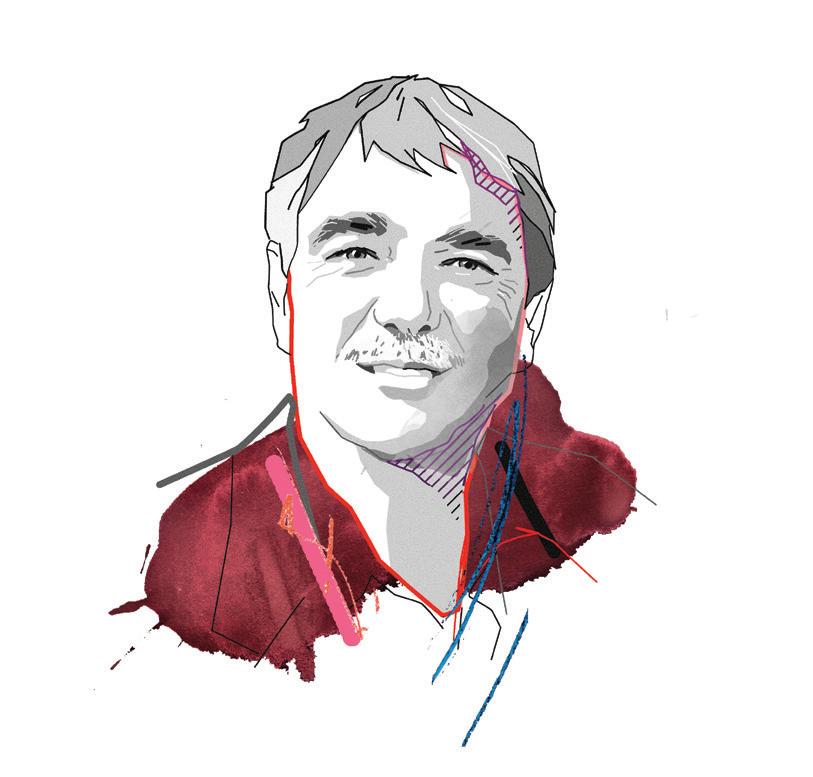
KEITH TWITCHELL spent 16 years running his own business before serving as president of the Committee for a Better New Orleans from 2004 through 2020. He has observed, supported and participated in entrepreneurial ventures at the street, neighborhood, nonprofit, micro- and macro-business levels.
Can entrepreneurs compete and collaborate at the same time?
BY KEITH TWITCHELL
Entrepreneurs are often portrayed as the ultimate rugged individualists, blazing new trails in highly competitive landscapes. Yet in reality, many entrepreneurs benefit substantially from collaborating with similar businesses, even while they compete with them. It can be a delicate dance, but it can also produce greater success for all involved.
Among the many aspects of business, marketing might seem like an unlikely arena for cooperation. After all, one basic principle of marketing is to identify “distinguishing variables,” things that separate your business from your competitors. But one excellent local example of collaboration among competitors can be found in the oyster farmers of Grand Isle, who are collectively marketing their product under the umbrella of “Grand Isle Jewels.”
“The more we are all able to work together on the marketing, the better it is for all of us,” said Nathan Herring, owner of Bright Side Oyster Company. Herring noted that he uses his own company name when talking to buyers,
but added, “The Grand Isle Jewels brand gives us more name recognition, and buyers may be willing to give us a better price.”
“The brand gives us more traction in the community,” concurred Kirk Curole of Bayside Oyster Company, who added that cooperation among these smaller oyster farms goes beyond just the marketing. “I help other farmers when they run out of product, and they help with my customers when I’m out of town. No one has all the equipment, so everybody brings something to the table.”
In fact, Herring was able to obtain a grant to buy a tumbler — a key tool in the oyster sorting process — because he committed to sharing it with his fellow farmers. “I would not have been able to buy this on my own,” he stated.
Not only do the oystermen share equipment, they assist each other when one has boat problems or issues with other equipment.
“The farms are close together,” Herring explained. “We may be in competition, but we’re friends too.”
Another illustration of this principle is the legislative actions undertaken by craft beer
brewers around Louisiana. While the Grand Isle oyster farmers are still, as Curole described it, “a gentlemen’s co-op,” the brewers have established The Louisiana Craft Brewers Guild as a formal alliance.
Jacob Landry, the founder and CEO of Urban South Brewery in New Orleans, currently serves as president of guild, which was founded in 2011— as a response to the challenges Louisiana brewers were facing at the time.
“Breweries were blowing up all over the country,” Landry recalled, “but they weren’t blowing up here.”
Louisiana laws restricted how craft brewers could sell their product; in particular, for breweries that wanted to distribute their products offsite, only 10% of what a brewery produced could be sold out of its taprooms — which is where these businesses enjoy their highest profit margin.
Landry, who had not even opened up his own operation at that time, began working with existing breweries to get the laws changed.
“We got the legislation passed in 2015, and it quintupled the number of brewers in Louisiana,” Landry reported. He opened Urban South the following year, noting that, “We wouldn’t have made it under the old law.”
As the craft beer industry has evolved and grown, however, cooperation has become in some ways more challenging, with some regulations favoring larger operations over the smaller ones, and others working in the opposite direction. Nonetheless, Landry said, “We get more done if we work together. We are stronger together.”
From small grocers combining forces to increase their purchasing power to many types of businesses forming cooperatives to save on insurance costs, examples of competitors working collaboratively abound both locally and nationally. Competition is part of life, and certainly part of business. But it can be done with respect – and surprisingly often it can be set aside for mutually beneficial collaboration.T

RYAN D. MAYER is the owner of Mayer Building Company, an award-winning New Orleans commercial general contractor. He may be reached via email at rdmayer@mayerbuilt.com.
Here are some of the tools our company is using to chalk up more Ws
BY RYAN D. MAYER
When people think about construction, they often picture cranes, concrete and blueprints. But ask anyone who’s spent time on a jobsite and they’ll tell you the truth: construction is a team sport. A building doesn’t come to life because of one person’s vision alone — it takes coordination, trust and leadership across
dozens of people pulling in the same direction.
At Mayer Building Company (MBC), we’ve come to see leadership the same way. Over the past year, we invested heavily in building stronger internal systems and coaching our team to think beyond the day-to-day.
One of the tools that’s made the biggest impact is our 90-day goals framework. Instead of chasing endless to-do lists, every leader in our company — from project managers to

administrators — sets short-term goals that tie directly into MBC’s long-term strategy. That rhythm has made us more aligned, more transparent and more accountable.
We’ve also introduced project post-mortems and client survey programs. These aren’t just check-the-box exercises. They’re intentional pauses that allow us to reflect, learn and grow. In a business where deadlines and budgets dominate the conversation, building in time for honest feedback has strengthened both our culture and our client relationships.
But leadership at MBC doesn’t stop with our own team. I believe that if you’re serious about leading, you need to show up in the community. That’s why I serve on the board of Credit Human, an organization dedicated to financial wellness and sustainable communities. Our team also engages deeply with NORLI (New Orleans Regional Leadership Institute) — I serve as a board member and alum, Project Manager Ben Belou is an alum, and Operations Chief Fred Goodrow is part of the Class of 2026. These experiences expand our perspective and connect us with leaders who are tackling the same regional challenges from different angles.
We’re also proud to support unCommon Construction, a nonprofit that equips high school students with real-world skills and mentorship through building houses. Soon, we’ll launch an MBC Award of Merit with unCommon to recognize apprentices or educators who exemplify hard work and leadership — because the next generation of builders deserves investment just as much as the projects we build today.
At the end of the day, construction will always be about more than structures. It’s about people — the ones who plan, build and lead. At MBC, we’re committed to investing in our team and our community, because that’s what it means to be a trusted general contractor in New Orleans. T


KELLY HITE is the associate news editor for Biz New Orleans, responsible for delivering daily business news on BizNewOrleans.com, focusing on developments that impact the greater New Orleans area and southeast Louisiana. She may be reached via email at KellyH@BizNewOrleans.com.
BY KELLY HITE
LSU Health New Orleans is more than a medical school; it’s a vast academic and research enterprise and a leading partner in Louisiana’s growing biomedical innovation network.
The institution operates a network of major research and clinical centers — including the Stanley S. Scott Cancer Center, located in downtown New Orleans at 1700 Tulane Avenue, and the Comprehensive Alcohol–HIV/AIDS Research Center (CARC), based at LSU Health Sciences Center New Orleans — and maintains deep partnerships with hospitals like University Medical Center New Orleans.
Together, these projects reflect a broader shift in LSU Health New Orleans’ research enterprise toward technology-driven medicine.


By integrating artificial intelligence, nanotechnology and data-privacy tools into traditional biomedical research, the institution is positioning itself at the forefront of a growing national effort to modernize healthcare innovation and expand Louisiana’s role in the life-sciences economy.
On October 1, 2025, the National Science Foundation awarded one of the largest grants in LSU Health New Orleans’ history to genetics professor Dr. Sunyoung Kim and her research team at the School of Medicine, supporting work in adaptive nanomotor development, a field with the potential to transform treatment strategies for cancer and neurological disorders.
The five-year interdisciplinary award explores the molecular machinery that powers cells, uncovering how tiny biological “motors” can be adapted for new biomedical applications. By understanding how these mechanisms operate, physicians could better predict which patients are most likely to respond to advanced treatments.
“My team and I are extremely humbled to be the recipients of one of the largest grants in the history of LSU Health New Orleans,” said Kim. “This research is a crucial step to enable innovations in basic science, cancer and neurological conditions. With this level of support, we can build regional economic opportunities from the ground up.”
Beyond the lab, the NSF grant also invests in people. It supports the training of junior faculty to move discoveries from research to commercialization, bridging the gap between innovation and impact. The NSF award promises to strengthen both the region’s biomedical workforce and its growing biotech ecosystem.
What does cybersecurity have to do with tracheostomy tubes? For a group of researchers in Louisiana: a lot. Dr. Michael Dunham, a professor of otolaryngology at LSU Health New Orleans, heads a national research project that combines his expertise in computer science with his background as a pediatric surgeon.
Otolaryngology, commonly referred to as “ENT,” addresses conditions of the ear, nose and throat, along with the head and neck systems that help people hear, breathe and swallow. Dunham’s pediatric patients with narrow or weak airways may require tracheostomy tubes to allow them to breathe. If a tube becomes dislodged or obstructed, however, it can lead to brain injury or death.
This research is a crucial step to enable innovations in basic science, cancer and neurological conditions. With this level of support, we can build regional economic opportunities from the ground up.
Dr. Sunyoung Kim, genetics professor, LSU Health New Orleans
To address this risk, Dunham developed the Eyes-On Decannulation Detector (E-O-DD) in 2025, an AI-assisted, patented technology that detects tracheostomy-tube dislodgement before complications can occur.
While developing Eyes-On this year, Dunham faced a challenge: obtaining enough medical data to train the technology while preserving patient privacy. To meet that challenge, Dunham and a team of computer scientists, mathematicians and machine-learning specialists at Kansas State University and Louisiana State University are collaborating to create methods that allow hospitals to analyze medical video data in real time without exposing patient identities.
Beginning Oct. 1 and running for three years, the project is funded by a $1.2 million collaborative grant from the National Science Foundation. The initiative, titled “Collaborative Research: SaTC 2.0: RES: A Privacy-Preserving Framework for Sharing and Learning from Scarce Medical Data,” aims to improve how sensitive medical video information is shared and analyzed across institutions.
Not only will this project provide peace of mind for families with tracheostomy-dependent infants, Dunham noted, but it will also have implications for other vulnerable populations, including individuals in nursing homes and those in rural areas with limited access to healthcare. Ultimately, it could help research
teams and patients alike and open the door to future medical innovations.
Dunham presented his Eyes-On technology at BIO on the BAYOU, held Oct. 28-29, 2025, in New Orleans. The regional bioscience showcase brought together researchers, investors and emerging startups from across the Gulf South, strengthening connections within the region’s expanding biomedical corridor. New Orleans native Walter Isaacson, the best-selling biographer and former head of both CNN and the Aspen Institute, delivered the closing remarks, underscoring the South’s growing influence as a national hub for biotechnology and translational research.
Dunham said the conference provided an invaluable opportunity to network with potential partners and clinical collaborators while refining a strategy to bring Eyes-On to scale. Backed by new industry relationships and interest from home-health agencies, hospitals and care facilities, he aims to make the device broadly accessible to caregivers and patients in real-world settings.
At the same time, Dr. Patricia Molina, senior associate dean for research in LSU Health New Orleans’ School of Medicine, received a $7.2 million grant on October 1 from the National Institutes of Health (NIH) to continue her decades of work through the Comprehensive Alcohol–HIV/AIDS Research Center (CARC). Continuously funded since its founding in 1991, the center investigates how alcohol use affects patients living with HIV/AIDS, particularly as they age and develop related health complications.
Molina’s latest NIH-supported project builds on that legacy, examining how alcohol disrupts energy metabolism across the body’s immune, metabolic and nervous systems. Her team aims to pinpoint interventions that can restore balance to those systems, improving health outcomes and guiding emerging treatment strategies.
“This grant will help us achieve our goal of improving care for people living with HIV/AIDS and expanding scientific understanding of how chronic alcohol use affects aging and resilience,” said Molina.
Her team seeks to improve care for people living with HIV by linking clinical observation with laboratory insight. The research extends LSU Health’s long-standing leadership in studying the intersection of substance use and infectious disease, while applying new tools of molecular science to understand how alcohol accelerates or compounds illness. T

Louisiana has cut burn mortality rates in half — making the business case for specialized trauma care
BY DR. RICHARD DICARLO, MD
When LSU surgeons opened the Burn Center at University Medical Center (UMC) in 2018, Louisiana gained more than a specialized medical facility — we invested in a strategic asset that has fundamentally changed health outcomes across the region.
The numbers tell a compelling story; in seven years, statewide mortality rates for burn patients have dropped from roughly 8% to 4%, aligning Louisiana with the national average. For a state where trauma remains the leading cause of death for residents age 1 to 44, this achievement demonstrates what coordinated investment in specialized care can accomplish.
The LSU-led Burn and Trauma Centers at UMC function as the only verified facilities of their kind in Louisiana and across portions of the Gulf South, including areas of Mississippi, Arkansas and Alabama. The regional
DR. RICHARD DICARLO, MD, is dean of the LSUHSC School of Medicine and a professor of medicine. Inquiries for Dr. DiCarlo can be sent to mediarelations@lsuhsc.edu.
reach creates both responsibility and impact, providing immediate access to specialized care where none existed before. The centers’ presence alone has fundamentally altered the trajectory of burn outcomes statewide.
Nationally, trauma and burns cost $42 billion annually, exceeding the combined economic burden of cancer and heart disease. These aren’t just medical expenses. They include lost productivity, disability payments, rehabilitation costs and the ripple effects on families and employers when workers are impaired or killed.
Healthcare leaders and policy makers are faced with a question: Where should we invest to maintain these gains and continue improving outcomes?
Led by LSU surgeons, the Burn Center achieved verification from the American Burn Association in only two years, compared to the typical fiveyear timeline. The facility’s first review resulted in no citations and met more than 130 standards, including 24/7 therapy coverage and comprehensive multidisciplinary performance reviews conducted every three years.
The 16-bed Burn Center includes ADA-accessible rooms and a dedicated therapy gym where physical and occupational therapists work to restore patient function. This comprehensive facility reflects an evolution in burn care philosophy, where the goal extends beyond survival to preventing long-term disability. The objective is to restore patients to their lives, careers and passions.
The co-located Trauma Center at UMC has maintained Level 1 verification since the mid-1990s, with an extraordinary record of eight consecutive verifications without deficiencies. Most surgeons in both programs hold dual training in trauma and burn care, giving them a rare versatility and contributing to patient outcomes that consistently outperform statistical models.
Building on clinical excellence, Louisiana’s Board of Regents recently designated the LSU Traumatic Injury and Burn Research Innovation (TIBRI) Center as a Center of Research Excellence — the first statewide designation of its kind. This recognition acknowledges the advanced research underway in both burn and trauma recovery. Louisiana is positioned to lead

in patient care, developing innovations that could benefit trauma centers nationwide.
Sustaining Louisiana’s progress and improving quality of life depend on three major priorities.
• Mentorship and Training Current faculty must develop into national leaders who train the next generation of specialists. This requires consistent funding for competitive academic positions and professional development.
• Disaster Preparedness Louisiana must leverage its hard-won resilience to help communities not just survive disasters but maintain critical care capabilities during emergencies. Coupled with burn and trauma centers’ regional impact, this readiness makes a difference for businesses evaluating operational resilience in the Gulf South.
• Research Funding Despite their vital role, trauma and burn centers receive disproportionately low research funding. States that have demonstrated measurable outcomes must advocate for resources that reflect the scale of the challenge.
The LSU Trauma and Burn Research Center of Excellence has an impact that extends far beyond the hospital walls. Lower mortality and complication rates reduce healthcare costs system-wide and preserve workforce capacity. Outreach programs target underserved and high-risk populations, such as Hispanic construction workers who may face elevated risks for electrical injuries amid language barriers. Through partnerships with community organizations and bilingual education initiatives, life-saving prevention messaging changes how people understand risks and approach their work safely.
Louisiana’s success in cutting mortality rates in half demonstrates what’s possible when experience, partnership and targeted investment align. The state’s competitive position as a place where businesses can operate with confidence depends on maintaining this firstclass healthcare infrastructure. Employers and families must know that if the worst happens, the systems exist to help workers not just survive but thrive. T
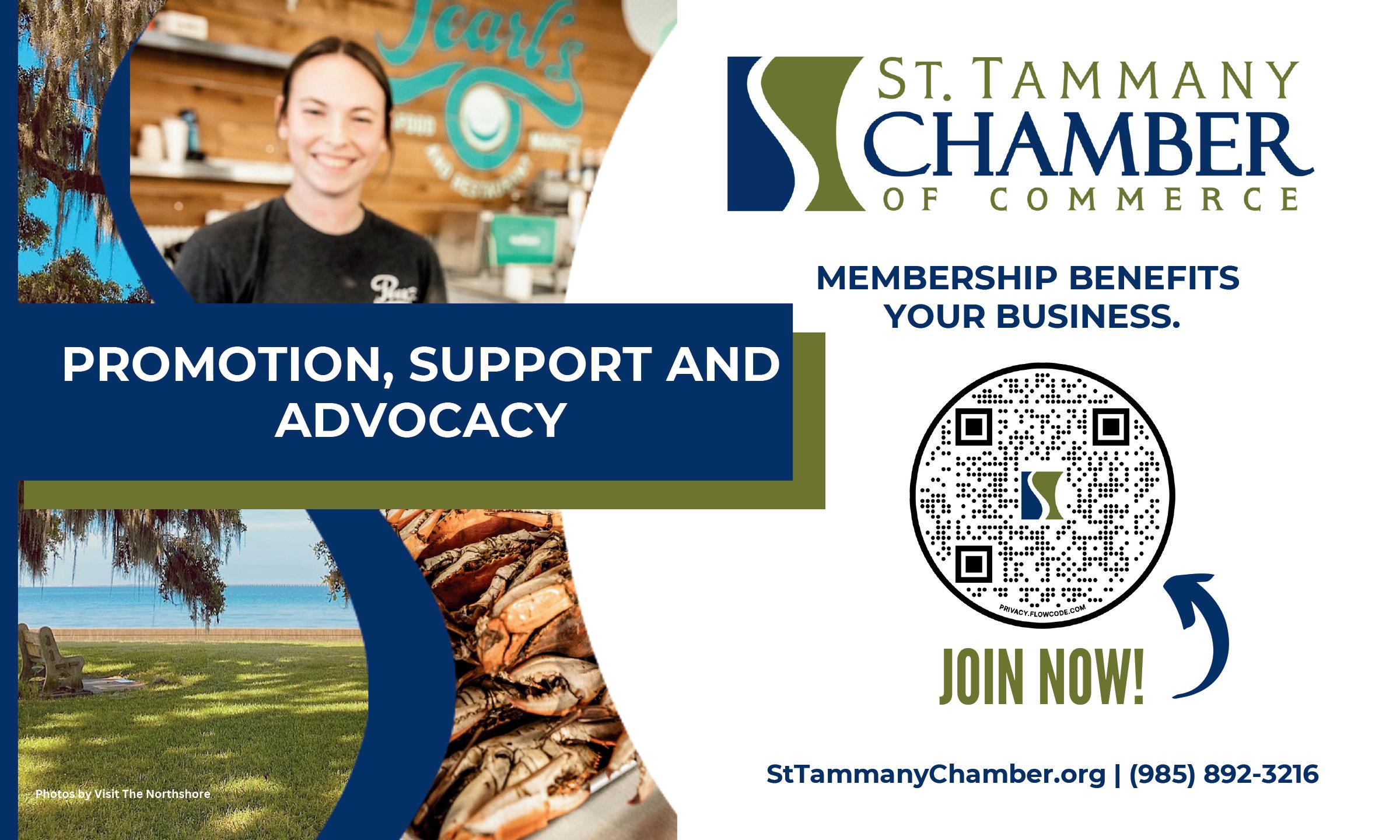


SANDRA LOMBANA LINDQUIST is president and CEO of the New Orleans Chamber of Commerce, where she has developed multiple community-wide events and organizations that benefit the region and seen membership grow from 500 members in 2011 to more than 1,300 today. She may be reached via email at slindquist@neworleanschamber.org.
From reaching out to leaders throughout the Southeast to investing here at home, in the past year the New Orleans Chamber of Commerce has racked up a lot of wins.
BY SANDRA LINDQUIST
At the New Orleans Chamber of Commerce, we’re in the business of community. Our work centers on the connections, collaborations and conversations that transform businesses into a thriving economic ecosystem, sparking innovation and growth across our region.
In 2025, the New Orleans Chamber offered over 113 events, reaching more than 10,000 attendees. We represent almost 1,400 member businesses employing more than 140,000 residents. That’s 140,000 reasons why business advocacy matters and 140,000 New Orleanians whose livelihoods are directly connected to our work together.
As a bipartisan group, we are doubling down on vital advocacy that ensures our members a seat at the table. We kicked off the year with our annual welcome reception at Washington Mardi Gras, greeting more than 300 business, civic and government leaders in D.C. We also featured Police Chief Anne Kirkpatrick and
District Attorney Jason Williams at our spring luncheon where we explored their unprecedented collaboration that is contributing to a decline in crime rates.
In a pivotal moment for our city, we convened the top three candidates before October’s mayoral election for a candid conversation about economic development, one-stop-shop, population growth, wealth creation and priority projects.
Through our Chairman’s Council Roundtables, we facilitated intimate meetings with elected officials to discuss current issues and share ideas for stronger community collaboration. These discussions shaped priorities at our D.C. Fly-In, where we gathered chamber of commerce leadership from Louisiana, Mississippi, Alabama and Florida for a congressional breakfast and individual meetings with U.S. senators across all four states.
Responding to rising concerns about the permitting and licensing process in Orleans Parish, we partnered with MDRG, Inc. to initiate a comprehensive survey to better
understand these issues and play a direct role in driving improvements. This process included detailed meetings with each member of New Orleans City Council and outreach to hundreds of businesses. We’re currently reviewing the results, which will help quantify barriers and offer informed recommendations for improvement. This initiative underlines our commitment to support elected officials and our membership while honoring our role as a key resource and leader in driving growth.
One of our most exciting partnerships has been with Celebrate Canal! Coalition, a citizen-led advocacy group executing strategic plans to revitalize Downtown New Orleans’ most significant thoroughfare. Together, we’re working to restore Canal Street to its former glory as a must-visit destination for residents and millions of visitors alike. This collaboration illustrates our broader mission: When we invest in community infrastructure and cultural assets, we create environments where businesses thrive and residents prosper.
We also recently announced the revival of 504ward, which has served for years as the primary engine of connection for young business professionals in Orleans Parish.
As we approach 2026, New Orleans stands at an inflection point. We’ll welcome new leadership to City Hall and continue building on the momentum we’ve created together. Save the date for Friday, Dec. 12, for our annual meeting, when we will explore a new era of leadership for the city, along with its challenges and opportunities. Right now is the time to roll up our sleeves and work together to build the next chapter of New Orleans’ economic future.
This year has delivered hope, commitment and tangible results. At the New Orleans Chamber, we don’t just observe change, we drive it. This is what it means to be in the business of community, and we are proud to serve as the voice of the New Orleans business community as we step boldly into a new era of growth and leadership. T


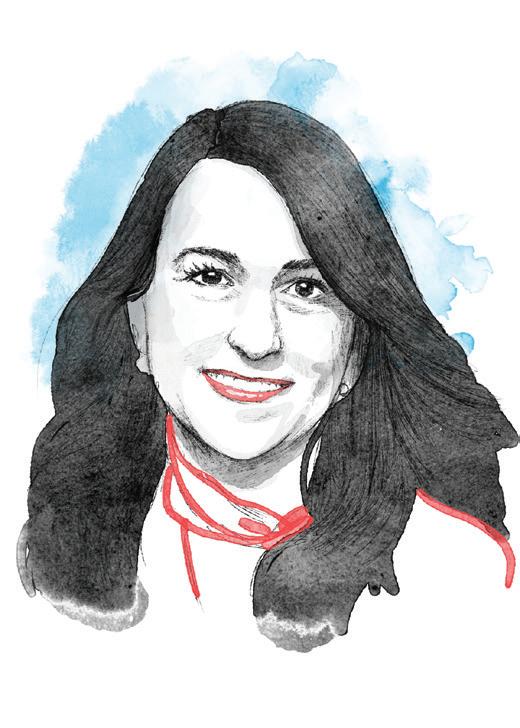
DR. CHANDRA CRAWFORD is vice president of public policy and governmental communications for UNITY of Greater New Orleans, a nonprofit organization leading the homeless housing and services collaborative of agencies for New Orleans and Jefferson Parish. She may be reached via email at ccrawford@unitygno.org.
is the
BY DR. CHANDRA CRAWFORD
Street homelessness in New Orleans and Jefferson Parish decreased 24% between January 2024 and July 2025 — the result of a public-private partnership among government, business, philanthropy and nonprofits to provide housing and services to the most vulnerable.
Unfortunately, this progress will soon disappear if recently announced severe federal cust to housing vouchers, especially the evisceration of Permanent Support Housing for people with disabilities experiencing homelessness, are allowed to be implemented.
The persistence of New Orleans’ homelessness problem is rooted in its housing affordability crisis. New Orleans now has the highest income gap of any major city in the nation, with the top 20% of the population having incomes nearly eight times higher than the bottom 20% of the population. Twenty-three percent of New Orleanians live below the poverty line.
In addition, property insurance rates here have skyrocketed due to concerns about climate change in the reinsurance industry. These factors have led to a 24% rise in fair
market rents. That means that five years ago, a one-bedroom apartment that rented for $899 a month is now $1,113 per month, while wages have remained relatively stagnant.
All of this makes it unsurprising that at least 4,300 people in our community become homeless each year.
Unfortunately, on Nov. 13, the federal government announced that the homelessness services and rent assistance grants — on which vulnerable children and adults depend — are to be severely slashed. This would have a disproportionate impact on the New Orleans area, where these federal funds are used to provide housing and stabilization services to more than 3,500 disabled, elderly or vulnerable adults and children. We expect that at least 2,000 of these persons, previously rescued from homelessness, would be tossed back out on the streets. Local landlords who depend on rent subsidies would also be effected.
As the nonprofit lead agency for our community’s homeless housing and services collaborative, UNITY of Greater New Orleans and our member organizations are working to protect lifesaving services through coordinated advo-
cacy and coalition-building. Immediate priorities include advocacy for:
• No cuts to Permanent Supportive Housing for people with disabilities rescued from homelessness;
• Full renewal of federal Tenant-Based Rental Assistance and Emergency Housing Vouchers for impoverished people to prevent mass housing loss and prevent increased homelessness;
• Protection of Medicaid Funding cuts threaten to hollow out the very programs proven to work to end homelessness. We need everyone to advocate and contribute to proven solutions.
The good news is that New Orleans businesses have the opportunity to be a big part of the solution. Here’s how you can help:
• Contact your U.S. senators and members of Congress, including House Speaker Mike Johnson, and urge them not to cut Rental Assistance and Permanent Supportive Housing for people experiencing or at risk of homelessness. Explain that you are a member of the business community and let them know that the proposed federal cuts in permanent housing would cause homelessness to soar.
• Donate to UNITY to support our Housing Fund, which provides emergency assistance to end and prevent people’s homelessness and provides very inexpensive furnishings and move-in kits for moving people off the street and shelters into apartments, thereby ending their homelessness.
• Join UNITY’s Community Task Force to Reduce Street Homelessness headed by business leader Bill Hines and retired judge Calvin Johnson.
Many local business organizations have already been deeply involved in our work housing the most vulnerable. The current challenges require even more business leadership. It hurts everyone, including our business community, if thousands of people are tossed out on the streets T

BY


TWENTY YEARS after Hurricane Katrina devastated the Gulf Coast, New Orleans marked 2025 as a pivotal year of reflection, commemoration and celebration — cementing the anniversary as one of the region’s most significant stories of the year.
The milestone sparked an extraordinary outpouring of remembrance and analysis. Two major documentaries premiered in summer 2025, bringing fresh perspectives to national audiences. National Geographic’s five-part series “Hurricane Katrina: Race Against Time” debuted in July on Disney+ and Hulu, examining political failures and systemic injustice through an investigative lens. Netflix followed in August with Spike Lee’s “Katrina: Come Hell and High Water,” a threepart emotional journey centered on survivor testimony. Together, these productions reignited national conversations about responsibility, resilience and whether vulnerable communities are truly safer today.
Locally, cultural institutions stepped up to educate and engage the public. The Historic New Orleans Collection launched free tours of its exhibit “A Vanishing Bounty: Louisiana’s Coastal Environment and Culture,” exploring environmental threats and coastal restoration efforts. The organiza -
Two globally released documentaries joined with multiple locally produced events to mark the passing of two decades since the devastating storm.
tion also presented the Morrison Lecture examining post-Katrina urban planning, while New Schools for New Orleans released a six-part video series titled “After the Storm: 20 Years of Change and Progress in New Orleans Public Education.”
In our August cover story, Biz New Orleans featured entrepreneurs who launched ventures in the aftermath of the crisis—from Edgar Caro’s Barú Bistro and Tapas to Kay Morrison’s The Occasional Wife—showcasing how innovation emerged from devastation. These stories illustrated that while one-third of the city’s businesses closed forever, those who seized the moment built lasting institutions.
The anniversary also highlighted the city’s extraordinary comeback. For example, New Orleans rebounded from a low of 3.7 million visitors in 2006 to 19 million in both 2019 and 2024. Meanwhile, United Way organized a Day of Action, bringing the community together for service projects. Even the Saints organization celebrated its 20-year sellout streak, a testament to civic pride and recovery.
New Orleans & Company and other regional leaders emphasized the city’s transformation into a must-see cultural destination hosting iconic events, while the $14.5 billion Hurricane and Storm Damage Risk Reduction System demonstrated unprecedented disaster preparedness.
The 20th anniversary wasn’t just about looking back—it was about honoring nearly 2,000 lives lost, celebrating resilience and asking critical questions about the future. — By Misty
Milioto

Louis Armstrong New Orleans International Airport emerged as a major regional development story in 2025. The expansion combined ambitious infrastructure projects with cutting-edge technology and strategic planning that positions MSY for decades of growth—all while enhancing the passenger experience.
The year’s centerpiece was the August groundbreaking on the $84.5 million Express Shuttle Connector Road,
funded through Federal Aviation Administration grants from the Bipartisan Infrastructure Law. The dedicated shuttle roadway will eliminate congestion between the terminal and the south campus parking garages and Rental Car Center, while laying groundwork for a future intermodal rail connection between Baton Rouge and New Orleans. The project represented just one piece of a broader transformation, as officials unveiled plans for
a second terminal by 2031. Expected updates include 15 new gates, expanded security and baggage claim areas, and additional parking — infrastructure necessitated by explosive passenger growth from 5.9 million enplanements in 2022 to 6.6 million in 2024. Driving this expansion was a comprehensive 20-year master plan that invited unprecedented public engagement. The planning process, undertaken by the community and
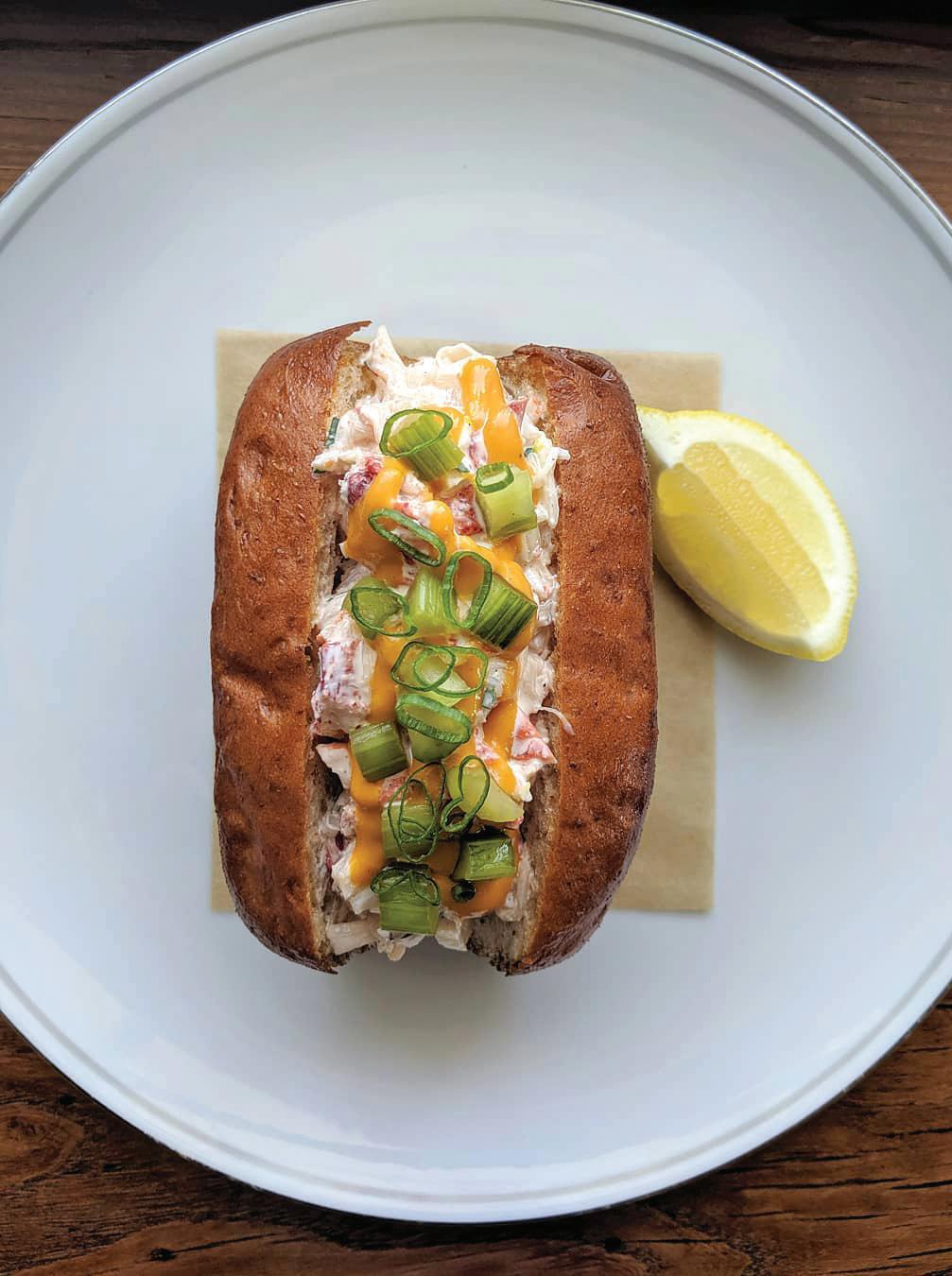
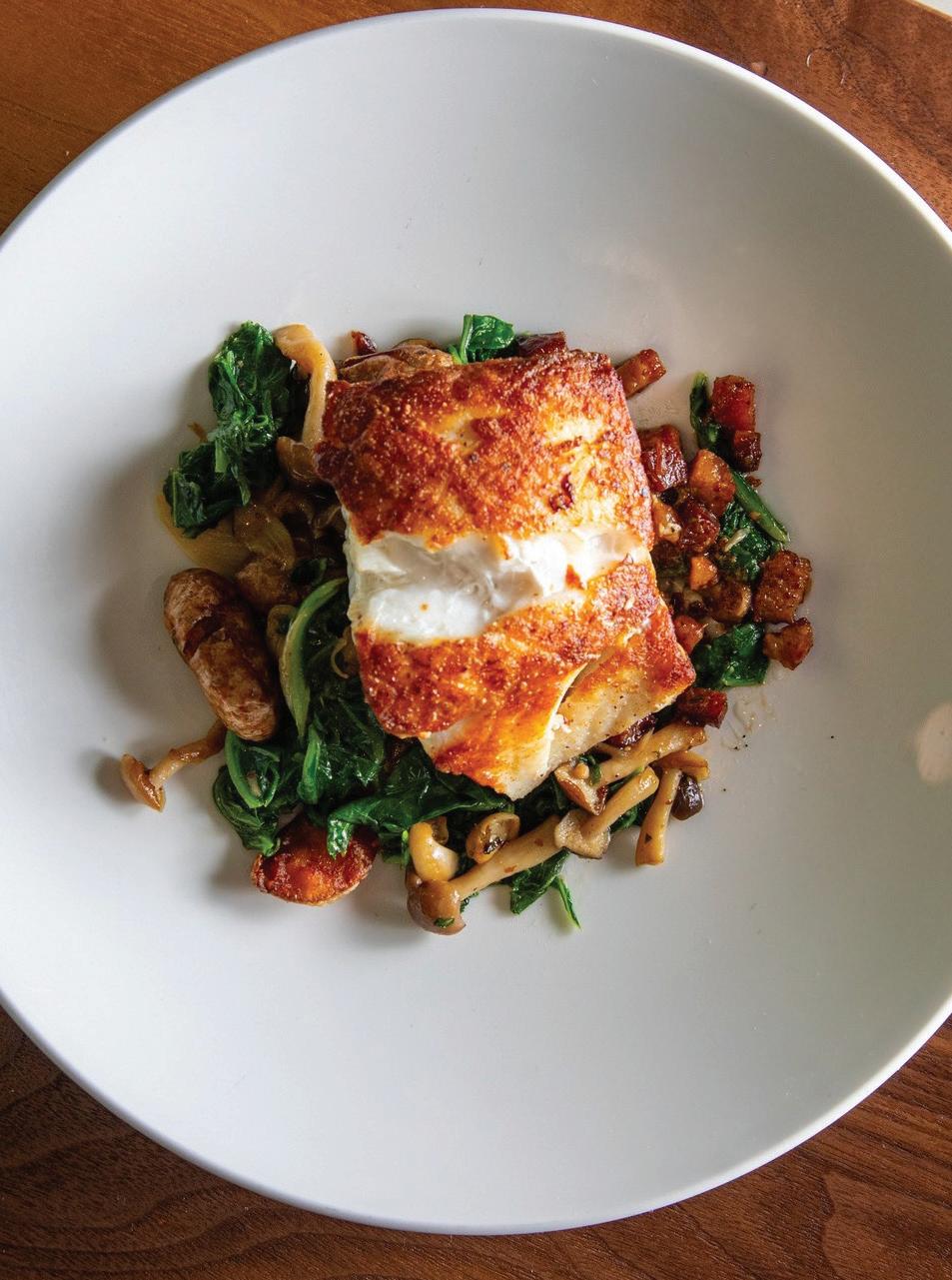
THE CULINARY COMMUNITY throughout the South was rocked in April, when MICHELIN and Travel South USA announced that they would be launching the MICHELIN Guide American South covering six states: Louisiana, Alabama, Mississippi, North Carolina, South Carolina and Tennessee.
First published in France in the early 1900s, the MICHELIN Guide has evolved from a motorists’ handbook into one of the world’s leading authorities on dining and hospitality. Today, the guide operates in more than 45 destinations worldwide, applying a consistent
set of standards through its team of anonymous MICHELIN inspectors. Its expansion into the American South marks its first regional selection since debuting in North America in 2005.
Anonymous MICHELIN inspectors were sent this year to evaluate restaurants throughout the region for excellence worthy of recognition.
The big news came on November 3, when the MICHELIN Guide unveiled the first American South edition, awarding MICHELIN Stars to three New Orleans restaurants: Emeril’s, which earned Two Stars, and Saint-Germain and Zasu,
technical advisory committees over two years, projected annual passenger numbers would nearly double to 10.8 million by 2041, potentially requiring expansion from 35 to 60 gates. The FAA-approved baseline scenario accounted for environmental factors including hurricane resilience and stormwater management, ensuring Louisiana's primary air gateway — which handles 85% of the state’s air passengers — could adapt to industry
shifts while strengthening its economic development role. Innovation also extended beyond bricks and mortar. MSY also became one of just 23 airports nationwide to deploy CLEAR’s revolutionary EnVe Pods, featuring face-first biometric technology that verifies traveler identities five times faster than previous methods. Launched just ahead of Super Bowl LIX, the pods eliminated fingerprint and eye scans, streamlining security for
thousands of daily passengers. This technological leap complemented MSY’s operational excellence — Uber recognized the airport with its 2024 Quickest Pickup award for an industry-leading 4.1-minute average wait time between rider request and pickup, achieved through strategic staging lot placement and optimized pickup locations. The airport also gained momentum thanks to a bevy of new routes. Alaska Airlines
each earning One Star. The most stars a restaurant can achieve is three.
Emeril’s award came under executive chef E.J. Lagasse, who has refined and reenergized the restaurant founded by his father, Emeril Lagasse.
Saint-Germain — located in the Bywater — earned praise for its inventive tasting menu and commitment to detail under chefs Blake Aguillard and Trey Smith, while in Mid-City, Zasu, led by chef Sue Zemanick, was recognized for its refined seafood-driven menu that blends local ingredients with French technique.
The MICHELIN Guide American South is expected to boost international culinary tourism. “By attracting international culinary tourism and setting new benchmarks for excellence, Michelin’s presence will inspire local restaurants to push creative boundaries while reinforcing New Orleans’ reputation as a must-visit destination for food lovers,” said Walt Leger III, president and CEO of New Orleans & Company.
This initiative aligns with New Orleans & Company’s ongoing efforts to elevate the city’s global profile as a culinary hub. In 2024, New Orleans was the first North American city to host the prestigious Bocuse d’Or and the Pastry World Cup American Championships; they will return in 2026.
New Orleans & Company has also collaborated on the launch of the “Guide Michelin Voyage & Cultures Nouvelle Orléans,” a French-language guide aimed at international travelers. The addition of the MICHELIN Guide American South will further promote authentic Southern cuisine to a global audience.— By Kim Singletary
added service to Portland, Oregon, while Spirit Airlines launched flights to Honduras and expanded its Carnival season access. Starting in February 2026, Breeze Airways will offer international service to Cancun, and Frontier will offer four new nonstop routes connecting New Orleans to Baltimore/Washington, Dallas–Fort Worth, Detroit and Houston. — By Misty Milioto
ARTIFICIAL INTELLIGENCE emerged as one of 2025’s defining stories, transforming from futuristic concept into economic powerhouse. Locally, entrepreneurs from New Orleans and across the state positioned themselves at the forefront of AI-driven innovation across healthcare, lending and workforce development.
Globally, AI adoption reached historic highs, with 78% of organizations engaging with the technology. The AI market, valued at $391 billion, is projected to reach $1.81 trillion by 2030.
Generative AI adoption doubled from 2023 to 2024, reaching 65% of organizations, with early adopters seeing returns of $3.70 for every dollar invested.
Louisiana emerged as a national AI adoption leader, with the U.S. Chamber of Commerce ranking the state seventh nationwide for generative AI adoption — 7 percentage points above the national average.
Tulane’s 2025 Greater New Orleans Startup Report reinforced this momentum, revealing that 77% of regional entrepreneurs expect AI to have major long-term impact on their businesses, with 67% viewing it as their biggest opportunity. Among current users, 85% reported productivity gains, expanded market share and cost savings.
The local entrepreneurial ecosystem in New Orleans also mobilized rapidly. Civilized AI, a govtech startup founded by Matt Wisdom (who previously built TurboSquid,
which was then acquired by Shutterstock, forming the world's largest 3D marketplace), closed a $2 million seed round led by Benson Capital. Cantaloupe AI won the NSpire Startup Slam's $115,000 prize with its AI-powered hospitality hiring platform, while the newly formed NOLA Entrepreneurship Council convened to address policy, funding and innovation ecosystem challenges.
Meanwhile, healthcare innovation flourished at New Orleans Entrepreneur Week, where BENZAIT CEO Ralph Whalen demonstrated how AI could be used to automate documentation and billing.
Infrastructure financing, however, became the maybe the most unexpected AI story. Baton Rouge’s Cardinal Capital identified AI-driven data centers as “the biggest lending opportunity in a generation,” with utilities filing for more than $29 billion in electricity rate increases.
Educational initiatives also used AI to democratize access. The University of New Orleans launched a free AI Essentials speaker series for small businesses, while OHUB and the New Orleans BioInnovation Center brought AI equity conversations to Essence Fest.
The technology’s disruptive potential, however, became impossible to ignore. For example, JPMorgan, with 360 employees in New Orleans, announced AI-driven workforce reductions of approximately 10% in back-office operations. — By Kim Singletary
AFTER NEARLY TWO DECADES of absence, passenger rail service roared back to life along the Gulf Coast in August 2025. This return marked one of the region’s most significant transportation milestones since Hurricane Katrina severed the connection in 2005. The new state-sponsored “Amtrak Mardi Gras Service” didn’t just restore mobility, it reconnected communities, boosted economic development and positioned New Orleans as the premier passenger rail hub in the South.
The twice-daily service launched August 18 between New Orleans and Mobile, Alabama, with stops in Bay St. Louis, Gulfport, Biloxi and Pascagoula, Mississippi. Adult coach fares end-to-end started at $15 each way, less for shorter distances. Trains departed Mobile at 6:30 a.m. and 4:30 p.m., with corresponding departures from New Orleans, offering Coach and Business Class seating, café service with locally sourced items, free Wi-Fi and generous baggage

allowances (including accommodations for golf bags and pets).
The Southern Rail Commission worked tirelessly to position the relaunch ahead of Super Bowl LIX in February, capitalizing on massive visitor influx while showcasing regional connectivity.
The Gulf Coast’s aerospace sector — including NASA Michoud, Stennis Space Center and particularly Airbus’ Mobile manufacturing facility — also stand to benefit significantly from enhanced workforce mobility. Transportation

planners noted that reliable rail service could combat “brain drain” by offering young professionals the stress-free, efficient travel increasingly expected in competitive job markets. The 143.9-mile New Orleans-to-Mobile route mirrored distances in successful Northeast corridor markets where fares ranged from $11 to $68, suggesting strong viability.
Amtrak “Mardi Gras Service” guests have same-day connections in both directions daily to Amtrak’s legendary “City of New Orleans”
line (between New Orleans and Chicago via Memphis), plus next-day connections to Amtrak’s “Crescent” trains (to and from New York via Atlanta) and Amtrak’s “Sunset Limited” trains (to and from Los Angeles via Tucson, San Antonio and Houston). These connections position the Gulf Coast service as a critical regional connector within America’s broader passenger rail network.
New Orleans Mayor LaToya Cantrell emphasized the service’s 20-year journey from loss to resto-
Pediatric healthcare in the Gulf South experienced a watershed moment in 2025.
The region’s two leading children’s hospitals underwent historic transformations — one rebranding its 70-year legacy, the other breaking ground on a $300 million facility. Both also garnered unprecedented national recognition for clinical excellence.
On Feb. 5, Children’s Hospital New Orleans announced its transformation into Manning Family Children’s. This shift honors a partnership with the Manning family, whose 50-year New Orleans roots and
commitment to uplifting the community aligned with the hospital’s mission.
The rebranding marked a new chapter for Louisiana’s only freestanding, comprehensive children’s hospital with more than 600 pediatric-trained providers and 3,000 employees solely dedicated to the care of kids. In addition to comprehensive services offered at its main campus in New Orleans, Children’s operates more than 30 satellite locations across Louisiana and the Mississippi Gulf Coast.
On April 29, Ochsner Health

On August 18, rail service returned to the Gulf Coast with Amtrak's launch of a twice-daily route between New Orleans and Mobile, Alabama.
ration, celebrating how it furthered the city’s role as the South’s passenger rail anchor. Tourism leaders across the Gulf celebrated; New Orleans & Company has plans to market multiple culturally rich Southern destinations to international visitors. —By Misty Milioto
JEFFERSON PARISH celebrated its 200th birthday in 2025 with more than nostalgia. The milestone year brought a cascade of major economic development victories, reinforcing the parish’s status as the region’s economic engine and positioning it as a national competitor in emerging industries.
The crown jewel was the groundbreaking of UBE Corporation’s $500 million manufacturing facility at Cornerstone Energy Park in February, which coincided with the official bicentennial kickoff. The Japanese chemical company’s investment created the first reliable domestic U.S. supply of critical lithium-ion battery components for electric vehicles, generating 58 high-wage jobs and more than 400 construction positions. Operations are scheduled to begin in 2027, marking Jefferson Parish’s arrival as a key player in the global EV supply chain.
Major corporate relocations and expansions followed in rapid succession. RNGD, a commercial construction and design leader, consolidated operations in a $25 million, 14-acre headquarters campus including a 25,000-square-foot training academy, creating 130 new jobs while retaining 265 positions. The fifth-generation Reily Foods Company relocated its headquarters to Jefferson Parish, retaining 500 jobs and strengthening the parish’s robust food and beverage cluster.
Amazon opened its first Louisiana same-day delivery fulfillment center in September, a 150,000-square-foot facility that brought the
company’s total state investment since 2010 to more than $3 billion and 6,000 jobs.
Retail transformation also reshaped the landscape as Elmwood and Clearview shopping centers underwent redevelopments. Elmwood’s former K-Mart site will become a five-story, 251-unit high-end apartment complex with 64,000 square feet of new retail space, while Clearview City Center’s mixed-use redesign included retail and residential offerings.
Meanwhile, JEDCO created the Jefferson Parish Design District — a 320-acre hub near the Orleans Parish line featuring more than a dozen design businesses. JEDCO also launched Grand Isle Jewels, an umbrella brand for off-bottom oysters, that connected local farmers with major national distributor Inland Foods.
The bicentennial celebration itself became an economic statement. Lakeside Shopping Center, marking its own 65th anniversary, hosted a bicentennial ball, which raised more than $330,000 for the Jefferson Community Foundation.
JEDCO’s “More Here” attraction campaign captured the spirit perfectly, encouraging businesses to invest more, build more and innovate more in a parish where strategic location at the crossroads of river, rail and air hubs made ambitious visions achievable. As Jefferson Parish closed out its bicentennial year, the message was unmistakable: Two centuries of growth had built momentum that shows no signs of slowing. —
By Misty Milioto
broke ground on The Gayle and Tom Benson Ochsner Children’s Hospital, the largest single construction project in Ochsner’s history. The five-story, 343,000-square-foot facility will create approximately 400 permanent jobs and 200 construction positions.
Slated for early 2028 completion, the hospital will provide expanded emergency department capacity, enhanced critical care, upgraded operating rooms and a Level IV Surgical Neonatal Intensive Care Unit enabling highly specialized infant
surgery. During the groundbreaking ceremony, Gayle Benson—alongside hospital and government leaders—also announced a Make-A-Wish partnership funding 28 wishes for critically ill children over two years.
National recognition validated both institutions’ clinical prowess. Newsweek named both Manning Family Children’s and Ochsner Children’s to its America’s Best Children’s Hospitals 2025 list. Manning Family Children’s earned recognition in cardiology and cardiac surgery, plus pulmon-
ology. Ochsner Children’s stood as the most awarded pediatric hospital in Louisiana, earning recognition in cardiology and cardiac surgery, neonatology and pulmonology—becoming the only Louisiana children’s hospital ranked by both Newsweek and U.S. News & World Report.
Manning Family Children’s also opened its first ThriveKids Community Clinic in New Orleans East, embedded within the Opportunity Center. The new clinic provides primary and mental health care five days weekly. The clinic is built
on the hospital’s ThriveKids’ success, which just last year provided more than 20,000 mental health counseling sessions for students.
Meanwhile, the Mannings also recruited nationally recognized expert Dr. Michelle Sykes as medical director of the new Manning Family Children’s Pulmonary Hypertension Treatment and Research Center. As the Gulf South’s first pediatric pulmonary hypertension program, it ensures comprehensive cardiac care remains accessible close to home.— By Misty Milioto
NEW ORLEANS has long been celebrated for its entrepreneurial spirit, but 2025 saw a real surge of activity. The following are just a handful of the standout wins we saw.
In March, New Orleans Entrepreneur Week (NOEW) returned this year for the first time as a co-production between founding organization The Idea Village and Loyola’s Center for Entrepreneurship and Community Development, under the direction of veteran tech entrepreneur Bobby Savoie.
During this year’s event, The Idea Village launched its new METRONOME track within the IDEAinstitute Spring 2025 cohort. The 10-week accelerator program is tailored for early-stage founders innovating within the music industry. NOEW also saw the first Startup Noir Nola Mini Summit — a free, full-day event focused on celebrating Black entrepreneurs and investors, with a lineup focused on funding, scaling and breaking barriers to growth. The Idea Village and Halliburton Labs also announced the launch of the Scott Gale Memorial Award, a new recognition to celebrate visionary leaders shaping the future of energy and innovation The first award will be presented at NOEW 2026. Meanwhile, on the Northshore, THE LAUNCHPAD, a new pitch competition from STartUP Northshore, debuted on Aug. 6 to spotlight early-stage founders in the region. Competitors vied for a piece of the $5,000 prize pool, with Christopher Andry, founder of WSPER, earning the top prize for his smart panic button and sensor technology.
In September, Tulane University spinout Informuta announced the opening of a new laboratory at the New Orleans BioInnovation Center (NOBIC). The company’s platform uses artificial intelligence and DNA sequencing to forecast the likelihood that antibiotic resistance will develop over the course of a person’s treatment.
On the funding side, in February, Louisiana Economic Development announced the launch of Louisiana Innovation (LA.IO), a new division dedicated to supporting more high-growth, technology-enabled startups. The first LA.IO initiative was the creation of the Louisiana Growth Fund, with initial federal funding of $50 million that innovators can utilize in establishing and scaling startups across Louisiana. LA.IO is also developing the nonprofit Louisiana Institute for Artificial Intelligence. The institute’s first project is to upgrade 5,000 small businesses across Louisiana with AI tools to help them scale their business and improve their competitiveness.
The region’s largest angel investor group, Gulf South Angels (GSA), celebrated a record first-half this past summer with investments totaling $3.5 million in 12 entities, and 1834 Ventures, an early-stage venture capital firm, launched its inaugural $20 million fund to invest in startups founded by Tulane University alumni, faculty and extended community, including those who have engaged with Tulane programs, partnerships or innovation initiatives. — By Kim
Singletary

breaking economic impact and infrastructure improvements, it renewed momentum that positioned the city’s urban core as one of the year’s biggest regional success stories.
The record-tying 11th Super Bowl hosted by New Orleans generated $1.25 billion in statewide economic impact, doubling the effect of the 2013 game. It also ranked as the second most financially impactful Super Bowl in history despite NOLA’s smaller size compared to recent
host cities. The event supported nearly 10,000 jobs, generated $82.7 million in tax revenue and drew 128 millionTV viewers who saw the newly renovated Caesars Superdome's $560 million makeover.
Leading up to the event, state and local partners coordinated a massive infrastructure campaign, completing more than 500 initiatives totaling $70 million. These included road repairs, drainage improvements, lighting upgrades and beautifiSuper Bowl LIX didn't just deliver a spectacular game in February — it sparked a transformative year for Downtown New Orleans. Not only did the game accelerate record-
AFTER EIGHT YEARS OF service, Mayor LaToya Cantrell is ending her time as the 62nd mayor of New Orleans under federal indictment for conspiracy, fraud and obstruction — the first city mayor to be indicted while in office. She is also leaving behind a city struggling with a budget crisis with a $160 million shortfall that has left city leaders scrambling to make payroll and facing potentially deep budget cuts for 2026.
Before the budget problems were widely known, however, New
Orleanians had already chosen a new leader — Helena Moreno. Set to become the second-ever female mayor of New Orleans, City Council member Moreno achieved an outright victory over her two opponents — Sen. Royce Duplessis and New Orleans City Council member Oliver Thomas — by garnering 55% of the votes in what marked the highest voter turnout for a New Orleans mayoral election since 2002.
A WDSU-TV investigative reporter turned member of the Louisiana House of Representatives — where she served District 93 for eight years — Moreno has served on the New Orleans City Council since 2017, including as president from June 2019 to January 2023. Moreno’s most notable achievements have centered around fighting domestic violence and supporting gender equality, supporting the city’s Latino population and improving the region’s justice system, healthcare, and the way it cares for the environment, children and the elderly.
During the election, Moreno was specific about her plans as incoming mayor, providing detailed plans on her website of what she would do to address public safety and economic development and make city services more reliable.
In the September 2025 issue of Biz New Orleans, we surveyed top area business leaders in the New Orleans 500 about the issues that mattered most to them and
then asked Moreno, Thomas and Duplessis to share their specific plans relating to those issues. The top concern by far was city infrastructure, about which Moreno shared that her first priority would be to “bring a culture change to City Hall, where responsibility, accountability and urgency are standard.”
Her second priority was to “establish an infrastructure operations task force to coordinate all street, drainage and water projects across all agencies and utilities.” Third on her list was to “build skilled, in-house city work crews to handle street-level repairs like paving, potholes and streetlights.” — By Kim Singletary
cation projects that permanently enhanced Downtown.
The momentum also continued throughout the year. For example, Sandra Herman's Celebrate Canal! Coalition emerged as a driving force for revitalization. Projects and events included "Windows on Canal" art installations, the “After 5: Canal Street Champagne Stroll” and bringing together business leaders to reimagine Downtown as a cultural destination.
Downtown's resurgence was reflected in hard data. The 2025 State of Downtown report documented 7.8 million unique visitors — a 6.4% year-overyear increase — supporting 56,000 jobs across 1,200 businesses that generated one-third of the city's sales tax revenue. The district welcomed 25 new restaurants, completed $600,000 in placemaking projects (including murals and lighting) and saw residential units triple from just 2,100
before Hurricane Katrina to more than 6,300 today.
Meanwhile, Seth Knudsen became the Downtown Development District’s new president and CEO in May, bringing decades of local government experience to the role. His "Cleaner, Safer, Stronger" vision focuses on leveraging Super Bowl partnerships with GNO, Inc., and the BioDistrict for long-term improvements.
As 2025 unfolded, Downtown continued attracting invest-
ment — from the Floyd Pavilion expansion at The National WWII Museum to the opening of the Mayfair Hotel on Canal Street. New lighting analyses, mobility improvements through expanded Amtrak service, and ongoing office market stabilization demonstrated that Super Bowl LIX wasn't just a moment, it was the launchpad for Downtown's next chapter of growth and transformation.
— By Misty Milioto

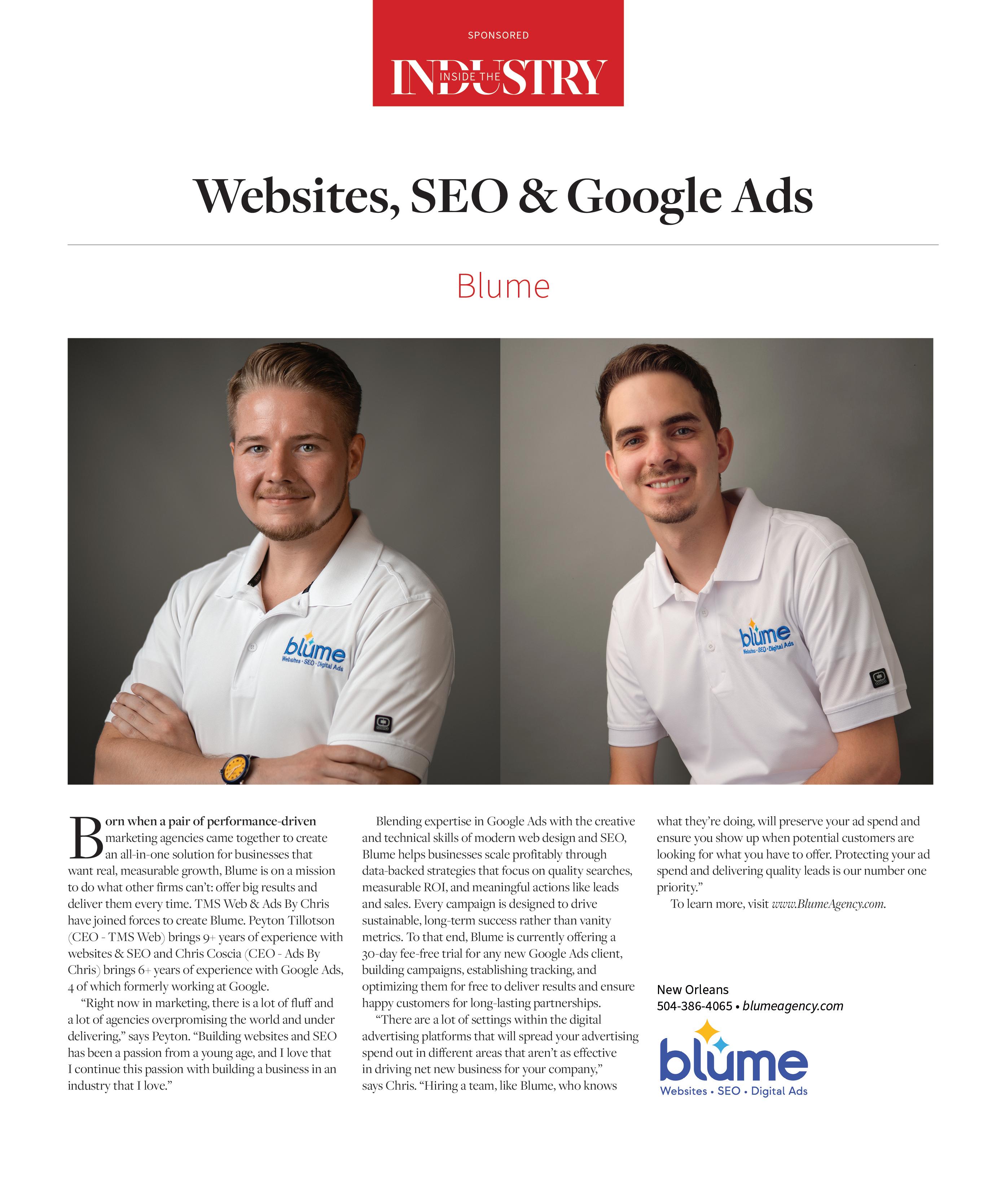
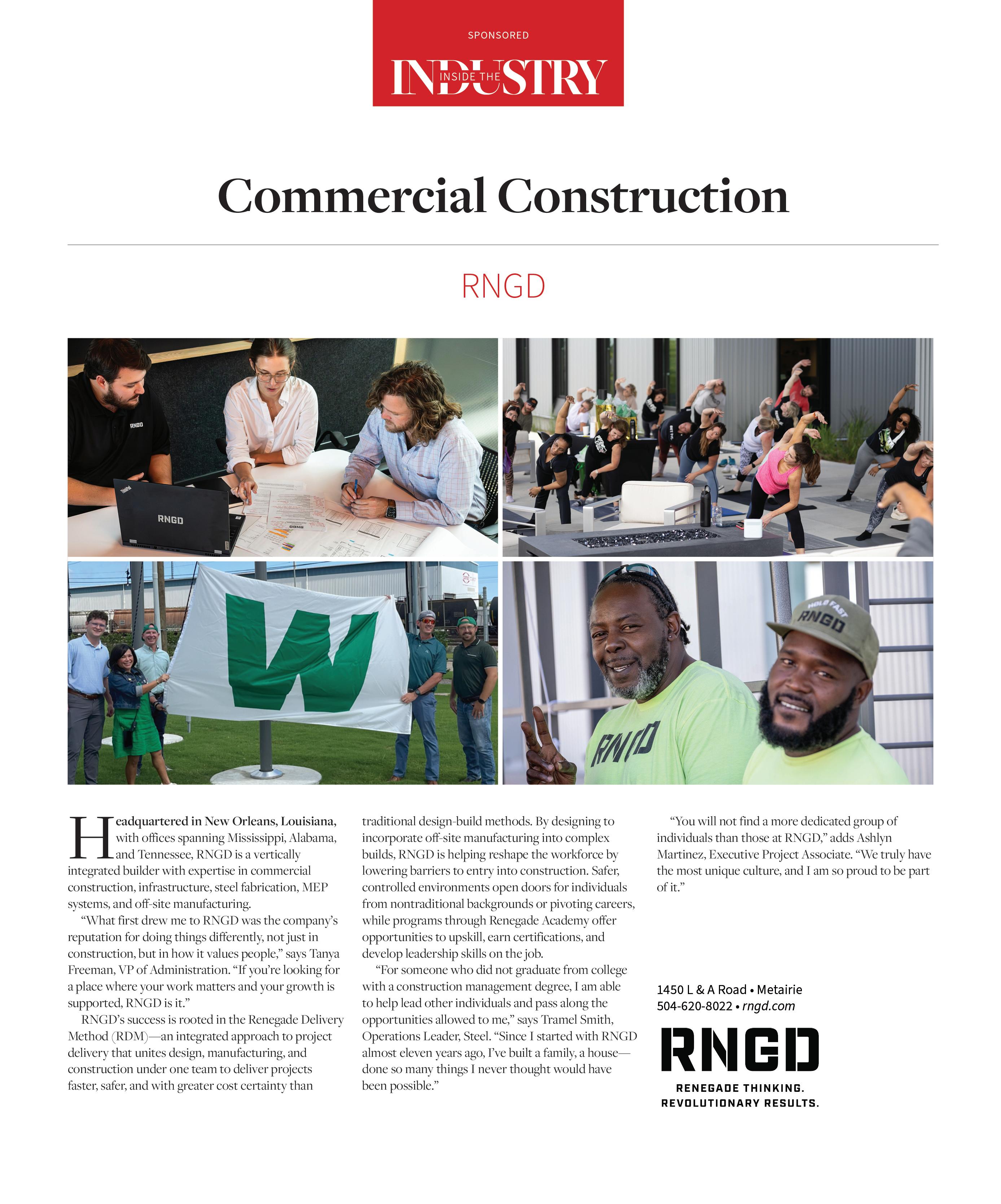
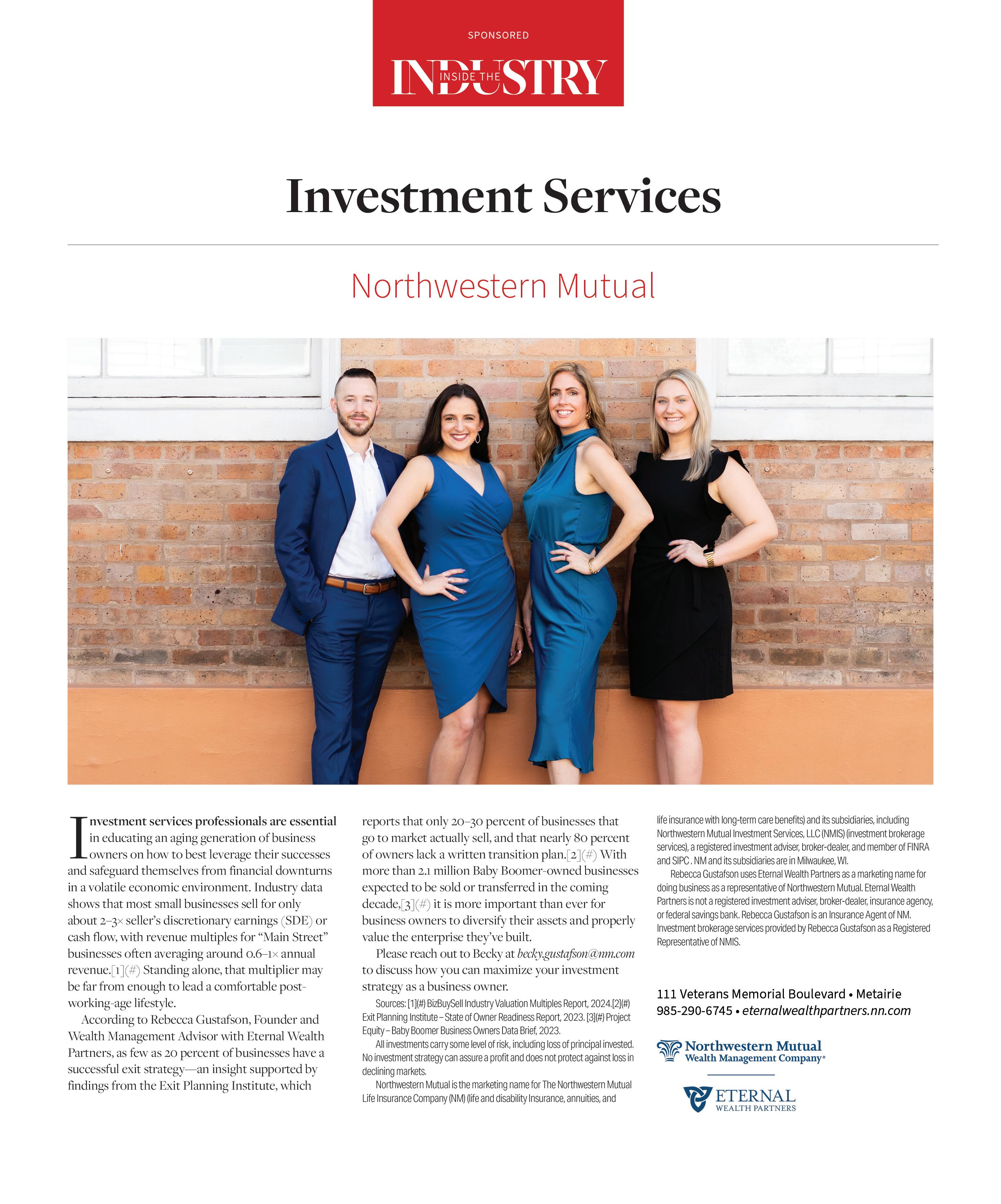
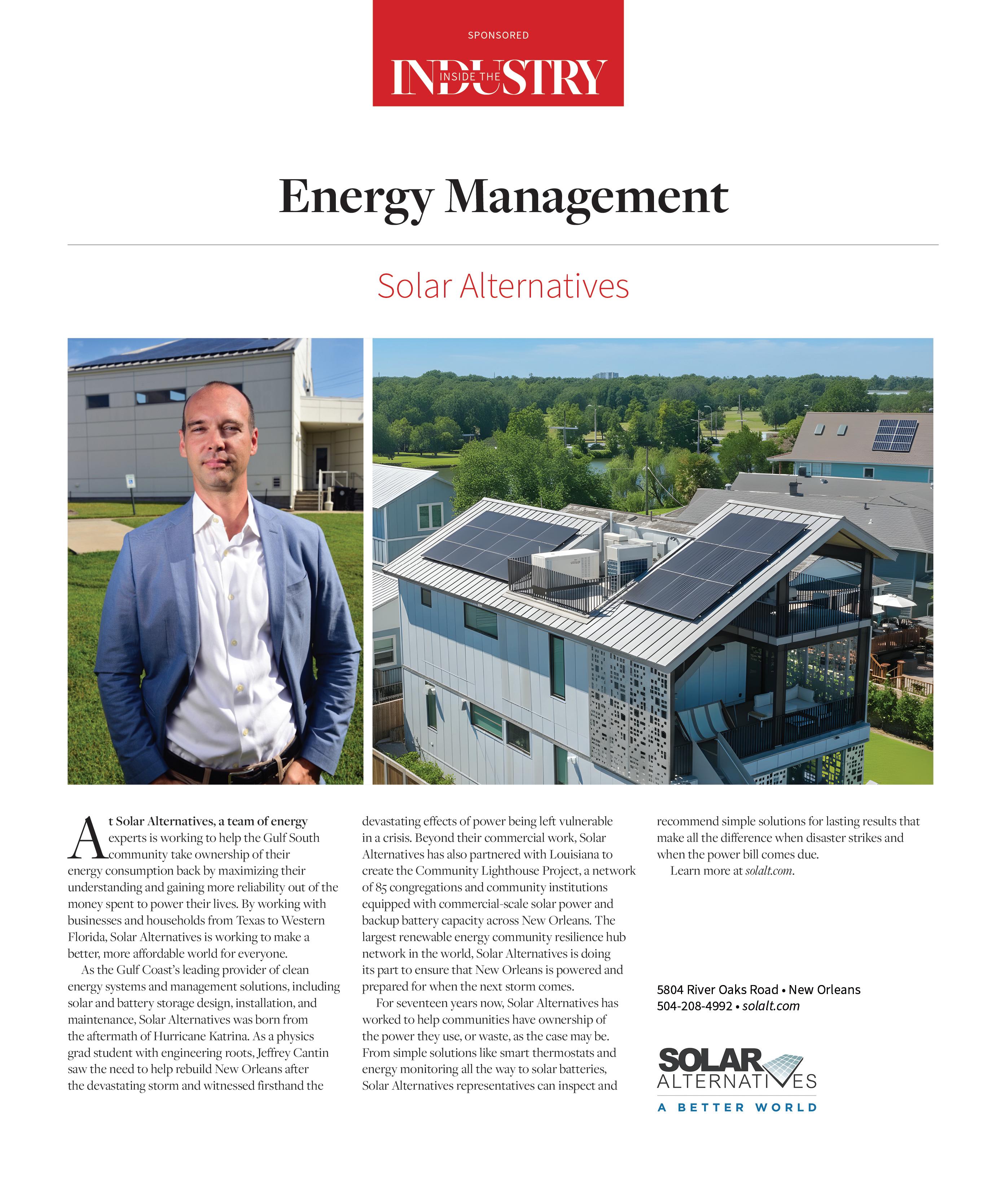
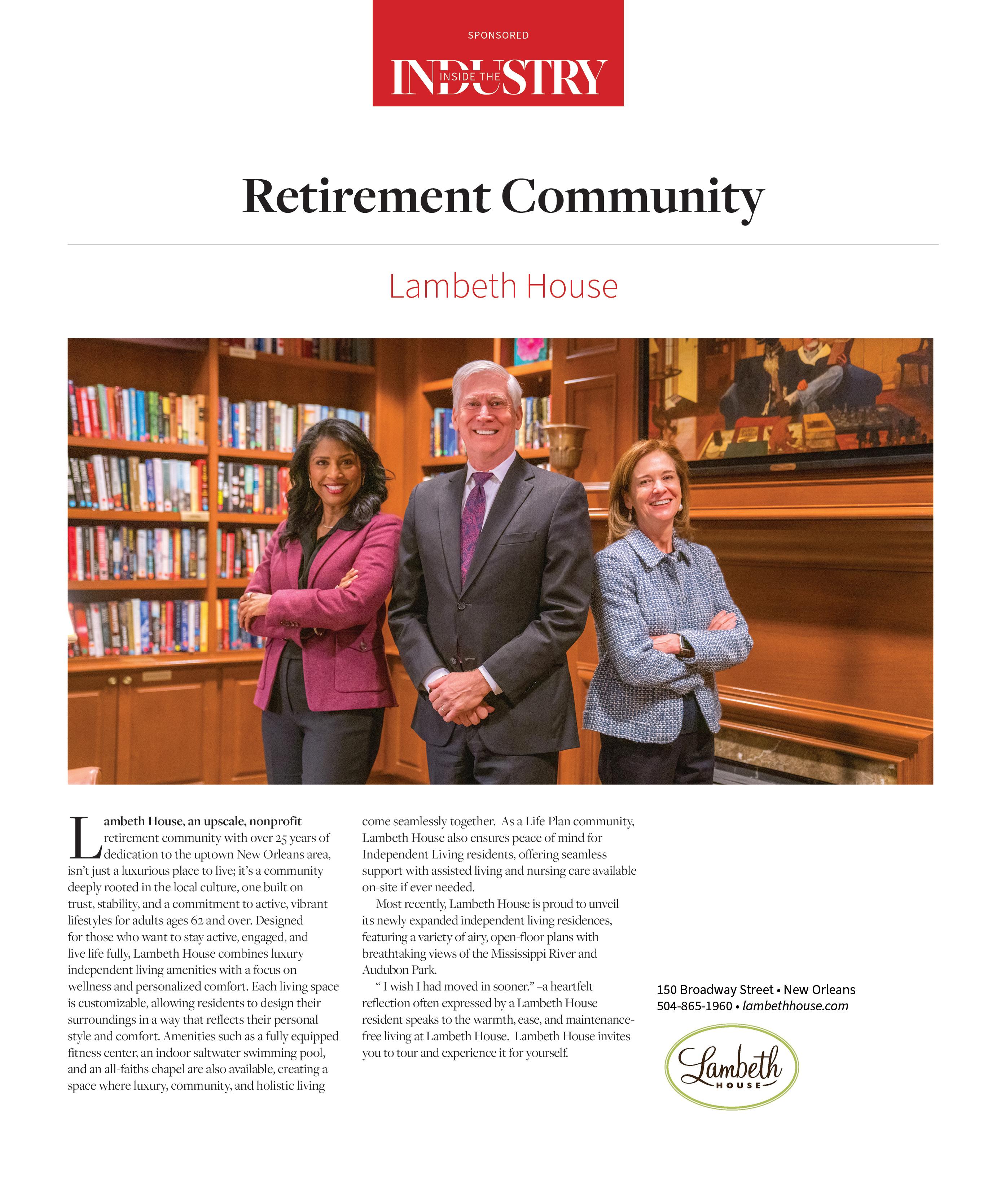




Whether you are searching for accounting expertise, accomplished project managers, or IT wizards, these B2B service providers can ease pain points in your company and prove that New Orleans businesses are better when they work together.

As a business leader, you know that managing technology can be a headache, especially when you have a growing business to run. BIOS Technologies empowers businesses with comprehensive IT solutions designed to enhance security, streamline operations, and support long-term growth. From 24/7 monitoring and cybersecurity protection to cloud management and business continuity planning, BIOS ensures your technology infrastructure is secure, scalable, and efficient enough to ‘quite the noise’ of headaches due to unnecessary downtime. Learn more at biositgroup.com.
Gallagher is one of the largest insurance brokerage, risk management, and consulting firms in the world. With roots in Louisiana dating back decades, we’ve grown to become the leader in our state. As a community insurance broker and trusted local consultant, we help people and businesses move forward with confidence. We have over 53k people working around the globe, and over 500 in the state of Louisiana. Managing risk with customized solutions and a full spectrum of services is what we do. We help our clients foster a thriving workforce, and our team always holds itself to the highest standards of ethics to help you face every challenge – that’s The Gallagher Way.




Atlantic hurricane season is June 1 – Nov. 30. Blue Cross and Blue Shield of Louisiana (Louisiana Blue) reminds you to make health needs part of your family’s hurricane preparation plans. Keep your health plan information handy, and get a digital member ID card if possible. Make a list of your family’s health information, including which medications everyone takes. Store the list in your phone or keep a written copy in your wallet or something else you’d take with you if you leave. If you take prescriptions regularly, see if you can get a 90-day supply to have on hand in the event of evacuations or extended closures. Sign up for telehealth services so you have options to get care remotely. Visit lablue. com or connect with us on social media @MyLouisianaBlue to see more health-related hurricane preparedness tips.
We know running a business isn’t easy. EisnerAmper is here to help with a wide range of services – accounting, tax, business advice, and even back-office tasks – to make things smoother. We work with public companies, private businesses, government organizations, and high net worth individuals, and tailor our approach to your specific situation.
Think of us as your go-to team for accounting and audits, tax prep and advocacy, business advisory, and specialized support like IT and cybersecurity. We’ll help you solve problems fast, spot opportunities, and grow. Providing you clear guidance and the resources you need to succeed.
As an internationally accredited economic development organization, Jefferson Parish Economic Development Commission (JEDCO) is a leader in building a resilient, equitable, diverse, and competitive economy for Southeast Louisiana.
JEDCO drives the retention and creation of quality jobs, entrepreneurship, innovation, and investment in Jefferson Parish by providing a mix of resources, support, and connections to partners. JEDCO also attracts new businesses to the community and supports existing businesses through a variety of services, including small business financing, tax incentive guidance, site selection, and Parish interface
With over $3 billion in assets, Louisiana-based Gulf Coast Bank & Trust Company serves its business and personal banking clients through its bank branches, loan production offices, trust and investment offices, and business credit offices.
Gulf Coast Bank & Trust Company has more than 900 employees across 21 branch locations in Southeast Louisiana, including a new branch location in Miramar Beach, Florida, as well as more than 48 total locations in 11 states. Locally, Gulf Coast Bank & Trust Company branch offices are in Orleans, Jefferson, St. Bernard, St. Tammany, Tangipahoa, and East Baton Rouge cities.
As a community bank, Gulf Coast Bank & Trust Company commits itself to nonprofit organizations in Southeast Louisiana through sponsorships and charitable giving. Each year, Gulf Coast Bank & Trust Company hosts a fundraising event, Auctions in August, for local and national organizations, schools, churches, and community groups. Since its inception in 2008, Auctions in August have raised almost $1.6 million for nonprofits.


The New Orleans 500, an annual publication from Biz New Orleans magazine, profiles the business leaders who are driving the greater New Orleans economy today and making decisions that will shape the region’s future. The book is overflowing with details about regional CEOs, presidents, managing partners, entrepreneurs and other executives who are as devoted to their professions as they are to civic affairs. It’s a diverse group that includes fourth- and fifth-generation owners of family businesses as well as young, social media-savvy entrepreneurs building their brands one like or follow at a time.

58 WHY DIDN’T I THINK
Since


Pan-American Life Insurance Group's reimagined headquarters by VergesRome Architects features open workspaces, biophilic design elements (including greenery integrated into work pods) and floorto-ceiling windows.
When Pan-American Life Insurance Group set out to reimagine its New Orleans headquarters at 601 Poydras Street the goal was to create a workspace that would excite employees about returning to the office in a post-pandemic world. The result is a thoughtful blend of modern design, sustainable materials and flexible spaces that honor the company’s 100-year legacy — all while embracing the future.
The 65,885-square-foot renovation, spanning the building’s 10th and 28th floors, represents a significant shift in how PALIG approaches workplace design.
“The current redesign was inspired by post-pandemic workplace trends and the desire to create a more engaging office environment,” said Ginger Guidry, second vice president of global real estate and facilities at PALIG. “Our goal was to foster collaboration through a variety of open and flexible spaces, aligning our real estate and facilities strategy with our evolving flexible and hybrid work model.”
For this critical project, PALIG turned to VergesRome Architects, a firm with deep roots in the building’s history. In fact, VergesRome serves as the architect of record for the Pan-American Life building and has worked with the company for more than 30 years.
“We renovated this space for them after [Hurricane] Katrina, and it was due for another update,” said Jennifer Wells, licensed interior designer at VergesRome. “Chip Verges, principal at VergesRome, also was involved in the design process.”
The project, which began in April 2021 and concluded in May 2023, required careful coordination. Rather than displacing employees entirely, the team maintained operations by alternating between floors during construction.
The heart of the redesign lies in its embrace of flexibility. Gone are the days of assigned desks and rigid layouts. Instead, the new workspace features open office space with pods of work areas along with multiple breakout and congregation areas.
“No one is assigned a specific workspace,” Wells said. “This allowed flexibility with having different employees using the same space on different days.”
This unassigned seating model (known as hot desking) represents a fundamental shift in workplace philosophy, one that acknowledges the hybrid nature of modern work. To support this approach, the design also features height-adjustable desks throughout the pods for employee comfort.
To accommodate the needs of a flexible workforce, new aesthetic lockers now allow
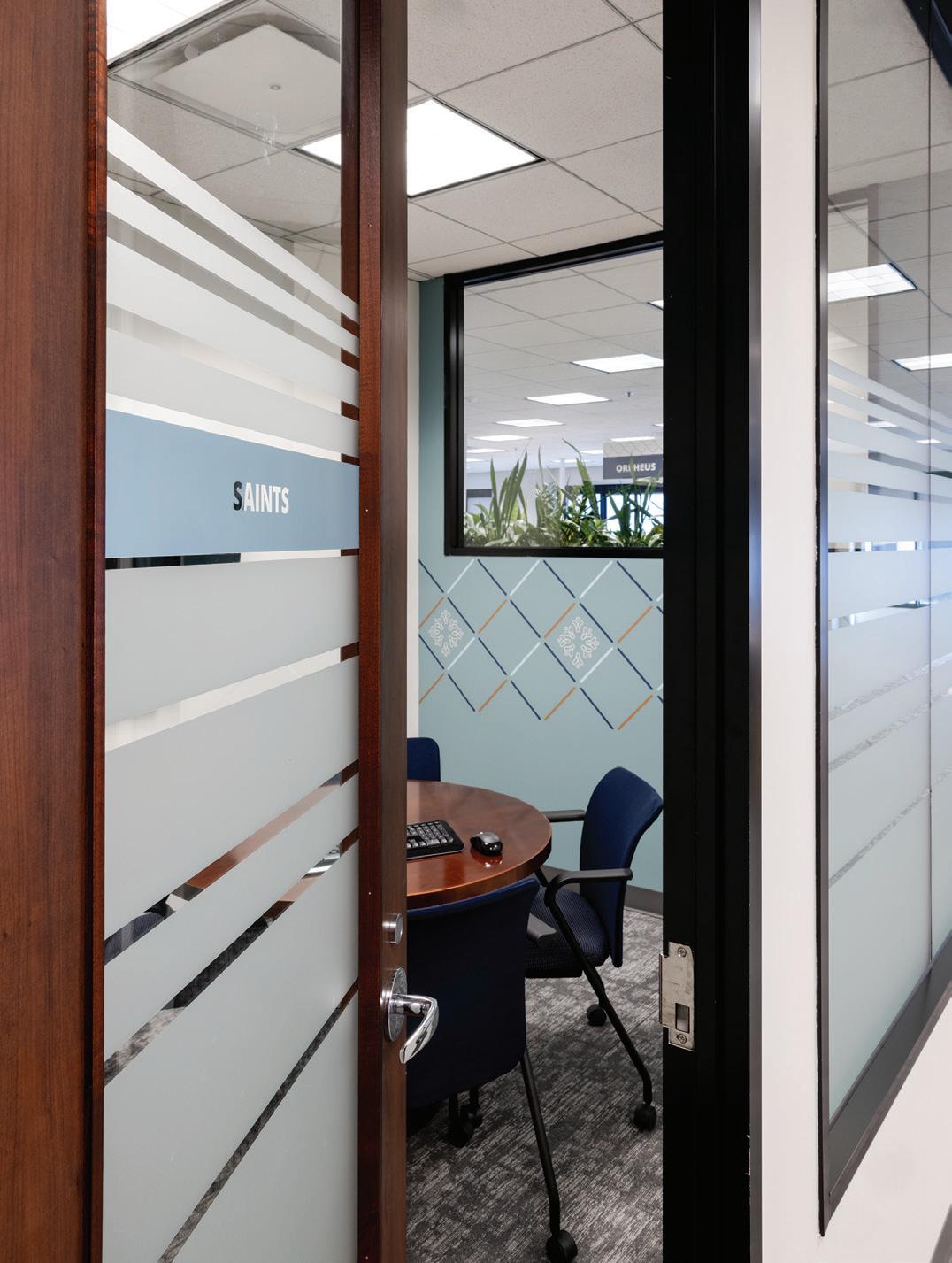

employees to leave items at the office. This practical touch addresses one of the key challenges of hot desking while maintaining the clean, uncluttered aesthetic that defines the space.
One of the project’s standout features is its commitment to sustainability through innovative materials. The team selected DIRTT walls for conference areas — a choice that offers both practical and environmental benefits.
“These walls are insulated with recycled blue jeans, underscoring our commitment to environmentally responsible choices,” said Guidry.
The use of manufactured interior construction through DIRTT represents more than just an eco-friendly choice.
“Our new interior environment is highly adaptable, allowing us to respond quickly to new opportunities, changing demographics, emerging technologies and evolving business needs — all without the need for demolition or rebuilding,” said Guidry. This adaptability ensures the space can evolve with the company’s needs without generating construction waste.

The sustainability story extends throughout the design, from LED lighting and occupancy sensors to low-VOC paints and responsibly sourced finishes. Meanwhile, biophilic design elements incorporate greenery and natural textures that promote mental well-being while improving air quality.
The redesigned headquarters now includes more than 20 conference rooms, all enabled for video conferencing. Additionally, Angelle Verges with AOS selected furniture that enhances collaboration, incorporating additions including booths with attached screens that can be used for small meetings.
These technology-enabled spaces ensure seamless connectivity for PALIG’s 280 New Orleans-based employees, whether they’re collaborating in person or connecting with remote team members. The integration of state-of-the-art AV systems and advanced connectivity makes virtual collaboration effortless, supporting PALIG’s global operations.
Color also plays a crucial role in the new design, with PALIG’s brand palette woven throughout the space.
“We incorporated the new company colors throughout the space,” said Wells. “Each pod of work areas represents one of the colors.” This approach not only creates visual interest but also reinforces the company’s identity at every turn.
The design also honors PALIG’s heritage through curated artwork and thoughtful naming conventions. Meeting rooms are named after past company leaders, and iconic New Orleans neighborhoods and landmarks, thereby creating a sense of place that connects employees to the company’s history and its hometown.
The redesign also prioritizes employee wellness through both design and dedicated spaces. Natural light floods the office through fulllength windows and open layouts, creating what Guidry describes as a bright, uplifting environment that promotes productivity and well-being.
Amenities include a cafe and pantry stocked with healthy snack options and a coffee station. Perhaps most significantly, the design includes a dedicated mother’s room — a private, comfortable space featuring seating, refrigeration for milk storage, electrical outlets for pumping equipment and soundproofed privacy. This addition reflects PALIG’s commitment to supporting employees through all life stages. T
Color-coded work pods, featuring PALIG's brand palette, define the open office layout, while heightadjustable desks and ergonomic seating support the company’s flexible, hot-desking model.

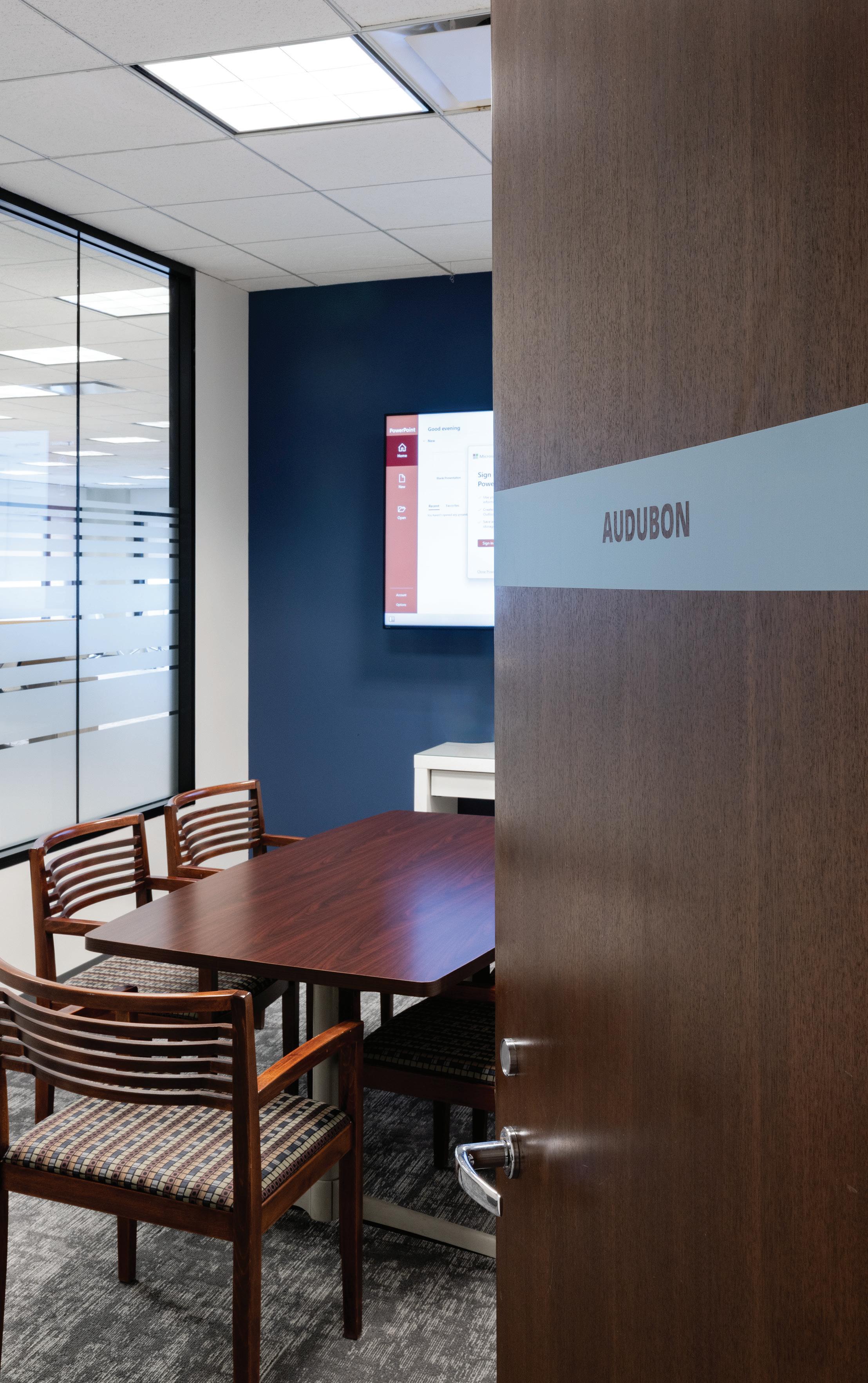
The Audubon conference room exemplifies PALIG's connection to New Orleans heritage, while sporting modern technology that supports seamless collaboration for remote and in-person teams.
Number of years in operation 114
Style of architecture modernist and urban prominence with a contemporary redesign
Square footage
Total 65,885; 10th floor 38,318 and 28th floor 27,567
Number of Employees
280 New Orleansbased
Persons in Charge
José S. Suquet, chair of the board and CEO; Steven Friedman, president of finance and investments and CFO; Robert DiCianni, president of global benefits; and Bruce Parker, president of Global Life
Architecture
Original architecture by Skidmore, Owings & Merrill; redesign by VergesRome Architects
Interior Design
Jennifer Wells at VergesRome Architects
Furnishings
AOS/Knoll Furniture

BY ASHLEY MCLELLAN
BY EDMUND D. FOUNTAIN
New Orleans provides dance classes emphasizing fun and play for children ages 6 months to 5 years old.



Ballet is a captivating art form of incredible athletic feats enhanced by dreamy costumes that has long grabbed the attention of young children, one of which was Wisconsin native Genevieve Custer Weeks. After retiring from her own professional dance career, however, Weeks decided she wanted to be a part of changing one aspect of ballet — how children are introduced to it.
In 2008, she founded the first Tutu School, a space where all children were welcome to experience an introduction to ballet that is gentler, more playful, and meets children where they are in a way that focuses more on magic than discipline.
The concept caught on fast — with more than 120 franchises currently spanning the U.S., Canada and the U.K.
On June 1, 2025, the magic officially spread to Louisiana with the opening of Tutu School New Orleans at 2105 Magazine Street. Studio owner Louele Soong said she decided to take the leap after watching the franchise success of a few of her friends.
“I first learned about Tutu School in 2014 through a friend who was among the brand’s
very first franchisees, she said. “I loved the company’s mission of nurturing creativity, confidence and joy through ballet for the littlest dancers. Since then, I’ve watched two friends successfully open and run their own studios. I realized what a great addition this unique ballet experience would be to our community.”
For Soong, combining dance and business was a win-win both for her and for families looking for a new way to incorporate creativity into their children’s early development.
“I grew up dancing and was excited about the opportunity to introduce dance to young children,” she said. “I reached out to [Tutu School] and took the time to learn more about the brand and what they were looking for in a franchisee. Through this process, I was able to connect with Tutu School’s founder and the amazing owner community.”
Tutu School’s offerings include 6- to 18-month-old “baby ballet” classes up to 6- to 8-year-old “primary ballet” learners. Unlike traditional studios, classes marry elements of play with instruction. Children may use wands like unicorn horns while they leap across the floor or choose their own colorful scarf to twirl with. They also stretch outside of just dance. The toddler classes, for example, incorporate
a classical ballet story time session and finish with coloring time.
Local parent Brianna Wood immediately enrolled her 3-year-old daughter Penelope in Tutu School following a free introductory class.
“Her teacher, Miss Italia, was so welcoming and made the whole class so fun,” she said. “I love that she can get an introduction to dance that is really geared to where she’s at — that’s not too serious or intense — and my husband loves the enrichment aspect, the exposure our daughter is getting to classical music and different famous ballets. Penelope absolutely loves Tutu School. She talks about it all week long.”
For Soong, finding the right studio was an essential factor in providing the best experience for families.
“We spent a few months searching for the right space,” she said. “We had a wish list that
included a space that was easily accessible in a family friendly neighborhood, good rental pricing and high ceilings. We were looking for something in the Uptown/Lower Garden District because we thought it would be a great addition to the current services offered here.”
Class membership is $99 per month for weekly 45-minute classes. A 10% discount is offered for siblings and interested dancers can take advantage of a free trial class. Enrollment is open all year for all levels and class sizes are limited to promote individual attention to all dancers.
“We set the capacity at 10 dancers in our Exploring Ballet (3-5 years) and Primary Ballet Prep (5-8 years) classes. Our Tutu Toddlers (1.5 - 3 years.) class is limited to eight dancers and Baby Ballet (6-18 months) is six dancers,” Soong explained.


Tutu School New Orleans currently has five instructors, each of whom has received specialized training according to Tutu School guidelines.
“They are truly the heart and soul of our studio, deeply passionate about working with children,” noted Soong. “Each teacher brings a strong background in various dance forms, including ballet, contemporary and competitive dance.”
In additional to regular classes, Soong is looking forward to launching dance camps starting this spring to coincide with school holi-

Tutu School of New Orleans owner Louele Soong (pictured left), said the franchise's mission “of nurturing creativity, confidence and joy through ballet for the littlest dancers,” spoke to her as a parent and former dancer. (Above) Dancers in Tutu School classes learn creativity, movement, fine motor skills and coordination, all while having fun.
days and summer vacation, as well as offering opportunities for private and community events throughout the year.
“We host ballet birthday parties with the goal of creating unforgettable, stress-free celebrations for little ones,” said Soong. “We also offer ‘Pirouette Playdates,’ which are events organized through partnerships with local organizations and nonprofits. We recently partnered with a local nonprofit, Bonfolk Giving Good, to host a fundraiser during our October Ballet Book Club which was such a fun opportunity to give back to the community. We also host monthly Ballet Book Club events and have
lots of fun things planned to celebrate all our favorite special occasions and holidays.”
Soong, a mother herself, said she is passionate about the wide array of benefits dance provides to children.
“Dancing is so good for concentration, strengthening memory, developing friendships and learning about teamwork while building confidence,” she said, noting that, “My favorite is the confidence they build through expressing themselves, performing and learning new skills. We see this every day at the studio, and it has been such a joy to see our little dancers transform after just a few classes.” T
1. Physical Perks Dance is proven to help kids develop their fine motor skills and aid in general motor development. Regular dance classes provide an outlet for physical activity, which is instrumental in enhancing overall fitness, flexibility and stamina.
2. Musicality Ballet introduces kids to the basics of music, teaching them to count along and move to the beat.
3. Cognitive Ability Children’s ballet classes can also be a great way to boost memory skills.
4. Emotional Well-Being Ballet teaches kids to work together and support each other, dancing in one group. As children master new skills, they gain confidence and develop self-expression through movement and music.
5. Fun and enjoyment It’s a chance to move and express themselves creatively, while build lasting memories.
Source: School of American Ballet (Sept. 2024)
BICYCLE MICHAEL’S 622 Frenchmen St. // New Orleans 504-945-9505 // bicyclemichaels.com @bicyclemichaelsnola // @bicyclemichaels
This 22-year-old neighborhood staple is a one-stop-staple for everything on two wheels.
BY KEITH TWITCHELL
Say “Frenchmen Street,” and the first thing that comes to most people’s minds is music. But nestled in among the clubs and bars at 622 Frenchmen is a full-service bicycle shop that has repeatedly been named one of the best in the country.
Michael Ferrand first opened Bicycle Michael’s in 1983, having moved to New Orleans a few years earlier after another cold Chicago winter. While studying at Tulane University, he noticed that there were no bicycle shops in the vicinity of the French Quarter, which was much more residential at that time.
“I started with a toolbox, but I kept doing it,” he recalled. “Basically, it was an experiment that got out of control.” Ferrand noted that"Frenchmen Street was not really a thing when we started, not a destination like it is today.”
He attributes his shop’s longevity to its focus on higher quality and customer service, plus experience and expertise.
“To us, service is the linchpin of everything,” Ferrand said.
Bicycle sales are the starting point. Bicycle Michael’s sells everything from regular, everyday cycles to high-end and even custom-built models.

“We like to sell things that we can be proud of,” Ferrand observed, “and we like selling things that we can fix.”
More than half of the shop’s business comes from repairs and service.
“Repairs have always been our main thing,” he said, adding that sometimes other local bicycle stores send their customers to him for specialized work. “We are known as the shop for difficult repairs.”
This servicing includes standard frame repairs, parts replacement, the regular maintenance required to keep bouncing along the New Orleans streets, and of course, working on the electric bikes (though Ferrand finds that often people come in with models they purchased elsewhere, or online, and replacement parts are simply not available).
What sets Bicycle Michael’s apart is its capacity to perform highly specialized work. Parts are imported from around the world as needed, and the shop is one of few in the country that does custom wheel building.
Underlying it all is a commitment to getting the job done as quickly as possible.
Bicycle Michael’s also stocks all manner of parts and accessories. The shop is an enthusiast’s dream of every imaginable bicycle item, plus everything from biking apparel to backpacks, water bottles to sunglasses, gloves to bike covers.
The final component of the business is rentals, though with the advent of the city’s Blue Bikes system, Ferrand noted that rentals have dropped off considerably. Ferrand originally supported the program for its value to locals, but said its popularity has caused several local, rental-only operations to close down, which has made him less enthused about it.
Yet business remains strong as cycling continues to grow in New Orleans, along with bike paths and bike lanes. Ferrand and his staff of five remain busy, customers return frequently, and despite the changes in his neighborhood and across the city, there’s nothing like riding around the streets and parks on two wheels. T

CURRENTLY READING
The Secret Book Society by Madeline Martin

FAVORITE BURGER SPOT
The Company Burger
PERSONAL MISSION
To build bridges by helping women find their voice, own their power and lead with purpose
PHOTO BY JEFFERY JOHNSTON
INSPIRATION
My daughter — and all the young girls watching — who remind me why it matters to lead boldly, lift others and keep opening doors for those who follow
Acatalyst for change and champion for women’s leadership, Amy Landry is the powerhouse behind Loyola University New Orleans’ Women’s Leadership Academy (WLA). Since launching the program under President Tania Tetlow in 2019, she has transformed it into a premier leadership experience that has empowered more than 320 women across Louisiana and beyond. Now entering its eighth cohort, WLA remains the only university-hosted academy of its kind in the state, uniting bold, purpose-driven leaders from every sector. Landry’s vision extends beyond the academy. She also facilitates Loyola’s Young Women’s Leadership Academy and created the university’s vibrant International Women’s Day Celebration.
A natural connector and advocate, Landry has served as President of the American Business Women’s Association (ABWA) Crescent City Connections and is a proud Junior League Sustainer. Her work has earned recognition as a CityBusiness Woman of the Year (2018), ABWA National Top 10 Business Woman (2019), and New Orleans Magazine Top Female Achiever (2023). T