
Reducing Veteran Homelessness
Pilot & Evaluation
Authors
Julie Walker-Jopson
Lyanne Nicholl
Dr Emma Nugent
November 2025
Pilot and evaluation commissioned by the Armed Forces Covenant Fund Trust.

Funded by the Ministry of Defence and the Office for Veterans’ Affairs.



Chief Executive’s foreword
At RBVE we want to help veterans find their place in the world again and create a bright new future. Yes, we provide a roof overhead for some of the nation’s most vulnerable homeless veterans, but we do much, much more than that. The home is just the starting point. Once veterans have the security of a place to stay, we work holistically, involving multiple partnerships, to support our veterans toward a healthy and independent, fulfilling life – a life where they can play a full part once more in their families, communities and society.
Crucially, this has to come from the veterans themselves. We do not dictate a certain pathway, or use a one-size-fits-all approach. RBVE’s Step In programme coaches veterans to set their own life goals and we co-create an action plan to move forward and ‘Move On’ together. We are focused on health, stability and future opportunity. This approach leads to successful results in terms of reintegration and sustainable independence for those who have already served and sacrificed for our country, and are now facing health or financial crisis.
For some veterans, their needs are so complex that RBVE becomes a permanent home but the vast majority who are referred to our emergency hostel ‘Mountbatten Pavilion’, will be able to move away eventually and 44% achieved successful Move On during this short pilot.
Everyone at RBVE is grateful to The Armed Forces Covenant Fund Trust for making this pilot and this evaluation possible. We have been focused on mental health like never before, we have established multiple referral and delivery partnerships, and we can see the positive impact in these encouraging results – and the case studies, which really brings to life the human element of all of this, on pages 7, 11, 15.
The fact that so many of our residents go on to secure some paid work, manage mental and physical health and rehabilitate fully from substance abuse, rebuild
relationships, create new homes, contribute to society and - most importantly - regain their self-esteem and love for life - is a testament to their inner strength and the incredible commitment of RBVE’s welfare team.
Evaluating this pilot project has been incredibly beneficial to RBVE and will lead us to create even more long lasting change. 72% of those who moved on to sustained independent living have secured paid work. Once again we see that finding work is the critical success factor. The pilot shows the value of RBVE’s unique community with Britain’s Bravest Manufacturing Co. at its heart – just walking distance from our homes. The inspiring progression we read about here, shows why employability coaching, and structured work placements, open up realistic opportunities for a person to completely alter their future. We remain fully committed to integrating physical health, mental health and employability support in one programme and to say I am proud of what we offer here – together with all our expert partners – is an understatement.

Lisa Farmer OBE RBVE Chief Executive
The Need for New Approaches to Homelessness
The UK housing crisis is never more acute than when discussing the availability of social housing and affordable homes. Social housing provides homes for people who are on lower incomes, in vulnerable situations or who have specialist housing needs. Veterans, particularly those who have struggled with the transition to civilian life, can fall foul of the expensive housing and complicated rental market, increasing the likelihood of getting into debt, facing eviction, or becoming homeless.
We know that the scale of the problem of veteran homelessness is big but we do not yet know just how big. This is because of issues with how homelessness is ‘recorded’ - or not. If a veteran is not formally registered as homeless by their local authority, then they will be missing from the 2,110 figure (England only) accounted for by the Department of Housing.1 Veterans come to us from such places as living rough in woodlands or on beaches, living in cars, and also ‘sofa surfing’ at friends’ houses. They are unlikely to be formally registered. In some cases veterans are not just unregistered - they have lost or abandoned all their identity documents. They are literally “under the radar” living in such a way that even close family members would not be able to refer them for support. Sofa surfing is particularly common amongst female veterans due to the dangers of living on the streets. Older veterans who move straight to a care setting and are never formally registered as homeless, even if they have been evicted from their home, lose their home for administrative reasons, or are already living in a car, for example, are also invisible. Hidden homelessness of this kind is well understood in the charity sector, but hard to measure.2
The reasons for veteran homelessness will often mirror that of civilians: financial crisis and unemployment, mental health and substance abuse issues, physical health issues, family breakdown. However, these can be exacerbated by the specific challenges that veterans face such as post-traumatic stress disorder (PTSD) caused by active duty or the specific adjustment struggles that follow long and intense periods of “hyper vigilant” work; difficulty with transitioning into civilian life after having strict schedules and hierarchies and being accustomed to receiving instruction; difficulty settling or feeling they belong after moving around so frequently; difficulty returning ‘home’ after a long period away in which they have disconnected from their ‘roots’.
In addition, we support some recruits who have signed up at a very young age to escape a chaotic family life, or even if they come from a stable background the military institution replaces family life early, and they feel lost after service. This is particularly
acute in instances of medical discharge, if a person has envisaged a whole life serving in the armed forces - medical discharge from service can trigger feelings of rejection and failure.3
As well as the emotional upheaval of creating a second life after service, there are practical challenges such as navigating new systems and norms. Many ex-service men and women may not know how to cook or manage a household, including household budgeting. They may not be familiar with managing utilities, or rent deposits and service charges as so much is arranged for you in the military. When they move in the military, even their packing list is issued to them. This institutionalisation can be detrimental to independence and personal agency for veterans and leave them more vulnerable to experiencing frustration with employment, with relationships and managing a home.
Since Lord Ashcroft’s Veterans’ Transition Review of 2014, and the follow up in 2015, the MOD has been proactively addressing these pitfalls of institutionalisation. The position has changed for veterans leaving the Forces after 2015 as there has been more support in place both within the Forces supporting vocational and educational development, and more support at the moment of transition out of the Services.
However, veterans still have perceptions about integration that actively work against their best interests “they won’t want to employ ex-military”, “I could never work in an office” “I can’t work at all now my knees are like this”.4 5 RBVE encounters all these perceptions routinely. Step In works to counter these self-limiting narratives as well as ensure residents are empowered to find new goals and take control in all areas of their day-to-day lives.
While there are, without doubt, specific reasons why Forces veterans may struggle, these specificities do not need to be overplayed when planning practical support services and solutions. Almost all the veterans RBVE supports are overcoming recurring physical health and/or or mental health challenges. This is, in fact, an increasingly mainstream challenge. By 2022 36% of all working adults in the UK were reporting a long-term health condition.6 This is a much wider challenge for our whole society – how can people who are sick be enabled to participate and contribute? This is not unique to homeless veterans.
Case studies

All names have been changed and some identifiable elements amended to protect anonymity.
Colin was made homeless by relationship breakdown. He lived in a tent in the woods for over 6 months. He had a very young daughter that he was estranged from during that time. Colin has trauma but engaged with Maidstone mental health services immediately and made incredible progress quickly. He is so motivated to get his family back together and to help them. He has not undertaken Lifeworks but worked on employability options consistently during all his Step In sessions. His former partner is not in a great position financially and does not have her own place. He recently achieved his CSCS construction skills certification and card. Through Step In he has a clear goal to secure work and private rental accommodation, so he can provide for his family again.
Marcus moved into RBVE’s emergency hostel as he was living in his car following a series of crises, including family relationship breakdown and becoming homeless. Marcus had undiagnosed and unmedicated mental health issues which led him to self-medicate with both drugs and alcohol. Although Marcus successfully moved on from Mountbatten Pavilion after 12 months, his journey was not linear. After an initially positive start, whereby Step In linked him to his local GP, Community Mental Health Team and a psychiatrist, which enabled correct diagnosis and the prescription of drugs to help him manage better, he relapsed with ‘recreational’ drug use. Being at RBVE Marcus was aware that other people before him had encountered ‘set backs’ on their journey and got back on track, and, crucially, we provided a safety net for him when he was at his most vulnerable. With this dedicated, holistic support, Marcus committed to ‘staying clean’ and was not only able to secure a job, but rebuilt his family ties and moved back to the family home.
Anne served with the TA in the Royal Signals. She became homeless due to relationship breakdown and was referred by her daughter. It was a horrible time as feelings in the family were running high and her grown up children were also distraught about the break-up.
Anne spent 10 months in Mountbatten Pavilion in an adapted room with its own bathroom and separate door. This was not the right environment – she was anxious and she still had trouble sleeping however she was able to regroup with welfare support and started proactively tackling her health difficulties. Her health had taken a back seat in all the turmoil.
Anne was able to move on to dedicated female accommodation. She has taken this as a fresh start and this has been transformational to her energy levels. She no longer has trouble sleeping. She is increasingly involved in caring for her grandchildren as sadly her daughter is also sick. It is an incredible turnaround, from rock bottom, that she is now able to be strong for other people. She is hoping to move on to be closer to her daughter and may be able to seek part time work soon.
About RBVE’s Step In programme
RBVE’s Step In Programme is an holistic approachcentring each veteran in their own bespoke plan for the future. It starts with an holistic assessment which includes physical health, mental health and financial circumstances. Homelessness is almost always the outcome of multi-factorial challenges, and a cascade of issues that have not been dealt with. For veterans, these can be extremely complex, covering physical disability, mental trauma and losing the one stable thing they had in their life.
At RBVE’s Mountbatten Pavilion, our emergency hostel, veterans come to us, or are referred, at their crisis point and may even be on the brink of self-destruction. We work with multiple referral partners and caseworkers, including via the UKwide Op FORTITUDE network of emergency beds, a programme initiated for homeless veterans in 2023. Some of these veterans have substance abuse issues and some have already tried to take their own lives.
When these men and women come to RBVE, our first step is that they feel safe and warm. Once we have established that they now have a home, and they have the most basic of human necessities - food and shelter - we can begin to support them to get themselves back on track.
We work in partnership with multiple services, including health services, addiction services and welfare services, to ensure that every aspect of each resident’s life is addressed. We partner with Maidstone Community Mental Health Team, Op Courage and PTSD Resolution for mental health diagnosis, treatment, and counselling. We partner with Change Grow Live, Op Courage, and Kenward House on addiction support.
RBVE has been delivering its Step In programme since 2017, when RBVE completed and introduced 24 transitional apartments into the holistic support model. The programme has consistently supported 1/3 veterans to Move On to their own homes within 18 months. The team combines expertise from experienced welfare-benefits advisors and our outstanding employability coaches to establish positive routines. During this pilot there was even more emphasis on mental health services and more opportunity to process the raw distress of the situation. More appointments, sessions, and activities were co-ordinated than ever before. Our Step In coach and our welfare specialists are experienced in managing complex and multi-disciplinary case meetings. They are used to co-ordinating multiple interventions in parallel - as shown in the programme illustration on the right.
It may be some time before paid work can be discussed with the Step In coach. The benefits of volunteering should not be underestimated as, when compared to hobbies, it is more likely to involve teamwork towards specific goals.
During this project homeless veterans have volunteered at Britain’s Bravest Manufacturing Co., war grave restoration projects, Great Comp Garden, for a school’s literacy project, in community litterpicking efforts, at the local animal centre, and at other homeless hostels. Veterans have also achieved paid freelance work in gardening and lawn care, photography and graphic design, catering and fitness coaching – all originating in their hobbies or volunteering experiences.
This is also why Lifeworks, RBVE’s employability programme, and RBVE’s employment and training opportunities onsite at Britain’s Bravest Manufacturing Co. - both within walking distance from Mountbatten Pavilion emergency hostel – are integral to the Step In programme.
I gave myself a talking to after speaking with a friend who trained as a nurse aged 58. I have always wanted to study Archaeology, so I’m doing a Foundation year at Canterbury Christ Church University and then on to the three-year degree course.
Alfie, RBVE resident
RBVE’s Step In Programme
RBVE’s Step In Programme
Following arrival, and urgent care, Step In session frequency gradually lessens from daily to monthly, while maintaining focus on all three strands.
Room/apartment
Room/apartment
Welfare benefits
Welfare benefits
Emergency Support
Physical health assessment Emergency Support Mental health assessment
Physical health assessment
Accompany to appointments
Accompany to appointments
Outcomes: Early goal-setting work
Outcomes: Early goal-setting work
Early Interventions
Mental health assessment
Arrange specialists
Tackling debt and renewing identity papers
Tackling debt and renewing identity papers
Early Interventions
Specialist exercise and physiotherapy support through diagnosis and treatment, nursing care
Specialist exercise and physiotherapy support through diagnosis and treatment, nursing care
Tackling substance abuse, bereavement counselling, relationship counselling
Tackling substance abuse, bereavement counselling, relationship counselling
Outcomes: Emotional and physical pain management
Outcomes: Emotional and physical pain management
Positive Routines + Skill Development
Skill placements, freelance work, paid work and qualifications
Positive Routines + Skill Development
Skill placements, freelance work, paid work and qualifications
Sport and outdoor activities, volunteering, successful pain management
Sport and outdoor activities, volunteering, successful pain management
Peer support groups, hobbies, reunions and family contact
Peer support groups, hobbies, reunions and family contact
Outcomes: ‘Move On’ plans, paid work and relationship repair
Outcomes: ‘Move On’ plans, paid work and relationship repair
Step In Visualising Progress
A distance travelled metric is a visual representation of perceived progress. It is very similar to the mental health recovery star.7
During Step In coaching sessions veterans work on goal setting and positive routines. We use a simple distance travelled metric, very similar to the mental health recovery star7, which enables veterans to work on all manner of things from “feeling safe”, to “clearing all debt”. The process of deciding what is important is valuable in itself. Then, at each Step In session, the distance travelled metric is effective, because veterans can see the progress they are already making in a striking visual format which aids confidence and further discussion.
Key:
Green - Score 5 for all
Amber - Score 3 for all Red - Score 1 for all
First Step In meeting Second Step In meeting
Case Studies
All names have been changed and some identifiable elements amended to protect anonymity.
Becca was referred by a friend as she had been in a violent relationship. She was already in B&B living and moving frequently all over the UK which was very disruptive to her child. She moved to RBVE’s Village where she was successfully homed for over 2.5 years. She lived a safe and happy life with her child, who was integrated into the local school. Her child was able to make friends and was doing really well. Becca was also able to make a group of friends for the first time in years. They gave her strength. She told us that she felt completely safe as she knew that everyone in the community was on her side and everyone was looking out for her. She had not felt this while being parcelled between B&Bs. She was eventually discovered by her violent partner and threatened and had to be moved away for her protection.
The root of Craig’s suffering, which led him to Mountbatten Pavilion hostel, was an undiagnosed medical condition called Lyme’s disease. Craig had been working in a secure job when he became unwell and lethargic, which also led to social anxiety. At this time, his relationship broke down and he lost his job. Everything was out of control as no condition had been diagnosed. After engaging with the Step In team, to set achievable goals, they helped him attend medical appointments and to maintain his creative hobbies. Once his condition was diagnosed it did not remove the fatigue, but it made Craig determined to find a way to manage it. He was then able to secure a volunteer role with the NHS, and with support from the team he was able to secure the benefits needed to enable him to move into his own accommodation. Sixteen months after he came to us, he had repaired his family relations and is able to be an involved father to his children. He feels like the only way is up from hereon in.
Jim arrived at RBVE’s emergency hostel as his relationship with family had broken down, he had lost his job and was in the process of losing his home. Jim’s mental health and self esteem were on the floor and he was drinking heavily and relied on alcohol to get through each day. Jim was accompanied to register with NHS mental health services and encouraged to use PTSD resolution counselling services to address the inter-related trauma and addiction issues. Jim engaged with Step In and agreed to enrol on RBVE’s Lifeworks programme. This resulted in him securing shift work which enabled him to get back into the habit of working, in a pattern that was manageable for him. With the three-pronged approach Jim was able to move on from RBVE in four months and now lives off-site, having secured a full time paid job. Jim is grateful for the support he received from RBVE and maintains contact with the staff at Step In as he has started to repair some of his family relationships.
We know about a problem called deconditioning in the elderly. So if you take an 80 year old, and put them in a hospital bed for ten days, they lose ten per cent of their muscle strength, and it’s the equivalent of ten years’ inactivity.
Well, we now know that you get virtually the same in the younger age group, when you sign them off sick. And I describe that often by saying: Imagine, if I say to you, you’re off sick, and you need to stay at home and look at four walls for seven days. And most people would think that’s their worst nightmare.
The impact it has on your mental, and physical, and social health, is just dreadful, and if you do that for a period of weeks it becomes increasingly more irreversible.
Professor Sir Sam Everington, GP and campaigner for social prescribing
The Importance of Employment
Long Distance Moves
RBVE charity supports homeless veterans from anywhere in the UK. During the project period, when we supported 63 steet-homeless veterans, the Op FORTITUDE Network was established. This is a UK-wide network of emergency bed provision for Armed Forces veterans. This accounted for 14% of referrals to the project. We supported veterans from Hull, Glasgow, Colchester, London, Margate, Norfolk, Liverpool, the Isle of Thanet, Portsmouth and Stoke. RBVE’s welfare team work hard with veterans to help them stabilise their health and financial situation. It is often the case that veterans will want to move to another town, perhaps back to “their town”, and following Step In will be able to move back with work, with stable housing secured, and with renewed motivation.
These personal goals are vital. However there are such intensive pressures on affordable housing in some parts of the UK that the search to move back home can take months. This pressure is even greater if specific disability adaptations are needed. With paid work there are always more options. The Step In coach is more likely to be able to secure stable housing, and more quickly and the veteran is more likely to maintain their motivation. The independence, once achieved, is also more likely to be sustained.
The key finding of this pilot is that 72% of all veterans who achieved stable, independent homes, had some paid work. Employment has such a resounding impact on self-esteem and personal agency, as well as the sustainability of long-term independence. For homeless veterans at Mountbatten Pavilion, we see the benefits of work in action.
Increased Options
Paid work immediately increases the housing options available to veterans, and the locations open to them. They can move to other parts of the UK. They are less likely to be trapped by the scarcity of social housing, or adapted homes. They can access the private rental market, and other interesting opportunities such a shared ownership, and part ownership.
Mental Health and Self-Esteem
Employment increases life expectancy, particularly for men (The Health Foundation 2019).8 9 Within overall health status, mental health is strongly linked to employment status. The Adult Psychiatric Morbidity Survey found unemployed adults had a higher prevalence of common mental health conditions (28.8%) compared to those employed full-time and those employed part-time (14.1% and 16.3%).10
Lifeworks, RBVE’s award-winning intensive coaching programme, is able to re-kindle genuine interests, and belief in important skills and transferable traits. These may have been buried for many years. This 4-day programme can improve mental health and motivation, with realistic plans based on experience and genuine long-held interests. It is highly effective with 80% of those taking part securing paid work or workplace training within 12 months.
RBVE’s coaches are willing to challenge the usual stereotypes of veterans’ careers (security work, HGV driving, fitness and outdoor activity coaching). We know that tapping into genuine interests and passions is what leads to sustainable outcomes combined with proactive measures from veteran-friendly employers and modern well-being interventions.11
Joe started volunteering at Britain’s Bravest Manufacturing Co. and now he’s a regular paid worker. He credits work with improving his communication skills, which had a positive impact on his family life. He does suffer with his PTSD, and it means he can’t work all the time, but we all understand that here. Not all workplaces will be flexible. He has great coping mechanisms, and work does give him structure so we do worry if he can’t work. He has his own unique work pattern, and this pattern normally helps him manage his conditions very well.
Phil Wilkinson, Job Coach Britain’s Bravest Manufacturing Company
Personal Agency
Starting up hobbies again helps to develop independent living skills and self sufficiency –including cooking, baking, gardening and household budgeting. Hobbies can also provide a more recent and immediate understanding of our own selfefficacy – how we know we can deliver what we set out to contribute. Hobbies create positive routines and social networks, positive feedback, and can then widen options, leading to vocational qualifications or employment, including opportunities for selfemployment.
Sustained Outcomes
Paid work improves the sustainability of independent living and positive outcomes. Even variable patterns such as bank work, and shift work, is a stabilising factor over time. People are less likely to return to hostel living, or relapse, and are more likely to be shaping their own future, actively supporting their dependents, and re-connecting with family and friends again. The ability to hold down a job longer term increases self-esteem and optimism yet further. The right work, and the right work pattern, will make it easier to manage ongoing health and mental health conditions.
At RBVE we celebrate any volunteering ideas, new interests or pursuits because we know they can lead to employment. All kinds of activities can become vocational pathways. Then it becomes much easier to map a new future, and look at realistic options. It really is the key.
Julie Walker-Jopson, RBVE Director of Welfare
To end veteran homelessness in the UK the critical success factor is coaching towards paid work. Nothing else is as powerful at achieving positive sustained outcomes or as empowering for the individual to shape their lives. Nothing else can give a veteran a better chance to build a life in the area of the UK where they really want to be. We can end veteran homelessness for good. But only with a determined national strategy on gradual return to work. Veterans are proud, they don’t want charity but they do want opportunities. We can show homeless veterans, whatever barriers they may believe are in the way, work opportunities are realistic. They are within reach and will be the foundation for a new future.
The Reducing Veteran Homelessness Pilot
September 2023-February 2025
RBVE were immensely grateful to receive funding from The Armed Forces Covenant Fund Trust to increase mental health support which enabled RBVE to maximise the welfare staff’s time on employability. Ensuring these two areas had significant input led to improved outcomes for our residents in our emergency hostel. The goals of the Pilot project:
1) Increased mental health support would help veterans articulate their new life goals
2) Increased mental health support would help veterans engage with the Step In programme, including hobbies, positive routines, employment coaching, and paid employment opportunities
3) This would increase the Move On rate above RBVE’s 1/3 benchmark which had remained static since 2017
The cohort of 63 veterans in this time period were 95% working age.
Employability, meaningful activity and volunteering have all had a resounding impact on our veterans’ ability to move on. 46% of working age veterans have been working or in regular volunteering; with 38% completing the Lifeworks course to start thinking about paid work. 72% of veterans who have moved on have paid work and 66% of the whole cohort engage in hobbies and/or meaningful activity.
One resident recently commented, “I gave myself a talking to after speaking with a friend who trained as a nurse aged 58. I have always wanted to study Archaeology, so I’m doing a Foundation year at Canterbury Christ Church University and then on to the three-year degree course.” This is because we encourage our residents to focus on their areas of strength and interest. Like we have said before, a home is just the start – and a home is not enough.
• 75% of all the veterans on the programme had articulated their personal goals
• 66% of veterans had engaged with hobbies, vocational activities, education, or paid work
• The Move On rate increased from 33% to 44%
All the goals of the pilot were achieved.
A home is just the start - and a home is not enough.
Lyanne Nicholl
Case Studies
All names have been changed and some identifiable elements amended to protect anonymity.
Iain is ready to move on but the lack of suitable accommodation, in the place he needs to be, means that he is, frustratingly, unable to do so at present. Iain had been made homeless by relationship breakdown, but excelled at RBVE under the Step In programme, gaining valuable work experience at Britain’s Bravest Manufacturing Company. His new skillset makes him competitive in the jobs market and the routine and reliable income that this job is giving him has had a resounding positive influence on his life. RBVE is now working with him on his goal to move off-site to be close enough to his family to be an active father - as he rebuilds those bonds.
Liam signed up to the military when he was just 18 and served for 4 years including in Afghanistan. He was eventually medically discharged with PTSD after having treatment, and when he left he felt that his trauma was manageable. He worked successfully outside the military until an overwhelming period of pressure, when he started drinking again. This time he was drinking alone. Liam eventually lost his job and his home. His counselling sessions helped Liam to manage his PTSD again, and understand himself better. His Step In coach encouraged him to start work at Britain’s Bravest Manufacturing Co. and he built up from part time to full time hours. This gave him huge confidence about his ability to hold down a job. Liam and his Step In coach have now worked out a new plan where he can develop professionally while working, gaining accreditation as he moves from voluntary to paid work. Liam is extremely motivated about his new career plan. In the meantime he is supported to maximise time with his son who he sees regularly.
Danny had a difficult upbringing, and had joined the military to escape the drug culture that was prevalent in his local area and also his family. Despite suffering with trauma and anxiety, moving from Glasgow to Kent gave the opportunity of a completely fresh start. Danny turned his life around and had moved on within 16 months – choosing to leave Scotland permanently. His gardening skills were well respected at RBVE, and he helped many residents on the Village with their gardens. The positive interactions and feedback built his self esteem to a point where he not only felt able to move off-site, but, after discussions with the Step In team where he was encouraged and supported, he also became self employed, taking on gardening jobs and other fulfilling work.
If something goes wrong with your knee or your elbow you feel pain, you know something has gone wrong, and your mind kicks into action. Your mind thinks of ways to fix it. Your mind thinks of reasons it might have happened, things you might be able to do, people you might be able to ask. With physical pain your mind is immediately on your side, trying to help you fix your body. But if something goes wrong with your mind there’s nothing there. Nothing kicks in. You’re high and dry.
Paul, Royal Marine Veteran
Pilot Challenges
Capacity
Of the challenges with this pilot project, the most pertinent is the size of our Mountbatten Pavilion emergency hostel. A large hostel, with up to 32 individuals sharing kitchen and open living space, is too large for veterans with complex needs. As long as there is a limited availability of apartments and affordable family homes the residents of Mountbatten Pavilion are at risk of getting stuck.
RBVE’s Village is growing, and more apartments are on their way, thanks to support from UK-wide philanthropists and The Office for Veterans Affairs. Furthermore close partnership working with Housing 21 and Golding Homes is a huge help with a combined total of 700 social homes close by. Nevertheless, like all hostels around the UK, Mountbatten Pavilion is always at risk of becoming a bottleneck.
The greatest challenge was the difficulty of finding affordable rental options for veterans, and this was even harder again if we needed to find suitably disability-adapted apartments.
Jim who was motivated to return to Norfolk to be closer to his family was stuck for over a year. He was managing his health condition well, but we could not find anything suitable for him in the Norfolk area. Carl who secured work for the MOD, needed to be in West London and near to Heathrow. He could have moved months earlier than he did because it was so difficult to find an affordable option for him in West London. Rick, who needed to find a 2-bedroom option to maintain contact with his child, could have moved 7 months earlier if we could have found him an affordable 2-bedroom apartment.
The disability adaptions we find in such short supply are
1. Wet rooms and accessible showers
2. Off-street parking and/or accessible space for taxis to pick up
3. Wider doorways and hallways
Stigma
There are high levels of distrust for institutions –which forms a barrier to positive conversations about welfare, or about employability (“I’m going to lose all of my benefits, the government is trying to take PIP away”), about medics and counsellors, or about online forms (“I’m just another tick box to them, why should they have all my data?”).
There is a stigma around mental health and PTSD –veterans fear any diagnosis that would make them seem unreliable or unemployable - this puts people off engaging with drop-in sessions or accessible services, let alone seeking diagnosis or specific treatment.13 This stigma was a significant challenge initially when working with our partner PTSD Resolution.
Although it takes time, the culture and ethos of RBVE’s Village can be transformational. There are accessible learning and development opportunities at Britain’s Bravest Manufacturing Company across basic IT, digital inclusion as well as Level 3 opportunities in manufacturing, construction, logistics and retail. In 2024 17% of the workforce were engaged in learning opportunities. At Scotland’s Bravest Manufacturing Co. which accredits learning on site, an evaluation by Glasgow Caledonian University showed how veterans’ wider participation was improved by gaining new skills and especially formal certification.14
Local Connection Principle
Since the mid 1990s Local Councils have been applying the “local connection” rule, a principle which is particularly problematic for Armed Forces veterans. In order to be eligible for social housing a person has needed to evidence a local connection for the past 5 years. For ex-Service men and women, and often their partners and spouses, who will have been moved frequently, including periods overseas, evidencing local connection has been much more difficult. The local connection rule has very recently been challenged and can no longer be used to prevent marginalised groups from accessing social homes. However culture and decision-making habits often lag behind legislative change. There is an urgent need for education on the recent improvements. Veterans also need help to understand the implications of recent changes. At the same time we must keep up the pressure on the government to deliver on their housebuilding promises.
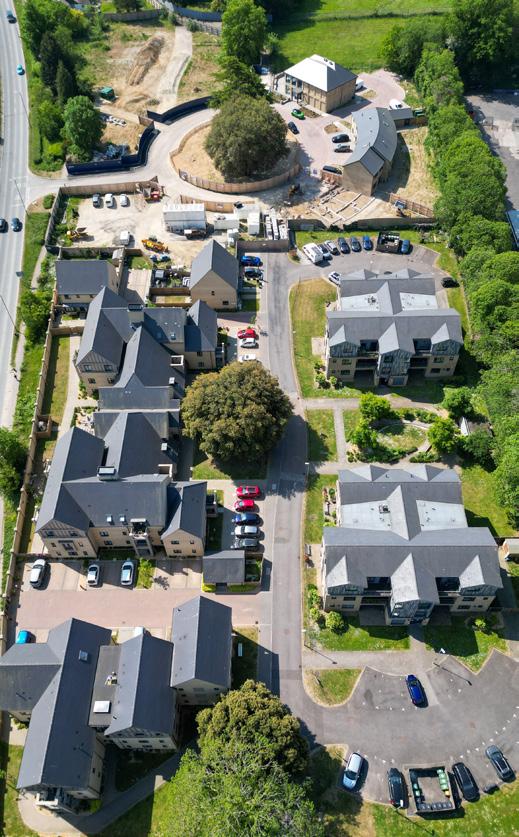
has even more homes and apartments on the way. These will complete in 2027.
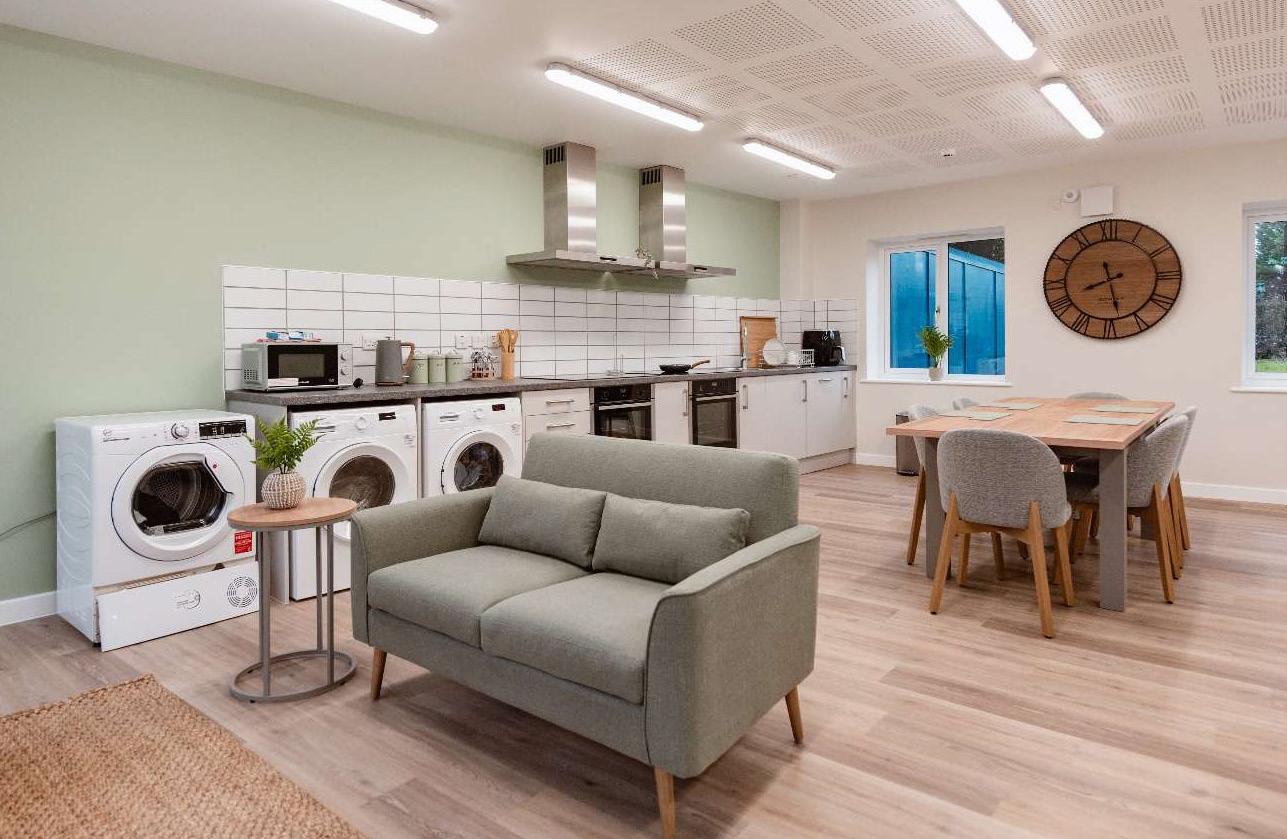
RBVE’s brand new purposebuilt accommodation for female veterans.
RBVE
Pilot Success
We are proud of the success of our reducing veteran homelessness pilot. RBVE has been able to support a cohort of 63 veterans from all over the UK, taking referrals from a wider range of sources and has been able to assess and admit homeless veterans within 24 hours.
The project achieved all three goals that it set out to achieve. As a result we are now close to having half of all emergency homeless referrals moving on from hostel living within 18 months. Integral to that is the confidence, shown by this pilot, that we are enabling a long term, sustainable transition, where they have financial security and will stay off the streets long term.
Key
Another key success of the pilot is the support for female Forces veterans. As we have said a “one-size-fits-all” approach will never work. It was fantastic that personalised support could be offered to female veterans overcoming homelessness, and dependents escaping dangerous relationships. At April 2025 there are 16 female veteran households and 84 female dependents supported across the wider RBVE Village. This is 27% of our tri-service community. The mixed community is providing female veterans a place to blend in, with individual coaching and employment opportunities too.
finding
Working age veterans who Move On have some paid work
Referral Route Into Emergency Housing
Royal British Legion caseworker
Self/Family Friend
Op FORTITUDE network
SSAFA caseworker
Regimental Association
Other Charity/Local Authority
Other
This pilot would seek to amplify the recent research from Kings College London on female veteran transition: the recent study urged service providers to always provide a self-referral route, to be wary of anything below 10% female take up, and never to assume that female veterans want to join military peer groups or military themed activities.15 Indeed all the female veterans supported by RBVE in this pilot found an activity in the wider community, as well as making positive social ties with other veterans
The project has also supported Forces veterans from BAME communities and from LGBTQ+ communities and has demonstrated that it is well placed to do so, respecting personal motivation, and seeking to focus on individual expression in parallel with collective identity from service, regiments, and identity from “home”.
Move On Outcomes
Veterans
Moved away from RBVE
Moved away with work to rent privately
Other Pilot Benchmarks
Holistic assessment before arrival
Clear Step In goals
Lifeworks
Volunteered in Britain’s Bravest Manufacturing Co.
Other mental health support (Op Courage, Maidstone Community MH, CGL)
Conclusion and Recommendations
This pilot successfully supported 63 male and female Forces veterans who had been homeless. The pilot achieved an overall move on rate of 44% to sustainable independent living.
It is not an easy task to tackle veteran homelessness; the root causes are complex and can be hard to untangle for each individual.Our holistic approach is proven to create long-term sustainable change for some of the most vulnerable veterans in our society, and from anywhere in the UK.
We are hampered by the size of our operation and the lack of affordable homes around the UK. Even though we are the largest multi-generational veteran village in the UK, with 79 new homes recently completed and 26 more homes for veterans currently under construction, we still do not have enough ‘Move On’ accommodation to address the scale of veteran homelessness adequately.
The findings of this project and evaluation are clear: combining mental health with employability is the right approach to tackling homelessness for Armed Forces veterans. Even early service leavers have some work experience on which to build. Almost all Forces veterans are longing to re-gain a sense of team in their lives. We do understand that many emergency housing providers in our sector feel that the pressure of supporting immediate distress and severe self-harm makes employability coaching feel like a pipe-dream. RBVE’s pilot demonstrates that employment will often be the key to a Move On that “sticks”. It is not easy, but for over 100 years of operation, in small and large-scale programmes UK wide, RBVE has operated with the assumption that it is very rarely helpful to wait until a veteran is “completely better” before starting a conversation about work.16 17
For those furthest from the labour market this means more intensive approaches such as RBVE’s Lifeworks. It also means peer groups and activities thatpromote digital inclusion and basic IT skills, hobbies and qualifications. This is why our Step In project recommendations are:
1) Increase the rate of residents with clear life goals to 100%.
2) Introduce more focused engagement on hobbies and volunteering (now more explicitly linked to self-employment potential). RBVE’s team plans to develop a new, and replicable, tool for this.
3) RBVE’s unique mix of facilities and services, with paid employment at its heart, must be sustained.
Our National recommendations are:
1) Employment remains key to successful and sustainable Move On outcomes even when working with people overcoming severe and complex mental health challenges
2) The “local connection” rule casts an unhelpful shadow, and education is needed to remind public sector bodies that penalising Forces veterans is contrary to the nation’s Armed Forces Covenant commitment
3) The military charity sector must maintain pressure on the Government to deliver on its ambitious house-building pledges and targets
By replicating RBVE’s unique housing model, and Step In programme, we could end veteran homelessness. This approach would need to happen UK-wide in more communities with employability at their heart. With 20 communities of this kind, well positioned across the UK, we could end veteran homelessness completely within 3 years. This is less than a full political term of office in the UK.
RBVE Charity’s Strategic Direction
1. Continue to deliver the awardwinning Lifeworks programme to long-term unemployed Forces veterans right across the UK. Currently RBVE is reaching 1,000 veterans annually. The charity is only limited by funding. It could reach many more disadvantaged communities.
2. RBVE has committed to fundraising for a brand new Social Enterprise at its HQ in Kent. The new enterprise will include a new Learning Academy and will be able to offer over 100 skills placements annually. It will more than double the number of homeless veterans that can be supported with work experience. The charity aims to complete the new facility in 2027.
3. RBVE works with both housing and manufacturing partners to replicate the holistic approach outlined in this report. Already in Glasgow, Scotland’s Bravest Manufacturing Co. is providing work, in partnership with Erskine charity who provide homes, and a thriving activities centre, for veterans of all ages.
Case Studies
All names have been changed and some identifiable elements amended to protect anonymity.
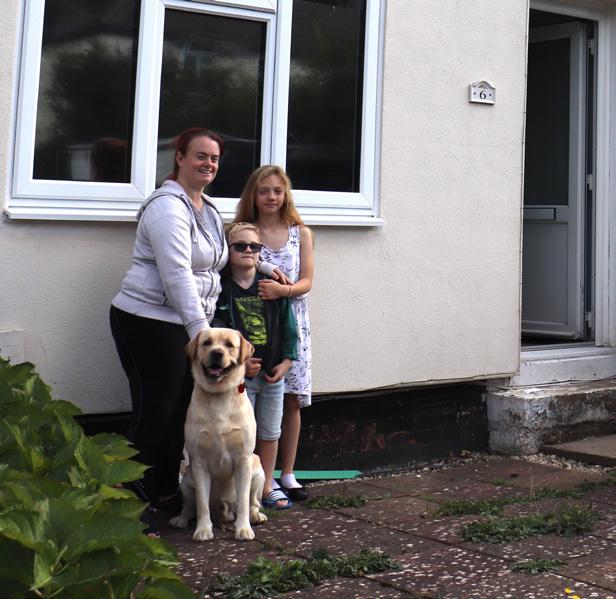
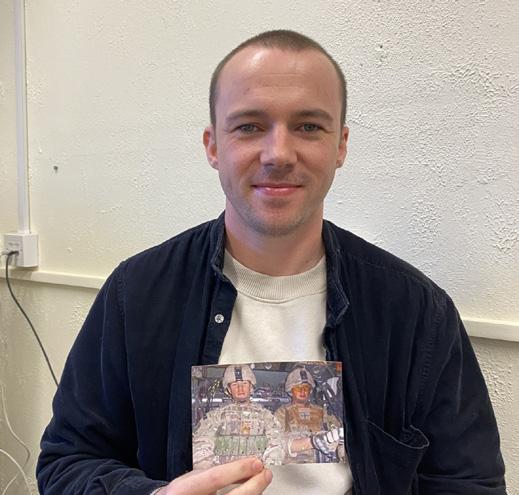
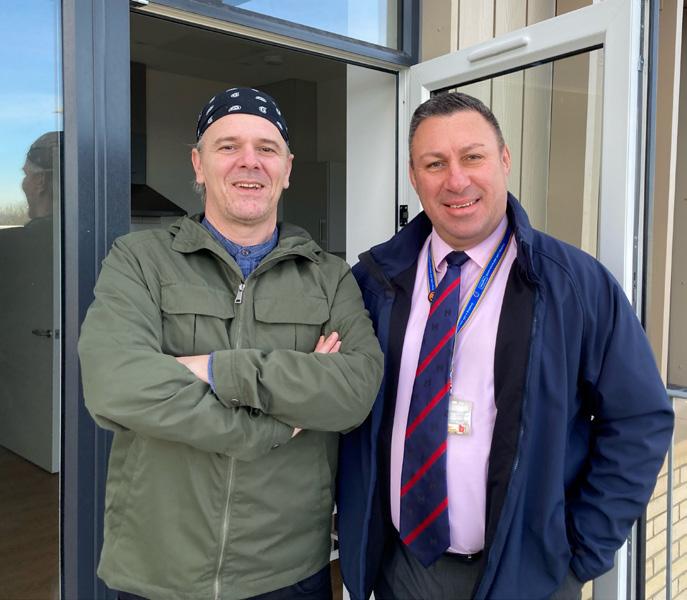
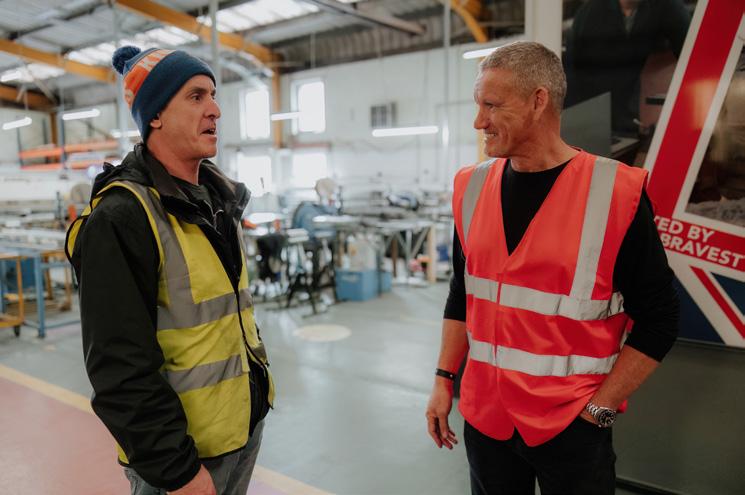
came to RBVE after trying everything to keep his life on track himself. He had lost his housing due to not being able to meet the rent as the work he had found for himself was insecure. He had moved in with a relative but this was contrary to the rules of this accommodation block and so he had been made homeless. The residents in the block had made it clear that they were proactively working to make sure he could not stay there. As a result when Ross came to us, his frustration at not being in control of his life was palpable and he showed a lot of anger. Despite this Ross did not want to engage with mental health support or feel that he had mental health needs. RBVE recognised that Ross’s self-esteem was strongly tied to his ability to be independent and have purpose, and as such we guided him with Lifeworks employability coaching and more job seeking encouragement. Ross was very engaged with a new found self-esteem and positive relationships from the Lifeworks programme. Within 4 months Ross had moved on, securing more reliable and better paid work and a place to call his own.
Amy is a young female veteran who was referred to us after being made homeless after medical discharge from the Armed Forces. Amy was devastated at being discharged, as she had hoped to serve for many years and she did not have a stable home life to return to. Amy has no ties in the local area, but the proximity to good healthcare facilities, and a supportive tri-service community around her, should her medical condition flare, means that she is reassured and able to build a new life. Amy has a therapist in place to help her come to terms with her medical condition and how it has derailed her life plans. She has made excellent progress whilst with RBVE, to the extent that the Step In team are already discussing a pathway to increased independence through paid work despite her only being with us a matter of months. Amy is also very involved with regular volunteering in the local community which gives purpose and relieves social isolation. We are confident that Amy will be able to move on soon.
Norman is an older, ex-military Officer who was made homeless by relationship breakdown. He was using alcohol to such dangerous extremes that his life was at risk. He understood the dangers of this lifestyle, but also felt that he did not care if he died. He was also living with multiple health conditions, but his alcohol use meant that it was impossible for them to be treated effectively. Through engaging with the Step In programme, he was persuaded to attend residential detox. This was successful and being alcohol free enabled quality interactions with medical professionals. Sadly these revealed that he had developed underlying Alzheimer’s disease. As a result of this diagnosis, Norman moved on from RBVE after 9 months - to a specialist home where he can receive outstanding care and improved treatment. With the diagnosis he has also been able to repair many of the family relationships that had been damaged. Norman is living in a very warm and friendly environment and says he no longer feels like he wants to die.
The National Crisis in Social Homes
A Timeline
1919
Building large numbers of homes for veterans, “homes fit for heroes” was an important national goal following both WW1 and WW2. In 1919 Christopher Addison’s planning act argued that returning soldiers deserved decent homes. Between 1919, the year that RBVE charity was founded, and 1929 1.4m homes were built in the UK.
1945
Over 1.2m new homes were built between 1945-1955. These were designed to be affordable for “ordinary” people.
1991
The crisis in housing availability peaked in 1991 when over 13,000 households were placed into B&B accommodation because there were no social homes available.
1996
The 1996 Housing Act led to the principle of “Local Connection.” This is where local councils could refuse homes on the grounds that a person had not been residing, or working, in the area for the past 5 years. Successive governments pledged to make sure more new homes were being built.
2021
The government launched the “First Homes” scheme in response to the national crisis. This scheme was designed to help first time buyers and keyworkers purchase homes local to their employment. It meant that people could purchase homes at a 30% discount.
2023
The proportion of affordable properties for rental in England fell from 20% of housing rentals in the year 2000 to 16% in 2023.18 The number of social homes is still falling. In 2013 there were 4 million social homes. In 2023 there were 3.8million social homes.19
1971
The availability of social homes peaked. Local councils housed a third of all UK households.
1980
1.2m social homes were sold to private individuals in the right-to-buy scheme between 1980-1990 with no simultaneous reinvestment in social housing.
2017
In 2017 the Parliamentary Committee recommended that 300,000 homes needed to be built annually (of this 90,000 should be social homes for those in the greatest need).
2019
The highest total of new homes built was 177,800 in 2019, still below the annual target.
2024
In September 2024 The Prime Minister Sir Kier Starmer promised homes for veterans “guaranteed”. In October 2024 the Housing Minister Mathew Pennycook pledged to build 1.5m new homes by August 2029.
2025
The Local Connection Principle has recently been challenged for marginalised groups including care leavers. Councils can now accept ANY local connection for disadvantaged people when allocating social housing. Veteran charities including RBVE have argued that the local connection principle discriminates against Forces veterans and is contrary to the Armed Forces Covenant pledge.
Glossary
Affordable Homes is a broad term for housing which does include social homes but also includes other innovative schemes from commercial providers such as first-time buyer programmes, shared ownership schemes , and retirement rentals which are designed to provide more community amenities while allowing older people to down-size their living space, and their cost of living.
Assisted Living is a housing option for people with disabilities and health conditions who can live independently but need some assistance or care.
At RBVE’s Assisted Living homes, the charity provides care packages for very varied levels of need, and is able to increase or decrease the care provided as the situation changes. RBVE’s domiciliary care agency also offers care to residents right across the 75-acre tri-service village.
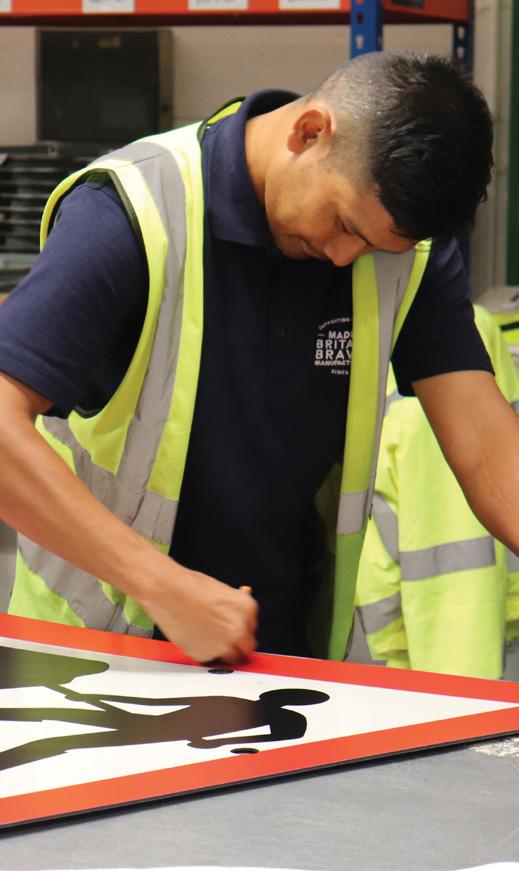
BBMC Britain’s Bravest Manufacturing Co. is a large social enterprise operation which manufactures commercial signage, Tommy figures, and undertakes print, mail and fulfilment. There are 3 locations in Kent, Surrey and Greater Glasgow where over 130 disadvantaged Forces veterans and people with disabilities, are employed in dignified work. This includes paid work which allows people to live fully independently, as well as work experience placements and gradual return which help people get back into the routine of work after injury, mental health breakdown, or other social disadvantage such as homelessness.
CTP The Career Transition Partnership is a programme developed by the MoD to help service personnel transition out of the Forces. RBVE charity and Reed in Partnership are contracted by the MoD to work specifically with veterans being discharged on medical grounds. Our experts are offering specialist preparation information, tailored coaching and practical advice. However health and mental health needs are not the only indicators of extra support or coaching needs for veterans. The research team at King’s College London link the need for financial and welfare benefit support amongst veterans more closely to rank or socioeconomic background, than to injury, disability or long-term health or mental health conditions.20
Housing First is an approach to homelessness which advocates providing a safe home first, and as quickly as possible, with tailored services afterwards. It is internationally recognised.
Hyper-Vigilance is a mental state in which a person is highly sensitive to threats and with an exaggerated general alertness. It is a useful and protective state, generating adrenalin in readiness for hidden dangers, or a fight or flight situation. It is very useful, often essential, in conflict situations, in patrol and security work, in competitive sports, and in unpredictable situations where sharpened intuition is valuable. However hypervigilance is a state which is draining as well as very difficult to switch in and out of. It is also a symptom of multiple mental health conditions including PTSD, and it is strongly linked to early childhood abuse and the experience of growing up in a hostile or unpredictable environment. In extreme cases it can develop into agoraphobia, fear of leaving the house and any unpredictable situations.
IPS Individual Placement Support is an evidencedbased employability model for severe mental illness which gives individuals extra, and ongoing support, to help them while they are in commercial work. Commerical work is prioritised over volunteering. The aim is that they retain employment, have opportunities to think further about the kind of employment that would be sustainable, and are able to feel the benefits of personal financial independence, routine, and team social interaction. Most importantly this model means that a person does not need to wait until they are completely better before accepting paid employment. The evidence base for IPS is based on work with people managing Schizophrenia, which emphasised that paid work improved economic, social and also clinical outcomes.21
Lifeworks is RBVE’s award-winning employability coaching programme which reaches over 1,000 unemployed Forces veterans around the UK annually. The programme has been independently evaluated and 80% of veterans secure work or volunteering within 12 months of participating. This is all the more impressive as 64% of participants are overcoming mental health challenges and 38% overcoming physical health barriers to employment. The programme begins with a 4-day residential course, covering personal coaching and vocational assessment, as well as practical job-seeking skills. The programme includes 12 months of ongoing telephone and video support.
Glossary
Local Connection rule refers to Local Authorities using 5-year-minimum “local ties” as a criteria for allocating social homes. Although the application varies from Council to council it has been normal practice since the 1996 Housing Act. The rule has been criticised by veteran charities, including RBVE. It is an example of people being disadvantaged as a direct result of their time spent in service in multiple locations. The Local Connect Rule has so far been overturned in Scotland, and UK wide for care leavers and victims of domestic abuse. Councils can now use any local connection to allocate housing to disadvantaged people.
Op FORTITUDE is a national referral network of emergency beds for homeless Armed Forces veterans. The network links RBVE’s Mountbatten Pavilion with Riverside, Veterans’ Launchpad, Alabaré, The Block, Entrain Space, SSAFA and more specialists UK wide. Established in November 2023, the network represents over 900 housing units and receives over 250 referrals a year.
PTSD Post-Traumatic Stress Disorder is a mental health condition that can occur after a person has experienced or witnessed terrifying and/or distressing events. It can include flash backs, intrusive thoughts, anxiety and depression. Treatment helps people manage the condition and regain a sense of control. For example, during treatment flashbacks will be re-framed as memories. This gives more control and more personal agency in the interpretation, which helps these thoughts to be understood and managed. Forces veterans may be experiencing PTSD that has nothing to do with their service experiences, or derives from a combination of childhood trauma with service experience. At RBVE the most important outcome is that veterans know that mental health difficulties are manageable and do not prevent a person from securing paid work.
PIP Personal Independence Payment is a welfare benefit paid by the government to people who are not in work, or not able to work full time, because of a disability or health condition. It is separate to Universal Credit, which is for unemployed people who are actively job seeking. There will be changes to PIP expected from November 2026 which will tighten the criteria of eligibility for these payments.
Psychological Exhaustion This is a concept used by psychologists to explain and understand depressive symptoms in some cases. The idea is sometimes more colloquially described as post adrenalin blues, or post race blues by sports psychologists. It describes a state where everything feels flat and where it is more difficult to feel engaged or find anything in life to be important after a high intensity, or high profile, period of operation. Depressive feelings are often accompanied by feelings of loneliness and separateness.
Self-efficacy is RBVE’s approach to conversations about confidence. We help veterans to break this down. Instead of thinking of confidence as a magical or intangible quality which some people appear to have without any effort, we talk about self-efficacy. We find solid reasons why we can each know for certain that we are effective in unique ways. We don’t need to have confidence, but we do need to find words to describe what we know we are able to do.22
SEQF The Supported Employment Quality Framework was created in 2017 and it is a European-wide accreditation framework for best-practice disability employment. BASE, the British Association for Supported Employment, offers a useful tool and managers’ guide. There are 5 key areas of best practice
1. Employee engagement
2. Vocational Assessment
3. Employer engagement
4. Job matching
5. In-work support
6. Career Progression
Social Homes are rented at levels significantly below the local market rate usually with government or community involvement. This includes supported housing which is run for people with disabilities and is not just affordable, but also provides some care or a warden. RBVE’s homes are run by the charity for Forces veterans overcoming health and financial crisis. Housing 21 and Golding Homes are local housing associations that are not run for profit and provide homes for people of modest means.
Social Prescribing is a service which connects people to resources and activities which improve their health, well-being and their sense of belonging, by tackling the social causes of ill-health especially isolation and poverty. The NHS Long Term Plan which was published in 2019 included a commitment to increasing social prescribing within the NHS.23
Social Prescribing can now be described as a global movement. It sometimes prescribes paid work but there are many varied approaches. For example green social prescribing is a nature-based approach which prioritises regular time in the outdoors. In 2024 The National Academy for Social Prescribing campaign emphasised the need for activities which will matter most to the isolated person.
Step In is RBVE’s integrated approach to health, mental health and employability. The approach helps Forces veterans who are overcoming homelessness to manage health, mental health and financial challenges, and to set positive goals for the future. The goal setting element of Step In is not always about paid work, or re-training, and may be focused on repairing family relationships, or relocating to a different town. Uniquely, as part of the Step In programme, RBVE is able to offer paid work experience in an onsite social enterprise called Britain’s Bravest Manufacturing Co. This is a commercial operation delivering signs for large national infrastructure projects including motorways, as well as for commercial construction and house-building markets.
Stigma is a feeling of disgrace or social disapproval usually about a person’s background, traits, disability or health condition. The knowledge that something is stigmatised means a person worries about their situation or condition, fearing that they will be judged as inferior. In this way stigma causes anxiety about being socially excluded or rejected. An example of social stigma is that Forces veterans worry that if they tell anyone they have PTSD, or have symptoms that could be PTSD, they will then be considered unemployable. As a result, veterans may hold back from accessing mental health services of any kind, as a way to avoid stigma.
Survivor Guilt can be linked to PTSD. It is a reaction to surviving a traumatic event which other people did not. Symptoms can include experiencing nightmares and flashbacks, or constantly replaying the incident trying to think of things that could have happened differently. It can generate intense feelings of self-doubt or inferiority – never being able to do enough, never being good enough – which can be linked to imposter syndrome and can be a barrier to employment . While survivor guilt is often related to military service experiences, or tragic accidents, this is not always the cause. It can also be experienced when surviving a wave of redundancies at work, for example. It can relate to early childhood experiences, such as being the “favourite” child within an abusive household, or witnessing domestic abuse as a child.
References
1. Department of Housing figures shows 2,110 veterans homeless https://www.theguardian.com/uk-news/2023/dec/26/homelessness-armed-forces-veterans-england-rises
2. J Bretherton and N Pleace with University of York Centre for Housing 2021 Women’s Homelessness in Camden
3. Finnegan A, Randles R 18 January 2022. Prevalence of common mental health disorders in military veterans: using primary healthcare data BMJ Journal of Military Health
4. Lord Ashcroft’s Veterans’ Transition Review 2014. https://www.lordashcroft.com/publication/veteranstransition-review/
5. Forces in Mind Trust 2017. Continue to Work. The Transition Mapping Study
6. Community Enterprise for RBVE. November 2023. Lifeworks Evaluation
7. Joseph Rowntree Foundation briefing by Casey R, Cooke G, Elliott J and Tomlinson, D March 2023. Importance of ill-health to the UK’s labour market participation challenge
8. The mental health recovery star was originally developed for St Mungo’s by Triangle Consulting with funding from The London Housing Foundation
9. The Health Foundation 2019 Employment and Unemployment. https://www.health.org.uk/evidence-hub/work/ employment-and-unemployment/relationship-between-employment-and-health
10. M, Bartley 1994 Unemployment and ill health: understanding the relationship
11. McManus S, Bebbington P, Jenkins R, Brugha T 2016 Mental health and well-being in England: Adult Psychiatric Morbidity Survey
12. Hesketh R, Strang L, Pollitt A and Wilkinson B, April 2020. What do we know about the effectiveness of workplace mental health interventions? Kings College London
13. Okoroji, C, Gleibs, I and Jovchelovitch, S February 2021. Elite stigmatization of the unemployed: the association between framing and public attitudes British Journal of Psychology Volume 112, Issue 1
14. Forces in Mind Trust. October 2024. Accredited vocational training within supported employment for veterans: an evaluation of impact. Scotland’s Bravest Manufacturing Co, FiMT and Glasgow Caledonian University
15. Sharp M, Croak B, Khan R, Smith A, Langston V, Rafferty L, Greenberg N, Fear N, Stevelink, S. 2025. Sustain: Identifying and examining the barriers and facilitators to ex-servicewomen making a successful and sustainable transition to civilian life in the UK. Kings College London
16. Professor Dame Carol Black for the Department for Work and Pensions 2016. An Independent Review into the impact on employment outcomes of drug or alcohol addiction, and obesity
17. Dyer, J Murdoch C, Farmer, P for the NHS. September 2020. Advancing mental health equalities strategy
18. House of Commons Library https://commonslibrary.parliament.uk/affordable-housing-in-england/
19. House of Commons Library (social rent) https://commonslibrary.parliament.uk/research-briefings/cbp-8963/
20. Burdett H, Fear N, MacManus D, Wessely S, Rona R, Greenberg N 2019. Unemployment and benefit claims by UK veterans in the new millennium: results from a record linkage study. BMJ Occupational and Environmental Medicine Volume 76 Issue 10
21. Luciano A, Drake R, Bond G, Becker D et al, 2014 Evidence-based supported employment for people with severe mental illness: Past, current, and future research The Journal of Vocational Rehabilitation Volume 40 issue 1
22. Regenold M, Sherman M, Fenzel M. Getting Back to work: self efficacy as a predictor of employment outcome. Psychiatric Rehabilitation Journal 22. 1999
23. The NHS 2019 Long Term Plan https://www.longtermplan.nhs.uk/
Funders and Partners











Leybourne Lakes












Lily Smith House Maidstone
The Sapper Charity