ANNUAL ACCOUNTS


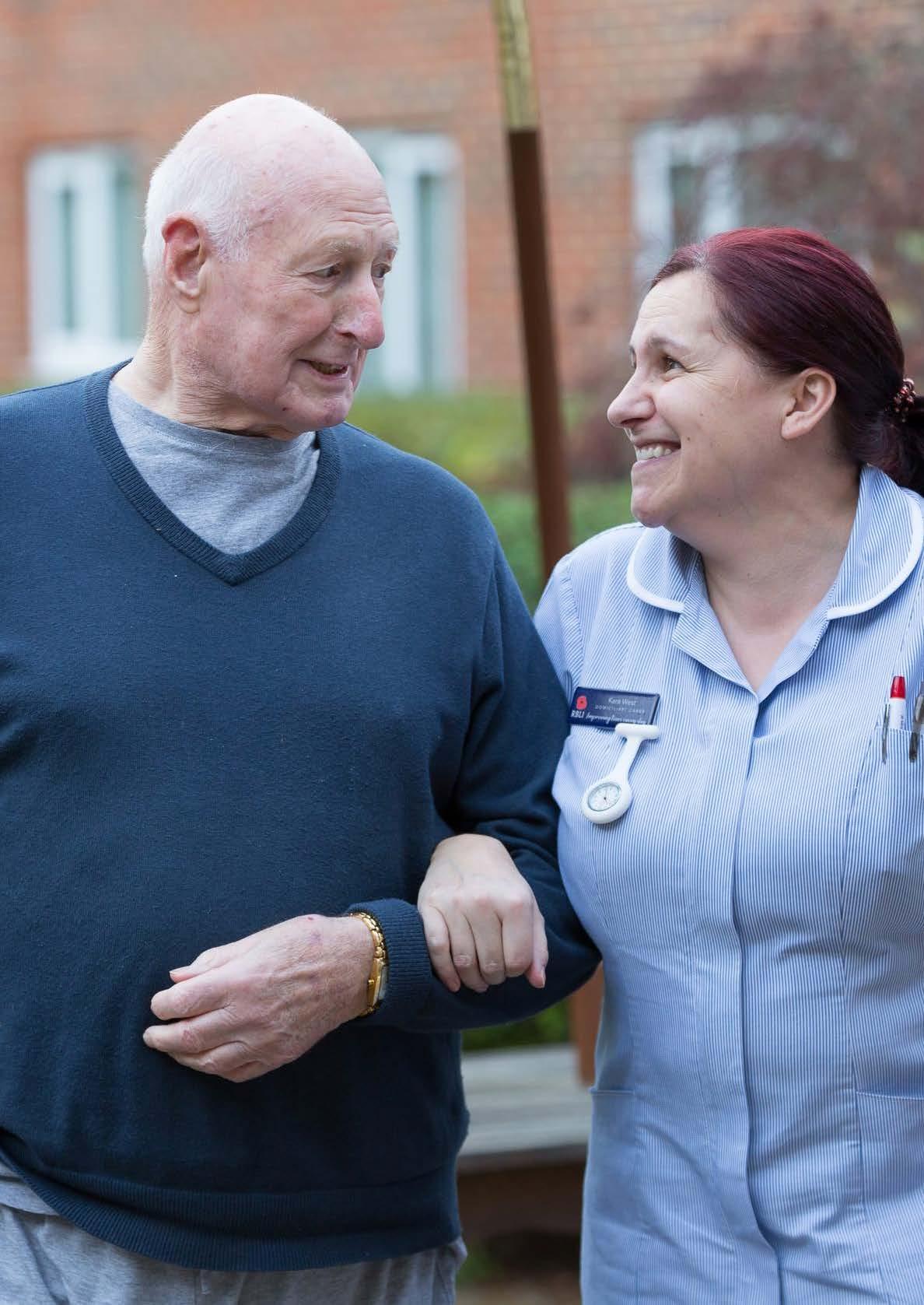
A hero’s goodbye: Late D-day veteran Charles Boyer salutes RBLI’s carers

What a year! All of us at Royal British Legion Industries Limited (RBLI) have learned so much during this global pandemic. We focussed our efforts on our three key priorities protecting people, protecting our finances and delivering our purpose so that we could emerge safe and strong.
We are now into the second half of our 10-year strategic plan – Improving Lives Every Day – and we are well on course to achieving our goals of helping more beneficiaries whilst at the same time developing our services and facilities so we are here to serve veterans for the next 100 years.
Operationally, our Charity has delivered on its top priority of protecting people. This has been achieved by an enormous team effort. Our nurses and carers were very much in the eye of the storm, particularly in those early months where the whole country was trying to come to terms with an unprecedented threat and understand how best to operate during a pandemic. Sadly in this year, we lost some of our wonderful residents to Covid-19 and firstly our thoughts are with their families and friends as we reflect on the year passed. Our care teams demonstrated unprecedented responsiveness, dedication, stamina and skill. Our Charity could not be more proud of their contribution and their service this year. The RBLI team worked as one and, as well as carers, Property Services, Business Systems, management and our factory workers became ‘essential workers’ across the Charity. The work of RBLI never stopped and we are indebted to all those that rose to the challenge.
Our operational finances have been protected and, positively, we finished the year remarkably close to the budget that was set prior to a pandemic or national lockdown ever being considered. This result, quite understandably, has been reached by a slightly different route than we had originally envisaged. Nonetheless, it has been nothing short of miraculous and there are many people to thank.
First, the Government’s support with emergency grants, both in care and more generally, has provided a lifeline.
Second, our teams across RBLI have continued operating throughout, providing essential signage and pallets for the pharmaceutical and food sectors, delivering assessment services online and keeping as close as possible to ‘business as usual’ but always staying safe within Government rules and guidance.
Thirdly, we have been overwhelmed by the enormous moral and financial support given by the Great British public.
It has not been so positive on the strategic finances. We had built considerable momentum following Her Majesty’s turf cutting ceremony and anticipated raising a further two million pounds towards our Centenary Village Campaign but we have quite naturally fallen well short of this target. The capital fundraising remains our top priority and we need to raise a further £3 million by the end of 2022.
As planned, we have now reinforced our National Development Board with a Kent Development Board in order to accelerate this campaign.
On the positive side, work continues apace on Phase 2A of the Centenary Village with the much needed 12 apartments, 24 assisted living homes and 4 family houses on course for completion in May 2022.
The other major capital project is the £3.5 million refurbishment and reconfiguration of our 30year old 50-bed nursing home into 24 dementia suites and 26 nursing suites. Phase 1 is complete and we now have 25 residents occupying the fantastic new half of Gavin Astor House. Construction work is on schedule for the whole building to be handed back for use in early November 2021.
The immense public support for our new virtual Tommy events and also by purchasing VE day commemorative items from our online shop has been staggering. These new online communities have not only given us much needed operational funds but have also served a need in bringing people together and reducing social isolation at a difficult time for many across the country, including veterans living alone.
Impressively, our team and the respective contractors, WW Martin and BBS, have not allowed the pandemic to halt the muchneeded new homes that are coming with the Centenary Village and Gavin Astor House.
We have not stopped with the development and advancement of our employment services and our contract with the Department of Work and Pensions, delivering approximately 700 workplace assessments every month across the UK has been extended for a further 2 years to June 2023. The team on Access to Work has innovated and delivered virtual assessments throughout the lockdown period. Similarly, our three ESF BBO contracts (Brighter Futures, Change Your Tomorrow and Let’s Get Working) which are helping people who were struggling to work even before the pandemic hit, have been rewarded for delivering excellent positive outcomes with a further two year extension until 2023. In 2021, RBLI became an accredited Kick-Start provider and will offer exciting employment experience opportunities for over fifty 18-24 year-olds at a time.
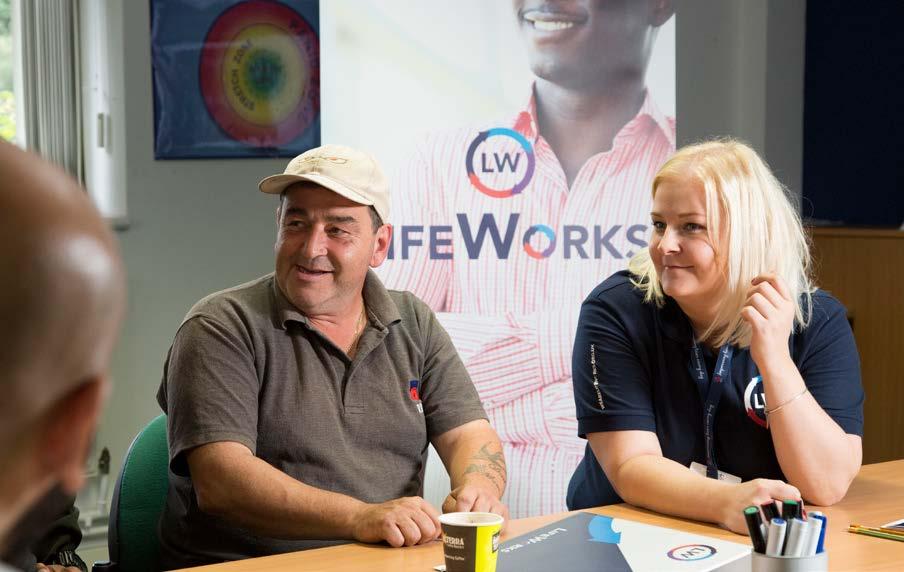
LifeWorks continued to operate virtually throughout the pandemic albeit with much reduced throughput. A major review has seen our LifeWorks and STEPIN programmes merge in order to provide greater efficiencies and effectiveness, and make best use of funds. We are pleased to announce an exciting new funding partnership with Barclays which complements the great support given by our existing LifeWorks partners such as ABF The Soldiers’ Charity, The Swire Charitable Trust, and the Morrisons Foundation so that we were ready to begin scaling up the programme again in the new financial year.
Employment, as part of an integrated range of services to assist individuals in regaining their independence, remains at the heart of RBLI’s impact. This is self-evident when you see our Social Enterprises in Kent, Renfrewshire and Surrey and the dignity, purpose, experience and skills that they have been able to give beneficiaries throughout the pandemic. Coupled with the iconic Tommy brand, and some important philanthropic investments, all RBLI’s social enterprise operations have grown their product offer, customer base, and new business relationships.
This, in turn, provides more employment opportunities for veterans and other people with disabilities. The positive approach taken by National Government, their agencies and local government towards insisting on Social Value in contracting is much welcomed and is showing real outcomes in terms of employment opportunities for disadvantaged groups. Despite the pandemic, both Forestry & Land Scotland and Highways England have been working harder than ever to use their leadership to grow Social Value procurement to great effect.
Our strategic plan involves using our resources to maximum effect. Our financial reserves are at the minimum possible level now. This forthcoming year, as we finish off refurbishing Gavin Astor House and completing the Centenary Village Phase 2A, will demand that we continue raising much needed funds for these critical capital projects to happen.
Last year’s AGM, on Zoom of course, was presided over by our President, Lord King and we were pleased to be joined by so many supporters from far afield who were keen to hear how the Charity has adapted to help the most disadvantaged veterans during the pandemic.
The Board of Trustees has provided exceptional support to the Charity throughout this difficult year with over 20 Board and Trustee-led committee meetings. There is no getting away from the fact that things are tight as we emerge from a series of lockdowns but the Charity remains confident that our medium and long term plans remain relevant and robust enough to deliver in the medium to longterm – that is to say for the next 100 years!

Stephen Kingsman DL CHAIRMAN
Date: 8 July 2021

Steve Sherry CMG OBE CHIEF EXECUTIVE
Date: 8 July 2021

The financial year 2020/2021 falls half way in RBLI’s 10 Year Strategy which was launched in 2015. It is testament to the strength of the Charity’s strategic goals that they have not changed. The pandemic has not changed the goals, and has only shown us, even more vividly, why RBLI’s charitable goals are so important.
Further develop thriving communities for those veterans who are most in need across the UK, With integrated services of social care, health care, employability support, and accommodation. Be the catalyst for the replication of more effective integrated service delivery across the UK.
Build a resilient work, health and training services business that is “best in class” at working with people with disabilities, health conditions, and those who are furthest from the labour market.
Continue to develop and define First Class pre-employment support for the Armed Forces Community centred on relevant variants of our LifeWorks programme across the UK.
Build a 21st Century social enterprise and employment academy.
Secure funding, sponsorship and profile to maximise the opportunities for RBLI’s beneficiaries.
The work of RBLI’s clearly organised divisions ensures that all the strategic goals could be progressed significantly despite the challenges to service delivery caused by social distancing measures and national lockdowns.
Salutations: former Royal Marine George Bradford salutes the carers who helped him during the pandemic.
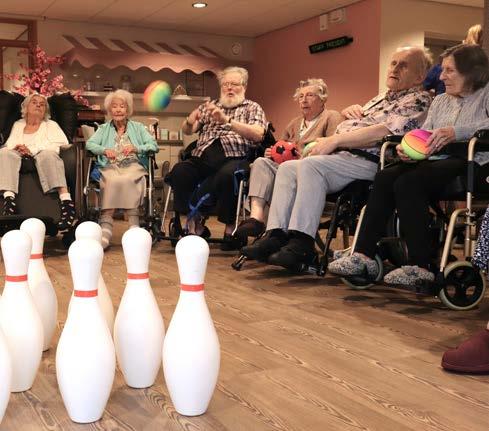
RBLI offers homes to veterans of any age, and any background, supporting veterans of all 3 services. RBLI provides high-dependency and extra care, as well as independent homes, including specially adapted apartments for veterans with disabilities. Admissions to RBLI’s accommodation are prioritised by need and RBLI’s unique community and holistic services are most beneficial in supporting those with multiple needs. On top of the variety of homes, which include emergency accommodation for homeless veterans, the Village also has a Community Café, large Training Centre, and Community Garden. An integrated welfare programme called STEP-IN co-ordinates excellent nursing and care, welfare benefits and welfare support, along with direct employment, job seeking advice, and meaningful activity. During the year the STEP-IN programme has been vital in helping residents maintain social connection, mobility, activity, vocational interests and sensory experiences through the periods of lockdown. With the support of partners including ABF the Soldiers’ Charity, the Covenant Fund, and Barratt we were able to adapt our seasonal celebrations, and our vocational programmes, to make sure that Village residents were able to participate.

Our face-to-face employability services were impacted by the pandemic but not as much as would have been expected. Our largest-scale outreach activity, Access to Work, where we help people with disabilities remain in employment, experienced a 28% drop in referral volumes due to Covid-19. The RBLI team worked closely with the DWP, adapting to the external environment rapidly and developing a transformational operational delivery over to digital and online platforms. This positive reaction provided continuity of service, helping our customers with disabilities or health conditions to overcome workplace barriers through the Access to Work Programme, ultimately managing to successfully support 8,406 people through a challenging 12 month period to March 2021.
Thanks to the flexibility of our funders, European Social Fund and the National Lottery Community Fund towards our outreach programmes for the furthest from employment, we were able to continue using new approaches. Similarly, the support and flexibility of our LifeWorks funders meant that we were able to adapt significant activity to increase virtual delivery and video coaching, and we were able to reach almost 600 unemployed veterans across the UK, responding to the increased demand for support with redundancy.
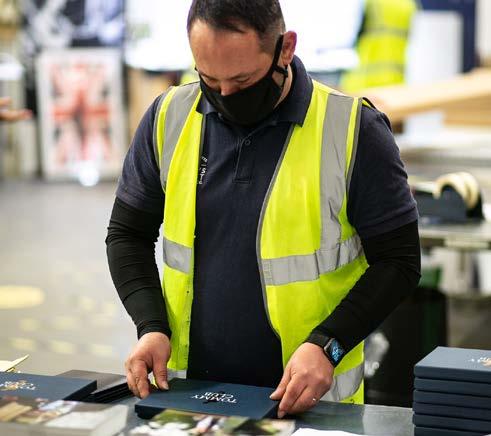
RBLI’s social enterprises are providing entry level work experience as well as skilled roles in sign making, wooden products, print & mail. During the financial year 2020/2021 these activities expanded significantly. We started the year with a huge opportunity for the Tommy online shop, helping the nation mark the 75th Anniversary of VE Day. Disadvantaged veterans and workers with disabilities were able to stay in work making and dispatching Tommy products for thousands of new customers nationwide. The social enterprise was also involved in emergency food distribution during the pandemic, and even in the manufacture of visors in partnership. BBMC’s role as a local emergency distribution centre, the essential need for wooden pallets for food and medicine distribution and the need for signage meant that BBMC’s workers gained key worker status. This shows the impact of BBMC’s work and products on essential national services during the pandemic. BBMC’s wooden products were further developed with a new garden range and thanks to support from the Lottery Covid-19 Emergency, fabric products were also introduced at the end of the financial year.
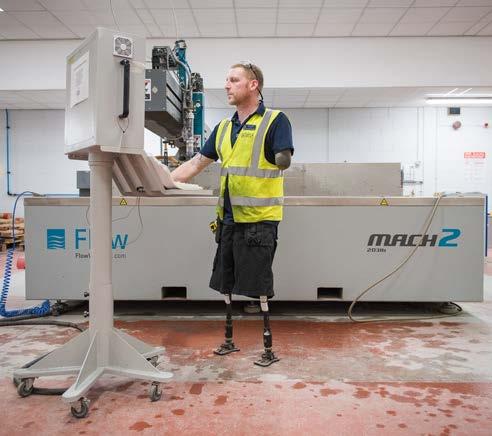
Scotland’s Bravest Manufacturing Company was able to gain new customers during the pandemic as the social enterprise was producing Covid-19 distancing signage, health and safety, and NHS signage throughout the pandemic.
The social enterprise was also able to begin a major strategic project funded by the Forces in Mind Trust and in partnership with Glasgow Caledonian University which will see SBMC able to accredit vocational qualifications on site. This is very significant, not just in the new learning and qualification opportunities it opens up for beneficiaries but for RBLI’s strategic goal to build an employment academy.
The start-up social enterprise which opened in 2018 remained on track towards its target to achieve break even in year 5 of operations.
■ Provision of welfare, healthcare and housing mainly for members of the ex-service community
■ Provision of employment and development opportunities through a thriving social enterprise business and LifeWorks employability support outreach programme
■ Supporting unemployed, disabled and disadvantaged veterans and other unemployed people to increase their independence and participation in meaningful employment
The Charity achieves its purpose and objectives by the following activities and services:
■ Delivering Village services at Aylesford in Kent
■ Delivering supported employment at BBMC and SBMC
■ Delivering a range of Government and Lottery funded programmes to help those furthest from the labour market keep or find work
■ Creating innovative new projects, products and outreach
■ Designing, developing, and delivering vocational assessment for the ex-service community including through RBLI’s LifeWorks programme
■ The Board of Trustees review the Charity’s strategic goals and activities, and performance and are confident that this Charity is fulfilling its purpose and objects.
On our unique village we made considerable progress with our redesigned high dependency care home, Gavin Astor House. We are refurbishing the provision in order to create specialist dementia care suites. This is an area of care with growing demand, and with the wider Village support allowing more varied daily routines, an area where RBLI is best placed to provide exceptional care and a national exemplar. The Charity has already delivered extensive training in dementia awareness in order to drive better specialist provision and this year saw the Charity begin the structural changes that will dramatically improve the home’s facilities. The changes bring much larger social areas, easier outdoor access for all residents, better navigation around the home and stimulating themed environments, including a sensory dementia garden. By the end of the financial year, the whole of one floor was successfully refurbished. The Charity also raised sufficient funding to expand the lounge area at Queen Elizabeth Court, our Assisted Living home which will greatly increase the space for social interaction, events and meaningful activity.
The unique Village also saw dramatic progress with the Centenary Village expansion with construction works moving forward at pace. The
expanded development will see new adapted apartments, will double RBLI’s capacity for Assisted Living and will add new family homes. Once completed, these homes are sustainable through rent and social care income so represent the main strategic priority for the Charity. This construction activity was able to progress well and was not hindered greatly by the lock downs.
The pandemic forced us to adapt our Charity’s fundraising methods and we were able to create new supporter communities through our online shop and the creation of new virtual sporting challenges. During the year this increased RBLI’s supporter base from almost 5,000 to over 50,000. The communities and events that RBLI developed proved to be motivating and to connect people to the beneficiaries, seeing the immediate impact of their own fundraising.
The Tommy 10k Challenge was particularly successful, raising over £250,000 for the Charity. The Tommy brand has also proved to resonate with the public. We know from our customer feedback that Tommy is not only a symbol of service and sacrifice but represents family members and is deeply important to our customers and event participants. A major achievement for the Charity was launching the new Tommy Club in October 2020.
In summer 2015, we launched our Strategy, Improving Lives Every Day, along with our 10-year plan. Our aim remains to provide the foundations for RBLI to be fit for purpose for the next 100 years whilst at the same time reaching out to more veterans who are most in need.
The key objective of growing and modernising the accommodation and services on the Village in Aylesford is, by any measure, a strong success. By May of 2022, we will have invested £22m+ on infrastructure development with many new units, including: 24 apartments, a 24 room assisted living home, a 15 bed extra care nursing home, a 26 bed nursing suite, a 24 bed dementia suite and 4 family homes. The real benefit comes, of course, from our integration of service provision including accommodation, healthcare, social care and employment. RBLI’s STEP-IN programme continues to support veterans back to independence.
Our plans to increase reach and help more veterans is evident from the success of Scotland’s Bravest Manufacturing Company, now 3 years since opening and now progressing 10 Veterans, at any one time, through an employment programme, with an annual turnover growing close to £1 million. Our disability assessment programme, Access to Work, under contract to the Department of Work and Pensions, continues to assess over 700+ people a month all across the UK and the recent 2 year extension until summer 2023, is seen as a strong vote of confidence in the quality of our service provision. Our employment programmes in the South East have also been extended by 2 years and our award winning LifeWorks employment programme for veterans, delivered across the UK, has strong funding from a variety of sources and continued throughout the pandemic. RBLI’s national reach remains strong.
A key element of the strategic plan was to create, from scratch, a fundraising team to secure the vital funding to deliver the positive impact on the lives of our beneficiaries. The strong results are evident in this year’s report and the previous two sets of statutory accounts. RBLI now has a growing range of supporters across the UK from many sectors and the wider public.
Always looking to the future, this growth and modernisation will continue alongside continued co-operation and collaboration with other charities and service providers. Such collaboration, along with appropriate integration of service provision, allows us all to better support our beneficiaries. The recommendations of our Trustee-led governance review are now being implemented through a Board approved action plan under the guidance of the Board supported by our Head of Corporate Governance.
The actions include reviewing Board sub-committee Terms of Reference and frequency of meetings, undertaking a Trustee skills audit, updating Trustee recruitment processes and the formal adoption of the Charity Governance Code. All actions are due to complete within 2021 and as at the date of this report this is on target with approximately three-quarters of the actions complete.
RBLI is now embarking on a further set of reviews over the next 18 months with an eye to designing a new strategic plan towards the end of 2022. These reviews will include, as a minimum, Estates, service provision and opportunities for greater collaboration and partnerships. The Board is committed to leveraging all the of the Charity’s strengths and assets to better improve the lives of our beneficiaries.
Royal British Legion Industries is a charitable company limited by guarantee and was set up on 3 September 1919, when it was called Industrial Settlements (Incorporated) Limited. It is governed by Articles of Association which were last amended in June 2018.
The Trustees in office during the year and at the date of this report, Senior Management of the Charity, its principle places of business and its professional advisers are set out on page 79.
The Board of Trustees is responsible for the overall governance, policy and work of the Charity. The Articles of Association require that the Board of Directors consists of a minimum of two but not more than twelve Members of the Charity, excluding any ex-officio members of the Board. Trustees are formally appointed at the Annual General Meeting. Where a vacancy arises during the year the Trustees can co-opt a new Trustee, who will then be formally appointed at the following Annual General Meeting.
Newly elected Trustees are given induction training on their duties and responsibilities as Members of the Board of Trustees. This includes, although is not limited to, provision of key documentation such as Articles of Association, reports and financial statements, details of divisional work streams.
In addition, on-boarding visits to the various Royal British Legion Industries sites are undertaken at which introduction meetings are held with key members of staff.
The Board governs the Charity within its Articles of Association and in line with its charitable objectives and values. The Board provides overall policy direction and the management of the Charity is delegated to the Chief Executive and through him to the Senior Management Team. The Board meets quarterly and papers are made available prior to Board Meetings including business plans and budgets. Finance reports are reviewed by the trustees at each Board meeting.
The Trustees confirm that reference has been made to the guidance contained in the Charity Commission’s guidance on public benefit of the Charities Act 2011, when reviewing the Charity’s aims and objectives and in planning future activities. The Trustees and Senior Management are involved in the strategic planning and their recommendations are then considered by the Board.
In addition to the quarterly Board Meetings the Trustees also meet annually for a strategic review and planning day. The Board reviews existing operations of the Charity and consider strategic options for the future. In addition to this, the Board also considers its own effectiveness and practices.
A Board led review of Governance was completed during the year and an action plan agreed with the Board in January 2021. Completion of this plan is being facilitated by the recently appointed Head of Corporate Governance, a new role to the organisation, which commenced 5 October 2020. The first actions, of the agreed plan, were delivered in March 2021. These focused on review of meeting frequency, review and updating of the sub-committee Terms of Reference and development of an organisational-wide Policy Framework.
Estates Development matters are considered and reviewed by the Estates Development Committee, which is chaired by a Trustee and its recommendations are submitted to the Board of Trustees for its approval.
Care and Welfare matters are considered and reviewed by the Care and Welfare Committee, which is chaired by a Trustee and its recommendations are submitted to the Board of Trustees for its approval.
The Trustees, who are also Directors of Royal British Legion Industries Ltd for the purposes of company law, are responsible for preparing the Trustees’ Report and the financial statements in accordance with applicable law and regulation.
Company law requires the Trustees to prepare financial statements for each financial year. Under that law the Trustees have prepared the financial statements in accordance with United Kingdom Generally Accepted
Accounting Practice (United Kingdom Accounting Standards and applicable law). The Trustees believe the financial statements give a true and fair view of the state of the affairs of the charitable company and of the incoming resources and application of resources, including the income and expenditure, of the charitable company for that period.
In preparing these financial statements, the Trustees are required to:
■ Select suitable accounting policies and then apply them consistently
■ Make judgements and estimates that are reasonable and prudent
■ State whether applicable UK Accounting Standards have been followed, subject to any material departures disclosed and explained in the financial statements; and
■ Prepare the financial statements on the going concern basis unless it is inappropriate to presume that the charitable company will continue in business
The Trustees are responsible for keeping adequate accounting records that are sufficient to show and explain the RBLI’s transactions and disclose with reasonable accuracy at any time the financial position of the charitable company and enable them to ensure that the financial statements comply with the Companies Act 2006. They are also responsible for safeguarding the assets of the charitable company and hence for taking reasonable steps for the prevention and detection of fraud and other irregularities.
Financial statements are published on the Charity’s website in accordance with legislation in the United Kingdom governing the preparation and dissemination of financial statements, which may vary from legislation in other jurisdictions. The maintenance and integrity of the Charity’s website is the responsibility of the Trustees. The Trustees’ responsibility also extends to the ongoing integrity of the financial statements contained therein.
The Board of Trustees approves any relevant annual pay rise to all employees with the Senior Management Team receiving the same annual increase as all other employees.
When new members join the Senior Management Team, the Chairman or Vice-Chairman of the Board of Trustees are asked to approve relevant salaries and other compensation/rewards.
Out of cycle pay rises not covered by the annual process require the approval of the Chief Executive and the Director of Corporate Services and typically reflect a change of roles and responsibilities or a market change in a specific division or area of the Charity.
Where appropriate, staff with revenue targets benefit from a bonus system that rewards good performance.
All staff are encouraged to join the current pension scheme which is a Defined Contribution scheme. The Charity contributes to the scheme and the contribution is determined by the individual employee contribution level.
RBLI operates an objective and cost effective recruitment and selection process to ensure the appointment of the best people in accordance with RBLI’s standard recruitment criteria and to specific criteria established for a particular job. We are an equal opportunities employer and can demonstrate this commitment to providing equal opportunities through an effective, regularly reviewed, Equal Opportunities Policy. It is our aim to attract and recruit people with diverse backgrounds, skills and abilities who will enhance the quality of the service and contribute to RBLI’s success.
Candidates are not discriminated against in any way and short listing is carried out against a set of defined criteria appropriate to the role. Consideration is given to any reasonable adjustments. Where RBLI is advised in advance of an interview by a candidate of any reasonable adjustments on the basis of a disability, every effort will be made to accommodate this request to ensure that no applicant is placed at a substantial disadvantage because of their disability.
The recruitment, development, promotion and treatment of employees, volunteers or job applicants shall be based solely on factors relevant to the job and performance and reasonable adjustment will be made in accordance with the Equality Act 2010.
RBLI recognises that our continuing success and the achievement of business objectives is dependent upon having a well-trained, competent and motivated workforce.
We are committed to learning that enables everyone to carry out their jobs to a high standard to both their personal and customer’s satisfaction and to the achievement of business and care needs.
It is important to us that all employees have the necessary support and same opportunity for learning in RBLI. We do this in the following ways:
■ Providing appropriate induction training for new entrants and transferring staff
■ Identifying personal and organisational development needs and planning to meet those needs, both for now and into the future so that we can respond positively to change
■ Ensuring competence in job roles with knowledge, skills and behaviour
■ Develop a culture of participation and accountability
■ Provide opportunities for positive action and implementation of equality through targeted, accredited where appropriate, staff development and training
Staff with disabilities will be invited to identify any particular requirements they may have to enable them to participate fully in all training and development events offered e.g. materials in alternative formats, sign language interpreters, ergonomic seating.
RBLI is proud to be a Level 3 Accredited Disability Confident Leader.
RBLI aims to ensure that all employees are kept abreast of changes that not only affect them as individuals regarding their employment, but that they are also provided with wider information relating to the challenges and successful performance of the Charity. This information is disseminated through electronic and print notifications, employee forums and formal and informal team meetings. Examples of this include regular welcome days for new starters and annual Chief Executive informative roadshow events.
On an individual basis, RBLI places great store in the annual appraisal meetings that employees undertake with their line managers which highlights the success, challenges and personal objectives of employees and how these have a contributing factor to the financial success and growth of the Charity, in turn enabling more support for beneficiaries. On a wider scale, employee forum meetings are also used to discuss issues relevant to their division and to enable consultation with employees.
The Charity has a regular ‘rhythm’ of meetings and briefings at all levels, with the frequency being contingent on the prevailing situation.
For example, at the height of the pandemic there were daily pan-RBLI operational meetings which resulted in weekly formal updates sent to all staff.
As a result of the pandemic, in order to promote and enhance communication across the organisation whilst working remotely, a working group formed of Divisional Directors and Heads of Department was created to participate in daily ‘Operations Meeting’ to share information and maintain business continuity in response to impact and changes imposed by Covid-19. These meetings have continued throughout the pandemic and whilst have now moved to weekly, continue to provide an effective communication channel across the Charity.
Trustees’ duty to promote success of the Charity – Section 172 statement Trustees have a duty to promote the success of the Charity under section 172(1) of the Companies Act 2006. As the Trustees of RBLI, we always act in good faith and would promote the success of the Charity for the benefit of its members as a whole, and in doing so have regard, amongst other things to:
■ The likely consequences of any decisions in the long term
■ The interests of employees
■ The need to foster the Charity’s relationships with third-party stakeholders
■ The impact of Charity’s operations on the community and the environment
■ The desire for the Charity to be best in class for providing support to beneficiaries and
■ The need to act fairly and equally towards our members
The Trustees of RBLI consider, both individually and together, that they have acted in good faith to achieve the above. The Trustees delegate day to day management and decision making of RBLI’s operations to its Chief Executive and Senior Management Team, who are required to implement the Charity’s strategic plan and ensure all policies, approved by Trustees, are complied with. Trustees are members of various committees with senior staff, as well as receiving operational updates at regular Board Meetings to ensure the Charity is on target to meet its objectives to beneficiaries and the wider community.
Engaging with our stakeholders
Through regular engagement with key stakeholders, we maintain an understanding of their needs that informs how we design our services, objectives, policies, strategy and influencing goals. The decision-making process within both the Senior Management Team and the Board of Trustees considers the impact of potential decisions on relevant internal and external stakeholder groups.
Our beneficiaries receive a wide array of support services and we employ differing methods of engagement and feedback mechanisms as appropriate. Unfortunately, as a result of the Covid-19 restrictions, the Village Residents’ Association was unable to have the regular meetings seen previously however it is expected that these will be running again in the near future. These meetings are attended by a Director and relevant support staff. The beneficiaries working in our social enterprises have a staff forum, receive regular newsletters and briefings. Our veteran and family members on our employment programme, LifeWorks, have formal feedback sessions whilst in group sessions and post the events via a structured telephone call-back programme.
During the Covid-19 crisis, many of our corporate partners and supporters made extra efforts to be flexible with their commitments and pledges. Determined philanthropists across the UK took the decision during 2020 to create new emergency funding programmes and mobilised these as fast as they possibly could ie; in April and May.
These decisions were transformational not just for RBLI but for the third sector in the UK. As RBLI runs 3 different care homes, the emergency funding directed towards additional care staffing costs, PPE and catering, and support towards refurbishment to increase the size of social spaces, were particularly impactful. We are
incredibly grateful to our supporters who worked in all the ways they could to help RBLI with the short term emergency, as well as helping RBLI continue with vital longer term projects such as the Gavin Astor refurbishments, the Queen Elizabeth Court Lounge and the Centenary Village expansion.
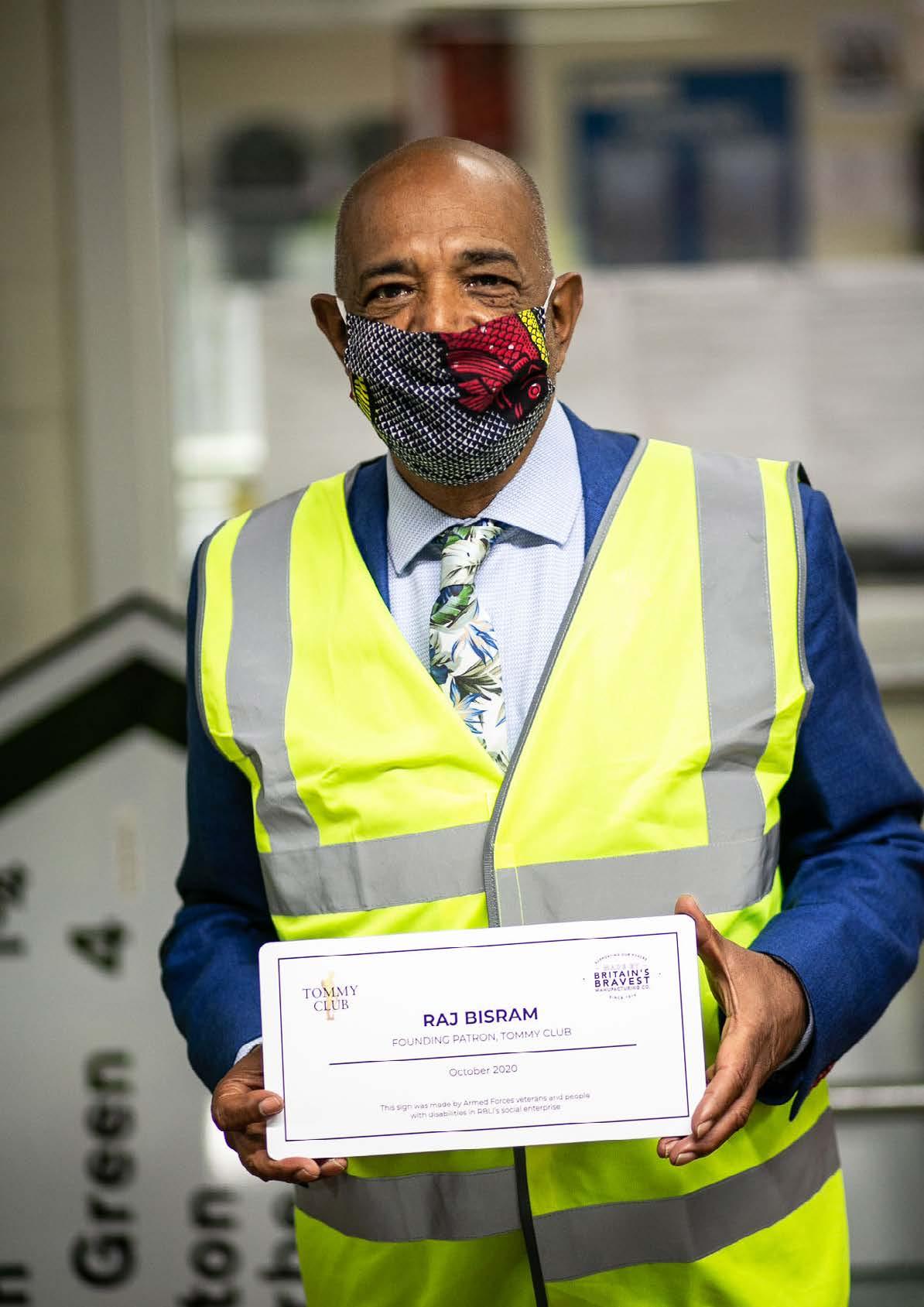
In 2020/2021, RBLI gained an unprecedented number of individual supporters who chose to get involved in online events and our newly formed Tommy Club. The supporters raised funds and also created online communities that were able to lift the spirits of many, providing meaningful connection, for people anywhere in the country during the extended periods of restricted social activity. We are especially grateful to the Founding Patrons of the new Tommy Club, too many to list here, who threw their weight behind the new initiative during a particularly challenging year. The launch of the Tommy Club in October 2020, with General The Lord Dannatt, Raj Bisram, Heather Stanning and Martin Barraud, gave the new Club exactly the push it needed. The great British public proved they were fully behind Tommy, from the May anniversary of VE Day, and onwards, buying products in their thousands. At key points. more veteran workers and even volunteers had to be brought in to the social enterprise to meet the customer demand. Individual customers who purchased special edition Tommies, garden products, window stickers and badges did more for our Charity and social enterprise than they will ever know.
Our commercial customers
We work in an open and transparent way with all the customers who are involved with our two social enterprise operations. We are very proud indeed to work with well-known national names, who are giving veterans opportunities to work on prestigious and high-profile projects. During this year we have been overwhelmed by the commitment and proactive support shown from our commercial customers – many have had extremely difficult challenges of their own to deal with, but never let their dedication to social value falter. We have even been able to continue organising disability awareness, and social value sessions in partnership with key customers, such as Amey, Bear Scotland, and Balfour Beatty. We work extremely closely with our customers to help them achieve their goals, including their veteran recruitment goals. Barratt Developments were awarded the 2020 Charity Times Corporate Partnership of the Year award for the outstanding and multi-layered engagement with RBLI. Bear Scotland won the Highways Partnership Award in January 2021 for the impact they achieved working with Scotland’s Bravest Manufacturing Co.
Key leaders and other influences
RBLI works closely with key opinion leaders and influencers in both national and local Government, and this work happens across all our varied activities and divisions. During the crisis we worked harder than
ever to raise the profile of veteran mental health and our veterans’ survey, which showed the impact of isolation on veterans, came out at the same time as the Office of National Statistics reported that 30% of the UK population felt their mental health had been negatively impacted. The Covid-19 crisis was a time when the pain of separation, and the difficulties of social isolation, could more generally be understood. It was also a time when the importance of nursing and care was celebrated nationwide and RBLI is proud at the influence of our Carers’ Awards event, particularly on Care organisations in Wales. We strive to work in partnerships with a wide range of other charities and we actively support the objectives of Cobseo, the Confederation of Service Charities, through participation in their cluster groups and also key conferences sharing best practice, identifying need, and collaborating on national campaigns. We are very proud to be a driver for increased collaboration in the military Charity sector and have been delighted to establish a new welfare relationship with The REME Charity. We are active members of the British Association of Supported Employment (BASE) and we work with DWP and others to improve the employment opportunities of people with disabilities and health conditions. The design of our Centenary Village, with its integrated wrap-around services have also been recognised by leaders and influencers in planning as an exemplar in community creation.
Our Senior Management Team conducts periodic surveys for staff and volunteers and assesses outcomes and actions. In addition, specific surveys are implemented, such as the one to measure the impact of Covid-19 across a work force split between the workplace, working from home and on furlough. We have quarterly newsletters to all staff and the frequency was increased to weekly during the first 4 months of the pandemic. These have continued and are now sent out as a minimum monthly.
There is currently a weekly health and wellbeing newsletter with a specified manager to receive feedback and recommend actions. The Chief Executive (CE) has previously run an annual series of roadshows which update all staff on strategy, policies and objectives which encourages a healthy discussion period in each area of the Charity. Unfortunately, due to the Covid-19 restrictions, it has not been possible to undertake these meetings face to face. In their place the CE has sent out regular updates to all staff and identified alternative methods of communication to maintain the engagement and participation of all our staff. It is intended that as soon as restrictions are lifted, that the roadshows may once again take place.
These are supported by a culture of regular briefings and a policy of visible and open leadership. We are accredited IIP and this provides an independent source of feedback and appropriate action plans. Our staff forums in our social enterprises in Scotland and England are a shining example of excellent staff engagement, with extra support to those with learning difficulties, and have proved particularly effective during this Covid-19 affected period.
During the pandemic, RBLI unfortunately had to scale back significantly on our volunteering activity. We look forward to restarting this as soon as it is safe to do so.
The Charity operates a risk reporting matrix that is reviewed by the Board of Trustees at every Board Meeting. The matrix is updated in real time as events or issues emerge and wherever possible alternative scenarios are evaluated and relevant action plans or strategies are developed to help plan through and mitigate any possible material risk that may emerge. During the financial year a revised risk management strategy was developed and work will be undertaken during the coming financial year to embed this across the organisation.
As noted above, the Charity has a risk matrix that is reported to and discussed at Board Meetings. This will change in name, to the Corporate Risk Register, and in style going forward however at the year-end the main risks noted on the risk matrix are as follows:
■ The continued impact of Covid-19 on RBLI, whether this be through lockdowns or re-occurrence of outbreaks within the care settings, in terms of the effect on both people and finances. Work continues, as it has throughout the pandemic period, on mitigating this risk through the embedding of strong safety protocols and effective operational and financial management. These include, although are not limited to, strong business continuity planning including weekly Covid-19 Ops meetings, testing for staff and residents within the care setting and regular updates to staff and Trustees through the tracking and adherence to Government protocols. The diverse nature of RBLI provides some inherent protection against this risk. To mitigate further RBLI will continue with the new ways of working established during the first lockdown such as virtual fundraising events. It should be noted that since the end of the Financial Year an inspection by the Care Quality Commission has been undertaken on one of the care
settings, Appleton Lodge, resulting in an extremely positive report and a rating of ‘Good’ throughout. This provides external assurance that the potential risks are well managed.
■ Ensuring that the current levels of quality and safety, together with legislative and regulatory compliance, are maintained during periods of transition, for example within the care setting during the refurbishment of one of our care homes and in relation to GDPR whilst members of staff are working from home. The first phase of the refurbishment in the care setting is now complete, reducing the quality and financial risks, with a robust project plan in place for the final work. RBLI has recently put in place Divisional Data Protection Advisory Groups to facilitate ongoing information security during these unusual times, the purpose of which is, in part, to facilitate an ongoing training programme in this area.
■ Reduction in financial performance as a result of increased costs either in terms of the refurbishment of the care setting or Centenary Village or lost sales within the manufacturing divisions. Robust financial controls over areas such as capital expenditure and staffing are in place. The risks associated with the estates work are mitigated by strong project planning and Board oversight. New revenue generation activities continue
to be explored and where possible utilised, for example by expanding shop sales into garden products. There is also a risk of reduction in investment income because of economic factors such as the ongoing pandemic. Investment management adopts a risk spreading policy within the investments.
As permitted by the Articles of Association, the Directors/Trustees have the benefit of an indemnity which is a qualifying third party indemnity provision as defined by Section 234 of the Companies Act 2006. The indemnity was in force throughout the last financial year and is currently in force. The Charity also purchased and maintained throughout the financial year Directors’ and Officers’ liabilities insurance in respect of itself and its Directors/Trustees.
In so far as the Trustees are aware:
■ There is no relevant audit information of which the Charity’s auditors are unaware.
■ The Trustees have taken all the steps that they ought to have taken as a Trustee in order to make themselves aware of any relevant audit information and to establish that the Charity’s auditors are aware of that information.
A resolution proposing that BDO LLP be reappointed as auditors of the Charity was put to the Board at the Annual General Meeting and passed.
Approved by the Board and signed by its order by
Stephen Kingsman CHAIRMAN
8 July 2021
OUR YEAR IN NUMBERS
45% of beneficiaries supported with mental health challenges
50,000 supporters
£1.2m turnover at Scotland’s Bravest Manufacturing Company
£1m+
income generated from Tommy product sales
29,000
viewers for RBLI’s VE Day 75 anniversary ceremony online
22
veterans progressed from emergency accommodation
unemployed veterans supported by LifeWorks (10 x more than pre-pandemic.)
8,406
900 people with disabilities assessed and supported
£3.4m spent building new homes

CHAIRMAN
Stephen is former Chair of the Denne Construction Group, which specialises in delivering affordable housing, regeneration schemes and care facilities, much like those offered by RBLI. His extensive history in charitable service has seen him in the role of Chairman of Canterbury Further Education College, Chairman of Kent Training and Enterprise Council and as an RBLI Trustee for four years preceding his election to Chair.



FRANK MARTIN DL VICE CHAIRMAN
Frank is a Deputy Lieutenant of Kent and Chairman of Governors/ Pro Chancellor of Canterbury Christ Church University. He was formerly Chief Executive of Hornby Plc. and Deputy Chairman of the Dover Harbour Board.
Tony rose to the ranks of Brigadier in the British Army. Now retired, he has spent many years a trustee of RBLI. He was previously the President of the Royal British Legion Village Branch at Aylesford.
Alistair served in the Royal Navy, during which time he was appointed Equerry to HRH the Prince of Wales, and then worked in the City for a leading international law firm. In retirement he is a governor of two schools in central London and a Pilotlighter.





Nadra is a Deputy Lieutenant for Kent and is Executive Chairman of the National Care Association. In 2006, she was awarded an OBE for her work in social care over 30 years. Nadra holds numerous honorary roles in the charitable sector including Vice President of Hi Kent, Patron of Rockdale Housing and Kent Autistic Trust. She has worked in the field of Social Care for 40 years.
Blair is a Consultant at Gulland Solicitors and has been a practising solicitor for over 45 years. He is also a trustee of many other charities including Benenden Almshouse Charities, the Michael Yoakley Charity and Canterbury Cantata.
Kathryn is a Chartered Accountant and non-executive director, mainly in the public sector. Among other appointments, she is on the board of Companies House, the UK Supreme Court, the UK Endorsement Board and Highways England. She also Chairs the Office of Tax Simplification and is a Trustee for the Royal Mencap Society. She was previously on the External Audit Committee of the IMF, Chair of the Financial Reporting Advisory Board to HM Treasury and Chair of ICAEW Financial Reporting Committee.
Sarah is a member of the Royal Institution of Chartered Surveyors, working for an award winning private house builder, having been an Associate Director in private practice previously, acting as a development consultant to the public and private sectors. She is a mentor to Cambridge University Land Economy Masters students and is the Head of House at Medway Yacht Club.
Steve worked in the defence industry throughout his career spanning over four decades, he is now a Non-Executive Director of General Dynamics UK Limited having previously been employed by the Company as Chief Operating Officer. He is a Trustee of Bovington Tank Museum where he chairs the Collection Committee, and is also a business mentor to military veterans for the Charity Heropreneurs.



STEVE SHERRY CMG OBE CHIEF EXECUTIVE
Brigadier Steve Sherry has been Chief Executive of RBLI since April 2010. With a MBA and MSc in Strategic Studies as well as a wealth of experience in implementing change in many differing environments, including Pakistan and the Czech Republic, Steve is enjoying leading RBLI at a time of significant growth, innovation and modernisation.
DIRECTOR OF CARE AND WELFARE
Will Campbell-Wroe has 20 years’ experience in the housing and Charity sectors specialising in designing, securing funding for, and delivering services that support people to be independent and actively contributing to their local community. Will, who holds Masters’ Degrees in both Social Research and Housing and Social Policy, has a strong track record in developing innovative services that are designed and delivered to an extremely high standard.
MICHELLE FERGUSON DIRECTOR OF SCOTLAND’S BRAVEST MANUFACTURING COMPANY
Michelle has held Senior Management positions within the media industry, television press and magazines and was a director for Scottish Sports Futures Charity. Before joining RBLI in 2018, she was Managing Director of successful social enterprise St Andrew’s First Aid Training and Supplies Ltd, leading the team as they gained Highly Commended at the UK National Business Awards. Michelle was also a Guest Lecturer at the University of Glasgow Business School in 2017.



Lisa Famer joined RBLI in October 2015 as Director of Strategic Development with over 20 years of experience in fundraising, marketing and business development. Lisa spent eight years at Young Epilepsy as Fundraising Director before becoming Director of Development and has been involved in major commercial developments including Loughborough University’s £40m fundraising campaign and two capital fundraising campaigns at Young Epilepsy.
Kate joined RBLI in May 2019 as Director of Britain’s Bravest Manufacturing Company. An experienced director, Kate holds a depth of commercial, financial, property and business improvement experience across both the private and notfor-profit sectors. Prior to her appointment, Kate held senior positions at the Royal Voluntary Service and Action on Hearing Loss, as well as co-founding the prolific community interest company the People’s Supermarket.
DIRECTOR OF FINANCE AND CORPORATE SERVICES
(Resigned 19th March 2021)
Philip Defraine is a CIMA qualified accountant. Having originally worked as a trainee accountant at the Burton Group, Philip spent 20 years in a number of Senior Management roles including UBS, Warburgs, Deutsche Bank and Lloyds TSB. Philip joined RBLI as Head of Business Services within Employment Solutions Division in 2005. Philip was appointed Director of Finance Company Secretary in 2010.
The Covid-19 pandemic which hit the nation very hard in the spring of 2020, and peaked in London on the weekend of 18 April, had a major impact on RBLI as a Charity.
This invisible and unpredictable threat caused serious distress, particularly in RBLI’s three care homes, impacting the older residents and care team most profoundly. For several particularly awful weeks in April, RBLI’s nurses were most certainly on the front line. During the same lockdown period, while care costs were rising due to care staffing challenges, and urgent PPE demand, RBLI temporarily closed all other services which depend on face-toface delivery, including our large scale back to work and employment outreach programmes. As a result, the Charity needed to start spending down some of its financial reserves.
RBLI’s social enterprise factories were able to continue operating, albeit initially on a much reduced scale during lockdown, as manufacturing workers on health and safety signage, and pallet manufacture were deemed essential to the national supply chain. Britain’s Bravest Manufacturing Co. was also able to help Tonbridge and Malling Borough Council store and package emergency food supplies.
RBLI’s social enterprise factory also helped the nation mark the 75th Anniversary of VE Day on 8 May by making an exciting new special edition consumer product and launching the “Tommy in the Window” campaign. A new 75th Anniversary VE Day Tommy was made, and was endorsed on BBC SE, Sky News, Good Morning Britain and Channel 5 News by General The Lord Dannatt. With the nation in lockdown, people were looking for ways they could mark the day safely, and were able to draw strength from remembering their relatives’ contribution. Over 32,000 Tommy products were sold to the British public, who expressed their pride and respect by putting Tommy in the window for all to see. Additional workers were brought in to the social enterprise with an army of volunteers joining on site and working safely from home. On the 8 May anniversary itself, resident George Bradford, 89-year-old Royal Marine, held the 11am silence outdoors for QEC residents to hear safely. This was filmed and shared by 16,000 people using Facebook Live.
The Tommy in the Window campaign raised £1m for RBLI, helping the Charity to get through the most difficult period financially.
The partial emergence from lockdown in the autumn was all too short lived and the subsequent lockdown was particularly tough on care home residents and their families due to restrictions on visits. This drive to reopen visiting was to the front of our minds and the visitor ‘pod’ outside of Appleton Lodge and Gavin Astor House became a lifeline for social interaction.
There is little doubt that the Charity emerged at the end of the financial year, in an operational sense, roughly on budget. The financial pain was within the capital fundraising campaign where we could justifiably have expected to have raised a further £2m during this period. That this did not happen can be mainly attributed the pandemic in that a combination of our inability to host potential donors and also, quite understandably, many trusts and foundations were focussing on emergency funding. We are now moving back into gear with capital fundraising.
Our construction costs have marginally increased due to Covid-19 related issues such as fragility in the construction sector and also an inability to conduct full investigative surveys in our care home prior to setting the contract.
For RBLI’s social enterprises we are very hopeful that all our customers in construction and infrastructure can grow, and the early signs are encouraging. We felt it important to include this update and clarify that although RBLI’s general reserve is now at £4.3m, the government’s furlough scheme was extremely helpful,
as were the emergency funds created at speed by philanthropic organisations. The Charity has also had success during the crisis and with thanks to our loyal donors, our volunteers and the Great British public, RBLI has been able to get through the Covid-19 lockdown with its finances secure.
Faced with an unprecedented nursing situation, RBLI’s nursingand care team rose to the challenge with professionalism, compassion, and resilience. Our care teams have been very much on the frontline and we formally thanked them for their tremendous work throughout the testing Covid-19 conditions with a formal ‘Thank You’ ceremony on 1 July 2020. The Charity continues to focus on protecting people, protecting our finances and delivering our purpose and outcomes. To that end, both of our strategic development projects are continuing at some pace, with the Centenary Village Phase 2A clearly out of the ground with a completion date of May 2022. The major refurbishment and reconfiguration of Gavin Astor House has successfully completed Phase 1 and is scheduled to complete in November 2021. In such uncertain times, RBLI has remained safe but also very positive and passionate about delivering our services to those that need them.
The Trustees reviewed RBLI’s financial plans at 9 separate Board meetings throughout the last financial year and met on 28 May and 29 June 2021, as part of the normal annual review, as well as reviewing our main financial risks including those risks resulting from the impact of Covid-19. At that time, they were satisfied that RBLI had sufficient resources to continue operating for the foreseeable future and
accounts have been prepared in the knowledge that RBLI is a financially viable organisation.
With regard to the next accounting period, the year ending 31 March 2022, the most significant areas that are likely to affect the Charity’s net assets are revenue streams, including capital fundraising and completing the two major developments. Since the year-end, revenue streams are marginally better than budget, capital fundraising is progressing to plan and both development projects are hugely de-risked with the experience of Phase 1 for Gavin Astor House and the completion of all ground works on the Centenary Village Phase 2A.
Our new online shop raised circa £500k in the first two months of this financial year. The impact of the Triennial review on pension fund liabilities is now clear and the annual payments into the fund are both manageable and factored into our planning.
Contingency planning for a bumpy year until Covid-19 is finally behind us is in place and includes a restriction on all non-essential capital expenditure and maintenance.
We have a renewed focus on fundraising and our online shop to generate more income.
The Trustees will continue to review plans with RBLI’s executive team to make the necessary changes to remain within free reserves policy level over the life of the 3-year plan.
RBLI has a strong balance sheet, with unrestricted liquid investments of £4m. Should the income predictions fall short of the 3-year plan, the Trustees have contingency arrangements of £2m secured overdraft facility and a £1.5m loan facility to manage cash flow requirements, if needed. The Trustees are therefore of the opinion that the Charity will have sufficient resources to meet its liabilities as they fall due.
As such, they remain satisfied that RBLI can continue operating for the foreseeable future and accounts have been prepared in the knowledge that the RBLI is a financially viable organisation.
The Support for Britain’s Bravest division, adapted immediately to that change in environment by moving a planned CEO sleep out in March 2020 online. The division continued to adapt their activity and work closely with supporters to create more and more appealing events. After the success of the CEO Sleep Out, the division created new online sporting challenges including a sit-up challenge and a squat challenge. The Tommy 10k Challenge which inspired different ways to complete 10km, raised an incredible £250,000 and the Dunkirk Step Challenge and Great Tommy Sleep Out that followed also proved successful. Each new event created a new online community that was warm, passionate, and genuinely interested. The supporters were able to see how the money raised
supports the Charity with direct delivery of emergency homes and care, and gives veterans practical help with housing issues, relationship breakdown, financial crisis and redundancy.
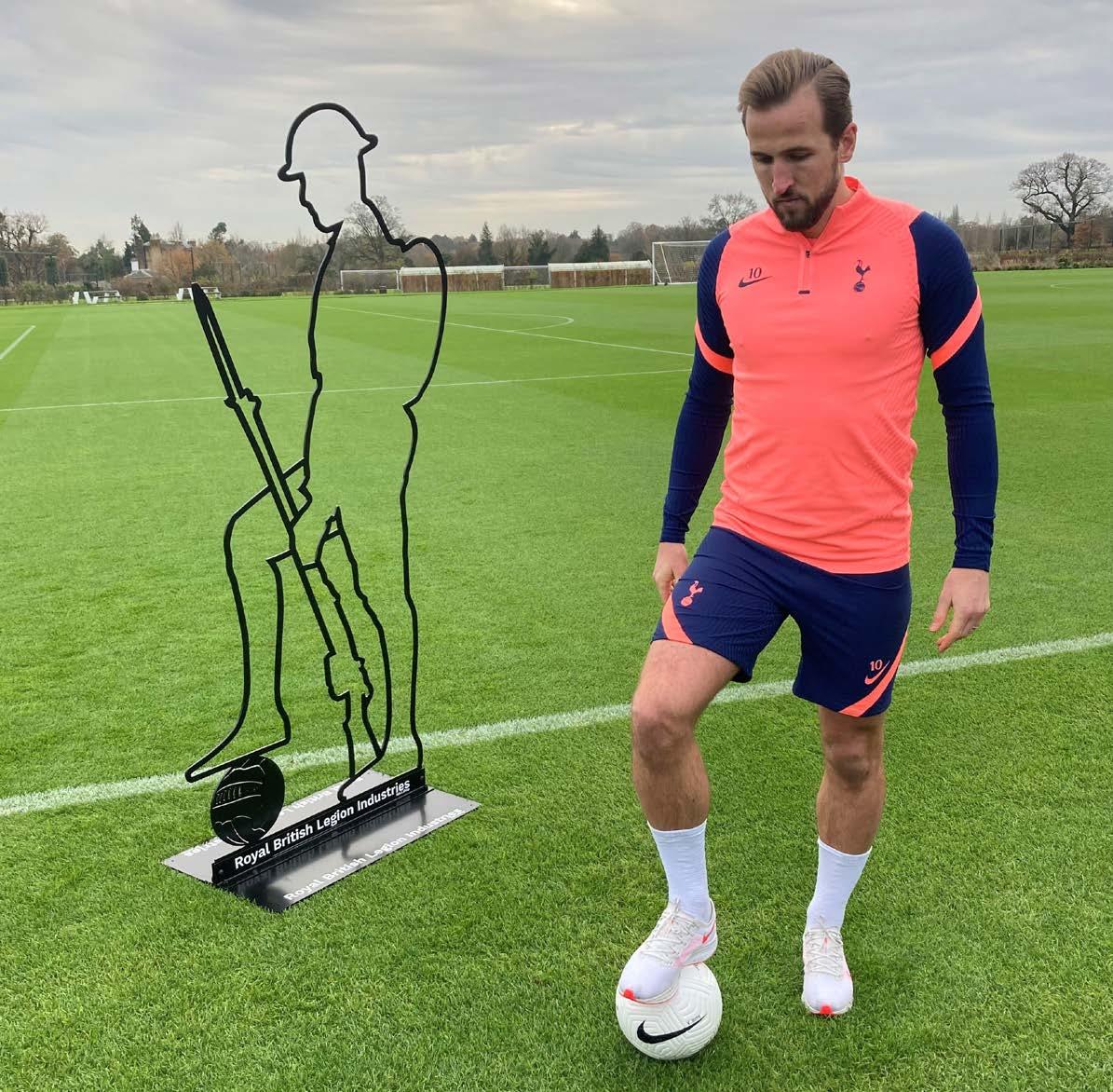
With so much knowledge about the Charity and the direct support they are enabling, it is no surprise that many people have chosen to be involved in more than one RBLI challenge during the year or have become involved with the new Tommy Club as a means of supporting RBLI for the long term. Investment in the Tommy Club shows RBLI’s commitment to involving individuals and we are also delighted with the corporate involvement in the new club, and the incredible backing of England football Captain, and Tommy Club Ambassador, Harry Kane. These activities exceeded all income targets. They are not considered temporary and we invested considerable human resource in supporting donor care so we could better communicate with thousands of new customers, and develop new initiatives that will appeal to them. We also invested in the preparation for an exciting new Car Raffle following the Chairman’s donation of a brand new Mini.
We have not yet engaged any external agencies to undertake fundraising on our behalf but we have benefited from the consultancy support of Give Panel and Woods Valldata as we grow these new areas. For example Woods Valldata has been advising on how the raffle activity is planned in a way that protects people who are vulnerable.
RBLI is registered with the Fundraising Regulator and is signed up to the Code of Fundraising Practice. During the year, we received zero complaints from the general
public and one complaint from a supporter about our fundraising. This supporter felt that the timing of a fundraising email was inappropriate and we apologised profusely.
RBLI benefitted from significant grants which allow for the direct delivery of our charitable services in care, employability and welfare. These included emergency grants from the Covenant Fund and the National Lottery which enabled the protection of our oldest residents, most of whom are also living with multiple health conditions, as well as the most vulnerable workers in our social enterprise operations. Trusts and Foundations came forward to support homeless veterans who moved into our emergency accommodation, as well as our LifeWorks programme which adapted to support the veterans all over the UK dealing with furlough, redundancy, and mental health. Scotland’s Bravest Manufacturing Co. secured a major strategic grant from Forces In Mind Trust which will see not only the investment in vocational qualification on site, but independent evaluation of the impact of new skills on longer term outcomes.
RBLI’s Capital Campaigns have been much harder to fundraise for in the context of the pandemic. However this division has achieved sufficient success to allow important Capital improvements to progress. Several supporters got behind the creation of specialist dementia suites, larger social spaces and the new dementia garden at Gavin Astor House. There is a growing demand for specialist dementia care which is more stimulating and which enables more positive and varied daily routines.
It is an issue that more families, as well as more trusts and foundations are interested in.
Donations to the new facilities will benefit Village residents who are currently living with dementia symptoms and will help RBLI be here to meet this increasing demand. Companies and foundations also stepped in to enable the expansion of the QEC lounge because fitness, craft and social activities, as well as meal times were so difficult with two-metre distancing in place.
RBLI’s Centenary Village expansion campaign has suffered significantly but was nevertheless able to draw down sufficient income from pledges and raise enough new income for the construction works to press on dramatically.
The Centenary Village expansion is RBLI’s flagship strategic project as, once complete, it enables the Charity to reach additional beneficiaries with holistic support, and without further fundraising.
The marketing and promotion of RBLI’s Tommy products was so successful during 2020/2021 that £1.4m in new income was generated. These marketing and sales campaigns proved to be a financial lifeline at the precise moment when the crisis hit the Charity hardest, and went on to generate more income later in the year.

The campaigns would not have had the impact they did without the generous and consistent backing of General The Lord Dannatt who called on the nation to join him in putting “Tommy in the Window” in solidarity with veterans, and at the time of key national anniversaries. General The Lord Dannatt, now the President of RBLI’s new Tommy Club, recognising the pressing demand for mental health support and the need to create more jobs for disadvantaged veterans, seized the moment to make this happen.
We know that during lockdown, when most people’s limited exercise was a daily walk around the block, veterans UK-wide were greatly encouraged to spot the Tommy figurines on display in their immediate communities.
The Tommy in the Window campaign achieved several of RBLI’s objectives simultaneously – to improve the mental health of veterans around the UK, create jobs for veterans, and raise vital funds.
RBLI’s fundraising priority is to secure capital donations for the Centenary Village expansion project which, once built, is a financially sustainable means of supporting hundreds more ex-service men and women, and their wider families. The pandemic damaged this area of fundraising significantly as donors diverted their help to immediate emergency support and senior stakeholders were prevented from visiting the Charity.
The Charity is extremely grateful to the philanthropists and funders who created new Covid-19 emergency grants, or became more flexible in their giving. RBLI was able to secure several emergency grants to help us reach unemployed veterans, adapt our activity, and support older veterans with multiple health conditions; those at the greatest risk from the virus.
RBLI’s move to increased sales to the public via our social enterprises, and our growing supporter base, has created new income streams and has dramatically changed RBLI’s fundraising potential long term. As well as successfully creating new challenges for the public to get involved in RBLI has been building on the offer for individual supporters through the new Tommy Club, greater engagement with our shop customers, legacy giving, and working on the launch of a new raffle. It is a major strategic achievement that RBLI has been able to develop new unrestricted income streams in this crisis that the Charity can build on for the long term.
During the Covid-19 crisis RBLI has increased contact with donors and customers, explaining that although visits have not been possible in the same way our services have still been open and running. We have had close contact with our supporters explaining the impact of the pandemic on our beneficiaries and our needs to adapt our programmes. This increased contact has led to customer retention, generous donations, and funder flexibility. Some of our supporters, for example, Barratt Developments, continue to support veterans at RBLI through a collaborative range of volunteering opportunities, donations and moral support. They are Founding Corporate Patrons of the new Tommy Club and it was no surprise that this impactful relationship won the Charity Times Corporate Partnership Award in 2020.
As a respected Charity which puts at its heart care for individuals by Improving Lives Every Day, not only do we need to ensure the wellbeing of our beneficiaries, but we also plan to go beyond this to ensure that all we do minimises our impact on the environment. As such, reducing our carbon footprint, waste and caring for the natural resources we own are all accepted and even expected ways that also Improve Lives Every Day.
As a Charity with a clear focus on employability and skills, we recognise that our environmental strategy and goals (e.g. reducing waste in manufacturing processes, reducing packaging in customer fulfilment, identifying product adaptions) can offer our beneficiary employees transferable work experience and new skill development opportunities. We will proactively create these opportunities for our beneficiaries.
FY 20/21 FY 19/20
Leatherhead Site 14k KwH 15k KwH
Scotland Site 925k KwH 1,021k KwH
Aylesford Site 1,805k KwH 1,940k KwH
Sent waste wood for recycling 415 Tonnes FY 20/21 385 Tonnes FY 19/20
The methodology for reporting emissions is based upon those areas where we have operational control and are charged for energy consumption. Emission calculations are derived from billing data. Where bills did not complete a full year an estimate, based upon previous consumption, has been included for the missing month.
In addition to sending waste wood for recycling, a machine was acquired to convert cardboard sheets into sign packaging for product protection during travel instead of buying bubble wrap.
RBLI agreed a new policy on the environment with an action plan for commencement of 1 April 2020; due to Covid-19 this started on 1 October 2020.
The action plan for the first 12 months includes:
■ A fuller understanding of our legal requirements and the industry guidelines and identify key measurements that are relevant to each division
■ Conduct an internal audit and carry out a benchmarking exercise across the organisation/divisions against the agreed metrics
■ Establish an environmental working party drawn from across RBLI and as a minimum be trustee led, sponsored by a director and with representatives across the RBLI and our many locations
■ Create an environmental statement and pan–organisational five year strategy
■ Create divisional frameworks with annual objectives to support the delivery of the organisation’s strategy
■ Understand the financial impact of the implementation of the strategy
■ Issue an overarching and resourced plan to meet the environmental demands placed upon the Charity
Stephen Kingsman CHAIRMAN
8 July 2021
RBLI Activities
During the year the Charity has generated income of £19.7m (FY 19/20 £19.5m). A good result, given the pandemic. However, this year’s pandemic required the Charity to be flexible in its income generation activities. In particular, fundraising for the Centenary Project has not been possible, however our fundraising teams have been very successful in obtaining emergency funds and grants to assist the Charity through the year. RBLI has also had its first full year running its online shop which has had a tremendous start with VE Day sales of the “Tommy” exceeding £1.2m. Likewise, both of our social enterprise’s (Britain’s Bravest Manufacturing Company and Scotland’s Bravest Manufacturing Company) have seen income grow compared to the previous year. Scotland had to close during the first lock down but upon reopening maximised a business opportunity in producing Covid-19 signage to a number of public service organisations that had a new requirement if they too were to reopen. Britain’s Bravest Manufacturing have remained open throughout the pandemic providing key products for the UK infrastructure in terms of pallets and signs. They also adapted to providing new services during the pandemic by facilitating a food distribution hub for local councils to assist the community.
The Employment Solutions activities have continued their operations throughout the pandemic but adapted their method of providing services from Face to Face meetings to virtual online meetings. The funding of these services was also adjusted such that costs were covered for services provided, including retaining
all staff at full pay regardless of work requirements. A scheme that has been a benefit to staff and also ensured that RBLI did not financially suffer from the impact of the pandemic on the work of the Employment Solutions Division.
Living had an income of £5.3m (FY 19/20 £5.1m). However unrestricted income reduced due to available accommodation rent out decreased and also if vacancies did arise during the year it was not always possible to move a new resident in straight away due to general pandemic restrictions. However significant support was received via emergency grants to assist during the pandemic.
Expenditure during the year was £18.7m (FY 19/20 £19.2m). Clearly as the Charity adapted the way it provided support to its beneficiaries so this also had an impact on expenditure. This is general due to less travel (plus associated costs) and physical fund raising activities being replaced by online activities.
Whilst continuing all of its operational activities to beneficiaries, RBLI has begun the much needed refurbishment of one of its care homes and also begun the building of the new Centenary Project started when the Queen cut the first turf in November 2019. These investment projects have continued as planned. The refurbished care home will be fully open in November 2021 and the current phase of the Centenary Village will be open to new residents in 2022. Both will provide improved services to a wider range of beneficiaries and be self-sufficient from a financial perspective.
No change to the investment fund has taken place during the year in terms of divestment or adding to the portfolio additional cash funds. However the valuation of the portfolio has risen to £4.6m (FY 19/20 £4.0m) from the recovery of the stock market worldwide compared to 31 March 2020 when it dipped.
Investment powers are governed by the Memorandum and Articles of Association and permit the Charity’s fund to be invested in a wide range of assets.
The Charity’s investments are held to achieve balanced long term growth. Performance is measured against a long term target of CPI+3% per annum. The investment portfolio has achieved an annualised net return of 4.9% achieved since inception. Performance is also measured against a bespoke benchmark that reflects the fund asset allocation. Investment Income has been significantly down on budget this year.
The Board reviews fund performance at every Board Meeting. Management meet with our investment managers quarterly and the investment managers present and report to the board on an annual basis.
In addition to the above, the Financial Statements show an actuarial gain for the defined benefit pension of £1.5m with a total liability of £1.3m (FY 19/20 £2.6m). This improvement has arisen from the recovery of the Stock Markets and also a change in the proportion of
the Pension Fund attributable to RBLI i.e. 17% up from 15% in prior years.
Overall, RBLI increased its funds by £3m (£2m gain due investment gains and pension liability reduction) giving the Charity total funds of £27.0m. This is represented in an increase of Unrestricted Funds to £13.9m and an increase in Restricted Funds to £13.2m (FY 19/20 £12.9m & £11.1m respectively).
The reserve policy, reviewed annually by trustees, is to hold a sum of money as a designated funds in 2 parts as follows:
■ An operating reserve of £5m, which equates to approximately 4 months of operating costs
■ A reserve equating to the forecast cost to RBLI for planned future projects and developments, primarily accommodation and care facilities at Aylesford. This currently equates to £5m
The Board has reviewed the reserve policy in the light of Covid-19 and given RBLI’s diverse revenue streams and our experience of lockdown, considers that the operating reserve of £5m, which equates to approximately 4 months of operating costs, is prudent.
Unrestricted Reserves totalled £13.9m (FY 19/20 £12.9m).
The operating reserve in a designated fund equates to £5m.
The development reserve in a designated fund stands at £5m principally for the Centenary Village
Project (£2m) and the refurbishment of our care home, Gavin Astor House (£2m).
The pension deficit reserve calculated per FRS102 is £1.3m (FY 19/20 £2.6m).
The General Fund of £4.7m (FY 19/20 £5.6m) reflects the infrastructure and tangible fixed assets used by the Charity to support our beneficiaries in Aylesford and Leatherhead.
Within the General Fund are Free Reserves (Cash & Investments) of £4.7m (FY 19/20: £4.3m).
In addition to the above, the unrestricted fund also includes a sum covering the investment fair value reserve which equates to the difference between the original cost of the investments and their market value.
Land and buildings shown on the balance sheet at historical costs less depreciation and have not been restated at market value. The one exception to this is the Vanguard Trust properties that were transferred to RBLI are shown at Market Valuation as at 2018. The valuation was carried out in September 2017 and we do not believe that the value would be materially different in value as at March 2021. A professional valuation of all other land has not been done, however the Trustees believe that the market value is significantly higher that then book value which is negligible as it was transferred to the Charity in 1919.
The Trustees have reviewed (in March 2020, September 2020 and again in March 2021 and May 2021) the future plans for the Charity and this, combined with the strength of the balance sheet and future funds already secured, are confident that the Charity will remain a going concern for the foreseeable future. Consideration of Covid-19 pandemic is covered in the Director’s report.
Stephen Kingsman CHAIRMAN
8 July 2021

Key Workers: BBMC remained operational throughout the pandemic.
Opinion on the financial statements
In our opinion, the financial statements:
■ Give a true and fair view of the state of the Charitable Company’s affairs as at 31 March 2021 and of its incoming resources and application of resources for the year then ended;
■ Have been properly prepared in accordance with United Kingdom Generally Accepted Accounting Practice; and
■ Have been prepared in accordance with the requirements of the Companies Act 2006, the Charities and Trustee Investment (Scotland) Act 2005 and regulation 8 of the Charities Accounts (Scotland) Regulations 2006, as amended in 2010
We have audited the financial statements of Royal British Legion Industries (“the Charitable Company”) for the year ended 31 March 2021 which comprise the statement of financial activities (incorporating the summary income and expenditure account), the balance sheet, the statement of cash flows and notes to the financial statements, including a summary of significant accounting policies. The financial reporting framework that has been applied in their preparation is applicable law and United Kingdom Accounting Standards, including Financial Reporting Standard 102 The Financial Reporting Standard applicable in the UK and Republic of Ireland (United Kingdom Generally Accepted Accounting Practice).
opinion
We conducted our audit in accordance with International Standards on Auditing (UK) (ISAs (UK)) and applicable law. Our responsibilities under those standards are further described in the Auditor’s responsibilities for the audit of the financial statements section of our report. We are independent of the Charitable Company in accordance with the ethical requirements relevant to our audit of the financial statements in the UK, including the FRC’s Ethical Standard, and we have fulfilled our other ethical responsibilities in accordance with these requirements. We believe that the audit evidence we have obtained is sufficient and appropriate to provide a basis for our opinion.
In auditing the financial statements, we have concluded that the Trustees’ use of the going concern basis of accounting in the preparation of the financial statements is appropriate.
Based on the work we have performed, we have not identified any material uncertainties relating to events or conditions that, individually or collectively, may cast significant doubt on the Charitable Company’s ability to continue as a going concern for a period of at least twelve months from when the financial statements are authorised for issue.
Our responsibilities and the responsibilities of the Trustees with respect to going concern are described in the relevant sections of this report.
The Trustees are responsible for the other information. The other information comprises the information included in the Annual Report other than the financial statements and our auditor’s report thereon. The other information comprises: the Chairman and Chief Executive’s Review, the Report of the Trustees and the Strategic Report. Our opinion on the financial statements does not cover the other information and, except to the extent otherwise explicitly stated in our report, we do not express any form of assurance conclusion thereon. Our responsibility is to read the other information and, in doing so, consider whether the other information is materially inconsistent with the financial statements or our knowledge obtained in the audit or otherwise appears to be materially misstated. If we identify such material inconsistencies or apparent material misstatements, we are required to determine whether there is a material misstatement in the financial statements or a material misstatement of the other information. If, based on the work we have performed, we conclude that there is a material misstatement of this other information, we are required to report that fact.
We have nothing to report in this regard.
Other Companies Act 2006 reporting
In our opinion, based on the work undertaken in the course of the audit:
■ The information given in the Trustees’ Report, which includes the Directors’ Report and the Strategic report prepared for the purposes of Company Law, for the financial year for which the financial statements are prepared is consistent with the financial statements;
■ And the Strategic report and the Directors’ Report, which are included in the Trustees’ Report, have been prepared in accordance with applicable legal requirements
In the light of the knowledge and understanding of the Charitable Company and its environment obtained in the course of the audit, we have not identified material misstatement in the Strategic report or the Trustee’s report.
We have nothing to report in respect of the following matters in relation to which the Companies Act 2006 and the Charities and Trustee Investment (Scotland) Act 2005 requires us to report to you if, in our opinion;
■ Proper and adequate accounting records have not been kept, or returns adequate for our audit have not been received from branches not visited by us; or
■ The financial statements are not in agreement with the accounting records and returns; or
■ Certain disclosures of Directors’ remuneration specified by law are not made; or
■ We have not received all the information and explanations we require for our audit
As explained more fully in the statement of trustees responsibilities, the Trustees (who are also the directors of the charitable company for the purposes of company law) are responsible for the preparation of the financial statements and for being satisfied that they give a true and fair view, and for such internal control as the Trustees determines is necessary to enable the preparation of financial statements that are free from material misstatement, whether due to fraud or error.
In preparing the financial statements, the Trustees are responsible for assessing the Charitable Company’s ability to continue as a going concern, disclosing, as applicable, matters related to going concern and using the going concern basis of accounting unless the Trustees either intend to liquidate the Charitable Company or to cease operations, or have no realistic alternative but to do so.
Auditor’s responsibilities for the audit of the financial statements
We have been appointed as auditor under section 44(1)(c) of the Charities and Trustee Investment (Scotland) Act 2005 and under the Companies Act 2006 and report in accordance with the Acts and relevant regulations made or having effect thereunder.
Our objectives are to obtain reasonable assurance about whether the financial statements as a whole are free from material misstatement, whether due to fraud or error, and to issue an auditor’s report that includes our opinion. Reasonable assurance is a high level of assurance, but is not a guarantee that an audit conducted in accordance with ISAs (UK) will always detect a material misstatement when it exists. Misstatements can arise from fraud or error and are considered material if, individually or in the aggregate, they could reasonably be expected to influence the economic decisions of users taken on the basis of these financial statements.
Extent to which the audit was capable of detecting irregularities, including fraud Irregularities, including fraud, are instances of non-compliance with laws and regulations. We design procedures in line with our responsibilities, outlined above, to detect material misstatements in respect of irregularities, including fraud. The extent to which our procedures are capable of detecting irregularities, including fraud is detailed below:
■ Enquiry of management and Those Charged with Governance regarding known or suspected instances of noncompliance with laws and regulation and fraud
■ Reading minutes of meetings of Those Charged with Governance; reviewing correspondence with regulatory bodies and from legal advisors to identify indications of
non-compliance with laws and regulations
■ Assessing the design and operating effectiveness of controls and procedures relevant to the preparation of the financial statements and the detection and prevention of irregularities and fraud
■ Determining whether the accounting policies and presentation adopted in the financial statements are in accordance with applicable law and United Kingdom Accounting Standards, including Financial Reporting Standard 102 The Financial Reporting Standard applicable in the UK and Republic of Ireland (United Kingdom Generally Accepted Accounting Practice) and the Statement of Recommended Practice for Charities
■ Performing analytical procedures to identify unusual or unexpected relationships that may indicate risks of material misstatement due to fraud. Areas of identified risk are then tested substantively
■ Addressing the risk of fraud through management override of controls by testing the appropriateness of journal entries and other adjustments, with particular focus on unusual account combinations and postings by unexpected users or senior management
■ Challenging the assumptions and judgements made by management for key estimates, in particular the valuation of investments and assumptions used to value the defined benefit pension scheme
■ Incorporating unpredictability into our testing approach through amending the nature and extent of audit procedures
■ Carrying out detailed testing, on a sample basis, of transactions and balances agreeing to appropriate documentary evidence to verify the completeness, existence and accuracy of the reported financial statements
Our audit procedures were designed to respond to risks of material misstatement in the financial statements, recognising that the risk of not detecting a material misstatement due to fraud is higher than the risk of not detecting one resulting from error, as fraud may involve deliberate concealment by, for example, forgery, misrepresentations or through collusion. There are inherent limitations in the audit procedures performed and the further removed non-compliance with laws and regulations is from the events and transactions reflected in the financial statements, the less likely we are to become aware of it.
A further description of our responsibilities for the audit of the financial statements is located at the Financial Reporting Council’s (“FRC’s”) website at: https://www.frc.org.uk/auditorsresponsibilities.
This description forms part of our auditor’s report.
This report is made solely to the Charitable Company’s members, as a body, in accordance with Chapter 3 of Part 16 of the Companies Act 2006, and to the Charitable Company’s Trustees, as a body, in accordance with the Charities and Trustee Investment (Scotland) Act 2005. Our audit work has been undertaken so that we might state to the Charitable Company’s members and Trustees those matters we are required to state to them in an auditor’s report and for no other purpose. To the fullest extent permitted by law, we do not accept or assume responsibility to anyone other than the Charitable Company, the Charitable Company’s members as a body and the Charitable Company’s Trustees as a body, for our audit work, for this report, or for the opinions we have formed.

Jill Halford SENIOR STATUTORY AUDITOR
For and on behalf of BDO LLP, statutory auditor, London, UK
Date: 13 July 2021
BDO LLP is a limited liability partnership registered in England and Wales (with registered number OC305127).
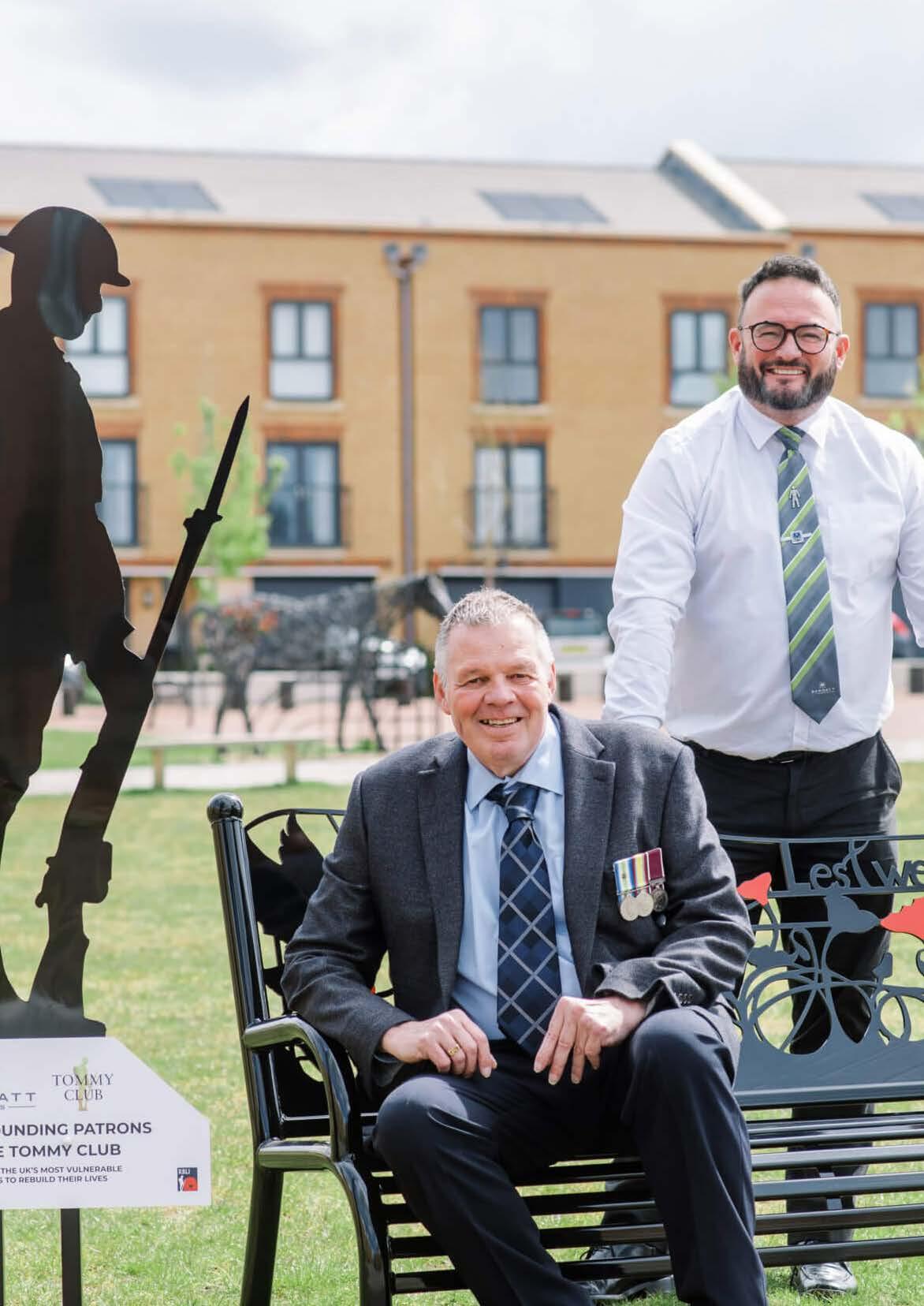
(INCORPORATING THE SUMMARY INCOME AND EXPENDITURE ACCOUNT) FOR THE YEAR ENDED 31 MARCH 2021
There were no other recognised gains or losses other than those stated above. The movement in funds are disclosed in note 15 to the financial statements.
Scotland’s Bravest Manufacturing as it emerges from a start-up status has been split out of Britain’s Bravest Manufacturing for both the current and prior year. The shop is now entering its second full year as a charitable activity and so has been split out from Raising Funds.
The notes on pages 38 to 61 form part of these financial statements.
TOTAL CHARITY FUNDS
The notes on pages 38 to 61 form part of these financial statements
The Financial Statements which comprise the Statement of Financial Activities, the Balance Sheet, the Statement of Cash Flows and the related notes were approved by the Board of Trustees on 29th June 2021 and were signed on its behalf by -
Mr Stephen Kingsman

Mr A B Gulland 8 July 2021

31 MARCH 2021
The Financial Statements have been prepared in accordance with the Charities SORP, FRS102 The Financial Reporting Standard applicable in the UK and Republic of Ireland, and applicable UK Charity and company law.
The principle accounting policies applied in the preparation of these financial statements are set out below. These policies have been consistently applied to all the years presented unless otherwise stated. These financial statements are prepared on a going concern basis under the historical cost convention, as modified by the recognition of certain financial assets and liabilities measured at fair value.
The company has wholly-owned subsidiary companies, RBLI Contracts Limited and RBLI Ltd. Consolidated financial statements have not been prepared as they have been dormant for several years and the activities of the subsidiaries are not material to the group. Information concerning the subsidiaries is set out in note 9.
The Charity maintains the following funds:-
■ Restricted – where the purpose to which the funds may be used has been restricted by the donors
■ Unrestricted – where the fund is not restricted as to its use
■ Designated – where the funds are unrestricted but the trustees have designated them for a specific purpose
Funds have been set up and designated by the Board of Trustees and transfers between funds are agreed by the trustees.
Charitable activity income is measured as consideration received or receivable and represents the amount receivable for goods supplied or services rendered, net of returns, discounts and rebates allowed and value added taxes. Donations are recognised as income when received or when entitlement to receive has been established, receipt is probable, and the amount can be quantified with reasonable accuracy. Gift Aid receivable is included when claimable. Legacies are recognised when probate is granted and there is sufficient information to measure them.
Grants are recognised in the Statement of Financial Activities when the conditions for entitlement have been met. Grants received before the conditions for entitlement have been met are deferred and included in creditors at year-end.
Furlough grants were received from the Government during the year to support the continued employment during the pandemic, no other government grants were received.
A subsidy is made to host companies who employ a disabled person under the terms of the Work Choice Programme. The subsidy arises on the employment of the disabled person and remains for the term of the employment contract. It is accounted for on an accruals basis.
The Charity operates two pension schemes, the Defined Benefit Scheme which was closed to new entrants in 2002 and the Group Personal Pension Scheme.
The Defined Benefits scheme, the assets of which are held and managed separately, is a multi-employer scheme. The actuaries have attributed scheme assets and liabilities to RBLI for the requirements of FRS102. The impact on the current year SOFA was an actuarial gain of £1.5m and a deficit on the balance sheet of £1.3m.
For the defined benefit section the amounts charged in expenditure are the current service costs and gains and losses on settlements and curtailments.
They are included as part of staff costs. Past service costs are recognised immediately in the Statement of Financial Activities if the benefits have vested. If the benefits have not vested immediately, the costs are recognised over the period until vesting occurs. The interest cost and the expected return on assets are shown as a net amount of other finance costs or credits adjacent to interest. Actuarial gains and losses are recognised immediately in ‘Other recognised gains and losses’.
The Defined Benefit scheme is funded, with the assets of the scheme held separately from those of the underlying employers, in separate trustee administered funds. Pension scheme assets are measured at fair value and liabilities are measured on an actuarial basis using the projected unit method and discounted at a rate equivalent to the current rate of return on a high quality corporate bond of equivalent currency and term to the scheme liabilities. The actuarial valuations are obtained at least triennially and are updated at each balance sheet date. The resulting defined benefit asset or liability is presented separately after other net assets on the face of the balance sheet.
In addition, the amount charged to the Statement of Financial activities includes contributions payable to the Group Personal Pension Scheme in the year.
Short term benefits, including holiday pay, termination payments and other similar non-monetary benefits, are recognised as an expense in the period in which the service is incurred, or in the case of redundancy and termination payments when there is a commitment to an individual or group of people.
The company is a registered Charity, and as such is entitled to certain tax exemptions on income and profits from investments, and surpluses on any trading activities carried on in furtherance of the Charity’s primary objectives, if these profits and surpluses are applied solely for charitable purposes.
Cash and cash equivalents includes cash in hand, deposits held at call with banks, other short term highly liquid investments with original maturities of three months or less and bank overdrafts. Bank overdrafts, when applicable, are shown within borrowings in current liabilities.
Investments are stated at bidprice and the value of both realised and unrealised gains are included in the Statement of Financial Activities within the relevant Funds. Investments are subject to review for impairment when there is an
indication of a reduction in their carrying value. Any impairment is recognised in the year in which it occurs.
Costs are recognised on an accruals basis in the period in which they are incurred. Expenditure on raising funds includes the costs incurred in raising donation income and grant income, including apportioned support costs. Expenditure on charitable activities comprises the costs incurred on charitable activities including apportioned support costs. Where support costs cover more than one area of activity the costs are allocated to each activity based on weighting of the Charitable Activity revenue. Redundancy/ termination payments are recognised when there is a demonstrable commitment on an individual or group basis that cannot be realistically withdrawn. Costs of expenditure on raising funds includes the fees incurred in managing the Charity’s investments and also where applicable irrecoverable VAT.
Annual rentals under operating leases are charged against income on a straight line basis over the lease term.
FOR THE YEAR ENDED 31ST MARCH 2021 CONTINUED
Raw materials, work-in-progress and finished goods are valued at the lower of cost or estimated selling price less cost to complete and sell. Cost comprises the direct cost of production and the net attributable proportion of works overheads appropriate to each department.
Cost is determined on an average cost method. Cost includes the purchase price including transport and handling directly attributable to bringing the stock to its present location and condition.
Regular reviews of stock take place to ensure all stock is in good condition and in addition a stock provision is included in the stock valuation to allow for the potential of stock not being consumed / sold.
Tangible assets are stated at cost (or deemed cost) less accumulated depreciation. An annual review is undertaken to identify whether an impairment adjustment is required. Cost includes the original purchase price, costs directly attributable to bringing the asset to its working condition for its intended use, dismantling and restoration costs.
Land is not depreciated. Depreciation on other assets is calculated, using the straightline method, to allocate the depreciable amount to their residual values over their estimated useful lives, as follows:
Freehold buildings – 2% straight-line
Buildings plant –7% straight-line
Plant, Machinery, Fixtures and Fittings – 15% straight-line
Motor vehicles – 25% straight-line
Office equipment – 33% straight-line
Assets under construction represents expenditure incurred in creating assets. Depreciation takes place once the asset is brought into use.
Expenditure below £1,000 per item does not qualify for capitalisation as a Fixed Asset as it is not considered to be material.
The Charity’s operations expose it to some financial risks that include the effects of changes in market interest rates and its liquidity position. The Charity has in place a risk management programme that seeks to limit adverse effects on the financial performance of the Charity.
The Charity makes estimates and assumptions concerning the future. The resulting accounting estimates will by definition seldom equal actual results. The estimates and assumptions that have a significant risk of causing a material adjustment to the carrying amounts of assets and liabilities within the next financial year are addressed below.
At each balance sheet date the Charity considers the recoverability of the cost of stock and the associated provisioning required. When calculating the stock provision, management considers the nature and condition of the stock, as well as applying assumptions around anticipated saleability of finished goods and future usage of raw materials.
The Charity makes an estimate of the recoverable value of trade and other debtors. When assessing impairment of trade and other debtors, management considers factors including the current credit rating of the debtor, the ageing profile of debtors and historical experience.
The Charity has an obligation to pay pension benefits to certain employees. The cost of these benefits and the present value of the obligation depend on a number of factors, including; life expectancy, salary increases, asset valuations and the discount rate on corporate bonds. Management estimates these factors in determining the net pension obligation in the balance sheet. The assumptions reflect historical experience and current trends.
The company has chosen to adopt Sections 11 and 12 of FRS 102 in respect of financial instruments.
Basic financial assets, including trade and other receivables, cash and bank balances are initially recognised at transaction price. At the end of each reporting period financial assets are assessed for objective evidence of impairment. If an asset is impaired the impairment loss is the difference between the carrying amount and the estimated cash flows. The impairment loss is recognised in profit or loss. If there is a decrease in the impairment loss arising from an event occurring after the impairment was recognised, the impairment is reversed. The reversal is such that the current carrying amount does not exceed what the carrying amount would have been had the impairment not previously been recognised. The impairment reversal is recognised in profit or loss.
Investments which are not subsidiaries are initially measured at fair value, which is normally the transaction price. Such assets are subsequently carried at fair value and the changes in fair value are recognised in fair value reserve.
FOR THE YEAR ENDED 31ST MARCH 2021 CONTINUED
Financial assets are derecognised when (a) the contractual rights to the cash flows from the asset expire or are settled, or (b) substantially all the risks and rewards of the ownership of the asset are transferred to another party.
(ii) Financial liabilities
Basic financial liabilities include trade and other payables, and loans. They are initially recognised at transaction price.
Trade payables are obligations to pay for goods or services that have been acquired in the ordinary course of business from suppliers. Accounts payable are classified as current liabilities if payment is due within one year or less. If not, they are presented as non-current liabilities. Trade payables are recognised initially and subsequently measured at transaction price as all of them are current.
Financial liabilities are derecognised when the liability is extinguished, that is when the contractual obligation is discharged, cancelled or expires.
(iii) Offsetting
Financial assets and liabilities are offset and the net amounts presented in the financial statements when there is a legally enforceable right to set off the recognised amounts and there is an intention to settle on a net basis or to realise the asset and settle the liability simultaneously.
The Trustees reviewed RBLI’s plans in March 2021 and were content that these plans were affordable and the accounts should be prepared on a going concern basis. Taking into account the continued impact of Covid-19, the Board again reviewed the Going Concern of RBLI in May 2021 including cash projections for FY 21/22 and FY 22/23.
There is recognition that the Charity retains a strong balance sheet (£27m), healthy cash holdings and significant value held in land values on the Village site. The only significant commitments over the next 18 months are the construction projects are included in the cashflow projections and will provide much needed support to the beneficiaries and also return a healthy year on year new income stream. Based on this review the Board is satisfied that RBLI is financially viable for the next 12 months and beyond.
The Trustees and executive remain vigilant, with regular communications, to monitor RBLI as it emerges from lockdown. The feedback from donors, where relationships have been nurtured over several years, indicates that the original targets for raising Centenary Village funding remain achievable and with only a few months delay to original timescales. Funds have been secured to ensure completion of the Gavin Astor House refurbishment, to high quality dementia and nursing suites, started on time on 1 September 2020. The construction of Phase 2A of the Centenary Village commenced in October 2020 and
the completion of these nationally significant development projects will not only provide vital care and accommodation for our Veterans but will significantly boost revenues in once completed in November 2021 and 2022 respectively.
The next 12 months will not be without some turbulence from the tail end of the pandemic and the Board is not complacent about the future. RBLI starts from a position of strength and the diverse nature of RBLI provides some protection in that revenue streams are equally diverse. Fixed costs continue to be monitored and the lessons of lockdown have provided lessons in deploying the workforce in the social enterprises more flexibly to meet changing demands. Equally discretionary spend including Capital spend is also being managed tightly. The online shop sales are consistently growing month on month; this will benefit fundraising and also provide more work for the social enterprises. Social enterprise order books are currently better than this time last year.
RBLI’s balance sheet, currently standing at £27m, remains part of the underlying strength of the Charity and the land holdings across the 75 acre site in Kent adds significantly to its financial security. At the time of writing the investment portfolio has recovered from its initial Covid-19 fall earlier in the year.
The Trustees will continue to review plans with RBLI’s executive team to make the necessary changes to remain within the free reserve policy level over the 3-year plan. RBLI has a strong balance sheet, with unrestricted liquid investments of £4.6m. Should the income predictions fall short of the 3-year plan, the Trustees have contingency arrangements of £2.0m secured overdraft facility and a £1.5m loan facility to manage cash flow requirements, if needed. The Trustees are therefore of the opinion that the Charity will have sufficient resources to meet its liabilities as they fall due.
Auditors’ remuneration was £56k (FY 19/20 : £61k). In addition other advice was provided by BDO relating to taxation services - £ 3,869 (FY 19/20 : £3,111).
Operating lease payments included in Resources Expended totalled £235,081 (FY 19/20 : £175,255).
The loss on disposal of fixed assets was £5k (FY 19/20 : £402).
Support costs are allocated, where practicable, to the charitable activities on a directly attributable basis. The remainder is apportioned to each activity based on revenue.
The average monthly number of persons employed by the Company during the year was:
During the year a total of 31 volunteers (FY 19/20: 826) worked for a total of 2,474hours (FY 19/20: 14,579 hours)
During the year £45,011 expenditure was incurred on recruitment fees (FY 19/20: £49,746).
Redundancy / termination payments included amounts totalling £73k (FY 19/20 nil) which were unpaid as at 31st March 2021.
The total number of employees whose emoluments, excluding pension contributions, were in excess of £60,000 per annum fell within the following bands:
All the 10 employees (FY 19/20: 12) earning over £60,000 p.a. participated in the company pension scheme, and pension contributions of £ 69,526 were made by RBLI in the year to 31 March 2021. (FY 19/20 : £83,954).
The total remuneration of the above 10 key ( FY 19/20 : 12 ) management personnel was £1,100,351 (FY 19/20: £1,281,581). This was no redundancy pay this year (FY 19/20 : £20,435).
No remuneration is paid to the Trustees as they act on an honorary basis. There were no travel expenses reimbursed to Trustees (FY 19/20 £ 26 was paid to 1 Trustee).
The Charity is grateful for the volunteers who have helped support the Charity over the last 12 months. All areas of the Charity have benefited from this support ranging from admin support, job coaching, care etc.
Governance costs for the year were £107k (FY 19/20: £107k)
The Trustees believe that the market value of land is significantly higher than the book value, which is negligible as it was transferred to the Charity in 1919, although a professional valuation was not performed. Assets Under Construction represent capital expenditure on Projects which are not finalised. The largest projects under this section are the work that has started on the Centenary Village (£3,160k) and also the Refurbishment of Gavin Astor House (£1,263k).
The Company owns 100% of the issued share capital (being 2 shares of £1 each) of RBLI Contracts Ltd, a dormant company and 100% of the issued share capital (being 1 share of £1) of RBLI Ltd, a dormant company. There has been no income or expenditure in either subsidiary in the year (FY 19/20: none) and there are no capital and reserves in either company at the year end (FY 19/20: none).
FY 20/21 FY 19/20
The replacement cost of raw materials does not differ materially from the value stated in the balance sheet. The cost of raw materials recognised as an expense in the year was £3,600,097 (FY 19/20: £2,731,023)
FY 20/21 FY 19/20
falling due within one year:
The charity is seeking clarification of the amount of £500k received from the government before it can be treated as income.
Deferred Income brought forward has been fully utilised in the year.
A charge over land, the Churchill Centre and the factory buildings at Aylesford has been granted to The Royal British Legion Pension Fund Trustees as security for the pension deficit liability and to support the Employers Covenant.
A charge over Queen Elizabeth Court has been granted to Barclays Bank plc as security for bank facilities provided to RBLI.
There are five unrestricted funds, two of which are designated:
The designated Future Projects and Developments Fund holds reserves of £5m (FY 19/20: £5m) for the development of the RBLI Village.
The designated Operating Cost Reserve provides a reserve covering 4 months of operating cost.
The General Funds reflects the remaining Undesignated Funds used by the Charity to provide services and support to beneficiaries.
The Pension Reserve reflects the balance of surplus or deficit on the defined benefit pension scheme and moves in line with annual valuations as per note 16.
The Fair Value Reserve reflects the balance of surplus or deficit on the revaluation of the investments as per note 8.
Capital and Revenue Grants hold restricted grants received for the development of property, plant and equipment and the provision of services to disabled people and armed forces veterans.
Transfer of Revenue Grants to capital Assets represents Grants which have been expended on Capital Projects.
Analysis of Capital and Revenue Grants
Royal British Legion Industries participates in two staff pension funds. The Defined Benefit Scheme (the Fund), and the Group Personal Pension Plan ( the GPPP), both operated in conjunction with The Royal British Legion.
Contributions to the Group Personal Pension Plan in the year were £535k (FY 19/20 : £552k). Contributions are limited to twice the level of the employees’ contribution. There were 296 employees participating in the scheme at 31 March 2021 ( FY 19/20 : 336).
The Defined Benefit Scheme was closed to new entrants in 2002. During the year no contributions were made by RBLI (FY 19/20 : £NIL). It has been agreed with the trustees of the Defined Benefit Pension Scheme that from April 2021 payments will commence to help fund the liability. These payments will amount to £161k a year with further reviews at each triennial stage.
The most recent formal scheme published actuarial valuation was carried out by First Actuarial LLP as at 1 April 2020.
The major financial assumptions used by the actuary for FRS102 purposes were:
In addition, the Trustees hold insured annuity policies. The value of these annuities has been excluded from both the assets and the liabilities since the liability is matched directly by an asset value of equal value. This is consistent with previous disclosures. The Fund does not invest in the sponsor’s own financial instruments, including property or other assets owned by the sponsor.
The Company is exempt from liability to corporation tax on its charitable activities due to its status as a registered Charity.
FY 20/21 FY 19/20
The Company had the following future minimum lease payments under non-cancellable operating leases for each of the following periods:
FY 20/21 FY 19/20
No donations were received from organisations connected with trustees (FY 19/20 nil). However donations of £24k were received from two trustees in the year (FY 19/20: £6k).
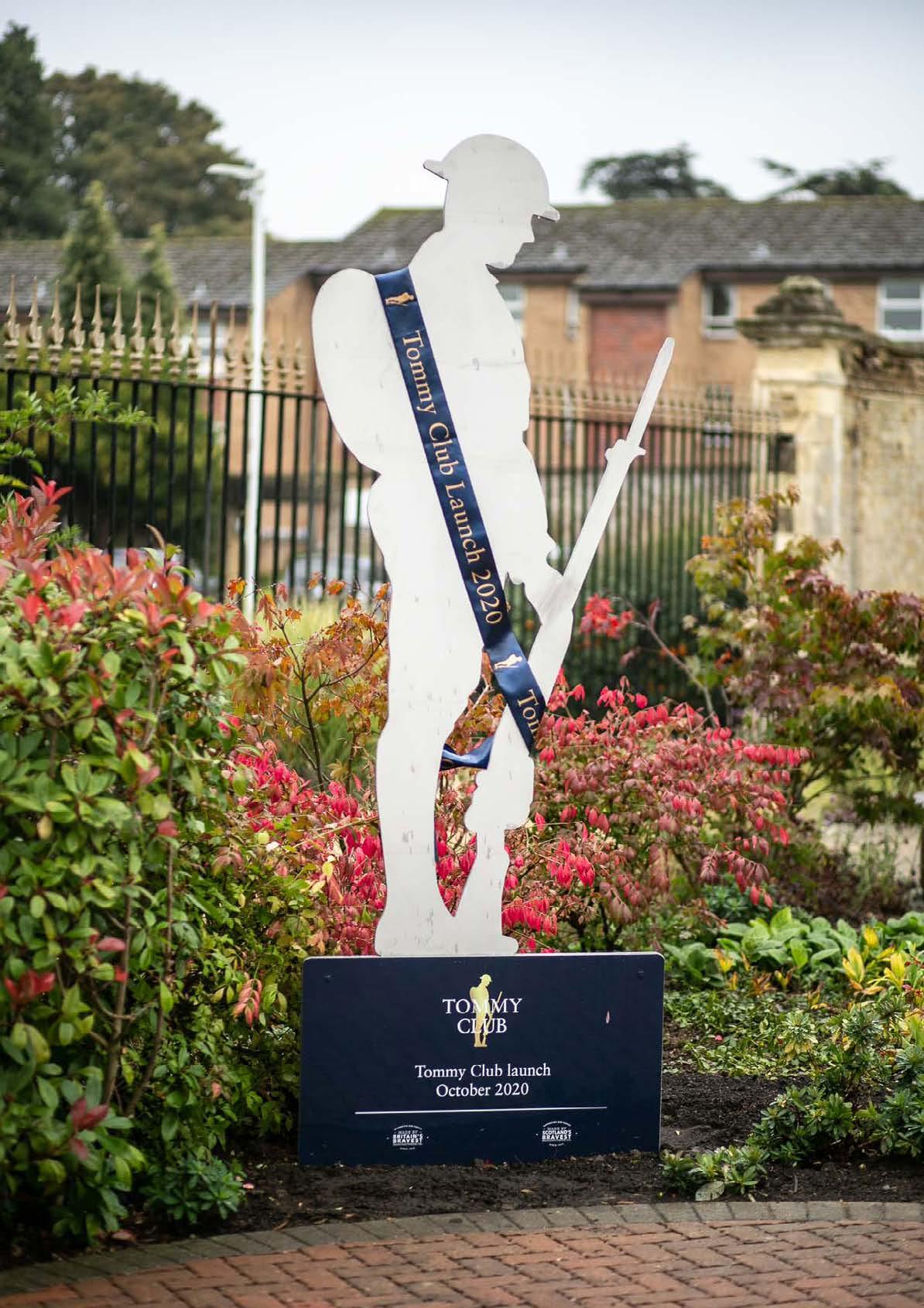
Donations and Grants of £5,000 or more, received in either current or prior year, are shown below. These are reported in the Statement of Financial Activities either under charitable activities or under income from donations
4,032,170 4,010,214

TRUSTEES:
SENIOR MANAGEMENT TEAM:
Mr S W Kingsman DL – Chairman
Mr F Martin DL – Vice Chairman
Brigadier H H Kerr OBE
Mr A Watson
Mrs N Ahmed OBE DL
Mr A B Gulland
Mrs K Cearns OBE, FCA FCCA
Ms S Mason
Mr S Rowbotham
Mr S F Sherry CMG OBE
Mr P Defraine ACMA
Chief Executive
Director of Corporate Services & Co. Secretary
(Resigned 19th March 2021)
Mr G Nobbs FCCA Director of Corporate Services & Co. Secretary
(Appointed 1st April 2021 & 28th May 2021)
Mr W CampbellWroe Director of Living
Mrs L Farmer Director of Strategic Development
Miss Michelle Ferguson Director of Scotland’s Bravest Manufacturing Company
Ms K Wickes-Bull Director of Britain’s Bravest Manufacturing Company
COMPANY NUMBER: 00158479 Incorporated in England and Wales
REGISTERED CHARITY NUMBER: England & Wales 210063
REGISTERED CHARITY NUMBER: Scotland
HEAD OFFICE AND REGISTERED OFFICE
SC048795
The Charity is a public benefit entity
Royal British Legion Industries Limited Hall Road
Aylesford
Kent ME20 7NL
Tel: 01622 795900
Fax: 01622 882195
INDEPENDENT AUDITORS: BDO LLP
55 Baker Street
London W1U 7EU
BANKERS: Barclays Bank Plc Corporate Banking Kent Team 2nd Floor, 30 Tower View Kings Hill, West Malling
Kent ME19 4UY
INVESTMENT ADVISORS: Julius Baer Portfolio Managers Ltd 1 St Martin’s Le Grand London EC1A 1HQ
SOLICITORS: Thomas Snell & Passmore LLP 3 Lonsdale Gardens
Tunbridge Wells Kent TN1 1NX
Brachers LLP 59 London Road Maidstone
Kent ME16 8JH
Royal British Legion Industries Hall Road
Aylesford ME20 7NL
01622 795900
marketing@rbli.co.uk rbli.co.uk
FUNDRAISING FOR US
Contact fundraising@rbli.co.uk
Mon to Fri 9am-5:30pm
VOLUNTEER FOR US
Contact volunteer@rbli.co.uk
Mon to Fri 9am-5:30pm
PARTNER WITH US
Contact fundraising@rbli.co.uk
Mon to Fri 9am-5:30pm
BECOME A FRIEND OF RBLI
Contact enquiries@rbli.co.uk
Mon to Fri 9am-5:30pm
rbli.co.uk
rbli.shop
wearelifeworks.org.uk
britainsbravestmanufacturing.org.uk
scotlandsbravest.org.uk
Royal British Legion Industries
@RBLI
Royal British Legion Industries
Royal British Legion Industries