www.rannv.org • Retail Association of Nevada
Beyond Dispensing Medication: Pharmacies are Public Health Educators
I
N THE HEART OF OUR COMMUNITIES, PHARMACIES stand as unsung heroes in the public health landscape. Traditionally viewed as mere dispensers of medication, pharmacies have significantly evolved, taking on a pivotal role in health education and preventive care. This transformation has not only redefined their contribution to public health but also underscored their importance as accessible, reliable sources of health information and services. At the forefront of this evolution is the role of pharmacists. Once confined to the back of the store, meticulously filling prescriptions, today’s pharmacists have stepped into the limelight as approachable healthcare providers. They are on the front lines, offering expert advice, administering vaccinations, and conducting health screenings. This shift is pivotal, especially in underserved communities where access to primary care physicians may be limited. Pharmacies have become accessible healthcare destinations, where advice and assistance are available
By Liz MacMenamin
without an appointment. The expansion of services offered by pharmacies is remarkable. Vaccination programs, once the sole purview of doctors’ offices, are now a staple of pharmacy care. From flu shots to COVID-19 vaccines, pharmacies have played a crucial role in boosting vaccination rates and providing vital information about vaccine safety and efficacy. The trust and convenience they offer have made pharmacies key players in public health campaigns, significantly impacting community health outcomes. Moreover, pharmacies have embraced their role in health screenings and chronic disease management. Many now offer blood pressure checks, diabetes monitoring, and cholesterol screenings, often free of charge. These services not only aid in early detection of health issues but also promote ongoing management of chronic conditions, empowering individuals to take charge of their health. Through these initiatives, pharmacies are closing the gap in the healthcare system, ensuring that vital health services are accessible to all.
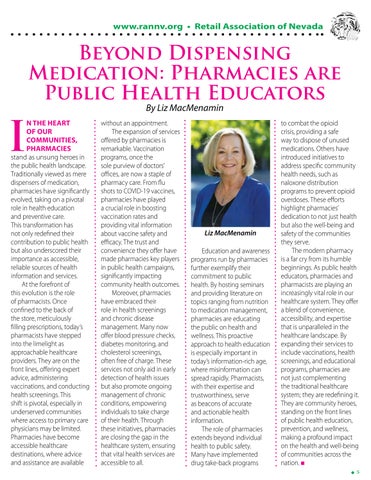
Liz MacMenamin Education and awareness programs run by pharmacies further exemplify their commitment to public health. By hosting seminars and providing literature on topics ranging from nutrition to medication management, pharmacies are educating the public on health and wellness. This proactive approach to health education is especially important in today’s information-rich age, where misinformation can spread rapidly. Pharmacists, with their expertise and trustworthiness, serve as beacons of accurate and actionable health information. The role of pharmacies extends beyond individual health to public safety. Many have implemented drug take-back programs
to combat the opioid crisis, providing a safe way to dispose of unused medications. Others have introduced initiatives to address specific community health needs, such as naloxone distribution programs to prevent opioid overdoses. These efforts highlight pharmacies’ dedication to not just health but also the well-being and safety of the communities they serve. The modern pharmacy is a far cry from its humble beginnings. As public health educators, pharmacies and pharmacists are playing an increasingly vital role in our healthcare system. They offer a blend of convenience, accessibility, and expertise that is unparalleled in the healthcare landscape. By expanding their services to include vaccinations, health screenings, and educational programs, pharmacies are not just complementing the traditional healthcare system; they are redefining it. They are community heroes, standing on the front lines of public health education, prevention, and wellness, making a profound impact on the health and well-being of communities across the nation. ■
◆5